Lese-Ansicht

Deluxe editions ‘have become sort of an arms race… we often do the opposite’: Roxley CEO Gavan Brown on the stellar success of Brass: Pittsburgh’s $9.1m crowdfund
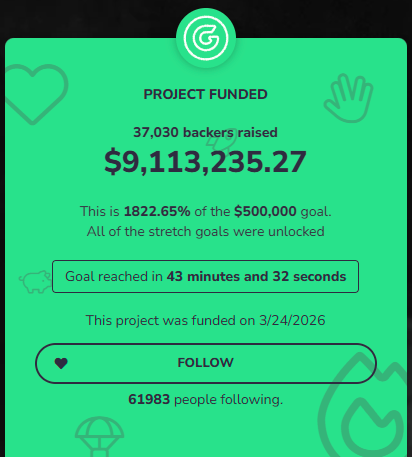
The follow-up to the top ranked game on BoardGameGeek, Brass: Birmingham, was always like to attract significant attention for its crowdfunding campaign. For Roxley Games’ Brass: Pittsburgh, that interest converted into more than $9.1m, securing the biggest board game crowdfund of 2026 so far and one of the top ten tabletop gaming raises of all time. Roxley CEO Gavan Brown, who co-designed Pittsburgh alongside original Brass creator Martin Wallace, spoke to BoardGameWire about soaring past his expectations for the crowdfund, avoiding the ‘arms race’ of deluxe editions, the advantages of Gamefound over Kickstarter and overcoming the campaign’s biggest mis-step.

BoardGameWire: Congratulations on the crowdfund! It’s obviously been a massive success, in terms of raw numbers – are these the kind of levels you were anticipating prior to launch, for backer numbers and total funding, or were they above or below where you’ve ended up?

Roxley Games CEO Gavan Brown: I thought $4m was most likely. If the community and fans felt like we nailed the game, it was POSSIBLE (but highly unlikely) to hit as high as $8m. On the low end, if it funded below $2m I would have felt that we must have dropped the ball in some way, only because of how respected Birmingham is.

Roxley Games CEO and Brass: Pittsburgh co-designer Gavan Brown

I think there are plenty of people out there who would look at this campaign and say ‘well of course it performed well, it’s the sequel to the number one game on BGG’. Can you speak to the advantages you might have had going into making this game, in terms of it being a success – and also the ways in which you had to make sure you didn’t take crowdfunding success for granted?

I’ve said before that starting this project, it felt like we were making The Matrix 4. It’s going to be nearly 10 years between the two titles, so we can’t wait this long and just throw something together. Obviously, there is a cohort of fans who are going to back it regardless, because it’s Brass. On the other hand, Brass players enjoy playing a 3-4 hour economic simulation game about the industrial revolution, so needless to say, they are also some of the most savvy gamers in the hobby who would be absolutely uninterested in a cash grab. So I realized before we started that we would need to create a sequel that fires on all cylinders. Which luckily, that’s the always the objective of myself and Roxley.

How long has the development process been for this one, and what would you say were the major changes that you made as playtesting and development went on?

The research went on for years prior to me even beginning. I also kept a document where I would jot down ideas of new mechanisms and dynamics that I wanted the game to feature when they popped into my head. Heavy development for Pittsburgh started in November of 2024. I began working on it every single day of the week.

I am the type of designer who will gut an entire system if it’s not working how I want to. There is basically no level of redesign that I will refuse to undertake if I believe that the change will make the game better. There were many massive, large-scale redesigns of the system in Pittsburgh, but the largest one was fundamentally redesigning how oil was consumed.

Initially, oil was only consumed by the kerosene industry. But as time went by, we realized that this resource not being consumed by manufactured goods reduced the competition and interdependence between players, which I feel is a core defining principle of Brass. As I researched oil and its relationship with manufactured goods, I discovered that a massive amount of crude oil was also processed into lubricants used in the making of manufactured goods.

What was your professional take on the board game crowdfunding environment prior to launching – both for crowdfunding in general, and for higher-priced, deluxe games. Did you make any specific changes / have any particular strategies for the crowdfund based on your knowledge of the current environment?

The strategy of many publishers is to create deluxe editions of their games to increase average order value. They need to increase average order value because they need the product to cost enough to fuel the advertising needed to fuel the campaign. Roxley was one of the first companies to start leaning into deluxe editions of board games, simply because I (and our team) love the experience of playing games made from high-quality materials.

So to us, the Collector’s Edition represents the most pure vision of the game. While we do put immense care into the retail ‘Essentials’ version of our products, this is always done after we realize the pure vision of our Collectors Editions. To us, the Collectors Edition is the painting, and the retail is a print. Both can be beautiful, but the painting is made from different stuff.
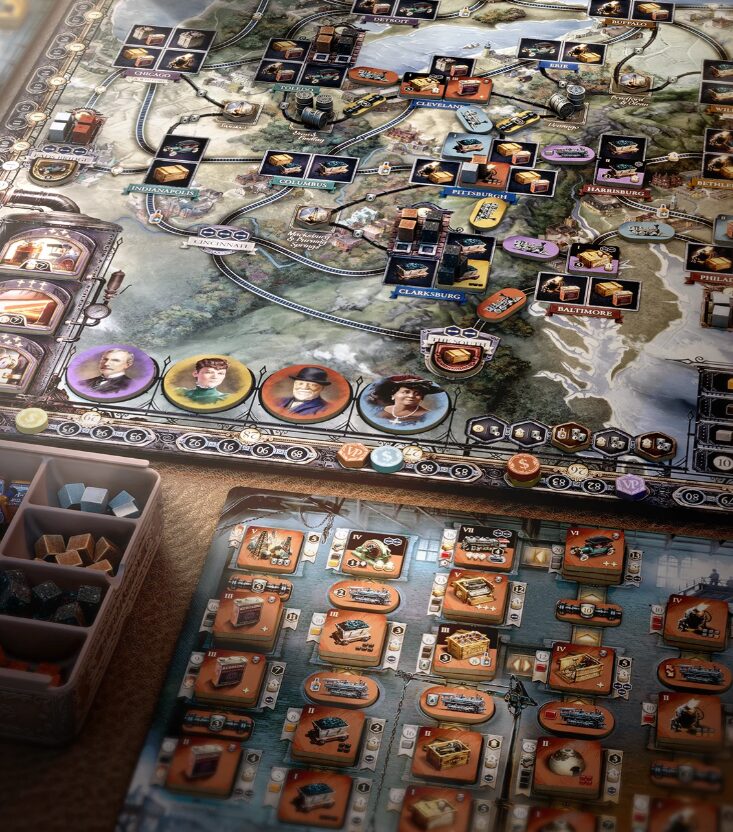
So we win because we get to make our ideal version of the game, and it’s a win for the consumer because if we sold the Collectors Edition through retail distribution, it would need to cost over $200. Deluxe Editions across the hobby have become sort of an arms race, with endlessly scaling scope, physical size, number of boxes, vac trays, and plastic in the boxes.

Our strategy: we do not pay attention to any of this. In fact, we often do the opposite. We focus on making our games as physically small as possible to respect your shelf space. We also choose materials that feel innovative and fit the aesthetics of the game, rather than just adding more plastic miniatures (unless the creative direction or game design calls for them).

My motto regarding innovation in product and game design is: we aren’t trying to make the ‘next thing’, because someone is making that as we speak. Instead we are trying to make the ‘next next thing’. We spend a great deal of time studying manufacturing methods used outside of boardgaming. For example, yesterday I recorded a video of a nice velvet texture on the inside of a friend’s new Volvo, wondering how we could apply same texture on a vac tray.

This was your first campaign on Gamefound, after ten on Kickstarter across more than a decade. Why did you decide to switch for this campaign, and has it persuaded you to stick with Gamefound for your next one?

We do not have any allegiance to any crowdfunding platform. We see them a tool used to realize creative expression, and Roxley will always use the best tool for the job. But in recent years, Kickstarter has mostly remained the same while Gamefound has been silently innovating and refining its service.

So our decision to use Gamefound was based on them currently being the best tool for the job.

What did you find where the biggest advantages to using Gamefound as the campaign went on – and were there any aspects which you’d expected to be more beneficial than they were?

Here’s a few ways we Gamefound is currently leading over Kickstarter:

  • They have a built in pledgemanager
  • They invented pre-campaign updates, which was pivotal in precampaign hype
  • They allow a youtube link for the campaign video
  • Greater level of comment moderation
  • They allow mp4 videos embedded in the campaign page, which also support transparency (making them work better for dark mode), which are vastly more function
  • Responsive design is vastly superior to Kickstarter. When you have a Kickstarter page open on a full screen browser window, the imagery is a little 580px strip in the middle of the page. 2015 called and wants their boilerplate back.
  • Tools to help charge and remit sales taxes on behalf of the creators. Kickstarter simply washes their hands of this and says “It’s the creator’s problem”
  • Greater localization support: we can display every part of the campaign in multiple languages
  • They are highly responsive to the needs of their clients

What do you think was the most important thing you learned from running this campaign generally, in terms of preparing for future crowdfunds – and maybe for providing others with advice on running theirs?

Our biggest misstep was not communicating the total value of the Collector’s Edition on day one of the campaign. Every single component of the Collector’s Edition was intended to be upgraded by the end of the campaign. We wanted to ‘surprise’ everyone with these upgrades as the campaign progressed. But Brass already had a deluxe edition released previously, so while the final form of the Collectors Edition does represent immense value, the way it was initially presented did not adequately communicate this.

We corrected this by discarding the concept of stretch goals (Funding Quests), for this campaign, unveiling all of them in text form on day four, and then doing a spotlight on each one of these upgrades for each day of the campaign. This change immediately got us back on track.

 My advice to other creators:

  • Do not be afraid of changing or redesigning your campaign.
  • Consider not using stretchgoals on a crowdfunding campaign for a sequel to a previous title, which likely carries preconceived consumer expectations with it.
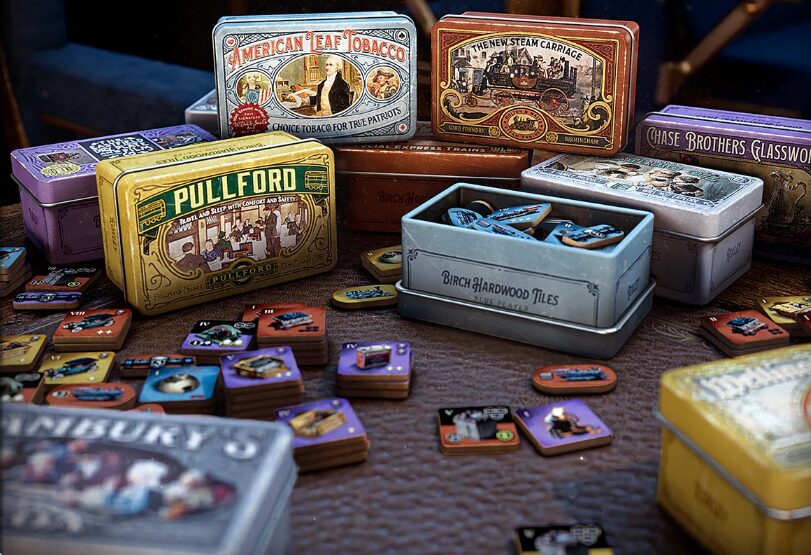
I think one of the notable aspects of this campaign was the weekly drip-feeding of content updates and reveals from August through December last year, prior to the campaign launch. Is that a strategy you’ve employed before, what was the impact of doing things that way (in terms of e.g. backer numbers, online conversation etc), and would you make any changes to the way you approached it, in hindsight?

This is probably the best thing we did for the campaign. I don’t think any campaign had utilized prelaunch updates to the level that we had during this campaign. Usually, creators do updates talking about all the new cool components, materials, mechanics, and effort put into the game during and after the campaign. But during the campaign, you need to focus on very short concise messaging to try to get a conversion. After the campaign the customer is already getting the game, and it doesn’t help you sell more.

But talking about this before the campaign launches allows the players to form a bond with your game and your team before the campaign even launches. If they like what they hear and what they see, they will follow your campaign, which greatly increases hype, followers, and if your updates are interesting and from the heart, it will also increase sales.

There’s been discussion online from people upset at what they see as a high price level for this campaign – but then more than 37,000 people have backed it to the tune of over $9.1m. Can you speak a little to why you went the direction you did with this campaign – deluxe components, for example, rather than a more basic, more affordable production?

The Essentials Edition is priced at the exact same MSRP as we sell Brass Birmingham for in Target. It was also pointed out on BGG that after adjusting for inflation, Brass Pittsburgh: Essentials Edition is cheaper than the 2007 Treefrog Games Edition.

The Collectors Edition provides immense value, and as discussed would need to be priced at upwards of $200 if sold through retail distribution.

I hear retailers talk about margins all the time, and their need for reaching levels of about 50% for individual titles. Is the pricing of Pittsburgh going to provide any challenges on the retail side, do you think, or are you confident the numbers will work out for both Roxley and retailers of the game?

Target is regarded as having the most price-conscious demographic in the market. Brass Birmingham currently sells well in Target at $80. We don’t forsee this being any different for Pittsburgh.

How concerned are you about the impact of further US tariffs changes on producing and delivering Pittsburgh – and what kind of tariff hike could Roxley reasonably absorb before additional fees would have to be charged to backers?

The tariff situation has been evolving rapidly, and we’re keeping a close eye on it. For US backers, applicable tariffs are effectively a VAT. This is something international customers have always navigated, and now the US is in the same boat.

What were your expectations around endgame, and what impact has it ultimately had on the game and on the crowdfund for Roxley overall?
We have never done end game before, and I had never even heard of it until [Roxley director of operations Kira Peavley] said it was running for our campaign. The Gamefound folks reached out to us a few days prior to the campaign ending and suggested we create a little trinket that backers could add to their pledge in order to keep the timer going.

Because the campaign had done so well, we also decided to come up with an exclusive gift for everyone who backs copy Brass: Pittsburgh collectors edition on Gamefound. Because this gift was to be exclusive to Gamefound, it could not be gameplay related, as Roxley does not offer gameplay-related crowdfunding exclusives (we want people to be able to buy all game content after the campaign). So, we came up with the idea of doing an artfolio that would feature Brass’ artwork from Mr. Cuddington that they’ve created over the years. It will even feature a fabric cover, as you would see in a high-quality hardcover book.

When the campaign shifted to Endgame, the funding amount was $7,869,841, so it has generated over $1m in extra funding. As for how much impact it has had, that is up for debate: Some of our previous campaigns that have generated an additional 75% of additional funding while the pledge manager was open. But honestly, that doesn’t matter to us… we are very happy with the funding level we have reached, and it makes us happy to reward each of our backers with this extra item as a thank you to them.

The post Deluxe editions ‘have become sort of an arms race… we often do the opposite’: Roxley CEO Gavan Brown on the stellar success of Brass: Pittsburgh’s $9.1m crowdfund first appeared on .

  •  

Isaac Childres steps down as Cephalofair CEO to focus on game design, promotes Price Johnson to role, hires Julie Ahern as COO

Isaac Childres, the founder of Cephalofair Games and designer of its runaway successes Gloomhaven and Frosthaven, is stepping down from his role as CEO to focus exclusively on game design at the company.

Cephalofair’s long-time chief operating officer Price Johnson has been promoted to CEO at the publisher, while industry veteran Julie Ahern has been hired from Van Ryder Games as its new COO.

Childres founded Cephalofair in 2014 to self-publish his first game, Forge War, and struck huge success with his follow-up design, fantasy co-op campaign design Gloomhaven, which raised about $4m for its second printing on Kickstarter in 2017.

Three years later the company broke the Kickstarter funding record for a tabletop game with Childres’ successor design Frosthaven, which pulled in almost $13m from more than 83,000 backers.

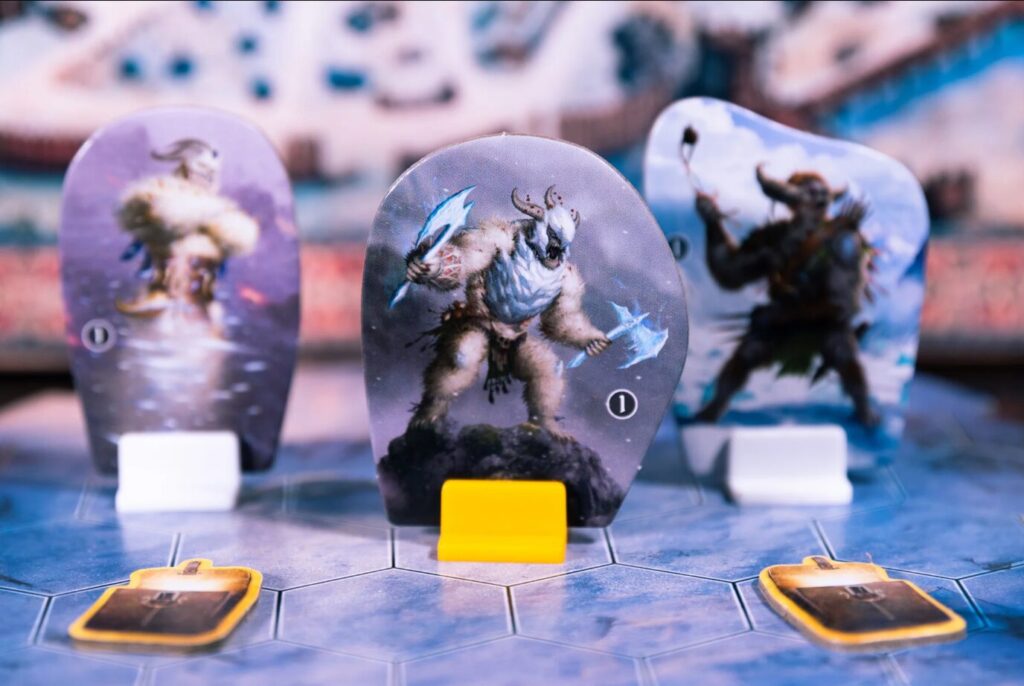
Standees from Frosthaven

Childres has led the company since inception, seeing it growing from a one-person operation to overseeing a team handling design, development, writing, art direction, promotion, publishing and fulfillment.

New CEO Johnson, who joined Cephalofair in a business development role in 2017, oversaw strategic initiatives such as mass market placement of Jaws of the Lion, as well as managing marketing and production of Frosthaven as the heavily-delayed project navigated the huge disruption caused by the Covid-19 pandemic.

He has also been a high-profile voice in campaigning against US tariffs imposed by President Donald Trump over the last year, and aiming to highlight the heavy financial burden it has placed on tabletop game publishers – many of which rely on Chinese manufacturing for their titles.

Johnson will continuing to oversee strategic initiatives, business development, sales and marketing, and catalogue growth at the company following his promotion to CEO.

He said, “Working with Isaac since the early release days of Gloomhaven to grow both Cephalofair and our community has been an absolute privilege and highlight of my career.

“We have come a long way since the early days of indie game design and crowdfunding, while learning a lot about ourselves and this industry in the process.

“I can’t wait to share the exciting plans we have creatively and organizationally in this next chapter with our fans, but that starts by putting in the hard work alongside our amazing team, whom I thank for their trust and support.

“With confidence, there is no place I’d rather be… epic strategy awaits!”

A statement from Cephalofair said Childres would now focus solely on his role as lead game designer at the publisher, overseeing design and development on its entire line of games.

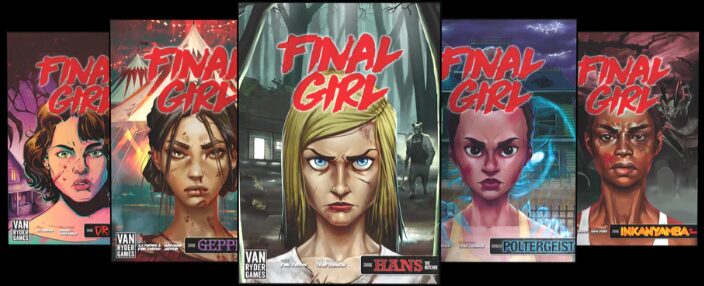
Julie Ahern, who replaces Johnson as COO, most recently spent almost four years as senior director of operations at Van Ryder Games, which is best known for solo horror game series Final Girl and murder mystery title Detective: City of Angels.

Titles from the Final Girl range, from Van Ryder Games

She previously spent almost 12 years at Greenbriar Games as COO and vice president, overseeing day-to-day of business operations and game development while contributing to the Folklore: The Afflication and Zpocalypse product lines.

Childres said, “Julie is my absolute favorite person in the board game industry (sorry Price!), and I could not be happier to welcome her to the team.

“I think she is the perfect fit for a needed role in this transition that allows me to focus on my core passion: designing epic, strategic games. Thanks Julie!”

Johnson added, “Growing as an organization means surrounding ourselves with professionals who not only compliment our core strengths, but exceed many of our own.

“Julie Ahern is one of those professionals I’ve long admired as a leader, innovator, and tabletop enthusiast. From coffees at conventions to shared manufacturing trips in China, I’m thrilled to finally have the opportunity to work directly alongside her as Cephalofair enters its next chapter.”

Ahern said, ““I have known and respected Isaac and Price for many years. While I loved my time at Van Ryder Games, it is a genuine pleasure to start this new adventure.

“I am thrilled to delve into the Gloomhaven universe with all its deep lore and challenging campaigns.”

Cephalofair’s most recent crowdfund saw it raise more than $5m on BackerKit for Gloomhaven Grand Festival – one of the highest-profile campaigns on the crowdfunding site to date – which included a second printing of Frosthaven, second edition of Gloomhaven and several other designs such as small-box release Gloomhaven: Buttons and Bugs.

That campaign has suffered heavy delays compared to its original timeline, however, due to both production delays and the volatility caused by US tariff policy.

The new edition of Gloomhaven, for example, is still in the mould-making stage of production, despite initial estimates that it would begin fulfillment in March of 2024.

The post Isaac Childres steps down as Cephalofair CEO to focus on game design, promotes Price Johnson to role, hires Julie Ahern as COO first appeared on .

  •  

CMON to invest $2.1m in NFT video game maker, says digital shift needed to expand revenue, remain ‘relevant’

Financially-troubled board game publisher CMON is pinning its future on a push into video game development and blockchain-based projects, beginning with a $2.1m investment in NFT game maker Blissful Link.

CMON’s board said it planned to transition its titles such as Massive Darkness and Super Fantasy Brawl Reborn into “high-quality digital assets”, adding that it believed integrating its board games with digital and Web3 technologies “would enhance the long-term commercial value of the group’s portfolio”.

The company has kicked off that shift by agreeing to acquire a 2.2% stake in Blissful Link, which operates Capverse, a play-to-earn video game built on blockchain technology in which players buy NFT ‘Sumer’ characters to battle with online.

CMON’s investment values British Virgin Islands-incorporated Blissful Link at more than $95m. Blissful Link made a loss of about $197,000 in 2024, on revenues of just over $408,000, and had net liabilities of about $889,000, according to unaudited figures provided by CMON. It did not include finances for 2025.

A statement from CMON’s board supplied to the Hong Kong stock exchange, where the board game publisher is listed, said, “Over the years, traditional board and other table top games have merged with digital ones providing digital convenience, offering online multiplayers, automated rules and apps that enhance physical play.

“The company believes that in order to continue to be relevant in the games industry and to expand the group’s revenue stream, the group would need to conduct digital transitioning and venture into video game development and Web3 projects.

“Digital transitioning would have the benefits of enhanced visual effects, have apps that handle scoring, timing etc, would enable a diversified number of players and are more accommodating to players not within the same vicinity.

“Added to this, entering into Web3 projects often emphasise social responsibility and ethical practices such as transparency and fairness on decision marking. By participating in Web3 projects, the company can demonstrate its commitment to social responsibility and sustainability.

“However, the group would continue to supplement this digital transformation as physical games would still offer a ‘screen break’ for individuals as well as foster direct face to face interaction.”

Non-fungible tokens, or NFTs, are digital assets which represent specific items – such as an illustration, trading card or piece of music – each with an individual signature stored via blockchain technology, which includes information such as who created it, who owns it, who sold it and for how much.

NFTs, which emerged out of cryptocurrency technology such as Bitcoin, exploded into the public eye in 2021 thanks to big-money speculative purchases – such as an NFT of Twitter founder Jack Dorsey’s first tweet selling for $2.9m.

That speculative bubble had already burst a year later, however with many of the digital assets involved losing more than 90% of their peak value. The Dorsey tweet NFT, for example, received a high bid of $6,800 when it was put back on the market in April 2022.

Other board games that have pushed into NFTs are few and far between, with one of the highest profile examples being SolForge Fusion, which allows players to mint decks as digital assets in addition to playing the game in physical form.

Two years ago CCG project Wonders of the First had to pull a $1.4m campaign from Kickstarter after falling foul of the crowdfunding platform’s ban on NFTs. The game went on to raise about $1.2m after relaunching without NFT content.

CMON, a long-time heavyweight in board game crowdfunding thanks to games such as Zombicide, Blood Rage and Cthulhu: Death May Die, slumped to a loss of more than $3m in 2024 due to falling sales for its crowdfunding campaigns.

That loss was almost double CMON’s total profits from the prior three years – but the figure was dwarfed by the $19.9m annual loss the company announced in its 2025 financial results.

CMON’s $23m losses across 2024 and 2025 are now almost 5.5-times larger than its profits from the preceding nine years combined, and have pressed the company into a string of asset sales as it attempts to fulfill more than $14.3m of as-yet-undelivered crowdfunding campaigns.

Those IP sales included parting with its most famous and profitable title Zombicide – which has raised more than $40m on Kickstarter since its 2012 launch – to Asmodee, as well as Blood Rage, Rising Sun and Ankh to Tycoon Games.

It followed those by selling the IP for former Mythic Games titles Anastyr and Hel: The Last Saga to Don’t Panic Games in September, and parting with the lucrative Cthulhu: Death May Die IP to Asmodee a month later – the latter a series which has raised almost $10m from backers to date.

Last month an independent auditor hired by the company questioned whether it CMON had the resources to stay in business for the foreseeable future, saying the publisher’s $19.9m annual loss, its net liabilities of more than $3.5m and contract liabilities of over $7.5m “indicate a material uncertainty which may cast significant doubt about the group’s ability to continue as a going concern.”

CMON’s directors had a different view, however, saying in the company’s 2025 financial report that it “should be able to continue as a going concern” thanks to a trio of factors.

They include financial support from some of the directors “sufficient to finance CMON’s working capital requirements”, the roughly $2.4m proceeds from selling its Singapore office that it received in January, and about $1.25m of gross proceeds from a successful share sale in February.

CMON’s hefty liabilities are largely due to its eight undelivered crowdfunding campaigns, which are not recognised as revenue on the company’s books until they are fulfilled to backers.

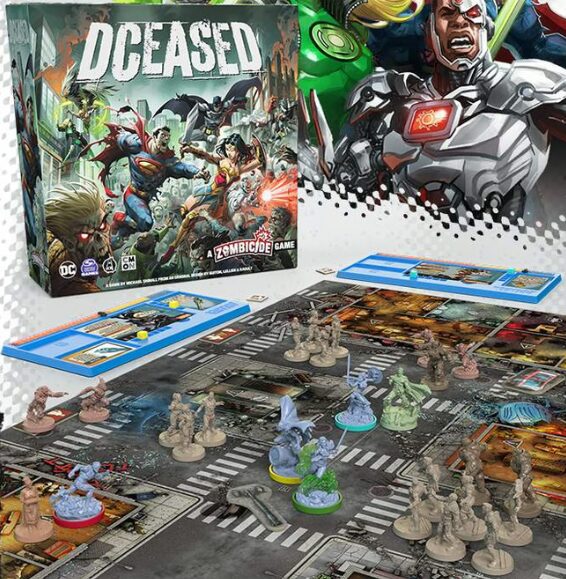
They include DC Super Heroes United, which raised more than $4.4m, and DCeased, which brought in over $2.5m. Both campaigns were initially due to be delivered last year, but are now expected to be delivered in Q4 of 2026, according to CMON’s latest estimates.

CMON also has several undelivered pre-order campaigns on its books, including Dune Desert War and the Assassin’s Creed Role Playing Game.

The company pulled the plug on crowdfunding launches and new game development just over 12 months ago, citing the economic uncertainty created by US tariff hikes – which at the time had reached 145% for China, where the vast majority of hobby board games are manufactured.

But CMON announced last month that it plans to relaunch its halted crowdfunding operations later this year.

The post CMON to invest $2.1m in NFT video game maker, says digital shift needed to expand revenue, remain ‘relevant’ first appeared on .

  •  

Hasbro delays Q1 results after cyber attack, expects revenue rise from ongoing Magic strength

Toy and game maker Hasbro has delayed its quarterly results by almost a month after suffering a cyber attack, but said it expects to post Q1 revenues of up to $985m thanks to continued strong performance of Magic: The Gathering.

Hasbro said it identified “unauthorized access” to the company’s network on March 28, but believes that access has been “contained” – adding that Magic’s shipments and release cadence had continued unaffected.

The company expects Q1 revenue to be between $970m and $985m, a rise of between 9% and 11% compared to the same period last year – while operating profit is expected to reach $235m to $245m, a 38% to 44% jump.

Those preliminary results are expected to be solidified when Hasbro eventually releases its full Q1 financial report, which is now scheduled for May 20.

Magic continues to underpin Hasbro’s fortunes, with the veteran trading card game’s revenue having soared 59% last year to mark its strongest annual performance yet.

Hasbro saw its wider 2025 revenue rise almost 14% to $4.7bn, driven by a record 45% growth in its Magic, D&D and digital gaming division Wizards of the Coast, the company revealed in February.

Magic’s record-breaking year was capped off by a storming fourth quarter, which saw revenues from the game up 141% compared to Q4 2024 on the strength of the Avatar: The Last Airbender and Final Fantasy releases.

That stellar performance of Wizards, and Magic in particular, was in stark contrast to Hasbro’s consumer products segment – which includes Nerf guns, Transformers and Peppa Pig toys.

That segment saw revenues drop 4% last year “amongst macro and retailer volatility brought on by tariff announcements in Q2″ – and unlike for Magic, Hasbro said that the cyber incident would likely impact second quarter revenues and operating profit in consumer products due to expected order processing, shipping and invoicing delays.

Hasbro added that it still expects full-year revenues to rise between 3% and 5% in 2026. Hasbro CFO and COO Gina Goetter said in February that the company expects Wizards of the Coast to deliver mid-single-digit revenue growth in 2026, “supported by a healthy release cadence and continued engagement across the Magic ecosystem”.

The post Hasbro delays Q1 results after cyber attack, expects revenue rise from ongoing Magic strength first appeared on .

  •  

High-IQ society Mensa reveals its top board games after annual four-day judging marathon

The American arm of high IQ society Mensa has unveiled the latest crop of board games winning its Mensa Select seal, which are voted on by hundreds of organisation members during an annual four-day gaming marathon.

Alex Cutler and Peter C Hayward both saw two of their creations win the seal this year, including their co-design Critter Kitchen, Hayward’s Things in Rings and Cutler’s A Place for All My Books – which he co-created with Michael Mihealsick.

Things in Rings publisher Allplay also saw its title Twinkle Twinkle, designed by Ammon Anderson, pick up a Select seal, while other winners this year included Matthew O’Malley and Ben Rosset’s Fromage, Yoann Levet’s Got Five and Tomáš Holek design Galileo Galilei.

Entries to the annual Mensa Mind Games are judged on aesthetics, instructions, originality, play appeal and play value, Mensa says, with the award aiming to highlight games that are original in concept, challenging and well-designed.

Not all games released during the past year are eligible for the award, however – entries carry a fee of several hundred dollars each, and games up for consideration need to have an average play time of 90 minutes or less.

Barnes & Noble and other major retailers have previously given special consideration to games bearing the Mensa Select seal, while winning games are also featured by American Mensa’s official online retailers and on its website.

Fromage is the most decorated of this year’s seal winners, having previously won the Origins Award for best light strategy game, as well as picking up nominations for medium game of the year, most innovative game and best artwork in the 2024 Golden Geek Awards.

Fromage, designed by Matthew O’Malley and Ben Rosset

Things in Rings was previously nominated in both the Golden Geeks and Origins Awards in the best party game category.

Last year’s Mensa Select seal winners included Agueda: City of Umbrellas, Diatoms, HutanIn the Footsteps of Marie Curie and Farms Race: Deluxe Edition.

This year’s Mensa Select seal winners in full:

  • A Place for All My Books – designed by Alex Cutler and Michael Mihealsick (published by Smirk & Dagger Games)
  • Critter Kitchen – Alex Cutler and Peter C Hayward (Cardboard Alchemy)
  • Fromage – Matthew O’Malley and Ben Rosset (R2i Games)
  • Galileo Galilei – Tomáš Holek (Capstone Games)
  • Got Five – Yoann Levet (Blue Orange Games)
  • Things in Rings – Peter C Hayward (Allplay)
  • Twinkle Twinkle – Ammon Anderson (Allplay)

The post High-IQ society Mensa reveals its top board games after annual four-day judging marathon first appeared on .

  •  

Arydia leads Golden Geek nominations with nods in six categories, Vantage and Fate of the Fellowship up for five each

Co-op fantasy adventuring game Arydia: The Paths We Dare Tread has scored six nominations in the 20th annual Golden Geek Awards, which are selected and voted on by BoardGameGeek users.

Cody Miller’s “green legacy” design, which can be fully reset after each dozens-of-hours-long campaign, is up for heavy game of the year, most innovative game and best thematic game, as well as for the best artwork, solo game and co-op game categories.

Fellow open-world exploration game Vantage, designed by Scythe and Viticulture creator Jamey Stegmaier, is challenging across five categories this year, as is Pandemic creator Matt Leacock’s spin-off design The Lord of the Rings: Fate of the Fellowship.

Both those titles will battle it out for the Medium Game of the Year prize, which is also being contested by popular releases including Galactic Cruise, Eternal Decks and fellow Stonemaier Games title Finspan.

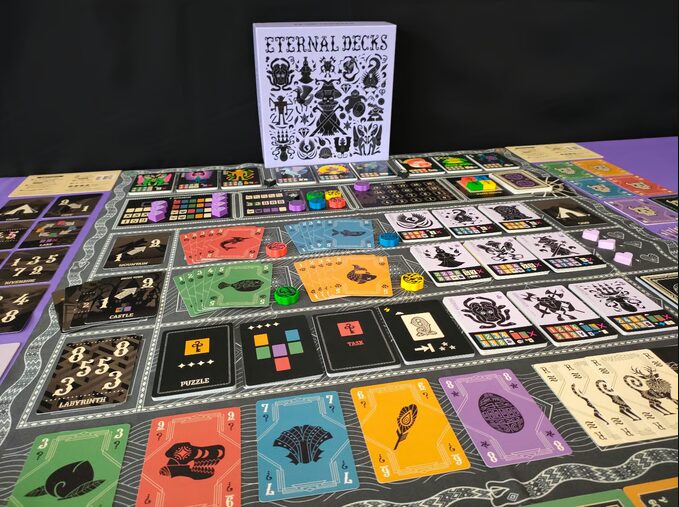
Eternal Decks, a limited communication co-op game designed by Hiroken, has picked up four nominations

Other titles picking up nominations across multiple categories included Eternal Decks, Star Trek: Captain’s Chair and Hot Streak, with four each, while Magical Athlete, Molly House, Luthier, Galactic Cruise, Corps of Discovery, The Old King’s Crown, Speakeasy and The Elder Scrolls: Betrayal of the Second Era all picked up three nods.

The Golden Geeks is one of board gaming’s highest profile awards, as well as being among the earliest of the major competitions to unveil its winners each year – with the Dice Tower Awards falling in May, the Spiel des Jahres in July and Deutscher Spiel Priese in October.

Notable awards which have already named their winners this year include France’s highest-profile board game prize, the As d’Or, which picked Paolo Mori and Alessandro Zucchini’s Toy Battle in its main prize for 2026.

Toy Battle is nominated in two categories in the Golden Geeks: best two-player game and best wargame. The latter category will see the title go up against a huge variety of different designs, including Memoir ’44-inspired Star Wars: Battle of Hoth, whist-themed English civil war strategy title A Very Civil Whist, and heavyweight GMT Games releases such as Congress of Vienna and Seljuk: Byzantium Besieged, 1068-1071.

As well as published board games, the Golden Geeks also features categories for best print and play design, best board game app and best podcast.

Voting will be undertaken by BoardGameGeek users who have paid an annual support fee in any year, who pay a one-time 20 GeekGold fee, or who have purchased an avatar on the site. They will rank nominees in individual categories, with voting set to end on April 30.

Last year’s Golden Geeks saw Arcs, the hybrid trick-taking wargame from Root and Oath designer Cole Wehrle, win a trio of awards, while fellow space-themed game SETI notched up a pair of wins.

This year’s Golden Geek Awards nominations in full:

2-Player Game
Azul Duel
Duel for Cardia
Everdell Duo
Flamecraft Duals
Iliad
Star Trek: Captain’s Chair
Star Wars: Battle of Hoth
Tag Team
Toy Battle
Zenith

Artwork & Presentation
Arydia: The Paths We Dare Tread
Eternal Decks
Galactic Cruise
Hot Streak
The Lord of the Rings: Fate of the Fellowship
Luthier
Magical Athlete
The Old King’s Crown
Speakeasy
Vantage

Cooperative Game
Arydia: The Paths We Dare Tread
Corps of Discovery: A Game Set in the World of Manifest Destiny
The Elder Scrolls: Betrayal of the Second Era
Eternal Decks
The Lord of the Rings: Fate of the Fellowship
Nemesis: Retaliation
Regicide Legacy
Take Time
Unmatched Adventures: Teenage Mutant Ninja Turtles
Vantage

Expansion
Castle Combo: Out of the Oubliette!
Clank!: Catacombs – Underworld
Dune: Imperium – Bloodlines
Earth: Abundance
Heat: Tunnel Vision
The Lord of the Rings: Duel for Middle-Earth – Allies
Lost Ruins of Arnak: Twisted Paths
Sea Salt & Paper: Extra Pepper
SETI: Space Agencies
Wyrmspan: Dragon Academy

Innovative
Arydia: The Paths We Dare Tread
Corps of Discovery: A Game Set in the World of Manifest Destiny
Eternal Decks
Hot Streak
Light Speed: Arena
Molly House
Moon Colony Bloodbath
The Old King’s Crown
Tag Team
Vantage

Light GOTY
Duel for Cardia
Flamecraft Duals
FlipToons
The Hobbit: There and Back Again
Hot Streak
Magical Athlete
Railroad Tiles
Star Wars: Battle of Hoth
Take Time
Toy Battle

Medium GOTY
The Druids of Edora
Eternal Decks
Finspan
Formaggio
The Lord of the Rings: Fate of the Fellowship
Moon Colony Bloodbath
Sanctuary
Skara Brae
Vantage
Zenith

Heavy GOTY
Ada’s Dream
Arydia: The Paths We Dare Tread
The Elder Scrolls: Betrayal of the Second Era
Galactic Cruise
Luthier
Molly House
The Old King’s Crown
Speakeasy
Star Trek: Captain’s Chair
Sweet Lands

Party Game
Alibis
Barbecubes
Brick Like This!
La Cuenta
Hitster Rock: Bob!
Hot Streak
Light Speed: Arena
Magical Athlete
Take Time
Wine Cellar

Print & Play
52 Duels
Chronicles of Civilization
Crosswhords!
Dungeons of the Oak Dell
Elevation (fan expansion for Android: Netrunner)
The Promise
Rise of the Oak Dell
Terra Mystica: Fan Factions

Solo Game
The Anarchy
Arydia: The Paths We Dare Tread
Corps of Discovery: A Game Set in the World of Manifest Destiny
Deckers
The Elder Scrolls: Betrayal of the Second Era
The Lord of the Rings: Fate of the Fellowship
Skara Brae
Star Trek: Captain’s Chair
Unstoppable
Vantage

Thematic Game
Arydia: The Paths We Dare Tread
Galactic Cruise
The Lord of the Rings: Fate of the Fellowship
Luthier
Molly House
Moon Colony Bloodbath
Nemesis: Retaliation
Speakeasy
Star Trek: Captain’s Chair
Vantage

Wargame
Battlefields of the Napoleonic Wars
China’s War 1937-1941
Congress of Vienna
Cross Bronx Expressway
Fields of Fire: Deluxe Edition
General Orders: Sengoku Jidai
Seljuk: Byzantium Besieged, 1068-1071
Star Wars: Battle of Hoth
Toy Battle
A Very Civil Whist

Best Podcast
Blue Peg, Pink Peg
Board Game Hot Takes
Board Games Insider
Decision Space
Five Games for Doomsday
Game Brain: A Board Game Podcast About Our Gaming Group
Shelf Stable: A Board Gaming Podcast
Space-Biff! Space-Cast!
Sporadically Board with Mike and Dan
Talk Cardboard

Best Board Game App
Ark Nova
Carnegie: The Board Game
Cascadia Digital
Caverna
The Isle of Cats
Kingdomino: The Board Game
MicroMacro: Downtown Detective
Reiner Knizia’s My City
SpaceCorp
Watergate – The Board Game

The post Arydia leads Golden Geek nominations with nods in six categories, Vantage and Fate of the Fellowship up for five each first appeared on .

  •  

Lucky Duck cuts back on “resource intensive” localisation strategy, shifts focus to developing own titles

Lucky Duck Games, the board game publisher behind European localisations of major hits such as Dune Imperium and Cascadia, is scaling back that side of its operations to prioritise development of its own designs.

Scott Morris, the company’s global brand director, told BoardGameWire that while localisation had been an important part of the business over the years it was “resource intensive” and dependent on external factors – adding that developing in-house titles provided “more opportunity for long-term value”.

Lucky Duck has become a varied operator in the modern hobby games industry since it was founded in 2016, growing from a small design studio running Kickstarter campaigns into a global publisher, localiser and distributor with offices across Poland, the US, France, Italy and the UK.

That localisation activity has been centred most heavily around Lucky Duck’s home of Poland and early expansion country France, with the company becoming known for local language version of strategy titles and big-selling games such as Too Many Bones, Flamecraft and The Isle of Cats.

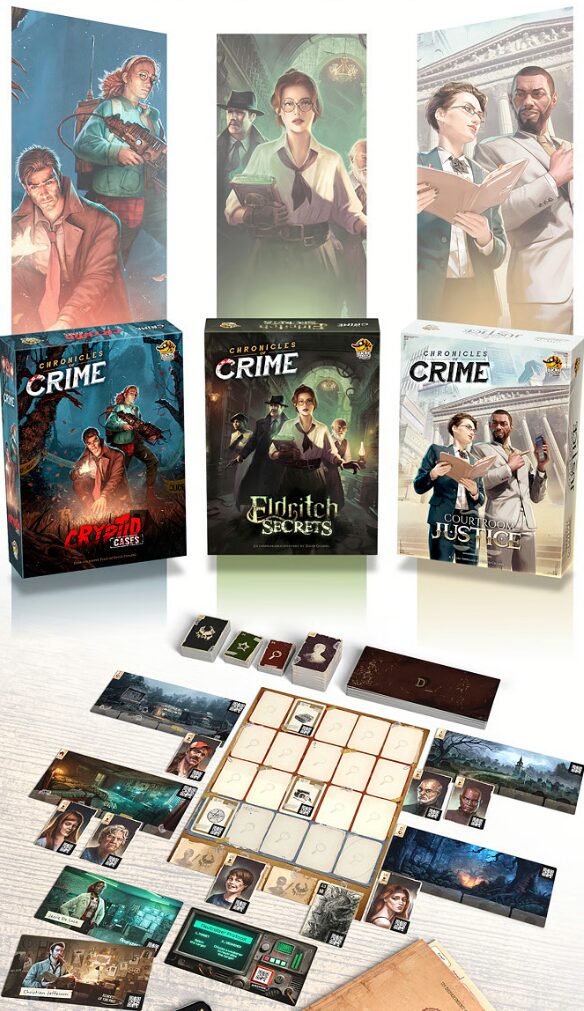
But Lucky Duck has a big hitter of its own in the Chronicles of Crime series of games, which have sold more than one million copies worldwide, and Morris told BoardGameWire the company was also “very confident” in its other recent releases Borealis: Arctic Expeditions, Purrramid and Oakspire.

He said, “We also have several games in development we have not announced yet, but we are very excited about. The team knows how to make fun and engaging games, which, at the end of the day, focus on our goal: bringing smiles to gamers everywhere.”

The French edition of Too Many Bones from Chip Theory Games, localised by Lucky Duck Games

Lucky Duck was bought by Rummikub manufacturer Goliath two years ago – and Morris said the global distribution opportunity offered by such a high-profile mass market player was part of the reason behind the strategy shift.

He said, “Since the acquisition, there has been a focus on leveraging Goliath’s global distribution network and operational scale. This includes expanding access to new retail channels and improving production and logistics capabilities.

“These changes are ongoing, but they are already opening new opportunities for our titles to reach wider audiences. We have seen significant growth in these new channels and are excited to continue to introduce our games to new retailers and customers.”

Morris was at pains to clarify that Lucky Duck is not ceasing all localisation activities, which was the impression given to some readers of a recent announcement about the changes on its French Facebook page.

He said, “I can understand how the announcement was received that way and we will work to make our announcements clearer in the future.

“We have decided to not localize some items we originally planned to, and we’re working with those partners to find the best solutions for everyone, in those situations. The decision is part of a broader strategic evolution, rather, and is not a France-specific decision.

“We are refining how we approach the different markets, with a greater emphasis on publishing and developing our own titles globally, while continuing to work with partners where the right opportunities exist.”

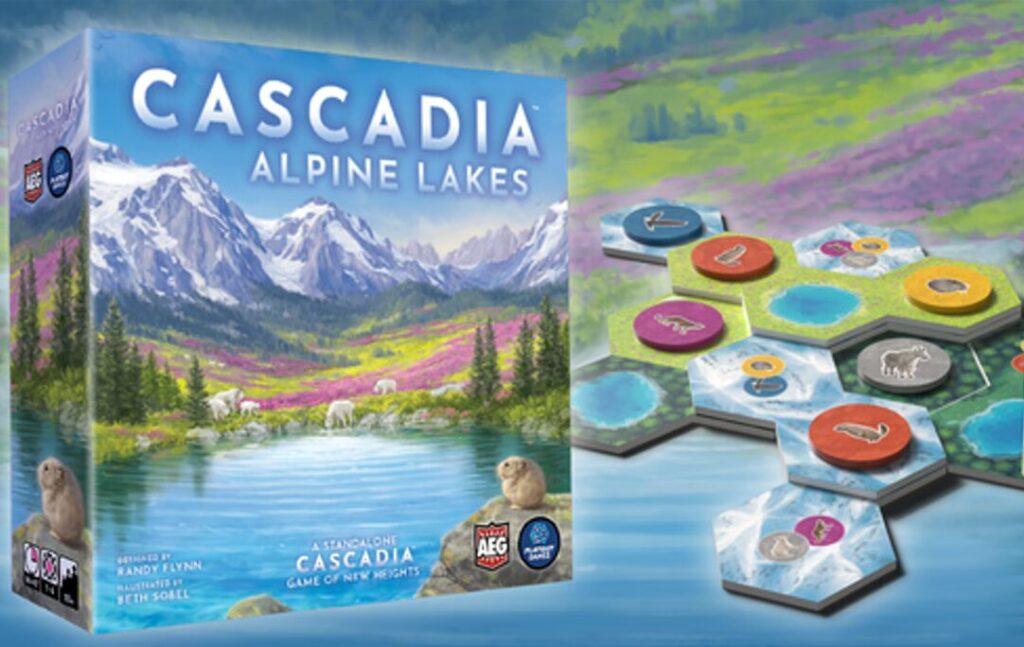
Some of those planned localisations which will now not go ahead include the French localisation of Cascadia Alpine Lakes, published by Flatout Games, which was only announced by Lucky Duck a few weeks ago.

Cascadia: Alpine lakes || Kickstarter image

Morris said the strategic shift did not affect the company’s Global Publishing Network operation, which is a separate business unit that acts as a localisation agency, connecting publishers and distribution buyers who localize in their regions.

He said, “Matt Goldrick leads this initiative for us and it has continued to be a stable, growing, and exciting part of the industry.”

It might appear that developing and publishing home-grown designs is a much riskier proposition than localising already popular titles which gamers are keen to get hold of in their language – but Morris said both approaches carry different types of risk.

He told BoardGameWire, “With the support of Goliath’s global infrastructure, we are in a stronger position to manage risks effectively. While localization benefits from existing demand, original publishing allows us to build long-term value, strengthen our own brand identity, and deeper our engagement with the players.

“We have a very talented design and development team in Poland, led by Michal Szewczyk, that has produced award winning games.

Toriki: Castaway Island has won several European gaming awards, [the recently-released] Purrramid was just names as a finalist for ASTRA’s best family game in their Play Awards, and of course, the highly successful and touted Chronicles of Crime series is continuing with our recent successful Kickstarter for the Beyond Doubt series of new games.”

He added, “By prioritizing internally developed titles, we have greater control over product development, timelines, and long-term brand building.”

Goliath CEO Jochanan Golad said at the time of the Lucky Duck takeover that it saw two major growth areas in games: adult party games and strategy games – but some publishers have begun to move away from larger box, complex titles and towards lighter, smaller games recently amid the fallout from last year’s US tariffs chaos.

Morris confirmed to BoardGameWire that strategy games “remain a key area of growth”, saying, “Our strategy reflects confidence in that segment, alongside opportunities in other categories.

“The Lucky Duck brand is focused primarily on strategy games… we’re both very happy with our recent releases, the reception they have seen, and our upcoming titles to announce soon!”

He added, “Tariffs have added significant pressure across the entire industry, affecting production costs and pricing strategies. It has been extremely hard to see our industry hit so negatively, and see so many people’s livelihoods, and in some cases, life’s work, stretched to, and beyond their breaking points.

“Like many publishers, we’ve had to adapt by optimizing supply chains and planning more carefully around manufacturing and distribution decisions.

“I strongly believe that our acquisition by Goliath could not have been timed better with regards to the tariff situation. Their global supply chain and logistics management helped us navigate the waters better than we could have prior to the acquisition.”

Chronicles of Crime: Beyond Doubt || Kickstarter image

Lucky Duck continues to run Kickstarter campaigns for its own designs – most recently with Oakspire, which has raised just over €133,000 with about seven days of the campaign left to run, and Chronicles of Crime: Beyond Doubt, which pulled in about €373,500 last November.

The company has hit choppy water with some of its unfulfilled Kickstarter campaigns, however, with heavy delays for €1m-raising The Dark Quarter – which was initially expected to deliver to backers in October 2023 – and Into the Godsgrave, which was slated for fulfillment in December 2024.

Morris said of Into The Godsgrave, “As with many large-scale projects, with unique designs, timelines can shift due to the complexity of production, logistics, and ensuring the final product meets expectations.

“The team has prioritized quality and delivery experience, which has contributed to the revised timeline. Our team, specifically Ben Poole our community manager, has worked hard to keep everyone updated through our project updates as to the status and milestones.

“We’re excited to get that game into players hands and on their tables. It’s a very fun and unique experience that I believe will impress.”

Regarding The Dark Quarter, he added, “Similar factors applied here, particularly around production and app development, plus global logistics challenges. Goliath’s strengths here will help us mitigate those risks in the future.

“We’ve worked hard to ensure the final product met the standard expected by backers, even if that required additional time and we have seen many positive responses as fulfillment progressed.

“I’m paraphrasing a famous quote, but as a wise man once said, a delayed game can be eventually good but a rushed game can be forever bad.”

The post Lucky Duck cuts back on “resource intensive” localisation strategy, shifts focus to developing own titles first appeared on .

  •  

GAMA president Nicole Brady loses re-election bid, VP Meredith Placko voted into role

The president of hobby games trade organisation GAMA, Nicole Brady, has failed in her bid to be re-elected to the role, with vice president Meredith Placko instead being voted in by the board of directors.

Brady, who spent two years as president of GAMA, had been a key driver of a plan for the organisation to become the “epicentre” of global tabletop gaming, underpinned by the unveiling of its first-ever 10-year plan last October.

She was also the organisation’s first female president on her May 2024 election, which at the time also saw the first all-women lineup for GAMA’s board officers in its then 47-year history.

New president Placko is the co-founder of hobby paint company Turbo Dork, and spent two years as CEO of Munchkin publisher Steve Jackson Games before resigning in April last year.

She began a two-year term representing publishers on the non-profit organisation’s board in March 2025, and was elected as GAMA vice president by the board of directors a month later.

New GAMA vice president Ross Thompson

Critical Role marketing manager Ross Thompson was elected as the new vice president at yesterday’s board of directors meeting, while Southern Hobby Distribution‘s Tiffany Reid and Red Racoon Games‘ Jamie Mathy were both re-elected as secretary and treasurer respectively.

Speaking to BoardGameWire about her win, Placko said, “I want to thank Nicole Brady for her work as president over the last few years, especially for establishing the strategic vision.

“I applaud the work that has been done on that 10-year vision. The next step is to turn it into a strategic plan. I do believe it will need evaluation and tweaking, as it very much is a living vision. As GAMA’s needs change, we must be prepared to adapt. 

She added “As a trade organization, we should focus on strengthening and expanding the core elements that benefit our industry.

“GAMA is at a critical juncture: we’ve seen turnover in the last year, we’re about to start the executive director search, and our industry has endured more than its share of crises, including tariffs and economic uncertainty.

“When I pitched myself to my fellow board members, and now to the membership at large, my experiences as an executive and leader in business and the news industry have prepared me to help turn our goals into a solid foundation for which the organization can continue to grow.”

She added, “Another important issue for me is that as a trade organization, we must lead the way on critical industry matters. Everything from timely updates and actionable measures regarding tariffs and related issues.

“To keep our members informed about domestic and international regulatory changes. And educating and organizing membership on how to advocate for the issues we face at local and federal levels.

“But, none of this can be done by one person alone. It’s imperative that the board works together on all of this. And we work with our committees and leadership at GAMA to turn these ideas and needs into actionable items.

“While I may have a strong vision for what GAMA should be as a trade organization, the decision is not mine alone. The board, the staff, and most importantly the membership drive this organization and make it great.

“Ultimately, one of my most important jobs is ensuring the board is part of the process every step of the way.”

Former GAMA president Nicole Brady

Brady told BoardGameWire she was proud to have created “a strong foundation that future leadership will be able to build on”, despite “people throwing tack strips on the road in front of me”.

She said, “I am proud of the many things I have done to help advance the organization, including making history as GAMA’s first female president.

“My greatest accomplishment as president was spearheading GAMA Vision 2035 at the fall 2024 strategic planning session. We put together a big picture of what we wanted for the future and that focused on becoming the epicenter for tabletop gaming.

“It included expanding internationally and domestically in a meaningful way, creating large scale marketing initiatives (think ‘Got Milk?’), building partnerships, launching a speaker’s bureau, establishing a 501(c)(3) for charitable work, providing educational certification and so much more.”

Brady told BoardGameWire last year that the Vision 2035 ten-year plan was an attempt to get the organisation away from “playing whack-a-mole” on important issues rather than managing them in a long-term strategy.

The array of plans spread across the next decade include boosting its membership within both hobby games and the mass market, expanding itself into a global organisation, shifting its finances away from the current heavy reliance on the annual GAMA Expo and Origins shows, and leading the conversation on sustainability within the industry.

Brady also highlighted her work push GAMA towards global lobbying, legislation and advocacy, over and above initiatives such as the organisation’s trip to DC last year to lobby against the US tariffs situation.

She added, “As treasurer, I called for an audit to address concerns I witnessed. That audit has finally wrapped up thanks to our current Treasurer taking over the project when it stalled and will result in changes that improve the record keeping and financial practices.

“Even with people throwing tack strips on the road in front of me, I was able to create a strong foundation that future leadership will be able to build on.

“I know I have made a lasting positive difference. Many people have shared publicly that my leadership is the reason they joined GAMA, renewed their memberships or have renewed faith in the future of GAMA.

“I did a lot of relationship repair behind the scenes. Seeing positive news instead of constant negativity is a testament to that hard work.”

The GAMA Board of Directors is comprised of twelve individuals elected to represent the six voting membership groups – publishers, retailers, wholesalers, production, media and events, and creators – with half of the cohort up for election each year.

That board in turn elects GAMA’s four officers – president, vice-president, treasurer and secretary – from among themselves each year, with the winner requiring a majority of the 12 votes available.

The current board of directors also includes John Stephens from Total Escape Games, Drew Wehrle from Wehrlegig Games, Heather O’Neill from 9th Level Games, former president Eric Price from Meijia Board Game Factory, Michael Maggiotto Jr from BEST Human Capital & Advisory Group, LegalWATCH’s Eartha Johnson, and Danny O’Neill from Mood Publishing.

GAMA is currently working to secure a permanent replacement for its previous executive director John Stacy, who left the association last October just after the ten-year plan had been revealed.

Leadership consultant Zaria Davis was named as interim executive director last November, while GAMA hired its first COO last September in Melinda Prickett.

Placko told BoardGameWire, “I want to give credit and thanks to Melinda Prickett, GAMA’s COO, who has stepped up in so many ways since John Stacy’s departure. She and the GAMA staff are doing an incredible job.

“Many changes have occurred at the operational level and much work is happening behind the scenes. Melinda and the staff have taken to it all with such earnestness and gusto.

“While the board may have seen a change in leadership, we are a small piece of the GAMA puzzle. I want to make sure Melinda, and the staff who are doing the heavy lifting of this organization, get the recognition they deserve.”

Last month GAMA’s board of directors apologised for some of its elected leaders being “rude and disrespectful” during a “heated” annual general meeting at the recent GAMA Expo trade show.

This year’s GAMA Expo sealed another record attendance, ahead of its planned move to Baltimore in 2027 to contend with rapidly growing demand.

More than 3,820 attendees showed up to this year’s event in Louisville, Kentucky, up almost 12% on last year’s previous record of 3,425 – which had already left the show pressed for space across the exhibition hall and its extensive programme of seminars.

The post GAMA president Nicole Brady loses re-election bid, VP Meredith Placko voted into role first appeared on .

  •  

French board game designers’ union SAJ adopts new name to better represent women, non-binary people

French board game designer association SAJ has renamed itself to make its title more inclusive to women and non-binary people, as well as to better underscore its status as a union.

The Société des Auteurs de Jeux – which translates as society of game designers – was formed in 2017 through the merger of three separate groups, and currently represents more than 800 individual designers.

The organisation has now been rebranded as the Syndicat des Auteurices de Jeux – the Union of Game Designers – following a vote at its annual general meeting at the Festival International des Jeux in Cannes.

SAJ president Audrey Bondurand told BoardGameWire, “We wanted to change this name for two reasons: first, we have officially been a union for several years now, and we wanted our name to reflect that.

“Second, in French, ‘auteur’ is not a gender-neutral word, but a masculine one. ‘Auteurice’ is a contraction of ‘auteur’ and ‘autrice’ (the feminine form). We chose this neologism to include women and non-binary people.”

Bondurand, who worked in a board game cafe and in distribution before publishing her first game, Draky, said part of SAJ’s remit was advocating for the recognition of board games as cultural works, something which is “unfortunately still not the case today in France or in Europe”.

The organisation also offers contract reviews, mediation, accounting advice sessions and general support for designers in the industry, much like its US-based peer the Tabletop Game Designers Association and Germany’s SAZ.

Bondurand added, “Regarding the use of AI, we openly support the position of the CIL (our illustrator colleagues) in opposing generative AI in our published games.”

SAJ said a new website featuring its rebranded title is currently under construction, with the organisation’s existing email addresses currently operating as normal.

The post French board game designers’ union SAJ adopts new name to better represent women, non-binary people first appeared on .

  •  

Flat River sells Greater than Games brand, Sentinels of the Multiverse to digital developer Handelabra

Almost a year of uncertainty over the future of board game publisher Greater than Games has been partially resolved, with Flat River Group selling the brand name, and the rights for the Sentinels of the Multiverse titles, to Handelabra Games.

Video game developer Handelabra has a long history with the comics-themed cooperative card game, having spent more than a decade creating digital versions of the title and its expansions – as well as for Greater than Games’ best known release, Spirit Island.

Spirit Island is not part of Handelabra’s deal, however, which the company said only covers the Sentinels of the Multiverse games, the Sentinel Tactics range, the Sentinel Comics RPG, Sentinels miniatures and the cooperative deck-builder Galactic Strike Force.

Flat River laid off the vast majority of staff and suspended new projects at Spirit Island publisher Greater than Games in April last year, blaming “ongoing economic pressures resulting from the international tariff crisis”.

The distribution and e-commerce specialist was bought six years ago by private equity investor Guardian Capital Partners, which provided capital for a string of tabletop industry acquisitions.

They included an expansion into board game publishing in 2021 with the buyout of Greater than Games, which it followed a year later with deals for Canadian publisher Synapses Games and hobby game distributor Luma Imports.

Flat River sold Synapses Games to ACD Distribution last summer, at the same time as industry veterans Jules Vautour, Colin Young and Danni Loe left Flat River to revive Luma as part of ACD.

A statement from Handelabra president and CEO Jaye Handel said the company had made the GtG and Sentinels deal to protect its ability to make digital games in that IP, adding that it was “not interested in becoming a tabletop publisher”.

But the statement added, “But lucky for us, we know a lot of good people who are good at exactly that type of business…”

That is believed to refer to Greater than Games trio Christopher Badell, Paul Bender and Adam Rebottaro, who founded the company in 2011 and were the last remaining employees following Flat River’s downsizing of GtG last year.

Handelabra CEO Handel told BoardGameWire he was unable to share further details, but said that his company was “very excited about the future of Sentinel Comics on digital and analog tabletops and beyond”.

He added, “Handelabra Games’ and Flat River Group’s relationship with regards to Spirit Island has not changed.”

The company’s recent statement from Handel indicated it would be able to provide more information about Greater than Games’ future by April 28, which is National Super Hero Day in the US.

It said, “For your ongoing support and excitement, we remain eternally grateful. We just ask for a little more patience over the coming weeks as we have lots to share, and we can’t wait to embark on the next phase of this journey with you!”

Flat River did not respond to BoardGameWire’s request for comment on the future of Spirit Island or other former Greater than Games-published titles.

The post Flat River sells Greater than Games brand, Sentinels of the Multiverse to digital developer Handelabra first appeared on .

  •  

Hot Streak, Magical Athlete race to wins in this year’s American Tabletop Awards

The American Tabletop Awards, an awards scheme launched seven years ago with the aim of being the US equivalent of Germany’s Spiel des Jahres, has unveiled its 2026 winners.

Racing games published by CMYK triumphed in both the Early Gamers and Casual Games awards this year, with Richard Garfield’s new implementation of Takashi Ishida’s 2003 design Magical Athlete scooping the former, and Jon Perry’s chaotic mascot racer Hot Streak the latter.

ATTA’s Early Gamers award is focused on titles suitable for younger gamers and players new to modern board gaming, while the Casual Games awards looks at games suitable for all experience levels that can be played in 30 to 60 minutes.

This year’s Strategy Games prize went to Matt Leacock’s pandemic spinoff The Lord of the Rings: Fate of the Fellowship, while the Complex Games title went to Jo Kelly’s and Cole Wehrle’s design Molly House, which explores the joy and fear experienced by gender-defying Londoners in 18th century society.

CMYK was the standout publisher with two wins out of the four categories. Asmodee studios won one award and picked up three other nominations, while Flatout Games picked up recommendations for both Cascadia Junior and Knitting Circle.

Alex Cutler was the only designer to appear twice among the finalists, scoring a nomination for his co-design Critter Kitchen and a recommendation for co-design A Place For All My Books.

The ATTAs are voted on by members of the US board game media, who each submit up to five games from the previous calendar year, which are then ordered according to ranked-choice vote.

ATTA’s committee includes GAMA president and SAHMReviews.com founder and owner Nicole Brady, Jessica Fisher, the co-founder of Gameosity and the Tabletop Game Jobs Facebook group, and Good Time Society pair Ruel Gaviola and Becca Scott.

Awards co-founder Eric Yurko, who runs board game review site What’s Eric Playing?, said, “The past few years have been great for games, and 2025 was no exception.

“There were great moments and releases throughout, so we’re very excited to present these awards to the best games we played in 2025.”

Last year’s ATTA winners were Captain Flip, The Gang, Let’s Go! To Japan and Fromage.

The 2026 American Tabletop Awards finalists

Early Gamers
Winner: Magical Athlete – designed by Richard Garfield and Takashi Ishida (published by CMYK Games)
Nominated: The Sandcastles of Burgundy – Stefan Feld and Susanne Feld (Ravensburger)
Nominated: Splendor Kids – Marc André and Catherine André (Space Cowboys / Asmodee)
Recommended: Cascadia Junior – Fertessa Allyse and Randy Flynn (Flatout Games)
Recommended: Duck and Cover – Oussama Khelifati (Captain Games)

Casual Games
Winner: Hot Streak – Jon Perry (CMYK Games)
Nominated: The Fellowship of the Ring – Trick-Taking Game – Bryan Bornmueller (Office Dog / Asmodee)
Nominated: 7 Wonders Dice – Antoine Bauza (Repos Production / Asmodee)
Recommended: FlipToons – Jordy Adan and Renato Simões (Thunderworks Games)
Recommended: A Place For All My Books – Alex Cutler and Michael Mihealsick (Smirk and Dagger Games)

Strategy Games
Winner: The Lord of the Rings: Fate of the Fellowship – Matt Leacock (Z-Man Games / Asmodee)
Nominated: Critter Kitchen – Alex Cutler and Peter C. Hayward (Cardboard Alchemy)
Nominated: Kinfire Council – Kevin Wilson (Incredible Dream)
Recommended: Knitting Circle – Emily Vincent (Flatout Games)
Recommended: Moon Colony Bloodbath – Donald X Vaccarino (Rio Grande Games)

Complex Games
Winner: Molly House – Jo Kelly and Cole Wehrle (Wehrlegig Games)
Nominated: Tidal Blades 2: Rise of the Unfolders – Tim Eisner and Ben Eisner (Druid City Games)
Nominated: Covenant – Germán P Millán (Devir)
Recommended: Above and Below: Haunted – Ryan Laukat (Red Raven Games)
Recommended: Galactic Cruise – TK King, Dennis Northcott and Koltin Thompson (Kinson Key Games)

The post Hot Streak, Magical Athlete race to wins in this year’s American Tabletop Awards first appeared on .

  •  

Fantasy Flight calls time on Descent: Legends of the Dark, saying rising costs mean it was selling at a loss

Asmodee arm Fantasy Flight Games is discontinuing the latest iteration of its veteran dungeon crawler Descent, citing rising manufacturing costs, “global economic shifts” and the expense of developing the game’s companion app.

FFG launched Descent: Legends of the Dark five years ago as the successor to its popular 2005 release, Descent: Journeys in the Dark, and a more streamlined second edition from 2012.

All three games featured large amounts of plastic miniatures, cardboard terrain pieces and map tiles, while Legends of the Dark also leaned into an integrated companion app to help manage campaigns and individual scenarios.

A statement from FFG announcing the end of the game said, “Simply put, the game is too expensive to make. Between ever-increasing manufacturing costs, lengthy and pricey app development timelines, and global economic shifts making everything more expensive to produce, it became abundantly clear that continuing to make this game is just not feasible.

“This is far from the outcome we wanted – again, we all love this game and hoped to see it grow for years to come – but even if we were to sell every last copy, we would still ultimately be doing so at a loss.

“In a fiercely-competitive board game industry, that simply isn’t sustainable, and because of circumstances outside of FFG’s control, there are no adjustments we could make that could lower costs enough to continue printing the game.”

That competition for Descent has come in the form of huge crowdfunding successes for titles such as Gloomhaven and Frosthaven – the latter of which sealed one of the biggest Kickstarter campaigns of all time by raising almost $13m in 2020.

Standees from Frosthaven || Photo credit: Cephalofair Games

Other competitors in the space have included CMON’s Massive Darkness series – based on its huge-selling Zombicide system – which has raised more than $10m across a trio of crowdfunds since 2017.

Using crowdfunding for those large-scale, component-heavy games has helped publishers Cephalofair and CMON reduce the risk of developing expensive titles by being able to accurately gauge demand, as well as receiving financial backing for the projects up front.

Even with that data, however, both publishers have run into problems amid the heavy global economic uncertainty over the last couple of years – especially around volatile US tariff policy aimed at countries such as China, where the vast majority of board games are manufactured.

CMON is currently battling enormous losses from the past two years, while Cephalofair has had to navigate significant delivery delays alongside the frequently shifting import taxes situation, which last year saw US tariffs on China whipsaw as high as 145% before being reduced to a still significant 30%.

Asmodee has almost entirely avoided crowdfunding for its own games to date, with its only launched campaign believed to be Lookout Games’ Kickstarter for the Grand Austria Hotel: Let’s Waltz! Expansion & Deluxe Upgrade, which raised about €383,000 during the coronavirus pandemic in 2020.

Its only other prior exposure to crowdfunding is thought to be via the company Exploding Kittens, in which it made a strategic investment short of a buyout in 2021. That business has since raised more than $977,000 in a Kickstarter campaign for Hand to Hand Wombat the following year.

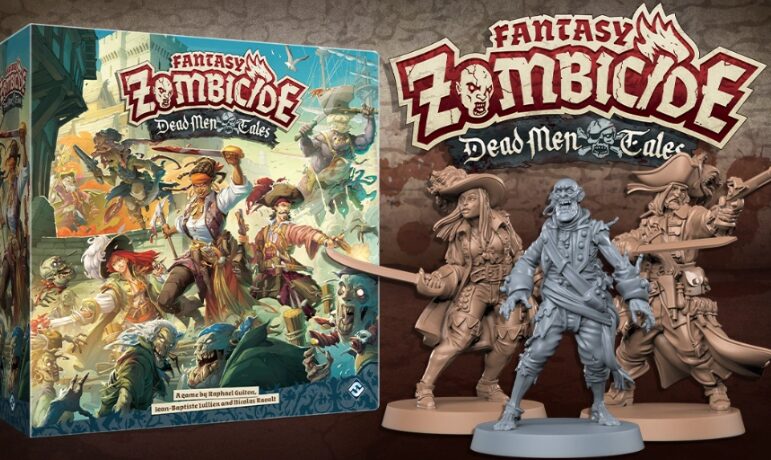
But the board game giant is currently preparing to dip its toes into crowdfunding proper through a Gamefound campaign for Zombicide: Dead Men Tales, having picked up the IP from financially-troubled CMON last summer.

Zombicide: Dead Men Tails by Asmodee || Gamefound image

The campaign follows Asmodee bringing in David Preti, the former COO of CMON, in May last year to head up a newly-launched crowdfunding and miniatures operation.

Both Zombicide and fellow CMON acquisition Cthulhu: Death May Die – a series which has raised almost $10m via crowdfunding – are now part of Fantasy Flight alongside Descent, although Asmodee is yet to reveal if the future of the latter title revolves around crowdfunding campaigns.

Its statement about the end of Descent: Legends of the Dark said, “While we don’t have anything to share at this time, there is always a possibility that we will revisit Descent in the future.

“It would take a different form and would not be Legends of the Dark, but this game universe is near and dear to FFG’s heart.

“The future is always uncertain, and even though we have to close the book on Descent today, we hope that, someday, we’ll be able to dream big with it again.”

FFG’s other major titles currently include collectible card game Star Wars Unlimited, ‘living card games’ Marvel Champions and Arkham Horror: The Card Game, heavyweight space opera board game Twilight Imperium and veteran bluffing and negotiation game Cosmic Encounter.

The company said that although Act III of Descent: Legends of the Dark is no longer in development, the company would continue to support the game’s companion app for the first two acts of the game, albeit without any new content being added.

In February Artefacts Studio unveiled Terrinoth: Heroes of Descent, a video game set in the Descent universe which FFG said “captures the classic dungeon-crawl feeling of the Descent board games in a whole new medium”.

The post Fantasy Flight calls time on Descent: Legends of the Dark, saying rising costs mean it was selling at a loss first appeared on .

  •  

Asmodee co-founder Philippe Mouret, veteran Catan Studio head Pete Fenlon step back; Julia Marcelin to head up five studios

Asmodee co-founder Philippe Mouret and Catan Studio head Pete Fenlon have both stepped back from their high-level roles at the board game giant, with Julia Marcelin and Mike Bisogno stepping up to oversee some of its biggest-selling titles as part of the leadership transition.

Mouret, who co-founded Asmodee more than 30 years ago, was also behind the creation of Splendor publisher Space Cowboys in 2014, and has overseen multiple publishing studios at the business over the years.

Julia Marcelin, who has been with Asmodee for almost seven years, becomes head of five studios as part of the shake-up, taking on responsibility for Days of Wonder, Space Cowboys, Repos Production, Libellud and Next Move.

Those studios are the home of some of Asmodee’s best-selling titles, including Ticket to Ride, Memoir 44, Splendor, 7 Wonders and Dixit.

Marcelin has spent the last year working with Mouret as deputy head of studio in preparation for the transition, Asmodee said, following previous responsibilities in operational strategy and international transformation at the business.

A statement from Asmodee said Mouret had “played a defining role in shaping the company’s creative direction”, as well as “contributed to the development and creation of some of the industry’s most celebrated titles”.

The company said Mouret would “remain closely involved” with its publishing team, working alongside chief product officer Jean-Sébastien De Barros and senior vice president for tabletop Benoit Clerc.

Asmodee also revealed that Pete Fenlon has stepped down as head of Catan Studio after ten years, with his LinkedIn page now updated to place him as “storyteller” and “mentor at large” at the company.

Former Catan Studio head Pete Fenlon

Mike Bisogno, who joined Asmodee three months ago after more than 17 years at Spin Master, takes on the role. He was most recently senior director of design and inventor relations at Spin Master, and also previously worked as a licensing lead at the company.

Catan is one of Asmodee’s most powerful titles, having successfully broken out from the hobby board gaming space and into wider pop culture since its 1995 release.

The game has sold more than 45 million copies and been translated into over 40 languages to date. Asmodee announced a 6th edition of the game last year to coincide with the title’s 30th anniversary.

A statement from Asmodee said, “Mike combines creative leadership with a strong track record of building successful partnerships. His arrival reflects Asmodee’s commitment to sustaining Catan’s legacy while exploring new opportunities for growth.”

It added, “Pete has left an enduring mark on the industry, with a career spanning several decades, including 20 years as CEO and chairman of Mayfair Games, and being a force behind the growth and global success of Catan.

New Catan Studio head Mike Bisognio

“Since joining Asmodee in 2016 to lead Catan Studio, he led the brand through significant expansion and innovation.”

Jean-Sébastien De Barros, chief product officer and executive vice president for publishing at Asmodee, said, “Asmodee has always been built on the strength of its people. I see both Philippe and Pete as mentors for our new generation of Asmodee publishing team members.

“They have each played a pivotal role in shaping not only our portfolio but also the culture of Asmodee, one which resonates with so many players today.

“I’m glad to have shared part of my journey with them and we are confident in the next generation of leaders we’re bringing to these positions as they bring the right energy to continue building on this legacy.”

Asmodee has recently accelerated the reignited acquisitions strategy it announced at the end of 2024, with last month’s agreement to pay up to €250m for French social and party game publisher ATM Gaming its most striking deal to date.

The board game giant said buying ATM, the publisher of titles including Speed Bac/QuickstopMouton Mouton and Pili Pili, was predicated on social games being “the fastest growing category of the board games market”.

The ATM deal followed five other acquisitions from the past 12 months – including the buyout of Japon Brand from CMON, anchoring the board game giant’s push into a “currently untapped market” for the company.

Its other recent deals include picking up ZombicideCthulhu: Death May Die and Sheriff of Nottingham from CMON, which is attempting to recover from heavy losses over the past couple of years.

Asmodee posted record sales of €524m during the last quarter of 2025 despite a slump in its US performance, with trading card game earnings in Europe acting as a driving force for the business.

The post Asmodee co-founder Philippe Mouret, veteran Catan Studio head Pete Fenlon step back; Julia Marcelin to head up five studios first appeared on .

  •  

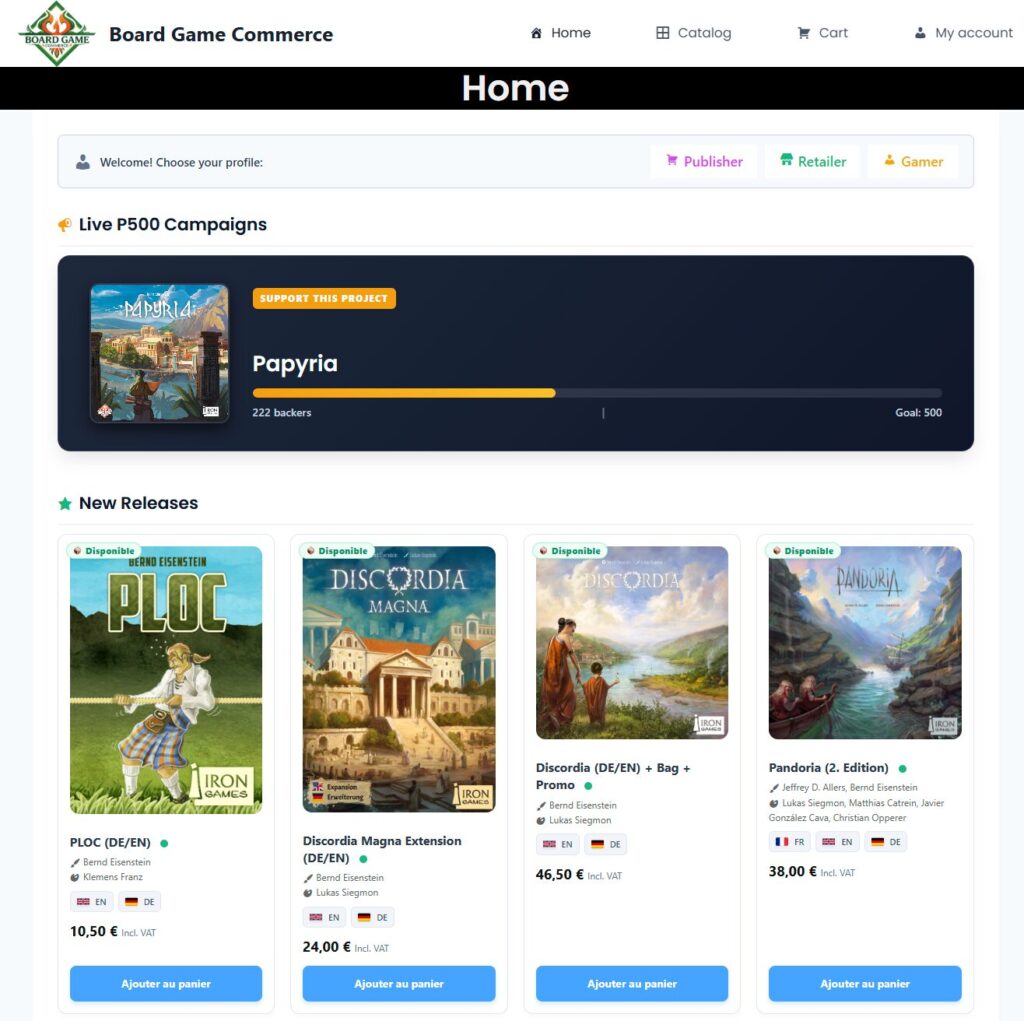
Fentasy Games looks to help complex game publishers avoid ‘strangulation’ of trad distribution with P500-style platform launch

French board game publisher Fentasy Games has launched a new platform aimed at providing publishers with a more affordable way to get their higher complexity titles into the hands of retailers and gamers.

Company founder and CEO Florian Gigot told BoardGameWire Fentasy had scored several successes since launching towards the end of 2024, including localisations of complex titles El Burro and Stephens – but said its major challenge in that time had been “the structural reality of the traditional distribution model”.

He said, “We realised that for a small publisher, a ‘critical success’ doesn’t always translate to a ‘financial success’ once the middlemen take their cut. The same applies to many of my partners around the world.

“…between squeezed margins, production costs, and trade discounts, even a popular game can become a financial failure. For an independent publisher, this means increasing difficulty in funding subsequent projects – and ultimately, a real risk of going out of business.

“In this context, profitability is no longer a secondary objective, but a condition for survival.”

He added, “This might seem counterintuitive, especially at a time when a game like [Brass: Pittsburgh] is thriving on Gamefound. But that is the exception. So many other expert ‘hidden gems’ deserve a chance to exist.”

Gigot hopes newly launched platform BoardGameCommerce will give publishers of higher complexity games with smaller print runs – of between 500 and 1,000 units – a more sustainable financial option than the traditional board game industry distribution model.

Fentasy Games founder and CEO Florian Gigot

He described BGC as an ‘evolution’ of the P500 scheme successfully employed by wargame and strategy game specialist GMT for more than 20 years, which allows gamers to pre-order still-in-development titles, which then begin final art and development once they reach 500 orders.

Gigot said BGC differs, however, in that Fentasy commits to producing the game the moment it goes onto the platform, saying, “We don’t ask the community to carry the industrial risk – we carry it ourselves because we believe in the project.”

He said that model helps Fentasy and other publishers measure real demand for their titles, as well as giving visibility to game makers that might not be possible amid the plethora of new games battling it out through traditional distribution.

Gigot added that BGC also offers retailers “a professional interface to secure limited stock with high margins of up to 55%”, with no payment required until the game is ready to ship.

He told BoardGameWire, “I absolutely see this growing. In fact, BGC is designed to be an agnostic platform. We are already in talks with other small publishers who face the same ‘strangulation’ within traditional distribution.

“We want to offer them the same resilience we built for ourselves – bringing everyone together on a single, global platform. It makes it much easier for gamers and retailers to find exactly what they are looking for in one place.

“The icing on the cake is that all publishers using the BGC platform have access to a shared licensing ecosystem. For example, if Publisher A adds a game to BGC and is looking for a partner to localise it, Publisher B can check the available licenses for their country and initiate a business discussion immediately.

“BGC takes 0% commission on these deals – the goal is simply to be stronger together.”

Gigot said Fentasy aims to release between three and five titles each year, with about half going through BGC and half, such as its localisation of Animal Rescue Team and upcoming strategy title Microlonies, through traditional distribution.

The BoardGameCommerce platform

The publisher’s first release through BGC is Iron Games’ Mesopotamia-themed territory builder Papyria, with future titles set to arrive on the platform before the end of next year including Martin Wallace space exploration design Casus Belli and Masaki Suga’s chocolate industry strategy title Bean to Bar.

Other Iron Games releases available through BGC include Discordia and its Magna expansion, Pandoria and Ploc, while Fentasy’s French localisation of Uwe Rosenberg design Kanal – previously Oranienburger Kanal – is also present on the platform.

But Gigot added, “Titles like Animal Rescue Team and Microlonies will still follow the traditional distribution model. We aren’t abandoning big distribution – we are simply choosing the right tool for the right game.

“There is no ‘hostility’ toward the traditional model – it just isn’t built to sustain niche titles effectively.”

Gigot said Fentasy’s biggest successes since its late 2024 launch have included Kikai – Bricolage Heads, which he said moved more than 4,000 copies “in a short window for a game of its complexity”.

He added that 2026 release Microlonies “is following the same successful path. It proved that a hungry audience exists for deep, high-production-value games”.

Fentasy’s success to date has persuaded Gigot – who runs the company as “a small, agile core team of one person” – to expand its scope internationally, with him telling BoardGameWire the business is moving towards a 60% international / 40% France split.

He said, “We are always looking for new partners to localize our games in their countries and to localise their games into French.

“Our goal for 2027 is to achieve a synchronized BGC launch for our expert line across Europe (Germany, Poland, Italy, Spain) and Canada, China, allowing local publishers / retailers to bypass the heavy costs of international imports.”

The post Fentasy Games looks to help complex game publishers avoid ‘strangulation’ of trad distribution with P500-style platform launch first appeared on .

  •  

German Mensa unveils full slate of nominees for this year’s MinD Spielepreis

The German branch of high IQ society Mensa has unveiled its full slate of nominees for this year’s MinD Spielepreis.

Mensa in Deutschland has run the awards contest since 2009, and has operated a ‘shorter games’ category for more than a decade and lighter two-player games prize since 2019.

This year’s ‘shorter games’ category will be fought over by titles including 2025 Spiel des Jahres nominee Krakel Orakel, as well as Grégory Grard and Mathieu Roussel’s design Zenith and Take Time from Alexi Piovesan and Julien Prothière.

Word chaining game Next by Verena Wiechens and Lukas Setzke is also up for the shorter game prize – which focuses on titles that play in well under an hour – as is Maldón’s design El Camarero (published in Germany as Chaosteria), and Wilmot’s Warehouse from David King, Ricky Haggett and Richard Hogg.

In the two-player games category, Bruno Cathala’s design Kamon is up against Niwashi, from Gautier de Cottreau and Baptiste Laurent, Junghee Choi’s Orapa and Tobias Tesar’s Perfect Murder.

Playball, designed by David Florsch, will also compete in that category, as will Strategeti by Ignasi Ferré and Suna Valo, designed by Andreas Odendahl (who goes by ode.).

Mensa Deutschland revealed in January that it was changing up the ‘complex games’ category of the awards to focus entirely on expert-level titles, in order to fill what the organisers saw as a gap in the industry.

Jochen Tierbach, who has been organising the MinD Game Award for 16 years, said at the time, “There are already various awards and prizes for family and connoisseur games.

“But for expert games, the really tough ones, there is no such thing in Germany yet. And we feel that the industry wants it.”

The long list of more than 20 expert-level titles was whittled down to six challengers for the complex games award this year: Galactic CruiseLuthierShackleton BaseSpeakeasyThebai and Thesauros, all of which have been released in Germany since Spiel Essen last October.

Last year’s MinD award for complex games saw Tomáš Holek’s space exploration eurogame SETI add to its array of prizes, while Simone Luciani and Dávid Turczi’s Nucleum triumphed in 2024.

The most recent holder of the MinD shorter game award was 2025 Spiel des Jahres winner Bomb Busters, while 2024 SdJ champion Sky Team was last year’s winner of the best two-player game prize.

The post German Mensa unveils full slate of nominees for this year’s MinD Spielepreis first appeared on .

  •  

CMON eyes crowdfunding return after annual losses spiral to almost $20m

Financially-troubled board game publisher CMON says it plans to relaunch its halted crowdfunding operations later this year, after seeing its annual losses soar to almost $20m in 2025.

CMON pulled the plug on crowdfunding launches and new game development 12 months ago, citing the economic uncertainty created by US tariff hikes – which at the time had reached 145% for China, where the vast majority of hobby board games are manufactured.

But a month later it emerged that CMON’s financial problems had been growing long before the tariffs, with the company announcing it had slumped to a loss of more than $3m in 2024 due to falling sales for its crowdfunding campaigns.

That loss was almost double CMON’s total profits from the prior three years – but the figure is dwarfed by the $19.9m annual loss the company just announced in its 2025 financial results.

CMON’s $23m losses across 2024 and 2025 are now almost 5.5-times larger than its profits from the preceding nine years combined – and have led an independent auditor hired by the company to question whether it has the resources to stay in business for the foreseeable future.

An extract of a report from auditor Zhonghui Anda shared by CMON, which is set to appear in the company’s 2025 annual report next month, considered the publisher’s $19.9m annual loss, its net liabilities of more than $3.5m and contract liabilities of over $7.5m, saying, “These conditions indicate a material uncertainty which may cast significant doubt about the Group’s ability to continue as a going concern.”

CMON’s directors have a different view, however, saying in the 2025 financial report that the company “should be able to continue as a going concern” thanks to a trio of factors.

They include financial support from some of the directors “sufficient to finance CMON’s working capital requirements”, the roughly $2.4m proceeds from selling its Singapore office that it received in January, and the roughly $1.25m gross proceeds from a successful share sale last month.

CMON’s hefty liabilities are largely due to its eight undelivered crowdfunding campaigns, which are not recognised as revenue on the company’s books until they are fulfilled to backers.

They include DC Super Heroes United, which raised more than $4.4m, and DCeased, which brought in over $2.5m. Both campaigns were initially due to be delivered last year, but are now expected to be delivered in Q4 of 2026, according to CMON’s latest estimates.

CMON also has five undelivered pre-order campaigns on its books, including Dune Desert War and the Assassin’s Creed Role Playing Game.

The company said that delivering crowdfunding projects in 2024 contributed about $20m in revenue – a figure which had sunk to just $200,000 last year according to its latest financial report.

CMON said the 2025 losses were driven by a “significant decline in revenue”, which fell more than 73% to $9.9m last year, compared to the $37.3m total from 2024.

DCeased from CMON || Kickstarter image

It also cited impairment losses on property, plant and equipment, right of-use assets and intangible assets, and a loss it made disposing intellectual properties and related assets as part of its “strategic portfolio restructuring”.

Those IP sales included parting with its most famous and profitable title Zombicide – which has raised more than $40m on Kickstarter since its 2012 launch – to Asmodee, as well as Blood Rage, Rising Sun and Ankh to Tycoon Games.

It followed those by selling the IP for former Mythic Games titles Anastyr and Hel: The Last Saga to Don’t Panic Games in September, and parting with the lucrative Cthulhu: Death May Die IP to Asmodee a month later – the latter a series which has raised almost $10m from backers to date.

CMON said all those sales combined amounted to about $5.1m, but added that it actually made an overall $2.4m loss on disposal of intellectual properties and related assets across 2025.

It also made a $5.7m loss due to undertaking an impairment assessment on some of its property, plant and equipment, right-of-use assets and intangible assets “with finite useful lives”.

CMON said in the financial report, “These actions, while negatively impacting short-term results, were undertaken to strengthen the Group’s operational focus and reduce future cost burden.”

The company’s remaining significant IP includes the Massive Darkness series, with the most recent installment, Massive Darkness: Dungeons of Shadowreach, completing a $2.85m crowdfund on Gamefound early last year – a figure which rose to more than $3.7m including late pledges.

That campaign was CMON’s last before it scrapped its future crowdfunding plans two months later. The company has pivoted in the interim to releasing several small-box games direct to retail, including Collect!Peanuts Talent ShowFairy PerfumeRocket Punch and Yokai Carnival.

Collect! from CMON, designed by Jérémy Ducret and Johannes Goupy

Discussing its current strategy in the report, the company said, “In light of the continued uncertainty in the global market, particularly the instability arising from US import tariffs on certain products since the first half of 2025, the Group has taken decisive steps to restructure its operations and strengthen its financial position.

“Our current strategy is to:

  • 1) reduce exposure to large-scale crowd-funding launches in the near term, focusing on fulfilment of games already committed to backers, with plans to resume crowdfunding activities in the second half of 2026 with new titles from current game lines;
  • 2) grow distribution in Asia as a primary strategic market;
  • 3) maintain a streamlined operational structure with reduced headcount and a smaller office footprint in line with the Group’s current scale of operations; and
  • 4) maintain a debt-free position following the full repayment of bank borrowings, significantly reducing the Group’s financial liabilities and improving its financial resilience.

“We remain committed to becoming a quality developer and publisher of tabletop games and believe the strategic refocus toward Asia and selective game development will position the Group more sustainably for the future.”

CMON said it had reduced its revenue exposure to the US to about 21.4% of its total across 2025, compared to around 42% for the previous year, through what it described as a “deliberate strategic pivot toward Asia”.

The report showed CMON’s combined North and South America revenue fell more than 86% last year to about $2.1m, from around $15.7m in 2024.

European revenue also fell more than 81% year-on-year, from about $12.7m to around $2.4m. Asia revenue fell too, but much less sharply, down about 33% in 2025 from $8m to around $5.3m.

CMON said in the report, “Notwithstanding this reduced exposure, tariff-related uncertainties may continue to affect future export sales, revenue and gross margin performance in the US market.

“The Group intends to maintain its current reduced focus on the US market until the trade environment stabilises and market conditions improve.”

CMON also revealed the scale of its staffing cuts in the latest report, with headcount falling from 81 at the start of 2025 to just 41 at the beginning of this year.

The report said total staff costs had fallen in that time from about $4m to around $2.8m, including pay for its directors and their pension fund contributions, but it did not provide a breakdown of those numbers.

The post CMON eyes crowdfunding return after annual losses spiral to almost $20m first appeared on .

  •  

Hat-wearing animal game Petiquette wins latest Golden Box Awards, voted on by members of Japan’s board game industry

Petiquette, Thomas Sellner’s card game of picking out patterns among hat-wearing animals, has been named game of the year at this year’s Golden Box Awards.

The Oink Games-published design fought off competition from 2025 winner Isao Mukai, who was nominated for Banana Governance – a card-based drafting and bidding game which sees players attempt to satisfy the needs of hungry monkeys better than their opponents.

A comment from the selection committee about Petiquette called the title “a brilliant and sharp work typical of Oink”.

Cards from Banana Governance, designed and published by Isao Mukai

It said, “I’ll never forget the shock I felt the first time I played it. The rules are simple: just give the answer that fits in the single ‘?’ on the cards laid out.

“But… the eyes of those who give the same answer feel friendly. The mouths of those who give a different answer seem to twist. The loneliness of desperately trying to explain when you’re the only one who gives a different answer.

“A mix of various emotions. The unique experience of this game really stands out.”

The annual Golden Box contest was launched four years ago, modelled on the American film industry’s Academy Awards. More than 40 industry professionals from within the Japanese board game sphere voted on this year’s award.

In addition to ‘Best Picture’ for the overall game of the year, the awards also celebrate the best in game design, art, graphic design, production and rulebook work through individual awards.

Cover art for Sweet Lands

Eve Inc-designed Nusutto Cat – also known as Meow Heist – triumphed in this year’s Game Design Award, while best art went to Totsuca Chuo’s Sweet Lands, which was illustrated by Tatsuki Asano and Broni120.

Moyuki Adisawa’s animal jet ski racing game Tornado Splash picked up the Graphic Design Award thanks to the work of iD Creative Co, while the Production Award went to National Economy and Toshinori Iwai.

The selection committee said of the Production Award win: “It’s great when a great game is revived. It’s even better when a great game is revived in the best possible form.

“This new edition not only makes the seemingly impossible revival of this masterpiece a reality, but also reinterprets it in a more refined way.

“The ‘box within a box’ structure, combining the three parts, is exciting even before you start playing, and the ‘household budget’ mechanism that characterizes this game is implemented clearly and beautifully as a ‘safe’.

“This masterpiece hasn’t lost its appeal even after ten years, and this new edition will be loved for even longer.”

The Rulebook Award, meanwhile, was bestowed upon ForGames-published Down Down Dungeon – a reimplementation of Reiner Knizia’s Cucina Curiosa/Mysterious Dungeons.

Yoshihiko Koriyama worked on the rulebook for that title, with proofreading from Shota Okano and DTP work from Makoto Takami. The selection committee said, “The fact that you can essentially understand the game rules by reading just one page is excellent.” 

Bomb Busters designer Hishashi Hayashi collecting his Spiel des Jahres award

A special award was also presented this year to Hisashi Hayashi, after his co-operative bomb disposal game Bomb Busters won last year’s Spiel des Jahres – beating the much-fancied push-your-luck card game Flip 7 to the high-profile award.

The win marked the first Spiel des Jahres triumph for an Asian designer in the prize’s 46-year history, and underscored the huge rise in tabletop designs making their way across from Asia to Europe and North America in the past decade.

Each winner will receive a golden board game box as a trophy.

Last year’s Golden Box Award game of the year prize was won by Isao Mukai and Napopora’s design Umataka, a worker placement game centred around hunter-gatherers making traditional pottery in ancient Japan.

The 2025 Golden Box Board Game Awards in full:

Best Picture

Winner: Petiquette, designed by Thomas Sellner (Published by Oink Games)
Banana Governance, Mukai (Mukai)
The Match Girl Millionaire (Hey!)

Outstanding Game Design

Winner: Nusutto Cat, Eve Inc (Ibuink)
Storm in a Teacup, Kyashi/Ikumo Tasaka (Gomi Kokusai/Waste International)
Switch To: mor! (Yontousei)

Art Award

Winner: Sweet Lands, Totsuca Chuo (Uchibacoya) – art by Tatsuki Asano and Broni120
A Boar, Crab, Dung Beatle, Takuya Iwamura (Kyuhachi Dog) – art by Takuya Iwamura
Ghost Lift, Onegear (Engames) – art by Sai Beppu

Graphic Design Award

Winner: Tornado Splash, Moyuki Adisawa (ArcLight Games) – graphic design by iD Creative
Vidro, Keita Kasagi (Bamboo Games) – graphic design by Kakuzato
Shady Lady, Kaya Miyano (Mob+) – graphic design by Sai Beppu

Best Production

Winner: National Economy, Hiroshi Nishimura (Korokorodou)
Down Down Dungeon, Reiner Knizia (ForGames)
Pose Mania!, Suitashi (Avignon Games)

Best Rulebook

Winner: Down Down Dungeon, Reiner Knizia (ForGames)
Electra Select (The Society for Appreciating Swaying Buds)
Snowp, Eisuke Fujinawa, Kazunori Hori (SzpiLAB)

The post Hat-wearing animal game Petiquette wins latest Golden Box Awards, voted on by members of Japan’s board game industry first appeared on .

  •  

French publisher Don’t Panic Games to bring more titles to North America, launches US office

French board game publisher Don’t Panic Games has continued its expansion into the North American market, telling BoardGameWire the success of several recent titles had reinforced its confidence in the strategy.

The company has made a name for itself providing French localisations of games including Final Girl, Champions of Midgard and Fantasy Realms since it was co-founded by current director Cédric Littardi in 2013.

But Don’t Panic has also found success publishing its own titles such as Chess-like abstract game Above – and said the performance of that, and several other recent games, had persuaded it to bring more of its titles to North America.

Emma Recher, who will head up a three-person team at Don’t Panic’s new US office in California, told BoardGameWire, “Several recent titles have reinforced our confidence in expanding more directly into the US market.

“Games such as Don’t Wake Up Cthulhu!, Red Panda, Luminis, Maiko, and Above have been especially encouraging for us, and the early response to Spyworld has also been very promising.

“That is one of the reasons we are beginning this US expansion with titles such as Spyworld, Luminis, Above, and Maiko, which are also the titles highlighted in our North American launch announcement.

“We also have additional releases planned each quarter this year, including Don’t Drop the Soap! toward the end of the year.”

Above, designed by Yves Charamel-Lenain, from Don’t Panic Games

Recher also works with Japanime Games, which has distributed licensed Don’t Panic titles such as Attack on Titan: The Last Stand and Cowboy Bebop: Space Serenade into North America.

Don’t Panic said those licensed titles would continue to be distributed by Japanime, while the French company’s historical and war line, including Fighters of the Pacific and Fighters of Europe, will continue to be distributed by Ares Games in the US.

Recher said, “What the new US office changes is that Don’t Panic can now directly support additional English-language titles that were not previously represented in the market in the same way.

“For retailers, that means broader access to the catalog, closer communication, more direct follow-up, and stronger on-the-ground marketing support.”

Don’t Panic added that it would be supported in the US by Double Exposure, which will represent the company at both major and smaller conventions – adding that it had a “robust demo schedule” planned over the next few months.

When asked about Don’t Panic’s decision to expand further in the US despite ongoing uncertainty over the country’s tariffs policy – and its effect on board game publishers working in the country – Recher said, “Like many publishers in tabletop gaming, we are watching the tariff situation very carefully. It creates uncertainty across the supply chain, from manufacturing and freight planning to wholesale pricing and retailer margins.

“Our approach is to stay flexible: planning conservatively, reviewing sourcing and logistics options on an ongoing basis, and working closely with our partners to protect continuity of supply as much as possible.

“The current environment is challenging for everyone in the industry, but we believe the best response is to remain pragmatic, adaptable, and transparent with our partners.”

Last summer Don’t Panic bought the IP for Anastyr and Hel: The Last Saga from board game crowdfunding major CMON, which has been selling off its portfolio of games as part of a fightback against heavy losses.

That deal came just 18 months after CMON had itself acquired the pair of titles from financially-devastated board game crowdfunding specialist Mythic Games, which gave up on fulfilling the two Kickstarter campaigns worth a combined $3.2m.

Don’t Panic has offered backers of Mythic’s Anastyr crowdfund “preferential pricing” on pre-orders of its own version of the game, Anastyr Chronicles, and said in a comment shared on Mythic’s Hel: The Last Sage Kickstarter page that it would make a similar offer when it releases its version of that title.

The post French publisher Don’t Panic Games to bring more titles to North America, launches US office first appeared on .

  •  

More than half of board game designers in TTGDA survey have used generative AI in their work

More than half of board game designers responding to a Tabletop Game Designers Association member survey say they have used generative AI for some elements of their work.

About a quarter of the 171 designers who answered the TTGDA survey said they had used a genAI platform to come up with game ideas or mechanisms – while more than half indicated they were ‘strongly opposed’ to using AI in that way.

TTGDA – a professional organisation launched in 2024 to advocate for tabletop game creators in North America – asked designers about seven use cases, comprising:

● Coming up with ideas for games or mechanisms
● Writing placeholder text
● Writing text for the final version of a published game
● Editing or proofreading text
● Making placeholder art
● Making art for the final version of a published game
● Creating marketing materials for a game

The organisation said that while 28% of respondents were ‘strongly opposed’ to all seven use cases, almost a fifth were not strongly opposed to any of them, with the remaining respondents offering a mix of use cases they consider either acceptable or not.

Image credit: The Tabletop Game Designers Association

TTGDA’s report of its findings stated, “In the free-response section of the survey, multiple designers said that the process of chatting with the AI particularly helped them better articulate their own goals or ideas for a game.

“One said, ‘It’s like asking another human who may not know much about games. They know enough to at least bounce a couple ideas, which ends up with me getting to where I want to go’.

“Several designers who had tried asking generative AI platforms to come up with its own ideas described the material they got from the AI with terms such as ‘derivative’ or ‘slop’.

“One designer said that when they tried to prompt an AI for ideas, the AI recommended inappropriate mechanisms from mass market games, like ‘lose a turn’.

“Some said that a fraction of the output from their prompts would contain nuggets of useful ideas or angles that were worth considering.”

The results for use of AI art in final products were much more clear cut, with roughly four out of five respondents ‘strongly opposed’, and only two respondents out of the 171 saying they either regularly or occasionally generate art with AI that they plan to keep in a final game.

Many more designers (30%) were accepting of using AI to generate placeholder art for their designs – but 39% of respondents were ‘strongly opposed’ to that use.

TTGDA’s report cited one respondent as saying, “Publishers want pretty prototypes and the AI art makes me better able to illustrate the narrative direction and make play less boring than it would be with black and white words or “close enough” illustrations. Some of the games I am working on have no illustrations in the real world that anyone has done and if I wanted those I would have to pay artists which I cannot afford to do.”

Image credit: The Tabletop Game Designers Association

But it added that other designers said AI assistants had failed to create usable placeholder art in response to their prompts, with several saying that after trying AI-generated placeholder art they had returned to clipart and other online searches.

TTGDA said that when asked how they feel about publishers using AI for placeholder art, 40% of respondents said they would be ok with it, but 29% would like to contractually prohibit it and another 31% said they ‘don’t like it, but wouldn’t really fight it’.

The report added, “Of all the AI uses that the survey asked about, editing and proofreading had the lowest
number of ‘strongly opposed’ responses, at 35% for personal use and 30% for publisher use.

“About a quarter of designers (28%) are using AI to edit things they’ve written at least occasionally.

“Some designers gave examples of AI not working well as an editor for their games, saying it ‘made the rulebook worse’, or ‘creates more problems than it solves’.

“The problems they described included hallucinations and inappropriate tone. Designers also raised concerns that publishers might use AI for proofreading without a final human check, leaving the game vulnerable to errors.”

TTGDA also noted that more than 80% of respondents did not want publishers to use AI to generate marketing materials for their games, with multiple designers commenting that they were turned off by the use of AI in content creation around games, and will not work with influencers who use genAI in their workflow.

The report noted that of issues raised by designers when asked about their concerns around AI, “the most commonly voiced concern was that current generative AI tools are based on plagiarism, because they were trained on art and written materials without the creators’ consent.”

It noted, “Many said things like, ‘All uses of stolen material are problematic’. Multiple designers also mentioned that they want contract language that will prohibit a publisher from allowing AIs to be further trained on their game materials.

“The next most common concern was AI’s high environmental cost. A ChatGPT request uses ten times more electricity than a typical Google search (2.0Wh vs 0.3Wh). Other impacts include the use of rare earth elements, mercury, and lead in data center equipment; and the use of large amounts of water for cooling.

“Some designers worry that AI could flood the market with bad games. One designer thought it would be easy for unethical publishers to quickly create ‘clones that are slightly different’ and crowd the games they are copying out of the market.

“Another designer worried that ‘AI is great at making things that look like games for crowd funding campaigns, but without actual rules that make sense’.

“The general sentiment from these and other designers was the worry that in a market where it is already difficult for a game to stand out, these practices will only make it harder.”

Recent Repercussions

TTGDA’s report comes just over a month after Ryan Dancey, a more than 30-year veteran of the tabletop gaming industry, lost his COO job at publisher Alderac Entertainment Group after saying AI could generate game ideas as good as his company’s titles Tiny Towns and Cubitos.

Dancey said Alderac CEO John Zinser told him it was time to “move on to new adventures” in the “aftermath” of his LinkedIn post discussing the use of AI in board game design, which quickly attracted a flurry of negative comments from tabletop designersAEG’s business partners and bodies such as the Tabletop Game Designers Association, as well as board gamers across social media.

Wingspan designer Elizabeth Hargrave, the co-founder of TTGDA, dismissed Dancey’s suggestion when speaking to BoardGameWire the day after his departure from AEG.

She said at the time, “I absolutely do not think AI could be prompted to come up with even the basic idea for those games, let alone a fully fleshed out ruleset for them. For fun, I’ve prompted several different options for ideas for Wingspan cards and not one of them has given me an actionable idea.

“I had a friend who ran a rulebook through AI for proofreading and it hallucinated that people needed to shout ‘bingo’. Apparently that’s AI’s conception of board games right now.”

She told BoardGameWire at the time that the TTGDA board had been discussing the use of AI in board game design, adding that it was “a conversation we need to have with our membership”.

Wingspan designer and TTGDA co-founder Elizabeth Hargrave

She said, “We’re working on a model contract to offer to our members right now, and that will offer a clause that designers can request that will require publishers not to use AI in their final product. A lot of contracts ask us to certify that a board game design is our own, and not plagiarized.

“It’s my opinion that using AI in a final product goes against that, because it’s using a machine that’s built entirely on plagiarism.”

Hargrave added last month, “I do see people using AI for things like generating a bunch of placeholder names in a prototype. They’re often clunky options but they do the job when you know everything will change 50 times before you’re done anyway. I’m not aware of anyone who has successfully actually gotten good, original ideas for mechanisms from AI.

“What I wish we were talking about is how AI could be built to help designers run models of their games repeatedly to catch weird edge cases or broken strategies. I wish someone would build that tool instead of the language models that just focus on advanced auto-complete.

“This would never replace actual playtesting with humans for psychology and actual fun, but it might save me some repetitions.”

The TTGDA survey noted that one of the most common additional uses mentioned was as a source for help with probability, mathematics, and thinking about balance.

It said, “In some cases, designers are having the AI write spreadsheet formulas that they then use to do calculations in the spreadsheet. In others, they are simply asking the AI to do calculations.

“However, nearly as many designers said they had quite poor results with asking LLMs to do math, reporting errors and hallucinations. For example, one designer who used ChatGPT to calculate detailed probabilities (e.g. how often a certain set of cards might appear in a starting hand) said when they checked the results, they were wrong ‘roughly 1/4th of the time’. Another called ChatGPT ‘surprisingly bad at maths’.”

Last week board game publisher Awaken Realms responded to a wave of anti-AI art review bombing for its upcoming crowdfund, Concordia: Special Edition, by saying no AI-generated imagery will be used in the finished game.

Awaken Realms is one of highest-profile tabletop publishers to confirm it uses AI image generators, with other notable adopters of the technology including Stronghold Games – which attracted significant ire for its use of AI art in its $2.2m More Terraforming Mars! crowdfunding campaign.

The technology has been widely criticised by artists angry that the models are built upon their work without licensing or recompense, in addition to outcry over its environmental costs and threats to jobs in the creative and other industries.


The post More than half of board game designers in TTGDA survey have used generative AI in their work first appeared on .

  •  

GAMA unveils board of directors election winners, current president and secretary re-elected to board

Editor’s note: GAMA is one of the sponsors of the BoardGameWire newsletter

Hobby games trade organisation GAMA has revealed the winning candidates in its latest board of directors election, with the organisation’s current president and secretary both retaining their board seats.

President Nicole Brady, who runs review site SAHM Reviews, was re-elected to the board by GAMA’s media and events member group, while treasurer Tiffany Reid from Southern Hobby Distribution won re-election from the wholesale group.

Current GAMA secretary Jamie Mathy – who runs game store Red Racoon Games – was re-elected by the organisation’s ‘Team Retail’ group alongside Red Claw Gaming’s Lea-Anne Welter, while David Wheeler from Dragon’s Lair and Boyd Stephenson from Game Kastle were also voted in as retailer representatives.

One of those four will be selected by Team Retail to fill a retailer seat on the GAMA board of directors, with all successful board candidates working for a two-year term.

The other newly elected members of the GAMA board are Michael Maggiotto Jr, who was selected by GAMA’s production members, Heather O’Neill from 9th Level Games representing publishers, and LegalWATCH’s Eartha Johnson from the creator membership group.

The GAMA Board of Directors is comprised of twelve individuals elected to represent the six voting membership groups, with half of the cohort up for election each year.

That board in turn elects GAMA’s four officers – president, vice-president, treasurer and secretary – each year.

Current GAMA president Brady has been in her current officer role since May 2024, having previously been treasurer of the organisation from the end of 2022.

GAMA President Nicole Brady

Brady has been a key driver of GAMA’s current plan to become the “epicentre” of global tabletop gaming, underpinned by the organisation unveiling its first-ever 10-year plan last October.

The array of plans spread across the next decade include boosting its membership within both hobby games and the mass market, expanding itself into a global organisation, shifting its finances away from the current heavy reliance on the annual GAMA Expo and Origins shows, and leading the conversation on sustainability within the industry.

Advocacy and brand protection is also one of its near-term priorities – underscored by the organisation’s recent intensive lobbying and awareness efforts around the impact on the industry of US tariffs.

Those efforts included multiple trips to Washington DC to lobby politicians, conducting dozens of media interviews to highlight the devastating impact of tariffs on the hobby, and supporting two lawsuits disputing Trump’s power to set the tariffs without agreement from the US Congress.

Brady told BoardGameWire earlier last year that the move was an attempt to get the organisation away from “playing whack-a-mole” on important issues rather than managing them in a long-term strategy.

GAMA is currently working to secure a permanent replacement for its previous executive director John Stacy, who left the association last October just after the 10-year plan had been revealed.

Leadership consultant Zaria Davis was named as interim executive director last November.

Earlier this month GAMA’s board of directors apologised for some of its elected leaders being “rude and disrespectful” during a “heated” annual general meeting at the recent GAMA Expo trade show.

This year’s GAMA Expo sealed another record attendance, ahead of its planned move to Baltimore in 2027 to contend with rapidly growing demand.

More than 3,820 attendees showed up to this year’s event in Louisville, Kentucky, up almost 12% on last year’s previous record of 3,425 – which had already left the show pressed for space across the exhibition hall and its extensive programme of seminars.

The post GAMA unveils board of directors election winners, current president and secretary re-elected to board first appeared on .

  •  
❌