Maestro Media is opening up the publishing, licensing, manufacturing and retail infrastructure behind its own games to outside designers and publishers, including companies looking for a North American publishing partner.
Maestro founder and CEO Javon Frazier said, “The hardest part of this industry has never been the ideas. It is everything after them. Getting your design in front of a publisher, funding the development, entering distribution, landing it on a shelf.
“We built a machine to do that for our own titles alongside some of the largest licensors in the world. Overture by Maestro Media opens that machine to everybody else.”
Maestro says Overture will allow other companies to use its existing operations for areas including development and licensing, production, manufacturing, crowdfunding, direct-to-consumer sales and retail distribution.
The company has already struck several deals along those lines, including announcing in the summer that it would publish a new North American edition of Zoch Verlag’s Ghost Blitz from January 2027.
Frazier said of the Ghost Blitz deal ahead of unveiling the game at this year’s Gen Con, “Ghost Blitz has sold more than one million copies in 20-plus languages over 15 years. Most North American families have never seen it on a shelf. That’s not a demand problem. It’s a distribution problem.
“That’s the gap we built Maestro Media to close. Crowdfunding, direct-to-consumer, and retail working as one engine, with distribution partners already in place across North America.”
Peterson Rodrigues, CEO of D20 Culture, said, “We’re excited to work with Maestro because we see the same opportunity they do: great games shouldn’t be limited by borders.
“Bringing these titles to players around the world, in their own languages and through partners who understand their markets, is exactly the kind of collaboration we want to be part of.”
Game designers will get their first opportunity to pitch original tabletop games via the new operation through a month-long submission window running from January 1 to 30 next year.
The company says it has worked with more than 40 licensed properties to date, and shipped more than 400,000 products, while Frazier has raised more than $16m across 16 crowdfunding campaigns – although almost 60% of that total comprises the two Binding of Isaac projects.
The company added that Ryan Lumax has been promoted to vice president and head of games at the company, having joined last year after almost eight years at Canadian distributor Lion Rampant Imports.
Lion Rampant was acquired by Asmodee in 2019, when Lumax was working as head purchaser. He became a purchasing manager at the business in 2023.
Lumax said, “I spent eight years on the buying side, and the games that didn’t make it were almost never the bad ones.
“They were good games whose creators ran out of road somewhere between the prototype and the pallet. That is the gap Overture by Maestro Media closes.”
California tabletop publisher and game development studio Solis Game Studio is expanding its reach into US hobby retail through a new distribution deal with Southern Hobby, following several years of building its own catalogue through crowdfunding and direct sales.
The Massive-Verse Fighting Card Game, designed by Brian McKay, from Solis Game Studio
Its contracting work has included projects such as the Cyberpunk TCG, with Solis having led game design and development of a prototype that secured licensing for a new game.
Solis also did development work on Emerson Matsuuchi-designed Metal Gear Solid: The Board Game, and last month announced it would be the developer for the official card game of battle royale video game PUBG.
The company said Southern Hobby will distribute new Solis release Six-Sided Seas, as well as Treat, Please! and The Massive-Verse Fighting Card Game, describing the deal as a “major step forward” for the business.
The publisher has previously used crowdfunding to bring several of its games to market, with its biggest success to date 2024’s licensed Massive-Verse Fighting Card Game, designed by Brian McKay, which raised just over $50,000 from about 800 backers.
Solis has also already been selling directly to retailers through its own wholesale programme.
The publisher’s newest release, push-your-luck worker placement game Six-Sided Seas, will enter US distribution on October 2 with a $24.95 MSRP.
The two-player pirate game, designed by Kroze Kresky, is built around an unusual component format, consisting of 32 dice and a 14in by 24in edge-stitched playmat which is rolled inside the game’s box – allowing the title to be presented vertically, horizontally, or with a collapsible hangtab in retail.
Solis has previously said the idea grew from a visit to game stores in Thailand, where Chris Solis saw a store employee laminating a game board to protect it and began considering whether the board itself could instead be made from playmat material.
He said in the blog post, “When I returned home I issued an internal design challenge to my community. What does a game that is a playmat and single component look like?
“We explored a ton of really interesting designs and even did a limited release for one of them but none captured me like Six-Sided Seas by Kroze.”
Solis launched the game at Gen Con earlier this month, and said it sold all the copies it brought to the convention. Several of its scheduled learn-to-play sessions at Gen Con also sold out, according to the convention’s event listings.
In addition to founder and owner Chris Solis, the studio’s team includes developer Bryan McKay, business operations specialist John Brieger, graphic designer Katherine Boils, marketing manager Courtney Shernan, convention manager Sara Jordan and community manager Antonio Gil.
Ares Games is considering bolstering its website protection after suffering its first ever DDoS attack, which it says left its site inaccessible for about 10 hours across three days of difficulties.
The Italy-based War of the Ring publisher said thousands of fake requests repeatedly saturated its server bandwidth and CPU earlier this week, temporarily preventing some customers from reaching its main website and e-commerce site, which is also used for preorders and crowdfunding pledge management.
Ares director of production Roberto di Meglio told BoardGameWire no customer data was compromised during the cyber attack, adding that he was inclined to believe the company was targeted randomly rather than specifically.
He said, “It’s difficult to assess the exact monetary loss in terms of missed orders. We can assume most of the potential customers affected by the issue will probably come back at a later moment, so the revenue should be delayed but not lost – especially if the customer was visiting for something specific, like a pre-order or pledge manager.”
Ares’ e-commerce infrastructure supports ordinary direct sales alongside preorders and crowdfunding activity. The publisher has continued to use crowdfunding extensively, with its 16th Kickstarter project, Mega Empires: The Far East, completing its campaign earlier this year.
Di Meglio told BoardGameWire at the time that the company planned a combination of reduced inventories, increased prices and product selection alongside “developing our direct sales to make up for the loss of profit through the traditional distribution tiers”.
While Ares has experienced other hacking attempts previously, Di Meglio said this was the publisher’s first DDoS attack. Its server administrators introduced additional security rules in response, and Ares is now considering whether to add further protection such as a DNS proxy service like Cloudflare.
But he added, “The main concern is that every rule or system you implement to stop this type of ‘swarm’ attack potentially might stop or slow down a regular visitor, so you have to find the best compromise between keeping danger out and allowing customers in.”
German children’s book, gifts and stationery publisher arsEdition has confirmed it has tasked Asmodee with distributing its fledgling board game range to specialist toy retailers and some wholesalers, after making its first significant move into tabletop games just under a year ago.
Asmodee has been distributing the Bonnier-owned publisher’s games under the agreement since the beginning of 2026, creating a split-channel model that sees arsEdition continue to handle distribution within the book trade and major book retail chains.
The pair said the move gives retailers improved availability, clear product range structures and coordinated support across both distribution channels – with an aim of sustainably increasing the visibility of arsEdition games in the market and generate further momentum in the family games segment.
arsEdition launched a dedicated games programme last September focused on family-weight games for ages 6, 8, and 10 and up, with an opening slate of seven titles including Reiner Knizia designs Oshiya Tokio and Guardian of the Treasure, and Sophia Wagner’s Twilight Watch.
The board game unit lead, Volker Hirsch, previously spent six years as creative director at Amigo Spiele until 2001, and has also since worked as head of product development at Ravensburger Digital, and as a partner at former Games Workshop collectible card games subsidiary Sabretooth Games.
Some of arsEdition’s debut line of board game releases
arsEdition publisher Dagmar Becker-Göthel said when the range was unveiled last year that games represented a growing category in the toy trade, while also becoming increasingly important for booksellers – providing the rationale for developing a range capable of operating across both channels.
The publisher said at the time it planned to release new games twice a year.
Rebecca Roscher, commercial director at arsEdition, said, “We are currently putting a great deal of energy into the development and production of exceptional family games for ages eight and above, which are characterised by innovative mechanics, strong brands and unique design.
“With Asmodee as our partner, we can now position our games even more strategically and comprehensively across the relevant distribution channels.”
Upcoming releases from arsEdition include include Toshi, a 1-4 player tile-laying game from Friedemann Friese scheduled for September, and Cat and the Tower, a cooperative dexterity game from Masakazu Takizawa.
Box cover for Toshi, designed by Friedemann Friese
The company also continues to work with prominent designer Reiner Knizia, with its website currently listing seven products from the storied creator.
For Asmodee Germany, arsEdition adds another outside publishing partner to a distribution operation that has continued to broaden its third-party portfolio.
Asmodee Germany managing director Udo Fischer said the arsEdition deal brought together the companies’ different areas of expertise.
“The trusting collaboration between Asmodee and arsEdition brings together two distinct perspectives – expertise from the book trade combined with many years’ experience in board and card games – which complement each other perfectly,” he said.
“By entering the world of board games, arsEdition is providing a strong additional impetus in the family segment.”
arsEdition is part of Bonnier Media Deutschland, which also owns publishers including Carlsen, Piper, Ullstein and Thienemann-Esslinger. The wider group reported net sales of €336m in 2025, sold 75.5 million books across all formats and employed an average of 795 full-time staff.
Bonnier Media Deutschland describes itself as the largest German book publishing group, with particularly strong positions in children’s publishing, comics and illustrated formats.
Few people in the hobby game industry have seen as many sides of the business as Scott Morris – from leading global strategy at Lucky Duck Games, building publishing partnerships at GTS Distribution and running sales, marketing and social media at Arcane Wonders. Now Morris is applying that experience to his own venture as founder of Steelwing Games, whose debut title Rainbow Blvd. has been nearly a decade in the making. He spoke to BoardGameWire about deciding to launch as a publisher in a challenging market,why he believes a slower, more selective approach is the right fit, and the lessons he is bringing from his career at Lucky Duck Games and beyond.
BoardGameWire:How long has the idea of you launching your own publisher been rolling around your head? I think I remember you saying you registered Steelwing some years ago?
Steelwing originally began to take shape in 2016, after first playtesting Rainbow Blvd. (which was then called Leprechauntractors as a play on words with Leprechauns and Contractors). Like a lot of people who work in games, I’ve always had ideas about the kinds of projects I’d love to help bring to life if the timing, team, and titles were right.
The company itself was set up in 2021, and I’ve been very intentional about not rushing into publishing just for the sake of launching something. For me, it was important that Steelwing start with the right game, the right creative partners, and a clear sense of what we wanted the company to stand for.
What was it that finally got you to make the jump and launch?
It was really a combination of timing, people, and product. Rainbow Blvd. is the perfect first game, it always has been. It has a fun identity, a strong table presence, it is easy to teach, and has the type of meaningful gameplay that Steelwing is focused on.
I also reached a point in my career where my experience across multiple areas (sales, marketing, crowdfunding, distribution, licensing, production, and working with designers) has given me the confidence to give Steelwing a thoughtful and responsible start.
Rainbow Blvd., designer by Adam Wyse, will be Steelwing’s first published game
What does Steelwing represent or offer that perhaps hasn’t been possible for you in your other board game industry roles?
Steelwing gives me the chance to build something from the ground up with a clear creative point of view. The goal is to publish games that are welcoming, polished, distinct, and deliver a satisfying and rewarding experience for players.
The name reflects that mission. The “steel” represents the experience and discipline I’ve built in the industry, while the “wing” represents using that experience to help create opportunities for others and give talented people new pathways into board games when and where we can.
At its heart, Steelwing is about making games we would be thankful to have in our collection while trying to leave the industry a little better than we found it, along the way.
The industry has been facing higher manufacturing costs, tariffs, freight disruption and increasing competition for attention. Many people might see this as a difficult time to launch a publisher. What makes you optimistic?
It is absolutely a challenging time, that can’t be minimized in any way. Costs are high, attention is hard to earn, and publishers need to be more thoughtful than ever about what we make and how we make it.
What makes me optimistic is that players still respond to games that they can connect with, that have that special feel, and are well cared for. This is a time to be disciplined, focused, and clear about why a game deserves to exist. That is the mindset I am bringing to Steelwing.
Of course it will be challenging. There is never a perfect time to start a new business. One of the principles I try to live by is, “Be good today and be better tomorrow.” Staying humble, listening carefully, continuing to learn, and making games that bring people joy, will result in positive outcomes for Steelwing and more importantly, for the community.
Having worked in the industry for more than a decade, which experiences most shaped the way you’ll run Steelwing?
Not to date myself, but it’s closer to two decades, and actually my second stint in the industry. A long time ago, in a galaxy far, far away (known as Poughkeepsie, New York), I had my first opportunity in games as a retailer, managing a local store called Iron Vic’s.
The experiences that have helped shape me are the ones where I’ve been able to see the full path a game takes from idea to table. A great design is essential, but game development, product development, manufacturing, communication, and post-release support all shape the experience players ultimately have with a game.
One night, while developing Rainbow Blvd., we realized the rainbow borders on some cards felt slightly different. Opening the files in InDesign, we found that one border was 13 pixels from the cut line and another was 15. Those two pixels bothered me more than they probably should have, but I knew someone, somewhere, would have that same subtle feeling that something was off. So we spent several hours fixing it. Was it necessary? Maybe not to some, but for me, it was 100% necessary.
I’ve also been fortunate to learn from many generous and experienced people across the industry. Those relationships have shaped how I think about publishing, leadership, and the responsibility that comes with bringing a game to market.
My goal with Steelwing is not to assume we’ll get everything right. We won’t. But experience gives us a better chance to be thoughtful, avoid preventable mistakes, and build trust with the people who help bring our games to life and with the people who enjoy them.
Your recent newsletter makes clear Rainbow Blvd. has been in development for years, with prototypes dating back to 2016. What made you confident about launching a new publisher with this title?
Rainbow Blvd. has had a long and amazing road, and I’m looking forward to sharing more of that story through our updates and crowdfunding campaign. At times, it has felt as though it has a life of its own. The core idea has stayed strong through a slow-and-steady development process, while the game itself has become more focused, more accessible, and more visually distinct over time.
What stood out to me is that Rainbow Blvd. has immediate appeal, while also providing a very satisfying experience underneath the surface. People are drawn to the colorful 3D rainbows and cozy city-building theme, and then after they play a turn or two, they find meaningful decisions, shared incentives, and strategic choices that make the experience engaging for many different types of players.
That is exactly the space for Steelwing to live in; games that feel welcoming regardless of a player’s experience level, while being memorable and rewarding. Great games have “stand up moments” where players feel rewarded for their choices, and even greater games leave players with that “I can’t wait to play again” feeling. Rainbow Blvd delivers on those two things and [designer Adam Wyse] has done a tremendous job developing it into something approachable, clever, and special! I’m excited to help bring it to players around the world.
What kinds of games are you actively looking to sign? What does a Steelwing game look like?
A Steelwing game should be welcoming and engaging while delivering a memorable experience. The experience is everything. Positive, clever, engaging, intriguing, and above all else, fun.
We are actually not actively looking for games, as we have a publishing plan in place until 2029. If and when we open up for submissions, some key elements are games that are teachable, replayable, and have a clear reason to exist on the table. Strong table presence helps, a unique theme helps, and unique components turn simple into satisfying. That is where my strength as a publisher is; taking a good game design and helping turn it into a full product that delivers a positive experience.
Scott demoing Rainbow Blvd. at Origins 2026
Are there any particular themes, mechanisms or types of games you’re especially excited about right now? Or any genres or play experiences you think are currently underserved?
I believe there are still so many themes, mechanisms, and combinations in games that have not been fully explored yet. I’m especially interested in games that create positive interaction without relying only on direct conflict. I like games where players are paying attention to each other and the choices being made, where timing matters, and where the table feels alive, but not necessarily because players are attacking each other or tearing each other down.
Rainbow Blvd. is a good example of that. We’ve worked hard to make sure players stay engaged even when it is not their turn, because what other players choose can also create opportunities for others. That kind of shared excitement and mutual interest keeps the game active from turn to turn and feeling alive.
There is still a lot of room for beautiful, accessible strategy games, games that families, couples, casual players, and hobby gamers can all enjoy together for different reasons. As a wise person once said, “The people around the table are more important than the game on it.” I hope Steelwing games can help create many of those nights.
How many games are you realistically aiming to publish each year?
The plan is to stay steady, planned, and manageable. Realistically, the goal is not to publish a large number of games each year. I would rather do fewer games better than stretch the company too thin. Right now, we have Rainbow Blvd. crowdfunding this year on Kickstarter and delivering in 2027, plus an unannounced game to crowdfund in 2027 and deliver in 2028. Releasing games in a measured and manageable way is the pace to keep at the start and the primary focus.
The box cover for Rainbow Blvd.
Is the goal to remain deliberately boutique, or would you like Steelwing eventually to become more of a mid-sized publisher?
The goal is to grow responsibly. I’m not opposed to Steelwing becoming larger over time, but only if the growth supports the quality of the games and the experience for players. For now, I would describe the goal as focused. We want to be selective, build trust, and make each release feel intentional, delivering the best possible experiences to players.
Will you primarily publish original games, or are licensed titles also part of the long-term strategy?
Original games are the main focus, especially as we establish Steelwing’s identity. That said, I have a lot of respect for what a well-matched license can do when it genuinely supports the gameplay and audience. “Never say never” is the saying, but fit also matters. I am not looking to chase licenses for the sake of it, and our focus is on Rainbow Blvd and the next title, which is also an original, internal game. (Which, I can’t wait to talk more about, as it is also a very unique game like Rainbow Blvd. that gets me excited every time I play it.)
Are you actively accepting pitches? And if so, what kinds of games are you most hoping designers will bring to Steelwing? How should they contact you?
We’re not accepting unsolicited pitches right now. Steelwing already has a publishing plan in place for the coming years and I want to make sure we give those projects and relationships the attention they deserve. If and when we do open submissions, we’ll be looking for games that feel welcoming, replayable, visually engaging, and have a clear reason to exist on the table. However, I don’t want designers sending us projects before we have a proper process in place, especially if those games could be finding the right home elsewhere. We’ll share clear guidelines through SteelwingGames.com and our social channels.
Will every game crowdfund first, or do you plan to vary that from title to title?
Crowdfunding will be an important part of Steelwing’s strategy, especially early on, because it allows us to build community around each game and communicate directly with the players most excited about it. That said, I do not think every game has to follow the exact same path. The right approach depends on the game, the audience, the production needs, and the retail strategy.
Looking back over your career so far, what’s the biggest lesson you’re taking into Steelwing?
The biggest lesson I’m taking into Steelwing is that publishing is a long-term relationship business built on trust. A good game matters, of course, but so does how you communicate, how you treat people, how you handle problems, whether your decisions are sustainable, and how well you stand behind your product after it reaches the table.
I want Steelwing to be known not just for the games being made, but for being thoughtful, reliable, and committed to delivering exceptional experiences. Steelwing is intentionally lean right now, supported by a group of passionate and talented contractors, partners, and collaborators who believe in the goals and the games.
One of the things I love most about the board game industry is how accessible and personal it can still feel. I want to have direct relationships with our players. I want to hear their stories of fun, triumph, defeat, and laughter. And just as importantly, I want to hear where we can improve, because every release should help us get better at serving the people who choose to put our games on their table.
Are there any elements of being a publisher that you’ve experienced in your time in the industry that you’re deliberately trying not to do with Steelwing?
One of the most challenging things in this industry, and in life in general, is the art of saying “no” when it needs to be said. Every company has different pressures and constraints. For me, the goal is to avoid growing too fast, avoid overpromising, and avoid taking on games that cannot be given the attention they deserve. That means being honest about what can be done well, while being disciplined enough to say no when something is not the right fit.
You’re still part of Lucky Duck Games. How do you balance those responsibilities with running Steelwing?
The true answer is, “Very carefully”. My responsibilities with Lucky Duck Games remain my professional priority, and I take them seriously. I’m grateful for the opportunity I have here and for the talented people I continue to work with. Steelwing is a separate project, and I’m careful about keeping those responsibilities distinct. That means being thoughtful with my time, avoiding conflicts, and making sure Steelwing is built in a way that does not interfere with my daily obligations. Maintaining trust and professionalism matters a great deal to me.
If you were to look forward five years into the future of Steelwing, what do you hope you’ll see?
Five years from now, I hope I’ve grown to become a better publisher and I hope Steelwing has a meaningful catalog of games that people are excited to recommend to their friends and family. I would love for players to see the Steelwing name and feel like it stands for games made with intention, love, and care.
I do not think success has to mean being the biggest publisher. For me, success would be building something sustainable, respected, and joyful, both for the people who make the games and the people who play them.
Asmodee has kicked off its new financial year with another powerful quarter of growth, with the publishing and distribution giant’s net sales soaring 20.9% year-on-year to €422.1m.
But board games also put on a strong showing in the April to June quarter, the report shows, with net sales rising 16% year-on-year amid an ongoing recovery from volatility caused by last year’s US tariffs uncertainty.
Much of that increase came via Asmodee’s distribution of titles from other publishers, with sales of its own published titles only growing 1.8% in the quarter.
That small rise marks a significant improvement for Asmodee’s own board game publishing operation, however, with sales of its published titles having fallen almost 10% in January to March compared to the prior year, and 12.7% in the all-important October to December period in 2025, which includes the run-in to Christmas.
Asmodee CEO Thomas Koegler said growth in US board game sales was driven by “the continued normalization of retailer inventory levels”, as well as “resilient” consumer demand for tabletop games and positive impact of its own commercial and marketing initiatives.
That improvement comes after Asmodee repeatedly highlighted retailer inventory reductions and cautious purchasing behaviour – particularly in the US – through much of the past year, as store owners tried their best to navigate rising prices, unpredictable shipping rates and other fallout from the US tariffs.
Three months later, the company reported US quarterly sales had slumped 23%, attributing much of the decline to retailers reducing purchases and ongoing inventory adjustments despite stable consumer sell-through.
Asmodee’s quarterly sales for April to June 2026, split out by geographical region
Some of those pressures now appear to be easing, although Asmodee’s own US sales were down almost 9.4% year-on-year in April to June – a situation Koegler said was partly caused by the timing of its most recent Star Wars Unlimited release affecting year-on-year comparisons.
Speaking more generally about Asmodee’s board game sales, he said its evergreen franchises such as Catan and Dobble/Spot-It! continued to perform well, and highlighted other new releases including dnup, The Lord of the Rings: Fate of the Fellowship and Cozy Stickerville as having contributed to growth.
French board game distributor and publisher Atalia has entered compulsory liquidation, saying an increasingly saturated market, the limited capacity of retailers and the loss of distribution rights to bestselling titles left the business unable to remain viable.
A statement posted to Atalia’s Facebook page said the rapid expansion of the tabletop market since the company was founded in 2015 had created a tougher commercial environment for smaller distributors, despite the industry’s continued growth.
Atalia said that despite soaring numbers of players in that time, “so many new games are being released today that the market has become saturated. Shops no longer have the space, the time or the cash flow to stock all the games arriving each week”.
It added, “They therefore naturally turn to distributors with the biggest marketing budgets, some of whom invest sums each year that exceed Atalia’s annual turnover.
“This year, Atalia has lost the distribution rights for its latest bestsellers, as their publisher has chosen to entrust them to a distributor offering greater financial and marketing resources.
“We naturally respect these decisions, but we cannot hide our regret. Without these bestsellers, it has become increasingly difficult to finance new releases and ensure the company’s long-term viability.
French board game distribution is dominated by industry heavyweights Asmodee and Hachette, the latter via its Gigamic and Blackrock subsidiaries.
Atalia was founded in 2015 as a French board game distributor, before expanding into localisation and then publishing in 2021. It distributed games to hundreds of specialist retailers across France and neighbouring francophone territories.
The company says on its website that it deliberately maintained a relatively small catalogue, so individual games entrusted to it would not be “lost amongst an overwhelming number of titles”.
Atalia’s decision to double its headcount to six amid that success backfired when the publisher of Limite Limite, a French adaptation of Cards Against Humanity which accounted for about half Atalia’s revenue, switched to a new distributor in 2019 with no prior warning.
The company placed itself into receivership the same year, but emerged intact from that process in early 2020, citing strong sales of its bestsellers including Punto and Dreamscape, and receiving court-ordered compensation from the publisher of Limite Limite for the abrupt termination of its distribution deal.
Atalia officially entered compulsory liquidation on July 8 via Nanterre Commercial Court.
The company’s assets, including stock, brand and customer database, will now be offered for sale by the liquidator. Mainardi said interested parties should contact him via private message on Facebook.
He said in the Facebook post, “Today, we turn the page with our heads held high, feeling immense pride in everything we have built together.
“The people we’ve met, the games we’ve played and the memories created during this adventure will remain with us forever.”
The parent company behind European tabletop retail major Wayland Games has expanded again with the acquisition of US-based miniatures storage manufacturer Battle Foam.
The company said Battle Foam would continue to operate under its existing brand, with founder Romeo Filip and the company’s core team remaining in place, while gaining access to Wyld Holdings’ logistics, distribution and operational infrastructure.
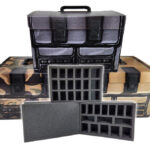
Battle Foam makes foam-based storage for miniatures wargaming, as well as deck boxes and foam storage solutions for items such as golf club heads, camera lenses and firearms.
The acquisition marks the latest step in Wyld Holdings’ strategy of building an integrated tabletop business spanning publishing, manufacturing, distribution and retail.
Its Battle Foam buyout comes six months after Wyld acquired Essen, Germany-based Kraken Wargames, which specialises in gaming mats and the Black Racks hobby organisation system.
Wyld Holdings CEO Richard Lawford said, “Our strategy at Wyld Holdings is not about absorbing brands and altering what makes them successful; it’s about empowering them to play at a larger scale.
“The team at Battle Foam has built a phenomenal product line and a highly dedicated community.
“By pairing their creative DNA with our operational strength and distribution muscle, we can accelerate their growth and introduce their products to a wider global audience.”
Battle Foam founder Romeo Filip added, “Joining the Wyld Holdings family represents a massive milestone for us. It allows the team to focus entirely on what they do best – creating exceptional products for our community while leveraging Wyld’s world-class retail and distribution channels to scale thoughtfully without losing our roots.
“I’m excited to seeing our excellent products reach even more customers.”
Award-winning board game store owner Matthew Mičetić says independent tabletop retailers can no longer rely on product sales alone, as rising costs, tariff uncertainty and changing consumer behaviour continue to reshape the hobby retail landscape.
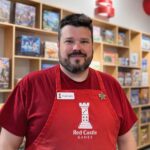
Mičetić was named Oregon Small Business Person of the Year last week by the US Small Business Administration, celebrating the 16-year growth of Portland-based Red Castle Games from a small neighbourhood game store into a vibrant space offering organised play, youth camps, community events and an on-site cafe.
He told BoardGameWire the complexity of running a game store had increased dramatically since the store opened in 2010 – but added that widening the venue’s scope had been a key ingredient in Red Castle’s success.
Mičetić said, “Competing solely on product selection and price has become increasingly difficult in a world where customers can order almost anything online and have it delivered to their door.
“What independent game stores can offer that online retailers cannot is community. We can provide places for people to learn, play, compete, socialize, and build friendships. The retail sales often follow from those relationships.”
He continued, “We aren’t just retailers anymore. We’re event organizers, community managers, educators, food service operators, e-commerce businesses, and increasingly technology companies as well.
“The encouraging part is that the core mission hasn’t changed. People still want places to gather, play games, make friends, and feel like they belong.
“The stores that continue to succeed are the ones that adapt to the changing business environment while never losing sight of the community they’re there to serve.”
Mičetić’s drive has seen that community expand from traditional hobby gamers and TCG players to include young people, families and more casual gamers keen to dip their toes into the hobby – something he believes is one of the biggest opportunities for game stores today.
He said, “Some of our most successful recent initiatives have been our youth programs, including Dungeons & Dragons, Magic: The Gathering, and Pokémon camps and after-school programs.
“Parents are looking for opportunities that help kids build friendships, creativity, problem-solving skills, social-emotional skills, and confidence. Tabletop games are uniquely positioned to provide that.
“We’ve also had success reaching beyond the traditional hobby audience. There are a lot of people who can benefit from what tabletop gaming offers who may never have considered walking into a game store.
“That means being willing to experiment, try new things, and sometimes fail. Not every idea works, and that’s okay. The important thing is to learn from it, make adjustments, and keep moving forward.
“I’ve always believed in looking for 1% improvements. Small improvements compound over time. If you can make your store, your programs, your customer experience, and your operations just a little bit better every day, those gains add up to something significant over the course of years.”
He added, “While retail is still the foundation of the business, these complementary activities have become increasingly important both financially and strategically. They reinforce one another.
“Someone might discover us through a D&D camp, become a regular event participant, buy games and accessories, meet friends through the community, and eventually become a long-term customer.
“The café, events, camps, and retail operation all work together to create a stronger overall ecosystem. For independent game stores, I think that’s one of the biggest lessons of the last decade. The future isn’t just about selling products, it’s about creating reasons for people to keep coming back.”
Organised play remains a “core pillar” of the store’s financial prosperity, Mičetić told BoardGameWire, while Magic remains its strongest offering and continues to be a cornerstone of organised play.
Mičetić receiving his Oregon Small Business Person of the Year award
He added, “One Piece has been one of the biggest success stories of the last several years, drawing strong participation. Star Wars Unlimited has also developed a passionate local community and has exceeded our expectations.
“Beyond TCGs, Dungeons & Dragons continues to be a major driver of participation through campaigns, youth programs, and camps. Board game events, painting nights, and miniature gaming also contribute meaningfully to overall attendance, even if they don’t always attract the same numbers as the largest TCG communities.
“What excites me most isn’t any individual game. It’s the diversity of the community. I believe the healthiest stores aren’t dependent on a single title. They’re places where someone can come in for Pokémon, discover D&D, try a board game, join a painting event, and ultimately find multiple ways to engage with the hobby.”
Speaking about current growth areas on the retail side – and areas which could be in decline – Mičetić told BoardGameWire TCGs continue to be the strongest growth category in the hobby, while oversaturation in higher-price point board games was beginning to show strain.
He said, “Magic remains a powerhouse, Pokémon continues to bring in new players, and we’ve seen strong engagement from newer games [such as One Piece and Warlord] as well.
“That said, I do worry that we’re in a boom cycle. I don’t know when it will happen, but historically every collectible market experiences corrections and I think it’s wise for retailers to plan accordingly.
“In board games, I think we’re seeing softness at the higher end of the market. For years, the industry benefited from an explosion of new releases and crowdfunding projects, but I also think the market became oversaturated.
“Self-publishing and crowdfunding lowered barriers to entry, which brought some fantastic games to market, but also a tremendous number of mediocre ones. Consumers have more choices than ever and less time to play them.
“Where I’ve seen the most consistent strength is in smaller board and card games, particularly titles under about $25. At that price point, they’re an easy impulse purchase and a lower-risk way for customers to try something new.
“RPGs are interesting. Product sales have slowed somewhat for us, but organized play and events remain strong. People still want to gather around a table and tell stories together, even if they’re buying fewer books than they once did.
“Miniatures remain a challenging category outside of Games Workshop. Many lines have passionate fan bases, but Games Workshop continues to outperform expectations and demonstrates the power of consistent support, organized play, and strong intellectual property.
“As for crowdfunding, we’ve largely stepped away from it as a retailer. There are certainly successful projects, but we’ve experienced too many delays, failures, and fulfillment issues over the years.
“Tying up cash and shelf space for products that may arrive years late, or not at all, has become increasingly difficult to justify.”
Mičetić said that on the distribution side, relationships had become both more important and more complicated since 2020, with the pandemic having exposed just how dependent the industry is on supply chains and allocation systems.
Mičetić said distribution relationships had become more complicated since the pandemic – and more important
He said, “In many categories, especially TCGs, we spent years dealing with product shortages, allocations, delayed releases, and uncertain restocks. More recently, while still dealing with those allocation issues, we’ve added questions around tariffs, pricing, inventory levels, and market demand.
“The underlying challenge remains the same, uncertainty. At the same time, retailers are being asked to make increasingly complex purchasing decisions with limited capital and shelf space.
“When talking with distributors today, my primary focus is predictability and partnership. I don’t expect every product to be available in unlimited quantities, but I do want transparency around allocations, release schedules, and restock expectations.
“The better information we have, the better decisions we can make. I also spend a lot of time discussing breadth versus depth. Every distributor wants retailers to carry more products, but shelf space, cash flow, and staff attention are finite resources.
“We’re increasingly focused on products that have strong community support, organized play opportunities, or demonstrated demand rather than simply chasing every new release.”
Mičetić’s award recognition follows a turbulent series of challenges in recent years, ranging from navigating the Covid-19 pandemic to enduring ten break-ins over a twenty-month period – a spate of crimes which resulted in more than $250,000 in losses and property damage.
He told BoardGameWire that while the experience was “frustrating and demoralizing”, he was “not willing to let a handful of criminals determine [Red Castle’s] future” – adding that the show of support from customers following the break-ins had helped reinforce why the store exists in the first place.
Mičetić said, “The primary targets were trading card games, particularly sealed Pokémon and Magic products, along with Games Workshop product. Unfortunately, those products are small, portable, and have a well-established secondary market, which makes them attractive targets for theft.
“The financial losses were significant but the larger challenge was the operational and emotional toll. Every break-in meant dealing with police reports, emergency repairs, damaged property, disrupted operations, and the uncertainty of whether it would happen again.
“There were periods when it felt like we were spending almost as much time thinking about security as we were thinking about growing the business.”
He advised other hobby retailers to “invest in security before you need it”, adding that the experience had changed his own understanding of risk.
Mičetić said, “Small businesses often operate on relatively thin margins and repeated criminal activity can have an outsized impact.
“It’s a reminder that when people talk about crime affecting businesses, they’re not just talking about stolen merchandise, they’re talking about the time, money, stress, and opportunity cost that comes with recovering from it over and over again.”
Speaking of his SBA award win, which recognises business owners who demonstrate outstanding business growth, innovation, resilience, and contributions to their communities, Mičetić said, “This recognition is incredibly meaningful because it reflects the community that built Red Castle Games.
“Every customer, staff member, volunteer, and supporter has played a role in our success. This award belongs to all of them.”
Asmodee’s escalating power as a global TCG distribution giant was evident again in its newly-released annual results, which showed the company’s net sales surging 23% year-on-year to more than €1.68bn.
That annual revenue has swelled around 50% in just three years on the back of huge recent growth in TCGs, including heavyweights Magic: The Gathering and Pokemon as well as a wave of strong performing newcomers such as Disney Lorcana, the One Piece Card Game and Asmodee’s own Star Wars: Unlimited.
Despite Asmodee’s long-time image as a board game publishing heavyweight, more than 72% of its revenue now comes via its distribution of other companies’ games – up from an already hefty 63% in the previous financial year to March 31, 2025.
TCGs now make up the lion’s share of Asmodee’s annual net sales – about 60% in the 2025/26 financial year, up from just over 50% across the preceding 12 month period.
The company’s own board game publishing operation, meanwhile, saw its net sales fall 5.8% in the last financial year – while net sales for the first quarter of this year were down 9.8% compared to the same period in 2025.
Asmodee’s Jan-Mar 2026 and last financial year revenue figures, showing a hefty jump in the portion of its net sales coming from distributing other companies’ games
Asmodee CEO Thomas Koegler was asked directly during a Q&A session on Asmodee’s latest financial results if the company was still primarily a board game publisher, or whether it was “increasingly becoming an infrastructure company for TCGs”.
He said in response, “We have insisted a lot on the fact that one of the strengths of Asmodee is to be a publisher, but the first strength that we do have is our global reach across all categories, from TCGs and board games.
“That’s the superpower of Asmodee – and then being a very strong publisher is a way of accelerating performance.
“So I would say that there is no change, we continue to capture opportunities across the board wherever they come from… our aim is to be a dominant player, bringing all games to the market, anywhere they can.”
The Japon Brand buyout was accompanied by Asmodee launching a new Japan-based design studio, Nekuma, anchoring its push into what it described as a “currently untapped market” for the company.
There were also hints in the Q&A session that Asmodee might be considering a move into Japanese distribution, adding to its existing operations in the region across China, Taiwan and Australia.
Koegler said of Japan, “The first move we have done with Japon Brand and setting up Nekuma is more of a sourcing move, right?
“The Japanese game designers and authors’ market is very dynamic. If you look for instance in recent very successful games – Bomb Busters, which is the Spiel des Jahres from 2025, was originated from Japan, a game like Dnup that we are releasing later in the year is coming from Japan.
Asmodee CEO Thomas Koegler
“So they are very good also at small card games, and we really wanted to, I would say, bolster our publishing capabilities by creating those sourcing activities.
“Distribution wise, for now we are still working with local partners, we have not set direct foot yet.
He added, “It’s a fragmented market, its a very strong TCG market on the local market side, but yes… as I said, it’s a very vivid scene.”
Koegler also made clear that the company is still pursuing M&A opportunities on the publishing side “across all play types that we have, from social games to lifestyle games and tabletop games”.
He said, “I would say that the discussions we have are still as active as they were – we have demonstrated our ability to do various sizes of deals, which is also a very strong signal to potential people that would like to join the Asmodee adventure.”
Koegler said in his introduction to Asmodee’s 2025/26 report that the impact of geopolitical and economic events on the company’s business in the first few months of the year had been limited, but that the firm remained “mindful” of the potential pressures on transport and energy costs.
Asmodee said the impact on the business of transport and energy cost changes due to global political and economic issues had so far been limited
He said in the financial results Q&A session, “From a consumer standpoint, in moments of tensions when there are rising costs, because games are an affordable leisure we tend to suffer less, if not take some opportunities. That’s what we’ve seen in previous crises over the past 10 or 15 years.
“Consumer sentiment-wise, we will see. Although we are always cautious, there is also I think opportunities for us.
“Secondly, in terms of the cost impact. First of all our mix is currently very favourable because trading card games are manufactured very close to where they are sold, like in Europe for European countries mainly – some are manufactured in Asia but its a limited one – in the US for the US, etc.
“Plus they are cheap to transport, so the impact on those is relatively limited. And then we will see with our partners in terms of raw material increases, but again in the overall cost of goods they do not represent a very significant party.
“For board games we have started to see some increase in transportation costs. They did not impact Q4. If we take an example, road freight did represent roughly 20% of the cost base, and they have increased by 10%.
“But again, all of this is quite manageable for us. We expect to be able to mitigate the impact.”
Koegler added that although the process for receiving tariff refunds in the US had begun, after the Supreme Court struck Donald Trump’s swathe of import fees earlier this month, there was uncertainty about both the timing and final amount Asmodee was owed.
He said, “This is still a little bit foggy, blurred – for us, but [also] for many, many other companies out there. So let’s wait for what’s next on this topic.”

 Anmelden