After 20 years growing the UK Games Expo into one of the largest tabletop gaming conventions in the world, founders Richard Denning and Tony Hyams are preparing for their eventual exit by bringing in AireCon co-founder Mark Cooke as operations director.
Cooke joins following another record year for UKGE, which has seen its annual unique attendance surge almost 65% since 2023 to reach more than 51,000.
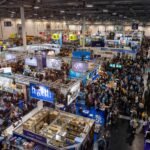
The show has already well surpassed Gen Con in terms of trade hall size, with the British event now spanning about 44,000 sq m – about 40% larger than Gen Con’s trade hall area – and hosting around 900 exhibitors in 2026.
That soaring growth has put increasing pressure on the small organising team at UKGE, with Denning telling BoardGameWire last year that the show had strained a full-time workforce which stood at just six people – although UKGE also relies on more than 200 volunteers, GMs, umpires and other helpers to deliver the convention each year.
Cooke is no stranger to growing a UK board game convention, having co-founded and built AireCon with Ben Clarkson from a 28-person gaming weekend in his flat a decade ago into England’s second-largest board game con, with about 5,000 attendees this year.
More than 5,500 people are expected at the final AireCon – which has been nicknamed Airemageddon – with Cooke set to continue working on that final show before moving to UKGE full time.
A statement from UKGE emphasised the hire was part of a phased transition for UKGE’s organisers, and was “not a sudden change of leadership or direction”.
UK Games Expo 2026
It said Cooke would work alongside Denning and Hyams “over the next few UK Games Expo events”, ensuring that knowledge, experience and responsibilities the pair have built up over the last 20 years are handed over “gradually and thoughtfully”.
Denning said, “As UKGE has expanded to now one of the world’s largest shows we have gradually grown our team, adding event managers, administrators and logistics support.
“Bringing in Mark as operations director is the next logical step as we put in place plans to ensure UKGE can run far into the future.
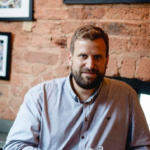
UK Games Expo co-founder and director Richard Denning
“We have known Mark through AireCon and other industry roles for many years now and he is an ideal choice bringing both event management experience, energy and fresh ideas to the team as well as a safe pair of hands as and when Tony and I eventually step away from the show we have built together with others.”
Cooke added, “I’m incredibly excited to be joining the UK Games Expo team and to have the opportunity to play a part in the next chapter of such an important event for the tabletop gaming community.
“I have huge respect for what Richard and Tony have built over the years, and I’m looking forward to working alongside them over the coming events.
“This will be a gradual transition, giving us plenty of time to share knowledge, ideas and experience. My aim is to build on the fantastic foundations already in place while helping UKGE continue to grow and thrive for many years to come.”
Denning and Hyams launched UK Games Expo at Birmingham’s Clarendon Suites in 2007, when the convention attracted about 1,000 visitors.
It moved to Birmingham’s National Exhibition Centre in 2013, and had grown to more than 25,000 unique attendees by 2019 before the Covid-19 pandemic interrupted its run of physical events.
UK Games Expo attendance figures since launch. Note: no physical show took place in 2020 due to the Covid-19 pandemic
Denning told BoardGameWire last year that building a world-class trade hall in the UK had been a personal ambition stretching back almost two decades, adding at the time that UKGE was “now fully on the world stage of ‘mega-cons'”.
Despite this year’s record attendance, Denning told BoardGameWire after the show that there was still room for further expansion, particularly around the roughly 500 events taking place during the convention.
The next UK Games Expo is scheduled to take place at Birmingham NEC from June 4 to June 6, 2027.
Ants, the debut release from designers Renato Ciervo and Andrea Robbiani, has scored its first board game award by picking up this year’s Jogo do Ano, the Portuguese game of the year prize.
Vital Lacerda design Speakeasy, Dave Beck and Abe Burson’s Luthier and Toni López creation Ada’s Dream were also nominated for the annual prize, which is organised by the non-profit board game association Spiel Portugal.
The Jogo do Ano, which has been presented since 2006, tends to skew towards the heavier end of board gaming, with recent winners including SETI, Nucleum, Barrage and Imperial Struggle.
Spiel Portugal says the type of game it looks for is “strong, spirited, dense, and stimulating”. Each member of the organisation initially selects ten games, with the resulting five finalists played again and scored according to a weighted set of criteria.
Half of the final score is based on what Spiel Portugal calls “time/fun”, with production accounting for 15%, theme, mechanics and replayability each worth 10%, and player interaction making up the remaining 5%.
Ants, designed by Renato Ciervo and Andrea Robbiani
The title was originally published by Italy-based Cranio Creations, and has since been picked up for localisation by publishers including US-based Capstone Games and Germany’s PD-Verlag.
Ants is the sole design to date from chemist Renato Ciervo, who also works with Italian publishers as a game developer, according to his BoardGameGeek page.
His Ants co-designer, engineer Andrea Robbiani, has subsequently created Maestro – themed around the fierce rivalry between Leonardo da Vinci and Michelangelo – and co-designed Timeless Journeys: The Italian Grand Tour with Nestore Mangone.
CMON has warned that its core business is suffering a “prolonged structural downturn” and is still consuming more cash than it generates, despite a drastic restructuring which has seen the board game crowdfunding major halve its workforce, sell off some of its biggest game IPs and halt new crowdfunding campaigns.
Those efforts have now dramatically reduced its losses, CMON’s newly-released H1 financial report shows – with the company reporting a loss of just over $2m for the first half of this year, compared to almost $7m for the same period in 2025.
CMON’s revenue also rose more than 7% year-on-year in H1, up to $3.68m from $3.43m in the first six months of 2025, while its selling and distribution expenses more than halved from $1.83m to $859,000, and its general and administrative expenses fell from $4.37m to $2.37m.
But that improvement has failed to make the underlying business self-sustaining. CMON’s cash reserves, which stood at $3.9m at the end of 2022, had fallen to $2.1m by the end of 2024, and slipped again to just over $900,000 by June 2025.
CMON revealed last month that it had about $368,000 in bank and cash balances as of August 4, which it described as enough to cover less than a month of its daily operating expenses.
Crowdfunding Commitments
Despite the sharp reduction in its losses, CMON’s balance sheet remained under pressure at the end of June – with $7.34m more in short-term liabilities than short-term assets, up from $6.89m at the end of 2025.
A significant part of CMON’s liabilities relates to eight crowdfunded games whose campaigns raised $14m from backers, but which the company has yet to deliver.
CMON has not completed fulfillment of a crowdfunding project since Zombicide: White Death in mid-2025, but has managed to deliver pre-orders for Cthulhu: Dark Providence, Marvel United: Witching Hour and Dune: Desert War in the first half of this year.
CMON said in its H1 report that the liabilities position had caused the company’s directors to give “careful consideration to the future liquidity and performance of the group and its available sources of financing in assessing whether the group will have sufficient financial resources to continue as a going concern”.
Those directors believe CMON will be able to continue operating – but central to that assessment is a major share sale designed to raise up to HK$150.5m – about $19m.
CMON first announced the rights issue fundraise in June, proposing to offer existing shareholders the opportunity to buy three new shares for every share they already owned in an attempt to raise the capital.
That leaves CMON looking to raise more than $17.5m from other investors through the rights issue – a figure approaching 2.5-times the valuation of the entire company implied by its last share sale in February this year.
CMON said it plans to use 40% of the money raised to fund its day-to-day operations for roughly the next year, including staff costs, royalties, shipping and distribution, professional fees and other administrative and operating expenses.
Another 20% is earmarked for repaying debts and other outstanding liabilities, including $2.46m owed to a CMON director and $385,000 of unsecured advances from employees, as well as outstanding production, shipping, royalty and other operating costs.
CMON has earmarked 25% for expansion in existing and new markets, including strengthening the company’s presence in Europe through marketing and potential attendance at events including Spiel Essen and Cannes, as well as targeting growth in Japan and the Philippines.
Digital Ambitions
The company added that it plans to put 15% of the new capital towards potential acquisitions as part of a push into digital gaming, although said it had not yet identified any targets.
CMON said it intends to look for between one and three businesses, primarily in Asia-Pacific, valued at between about $1.3m and $2.5m each, which could help it develop digital adaptations of its existing games, companion apps and other digitally-enabled features.
The publisher stressed that it intends to retain physical tabletop games as its core business, with the digital push designed to complement rather than replace them.
That plan had included transitioning the company’s titles such as Massive Darkness and Super Fantasy Brawl Reborn into “high-quality digital assets” – with CMON saying the group would “continue to supplement this digital transformation as physical games would still offer a ‘screen break’ for individuals as well as foster direct face to face interaction”.
The proposed investment would have valued Blissful Link at more than $95m. Blissful Link made a loss of about $197,000 in 2024, on revenues of just over $408,000, and had net liabilities of about $889,000, according to unaudited figures provided by CMON in April. It did not include finances for 2025.
CMON said in the rights issue offer, “Under prevailing high-interest lending conditions, traditional bank borrowings and debt financing carry heavy interest and securing such financing would severely strain the group’s remaining liquidity.
“Accordingly, equity financing via the rights Issue is the most viable strategic path to recapitalize the group’s capital base without increasing debt distress.”
The directors’ assessment that CMON can remain a going concern also takes into account continued financial support from some of its directors, progress fulfilling its outstanding contract liabilities and further restructuring aimed at reducing cash outflows.
Revenue Collapse
CMON’s latest figures also reveal the scale of the collapse in its North American and European revenues over the past five years, transforming the geographical make-up of what remains of its business.
North America alone generated more than $8.6m for CMON in the first half of 2021, making up 57% of its roughly $15.1m H1 revenue. By the first half of this year, however, revenue from North and South America combined had fallen to just $642,000.
Europe has undergone a similarly dramatic contraction, with revenue from the region falling from about $4.5m in the first half of 2021 to just $982,000 in the latest six-month period.
Asia has consequently become CMON’s largest market by a considerable margin, generating more than $2m in the first half of this year and accounting for about 55% of its total revenue, compared with less than 10% in the same period of 2021.
That reversal has not been driven by Asian growth, however. CMON generated $3.22m from Asia in the first half of 2022, marking a roughly 37% decline since – but a far more resilient performance than the steep falls recorded in North America and Europe over the same period.
The publisher said in its H1 2026 report, “The group intends to continue developing its distribution and market presence in Asia while supporting its established markets in Europe.
“The group will also continue to monitor trade and tariff conditions affecting the US market, and maintain a prudent approach to allocate resources to markets and projects.”
CMON said in March this year that it intended to resume crowdfunding in the second half of 2026, but its latest interim results stop short of repeating that commitment, saying instead that new titles will be developed and launched selectively depending on market conditions, available financial resources and project readiness.
The final result of the rights issue is due to be announced on September 15.
Three-year-old Dutch board game publisher DSV Games has continued its rapid rise by securing three nominations in this year’s Dutch game of the year awards, a year after picking up its first win in the contest.
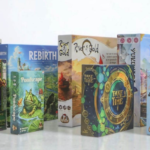
DSV has landed a nomination in each of the three Nederlandse Spellenprijs categories with Reiner Knizia design Rebirth, Tomáš Holek’s Pondscape and Ants from Renato Ciervo and Andrea Robbiani – equalling veteran Dutch publisher White Goblin Games and industry giant Asmodee as the most-nominated company this year.
The entirety of this year’s nominations are split between those three publishers, with White Goblin selected for Grégory Grard and Mathieu Roussel’s design Castle Combo in the Family category, and Keith Piggott-created River of Gold and Hisashi Hayashi’s Yokohama among the Expert games.
The remaining nominations are from Asmodee studios: Alexi Piovesan and Julien Prothière’s Take Time from Libellud in Family, and Space Cowboys’ Dewan (Johannes Goupy, Yoann Levet) and Office Dog’s two The Lord of the Rings: Trick-Taking Game releases (Bryan Bornmueller), which were judged as a single title, completing the Connoisseurs’ game shortlist.
The result sees DSV and Asmodee join White Goblin and fellow Dutch board game publishing veteran 999 Games as the only publishers to score at least three nominations in a single year since the Nederlandse Spellenprijs moved to its current three-category format in 2020.
999 Games was the only company to secure two nominations last year, and ultimately won both categories it contested, with Hisashi Hayashi design Bomb Busters taking the Family award and Botanicus (Samuele Tabellini Ferrari, Vieri Masseini) triumphing among the Connoisseurs games. DSV won the remaining Expert award with Tomáš Holek’s SETI.
This year 999 Games has no nominees at all – a not unprecedented situation, with the publisher also having missed the shortlist in 2021, but one that marks a sharp turnaround from its five nominations across 2024 and 2025. They included Sky Team winning the Family award two years ago.
DSV Games was launched in 2023 by online shop De Spelletjes Vrienden, with a focus on visually appealing titles which offer exceptional gameplay – making use of “stunning artwork, high-quality components, and well-crafted mechanics”, according to its website.
Its debut release slate in 2024 comprised four games including Rats of Wistar, designed by Simone Luciani and Danilo Sabia, which secured the publisher its first Nederlandse Spellenprijs nomination. The publisher increased its output to nine releases in 2025, and put out another 11 releases between January and the end of June this year – the cut-off point for games eligible for the 2026 award.
DSV co-owner Marieke Kuit-van Woesik said after the Nederlandse Spellenprijs victory last year, “We are really proud that as a publisher, which has only been around for two years, we receive this wonderful confirmation that we are on the right track with our small team.”
DSV Games co-owner Marieke Kuit – van Woesik collects the Nederlandse Spellenprijs Expert Game award for SETI in 2025
This year’s nominations take DSV into territory previously reached under the current award system only by two of the most established names in Dutch-language board game publishing.
The Nederlandse Spellenprijs added its intermediate ‘Connoisseurs’ category in 2020, creating the current annual line-up of three nominees apiece across Family, Connoisseurs and Expert games.
999 Games took five of those nine nominations in 2020, with White Goblin taking three. White Goblin followed with four nominations in 2021, while 999 again reached three in 2024. No other publishers bar those had scored three nominations in one year under the current format prior to 2026.
More than 100 board and card games released for the Dutch market during this year’s eligibility period were played by the Nederlandse Spellenprijs jury, which selects its nominees with a focus on quality, playability and originality.
The winners of the Family, Connoisseurs and Expert categories are due to be announced on October 10 at BumbleBeez Spellenwinkel in Bergen op Zoom.
Nederlandse Spellenprijs nominees2026
Family Castle Combo – designed by Grégory Grard and Mathieu Roussel (Published by White Goblin Games) Rebirth – Reiner Knizia (DSV Games) Take Time – Alexi Piovesan and Julien Prothière (Libellud / Asmodee)
Connoisseurs Dewan – Johannes Goupy and Yoann Levet (Space Cowboys / Asmodee) Pondscape – designed by Tomáš Holek (Published by DSV Games) The Lord of the Rings: Trick-Taking Game (Fellowship of the Ring and The Two Towers) – designed by Bryan Bornmueller (Office Dog / Asmodee)
Experts Ants – Renato Ciervo and Andrea Robbiani (DSV Games) River of Gold – Keith Piggott (White Goblin Games) Yokohama – (White Goblin Games)
Gaming convention major PAX is doubling down on the success of its tabletop-focused Unplugged show by launching a second event in Houston, after growing the original into the second-largest tabletop gaming convention in the US after Gen Con.
PAX Unplugged Houston is set to take place at the George R Brown Convention Center from June 25 to 27 next year – marking the first expansion of the Unplugged brand since the dedicated tabletop convention debuted in Philadelphia in 2017.
Company event manager Sean Gonzalez told GamesBeat that PAX had considered several major cities while investigating the feasibility of a second Unplugged show, adding that Houston stood out based on infrastructure, demographics, data from other ReedPop events and demand from the industry.
“Most importantly though, Houston is where exhibitors wanted us to place the event,” he said.
PAX said in a separate announcement that Unplugged Houston will feature an expo floor for tabletop exhibitors alongside panels, tournaments and community events, although it is yet to reveal exhibitors, floor space, expected attendance or badge prices.
The show marks a return to Texas for the business, which previously ran PAX South in San Antonio from 2015 to 2020.
Gonzalez told GamesBeat Houston offered an opportunity to bring PAX back to the community which had attended PAX South, while giving the new event a more specific tabletop focus.
He added, “While we know that the current state of the economy impacts everyone, we are extremely confident based on the tremendous success we continue to see with the PAX events, particularly our Philadelphia PAX Unplugged, that the market will support PAX Unplugged Houston.”
PAX was launched by Penny Arcade web comic creators Jerry Holkins and Mike Krahulik in 2004 as the Penny Arcade Expo, after the pair decided they wanted a show exclusively to celebrate video gaming and game culture.
Attendees at PAX Unplugged in 2024 || Photo Credit: PAX/ReedPop
About 3,300 people attended the inaugural show, but that attendance had already soared to 58,500 by the 2008 event, leading to organiser to team up with New York Comic Con organiser ReedPop in 2009, and to launch a second con, PAX East, in 2010.
The company expanded again with PAX Australia in 2013 and the short-lived PAX South two years later, before launching the inaugural PAX Unplugged in 2017 after seeing the tabletop sections of its existing PAX conventions continue to expand.
PAX does not disclose precise attendance figures for PAX Unplugged, but says the Philadelphia event draws “tens of thousands” of visitors each year – believed to be north of the 30,000 mark. Its record 2024 show sold out all three days for the first time, filling all 528,000 sq ft of exhibition hall space with more than 350 exhibitors.
But Pax Unplugged’s success has seen it displace long-running peer Origins as the second-largest tabletop gaming convention in the US – and its decision to launch a second event just 12 days after Origins 2027 is due to take place puts further pressure on the latter event.
Origins has been rebuilding its attendance since the pandemic, but unlike other major tabletop conventions such as Gen Con, Spiel Essen and the UK Games Expo has yet to regain its pre-Covid record of about 20,600.
The show’s attendance fell 2.5% this year to 18,700 – its first annual decline since the pandemic, although the fall came as other measures of activity at Origins remained stable or continued to grow. Exhibitor numbers increased marginally from 410 in 2025 to 413 this year, while the number of scheduled events climbed about 10% from 7,810 to more than 8,600.
PAX has not overtly positioned Houston as a competitor to Origins, but publishers weighing whether to exhibit at both now face the prospect of getting their teams and products to two major US tabletop shows within less than two weeks, alongside the associated staffing, travel, freight and booth costs.
Badges for PAX Unplugged Houston are due to go on sale later this year, with applications for media and content creators also opening before the end of 2026.
The original PAX Unplugged returns to Philadelphia for its tenth show between December 4 and 6 this year.
Spiel Essen has launched a dedicated B2B matchmaking system aimed at helping publishers, designers, retailers and other industry professionals find potential business partners and arrange meetings before arriving at the world’s biggest board game fair.
The new service, which is restricted to exhibitors and people with business visitor tickets, lets users create profiles detailing what they are looking for and what they can offer, send specific business inquiries, connect via chat and schedule appointments at the show using the built-in calendar.
Spiel said today that the system will be integrated directly into its dedicated app, adding that the move is intended to make networking between trade visitors, professionals and publishers “more targeted, simple, and effective”.
Business has long been an important part of Spiel despite its status as a public-facing convention, with major publishers operating their own dedicated B2B areas for meetings with retailers and other industry professionals.
B2B-specific companies such as manufacturers, crowdfunding services and trade organisations were still scattered across various halls in 2019, but that situation began to change after Spiel was taken over in 2022 by Merz Verlag – whose core event, Spielwarenmesse, is one of the world’s biggest B2B toy trade fairs.
Those companies began to be more concentrated in Hall 4 during the 2022 event – a move which intensified the following year amid a major reorganisation of the halls which attempted to more obviously split the fair into themed segments such as children’s games, family and light-to-medium games, expert games, tabletop and miniature games, roleplaying games and TCGs.
Florian Hess, managing director of Merz Verlag, said after last year’s record-breaking Spiel, “For exhibitors at the fair the focus is also on the joy of the games. At the same time, an incredible number of effective business developments emerge here – and this happens naturally alongside everything else.
“I don’t know of any other event that is as strong a springboard for a business’s launch as Spiel. I have met exhibitors who started here a few years ago with a small booth and are now occupying several hundred square meters and selling games internationally.
“Experiencing this kind of B2B rocket launch never ceases to fascinate me.”
Hall 3 at Spiel Essen 2025
The new system arrives as Spiel prepares for its biggest-ever event from October 22 to 25 this year – with an expansion into all eight main halls at the Messe Essen exhibition centre for the first time expected to see the event challenge its record 220,000 attendance set last year.
But despite the show bumping against its space limits at its long-time home, a Merz Verlag spokesperson told BoardGameWire in March, “We love Essen – as a venue and the city – and have no intention of leaving. For the foreseeable future SPIEL will remain in Essen as it has for more than 40 years now.”
The fair’s expansion into a seventh hall last year helped the four-day show to its record 220,000 attendance, outstripping the 209,000 visitor record it set just before the Covid-19 pandemic.
Spiel might have broken its attendance record in 2024 were it not for a self-imposed visitor cap, which limited the number of attendees each day to about 50,000 – a measure introduced alongside wider aisles post-pandemic to help visitors move around the often crowded halls more easily.
More than 920 exhibitors from 53 countries are expected at this year’s event, with Merz Verlag saying in March that demand had come both from long-term exhibitors keen to “significantly increase” their booth space, as well as an “impressive number” of first-time exhibitors hoping to attend this year.
About half of the available tickets for Thursday, Friday and Saturday have already been sold, seven weeks before the show opens, with Sunday sales currently “lagging slightly behind”, the show announced today.
Access to the matchmaking platform comes as part of Spiel’s €46 business visitor ticket, which compares with €25 for a standard adult day ticket.
Spiel Essen 2026 takes place at Messe Essen from October 22 to 25.
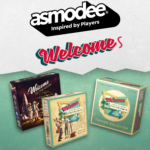
Asmodee has continued its revived acquisitions spree by picking up the Welcome To… IP and game range from French publisher Blue Cocker.
The deal hands the board game publishing and distribution giant control of a flip-and-write series which has sold hundreds of thousands of copies since Benoit Turpin’s breakout design Welcome To Your Perfect Home was released in 2018.
Subsequent releases have included standalone sequels Welcome to the Moon and Welcome to New Las Vegas, while its implementation on online platform Board Game Arena has racked up more than 3 million played games, and averages over 3,000 unique players daily.
More new versions seem likely to be on the way following the acquisition, with Asmodee head of collections Mathieu Aubert saying, “This acquisition goes beyond bringing a strong IP into our portfolio. We see huge potential to expand the Welcome To… universe, and the team already has plenty of ideas to bring it to life. I look forward to sharing more about our projects in the coming month.”
Asmodee CEO Thomas Koegler said during the announcement of the revived M&A strategy that many of its targets were businesses it already knew “in and out” through existing commercial relationships.
Asmodee CEO Thomas Koegler
Hespecifically highlighted publishers behind successful games it already distributed as potential targets, alongside social and party game businesses and IPs, hobby game studios and local distributors.
Welcome To… fits withing that strategy, with Asmodee already handling Blue Cocker titles in markets including the UK and US. In Asmodee’s home market of France, however, Welcome To… and other Blue Cocker Games are currently distributed by Hachette subsidiary BlackRock.
The original game helped popularise the flip-and-write format, replacing dice rolls common to roll-and-write games with shared cards which allow players to make their choices simultaneously.
Asmodee SVP of tabletop games Benoit Clerc said, “Welcome To… established itself as landmark titles in modern board gaming, combining elegant game design with exceptional accessibility.
“We have tremendous respect for the work accomplished by the Blue Cocker team, Benoit Turpin, and everyone who contributed to the success of the game and their different iterations.
“We are excited to welcome this intellectual property into Asmodee’s portfolio and join our line-up of great family games and look forward to building its future.”
Blue Cocker founder Alain Balay added, “From the very beginning, our ambition was to create a game that would stand the test of time and bring people together around the table.
“We are incredibly proud of everything Welcome To… has achieved over the past years, and we are confident Asmodee will now carry the brand forward and introduce it to even more players around the world.”
Blue Cocker was launched by former aeronautical engineer Balay in 2013, and operated as a one-person business until the success of Welcome To… and the company’s international sales allowed it to expand to a five-person operation in 2019, he recently told French newspaper La Gazette du Midi.
He said exports accounted for 60% of Blue Cocker’s revenue at that point, but have since fallen to just 10% amid ongoing global financial and political uncertainty.
Balay added that despite that, the French market has held up well despite concerns about a resurgence in inflation in the country.
Blue Cocker’s remaining titles include 2014’s Medieval Academy, 2016 release Meeple War and 2025’s The Last Droids, while its main 2026 release so far has been corporate deckbuilder SAN.
The company’s 15th release, the two-player cooperative title Les Yeux Fermés designed by Antonin Boccara and Julien Prothière, is slated for a 2027 release according to its BoardGameGeek page.
Forthcoming Blue Cocker release Les Yeux Fermés, designed by Antonin Boccara and Julien Prothière
Asmodee has kept its potential acquisitions tightly under wraps, but has plenty of financial firepower for further deals.
The company’s net debt, meanwhile, stood at 1.6x adjusted EBITDA at the end of June, rising to 1.7 times once M&A commitments were included – down from 2.1 times a year earlier and comfortably below the company’s 2.5-times leverage target, given it significant headroom for M&A.
Despite Asmodee’s long-time image as a board game publishing heavyweight, more than 72% of its revenue now comes via its distribution of other companies’ games – up from an already hefty 63% in the previous financial year to March 31, 2025.
TCGs make up the lion’s share of Asmodee’s annual net sales – about 60% in the 2025/26 financial year, up from just over 50% across the preceding 12 month period.
The company’s own board game publishing operation, meanwhile, saw its net sales fall 5.8% in the last financial year – while net sales for the first quarter of this year were down 9.8% compared to the same period in 2025.
He said in response, “We have insisted a lot on the fact that one of the strengths of Asmodee is to be a publisher, but the first strength that we do have is our global reach across all categories, from TCGs and board games.
“That’s the superpower of Asmodee – and then being a very strong publisher is a way of accelerating performance.
“So I would say that there is no change, we continue to capture opportunities across the board wherever they come from… our aim is to be a dominant player, bringing all games to the market, anywhere they can.”
The move puts McGinnis into a hugely influential position within the tabletop industry. Asmodee’s chief product officer has responsibility for its studios, franchise development, licensing and studio marketing, according to the organisational structure the company published ahead of its stock market listing last year.
Die Fast-Food-Kette McDonald’s und der Spieleverlag Kosmos kooperieren in Deutschland, Österreich und Luxemburg. Vom 20. August bis zum 23. September 2026 gibt es im Kindermenü Happy Meal acht Spiele zur Auswahl. Kosmos hat bekannte Spiele verkleinert und auf die Beigabe im Happy Meal zugeschnitten. Es handelt sich um Cascadia Junior, Monsterfalle, Exit Kids – Monstermäßiger Rätselspaß, Catan Junior, Flip 7, Ubongo! Junior, Die drei ??? Kids Krimipuzzle – Achtung, Meeresungeheuer! sowie Die drei ??? Kids – Gespensterjagd. Flip 7 war 2025 als Spiel des Jahres nominiert. Die Jury schrieb damals in ihrer Begründung: „Ob in der Bahn, im Restaurant oder
Plaid Hat Games launched its Kickstarter for The Monolith in June with a trio of successful crowdfunding campaigns under its belt – only to pull the project three days after launch when pledges unexpectedly ground to a halt, despitequickly beating its $20,000 goal.Less than two months later the revamped campaign is back, and has already pulled in almost four-times the amount the cancelled campaign managed in the same amount of time.In this first-person piece for BoardGameWire, Plaid Hat founder and CEO Colby Dauch explains why The Monolith exposed flaws the publisher’s previous campaigns had masked, what he believes it got wrong, and why the changes made for the relaunch appear to be working.
Plaid Hat Games is relatively new to crowdfunding and we’ve experience our first major setback in that arena. We launched our fourth ever crowdfunding campaign back in June, this time for a new game called The Monolith.
By the second day of the campaign the pledges had fully stalled out. It was self-evident that we had made mistakes, so we pulled the campaign with the intention to relaunch it after analyzing what had gone wrong, and doing what we could to address it.
As I write this article, I don’t know if our hunches will turn out to be correct. This article is scheduled to be posted as we relaunch the campaign, so I suppose we are all going to find out together! I’m more than a little nervous. Allow me to provide some background essential in understanding how we’ve come to make the choices we’ve made.
Plaid Hat founder and CEO Colby Dauch
We’ve been around since 2009 and watched from the sidelines as crowdfunding took hold and grew into a large part of the board game industry.
For many years we swore off crowdfunding. Internally we were critical of it for a number of reasons. My biggest reservation was that it felt dishonest to me that an established company would tell its customers “we need your help to make this product”, when they had already proven previously that they were capable of putting together the funding necessary to launch a new product onto the market, without requiring the customer to buy said product a year or more in advance of its release.
However, things have changed over the years in more ways than one and honestly, it has been a bad business decision to hold out on the crowdfunding model for as long as I have.
When we did finally enter the crowdfunding space a couple of years ago I told myself, and others, that there was clearly no longer an expectation that the companies going to crowdfunding needed to be there. I believed it to be understood that it was more akin to a pre-order system and that the consumer knows that. I even said as much in the article I was interviewed for on this very site, posted on June 30th, about us pulling the Monolith from Kickstarter. It’s not true. I had only convinced myself that it was.
I’m in the midst of reflecting on every decision I’ve made that led to a failed campaign, and what that failure means for my company, the people I employ and my family, if I’m not able to correct course. The reality is that we moved to crowdfunding because the things that made us successful in the past aren’t working anymore and we were growing desperate for a solution.
Getting attention on a board game release announcement isn’t free anymore. It’s not news. At best it’s a bullet point on a long list of new release announcements for the week. The traditional method we’ve long employed of selling to distributors who sell to retailers who sell to players, sadly seems to be falling apart for us, and I suspect for most publishers.
So we found ourselves trying to incorporate crowdfunding into our business model while simultaneously telling ourselves we could do it different – better. Our approach:
We will severely limit the use of exclusives. We don’t want people feeling like they HAVE to buy the product now or they will be missing out.
We aren’t seeking to punish the people who have long supported their local board game shop by purchasing our products through them.
Most of all we don’t want to manipulate our customers by preying on their fear of missing out.
We will reduce the long wait between the time you back a game and the time you get that game by being fully ready to go to production at the time of the Kickstarter.
There were flaws in this approach. Flaws that I believe were masked in our first three campaigns because they all had something else big going for them.
Wandering Galaxy was the latest installment in a series of games we had released that had gotten a lot of attention for their amazing storytelling and voice acting (in a companion app).
Ashes Ascendency was a reinvigoration for a game that has ten years worth of glowing reviews to put in front of people and a dedicated fanbase.
Super Auto Pets Card Battle was based on an amazing and charming digital game, and we were able to rely on the attention of fans from that.
The Monolith had no predecessor.
The Monolith || Kickstarter image
This is why I believe our attempts to do things ‘different from the others’ has come back to bite us:
We wanted to limit FOMO.
A crowdfunding campaign must be compelling beyond the presentation of the game itself. You are asking the customer to pay for a game long before they can expect to have it in their hands. We need to give them a compelling reason to do that.
In the Super Auto Pets Card Battle campaign, the most popular pledge was by far the ALL-IN pledge, because it was the most compelling. You got all of the sets, all of the add-ons and in a storage box that would organize it all and only be available during the campaign.
I took away the wrong lesson. What I decided was that what those results were telling me was just that people want all the stuff, so with The Monolith let’s just make the core product all of the stuff.
We wanted to reduce the wait time on the game.
This is the one where I really messed up with The Monolith. As I established, the reality is that we needed to make changes to how we were doing things and I allowed myself to miss out on a key advantage to crowdfunding: measuring demand.
In an effort to shorten the window on how quickly we could deliver on a campaign, and further spurred on by a yearning to have a line at our booth for a new game release at GenCon or Essen (that feeling is the highest of highs), I started having plastic molds for the game well before the campaign so that they wouldn’t delay production – and remember this game was going to have all the upgrades packed in, so it was a lot of plastics and a lot of mold costs.
Further compounding the issue was that the mold costs were so high, to get the cost per unit down, I felt like I needed to be prepared to produce 10,000 copies. And like the molds, I got that production started before the campaign even started.
It was the exact kind of risk we had always needed to take when producing a game, but crowdfunding should have given me a chance to mitigate that risk, and in doing so really been a fulfillment of the core concept of crowdfunding to begin with: Asking the player to help be a part of bringing the game to the market.
So here is what we are doing differently with the relaunch of The Monolith campaign to try to address what went wrong with the initial campaign:
Creating a 1-2 player mini-expansion.
Lowering the retail price of the game and offering a larger discount on that already lower price for backers.
Creating a 6th shaman character add-on.
Creating glass blood tokens add-on.
Creating a metal first player and surge tokens add-on.
Creating an All-In tier with all of the add-ons included at a lower price than purchasing them separately.
Different marketing partner and strategy.
Finally, here are my take aways for how we will do campaigns differently in the future:
When possible, create a version of the game that focuses on lower price and a version that focuses on maximum bling.
Be more willing to compete with the price point that we and everyone else knows online retailers are going to put on our games.
Give the campaign a chance to communicate what the demand is. We will still be production ready, but I won’t be putting the cart directly in front of the horse again.
Better leverage the community-based systems that already exist to support crowdfunding.
Follow Up
As I write THIS bit, the campaign has relaunched about 24 hours ago and is doing much better this time! By a large margin, backers are opting for the pledge level that includes all the add-ons. So I believe this supports the theory that the add-ons were essential for a successful campaign.
It is hard to quantify exactly how much each of our changes contributed to the better result, but overall, the adjustments seem to be working. I’m so grateful to everyone who has backed.
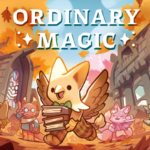
Unstable Unicorns publisher Unstable Games has launched a new studio led by rising tabletop designer Marceline Leiman, who will shape its creative direction and design every game it releases for at least the next few years.
Ordinary Magic plans to publish light strategy board and card games set within a single expanding world, with Leiman telling BoardGameWire the studio is looking to put out designs “offering whimsical, magical moments of the everyday” alongside high interaction.
The move comes nine years after Unstable Games owner TeeTurtle’s hugely successful Kickstarter campaign for light card game Unstable Unicorns, which raised more than $1.8m from over 33,000 backers – and went on to sell more than a million copies worldwide by 2023.
The success of that release led to t-shirt maker TeeTurtle creating its dedicated tabletop studio Unstable Games, which has sold millions across its debut title and follow-up releases such as Here to Slay, Happy Little Dinosaurs, Casting Shadows and Twisted Cryptids.
Her route into professional board game design began with the 2023 release of her solo mode for North Star Games titles Oceans, which led to a part-time developer position at Underdog Games, as well as client work for Office Dog, WizKids, Allplay, Button Shy Games and Maestro Media, according to her website.
But Ordinary Magic represents her first full-time job in the industry, with Leiman saying the roots of the venture going back to the period immediately following the downsizing of Underdog in April 2025, when the publisher laid off almost its entire staff as it attempted to weather the impact of US tariffs.
She told BoardGameWire that Underdog president Nick Bentley, who was also let go by the company at that time, quickly introduced her to Unstable Games, with the pair initially planning to build the new operation together.
Bentley ultimately went in another direction before that arrangement was finalised and is now director of game design at Taco Cat Games, which rebranded from Dolphin Hat Games in May to reflect the huge success of its standout title.
Leiman said, “We both were fully intending to start up a new studio within Unstable Games. The proposition was always that they were going to do sort of an incubator program, is the way that they proposed it to us.”
She added, “My role within the studio was always going to be the capacity of being a game designer. Only now with Nick no longer part of the project, it has allowed me to take more of a formal leadership role.”
Leading the line
The resulting structure puts Leiman’s work at the centre of the studio, rather than positioning Ordinary Magic as a conventional publisher or imprint sourcing games from a roster of designers.
She told BoardGameWire, “Every single game that comes out of Ordinary Magic is a design of mine. I am the designer of each of the games coming from the studio, and you should expect that at least for the next several years.
“That does not mean that you won’t ever see a game from anyone else besides me from Ordinary Magic. But think of me as the shepherd of the studio.
“I am leading the direction of the design behind Ordinary Magic and the types of games you should expect, and the feelings from the games that you should expect. But I am absolutely open to that changing; it’s not a hard rule.”
Leiman added that although she is not currently accepting game pitches, she is “always interested in learning what designers are working on, both those I am familiar with and unfamiliar with”.
She told BoardGameWire, “I love sharing ideas, and I think the spirit of design is still very much open in terms of the way I like to talk with other designers. I always want to consider whether or not in the future, an opportunity is available between Ordinary Magic and a designer looking to pitch their games.
“However, I cannot promise at this time that we are accepting any pitches that we might receive. If I were to look at any pitches, what I’ve described in the past is that Ordinary Magic is looking for games that are offering whimsical, magical moments of the everyday. Not high magic, not combative, though highly interactive.
“I think if someone wanted to pitch to me a game with a theme that was more focused on a curious bit of a real-life moment that inspired them, that would interest me more than somebody who’s coming to me with a pitch purely with a magical concept. I am much more interested in the grounded reality of this world rather than the high fantasy.”
Finding direction
Leiman said the studio’s creative direction would be to create interactive games which give “meaningful reason for other players to be at the table with you”, but added that would likely not extend to full “take-that”-style designs.
She said, “What you should expect from us is strategy-light strategy style games, sometimes card games, sometimes board games. I am also very interested in exploring the realms of cooperation as well as indirect player interaction, or both direct and indirect forms of player interaction.
“Something that you’ll find from me is that I am very interested in sort of passive aggression in games, where the decisions I am making might be to block you or to prevent you from getting something before me. A very old-school style of interaction, German old-school I think some people would think about.”
Leiman said the original plan had been to launch the games individually, but that Unstable ultimately proposed putting all three into the same campaign after their development schedules aligned – a situation which partly arose due to Leiman’s rapid work rate.
The Curious Little Bookshop || Gamefound image
She told BoardGameWire, “The method that I was taught game design was very much under the tutelage of my professors at NYU Game Center, and there we worked very much within a fast-paced work environment.
“Joining this studio very much is like returning back to that environment, which I am very comfortable being in. The way that I’ve worked within the studio is quite fast, is quite rapid, I guess, in relation to other people’s speeds.
“But for me, within a short amount of time, what I am looking to do is try out many ideas and fail with many ideas as quickly as possible, so I could find the core of what is fun, what is interesting, what is memorable about a game.
“It just so happened to align with our release schedule that I would have these three games. Our original plan was to release them one by one, but just with the way that scheduling worked out, we decided that it would be best to put our best foot forward with this new studio by showing the strength of our design, with the strength of our art, and production capabilities.”
Operationally, however, Ordinary Magic is currently far less separate from its parent studio than its distinct branding might suggest.
“The only difference between Ordinary Magic and Unstable Games in terms of operation is me,” Leiman told BoardGameWire.
She added, “Everything that you’ve come to expect from me – my work ethic, my taste, my voice – you should expect to be part of these games.
“Not to say that I don’t work with the Unstable Games team as well. We actually do cross-pollinate a lot in terms of our playtesting, in terms of our conversations, in terms of problem-solving.
“So it’s not like I’m totally in a silo or and neither are they from me. There’s definitely a lot of creative support going back and forth between the two studios. And as the studio continues to develop and grow in size, naturally Ordinary Magic will change with it.”
Speaking about the shared world envisaged by Ordinary Magic for all of its releases, Leiman told BoardGameWire, “You should not expect to see any games released from Ordinary Magic that are not part of this world.
“We’ve talked a lot about what that means in terms of building the IP, sort of what direction could it go in the future? Does it open us to different forms of media, different forms of games, or are they all going to be board games and card games?
“We’re leaving that station open right now. But we’re definitely open to exploring what it means to have this IP as we look forward to the future.
“As for recurring characters and locations, I would say keep your eyes open for the GameFound campaign, and I think you’ll be very excited to see some crossover moments between them.”
Africa’s longest-running board game convention is hoping to use its tenth anniversary to put more direct support behind the continent’s emerging designers, with plans for a new grant programme if its latest crowdfunding campaign reaches $20,000.
The November 27 and 28 event in Abuja will include prototype playtesting, workshops, industry discussions, networking and a marketplace alongside its consumer-facing game demonstrations and tournaments, according to organiser NIBCARD Games.
But potentially more significant for Africa’s developing board game industry are the additions AB Con hopes to unlock if the campaign moves beyond its base target.
Reaching $20,000 would launch an AB Con Designers Grant, providing financial support and mentorship to African tabletop designers to develop prototypes, improve their games and showcase them at future editions of the convention.
A $22,000 stretch goal would introduce an Impact Award recognising people and organisations helping develop the continent’s tabletop ecosystem, while $30,000 would extend this year’s convention from two days to three.
The campaign describes the designer grant as an attempt to create “more opportunities for African games to reach local and international audiences”.
That represents another step in a decade-long attempt by AB Con and organiser NIBCARD to build infrastructure around what was an extremely small modern tabletop design community when the convention began.
AB Con says there were fewer than 10 known indigenous tabletop games and only three published game designers in Nigeria before it launched in 2016, with few places available for people to regularly play modern board games.
BoardGameWire reported last year that the number of known modern games from Nigerian designers had since passed 100, while the number of designers had grown to 25.
AB Con has provided a crucial meeting point and catalyst during that expansion, bringing together designers and publishers alongside manufacturers, retailers, educators and players.
Gamers, publishers, designers and organisers at AB Con 2025 || Photo Credit: AB Con
Nigerian board game company NIBCARD’s role in developing that ecosystem was recognised with the Diana Jones Award for Excellence in Gaming in 2021.
The award committee described the company as being “the multi-faceted company at the heart of the nascent Nigerian games industry”, highlighting its work publishing games, manufacturing for other companies, mentoring designers, running a game café and organising AB Con.
NIBCARD itself says it has now designed more than 70 tabletop games since being founded in 2013, while its activities have expanded across publishing, manufacturing, education and digital games.
While those efforts have proved a pillar of the region’s hobby gaming growth, NIBCARD and AB Con founder Kenechukwu ‘KC’ Ogbuagu told BoardGameWire there were still large challenges around getting Nigerian and African designers and games to break into North American and European markets.
He said, “It’s a combination of several factors, but I would highlight visibility, access, finance, and market access.
“There is a significant lack of visibility for African games and designers. Publishers often don’t get to see the games being created here, while designers have very limited opportunities to meet and build relationships with publishers.
NIBCARD and AB Con founder Kenechukwu ‘KC’ Ogbuagu
“I have experienced this personally. I once received fully funded support to attend Spiel Essen, but was denied a visa. Last year, I was invited to GothCon on a fully funded trip, but I couldn’t even secure an interview date for my visa application.
“Finance is another major barrier. Even when a game is ready, designers need money to market it, work with content creators and reviewers, attend international conventions, and run crowdfunding campaigns such as Kickstarter or Gamefound.
“And for those who choose to self-publish, international shipping can make African games extremely expensive and difficult to compete with in global markets.”
He added, “One of our mission is to see African designers creating games that are enjoyed globally and, ultimately, seeing African-designed games recognised among the best games in the world.
“We have already started working towards this. Last year, with support from the Spiel Foundation, we showcased games from three African designers at SPIEL Essen 2025. We also started a game studio as a way to bring African games to light.
“But even as we build, from over 10 years of experience doing this, a lot of the impact are limited due to lack of funding.
“We are intentionally building AB Con to become a platform where African designers, games, publishers, distributors, and international industry professionals can connect.
“We want publishers from North America and Europe to see AB Con as a place to discover new designers and games from Africa, explore licensing and publishing partnerships, and build long-term relationships with the African tabletop industry.
“This is one reason we are committed to maintaining a two-day convention going forward, with the goal of eventually growing it into a four-day event. We want to create enough time and space for meaningful meetings, playtesting, networking, showcases, and publisher scouting.”
The growing scope of AB Con has repeatedly run up against the economics of staging the convention, however.
Its new $14,000 base target represents another substantial increase. Organisers said the higher figure reflects both inflation and the cost of restoring AB Con’s two-day format, and will be used for venue and production costs, volunteer support, logistics, marketing, accessibility and expanded programming.
Nigeria continues to experience significant price increases, despite inflation having eased substantially from the levels that prompted AB Con’s return to crowdfunding.
The country’s National Bureau of Statistics currently reports annual consumer price inflation of 15.9% – down markedly from an almost 30-year high of 34% when AB Con launched its 2024 campaign.
Last year’s AB Con campaign was initially intended to support ambitions for as many as 3,000 attendees, compared with roughly 1,300 at the 2024 event and about 1,000 in 2023. The 2025 convention ultimately took place as a one-day event on November 29.
At least seven Nigerian designers showcased projects at the 2025 convention, according to Nigeria’s Independent newspaper, while participating publishers included Althra Games, ICE Game and Jesus Native Games.
AB Con founder and lead convener Kenechukwu ‘KC’ Ogbuagu said, “When we hosted the first AB Con in 2016, our dream was bigger than organizing an event – we wanted to help build an industry.
“Ten years later, we’ve seen designers launch original games, communities grow across Africa, and more people recognize games as powerful tools for learning, culture, business, and connection.
“This anniversary is not only a celebration of how far we’ve come but an invitation for the world to help shape what comes next.”
The AB Con Kickstarter is live now, with the convention scheduled to take place in Abuja, Nigeria on November 27 and 28.
The Tabletop Game Designers Association has begun scoring and comparing the standard contracts board game publishers offer to designers, with the aim of improving how game creators are treated and paid.
TTGDA’s inaugural review of contracts from more than 50 board game publishers found “several critical areas where many standard publishing agreements fall short of fair practices”, such as 75% of publishers retaining rights to a game’s name after publication agreements end, and 40% able to develop expansions without consulting the original designer.
TTGDA – a professional organisation launched in 2024 to advocate for tabletop game creators in North America – has spent the last year creating what it calls its Contract Scoring Rubric, which assesses publisher contracts against 110 criteria covering advances, royalties, intellectual property, expansion rights and financial transparency.
While individual scores are available only to TTGDA members, the organisation has published industry-wide findings and identified its five highest-scoring publishers – adding that the benchmarking exercise had already prompted changes from publishers who scored less well.
TTGDA said several publishers have revised their standard contracts after receiving feedback during the review process, with some improving their scores by more than 20 points prior to the report being published.
The professional organisation identified 25th Century Games, Fireside Games, Lunarpunk Games, Plaid Hat Games and UP Games as the highest-scoring publishers (in alphabetical order) in its review – adding that the benchmark was intended to help designers negotiate stronger agreements rather than discourage them from working with particular companies.
TTGDA’s inaugural Tabletop Market Contract Analysis report stated, “There is still a wide disparity from publishing contract to publishing contract, and key clauses we believe should be standard are not included in many of them.
“Unfortunately, many first-time game designers are so excited to receive an offer they accept terms that may cause them serious creative and financial issues in the future.
“We encourage all designers, even those signing a game publishing agreement for the first time, to negotiate confidently for their contracts to guarantee fair payment, a formal say in the final presentation of their work, solid protection of intellectual property rights, and control of their names and likenesses in publication and marketing.”
TTGDA pointed to five key takeaways in the report, alongside commentary about why the findings are important to designers. They were:
Only two-thirds of publishers offer a baseline advance above the TTGDA-recommended minimum of $1,000. 20% don’t offer any advance at all TTGDA said, “The publisher should have some “skin in the game” at the start of the project. We have seen situations where the publisher doesn’t pay an advance and then doesn’t start on development or artwork on the game for years. An advance incentivizes the publisher to move toward publication. At least part of the advance should be non-returnable and can be considered minimum payment for the agreement, compensating the creator for tying up the work, even if the publisher ends up canceling the project.
● 40% of publishers can make expansions without consulting the designer TTGDA: “The game concept is the designer’s intellectual property. The designer had a vision for the game and should have the opportunity to design any expansions or sequels, both for creative and financial reasons.
● 10% of publishers have unusual deductions to revenue before calculating revenue, such as manufacturing or marketing expenses. TTGDA: “These types of deductions are very difficult for designers to predict, track, and audit. They leave too much room for the publisher to manipulate figures and unfairly reduce royalties paid.
● One third of publishers do not allow designers to audit their books. TTGDA: “Audits are rare, but they’re an important protection. Without the right to an accounting review of the publisher’s records, the designer has little recourse if they believe they are being underpaid, other than resorting to a lawsuit, which can be lengthy and costly.”
● 75% of publishers hold onto the rights to the game name, even after the licensing agreement ends. TTGDA: “If the game gains any level of popularity, the designer being able to pitch the work to a new publisher under the same name will make it a much easier sale. Authors do not give up the titles to their books when they publish them, even if the publisher helped them retitle. The same should be true with game designs.”
The analysis also suggests designers often have limited approvals on the final product which bears their name.
None of the publisher contracts reviewed gave designers final approval over artwork or graphic design, while just 38% guaranteed designers the right to review production-ready files before manufacturing.
Only 10% allowed designers to remove their name from a game if they disagreed with creative decisions made during development.
TTGDA’s scoring rubric project was initiated over a year ago by its contract and grievance committee, consisting of industry veterans Geoff Engelstein, Elizabeth Hargrave, Matt Leacock, and James Lowder.
TTGDA co-founder and president Geoff Engelstein
Engelstein, president and co-founder of TTGDA, said, “These results are not a call to avoid specific publishers. Rather they are a tool for designers to negotiate terms that include fair payment, intellectual property protection, and a meaningful role in the final product.”
TTGDA vice president Sen-Foong Lim added, “Our intention is to shine a light on these industry practices and lead to more equitable standards.”
The organisation added that it would be releasing model contracts which adhere to the criteria established in its scoring rubric, to help designers and publishers work towards more equitable deals.
It also plans to release semi-annual updates to the Tabletop Market Contract Analysis as more contracts are reviewed and publishers revise their standard agreements.
A trio of veteran board game industry professionals have launched a new tabletop gaming agency, with the aim of helping businesses within the hobby get their games developed and into the market.
Hues and Cues designer Scott Brady, Sagrada co-creator Daryl Andrews and Friendly Skeleton CEO Jacob Way said Best in Play will offer everything from interim executive leadership and designer representation to publisher submission management and crowdfunding strategy.
Brady said, “Best in Play was created to bring together people and opportunities that should already be working with one another.
“Great intellectual properties need the right designers and publishing partners, designers need better access to decision-makers, and companies sometimes need experienced leadership without the time or resources required to build an entire department.”
Best in Play says its five core service areas comprise IP matchmaking, crowdfunding consultation, interim replacement of key personnel, publisher-inventor relations and identifying publishers and licensing opportunities for individual games, multiple projects or designer catalogues.
The company announced at launch that it has already been hired as a consultant for an unspecified US-based “creator-brand merchandising and e-commerce company”, providing senior-level leadership and games-industry expertise while the client continues its search for a permanent head of games.
Best in Play said that project will run the gamut of product development, licensing, publishing, production, crowdfunding and portfolio strategy.
Andrews said of the assignment, “An important initiative should not lose six months of momentum because a key role is temporarily vacant.
“Our model gives clients access to an experienced team that can step in quickly, evaluate the situation and keep products, partnerships and internal teams moving forward.”
The company is also working on a tabletop project based on an unnamed “major video game intellectual property”, with a crowdfunding launch planned for early 2027.
Way said, “A recognizable property may attract attention, but a successful crowdfunding campaign still needs the right product, positioning, audience strategy and operational plan.
“Our goal is to build campaigns that respect the fans, communicate value clearly and create a foundation for success beyond the initial launch.”
As well as the founding trio of managing directors, the Best in Play team also includes strategic contributors David Gordon, the co-creator of Finspan, Eastar Game Manufacturing founder and CEO David Du, Legend of the Five Rings: The Card Game co-designer Erik Dahlman and Daniel Pesante.
Brady previously launched his development studio A Game Studio at the start of 2024, following the 2020 release of the big-selling Hues and Cues and the success of his cat-themed abstract strategy Boop in 2022.
He previously spent two years as head of talent acquisition at Maestro Media, following several months working in investor relations, before leaving the company in early 2025.
Jacob Way, meanwhile, began his board game career as COO and co-founder of Deep Water Games, which for several years operated as a subsidiary of Ox Eye Media.
Deep Water, which is best known for sketching game MonsDRAWsity, spun out from Ox Eye as an independent business in 2022 under Way before rebranding as Friendly Skeleton.
Asmodee Deutschland vertreibt seit Januar 2026 die Brettspiele von ArsEdition im Spielwarenhandel. Das gaben die Verlage jetzt in einer gemeinsamen Mitteilung bekannt. Asmodee kümmert sich seit Januar 2026 um den Vertrieb der ArsEdition-Spiele im Spielwarenhandel und über ausgewählte Großhändler. ArsEdition betreut den Buchhandel und große Buchhandelsketten. Damit teilen sich beide Unternehmen den Vertrieb nach ihren jeweiligen Stärken auf. Laut den Unternehmen sollen Händler dadurch von einer verbesserten Verfügbarkeit der Spiele, einer klareren Sortimentsstruktur und einer abgestimmten Betreuung profitieren. Erste Rückmeldungen aus dem Spielwarenhandel seien positiv. Zusammenarbeit mit Asmodee soll Lücke schließen ArsEdition gehört zur schwedischen Bonnier Media Gruppe und ist
Few people in the hobby game industry have seen as many sides of the business as Scott Morris – from leading global strategy at Lucky Duck Games, building publishing partnerships at GTS Distribution and running sales, marketing and social media at Arcane Wonders. Now Morris is applying that experience to his own venture as founder of Steelwing Games, whose debut title Rainbow Blvd. has been nearly a decade in the making. He spoke to BoardGameWire about deciding to launch as a publisher in a challenging market,why he believes a slower, more selective approach is the right fit, and the lessons he is bringing from his career at Lucky Duck Games and beyond.
BoardGameWire:How long has the idea of you launching your own publisher been rolling around your head? I think I remember you saying you registered Steelwing some years ago?
Steelwing originally began to take shape in 2016, after first playtesting Rainbow Blvd. (which was then called Leprechauntractors as a play on words with Leprechauns and Contractors). Like a lot of people who work in games, I’ve always had ideas about the kinds of projects I’d love to help bring to life if the timing, team, and titles were right.
The company itself was set up in 2021, and I’ve been very intentional about not rushing into publishing just for the sake of launching something. For me, it was important that Steelwing start with the right game, the right creative partners, and a clear sense of what we wanted the company to stand for.
What was it that finally got you to make the jump and launch?
It was really a combination of timing, people, and product. Rainbow Blvd. is the perfect first game, it always has been. It has a fun identity, a strong table presence, it is easy to teach, and has the type of meaningful gameplay that Steelwing is focused on.
I also reached a point in my career where my experience across multiple areas (sales, marketing, crowdfunding, distribution, licensing, production, and working with designers) has given me the confidence to give Steelwing a thoughtful and responsible start.
Rainbow Blvd., designer by Adam Wyse, will be Steelwing’s first published game
What does Steelwing represent or offer that perhaps hasn’t been possible for you in your other board game industry roles?
Steelwing gives me the chance to build something from the ground up with a clear creative point of view. The goal is to publish games that are welcoming, polished, distinct, and deliver a satisfying and rewarding experience for players.
The name reflects that mission. The “steel” represents the experience and discipline I’ve built in the industry, while the “wing” represents using that experience to help create opportunities for others and give talented people new pathways into board games when and where we can.
At its heart, Steelwing is about making games we would be thankful to have in our collection while trying to leave the industry a little better than we found it, along the way.
The industry has been facing higher manufacturing costs, tariffs, freight disruption and increasing competition for attention. Many people might see this as a difficult time to launch a publisher. What makes you optimistic?
It is absolutely a challenging time, that can’t be minimized in any way. Costs are high, attention is hard to earn, and publishers need to be more thoughtful than ever about what we make and how we make it.
What makes me optimistic is that players still respond to games that they can connect with, that have that special feel, and are well cared for. This is a time to be disciplined, focused, and clear about why a game deserves to exist. That is the mindset I am bringing to Steelwing.
Of course it will be challenging. There is never a perfect time to start a new business. One of the principles I try to live by is, “Be good today and be better tomorrow.” Staying humble, listening carefully, continuing to learn, and making games that bring people joy, will result in positive outcomes for Steelwing and more importantly, for the community.
Having worked in the industry for more than a decade, which experiences most shaped the way you’ll run Steelwing?
Not to date myself, but it’s closer to two decades, and actually my second stint in the industry. A long time ago, in a galaxy far, far away (known as Poughkeepsie, New York), I had my first opportunity in games as a retailer, managing a local store called Iron Vic’s.
The experiences that have helped shape me are the ones where I’ve been able to see the full path a game takes from idea to table. A great design is essential, but game development, product development, manufacturing, communication, and post-release support all shape the experience players ultimately have with a game.
One night, while developing Rainbow Blvd., we realized the rainbow borders on some cards felt slightly different. Opening the files in InDesign, we found that one border was 13 pixels from the cut line and another was 15. Those two pixels bothered me more than they probably should have, but I knew someone, somewhere, would have that same subtle feeling that something was off. So we spent several hours fixing it. Was it necessary? Maybe not to some, but for me, it was 100% necessary.
I’ve also been fortunate to learn from many generous and experienced people across the industry. Those relationships have shaped how I think about publishing, leadership, and the responsibility that comes with bringing a game to market.
My goal with Steelwing is not to assume we’ll get everything right. We won’t. But experience gives us a better chance to be thoughtful, avoid preventable mistakes, and build trust with the people who help bring our games to life and with the people who enjoy them.
Your recent newsletter makes clear Rainbow Blvd. has been in development for years, with prototypes dating back to 2016. What made you confident about launching a new publisher with this title?
Rainbow Blvd. has had a long and amazing road, and I’m looking forward to sharing more of that story through our updates and crowdfunding campaign. At times, it has felt as though it has a life of its own. The core idea has stayed strong through a slow-and-steady development process, while the game itself has become more focused, more accessible, and more visually distinct over time.
What stood out to me is that Rainbow Blvd. has immediate appeal, while also providing a very satisfying experience underneath the surface. People are drawn to the colorful 3D rainbows and cozy city-building theme, and then after they play a turn or two, they find meaningful decisions, shared incentives, and strategic choices that make the experience engaging for many different types of players.
That is exactly the space for Steelwing to live in; games that feel welcoming regardless of a player’s experience level, while being memorable and rewarding. Great games have “stand up moments” where players feel rewarded for their choices, and even greater games leave players with that “I can’t wait to play again” feeling. Rainbow Blvd delivers on those two things and [designer Adam Wyse] has done a tremendous job developing it into something approachable, clever, and special! I’m excited to help bring it to players around the world.
What kinds of games are you actively looking to sign? What does a Steelwing game look like?
A Steelwing game should be welcoming and engaging while delivering a memorable experience. The experience is everything. Positive, clever, engaging, intriguing, and above all else, fun.
We are actually not actively looking for games, as we have a publishing plan in place until 2029. If and when we open up for submissions, some key elements are games that are teachable, replayable, and have a clear reason to exist on the table. Strong table presence helps, a unique theme helps, and unique components turn simple into satisfying. That is where my strength as a publisher is; taking a good game design and helping turn it into a full product that delivers a positive experience.
Scott demoing Rainbow Blvd. at Origins 2026
Are there any particular themes, mechanisms or types of games you’re especially excited about right now? Or any genres or play experiences you think are currently underserved?
I believe there are still so many themes, mechanisms, and combinations in games that have not been fully explored yet. I’m especially interested in games that create positive interaction without relying only on direct conflict. I like games where players are paying attention to each other and the choices being made, where timing matters, and where the table feels alive, but not necessarily because players are attacking each other or tearing each other down.
Rainbow Blvd. is a good example of that. We’ve worked hard to make sure players stay engaged even when it is not their turn, because what other players choose can also create opportunities for others. That kind of shared excitement and mutual interest keeps the game active from turn to turn and feeling alive.
There is still a lot of room for beautiful, accessible strategy games, games that families, couples, casual players, and hobby gamers can all enjoy together for different reasons. As a wise person once said, “The people around the table are more important than the game on it.” I hope Steelwing games can help create many of those nights.
How many games are you realistically aiming to publish each year?
The plan is to stay steady, planned, and manageable. Realistically, the goal is not to publish a large number of games each year. I would rather do fewer games better than stretch the company too thin. Right now, we have Rainbow Blvd. crowdfunding this year on Kickstarter and delivering in 2027, plus an unannounced game to crowdfund in 2027 and deliver in 2028. Releasing games in a measured and manageable way is the pace to keep at the start and the primary focus.
The box cover for Rainbow Blvd.
Is the goal to remain deliberately boutique, or would you like Steelwing eventually to become more of a mid-sized publisher?
The goal is to grow responsibly. I’m not opposed to Steelwing becoming larger over time, but only if the growth supports the quality of the games and the experience for players. For now, I would describe the goal as focused. We want to be selective, build trust, and make each release feel intentional, delivering the best possible experiences to players.
Will you primarily publish original games, or are licensed titles also part of the long-term strategy?
Original games are the main focus, especially as we establish Steelwing’s identity. That said, I have a lot of respect for what a well-matched license can do when it genuinely supports the gameplay and audience. “Never say never” is the saying, but fit also matters. I am not looking to chase licenses for the sake of it, and our focus is on Rainbow Blvd and the next title, which is also an original, internal game. (Which, I can’t wait to talk more about, as it is also a very unique game like Rainbow Blvd. that gets me excited every time I play it.)
Are you actively accepting pitches? And if so, what kinds of games are you most hoping designers will bring to Steelwing? How should they contact you?
We’re not accepting unsolicited pitches right now. Steelwing already has a publishing plan in place for the coming years and I want to make sure we give those projects and relationships the attention they deserve. If and when we do open submissions, we’ll be looking for games that feel welcoming, replayable, visually engaging, and have a clear reason to exist on the table. However, I don’t want designers sending us projects before we have a proper process in place, especially if those games could be finding the right home elsewhere. We’ll share clear guidelines through SteelwingGames.com and our social channels.
Will every game crowdfund first, or do you plan to vary that from title to title?
Crowdfunding will be an important part of Steelwing’s strategy, especially early on, because it allows us to build community around each game and communicate directly with the players most excited about it. That said, I do not think every game has to follow the exact same path. The right approach depends on the game, the audience, the production needs, and the retail strategy.
Looking back over your career so far, what’s the biggest lesson you’re taking into Steelwing?
The biggest lesson I’m taking into Steelwing is that publishing is a long-term relationship business built on trust. A good game matters, of course, but so does how you communicate, how you treat people, how you handle problems, whether your decisions are sustainable, and how well you stand behind your product after it reaches the table.
I want Steelwing to be known not just for the games being made, but for being thoughtful, reliable, and committed to delivering exceptional experiences. Steelwing is intentionally lean right now, supported by a group of passionate and talented contractors, partners, and collaborators who believe in the goals and the games.
One of the things I love most about the board game industry is how accessible and personal it can still feel. I want to have direct relationships with our players. I want to hear their stories of fun, triumph, defeat, and laughter. And just as importantly, I want to hear where we can improve, because every release should help us get better at serving the people who choose to put our games on their table.
Are there any elements of being a publisher that you’ve experienced in your time in the industry that you’re deliberately trying not to do with Steelwing?
One of the most challenging things in this industry, and in life in general, is the art of saying “no” when it needs to be said. Every company has different pressures and constraints. For me, the goal is to avoid growing too fast, avoid overpromising, and avoid taking on games that cannot be given the attention they deserve. That means being honest about what can be done well, while being disciplined enough to say no when something is not the right fit.
You’re still part of Lucky Duck Games. How do you balance those responsibilities with running Steelwing?
The true answer is, “Very carefully”. My responsibilities with Lucky Duck Games remain my professional priority, and I take them seriously. I’m grateful for the opportunity I have here and for the talented people I continue to work with. Steelwing is a separate project, and I’m careful about keeping those responsibilities distinct. That means being thoughtful with my time, avoiding conflicts, and making sure Steelwing is built in a way that does not interfere with my daily obligations. Maintaining trust and professionalism matters a great deal to me.
If you were to look forward five years into the future of Steelwing, what do you hope you’ll see?
Five years from now, I hope I’ve grown to become a better publisher and I hope Steelwing has a meaningful catalog of games that people are excited to recommend to their friends and family. I would love for players to see the Steelwing name and feel like it stands for games made with intention, love, and care.
I do not think success has to mean being the biggest publisher. For me, success would be building something sustainable, respected, and joyful, both for the people who make the games and the people who play them.
French board game distributor and publisher Atalia has entered compulsory liquidation, saying an increasingly saturated market, the limited capacity of retailers and the loss of distribution rights to bestselling titles left the business unable to remain viable.
A statement posted to Atalia’s Facebook page said the rapid expansion of the tabletop market since the company was founded in 2015 had created a tougher commercial environment for smaller distributors, despite the industry’s continued growth.
Atalia said that despite soaring numbers of players in that time, “so many new games are being released today that the market has become saturated. Shops no longer have the space, the time or the cash flow to stock all the games arriving each week”.
It added, “They therefore naturally turn to distributors with the biggest marketing budgets, some of whom invest sums each year that exceed Atalia’s annual turnover.
“This year, Atalia has lost the distribution rights for its latest bestsellers, as their publisher has chosen to entrust them to a distributor offering greater financial and marketing resources.
“We naturally respect these decisions, but we cannot hide our regret. Without these bestsellers, it has become increasingly difficult to finance new releases and ensure the company’s long-term viability.
French board game distribution is dominated by industry heavyweights Asmodee and Hachette, the latter via its Gigamic and Blackrock subsidiaries.
Atalia was founded in 2015 as a French board game distributor, before expanding into localisation and then publishing in 2021. It distributed games to hundreds of specialist retailers across France and neighbouring francophone territories.
The company says on its website that it deliberately maintained a relatively small catalogue, so individual games entrusted to it would not be “lost amongst an overwhelming number of titles”.
Atalia’s decision to double its headcount to six amid that success backfired when the publisher of Limite Limite, a French adaptation of Cards Against Humanity which accounted for about half Atalia’s revenue, switched to a new distributor in 2019 with no prior warning.
The company placed itself into receivership the same year, but emerged intact from that process in early 2020, citing strong sales of its bestsellers including Punto and Dreamscape, and receiving court-ordered compensation from the publisher of Limite Limite for the abrupt termination of its distribution deal.
Atalia officially entered compulsory liquidation on July 8 via Nanterre Commercial Court.
The company’s assets, including stock, brand and customer database, will now be offered for sale by the liquidator. Mainardi said interested parties should contact him via private message on Facebook.
He said in the Facebook post, “Today, we turn the page with our heads held high, feeling immense pride in everything we have built together.
“The people we’ve met, the games we’ve played and the memories created during this adventure will remain with us forever.”
The designer of hit mass-market board game Hues and Cues has launched a new publishing initiative to tackle one of the tabletop industry’s growing challenges: promising games sitting unpublished because publisher release schedules are already full.
Scott Brady believes many outstanding games never reach players not because they lack quality, but because publishers must plan their release schedules years in advance – and with only so many publishing slots available each year, excellent games are often left waiting for an opportunity that may never come.
Brady told BoardGameWire his Proof-of-Play model will make ‘limited edition’ runs of between 1,500 and 3,000 copies for previously unpublished games, in the hope a quick burst of sales will persuade larger publishers to take a chance on them and accelerate a wider retail release.
Scott Brady’s breakout design Hues and Cues || Photo Credit: The Op Games
He said the editions sold through his company A Game Studio would be offered direct to consumers and specialty retailers through channels such as B2B wholesale marketplace Faire, allowing each title to generate real-world sales, player feedback, and retail validation before presentation to larger publishing partners.
Brady added that the full license for the games – which will mostly be mass-market-friendly family titles – would remain with A Game Studio, which will sub-license the titles to other publishers.
He said, “Our goal isn’t to compete with traditional publishers, but to support them. Publishers make difficult decisions years in advance, and that is simply the reality of today’s market.
“Proof-of-Play gives great games the opportunity to prove themselves through actual customer demand, giving publishers more confidence and less risk when considering a wider release.”
The initiative launches with two games from external designers – area control card game Lock & Chain, and number combination card game Perfect 10 – with Brady telling BoardGameWire they helped inspire the concept after struggling to find homes with publishers despite being “amazing products”. “The timing wasn’t right”, he added.
Although Brady said he had not discussed the concept with publishers before launching the initiative, he believes it reflects a process that already happens informally across the tabletop industry, in which publishers hunt for successful games with tiny distribution and then take it larger – citing Qork as one example of that approach.
That game, which was initially self-published by designer Birger Norup as PlayProp back in 2015, was released as a Walmart exclusive by The Op in May this year – and has become something of a viral hit on social media sites such as Instragram and TikTok.
Birger Norup’s design Qork, published by The Op Games
Asked how he plans to help Proof-of-Play titles with the problem faced by publishers across the hobby – how to stand out among a vast number of releases – Brady told BoardGameWire, “I am personally staking my reputation on the games I choose to help.
“I do not need to invest in full marketing etc as the goal is to simply get the games out there and let their quality do the selling.
“By bypassing traditional distribution and relying on organic social media, my personal network and word-of-mouth, I hope this becomes a platform for many budding designers who would like to see their game on retail shelves.”
While some publishers make use of crowdfunding sites to validate demand before going into production, Brady said his model would be a better fit for the style of mass-market games he is targeting.
He said, “Crowdfunding is great for a $50-plus game looking to reach a hobby audience. This is for games with wider appeal. The games I choose will sell on their own merit and not because of crowdfunding hype.”
Brady launched his development studio A Game Studio at the start of 2024, following the 2020 release of the big-selling Hues and Cues and the success of his cat-themed abstract strategy Boop in 2022.
Brady’s own board game releases this year are set to include If Then, Wee Folk – which is co-designed by Stefano Di Maria and Rosa Linda Romano – Size Wise, Boop Shuffle and an expansion for Caution Signs, the fast-paced sketching game he co-designed with Danielle Reynolds.
A pair of tabletop game designers have launched a free, open-source colour identification system they hope could become a common accessibility standard across the board game industry.
Colour blindness affects about 1 in every 12 men, and around 1 in 200 women – roughly 300 million people worldwide – and while some board game publishers have made vigorous efforts to make their designs accessible for colour blind players, many games released each year contain challenging colour combinations.
ColorSym began as a solution created by Chris Eastridge for his design Parks & Potions, which centres on combining colours to brew potions.
Parks & Potions designer Chris Eastridge
Eastbridge told BoardGameWire, “My first attempt at adding a meaningful colorblind solution to Parks & Potions put me up against a paywall. It bothered me so much that I was determined to make a system that others could adopt, free of charge, forever.
“We want designers to think, ‘This would make my game more accessible’, and be able to use it immediately. No paperwork, no fees, no asking permission. The easier it is to adopt, the more people it can help.”
Eastbridge created an initial symbol system for ColorSym before collaborating with fellow designer Luis Francisco, the owner of Brazilian board game publisher Grok Games and co-founder of tabletop design project management platform Boardssey, to expand it into a standalone open standard.
The system assigns each colour a simple symbol which can be used alongside colours, allowing players with colour vision deficiency to distinguish components without relying on colour alone.
But unlike bespoke icon systems created by publishers for individual games, Francisco and Eastridge hope they have created a universal visual language that players can learn once and recognise across multiple titles.
The pair have released the symbols under a Creative Commons licence and the accompanying font under the SIL Open Font License, allowing publishers to adopt the system commercially without licensing fees or seeking permission.
“I don’t think any publisher wants to create a game that excludes players,” Francisco told BoardGameWire. “The problem is that there hasn’t been a free, shared standard.
“Most publishers who want to solve this end up creating their own dual-coding system, which means players have to learn a new visual language with every game.
“The other big challenge is orientation. In board games, players see components from every angle around the table. A symbol can’t mean blue from one side and red from another.
Grok Games owner and Boardssey co-founder Luis Francisco
“That’s why the omnidirectional nature of ColorSym became such a fundamental part of the project.”
The pair cited multiple ” great examples” of dual coding across the industry, including Mattel adding patterns, symbols, and even tactile clues to some of its games, and Flatout Games soing “an excellent job with continuity of their color-specific components as seen with their Calico line”.
Eastbridge said, “Most solutions for color blindness can be accomplished through using associated iconography. Things like a flame symbol for red, water drop for blue, and so on.
“Where ColorSym comes in is where color has meaning. I think, for those publishers who are looking for a solution to color specific symbology, ColorSym will bridge that gap where unnecessary theming clouds the intent.”
Eastridge said the response to ColorSym from publishers had already been “incredibly positive”, adding that Steelwing Games – the new publisher from industry veteran Scott Morris – had expressed interest in implementing the system in a future release.
And the pair hope board games will be only the beginning.
Francisco said, “One of the very first messages we received after launching ColorSym came from a colorblind person who said ‘I wish these symbols were on my shirts so I could coordinate my clothes more easily’.
“That really stuck with me. Board games are where ColorSym was born, but if it ends up helping people in everyday life too, that would be an amazing outcome.”
Eastridge added, “I feel the same way. We built it for the board game community because that’s where we live, but there’s nothing limiting it to tabletop.
“If someone starts using ColorSym in education, apps, public spaces, or clothing labels, that would be incredible. The more familiar the symbols become, the more useful they become for everyone.”
Downloads, a live specimen, and full documentation are available now at colorsym.com, while the complete source files are available on GitHub.
Spirit Island designer R Eric Reuss says he is in talks with a new publisher for the hit cooperative game after opting not to renew its publishing deal with Flat River Group.
Reuss said he expects to be able to license Spirit Island to a new publisher “within the next year or so” according to an update posted to BoardGameGeek and Reddit, adding that dozens of publishers had reached out to express interest in the title and that negotiations with one unnamed company were “going well”.
Flat River laid off almost all Greater than Games’ staff and suspended new projects in April 2025, blaming economic pressures stemming from the US tariff crisis.
Reuss has now confirmed he decided not to renew Spirit Island’s publishing agreement with Flat River in the wake of its decision to lay off staff at Greater than Games.
He said, “I originally signed Spirit Island with Greater Than Games, which was acquired by Flat River Group around 2021-2022.
“In April 2025, FRG laid off nearly all Greater Than Games staff – the folks I’d been working with – and announced the suspension of all new projects. I submitted my non-renewal thereafter.”
Reuss said his agreement specifies that once Flat River’s licence expires, the company can no longer use the Spirit Island trademark or sell new copies beyond existing inventory.
But he added that ownership of the game’s artwork and graphical assets was “less crystal-clear”, and that negotiations with Flat River to reach a deal over the artwork rights had come to nothing.
He said in the update, “I’d be happy to pay Flat River Group to settle this matter and use the existing art, but what they’re asking for is so much higher than what I’m willing to pay that I have to assume a settlement won’t happen.
He added that he would not consider running a crowdfund from fans to raise money for acquiring the art assets from Flat River, saying, “Given that I don’t feel OK paying that much money, I really don’t feel OK asking Spirit Island fans to pay that much money.”
Reuss said new non-Flat River Group versions of the game would retain the same gameplay, spirits, powers, adversaries and expansions, but with entirely new visual interpretations, promising “vibrant, colorful, representational art”.
Despite the extensive visual overhaul, Reuss stressed that no second edition was currently planned, with only minor rules clarifications and potential balance tweaks currently under consideration.
He said his design priority remains the long-awaited Dahan-focused expansion, although recommissioning Spirit Island’s artwork was likely to delay development of that project.
The designer also confirmed that he has no plans to use generative AI artwork in the project, primarily because he wanted to “collaborate with, support, and celebrate human artists”.
He added in the update, “Ssecondarily because (a) all image-creating GenAI I know of was trained unethically, and (b) while queries aren’t so environmentally terrible as is sometimes asserted, training new models is another story entirely (and using GenAI bolsters demand for training new models).”
He continued “I’m not dogmatically anti-GenAI – I’d love to see ethically trained, environmentally conscientious, explainable, non-toxic, reasonably-secure public-option GenAI. Though that doesn’t address the impact on illustrators and other jobs, so maybe also UBI or something? One can dream.”
Reuss said that although dozens of publishers had expressing interest in Spirit Island since April last year, he added that if negotiations ultimately failed he would self-publish the game himself.
He said, “Spirit Island will continue being published, and I’m going to keep working on making new stuff for it. It’s not going away.”
Reinhold Wittig ist tot. Er starb am 11. April 2026 in Göttingen. Mit ihm verliert die Spieleszene einen ihrer kreativsten Köpfe. Ein Nachruf auf einen Künstler, Verleger, Autoren und auf sein Perlhuhn. Weder ein Nilpferd in der Achterbahn, noch Schlangen auf Leitern können es mit dem Perlhuhn aufnehmen. Das Tier hat die deutsche Spiellandschaft wie kein anderes geprägt, dank Reinhold Wittig. Wie ein Perlhuhn pickte Wittig alles auf, was ihm begegnete. Bierdeckel inspirierten ihn ebenso wie Würfel. Schrott wurde zu Kunst, Ideen zu Veranstaltungen. Er erfand Hunderte Spiele. 1976 gründete er den Verlag Edition Perlhuhn, 1983 das Spieleautoren-Treffen in Göttingen,

 Anmelden