

Normale Ansicht

Asmodee’s annual revenue surges to €1.68bn on TCG distribution power, but sales of its own board games fall

Asmodee’s escalating power as a global TCG distribution giant was evident again in its newly-released annual results, which showed the company’s net sales surging 23% year-on-year to more than €1.68bn.

That annual revenue has swelled around 50% in just three years on the back of huge recent growth in TCGs, including heavyweights Magic: The Gathering and Pokemon as well as a wave of strong performing newcomers such as Disney Lorcana, the One Piece Card Game and Asmodee’s own Star Wars: Unlimited.

Despite Asmodee’s long-time image as a board game publishing heavyweight, more than 72% of its revenue now comes via its distribution of other companies’ games – up from an already hefty 63% in the previous financial year to March 31, 2025.

TCGs now make up the lion’s share of Asmodee’s annual net sales – about 60% in the 2025/26 financial year, up from just over 50% across the preceding 12 month period.

The company’s own board game publishing operation, meanwhile, saw its net sales fall 5.8% in the last financial year – while net sales for the first quarter of this year were down 9.8% compared to the same period in 2025.

Asmodee’s Jan-Mar 2026 and last financial year revenue figures, showing a hefty jump in the portion of its net sales coming from distributing other companies’ games

Asmodee CEO Thomas Koegler was asked directly during a Q&A session on Asmodee’s latest financial results if the company was still primarily a board game publisher, or whether it was “increasingly becoming an infrastructure company for TCGs”.

He said in response, “We have insisted a lot on the fact that one of the strengths of Asmodee is to be a publisher, but the first strength that we do have is our global reach across all categories, from TCGs and board games.

“That’s the superpower of Asmodee – and then being a very strong publisher is a way of accelerating performance.

“So I would say that there is no change, we continue to capture opportunities across the board wherever they come from… our aim is to be a dominant player, bringing all games to the market, anywhere they can.”

That assertion has been borne out by Asmodee’s recently reignited acquisitions drive, which has seen it pay a hefty €250m for French social and party game publisher ATM Gaming, as well as buying Japon Brand from CMON and individual IPs including ZombicideCthulhu: Death May Die and Sheriff of Nottingham.

The Japon Brand buyout was accompanied by Asmodee launching a new Japan-based design studio, Nekuma, anchoring its push into what it described as a “currently untapped market” for the company.

There were also hints in the Q&A session that Asmodee might be considering a move into Japanese distribution, adding to its existing operations in the region across China, Taiwan and Australia.

Koegler said of Japan, “The first move we have done with Japon Brand and setting up Nekuma is more of a sourcing move, right?

“The Japanese game designers and authors’ market is very dynamic. If you look for instance in recent very successful games – Bomb Busters, which is the Spiel des Jahres from 2025, was originated from Japan, a game like Dnup that we are releasing later in the year is coming from Japan.

Asmodee CEO Thomas Koegler

“So they are very good also at small card games, and we really wanted to, I would say, bolster our publishing capabilities by creating those sourcing activities.

“Distribution wise, for now we are still working with local partners, we have not set direct foot yet.

He added, “It’s a fragmented market, its a very strong TCG market on the local market side, but yes… as I said, it’s a very vivid scene.”

Koegler also made clear that the company is still pursuing M&A opportunities on the publishing side “across all play types that we have, from social games to lifestyle games and tabletop games”.

He said, “I would say that the discussions we have are still as active as they were – we have demonstrated our ability to do various sizes of deals, which is also a very strong signal to potential people that would like to join the Asmodee adventure.”

Koegler said in his introduction to Asmodee’s 2025/26 report that the impact of geopolitical and economic events on the company’s business in the first few months of the year had been limited, but that the firm remained “mindful” of the potential pressures on transport and energy costs.

Asmodee said the impact on the business of transport and energy cost changes due to global political and economic issues had so far been limited

He said in the financial results Q&A session, “From a consumer standpoint, in moments of tensions when there are rising costs, because games are an affordable leisure we tend to suffer less, if not take some opportunities. That’s what we’ve seen in previous crises over the past 10 or 15 years.

“Consumer sentiment-wise, we will see. Although we are always cautious, there is also I think opportunities for us.

“Secondly, in terms of the cost impact. First of all our mix is currently very favourable because trading card games are manufactured very close to where they are sold, like in Europe for European countries mainly – some are manufactured in Asia but its a limited one – in the US for the US, etc.

“Plus they are cheap to transport, so the impact on those is relatively limited. And then we will see with our partners in terms of raw material increases, but again in the overall cost of goods they do not represent a very significant party.

“For board games we have started to see some increase in transportation costs. They did not impact Q4. If we take an example, road freight did represent roughly 20% of the cost base, and they have increased by 10%.

“But again, all of this is quite manageable for us. We expect to be able to mitigate the impact.”

Koegler added that although the process for receiving tariff refunds in the US had begun, after the Supreme Court struck Donald Trump’s swathe of import fees earlier this month, there was uncertainty about both the timing and final amount Asmodee was owed.

He said, “This is still a little bit foggy, blurred – for us, but [also] for many, many other companies out there. So let’s wait for what’s next on this topic.”

The post Asmodee’s annual revenue surges to €1.68bn on TCG distribution power, but sales of its own board games fall first appeared on .
Elf Creek Games back to profit after John Coveyou-led restructure, begins fulfulling overdue Kickstarters

10. März 2026 um 21:09

Elf Creek Games has begun fulfilling a wave of overdue crowdfunding campaigns after returning to profitability under the leadership of Genius Games founder John Coveyou.

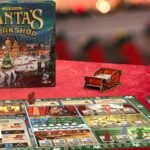
The publisher said it has broken a three-year run of losses since bringing in Coveyou to restructure the company last July, with the profits allowing it to get Santa’s Workshop into the hands of backers, as well as starting to pay some of the backlog of royalties it owes designers.

Elf Creek raised $1.6m through eight Kickstarter campaigns following its launch in 2017, scoring significant successes for games including Merchants of the Dark Road and Honey Buzz.

But the publisher entered years of turmoil after being hit with a $226,000 freight bill for shipping Merchants of the Dark Road in 2022 – more than four-times its initial $50,000 estimate – when global freight costs soared in the wake of the Covid-19 pandemic.

Rather than hold back fulfillment until prices fell, Elf Creek ploughed on in delivering the game at the vastly inflated cost, relying on the entirety of the game’s profits, credit, and forecasts for future sales – a decision from which company founder Brent Dickman admitted in 2024 the business had “never fully recovered”.

Elf Creek had almost $340,000 of entirely unfulfilled Kickstarter projects when Coveyou came on board seven months ago, including Secret Villages & Santa’s Workshop (+Related Story Puzzles!) and Paradox Initiative – while some backers of its Atlantis Rising: Monstrosities campaign from 2020 are still waiting for French and German language editions of the game.

The announcement of Coveyou’s appointment last summer ended almost a year of silence from Elf Creek about the status of its undelivered crowdfunding projects – although company founder Brent Dickman confirmed to BoardGameWire in December 2024 that he was “actively looking for a home and way forward for all of our games, including our unpublished Kickstarter projects, and will make official statements when I am able”.

Genius Games founder and Elf Creek Games executive director John Coveyou

Coveyou founded Genius Games in 2013 following a career as an engineer, a science and chemistry teacher and a spell in the US Army. That company specialises in science-themed games with an educational bent, with its best known releases including 2019’s Ecosystem and 2021 release Genotype: A Mendelian Genetics Game (2021)

He is also the founder and director of accounting and tax firm Simple Financials, which Elf Creek said last year specialises in “helping small businesses recover from crises like ours”.

Elf Creek revealed at the end of February this year that it posted a 12.3% profit as a percentage of gross revenue in 2025, following losses of 8.8% in 2024, 33.25% in 2023 and 11.6% in 2022.

The detailed announcement from Coveyou and Dickman expounded on the extensive financial and operational changes the company had undertaken since the Genuis Games founder’s arrival.

It said, “Turning a business around isn’t about discovering a new or a secret playbook. It’s about returning to the fundamentals that every healthy business runs on. These are the things that, somewhere along the way, were deprioritized, deferred, or lost amid growth and day-to-day stressors.

“Most business crises are not sudden events; they are the outcome of the slow accumulation of small decisions that move a business away from the basics.

“None of this changes the impact on backers and partners who have been waiting, or the seriousness of outstanding obligations. The goal has been to restore operational stability so commitments can be met consistently and transparently.”

Those measures were listed by the company as:

  • Stop all non-essential spending immediately. Every expense was reviewed and non-essential spending was cut. Software subscriptions, agencies, marketing, new projects—anything that wasn’t directly tied to generating income or keeping the business operating was put on hold.
  • Gain visibility and control over cash flow and operations. A weekly cash and operations dashboard and tracking system was built so the team could see cash and inventory coming in, cash and inventory going out, and exactly where the business stood, in order to make proactive decisions instead of reactive ones.
  • Get to accurate financials. If the books are wrong, the decisions are wrong. The bookkeeping and accounting were caught up, reorganized for better insights, and reconciled back to the bank statements. Every decision going forward was then based on reality and insights instead of assumptions.
  • Prioritize and accelerate cash inflows. Core revenue channels were identified and reinforced, keeping the right inventory in stock, continuing to reconnect with key customers, and making sure the parts of the business generating cash had what they needed to keep doing so.
  • Generate cash from what’s already there. We made a focused effort to collect on outstanding invoices, liquidate dead or excess inventory, and find new ways to monetize existing IP or underutilized resources – with ongoing work still in progress.
  • Gain additional runway by renegotiating obligations. Many companies struggle under the weight of debt and accumulated obligations. The weight of this can be debilitating, and resolving it is often one of the most difficult steps. Keeping a company running is essential, because a shutdown stops repayment and harms all parties. We restructured debt, worked out new payment plans with vendors, and negotiated revised terms to ensure the company stayed viable and can continue paying back everything owed.
  • Focus on a few key priorities. Identify a few major “game changers” that will have the greatest impact, then stay focused while avoiding distractions. With the business more stable, we concentrated available time and energy on three key priorities: fulfillment of Santa’s Workshop, getting base games back in stock, and rebuilding critical sales channels to keep revenue flowing and support ongoing obligations.

The company added that it had also paid all outstanding 2025 designer royalties across the Elf Creek Games product line, and was making “steady payments” toward remaining balances from 2024 and earlier.

It said, “Our business exists because of the games we publish. And those games exist because of the designers who create them. Without great products, we simply don’t have a company.”

BoardGameWire reported last December that Paul Salomon, the designer of Elf Creek’s Honey Buzz and Stonemaier Games title Stamp Swap, had left the publisher in September 2024 while owed “an enormous and life changing amount of money”.

Speaking in the wake of Elf Creek’s new announcement, he told BoardGameWire, “I finally received a statement of all of the royalties that I am owed, which hadn’t happened in several years.

“Looking at it now, ‘life-changing’ may have been a bit hyperbolic, but it is definitely making a big difference in the financial reality for my family. I have in fact been paid all of my 2025 royalties! Amazing.

“And in fact, I have been receiving steady and substantial payments on back royalties. Again fantastic.

“Finally, I renegotiated my contract so that Elf Creek can continue to print and sell Honey Buzz products. I am really happy with how that worked out and there’s no question that John Coveyou has done an amazing job as executive director.”

Honey Buzz: Deluxe Edition

Elf Creek said that now fulfillment of Santa’s Workshop is complete in the US, and expected to be delivered worldwide in April, it would be prioritising small-batch fulfillment of Atlantis Rising Monstrosities, production of The Paradox Initiative, finalization and production of Secret Villages, and reprints of base games for Honey Buzz, Atlantis Rising, Merchants of the Dark Road, and Santa’s Workshop.

The company announcement said, “The hardest parts are mostly behind us, but there is still a long road ahead. We are hopeful that the future holds more opportunity than heartache.

“Our focus now is on executing the next phase responsibly and bringing the right people around the table to support long-term stability and reliable fulfillment.

“We’re looking to build a board of advisors, including those who have been in the trenches and understand what it takes to run and grow a business, as well as individuals who can contribute expertise, resources, or connections. If you have experience, resources, or a network that could help, we’d welcome a
conversation.

“We’re open to exploring strategic partnerships, outside investment, or proposals that support operational stability and our next phase of growth. If there’s a business, brand, or operator out there who sees the value in what Elf Creek can become, the door is open.”

The post Elf Creek Games back to profit after John Coveyou-led restructure, begins fulfulling overdue Kickstarters first appeared on .

❌