Asmodee’s escalating power as a global TCG distribution giant was evident again in its newly-released annual results, which showed the company’s net sales surging 23% year-on-year to more than €1.68bn.
That annual revenue has swelled around 50% in just three years on the back of huge recent growth in TCGs, including heavyweights Magic: The Gathering and Pokemon as well as a wave of strong performing newcomers such as Disney Lorcana, the One Piece Card Game and Asmodee’s own Star Wars: Unlimited.
Despite Asmodee’s long-time image as a board game publishing heavyweight, more than 72% of its revenue now comes via its distribution of other companies’ games – up from an already hefty 63% in the previous financial year to March 31, 2025.
TCGs now make up the lion’s share of Asmodee’s annual net sales – about 60% in the 2025/26 financial year, up from just over 50% across the preceding 12 month period.
The company’s own board game publishing operation, meanwhile, saw its net sales fall 5.8% in the last financial year – while net sales for the first quarter of this year were down 9.8% compared to the same period in 2025.
Asmodee’s Jan-Mar 2026 and last financial year revenue figures, showing a hefty jump in the portion of its net sales coming from distributing other companies’ games
Asmodee CEO Thomas Koegler was asked directly during a Q&A session on Asmodee’s latest financial results if the company was still primarily a board game publisher, or whether it was “increasingly becoming an infrastructure company for TCGs”.
He said in response, “We have insisted a lot on the fact that one of the strengths of Asmodee is to be a publisher, but the first strength that we do have is our global reach across all categories, from TCGs and board games.
“That’s the superpower of Asmodee – and then being a very strong publisher is a way of accelerating performance.
“So I would say that there is no change, we continue to capture opportunities across the board wherever they come from… our aim is to be a dominant player, bringing all games to the market, anywhere they can.”
The Japon Brand buyout was accompanied by Asmodee launching a new Japan-based design studio, Nekuma, anchoring its push into what it described as a “currently untapped market” for the company.
There were also hints in the Q&A session that Asmodee might be considering a move into Japanese distribution, adding to its existing operations in the region across China, Taiwan and Australia.
Koegler said of Japan, “The first move we have done with Japon Brand and setting up Nekuma is more of a sourcing move, right?
“The Japanese game designers and authors’ market is very dynamic. If you look for instance in recent very successful games – Bomb Busters, which is the Spiel des Jahres from 2025, was originated from Japan, a game like Dnup that we are releasing later in the year is coming from Japan.
Asmodee CEO Thomas Koegler
“So they are very good also at small card games, and we really wanted to, I would say, bolster our publishing capabilities by creating those sourcing activities.
“Distribution wise, for now we are still working with local partners, we have not set direct foot yet.
He added, “It’s a fragmented market, its a very strong TCG market on the local market side, but yes… as I said, it’s a very vivid scene.”
Koegler also made clear that the company is still pursuing M&A opportunities on the publishing side “across all play types that we have, from social games to lifestyle games and tabletop games”.
He said, “I would say that the discussions we have are still as active as they were – we have demonstrated our ability to do various sizes of deals, which is also a very strong signal to potential people that would like to join the Asmodee adventure.”
Koegler said in his introduction to Asmodee’s 2025/26 report that the impact of geopolitical and economic events on the company’s business in the first few months of the year had been limited, but that the firm remained “mindful” of the potential pressures on transport and energy costs.
Asmodee said the impact on the business of transport and energy cost changes due to global political and economic issues had so far been limited
He said in the financial results Q&A session, “From a consumer standpoint, in moments of tensions when there are rising costs, because games are an affordable leisure we tend to suffer less, if not take some opportunities. That’s what we’ve seen in previous crises over the past 10 or 15 years.
“Consumer sentiment-wise, we will see. Although we are always cautious, there is also I think opportunities for us.
“Secondly, in terms of the cost impact. First of all our mix is currently very favourable because trading card games are manufactured very close to where they are sold, like in Europe for European countries mainly – some are manufactured in Asia but its a limited one – in the US for the US, etc.
“Plus they are cheap to transport, so the impact on those is relatively limited. And then we will see with our partners in terms of raw material increases, but again in the overall cost of goods they do not represent a very significant party.
“For board games we have started to see some increase in transportation costs. They did not impact Q4. If we take an example, road freight did represent roughly 20% of the cost base, and they have increased by 10%.
“But again, all of this is quite manageable for us. We expect to be able to mitigate the impact.”
Koegler added that although the process for receiving tariff refunds in the US had begun, after the Supreme Court struck Donald Trump’s swathe of import fees earlier this month, there was uncertainty about both the timing and final amount Asmodee was owed.
He said, “This is still a little bit foggy, blurred – for us, but [also] for many, many other companies out there. So let’s wait for what’s next on this topic.”
Financially-troubled board game publisher CMON says it plans to relaunch its halted crowdfunding operations later this year, after seeing its annual losses soar to almost $20m in 2025.
But a month later it emerged that CMON’s financial problems had been growing long before the tariffs, with the company announcing it had slumped to a loss of more than $3m in 2024 due to falling sales for its crowdfunding campaigns.
CMON’s $23m losses across 2024 and 2025 are now almost 5.5-times larger than its profits from the preceding nine years combined – and have led an independent auditor hired by the company to question whether it has the resources to stay in business for the foreseeable future.
An extract of a report from auditor Zhonghui Anda shared by CMON, which is set to appear in the company’s 2025 annual report next month, considered the publisher’s $19.9m annual loss, its net liabilities of more than $3.5m and contract liabilities of over $7.5m, saying, “These conditions indicate a material uncertainty which may cast significant doubt about the Group’s ability to continue as a going concern.”
CMON’s directors have a different view, however, saying in the 2025 financial report that the company “should be able to continue as a going concern” thanks to a trio of factors.
They include financial support from some of the directors “sufficient to finance CMON’s working capital requirements”, the roughly $2.4m proceeds from selling its Singapore office that it received in January, and the roughly $1.25m gross proceeds from a successful share sale last month.
CMON’s hefty liabilities are largely due to its eight undelivered crowdfunding campaigns, which are not recognised as revenue on the company’s books until they are fulfilled to backers.
The company said that delivering crowdfunding projects in 2024 contributed about $20m in revenue – a figure which had sunk to just $200,000 last year according to its latest financial report.
CMON said the 2025 losses were driven by a “significant decline in revenue”, which fell more than 73% to $9.9m last year, compared to the $37.3m total from 2024.
DCeased from CMON || Kickstarter image
It also cited impairment losses on property, plant and equipment, right of-use assets and intangible assets, and a loss it made disposing intellectual properties and related assets as part of its “strategic portfolio restructuring”.
Those IP sales included parting with its most famous and profitable title Zombicide – which has raised more than $40m on Kickstarter since its 2012 launch – to Asmodee, as well as Blood Rage, Rising Sun and Ankh to Tycoon Games.
CMON said all those sales combined amounted to about $5.1m, but added that it actually made an overall $2.4m loss on disposal of intellectual properties and related assets across 2025.
It also made a $5.7m loss due to undertaking an impairment assessment on some of its property, plant and equipment, right-of-use assets and intangible assets “with finite useful lives”.
CMON said in the financial report, “These actions, while negatively impacting short-term results, were undertaken to strengthen the Group’s operational focus and reduce future cost burden.”
The company’s remaining significant IP includes the Massive Darkness series, with the most recent installment, Massive Darkness: Dungeons of Shadowreach, completing a $2.85m crowdfund on Gamefound early last year – a figure which rose to more than $3.7m including late pledges.
That campaign was CMON’s last before it scrapped its future crowdfunding plans two months later. The company has pivoted in the interim to releasing several small-box games direct to retail, including Collect!, Peanuts Talent Show, Fairy Perfume, Rocket Punch and Yokai Carnival.
Collect! from CMON, designed by Jérémy Ducret and Johannes Goupy
Discussing its current strategy in the report, the company said, “In light of the continued uncertainty in the global market, particularly the instability arising from US import tariffs on certain products since the first half of 2025, the Group has taken decisive steps to restructure its operations and strengthen its financial position.
“Our current strategy is to:
1) reduce exposure to large-scale crowd-funding launches in the near term, focusing on fulfilment of games already committed to backers, with plans to resume crowdfunding activities in the second half of 2026 with new titles from current game lines;
2) grow distribution in Asia as a primary strategic market;
3) maintain a streamlined operational structure with reduced headcount and a smaller office footprint in line with the Group’s current scale of operations; and
4) maintain a debt-free position following the full repayment of bank borrowings, significantly reducing the Group’s financial liabilities and improving its financial resilience.
“We remain committed to becoming a quality developer and publisher of tabletop games and believe the strategic refocus toward Asia and selective game development will position the Group more sustainably for the future.”
CMON said it had reduced its revenue exposure to the US to about 21.4% of its total across 2025, compared to around 42% for the previous year, through what it described as a “deliberate strategic pivot toward Asia”.
The report showed CMON’s combined North and South America revenue fell more than 86% last year to about $2.1m, from around $15.7m in 2024.
European revenue also fell more than 81% year-on-year, from about $12.7m to around $2.4m. Asia revenue fell too, but much less sharply, down about 33% in 2025 from $8m to around $5.3m.
CMON said in the report, “Notwithstanding this reduced exposure, tariff-related uncertainties may continue to affect future export sales, revenue and gross margin performance in the US market.
“The Group intends to maintain its current reduced focus on the US market until the trade environment stabilises and market conditions improve.”
CMON also revealed the scale of its staffing cuts in the latest report, with headcount falling from 81 at the start of 2025 to just 41 at the beginning of this year.
The report said total staff costs had fallen in that time from about $4m to around $2.8m, including pay for its directors and their pension fund contributions, but it did not provide a breakdown of those numbers.
Elf Creek Games has begun fulfilling a wave of overdue crowdfunding campaigns after returning to profitability under the leadership of Genius Games founder John Coveyou.
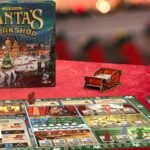
The publisher said it has broken a three-year run of losses since bringing in Coveyou to restructure the company last July, with the profits allowing it to get Santa’s Workshop into the hands of backers, as well as starting to pay some of the backlog of royalties it owes designers.
Elf Creek raised $1.6m through eight Kickstarter campaigns following its launch in 2017, scoring significant successes for games including Merchants of the Dark Road and Honey Buzz.
But the publisher entered years of turmoil after being hit with a $226,000 freight bill for shipping Merchants of the Dark Road in 2022 – more than four-times its initial $50,000 estimate – when global freight costs soared in the wake of the Covid-19 pandemic.
Rather than hold back fulfillment until prices fell, Elf Creek ploughed on in delivering the game at the vastly inflated cost, relying on the entirety of the game’s profits, credit, and forecasts for future sales – a decision from which company founder Brent Dickman admitted in 2024 the business had “never fully recovered”.
The announcement of Coveyou’s appointment last summer ended almost a year of silence from Elf Creek about the status of its undelivered crowdfunding projects – although company founder Brent Dickman confirmed to BoardGameWire in December 2024 that he was “actively looking for a home and way forward for all of our games, including our unpublished Kickstarter projects, and will make official statements when I am able”.
Genius Games founder and Elf Creek Games executive director John Coveyou
Coveyou founded Genius Games in 2013 following a career as an engineer, a science and chemistry teacher and a spell in the US Army. That company specialises in science-themed games with an educational bent, with its best known releases including 2019’s Ecosystem and 2021 release Genotype: A Mendelian Genetics Game (2021)
He is also the founder and director of accounting and tax firm Simple Financials, which Elf Creek said last year specialises in “helping small businesses recover from crises like ours”.
Elf Creek revealed at the end of February this year that it posted a 12.3% profit as a percentage of gross revenue in 2025, following losses of 8.8% in 2024, 33.25% in 2023 and 11.6% in 2022.
The detailed announcement from Coveyou and Dickman expounded on the extensive financial and operational changes the company had undertaken since the Genuis Games founder’s arrival.
It said, “Turning a business around isn’t about discovering a new or a secret playbook. It’s about returning to the fundamentals that every healthy business runs on. These are the things that, somewhere along the way, were deprioritized, deferred, or lost amid growth and day-to-day stressors.
“Most business crises are not sudden events; they are the outcome of the slow accumulation of small decisions that move a business away from the basics.
“None of this changes the impact on backers and partners who have been waiting, or the seriousness of outstanding obligations. The goal has been to restore operational stability so commitments can be met consistently and transparently.”
Those measures were listed by the company as:
Stop all non-essential spending immediately. Every expense was reviewed and non-essential spending was cut. Software subscriptions, agencies, marketing, new projects—anything that wasn’t directly tied to generating income or keeping the business operating was put on hold.
Gain visibility and control over cash flow and operations. A weekly cash and operations dashboard and tracking system was built so the team could see cash and inventory coming in, cash and inventory going out, and exactly where the business stood, in order to make proactive decisions instead of reactive ones.
Get to accurate financials. If the books are wrong, the decisions are wrong. The bookkeeping and accounting were caught up, reorganized for better insights, and reconciled back to the bank statements. Every decision going forward was then based on reality and insights instead of assumptions.
Prioritize and accelerate cash inflows. Core revenue channels were identified and reinforced, keeping the right inventory in stock, continuing to reconnect with key customers, and making sure the parts of the business generating cash had what they needed to keep doing so.
Generate cash from what’s already there. We made a focused effort to collect on outstanding invoices, liquidate dead or excess inventory, and find new ways to monetize existing IP or underutilized resources – with ongoing work still in progress.
Gain additional runway by renegotiating obligations. Many companies struggle under the weight of debt and accumulated obligations. The weight of this can be debilitating, and resolving it is often one of the most difficult steps. Keeping a company running is essential, because a shutdown stops repayment and harms all parties. We restructured debt, worked out new payment plans with vendors, and negotiated revised terms to ensure the company stayed viable and can continue paying back everything owed.
Focus on a few key priorities. Identify a few major “game changers” that will have the greatest impact, then stay focused while avoiding distractions. With the business more stable, we concentrated available time and energy on three key priorities: fulfillment of Santa’s Workshop, getting base games back in stock, and rebuilding critical sales channels to keep revenue flowing and support ongoing obligations.
The company added that it had also paid all outstanding 2025 designer royalties across the Elf Creek Games product line, and was making “steady payments” toward remaining balances from 2024 and earlier.
It said, “Our business exists because of the games we publish. And those games exist because of the designers who create them. Without great products, we simply don’t have a company.”
BoardGameWire reported last December that Paul Salomon, the designer of Elf Creek’s Honey Buzz and Stonemaier Games title Stamp Swap, had left the publisher in September 2024 while owed “an enormous and life changing amount of money”.
Speaking in the wake of Elf Creek’s new announcement, he told BoardGameWire, “I finally received a statement of all of the royalties that I am owed, which hadn’t happened in several years.
“Looking at it now, ‘life-changing’ may have been a bit hyperbolic, but it is definitely making a big difference in the financial reality for my family. I have in fact been paid all of my 2025 royalties! Amazing.
“And in fact, I have been receiving steady and substantial payments on back royalties. Again fantastic.
“Finally, I renegotiated my contract so that Elf Creek can continue to print and sell Honey Buzz products. I am really happy with how that worked out and there’s no question that John Coveyou has done an amazing job as executive director.”
Honey Buzz: Deluxe Edition
Elf Creek said that now fulfillment of Santa’s Workshop is complete in the US, and expected to be delivered worldwide in April, it would be prioritising small-batch fulfillment of Atlantis Rising Monstrosities, production of The Paradox Initiative, finalization and production of Secret Villages, and reprints of base games for Honey Buzz, Atlantis Rising, Merchants of the Dark Road, and Santa’s Workshop.
The company announcement said, “The hardest parts are mostly behind us, but there is still a long road ahead. We are hopeful that the future holds more opportunity than heartache.
“Our focus now is on executing the next phase responsibly and bringing the right people around the table to support long-term stability and reliable fulfillment.
“We’re looking to build a board of advisors, including those who have been in the trenches and understand what it takes to run and grow a business, as well as individuals who can contribute expertise, resources, or connections. If you have experience, resources, or a network that could help, we’d welcome a conversation.
“We’re open to exploring strategic partnerships, outside investment, or proposals that support operational stability and our next phase of growth. If there’s a business, brand, or operator out there who sees the value in what Elf Creek can become, the door is open.”
Amsterdam is an amphibious city. Water flows around it (the Ijsselmeer, over which most people used to come into the city), water flows through it (the Amstel river, after which it is named, and the canals dug later), and even the land on which the buildings stand was won from the watery marshes in a feat of human ingenuity. The need to work together in this communal enterprise did not only strengthen the peasants and craftspeople who had won this land themselves (instead of receiving it from a noble), but also their willingness to put up with each other regardless of differences – the first instance of the famous Amsterdam tolerance.
Amsterdam’s rise was also closely connected to the water: On the one hand, Dutch herring fishers found out about how to cure fish on the ship, enabling them to sail further and catch more instead of having to head home after the first big catch. And in the 14th century, the count of Holland decreed that all Dutch beer imports from Hamburg, then northern Europe’s brewery, must go through Amsterdam. The city thus became a trade hub, first for these staples of fish and beer, but the local merchants soon branched out to luxury goods, too, especially as the great voyages of discovery brought Europe in direct touch with south and southeast Asia as well as the newly-discovered Americas.
When the Reformation swept Europe in the 16th century, Amsterdam, unlike many other Dutch cities, did not adopt the new Protestant faith. Yet the city kept its unusual approach to differences of faith and tolerated the local Protestants. Neither Protestantism nor tolerance were acceptable to the ruling Habsburg monarch, Philip II of Spain, who had inherited the suzerainty over the Low Countries from his father, emperor Charles V. Yet while both Philip and Charles were ardent Catholics, they had a very different relationship with the Low Countries. Charles had been born and brought up there, living his happiest years not far from Amsterdam. Philip was a Spaniard in everything, regarding the Dutch with suspicion. And as they started rebelling against him – for the Protestant faith, for municipal independence from the monarch, and for the exemption of taxes funding Habsburg wars in faraway lands – he was resolved to bring them back into the fold by force.
The various factions of the Dutch struggle for independence are the player roles in Revolution: The Dutch Revolt, 1568—1648 (Francis Tresham, Phalanx Games) – Catholics, Habsburgs, Nobility, Burghers and Reformers. Amsterdam remained initially Catholic (and thus loyal to Philip), yet other concerns would be more pressing to the city than religion: When the Dutch rebels blockaded the city from the sea, thus causing the collapse of any trade profits and the food supply to the city, Amsterdam’s anti-Habsburg faction was ascendant. The city threw its lot in with the rebels in 1578. Its Catholic minority, however, would be treated as the Protestants had been before. Tolerance went both ways in Amsterdam.
Amsterdam had escaped its ruin from the naval blockade. Further south, Antwerp, the most important Dutch port, was not so fortunate. While the blockade strangled Antwerp’s trade, tens of thousands of Antwerp merchants and artisans left the city to find greener pastures elsewhere – most of them in Amsterdam. Thus, while the Dutch provinces were engulfed in warfare with the Habsburgs (which would only end with Dutch independence in 1648), the convergence of capital and know-how in Amsterdam turned the city into the commercial capital of the world.
The Center of the World
Amsterdam in the early 17th century was buzzing with commercial activity. The merchants did not only find new trade routes, they also invented new ways of doing business altogether: The Vereenigde Oostindische Compagnie (United East India Company), or VOC for short, founded in 1602, was the first chartered company in the world. Anyone could buy a share in the company and thus partake in its profits – or sell the shares to others in what would become the Amsterdam Stock Exchange (also the first of its kind in the world). Amsterdam ships carried goods all over the worlds, Amsterdam shipwrights built them, Amsterdam craftspeople produced many of the finest objects for sale, and Amsterdam painters and writers catered to the pursuits of the minds. In the mid-17th century, a staggering 30% of all the new books in the world were published in Amsterdam, taking advantage of the liberal approach to the exchange of ideas in the metropolis.
Construction boomed in Golden Age Amsterdam – the city had much outgrown its medieval limits. In an ambitious scheme to not only expand, but also re-order the city’s flow of people and goods, Amsterdam took on its characteristic form, the city center surrounded by three belts of interconnected canals (grachten).
Amsterdam’s canals and the narrow houses built along them (for taxes were paid according to the width of the building’s front) have their own board game dedicated to them: Grachtenpand (Zach Hoekstra, Wulfhorn Games).
To my knowledge, no board game portrays the construction of the grachten. That’s a shame, because the scheme that led to their creation is worthy of the most cunning table strategist: Mayor Frans Oetgens knew of the plan to expand Amsterdam and dig the canals before it was public, so he and his associates bought up vast stretches of land at bargain prices and sold them back to the city at astronomical profits.
This act of self-interested entrepreneurship embodies Amsterdam’s preoccupation towards individual gain. It speaks to Amsterdam’s character as an individualist, bourgeois city that its most recognizable sights are not palaces and cathedrals, but these canals and the private houses along them.
Another very Amsterdam trait which has stood the test of time is the love of flowers, especially tulips. Yet never was this passion greater than in the 17th century, when it intermingled with the other great passion of Amsterdammers – commerce. Unlike the controlled trade of goods and shares in Amsterdam’s port and stock exchange, the Amsterdam Tulip Bubble developed unregulatedly in taverns where buyers and sellers met over a glass of wine. The price of tulips skyrocketed in one of the first documented speculation crazes – until the bubble burst, as is the inevitable outcome of Tulip Bubble (Kouyou, Moaideas Game Design): Players want to partake in the profitable trade, yet must try to sell before the end of the mania, for all their tulips in hand will be worth nothing at game end.
The allure of 17th century Amsterdam, this great laboratory of capitalism, is so great that it has become a widespread board game setting – just behind Vikings, zombies, and trading in the Mediterranean. Even the behemoth board game franchise Ticket to Ride has an instalment set in Amsterdam. Ticket to Ride: Amsterdam (Alan R. Moon, Days of Wonder) deviates from the tried-and-true setting of trains in favor of route-building in Golden Age Amsterdam 200 years before the first rail was laid. I especially appreciate that the game sticks with the original names for places in Amsterdam, so that players who don’t speak Dutch can attempt to pronounce Korenmetershuisje (Little House of the Grain Measuring Officials) and Oost-Indisch Huis (East India House).
Finally, the great master of eurogames has also designed a Golden Age Amsterdam game: Merchants of Amsterdam (Reiner Knizia, Rio Grande Games). And despite Knizia’s reputation of producing mathematically sound, but often themeless games, it might be the one which captures Amsterdam in 17th century best: Not only is the central mechanism that of a Dutch auction (that is, an auction which starts at a very high price which continues falling until someone buys the asset in question at the price asked), but its map depicts the Amsterdam surrounded by four world regions with which the players can trade – Amsterdam, the commercial center of the world.
Amsterdam’s preeminence could not last forever. Despite its naval and commercial advantages, the Dutch Republic was a small country compared to England or France, and eventually fell to these rivals. The rampjaar (catastrophe year) of 1672, in which England challenged the Republic on the seas and France invaded the Netherlands, ended the Dutch Golden Age. Amsterdam was only saved from French occupation when the Dutch pierced the dikes and flooded a large area of their own country to prevent the French onslaught.
As the Dutch Republic shrunk in importance, so did Amsterdam. London, Paris, Vienna, and Berlin eclipsed it as centers of modernity in Europe. Even within the Netherlands, the city fell behind: Its disadvantageous geography meant that Rotterdam, situated directly on the North Sea instead of the Ijsselmeer, became the country’s premier port. Amsterdam, however, remained a center of the arts, and an iconic city of individualism and tolerance.
In the 20th century, these values brought Amsterdammers to adopt a liberal attitude toward prostitution (openly practiced around the Old Church) and drugs (marijuana is not legal, but its consumption in specialized establishments (coffeeshops) is tolerated). That openness has made Amsterdam a dream destination for those wishing to uproot traditional lifestyles (at least for a moment) – from Yoko Ono and John Lennon staging their “Bed-In” for world peace in Amsterdam to the ubiquitous bachelor party trips there. Surprisingly, not a single board game seems to be dedicated to this side of Amsterdam.
When board games are set in modern Amsterdam, they often allude to traditional Dutch themes: Gift of Tulips (Sara Perry, Weird Giraffe Games) has its players once more compete for the finest flower bouquets at the city’s annual tulip festival. Amsterdam’s rich artistic history also often features: In Masters of Crime: Shadows (Lukas Setzke/Martin Student/Verena Wiechens, KOSMOS), the players aim to conduct a painting heist, whereas in EXIT: The Game – The Hunt Through Amsterdam (Inka Brand/Markus Brand, KOSMOS), they want to recover a lost Vincent van Gogh painting. My detective instincts say that these are the same painting! Finally, Amsterdam’s slide to modern metropolis sans its erstwhile very specific features is exemplified by the game set in Amsterdam with the single highest number of ratings on BoardGameGeek: Mechanically, the crime/mystery game Shadows: Amsterdam (Mathieu Aubert, Libellud) could be set in any big city. There’s nothing Amsterdam-specific about private detectives looking for evidence and avoiding the police’s official investigation. Yet the artwork on the tiles sometimes gives a little glimpse – for example, houses along the gracht.
A good introduction on Amsterdam’s history is Shorto, Russell: Amsterdam. A History of the World’s Most Liberal City, Doubleday, New York City, NY 2013.

 Anmelden