
Normale Ansicht

How competitive TCG accessories are influencing hobby retail strategy in Europe: Sanseking [Sponsored]

15. Juli 2026 um 17:30

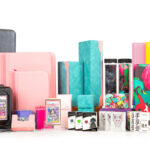
As trading card games continue to drive growth across the tabletop industry, hobby retailers are increasingly looking beyond games themselves to the accessories that support organised play and competitive communities. In this sponsored article, TCG and board game accessories maker Sanseking explains how changing player behaviour is influencing retailers’ approach to inventory, merchandising and long-term store strategy, and why competitive accessories are becoming a more important part of the European hobby market.

A growing crossover between board gaming and trading card games is beginning to reshape hobby retail strategy across Europe according to TCG, board game, and collectible accessories maker Sanseking, with competitive accessories emerging as an increasingly important category for stores.

What was once a relatively clear divide between casual board game retail and competitive TCG communities has evolved into a far more interconnected ecosystem, the company says, where stores are expected to serve multiple types of players simultaneously.

Sanseking production manager Ding Guang

That shift is particularly visible in the accessories market according to Sanseking production manager Ding Guang, who says retailers are increasingly treating competitive sleeves and protective products as core components of long-term business planning rather than simple add-on purchases.

“Accessories used to be viewed mainly as supplementary sales,” Guang told BoardGameWire. “But competitive communities create repeat purchasing behaviour that changes how retailers think about stability, inventory, and customer retention.”

Hobby retailers now commonly operate within a mixed environment that includes casual board gamers, organised play communities built around titles such as Magic: The Gathering, Pokémon and Yu-Gi-Oh!, and players who actively move between both spaces.

That convergence has become especially visible at events such as Spiel Essen, where accessory brands increasingly exhibit alongside publishers and competitive card players mix naturally with broader tabletop audiences.

But for retailers, the two customer groups behave very differently.

Board games typically generate one-off purchases tied to seasonal launches or major releases, while competitive TCGs create recurring engagement cycles through tournaments, deck rebuilding, league play and shifting formats – and those cycles also generate consistent accessory demand.

Competitive players replace sleeves far more frequently than casual players, Sanseking points out, adding that frequent shuffling, tournament preparation, the need for consistency and sensitivity to tactile feedback all contribute to repeat purchases.

That rise in accessory demand has also been driven by the stellar growth of TCGs more generally, with long-time heavyweights such as Pokemon, Magic: The Gathering and Yu-Gi-Oh! joined more recently by a flurry of other successful entrants to the market, including One Piece, Disney Lorcana and Star Wars Unlimited.

That demand pushed the overall value of the global TCG market to $7.8bn last year according to veteran research firm BCC, which projects the segment will reach $11.8bn by 2030 with a CAGR of 7.9%.

In many European hobby stores, tournament nights now represent some of the most reliable recurring foot traffic. Players attending weekly organised play events increasingly view accessories not as optional extras, but as part of their competitive equipment.

According to Guang, that recurring demand can help retailers smooth revenue fluctuations during slower periods in the board game release calendar. But at the same time, competitive players also tend to be far more selective.

“They pay attention to things casual players may never think about,” Guang said. “Edge structure, shuffle consistency, durability over repeated use, and manufacturing consistency between batches all matter.”

The Growing Importance of Segmentation

That growing attention to performance characteristics is also pushing retailers to rethink how accessories are presented in-store, according to Sanseking.

Historically, sleeves were often treated as largely interchangeable products differentiated mainly by colour or price point.

But as organised play communities mature, stores are increasingly recognising that accessories serve multiple functional segments, ranging from casual ‘kitchen table’ play, to hobby-level regular play and competitive or sanctioned environments.

Retailers that fail to distinguish between those categories can create unnecessary friction, Sanseking says.

The company points out that a product optimized for softness and casual handling may not satisfy a competitive player seeking predictable shuffle feedback. Conversely, a structure-focused sleeve may feel unnecessarily rigid or specialized for a board gamer.

As a result, some retailers are beginning to adopt more structured merchandising approaches, using clearer pricing tiers, competitive-focused shelving, and staff recommendations tailored to different player types.

“The stores performing well are usually the ones creating clarity,” Guang said. “Not necessarily carrying the most SKUs, but helping customers understand which products fit which type of play.”

Risk, Inventory, and Shelf Strategy

From a commercial perspective, competitive accessories also offer several advantages compared to boxed games, including lower unit cost, a smaller shelf footprint, faster turnover when tied to active communities and strong repeat purchase potential.

Retailers can still perceive the category as niche, however – particularly when shelf space is limited. According to Sanseking, the most effective approach is usually a balanced one – not one that offers endless fragmentation, but a core range which covers general use, alongside clearly identified competitive-focused options for players who care about performance.

The importance of organised play also continues to shape purchasing behaviour, with competitive events a significant driver of repeat store visits, even amid wider economic pressure on hobby spending.

Within those communities, accessory choices increasingly function as part of player identity.

“Players often become loyal to specific performance characteristics rather than just aesthetics,” Guang said. “That creates opportunities for retailers to position themselves as serious competitive venues.”

Some stores are already leaning into that approach by highlighting ‘competitive-ready’ accessory sections, aligning certain products with tournament nights, and using more technical product descriptions instead of purely visual merchandising.

The growing overlap between board game audiences and competitive TCG players is also accelerating the trend, according to Sanseking’s experience of the market.

The firm said that many customers who first enter hobby stores through board games gradually become exposed to organised play environments, while competitive card players often purchase board games for more social settings.

Accessories sit directly at the centre of that crossover, with protective products one of the few categories that naturally serve both audiences while still supporting different performance tiers, it added.

For retailers, that makes accessory strategy not just an operational decision, but a bridge between communities, Sanseking says.

As Europe’s tabletop market continues to evolve, Guang believes accessories will become more strategically significant across the retail landscape.

“Players are becoming more informed about performance trade-offs, and retailers are having to serve more diverse communities across the same limited shelf space,” he said. “Clear segmentation and clear communication are becoming much more valuable.”

For brands, that means designing products with defined use cases rather than relying on broad universal claims. And for retailers, Guang argues, success may depend less on scale than structure.

“In a market where casual and competitive audiences increasingly overlap, clarity is often more important than simply offering more products.”

Anyone interested in working with Sanseking can visit their website for more details about what they offer, and contact them here.

The post How competitive TCG accessories are influencing hobby retail strategy in Europe: Sanseking [Sponsored] first appeared on .

UK Games Expo soars past 51,000 attendees, show more than doubles pre-pandemic record

01. Juni 2026 um 17:25

The UK Games Expo has continued its meteoric growth into one of the world’s largest tabletop gaming conventions, after more than 51,000 people descended on Birmingham’s NEC for the show’s 20th anniversary.

That turnout is more than double UKGE‘s pre-pandemic record for unique visitors, and saw overall footfall reach almost 88,000 across the three-day show, which ended yesterday.

The surging visitor numbers – up 64% in just three years – mean UKGE is now pushing steadily towards the 70,000-plus visitors recorded by giant US tabletop convention Gen Con each year since 2023, and is more than two and a half times larger than last year’s Origins Game Fair.

UKGE has already well surpassed Gen Con in terms of trade hall size, with the British event now spanning about 44,000 sq m – making it about 40% bigger than Gen Con’s trade hall area at its show last year.

Around 900 exhibitors pitched their booths at this year’s UKGE – including 75 first-time exhibitors – compared to 575 at Gen Con last year.

Almost every exhibitor BoardGameWire spoke with at this year’s event reported sales activity ranging from “very good” to “record-breaking”, while one mid-size publisher added that they were delighted at how smooth the organisation was, compared to logistical and set-up issues they had previously experienced at shows including Origins and Spiel Essen.

Tycoon Games CEO Dan Yarrington

Dan Yarrington, the CEO of Everdell publisher Tycoon Games, had a small presence at the show for the first time this year as part of a shared booth, following a fact-finding trip to the event in 2025 – and told BoardGameWire his company would probably return with its own stand in 2027.

He said, “At this level, at 40,000 plus people, and with the buying that we see… my impressions of the show were that, ‘Hey, this is actually a good show’. People are buying stuff, and it’s a different market. This is especially important in the global climate that we’re in, where people are less likely to travel to various other places.”

Yarrington added that in addition to selling its existing titles, UKGE would likely act as a preview show for the publisher, with new releases more likely to appear at Gen Con and Spiel Essen to feed into the company’s fourth quarter.

He said, “At this [UKGE] we had the Everdell Journeys preview copy – it’s not even on Kickstarter yet, so we can be like, ‘hey, come play it, and then tell us what you think’, we can adjust things, and then ‘hey, sign up for the Kickstarter’ – but Journeys won’t release till Gen Con [in 2027], so I think that’s what it’d be, a good process for us.”

Other exhibitors planning to expand their UKGE presence next year after a successful show included small-scale UK publisher Minerva Tabletop Games, which teamed up with three other members of the Playtest UK design group this year to run a combined booth.

Minerva founder Scott Lowe-James told BoardGameWire, “I don’t want to say this is definitely happening, but this was a test, and I think we could easily do like four or five times bigger than this”, citing Allplay‘s large demo area and single shop front as a potential model to replicate.

He added, “We’re all here already, and we’ve all got our own stands, but with that comes volunteers, accommodation costs, logistics. Whereas [by collaborating] we’re able to keep costs down, which is really important for one person, two person teams in being able to support each other where we need. And also we get greater exposure, so the rising tide lifts all boats.”

Scott Lowe-James, centre, with other members of Playtest UK at their UK Games Expo booth

In terms of advising other smaller publishers thinking of attending future UKGEs, Lowe-James said, “I think if you can work with someone, then then do it.

“[UKGE] has the great incentive of the starter stand, so you get a discounted rate, and that is good. But the leap up [from there] is quite a big one, especially if you are a first-time publisher, because not only does the rate increase, but the minimum size increases – and with that comes you need to find people to volunteer, and so other costs increase as well.

“So if you’re able to, find people either with similar games or people that you know. The fact that we’ve been able to support each other, cover each other’s games, I think you also get that tighter bond.”

He added, “Next year we could have, like, 15 different games across different themes and different ways to appeal to people. And I think it’s definitely the way forward.”

James Naylor, the CEO of UK publisher Naylor Games [a BoardGameWire sponsor], said that in addition to a good year for sales, it was notable that more families and attendees relatively new to the board games hobby were filling out the show floor each year.

He told BoardGameWire, “I’m really glad to see that, actually, because there was a little bit of time a couple of years ago where it felt like – maybe it’s just my perception – that perhaps the whole show was becoming more of a kind of ‘turbo nerd’ RPG show.

“…maybe that’s just because that was a peak of RPG popularity or something, and I’m glad to see instead it’s reaching out to a wider audience.

“I want to see board games become more universal as a thing that people use to play face to face, away from screens. So, the more I see that wider audience, rather than just a very narrow hardcore, that’s better from my perspective.”

That rise in awareness of UK Games Expo, and board games in general, has been noticeable too in the run-up to the event, with coverage by national broadcaster the BBC both prior to and during the show this year.

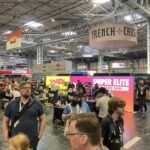
The open gaming and tournaments hall at the 2026 UK Games Expo

Rob Trounce, trade marketing manager at UK board game retailer and distributor Zatu, said a highlight of the show had been BBC Radio showcasing co-op dexterity game Yubibo during its coverage.

He said, “It was kind of a shock to us, and I think it shows UK Games Expo going more mainstream as well.

“If it’s got the BBC and its radio channels talking about it, it shows that this isn’t just a space which is for us dyed-in-the-wool gamers anymore. It is for everyone, it is a mainstream thing.”

UKGE director Richard Denning, who co-founded the show in 2007, joked on social media ahead of this year’s show that the event had grown into something that had “frankly got a bit out of hand”.

UK Games Expo co-founder Richard Denning

The event has ballooned in size since the event first opening its doors in a Birmingham conference centre in 2007, attracting 900 excited gamers – a far cry from the 27,000 who attended Gen Con’s 40th anniversary show later that year.

Denning previously told BoardGameWire that even at that embryonic stage, he hoped the show could go some way to recreating the atmosphere of big name events such as Gen Con and Essen Spiel, albeit in a much-reduced form.

Speaking of plans for future shows, Denning told BoardGameWire there was still room for expansion in its current footprint, but added that the show may change things around next year in order to provide more space for events.

He said, “It is expanding, and we are tight on event space – hence the possible need for more. We have about 500 events. I am amazed how many events US cons get. I think we still want to see that grow.”

Addressing the show’s rapid growth, despite economic turbulence such as Covid-19, the impact of global conflicts and US tariff policy, Denning added, “It’s certainly been a roller-coaster. Even earlier there was the credit crunch of 2008, of course.

“I think whilst visitors may have smaller wallets at present they still want to attend events like UKGE. Folk will save for the weekend and set that a side as a treat to look forward to, I think.”

The post UK Games Expo soars past 51,000 attendees, show more than doubles pre-pandemic record first appeared on .

Asmodee’s annual revenue surges to €1.68bn on TCG distribution power, but sales of its own board games fall

Asmodee’s escalating power as a global TCG distribution giant was evident again in its newly-released annual results, which showed the company’s net sales surging 23% year-on-year to more than €1.68bn.

That annual revenue has swelled around 50% in just three years on the back of huge recent growth in TCGs, including heavyweights Magic: The Gathering and Pokemon as well as a wave of strong performing newcomers such as Disney Lorcana, the One Piece Card Game and Asmodee’s own Star Wars: Unlimited.

Despite Asmodee’s long-time image as a board game publishing heavyweight, more than 72% of its revenue now comes via its distribution of other companies’ games – up from an already hefty 63% in the previous financial year to March 31, 2025.

TCGs now make up the lion’s share of Asmodee’s annual net sales – about 60% in the 2025/26 financial year, up from just over 50% across the preceding 12 month period.

The company’s own board game publishing operation, meanwhile, saw its net sales fall 5.8% in the last financial year – while net sales for the first quarter of this year were down 9.8% compared to the same period in 2025.

Asmodee’s Jan-Mar 2026 and last financial year revenue figures, showing a hefty jump in the portion of its net sales coming from distributing other companies’ games

Asmodee CEO Thomas Koegler was asked directly during a Q&A session on Asmodee’s latest financial results if the company was still primarily a board game publisher, or whether it was “increasingly becoming an infrastructure company for TCGs”.

He said in response, “We have insisted a lot on the fact that one of the strengths of Asmodee is to be a publisher, but the first strength that we do have is our global reach across all categories, from TCGs and board games.

“That’s the superpower of Asmodee – and then being a very strong publisher is a way of accelerating performance.

“So I would say that there is no change, we continue to capture opportunities across the board wherever they come from… our aim is to be a dominant player, bringing all games to the market, anywhere they can.”

That assertion has been borne out by Asmodee’s recently reignited acquisitions drive, which has seen it pay a hefty €250m for French social and party game publisher ATM Gaming, as well as buying Japon Brand from CMON and individual IPs including ZombicideCthulhu: Death May Die and Sheriff of Nottingham.

The Japon Brand buyout was accompanied by Asmodee launching a new Japan-based design studio, Nekuma, anchoring its push into what it described as a “currently untapped market” for the company.

There were also hints in the Q&A session that Asmodee might be considering a move into Japanese distribution, adding to its existing operations in the region across China, Taiwan and Australia.

Koegler said of Japan, “The first move we have done with Japon Brand and setting up Nekuma is more of a sourcing move, right?

“The Japanese game designers and authors’ market is very dynamic. If you look for instance in recent very successful games – Bomb Busters, which is the Spiel des Jahres from 2025, was originated from Japan, a game like Dnup that we are releasing later in the year is coming from Japan.

Asmodee CEO Thomas Koegler

“So they are very good also at small card games, and we really wanted to, I would say, bolster our publishing capabilities by creating those sourcing activities.

“Distribution wise, for now we are still working with local partners, we have not set direct foot yet.

He added, “It’s a fragmented market, its a very strong TCG market on the local market side, but yes… as I said, it’s a very vivid scene.”

Koegler also made clear that the company is still pursuing M&A opportunities on the publishing side “across all play types that we have, from social games to lifestyle games and tabletop games”.

He said, “I would say that the discussions we have are still as active as they were – we have demonstrated our ability to do various sizes of deals, which is also a very strong signal to potential people that would like to join the Asmodee adventure.”

Koegler said in his introduction to Asmodee’s 2025/26 report that the impact of geopolitical and economic events on the company’s business in the first few months of the year had been limited, but that the firm remained “mindful” of the potential pressures on transport and energy costs.

Asmodee said the impact on the business of transport and energy cost changes due to global political and economic issues had so far been limited

He said in the financial results Q&A session, “From a consumer standpoint, in moments of tensions when there are rising costs, because games are an affordable leisure we tend to suffer less, if not take some opportunities. That’s what we’ve seen in previous crises over the past 10 or 15 years.

“Consumer sentiment-wise, we will see. Although we are always cautious, there is also I think opportunities for us.

“Secondly, in terms of the cost impact. First of all our mix is currently very favourable because trading card games are manufactured very close to where they are sold, like in Europe for European countries mainly – some are manufactured in Asia but its a limited one – in the US for the US, etc.

“Plus they are cheap to transport, so the impact on those is relatively limited. And then we will see with our partners in terms of raw material increases, but again in the overall cost of goods they do not represent a very significant party.

“For board games we have started to see some increase in transportation costs. They did not impact Q4. If we take an example, road freight did represent roughly 20% of the cost base, and they have increased by 10%.

“But again, all of this is quite manageable for us. We expect to be able to mitigate the impact.”

Koegler added that although the process for receiving tariff refunds in the US had begun, after the Supreme Court struck Donald Trump’s swathe of import fees earlier this month, there was uncertainty about both the timing and final amount Asmodee was owed.

He said, “This is still a little bit foggy, blurred – for us, but [also] for many, many other companies out there. So let’s wait for what’s next on this topic.”

The post Asmodee’s annual revenue surges to €1.68bn on TCG distribution power, but sales of its own board games fall first appeared on .

❌