❌

Normale Ansicht

CMON to give up The Adventurers ownership to get delayed project delivered as it works to stabilise finances

06. Oktober 2026 um 20:31

CMON has found a route to getting one of its delayed projects into customers’ hands without having to fund the remaining costs itself, as the financially-troubled publisher continues its attempt to recover from almost $23m of losses across 2024 and 2025.

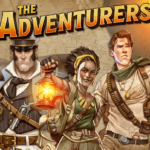
Long-time CMON manufacturing partner Top Games has agreed to take ownership of The Adventurers in exchange for covering the remaining production and fulfilment costs for the pre-order title, with CMON continuing to “provide support”, a joint statement from the pair said.

They added that production of The Adventurers had now been completed, with finished games packed at the factory and ready for shipment.

Copies of The Adventurers ready for shipment || Photo Credit: CMON / Top Games

CMON said in January that IP sales and licensing deals were among the routes it was pursuing to secure fulfilment of its large backlog of outstanding projects, as part of its efforts to stabilise its finances.

Those undelivered projects comprise eight crowdfunding campaigns which raised more than $14m, including DC Super Heroes United, DCeased and Massive Darkness: Dungeons of Shadowreach, and four pre-order campaigns including The Adventurers.

CMON warned in the summer that its core business was suffering a “prolonged structural downturn” and was still consuming more cash than it generated, despite a drastic restructuring which has seen the company halve its workforce, sell off some of its biggest game IPs and halt new crowdfunding campaigns.

But the publisher received a major financial boost last month by completing a $19m capital raise – having entered August with just $368,000 in bank and cash balances.

That new funding is needed for far more than clearing its project backlog, however. About 40% has been earmarked for “working capital” over the coming 12 months, including staff costs, royalties, shipping and distribution, while another 20% is set to go towards repaying borrowings and other liabilities.

Another 25% of the new money is slated for expansion in existing and new markets, while 15% will go towards potential acquisitions as part of a push into digital gaming.

Top Games has been a major manufacturing partner for CMON over the years, working on more than a dozen of its games including Cthulhu: Death May Die – Fear of the Unknown, Massive Darkness 2: Hellscape and Zombicide: Undead or Alive, as well as Project: ELITE, Munchkin Dungeon and Starcadia Quest.

Its team has worked in tabletop manufacturing since 2009, and the Chinese company established its own plastics manufacturing facility in Dongguan in 2018.

Cthulhu: Death May Die – Fear of the Unknown || Kickstarter image

Top Games stressed in the announcement that manufacturing will remain the foundation of its business, and said its involvement with The Adventurers had the specific goal of getting the project completed and delivered to customers.

The Adventurers is CMON’s revival of the adventure game series from Guillaume Blossier and Frédéric Henry, which began with The Adventurers: The Temple of Chac in 2009 – originally published by AEG and Dust Games. That title was followed by followed by Dust Games and Fantasy Flight Games’ The Adventurers: The Pyramid of Horus in 2011.

CMON launched a Gamefound pre-order in March 2025 featuring new editions of both games alongside a new entry in the series, The Adventurers: Tomb of the Pirate Queen, with delivery of the project estimated for December that year.

Just a month later, however, the publisher announced it was laying off staff and halting new game development and campaign launches, citing the ongoing unpredictability in US tariffs.

A week after that, CMON revealed it had slumped to a loss of more than $3m in 2024 – a figure subsequently dwarfed by the publisher’s 2025 losses, which spiralled to nearly $20m.

Those losses are almost 5.5-times the company’s profits from the preceding nine years combined – although the company’s recent restructuring efforts have seen its losses for the first half of 2026 narrow sharply, to just over $2m.

CMON’s revenue has fallen dramatically from its pandemic-era highs, dropping to $9.9m in 2025 from between $37m and $45m in each of the previous four years.

The company has blamed that decline on factors including a slowdown in crowdfunding, weaker consumer demand and disruption from US tariffs, leaving it trying to cut costs and reshape a business built around significantly higher sales.

Massive Darkness: Dungeons of Shadowreach, which completed a $2.85m crowdfund on Gamefound early last year, was CMON’s last before it scrapped its future crowdfunding plans two months later.

The company has pivoted in the interim to releasing several smaller-box games direct to retail, including Collect!, Peanuts Talent Show, Fairy Perfume, Rocket Punch and Yokai Carnival.

Its 2026 releases continue that trend via Renier Knizia design KumoKumo Park and Atrah from Jérémy Ducret and Johannes Goupy, while the company has also highlighted Grow Sky as another release it says is ‘coming soon’.

KumoKumo Park, designed by Reiner Knizia || Photo Credit: CMON

The company has not completed fulfillment of a crowdfunding project since Zombicide: White Death in mid-2025, but did manage to deliver pre-orders for Cthulhu: Dark Providence, Marvel United: Witching Hour and Dune: Desert War in the first half of this year.

CMON said in March that it planned to resume crowdfunding in the second half of 2026 – although its latest financial report stopped short of repeating that commitment, saying instead that new titles would be launched selectively depending on market conditions, available financial resources and project readiness.

The post CMON to give up The Adventurers ownership to get delayed project delivered as it works to stabilise finances first appeared on .
CMON succeeds with $19m capital raise in major boost to financially-troubled publisher’s turnaround

24. September 2026 um 14:40

Financially-troubled board game publisher CMON has secured a $19m injection of new capital as it battles to turn around years of heavy losses and dwindling cash reserves – which had left it with just $368,000 in bank and cash balances at the start of August.

The huge investment from new shareholders gives the crowdfunded board game giant much-needed financial breathing room, as it continues its attempt to recover from losses of almost $23m across 2024 and 2025.

CMON warned in the summer that its core business was suffering a “prolonged structural downturn” and was still consuming more cash than it generates, despite a drastic restructuring which has seen the company halve its workforce, sell off some of its biggest game IPs and halt new crowdfunding campaigns.

Those efforts dramatically reduced its losses, with the company reporting a loss of just over $2m for the first half of this year, compared to almost $7m for the same period in 2025.

But CMON’s balance sheet remained under pressure at the end of June, with $7.34m more in short-term liabilities than short-term assets, up from $6.89m at the end of 2025.

A significant part of CMON’s liabilities relates to eight crowdfunded games whose campaigns raised $14m from backers, but which the company has yet to deliver – including DC Super Heroes United, which raised more than $4.4m, and DCeased, which brought in over $2.5m.

DC Super Heroes United, designed by Andrea Chiarvesio || Crowdfunding image

CMON’s directors in its H1 report that the liabilities position had caused the company’s directors to give “careful consideration to the future liquidity and performance of the group and its available sources of financing in assessing whether the group will have sufficient financial resources to continue as a going concern”.

The directors added that they believed CMON would be be able to continue operating – but central to that assessment was the success of the planned share sale, which was designed to raise up to HK$150.5m, or about $19m.

Existing shareholders agreed to buy just 7.76% of the new shares offered to them by the August deadline, leaving CMON looking to raise more than $17.5m from other investors through the rights issue – a figure approaching 2.5-times the valuation of the entire company implied by its last share sale in February this year.

But the company has now revealed that placing agent Yuen Meta managed to sell every remaining share on offer, giving the business the full $19m it had been seeking – a significant mark of belief in the beleagured business.

That capital injection is more than 50-times CMON cash balance from early August, and almost double the $9.9m in revenue CMON generated across the whole of last year, although it pales in comparison to the $37m to $45m revenues it posted each year between 2021 and 2024.

CMON said it plans to use 40% of the newly-raised money to fund its day-to-day operations across the next 12 months, including staff costs, royalties, shipping and distribution, professional fees and other administrative and operating expenses.

Of that slice, about 30% – which works out to $2.28m – was set to go towards staff costs including salaries, bonuses and allowances, 30% towards selling and distribution expenses, and 35% towards general administrative and operating expenses, including its sales operation, utilities, insurance, government registration and filing fees, listing fee, repairs and maintenance. The the final 5% was earmarked for paying professional fees

That news could provide some relief to the tens of thousands of backers still waiting for their games via CMON’s heavily-delayed crowdfunding campaigns – although the publisher has not specified exactly how much of the capital will be used to deliver the overdue titles, or whether the capital is enough to ensure all eight will be fulfilled.

Zombicide: White Death

CMON has not completed fulfillment of a crowdfunding project since Zombicide: White Death in mid-2025, but did manage to deliver pre-orders for Cthulhu: Dark Providence, Marvel United: Witching Hour and Dune: Desert War in the first half of this year.

Four other pre-order titles: Assassin’s Creed Role Playing Game, The Adventurers, The Dead Keep and Super Fantasy Brawl Reborn, all remain undelivered, although the first of those is currently slated for completion in Q3.

GameAmount raised
Number of backers
Fundraise completedInitial delivery estimateLatest delivery estimate (as of September 24, 2026)
Mordred$669,9765,687July 2023August 2024Q4 2026
Masters of the Universe: The Board Game – Clash for Eternia$719,6644,182January 2024November 2024Q1 2027
DCeased$2,564,78912,787December 2023April 2025Q1 2027
DC Super Heroes United$4,478,98914,040August 2024August 2025Q1 2027
God of War$832,9454,388May 2024June 2025Q2 2027
Massive Darkness: Dungeons of Shadowreach$2,854,5539,842February 2025March 2026Q3 2027
A Song of Ice & Fire: Tactics$1,886,5096,406February 2024February 2025Q3 2027
Degenesis: Clan Wars$339,7421,232June 2024July 2025n/a
Total Dollars$14,347,167

About 20% of CMON’s newly-raised capital is earmarked for repaying debts and other outstanding liabilities, including $2.46m owed to a CMON director and $385,000 of unsecured advances from employees, as well as outstanding production, shipping, royalty and other operating costs.

CMON has slated 25% of the new money for expansion in existing and new markets, including strengthening the company’s presence in Europe through marketing and potential attendance at events including Spiel Essen and Cannes, as well as targeting growth in Japan and the Philippines.

The company added that it plans to put 15% of the new capital towards potential acquisitions as part of a push into digital gaming, although said it had not yet identified any targets.

CMON said it intends to look for between one and three businesses, primarily in Asia-Pacific, valued at between about $1.3m and $2.5m each, which could help it develop digital adaptations of its existing games, companion apps and other digitally-enabled features.

The publisher stressed that it intends to retain physical tabletop games as its core business, with the digital push designed to complement rather than replace them.

CMON’s capital raise has also radically reshaped the ownership of the company, with chairman and CEO Ng Chern Ann ceasing to be the largest shareholder after his overall stake was diluted down from about 20% to just over 5%.

The capital raise has made investor Yip Ka Ki Cherry CMON’s largest disclosed shareholder with a roughly 19% stake, personally and via her investment holding company Legend One.

Yip was already an investor in CMON before the rights issue, with a stake of about 4.8%. Her other previous investments through Legend One include Japanese entertainment business TryHard Holdings.

CMON has also strengthened its board following the capital raise, appointing two new independent non-executive directors – veteran financial management, corporate governance and audit executive Chan Ka Kit, and corporate communications, marketing and investor relations specialist Claire Luk.

The post CMON succeeds with $19m capital raise in major boost to financially-troubled publisher’s turnaround first appeared on .

CMON warns of ‘prolonged structural downturn’ as it seeks up to $17.5m from investors

09. September 2026 um 17:37

CMON has warned that its core business is suffering a “prolonged structural downturn” and is still consuming more cash than it generates, despite a drastic restructuring which has seen the board game crowdfunding major halve its workforce, sell off some of its biggest game IPs and halt new crowdfunding campaigns.

The warning comes amid an extraordinary period of upheaval for one of tabletop gaming’s biggest crowdfunding publishers, which suffered losses of almost $23m across 2024 and 2025 and is still working to deliver a string of heavily-delayed campaigns that raised more than $14m from backers.

CMON has spent the past 18 months attempting to stabilise its finances by cutting staff and other costs, selling high-profile IP including Zombicide, Blood Rage and Cthulhu: Death May Die, divesting its Singapore office and raising fresh money from investors.

Those efforts have now dramatically reduced its losses, CMON’s newly-released H1 financial report shows – with the company reporting a loss of just over $2m for the first half of this year, compared to almost $7m for the same period in 2025.

CMON’s revenue also rose more than 7% year-on-year in H1, up to $3.68m from $3.43m in the first six months of 2025, while its selling and distribution expenses more than halved from $1.83m to $859,000, and its general and administrative expenses fell from $4.37m to $2.37m.

But that improvement has failed to make the underlying business self-sustaining. CMON’s cash reserves, which stood at $3.9m at the end of 2022, had fallen to $2.1m by the end of 2024, and slipped again to just over $900,000 by June 2025.

CMON revealed last month that it had about $368,000 in bank and cash balances as of August 4, which it described as enough to cover less than a month of its daily operating expenses.

Crowdfunding Commitments

Despite the sharp reduction in its losses, CMON’s balance sheet remained under pressure at the end of June – with $7.34m more in short-term liabilities than short-term assets, up from $6.89m at the end of 2025.

A significant part of CMON’s liabilities relates to eight crowdfunded games whose campaigns raised $14m from backers, but which the company has yet to deliver.

They include DC Super Heroes United, which raised more than $4.4m, and DCeased, which brought in over $2.5m. Both of those campaigns were initially due to be delivered last year, but fulfillment has been pushed back several times since and both are now scheduled for the first quarter of 2027.

CMON has not completed fulfillment of a crowdfunding project since Zombicide: White Death in mid-2025, but has managed to deliver pre-orders for Cthulhu: Dark Providence, Marvel United: Witching Hour and Dune: Desert War in the first half of this year.

Four other pre-order titles: Assassin’s Creed Role Playing Game, The Adventurers, The Dead Keep and Super Fantasy Brawl Reborn, all remain undelivered, although the first of those is currently slated for completion in Q3.

Funding Push

CMON said in its H1 report that the liabilities position had caused the company’s directors to give “careful consideration to the future liquidity and performance of the group and its available sources of financing in assessing whether the group will have sufficient financial resources to continue as a going concern”.

Those directors believe CMON will be able to continue operating – but central to that assessment is a major share sale designed to raise up to HK$150.5m – about $19m.

CMON first announced the rights issue fundraise in June, proposing to offer existing shareholders the opportunity to buy three new shares for every share they already owned in an attempt to raise the capital.

The plan was approved by shareholders in late July and the formal offer opened in mid-August – but existing shareholders took up just 7.76% of the new shares offered to them by the August deadline.

That leaves CMON looking to raise more than $17.5m from other investors through the rights issue – a figure approaching 2.5-times the valuation of the entire company implied by its last share sale in February this year.

CMON said it plans to use 40% of the money raised to fund its day-to-day operations for roughly the next year, including staff costs, royalties, shipping and distribution, professional fees and other administrative and operating expenses.

Another 20% is earmarked for repaying debts and other outstanding liabilities, including $2.46m owed to a CMON director and $385,000 of unsecured advances from employees, as well as outstanding production, shipping, royalty and other operating costs.

CMON has earmarked 25% for expansion in existing and new markets, including strengthening the company’s presence in Europe through marketing and potential attendance at events including Spiel Essen and Cannes, as well as targeting growth in Japan and the Philippines.

Digital Ambitions

The company added that it plans to put 15% of the new capital towards potential acquisitions as part of a push into digital gaming, although said it had not yet identified any targets.

CMON said it intends to look for between one and three businesses, primarily in Asia-Pacific, valued at between about $1.3m and $2.5m each, which could help it develop digital adaptations of its existing games, companion apps and other digitally-enabled features.

The publisher stressed that it intends to retain physical tabletop games as its core business, with the digital push designed to complement rather than replace them.

That announcement comes just a few weeks after CMON terminated its planned $2.1m investment in NFT video game maker Blissful Link, an investment it had previously said formed part of a digital shift necessary to remain “relevant” in the games industry and expand its revenue stream.

That plan had included transitioning the company’s titles such as Massive Darkness and Super Fantasy Brawl Reborn into “high-quality digital assets” – with CMON saying the group would “continue to supplement this digital transformation as physical games would still offer a ‘screen break’ for individuals as well as foster direct face to face interaction”.

The proposed investment would have valued Blissful Link at more than $95m. Blissful Link made a loss of about $197,000 in 2024, on revenues of just over $408,000, and had net liabilities of about $889,000, according to unaudited figures provided by CMON in April. It did not include finances for 2025.

CMON said in the rights issue offer, “Under prevailing high-interest lending conditions, traditional bank borrowings and debt financing carry heavy interest and securing such financing would severely strain the group’s remaining liquidity.

“Accordingly, equity financing via the rights Issue is the most viable strategic path to recapitalize the group’s capital base without increasing debt distress.”

The directors’ assessment that CMON can remain a going concern also takes into account continued financial support from some of its directors, progress fulfilling its outstanding contract liabilities and further restructuring aimed at reducing cash outflows.

Revenue Collapse

CMON’s latest figures also reveal the scale of the collapse in its North American and European revenues over the past five years, transforming the geographical make-up of what remains of its business.

North America alone generated more than $8.6m for CMON in the first half of 2021, making up 57% of its roughly $15.1m H1 revenue. By the first half of this year, however, revenue from North and South America combined had fallen to just $642,000.

Europe has undergone a similarly dramatic contraction, with revenue from the region falling from about $4.5m in the first half of 2021 to just $982,000 in the latest six-month period.

Asia has consequently become CMON’s largest market by a considerable margin, generating more than $2m in the first half of this year and accounting for about 55% of its total revenue, compared with less than 10% in the same period of 2021.

That reversal has not been driven by Asian growth, however. CMON generated $3.22m from Asia in the first half of 2022, marking a roughly 37% decline since – but a far more resilient performance than the steep falls recorded in North America and Europe over the same period.

The publisher said in its H1 2026 report, “The group intends to continue developing its distribution and market presence in Asia while supporting its established markets in Europe.

“The group will also continue to monitor trade and tariff conditions affecting the US market, and maintain a prudent approach to allocate resources to markets and projects.”

CMON said in March this year that it intended to resume crowdfunding in the second half of 2026, but its latest interim results stop short of repeating that commitment, saying instead that new titles will be developed and launched selectively depending on market conditions, available financial resources and project readiness.

The final result of the rights issue is due to be announced on September 15.

The post CMON warns of ‘prolonged structural downturn’ as it seeks up to $17.5m from investors first appeared on .

CMON scraps $2.1m NFT game maker investment, three months after betting on deal to expand revenue, remain ‘relevant’

24. Juli 2026 um 00:35

Financially-troubled board game publisher CMON has terminated its planned $2.1m investment in NFT video game maker Blissful Link, three months after pinning its future on a push into digital game development and blockchain-based projects.

CMON’s board had planned to transition the company’s titles such as Massive Darkness and Super Fantasy Brawl Reborn into “high-quality digital assets” through the investment, saying the move was necessary for it to “continue to be relevant in the games industry and to expand the group’s revenue stream”.

But the board game publisher has now terminated the deal according to a new filing it submitted to the Hong Kong stock exchange, saying the conditions necessary to complete the investment had not been fulfilled.

CMON did not disclose which conditions had not been satisfied, nor whether it intends to pursue alternative investments as part of the announced digital strategy.

Super Fantasy Brawl Reborn || CMON crowdfunding image

The conditions of the deal included CMON being satisfied with the results of due diligence of Blissful Link’s finances, assets and legal structure – particularly around its Capverse game – approval of both parties, and warranties related to the agreement “remaining true and accurate and not misleading at completion”.

Capverse is a play-to-earn video game built on blockchain technology, in which players buy NFT ‘Sumer’ characters to battle with online.

The proposed investment would have valued Blissful Link at more than $95m. Blissful Link made a loss of about $197,000 in 2024, on revenues of just over $408,000, and had net liabilities of about $889,000, according to unaudited figures provided by CMON in April. It did not include finances for 2025.

CMON was mocked in multiple places online after it announced the NFT deal in April, with commentors largely expressing that they believed the deal was not financially sound, and questioning CMON’s decision to bank on NFT and web3 technology to fix its financial problems.

The veteran crowdfunding giant’s $23m losses across 2024 and 2025 were almost 5.5-times larger than its profits from the preceding nine years combined, and have pressed the company into a string of asset sales as it attempts to fulfill more than $14.3m of as-yet-undelivered crowdfunding campaigns.

Those IP sales included parting with its most famous and profitable title Zombicide – which has raised more than $40m on Kickstarter since its 2012 launch – to Asmodee, as well as Blood Rage, Rising Sun and Ankh to Tycoon Games.

It followed those by selling the IP for former Mythic Games titles Anastyr and Hel: The Last Saga to Don’t Panic Games in September, and parting with the lucrative Cthulhu: Death May Die IP to Asmodee a month later – the latter a series which has raised almost $10m from backers to date.

Earlier this year an independent auditor hired by the company questioned whether it CMON had the resources to stay in business for the foreseeable future, saying the publisher’s $19.9m annual loss, its net liabilities of more than $3.5m and contract liabilities of over $7.5m “indicate a material uncertainty which may cast significant doubt about the group’s ability to continue as a going concern.”

CMON’s directors had a different view, however, saying in the company’s 2025 financial report that it “should be able to continue as a going concern” thanks to a trio of factors.

They include financial support from some of the directors “sufficient to finance CMON’s working capital requirements”, the roughly $2.4m proceeds from selling its Singapore office that it received in January, and about $1.25m of gross proceeds from a successful share sale in February.

CMON’s hefty liabilities are largely due to its eight undelivered crowdfunding campaigns, which are not recognised as revenue on the company’s books until they are fulfilled to backers.

They include DC Super Heroes United, which raised more than $4.4m, and DCeased, which brought in over $2.5m. Both campaigns were initially due to be delivered last year, but are now expected to be delivered in Q4 of 2026, according to CMON’s latest estimates.

DCeased || CMON crowdfunding image

CMON also has several undelivered pre-order campaigns on its books, including Super Fantasy Brawl Reborn and the Assassin’s Creed Role Playing Game. The company is currently in the process of fulfilling a trio of other pre-orders including Dune Desert War, Cthulhu: Dark Providence and Marvel United: Witching Hour.

The company pulled the plug on crowdfunding launches and new game development in April 2025, citing the economic uncertainty created by US tariff hikes – which at the time had reached 145% for China, where the vast majority of hobby board games are manufactured.

But CMON announced in March this year that it plans to relaunch its halted crowdfunding operations later in 2026.

NFTs, which emerged out of cryptocurrency technology such as Bitcoin, exploded into the public eye in 2021 thanks to big-money speculative purchases – such as an NFT of Twitter founder Jack Dorsey’s first tweet selling for $2.9m.

That speculative bubble had already burst a year later, however with many of the digital assets involved losing more than 90% of their peak value. The Dorsey tweet NFT, for example, received a high bid of $6,800 when it was put back on the market in April 2022.

Other board games that have pushed into NFTs are few and far between, with one of the highest profile examples being SolForge Fusion, which allows players to mint decks as digital assets in addition to playing the game in physical form.

Two years ago CCG project Wonders of the First had to pull a $1.4m campaign from Kickstarter after falling foul of the crowdfunding platform’s ban on NFTs. The game went on to raise about $1.2m after relaunching without NFT content.

The post CMON scraps $2.1m NFT game maker investment, three months after betting on deal to expand revenue, remain ‘relevant’ first appeared on .

❌