Bryan Bornmueller’s two The Lord of the Rings: Trick-Taking Game releases, which were judged as a single title, triumphed over Dewan and Pondscape in the connoisseur games category, handing a win to Asmodee studio Office Dog.
This year’s expert game prize, meanwhile, went to White Goblin Games’ Dutch-language edition of River of Gold – which saw off competition from Ants and Yokohama. That title was also originally published by Asmodee studio Office Dog in English.
Asmodee’s Yke Rietveld and Hidde van Maurik collect the award for the publisher’s Lord of the Rings trick taking titles || Photo Credit: Henk Rolleman
Take Time’s victory means this is only the second time in five years that the Dutch family game award has not gone to a Spiel des Jahres winner, with Cascadia, Sky Team and Bomb Busters each having claimed both prizes in 2022, 2024 and 2025 respectively.
The result saw three-year-old Dutch publisher DSV Games miss out on a prize despite securing a trio of nominations this year – 12 months after picking up its first win in the contest with Tomáš Holek design SETI.
This year’s entire shortlist was shared between just three publishing groups in Asmodee, White Goblin Games and DSV.
Game line manager Auguste Lecoeur told BoardGameWire, “As soon as the game’s prototype was shown to us and signed, it became an internal priority, with resources and manpower being redirected from other projects to Take Time.”
The title sees players attempting to place cards around a series of clock faces while meeting increasingly challenging conditions, with limited opportunities to discuss their plans before playing.
More than 100 Dutch-language board and card games were assessed by a jury of experts for this year’s Nederlandse Spellenprijs, which is now in its 26th year. Games were assessed on their quality, originality and replayability.
This year’s ceremony marked a change in leadership for the awards, with Anna Wassenburg taking over as chair from Niek Ederveen, who stepped down after nine years in the role.
Another change this year was the physical format of the awards themselves, which are now shaped like pawns with windmill sails.
Luxembourg’s hospitality industry has named trick-taker Pili Pili as its board game of the year, continuing an eight-year initiative aimed at getting modern hobby games onto the tables of cafés, bars and restaurants.
Rather than solely recognising the best game of the year, the Bistrospill award is designed to encourage hospitality businesses to offer games for their customers to play, with the aim of reviving a tradition of cafés and bistros as spaces “buzzing with social life, where bonds were forged over a game of cards or dice”.
Bistrospill been run since 2018 by Horesca, Luxembourg’s association of hotels, restaurants and cafés, alongside the country’s biggest board game club Spillfabrik.
Horesca, which represents about 2,900 businesses, said it wants to re-establish tabletop gaming as a “vibrant part” of Luxembourg’s hospitality culture, harking back to the popularity of trick-taking games such as Whist and Belote in the 19th and early 20th century.
The organisation has persuaded cafés and bars to hold gaming afternoons and evenings, while participating businesses have been offered kits including posters, simplified rules, printed beer mats and suggestions for activities.
Its latest material also encourages hospitality businesses to keep a small selection of games available to customers, arguing that venues do not need to become dedicated board game cafés, and that a small shelf or clearly identified box of carefully chosen titles can be enough.
Spillfabrik is responsible for preselecting games suited to the bistro environment as part of the initiative, focusing on titles which are easy to explain, compact enough for café tables, playable by several people and sufficiently interactive to work in a social setting.
Publishers submitted 76 games for this year’s Bistrospill, with Spillfabrik whittling those down to five finalists – Udo Peise’s design Auf die Eier, Kei Kajino’s dnup, Antoine Bauza and Théo Rivière’s design Oh My Socks! and Sneaky, by Jannik Walter, as well as eventual winner Pili Pili.
Players predict how many tricks they will take each round, receiving penalties if they miss their target, while mission cards alter the rules as the game progresses.
The game’s roughly 20-minute playtime, compact card-based format and simple rules were among the elements highlighted by Bistrospill organisers as making Pili Pili particularly suited to cafés and bars.
Loups-Garous attracted more than two million viewers for its launch in 2024 – the best ever launch for a new Canal+ creation at the time – with the Zygomatic-published social deduction game turned into a life-sized competition in which contestants take on the roles of villagers and werewolves.
Season one went on to draw a total of 15 million views according to the game’s publisher Asmodee – and that interest also translated to the physical game, with sales during the show’s launch week 150% higher than the same period a year earlier.
That success has led to international expansion for the show, with TV giant Banijay striking a multi-territory deal last year while describing Loups-Garous as “one of the hottest formats on the market”, and saying the agreement marked “a major coup for us at Banijay Entertainment”.
The deal allows Banijay to develop local versions across its operations spanning the US, UK, Australia and New Zealand, Spain, Portugal, Italy, the Nordics, Netherlands, Israel, Mexico, Brazil and India.
A German edition was also launched prior to that deal, with its first season passing five million streams. The show returned for its second season in Germany earlier this month.
The Werewolves of Miller’s Hollow is far from the only tabletop title looking to make the jump to the screen, with publishing and distribution giant Asmodee particularly active in a push to expand its biggest properties beyond the hobby games market.
Netflix struck a deal last year to develop the first screen adaptations of Catan across scripted and unscripted television, film and animation, and followed that in February this year by picking up the exclusive global rights to Ticket to Ride covering film, TV and other formats. A Ticket to Ride feature film is the first project being developed under that agreement.
Fellow Asmodee title Exploding Kittens has already made the transition to the screen, with Netflix launching an adult animated series based on the hit card game in 2024.
The streaming giant also brought its own adaptation of Werewolves of Miller’s Hollow to the screen in 2024 with the French film Family Pack – which was released just 12 days after the first episode of Loups-Garous.
Other publishers exploring adaptations based on their games include CMYK, which launched US television game show The Perfect Line last year, inspired by Wolfgang Warsch’s Illusion. That show proved successful enough to return for a second season earlier this month.
CMYK CEO Alex Hague previously told BoardGameWire that the company had received dozens of approaches each year about developing a TV version of its million-selling party game Wavelength.
Italian board game creator Paolo Mori has picked up his second designer of the year prize in the space of five months thanks to Lucca Comics & Games – one of Europe’s biggest comics and tabletop gaming festivals.
The win comes just a few months after Mori was named game designer of the year in Italy’s ioGioco Awards, in which Toy Battle also took the prize for best two-player game.
Mori has been a published game designer for 20 years, with his highest-profile creations including Ethnos, Libertalia and Pandemic spin-off Fall of Rome.
A statement from Lucca’s judges – which this year included Spiel des Jahres president Harald Schrapers – said, “The two-year period from 2024 to 2026 saw Mori move with rare ease between diverse genres, from historical wargaming, approached in both accessible and more traditional, simulation-based formats, to international family games, and even a foray into narrative puzzles that took his style into entirely new territory.
“In every case, the author has maintained his signature style of essential rules, rich decisions, and a mechanical balance that never fails. Equally significant is the fidelity with which Mori treats his historical and cultural sources, be they meticulously reconstructed wartime events or literary materials transposed into a gaming environment with respect and precision, a trait that makes the setting an integral part of the gaming experience, never merely a framework.
“This variety of registers is accompanied by a remarkable ability to appeal to diverse audiences, from the most demanding historical simulation enthusiasts to the casual gamer. This approach has made its games effective tools for spreading gaming culture, broadening the target audience for modern board games.
“The jury recognizes Paolo Mori as an author who exemplifies the maturity achieved by Italian game design on the international scene.
“The continuity of his output, the versatility demonstrated throughout his career, and the ability to innovate without losing expressive coherence constitute a significant contribution to the evolution of contemporary gaming language.”
The prize was launched by Lucca Comics & Games and board game designer association SAZ Italia in 2024, with Barrage, Tiletum and Nucleum co-designer Simone Luciani taking the inaugural prize.
Rather than rewarding a single game, the international award considers designers’ bodies of work over its reference period, with judging criteria including originality and innovation, sensitivity to current player and market trends, prolificacy and the ability to work successfully across different styles.
This year’s jury also included Fabio Cambiaghi, former Gioco dell’Anno president Paolo Cupola, SAZ Italia representative and game designer Stefania Niccolini and last year’s winner Grard.
Mori also has history with Lucca’s separate Gioco dell’Anno prize, having won the inaugural edition of the award in its current form in 2013 with Rise of Augustus.
This year’s five finalists for that prize have also now been revealed, with Spiel des Jahres winner Bomb Busters, designed by Hisashi Hayashi, up against Mitch Wallace’s Art Society, Simone Luciani and Roberto Pellei’s Echoes of Time, Reiner Knizia’s Rebirth and Brett Myers and Dave Chalker’s Thunder Road: Vendetta.
The shortlist was whittled down from 50 eligible games, with the winner due to be announced on stage during the Lucca Comics & Games festival, which runs from October 28 to November 1.
The current Gioco dell-Anno award succeeded Lucca Games’ long-running Best of Show award, whose history stretches back to 1993.
Recent Gioco dell’Anno winners include Botanicus in 2025, Planet Unknown in 2024 and Challengers in 2023.
The Arclight Games title is a reworking of Hayashi’s 2022 Japanese release of the same name, with Barrage and Darwin’s Journey co-designer Simone Luciani acting as a developer for the new version.
That result means Luciani has been involved in three IGA multiplayer category winners in the last six years, having previously scooped the award for his co-designs Barrage (with Tommaso Battista) in 2020 and Nucleum (with Dávid Turczi) in 2024. He also won with Daniele Tascini co-design The Voyages of Marco Polo in 2015.
Hayashi was also in the running for the IGA multiplayer award last year with Bomb Busters, but missed out to Tomáš Holek’s SETI. His design Yokohama was also a multiplayer finalist back in 2017.
While missing out on the multiplayer award, Fate of the Fellowship did secure a win in the best solo game category, beating out Benjamin Amorin’s Ace of Spades, Tyler Brown’s design Hercules and the 12 Labors and Jamey Stegmaier’s Vantage to the prize.
That result marked Leacock’s first IGA win in any category, 18 years after Pandemic earned him his first nomination in 2008. His other nominations have included Pandemic Legacy, which lost out to Mombasa in 2016, and Daybreak, which was beaten by Nucleum in 2024.
Hans im Glück’s Duel for Cardia, designed by Faouzi Boughida and Mathieu Rivero, took this year’s award for best two-player game.
That title beat a six-strong field which also included Trevor Benjamin and David Thompson’s design Moytura, Richard Borg and Adrien Martinot’s Star Wars: Battle of Hoth, Corentin Lebrat and Gricha German’s Tag Team, Israel Cendrero and Sheila Santos’ The White Castle Duel and Stegmaier’s Vantage.
The International Gamers Awards were founded in 1999 with the aim of recognising outstanding games, their designers and publishers, with winners selected by an international panel of board game critics.
Ants, the debut release from designers Renato Ciervo and Andrea Robbiani, has scored its first board game award by picking up this year’s Jogo do Ano, the Portuguese game of the year prize.
Vital Lacerda design Speakeasy, Dave Beck and Abe Burson’s Luthier and Toni López creation Ada’s Dream were also nominated for the annual prize, which is organised by the non-profit board game association Spiel Portugal.
The Jogo do Ano, which has been presented since 2006, tends to skew towards the heavier end of board gaming, with recent winners including SETI, Nucleum, Barrage and Imperial Struggle.
Spiel Portugal says the type of game it looks for is “strong, spirited, dense, and stimulating”. Each member of the organisation initially selects ten games, with the resulting five finalists played again and scored according to a weighted set of criteria.
Half of the final score is based on what Spiel Portugal calls “time/fun”, with production accounting for 15%, theme, mechanics and replayability each worth 10%, and player interaction making up the remaining 5%.
Ants, designed by Renato Ciervo and Andrea Robbiani
The title was originally published by Italy-based Cranio Creations, and has since been picked up for localisation by publishers including US-based Capstone Games and Germany’s PD-Verlag.
Ants is the sole design to date from chemist Renato Ciervo, who also works with Italian publishers as a game developer, according to his BoardGameGeek page.
His Ants co-designer, engineer Andrea Robbiani, has subsequently created Maestro – themed around the fierce rivalry between Leonardo da Vinci and Michelangelo – and co-designed Timeless Journeys: The Italian Grand Tour with Nestore Mangone.
Games tackling subjects ranging from the 1968 Democratic National Convention protests to the 30-year holdout of Japanese WW2 soldier Hiroo Onoda have been named as finalists in this year’s Summit Award, which aims to recognise historical game designs which have attracted new players or introduced new subjects or perspectives to the hobby.
The game puts players in the roles of the gender-defying mollies of early 18th century London, attempting to build community and joy while facing persecution by the Society for the Reformation of Manners.
Chicago ‘68, designed by Yoni Goldstein and published by the Dietz Foundation, was the most-selected title during the Summit Award’s public nomination process this summer.
Chicago ’68, designed by Yoni Goldstein || Photo Credit: Yoni Goldstein
The game explores the protests and police response surrounding the 1968 Democratic National Convention, dividing players between Establishment and Demonstrator factions including the mayor’s office, Chicago Police Department, Yippies and National Mobilization Committee To End The War In Vietnam.
Battlefields of the Napoleonic Wars, designed by Paolo Mori and Alessandro Zucchini and published by Ingenioso Hidalgo, uses four different battlefield maps to recreate engagements from the Napoleonic Wars in sessions lasting between 60 and 120 minutes.
The fourth finalist is Francisco “Pako” Gradaille’s Onoda, a 25-minute solo game published by Salt & Pepper Games which explores the experiences of Japanese soldier Hiroo Onoda, who continued guerrilla warfare on the Philippine island of Lubang until 1974. Judges praised the unusual subject and the way the game asks players to engage with Onoda’s story and decisions.
Onoda, designed by Francisco Gradaille || Photo Credit: Salt & Pepper Games
Winter Rabbit, which draws on traditional Cherokee animal stories and was created as a counterpoint to common colonial themes in games, was runner-up in the 2021 Zenobia Award and won the Light Strategy category at this year’s Origins Awards.
The Summit Award considers games across five criteria – ease of teaching, ease of play, uniqueness of topic, novelty of approach and effectiveness as a historical game.
SDHist, which was launched mainly as a local wargaming group in 2015, is led by wargaming experts including Liberty or Death: The American Insurrection designer Harold Buchanan.
The organisation’s board and board of advisors selected three of this year’s finalists following the public nomination process, which put Chicago ‘68 on the shortlist.
The same groups will select the winner, which is set to be announced at the SDHist Summit convention in San Diego in November.
Three-year-old Dutch board game publisher DSV Games has continued its rapid rise by securing three nominations in this year’s Dutch game of the year awards, a year after picking up its first win in the contest.
DSV has landed a nomination in each of the three Nederlandse Spellenprijs categories with Reiner Knizia design Rebirth, Tomáš Holek’s Pondscape and Ants from Renato Ciervo and Andrea Robbiani – equalling veteran Dutch publisher White Goblin Games and industry giant Asmodee as the most-nominated company this year.
The entirety of this year’s nominations are split between those three publishers, with White Goblin selected for Grégory Grard and Mathieu Roussel’s design Castle Combo in the Family category, and Keith Piggott-created River of Gold and Hisashi Hayashi’s Yokohama among the Expert games.
The remaining nominations are from Asmodee studios: Alexi Piovesan and Julien Prothière’s Take Time from Libellud in Family, and Space Cowboys’ Dewan (Johannes Goupy, Yoann Levet) and Office Dog’s two The Lord of the Rings: Trick-Taking Game releases (Bryan Bornmueller), which were judged as a single title, completing the Connoisseurs’ game shortlist.
The result sees DSV and Asmodee join White Goblin and fellow Dutch board game publishing veteran 999 Games as the only publishers to score at least three nominations in a single year since the Nederlandse Spellenprijs moved to its current three-category format in 2020.
999 Games was the only company to secure two nominations last year, and ultimately won both categories it contested, with Hisashi Hayashi design Bomb Busters taking the Family award and Botanicus (Samuele Tabellini Ferrari, Vieri Masseini) triumphing among the Connoisseurs games. DSV won the remaining Expert award with Tomáš Holek’s SETI.
This year 999 Games has no nominees at all – a not unprecedented situation, with the publisher also having missed the shortlist in 2021, but one that marks a sharp turnaround from its five nominations across 2024 and 2025. They included Sky Team winning the Family award two years ago.
DSV Games was launched in 2023 by online shop De Spelletjes Vrienden, with a focus on visually appealing titles which offer exceptional gameplay – making use of “stunning artwork, high-quality components, and well-crafted mechanics”, according to its website.
Its debut release slate in 2024 comprised four games including Rats of Wistar, designed by Simone Luciani and Danilo Sabia, which secured the publisher its first Nederlandse Spellenprijs nomination. The publisher increased its output to nine releases in 2025, and put out another 11 releases between January and the end of June this year – the cut-off point for games eligible for the 2026 award.
DSV co-owner Marieke Kuit-van Woesik said after the Nederlandse Spellenprijs victory last year, “We are really proud that as a publisher, which has only been around for two years, we receive this wonderful confirmation that we are on the right track with our small team.”
DSV Games co-owner Marieke Kuit – van Woesik collects the Nederlandse Spellenprijs Expert Game award for SETI in 2025
This year’s nominations take DSV into territory previously reached under the current award system only by two of the most established names in Dutch-language board game publishing.
The Nederlandse Spellenprijs added its intermediate ‘Connoisseurs’ category in 2020, creating the current annual line-up of three nominees apiece across Family, Connoisseurs and Expert games.
999 Games took five of those nine nominations in 2020, with White Goblin taking three. White Goblin followed with four nominations in 2021, while 999 again reached three in 2024. No other publishers bar those had scored three nominations in one year under the current format prior to 2026.
More than 100 board and card games released for the Dutch market during this year’s eligibility period were played by the Nederlandse Spellenprijs jury, which selects its nominees with a focus on quality, playability and originality.
The winners of the Family, Connoisseurs and Expert categories are due to be announced on October 10 at BumbleBeez Spellenwinkel in Bergen op Zoom.
Nederlandse Spellenprijs nominees2026
Family Castle Combo – designed by Grégory Grard and Mathieu Roussel (Published by White Goblin Games) Rebirth – Reiner Knizia (DSV Games) Take Time – Alexi Piovesan and Julien Prothière (Libellud / Asmodee)
Connoisseurs Dewan – Johannes Goupy and Yoann Levet (Space Cowboys / Asmodee) Pondscape – designed by Tomáš Holek (Published by DSV Games) The Lord of the Rings: Trick-Taking Game (Fellowship of the Ring and The Two Towers) – designed by Bryan Bornmueller (Office Dog / Asmodee)
Experts Ants – Renato Ciervo and Andrea Robbiani (DSV Games) River of Gold – Keith Piggott (White Goblin Games) Yokohama – (White Goblin Games)
Galactic Cruise could extend its run of major award wins after being named a top-three finalist in this year’s Deutscher Spiele Preis, the biggest community-voted board game award in Germany.
The space tourism-themed worker placement title faces competition in the final from Ark Nova creator Mathias Wigge, who could win the award again with just his second major design – the similarly zoo-themed Sanctuary.
A win for Sanctuary would double down on Matthias Wigge’s success following the colossal performance of his debut design Ark Nova, which as well as becoming the second-highest ranked game on BoardGameGeek has been a sensation on digital gaming platform BoardGameArena, with more than 13 million games played since its online launch in May 2023..
That latter title, which made designer Reiner Knizia the first person to complete a clean sweep of the Spiel des Jahres, Kennerspiel des Jahres and Kinderspiel des Jahres awards, finished sixth in this year’s DSP vote.
The Lord of the Rings: Fate of the Fellowship, another game which has already enjoyed significant awards success this year, finished just outside the top three finalists in this year’s DSP.
Take Time, which won the Austrian game of the year and Swiss Gamers Award this year, took fifth place in the DSP, ahead of Rebirth, Cozy Stickerville, River of Gold, Star Trek: Captain’s Chair and Forest Shuffle – Dartmoor.
Asmodee-owned studios secured four places in the Top 10: Z-Man with Fate of the Fellowship, Libellud with Take Time, Unexpected Games with Cozy Stickerville and Lookout with Forest Shuffle – Dartmoore – although none managed to break into the top three.
Other recent DSP winners have included Planet Unknown in 2023, Ark Nova in 2022 and Lost Ruins of Arnak in 2021, following The Crew, Wingspan, Azul and Terraforming Mars among winners from the previous decade.
The 2026 DSP is open to standalone games released in German between May 1, 2025 and April 30 this year, with voting open to people living in Germany, Austria and Switzerland.
Merz Verlag, which has presented the award since 1990, said “many thousands” of people voted during the three-month voting period.
The children’s DSP has also named its top three finalists: Mooki Island from designer Florian Sirieix, Paleolino from Marco Teubner, and Toriki: The Castaway Island by Wojciech Grajkowski.
DISCLAIMER: DAS BEITRAGSBILD WURDE MIT KI ERSTELLT UND ZEIGT NICHT DEN WIRKLICHEN AWARD 2024 aus einer Schnapsidee gestartet, geht der Communitypreis SWAMS des JAHRES vom Brettspiel-Kulturpodcast SWAMS – Schlecht würfeln, aber mit Stil! 2026 in die dritte Runde! Der SWAMS des JAHRES zeichnet jährlich das beste Würfelspiel aus und hat sich bereits jetzt als ein wichtiger Communitypreis in der Brettspielbubble […]
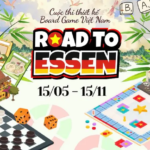
Road to Essen, a competition designed to showcase Vietnam’s burgeoning tabletop design scene at the world’s biggest board game fair, has returned for its second year – with organisers changing things up in the hope of helping turn publisher interest into commercial deals.
The contest was launched last year by Vietnamese board game publisher Everjoy Publishing and its global arm Everjoy Global, in an attempt to help designs from Vietnamese creators break out internationally.
Entrants receive access to workshops and playtesting, while later-stage contestants receive mentoring and jury feedback, with selected games ultimately presented to the international industry at the giant Spiel Essen board game fair in Germany.
Thinh LeHuu’s co-operative card game July, themed around Vietnam’s seventh lunar month and its Hungry Ghost festival, was named the inaugural champion last year from about 160 entries – winning over a judging panel that included Cascadia designer Randy Flynn with its “clever gameplay, polished design and cultural message”.
The 2026 competition is now under way with a theme of ‘Vietnamese Culture’, encouraging designers to draw on areas including the country’s history, legends, beliefs, festivals, folk arts, cuisine, crafts and architecture.
Rulebook cover for July, designed by Thinh LeHuu
But there is a significant change to the timetable this time around: rather than taking the winner to Spiel just weeks after the competition concludes, organisers have scheduled their next international showcase for Spiel Essen 2027.
Claire Ton, head of the organising committee for Road to Essen 2026, told BoardGameWire, “It’s a deliberate decision to give the work its best possible shot.
“A winner chosen in late 2026 can’t have a polished, publisher‑ready game on the Essen floor a few weeks later – and a rushed debut serves the designer least of all.
“Aiming this edition at SPIEL 2027 gives the winning team close to a full year to develop the game, act on the judges’ feedback, line up a publishing or distribution partner, and arrive ready to actually do business.
“It also lets us plan the Vietnamese presence at the fair properly. Getting a Vietnamese game to Essen was never really the goal – getting it there ready to sell is.”
The extra development period addresses one of the main barriers Road to Essen was created to tackle: getting games from Vietnam’s rapidly-growing community of local designers into a form that can be presented effectively to publishers and distributors outside the country.
Everjoy Global co-founder and CEO Ionah Nguyen told BoardGameWire in 2025 that Vietnam had experienced a roughly 400% increase in locally-designed games entering its market in just two years – but said designers continued to face a lack of international publishing and distribution connections, language differences, unfamiliarity with global supply chains and the cost of attending overseas shows.
Almost a year later, Ton told BoardGameWire, “The first edition did exactly what a first edition should: it put Vietnamese design in front of the world and proved there’s real appetite for it.
“We brought the games to SPIEL Essen 2025 and the response was genuinely exciting – our winning title, July, drew particular attention.
“That interest is now powering the next stage. Most of our finalists are deep in development, sharpening their games with everything they took from our international judges and from the fair floor.
“We’re building deliberately for lasting outcomes rather than quick headlines – the first publishing deals to come out of Road to Essen should be the right ones, and we’d rather bring a title to market ready to succeed than rush it out early.
“There’s a lot moving beneath the surface, and the next year is where it starts to show.”
Ton added, “We’re in the relationship‑building phase, and it’s an encouraging one. A lot of conversations were sparked at Essen – publishers wanting to understand the scene, see what’s emerging from Vietnam, and stay close to what comes next.
Thinh LeHuu collects his champion award at the Road to Essen competition in 2025
“What’s promising is that this feels less like one‑off interest in a single title and more like the early groundwork of lasting partnerships, which is exactly what a young design ecosystem needs to grow.
“The titles generating the most conversation share a clear profile: culturally distinctive, visually striking, and easy to pick up and play. Our focus this year is turning that momentum into concrete meetings and, ultimately, deals.”
That intermediary role directly addresses one of the problems Nguyen identified when Road to Essen launched: many Vietnamese designers lacked direct connections to international publishers and distributors.
She told BoardGameWire last year, “There’s no shortage of creativity in Vietnam. What we lack are bridges.”
But there are signs outside the competition that Vietnamese designers are beginning to find international publishing routes.
Mighty Boards edition of Yotei, designed by Huy Pham
Meanwhile Bunny 100 – designed by Hoang Vo and originally published by Everjoy Publishing – has secured a European release through Italian publisher DV Games.
Those developments come as designers elsewhere in Asia have had a striking 12 months in achieving recognition in the European market.
Ton said Vietnamese games’ biggest sales numbers nevertheless remain overwhelmingly driven by the country’s domestic market rather than exports, telling BoardGameWire research suggested Vietnam’s board game market reached about $100m last year at a roughly 10% growth rate.
She said, “Importantly, more of that is original Vietnamese design rather than imports, supported by a fast‑growing creator community and better retail distribution.”
Several Vietnamese-designed games are now reporting sales in the tens or hundreds of thousands of copies – like Bunny 100, Zodiac Rush and Galactic Super Beasts – thanks to the snowballing domestic market.
Ton told BoardGameWire, “The vast majority of those numbers come from Vietnam itself – and I’d argue that’s the most important part of the story, not a limitation.
“It proves there’s a large, real domestic market here: a home audience big enough to make original Vietnamese design commercially viable on its own. That’s the foundation everything else is built on.
“Export is the newer chapter – Bunny 100 into Europe through DV Games and across several Asian markets – and it’s growing, but the headline sales figures today are a signal of domestic strength first.”
This year’s contest will have an overall prize pool of about 500 million Vietnamese Dong – roughly $20,000 – split between the winner and a set of other award finalists.
They include awards for fan favourite board game, best visual design, most innovative board games, the game with most commercial potential, and best cultural representation – as well as categories for best junior creator (aged six to 15) and outstanding teen designer (ages 15 to 18).
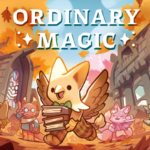
Unstable Unicorns publisher Unstable Games has launched a new studio led by rising tabletop designer Marceline Leiman, who will shape its creative direction and design every game it releases for at least the next few years.
Ordinary Magic plans to publish light strategy board and card games set within a single expanding world, with Leiman telling BoardGameWire the studio is looking to put out designs “offering whimsical, magical moments of the everyday” alongside high interaction.
The move comes nine years after Unstable Games owner TeeTurtle’s hugely successful Kickstarter campaign for light card game Unstable Unicorns, which raised more than $1.8m from over 33,000 backers – and went on to sell more than a million copies worldwide by 2023.
The success of that release led to t-shirt maker TeeTurtle creating its dedicated tabletop studio Unstable Games, which has sold millions across its debut title and follow-up releases such as Here to Slay, Happy Little Dinosaurs, Casting Shadows and Twisted Cryptids.
Her route into professional board game design began with the 2023 release of her solo mode for North Star Games titles Oceans, which led to a part-time developer position at Underdog Games, as well as client work for Office Dog, WizKids, Allplay, Button Shy Games and Maestro Media, according to her website.
But Ordinary Magic represents her first full-time job in the industry, with Leiman saying the roots of the venture going back to the period immediately following the downsizing of Underdog in April 2025, when the publisher laid off almost its entire staff as it attempted to weather the impact of US tariffs.
She told BoardGameWire that Underdog president Nick Bentley, who was also let go by the company at that time, quickly introduced her to Unstable Games, with the pair initially planning to build the new operation together.
Bentley ultimately went in another direction before that arrangement was finalised and is now director of game design at Taco Cat Games, which rebranded from Dolphin Hat Games in May to reflect the huge success of its standout title.
Leiman said, “We both were fully intending to start up a new studio within Unstable Games. The proposition was always that they were going to do sort of an incubator program, is the way that they proposed it to us.”
She added, “My role within the studio was always going to be the capacity of being a game designer. Only now with Nick no longer part of the project, it has allowed me to take more of a formal leadership role.”
Leading the line
The resulting structure puts Leiman’s work at the centre of the studio, rather than positioning Ordinary Magic as a conventional publisher or imprint sourcing games from a roster of designers.
She told BoardGameWire, “Every single game that comes out of Ordinary Magic is a design of mine. I am the designer of each of the games coming from the studio, and you should expect that at least for the next several years.
“That does not mean that you won’t ever see a game from anyone else besides me from Ordinary Magic. But think of me as the shepherd of the studio.
“I am leading the direction of the design behind Ordinary Magic and the types of games you should expect, and the feelings from the games that you should expect. But I am absolutely open to that changing; it’s not a hard rule.”
Leiman added that although she is not currently accepting game pitches, she is “always interested in learning what designers are working on, both those I am familiar with and unfamiliar with”.
She told BoardGameWire, “I love sharing ideas, and I think the spirit of design is still very much open in terms of the way I like to talk with other designers. I always want to consider whether or not in the future, an opportunity is available between Ordinary Magic and a designer looking to pitch their games.
“However, I cannot promise at this time that we are accepting any pitches that we might receive. If I were to look at any pitches, what I’ve described in the past is that Ordinary Magic is looking for games that are offering whimsical, magical moments of the everyday. Not high magic, not combative, though highly interactive.
“I think if someone wanted to pitch to me a game with a theme that was more focused on a curious bit of a real-life moment that inspired them, that would interest me more than somebody who’s coming to me with a pitch purely with a magical concept. I am much more interested in the grounded reality of this world rather than the high fantasy.”
Finding direction
Leiman said the studio’s creative direction would be to create interactive games which give “meaningful reason for other players to be at the table with you”, but added that would likely not extend to full “take-that”-style designs.
She said, “What you should expect from us is strategy-light strategy style games, sometimes card games, sometimes board games. I am also very interested in exploring the realms of cooperation as well as indirect player interaction, or both direct and indirect forms of player interaction.
“Something that you’ll find from me is that I am very interested in sort of passive aggression in games, where the decisions I am making might be to block you or to prevent you from getting something before me. A very old-school style of interaction, German old-school I think some people would think about.”
Leiman said the original plan had been to launch the games individually, but that Unstable ultimately proposed putting all three into the same campaign after their development schedules aligned – a situation which partly arose due to Leiman’s rapid work rate.
The Curious Little Bookshop || Gamefound image
She told BoardGameWire, “The method that I was taught game design was very much under the tutelage of my professors at NYU Game Center, and there we worked very much within a fast-paced work environment.
“Joining this studio very much is like returning back to that environment, which I am very comfortable being in. The way that I’ve worked within the studio is quite fast, is quite rapid, I guess, in relation to other people’s speeds.
“But for me, within a short amount of time, what I am looking to do is try out many ideas and fail with many ideas as quickly as possible, so I could find the core of what is fun, what is interesting, what is memorable about a game.
“It just so happened to align with our release schedule that I would have these three games. Our original plan was to release them one by one, but just with the way that scheduling worked out, we decided that it would be best to put our best foot forward with this new studio by showing the strength of our design, with the strength of our art, and production capabilities.”
Operationally, however, Ordinary Magic is currently far less separate from its parent studio than its distinct branding might suggest.
“The only difference between Ordinary Magic and Unstable Games in terms of operation is me,” Leiman told BoardGameWire.
She added, “Everything that you’ve come to expect from me – my work ethic, my taste, my voice – you should expect to be part of these games.
“Not to say that I don’t work with the Unstable Games team as well. We actually do cross-pollinate a lot in terms of our playtesting, in terms of our conversations, in terms of problem-solving.
“So it’s not like I’m totally in a silo or and neither are they from me. There’s definitely a lot of creative support going back and forth between the two studios. And as the studio continues to develop and grow in size, naturally Ordinary Magic will change with it.”
Speaking about the shared world envisaged by Ordinary Magic for all of its releases, Leiman told BoardGameWire, “You should not expect to see any games released from Ordinary Magic that are not part of this world.
“We’ve talked a lot about what that means in terms of building the IP, sort of what direction could it go in the future? Does it open us to different forms of media, different forms of games, or are they all going to be board games and card games?
“We’re leaving that station open right now. But we’re definitely open to exploring what it means to have this IP as we look forward to the future.
“As for recurring characters and locations, I would say keep your eyes open for the GameFound campaign, and I think you’ll be very excited to see some crossover moments between them.”
Crowdfunded eurogames from smaller board game publishers had a banner year at the latest Dice Tower Awards, accounting for half of the wins at the high-profile prize ceremony.
The biggest success of the night was Kinson Key Games’ Galactic Cruise, which was crowned game of the year in addition to picking up gongs for best strategy game and best game from a new designer.
Galactic Cruise, designed by TK King, Dennis Northcott and Koltin Thompson
Fellow indie publisher Paverson Games was also a standout winner in this year’s Dice Tower Awards, with its classical music-inspired title Luthier picking up awards for best theme, best production and best game from a small publisher.
Other crowdfunded titles honoured by the awards were mid-weight euro Critter Kitchen for best artwork thanks to the work of Sandara Tang, and 20 Strong: Tanglewoods Red for best solo game – the latter the only one which raised money through Gamefound rather than Kickstarter.
The string of crowdfunded successes is significant given the notable shifts which have taken place on Kickstarter and Gamefound in recent years, with a rise in larger publishers using the sites, and more campaigns focused around big-budget releases, miniatures heavy projects, deluxified components and major licensed IP.
CMYK scored a second success in this year’s awards with Hot Streak, which won best party game, while Stonemaier Games took the most innovative game prize with Vantage and Tag Team won best 2-player game.
Presented annually during Gen Con, the Dice Tower Awards are among the board game hobby’s highest-profile jury-voted honours, given the winning titles gain exposure with the veteran reviews giant’s more than 360,000 YouTube subscribers.
Winners are selected from the previous year’s games by a panel of more than 60 Dice Tower contributors, reviewers and content creators. The awards celebrates its 20th anniversary next year.
Word association party game JinxO has been crowned the winner of this year’s hugely influential Spiel des Jahres award, on a night which also saw legendary game designer Reiner Knizia make history with his Kennerspiel award win.
Indonesia-based Ang’s victory underscored the growing internationality of the venerable German award, which until last year’s triumph by Hisashi Hayashi’s Bomb Busters had never been won by an Asian designer.
The 2026 ceremony also delivered a historic first for veteran designer Reiner Knizia, whose tile-laying title Rebirth claimed the higher complexity Kennerspiel des Jahres prize.
JinxO designer Martin Ang with his Spiel des Jahres award || Photo Credit: Spiel des Jahres
That win made Knizia the first designer in history to complete the full set of Spiel des Jahres, Kinderspiel des Jahres and Kennerspiel des Jahres wins, having previously picked up awards for Keltis and the children-focused Whoowasit? in 2008.
Morty Sorty Magic Shop designer Markus Slawitscheck narrowly missed matching that feat this year after finishing runner up to JinxO, following his 2023 Kennerspiel victory with Challengers! and 2024 Kinderspiel win for Magic Keys.
The children-focused Kinderspiel award this year was won by Florian Sirieix’s Mooki Island, ahead of his co-design with Benoit Turpin, Boo Party, and Verflixt Verzaubert, a localisation of Thomas Dagenais-Lespérance’s Mimose & Sam et le Voleur de Fruits.
Winning the Spiel des Jahres can transform the fortunes of games, designers and publishers alike, with Pegasus Spiele co-founder Karsten Esser previously telling BoardGameWire the award can increase sales by 10 to 20 times in the months following the ceremony, thanks to huge exposure in Germany’s mainstream retail market ahead of Christmas.
Receiving his trophy at the ceremony in Berlin, Ang thanked Swiss publisher Game Factory “for really believing in Dito! [the German-language localisation of JinxO] and in us”.
JinxO || Photo Credit: Tabletoys Games
He dedicated the victory to supporters across Asia, adding: “Thank you also to all the friends and publishers from Asia, especially from southeast Asia… finally we made it, and this is all for you also.”
Speaking separately during the ceremony, Ang said the game’s origins lay in Indonesia’s enthusiasm for social games.
“We made a party game because in Indonesia people really love to play party games,” he said. “It’s really famous in Indonesia right now and a lot of people like it, even the gamers also like it.”
Spiel des Jahres Association chairman Harald Schrapers said Ang’s success reflected the awards’ increasingly international reach.
He said, “We have had nominees from Japan and New Zealand in past years, but we always had a blind spot on the world map. We have never had a nominated author from the global south here on stage, and we are very proud of our Indonesian game author.
“Maybe there will also be a game from Africa or South America in the future. That is the great thing about playing – we play the same games here in Germany as they play in Indonesia.”
That geographic expansion has not been similarly reflected in the gender of nominated designers, however, with non-male designers once again heavily underrepresented.
The Spiel des Jahres jury looked at a record 571 games for this year’s awards – but just 2.3% of those games were from women designers, with male creators making up 94% of the cohort, and the rest being designed by mixed teams.
That figure has barely moved in recent years, having stood at 2% in 2025 and 2.6% in 2024 – an ongoing lack of diversity highlighted in great detail in this excellent feature by Wargamer’s Mollie Russell earlier this year.
The 440 titles reviewed across the Spiel and Kennerspiel categories was up 14% on last year, while the 92 games considered for the Kinderspiel marked a roughly 50% rise compared to the 61 from 2025. Another 39 titles were considered by judges across both the Spiel and Kinderspiel awards.
Number of games reviewed in recent Spiel des Jahres years – red is Spiel and Kennerspiel, blue is Kinderspiel, and purple is games which span both segments
JinxO’s victory marked a milestone for Zurich-based publisher Game Factory, which claimed its first Spiel des Jahres 18 years after being founded.
Game Factory previously won the Kinderspiel category with Magic Keys in 2024, and was also shortlisted for this year’s Kinderspiel through Verflixt Verzaubert.
The publisher had picked up a nominated for the Kennerspiel last year with viking-themed resource gathering game Looot.
Accepting the award, Knizia – dressed in a kilt and tartans to reflect the Scottish map in Rebirth – paid tribute to his wife Margaret, whom he described as “the love of my life” and thanked for “giving me the space to fill my life with games”, before highlighting the importance of playtesters in modern game development.
Rebirth designer Reiner Knizia || Photo Credit: Spiel des Jahres
“Developing games, you cannot do alone,” he said. “You can’t develop games without playing them. No matter how much experience you have, you have to play, play, play.”
He added that his Munich testing group had made “a very significant contribution” to the game, saying playtesters should not be underestimated because “without them nothing is possible”.
Knizia also praised Rebirth’s graphic designers, who he said made a major contribution to designing the game – “it is about haptics, it is about the visuals” – and the game’s original, Malta-based publisher Mighty Boards.
He said, “We are not publishers, we create one handmade prototype, and then we need somebody who puts this into practice very professionally and who makes the game even better.
“And now you will ask me, ‘why do you then pick a publisher on Malta? What can they sell on Malta?’ Well, today things are different, today we have many localisation partners across the world – that said, it doesn’t really matter where the original publishing house is located.”
Knizia closed his long speech by urging players not to overlook the other nominees.
“In the end, it doesn’t matter who wins, because we carry the message about good games out to the people,” he said.
“There has to be one on top, but the top is amongst equals… Buy the other games, play them and honour the authors and all the contributors as much as the winners.”
The 2025 Spiel des Jahres Awards longlists:
Spiel des Jahres
WINNER: JinxO – designed by Martin Ang (Published by Game Factory / Tabletoys Games)
Recommended Hot Streak by Jon Perry (Strohmann Games / CMYK) Meister Makatsu by Reiner Knizia (Amigo) Take Time by Alexi Piovesan and Julien Prothière (Libellud) Toriki by Wojciech Grajkowski (Mirakulus / Lucky Duck Games) Toy Battle by Paolo Mori and Alessandro Zucchini (Repos Production) Wilmot’s Warehouse by David King, Ricky Haggett and Richard Hogg (CMYK)
Kennerspiel des Jahres
WINNER: Rebirth – Reiner Knizia (Frosted Games / Mighty Boards)
Nominated: Boss Fighters QR – Michael Palm and Lukas Zach (Pegasus Spiele) Nominated: Moon Colony Bloodbath – Donald X Vaccarino (Alea / Rio Grande Games)
Recommended Artengarten (Sanctuary) by Mathias Wigge (Feuerland / Capstone Games) Frosted Blooms by Bruno Cathala and Ludovic Maublanc (Elznir Games / Synapses Games) Grundstein von Metropolis (Foundations of Metropolis) by Emerson Matsuuchi (Kobold Spieleverlag / Arcane Wonders) Tag Team by Gricha German and Corentin Lebrat (Kosmos / Scorpion Masqué)
Kinderspiel des Jahres
WINNER: Mooki Island – Florian Sirieix (Kosmos / Scorpion Masqué)
Nominated: BOO PARTY -Florian Sirieix and Benoit Turpin (Loki) Nominated: Verflixt verzaubert – Thomas Dagenais-Lespérance (Game Factory / Locomuse)
Recommended Kleiner Stinker (Little Stinker) by Elan Lee, Ken Gruhl and Quentin Weir (Kitten Games) Magische Spiegel (Half-and-Seek) by Kseniya Kuznetsova (Ravensburger / Red Cat Games) Paleolino by Marco Teubner and Peter Rustemeyer (Hans im Glück)
Berlin / Bayreuth, 12. Juli 2026 – Die Würfel sind gefallen: Das strategische Legespiel Rebirth von Star-Autor Dr. Reiner Knizia wurde von der Jury „Spiel des Jahres“ mit dem begehrten Titel Kennerspiel des Jahres 2026 ausgezeichnet. Bei der feierlichen Verleihung im Berliner nhow-Hotel setzte sich das Brettspiel des Bayreuther Verlags am Abend gegen starke Konkurrenz durch. Für die Verlage Frosted Games und dem maltesischen Orginalverlag Mighty Boards markiert dieser Gewinn einen historischen Meilenstein ihrer Zusammenarbeit. Frosted Games schafft als erster Spieleverlag den Gewinn in zwei aufeinander folgenden Jahren! Autor Dr. Reiner Knizia hat damit zudem als erster Autor überhaupt die Auszeichnung in allen drei Kategorien Kennerspiel, Kinderspiel und Spiel des Jahres gewonnen.
Ein Meilenstein für das moderne Brettspiel
Im eleganten Legespiel Rebirth von Dr. Reiner Knizia bauen die Spielenden in einem fiktiven Schottland der Zukunft nachhaltige und zukunftssichere Technologien der Energie- und Nahrungsgewinnung auf geschichtsträchtigen Ruinen. Die Illustrationen von Anna Przybylska und Vesna Redesiuk zeichnen dabei ein farbenfrohes Bild des fiktiven Nordens Großbritanniens und Irlands im Wiederaufbau und das in moderner Solarpunk Optik. Das Spiel für 2-4 Spieler:innen hat eine Spielzeit von 30-60 Minuten und besticht durch Zugänglichkeit, schnelle Spielzüge und hohe Interaktion, ohne dass dabei strategisches Planen oder die Spieltiefe auf der Strecke bleibt.
Stimmen zur Auszeichnung
Geschäftsführer Benjamin Schönheiter zum Back-to-back-Sieg:
„Mir fehlen die Worte, dass wir tatsächlich zweimal nacheinander ausgezeichnet wurden, etwas das seit 30 Jahren niemandem und beim Kennerspiel des Jahres noch nie einem Verlag gelungen ist! Ich fühle mich absolut sprachlos, dass uns diese Ehre zuteil wird, und was das für das ganze Team bedeutet, so ausgezeichnet worden zu sein. Es ist vor allem die beste Motivation für die Zukunft und ein riesiger Ansporn, unseren Weg, mit Herzblut, Liebe und absoluter Hingabe Spiele umzusetzen, konsequent weiterzugehen.“ sagt Benjamin Schönheiter, Verlagsleiter von Frosted Games
Auch Spieleautor Dr. Reiner Knizia als frisch gebackener Triple Gewinner der Jury Spiel-des-Jahres ist überglücklich:
„Das ist so ein wunderbarer Erfolg und das mit ganz wunderbaren Verlagen, Frosted Games und Mighty Boards, als ausgezeichnete Partner. Das es nun das Triple geworden ist, freut mich persönlich natürlich sehr und bedeutet mir auch tatsächlich viel.“ so Dr. Reiner Knizia auf der Preisverleihung, bei der zudem den Wert des Brettspielens und aller Spiele und ihrer Autoren hervorhob.
Die abermalige Nominierung und Auszeichnung als Gewinner beim Kennerspiel des Jahres unterstreicht die Bedeutung der redaktionellen Arbeit von Frosted Games und die von Rebirth als das herausragende Spiel des Kennerspiel-Jahrgangs 2025/2026. Im Vorjahr hatte Frosted Games bereits mit dem Titel Endeavor: Die Tiefsee den Preis für das Kennerspiel des Jahres 2025 damals noch gemeinschaftlich mit Partner Boardgamecircus erringen können.
Durch die Erfahrung aus dem Vorjahr ist man bei Frosted Games zudem bestens auf die Zusammenarbeit mit dem nun zusätzlich einsetzenden Handelsgeschäft vorbereitet. Neben den zuletzt intern ausgebauten Ressourcen wie der Einstellung des neuen Verkaufsleiters Dennis Oettershagen zeigt man sich in Bayreuth gerüstet. Und durch die enge Vertriebspartnerschaft mit asmodee Deutschland wird zudem eine sehr gute Verfügbarkeit für alle Handelspartner gesichert sein.
Editor’s note: GAMA is one of the sponsors of the BoardGameWire newsletter
The Origins Awards, one of tabletop gaming’s longest-running prizes voted on by industry professionals, has crowned its latest group of winners after whittling them down from 120 nominees.
Jon Perry’s Hot Streak continues to live up to its name as far as award wins go, adding party game of the year to a pair of Golden Geek Award wins, casual game of the year in the American Tabletop Awards, and a ‘recommended’ accolade in the Spiel des Jahres.
Railroad Tiles, designed by Hjalmar Hach and Lorenzo Silva, took Gateway Game of the Year, while Will Thompson’s Winter Rabbit was named Light Strategy Game of the Year at the award ceremony, which took place at Origins Game Fair last month.
Railroad Tiles, designed by Hjalmar Hach and Lorenzo Silva
The awards also recognised Matt Brown and Zara Reid’s conservation-themed board game Kavango with a Sustainability Award, which aim to celebrate games with thoughtful production and publishers which “have taken strides towards sustainable manufacturing to reduce the impact on the natural environment”.
Outside the board game categories, James Parks and Ben Costa’s Land of Eem won Roleplaying Game of the Year, while in the trading card and collectible game categories Riftbound: Proving Grounds won Fixed Constructible Game of the Year, while the Gudnak: Expansion Bundle took the Randomized Constructible Game award.
Goblin Hobbies’ Stampin’ Plates claimed the Paint/Hobby Accessory award, while Luis Silva’s TCG design Shard Bugs claimed Fan Favorite Game of the Year, voted on by Origins attendees.
GAMA made an effort to rectify that error with its announcement of the award winners, including not only the names of the designers but also the artists who worked on each title.
The Origins awards, which were first presented in 1975, have been in heavy flux over the past few years, going from 10 categories in 2019 to 24 in 2024 – with the make-up of those categories significantly shaken up from year to year.
GAMA briefly introduced categories in 2024 which represented its membership having expanded beyond just retailers, publishers and wholesalers – including recognition for artists, writers and media.
But those segments were quickly dropped again in 2025, with categories cut including Best Media Production, Best Game Related Writing and Best 2D Artwork – although the miniatures segment was expanded from two categories to three, covering games, the miniatures themselves, and paint and accessories.
Separate from the main slate of awards, the trade organisation also revealed its hall of fame entrants this year, awarded – like the Origins Awards – by its division the Academy of Adventure Gaming Arts and Design.
AAGAD describes itself as “a peer based network of gaming industry professionals whose mission is to promote innovation and excellence in design and production of games and game related materials”.
Individuals inducted into the hall of fame this year include Richard Borg, famous for his design of the Command and Colors system used by games including Memoir ’44, and Antoine Bauza, the creator of designs including 7 Wonders, Hanabi and Tokaido.
Magic: The Gathering, Pathfinder RPG and Dungeons & Dragons artist Wayne Reynolds was also inducted into the hall of fame.
Origins Awards 2026 – Full Results
Gateway Game of the Year Railroad Tiles Publisher: Horrible Guild Designers: Hjalmar Hach and Lorenzo Silva Artists: Francesco De Benedittis and Barla Tranquilli
Party Game of the Year Hot Streak Publisher: CMYK Designer: Jon Perry Artist: Cécile Gariépy
Light Strategy Game of the Year Winter Rabbit Publisher: Absurdist Productions Designer: Will Thompson Artists: Kindra Swafford and Jonni Ketcher
Heavy Strategy Game of the Year Speakeasy Publisher: Eagle-Gryphon Games Designer: Vital Lacerda Artist: Ian O’Toole
Cooperative/Solo Game of the Year The Lord of the Rings: Fate of the Fellowship Publisher: Z-Man Games Designer: Matt Leacock Artists: Jared Blando and Cory Godbey
Roleplaying Game of the Year Land of Eem Publisher: Exalted Funeral Designed & Written by: James Parks and Ben Costa Artists: Justin Gerard, Sean Kiernan, Anneliese Mak, Sam Mamei, Rosario Mendez and Rob Gatto
Roleplaying Game Supplement of the Year Call of Cthulhu: The Sutra of Pale Leaves – Twin Suns Rising Publisher: Chaosium Designers/Authors: Yukihiro Terada, Jason Sheets, Damon Lang, and Andrew Logan Montgomery
Miniatures Game of the Year Blood Bowl Third Season Edition Publisher: Games Workshop
Miniature of the Year Warhammer: Age of Sigmar – Festus, The Leech Lord Publisher: Games Workshop
Paint/Hobby Accessory of the Year Goblin Hobbies Stampin’ Plates Producer: Goblin Hobbies Designed by: Brent Amberger and Casey Alden
Fixed Constructible Game of the Year Riftbound: Proving Grounds Publisher: UVS Games & Riot Games Designers: David Smith and Jon Moormann
Randomized Constructible Game of the Year Gudnak: Expansion Bundle Publisher: Chaotic Great Games Designer: Tim O’Brien and Ian Oliver Artist: Vittoria Pompolani
Fan Favorite Game of the Year Shard Bugs Publisher: Shard Bugs LLC Designer: Luis Silva Artists: Ray of Sand, Nelygibi, Julio E. Jácome Paz, María Ayuso, Alma Faustica, Pietro Desirò, Ninamarie, Steve Ozminkowski, Erick Mezart
Another year has passed, and it's once more time to announce the winner of Tabletop Games Blog's highly sought-after and extremely prestigious Top Table Award of 2025. The top slot for this year will join the hall of fame alongside previous years' board games that made it to the number 1 spot on the podium. The winner of the 2025 award will be in the company of Charms, Enemy Anemone, Pax Pamir: Second Edition and others.
This feels strange. I’m usually late with my yearly list, taking my sweet time until January or February to catch up on all of the noteworthy releases. This was a quieter year. Some would say weaker than most. There are still several standout titles, and it did prove a bit of a struggle to narrow…
For the fourth time we have awarded our annual Most Popular New Game Award. This year the award went to Johan Benvenuto for his game Harmonies!
This year the award could not be handed over at Spiel, so it was send to the designer in France.
Congratulations to the winner Harmonies, designer Johan Benvenuto, and the whole team behind creating this game!
Harmonies box with the BG Stats award and a golden BG Stats button
How is the winner of the Award determined?
Games that are released in 2024 are eligible. The popularity of the game is determined as follows: we looked at the unique users that logged at least one play of a game between 7 October 2024 and August 2025. The new game that was logged by the most unique users, Harmonies in this case, won. This means it doesn’t matter how many times a user played the game, or how many people were in the game.

 Anmelden