Schnappt eure Spitzhüte, ruft eure fliegende Katze und schwingt euch auf den Besen! Das junge Studio Envar präsentiert sein Erstlingswerk Witchspire, das Elemente von Minecraft, Pokémon und Survival-RPGs in magischem Gewand vereint. Ob sich der frühe Zugang schon lohnt, verraten wir euch im Folgendem.
Rom, die Ewige Stadt: Eine uralte und vergessene Gefahr droht, sie und das Römische Reich zu zerstören. Nur die mutigen Custodes und der Kaiser können dies noch verhindern in einer komplexen Kampagne, die die Welt von Lex Arcana grundlegend verändert.
30 Tage hat der junge Coen Zeit, seine Familie zu retten. Hierfür kann er seine Talente als Schwertkämpfer nutzen oder als Kreatur der Nacht Mensch und Monster zerreißen. Das am 03.09.2026 erschienene düstere Vampir-Rollenspiel The Blood of Dawnwalker verspricht ein dynamisches und abwechslungsreiches Gameplay im Herzen einer lebendigen Spielwelt.
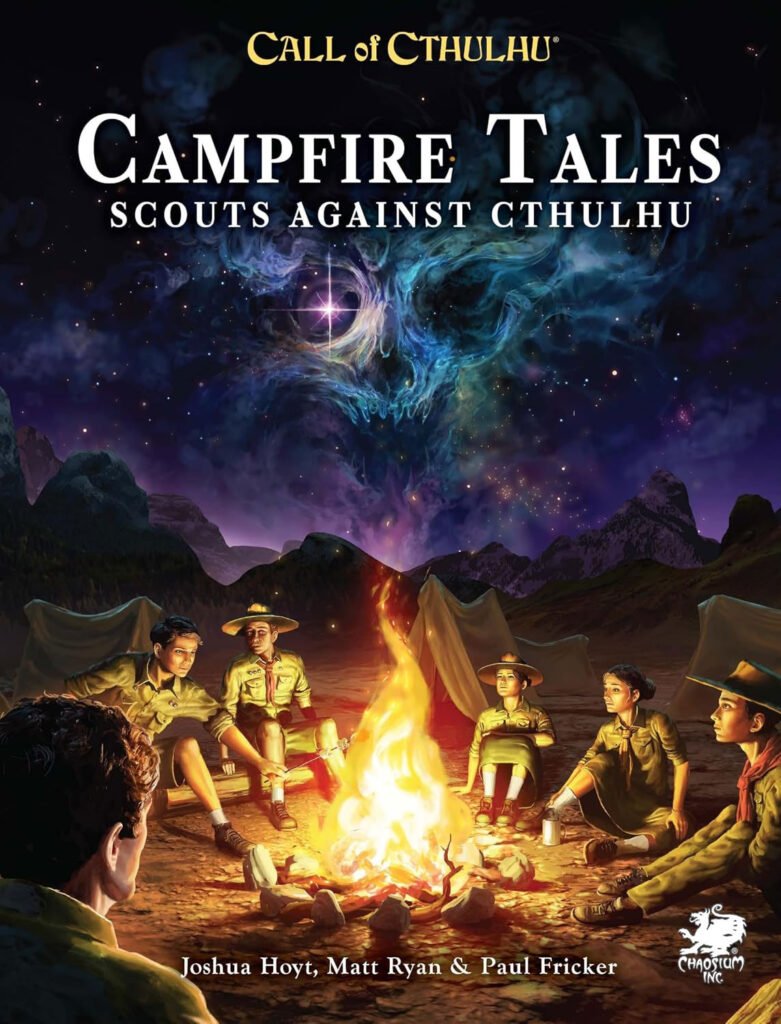
Sitting around the campfire telling scary stories is as old as humanity itself. For some, it evokes camping with close family; for others, it reminds us of a scouting camping trip for another badge. Call of Cthulhu Campfire Tales is a supplement that adds the ability to play younger investigators who are members of a […]
Ulisses und die RatCon können nur Das Schwarze Auge? Weit gefehlt. Von Replikanten über Brandon Sanderson über Hexen und Mythen sucht eine Ameise den Pfad zwischen verschiedenen Realitäten, um schlussendlich mit dem „Who is Who?“ des Warhammer-Universums gepflegt einen Pumpkin Spice Latte im Barista-Shop einer Hexe trinken zu gehen.
Tagsüber ein Mensch, nachtsüber ein Vampir: Der Protagonist von The Blood of Dawnwalker bringt je nach Sonnenstand unterschiedliche Fähigkeiten mit. Wie sich diese einsetzen lassen, können Spieler*innen ab dem 03.09.2026 herausfinden. Dann nämlich erscheint das düstere Fantasy-Abenteuer auf PC, PlayStation 5 und Xbox Series X und S.
Los Angeles 2037: In den verregneten Straßen regt sich Widerstand gegen sein System, das Replikant*innen ausbeutet und tötet. Die Spieler*innen werden zu Rebell*innen und sabotieren das System aus dem Verborgenen heraus. Doch wem können sie vertrauen und wer wird sie bei der nächsten Gelegenheit verraten?
Eine von Katastrophen gezeichnete und fast vergessene Welt voller Gefahren wartet darauf, erkundet zu werden. In Fatekeeper wechseln sich die Schönheit detailverliebter Regionen mit der Tödlichkeit des Kampfes ab. Seit dem 02.06.2026 können Spieler*innen sich im Early Access des Spiels einen ersten Eindruck verschaffen.
Das Solo-Rollenspiel Cozy MMUGS lässt die Träume der Fans von Farming-Simulatoren und TTRPGs wahr werden. Im Besitz einer Farm genießt man das romantisierte Leben auf dem Land. Das Ungemach der Realität vergessend, taucht man ab in eine gemütliche Welt, die nur so viel Kummer bereitet, wie man selbst es zulässt.
Editor’s note: GAMA is one of the sponsors of the BoardGameWire newsletter
The Origins Awards, one of tabletop gaming’s longest-running prizes voted on by industry professionals, has crowned its latest group of winners after whittling them down from 120 nominees.
Jon Perry’s Hot Streak continues to live up to its name as far as award wins go, adding party game of the year to a pair of Golden Geek Award wins, casual game of the year in the American Tabletop Awards, and a ‘recommended’ accolade in the Spiel des Jahres.
Railroad Tiles, designed by Hjalmar Hach and Lorenzo Silva, took Gateway Game of the Year, while Will Thompson’s Winter Rabbit was named Light Strategy Game of the Year at the award ceremony, which took place at Origins Game Fair last month.
Railroad Tiles, designed by Hjalmar Hach and Lorenzo Silva
The awards also recognised Matt Brown and Zara Reid’s conservation-themed board game Kavango with a Sustainability Award, which aim to celebrate games with thoughtful production and publishers which “have taken strides towards sustainable manufacturing to reduce the impact on the natural environment”.
Outside the board game categories, James Parks and Ben Costa’s Land of Eem won Roleplaying Game of the Year, while in the trading card and collectible game categories Riftbound: Proving Grounds won Fixed Constructible Game of the Year, while the Gudnak: Expansion Bundle took the Randomized Constructible Game award.
Goblin Hobbies’ Stampin’ Plates claimed the Paint/Hobby Accessory award, while Luis Silva’s TCG design Shard Bugs claimed Fan Favorite Game of the Year, voted on by Origins attendees.
GAMA made an effort to rectify that error with its announcement of the award winners, including not only the names of the designers but also the artists who worked on each title.
The Origins awards, which were first presented in 1975, have been in heavy flux over the past few years, going from 10 categories in 2019 to 24 in 2024 – with the make-up of those categories significantly shaken up from year to year.
GAMA briefly introduced categories in 2024 which represented its membership having expanded beyond just retailers, publishers and wholesalers – including recognition for artists, writers and media.
But those segments were quickly dropped again in 2025, with categories cut including Best Media Production, Best Game Related Writing and Best 2D Artwork – although the miniatures segment was expanded from two categories to three, covering games, the miniatures themselves, and paint and accessories.
Separate from the main slate of awards, the trade organisation also revealed its hall of fame entrants this year, awarded – like the Origins Awards – by its division the Academy of Adventure Gaming Arts and Design.
AAGAD describes itself as “a peer based network of gaming industry professionals whose mission is to promote innovation and excellence in design and production of games and game related materials”.
Individuals inducted into the hall of fame this year include Richard Borg, famous for his design of the Command and Colors system used by games including Memoir ’44, and Antoine Bauza, the creator of designs including 7 Wonders, Hanabi and Tokaido.
Magic: The Gathering, Pathfinder RPG and Dungeons & Dragons artist Wayne Reynolds was also inducted into the hall of fame.
Origins Awards 2026 – Full Results
Gateway Game of the Year Railroad Tiles Publisher: Horrible Guild Designers: Hjalmar Hach and Lorenzo Silva Artists: Francesco De Benedittis and Barla Tranquilli
Party Game of the Year Hot Streak Publisher: CMYK Designer: Jon Perry Artist: Cécile Gariépy
Light Strategy Game of the Year Winter Rabbit Publisher: Absurdist Productions Designer: Will Thompson Artists: Kindra Swafford and Jonni Ketcher
Heavy Strategy Game of the Year Speakeasy Publisher: Eagle-Gryphon Games Designer: Vital Lacerda Artist: Ian O’Toole
Cooperative/Solo Game of the Year The Lord of the Rings: Fate of the Fellowship Publisher: Z-Man Games Designer: Matt Leacock Artists: Jared Blando and Cory Godbey
Roleplaying Game of the Year Land of Eem Publisher: Exalted Funeral Designed & Written by: James Parks and Ben Costa Artists: Justin Gerard, Sean Kiernan, Anneliese Mak, Sam Mamei, Rosario Mendez and Rob Gatto
Roleplaying Game Supplement of the Year Call of Cthulhu: The Sutra of Pale Leaves – Twin Suns Rising Publisher: Chaosium Designers/Authors: Yukihiro Terada, Jason Sheets, Damon Lang, and Andrew Logan Montgomery
Miniatures Game of the Year Blood Bowl Third Season Edition Publisher: Games Workshop
Miniature of the Year Warhammer: Age of Sigmar – Festus, The Leech Lord Publisher: Games Workshop
Paint/Hobby Accessory of the Year Goblin Hobbies Stampin’ Plates Producer: Goblin Hobbies Designed by: Brent Amberger and Casey Alden
Fixed Constructible Game of the Year Riftbound: Proving Grounds Publisher: UVS Games & Riot Games Designers: David Smith and Jon Moormann
Randomized Constructible Game of the Year Gudnak: Expansion Bundle Publisher: Chaotic Great Games Designer: Tim O’Brien and Ian Oliver Artist: Vittoria Pompolani
Fan Favorite Game of the Year Shard Bugs Publisher: Shard Bugs LLC Designer: Luis Silva Artists: Ray of Sand, Nelygibi, Julio E. Jácome Paz, María Ayuso, Alma Faustica, Pietro Desirò, Ninamarie, Steve Ozminkowski, Erick Mezart
Award-winning board game store owner Matthew Mičetić says independent tabletop retailers can no longer rely on product sales alone, as rising costs, tariff uncertainty and changing consumer behaviour continue to reshape the hobby retail landscape.
Mičetić was named Oregon Small Business Person of the Year last week by the US Small Business Administration, celebrating the 16-year growth of Portland-based Red Castle Games from a small neighbourhood game store into a vibrant space offering organised play, youth camps, community events and an on-site cafe.
He told BoardGameWire the complexity of running a game store had increased dramatically since the store opened in 2010 – but added that widening the venue’s scope had been a key ingredient in Red Castle’s success.
Mičetić said, “Competing solely on product selection and price has become increasingly difficult in a world where customers can order almost anything online and have it delivered to their door.
“What independent game stores can offer that online retailers cannot is community. We can provide places for people to learn, play, compete, socialize, and build friendships. The retail sales often follow from those relationships.”
He continued, “We aren’t just retailers anymore. We’re event organizers, community managers, educators, food service operators, e-commerce businesses, and increasingly technology companies as well.
“The encouraging part is that the core mission hasn’t changed. People still want places to gather, play games, make friends, and feel like they belong.
“The stores that continue to succeed are the ones that adapt to the changing business environment while never losing sight of the community they’re there to serve.”
Mičetić’s drive has seen that community expand from traditional hobby gamers and TCG players to include young people, families and more casual gamers keen to dip their toes into the hobby – something he believes is one of the biggest opportunities for game stores today.
He said, “Some of our most successful recent initiatives have been our youth programs, including Dungeons & Dragons, Magic: The Gathering, and Pokémon camps and after-school programs.
“Parents are looking for opportunities that help kids build friendships, creativity, problem-solving skills, social-emotional skills, and confidence. Tabletop games are uniquely positioned to provide that.
“We’ve also had success reaching beyond the traditional hobby audience. There are a lot of people who can benefit from what tabletop gaming offers who may never have considered walking into a game store.
“That means being willing to experiment, try new things, and sometimes fail. Not every idea works, and that’s okay. The important thing is to learn from it, make adjustments, and keep moving forward.
“I’ve always believed in looking for 1% improvements. Small improvements compound over time. If you can make your store, your programs, your customer experience, and your operations just a little bit better every day, those gains add up to something significant over the course of years.”
He added, “While retail is still the foundation of the business, these complementary activities have become increasingly important both financially and strategically. They reinforce one another.
“Someone might discover us through a D&D camp, become a regular event participant, buy games and accessories, meet friends through the community, and eventually become a long-term customer.
“The café, events, camps, and retail operation all work together to create a stronger overall ecosystem. For independent game stores, I think that’s one of the biggest lessons of the last decade. The future isn’t just about selling products, it’s about creating reasons for people to keep coming back.”
Organised play remains a “core pillar” of the store’s financial prosperity, Mičetić told BoardGameWire, while Magic remains its strongest offering and continues to be a cornerstone of organised play.
Mičetić receiving his Oregon Small Business Person of the Year award
He added, “One Piece has been one of the biggest success stories of the last several years, drawing strong participation. Star Wars Unlimited has also developed a passionate local community and has exceeded our expectations.
“Beyond TCGs, Dungeons & Dragons continues to be a major driver of participation through campaigns, youth programs, and camps. Board game events, painting nights, and miniature gaming also contribute meaningfully to overall attendance, even if they don’t always attract the same numbers as the largest TCG communities.
“What excites me most isn’t any individual game. It’s the diversity of the community. I believe the healthiest stores aren’t dependent on a single title. They’re places where someone can come in for Pokémon, discover D&D, try a board game, join a painting event, and ultimately find multiple ways to engage with the hobby.”
Speaking about current growth areas on the retail side – and areas which could be in decline – Mičetić told BoardGameWire TCGs continue to be the strongest growth category in the hobby, while oversaturation in higher-price point board games was beginning to show strain.
He said, “Magic remains a powerhouse, Pokémon continues to bring in new players, and we’ve seen strong engagement from newer games [such as One Piece and Warlord] as well.
“That said, I do worry that we’re in a boom cycle. I don’t know when it will happen, but historically every collectible market experiences corrections and I think it’s wise for retailers to plan accordingly.
“In board games, I think we’re seeing softness at the higher end of the market. For years, the industry benefited from an explosion of new releases and crowdfunding projects, but I also think the market became oversaturated.
“Self-publishing and crowdfunding lowered barriers to entry, which brought some fantastic games to market, but also a tremendous number of mediocre ones. Consumers have more choices than ever and less time to play them.
“Where I’ve seen the most consistent strength is in smaller board and card games, particularly titles under about $25. At that price point, they’re an easy impulse purchase and a lower-risk way for customers to try something new.
“RPGs are interesting. Product sales have slowed somewhat for us, but organized play and events remain strong. People still want to gather around a table and tell stories together, even if they’re buying fewer books than they once did.
“Miniatures remain a challenging category outside of Games Workshop. Many lines have passionate fan bases, but Games Workshop continues to outperform expectations and demonstrates the power of consistent support, organized play, and strong intellectual property.
“As for crowdfunding, we’ve largely stepped away from it as a retailer. There are certainly successful projects, but we’ve experienced too many delays, failures, and fulfillment issues over the years.
“Tying up cash and shelf space for products that may arrive years late, or not at all, has become increasingly difficult to justify.”
Mičetić said that on the distribution side, relationships had become both more important and more complicated since 2020, with the pandemic having exposed just how dependent the industry is on supply chains and allocation systems.
Mičetić said distribution relationships had become more complicated since the pandemic – and more important
He said, “In many categories, especially TCGs, we spent years dealing with product shortages, allocations, delayed releases, and uncertain restocks. More recently, while still dealing with those allocation issues, we’ve added questions around tariffs, pricing, inventory levels, and market demand.
“The underlying challenge remains the same, uncertainty. At the same time, retailers are being asked to make increasingly complex purchasing decisions with limited capital and shelf space.
“When talking with distributors today, my primary focus is predictability and partnership. I don’t expect every product to be available in unlimited quantities, but I do want transparency around allocations, release schedules, and restock expectations.
“The better information we have, the better decisions we can make. I also spend a lot of time discussing breadth versus depth. Every distributor wants retailers to carry more products, but shelf space, cash flow, and staff attention are finite resources.
“We’re increasingly focused on products that have strong community support, organized play opportunities, or demonstrated demand rather than simply chasing every new release.”
Mičetić’s award recognition follows a turbulent series of challenges in recent years, ranging from navigating the Covid-19 pandemic to enduring ten break-ins over a twenty-month period – a spate of crimes which resulted in more than $250,000 in losses and property damage.
He told BoardGameWire that while the experience was “frustrating and demoralizing”, he was “not willing to let a handful of criminals determine [Red Castle’s] future” – adding that the show of support from customers following the break-ins had helped reinforce why the store exists in the first place.
Mičetić said, “The primary targets were trading card games, particularly sealed Pokémon and Magic products, along with Games Workshop product. Unfortunately, those products are small, portable, and have a well-established secondary market, which makes them attractive targets for theft.
“The financial losses were significant but the larger challenge was the operational and emotional toll. Every break-in meant dealing with police reports, emergency repairs, damaged property, disrupted operations, and the uncertainty of whether it would happen again.
“There were periods when it felt like we were spending almost as much time thinking about security as we were thinking about growing the business.”
He advised other hobby retailers to “invest in security before you need it”, adding that the experience had changed his own understanding of risk.
Mičetić said, “Small businesses often operate on relatively thin margins and repeated criminal activity can have an outsized impact.
“It’s a reminder that when people talk about crime affecting businesses, they’re not just talking about stolen merchandise, they’re talking about the time, money, stress, and opportunity cost that comes with recovering from it over and over again.”
Speaking of his SBA award win, which recognises business owners who demonstrate outstanding business growth, innovation, resilience, and contributions to their communities, Mičetić said, “This recognition is incredibly meaningful because it reflects the community that built Red Castle Games.
“Every customer, staff member, volunteer, and supporter has played a role in our success. This award belongs to all of them.”
I stumbled across Pirate Borg back at Gen Con a few years ago, impressed by publisher Limithron's booth setup and the overall presentation of the swashbuckling RPG book. Fast forward to the present, where the newly minted Down Among the Dead and Cabin Fever supplements are sitting on my desk alongside the Pirate Borg Starter Set and it's high tide time that I provide an in-depth review of everything Pirate Borg.
Pirate Borg: Ashes to Ashes
Built on the 3rd party license for Mörk Borg, Pirate Borg mixes the apocalyptic setting from its namesake with its own spin on pirates and the undead. The game takes place in an alternate history of our world right around 1692 in an analogous region to the Caribbean known as the—wait for it—Dark Caribbean. Catchy, no?
As with any of the Borg games, the focus is on player agency and not so much on the minutiae of maintaining an extensive character sheet. Creating a new character is lightning fast and can be generated completely randomly, if desired, using any of the six core classes. Because of the inclusion of undead and fantastical creatures in this world, there are also options to play as an undead or a tall tale such as a merfolk, aquatic person, or sentient animal. Whether you want to sling…
The Diana Jones Award committee has picked a trio of TTRPG creators as the latest winners of its emerging designer program, who will each receive a $6,500 prize package that includes an all-expenses trip to Gen Con.
Glaiza Champion
Glaiza Champion, J Strautman and Kodi Gonzaga will also receive one-year memberships to trade bodies GAMA and the Tabletop Game Designers Association through the award, as well as prizes including prototyping credit at The Game Crafter, an online badge to Protospiel and a game demo spot on Gen Con TV.
The emerging designer program, now in its sixth year, seeks to amplify the voices of up-and-coming tabletop creators, with a particular focus on designers from marginalized communities.
Filipino-American designer Glaiza Champion describes themself as a ‘third-culture’ kid whose experiences span Brunei, Cambodia, the Philippines and Korea.
Champion is a game designer, writer, performer, podcaster and variety streamer, whose work is rooted in tabletop roleplaying games and storytelling – with designs to date including Beef, Missing Month and Meet Your GelCub.
J Strautman
Toronto-based RPG designer J Strautman, who also works under the name Yes No Goodbye, combines game design with a career as a professional musician.
Strautman has released the GM-less zine-sized RPGs Contact and Insatiable Cravings, and in 2025 co-released A Fool’s Errand through Planet Arcana Games.
Alongside their design work, Strautman tours internationally as a professional bass player, and co-hosted, and scored and edited the tarot-infused science fantasy actual play podcast Planet Arcana.
Los Angeles-based designer Kodi Gonzaga began designing games in 2018, and has since created a growing catalogue of tabletop RPGs including Extra Ordinary, Misfits & Mayhem SRD, Down the Road Through the End of the World, Voxinn: A Firebrands Hack and In This Echoing World.
Kodi Gonzaga
Gonzaga is also a creative writer, actual play performer, Big Bad Con POC Scholar and former IGDN convention coordinator.
Other finalists in this year’s competition included Wyrmspan and Apiary designer Connie Vogelmann, Cretaceous Rails designer Ann Journey, and Elijah Djan – the co-creator of FinMaster, a game designed to help teach families about investing and enable positive discussions about money.
Also making the list of finalists this year was board game designer Gene Koo, who works to promote tabletop game designers based in the Washington DC metropolitan area.
Speaking to BoardGameWire after being selected last year, Leiman said the award had enabled her to attend Gen Con at a time when financial pressures and industry uncertainty would otherwise have made the trip impossible.
“Gen Con is an incredibly important convention for freelance designers to get their work noticed and signed,” Leiman said. “This amazing opportunity for underrepresented and underprivileged folks represents a great step in equalizing this dream of a creative field for all.”
The Diana Jones emerging designer award program was launched in 2021, with Jeeyon Shim picking up the inaugural award.
That award is presented to the person, product, company, event, movement, concept or any other thing that has, in the opinion of its committee, best demonstrated the quality of “excellence” in the world of hobby-gaming in the previous year – and is traditionally hugely wide-ranging in its choice of candidates.
Previous winners across the award’s 22-year run have included Blood Rage designer Eric Lang, Nigerian games industry publisher and evangelist NIBCARD, and the entire ‘actual play’ movement of people livestreaming and podcasting roleplaying games.
Last year’s Excellence in Gaming award was deemed a tie between author Rose Estes and the climate action-themed board game Daybreak, designed by Matt Leacock and Matteo Menapace.
In Teil 4 unserer Blog-Reihe zu Witchbound stellen wir euch Thatcher Cohen, den Autor des Spiels, in einem kleinen Interview vor. Erfahrt mehr darüber, was ihn dazu bewegt hat, Witchbound zu entwickeln.
Nachdem wir einige Jahre Midgard gespielt und nebenher immer auch Inspiration in anderen Regelwerken gesucht und gefunden haben, entschlossen wir (Wilhelm Klippel aka „Fiomall“ und ich) uns 1994 dazu unser eigenes Regelwerk zu schreiben. Unter tätiger Mitwirkung von Simone (Arne), Patty (Dulmer) und Uwe (Haplo), aber auch weiteren Mitspielern, wie u. a. André. Wir waren mit einigen Aspekten von Midgard und auch anderen uns bekannten Systemen unzufrieden.
Das war der Beginn von Mag Mor, Rollenspielsystem und gleichzeitig auch Welt, auf der dieses System spielt. Und selbst nach 32 Jahren haben wir immer noch nicht die ganze Welt erkundet und auch unsere Regeln werden nach wie vor ständig erweitert, verfeinert und natürlich auch verbessert.
Mit über 600 echten verschiedenen Zaubersprüchen (plus Runenmagie) und über 110 Fertigkeiten ist unser Spielsystem sicher eines der umfangreichsten überhaupt. Da wir uns aber viel bei anderen System bedient haben und uns von D&D, Midgard, Palladium, MERS, Runequest, Das schwarze Auge etc. haben inspirieren lassen, wird Mag Mor wohl nie außerhalb unserer Spielerunde das Licht der Welt erblicken. Aber das war auch nie unser Ziel.
Inspiration haben wir auch immer aus den Fantasyromanen von Alan Dean Foster, R. A. Salvatore, Ed Greenwood, Karl Edward Wagner, Robert E. Howard, Lyon Sgrague de Camp, Fletcher Pratt, Robert Asprin, Marion Zimmer Bradley, Trudi Canavan und vielen vielen mehr gezogen.
Wir spielen nach wie vor mehrmals im Jahr und diskutieren dann auch immer wieder Aspekte unseres Regelwerks und bauen es um. Und obwohl es eine typische Fantasywelt mit Elfen, Zwergen, Trollen, Drachen und jeder Menge Magie ist haben wir versucht viele Aspekte unseres Regelwerkes möglichst nah an der Realität zu halten, wie z. B. der Reichweite und Durchschlagskraft von Langbögen, den Reisegeschwindigkeiten (wenn sie hier denn keine Magie zum Einsatz kommt), den Auswirkungen von Nahrungs- und Flüssigkeitsmangel und so weiter.
Nebenher wir auch immer wieder viel Zeit in die Beschreibung der Welt Mag Mor gesteckt, was vor allem in den vielen Kampagnen passiert ist, die wir dort schon gespielt haben. Es gab und gibt aber auch immer wieder Ausflüge in andere Welten. Aktuell sind wir in unserer Kampagne zum Beispiel auf Aventurien unterwegs. Das liegt auch viel daran, dass wir fertige Abenteuer (seien es nun Fanabenteuer oder Kaufabenteuer) verwenden und diese mal mehr, mal weniger für unser System anpassen. Manchmal verlegen wir die Handlung dabei nach Mag Mor und manchmal spielen wir auf der beschriebenen Welt. Mit Magie ist das ja alles kein Problem.
Auch nach mittlerweile 42 Jahren haben wir nicht die Lust am Spielen verloren. Dabei hat sich unser Fokus von Kämpfen und Looten, aus den Frühtagen mit D&D, doch sehr in Richtung Geschichten erleben, Rätsel lösen und Lösungen für vertrackte Situationen finden, verlagert.
Und es gibt noch sehr viel zu erkunden auf der Welt Mag Mor.
Es begann alles am 6. Oktober des Jahres 1984. Damals war die 1. Auflage des D&D Basis Set gerade mal 11 Monate auf Deutsch erhältlich. Einige Interessierte trafen sich im Bücherwurm, in Bad Camberg, um einen ersten Einblick in die Welt des Fantasy-Rollenspiels zu bekommen. Heute, mehr als 40 Jahre später, spielen einige von Ihnen immer noch dieses Spiel und Ihre Begeisterung dafür hat nicht nachgelassen.
Dies ist auch der Grund für meinen Internet-Nickname NATOKH. Natokh war einer meiner ersten Charaktere in einem Fantasy-Rollenspiel und die Figur die ich am längsten gespielt habe. Der Name geht auf eine Kurzgeschichte aus dem Conan-Universum von Robert E. Howard zurück. Dort war der dunkle Zauberer Natohk (Thugra Khotan) ein Gegenspieler von Conan.
Aber vielleicht sollte ich erst einmal kurz erläutern, worum es sich bei Fantasy Rollenspielen überhaupt handelt. Eigentlich ist es ganz einfach. Eine Gruppe von Spielern, nach unserer Erfahrung mindestens 3 aber höchstens 4-5, versuchen mit fiktiven Charakteren, welche nur auf dem Papier existieren, Aufgaben zu lösen, welche Ihnen ein Spielleiter stellt. Eine Aufgabe kann zum Beispiel das Erretten einer Prinzessin aus den Klauen eines bösen Drachen sein oder aber Detektivarbeit à la Sherlock Holmes oder vielleicht auch nur Metzeln und Looten in der Art eines Dungeon Crawlers. Der PHANTASIE sind hierbei keine Grenzen gesetzt, bzw. nur die des Spielleiters.
Zuerst beginnt man damit sich einen Charakter zu erstellen. Im ersten Schritt werden einige Attribute des Charakters ermittelt, zumeist mit Hilfe von Würfeln, dies sind z.B. die Stärke, das Aussehen, die Intelligenz oder aber das Zaubertalent. Aufgrund der Attributswerte muss sich nun der Spieler eine passende Profession für die Figur aussuchen. Hier gibt es unter anderem den Dieb, den Krieger oder einen Magier. Außerdem legt man fest, welche Rasse man spielen möchte. Neben Menschen gibt es da zum Beispiel Halblinge, Zwerge oder Elfen. Allerdings sollte man für nichtmenschliche Rassen schon etwas Spielerfahrung mitbringen, da es beim Spiel noch einige Besonderheiten und Verhaltensweiten der jeweiligen Rasse zu berücksichtigen gilt.
Hat der Spieler nun die Attribute, Rasse und Profession seines Charakters ermittelt muss er sich an dessen Beschreibung machen. Ist die Figur feige oder mutig, ist sie Links- oder Rechtshänder, ist sie hilfsbereit oder ein grenzenloser Egoist, liebt sie das Glücksspiel oder ist sie ein enthaltsamer Asket. Dies alles ist später wichtig, da der Spieler seine Figur entsprechend spielen soll, er wird also zum Schauspieler, zumindest verbal.
Hat man nun eine Gruppe von Charakteren entworfen beginnt das Spiel. Der Spielleiter übernimmt hierbei die Rolle der Welt sowie aller darin befindlichen Lebewesen. Die Gruppe agiert in dieser Welt. Dies geschieht zum Teil mit dem Einsetzen ihrer Fertigkeiten, wie z.B. dem Stehlen, dem Wirken von Zaubersprüchen und ihren Waffenfertigkeiten, dem Wissen über Kräuter und Gifte usw., zum anderen aber mit der PHANTASIE der Spieler.
Nachdem wir eine Zeit lang das D&D System gespielt haben sind wir relativ schnell zu Midgard gewechselt, dem ersten deutschen Rollenspiel, da uns einiges am D&D Regelwerk gestört hat. Midgard erschien bereits 1981, also 2 Jahre bevor D&D das Licht des deutschen Rollenspielmarktes erblickte und 3 Jahre vor dem Schwarzen Auge, welches 1984 veröffentlicht wurde.
Wir haben dann einige Jahre Midgard gespielt. Da entstand auch mein Zauberer Natokh. Damals haben wir uns fast jede 2 Woche zum Spielen getroffen. Zwischendurch haben wir uns aber auch immer andere Rollenspielsysteme angeschaut. So haben wir auch ein paar Runden Sternengarde gespielt (sozusagen D&D im Weltraum), haben uns Regelwerke wie MERS (Mittelerde Rollenspiel), Runequest, Pathfinder oder Palladium. Wir haben auch ein paar Mal In nomine Satinis gespielt. Ein besonders abgefahrenes Pen & Paper Rollenspiel in dem man Dämonen spielt, mit übernatürlichen Kräften und zum Teil sehr seltsamen Phobien, wie der Angst vor Kindern oder Colaautomaten. Man spielt einen Diener des Teufels und erledigt Aufträge in seinem Namen. Das Spielsystem ist sehr satirisch und nimmt sich nicht Ernst. Wer auf schwarzen Humor und Gemetzel steht, der ist hier genau richtig. Wir haben allerdings nie eine Kampagne gespielt sondern immer nur Einzelabenteuer.
Als Gegenpol gab bzw. gibt es Magna Veritas. Hier spielt man einen Engel und ist natürlich im Auftrag Gottes unterwegs. Das habe ich jedoch nie gespielt. Überhaupt habe ich mir sehr viele Rollenspielbücher nur gekauft, um mir daraus Inspiration zu holen. Was uns zu unserer nächsten großen Veränderung führt.
Anfang der 90er, begannen wir nämlich damit unser eigenes Regelwerk zu schreiben und die Welt Mag Mor aus der Taufe zu heben. Aber das erzähle ich euch beim nächsten Mal.
Storyfold ist ein ganz besonderes Solospiel. Der revolutionäre Spielmechanismus lässt euch ein packendes Abenteuer über Mut, Hoffnung, aber auch Angst und Trauer erleben. Lest hier mehr zum Spiel und was euch darin erwartet.

 Anmelden


 Schnappt eure Spitzhüte, ruft eure fliegende Katze und schwingt euch auf den Besen! Das junge Studio Envar präsentiert sein Erstlingswerk Witchspire, das Elemente von Minecraft, Pokémon und Survival-RPGs in magischem Gewand vereint. Ob sich der frühe Zugang schon lohnt, verraten wir euch im Folgendem.