Normale Ansicht

Buckeye Game Fest 2026 Daily Debrief Series – Day 4

Von: Grant
14. März 2026 um 03:57

Day 4 dawned early and we are really tired. I actually felt like I had slept, although I didn’t fall asleep last night until about 1:30am, but just didn’t feel refreshed and had very little energy. I am a Wargamer and I simply sucked it up and got downstairs where we had breakfast with friends including Russ, Cullen and Hermann Luttmann. We imbibed in the buffet eating more pieces of bacon than someone should in a fortnight and made it to the War Room a bit before 9:00 where we started setting up for our annual 6-player game of Here I Stand from GMT Games.

Playing with us was Russ (France), Cullen (Ottomans), Bill Simoni (Papacy), James (England) with me (Protestants) and Alexander (Hapsburgs).

Not sure what Russ was doing with his hand and Alexander never smiles!

We simply love Here I Stand and have played the game at least 15 times and it just gets better every single time. If you don’t know, Here I Stand: Wars of the Reformation, 1517–1555 is a grand-scale Card Driven Game that simulates the political and religious struggles in Europe during the period covering 1517-1555 referred to as the Reformation. It is designed primarily for six players, each controlling a major power with unique, asymmetric goals and mechanics and is best with max players.

The game takes place over up to 9 turns, but for us a majority of our plays have lasted 4-5 turns with our longest play being today as we finished the game in 6 turns. Each of the turns represent approximately 4 years of historical time. The game utilizes a Card-Driven Game system where players spend cards for their Command Points to perform actions like moving armies or building fleets or for the unique historical event described on the text of the card.

The game is very asymmetrical in its gameplay as each of the factions plays a different game based on its historical role and will win via amassed VP’s that are earned in vastly different ways such through piracy (Ottomans), building of chateaus (France), New World Exploration (England, Hapsburgs, France) and through battles. The Papacy and Protestants will wage a religious war over the souls of European Christians to either sway spaces to Catholicism or Protestantism. But one of my favorite parts is the Diplomacy and making of secret deals between the players to help out their goals.

With that being said our game started off with the nailing of the 95 Theses to the door of the church at Wittenberg and as the Protestants I have never seen a worse opening as I was only able to switch 3 spaces in Wittenberg, Brandenburg and Leipzig. Not a good start at all for the Protestants but I was undaunted, although I said many curses under my breath and to the gamers at the table, and quickly got my self under control and was determined to recover.

A look at one of the poorest starts of all time for the Protestants.

I worked hard over the next few turns to spread the faith and was quickly able to get most of Germany under control and take over 4 of the Electorates which gave me units that would help me continue to spread toward France and England.

It was amazing to see Bill Simoni and the Papacy and I go at it as we held many theological debates, ultimately each of us disgracing a debater and gaining VP, and for me to have the full Bible translated into German during Turn 2 quickly followed by the translation into English by Turn 3. I had made a deal with England for him to play a card that favored me in exchange for a concerted effort to get the Protestant faith rooted in England so he could gain some VP.

Meanwhile the Ottomans got out the Barbary Pirates card early and had built a sizable fleet of corsairs causing France and England to loan the Hapsburgs several boats to combat this green menace in the Mediterranean.

Also several colonies were formed in the New World and ultimately Alexander’s Hapsburgs were able to circumnavigate the globe and score several important VP.

During this time, the Protestants and Papacy were fighting tooth and nail but my dice rolling, and innate ability to win ties, allowed me to build a sizable lead in the religious war. I was in very good shape when the Schmalkaldic League card was played turning the Protestants into a military power and then changing the other players focus to then declare war one and begging to attack my fortified Electorates to take away VP I had earned by having both religious and political control in 5 of the 6.

As we came into turn 5, I was at 24 VP and ultimately came up shy of a victory by 1 point at the time. I had been able to take over the entirety of England and change every space and also get about 5-6 spaces in France. but now the Papal Bull came to play and Bill fought me back and forth with him taking over 3-4 spaces followed by me reclaiming 3-4 spaces. It was beautiful game of back and forth and I used every tool at my disposal to fight him including The Wartburg card to stop the untimely excommunication of Luther before he could attempt to embarrass one of my lesser debaters.

Then England gained ground as a healthy Edward was born and he gained 5 VP and then took over a key from France to get close to my score going into Tuen 6.

At that point it was dog pile the winner as everyone declared war on the Protestants and came after my Electorates but I was able to stave them off and ultimately never lost down to lower than 4 controlled which retained 8 VP for me and allowed me to finish the Bible translation in French and take a sizable lead in VP.

The game came down to the last card play as England and my Protestants tied at 25 VP and I won on tiebreakers as I had the most VP in the turn prior. What a fantastic game that took us over 9 hours to play!

We were all wasted and went to dinner at a nearby bar called The Flat Iron Grill and had a very enjoyable meal. We decided to not play the WWII RPG War Stories and might till tomorrow night as we were all a bit brain dead.

We played about 5 scenarios of the beautiful and very fun trick taking game called The Lord of the Rings Trick Taking Game: The Two Towers from Office Dog. This is a standalone continuation to The Lord of the RingsThe Fellowship of the Ring Trick-Taking Game, with several play modes including solo, 2-player, and 4-player and we did the 4-player version. It is a cooperative card game that follows the narrative of J.R.R. Tolkien’s second book through 18 unique, story-driven chapters.

The game functions as a “must-follow” trick-taker, where players must play a card of the led suit if they have one; otherwise, the highest card of the led suit wins the trick. Unlike many traditional trick-taking games, players work together to meet individual character goals simultaneously to progress through the story. And they s game is very tough with the new edition adding in several very tough challenges as the addition or orc cards that have no function but if lead because you have no other choice lead to a loss. Just great and thinky fun that is very relaxing and frankly very fun to play.

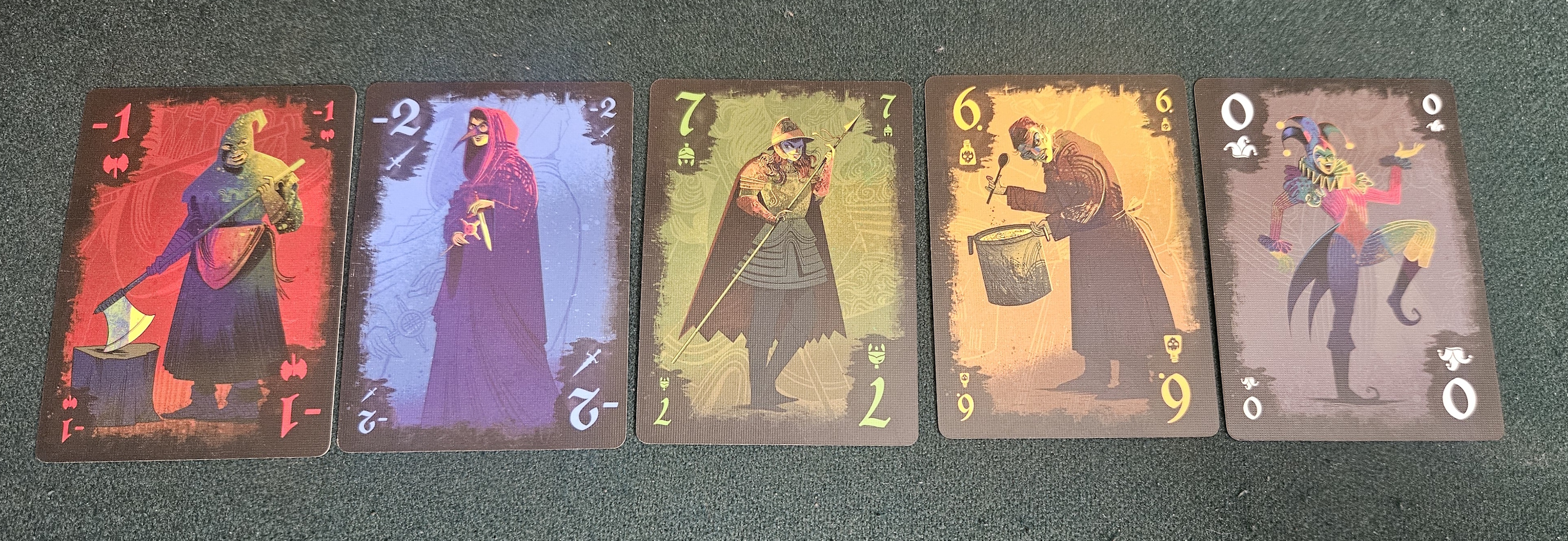
Examples of 2 characters which each have a unique goal that must be completed during the scenario.

This was a perfect way to end the day and we actually made it back to our room at 9:30pm allowing me time to write this post and get in near before midnight.

Tomorrow is our last day and we have big plans as we will be playing Imperial Elegy from VUCA Simulations (a kind of Here I Stand style CDG on the rise and fall of European empires from the 1850’s through WWII), Bretwalda from PHALANX (an Ameritrash combat game set in medieval England) and then a night cap of the RPG War Stories that we didn’t get to this evening. See you tomorrow night!

-Grant

January 2026 Monthly Debrief Video – The Lord of the Rings

Von: Grant
25. Februar 2026 um 14:00

The January 2026 Monthly Debrief Video, which is the 1st episode in Season 6 of this series, saw us discussing the games of The Lord of Rings. We both love the writings of J.R.R. Tolkien and The Lord of the Rings Series including The Hobbit and other books such as The Silmarillion and Unfinished Tales. As we thought about this topic, we were very surprised by the number of games set in Middle Earth and were quite excited to share them.

Also, as usual, we covered the games we played in January, as well as the games we plan to play in February.

We will remind you here that we are fortunate to be continuing our relationship with Noble Knight Games as the sponsor for our Monthly Debrief Video series. In case you don’t know, Noble Knight Games specializes in hard to find games but also carry all the new releases. But what makes them truly unique is that you can find some of the rarest games, long out of print games, hand made games, imported games from overseas, etc. Thanks to them for their sponsorship and we hope that you will consider them first when looking for the games we cover.

-Grant

Mini-Quartett mit Pan Am, Zug um Zug: Legacy, Wanderlust und Word Traveler

25. Dezember 2025 um 07:27

Vier Spiele in jeweils vier Sätzen: Dieses Mal geht es im Mini-Quartett im weitesten Sinn um Urlaub, Ferien und Reisen. Die Titelbild-Collage zeigt Cover-Ausschnitte von „Pan Am“, „Zug um Zug: Legacy“, „Wanderlust“ und „Word Traveler“ (von links oben nach rechts unten).

Pan Am

Dieses nostalgisch gestaltete Taktikspiel erinnert an die besten Zeiten einer der bekanntesten Fluggesellschaften des 20. Jahrhunderts. Wir konkurrieren um lukrative Flugrouten, indem wir Jets und Landerechte erwerben und neue Flughäfen bauen. Im Kern erweist sich „Pan Am“ dabei als Wirtschaftssimulation, weil wir unser Geld einerseits benötigen, um Auktionen zu gewinnen, andererseits aber auch, um Aktien zu kaufen. Denn am Ende gewinnt in diesem so elegant wie die Business-Klasse designten Spiel, wer die meisten Pan-Am-Anteile besitzt.

Pan Am

Pan Am | Funko Games | Prospero Hall | 2 bis 4 Spieler | ab 12 Jahren | 60 Minuten | Zielgruppe: Kenner | Meine Bewertung: ★★★★☆ (stark)

Word Traveler

Paris, London, New York, Tokio – in einer dieser Metropolen planen wir Besichtigungstouren zu Sehenswürdigkeiten. Den Weg, den ich auf dem Stadtplan nehmen möchte, teile ich den anderen mit, indem ich die einzelnen Stationen mit Wortkarten und Richtungspfeilen beschreibe. Je besser wir uns gegenseitig durch die Stadt lotsen, desto besser punkten wir in diesem kooperativen Kommunikationsspiel. Ärgerlich: Verfransen wir uns früh, gleicht das Sightseeing schnell einer Irrfahrt..

Word Traveler

Word Traveler | Office Dog | Thomas Dagenais-Lespérance | 2 bis 5 Spieler | ab 10 Jahren | 30 bis 45 Minuten | Zielgruppe: alle | Meine Bewertung: ★☆☆☆☆ (mäßig)

Zug um Zug: Legacy – Legenden des Westens

Die Legacy-Variante des mehr als 20 Jahre alten Spieleklassikers trägt uns zurück in die zweite Hälfte des 19. Jahrhunderts. Über zwölf Partien erschließen wir das Gebiet der heutigen USA und stellen durch das Ausspielen von Karten Bahnverbindungen zwischen Städten her. Zu Beginn der Kampagne besteht die Karte nur aus der Ostküste, doch es kommen in weiteren Partien immer mehr Kartenteile hinzu und mit jeder neuen Region halten neue Spielideen Einzug. Bereits nach Partie eins gibt es einen Wow-Effekt.

Zug um Zug: Legacy – Legenden des Westens

Zug um Zug: Legacy – Legenden des Westens | Days of Wonder | Alan R. Moon, Rob Daviau und Matt Leacock | 2 bis 5 Spieler | ab 10 Jahren | 20 bis 90 Minuten | Zielgruppe: Kenner | Meine Bewertung: ★★★★☆ (stark)

Wanderlust

Mit einem seit “Dominion” bekannten Deckbau-Machenismus entführt “Wanderlust” in ein friedvolles Sommercamp. Kochen, Gruppenspiele, Wassersport – aus sieben thematischen Kartensets wählen wir drei aus, die unterschiedliche taktische Möglichkeiten eröffnen. Wir stellen nach und nach unsere Karten zusammen, um letztlich unsere Abenteurer auf ihren Wanderpfaden ins Ziel zu bringen. Das Prinzip ist nicht innovativ, bricht den Deckbau jedoch auf eine familienfreundliche Leichtigkeit herunter.

Wanderlust

Wanderlust | Game Factory | Phil Walker-Harding | 2 bis 4 Spieler | ab 10 Jahren | 40 Minuten | Zielgruppe: alle | Meine Bewertung: ★★☆☆☆ (ordentlich)

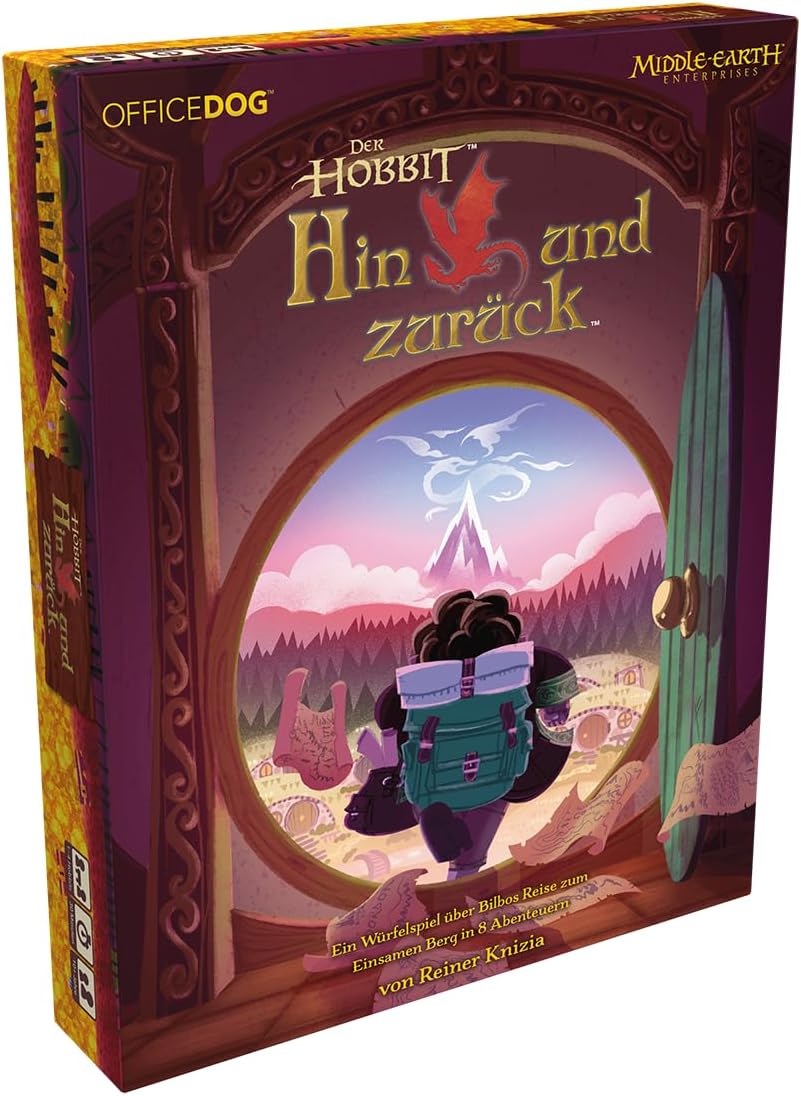
Der Hobbit: Hin und zurück

12. Dezember 2025 um 16:00

Office Dog, Asmodee, 2025
Autor: Reiner Knizia
1–4 Spieler:innen, ab 10 Jahre, 30 Minuten

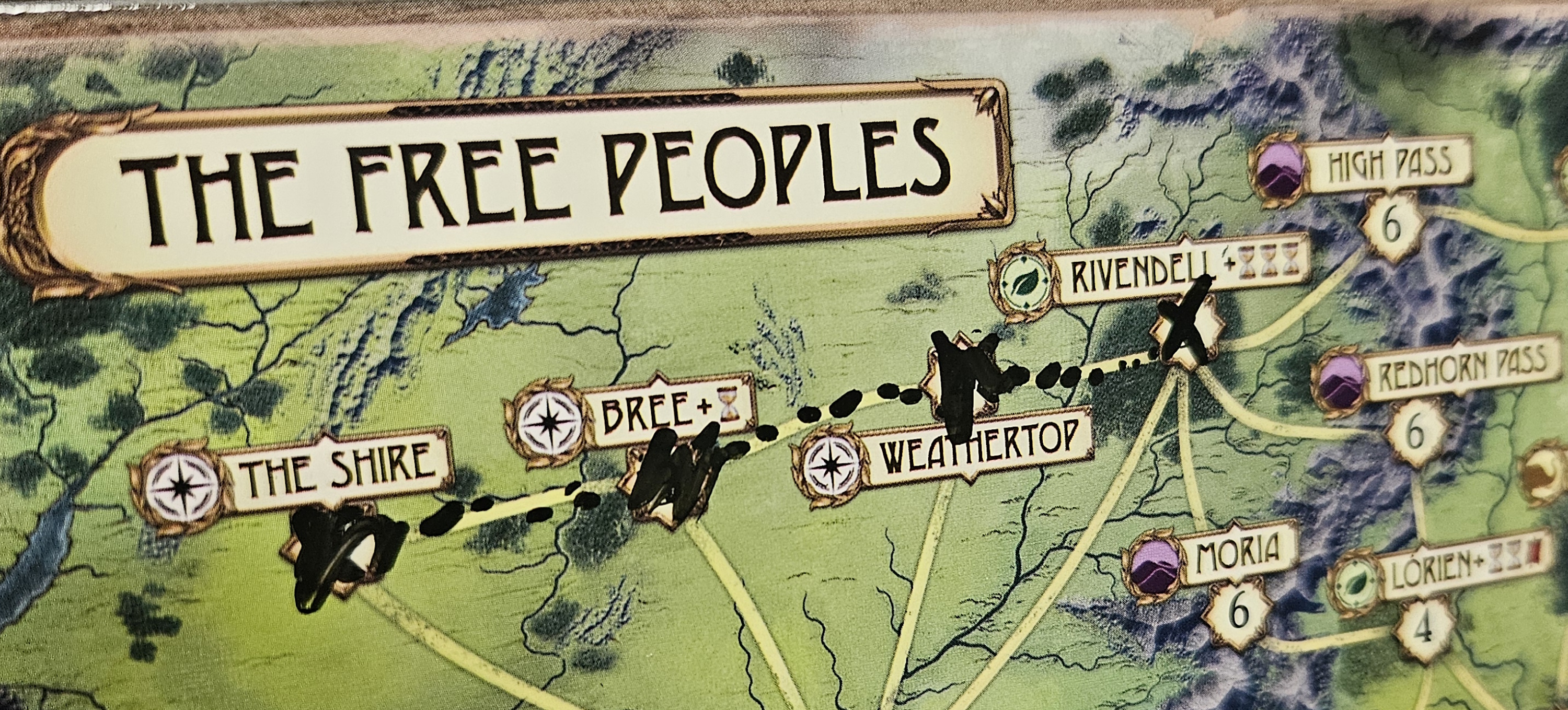
Ihr begleitet in diesem Spiel die mutige Gemeinschaft vom Auenland bis zum Einsamen Berg. Die Reise orientiert sich locker an der bekannten Geschichte rund um einen Drachen, einen Schatz und allerlei Gefährten. Die Atmosphäre wirkt leichtfüßig und lädt dazu ein, sich mit einem Mix aus Abenteuerlust und Neugier durch acht kleine Kapitel zu bewegen. Jedes Kapitel bildet ein eigenes Szenario, das euch in Begegnungen mit Trollen, Orks oder rätselhaften Ereignissen führt. Die Stimmung erinnert an eine persönliche Reiseskizze durch Mittelerde und entfaltet einen angenehmen erzählerischen Charme, der besonders dann gut funktioniert, wenn ihr euch gerne von einer fantastischen Welt tragen lasst.

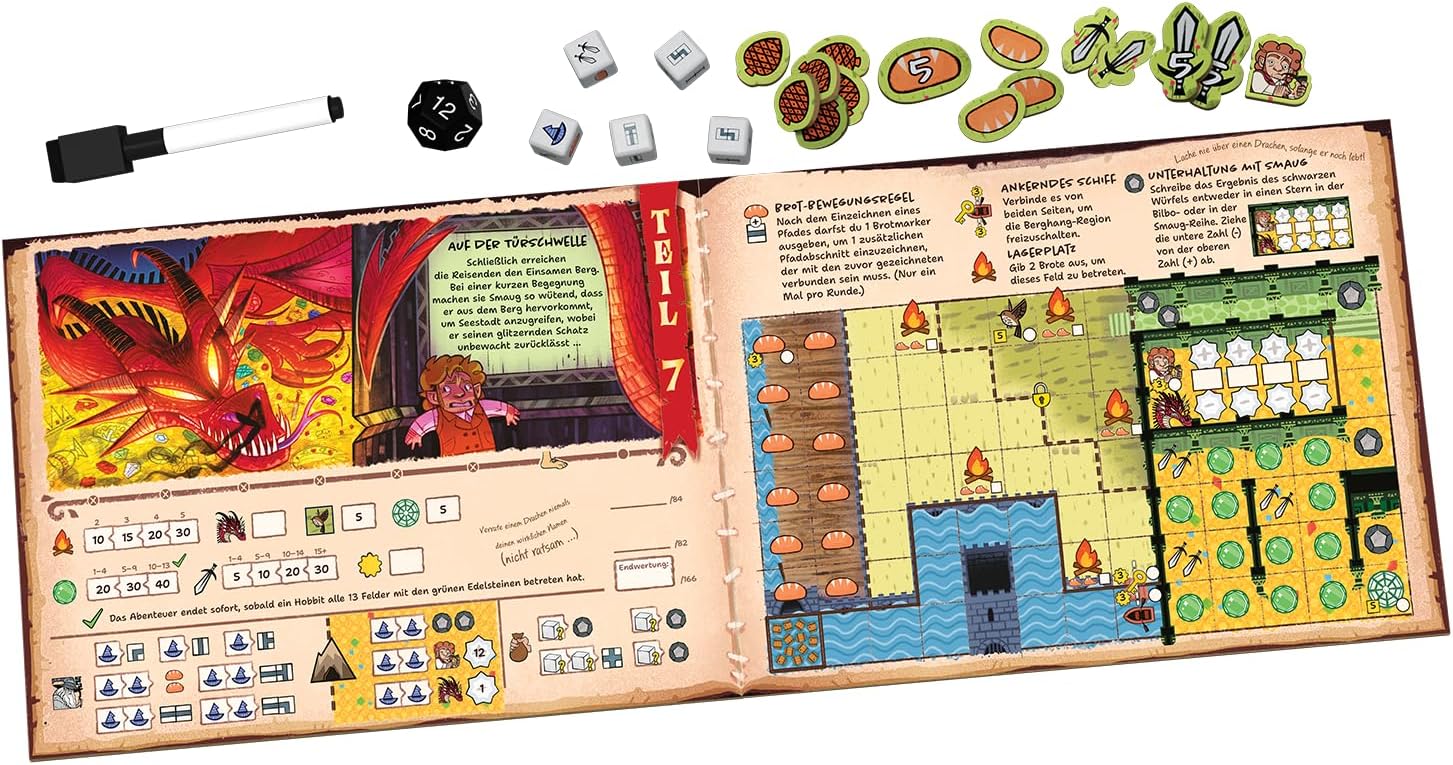
In jeder Runde würfelt ihr fünf weiße Würfel. Nacheinander sucht ihr euch jeweils einen davon aus und nutzt das gewürfelte Symbol sofort, um in eurem eigenen Abenteuerbuch eine Aktion auszulösen. Ihr zeichnet Wege, löst Aufgaben, sammelt Hinweise oder bewegt euch an Gefahren vorbei. Da alle aus denselben Würfeln wählen, entsteht ein lebendiges Hin und Her, bei dem ihr ständig abwägt, welchen Würfel ihr unbedingt braucht und welchen ihr den anderen lieber nicht überlassen möchtet. Die Struktur der Kapitel sorgt dafür, dass ihr euch Schritt für Schritt durch die Abenteuer arbeitet, bis das jeweilige Ziel erreicht ist. Die Spieldauer bleibt kurz und das Regelgerüst leicht genug, um schnell wieder ins Spiel zu finden, auch wenn ihr einmal eine Pause eingelegt habt.

„Der Hobbit: Hin und zurück“ lebt vor allem von seiner charmanten Grundidee und der Freude daran, Würfelergebnisse kreativ im eigenen Heft zu verwerten. Die Kapitel fühlen sich abwechslungsreich genug an, um mehrere Partien zu tragen, ohne dass ihr euch überfordert fühlt. Die kurze Dauer hält die Runde aufgelockert und sorgt dafür, dass ihr selten lange warten müsst. Das Spielmaterial wirkt ordentlich und stabil. Die Illustrationen unterstützen den fantasievollen Rahmen und die Abenteuerbücher lassen sich gut handhaben. Die Würfel und Stifte erfüllen ihren Zweck ohne besondere Höhepunkte, wirken aber langlebig. Wer allerdings sehr tiefgehende Entscheidungen oder komplexe planerische Aufgaben sucht, wird hier weniger fündig. Viele Momente hängen vom Würfelglück ab und manche Kapitel ähneln sich im Ablauf. Das Spiel punktet vor allem dort, wo ihr eine unkomplizierte und zugängliche Erfahrung sucht, die ihr ohne große Vorbereitung auf den Tisch bringen könnt. Für Familienrunden, Gelegenheitsspieler:innen und kleine Gruppen ist es daher gut geeignet. Vielspieler:innen mit Anspruch auf große strategische Freiheit werden dagegen eher nach etwas anderem greifen. Mein Fazit fällt positiv aus, denn das Spiel vermittelt eine angenehme Mischung aus Leichtigkeit, Atmosphäre und spielerischer Kreativität.

❌