Tales of Myth & Legend Designers: Michael Guigliano, Keith Ward, Bobby West Publisher: Van Ryder Games Players: 1-4 Age: 14+ Time: 60-150 mins Amazon affiliate link: Played with review copy provided by publisher Tales of Myth & Legend … Continue reading →
One of the more interesting topics to play a wargame on is that of a sustained siege. I am not talking about a game that has a siege mechanic that is used over the course of the game but a game that is based wholly around a specific historical siege. A siege requires a lot of different takes to be included in a wargame to make it work including things such as supplies, manpower, defenses such as walls, trenches and other fortifications, siege engines, morale and the ability and will to continue the fight. I really have very much enjoyed the siege based wargames that I have played over the years and I wanted to share 3 of my favorites in this post. So, without further adieu, here are my Best 3 Games with…Sieges!
I want to make one thing clear. I love the States of Siege Series of games and have played dozens of them. But I don’t consider those games in the same vein as these siege focused games that I am sharing.
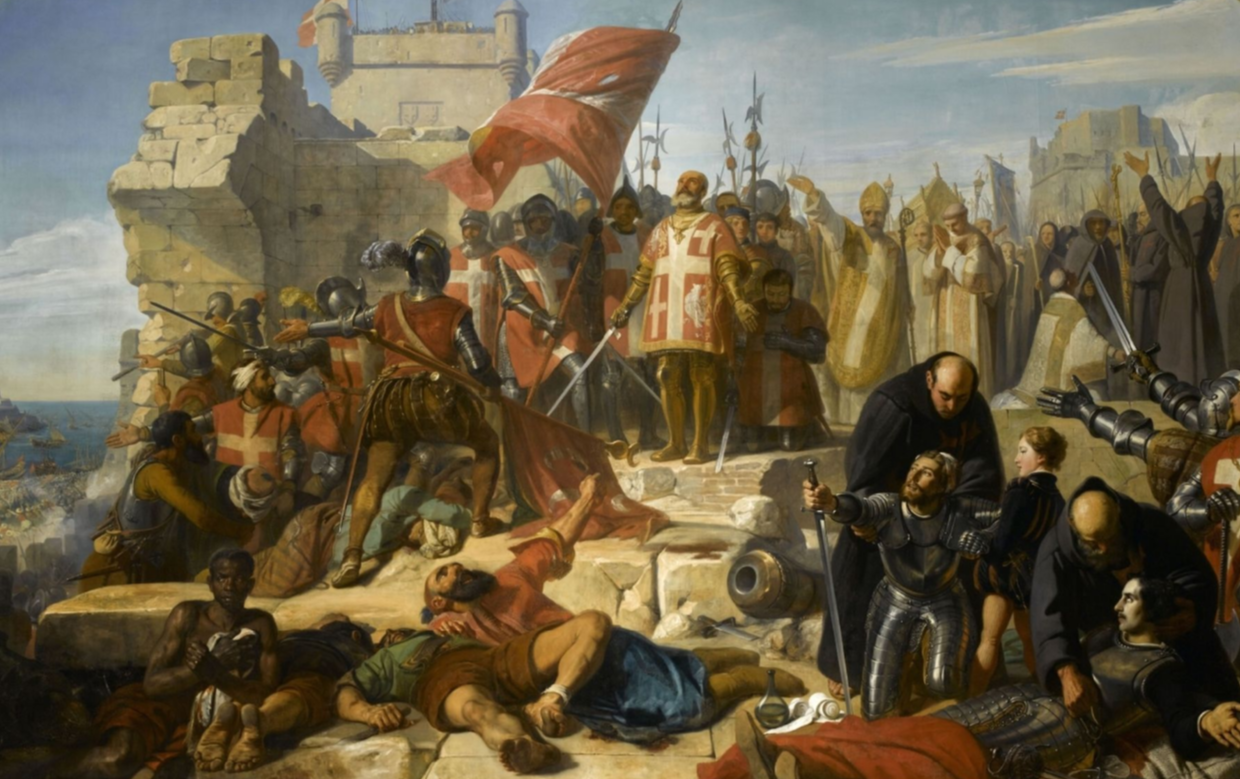
*The image used as the featured image for this post is called Lifting of the Siege of Malta painted by Charles-Philippe Lariviere.
3. Freedom! from PHALANX
Freedom! is a card driven siege game that pits the Greek freedom fighters and the besieging imperial forces of the Ottomans against each other. The siege is of the Greek Holy City of Messolonghi during the Greek War of Independence in 1825-1826. Freedom! features asymmetrical play with the goal of the invading forces being to manage to get inside the city before the end of the game or to force the citizens to abandon the cause by dropping their morale to zero while the defenders, on the other hand, try to withstand the siege and protect the city long enough for the invaders to abandon their attempt either by deciding to leave on their own or by having their morale dropped to zero. The actions of the players are driven by the cards in their hands, which highlight actual events and personalities of that time, while the combat is dice-driven to allow for quick and exciting game-play.
The rebel player is largely focused on grinding out a victory by surviving over the course of 6 rounds and are simply trying to hang on, unless of course they can somehow reduce the morale of the besieging units enough to where they give up and go home. However, nothing about this is a grind for the defending player and that is a problem that can be endemic with siege games. You as the defender, are as much a part of the action and must try to follow your own plan whenever possible to get a win. In other asymmetric siege games, the defender is often just reacting to the aggressor’s moves. As the insurgents, it never feels like you are simply reactionary and just along for the ride.
The really interesting thing about this one is that that there are actually two maps that are used to play the game. One of the maps shows the actual city and the forces involved in the siege while the other shows the surrounding areas, highlighting the support that each of them provides to both players. The art is gorgeous and this one is a game that we had a really good experience with. There also is a solitaire module that you have to buy separately but it works very well and provides an opportunity to play this game when you can’t find an opponent.
Players will find that they are competing for a number of nearby Greek regions on the board and there will be a tug-of-war played out by using various support actions that are focused on cutting off your opponent’s supplies. This is what I liked most about Freedom! It’s not just a continual back and forth trying to knock out your enemy’s units but there are multiple paths to victory, and all of them seem to be viable. By lowering your opponent’s morale and cutting them off from the supplies they need, you completely change their plans. Of course, there is nothing to stop you from pushing aggressively against the enemy’s walls.
Each side of the conflict really gives a different feel to the game and creates a new experience once you switch sides. As the Ottomans, you are generally going to undertake aggressive maneuver and attacks in an attempt to push forward and put pressure on the defenders and their walls of security. But when you play the Greeks there is a real feeling unpleasant feeling of desperation, which only gets worse with the arrival of Turkish reinforcements.
Here is a look at our unboxing video so you can get a good look at the components:
Here is our video review used for the Kickstarter campaign so you can understand our thoughts on the game:
If you are interested in Freedom!, you can purchase a copy for €69,00 ($80.00 in US Dollars) from the PHALANX website at the following link: https://phalanx.co.uk/games/freedom-board-game/
2. Storm Over Jerusalem: The Roman Siege from Multi-Man Publishing
The Storm Over Area Impulse Series has been around for a while and includes games such as Storm Over Arnhem (1981) from The Avalon Hill Game Company, Storm Over Stalingrad (2006) from Multi-Man Publishing and Storm Over Dien Bien Phu (2014) from Multi-Man Publishing amongst several others. The hallmark of the series is relatively low complexity for a wargame and a very simple combat system that calculates total attack versus total defense and adds a roll of 2d6. The losses from combat can be absorbed by either retreating from the attacked areas or destroying units. The game system has mostly been used to model more modern wars including the Franco-Prussian War, World War II and the French conflict at Dien Bien Phu in Vietnam.
Storm Over Jerusalem: The Roman Siege is a 2-player wargame that simulates the Roman siege of Jerusalem during 70 AD. One player controls the mighty Roman forces, who are truly master of siege warfare with their siege towers, ballista, battering rams and onagers, and the other player controls the Judean forces, which are divided into 2 separate factions with different leaders. The game is 8 turns long, but can be shortened by the play of a few event cards, at the end of which time the winner is determined by calculating victory points that come from overall losses, holding of certain VP areas and keeping the Romans out of the city.
We were very impressed by the game and its overall clarity of rules, quality components and interesting tactical choices and really had a good time learning and playing it. The Judeans are obviously outclassed by the powerful and skilled Roman Legions but they have several of their own tricks to use to hold out long enough to win the day. There is a lot to like here and I am really glad that we decided to give the system a try. There were some changes specially made to introduce the style of Ancient sieges to the Storm Over Series and this is where the game really shines. The Siege Towers were an evolution of the trenches found in Storm Over Dien Bien Phu game and are very important to the Roman efforts. The walls historically were such a physical presence in the city, and were a major impediment to the Roman efforts, that they had to come up with rules to cover them. The walls provide a defensive modifier against Roman Attacks and Assaults. This Defense Value starts at +4 and can be reduced over time by successful Roman Assaults. Since Judean units have a defense of 7 or 8 the bonus provided by the walls of +4 really helps hold onto areas. Once a wall is damaged from a successful attack though, the defensive modifier can be rebuilt by the Judean player but can never be increased to its full value of +4.
The Roman player also has specific cards (Catapult, Onager, and Battering Rams) that can be used to damage or breach the walls. Once breached, the walls don’t provide any defensive bonus and allow Roman troops to flood into the city. We found that the Romans tried to focus on a specific area of the walls and made their attacks there first in order to bring the maximum attacks possible each round to force the Judean player to have to spend their time and actions on fixing the walls and bringing up reinforcement to replace those lost in retreats. To repair a wall section, the Judean player can discard a card and use the Repair Value of that card to repair walls in an area. This action though requires a fresh unit in that area to be flipped to spent to complete the repair. Walls can only be repaired back up to +3, not the original +4. You can’t rebuild them completely.
I really enjoyed our play of Storm Over Jerusalem. The game was beautifully put together, with fantastic components, but also had some really amazing details and depth to the gameplay. This one is a winner and really has me interested in the other games in the series. I know that this game had a siege focus, which is not necessarily in each of the other games, but I really liked the simple combat system, great card play and very interesting tactical choices that were there for players to have to make.
Here is a link to our full unboxing showing off the beautiful components:
1. Dien Bien Phu: The Final Gamble from Legion Wargames
Dien Bien Phu: The Final Gamble from Legion Wargames is a 2-player wargame about the decisive battle of Dien Bien Phu in 1954 that not only ended the French Indochina War but also had political repercussions far outside the region itself. One player represents France and her colonial troops. The other player represents the armed force of Viet Minh, the communist/nationalist independence movement of Vietnam. This game is not a traditional wargame and has different victory conditions than normal and also some unique and interesting supply rules. The Viet Minh win by forcing the French troops to surrender and France wins by not surrendering.
The board covers the former village of Dien Bien Phu and surrounding areas. There is a small submap of the French strongpoint Isabelle further south in the valley. There are several groups of French strongpoints scattered around the map, each one with a female name, which are all named after the commander de Castries’ mistresses, according to lore. The map is divided into three divisional sectors. Each sector has several zones that represent Viet Minh trenches winding from the map edge towards the center of the map. Each hex represents 150 meters and each game turn covers three days. There are 21 turns in the game, but historically, it ended after 19 game turns with a Viet Minh victory. The scale allows stacking of three French units in a hex, but there are no stacking limits for Viet Minh battalions, which creates a chess like feel.
French supply is a bit of a mini-game within the game. As this battle took place far out in the wilderness of Vietnam and both sides had to adjust to the limited flow of supplies that could be brought forward, through the air to the French, and through vast forests to the Viet Minh. Supplies tend to be a lot less than wished for. There are several supply tracks on the map showing how much ammo, food & bullets, fuel & spares, medicine as well as the amount of truck transport available for the French. The process for doing this supply phase is really pretty interesting and fun. Each game turn air transports will bring in a mix of supplies together with replacements and reinforcements. This is done on a chart with a grid where a mix of supply markers are placed together with eventual reinforcements and replacements. Weather will then decide what will arrive and what will abort back to Hanoi. The French player will never know for sure what type of supplies and how much will arrive and has to take that into account as they plan out their turns. And this is one of the best parts of the game and kept me thinking about the struggle with keeping my efforts going with the French. This one is not an easy game for either side and I think that it keeps the game very balanced and interesting to play.
Here is a link to our full video review:
If you are interested in Dien Bien Phu: The Final Gamble, you can order a copy for $54.00 from the Legion Wargames website at the following link: https://www.legionwargames.com/legion_DBP.html
A few other games that I have played on the subject of sieges, and that I very much liked, were games such as Halls of Hegra from Tompet Games, 1565 Siege of Malta from Worthington Publishing, 414 BC Siege of Syracuse from Worthington Publishing, Keep Up the Fire! Deluxe Edition from Worthington Publishing, Castle Itter: The Strangest Battle of WWII from Dan Verssen Games, Siege Works: A Napoleonic Siege Roll & Write from Solo Wargame, Crusaders: The Siege of Acre 1291 from Blue Panther/Art of Wargames, Castelnuovo 1539 from Draco Ideas and The Alamo Remembered from Victory Point Games.
Cascadia Alpine Lakes Designer: Randy Flynn Publisher: AEG / Flatout Games Players: 1-4 Age: 10+ Time: 30-45 mins Amazon affiliate link: https://amzn.to/4yjWdkB Played with review copy provided by publisher Cascadia: Alpine Lakes is a standalone follow-up to the … Continue reading →
Wir waren in Bonn beim Kapplex Vor-SPIEL 026 Event und haben dort Pitches von elf Verlagen zu ihren Messe-Neuheiten erhalten. Die ein oder andere Erstpartie ist dann auch noch dazugekommen, doch hört selbst:
Kapplex Brettspielmöbel, Strohmann Spiele, Haba, Skellig Games, PD-Verlag, Ornament Games, Ulisses Spiele, Board Game Circus, Biberstein Spiele, Elznir Games, Feuerland Spiele, Frosted Games
Trial of the Forest Designer: Giancarlo Spinelli Publisher: Rebel studio Players: 2-4 Age: 12+ Time: 60-120 min Amazon affiliate link: https://amzn.to/3Tpm9MK Played with review copy provided by publisher Embark on a journey deep into the ancient forest of … Continue reading →
Die BGG-Vorschauliste zur SPIEL Essen 2026 ist mit rund 200 Spielen live und soll nach bisherigem Muster bis zur Messe im Oktober auf über 1.000 Einträge wachsen. Anders als in den 15 Jahren zuvor gibt es dafür keine redaktionelle Kuration mehr: Aussteller tragen ihre Neuheiten jetzt selbst ein.
Bislang hatte W. Eric Martin die Liste persönlich betreut, bevor er BoardGameGeek im Januar 2026 verließ und mit „Board Game Beat“ ein eigenes Nachrichtenprojekt startete. Die Einträge sind laut Ankündigung weiterhin kostenlos, allerdings auf Titel beschränkt, die entweder in den vergangenen vier Monaten erstmals verkauft wurden oder als spielbare Demo öffentlich zugänglich sind.
Ob das neue Modell an die Verlässlichkeit der kuratierten Liste heranreicht, hängt laut Bericht davon ab, wie viele Aussteller ihre Titel tatsächlich zügig eintragen, ein Ergebnis lässt sich während der laufenden Übergangsphase noch nicht abschließend bewerten.
Relevanz für die eigene Berichterstattung
Die Liste ist auch für Würfelreichs eigene Vorberichterstattung zur SPIEL Essen 2026 ein Werkzeug, etwa für den dortigen Neuheiten-Abschnitt. Ohne redaktionelle Vorprüfung durch BGG verschiebt sich die Sorgfaltspflicht stärker auf die Redaktionen, die die Liste als Recherchequelle nutzen: Einzelne Einträge sollten vor einer Übernahme eher gegen weitere Quellen wie Verlagsseiten geprüft werden als zuvor.
Die SPIEL'26 kommt mit großen Schritten näher! In dieser Folge schauen wir was bei den in Folge 90 besprochen Verlagen an Spielen dazu gekommen ist und werfen einen Blick auf alle noch offenen Verlage. Gut 2 1/2 Stunden Spielewahnsinn!
Kapplex? Ist das nicht ein Brettspielmöbelhersteller? Ja, das stimmt. Kapplex fertigt Tische und Regale, hat Zubehör und Stühle im Angebot. Dem Firmeninhaber Alexander Kapp-Huß kam auf der Spiel Doch! die Idee, Neuheiten gemeinsam mit Verlagen zu präsentieren – und damit auch die eigenen Produkte zu zeigen. An diesem Wochenende fand das erste Event statt. Das Ziel: Auch kleinere Verlage bekommen…
Every year or so, we find out that our little blog has entered a list or climbed up a few ranks. I am always interested in these lists, as frankly I put a lot of time and effort into the blog, spending hours each week writing and editing content, and feel very proud of its presence on the internet and in our hobby and it is nice to receive some recognition for that work. About a week ago, I received an email from Feedspot that informed me that The Players’ Aid Blog had again appeared on their Top 100 Best Board Game Blogs to Follow list. As I opened the email, I found that we had moved into the #12 spot (moved up on the list since 2025 when we were found in the #20 spot). There are a lot of very well known and well followed blogs on that list and I was very surprised to see us move up to nearly the Top 10.
So what the heck is Feedspot? Feedspot is an online data base that categorizes global media outlets and content creators to make them easy to discover, follow and contact for those that utilize their services. From their site, you can access the creators by following them, emailing them or viewing their sites. Their lists cover things such as media outlets including blogs, podcasts, magazines and news websites as well as creators on platforms such as Instagram, Twitter, YouTube and TikTok.
Here is a look at a picture of the listing for The Players’ Aid:
As I was reviewing the list this year, I noticed a few things. First off, the data that they were using for our social media only included our Facebook, Twitter (X) and Instagram social media platforms. We also are active on Blue Sky and Mastodon. I also noticed that their reported numbers of subscribers was a bit off as we have 3,921 Followers on Facebook (they reported just 3.7K), 8,749 Followers on Twitter (X) (they reported 8.2K) and we have 1,258 Followers on Instagram (they reported a higher rounded off total of 1.3K). Not a big deal but not quite accurate!
Second, they referenced this concept of Domain Authority in their list and I had to do some research to better understand what this metric was measuring. What I found out was that Domain Authority (DA) is a metric that predicts how well a website will rank in search engine results pages (SERP’s) and is measured on a scale of 1 to 100 with higher scores indicating greater ranking potential. This DA is influenced by quality content that is shared and creates backlinks to the content. The Players’ Aid DA is currently at 37 (was at 36 in 2026). Some other relative DA scores on the post were Inside GMT at 36, Space Biff at 37, The Dice Tower at 49, Shut Up & Sit Down at 55 and Board Game Geek at 82.
The other wargame content creators that appeared on the list included Beyond Solitaire at #23 (great work Liz!), Clio’s Board Games at #40 (great work Clio!), The Boardgames Chronicles at #41 (great job Michael!), Big Board Gaming at #55 (I like your stuff Kevin especially the new WARNO feature!), Dude Take Your Turn! at #61 (way to go Dave!) and Board Game Meeple Lady at #62 (awesome BGML!).
I don’t put a lot of stock in these type of lists but was honored that we appeared on it. I know that I care greatly about our corner of the interweb and our little blog and love providing new and fresh content to be consumed by those that follow us. I also see what we do as somewhat of a service as I try to make sure that wargamers know about the products that are incoming and in spreading the news about new publishers, particularly smaller publishers, new games and new crowdfunding campaigns.
Nach Skandalen, Manipulationsversuchen und wachsender Kritik stehen die Hugo Awards 2026 im Zeichen von Reformen und Aufarbeitung. Doch welche Geschichten konnten die Wähler*innen in diesem Jahr überzeugen? Wir werfen einen Blick auf die sechs nominierten Romane und auf den Titel, der am Ende den begehrten Preis gewann.
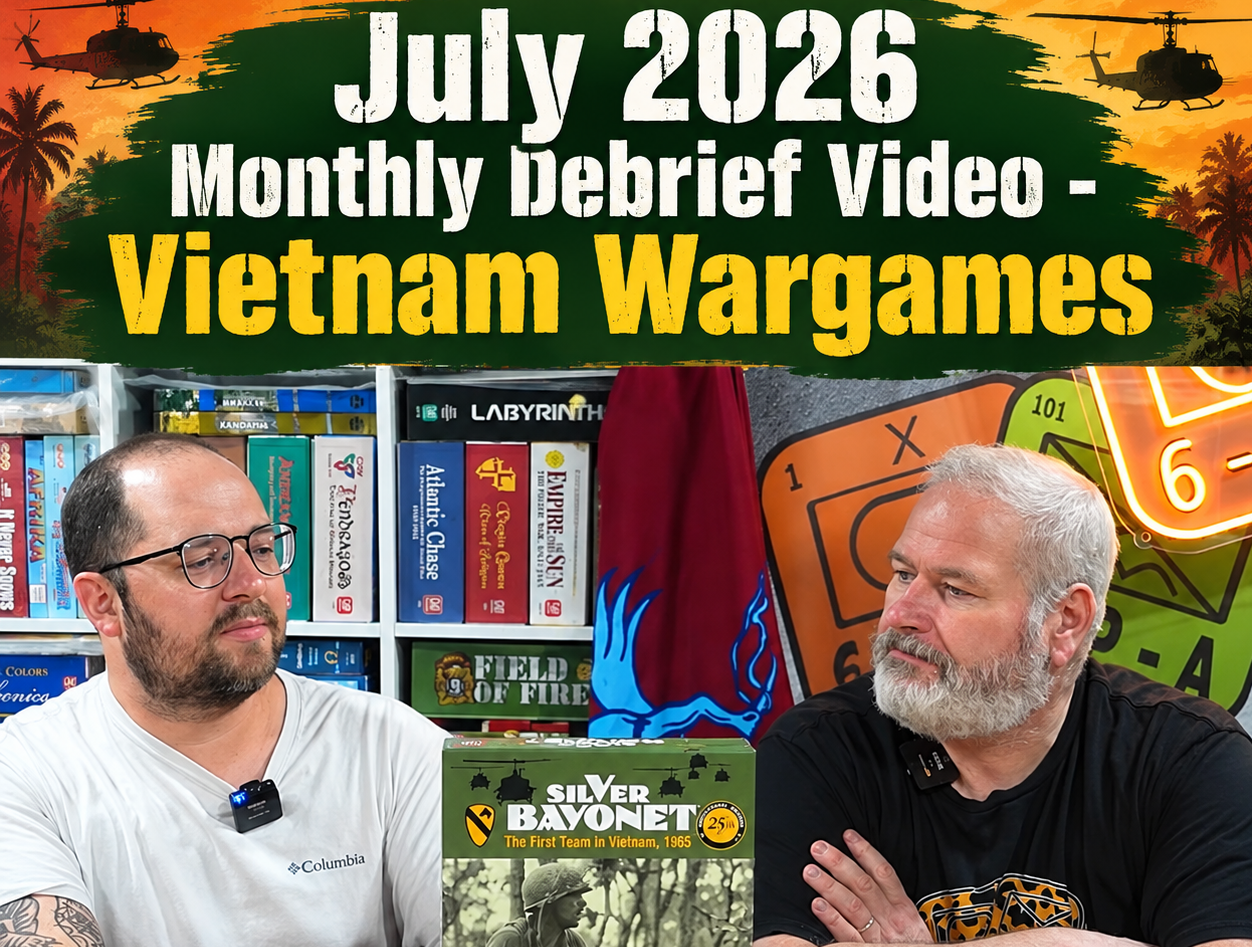
The July 2026 Monthly Debrief Video, which is the 7th episode in Season 6 of this series, saw us discussing Vietnam Wargames. One of my favorite wars to game is that of the Vietnam War. Part of that is because I was born in the early 1970’s and heard a lot about this war for the rest of that decade and throughout my teenage years. I remember watching the short lived television series Tour of Duty. I also read the graphic novel series The ‘Nam from Marvel Comics. But, my interest really grew after watching movies such as Apocalypse Now and Platoon. I always asked myself, how are you expected to fight a war where you don’t know who the enemy is? But also part of the attraction for me is that the war is anything but conventional. We share several big and well known games and some that are more niche.
Also, as usual, we covered the games we played in July as well as the games we plan to play in August.
We will remind you here that we are fortunate to be continuing our relationship with Noble Knight Games as the sponsor for our Monthly Debrief Video series. In case you don’t know, Noble Knight Games specializes in hard to find games but also carry all the new releases. But what makes them truly unique is that you can find some of the rarest games, long out of print games, hand made games, imported games from overseas, etc. Thanks to them for their sponsorship and we hope that you will consider them first when looking for the games we cover.
Niedliche Spielzeuge treffen in epischen Schlachten aufeinander. Die Strategie der Spielzeuggenerale ist einfach: Entweder zwei Truppen aus der Reserve holen oder eine Truppe in der Schlacht einsetzen. Auf in den…
CMON has warned that its core business is suffering a “prolonged structural downturn” and is still consuming more cash than it generates, despite a drastic restructuring which has seen the board game crowdfunding major halve its workforce, sell off some of its biggest game IPs and halt new crowdfunding campaigns.
Those efforts have now dramatically reduced its losses, CMON’s newly-released H1 financial report shows – with the company reporting a loss of just over $2m for the first half of this year, compared to almost $7m for the same period in 2025.
CMON’s revenue also rose more than 7% year-on-year in H1, up to $3.68m from $3.43m in the first six months of 2025, while its selling and distribution expenses more than halved from $1.83m to $859,000, and its general and administrative expenses fell from $4.37m to $2.37m.
But that improvement has failed to make the underlying business self-sustaining. CMON’s cash reserves, which stood at $3.9m at the end of 2022, had fallen to $2.1m by the end of 2024, and slipped again to just over $900,000 by June 2025.
CMON revealed last month that it had about $368,000 in bank and cash balances as of August 4, which it described as enough to cover less than a month of its daily operating expenses.
Crowdfunding Commitments
Despite the sharp reduction in its losses, CMON’s balance sheet remained under pressure at the end of June – with $7.34m more in short-term liabilities than short-term assets, up from $6.89m at the end of 2025.
A significant part of CMON’s liabilities relates to eight crowdfunded games whose campaigns raised $14m from backers, but which the company has yet to deliver.
CMON has not completed fulfillment of a crowdfunding project since Zombicide: White Death in mid-2025, but has managed to deliver pre-orders for Cthulhu: Dark Providence, Marvel United: Witching Hour and Dune: Desert War in the first half of this year.
CMON said in its H1 report that the liabilities position had caused the company’s directors to give “careful consideration to the future liquidity and performance of the group and its available sources of financing in assessing whether the group will have sufficient financial resources to continue as a going concern”.
Those directors believe CMON will be able to continue operating – but central to that assessment is a major share sale designed to raise up to HK$150.5m – about $19m.
CMON first announced the rights issue fundraise in June, proposing to offer existing shareholders the opportunity to buy three new shares for every share they already owned in an attempt to raise the capital.
That leaves CMON looking to raise more than $17.5m from other investors through the rights issue – a figure approaching 2.5-times the valuation of the entire company implied by its last share sale in February this year.
CMON said it plans to use 40% of the money raised to fund its day-to-day operations for roughly the next year, including staff costs, royalties, shipping and distribution, professional fees and other administrative and operating expenses.
Another 20% is earmarked for repaying debts and other outstanding liabilities, including $2.46m owed to a CMON director and $385,000 of unsecured advances from employees, as well as outstanding production, shipping, royalty and other operating costs.
CMON has earmarked 25% for expansion in existing and new markets, including strengthening the company’s presence in Europe through marketing and potential attendance at events including Spiel Essen and Cannes, as well as targeting growth in Japan and the Philippines.
Digital Ambitions
The company added that it plans to put 15% of the new capital towards potential acquisitions as part of a push into digital gaming, although said it had not yet identified any targets.
CMON said it intends to look for between one and three businesses, primarily in Asia-Pacific, valued at between about $1.3m and $2.5m each, which could help it develop digital adaptations of its existing games, companion apps and other digitally-enabled features.
The publisher stressed that it intends to retain physical tabletop games as its core business, with the digital push designed to complement rather than replace them.
That plan had included transitioning the company’s titles such as Massive Darkness and Super Fantasy Brawl Reborn into “high-quality digital assets” – with CMON saying the group would “continue to supplement this digital transformation as physical games would still offer a ‘screen break’ for individuals as well as foster direct face to face interaction”.
The proposed investment would have valued Blissful Link at more than $95m. Blissful Link made a loss of about $197,000 in 2024, on revenues of just over $408,000, and had net liabilities of about $889,000, according to unaudited figures provided by CMON in April. It did not include finances for 2025.
CMON said in the rights issue offer, “Under prevailing high-interest lending conditions, traditional bank borrowings and debt financing carry heavy interest and securing such financing would severely strain the group’s remaining liquidity.
“Accordingly, equity financing via the rights Issue is the most viable strategic path to recapitalize the group’s capital base without increasing debt distress.”
The directors’ assessment that CMON can remain a going concern also takes into account continued financial support from some of its directors, progress fulfilling its outstanding contract liabilities and further restructuring aimed at reducing cash outflows.
Revenue Collapse
CMON’s latest figures also reveal the scale of the collapse in its North American and European revenues over the past five years, transforming the geographical make-up of what remains of its business.
North America alone generated more than $8.6m for CMON in the first half of 2021, making up 57% of its roughly $15.1m H1 revenue. By the first half of this year, however, revenue from North and South America combined had fallen to just $642,000.
Europe has undergone a similarly dramatic contraction, with revenue from the region falling from about $4.5m in the first half of 2021 to just $982,000 in the latest six-month period.
Asia has consequently become CMON’s largest market by a considerable margin, generating more than $2m in the first half of this year and accounting for about 55% of its total revenue, compared with less than 10% in the same period of 2021.
That reversal has not been driven by Asian growth, however. CMON generated $3.22m from Asia in the first half of 2022, marking a roughly 37% decline since – but a far more resilient performance than the steep falls recorded in North America and Europe over the same period.
The publisher said in its H1 2026 report, “The group intends to continue developing its distribution and market presence in Asia while supporting its established markets in Europe.
“The group will also continue to monitor trade and tariff conditions affecting the US market, and maintain a prudent approach to allocate resources to markets and projects.”
CMON said in March this year that it intended to resume crowdfunding in the second half of 2026, but its latest interim results stop short of repeating that commitment, saying instead that new titles will be developed and launched selectively depending on market conditions, available financial resources and project readiness.
The final result of the rights issue is due to be announced on September 15.
Kommunikation ist in Brettspielen oft der Schlüssel zum Erfolg. Einige Neuheiten der SPIEL 2026 drehen den Spieß jedoch um und machen gerade die eingeschränkte Verständigung zum zentralen Spielelement. Ob lautlos kooperierende Roboter, eine selbst erfundene Sprache oder kreative Hinweisrunden – diese vier Titel zeigen, wie vielseitig das Thema Kommunikation auf dem Spieltisch umgesetzt werden kann.
Lautlos durch die Fabrik: Robo Run
Mit Robo Run bringt Pegasus Spiele (3-K120) ein kooperatives Zweipersonenspiel von Eryk Nowak zur SPIEL 2026. Die Partien dauern etwa 20 bis 30 Minuten und richten sich an Spielerinnen und Spieler ab 10 Jahren.
In Robo Run übernehmt ihr die Rolle zweier Roboter, die aus einer streng überwachten Fabrik entkommen wollen. Der besondere Kniff: Während der Partie dürft ihr nicht miteinander sprechen. Stattdessen müsst ihr euch auf Beobachtungsgabe, Intuition und ein gemeinsames Verständnis der Situation verlassen. Jede Bewegung auf dem Spielplan will sorgfältig abgestimmt sein, denn die Sicherheitssysteme der Fabrik verzeihen keine Fehler.
Zusätzliche Abwechslung verspricht die Kampagnenstruktur. Fünf unterschiedliche Szenarien führen durch verschiedene Bereiche der Fabrik, von engen Tunneln mit Schreddermaschinen über laserüberwachte Labore bis hin zu dampfenden Schmieden und giftigen Produktionsanlagen. Wer kooperative Herausforderungen für zwei Personen mag, sollte Robo Run im Auge behalten.
Eine Sprache von Grund auf erschaffen: Gibberers
Bei Strohmann Games (3-T600) erscheint mit Gibberers ein ungewöhnliches Kommunikationsspiel von Keisei für 3 bis 5 Personen ab 14 Jahren.
Die Grundidee klingt fast wie ein Sozialexperiment: Spieler verkörpern unterschiedliche Gruppen von Menschen und Außerirdischen, die keine gemeinsame Sprache besitzen. Gemeinsam entwickelt ihr daher zunächst ein völlig neues Sprachsystem. Mithilfe von Höhlenmalereien und Symbolen entsteht ein wachsender Wortschatz, der im weiteren Spielverlauf die einzige erlaubte Kommunikationsform wird.
Über mehrere Generationen entwickelt sich die Sprache weiter, ähnlich einem Technologiebaum in Strategiespielen. Gleichzeitig steigen die Anforderungen und Kommunikationsbeschränkungen. Ziel ist es, am Ende der Partie einen geheimen Begriff in der selbst erschaffenen Sprache korrekt zu entschlüsseln. Wer Spaß an Wortspielen, Sprachrätseln und kreativen Gruppenexperimenten hat, dürfte hier etwas Besonderes finden.
Welche Brettspiele erscheinen zur SPIEL 2026? Der Brettspielelust-KI-Chatbot weiß es: Befrag ihn zur aktuellen Vorschauliste von Board Game Geek und lass dir spannende Neuheiten zeigen!
Film- und Musikwissen gefragt: Out of Words – Music & Movies
Queen Games (3-K400) erweitert seine Reihe mit Out of Words: Music & Movies, einem kooperativen Partyspiel für 2 bis 10 Personen. Die Aufgabe klingt zunächst einfach: Eine Person muss eine Schauspielerin, einen Film, einen Song oder einen Musiker erklären. Allerdings dürfen die Hinweise nur aus einzelnen Wörtern bestehen. Zusätzlich müssen diese Wörter mit bestimmten Buchstaben beginnen, die aus einem gemeinsamen 5×5-Raster vorgegeben werden.
Jeder verwendete Buchstabe verschwindet anschließend dauerhaft aus dem Raster. Dadurch entsteht ein spannender Ressourcenmechanismus, denn hilfreiche Anfangsbuchstaben werden im Laufe der Partie immer knapper. Die Gruppe versucht gemeinsam möglichst viele Begriffe zu erraten, bevor alle Buchstaben verbraucht sind. Gerade für größere Runden und Fans von Musik- und Filmquizzen könnte das eine interessante Alternative zu klassischen Partyspielen werden.
Vielleicht, eher nicht oder perfekt passend?
Mit Maybe. Not. Perfect! veröffentlicht Edition Spielwiese (6-A300) ein neues Partyspiel von Friedemann Friese für 2 bis 6 Personen ab 8 Jahren.
Im Mittelpunkt stehen jeweils drei verschiedene Berufe. Eine Person nennt einen Begriff, der zu einem Beruf perfekt passt, zu einem zweiten teilweise und zum dritten überhaupt nicht. Die Mitspieler müssen anschließend herausfinden, welche Zuordnung gemeint ist.
Das klingt zunächst simpel, eröffnet aber überraschend viele Diskussionsmöglichkeiten. Begriffe lassen sich oft unterschiedlich interpretieren, wodurch immer wieder kuriose Gedankengänge entstehen. Gerade in Familienrunden oder gemischten Gruppen könnte der Titel durch seine einfachen Regeln und die kurzen Partien von 15 bis 20 Minuten punkten.
Hinweis: Alle Informationen in diesem Artikel basieren auf den aktuellen Einträgen der BoardGameGeek-Preview-Liste zur SPIEL Essen 2026. Änderungen (z.B. bei den Regeln, Erscheinungsterminen, Preisen oder Standorten) sind bis zur Messe jederzeit möglich. Alle Angaben daher ohne Gewähr.
Coffee Rush Winter Designer: Euijin Han Publisher: Korea Board Games Players: 2-4 Age: 8+ Time: 30 minutes Amazon affiliate link: https://amzn.to/3RVHsVD Played with review copy provided by publisher As the frosty days grow shorter, your cozy café becomes … Continue reading →
Wenn ich vor fünf oder zehn Jahren eine Prognose hätte abgeben müssen, wie sich der Kartenspielmarkt entwickelt, wäre ich vermutlich ziemlich daneben gelegen.
Damals hätte ich erwartet, dass sogenannte Living Card Games (LCGs) langfristig stärker wachsen würden. Feste Erweiterungen, keine Zufallspakete, gleiche Chancen für alle Spieler – das schien aus Spielersicht wie das deutlich fairere Modell.
Heute sieht die Realität anders aus.
Trading Card Games sind präsenter denn je und erhalten auf der SPIEL 2026 sogar erstmals eigene internationale Auszeichnungen. Das wirft für mich eine spannende Frage auf: Stehen wir erst am Anfang einer noch größeren TCG-Welle?
Die Totgesagten leben länger
Immer wieder wurde in den vergangenen Jahren vorhergesagt, dass das klassische TCG-Modell irgendwann an seine Grenzen stößt.
Zu teuer. Zu kompliziert. Zu stark vom Sammelaspekt geprägt.
Doch während viele LCG-Reihen eingestellt wurden oder deutlich kleiner geworden sind, erleben wir weiterhin erfolgreiche Sammelkartenspiele. Neben den etablierten Größen erscheinen regelmäßig neue Systeme, die innerhalb kürzester Zeit große Communities aufbauen.
Offenbar erfüllt das Sammeln, Tauschen und Optimieren von Decks ein Bedürfnis, das weit über das eigentliche Spielen hinausgeht.
Das soziale Element wird oft unterschätzt
Vielleicht liegt genau dort der entscheidende Unterschied.
Ein Brettspiel kaufe ich häufig für meine bestehende Spielgruppe. Ein TCG bringt dagegen oft seine eigene Community mit.
Turniere, lokale Spieltreffs, Tauschbörsen und Online-Diskussionen schaffen eine soziale Dynamik, die viele andere Spiele nur schwer erreichen.
Wer einmal Teil einer aktiven TCG-Community war, versteht schnell, warum diese Spiele eine so starke Bindung erzeugen können.
Das Problem namens „Pay to Win“
Trotzdem bleibt für mich eine offene Frage.
Denn der Vorwurf des „Pay to Win“ begleitet viele Sammelkartenspiele seit Jahrzehnten. Wer mehr Geld investiert, hat häufig Zugang zu stärkeren Karten oder zumindest mehr Möglichkeiten beim Deckbau.
Natürlich ist die Realität oft komplexer. Erfahrung, Deckbau-Kenntnisse und Spielstärke spielen ebenfalls eine große Rolle.
Dennoch bleibt die Herausforderung bestehen: Wie schafft man ein System, das wirtschaftlich funktioniert und gleichzeitig möglichst fair wahrgenommen wird?
Können neue Modelle entstehen?
Gerade hier sehe ich enormes Potenzial.
Vielleicht erleben wir künftig hybride Modelle zwischen LCG und TCG. Vielleicht werden digitale Komponenten stärker integriert. Vielleicht entstehen neue Wege, um Sammeln attraktiv zu machen, ohne den Wettbewerbsaspekt zu stark vom Budget abhängig werden zu lassen.
Die Branche hat in der Vergangenheit immer wieder bewiesen, dass sie kreative Lösungen finden kann.
Deshalb glaube ich nicht, dass das aktuelle TCG-Modell das Ende der Entwicklung darstellt.
Was bedeutet das für die SPIEL?
Die neuen Auszeichnungen auf der SPIEL 2026 könnten ein Hinweis darauf sein, dass Trading Card Games künftig noch mehr Raum einnehmen werden.
Mehr Aussteller. Mehr Turnierflächen. Mehr Community-Events.
Vielleicht erleben wir in einigen Jahren eine Messe, auf der TCGs einen ähnlich großen Stellenwert besitzen wie klassische Brettspiele.
Ob das für alle Besucher eine positive Entwicklung wäre, darüber lässt sich sicherlich diskutieren.
Mein persönlicher Blick
Ich muss zugeben: Ich hätte die Entwicklung so nicht erwartet.
Nach dem Erfolg von LCGs schien es für mich plausibel, dass sich feste Erweiterungsmodelle langfristig stärker durchsetzen würden. Tatsächlich sieht es aktuell eher so aus, als hätten Trading Card Games ihre Position weiter ausgebaut.
Das macht die Entwicklung für mich aber umso spannender.
Denn unabhängig davon, ob man selbst TCGs spielt oder nicht, zeigt sie, dass die Brettspielbranche immer wieder Überraschungen bereithält – und dass Prognosen oft deutlich schwieriger sind, als sie zunächst erscheinen.
Wie siehst du das?
Glaubst du, dass Trading Card Games in den kommenden Jahren weiter wachsen werden? Oder erleben wir aktuell lediglich eine besonders starke Phase?
Und was hältst du vom klassischen Booster-Modell: zeitlos erfolgreich oder langfristig ein Auslaufmodell?
Schreib deine Meinung gerne in die Kommentare. Ich bin gespannt, wie du die Zukunft der TCGs einschätzt.
Zu den Privilegien als Content Creator gehört es, zu Presseveranstaltungen eingeladen zu werden. Diese finden jährlich vor der Spiel statt, meist im September, und bieten die Gelegenheit, Neuheiten vorab zu testen.Wie schon im Vorjahr zog es mich am vergangenen Wochenende nach Merseburg in Sachsen-Anhalt zu B-Rex Entertainment. Hinter B-Rex steht Happyshops, also die Spiele-Offensive und weitere.

 Anmelden