Almost a year of uncertainty over the future of board game publisher Greater than Games has been partially resolved, with Flat River Group selling the brand name, and the rights for the Sentinels of the Multiverse titles, to Handelabra Games.
Video game developer Handelabra has a long history with the comics-themed cooperative card game, having spent more than a decade creating digital versions of the title and its expansions – as well as for Greater than Games’ best known release, Spirit Island.
Spirit Island is not part of Handelabra’s deal, however, which the company said only covers the Sentinels of the Multiverse games, the Sentinel Tactics range, the Sentinel Comics RPG, Sentinels miniatures and the cooperative deck-builder Galactic Strike Force.
The distribution and e-commerce specialist was bought six years ago by private equity investor Guardian Capital Partners, which provided capital for a string of tabletop industry acquisitions.
They included an expansion into board game publishing in 2021 with the buyout of Greater than Games, which it followed a year later with deals for Canadian publisher Synapses Games and hobby game distributor Luma Imports.
A statement from Handelabra president and CEO Jaye Handel said the company had made the GtG and Sentinels deal to protect its ability to make digital games in that IP, adding that it was “not interested in becoming a tabletop publisher”.
But the statement added, “But lucky for us, we know a lot of good people who are good at exactly that type of business…”
That is believed to refer to Greater than Games trio Christopher Badell, Paul Bender and Adam Rebottaro, who founded the company in 2011 and were the last remaining employees following Flat River’s downsizing of GtG last year.
Handelabra CEO Handel told BoardGameWire he was unable to share further details, but said that his company was “very excited about the future of Sentinel Comics on digital and analog tabletops and beyond”.
He added, “Handelabra Games’ and Flat River Group’s relationship with regards to Spirit Island has not changed.”
The company’s recent statement from Handel indicated it would be able to provide more information about Greater than Games’ future by April 28, which is National Super Hero Day in the US.
It said, “For your ongoing support and excitement, we remain eternally grateful. We just ask for a little more patience over the coming weeks as we have lots to share, and we can’t wait to embark on the next phase of this journey with you!”
Flat River did not respond to BoardGameWire’s request for comment on the future of Spirit Island or other former Greater than Games-published titles.
The American Tabletop Awards, an awards scheme launched seven years ago with the aim of being the US equivalent of Germany’s Spiel des Jahres, has unveiled its 2026 winners.
ATTA’s Early Gamers award is focused on titles suitable for younger gamers and players new to modern board gaming, while the Casual Games awards looks at games suitable for all experience levels that can be played in 30 to 60 minutes.
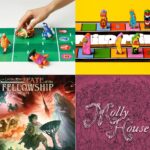
This year’s Strategy Games prize went to Matt Leacock’s pandemic spinoff The Lord of the Rings: Fate of the Fellowship, while the Complex Games title went to Jo Kelly’s and Cole Wehrle’s design Molly House, which explores the joy and fear experienced by gender-defying Londoners in 18th century society.
CMYK was the standout publisher with two wins out of the four categories. Asmodee studios won one award and picked up three other nominations, while Flatout Games picked up recommendations for both Cascadia Junior and Knitting Circle.
Alex Cutler was the only designer to appear twice among the finalists, scoring a nomination for his co-design Critter Kitchen and a recommendation for co-design A Place For All My Books.
The ATTAs are voted on by members of the US board game media, who each submit up to five games from the previous calendar year, which are then ordered according to ranked-choice vote.
Awards co-founder Eric Yurko, who runs board game review site What’s Eric Playing?, said, “The past few years have been great for games, and 2025 was no exception.
“There were great moments and releases throughout, so we’re very excited to present these awards to the best games we played in 2025.”
Early Gamers Winner: Magical Athlete – designed by Richard Garfield and Takashi Ishida (published by CMYK Games) Nominated: The Sandcastles of Burgundy – Stefan Feld and Susanne Feld (Ravensburger) Nominated: Splendor Kids – Marc André and Catherine André (Space Cowboys / Asmodee) Recommended: Cascadia Junior – Fertessa Allyse and Randy Flynn (Flatout Games) Recommended: Duck and Cover – Oussama Khelifati (Captain Games)
Complex Games Winner: Molly House – Jo Kelly and Cole Wehrle (Wehrlegig Games) Nominated: Tidal Blades 2: Rise of the Unfolders – Tim Eisner and Ben Eisner (Druid City Games) Nominated: Covenant – Germán P Millán (Devir) Recommended: Above and Below: Haunted – Ryan Laukat (Red Raven Games) Recommended: Galactic Cruise – TK King, Dennis Northcott and Koltin Thompson (Kinson Key Games)
Asmodee arm Fantasy Flight Games is discontinuing the latest iteration of its veteran dungeon crawler Descent, citing rising manufacturing costs, “global economic shifts” and the expense of developing the game’s companion app.
All three games featured large amounts of plastic miniatures, cardboard terrain pieces and map tiles, while Legends of the Dark also leaned into an integrated companion app to help manage campaigns and individual scenarios.
A statement from FFG announcing the end of the game said, “Simply put, the game is too expensive to make. Between ever-increasing manufacturing costs, lengthy and pricey app development timelines, and global economic shifts making everything more expensive to produce, it became abundantly clear that continuing to make this game is just not feasible.
“This is far from the outcome we wanted – again, we all love this game and hoped to see it grow for years to come – but even if we were to sell every last copy, we would still ultimately be doing so at a loss.
“In a fiercely-competitive board game industry, that simply isn’t sustainable, and because of circumstances outside of FFG’s control, there are no adjustments we could make that could lower costs enough to continue printing the game.”
Standees from Frosthaven || Photo credit: Cephalofair Games
Other competitors in the space have included CMON’s Massive Darkness series – based on its huge-selling Zombicide system – which has raised more than $10m acrossa trio ofcrowdfunds since 2017.
Using crowdfunding for those large-scale, component-heavy games has helped publishers Cephalofair and CMON reduce the risk of developing expensive titles by being able to accurately gauge demand, as well as receiving financial backing for the projects up front.
Even with that data, however, both publishers have run into problems amid the heavy global economic uncertainty over the last couple of years – especially around volatile US tariff policy aimed at countries such as China, where the vast majority of board games are manufactured.
Asmodee has almost entirely avoided crowdfunding for its own games to date, with its only launched campaign believed to be Lookout Games’ Kickstarter for the Grand Austria Hotel: Let’s Waltz! Expansion & Deluxe Upgrade, which raised about €383,000 during the coronavirus pandemic in 2020.
Its only other prior exposure to crowdfunding is thought to be via the company Exploding Kittens, in which it made a strategic investment short of a buyout in 2021. That business has since raised more than $977,000 in a Kickstarter campaign for Hand to Hand Wombat the following year.
Its statement about the end of Descent: Legends of the Dark said, “While we don’t have anything to share at this time, there is always a possibility that we will revisit Descent in the future.
“It would take a different form and would not be Legends of the Dark, but this game universe is near and dear to FFG’s heart.
“The future is always uncertain, and even though we have to close the book on Descent today, we hope that, someday, we’ll be able to dream big with it again.”
FFG’s other major titles currently include collectible card game Star Wars Unlimited, ‘living card games’ Marvel Champions and Arkham Horror: The Card Game, heavyweight space opera board game Twilight Imperium and veteran bluffing and negotiation game Cosmic Encounter.
The company said that although Act III of Descent: Legends of the Dark is no longer in development, the company would continue to support the game’s companion app for the first two acts of the game, albeit without any new content being added.
In February Artefacts Studio unveiled Terrinoth: Heroes of Descent, a video game set in the Descent universe which FFG said “captures the classic dungeon-crawl feeling of the Descent board games in a whole new medium”.
Asmodee co-founder Philippe Mouret and Catan Studio head Pete Fenlon have both stepped back from their high-level roles at the board game giant, with Julia Marcelin and Mike Bisogno stepping up to oversee some of its biggest-selling titles as part of the leadership transition.
Mouret, who co-founded Asmodee more than 30 years ago, was also behind the creation of Splendor publisher Space Cowboys in 2014, and has overseen multiple publishing studios at the business over the years.
Julia Marcelin, who has been with Asmodee for almost seven years, becomes head of five studios as part of the shake-up, taking on responsibility for Days of Wonder, Space Cowboys, Repos Production, Libellud and Next Move.
Marcelin has spent the last year working with Mouret as deputy head of studio in preparation for the transition, Asmodee said, following previous responsibilities in operational strategy and international transformation at the business.
A statement from Asmodee said Mouret had “played a defining role in shaping the company’s creative direction”, as well as “contributed to the development and creation of some of the industry’s most celebrated titles”.
The company said Mouret would “remain closely involved” with its publishing team, working alongside chief product officer Jean-Sébastien De Barros and senior vice president for tabletop Benoit Clerc.
Asmodee also revealed that Pete Fenlon has stepped down as head of Catan Studio after ten years, with his LinkedIn page now updated to place him as “storyteller” and “mentor at large” at the company.
Former Catan Studio head Pete Fenlon
Mike Bisogno, who joined Asmodee three months ago after more than 17 years at Spin Master, takes on the role. He was most recently senior director of design and inventor relations at Spin Master, and also previously worked as a licensing lead at the company.
The game has sold more than 45 million copies and been translated into over 40 languages to date. Asmodee announced a 6th edition of the game last year to coincide with the title’s 30th anniversary.
A statement from Asmodee said, “Mike combines creative leadership with a strong track record of building successful partnerships. His arrival reflects Asmodee’s commitment to sustaining Catan’s legacy while exploring new opportunities for growth.”
It added, “Pete has left an enduring mark on the industry, with a career spanning several decades, including 20 years as CEO and chairman of Mayfair Games, and being a force behind the growth and global success of Catan.
New Catan Studio head Mike Bisognio
“Since joining Asmodee in 2016 to lead Catan Studio, he led the brand through significant expansion and innovation.”
Jean-Sébastien De Barros, chief product officer and executive vice president for publishing at Asmodee, said, “Asmodee has always been built on the strength of its people. I see both Philippe and Pete as mentors for our new generation of Asmodee publishing team members.
“They have each played a pivotal role in shaping not only our portfolio but also the culture of Asmodee, one which resonates with so many players today.
“I’m glad to have shared part of my journey with them and we are confident in the next generation of leaders we’re bringing to these positions as they bring the right energy to continue building on this legacy.”
The board game giant said buying ATM, the publisher of titles including Speed Bac/Quickstop, Mouton Mouton and Pili Pili, was predicated on social games being “the fastest growing category of the board games market”.
The ATM deal followed five other acquisitions from the past 12 months – including the buyout of Japon Brand from CMON, anchoring the board game giant’s push into a “currently untapped market” for the company.
French board game publisher Fentasy Games has launched a new platform aimed at providing publishers with a more affordable way to get their higher complexity titles into the hands of retailers and gamers.
Company founder and CEO Florian Gigot told BoardGameWire Fentasy had scored several successes since launching towards the end of 2024, including localisations of complex titles El Burro and Stephens – but said its major challenge in that time had been “the structural reality of the traditional distribution model”.
He said, “We realised that for a small publisher, a ‘critical success’ doesn’t always translate to a ‘financial success’ once the middlemen take their cut. The same applies to many of my partners around the world.
“…between squeezed margins, production costs, and trade discounts, even a popular game can become a financial failure. For an independent publisher, this means increasing difficulty in funding subsequent projects – and ultimately, a real risk of going out of business.
“In this context, profitability is no longer a secondary objective, but a condition for survival.”
Gigot hopes newly launched platform BoardGameCommerce will give publishers of higher complexity games with smaller print runs – of between 500 and 1,000 units – a more sustainable financial option than the traditional board game industry distribution model.
Gigot said BGC differs, however, in that Fentasy commits to producing the game the moment it goes onto the platform, saying, “We don’t ask the community to carry the industrial risk – we carry it ourselves because we believe in the project.”
He said that model helps Fentasy and other publishers measure real demand for their titles, as well as giving visibility to game makers that might not be possible amid the plethora of new games battling it out through traditional distribution.
Gigot added that BGC also offers retailers “a professional interface to secure limited stock with high margins of up to 55%”, with no payment required until the game is ready to ship.
He told BoardGameWire, “I absolutely see this growing. In fact, BGC is designed to be an agnostic platform. We are already in talks with other small publishers who face the same ‘strangulation’ within traditional distribution.
“We want to offer them the same resilience we built for ourselves – bringing everyone together on a single, global platform. It makes it much easier for gamers and retailers to find exactly what they are looking for in one place.
“The icing on the cake is that all publishers using the BGC platform have access to a shared licensing ecosystem. For example, if Publisher A adds a game to BGC and is looking for a partner to localise it, Publisher B can check the available licenses for their country and initiate a business discussion immediately.
“BGC takes 0% commission on these deals – the goal is simply to be stronger together.”
Gigot said Fentasy aims to release between three and five titles each year, with about half going through BGC and half, such as its localisation of Animal Rescue Team and upcoming strategy title Microlonies, through traditional distribution.
The BoardGameCommerce platform
The publisher’s first release through BGC is Iron Games’ Mesopotamia-themed territory builder Papyria, with future titles set to arrive on the platform before the end of next year including Martin Wallace space exploration design Casus Belli and Masaki Suga’s chocolate industry strategy title Bean to Bar.
Other Iron Games releases available through BGC include Discordia and its Magna expansion, Pandoria and Ploc, while Fentasy’s French localisation of Uwe Rosenberg design Kanal – previously Oranienburger Kanal – is also present on the platform.
But Gigot added, “Titles like Animal Rescue Team and Microlonies will still follow the traditional distribution model. We aren’t abandoning big distribution – we are simply choosing the right tool for the right game.
“There is no ‘hostility’ toward the traditional model – it just isn’t built to sustain niche titles effectively.”
Gigot said Fentasy’s biggest successes since its late 2024 launch have included Kikai – Bricolage Heads, which he said moved more than 4,000 copies “in a short window for a game of its complexity”.
He added that 2026 release Microlonies “is following the same successful path. It proved that a hungry audience exists for deep, high-production-value games”.
Fentasy’s success to date has persuaded Gigot – who runs the company as “a small, agile core team of one person” – to expand its scope internationally, with him telling BoardGameWire the business is moving towards a 60% international / 40% France split.
He said, “We are always looking for new partners to localize our games in their countries and to localise their games into French.
“Our goal for 2027 is to achieve a synchronized BGC launch for our expert line across Europe (Germany, Poland, Italy, Spain) and Canada, China, allowing local publishers / retailers to bypass the heavy costs of international imports.”
The German branch of high IQ society Mensa has unveiled its full slate of nominees for this year’s MinD Spielepreis.
Mensa in Deutschland has run the awards contest since 2009, and has operated a ‘shorter games’ category for more than a decade and lighter two-player games prize since 2019.
This year’s ‘shorter games’ category will be fought over by titles including 2025 Spiel des Jahres nominee Krakel Orakel, as well as Grégory Grard and Mathieu Roussel’s design Zenith and Take Time from Alexi Piovesan and Julien Prothière.
Word chaining game Next by Verena Wiechens and Lukas Setzke is also up for the shorter game prize – which focuses on titles that play in well under an hour – as is Maldón’s design El Camarero (published in Germany as Chaosteria), and Wilmot’s Warehouse from David King, Ricky Haggett and Richard Hogg.
In the two-player games category, Bruno Cathala’s design Kamon is up against Niwashi, from Gautier de Cottreau and Baptiste Laurent, Junghee Choi’s Orapa and Tobias Tesar’s Perfect Murder.
Playball, designed by David Florsch, will also compete in that category, as will Strategeti by Ignasi Ferré and Suna Valo, designed by Andreas Odendahl (who goes by ode.).
Jochen Tierbach, who has been organising the MinD Game Award for 16 years, said at the time, “There are already various awards and prizes for family and connoisseur games.
“But for expert games, the really tough ones, there is no such thing in Germany yet. And we feel that the industry wants it.”
The long list of more than 20 expert-level titles was whittled down to six challengers for the complex games award this year: Galactic Cruise, Luthier, Shackleton Base, Speakeasy, Thebai and Thesauros, all of which have been released in Germany since Spiel Essen last October.
Last year’s MinD award for complex games saw Tomáš Holek’s space exploration eurogame SETI add to its array of prizes, while Simone Luciani and Dávid Turczi’s Nucleum triumphed in 2024.
Financially-troubled board game publisher CMON says it plans to relaunch its halted crowdfunding operations later this year, after seeing its annual losses soar to almost $20m in 2025.
But a month later it emerged that CMON’s financial problems had been growing long before the tariffs, with the company announcing it had slumped to a loss of more than $3m in 2024 due to falling sales for its crowdfunding campaigns.
CMON’s $23m losses across 2024 and 2025 are now almost 5.5-times larger than its profits from the preceding nine years combined – and have led an independent auditor hired by the company to question whether it has the resources to stay in business for the foreseeable future.
An extract of a report from auditor Zhonghui Anda shared by CMON, which is set to appear in the company’s 2025 annual report next month, considered the publisher’s $19.9m annual loss, its net liabilities of more than $3.5m and contract liabilities of over $7.5m, saying, “These conditions indicate a material uncertainty which may cast significant doubt about the Group’s ability to continue as a going concern.”
CMON’s directors have a different view, however, saying in the 2025 financial report that the company “should be able to continue as a going concern” thanks to a trio of factors.
They include financial support from some of the directors “sufficient to finance CMON’s working capital requirements”, the roughly $2.4m proceeds from selling its Singapore office that it received in January, and the roughly $1.25m gross proceeds from a successful share sale last month.
CMON’s hefty liabilities are largely due to its eight undelivered crowdfunding campaigns, which are not recognised as revenue on the company’s books until they are fulfilled to backers.
The company said that delivering crowdfunding projects in 2024 contributed about $20m in revenue – a figure which had sunk to just $200,000 last year according to its latest financial report.
CMON said the 2025 losses were driven by a “significant decline in revenue”, which fell more than 73% to $9.9m last year, compared to the $37.3m total from 2024.
DCeased from CMON || Kickstarter image
It also cited impairment losses on property, plant and equipment, right of-use assets and intangible assets, and a loss it made disposing intellectual properties and related assets as part of its “strategic portfolio restructuring”.
Those IP sales included parting with its most famous and profitable title Zombicide – which has raised more than $40m on Kickstarter since its 2012 launch – to Asmodee, as well as Blood Rage, Rising Sun and Ankh to Tycoon Games.
CMON said all those sales combined amounted to about $5.1m, but added that it actually made an overall $2.4m loss on disposal of intellectual properties and related assets across 2025.
It also made a $5.7m loss due to undertaking an impairment assessment on some of its property, plant and equipment, right-of-use assets and intangible assets “with finite useful lives”.
CMON said in the financial report, “These actions, while negatively impacting short-term results, were undertaken to strengthen the Group’s operational focus and reduce future cost burden.”
The company’s remaining significant IP includes the Massive Darkness series, with the most recent installment, Massive Darkness: Dungeons of Shadowreach, completing a $2.85m crowdfund on Gamefound early last year – a figure which rose to more than $3.7m including late pledges.
That campaign was CMON’s last before it scrapped its future crowdfunding plans two months later. The company has pivoted in the interim to releasing several small-box games direct to retail, including Collect!, Peanuts Talent Show, Fairy Perfume, Rocket Punch and Yokai Carnival.
Collect! from CMON, designed by Jérémy Ducret and Johannes Goupy
Discussing its current strategy in the report, the company said, “In light of the continued uncertainty in the global market, particularly the instability arising from US import tariffs on certain products since the first half of 2025, the Group has taken decisive steps to restructure its operations and strengthen its financial position.
“Our current strategy is to:
1) reduce exposure to large-scale crowd-funding launches in the near term, focusing on fulfilment of games already committed to backers, with plans to resume crowdfunding activities in the second half of 2026 with new titles from current game lines;
2) grow distribution in Asia as a primary strategic market;
3) maintain a streamlined operational structure with reduced headcount and a smaller office footprint in line with the Group’s current scale of operations; and
4) maintain a debt-free position following the full repayment of bank borrowings, significantly reducing the Group’s financial liabilities and improving its financial resilience.
“We remain committed to becoming a quality developer and publisher of tabletop games and believe the strategic refocus toward Asia and selective game development will position the Group more sustainably for the future.”
CMON said it had reduced its revenue exposure to the US to about 21.4% of its total across 2025, compared to around 42% for the previous year, through what it described as a “deliberate strategic pivot toward Asia”.
The report showed CMON’s combined North and South America revenue fell more than 86% last year to about $2.1m, from around $15.7m in 2024.
European revenue also fell more than 81% year-on-year, from about $12.7m to around $2.4m. Asia revenue fell too, but much less sharply, down about 33% in 2025 from $8m to around $5.3m.
CMON said in the report, “Notwithstanding this reduced exposure, tariff-related uncertainties may continue to affect future export sales, revenue and gross margin performance in the US market.
“The Group intends to maintain its current reduced focus on the US market until the trade environment stabilises and market conditions improve.”
CMON also revealed the scale of its staffing cuts in the latest report, with headcount falling from 81 at the start of 2025 to just 41 at the beginning of this year.
The report said total staff costs had fallen in that time from about $4m to around $2.8m, including pay for its directors and their pension fund contributions, but it did not provide a breakdown of those numbers.
Petiquette, Thomas Sellner’s card game of picking out patterns among hat-wearing animals, has been named game of the year at this year’s Golden Box Awards.
The Oink Games-published design fought off competition from 2025 winner Isao Mukai, who was nominated for Banana Governance – a card-based drafting and bidding game which sees players attempt to satisfy the needs of hungry monkeys better than their opponents.
A comment from the selection committee about Petiquette called the title “a brilliant and sharp work typical of Oink”.
Cards from Banana Governance, designed and published by Isao Mukai
It said, “I’ll never forget the shock I felt the first time I played it. The rules are simple: just give the answer that fits in the single ‘?’ on the cards laid out.
“But… the eyes of those who give the same answer feel friendly. The mouths of those who give a different answer seem to twist. The loneliness of desperately trying to explain when you’re the only one who gives a different answer.
“A mix of various emotions. The unique experience of this game really stands out.”
The annual Golden Box contest was launched four years ago, modelled on the American film industry’s Academy Awards. More than 40 industry professionals from within the Japanese board game sphere voted on this year’s award.
In addition to ‘Best Picture’ for the overall game of the year, the awards also celebrate the best in game design, art, graphic design, production and rulebook work through individual awards.
Cover art for Sweet Lands
Eve Inc-designed Nusutto Cat – also known as Meow Heist – triumphed in this year’s Game Design Award, while best art went to Totsuca Chuo’s Sweet Lands, which was illustrated by Tatsuki Asano and Broni120.
Moyuki Adisawa’s animal jet ski racing game Tornado Splash picked up the Graphic Design Award thanks to the work of iD Creative Co, while the Production Award went to National Economy and Toshinori Iwai.
The selection committee said of the Production Award win: “It’s great when a great game is revived. It’s even better when a great game is revived in the best possible form.
“This new edition not only makes the seemingly impossible revival of this masterpiece a reality, but also reinterprets it in a more refined way.
“The ‘box within a box’ structure, combining the three parts, is exciting even before you start playing, and the ‘household budget’ mechanism that characterizes this game is implemented clearly and beautifully as a ‘safe’.
“This masterpiece hasn’t lost its appeal even after ten years, and this new edition will be loved for even longer.”
Yoshihiko Koriyama worked on the rulebook for that title, with proofreading from Shota Okano and DTP work from Makoto Takami. The selection committee said, “The fact that you can essentially understand the game rules by reading just one page is excellent.”
Bomb Busters designer Hishashi Hayashi collecting his Spiel des Jahres award
The win marked the first Spiel des Jahres triumph for an Asian designer in the prize’s 46-year history, and underscored the huge rise in tabletop designs making their way across from Asia to Europe and North America in the past decade.
Each winner will receive a golden board game box as a trophy.
Winner: Sweet Lands, Totsuca Chuo (Uchibacoya) – art by Tatsuki Asano and Broni120 A Boar, Crab, Dung Beatle, Takuya Iwamura (Kyuhachi Dog) – art by Takuya Iwamura Ghost Lift, Onegear (Engames) – art by Sai Beppu
Graphic Design Award
Winner: Tornado Splash, Moyuki Adisawa (ArcLight Games) – graphic design by iD Creative Vidro, Keita Kasagi (Bamboo Games) – graphic design by Kakuzato Shady Lady, Kaya Miyano (Mob+) – graphic design by Sai Beppu
Winner: Down Down Dungeon, Reiner Knizia (ForGames) Electra Select (The Society for Appreciating Swaying Buds) Snowp, Eisuke Fujinawa, Kazunori Hori (SzpiLAB)
French board game publisher Don’t Panic Games has continued its expansion into the North American market, telling BoardGameWire the success of several recent titles had reinforced its confidence in the strategy.
The company has made a name for itself providing French localisations of games including Final Girl, Champions of Midgard and Fantasy Realms since it was co-founded by current director Cédric Littardi in 2013.
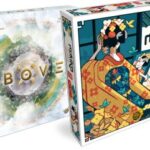
But Don’t Panic has also found success publishing its own titles such as Chess-like abstract game Above – and said the performance of that, and several other recent games, had persuaded it to bring more of its titles to North America.
Emma Recher, who will head up a three-person team at Don’t Panic’s new US office in California, told BoardGameWire, “Several recent titles have reinforced our confidence in expanding more directly into the US market.
“That is one of the reasons we are beginning this US expansion with titles such as Spyworld, Luminis, Above, and Maiko, which are also the titles highlighted in our North American launch announcement.
“We also have additional releases planned each quarter this year, including Don’t Drop the Soap! toward the end of the year.”
Above, designed by Yves Charamel-Lenain, from Don’t Panic Games
Don’t Panic said those licensed titles would continue to be distributed by Japanime, while the French company’s historical and war line, including Fighters of the Pacific and Fighters of Europe, will continue to be distributed by Ares Games in the US.
Recher said, “What the new US office changes is that Don’t Panic can now directly support additional English-language titles that were not previously represented in the market in the same way.
“For retailers, that means broader access to the catalog, closer communication, more direct follow-up, and stronger on-the-ground marketing support.”
Don’t Panic added that it would be supported in the US by Double Exposure, which will represent the company at both major and smaller conventions – adding that it had a “robust demo schedule” planned over the next few months.
When asked about Don’t Panic’s decision to expand further in the US despite ongoing uncertainty over the country’s tariffs policy – and its effect on board game publishers working in the country – Recher said, “Like many publishers in tabletop gaming, we are watching the tariff situation very carefully. It creates uncertainty across the supply chain, from manufacturing and freight planning to wholesale pricing and retailer margins.
“Our approach is to stay flexible: planning conservatively, reviewing sourcing and logistics options on an ongoing basis, and working closely with our partners to protect continuity of supply as much as possible.
“The current environment is challenging for everyone in the industry, but we believe the best response is to remain pragmatic, adaptable, and transparent with our partners.”
More than half of board game designers responding to a Tabletop Game Designers Association member survey say they have used generative AI for some elements of their work.
About a quarter of the 171 designers who answered the TTGDA survey said they had used a genAI platform to come up with game ideas or mechanisms – while more than half indicated they were ‘strongly opposed’ to using AI in that way.
TTGDA – a professional organisation launched in 2024 to advocate for tabletop game creators in North America – asked designers about seven use cases, comprising:
● Coming up with ideas for games or mechanisms ● Writing placeholder text ● Writing text for the final version of a published game ● Editing or proofreading text ● Making placeholder art ● Making art for the final version of a published game ● Creating marketing materials for a game
The organisation said that while 28% of respondents were ‘strongly opposed’ to all seven use cases, almost a fifth were not strongly opposed to any of them, with the remaining respondents offering a mix of use cases they consider either acceptable or not.
Image credit: The Tabletop Game Designers Association
TTGDA’s report of its findings stated, “In the free-response section of the survey, multiple designers said that the process of chatting with the AI particularly helped them better articulate their own goals or ideas for a game.
“One said, ‘It’s like asking another human who may not know much about games. They know enough to at least bounce a couple ideas, which ends up with me getting to where I want to go’.
“Several designers who had tried asking generative AI platforms to come up with its own ideas described the material they got from the AI with terms such as ‘derivative’ or ‘slop’.
“One designer said that when they tried to prompt an AI for ideas, the AI recommended inappropriate mechanisms from mass market games, like ‘lose a turn’.
“Some said that a fraction of the output from their prompts would contain nuggets of useful ideas or angles that were worth considering.”
The results for use of AI art in final products were much more clear cut, with roughly four out of five respondents ‘strongly opposed’, and only two respondents out of the 171 saying they either regularly or occasionally generate art with AI that they plan to keep in a final game.
Many more designers (30%) were accepting of using AI to generate placeholder art for their designs – but 39% of respondents were ‘strongly opposed’ to that use.
TTGDA’s report cited one respondent as saying, “Publishers want pretty prototypes and the AI art makes me better able to illustrate the narrative direction and make play less boring than it would be with black and white words or “close enough” illustrations. Some of the games I am working on have no illustrations in the real world that anyone has done and if I wanted those I would have to pay artists which I cannot afford to do.”
Image credit: The Tabletop Game Designers Association
But it added that other designers said AI assistants had failed to create usable placeholder art in response to their prompts, with several saying that after trying AI-generated placeholder art they had returned to clipart and other online searches.
TTGDA said that when asked how they feel about publishers using AI for placeholder art, 40% of respondents said they would be ok with it, but 29% would like to contractually prohibit it and another 31% said they ‘don’t like it, but wouldn’t really fight it’.
The report added, “Of all the AI uses that the survey asked about, editing and proofreading had the lowest number of ‘strongly opposed’ responses, at 35% for personal use and 30% for publisher use.
“About a quarter of designers (28%) are using AI to edit things they’ve written at least occasionally.
“Some designers gave examples of AI not working well as an editor for their games, saying it ‘made the rulebook worse’, or ‘creates more problems than it solves’.
“The problems they described included hallucinations and inappropriate tone. Designers also raised concerns that publishers might use AI for proofreading without a final human check, leaving the game vulnerable to errors.”
TTGDA also noted that more than 80% of respondents did not want publishers to use AI to generate marketing materials for their games, with multiple designers commenting that they were turned off by the use of AI in content creation around games, and will not work with influencers who use genAI in their workflow.
The report noted that of issues raised by designers when asked about their concerns around AI, “the most commonly voiced concern was that current generative AI tools are based on plagiarism, because they were trained on art and written materials without the creators’ consent.”
It noted, “Many said things like, ‘All uses of stolen material are problematic’. Multiple designers also mentioned that they want contract language that will prohibit a publisher from allowing AIs to be further trained on their game materials.
“The next most common concern was AI’s high environmental cost. A ChatGPT request uses ten times more electricity than a typical Google search (2.0Wh vs 0.3Wh). Other impacts include the use of rare earth elements, mercury, and lead in data center equipment; and the use of large amounts of water for cooling.
“Some designers worry that AI could flood the market with bad games. One designer thought it would be easy for unethical publishers to quickly create ‘clones that are slightly different’ and crowd the games they are copying out of the market.
“Another designer worried that ‘AI is great at making things that look like games for crowd funding campaigns, but without actual rules that make sense’.
“The general sentiment from these and other designers was the worry that in a market where it is already difficult for a game to stand out, these practices will only make it harder.”
Recent Repercussions
TTGDA’s report comes just over a month after Ryan Dancey, a more than 30-year veteran of the tabletop gaming industry, lost his COO job at publisher Alderac Entertainment Group after saying AI could generate game ideas as good as his company’s titles Tiny Towns and Cubitos.
Wingspan designer Elizabeth Hargrave, the co-founder of TTGDA, dismissed Dancey’s suggestion when speaking to BoardGameWire the day after his departure from AEG.
She said at the time, “I absolutely do not think AI could be prompted to come up with even the basic idea for those games, let alone a fully fleshed out ruleset for them. For fun, I’ve prompted several different options for ideas for Wingspan cards and not one of them has given me an actionable idea.
“I had a friend who ran a rulebook through AI for proofreading and it hallucinated that people needed to shout ‘bingo’. Apparently that’s AI’s conception of board games right now.”
She told BoardGameWire at the time that the TTGDA board had been discussing the use of AI in board game design, adding that it was “a conversation we need to have with our membership”.
Wingspan designer and TTGDA co-founder Elizabeth Hargrave
She said, “We’re working on a model contract to offer to our members right now, and that will offer a clause that designers can request that will require publishers not to use AI in their final product. A lot of contracts ask us to certify that a board game design is our own, and not plagiarized.
“It’s my opinion that using AI in a final product goes against that, because it’s using a machine that’s built entirely on plagiarism.”
Hargrave added last month, “I do see people using AI for things like generating a bunch of placeholder names in a prototype. They’re often clunky options but they do the job when you know everything will change 50 times before you’re done anyway. I’m not aware of anyone who has successfully actually gotten good, original ideas for mechanisms from AI.
“What I wish we were talking about is how AI could be built to help designers run models of their games repeatedly to catch weird edge cases or broken strategies. I wish someone would build that tool instead of the language models that just focus on advanced auto-complete.
“This would never replace actual playtesting with humans for psychology and actual fun, but it might save me some repetitions.”
The TTGDA survey noted that one of the most common additional uses mentioned was as a source for help with probability, mathematics, and thinking about balance.
It said, “In some cases, designers are having the AI write spreadsheet formulas that they then use to do calculations in the spreadsheet. In others, they are simply asking the AI to do calculations.
“However, nearly as many designers said they had quite poor results with asking LLMs to do math, reporting errors and hallucinations. For example, one designer who used ChatGPT to calculate detailed probabilities (e.g. how often a certain set of cards might appear in a starting hand) said when they checked the results, they were wrong ‘roughly 1/4th of the time’. Another called ChatGPT ‘surprisingly bad at maths’.”
Editor’s note: GAMA is one of the sponsors of the BoardGameWire newsletter
Hobby games trade organisation GAMA has revealed the winning candidates in its latest board of directors election, with the organisation’s current president and secretary both retaining their board seats.
President Nicole Brady, who runs review site SAHM Reviews, was re-elected to the board by GAMA’s media and events member group, while treasurer Tiffany Reid from Southern Hobby Distribution won re-election from the wholesale group.
Current GAMA secretary Jamie Mathy – who runs game store Red Racoon Games – was re-elected by the organisation’s ‘Team Retail’ group alongside Red Claw Gaming’s Lea-Anne Welter, while David Wheeler from Dragon’s Lair and Boyd Stephenson from Game Kastle were also voted in as retailer representatives.
One of those four will be selected by Team Retail to fill a retailer seat on the GAMA board of directors, with all successful board candidates working for a two-year term.
The other newly elected members of the GAMA board are Michael Maggiotto Jr, who was selected by GAMA’s production members, Heather O’Neill from 9th Level Games representing publishers, and LegalWATCH’s Eartha Johnson from the creator membership group.
The GAMA Board of Directors is comprised of twelve individuals elected to represent the six voting membership groups, with half of the cohort up for election each year.
That board in turn elects GAMA’s four officers – president, vice-president, treasurer and secretary – each year.
Current GAMA president Brady has been in her current officer role since May 2024, having previously been treasurer of the organisation from the end of 2022.
The array of plans spread across the next decade include boosting its membership within both hobby games and the mass market, expanding itself into a global organisation, shifting its finances away from the current heavy reliance on the annual GAMA Expo and Origins shows, and leading the conversation on sustainability within the industry.
Advocacy and brand protection is also one of its near-term priorities – underscored by the organisation’s recent intensive lobbying and awareness efforts around the impact on the industry of US tariffs.
Those efforts included multiple trips to Washington DC to lobby politicians, conducting dozens of media interviews to highlight the devastating impact of tariffs on the hobby, and supporting two lawsuits disputing Trump’s power to set the tariffs without agreement from the US Congress.
Brady told BoardGameWire earlier last year that the move was an attempt to get the organisation away from “playing whack-a-mole” on important issues rather than managing them in a long-term strategy.
GAMA is currently working to secure a permanent replacement for its previous executive director John Stacy, who left the association last October just after the 10-year plan had been revealed.
More than 3,820 attendees showed up to this year’s event in Louisville, Kentucky, up almost 12% on last year’s previous record of 3,425 – which had already left the show pressed for space across the exhibition hall and its extensive programme of seminars.
Asmodee has sealed its second major acquisition in a week by agreeing to pay up to €250m for French social and party game publisher ATM Gaming.
The board game giant said buying ATM, the publisher of titles including Speed Bac/Quickstop, Mouton Mouton and Pili Pili, was predicated on social games being “the fastest growing category of the board games market”.
Asmodee expects a compound annual growth rate (CAGR) for social games of between 4% and 8% between 2025 and 2030, compared to about 4% for the wider board games market, citing mass market sales research for the US and ‘main European countries’ conducted by Arthur D Little.
ATM has scored rapid success since it was launched in 2018, with Asmodee saying the company has shown particular strength in building an “e-retailer distribution engine”, using advertising, advanced SEO and real-time analytics to help its titles rank highly in online stores such as Amazon.
The company’s standout title, Speed Bac from designer Rémy Wannerbroucq, has sold more than 3 million copies since it was launched in 2024, with about 2 million of those sales coming in 2025 alone.
ATM Gaming’s standout release Speed Bac, which has sold about three million copies since its 2024 debut
Speaking in a press conference about the acquisition, Asmodee CEO Thomas Koegler said the fast-paced word game, which has also been published as Slingz, “shows clear potential to become an evergreen”.
Asmodee said the game managed to hold the number one spot in Amazon’s Toys & Games category across four different European countries during both Christmas 2024 and 2025, while other ATM games have also managed to seal high rankings.
Pili Pili, which has sold more than 300,000 copies since its July 2025 launch, was ranked second behind Speed Bac in Amazon’s Toys & Games category in France last Christmas, while Mouton Mouton, which has sold 200,000 copies since being launched last September, was ranked third.
That success has seen ATM grow from four co-founders with backgrounds across companies such as Meta, Deloitte and Johnson & Johnson to a team of more than 40 people, with its net sales CAGR more than doubling between 2023 and 2025 to reach about €34m last year.
Asmodee said it expects ATM to contribute at least €50m in net sales over the 2026/27 financial year, boosted by its new owner’s geographic reach and “know-how in operational efficiency”.
The company has agreed to pay €180m for ATM Gaming on a cash-free and debt-free basis, with another €70m paid in newly-issued Asmodee shares contingent on ATM’s future performance.
ATM is already established across France, Germany, Italy and Spain, Asmodee said, with “emerging” sales in countries including the US and UK, as well as in wider Europe and Latin America.
Koegler said a “key differentiator” for ATM was the company’s strength in e-retail, which has been their primary sales channel over the last three years. He added, “Their expertise in digital marketing and social media will also strengthen our go-to-market capabilities.”
Asmodee CEO Thomas Koegler
Asmodee has distributed ATM titles since 2019, with about 10% of the company’s current sales made through the Asmodee network – mainly in Italy and Spain.
Koegler said, “Over time we expect to further integrate distribution within Asmodee. Geographically the combination is highly complementary.
“ATM Gaming is strong in Europe, while Exploding Kittens provides a strong foothold in the US. Together this creates a balanced platform with significant expansion potential across both regions, but also beyond.”
Exploding Kittens is among Asmodee’s current heavyweight hits in its party and social games portfolio, alongside other high-selling titles such as Dobble.
Koegler said in the company’s Q2 report last November that Asmodee had seen “good momentum” in its lower price-point products in the US mass market, singling out Exploding Kittens as a particularly strong performer in what he called a “challenging market”.
That strategy has seen Asmodee make five acquisitions in the past 12 months – including last week’s buyout of Japon Brand from CMON, anchoring the board game giant’s push into a “currently untapped market” for the company.
The revived M&A process is yet to fully mirror Asmodee’s private equity-fuelled buying spree from the latter half of the 2010s, however, during which it acquired more than 40 companies and IPs.
That heavy expansion included the company adding more than 20 game studios, including Days of Wonder, Fantasy Flight Games, Lookout Games, Catan Studio and Z-Man Games.
He said in response, “Without being specific, the activity in the pipeline is in accordance with our plan. The smaller acquisitions are faster. IP acquisitions and asset deals are faster to execute. I’m satisfied.”
Speaking during the ATM acquisition press conference, he said, “Our M&A pipeline remains quite active. We are well positioned to continue executing on our strategy.”
The board game giant’s overall net sales jumped 22.2% across October to December 2025 compared to the same period a year earlier, with the performance of products it distributes for other companies surging more than 50%.
Net sales for games published by Asmodee itself fell almost 13% year-on-year in the quarter, however, weighed down by US net sales slumping 23% to €70.4m.
That drop saw the US fall behind both France and the UK in Q3 in terms of the company’s highest-performing countries for net sales, with France surging 47% year-on-year to over €111m, and the UK growing 41% to €82.7m.
Board game publisher Awaken Realms has responded to a wave of anti-AI art review bombing for its upcoming crowdfund, Concordia: Special Edition, by saying no AI-generated imagery will be used in the finished game.
BoardGameGeek’s suggested ratings guidelines say a ‘1’ review “Defies description of a game. You won’t catch me dead playing this. Clearly broken.”, while a ’10’ is suggested as “Outstanding. Always want to play and expect this will never change”.
BGG’s current policy is that “users are allowed to rate games however they wish, as long as each person only rates a given game once.”
The original edition of Concordia, released by German publisher PD-Verlag in 2013, has a BGG rating of 8.1 from more than 45,000 users, and is ranked 29th out of the tens of thousands of titles listed on the site’s database.
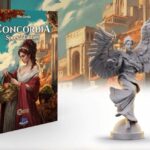
Awaken Realms is yet to unveil many details about the upcoming special edition, with the Gamefound preview page currently only showing a box cover – which it has since described as a work in progress – and examples of two plastic miniatures set to be included in the game.
The company dedicated most of its first update on the Gamefound page to discussing its use of AI generated imagery, saying that it did not address the situation sooner because “we find this whole conversation extremely draining”.
Box cover design for Concordia: Special Edition, which Awaken Realms says is a “work in progress”
It said, “We feel that the current situation is really not respectful toward our artists, who are really working hard on each project, and Concordia will be no different. They will be doing their best to pay tribute to this classic and elevate it to new heights.
“So, first things first – in this project, in the final game, there will be no AI art. Human artists will be involved in everything. This has also been clearly stated from the beginning in our contract with PD-Verlag.
“However, we do use some AI tools during prototyping, mock-ups, and various initial phases of concept work (and honestly, it is really hard not to, as eg, Photoshop alone, which is our artists’ main tool, has already tons of built-in AI features).
“This makes it easier to test the game visually, iterate, find the best solutions and compositions, and, from there, start working on the final assets.
“In different projects, we might have different rules and approaches. For example, you can see our other project – Grimcoven. There, we also had an update on the topic, as well as a chance to see the final result of how the game looks as it is produced and delivered to backers ;).”
Update March 27, 2026: Jan Philip Sommerlade, an editor at Concordia publisher and licensor PD-Verlag, wrote on BoardGameGeek: “In the games published by PD-Verlag, neither the graphics nor the text were created using artificial intelligence. We consider this to be problematic from a copyright perspective, at least when the AI models are based on artwork created by artists.
“It was therefore very important to us that artificial intelligence will not be used in the Concordia Special Edition either. In December, we paid Awaken Realms an extensive visit and discussed the details of the Special Edition at length. Awaken Realms has a large team dedicated to developing content, graphics, and illustrations, and we are confident that this collaboration will result in a very high-quality product. We have stipulated in our contract that the final product will not be created using artificial intelligence in any form.
“However, this does not apply to the use of AI for brainstorming and concept development, nor to the internal use of AI for creating prototypes. In the course of ongoing discussions, we have realized that this distinction may not be as clear-cut as we initially thought. Nevertheless, the fact remains: All graphics and text in the final product are created by real people.”
Despite online pushback against Awaken Realms for its decision to embrace AI generated imagery, its use of the technology has had little apparent negative impact on the success of its crowdfunding campaigns to date.
The publisher’s six most recent campaigns which it says made use of AI image making tools have raised almost €39m between them across their crowdfunds and late pledges, with Lands of Evershade the standout at more than $12.5m.
The six most recent campaigns using AI imagery – which also include BELOW: The Asylum, This War of Mine: Second Edition and Grimcoven – all included a statement acknowledging that usage in the FAQ section of their respective Gamefound campaigns.
Awaken Realms’ AI art statement in its Agricola: Special Edition campaign FAQ states, “We are using different technologies, including AI tools, to various degrees – from built-in Photoshop capabilities (intelligent brushes, advanced texturing, and some AI tools), Internal Stable Diffusion models, MJ[Midjourney] models, pixel correction, scaling solutions and so on. Everything we use is screened and accepted by our legal team as fully legal to use.
“Those are different tools that we use NOT to decrease cost and DEFINITELY NOT to replace artists but to bring better quality to our customers and enhance creativity by allowing faster prototyping and iteration.
Pre-campaign card art for Agricola: Special Edition, which Awaken Realms described as “Work in Progress”
“We are constantly growing our art team (in the last 12 months, we have hired six new artists), as well as yearly increasing wages and sharing profits by yearly bonuses. We really care about our team and are extremely proud of their work.
“We deeply believe that in any creative endeavor, human involvement is absolutely essential, and instead of just ‘talking the talk’, we have actually walked the walk and increased our artist count and wages every year.
“This is our statement on the topic and we are fully dedicated to supporting and growing our art team, as well as bringing the best quality to our backers. We believe that this approach is better than making big PR statements and then firing people with a week’s notice, as, unfortunately, can be observed all around the industry.”
It is not immediately clear which board game publishers Awaken Realms is referring to with the final part of that statement.
That statement said, “We also noticed a few questions regarding the creative process behind Labyrinth Chronicles and whether any AI-generated artwork was used in the game.
“We would like to clearly state that no AI-generated art was used in the final product. Every illustration, graphic element, and 3D model was created by our talented team of artists who worked on this project.”
That statement then goes on to list 24 artists, graphic designers, illustrators and 3d modellers who it said worked on the title.
Awaken Realms has taken great pains recently to highlight the extent of its art and design team – which it said in the Concordia: Special Edition Gamefound update now comprises 32 people across art, 2D layout, 3D sculpture and desktop publishing, out of a board games division of more than 100 people.
Awaken Realms, meanwhile, began life as a miniature painting studio in 2014, before expanding into board game publishing a couple of years later.
The company garnered early success with a Kickstarter for This War of Mine: The Board Game in 2016, before the £3m Nemesis Kickstarter campaign in 2018 formed a springboard for the company to begin creating ever more intricate and expansive miniatures-focused tabletop projects.
Asmodee has ramped up its reignited acquisition strategy by buying Japon Brand from CMON, anchoring the board game giant’s push into a “currently untapped market” for the company.
Japon Brand was instrumental in bringing Japanese designs such as Love Letter and Machi Koro to international markets, after being inspired by the surge in novel games from home-grown designers in the early 2000s.
The company will form the cornerstone of Asmodee’s new Japanese design studio, Nekuma, which will look to find games from local designers that it can release globally, as well as helping Asmodee bring its existing titles to Japanese players.
Asmodee CEO Thomas Koegler said, “Japan is one of the most creative and culturally influential markets in the world. With Nekuma and the integration of Japon Brand, we are building a long-term platform that connects Japanese creators with players globally.
Asmodee CEO Thomas Koegler
“True to Asmodee’s entrepreneurial and bold DNA, this capital-light and agile initiative allows us to invest where creativity is thriving while positioning Asmodee for sustainable growth in Asia.”
Asmodee has grown into a board game publishing and distribution giant thanks to the heavy expansion the business undertook after being bought by private equity firm Eurazeo in 2014.
But the vast bulk of the company’s revenue comes from its operations in Europe, which accounted for more than 76% of its €1.6bn net sales in 2025.
The United States contributed about 13.1% of 2025 net sales, while the company’s entire ‘rest of the world’ net sales – covering every country outside of Europe or the Americas – made up less than 5%.
Asmodee currently has offices in South Korea, China and Taiwan following an expansion to the continent in 2021, with those teams having developed and published localised titles including Splendor Pokémon, Love Letter Cookie Run, Pokémon Chips, and Love Letter Fox Spirit, as well as making use of crowdfunding platforms across the region.
The company said Nekuma would “integrate and expand” that activity under interim head of studio Frederic Nugeron, Asmodee’s current global senior vice president – route to market for the Asia Pacific region.
It said Nekuma would lead game sourcing “to identify and support the most promising Japanese and Asian tabletop game designers”, while Asia-focused publishing will be managed by the company’s existing Korea team.
Nugeron said, “Our ambition with Nekuma is very concrete: be present on the ground, listen to designers, understand cultural nuances, and build trusted relationships within the Japanese ecosystem.
“By combining local expertise with Asmodee’s global reach, we can support creators more closely and bring distinctive Asian games to a worldwide audience.”
Asmodee said Japon Brand would continue to operate with its existing expertise and relationships, with “no impact” on current partnerships or contracts.
But the company has faced a punishing financial situation since, posting losses of $3m across 2024 and nearly $7m for the first half of 2025 – figures which dwarf the overall $4.2m profit it had managed to make over the previous nine years combined.
But the revived M&A process is yet to fully mirror Asmodee’s private equity-fuelled buying spree from the latter half of the 2010s, during which it acquired more than 40 companies and IPs.
That heavy expansion included the company adding more than 20 game studios, including Days of Wonder, Fantasy Flight Games, Lookout Games, Catan Studio and Z-Man Games.
Asmodee CEO Thomas Koegler was asked during the company’s quarterly results presentation last month whether the company was ready to make “more meaningful” acquisitions rather than small bolt-on deals.
He said in response, “Without being specific, the activity in the pipeline is in accordance with our plan. The smaller acquisitions are faster. IP acquisitions and asset deals are faster to execute. I’m satisfied.”
The board game giant’s overall net sales jumped 22.2% across October to December 2025 compared to the same period a year earlier, with the performance of products it distributes for other companies surging more than 50%.
Net sales for games published by Asmodee itself fell almost 13% year-on-year in the quarter, however, weighed down by US net sales slumping 23% to €70.4m.
That drop saw the US fall behind both France and the UK in Q3 in terms of the company’s highest-performing countries for net sales, with France surging 47% year-on-year to over €111m, and the UK growing 41% to €82.7m.
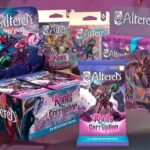
Publisher Equinox scrapped the crowdfund for Altered’s Roots of Corruption expansion yesterday after raising more than €420,000, having launched the campaign last week with a €50,000 target – a figure it described on the project page as a “technical necessity” in order to use Gamefound’s stretch goal system.
Equinox said in an update yesterday that it had also collected €680,000 through retailer pre-orders for the expansion – but added that the €1.1m total was “far too far” from the €2m the company required “to guarantee the future of the game”.
The statement said, “It would be dishonest to tell you that we can still turn the tide by Friday evening. We must face reality: the numbers simply aren’t there.
“It is with a heavy heart that we have decided to cancel the Roots of Corruption campaign. As we committed to doing, all backers – both players and retailers – will be reimbursed in full. This is the cornerstone of our responsibility toward you, and it is the most obvious decision to make.
“This campaign does not only mark the end of a crowdfunding project; unfortunately, it also marks the end of the Altered adventure.”
Altered shattered the crowdfunding record for a TCG on Kickstarter through its debut campaign in 2023, pulling in more than €6.2m (about $7.1m) from about 15,000 backers.
Altered aimed to stand out from high-profile competitors such as Magic: The Gathering through its focus on exploration and bringing heroes together, rather than battles between characters and monsters, as well as innovations such as a print-on-demand and a digital marketplace for cards.
That digital marketplace also made it difficult for retailers to offer the TCG staple of being able to buy, sell and trade single cards, and the game’s powerful early momentum waned as the title struggled to go toe-to-toe with offerings based on hugely popular IPs.
Equinox returned to crowdfunding for Altered’s fifth expansion, Seeds of Unity, in October last year – but faced similar problems to the most recent crowdfund in reaching its necessary totals.
That campaign hit the €50,000 goal set by Equinox in less than nine minutes, but an update from the publisher two weeks later revealed that the actual amount needed to create the game was €2.5m – a figure which if it did not reach, “the adventure will come to an end, and both backers and retailers will of course be refunded”.
Noting the €50,000 crowdfunding goal for that project, and the message on the Gamefound page describing it as more than 1,000% funded, Equinox made no mention of it being a technical necessity for the stretch goal system.
It said at the time, “The funding goal displayed on Gamefound is symbolic, as it usually is in crowdfunding campaigns.
“It’s chosen to help build early momentum but doesn’t reflect our actual needs. Setting the bar too high sometimes makes a project feel out of reach, while a more accessible goal helps get the collective energy moving right from the start.”
That campaign ultimately collected almost €900,000 after being extended for several days, with another €1.4m coming through retailer pre-orders.
Equinox said at the conclusion of that campaign, “While we haven’t reached the objective of €2.5m mentioned initially, we’re not that far off our goal, and with some adjustments on our part (which includes reviewing some budgets and determining new production processes) we believe we can cover that difference.”
Equinox had come under fire from some Altered players for launching its Roots of Corruption campaign before Seeds of Unity had been fully delivered to backers.
The company said in an update to Seeds of Unity backers that while it aimed for a four-month cycle per set, production delays meant that it “no longer [had] the flexibility to push dates back”.
Uncertain Future
Equinox founder Régis Bonnessée acknowledged in the latest update announcing the end of Altered that players would inevitably have questions about the future of their digital collections, the game’s availability on Board Game Arena and “the legacy of this universe”.
He said, “We are not going to leave you in a vacuum. We simply need some time to digest this moment, to properly close this chapter, and to provide you with clear and respectful answers. Thank you for every card played, for every smile exchanged, and for everything you put of yourselves into this adventure. It was an honor to imagine it with you.”
Bonnessée added, “I have experienced the end of projects before – cycles that come to a close. But today feels different. Tonight, we feel a profound sadness as we reflect on what Altered has become for all of us.
“Tonight, we are thinking of you – our players, our community, our ambassadors. To everyone who accompanied us, supported us, and sometimes challenged us. Altered managed to create something rare: a sincere, kind, and committed community.
“We say this because we met you time and again. You often surprised us. We are sad tonight because we realize what this game represented for many of you. And because we also realize all that we failed to achieve.
“We are thinking of the game stores. To those who believed in the game before it was a certainty, who championed it to their customers, and who ordered stock on a gamble. Running a game store is an act of faith in itself; betting on an independent French TCG with an original universe and no established license to lean on… that deserves to be acknowledged. Thank you to them.
“We are thinking of our artists. Altered is a universe, a visual identity—something recognizable at a single glance. This world did not exist until they drew it. Thank you to them for giving substance to all of this.
“We are thinking of our partners—those we call such for lack of a better word, because “partner” describes a contract but not the relationship. For their advice, for what they taught us by their side, for the moments they believed in the project even more than we perhaps deserved. We grew together, and that cannot be erased.
“And of course, on a personal level, my thoughts are with the team. To the women and men who continued to believe, even when the headwind became exhausting. To their resilience in the face of invisible obstacles, to their total dedication. They have been extraordinary. I know that word can feel worn out, but here, it takes on its full meaning. Thank you to them for allowing this universe to exist, if only for a time.”
US-based tabletop game and card manufacturer AdMagic is shuttering its popular Print and Play arm, with company founder and CEO Shari Spiro telling BoardGameWire the operation had been a “financial burden” to the rest of the business for several years.
Spiro told BoardGameWire it had been a “difficult and sad decision” to close the company, which had provided prototypes, promos and components for a string of big-selling titles, as well as fast turnaround print and play services for budding developers and designers.
Print and Play, which was bought by AdMagic in 2015, will close its doors on March 27, with any existing orders “received, printed and put into our standard turnaround production queue”, according to its website.
Spiro would not say whether any Print and Play employees would be kept on in other areas of the business after next week’s closure. The division had 12 employees on March 6, according to the team page on its website at the time.
Spiro told BoardGameWire, “My team invested a lot to keep Print and Play open as long as we could, but unfortunately, the amount of hand work and the time it takes to do the high quality of work done through a small company like Print and Play, costs more than we could actually sell the jobs for.
“In addition our endeavor to cover employees 100% with full health insurance, a 401(k), a robust paid personal time off program, a move to a state of the art brand new facility a few years ago to get the team out of an office building (which was inappropriate for that type of work), two new laser [printers] in the past two years and the associated lease payments for all of the above, in addition to the rising costs of materials all added up.
“Additionally we are not owned by private equity so we don’t have the kind of big money other companies have supporting us. Keeping Print and Play open was putting the rest of our team at risk.
“The financial strain to Ad Magic became overwhelming and so this is why we reached this difficult and sad decision. Moving forward this will help Ad Magic and Breaking Games as it will remove the financial burden which has been borne by the rest of the team for several years now.
“Although our model for prototype services will shift, we will still be able to accommodate our clients through our Ad Magic/Breaking Games divisions.”
Games in which Print and Play has had a hand in producing prototype materials for over the years || Photo Credit: Print & Play
The company’s services were also well used by designers looking to put together early versions of games to pitch to publishers, as well as for creating review and demo copies for companies to send out to content creators and other partners.
Gil Hova, the designer of games including Wordsy and The Networks: PrimeTime, posted to BlueSky yesterday, “Found out during Unpub that Print & Play, one of the best board game POD companies out there, is closing their doors in a couple of weeks.
“I used them extensively in my Formal Ferret days to make prototypes. Their turnaround time was unrivaled. Sad to see them go.”
AdMagic, which Spiro founded in 1998, has grown to become one of the largest independent tabletop printing companies in the US.
The company scored big successes in the early 2010s thanks to the rising wave of Kickstarter projects, working on huge-selling titles such as Cards Against Humanity and Exploding Kittens.
AdMagic launched its own board game publishing arm, Breaking Games, in 2015 on the back of that success, and has gone on to publish titles including Dwellings of Eldervale, Rise of Tribes and Letter Tycoon.
GameHead, which rebranded from GamerMats two years ago as part of a push into board game publishing, has expanded its team with a pair of senior hires.
Ryan Schoon, a veteran presenter at the Man vs Meeple YouTube channel, joins Gamehead as marketing manager, while former Ludo Fact USA account executive Mark Burke comes on board as operations manager.
GameHead said Schoon would help expand GameHead’s presence within the tabletop gaming community using his experience in communications, content creation, brand management, and community and sales growth.
Schoon has spent almost a decade producing reviews and previews as part of Man vs Meeple, which has about 77,000 subscribers. He was also formerly a key account manager at tabletop crowdfunding specialist Gamefound from 2020 to 2022, and later spent almost two years as marketing manager with Japanime Games.
Burke joins Gamehead from the US arm of European board game manufacturing major Ludo Fact, where he worked for two years as an account executive.
He previously spent two years as a wholesale account executive at Unstable Games/TeeTurtle, was store manager at Indiana-based retailer Moonshot Games, and also worked for almost a year managing social media for Western Legends publisher Kolossal Games.
GameHead said Burke will be responsible for the day-to-day operations of the company while directing the sales team.
The company expanded into board game publishing in 2024 after more than a decade specialising in tabletop game mats and accessories, and rebranded from GamerMats to GameHead as part of that process.
GameHead’s publishing arm is led by creative director Paul Salomon, the designer of Elf Creek Games-published Honey Buzz and Stonemaier Games title Stamp Swap.
The publishing arm was launched to focus on party games for six or more people, casual games suitable for players of all ages, and ‘thinky games’ with strategic elements and replayable decision making.
GameHead’s releases to date include Rocco Privetera’s animal-themed set collection title Trinket Trove and Taiki Shinzawa’s bank heist-themed trick taker No Loose Ends.
Editor’s note: GAMA is one of the sponsors of the BoardGameWire newsletter
Tabletop game industry trade organisation GAMA‘s board of directors have apologised for some of its elected leaders being “rude and disrespectful” during a “heated” annual general meeting at the recent GAMA Expo trade show.
Multiple members of the organisation expressed their disgust during the AGM that board members had suggested people only attended because free food was provided, while others were upset at the way they were shouted at and talked over during a fiery discussion on changes to the non-profit’s bylaws.
On one of the occasions the free food claim was mentioned by a member during the AGM, board member Matt Loter, also known as Matt Fantastic, said, “That was me, you can just blame me, that’s fine. No one else on this board.”
GAMA’s board had proposed lowering the quorum requirement for membership meetings from 25% to 10%, saying that the high thresholds coupled with the organisation’s heavy growth in recent years had made “adapting our organization to changing circumstances all but impossible”.
It also proposed allowing amendments to pass via a simple majority of voting members at a properly called membership meeting, calling the existing process “too rigid”. The board had said that “even small corrections require cumbersome organizational campaigns, which slow down the organization from becoming more efficient and providing more robust service to our members”.
Those changes had received pushback from some members prior to the AGM, with several raising concerns the move would make it too easy for the larger member groups, such as retailers, to push through changes to GAMA laws.
Other members both ahead of and during the AGM suggested that better communication was needed instead of lowering the quorum, with the onus on GAMA to encourage members to participate.
It also emerged during the meeting that not all of the board members were in favour of the amendments, or the extent of the shift to the new quorum percentage.
Both amendments were set to go to a vote following the March 2 meeting, but the board has since postponed the process, saying it would “re-evaluate, and be more mindful before making further proposals”.
The GAMA board also released a statement a week after the AGM which said, “During the meeting, discussion on changes to the bylaws became heated; and there were members of the board of directors who were rude and disrespectful to the membership who came to the event to voice their concerns.
“This was out of order, unacceptable, and should have been shut down immediately. We, the members of your board of directors, apologize to all our members. We pride ourselves in serving GAMA’s members and advocating for our industry. Unfortunately, on Monday [March 2] that passion manifested in a way that was unbecoming of a board.
“We also recognize this apology could have come sooner, but we wanted to discuss as a board what happened, and the best opportunity for that was during our spring planning session that convened on Friday, March 6, the day after GAMA Expo officially closed.”
The board added that it wanted any official meeting of GAMA members to be “a safe space for discourse”, especially when organisation-wide changes like bylaws amendments are being considered.
GAMA president Nicole Brady
It said, “We expect the person(s) leading such meetings to maintain order and insist upon decorum from anyone who is taking part, and that includes members of the board of directors.” The meeting was chaired by GAMA president Nicole Brady.
GAMA’s board also acknowledged that there had been confusion about the proposed bylaw amendments, saying “We met the letter of the bylaws in regard to publishing the amendments in a timely manner; however, we could have done much better in spirit. We acknowledge that the timetable for the vote on the amendments gave the impression of being rushed, despite it again heeding the letter of the bylaws. This impression, and the passionate feedback on those amendments, are what led us earlier to announce that we were postponing the vote.”
It added, “Finally, we owe an apology to GAMA staff for fueling a discussion that distracted from their spectacular success. GAMA Expo 2026 was our biggest and best to date thanks to their hard work and dedication.
“We believe GAMA, as a whole, should also be the best possible industry association it can be. We take your feedback seriously and will work to address our shortcomings as a board in order to ensure you, as members, get what you need out of GAMA. We look forward to working with you on that.”
More than 3,820 attendees showed up to this year’s event in Louisville, Kentucky, up almost 12% on last year’s previous record of 3,425 – which had already left the show pressed for space across the exhibition hall and its extensive programme of seminars.
MingYang Lu’s puzzle fighter-style board game Re;MATCH has had a storming start to its Kickstarter campaign, picking up almost $250,000 from over 1,250 backers with half of the month-long crowdfund still to go. In this sponsored interview, Lu talks about why his design looks to derive fun from game mastery rather than discovery, the importance of conventions for small publishers, and why AI art “cheapens creativity”.
Hi Ming!A big part of your design philosophy for Re;MATCH is centred around the difference between ‘mastery’ and ‘discovery’. Can you give an overview of what you mean by those terms?
Yeah! So I’ve developed this personal philosophy about the different types of fun designers can incorporate into hobby board games, and I currently feel there are two main types.
First is Discovery, which is the fun you get from being presented with new information to respond to. This could mean seeing new cards revealed in a shop for an engine or deck builder game, or encountering a new enemy or event card in a miniatures game.
Second is Mastery, which is instead the fun derived from realizing new combos or optimizations with the options you already have. This could involve learning the optimal strategies in a roll-and-write game, or realizing the political intricacies between the factions in Root.
I don’t think these two types of fun are mutually exclusive. In video games, particularly single player ones, both are almost mandatory for a great experience.
Can you give us an overview of Re;MATCH, its design and mechanisms, and how that sets it towards either mastery or discovery?
Happily! Re;MATCH a 1 vs 1 competitive fighting game inspired by Puzzle Fighting games. Players take turns pulling connected and matching marbles from a tray of marbles, and the color and number of marbles you pull will resolve a corresponding attack on your character’s move list.
In the same vein as my first game, Re;ACT, it is a skill expression game that focuses primarily on mastery type fun. All of your abilities are shown upfront, and you must figure out how to use these options to win. There are no event decks to shake things up mid game, and no new options to consider as you play. The fun in Re;MATCH is more about seeing the floor of possibilities open up as you start to understand the system and the characters.
This is pretty standard for fighting video games though. In those games, after selecting your character, you can immediately pause to see the massive list of your abilities and combos, and it’s up to you to learn how to use them to win.
Re;MATCH being demonstrated at PAX Unplugged in December 2025
How do you think mastery relates to complexity? And what are the design challenges for a game like Re;MATCH, in terms of getting that balance right?
Mastery and complexity are not directly related in my mind. Most abstract games provide fun exclusively through mastery. From Chess to Hive, the complexity might be low, but the potential for skill expression is high, leading to repeated plays being the source of joy in the game.
How do you see mastery vs discovery-style titles doing in the current board game hobby landscape, especially when it comes to crowdfunding campaigns and online marketing?
I’ve noticed that in recent years, hobby game releases – games that aren’t party games and generally cost $30 or more – tend to focus on discovery rather than mastery. With so many games being sold on vibes and people posting their opinions or reviews after just a few or even only one playthrough, it’s more important than ever to make sure that first game experience is as smooth and perfect as possible.
Games that front load too much information typically don’t have a smooth first game experience, so you want to slowly drip out the options a player can take. Giving a player a deck of cards with a ton of variety and telling them not to worry about what’s inside that deck upfront is a great way to do this, as you’ll discover new and cool options every single time you draw a different card. However, such randomness can make one group’s first game wildly different from another’s. So this wide variety of cards that feel different actually needs to produce very consistently similar outputs, ensuring that most first games deliver as optimal of an experience as possible.
I think this meta has produced a lot of games that feel incredibly satisfying on your first playthrough, constantly offering new options to explore or challenges to overcome, but don’t really hold that spark after repeated playthroughs.
Of course there are games that successfully offer lots of both types of fun, and I think those are the games that we remember. All of the most replayable deck building games are great examples of games that offer both!
I’ve already seen this game shared on social media, especially from people spotting it at Pax Unplugged last year – and I think part of that is its use of bright colours, those attention-grabbing marbles and that it generally doesn’t look like most of the other board games out there. Was that an intentional decision, in terms of potential marketing, or is this just how you wanted the game to be?
The artstyle was certainly intentional. The hardest part of selling games, or anything really, is getting people to even notice it in the first place. For Re;ACT, featuring very large acrylic standees with bases that can hold tokens was driven by what would make people stop and look when passing by the game at a convention.
Re;MATCH, however, is a really old design. When I first came up with the very first iteration of Re;MATCH, I was inspired by my favorite game at the time, Battlecon, with its very asymmetric characters and fully open information, brain-burning game play, and the idea of using marbles as a component due to the popularity of Potion Explosion and Gizmos at the time.
But after learning many lessons with Re;ACT, I realized that Re;MATCH needed a much more colorful and eye catching art style to match the energy of the marble tower.
The game board for Re;MATCH character The DJ
How did you find artists PsyOptima and machimile, and what was your process in terms of getting to the final artwork? Did you have strong ideas early on, and how much were you guided by those artists / were they guided by you as the process progressed?
Both of them were actually artists on my previous fan projects! Just between Anna’s Roundtable, Genshin Tarot, and Star Rail Tarot, I’ve commissioned over 400 artists. My vision for Re;MATCH was a much bolder and funkier aesthetic compared to Re;ACT, and both of these artists were perfect for that.
Having worked with so many artists over the years, I’ve also grown pretty comfortable acting as an art director for my teams. I’m certainly no drawer, but I’ve learned how to communicate effectively to guide my team towards my visions.
You’ve been very frank online in your opinions about AI generated imagery being used within the board game industry. Why do you think some publishers are leaning into it, despite the well-publicised concerns around copyright, ethics and the environmental impact?
I’ve become increasingly frustrated about the use of genAI to replace or supplement artists in games. To me, the issue is very existential. I am not surprised that already massively successful publishers are leaning into using AI art. There have always been companies trying to squeeze profit out of any artistic medium, from movies to books and beyond. But AI slop feels different from just disingenuous cash grabs. Environmental impacts and stolen work is one part of it, but the idea of letting AI produce the art we consume really cheapens creativity as a whole.
The joy of creativity is so fundamental to life, and the spark of inspiration passed from one person to the next is so vital for human progress. If people continue to consume these things, be it AI art in games, AI written screenplays, or AI generated music, I fear that the very light of human existence will dim.
What would you say to smaller publishers and solo operators who believe they can only bring their projects to completion by leaning on AI generators?
I can see the argument from new designers who want to make games but feel like AI is the most effective way to make their games ready for sale, either because they can’t find a publisher or they can’t afford to pay for art. To these people I would ask: Why do you want to make games? Why do you play games yourself?
I think games can be art, just like novels, music, and movies can be art. The reason I enjoy any of these things is intrinsically tied to the shared human experience I feel when consuming them. A board game’s only component other than rules are its visuals, so I believe the human intentionality behind how the game looks is just as important as how it plays. The artists who want to paint are just as passionate as the designers who want to make good games, so don’t cut them out of the process! There are tons of affordable artists on VGen, and you can always just pick up a pen and make simple drawings yourself! “The enemy of art is the absence of limitations,” so let the limitations of your budget or your art skills be part of your creative process. Just look at how Stardew Valley or Undertale were made!
In aiming for the mastery experience, does that mean you’re not too concerned about expanding this game? Because it looks to me to be ripe for expansions, especially in terms of new fighter characters. How does that fit into your mastery and discoverability theory?
I definitely want to keep adding more characters to both Re;ACT and Re;MATCH! In fact, receiving new characters and discovering their interactions with existing ones is the main source of discovery type fun in these games. This is similar to TCGs, where every new set front loads you with a ton of new options to tinker with.
But the cost of a new character for these games is much higher than just adding more variance to a deck of cards or more enemies in a miniatures game. Not only does each character require a ton of assets, but every new character is exponentially more difficult to balance and integrate successfully into the game. This is why I’ve made additional characters our primary stretch goal targets back during Re;ACT and now Re;MATCH!
Re;MATCH designer MingYang Lu
Can you give us a little background about your time in the board game industry – where did you start out, and how did you get to here?
Sure! I guess I first started experimenting with making card games like many other kids: my friend (Eric Zeringue, who still helps me with game design today) and I designed our very own very bad TCG. In college, I took things a bit more seriously by designing my own pretty bad deck builder based on isekai anime, and then I designed a not so bad fan game based on the indie video game Crawl (one of my favorite indie games of all time).
I then just kept making fan games, and eventually, I made one for Fire Emblem and posted it on Reddit. This one kind of blew up, and Kotaku even wrote an article covering it. I then just kept making print and play fan games and posting them online. I did one for Code Geass, Darling in the FranXX, and Persona 5, among several others that never saw the light of day.
Right around the time I designed the Darling in the FranXX game, I also designed the very first version of Re;MATCH. I brought it to a prototyping convention, posted it to YouTube, entered it into a design competition, and eventually signed it to the publisher Penguin and Panda, who renamed it Sento. After that, I met Chris Lin, who had his very own design for TCG that I enjoyed the core of. While Sento progressed with Penguin and Panda, I started working with Chris to completely redesign his TCG into a board game instead of a TCG, which eventually became Re;ACT.
After Covid hit, it became clear that Penguin and Panda wouldn’t be able to publish Sento, so I focused entirely on Re;ACT, brought it to several conventions, obtained my US citizenship, funded it on Kickstarter, and then quit my job to pursue board games full time.
You’ve run several Kickstarter campaigns before, for Re;ACT – The Arts of War in 2024 as well as several for dice and standee collections and other accessories. What were your big lessons learned through those campaigns, and how are they applicable to running the campaign for Re;MATCH?
Honestly, I’m still figuring things out myself [laughs]. But I will say that the most important thing for me is to always be authentic and only make things I would want to buy myself. Doing something purely to make money is a slippery slope, and I constantly remind myself that if I wanted to just make money, I would’ve stayed at my comfortable 9 to 5 desk job.
But if someone asked me for some more practical advice, specific to running a board game Kickstarter, I would say to just get your game in front of as many eyes as possible beforehand. Bring it to conventions, post playthroughs, and do whatever you can to make it eye-catching. Obviously the game needs to be good for people to stick around, but no one will know if it’s a good game if they don’t sit down to try it first! For Re;ACT, I brought it to Pax Unplugged, Gen Con, and ProtoATL two years in a row before we launched. Re;MATCH moved a bit faster, with me taking it to Pax East, Origins, Gen Con, and Pax Unplugged all in the same year.
An early version of Re;MATCH being demonstrated at the ProtoATL convention in 2018
That’s a lot of conventions! I think there’s a feeling among smaller publishers that it’s a big financial hit to attend multiple cons a year, and it can be hard to stand out against the competition on show floors. What advice would you give for attending conventions as a small publisher yourself?
Definitely agreed that cons are expensive, and I started small as well! In 2023, I attended Gen Con by myself and just offered ticketed event demos. Two of the people who played my games loved them so much that they ended up helping me teach demos at Gen Con in 2024 and 2025! Hosting events at Gen Con is free (outside the cost of travel), and in 2023 I stayed together with over 20 other indie designers and publishers in a big Airbnb to save on cost.
Another cheap option is prototyping and protospiel conventions. I attend ProtoATL nearly every single year, and its by far one of my favorite weekends every year. Many of the early prototype photos of Re;MATCH come from ProtoATL! The badges are very cheap, and you get your prototype ripped apart and rebuilt so many times that you make more progress in three days than you would have in three months. You also make so many meaningful connections with other designers and publishers, who are often avid supporters of games themselves!
I recommend exhibiting at a consumer convention only after gaining experience pitching games to strangers. Prototyping cons and hosting events lets you practice with a captive audience, but working at the booths of established publishers is a great way to practice pitching to passing customers. (I’m always hiring as well!) Another great opportunity is the Indie Games Night Market, which New Mill Industries has hosted at Pax Unplugged for the last two years. This event gives indie designers a single table to sell a small print run (think five to 50 copies) of their game, often with homemade elements.
Once you are ready, Pax Unplugged is by far the best choice as an indie publisher to exhibit at. Unlike Gen Con, Pax really cares about indies (see Indie Games Night Market), has a strong culture of inclusivity, and doesn’t allow AI grifters into their show! Standing out at a convention is definitely very hard though, and I’m still figuring that step out for myself. My booths are pretty basic looking still, but working with really great artists has worked out very well for me, so I’d recommend that as well!
I saw that you’re providing access to the full game on Tabletop Simulator for free. How important do you think that will be for discoverability, and how do you think that balances against the chance some people will just use the digital version and not back the physical campaign?
Super important. Personally speaking for board game Kickstarters, if I don’t see a playable demo, I am very unlikely to pledge. Even if I don’t have the time to personally try it, not allowing backers to try the game before they buy signals to me that the publisher lacks confidence in the game. A good game should make players want to buy it after playing it, end of story.
Not to mention the benefit of getting so many more eyes on your game to tell you what is bad about your game before you hit the irreversible button to start printing! For me, there are absolutely no downsides to having the game fully playable for free digitally during a Kickstarter, and I try really hard to ensure it’s available long before that as well.
What are your ideal goals for this campaign – what does a success look like for you, and how do you ideally see the rest of the year panning out?
For me, I’d like to surpass the number of backers I had on Re;ACT and POND as a minimum. Re;ACT had 1,730 backers, and POND had 1,900 backers. If Re;MATCH hits at least 2,200 backers, that will indicate a consistent growth trajectory for me as a publisher, so that is my real goal.
After Re;MATCH, I’ll be working on Season 2 of Re;ACT, along with several unannounced secret projects I’ve been working on for quite some time now, so please look forward to them!
Editor’s note: GAMA is one of the sponsors of the BoardGameWire newsletter
North America’s biggest board games industry trade show, GAMA Expo, has sealed another record attendance as it prepares a move to Baltimore to contend with rapidly growing demand.
More than 3,820 attendees showed up to this year’s event in Louisville, Kentucky, up almost 12% on last year’s previous record of 3,425 – which had already left the show pressed for space across the exhibition hall and its extensive programme of seminars.
The shift to Baltimore next year will be GAMA Expo’s second new home since 2023, when it was relocated from Reno, Nevada after the growing attendance numbers eclipsed their pre-pandemic highs.
GAMA Expo’s attendance this year is more than double its pre-pandemic record of 1,800 set in 2019, and up more than 87.5% compared to the event’s final Reno show in 2023.
A presentation at this year’s GAMA Expo
GAMA initially signed a three-year contract in Louisville for 2024 to 2026, but agreed to extend that for a year after the KICC helped GAMA shift the dates of last year’s Expo, when the trade organisation realised it had outgrown the footprint available across its original dates.
The organisation later decided to bring its move to Baltimore forward to 2027 as demand continued to grow, paying a fee to break the KICC contract a year early.
GAMA told BoardGameWire last year it had earmarked 300,000 sq ft of exhibit space for year one in Baltimore – almost double the roughly 176,500 sq ft of this year’s vendor hall, and with room to grow to 500,000 sq ft by year three or four at the new site.
Chicago and Minneapolis were also in the mix as potential destinations, with Baltimore being praised by GAMA’s site selection committee for its selection of hotel options, reasonable convention centre rate and incentives to bring the show there.
Several publishers BoardGameWire contacted after this year’s GAMA Expo were all positive about how busy it had been, with two first-time exhibitors both particularly excited about how the event had gone for their companies.
BoardGameWire asked GAMA on March 9 for a breakdown of this year’s attendance for its respective member groups, which it provided last year to show the growth of individual areas, but is yet to receive those figures.
One complaint which has been emerging post-Expo revolves around GAMA’s plan to get rid of ‘priority points’, which have rewarded repeat exhibitors with the ability to exert more power over where their booths are positioned within the vendor hall.
That system has been scrapped for both next year’s Expo and this year’s Origins trade fair, GAMA’s long-running tabletop gaming convention set to take place in Columbus, Ohio in June.
Some frequent exhibitors have expressed dismay at the decision, which came to light as a bullet point in the renewal documents for next year’s event rather than being highlighted for discussion with members ahead of GAMA implementing the policy.
The vendor hall at GAMA Expo in Louisville
GAMA president Nicole Brady said of this year’s GAMA Expo, “Every year, GAMA staff and volunteers strive to make GAMA Expo better than the year before. That was evident this year in various areas such as the extensive educational programming, overflowing interest at networking events and engagement during game nights. Beginning with registration on the first day to exhibit hall tear down on the last, GAMA Expo 2026 was top notch.
“This would not have been possible without the tireless efforts of the staff, the community members who brought their passion to the event and, of course, the sponsors that supported the various events and initiatives.
“Throughout the week and beyond, I’ve heard or read on social media countless people praising the event. Many comments about the ability to conduct business with others in the industry. This annual event is the place to be and people are already making plans for next year in Baltimore!”
Zaria Davis, GAMA’s interim executive director, added, “As a first timer at GAMA Expo and someone still very new to this industry, I was blown away by the experience. I loved getting to meet members face to face, ask questions, and better understand how the business side of tabletop games really works.
“Having the chance to share my own insights in sessions made me feel welcomed and valued, and I’m leaving excited, inspired, and eager to come back.”

 Anmelden