❌

Normale Ansicht

Published yesterday — 01. Oktober 2026 ⏭ https://boardgamewire.com/

Game Store Day gets more time, more publishers – and bigger ambitions – for year two

01. Oktober 2026 um 16:09

Editor’s note: GAMA is a BoardGameWire sponsor, and has advertised Game Store Day on the site – but this article is not a paid placement, I just think it’s interesting enough to cover editorially!

Game Store Day, GAMA‘s annual initiative aimed at getting more people into local game stores to play, shop and take part in events, is growing for its second year after retailers and publishers were given substantially more time to prepare than for its debut.

Almost 300 retailers are currently signed up for this year’s Game Store Day on November 7, while nearly 60 tabletop publishers have committed games to a new promotional box, as GAMA looks to establish the event as a long-term fixture on the tabletop industry calendar.

GAMA board member and Red Raccoon Games owner Jamie Mathy told BoardGameWire that rising retailer participation was the clearest measure of success for Game Store Day at this stage, with this year’s 297 sign-ups already ahead of last year’s total with over a month to go.

But he believes there is scope for the event to grow significantly bigger in future years – and said GAMA had already learned lessons from 2025’s relatively short-notice launch.

He said, “Last year, Game Store Day was something [GAMA’s] Team Retail had been advocating for, and then suddenly it was announced and launched with less than eight weeks to prepare. That wasn’t enough time for a lot of retailers to really build it into their calendars or plan meaningful events around it.

Game Store Day 2025 at Games Unlimited in Pittsburgh

“This year stores have had roughly four months to prepare, and we’ve had substantially more time to bring publishers into the program. The Publisher’s Box and other publisher initiatives give retailers additional reasons and tools to build something around the day.

“I think we’ll learn from this year as well. Ideally, I’d like stores and publishers to have even more lead time in future years.”

He added, “There are estimates of roughly 5,000 hobby game stores across North America. If we could eventually get 500 stores participating, that’s approximately 10% penetration and I would consider that a tremendous accomplishment. Getting to 1,000 stores – roughly 20% – would be amazing, even if that’s an ambitious long-term goal.

“More importantly, numbers like that would demonstrate to publishers and retailers that Game Store Day isn’t a one-time novelty. It’s something that has become part of the industry’s calendar.

“There’s a comparison to Free RPG Day here. It started relatively small, retailers can purchase a box of promotional products if they want those materials for their customers, and over time it has become something stores and consumers recognize.

“But ultimately, the part that excites me isn’t the box or even a particular participation number. It’s seeing hundreds of independent stores across the country celebrating our industry on the same day and giving people a reason to come together and play games.”

The short notice for last year’s launch left no time to run a Publisher’s Box – but 59 publishers including Leder Games, CGE, Blue Orange, Capstone Games and Bezier Games have agreed to contribute this year, with another four waiting to take part and others having approached GAMA after submissions had closed.

Publishers contributing to this year’s Publisher’s Box for Game Store Day

The $179 box will contain games, demos, promotional items and other material for participating stores – and Mathy said physical weight and shipping limits had now become the main constraint on adding more publishers.

“Probably, and that’s a wonderful problem to have,” Mathy said when asked whether GAMA would eventually need to rethink how publishers participate if interest continues to grow.

“This is only year two and the first year we’ve even offered a Publisher’s Box. Let’s learn from what works and what doesn’t this year.

“But if publisher interest continues growing, we’ll obviously need to think creatively about how publishers participate rather than assuming everything always has to fit into one physical box.”

Publishers are also beginning to build their own initiatives around the event aside from the promotional box.

Allplay is making 4,900 copies of new game Woo available exclusively to retailers participating in Game Store Day, with COO Joe Wiggins saying, “Allplay has been looking for new ways to work closer with our brick and mortar partners. When GAMA announced Game Store Day, we knew this would be an amazing opportunity. Allplay is all in.”

Mathy told BoardGameWire he believed part of the publisher interest was the difficulty some have in reaching hobby game retailers.

He said, “Game stores are incredibly diverse. We have different ownership styles, different product mixes, different customer bases and very different areas of specialization.

“Red Raccoon, for example, goes much deeper into board games and RPGs than many stores do, and that’s part of what has made us a regional destination. Another successful game store may have a completely different mix.

“That fragmentation makes it difficult for publishers to know where to spend their marketing dollars if they’re trying to get a product in front of retailers.

“Game Store Day gives them a self-selecting group of engaged retailers. A store willing to spend $179 on a box without knowing exactly what will be in it, because they believe in the idea and intend to build an event around it, is probably a pretty attractive audience for a publisher trying to get its products noticed.”

The increased publisher involvement brings Game Store Day closer to events such as Record Store Day – which GAMA has cited as an inspiration – where exclusive products, offers and other incentives have become part of the draw for customers.

But Mathy said, “I don’t personally think Game Store Day needs to become Record Store Day for games. The Publisher’s Box is a great addition, but to me it’s a bonus rather than the purpose of the event.

“I participated last year with essentially an idea, a logo and a store-locator website, and we had 35 people come specifically for our Game Store Day events.

“At its core, I think this should be a day when we celebrate local game stores, bring people together and play games. Publisher exclusives and promotional items can absolutely help stores make the day special, but they aren’t the reason Game Store Day exists.”

That vision has been taken up by participating stores including Oddwillow’s Game Haven in Wisconsin, which is partnering with its local library for activities including button-making, storytimes, miniature painting and game demos.

Gamers taking part in Game Store Day 2025 at Oddwillow’s Game Haven in Wisconsin

Pennsylvania’s Lookin’ For Games, meanwhile, is combining its first Game Store Day with game demos and a special Blood on the Clocktower event with a 24-hour gaming fundraiser for Extra Life benefiting Children’s Hospital of Philadelphia.

Neil Goldberg, the owner of the New York-based Main St Board Game Cafe, said the event was a chance to focus customers on the experience offered by their local game store while also encouraging people to think of board games as gifts ahead of the holiday season.

Mathy said, “GAMA provides the umbrella, publishers can provide additional support, but individual stores make Game Store Day their own and use it to celebrate the communities they’ve built around games.”

The post Game Store Day gets more time, more publishers – and bigger ambitions – for year two first appeared on .


Published — 30. September 2026 ⏭ https://boardgamewire.com/

Luxembourg hospitality industry’s drive to get board games into cafés names Pili Pili its 2026 winner

30. September 2026 um 16:43

Luxembourg’s hospitality industry has named trick-taker Pili Pili as its board game of the year, continuing an eight-year initiative aimed at getting modern hobby games onto the tables of cafés, bars and restaurants.

Rather than solely recognising the best game of the year, the Bistrospill award is designed to encourage hospitality businesses to offer games for their customers to play, with the aim of reviving a tradition of cafés and bistros as spaces “buzzing with social life, where bonds were forged over a game of cards or dice”.

Bistrospill been run since 2018 by Horesca, Luxembourg’s association of hotels, restaurants and cafés, alongside the country’s biggest board game club Spillfabrik.

Horesca, which represents about 2,900 businesses, said it wants to re-establish tabletop gaming as a “vibrant part” of Luxembourg’s hospitality culture, harking back to the popularity of trick-taking games such as Whist and Belote in the 19th and early 20th century.

The organisation has persuaded cafés and bars to hold gaming afternoons and evenings, while participating businesses have been offered kits including posters, simplified rules, printed beer mats and suggestions for activities.

Its latest material also encourages hospitality businesses to keep a small selection of games available to customers, arguing that venues do not need to become dedicated board game cafés, and that a small shelf or clearly identified box of carefully chosen titles can be enough.

Spillfabrik is responsible for preselecting games suited to the bistro environment as part of the initiative, focusing on titles which are easy to explain, compact enough for café tables, playable by several people and sufficiently interactive to work in a social setting.

Publishers submitted 76 games for this year’s Bistrospill, with Spillfabrik whittling those down to five finalists – Udo Peise’s design Auf die Eier, Kei Kajino’s dnup, Antoine Bauza and Théo Rivière’s design Oh My Socks! and Sneaky, by Jannik Walter, as well as eventual winner Pili Pili.

The Bistrospill finalists for 2026

Pili Pili was created by Ben B and Jean-Baptiste de Ghellinck, the founders of French party game publisher ATM Gaming – which was acquired by board game giant Asmodee earlier this year in a deal worth up to €250m.

Players predict how many tricks they will take each round, receiving penalties if they miss their target, while mission cards alter the rules as the game progresses.

The game’s roughly 20-minute playtime, compact card-based format and simple rules were among the elements highlighted by Bistrospill organisers as making Pili Pili particularly suited to cafés and bars.

Previous Bistrospill winners have included Illusion, Calavera, Pearls, Hula-Hoo!, Split It, Trio, Quando and last year’s victor Flip 7.

The post Luxembourg hospitality industry’s drive to get board games into cafés names Pili Pili its 2026 winner first appeared on .

Published — 29. September 2026 ⏭ https://boardgamewire.com/

Werewolves of Miller’s Hollow TV adaptation lands International Emmy nomination

29. September 2026 um 17:48

A TV show based directly on the gameplay of 25-year-old board game The Werewolves of Miller’s Hollow has landed an International Emmy nomination.

Season two of Canal+’s Loups-Garous has been nominated in the Non-Scripted Entertainment category at the iconic awards, which celebrate excellence in television programming initially produced and aired outside of the US.

Loups-Garous attracted more than two million viewers for its launch in 2024 – the best ever launch for a new Canal+ creation at the time – with the Zygomatic-published social deduction game turned into a life-sized competition in which contestants take on the roles of villagers and werewolves.

Season one went on to draw a total of 15 million views according to the game’s publisher Asmodee – and that interest also translated to the physical game, with sales during the show’s launch week 150% higher than the same period a year earlier.

That success has led to international expansion for the show, with TV giant Banijay striking a multi-territory deal last year while describing Loups-Garous as “one of the hottest formats on the market”, and saying the agreement marked “a major coup for us at Banijay Entertainment”.

The deal allows Banijay to develop local versions across its operations spanning the US, UK, Australia and New Zealand, Spain, Portugal, Italy, the Nordics, Netherlands, Israel, Mexico, Brazil and India.

A German edition was also launched prior to that deal, with its first season passing five million streams. The show returned for its second season in Germany earlier this month.

The Werewolves of Miller’s Hollow is far from the only tabletop title looking to make the jump to the screen, with publishing and distribution giant Asmodee particularly active in a push to expand its biggest properties beyond the hobby games market.

Netflix struck a deal last year to develop the first screen adaptations of Catan across scripted and unscripted television, film and animation, and followed that in February this year by picking up the exclusive global rights to Ticket to Ride covering film, TV and other formats. A Ticket to Ride feature film is the first project being developed under that agreement.

Fellow Asmodee title Exploding Kittens has already made the transition to the screen, with Netflix launching an adult animated series based on the hit card game in 2024.

Netflix first teamed up with Asmodee in 2022, when the board game giant worked in the other direction to create a trio of titles based on Netflix shows Squid Game, Stranger Things and Ozark. Those games have been followed by a Bridgerton-themed version of Love Letter.

The streaming giant also brought its own adaptation of Werewolves of Miller’s Hollow to the screen in 2024 with the French film Family Pack – which was released just 12 days after the first episode of Loups-Garous.

Other publishers exploring adaptations based on their games include CMYK, which launched US television game show The Perfect Line last year, inspired by Wolfgang Warsch’s Illusion. That show proved successful enough to return for a second season earlier this month.

CMYK CEO Alex Hague previously told BoardGameWire that the company had received dozens of approaches each year about developing a TV version of its million-selling party game Wavelength.

BoardGameWire revealed in 2023 that Kung Fu Panda animated series writers Ben Mekler and Chris Amick had prepared a movie pitch for Leder Games hit Root, although progress on that was interrupted by the writers’ strike. Mekler and Amick are now attached to Netflix’s Ticket to Ride feature film.

More hobby board game screen adaptations have been mooted over the years, but struggled to make it beyond the development stage.

The screen rights to the Terraforming Mars board game were bought by production company Cobalt Knight in 2022, while DreamWorks Animation picked up the movie rights to Mice and Mystics way back in 2018, although both are yet to materialise.

The post Werewolves of Miller’s Hollow TV adaptation lands International Emmy nomination first appeared on .

Paolo Mori seals second designer of the year award in five months with Lucca Comics & Games win

29. September 2026 um 16:21

Italian board game creator Paolo Mori has picked up his second designer of the year prize in the space of five months thanks to Lucca Comics & Games – one of Europe’s biggest comics and tabletop gaming festivals.

Mori, whose recent designs include As d’Or winner Toy Battle, Spiel des Jahres nominee Captain Flip and historical titles Battalion: War of the Ancients and Battlefields of the Napoleonic Wars, took the award amid strong competition from designers including Bruno Cathala, Johannes Goupy, Tomáš Holek and Reiner Knizia.

The win comes just a few months after Mori was named game designer of the year in Italy’s ioGioco Awards, in which Toy Battle also took the prize for best two-player game.

That title, which Mori co-designed with Alessandro Zucchini, has also won France’s high-profile As d’Or main award, a Golden Geek for best 2-player board game, and landed a ‘recommended’ nod in this year’s Spiel des Jahres competition.

Paolo Mori’s award-winning design Toy Battle

Mori has been a published game designer for 20 years, with his highest-profile creations including Ethnos, Libertalia and Pandemic spin-off Fall of Rome.

A statement from Lucca’s judges – which this year included Spiel des Jahres president Harald Schrapers – said, “The two-year period from 2024 to 2026 saw Mori move with rare ease between diverse genres, from historical wargaming, approached in both accessible and more traditional, simulation-based formats, to international family games, and even a foray into narrative puzzles that took his style into entirely new territory.

“In every case, the author has maintained his signature style of essential rules, rich decisions, and a mechanical balance that never fails. Equally significant is the fidelity with which Mori treats his historical and cultural sources, be they meticulously reconstructed wartime events or literary materials transposed into a gaming environment with respect and precision, a trait that makes the setting an integral part of the gaming experience, never merely a framework.

“This variety of registers is accompanied by a remarkable ability to appeal to diverse audiences, from the most demanding historical simulation enthusiasts to the casual gamer. This approach has made its games effective tools for spreading gaming culture, broadening the target audience for modern board games.

“The jury recognizes Paolo Mori as an author who exemplifies the maturity achieved by Italian game design on the international scene.

“The continuity of his output, the versatility demonstrated throughout his career, and the ability to innovate without losing expressive coherence constitute a significant contribution to the evolution of contemporary gaming language.”

Mori was also a finalist for last year’s Lucca designer of the year award, which was won by Castle Combo and Zenith designer Grégory Grard.

The prize was launched by Lucca Comics & Games and board game designer association SAZ Italia in 2024, with Barrage, Tiletum and Nucleum co-designer Simone Luciani taking the inaugural prize.

Rather than rewarding a single game, the international award considers designers’ bodies of work over its reference period, with judging criteria including originality and innovation, sensitivity to current player and market trends, prolificacy and the ability to work successfully across different styles.

This year’s jury also included Fabio Cambiaghi, former Gioco dell’Anno president Paolo Cupola, SAZ Italia representative and game designer Stefania Niccolini and last year’s winner Grard.

Mori also has history with Lucca’s separate Gioco dell’Anno prize, having won the inaugural edition of the award in its current form in 2013 with Rise of Augustus.

This year’s five finalists for that prize have also now been revealed, with Spiel des Jahres winner Bomb Busters, designed by Hisashi Hayashi, up against Mitch Wallace’s Art Society, Simone Luciani and Roberto Pellei’s Echoes of Time, Reiner Knizia’s Rebirth and Brett Myers and Dave Chalker’s Thunder Road: Vendetta.

The shortlist was whittled down from 50 eligible games, with the winner due to be announced on stage during the Lucca Comics & Games festival, which runs from October 28 to November 1.

The current Gioco dell-Anno award succeeded Lucca Games’ long-running Best of Show award, whose history stretches back to 1993.

Recent Gioco dell’Anno winners include Botanicus in 2025, Planet Unknown in 2024 and Challengers in 2023.

The post Paolo Mori seals second designer of the year award in five months with Lucca Comics & Games win first appeared on .

Published — 28. September 2026 ⏭ https://boardgamewire.com/

Railway Boom beats Fate of the Fellowship, Take Time to win International Gamers Award

28. September 2026 um 17:29

Bomb Busters designer Hisashi Hayashi has followed up last year’s Spiel des Jahres triumph with another significant award win, after Railway Boom was named the International Gamers Awards’ best multiplayer game for 2026.

The Arclight Games title is a reworking of Hayashi’s 2022 Japanese release of the same name, with Barrage and Darwin’s Journey co-designer Simone Luciani acting as a developer for the new version.

That result means Luciani has been involved in three IGA multiplayer category winners in the last six years, having previously scooped the award for his co-designs Barrage (with Tommaso Battista) in 2020 and Nucleum (with Dávid Turczi) in 2024. He also won with Daniele Tascini co-design The Voyages of Marco Polo in 2015.

Hayashi was also in the running for the IGA multiplayer award last year with Bomb Busters, but missed out to Tomáš Holek’s SETI. His design Yokohama was also a multiplayer finalist back in 2017.

Railway Boom saw off competition from a heavyweight field including Matt Leacock’s The Lord of the Rings: Fate of the Fellowship, huge-selling Asmodee hit Take Time and multiple Dice Tower Award winner Luthier to take the prize.

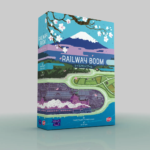
Railway Boom || Photo Credit: Arclight Games

The Druids of Edora, Nippon: Zaibatsu, Recall, Sanctuary and World Order were all also in the running for this year’s multiplayer award.

While missing out on the multiplayer award, Fate of the Fellowship did secure a win in the best solo game category, beating out Benjamin Amorin’s Ace of Spades, Tyler Brown’s design Hercules and the 12 Labors and Jamey Stegmaier’s Vantage to the prize.

That result marked Leacock’s first IGA win in any category, 18 years after Pandemic earned him his first nomination in 2008. His other nominations have included Pandemic Legacy, which lost out to Mombasa in 2016, and Daybreak, which was beaten by Nucleum in 2024.

Hans im Glück’s Duel for Cardia, designed by Faouzi Boughida and Mathieu Rivero, took this year’s award for best two-player game.

That title beat a six-strong field which also included Trevor Benjamin and David Thompson’s design Moytura, Richard Borg and Adrien Martinot’s Star Wars: Battle of Hoth, Corentin Lebrat and Gricha German’s Tag Team, Israel Cendrero and Sheila Santos’ The White Castle Duel and Stegmaier’s Vantage.

The International Gamers Awards were founded in 1999 with the aim of recognising outstanding games, their designers and publishers, with winners selected by an international panel of board game critics.

Other previous multiplayer winners have included Carnegie, Lost Ruins of Arnak and Root.

The post Railway Boom beats Fate of the Fellowship, Take Time to win International Gamers Award first appeared on .

Ukrainian board game studio born during Russian invasion breaks into US hobby distribution with ACD deal

28. September 2026 um 15:32

Ukrainian board game studio Boardova has broken into US hobby distribution through ACD, four years after being launched by two volunteers who met while supporting refugees and Ukraine’s army in the wake of Russia’s invasion.

ACD has added the Lviv-based publisher’s debut title Aridnyk and upcoming George Orwell-inspired game 1984: Unperson to its extensive catalogue, a year after the first title’s $132,000 Kickstarter success.

The move into US distribution continues a unique success story for Boardova, whose co-founder Volodymyr Kuznietsov told Wargamer earlier this year he had been forced to flee his home city of Sievierodonetsk for the second time amid Russia’s 2022 invasion.

Boardova co-founder Volodymyr Kuznietsov || Photo Credit: Boardova

Kuznietsov relocated more than 1,000km away to Lviv in western Ukraine, leaving behind possessions including his entire board game collection – which he described to Wargamer as being “occupied by Russia”.

He added that while volunteering to support refugees and the Ukrainian army he decided to change the status of those games on BoardGameGeek to “pre-owned” – a joke spotted by fellow volunteer and board game enthusiast Zholud “Acorn” Dobrovolskyy, sparking a conversation which led to the pair founding Boardova the same year.

The company’s first game, Aridnyk, draws on the mythology and traditions of the Hutsul people of the Carpathian Mountains. Boardova released the game in Ukraine in January 2024, before raising more than $132,000 from almost 1,600 backers – almost half from the US – via a Kickstarter campaign the following year.

1984: Unperson, meanwhile, is a semi-cooperative card game designed by Kuznietsov and Yaroslav Kifor inspired by George Orwell’s dystopian novel. The game sees players trying to fulfill collective directives handed down by a totalitarian regime, while also trying to achieve their own secret ambitions.

Directive cards from 1984: Unperson || Photo Credit: Boardova

Kuznietsov told Wargamer the subject had an unavoidable resonance for a Ukrainian studio, describing the dangers of blindly following government orders as a “painful and obvious topic while we are under attack from Russia”.

Boardova has also previously expanded into Germany, signing a localisation deal for Aridnyk with Koalla Spiele shortly after Spiel Essen last year.

ACD said it had separately added five titles from Los Angeles party game publisher McMiLLER to its catalogue, including Jolt, Dummeez and Fish Fight.

The post Ukrainian board game studio born during Russian invasion breaks into US hobby distribution with ACD deal first appeared on .

Published — 24. September 2026 ⏭ https://boardgamewire.com/

“It is clear that Take Time won’t be a one-hit wonder”: Asmodee hit passes 325,000 copies after record-breaking launch

24. September 2026 um 16:29

Huge demand for Asmodee‘s co-operative puzzle game Take Time has seen the publishing giant print more than 325,000 copies less than a year after release – outstripping even the company’s high expectations which surrounded its record-breaking launch.

Asmodee printed a massive 145,000 copies of Alexi Piovesan and Julien Prothière’s design for its worldwide launch last October, citing heavy enthusiasm from its distribution teams, board game media and pre-release playtesters.

Game line manager Auguste Lecoeur told BoardGameWire, “As soon as the game’s prototype was shown to us and signed, it became an internal priority, with resources and manpower being redirected from other projects to Take Time.

“Huge credit goes to everyone involved in the project for getting it done so quickly while maintaining such a high level of quality, especially considering that the game went through only around six months of visual development.

“When the game was first presented to Asmodee’s distribution units and partners, the enthusiasm was immediate as well, with Take Time being flagged as a key new release for Libellud.

“The same enthusiasm was shared by media outlets and players that were able to test the game prior to its release, so we had multiple positive signals ahead of launch.

“In that sense, we were definitely expecting a strong first print run, but you can never realistically expect to reach 145,000 copies. It was a very pleasant surprise and clearly exceeded our expectations, even though we were prepared for strong numbers.”

Every major reprint of the game since has topped 60,000 copies, Lecoeur said, with Asmodee currently planning another two to three global print runs of the same size each every year to keep up with demand.

Lecoeur said, “At this point, it is clear that Take Time won’t be a ‘one-hit wonder’, a game that enjoys a high initial print run but then quickly fades. Instead, the game is maintaining a strong sales pace and continues to perform well across markets.”

He added, “The game gained strong visibility and positive feedback at conventions such as Cannes’ FIJ and Spiel Essen, while also achieving higher-than-usual numbers online, thanks in part to its visual appeal and the buzz surrounding it.

“More broadly, the game was quickly validated by the core and specialist market, as well as by opinion leaders, critics and content creators within the board game community. It received strong critical acclaim – it is now ranked [in] the top 95 family games on BGG – and was nominated for multiple awards, which played a huge part in its success.

“Sure, we would have loved to win the As d’Or and Spiel des Jahres (who wouldn’t?), but I guess we’re being picky here!”

Success Story

Part of the game’s powerful performance has been down to it penetrating well beyond the specialist board games market, with Asmodee saying its distribution is now relatively evenly split between hobby stores, mass-market retailers and e-commerce.

Lecoeur said, “I’m convinced that this wouldn’t have been possible if the game hadn’t first been embraced by the core gaming community. Their strong support and enthusiasm for the game helped open the door to other distribution channels much more quickly.”

He added that part of Take Time’s wider appeal was down to the game’s compact size and “accessible price point”, as well as its “high level of replayability and substantial gameplay content”.

Those first two elements have become increasingly important amid ongoing financial strain for people in some of Asmodee’s core markets, such as France, Germany, the UK and US, with rising food and energy prices and ongoing economic uncertainty putting pressure on their purchases.

Take Time || Photo Credit: Asmodee

Other successful initiatives which helped boost Take Time’s appeal included what Lecoeur described as an “unusual” cardboard demo kit, with detachable cards and clocks, which could be ordered by distribution units to give players a taste of the game’s core mechanisms.

He said the kit “generated strong enthusiasm at launch”, but added that the format was not something which could be replicated for every one of its releases.

Award nominations also helped drive sales, especially in Germany and France, which Lecoeur said had been two of the strongest markets for the game from day one.

He said Take Time’s Spiel des Jahres recommendation was followed by a higher-than-usual reprint demand from Germany of 30,000 copies – and added that the impact of other ‘smaller’ awards “should not be overlooked”.

Take Time triumphed in this year’s Swiss Gamers Award and also took the Austrian game of the year prize, in addition to its ‘recommended’ nod in the Spiel des Jahres and nomination in France’s As d’Or.

Lecoeur also believes Take Time benefitted from the success of Libellud’s previous release Harmonies, which also picked up a Spiel des Jahres recommendation and the Swiss Gamers Award, as well as a Golden Geek – and was highlighted by Asmodee CEO Thomas Koegler as having had a strong launch.

Lecoeur said, “The fact that Libellud’s previous release, Harmonies, had been a hit certainly helped. It raised expectations around the studio’s next title and put the spotlight on its launch.

“It’s clear that each publisher develops its own reputation and ‘brand’ image based on its releases (among other things) and that this plays a significant role in the confidence they receive from retailers and, to some extent, from players.

“The success or failure of each release will inevitably have an impact on the games that follow, particularly when it comes to forecasts and initial orders.”

Time After Time

Asmodee is now beginning to turn Take Time into a wider product line, with debut expansion Mirage set for release next month, and the company having “many more ideas we’re currently working on for the range”.

Lecoeur said, “As soon as we received the first feedback on the game and it became clear that the launch was going to be massive, the first discussions about an expansion began in April 2025 with Alexi Piovesan and Julien Prothière, the game’s designers, to explore the possibilities for additional content.

Take Time: Mirage

“They worked on it and presented an iteration that led to a contract being signed in November 2025, as the first market feedback started coming in and multiple markets were selling out.

“However, this timeline was only possible because the designers were fully confident that the game offered enough design space to support an expansion, and because they presented an idea that genuinely excited the team, both mechanically and thematically.

“We’re not releasing expansions simply for the sake of releasing them or to get a marketing boost. If an expansion is published, it’s because we believe it genuinely adds something to the game and offers players a meaningful new experience.”

He added, “Mirage’s format also played an important role. It is a compact expansion, with a €7.99 MSRP, that introduces a new chapter while also adding a new gameplay twist that can be used to replay the entire base game in a different way.

“It isn’t a large expansion that takes up a significant amount of shelf space in stores or represents a massive financial commitment; instead, it is designed to complement the base game and extend the experience without overshadowing it. Its difficulty is also carefully tuned so that players can enjoy the expansion even if they haven’t finished the base game.

“Regarding expansions and product lines, there is a balance to strike between fully trusting your game and not overcommitting. You want to anticipate demand for expansions and reprints in order to avoid out-of-stock situations or a lack of releases and support that could hurt a game’s prospects in the medium to long-term.

“At the same time, a game needs to demonstrate commercial stability before being turned into a full-fledged product line and treated as such.

“It’s no secret that overproducing a game is one of the easiest ways for a publisher to get into financial trouble, and we’re doing our best to avoid that. We want to support successful games and build on their potential while remaining disciplined about production and inventory.”

A Board Game Arena version of the base game is also due for release in Q4 of this year.

The post “It is clear that Take Time won’t be a one-hit wonder”: Asmodee hit passes 325,000 copies after record-breaking launch first appeared on .

CMON succeeds with $19m capital raise in major boost to financially-troubled publisher’s turnaround

24. September 2026 um 14:40

Financially-troubled board game publisher CMON has secured a $19m injection of new capital as it battles to turn around years of heavy losses and dwindling cash reserves – which had left it with just $368,000 in bank and cash balances at the start of August.

The huge investment from new shareholders gives the crowdfunded board game giant much-needed financial breathing room, as it continues its attempt to recover from losses of almost $23m across 2024 and 2025.

CMON warned in the summer that its core business was suffering a “prolonged structural downturn” and was still consuming more cash than it generates, despite a drastic restructuring which has seen the company halve its workforce, sell off some of its biggest game IPs and halt new crowdfunding campaigns.

Those efforts dramatically reduced its losses, with the company reporting a loss of just over $2m for the first half of this year, compared to almost $7m for the same period in 2025.

But CMON’s balance sheet remained under pressure at the end of June, with $7.34m more in short-term liabilities than short-term assets, up from $6.89m at the end of 2025.

A significant part of CMON’s liabilities relates to eight crowdfunded games whose campaigns raised $14m from backers, but which the company has yet to deliver – including DC Super Heroes United, which raised more than $4.4m, and DCeased, which brought in over $2.5m.

DC Super Heroes United, designed by Andrea Chiarvesio || Crowdfunding image

CMON’s directors in its H1 report that the liabilities position had caused the company’s directors to give “careful consideration to the future liquidity and performance of the group and its available sources of financing in assessing whether the group will have sufficient financial resources to continue as a going concern”.

The directors added that they believed CMON would be be able to continue operating – but central to that assessment was the success of the planned share sale, which was designed to raise up to HK$150.5m, or about $19m.

Existing shareholders agreed to buy just 7.76% of the new shares offered to them by the August deadline, leaving CMON looking to raise more than $17.5m from other investors through the rights issue – a figure approaching 2.5-times the valuation of the entire company implied by its last share sale in February this year.

But the company has now revealed that placing agent Yuen Meta managed to sell every remaining share on offer, giving the business the full $19m it had been seeking – a significant mark of belief in the beleagured business.

That capital injection is more than 50-times CMON cash balance from early August, and almost double the $9.9m in revenue CMON generated across the whole of last year, although it pales in comparison to the $37m to $45m revenues it posted each year between 2021 and 2024.

CMON said it plans to use 40% of the newly-raised money to fund its day-to-day operations across the next 12 months, including staff costs, royalties, shipping and distribution, professional fees and other administrative and operating expenses.

Of that slice, about 30% – which works out to $2.28m – was set to go towards staff costs including salaries, bonuses and allowances, 30% towards selling and distribution expenses, and 35% towards general administrative and operating expenses, including its sales operation, utilities, insurance, government registration and filing fees, listing fee, repairs and maintenance. The the final 5% was earmarked for paying professional fees

That news could provide some relief to the tens of thousands of backers still waiting for their games via CMON’s heavily-delayed crowdfunding campaigns – although the publisher has not specified exactly how much of the capital will be used to deliver the overdue titles, or whether the capital is enough to ensure all eight will be fulfilled.

Zombicide: White Death

CMON has not completed fulfillment of a crowdfunding project since Zombicide: White Death in mid-2025, but did manage to deliver pre-orders for Cthulhu: Dark Providence, Marvel United: Witching Hour and Dune: Desert War in the first half of this year.

Four other pre-order titles: Assassin’s Creed Role Playing Game, The Adventurers, The Dead Keep and Super Fantasy Brawl Reborn, all remain undelivered, although the first of those is currently slated for completion in Q3.

GameAmount raised
Number of backers
Fundraise completedInitial delivery estimateLatest delivery estimate (as of September 24, 2026)
Mordred$669,9765,687July 2023August 2024Q4 2026
Masters of the Universe: The Board Game – Clash for Eternia$719,6644,182January 2024November 2024Q1 2027
DCeased$2,564,78912,787December 2023April 2025Q1 2027
DC Super Heroes United$4,478,98914,040August 2024August 2025Q1 2027
God of War$832,9454,388May 2024June 2025Q2 2027
Massive Darkness: Dungeons of Shadowreach$2,854,5539,842February 2025March 2026Q3 2027
A Song of Ice & Fire: Tactics$1,886,5096,406February 2024February 2025Q3 2027
Degenesis: Clan Wars$339,7421,232June 2024July 2025n/a
Total Dollars$14,347,167

About 20% of CMON’s newly-raised capital is earmarked for repaying debts and other outstanding liabilities, including $2.46m owed to a CMON director and $385,000 of unsecured advances from employees, as well as outstanding production, shipping, royalty and other operating costs.

CMON has slated 25% of the new money for expansion in existing and new markets, including strengthening the company’s presence in Europe through marketing and potential attendance at events including Spiel Essen and Cannes, as well as targeting growth in Japan and the Philippines.

The company added that it plans to put 15% of the new capital towards potential acquisitions as part of a push into digital gaming, although said it had not yet identified any targets.

CMON said it intends to look for between one and three businesses, primarily in Asia-Pacific, valued at between about $1.3m and $2.5m each, which could help it develop digital adaptations of its existing games, companion apps and other digitally-enabled features.

The publisher stressed that it intends to retain physical tabletop games as its core business, with the digital push designed to complement rather than replace them.

CMON’s capital raise has also radically reshaped the ownership of the company, with chairman and CEO Ng Chern Ann ceasing to be the largest shareholder after his overall stake was diluted down from about 20% to just over 5%.

The capital raise has made investor Yip Ka Ki Cherry CMON’s largest disclosed shareholder with a roughly 19% stake, personally and via her investment holding company Legend One.

Yip was already an investor in CMON before the rights issue, with a stake of about 4.8%. Her other previous investments through Legend One include Japanese entertainment business TryHard Holdings.

CMON has also strengthened its board following the capital raise, appointing two new independent non-executive directors – veteran financial management, corporate governance and audit executive Chan Ka Kit, and corporate communications, marketing and investor relations specialist Claire Luk.

The post CMON succeeds with $19m capital raise in major boost to financially-troubled publisher’s turnaround first appeared on .

Published — 22. September 2026 ⏭ https://boardgamewire.com/

Pandasaurus makes significant cut to SPIEL Essen booth size, says lower-cost shift to EPN delivers similar sales volume

22. September 2026 um 23:22

Pandasaurus Games has heavily downsized its Spiel Essen booth this year, after finding it can still sell similar numbers of its hit games through Asmodee arm EPN while slashing its overheads and logistical workload.

The US publisher has shifted to using European Player Network, Asmodee‘s specialist English-language sales and distribution operation in the region, to handle its stock and sales at the giant German show – removing the need for Pandasaurus to transport and store hundreds of games, staff its own retail operation and devote much of its booth to selling them.

Pandasaurus had run substantial booths at Spiel – the world’s biggest board game fair – for several years following the Covid-19 pandemic, but told BoardGameWire its experience using EPN last year persuaded it to heavily scale back its own footprint for the 2026 show in October.

CEO Nathan McNair said Pandasaurus previously spent more than €50,000 ($57,000) attending Spiel with its larger setup, compared to between $20,000 and $25,000 under its current model.

He said games Pandasaurus expects to be hits still sell similar numbers of copies – typically 300 to 500 – under the new setup – although added that Pandasaurus now receives roughly half as much revenue per sale.

“The revenue is lower because obviously EPN will get a portion of the proceeds, but our cost is so much lower that the overall cost to revenue ratio is very similar,” McNair said.

This year EPN will handle the company’s stock and sales operation and host three Pandasaurus demo tables within its booth, while the publisher’s own, smaller stand will be focused largely on meeting space and additional demos of upcoming games.

Titles being shown off by Pandasaurus this year include Alex Cutler design Sandcastles, Machi Koro: Life from Masao Suganuma and embroidery-focused card game Fadenfroh from Jordy Adan and Alexander Pfister.

Pandasaurus’ previous large booth at Spiel Essen

McNair said, “The show is very expensive to get to and logistically trying to run a large booth half a world away is a lot. Running a show like GenCon is already a lot – but finding booth staff for the show when we need to staff 20 or more demo tables, stock games, sell games, figure out how to legally import/pay VAT/collect cash/deposit the cash in the US bank or get a correct license to take credit cards in Europe is a logistical nightmare.

“So, what we found is a way to more economically attend the show, get some marketing done, sell games to players, make sure we are demoing games and getting the meetings we need without having to spend €50,000 or more on the show itself.

“Our cost to attend with this model is roughly 1/3rd as much overhead, and while we make less per order when a game is sold our sales are actually just as strong, so players are still getting the games they want – we come close enough to ‘breaking even’ and it’s just a lot less work for us.”

McNair said US publishers “typically have a smaller footprint in continental Europe than we like to think”, and questioned the need for some English-language publishers to operate such large stands at Spiel.

“A lot of us run booths but I find it a bit strange given our limited sales in the region that so many have large booths,” he said.

“Some of course do sell and distribute in German (or other languages) themselves so that makes more sense – but for English only US publishers continental Europe isn’t our core market.

“If you look at US trade shows for the most part the only European companies with booths tend to be those that sell themselves in the US.”

He added, “I don’t want to tell other folks how to run their business and I’m a big believer that the folks with larger booths probably know more about their situation than me – so they may have found that this is really effective for them.

“I would absolutely prefer this model – it’s just a lot less work – besides the money difference I mentioned has taken the workload of prep and running the show to a fraction of what it was to try and run a larger booth in Germany.”

Part of the European Player Network booth and demo space at Spiel Essen

Pandasaurus’ decision to cut back on the size of its booth comes as Spiel itself continues to move in the opposite direction – with an expansion into all eight main halls at the Messe Essen exhibition centre for the first time expected to see the event challenge its record 220,000 attendance set last year.

Spiel said earlier this year that it had reached the reached the limits of its expansion at its long-time home after boosting floor space to 81,200 sq m – larger than 15 American football fields – amid what it called “overwhelming interest” from exhibitors.

Merz Verlag said demand for the additional space was coming both from existing exhibitors wanting significantly larger stands and an unusually high number of first-time exhibitors, with all available stands booked before the April 30 registration deadline.

And Pandasaurus’ smaller presence does not mean it sees less value in attending, according to McNair.

He said, “For me I really like to focus on meetings, seeing friends, trying to check out some games and building awareness of the new titles at the show – and I think the setup we have works really well for just that at a much lower lift,” he said.

“Essen is a much more international show in a lot of ways than most other board game conventions, so we know there are fans there who want to check out our new games really badly and I want to make sure they can – but if I can do it in a way that is less work and less risk for us I prefer that strongly.”

Spiel Essen 2026 takes place at Messe Essen from October 22 to 25.

The post Pandasaurus makes significant cut to SPIEL Essen booth size, says lower-cost shift to EPN delivers similar sales volume first appeared on .

Published — 21. September 2026 ⏭ https://boardgamewire.com/

Chip Theory hires Keymaster veteran to grow lighter game imprint Neon Knight, as it learns to build beyond its existing audience

21. September 2026 um 16:37

Chip Theory Games has hired eight-year Keymaster Games veteran Jennifer Graham-Macht to lead its lighter-games imprint Neon Knight, after discovering that building the business means developing a new audience – as well as rethinking some of the approaches behind its prior success.

The Too Many Bones publisher told BoardGameWire it is very happy with Neon Knight’s progress since it began building the studio two years ago, but has acknowledged being “maybe naive” about how many of its existing fans would follow it into lighter games.

Chip Theory chief marketing officer Josh Wielgus said, “We had hoped there would be a very high percentage of ‘omni-gamers’ in the Chip Theory audience who would gladly come along for the Neon Knight ride. That hasn’t been as true as we had initially hoped for, and thus we’re learning that we really need to put the effort into building that audience and brand.

“That has meant on the Chip Theory side investing more resources into the building of Neon Knight than we first anticipated. Obviously the biggest move we’ve made to that end is bringing in an experienced pro’s pro like Jen.”

Chip Theory Games’ hugely successful title Too Many Bones, designed by company co-founders Josh and Adam Carlson

Chip Theory has spent more than a decade building a hugely successful business around expensive, lavishly produced games aimed at a devoted audience of heavier and solo-focused hobby gamers – with standout hits including Too Many Bones, Cloudspire and The Elder Scrolls: Betrayal of the Second Era.

But the publisher looked to expand the breadth of its offering in April 2024 by bringing in Dice Throne co-creator Manny Trembley’s recently-launched studio Good Knight Games, which it rebranded to Neon Knight.

That move was designed to give Chip Theory a dedicated route to more retail friendly and affordable lines of games, while drawing on its longstanding operations, customer support, fulfillment and marketing experience.

Wielgus told BoardGameWire, “We’re very happy with the direction things are going, even if thus far there hasn’t been a ‘megahit’ to speak of.

“We’re really proud of the titles that have been released thus far and are learning a ton about a market – the light/medium/mass market side of board games – that we have historically been absent from on the Chip Theory side.

“We fully understand that this basically needs to be treated as building a new business. Chip Theory proper didn’t really find its footing until after Too Many Bones released, which was almost five years into the company’s existence.”

But he said one assumption the company had got wrong with Neon Knight was expecting the tastes of Chip Theory’s staff – who enjoy games across a range of weights and genres – to be mirrored across its customer base.

“I think we were maybe naive about the number of traditional Chip Theory fans who would be excited about this direction,” he said.

“Chip Theory caters primarily to a heavy and solo-forward audience, but all of us here in the building love most types/genres/weights of games. We presumed that much of our audience was likely the same.

“That hasn’t turned out to be as true as we maybe hoped, and so it didn’t take long to realize we needed someone who didn’t have their mind in Chip Theory world at all to help us really reach what has turned out to be a very new audience.”

Theory Into Practice

New Neon Knight lead and managing director Jennifer Graham-Macht previously spent about eight years at Parks publisher Keymaster Games, initially as community manager before taking on roles in production, project management and ultimately being named Games Director.

She has also recently returned to board game retail as co-owner of New Jersey-based retailer The Player Agency, having previously run Satellite Comics and Games in the mid-2010s.

Graham-Macht told BoardGameWire that moving into full studio leadership felt like a natural next step after a long spell at Keymaster, and described Neon Knight as having “equal parts amazing pedigree and plenty of room to keep improving”.

Her new role sees her responsible for the “health and growth” of the studio as well as leading its operations, with Trembley remaining creative director with responsibility for game design and art direction.

She said, “I’ve spent the first couple of months getting clear with Manny what the vision is for the imprint. We first want to make that clear internally and then use it to start shaping how we grow our catalog and talk to our audience.

“In every aspect of studio work, I’m focused on making sure we are walking well before we run. That includes how we say yes to projects, how we work with external partners, developing a sustainable omni-channel strategy, and much more.”

Part of Graham-Macht’s role will be helping determine which lessons from Chip Theory’s existing business are useful for Neon Knight – and which do not fit a company targeting a different market.

Wielgus told BoardGameWire, “The lesson we’re learning is that not every lesson we’ve learned with Chip Theory is applicable on the Neon Knight side of the business.

“Jen’s here to really help us gauge what bits of our experience are helpful and what bits of our experience are perhaps holding us back from doing mass market well.

“Our penchant for ‘overproduction’, a laser focus on making games solo-friendly, and a crowdfunding-first mindset don’t necessarily benefit us here.

“Jen has been helping us shed those tendencies where we need to and really think about Neon Knight stuff as its own distinct creature with very distinctly different needs.”

He cited Fight 5, Neon Knight’s reimagining of classic card game War, as a prime example, saying, “We were very proud of our box for Fight 5. It’s sleek and sexy and we kind of modeled it after the Compile box (which is also sleek and sexy).

Fight 5, designed by Aaron Hein and Manny Trembley, published by Neon Knight

“Post-release, we learned that for the type of game Fight 5 is, we did a horrible job of making it a retail-friendly box. It doesn’t tell you what the game is at all and is far too abstract to sell itself.

“We’re also learning that the direct to consumer marketing we rely on so heavily for our big Chip Theory stuff isn’t a silver bullet for retail/distribution/mass market audience acquisition.

“While the games and the mechanics can be great (and we believe they are), you need to stop and consider a whole lot more things when you don’t have the luxury of literally speaking to your audience directly the way we can on our big Chip Theory crowdfunding campaigns.”

Future Plans

Graham-Macht said her experience at Keymaster had taught her about connecting with customers through different sales channels, adding that it was “exciting to apply that knowledge to a different vision”.

She added, “I think the biggest challenge for any new brand right now is discoverability. There is a lot of competition for how a person chooses to spend a weeknight hour with friends, family, a spouse.

“Most customers won’t know that Neon Knight is an imprint of another brand let alone what that brand stands for. The products themselves need to shine.

“And that being said, a premium experience can look and feel like a lot of things. More than component materials, I think thoughtful product design and attention in all the right places goes a long way to building customer trust and loyalty. That’s the mark we’re striving for.”

She added, “Any amount of that community engagement we can foster at Neon Knight will be a big win for the studio.”

Crowdfunding is another area where Chip Theory is reconsidering whether its established approach is the right one for Neon Knight.

Wielgus said its debut Neon Knight title, Neon Reign, had launched with almost no pre-marketing, as the agreement to bring the studio into Chip Theory was signed just two days before its campaign.

Neon Reign, designed by Aaron Hein and Manny Trembley, published by Neon Knight

He said, “That one I would chalk up as simply an experiment. Jump Masters I think we hoped would do a bit better than it did, but again so much of that I think is that we were relying on CTG’s existing Gamefound audience to show up for a lighter game that has no solo mode.

“As we look at the possibility of future campaigns, we’re having a lot of conversations about how to go about generating a unique audience and brand for Neon Knight, as well as things like moving Neon Knight campaigns back over to Kickstarter which seems to be a better fit for more accessible fare. “

Crowdfunding will not necessarily be the default route for future Neon Knight releases either, with Wielgus saying the company expects to use it occasionally, but will assess each game individually to decide whether a campaign is necessary or beneficial.

Graham-Macht added that while for now Neon Knight would rely on internally-developed designs, putting out games from other creators was “something we see in our future”.

“We’ve honed in that our games are inspired by/re-imagined modern classics, and that’s where we’re excited to explore”, she said. “Manny has a lot of ideas in this vein, but as we continue to grow and get our sea legs, there will be room for other designers’ work as well.”

Chip Theory is also hoping to staff up Neon Knight further following Graham-Macht’s hire, with the company gearing up to make two more hires that will split their time between the two arms of the business.

Wielgus told BoardGameWire he hopes the business will expand “in a huge way” across its release slate, staff numbers and amount of investment, but added that time – and sales – would tell if the business is able to achieve that.

He said, “I may be crazy, and I know a lot of folks consider Chip Theory one of the most successful board game companies of the last decade (I don’t have a way to measure that really, maybe they’re right. We certainly feel like we’ve been very successful!) – but I think Neon Knight can absolutely grow to match Chip Theory’s success.

“That can look a lot of different ways financially (sales quantity vs actual profits is always a bit of a moving target), but ultimately we’re excited enough about this brand that we really want to give it the full send.

“If Covid and tariffs have taught us anything, it’s that having a lot of irons in the fire and a strong diversification of our portfolio is the best way to shield ourselves from catastrophe.”

The post Chip Theory hires Keymaster veteran to grow lighter game imprint Neon Knight, as it learns to build beyond its existing audience first appeared on .

Published — 17. September 2026 ⏭ https://boardgamewire.com/

UK Games Expo creators prep for giant show’s future without them by bringing in AireCon co-founder Mark Cooke

17. September 2026 um 16:35

After 20 years growing the UK Games Expo into one of the largest tabletop gaming conventions in the world, founders Richard Denning and Tony Hyams are preparing for their eventual exit by bringing in AireCon co-founder Mark Cooke as operations director.

Cooke joins following another record year for UKGE, which has seen its annual unique attendance surge almost 65% since 2023 to reach more than 51,000.

The show has already well surpassed Gen Con in terms of trade hall size, with the British event now spanning about 44,000 sq m – about 40% larger than Gen Con’s trade hall area – and hosting around 900 exhibitors in 2026.

That soaring growth has put increasing pressure on the small organising team at UKGE, with Denning telling BoardGameWire last year that the show had strained a full-time workforce which stood at just six people – although UKGE also relies on more than 200 volunteers, GMs, umpires and other helpers to deliver the convention each year.

Cooke is no stranger to growing a UK board game convention, having co-founded and built AireCon with Ben Clarkson from a 28-person gaming weekend in his flat a decade ago into England’s second-largest board game con, with about 5,000 attendees this year.

His hire by UKGE comes just three weeks after AireCon revealed that despite its own soaring growth, its 2027 show in Harrogate would be its last – saying a combination of factors had “made it increasingly challenging to run AireCon in a way that preserves the character and spirit that made it so special in the first place”.

More than 5,500 people are expected at the final AireCon – which has been nicknamed Airemageddon – with Cooke set to continue working on that final show before moving to UKGE full time.

A statement from UKGE emphasised the hire was part of a phased transition for UKGE’s organisers, and was “not a sudden change of leadership or direction”.

UK Games Expo 2026

It said Cooke would work alongside Denning and Hyams “over the next few UK Games Expo events”, ensuring that knowledge, experience and responsibilities the pair have built up over the last 20 years are handed over “gradually and thoughtfully”.

Denning said, “As UKGE has expanded to now one of the world’s largest shows we have gradually grown our team, adding event managers, administrators and logistics support.

“Bringing in Mark as operations director is the next logical step as we put in place plans to ensure UKGE can run far into the future.

UK Games Expo co-founder and director Richard Denning

“We have known Mark through AireCon and other industry roles for many years now and he is an ideal choice bringing both event management experience, energy and fresh ideas to the team as well as a safe pair of hands as and when Tony and I eventually step away from the show we have built together with others.”

Cooke added, “I’m incredibly excited to be joining the UK Games Expo team and to have the opportunity to play a part in the next chapter of such an important event for the tabletop gaming community.

“I have huge respect for what Richard and Tony have built over the years, and I’m looking forward to working alongside them over the coming events.

“This will be a gradual transition, giving us plenty of time to share knowledge, ideas and experience. My aim is to build on the fantastic foundations already in place while helping UKGE continue to grow and thrive for many years to come.”

Denning and Hyams launched UK Games Expo at Birmingham’s Clarendon Suites in 2007, when the convention attracted about 1,000 visitors.

It moved to Birmingham’s National Exhibition Centre in 2013, and had grown to more than 25,000 unique attendees by 2019 before the Covid-19 pandemic interrupted its run of physical events.

Its growth has accelerated since returning, with unique attendance passing 31,000 in 2023, 39,000 in 2024 and 42,000 last year, before jumping beyond 51,000 at its 20th anniversary event this summer.

UK Games Expo attendance figures since launch. Note: no physical show took place in 2020 due to the Covid-19 pandemic

Denning told BoardGameWire last year that building a world-class trade hall in the UK had been a personal ambition stretching back almost two decades, adding at the time that UKGE was “now fully on the world stage of ‘mega-cons'”.

Despite this year’s record attendance, Denning told BoardGameWire after the show that there was still room for further expansion, particularly around the roughly 500 events taking place during the convention.

The next UK Games Expo is scheduled to take place at Birmingham NEC from June 4 to June 6, 2027.

The post UK Games Expo creators prep for giant show’s future without them by bringing in AireCon co-founder Mark Cooke first appeared on .

New Exploding Kittens studio boss sets sights on expanding namesake IP into “long-lasting evergreen brand”

17. September 2026 um 11:33
A kitten on an exploding earth illustrating the Exploding Kittens card game

Exploding Kittens has named chief commercial officer Joeri Hoste as its new head of studio, with the long-time game industry exec eyeing further expansion of the company’s namesake hit into a “long-lasting evergreen brand” beyond its big-selling card game.

Hoste joined Exploding Kittens to lead its international business in 2020, following multi-year stints at companies including Hong Kong based board game publisher and manufacturer Ooba Games, toy company BOTI and trading card and collectibles specialist Upper Deck.

He takes the head of studio role at the Asmodee-owned business as former Exploding Kittens CEO Carly McGinnis was named head of the parent company’s global publishing operation last month.

New Exploding Kittens studio head Joeri Hoste

Hoste said in a LinkedIn post that the past six years at Exploding Kittens had been the most rewarding of his career, adding that he was “ecstatic and humbled” to take responsibility for leading the company into the next stage of its development.

He said, “We’ll continue our mission of making great games and creating experiences that bring people together. Exploding Kittens is the game that built its namesake company, and our next challenge will be to develop the IP into a long-lasting evergreen brand that outgrows its original format.

“Exploding Kittens is unique within Asmodee as we combine deep commercial mass market expertise with publishing quirky and irreverent games that disrupt the games category.

“We did not get here by blending in. We succeed because of the talented team that’s willing to be different.”

Exploding Kittens has been a huge commercial success in the wake of its debut title raising almost $8.8m on Kickstarter in 2015.

Last year Exploding Kittens revealed it had sold more than 60 million games as it marked a decade in business – with the company’s growth having already extended well beyond the tabletop.

That has included a partnership with Netflix which expanded the property into mobile gaming and an animated series.

Asmodee bought a 55% majority stake in Exploding Kittens at the end of 2021, and exercised its option to purchase the remaining 45% minority stake last year.

Exploding Kittens has continued to stand out within Asmodee’s portfolio during a difficult period for parts of the US board game market.

Asmodee CEO Thomas Koegler singled the company out last November as a particularly strong performer amid economic uncertainty caused by rising prices and US tariffs, adding that US consumers were favouring lower-priced games. Asmodee again highlighted strong Exploding Kittens growth while discussing a 23% year-on-year fall in its US quarterly sales earlier this year.

The promotion comes as Asmodee is making a wider push into social and party games – a category where Exploding Kittens has been one of its strongest brands.

In March the company agreed to pay up to €250m for French social and party game publisher ATM Gaming, with Koegler saying the acquisition would combine ATM’s strength in Europe with Exploding Kittens’ strong position in the US. Asmodee has said it expects the social games category to grow at between 4% and 8% annually between 2025 and 2030, compared with about 4% for the broader board games market.

It also launched US party game studio Moodbox Games last year, a move de Barros described at the time as strengthening Asmodee’s presence in a category where Exploding Kittens and Zygomatic were already seeing strong success.

The post New Exploding Kittens studio boss sets sights on expanding namesake IP into “long-lasting evergreen brand” first appeared on .

Published — 16. September 2026 ⏭ https://boardgamewire.com/

Tabletop pioneer Steve Jackson returns focus to game design as Sabrina Gonzalez takes over as Steve Jackson Games CEO

16. September 2026 um 00:48

Tabletop game design pioneer Steve Jackson has ended a 17-month return running his namesake games company, with new CEO Sabrina Gonzalez taking charge of a business with years of falling revenue as well as a run of promising crowdfunding successes.

Jackson will remain president of the company he founded in 1980, but will refocus his attention on game design and development, with managing editor Allison Page promoted to COO.

He had previously stepped back from the day-to-day running of Steve Jackson Games in 2014, when long-time COO Phil Reed became CEO, allowing Jackson to devote more of his attention to game development.

Reed was succeeded by TurboDork CEO and current GAMA president Meredith Placko in 2023, but Jackson returned to direct control of the business in April last year following her unexpected resignation.

Jackson’s return as CEO in 2024 was not presented as a permanent appointment, with him saying in the wake of her departure that her direct reports would report to him while he “figured out a plan”.

Gonzalez has been with SJ Games since 2013 as a production artist and production manager, apart from a brief period away from the company working for toy and game manufacturer Grand Prix International – and has been a member of the board of directors since 2021.

She said of her vision for the business, “As a general goal, I’d like us to continue to grow. We weathered the pandemic and pivoted project plans to address continually changing tariffs.

“The goal is always to make great games that people love. I want to continue developing new titles for future generations of gamers and also support (and sometimes update) the classics that our fans continue to request.”

New Steve Jackson Games COO Allison Page

New COO Page joined SJ Games as managing editor in 2023, having previously worked as executive artistic director of San Francisco comedy organisation Killing My Lobster. She also spent a year working as a narrative designer in the video game industry.

Page said, “I’m most excited to support Sabrina in her new role as CEO! We’ve always worked really well together and want the same things for SJ Games.

“I’m a problem solver, and I’m passionate about setting clear expectations. I’m excited to untangle whatever comes my way and ensure the team knows how to move forward and has what they need.”

The leadership change comes after what Jackson described in May as an “unusual and very awful” 2025 for the business, which has caused an ongoing delay in the company’s annual stakeholder report that Jackson has publicly posted since 2003.

He said on the company’s blog in May, “We made it through! But it’s not a story that fits well into the standard Stakeholder format. It took me a while to get up the nerve to start, and it has taken me longer to get it right. But I shall.”

SJ Games posted seven years of rising annual revenues from the mid-2000s to reach a record $8.8m in 2013, a year boosted by heavy demand for its Munchkin line of games – which accounted for more than 75% of its sales – and almost $1m from the Ogre Designer’s Edition Kickstarter.

Revenues have decline substantially since, however, falling about 2.5x from that peak to settle at around $3.5m across both 2023 and 2024 – the last years for which Steve Jackson has published the total – and bringing the annual total down to levels last seen back in 2010.

Annual revenue at Steve Jackson Games between 2003 and 2024. The asterisk(*) at 2022 indicates that the company overstated its revenue at $4.7m that year “due to confusion about BackerKit proceeds”, but it has not publicly provided an updated figure.

Jackson said in the executive summary in the 2023 report, “Cash flow was acceptable. It was not a profitable year, though. We have identified and dealt with some of the money-losing issues; others will be harder. We are working on it. (No fear; we have plenty of runway left. I just hate to use it.)”

He continued in the 2024 overview, “Cash flow was acceptable, but I don’t feel ‘prosperous’. This is not just us; individual game sales, industry-wide, were down at both the distribution and retail end, largely due to the glut of titles.”

Jackson added that year, “We are still working the problem, but we have less runway than we did last year! Cause for optimism: it was a rebuilding year and not expected to be good for cash, but thanks to your support for Munchkin Big Box it was better than we anticipated.”

Those challenges were exacerbated in 2025 by the impact of volatile US tariff policy, which included an unexpected “high five-figure” bill on its Munchkin Big Box after new tariffs were levied while the already-produced game was at sea.

The company subsequently raised some of its prices in response to tariffs, while uncertainty over overseas manufacturing led it to scrap the box and dice for RPG collection Dahlia’s Diversions for Peculiar Parties in favour of a rigid envelope, and shifting printing to the US before fully assembling the games on Jackson’s dining room table.

Jackson said in July that the company had received a partial rebate on its Munchkin Big Box tariff payment earlier this year, which it passed on to customers through a temporary discount on its web store Warehouse 23.

The Munchkin Big Box || Photo Credit: Steve Jackson Games

The BackerKit campaign for the Munchkin Big Box had been one of the company’s bright spots over the past couple of years, bringing in more than $1.3m from over 9,000 backers – a situation Jackson credited with making 2024 financially better than expected.

SJ Games followed that with a $370,000 BackerKit campaign for Munchkin Second Edition this year to coincide with the game’s 25th anniversary, and in recent years has extended out the game with Munchkin Shadowrun, Munchkin Vox Machina and multiple Warhammer-based releases, as well as several other expansions.

The company made a notable expansion itself in February last year, when it brought acclaimed indie RPG publisher Possum Creek Games into the business as an imprint.

It said at the time that the deal would allow Possum Creek, the publisher of Wanderhome and Yazeba’s Bed & Breakfast, to retain full creative and editorial control over its titles, while “lending their talents to the SJ Games design and visual branding”.

Possum Creek editorial director Jay Dragon joined the SJ Games board of directors as part of the tie-up, and became its lead game designer, while Ruby Lavin became the company’s art director.

Seven-Part Pact, designed by Jay Dragon

Since then Dragon’s TTRPG design Seven-Part Pact has raised more than $1m through a Kickstarter campaign, while SJ Games has also raised almost $600,000 across a pair of Kickstarters for the venerable Fighting Fantasy line of adventure gamebooks, having agreed a deal in 2024 to bring the UK-created titles back to the US for the first time in more than two decades.

Steve Jackson’s game design career dates back to the late 1970s, with his 1977 debut Ogre helping popularise the emerging microgame format of small, inexpensive wargames.

Within five years he had designed Car Wars and Illuminati, founded his own games company and been inducted into the Academy of Adventure Gaming Arts & Design Hall of Fame in 1982 – all while still in his 20s.

He followed that with the Generic Universal RolePlaying System (GURPS) in 1986, which was his attempt to create a single roleplaying system capable of working across different settings and genres.

While not the first RPG to experiment with universal rules, GURPS helped popularise the concept and grew into a huge publishing line for Steve Jackson Games. By 2004 the company had released about 200 GURPS titles, with more than one million copies in print in English alone.

Jackson’s most visible modern design is Munchkin, which became the company’s biggest commercial success following its release in 2001. The game was inducted into the Academy of Adventure Gaming Arts & Design Hall of Fame in 2013.

The post Tabletop pioneer Steve Jackson returns focus to game design as Sabrina Gonzalez takes over as Steve Jackson Games CEO first appeared on .

Published — 14. September 2026 ⏭ https://boardgamewire.com/

Ants beats designs including Galactic Cruise, Speakeasy to win Portugal’s heavyweight-focused Game of the Year award

14. September 2026 um 11:41

Ants, the debut release from designers Renato Ciervo and Andrea Robbiani, has scored its first board game award by picking up this year’s Jogo do Ano, the Portuguese game of the year prize.

The worker-management title triumphed amid strong competition from titles including Galactic Cruise – which already has the Dice Tower Awards game of the year and Golden Geek heavy game of the year to its name, and is one of the three finalists for this year’s Deutscher Spiele Preis.

Vital Lacerda design Speakeasy, Dave Beck and Abe Burson’s Luthier and Toni López creation Ada’s Dream were also nominated for the annual prize, which is organised by the non-profit board game association Spiel Portugal.

The Jogo do Ano, which has been presented since 2006, tends to skew towards the heavier end of board gaming, with recent winners including SETI, Nucleum, Barrage and Imperial Struggle.

Spiel Portugal says the type of game it looks for is “strong, spirited, dense, and stimulating”. Each member of the organisation initially selects ten games, with the resulting five finalists played again and scored according to a weighted set of criteria.

Half of the final score is based on what Spiel Portugal calls “time/fun”, with production accounting for 15%, theme, mechanics and replayability each worth 10%, and player interaction making up the remaining 5%.

Ants’ win follows a pair of high-profile award nominations for the design, through both the French As d’Or and the best expert game category of the Nederlandse Spellenprijs.

Ants, designed by Renato Ciervo and Andrea Robbiani

The title was originally published by Italy-based Cranio Creations, and has since been picked up for localisation by publishers including US-based Capstone Games and Germany’s PD-Verlag.

Ants is the sole design to date from chemist Renato Ciervo, who also works with Italian publishers as a game developer, according to his BoardGameGeek page.

His Ants co-designer, engineer Andrea Robbiani, has subsequently created Maestro – themed around the fierce rivalry between Leonardo da Vinci and Michelangelo – and co-designed Timeless Journeys: The Italian Grand Tour with Nestore Mangone.

Ciervo and Robbiani have another unnamed co-design together due to be released next year, according to Robbiani’s BoardGameGeek page.

Jogo do Ano awards 2026

Winner:
Ants – designed by Renato Ciervo and Andrea Robbiani (Published by Cranio Creations)

Nominees:
Ada’s Dream – Toni López (Alley Cat Games)
Galactic Cruise – TK King, Dennis Northcott, Koltin Thompson (Kinson Key Games)
Luthier – Dave Beck and Abe Burson (Paverson Games)
Speakeasy – Vital Lacerda (Eagle-Gryphon Games)

The post Ants beats designs including Galactic Cruise, Speakeasy to win Portugal’s heavyweight-focused Game of the Year award first appeared on .

Published — 10. September 2026 ⏭ https://boardgamewire.com/

Maestro Media opens its crowdfunding, manufacturing, retail infrastructure to other publishers and designers

10. September 2026 um 13:34

Maestro Media is opening up the publishing, licensing, manufacturing and retail infrastructure behind its own games to outside designers and publishers, including companies looking for a North American publishing partner.

The Binding of Isaac: Four Souls and Clash of Clans: The Epic Raid publisher has launched Overture by Maestro Media, through which it plans to co-publish games from other companies, partner with them during development or production, or potentially acquire titles outright.

Maestro founder and CEO Javon Frazier said, “The hardest part of this industry has never been the ideas. It is everything after them. Getting your design in front of a publisher, funding the development, entering distribution, landing it on a shelf.

“We built a machine to do that for our own titles alongside some of the largest licensors in the world. Overture by Maestro Media opens that machine to everybody else.”

Maestro says Overture will allow other companies to use its existing operations for areas including development and licensing, production, manufacturing, crowdfunding, direct-to-consumer sales and retail distribution.

The company has already struck several deals along those lines, including announcing in the summer that it would publish a new North American edition of Zoch Verlag’s Ghost Blitz from January 2027.

It is also partnering with Nighthawk Interactive on Richard Garfield and Ken Jennings’ trivia game Half Truth: Second Guess, and working with Brazilian tabletop publisher D20 Culture to co-publish The Lord of the Rings: Foes of Middle-Earth and the Justice League Unlimited RPG worldwide and in multiple languages.

Frazier said of the Ghost Blitz deal ahead of unveiling the game at this year’s Gen Con, “Ghost Blitz has sold more than one million copies in 20-plus languages over 15 years. Most North American families have never seen it on a shelf. That’s not a demand problem. It’s a distribution problem.

“That’s the gap we built Maestro Media to close. Crowdfunding, direct-to-consumer, and retail working as one engine, with distribution partners already in place across North America.”

Peterson Rodrigues, CEO of D20 Culture, said, “We’re excited to work with Maestro because we see the same opportunity they do: great games shouldn’t be limited by borders.

“Bringing these titles to players around the world, in their own languages and through partners who understand their markets, is exactly the kind of collaboration we want to be part of.”

Game designers will get their first opportunity to pitch original tabletop games via the new operation through a month-long submission window running from January 1 to 30 next year.

Maestro made its name in tabletop through its 2018 Kickstarter for The Binding of Isaac: Four Souls, which raised more than $2.6m, followed three years later by a further $6.7m for its Requiem expansion.

The company says it has worked with more than 40 licensed properties to date, and shipped more than 400,000 products, while Frazier has raised more than $16m across 16 crowdfunding campaigns – although almost 60% of that total comprises the two Binding of Isaac projects.

Maestro has expanded its distribution network significantly in recent years, signing an exclusive deal with Asmodee last year covering its English-language products in the US, UAE and South Africa, followed by an agreement making Zatu Games its exclusive distributor in the UK and Ireland.

The company added that Ryan Lumax has been promoted to vice president and head of games at the company, having joined last year after almost eight years at Canadian distributor Lion Rampant Imports.

Lion Rampant was acquired by Asmodee in 2019, when Lumax was working as head purchaser. He became a purchasing manager at the business in 2023.

Lumax said, “I spent eight years on the buying side, and the games that didn’t make it were almost never the bad ones.

“They were good games whose creators ran out of road somewhere between the prototype and the pallet. That is the gap Overture by Maestro Media closes.”

The post Maestro Media opens its crowdfunding, manufacturing, retail infrastructure to other publishers and designers first appeared on .

Published — 09. September 2026 ⏭ https://boardgamewire.com/

CMON warns of ‘prolonged structural downturn’ as it seeks up to $17.5m from investors

09. September 2026 um 17:37

CMON has warned that its core business is suffering a “prolonged structural downturn” and is still consuming more cash than it generates, despite a drastic restructuring which has seen the board game crowdfunding major halve its workforce, sell off some of its biggest game IPs and halt new crowdfunding campaigns.

The warning comes amid an extraordinary period of upheaval for one of tabletop gaming’s biggest crowdfunding publishers, which suffered losses of almost $23m across 2024 and 2025 and is still working to deliver a string of heavily-delayed campaigns that raised more than $14m from backers.

CMON has spent the past 18 months attempting to stabilise its finances by cutting staff and other costs, selling high-profile IP including Zombicide, Blood Rage and Cthulhu: Death May Die, divesting its Singapore office and raising fresh money from investors.

Those efforts have now dramatically reduced its losses, CMON’s newly-released H1 financial report shows – with the company reporting a loss of just over $2m for the first half of this year, compared to almost $7m for the same period in 2025.

CMON’s revenue also rose more than 7% year-on-year in H1, up to $3.68m from $3.43m in the first six months of 2025, while its selling and distribution expenses more than halved from $1.83m to $859,000, and its general and administrative expenses fell from $4.37m to $2.37m.

But that improvement has failed to make the underlying business self-sustaining. CMON’s cash reserves, which stood at $3.9m at the end of 2022, had fallen to $2.1m by the end of 2024, and slipped again to just over $900,000 by June 2025.

CMON revealed last month that it had about $368,000 in bank and cash balances as of August 4, which it described as enough to cover less than a month of its daily operating expenses.

Crowdfunding Commitments

Despite the sharp reduction in its losses, CMON’s balance sheet remained under pressure at the end of June – with $7.34m more in short-term liabilities than short-term assets, up from $6.89m at the end of 2025.

A significant part of CMON’s liabilities relates to eight crowdfunded games whose campaigns raised $14m from backers, but which the company has yet to deliver.

They include DC Super Heroes United, which raised more than $4.4m, and DCeased, which brought in over $2.5m. Both of those campaigns were initially due to be delivered last year, but fulfillment has been pushed back several times since and both are now scheduled for the first quarter of 2027.

CMON has not completed fulfillment of a crowdfunding project since Zombicide: White Death in mid-2025, but has managed to deliver pre-orders for Cthulhu: Dark Providence, Marvel United: Witching Hour and Dune: Desert War in the first half of this year.

Four other pre-order titles: Assassin’s Creed Role Playing Game, The Adventurers, The Dead Keep and Super Fantasy Brawl Reborn, all remain undelivered, although the first of those is currently slated for completion in Q3.

Funding Push

CMON said in its H1 report that the liabilities position had caused the company’s directors to give “careful consideration to the future liquidity and performance of the group and its available sources of financing in assessing whether the group will have sufficient financial resources to continue as a going concern”.

Those directors believe CMON will be able to continue operating – but central to that assessment is a major share sale designed to raise up to HK$150.5m – about $19m.

CMON first announced the rights issue fundraise in June, proposing to offer existing shareholders the opportunity to buy three new shares for every share they already owned in an attempt to raise the capital.

The plan was approved by shareholders in late July and the formal offer opened in mid-August – but existing shareholders took up just 7.76% of the new shares offered to them by the August deadline.

That leaves CMON looking to raise more than $17.5m from other investors through the rights issue – a figure approaching 2.5-times the valuation of the entire company implied by its last share sale in February this year.

CMON said it plans to use 40% of the money raised to fund its day-to-day operations for roughly the next year, including staff costs, royalties, shipping and distribution, professional fees and other administrative and operating expenses.

Another 20% is earmarked for repaying debts and other outstanding liabilities, including $2.46m owed to a CMON director and $385,000 of unsecured advances from employees, as well as outstanding production, shipping, royalty and other operating costs.

CMON has earmarked 25% for expansion in existing and new markets, including strengthening the company’s presence in Europe through marketing and potential attendance at events including Spiel Essen and Cannes, as well as targeting growth in Japan and the Philippines.

Digital Ambitions

The company added that it plans to put 15% of the new capital towards potential acquisitions as part of a push into digital gaming, although said it had not yet identified any targets.

CMON said it intends to look for between one and three businesses, primarily in Asia-Pacific, valued at between about $1.3m and $2.5m each, which could help it develop digital adaptations of its existing games, companion apps and other digitally-enabled features.

The publisher stressed that it intends to retain physical tabletop games as its core business, with the digital push designed to complement rather than replace them.

That announcement comes just a few weeks after CMON terminated its planned $2.1m investment in NFT video game maker Blissful Link, an investment it had previously said formed part of a digital shift necessary to remain “relevant” in the games industry and expand its revenue stream.

That plan had included transitioning the company’s titles such as Massive Darkness and Super Fantasy Brawl Reborn into “high-quality digital assets” – with CMON saying the group would “continue to supplement this digital transformation as physical games would still offer a ‘screen break’ for individuals as well as foster direct face to face interaction”.

The proposed investment would have valued Blissful Link at more than $95m. Blissful Link made a loss of about $197,000 in 2024, on revenues of just over $408,000, and had net liabilities of about $889,000, according to unaudited figures provided by CMON in April. It did not include finances for 2025.

CMON said in the rights issue offer, “Under prevailing high-interest lending conditions, traditional bank borrowings and debt financing carry heavy interest and securing such financing would severely strain the group’s remaining liquidity.

“Accordingly, equity financing via the rights Issue is the most viable strategic path to recapitalize the group’s capital base without increasing debt distress.”

The directors’ assessment that CMON can remain a going concern also takes into account continued financial support from some of its directors, progress fulfilling its outstanding contract liabilities and further restructuring aimed at reducing cash outflows.

Revenue Collapse

CMON’s latest figures also reveal the scale of the collapse in its North American and European revenues over the past five years, transforming the geographical make-up of what remains of its business.

North America alone generated more than $8.6m for CMON in the first half of 2021, making up 57% of its roughly $15.1m H1 revenue. By the first half of this year, however, revenue from North and South America combined had fallen to just $642,000.

Europe has undergone a similarly dramatic contraction, with revenue from the region falling from about $4.5m in the first half of 2021 to just $982,000 in the latest six-month period.

Asia has consequently become CMON’s largest market by a considerable margin, generating more than $2m in the first half of this year and accounting for about 55% of its total revenue, compared with less than 10% in the same period of 2021.

That reversal has not been driven by Asian growth, however. CMON generated $3.22m from Asia in the first half of 2022, marking a roughly 37% decline since – but a far more resilient performance than the steep falls recorded in North America and Europe over the same period.

The publisher said in its H1 2026 report, “The group intends to continue developing its distribution and market presence in Asia while supporting its established markets in Europe.

“The group will also continue to monitor trade and tariff conditions affecting the US market, and maintain a prudent approach to allocate resources to markets and projects.”

CMON said in March this year that it intended to resume crowdfunding in the second half of 2026, but its latest interim results stop short of repeating that commitment, saying instead that new titles will be developed and launched selectively depending on market conditions, available financial resources and project readiness.

The final result of the rights issue is due to be announced on September 15.

The post CMON warns of ‘prolonged structural downturn’ as it seeks up to $17.5m from investors first appeared on .

After making its name with Knizia, Bitewing Games is looking to video games for its next big hits

09. September 2026 um 17:30

“Nobody, and I mean NOBODY, trusts two random dentists to make a fantastic board game.”

That was the problem facing Nick Murray and Kyle Spackman, two friends who fell down the board game rabbit hole while at dental school together, when they decided to launch publisher Bitewing Games in 2020.

Bitewing’s efforts to reach out to designers ultimately provided what might have seemed an ambitious solution to that credibility problem: work with one of the biggest names in board games, prolific German designer Reiner Knizia.

Knizia and his team presented the fledgling publisher with seven prototypes to choose from, three of which became its first publishing project: the Criminal Capers Collection.

It proved the start of a defining relationship. Bitewing has since published 16 Knizia games across more than five years, building a particular reputation for digging through the legendary German designer’s enormous back catalogue for overlooked titles it believes can be successfully reworked for today’s market.

Those successes have included Zoo Vadis, Cascadero, Cascadito, Iliad, Ichor, Silos, Ego and Orbit – with Bitewing’s campaigns featuring Knizia titles among games from other designers having raised more than $2.2m between them.

But after a run of six Knizia releases last year, Murray believes Bitewing has now found “most, if not all” of the hidden gems that suit the company’s catalogue – and is increasingly looking towards video games as another route to finding potentially long-lasting hits.

Bitewing Games co-founder Nick Murray

He told BoardGameWire, “There was a period of time where Bitewing was finding some phenomenal hidden gems in Knizia’s catalogue and inspiration struck for how to evolve them, and we were fortunate that Reiner was up for revisiting them with our development goals in mind. That all culminated in a truly wild run of 2024 and 2025 Knizia releases… an explosion that I don’t expect we’ll ever see again.

“Of course we are still finding a few here and there like Gold Country, Eureka, and Escar-GO, but after playing over 200 different Knizia games (and researching hundreds more) I’ve increasingly felt that we’ve found most (if not all) of the hidden gems that are a great fit for Bitewing.

“The other thing worth noting about re-implementing older games is that you are immediately fighting an uphill battle. You see it from gamers, critics, localization partners, and retailers, especially those who have been in the industry for enough years – if a game is perceived as “old”, even it is entirely new to them and dramatically updated, they lose interest.

“Even when we go to great lengths to show how the original designer has improved the gameplay and the art team has enhanced the presentation, helping a game evolve into something even more special and exciting (at least in my opinion), it’s sometimes not enough for certain folks.

“Entirely new games have a huge psychological advantage over reprints, rethemes, and reimplementations – unless that old game is considered a major classic like Ra or Cyclades.”

Successful Roll

Bitewing’s push into video game-inspired titles began with Balatro-inspired Rolling Deep, whose Kickstarter campaign alongside Eureka raised more than $700,000 this summer – more than double the revenue of any of Bitewing’s previous 12 crowdfunding projects.

The publisher is now pushing further into video games with adaptations of two established indie releases – most notably acclaimed 2019 puzzle game Baba Is You, which picked up a string of major industry awards on its release and has sold hundreds of thousands of copies through digital PC distribution platform Steam alone.

Launching alongside it is Party House, one of the breakout games from highly regarded 2024 retro videogame collection UFO 50. Its creator Jon Perry is also designing Bitewing’s tabletop adaptation, adding to a board game CV that already includes Air, Land & Sea, Spots and multiple award–winning 2025 release Hot Streak – Murray’s favourite board game of last year.

The shift forms part of a significant new phase for Bitewing, which also saw Murray step away from dentistry this year to work on the publisher full-time – making the commercial success and longevity of the games it chooses increasingly important.

Murray told BoardGameWire, “The most deliberate change we are making is shifting our focus from many small passion projects to more carefully selected heavy hitters. Especially now that I’ve stepped away from dentistry this year to go full-time on Bitewing, I want to make games that have the best potential to last more than one or two print runs.

“My family’s livelihood depends on me making smart decisions with the projects we take on. So we’re not only trying to reach new audiences (like the solo gaming community with our Table For One Series, Rolling Deep and Eureka), but we’re also trying to find and create the very best experiences in each genre.”

Murray told BoardGameWire that despite his long interest in video games – he says he has owned every major Nintendo console and handheld since the NES was released in the mid-1980s – making board game adaptations of digital titles “wasn’t really something we were actively seeking”.

He said, “Obtaining licensing rights for established IPs is a rather intimidating challenge. Plus that’s only half the battle – having a great IP to slap onto a game box doesn’t automatically make it a great board game. But we were lucky enough to have a huge opportunity land in our laps, and we’ve fully embraced it.

“The two projects that have really blown the doors open for us have been Rolling Deep and Baba Is You: The Board Game, which are both designed by Peter C Hayward. So if anyone deserves the credit for being a catalyst to Bitewing’s strategic evolution, it’s Peter.

“As a huge fan of Balatro and Baba Is You, and a very capable board game designer, Peter set out to pay homage to Balatro with a dice-crafting roguelike adventure and adapt Baba Is You to a 2-player strategy game, in collaboration with the developer of Baba Is You. When Peter pitched these designs to us, I was hooked. I’m already a huge fan of Balatro and Baba Is You, so those were an easy sell for me.

“With Rolling Deep, I realized that this was also a perfect opportunity to use a watercolor rubber hose animation style for the game – reinvigorated by Cuphead, which I’m also a huge fan of. So the first artist I reached out to was Caitlin Russell [the background artist of Cuphead], and we were extremely fortunate to have her join the project.

“From my perspective, we’re simply doing what we’ve always done… which is pouring all of our passion and excitement as fans of these types of games into the biggest opportunities we can find.

“Of course, despite Reiner Knizia being perhaps the world’s biggest board game designer, even he is eclipsed by so much of the video game industry. So I’m not blind to the fact that titles like Rolling Deep, Baba Is You, and Party House have a much bigger reach straight from day one.

“The longer I’m in the board games industry, the more I realize just how important it is to stand out. With over 5,000 new games releasing each year, it’s no wonder that so many great games are easily overlooked or quickly forgotten.

“While many publishers like Bitewing are fortunate to be sustained by an amazing fanbase, we’re all hunting for that next huge hit. Having one or more ‘evergreen’ titles in your catalogue allows for so much more security and growth.”

Finding Hits

Murray added that Rolling Deep’s success especially had affected how he thinks about selecting future releases.

He told BoardGameWire, “Rolling Deep has proven to me that for designers and publishers, you are much better off starting with something that is popular or widely loved and building a game or product on that.

“That doesn’t necessarily mean that it has to be an established IP or a direct homage to a specific game (like Balatro). Many huge hits have taken one or more popular ingredients and presented them in a thrilling new way: Dune Imperium combines deck building with worker placement (two very popular mechanisms). Magical Athlete takes wacky player asymmetry (another popular board game mechanism) and maximizes it in a highly approachable racing game. Wingspan takes bird watching (an immensely popular hobby) and turns it into the ultimate game for bird fans.

“In the case of Rolling Deep, the concept was ridiculously easy to get folks excited about with just one sentence: A Balatro-style roguelike solo adventure featuring dice crafting and artwork inspired by Cuphead.

“To me, Rolling Deep and other hits like the ones mentioned above have become the gold standard for how marketable we want all of our games to be.”

Murray hopes to continue that success with Party House and Baba Is You, which are due to launch together on Kickstarter on September 15 – and the campaign is already showing signs of reaching well beyond Bitewing’s existing board game audience.

He told BoardGameWire at the end of August that pre-launch follower numbers were tracking alongside Rolling Deep, while trailers for the two games had generated unusually high viewing figures.

The Baba Is You board game trailer alone has generated more than 240,000 combined views across Bitewing Games’ and Baba Is You video game creator Hempuli’s YouTube channels – far more than any of the publisher’s previous game trailers or videos.

That contrasts with Murray’s experience of the games’ reveal at Gen Con, where he said few of the board game media attending had played either original video game.

He told BoardGameWire, “My expectation is that we’ll see a huge percentage of our backers for this project be from the video game community rather than the board game community. And I’ll be thrilled if our adaptations help any of those people fall in love with board games.

“I firmly believe that board games are for everyone! Anyone who says otherwise just hasn’t found the right game for them (yet).”

But Murray added that attracting an audience from outside the traditional board game market also puts greater importance on getting the adaptations themselves right – preserving what people like about the original games without attempting to reproduce them wholesale on the tabletop.

He said, “I think a lot of adaptations make the mistake of trying to perfectly simulate or mimic the experience of the IP they are based on.

“Instead of embracing the strengths and mitigating the weaknesses of our tabletop medium, they try to cram a square peg into a round hole. Or they take the opposite approach and merely slap a popular brand on a board or card game without much meaningful connection between the two.

“Of course there are many phenomenal exceptions – see Slay the Spire, Mechs vs Minions, and Wilmot’s Warehouse, to name a few.

“With anything IP related, my goal is to wow both the fans and the creators of that IP. The adaptation should preserve the spirit of that IP, but it should also fully embrace and respect its form as a tabletop game.

“And it should stand on its own as an incredible board game experience, even for people who have zero familiarity with the IP.”

Murray added that he hopes Baba Is You, Party House, and Rolling Deep are enough to “get the ball rolling” for other video game adaptations.

The push into videogames does not mean Bitewing is moving away from Knizia, however, with Murray saying its long partnership with the designer “will continue” – adding that the company’s wider slate is also expanding through work with designers including David Thompson, Trevor Benjamin, Brett J. Gilbert, Kasper Lapp and Perry.

Murray said, “Folks will always regard Bitewing and Knizia as close partners, and we’re proud of it! But I’m always seeking opportunities to work with my favorite creators.”

The Kickstarter for Party House and Baba Is You is set to launch on September 15.

The post After making its name with Knizia, Bitewing Games is looking to video games for its next big hits first appeared on .

Published — 08. September 2026 ⏭ https://boardgamewire.com/

From 1968 Chicago protests to queer life in Georgian London: Summit Award continues to celebrate designs that broaden historical gaming

08. September 2026 um 15:17

Games tackling subjects ranging from the 1968 Democratic National Convention protests to the 30-year holdout of Japanese WW2 soldier Hiroo Onoda have been named as finalists in this year’s Summit Award, which aims to recognise historical game designs which have attracted new players or introduced new subjects or perspectives to the hobby.

Battlefields of the Napoleonic Wars, Chicago ‘68, Molly House and Onoda will compete for the fifth edition of the award, which is run by the San Diego Historical Games Convention – an organisation which aims to create a diverse and supportive gaming community dedicated to playing, discussing, designing, and promoting historically-based board games.

Molly House’s nomination continues an extensive awards run for the Jo Kelly and Cole Wehrle design, which won the Complex Games category at this year’s American Tabletop Awards and was also shortlisted for the Diana Jones Award for Excellence in Gaming and best heavy strategy game at this year’s Origins Awards.

The game puts players in the roles of the gender-defying mollies of early 18th century London, attempting to build community and joy while facing persecution by the Society for the Reformation of Manners.

Chicago ‘68, designed by Yoni Goldstein and published by the Dietz Foundation, was the most-selected title during the Summit Award’s public nomination process this summer.

Chicago ’68, designed by Yoni Goldstein || Photo Credit: Yoni Goldstein

The game explores the protests and police response surrounding the 1968 Democratic National Convention, dividing players between Establishment and Demonstrator factions including the mayor’s office, Chicago Police Department, Yippies and National Mobilization Committee To End The War In Vietnam.

Battlefields of the Napoleonic Wars, designed by Paolo Mori and Alessandro Zucchini and published by Ingenioso Hidalgo, uses four different battlefield maps to recreate engagements from the Napoleonic Wars in sessions lasting between 60 and 120 minutes.

The fourth finalist is Francisco “Pako” Gradaille’s Onoda, a 25-minute solo game published by Salt & Pepper Games which explores the experiences of Japanese soldier Hiroo Onoda, who continued guerrilla warfare on the Philippine island of Lubang until 1974. Judges praised the unusual subject and the way the game asks players to engage with Onoda’s story and decisions.

SDHist also named two honourable mentions in this year’s awards: GMT Games’ The Bell of Treason: 1938 Munich Crisis in Czechoslovakia, designed by Petr Mojžíš, and Absurdist Productions’ Winter Rabbit, designed by William Thompson.

Onoda, designed by Francisco Gradaille || Photo Credit: Salt & Pepper Games

Winter Rabbit, which draws on traditional Cherokee animal stories and was created as a counterpoint to common colonial themes in games, was runner-up in the 2021 Zenobia Award and won the Light Strategy category at this year’s Origins Awards.

The Summit Award considers games across five criteria – ease of teaching, ease of play, uniqueness of topic, novelty of approach and effectiveness as a historical game.

Its previous winners were Fred Serval’s Red Flag Over Paris in 2022, Tory Brown’s Votes for Women in 2023, Alex Knight’s Land and Freedom in 2024 and Dave Neale and David Thompson’s War Story: Occupied France last year.

SDHist, which was launched mainly as a local wargaming group in 2015, is led by wargaming experts including Liberty or Death: The American Insurrection designer Harold Buchanan.

The organisation’s board and board of advisors selected three of this year’s finalists following the public nomination process, which put Chicago ‘68 on the shortlist.

The same groups will select the winner, which is set to be announced at the SDHist Summit convention in San Diego in November.

The post From 1968 Chicago protests to queer life in Georgian London: Summit Award continues to celebrate designs that broaden historical gaming first appeared on .

Published — 07. September 2026 ⏭ https://boardgamewire.com/

Catan expands sports marketing team-ups with NHL partnership, German handball star deal

07. September 2026 um 17:53

Catan is continuing to push into professional sport in a bid to reach new players, adding a season-long partnership with NHL team the Ottawa Senators and recruiting German handball star Juri Knorr as a brand ambassador.

Asmodee and Catan Studio have teamed with the Senators for a season-long partnership which they said will put the board game in front of hockey fans through arena advertising, “concourse activations” and social media competitions.

The deal will culminate in a dedicated Catan Night at the Senators’ Canadian Tire Centre on November 23, when the team faces the Calgary Flames – including themed decorations and activities, promotional giveaways and special ticket packages.

Senators VP of marketing Peter Shier said the team will be the only Canadian professional sports franchise, and the only NHL team, to host a Catan-themed game this year.

The move comes just under a year after Catan announced its first professional sports partnership with NBA team the Minnesota Timberwolves – which similarly included interactive concourse activations at selected home games, giveaways and community initiatives, and led to a dedicated Catan Night in February.

Catan Studio director of brand development Kevin Hovdestad said at the time the partnership highlighted how the game had become “woven into sports culture”, following years of reports of the game being played by professional athletes including members of the Green Bay Packers, Buffalo Bills, Kansas City Chiefs and Minnesota Twins.

Separately, German Catan publisher Kosmos has named international handball player Juri Knorr as a Catan brand ambassador ahead of the 2027 Handball World Championship, which will be held in Germany next January.

The campaign, running under the slogan Mein Spiel nach dem Spiel – ‘My Game After The Game’ – will feature Knorr prominently on branded retail displays and products, alongside a QR-code competition offering meet-and-play sessions with the handball star and Catan-branded adidas handball shirts.

Kosmos is focusing the campaign on compact forms of the game: new card game release Catan On The Road and the Catan Dice Game.

The publisher is potentially tapping into a sizeable audience: 13 million people watched Germany play Denmark in the 2026 European Handball Championship final, according to Kosmos.

Knorr said, “Catan has been with me since my childhood and still captivates me today. For me, the game is a very good balance and complement to… highly focused competitive sport.

“The game offers a great opportunity to spend quality and intense time with friends and teammates. It involves spending time while also thinking strategically. That’s why I’m very pleased to represent Catan as a brand ambassador in this special campaign.”

The deals add to a growing collection of partnerships putting Catan in front of potential players outside of traditional board game retail and media – with the aim of expanding the audience for a game which has already sold more than 50 million copies and been translated into over 45 languages.

Kosmos is currently involved in one of the most striking examples through a McDonald’s Happy Meal promotion across Germany, Austria and Luxembourg, for which almost seven million specially adapted games have been produced.

The promotion, which runs from August 20 to September 23, includes eight games from the publisher’s portfolio, including Catan Junior, Cascadia Junior, Flip 7 and EXIT: The Game – Kids: Riddles in Monsterville.

Kosmos licensing content and entertainment head Julia Courmont said, “This collaboration is a huge milestone for us. The fact that Kosmos is represented here with eight exclusive titles confirms the great confidence in our brands and their relevance to a broad target group.

“It’s a fantastic opportunity to make these classic games accessible to millions of people and to create valuable shared gaming moments.”

Meanwhile, Netflix revealed last November that it was developing scripted and unscripted projects based on Catan – a development the streaming giant followed in February by picking up exclusive global rights for screen-based adaptations of the huge-selling Ticket to Ride series.

Catan has since held a game night with Linkin Park and Warner Music in Hamburg, while a licensed crossover with children’s entertainment phenomenon Bluey is due to launch across several international markets in 2027.

The post Catan expands sports marketing team-ups with NHL partnership, German handball star deal first appeared on .

Published — 06. September 2026 ⏭ https://boardgamewire.com/

Three-year-old DSV Games continues rapid rise with trio of Dutch game of the year award nominations

06. September 2026 um 17:10

Three-year-old Dutch board game publisher DSV Games has continued its rapid rise by securing three nominations in this year’s Dutch game of the year awards, a year after picking up its first win in the contest.

DSV has landed a nomination in each of the three Nederlandse Spellenprijs categories with Reiner Knizia design Rebirth, Tomáš Holek’s Pondscape and Ants from Renato Ciervo and Andrea Robbiani – equalling veteran Dutch publisher White Goblin Games and industry giant Asmodee as the most-nominated company this year.

The entirety of this year’s nominations are split between those three publishers, with White Goblin selected for Grégory Grard and Mathieu Roussel’s design Castle Combo in the Family category, and Keith Piggott-created River of Gold and Hisashi Hayashi’s Yokohama among the Expert games.

The remaining nominations are from Asmodee studios: Alexi Piovesan and Julien Prothière’s Take Time from Libellud in Family, and Space Cowboys’ Dewan (Johannes Goupy, Yoann Levet) and Office Dog’s two The Lord of the Rings: Trick-Taking Game releases (Bryan Bornmueller), which were judged as a single title, completing the Connoisseurs’ game shortlist.

The result sees DSV and Asmodee join White Goblin and fellow Dutch board game publishing veteran 999 Games as the only publishers to score at least three nominations in a single year since the Nederlandse Spellenprijs moved to its current three-category format in 2020.

This year’s shortlist is a stark change compared with last year’s Nederlandse Spellenprijs, when eight different publishers shared the nine nominations.

999 Games was the only company to secure two nominations last year, and ultimately won both categories it contested, with Hisashi Hayashi design Bomb Busters taking the Family award and Botanicus (Samuele Tabellini Ferrari, Vieri Masseini) triumphing among the Connoisseurs games. DSV won the remaining Expert award with Tomáš Holek’s SETI.

This year 999 Games has no nominees at all – a not unprecedented situation, with the publisher also having missed the shortlist in 2021, but one that marks a sharp turnaround from its five nominations across 2024 and 2025. They included Sky Team winning the Family award two years ago.

DSV Games was launched in 2023 by online shop De Spelletjes Vrienden, with a focus on visually appealing titles which offer exceptional gameplay – making use of “stunning artwork, high-quality components, and well-crafted mechanics”, according to its website.

Its debut release slate in 2024 comprised four games including Rats of Wistar, designed by Simone Luciani and Danilo Sabia, which secured the publisher its first Nederlandse Spellenprijs nomination. The publisher increased its output to nine releases in 2025, and put out another 11 releases between January and the end of June this year – the cut-off point for games eligible for the 2026 award.

DSV picked up its first win in the competition last year with its localisation of SETI, which also won Golden Geeks for heavy game of the year and best thematic board game in 2024, and the Deutscher Spiele Preis last year amid a lengthy run of international awards success.

DSV co-owner Marieke Kuit-van Woesik said after the Nederlandse Spellenprijs victory last year, “We are really proud that as a publisher, which has only been around for two years, we receive this wonderful confirmation that we are on the right track with our small team.”

DSV Games co-owner Marieke Kuit – van Woesik collects the Nederlandse Spellenprijs Expert Game award for SETI in 2025

This year’s nominations take DSV into territory previously reached under the current award system only by two of the most established names in Dutch-language board game publishing.

The Nederlandse Spellenprijs added its intermediate ‘Connoisseurs’ category in 2020, creating the current annual line-up of three nominees apiece across Family, Connoisseurs and Expert games.

999 Games took five of those nine nominations in 2020, with White Goblin taking three. White Goblin followed with four nominations in 2021, while 999 again reached three in 2024. No other publishers bar those had scored three nominations in one year under the current format prior to 2026.

More than 100 board and card games released for the Dutch market during this year’s eligibility period were played by the Nederlandse Spellenprijs jury, which selects its nominees with a focus on quality, playability and originality.

The winners of the Family, Connoisseurs and Expert categories are due to be announced on October 10 at BumbleBeez Spellenwinkel in Bergen op Zoom.

Nederlandse Spellenprijs nominees 2026

Family
Castle Combo – designed by Grégory Grard and Mathieu Roussel (Published by White Goblin Games)
Rebirth – Reiner Knizia (DSV Games)
Take Time – Alexi Piovesan and Julien Prothière (Libellud / Asmodee)

Connoisseurs
Dewan – Johannes Goupy and Yoann Levet (Space Cowboys / Asmodee)
Pondscape – designed by Tomáš Holek (Published by DSV Games)
The Lord of the Rings: Trick-Taking Game (Fellowship of the Ring and The Two Towers) – designed by Bryan Bornmueller (Office Dog / Asmodee)

Experts
Ants – Renato Ciervo and Andrea Robbiani (DSV Games)
River of Gold – Keith Piggott (White Goblin Games)
Yokohama – (White Goblin Games)

The post Three-year-old DSV Games continues rapid rise with trio of Dutch game of the year award nominations first appeared on .

❌