Normale Ansicht

Published — 24. August 2026 https://boardgamewire.com/

Vietnam’s Road to Essen board game design contest back for second year, with longer runway aimed at turning publisher interest into deals

24. August 2026 um 13:23

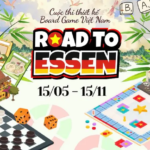
Road to Essen, a competition designed to showcase Vietnam’s burgeoning tabletop design scene at the world’s biggest board game fair, has returned for its second year – with organisers changing things up in the hope of helping turn publisher interest into commercial deals.

The contest was launched last year by Vietnamese board game publisher Everjoy Publishing and its global arm Everjoy Global, in an attempt to help designs from Vietnamese creators break out internationally.

Entrants receive access to workshops and playtesting, while later-stage contestants receive mentoring and jury feedback, with selected games ultimately presented to the international industry at the giant Spiel Essen board game fair in Germany.

Thinh LeHuu’s co-operative card game July, themed around Vietnam’s seventh lunar month and its Hungry Ghost festival, was named the inaugural champion last year from about 160 entries – winning over a judging panel that included Cascadia designer Randy Flynn with its “clever gameplay, polished design and cultural message”.

The 2026 competition is now under way with a theme of ‘Vietnamese Culture’, encouraging designers to draw on areas including the country’s history, legends, beliefs, festivals, folk arts, cuisine, crafts and architecture.

Rulebook cover for July, designed by Thinh LeHuu

But there is a significant change to the timetable this time around: rather than taking the winner to Spiel just weeks after the competition concludes, organisers have scheduled their next international showcase for Spiel Essen 2027.

Claire Ton, head of the organising committee for Road to Essen 2026, told BoardGameWire, “It’s a deliberate decision to give the work its best possible shot.

“A winner chosen in late 2026 can’t have a polished, publisher‑ready game on the Essen floor a few weeks later – and a rushed debut serves the designer least of all.

“Aiming this edition at SPIEL 2027 gives the winning team close to a full year to develop the game, act on the judges’ feedback, line up a publishing or distribution partner, and arrive ready to actually do business.

“It also lets us plan the Vietnamese presence at the fair properly. Getting a Vietnamese game to Essen was never really the goal – getting it there ready to sell is.”

The extra development period addresses one of the main barriers Road to Essen was created to tackle: getting games from Vietnam’s rapidly-growing community of local designers into a form that can be presented effectively to publishers and distributors outside the country.

Everjoy Global co-founder and CEO Ionah Nguyen told BoardGameWire in 2025 that Vietnam had experienced a roughly 400% increase in locally-designed games entering its market in just two years – but said designers continued to face a lack of international publishing and distribution connections, language differences, unfamiliarity with global supply chains and the cost of attending overseas shows.

Almost a year later, Ton told BoardGameWire, “The first edition did exactly what a first edition should: it put Vietnamese design in front of the world and proved there’s real appetite for it.

“We brought the games to SPIEL Essen 2025 and the response was genuinely exciting – our winning title, July, drew particular attention.

“That interest is now powering the next stage. Most of our finalists are deep in development, sharpening their games with everything they took from our international judges and from the fair floor.

“We’re building deliberately for lasting outcomes rather than quick headlines – the first publishing deals to come out of Road to Essen should be the right ones, and we’d rather bring a title to market ready to succeed than rush it out early.

“There’s a lot moving beneath the surface, and the next year is where it starts to show.”

Ton added, “We’re in the relationship‑building phase, and it’s an encouraging one. A lot of conversations were sparked at Essen – publishers wanting to understand the scene, see what’s emerging from Vietnam, and stay close to what comes next.

Thinh LeHuu collects his champion award at the Road to Essen competition in 2025

“What’s promising is that this feels less like one‑off interest in a single title and more like the early groundwork of lasting partnerships, which is exactly what a young design ecosystem needs to grow.

“The titles generating the most conversation share a clear profile: culturally distinctive, visually striking, and easy to pick up and play. Our focus this year is turning that momentum into concrete meetings and, ultimately, deals.”

That intermediary role directly addresses one of the problems Nguyen identified when Road to Essen launched: many Vietnamese designers lacked direct connections to international publishers and distributors.

She told BoardGameWire last year, “There’s no shortage of creativity in Vietnam. What we lack are bridges.”

But there are signs outside the competition that Vietnamese designers are beginning to find international publishing routes.

Vietnamese designer Huy Pham’s Yotei has been picked up by Rebirth publisher Mighty Boards, which launched a Kickstarter for the game in April before demoing it at Gen Con this summer.

Mighty Boards edition of Yotei, designed by Huy Pham

Meanwhile Bunny 100 – designed by Hoang Vo and originally published by Everjoy Publishing – has secured a European release through Italian publisher DV Games.

Those developments come as designers elsewhere in Asia have had a striking 12 months in achieving recognition in the European market.

Japanese designer Hisashi Hayashi’s Bomb Busters won the Spiel des Jahres in 2025, while Indonesian designer Martin Ang’s JinxO – published as Dito! in Germany by Game Factory – scooped the award this year, becoming the first Southeast Asian-designed game to win the prize.

Ton said Vietnamese games’ biggest sales numbers nevertheless remain overwhelmingly driven by the country’s domestic market rather than exports, telling BoardGameWire research suggested Vietnam’s board game market reached about $100m last year at a roughly 10% growth rate.

She said, “Importantly, more of that is original Vietnamese design rather than imports, supported by a fast‑growing creator community and better retail distribution.”

Several Vietnamese-designed games are now reporting sales in the tens or hundreds of thousands of copies – like Bunny 100, Zodiac Rush and Galactic Super Beasts – thanks to the snowballing domestic market.

Ton told BoardGameWire, “The vast majority of those numbers come from Vietnam itself – and I’d argue that’s the most important part of the story, not a limitation.

“It proves there’s a large, real domestic market here: a home audience big enough to make original Vietnamese design commercially viable on its own. That’s the foundation everything else is built on.

“Export is the newer chapter – Bunny 100 into Europe through DV Games and across several Asian markets – and it’s growing, but the headline sales figures today are a signal of domestic strength first.”

This year’s contest will have an overall prize pool of about 500 million Vietnamese Dong – roughly $20,000 – split between the winner and a set of other award finalists.

They include awards for fan favourite board game, best visual design, most innovative board games, the game with most commercial potential, and best cultural representation – as well as categories for best junior creator (aged six to 15) and outstanding teen designer (ages 15 to 18).

The submission period for this year’s awards end on November 15, with the grand prize winner receiving full sponsorship to attend Spiel Essen 2027, along with an exclusive publishing opportunity with Everjoy Publishing.

The post Vietnam’s Road to Essen board game design contest back for second year, with longer runway aimed at turning publisher interest into deals first appeared on .

Published — 21. August 2026 https://boardgamewire.com/

After successful debut, Middle East’s first major tabletop games con faces new challenge securing publishers amid US-Iran war

21. August 2026 um 15:39

Fledgling Dubai board game convention tabletop.me is facing a very different challenge as it prepares for its second year: persuading overseas publishers the commercial opportunity of reaching the Gulf’s growing tabletop market is worth pursuing amid safety concerns around the US-Iran war.

The three-day event, which debuted last November as the Middle East’s first dedicated board game convention, attracted about 3,000 attendees and 55 publishers according to founder Mark Azzam. He told BoardGameWire ahead of the convention’s 2025 launch that he ultimately hoped to create something akin to a “Gen Con of Dubai”, drawing visitors from the UAE and across the region.

The show is aiming for at least 5,000 visitors when it returns between November 6 and 8 this year, Azzam said – but he added that the US war with near-neighbour Iran had already caused some publishers not to return for this year’s event, while others plan to wait until September or October before making a firm decision.

Azzam told BoardGameWire, “The main concern has been staff traveling here. Several publishers have told us that, because of the current situation, their companies are simply not allowing employees to travel to the region for the time being.”

tabletop.me founder Mark Azzam

He said that although tabletop.me offers the option to take care of booth builds, staffing, game demonstrator training and product logistics without a publisher representative being present, tighter publisher budgets this year were also factoring into its challenges.

“Many publishers are being more selective this year and focusing on their established convention schedule, such as Gen Con and Essen”, Azzam said, but added: “We believe emerging markets like the Middle East are exactly where brands should invest for long-term growth.”

This year’s show has already signed up companies including Asmodee, Allplay, Dice Throne, Oink Games and Blue Orange Games, alongside TCG brands that participated last year and seven publishers which did not attend the first event, according to Azzam.

But the continuing uncertainty around the US-Iran war makes the task of building an international exhibitor base considerably more complicated than it appeared when tabletop.me first launched.

Dubai and the wider UAE have continued operating as major international business and aviation hubs since the war began in February this year, but the conflict has affected air travel and freight through the region.

Gulf News reported this month that most UAE flights were operating, although airlines continued to warn of cancellations, rerouting and short-notice changes, while the European Union Aviation Safety Agency recently extended an advisory covering UAE airspace until August 31. Reuters reported this week that tensions between Iran and the UAE had again escalated, while shipping uncertainty has persisted around the Strait of Hormuz.

Azzam said those developments had clearly affected publisher decision-making, despite day-to-day life and business activity in Dubai having largely normalised following the most intense period earlier this year.

He said, “From our perspective on the ground, the situation has been much calmer than many people outside the region may have perceived. The first few weeks were a little shocking, as you had never experienced anything like this here before, but the UAE authorities responded extremely well.

“Since the ceasefire on April 8, things have largely returned to normal. The airspace is fully open again, flights have normalised, and Emirates and Etihad Airways are operating as usual. From what we see day to day, life in Dubai feels very safe and business has picked up again over the past couple of months. I have remained in the UAE throughout the entire period and have always felt safe here.

“There has definitely been a difference between the international perception, mostly due to the media, and the reality on the ground in the region. While the news coverage naturally focused on the wider conflict, daily life in Dubai has continued largely as normal, and confidence is steadily returning.”

Azzam, who also runs a trio of Back to Games board game stores across Abu Dhabi and Dubai, said that rather than the conflict denting his retail business, demand had actually risen at points during the last few months.

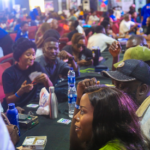
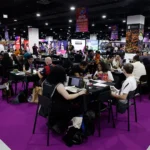
Gamers at tabletop.me in 2025

He told BoardGameWire, “Interestingly, it has almost been the opposite of what we expected! It reminded me a little of the early days of Covid, where more people started spending time at home and looking for ways to connect with friends and family.

“We saw a noticeable increase in demand for tabletop games, particularly TCGs and board games. With many large events cancelled or postponed over the past few months, people seemed to turn toward tabletop gaming instead.

“Rather than seeing a decline, our retail business actually grew during that initial period when the conflict started. It was a pleasant surprise, and now that things have settled down, business has largely returned to normal.”

When asked what he would say to publishers whose management has ruled out attending because of regional tensions, Azzam said, “I would tell them that, if anything, the conflict increased demand for tabletop gaming rather than reducing it. We saw that directly through our retail business, where sales, particularly in TCGs and board games, actually increased as more people turned to the hobby.

“Distribution was affected for the first month or so while freight and logistics adjusted, but that has now completely recovered. Products are arriving on schedule again, and the market continues to grow, with new game stores and cafés opening across the region every month.

“From what we are seeing, thankfully, the long-term opportunity in the Middle East remains just as strong as it was before.”

Azzam has spent more than a decade building businesses around that opportunity.

Spotting a gap in the market, the former airline captain funnelled his savings into launching a small kiosk in The Dubai Mall in 2015, before launching his first Back to Games store in Abu Dhabi six months later.

He subsequently built Back to Games into a three-store operation and became co-owner of publisher and distributor Boardgame Space in 2017. BoardGameWire reported last year that Boardgame Space had localised more than 55 games.

Speaking about the Gulf market for board games in general, Azzam told BoardGameWire, “I think one of the biggest misconceptions is that an internationally successful game will automatically sell well here just because it succeeded elsewhere. In reality, brand awareness and marketing are incredibly important in the Gulf.

“People are much more likely to buy a game they have already seen in social media or online, heard about through creators, or know is trending internationally.

“Presentation also matters. The box needs to clearly communicate the game and look visually appealing, as that first impression is often what generates interest.

“Also, publishers should be aware of some cultural considerations, which is exactly where local partners like us can manage easily. We understand the market and can help publishers present their products in the best possible way for the region.”

Azzam added that the show was spending more heavily on marketing this year, using budget freed up from the “significant” first-year setup costs that came with launching the event.

The show is also introducing a rewards programme designed to encourage attendees to try out unfamiliar publishers and games.

This year’s tabletop.me will take place in Dubai from November 6 to 8.

The post After successful debut, Middle East’s first major tabletop games con faces new challenge securing publishers amid US-Iran war first appeared on .

Published — 20. August 2026 https://boardgamewire.com/

Ares Games considers extra website protection after suffering multi-day DDoS attack

20. August 2026 um 16:14

Ares Games is considering bolstering its website protection after suffering its first ever DDoS attack, which it says left its site inaccessible for about 10 hours across three days of difficulties.

The Italy-based War of the Ring publisher said thousands of fake requests repeatedly saturated its server bandwidth and CPU earlier this week, temporarily preventing some customers from reaching its main website and e-commerce site, which is also used for preorders and crowdfunding pledge management.

Ares director of production Roberto di Meglio told BoardGameWire no customer data was compromised during the cyber attack, adding that he was inclined to believe the company was targeted randomly rather than specifically.

He said, “It’s difficult to assess the exact monetary loss in terms of missed orders. We can assume most of the potential customers affected by the issue will probably come back at a later moment, so the revenue should be delayed but not lost – especially if the customer was visiting for something specific, like a pre-order or pledge manager.”

Ares’ e-commerce infrastructure supports ordinary direct sales alongside preorders and crowdfunding activity. The publisher has continued to use crowdfunding extensively, with its 16th Kickstarter project, Mega Empires: The Far East, completing its campaign earlier this year.

The DDoS attack comes after Ares said last year that it was developing its direct sales business to help offset reduced profits through traditional distribution channels amid the US tariff volatility.

Di Meglio told BoardGameWire at the time that the company planned a combination of reduced inventories, increased prices and product selection alongside “developing our direct sales to make up for the loss of profit through the traditional distribution tiers”.

While Ares has experienced other hacking attempts previously, Di Meglio said this was the publisher’s first DDoS attack. Its server administrators introduced additional security rules in response, and Ares is now considering whether to add further protection such as a DNS proxy service like Cloudflare.

But he added, “The main concern is that every rule or system you implement to stop this type of ‘swarm’ attack potentially might stop or slow down a regular visitor, so you have to find the best compromise between keeping danger out and allowing customers in.”

The incident comes as DDoS attacks have become more numerous and larger across the internet. Web application security and performance giant Cloudflare recently said it detected a 519% increase in hyper-volumetric DDoS attacks across its network during the first half of 2026.

The post Ares Games considers extra website protection after suffering multi-day DDoS attack first appeared on .

Published — 19. August 2026 https://boardgamewire.com/

“Our attempts to do things ‘different from the others’ came back to bite us”: Plaid Hat’s Colby Dauch on The Monolith’s Kickstarter failure and rapid turnaround

19. August 2026 um 20:30

Plaid Hat Games launched its Kickstarter for The Monolith in June with a trio of successful crowdfunding campaigns under its beltonly to pull the project three days after launch when pledges unexpectedly ground to a halt, despite quickly beating its $20,000 goal. Less than two months later the revamped campaign is back, and has already pulled in almost four-times the amount the cancelled campaign managed in the same amount of time. In this first-person piece for BoardGameWire, Plaid Hat founder and CEO Colby Dauch explains why The Monolith exposed flaws the publisher’s previous campaigns had masked, what he believes it got wrong, and why the changes made for the relaunch appear to be working.

Plaid Hat Games is relatively new to crowdfunding and we’ve experience our first major setback in that arena. We launched our fourth ever crowdfunding campaign back in June, this time for a new game called The Monolith.

By the second day of the campaign the pledges had fully stalled out. It was self-evident that we had made mistakes, so we pulled the campaign with the intention to relaunch it after analyzing what had gone wrong, and doing what we could to address it.

As I write this article, I don’t know if our hunches will turn out to be correct. This article is scheduled to be posted as we relaunch the campaign, so I suppose we are all going to find out together! I’m more than a little nervous. Allow me to provide some background essential in understanding how we’ve come to make the choices we’ve made.

Plaid Hat founder and CEO Colby Dauch

We’ve been around since 2009 and watched from the sidelines as crowdfunding took hold and grew into a large part of the board game industry.

For many years we swore off crowdfunding. Internally we were critical of it for a number of reasons. My biggest reservation was that it felt dishonest to me that an established company would tell its customers “we need your help to make this product”, when they had already proven previously that they were capable of putting together the funding necessary to launch a new product onto the market, without requiring the customer to buy said product a year or more in advance of its release.

However, things have changed over the years in more ways than one and honestly, it has been a bad business decision to hold out on the crowdfunding model for as long as I have.

When we did finally enter the crowdfunding space a couple of years ago I told myself, and others, that there was clearly no longer an expectation that the companies going to crowdfunding needed to be there. I believed it to be understood that it was more akin to a pre-order system and that the consumer knows that. I even said as much in the article I was interviewed for on this very site, posted on June 30th, about us pulling the Monolith from Kickstarter. It’s not true. I had only convinced myself that it was.

I’m in the midst of reflecting on every decision I’ve made that led to a failed campaign, and what that failure means for my company, the people I employ and my family, if I’m not able to correct course. The reality is that we moved to crowdfunding because the things that made us successful in the past aren’t working anymore and we were growing desperate for a solution.

Getting attention on a board game release announcement isn’t free anymore. It’s not news. At best it’s a bullet point on a long list of new release announcements for the week. The traditional method we’ve long employed of selling to distributors who sell to retailers who sell to players, sadly seems to be falling apart for us, and I suspect for most publishers.

So we found ourselves trying to incorporate crowdfunding into our business model while simultaneously telling ourselves we could do it different – better. Our approach:

  • We will severely limit the use of exclusives. We don’t want people feeling like they HAVE to buy the product now or they will be missing out.
  • We aren’t seeking to punish the people who have long supported their local board game shop by purchasing our products through them.
  • Most of all we don’t want to manipulate our customers by preying on their fear of missing out.
  • We will reduce the long wait between the time you back a game and the time you get that game by being fully ready to go to production at the time of the Kickstarter.

There were flaws in this approach. Flaws that I believe were masked in our first three campaigns because they all had something else big going for them.

Wandering Galaxy was the latest installment in a series of games we had released that had gotten a lot of attention for their amazing storytelling and voice acting (in a companion app).

Ashes Ascendency was a reinvigoration for a game that has ten years worth of glowing reviews to put in front of people and a dedicated fanbase.

Super Auto Pets Card Battle was based on an amazing and charming digital game, and we were able to rely on the attention of fans from that.

The Monolith had no predecessor.

The Monolith || Kickstarter image

This is why I believe our attempts to do things ‘different from the others’ has come back to bite us:

We wanted to limit FOMO.

A crowdfunding campaign must be compelling beyond the presentation of the game itself. You are asking the customer to pay for a game long before they can expect to have it in their hands. We need to give them a compelling reason to do that.

In the Super Auto Pets Card Battle campaign, the most popular pledge was by far the ALL-IN pledge, because it was the most compelling. You got all of the sets, all of the add-ons and in a storage box that would organize it all and only be available during the campaign.

I took away the wrong lesson. What I decided was that what those results were telling me was just that people want all the stuff, so with The Monolith let’s just make the core product all of the stuff.

We wanted to reduce the wait time on the game.

This is the one where I really messed up with The Monolith. As I established, the reality is that we needed to make changes to how we were doing things and I allowed myself to miss out on a key advantage to crowdfunding: measuring demand.

In an effort to shorten the window on how quickly we could deliver on a campaign, and further spurred on by a yearning to have a line at our booth for a new game release at GenCon or Essen (that feeling is the highest of highs), I started having plastic molds for the game well before the campaign so that they wouldn’t delay production – and remember this game was going to have all the upgrades packed in, so it was a lot of plastics and a lot of mold costs.

Further compounding the issue was that the mold costs were so high, to get the cost per unit down, I felt like I needed to be prepared to produce 10,000 copies. And like the molds, I got that production started before the campaign even started.

It was the exact kind of risk we had always needed to take when producing a game, but crowdfunding should have given me a chance to mitigate that risk, and in doing so really been a fulfillment of the core concept of crowdfunding to begin with: Asking the player to help be a part of bringing the game to the market.

So here is what we are doing differently with the relaunch of The Monolith campaign to try to address what went wrong with the initial campaign:

  • Creating a 1-2 player mini-expansion.
  • Lowering the retail price of the game and offering a larger discount on that already lower price for backers.
  • Creating a 6th shaman character add-on.
  • Creating glass blood tokens add-on.
  • Creating a metal first player and surge tokens add-on.
  • Creating an All-In tier with all of the add-ons included at a lower price than purchasing them separately.
  • Different marketing partner and strategy.

Finally, here are my take aways for how we will do campaigns differently in the future:

  • When possible, create a version of the game that focuses on lower price and a version that focuses on maximum bling.
  • Be more willing to compete with the price point that we and everyone else knows online retailers are going to put on our games.
  • Give the campaign a chance to communicate what the demand is. We will still be production ready, but I won’t be putting the cart directly in front of the horse again.
  • Better leverage the community-based systems that already exist to support crowdfunding.

Follow Up

As I write THIS bit, the campaign has relaunched about 24 hours ago and is doing much better this time!  By a large margin, backers are opting for the pledge level that includes all the add-ons. So I believe this supports the theory that the add-ons were essential for a successful campaign. 

It is hard to quantify exactly how much each of our changes contributed to the better result, but overall, the adjustments seem to be working.  I’m so grateful to everyone who has backed.

The Kickstarter for The Monolith, which is designed by Phil Gross, is set to run until September 17.

The post “Our attempts to do things ‘different from the others’ came back to bite us”: Plaid Hat’s Colby Dauch on The Monolith’s Kickstarter failure and rapid turnaround first appeared on .

Published — 18. August 2026 https://boardgamewire.com/

Unstable Unicorns maker launches new studio led by rising star designer Marceline Leiman

18. August 2026 um 16:18

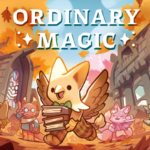
Unstable Unicorns publisher Unstable Games has launched a new studio led by rising tabletop designer Marceline Leiman, who will shape its creative direction and design every game it releases for at least the next few years.

Ordinary Magic plans to publish light strategy board and card games set within a single expanding world, with Leiman telling BoardGameWire the studio is looking to put out designs “offering whimsical, magical moments of the everyday” alongside high interaction.

The move comes nine years after Unstable Games owner TeeTurtle’s hugely successful Kickstarter campaign for light card game Unstable Unicorns, which raised more than $1.8m from over 33,000 backers – and went on to sell more than a million copies worldwide by 2023.

The success of that release led to t-shirt maker TeeTurtle creating its dedicated tabletop studio Unstable Games, which has sold millions across its debut title and follow-up releases such as Here to Slay, Happy Little Dinosaurs, Casting Shadows and Twisted Cryptids.

Ordinary Magic’s arrival comes hot on the heels of Unstable Games completing by far its biggest crowdfunding campaign yet, with Here to Slay Dungeons raising more than $6.6m on Gamefound in April.

Leading the new studio continues a rapid rise for Leiman, a 2025 Diana Jones Emerging Designer Program winner whose published designs include High Tide, Wildberries and Dino Racer – the latter of which picked up significant buzz at Gen Con this year, and is currently ranked at number two in the BoardGameGeek Hotness.

Ordinary Magic studio lead Marceline Leiman

Her route into professional board game design began with the 2023 release of her solo mode for North Star Games titles Oceans, which led to a part-time developer position at Underdog Games, as well as client work for Office Dog, WizKids, Allplay, Button Shy Games and Maestro Media, according to her website.

But Ordinary Magic represents her first full-time job in the industry, with Leiman saying the roots of the venture going back to the period immediately following the downsizing of Underdog in April 2025, when the publisher laid off almost its entire staff as it attempted to weather the impact of US tariffs.

She told BoardGameWire that Underdog president Nick Bentley, who was also let go by the company at that time, quickly introduced her to Unstable Games, with the pair initially planning to build the new operation together.

Bentley ultimately went in another direction before that arrangement was finalised and is now director of game design at Taco Cat Games, which rebranded from Dolphin Hat Games in May to reflect the huge success of its standout title.

Leiman said, “We both were fully intending to start up a new studio within Unstable Games. The proposition was always that they were going to do sort of an incubator program, is the way that they proposed it to us.”

She added, “My role within the studio was always going to be the capacity of being a game designer. Only now with Nick no longer part of the project, it has allowed me to take more of a formal leadership role.”

Leading the line

The resulting structure puts Leiman’s work at the centre of the studio, rather than positioning Ordinary Magic as a conventional publisher or imprint sourcing games from a roster of designers.

She told BoardGameWire, “Every single game that comes out of Ordinary Magic is a design of mine. I am the designer of each of the games coming from the studio, and you should expect that at least for the next several years.

“That does not mean that you won’t ever see a game from anyone else besides me from Ordinary Magic. But think of me as the shepherd of the studio.

“I am leading the direction of the design behind Ordinary Magic and the types of games you should expect, and the feelings from the games that you should expect. But I am absolutely open to that changing; it’s not a hard rule.”

Leiman added that although she is not currently accepting game pitches, she is “always interested in learning what designers are working on, both those I am familiar with and unfamiliar with”.

She told BoardGameWire, “I love sharing ideas, and I think the spirit of design is still very much open in terms of the way I like to talk with other designers. I always want to consider whether or not in the future, an opportunity is available between Ordinary Magic and a designer looking to pitch their games.

“However, I cannot promise at this time that we are accepting any pitches that we might receive. If I were to look at any pitches, what I’ve described in the past is that Ordinary Magic is looking for games that are offering whimsical, magical moments of the everyday. Not high magic, not combative, though highly interactive.

“I think if someone wanted to pitch to me a game with a theme that was more focused on a curious bit of a real-life moment that inspired them, that would interest me more than somebody who’s coming to me with a pitch purely with a magical concept. I am much more interested in the grounded reality of this world rather than the high fantasy.”

Finding direction

Leiman said the studio’s creative direction would be to create interactive games which give “meaningful reason for other players to be at the table with you”, but added that would likely not extend to full “take-that”-style designs.

She said, “What you should expect from us is strategy-light strategy style games, sometimes card games, sometimes board games. I am also very interested in exploring the realms of cooperation as well as indirect player interaction, or both direct and indirect forms of player interaction.

“Something that you’ll find from me is that I am very interested in sort of passive aggression in games, where the decisions I am making might be to block you or to prevent you from getting something before me. A very old-school style of interaction, German old-school I think some people would think about.”

Ordinary Magic’s first three titles are set to launch together on Gamefound this autumn, taking players to a bookshop, hotel and corner café through The Curious Little Bookshop and two as-yet-unrevealed titles.

Leiman said the original plan had been to launch the games individually, but that Unstable ultimately proposed putting all three into the same campaign after their development schedules aligned – a situation which partly arose due to Leiman’s rapid work rate.

The Curious Little Bookshop || Gamefound image

She told BoardGameWire, “The method that I was taught game design was very much under the tutelage of my professors at NYU Game Center, and there we worked very much within a fast-paced work environment.

“Joining this studio very much is like returning back to that environment, which I am very comfortable being in. The way that I’ve worked within the studio is quite fast, is quite rapid, I guess, in relation to other people’s speeds.

“But for me, within a short amount of time, what I am looking to do is try out many ideas and fail with many ideas as quickly as possible, so I could find the core of what is fun, what is interesting, what is memorable about a game.

“It just so happened to align with our release schedule that I would have these three games. Our original plan was to release them one by one, but just with the way that scheduling worked out, we decided that it would be best to put our best foot forward with this new studio by showing the strength of our design, with the strength of our art, and production capabilities.”

Operationally, however, Ordinary Magic is currently far less separate from its parent studio than its distinct branding might suggest.

“The only difference between Ordinary Magic and Unstable Games in terms of operation is me,” Leiman told BoardGameWire.

She added, “Everything that you’ve come to expect from me – my work ethic, my taste, my voice – you should expect to be part of these games.

“Not to say that I don’t work with the Unstable Games team as well. We actually do cross-pollinate a lot in terms of our playtesting, in terms of our conversations, in terms of problem-solving.

“So it’s not like I’m totally in a silo or and neither are they from me. There’s definitely a lot of creative support going back and forth between the two studios. And as the studio continues to develop and grow in size, naturally Ordinary Magic will change with it.”

Speaking about the shared world envisaged by Ordinary Magic for all of its releases, Leiman told BoardGameWire, “You should not expect to see any games released from Ordinary Magic that are not part of this world.

“We’ve talked a lot about what that means in terms of building the IP, sort of what direction could it go in the future? Does it open us to different forms of media, different forms of games, or are they all going to be board games and card games?

“We’re leaving that station open right now. But we’re definitely open to exploring what it means to have this IP as we look forward to the future.

“As for recurring characters and locations, I would say keep your eyes open for the GameFound campaign, and I think you’ll be very excited to see some crossover moments between them.”

Ordinary Magic’s debut Gamefound campaign is currently scheduled to launch in the autumn.

The post Unstable Unicorns maker launches new studio led by rising star designer Marceline Leiman first appeared on .

Published — 17. August 2026 https://boardgamewire.com/

arsEdition tapped Asmodee for toy trade distribution after launching its board game line last year

17. August 2026 um 16:38

German children’s book, gifts and stationery publisher arsEdition has confirmed it has tasked Asmodee with distributing its fledgling board game range to specialist toy retailers and some wholesalers, after making its first significant move into tabletop games just under a year ago.

Asmodee has been distributing the Bonnier-owned publisher’s games under the agreement since the beginning of 2026, creating a split-channel model that sees arsEdition continue to handle distribution within the book trade and major book retail chains.

The pair said the move gives retailers improved availability, clear product range structures and coordinated support across both distribution channels – with an aim of sustainably increasing the visibility of arsEdition games in the market and generate further momentum in the family games segment.

arsEdition launched a dedicated games programme last September focused on family-weight games for ages 6, 8, and 10 and up, with an opening slate of seven titles including Reiner Knizia designs Oshiya Tokio and Guardian of the Treasure, and Sophia Wagner’s Twilight Watch.

The board game unit lead, Volker Hirsch, previously spent six years as creative director at Amigo Spiele until 2001, and has also since worked as head of product development at Ravensburger Digital, and as a partner at former Games Workshop collectible card games subsidiary Sabretooth Games.

Some of arsEdition’s debut line of board game releases

arsEdition publisher Dagmar Becker-Göthel said when the range was unveiled last year that games represented a growing category in the toy trade, while also becoming increasingly important for booksellers – providing the rationale for developing a range capable of operating across both channels.

The publisher said at the time it planned to release new games twice a year.

Rebecca Roscher, commercial director at arsEdition, said, “We are currently putting a great deal of energy into the development and production of exceptional family games for ages eight and above, which are characterised by innovative mechanics, strong brands and unique design.

“With Asmodee as our partner, we can now position our games even more strategically and comprehensively across the relevant distribution channels.”

Upcoming releases from arsEdition include include Toshi, a 1-4 player tile-laying game from Friedemann Friese scheduled for September, and Cat and the Tower, a cooperative dexterity game from Masakazu Takizawa.

Box cover for Toshi, designed by Friedemann Friese

The company also continues to work with prominent designer Reiner Knizia, with its website currently listing seven products from the storied creator.

For Asmodee Germany, arsEdition adds another outside publishing partner to a distribution operation that has continued to broaden its third-party portfolio.

Last year it agreed to add selected Moose Toys games to its distribution network in Germany, Austria and Switzerland, and in June 2025 struck a wholesale distribution agreement covering a large part of German publisher Frosted Games’ range.

Asmodee Germany managing director Udo Fischer said the arsEdition deal brought together the companies’ different areas of expertise.

“The trusting collaboration between Asmodee and arsEdition brings together two distinct perspectives – expertise from the book trade combined with many years’ experience in board and card games – which complement each other perfectly,” he said.

“By entering the world of board games, arsEdition is providing a strong additional impetus in the family segment.”

arsEdition is part of Bonnier Media Deutschland, which also owns publishers including Carlsen, Piper, Ullstein and Thienemann-Esslinger. The wider group reported net sales of €336m in 2025, sold 75.5 million books across all formats and employed an average of 795 full-time staff.

Bonnier Media Deutschland describes itself as the largest German book publishing group, with particularly strong positions in children’s publishing, comics and illustrated formats.

The post arsEdition tapped Asmodee for toy trade distribution after launching its board game line last year first appeared on .

Published — 14. August 2026 https://boardgamewire.com/

Africa’s longest-running board game convention eyes grants for local designers as part of 10th anniversary crowdfund

14. August 2026 um 14:29

Africa’s longest-running board game convention is hoping to use its tenth anniversary to put more direct support behind the continent’s emerging designers, with plans for a new grant programme if its latest crowdfunding campaign reaches $20,000.

Nigeria’s African Boardgames Convention (AB Con) has set a $14,000 target to support its November event – more than 50% above the $9,000 goal it set last year – as it prepares to return to a two-day format for the first time since 2023.

The November 27 and 28 event in Abuja will include prototype playtesting, workshops, industry discussions, networking and a marketplace alongside its consumer-facing game demonstrations and tournaments, according to organiser NIBCARD Games.

But potentially more significant for Africa’s developing board game industry are the additions AB Con hopes to unlock if the campaign moves beyond its base target.

Reaching $20,000 would launch an AB Con Designers Grant, providing financial support and mentorship to African tabletop designers to develop prototypes, improve their games and showcase them at future editions of the convention.

A $22,000 stretch goal would introduce an Impact Award recognising people and organisations helping develop the continent’s tabletop ecosystem, while $30,000 would extend this year’s convention from two days to three.

The campaign describes the designer grant as an attempt to create “more opportunities for African games to reach local and international audiences”.

That represents another step in a decade-long attempt by AB Con and organiser NIBCARD to build infrastructure around what was an extremely small modern tabletop design community when the convention began.

AB Con says there were fewer than 10 known indigenous tabletop games and only three published game designers in Nigeria before it launched in 2016, with few places available for people to regularly play modern board games.

BoardGameWire reported last year that the number of known modern games from Nigerian designers had since passed 100, while the number of designers had grown to 25.

AB Con has provided a crucial meeting point and catalyst during that expansion, bringing together designers and publishers alongside manufacturers, retailers, educators and players.

Gamers, publishers, designers and organisers at AB Con 2025 || Photo Credit: AB Con

Nigerian board game company NIBCARD’s role in developing that ecosystem was recognised with the Diana Jones Award for Excellence in Gaming in 2021.

The award committee described the company as being “the multi-faceted company at the heart of the nascent Nigerian games industry”, highlighting its work publishing games, manufacturing for other companies, mentoring designers, running a game café and organising AB Con.

NIBCARD itself says it has now designed more than 70 tabletop games since being founded in 2013, while its activities have expanded across publishing, manufacturing, education and digital games.

While those efforts have proved a pillar of the region’s hobby gaming growth, NIBCARD and AB Con founder Kenechukwu ‘KC’ Ogbuagu told BoardGameWire there were still large challenges around getting Nigerian and African designers and games to break into North American and European markets.

He said, “It’s a combination of several factors, but I would highlight visibility, access, finance, and market access.

“There is a significant lack of visibility for African games and designers. Publishers often don’t get to see the games being created here, while designers have very limited opportunities to meet and build relationships with publishers.

NIBCARD and AB Con founder Kenechukwu ‘KC’ Ogbuagu

“I have experienced this personally. I once received fully funded support to attend Spiel Essen, but was denied a visa. Last year, I was invited to GothCon on a fully funded trip, but I couldn’t even secure an interview date for my visa application.

“Finance is another major barrier. Even when a game is ready, designers need money to market it, work with content creators and reviewers, attend international conventions, and run crowdfunding campaigns such as Kickstarter or Gamefound.

“And for those who choose to self-publish, international shipping can make African games extremely expensive and difficult to compete with in global markets.”

He added, “One of our mission is to see African designers creating games that are enjoyed globally and, ultimately, seeing African-designed games recognised among the best games in the world.

“We have already started working towards this. Last year, with support from the Spiel Foundation, we showcased games from three African designers at SPIEL Essen 2025. We also started a game studio as a way to bring African games to light.

“But even as we build, from over 10 years of experience doing this, a lot of the impact are limited due to lack of funding.

“We are intentionally building AB Con to become a platform where African designers, games, publishers, distributors, and international industry professionals can connect.

“We want publishers from North America and Europe to see AB Con as a place to discover new designers and games from Africa, explore licensing and publishing partnerships, and build long-term relationships with the African tabletop industry.

“This is one reason we are committed to maintaining a two-day convention going forward, with the goal of eventually growing it into a four-day event. We want to create enough time and space for meaningful meetings, playtesting, networking, showcases, and publisher scouting.”

The growing scope of AB Con has repeatedly run up against the economics of staging the convention, however.

The event previously raised more than $23,700 through its 2021 Kickstarter campaign, and self-funded for the following two years – but was forced to return to crowdfunding in 2024 after soaring inflation in Nigeria weighed heavily on its finances.

That year’s campaign raised about $16,000 from 225 backers against a roughly $8,000 target – and AB Con increased its target to $9,000 for 2025, ultimately raising more than $11,000 from 144 backers.

Its new $14,000 base target represents another substantial increase. Organisers said the higher figure reflects both inflation and the cost of restoring AB Con’s two-day format, and will be used for venue and production costs, volunteer support, logistics, marketing, accessibility and expanded programming.

Nigeria continues to experience significant price increases, despite inflation having eased substantially from the levels that prompted AB Con’s return to crowdfunding.

The country’s National Bureau of Statistics currently reports annual consumer price inflation of 15.9% – down markedly from an almost 30-year high of 34% when AB Con launched its 2024 campaign.

Last year’s AB Con campaign was initially intended to support ambitions for as many as 3,000 attendees, compared with roughly 1,300 at the 2024 event and about 1,000 in 2023. The 2025 convention ultimately took place as a one-day event on November 29.

At least seven Nigerian designers showcased projects at the 2025 convention, according to Nigeria’s Independent newspaper, while participating publishers included Althra Games, ICE Game and Jesus Native Games.

AB Con founder and lead convener Kenechukwu ‘KC’ Ogbuagu said, “When we hosted the first AB Con in 2016, our dream was bigger than organizing an event – we wanted to help build an industry.

“Ten years later, we’ve seen designers launch original games, communities grow across Africa, and more people recognize games as powerful tools for learning, culture, business, and connection.

“This anniversary is not only a celebration of how far we’ve come but an invitation for the world to help shape what comes next.”

The AB Con Kickstarter is live now, with the convention scheduled to take place in Abuja, Nigeria on November 27 and 28.

The post Africa’s longest-running board game convention eyes grants for local designers as part of 10th anniversary crowdfund first appeared on .

Published — 13. August 2026 https://boardgamewire.com/

Asmodee UK more than doubles annual operating profit to £34m as TCG boom powers growth

13. August 2026 um 20:11

Asmodee‘s UK distribution business more than doubled its operating profit to £35.1m last year, with the company citing the booming trading card game market as the biggest driver.

The profit surge for Esdevium Games – which officially re-registered as Asmodee UK Limited last month – came on the back of an almost 60% rise in turnover to £224m according to its latest annual accounts.

Asmodee UK said TCGs had a very strong year and remained the “pre-eminent category” in the 12 months to the end of March 2026, specifically highlighting Pokémon, One Piece, Disney Lorcana and Star Wars Unlimited as all playing their part in the result.

The distributor said board games continued “steady performance” over the critical holiday period, and picked out Brick Like This and The Fellowship of the Ring: Trick-Taking Game as strong releases from the year.

Brick Like This was the debut release from Asmodee studio Dotted Games, which was launched in 2024 after the company inked a partnership deal with LEGO to create a dedicated design studio focused on making new LEGO board games.

That studio launch came a few months after The LEGO Group and Asmodee had announced their first jointly-crafted board game, Monkey Palace.

Asmodee UK’s figures reflect the transformation taking place across Asmodee globally, where rapid TCG growth has increasingly shifted its revenue mix towards distribution.

The global Asmodee Group reported €1.68bn of net sales for the same financial year across its publishing and distribution operations, up 23%, while operating profit was up about 43.6%.

Asmodee Group’s Jan-Mar 2026 and last financial year revenue figures, showing the huge dominance of TCGs

More than 72% of group revenue was generated by distributing games published by other companies, compared with 63% a year earlier – and TCGs accounted for about 60% of annual group net sales.

BoardGameWire reported in May that sales of Asmodee Group’s own board games actually fell 5.8% over the period, underlining how heavily the group’s overall growth was being powered by distribution.

That trend has continued into Asmodee’s Group’s new financial year. Its April-to-June revenue increased another 20.9% year-on-year to €422.1m, with TCGs responsible for more than two-thirds of quarterly revenue, while board game sales rose 16%.

Asmodee UK’s annual results follow the unit changing up its leadership structure to kick off 2025, with a trio of senior executives being given updated roles amid the company splitting its operation again into three separate channels, carving out e-commerce as its own line.

The move came just over four years after Asmodee UK had split its sales and marketing efforts into two separate categories – hobby and independent, and national retail.

Asmodee bought a majority stake in UK board game distributor Esdevium in 2010, and began using Asmodee UK as its trading name in 2017. The UK operation updated its registered company name to Asmodee UK Limited last month.

A statement from the business said, “Whilst we value our 30 year legacy in the UK hobby market under the Esdevium Games name, this decision reflects our pride in belonging to the wider Asmodee business and marks an important step in enhancing the UK footprint within the group.”

It added that its fellow UK distribution operation Coiledspring Games will continue to operate as a distinct trading division of the company under its own website. Asmodee bought Coiledspring in 2018.

Coiledspring focuses on family-weight board games, party games, logic puzzles, jigsaws and soft toys, while Asmodee UK distributes a wider range of hobby board games, TCGs, miniatures and accessories.

The post Asmodee UK more than doubles annual operating profit to £34m as TCG boom powers growth first appeared on .

Published — 12. August 2026 https://boardgamewire.com/

“We’ve been ready for this step!”: Allplay’s Joe Wiggins on its striking push into heavier games, bigger productions and new audiences

12. August 2026 um 12:41

Allplay is making its biggest strategic shift since its predecessor Boardgametables.com entered publishing in 2018 – launching a trio of new product lines aimed at markets well beyond the accessible, smaller-box strategy games that have defined it to date.

The publisher’s newly-announced Masterworks, Epics and Creations lines mark its expansion into heavyweight eurogames, large-scale adventure titles and licensed or fandom-driven games respectively – beginning with a remake of highly-regarded Chad Jensen design Dominant Species.

Allplay’s decision to broaden its portfolio into larger, more expensive productions stands out as one of the more ambitious publisher expansion plans announced this year – especially given many have been shifting towards smaller-box, lower risk releases amid ongoing cost pressures such as tariffs and rising manufacturing expenses.

The move represents a notable evolution for a company that has built its reputation around approachable strategy games with consistent box sizes and accessible price points, alongside carefully-produced new editions of established hobby titles such as Container. Notable titles from the publisher to date have included releases like River Valley Glassworks, Mountain Goats and Things in Rings.

“We’ve always made games with constraints – on principle”, Allplay COO Joe Wiggins said. “We’re proud of what we’ve been able to make with these constraints.

“The consistent box sizes, accessible price points, and simpler rulesets are great for families and gamers who want strategy without rules overhead.

“Those core products aren’t going away. But now that we’re eight years into publishing games, we’re ready to show what else we can do.”

Allplay began life as boardgametables.com in 2014, specialising in high-end, custom-built wooden gaming tables manufactured in the US, before dipping its toes into board game publishing four years later.

The business rebranded as Allplay at the beginning on 2023 to better reflect its expansion, having reached the point where it was also providing bags, playmats and shelves, in addition to having published 17 board games and eight expansions.

When asked what gave Allplay the confidence to expand its remit again given the current challenges in the hobby games environment, Wiggins told BoardGameWire, “In the last four years we have gone from eight titles to 75. We are not known for bad games or shoddy components, but rather timely deliveries and solid productions.

“We have a very strong team and system in place, and while this growth might mean bigger impacts we have been for three years producing over 20 games per year – and this will see us lowering to about 12 – 15. We’re opening bandwidth to allow for these projects.”

He added, “This wasn’t a decision we made lightly. It was very specific and thoughtful in how we wanted to grow”, and went on to point out: “In the last five years we’ve gone from four of us at Allplay to now hiring our 22nd full time person, with an army of freelancers helping as well. We’ve been ready for this step!”

The most eye-catching announcement was the launch of Masterworks, a heavyweight strategy line created in partnership with acclaimed graphic designer and artist Ian O’Toole, whose portfolio of work includes Voidfall, On Mars and Galactic Cruise.

Rather than simply commissioning artwork, Allplay said O’Toole will become a full partner in the Masterworks line, helping select projects as well as contributing to their development, graphic design and visual direction.

Wiggins told BoardGameWire, “We are seeking out the best heavy euros to bring to market and he is key in the selection, development, art, and graphic design. He isn’t a paid artist – he’s a full partner in the line. We fully believe each release will make a massive impact on the heavy euro scene.”

He added that despite kicking off with a high-profile established title in Dominant Species, almost all of the games in the three lines will be new designs.

Wiggins said, “We just had such an amazing opportunity to launch with Dominant Species, which is one of our favorite all time games and will make such an impact when this amazing game gets phenomenal art and graphics for a modern gaming audience. Don’t expect too many classics – though I do have my eye on one for later down the road in the Masterworks line.”

Alongside Masterworks, Allplay’s Epics line will be dedicated to larger-scale hobby games including Sail Legacy and new survival game Crash Landed, while Creations will focus on games built around recognisable fandoms and licensed intellectual property – beginning with John D Clair’s theme park-themed Have a Magical Day.

Box cover for John D Clair design Have a Magical Day, published by Allplay

Allplay has been clear that its existing publishing strategy will continue alongside the new initiatives, including a Kickstarter campaign in October for Through The Mountains – a sequel to Reiner Knizia’s Through the Desert, for which it ran a crowdfund at the end of 2023.

Wiggins told BoardGameWire that the company had been working on some of its expansion ideas since 2024 – adding that the commercial success of its Allplay partner programme had been key in giving the company the resources to expand its operations.

That partner programme has seen Allplay team up with more than 40 other publishers such as Bitewing Games, Kinson Key Games and Cardboard Alchemy, giving them access to its own infrastructure and providing services such as fulfillment for crowdfunding projects.

Wiggins told BoardGameWire, “As a group we are all stronger and can rely on each others success. Our partnership allows them to focus more on making more and better games and that lets them grow which lets us grow. It’s very symbiotic.”

That network will also help shape the company’s crowdfunding strategy for its new publishing lines, Wiggins said, giving it crucial information on how to successfully market different weights and styles of games.

He said, “When we launch Dominant Species we are able to key into audiences that liked Container and Galactic Cruise. When we launch Crash Landed we have access to the audiences of Tidal Blades 2 and Arydia, [and] when we launch Have A Magical Day we can speak to people who have loved Flamecraft and River Valley Glassworks.

“And people that come to us for Dominant Species will find Galactic Cruise… etc. We’re all working as a team and this is a big difference maker. Lifting each other up.”

Dominant Species, Crash Landed and Have a Magical Day are all set to come to Kickstarter in 2027.

The post “We’ve been ready for this step!”: Allplay’s Joe Wiggins on its striking push into heavier games, bigger productions and new audiences first appeared on .

Gen Con hires The Dice Tower’s Camilla Cleghorn as head of events as show looks to scale beyond record attendance

12. August 2026 um 00:04

Gen Con has hired longtime The Dice Tower presenter and convention organiser Camilla Cleghorn as its new head of events, putting a familiar face from board game media in charge of planning and delivering one of the tabletop industry’s largest event programmes.

Cleghorn’s new role will see her lead Gen Con‘s events team and oversee the planning and execution of the massive convention’s event programming, while supporting the organisers responsible for the thousands of events run each year.

News of Cleghorn’s appointment came less than a week after the close of this year’s show, which continued a record-breaking run by drawing in more than 74,000 attendees.

That figure extends the show’s steady post-pandemic growth, following record crowds of 70,000 in 2023, 71,000 in 2024 and almost 72,000 last year – all of which broke the 2019 pre-pandemic high.

But the convention, which has sold out before opening for three consecutive years, is operating at a hard capacity ceiling at the Indiana Convention Centre – and is set for a significant floor space expansion next year alongside its 60th anniversary.

The expansion includes an extra 143,500 sq ft of floor space – roughly the size of 2.5 American football fields – and 800 new hotel rooms through the opening of a new Signia by Hilton hotel.

Cleghorn told BoardGameWire that growth would create both exciting opportunities and new challenges, adding, “The opportunity is finding ways to welcome more people and experiences while maintaining what makes the convention special. The challenge is making sure the systems, communication, and support behind that growth scale along with it.”

Gen Con 2026

She said, “From the publisher and exhibitor side, I’m fortunate to come in with experience working closely with many of those partners, but I don’t want to arrive with a list of things I think need to change before I’ve had the opportunity to listen and learn.

“Gen Con has an experienced team and a tremendous community of partners. My priority will be understanding what’s working well, where opportunities exist, and how we can continue to build on that together.”

Cleghorn confirmed that Gen Con’s veteran director of events Derek Guder would be “transitioning into an adjacent role” at the business, but said they would work closely together.

She joins Gen Con after several years as a prominent member of The Dice Tower team, filming reviews for its more than 360,000 YouTube subscribers as well as helping to grow Florida-based convention Dice Tower East and working on the show’s annual crowdfunding campaigns.

Cleghorn described her decision to leave the review channel as “bittersweet” in a Facebook announcement to fans.

She said, “I’m incredibly grateful to have been a part of The Dice Tower’s journey over the last several years, and I’ll always be thankful to Tom, the DT team, and all of you for giving me opportunities I never imagined I’d have.”

She told BoardGameWire, “One of the things I value most about my time with The Dice Tower is that I’ve had the opportunity to experience the hobby from a lot of different perspectives: publishers, designers, content creators, convention attendees, and the people working behind the scenes to make events happen.

“It’s taught me that each group has different needs, but ultimately they all want a great experience and clear communication.”

Cleghorn added, “The timing also felt right for me personally and professionally. I’m incredibly proud of my time with The Dice Tower and everything I’ve had the opportunity to be a part of there, and I’m excited to take what I’ve learned into this next chapter.”

BoardGameWire contacted The Dice Tower creator Tom Vasel to ask about the impact she has had at the reviews giant, her biggest achievements at the business and what he will miss most about her moving on, but did not receive a response.

He did briefly mention Cleghorn’s new role in the most recent episode of Dice Tower News, joking about Gen Con’s “thievery” before saying, “We’re excited for her, excited to see that happening”.

He added “You’ll still see here occasionally here on The Dice Tower but she’ll be really busy working for Gen Con.”

The post Gen Con hires The Dice Tower’s Camilla Cleghorn as head of events as show looks to scale beyond record attendance first appeared on .

Published — 11. August 2026 https://boardgamewire.com/

Who has the fairest contracts in board games? TTGDA launches publisher benchmark to improve treatment of designers

11. August 2026 um 22:59

The Tabletop Game Designers Association has begun scoring and comparing the standard contracts board game publishers offer to designers, with the aim of improving how game creators are treated and paid.

TTGDA’s inaugural review of contracts from more than 50 board game publishers found “several critical areas where many standard publishing agreements fall short of fair practices”, such as 75% of publishers retaining rights to a game’s name after publication agreements end, and 40% able to develop expansions without consulting the original designer.

TTGDA – a professional organisation launched in 2024 to advocate for tabletop game creators in North America – has spent the last year creating what it calls its Contract Scoring Rubric, which assesses publisher contracts against 110 criteria covering advances, royalties, intellectual property, expansion rights and financial transparency.

While individual scores are available only to TTGDA members, the organisation has published industry-wide findings and identified its five highest-scoring publishers – adding that the benchmarking exercise had already prompted changes from publishers who scored less well.

TTGDA said several publishers have revised their standard contracts after receiving feedback during the review process, with some improving their scores by more than 20 points prior to the report being published.

The professional organisation identified 25th Century Games, Fireside Games, Lunarpunk Games, Plaid Hat Games and UP Games as the highest-scoring publishers (in alphabetical order) in its review – adding that the benchmark was intended to help designers negotiate stronger agreements rather than discourage them from working with particular companies.

TTGDA’s inaugural Tabletop Market Contract Analysis report stated, “There is still a wide disparity from publishing contract to publishing contract, and key clauses we believe should be standard are not included in many of them.

“Unfortunately, many first-time game designers are so excited to receive an offer they accept terms that may cause them serious creative and financial issues in the future.

“We encourage all designers, even those signing a game publishing agreement for the first time, to negotiate confidently for their contracts to guarantee fair payment, a formal say in the final presentation of their work, solid protection of intellectual property rights, and control of their names and likenesses in publication and marketing.”

TTGDA pointed to five key takeaways in the report, alongside commentary about why the findings are important to designers. They were:

  • Only two-thirds of publishers offer a baseline advance above the TTGDA-recommended minimum of $1,000. 20% don’t offer any advance at all
    TTGDA said, “The publisher should have some “skin in the game” at the start of the project. We have seen situations where the publisher doesn’t pay an advance and then doesn’t start on development or artwork on the game for years. An advance incentivizes the publisher to move toward publication. At least part of the advance should be non-returnable and can be considered minimum payment for the agreement, compensating the creator for tying up the work, even if the publisher ends up canceling the project.

    40% of publishers can make expansions without consulting the designer
    TTGDA: “The game concept is the designer’s intellectual property. The designer had a vision for the game and should have the opportunity to design any expansions or sequels, both for creative and financial reasons.

    10% of publishers have unusual deductions to revenue before calculating revenue, such as manufacturing or marketing expenses.
    TTGDA: “These types of deductions are very difficult for designers to predict, track, and audit. They leave too much room for the publisher to manipulate figures and unfairly reduce royalties paid.

    One third of publishers do not allow designers to audit their books.
    TTGDA: “Audits are rare, but they’re an important protection. Without the right to an accounting review of the publisher’s records, the designer has little recourse if they believe they are being underpaid, other than resorting to a lawsuit, which can be lengthy and costly.”

    75% of publishers hold onto the rights to the game name, even after the licensing
    agreement ends.

    TTGDA: “If the game gains any level of popularity, the designer being able to pitch the work to a new publisher under the same name will make it a much easier sale. Authors do not give up the titles to their books when they publish them, even if the publisher helped them retitle. The same should be true with game designs.”

The analysis also suggests designers often have limited approvals on the final product which bears their name.

None of the publisher contracts reviewed gave designers final approval over artwork or graphic design, while just 38% guaranteed designers the right to review production-ready files before manufacturing.

Only 10% allowed designers to remove their name from a game if they disagreed with creative decisions made during development.

TTGDA’s scoring rubric project was initiated over a year ago by its contract and grievance committee, consisting of industry veterans Geoff Engelstein, Elizabeth Hargrave, Matt Leacock, and James Lowder.

TTGDA co-founder and president Geoff Engelstein

Engelstein, president and co-founder of TTGDA, said, “These results are not a call to avoid specific publishers. Rather they are a tool for designers to negotiate terms that include fair payment, intellectual property protection, and a meaningful role in the final product.”

TTGDA vice president Sen-Foong Lim added, “Our intention is to shine a light on these industry practices and lead to more equitable standards.”

The organisation added that it would be releasing model contracts which adhere to the criteria established in its scoring rubric, to help designers and publishers work towards more equitable deals.

It also plans to release semi-annual updates to the Tabletop Market Contract Analysis as more contracts are reviewed and publishers revise their standard agreements.

The post Who has the fairest contracts in board games? TTGDA launches publisher benchmark to improve treatment of designers first appeared on .

Published — 10. August 2026 https://boardgamewire.com/

TCGs drive PAX Aus tabletop expansion as organisers grow segment’s exhibition space by 7%

10. August 2026 um 22:24

Australia’s biggest gaming convention is growing its tabletop exhibition space yet again amid the ongoing global boom in TCGs.

Pax Aus has featured tabletop games since the Melbourne-based con was launched in 2013, with the segment having grown over the years to take up a significant share of the show’s floor space.

The convention’s event director Lauren Luciani told BoardGameWire Pax Aus is expanding its dedicated tabletop hall by 7% for this year’s show, which takes place from October 9 to 11 – adding that even with that extended footprint, a waiting list had emerged for tabletop exhibitors.

Luciani said about 70% of exhibitors from last year’s show were returning for 2026 – although she would not reveal overall exhibitor numbers, or even an overall attendance for last year’s event, describing both figures as “confidential”.

Pax Aus’ announcement of this year’s show was once again dominated by major TCG publishers, underscoring the huge and growing popularity of a swell of different collectible card games over the past few years.

Magic: The Gathering‘s new Reality Fracture set, Disney Lorcana, Riftbound: League of Legends TCG, Star Wars: Unlimited, One Piece Card Game, Dragon Ball Super Card Game, Flesh and Blood and the Cyberpunk TCG were all namechecked in a recent announcement from Pax Aus showcasing this year’s event.

On the board game side highlighted games were thinner on the ground, however, with Asmodee studio titles including The Lord of the Rings: The Two Towers Trick-Taking Game, Citadels Duel, Schadenfreude and party games from its Exploding Kittens studio the only non-TCGs namechecked in the announcement.

Asmodee ran a large booth at last year’s show, while other stands included board game distributors Let’s Play Games and Asmodee-owned VR Distribution (which rebranded to Asmodee in Australia last September), as well as a first-ever appearance from Warhammer publisher Games Workshop.

Other board game publishers with dedicated booths were few and far between in 2025, however, with much of the remaining tabletop section made up of retailers and a handful of stands for media outlets.

Update August 12, 2026: Pax Aus contacted BoardGameWire to add that TTRPG veteran Chaosium has just announced it will be attending, hosting free game sessions and showing off its co-op board game Horror on the Orient Express.

The event does include a large area for indie game developers on both the video and tabletop sides, however, called Pax Rising – expected to host more than 80 independent creators this year.

The Pax Rising section of Pax Aus 2025

That segment also includes an Indie Showcase competition to highlight games from Australia’s independent design scene.

Last year’s winners in the tabletop category were Conquest For The Capital by MountainSoul Gaming, Coffee Up! by ToToTam, Cartograph – Atlas Edition by The Ravensridge Emporium, Panda Party by Cheerfolk, Spacewreck Salvage by Aethermon Studios and Potion Society by The Murmuring Mystic.

When asked by BoardGameWire whether Pax Aus now sees TCGs as the primary growth area for the convention, Luciani said, “The trading card game category continues to experience significant growth globally, and PAX Aus is committed to reflecting the interests and passions of our community in the content and experiences we deliver.

“While TCG will have a strong presence at this year’s event, there are still a number of tabletop announcements to come, and attendees can expect a diverse range of tabletop gaming experiences on offer.”

This year’s event will include a segment where fans can meet Australian game designers Jay Bendixen, Ryan Boucher, Natalie Delaney-John and Cam Jasson during special sessions for Gretchen’s Garden and That Dicey Word Game.

Pax Aus also appears to be attempting to broaden its appeal to the collectibles market. eBay Australia returns as presenting sponsor of the Tabletop Hall for a second consecutive year, expanding its presence with the debut of eBay Live, live-streamed collector content and a dedicated Collectors Club programme.

Australia remains a long, expensive trip for European and North American attendees, of course. But for international publishers weighing whether the expense of exhibiting in Australia can be justified, Luciani argued that the value extends beyond direct sales.

“PAX Aus provides tabletop exhibitors with access to one of the largest and most engaged gaming communities in Australia,” she said. “Beyond direct sales opportunities, exhibitors benefit from brand exposure, community building, hands-on product experiences and the ability to engage with both existing fans and new players.

“As tabletop gaming continues to grow, PAX Aus remains a unique platform for publishers, retailers and creators to showcase their products alongside the broader gaming culture that brings tens of thousands of fans together each year.”

PAX Aus now forms part of Melbourne International Games Week, Australia’s largest annual games festival.

This year’s event takes place at the Melbourne Convention and Exhibition Centre from October 9 to 11.

The post TCGs drive PAX Aus tabletop expansion as organisers grow segment’s exhibition space by 7% first appeared on .

Crowdfunded euros from smaller publishers dominate Dice Tower Awards as Galactic Cruise claims game of the year

10. August 2026 um 14:46

Crowdfunded eurogames from smaller board game publishers had a banner year at the latest Dice Tower Awards, accounting for half of the wins at the high-profile prize ceremony.

The biggest success of the night was Kinson Key Games’ Galactic Cruise, which was crowned game of the year in addition to picking up gongs for best strategy game and best game from a new designer.

That triple win caps a two-year success story for Kinson Key’s first major release, which began with the title raising over $800,000 from more than 8,000 backers via its Kickstarter campaign.

Its Dice Tower Awards victories come three months after Galactic Cruise was named Heavy Game of the Year in BoardGameGeek’s similarly high-profile Golden Geek Awards, in addition to being named a runner-up in the artwork and presentation and thematic game categories.

Galactic Cruise, designed by TK King, Dennis Northcott and Koltin Thompson

Fellow indie publisher Paverson Games was also a standout winner in this year’s Dice Tower Awards, with its classical music-inspired title Luthier picking up awards for best theme, best production and best game from a small publisher.

Other crowdfunded titles honoured by the awards were mid-weight euro Critter Kitchen for best artwork thanks to the work of Sandara Tang, and 20 Strong: Tanglewoods Red for best solo game – the latter the only one which raised money through Gamefound rather than Kickstarter.

The string of crowdfunded successes is significant given the notable shifts which have taken place on Kickstarter and Gamefound in recent years, with a rise in larger publishers using the sites, and more campaigns focused around big-budget releases, miniatures heavy projects, deluxified components and major licensed IP.

Luthier, designed by Dave Beck and Abe Burson

Winners which did not originate through a crowdfunding campaign were The Lord of the Rings: The Fellowship of the Ring – Trick-Taking Game, which won best co-op game, FlipToons, which won best welcoming game, and CMYK’s reprint of Magical Athlete, which took best reprint.

CMYK scored a second success in this year’s awards with Hot Streak, which won best party game, while Stonemaier Games took the most innovative game prize with Vantage and Tag Team won best 2-player game.

Presented annually during Gen Con, the Dice Tower Awards are among the board game hobby’s highest-profile jury-voted honours, given the winning titles gain exposure with the veteran reviews giant’s more than 360,000 YouTube subscribers.

Winners are selected from the previous year’s games by a panel of more than 60 Dice Tower contributors, reviewers and content creators. The awards celebrates its 20th anniversary next year.

The Dice Tower also inducted 7 Wonders Duel, Codenames and Pandemic Legacy: Season 1 into its Hall of Fame this year.

Dice Tower Awards 2025 winners

Game of the Year
Galactic Cruise – designed by TK King, Dennis Northcott, and Koltin Thompson (Published by Kinson Key Games)

Best Welcoming Game
FlipToons – Jordy Adan and Renato Simões – (Thunderworks Games)

Best Artwork
Critter Kitchen – Alex Cutler, Peter C Hayard (Cardboard Alchemy)

Most Innovative Game
Vantage – Jamey Stegmaier (Stonemaier Games)

Best Cooperative Game
The Lord of the Rings: The Fellowship of the Ring – Trick-Taking Game – Bryan Bornmueller (Office Dog / Asmodee)

Best Reprint
Magical Athlete – Richard Garfield and Takashi Ishida (CMYK)

Best Strategy Game
Galactic Cruise – TK King, Dennis Northcott, Koltin Thompson (Kinson Key Games)

Best Board Game Production
Luthier – Dave Beck and Abe Burson (Paverson Games)

Best Game from a Small Publisher
Luthier – Dave Beck and Abe Burson (Paverson Games)

Best 2-Player Game
Tag Team – Gricha German and Corentin Lebrat (Scorpion Masque)

Best Game from a New Designer
Galactic Cruise – TK King, Dennis Northcott, Koltin Thompson (Kinson Key Games)

Best Party Game
Hot Streak – Jon Perry (CMYK)

Best Theme in a Game
Luthier – Dave Beck and Abe Burson (Paverson Games)

Best Solo Game
20 Strong: Tanglewoods Red – Josh J Carlson (Chip Theory Games)

The post Crowdfunded euros from smaller publishers dominate Dice Tower Awards as Galactic Cruise claims game of the year first appeared on .

Published — 07. August 2026 https://boardgamewire.com/

Trio of board game industry veterans launch full-service agency Best in Play

07. August 2026 um 15:32

A trio of veteran board game industry professionals have launched a new tabletop gaming agency, with the aim of helping businesses within the hobby get their games developed and into the market.

Hues and Cues designer Scott Brady, Sagrada co-creator Daryl Andrews and Friendly Skeleton CEO Jacob Way said Best in Play will offer everything from interim executive leadership and designer representation to publisher submission management and crowdfunding strategy.

Brady said, “Best in Play was created to bring together people and opportunities that should already be working with one another.

“Great intellectual properties need the right designers and publishing partners, designers need better access to decision-makers, and companies sometimes need experienced leadership without the time or resources required to build an entire department.”

Best in Play says its five core service areas comprise IP matchmaking, crowdfunding consultation, interim replacement of key personnel, publisher-inventor relations and identifying publishers and licensing opportunities for individual games, multiple projects or designer catalogues.

The company announced at launch that it has already been hired as a consultant for an unspecified US-based “creator-brand merchandising and e-commerce company”, providing senior-level leadership and games-industry expertise while the client continues its search for a permanent head of games.

Best in Play said that project will run the gamut of product development, licensing, publishing, production, crowdfunding and portfolio strategy.

Andrews said of the assignment, “An important initiative should not lose six months of momentum because a key role is temporarily vacant.

“Our model gives clients access to an experienced team that can step in quickly, evaluate the situation and keep products, partnerships and internal teams moving forward.”

The company is also working on a tabletop project based on an unnamed “major video game intellectual property”, with a crowdfunding launch planned for early 2027.

Way said, “A recognizable property may attract attention, but a successful crowdfunding campaign still needs the right product, positioning, audience strategy and operational plan.

“Our goal is to build campaigns that respect the fans, communicate value clearly and create a foundation for success beyond the initial launch.”

As well as the founding trio of managing directors, the Best in Play team also includes strategic contributors David Gordon, the co-creator of Finspan, Eastar Game Manufacturing founder and CEO David Du, Legend of the Five Rings: The Card Game co-designer Erik Dahlman and Daniel Pesante.

The launch comes hot on the heels of Brady having unveiling his new publishing initiative Proof-of-Play late last month, which is designed to tackle one of the tabletop industry’s growing challenges: promising games sitting unpublished because publisher release schedules are already full.

Brady previously launched his development studio A Game Studio at the start of 2024, following the 2020 release of the big-selling Hues and Cues and the success of his cat-themed abstract strategy Boop in 2022.

Scott Brady’s breakout design Hues and Cues

He is also the co-founder of Play to Z, the publishing house led by former Z-Man Games founder Zev Shlasinger launched by a host of board game industry veterans in 2023.

Fellow Best in Play managing director Daryl Andrews is best known as the co-creator of award-winning tabletop game Sagrada, while his other co-designs include Batman: The Dark Knight Returns – The Game, Donald Duck in Happy Camper and Mistwind.

He previously spent two years as head of talent acquisition at Maestro Media, following several months working in investor relations, before leaving the company in early 2025.

Jacob Way, meanwhile, began his board game career as COO and co-founder of Deep Water Games, which for several years operated as a subsidiary of Ox Eye Media.

Deep Water, which is best known for sketching game MonsDRAWsity, spun out from Ox Eye as an independent business in 2022 under Way before rebranding as Friendly Skeleton.

The publisher is currently in the process of delivering the heavily delayed crowdfunding campaign for Monsdrawsity: Unusual Suspects, created in collaboration with renowned board game review site Shut Up and Sit Down, which was initially estimated to reach backers in May of 2022.

Anyone interested in getting in touch with the team can visit the Best in Play website or email info@thebestinplay.com.

The post Trio of board game industry veterans launch full-service agency Best in Play first appeared on .

Published — 06. August 2026 https://boardgamewire.com/

“This is a time to be disciplined, focused, and clear about why a game deserves to exist”: industry veteran Scott Morris on launching new publisher Steelwing Games

06. August 2026 um 20:02

Few people in the hobby game industry have seen as many sides of the business as Scott Morris – from leading global strategy at Lucky Duck Games, building publishing partnerships at GTS Distribution and running sales, marketing and social media at Arcane Wonders. Now Morris is applying that experience to his own venture as founder of Steelwing Games, whose debut title Rainbow Blvd. has been nearly a decade in the making. He spoke to BoardGameWire about deciding to launch as a publisher in a challenging market, why he believes a slower, more selective approach is the right fit, and the lessons he is bringing from his career at Lucky Duck Games and beyond.

BoardGameWire: How long has the idea of you launching your own publisher been rolling around your head? I think I remember you saying you registered Steelwing some years ago?

Steelwing originally began to take shape in 2016, after first playtesting Rainbow Blvd. (which was then called Leprechauntractors as a play on words with Leprechauns and Contractors). Like a lot of people who work in games, I’ve always had ideas about the kinds of projects I’d love to help bring to life if the timing, team, and titles were right.

The company itself was set up in 2021, and I’ve been very intentional about not rushing into publishing just for the sake of launching something. For me, it was important that Steelwing start with the right game, the right creative partners, and a clear sense of what we wanted the company to stand for.

What was it that finally got you to make the jump and launch?

It was really a combination of timing, people, and product. Rainbow Blvd. is the perfect first game, it always has been. It has a fun identity, a strong table presence, it is easy to teach, and has the type of meaningful gameplay that Steelwing is focused on.

I also reached a point in my career where my experience across multiple areas (sales, marketing, crowdfunding, distribution, licensing, production, and working with designers) has given me the confidence to give Steelwing a thoughtful and responsible start.

Rainbow Blvd., designer by Adam Wyse, will be Steelwing’s first published game

What does Steelwing represent or offer that perhaps hasn’t been possible for you in your other board game industry roles?

Steelwing gives me the chance to build something from the ground up with a clear creative point of view. The goal is to publish games that are welcoming, polished, distinct, and deliver a satisfying and rewarding experience for players.

The name reflects that mission. The “steel” represents the experience and discipline I’ve built in the industry, while the “wing” represents using that experience to help create opportunities for others and give talented people new pathways into board games when and where we can.

At its heart, Steelwing is about making games we would be thankful to have in our collection while trying to leave the industry a little better than we found it, along the way.

The industry has been facing higher manufacturing costs, tariffs, freight disruption and increasing competition for attention. Many people might see this as a difficult time to launch a publisher. What makes you optimistic?

It is absolutely a challenging time, that can’t be minimized in any way. Costs are high, attention is hard to earn, and publishers need to be more thoughtful than ever about what we make and how we make it.

What makes me optimistic is that players still respond to games that they can connect with, that have that special feel, and are well cared for. This is a time to be disciplined, focused, and clear about why a game deserves to exist. That is the mindset I am bringing to Steelwing.

Of course it will be challenging. There is never a perfect time to start a new business. One of the principles I try to live by is, “Be good today and be better tomorrow.” Staying humble, listening carefully, continuing to learn, and making games that bring people joy, will result in positive outcomes for Steelwing and more importantly, for the community.

Having worked in the industry for more than a decade, which experiences most shaped the way you’ll run Steelwing?

Not to date myself, but it’s closer to two decades, and actually my second stint in the industry. A long time ago, in a galaxy far, far away (known as Poughkeepsie, New York), I had my first opportunity in games as a retailer, managing a local store called Iron Vic’s.

The experiences that have helped shape me are the ones where I’ve been able to see the full path a game takes from idea to table. A great design is essential, but game development, product development, manufacturing, communication, and post-release support all shape the experience players ultimately have with a game.

One night, while developing Rainbow Blvd., we realized the rainbow borders on some cards felt slightly different. Opening the files in InDesign, we found that one border was 13 pixels from the cut line and another was 15. Those two pixels bothered me more than they probably should have, but I knew someone, somewhere, would have that same subtle feeling that something was off. So we spent several hours fixing it. Was it necessary? Maybe not to some, but for me, it was 100% necessary.

I’ve also been fortunate to learn from many generous and experienced people across the industry. Those relationships have shaped how I think about publishing, leadership, and the responsibility that comes with bringing a game to market.

My goal with Steelwing is not to assume we’ll get everything right. We won’t. But experience gives us a better chance to be thoughtful, avoid preventable mistakes, and build trust with the people who help bring our games to life and with the people who enjoy them.

Your recent newsletter makes clear Rainbow Blvd. has been in development for years, with prototypes dating back to 2016. What made you confident about launching a new publisher with this title?

Rainbow Blvd. has had a long and amazing road, and I’m looking forward to sharing more of that story through our updates and crowdfunding campaign. At times, it has felt as though it has a life of its own. The core idea has stayed strong through a slow-and-steady development process, while the game itself has become more focused, more accessible, and more visually distinct over time.

What stood out to me is that Rainbow Blvd. has immediate appeal, while also providing a very satisfying experience underneath the surface. People are drawn to the colorful 3D rainbows and cozy city-building theme, and then after they play a turn or two, they find meaningful decisions, shared incentives, and strategic choices that make the experience engaging for many different types of players.

That is exactly the space for Steelwing to live in; games that feel welcoming regardless of a player’s experience level, while being memorable and rewarding. Great games have “stand up moments” where players feel rewarded for their choices, and even greater games leave players with that “I can’t wait to play again” feeling. Rainbow Blvd delivers on those two things and [designer Adam Wyse] has done a tremendous job developing it into something approachable, clever, and special! I’m excited to help bring it to players around the world.

What kinds of games are you actively looking to sign? What does a Steelwing game look like?

A Steelwing game should be welcoming and engaging while delivering a memorable experience. The experience is everything. Positive, clever, engaging, intriguing, and above all else, fun.

We are actually not actively looking for games, as we have a publishing plan in place until 2029. If and when we open up for submissions, some key elements are games that are teachable, replayable, and have a clear reason to exist on the table. Strong table presence helps, a unique theme helps, and unique components turn simple into satisfying. That is where my strength as a publisher is; taking a good game design and helping turn it into a full product that delivers a positive experience.

Scott demoing Rainbow Blvd. at Origins 2026

Are there any particular themes, mechanisms or types of games you’re especially excited about right now? Or any genres or play experiences you think are currently underserved?

I believe there are still so many themes, mechanisms, and combinations in games that have not been fully explored yet. I’m especially interested in games that create positive interaction without relying only on direct conflict. I like games where players are paying attention to each other and the choices being made, where timing matters, and where the table feels alive, but not necessarily because players are attacking each other or tearing each other down.

Rainbow Blvd. is a good example of that. We’ve worked hard to make sure players stay engaged even when it is not their turn, because what other players choose can also create opportunities for others. That kind of shared excitement and mutual interest keeps the game active from turn to turn and feeling alive.

There is still a lot of room for beautiful, accessible strategy games, games that families, couples, casual players, and hobby gamers can all enjoy together for different reasons. As a wise person once said, “The people around the table are more important than the game on it.” I hope Steelwing games can help create many of those nights.

How many games are you realistically aiming to publish each year?

The plan is to stay steady, planned, and manageable. Realistically, the goal is not to publish a large number of games each year. I would rather do fewer games better than stretch the company too thin. Right now, we have Rainbow Blvd. crowdfunding this year on Kickstarter and delivering in 2027, plus an unannounced game to crowdfund in 2027 and deliver in 2028. Releasing games in a measured and manageable way is the pace to keep at the start and the primary focus.

The box cover for Rainbow Blvd.

Is the goal to remain deliberately boutique, or would you like Steelwing eventually to become more of a mid-sized publisher?

The goal is to grow responsibly. I’m not opposed to Steelwing becoming larger over time, but only if the growth supports the quality of the games and the experience for players. For now, I would describe the goal as focused. We want to be selective, build trust, and make each release feel intentional, delivering the best possible experiences to players.

Will you primarily publish original games, or are licensed titles also part of the long-term strategy?

Original games are the main focus, especially as we establish Steelwing’s identity. That said, I have a lot of respect for what a well-matched license can do when it genuinely supports the gameplay and audience. “Never say never” is the saying, but fit also matters. I am not looking to chase licenses for the sake of it, and our focus is on Rainbow Blvd and the next title, which is also an original, internal game. (Which, I can’t wait to talk more about, as it is also a very unique game like Rainbow Blvd. that gets me excited every time I play it.)

Are you actively accepting pitches? And if so, what kinds of games are you most hoping designers will bring to Steelwing? How should they contact you?

We’re not accepting unsolicited pitches right now. Steelwing already has a publishing plan in place for the coming years and I want to make sure we give those projects and relationships the attention they deserve. If and when we do open submissions, we’ll be looking for games that feel welcoming, replayable, visually engaging, and have a clear reason to exist on the table. However, I don’t want designers sending us projects before we have a proper process in place, especially if those games could be finding the right home elsewhere. We’ll share clear guidelines through SteelwingGames.com and our social channels.

Will every game crowdfund first, or do you plan to vary that from title to title?

Crowdfunding will be an important part of Steelwing’s strategy, especially early on, because it allows us to build community around each game and communicate directly with the players most excited about it. That said, I do not think every game has to follow the exact same path. The right approach depends on the game, the audience, the production needs, and the retail strategy.

Looking back over your career so far, what’s the biggest lesson you’re taking into Steelwing?

The biggest lesson I’m taking into Steelwing is that publishing is a long-term relationship business built on trust. A good game matters, of course, but so does how you communicate, how you treat people, how you handle problems, whether your decisions are sustainable, and how well you stand behind your product after it reaches the table.

I want Steelwing to be known not just for the games being made, but for being thoughtful, reliable, and committed to delivering exceptional experiences. Steelwing is intentionally lean right now, supported by a group of passionate and talented contractors, partners, and collaborators who believe in the goals and the games.

One of the things I love most about the board game industry is how accessible and personal it can still feel. I want to have direct relationships with our players. I want to hear their stories of fun, triumph, defeat, and laughter. And just as importantly, I want to hear where we can improve, because every release should help us get better at serving the people who choose to put our games on their table.

Are there any elements of being a publisher that you’ve experienced in your time in the industry that you’re deliberately trying not to do with Steelwing?

One of the most challenging things in this industry, and in life in general, is the art of saying “no” when it needs to be said. Every company has different pressures and constraints. For me, the goal is to avoid growing too fast, avoid overpromising, and avoid taking on games that cannot be given the attention they deserve. That means being honest about what can be done well, while being disciplined enough to say no when something is not the right fit.

You’re still part of Lucky Duck Games. How do you balance those responsibilities with running Steelwing?

The true answer is, “Very carefully”. My responsibilities with Lucky Duck Games remain my professional priority, and I take them seriously. I’m grateful for the opportunity I have here and for the talented people I continue to work with. Steelwing is a separate project, and I’m careful about keeping those responsibilities distinct. That means being thoughtful with my time, avoiding conflicts, and making sure Steelwing is built in a way that does not interfere with my daily obligations. Maintaining trust and professionalism matters a great deal to me.

If you were to look forward five years into the future of Steelwing, what do you hope you’ll see?

Five years from now, I hope I’ve grown to become a better publisher and I hope Steelwing has a meaningful catalog of games that people are excited to recommend to their friends and family. I would love for players to see the Steelwing name and feel like it stands for games made with intention, love, and care.

I do not think success has to mean being the biggest publisher. For me, success would be building something sustainable, respected, and joyful, both for the people who make the games and the people who play them.

Rainbow Blvd.’s Kickstarter pre-launch page can be visited here.

The post “This is a time to be disciplined, focused, and clear about why a game deserves to exist”: industry veteran Scott Morris on launching new publisher Steelwing Games first appeared on .

Published — 05. August 2026 https://boardgamewire.com/

Gen Con tops 74,000 attendees as record-breaking show preps for much-needed venue, hotel expansion

05. August 2026 um 15:30

North America’s biggest tabletop gaming convention, Gen Con, has continued its record-breaking run after more than 74,000 attendees left this year’s sold-out show bursting at the seams.

Gen Con’s latest hefty attendance figure extends its steady post-pandemic growth, following record crowds of 70,000 in 2023, 71,000 in 2024 and almost 72,000 last year – which all broke the 2019 pre-pandemic high.

But the convention, which has sold out before opening for three consecutive years, is operating at a hard capacity ceiling at the Indiana Convention Centre. Gen Con president David Hoppe told the Indianapolis Business Journal last year that the show’s growth had left it “capacity constrained”, saying: “We fill every nook and cranny of this downtown core area.”

Gen Con attendance figures since the show moved to the Indiana Convention Centre in 2003

He added in that interview that he would love to get 80,000 attendees at the show some day – and Gen Con is set to take a step closer to that goal for its 60th anniversary show next year thanks to a significant floor space expansion and opening of a new Signia by Hilton hotel.

That expansion includes an extra 143,500 sq ft of floor space – roughly the size of 2.5 American football fields – and 800 new hotel rooms.

Indianapolis already claims to have the most hotels and hotel rooms connected by enclosed skywalks into a city centre in the US – and the new expansion will boost that capacity to more than 5,200 rooms.

Gen Con’s organisers did not say how many extra exhibitors or attendees the expansion is expected to accommodate, how much of the new space will be devoted to the exhibition hall.

Exhibitor and vendor numbers reached almost 800 at the packed out four-day event, Gen Con said. The show reported a then-record 575 exhibitors showcasing their wares last year, although the inclusion of “vendors” makes it unclear if the 2026 figure is directly comparable.

Gamers playing at Gen Con 2026

BoardGameWire contacted Gen Con’s press office earlier this week for confirmation on how much additional capacity next year’s expansion will create, and for clarity on exhibitor numbers in 2026, but is yet to receive a response.

This year’s convention also faced an unexpected operational test after severe thunderstorms prompted a tornado warning on Saturday evening, and caused water to shower down into parts of the Indiana Convention Center.

The worst affected areas were the convention’s playtest area and part of Exhibit Hall B, with attendees told to relocate to safer parts of the building while the warning was in place.

Exhibitors affected included Tycoon Games, with managing director Ben Rathbone telling the Indy Star, “As we were doing our demos and tournaments, drop of rain started coming through the ceiling up there.

“We immediately started pulling our stuff back, then there was a deluge came down, flooded the whole floor there, and we had to move all our games and store them out of the way.”

He added that the publisher’s games had been damaged “only a little bit”, saying that most of them were out of the way.

Gen Con said staff responded quickly to ensure safety and make repairs, adding that there was “minimal disruption” to the convention due to the leak.

This year’s event was also impacted by heavy amounts of construction work taking place around the convention site, leading to large build-ups of foot and vehicle traffic.

Gaming taking place in the Lucas Oil Stadium at Gen Con 2026

Gen Con president David Hoppe said of this year’s event, “Even through construction and thunderstorms, Gen Con 2026 was bigger and better than ever, with a record-breaking number of attendees gathering in Indianapolis for the best four days in gaming.

“We can’t thank Indy enough for hosting us, and we’re already looking forward to our 60th anniversary convention in an expanded Indiana Convention Center next year.”

Next year’s Gen Con is scheduled for August 5 to 8, with badges set to go on sale in early 2027.

The post Gen Con tops 74,000 attendees as record-breaking show preps for much-needed venue, hotel expansion first appeared on .

Published — 04. August 2026 https://boardgamewire.com/

Asmodee’s quarterly net sales soar again to over €422m, board game revenue jumps 16%

04. August 2026 um 17:58

Asmodee has kicked off its new financial year with another powerful quarter of growth, with the publishing and distribution giant’s net sales soaring 20.9% year-on-year to €422.1m.

TCG distribution remains the engine behind Asmodee’s ongoing growth, with trading card games responsible for more than two-thirds of that quarterly revenue, according to the company’s latest financial report.

But board games also put on a strong showing in the April to June quarter, the report shows, with net sales rising 16% year-on-year amid an ongoing recovery from volatility caused by last year’s US tariffs uncertainty.

Much of that increase came via Asmodee’s distribution of titles from other publishers, with sales of its own published titles only growing 1.8% in the quarter.

That small rise marks a significant improvement for Asmodee’s own board game publishing operation, however, with sales of its published titles having fallen almost 10% in January to March compared to the prior year, and 12.7% in the all-important October to December period in 2025, which includes the run-in to Christmas.

Asmodee CEO Thomas Koegler said growth in US board game sales was driven by “the continued normalization of retailer inventory levels”, as well as “resilient” consumer demand for tabletop games and positive impact of its own commercial and marketing initiatives.

That improvement comes after Asmodee repeatedly highlighted retailer inventory reductions and cautious purchasing behaviour – particularly in the US – through much of the past year, as store owners tried their best to navigate rising prices, unpredictable shipping rates and other fallout from the US tariffs.

During Asmodee’s earnings presentation last November, Koegler said US consumers were delaying purchases amid economic uncertainty and favouring lower-priced products, while retailers were pushing Christmas merchandising later into the year.

Three months later, the company reported US quarterly sales had slumped 23%, attributing much of the decline to retailers reducing purchases and ongoing inventory adjustments despite stable consumer sell-through.

Asmodee’s quarterly sales for April to June 2026, split out by geographical region

Some of those pressures now appear to be easing, although Asmodee’s own US sales were down almost 9.4% year-on-year in April to June – a situation Koegler said was partly caused by the timing of its most recent Star Wars Unlimited release affecting year-on-year comparisons.

Speaking more generally about Asmodee’s board game sales, he said its evergreen franchises such as Catan and Dobble/Spot-It! continued to perform well, and highlighted other new releases including dnup, The Lord of the Rings: Fate of the Fellowship and Cozy Stickerville as having contributed to growth.

He also added that ATM Gaming, which Asmodee bought in a €250m deal earlier this year, had delivered a strong performance across its social games portfolio, including Speed Bac/Quickstop and Pili Pili.

Koegler also highlighted the first Zombicide crowdfunding campaign under Asmodee ownership, which attracted more than 11,000 backers and raised over €3m, describing it as an early success for its expanding crowdfunding strategy.

The post Asmodee’s quarterly net sales soar again to over €422m, board game revenue jumps 16% first appeared on .

Published — 03. August 2026 https://boardgamewire.com/

Russian missile strike destroys Ukrainian Catan, Exploding Kittens publisher’s entire 200,000-strong inventory

03. August 2026 um 16:50

The Ukrainian publisher of board games including Catan and Exploding Kittens is fighting for its existence after a Russian missile strike destroyed its warehouse, wiping out its entire stock of about 200,000 games.

Rozum, which started as an educational board game maker in 2018 before expanding to localisations, said there were no casualties at its warehouse amid the attack on a logistics centre in Vyshneve, just outside the capital Kyiv, on August 1.

But the company has been devastated by the strike, with its parent business Factor Group estimating the losses at up to $670,000 – a situation which has prompted Rozum to launch a fundraising appeal to help it reprint its lost inventory.

Factor said the destroyed games included Ukrainian editions of Catan and Exploding Kittens, alongside locally developed games including Who’s on Top? and The Amateurs’ Club, as well as the publisher’s entire stock of releases planned for the autumn.

The company’s localisations have included titles such as Power Grid, Voidfall, Wonderland’s War and Rising Sun.

A statement from Factor Group said, “This blow is not only to cardboard boxes, but also to a cultural product that promotes the Ukrainian language, fosters a culture of shared leisure, brings people together in such difficult times, and educates children through play.

“Rozum Publishing is currently assessing the damage and planning its next steps. The company’s management assure us that they will definitely resume operations and continue to create popular board games for Ukrainians.

“Everyone can support the publisher right now: buy their games and give them as gifts to friends and children. This will be the best gesture of solidarity and gratitude to Rozum for their work.”

Rozum – whose name translates as ‘mind’ or ‘intellect’ – opened its first showroom in Kharkiv in 2018, before expanding to other Ukrainian cities including Kyiv and Odessa.

The company had barely any time to recover from the fallout of the Covid-19 pandemic before Russia invaded Ukraine in 2022, which has also seen its showroom in Kherson bombed and a warehouse in Kharkiv damaged by fire.

Anyone who would like to donate to Rozum’s recovery can do so here.

The post Russian missile strike destroys Ukrainian Catan, Exploding Kittens publisher’s entire 200,000-strong inventory first appeared on .

Published — 24. Juli 2026 https://boardgamewire.com/

French board game distributor, publisher Atalia enters liquidation, blames market saturation and battle for bestsellers

24. Juli 2026 um 12:55

French board game distributor and publisher Atalia has entered compulsory liquidation, saying an increasingly saturated market, the limited capacity of retailers and the loss of distribution rights to bestselling titles left the business unable to remain viable.

A statement posted to Atalia’s Facebook page said the rapid expansion of the tabletop market since the company was founded in 2015 had created a tougher commercial environment for smaller distributors, despite the industry’s continued growth.

Atalia said that despite soaring numbers of players in that time, “so many new games are being released today that the market has become saturated. Shops no longer have the space, the time or the cash flow to stock all the games arriving each week”.

It added, “They therefore naturally turn to distributors with the biggest marketing budgets, some of whom invest sums each year that exceed Atalia’s annual turnover.

“This year, Atalia has lost the distribution rights for its latest bestsellers, as their publisher has chosen to entrust them to a distributor offering greater financial and marketing resources.

“We naturally respect these decisions, but we cannot hide our regret. Without these bestsellers, it has become increasingly difficult to finance new releases and ensure the company’s long-term viability.

French board game distribution is dominated by industry heavyweights Asmodee and Hachette, the latter via its Gigamic and Blackrock subsidiaries.

Atalia was founded in 2015 as a French board game distributor, before expanding into localisation and then publishing in 2021. It distributed games to hundreds of specialist retailers across France and neighbouring francophone territories.

The company says on its website that it deliberately maintained a relatively small catalogue, so individual games entrusted to it would not be “lost amongst an overwhelming number of titles”.

Earlier this year Atalia revealed it was halting its own distribution operations to focus on publishing and localisation, with its distribution being handled by MAD from May.

Atalia’s previously published releases include French localisations of games including Underwater Cities and Lorenzo il Magnifico, while recent titles published by the company include The Royal Society of Archeology and Hands Off!.

The company had also faced financial difficulties in 2019, despite a prior year in which it had generated revenues of more than €1.8m and continued profitability.

Atalia’s decision to double its headcount to six amid that success backfired when the publisher of Limite Limite, a French adaptation of Cards Against Humanity which accounted for about half Atalia’s revenue, switched to a new distributor in 2019 with no prior warning.

The company placed itself into receivership the same year, but emerged intact from that process in early 2020, citing strong sales of its bestsellers including Punto and Dreamscape, and receiving court-ordered compensation from the publisher of Limite Limite for the abrupt termination of its distribution deal.

Atalia founder Cesare Mainardi

The company’s liquidation announcement today came a month after Atalia founder and managing director Cesare Mainardi revealed it was “facing an extremely difficult period”, and cancelled its planned attendance at the Paris est Ludique festival, citing financial difficulties and organisational constraints.

Atalia officially entered compulsory liquidation on July 8 via Nanterre Commercial Court.

The company’s assets, including stock, brand and customer database, will now be offered for sale by the liquidator. Mainardi said interested parties should contact him via private message on Facebook.

He said in the Facebook post, “Today, we turn the page with our heads held high, feeling immense pride in everything we have built together.

“The people we’ve met, the games we’ve played and the memories created during this adventure will remain with us forever.”

The post French board game distributor, publisher Atalia enters liquidation, blames market saturation and battle for bestsellers first appeared on .

CMON scraps $2.1m NFT game maker investment, three months after betting on deal to expand revenue, remain ‘relevant’

24. Juli 2026 um 00:35

Financially-troubled board game publisher CMON has terminated its planned $2.1m investment in NFT video game maker Blissful Link, three months after pinning its future on a push into digital game development and blockchain-based projects.

CMON’s board had planned to transition the company’s titles such as Massive Darkness and Super Fantasy Brawl Reborn into “high-quality digital assets” through the investment, saying the move was necessary for it to “continue to be relevant in the games industry and to expand the group’s revenue stream”.

But the board game publisher has now terminated the deal according to a new filing it submitted to the Hong Kong stock exchange, saying the conditions necessary to complete the investment had not been fulfilled.

CMON did not disclose which conditions had not been satisfied, nor whether it intends to pursue alternative investments as part of the announced digital strategy.

Super Fantasy Brawl Reborn || CMON crowdfunding image

The conditions of the deal included CMON being satisfied with the results of due diligence of Blissful Link’s finances, assets and legal structure – particularly around its Capverse game – approval of both parties, and warranties related to the agreement “remaining true and accurate and not misleading at completion”.

Capverse is a play-to-earn video game built on blockchain technology, in which players buy NFT ‘Sumer’ characters to battle with online.

The proposed investment would have valued Blissful Link at more than $95m. Blissful Link made a loss of about $197,000 in 2024, on revenues of just over $408,000, and had net liabilities of about $889,000, according to unaudited figures provided by CMON in April. It did not include finances for 2025.

CMON was mocked in multiple places online after it announced the NFT deal in April, with commentors largely expressing that they believed the deal was not financially sound, and questioning CMON’s decision to bank on NFT and web3 technology to fix its financial problems.

The veteran crowdfunding giant’s $23m losses across 2024 and 2025 were almost 5.5-times larger than its profits from the preceding nine years combined, and have pressed the company into a string of asset sales as it attempts to fulfill more than $14.3m of as-yet-undelivered crowdfunding campaigns.

Those IP sales included parting with its most famous and profitable title Zombicide – which has raised more than $40m on Kickstarter since its 2012 launch – to Asmodee, as well as Blood Rage, Rising Sun and Ankh to Tycoon Games.

It followed those by selling the IP for former Mythic Games titles Anastyr and Hel: The Last Saga to Don’t Panic Games in September, and parting with the lucrative Cthulhu: Death May Die IP to Asmodee a month later – the latter a series which has raised almost $10m from backers to date.

Earlier this year an independent auditor hired by the company questioned whether it CMON had the resources to stay in business for the foreseeable future, saying the publisher’s $19.9m annual loss, its net liabilities of more than $3.5m and contract liabilities of over $7.5m “indicate a material uncertainty which may cast significant doubt about the group’s ability to continue as a going concern.”

CMON’s directors had a different view, however, saying in the company’s 2025 financial report that it “should be able to continue as a going concern” thanks to a trio of factors.

They include financial support from some of the directors “sufficient to finance CMON’s working capital requirements”, the roughly $2.4m proceeds from selling its Singapore office that it received in January, and about $1.25m of gross proceeds from a successful share sale in February.

CMON’s hefty liabilities are largely due to its eight undelivered crowdfunding campaigns, which are not recognised as revenue on the company’s books until they are fulfilled to backers.

They include DC Super Heroes United, which raised more than $4.4m, and DCeased, which brought in over $2.5m. Both campaigns were initially due to be delivered last year, but are now expected to be delivered in Q4 of 2026, according to CMON’s latest estimates.

DCeased || CMON crowdfunding image

CMON also has several undelivered pre-order campaigns on its books, including Super Fantasy Brawl Reborn and the Assassin’s Creed Role Playing Game. The company is currently in the process of fulfilling a trio of other pre-orders including Dune Desert War, Cthulhu: Dark Providence and Marvel United: Witching Hour.

The company pulled the plug on crowdfunding launches and new game development in April 2025, citing the economic uncertainty created by US tariff hikes – which at the time had reached 145% for China, where the vast majority of hobby board games are manufactured.

But CMON announced in March this year that it plans to relaunch its halted crowdfunding operations later in 2026.

NFTs, which emerged out of cryptocurrency technology such as Bitcoin, exploded into the public eye in 2021 thanks to big-money speculative purchases – such as an NFT of Twitter founder Jack Dorsey’s first tweet selling for $2.9m.

That speculative bubble had already burst a year later, however with many of the digital assets involved losing more than 90% of their peak value. The Dorsey tweet NFT, for example, received a high bid of $6,800 when it was put back on the market in April 2022.

Other board games that have pushed into NFTs are few and far between, with one of the highest profile examples being SolForge Fusion, which allows players to mint decks as digital assets in addition to playing the game in physical form.

Two years ago CCG project Wonders of the First had to pull a $1.4m campaign from Kickstarter after falling foul of the crowdfunding platform’s ban on NFTs. The game went on to raise about $1.2m after relaunching without NFT content.

The post CMON scraps $2.1m NFT game maker investment, three months after betting on deal to expand revenue, remain ‘relevant’ first appeared on .

❌