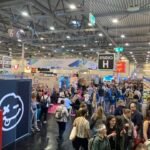
Security arrangements at the world’s biggest board game fair have come under scrutiny after six thefts were reported during setup and dismantling at this year’s Spiel Essen – including €14,000 of stock and equipment being stolen from a publisher overnight.
Show organiser Merz Verlag told BoardGameWire all six incidents are believed to have occurred when access to the exhibition halls was restricted, despite Messe Essen venue security being in place throughout those periods.
The thefts have prompted complaints from affected businesses about security at Spiel Essen and the assistance they received – while Merz Verlag has stressed that exhibitors are responsible for protecting their own property, even outside public opening hours.
French tabletop games company Tossit was among the worst affected exhibitors this year, claiming that about €14,000 of merchandise, equipment and tools disappeared from its stand in Hall 6 overnight following the convention’s final day.
Company co-founder Gaëtan Ekszterowicz said in a LinkedIn post that his team left the stand at around 10.45pm on Sunday, October 25, intending to finish dismantling the following morning – but returned at 8am to discover more than 500 units of merchandise and other equipment had disappeared.
That included tools stored inside the stand furniture, leaving the company without even the equipment needed to complete dismantling its booth.
Ekszterowicz estimated that removing the stolen goods would have taken at least 35 to 45 minutes, raising questions about how such a large quantity of merchandise could have been removed from an exhibition hall overnight.
Another exhibitor, tabletop accessories seller The Rolling Inn, said €4,000 in cash – representing its entire convention takings – was stolen during dismantling on Sunday evening.
A third theft was reported by Julian Hill of board game media outlet Boxed Meeples, who said on Instagram that his bag was taken from the Paverson Games stand during a team meeting on Wednesday October 21, the day before SPIEL opened to the public.
Hill said the bag contained money, payment cards, camera and sound recording equipment, as well as recordings of interviews he had already conducted at the convention.
The Paverson Games booth, left, in Hall 4 of Spiel Essen 2026
Spiel Essen’s organisers have also been criticised by Tossit’s Ekszterowicz and The Rolling Inn for their response to the thefts.
Ekszterowicz claimed representatives of SPIEL Essen and Messe Essen laughed at its team and failed to take their complaints seriously – as well as alleging that a member of staff attempted to grab a phone from his company’s marketing manager during an exchange about the incident.
“No representative of Merz Verlag laughed at members of Tossit’s team or grabbed a phone,” a Merz Verlag spokesperson told BoardGameWire.
They said, “Tossit wanted to film an exchange between them, Messe Essen and Merz Verlag which members of Messe Essen denied due to them not wanted to be taped, referring to personal rights.”
Asked about allegations from Tossit and The Rolling Inn that they received little or no assistance, the spokesperson said, “The team of SPIEL Essen takes every reported theft seriously and helps in the best of our abilities and in making contact to the police.
“Our team was also on site and talked with exhibitors. At the moment we are collecting information to may be able to help further.”
Merz Verlag said police had been informed of the incidents, and that it was cooperating with investigations.
The spokesperson added, “In total six thefts were reported to us this year, ranging from tablecloths, to some cases of games, to cash and equipment, the examples you mention already included.
“To our knowledge these cases took place during set-up or dismantling. In 2025 fewer incidents have been reported, none in the scale we see with Tossit. “
Merz Verlag said venue operator Messe Essen provided security throughout setup and dismantling, with access restricted to exhibitors, people holding setup and dismantling passes, event staff and security personnel.
It added that exhibitors were regularly reminded that they were responsible for protecting their own property, and could pay for dedicated guards to secure their stands outside public opening hours.
Ekszterowicz said in his LinkedIn post, “I don’t expect organizers to prevent every theft. But at the very least, I expect them to take this kind of situation seriously and have cameras installed inside the entrance halls. The complete absence of surveillance cameras is also shocking.”
The Merz Verlag spokesperson confirmed to BoardGameWire that no CCTV was covering the booths which suffered thefts.
Wargamer also received a response from Tom Kraayvanger, the press leader at Spiel Essen venue operator Messe Essen, who said the venue operator was taking into account “data protection requirements and the privacy rights of the many people present on the exhibition grounds during an event and its set-up and dismantling phases”.
He said: “When large numbers of people are moving goods, material and equipment at the same time, camera footage does not make it possible to distinguish between the legitimate removal of items and their unauthorized removal”, adding that “comprehensive video surveillance could not guarantee complete protection against theft”.
The incidents also follow a series of reported thefts at SPIEL stretching back at least a decade – including more than $20,000 in combined losses reported by six publishers in 2018, when affected companies called for improvements to security.
Asked whether the latest incidents would prompt changes to security arrangements for SPIEL Essen 2027, Merz Verlag said it was still evaluating the situation.
“We are gathering information and evaluate the situation,” the spokesperson said. “At this early stage we cannot say anything regarding future arrangements.”
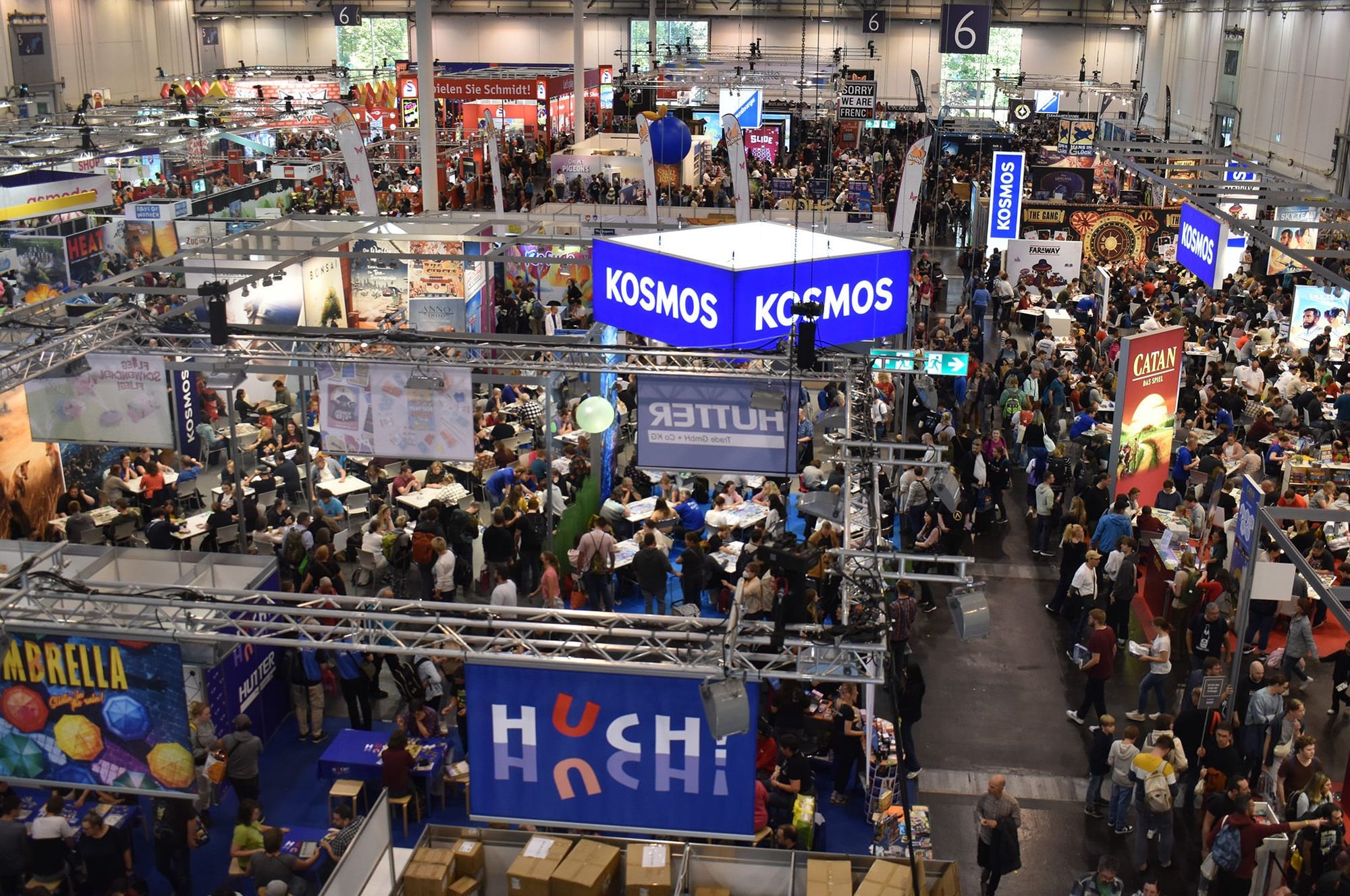
The world’s largest board game fair once again sold out all four days this year, drawing 10,000 more visitors than in 2025 after expanding into an eighth exhibition hall and taking over the entirety of the Messe Essen exhibition centre – its home for over 40 years – for the first time.
But that ability to squeeze in larger and larger crowds has now reached its limit, Merz Verlag managing director Carol Rapp confirmed to BoardGameWire, with any further growth set to come via new events and experiences rather than increased attendance or exhibition space.
SPIEL Essen 2027 is scheduled to take place from October 21 to 24.
Spiel Essen has broken its visitor record for the fourth consecutive year by hitting a record 230,000 attendance – with publishers reporting bumper sales despite increasingly fierce competition for attention from more than 2,000 new releases.
The world’s largest board game fair once again sold out all four days this year, drawing 10,000 more visitors than in 2025 after expanding into an eighth exhibition hall and taking over the entirety of the Messe Essen exhibition centre – its home for over 40 years – for the first time.
Almost 1,000 exhibitors from 53 countries packed into the 2026 show – up 5% compared to last year – while the event’s floorspace grew to a record 81,200 sq m – larger than 15 American football fields.
But that ability to squeeze in larger and larger crowds has now reached its limit, Merz Verlag managing director Carol Rapp confirmed to BoardGameWire, with any further growth set to come via new events and experiences rather than increased attendance or exhibition space.
She said, “It will stay at 230 [thousand]”, adding that although the show was technically below its “legal maximum” attendance, the current levels allowed for visitors to make their way around the already crowded show floor more easily.
A shortage of exhibition space, however, has already been a recurring problem for Merz Verlag – which has been forced to introduce waiting lists for prospective exhibitors in each of the last three years, despite repeatedly expanding the show.
Organisers had to repeatedly rearrange hall layouts ahead of the 2024 show in order to accommodate as many publishers as possible while keeping safe amounts of aisle space. Expanding out into Hall 7 last year failed to eliminate the problem, and despite another expansion into Hall 8 this year, all available stands were booked up ahead of the April 30 application deadline.
That leaves the organiser facing the prospect of turning away more prospective exhibitors in future years, with no further exhibition halls available to accommodate them.
BoardGameWire reported in March this year that Spiel organiser Merz Verlag had “no intention” of relocating the show away from Essen in order to continue its expansion, saying that the event would remain in its current home “for the foreseeable future”.
Rapp has now doubled down on that sentiment, saying, “We are well aware that we are pushing Messe Essen to its absolute limits. But to immediately dispel any rumors: A relocation is not on the table.
“Our focus now is on continuing to refine and develop Spiel at the Essen location in the coming years.”
Expanded Focus
That development had already been apparent in recent years, with Spiel beginning to break out from its long-time status as a game-buying fair and opportunity for business meetings by adding a series of new events.
They include introducing Games Workshop’s Golden Demon miniature-painting competition in 2024, running a world record-setting game of Catan – Connect with more than 1,100 people in 2025, and adding the TCG Awards and Warhammer 40,000 laser tag this year.
The organiser also launched Essen spielt! in 2026, a partnership with the city which brought gaming events to venues across Essen during the fair – and said it plans to develop the initiative further in 2027.
Other new developments for 2026 included a business matchmaking platform aimed at helping publishers, designers, retailers and other industry professionals find potential business partners and arrange meetings before arriving at the fair.
Rapp told BoardGameWire she was pleased with how this year’s expansion had worked out – particularly the addition of a new northern entrance, which noticeably helped spread visitors more effectively across the exhibition halls, and helped reduce the vast queues which have formed at the start of each day in previous years.
She added that the new Hall 8 had also exceeded expectations, despite initial uncertainty about how exhibitors would make use of the slightly unusually-shaped space.
US publisher Allplay took Spiel up on an offer to move into a central position in the new Hall 8 – and COO Joe Wiggins told BoardGameWire that shift had paid off handsomely, with sales up 40% compared to the previous year’s show, marking the publisher’s most successful Spiel to date.
He picked out Enchanted Ivy as one of its big hits of the show, saying demand for the 450 copies of the title it brought was “non-stop” until the game was sold out at 3pm on opening day.
Wiggins said sales were good across its portfolio, from light titles to heavier strategy games – adding that the new location right at the show’s main entrance meant visitors were far more likely to discover its booth.
That interest was capitalised upon by Allplay through its decision to run a large number of demo tables as part of its booth, with Wiggins saying seeing games in action had helped draw people in, even if they weren’t a “typical” Allplay customer.
German publisher Pegasus Spiele also reported stronger-than-expected sales, despite arriving at Essen with relatively conservative expectations.
Company co-CEO Karsten Esser told BoardGameWire on Friday afternoon that sales were already ahead of the equivalent point in 2025, even without the benefit of a single major award-winning release driving demand.
Pegasus brought more than 40 new releases to the event, and said the breadth of its portfolio had helped compensate for the absence of an obvious blockbuster title.
Other exhibitors BoardGameWire spoke to also reported substantial sales increases, while the consensus generally was that last year’s busy Friday, Saturday and Sunday were added to this year with a Thursday which felt like a return to pre-Covid crowds.
Spiel Squeeze
While most halls saw attendees flowing easily, if slowly, around them during the fair, the long and narrow Hall 3 once again proved the trickiest to get around – especially given the enormous queues which formed at several different booths during the show.
Chief among those were the queues at Spanish publisher Combo Games, which snaked along one whole end of the hall and out of the doors – creating a line Carol Rapp said was among the longest she had ever seen at the show.
Combo had benefitted from its new release Queen Alice, which combines elements of chess with eurogame mechanics and an Alice in Wonderland-inspired setting, being the ‘most-thumbed’ title on BoardGameGeek’s Spiel Essen preview – leading to a sea of attendees trying to reach the booth to get their hands on the game.
The queue for Queen Alice publisher Combo Games at Spiel Essen 2026, snaking out of Hall 3 and into the Galeria food court
Company co-founder Antonio Guillamó told BoardGameWire on the show floor that it had brought about 2,000 copies of the game to Essen, including stock earmarked for fulfilling Gamefound pledges, but had sold out by around lunchtime on Friday.
Demand was so intense that the Combo team was forced to concentrate purely on sales rather than demoing its games – and the huge buzz created other problems for the publisher.
Guillamó told BoardGameWire that Spiel had been “fighting” the publisher over the long queues, which ended up blocking access to other booths such as the nearby Dice Throne.
Rapp told BoardGameWire Spiel had provided advice on how to guide the queue to avoid it blocking other booths, as well as providing extra security from Messe Essen – which Combo had to pay for – to help manage the line.
The Combo Games team demoing and selling some of their other titles after Queen Alice had sold out
She said, “They had one of the hottest titles of the show, and nobody can plan for that. I get that, and the team gets that. But if the crowd waiting to buy is turning into a safety issue, then we have to do something.”
Rapp said her team was always “counting the seconds on the first day” to find out where the biggest queues were emerging, in order to step in quickly and help prevent any blockages.
She added that another blockage at the 2026 event had arisen at Pegasus Spiele, with large groups of people congregating by the booth after buying their games – saying that Pegasus was told to fix the issue or their booth would be closed. That problem was sorted the next morning by introducing a guard rail, she said.
Rapp said in an interview with German board game channel Brettspiel-Kollektiv that one exhibitor had repeatedly ignored instructions intended to keep queues under control, leading organisers to prohibit further sales for the remainder of the day. The publisher involved was not identified.
She stressed to BoardGameWire that managing congestion was essential to keeping the event safe and enjoyable, particularly as the number of visitors and exhibitors continued to grow.
“As long as the people are moving, everything is fine,” she said. “As soon as you have a block, a cluster or whatever, in the aisles, and it’s taking too long, people will go crazy.”
The pressure of accommodating record numbers at Spiel also extended beyond the exhibition halls, with severe crowding on Essen’s public transport system each morning in the run-up to the show opening.
Standing Out
The growing scale of Spiel has also brought fresh challenges for publishers trying to stand out among the thousands of games competing for attention.
This year’s 2,012 new releases represented another increase on the prior record, with the volume of new titles becoming a significant consideration for companies deciding when and how to launch their games.
The head of one large board game publisher who spoke to BoardGameWire at the show suggested that while smaller publishers often needed the exposure provided by major events such as Spiel, the rising competition on site might make it more beneficial for them to spread releases more evenly through the year.
He argued that publishers should consider whether launching at a quieter time of year might make it easier for their games to attract attention – particularly given that consumers were increasingly buying board games year round rather than concentrating their purchases around Christmas.
The challenge was echoed by other industry figures at the event, who described an increasingly crowded market in which the quality of new games continued to improve, but with individual releases potentially struggling to establish themselves.
Value Judgement
For publishers, however, Spiel’s value continues to extend well beyond the opportunity to sell games directly to consumers – something especially crucial given the high cost of running even a small booth at the event.
While the base cost of the smallest booth option – 15 sq m – comes in at about €1,500, that figure can easily balloon to several thousand euros after adding mandatory charges for booth partitions, waste disposal, and the cost of transporting, paying for and accommodating even tiny numbers of booth staff.
Pandasaurus Games told BoardGameWire ahead of the event that it had heavily downsized its Spiel Essen booth this year, having previously spent more than €50,000 ($57,000) attending Spiel with its larger setup.
The US publisher shifted to using European Player Network, Asmodee‘s specialist English-language sales and distribution operation in the region, to handle its stock and sales at the giant German show this year – removing the need for Pandasaurus to transport and store hundreds of games, staff its own retail operation and devote much of its booth to selling them.
Pandasaurus CEO Nathan McNair estimated to BoardGameWire that the costs under its current model would fall between $20,000 and $25,000, with the expectation of selling similar numbers of games under the new setup.
Archona Games, the publisher of titles including Small Star Empires and Pest, told BoardGameWire at the event, “Our focus here isn’t the sales so much. It’s always nice to sell, and I mean, I’d love to have the success of some of the other currently hot games out there – I wouldn’t say no!
“But I think for us, the strategic sort of part of it is really what we do with our community as well as our partners.”
They said in-show meetings with potential partners had already created promising opportunities for 2027, and added that demoing games, gathering feedback and building customer relationships were all key reasons for attending the fair.
French publisher IELLO’s large booth and demo area at Spiel Essen 2026
IELLO communications manager Roger Anthony-Gerroldt told BoardGameWire at the show that it had brought six staff dedicated to scouting new games and localisation opportunities, with three project managers seeking new designs for its main catalogue, two looking for titles to bring to the French market, and another representing its children’s games brand Loki.
He told BoardGameWire the team spent much of the event moving between meetings with designers and publishers, hoping to discover games capable of becoming long-term commercial successes.
He said, “They just take meetup after meetup after meetup, and they look at a lot of designs, and they hope that they find the diamond that will take the place in the market and stay here.”
But he acknowledged that identifying those potential hits was increasingly difficult, with IELLO typically finding only one or two games each year that met its ambitions – and some promising projects ultimately failing to make it into the company’s catalogue.
That challenge has become more pronounced as the number of new releases continues to grow, Anthony-Gerroldt said, with even successful titles increasingly struggling to maintain sales beyond their first year or two.
Ukrainian publisher Boardova, meanwhile, described its first experience running a booth at Spiel as a valuable opportunity for promoting its games and building relationships – while stressing that the costs of attending meant the event should be viewed as a wider marketing investment rather than simply a sales opportunity.
Pegasus Spiele co-CEO Karsten Esser
Pegasus Spiele co-CEO Karsten Esser told BoardGameWire that direct sales at Spiel remained an important part of covering the company’s costs of attending, saying, “Well, to be honest, we run the company because we want to earn money. Of course, we love games, but we are also interested in earning money. I have to say, therefore, yes – the number of games that we sell here do matter, and they help us to break even. And maybe we can even reach a surplus. We will see.”
But he added that the longer-term value of the fair came from the market intelligence it provided, particularly the opportunity to gauge consumer demand across the company’s new releases, and identify which titles might become future commercial successes.
AI Divide
The ongoing debate over the use of generative AI in tabletop gaming was also visible at this year’s Spiel, with an anti-AI sign campaign from Neon Hope publisher Hopeful Games taking place, while some publishers and accessories sellers were clearly making use of generative AI for their artwork.
AI-Free signs at the Press Preview event at Spiel Essen 2026
Spiel organiser Merz Verlag has yet to introduce restrictions on exhibitors using AI-generated artwork, in contrast to several other major tabletop conventions which have adopted explicit policies in the past year.
UK Games Expo introduced a strict AI policy several weeks ago, prohibiting exhibitors from displaying or selling products created wholly or substantially using generative AI, while PAX Unplugged bans the sale of products incorporating substantial AI-generated content.
Origins Game Fair also requires products sold or distributed at the event to be created by human artists and creators. Gen Con, meanwhile, prohibits AI-generated imagery in its Art Show, although it has not introduced an equivalent general ban for exhibitors.
Rapp told BoardGameWire at the time that the organiser had reconsidered its approach following the backlash, but did not believe it was Spiel’s place to make decisions about the wider industry’s use of AI.
The absence of a general exhibitor ban three years later leaves Spiel as an outlier among the major tabletop game conventions.
BoardGameWire contacted Merz Verlag in September with a series of questions about whether the show planned to follow suit with its own AI policy, but was told by a spokesperson that the topic was too wide ranging to be able to address while preparations for this year’s event were taking place.
Future Plans
With its exhibition halls full and visitor numbers now capped, Spiel’s organisers face the challenge of finding new ways to develop the event without increasing its physical footprint.
Rapp told BoardGameWire during the show that Merz Verlag was still exploring what that might look like, with the company due to hold its annual planning workshop this month.
“Maybe it’s focusing more on events, like you said, or celebrating the industry. I don’t know yet, but we will have some good stuff coming up next year,” Rapp said.
Spiel Essen 2027 is scheduled to take place from October 21 to 24.
German board game designer Mathias Wigge has pulled off an impressive feat at the Deutscher Spiele Preis – Germany’s biggest community-voted board game award – by winning with both of his first two standalone games, Ark Nova and Sanctuary.
Sanctuary claimed top spot in the annual award ahead of Pegasus Spiele’s commercial hit Boss Fighters QR and space tourism-themed worker placement title Galactic Cruise, which has already scored a string of major award wins.
The win also cements Feuerland Spiele‘s position as the most successful publisher in the Deutscher Spiele Preis since the company was founded in 2012, with four victories – twice as many as any other publisher over that period.
Feuerland scored an early DSP victory with Terra Mystica in 2013, before a flurry of three wins in eight years via Wingspan in 2019, Wigge’s debut design Ark Nova in 2022, and Sanctuary this year.
The game, released in Germany as Artengarten last year, aims to offer a shorter and more accessible take on Ark Nova’s zoo-building and wildlife conservation theme, replacing much of the original’s card-driven gameplay with tile placement.
Feuerland also positioned the game at a lower price point than Ark Nova, with a recommended German retail price of €49.90 against €64.90 for the original.
The win follows huge critical and sales success for Wigge’s predecessor design Ark Nova, which had sold more than 300,000 copies worldwide and racked up over 10 million plays on Board Game Arena according to a report from German newspaper Der Patriot in February this year – as well as being ranked in second place among all the titles on BoardGameGeek.
The app-driven cooperative game spent six years in development, with Palm and Zach revealing that extensive work was needed to ensure its QR code scanning technology operated reliably and to develop the digitally controlled bosses.
Boss Fighters QR was also nominated for this year’s Kennerspiel des Jahres, alongside Moon Colony Bloodbath and eventual winner Rebirth.
Galactic Cruise’s third place finish follows a striking awards run for the game, which was the first major release from US publisher Kinson Key Games.
The title, designed by TK King, Dennis Northcott and Koltin Thomson, had already been crowned Heavy Game of the Year at BoardGameGeek’s Golden Geek Awards in May, before taking Game of the Year, Best Strategy Game and Best Game from a New Designer at the Dice Tower Awards in August.
Germany’s Frosted Games was represented twice, through Reiner Knizia’s Kennerspiel des Jahres winner Rebirth in sixth place and Star Trek: Captain’s Chair in ninth, while Kosmos took eighth with River of Gold.
This year’s children’s Deutscher Spiele Preis went to Wojciech Grajkowski’s Toriki: The Castaway Island, published by Mirakulus, ahead of Mooki Island and Paleolino.
The Deutscher Spiele Preis, which has been presented since 1990, is decided by public voting among players in Germany, Austria and Switzerland, rather than a specialist jury.
Organisers said “many thousands” of players took part in this year’s voting. Eligible games were released in German between May 1, 2025 and April 30, 2026, with the winners announced at the Spiel Essen game fair.
Drei Tage SPIEL 2026 liegen hinter mir. Na gut, zumindest fast, denn der dritte Messetag war noch einmal gut gefüllt. Am Morgen ging es zum Presstag bei Queen Games, danach standen Gespräche, Begegnungen und natürlich auch ein paar Partien auf dem Programm. Und ehe ich mich versah, war es auch schon wieder Zeit, die Heimreise anzutreten.
Aber der Reihe nach. Denn auch am dritten Tag gab es einiges zu entdecken – und einen Trend, der mir inzwischen immer deutlicher auffällt.
Big Box oder Mini-Schachtel: Dazwischen gibt es kaum noch etwas?
Der Morgen begann bei Queen Games mit dem Presstag. Neben den Neuheiten des Verlags hatte ich dabei auch Gelegenheit, mir die Entwicklung im aktuellen Brettspielmarkt etwas genauer anzuschauen. Ein Eindruck zieht sich für mich mittlerweile durch die Messe: Bei den Schachtelgrößen scheint es zunehmend zwei Extreme zu geben.
Luxus pur – Labyrinth Chronicles
Auf der einen Seite stehen die Big Boxen. Große Schachteln, viel Material und gerne auch eine Ausstattung, bei der man sich fragt, ob man für das Spiel eigentlich noch einen eigenen Tisch anbauen muss. Queen Games kennt sich damit bekanntlich bestens aus.
Auf der anderen Seite werden Spiele immer kleiner. Der koreanische Verlag playte Games ist dafür ein gutes Beispiel. Bekannte und neue Spielideen werden in kompakte Formate gepackt, die wenig Platz benötigen und sich auch gut mitnehmen lassen.
Und Queen Games? Der Verlag kann offenbar beides.
Mit Alhambra und Kingdom Builder wurden zwei bekannte Titel geschrumpft. Das ist durchaus interessant, denn beide Spiele haben sich längst einen Namen gemacht und benötigen keine große Vorstellung mehr. Sie zeigen, dass man auch etablierte Brettspiele noch einmal anders präsentieren kann. Gerade bei älteren Titeln könnte ein kompakteres Format dafür sorgen, dass sie wieder stärker ins Blickfeld rücken – oder ihren Weg zu Menschen finden, die bisher noch keinen Zugang dazu hatten.
Ob Mini-Schachtel oder Big Box: Am Ende muss natürlich das Spiel überzeugen. Aber ich finde es spannend, wie unterschiedlich Verlage inzwischen mit dem Thema Verpackung und Präsentation umgehen. Vielleicht ist das auch eine Reaktion auf die stetig wachsenden Spielesammlungen. Schließlich ist irgendwann selbst das größte Regal voll. Und trotzdem möchte man immer noch ein weiteres Spiel mit nach Hause nehmen. Ein Dilemma, das Brettspielfans nur zu gut kennen dürften. 😉
Stefan Feld: Zwei bekannte Spiele kehren zurück
Bei Queen Games gab es außerdem Neuauflagen von zwei Spielen aus dem Werk von Stefan Feld: Beijing, früher unter dem Titel Im Jahr des Drachen bekannt, und Manila, das zuvor als Amerigo erschienen ist.
Bei Beijing wurde das Grundspiel nicht grundlegend verändert. Stattdessen gibt es zusätzliche Module, mit denen sich das Spiel erweitern lässt. Das finde ich einen interessanten Ansatz. Wer das ursprüngliche Spiel kennt und mag, bekommt damit im Kern das vertraute Erlebnis, kann aber bei Bedarf weitere Elemente ergänzen.
So muss eine Neuauflage nicht zwangsläufig alles auf den Kopf stellen. Manchmal reicht es, ein bewährtes Spiel etwas flexibler zu machen und zusätzliche Möglichkeiten anzubieten. Gerade bei einem Titel, dessen Grundmechanismen bereits funktionieren, kann das eine gute Lösung sein.
Anders sieht es bei Manila aus. Hier wurde deutlich umfangreicher Hand angelegt. Das Spiel wurde komplett überarbeitet und weiterentwickelt. Es handelt sich also nicht einfach um eine neue Schachtel für einen alten Titel, sondern um eine Neuauflage, bei der wesentlich mehr verändert wurde.
Ich finde diese beiden Ansätze spannend, weil sie zeigen, wie unterschiedlich man mit dem Erbe eines bekannten Spiels umgehen kann. Das eine bleibt seinem Ursprung weitgehend treu und lässt sich durch Module erweitern. Das andere wird grundlegend überarbeitet und neu gedacht.
Für Fans von Stefan Feld dürfte es jedenfalls interessant sein, diese beiden Titel wieder auf dem Radar zu haben. Und für alle, die die Originale nicht kennen, bietet sich die Gelegenheit, die Spiele in ihrer neuen Form kennenzulernen.
Die SPIEL ist auch ein großes Wiedersehen
Nach dem Termin bei Queen Games ging es für mich wieder hinaus in die Hallen. Ein bisschen treiben lassen, hier und da schauen, ein paar Gespräche führen – und natürlich die Menschen treffen, die man auf einer Messe unbedingt sehen möchte.
Ich habe mich mit meiner Spielerunde getroffen und auch Daniel von Board Game Circus wiedergetroffen. Genau das ist für mich einer der besonderen Aspekte der SPIEL: Es geht eben nicht ausschließlich darum, möglichst viele Neuheiten zu entdecken und auszuprobieren.
Die Messe ist auch ein riesiges Klassentreffen der Brettspielszene. Man begegnet Menschen, mit denen man sonst nur online Kontakt hat, trifft alte Bekannte und schafft es endlich einmal wieder, in Ruhe miteinander zu quatschen. Oder zumindest so lange, bis der nächste Termin wartet oder jemand mit einem interessanten Spiel um die Ecke kommt.
Manche dieser Begegnungen ergeben sich ganz spontan, andere sind lange geplant. Und nicht selten bleibt man irgendwo länger hängen als gedacht. Das gehört für mich einfach dazu.
Gerade weil die Tage auf der Messe so vollgepackt sind, schätze ich diese Momente sehr. Es ist schön, Menschen zu treffen, die die gleiche Begeisterung für unser Hobby teilen. Und manchmal sind es genau diese Gespräche, die einem neben den Spielen besonders in Erinnerung bleiben.
The Mix: Drinks mixen und die eigene Engine aufbauen
Am Mittag hatte ich dann noch Gelegenheit, The Mix bei HABA zu spielen. Auf den ersten Blick handelt es sich um ein recht klassisches Eurogame, das mit einem Worker-Placement-Mechanismus arbeitet. Thematisch geht es allerdings nicht um den Aufbau einer mittelalterlichen Siedlung, die Entwicklung einer Zivilisation oder die Bewirtschaftung eines Bauernhofs. Stattdessen stehen Drinks und ihre Zutaten im Mittelpunkt.
Wir sammeln Zutaten oder kaufen sie ein, mixen daraus Getränke und versuchen gleichzeitig, unsere eigene Engine aufzubauen. Mit der Zeit sollen die Abläufe effizienter werden, die eigenen Möglichkeiten wachsen und die Produktion der Drinks immer besser funktionieren.
The Mix erscheint bei HABA
Das ist im Kern ein vertrautes Spielprinzip, bekommt durch das Thema aber einen durchaus charmanten Anstrich. Statt Ressourcen für irgendeine abstrakte Produktion zu verwalten, steht man hier sinnbildlich hinter der Bar und versucht, den Laden zum Laufen zu bringen.
Besonders interessant fand ich den Mechanismus, über den das Spielende ausgelöst wird. Denn The Mix endet nicht einfach nach einer festgelegten Anzahl von Runden. Entscheidend ist vielmehr, dass eine bestimmte Menge an Drinks gemixt wurde.
Dadurch entsteht ein spannender Zielkonflikt: Investiere ich zunächst in bessere Fähigkeiten und baue meine Engine aus, damit ich später effizienter arbeiten kann? Oder versuche ich, möglichst schnell viele Drinks fertigzustellen und damit das Ende des Spiels herbeizuführen?
Wer zu lange an der eigenen Engine schraubt, riskiert, dass die Partie vorbei ist, bevor sich die Investitionen richtig auszahlen. Wer dagegen zu früh auf Tempo setzt, lässt möglicherweise wertvolle Möglichkeiten liegen.
Zusätzlich bringt jeder Barkeeper eigene Spezialfähigkeiten mit. Und auch die Playerboards lassen sich asymmetrisch gestalten, wodurch unterschiedliche Ausgangssituationen und Herangehensweisen möglich werden.
Das sind genau die Elemente, die ein vermeintlich klassisches Eurogame interessant machen können. Die Grundmechanismen sind vertraut, aber die Mischung aus Engine Building, individuellem Spielstil und einem variablen Spielende sorgt dafür, dass man sich Gedanken über das eigene Tempo machen muss.
Ich bin gespannt, wie sich The Mix nach weiteren Partien entwickelt. Der erste Eindruck war jedenfalls interessant – und allein die Idee, sich in einem Brettspiel einmal um Drinks statt um Getreide, Holz und Stein zu kümmern, ist eine angenehme Abwechslung.
Vroom: Ein Autorennen, bei dem man nicht einfach Gas geben kann
Deutlich ungewöhnlicher ging es bei Vroom zu. Ein kooperatives Autorennspiel? Das klingt zunächst einmal ein wenig seltsam. Schließlich verbindet man Autorennen normalerweise damit, dass jeder möglichst schnell ins Ziel kommen und die Konkurrenz hinter sich lassen möchte.
Bei Vroom müssen wir dagegen gemeinsam einschätzen, wie sich das Rennen entwickeln wird. Und das ist kniffliger, als es zunächst klingt.
Eine feste Rennstrecke gibt es nicht. Stattdessen spielen wir fünf Geschwindigkeitskarten aus. Das Besondere daran: Die eigenen Karten kennt jeweils nur die Person, die sie auf der Hand hat. Die anderen müssen also einschätzen, welche Geschwindigkeit wohl gefahren wird und wo das jeweilige Auto am Ende landen könnte.
Mit jeder ausgespielten Karte wird das entsprechende Auto nach vorne bewegt. Dabei sind wir völlig frei darin, wie weit wir es nach vorne schieben. Selbst mit einer Karte, die lediglich eine 1 zeigt, kann ich mein Auto also sehr weit nach vorne bewegen – wenn ich davon überzeugt bin, dass es am Ende weit vorne landen muss.
Das klingt erst einmal nach einem ziemlich absurden System. Wozu gibt es schließlich Geschwindigkeitswerte, wenn ich mich beim Ziehen der Autos nicht zwingend daran halten muss?
Vrooom ist echt ungewöhnlich
Der Kniff liegt in der gemeinsamen Einschätzung. Wir müssen uns überlegen, welche Karten die anderen wohl haben, welche Positionen realistisch sind und wie sich das Rennen insgesamt entwickeln könnte. Gleichzeitig müssen wir unsere eigenen Entscheidungen so treffen, dass am Ende ein möglichst gutes Gesamtergebnis herauskommt.
Sobald fünf Karten ausgespielt wurden und mindestens ein Auto die Ziellinie überquert hat, endet das Rennen. Dann werden die Geschwindigkeitskarten addiert. Die höchste Summe gewinnt Platz eins, die niedrigste Summe landet auf dem letzten Platz.
Damit wird aus dem vermeintlich simplen Autorennen ein Spiel über Einschätzung, Kommunikation und das richtige Gespür für die Mitspielenden. Man weiß eben nie ganz genau, was die anderen vorhaben und wie weit sie ihre Autos tatsächlich bewegen werden.
Mein erster Vergleich ging in Richtung The Mind oder Take Time – nur eben auf Speed. 😄 Auch hier müssen wir versuchen, gemeinsam ein Gefühl für die Situation zu entwickeln, ohne sämtliche Informationen zu kennen. Bei Vroom kommt dann noch die Dynamik des Rennens hinzu.
Ich finde die Idee jedenfalls ziemlich ungewöhnlich. Ein Autorennen, bei dem es nicht einfach darum geht, möglichst schnell zu fahren, sondern bei dem wir gemeinsam herausfinden müssen, wie schnell die anderen wohl unterwegs sind. Das klingt erst einmal schräg, funktioniert am Tisch aber tatsächlich.
Und es zeigt einmal mehr, dass man mit einer ungewöhnlichen Idee und wenigen Regeln ein Spiel schaffen kann, das ordentlich Gesprächsstoff liefert.
Ein Besuch bei Noctis Spiele – und Vorfreude auf den Advent
Zum Abschluss meiner Entdeckungstour habe ich noch bei Noctis Spiele vorbeigeschaut. Dort gibt es auch in diesem Jahr wieder einen Adventskalender, auf den ich durchaus neugierig bin.
Diesmal dreht sich alles um Zeitungsausschnitte, mit deren Hilfe man ein Verbrechen aus der Zeit von Sherlock Holmes aufklären muss. Das klingt für mich nach einer schönen Idee für die Adventszeit. Statt jeden Tag einfach nur ein Türchen zu öffnen und eine kleine Überraschung herauszunehmen, wird man selbst zum Ermittler und versucht, aus den vorhandenen Informationen die richtigen Schlüsse zu ziehen.
Gerade solche Formate können eine schöne Abwechslung sein. Man beschäftigt sich über mehrere Tage hinweg mit einem Fall, sammelt Hinweise und versucht, die einzelnen Puzzleteile zu einem Gesamtbild zusammenzusetzen.
Ob der Kalender am Ende hält, was die Idee verspricht, wird sich zeigen. Ich bin jedenfalls gespannt, wie die Geschichte aufgebaut ist und wie gut sich die Zeitungsausschnitte als Ermittlungswerkzeug eignen.
Für mich war das ein schöner letzter Programmpunkt, bevor sich der Messetag langsam dem Ende entgegenneigte.
Das war’s mit der SPIEL 2026
Und dann war es tatsächlich schon wieder vorbei. Am frühen Abend ging es für mich zurück ins normale Leben. Drei Tage voller Termine, Begegnungen, Gespräche und neuer Spieleindrücke liegen hinter mir.
Natürlich habe ich längst nicht alles gesehen, was die Messe zu bieten hatte. Das ist bei der Größe der SPIEL auch kaum möglich. Selbst wenn man sich noch so viel vornimmt, bleibt am Ende immer etwas übrig, das man verpasst hat. Ein Verlag, den man nicht mehr geschafft hat. Ein Spiel, das man unbedingt ausprobieren wollte. Oder ein Gespräch, für das einfach keine Zeit mehr war.
Aber das gehört dazu. Die SPIEL ist eben kein gemütlicher Spaziergang durch eine überschaubare Ausstellung, sondern ein ziemlich intensiver Ausflug in die Welt der Brettspiele.
Jetzt heißt es erst einmal: Spiele sichten, Regeln lesen und lernen. Denn mit den vielen Eindrücken ist es ja nicht getan. Die mitgebrachten und entdeckten Spiele wollen schließlich auch auf den Tisch kommen. Und ich freue mich tatsächlich darauf, mich in Ruhe mit den Neuheiten zu beschäftigen, ohne ständig auf die Uhr schauen oder zum nächsten Termin hetzen zu müssen.
Das passt auch ganz gut zur Jahreszeit. Draußen wird das Wetter zunehmend ungemütlich, die Tage werden kürzer und die Abende laden wieder dazu ein, es sich am Spieltisch gemütlich zu machen.
Eigentlich also der perfekte Zeitpunkt, um die Messe nachwirken zu lassen und sich durch die neuen Spiele zu arbeiten.
Die SPIEL 2026 ist für mich damit zwar vorbei, die Brettspielsaison geht aber gerade erst richtig los. Und ich habe so eine Ahnung, dass in den kommenden Wochen noch einige spannende Partien auf mich warten.
Jetzt muss ich nur noch herausfinden, wo ich die ganzen Schachteln unterbringen soll. Aber das ist ein Problem für einen anderen Tag. 😉
UK-based Osprey Games has let go of its entire board and card game development team and cancelled its booth at the upcoming Spiel Essen game fair, five months after parent company Bloomsbury began searching for a buyer for the operation.
Osprey revealed in May that multinational book giant Bloomsbury had made the “difficult decision” to sell the board and card game segment as part of a wider “strategic refocusing” on book publishing, which would see Osprey concentrate on its wargame and RPG lines.
Two sources with knowledge of the matter told BoardGameWire at the time that Bloomsbury hoped to find a buyer willing take on the existing board and card game team in addition to its catalogue, which includes acclaimed titles such as the Undaunted and Imperium lines.
But a Bloomsbury spokesperson has now confirmed to BoardGameWire that “all our colleagues who exclusively worked on creating and manufacturing our board and card games have now left the company”.
Multiple sources spoken to by BoardGameWire said those exits were in the form of redundancies at the end of September, although the company declined to say exactly how many staff were affected.
The departures mean Bloomsbury is now seeking a buyer solely for the board and card game catalogue, rather than the department as a whole – but questions remain over exactly how the rights to its portfolio of games could be sold on to a new owner.
Undaunted: Normandy from Osprey Games, designed by Trevor Benjamin and David Thompson
BoardGameWire understands that some Osprey designer contracts include restrictions governing the transfer of publishing rights to third parties, which could complicate the sale efforts – with some agreements seeming to limit transfers to buyers acquiring all or substantially all of the imprint’s titles.
Asked about that situation by BoardGameWire, a Bloomsbury spokesperson said, “The contractual arrangements relating to Osprey Games are confidential, so we’re not able to share details of specific terms or comment on potential outcomes.
“We appreciate that these questions are important to designers and other partners, and we’ll share further information with those directly involved as soon as we’re able to.”
The spokesperson also confirmed that Osprey has multiple unreleased board and card game projects under contract at “various stages of development”, but did not say whether those titles would be published by Osprey or transferred to another buyer.
They said, “As with our published games, we will share information about the future of those projects with the relevant designers as soon as we are able to.”
Osprey’s existing games remain “well stocked”, the spokesperson said, adding that the company had no current plans for reprints “but will continue to review the situation as we move forwards”.
They said, “We remain committed to supporting our fantastic range of board and card games with sales, marketing and licensing efforts and each of our games remains available to purchase.
“Our upcoming games, Undaunted 2200: Revolution from David Thompson and Trevor Benjamin, and Upland & Prairie from Peer Sylvester will be released as planned this month.
“We are, as ever, incredibly grateful to our brilliant in-house team, to our wonderful designers and illustrators, and to everyone who has supported Osprey Games over the years.”
Upland & Prairie from Osprey Games, designed by Peer Sylvester
Osprey Games was launched in 2015 as part of Bloomsbury arm Osprey Publishing, which had a decades-long history of creating military and historical information and reference books before beginning to publish wargaming rulebooks in 2008.
The gaming arm’s early successes included Peer Sylvester’s The King is Dead and The Lost Expedition, as well as popular titles such as Hal Duncan and Ruth Veevers’ design Cryptid and the second edition of Martin Wallace’s London.
Those releases were followed by the high-profile success of the Undaunted series of deckbuilding wargames from David Thompson and Trevor Benjamin and the Imperiumgames from Nigel Buckle and Dávid Turczi.
Osprey also gained a reputation for taking chances on a range of titles with intriguing mechanisms and designs, such as Sylvester’s area control and trick-taking hybrid Brian Boru, highly asymmetric area control title Crescent Moon, card-based strategic wargame Battalion: War of the Ancients and small-box, quick-playing conflict title General Orders: World War II.
The publisher has continued releasing games in the wake of the sale process announcement, including Threaded, Flip Pick Towers and Rattlesnake earlier this year and CRAB RAGE! last month.
Bloomsbury has not specified a timetable for completing the sale, with the spokesperson telling BoardGameWire that conversations were “ongoing”.
They added, “I’m sure you’ll appreciate that this is a very complex situation, and the timelines are based around confidential conversations. We will provide updates when we can do so.”
Osprey parent Bloomsbury, which has a stock market valuation of more than £500m, announced in April that it was “streamlining its structure for further growth” – which included a reorganisation of the company’s editorial divisions and the loss of about 55 jobs. No mention of Osprey was made in the restructuring announcement.
Bloomsbury has seen its profits almost double in the last five financial years, and confirmed at its July annual meeting that it expects annual revenue of more than £350m and was on track for record adjusted pre-tax profits of £49.9m, according to Publishers Weekly.
The global tabletop gaming industry descends on Germany once again next week for the world’s biggest board game fair, Spiel Essen – bringing together thousands of publishers, designers, distributors, retailers and other industry professionals for four packed days of new releases and networking.
This year’s SPIEL.talks programme of panel discussions will be on the main show floor for the second year running, with sessions in Hall 4 covering everything from artificial intelligence and game localisation to emerging tabletop markets, careers in the industry and the process of bringing a board game from prototype to store shelves around the world.
BoardGameWire has rounded up some of the most interesting-looking sessions for current and aspiring tabletop game industry professionals from across the four days.
Thursday, October 22
Your World, Your Rules, Your AI: Why It Should Come From Europe (German)
11:10am – 11:50am
HillcrownAI founder Oliver Mauckner lays out why he thinks artificial intelligence could be used to support tabletop gaming without replacing the physical experience – from interactive rulebooks capable of answering questions in seconds to tools for introducing new players and expanding game worlds. He will also discuss the potential benefits of publishers retaining control over their own AI systems, including technology hosted on European servers and trained to respond using official game rules rather than generating potentially inaccurate information.
Discovering Careers in Tabletop Game Industry (English)
11:50am – 12:20pm
GAMA vice president and Critical Role integrated marketing manager Ross Thompson explores the wide range of careers available in tabletop gaming beyond game design and marketing, drawing on 17 years of industry experience. Thompson, who also helps run the Tabletop Game Jobs Facebook group, returns to the SPIEL.talks stage after delivering a similar session last year.
Why Translation is not Localization (yet) and Where AI Can Help (English)
12:20pm – 1:10pm
Former Asmodee localisation head Sebastian Rapp joins a panel of experienced board game translators and localisation specialists to discuss the challenges of bringing games to international markets, from adapting rules and cultural references to the growing use of AI in translation. The panel will explore the pitfalls of localization, the need for cultural adaptation in the process, and why translation alone does not equal localization.
Media Literacy & Editorial Policy in the Boardgaming World (English)
1:10pm – 1:40pm
Board game podcaster Kenny Katayama examines some of the thornier issues surrounding tabletop gaming media, including paid partnerships, review copies, bias, AI disclosure and politics in the hobby. The session will explore how publishers, reviewers, influencers and audiences can navigate an increasingly complex media landscape, following several controversies over the past two years.
50 Years of Board Game Designer Networks – A Data Analysis (German)
2:40pm – 3:10pm
Social scientist and board game critic Johannes Blumenberg presents the findings of a study examining 50 years of board game designer networks, drawing on BoardGameGeek data covering more than 132,000 games and almost 60,000 designers. His research found that women have accounted for just 9% to 10% of board game designers since around 2020, and examines how differences in professional networks and collaboration patterns could help explain persistent gender inequalities in the industry.
Why India is the World’s Next Big Tabletop Market (English)
5:00pm – 5:30pm
Phalgun Polepalli, co-founder of Indian tabletop convention TTOX, explores the potential for the country to become a major growth market for board games, highlighting its young population, rising disposable incomes and growing gaming communities. He will discuss consumer behaviour, gaps in the country’s retail infrastructure, localisation challenges and what international publishers often misunderstand about the Indian market.
Board Games Insider… We Make You… The Insider! (English)
5:30pm – 6:30pm
Spiel Essen managing director Carol Rapp joins industry veterans Ignacy Trzewiczek of Portal Games, former Stronghold Games president Stephen Buonocore and Corey Thompson for a special live edition of the Board Games Insider podcast. The session promises a look behind the scenes of the world’s biggest board game fair, drawing on Rapp’s experience running SPIEL and her previous senior roles at Kosmos and Asmodee.
Friday, October 23
Game Studies – Why Is It Needed as an Independent Academic Discipline? (German)
12:10pm – 12:40pm
Institute for Ludology director and German Society for Game Studies board member Jens Junge explores the case for establishing game studies as an independent academic discipline, and what greater recognition of games in education and cultural policy could mean for the tabletop industry. Junge, who has worked in the board game sector since 1984, will discuss the newly founded German Society for Game Studies and its efforts to raise the profile of games in academic research and public policy.
Teaching Game Design: What We Know and Where We’re Going (English)
6pm – 6:30pm
NYU Game Center associate professor Basil Lim and TU Dublin lecturer John Healy explore how game design education is evolving to prepare the next generation of designers for an industry being reshaped by technological advances and changing demographics. The session will examine how universities can balance practical industry skills with creative and critical thinking, and how teaching across both analog and digital games can equip aspiring designers for careers in an increasingly interconnected industry.
Saturday, October 24
From Player to Leader: Building a Career in Tabletop Through Community (English)
12:20pm – 12:50pm
A panel of senior industry executives including Asmodee US commercial distribution head Julien Sharp, former Funko Games and Moose Toys executive Deirdre Cross, and ACD Distribution marketing director Danni Loe explore how networking, mentorship and professional communities can help build careers in tabletop gaming. The discussion, organised around Women in Toys, Licensing & Entertainment, will examine how professional relationships have helped shape the panellists’ paths into industry leadership.
From Prototype to Store Shelf — How a Concept Makes Its Way Through a Global Studio (English)
3:50pm – 4:50pm
Designers from major tabletop publishers including Asmodee studios Zygomatic and Libellud, LEGO board game partner Dotted Games and Star Wars: Unlimited developer Fantasy Flight Games explore what happens after a game prototype is accepted by a publisher. The panel, which also features prolific freelance designer Matthew Dunstan, will examine why promising designs get rejected, how games change during development and the challenges of preparing a title for release in 15 languages.
No Extra Lives Needed; Inclusion by Design (English)
5:20pm – 5:50pm
Blood on the Clocktower creator and Pandemonium Institute CEO Steven Medway explores how board game design choices can make games more inclusive and encourage players to return. Drawing on his experience developing the hit social deduction game, Medway will discuss how components, rules, strategies, artwork and presentation can help create welcoming social experiences without making inclusivity feel like an overt design feature.
Sunday, October 25
Analog Meets Digital: What Connects Games and What They Can Learn From Each Other (German)
2:10pm – 3pm
Spiel Essen managing director Carol Rapp and Ubisoft Europe head Ralf Wirsing lead a panel exploring the similarities and differences between board games and video games, and what the two industries can learn from each other. Joined by game researcher Jens Junge and Darmstadt University of Applied Sciences professor Stephan Jacob, the discussion will examine differences in game design, business models and player experiences, as well as the opportunities emerging from hybrid games and closer collaboration between the analog and digital sectors.
The full schedule of panels, which run from Thursday 22 to Sunday 25 October, is available here.
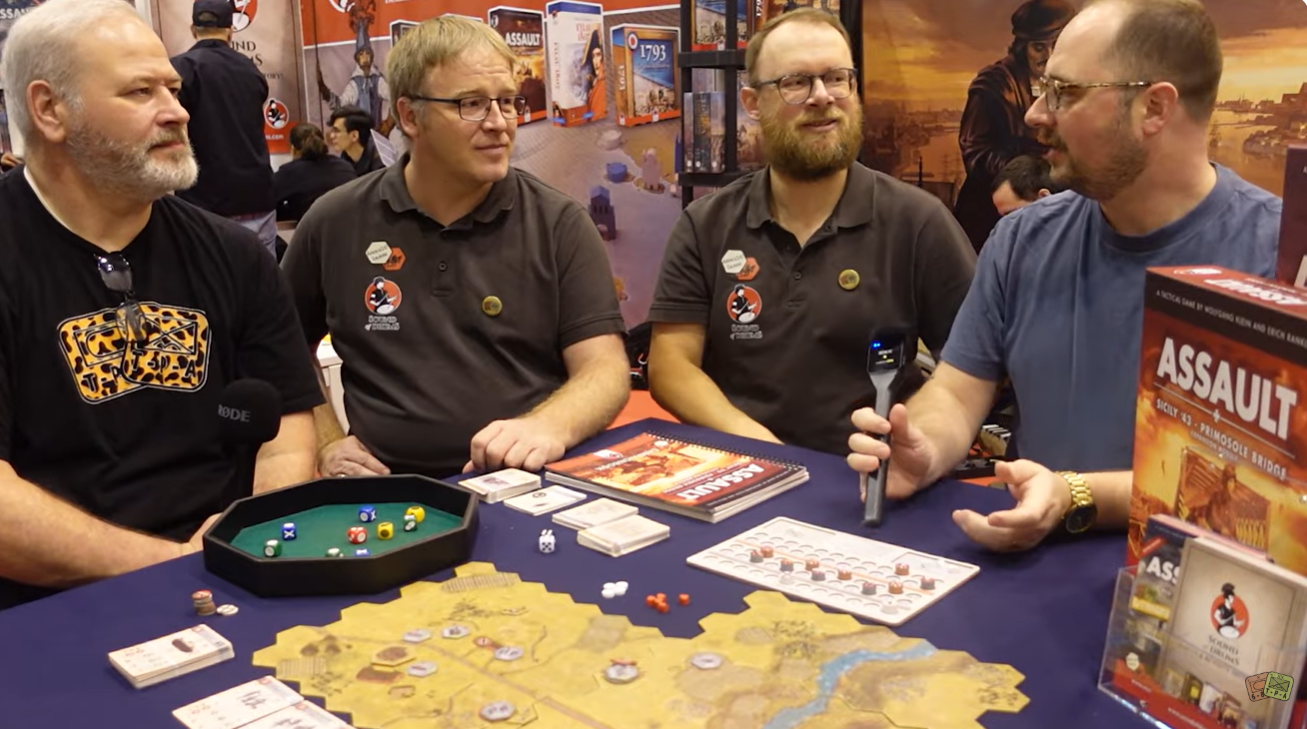
Last year, while attending SPIEL Essen in Germany, we had the chance to sit down separately with 3 wargaming designers in Wolfgang Klein/Erich Rankl with Assault! Games, Florent Coupeau with Nuts! Publishing and Uwe Walentin with Sound of Drums and shoot interview videos about their games and upcoming projects.
Pandasaurus Games has heavily downsized its Spiel Essen booth this year, after finding it can still sell similar numbers of its hit games through Asmodee arm EPN while slashing its overheads and logistical workload.
The US publisher has shifted to using European Player Network, Asmodee‘s specialist English-language sales and distribution operation in the region, to handle its stock and sales at the giant German show – removing the need for Pandasaurus to transport and store hundreds of games, staff its own retail operation and devote much of its booth to selling them.
Pandasaurus had run substantial booths at Spiel – the world’s biggest board game fair – for several years following the Covid-19 pandemic, but told BoardGameWire its experience using EPN last year persuaded it to heavily scale back its own footprint for the 2026 show in October.
CEO Nathan McNair said Pandasaurus previously spent more than €50,000 ($57,000) attending Spiel with its larger setup, compared to between $20,000 and $25,000 under its current model.
He said games Pandasaurus expects to be hits still sell similar numbers of copies – typically 300 to 500 – under the new setup – although added that Pandasaurus now receives roughly half as much revenue per sale.
“The revenue is lower because obviously EPN will get a portion of the proceeds, but our cost is so much lower that the overall cost to revenue ratio is very similar,” McNair said.
This year EPN will handle the company’s stock and sales operation and host three Pandasaurus demo tables within its booth, while the publisher’s own, smaller stand will be focused largely on meeting space and additional demos of upcoming games.
Titles being shown off by Pandasaurus this year include Alex Cutler design Sandcastles, Machi Koro: Life from Masao Suganuma and embroidery-focused card game Fadenfroh from Jordy Adan and Alexander Pfister.
Pandasaurus’ previous large booth at Spiel Essen
McNair said, “The show is very expensive to get to and logistically trying to run a large booth half a world away is a lot. Running a show like GenCon is already a lot – but finding booth staff for the show when we need to staff 20 or more demo tables, stock games, sell games, figure out how to legally import/pay VAT/collect cash/deposit the cash in the US bank or get a correct license to take credit cards in Europe is a logistical nightmare.
“So, what we found is a way to more economically attend the show, get some marketing done, sell games to players, make sure we are demoing games and getting the meetings we need without having to spend €50,000 or more on the show itself.
“Our cost to attend with this model is roughly 1/3rd as much overhead, and while we make less per order when a game is sold our sales are actually just as strong, so players are still getting the games they want – we come close enough to ‘breaking even’ and it’s just a lot less work for us.”
McNair said US publishers “typically have a smaller footprint in continental Europe than we like to think”, and questioned the need for some English-language publishers to operate such large stands at Spiel.
“A lot of us run booths but I find it a bit strange given our limited sales in the region that so many have large booths,” he said.
“Some of course do sell and distribute in German (or other languages) themselves so that makes more sense – but for English only US publishers continental Europe isn’t our core market.
“If you look at US trade shows for the most part the only European companies with booths tend to be those that sell themselves in the US.”
He added, “I don’t want to tell other folks how to run their business and I’m a big believer that the folks with larger booths probably know more about their situation than me – so they may have found that this is really effective for them.
“I would absolutely prefer this model – it’s just a lot less work – besides the money difference I mentioned has taken the workload of prep and running the show to a fraction of what it was to try and run a larger booth in Germany.”
Part of the European Player Network booth and demo space at Spiel Essen
Pandasaurus’ decision to cut back on the size of its booth comes as Spiel itself continues to move in the opposite direction – with an expansion into all eight main halls at the Messe Essen exhibition centre for the first time expected to see the event challenge its record 220,000 attendance set last year.
Merz Verlag said demand for the additional space was coming both from existing exhibitors wanting significantly larger stands and an unusually high number of first-time exhibitors, with all available stands booked before the April 30 registration deadline.
And Pandasaurus’ smaller presence does not mean it sees less value in attending, according to McNair.
He said, “For me I really like to focus on meetings, seeing friends, trying to check out some games and building awareness of the new titles at the show – and I think the setup we have works really well for just that at a much lower lift,” he said.
“Essen is a much more international show in a lot of ways than most other board game conventions, so we know there are fans there who want to check out our new games really badly and I want to make sure they can – but if I can do it in a way that is less work and less risk for us I prefer that strongly.”
Spiel Essen 2026 takes place at Messe Essen from October 22 to 25.
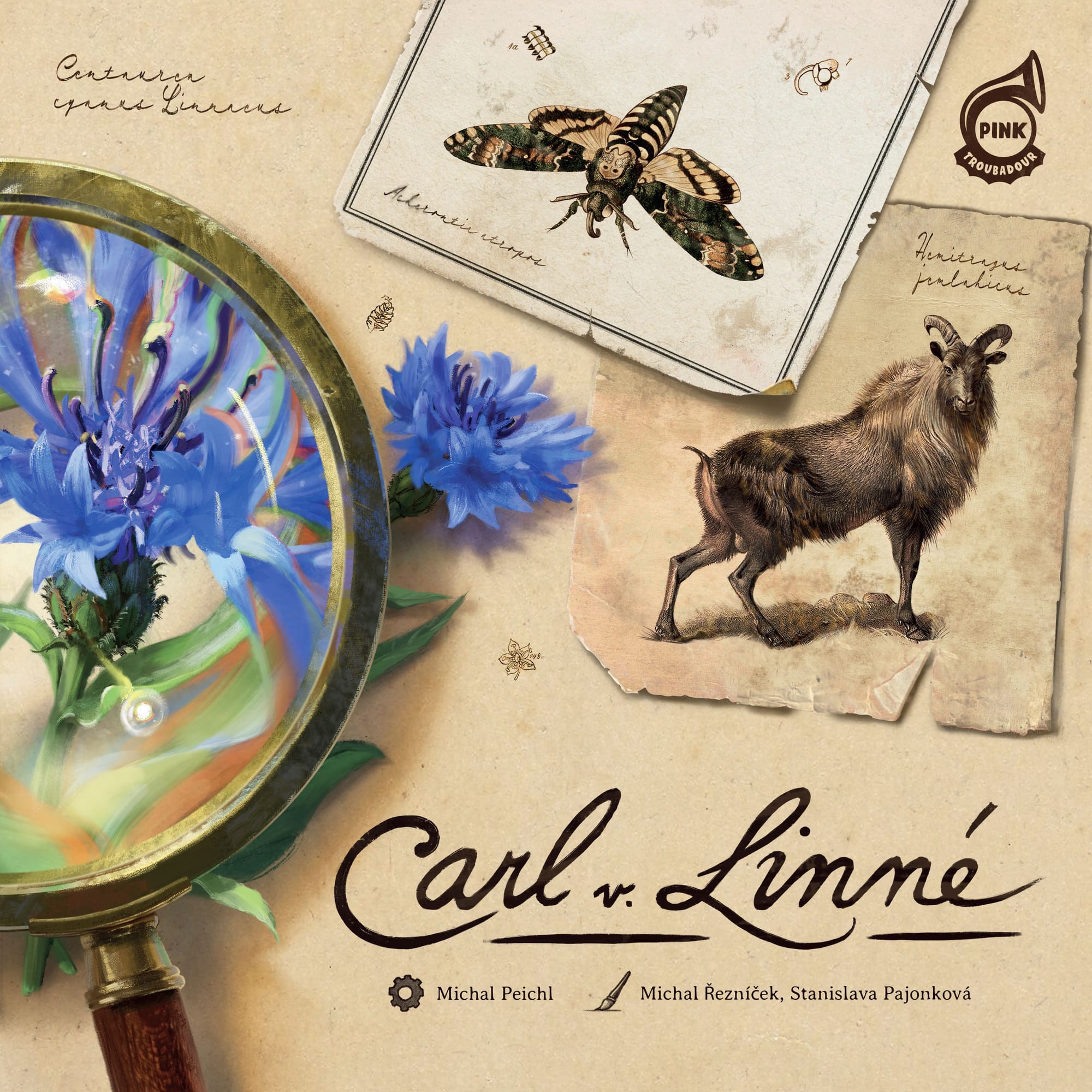
Pink Troubadour bringt mit „Carl von Linné" ein neues Kennerspiel zur SPIEL Essen 2026. Die Spielenden übernehmen die Rolle von Naturforscherinnen und Naturforschern des frühen 18. Jahrhunderts, inspiriert von Carl von Linné und seinen Zeitgenossen: Sie bereisen entlegene Regionen, sammeln und erforschen Exemplare, legen botanische Gärten an, korrespondieren mit gelehrten Institutionen und veröffentlichen Bücher.
Ein Linsensystem zwischen Feldarbeit und Studierstube
Laut Verlagsbeschreibung verwalten die Spielenden ihre Aktionen über ein sogenanntes Linsensystem und wägen dabei ständig zwischen Feldarbeit und akademischem Studium ab. Wie genau eine Linse im Spiel funktioniert, ob als physische Komponente oder als Kartentyp, führt die Verlagsbeschreibung nicht weiter aus.
Design stammt von Michal Peichl, die Illustrationen von Stanislava Pajonková und Michal Řezníček. Das Spiel ist für 1 bis 4 Spielende ab 12 Jahren ausgelegt. Eine Partie dauert 60 bis 120 Minuten. Einen dedizierten Solo- oder Automa-Modus führt BGG trotz der Ein-Personen-Option nicht als eigenen Mechanik-Tag.
Offene Fragen zu Promo-Figur und Vorbestellung
Mehrere unabhängige Berichte rund um die SPIEL Essen erwähnen eine Promo-Spielfigur zu Alexander von Humboldt, die es zusätzlich zum Spiel geben soll. Eine Verlags-Primärquelle mit Details dazu, etwa wie genau der Bezug zu Humboldt hergestellt wird, ließ sich in dieser Recherche nicht auffinden. Ebenso zu Preis und Vorbestellung: Die Pink-Troubadour-Website selbst führte das Spiel zum Zeitpunkt des Abrufs noch nicht in ihrer Spieleübersicht.
Tangram ist kein Spiel im eigentlichen Sinne – eher eine Philosophie, eine Lebenseinstellung. Dabei kommt es mit nur sieben geometrischen Holzteilen aus, bildet aber mit ausreichend Kreativität und Vorstellungsvermögen tausendfache sinnvolle Kombinationen, die eine scheinbar kleine Welt des Mosaiks in immer wieder erstaunlichen Bildcollagen verwandeln. Ohne Tangram gäbe es auch kein Ubongo & Co.
Schmidt Spiele hat es nicht erfunden und deshalb fehlt auch der Autor auf der kleinen Metallbox voller Fingerabdrücke, in der Tangram aktuell zum Taschengeldpreis erhältlich ist. Erstmalig erwähnt wurde es unter dem Namen „sieben Bretter der Weisheit“ in chinesischen Schriften um 1813. Dort tauchten dann auch Rätselbücher auf, deren Vorlagen man aus den nur sieben Teilen passgenau nachlegen soll. Im 19. Jahrhundert wanderte es dann als Tangram nach Europa. Brettspielkenner wird die Tangram-Form als Quadrat zusammengelegt zudem arg bekannt vorkommen. Die SPIEL Essen hat es im Logo und steht dort für spielerische Vielfalt. Ich selbst habe Tangram in der alten Pappschachtel-Ausgabe allerdings beim Ergotherapeuten kennengelernt. Dort ist es im Einsatz, um visuelle Wahrnehmung, Raum-Lage-Verständnis, Feinmotorik sowie Auge-Hand-Koordination zu trainieren und zu verbessern.
Es ist schon erstaunlich, wie viele unterschiedliche Formen wie auch komplex-abstrakte Abbildungen damit möglich sind. Wer sich die sieben lackierten Holzteile genauer anschaut, der erkennt, dass sich einzelne Teile zu den größeren Formen auslegen lassen und das auffällige Parallelogramm damit gerne in seiner Grundform maskiert werden kann. Und genau da liegt die Herausforderung im Solo-Spiel: Erkenne aus einer nicht maßstabsgetreuen Abbildung ohne Trennlinien, wie dieses Objekt aus den sieben Formen zusammengebaut ist und baue es nach. Gerne einfach spontan probiert, gedreht und gewendet und erste irreführende Ideen wieder verworfen. Die Schmidt Spiele Ausgabe bringt dazu 800 Bildvorlagen mit. Wer ganz verzweifelt ist oder zu wenig Geduld hat, schaut bei den Auslösungen nach und wird erstaunt sein. Freies wie kreatives Spiel ist ebenso möglich. Wer weiß, eventuell entdeckt Ihr eine noch nie dagewesene Kombination?
Ohne Tangram als Urvater der geometrischen Form-Puzzles, würde es wohl auch kein Ubongo geben. Vom schwedischen Spieleautor Grzegorz Rejchtman 2003 erfunden, nutzt es die von Tetris bekannten Polyominos, macht ein Echtzeit-Wettrennen im Wettstreit mit zeitgleich puzzelnden Mitspielern daraus und landet einen Welthit. Seit 2005 bei Kosmos als lokalisierte Version erhältlich. Fünfzehn verschiedene Varianten listet Kosmos auf: von Ubongo 3D bis zum diesjährigen Ubongo Flex, das mich bei meiner ersten Mitspielpartie fast zum Wahnsinn getrieben hat. Wo das Ubongo gezielt Hektik verbreiten will, ist die Solo-Beschäftigung mit Tangram eher eine Quelle der Ruhe – sofern man irgendwann auf die Lösung kommt.
Spiel Essen has launched a dedicated B2B matchmaking system aimed at helping publishers, designers, retailers and other industry professionals find potential business partners and arrange meetings before arriving at the world’s biggest board game fair.
The new service, which is restricted to exhibitors and people with business visitor tickets, lets users create profiles detailing what they are looking for and what they can offer, send specific business inquiries, connect via chat and schedule appointments at the show using the built-in calendar.
Spiel said today that the system will be integrated directly into its dedicated app, adding that the move is intended to make networking between trade visitors, professionals and publishers “more targeted, simple, and effective”.
Business has long been an important part of Spiel despite its status as a public-facing convention, with major publishers operating their own dedicated B2B areas for meetings with retailers and other industry professionals.
B2B-specific companies such as manufacturers, crowdfunding services and trade organisations were still scattered across various halls in 2019, but that situation began to change after Spiel was taken over in 2022 by Merz Verlag – whose core event, Spielwarenmesse, is one of the world’s biggest B2B toy trade fairs.
Those companies began to be more concentrated in Hall 4 during the 2022 event – a move which intensified the following year amid a major reorganisation of the halls which attempted to more obviously split the fair into themed segments such as children’s games, family and light-to-medium games, expert games, tabletop and miniature games, roleplaying games and TCGs.
Florian Hess, managing director of Merz Verlag, said after last year’s record-breaking Spiel, “For exhibitors at the fair the focus is also on the joy of the games. At the same time, an incredible number of effective business developments emerge here – and this happens naturally alongside everything else.
“I don’t know of any other event that is as strong a springboard for a business’s launch as Spiel. I have met exhibitors who started here a few years ago with a small booth and are now occupying several hundred square meters and selling games internationally.
“Experiencing this kind of B2B rocket launch never ceases to fascinate me.”
Hall 3 at Spiel Essen 2025
The new system arrives as Spiel prepares for its biggest-ever event from October 22 to 25 this year – with an expansion into all eight main halls at the Messe Essen exhibition centre for the first time expected to see the event challenge its record 220,000 attendance set last year.
But despite the show bumping against its space limits at its long-time home, a Merz Verlag spokesperson told BoardGameWire in March, “We love Essen – as a venue and the city – and have no intention of leaving. For the foreseeable future SPIEL will remain in Essen as it has for more than 40 years now.”
The fair’s expansion into a seventh hall last year helped the four-day show to its record 220,000 attendance, outstripping the 209,000 visitor record it set just before the Covid-19 pandemic.
Spiel might have broken its attendance record in 2024 were it not for a self-imposed visitor cap, which limited the number of attendees each day to about 50,000 – a measure introduced alongside wider aisles post-pandemic to help visitors move around the often crowded halls more easily.
More than 920 exhibitors from 53 countries are expected at this year’s event, with Merz Verlag saying in March that demand had come both from long-term exhibitors keen to “significantly increase” their booth space, as well as an “impressive number” of first-time exhibitors hoping to attend this year.
About half of the available tickets for Thursday, Friday and Saturday have already been sold, seven weeks before the show opens, with Sunday sales currently “lagging slightly behind”, the show announced today.
Access to the matchmaking platform comes as part of Spiel’s €46 business visitor ticket, which compares with €25 for a standard adult day ticket.
Spiel Essen 2026 takes place at Messe Essen from October 22 to 25.
Galactic Cruise could extend its run of major award wins after being named a top-three finalist in this year’s Deutscher Spiele Preis, the biggest community-voted board game award in Germany.
The space tourism-themed worker placement title faces competition in the final from Ark Nova creator Mathias Wigge, who could win the award again with just his second major design – the similarly zoo-themed Sanctuary.
A win for Sanctuary would double down on Matthias Wigge’s success following the colossal performance of his debut design Ark Nova, which as well as becoming the second-highest ranked game on BoardGameGeek has been a sensation on digital gaming platform BoardGameArena, with more than 13 million games played since its online launch in May 2023..
That latter title, which made designer Reiner Knizia the first person to complete a clean sweep of the Spiel des Jahres, Kennerspiel des Jahres and Kinderspiel des Jahres awards, finished sixth in this year’s DSP vote.
The Lord of the Rings: Fate of the Fellowship, another game which has already enjoyed significant awards success this year, finished just outside the top three finalists in this year’s DSP.
Take Time, which won the Austrian game of the year and Swiss Gamers Award this year, took fifth place in the DSP, ahead of Rebirth, Cozy Stickerville, River of Gold, Star Trek: Captain’s Chair and Forest Shuffle – Dartmoor.
Asmodee-owned studios secured four places in the Top 10: Z-Man with Fate of the Fellowship, Libellud with Take Time, Unexpected Games with Cozy Stickerville and Lookout with Forest Shuffle – Dartmoore – although none managed to break into the top three.
Other recent DSP winners have included Planet Unknown in 2023, Ark Nova in 2022 and Lost Ruins of Arnak in 2021, following The Crew, Wingspan, Azul and Terraforming Mars among winners from the previous decade.
The 2026 DSP is open to standalone games released in German between May 1, 2025 and April 30 this year, with voting open to people living in Germany, Austria and Switzerland.
Merz Verlag, which has presented the award since 1990, said “many thousands” of people voted during the three-month voting period.
The children’s DSP has also named its top three finalists: Mooki Island from designer Florian Sirieix, Paleolino from Marco Teubner, and Toriki: The Castaway Island by Wojciech Grajkowski.
Die SPIEL Essen 2026 findet vom 22. bis 25. Oktober auf dem Gelände der Messe Essen statt, zum ersten Mal mit allen acht Hallen und der Galeria. Nach Angaben der Veranstalter ist damit die Kapazitätsgrenze des Essener Messegeländes erreicht. Für Brettspiel-Interessierte bedeutet das in diesem Jahr mehr Fläche, mehr Programm und schon jetzt spürbar engere Ticketkontingente als in den Vorjahren.
Termine, Ort und Rekord-Kapazität
Die Messe öffnet von Donnerstag bis Samstag, 22. bis 24. Oktober, jeweils von 10 bis 19 Uhr, am Sonntag, 25. Oktober, von 10 bis 18 Uhr. Erstmals nutzt die SPIEL alle acht Hallen sowie die Galeria des Essener Geländes, bislang waren es sieben Hallen ohne die Galeria. Der Veranstalter meldete bereits am 5. März 2026, damit die Kapazitätsgrenze des Standorts erreicht zu haben. Seit dem 23. April 2026 ist die gesamte Standfläche für Ausstellende ausgebucht, Neuanmeldungen landen auf einer Warteliste.
Zur Einordnung die Zahlen der SPIEL Essen 2025: rund 220.000 Besuchende aus mehr als 80 Nationen, 948 Aussteller aus 50 Ländern und 1.716 Neuheiten in den damals sieben Hallen. Wie sich die Hallenaufteilung für 2026 im Detail verändert, hat die Redaktion bereits aufgeschlüsselt.
Tickets: Preise und aktueller Stand
Tickets gibt es ausschließlich online, eine Tageskasse vor Ort entfällt. Bis zum 4. August galt der Frühbucherpreis: 24 Euro für das reguläre Tagesticket, 15 Euro für Kinder von 4 bis 12 Jahren, 21 Euro ermäßigt und 65 Euro für die Familienkarte mit 2 Erwachsenen und bis zu 3 Kindern, Fachbesucher zahlten 46 Euro. Seit dem 5. August gelten die regulären Preise von 25, 16, 22 und 67 Euro, der Fachbesucherpreis bleibt unverändert bei 46 Euro. Hinzu kommen Zusatzoptionen wie die Teilnahmebestätigung zum Educators Day für 5 Euro, die Teilnahme am Golden Demon für 12 Euro oder das Warhammer-Kill-Team-LIVE-Lasertag für 25 Euro.
Die Nachfrage ist hoch: Der Veranstalter meldete am 7. August, Freitag und Samstag seien bereits zur Hälfte ausverkauft gewesen. Wer dem größten Andrang aus dem Weg gehen will, ist unter der Woche, etwa am Eröffnungsdonnerstag, tendenziell besser dran als am stark gefragten Wochenende. Neuere Zahlen zum Ticketverkauf hat die Messe seither nicht veröffentlicht. Alle Ticketkategorien im Detail hat die Redaktion Ende Juli zusammengefasst.
Die Spielepreise 2026 stehen teilweise schon fest
Die Jury der Spiel des Jahres hat ihre Entscheidung bereits am 12. Juli 2026 verkündet. Spiel des Jahres wurde Dito! von Martin Ang (Game Factory), Kennerspiel des Jahres Rebirth von Reiner Knizia (Frosted Games und Mighty Boards), Kinderspiel des Jahres Die Insel der Mookies von Florian Sirieix (Kosmos und Scorpion Masqué).
Unter den Nominierten für das Kennerspiel des Jahres stand auch Boss Fighters QR von Pegasus Spiele: Bei dem Karten- und Kampagnenspiel scannt eine Begleit-App die Karten per QR-Code und steuert damit die Kämpfe gegen insgesamt zehn Bosse in Echtzeit. Die Dschungelfieber-Erweiterung dazu hat die Redaktion bereits vorgestellt.
Beim Deutschen Spielepreis lief das Publikumsvoting bis zum 31. Juli. Die Plätze 1 bis 3 werden live auf der SPIEL-Pressekonferenz am 21. Oktober bekanntgegeben, einen Tag vor Messestart.
Programm abseits der Neuheiten
Der Miniaturen-Bemalwettbewerb Golden Demon ist zurück. Neu im Programm sind die TCG Awards, nach Angaben des Veranstalters die erste internationale Auszeichnung der Tradingcard-Branche, sowie ein Warhammer-40.000-Lasertag-Erlebnis, das Games Workshop erstmals außerhalb der Ausstellungshallen anbietet. Für Fachbesuchende, also Handel und Verlage, ist seit dem 17. Juli zudem ein B2B-Matchmaking-Tool aktiv, für Privatbesuchende ohne Relevanz.
Mit „Essen spielt!“ existiert zudem ein Partnerprogramm mit der Stadt Essen, das Rabatte und Aktionen auch außerhalb des Messegeländes bündelt. Offizielles Gesicht der Messe 2026 ist der US-Illustrator Peter Mohrbacher.
Neuheiten: Was schon bekannt ist
Die interaktiven Hallenpläne und die vollständige Ausstellerliste sind seit dem 10. August online. Die eigentliche Neuheitenliste der Messe folgt erst mit dem Start der offiziellen App am 3. September. Auf BoardGameGeek wächst parallel die Vorschauliste zur SPIEL Essen 2026, erfahrungsgemäß dürfte sie bis Messestart noch deutlich zulegen, verlässliche Zahlen dazu liefert aber erst die Messe-App.
Aus der laufenden Berichterstattung der Redaktion zeichnen sich bereits einige Titel ab: die deutsche Erstauflage von Kingdom Come: Deliverance bei Czech Games Edition und HeidelBÄR Games, Rooms & Roomies von Deep Print Games sowie das Familienspiel Carcassonne Labyrinth von Ravensburger und Hans im Glück. Boss Fighters QR mit seiner Dschungelfieber-Erweiterung, oben bereits verlinkt, gehört ebenfalls zu den angekündigten Neuheiten. Auf der schweren Seite des Spektrums steht vor allem das bereits erwähnte, druckfrisch gekürte Kennerspiel des Jahres Rebirth von Reiner Knizia, dessen frische Auszeichnung die Aufmerksamkeit auf der Messe zusätzlich befeuern dürfte.
Mit acht Hallen, ausgebuchter Standfläche und einem Ticketverkauf, der schon im August erste Tage an die Hälftemarke brachte, deutet vieles auf eine der bislang größten Ausgaben der Messe hin. Verbindliche Zahlen zu Ausstellern und Neuheiten 2026 liefert die SPIEL erst mit App-Start und Messeeröffnung, bis dahin bleiben die 2025er Werte die einzige Orientierung.
Road to Essen, a competition designed to showcase Vietnam’s burgeoning tabletop design scene at the world’s biggest board game fair, has returned for its second year – with organisers changing things up in the hope of helping turn publisher interest into commercial deals.
The contest was launched last year by Vietnamese board game publisher Everjoy Publishing and its global arm Everjoy Global, in an attempt to help designs from Vietnamese creators break out internationally.
Entrants receive access to workshops and playtesting, while later-stage contestants receive mentoring and jury feedback, with selected games ultimately presented to the international industry at the giant Spiel Essen board game fair in Germany.
Thinh LeHuu’s co-operative card game July, themed around Vietnam’s seventh lunar month and its Hungry Ghost festival, was named the inaugural champion last year from about 160 entries – winning over a judging panel that included Cascadia designer Randy Flynn with its “clever gameplay, polished design and cultural message”.
The 2026 competition is now under way with a theme of ‘Vietnamese Culture’, encouraging designers to draw on areas including the country’s history, legends, beliefs, festivals, folk arts, cuisine, crafts and architecture.
Rulebook cover for July, designed by Thinh LeHuu
But there is a significant change to the timetable this time around: rather than taking the winner to Spiel just weeks after the competition concludes, organisers have scheduled their next international showcase for Spiel Essen 2027.
Claire Ton, head of the organising committee for Road to Essen 2026, told BoardGameWire, “It’s a deliberate decision to give the work its best possible shot.
“A winner chosen in late 2026 can’t have a polished, publisher‑ready game on the Essen floor a few weeks later – and a rushed debut serves the designer least of all.
“Aiming this edition at SPIEL 2027 gives the winning team close to a full year to develop the game, act on the judges’ feedback, line up a publishing or distribution partner, and arrive ready to actually do business.
“It also lets us plan the Vietnamese presence at the fair properly. Getting a Vietnamese game to Essen was never really the goal – getting it there ready to sell is.”
The extra development period addresses one of the main barriers Road to Essen was created to tackle: getting games from Vietnam’s rapidly-growing community of local designers into a form that can be presented effectively to publishers and distributors outside the country.
Everjoy Global co-founder and CEO Ionah Nguyen told BoardGameWire in 2025 that Vietnam had experienced a roughly 400% increase in locally-designed games entering its market in just two years – but said designers continued to face a lack of international publishing and distribution connections, language differences, unfamiliarity with global supply chains and the cost of attending overseas shows.
Almost a year later, Ton told BoardGameWire, “The first edition did exactly what a first edition should: it put Vietnamese design in front of the world and proved there’s real appetite for it.
“We brought the games to SPIEL Essen 2025 and the response was genuinely exciting – our winning title, July, drew particular attention.
“That interest is now powering the next stage. Most of our finalists are deep in development, sharpening their games with everything they took from our international judges and from the fair floor.
“We’re building deliberately for lasting outcomes rather than quick headlines – the first publishing deals to come out of Road to Essen should be the right ones, and we’d rather bring a title to market ready to succeed than rush it out early.
“There’s a lot moving beneath the surface, and the next year is where it starts to show.”
Ton added, “We’re in the relationship‑building phase, and it’s an encouraging one. A lot of conversations were sparked at Essen – publishers wanting to understand the scene, see what’s emerging from Vietnam, and stay close to what comes next.
Thinh LeHuu collects his champion award at the Road to Essen competition in 2025
“What’s promising is that this feels less like one‑off interest in a single title and more like the early groundwork of lasting partnerships, which is exactly what a young design ecosystem needs to grow.
“The titles generating the most conversation share a clear profile: culturally distinctive, visually striking, and easy to pick up and play. Our focus this year is turning that momentum into concrete meetings and, ultimately, deals.”
That intermediary role directly addresses one of the problems Nguyen identified when Road to Essen launched: many Vietnamese designers lacked direct connections to international publishers and distributors.
She told BoardGameWire last year, “There’s no shortage of creativity in Vietnam. What we lack are bridges.”
But there are signs outside the competition that Vietnamese designers are beginning to find international publishing routes.
Mighty Boards edition of Yotei, designed by Huy Pham
Meanwhile Bunny 100 – designed by Hoang Vo and originally published by Everjoy Publishing – has secured a European release through Italian publisher DV Games.
Those developments come as designers elsewhere in Asia have had a striking 12 months in achieving recognition in the European market.
Ton said Vietnamese games’ biggest sales numbers nevertheless remain overwhelmingly driven by the country’s domestic market rather than exports, telling BoardGameWire research suggested Vietnam’s board game market reached about $100m last year at a roughly 10% growth rate.
She said, “Importantly, more of that is original Vietnamese design rather than imports, supported by a fast‑growing creator community and better retail distribution.”
Several Vietnamese-designed games are now reporting sales in the tens or hundreds of thousands of copies – like Bunny 100, Zodiac Rush and Galactic Super Beasts – thanks to the snowballing domestic market.
Ton told BoardGameWire, “The vast majority of those numbers come from Vietnam itself – and I’d argue that’s the most important part of the story, not a limitation.
“It proves there’s a large, real domestic market here: a home audience big enough to make original Vietnamese design commercially viable on its own. That’s the foundation everything else is built on.
“Export is the newer chapter – Bunny 100 into Europe through DV Games and across several Asian markets – and it’s growing, but the headline sales figures today are a signal of domestic strength first.”
This year’s contest will have an overall prize pool of about 500 million Vietnamese Dong – roughly $20,000 – split between the winner and a set of other award finalists.
They include awards for fan favourite board game, best visual design, most innovative board games, the game with most commercial potential, and best cultural representation – as well as categories for best junior creator (aged six to 15) and outstanding teen designer (ages 15 to 18).
Die SPIEL in Essen wächst 2026 weiter, und das merken Sie schon am neuen Hallenplan und an der Wegführung. Zum ersten Mal nutzt die Messe alle acht Hallen plus die Galeria. Für Sie als Besucherin oder Besucher heißt das: neue Wege, ein zusätzlicher Eingang und ein paar Umzüge, die Sie vor der Anreise kennen sollten. Wir haben die wichtigsten Änderungen zusammengetragen und sagen dazu, was offiziell bestätigt ist und was noch vorläufig gilt.
Vorab der wichtigste Hinweis für Ihre Planung: Die endgültige, interaktive Hallenbelegung wird erst mit der SPIEL-App final. Der Veranstalter hat die Freischaltung der interaktiven Hallenpläne und Ausstellerlisten für den 3. September 2026 angekündigt. Bis dahin gilt ein vorläufiger Stand, nicht der letzte Beschluss.
Wann und wo findet die SPIEL 2026 statt?
Die Messe läuft von Donnerstag, 22., bis Sonntag, 25. Oktober 2026, auf dem Gelände der Messe Essen (Messeplatz 1, 45131 Essen). Geöffnet ist von Donnerstag bis Samstag jeweils von 10 bis 19 Uhr, am Sonntag von 10 bis 18 Uhr. Veranstalter ist die SPIEL Essen.
Was ändert sich 2026 am Hallenplan?
Der größte Umbau betrifft die Fläche selbst. Nach dem aktuellen Stand kommt Halle 8 neu dazu. Dort sollen unter anderem Allplay, Denkriesen, HABA, Helvetiq, Jumbo, Mattel, Noris/Zoch und weitere Verlage ihre Stände aufbauen. Die neue Halle ist der eigentliche Grund, warum 2026 erstmals alle acht Hallen bespielt werden.
Auch die Sammelkartenspiele ziehen um. Sie waren 2025 noch in den Hallen 1 und 2 zu finden. Für 2026 bündelt die SPIEL diesen Bereich voraussichtlich in Halle 5. Wenn Sie gezielt zu einem Kartenspiel-Turnier oder an einen Sammelkarten-Stand wollen, sollten Sie diesen Wechsel im Kopf behalten.
Halle 2 baut das Angebot an Familienspiel-Anbietern aus. Und Halle 4 bekommt einen zusätzlichen Foodbereich. Wer den Tag über auf dem Gelände bleibt, findet damit eine weitere Anlaufstelle für die Pause.
Ein wichtiger Hinweis dazu: Diese Layout-Änderungen für 2026, also Halle 8, der Umzug der Sammelkarten nach Halle 5 und der neue Foodbereich in Halle 4, sind zum Redaktionszeitpunkt noch nicht amtlich bestätigt. Offiziell steht die Belegung erst mit der interaktiven App am 3. September fest.
Der neue Eingang: Was bringt Ihnen der Eingang Nord?
Neu ist ein vierter Zugang. Der Eingang Nord führt Sie direkt zur Halle 5. Für Sie ist das vor allem eine Frage der kürzeren Wege: Wer 2026 zu den Sammelkartenspielen möchte, kommt über diesen Zugang schneller ans Ziel, ohne das komplette Gelände zu durchqueren. Bei erwartet vollen Gängen ist ein zusätzlicher Eingang ein echter Gewinn für die Orientierung.
Was kosten die Tickets, und wo bekommen Sie sie?
Tickets gibt es 2026 nur online. Eine Tageskasse vor Ort ist nicht vorgesehen. Planen Sie den Kauf also vor der Anreise ein. Die Preise: Die Tageskarte kostet 25 Euro, ermäßigt 22 Euro. Für Kinder von 4 bis 12 Jahren werden 16 Euro fällig. Die Familienkarte für zwei Erwachsene und bis zu drei Kinder liegt bei 67 Euro.
Fazit: So planen Sie Ihren Besuch der SPIEL 2026
Die SPIEL 2026 wird größer, und die neue Struktur lohnt einen zweiten Blick vor der Fahrt nach Essen. Merken Sie sich die drei Punkte mit dem größten Nutzwert: Sammelkarten stehen jetzt in Halle 5, der neue Eingang Nord bringt Sie dort schneller hin, und die Halle 8 erweitert das Verlagsangebot spürbar. Kaufen Sie Ihr Ticket vorab online, und laden Sie ab dem 3. September die interaktiven Hallenpläne in der SPIEL-App. Erst dort steht die endgültige Belegung, mit der Sie Ihren Rundgang verlässlich planen können.
Zur SPIEL '26 in Essen bündelt HeidelBÄR Games im Oktober mehrere Neuheiten und Erweiterungen. Zwei Titel stechen dabei heraus: die laut Verlag finale Erweiterung zu „Die verlorenen Ruinen von Arnak" und das farbenfrohe Kartenspiel „Alebrijes: Wächter der Träume". Wir sortieren die Ankündigungen nach ihrer Relevanz für den deutschsprachigen Raum und schauen zuerst darauf, was jedes Spiel tut, bevor wir die Verlagsversprechen einordnen.
Die verlorenen Ruinen von Arnak: Überraschungslieferung
Der stärkste Haken zuerst: Mit der „Überraschungslieferung" erscheint laut Verlagsbeschreibung die finale Erweiterung des Arnak-Universums. Wer Arnak kennt, weiß, worauf sich das Zusatzmaterial legt: Im Grundspiel setzen Sie Ihre beiden Forschenden auf Fundorte, sammeln Ressourcen, wehren Wächter ab und bauen parallel Ihr Kartendeck aus. Genau hier greift die Erweiterung. Sie bringt 50 neue Karten mit, davon 30 Artefakte und 20 Gegenstände, dazu zwei neue Orte und einen überarbeiteten Ort. Das Grundspiel bleibt zwingend nötig, die Überraschungslieferung ist ein reines Add-on. Die Spielerzahl von 1 bis 4 erbt die Erweiterung vom Grundspiel, der Solo-Modus von Arnak bleibt also erhalten. Arnak stammt vom Autoren-Duo Elwen und Mín, verlegt bei Czech Games Edition; HeidelBÄR ist der deutsche Vertrieb. Alter: ab 12 Jahren. Die Erweiterung ist vorbestellbar.
Alebrijes: Wächter der Träume (Kartenspiel)
„Alebrijes" ist ein Kartenspiel um das Ablegen der eigenen Handkarten, mechanisch eine Stichleiter (Ladder Climbing). Sie versuchen, Ihre Handkarten möglichst schnell loszuwerden, indem Sie in aufsteigenden Wertfolgen ablegen. Am Ende jeder Runde geben die Karten, die Sie nicht losgeworden sind, Minuspunkte. Gespielt werden drei Runden; gewonnen hat, wer danach die wenigsten Minuspunkte gesammelt hat. Beim Thema und der Optik lohnt die Kennzeichnung als Verlagsaussage: HeidelBÄR bewirbt einen speziellen Neon-Druck und rahmt die bunten Fabelwesen als „Wächter der Träume". Gestaltet hat das Spiel das mexikanische Duo Joel und Rafael Escalante, die Illustrationen stammen von Gaby Zermeño, der Originalverlag ist Fractal Juegos aus Chile; HeidelBÄR übernimmt den Vertrieb. Im Herbst 2026 erscheint es auf Deutsch und Englisch. Einen dedizierten Solo-Modus nennt der Verlag nicht, die Spielerzahl beginnt bei drei. Bei ebendieser Spielerzahl gibt es eine Abweichung, die wir offenlegen: Der Newsletter führt 3 bis 6 Spielende, die BGG-Seite nennt aktuell 3 bis 5. Wir übernehmen die Verlagsangabe von bis zu sechs Personen als primär, weisen aber auf die abweichende BGG-Angabe hin. Als Spieldauer sind rund 15 bis 25 Minuten ab 8 Jahren angesetzt. Nach Verlagsangabe unterstützen Verkäufe die Organisation „Trees for the Future". Vorbestellbar.
Codenames: Critical Role Adventures, das Vox-Machina-Pack
Für Fans der Rollenspiel-Serie legt HeidelBÄR ein Erweiterungspack zu „Codenames: Critical Role Adventures" nach. Am bekannten Codenames-Prinzip ändert sich nichts: Zwei Teams raten anhand von Ein-Wort-Hinweisen ihrer Hinweisgebenden die eigenen Begriffe, ohne beim Attentäter danebenzugreifen. Das Vox-Machina-Pack steuert 42 thematische Begriffe bei, dazu einen neuen spielbaren Charakter (Keyleth) und zwei neue Gegenstände. Erscheinen soll es im Herbst 2026. Ob es rechtzeitig zur SPIEL '26 verfügbar ist, lässt der Verlag ausdrücklich offen; diese Unsicherheit benennen wir hier, statt einen Termin zu behaupten. Vorbestellbar.
Railroad Tiles: nominiert für den Österreichischen Spielepreis
Ein starker DACH-Haken kommt von einem bereits erschienenen Titel: „Railroad Tiles" ist für den Österreichischen Spielepreis nominiert. Das Legespiel ist der Nachfolger der Railroad-Ink-Reihe. Sie legen Landschafts- und Schienenfelder aus und verbinden sie zu einem möglichst dichten, punkteträchtigen Streckennetz. Es spielt sich mit 1 bis 4 Personen, ist ab 8 Jahren angesetzt und dauert rund 30 Minuten; der Solo-Modus ist also enthalten. Die BGG-Wertung liegt bei einem Schnitt von 7,5. Verantwortlich sind die Autoren Hjalmar Hach und Lorenzo Silva von Horrible Guild, den deutschen Vertrieb hat HeidelBÄR. Angesprochen sind Familien, erfahrene Spielende und Bahn-Fans gleichermaßen.
Premium-Komponenten-Packs für Arnak, Drillers und SETI
Abgerundet wird das Herbstprogramm durch drei bereits verfügbare Premium-Komponenten-Packs, die Holz- und Metallteile für bestehende Titel aufwerten: für Arnak zu 39,95 Euro, für Drillers zu 34,95 Euro und für SETI zu 39,95 Euro.
Einordnung
Für die DACH-Leserschaft sind zwei Meldungen die spannendsten. Zum einen das angekündigte Arnak-Finale: Wer die Reihe über Jahre begleitet hat, bekommt mit der Überraschungslieferung laut Verlag den Abschluss. Zum anderen die Nominierung von Railroad Tiles für den Österreichischen Spielepreis, ein Signal, das über reine Verlags-PR hinausgeht. Alebrijes ist der bunte Hingucker des Programms, sollte sich aber am Spiel und nicht am Neon-Druck messen lassen. Der Vorbestell-Status der Neuheiten ist dabei eine Information, kein Gütesiegel.
Die SPIEL'26 kommt mit großen Schritten näher! Es scheint zwar erst Anfang August zu sein, aber der Oktober ist schneller da als man denkt. Grund genug für unseren Kulturpodcast die Messevorschau zu starten und einen Blick darauf zu werfen was uns an Neuheiten erwartet. Wir belassen es dabei bei Titeln die in einer deutschsprachigen Fassung erscheinen. Zudem kommen in dieser Folge nur die Verlage bis zum Buchstaben L zum Zuge! Auch so dürft ihr uns gut zwei Stunden lauschen! Viel Spaß!

 Anmelden