❌

Lese-Ansicht

Asmodee eyes fresh publishing, Board Game Arena investment as board game sales jump 18%, TCG boom fuels profit surge


Asmodee is preparing to ramp up investment in its own publishing operations, major franchises and online platform Board Game Arena after posting record second-quarter revenues of €551.8m, as it looks to capitalise on the current boom in TCGs and renewed growth across its board game business.

The board game giant’s Q2 revenue was up almost 37% year-on-year – with its distribution of trading card games once again underpinning growth at the business, surging more than 51% year-on-year to €343.8m.

Asmodee’s board game revenue across publishing and distribution, meanwhile, climbed 18.4% to €167.5m, building on 16% growth in the preceding quarter.

More than 40% of that increase came thanks to Asmodee’s acquisition of French social and party game publisher ATM Gaming in April, in a deal which could reach €250m depending on ATM’s future performance.

Asmodee CFO Andrea Gasparini said in an earnings presentation that the remaining rise in board game revenue was split roughly equally between games published by Asmodee’s own studios and third-party titles it distributes for other publishers, with evergreen titles, expansions and new releases all contributing.

The company’s US revenue also recovered significantly in Q2, climbing 27.2% year-on-year to €70.1m after several difficult quarters impacted by US tariff volatility and wider economic uncertainty.

Asmodee CEO Thomas Koegler

Asmodee had reported a 23% revenue slump from its US operations during the last three months of 2025 amid retailers reducing orders and adjusting inventories, followed by a 15% decline between January and March and another 9.4% fall between April and June this year.

Company CEO Thomas Koegler told the shareholder presentation the overall US tabletop market was now at an all-time high thanks to the TCG boom, while board games had also recovered from last year’s downturn.

He said, “We had a dip in the market last year mainly due to the tariffs,” adding that sales had recovered to levels seen a few years ago in some categories – although he said family games remained below their Covid-era highs.

He highlighted particularly strong demand for social and hobby games, describing the US market as being in “a good state”.

Asmodee’s own publishing operations have also returned to growth, with sales of games from its own studios rising 26.5% to €144.6m in Q2. That follows a 5.8% decline in the 2025/26 financial year, which Asmodee attributed to weaker Star Wars: Unlimited sales compared with the game’s strong post-launch period.

Koegler said about a third of the revenue increase from its own published titles came from the timing of Star Wars: Unlimited releases, another third from ATM Gaming and the remainder from other products.

Star Wars: Unlimited, published by Asmodee studio Fantasy Flight Games

ATM has also benefited from expanding its social games portfolio into more countries through its new owner’s distribution network, with the company reporting a 57% increase in sell-out volumes during the quarter – including strong demand for titles including Pili Pili and Mouton Mouton.

Asmodee’s improving publishing performance and soaring TCG revenues have left it with greater scope to invest in its business, with its adjusted EBITDA margin – a measure of its underlying profitability relative to revenue – reaching 18.1% for the last 12 months, exceeding its medium-term target for the first time.

Koegler said Asmodee would continue aiming to keep that figure above 18% while reinvesting in longer-term growth, although he expected profitability to improve more slowly than in recent quarters.

Gasparini said, “Priority number one is our portfolio of published products, because we want to bring them to the next level and create strong brands known as much as possible worldwide.”

He added that Asmodee would continue hiring key talent, strengthening its operations and investing in security and IT infrastructure, including AI tools and new systems for its front and back-office functions.

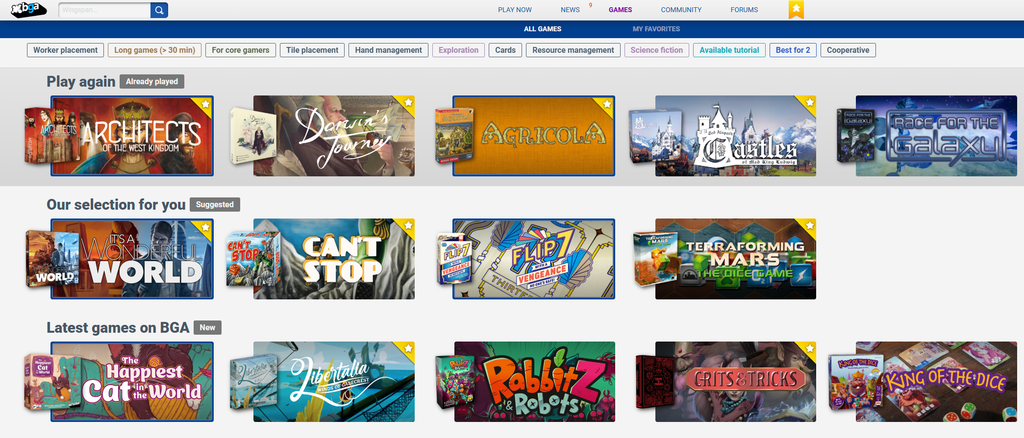
Gasparini also singled out Board Game Arena as one of Asmodee’s key strategic assets, saying the company believed there was further potential to strengthen the platform, expand its audience and diversify its games catalogue.
Koegler said the investment programme would include continued game development across Asmodee’s 23 studios, alongside efforts to increase international awareness of its established franchises, particularly Catan, Ticket to Ride, Dobble and Exploding Kittens.

He also highlighted the company’s efforts to establish the Asmodee name itself as a consumer-facing mark of quality, including a shop-in-shop operation at Fnac Les Ternes in Paris.

The publishing investment drive follows Asmodee’s appointment of former Exploding Kittens CEO Carly McGinnis as chief product officer in August, with responsibility for strengthening its publishing capabilities and bringing its studios and distribution teams closer together.

Asmodee’s financial firepower continues to be driven heavily by TCG distribution, however, with games published by third-party partners generating €395.6m during the quarter, up 42.4% year-on-year and accounting for almost 72% of total group revenue.

Pokémon’s 30th-anniversary products were a major contributor to the latest growth, alongside Magic: The Gathering and Riftbound, but Koegler said TCG demand was so strong that manufacturers were struggling to produce sufficient stock.

He said, “The entire industry is constrained on supply. Today, we sell what we have. We even allocate products to the best of what we can. One could say that the market is, for now, slightly underserved. It is just that the manufacturing capabilities of the suppliers are the limiting factor.”

He also said specialist hobby stores were experiencing significant growth, particularly those investing in organised play, demonstrations and other activities to engage their customers.

“Hobby stores are the heart of our industry,” he said, highlighting the positive impact of the trading card boom on both specialist shops and mass-market retailers.

Koegler nevertheless acknowledged that the growing number of TCGs was creating some competition for consumers’ spending, as well as difficulties for retailers trying to allocate cash, shelf space and attention between different games.

He said Asmodee was working with its publishing partners to spread TCG releases across the calendar where possible, helping retailers manage those competing demands.

Koegler added that the company’s pipeline of potential acquisitions remained as active as when it reignited its M&A strategy almost exactly two years ago, despite a string of deals since.

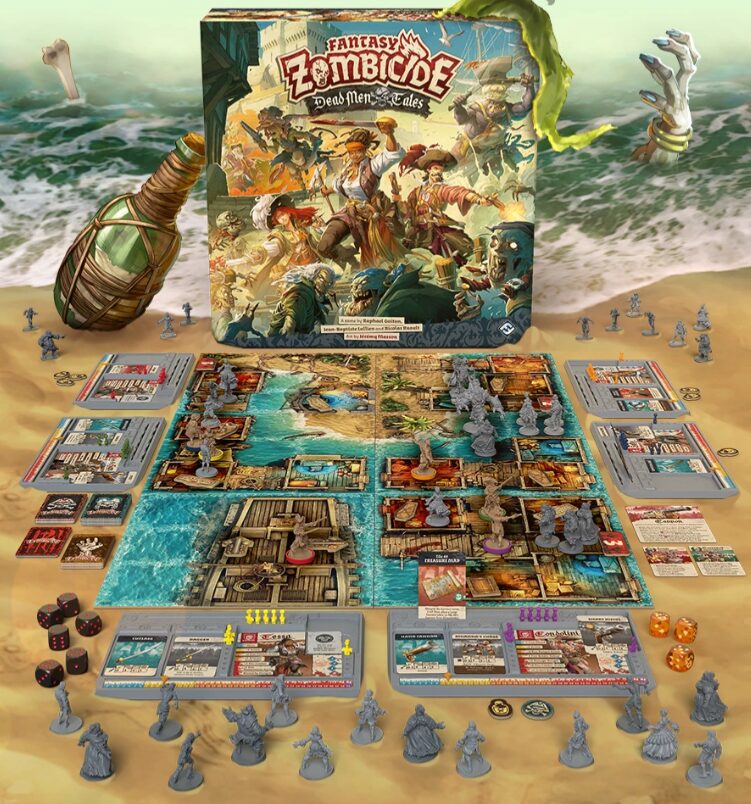
They include the big-money ATM buyout, as well as the acquisitions of Zombicide, Cthulhu: Death May Die, Sheriff of Nottingham and Japanese publisher Japon Brand from financially troubled CMON, and the rights to Time’s Up and Welcome To.

Asmodee also spent almost $175m in May to acquire the remaining 45% of Exploding Kittens it did not already own, five years after buying its initial majority stake.

Koegler added, “I think that expectations on valuations have become a bit more reasonable than in comparison to a few years back. We look confidently in our ability to pursue further acquisitions.”

Asmodee enters the crucial Christmas trading period confident of continued growth across both its own publishing operations and third-party distribution business, although Koegler cautioned that the pace might not match the latest quarter.

The post Asmodee eyes fresh publishing, Board Game Arena investment as board game sales jump 18%, TCG boom fuels profit surge first appeared on .
  •  

Dice Throne deepens Asmodee ties with three European deals covering publishing, retail distribution, online sales

Dice-and-card combat game Dice Throne has signed a trio of new agreements with Asmodee to expand its European retail distribution and online sales, including switching its French-language publishing away from Goliath-owned Lucky Duck Games.

The deals will see Asmodee France produce French-language editions of existing and future Dice Throne titles, Asmodee UK expand distribution across British retailers, and Asmodee subsidiary European Player Network provide a dedicated EU online sales channel.

The new agreements follow Dice Throne’s decision in February this year to consolidate its North American distribution under a single exclusive partner, Universal Distribution, as the company looks to expand its retail presence through new distribution agreements, lower-priced products and organised play.

That strategy centres on making Dice Throne more accessible through traditional game stores, including offering individual Hero Packs at lower prices than its larger boxed sets, while using organised play to encourage repeat visits and purchases.

Dice Throne said the UK and EU agreements were aimed at strengthening its existing sales operations, with Asmodee UK providing wider access to British retailers from the first quarter of 2027. EPN has already begun selling English-language products through its Boardgame Select online store.

The French-language agreement, meanwhile, marks a change from Dice Throne’s longstanding relationship with Lucky Duck Games, which began publishing localised editions in 2021.

Characters from the Dice Throne: Vanguard set || Kickstarter image

Lucky Duck, which was acquired by Goliath in 2024, said last October that negotiations over future Dice Throne releases had become increasingly complicated by the franchise’s success, citing discussions over rights, production quantities and exclusivity.

The publisher said at the time that it had yet to secure agreements for several upcoming products, including Vanguard and Outcasts, and could not confirm whether they would receive French-language editions.

The change comes amid a wider restructuring of Lucky Duck’s European operations following its acquisition by Goliath, with the company scaling back third-party localisation to concentrate on developing and publishing its own games.

Lucky Duck global brand director Scott Morris told BoardGameWire in April that localisation had become “resource intensive” and dependent on external factors. The cutbacks have since extended to the loss of the company’s in-house French editorial team, which Lucky Duck acknowledged in September had forced it to cancel planned French-language editions of Into the Godsgrave and Oakspire, and delayed its French release of Too Many Bones.

The restructuring has also affected Poland, where Lucky Duck announced in June that it would no longer publish most of the third-party licensed titles it had unveiled in February. The company said most had found alternative local publishers, while stressing that its Polish operation would continue trading.

Asmodee France will begin releasing French-language Dice Throne products in the second half of 2027, covering France, Belgium, Switzerland and Canada.

The new arrangements are also intended to strengthen organised play across France and the UK, with improved access to kits and dedicated support for retailers, while Dice Throne plans to introduce multilingual packaging for more products, including Hero Accessory Packs.

Dice Throne CEO Casey Sershon said: “Instead of one approach for every market, we’re partnering locally to meet each community where it plays and shops.

In a company update in September, Dice Throne said its single-Hero packs had been a major success, while retail and organised play continued to grow.

The company, which has raised more than $20m through crowdfunding to date, added that it no longer needed Kickstarter to finance production, although it intended to continue crowdfunding new releases “because it’s part of Dice Throne’s community tradition”.

The post Dice Throne deepens Asmodee ties with three European deals covering publishing, retail distribution, online sales first appeared on .

  •  

Masters of the Universe film writers reportedly picked to helm Catan live-action Netflix movie

Netflix has reportedly brought in two writers behind this year’s $200m Masters of the Universe film to write and direct its live-action Catan movie, in the first major development since the streaming giant secured sweeping adaptation rights to the 50 million-selling board game last year.

Brothers Aaron and Adam Nee have been tapped to bring the landmark Klaus Teuber design to the screen according to Deadline, which cited sources it said were familiar with the project.

The news comes just over a year after Netflix struck an agreement with Asmodee and Catan Studio for the exclusive worldwide rights to develop live-action and animated films, scripted and unscripted television series and video games based on Catan.

That deal was followed by a string of other high-profile moves by Asmodee aimed at expanding its best-selling board game brands beyond the tabletop.

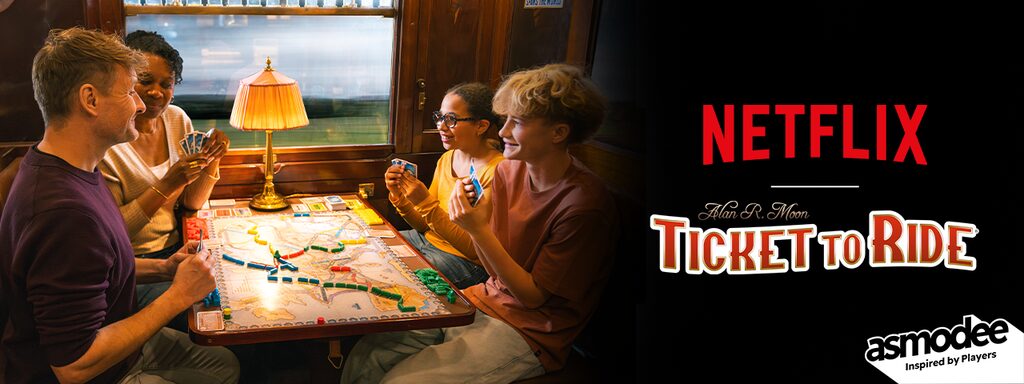
In February this year the publisher inked a separate agreement with Netflix covering film and television adaptations of its 20 million-selling Ticket to Ride franchise.

Several weeks after the Netflix Catan announcement, meanwhile, Asmodee secured a promotional partnership with NBA team Minnesota Timberwolves, and followed that with a similar deal with NHL franchise Ottawa Senators in September this year.

Netflix first teamed up with Asmodee in 2022, when the board game giant worked in the other direction to create a trio of titles based on Netflix shows Squid Game, Stranger Things and Ozark. Those games have been followed by a Bridgerton-themed version of Love Letter.

The streaming giant also brought its own adaptation of Werewolves of Miller’s Hollow to the screen in 2024 with the French film Family Pack.

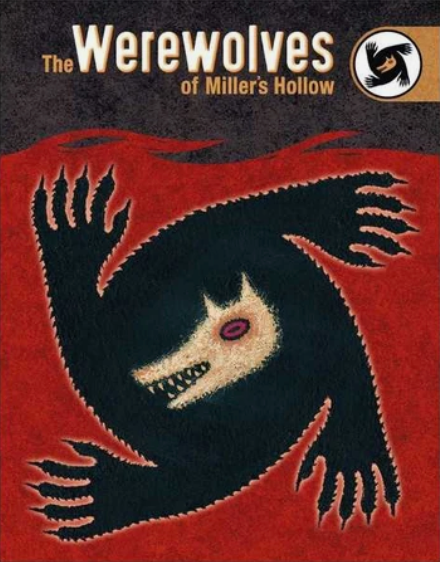
That same year Asmodee saw the launch of Canal+ TV show Loups-Garous, based directly on the gameplay of its 25-year-old board game The Werewolves of Miller’s Hollow. That show landed an International Emmy nomination in September this year.

Fellow Asmodee title Exploding Kittens has already made the transition to the screen, with Netflix launching an adult animated series based on the hit card game in 2024.

Asmodee has already seen evidence that screen adaptations can translate into increased revenue from its physical games, with sales of The Werewolves of Miller’s Hollow surging 150% year-on-year during the launch week of Loups-Garous in 2024.

Company CEO Thomas Koegler made clear in an earnings call earlier this year that its primary goal from film and television licensing deals was to boost awareness and sales of its physical games, rather than generate significant revenue from the adaptations themselves.

He said, “It’s really the brand exposure and the ability for consumers to enjoy their favorite brands in various ways of entertainment.”

Catan is already one of the few modern hobby board games to have broken out into wider popular culture, attracting a following among celebrities and professional athletes, making appearances in popular television shows and becoming a regular pastime for players across several major US sports leagues.

Players from NFL teams including the Green Bay Packers, Buffalo Bills and Kansas City Chiefs, as well as baseball’s Minnesota Twins, have all been reported as playing the game.

Asmodee’s push to expand the game’s exposure and player base even further has recently included holding a promotional game night with rock band Linkin Park, while Kosmos, the German publisher of the game, recently named international handball player Juri Knorr as a Catan brand ambassador.

Netflix’s Catan adaptation is being produced by Asmodee’s Darren Kyman, Catan Studio’s Pete Fenlon, Klaus Teuber’s sons Guido and Benjamin Teuber, and Roy Lee of Vertigo Entertainment.

The Nee brothers’ other previous work has included directing 2022 action comedy The Lost City, starring Sandra Bullock and Channing Tatum, and writing an upcoming Netflix spy film starring Kevin Hart and Henry Cavill.

Other publishers exploring adaptations based on their games include CMYK, which launched US television game show The Perfect Line last year, inspired by Wolfgang Warsch’s Illusion. That show proved successful enough to return for a second season in September this year.

CMYK CEO Alex Hague previously told BoardGameWire that the company had received dozens of approaches each year about developing a TV version of its million-selling party game Wavelength.

BoardGameWire revealed in 2023 that Kung Fu Panda animated series writers Ben Mekler and Chris Amick had prepared a movie pitch for Leder Games hit Root, although progress on that was interrupted by the writers’ strike. Mekler and Amick are now attached to Netflix’s Ticket to Ride feature film.

More hobby board game screen adaptations have been mooted over the years, but struggled to make it beyond the development stage.

The screen rights to the Terraforming Mars board game were bought by production company Cobalt Knight in 2022, while DreamWorks Animation picked up the movie rights to Mice and Mystics way back in 2018, although both are yet to materialise.

The post Masters of the Universe film writers reportedly picked to helm Catan live-action Netflix movie first appeared on .
  •  

Asmodee scores big at Dutch game of the year awards as Take Time, Lord of the Rings trick-taking titles triumph

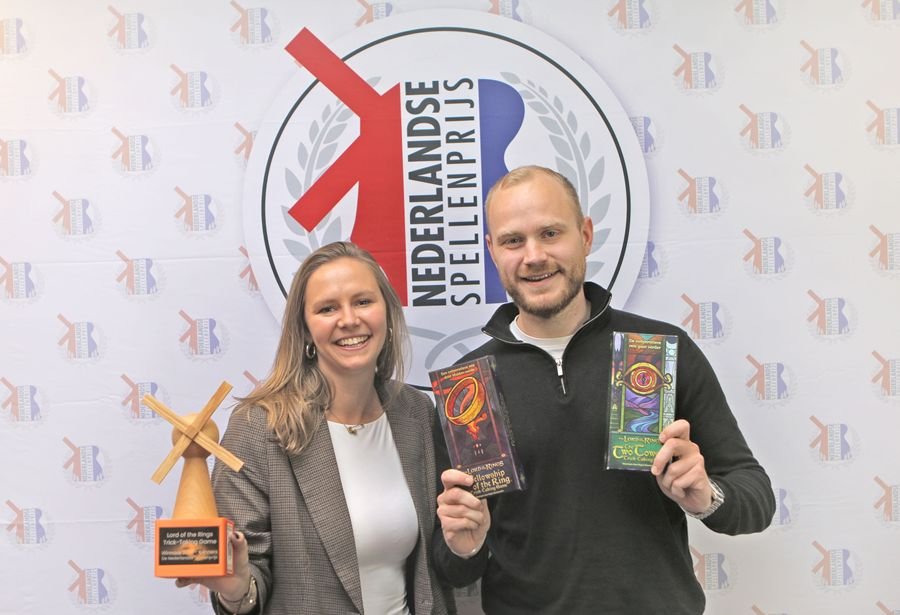
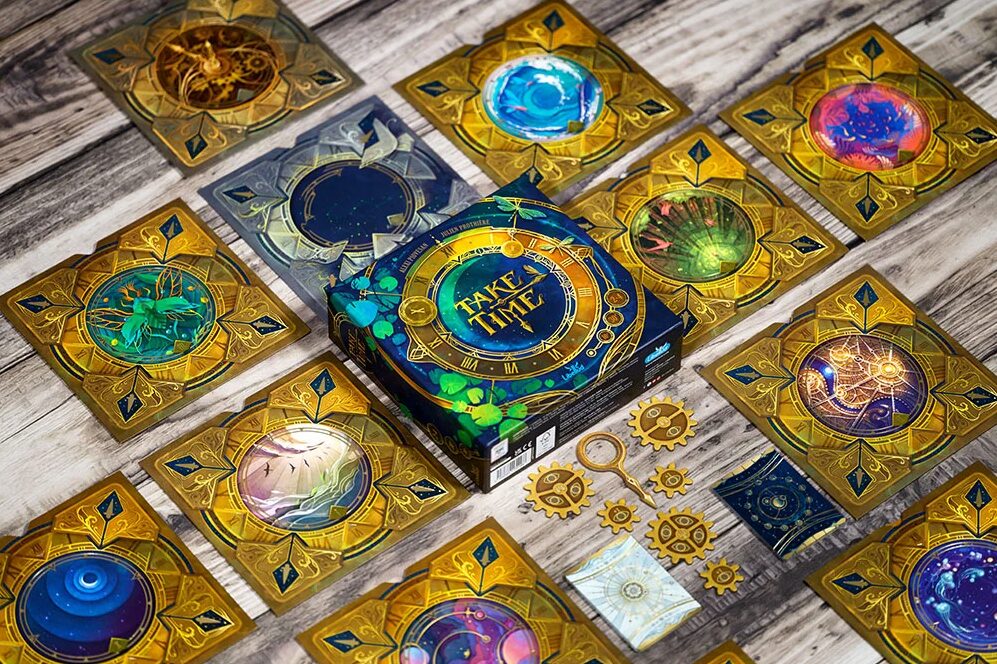
Asmodee has sealed a strong showing at this year’s Nederlandse Spellenprijs, with co-operative puzzle game Take Time and its Lord of the Rings-themed trick-taking games taking home two of the three prizes in the country’s longest-running board game awards.

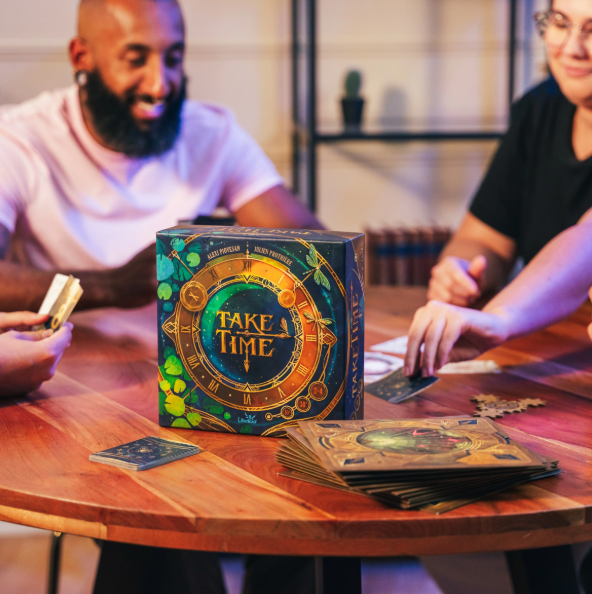
Take Time, designed by Alexi Piovesan and Julien Prothière, beat Castle Combo and Rebirth to the family game of the year award – marking its first major award win, after having picked up a ‘recommended’ in the Spiel des Jahres and nomination in the French As d’Or.

Bryan Bornmueller’s two The Lord of the Rings: Trick-Taking Game releases, which were judged as a single title, triumphed over Dewan and Pondscape in the connoisseur games category, handing a win to Asmodee studio Office Dog.

This year’s expert game prize, meanwhile, went to White Goblin Games’ Dutch-language edition of River of Gold – which saw off competition from Ants and Yokohama. That title was also originally published by Asmodee studio Office Dog in English.

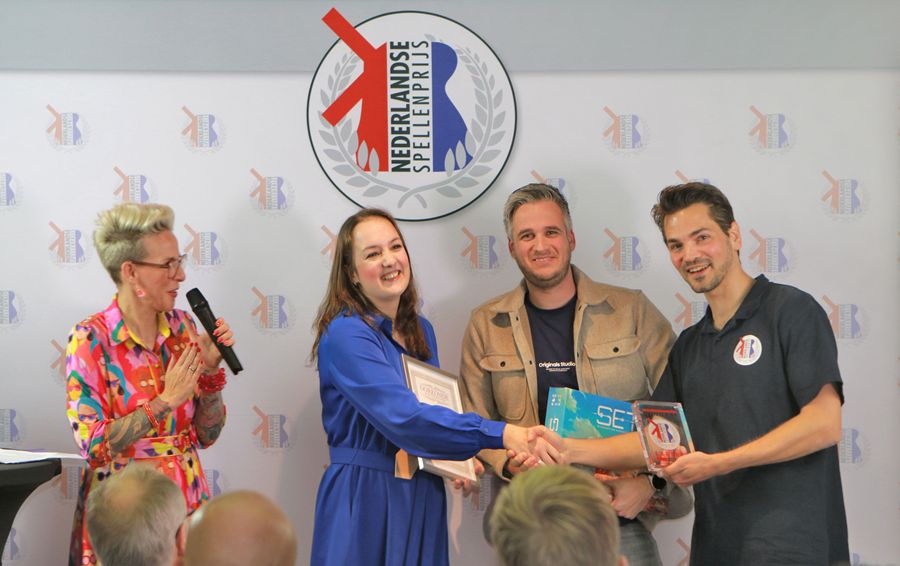
Asmodee’s Yke Rietveld and Hidde van Maurik collect the award for the publisher’s Lord of the Rings trick taking titles || Photo Credit: Henk Rolleman

Take Time’s victory means this is only the second time in five years that the Dutch family game award has not gone to a Spiel des Jahres winner, with Cascadia, Sky Team and Bomb Busters each having claimed both prizes in 2022, 2024 and 2025 respectively.

The victories also mark a second successive year in which a single publisher has claimed two of the three Nederlandse Spellenprijs awards, following 999 Games’ success with Bomb Busters and Botanicus in 2025.

The result saw three-year-old Dutch publisher DSV Games miss out on a prize despite securing a trio of nominations this year – 12 months after picking up its first win in the contest with Tomáš Holek design SETI.

This year’s entire shortlist was shared between just three publishing groups in Asmodee, White Goblin Games and DSV.

BoardGameWire revealed last month that huge demand for co-op puzzle game Take Time had led publishing giant Asmodee to print more than 325,000 copies less than a year after release – outstripping even the company’s high expectations which surrounded its record-breaking launch.

Game line manager Auguste Lecoeur told BoardGameWire, “As soon as the game’s prototype was shown to us and signed, it became an internal priority, with resources and manpower being redirected from other projects to Take Time.”

The title sees players attempting to place cards around a series of clock faces while meeting increasingly challenging conditions, with limited opportunities to discuss their plans before playing.

More than 100 Dutch-language board and card games were assessed by a jury of experts for this year’s Nederlandse Spellenprijs, which is now in its 26th year. Games were assessed on their quality, originality and replayability.

This year’s ceremony marked a change in leadership for the awards, with Anna Wassenburg taking over as chair from Niek Ederveen, who stepped down after nine years in the role.

Another change this year was the physical format of the awards themselves, which are now shaped like pawns with windmill sails.

The post Asmodee scores big at Dutch game of the year awards as Take Time, Lord of the Rings trick-taking titles triumph first appeared on .

  •  

Luxembourg hospitality industry’s drive to get board games into cafés names Pili Pili its 2026 winner

Luxembourg’s hospitality industry has named trick-taker Pili Pili as its board game of the year, continuing an eight-year initiative aimed at getting modern hobby games onto the tables of cafés, bars and restaurants.

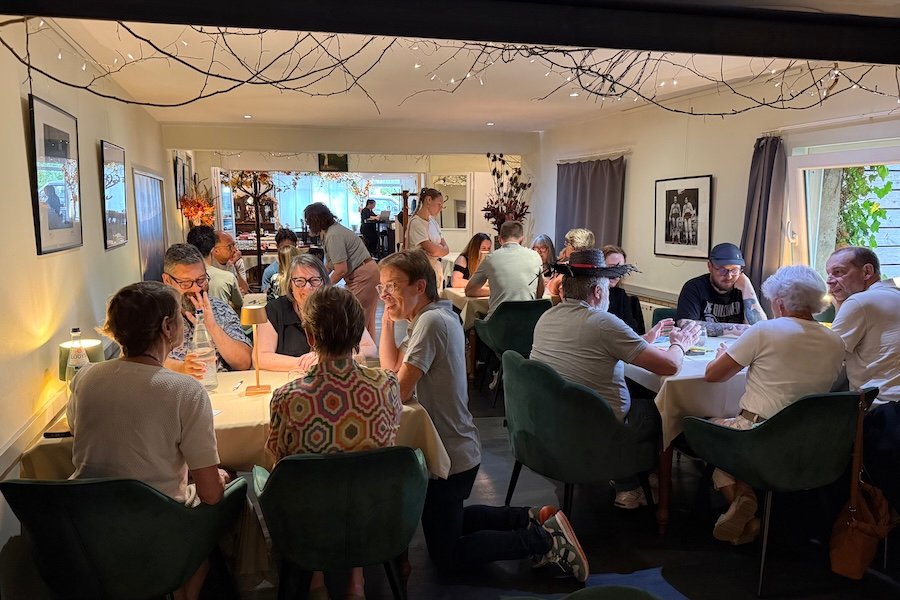
Rather than solely recognising the best game of the year, the Bistrospill award is designed to encourage hospitality businesses to offer games for their customers to play, with the aim of reviving a tradition of cafés and bistros as spaces “buzzing with social life, where bonds were forged over a game of cards or dice”.

Bistrospill been run since 2018 by Horesca, Luxembourg’s association of hotels, restaurants and cafés, alongside the country’s biggest board game club Spillfabrik.

Horesca, which represents about 2,900 businesses, said it wants to re-establish tabletop gaming as a “vibrant part” of Luxembourg’s hospitality culture, harking back to the popularity of trick-taking games such as Whist and Belote in the 19th and early 20th century.

The organisation has persuaded cafés and bars to hold gaming afternoons and evenings, while participating businesses have been offered kits including posters, simplified rules, printed beer mats and suggestions for activities.

Its latest material also encourages hospitality businesses to keep a small selection of games available to customers, arguing that venues do not need to become dedicated board game cafés, and that a small shelf or clearly identified box of carefully chosen titles can be enough.

Spillfabrik is responsible for preselecting games suited to the bistro environment as part of the initiative, focusing on titles which are easy to explain, compact enough for café tables, playable by several people and sufficiently interactive to work in a social setting.

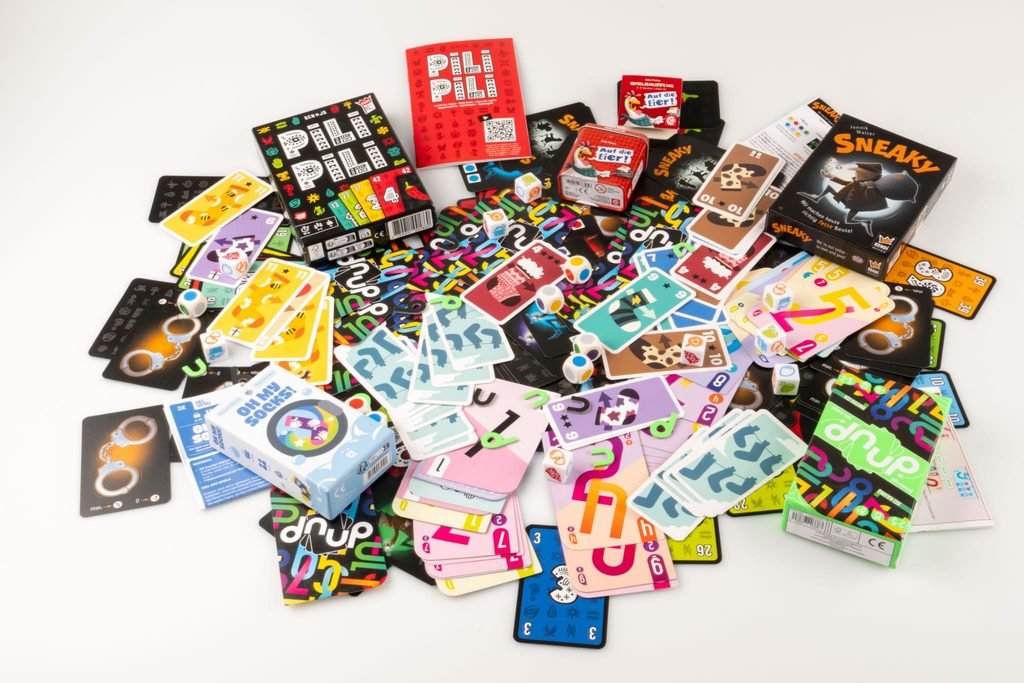
Publishers submitted 76 games for this year’s Bistrospill, with Spillfabrik whittling those down to five finalists – Udo Peise’s design Auf die Eier, Kei Kajino’s dnup, Antoine Bauza and Théo Rivière’s design Oh My Socks! and Sneaky, by Jannik Walter, as well as eventual winner Pili Pili.

The Bistrospill finalists for 2026

Pili Pili was created by Ben B and Jean-Baptiste de Ghellinck, the founders of French party game publisher ATM Gaming – which was acquired by board game giant Asmodee earlier this year in a deal worth up to €250m.

Players predict how many tricks they will take each round, receiving penalties if they miss their target, while mission cards alter the rules as the game progresses.

The game’s roughly 20-minute playtime, compact card-based format and simple rules were among the elements highlighted by Bistrospill organisers as making Pili Pili particularly suited to cafés and bars.

Previous Bistrospill winners have included Illusion, Calavera, Pearls, Hula-Hoo!, Split It, Trio, Quando and last year’s victor Flip 7.

The post Luxembourg hospitality industry’s drive to get board games into cafés names Pili Pili its 2026 winner first appeared on .

  •  

Werewolves of Miller’s Hollow TV adaptation lands International Emmy nomination

A TV show based directly on the gameplay of 25-year-old board game The Werewolves of Miller’s Hollow has landed an International Emmy nomination.

Season two of Canal+’s Loups-Garous has been nominated in the Non-Scripted Entertainment category at the iconic awards, which celebrate excellence in television programming initially produced and aired outside of the US.

Loups-Garous attracted more than two million viewers for its launch in 2024 – the best ever launch for a new Canal+ creation at the time – with the Zygomatic-published social deduction game turned into a life-sized competition in which contestants take on the roles of villagers and werewolves.

Season one went on to draw a total of 15 million views according to the game’s publisher Asmodee – and that interest also translated to the physical game, with sales during the show’s launch week 150% higher than the same period a year earlier.

That success has led to international expansion for the show, with TV giant Banijay striking a multi-territory deal last year while describing Loups-Garous as “one of the hottest formats on the market”, and saying the agreement marked “a major coup for us at Banijay Entertainment”.

The deal allows Banijay to develop local versions across its operations spanning the US, UK, Australia and New Zealand, Spain, Portugal, Italy, the Nordics, Netherlands, Israel, Mexico, Brazil and India.

A German edition was also launched prior to that deal, with its first season passing five million streams. The show returned for its second season in Germany earlier this month.

The Werewolves of Miller’s Hollow is far from the only tabletop title looking to make the jump to the screen, with publishing and distribution giant Asmodee particularly active in a push to expand its biggest properties beyond the hobby games market.

Netflix struck a deal last year to develop the first screen adaptations of Catan across scripted and unscripted television, film and animation, and followed that in February this year by picking up the exclusive global rights to Ticket to Ride covering film, TV and other formats. A Ticket to Ride feature film is the first project being developed under that agreement.

Fellow Asmodee title Exploding Kittens has already made the transition to the screen, with Netflix launching an adult animated series based on the hit card game in 2024.

Netflix first teamed up with Asmodee in 2022, when the board game giant worked in the other direction to create a trio of titles based on Netflix shows Squid Game, Stranger Things and Ozark. Those games have been followed by a Bridgerton-themed version of Love Letter.

The streaming giant also brought its own adaptation of Werewolves of Miller’s Hollow to the screen in 2024 with the French film Family Pack – which was released just 12 days after the first episode of Loups-Garous.

Other publishers exploring adaptations based on their games include CMYK, which launched US television game show The Perfect Line last year, inspired by Wolfgang Warsch’s Illusion. That show proved successful enough to return for a second season earlier this month.

CMYK CEO Alex Hague previously told BoardGameWire that the company had received dozens of approaches each year about developing a TV version of its million-selling party game Wavelength.

BoardGameWire revealed in 2023 that Kung Fu Panda animated series writers Ben Mekler and Chris Amick had prepared a movie pitch for Leder Games hit Root, although progress on that was interrupted by the writers’ strike. Mekler and Amick are now attached to Netflix’s Ticket to Ride feature film.

More hobby board game screen adaptations have been mooted over the years, but struggled to make it beyond the development stage.

The screen rights to the Terraforming Mars board game were bought by production company Cobalt Knight in 2022, while DreamWorks Animation picked up the movie rights to Mice and Mystics way back in 2018, although both are yet to materialise.

The post Werewolves of Miller’s Hollow TV adaptation lands International Emmy nomination first appeared on .
  •  

“It is clear that Take Time won’t be a one-hit wonder”: Asmodee hit passes 325,000 copies after record-breaking launch

Huge demand for Asmodee‘s co-operative puzzle game Take Time has seen the publishing giant print more than 325,000 copies less than a year after release – outstripping even the company’s high expectations which surrounded its record-breaking launch.

Asmodee printed a massive 145,000 copies of Alexi Piovesan and Julien Prothière’s design for its worldwide launch last October, citing heavy enthusiasm from its distribution teams, board game media and pre-release playtesters.

Game line manager Auguste Lecoeur told BoardGameWire, “As soon as the game’s prototype was shown to us and signed, it became an internal priority, with resources and manpower being redirected from other projects to Take Time.

“Huge credit goes to everyone involved in the project for getting it done so quickly while maintaining such a high level of quality, especially considering that the game went through only around six months of visual development.

“When the game was first presented to Asmodee’s distribution units and partners, the enthusiasm was immediate as well, with Take Time being flagged as a key new release for Libellud.

“The same enthusiasm was shared by media outlets and players that were able to test the game prior to its release, so we had multiple positive signals ahead of launch.

“In that sense, we were definitely expecting a strong first print run, but you can never realistically expect to reach 145,000 copies. It was a very pleasant surprise and clearly exceeded our expectations, even though we were prepared for strong numbers.”

Every major reprint of the game since has topped 60,000 copies, Lecoeur said, with Asmodee currently planning another two to three global print runs of the same size each every year to keep up with demand.

Lecoeur said, “At this point, it is clear that Take Time won’t be a ‘one-hit wonder’, a game that enjoys a high initial print run but then quickly fades. Instead, the game is maintaining a strong sales pace and continues to perform well across markets.”

He added, “The game gained strong visibility and positive feedback at conventions such as Cannes’ FIJ and Spiel Essen, while also achieving higher-than-usual numbers online, thanks in part to its visual appeal and the buzz surrounding it.

“More broadly, the game was quickly validated by the core and specialist market, as well as by opinion leaders, critics and content creators within the board game community. It received strong critical acclaim – it is now ranked [in] the top 95 family games on BGG – and was nominated for multiple awards, which played a huge part in its success.

“Sure, we would have loved to win the As d’Or and Spiel des Jahres (who wouldn’t?), but I guess we’re being picky here!”

Success Story

Part of the game’s powerful performance has been down to it penetrating well beyond the specialist board games market, with Asmodee saying its distribution is now relatively evenly split between hobby stores, mass-market retailers and e-commerce.

Lecoeur said, “I’m convinced that this wouldn’t have been possible if the game hadn’t first been embraced by the core gaming community. Their strong support and enthusiasm for the game helped open the door to other distribution channels much more quickly.”

He added that part of Take Time’s wider appeal was down to the game’s compact size and “accessible price point”, as well as its “high level of replayability and substantial gameplay content”.

Those first two elements have become increasingly important amid ongoing financial strain for people in some of Asmodee’s core markets, such as France, Germany, the UK and US, with rising food and energy prices and ongoing economic uncertainty putting pressure on their purchases.

Take Time || Photo Credit: Asmodee

Other successful initiatives which helped boost Take Time’s appeal included what Lecoeur described as an “unusual” cardboard demo kit, with detachable cards and clocks, which could be ordered by distribution units to give players a taste of the game’s core mechanisms.

He said the kit “generated strong enthusiasm at launch”, but added that the format was not something which could be replicated for every one of its releases.

Award nominations also helped drive sales, especially in Germany and France, which Lecoeur said had been two of the strongest markets for the game from day one.

He said Take Time’s Spiel des Jahres recommendation was followed by a higher-than-usual reprint demand from Germany of 30,000 copies – and added that the impact of other ‘smaller’ awards “should not be overlooked”.

Take Time triumphed in this year’s Swiss Gamers Award and also took the Austrian game of the year prize, in addition to its ‘recommended’ nod in the Spiel des Jahres and nomination in France’s As d’Or.

Lecoeur also believes Take Time benefitted from the success of Libellud’s previous release Harmonies, which also picked up a Spiel des Jahres recommendation and the Swiss Gamers Award, as well as a Golden Geek – and was highlighted by Asmodee CEO Thomas Koegler as having had a strong launch.

Lecoeur said, “The fact that Libellud’s previous release, Harmonies, had been a hit certainly helped. It raised expectations around the studio’s next title and put the spotlight on its launch.

“It’s clear that each publisher develops its own reputation and ‘brand’ image based on its releases (among other things) and that this plays a significant role in the confidence they receive from retailers and, to some extent, from players.

“The success or failure of each release will inevitably have an impact on the games that follow, particularly when it comes to forecasts and initial orders.”

Time After Time

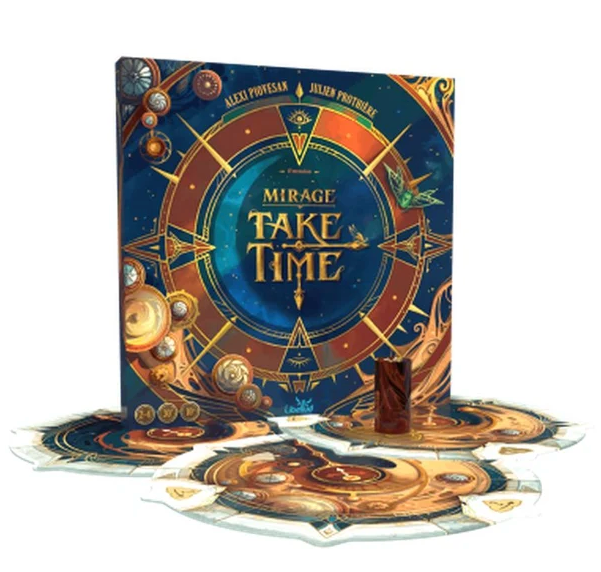
Asmodee is now beginning to turn Take Time into a wider product line, with debut expansion Mirage set for release next month, and the company having “many more ideas we’re currently working on for the range”.

Lecoeur said, “As soon as we received the first feedback on the game and it became clear that the launch was going to be massive, the first discussions about an expansion began in April 2025 with Alexi Piovesan and Julien Prothière, the game’s designers, to explore the possibilities for additional content.

Take Time: Mirage

“They worked on it and presented an iteration that led to a contract being signed in November 2025, as the first market feedback started coming in and multiple markets were selling out.

“However, this timeline was only possible because the designers were fully confident that the game offered enough design space to support an expansion, and because they presented an idea that genuinely excited the team, both mechanically and thematically.

“We’re not releasing expansions simply for the sake of releasing them or to get a marketing boost. If an expansion is published, it’s because we believe it genuinely adds something to the game and offers players a meaningful new experience.”

He added, “Mirage’s format also played an important role. It is a compact expansion, with a €7.99 MSRP, that introduces a new chapter while also adding a new gameplay twist that can be used to replay the entire base game in a different way.

“It isn’t a large expansion that takes up a significant amount of shelf space in stores or represents a massive financial commitment; instead, it is designed to complement the base game and extend the experience without overshadowing it. Its difficulty is also carefully tuned so that players can enjoy the expansion even if they haven’t finished the base game.

“Regarding expansions and product lines, there is a balance to strike between fully trusting your game and not overcommitting. You want to anticipate demand for expansions and reprints in order to avoid out-of-stock situations or a lack of releases and support that could hurt a game’s prospects in the medium to long-term.

“At the same time, a game needs to demonstrate commercial stability before being turned into a full-fledged product line and treated as such.

“It’s no secret that overproducing a game is one of the easiest ways for a publisher to get into financial trouble, and we’re doing our best to avoid that. We want to support successful games and build on their potential while remaining disciplined about production and inventory.”

A Board Game Arena version of the base game is also due for release in Q4 of this year.

The post “It is clear that Take Time won’t be a one-hit wonder”: Asmodee hit passes 325,000 copies after record-breaking launch first appeared on .
  •  

New Exploding Kittens studio boss sets sights on expanding namesake IP into “long-lasting evergreen brand”

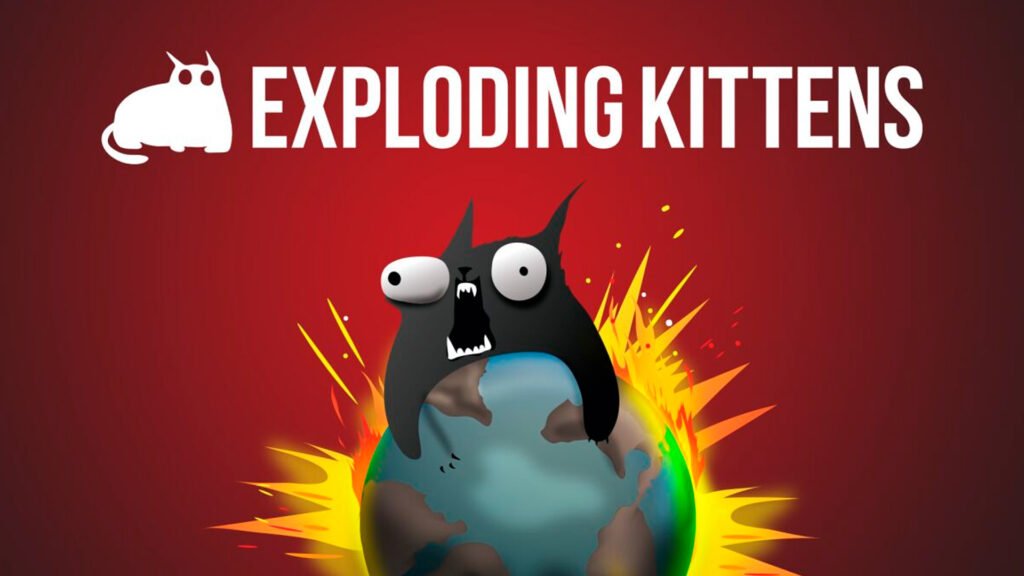
A kitten on an exploding earth illustrating the Exploding Kittens card game

Exploding Kittens has named chief commercial officer Joeri Hoste as its new head of studio, with the long-time game industry exec eyeing further expansion of the company’s namesake hit into a “long-lasting evergreen brand” beyond its big-selling card game.

Hoste joined Exploding Kittens to lead its international business in 2020, following multi-year stints at companies including Hong Kong based board game publisher and manufacturer Ooba Games, toy company BOTI and trading card and collectibles specialist Upper Deck.

He takes the head of studio role at the Asmodee-owned business as former Exploding Kittens CEO Carly McGinnis was named head of the parent company’s global publishing operation last month.

New Exploding Kittens studio head Joeri Hoste

Hoste said in a LinkedIn post that the past six years at Exploding Kittens had been the most rewarding of his career, adding that he was “ecstatic and humbled” to take responsibility for leading the company into the next stage of its development.

He said, “We’ll continue our mission of making great games and creating experiences that bring people together. Exploding Kittens is the game that built its namesake company, and our next challenge will be to develop the IP into a long-lasting evergreen brand that outgrows its original format.

“Exploding Kittens is unique within Asmodee as we combine deep commercial mass market expertise with publishing quirky and irreverent games that disrupt the games category.

“We did not get here by blending in. We succeed because of the talented team that’s willing to be different.”

Exploding Kittens has been a huge commercial success in the wake of its debut title raising almost $8.8m on Kickstarter in 2015.

Last year Exploding Kittens revealed it had sold more than 60 million games as it marked a decade in business – with the company’s growth having already extended well beyond the tabletop.

That has included a partnership with Netflix which expanded the property into mobile gaming and an animated series.

Asmodee bought a 55% majority stake in Exploding Kittens at the end of 2021, and exercised its option to purchase the remaining 45% minority stake last year.

Exploding Kittens has continued to stand out within Asmodee’s portfolio during a difficult period for parts of the US board game market.

Asmodee CEO Thomas Koegler singled the company out last November as a particularly strong performer amid economic uncertainty caused by rising prices and US tariffs, adding that US consumers were favouring lower-priced games. Asmodee again highlighted strong Exploding Kittens growth while discussing a 23% year-on-year fall in its US quarterly sales earlier this year.

The promotion comes as Asmodee is making a wider push into social and party games – a category where Exploding Kittens has been one of its strongest brands.

In March the company agreed to pay up to €250m for French social and party game publisher ATM Gaming, with Koegler saying the acquisition would combine ATM’s strength in Europe with Exploding Kittens’ strong position in the US. Asmodee has said it expects the social games category to grow at between 4% and 8% annually between 2025 and 2030, compared with about 4% for the broader board games market.

It also launched US party game studio Moodbox Games last year, a move de Barros described at the time as strengthening Asmodee’s presence in a category where Exploding Kittens and Zygomatic were already seeing strong success.

The post New Exploding Kittens studio boss sets sights on expanding namesake IP into “long-lasting evergreen brand” first appeared on .
  •  

Catan expands sports marketing team-ups with NHL partnership, German handball star deal

Catan is continuing to push into professional sport in a bid to reach new players, adding a season-long partnership with NHL team the Ottawa Senators and recruiting German handball star Juri Knorr as a brand ambassador.

Asmodee and Catan Studio have teamed with the Senators for a season-long partnership which they said will put the board game in front of hockey fans through arena advertising, “concourse activations” and social media competitions.

The deal will culminate in a dedicated Catan Night at the Senators’ Canadian Tire Centre on November 23, when the team faces the Calgary Flames – including themed decorations and activities, promotional giveaways and special ticket packages.

Senators VP of marketing Peter Shier said the team will be the only Canadian professional sports franchise, and the only NHL team, to host a Catan-themed game this year.

The move comes just under a year after Catan announced its first professional sports partnership with NBA team the Minnesota Timberwolves – which similarly included interactive concourse activations at selected home games, giveaways and community initiatives, and led to a dedicated Catan Night in February.

Catan Studio director of brand development Kevin Hovdestad said at the time the partnership highlighted how the game had become “woven into sports culture”, following years of reports of the game being played by professional athletes including members of the Green Bay Packers, Buffalo Bills, Kansas City Chiefs and Minnesota Twins.

Separately, German Catan publisher Kosmos has named international handball player Juri Knorr as a Catan brand ambassador ahead of the 2027 Handball World Championship, which will be held in Germany next January.

The campaign, running under the slogan Mein Spiel nach dem Spiel – ‘My Game After The Game’ – will feature Knorr prominently on branded retail displays and products, alongside a QR-code competition offering meet-and-play sessions with the handball star and Catan-branded adidas handball shirts.

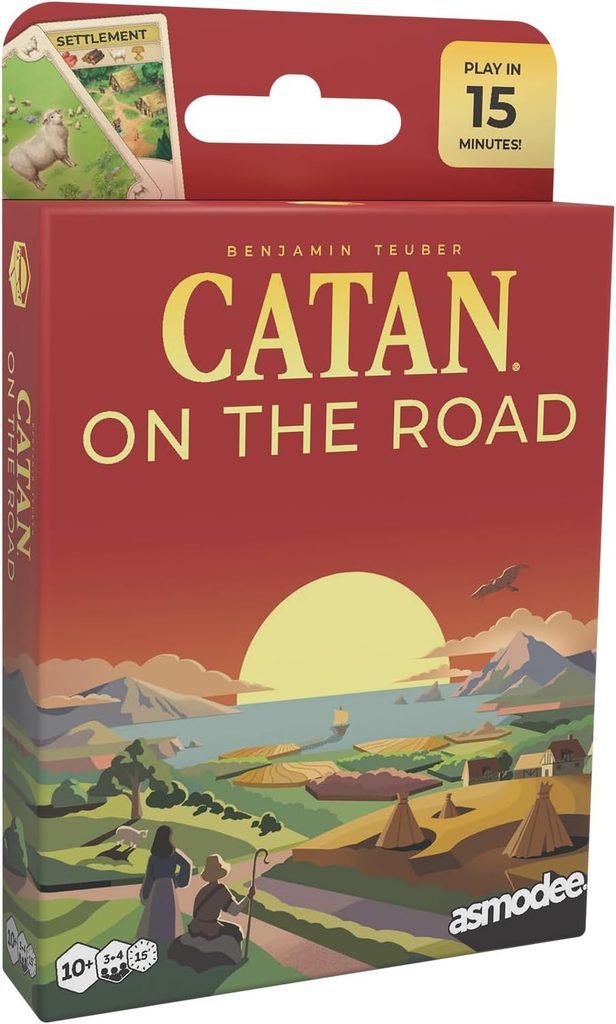
Kosmos is focusing the campaign on compact forms of the game: new card game release Catan On The Road and the Catan Dice Game.

The publisher is potentially tapping into a sizeable audience: 13 million people watched Germany play Denmark in the 2026 European Handball Championship final, according to Kosmos.

Knorr said, “Catan has been with me since my childhood and still captivates me today. For me, the game is a very good balance and complement to… highly focused competitive sport.

“The game offers a great opportunity to spend quality and intense time with friends and teammates. It involves spending time while also thinking strategically. That’s why I’m very pleased to represent Catan as a brand ambassador in this special campaign.”

The deals add to a growing collection of partnerships putting Catan in front of potential players outside of traditional board game retail and media – with the aim of expanding the audience for a game which has already sold more than 50 million copies and been translated into over 45 languages.

Kosmos is currently involved in one of the most striking examples through a McDonald’s Happy Meal promotion across Germany, Austria and Luxembourg, for which almost seven million specially adapted games have been produced.

The promotion, which runs from August 20 to September 23, includes eight games from the publisher’s portfolio, including Catan Junior, Cascadia Junior, Flip 7 and EXIT: The Game – Kids: Riddles in Monsterville.

Kosmos licensing content and entertainment head Julia Courmont said, “This collaboration is a huge milestone for us. The fact that Kosmos is represented here with eight exclusive titles confirms the great confidence in our brands and their relevance to a broad target group.

“It’s a fantastic opportunity to make these classic games accessible to millions of people and to create valuable shared gaming moments.”

Meanwhile, Netflix revealed last November that it was developing scripted and unscripted projects based on Catan – a development the streaming giant followed in February by picking up exclusive global rights for screen-based adaptations of the huge-selling Ticket to Ride series.

Catan has since held a game night with Linkin Park and Warner Music in Hamburg, while a licensed crossover with children’s entertainment phenomenon Bluey is due to launch across several international markets in 2027.

The post Catan expands sports marketing team-ups with NHL partnership, German handball star deal first appeared on .
  •  

Three-year-old DSV Games continues rapid rise with trio of Dutch game of the year award nominations

Three-year-old Dutch board game publisher DSV Games has continued its rapid rise by securing three nominations in this year’s Dutch game of the year awards, a year after picking up its first win in the contest.

DSV has landed a nomination in each of the three Nederlandse Spellenprijs categories with Reiner Knizia design Rebirth, Tomáš Holek’s Pondscape and Ants from Renato Ciervo and Andrea Robbiani – equalling veteran Dutch publisher White Goblin Games and industry giant Asmodee as the most-nominated company this year.

The entirety of this year’s nominations are split between those three publishers, with White Goblin selected for Grégory Grard and Mathieu Roussel’s design Castle Combo in the Family category, and Keith Piggott-created River of Gold and Hisashi Hayashi’s Yokohama among the Expert games.

The remaining nominations are from Asmodee studios: Alexi Piovesan and Julien Prothière’s Take Time from Libellud in Family, and Space Cowboys’ Dewan (Johannes Goupy, Yoann Levet) and Office Dog’s two The Lord of the Rings: Trick-Taking Game releases (Bryan Bornmueller), which were judged as a single title, completing the Connoisseurs’ game shortlist.

The result sees DSV and Asmodee join White Goblin and fellow Dutch board game publishing veteran 999 Games as the only publishers to score at least three nominations in a single year since the Nederlandse Spellenprijs moved to its current three-category format in 2020.

This year’s shortlist is a stark change compared with last year’s Nederlandse Spellenprijs, when eight different publishers shared the nine nominations.

999 Games was the only company to secure two nominations last year, and ultimately won both categories it contested, with Hisashi Hayashi design Bomb Busters taking the Family award and Botanicus (Samuele Tabellini Ferrari, Vieri Masseini) triumphing among the Connoisseurs games. DSV won the remaining Expert award with Tomáš Holek’s SETI.

This year 999 Games has no nominees at all – a not unprecedented situation, with the publisher also having missed the shortlist in 2021, but one that marks a sharp turnaround from its five nominations across 2024 and 2025. They included Sky Team winning the Family award two years ago.

DSV Games was launched in 2023 by online shop De Spelletjes Vrienden, with a focus on visually appealing titles which offer exceptional gameplay – making use of “stunning artwork, high-quality components, and well-crafted mechanics”, according to its website.

Its debut release slate in 2024 comprised four games including Rats of Wistar, designed by Simone Luciani and Danilo Sabia, which secured the publisher its first Nederlandse Spellenprijs nomination. The publisher increased its output to nine releases in 2025, and put out another 11 releases between January and the end of June this year – the cut-off point for games eligible for the 2026 award.

DSV picked up its first win in the competition last year with its localisation of SETI, which also won Golden Geeks for heavy game of the year and best thematic board game in 2024, and the Deutscher Spiele Preis last year amid a lengthy run of international awards success.

DSV co-owner Marieke Kuit-van Woesik said after the Nederlandse Spellenprijs victory last year, “We are really proud that as a publisher, which has only been around for two years, we receive this wonderful confirmation that we are on the right track with our small team.”

DSV Games co-owner Marieke Kuit – van Woesik collects the Nederlandse Spellenprijs Expert Game award for SETI in 2025

This year’s nominations take DSV into territory previously reached under the current award system only by two of the most established names in Dutch-language board game publishing.

The Nederlandse Spellenprijs added its intermediate ‘Connoisseurs’ category in 2020, creating the current annual line-up of three nominees apiece across Family, Connoisseurs and Expert games.

999 Games took five of those nine nominations in 2020, with White Goblin taking three. White Goblin followed with four nominations in 2021, while 999 again reached three in 2024. No other publishers bar those had scored three nominations in one year under the current format prior to 2026.

More than 100 board and card games released for the Dutch market during this year’s eligibility period were played by the Nederlandse Spellenprijs jury, which selects its nominees with a focus on quality, playability and originality.

The winners of the Family, Connoisseurs and Expert categories are due to be announced on October 10 at BumbleBeez Spellenwinkel in Bergen op Zoom.

Nederlandse Spellenprijs nominees 2026

Family
Castle Combo – designed by Grégory Grard and Mathieu Roussel (Published by White Goblin Games)
Rebirth – Reiner Knizia (DSV Games)
Take Time – Alexi Piovesan and Julien Prothière (Libellud / Asmodee)

Connoisseurs
Dewan – Johannes Goupy and Yoann Levet (Space Cowboys / Asmodee)
Pondscape – designed by Tomáš Holek (Published by DSV Games)
The Lord of the Rings: Trick-Taking Game (Fellowship of the Ring and The Two Towers) – designed by Bryan Bornmueller (Office Dog / Asmodee)

Experts
Ants – Renato Ciervo and Andrea Robbiani (DSV Games)
River of Gold – Keith Piggott (White Goblin Games)
Yokohama – (White Goblin Games)

The post Three-year-old DSV Games continues rapid rise with trio of Dutch game of the year award nominations first appeared on .
  •  

Asmodee buys flip and write pioneer Welcome To… from Blue Cocker to continue acquisition spree

Asmodee has continued its revived acquisitions spree by picking up the Welcome To… IP and game range from French publisher Blue Cocker.

The deal hands the board game publishing and distribution giant control of a flip-and-write series which has sold hundreds of thousands of copies since Benoit Turpin’s breakout design Welcome To Your Perfect Home was released in 2018.

Subsequent releases have included standalone sequels Welcome to the Moon and Welcome to New Las Vegas, while its implementation on online platform Board Game Arena has racked up more than 3 million played games, and averages over 3,000 unique players daily.

More new versions seem likely to be on the way following the acquisition, with Asmodee head of collections Mathieu Aubert saying, “This acquisition goes beyond bringing a strong IP into our portfolio. We see huge potential to expand the Welcome To… universe, and the team already has plenty of ideas to bring it to life. I look forward to sharing more about our projects in the coming month.”

Asmodee announced in November 2024 that it was preparing to “reignite” its strategy of buying up smaller board game publishers and distributors, saying at the time that it had a pipeline of more than 20 acquisition opportunities.

That expansion kicked off with the opportunistic purchases of Zombicide and Cthulhu: Death May Die from financially troubled CMON in 2025, and has accelerated this year with deals including the striking buyout of French social and party game publisher ATM Gaming in a deal which could reach €250m.

Other acquisitions from Asmodee this year include returning to CMON to buy Sheriff of Nottingham and publisher Japon Brand, buying Time’s Up from R&R Games and picking up the remaining 45% of Exploding Kittens it did not already own.

Asmodee CEO Thomas Koegler said during the announcement of the revived M&A strategy that many of its targets were businesses it already knew “in and out” through existing commercial relationships.

Asmodee CEO Thomas Koegler

He specifically highlighted publishers behind successful games it already distributed as potential targets, alongside social and party game businesses and IPs, hobby game studios and local distributors.

Welcome To… fits withing that strategy, with Asmodee already handling Blue Cocker titles in markets including the UK and US. In Asmodee’s home market of France, however, Welcome To… and other Blue Cocker Games are currently distributed by Hachette subsidiary BlackRock.

The original game helped popularise the flip-and-write format, replacing dice rolls common to roll-and-write games with shared cards which allow players to make their choices simultaneously.

Asmodee SVP of tabletop games Benoit Clerc said, “Welcome To… established itself as landmark titles in modern board gaming, combining elegant game design with exceptional accessibility.

“We have tremendous respect for the work accomplished by the Blue Cocker team, Benoit Turpin, and everyone who contributed to the success of the game and their different iterations.

“We are excited to welcome this intellectual property into Asmodee’s portfolio and join our line-up of great family games and look forward to building its future.”

Blue Cocker founder Alain Balay added, “From the very beginning, our ambition was to create a game that would stand the test of time and bring people together around the table.

“We are incredibly proud of everything Welcome To… has achieved over the past years, and we are confident Asmodee will now carry the brand forward and introduce it to even more players around the world.”

Blue Cocker was launched by former aeronautical engineer Balay in 2013, and operated as a one-person business until the success of Welcome To… and the company’s international sales allowed it to expand to a five-person operation in 2019, he recently told French newspaper La Gazette du Midi.

He said exports accounted for 60% of Blue Cocker’s revenue at that point, but have since fallen to just 10% amid ongoing global financial and political uncertainty.

Balay added that despite that, the French market has held up well despite concerns about a resurgence in inflation in the country.

Blue Cocker’s remaining titles include 2014’s Medieval Academy, 2016 release Meeple War and 2025’s The Last Droids, while its main 2026 release so far has been corporate deckbuilder SAN.

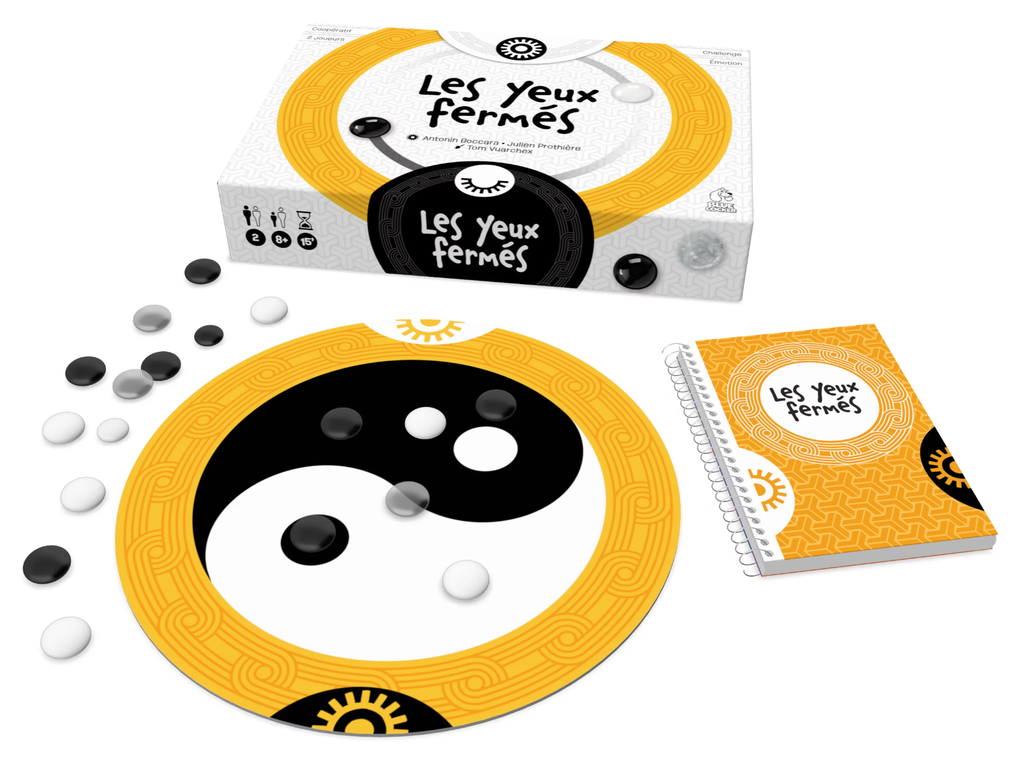
The company’s 15th release, the two-player cooperative title Les Yeux Fermés designed by Antonin Boccara and Julien Prothière, is slated for a 2027 release according to its BoardGameGeek page.

Forthcoming Blue Cocker release Les Yeux Fermés, designed by Antonin Boccara and Julien Prothière

Asmodee has kept its potential acquisitions tightly under wraps, but has plenty of financial firepower for further deals.

Its net sales rose 23% to €1.68bn in the financial year ending March 2026, while its adjusted EBITDA – its earnings before taxes, depreciation, amortisation and irregular one-off costs – was up about 25% to €285.4m.

The company’s net debt, meanwhile, stood at 1.6x adjusted EBITDA at the end of June, rising to 1.7 times once M&A commitments were included – down from 2.1 times a year earlier and comfortably below the company’s 2.5-times leverage target, given it significant headroom for M&A.

Despite Asmodee’s long-time image as a board game publishing heavyweight, more than 72% of its revenue now comes via its distribution of other companies’ games – up from an already hefty 63% in the previous financial year to March 31, 2025.

TCGs make up the lion’s share of Asmodee’s annual net sales – about 60% in the 2025/26 financial year, up from just over 50% across the preceding 12 month period.

The company’s own board game publishing operation, meanwhile, saw its net sales fall 5.8% in the last financial year – while net sales for the first quarter of this year were down 9.8% compared to the same period in 2025.

Asmodee CEO Thomas Koegler was asked directly during a Q&A session on Asmodee’s latest financial results in May if the company was still primarily a board game publisher, or whether it was “increasingly becoming an infrastructure company for TCGs”.

He said in response, “We have insisted a lot on the fact that one of the strengths of Asmodee is to be a publisher, but the first strength that we do have is our global reach across all categories, from TCGs and board games.

“That’s the superpower of Asmodee – and then being a very strong publisher is a way of accelerating performance.

“So I would say that there is no change, we continue to capture opportunities across the board wherever they come from… our aim is to be a dominant player, bringing all games to the market, anywhere they can.”

Last week Asmodee named Exploding Kittens CEO Carly McGinnis as head of its global publishing operation, putting an executive who helped transform a record-breaking Kickstarter game into an international brand in charge of a portfolio including Catan, Ticket to Ride, 7 Wonders and Dobble/Spot It.

The move puts McGinnis into a hugely influential position within the tabletop industry. Asmodee’s chief product officer has responsibility for its studios, franchise development, licensing and studio marketing, according to the organisational structure the company published ahead of its stock market listing last year.

The post Asmodee buys flip and write pioneer Welcome To… from Blue Cocker to continue acquisition spree first appeared on .

  •  

Exploding Kittens CEO Carly McGinnis takes charge of Asmodee’s global publishing operation, Jean-Sébastien de Barros exits

Asmodee has named Exploding Kittens CEO Carly McGinnis as head of its global publishing operation, putting an executive who helped transform a record-breaking Kickstarter game into an international brand in charge of a portfolio including Catan, Ticket to Ride, 7 Wonders and Dobble/Spot It.

McGinnis has been appointed Asmodee’s chief product officer and EVP publishing to replace Jean-Sébastien de Barros, who leaves the board game giant after almost a decade at the company. She will report directly to CEO Thomas Kœgler and join Asmodee’s executive management team.

The move puts McGinnis into a hugely influential position within the tabletop industry. Asmodee’s chief product officer has responsibility for its studios, franchise development, licensing and studio marketing, according to the organisational structure the company published ahead of its stock market listing last year.

McGinnis’ promotion – Asmodee bought a 55% majority stake in Exploding Kittens at the end of 2021, and exercised its option to purchase the remaining 45% minority stake last year – also comes at an interesting point for Asmodee’s publishing business.

The company has enjoyed huge revenue growth over the past year, but much of that has been powered by its distribution operation and the booming trading card game market rather than sales of its own board games.

Asmodee generated €1.68bn of net sales in the year to the end of March, up 23% – but more than 72% of that came from distributing games published by other companies. Sales of its own board games fell 5.8% over the same period.

That picture improved during April to June, when Asmodee’s own published board game sales returned to growth – albeit by just 1.8% year-on-year – compared with a 16% increase for board games overall.

A kitten on an exploding earth illustrating the Exploding Kittens card game

McGinnis brings to the role experience of helping build one of the board game industry’s most striking success stories of the past decade.

She joined Exploding Kittens in 2015, the year its first game raised almost $8.8m on Kickstarter, and was named COO at the start of 2019, president in January 2022 and CEO a year ago.

Last year Exploding Kittens revealed it had sold more than 60 million games as it marked a decade in business – with the company’s growth having extended well beyond the tabletop.

McGinnis helped develop Exploding Kittens’ partnership with Netflix, which expanded the property into mobile gaming and an animated series, and she was a co-executive producer on the latter.

Asmodee has been on its own push to get its best-known board games turned into films and television shows continues, with streaming giant Netflix picking up exclusive global rights for screen-based adaptations of the huge-selling Ticket to Ride series earlier this year.

That deal, which covers “scripted and unscripted projects” across film, television series, and other formats, came four months after Asmodee agreed a similar deal with Netflix for screen adaptations of its fellow bestseller Catan.

Netflix first teamed up with Asmodee in 2022, when the board game giant worked in the other direction to create a trio of titles based on Netflix shows Squid Game, Stranger Things and Ozark.

Those games have been followed by a Bridgerton-themed version of Love Letter, while Netflix brought Asmodee’s creations to screens for the first time in 2024 with French film Family Pack, which is based on the Werewolves of Miller’s Hollow card game.

McGinnis said of her new role, “I’ve spent the last decade building Exploding Kittens from one game into a global business, and I’m excited to bring what I’ve learned to the broader asmodee portfolio.

“We have incredible games, studios and people around the world, and I see a huge opportunity to build on those strengths, creating great new games while investing in the brands and franchises with the potential to grow for decades.”

Exploding Kittens has continued to stand out within Asmodee’s portfolio during a difficult period for parts of the US board game market.

Kœgler singled the company out last November as a particularly strong performer amid economic uncertainty caused by rising prices and US tariffs, adding that US consumers were favouring lower-priced games. Asmodee again highlighted strong Exploding Kittens growth while discussing a 23% year-on-year fall in its US quarterly sales earlier this year.

The promotion comes as Asmodee is making a wider push into social and party games – a category where Exploding Kittens has been one of its strongest brands.

In March the company agreed to pay up to €250m for French social and party game publisher ATM Gaming, with Kœgler saying the acquisition would combine ATM’s strength in Europe with Exploding Kittens’ strong position in the US. Asmodee has said it expects the social games category to grow at between 4% and 8% annually between 2025 and 2030, compared with about 4% for the broader board games market.

It also launched US party game studio Moodbox Games last year, a move de Barros described at the time as strengthening Asmodee’s presence in a category where Exploding Kittens and Zygomatic were already seeing strong success.

McGinnis’ promotion is the latest in a string of senior personnel changes at the top of Asmodee.

In April Asmodee co-founder Philippe Mouret stepped back from his leadership role, with Julia Marcelin taking responsibility for five studios – Days of Wonder, Repos Production, Libellud, Next Move and Space Cowboys – while veteran Catan Studio head Pete Fenlon handed control of that business to former Spin Master executive Mike Bisogno.

Last November company COO Steve Buckmaster stepped down from his role driving the board game giant’s global distribution operation after almost 24 years with the company and its predecessor business in the UK, replaced by then deputy COO Marjolein Lubberman.

Asmodee has also been moving into crowdfunding and miniatures, hiring former CMON COO David Preti last year to lead a newly-created operation focused on those areas. Its first Zombicide campaign since acquiring the IP subsequently raised more than $4m from over 11,000 backers.

De Barros joined Asmodee in 2017 and became chief product officer in 2024, with a remit covering the group’s studios as well as franchise development, licensing and studio marketing.

Asmodee said he had helped build its publishing capabilities, diversify its brand and IP portfolio and oversee the launch of what it described as its biggest trading card game to date, Star Wars: Unlimited.

Kœgler said, “I want to sincerely thank Jean-Sébastien de Barros for his instrumental leadership and contribution to asmodee over the years.

“As Chief Product Officer, he brought a strong strategic and structured approach to our product organization and built strong cross-functional teams along the way.

“With these elevated publishing capabilities of asmodee that Jean-Sébastien spearheaded, asmodee successfully launched its biggest trading card game to date and broadly diversified its brand and IP portfolios – laying an important foundation for our next phase of growth. I wish him all the best in his next chapter.”

He added, “It is with great pride that I welcome Carly to the position of chief product officer and EVP publishing, reflecting the strength of the talent within our company.

“Her product vision, international experience and collaborative leadership will be invaluable as we strengthen our global portfolio and partnerships.”

Asmodee is yet to announce McGinnis’ successor as CEO of Exploding Kittens.

The post Exploding Kittens CEO Carly McGinnis takes charge of Asmodee’s global publishing operation, Jean-Sébastien de Barros exits first appeared on .
  •  

arsEdition tapped Asmodee for toy trade distribution after launching its board game line last year

German children’s book, gifts and stationery publisher arsEdition has confirmed it has tasked Asmodee with distributing its fledgling board game range to specialist toy retailers and some wholesalers, after making its first significant move into tabletop games just under a year ago.

Asmodee has been distributing the Bonnier-owned publisher’s games under the agreement since the beginning of 2026, creating a split-channel model that sees arsEdition continue to handle distribution within the book trade and major book retail chains.

The pair said the move gives retailers improved availability, clear product range structures and coordinated support across both distribution channels – with an aim of sustainably increasing the visibility of arsEdition games in the market and generate further momentum in the family games segment.

arsEdition launched a dedicated games programme last September focused on family-weight games for ages 6, 8, and 10 and up, with an opening slate of seven titles including Reiner Knizia designs Oshiya Tokio and Guardian of the Treasure, and Sophia Wagner’s Twilight Watch.

The board game unit lead, Volker Hirsch, previously spent six years as creative director at Amigo Spiele until 2001, and has also since worked as head of product development at Ravensburger Digital, and as a partner at former Games Workshop collectible card games subsidiary Sabretooth Games.

Some of arsEdition’s debut line of board game releases

arsEdition publisher Dagmar Becker-Göthel said when the range was unveiled last year that games represented a growing category in the toy trade, while also becoming increasingly important for booksellers – providing the rationale for developing a range capable of operating across both channels.

The publisher said at the time it planned to release new games twice a year.

Rebecca Roscher, commercial director at arsEdition, said, “We are currently putting a great deal of energy into the development and production of exceptional family games for ages eight and above, which are characterised by innovative mechanics, strong brands and unique design.

“With Asmodee as our partner, we can now position our games even more strategically and comprehensively across the relevant distribution channels.”

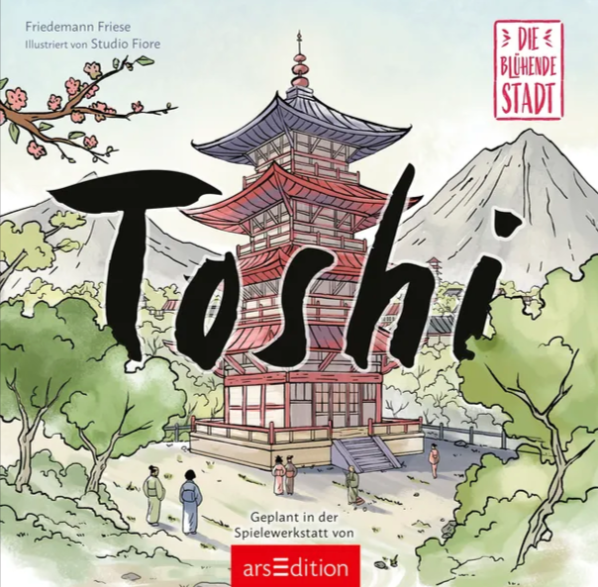
Upcoming releases from arsEdition include include Toshi, a 1-4 player tile-laying game from Friedemann Friese scheduled for September, and Cat and the Tower, a cooperative dexterity game from Masakazu Takizawa.

Box cover for Toshi, designed by Friedemann Friese

The company also continues to work with prominent designer Reiner Knizia, with its website currently listing seven products from the storied creator.

For Asmodee Germany, arsEdition adds another outside publishing partner to a distribution operation that has continued to broaden its third-party portfolio.

Last year it agreed to add selected Moose Toys games to its distribution network in Germany, Austria and Switzerland, and in June 2025 struck a wholesale distribution agreement covering a large part of German publisher Frosted Games’ range.

Asmodee Germany managing director Udo Fischer said the arsEdition deal brought together the companies’ different areas of expertise.

“The trusting collaboration between Asmodee and arsEdition brings together two distinct perspectives – expertise from the book trade combined with many years’ experience in board and card games – which complement each other perfectly,” he said.

“By entering the world of board games, arsEdition is providing a strong additional impetus in the family segment.”

arsEdition is part of Bonnier Media Deutschland, which also owns publishers including Carlsen, Piper, Ullstein and Thienemann-Esslinger. The wider group reported net sales of €336m in 2025, sold 75.5 million books across all formats and employed an average of 795 full-time staff.

Bonnier Media Deutschland describes itself as the largest German book publishing group, with particularly strong positions in children’s publishing, comics and illustrated formats.

The post arsEdition tapped Asmodee for toy trade distribution after launching its board game line last year first appeared on .
  •  

Asmodee UK more than doubles annual operating profit to £34m as TCG boom powers growth

Asmodee‘s UK distribution business more than doubled its operating profit to £35.1m last year, with the company citing the booming trading card game market as the biggest driver.

The profit surge for Esdevium Games – which officially re-registered as Asmodee UK Limited last month – came on the back of an almost 60% rise in turnover to £224m according to its latest annual accounts.

Asmodee UK said TCGs had a very strong year and remained the “pre-eminent category” in the 12 months to the end of March 2026, specifically highlighting Pokémon, One Piece, Disney Lorcana and Star Wars Unlimited as all playing their part in the result.

The distributor said board games continued “steady performance” over the critical holiday period, and picked out Brick Like This and The Fellowship of the Ring: Trick-Taking Game as strong releases from the year.

Brick Like This was the debut release from Asmodee studio Dotted Games, which was launched in 2024 after the company inked a partnership deal with LEGO to create a dedicated design studio focused on making new LEGO board games.

That studio launch came a few months after The LEGO Group and Asmodee had announced their first jointly-crafted board game, Monkey Palace.

Asmodee UK’s figures reflect the transformation taking place across Asmodee globally, where rapid TCG growth has increasingly shifted its revenue mix towards distribution.

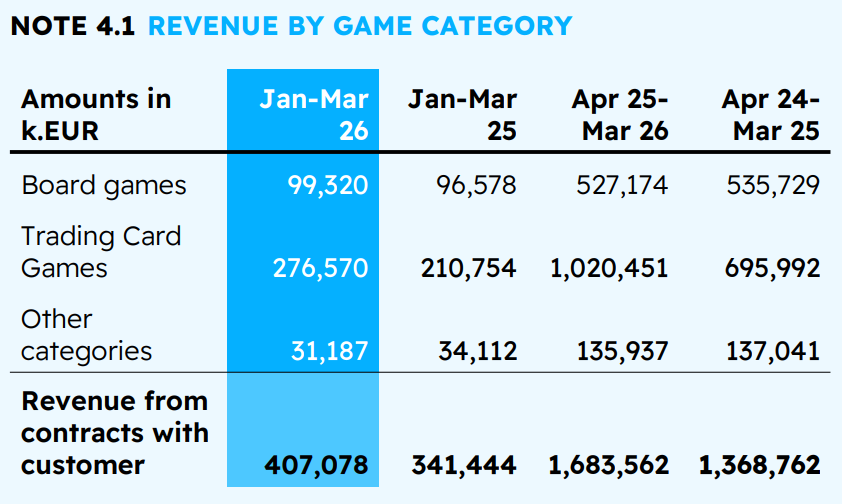
The global Asmodee Group reported €1.68bn of net sales for the same financial year across its publishing and distribution operations, up 23%, while operating profit was up about 43.6%.

Asmodee Group’s Jan-Mar 2026 and last financial year revenue figures, showing the huge dominance of TCGs

More than 72% of group revenue was generated by distributing games published by other companies, compared with 63% a year earlier – and TCGs accounted for about 60% of annual group net sales.

BoardGameWire reported in May that sales of Asmodee Group’s own board games actually fell 5.8% over the period, underlining how heavily the group’s overall growth was being powered by distribution.

That trend has continued into Asmodee’s Group’s new financial year. Its April-to-June revenue increased another 20.9% year-on-year to €422.1m, with TCGs responsible for more than two-thirds of quarterly revenue, while board game sales rose 16%.

Asmodee UK’s annual results follow the unit changing up its leadership structure to kick off 2025, with a trio of senior executives being given updated roles amid the company splitting its operation again into three separate channels, carving out e-commerce as its own line.

The move came just over four years after Asmodee UK had split its sales and marketing efforts into two separate categories – hobby and independent, and national retail.

Asmodee bought a majority stake in UK board game distributor Esdevium in 2010, and began using Asmodee UK as its trading name in 2017. The UK operation updated its registered company name to Asmodee UK Limited last month.

A statement from the business said, “Whilst we value our 30 year legacy in the UK hobby market under the Esdevium Games name, this decision reflects our pride in belonging to the wider Asmodee business and marks an important step in enhancing the UK footprint within the group.”

It added that its fellow UK distribution operation Coiledspring Games will continue to operate as a distinct trading division of the company under its own website. Asmodee bought Coiledspring in 2018.

Coiledspring focuses on family-weight board games, party games, logic puzzles, jigsaws and soft toys, while Asmodee UK distributes a wider range of hobby board games, TCGs, miniatures and accessories.

The post Asmodee UK more than doubles annual operating profit to £34m as TCG boom powers growth first appeared on .
  •  

TCGs drive PAX Aus tabletop expansion as organisers grow segment’s exhibition space by 7%

Australia’s biggest gaming convention is growing its tabletop exhibition space yet again amid the ongoing global boom in TCGs.

Pax Aus has featured tabletop games since the Melbourne-based con was launched in 2013, with the segment having grown over the years to take up a significant share of the show’s floor space.

The convention’s event director Lauren Luciani told BoardGameWire Pax Aus is expanding its dedicated tabletop hall by 7% for this year’s show, which takes place from October 9 to 11 – adding that even with that extended footprint, a waiting list had emerged for tabletop exhibitors.

Luciani said about 70% of exhibitors from last year’s show were returning for 2026 – although she would not reveal overall exhibitor numbers, or even an overall attendance for last year’s event, describing both figures as “confidential”.

Pax Aus’ announcement of this year’s show was once again dominated by major TCG publishers, underscoring the huge and growing popularity of a swell of different collectible card games over the past few years.

Magic: The Gathering‘s new Reality Fracture set, Disney Lorcana, Riftbound: League of Legends TCG, Star Wars: Unlimited, One Piece Card Game, Dragon Ball Super Card Game, Flesh and Blood and the Cyberpunk TCG were all namechecked in a recent announcement from Pax Aus showcasing this year’s event.

On the board game side highlighted games were thinner on the ground, however, with Asmodee studio titles including The Lord of the Rings: The Two Towers Trick-Taking Game, Citadels Duel, Schadenfreude and party games from its Exploding Kittens studio the only non-TCGs namechecked in the announcement.

Asmodee ran a large booth at last year’s show, while other stands included board game distributors Let’s Play Games and Asmodee-owned VR Distribution (which rebranded to Asmodee in Australia last September), as well as a first-ever appearance from Warhammer publisher Games Workshop.

Other board game publishers with dedicated booths were few and far between in 2025, however, with much of the remaining tabletop section made up of retailers and a handful of stands for media outlets.

Update August 12, 2026: Pax Aus contacted BoardGameWire to add that TTRPG veteran Chaosium has just announced it will be attending, hosting free game sessions and showing off its co-op board game Horror on the Orient Express.

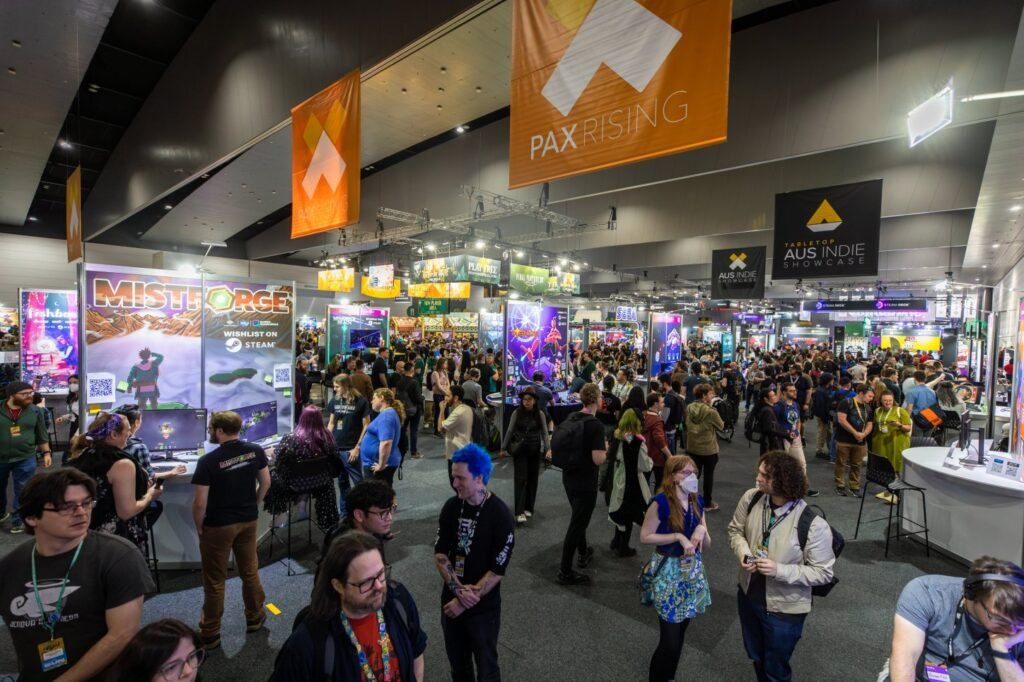
The event does include a large area for indie game developers on both the video and tabletop sides, however, called Pax Rising – expected to host more than 80 independent creators this year.

The Pax Rising section of Pax Aus 2025

That segment also includes an Indie Showcase competition to highlight games from Australia’s independent design scene.

Last year’s winners in the tabletop category were Conquest For The Capital by MountainSoul Gaming, Coffee Up! by ToToTam, Cartograph – Atlas Edition by The Ravensridge Emporium, Panda Party by Cheerfolk, Spacewreck Salvage by Aethermon Studios and Potion Society by The Murmuring Mystic.

When asked by BoardGameWire whether Pax Aus now sees TCGs as the primary growth area for the convention, Luciani said, “The trading card game category continues to experience significant growth globally, and PAX Aus is committed to reflecting the interests and passions of our community in the content and experiences we deliver.

“While TCG will have a strong presence at this year’s event, there are still a number of tabletop announcements to come, and attendees can expect a diverse range of tabletop gaming experiences on offer.”

This year’s event will include a segment where fans can meet Australian game designers Jay Bendixen, Ryan Boucher, Natalie Delaney-John and Cam Jasson during special sessions for Gretchen’s Garden and That Dicey Word Game.

Pax Aus also appears to be attempting to broaden its appeal to the collectibles market. eBay Australia returns as presenting sponsor of the Tabletop Hall for a second consecutive year, expanding its presence with the debut of eBay Live, live-streamed collector content and a dedicated Collectors Club programme.

Australia remains a long, expensive trip for European and North American attendees, of course. But for international publishers weighing whether the expense of exhibiting in Australia can be justified, Luciani argued that the value extends beyond direct sales.

“PAX Aus provides tabletop exhibitors with access to one of the largest and most engaged gaming communities in Australia,” she said. “Beyond direct sales opportunities, exhibitors benefit from brand exposure, community building, hands-on product experiences and the ability to engage with both existing fans and new players.

“As tabletop gaming continues to grow, PAX Aus remains a unique platform for publishers, retailers and creators to showcase their products alongside the broader gaming culture that brings tens of thousands of fans together each year.”

PAX Aus now forms part of Melbourne International Games Week, Australia’s largest annual games festival.

This year’s event takes place at the Melbourne Convention and Exhibition Centre from October 9 to 11.

The post TCGs drive PAX Aus tabletop expansion as organisers grow segment’s exhibition space by 7% first appeared on .
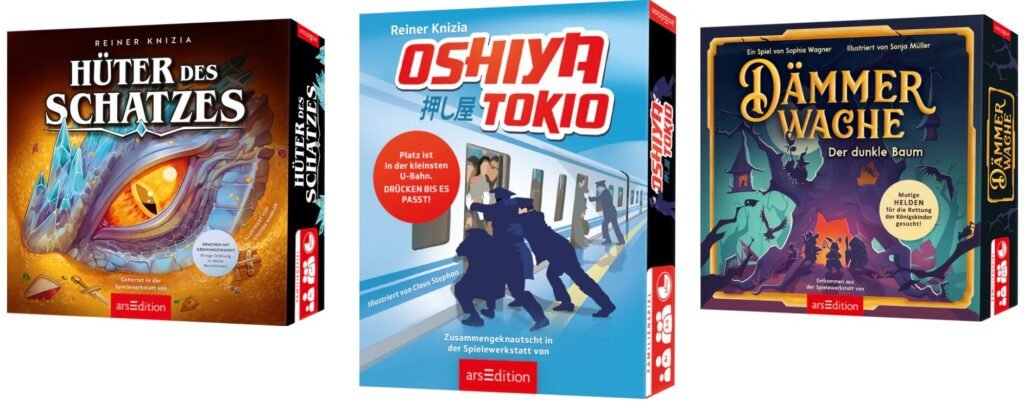
  •  

Archaeology: The New Expedition v1

You’ve taken your chances, made your mistakes… and now, a final triumph!

Put it in a museum with your Archaeology: The New Expedition rules summary!

The once popular theme of Indiana Jones-like archaeologists plundering the world for ‘treasure’ certainly hasn’t aged well, and you can count me as one of the people who believes that in almost all cases, countries are entitled to display items belonging to their own history and heritage rather than have them stolen by colonialist powers and never returned. But I’ll get off my little soapbox now and say that Archaeology: The New Expedition, despite the slightly long-in-the-tooth theme, is a great little set-collection push-your-luck game that I’ve enjoyed as a light diversion for many years now (the original Archaeology: The Card Game from 2007, that is) and it’s great it got a revamp.

The latest version introduces a little bit more variety to the gameplay, with various monument sites you can set up that shake up the actual plundering part of the thematic framework, represented on small, solid tiles. The artwork is vastly improved and in fact the game is better all round, so it’s a no-brainer if you want a fun little card game to take with you on your travels. Most recently my partner and I played a lot of it on a trip to India, though I was frustrated by the fact she constantly seemed to win, despite the fact it’s a very luck-driven game!

By the way, because this is a very small sheet designed to fit in the box, I’ve put the Setup instructions on the flip side, in order to keep most of the game play information on the front. If you’re wondering …

  •  
❌