Welcome to this week’s batch of crowdfunding campaigns. We have a variety of offerings here, so we hope you will find something that catches your eye. Also, if you want to chat with the BGQ team, join our Discord Server where we talk about games, movies, sports, and other fun stuff. Check it out and […]
Kalenderwoche 41 bringt gleich vier große Starts vom selben Wochenende: Drei Kickstarter-Kampagnen und eine Gamefound-Kampagne sind am 29. September live gegangen. Mit dabei ist auch ein deutscher Verlag in eigener Sache: Queen Games aus Bonn bringt mit Orlando den 13. Teil seiner Stefan-Feld-Städtereihe an den Start. Für die Spieleschmiede hat sich in dieser Woche kein neuer Brettspiel-Kandidat gefunden, der die Aufnahmekriterien dieser Ausgabe erfüllt.
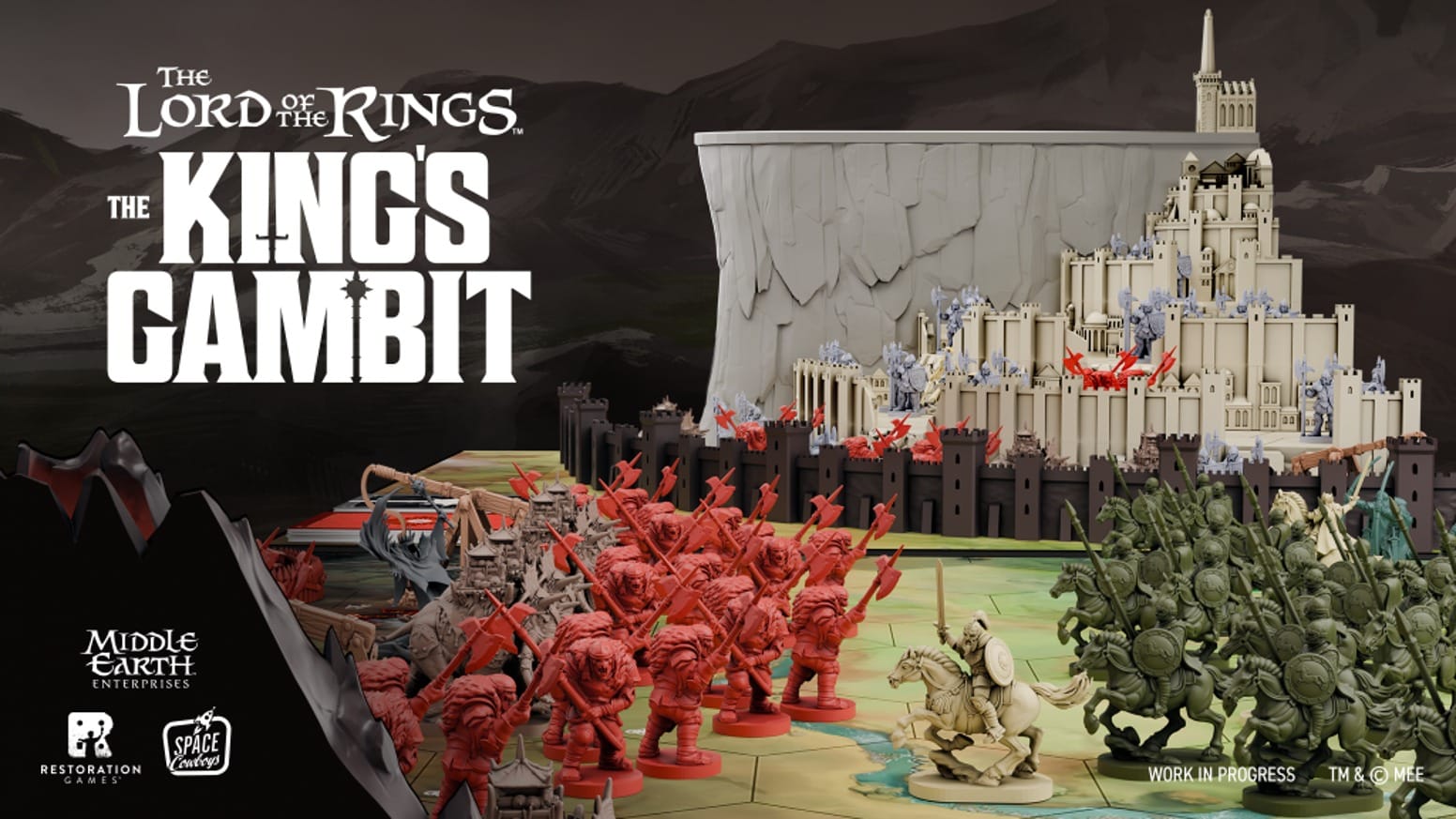
The Lord of the Rings: The King's Gambit
Mit The King's Gambit bringt Restoration Games unter Leitung von Rob Daviau eine Neuauflage von Star Wars: The Queen's Gambit in die Welt von Mittelerde. Auf vier parallel laufenden Schauplätzen, darunter die Pelennor-Felder, Minas Tirith und der Weg durch Mordor, kämpfen die Reiter von Rohan, die Verteidiger Gondors und Frodo mit Sam gegeneinander beziehungsweise gegen die Zeit. Gespielt wird von ein bis vier Personen bei 90 bis 120 Minuten, ein eigener Solo-Modus wird auf der Kampagnenseite nicht erwähnt. Die aufwendige Kickstarter-Edition enthält dreidimensionale Nachbauten von Minas Tirith und Mordor, eine schlankere Handelsausgabe soll 2027 über Asmodee erscheinen.
Die Kickstarter-Kampagne startete am 29. September 2026 und steht, Stand 05.10.2026, bei rund 1.658.000 US-Dollar und 332 Prozent des Ziels von 500.000 US-Dollar, getragen von fast 5000 Unterstützenden. Die günstigste reguläre Spielausgabe kostet 199 US-Dollar, geschätzte Auslieferung ist Oktober 2027. The King's Gambit läuft noch bis zum 20. Oktober 2026.
Conan by Monolith: Tales of Tortage and Zamora
Mit Tales of Tortage and Zamora erweitert Monolith sein seit 2016 laufendes Conan-Brettspiel um zwei neue Schauplätze: das Piratennest Tortage und das von Kulten durchsetzte Zamora samt Turm des Elefanten. Die Kampagne bringt sechs neue Szenarien für den Abenteuermodus sowie sechs weitere für Solo- und Koop-Partien mit, dazu erscheint parallel eine neue Box mit Inhalten aus der Rollenspielreihe Conan: The Hyborian Age. Gespielt wird im Grundspiel von zwei bis fünf Personen bei rund 90 Minuten pro Szenario. Eine deutsche Sprachversion nennt die Kampagnenseite nicht.
Die Kickstarter-Kampagne startete am 29. September 2026 und steht, Stand 05.10.2026, bei rund 612.000 Euro und 816 Prozent des Ziels von 75.000 Euro, getragen von mehr als 3300 Unterstützenden. Der günstigste Einstieg in die neuen Inhalte ist der Board Game New Content Pledge für 99 Euro, geschätzte Auslieferung ist September 2027. Die Kampagne läuft noch bis zum 15. Oktober 2026.
Orlando
Mit Orlando legt der Bonner Verlag Queen Games den 13. Teil seiner Stefan-Feld-Städtesammlung vor. Ein bis vier Personen bauen einen eigenen Freizeitpark mit Attraktionen, Einschienenbahn und wachsendem Schloss, gesteuert über acht 16-seitige Würfel mit je zwei Aktionen pro Seite. Eine Partie dauert laut BGG 60 bis 90 Minuten.
Wie gut sich das Spiel solo spielt, nennt die Kampagnenseite nicht. Mehrere Pledge-Stufen bringen dreidimensionale Spielkomponenten wie Miniatur-Gebäude statt flacher Pappmarker mit.
Die Kickstarter-Kampagne startete am 29. September 2026 und steht, Stand 05.10.2026, bei rund 102.000 Euro und 1021 Prozent des Ziels von 10.000 Euro, getragen von über 600 Unterstützenden. Die günstigste Spielausgabe kostet 68 Euro, geschätzte Auslieferung ist August 2027. Orlando läuft noch bis zum 12. Oktober 2026.
Defenders of the Realm: Definitive Edition
Mit der Definitive Edition legt Greater Than Games das kooperative Fantasyspiel von Designer Richard Launius überarbeitet neu auf. Ein bis sechs Heldinnen und Helden verteidigen gemeinsam Monarch City gegen Monster, Dämonen und uralte Schrecken, deren Truppen sich von Runde zu Runde weiter ausbreiten. Jede Aktion am Tag drängt die Angreifer zurück, macht die nächtliche Vergeltung aber auch gefährlicher.
Gespielt wird von ein bis sechs Personen bei 90 bis 150 Minuten. Ob es einen eigenen Solo-Modus gibt, nennt die Kampagnenseite nicht.
Die Gamefound-Kampagne startete am 29. September 2026 und steht, Stand 05.10.2026, bei rund 89.000 US-Dollar und 89 Prozent des Ziels von 100.000 US-Dollar, das Ziel ist damit noch nicht erreicht. Der günstigste Einstieg kostet 60 US-Dollar, einen Auslieferungstermin nennt die Kampagnenseite nicht. Die Kampagne läuft noch bis zum 29. Oktober 2026.
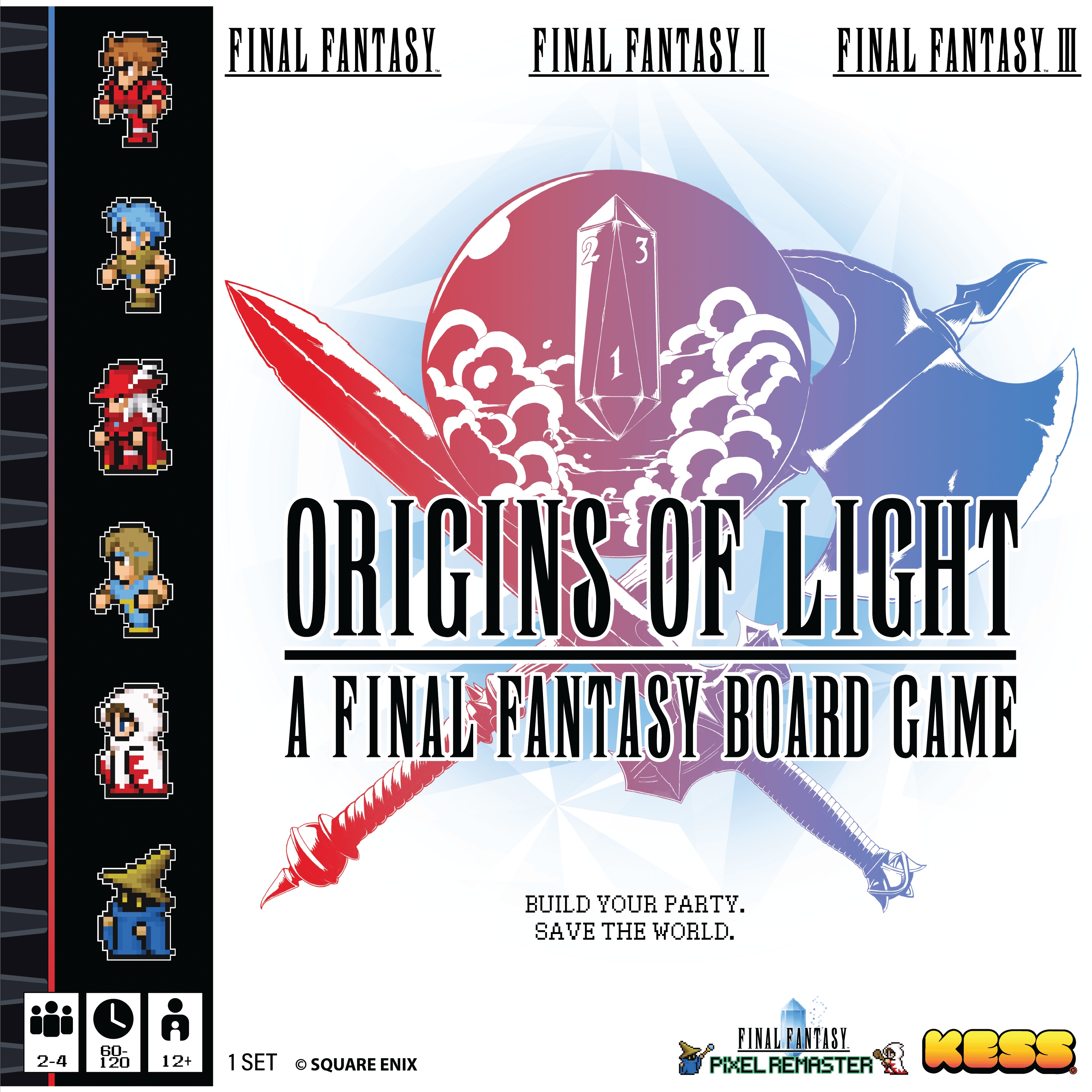
Origins of Light: A Final Fantasy Board Game geht im Oktober 2026 auf Kickstarter. Das kooperative Dungeon-Crawler-RPG von Kess Entertainment, der Spielesparte von Kess Co., basiert auf den Pixel-Remaster-Editionen von Final Fantasy I bis III und ist offiziell von Square Enix lizenziert. Figuren-, Karten- und Beschwörungsgrafiken stammen laut Berichterstattung aus offiziellen Square-Enix-Sprites, eine Stadt im Spiel haben Square-Enix-Künstler eigens dafür entworfen. Der Deal ist Teil einer größeren Lizenzvereinbarung zwischen Kess Co. und Square Enix, die laut Berichten auch Sammel-Würfelsets im RPG-Stil umfasst.
Drei Module für drei Final-Fantasy-Teile
Jeder der drei Final-Fantasy-Teile bildet ein eigenes Spielmodul. Die Gruppe zieht über ein Spielbrett, das der Karte des jeweiligen Originals nachempfunden ist, kämpft gegen Monster und Bosse mit eigens gestalteten, kristallförmigen Würfeln und kleinen Chocobo-Spielsteinen und besucht Städte, um dort Heilung, Ausrüstung und Magie einzukaufen. Im Final-Fantasy-I-Modul stehen sechs Heldenklassen zur Wahl: Krieger, Mönch, Dieb sowie Schwarz-, Weiß- und Rot-Magier. Mit steigender Stufe können Charaktere ihre Klasse wechseln.
Das Final-Fantasy-II-Modul setzt auf neun benannte Held:innen aus dem Originalspiel und macht die Erkundung zum Roguelite: Leere Felder auf dem Spielplan werden per zufällig gezogenem Plättchen gefüllt, jede Partie verläuft also anders. Das Final-Fantasy-III-Modul funktioniert über Drafting und bringt komplexere Klassen wie Dunkelritter, Barde und Geomant ins Spiel. Bei der genauen Heldenzahl widersprechen sich die Quellen: BGG nennt 22 wählbare Held:innen, eine unabhängige Fachquelle spricht von 24 Varianten.
Gespielt wird von 1 bis 4 Personen ab 12 Jahren in 90 bis 180 Minuten, mit einer eigenen Solo-Variante für Einzelspielende. Design stammt von Alex Kessler, die Illustrationen von Jordan Robbins. Eine spielbare Demo zeigte das Studio bereits Ende Juli/Anfang August 2026 auf der Gen Con in den USA.
Wie genau am Tisch zusammengespielt wird, etwa ob Entscheidungen offen ausgehandelt werden oder wer welche Information sieht, kommunizieren die bisherigen Ankündigungen nicht. Auch einen Vergleich zu etablierten Koop-Dungeon-Crawlern wie Gloomhaven oder Zombicide zieht bislang keine der Quellen, eine Einordnung der Komplexität bleibt damit offen. Auf BoardGameGeek gibt es zum Titel noch keine einzige Wertung.
Kess Co.: kein Erstlingsprojekt
Hinter dem Projekt steht Kess Co. aus Los Angeles, gegründet von Alex Kessler. Die Spielesparte Kess Entertainment adaptiert seit 2022 Video- und Animevorlagen fürs Brettspiel und hat dafür bereits mit Capcom, Toei und Sega zusammengearbeitet, Square Enix ist also nicht die erste große Lizenz des Studios. Mit „Kess“, einem abstrakten Taktikspiel für Kurzpartien, hat der Verlag zudem bereits ein eigenständiges Spiel veröffentlicht.
Kickstarter-Start und was noch fehlt
Die Kampagne selbst ist noch nicht live: Frühere Ankündigungen vom Juli und August 2026 nennen den 15. Oktober als Starttermin, ein im September mit dem Verlag geführtes Interview nennt dagegen den 20. Oktober. Welches der beiden Daten am Ende gilt, lässt sich vor dem tatsächlichen Kampagnenstart nicht abschließend klären.
Bei erfolgreicher Finanzierung soll die Auslieferung im Mai oder Juni 2027 erfolgen. Finanzierungsziel, Pledge-Stufen und mögliche Stretch-Goals hat der Verlag bislang nicht veröffentlicht, dazu lässt sich vor Kampagnenstart noch nichts sagen. Eine deutsche Lokalisierung oder einen deutschen Vertrieb erwähnt ebenfalls keine der Quellen, auch das bleibt vorerst offen.
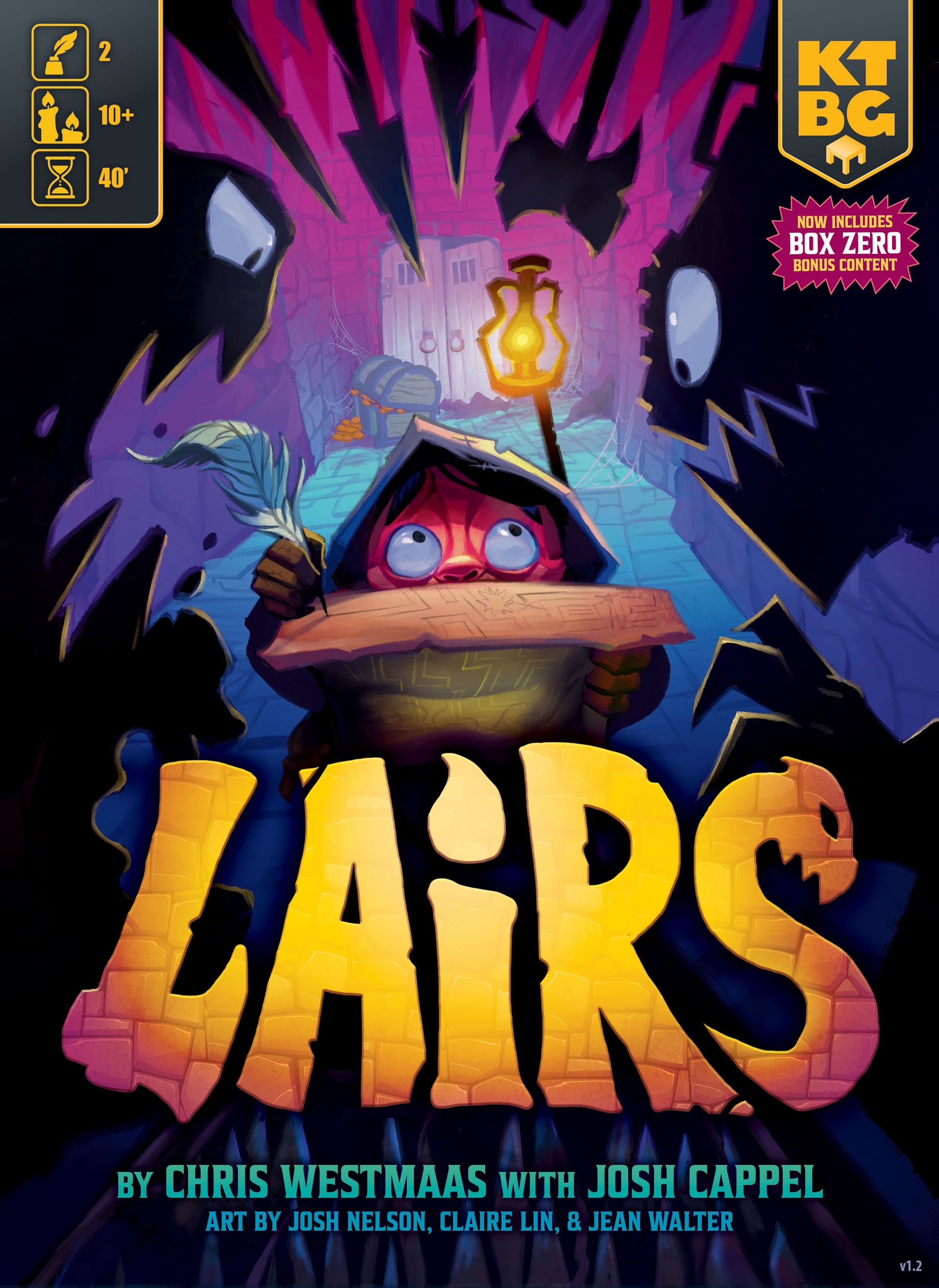
Lairs, das Zwei-Personen-Duell von Designer Josh Cappel und Christopher Westmaas, klettert aktuell in der BGG-Hotness-Liste. Auf BoardGameGeek zählt der 2026 veröffentlichte Titel inzwischen 786 Wertungen bei einem Schnitt von 8,13 Punkten und liegt auf Gesamtrang 2715 (Stand: 29. September 2026, BGG-Werte schwanken tagesaktuell). Einen deutschen Verlag als Lizenznehmer listet BGG bislang nicht.
Bau- und Erkundungsduell im eigenen Dungeon
In Lairs bauen beide Spielende gleichzeitig einen eigenen Dungeon aus Wänden, Fallen, Monstern und Schätzen und versuchen zugleich, sich durch das Bauwerk der Gegenseite zu schlagen. Wer zuerst den gegnerischen Dungeon durchquert, gewinnt: Deduktion, Würfelwürfe und ein modulares Spielbrett mit Paper-and-Pencil-Elementen bestimmen, wie viel vom eigenen Bauwerk verraten wird. Gespielt wird ausschließlich zu zweit, ab 10 Jahren, in 30 bis 60 Minuten, BGG-Komplexität rund 2,3 von 5.
Verlag KTBG hat den Titel ursprünglich über Kickstarter finanziert. Inzwischen listet BGG das Spiel als regulär erhältlich, mit mehr als 2000 Besitzenden.
Keine deutsche Lizenz, aber Nachfrage
International ist Lairs neben KTBG auch beim niederländischen Verlag DSV Games sowie bei Kutugo und Moona Games lokalisiert, eine deutsche Fassung fehlt aber weiterhin. Im deutschen Handel ist der Titel deshalb bislang nur als englischsprachiger Import erhältlich, etwa bei FantasyWelt für rund 26,49 Euro. In einem BGG-Forenthread mit dem Titel „LAIRS in Deutschland?“ fragen deutsche Spielende aktiv nach einer Lokalisierung. Ob und wann eine deutsche Ausgabe kommt, ist damit offen.
Welcome to this week’s batch of crowdfunding campaigns. We have a variety of offerings here, so we hope you will find something that catches your eye. Also, if you want to chat with the BGQ team, join our Discord Server where we talk about games, movies, sports, and other fun stuff. Check it out and […]
Ukrainian board game studio Boardova has broken into US hobby distribution through ACD, four years after being launched by two volunteers who met while supporting refugees and Ukraine’s army in the wake of Russia’s invasion.
The move into US distribution continues a unique success story for Boardova, whose co-founder Volodymyr Kuznietsov told Wargamer earlier this year he had been forced to flee his home city of Sievierodonetsk for the second time amid Russia’s 2022 invasion.
Kuznietsov relocated more than 1,000km away to Lviv in western Ukraine, leaving behind possessions including his entire board game collection – which he described to Wargamer as being “occupied by Russia”.
He added that while volunteering to support refugees and the Ukrainian army he decided to change the status of those games on BoardGameGeek to “pre-owned” – a joke spotted by fellow volunteer and board game enthusiast Zholud “Acorn” Dobrovolskyy, sparking a conversation which led to the pair founding Boardova the same year.
The company’s first game, Aridnyk, draws on the mythology and traditions of the Hutsul people of the Carpathian Mountains. Boardova released the game in Ukraine in January 2024, before raising more than $132,000 from almost 1,600 backers – almost half from the US – via a Kickstarter campaign the following year.
1984: Unperson, meanwhile, is a semi-cooperative card game designed by Kuznietsov and Yaroslav Kifor inspired by George Orwell’s dystopian novel. The game sees players trying to fulfill collective directives handed down by a totalitarian regime, while also trying to achieve their own secret ambitions.
Directive cards from 1984: Unperson || Photo Credit: Boardova
Kuznietsov told Wargamer the subject had an unavoidable resonance for a Ukrainian studio, describing the dangers of blindly following government orders as a “painful and obvious topic while we are under attack from Russia”.
Boardova has also previously expanded into Germany, signing a localisation deal for Aridnyk with Koalla Spiele shortly after Spiel Essen last year.
ACD said it had separately added five titles from Los Angeles party game publisher McMiLLER to its catalogue, including Jolt, Dummeez and Fish Fight.
In Kalenderwoche 40 dominiert Gamefound das Bild: Gleich drei Kampagnen sind am 22. September gestartet und liegen allesamt weit über ihrem Finanzierungsziel. Bei Kickstarter läuft dazu ein kooperatives Ninja-Spiel, das seinen Fünftausend-Dollar-Erstwert um mehr als das Siebenfache übertroffen hat. Für die Spieleschmiede hat sich in dieser Woche kein neuer Brettspiel-Kandidat gefunden, der die Aufnahmekriterien dieser Ausgabe erfüllt.
Heroes of Might and Magic III: Factory, Bulwark & Forge Expansions
Mit den Erweiterungen Factory, Bulwark und Forge bringt Archon Studio drei weitere Fraktionen für Heroes of Might and Magic III: The Board Game. Factory und Bulwark stammen aus der Fan-Erweiterung Horn of the Abyss, die neue Fraktion Forge entstand in Zusammenarbeit mit Co-Designer Gregory Fulton nach einer jahrzehntealten, nie umgesetzten Konzeptidee aus der Videospielreihe. Das Grundspiel bleibt für alle drei Fraktionen erforderlich, gespielt wird weiterhin von einer bis vier Personen bei rund 120 Minuten Spielzeit. Ein eigenes Solo-Regelwerk nennt die Kampagnenseite nicht, das Grundspiel unterstützt aber bereits den Einzelspielmodus.
Die Gamefound-Kampagne lief bereits am ersten Kampagnentag voll und steht, Stand 28.09.2026, bei rund 1.068.000 Euro und 2137 Prozent des Ziels, unterstützt von mehr als 5500 Personen. Laut Brettspielbox ist zusätzlich zur englischen auch eine deutsche Ausgabe vorgesehen. Die Kampagne läuft noch bis zum 12. Oktober 2026.
Eine Pledge-Stufe beginnt bei 119 Euro für die drei neuen Fraktionen als eigenständige Erweiterungsboxen, das Gesamtpaket aller bisherigen Erweiterungen kostet 459 Euro. Einen Auslieferungstermin nennt die Kampagnenseite bislang nicht.
Gang Wars (+ Scarface 1920 Reprint)
Mit Gang Wars kehrt Redzen Games in die Welt von Scarface 1920 zurück, diesmal als eigenständiges Spiel ohne Grundbox-Pflicht. Ein bis vier Personen übernehmen rivalisierende Gangs im Chicago der Prohibition, verkaufen Alkohol über eigene Speakeasies und kämpfen um Stadtviertel, während Polizei und Ermittler Eliot Ness den Nachschub beschlagnahmen können. Das Spiel verbindet Deckbau mit Gebietskontrolle, dauert etwa 75 Minuten und bringt einen eigenen Solo-Modus mit. Über die Kampagne wird zugleich eine Neuauflage von Scarface 1920 samt der Erweiterung Bloody Business angeboten.
Die Gamefound-Kampagne startete am 22. September 2026 und steht, Stand 28.09.2026, bei rund 565.000 Euro und 869 Prozent des Ziels, getragen von knapp 2850 Unterstützenden. Welche Sprachen zur Wahl stehen, nennt die Kampagnenseite nicht. Gang Wars läuft noch bis zum 15. Oktober 2026.
Die günstigste Einstiegsstufe liegt bei 89 Euro für Grundspiel und Solo-Modus. Einen Auslieferungstermin nennt die Kampagnenseite bislang nicht.
Dale of Merchants: 10-year Anniversary
Zum zehnjährigen Jubiläum legt Snowdale Design seinen Deckbuilder Dale of Merchants von Sami Laakso komplett neu auf. Sechs eigenständige, miteinander kombinierbare Spiele bilden das Kernpaket, dazu kommen überarbeitete Illustrationen, neue Symbolik und ein umfassendes Rebalancing nahezu aller Decks. Erstmals gibt es einen offiziellen Solo-Modus, der mit sämtlichen Tierdecks funktioniert und eigene Karten mitbringt. Gespielt wird von einer bis vier Personen bei etwa 45 Minuten Spielzeit, die Vorgängerserie ist bereits über Board Game Arena digital spielbar.
Die Kampagne startete am 22. September 2026 und steht, Stand 28.09.2026, bei rund 113.500 Euro und 227 Prozent des Ziels, unterstützt von 873 Personen. Eine deutsche Sprachversion nennt die Kampagnenseite nicht. Dale of Merchants läuft noch bis zum 13. Oktober 2026.
Ein einzelnes Spiel aus der Serie kostet ab 19,95 Euro, das Gameplay-All-in mit allen sechs Teilen startet bei 119,95 Euro. Einen Auslieferungstermin nennt die Kampagnenseite bislang nicht.
Onryō: First Seal
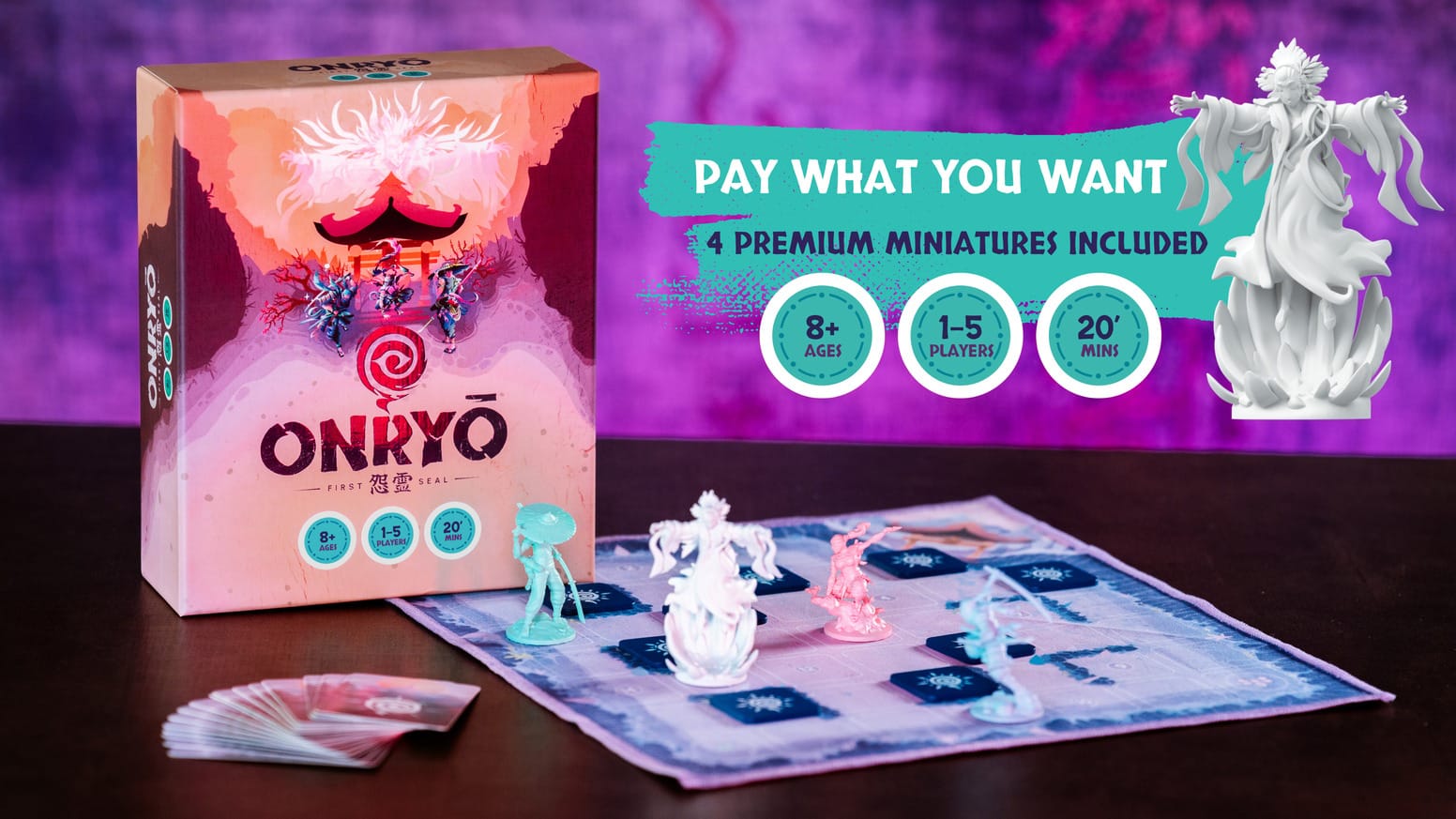
In Onryō: First Seal von Lemery Games steuern ein bis fünf Personen kooperativ drei Ninja-Clans durch ein zunehmend korrumpiertes Raster, um Yōkai-Geister zurückzudrängen und den rachsüchtigen Onryō zu versiegeln. Das taktische Spiel bildet die Vorgeschichte zum später geplanten Onryō: Seeking Solace, funktioniert aber vollständig eigenständig und lässt sich auch solo spielen. Eine Partie dauert 15 bis 30 Minuten, für eine höhere Schwierigkeit gibt es den zusätzlichen Tatari-Modus. Lemery Games finanziert das Spiel über ein flexibles Pledge-System ohne feste Preisstufe.
Die Kickstarter-Kampagne läuft bereits seit dem 14. September 2026 und steht, Stand 28.09.2026, bei rund 36.000 US-Dollar und 721 Prozent des Ziels von 5000 US-Dollar, getragen von über 2500 Unterstützenden. Eine deutsche Sprachversion nennt die Kampagnenseite nicht. Onryō: First Seal läuft noch bis zum 8. Oktober 2026.
Lemery Games nennt keine festen Preisstufen, empfiehlt auf der Pledge-Seite aber Beiträge zwischen 1 und 40 US-Dollar, produktionsnah ab 14 US-Dollar. Die Kampagne nennt März 2027 als geschätzte Auslieferung.
Financially-troubled board game publisher CMON has secured a $19m injection of new capital as it battles to turn around years of heavy losses and dwindling cash reserves – which had left it with just $368,000 in bank and cash balances at the start of August.
But CMON’s balance sheet remained under pressure at the end of June, with $7.34m more in short-term liabilities than short-term assets, up from $6.89m at the end of 2025.
A significant part of CMON’s liabilities relates to eight crowdfunded games whose campaigns raised $14m from backers, but which the company has yet to deliver – including DC Super Heroes United, which raised more than $4.4m, and DCeased, which brought in over $2.5m.
DC Super Heroes United, designed by Andrea Chiarvesio || Crowdfunding image
CMON’s directors in its H1 report that the liabilities position had caused the company’s directors to give “careful consideration to the future liquidity and performance of the group and its available sources of financing in assessing whether the group will have sufficient financial resources to continue as a going concern”.
The directors added that they believed CMON would be be able to continue operating – but central to that assessment was the success of the planned share sale, which was designed to raise up to HK$150.5m, or about $19m.
Existing shareholders agreed to buy just 7.76% of the new shares offered to them by the August deadline, leaving CMON looking to raise more than $17.5m from other investors through the rights issue – a figure approaching 2.5-times the valuation of the entire company implied by its last share sale in February this year.
But the company has now revealed that placing agent Yuen Meta managed to sell every remaining share on offer, giving the business the full $19m it had been seeking – a significant mark of belief in the beleagured business.
That capital injection is more than 50-times CMON cash balance from early August, and almost double the $9.9m in revenue CMON generated across the whole of last year, although it pales in comparison to the $37m to $45m revenues it posted each year between 2021 and 2024.
CMON said it plans to use 40% of the newly-raised money to fund its day-to-day operations across the next 12 months, including staff costs, royalties, shipping and distribution, professional fees and other administrative and operating expenses.
Of that slice, about 30% – which works out to $2.28m – was set to go towards staff costs including salaries, bonuses and allowances, 30% towards selling and distribution expenses, and 35% towards general administrative and operating expenses, including its sales operation, utilities, insurance, government registration and filing fees, listing fee, repairs and maintenance. The the final 5% was earmarked for paying professional fees
That news could provide some relief to the tens of thousands of backers still waiting for their games via CMON’s heavily-delayed crowdfunding campaigns – although the publisher has not specified exactly how much of the capital will be used to deliver the overdue titles, or whether the capital is enough to ensure all eight will be fulfilled.
Zombicide: White Death
CMON has not completed fulfillment of a crowdfunding project since Zombicide: White Death in mid-2025, but did manage to deliver pre-orders for Cthulhu: Dark Providence, Marvel United: Witching Hour and Dune: Desert War in the first half of this year.
Latest delivery estimate (as of September 24, 2026)
Mordred
$669,976
5,687
July 2023
August 2024
Q4 2026
Masters of the Universe: The Board Game – Clash for Eternia
$719,664
4,182
January 2024
November 2024
Q1 2027
DCeased
$2,564,789
12,787
December 2023
April 2025
Q1 2027
DC Super Heroes United
$4,478,989
14,040
August 2024
August 2025
Q1 2027
God of War
$832,945
4,388
May 2024
June 2025
Q2 2027
Massive Darkness: Dungeons of Shadowreach
$2,854,553
9,842
February 2025
March 2026
Q3 2027
A Song of Ice & Fire: Tactics
$1,886,509
6,406
February 2024
February 2025
Q3 2027
Degenesis: Clan Wars
$339,742
1,232
June 2024
July 2025
n/a
Total Dollars
$14,347,167
About 20% of CMON’s newly-raised capital is earmarked for repaying debts and other outstanding liabilities, including $2.46m owed to a CMON director and $385,000 of unsecured advances from employees, as well as outstanding production, shipping, royalty and other operating costs.
CMON has slated 25% of the new money for expansion in existing and new markets, including strengthening the company’s presence in Europe through marketing and potential attendance at events including Spiel Essen and Cannes, as well as targeting growth in Japan and the Philippines.
The company added that it plans to put 15% of the new capital towards potential acquisitions as part of a push into digital gaming, although said it had not yet identified any targets.
CMON said it intends to look for between one and three businesses, primarily in Asia-Pacific, valued at between about $1.3m and $2.5m each, which could help it develop digital adaptations of its existing games, companion apps and other digitally-enabled features.
The publisher stressed that it intends to retain physical tabletop games as its core business, with the digital push designed to complement rather than replace them.
CMON’s capital raise has also radically reshaped the ownership of the company, with chairman and CEO Ng Chern Ann ceasing to be the largest shareholder after his overall stake was diluted down from about 20% to just over 5%.
The capital raise has made investor Yip Ka Ki Cherry CMON’s largest disclosed shareholder with a roughly 19% stake, personally and via her investment holding company Legend One.
Yip was already an investor in CMON before the rights issue, with a stake of about 4.8%. Her other previous investments through Legend One include Japanese entertainment business TryHard Holdings.
CMON has also strengthened its board following the capital raise, appointing two new independent non-executive directors – veteran financial management, corporate governance and audit executive Chan Ka Kit, and corporate communications, marketing and investor relations specialist Claire Luk.
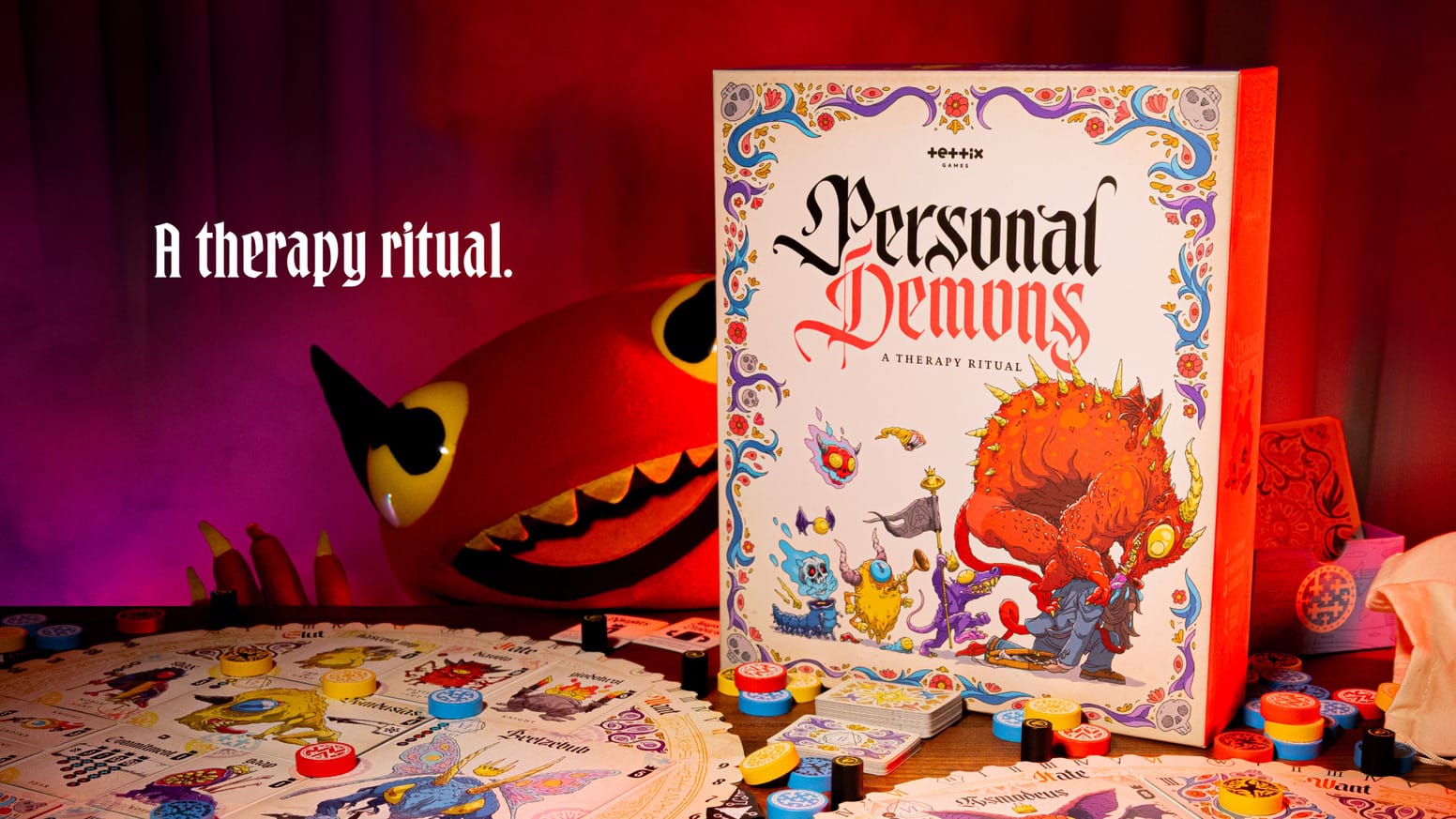
Der schottische Designer Judson Cowan hat am 22. September 2026 auf Kickstarter die Kampagne zu Personal Demons gestartet, einem Drafting- und Legespiel für 1 bis 4 Spielende aus seinem eigenen Studio Tettix Games. Innerhalb weniger Stunden hat die Kampagne ihr Ziel von 6.666 Pfund um mehr als das Siebenfache übertroffen: Bei Redaktionsschluss standen 47.514 Pfund und 841 Unterstützende auf der Uhr. Für deutsche Spielende ist vor allem eines relevant: Board Game Circus lokalisiert das Spiel. Die Sprache lässt sich später im Pledge-Manager zwischen Deutsch und Englisch wählen.
Wie funktioniert Personal Demons?
In Personal Demons beschwören die Spielenden reihum ihre inneren Dämonen und versuchen, sie durch vollständige Siegel zu bannen. Jede Partie läuft über drei Runden zu je sechs Zügen. Laut Board Game Circus handelt es sich dabei um echtes Hand-Drafting: Alle wählen aus ihrer Kartenhand verdeckt eine Karte, decken gleichzeitig auf und reichen den Rest im Uhrzeigersinn weiter, ähnlich wie bei Sushi Go oder 7 Wonders. Wer eine Karte behält, entzieht sie damit allen nachfolgenden Mitspielenden in der Passkette.
Vier Dämonenkarten der Farben Gelb, Rot, Blau oder Lila ergeben, in ihren Ecken kombiniert, ein vollständiges Siegel und bringen Punkte. Lila fungiert dabei laut Board Game Circus als Jokerfarbe, die jedes der drei anderen Siegel ergänzen kann. Dazu kommen Bonusaktionen wie das Stellen von Ängsten oder das Beschwören neuer Dämonen. Laut Herstellerbeschreibung lassen sich begonnene Siegel im Spielverlauf auch wieder aufbrechen und neu bilden, was fortlaufende Timing-Entscheidungen erzwingt.
Unterschiedliche Dämonen bringen laut BoardGameGeek jeweils eigene Effekte für alle Spielenden mit: Gesammelte Mut-Karten verleihen zusätzlich individuelle Fähigkeiten. Das soll für Varianz zwischen einzelnen Partien sorgen: Feste Zahlen zur Kartenvielfalt nennt die Kampagne bislang nicht. Die Kombination aus Hand-Drafting und Schichten-Legespiel auf einer persönlichen Tafel unterscheidet Personal Demons von reinen Set-Collection-Spielen, bei denen Karten nur gesammelt statt räumlich angeordnet werden. Ob die Dämonenkarten neben der Farbe zusätzliche Symbole oder Formen tragen und ob es eine Referenzkarte für die Siegel-Logik gibt, geht aus Kickstarter-Seite und Board-Game-Circus-Artikel bislang nicht hervor.
Kickstarter nennt eine Spieldauer von 45 Minuten: BoardGameGeek fasst sie mit 30 bis 60 Minuten etwas weiter. Freigegeben ist Personal Demons laut Kampagnenseite ab 14 Jahren. Die Grundbox ist für ein bis vier Spielende ausgelegt: Ein optionales Erweiterungs-Kit hebt die Höchstzahl auf sechs an. Der Solo-Modus bietet drei Schwierigkeitsstufen mit Zielwerten zwischen 75 und über 175 Punkten.
Companion zu Deep Regrets
Personal Demons ist als Begleitspiel zu Cowans Deep Regrets gedacht, das Würfelreich bereits getestet hat. Design und Illustration stammen ebenfalls komplett von Cowan selbst. Veröffentlicht wird über sein eigenes Studio Tettix Games mit Sitz in Edinburgh. Thematisch bilden beide Spiele einen Kontrast: Während Deep Regrets Reue anhäuft, geht es in Personal Demons um die spielerische Konfrontation und Bewältigung innerer Ängste.
Pledges und Erscheinungstermin
Der Basis-Pledge für Personal Demons kostet 33 Pfund und enthält eine Kopie in wählbarer Sprache. Das „Pandemonium“-Bundle für 70 Pfund bündelt Grundspiel, das 5-6-Spieler-Erweiterungskit sowie ein Kartenspiel-Deck mit Motiven aus dem Spiel. Das zugehörige Lore-Buch „Sol's Low-Key Guide to Demons“ bleibt dabei ausschließlich englischsprachig. Eine Händlerstufe für 199 Pfund bietet zwölf Exemplare mit Mengenrabatt, ebenfalls nur auf Englisch.
Kickstarter nennt August 2027 als Liefertermin. Die Kampagne selbst läuft noch bis zum 15. Oktober 2026. Einen Präzedenzfall gibt es bereits: Board Game Circus hatte die deutsche Version von Cowans vorherigem Spiel Deep Regrets nach eigenen Angaben ausgeliefert, kurz bevor Tettix Games Anfang Juni 2025 die erste große Erweiterung ankündigte.
Ob Board Game Circus als Lokalisierungspartner auch das Fulfillment für deutsche und EU-Unterstützende übernimmt oder der Versand aus Großbritannien erfolgt, nennt die Kampagnenseite bislang nicht. Eine Handelsausgabe nach Kampagnenende ist beim Vorgänger bereits Praxis: Deep Regrets ist inzwischen über den hauseigenen Shop Brettspielkiosk erhältlich, aktuell allerdings ausverkauft. Ob und wann Personal Demons denselben Weg geht, lässt die Kampagne offen. Das frühe Pledgen bleibt damit vor allem eine Frage von Preis und Wartezeit.
Welcome to this week’s batch of crowdfunding campaigns. We have a variety of offerings here, so we hope you will find something that catches your eye. Also, if you want to chat with the BGQ team, join our Discord Server where we talk about games, movies, sports, and other fun stuff. Check it out and […]
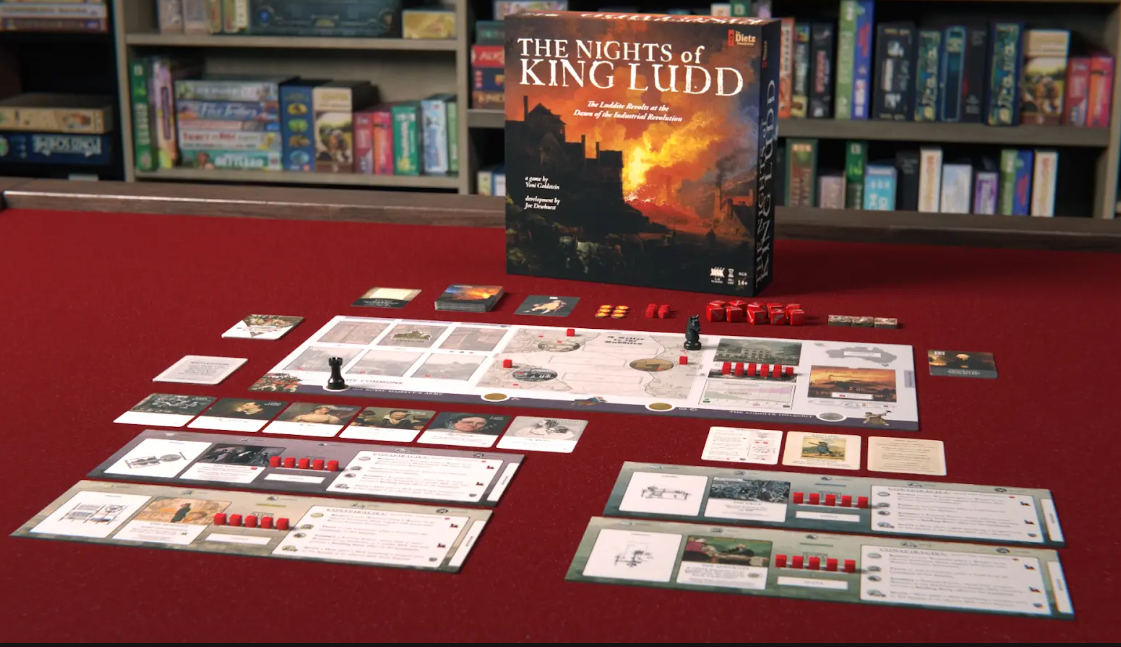
The Dietz Foundation has a new game from Yoni Goldstein on Kickstarter called The Nights of King Ludd: The Luddite War on Industry, 1811-? (the game has already funded). The Nights of King Ludd is a 2-4 player game that deals with direct oath-sworn secret societies of English Luddites at the dawn of the Industrial Revolution in the English Midlands. Working together, players will build a secret network of saboteurs, ferry provisions and weapons on the black market, assemble raiding parties, and if all goes as planned, smash those “dark satanic mills” to cinders. Here is Part II of our interview with Yoni.
Grant: What is the layout of the board and the different locations?
Yoni: The board is divided into three panels. On the left, you will see the two card pools. The top row is where you place the “Regency” Cards, reactionary forces from London sent to quash the Luddite revolts. Below London are three cards representing the “Commons,” a shifting market of dual-use cards helpful to the players.
The central panel features the mills and enclosures. This is where players place their pieces (Weavers sympathizing with the Luddite cause), and the local Militia (the knight piece). The map depicts the “Luddite Triangle:” the West Riding of Yorkshire, Nottinghamshire, and Lancashire.
The right panel holds the Manufacturer’s House (and the current Manufacturer), the pool of Employed Weavers, and the Stocking Market to track wages and productivity in the mills. On the far right panel, is the Australia space for weavers punished by transportation, and the “Saboteur Dice Pool.”
A ribbon at the bottom of the board displays His Royal Majesty’s Army progress toward the Luddite Holdout. This is effectively the round track, if the Luddites are unable to sabotage the three mills by the end of the third round, the game ends in collective defeat.
Grant: How does the game use cards? What different type of cards are included?
Yoni: In The Nights of King Ludd players build a collective card engine by acquiring dual use cards from the “Commons” to upgrade their actions (aka “Conspiracies” – more on those below). The main pool of cards is called “The Commons” which, as the name suggests, represents a mutual aid network of provisions, tactics, and personalities that the Luddites may draw from in the course of their clandestine operations.
“Commons” cards are dual use and drawn from the Draw Deck. They are beneficial in two ways: the top of the card displays a persistent upgrade to any Conspiracy action and is locked into the player board to form a tableau. The bottom of the card displays a “Raiding Party” effect, a one time effect that can be triggered when a Raiding Party is formed and dispatched to a local mill.
The antithesis of the Commons is the “Regency,” a deck of cards reflecting the alignment of the aristocracy in London with an ascendent industrial class against the Luddite cause. They are drawn whenever the Luddites make themselves known in public: fomenting a mob, carrying out an assassination, or setting a factory on fire. When drawn, they set the machines of industry into motion; driving up productivity, plummeting wages, and calling the local constabulary to police the countryside.
Once more than three cards are in the “London” track above the Commons, a nasty event is resolved. These effects will intensify the game’s challenges. Sympathetic weavers will be exiled to Australia, the militia will sweep into the local mill to root out hidden raiders, and the Commons will be parceled off and sold to the highest bidder.
Grant: What is the role of the Persona Cards? Who are these figures?
Yoni: As mentioned in Part I of this interview, each player represents a secret society of Luddites organized around a particular “persona.” These personae introduce a special ability, as well as their their own victory condition, aka a “Motivation”, and a unique “Woe” – a card shuffled into the Draw Deck at setup that will, inevitably, undermine their efforts. There are six persona to choose from.
In clockwise order, they are:
Mary Molyneux, 19, and Lydia Molyneux, 15, were two sisters who, in 1812, stormed a steam-driven cotton mill outside Bolton shouting, “Now Lads!” – encouraging the mob to set the building afire (and they steadfastly did so).
Lady Ludd: “The “Lady Ludd Riots” took place in 1812 when a group of women and young lads – “distressed” by the precipitous rise in corn prices – marched through Leeds, assaulting merchants and “beating up for a mob.” They were led by a disguised person “who was dignified by the title of LADY LUDD.”
George Gordon Byron, 6th Baron Byron, “a young poet with the chiselled good looks, the oddly deformed club foot, and an obscure and very prestigious peerage,” was an eloquent Romantic dandy who rose to defend the Luddites before the House of Lords in 1812. Byron sympathized with the weavers near his home north of Nottingham; “the real cause of their misery [was] the destructive warfare of the last eighteen years, which has destroyed their comfort, your comfort, all men’s comfort.”
Elizabeth Studham was one of seven women tried for arson during the Swing Riots of 1829-30, an echo of the Luddite rebellion. At the age of 19 she set fire to an East Kent workhouse, demanding a wage increase for farmers threatened by threshing machines. Studham was deported and served 14 years and two months in Van Diemen’s Land (Tasmania) during which time she gave birth to two children of whom records are sparse. She would later be sentenced for 10 offences, primarily for bad language.
Lt. George Mellor was a Cropper and Yorkshire Luddite known to the movement as General Ludd’s Right-Hand Man. A strong willed and roguish machine-wrecker, he eventually faced a hanging sentence for the murder of a wealthy mill owner whom he shot in the groin. Eventually, Mellor was arrested in October of 1812. It is said he raised his hands in shackles and shouted “Three cheers for General Ludd!”
John Baines the elder was an “intelligent Hatter” and president of the local Republican Club of St. Crispin. Baines dreamt that Luddism would one day blossom into a democratic revolution; “Let the people now rise and rid themselves of this vile brood who flung upon them the sole taxation of the country and reduced them to the condition of galley slaves!” He was found guilty at the York Special Commission of administering illegal oaths and died on board a prison hulk in a Portsmouth harbour, on December 21st, 1814.
Grant: What is the purpose of the Manufacturer Card?
Yoni: At the beginning of each game, one of the three Manufacturer Cards is selected at random and placed face up in the “Manufacturer’s House” space on the board. The initial effect (tuck 6 cards from the draw deck beneath the manufacturer) represents the nascent industrial class’ emphasis on extracting from the commons, resolving at the start of each round. In practical terms, this prunes away the players’ available card pool over the course of play as well as ambiguates the composition of the draw deck. When a manufacturer is assassinated, all the cards tucked beneath are discarded (and will shuffle back into the Draw Deck) and the Manufacturer Card is flipped to reveal a more reactionary and dangerous side.
Grant: What are Conspiracy Actions?
Yoni: At the beginning of the game, each player has five conspirators (four for Lord Byron) at their command. Spending a conspirator allows the player to activate one of the four following Conspiracy actions (per turn):
Rally Local Weavers: either place a weaver from the supply pool at your presence pawn, or move your pawn and any weavers to another enclosure on the map.
Trade in the Commons: pick up a card from the Commons and tuck into one of the columns on your player board. That card allows for secondary actions whenever that matching Conspiracy is activated.
Assemble a Raiding Party: a two step action, move one or more weavers from an Enclosure (spaces on the map adjacent to Mills) into a Mill. This sets up a future sabotage action. Then, activate one of the Raiding Party effects in the Commons. This is the primary means of building your Saboteur Dice Pool. The more raiders you have at the Mill, the more dice you are permitted to roll during a Sabotage operation.
Lastly, you may Incite a Mob, placing a Mob Tile next to an adjacent Mill. For a sabotage roll to be successful, the die rolls must match an icon depicted on the Mob tile – hammer, gun, or torch.
Grant: What type of secondary effects come from cards tucked into the Column on Player Boards?
Yoni: Once you use a Trade conspiracy to move a card from the Commons to your tableau (your “Secret Society”), you can activate it, along with any other card in that same column on your player board, every time you resolve that conspiracy action. This allows for chaining and sequencing a series of effects that may have significant impact on your objective to destroy the mills.
Grant: Can you show us a few examples and explain their use?
Yoni: For example, let’s say you are George Mellor and you are seeking to assassinate the manufacturer. You resolve the Trade conspiracy to take “Dispatch Delegates to Neighbouring Counties” and place it in your Trade column, meaning it will be available to you immediately after this primary action. In previous turns you’ve already acquired an ongoing ability, “Mellor Takes a Shot at Mr. Horsfall!”, giving you an extra die for Assassination roles (helpful, since these operations are so risky!). You activate “Dispatch Delegates…” to activate a Raiding Party effect (the bottom of the card) in the Commons, which happens to be your partner in crime, “Martha Mellor Defends the Accused.” She allows you to roll for Assassination, but will be removed from play once that effect is resolved.
Grant: How does Sabotage and Assassinations work in the game?
Yoni: At various points in the game, players may elect to roll for Sabotage or Assassination. Of course, certain maneuvers must take place for these brazen attacks to succeed. Sabotages are larger scale events and are aimed at the Mills. You must have assembled a raiding party at the Mill and incited a Mob to spurn them on. As mentioned above, you roll one die per weaver cube at the Mill and attempt results matching the icons on the Mobs you’ve placed. The dice are D6s with the following faces: 3 blanks (a miss), 1 Torch, 1 Gun, and 1 Hammer. So with one Mob tile matching one of those icons, each die you roll has a 1 in 6 chance of hitting. If all three Mobs are in place, the odds climb to 1 in 2 per die.
An assassination is a similar roll, but only one die may be cast and hits are only the gun or hammer. Beware, the Regency will respond with a draw from its deck for both sabotage and assassination rolls!
Grant: What are you most pleased about with the design?
Yoni: As Dan Thurot noted, “The Nights of King Ludd points toward a more experimental direction than Chicago ‘68 and I feel it reflects a degree of growth and maturation as a designer. It’s a game that seeks to capture both the panoramic view of a people’s struggle as well as sketching out the personal incentives that motivate individual participation in (and sometimes sacrifice for) a collective cause”.
Grant: What other games are you currently working on?
Yoni: I am currently working on a commission for an international art exhibition on “sociopolitical freefall.” This will be a smaller box game and will also be developed by Joe Dewhurst. I’m also co-designing a project about Mai ‘68 with Fred Serval. This game is about the French experience of student and labor riots in 1968. While it shares the themes of Chicago ‘68 it’s driven by a completely new system.
Die Crowdfunding-Wochenschau blickt auf die vergangenen sieben Tage vom 14. bis zum 21. September 2026 zurück. Auf Kickstarter und Gamefound sind mehrere neue Brettspiel-Kampagnen gestartet, von einer offiziellen Anime-Lizenz bis zu einem Eurogame-Wolkenkratzer. Bei der Spieleschmiede gab es in diesem Zeitraum keinen neuen Brettspiel-Start.
Naruto Shippuden Battle
This is a GAME / 2002MK-2007SP
Naruto Shippuden Battle ist laut Verlag das erste offizielle Brettspiel zur Anime-Reihe Naruto Shippuden. Zwei oder vier Personen stellen Teams aus Ninja-Miniaturen zusammen und tragen taktische Arenakämpfe aus. Karten steuern Bewegung, Angriff und Reaktionen und lassen sich zu Kombos verketten, und gespielt wird als direktes Duell oder im Zwei-gegen-zwei-Team. Eine Partie dauert rund 30 Minuten, empfohlen ab 10 Jahren.
Designer ist Philippe Ville. Verlag ist This is a GAME gemeinsam mit Don't Panic Games. Die Kampagne lief seit dem 15. September 2026 auf Gamefound mit einem Ziel von 35.000 Euro und stand am 21.09.2026 bei 875 Unterstützern und rund 194.000 Euro, umgerechnet 555 Prozent des Ziels. Zu einer deutschen Sprachversion äußert sich die Kampagnenseite bislang nicht.
Arcologies
Artwork Adrien Rives
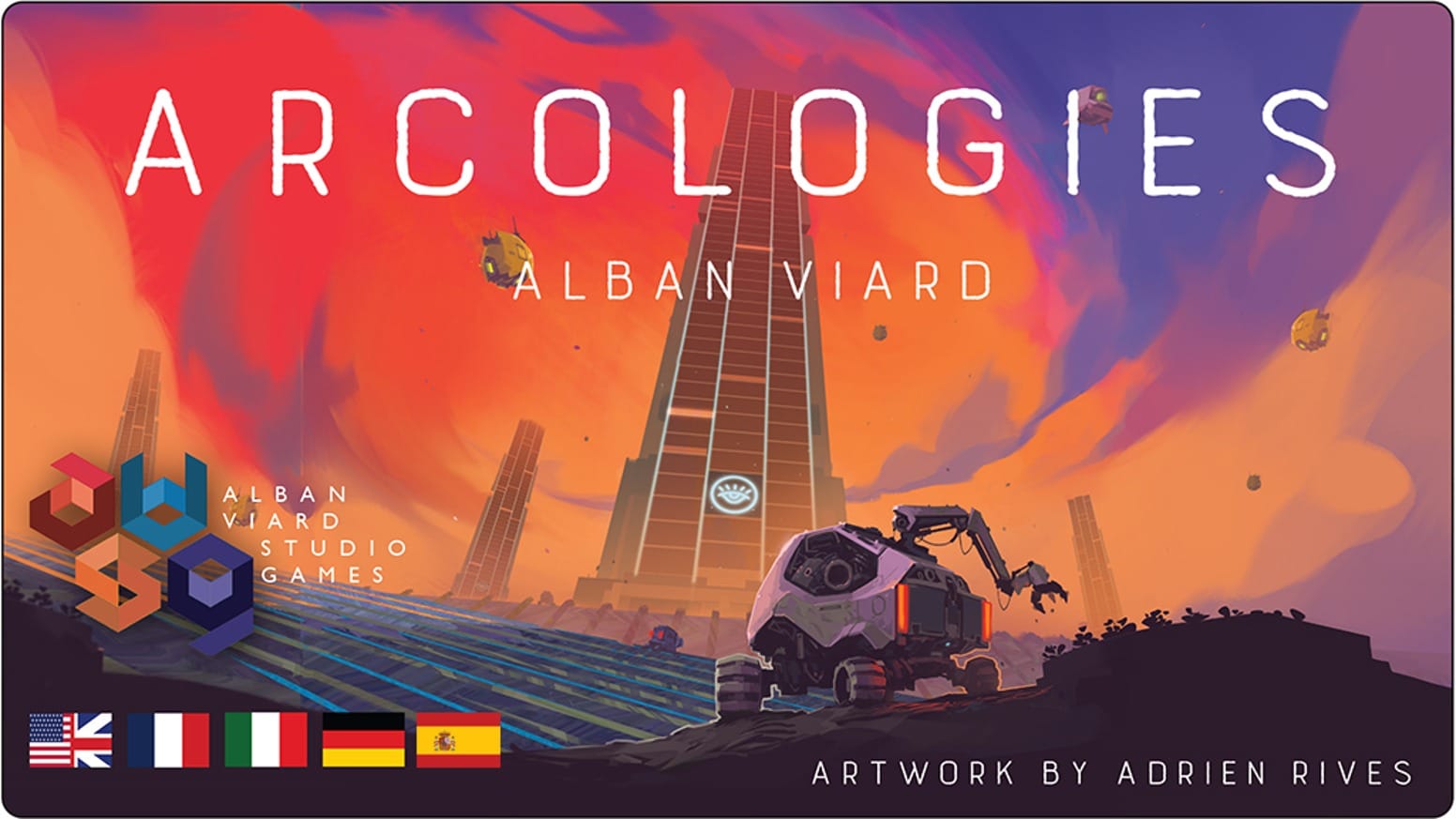
Arcologies ist ein Städtebau-Strategiespiel von Alban Viard für ein bis vier Personen. Gebaut wird eine vertikale Stadt der Zukunft: Auf drehbaren Spieltableaus werden Wohnungen, Büros, Geschäfte und Grünflächen in einem Hochhaus organisiert, während die Planung der Aufzüge darüber entscheidet, wie zufrieden die Bewohner sind. Eine Partie dauert 60 bis 150 Minuten. Verlag ist AVStudioGames, und die Illustrationen stammen von Adrien Rives.
Die Kickstarter-Kampagne startete am 15. September 2026 mit einem Ziel von 29.000 Euro und stand am 21.09.2026 bei 387 Unterstützern und rund 30.175 Euro, also 104 Prozent. Sie läuft noch bis zum 7. Oktober 2026. Laut Kampagnenankündigung ist auch eine deutsche Fassung geplant.
DAVOS von Marty.Games schickt zwei bis acht Personen als Investmentgesellschaften in ein Verhandlungsspiel um wirtschaftlichen und politischen Einfluss. Unternehmen in Amerika, Europa, China und dem Globalen Süden werden übernommen, Parlamente beeinflusst und Institutionen unter Kontrolle gebracht, wahlweise auch kooperativ oder mit einer Dissidentenrolle gegen den Rest der Runde. Eine Partie dauert laut Verlag 60 Minuten, empfohlen ab 14 Jahren. Ein Designer wird auf der Kampagnenseite nicht genannt, und die Grafik stammt von Martijn Snelder.
Nach einer ersten Kickstarter-Auflage 2024, deren Lieferstatus die Kampagnenseite nicht nennt, läuft nun eine neue Kampagne auf Gamefound, gestartet am 15. September 2026 mit einem Ziel von 5.000 Euro. Am 21.09.2026 standen 237 Unterstützer und rund 16.153 Euro zu Buche, umgerechnet 323 Prozent. Die Kampagne endet am 8. Oktober 2026.
Chocolate Factory Remastered
Alley Cat Games
Chocolate Factory Remastered legt das Effizienzspiel von Matthew Dunstan und Brett J. Gilbert bei Alley Cat Games in einer überarbeiteten zweiten Edition auf. Über ein Förderband wird Kakao durch selbst gebaute Maschinen geschickt und Schritt für Schritt zu Schokolade verarbeitet, und neue Maschinenteile und Angestellte erweitern die eigene Fabrik. Die Neuauflage bringt zwei neue Erweiterungen mit, Wonder und Milk, dazu überarbeitete Illustrationen und vollfarbig bedrucktes Material. Gedacht ist das Spiel für ein bis vier Personen mit 45 bis 90 Minuten Spielzeit.
Die Kickstarter-Kampagne ist ein Staff Pick der Plattform, läuft seit dem 14. September 2026 mit einem Ziel von 12.500 Pfund und stand am 21.09.2026 bei 513 Unterstützern und rund 33.045 Pfund, also 264 Prozent. Sie endet am 8. Oktober 2026.
Perennial
Illustration Beth Sobel / Flatout Games
Perennial kommt vom Team hinter Cascadia und Calico bei Flatout Games, entworfen von Emily Vincent mit Illustrationen von Beth Sobel. Über vier Runden legen ein bis vier Personen Präriegärten aus Polyomino-Plättchen: Werkzeugkarten geben die Form vor, in der Pflanzen- und Tierplättchen gesammelt werden dürfen, bevor alle gleichzeitig ihren Garten bepflanzen. Punkte gibt es unter anderem für zusammenhängende Pflanzenflächen und passend platzierte Tiere, und dazu gibt es einen eigenen Solo-Modus. Eine Partie dauert 30 bis 45 Minuten.
Die Kickstarter-Kampagne ist ebenfalls ein Staff Pick, läuft seit dem 15. September 2026 mit einem Ziel von 8.000 US-Dollar und stand am 21.09.2026 bei 1.642 Unterstützern und rund 71.463 US-Dollar, umgerechnet 893 Prozent. Sie endet erst am 5. November 2026.
Die fünf Kampagnen dieser Woche zeigen zwei gegenläufige Strategien: Etablierte Studios wie Flatout Games und Alley Cat Games verlassen sich auf bekannte Marken und Remaster, während This is a GAME mit einer Lizenz und Alban Viard sowie Marty.Games mit eigenständigen Designs neues Terrain versuchen. Wie sich die hohen Startquoten bis zum jeweiligen Kampagnenende halten, bleibt abzuwarten.
In regards to several recent crowdfunded games that either relaunched after an initial cancellation or are struggling to move far past their funding goal, I’ve heard some concerns about trust from potential backers.
For example, if a project has a $10,000 funding goal but after the first few days they only have a few hundred backers and $13,000 in funding, is it a mark of dishonesty if they cancel the project, reconfigure, and relaunch?
Personally, I do not begrudge anyone from learning from a mistake, oversight, or shortcoming and trying to do better. Nor do I consider it dishonest to showcase a marketable funding goal…as long as the creator is transparent about their aspirational goal.
If you want to make a hypothetical game with a landed cost of $20 (manufacturing plus freight shipping) with a trusted long-time producer like Panda, you’ll have a minimum order quantity of 1,500 units (or 2,000 if plastics are involved). Ideally you’ll make more, but that’s the bare minimum you need to cover that MOQ. So that’s $30,000.
Of course, you’ll need to pay artists, graphic designers, playtesters, and proofreaders–those costs can vary greatly based on the complexity of the game and the quantity of the art. At Stonemaier Games, I would say that those costs add up to around $75,000 on average. Added to the landed costs for the 1,500-unit MOQ, that’s $105,000.
I might list the funding goal at $30,000, but somewhere else on the project page I might discuss that I’ve already invested $75,000 in the game and that the funding goal is based on the MOQ of 1,500. So there I might note that we’ll make the game if we reach the funding goal, but my hope is to eclipse $105,000, perhaps marked by a stretch goal.
A creator could also just outright say, “We chose $10,000 as a marketable funding goal, but our aspirational goal is to make at least $50,000. Reaching that aspirational goal will help us cover our sunk costs and will enable us to pay for the first printing without dipping into our savings. If the project has not reached $30,000 a few days after launch, this is a strong indicator the game and/or the campaign are missing something important, and we may consider relaunching to best serve the audience for this game.”
This is essentially what Siclen Studio announced on a recent video about their current Kickstarter, though they took it a step further: They said that as long as they stay above their $10,000 funding goal (as of this writing, the project is at $13,535), they will make the game even though they had much higher hopes for it. I admire that, though I also worry that backer accusations of dishonesty backed Siclen into this corner instead of offering them the grace to relaunch.
I understand that this is a contentious subject, and I also understand that a creator risks losing backer trust if they relaunch. However, we are talking about crowdfunding here: Nothing is etched in stone. Crowdfunding gives creators the opportunity to learn from the crowd while the product and the project are still pliable.
Also, is it not an inherently human trait to set a lower goal with the hopes of surpassing it? I can certainly relate to that.
What are your constructive thoughts about marketable vs aspirational funding goals?
Exploding Kittens has named chief commercial officer Joeri Hoste as its new head of studio, with the long-time game industry exec eyeing further expansion of the company’s namesake hit into a “long-lasting evergreen brand” beyond its big-selling card game.
Hoste joined Exploding Kittens to lead its international business in 2020, following multi-year stints at companies including Hong Kong based board game publisher and manufacturer Ooba Games, toy company BOTI and trading card and collectibles specialist Upper Deck.
Hoste said in a LinkedIn post that the past six years at Exploding Kittens had been the most rewarding of his career, adding that he was “ecstatic and humbled” to take responsibility for leading the company into the next stage of its development.
He said, “We’ll continue our mission of making great games and creating experiences that bring people together. Exploding Kittens is the game that built its namesake company, and our next challenge will be to develop the IP into a long-lasting evergreen brand that outgrows its original format.
“Exploding Kittens is unique within Asmodee as we combine deep commercial mass market expertise with publishing quirky and irreverent games that disrupt the games category.
“We did not get here by blending in. We succeed because of the talented team that’s willing to be different.”
Last year Exploding Kittens revealed it had sold more than 60 million games as it marked a decade in business – with the company’s growth having already extended well beyond the tabletop.
That has included a partnership with Netflix which expanded the property into mobile gaming and an animated series.
Asmodee bought a 55% majority stake in Exploding Kittens at the end of 2021, and exercised its option to purchase the remaining 45% minority stake last year.
Exploding Kittens has continued to stand out within Asmodee’s portfolio during a difficult period for parts of the US board game market.
The promotion comes as Asmodee is making a wider push into social and party games – a category where Exploding Kittens has been one of its strongest brands.
In March the company agreed to pay up to €250m for French social and party game publisher ATM Gaming, with Koegler saying the acquisition would combine ATM’s strength in Europe with Exploding Kittens’ strong position in the US. Asmodee has said it expects the social games category to grow at between 4% and 8% annually between 2025 and 2030, compared with about 4% for the broader board games market.
It also launched US party game studio Moodbox Games last year, a move de Barros described at the time as strengthening Asmodee’s presence in a category where Exploding Kittens and Zygomatic were already seeing strong success.
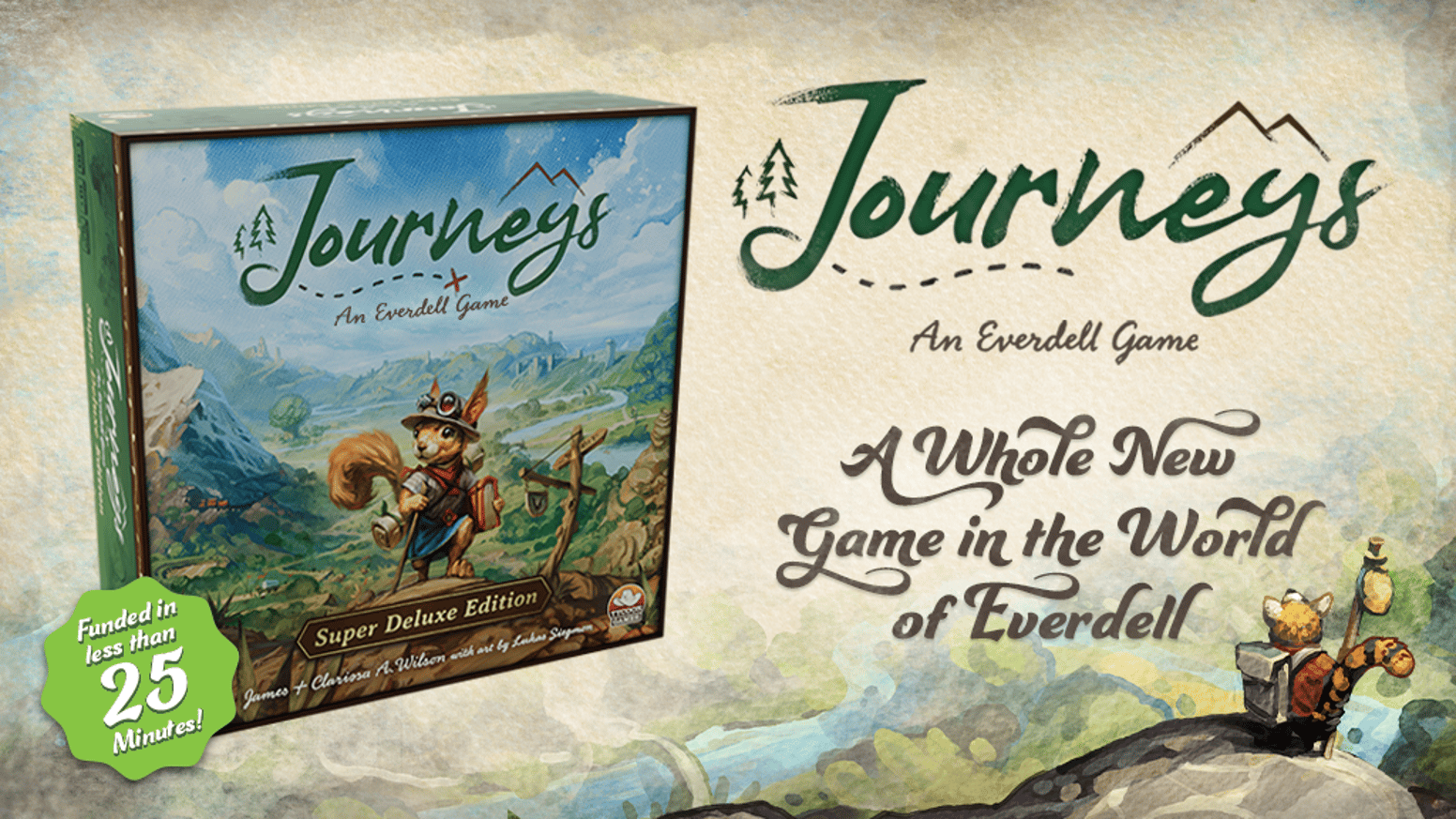
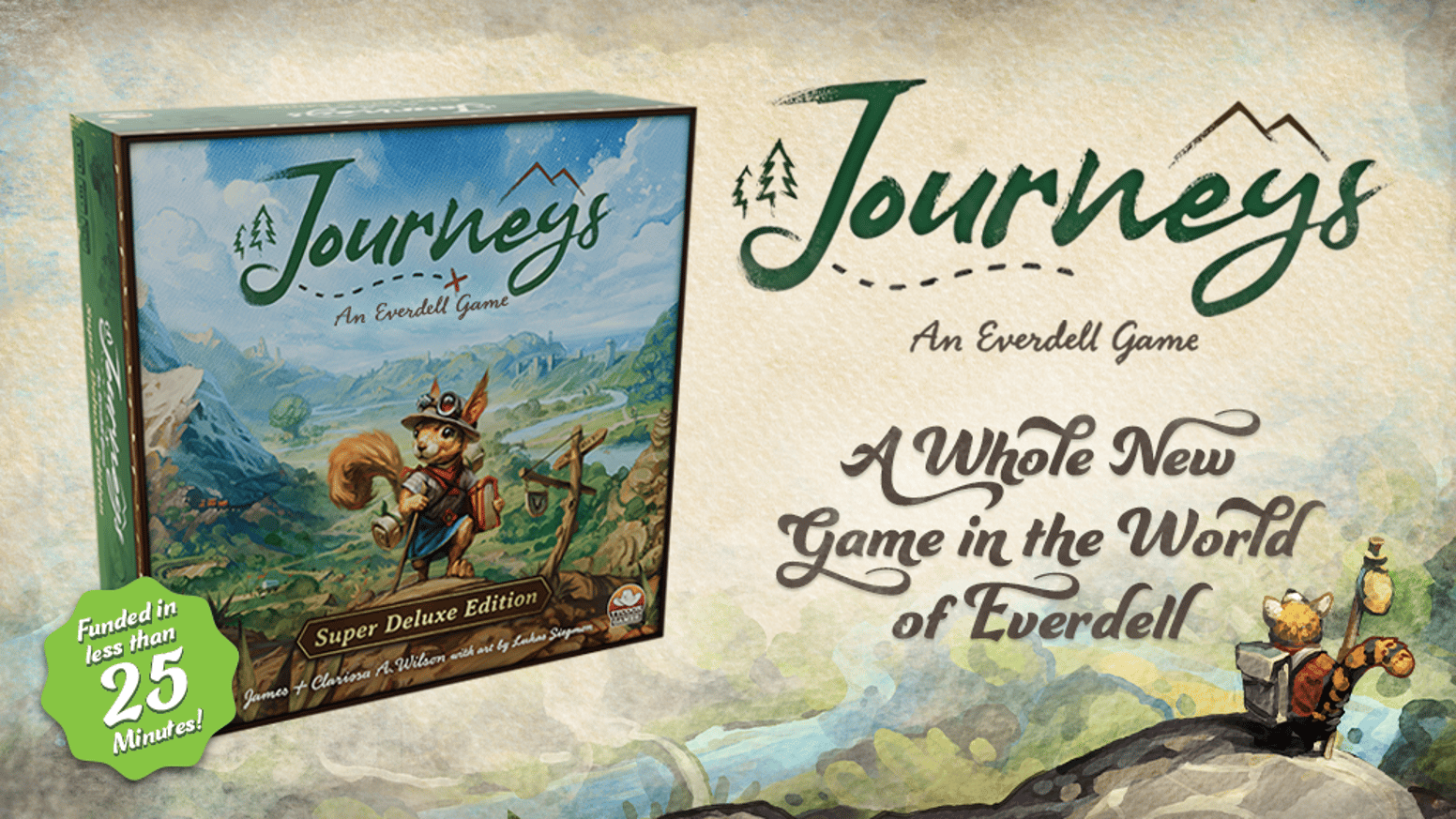
Everdell zählt seit dem Erscheinen 2018 bei Starling Games zu den bekanntesten und mehrfach ausgezeichneten Tableau-Bauspielen der Branche. Tycoon Games hat mit „Journeys: An Everdell Game“ nun einen Ableger mit eigener Mechanik am 8. September 2026 auf Kickstarter gestartet. Die Kampagne steht bei 609.738 US-Dollar von 35.000 US-Dollar Ziel, umgerechnet rund 1.742 Prozent, bei 4.924 Unterstützenden, Stand des Abrufs. Kickstarter führt das Projekt als „Staff Pick“.
Die Kampagne läuft noch bis zum 25. September 2026, 23 Uhr MESZ. Würfelreich hatte sie bereits kurz nach dem Start in der Crowdfunding-Wochenschau erwähnt. Die inzwischen erreichte Größenordnung rechtfertigt jetzt einen eigenen, ausführlicheren Artikel.
Was Journeys von Everdell unterscheidet
Statt Städte per Worker Placement aufzubauen, ziehen 2 bis 5 Spielende als reisende Tiere durch die Welt von Everdell und legen dabei einen eigenen Pfad aus Karten, und Card Drafting steht also im Zentrum. Aktivierte Karten liefern Ressourcen und Punkte für spätere Kombinationen, und ein persönliches Reisetagebuch hält besondere Ereignisse der Reise fest. Die Deluxe-Edition erweitert das Spiel auf 1 bis 10 Spielende und ergänzt Solo- sowie Kooperativ-Modi, die dem Grundspiel fehlen. Laut BGG dauert eine Partie 30 bis 60 Minuten, empfohlen ab 10 Jahren.
Ob sich der Kartenpool zwischen Partien unterscheidet und wie das Automa-System der Solo-Variante genau funktioniert, verrät das verfügbare Kampagnenmaterial nicht. Die meisten Pledge-Stufen enthalten zusätzlich „Gather: An Everdell Card Game“, ein eigenständiges Kartenlegespiel von 15 bis 20 Minuten im selben Universum.
Beim Design ist mit James A. Wilson der Schöpfer des Hauptspiels wieder dabei. Clarissa A. Wilson ist als Co-Designerin neu im Team. Die Illustration liegt komplett in neuen Händen bei Lukas Siegmon. Keiner der drei Illustratoren des Hauptspiels ist beteiligt.
Tycoon Games hat in der Vergangenheit bereits Lizenzen etablierter Titel wie Colt Express, Living Forest und Lewis & Clark übernommen und tritt damit erkennbar als Verlag für bestehende Marken auf, nicht nur als Erstverlag eigener Spiele. Im selben Everdell-Universum hat der Verlag zudem bereits eine eigene Kickstarter-Kampagne erfolgreich abgeschlossen: „Everdell Emerland“ erreichte im Dezember 2025 rund 3.421 Prozent des Ziels bei 7.980 Unterstützenden. Ob die Auslieferung pünktlich erfolgte oder inzwischen erfolgt ist, lässt sich daraus nicht ableiten. Dazu liegen keine belastbaren Angaben vor.
Pledge-Stufen und Auslieferung
Das Grundspiel „Journeys“ kostet 49 US-Dollar (umgerechnet rund 42 Euro, Kurs vom 17. September 2026), die Deluxe-Edition 75 US-Dollar (rund 65 Euro). Für 99 US-Dollar (rund 86 Euro) gibt es die Super-Deluxe-Stufe mit zwei exklusiven Miniaturen, für 159 US-Dollar die Stufe „Travel Guide“ mit zehn Neopren-Spielmatten für die ganze Tischrunde. Am oberen Ende steht „Globetrotter“ für 699 US-Dollar mit der kompletten Everdell-Sammlung inklusive der Erweiterungen Farshore, Silverfrost und Emerland. Die Auslieferung ist laut Kickstarter für August 2027 vorgesehen.
Das Hauptspiel Everdell erscheint in Deutschland regulär bei Pegasus Spiele. Für Everdell Journeys selbst nennt die Kampagnenseite bislang keine deutsche Version. Laut Kickstarter liefert Tycoon Games die Kampagne weltweit aus. Konkrete Versandkosten oder Zollhinweise für Deutschland nennt die Kampagnenseite aber nicht.
Welcome to this week’s batch of crowdfunding campaigns. We have a variety of offerings here, so we hope you will find something that catches your eye. Also, if you want to chat with the BGQ team, join our Discord Server where we talk about games, movies, sports, and other fun stuff. Check it out and […]
Der US-Verlag Maestro Media öffnet mit „Overture by Maestro Media“ seine Crowdfunding-, Produktions- und Vertriebsinfrastruktur für andere Verlage sowie Designerinnen und Designer. Den Auftakt macht eine neue nordamerikanische Ausgabe von Zoch Verlags Geistesblitz, international als „Ghost Blitz“ bekannt, die ab Januar 2027 erscheinen soll. Das berichtet das Fachportal BoardGameWire am 10. September 2026.
Overture bündelt laut Bericht Entwicklung und Lizenzierung, Produktion, eine Crowdfunding-Plattform sowie Direktvertrieb und Handelsdistribution unter einem Dach. Designerinnen und Designer können vom 1. bis 30. Januar 2027 eigene Tabletop-Spiele zur Begutachtung einreichen. Zu welchen Konditionen, etwa Gebühren oder Beteiligungen, das geschieht, nennt der Bericht nicht.
Geistesblitz stammt von Jacques Zeimet und erschien 2010 bei Zoch Verlag: Fünf Holzfiguren liegen auf dem Tisch, Karten zeigen falsch eingefärbte Objekte, wer zuerst das gesuchte Original oder die namentlich wie farblich einzig fehlende Kombination greift, sammelt die Karte. Das Reaktionsspiel ist für 2 bis 8 Spielende ab 8 Jahren ausgelegt und hat laut BoardGameWire über eine Million Exemplare in mehr als 20 Sprachen verkauft. Auf BoardGameGeek wird Maestro Media bereits als einer der bisherigen Verlage der Reihe geführt, die neue Ausgabe erscheint nun im Rahmen von Overture.
Weitere Partner und Hintergrund
Neben Geistesblitz nennt der Bericht zwei weitere Kooperationen: das Quizspiel „Half Truth: Second Guess“ von Richard Garfield und Ken Jennings mit Nighthawk Interactive sowie „The Lord of the Rings: Foes of Middle-Earth“ und ein „Justice League Unlimited“-Rollenspiel mit D20 Culture für den weltweiten Vertrieb. Maestro-Media-Gründer Javon Frazier beschreibt die größte Hürde der Branche so: „Das eigene Design vor einen Verlag zu bringen, die Entwicklung zu finanzieren, den Vertrieb zu erreichen und es ins Regal zu bekommen“ (übersetztes Zitat).
Bekannt wurde Maestro Media durch „The Binding of Isaac: Four Souls“, das 2018 zunächst mehr als 2,6 Millionen Dollar und mit der Erweiterung „Requiem“ weitere 6,7 Millionen Dollar auf Kickstarter einspielte.
In den vergangenen sieben Tagen (7. bis 14. September 2026) sind gleich mehrere neue Kampagnen gestartet, vier davon erreichen die Auswahlkriterien dieser Redaktion. Den Auftakt macht ein Ableger eines in Deutschland etablierten Eurogames, dazu kommen ein Katzenabenteuer, eine Endzeit-Erweiterung und ein Arena-Kartenspiel.
Everdell Journeys
Das US-Studio Tycoon Games hat Everdell Journeys am 8. September 2026 auf Kickstarter gestartet, Stand 14. September 2026 bei rund 1509 Prozent des Ziels von 35.000 US-Dollar (528.284 US-Dollar, 4.230 Unterstützende). Design stammt von James A. Wilson und Clarissa A. Wilson, den Schöpferinnen und Schöpfern von Everdell, die Illustrationen wieder von Lukas Siegmon.
Zwei bis fünf Spielende legen in diesem Ableger keine Städte mehr an, sondern ziehen als reisende Tiere durch die Welt von Everdell und legen dabei einen Pfad aus Karten. Wer eine Karte auf dem eigenen Pfad aktiviert, sammelt Ressourcen und Punkte für spätere Kombinationen, ein persönliches Reisetagebuch hält besondere Erinnerungen fest. Statt Worker Placement steht damit Card Drafting im Zentrum des Spiels. Eine Partie dauert laut BGG rund 60 Minuten, ausgelegt für zwei bis fünf Spielende ab 10 Jahren, ein Solo-Modus ist erst in der Deluxe-Ausgabe mit erweiterten Regeln enthalten.
Die Kampagne läuft noch bis zum 25. September 2026, der Versand ist laut Kampagnenseite für August 2027 vorgesehen. Das Hauptspiel Everdell erscheint in Deutschland regulär bei Pegasus Spiele, eine deutsche Ausgabe von Everdell Journeys selbst nennt die Kampagne bislang nicht.
Catvale
Das polnische Studio FUdice hat Catvale am 8. September 2026 auf Kickstarter gestartet, Stand 14. September 2026 bei rund 1298 Prozent des Ziels von 20.000 Euro (259.596 Euro, 1.961 Unterstützende). Design stammt von Lukasz Berdowski.
Zwei bis sechs Spielende steuern ehrgeizige Katzen durch ein von Runde zu Runde neu zusammengesetztes Kachel-Tableau, sammeln Ressourcen und lösen Quests, um Prestige und Luxusgüter für ihren eigenen Rückzugsort zu erobern. Würfel legen zu Rundenbeginn die Stärke der verfügbaren Aktionen fest, wählbare Spielstile reichen vom Kämpfer über die Bauherrin bis zur Abenteurerin. Eine Partie dauert laut BGG bis zu 180 Minuten, ausgelegt für zwei bis sechs Spielende.
Die Kampagne läuft noch bis zum 8. Oktober 2026, der Versand ist laut Kampagnenseite für Dezember 2027 vorgesehen. Aktuell gibt es das Spiel nur auf Englisch und Polnisch, weitere Sprachen schaltet der Verlag laut eigener Ankündigung erst frei, sobald für sie jeweils 200 Unterstützende zusammenkommen. Eine deutsche Fassung ist damit nicht ausgeschlossen, aber auch nicht zugesagt.
Barbaric: Crown of the Frost
Der Verlag Hexa House hat Barbaric: Crown of the Frost am 8. September 2026 auf Gamefound gestartet, Stand 14. September 2026 bei rund 711 Prozent des Ziels von 20.000 US-Dollar (142.141 US-Dollar). Die Erweiterung ergänzt das postapokalyptische Duell- und Erkundungsspiel Barbaric: After the Apocalypse, das von Thitinan N. entworfen wurde.
Neu ist unter anderem die Riderin Yrsa mit zwei wählbaren Entwicklungspfaden, dazu kommen weitere Kämpferinnen und Kämpfer samt ihrer Gear-Fahrzeuge für das titelgebende Winter-Setting. Im Kern bleibt das Spiel dabei, was es im Grundspiel war: Ein bis vier Spielende steuern mutierte Tierkrieger, kämpfen um Ressourcen und versuchen, den namensgebenden Energiekern im Zentrum des Spielfelds zu erobern, bevor die Bedrohung durch das Grundspiel selbst zu stark wird. Eine Partie dauert laut Kampagnenseite rund 60 Minuten, ausgelegt für ein bis vier Spielende ab 14 Jahren, ein Solo-Modus ist durch das Grundspiel gegeben.
Die Kampagne läuft noch bis zum 30. September 2026. Eine deutsche Lokalisierung nennt die Kampagnenseite nicht.
Trials of Maya
Das Studio Department of Lore aus Goa, Indien, hat Trials of Maya am 8. September 2026 auf Gamefound gestartet, Stand 14. September 2026 bei rund 400 Prozent des Ziels von 50.000 US-Dollar (199.874 US-Dollar). Entwickelt wurde das Spiel unter der Leitung von Zain Memon im Fantasy-Universum MAYA.
Ein bis vier Spielende steuern Champions mit individuellem Kartendeck durch Arena-Duelle, verwalten dabei ihre Energie und verketten Kartenkombinationen, um im richtigen Moment zuzuschlagen. Vor jeder Partie lässt sich das eigene Deck aus den Karten des gewählten Champions neu zusammenstellen, fünf verschiedene Spielmodi mit eigenen Arenen und Regeln stehen zur Auswahl. Eine Partie dauert laut BGG bis zu 120 Minuten, ausgelegt für ein bis vier Spielende ab 14 Jahren. Das Basisspiel selbst bietet zwei kompetitive Modi, ein Solo- und Koop-Modus namens „Depths of Kaav“ ist als separates Zusatzmodul für 30 US-Dollar erhältlich, nicht Teil des Basisspiels.
Die Kampagne läuft noch bis zum 13. Oktober 2026. Eine deutsche Lokalisierung nennt die Kampagne nicht.
Korrektur vom 17.09.2026: Im Abschnitt zu Everdell Journeys hieß es zunächst, das Hauptspiel Everdell erscheine in Deutschland bei Frosted Games. Richtig ist: Der deutsche Verlag ist Pegasus Spiele.
CMON has warned that its core business is suffering a “prolonged structural downturn” and is still consuming more cash than it generates, despite a drastic restructuring which has seen the board game crowdfunding major halve its workforce, sell off some of its biggest game IPs and halt new crowdfunding campaigns.
Those efforts have now dramatically reduced its losses, CMON’s newly-released H1 financial report shows – with the company reporting a loss of just over $2m for the first half of this year, compared to almost $7m for the same period in 2025.
CMON’s revenue also rose more than 7% year-on-year in H1, up to $3.68m from $3.43m in the first six months of 2025, while its selling and distribution expenses more than halved from $1.83m to $859,000, and its general and administrative expenses fell from $4.37m to $2.37m.
But that improvement has failed to make the underlying business self-sustaining. CMON’s cash reserves, which stood at $3.9m at the end of 2022, had fallen to $2.1m by the end of 2024, and slipped again to just over $900,000 by June 2025.
CMON revealed last month that it had about $368,000 in bank and cash balances as of August 4, which it described as enough to cover less than a month of its daily operating expenses.
Crowdfunding Commitments
Despite the sharp reduction in its losses, CMON’s balance sheet remained under pressure at the end of June – with $7.34m more in short-term liabilities than short-term assets, up from $6.89m at the end of 2025.
A significant part of CMON’s liabilities relates to eight crowdfunded games whose campaigns raised $14m from backers, but which the company has yet to deliver.
CMON has not completed fulfillment of a crowdfunding project since Zombicide: White Death in mid-2025, but has managed to deliver pre-orders for Cthulhu: Dark Providence, Marvel United: Witching Hour and Dune: Desert War in the first half of this year.
CMON said in its H1 report that the liabilities position had caused the company’s directors to give “careful consideration to the future liquidity and performance of the group and its available sources of financing in assessing whether the group will have sufficient financial resources to continue as a going concern”.
Those directors believe CMON will be able to continue operating – but central to that assessment is a major share sale designed to raise up to HK$150.5m – about $19m.
CMON first announced the rights issue fundraise in June, proposing to offer existing shareholders the opportunity to buy three new shares for every share they already owned in an attempt to raise the capital.
That leaves CMON looking to raise more than $17.5m from other investors through the rights issue – a figure approaching 2.5-times the valuation of the entire company implied by its last share sale in February this year.
CMON said it plans to use 40% of the money raised to fund its day-to-day operations for roughly the next year, including staff costs, royalties, shipping and distribution, professional fees and other administrative and operating expenses.
Another 20% is earmarked for repaying debts and other outstanding liabilities, including $2.46m owed to a CMON director and $385,000 of unsecured advances from employees, as well as outstanding production, shipping, royalty and other operating costs.
CMON has earmarked 25% for expansion in existing and new markets, including strengthening the company’s presence in Europe through marketing and potential attendance at events including Spiel Essen and Cannes, as well as targeting growth in Japan and the Philippines.
Digital Ambitions
The company added that it plans to put 15% of the new capital towards potential acquisitions as part of a push into digital gaming, although said it had not yet identified any targets.
CMON said it intends to look for between one and three businesses, primarily in Asia-Pacific, valued at between about $1.3m and $2.5m each, which could help it develop digital adaptations of its existing games, companion apps and other digitally-enabled features.
The publisher stressed that it intends to retain physical tabletop games as its core business, with the digital push designed to complement rather than replace them.
That plan had included transitioning the company’s titles such as Massive Darkness and Super Fantasy Brawl Reborn into “high-quality digital assets” – with CMON saying the group would “continue to supplement this digital transformation as physical games would still offer a ‘screen break’ for individuals as well as foster direct face to face interaction”.
The proposed investment would have valued Blissful Link at more than $95m. Blissful Link made a loss of about $197,000 in 2024, on revenues of just over $408,000, and had net liabilities of about $889,000, according to unaudited figures provided by CMON in April. It did not include finances for 2025.
CMON said in the rights issue offer, “Under prevailing high-interest lending conditions, traditional bank borrowings and debt financing carry heavy interest and securing such financing would severely strain the group’s remaining liquidity.
“Accordingly, equity financing via the rights Issue is the most viable strategic path to recapitalize the group’s capital base without increasing debt distress.”
The directors’ assessment that CMON can remain a going concern also takes into account continued financial support from some of its directors, progress fulfilling its outstanding contract liabilities and further restructuring aimed at reducing cash outflows.
Revenue Collapse
CMON’s latest figures also reveal the scale of the collapse in its North American and European revenues over the past five years, transforming the geographical make-up of what remains of its business.
North America alone generated more than $8.6m for CMON in the first half of 2021, making up 57% of its roughly $15.1m H1 revenue. By the first half of this year, however, revenue from North and South America combined had fallen to just $642,000.
Europe has undergone a similarly dramatic contraction, with revenue from the region falling from about $4.5m in the first half of 2021 to just $982,000 in the latest six-month period.
Asia has consequently become CMON’s largest market by a considerable margin, generating more than $2m in the first half of this year and accounting for about 55% of its total revenue, compared with less than 10% in the same period of 2021.
That reversal has not been driven by Asian growth, however. CMON generated $3.22m from Asia in the first half of 2022, marking a roughly 37% decline since – but a far more resilient performance than the steep falls recorded in North America and Europe over the same period.
The publisher said in its H1 2026 report, “The group intends to continue developing its distribution and market presence in Asia while supporting its established markets in Europe.
“The group will also continue to monitor trade and tariff conditions affecting the US market, and maintain a prudent approach to allocate resources to markets and projects.”
CMON said in March this year that it intended to resume crowdfunding in the second half of 2026, but its latest interim results stop short of repeating that commitment, saying instead that new titles will be developed and launched selectively depending on market conditions, available financial resources and project readiness.
The final result of the rights issue is due to be announced on September 15.
“Nobody, and I mean NOBODY, trusts two random dentists to make a fantastic board game.”
That was the problem facing Nick Murray and Kyle Spackman, two friends who fell down the board game rabbit hole while at dental school together, when they decided to launch publisher Bitewing Games in 2020.
Bitewing’s efforts to reach out to designers ultimately provided what might have seemed an ambitious solution to that credibility problem: work with one of the biggest names in board games, prolific German designer Reiner Knizia.
Knizia and his team presented the fledgling publisher with seven prototypes to choose from, three of which became its first publishing project: the Criminal Capers Collection.
It proved the start of a defining relationship. Bitewing has since published 16 Knizia games across more than five years, building a particular reputation for digging through the legendary German designer’s enormous back catalogue for overlooked titles it believes can be successfully reworked for today’s market.
Those successes have included Zoo Vadis, Cascadero, Cascadito, Iliad, Ichor, Silos, Ego and Orbit – with Bitewing’s campaigns featuring Knizia titles among games from other designers having raised more than $2.2m between them.
But after a run of six Knizia releases last year, Murray believes Bitewing has now found “most, if not all” of the hidden gems that suit the company’s catalogue – and is increasingly looking towards video games as another route to finding potentially long-lasting hits.
Bitewing Games co-founder Nick Murray
He told BoardGameWire, “There was a period of time where Bitewing was finding some phenomenal hidden gems in Knizia’s catalogue and inspiration struck for how to evolve them, and we were fortunate that Reiner was up for revisiting them with our development goals in mind. That all culminated in a truly wild run of 2024 and 2025 Knizia releases… an explosion that I don’t expect we’ll ever see again.
“Of course we are still finding a few here and there like Gold Country, Eureka, and Escar-GO, but after playing over 200 different Knizia games (and researching hundreds more) I’ve increasingly felt that we’ve found most (if not all) of the hidden gems that are a great fit for Bitewing.
“The other thing worth noting about re-implementing older games is that you are immediately fighting an uphill battle. You see it from gamers, critics, localization partners, and retailers, especially those who have been in the industry for enough years – if a game is perceived as “old”, even it is entirely new to them and dramatically updated, they lose interest.
“Even when we go to great lengths to show how the original designer has improved the gameplay and the art team has enhanced the presentation, helping a game evolve into something even more special and exciting (at least in my opinion), it’s sometimes not enough for certain folks.
“Entirely new games have a huge psychological advantage over reprints, rethemes, and reimplementations – unless that old game is considered a major classic like Ra or Cyclades.”
The publisher is now pushing further into video games with adaptations of two established indie releases – most notably acclaimed 2019 puzzle game Baba Is You, which picked up a string of major industry awards on its release and has sold hundreds of thousands of copies through digital PC distribution platform Steam alone.
Launching alongside it is Party House, one of the breakout games from highly regarded 2024 retro videogame collection UFO 50. Its creator Jon Perry is also designing Bitewing’s tabletop adaptation, adding to a board game CV that already includes Air, Land & Sea, Spots and multipleaward–winning 2025 release Hot Streak – Murray’s favourite board game of last year.
The shift forms part of a significant new phase for Bitewing, which also saw Murray step away from dentistry this year to work on the publisher full-time – making the commercial success and longevity of the games it chooses increasingly important.
Murray told BoardGameWire, “The most deliberate change we are making is shifting our focus from many small passion projects to more carefully selected heavy hitters. Especially now that I’ve stepped away from dentistry this year to go full-time on Bitewing, I want to make games that have the best potential to last more than one or two print runs.
“My family’s livelihood depends on me making smart decisions with the projects we take on. So we’re not only trying to reach new audiences (like the solo gaming community with our Table For One Series, Rolling Deep and Eureka), but we’re also trying to find and create the very best experiences in each genre.”
Murray told BoardGameWire that despite his long interest in video games – he says he has owned every major Nintendo console and handheld since the NES was released in the mid-1980s – making board game adaptations of digital titles “wasn’t really something we were actively seeking”.
He said, “Obtaining licensing rights for established IPs is a rather intimidating challenge. Plus that’s only half the battle – having a great IP to slap onto a game box doesn’t automatically make it a great board game. But we were lucky enough to have a huge opportunity land in our laps, and we’ve fully embraced it.
“The two projects that have really blown the doors open for us have been Rolling Deep and Baba Is You: The Board Game, which are both designed by Peter C Hayward. So if anyone deserves the credit for being a catalyst to Bitewing’s strategic evolution, it’s Peter.
“As a huge fan of Balatro and Baba Is You, and a very capable board game designer, Peter set out to pay homage to Balatro with a dice-crafting roguelike adventure and adapt Baba Is You to a 2-player strategy game, in collaboration with the developer of Baba Is You. When Peter pitched these designs to us, I was hooked. I’m already a huge fan of Balatro and Baba Is You, so those were an easy sell for me.
“With Rolling Deep, I realized that this was also a perfect opportunity to use a watercolor rubber hose animation style for the game – reinvigorated by Cuphead, which I’m also a huge fan of. So the first artist I reached out to was Caitlin Russell [the background artist of Cuphead], and we were extremely fortunate to have her join the project.
“From my perspective, we’re simply doing what we’ve always done… which is pouring all of our passion and excitement as fans of these types of games into the biggest opportunities we can find.
“Of course, despite Reiner Knizia being perhaps the world’s biggest board game designer, even he is eclipsed by so much of the video game industry. So I’m not blind to the fact that titles like Rolling Deep, Baba Is You, and Party House have a much bigger reach straight from day one.
“The longer I’m in the board games industry, the more I realize just how important it is to stand out. With over 5,000 new games releasing each year, it’s no wonder that so many great games are easily overlooked or quickly forgotten.
“While many publishers like Bitewing are fortunate to be sustained by an amazing fanbase, we’re all hunting for that next huge hit. Having one or more ‘evergreen’ titles in your catalogue allows for so much more security and growth.”
Finding Hits
Murray added that Rolling Deep’s success especially had affected how he thinks about selecting future releases.
He told BoardGameWire, “Rolling Deep has proven to me that for designers and publishers, you are much better off starting with something that is popular or widely loved and building a game or product on that.
“That doesn’t necessarily mean that it has to be an established IP or a direct homage to a specific game (like Balatro). Many huge hits have taken one or more popular ingredients and presented them in a thrilling new way: Dune Imperium combines deck building with worker placement (two very popular mechanisms). Magical Athlete takes wacky player asymmetry (another popular board game mechanism) and maximizes it in a highly approachable racing game. Wingspan takes bird watching (an immensely popular hobby) and turns it into the ultimate game for bird fans.
“In the case of Rolling Deep, the concept was ridiculously easy to get folks excited about with just one sentence: A Balatro-style roguelike solo adventure featuring dice crafting and artwork inspired by Cuphead.
“To me, Rolling Deep and other hits like the ones mentioned above have become the gold standard for how marketable we want all of our games to be.”
He told BoardGameWire at the end of August that pre-launch follower numbers were tracking alongside Rolling Deep, while trailers for the two games had generated unusually high viewing figures.
The Baba Is You board game trailer alone has generated more than 240,000 combined views across Bitewing Games’ and Baba Is You video game creator Hempuli’s YouTube channels – far more than any of the publisher’s previous game trailers or videos.
That contrasts with Murray’s experience of the games’ reveal at Gen Con, where he said few of the board game media attending had played either original video game.
He told BoardGameWire, “My expectation is that we’ll see a huge percentage of our backers for this project be from the video game community rather than the board game community. And I’ll be thrilled if our adaptations help any of those people fall in love with board games.
“I firmly believe that board games are for everyone! Anyone who says otherwise just hasn’t found the right game for them (yet).”
But Murray added that attracting an audience from outside the traditional board game market also puts greater importance on getting the adaptations themselves right – preserving what people like about the original games without attempting to reproduce them wholesale on the tabletop.
He said, “I think a lot of adaptations make the mistake of trying to perfectly simulate or mimic the experience of the IP they are based on.
“Instead of embracing the strengths and mitigating the weaknesses of our tabletop medium, they try to cram a square peg into a round hole. Or they take the opposite approach and merely slap a popular brand on a board or card game without much meaningful connection between the two.
“With anything IP related, my goal is to wow both the fans and the creators of that IP. The adaptation should preserve the spirit of that IP, but it should also fully embrace and respect its form as a tabletop game.
“And it should stand on its own as an incredible board game experience, even for people who have zero familiarity with the IP.”
Murray added that he hopes Baba Is You, Party House, and Rolling Deep are enough to “get the ball rolling” for other video game adaptations.
The push into videogames does not mean Bitewing is moving away from Knizia, however, with Murray saying its long partnership with the designer “will continue” – adding that the company’s wider slate is also expanding through work with designers including David Thompson, Trevor Benjamin, Brett J. Gilbert, Kasper Lapp and Perry.
Murray said, “Folks will always regard Bitewing and Knizia as close partners, and we’re proud of it! But I’m always seeking opportunities to work with my favorite creators.”

 Anmelden


 Welcome to this week’s batch of crowdfunding campaigns. We have a variety of offerings here, so we hope you will find something that catches your eye. Also, if you want to chat with the BGQ team, join our Discord Server where we talk about games, movies, sports, and other fun stuff. Check it out and […]