Normale Ansicht

Published — 16. Juli 2026 https://boardgamewire.com/

Valor Mountain challenges hobby game publishing’s “safe bet” mentality as it ramps up ambitions

16. Juli 2026 um 18:36

After years spent engaging with publishers and designers – both at Capstone Games and through his Board Again Gaming podcast – Christopher High believes the several thousand new board games and expansions released each year are pushing publishers towards commercially safer bets. Now he’s wagering his company Valor Mountain Games can succeed by taking chances on the kinds of titles other publishers are passing over.

High, who spent the past two years as a product manager at Ark Nova and Gaia Project publisher Capstone, co-created Valor Mountain in 2023 alongside Tim Densham as an offshoot of the latter’s historical games-focused publisher Catastrophe Games.

He became sole owner of Valor Mountain in May after buying out Densham’s share of the business – and now plans to expand the company from creating small side projects into a business targeting five or six traditional print-run releases a year.

High told BoardGameWire he is “putting his own money on the line” betting on a strategy built around taking chances on games other companies might reject – saying he believes the hobby industry has become increasingly focused on commercially safe decisions, leaving opportunities to back more unusual designs and under-represented creators.

Christopher High and Tim Densham from Catastrophe Games

He said, “Generally publishers make safe decisions. And that’s their job. As far as breaking the mold, I rarely see a game anymore that truly ‘wows’ me in this sense.

“It happens, it just seems like our industry defaults a lot to what they think will sell a game rather than being willing to take a risk”, adding that he highly rates the kinds of designs currently being put out by publishers such as DVC, Hollandspiele and CMYK.

He added, “There are tons of games that get passed over in traditional publishing because they aren’t safe bets. I want to be a smart business person, but I also want to take some risks on designs and designers that are doing interesting things.

“There are literally thousands of products that come out each year which are just iterations of previous designers, maybe smashed together in a new way. It would be fantastic to give some games a chance at a larger audience which would be too risky for other publishers.

“I also want to give voice to more artists and designers who may be from overlooked or under-represented communities. As to genres, I would love to see a truly branching narrative euro game that isn’t afraid to let you push the limits of what’s acceptable in that genre.”

Asked whether his comments about ignoring what other publishers are doing reflected increasing “trend chasing” within hobby games, he replied “Yes”, adding “I have to do my own [thing].

“….What I do need is community and art. I want these things and my values to drive what we do as a company, not the market. The market is and will always be fickle.”

High’s new strategy has seen Valor Mountain seal a partnership with Pink Troubadour Games, which will see it bring several of the European publisher’s titles to the North American market – including Pilgrims: Curious Adventures, Movie Fight, Loony Clues and Dirt & Glory.

High’s previous employer Capstone partnered with Pink Troubadour while he was with the US company, to bring SETI creator Tomáš Holek’s design Galileo Galilei to North America.

High told BoardGameWire, “I had a good working relationship with the Pink Troubadour team when I worked for Capstone. However, I reached out after I was done working at Capstone to see if there were new ways I could work with them. 

“I am planning on taking steps to foster our relationship as I see their trust as essential, since in some ways we are a new company to the market.”

High added, “It’s exciting, and it came about because I reached out to them since I saw that these games were not available in the North American English market.  They are a wonderful team to work with, and it is my hope to do more games in the future with them as our capacity increases.”

High seems especially enthusiastic about bringing family-weight competitive movement puzzle game Pilgrims: Curious Adventures to North America, saying, “I played the video game it is based on and it is super quirky. The board game, like the video game, is very straightforward.

“If I had to describe it in one word: chill. I think it is that perfect type of game for those who want to explore board games without diving in too deep, it feels like you are doing something without being overwhelmed.

“It’s one of those bridge games between gamers and non-gamers and has delightful artwork from Amanita Design.”

Valor Mountain has also dipped its toes into crowdfunding again, following campaigns for a trio of small-box titles in 2023 and roll and write game Birdsong in August last year – all of which raised between about $1,300 and $3,000.

The new campaign features a trio of trick-taking titlesSupercollider, Growing Groves and The Franciscan Diamond, the latter of which High said was a great example of the kind of Valor Mountain release other publishers might not take a chance on.

He said, “Trick-taking games are probably past the zenith of recent popularity, plus this game has a super obscure scoring system. It’s by an unknown designer, but it is really clever.

“I love it. Will anyone else? Maybe? I think it’s going to be a divisive game though.”

He added, “I hope to eventually move away from crowdfunding. There are lots of reasons I don’t like it. However, with all of the capital outlay I have right now, I need just a little more to ensure I can do everything I want to do this fall.

“My project goal on there is a true goal, it helps ensure the proper operational flow of putting these games out.”

High also credited years of conversations with designers and publishers through the Board Again Gaming podcast with shaping his approach to publishing, and helping “keep my curiosity alive”. 

He said, “I love talking to and hearing from designers. It reminds me how little I know and how much there is to learn.

“The world is a big place and people have so much creativity. I want to help bring more of that to a wider audience.”

For High, that curiosity may ultimately be Valor Mountain’s defining characteristic. Whether betting on unusual designs proves commercially successful remains, by his own admission, an open question.

Asked whether a publisher can succeed by deliberately pursuing games larger companies pass over, High said: “I don’t know. I guess I will find out as I put my own money on the line.”

Valor Mountain’s latest Kickstarter campaign runs until August 10.

The post Valor Mountain challenges hobby game publishing’s “safe bet” mentality as it ramps up ambitions first appeared on .


Published — 15. Juli 2026 https://boardgamewire.com/

How competitive TCG accessories are influencing hobby retail strategy in Europe: Sanseking [Sponsored]

15. Juli 2026 um 17:30

As trading card games continue to drive growth across the tabletop industry, hobby retailers are increasingly looking beyond games themselves to the accessories that support organised play and competitive communities. In this sponsored article, TCG and board game accessories maker Sanseking explains how changing player behaviour is influencing retailers’ approach to inventory, merchandising and long-term store strategy, and why competitive accessories are becoming a more important part of the European hobby market.

A growing crossover between board gaming and trading card games is beginning to reshape hobby retail strategy across Europe according to TCG, board game, and collectible accessories maker Sanseking, with competitive accessories emerging as an increasingly important category for stores.

What was once a relatively clear divide between casual board game retail and competitive TCG communities has evolved into a far more interconnected ecosystem, the company says, where stores are expected to serve multiple types of players simultaneously.

Sanseking production manager Ding Guang

That shift is particularly visible in the accessories market according to Sanseking production manager Ding Guang, who says retailers are increasingly treating competitive sleeves and protective products as core components of long-term business planning rather than simple add-on purchases.

“Accessories used to be viewed mainly as supplementary sales,” Guang told BoardGameWire. “But competitive communities create repeat purchasing behaviour that changes how retailers think about stability, inventory, and customer retention.”

Hobby retailers now commonly operate within a mixed environment that includes casual board gamers, organised play communities built around titles such as Magic: The Gathering, Pokémon and Yu-Gi-Oh!, and players who actively move between both spaces.

That convergence has become especially visible at events such as Spiel Essen, where accessory brands increasingly exhibit alongside publishers and competitive card players mix naturally with broader tabletop audiences.

But for retailers, the two customer groups behave very differently.

Board games typically generate one-off purchases tied to seasonal launches or major releases, while competitive TCGs create recurring engagement cycles through tournaments, deck rebuilding, league play and shifting formats – and those cycles also generate consistent accessory demand.

Competitive players replace sleeves far more frequently than casual players, Sanseking points out, adding that frequent shuffling, tournament preparation, the need for consistency and sensitivity to tactile feedback all contribute to repeat purchases.

That rise in accessory demand has also been driven by the stellar growth of TCGs more generally, with long-time heavyweights such as Pokemon, Magic: The Gathering and Yu-Gi-Oh! joined more recently by a flurry of other successful entrants to the market, including One Piece, Disney Lorcana and Star Wars Unlimited.

That demand pushed the overall value of the global TCG market to $7.8bn last year according to veteran research firm BCC, which projects the segment will reach $11.8bn by 2030 with a CAGR of 7.9%.

In many European hobby stores, tournament nights now represent some of the most reliable recurring foot traffic. Players attending weekly organised play events increasingly view accessories not as optional extras, but as part of their competitive equipment.

According to Guang, that recurring demand can help retailers smooth revenue fluctuations during slower periods in the board game release calendar. But at the same time, competitive players also tend to be far more selective.

“They pay attention to things casual players may never think about,” Guang said. “Edge structure, shuffle consistency, durability over repeated use, and manufacturing consistency between batches all matter.”

The Growing Importance of Segmentation

That growing attention to performance characteristics is also pushing retailers to rethink how accessories are presented in-store, according to Sanseking.

Historically, sleeves were often treated as largely interchangeable products differentiated mainly by colour or price point.

But as organised play communities mature, stores are increasingly recognising that accessories serve multiple functional segments, ranging from casual ‘kitchen table’ play, to hobby-level regular play and competitive or sanctioned environments.

Retailers that fail to distinguish between those categories can create unnecessary friction, Sanseking says.

The company points out that a product optimized for softness and casual handling may not satisfy a competitive player seeking predictable shuffle feedback. Conversely, a structure-focused sleeve may feel unnecessarily rigid or specialized for a board gamer.

As a result, some retailers are beginning to adopt more structured merchandising approaches, using clearer pricing tiers, competitive-focused shelving, and staff recommendations tailored to different player types.

“The stores performing well are usually the ones creating clarity,” Guang said. “Not necessarily carrying the most SKUs, but helping customers understand which products fit which type of play.”

Risk, Inventory, and Shelf Strategy

From a commercial perspective, competitive accessories also offer several advantages compared to boxed games, including lower unit cost, a smaller shelf footprint, faster turnover when tied to active communities and strong repeat purchase potential.

Retailers can still perceive the category as niche, however – particularly when shelf space is limited. According to Sanseking, the most effective approach is usually a balanced one – not one that offers endless fragmentation, but a core range which covers general use, alongside clearly identified competitive-focused options for players who care about performance.

The importance of organised play also continues to shape purchasing behaviour, with competitive events a significant driver of repeat store visits, even amid wider economic pressure on hobby spending.

Within those communities, accessory choices increasingly function as part of player identity.

“Players often become loyal to specific performance characteristics rather than just aesthetics,” Guang said. “That creates opportunities for retailers to position themselves as serious competitive venues.”

Some stores are already leaning into that approach by highlighting ‘competitive-ready’ accessory sections, aligning certain products with tournament nights, and using more technical product descriptions instead of purely visual merchandising.

The growing overlap between board game audiences and competitive TCG players is also accelerating the trend, according to Sanseking’s experience of the market.

The firm said that many customers who first enter hobby stores through board games gradually become exposed to organised play environments, while competitive card players often purchase board games for more social settings.

Accessories sit directly at the centre of that crossover, with protective products one of the few categories that naturally serve both audiences while still supporting different performance tiers, it added.

For retailers, that makes accessory strategy not just an operational decision, but a bridge between communities, Sanseking says.

As Europe’s tabletop market continues to evolve, Guang believes accessories will become more strategically significant across the retail landscape.

“Players are becoming more informed about performance trade-offs, and retailers are having to serve more diverse communities across the same limited shelf space,” he said. “Clear segmentation and clear communication are becoming much more valuable.”

For brands, that means designing products with defined use cases rather than relying on broad universal claims. And for retailers, Guang argues, success may depend less on scale than structure.

“In a market where casual and competitive audiences increasingly overlap, clarity is often more important than simply offering more products.”

Anyone interested in working with Sanseking can visit their website for more details about what they offer, and contact them here.

The post How competitive TCG accessories are influencing hobby retail strategy in Europe: Sanseking [Sponsored] first appeared on .

GAMA seeks hobby shops setting the standard for design, innovation in 2027 Power Retail Awards

15. Juli 2026 um 13:56

Tabletop gaming trade organisation GAMA has opened nominations for its 2027 Power Retail Awards, inviting gamers and industry professionals from around the world to spotlight stores and cafés they believe represent the industry’s best.

The annual awards, which have now been running for 17 years, aim to act as a showcase and celebration of business practices, community-building and operational innovations that other hobby retailers can learn from.

More than 750 retailers were submitted for inclusion in last year’s awards, with nominations coming from Friendly Local Game Store (FLGS) customers before being voted on by a GAMA committee of retailers and emeritus ‘team retail’ members.

The awards cover four categories: Retailer of the Year, Innovation in Games (Retail), Outstanding Contribution to Games Industry (Retail) and Outstanding Store Design, with winners of each receiving a one year GAMA membership, recognition in its online database and in the Spring issue of its Around the Table magazine.

That prize was reduced by GAMA last year, with retailer of the year having also previously receiving $1,000 and the other category winners $500 each.

Any tabletop retail business can be nominated regardless of country or GAMA membership status, although US-based businesses have heavily dominated the awards since they were launched in 2010, picking up 50 out of the 63 wins to date.

That total does not include the 2021 Retailer of the Year award, which was presented to every GAMA retailer member at the time to recognise and celebrate them having survived the impact of the Covid-19 pandemic.

Arizona-based Silver Dragon Games scooped Retailer of the Year in the 2026 awards, adding to the Innovation In Games (Retail) and Outstanding Store Design titles it won at the same awards in 2024.

They were joined this year by Illinois-based Fantasy Books and Games, which won the Innovation in Games (Retail) award, Minnesota’s The Gamers Den, which sealed Outstanding Contribution to the Games Industry (Retail), and Wisconsin-based Oddwillow’s Game Haven, which won Outstanding Store Design.

Team Members from Oddwillow’s Game Haven, the winner of this years’ Outstanding Store Design Power Retail Award || Photo Credit: GAMA

UK retailer Eclectic Games remains the only non-US winner in the past two award cycles, having scooped Outstanding Contribution to the Games Industry in 2025, while Mexico City-based La Piramide is the only store from outside of the US, Canada or the UK to win an award, which it claimed during the inaugural contest in 2010.

Nominations are open to stores that have been operating for at least one full year, while previous winners cannot win the same category twice.

Anyone interested in nominating an outstanding hobby retailer can do so here.

The post GAMA seeks hobby shops setting the standard for design, innovation in 2027 Power Retail Awards first appeared on .

Published — 14. Juli 2026 https://boardgamewire.com/

Academic conference puts board game sustainability, environmental theming and more under the microscope

14. Juli 2026 um 15:51

An academic conference exploring everything from publishers’ environmental claims and sustainable manufacturing to Pokémon card investing and onboarding new players is set to kick off tomorrow, as researchers examine the many interpretations of this year’s theme ‘Green’.

The free online Generation Analog 2026 event has been organised by Analog Game Studies, a quarterly journal dedicated to studying games with a substantial analogue component, and Game in Lab, an academic research grant programme co-created by Asmodee in 2018.

While many of this year’s presentations explore environmental issues, the conference’s broad ‘Green’ theme also encompasses topics including newcomer experiences, representation, identity, game history and design philosophy.

All of the talks are set to be recorded and made publicly available after the event, which takes place on July 15 and 16.

Example sessions include Plastic Dystopia: Ideas towards More Sustainable Miniaturing Practices, which aims to propose new ways of minimising the ecological footprint of the hobby, and How Green Is Green Play? Gamewashing in Analog Board Games, examines what the researchers describe as “gamewashing” – where environmental themes or sustainability messaging may not be reflected by a game’s actual mechanisms or player experience.

Several sessions examine how environmental themes are represented in commercial games, while Daybreak co-designer Matteo Menapace will be providing a keynote speech discussing the Kennerspiel des Jahres-winning title and how its realistic and utopian theme can be an antidote to capitalist realism.

Elsewhere, researchers from the University of York analyse five published climate change board games, arguing that many reinforce solutions rooted in existing economic assumptions rather than encouraging players to foster deeper engagement with the colonial and capitalist roots of the climate crisis, while another presentation explores how the relations between humans and animals are depicted in Uwe Rosenberg’s design Atiwa.

The full schedule for the conference is available here, and anyone interested in registering to view the panels and keynotes can do so here.

The post Academic conference puts board game sustainability, environmental theming and more under the microscope first appeared on .

Published — 13. Juli 2026 https://boardgamewire.com/

JinxO wins 2026 Spiel des Jahres, Rebirth secures historic triple for Reiner Knizia

13. Juli 2026 um 16:11

Word association party game JinxO has been crowned the winner of this year’s hugely influential Spiel des Jahres award, on a night which also saw legendary game designer Reiner Knizia make history with his Kennerspiel award win.

Martin Ang’s design won over the judges ahead of Corey Konieczka’s Cozy Stickerville and Markus Slawitscheck’s Morty Sorty Magic Shop, becoming only the fourth word-focused game to win the 47-year-old prize after Barbarossa, Codenames and Just One.

JinxO’s win brings an end to a three-year run of cooperative games taking home the Spiel des Jahres prize, in the shape of Dorfromantik: The Board Game, Sky Team and Bomb Busters.

Indonesia-based Ang’s victory underscored the growing internationality of the venerable German award, which until last year’s triumph by Hisashi Hayashi’s Bomb Busters had never been won by an Asian designer.

The 2026 ceremony also delivered a historic first for veteran designer Reiner Knizia, whose tile-laying title Rebirth claimed the higher complexity Kennerspiel des Jahres prize.

JinxO designer Martin Ang with his Spiel des Jahres award || Photo Credit: Spiel des Jahres

That win made Knizia the first designer in history to complete the full set of Spiel des Jahres, Kinderspiel des Jahres and Kennerspiel des Jahres wins, having previously picked up awards for Keltis and the children-focused Whoowasit? in 2008.

Morty Sorty Magic Shop designer Markus Slawitscheck narrowly missed matching that feat this year after finishing runner up to JinxO, following his 2023 Kennerspiel victory with Challengers! and 2024 Kinderspiel win for Magic Keys.

Rebirth contended with Michael Palm and Lukas Zach design Boss Fighters QR and Donald X Vaccarino’s Moon Colony Bloodbath in the final for this year’s Kennerspiel.

The children-focused Kinderspiel award this year was won by Florian Sirieix’s Mooki Island, ahead of his co-design with Benoit Turpin, Boo Party, and Verflixt Verzaubert, a localisation of Thomas Dagenais-Lespérance’s Mimose & Sam et le Voleur de Fruits.

Winning the Spiel des Jahres can transform the fortunes of games, designers and publishers alike, with Pegasus Spiele co-founder Karsten Esser previously telling BoardGameWire the award can increase sales by 10 to 20 times in the months following the ceremony, thanks to huge exposure in Germany’s mainstream retail market ahead of Christmas.

Receiving his trophy at the ceremony in Berlin, Ang thanked Swiss publisher Game Factory “for really believing in Dito! [the German-language localisation of JinxO] and in us”.

JinxO || Photo Credit: Tabletoys Games

He dedicated the victory to supporters across Asia, adding: “Thank you also to all the friends and publishers from Asia, especially from southeast Asia… finally we made it, and this is all for you also.”

Speaking separately during the ceremony, Ang said the game’s origins lay in Indonesia’s enthusiasm for social games.

“We made a party game because in Indonesia people really love to play party games,” he said. “It’s really famous in Indonesia right now and a lot of people like it, even the gamers also like it.”

Spiel des Jahres Association chairman Harald Schrapers said Ang’s success reflected the awards’ increasingly international reach.

He said, “We have had nominees from Japan and New Zealand in past years, but we always had a blind spot on the world map. We have never had a nominated author from the global south here on stage, and we are very proud of our Indonesian game author.

“Maybe there will also be a game from Africa or South America in the future. That is the great thing about playing – we play the same games here in Germany as they play in Indonesia.”

That geographic expansion has not been similarly reflected in the gender of nominated designers, however, with non-male designers once again heavily underrepresented.

The Spiel des Jahres jury looked at a record 571 games for this year’s awards – but just 2.3% of those games were from women designers, with male creators making up 94% of the cohort, and the rest being designed by mixed teams.

That figure has barely moved in recent years, having stood at 2% in 2025 and 2.6% in 2024 – an ongoing lack of diversity highlighted in great detail in this excellent feature by Wargamer’s Mollie Russell earlier this year.

The 440 titles reviewed across the Spiel and Kennerspiel categories was up 14% on last year, while the 92 games considered for the Kinderspiel marked a roughly 50% rise compared to the 61 from 2025. Another 39 titles were considered by judges across both the Spiel and Kinderspiel awards.

Number of games reviewed in recent Spiel des Jahres years – red is Spiel and Kennerspiel, blue is Kinderspiel, and purple is games which span both segments

JinxO’s victory marked a milestone for Zurich-based publisher Game Factory, which claimed its first Spiel des Jahres 18 years after being founded.

Game Factory previously won the Kinderspiel category with Magic Keys in 2024, and was also shortlisted for this year’s Kinderspiel through Verflixt Verzaubert.

The publisher had picked up a nominated for the Kennerspiel last year with viking-themed resource gathering game Looot.

Reiner Knizia’s win with Rebirth provided Germany publisher Frosted Games back-to-back Kennerspiel victories, having triumphed last year with its localisation of Endeavor: Deep Sea.

Accepting the award, Knizia – dressed in a kilt and tartans to reflect the Scottish map in Rebirth – paid tribute to his wife Margaret, whom he described as “the love of my life” and thanked for “giving me the space to fill my life with games”, before highlighting the importance of playtesters in modern game development.

Rebirth designer Reiner Knizia || Photo Credit: Spiel des Jahres

“Developing games, you cannot do alone,” he said. “You can’t develop games without playing them. No matter how much experience you have, you have to play, play, play.”

He added that his Munich testing group had made “a very significant contribution” to the game, saying playtesters should not be underestimated because “without them nothing is possible”.

Knizia also praised Rebirth’s graphic designers, who he said made a major contribution to designing the game – “it is about haptics, it is about the visuals” – and the game’s original, Malta-based publisher Mighty Boards.

He said, “We are not publishers, we create one handmade prototype, and then we need somebody who puts this into practice very professionally and who makes the game even better.

“And now you will ask me, ‘why do you then pick a publisher on Malta? What can they sell on Malta?’ Well, today things are different, today we have many localisation partners across the world – that said, it doesn’t really matter where the original publishing house is located.”

Knizia closed his long speech by urging players not to overlook the other nominees.

“In the end, it doesn’t matter who wins, because we carry the message about good games out to the people,” he said.

“There has to be one on top, but the top is amongst equals… Buy the other games, play them and honour the authors and all the contributors as much as the winners.”

The 2025 Spiel des Jahres Awards longlists:

Spiel des Jahres

WINNER: JinxO – designed by Martin Ang (Published by Game Factory / Tabletoys Games)

Nominated: Cozy Stickerville – Corey Konieczka (Unexpected Games)
Nominated: Morty Sorty Magic Shop – Markus Slawitscheck (Schmidt Spiele)

Recommended
Hot Streak by Jon Perry (Strohmann Games / CMYK)
Meister Makatsu by Reiner Knizia (Amigo)
Take Time by Alexi Piovesan and Julien Prothière (Libellud)
Toriki by Wojciech Grajkowski (Mirakulus / Lucky Duck Games)
Toy Battle by Paolo Mori and Alessandro Zucchini (Repos Production)
Wilmot’s Warehouse by David King, Ricky Haggett and Richard Hogg (CMYK)

Kennerspiel des Jahres

WINNER: Rebirth – Reiner Knizia (Frosted Games / Mighty Boards)

Nominated: Boss Fighters QR – Michael Palm and Lukas Zach (Pegasus Spiele)
Nominated: Moon Colony Bloodbath – Donald X Vaccarino (Alea / Rio Grande Games)

Recommended
Artengarten (Sanctuary) by Mathias Wigge (Feuerland / Capstone Games)
Frosted Blooms by Bruno Cathala and Ludovic Maublanc (Elznir Games / Synapses Games)
Grundstein von Metropolis (Foundations of Metropolis) by Emerson Matsuuchi (Kobold Spieleverlag / Arcane Wonders)
Tag Team by Gricha German and Corentin Lebrat (Kosmos / Scorpion Masqué)

Kinderspiel des Jahres

WINNER: Mooki Island – Florian Sirieix (Kosmos / Scorpion Masqué)

Nominated: BOO PARTY -Florian Sirieix and Benoit Turpin (Loki)
Nominated: Verflixt verzaubert – Thomas Dagenais-Lespérance (Game Factory / Locomuse)

Recommended
Kleiner Stinker (Little Stinker) by Elan Lee, Ken Gruhl and Quentin Weir (Kitten Games)
Magische Spiegel (Half-and-Seek) by Kseniya Kuznetsova (Ravensburger / Red Cat Games)
Paleolino by Marco Teubner and Peter Rustemeyer (Hans im Glück)

The post JinxO wins 2026 Spiel des Jahres, Rebirth secures historic triple for Reiner Knizia first appeared on .

Published — 10. Juli 2026 https://boardgamewire.com/

Devir hires longtime The Op hobby games director Pat Marino to lead North American sales and marketing

10. Juli 2026 um 16:17

Devir Games has bolstered its ongoing North American expansion by bringing in longtime The Op executive Pat Marino as its first director of sales and marketing for the region.

Marino joins Devir in the newly-created role after nine years at The Op Games, including the last four as director of hobby games, where he helped oversee releases such as Gnome Hollow, Tea Witches, Fountains, and upcoming releases Evenglow and Oasis: New Life on a Distant World.

While there he saw annual revenue at the company double to a projected $4m this year, on the back of mass-market retail placement of The Op’s hobby titles, according to his LinkedIn page.

He joined The Op in 2017 as his first role within the board game industry, working as a game designer on Court of the Dead: Mourners Call before transitioning into areas such as inventor relations and product development.

The hire continues Devir’s expansion in North America, as the company looks to keep growing beyond its roots in Portugal, Spain and Latin America.

Devir began life as a Brazilian comic book distributor in 1987, launched its own board game operation as a Spanish publisher in 2000 before gradually expanding the business out to Latin America.

The publisher began bringing English language versions of its games to the US in 2017, and has since grown its global operation to about 400 people.

Matt Hyland, managing partner at Devir Americas, told BoardGameWire he hoped Marino would help the company “expand our contacts within the industry, bring in new perspectives based on what he learned at the Op, and provide valuable feedback on new products and initiatives”.

He said, “Aside from that, he’s a really smart and motivated guy, so I’m confident he can help take the business to a new level.”

Marino said, “Throughout my career, I’ve been passionate about connecting great games with players, retailers, and the broader hobby community.

“Devir’s incredible catalog, commitment to quality, and ambitious vision for the future made this an opportunity I couldn’t pass up.

“I’m beyond excited to join the team and help expand Devir’s presence across North America. I look forward to meeting with retailers, partners, and fans as we begin this next chapter together.”

Marino is set to start the new role on July 13, and will make his first public appearance with the company at Gen Con, where Devir is launching titles including One Round?, 7th Seal and Rock Hard 1977 expansion Ear Candy.

The company’s releases scheduled for later in the year include Dani Garcia design Gaudí, which Devir has slated as a key Essen launch, and push your luck party game Risky Mixes, while early 2027 should see the retail release of miniatures title Claustrophobia 1692, the company’s first ever crowdfunding project.

Early last year Devir Games agreed to buy Spanish board game publisher Maldito Games, adding the company’s portfolio of ‘expert-level’ localisations including Terraforming Mars, Ark Nova and Brass Birmingham to its catalogue.

Devir has continued to publish games under the Maldito brand following the acquisition, as well as transferring some of its own ‘expert’ games to the arm, adding at the time of the deal that it had been looking for a way to better categorise its catalogue “for some time”.

The post Devir hires longtime The Op hobby games director Pat Marino to lead North American sales and marketing first appeared on .

Published — 08. Juli 2026 https://boardgamewire.com/

Brotherwise bets hobby games have become brands, recruits 20 publishers for miniature board game box collectibles line

08. Juli 2026 um 15:58

Brotherwise Games is betting that hobby board game brands can travel beyond the tabletop by launching Shelfy, a collectibles line of miniature board game boxes featuring titles from 20 publishers.

The publisher will debut ‘Season One’ of Shelfy at Gen Con later this month, featuring 28 miniature recreations of board game boxes for titles including Gloomhaven, Dune: Imperium and Boop.

Shelfy’s starter set includes a six-inch miniature display shelf, five collectible game boxes and their accompanying information cards, while Brotherwise will also be selling blind boosters containing three boxes of varying rarity and their matching collectible art cards.

Brotherwise CEO Chris O’Neal told BoardGameWire the project had been in the works for about four years, saying it was inspired by ‘shelfie’ photos shared to social media and “the pride gamers take in their collections”.

Brotherwise Games CEO Chris O’Neal

He said, “We wanted a physical version of that, and since you can’t bring your entire game collection to your office or dorm room, we looked for a more ‘collectible’ way to show off your ‘collection’.”

O’Neal added that once Brotherwise had decided it was ready to commit to Shelfy as a product line, he was surprised at how easy it had been to get the publishers behind their “wish list” titles on board.

He said, “There’s not a lot like this in the tabletop space, and we thought that folks might be a bit wary of it, but quite the opposite; the vast majority of publishers we reached out to said yes.

“The gaming industry is a pretty supportive one, where we’re typically rooting for each other to succeed, and I think publishers saw a chance to do something fun with their friends and colleagues – we certainly did!

“It doesn’t hurt that the actual product is just adorable. The first thing we heard from most of the people we reached out to was, ‘do I get a set?'”

The 20 publishers signed up to the first run of Shelfy titles include AEG, Dire Wolf, Devir, Stronghold Games, Eagle-Gryphon Games, Horrible Guild and Van Ryder Games, among others.

From a commercial point of view, O’Neal told BoardGameWire that Shelfy was both a licensing opportunity and a marketing initiative for publishers – adding that the company had decided to vary royalties so that publishers would get about the same amount of revenue regardless of whether their mini was a common, rare or ‘chase’ – a special edition variant of an existing box.

A selection of board games featured in Season One of Shelfy

He said, “Every game box mini comes with a matching info card that tells you about the game, shows off some of the beautiful art, and links to the publisher’s webpage.

“It’s our hope that collectors are intrigued enough by the minis to check out the games they’re modeled on. But we wouldn’t ask publishers to participate without offering up a royalty.”

Brotherwise “spent a ton of time trying to think about the right way to do this before settling on the collectible model”, O’Neal told BoardGameWire, adding, “As people who grew up with trading cards, we realized we wanted to capture that joy of seeing what surprises pop out of that blind bag.

“Beyond that, we also saw Shelfy as a way to introduce players to games they don’t already own. And lastly, we wanted to harness some of the community aspects of gaming by encouraging people to swap or gift any doubles they might get.”

Asked whether he believes hobby board games have reached the point where they have become brands in their own right, O’Neal said, “Yes, 100%. It all starts with the fun and play, but think of the art, the story, and the emotion that great games are known for.

“Think of how people relate to their favorite games. All that is the hallmark of a brand.”

O’Neal confirmed that Brotherwise already has a wish list of Season Two games ready to go, but would wait to see if Shelfy “resonates with gamers” at Gen Con before moving ahead with more titles.

He said, “This was a bit of a passion project for Brotherwise, so we’re not looking at it the same way we would a game launch, but we’d love for Shelfy to be popular enough to find a second life in game stores.

“Right now it’s planned as a Gen Con 2026 offering, but if it does well there, who knows? At the very least it would be cool if it became a regular Gen Con
thing.”

He added, “Gaming is experiential, first and foremost, so it’s hard to imagine a future where merchandising becomes a sizeable portion of any title’s revenue.

“But we will say that working on Shelfy has reminded us that gamers relate to their collections in ways that extend beyond their gaming sessions.

“Maybe we should be thinking bigger, but for now, we’ll settle on thinking small, cute, and charming.”

Brotherwise’s other Gen Con reveals this year are set to include Shards of Creation, a trick-taking game set in Brandon Sanderson’s Cosmere universe, and wargame Stormlight: War for Roshar, a John D Clair design based on the same author’s Stormlight Archive series.

The post Brotherwise bets hobby games have become brands, recruits 20 publishers for miniature board game box collectibles line first appeared on .

Published — 07. Juli 2026 https://boardgamewire.com/

Indie publisher Eurydice Games hits almost £400,000 in revenue while hand-making every copy of its game in a garage

07. Juli 2026 um 13:16

As board game publishers continue to grapple with volatile manufacturing costs, tariffs and freight disruption, UK-based Eurydice Games is celebrating reaching almost £400,000 in lifetime revenue without ever outsourcing production.

The Newcastle upon Tyne-based company has just completed its 7,000th box of FlickFleet, the dexterity-based tabletop space skirmish game it has manufactured entirely in-house since launching in 2018.

Every copy of the base game and its six expansions has been laser cut and assembled by Eurydice co-founder Paul Willcox in his garage in York, with the company estimating it has now produced well over 400,000 individual laser-cut components.

The unusual approach has allowed Eurydice to build a business that has generated almost £400,000 over eight years. Just under £250,000 has come through crowdfunding, with the remainder generated through direct website and convention sales.

While many indie game designers and small publishers view overseas manufacturing as an inevitable step in the process, Eurydice believes its experience demonstrates that remaining in-house can make commercial sense for certain types of games.

“When we ran our first campaign we had no idea how much money we’d raise, so we investigated doing a manufacturing run so we weren’t going to be caught out if it went wild,” Eurydice director Jackson Pope told BoardGameWire.

“As it was we 101% funded with four hours to spare at the end of the campaign, so stuck to laser-cutting as planned.

“…we would have needed well over £25k [to outsource manufacturing] in that first campaign, and obviously inflation means that number is much higher now.

Eurydice director Jackson Pope with FlickFleet’s latest expansion, Box of Xeno Flicks 2

Instead, narrowly crossing its target saw the team stick with its original plan of producing the game themselves – and that decision has shaped the business ever since.

Rather than treating each expansion as a standalone production run, Eurydice launches a new crowdfunding campaign each year, combining demand for the latest release with reprints of older products into a single manufacturing cycle.

Because production takes place in-house, the publisher says it can economically manufacture extremely small quantities of older products, with some reprints numbering as few as 100 copies.

The company believes that flexibility has enabled it to support a product line that would have been difficult to finance using conventional manufacturing methods.

“In an industry with a lot of indie companies, we are unusual in that we make the game ourselves, on a laser-cutter in Paul’s garage,” Pope said.

“… [rolling] up reprints of everything into a single large print run… has allowed us to reduce costs by placing one large order with each of our suppliers.

“As a result, we’ve been able to release a vast range of ship models, which would have required huge print runs and capital to fund through traditional injection moulding manufacturing.”

That manufacturing model has also had knock-on advantages for the company in fulfilling its games.

Components from FlickFleet

Instead of waiting for overseas production and freight, Eurydice says it often begins shipping rewards within months of a crowdfunding campaign ending, with complete fulfilment typically finished within a year.

But there are inevitable trade-offs, Pope added, with each copy of FlickFleet or one of its expansions taking Willcox hours to make – as well as having to be piled up in his home ahead of fulfillment.

The operation has also proven vulnerable to disruption, too, with the laser cutter purchased after the company’s first successful crowdfunding campaign catching fire in 2022 while Eurydice was fulfilling another project, forcing an emergency replacement before production could continue.

Even so, Pope believes recent geopolitical disruption has reinforced some of the advantages of keeping manufacturing close to home. But the model is not without commercial limitations, of course.

Despite considering a larger retail print run, Pope says the amount of labour required to manufacture each copy, coupled with international shipping costs from the UK, has made broad retail distribution difficult. Eurydice currently sells through crowdfunding, direct sales, conventions and just under a dozen UK retailers.

He also stressed that garage manufacturing is not a universal solution.

“It’s definitely an option, if you’re prepared to put in the work. And it is a lot of work,” he said.

“But it lets you do things that would be prohibitively expensive through traditional manufacturing and smaller runs of interesting ideas that would never sell tens of thousands of copies but should still see the light of day.

“If you’re confident you can sell thousands of copies, you’re definitely better using traditional manufacturing.”

Eurydice is planning to launch its seventh FlickFleet expansion, Box of Xeno Flicks 2, on Gamefound in October.

The post Indie publisher Eurydice Games hits almost £400,000 in revenue while hand-making every copy of its game in a garage first appeared on .

Published — 06. Juli 2026 https://boardgamewire.com/

Designer pair launch ColorSym, giving publishers a free tool for colourblind-friendly board game creation

06. Juli 2026 um 13:29

A pair of tabletop game designers have launched a free, open-source colour identification system they hope could become a common accessibility standard across the board game industry.

Colour blindness affects about 1 in every 12 men, and around 1 in 200 women – roughly 300 million people worldwide – and while some board game publishers have made vigorous efforts to make their designs accessible for colour blind players, many games released each year contain challenging colour combinations.

ColorSym began as a solution created by Chris Eastridge for his design Parks & Potions, which centres on combining colours to brew potions.

Parks & Potions designer Chris Eastridge

Eastbridge told BoardGameWire, “My first attempt at adding a meaningful colorblind solution to Parks & Potions put me up against a paywall. It bothered me so much that I was determined to make a system that others could adopt, free of charge, forever.

“We want designers to think, ‘This would make my game more accessible’, and be able to use it immediately. No paperwork, no fees, no asking permission. The easier it is to adopt, the more people it can help.”

Eastbridge created an initial symbol system for ColorSym before collaborating with fellow designer Luis Francisco, the owner of Brazilian board game publisher Grok Games and co-founder of tabletop design project management platform Boardssey, to expand it into a standalone open standard.

The system assigns each colour a simple symbol which can be used alongside colours, allowing players with colour vision deficiency to distinguish components without relying on colour alone.

But unlike bespoke icon systems created by publishers for individual games, Francisco and Eastridge hope they have created a universal visual language that players can learn once and recognise across multiple titles.

The pair have released the symbols under a Creative Commons licence and the accompanying font under the SIL Open Font License, allowing publishers to adopt the system commercially without licensing fees or seeking permission.

“I don’t think any publisher wants to create a game that excludes players,” Francisco told BoardGameWire. “The problem is that there hasn’t been a free, shared standard.

“Most publishers who want to solve this end up creating their own dual-coding system, which means players have to learn a new visual language with every game.

“The other big challenge is orientation. In board games, players see components from every angle around the table. A symbol can’t mean blue from one side and red from another.

Grok Games owner and Boardssey co-founder Luis Francisco

“That’s why the omnidirectional nature of ColorSym became such a fundamental part of the project.”

The pair cited multiple ” great examples” of dual coding across the industry, including Mattel adding patterns, symbols, and even tactile clues to some of its games, and Flatout Games soing “an excellent job with continuity of their color-specific components as seen with their Calico line”.

Eastbridge said, “Most solutions for color blindness can be accomplished through using associated iconography. Things like a flame symbol for red, water drop for blue, and so on.

“Where ColorSym comes in is where color has meaning. I think, for those publishers who are looking for a solution to color specific symbology, ColorSym will bridge that gap where unnecessary theming clouds the intent.”

Eastridge said the response to ColorSym from publishers had already been “incredibly positive”, adding that Steelwing Games – the new publisher from industry veteran Scott Morris – had expressed interest in implementing the system in a future release.

And the pair hope board games will be only the beginning.

Francisco said, “One of the very first messages we received after launching ColorSym came from a colorblind person who said ‘I wish these symbols were on my shirts so I could coordinate my clothes more easily’.

“That really stuck with me. Board games are where ColorSym was born, but if it ends up helping people in everyday life too, that would be an amazing outcome.”

Eastridge added, “I feel the same way. We built it for the board game community because that’s where we live, but there’s nothing limiting it to tabletop.

“If someone starts using ColorSym in education, apps, public spaces, or clothing labels, that would be incredible. The more familiar the symbols become, the more useful they become for everyone.”

Downloads, a live specimen, and full documentation are available now at colorsym.com, while the complete source files are available on GitHub.

The post Designer pair launch ColorSym, giving publishers a free tool for colourblind-friendly board game creation first appeared on .

Hot Streak, Speakeasy, Fate of the Fellowship among this year’s Origins Awards winners

06. Juli 2026 um 12:22

Editor’s note: GAMA is one of the sponsors of the BoardGameWire newsletter

The Origins Awards, one of tabletop gaming’s longest-running prizes voted on by industry professionals, has crowned its latest group of winners after whittling them down from 120 nominees.

Jon Perry’s Hot Streak continues to live up to its name as far as award wins go, adding party game of the year to a pair of Golden Geek Award wins, casual game of the year in the American Tabletop Awards, and a ‘recommended’ accolade in the Spiel des Jahres.

Matt Leacock’s The Lord of the Rings: Fate of the Fellowship, built on the DNA of his global hit Pandemic, doubled down on its own Golden Geek Award wins by being named cooperative/solo Game of the Year, while Vital Lacerda’s design Speakeasy took the Heavy Strategy Game of the Year award.

Railroad Tiles, designed by Hjalmar Hach and Lorenzo Silva, took Gateway Game of the Year, while Will Thompson’s Winter Rabbit was named Light Strategy Game of the Year at the award ceremony, which took place at Origins Game Fair last month.

Railroad Tiles, designed by Hjalmar Hach and Lorenzo Silva

The awards also recognised Matt Brown and Zara Reid’s conservation-themed board game Kavango with a Sustainability Award, which aim to celebrate games with thoughtful production and publishers which “have taken strides towards sustainable manufacturing to reduce the impact on the natural environment”.

Outside the board game categories, James Parks and Ben Costa’s Land of Eem won Roleplaying Game of the Year, while in the trading card and collectible game categories Riftbound: Proving Grounds won Fixed Constructible Game of the Year, while the Gudnak: Expansion Bundle took the Randomized Constructible Game award.

Games Workshop dominated the miniatures awards, winning both Miniatures Game of the Year with Blood Bowl: Third Season Edition and Miniature of the Year with Warhammer: Age of Sigmar model Festus The Leech Lord.

Festus The Leech Lord

Goblin Hobbies’ Stampin’ Plates claimed the Paint/Hobby Accessory award, while Luis Silva’s TCG design Shard Bugs claimed Fan Favorite Game of the Year, voted on by Origins attendees.

The awards, which are organised by non-profit trade organisation GAMA, came under fire earlier this year for failing to mention any of the games’ designers for the third year in a row.

GAMA made an effort to rectify that error with its announcement of the award winners, including not only the names of the designers but also the artists who worked on each title.

The Origins awards, which were first presented in 1975, have been in heavy flux over the past few years, going from 10 categories in 2019 to 24 in 2024 – with the make-up of those categories significantly shaken up from year to year.

GAMA briefly introduced categories in 2024 which represented its membership having expanded beyond just retailers, publishers and wholesalers – including recognition for artists, writers and media.

But those segments were quickly dropped again in 2025, with categories cut including Best Media Production, Best Game Related Writing and Best 2D Artwork – although the miniatures segment was expanded from two categories to three, covering games, the miniatures themselves, and paint and accessories.

Separate from the main slate of awards, the trade organisation also revealed its hall of fame entrants this year, awarded – like the Origins Awards – by its division the Academy of Adventure Gaming Arts and Design.

AAGAD describes itself as “a peer based network of gaming industry professionals whose mission is to promote innovation and excellence in design and production of games and game related materials”.

Individuals inducted into the hall of fame this year include Richard Borg, famous for his design of the Command and Colors system used by games including Memoir ’44, and Antoine Bauza, the creator of designs including 7 Wonders, Hanabi and Tokaido.

Magic: The Gathering, Pathfinder RPG and Dungeons & Dragons artist Wayne Reynolds was also inducted into the hall of fame.

Origins Awards 2026 – Full Results

Gateway Game of the Year
Railroad Tiles
Publisher: Horrible Guild
Designers: Hjalmar Hach and Lorenzo Silva
Artists: Francesco De Benedittis and Barla Tranquilli

Party Game of the Year
Hot Streak
Publisher: CMYK
Designer: Jon Perry
Artist: Cécile Gariépy

Light Strategy Game of the Year
Winter Rabbit
Publisher: Absurdist Productions
Designer: Will Thompson
Artists: Kindra Swafford and Jonni Ketcher

Heavy Strategy Game of the Year
Speakeasy
Publisher: Eagle-Gryphon Games
Designer: Vital Lacerda
Artist: Ian O’Toole

Cooperative/Solo Game of the Year
The Lord of the Rings: Fate of the Fellowship
Publisher: Z-Man Games
Designer: Matt Leacock
Artists: Jared Blando and Cory Godbey

Roleplaying Game of the Year
Land of Eem
Publisher: Exalted Funeral
Designed & Written by: James Parks and Ben Costa
Artists: Justin Gerard, Sean Kiernan, Anneliese Mak, Sam Mamei, Rosario Mendez and Rob Gatto

Roleplaying Game Supplement of the Year
Call of Cthulhu: The Sutra of Pale Leaves – Twin Suns Rising
Publisher: Chaosium
Designers/Authors: Yukihiro Terada, Jason Sheets, Damon Lang, and Andrew Logan Montgomery

Miniatures Game of the Year
Blood Bowl Third Season Edition
Publisher: Games Workshop

Miniature of the Year
Warhammer: Age of Sigmar – Festus, The Leech Lord
Publisher: Games Workshop

Paint/Hobby Accessory of the Year
Goblin Hobbies Stampin’ Plates
Producer: Goblin Hobbies
Designed by: Brent Amberger and Casey Alden

Fixed Constructible Game of the Year
Riftbound: Proving Grounds
Publisher: UVS Games & Riot Games
Designers: David Smith and Jon Moormann

Randomized Constructible Game of the Year
Gudnak: Expansion Bundle
Publisher: Chaotic Great Games
Designer: Tim O’Brien and Ian Oliver
Artist: Vittoria Pompolani

Fan Favorite Game of the Year
Shard Bugs
Publisher: Shard Bugs LLC
Designer: Luis Silva
Artists: Ray of Sand, Nelygibi, Julio E. Jácome Paz, María Ayuso, Alma Faustica, Pietro Desirò, Ninamarie, Steve Ozminkowski, Erick Mezart

The post Hot Streak, Speakeasy, Fate of the Fellowship among this year’s Origins Awards winners first appeared on .

Published — 03. Juli 2026 https://boardgamewire.com/

Czech Games CEO says US tariffs drove $30 price gap between US, European editions of Kingdom Come: Deliverance board game

03. Juli 2026 um 10:51

Czech Games Edition chief executive Petr Murmak has confirmed US tariffs are the main reason American customers will pay about $30 more than their European counterparts for the publisher’s newly announced Kingdom Come: Deliverance board game, underlining how import duties are now directly shaping board game pricing.

The publisher revealed it has eyes on a Spiel Essen release for the heavy euro adventure game, a Tomáš Holek and Vlaada Chvátil co-design based on the hit medieval RPG video game – which has sold more than 16 million copies across the original release and its 2025 sequel.

That announcement included the news that the game will cost €149.99 (~$170) in Europe, but $199.99 in the US – a situation Murmak explained in BoardGameGeek post was largely down to US tariffs on European imports.

CGE manufactures its games in a factory it co-owns in its home country of Czechia, rather than relying on China-based manufacturers like the bulk of the hobby board game industry.

Murmak explained on BGG in a reply to a post questioning the price difference, “USD to EUR is like 1:1.15 right now and tariff is 15% for production in EU – we produce our games in our own factory in Czechia. So 149.99*1.15*1.15 = 198,362 USD.

“Shipping to US also costs us something, so we have slightly less profit on one copy in US than in EU. Moreover there is uncertainty about tariffs in the future (they might go up – there were some threats already from US government), or dollar might go down like last year…”

Although board game publishers have repeatedly warned that tariffs would push retail prices higher, few have publicly broken down exactly how those increases translate into MSRP in different regions.

BoardGameWire has previously spoken to publishers who said they had already begun passing on to customer both US tariffs on China and the lower rates applied to European manufacturing, while absorbing part of the additional costs themselves in an effort to avoid psychologically difficult price points.

Several board game publishers warned last year that some consumers had yet to fully appreciate how significantly prices could rise once tariff-affected print runs began reaching retail.

Ongoing uncertainty about further US tariff hikes have also heavily impact international freight in recent weeks, with rates on routes between Asia and the US east coast, and Asia and Europe, surging to their highest levels since the Red Sea crisis two years ago, according to a report from the Financial Times earlier this week.

It said the price of a 40ft container between China and the US east coast rose to $7,880 last week, up 62% from a month earlier, while rates between China and the Mediterranean jumped 47% to $6,431 – citing data from shipping platform Freightos.

That surge has come in anticipation of new US tariffs next month, the report added, bringing forward the annual increase in shipping demand that usually starts as retailers filled inventories before the Black Friday and Christmas shopping periods.

CGE said it would be releasing the game in limited quantity waves, citing the need to ensure a high production quality for the “massive, component-rich project”.

Vlaada Chvátil in a promotional image for Kingdom Come: Deliverance – The Board Game

Game co-creator Vlaada Chvátil’s pedigree include the huge-selling word game Codenames, the Mage Knight Board Game and Through the Ages: A Story of Civilization, while his co-designer Tomáš Holek scored a huge success two years ago with his multi-award-winning space exploration eurogame SETI.

Chvátil said, “I’m genuinely enjoying working on this game. Amazing source material, a co-designer whose approach to games is very close to my own, the care and support the CGE team brings to every project, and, above all, gameplay that feels both epic and playful at the same time.

“That creates a design playground where every card, quest, skill, and encounter is pure joy to work on.

“Every time Tomáš and I sit down for another playtest, look over the starting setup, reveal the opening cards, and watch the possibilities unfold before us, we inevitably glance at each other and think: damn, this game is still so much fun.”

The post Czech Games CEO says US tariffs drove $30 price gap between US, European editions of Kingdom Come: Deliverance board game first appeared on .

Published — 02. Juli 2026 https://boardgamewire.com/

Wayland Games parent Wyld Holdings buys tabletop storage giant Battle Foam in latest expansion move

02. Juli 2026 um 21:40

The parent company behind European tabletop retail major Wayland Games has expanded again with the acquisition of US-based miniatures storage manufacturer Battle Foam.

Wyld Holdings has added the Arizona-based business to a portfolio that already includes Wayland Games, miniatures game publisher Warcradle Studios, Occam Distribution, gaming mat maker Kraken Wargames and media outlet OnTableTop.

The company said Battle Foam would continue to operate under its existing brand, with founder Romeo Filip and the company’s core team remaining in place, while gaining access to Wyld Holdings’ logistics, distribution and operational infrastructure.

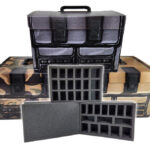
Battle Foam makes foam-based storage for miniatures wargaming, as well as deck boxes and foam storage solutions for items such as golf club heads, camera lenses and firearms.

The acquisition marks the latest step in Wyld Holdings’ strategy of building an integrated tabletop business spanning publishing, manufacturing, distribution and retail.

Its Battle Foam buyout comes six months after Wyld acquired Essen, Germany-based Kraken Wargames, which specialises in gaming mats and the Black Racks hobby organisation system.

Wyld Holdings CEO Richard Lawford said, “Our strategy at Wyld Holdings is not about absorbing brands and altering what makes them successful; it’s about empowering them to play at a larger scale.

“The team at Battle Foam has built a phenomenal product line and a highly dedicated community.

“By pairing their creative DNA with our operational strength and distribution muscle, we can accelerate their growth and introduce their products to a wider global audience.”

Battle Foam founder Romeo Filip added, “Joining the Wyld Holdings family represents a massive milestone for us. It allows the team to focus entirely on what they do best – creating exceptional products for our community while leveraging Wyld’s world-class retail and distribution channels to scale thoughtfully without losing our roots.

“I’m excited to seeing our excellent products reach even more customers.”

The post Wayland Games parent Wyld Holdings buys tabletop storage giant Battle Foam in latest expansion move first appeared on .

“We have a great story to tell, we just have to get better at telling it”: GAMA hires Kevin Ronnebaum as sixth comms head in as many years

02. Juli 2026 um 16:07

Editor’s note: GAMA is one of the sponsors of the BoardGameWire newsletter

Tabletop gaming industry association GAMA has hired Kevin Ronnebaum as its senior marketing and communications director – making him the trade body’s sixth communications lead since mid-2020.

Ronnebaum joins GAMA after almost three decades working across creative, marketing and communications roles, most recently at non-profits including Girl Scouts of Ohio’s Heartland, Make-A-Wish, A Kid Again and Maryhaven.

New GAMA marketing and comms head Kevin Ronnebaum

His hire comes at a pivotal time for GAMA, which has followed several years of booming post-Covid growth by implementing a plan to become the “epicenter” of the global tabletop gaming industry.

The past 12 months has not been without challenges for the association, however, including losing long-serving executive director John Stacy last October, contending with the fallout from Donald Trump’s volatile tariff policy, and falling foul of a series of incidents which have caused dents to its reputation.

Speaking to BoardGameWire in May, newly-elected GAMA president Meredith Placko said putting proactive structures in place to keep GAMA from “stepping in the mud all the time” was one of her priorities – adding that being on top of communication was essential to that process.

That focus on communication was echoed by GAMA’s interim executive director and COO Melinda Prickett, who reached out to Ronnebaum after having previously hired him while she was COO of Girl Scouts of Ohio Heartland.

She told BoardGameWire Ronnebaum stood out from a strong pool of candidates due to his “rare combination of strategic vision and operational excellence”, adding that GAMA was excited about “his ability to strengthen our communications strategy and amplify the value we deliver to our members and the broader community”.

Prickett added, “GAMA is currently in an important foundation-building chapter, and our communications priorities reflect that. We are focused on increasing both the consistency and effectiveness of our communications across all audiences.

GAMA interim executive director and COO Melinda Prickett

“What’s working well is the passion and engagement of our members. There is tremendous enthusiasm for the work we do and the future of the tabletop gaming industry. Our opportunity is to build upon that foundation by creating greater clarity, consistency, and connection in how we communicate our mission, value, programs, and advocacy efforts.

“As we continue to grow, our focus is on developing a more strategic, integrated communications approach that strengthens member engagement, enhances transparency, and ensures stakeholders clearly understand the impact and value of GAMA throughout the year.”

Ronnebaum told BoardGameWire his initial priorities included strengthening GAMA’s overarching brand, increasing awareness of flagship events including Origins Game Fair and GAMA Expo, and more clearly communicating the value of GAMA membership and the association’s industry support services.

He said, “My goal [is] to help others connect socially and flourish through inspired creativity. It’s everywhere, all the time with this group. We have an awesome opportunity to bring value, share messaging that can build confidence in a startup, an artist, a creator, or a player.”

Ronnebaum added, “Ask a small business or startup that has worked with us, and they will tell you that we helped them immensely. Why? Because we care deeply about the industry and we have expertise that can help others thrive in an exciting and unique setting.”

He said, “At GAMA, we have a great story to tell, we just have to get better at telling it”, adding: “The industry needs GAMA, GAMA needs the industry, and we are here to help it thrive.”

Ronnebaum’s hire marks a continuation of high turnover at the top of GAMA’s comms department, with former incumbent Eric Francis having only joined the organisation 12 months ago.

His predecessor Amy Lowe spent just six months as marketing and communications manager, before a resignation which saw her accuse GAMA of “rampant gatekeeping”, “toxic leadership” and disrespecting its members.

Those hires followed the role being occupied by Mike Boseak, Rachel Blaske and Danni Loe since mid-2020, and mean the organisation has now had six comms heads in as many years.

Eric Francis, who spoke to BoardGameWire after announcing he was leaving GAMA in April, remained full of praise for the organisation – saying his own exit to join software networking company Megaport essentially came down to pay, which he described as “the Achilles heel of any nonprofit career”.

He said, “I worked at GAMA for about a year and it’s left a huge impression upon me. Tabletop nerds are my people, and like so many of us in the hobby I had thought it would be cool to work in the industry.

“Well, it turns out it was every better than I could’ve imagined. GAMA is a great organization, and one that faces significant challenges given that it’s a small team with a limited budget working all-out to serve a global industry that has to deal with logistical, manufacturing, commerce, and (increasingly) political policy challenges.

“I’m pretty sure that, with rare exceptions, our members and the broader tabletop industry have no idea how many irons GAMA’s staff has in the fire, how many balls they keep in the air, and how many hours they put in on a given day, month, or year.

“Honestly, I don’t think I’ll ever truly be done with GAMA, even if I no longer work there. Once I have my feet under me at the new job I’ll join a committee and otherwise support GAMA’s work; I’m also signed up for the convention support team at Origins 2026. There’s a lot to be done, and I intend to help in the doing.”

The post “We have a great story to tell, we just have to get better at telling it”: GAMA hires Kevin Ronnebaum as sixth comms head in as many years first appeared on .

Published — 01. Juli 2026 https://boardgamewire.com/

Origins attendance falls for first time since pandemic despite rising revenue, hall space, events volume

01. Juli 2026 um 17:24

GAMA’s long-running tabletop gaming convention Origins has seen its annual attendance fall for the first time since the Covid-19 pandemic, even as revenue, exhibitor space and the volume of scheduled events continued to expand.

Attendance slipped to 18,700 at this year’s event in June from a post-pandemic record of 19,171 at last year’s 50th anniversary event – and remains below the all-time high of 20,642 posted in 2019.

While that attendance reflect a recovery from the lows of around 10,500 and 11,500 in 2021 and 2022, when many people were still reluctant to attend large gatherings post pandemic, other major shows such as Gen Con, Spiel Essen and the UK Games Expo had all recovered to beat their pre-Covid highs by 2024.

UKGE has had a particularly strong post-Covid recovery, with its unique attendance roughly doubling compared to its 2019 total to reach 51,000 this year.

Gamers trying out Button Kingdoms at the 2026 Origins Game Fair || Photo Credit: GAMA

Despite this year’s slide in attendance, however, Origins continues to grow in other areas, with new GAMA communications director Kevin Ronnebaum telling BoardGameWire the 2026 show made more revenue than ever amid significant ongoing growth in its scheduled events programme.

More than 8,600 events ranging from industry panels and seminars to tournaments, RPG sessions and creative workshops took place at Origins this year, up 10% year-on-year and growing almost a third compared to 2024’s total.

Underscoring the event’s ongoing reputation as a show to play games at rather than just for shopping, more than 8,000 games were checked out of the on-site game library this year – a new record, and up 22% compared to 2025.

The number of exhibitors remained steady at 413, almost identical to last year and up about 26% compared to the 305 who ran booths at the 2025 event. But this year’s exhibitors ran larger booths on average, Ronnebaum said, with the total space taken up by exhibitors growing 10,000 sq ft to reach 62,720 sq ft.

Big names from 2025 who did not return to exhibit this year included Hachette Boardgames, Cephalofair Games, Chip Theory Games, and Queen Games, although the show did attract attendees such as Blue Orange, Eagle-Gryphon Games and CoolStuffInc who did not run booths last year.

Ronnebaum said that positives about the event from GAMA’s point of view included a better registration experience and care of VIP and premium badge holders, further growth in RPGs and improved organisation in how exhibitors were onboarded, which he said received positive feedback.

He added that challenges which reared their heads included the decision to stagger booths this year rather than position them in a neat grid, which he said had proved “a little confusing” for attendees.

That confusion was apparent in online discussion of the event, with some visitors reporting that locating specific exhibitors had become more difficult and that the show floor felt harder to browse efficiently.

Not all feedback was negative, however, with some attendees acknowledging the layout changes seemed to aid in persuading visitors to dwell at individual booths rather than just rushing along the aisles.

Origins, which takes place at the Greater Columbus Convention Center in Ohio, is set to return between June 9 and 13 for its 2027 show.

The post Origins attendance falls for first time since pandemic despite rising revenue, hall space, events volume first appeared on .

Take Time follows Swiss Gamers Award win by securing Austrian game of the year prize

01. Juli 2026 um 12:34

Co-operative puzzle challenge game Take Time has doubled down on its award wins this year by picking up the Austrian game of the year prize.

Alexi Piovesan and Julien Prothière’s design fought off competition from Florian Maas’ citybuilding game Project Skyline and Hjalmar Hach and Lorenzo Silva’s Railroad Ink sequel Railroad Tiles to take the 2026 Spiel der Spiele award.

The win comes three months after Take Time triumphed in this year’s Swiss Gamers Award, while the game has also picked up a ‘recommended’ nod in the highly prized 2026 Spiel des Jahres competition.

Take Time publisher Libellud previously won the Austrian game prize’s family game award for Dixit in 2010, while the title’s co-designer Julien Prothière won the family game category with Featherweight Fiesta in 2024, and the ‘friends game of the year’ award with March of the Crabs the same year.

The Austrian Game Academy, which runs the Spiel der Spiele award each year, picked out Jon Perry’s Hot Streak as the winner of its ‘friends game of the year’ prize this year, while the expert game award went to Saltfjord, designed by Kristian Amundsen Østby and Eilif Svensson.

Hot Streak has been on a run of award wins this year, with the chaotic mascot racing game having picked up best party game and light game of the year in BoardGameGeek’s Golden Geek Awards, casual game of the year in the American Tabletop Awards, and a ‘recommended’ accolade in the Spiel des Jahres.

Jon Perry’s mascot racing design Hot Streak

Markus Slawitscheck’s design Morty Sorty Magic Shop – which is in the running for this year’s Spiel des Jahres prize – was named best family game in the Austrian awards, while Faouzi Boughida and Mathieu Rivero’s creation Duel for Cardia was named best card game.

Boss Fighters QR, by Michael Palm and Lukas Zach, was named ‘trend’ game of the year for its innovative use of QR codes in-game, while the 2026 best kids game prize went to Emanuele Briano’s Beast Selfie.

Austria’s Spiel der Spiele has been handed out since 2001, when it was won by Catan designer Klaus Teuber’s colonisation game Entdecker: Exploring New Horizons – a reworking of his 1996 design Entdecker.

Last year’s overall winner was galactic gardening-themed set collection game Gloomies.

The 2026 Spiel der Spiele Awards in full

Game of the Year
Take Time – designed by Alexi Piovesan and Julien Prothière (published by Libellud)

Children’s Game
Beast Selfie – Emanuele Briano (HUCH!)

Family Game
Morty Sorty Magic Shop – Markus Slawitscheck (Schmidt Spiele)

‘Friends’ Game
Hot Steak – Jon Perry (Strohmann Games)

Expert Game
Saltfjord – Kristian Amundsen Østby and Eilif Svensson (HUCH!)

Card Game
Duel for Cardia – Faouzi Boughida and Mathieu Rivero (Hans im Glück)

‘Trend’ Game
Boss Fighters QR – Michael Palm and Lukas Zach (Pegasus Spiele)

The post Take Time follows Swiss Gamers Award win by securing Austrian game of the year prize first appeared on .

Published — 30. Juni 2026 https://boardgamewire.com/

Plaid Hat pulls funded The Monolith Kickstarter after pledges ‘stagnated’ on day two, plans post-Gen Con relaunch

30. Juni 2026 um 17:43

Plaid Hat Games has cancelled its successfully-funded Kickstarter for upcoming title The Monolith three days after launch, saying it failed to give prospective backers enough reasons to pledge rather than wait for retail.

The Monolith quickly beat its $20,000 funding goal after launching on June 25, but Plaid Hat CEO Colby Dauch told BoardGameWire pledges had “completely stagnated” by the second day of the campaign.

That led the publisher to scrap the crowdfund for the Phil Gross-designed game on day three, having collected $27,400 from 290 backers.

Dauch said Plaid Hat plans to relaunch the crowdfund shortly after Gen Con with additional content and more pledge tiers, while keeping the game’s existing delivery timeline intact – with manufacturing having already begun on the title.

That manufacturing process has included Plaid Hat spending $35,000 on plastic moulds alone, given the large amount of plastic components in the game – including the namesake monolith, a large plastic tower which sits at the centre of the board.

Dauch told BoardGameWire the company estimates it would have to sell 10,000 copies of the game in order to spread the mould cost widely enough that the retail price could be kept down, adding that the long lead times on making plastic moulds was a big motivator in starting manufacturing prior to the campaign – as well as a desire to launch the game at a convention this year.

Plaid Hat CEO Colby Dauch

Plaid Hat said in an update to Kickstarter backers, “While we hit our funding goal at a decent rate, almost as soon as we did, the pledges stopped. Another 24 hours passed, and the needle didn’t move.

“Of course, we had questions since we’ve run several campaigns now and this experience is completely new to us.

“What we found was that our visually striking campaign was drawing in lots of people, but they weren’t pledging.

“While there wasn’t a ton of feedback, one thing we heard on several occasions was, ‘Why pledge now? Why not just wait for retail?'”

“For everyone here who’s backed, you already know the answer to that question, but we must acknowledge the simple truth that along the way, we could have done better.”

The company added in a follow-up post on BlueSky, “We could have limped over the finish line, but it would have been such a disservice to a game worthy of so much more.”

Dauch told BoardGameWire that all of Plaid Hat’s prior Kickstarters had followed the common practice of setting a low goal amount which can be quickly celebrated as having been beaten, providing momentum for the campaign.

But after seeing The Monolith quickly fund before effectively flatlining, Dauch said reaching a funding target was no longer enough to demonstrate sufficient market demand.

The company has said it will revisit that practice in the wake of cancelling The Monolith, instead likely setting the target as costs plus a certain margin that would need to be crossed to indicate there is enough overall enthusiasm from backers.

Dauch told BoardGameWire, “I think it is just public knowledge that there are certain rules you have to follow to make a Kickstarter work.

“We’ve tried to challenge some of the rules – for example, as a company we try not to lean too hard on FOMO to get people to pledge.

“But we’ve accepted other rules for success as standard practice in a crowdfunding campaign. One of those rules is that you really want to set a low goal that you can blow past early.”

The Monolith || Kickstarter Image

Asked whether the game potentially suffered due to its $90 price point – not necessarily that it was too high, but that it fell between the extremes of ‘very affordable’ and ‘massive, multi-hundred dollar multibox crowdfund’ – Dauch told BoardGameWire:

“I think there is evidence that people want a variety of price points they can buy into, and we are exploring options to make that happen. I think that is more to blame than being in some middle ground.”

Plaid Hat has been making successful board games since 2009, when Dauch created the company to sell his highly-regarded card-based fantasy battler Summoner Wars.

The publisher scored another hit with animal-themed co-op adventure game Mice and Mystics in 2012, and followed that two years later with the hugely successful Dead of Winter, which scooped a string of awards – and big sales numbers – for its thematic mix of zombie survival, traitor mechanics and story-driven gameplay.

Plaid Hat was bought by Asmodee in 2015, but became a rarity five years later as one of just two studios which have gone on to become independent from the publishing and distribution giant.

The publisher only began running crowdfunding campaigns two years ago, having become free of a “first refusal” distribution deal with its former owner that had made experimenting with something like a Kickstarter campaign functionally impossible.

Dauch told BoardGameWire Plaid Hat had long delayed embracing Kickstarter because it was uncomfortable with some of the accepted conventions of crowdfunding, including the pressure to create artificial urgency.

He said, “The reality is that we held off on doing crowdfunding campaigns for a long time as a company because parts of them do feel artificial and we weren’t looking to deceive anyone.

“These large companies on Kickstarter don’t NEED the campaign funds in order to fund a project. It’s self-evident from the fact that a campaign must have a certain amount of polish and progress to even be taken seriously, which already represents a sizeable investment made to get a game to that state.

“Our decision to enter the crowdfunding arena was based on the belief that we were missing out on a portion of the market that enjoys getting their games through crowdfunding campaigns, not because we could no longer fun projects on our own.

“We felt that crowdfunding has been such a mainstay for so long, that most people who participate in them are aware that this is how many established companies use Kickstarter – as a sort of pre-order campaign.”

The post Plaid Hat pulls funded The Monolith Kickstarter after pledges ‘stagnated’ on day two, plans post-Gen Con relaunch first appeared on .

Published — 26. Juni 2026 https://boardgamewire.com/

Spirit Island set for new publisher as designer declines Flat River renewal, plans complete art overhaul

26. Juni 2026 um 12:05

Spirit Island designer R Eric Reuss says he is in talks with a new publisher for the hit cooperative game after opting not to renew its publishing deal with Flat River Group.

Reuss said he expects to be able to license Spirit Island to a new publisher “within the next year or so” according to an update posted to BoardGameGeek and Reddit, adding that dozens of publishers had reached out to express interest in the title and that negotiations with one unnamed company were “going well”.

The announcement provides some clarity over the future of one of modern board gaming’s most widely acclaimed cooperative titles, after more than a year of uncertainty following Flat River Group’s sweeping layoffs at its former publishing arm Greater than Games.

Flat River laid off almost all Greater than Games’ staff and suspended new projects in April 2025, blaming economic pressures stemming from the US tariff crisis.

The private equity-backed company subsequently sold off its subsidiary Synapses Games to ACD Distribution last summer, at the same time as industry veterans Jules Vautour, Colin Young and Danni Loe left Flat River to revive distributor Luma Imports as part of ACD.

That was followed two months ago by Flat River selling the brand name and the rights for the Sentinels of the Multiverse titles to Handelabra Games, a deal which also put the Greater than Games brand back in the hands of two of its founders, Paul Bender and Christopher Badell.

Spirit Island was not part of Handelabra’s deal, however, and was also not part of the revived Greater than Games line-up, company CEO Bender confirmed on a May 12 YouTube livestream celebrating the publisher’s return.

Reuss has now confirmed he decided not to renew Spirit Island’s publishing agreement with Flat River in the wake of its decision to lay off staff at Greater than Games.

He said, “I originally signed Spirit Island with Greater Than Games, which was acquired by Flat River Group around 2021-2022.

“In April 2025, FRG laid off nearly all Greater Than Games staff – the folks I’d been working with – and announced the suspension of all new projects. I submitted my non-renewal thereafter.”

Reuss said his agreement specifies that once Flat River’s licence expires, the company can no longer use the Spirit Island trademark or sell new copies beyond existing inventory.

But he added that ownership of the game’s artwork and graphical assets was “less crystal-clear”, and that negotiations with Flat River to reach a deal over the artwork rights had come to nothing.

He said in the update, “I’d be happy to pay Flat River Group to settle this matter and use the existing art, but what they’re asking for is so much higher than what I’m willing to pay that I have to assume a settlement won’t happen.

“To mitigate legal risk, I’m commissioning completely new non-derivative art, graphical assets, etc.”

He added that he would not consider running a crowdfund from fans to raise money for acquiring the art assets from Flat River, saying, “Given that I don’t feel OK paying that much money, I really don’t feel OK asking Spirit Island fans to pay that much money.”

Reuss said new non-Flat River Group versions of the game would retain the same gameplay, spirits, powers, adversaries and expansions, but with entirely new visual interpretations, promising “vibrant, colorful, representational art”.

Despite the extensive visual overhaul, Reuss stressed that no second edition was currently planned, with only minor rules clarifications and potential balance tweaks currently under consideration.

He said his design priority remains the long-awaited Dahan-focused expansion, although recommissioning Spirit Island’s artwork was likely to delay development of that project.

The designer also confirmed that he has no plans to use generative AI artwork in the project, primarily because he wanted to “collaborate with, support, and celebrate human artists”.

He added in the update, “Ssecondarily because (a) all image-creating GenAI I know of was trained unethically, and (b) while queries aren’t so environmentally terrible as is sometimes asserted, training new models is another story entirely (and using GenAI bolsters demand for training new models).”

He continued “I’m not dogmatically anti-GenAI – I’d love to see ethically trained, environmentally conscientious, explainable, non-toxic, reasonably-secure public-option GenAI. Though that doesn’t address the impact on illustrators and other jobs, so maybe also UBI or something? One can dream.”

Reuss said that although dozens of publishers had expressing interest in Spirit Island since April last year, he added that if negotiations ultimately failed he would self-publish the game himself.

He said, “Spirit Island will continue being published, and I’m going to keep working on making new stuff for it. It’s not going away.”

The post Spirit Island set for new publisher as designer declines Flat River renewal, plans complete art overhaul first appeared on .

Published — 24. Juni 2026 https://boardgamewire.com/

Exclusive: Awaken Realms buys Darwin’s Journey publisher Thundergryph Games as first M&A expansion

24. Juni 2026 um 17:00

Board game crowdfunding major Awaken Realms has made its first acquisition of another publisher by acquiring Darwin’s Journey maker Thundergryph Games.

Thundergryph will operate under its own brand following the deal, with company founder Gonzalo Aguirre Bisi continuing to lead its creative direction in his new role of game director at Awaken Realms.

The publishers said the tie-up will allow Thundergryph to focus exclusively on game design and development, with Awaken Realms taking on responsibility for operational necessities such as logistics, manufacturing, fulfillment and worldwide distribution.

The move broadens Awaken Realms’ publishing portfolio beyond the large-scale, narrative-driven and miniature-heavy titles for which it is best known, such as the hugely lucrative Nemesis series, Tainted Grail and ISS Vanguard.

Acquiring Thundergryph adds a catalogue which includes eurogames such as the highly regarded Darwin’s Journey, Tang Garden and Etherstone – and indicates an appetite from Awaken Realms to expand out into different styles of game.

Awaken Realms founder and CEO Marcin Świerkot said, “We were really impressed by the Thundergryph portfolio and how they managed to create very interesting and beautiful games over and over again.

Awaken Realms CEO Marcin Świerkot

“Because they are so different from what we usually do at AR (with all our dark and gritty taste), we believe it is a perfect fit to make our portfolio broader.”

Awaken Realms would not confirm to BoardGameWire if the acquisition represented the first of multiple M&A deals in the pipeline, but did say it sees value in “building a broader publishing ecosystem, but only if it respects each brand’s identity”.

A spokesperson for Awaken Realms told BoardGameWire, “Right now, our focus is fully on making this partnership successful and supporting the Thundergryph Team in the best possible way.

“More broadly, we are always open to opportunities that make strategic and creative sense, especially where we can help talented teams focus more on making great games while Awaken Realms supports them with production, logistics, fulfillment, and global infrastructure.

“Thundergryph is a particularly strong fit because its portfolio is different from what Awaken Realms is best known for. Their light and medium-weight games, strong visual identity, and elegant production values complement our existing line-up very well.”

He added, “In general, Awaken Realms is interested in areas that can strengthen our ability to create, produce, and deliver great games to players around the world. That can include publishing, operational infrastructure or other strategic areas.”

Discussions for the Thundergryph acquisition began more than a year ago, company founder Bisi told BoardGameWire, adding that such an arrangement was something he had been thinking about for some time.

Thundergryph founder Gonzalo Aguirre Bisi

He said, “Years ago, I had much more time to focus on game development, art direction, and product creation. As Thundergryph grew from a small publisher into a medium-sized company, the amount of organization and administration required increased significantly.

“I realized that I wanted to return to the aspects of the job I enjoy most: creating games and helping bring them to life.”

Awaken Realms says its infrastructure has delivered more than 700,000 games worldwide to date, and believes that support will allow Thundergryph to scale without adding further management burden to its creative team.

The company also retains close ties with crowdfunding platform Gamefound, which began life as part of Awaken Realms before becoming a separate entity with Ravensburger as its majority shareholder. Marcin Świerkot, the co-founder of both Awaken Realms and Gamefound, remains CEO of both businesses.

Bisi added that Thundergryph’s future if it hadn’t agreed the takeover deal would have been one “with fewer games and less time dedicated to nurturing and developing them to the standard we aspire to achieve”.

He said, “The people designing the games, developing the gameplay, creating the visual identity, and interacting with the community are still here. Our creative vision, our passion, and our commitment to making unique games remain unchanged.

“This agreement gives us the opportunity to dream bigger while staying true to what made Thundergryph special in the first place.

“It allows us to combine Thundergryph’s creative strengths with the resources and infrastructure needed to bring even more ambitious projects to life.”

Those projects will begin with Galileo’s Truth, a game by designers Virginio Gigli and Flaminia Brasini, which is set to launch on Gamefound on July 7.

Bisi spoke to BoardGameWire three years ago about the drastic decisions the company implemented during the Covid-19 pandemic in order to deliver the Darwin’s Journey crowdfunding campaign, saying that delaying the game and quickly cutting back on reprints and new production had saved the company.

The post Exclusive: Awaken Realms buys Darwin’s Journey publisher Thundergryph Games as first M&A expansion first appeared on .

Mind MGMT publisher Off the Page Games expands beyond comic book licenses with new imprint

24. Juni 2026 um 15:47

Canadian board game publisher Off the Page Games is expanding beyond its comic book roots with the launch of a new imprint focused on original IP.

The company, which has built its reputation adapting indie comics into tabletop games such as Mind MGMT, has unveiled Off the Page Games Unbound, which will publish games not tied to existing comic book licences.

The imprint’s first title will be The Seekers, a family-weight hidden movement game from Off the Page founder Jay Cormier and his Mind MGMT co-designer Sen-Foong Lim, which is set to launch on Kickstarter later this year.

In a reversal of Off the Page’s previous strategy, the company said it had hired award-nominated comic book creator Chris Schweizer and illustrator Rocio Ogñenovich for Unbound to create a series of comics based on The Seekers.

The Seekers, published by Off the Page Games Unbound

Schweizer previously collaborated with the publisher to turn his graphic novel series The Creeps into a family-weight board game, which is due for release this autumn.

The Seekers webcomic will be released weekly leading up to the crowdfunding campaign for the board game, with physical copies included with the final product.

Cormier said, “I’m excited to continue converting my favourite comics into cool board games, but I’m also pumped to bring some other surprises that aren’t tied (…or bound!) to any specific comic.”

Off the Page has three other titles slated for release in the autumn, in Grendel, Corps of Discovery: Ultimate 2nd Edition and Corps of Discovery Duo.

Cormier launched Off the Page in 2019 by publishing Mind MGMT, based on the Dark Horse comic book series created by Matt Kindt.

The publishers subsequent titles have included Harrow County and Corps of Discovery, while Cormier’s designs with other publishers include Junk Art, co-created by Sen-Foong Lim, and In the Hall of the Mountain King, which was designed alongside Graeme Jahns.

The post Mind MGMT publisher Off the Page Games expands beyond comic book licenses with new imprint first appeared on .

Published — 23. Juni 2026 https://boardgamewire.com/

“The future isn’t just about selling products”: award-winning board game retailer on why creating community is key to success

23. Juni 2026 um 15:54

Award-winning board game store owner Matthew Mičetić says independent tabletop retailers can no longer rely on product sales alone, as rising costs, tariff uncertainty and changing consumer behaviour continue to reshape the hobby retail landscape.

Mičetić was named Oregon Small Business Person of the Year last week by the US Small Business Administration, celebrating the 16-year growth of Portland-based Red Castle Games from a small neighbourhood game store into a vibrant space offering organised play, youth camps, community events and an on-site cafe.

He told BoardGameWire the complexity of running a game store had increased dramatically since the store opened in 2010 – but added that widening the venue’s scope had been a key ingredient in Red Castle’s success.

Mičetić said, “Competing solely on product selection and price has become increasingly difficult in a world where customers can order almost anything online and have it delivered to their door.

“What independent game stores can offer that online retailers cannot is community. We can provide places for people to learn, play, compete, socialize, and build friendships. The retail sales often follow from those relationships.”

He continued, “We aren’t just retailers anymore. We’re event organizers, community managers, educators, food service operators, e-commerce businesses, and increasingly technology companies as well.

“The encouraging part is that the core mission hasn’t changed. People still want places to gather, play games, make friends, and feel like they belong.

“The stores that continue to succeed are the ones that adapt to the changing business environment while never losing sight of the community they’re there to serve.”

Mičetić’s drive has seen that community expand from traditional hobby gamers and TCG players to include young people, families and more casual gamers keen to dip their toes into the hobby – something he believes is one of the biggest opportunities for game stores today.

He said, “Some of our most successful recent initiatives have been our youth programs, including Dungeons & Dragons, Magic: The Gathering, and Pokémon camps and after-school programs.

“Parents are looking for opportunities that help kids build friendships, creativity, problem-solving skills, social-emotional skills, and confidence. Tabletop games are uniquely positioned to provide that.

“We’ve also had success reaching beyond the traditional hobby audience. There are a lot of people who can benefit from what tabletop gaming offers who may never have considered walking into a game store.

“That means being willing to experiment, try new things, and sometimes fail. Not every idea works, and that’s okay. The important thing is to learn from it, make adjustments, and keep moving forward.

“I’ve always believed in looking for 1% improvements. Small improvements compound over time. If you can make your store, your programs, your customer experience, and your operations just a little bit better every day, those gains add up to something significant over the course of years.”

He added, “While retail is still the foundation of the business, these complementary activities have become increasingly important both financially and strategically. They reinforce one another.

“Someone might discover us through a D&D camp, become a regular event participant, buy games and accessories, meet friends through the community, and eventually become a long-term customer.

“The café, events, camps, and retail operation all work together to create a stronger overall ecosystem. For independent game stores, I think that’s one of the biggest lessons of the last decade. The future isn’t just about selling products, it’s about creating reasons for people to keep coming back.”

Organised play remains a “core pillar” of the store’s financial prosperity, Mičetić told BoardGameWire, while Magic remains its strongest offering and continues to be a cornerstone of organised play.

Mičetić receiving his Oregon Small Business Person of the Year award

He added, “One Piece has been one of the biggest success stories of the last several years, drawing strong participation. Star Wars Unlimited has also developed a passionate local community and has exceeded our expectations.

“Beyond TCGs, Dungeons & Dragons continues to be a major driver of participation through campaigns, youth programs, and camps. Board game events, painting nights, and miniature gaming also contribute meaningfully to overall attendance, even if they don’t always attract the same numbers as the largest TCG communities.

“What excites me most isn’t any individual game. It’s the diversity of the community. I believe the healthiest stores aren’t dependent on a single title. They’re places where someone can come in for Pokémon, discover D&D, try a board game, join a painting event, and ultimately find multiple ways to engage with the hobby.”

Speaking about current growth areas on the retail side – and areas which could be in decline – Mičetić told BoardGameWire TCGs continue to be the strongest growth category in the hobby, while oversaturation in higher-price point board games was beginning to show strain.

He said, “Magic remains a powerhouse, Pokémon continues to bring in new players, and we’ve seen strong engagement from newer games [such as One Piece and Warlord] as well.

“That said, I do worry that we’re in a boom cycle. I don’t know when it will happen, but historically every collectible market experiences corrections and I think it’s wise for retailers to plan accordingly.

“In board games, I think we’re seeing softness at the higher end of the market. For years, the industry benefited from an explosion of new releases and crowdfunding projects, but I also think the market became oversaturated.

“Self-publishing and crowdfunding lowered barriers to entry, which brought some fantastic games to market, but also a tremendous number of mediocre ones. Consumers have more choices than ever and less time to play them.

“Where I’ve seen the most consistent strength is in smaller board and card games, particularly titles under about $25. At that price point, they’re an easy impulse purchase and a lower-risk way for customers to try something new.

“RPGs are interesting. Product sales have slowed somewhat for us, but organized play and events remain strong. People still want to gather around a table and tell stories together, even if they’re buying fewer books than they once did.

“Miniatures remain a challenging category outside of Games Workshop. Many lines have passionate fan bases, but Games Workshop continues to outperform expectations and demonstrates the power of consistent support, organized play, and strong intellectual property.

“As for crowdfunding, we’ve largely stepped away from it as a retailer. There are certainly successful projects, but we’ve experienced too many delays, failures, and fulfillment issues over the years.

“Tying up cash and shelf space for products that may arrive years late, or not at all, has become increasingly difficult to justify.”

Mičetić said that on the distribution side, relationships had become both more important and more complicated since 2020, with the pandemic having exposed just how dependent the industry is on supply chains and allocation systems.

Mičetić said distribution relationships had become more complicated since the pandemic – and more important

He said, “In many categories, especially TCGs, we spent years dealing with product shortages, allocations, delayed releases, and uncertain restocks. More recently, while still dealing with those allocation issues, we’ve added questions around tariffs, pricing, inventory levels, and market demand.

“The underlying challenge remains the same, uncertainty. At the same time, retailers are being asked to make increasingly complex purchasing decisions with limited capital and shelf space.

“When talking with distributors today, my primary focus is predictability and partnership. I don’t expect every product to be available in unlimited quantities, but I do want transparency around allocations, release schedules, and restock expectations.

“The better information we have, the better decisions we can make. I also spend a lot of time discussing breadth versus depth. Every distributor wants retailers to carry more products, but shelf space, cash flow, and staff attention are finite resources.

“We’re increasingly focused on products that have strong community support, organized play opportunities, or demonstrated demand rather than simply chasing every new release.”

Mičetić’s award recognition follows a turbulent series of challenges in recent years, ranging from navigating the Covid-19 pandemic to enduring ten break-ins over a twenty-month period – a spate of crimes which resulted in more than $250,000 in losses and property damage.

He told BoardGameWire that while the experience was “frustrating and demoralizing”, he was “not willing to let a handful of criminals determine [Red Castle’s] future” – adding that the show of support from customers following the break-ins had helped reinforce why the store exists in the first place.

Mičetić said, “The primary targets were trading card games, particularly sealed Pokémon and Magic products, along with Games Workshop product. Unfortunately, those products are small, portable, and have a well-established secondary market, which makes them attractive targets for theft.

“The financial losses were significant but the larger challenge was the operational and emotional toll. Every break-in meant dealing with police reports, emergency repairs, damaged property, disrupted operations, and the uncertainty of whether it would happen again.

“There were periods when it felt like we were spending almost as much time thinking about security as we were thinking about growing the business.”

He advised other hobby retailers to “invest in security before you need it”, adding that the experience had changed his own understanding of risk.

Mičetić said, “Small businesses often operate on relatively thin margins and repeated criminal activity can have an outsized impact.

“It’s a reminder that when people talk about crime affecting businesses, they’re not just talking about stolen merchandise, they’re talking about the time, money, stress, and opportunity cost that comes with recovering from it over and over again.”

Speaking of his SBA award win, which recognises business owners who demonstrate outstanding business growth, innovation, resilience, and contributions to their communities, Mičetić said, “This recognition is incredibly meaningful because it reflects the community that built Red Castle Games.

“Every customer, staff member, volunteer, and supporter has played a role in our success. This award belongs to all of them.”

The post “The future isn’t just about selling products”: award-winning board game retailer on why creating community is key to success first appeared on .

❌