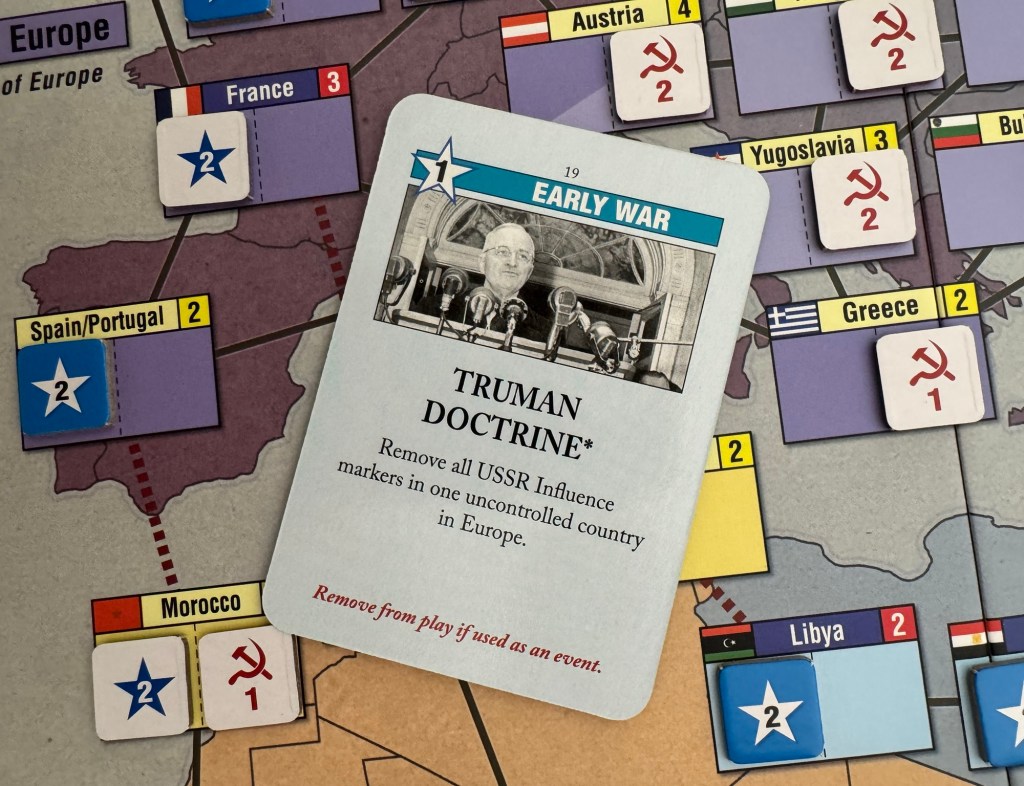
With this My Favorite Wargame Cards Series, I hope to take a look at a specific card from the various wargames that I have played and share how it is used in the game. I am not a strategist and frankly I am not that good at games but I do understand how things should work and be used in games. With that being said, here is the next entry in this series.
#101: Constantinople Sends Aid Core Event from The Shores of Tripoli from Fort Circle Games
I have never played a historical wargame on the First Barbary War, which if you didn’t know was one of the first major wars the young United States of America participated in that was situated far outside their sphere of influence in North and South America. Shortly after the end of the American Revolutionary War, commercial vessels of the United States were being attacked and raided by the pirates of the Barbary coast in the Mediterranean Sea. In 1801, newly inaugurated President Thomas Jefferson was eager to put an end to this threat and sent a “squadron of observation” to the Mediterranean to deal with the threat. The Shores of Tripoli covers this conflict and does so using a card driven game mechanic that works really well in this instance. The game is a little deceiving, as at first it appears to be pretty introductory with simple rules and mechanics, but the depth for the game lies in the strategy for each side and the fact that their victory conditions are asymmetric.
There are two decks of cards in the game and each is unique for the side that is using it. The American Card Deck is blue-backed with a picture of President Thomas Jefferson and the Tripolitan Card Deck is red-backed with a picture of Yusuf Qaramanli. Each deck consists of a total of 27 cards and this is divided up between 21 Event Cards and 6 Battle Cards. The Tripolitan Deck also includes 3 additional cards that are used only for solitaire play. There are three different types of Event Cards included in the decks. These include Core Events, Unique Events, and Common Events. Each player has the same number of each of these type of cards with the only difference being that the Americans have only 10 Common Events and 2 special cards that are called Victory Event Cards.
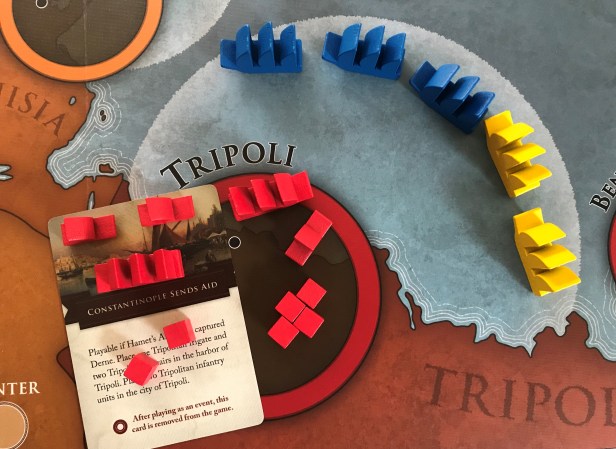
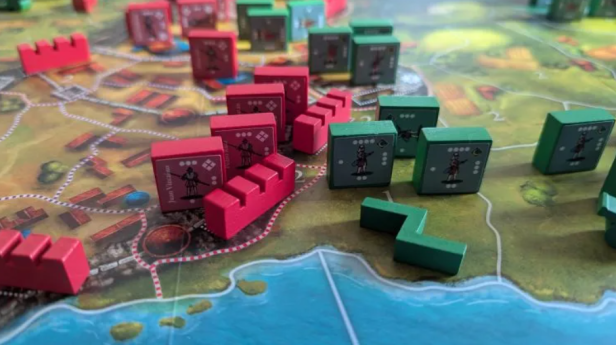
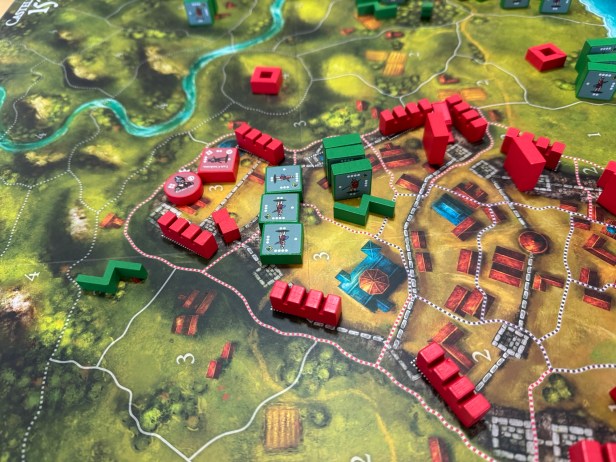
Core Event Cards begin the game face-up in front of the player and do not count against the eight-card hand limit. Core Cards may be played in place of a card in hand at any time during the player’s turn for their event and then are permanently removed from the game. The Constantinople Sends Aid Core Event Card has a condition that must be met in order to be played and that is that Hamet’s Army has captured the city of Derne. This means that this card will have to wait to be played until at least after the Spring of 1804 or even later as the American player must play their Hamet’s Army Created Core Event Card and then invade Derne which will take a turn or two after the Core Event Card is played. This card is a last ditch effort to stop the Americans as they make their eventual drive on Tripoli. The addition of 1 Tripolitan Frigate and 2 Corsairs will beef up the naval defense of the port and the addition of the 2 Tripolitan Infantry in the city of Tripoli will aid in staving off Hamet’s Army.
The Constantinople Sends Air Core Event Card is somewhat of an ahistorical event, meaning that it was possibly available if necessary but the anticipated invasion of Tripoli Harbor by the forces of Hamet never occurred. Following the fall of Derne, Hamet Karamanli’s forces held the city and planned to press onward toward Tripoli, which put immense psychological and political pressure on the ruling Bashaw Yusuf Karamanli. But, before a full-scale assault on Tripoli could take place, U.S. Consul General Tobias Lear negotiated and signed a peace treaty with Yusuf Karamanli in June 1805 effectively ending the First Barbary War. The treaty secured the release of American hostages from the USS Philadelphia in exchange for a ransom, ending the military campaign. U.S. forces secretly evacuated Derne, abandoning Hamet Karamanli’s push to take Tripoli and returning him to exile.
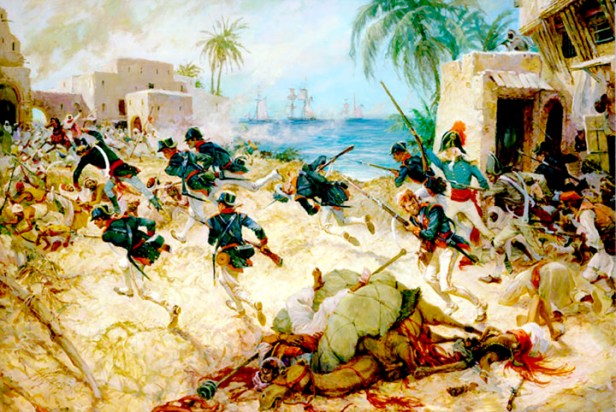
Lieutenant Presley O’Bannon at Derne. Painting by Charles Waterhouse.
In the next entry in this series, we will take a look at Austrian Leader Klemens von Metternich from Congress of Vienna from GMT Games.
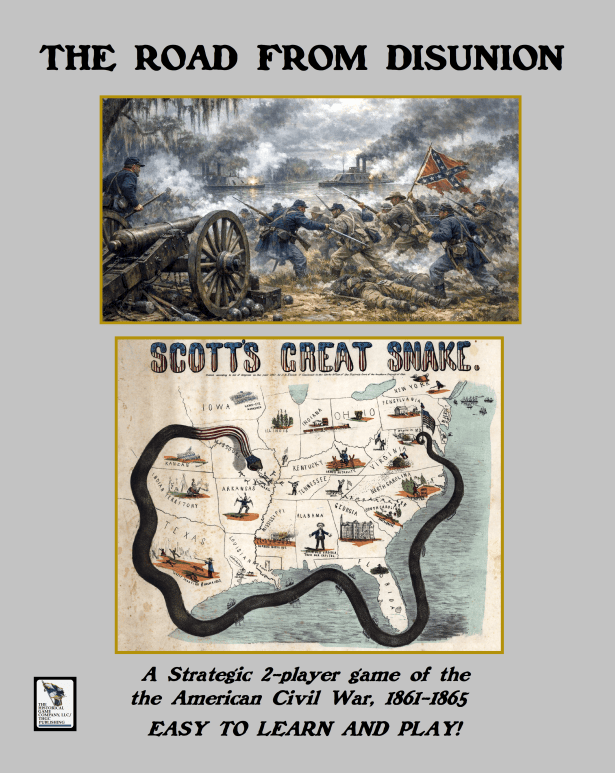
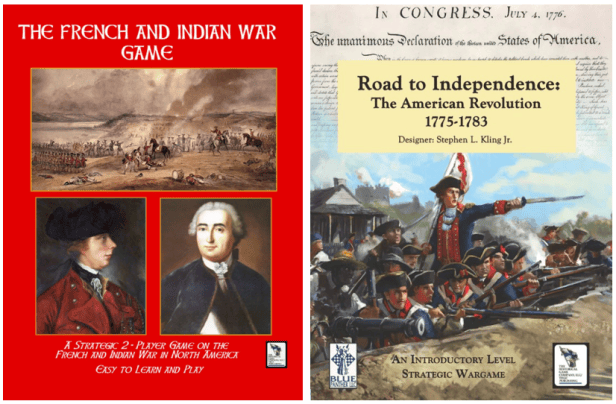
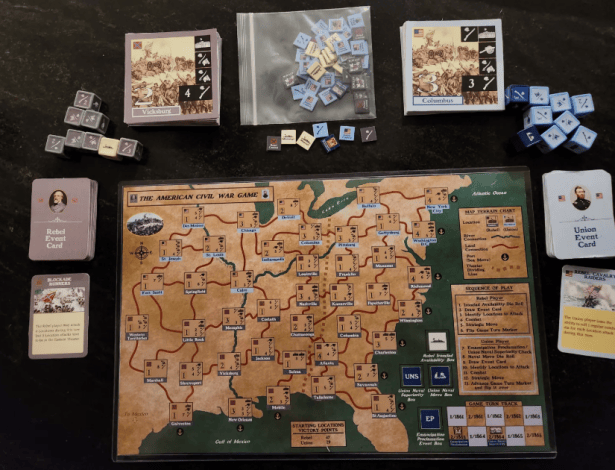
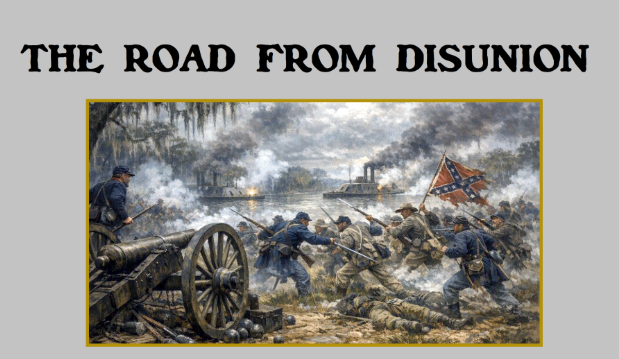
A few years ago, we played a very interesting game designed by Stephen Kling of The Historical Game Company called Road to Independence: The American Revolution, 1775-1783. The game covers the entirety of the American Revolutionary War, including the various campaigns and skirmishes on the frontier, and uses custom battle dice. That game was the 2nd volume in that series and recently I heard that Stephen was working on the next volume set in the American Civil War called Road from Disunion: The American Civil War, 1861-1865. We reached out to the designer and he was more than willing to take the time to answer our questions on the game.
Grant: Stephen welcome back to our blog and thank you for being interested in sharing. What is your upcoming game TheRoad from Disunion about?
Stephen:The Road from Disunion: The American Civil War, 1861-1865 is an introductory level wargame covering the American Civil War using the system I designed and used for several previously published games, which were dice rolling games of conquest using special dice, including The French and Indian War published by The Historical Game Company and Road to Independence published by Blue Panther. The game is a strategic level look at the American Civil War and covers all of the major theaters of the war from its outbreak in 1861 to its conclusion and Lee’s surrender at Appomattox Courthouse in 1865.
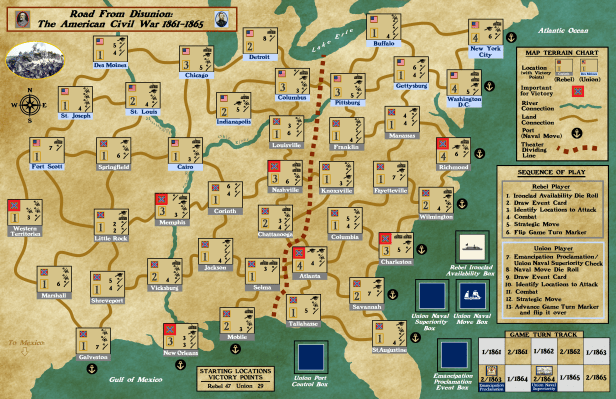
The map contains 42 different locations, some of which count toward meeting victory conditions. Custom dice are rolled matching symbols on the dice with those required to conquer each location and its defenses. Event cards are also included that add in some of the historical elements to the conflict and vary play from game to game. This is a follow up game to Road to Independence and uses similar concepts and game mechanics.
Grant: Why was this a subject that drew your interest?
Stephen: I have always had an interest in the American Civil War particularly at a strategic level. It is a massive contest, and I wanted to see if I could design a fun, easy to play game covering the entire war from 1861-1865.
Grant: You are utilizing the same system you have used for 2 games in the past on the French & Indian War and the American Revolution. How did you change the system to take into account the American Civil War?
Stephen: The American Civil War posed some special challenges as I wanted to incorporate concepts like the naval war and what constituted a rebel victory. Special rules were developed for the naval aspects in the game utilizing ironclads for the Rebel player and naval combat for the Union player before an attack by naval move can occur if an Ironclad is located in the Port Location. There are some special rules reflecting the historical constraints as well. As discussed in the design notes, I took a cue from one of the experts who summarized the rebels’ ability to win the war as making it last long enough with enough casualties for the Union to seek peace. A number of these ideas for changes and some others discussed below came about through playtesting.
Grant: What was your design goal with the game?
Stephen: As with the other games in the system, my main goal was to create a light, fun game that could be played in one setting with sufficient political theming. Of course, factoring in rolling special custom dice was always a goal as well.
Grant: What elements do you feel are most important to model or include from the history of the American Civil War?
Stephen: I wanted to allow players to explore various strategic options. There are a number of different strategies the Union player can develop for victory. The Rebel player has the problem of primarily developing a defensive strategy while taking advantage of opportunities to take or retake Union controlled locations to make it more difficult for the Union player to win.
Grant: What major design challenges did you encounter and how did you overcome them?
Stephen: Simply re-skinning the system from the prior games just was not going to work for this design. I wanted to include the ironclads as their role is interesting and could have had a more pronounced effect on the war. Doing that in a way to not add a lot of complexity went through several variations. Integrating some of the aspects of the Eastern Theater and Western Theater ended up in the event cards and simplifying the far west ended up in a Western Territories Location with some benefits based on card play. Simply put, there was just a whole lot of history I wanted to pack into the game without adding a significant amount of complexity. The game also begged for some additional chrome which ended up in some advanced optional rules covering elite units, commerce raiders and Union ironclads.
Grant: What sources did you consult for the historical details? What one must-read source would you recommend?
Stephen: I have a “Further Reading” list in the rules which includes Battles and Leaders of the Civil War in 4 volumes and The Blue and the Gray in 2 volumes for good reading on the entire war. But two of the 8 books in the Further Reading section cover the naval aspects of the war. On that note, I was able to correspond with one of the experts, Professor Neil Chatelain, who gave me some good information on ironclads and in particular the Laird Ironclads building in Great Britain for the rebels and how those ironclads were intended to be used. Of course, it was such an interesting back story, they ended up as a possibility in the game with potential use following their intended use.
Grant: What is the scale of the design? Force structure of the units?
Stephen: The scale is strategic and somewhat abstract. There are no specific army sized units. The entire war is displayed on an 11” x 17” map. There are individual ironclad counters and some strategic defense counters which are essentially garrisons plus control markers. In the advanced rules, there are new “campaign counters” each named for a unit that was elite during the war that can be used for a placement on a Location card to satisfy or help satisfy a required roll, one per theater each turn with a few others depicting further aspects of the naval war and blockade runners. For example, playing one of the blockade runner campaign counters by the Rebel player can result in the loss of 1 attack for the Union player the following turn. The advanced rules not only include the permanent loss of such units if the attack is not successful but the permanent loss of strategic defense counters too if an attack is successful.
Grant: What is the makeup of the various unit counters?
Stephen: Attack counters, strategic defense counters (garrisons), control markers, ironclad counters and a slew of special campaign counters. There are some variant counters too representing armies and navies of England and France.
Grant: What advantages does each side have? How does this change over the course of the game?
Stephen: The Union player has some slightly better Event Cards and gets an additional die upon the occurrence of the Emancipation Proclamation but has the burden of conquering enough victory points and important locations by the end of the game. The Rebel player has enough good cards to muster a good defense and make opportunistic attacks aided by the ability to work on interior lines. The naval game is sort of a mini game within the game which can alter strategy. So, for example, does the Rebel player preselect naval benefit Event Cards and put more emphasis into protecting ports? Too little port protection can trigger a Union special rule whereby the Rebel player loses one attack each turn as long as the specified number of ports are under Union control.
Grant: What is the function of Location Cards?
Stephen: The Location Cards pair with individual areas on the game map but are used primarily for dice rolling and conquest. While the game map is smaller, we added information of the defenses on each Location Card on the corresponding area of the game map to ease analysis for attack considerations.
Grant: Can you show us a few examples and explain how they work?
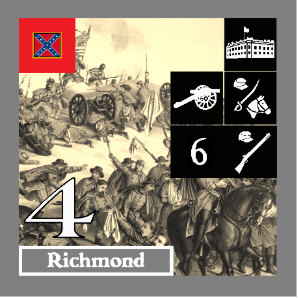
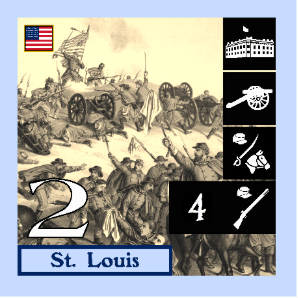
Stephen: Each of the Location Cards has various icons and numbers in black which indicate the defenses that have to be rolled (conquered) during combat. See below for an in-depth description of how combat works. The Rebel flag in red in the upper left hand corner denotes an important Location for victory. As you can see the icons include things such as Artillery (field cannon), a Fortress (building), Cavalry (with a saber in the center of the image and a horse) and Infantry (with a hat and musket). These symbols coincide with the symbols found on the custom combat dice and the player attacking must roll these results on a certain number of dice to conquer or take the Location Card.
Once a Location is attacked and defeated, the physical Location Cards will be collected from the opponent and added to the tableau in front of the attacking player. Then, the player will add their Control Marker to the Location on the Game Board, unless it is one of their starting Locations, at which point no Control Marker is necessary as it is shown in the Location Box.
There are a total of 42 different Locations and each is assigned value shown in the bottom left hand corner for victory purposes and are named after key and important strategic cities during the American Civil War.
Grant: How does combat work?
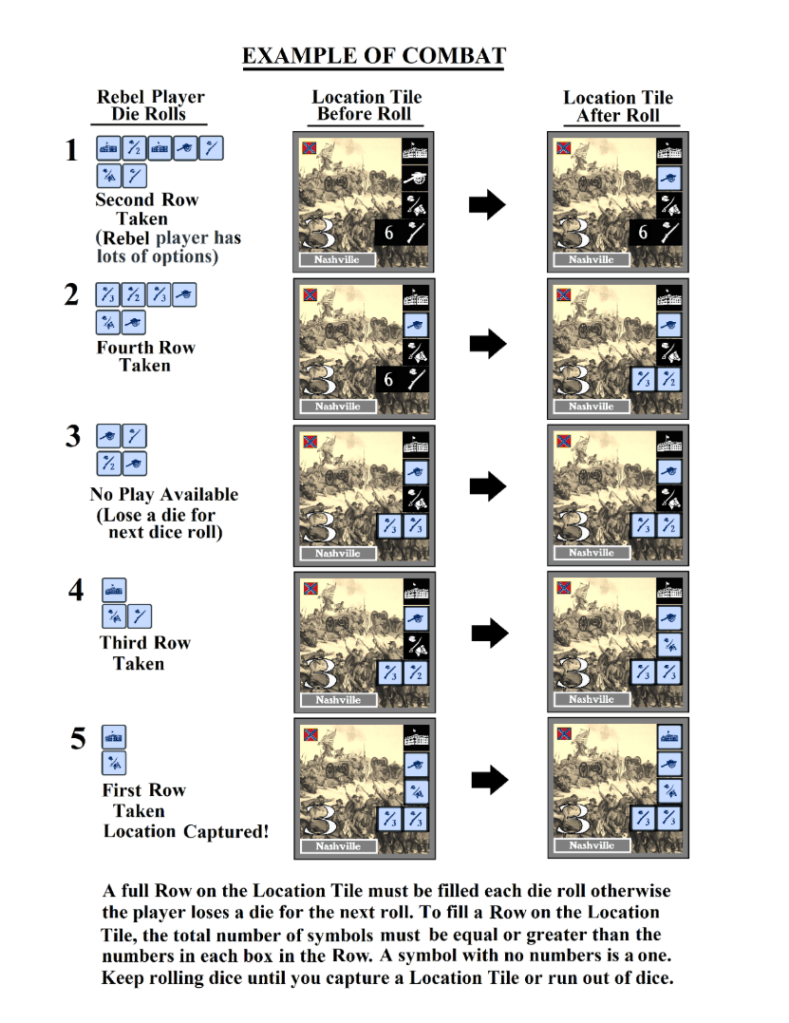
Stephen: Land combat is a function of rolling special dice against each Location selected for attack each turn. The Location must have a connection to a friendly Location unless it is a naval attack against a port Location by the Union player. Naval combat is a bit different and simpler. Here is a graphic from the rules that shows an example of combat.
Grant: What is the makeup of the custom combat dice?
Stephen: There are 17 dice, 7 regular die for each player, an Emancipation Proclamation regular die, 1 Rebel Ironclad Availability die and 1 Union Naval Move die.
Grant: How do Ironclads work? Why were they important to include?
Stephen: Ironclads help protect Port Locations from attack by the Union player by naval move. There can be up to 2 ironclads per Port Location. They are all named for important ironclads, and if eliminated, cannot return to play. They enter play by roll of the Rebel Ironclad Availability die each turn and by Event Cards and are placed by the Rebel player at any available Port Location. They can be eliminated by Union die rolls but if they are not, the attack by the regular die cannot happen and the Union attack is a failure. So, they can make Union naval attacks more difficult. Things like the Union Naval Superiority Event and some Event Cards can soften things up for the Union player as the game progresses. I really wanted this aspect of the war included as it was important and is so interesting.
Grant: What is the makeup of the Event Cards? Can you share a few examples?
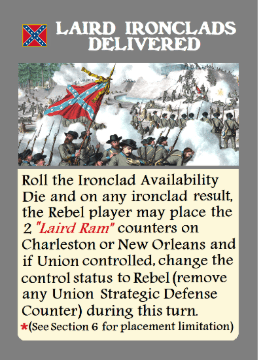
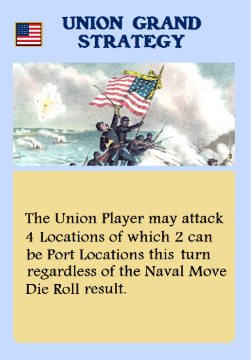
Stephen: These Event Cards do things such as affect attacks and combat in terms of bonuses or penalties and are usually based on historical events. Here are examples of 2 such Event Cards including 1 for the Rebel player and 1 for the Union player.
Grant: I see where players can preselect a few Event Cards. Why was this important to include?
Stephen: It really added to allowing more strategic decisions. Do you select Event Cards that provide benefits in one theater over another, do you select cards that give naval benefits or the possibility of foreign intervention or concentrate on land attacks, etc.
Grant: What is the role of the Emancipation Proclamation and Union Naval Superiority Events?
Stephen: The occurrence of the Emancipation Proclamation Event allows the Union player an additional regular die representing the addition of men of color to the Union army. The Union Naval Superiority Event guarantees a minimum number of naval moves irrespective of the outcome of the Naval Move die roll and a bonus when combating ironclads. These Events are not guaranteed to happen and only happen in the later part of the game if a successful die roll is made on the first and following turns when eligible. There is also a Union Naval Superiority Rule which allows the Union player to cause the Rebel player to lose one attack each turn as long as the Union player controls 6 of the 8 Rebel Port Locations.
Grant: What are Campaign Counters?
Stephen: This is something entirely new. These counters represent elite units, commerce raiders and Union ironclads. One can be chosen for each theater for each game turn. For land combat, they can only be used for 1 Location attack and can satisfy a required die roll (or part of a required roll if multiple infantry are needed) on the Location’s defense. The commerce raider counters can limit Union attacks, and the Union ironclads can aid in naval combat. These units can be lost in game play, so they have to be used judiciously. These counters are optional along with some other rules like Foreign Intervention Counters and are available in the advanced rules. I think they really add to game play and I am in the process of redoing the French and Indian War game in this system adding applicable elements of the underlying concept.
Grant: What area does the map cover? What are the different theaters and how did you decide to split them up in this way?
Stephen: The map covers pretty much the area of the entire American Civil War. As there were differences in the objectives and the way the war was fought, the map was divided into theaters which are mostly important for where certain Event Cards apply. The division was somewhat arbitrary but made to work the best with the Event Cards.
Grant: What do you feel the design excels at?
Stephen: While this game is a bit more complex than its predecessors, most of the additional pages cover the advanced rules and a more detailed section of design notes. I hope this game provides a fun, thematic experience of gaming the American Civil War. My play testers seem to like the ease of play and the dice rolling making it a wargame but one you can enjoy without a big investment of time and learning the rules. In particular, I hope it provides a lot of strategic options and decisions of the type arising in the war while being able to do it in a few hours. Lastly, I hope it encourages players to learn more about this history.
Grant: What other designs are you currently working on?
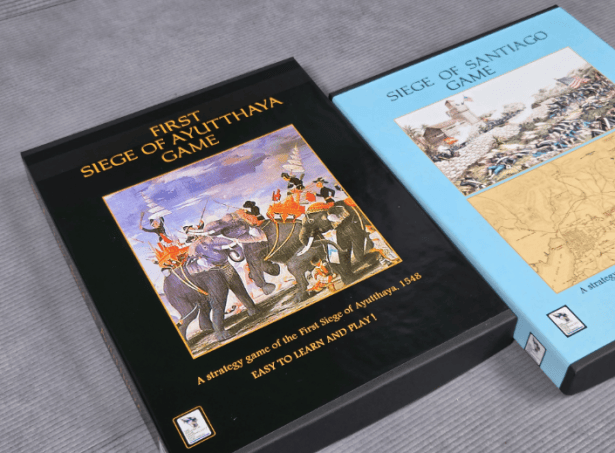
Stephen: As you guys know, I have an extensive line of battle/siege games. I just released 2 new ones on the Siege of Ayutthaya and the Siege of Santiago. The Siege of Plevna should be out by the end of the year and an upgrade or second edition of the French and Indian War using the Road from Disunion enhancements is also in the works. Also, my friend Ed Lengel just published a book entitled Atlas: France’s Wars for Empire and Resistance in North Africa, 1827–1934. I had previously published a game on the Battle of Isly from this period, but his book inspired me to bring my design on the Siege of Constantine to the front of the line which should also be out by year end. My game production has been a bit limited with the publication of my latest book, being the guest curator for the Louisiana State Cabildo Museum for the “Gálvez and Louisiana in the American Revolution” exhibition based on my latest book and being extensively interviewed for a documentary on Spain’s role in the American Revolution, as well as related book and exhibition presentations.
Thank you for the look inside this very cool game on the American Civil War. I can feel your passion for the game and its history and believe that this will shine through in the game play experience. Keep up the good work and we look forward to talking with you about your future upcoming game projects.
All good things must come to an end and here we are at the end of our 3 days of gaming at SDHistCon. We had a great time and ended up playing a total of 8 games, with some being full plays and others just having been several turns. But we gamed a lot and that is what we do. Play games!
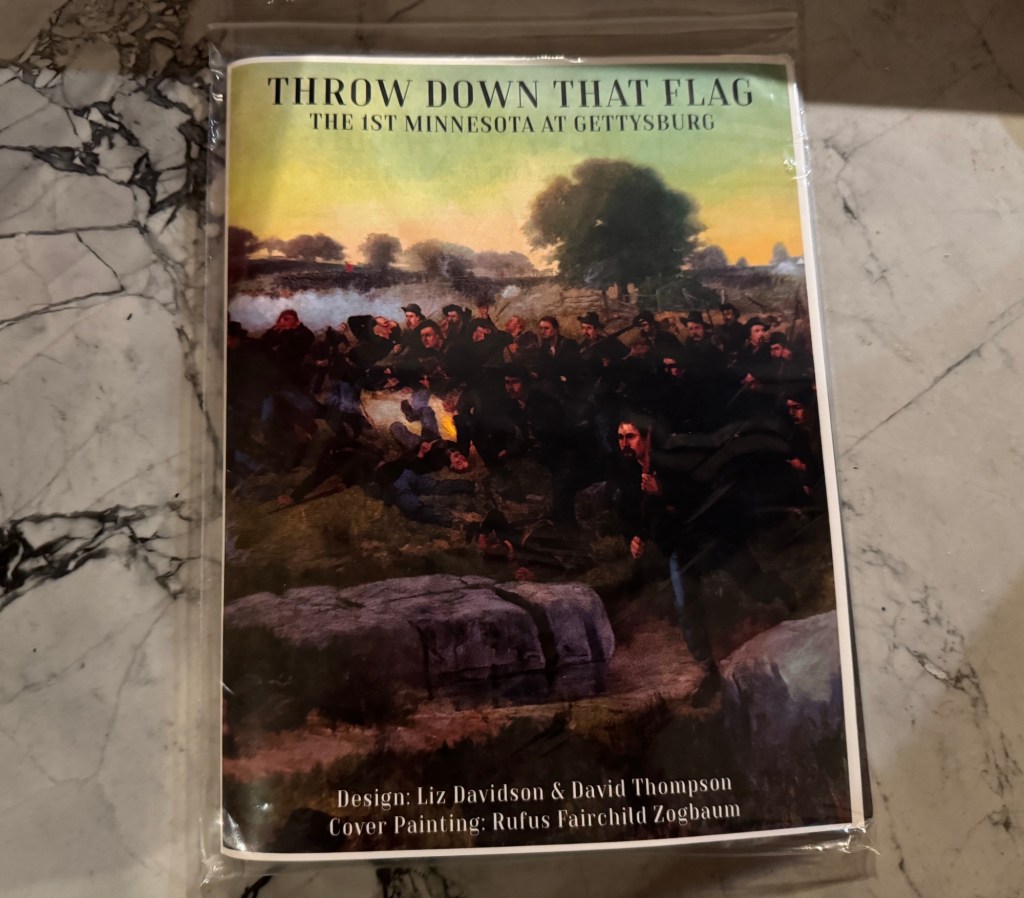
One thing from last night that I wanted to mention was the Night Market, which allows small indie publishers to get their games out for sale. The inaugural Night Market featured 10 different independent designers selling limited-print-run, self-published historical board games and we had a look around and ultimately purchased Throw Down That Flag: The 1st Minnesota at Gettysburg designed by Liz Davidson and David Thompson. The game is a solo game that centers on the 1st Minnesota Volunteer Infantry Regiment during 2 pivotal days of the Battle of Gettysburg July 2 and July 3, 1863. I very much enjoyed this event and wish that I could have bought more but I didn’t have any more room in my luggage.
Now onto today’s events. The 3rd day started with a nice chat with Saul Sanchez from Mexican publisher Malinche Games. Saul is a great guy and we became acquainted with him in 2021 when they launched their first Kickstarter for Patria Libre: The Struggle for Mexican Independence 1810-1821. They are currently working on a reprint of their most popular title Tierra Y Libertad: The Mexican Revolution which I believe will be the 3rd Printing.
I love these small boutique publishers who have these special passion projects that cover lesser known history and allow them to demonstrate their pride for their country. And it’s always great to put a face to a name as we corresponded multiple times over the past 5 years. I wish Saul the best of luck moving forward and encourage you to give their games a look.
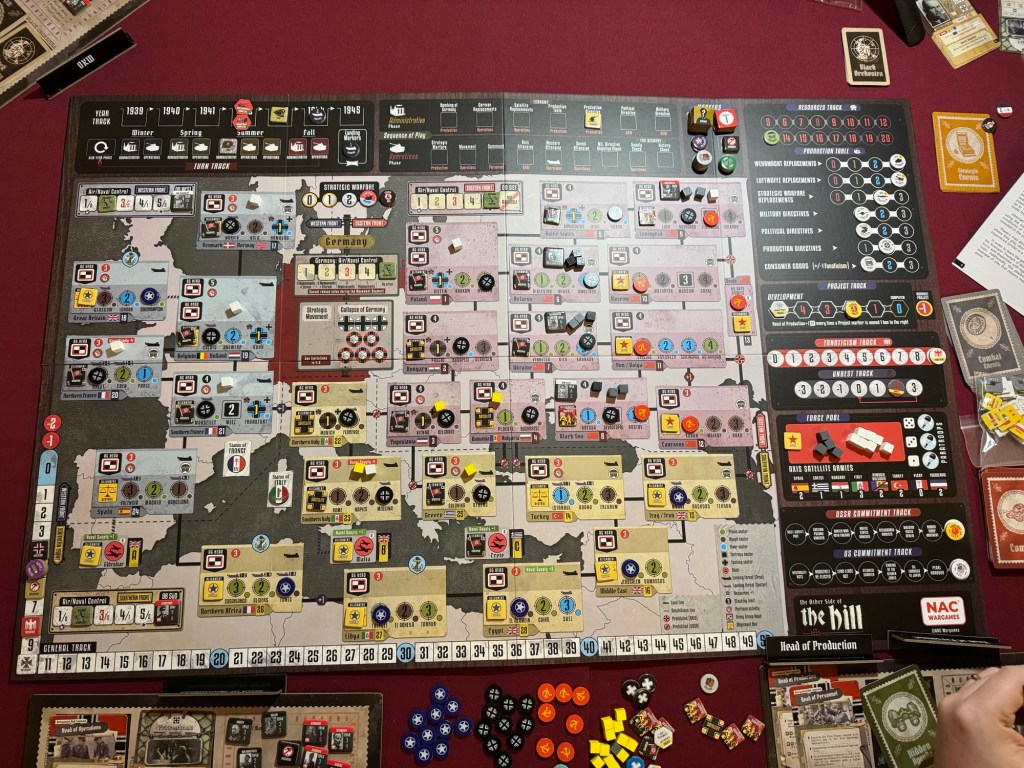
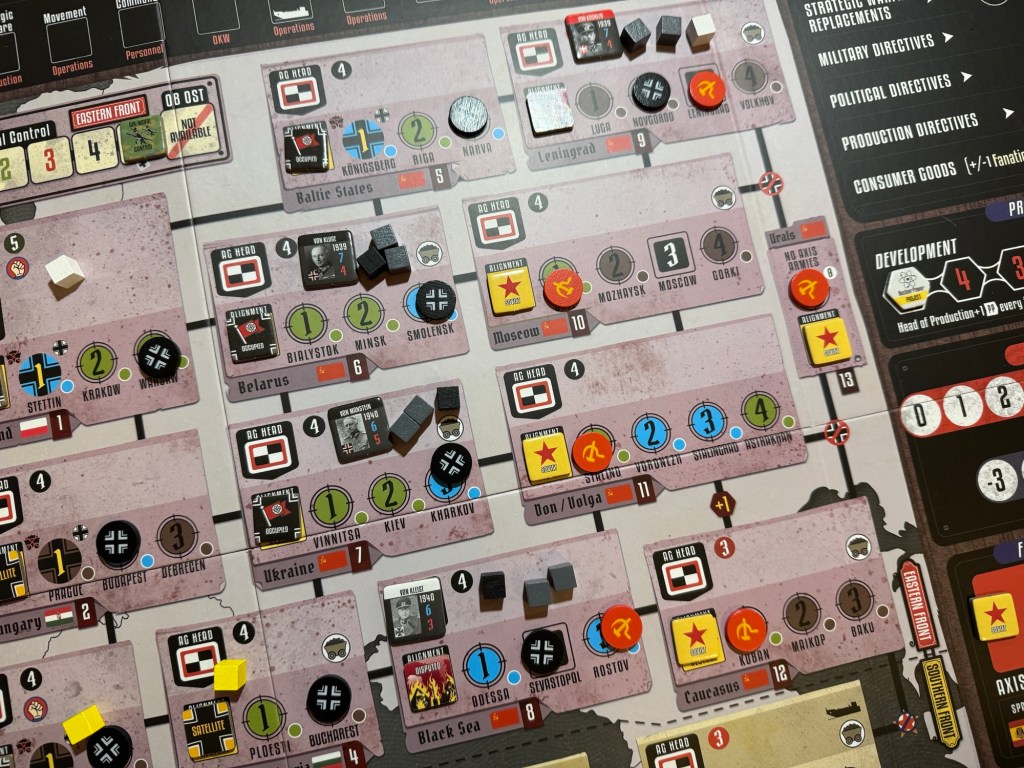
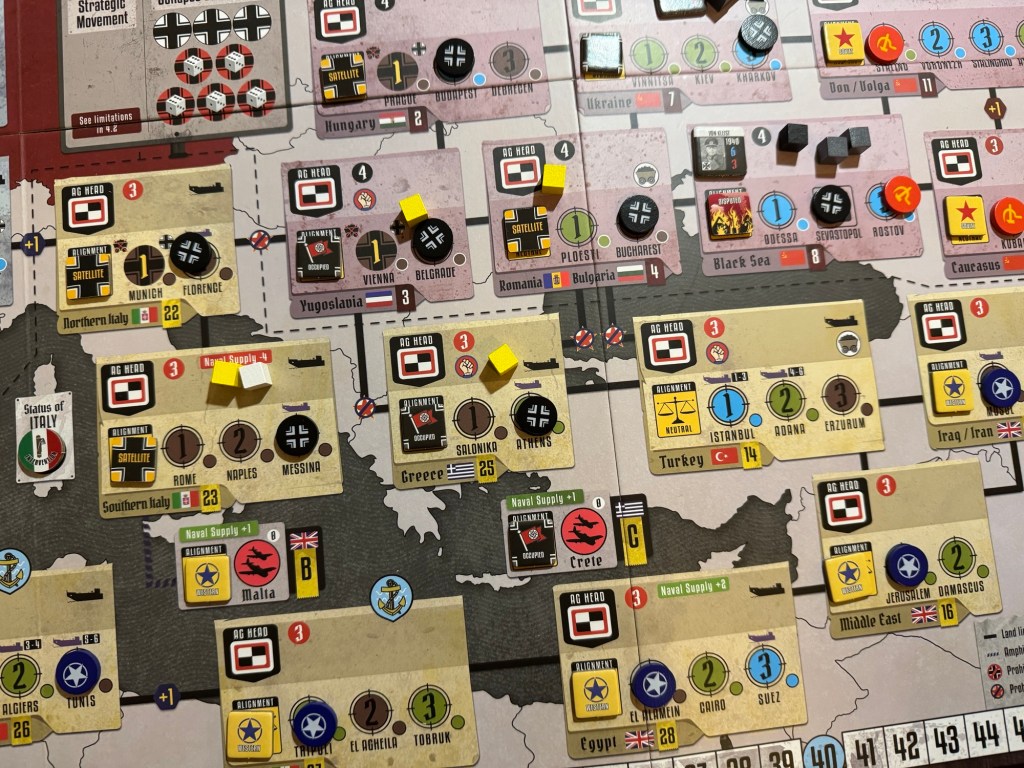
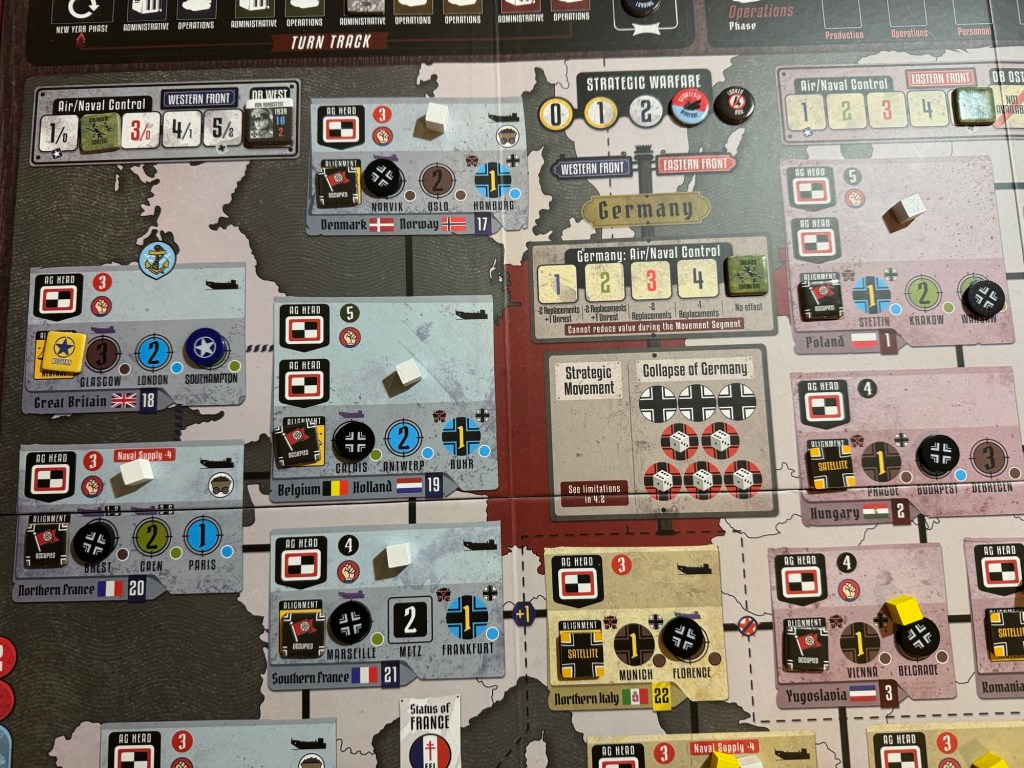
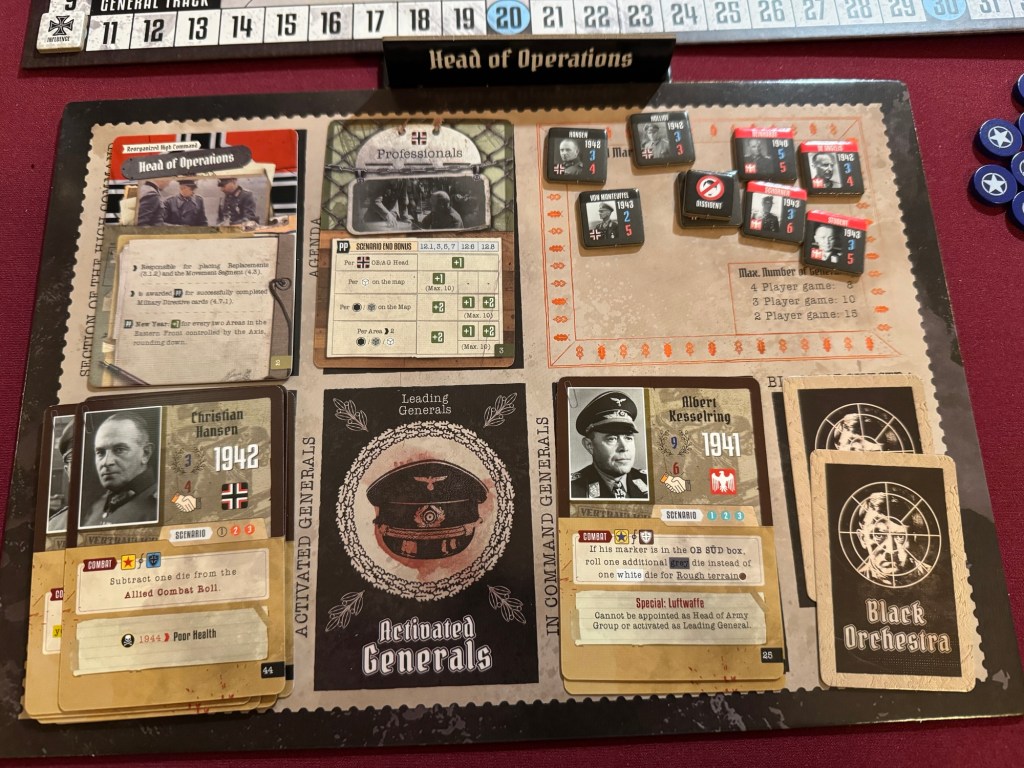
We only played 1 single game today but it was a big and long 5-hour experience as we took on The Other Side of the Hill 2nd Edition from NAC Wargames. So what is this game? Well it’s definitely something and is a bit controversial for some because of the subject matter. But it is a card focused board game designed by Carlos Márquez that attempts to simulate World War II from the perspective of internal political and military members and generals of the German High Command. The game starts in 1939 and at this early phase of the war things are pretty good fur the German war machine as they have plenty of resources and men to fight and annex territory to the east to restore Germany to its pre-WWI state and also develop satellite armies and governments in the Balkans, Italy, North Africa, Norway, Finland and the eastern bloc. But as the game wears on and the western Allies organize and enter the war they will attack in North Africa and Italy and then the Soviets will begin pushing back in the east. This will put a strain on resources and production capabilities as the effects of bombing campaigns and strategic warfare will impact production capabilities.
The players represent different political factions inside the Wehrmacht and must struggle for legitimacy and power as the war goes well earning the approval of the Hugh Command and Hitler earning Prestige Points. Germany after all cannot win World War II in the game. Instead, the central question is how long the regime can hold out against the advancing Soviet and Western Allied forces, and which player will come out best during the collapse.
Players will promote and assign historical German generals to different fronts on the board to use their special abilities to win battles and take territory. Victory in battle will earn Prestige, but a single defeat can result in a general’s dismissal. As the fortunes of Germany turn and the war turns sour, players will attempt to fulfill secret Agendacards representing various factions, such as the Old Guard, Professionals or anti-Nazi Dissidents/Sympathizers. Players must balance cooperating against the Allies with sabotaging or undercutting each other to advance their faction’s hidden goals.
I very much like the thesis of this one and the unique approach to the subject matter. But in practice the game is very long. Almost too long and involved and really gets caught up in so much minutiae that it seems to be an exercise in following the steps of the sequence of play and trying to keep it all moving without missing things or making mistakes rather than a grand strategic look at the decisions of the High Command and the operation of the war. It’s just a lot and to me seemed to be a bit overwhelming. Now this was our first play and we only made it through a few turns in the 5 hours we played but I’m just not sure I’m going to get back to it.
The rules were fine but there were some lacking details and more clarity needed. I think the biggest problem with the components was the size of the text. It was very small and damn near unreadable. Now part of that is I’m old and I need my glasses but these were obviously put together by someone who didn’t have this problem.
Overall the game just seemed a bit much and I am afraid might not be worth the effort. Now I am willing to give it another try but am not sure when that will be.
I did very much like the internal competition and petitions of the players to have their particular generals included in the battles as this was a great opportunity to get victories and gain favor. But this changed as a few battles were lost and several generals were dismissed (probably by pistol shot to the head) and the war grew old. There didn’t seem to be as much interest in putting themselves out there and taking the risks. I very much liked this and with the right group this can be a very rewarding part of the game.
In the end we gave up and had a long discussion about the outcome and experience. I think that everyone agreed there was something there but maybe it was too deeply hidden and mired in the due process of the game.
We then went around and stated our goodbyes to friends and compatriots and it was bitter sweet. We are planning to come back next year and we will see them all again but I didn’t want this year to be over. Thank you to SDHistCon and their volunteers. A special thanks to Harold Buchanan as the main organizer and visionary for the con and for his friendship. And thank you to those we played games with over the 3 days. And finally thanks to you all for following along.
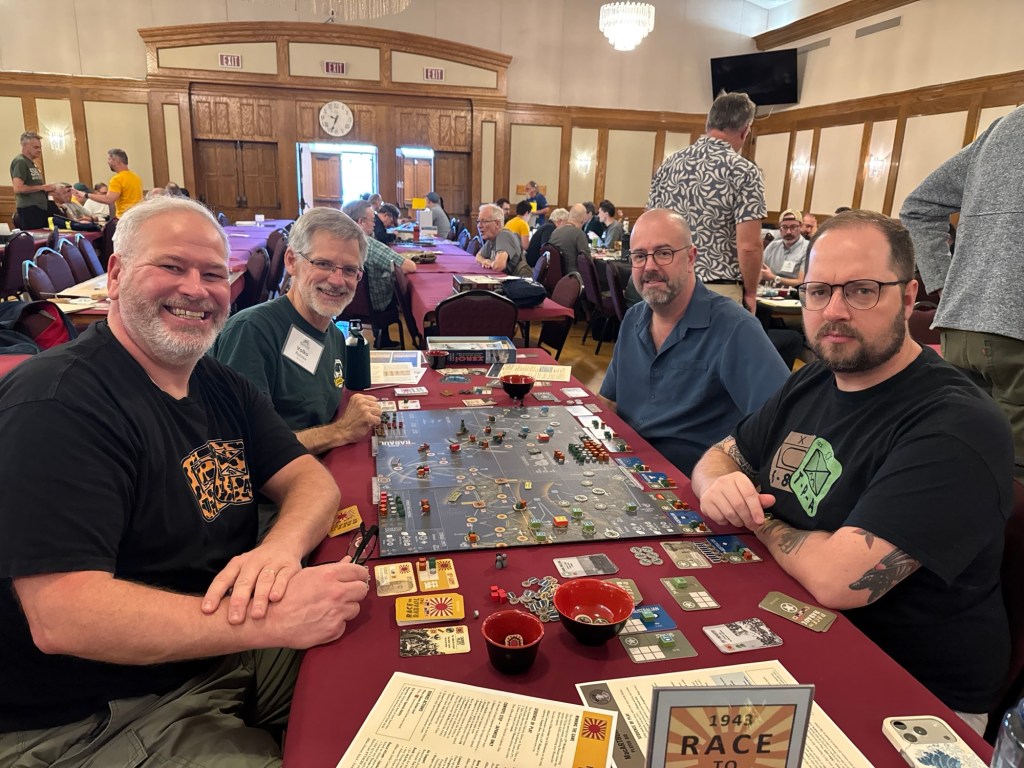
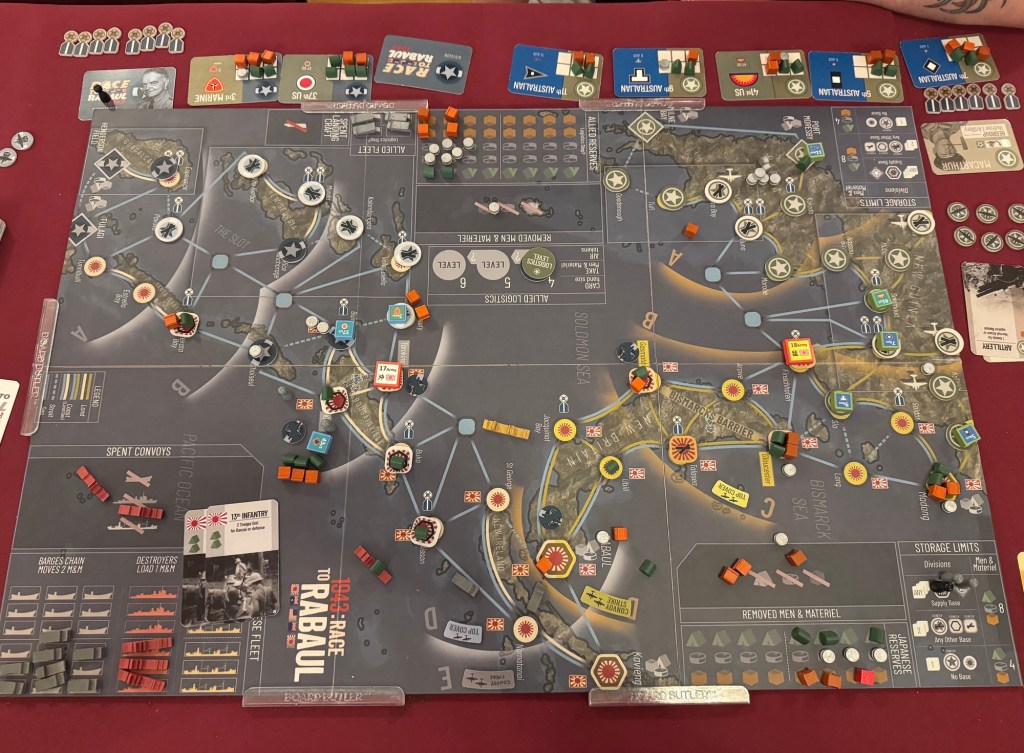
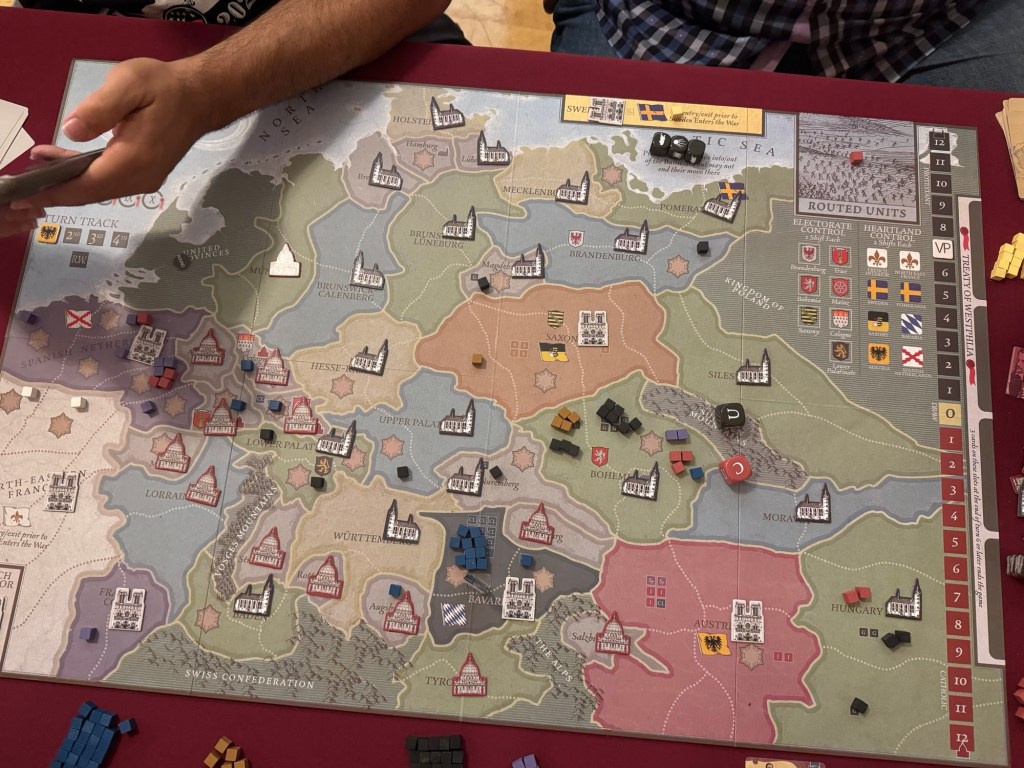
Today was a very busy game filled day. I’m tired tonight so I’m not sure how long this post will be but here goes. We played a total of 4 games today including 1943: Race to Rabaul from PHALANX, Checkpoint Charlie from GMT Games, Coast Watchers from GMT Games and Thirty Years of Misery from VUCA Simulations.
So here is a quick summary of each.
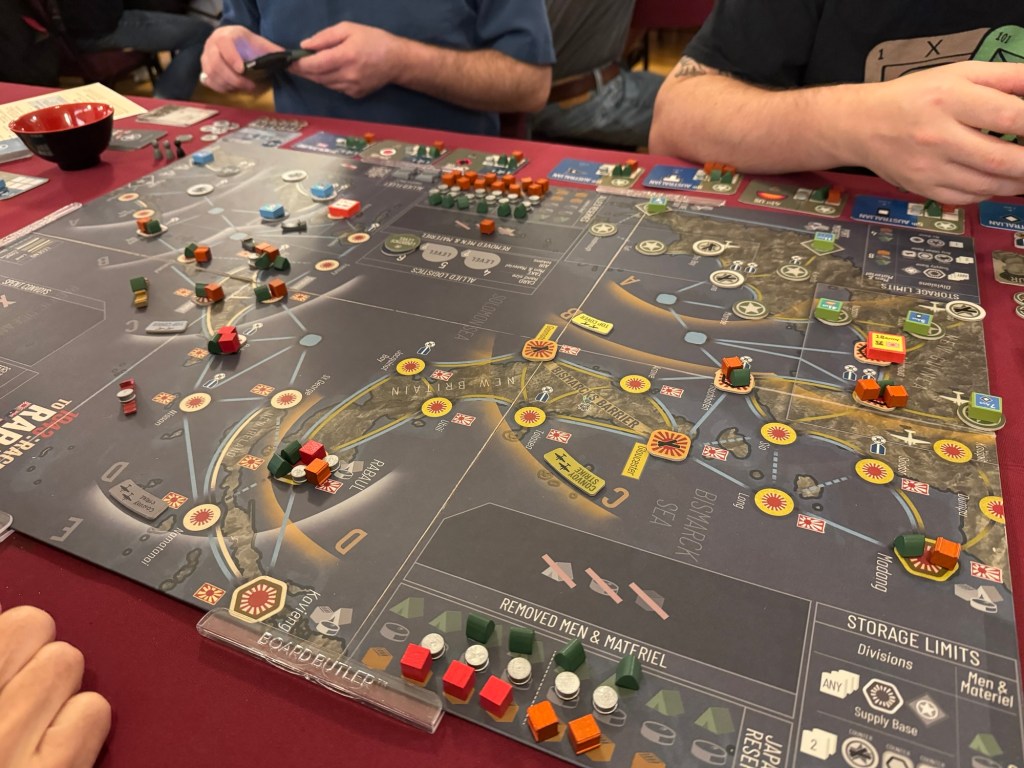
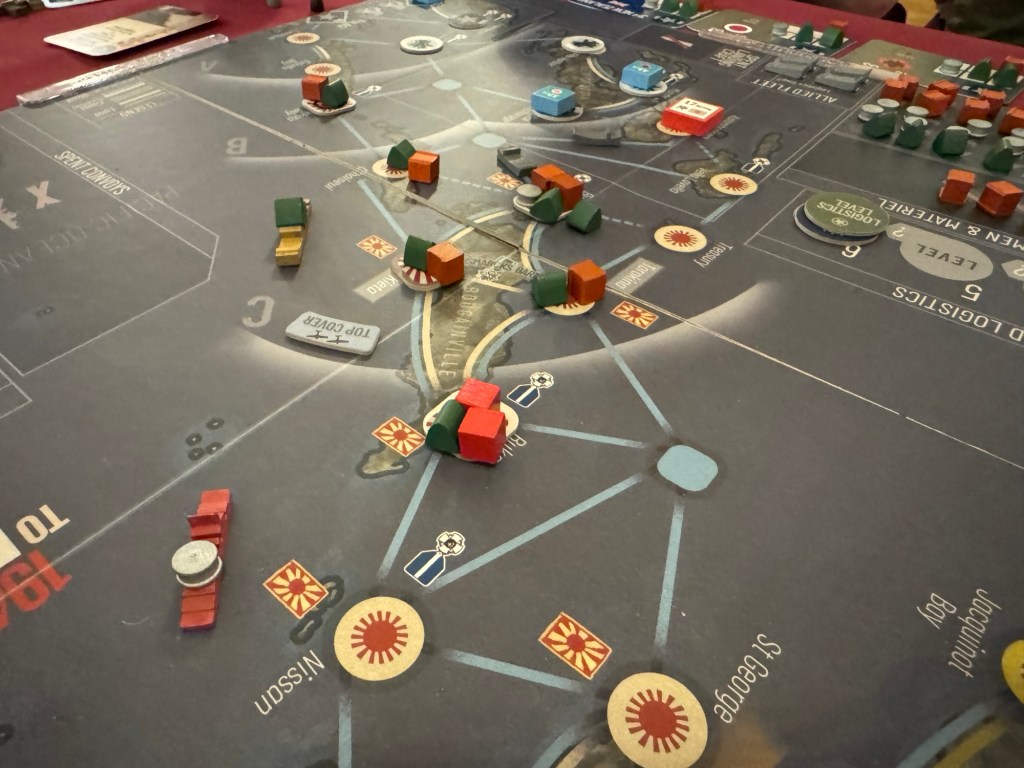
1943: Race to Rabaul is designed by Volko Ruhnke and is a part of Keep ‘Em Rolling Series of logistics focused wargames that includes titles such as 1944: Race to the Rhine and 1941: Race to Moscow. We have played both of the other games in the series but this one is deeper and more involved than the previous volumes. It also feels very much more like a wargame.
The fighting takes place across the South Pacific with the twists that there are 2 teams of players who are fighting each other but also have to contend fur the same pool of supplies and men and have to manage sea, air and land operations.
The Japanese must use Convoys and have to deal Allied Convoy Strikes that eliminate them and the supplies they are trying to deliver. The Allies have it easier as they have an abundance of transports and can move supplies more easily under Air Cover. The problem is that they must take ground and build Air Bases to extend that Air Cover and Convoy Strike range.
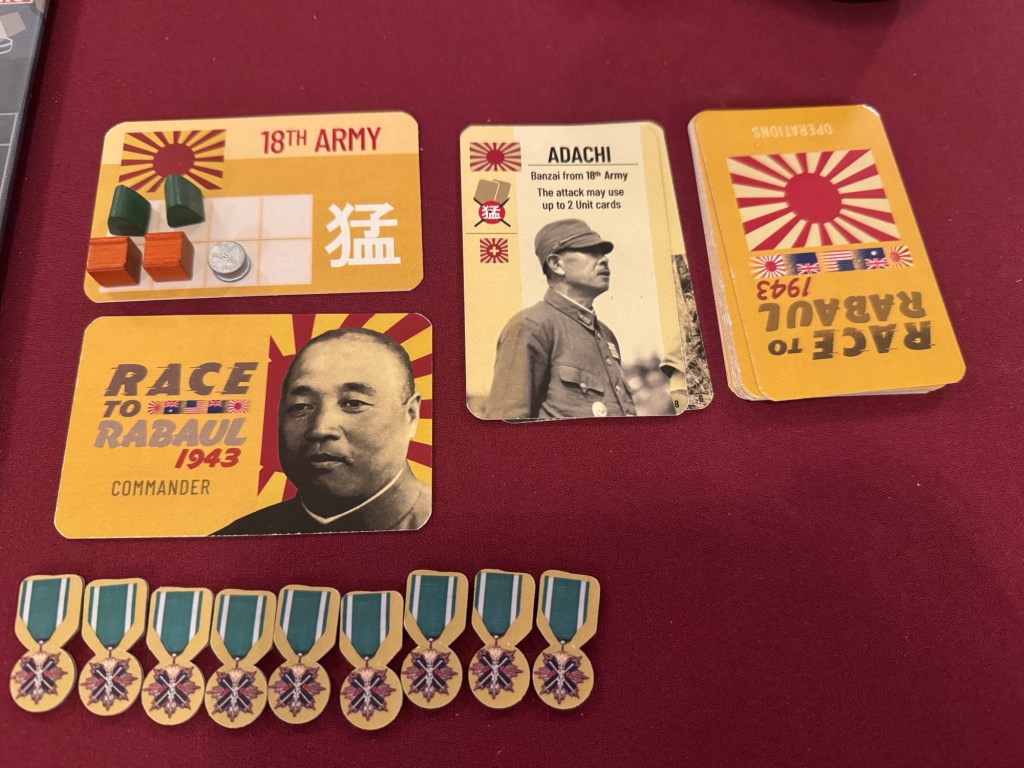
Each side has cards that include operations as well as units and these are played to take actions and can be used in battle to increase strength.
The ultimate goal is to reach a total of 12 medals which come from taking key areas for the Allies and taking Japanese units in battle and for the Japanese preventing the Allies from reaching the Bismarck Barrier and the Japanese causing Allied losses. This one is very well done and we very much enjoyed the experience.
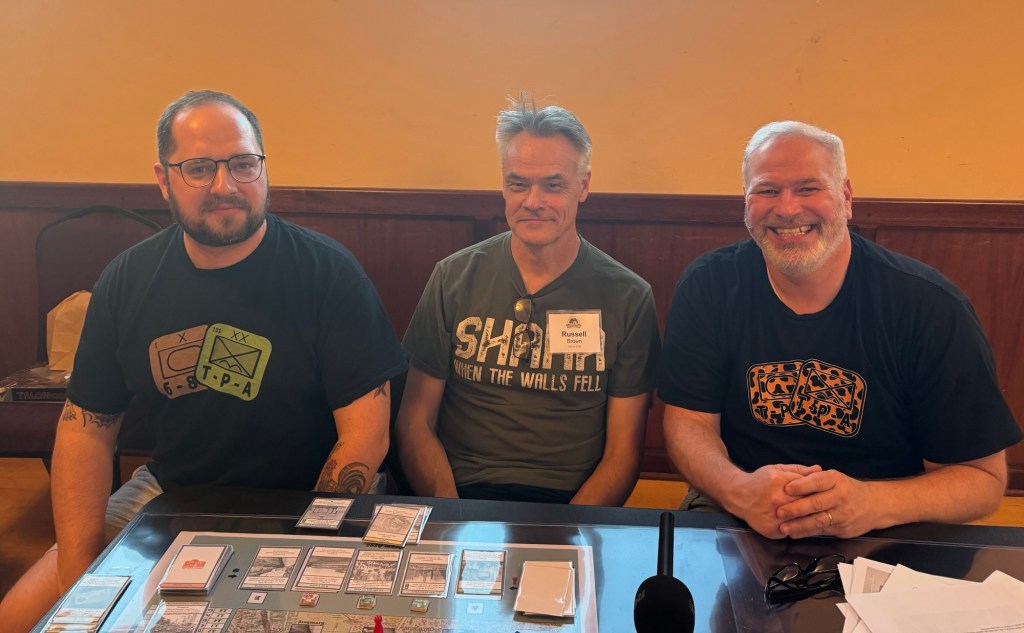
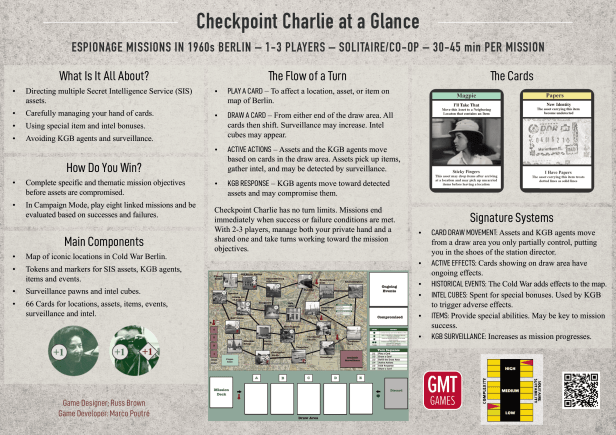
Next up was a look at a prototype game called Checkpoint Charlie with designer Russell Brown and is a solitaire or cooperative game of British Secret Intelligence Service (SIS) espionage missions in Berlin in the early 1960’s.
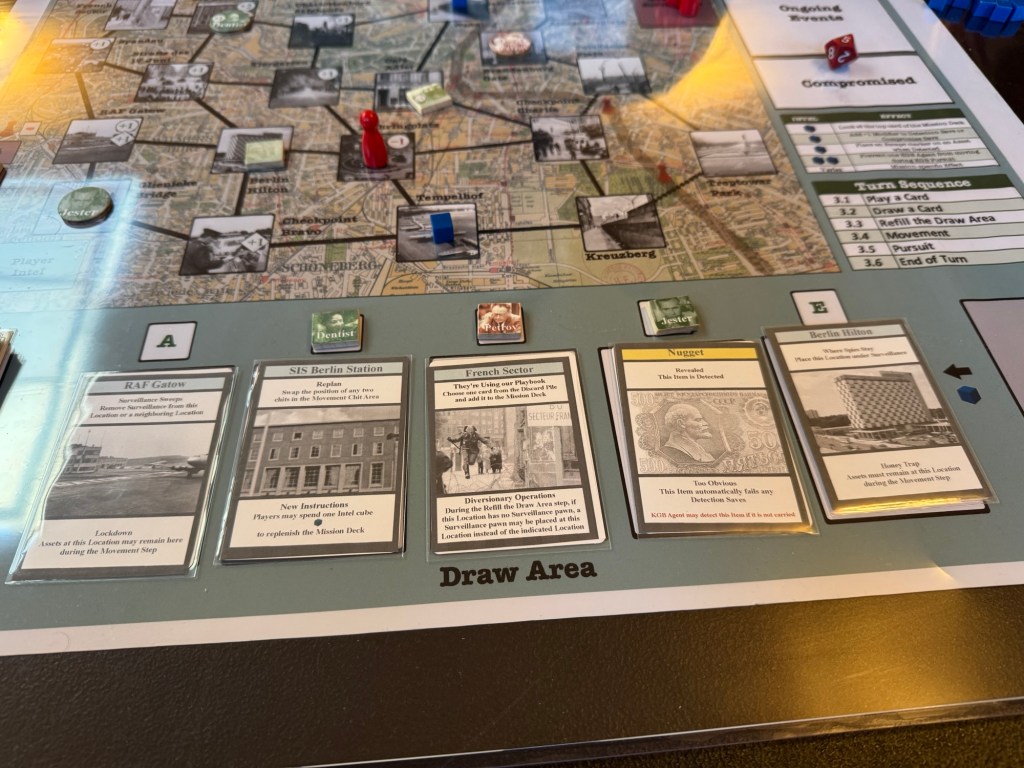
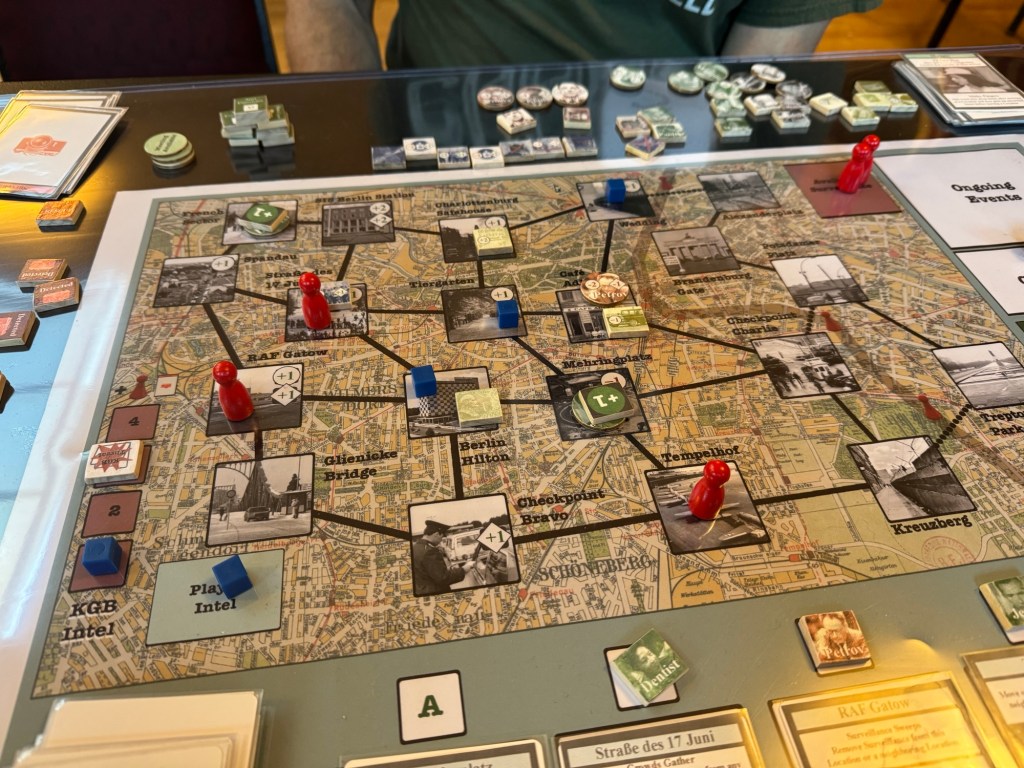
The game is scenario-based, and players must manage a tableau of 5 cards to move their assets and spies around a board showing various locations in Berlin.
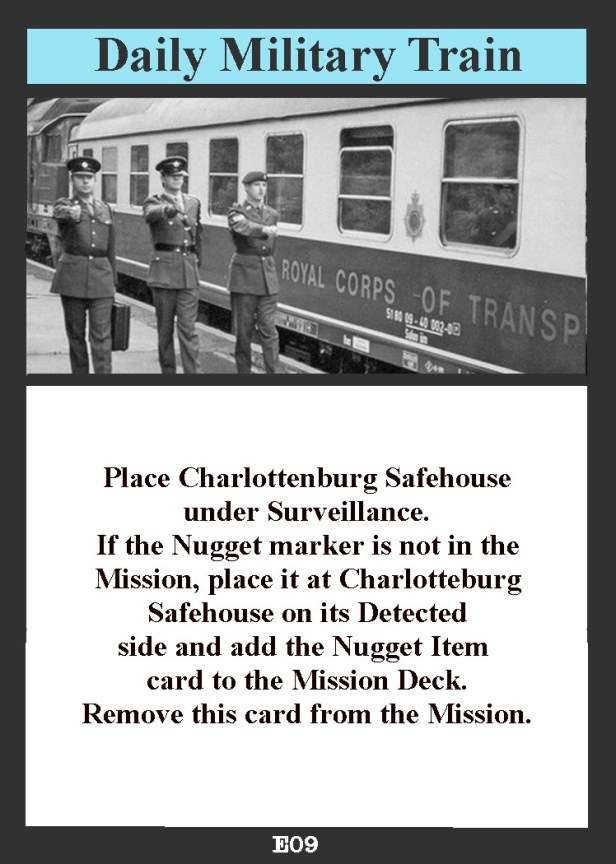
Each turn players will draw 1 of the 2 cards on the ends of this row of 5 cards, and then all the other cards shift before refilling the empty position. No card stays in the same location from turn to turn. This is important, because these cards are used to determine where tokens move on the map. Each card location can have a chit above it corresponding to an asset or KGB agent on the map, and every turn, after the cards shift, that asset or KGB agent moves toward the location, item, or asset depicted on the card below their chit. In addition to their role in moving tokens on the map, each card also has an effect printed on the bottom that applies whenever that card is showing in the draw area. As cards are drawn and new cards replace them, these effects come and go and can have significant impacts on the mission.
This is a very good game where players have to plan but these plans are imperfect as you are at the mercy of the lineup of cards. You have to be patient and try to move away from the KGB before your assets are discovered and captured.
We had a great time with this one as we played cooperatively and I think this will be a huge winner.
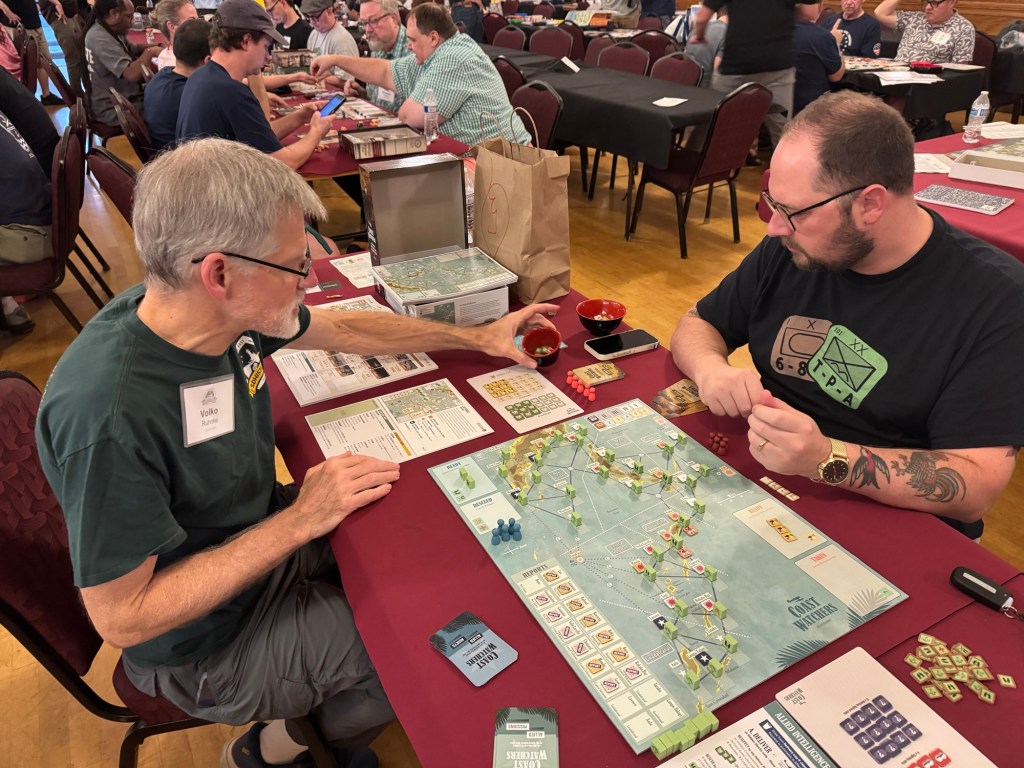
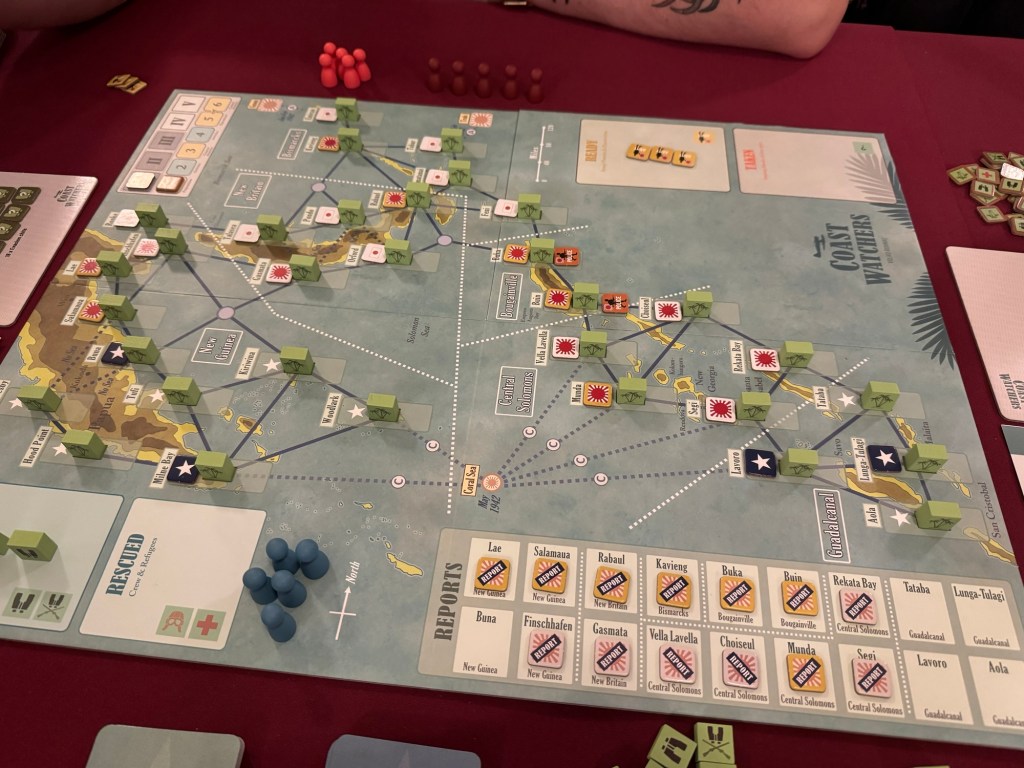
Then we played Coast Watchers from GMT Games with Volko taking us through the game and teaching us. This one was great and I’m looking forward to playing more in the future.
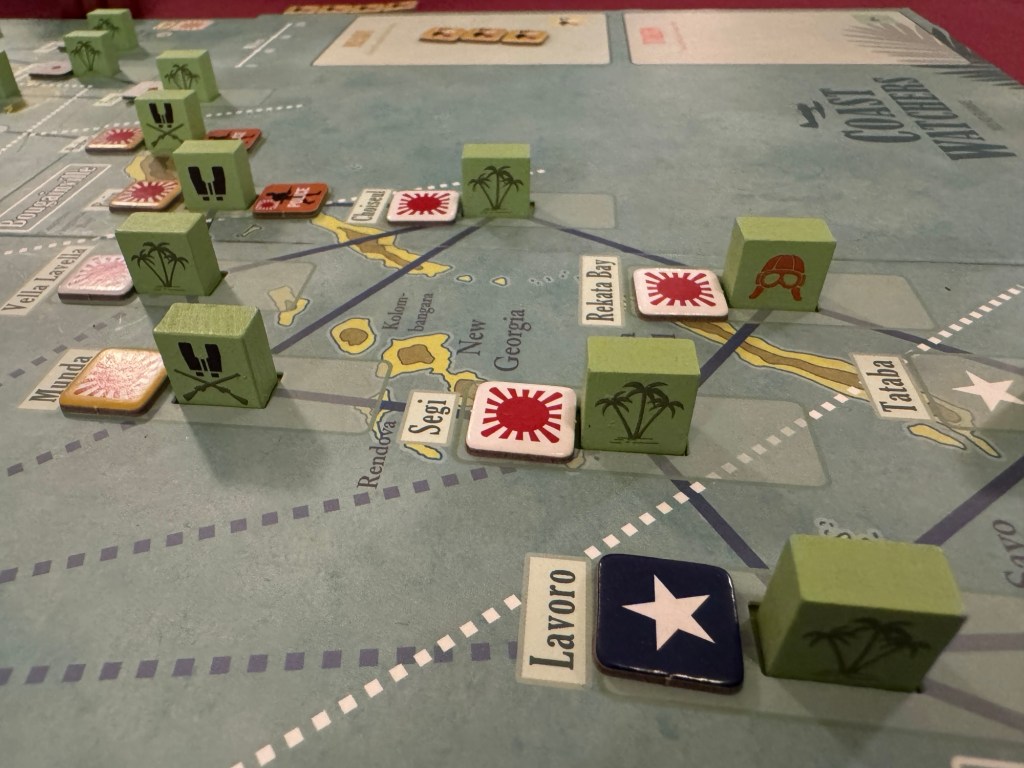
The game is intelligence operations focused with hidden coast watcher units trying to find out information on enemy build-up, movements and to report this information to Allied operations in the South Pacific. The hidden information is via status blocks, secret markers for Japanese movements, blind draw chit cups (Patrol and Delivery) that test success rather than dice and asymmetric objectives.
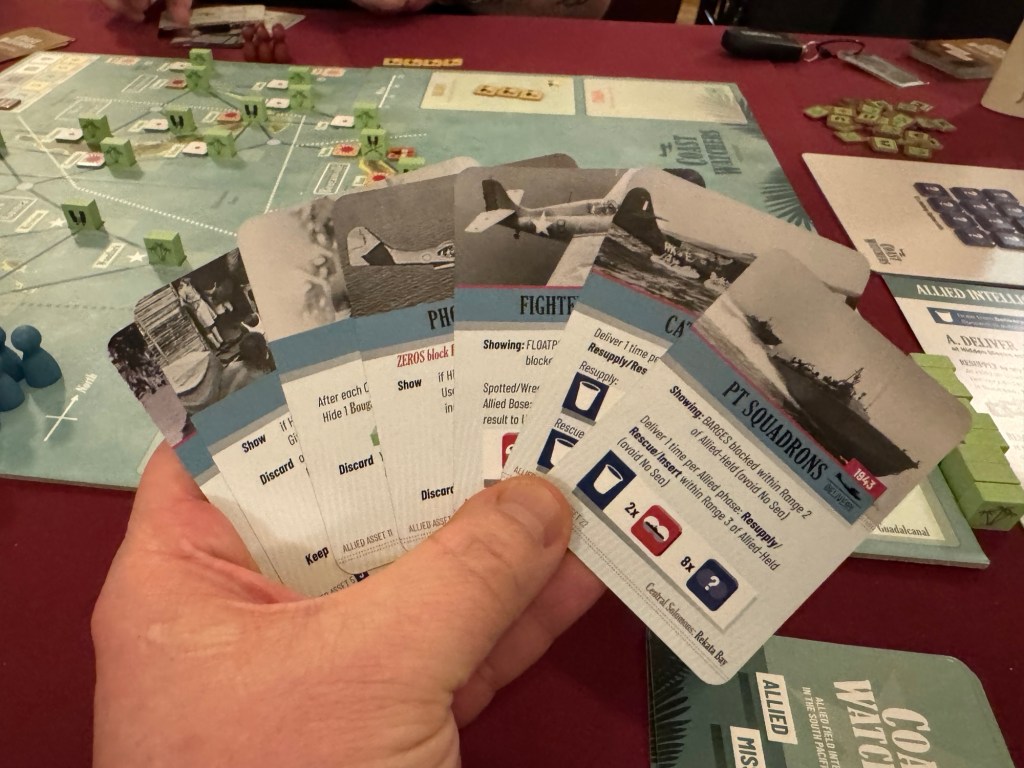
The game uses cards as well in the firm of missions and assets and players have to choose their cards carefully to be able to have the capabilities and benefits to perform their operations.
I very much enjoyed this one and am still thinking about it several hours later. I think that this one is going to really be a great series as the other games deal with intelligence in different wars and time periods. Just fantastic!
At this point we were tired and enjoyed the USMC birthday celebration and had cake that was cut by a Marine saber. We then played a very short learning game of Thirty Years of Misery from VUCA Simulations.
Th game covers the Thirty Years War of 1618-1648 and plays up to 4 players with 2 teams of 2. Players on the same side, the Imperials or the Protestants, must coordinate and work together to win the war, but the victory conditions only allow a single faction within the alliance to win the game.
The game is card driven and is based on the Birth of America Series from Academy Games. Random chit pull determines turn order and combat resolution uses different custom dice fur each nation.
This is a fun one and it is designed to be very approachable. Simple movement and combat but there is depth here as you have the religious struggle as players can convert spaces and then can lose them later. Lots of fun and we ended up playing just 3 rounds. We will look for a chance to play more in the future.
Tomorrow is our last day and we have a game of The Other Side of the Hill from NAC Wargames planned. See you tomorrow evening!
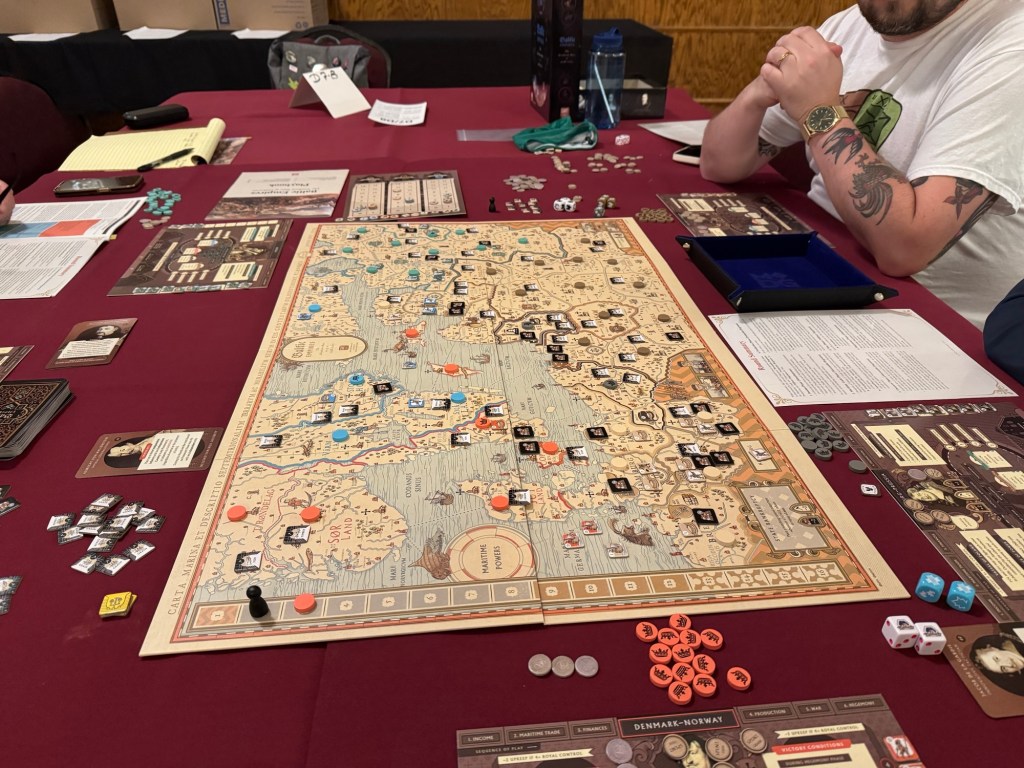
After a pretty rough day of travel yesterday, our plane landed in San Diego around 11:45pm. By the time we got to the rental car center to get our car and made it to the air bnb it was 12:30am. I only got about 5 hours of sleep due to a combination of the room having no curtains, an early sunrise and the time difference. But we made it out of the accommodations around 7:30am and ate breakfast at the very popular Point Break Cafe where we saw plenty of gamers, designers (David Thompson and Liz Davidson), content creators (ZillaBlitz and Grant Linneberg with Pushing Cardboard) and friends we had a fantastic Southern California breakfast and arrived at the S.E.S. Portuguese Hall of San Diego at 8:30am and began setting up for our first game of the day Baltic Empires from GMT Games.
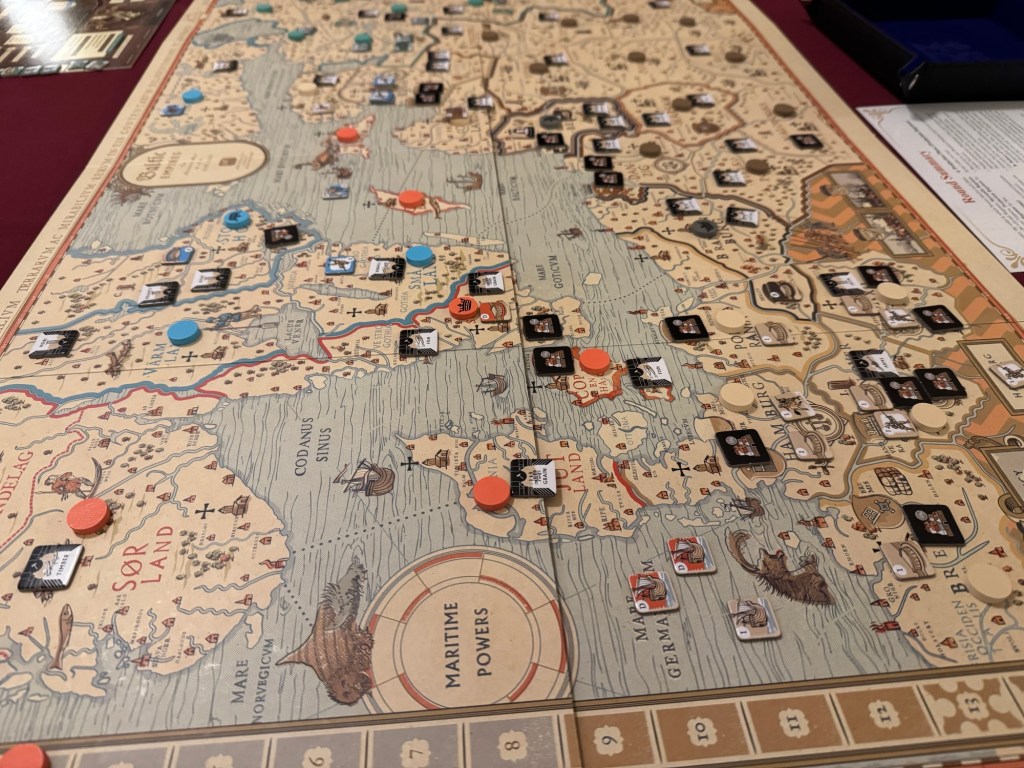
Baltic Empires covers the period in the Baltic region from the collapse of the Teutonic Order in 1558 to the end of the Great Northern War in 1721. The game really focuses on representing both the mercantilist economic thinking of the time, the very limited resources at hand on the state/ruler level and the destructive nature of warfare and its effects on the local economy. When war occurs in spaces infrastructure can be destroyed and it is very expensive to keep replacing units that just die on the battlefield.
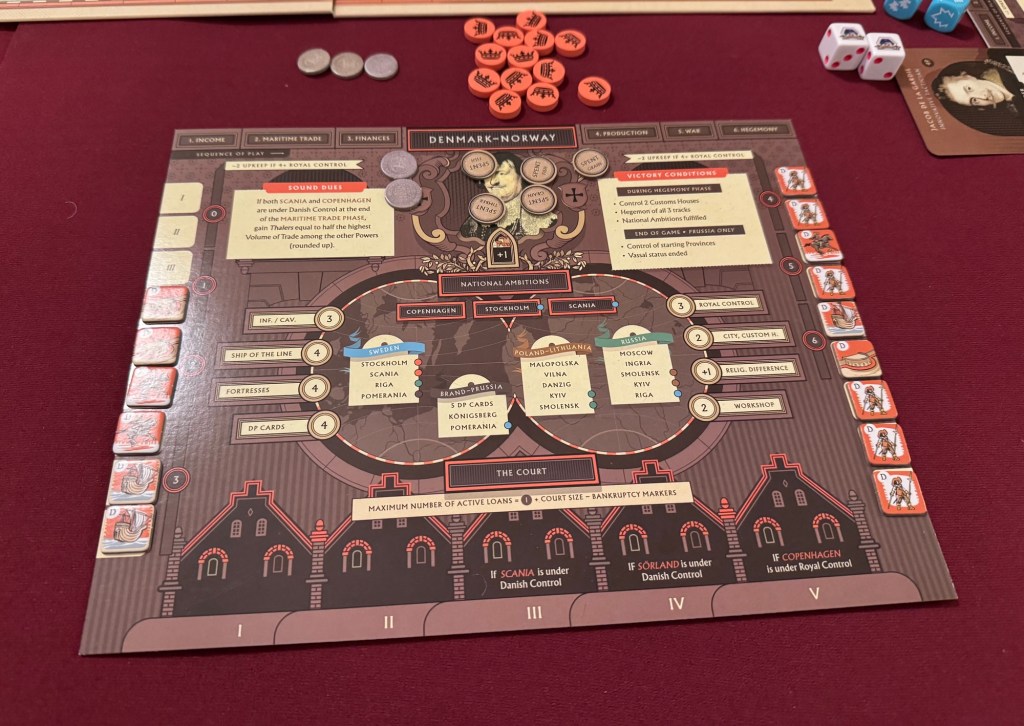
The game has 5 factions including Denmark-Norway, Sweden, Poland-Lithuania, Prussia-Brandenburg and Russia. Each power has 2 common victory conditions and 1 or 2 that are specific to that power. The shared victory conditions are either control of 2 custom houses or being the hegemon on all 3 tracks at the same time.
One of my favorite parts about the game was that each turn, 5 Dramatis Personae Cards are randomly drawn from the deck and become available for purchase by the players in the Production phase. These cards have a wide variety of effects, but can be broadly divided into 4 types: those that have permanent effects, those that have one-time effects, those that affect victory conditions and those that provide a special leader unit. These cards are excellent fun and really create somewhat of a race to purchase the best cards before others can acquire them. Now after having said that our draws of cards for the first 2 turns were not good and hardly anyone invested in them but that changed later.
I loved the game and very much enjoyed the lite nature of the game. The economic system is simple, but manages to capture a lot of key elements of this period. Each province has between 0 and 3 resource icons and between 0 and 2 city icons. If a workshop marker is present on a resource icon the province produces 1 of that type of resource and if a city marker is present on a city icon the province produces 1 thaler (the currency of the game). There is one twist though, as provinces under noble control will contribute a maximum of 1 of the resources and 1 of the thalers produced in it to the central administration while the rest is discarded as it goes into the coffers of the local nobility. Only provinces where royal control has been imposed will contribute their full income to the player. In addition to this there are 3 trade center provinces on the map, and these generate extra income for their controlling player as they are able to tax the trade there. Just a great little game that I hope to explore further later.
Alexander’s Poland ran away with it with a Hegemonic superiority victory (Hegemony leader for Mercantile, Production and Military). Great lite wargame similar to Mare Nostrum from Academy Games.
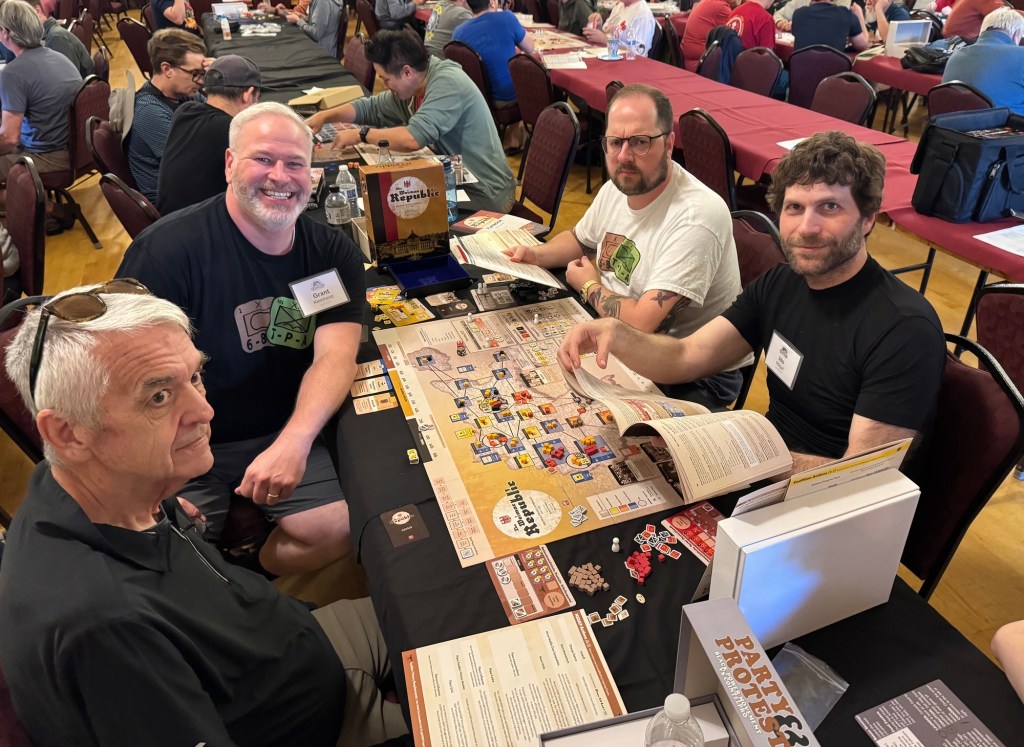
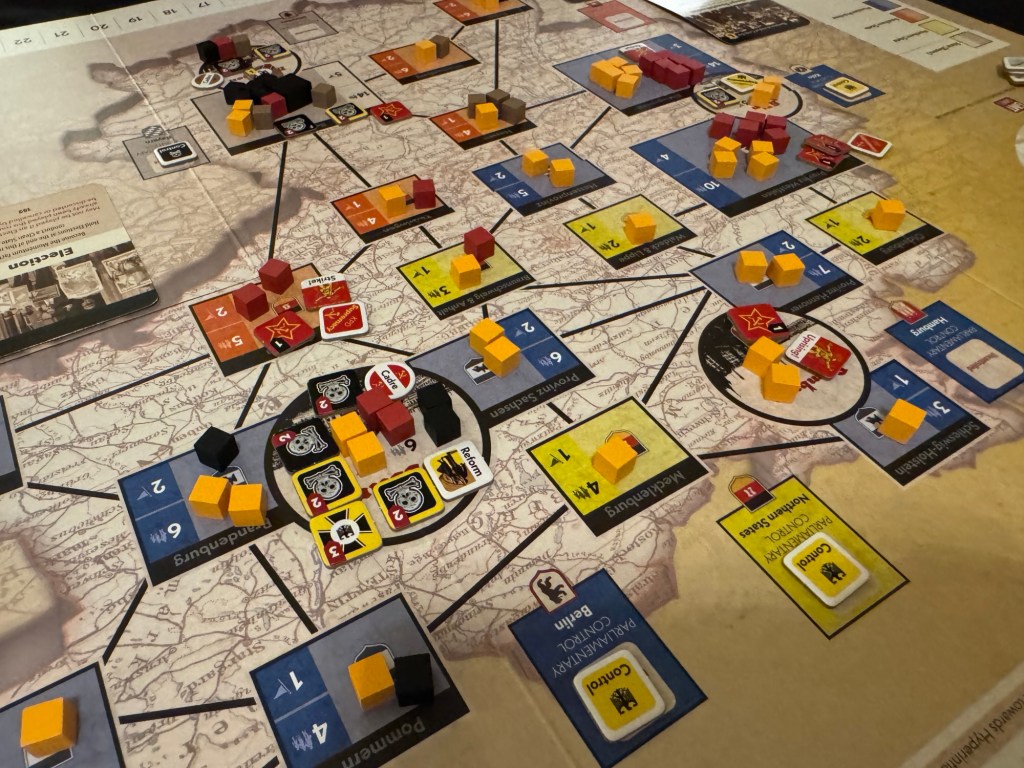
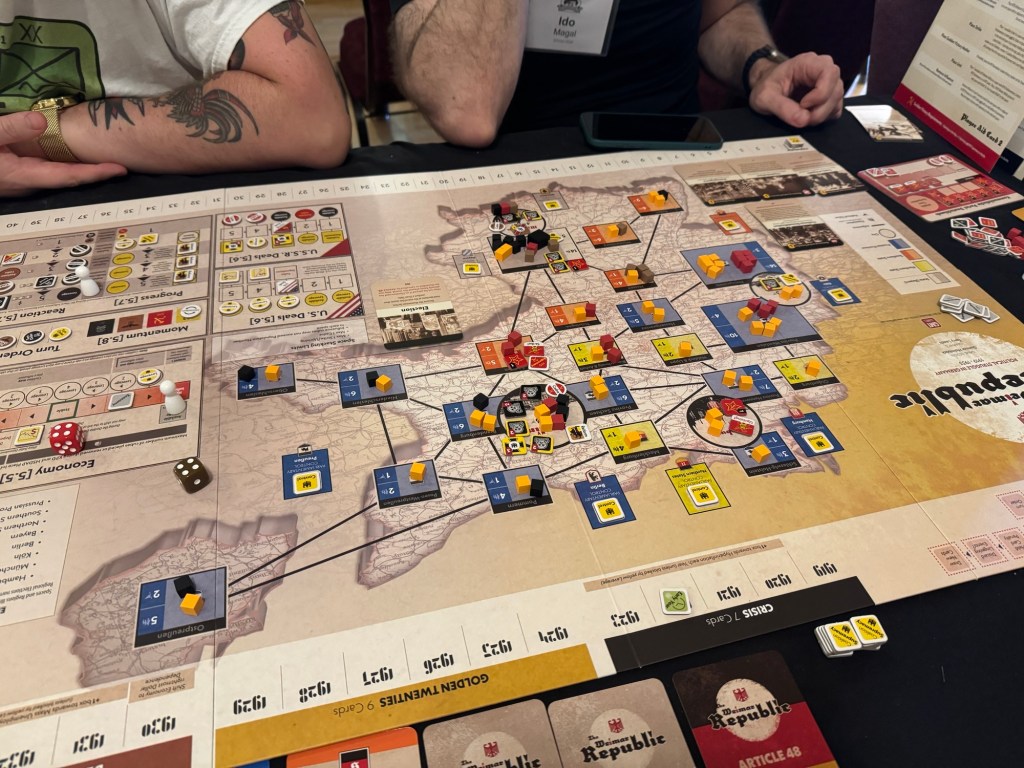
Our next game was a bit deeper and more involved in The Weimar Republic. The game is a Card Driven Game of political struggle in interwar Germany where 4 unique factions compete for dominance including the democratic Coalition, the Soviet-backed Communist Party, Hitler’s National Socialists and the far-right Radical Conservatives. The game covers the Interwar Years between 1919-1933 and represents all of the different fighting factions trying to gain control in Germany’s regions and major cities, to maneuver the political landscape of the Republic, and to dominate through a combination of propaganda, parliamentary elections, street violence and economic influence. This situation sets itself up perfectly for a game to explore the various parties involved.
The game makes me think of a COIN Series like game as each faction has their own unique abilities and powers but also win in their own way. The game also visually looks like a COIN game as it uses multi-colored wooden cubes to represent influence in the various districts of pre-WWII Germany.
A major focus of the game is the concept of Elections. Each Era has a number of Election Cards (based on the historical number of Elections) that are shuffled into the Event Card decks. When an Election Card is played, both a Regional and a General Election is held at the end of that round. Election scoring is based on players’ Dominance over spaces and Regions, with modifiers such as Middle Class Sympathies, Cadres, military Supremacy, etc. Regional Elections gives Parliamentary Control over the game’s Regions while a General Election can potentially end the game – if anyone but the Coalition wins a General Election, that player also immediately wins the game.
Players draw a hand of cards for each Era and use their AP to conduct Actions. You don’t chose between AP and Event as when you play an Event Card the Event always takes place, unless there are some requirements that aren’t met. You don’t need to play a card every turn – in fact you can’t, as there are fewer cards in a hand than turns in an Era and you may only play one Event Card per turn. However, you always have a basic 1 AP that may be used by itself or in combination with any Event Card played, so during some turns you will be using only that basic point. You can also pass which allows you to discard a card and draw a new one.
I very much like what I was doing but need to continue to learn the rules so I know what I should be doing. We had a good time and I look forward to another play in the near future. I was able to pull a victory out as the Coalition, which I understand is generally pretty difficult.
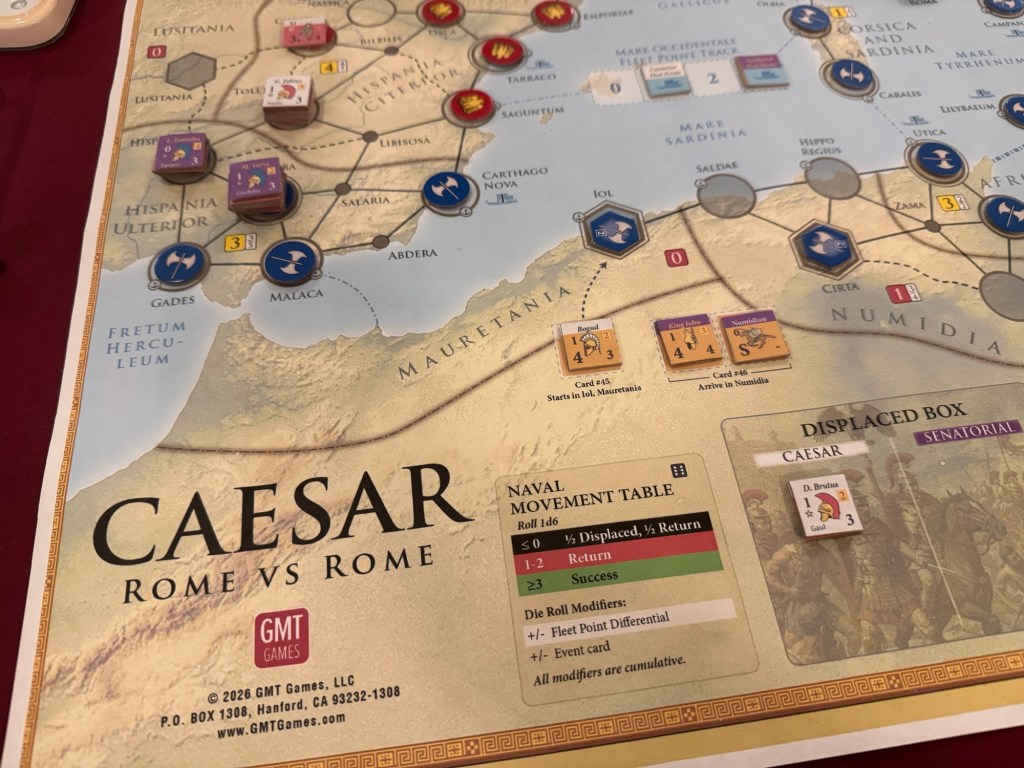
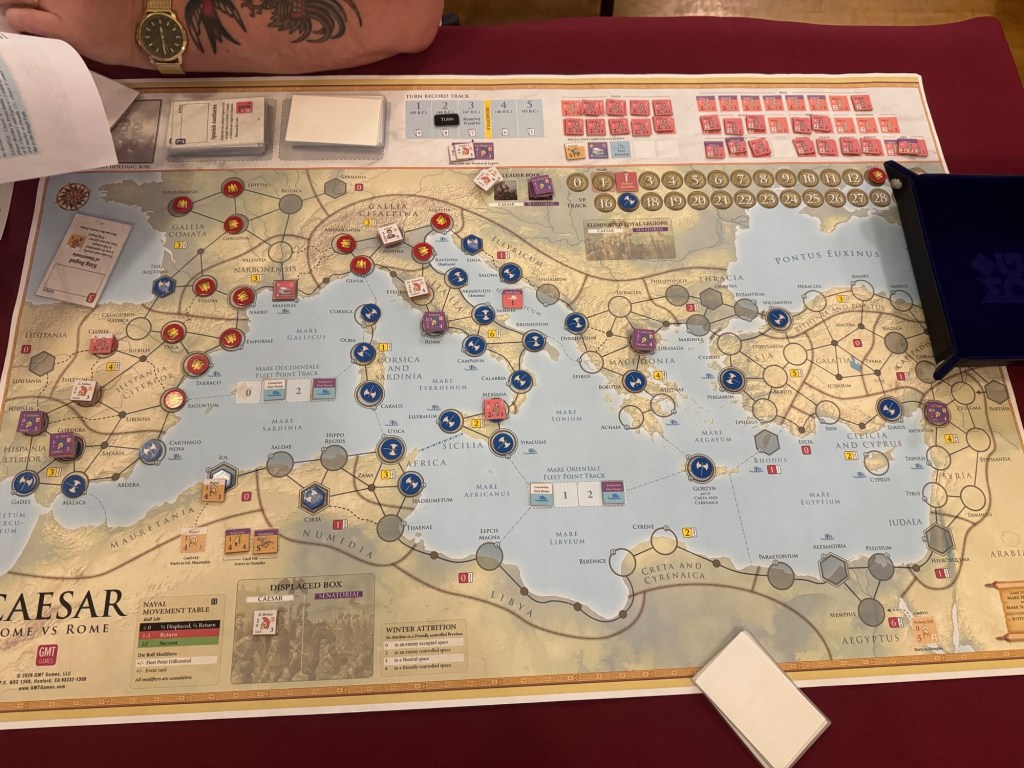
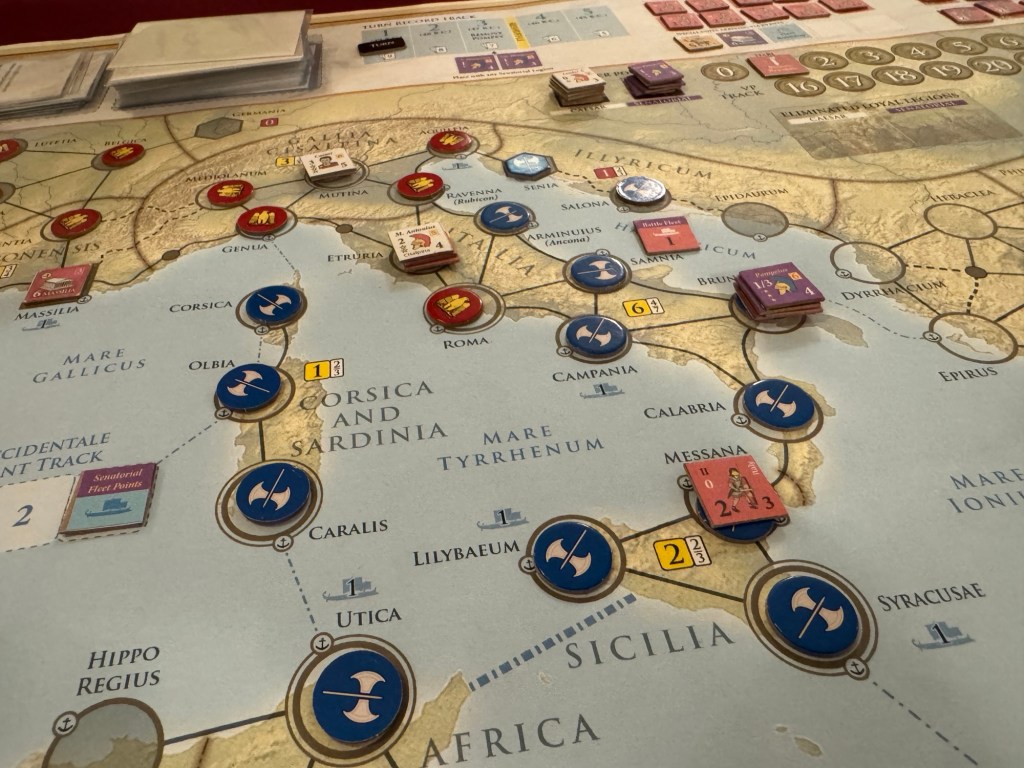
Our final game of the evening was a look at a new and as-of-yet unannounced collaboration between Mark Herman and Mark Simonitch called Caesar: Rome vs Rome. This game is a CDG and uses the same system found in Caesar: Rome vs. Gaul from GMT Games but covers the Roman Civil War where Caesar confronted the Republic and the forces of Pompey.
The game really is focused on the struggle for political control of the empire as players will play events, move armies and fight in order to control the minds of the people.
Battles are commons and a major part of the game but the game is very snappy and only lasts 5 turns.
I think that this one is going to be a winner and I very much appreciated Mark Herman showing us the game. I have been told that it will be announced on the P500 in December.
That was our day! 3 big games and lots of good times were had by all. Tomorrow we have an early morning game of Thirty Years of Misery from VUCA Simulations and I also hope to sit down with Russell Brown to get a look at Checkpoint Charlie from GMT Games and possibly Coast Watchers from GMT Games with Volko. See you tomorrow evening for a synopsis of Day 2.
Good morning our faithful readers! As this post uploads this morning, we will be preparing to make our way out west to attend SDHistCon 2026 held in sunny San Diego, California at the best little historical games convention on the West Coast! We will not depart until later today on a 3:45pm flight departing Indianapolis and should arrive in San Diego at around 5:30pm on the West Coast. We will be attending the mixer that evening and get settled into our short term rental. We also are taking along The Players’ Aid Wives (Kelly and Paisley) as well as 2 of our children in Marin (my daughter) and Atticus (Alexander’s son) and are excited to spend time with them in the beautiful southern California weather! This convention will include 3 days filled with gaming, designer interviews, looks at new prototypes, visiting with friends, publishers and designers.
This will be our 3rd trip to SDHistCon and we appreciate the constant prodding and encouragement from our friends Harold Buchanan and Andrew Bucholtz to get us out there and I am really excited about attending as we had such a great time the last 2 times we have attended! The San Diego Historical Games Convention is set to be held from November 6th through 9th at the S.E.S. Portuguese Hall of San Diego. The convention is about 2 blocks from the San Diego harbor, just a few miles from the San Diego airport, and is surrounded by delicious restaurants and fairly affordable hotels and other accommodations.
The mission of SDHistCon is to create a diverse and supportive gaming community dedicated to playing, discussing, designing and promoting historically-based board games. Through this commitment, SDHistCon seeks to serve both the existing historical board gaming community as well as grow it through the addition of new voices and perspectives. Recent events run by SDHistCon include this same convention last year, the 2025 Summit Award (given to War Story: Occupied France designed by David Thompson and Dave Neale), an online convention called SDHistCon Winter Quarters in January 2026, and SDHistCon North in Minneapolis/Saint Paul, Minnesota this past July.
At the end of each day, I will be putting together a short summary of what we did that day at the convention. I would like to keep this to just a few paragraphs with several pictures to give you an idea of the games we played that day, people we talked with and other activities we participated in. We will still work on doing multiple videos as well that will be released on the YouTube Channel over the next few months but this coverage will supplement the videos. This summary will most likely not be posted until after 1:30am EST each night, if not a bit later, so you might be checking it out the next morning which is fine.
One of the new things they will be offering this year at the convention is the Skunkworks Event. The idea of the event is similar to publisher speed dating events at other conventions, but it’s intended for more than just publishers. This event, on Friday, November 6th, will feature up-and-coming designers set up at their own tables, where they can give a 5-minute pitch on a single game to other convention attendees, who may be publishers, designers, reviewers or content creators, or others curious about what’s in the works. The Skunkworks Event will be scheduled on the Friday night of the convention to allow participants to schedule follow-up meetings or playtests later in the convention with people particularly interested in their game.
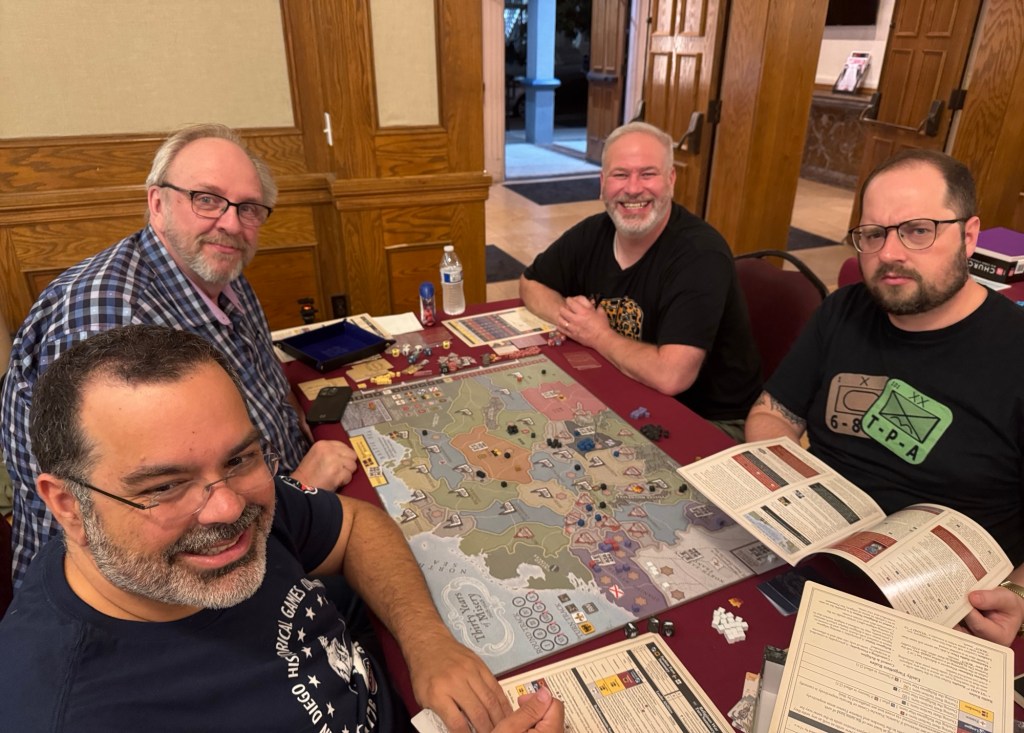
We have at least a few things planned that are official including several multi-player wargames like Baltic Empires: The Northern Wars of 1558-1721 from GMT Games, The Weimar Republic: Political Struggle in Germany, 1919-1933 from GMT Games, The Other Side of the Hill from NAC Wargames and Thirty Years of Misery from VUCA Simulations. We also will most likely be getting in a game of Virgin Queen but have not been able to get that finalized as of yet. We have been invited to participate in the Skunkworks event and I am very much looking forward to what we will see. We are also looking forward to taking a look at other “as of yet unreleased” games that are in design including Foxes and Lions: Renaissance City-States in the Age of Machiavelli from GMT Games, Painkillers from Hawk & Dove Games and Checkpoint Charlie from GMT Games in addition to some others. Should be a ton of fun!
There have been multiple games setup on this list since its creation in early October and we are nearing full capacity so check it out and add your name if you are interested in gaming with us. Happy gaming!
Finally, if you are at SDHistCon please feel free to find us and say hello. I believe that we are very friendly and accessible (well at least I am as sometimes the Brit is a bit crusty and gruff!) and love to make connections with our fans and followers. In fact, we have TPA buttons and stickers to give away so just ask. We also would like to take a picture with you so we can document it in our writings.
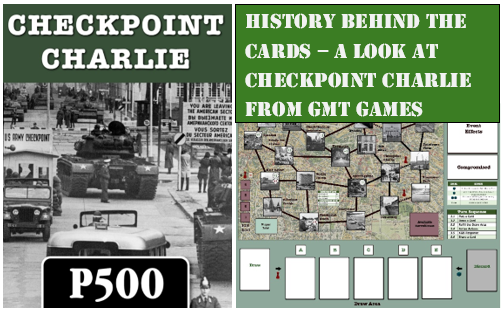
I love a different style and focus of wargame. A game that takes a look at an important but somewhat obscure or rarely addressed historical topic, such as espionage or intelligence, and creates a gaming experience tailored around the events to highlight and evoke the difficulties and tension that would have been present. In January 2026, GMT Games announced such a game in Checkpoint Charlie, which is a solo or cooperative game focused on SIS espionage missions in Berlin in the 1960’s designed by Russell Brown. We have posted an interview with Russel and it was very well received and he has now agreed to create a series of History Behind the Cards to highlight the events of the 1960’s Cold War struggle in West Germany but also to share aspects about the game play and how it models the history.
*Note: The cards highlighted in this series and their event text, as well as any pictures used showing any of the various components, are still in the design and development process and as such event effects and text might still change prior to final development and publication.Also the art and layout of the cards are only for playtest purposes at this point and the game will enter the art department as it nears publication.
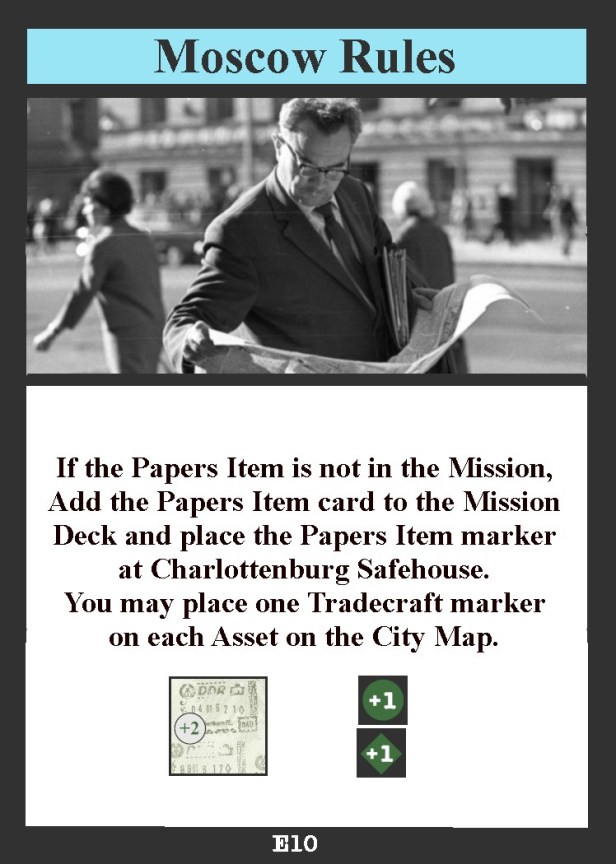
History Behind the Cards – Checkpoint Charliefrom GMT Games – Card #10 Moscow Rules
“Moscow rules meant watch your back. London rules meant cover your arse.”
This quote from Mick Herron’s book, Slow Horses, may be what many people think of when the term Moscow Rules is used today, but there’s a bit more to it than that. Moscow rules were an unwritten set of procedures – spycraft protocols – to keep in mind when operating on the KGB’s home turf. Moscow Rules may have also been used as a cautionary declaration, a spy’s call to arms. In John Le Carrè’s spy novels, George Smiley lets his colleagues know that exceptional caution is warranted just by saying, “Moscow Rules.”
Moscow Rules could include communicating with extra caution, or in code. It could mean keeping a better eye out for someone following you, or being ready to defend yourself. But at its core, it meant that you were effectively operating in enemy territory and could no longer trust the people and places you once took for granted.
In Checkpoint Charlie, the Moscow Rules Event Card puts all of your assets on high alert, giving them a Tradecraft Marker if they don’t already have one. It also adds the Papers Item to the Mission, assuming that your assets dig deeper into their resources, perhaps pulling out old false identities reserved for emergencies. If you’re playing the campaign game, the Moscow Rules Card is not removed when it occurs, so it can show up on almost any mission.
In the next article in this series, we will take a look at ________.
In my opinion, this game looks extremely interesting and I am very much excited to learn more about it. I am appreciative to Russell and his efforts to bring us these cards and to write these entries to share with our readers. I am also very glad that this topic is being covered in a game and look forward to playing this one day soon.
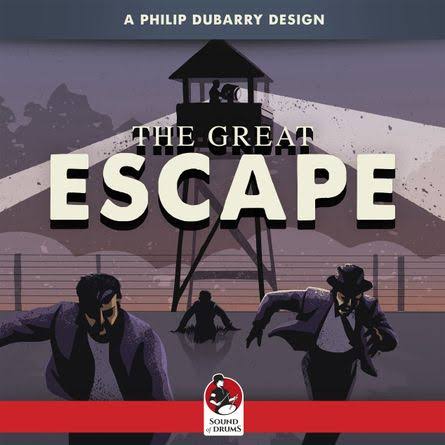
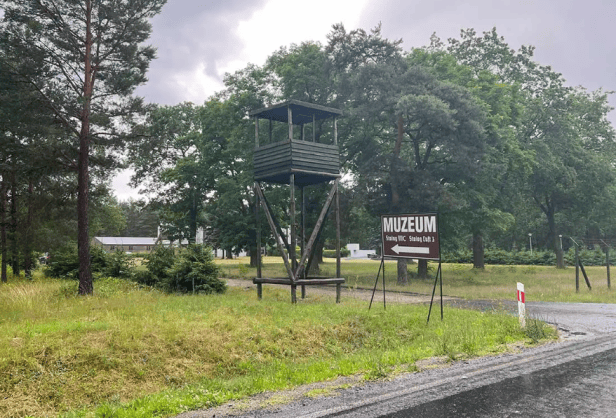
I have known about this game’s existence for a while now. In fact, I saw a prototype last fall while attending Spiel Essen, but recently it was officially announced on Gamefound with a campaign kickoff of October 20th. The game is called The Great Escape and is designed by Philip duBarry, the designer of one of my favorite cooperative historical games in Black Orchestra. The Great Escape is based on a true story and shares the account of the escape attempt by Allied soldiers from the infamous Stalag Luft III POW Camp during WWII. The game is a cooperative or solitaire experience for 1-5 players. We reached out to Philip to see if he would answer some questions and he was more than willing.
Grant: Philip welcome back to our blog. What is your upcoming game The Great Escape about?
Philip: Thanks for having me back! The Great Escape tells the story of the most famous prison break during WWII. A group of 76 POW’s managed to dig under the fence of Stalag Luft III and escape into the country side. While the Germans eventually recaptured all but three, the episode wasted many hours and struck a blow against German morale.
Grant: What is your design goal with the game?
Philip: I wanted to make another WWII co-op game in the vein of Black Orchestra. I want players to experience some of the drama and intensity of the real historical event.
Grant: What elements do you feel are most important to model from the period?
Philip: I especially want to convey the cat-and-mouse dynamic of prisoners and captors trying to outwit each other. I want players to feel the tension of the risk involved in hiding contraband items, as well as the sheer difficulty of putting together such a massive operation with limited resources and opportunity.
Grant: I understand that the team has worked closely with the Stalag Luft 3 Museum in Poland. What assistance have they provided?
Philip: The museum has provided a wealth of background information. They will also be contributing a short historical summary of the events in the game.
Grant: How do you go about creating an overarching feeling of tension and difficulty?
Philip: A lot of the tension comes from some push-your-luck elements. Each turn, the guards will be patrolling through the camp. Periodically (and somewhat randomly) they will conduct searches of nearby huts (or barracks / barracken), so where you locate your various stashes of contraband is crucial. Another aspect is the timing of when to make the attempt. Finally, everything must be done before the SS/Gestapo take full control of the camp and prevent further attempts through more draconian means.
Grant: How has the artist team of Marc Von Martial and Wouter Schoutteton assisted you in creating the mood you wanted for the game?
Philip: The team at Sound of Drums has been phenomenal! They have produced a beautiful and atmospheric experience for players. The art style strikes just the right tone for the game.
Grant: What major design challenges did you encounter and how did you overcome them?
Philip: This project has taken quite a long time. I made the first prototype about nine years ago! The first few iterations of the game were a bit of a mess. I included way too many details: phases of the moon, seasons, weather, physical distances, a grid system of movement, and many other elements were all jammed into one multi-hour package. Since then, we have been able to streamline and edit significantly. Another tricky part was how to track the trouble (called the Trouble Track) that the prisoners were in. Multiple complicated tracks became one simple track. Adding guard movement and behavior was another big step forward. Finally, getting the balance right also took a good deal of time and testing. Over the course of the game’s creation, I worked with multiple publishers (some of whom contributed some key elements to the final product). Sound of Drums helped me get over the final hurdle!
Grant: As a cooperative game how do the players work together?
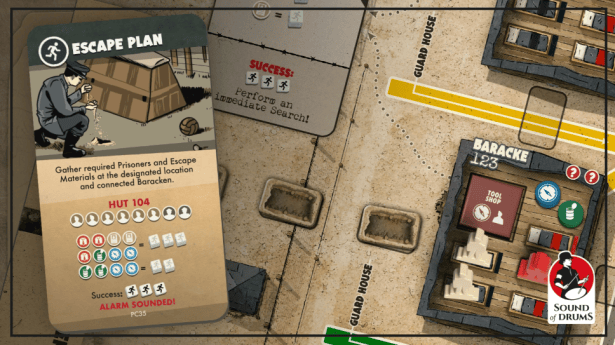
Philip: The players are “officers” in the camp. They direct all the actions and jobs needed to affect a successful escape. As players, you will be working on 1-3 escape plans, pooling resources, positioning the other prisoners, digging tunnels, all the while distracting guards and throwing them off the scent.
Grant: What actions can they take?
Philip: The main actions involve moving around the camp (distracting the guards is necessary to allow this), digging tunnel sections and disposing of sand, producing the various escape materials (clothing, papers, food, tools, etc.), and taking a few special actions scattered around the board and on cards.
Grant: How is the success or failure of these actions determined? How can players improve their chances?
Philip: Most of the actions are open; however, many upgrades are available in the deck of Prisoner Cards. The final escape attempt is resolved by rolling some dice (in Black Orchestra fashion). There are several ways to influence this roll as well.
Grant: How are Tunnel Tiles used? What information is located on these tiles?
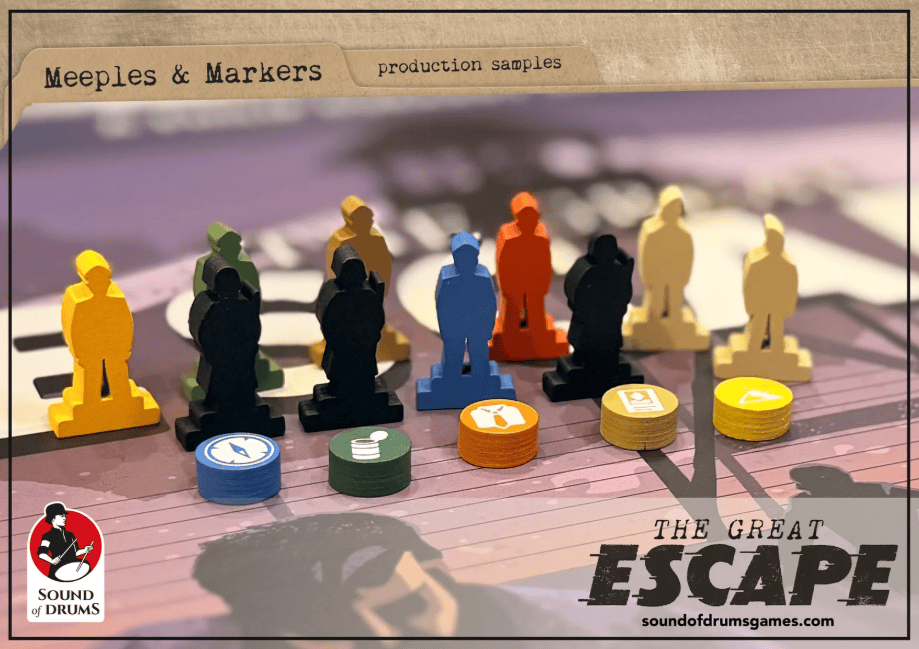
Philip: The Tunnel Tiles represent sections of the tunnel being dug. The goal is to connect a few barracks with a main tunnel leading under the fence and out the compound. Normally, each tunnel section requires two non-player prisoners led by a player officer.
Grant; How does the game utilize cards?
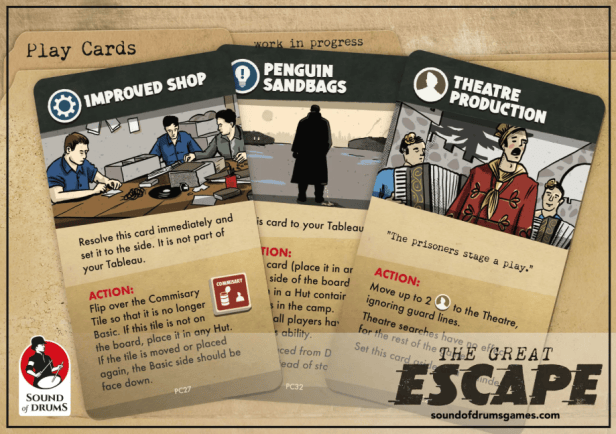
Philip: The cards provide special abilities to the players, as well as additional resources and opportunities. Some of the cards also deal setbacks to the players.
Grant; What different types of cards are included?
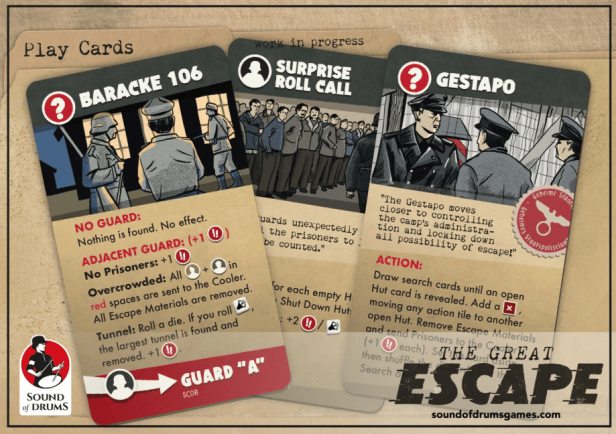
Philip: There are three decks. The Prisoner Deck contains upgrades for players, as well as access to new escape plans. The Search Deck controls the guards each turn, sometimes confiscating your materials and sending prisoners to the “Cooler” (the brig inside the camp). Finally, the Event Deck tracks various historical moments (or representative of historical moments) encountered by the real inmates. Most of these provide new challenges but a few offer a bit of relief.
Grant: What is the anatomy and layout of these cards?
Philip: Because there are several different types, they are all laid out differently. Some fit into your player board tableau. Others fit alongside the board, while the Search and Event Cards are resolved and discarded.
Grant: Can you share a few examples and explain how they are used?
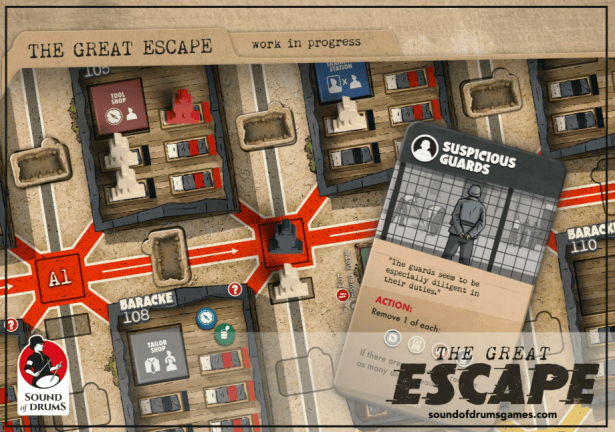
Philip: The Search Cards are especially interesting. Each one lists a specific barrack (or sometimes another location). If no guards are walking by that building, nothing much happens. However, if a guard is adjacent to the building, they will inspect it. If they find it completely empty or too crowded, they will become even more suspicious, possibly setting off the alarm, discovering your supplies, and maybe even uncovering your tunnels. Eventually, the barracks begin to be shut down, restricting your options further as the game nears its conclusion.
Grant: What characters do the players play as? What unique abilities does each bring?
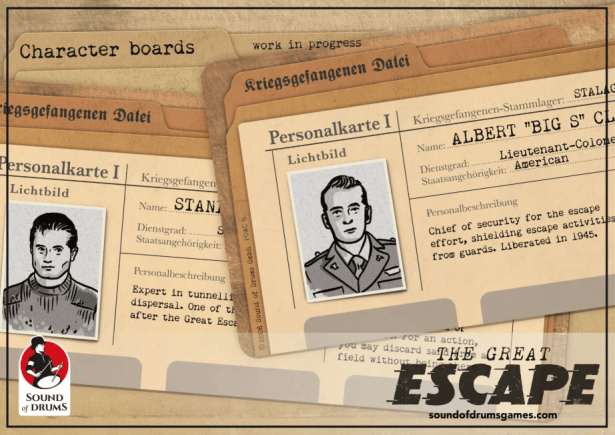
Philip: Fans of the famous movie version of the story might be a little disappointed to find some of their favorite characters missing. This is because we have chosen to feature only real, historical figures. Some of these include: Roger “Big X” Bushell (in charge of X Organization—the escape committee), Walley Floody (a tunnelling expert), “Des” Plunckett (a brilliant map-maker), John Bigelow Dodge (nicknamed “The Artful Dodger” for his many escape attempts), and British Air Commodore, Herbert Massey. There are something like twelve in all…so far.
Grant: What is the layout of the board?
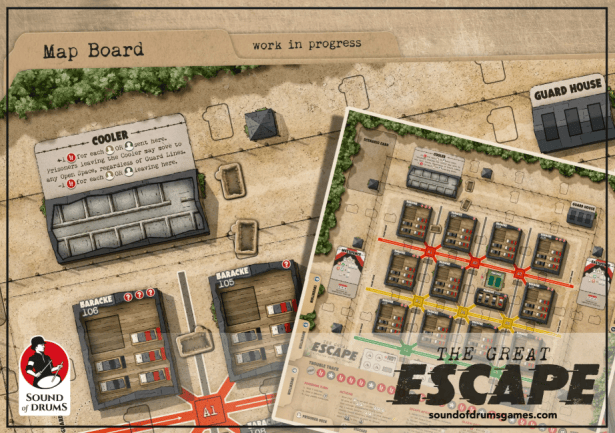
Philip: The board is a somewhat-historical map of the northern section of Stalag Luft III. Originally, this was built to house British air force POW’s, but airmen from many other nations were soon placed there as well. There are 11 barracks (barracken), the Cooler, the guardhouse, a theatre, and two sports fields (a great place for getting rid of excess sand). There is also a fire pool in the middle, which also provided some entertainment to the prisoners.
Grant: What do you feel the design models well from history?
Philip: I hope that players will be left with a better understanding of what went on in the camp. We have had to simplify and condense things, but the general flow should come through. There are playful moments and tense moments, as these brave men fought their own private war from behind barbed wire.
Grant: What type of experience does the game create for players?
Philip: I would like players to feel that they had confronted some of the issues faced by the historical prisoners. There should be stretches of working out a logistical puzzle punctuated by the terror of knowing that the guards are right outside your window waiting for the one Search Card to ruin your plans.
Grant: What has been the feedback of your playtesters?
Philip: Playtester feedback has been overwhelmingly positive. Even when the game needed lots of tweaks and wholesale changes, the basic tensions and historical flavor was present from early on.
Grant: What other designs are you currently working on?
Philip: I’m also working on expansions for Citizens of the Spark and Snowcrest, as well as a larger space-themed game coming from APE Games in 2027. I’m also working on a special project about cobalt mining in the Congo, partnering with a charity in the region to help raise awareness of the plight of child miners. Thanks for asking!
Thank you for your time with this interview Philip. I really appreciate the fact that you responded quickly and provided the answers in very short order.
Star Wars: Battle of Hoth is a fast-paced, tactical miniature board game designed by Richard Borg and Adrien Martinot that is a part of the Commands & Colors Series. The game uses cards that will activate units in a certain area of the board, which is divided into 3 areas, to move, attack or perform a special action or ability. The object of the game is usually to be the first to claim a set number of victory medals (usually 4 to 5, depending on the selected battle scenario’s victory conditions). In Battle of Hoth a victory medal is gained for each enemy unit entirely eliminated from the battlefield. Each medal won this way is designated by placing the last miniature of the eliminated unit on any of the available medal stands located on the bottom left of each side of the board. In some scenarios, additional medals may be gained from the board itself, for capturing or holding certain terrain hexes or battlefield objectives. Some scenarios may outline special victory conditions, described in the scenario special rules section.
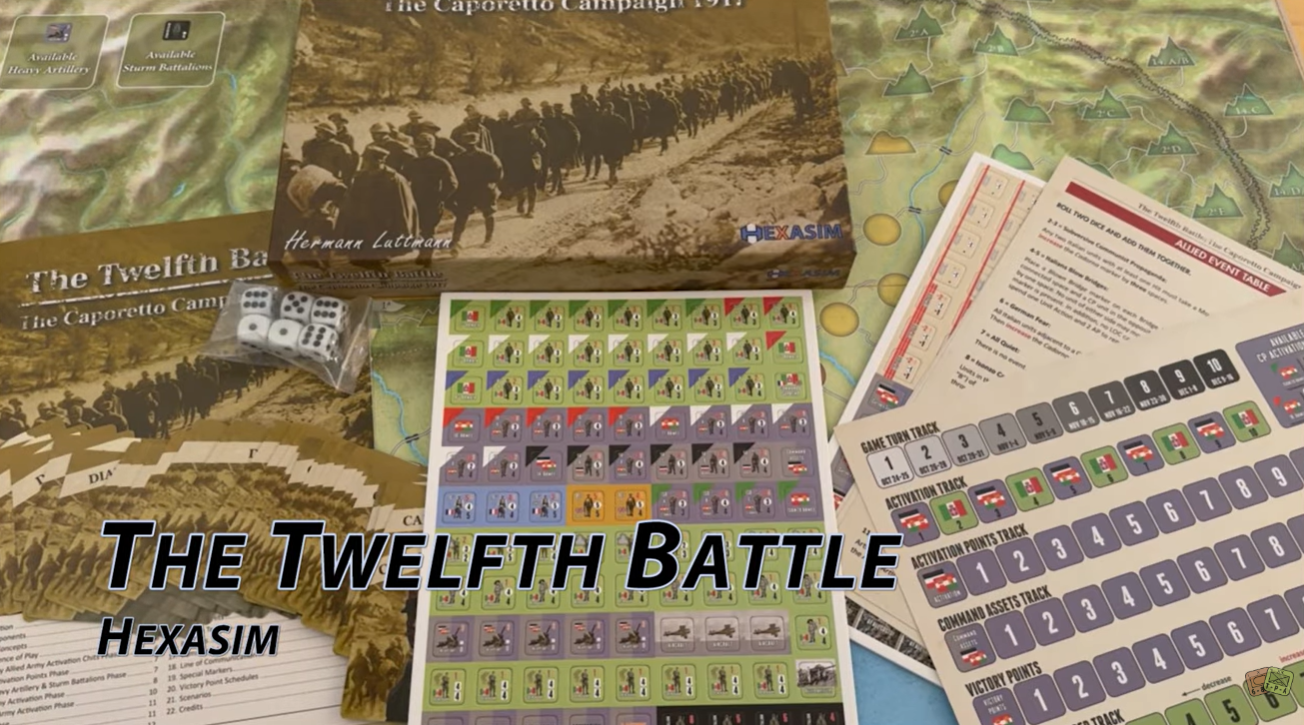
The Twelfth Battle is a solitaire wargame that simulates the Central Powers offensive in Italy that began on October 24, 1917, with an all-out assault around the town of Caporetto. Using gas and stormtroopers, German and Austro-Hungarian formations assaulted the Italian defensive lines along the Isonzo River and around the town of Caporetto, creating a huge breach in their positions. Hundreds of thousands of Italian troops, demoralized and fatigued from the first eleven attritional battles along the Isonzo, were made casualties or surrendered.
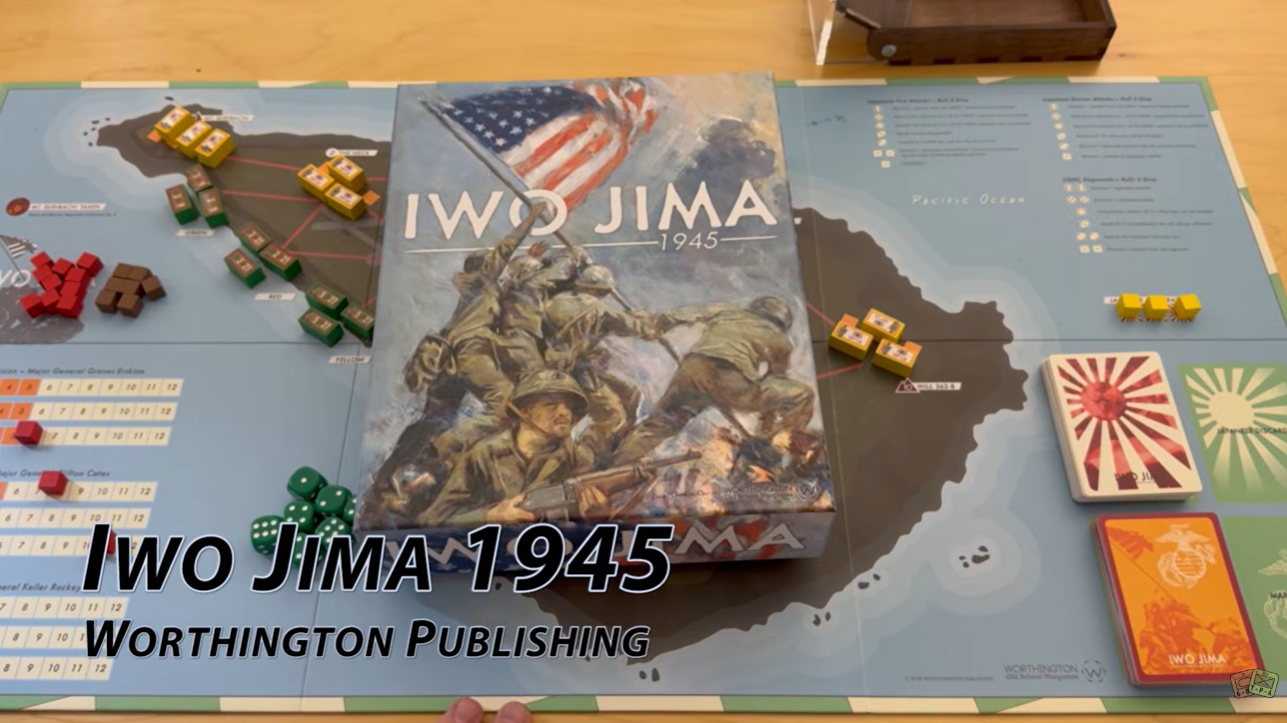
A few years ago, Worthington Publishing published their first game in the Island Fight Series called Tarawa 1943. That game was awesome and was truly difficult to win, as it should be. Now, they have published the 2nd volume in the series called Iwo Jima 1945 that covers the only island assault during the Pacific war that the attacking US forces would suffer worse casualties than the Japanese defenders. On February 19, 1945 the USMC would land 30,000 marines on the island against a Japanese defensive force that numbered roughly 21,000 Japanese soldiers. Facing a Japanese commander who had learned valuable lessons from the losses on other Japanese islands, the USMC would eventually land over 70,000 marines and suffer over 25,000 casualties during the 36 day campaign.
In this solitaire game, the player takes on the role of the USMC commander leading the invasion of Iwo Jima. The game system, driven by cards, will simulate the strategies of the Japanese defenders, often referred to as the Japanese AI, adding a layer of historical authenticity to your gaming experience. If you have played Tarawa 1943, you will be familiar with the system.
With this My Favorite Wargame Cards Series, I hope to take a look at a specific card from the various wargames that I have played and share how it is used in the game. I am not a strategist and frankly I am not that good at games but I do understand how things should work and be used in games. With that being said, here is the next entry in this series.
#100: KSM from Labyrinth: The War on Terror, 2001-? from GMT Games
Labyrinth: The War on Terror, 2001-? from GMT Games is a 2-player asymmetrical Card Driven Game that pits the mighty and powerful United States military and all of its various antiterrorist agencies against the Jihadists in the Middle East whose sole goal is to spread terror, sow the seeds of deceit and ultimately destroy Western civilization. The game is a Card Driven Game where the cards contain Operation Points or Events and each turn the player must strategize and use their cards to their best ability in order to effect the state of the board and further their individual and asymmetric victory conditions. But the game is raw and is tied to the actual events of the early 2000’s as the United States was reeling to recover from the terrorist attacks in New York.
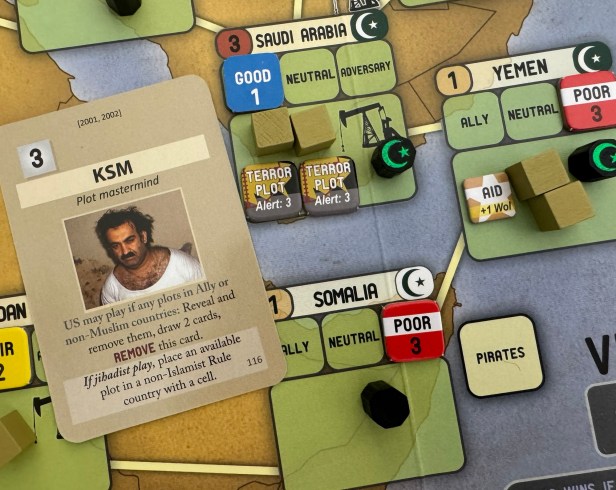
In the game, the Jihadist player is working to destabilize the Middle East through a series of clandestine activities such as destroying stability, toppling governments and forcing the US to react to their actions. One of their biggest strategies is to work to place what are called Plots out on the board in order to destabilize but also to generate local support and funding for their activities from the populace. If left alone, these Plots will go off at the end of a round and cause trouble that will then have to be cleaned up by the US player over the next turn. In order to uncover these Plots, the US player will have to play a 3 Ops card to take the Alert Action and different from most other actions there is no die roll required and the the Plot removal is automatic. But, the cost is steep as a 3 Ops card is pretty rare and spending it on this action is very painful. Jihadists use these Plots to force the US player to have to stamp out fire after fire rather than working to reform and stabilize governments to create allies. And when these Plots appear, the player’s long-term strategy will have to be put aside and a focus will have to change from managing regime change and the Global War on Terror (GWOT) posture to dealing with urgent plots. The KSM card is a very powerful tool in this game as it allows for the US player to remove Plots from an Ally or non-Muslim country but also to replace this investment with drawing 2 cards to replace it. This is specifically tied to the intel that was obtained from the capture of Khalid Sheik Mohammad and how it was then used to defuse several ongoing plots. The Jihadist player also gains a pretty large benefit as they will be allowed to place a Plot Marker into a non-Islamist Rule country with a cell. The process of successfully placing a Plot can be very challenging for the Jihadist player as it takes the play of a card for Operations points, uncovering a cell in a country and then rolling a die equal to or less than that country’s Governance Level to then place a face-down Plot Marker. This takes the need for a roll away and makes the placement of a Plot an automatic success.
I think that one of the other important distinctions and differences with the KSM card is that it is a 3 Ops Neutral Card that can be played by either side but when played by the US player for the event, it will be removed from the game while when being played for the Jihadist portion of the event it will remain and be able to be used in a later turn when it is drawn again. This reflects the important role that KSM played in al-Qaeda’s plans and if allowed to stay at large he will continue to plan and execute plots across the globe.
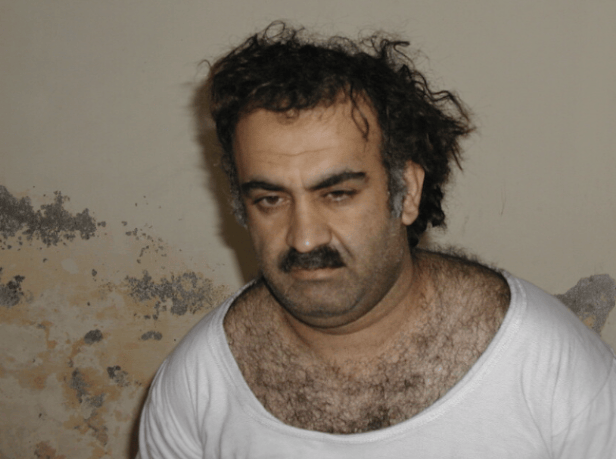
Khalid Sheik Mohammed was a member of Osama bin Laden’s militant organization al-Qaeda, and was specifically in charge of leading al-Qaeda’s propaganda operations from around 1999 until late 2001. Mohammed was captured on March 1, 2003 in the Pakistani city of Rawalpindi by a combined operation of the U.S. Central Intelligence Agency (CIA) and Pakistan’s Inter-Services Intelligence (ISI). Immediately after his capture, Mohammed was taken to secret CIA prison sites in Afghanistan, then Poland, where he was interrogated by U.S. operatives. By December 2006, he had been transferred to military custody at Guantanamo Bay detention camp. Sensationally nabbed in Pakistan, alleged 9/11 mastermind Khalid Sheikh Mohammed was photographed for the world in a disheveled state immediately after his capture—symbolizing an apparent laying low of the once mighty al-Qaeda network. According to his US captors, he later provided information that thwarted other attacks.
Mohammed is widely regarded as the chief planner of the September 11 attacks. The United States government has alleged that he further participated in planning Richard Reid’s shoe bombing attempt to attack an airliner, the 2002 Bali bombings in Indonesia, the 1993 World Trade Center bombing, the murder of Daniel Pearl and various foiled attacks as well as numerous other crimes. These claims have been criticised by others, such as military prosecutor Moe Davis and journalist Andrew Brown, as inadmissible due to being obtained through torture. He was charged in February 2008 with war crimes and murder by a U.S. military commission at the Guantanamo Bay detention camp, which could carry the death penalty if convicted. A 2008 decision by the United States Supreme Court had also drawn into question the legality of the methods used to gain such admissions and the admissibility of such admissions as evidence in a criminal proceeding.
This image shows Khalid Sheikh Mohammed, the self-proclaimed mastermind of the September 11 terrorist attacks, photographed shortly after his capture during a joint raid in Rawalpindi, Pakistan, on March 1, 2003.
In the next entry in this series, we will take a look at Constantinople Sends Aid Core Event from The Shores of Tripoli from Fort Circle Games.
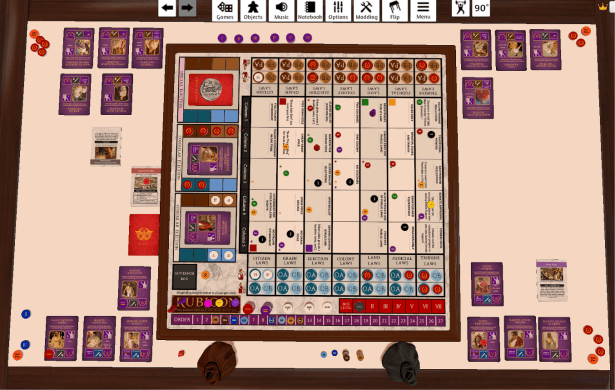
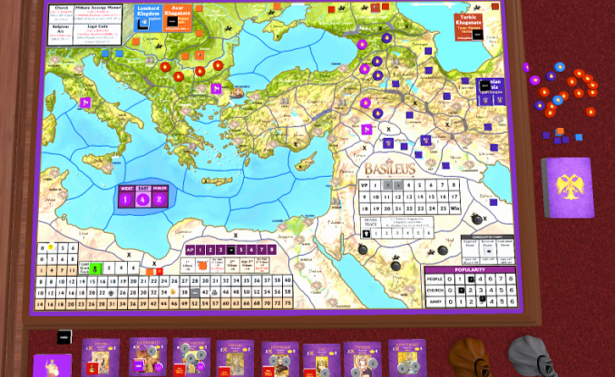
From time to time, we assist designers with getting the word out for them as they are looking for playtesters for upcoming designs. Recently, I was contacted by Douglas Walker who is working on 2 designs, one named Rubicon and the other Basileus, and was in need of assistance. He has created a Discord server for potential playtesters called “Doug Walker Playtest Server.” Here is the invite, which won’t expire: https://discord.gg/gSsQRWjPWp.
Doug has provided the following descriptions of the games:
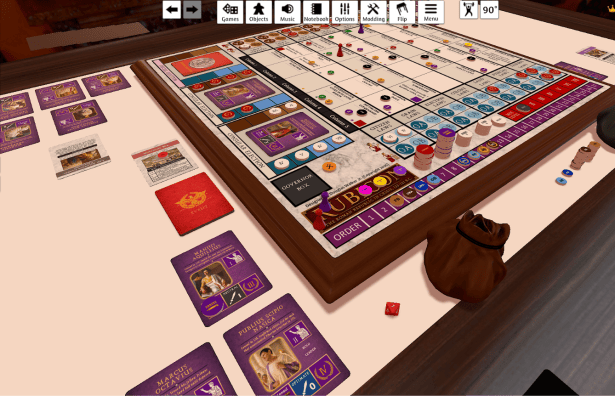
Rubicon is a strategy game about political competition in the late Roman Republic. It is 133 B.C. The Republic of Rome overshadows the Mediterranean world, but internal discord threatens to derail its growing empire. Two political factions vie for dominance—the aristocratic and conservative “Optimates” and the populist and revolutionary “Populares.” The fragile consensus holding together Rome’s elites erodes as conflict grows ever more violent.
In Rubicon, players control a faction of Roman senators belonging to either the Optimate or Popularis faction. More than one player belongs to each faction—but only one player may win the game. Players use their political influence to win elections, gain glory in war, and shape the laws of the Republic to suit their ideology and interests. Rubicon involves simultaneous blind bidding, negotiation and hand management. A thematic push-your-luck mechanic involves violating the unwritten customs of the Republic to unlock powerful actions, at the risk of provoking a deadly pushback. Winning requires carefully balancing cooperating with one’s faction partners to advance shared objectives, such as passing laws, while simultaneously competing with them to advance the glory and reputation of one’s own characters.
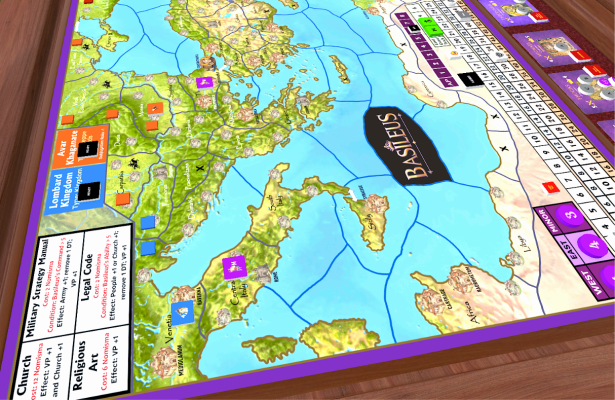
It is A.D. 568, and you live in the East Roman Empire (also known as the Byzantine Empire.) Three years ago, the great emperor Justinian died and was succeeded by his nephew. As the heirs of Caesar Augustus and Constantine the Great, the emperor—or “Basileus”—enjoys total control of the Byzantine state. Yet it is clear that Justinian’s repeated attempt to reconquer lost territory in the west has overextended the empire. He succeeded in re-taking North Africa, Sicily, and Italy—but at an enormous expense in both money and soldiers. Wealthy landowners and small farmers alike are burdened by taxes. The “powerful ones” or “magnates”—men who are educated, own land, and serve the government as high-ranking officials or generals—are unhappy. Justinian’s prestige made him untouchable while alive, but his successor enjoys no such immunity.
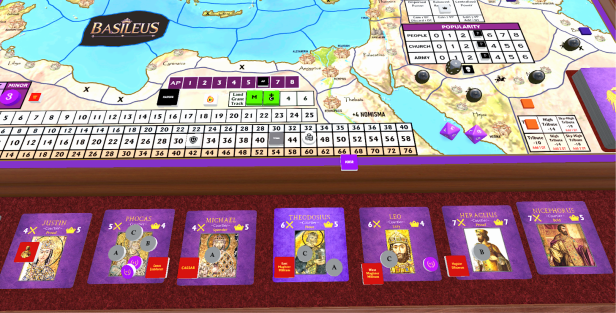
Basileus is a card-driven strategy game for three players that simulates politics, war and diplomacy in the East Roman Empire in the 500’s AD. Players take one of two roles: one player—the “Ruler”—controls the emperor (Basileus), while the other two players—the “Magnates”—control both the wealthy and powerful Roman courtiers and non-Roman nations. Players take two actions per turn. There are a certain number of actions available every turn, while strategy cards give extra event and action possibilities to the Magnates. Action cards are chosen simultaneously and resolved in a semi-random order, making gameplay quick and unpredictable. Victory points are awarded for winning battles, conquering territory, and completing literary or artistic achievements. But there’s a catch: the Basileus-Player automatically gains a certain number of victory points each turn. The Magnates must try to make life difficult for the Ruler by lowering the Basileus’s popularity, devastating the Roman economy, leading foreign nations to victory over Roman armies, and building up disloyal characters. If they get lucky, they can initiate a rebellion against the Basileus, depose him, switch roles with the Ruler to become the new Ruler. The Ruler player must try to ensure that the Basileus remains popular with the Romans and successfully defends against foreign threats. But in a world where any failure can be interpreted as divine punishment, the margin for error is razor-thin. Basileus is a tense game where success can be fleeting and danger lurks just around the corner.
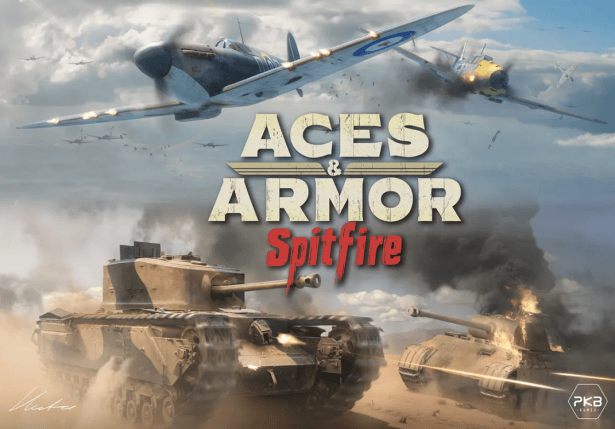
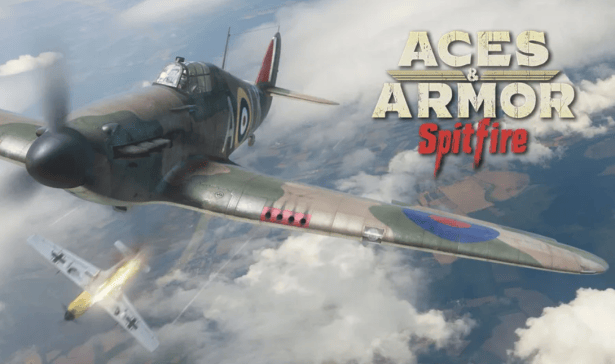
A few years back, we backed a very interesting looking miniatures based board game set in World War II called Aces & Armor from PKB Games. We played it last year and very much enjoyed the combat system as well as the way units gain experience and become more effective. That game did very well on Kickstarter and PKB Games is back with a new addition to the series called Aces & Armor – Spitfire: Battle of Britain & North Africa We reached out to the designer Philipp K. Berger to see if he could give us a look at the game and answer our questions and he was more than willing to accommodate our request.
Grant: Philipp, welcome back to our blog. What is your upcoming game Aces & Armor – Spitfire: Battle of Britain & North Africa about?
Philipp: Thanks for having me back!
Aces & Armor: Spitfire is a tactical World War II strategy game where players command infantry, tanks, artillery, and aircraft in exciting battles.
This time we’re taking the action to two very different theaters: the Battle of Britain, including the evacuation of Dunkirk, and the North African campaign.
The game combines accessible rules with quite a bit of strategic depth. You need to maneuver your troops, coordinate different unit types, capture strategic positions, and make the most of your resources. Your individual units also gain experience throughout the battle, so a rookie Spitfire pilot might eventually become a highly effective war hero!
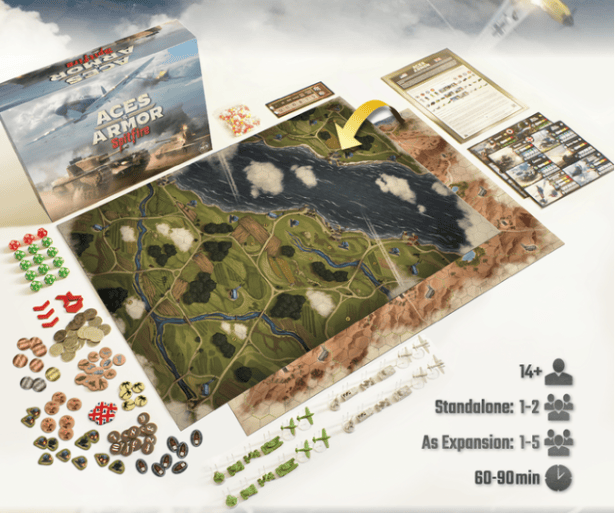
Spitfire works as a standalone game for 1–2 players, but you can also combine it with the original Aces & Armor for battles with up to five players.
Grant: Why did you want to take your Aces & Armor System to the skies of Britain and the deserts of North Africa?
Philipp: One of the things I love about the history of World War II is how different the various theaters of war were. The original Aces & Armor focuses on land warfare in continental Europe, while the Battle of Britain and North Africa presented completely different strategic challenges.
The Battle of Britain is particularly fascinating because air superiority was absolutely crucial. Suddenly, protecting airfields, intercepting bombers, and coordinating your fighters become central elements of the game.
North Africa, on the other hand, is all about mobility and logistics. You might have the strongest tanks on the battlefield, but they’re not much use if you’ve run out of fuel and ammunition!
I also wanted to introduce the British as a playable faction. Their iconic units, especially the Spitfire, were simply too good to leave out of the series.
Grant: What is your design goal with the game?
Philipp: My main goal has always been to create games that offer meaningful strategic decisions without requiring players to spend hours studying the rules.
I love complex strategy games, but I don’t particularly enjoy unnecessary complexity. Ideally, players should understand the basic rules within 10–15 minutes while still discovering new strategies after many games.
Another important goal is making every unit feel valuable. I don’t want players to simply throw endless disposable troops at each other. Individual units can gain experience, become more effective, and develop into veterans you really want to protect.
And, of course, the game needs to be fun! Historical accuracy is important to me, but whenever historical detail and enjoyable gameplay conflict, I try to find a sensible compromise.
Grant: How have you modified the Aces & Armor System to tell the story of WWII in the Battle of Britain and North Africa?
Philipp: We kept the core mechanics that players already know from Aces & Armor, particularly the combat system, combined-arms tactics, and individual unit experience.
However, we introduced new gameplay elements to capture the distinctive challenges of each theater.
On the Battle of Britain map, aircraft play a much more prominent role. Players fight for control of the skies, defend airfields against bombing raids, and can play scenarios inspired by the evacuation of Dunkirk.
North Africa introduces an entirely new supply mechanic. Your units need access to supplies to operate effectively. This makes supply depots and supply lines strategically important, opening up possibilities such as cutting off enemy forces instead of attacking them head-on.
The result is that the two maps feel quite different, despite using the same underlying game system.
Grant: What elements do you feel are most important to model from the period?
Philipp: I believe it’s more important to capture the strategic realities of a historical conflict than to simulate every technical detail.
For the Battle of Britain, that means air superiority, fighter interception, and the importance of protecting infrastructure such as airfields.
For North Africa, it’s the enormous importance of logistics, mobility, and controlling vital supply routes across a vast desert.
Another major element is combined-arms warfare. Tanks, infantry, artillery, and aircraft become significantly more effective when working together.
I also wanted the different types of equipment to feel distinct. A heavily armored Churchill tank should play differently from a fast Daimler armored car, just as a Spitfire should serve a different purpose from a Junkers Ju 88 bomber.
Grant: What major design challenges did you encounter and how did you overcome them?
Philipp: One of the biggest challenges was introducing two very different theaters without making the rules significantly more complicated.
For example, supply logistics are fascinating from a strategic perspective, but I certainly didn’t want players to spend half their turns calculating fuel consumption and managing spreadsheets!
The challenge was to reduce these historical realities to mechanics that create interesting decisions while remaining easy to understand and manage.
Another challenge was balancing air and ground combat. Aircraft need to be powerful enough to reflect their historical importance, but not so powerful that ground forces become irrelevant.
I approached both challenges by keeping the successful core mechanics intact and adding specific rules only where they meaningfully change the gameplay. And of course gameplay testing and testing and testing!
Grant: What new units are included in this version of the game?
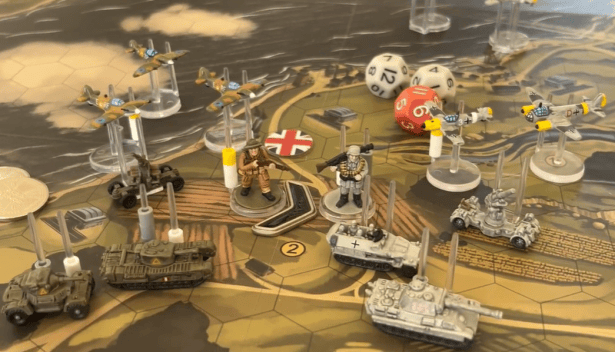
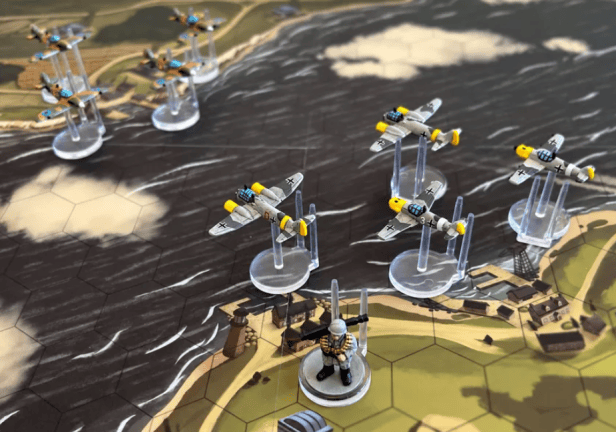
Philipp: Spitfire includes two factions with six different unit types each, represented by 24 detailed miniatures.
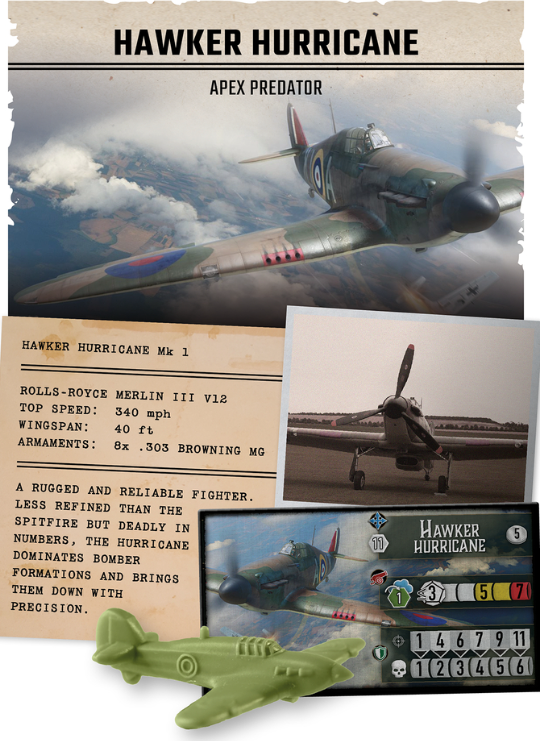
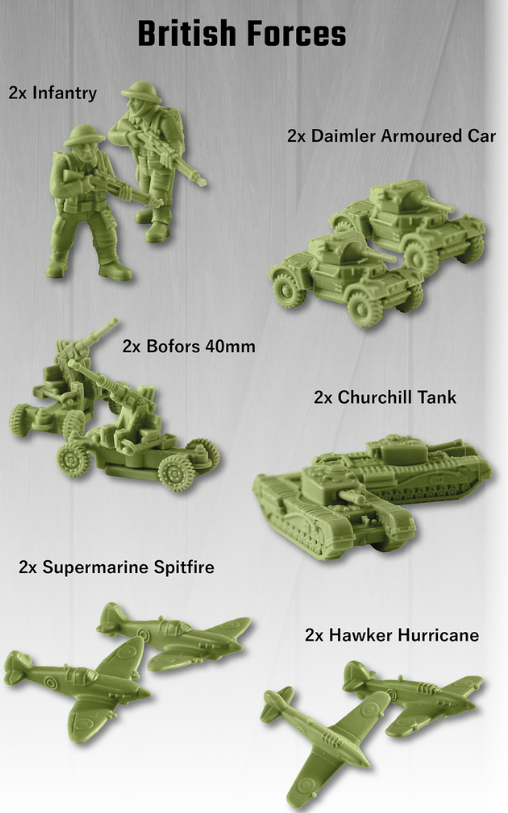
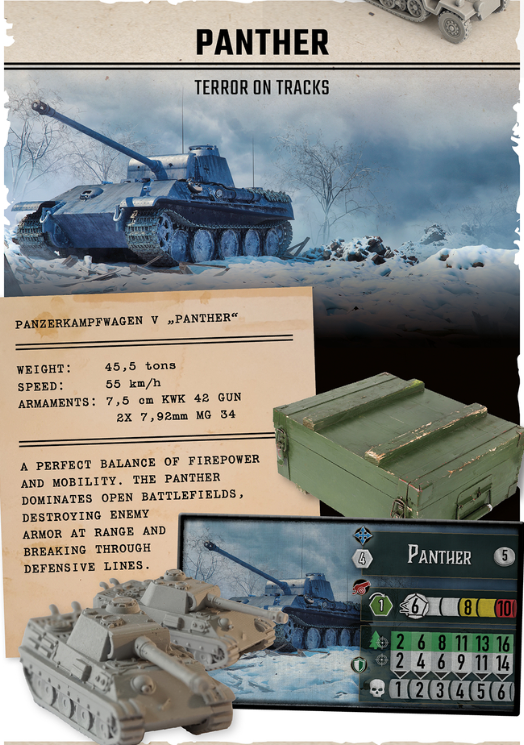
The new British faction includes infantry, the Daimler Armoured Car, the Churchill tank, the Bofors 40 mm anti-aircraft gun, the Hawker Hurricane, and, of course, the legendary Supermarine Spitfire.
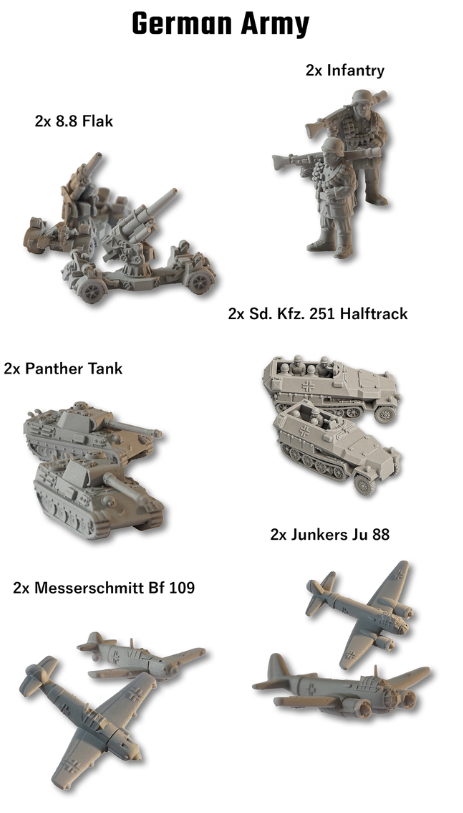
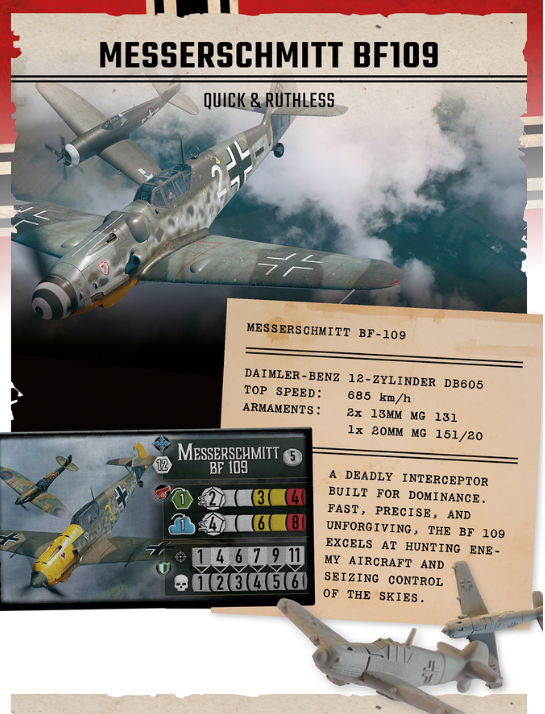
The German faction features infantry, the Sd.Kfz. 251 half-track, the Panther tank, the famous 8.8 cm Flak, the Messerschmitt Bf 109, and the Junkers Ju 88 bomber.
I particularly like the selection of aircraft because it creates some interesting asymmetry between the factions. The British have two different fighter aircraft, while the Germans combine a fighter with a dedicated bomber.
Grant: How have you differentiated the capabilities of the units from those in your great game set in Europe?
Philipp: Every unit has its own characteristics, including movement speed, combat effectiveness, armor, and cost.
The original Aces & Armor includes some powerful late-war equipment, such as the German Tiger tank and Me 262 jet fighter, the American B-17 Flying Fortress, and the Soviet Katyusha rocket artillery.
Spitfire introduces a different selection of units and therefore different tactical possibilities.
The British Churchill, for example, emphasizes protection, while the Daimler Armoured Car provides mobility. The Spitfire is an excellent air-superiority fighter, whereas the German Ju 88 is particularly useful for attacking ground targets.
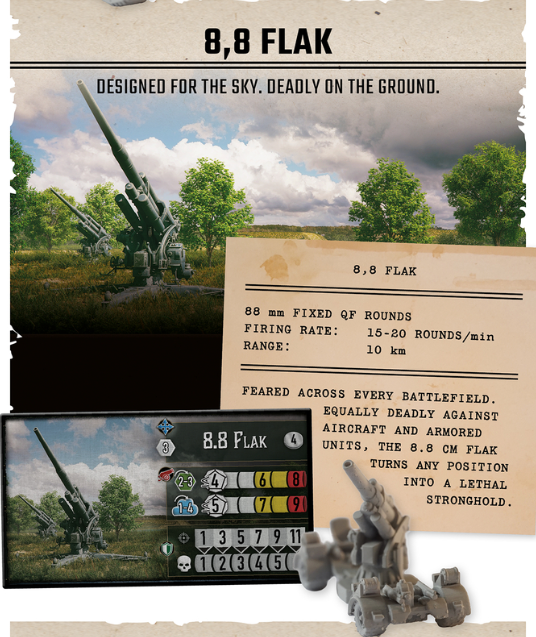
The German 8.8 cm Flak is another very interesting unit because it can threaten both aircraft and armored vehicles.
I wanted each faction to have its own strengths, rather than simply giving every nation the same units with different miniatures.
Grant: How can this game be incorporated into the original Aces & Armor?
Philipp: The two games are fully compatible!
You can play Spitfire completely independently, but you can also combine its factions, miniatures, and gameplay content with the original Aces & Armor.
The original game includes American, Soviet, and two German factions. Spitfire adds the British, bringing the total to five playable factions.
This creates opportunities for much larger battles, additional combinations of units, and entirely new scenarios.
I particularly enjoy the flexibility of the system. Players can recreate historically inspired confrontations or experiment with their own hypothetical battles.
Grant: How does the combat system work?
Phlipp: The combat system is probably my favorite mechanic in the game.
Each unit has an individual combat profile that determines how many dice it rolls, its chances of hitting, and how well it withstands incoming fire.
When two units fight, both players can roll their dice simultaneously, provided the defender is able to return fire.
The number of dice depends on how much damage a unit has already suffered. As units take damage, their combat effectiveness decreases. However, as they gain experience, their probability of hitting improves.
Another important element is combined-arms warfare. If your tanks attack an enemy position while supported by infantry, artillery, or aircraft, they can receive additional combat dice.
Finally, terrain and armor determine how much actual damage the hits cause.
So combat involves much more than simply comparing attack and defense values. Positioning, experience, damage, terrain, and supporting units can all significantly influence the outcome.
Grant: What drove your decision to use 12-sided dice for combat? What advantages does this give your system?
Philipp: I wanted a combat system that offers a lot of differentiation between units without requiring complicated calculations.
Using 12-sided dice gives us twelve possible outcomes, allowing much finer distinctions in hit probabilities than conventional six-sided dice. This is particularly useful because combat effectiveness changes as units gain experience. Different units can have different hit probabilities, and improving from rookie to veteran or war hero can make a noticeable difference.
Also, a higher number of dice (you roll up to 15 in one attack) and a higher number of sides per die (12) creates roll results closer to the statistical expected value which rewards players estimating the odds well and limits pure dice luck.
At the same time, resolving combat remains straightforward: roll your dice, check which results count as hits, and determine the damage.
I also think rolling a handful of D12’s simply feels great!
Grant: How is experience gained and tracked for individual units?
Philipp: Every unit begins the game as a rookie and gains combat experience by fighting.
When a unit damages an enemy, it gains one experience point. If it destroys an enemy unit, it receives two experience points instead.
After gaining enough experience, a unit advances from rookie to veteran and eventually to war hero, improving its combat effectiveness.
What makes this system special is how we track the experience. Each miniature has a small transparent holder attached to its base, where players insert colored markers for experience and damage.
This means you can immediately see the condition and experience level of every unit directly on the battlefield, without having to consult separate unit sheets.
It also creates some wonderfully memorable moments when an experienced unit survives against overwhelming odds!
Grant: What type of economy does the game use? How is money produced? What can players spend their money on?
Philipp: The game uses a relatively straightforward economy built around controlling strategic production facilities.
Players earn money from factories they have captured. These resources can then be used to recruit new units or repair damaged ones.
This creates an interesting strategic dilemma. Do you spend your resources replacing casualties, invest in additional troops, or repair your experienced veteran units?
Capturing factories is therefore important not just for victory, but also for strengthening your economy and maintaining your army.
I particularly like how the economic and military aspects interact. Sometimes capturing a strategically important factory can achieve more than destroying several enemy units.
Grant: What is the layout of the maps? How does terrain affect the game?
Philipp: Spitfire includes a large double-sided, hex-based game board featuring two very different environments.
One side depicts southern Britain, northern France, and the English Channel. This allows for combined land and air battles, including the Battle of Britain and Dunkirk scenarios.
The other side represents North Africa, with its expansive deserts, roads, mountains, and strategically important supply positions.
Terrain influences movement and combat. Roads allow ground units to move faster, forests provide defensive advantages, and natural obstacles can restrict movement.
Aircraft, of course, aren’t slowed down by ground terrain.
The North African map adds another strategic consideration: supply. With fewer natural obstacles and long distances between important positions, maintaining your logistics becomes crucial.
Grant: What do you feel the design models well from history?
Philipp: I think the game does a particularly good job of modeling the importance of combined-arms tactics.
Historically, even the strongest tanks were vulnerable when operating without adequate infantry, artillery, and air support. The game encourages players to coordinate different unit types rather than relying on one particularly powerful unit.
I also like how the North African scenario illustrates the importance of supply lines. An army can have superior equipment and still lose because it cannot maintain its operations.
And finally, I think the experience system captures something that’s often missing from tactical board games: troops aren’t interchangeable. A battle-hardened veteran unit can be much more valuable than a newly recruited replacement.
Of course, Aces & Armor is a strategy board game rather than a detailed historical simulation, but I hope it captures the important tactical and strategic decisions commanders faced.
Grant: What type of experience does the game create for players?
Philipp: I’d describe it as an accessible strategy game with a surprising amount of tactical depth.
There are plenty of exciting combat moments, but the game isn’t just about rolling dice. You need to plan your movements, coordinate your troops, control strategic locations, and decide when to attack or retreat.
The experience system also creates an emotional connection to your units. Losing a rookie infantry unit is unfortunate, but losing your heavily experienced Spitfire that has survived several battles really hurts!
I also love the way the battlefield evolves. Units move, take damage, gain experience, and new reinforcements enter the fight. The situation can change dramatically within just a few turns.
A typical game takes around 60–90 minutes, so it offers a fairly substantial strategic experience without requiring an entire afternoon.
Grant: What are some general strategies for each of the sides?
Philipp: That depends somewhat on the scenario.
In the Battle of Britain, the British player should pay particular attention to controlling the skies and protecting important airfields. Their Spitfires and Hurricanes provide considerable flexibility, but they need to be positioned carefully to respond to German threats.
The German player can take advantage of the Ju 88’s bombing capabilities while using the Bf 109 to contest British air superiority. Coordinating air attacks with ground operations can be very effective.
In North Africa, both sides need to think carefully about supply. A powerful offensive can quickly become vulnerable if the enemy manages to interrupt your supply lines.
In general, my most important advice is to use combined-arms tactics and not spread your forces too thinly. A well-coordinated group of different unit types is often much more effective than several isolated powerful units.
Grant: What has been the feedback of your playtesters?
Philipp: Playtesting has been particularly important for getting the balance between historical flavor, strategic depth, and accessible gameplay right.
One of the main things I’ve focused on is making sure the two theaters offer genuinely different experiences without forcing players to learn an entirely new game.
The air battles need to feel exciting, and the supply mechanics in North Africa need to create meaningful tactical decisions rather than unnecessary bookkeeping.
We’ve also been refining the balance between individual units and factions.
What I always look for during playtesting is whether players are making interesting decisions, developing strategies, and enjoying the tension of the battle. That’s ultimately much more important to me than adding another layer of rules.
Grant: What other designs are you currently working on?
Philipp: There are always several ideas floating around in my head!
One project I’m currently exploring is bringing the Aces & Armor game mechanics to a SciFi scenario.
I’m also thinking about where to take Aces & Armor next. World War II offers so many interesting factions, units, and theaters that there’s certainly plenty of room for future additions. And I am getting a lot of great ideas from backers of the current Kickstarter campaign. I just love this creative community and couldn’t be more grateful!
For now, though, most of my attention is on making Aces & Armor – Spitfire as good as possible and delivering another successful Kickstarter campaign.
Thank you for your time in answering our questions Phillip and also congratulations with the game funding already. I really like the look of this one and I am sure that it will be a fun gaming experience.
ETHIOPIA VS. FASCIST ITALY 1935-1937 – A Prelude to the Second World War.
Fascist Italy’s 1935 invasion of Ethiopia set the world on course for World War Two. The failure of the League of Nations to deter Fascist aggression led to policies of appeasement, the rise of the Axis, the Spanish Civil War, and Hitler’s march into the Rhineland. In this easy-to-play, straightforward solitaire game, you are the beleaguered Ethiopian Emperor Haile Selassie I (1892-1975). Take charge of Ethiopia’s defenses, call up troops, and call on the League of Nations as Italy tries to enlarge her empire at your expense. Send your regional “Ras” warlords into battle, organize partisans, deploy your limited elite forces, and endure Italy’s criminal use of mustard gas.
Your ancient Black Christian African civilization stands as a defiant symbol of anti-colonial resistance and as the first battlefield of the coming global struggle against Fascist aggression. Can you turn Mussolini’s Blackshirt armies back, prevent the fall of Ethiopia’s capital Addis Ababa, and change the course of history?
Trench Raid is a single-player game set on the Western Front in World War One. The player assembles a group of 10 raiders and plots their course on a map towards the enemy lines on the other side of No Man’s Land. With 12 different raid objectives and 20 random events that can take place during the crossing, no two playthroughs will be exactly the same.
The game also includes rules for campaign play — whether their raid was successful or not, the soldiers who make it back to their trench lines relatively unscathed will steadily get better at raiding, learning through experience how to survive.
Medieval Conspiracy introduces players to the Holy Roman Empire of Germany, which is divided into numberless small earldoms, principalities and bishoprics. The Ruler of the Empire is the Holy Roman Emperor who is elected by the 7 electoral princes. In Medieval Conspiracy players take the role of a mighty noble family attempting to increase their power, gain new countries, all to gain votes of the electoral princes to finally be elected the new Holy Roman Emperor.
Medieval Conspiracy is run by Action Cards and Event Cards. After collecting income, players bid for Event Cards. 3 Event Cards are displayed on their open side. Thereafter players bid for them in turn order. The player who got an Event Card can use it later during his turn. During a player turn players roll the dice of destiny and play Event and Action Cards. That card play results in numerous effects giving each game a new special course. The goal of the game is to gain new countries or conquer them by force from others in an attempt to influence the vote for the Holy Roman Emperor.
I love a different style and focus of wargame. A game that takes a look at an important but somewhat obscure or rarely addressed historical topic, such as espionage or intelligence, and creates a gaming experience tailored around the events to highlight and evoke the difficulties and tension that would have been present. In January 2026, GMT Games announced such a game in Checkpoint Charlie, which is a solo or cooperative game focused on SIS espionage missions in Berlin in the 1960’s designed by Russell Brown. We have posted an interview with Russel and it was very well received and he has now agreed to create a series of History Behind the Cards to highlight the events of the 1960’s Cold War struggle in West Germany but also to share aspects about the game play and how it models the history.
*Note: The cards highlighted in this series and their event text, as well as any pictures used showing any of the various components, are still in the design and development process and as such event effects and text might still change prior to final development and publication.Also the art and layout of the cards are only for playtest purposes at this point and the game will enter the art department as it nears publication.
History Behind the Cards – Checkpoint Charlie from GMT Games – Card #9 Daily Military Train
This is one of the cards I added to Checkpoint Charlie based on conversations with my local coffee shop spy, John (see Card #7). I had assumed most significant traffic from West Germany to Berlin used the autobahn corridor from Checkpoint Alpha at Helmstedt, across East Germany, to Checkpoint Bravo in Berlin. However, the military trains, of which there were three – American, French and British – ran every day, back and forth along roughly the same corridor as the automobile traffic. The US Military Duty Train, which my friend John rode, let out at the station in Charlottenburg and is the basis for this Event Card. It was primarily used by US military personnel, but other people associated with the military could get permission to ride.
Cars full of East German police, or vopos, kept vigilant watch over the autobahn access route, but it was more difficult to keep track of the train and whether western passengers were jumping off illegally somewhere in East Germany, or East German citizens were boarding the train as it slowed for one of its scheduled stops along the way, getting free passage into West Berlin. To solve this problem, all doors on the train were chained and padlocked for the duration of the four-hour journey across East Germany. In Checkpoint Charlie, the Daily Military Train Event assumes that the KGB has been tipped off to the arrival of some interesting person or item on the next train and move to intercept. Charlottenburg Safehouse is placed under surveillance and the Nugget Marker, already detected, is placed there. This can be a useful diversion for your assets, or it can draw KGB agents right into the center of your mission.
The Berlin Military Train operated by the Royal Corps of Transport.
In the next article in this series, we will take a look at Moscow Rules.
In my opinion, this game looks extremely interesting and I am very much excited to learn more about it. I am appreciative to Russell and his efforts to bring us these cards and to write these entries to share with our readers. I am also very glad that this topic is being covered in a game and look forward to playing this one day soon.
In 1539, a small Spanish garrison of troops numbering 3,500 men held the Albanian village of Castelnuovo for 22 days against the massive Ottoman army consisting of over 54,000 Turk soldiers. This siege took place as a part of the Ottoman-Habsburg struggle for control of the Mediterranean Sea in July 1539 at the walled town of Castelnuovo, which is the location of present-day Herceg Novi, Montenegro. After days of open trench warfare and more than a month of smaller combats, skirmishes, assaults and bombardments from the Turkish navy, the last Spanish defenders fell ending the siege. Castelnuovo 1539 is a wargame that focuses on this siege designed by Francisco Ronco. The defenders are safe behind sturdy walls and battlements but time and continual shelling from the Ottomans will lead to assaults over the walls. The battle is hopeless for the defenders but they can win the game by doing enough damage to the Ottomans to end their campaign and stop them from invading further into the Albania and then onto Spain and the rest of Europe. The game is very well produced using wooden blocks for soldiers, stylized walls, siege trenches and cannon along with ships and the board is also beautifully illustrated. The game is a block wargame where the strength of units are hidden from the opponent and plays pretty quickly in less than 90 minutes and really is a great representation of the battle and its history.
In Action Point 1, we took a look at the beautiful Game Board and its area movement scheme. In Action Point 2, we examined the units available to both sides and compared their relative strengths and weaknesses. In Action Point 3, we took a look at the different types of Command Cards and discussed how they are used. In this Action Point, we will take a look at the 2 different types of rounds including a Siege Round and an Assault Round and how they differ.
In Castelnuovo 1539 there are 2 different types of rounds within the structure of the game including Siege Rounds and Assault Rounds. This 2 type approach is designed to reflect the different preparations and phases of a sustained siege on a fortified location. The Ottoman player is allowed to choose the type of round for the upcoming turn during the Reinforcement Phase, which is the last phase in any round. In this structure, the Ottoman player has the chance to review the previous round, consider their losses and gains on the battlefield, identify their goals and set themselves up for success in the coming round.
Siege Rounds reflect the necessary preparations, concentration of resources of both men and materiel, the progress of mine works and siege trenches and represent 3 or 4 days of the siege. During this time there are small combats and skirmishes, probing of the enemy lines and reconnoitering but no major frontal assaults. In this type of round, each player draws only 4 cards reflecting the slower and more deliberate planning phases of a siege. The first round of the game is always a Siege Round in the main scenario. There also is another mechanic that is added to the Siege Rounds as the Ottoman player can choose to rest during only a Siege Round and no cards are played and the player also places all of their Azab and Sipahi Blocks on the board at full Strength. This reflects the buildup and preparation for the upcoming assault and is a key decision for the Ottoman player who is pushing against time and must complete the siege in their favor before time expires.
Assault Rounds represent moments of decisive assault, with a great amount of movement and activity on both sides. The action is fast and furious and each turn represents only 1 days worth of combat. In this type of round, the hand of both players increases to 7 cards in order to provide the fuel needed to sustain a planned attack. There is a price to pay for the prosecution of an Assault Round though as each time the Ottoman player declares their intention to assault, the Ottoman Casualty Track will be advanced 1 space.
The decision opportunity for an Assault Round versus a Siege Round comes at the end of the Spanish Action Phase. Before drawing any cards, the Ottoman player chooses which type of round to play next. If an Assault Round is chosen and the player has more than 4 cards in their hand, no new cards will be drawn and the player will discard down to 4 cards. One of the key decision points at this time is the makeup of the Ottoman player’s hand. If they have good cards, such as the necessary Order Cards to initiate attacks as well as a Combat Card or 2 to supplement those attacks and make them more effective, the choice is pretty simple. If their hand of cards is not necessarily setup and beneficial for a siege, they may want to move to an Assault Round where they will draw the maximum 7 cards and can continue their preparations for the next round while still engaging in smaller attacks and bombardments to weaken the defenses and demoralize and reduce the defending Spanish Tercios.
I was very impressed by this distinction in the 2 types of rounds in the design but at first had difficulty making the connection to the history and the design choice. But a siege is a very different and particular case in warfare and has some very interesting nuances that must be taken into consideration. As the game is basically decided by the mounting casualties of both sides, the presence of artillery batteries, the obsolete medieval fortifications of the city and the modern earthen fortifications built by the Spanish to reinforce them, casualties are a reality and the Ottoman player needs to be cognizant of this and take it seriously. There has to be a deliberate and planned attack on the city with the proper and measured construction of siege trenches by the Ottomans to realize the benefit of their usefulness in reducing the casualties of the besiegers.
A good Ottoman commander will play a well balanced game with a consistent pattern of incremental movement upon the city, all the while building their siege lines to form a tightening encirclement of the walls like the coils of an anaconda, inching closer and closer to the walls, using their artillery to weaken and break the defenses and create breaches where close-range assaults can be launched that will ultimately decide the outcome. Digging trenches should be one of the Ottomans first tasks, as they must protect their blocks as they are in the open field, an easy target for attack. Once the blocks are protected with trenches, there is a need to plan the advance and bring these trenches and batteries closer to the Spanish fortifications so that they can breached. Once there are open breaches, it is necessary to throw caution to the wind and take the city by assault as the Spanish attempts to repair the walls and build internal fortifications will continue to hinder the Ottoman’s progress. But, the Spanish player must keep in mind their advantages, including the well known Spanish ‘camisado’ attacks (encamisadas in Spanish) to sally forth and inflict damage upon the besieging forces to weaken their strength. The Spanish leaders are better and will provide great benefits to these attacks that should inflict maximum damage and break the will of the Ottoman as they continue the slow and arduous advance on the city. But the understanding of how to use this Siege/Assault process will take a few plays to understand but once you master the rules, you will see that these fortresses were not defended passively, but rather are in the pattern of an active defense that makes calculated sorties to hinder the work of the attackers by destroying artillery batteries and not giving the Ottomans any rest or respite from the action a vital part of the process.
In Action Point 5, we will delve into an example of combat and bombardment.
If you are interested, I was able to shoot the following review/overview/summary video with the designer Francisco Ronco after playing the game earlier this year:
With this My Favorite Wargame Cards Series, I hope to take a look at a specific card from the various wargames that I have played and share how it is used in the game. I am not a strategist and frankly I am not that good at games but I do understand how things should work and be used in games. With that being said, here is the next entry in this series.
#99: Truman Doctrine from Twilight Struggle: The Cold War, 1945-1989 from GMT Games
Twilight Struggle is a 2-player game simulating the forty-five year ideological struggle known as the Cold War between the Soviet Union and the United States which can be played in 2-3 hours. The entire world is the stage on which these two countries “fight” to make the world safe for their own ideologies and way of life. The game starts right after the end of World War II in the midst of the ruins of Europe as the two new “superpowers” of the world squabble over what is left and ends in 1989, when only the United States remained standing.
The map is a world map of the period, where players abstractly move units and exert influence through the placing of Influence Markers in an attempt to build local support and gain allies and control for their superpower. The beauty of the CDG system used here is that each decision of whether to use a card for the event or the operations value is a struggle as if it is the other side’s event, it might go off hurting you very badly. There are mechanics to allow for the ignoring or cancelling of some of the best cards for your opponent in a side game within the game called The Space Race as well as nuclear tensions, with the possibility of game-ending global thermonuclear war (Shall we play a game, anyone?). I have played TS about 30 times and love it more and more with each sitting. The game makes me sweat, cringe, jump with joy and bite my fingernails. To me, a game that can do all of that in one sitting is worth the price.
The Truman Doctrine is an Early War U.S. 1 Op Event Card that removes all Soviet Influence from a single country in Europe where the U.S. has presence. This means that the U.S. at least has 1 Influence in a space and the space must be uncontrolled. I think that players should be judicious and patient with this card and do not rush to play early in the game on Turn 1 or Turn 2 if Europe is stable and the USSR has minimal presence there. The best way to use the card is to wait for a window where you can do the most damage in a key Battleground space where each side has been fighting for control by placing Influence there such as in France or West Germany on the last action round of a turn or playing the card during the Headline Phase to wipe out stacked Soviet Influence as a precursor to bumping up your own Influence there for control. The Truman Doctrine card is such a nice booby trap in many ways and the proper use of it can be very efficient and give you a leg up in Europe.
The Truman Doctrine was a United States foreign policy established by President Harry S. Truman on March 12, 1947, which pledged that the U.S. would provide political, military, and economic assistance to democratic nations threatened by external or internal authoritarian forces. President Harry S. Truman asked for $400 million in military and economic assistance for Greece and Turkey. “It must be the policy of the United States to support free peoples who are resisting attempted subjugation by armed minorities or by outside pressures,” Truman declared. “If we falter in our leadership, we may endanger the peace of the world — and we shall surely endanger the welfare of our own nation.”
In asserting that the U.S. would intervene in faraway conflicts, President Truman dramatically reoriented U.S. foreign policy. The writing of this ground-breaking message went through multiple stages. In his memoir, Truman noted that the State Department’s first draft of the speech “was not at all to my liking.” Rather than asserting a new foreign policy doctrine, the State Department writers had “made the whole thing sound like an investment prospectus.” Truman returned the draft to Secretary of State Dean Acheson “with a note asking for more emphasis on a declaration of general policy.”
The State Department complied, and included a general policy statement in the next draft. But Truman was not satisfied. “It seemed to me half-hearted,” he recalled. President Truman “scratched out” what he deemed equivocations. For example, Truman replaced “should” with “must” in a key sentence that read “I believe that it should be the policy of the United States…” According to Truman, “I wanted no hedging in this speech.” Because this speech “was America’s answer to the surge of expansion of Communist tyranny,” it “had to be clear and free of hesitation or double talk.” A total of eight drafts of Truman’s speech to Congress are featured on the Truman Library’s website. Many include handwritten comments and corrections. Combined, they give readers a sense of the tremendous effort that went into drafting the Truman Doctrine as well as the importance a single word can make when crafting foreign policy.
Truman delivered his address on March 12, 1947. Over the next several weeks, Congress debated the merits of Truman’s proposed foreign policy. On April 22nd, the Senate approved the legislation to provide assistance to Greece and Turkey. The House followed suit, approving the bill on May 9th. On May 22, 1947, Truman signed the bill into law. According to President Truman, the enactment of his bill “served notice that the march of Communists would not be allowed to succeed by default.”

 Anmelden