Normale Ansicht

“Our business has exploded in a positive way”: board game distribution, fulfillment specialist Meeples Group moves from start-up to scale-up with huge warehouse expansion

03. Februar 2026 um 15:43

European board game distributor and fulfillment company Meeples Group is continuing its rapid expansion since its launch operating out of attic five years ago, with a move to a huge new warehouse in the wake of soaring numbers of orders last year.

Meeples’ new warehouse has five-times more capacity than the 1,400 sq m building it moved into towards the end of 2024 – itself a significant upgrade from the 300 sq m warehouse it had worked from before.

Company co-founder Floris Toorenburg told BoardGameWire the company handled 14-times the number of orders in December 2025 that it did 12 months earlier, and estimated the business will ship about 118,000 packages and pallets this year across e-commerce fulfillment, crowdfunding fulfillment and its own sales channels.

Toorenburg said the business had “exploded in a positive way” since the summer of 2024, bolstering its clientele by signing deals with publishers including Steamforged Games, Academy Games, Magpie Games, Arcane Wonders and IV Studio.

He said, “I think in 2025 we managed to get our company out of the start-up phase and into the scale-up phase. We still have many things to improve, and we keep expanding our team with valuable members that add value to both our clients and our company.

“We feel we are now a settled company within the board game industry, and people know how to find us. For me personally, the most exciting thing in 2025 was the release of our own distribution platform. On this platform we have connected publishers with retailers, while we still take charge of the infrastructure, shipping, and payments. Our publishers can upload their own products on the platform, track their sales live, and decide on their own how to market them and how to price them.

“All retailers can see the products of the publishers and the contact details of the publishers. This way, they can order from all our partner publishers in smaller quantities, while if they would like to buy in bigger quantities, they can still reach out to the publisher to make a purchase directly at the publisher instead of through us. When this happens, we just ship it out and all parties win.

“What makes the platform even more special is that we give a referral code to all our publishers. If they share this with retailers and the retailers order with that code, the publisher gets rewarded with a 5% cashback on the total order value for as long as the retailer uses this code.

“With this concept, our local publishers from, for example, Latvia can promote brands of all other small publishers and big publishers next to selling their own products and earn a little bit on the side. The reward is then given from our commission on the sale as a thank you.”

Toorenburg added that the Netherlands-based business was currently looking into a ‘test case’ operation in Canada, beginning with Terraria from recent new client Paper Fort Games, and was also exploring setting up a consolidation warehouse in China together with an unnamed partner from the industry and long-time partner Maersk, the Denmark-based shipping giant.

Meeples Group co-founder Floris Toorenburg

He said the China-based space would allow the company to consolidate all freight for its publishers, “which will create a lot of extra value and lower freight prices”.

Toorenburg added, “Our biggest challenge is keeping up with the scaling that is needed for our growth. We started our company without any external investments and are still doing it on our own. Because of this, we need to be careful while building our team and be smart when hiring and expanding it.

“From our warehouse department, the scaling is going very well, but in our office department this has been a bit more of a struggle to find the right personnel that fit our company’s standards. We are really happy that our team is forming a more stable base now, but this has definitely been a challenge and will continue to be a challenge as long as we grow the way we are growing.

“The positive thing is that we feel our office and operations team will be fully thriving by April 2026, with some really good new people on board. This, in combination with some new innovations that we will be launching soon, will create the base where we can speed up our growth and create stability at the same time.”

Toorenburg told BoardGameWire that volatility around last year’s US tariff war with China saw rising publisher attention focused on the EU market, and “somewhat less” of a focus on the US.

But he added, “Now, after a year, we see that the market has cooled down and that publishers are planning ahead again.

“Based on our understanding, tariffs are currently around 30% on the production price. When comparing this to the VAT system in, for example, The Netherlands, which applies 21% on the total order value, it remains a relatively manageable cost.

“With proper planning, including thoughtful pricing strategies, this can be effectively incorporated into the overall business model and still result in a healthy and sustainable business case.”

Toorenburg said, “There are two risks that can happen and that we are cautious about. One of them is that we need to keep up with the scaling. If we can’t keep up the pace, both on our systems side and on the personnel side, it will be a very challenging year. This is the biggest focus that both my co-founder, Rients-Auke [Rienstra], and I have.

“Next to that, we do have some concerns regarding the geopolitical situation in the world. We feel that tensions are increasing quickly and that economic instability is growing. We already saw this reflected in the difference between the dollar and the euro in 2025.

“If these tensions continue to increase, it is difficult to predict what the impact will be on a hobby-driven market such as the board game industry. Unfortunately, this is not something we have under our control, and we hope that the global situation will stabilize again in the near future.”

The post “Our business has exploded in a positive way”: board game distribution, fulfillment specialist Meeples Group moves from start-up to scale-up with huge warehouse expansion first appeared on .
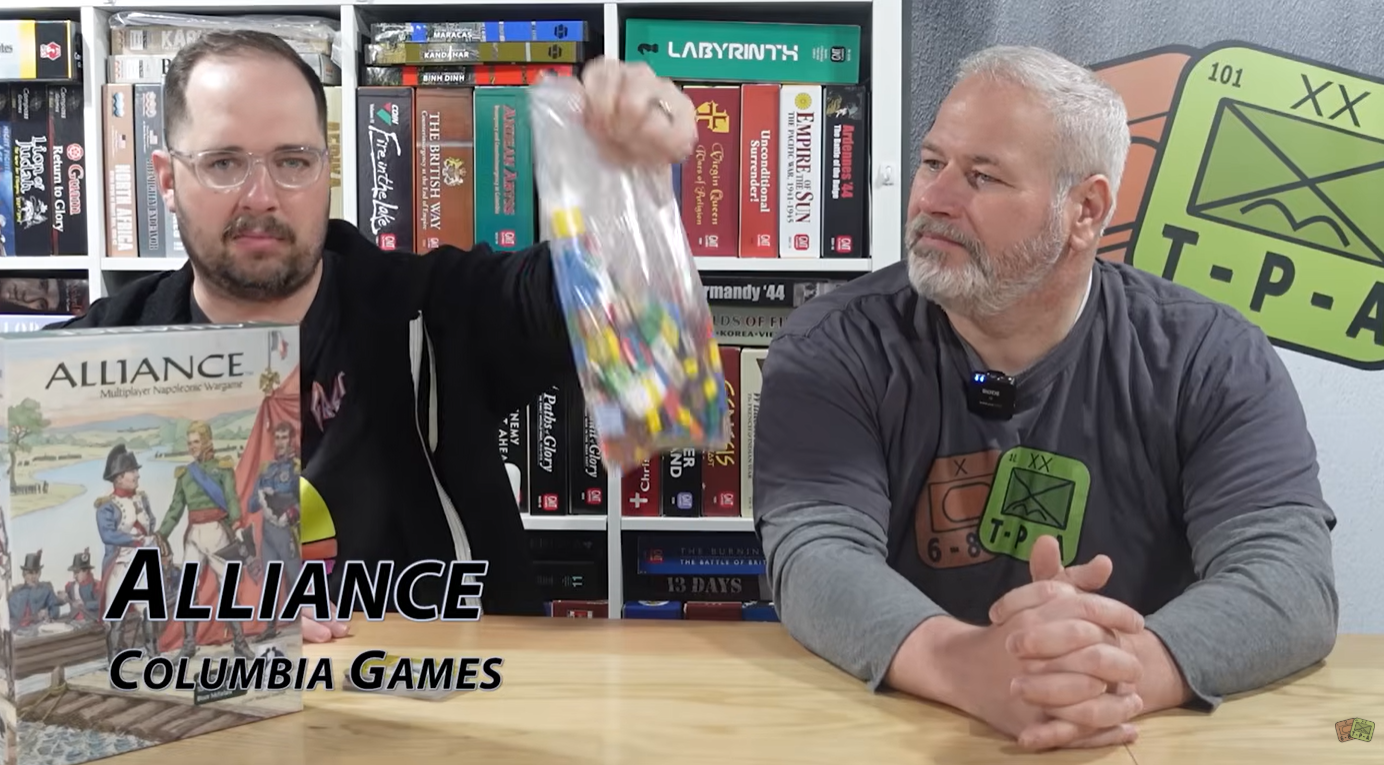
Video Review: Alliance: Multiplayer Napoleonic Wargame from Columbia Games

Von: Grant
30. Januar 2026 um 14:36

As you know, we very much enjoy multi-player wargames and anytime there is a new multi-player game coming out we very much sit up and take notice. In early 2024, Columbia Games launched a Kickstarter for a game on the Napoleonic Wars called Alliance: Multiplayer Napoleonic WargameAlliance is billed as a 1-7 player strategic level game of diplomacy and warfare in the Napoleonic Era with a Columbia Block System twist. The game is huge and plays best with more players. The players take on the roles of different nations during the time and you can play as Austria, England, France, Prussia, Russia, Spain, or the Ottomans. We recently played a full 7-player game and had a grand old time. While the game is not perfect, and there are some quirks that you must get past, the game is really pretty fun and interesting and could be one of those main staples at gaming conventions where you need a lot of players. 

I also wrote a fairly in-depth First Impressions post and you can read that at the following link: https://theplayersaid.com/2025/03/06/first-impressions-alliance-multiplayer-napoleonic-wargame-from-columbia-games/

-Grant

Totem: The Spirits‘ RPG – Auf den Spuren der Geister (Ersteindruck)

24. Januar 2026 um 14:00

Ein verlassenes Spuk-Haus am Rand des Dorfes, keiner traut sich hinein und wer es tut, kehrt nicht zurück. So ähnlich könnte der Anfang eines Abenteuers in Totem lauten. Dort stellt man sich jenen Spuk-Phänomenen und versucht ihnen auf den Grund zu gehen … mit einer gehörigen Portion Horror für die Spielenden-Charaktere.

Dieser Beitrag wurde von Verena Kröger geschrieben

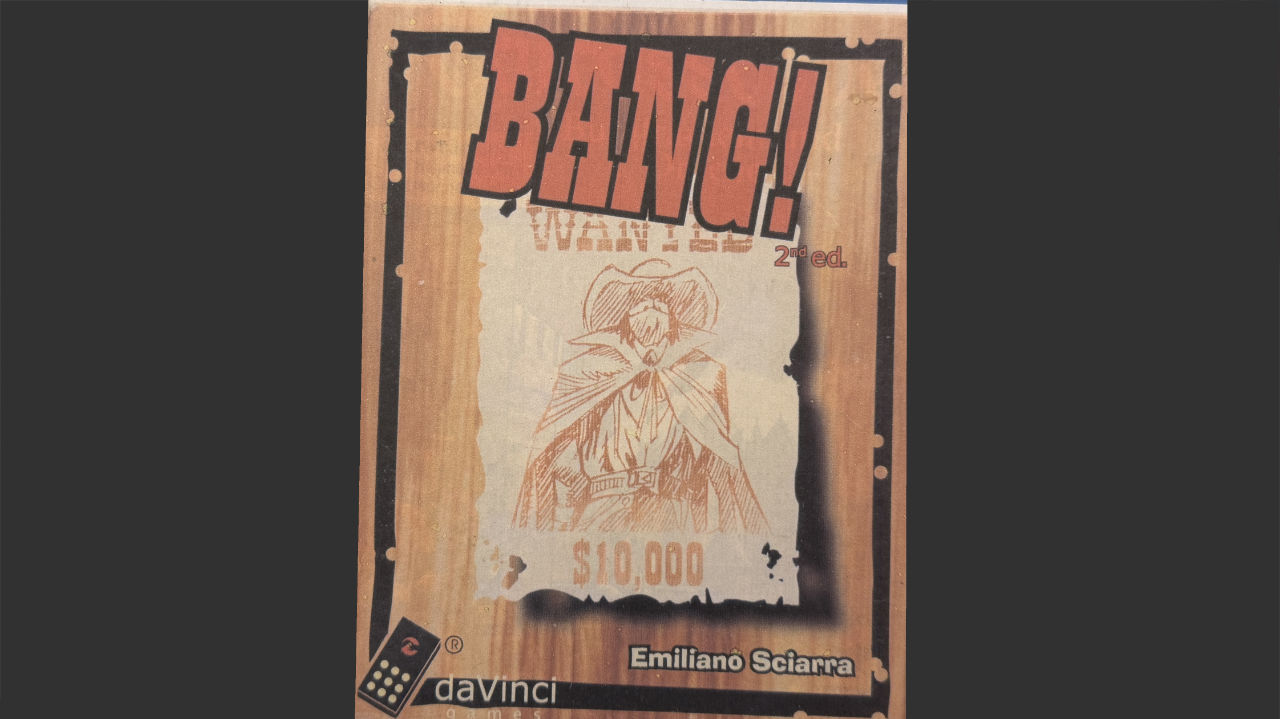
Bang!

Von: ferengi
23. Januar 2026 um 08:09

Der wilde wilde Westen …

Komisch, dass ich von diesem Kartenspiel noch nie etwas gehört habe. Vor knapp 25 Jahren hat Emiliano Sciarra ein recht interaktives Deduktionsspiel im wilden Westen erschaffen. Inzwischen gibt es unübersichtlich viele Erweiterungen.
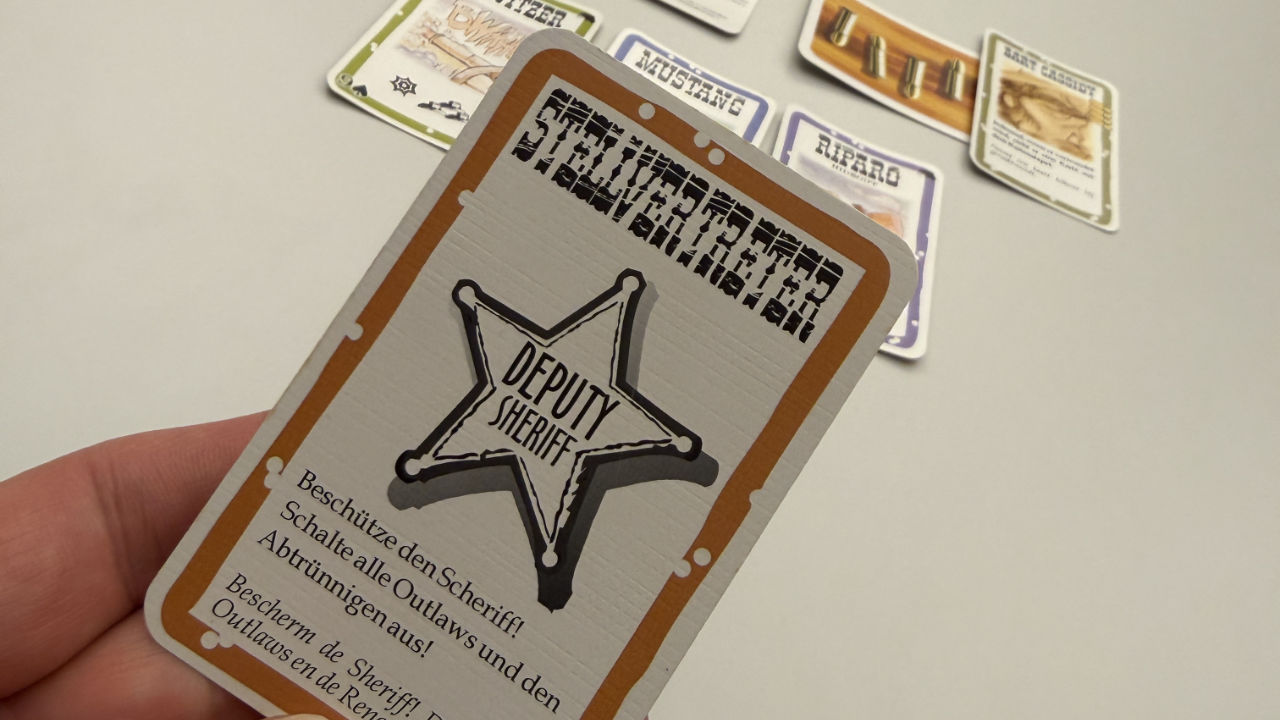
Zu Spielbeginn ziehen alle ihre Rolle. Dieses sind der Sheriff, der sich auch gleich outen muss und somit angreifbar wird, sowie geheim agierende Hilfssheriffs, ein Haufen böse Outlaws und ein Abtrünniger.

Meine Rolle. Schön geheim halten, damit mich die Outlaws in der Überzahl nicht killen

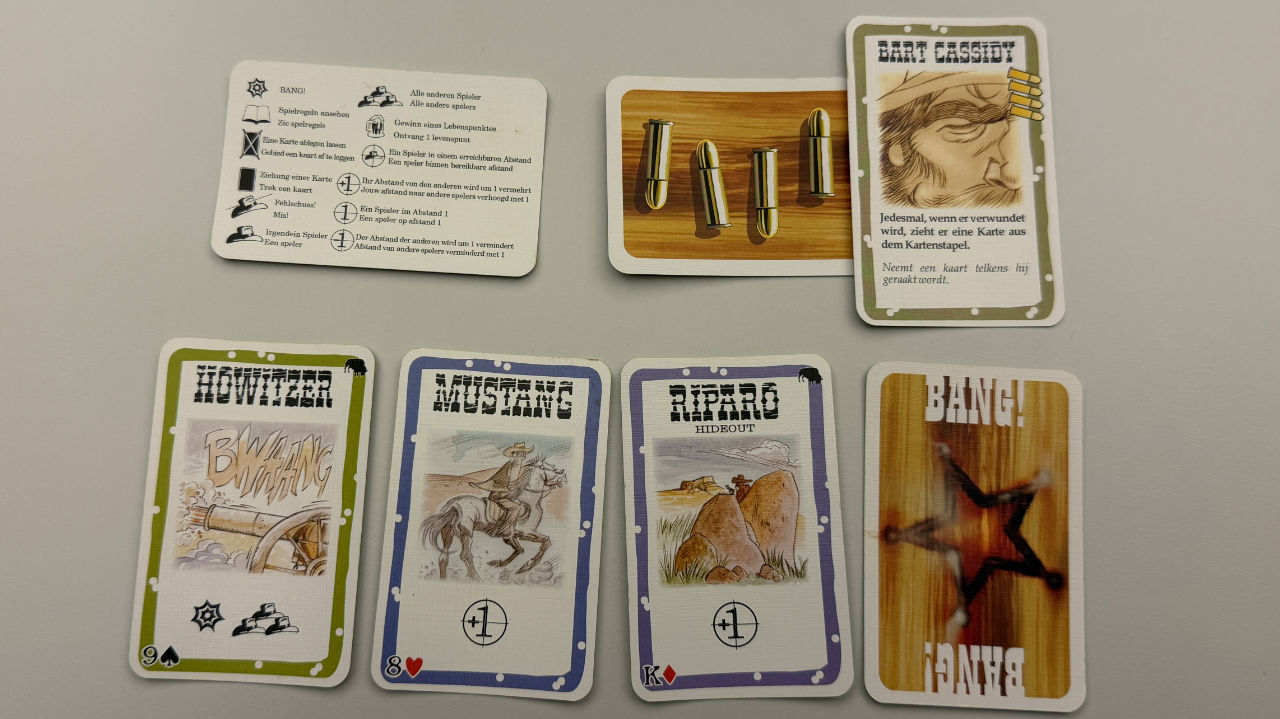
Nun erhält noch jeder eine Personenkarte, womit seine Lebenspunkte und eine Spezialfähigkeit zugeordnet wird.

Und jetzt geht es los. Jeder zieht entsprechend seiner Lebenspunkte Handkarten. Die Lebenspunkte sind auch das Handkartenlimit, was sich im Laufe des Spiels reduziert. Ist man an der Reihe, zieht man zwei Karten und spielt beliebig viele aus. Da man den Sheriff kennt, wird ein Outlaw vielleicht auf den Sheriff schießen. Oder ein Hilfssheriff blufft? Es gibt aber auch viele andere Karten und mit den zahlreichen Erweiterungen sogar unübersichtlich viele. So kann man sich verstecken und schlechter angreifbar werden. Normalerweise kann man nämlich nur auf seinen Nachbarn schießen. Es gibt aber auch Waffen, die weiter schießen können. Oder man legt einem Spieler Dynamit hin, wodurch dieser, sofern er an der Reihe ist, mit einem Rettungswurf (also ziehen einer Karte) prüfen muss, ob das Dynamit explodiert und man drei Lebenspunkte verliert.

Das Spiel endet, wenn der Sheriff tot ist oder die Outlaws und der Abtrünnige tot sind. Der Abtrünnige gehört nicht zu diesen beiden Fraktionen und er gewinnt nur, wenn er bis zum Schluss noch am Leben ist. Sicherlich die schwierigste Rolle.

Meine Personenkarte ist Bart Cassidy. Ich habe 4 Lebenspunkte/Handkarten und erhalte immer eine Karte, wenn auf ich verwundet werde. Darunter sind meine abgelegten Karten mit Dauereffekt (blau) und Aktion nächste Runde (grün).

Fazit:

Wir hatten in unserer Runde zu viele Erweiterungen bei zu vielen Anfängern im Wilden Westen. Und nicht jede Karte haben wir verstanden, auch sind einige Karten zu mächtig und so war das Spiel nicht ausgewogen. Man sollte dem Spiel mit der Grundversion noch einmal eine Chance geben. Und Karten mit hoher Zufallskomponente (wir hatte 2x Dynamit in der Runde) reduzieren oder weglassen. Insgesamt ein leicht zu erlernendes Spiel mit interessanten Situationen.

Stubenscore: 6,7 / 10


BANG!
BoardGameGeek

Spieledatenbank Luding

Brettspiel (getestet)

My Favorite Wargame Cards – A Look at Individual Cards from My Favorite Games – Card #62: Romanian Autonomy from Twilight Struggle: Red Sea – Conflict in the Horn of Africa from GMT Games

Von: Grant
20. Januar 2026 um 14:45

With this My Favorite Wargame Cards Series, I hope to take a look at a specific card from the various wargames that I have played and share how it is used in the game. I am not a strategist and frankly I am not that good at games but I do understand how things should work and be used in games. With that being said, here is the next entry in this series.

#62: Romanian Autonomy from Twilight Struggle: Red Sea – Conflict in the Horn of Africa from GMT Games from GMT Games

We all love Twilight Struggle….and if you say you don’t, you really do but just want to be different or are a contrarian! The game is phenomenal and has done very well for GMT Games with 8 Printings as well as the Turn Zero Expansion and now a series of smaller geographically focused spin off games starting with Twilight Struggle: Red Sea – Conflict in the Horn of AfricaTwilight Struggle: Red Sea deals with just two regions located in the Horn of Africa including Africa and the Middle East. The game uses the familiar Twilight Struggle formula of Cards with both Events and Operations Points that can be used by players to perform Coups, do Realignment Rolls or place Influence in an effort to gain control of the most Countries in the Regions to score Victory Points and win the game. The game is fast, furious and only lasts 2 hands of cards (unless you choose to play the special 3 Turn variant) so there isn’t a lot of time to mess around and players must be focused on what they are trying to accomplish. The best thing about the game is that it plays in 45 minutes as compared to 3-4 hours for Twilight Struggle.

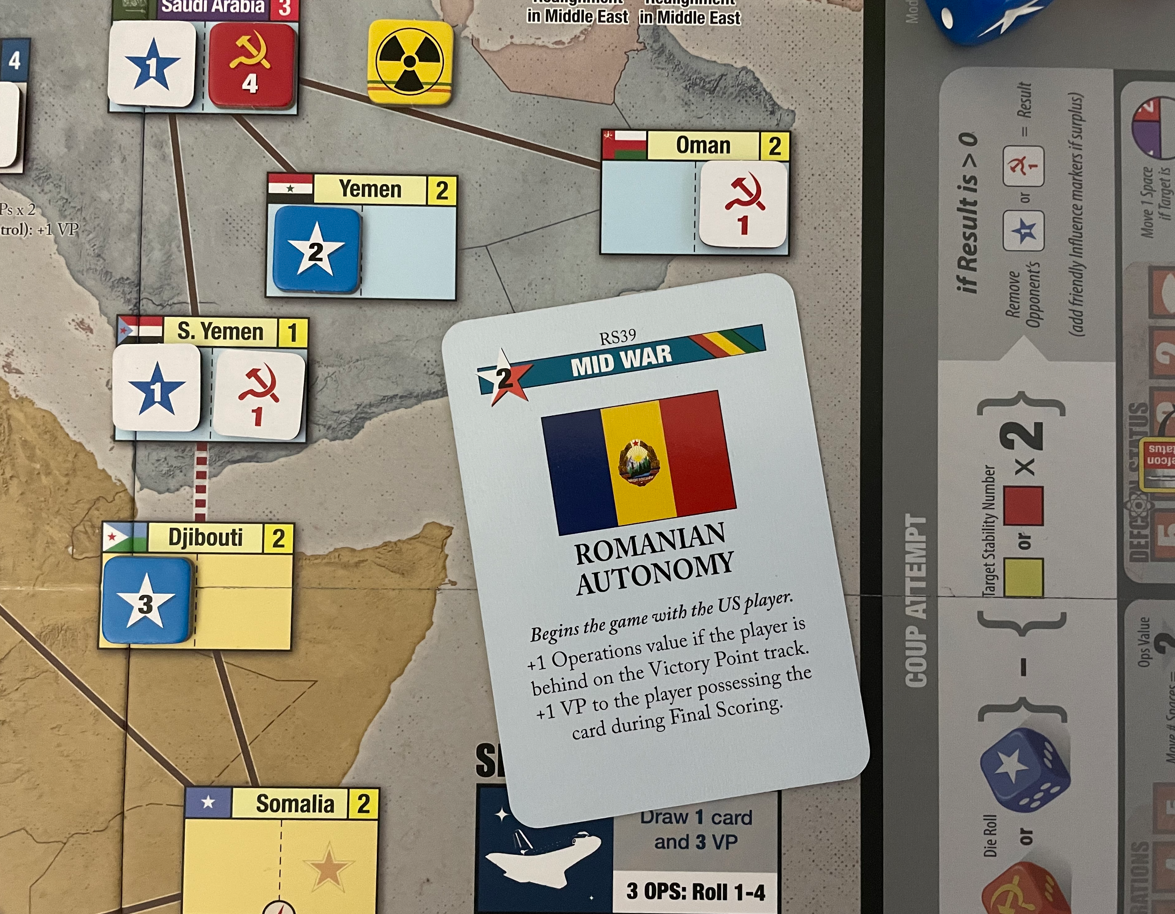
The next card we will take a look at in this series is the special Romanian Autonomy, which is a unique card that doesn’t play from the deck but starts with the US player and resembles one of the classic cards from the original Twilight Struggle called The China Card. And if you have played Twilight Struggle, you know about the China Card. The China Card is a 4 Ops Value Card that can be held by the player in addition to their hand limit thereby giving them an extra card to use. But the card also has a special ability where if the player uses the card for 4 Ops to place Influence only in Asia, it will grant the player +1 Ops Value to use in placing one additional Influence. The China Card also grant’s the player who holds the card at the end of Turn 10 a +1 VP bonus.

In Twilight Struggle: Red Sea, the China Card has been replaced by the Romanian Autonomy Card. This card is not as powerful as the China Card but definitely creates some new opportunities and challenges for the player playing the card. The Romanian Autonomy Card can effect their Ops Value from cards by +1 during the Turn that they play it if they are behind on the Victory Point Track and also grants +1 VP to the player holding the card during Final Scoring. I think this is a really interesting concept and I think was included as a sort of catchup mechanic due to the short nature of the game. I look forward through more plays to seeing how its addition changes things and whether it is overpowered or just right. Once again, a small and subtle change to the game to create a new and interesting experience for the avid fan of Twilight Struggle or players who are new to the system.

Nicolae Ceaușescu visiting Africa during the Cold War.

During the Cold War, particularly under Nicolae Ceaușescu (1965–1989), Romania maintained a distinct, active presence in Africa, including the Horn of Africa, as part of a strategy to distance itself from Soviet influence, gain international prestige, and foster economic exchanges. While major powers like the Soviet Union and Cuba directly intervened in regional conflicts (such as the Ogaden War), Romania focused on building “fraternal” socialist relations through diplomatic, economic, and technical assistance, often operating with a degree of autonomy from the Warsaw Pact. Romania’s actual African strategy in the Horn of Africa, outlined in its 2023 Africa Strategy, emphasizes partnership, peace, development, education, and security cooperation, not territorial autonomy. Romania aimed to be a bridge between Europe and Africa, strengthening ties through cultural exchange, economic projects, and increased diplomatic presence in strategic capitals like Addis Ababa and Nairobi. Under its former communist regime, Socialist Republic Romania pursued economic independence and influenced African nations, but this was distinct from seeking autonomy within Africa. The phrase “Romanian autonomy in the Horn of Africa” is a game term with strategic implications within the game, while Romania’s real-world engagement with Africa is about broader diplomatic and economic partnerships

In the next entry in this series, we will take a look at Militia fromStilicho: Last of the Romans from Hollandspiele.

-Grant

Farewell 2025 – Historical Fiction!

23. Dezember 2025 um 17:55

On to the next post in my Farewell series! Today, it’s all about works of historical fiction. Here are the three I liked best this year.

You can read all of the Farewell 2025 posts here:

Antony and Cleopatra (Colleen McCullough)

Long-time readers of this blog know my infatuation with Colleen McCullough’s Masters of Rome series. I have been reading the series since 2018 at the appropriately epic pace of one book per year (and last year, I skipped). Masters of Rome reading was always a highlight of my literary year – the high drama, the broad historical canvas painted with a myriad of characters, events, and microplots, and, most of all, McCullough’s readiness to engage the ancients on their own terms, with ever so many pages dedicated to this legislation or that campaign.

McCullough had planned to end the series after the sixth instalment (The October Horse, which covers the years 44 to 42 BCE). Only her fans’ pleas convinced her to write Antony and Cleopatra. Maybe that shows a little bit – the book takes a long time (say, the first 200 pages) to hit its stride, and never quite reaches the heights of previous instalments. Yet that mostly shows how good these books were (peaking with novel #5, Caesar), as this conclusion to the drama of the late Roman Republic was still one of my favorite historical novels in 2025.

Clarissa Oakes (Patrick O’Brian)

I’m continuing my re-read of the Aubrey-Maturin series, that delightful panorama of life at sea (and land!) during the Napoleonic Wars. Among the Aubrey-Maturin novels which I read this year, my favorite was #15 – Clarissa Oakes.

Jack Aubrey and Stephen Maturin want just one thing: Leave New South Wales and its mixture of brutal government (instigating clashes between the officers and men) and anti-Irish fervor (which gets Stephen into trouble). However, when the ship is out at sea, they realize that one of the younger officers has smuggled out a convict from the penal colony – an enigmatic young woman, who is bound to attract the attention of several of the men. No other book in the series makes so good on the premise of the characters being confined to a small ship, unable to avoid each other. And Clarissa, the escapee, is not just a plot device, but a complex and compelling character in her own right.

And my favorite historical novel of this year was…

A Gentleman in Moscow (Amor Towles)

„Where is it now?“, asks the poem which kicks off the book – “it” being purpose. Having been written after the failed Russian revolution of 1905, the poem is widely seen as a call to action and inspires Russia’s revolutionaries… and thus they do not sentence the aristocratic author Count Alexander Rostov to death when he returns to Russia after the October Revolution. Under house arrest at the Hotel Metropol in Moscow, he will spend the next thirty years rethinking and rediscovering his purpose. It will not count as a spoiler that he finds it in putting his abilities to good use and connecting with his fellow human beings – of course he does. Yet the point of the book is not the goal, but the winding way there, told with grace, nuance, and originality.

While the ending might be a bit kitschy, the unique protagonist, the cast of intriguing side characters and the delightful prose made this my favorite historical fiction read of the year.

Have you read any of these books – and, if so, what did you think? And what were your favorite historical novels of the year? Let me know in the comments!

Farewell 2025 – Historical Fiction!

23. Dezember 2025 um 17:55

On to the next post in my Farewell series! Today, it’s all about works of historical fiction. Here are the three I liked best this year.

You can read all of the Farewell 2025 posts here:

Antony and Cleopatra (Colleen McCullough)

Long-time readers of this blog know my infatuation with Colleen McCullough’s Masters of Rome series. I have been reading the series since 2018 at the appropriately epic pace of one book per year (and last year, I skipped). Masters of Rome reading was always a highlight of my literary year – the high drama, the broad historical canvas painted with a myriad of characters, events, and microplots, and, most of all, McCullough’s readiness to engage the ancients on their own terms, with ever so many pages dedicated to this legislation or that campaign.

McCullough had planned to end the series after the sixth instalment (The October Horse, which covers the years 44 to 42 BCE). Only her fans’ pleas convinced her to write Antony and Cleopatra. Maybe that shows a little bit – the book takes a long time (say, the first 200 pages) to hit its stride, and never quite reaches the heights of previous instalments. Yet that mostly shows how good these books were (peaking with novel #5, Caesar), as this conclusion to the drama of the late Roman Republic was still one of my favorite historical novels in 2025.

Clarissa Oakes (Patrick O’Brian)

I’m continuing my re-read of the Aubrey-Maturin series, that delightful panorama of life at sea (and land!) during the Napoleonic Wars. Among the Aubrey-Maturin novels which I read this year, my favorite was #15 – Clarissa Oakes.

Jack Aubrey and Stephen Maturin want just one thing: Leave New South Wales and its mixture of brutal government (instigating clashes between the officers and men) and anti-Irish fervor (which gets Stephen into trouble). However, when the ship is out at sea, they realize that one of the younger officers has smuggled out a convict from the penal colony – an enigmatic young woman, who is bound to attract the attention of several of the men. No other book in the series makes so good on the premise of the characters being confined to a small ship, unable to avoid each other. And Clarissa, the escapee, is not just a plot device, but a complex and compelling character in her own right.

And my favorite historical novel of this year was…

A Gentleman in Moscow (Amor Towles)

„Where is it now?“, asks the poem which kicks off the book – “it” being purpose. Having been written after the failed Russian revolution of 1905, the poem is widely seen as a call to action and inspires Russia’s revolutionaries… and thus they do not sentence the aristocratic author Count Alexander Rostov to death when he returns to Russia after the October Revolution. Under house arrest at the Hotel Metropol in Moscow, he will spend the next thirty years rethinking and rediscovering his purpose. It will not count as a spoiler that he finds it in putting his abilities to good use and connecting with his fellow human beings – of course he does. Yet the point of the book is not the goal, but the winding way there, told with grace, nuance, and originality.

While the ending might be a bit kitschy, the unique protagonist, the cast of intriguing side characters and the delightful prose made this my favorite historical fiction read of the year.

Have you read any of these books – and, if so, what did you think? And what were your favorite historical novels of the year? Let me know in the comments!

Farewell 2025 – New-to-Me Games!

21. Dezember 2025 um 18:42

As the year comes to a close, I’ll do my usual end-of-year posts: My personal top three in a range of categories. As tradition commands, we’ll begin with the games that I played for the first time this year. Here are the best three.

You can read all of the Farewell 2025 posts here:

On the box: A close finish! ©Days of Wonder.

Heat: Pedal to the Metal (Asger Harding Granerud/Daniel Skjold Pedersen, Days of Wonder)

I’m not much of a Formula 1 fan – from my point of view, nothing much happens during the races (after the start, that is), and in many years, even the championship as such is a bore because one driver/car combo is just too dominant. (This year has been excitingly different in that regard.)

In the box: Another close finish!

Heat, however, takes just the exciting parts of racing and puts them together in an enthralling package of evocative mechanisms – downshifting before corners (and upshifting afterward), and the delicate balance of how to deal with the psychological stress on the driver and the physical stress on the car (the eponymous heat). And as the main planning phase is done simultaneously, there’s minimal downtime even with the full six players.

I love the warm yellow which is so evocative of southern India. ©GMT Games.

Vijayanagara (Cory Graham/Mathieu Johnson/Aman Matthews/Saverio Spagnolie, GMT Games)

I’m excited to learn new things from and with games. One topic I knew next to nothing about is the 14th century in India. That, however, has changed a bit now due to Vijayanagara, a COIN-lite treatment of the collapse of the Delhi Sultanate’s hegemony under the challenge of invasion from the north (Timur’s Mongols) and centrifugal forces in the south (the nascent Bahmani Kingdom and Vijayanagara Empire). Every game of Vijayanagara tells a variation of that story.

The Delhi Sultanate (black) is under heavy pressure from the Vijayanagara Empire (yellow) and the Bahmani Kingdom (turquoise). From the implementation on Rally the Troops!

I was happy to play several games of this intriguing debut design with my fellow board game bloggers Dave from Dude! Take Your Turn and Michal from The Boardgames Chronicle.

And my favorite new-to-me game of the year is…

A classic Rodger B. MacGowan cover. ©Rodger B. MacGowan.

Time of Crisis (Wray Ferrell/Brad Johnson, GMT Games)

Chaos – some games hate it, others, like Time of Crisis, embrace it. Whoever wants to be Roman emperor in the tumultuous third century must be prepared to deal with a whole whirlwind of challenges: Angry mobs want to drag your governors into the gutter, Barbarian tribes stand ready to cross the border into your provinces, and, worst of all, the rest of the Roman elite wants to be emperor, too, and will gleefully take whatever you possess.

Red has declared himself emperor! Yet Yellow runs a compact dominion in the east, ready to move into Italy or break away from the empire. From the implementation on Rally the Troops!

I have been thwarted in my imperial aspirations by my fellow bloggers Alexander and Grant from The Players’ Aid as well as Dave and Michal, and have been loving every minute of it. Time of Crisis has been my most-played game overall this year (with 14 individual plays of it), and rightly takes the crown in this category.

What were your favorite new-to-me games this year? Let me know in the comments!

Farewell 2025 – New-to-Me Games!

21. Dezember 2025 um 18:42

As the year comes to a close, I’ll do my usual end-of-year posts: My personal top three in a range of categories. As tradition commands, we’ll begin with the games that I played for the first time this year. Here are the best three.

You can read all of the Farewell 2025 posts here:

On the box: A close finish! ©Days of Wonder.

Heat: Pedal to the Metal (Asger Harding Granerud/Daniel Skjold Pedersen, Days of Wonder)

I’m not much of a Formula 1 fan – from my point of view, nothing much happens during the races (after the start, that is), and in many years, even the championship as such is a bore because one driver/car combo is just too dominant. (This year has been excitingly different in that regard.)

In the box: Another close finish!

Heat, however, takes just the exciting parts of racing and puts them together in an enthralling package of evocative mechanisms – downshifting before corners (and upshifting afterward), and the delicate balance of how to deal with the psychological stress on the driver and the physical stress on the car (the eponymous heat). And as the main planning phase is done simultaneously, there’s minimal downtime even with the full six players.

I love the warm yellow which is so evocative of southern India. ©GMT Games.

Vijayanagara (Cory Graham/Mathieu Johnson/Aman Matthews/Saverio Spagnolie, GMT Games)

I’m excited to learn new things from and with games. One topic I knew next to nothing about is the 14th century in India. That, however, has changed a bit now due to Vijayanagara, a COIN-lite treatment of the collapse of the Delhi Sultanate’s hegemony under the challenge of invasion from the north (Timur’s Mongols) and centrifugal forces in the south (the nascent Bahmani Kingdom and Vijayanagara Empire). Every game of Vijayanagara tells a variation of that story.

The Delhi Sultanate (black) is under heavy pressure from the Vijayanagara Empire (yellow) and the Bahmani Kingdom (turquoise). From the implementation on Rally the Troops!

I was happy to play several games of this intriguing debut design with my fellow board game bloggers Dave from Dude! Take Your Turn and Michal from The Boardgames Chronicle.

And my favorite new-to-me game of the year is…

A classic Rodger B. MacGowan cover. ©Rodger B. MacGowan.

Time of Crisis (Wray Ferrell/Brad Johnson, GMT Games)

Chaos – some games hate it, others, like Time of Crisis, embrace it. Whoever wants to be Roman emperor in the tumultuous third century must be prepared to deal with a whole whirlwind of challenges: Angry mobs want to drag your governors into the gutter, Barbarian tribes stand ready to cross the border into your provinces, and, worst of all, the rest of the Roman elite wants to be emperor, too, and will gleefully take whatever you possess.

Red has declared himself emperor! Yet Yellow runs a compact dominion in the east, ready to move into Italy or break away from the empire. From the implementation on Rally the Troops!

I have been thwarted in my imperial aspirations by my fellow bloggers Alexander and Grant from The Players’ Aid as well as Dave and Michal, and have been loving every minute of it. Time of Crisis has been my most-played game overall this year (with 14 individual plays of it), and rightly takes the crown in this category.

What were your favorite new-to-me games this year? Let me know in the comments!

❌