I love farming games. I grew up working on farms, and there is a special kind of bucolic pleasure that comes from tilling the earth without actually having to till the earth. Farming and gardening are actually very difficult, and as my graveyard of houseplants can attest, it’s best if this aspect of my life is kept in the realm of fantasy.
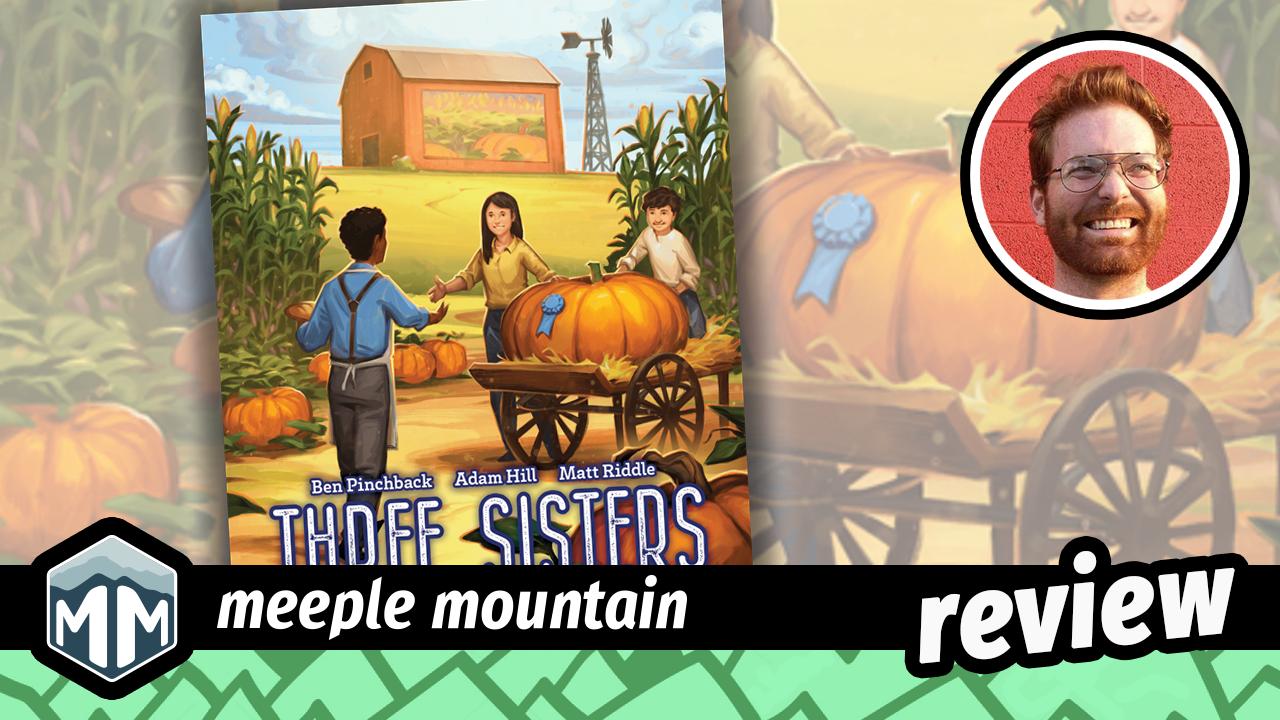
Three Sisters: Harvest Edition is a re-release of the roll-and-write game Three Sisters, where you manage a little farm and grow various vegetables and fruits. It’s charming and well-executed, though it is still essentially a game where you check things off on a pad of paper, so if that’s not your jam, it’s not going to blow your hair back.
Checkboxes: this time, with plants
Three Sisters comes out the gate strong. This isn’t a roll-and-write for the weak-wristed. There are two notepads for you to scribble on. One features a large garden area with a whole bunch of boxes, while the other has your orchard/shed area, which houses upgrades and special powerups (AKA berries and trees).
Each round, all of the dice are rolled and placed in same-numbered groups, starting from a wooden pawn and going around the spaces of a circular track that I won’t call a rondel because it’s just a circular track…
Restoration Games has struck a multi-year licensing deal with Games Workshop to revive the long out-of-print Chaos in the Old World and two other discontinued titles – with all three being “reimagined” in a universe Games Workshop is building around its classic Talisman board game.
The agreement will see Restoration revive Eric Lang’s highly sought-after 2009 design alongside Space Hulk: Death Angel and Warrior Knights, almost a decade after the games disappeared from Fantasy Flight Games’ catalogue due to the end of its long-running licensing partnership with Games Workshop.
All three games will be reimagined within Gravemarch, a new fantasy world Restoration is developing for Games Workshop’s Talisman Realm brand – replacing the original Warhammer Fantasy and Warhammer 40,000 settings of the first two titles.
The deal forms part of Games Workshop’s wider plans for Talisman Realm, launched last year to expand the fantasy world of its 1983 Talisman board game to encompass reimagined versions of other titles from its back catalogue.
The first game to return under the new agreement will be Chaos in the Old World, with original designer Eric Lang returning to work on the new edition alongside Restoration’s design team.
The game has maintained a strong following despite being out of print since 2017, and currently sits among BoardGameGeek’s 250 highest-ranked games.
Secondhand copies continue to command substantial prices, with BoardGameGeek’s GeekMarket recording several selling for between $200 and $350 this year.
Lang said, “I think Chaos in the Old World is my most requested reprint from the most dedicated fans. Restoration is the perfect match to bring this game into 2026. I started this project excited, now I’m beyond thrilled.”
The new version, titled Devastation in the Dread World, will retain the original’s asymmetric factions and area-control gameplay while introducing changes including scenario-based play in place of random events.
Restoration plans to launch the game through crowdfunding in the first quarter of 2027, with a retail release to follow.
Two further titles are provisionally scheduled for 2028: Dungeons of Gravemarch: The Card Game, based on Corey Konieczka’s 2010 co-operative game Space Hulk: Death Angel, and Warrior Knights, which was originally published by Games Workshop in 1985 before receiving a revised Fantasy Flight edition in 2006.
Several of those titles have since returned through other publishers, including Fury of Dracula, which received a new edition from WizKids in 2018. Talisman itself was relaunched by Games Workshop shortly after the Fantasy Flight split, before Pegasus Spiele published the revised fourth edition in 2019 and Hasbro’s Avalon Hill released a fifth edition in 2024.
Restoration Games has built its business around securing rights to discontinued games and bringing updated versions back to market, with previous high-profile successes including Return to Dark Tower and Thunder Road: Vendetta.
The multi-year deal with Games Workshop also allows for the possibility of Restoration developing further titles within Gravemarch or other Talisman Realm settings, although no additional projects have been confirmed.
Soda Smugglers is a game by Reiner Knizia. It is arguably a cleaner
version of Sheriff of Nottingham. Saying this sounds a little
disrespectful to both games. However you can't deny the similarity. The core
idea is the same, just that the execution is a little different.
The box opens this way.
Every round, one player is the customs
Editor’s note: GAMA is one of the sponsors of the BoardGameWire newsletter and an advertiser on the site.
Hobby games trade body GAMA has moved swiftly to appoint Foam Brain Games boss Andrew Zorowitz as acting executive director, just nine days after interim head Melinda Prickett revealed she was leaving the organisation.
Zorowitz’s appointment came in the wake of a “rapid response meeting” called by GAMA’s board on October 26 after it learned of Prickett’s impending departure – which left the association facing another unexpected leadership change amid its ongoing struggle to appoint a permanent executive director.
GAMA said Zorowitz will take on the role for six months, overseeing day-to-day operations and preparations for both GAMA Expo and Origins Game Fair while the organisation’s board continues its search for a permanent executive director.
His appointment marks a departure from GAMA’s approach to executive leadership over almost two decades, during which its two long-serving executive directors, John Ward and John Stacy, and more recent interim heads Prickett and Zaria Davis all had backgrounds outside the tabletop games industry.
He has also been closely involved in GAMA’s events for several years, contributing to educational programming at both GAMA Expo and Origins, and serving on the GAMA Expo Site Selection Committee which helped decide on the trade show’s move to Baltimore.
GAMA said Zorowitz would step away from many of his responsibilities at Foam Brain Games during his tenure, although it has not specified which duties he will retain or what arrangements, if any, will govern potential conflicts between his two roles.
The organisation’s elected board is responsible for selecting the executive director, rather than the appointment being determined through a vote of GAMA’s wider membership.
GAMA has not said whether Zorowitz was selected through a competitive process, whether he will be eligible for the permanent position, or whether his six-month appointment could be extended.
Zorowitz’s term as acting executive director is currently due to end in early May 2027, after GAMA Expo’s debut show in its new Baltimore home, but before Origins Game Fair takes place in June.
His appointment came two days before Prickett’s scheduled departure on November 6 – less than 14 months after she joined GAMA as its first chief operating officer, and just under six months after she stepped up to become interim executive director.
GAMA’s former interim executive director and COO Melinda Prickett
Zorowitz’s arrival means GAMA has now had four people leading its executive operations in the space of a year, following Stacy’s departure, the appointment of leadership consultant Zaria Davis as interim executive director in November, and Prickett’s subsequent assumption of the role in May. GAMA initially said it expected to find a permanent replacement for Stacy by spring 2026.
GAMA board president Meredith Placko and secretary Tiffany Reid told BoardGameWire last week that the board was working through a short list of people to bring in a new interim executive director “very soon”, adding that the goal was to “make sure GAMA Expo and Origins are a success, and the overall day to day running of the organization is met”.
They added that the board had also interviewed “a strong candidate” for the permanent position and had been in negotiations with them, but said that “ultimately it did not work out”.
“Because of that we will need to begin the search again”, they said, adding that the board was seeking RFPs from firms specialising in hiring executives in the trade association and member organization sectors.
The pair said at the time that they could not comment on why Prickett’s notice period was so short, or whether she had been a formal candidate for the permanent executive director role.
Zorowitz’s appointment comes at a particularly important time for GAMA’s two major conventions.
The organisation’s professional trade show, GAMA Expo, has experienced rapid growth in recent years and is in the midst of preparations for its first show in a larger venue in Baltimore after three years in Louisville, Kentucky.
Origins Game Fair, which is set to return to Columbus in June, has struggled to recover its pre-pandemic attendance, however, with visitor numbers falling 2.5% this year to 18,700 – the show’s first annual decline since Covid-19, and still below its 2019 record of 20,642.
That event could face further pressure next year from the launch of PAX Unplugged Houston, a new tabletop gaming convention scheduled to take place just 12 days after Origins, which could potentially force publishers and exhibitors to choose between the two shows.
Zorowitz said of his new role, “I’m excited to work with the GAMA team and support two shows that have been an important part of my own experience in this industry.
“GAMA Expo and Origins both mean a lot to me, and I know they mean equally as much to our members. I’m looking forward to helping make GAMA Expo’s move to Baltimore a success, prepare for Origins and support a strong transition when a full-time executive director is hired.
“I’ve had the pleasure of working with many of the fantastic GAMA staff members over the past several years, and I am excited to help lead them as the board looks for a new permanent executive director.
“I think Melinda and the board have built a great foundation of what this organization should strive to be, and I am glad I get to continue to help keep the ship moving forward steadily in the interim.”
GAMA’s latest leadership shake-up on the executive side also follows a period of significant change for the organisation’s elected board.
Ross Thompson, who was elected as vice president following Placko’s elevation to president, has now also resigned from the board after just over six months in the position.
Thompson only joined GAMA’s board in October last year, winning a special election to replace former secretary Monica Rasso, who had stepped down after five years as a director.
His resignation means the organisation will now hold its second special election for the same Media & Events board seat in little more than a year.
Gold Country, the latest Reiner Knizia resurrection from publisher Bitewing Games, looks like it should come with prospector costumes. To pull it off the shelf for the first time is to expect dirt under your nails and spit in your spittoon. It presents as a game for salt of the earth types, for those with a history of good, honest blue collar work.
The reality is quite different. Gold Country’s collar is as white as it gets. This is a stocks game, perfect for the MBA candidate in your life. It’s all about buying low, selling high, and churning out dividends. It’s about shorting the market to your benefit. This humble, enjoyable, forty-minute experience would make a great warm-up, filler, or cool-down for the people in your life who make Excel spreadsheets for 18XX games.
The real miracle is that this is a stock game just about anyone—and I do mean anyone—would be happy to play. It may be the most approachable stock game in the history of the medium.
Mine Every Mountain
The titular gold in that titular country is harvested from four mines, each…
Totally Human, from designer Kasper Lapp and publisher Bitewing Games, is a bit of an odd one. The idea draws from the same well as A Fake Artist Goes to New York and The Chameleon, social deduction games that use a secondary activity to make people try to blend in or suss one another out. A Fake Artist has everyone add one line to a shared drawing, but the faker doesn’t know what the drawing is. The Chameleon uses a word game to similar effect. The first smart choice for both was the decision to center their games around activities that are already fun on their own. People love collaborative drawings and word association. For its central activity, Totally Human employs everyone’s favorite style of exam, the multiple choice question.
At the beginning of the game, which lasts a breezy 10-20 minutes at most, everyone is dealt three cards. For most players, these cards will be irrelevant. They only matter to you if you receive one or more of the cards that designate you as an alien. Once everyone has had a moment to look at their cards, the first of three multiple choice questions is revealed to the table. The questions themselves are benign, broad, uninteresting in the way that these sorts of games’s questions often are: “What…
Good morning our faithful readers! As this post uploads this morning, we will be preparing to make our way out west to attend SDHistCon 2026 held in sunny San Diego, California at the best little historical games convention on the West Coast! We will not depart until later today on a 3:45pm flight departing Indianapolis and should arrive in San Diego at around 5:30pm on the West Coast. We will be attending the mixer that evening and get settled into our short term rental. We also are taking along The Players’ Aid Wives (Kelly and Paisley) as well as 2 of our children in Marin (my daughter) and Atticus (Alexander’s son) and are excited to spend time with them in the beautiful southern California weather! This convention will include 3 days filled with gaming, designer interviews, looks at new prototypes, visiting with friends, publishers and designers.
This will be our 3rd trip to SDHistCon and we appreciate the constant prodding and encouragement from our friends Harold Buchanan and Andrew Bucholtz to get us out there and I am really excited about attending as we had such a great time the last 2 times we have attended! The San Diego Historical Games Convention is set to be held from November 6th through 9th at the S.E.S. Portuguese Hall of San Diego. The convention is about 2 blocks from the San Diego harbor, just a few miles from the San Diego airport, and is surrounded by delicious restaurants and fairly affordable hotels and other accommodations.
The mission of SDHistCon is to create a diverse and supportive gaming community dedicated to playing, discussing, designing and promoting historically-based board games. Through this commitment, SDHistCon seeks to serve both the existing historical board gaming community as well as grow it through the addition of new voices and perspectives. Recent events run by SDHistCon include this same convention last year, the 2025 Summit Award (given to War Story: Occupied France designed by David Thompson and Dave Neale), an online convention called SDHistCon Winter Quarters in January 2026, and SDHistCon North in Minneapolis/Saint Paul, Minnesota this past July.
At the end of each day, I will be putting together a short summary of what we did that day at the convention. I would like to keep this to just a few paragraphs with several pictures to give you an idea of the games we played that day, people we talked with and other activities we participated in. We will still work on doing multiple videos as well that will be released on the YouTube Channel over the next few months but this coverage will supplement the videos. This summary will most likely not be posted until after 1:30am EST each night, if not a bit later, so you might be checking it out the next morning which is fine.
One of the new things they will be offering this year at the convention is the Skunkworks Event. The idea of the event is similar to publisher speed dating events at other conventions, but it’s intended for more than just publishers. This event, on Friday, November 6th, will feature up-and-coming designers set up at their own tables, where they can give a 5-minute pitch on a single game to other convention attendees, who may be publishers, designers, reviewers or content creators, or others curious about what’s in the works. The Skunkworks Event will be scheduled on the Friday night of the convention to allow participants to schedule follow-up meetings or playtests later in the convention with people particularly interested in their game.
We have at least a few things planned that are official including several multi-player wargames like Baltic Empires: The Northern Wars of 1558-1721 from GMT Games, The Weimar Republic: Political Struggle in Germany, 1919-1933 from GMT Games, The Other Side of the Hill from NAC Wargames and Thirty Years of Misery from VUCA Simulations. We also will most likely be getting in a game of Virgin Queen but have not been able to get that finalized as of yet. We have been invited to participate in the Skunkworks event and I am very much looking forward to what we will see. We are also looking forward to taking a look at other “as of yet unreleased” games that are in design including Foxes and Lions: Renaissance City-States in the Age of Machiavelli from GMT Games, Painkillers from Hawk & Dove Games and Checkpoint Charlie from GMT Games in addition to some others. Should be a ton of fun!
There have been multiple games setup on this list since its creation in early October and we are nearing full capacity so check it out and add your name if you are interested in gaming with us. Happy gaming!
Finally, if you are at SDHistCon please feel free to find us and say hello. I believe that we are very friendly and accessible (well at least I am as sometimes the Brit is a bit crusty and gruff!) and love to make connections with our fans and followers. In fact, we have TPA buttons and stickers to give away so just ask. We also would like to take a picture with you so we can document it in our writings.
Japanese board game heavyweight Arclight has warned that the country’s tabletop industry faces a shortage of specialists capable of developing internationally competitive games and securing overseas publishing deals, despite a string of existing global successes – and is leading a government-backed initiative to tackle the problem.
Arclight, a major publisher and distributor of games across Japan and organiser of the country’s biggest tabletop gaming convention, is heading up a two-year programme to train Japanese creators in international game development, licensing and commercial expansion.
About 20 creators are set to be recruited through the Japan Tabletop Advancement Network, which Arclight is running alongside board game publisher and café operator Pizzicato Design and specialist Japanese hobby retailer Yellow Submarine.
Arclight said that while overseas demand for Japanese board games and international licensing opportunities had been growing rapidly, the country’s domestic industry remained heavily reliant on “individual passion and doujin activities,” and faces a structural challenge of lacking “core specialists” capable of developing intellectual property “to international standards” and successfully expanding overseas.
The warning comes despite a string of breakout successes for Japanese publishers and designers, including several titles which have sold hundreds of thousands or even millions of copies worldwide.
Arclight itself revealed in July that its co-operative card game Ito from Mitsuru Nakamura had surpassed one million copies sold across Japan and overseas, with the series now available in 11 languages.
Oink revealed to BoardGameWire in 2024 that Deep Sea Adventure had passed 300,000 copies printed, while its Spiel des Jahres-nominated Scout managed to secure a dedicated edition for US retail giant Target the same year.
Other Japanese publishers to have built substantial international success include Kyoto-based Saashi & Saashi, which told Japanese outlet 4Gamer in 2022 that overseas sales accounted for about 70% of its business.
Japanese designs have also become major global hits through international licensing deals – most famously Seiji Kanai’s Love Letter, which had sold more than three million copies worldwide by 2022, and Machi Koro, which passed one million copies sold by 2021.
Those two games were among international successes helped by Japon Brand, the long-running collective established to introduce Japanese tabletop designs to overseas publishers.
Japanese version of Love Letter, published by Arclight Games
Board game giant Asmodee acquired Japon Brand from CMON earlier this year as part of a renewed push into the Japanese market, incorporating the collective into a new studio called Nekuma to identify promising Japanese designs for international release.
J-TAN is scheduled to run from February 2027 until March 2029, combining domestic training and game development with up to four overseas industry placements over the two years.
Arclight said participants will receive mentoring in international market trends, publishing and business development, alongside opportunities to present their designs to overseas publishers, obtain feedback and establish industry contacts.
The provisional programme lists potential training destinations including Spiel Essen, UK Games Expo, Gen Con and GAMA Expo, although the organisers have stressed that the final destinations are yet to be determined.
Domestic training will include four sessions a year in Tokyo, covering overseas publishing and the development of internationally competitive games, with participants also receiving practical playtesting support.
Participants will be able to attend the training and overseas placements free of charge, including travel costs, although places on individual international trips may be limited. Both independent creators and people already employed by game companies are eligible, while applicants will retain the rights to their existing designs.
The programme is being supported financially by Japan’s Creator Support Fund, established within the government-funded Japan Arts Council to support the development of creative talent and the infrastructure underpinning the country’s cultural industries.
The deal brought Arclight into the same stable as video game maker FromSoftware, famous for hit titles including Elden Ring, Bloodborne and the Dark Souls series. Kadokawa, which has a stock market valuation of about $3.4bn, also has extensive interests in book and manga publishing, film and anime, and specialises in developing intellectual property across multiple media.
Arclight also runs Game Market, Japan’s biggest tabletop gaming convention, which attracted 32,000 visits across two days in October this year, with a record 1,425 exhibition booths.
J-TAN’s organisers have not specified how much government funding has been allocated to the initiative, or set numerical targets for overseas licensing agreements or sales totals.
Applications for the first cohort close on November 30, with successful candidates due to be announced in late January 2027.
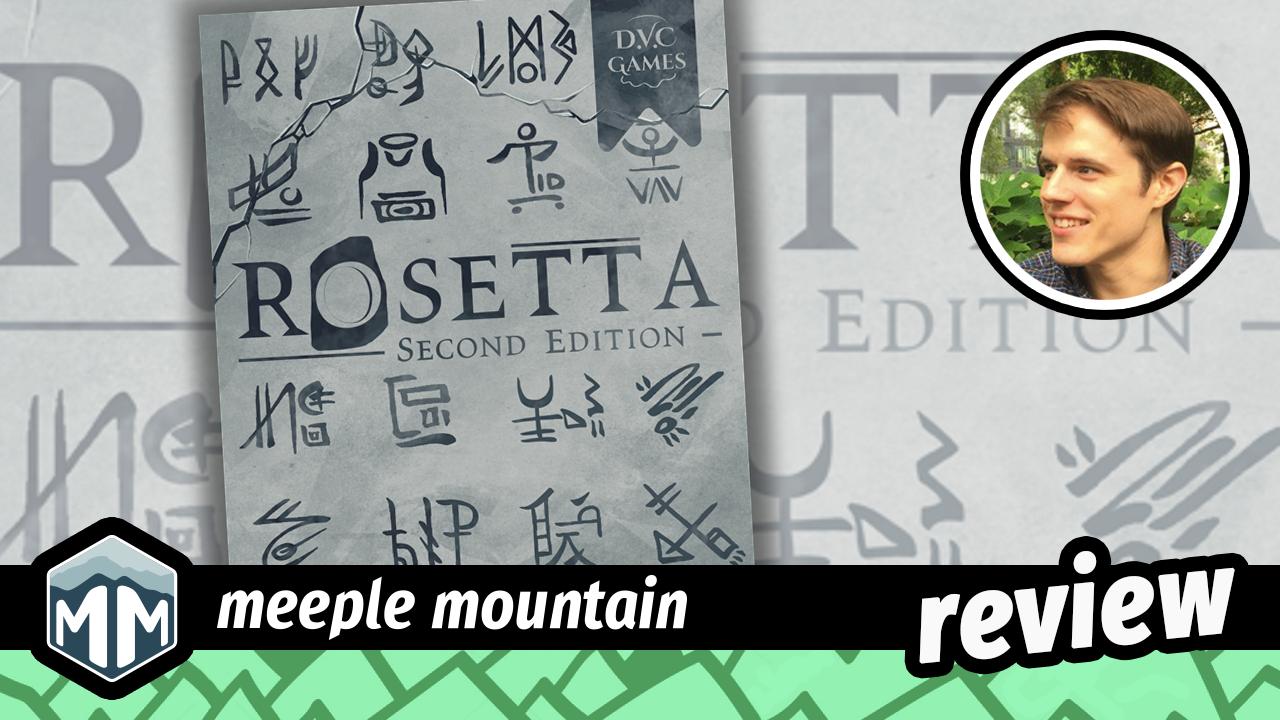
I’m an easy mark for Rosetta, publisher DVC’s entry in the spontaneous language creation subgenre. It tickles the same part of my brain as Gibberers, which is a brilliant and singular experience, but Rosetta is much more approachable. Gibberers is a game in which you create a language and speak only in that language. It demands a good deal of time and the space for a tremendous cognitive load. Rosetta is significantly faster, and, rather than create and speak a new language, you work together to decode a logographic writing system for a language you never once have to speak.
One player takes on the role of the Author, the voice—albeit a mute one—of the lost civilization with which this writing system originated. They draw a random Inscription and Location, and set both out on the table for all to see. The Location is there for inspiration and to provide a little bit of context and grounding. The Author secretly picks a meaning for the Inscription associated with what they see in the landscape. You can’t pick something that is visible on the Location card, though it’s best to choose something directly related to what you see. A field of wheat may lead the Author to choose “farmer.” A snowy mountain might suggest “avalanche.”
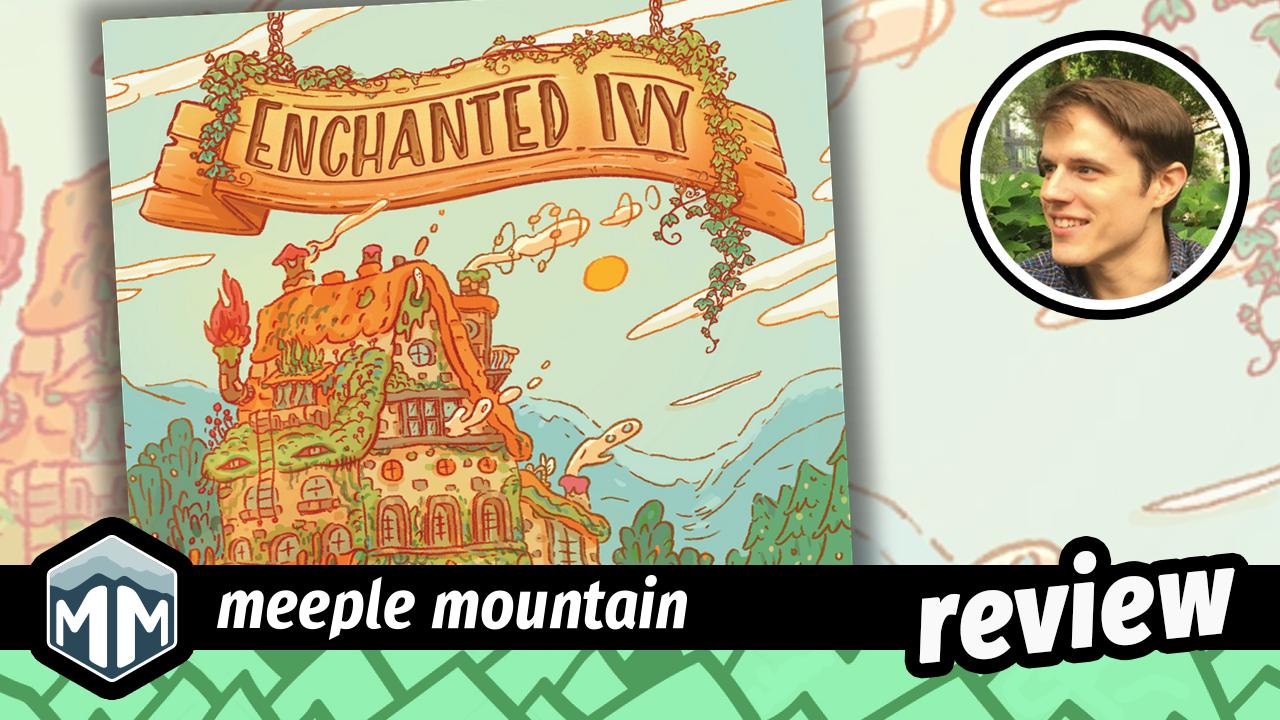
It isn’t often that a puzzle game succeeds in evoking a strong sense of place. Place is the main thing Enchanted Ivy, a solo game from designer Sarah Joshua and publisher Allplay, has going for it. That is no small compliment. To sit down for a session of this spatial puzzle is to feel the sunshine in the clearing, to hear the chatter of guests coming and going. It’s an easy game to get lost in.
Every session, whether playing a standalone game or digging into the charming campaign, you must build your inn, accommodating guests as you go. Draw two cards and place them however you wish, so long as they are contiguous with everything you’ve played so far and they don’t break the pre-determined boundaries of your inn for that game. The vine pattern on each side of each card is identical; the only difference is that one side has a window and the other doesn’t. Each turn, you place one card window-side-up. Into the room upon which that window opens, you must place one of two guests.
These guests are both the ludographic and spiritual heart of Enchanted Ivy. They elevate what would be an enjoyable but somewhat dry exercise into a poignant and individual experience. Their room preferences drive the bulk of the decisions you…
I love a different style and focus of wargame. A game that takes a look at an important but somewhat obscure or rarely addressed historical topic, such as espionage or intelligence, and creates a gaming experience tailored around the events to highlight and evoke the difficulties and tension that would have been present. In January 2026, GMT Games announced such a game in Checkpoint Charlie, which is a solo or cooperative game focused on SIS espionage missions in Berlin in the 1960’s designed by Russell Brown. We have posted an interview with Russel and it was very well received and he has now agreed to create a series of History Behind the Cards to highlight the events of the 1960’s Cold War struggle in West Germany but also to share aspects about the game play and how it models the history.
*Note: The cards highlighted in this series and their event text, as well as any pictures used showing any of the various components, are still in the design and development process and as such event effects and text might still change prior to final development and publication.Also the art and layout of the cards are only for playtest purposes at this point and the game will enter the art department as it nears publication.
History Behind the Cards – Checkpoint Charliefrom GMT Games – Card #10 Moscow Rules
“Moscow rules meant watch your back. London rules meant cover your arse.”
This quote from Mick Herron’s book, Slow Horses, may be what many people think of when the term Moscow Rules is used today, but there’s a bit more to it than that. Moscow rules were an unwritten set of procedures – spycraft protocols – to keep in mind when operating on the KGB’s home turf. Moscow Rules may have also been used as a cautionary declaration, a spy’s call to arms. In John Le Carrè’s spy novels, George Smiley lets his colleagues know that exceptional caution is warranted just by saying, “Moscow Rules.”
Moscow Rules could include communicating with extra caution, or in code. It could mean keeping a better eye out for someone following you, or being ready to defend yourself. But at its core, it meant that you were effectively operating in enemy territory and could no longer trust the people and places you once took for granted.
In Checkpoint Charlie, the Moscow Rules Event Card puts all of your assets on high alert, giving them a Tradecraft Marker if they don’t already have one. It also adds the Papers Item to the Mission, assuming that your assets dig deeper into their resources, perhaps pulling out old false identities reserved for emergencies. If you’re playing the campaign game, the Moscow Rules Card is not removed when it occurs, so it can show up on almost any mission.
In the next article in this series, we will take a look at ________.
In my opinion, this game looks extremely interesting and I am very much excited to learn more about it. I am appreciative to Russell and his efforts to bring us these cards and to write these entries to share with our readers. I am also very glad that this topic is being covered in a game and look forward to playing this one day soon.
This is a giant version of Counting Cats, the latest game from local
Malaysian publisher Meja Belakang. Haireey is now using this copy to run game
demos. It's a great idea. This is a game of literally counting cats. It is a
children's game and casual game designed with his young son in mind. You want
to be first to count correctly the number of cats of a specific type. So this
Deckbuilder gehen bei mir eigentlich immer. Wenn dann noch ein unverbrauchtes Thema wie das entbehrungsreiche Leben eines Künstlers dazukommt, garniert mit einem richtig schicken Cover und einem eigenwilligen Grafikstil – zack, habt ihr meine ungeteilte Aufmerksamkeit. Mit Bohemians (hierzulande bei Pegasus, im Original von Portal Games) schien also eigentlich alles angerichtet für ein echtes Highlight. Ob es das auch wirklich ist, erfahrt ihr in unserer Review.
Wiñay Kawsay isn’t your usual board game about history. For one thing, it’s actually about history — not just a historical topic, but the craft of history, from the biases and egos of historians to the damage done to archaeological sites whenever artifacts are removed from the soil. Today, we’re joined by Alison Collins to discuss the making of her game, what history can and should be, and what it’s like to explore Machu Picchu.
Listen here or download here. Timestamps can be found after the jump.
TIMESTAMPS
00:55 — introducing Alison Collins and Wiñay Kawsay
9:16 — visiting Machu Picchu
19:25 — making a medium-weight game about history
32:05 — demonstrating historical malpractice in a board game
38:47 — three types of historian
51:02 — the meaning of wiñay kawsay
59:40 — historical consultancy
Einmal einen Rundumschlag bitte. Auf der Neuheitenschau der SPIEL Essen 2026 konnte ich mir das Verlagsprogramm der Strohman Games Neuheiten von Gibberers bis Eternal Decks zeigen lassen. Den zwischenzeitlichen Favoriten der Fairplay Scoutaktion habe ich dann am Freitag direkt gekauft, während Eternal Decks leider schon ausverkauft war. So blieb nur eine Kennenlernpartie in entspannter Dreierrunde am Messesonntag, die dramatischer verlief, als es den optischen Anschein hat. Meine Vorbestellung zum Januar 2027 steht.
Folgt mir zusammen mit Marco von Strohmann Games über das Verlagsprogramm. Im Zentrum der Vorstellung stehen bei Gibberers die Hürden und Herausforderungen, über die Entwicklung der eigenen Sprache kooperativ voranzuschreiten. Kooperation gibt es auch beim Kartenspiel Eternal Decks, das unsere Handkarten als Lebenspunkte nutzt. Was uns in 1. Kontakt zur kooperativen Hetzjagd auf ein notgelandetes Alien per Deduktion bringt. Eine Neuheit, die lang erwartet als deutschsprachige Lokalisierung vorliegt. Reingelauscht.
Am Sonntag hatte ich dann die Chance, Eternal Decks inmitten des Messetrubels von Halle 3 kennenzulernen. Routiniert erklärt von Chris von Strohmann Games, nur unterbrochen vom prasselnden Gewitterregen aufs Hallendach. Für Euch ebenso als Audio-Mitschnitt festgehalten, aber dank moderner Filtertechnologie nicht mehr störend im Hintergrund zu hören.
Was für ein Kartenritt als Messeerlebnis. Kooperativ herausfordernd, so war unsere Kennenlernpartie. Auch weil im Spielverlauf untersagt war, uns über unsere kooperative Taktik oder Karten abzusprechen. Einzig zwei Marker pro Mitspieler können anzeigen, was wir eventuell vorhaben. Missverständnisse sind so vorprogrammiert, was aber auch den Reiz und die Dramatik ausmacht. Denn unsere Handkarten sind zeitgleich Lebenspunkte und einmal gespielt, sehen wir die nie mehr wieder. Wir müssen also sehen, dass wir neue Kartendecks freispielen und zwar für alle Spieler am Tisch.
Aktive Flüche verhindern zudem, dass bestimmte Zahlenwerte gespielt werden. Blöd, wenn man die Kartenhand voll davon hat, es aber nicht äußern darf. So entstand ein hochtaktischer Drahtseilakt fernab der verbalen Kommunikation, was angenehm nervige Alphaspieler ausbremst. Wir haben zwar verloren, aber Eternal Decks war eines meiner Messe-Highlights, die ich mir für Anfang 2027 vormerke, wenn es dann wieder lieferbar sein wird. Absolute Empfehlung.
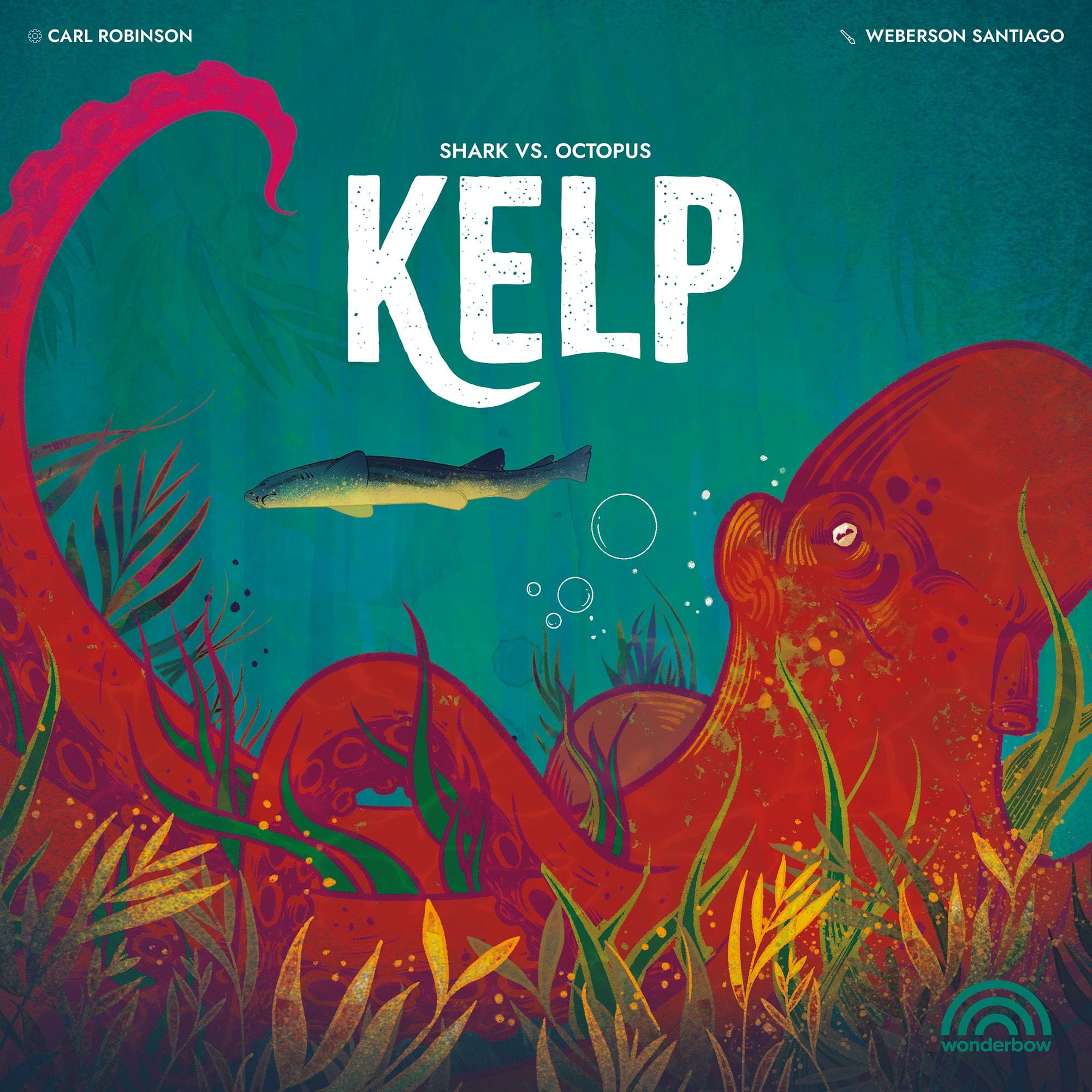
Zwei Jahre nach dem Launch von Kelp - Hai vs. Oktopus legt der deutsche Verlag Wonderbow Games nach: Seit heute, 3. November 2026, 15 Uhr MEZ, läuft auf Gamefound die Kampagne „Kelp - Shark vs. Octopus: Offshore Offspring Expansion and reprint Deluxe Edition“. Sie bündelt eine neue Erweiterung, einen Deluxe-Reprint des Basisspiels und mehrere kleinere Erweiterungen und Zubehörteile. Das Finanzierungsziel von 8.000 Euro war schon nach den ersten sieben Minuten erreicht, Stand unseres letzten Abrufs (03.11.2026, kurz nach Kampagnenstart) stehen 72.217 Euro, 903 Prozent des Ziels, bei 709 Unterstützenden, Kampagnenende ist der 18. November 2026.
Was Offshore Offspring am Spiel ändert
Im Basisspiel jagen sich Hai und Oktopus asymmetrisch durch einen südafrikanischen Kelpwald: Der Hai würfelt und patrouilliert, der Oktopus spielt Karten, versteckt sich und manipuliert das Spielfeld. Gewonnen wird auf drei Wegen: Der Hai siegt durch einen erfolgreichen Angriff auf den Oktopus, der Oktopus durch Überleben, bis der Hai erschöpft ist, oder indem er alle vier Meeresfrüchte auffrisst. Die Rollen sind damit mechanisch grundverschieden, ähnlich wie bei anderen Jäger-gegen-Gejagten-Spielen mit verdeckter Bewegung, etwa Scotland Yard oder Letters from Whitechapel, nur dass bei Kelp beide Seiten jeweils ein eigenes Kartendeck beziehungsweise einen eigenen Würfelbeutel aufbauen. Wie genau sich die Siegchancen zwischen Hai und Oktopus über mehrere Partien hinweg verschieben, lässt sich aus den uns zugänglichen Quellen nicht belegen. Meeple Mountain beschreibt stattdessen eine fein austarierte Balance auf der Kartenseite des Oktopus selbst, und nennt als möglichen Schwachpunkt passive, zähe Spielzüge auf Oktopus-Seite. Wie schnell sich daraus wirklich taktisches Spiel zwischen beiden Rollen entwickelt, bleibt in den von uns geprüften Quellen ebenfalls offen.
Die neue Erweiterung Offshore Offspring bringt laut Verlagsbeschreibung Nachwuchs ins Spiel: Der Oktopus bekommt ein neues, magnetisches Modulsystem mit wechselbaren Tarnfarben und kann Fallen für den Hai stellen, der wiederum zwei zusätzliche Jungtier-Jäger erhält und damit im Rudel jagt. Wie tief diese neuen Mechaniken tatsächlich eingreifen, lässt sich vor dem Erscheinen nur aus der Verlagsbeschreibung einordnen, eigene Praxiserfahrung gibt es dazu naturgemäß noch nicht. Mit Offshore Offspring sind es inzwischen drei Erweiterungen für Kelp (nach Brilliant Behaviours und New Pursuits), eine erkennbare laufende Produktlinie statt eines Einzelstücks.
Wer dahintersteckt
Design und Erweiterung stammen beide von Carl Robinson, die Illustrationen von Weberson Santiago, wie schon beim Basisspiel. Wonderbow Games firmiert rechtlich als Avalia Studios GmbH mit Sitz in Deutschland und entwickelt nach eigenen Angaben seine Spiele auf Deutsch und Englisch. Das Basisspiel führt der Verlag in seinem eigenen Shop regulär als deutsche Edition, ob auch die Kampagnen-Pledges selbst eine deutsche Sprachoption bieten, ließ sich auf der Gamefound-Seite nicht eigenständig bestätigen.
Zwei Spielende, kein Solomodus
Kelp ist laut BoardGameGeek ein reines Zweipersonenspiel, weder für eine noch für mehr als zwei Personen ausgelegt, ein Solomodus ist weder für das Basisspiel noch für die Erweiterung angekündigt.
Was die Pledges unterscheidet
Fünf Haupt-Pledges stehen zur Wahl, sortiert danach, was man schon besitzt und ob man nur neue Spielinhalte will oder zusätzlich Komponenten-Upgrades:
Kelp Deluxe (60 Euro): nur das Deluxe-Basisspiel, für alle, die noch gar keine Kelp-Ausgabe besitzen.
Neue Erweiterungen (44 Euro): Offshore Offspring plus die kleinere Erweiterung Amazing Adaptations, reiner Inhalts-Nachkauf für bestehende Besitzerinnen und Besitzer.
Deluxe Gameplay All-In (126 Euro): Deluxe-Basisspiel plus alle Erweiterungen, der Einstieg mit komplettem Spielinhalt.
Deluxe All-In (194 Euro): zusätzlich sämtliches Zubehör (Insert, Spielmatte, Würfeltablett, Sleeves), reine Komponenten-Upgrades obendrauf. Die 68 Euro Aufschlag gegenüber dem reinen Gameplay-Pledge kaufen bei einem Zweipersonenspiel mit überschaubarem Materialumfang vor allem Komfort, keinen zusätzlichen Spielinhalt.
All-In-Upgrade ohne Basisspiel (149 Euro): für Besitzerinnen und Besitzer der normalen Retail-Ausgabe, kombiniert das Komponenten-Upgrade-Kit mit allen Erweiterungen und allem Zubehör.
Einzelne Erweiterungen und Zubehörteile, von der Spielmatte bis zu Ersatz-Holzmarkern, lassen sich zusätzlich auch separat als Add-on dazubuchen, ebenso zwei thematisch unabhängige weitere Wonderbow-Titel (8 Dragons, Whispering Woods), die über denselben Pledge-Manager mitlaufen.
Zum Kampagnenstart sind noch keine Stretch-Goals veröffentlicht.
Lieferung und Versand
Ein konkretes Lieferdatum für die Pledges nennt die Kampagnenseite nicht, nur das Kampagnenende am 18. November 2026 als Zahlungsfrist. Versandkosten werden laut FAQ des Pledge-Managers individuell beim Checkout berechnet und nicht pauschal auf der Kampagnenseite ausgewiesen, die EU-Mehrwertsteuer ist im Pledge-Preis bereits enthalten, zusätzliche länderspezifische Steuern oder Zollgebühren schließt Wonderbow nicht aus.
Eckdaten zu Kelp: Shark vs. Octopus
Spielerzahl: 2 (fest, kein Solomodus)
Spielzeit: 40 bis 60 Minuten
Alter: ab 10 Jahren
Designer: Carl Robinson
Verlag: Wonderbow Games (Avalia Studios GmbH, Deutschland)
BGG-Wertung Basisspiel: 7,45 bei 3.776 Stimmen, Rang 1032, Schwierigkeitsgrad 2,48 von 5 (Snapshot 03.11.2026)
Gamefound-Kampagne: 8.000 Euro Ziel, 72.217 Euro bei 709 Unterstützenden (903 Prozent, Snapshot kurz nach Start am 03.11.2026), Laufzeit bis 18.11.2026
Was wir davon halten
Das Basisspiel hat sich seit seiner eigenen, erfolgreichen Kickstarter-Kampagne eine stabile Fangemeinde erspielt, auch bei uns war es 2024 ein Thema. Eine Erweiterung plus Deluxe-Reprint ist der naheliegende nächste Schritt für ein Spiel mit so klarer Zielgruppe, und das Tempo, mit dem das Ziel gerissen wurde, deutet auf eine eingespielte Unterstützerbasis hin, nicht zwingend auf ein neues Massenpublikum. Wer das Original schon kennt und mehr Hai-gegen-Oktopus will, findet hier ein sauber differenziertes Pledge-System, wie bei jeder Vorbestellung bleiben Liefertermin und Versandkosten bis zum Checkout offen. Wer noch unsicher ist, kann getrost abwarten: Das Basisspiel bleibt auch unabhängig von der Kampagne über den regulären Handel erhältlich.
Security arrangements at the world’s biggest board game fair have come under scrutiny after six thefts were reported during setup and dismantling at this year’s Spiel Essen – including €14,000 of stock and equipment being stolen from a publisher overnight.
Show organiser Merz Verlag told BoardGameWire all six incidents are believed to have occurred when access to the exhibition halls was restricted, despite Messe Essen venue security being in place throughout those periods.
The thefts have prompted complaints from affected businesses about security at Spiel Essen and the assistance they received – while Merz Verlag has stressed that exhibitors are responsible for protecting their own property, even outside public opening hours.
French tabletop games company Tossit was among the worst affected exhibitors this year, claiming that about €14,000 of merchandise, equipment and tools disappeared from its stand in Hall 6 overnight following the convention’s final day.
Company co-founder Gaëtan Ekszterowicz said in a LinkedIn post that his team left the stand at around 10.45pm on Sunday, October 25, intending to finish dismantling the following morning – but returned at 8am to discover more than 500 units of merchandise and other equipment had disappeared.
That included tools stored inside the stand furniture, leaving the company without even the equipment needed to complete dismantling its booth.
Ekszterowicz estimated that removing the stolen goods would have taken at least 35 to 45 minutes, raising questions about how such a large quantity of merchandise could have been removed from an exhibition hall overnight.
Another exhibitor, tabletop accessories seller The Rolling Inn, said €4,000 in cash – representing its entire convention takings – was stolen during dismantling on Sunday evening.
A third theft was reported by Julian Hill of board game media outlet Boxed Meeples, who said on Instagram that his bag was taken from the Paverson Games stand during a team meeting on Wednesday October 21, the day before SPIEL opened to the public.
Hill said the bag contained money, payment cards, camera and sound recording equipment, as well as recordings of interviews he had already conducted at the convention.
The Paverson Games booth, left, in Hall 4 of Spiel Essen 2026
Spiel Essen’s organisers have also been criticised by Tossit’s Ekszterowicz and The Rolling Inn for their response to the thefts.
Ekszterowicz claimed representatives of SPIEL Essen and Messe Essen laughed at its team and failed to take their complaints seriously – as well as alleging that a member of staff attempted to grab a phone from his company’s marketing manager during an exchange about the incident.
“No representative of Merz Verlag laughed at members of Tossit’s team or grabbed a phone,” a Merz Verlag spokesperson told BoardGameWire.
They said, “Tossit wanted to film an exchange between them, Messe Essen and Merz Verlag which members of Messe Essen denied due to them not wanted to be taped, referring to personal rights.”
Asked about allegations from Tossit and The Rolling Inn that they received little or no assistance, the spokesperson said, “The team of SPIEL Essen takes every reported theft seriously and helps in the best of our abilities and in making contact to the police.
“Our team was also on site and talked with exhibitors. At the moment we are collecting information to may be able to help further.”
Merz Verlag said police had been informed of the incidents, and that it was cooperating with investigations.
The spokesperson added, “In total six thefts were reported to us this year, ranging from tablecloths, to some cases of games, to cash and equipment, the examples you mention already included.
“To our knowledge these cases took place during set-up or dismantling. In 2025 fewer incidents have been reported, none in the scale we see with Tossit. “
Merz Verlag said venue operator Messe Essen provided security throughout setup and dismantling, with access restricted to exhibitors, people holding setup and dismantling passes, event staff and security personnel.
It added that exhibitors were regularly reminded that they were responsible for protecting their own property, and could pay for dedicated guards to secure their stands outside public opening hours.
Ekszterowicz said in his LinkedIn post, “I don’t expect organizers to prevent every theft. But at the very least, I expect them to take this kind of situation seriously and have cameras installed inside the entrance halls. The complete absence of surveillance cameras is also shocking.”
The Merz Verlag spokesperson confirmed to BoardGameWire that no CCTV was covering the booths which suffered thefts.
Wargamer also received a response from Tom Kraayvanger, the press leader at Spiel Essen venue operator Messe Essen, who said the venue operator was taking into account “data protection requirements and the privacy rights of the many people present on the exhibition grounds during an event and its set-up and dismantling phases”.
He said: “When large numbers of people are moving goods, material and equipment at the same time, camera footage does not make it possible to distinguish between the legitimate removal of items and their unauthorized removal”, adding that “comprehensive video surveillance could not guarantee complete protection against theft”.
The incidents also follow a series of reported thefts at SPIEL stretching back at least a decade – including more than $20,000 in combined losses reported by six publishers in 2018, when affected companies called for improvements to security.
Asked whether the latest incidents would prompt changes to security arrangements for SPIEL Essen 2027, Merz Verlag said it was still evaluating the situation.
“We are gathering information and evaluate the situation,” the spokesperson said. “At this early stage we cannot say anything regarding future arrangements.”
The world’s largest board game fair once again sold out all four days this year, drawing 10,000 more visitors than in 2025 after expanding into an eighth exhibition hall and taking over the entirety of the Messe Essen exhibition centre – its home for over 40 years – for the first time.
But that ability to squeeze in larger and larger crowds has now reached its limit, Merz Verlag managing director Carol Rapp confirmed to BoardGameWire, with any further growth set to come via new events and experiences rather than increased attendance or exhibition space.
SPIEL Essen 2027 is scheduled to take place from October 21 to 24.
I’m tailor-made to enjoy “weeknight” 18xx-style economic route building games.
I heaped praise on the game Railways of the Lost Atlas in my 2024 review, with the (at the time) new publisher Asterisk Games doing yeoman’s work with a system some people think of as stodgy, tired, and certainly bland-looking. “ROTLA”, as it is known here at home, is one of the best-looking productions in my collection and comes with a heaping amount of variety thanks to its flexible player count, short and long-form play format, and a hex map that is literally built by the players each time the game hits the table.
If you haven’t heard of Railways of the Lost Atlas, please read my previous review. When the game’s first expansion, Landmarks of the Lost Atlas, was announced, I didn’t even reach out for a review copy…I ponied up the cash to get the expansion along with updated versions of the game’s base rules and a solo mode rulebook, developed after the release of the base game.
If you liked Railways of the Lost Atlas, you have already backed and are working through the goodies in Landmarks of the Lost Atlas. And if you have not tried either, my feelings haven’t changed: for anyone who loves a good Euro and wants to wade into…
Here’s my early assessment of the Chris Couch Games catalog: comfy.
Jingle Bell Roll is the second game I’ve reviewed from Chris Couch, after my foray into the garden with Garden Club a few weeks ago. Jingle Bell Roll is holiday Yahtzee, both in terms of feel and in terms of its ruleset, as players try to score the most points across five rounds by using sets of gingerbread cookies, milk, gifts, bells, holiday wishlists and stockings to put together winning rolls.
Designed by Marcus Ross—a co-designer of the 2023 Ravensburger title The Lord of the Rings Adventure Book Game—Jingle Bell Roll is so cozy that the word “cozy” is used in the BGG description of the game. Across plays with my family and with my “review crew”, Jingle Bell Roll announces itself as a light, friendly filler right away.
Each player is given a cute, well-illustrated character card with a once-per-round power. When one player scores gift rolls, other players get bonus action cards. Players who roll exactly two Santa’s List faces can score seven points…because “he’s making a list, and checking it twice”, as the song goes. There are so many ways to generate rerolls in this game that it’s surprising how…
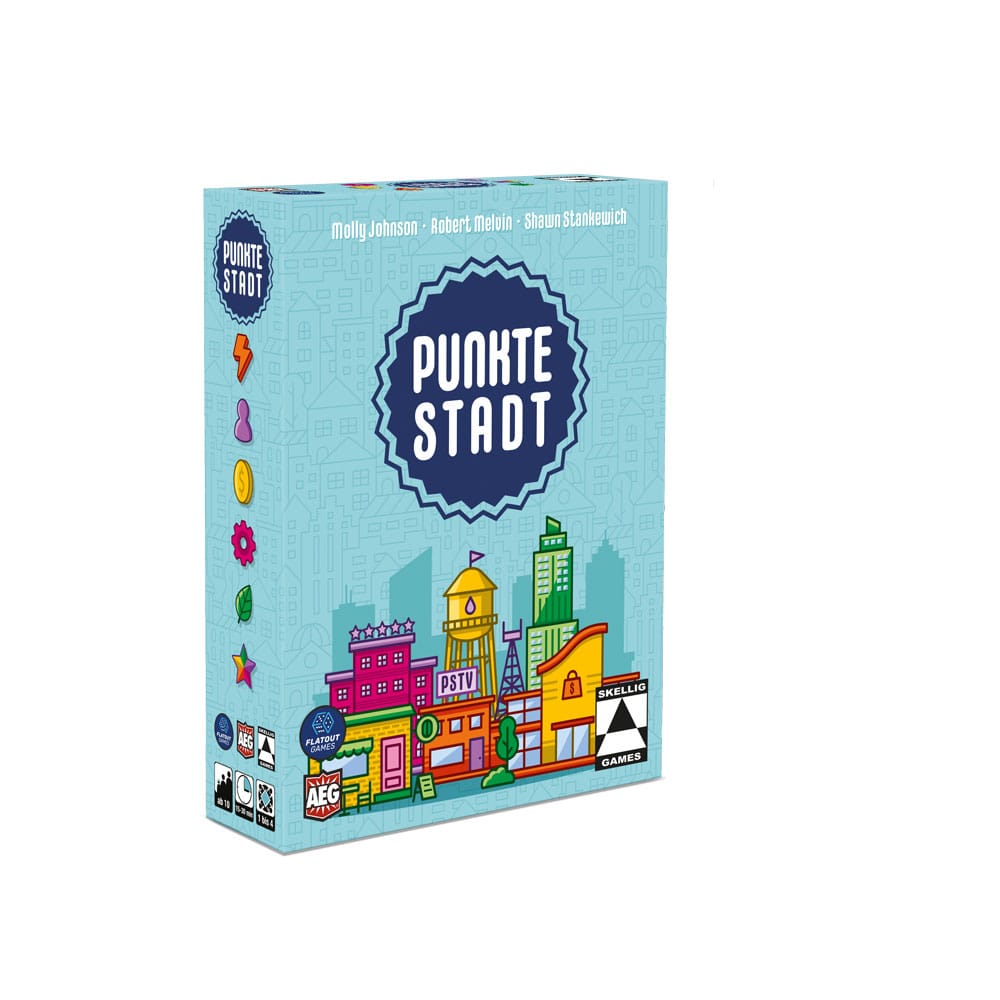
Seit dem 2. November 2026 ist Point City laut offizieller BGA-Forum-Ankündigung auf Board Game Arena spielbar, Umsetzung: Studio Tchobello. Es ist der Stadtbau-Nachfolger des Kartenspiel-Hits Point Salad vom selben Designer-Trio, wer mit Punktesalat großgeworden ist, findet hier dieselbe Draft-Idee in komplexerer Form. Wer dagegen die deutsche Ausgabe Punktestadt im Laden sucht, hat es derzeit schwer: Mehrere deutsche Händler führen sie als ausverkauft oder nicht mehr lieferbar, auch beim Verlag selbst ist sie aktuell nicht verfügbar.
Vom Punktesalat zur Punktestadt
„From the team that brought you the smash hit Point Salad“, schreibt Designer-Trio Molly Johnson, Robert Melvin und Shawn Stankewich selbst über Point City auf BoardGameGeek, und meint damit mehr als nur dieselben Namen auf der Schachtel. Point Salad ist ein reines Draft- und Set-Collection-Kartenspiel für 2 bis 6 Personen, mit einem BGG-Schwierigkeitsgrad von 1,15 von 5 eines der leichtesten Familienspiele überhaupt. Point City übernimmt das Draften, baut aber ein waschechtes Engine-Building obendrauf, also einen Spielmotor aus Gebäuden, der ab dem Moment der Konstruktion von selbst weitere Vorteile liefert: Gebäude liefern permanente Ressourcen für spätere Züge, es gibt Bonusplättchen für bestimmte Kombinationen, und die Spielerzahl sinkt auf 1 bis 4. Die Altersfreigabe bleibt bei 10 Jahren wie beim Vorgänger, der Komplexitätssprung ist aber spürbar: Mit Schwierigkeitsgrad 1,70 statt 1,15 braucht Point City mehr Vorausplanung, Familien, die Punktesalat als Einstieg kennen, sollten sich darauf einstellen. Die deutschsprachige Rezension von Brettspielbox bringt es auf den Punkt: Wer beim Draften immer auch mitdenken muss, welche Kombination sich finanzieren lässt, hat spürbar mehr zu tun als beim leichteren Vorgänger.
Wie man in der Stadt baut
Gespielt wird über ein 4x4-Kartenraster, aus dem jede Person pro Zug zwei orthogonal benachbarte Karten nimmt, wahlweise auch die oberen zwei Karten vom Nachziehstapel, von denen nur die erste bekannt ist, die zweite bleibt verdeckt. Ressourcenkarten bezahlen damit Gebäudekarten, manche Gebäude liefern wiederum dauerhafte Ressourcen für kommende Züge. Die sechs Ressourcentypen unterscheiden sich laut Rulebook nicht nur per Farbe, sondern auch über ein eigenes Icon (Blatt, Blitz, Person, Zahnrad, Dollarzeichen, Stern) und einen Textnamen. Gebäude mit Bürgersymbol bringen zusätzlich ein Bürgerplättchen, das am Spielende Bonuspunkte für bestimmte Ressourcenkombinationen bringt, das Bürgersymbol ist dabei ein einzelnes, wiederkehrendes Icon, keine Symbolvielfalt zum Auswendiglernen. Nach genau 17 Runden pro Person ist der Nachziehstapel leer, das Spiel endet. Einen Ausgleichsmechanismus für einen schwachen Start nennt das Rulebook nicht, zwei Sicherheitsventile gibt es aber: Ingenuity-Ressourcen wirken als Joker für jeden Rohstofftyp, und wer mit dem Markt unzufrieden ist, kann jederzeit zum Nachziehstapel wechseln. Für den Soloeinstieg gibt es einen KI-Gegner, der nach einem festen, vorhersagbaren Muster über zwei textbeschriftete Markt-Marker durchs Kartenraster wandert. Im Mehrspielermodus sind diese Marker laut Rulebook nur eine optionale Gedächtnisstütze, im Solomodus dagegen notwendig, weil sie dort die einzige Möglichkeit sind, die Zugposition der KI zu verfolgen. Es gibt drei wählbare Schwierigkeitsgrade von leicht bis schwer. Am Familientisch mit Kindern oder beim ersten Mal dürfte eine Partie eher Richtung 45 statt der offiziellen 15 bis 30 Minuten dauern.
Premium-Titel, aber mit Einstieg für alle
Wichtig für alle, die jetzt direkt loslegen wollen: Point City läuft auf Board Game Arena als Premium-Titel, wie wir bereits erklärt haben, braucht also mindestens eine spielende Person mit entsprechender Mitgliedschaft, die den Tisch eröffnet. Mitspielen können danach auch Nicht-Premium-Mitglieder kostenlos, einen eigenen Tisch oder eine Solopartie ohne Premium-Mitgliedschaft eröffnen aber nicht. Schon knapp 18.400 gespielte Partien zeigen, dass die Hürde viele nicht abschreckt. Die Plattform selbst läuft auf Deutsch, und weil Point City Kosten und Effekte überwiegend über Icons und Zahlen statt über Fließtext kommuniziert, bleibt die Sprachhürde klein, eine vollständig deutsche Übersetzung der Gebäudenamen auf BGA ließ sich allerdings nicht zweifelsfrei bestätigen.
Eckdaten zu Point City
Spielerzahl: 1 bis 4
Spielzeit: 15 bis 30 Minuten
Alter: ab 10 Jahren
Designer: Molly Johnson, Robert Melvin, Shawn Stankewich
Verlag: Flatout Games und Alderac Entertainment Group (Original, 2023), deutsche Fassung „Punktestadt“ seit 2023 bei Skellig Games, aktuell nicht lieferbar (24,90 Euro UVP, Stand 03.11.2026)
Auf Board Game Arena: Premium-Titel, spielbar seit 2. November 2026
BGG-Wertung: 7,12 bei 5.202 Stimmen, Rang 1139, Schwierigkeitsgrad 1,70 von 5 (Snapshot 03.11.2026)
Was wir davon halten
Für alle, die Punktesalat kennen und mehr wollen, ist der digitale Zugang gerade jetzt eine gute Gelegenheit: Die deutsche Papp-Ausgabe ist schwer zu bekommen, Board Game Arena bleibt bis auf Weiteres der verlässlichste Weg, um Point City überhaupt zu spielen. Für Familien, die mit Punktesalat schon vertraut sind, und für Kennerspielerinnen und -spieler, die etwas mehr Tüftelei suchen, lohnt sich der Blick.

 Anmelden