
Normale Ansicht

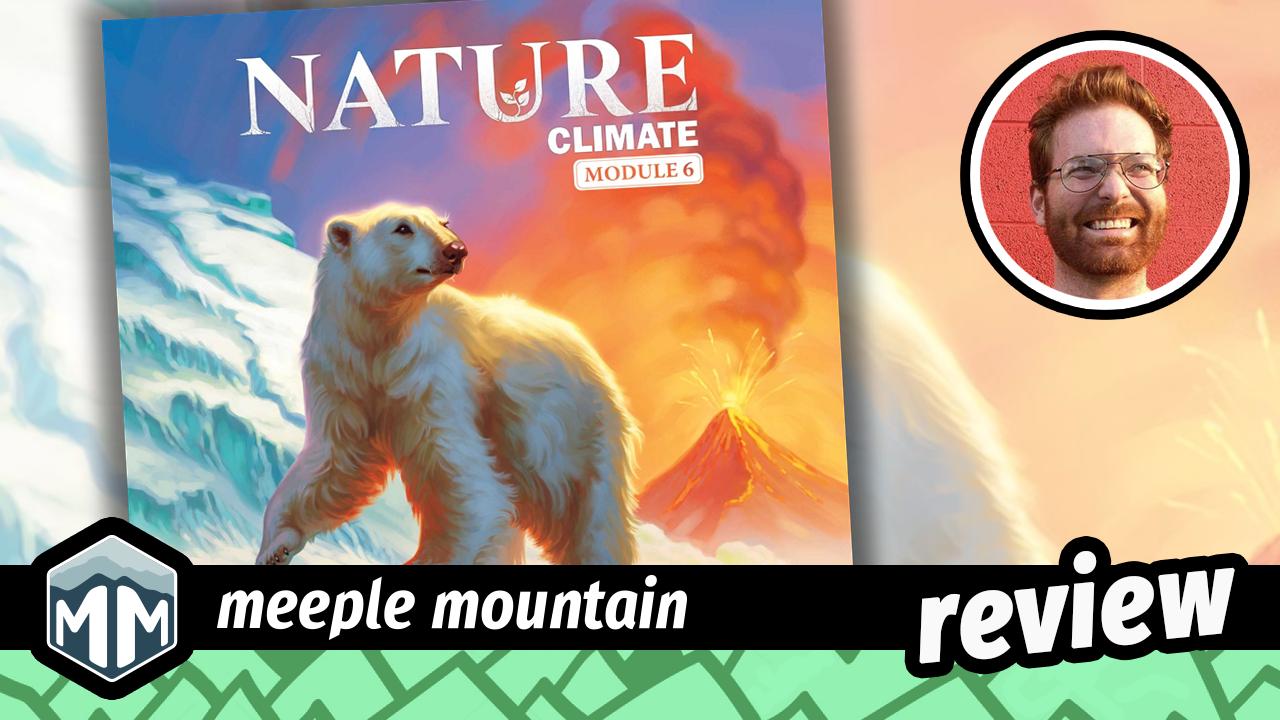
Nature: Climate Game Review

I’m going to hop into this review and almost completely agree with Andrew’s review of Nature. I don’t have that much to add to his assessment. I’ve played Evolution, Oceans, and now this, and I like what this series does mechanically, I think it provides a sharp, competitive experience that scales well with player count, and offers the possibility of drama without requiring players to understand a billion card interactions to jump in and start kicking each other in the teeth.

I’ll cover what the upcoming Climate module adds to the experience, and then I’ll play around in my ivory tower and conclude with some thoughts about edutainment products. I’m going to assume you have a sense of how the game works.

Get cooked (or frozen)

The Climate module for Nature adds variability to the amount of food that appears each round. Because of the game’s modeling of timescale, it’s doing big chunks of time between each round, so you have some pairing of the setting of the game with a mechanism. When the climate tracker moves toward an ice age or a scorching age, there will be less food available for everyone to compete over, and there is a new survival mechanism that every player will…

The post Nature: Climate Game Review appeared first on Meeple Mountain.
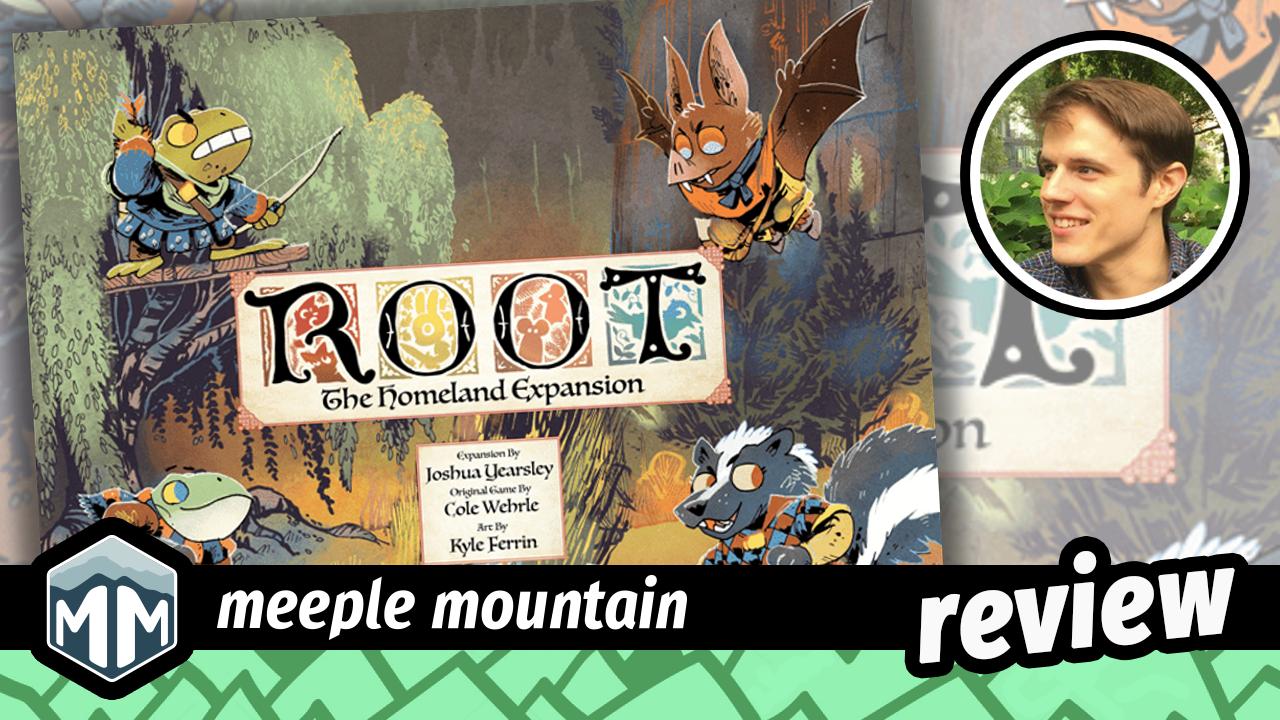
Root: The Homeland Expansion Game Review

I have played my fair share of Root games, lord knows. I have no official play count. I respect the impulse of those who track their plays, but board games are one area of my life where I don’t do that sort of thing. Some back-of-the-envelope math tells me I have played well over 50 games of Cole Wehrle’s juggernaut since I first bought a copy back in the summer COVID lull of 2020. It quickly became, and has remained, one of my favorite board games.

Root’s status as a personal all-timer has never been threatened, but I have found myself moving away from it over the last few years. Since the release of The Marauders Expansion in 2022—an expansion of which I am very fond—I’ve found myself less and less interested in playing. This has nothing to do with the quality of the game. It hasn’t worn on me, nor has it grown tired. If anything, the fact that I haven’t played Root as much as I used to is Root’s fault; it offered early instruction in the idea of board games as strange and ungainly, and I’ve spent the last few years eager to explore new designs, new spaces, and tracking down new experiences. Root became the kind of game I would happily play if suggested,…

The post Root: The Homeland Expansion Game Review appeared first on Meeple Mountain.
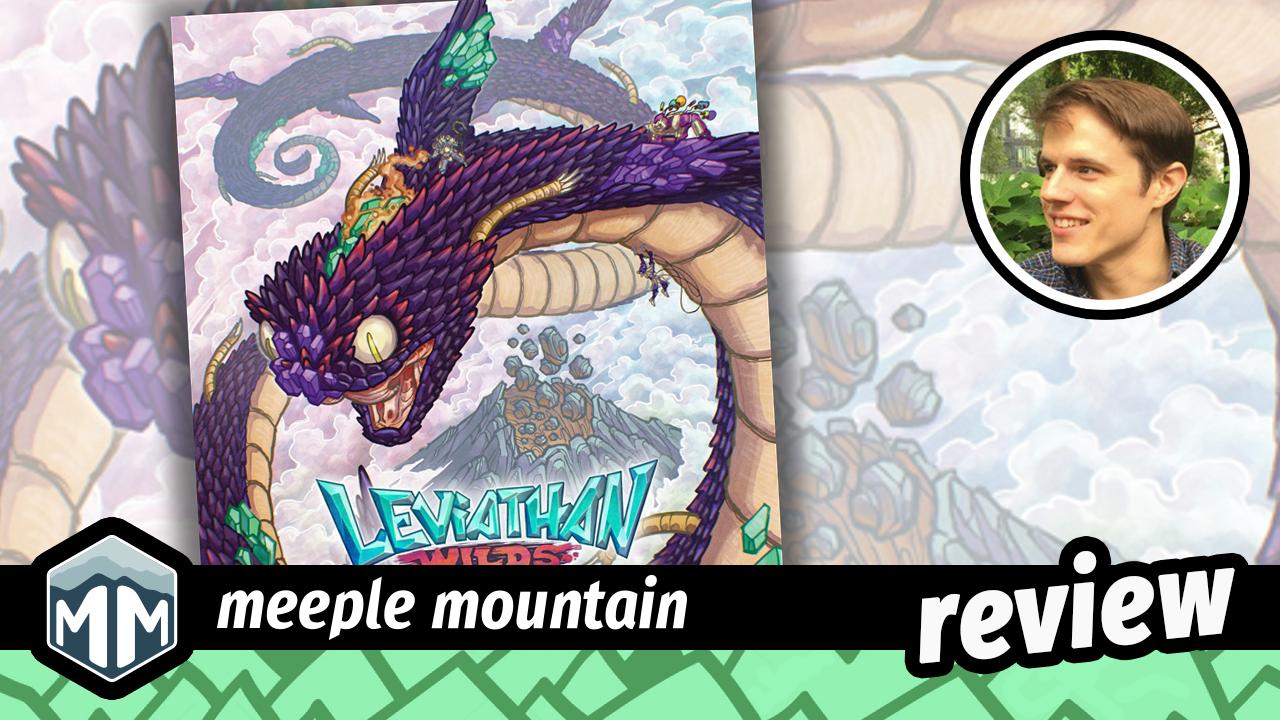
Leviathan Wilds: Shattered Peak Expansion Review

Part of the fun of engaging with a system built around different characters, classes, species, or any other mode of substantive differentiation, is finding the build that’s right for you. Everyone who likes Root has a favorite faction, everyone who plays Magic has a favorite color, and the wonderful thing is that these preferences are almost always deeper than mechanics. If you’re lucky, if everything clicks, your chosen avatar feels ‌like an extension of yourself. There is something about playing as the Lizard Cult that elicits a deeper joy for me. Am I going to win? Probably not, but boy I’m going to have a great time. Blue may leave me with no friends, but I’m enjoying myself.

Leviathan Wilds has been my favorite cooperative game for a while now, and while I was equally fulsome in my praise of the first expansion, it is only now with second expansion Shattered Peak that I can say I have found the Class for me. The Geomancer, one of three new Classes that join three new Climbers and eleven new Leviathans in this box, feels like home. All the builds in Leviathan Wilds are about running around and smashing infectious crystals, but the Geomancer is the first to mess with those troublesome fungal blooms. He can manipulate their values…

The post Leviathan Wilds: Shattered Peak Expansion Review appeared first on Meeple Mountain.
Nucleum: Gibraltar Game Review

This is my fourth Nucleum article.

If you’ve followed my thoughts on the three other Nucleum products I’ve covered—the base game, Nucleum: Australia, and Nucleum: Energy Research Institute–it’s pretty clear that I think Nucleum is the second-best route/network building gaming system in my collection after the Brass games.

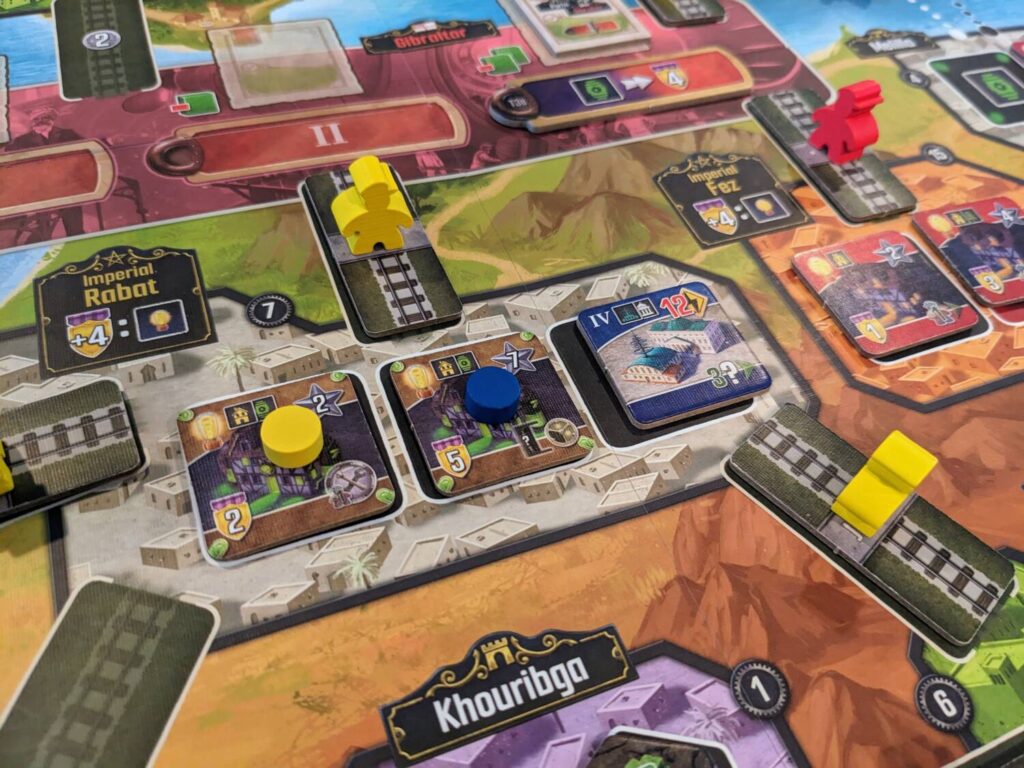
And, in a world where I already love Nucleum, Nucleum: Gibraltar might be the system’s best content. It combines the things I love about the base game, adds juicy new building tiles to the mix alongside new contracts and special powers, and then does what I didn’t think would be possible: Gibraltar’s map is the best combination of Nucluem’s design powers all in one place.

“I think this is the best map now,” said two players who joined me for separate plays, players who have extensive experience with both the base map as well as Australia. I was pretty sure that was my feeling as well after my first play, but winner’s bias set in and I wanted to try again to make sure that’s where I really landed.

The answer? Yep. Nucleum: Gibraltar is the system’s best map!

The Middle is a Warzone

There are three new elements on display in Nucleum: Gibraltar: the new map,…

The post Nucleum: Gibraltar Game Review appeared first on Meeple Mountain.
Focused on Feld: Civolution – Acceptance Letter Expansion Game Review

Hello and welcome to ‘Focused on Feld’. In this series of reviews, I am working my way backwards through Stefan Feld’s entire catalogue. Over the years, I have hunted down and collected every title he has ever put out. Needless to say, I’m a fan of his work. I’m such a fan, in fact, that when I noticed that there were no active Stefan Feld fan groups active on Facebook, I created one of my own.

Today we’re going to talk about Civolution: Acceptance Letter, the much anticipated expansion for 2024’s Civolution, his 41st game.

This expansion includes three modules that can be added together or used separately. I’m not going to explain how the base game is played. This review assumes you already know. If not, you can check out my review of the Civolution base game.

Instead, we’re going to explore the new modules and discuss how they work and what I think about them. It is also my fervent hope that I’ll be able to answer the question you’ve asked yourself that, no doubt, led you here: is this an expansion that I need in my collection?

Module 1: Starting Attribute Chips

Civolution: Acceptance Letter includes six Starting Attribute chips. During setup, whether by random assignment or by drafting them, each player will…

The post Focused on Feld: Civolution – Acceptance Letter Expansion Game Review appeared first on Meeple Mountain.
Castle Combo: Out of the Oubliette! Game Review

I sit down to write this review with two questions on my mind: first, are twelve cards worth a full review? And second, with a game as near-perfect as Castle Combo, are twelve extra cards worth the risk? I’m going to assume the first one is a yes. As for the second, maybe.  

By the way, if you don’t know Castle Combo, check out our review before moving on. 

Where’s the bubble gum in this thing?

This pack of a dozen cards adds six cards each to the Village and the Castle. Along with new characters to make you smile, these cards introduce mechanical twists and a few delayed effects. 

The delay is marked by a (free!) key that is either turned in to unlock the ability or retained for endgame scoring. Whether the cards are resetting the market (with perks) or raining blessings on the current tableau, they are in high demand as soon as they appear. As far as I can see, this will be the big knock on Oubliette, an extension of one of the few legitimate gripes with Castle Combo: when player experience depends on managing cards as they are randomly revealed, some will cry foul if their opponent is fed consistent opportunities with some of these doozies. 

As for the new mechanical twists,…

The post Castle Combo: Out of the Oubliette! Game Review appeared first on Meeple Mountain.
Wingspan: Americas Expansion Game Review

Here at Meeple Mountain, we’ve written a lot about Wingspan. Since its inception in 2019, Elizabeth Hargrave’s Spiel des Jahres winning masterpiece has inspired and captured the hearts of gamers worldwide. I’m not going to go into detail about how to play the game here. If you’re unfamiliar with Wingspan, then I suggest you familiarize yourself with the base game before reading any further.

It’s been four years since the Wingspan: Asia expansion (2022) was released. Unlike that expansion, the subject of this review, Wingspan: Americas is not a standalone expansion. To play Wingspan: Americas, you must have the base game or the Wingspan: Asia expansion in order to do so.

Something Old

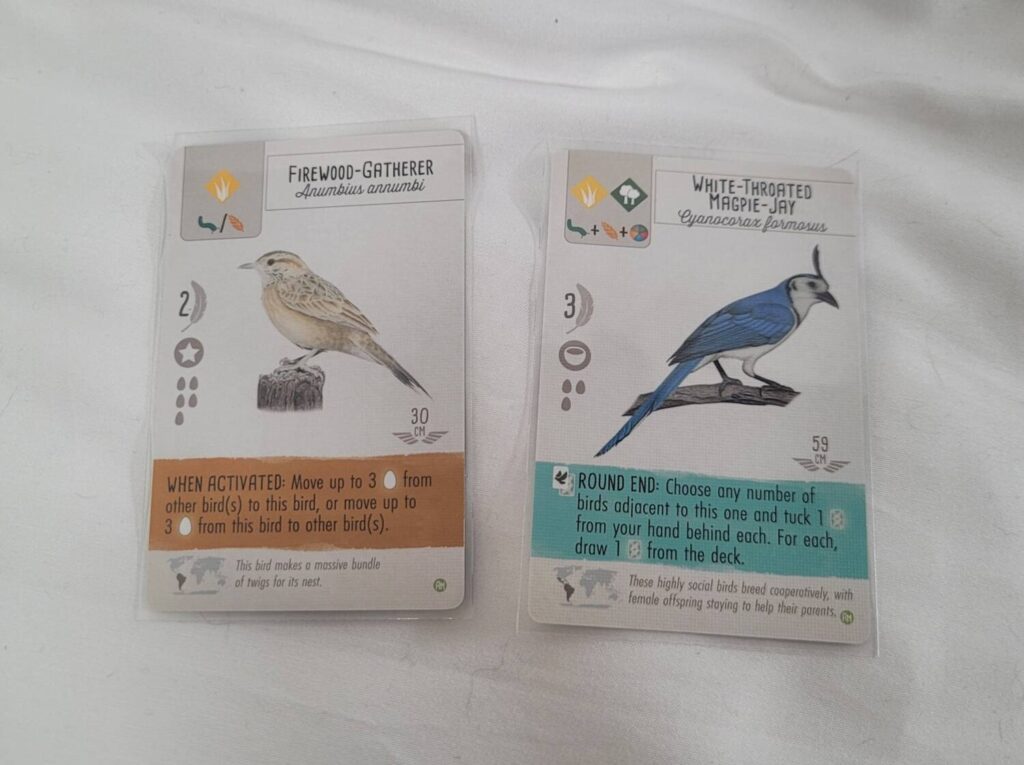
Americas introduces a whole host of new birds, each featuring new and interesting abilities. A couple of standouts for me are the White-Throated Magpie-Jay which lets you tuck cards behind its neighbours, replacing the tucked cards with newly drawn ones, or the Firewood-Gatherer which steals eggs from other birds in your tableau and dispenses eggs of its own to other birds in your tableau.

A user on BoardGameGeek has compiled a list of all the new birds and their abilities that you can go check out if you’re interested. Many of these…

The post Wingspan: Americas Expansion Game Review appeared first on Meeple Mountain.
Nippon: Genro Game Review

Nippon: Zaibatsu—2026’s updated version of the 2015 original, Nippon—is so hot in my gaming circles that I had the chance to play the base game three times over the course of a week, and it seemed like the game was popping up at game nights all over Chicago for the first couple months after it hit the market.

After drafting my initial review of the game, I learned that the game’s first expansion, Nippon: Genro, is hitting crowdfunding in late June of this year. A couple prototypes were floating around the US, so I reached out to CrowD Games to see if I could grab a pre-production copy to play for about a week, and I’m excited to share that CrowD obliged.

Nippon: Zaibatsu is a relatively easy game to learn, but it is a very difficult game to play well. By that, I mean that the game’s high volume of timing decisions make for a tricky gaming affair, and I’m surprised how often I had a plan to get all my ducks in a row during each play only to have an opponent snipe end-game turn order, or mid-game area control elements, or the perfect worker color for my consolidation plans just before I could.

Nippon: Zaibatsu may come across as a cutthroat area majority experience. Moving…

The post Nippon: Genro Game Review appeared first on Meeple Mountain.
Earthborne Rangers: Legacy of the Ancestors Game Review

A new Earthborne Rangers campaign? You don’t have to tell me twice. It is hard to get me to play the same game more than a few times, but I will drop any and everything to spend more time in—or, in this case, under—the Valley.

While the base game of Earthborne Rangers—one of the greatest gaming experiences of my life, and an experience with which this review will assume you are familiar—takes place across a wide range of beautiful landscapes, Legacy of the Ancestors sends players into the depths of the Arcology, the ruins of a lost civilization that used to inhabit the Valley. This is the sensible choice, a natural development coming out of the first game. The first campaign leaves the Arcology, a consistent splash of harder sci-fi tech in a sea of solarpunk, barely explained, and the underground tunnels are as strong a contrast in setting as it’s possible to have. No more sweeping vistas for you, no no. Best you can hope for is a spot of bioluminescence.

A table full of cards, cards in all directions.

“We Got Distracted by the Ooze”

The cornerstones of what make Earthborne Rangers great are still here. The caverns of the Arcology teem with life and discoveries. There…

The post Earthborne Rangers: Legacy of the Ancestors Game Review appeared first on Meeple Mountain.

Shackleton Base: Below. Within. Above. Game Review

No upcoming expansion had me more excited than the arrival of Shackleton Base: Below. Within. Above., the first expansion for one of the five best games I played in 2024, Shackleton Base: A Journey to the Moon.

“Shack Town”, as it is known in my circles, has hit my tables a whole lot since the late summer of 2024, thanks to receiving an advance copy from the team at Sorry We Are French (from overseas, no less, in the Before Tariff Times). The medium-weight Euro is a crowded field, and Shackleton Base stood out because it does a lot of things right, thanks in part to the seven different corporations included in the base game.

Almost any number of extra corporations would spice up the base game for me. I’m not exhausted with any of the base game corporations yet, but the mix can always get sweeter with more set-up options that shake up the meta.

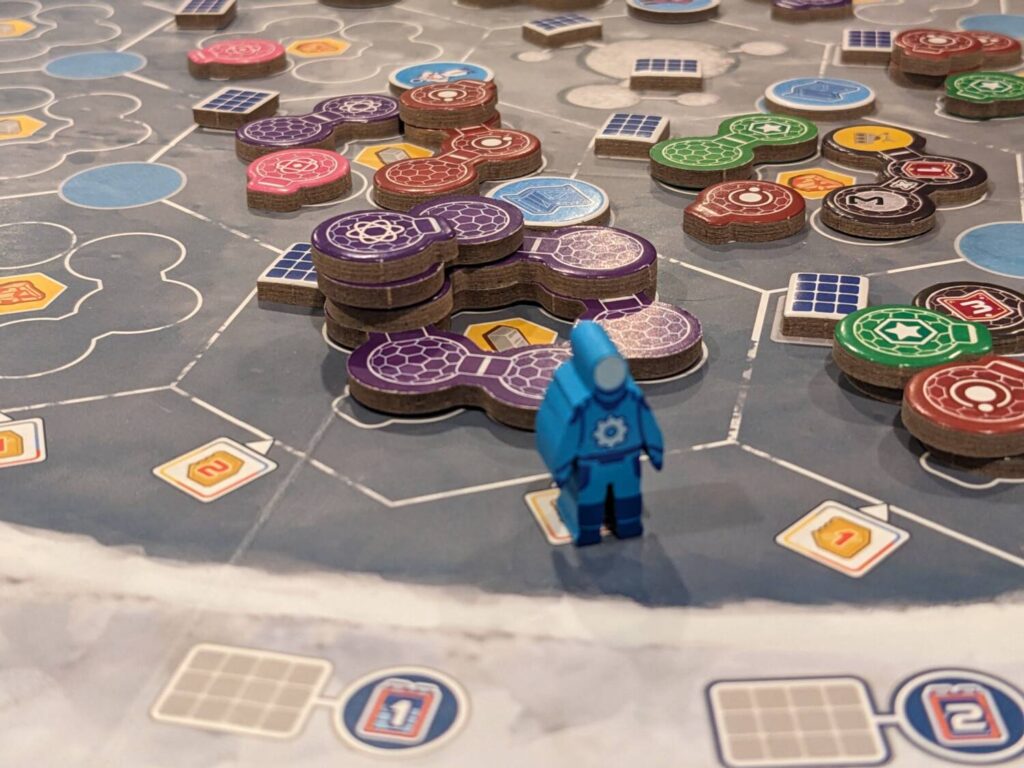
Let’s talk about the new stuff. (For anyone new to Shack Town, you can check out my review of the base game to learn more.) Also, please note: the new stuff barely—and I mean, barely—fits in the base game box, assuming you keep the cute tuckboxes that make setting up the game a cinch.

[caption id="attachment_331255" align="alignnone" width="1024"]

The post Shackleton Base: Below. Within. Above. Game Review appeared first on Meeple Mountain.

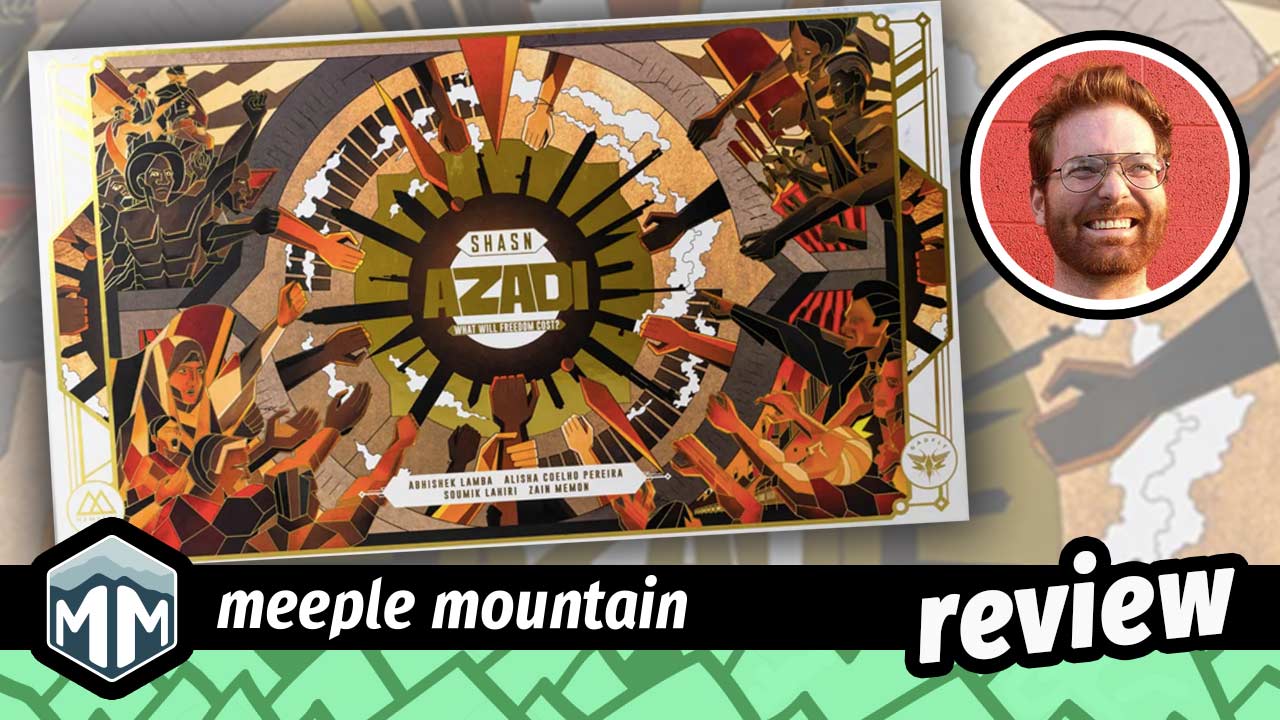
SHASN: AZADI Game Review

SHASN: AZADI is a box full of gimmicks. Those gimmicks are equal parts corny and high-minded, clever and ham-fisted. The area majority mechanism that is used to tally points is, frankly, pedestrian and simplistic. But, in spite of it all, the game is ambitious, and I admire games that are high-minded, even when that highmindedness has flaws.

Hegemony this ain’t

And that’s a good thing. AZADI is trying for something explicitly political—it is about the construction of political blocs more than it is about forcing players to accept the roles and bounds of its simulation. From where I sit, Hegemony: Lead Your Class to Victory’s conception of political economy and class is at best misguided and ignorant. AZADI doesn’t presume to gamify and fragment class struggle, casting players as some fake-o thinktank concept of the “middle class” and the “state.” Instead, players are a political ideologue constructing their own ideology out of what will best get them into the big chair. More on this in a moment.

The way you win AZADI is by forming majorities. In the version that I’m reviewing, you have a modular dual-layered map with holes in it for player pieces. Each map tile has a crosshair hole  (volatile area) and a number reading something like 11/21. Players get points for having majorities, which…

The post SHASN: AZADI Game Review appeared first on Meeple Mountain.

❌