
❌

Normale Ansicht

Surplus of Sloths Game Review

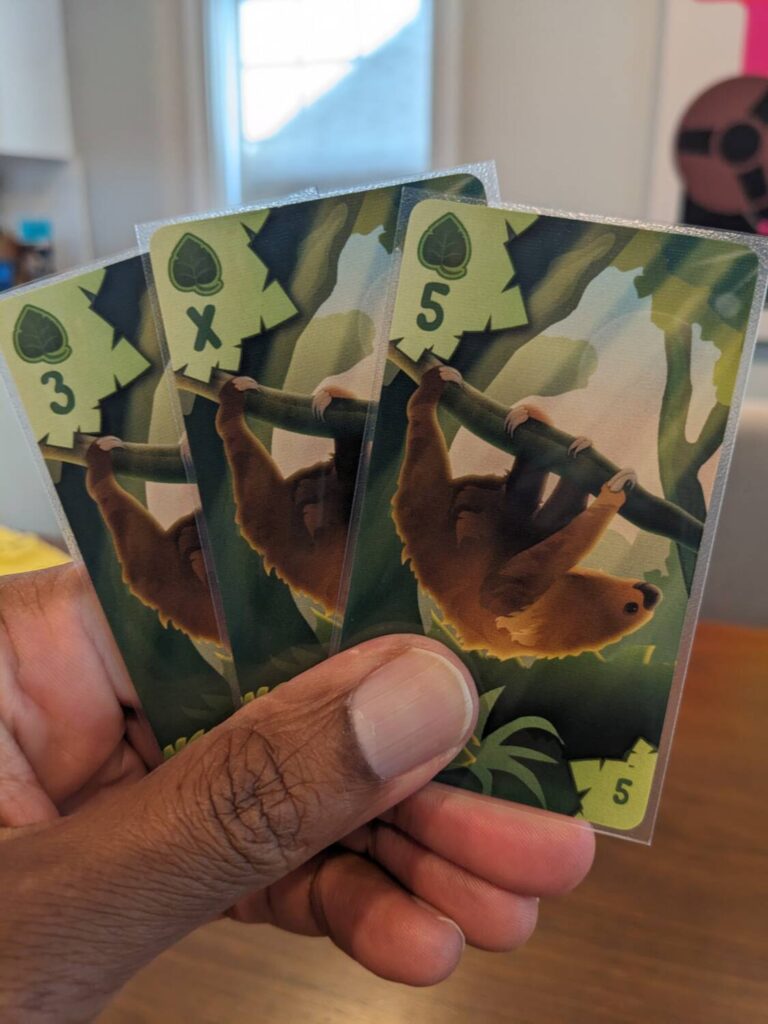
Surplus of Sloths (2026, Weird Giraffe Games) isn’t bad.

It’s a card drafting game where players try to build a hand of ascending card runs across five different suits of sloths. A market wipe mechanic pushes one leftover market card into a “surplus net” after each round, and players can view and gauge whether it is worth trying to score a suit at the end of the game.

I just gave you 75% of the rules, and designer Charlie McCarron (Skyrockets, the Kites riff I quite enjoyed) has given us a game so quick that my 12-year-old and I played it twice within a 15-minute stretch. Even winning one of those two games didn’t impress the 12-year-old, who shrugged their shoulders before admitting that the game was “only OK” before heading off to their room.

You’re right; that’s not an endorsement. My review crew joined me for a four-player game the following day, and the winner of that game also shrugged their shoulders and landed in the same rating range I landed on for this review.

Surplus of Sloths isn’t bad because its scoring mechanic is interesting. In an ideal world, you want to build up a run of three, four, maybe even five low cards of…

The post Surplus of Sloths Game Review appeared first on Meeple Mountain.
Effervescent Game Review

One of my favorite things about the games released under Carla and Nick Kopp’s Weird Giraffe banner: the games are often legitimately weird.

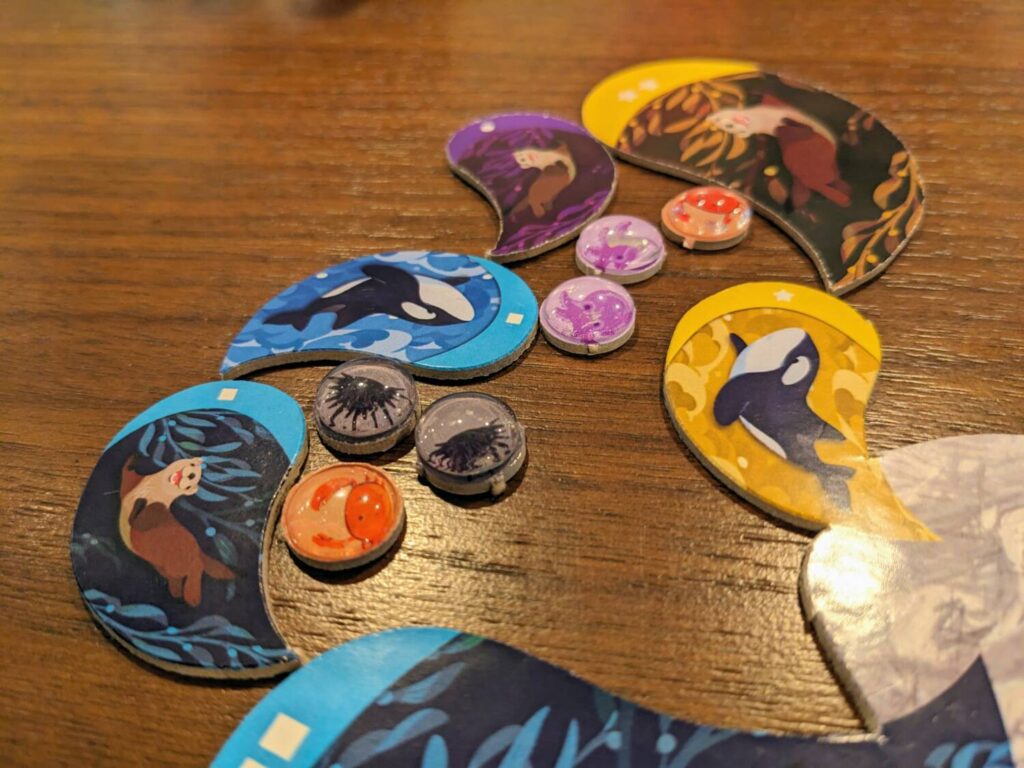
Here’s what I mean. I was explaining the rules to my wife and nine-year-old for our first play of Effervescent (a Carla design currently on crowdfunding, set for release in 2027), and when I tried to explain the main concept of placing sea-based creature tiles in such a way that the tail of a newly-placed tile must touch the head of a previously-placed animal tile, my wife openly balked.

“So, like, this way?” She used a large whale tile as an example.

“Well, sort of,” I began. “Each tile has a head area, a distinct tail point…then, every other part of the tile is a ‘side.’”

“Seems kind of weird,” she said. And our first play went that way, as players took tiles in one of three sizes to create scoring patterns that would trigger with a mix of scoring sequences, tied to “Drift” cards and Harmony cards, the latter of which were established before the game as public milestones that are always available to score.

Turns are simple. Place a tile, and if a placed tile meets a Drift card scoring condition, a player puts…

The post Effervescent Game Review appeared first on Meeple Mountain.
Gulo Gulo Game Review

In Gulo Gulo, players compete to rescue a young gulo—a wolverine—from the evil swamp vulture. I say “evil,” but that’s unfair. The wolverine pup was trying to steal one of the bird’s eggs, after all. Is the vulture really evil, or simply a participant in larger systems that force us into binary rolesl? If the game were from the vulture’s perspective, would the gulos not be the evil ones? You could reframe Gulo Gulo as a tower defense game in which the vulture fends off a hoard of ravenous gulos and not have to change any of the facts on the ground. Games really can teach us things, if we have the heart to listen.

Philosophical implications of this exercise and its framing aside, Gulo Gulo is Candy Land with dexterity elements. To move to a new space, you pull a matching egg out of the nest, a wooden bowl full of the colorful ovoid ova. This wouldn’t be much of a challenge at all were it not for the tall and precarious stick that pokes out above the nest, its weighted end causing it to weave and wobble and constantly threaten to fall over. If the stick does fall or if you cause any eggs to fall out and hit the table, you move back to the previous…

The post Gulo Gulo Game Review appeared first on Meeple Mountain.
Trails & Tails Game Review

At the end of the day, my review criteria is really simple: is the game fun or not?

Trails & Tails is a new self-published title. (BGG does not list a designer, artist, or publishing company…only “self-published.”) It admits its hook right up front: Trails & Tails is going for a Snakes & Ladders-style gaming experience (or, if you’re a gringo like me, Chutes & Ladders), where players move their playing piece up a board all the way to the top…hopefully taking short cuts along the way to reach the top faster.

The downside of Snakes & Ladders comes when snakes appear in the space where you end your movement…because if that’s what happens, you fall backwards and/or downwards until you reach a much less desirable space lower on the board. So, keep moving forward and things will generally work out.

Trails & Tails adds spice by giving each player two starting dice, differing by player; one player gets a D4 and a D20, while another might have a D6 and a D8. In each round, players roll these dice, then get to use 1-2 dice per turn to their liking. You can add the results of two dice, move forward a number of spaces on one die, or even subtract a larger die value from a smaller one…

The post Trails & Tails Game Review appeared first on Meeple Mountain.
Hacienda Game Review

I don’t want to belabor the point here, but I have real questions, like this: does the new game Hacienda (based on the 2004 version of Hacienda by Wolfgang Kramer) want the leopard-looking creatures on offer here to be pumas, or jaguars?

I ask because the rulebook interchangeably uses the terms for both (they are pumas on the manual’s cover description, but jaguars on page four), and technology tells me that the two breeds of cool-looking cats are definitely different. Another theme note: Hacienda’s new theme is tied to building an eco-friendly tourist destination in the hills of Argentina. For the life of me, though, Hacienda feels like a game where I am simply placing clumps of animal tokens on a map to score adjacency bonuses and piles of cute-looking capybara packs.

Hacienda isn’t nearly as complicated as I’m making it out to be. In fact, like other Kramer games—the German legend has, as a lead or co-designer, gifted the world with titles ranging from El Grande to Tikal to Wandering Towers to my all-time favorite Kramer co-design, The Princes of Florence—Hacienda is extraordinarily simple to teach, and his work here with Daryl Andrews (Sagrada) is sleek, with a playtime that might last 30 minutes or less with lower player counts, 45 minutes with the…

The post Hacienda Game Review appeared first on Meeple Mountain.
Perennial Game Review

Growing Your Garden

In Perennial, your job is to grow the best prairie garden using tools and tiles. It's a tile-placement game with set collection, drafting, pattern building, and end game bonuses tied to how well you've placed your tiles. Are you thinking you've seen this before? Maybe in Cottage Garden, or Pergola? 

You haven't. 

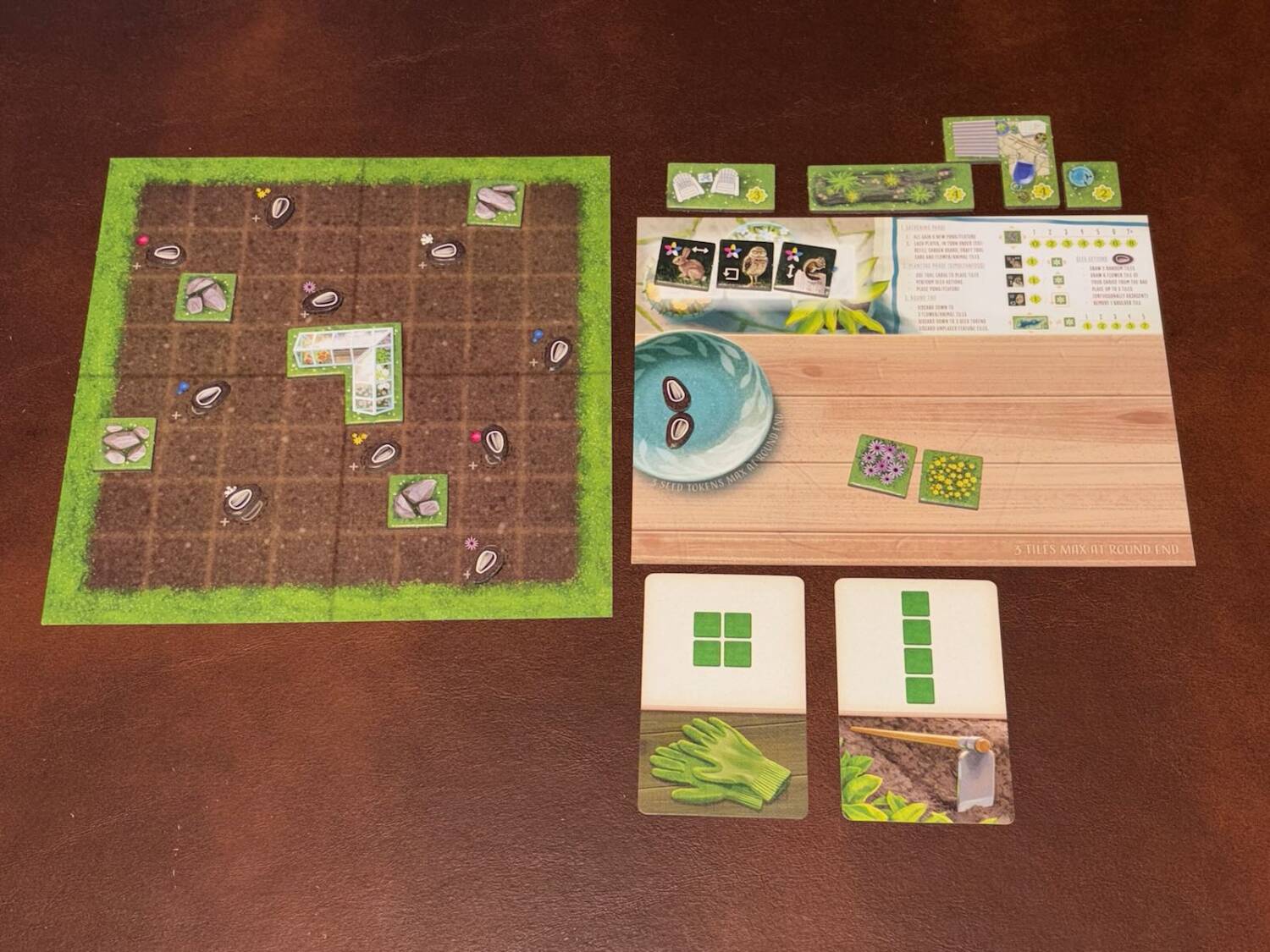
Oh, sure. The game starts in a standard fashion: Each player is given a Garden Board on which to place tiles, and a Workshop Board to store resources. The Garden Board is seeded with boulders which act as obstacles that you must build around, and actual seeds which can give you benefits later in the game. A greenhouse polyomino is placed in the middle as an anchor point for your first tile placement (and it acts as another obstacle). A square Central Drafting Board is randomly filled with Flower Tiles and Animal Tiles. Four Tool Cards are placed around the edges of the square. The Pond/Feature cards are shuffled and placed near the board, and the top one is turned over to reveal the first tile. Each player is given four Pond/Feature polyomino tiles that must be placed, one per round according to the card drawn from the deck. 

[caption id="attachment_333238" align="aligncenter" width="1500"]Individual Player Components…

The post Perennial Game Review appeared first on Meeple Mountain.
Haunted Mouse Game Review

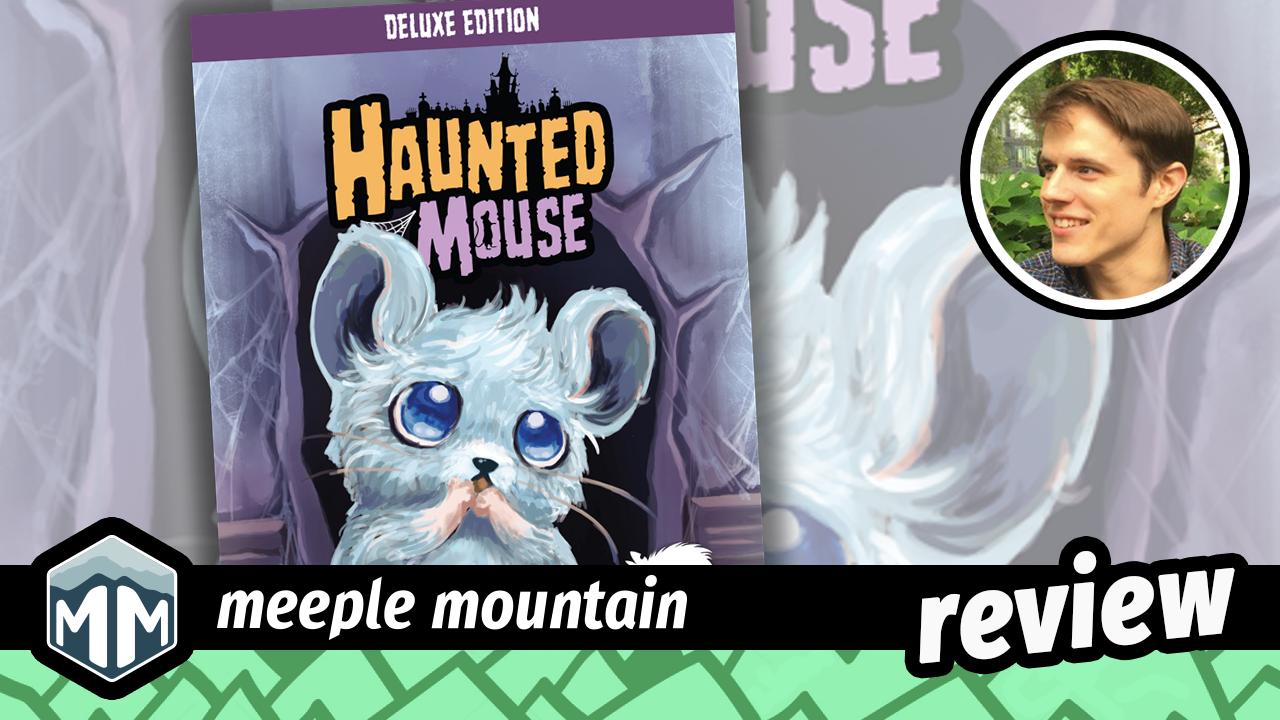
Haunted Mouse is a hard game to write about, because it falls perfectly into the gap between the good, about which there is much to say, and the bad, about which there is often even more to say. Jonathan Cox’s shedding game, a reimplementation of his own Spring Cleaning, is a perfectly alright time at the table. People talk about their days, the weather, the latest gossip. The game goes on quietly around this, undemanding and unobtrusive.

The goal of the game is to empty your hand by playing sets of increasing size and strength. Every trick-taking and shedding game has its gimmick(s), and Haunted Mouse is no exception. It joins the rapidly expanding field of shedding games in which you cannot rearrange the cards in your hand, and are forced to make sets out of adjacent cards. This has been used to marvelous effect in Scout, Jungo, and dnup, and works just fine in Haunted Mouse.

Cards on a wooden table.

A common mechanic between these games, though it works differently in each, is the ability to add cards to your hand, putting them anywhere you want. In Haunted Mouse, this idea is combined with allowing players to shed troublesome singletons from their hands to make…

The post Haunted Mouse Game Review appeared first on Meeple Mountain.
Gingham Game Review

Human memory is a funny thing.

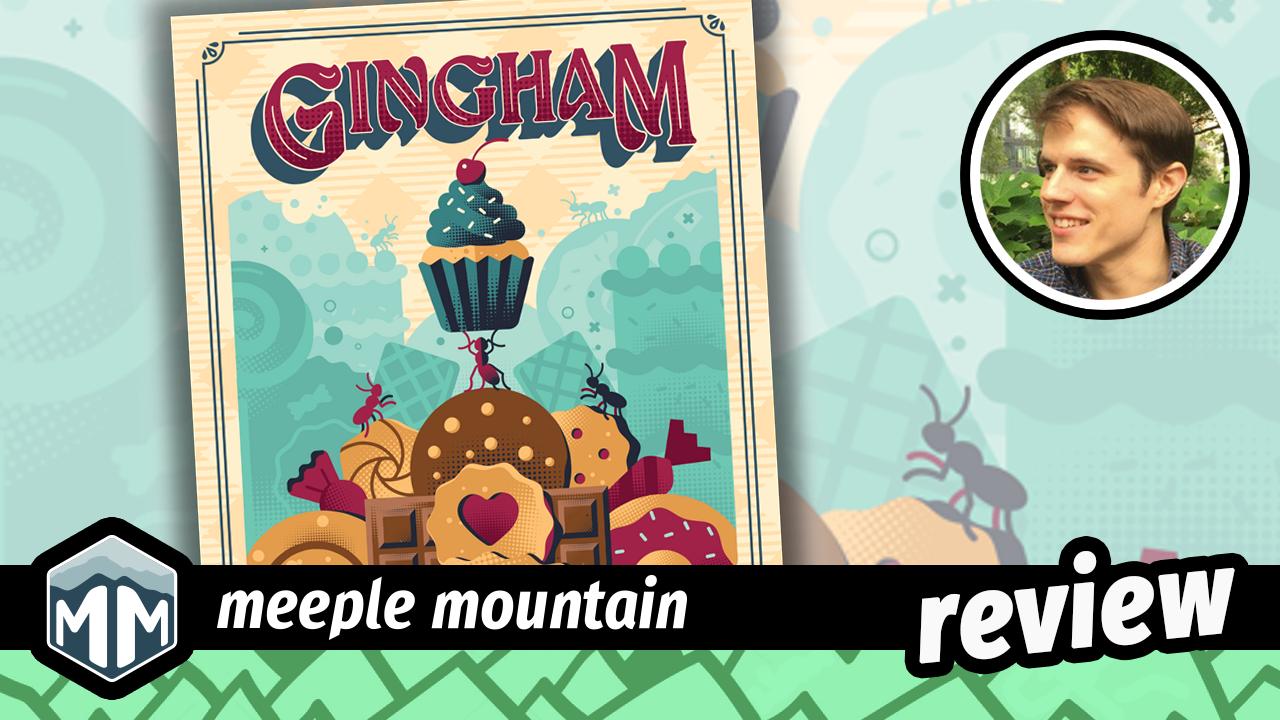
Every time I sit down to play Gingham, the latest collaboration between designer Robert Hovakimyan and publisher Bitewing Games, the song “Teddy Bears’ Picnic” rises like a leviathan from the depths of my memory. “If you go down to the woods today, you’re sure for a big surprise,” I sing as I lay out the checkerboard picnic blanket and organize the ants. “If you go down to the woods today, you’d better go in disguise,” as I set out the sweet treats across the map and set my score counter to 0.

My only exposure to “Teddy Bears’ Picnic,” a popular children’s song in the U.K., was a 1986 VHS tape documenting a live concert on Boston Commons by the musical duo Rosenshontz. I have not seen, let alone thought about, that VHS tape in over three decades. Nevertheless, here we are. Again, and again, and again.

But what of Gingham? We can’t speak of obscure regional concert films forever, though I could probably pitch that to Pitchfork as a series. What about Gingham indeed. It’s a bit of a funny game to describe. I would call it an abstract game centered around route-building with a clever sort of auction system for figuring out turn order. The BGG entry suggests the publisher more…

The post Gingham Game Review appeared first on Meeple Mountain.
Root: The Homeland Expansion Game Review

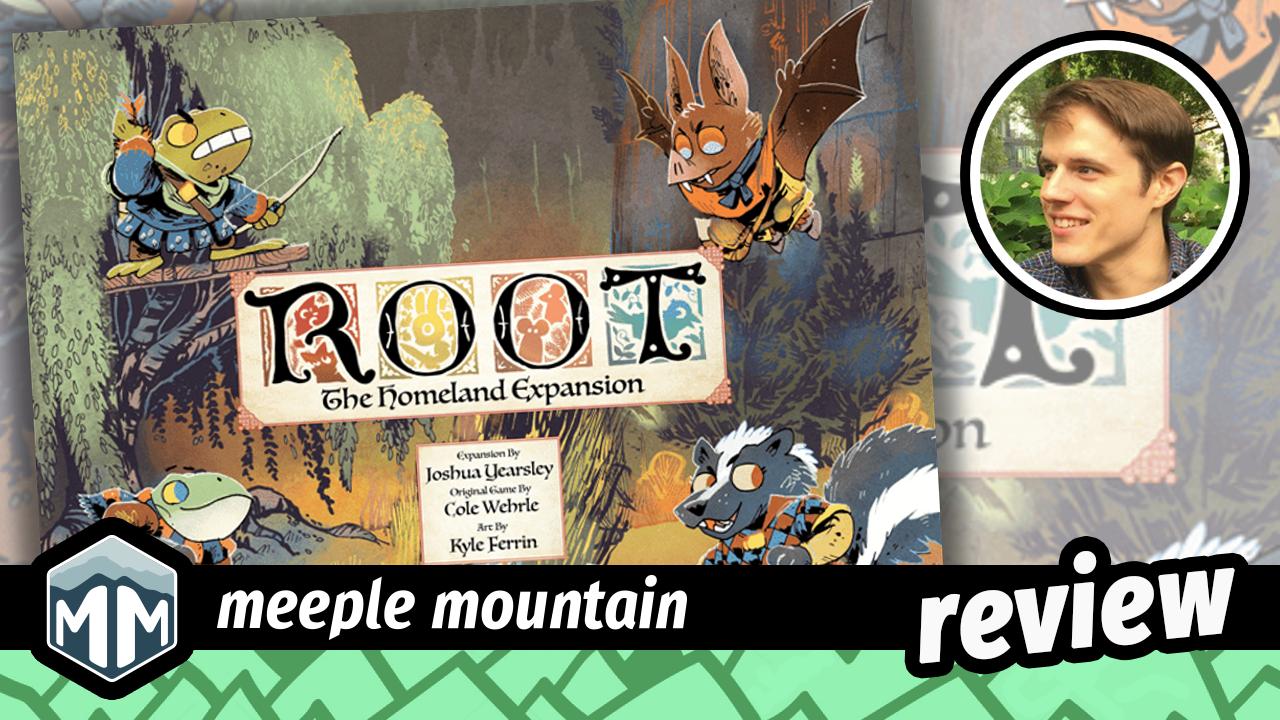
I have played my fair share of Root games, lord knows. I have no official play count. I respect the impulse of those who track their plays, but board games are one area of my life where I don’t do that sort of thing. Some back-of-the-envelope math tells me I have played well over 50 games of Cole Wehrle’s juggernaut since I first bought a copy back in the summer COVID lull of 2020. It quickly became, and has remained, one of my favorite board games.

Root’s status as a personal all-timer has never been threatened, but I have found myself moving away from it over the last few years. Since the release of The Marauders Expansion in 2022—an expansion of which I am very fond—I’ve found myself less and less interested in playing. This has nothing to do with the quality of the game. It hasn’t worn on me, nor has it grown tired. If anything, the fact that I haven’t played Root as much as I used to is Root’s fault; it offered early instruction in the idea of board games as strange and ungainly, and I’ve spent the last few years eager to explore new designs, new spaces, and tracking down new experiences. Root became the kind of game I would happily play if suggested,…

The post Root: The Homeland Expansion Game Review appeared first on Meeple Mountain.
boop Shuffle Game Review

Maximum Booping Chaos Ahead

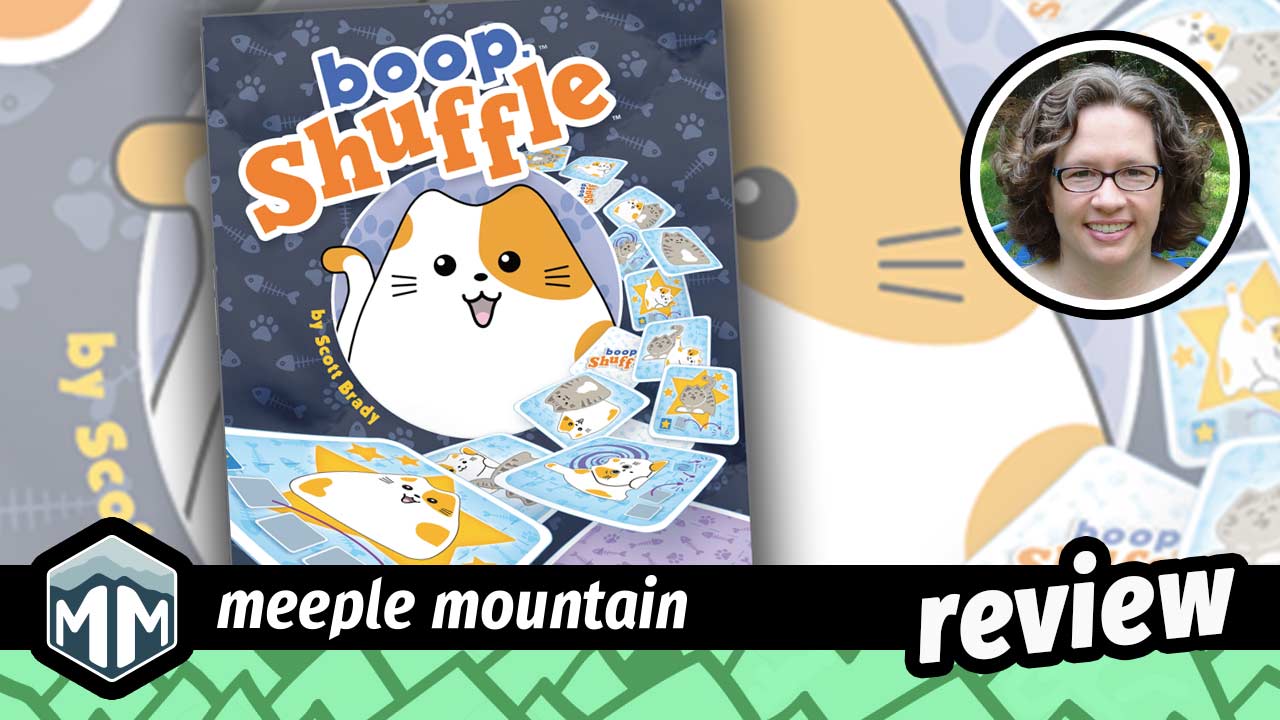
The basic idea of boop Shuffle is the same as the original boop. You're placing Kittens out on the board in hopes of getting three of your color in a row so that you can graduate them into the Cats necessary to win the game. However, as Cats and Kittens are being played onto the table, they boop the cards next to them into adjoining spaces, or possibly off the table altogether. In order to win, you must get three Cats of your color in a row, or have all eight of your Cats out on the board. These win conditions are the same for both versions. That’s where the similarities end.

boop Shuffle is a card game, with cards taking the place of the cat meeples in the original. Each turn you will draw a card from the deck and place it into the 6x6 grid on the table. The placed card will boop any adjacent cards away from itself according to the rule of the placed card. If you run out of cards, reshuffle the discards and begin drawing again. 

[caption id="attachment_332475" align="aligncenter" width="1500"]Kitten cards Kitten cards and Blankie[/caption]

This isn’t simply a card game with the exact mechanisms of the original game, however.…

The post boop Shuffle Game Review appeared first on Meeple Mountain.
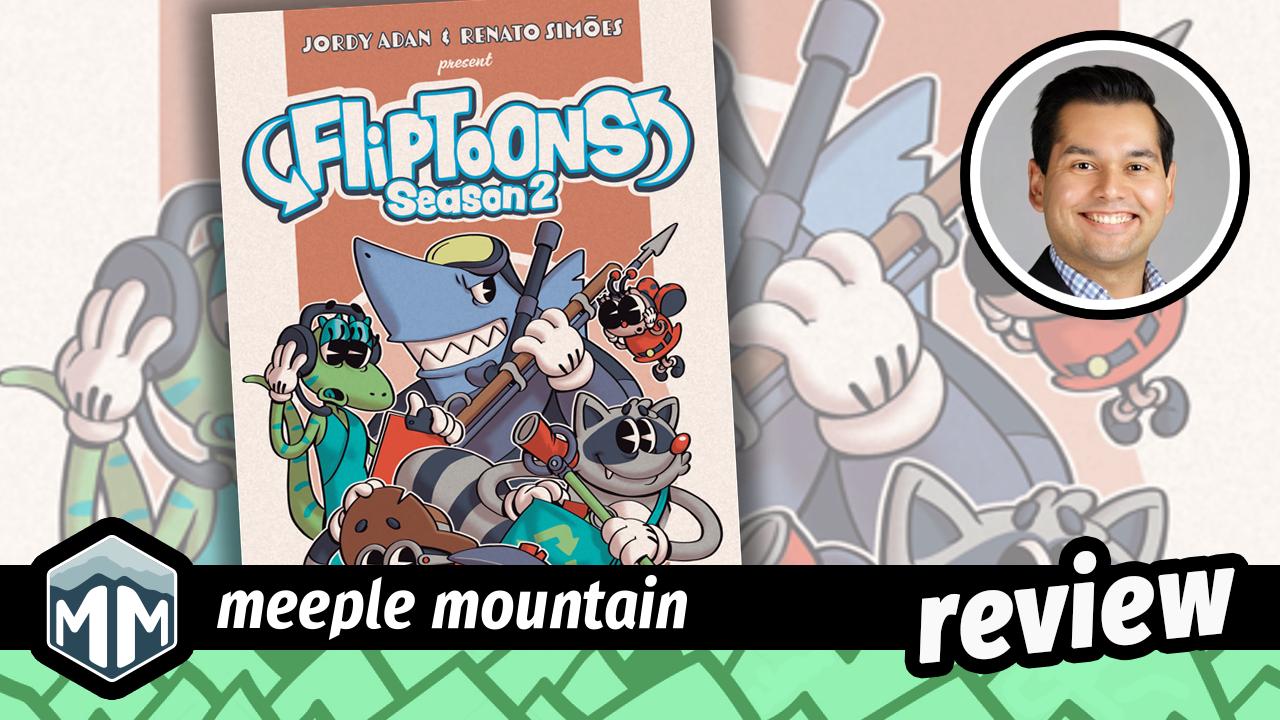
Fliptoons: Season 2 Game Review

Back on the Air

Fliptoons is BACK! I was fortunate to experience the new iteration a few months early, and it was quite hard to keep the excitement under wraps until the reveal.

The first set of Fliptoons was a grand time, and mechanically, there wasn’t much that needed fixing. But Thunderworks Games has doubled down on a framework that’s ripe for expansion. A game built around goofy card effects, conditional scoring, and unpredictable tableau chaos is the perfect stage for a new batch of characters to join the cast. More toons mean more combos, more dramatic reveals, and more opportunities for rounds to go completely sideways.

Thunderworks Games returns to the studio with Fliptoons: Season 2, bringing a new cast of cards while keeping the same breezy energy that made the original such an easy table hit. This standalone expansion is as exciting as an anticipated season premiere: familiar structure, new faces, and plenty of room for the fame race to get wacky.

Previously on Fliptoons…

Fliptoons: Season 2 is still very much Fliptoons. Players are building a little cast of cartoon animals, flipping cards into a 3x2 grid, and trying to squeeze as much fame out of those cards as possible.

Like the original, players begin with a…

The post Fliptoons: Season 2 Game Review appeared first on Meeple Mountain.
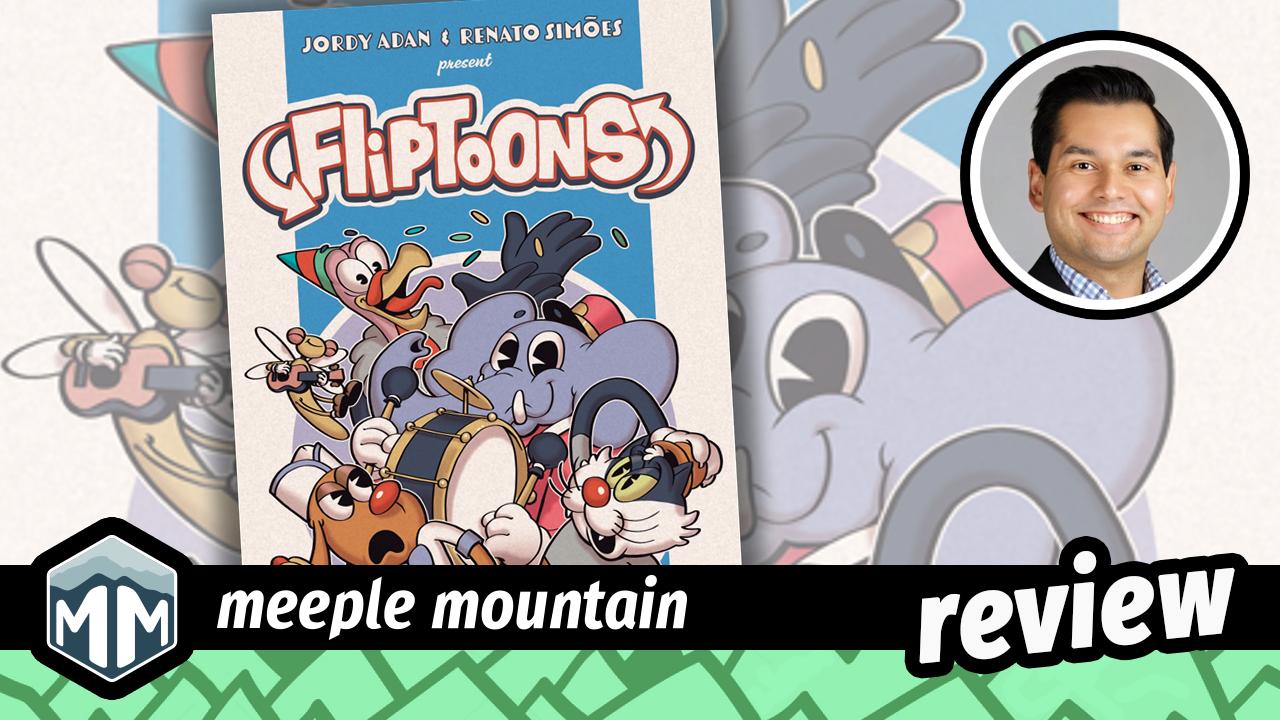
Fliptoons Game Review

Silver Age Cartoons

I’m a sucker for an old-timey aesthetic, especially when it comes to cartoons. Growing up, my father showed me some of his favorites, like Popeye the Sailor Man and Woody Woodpecker. I think there’s still a real appetite for the animation style of yesteryear, especially in the modern age, as evidenced by the massive video game success of Cuphead and Mouse: P.I. for Hire.

The board game world is no stranger to this style either, with titles like Vagrantsong, Townsfolk Tussle, Vegetable Stock, Magical Athlete, and even the video game spinoff Cuphead: Fast Rolling Dice Game. Fliptoons from Thunderworks Games fits nicely into that ever-growing family, and I’ll always be drawn to every title in it.

Flip-Flip-Flipadelphia

Fliptoons is a fast-paced card-drafting game where the player who generates the most fame points after a final flip becomes the top toon.

Players start with identical decks of basic toons that are played one by one, creating a 3x2 grid of cards. Cards have various effects depending on their position, adjacency, game state, or other conditions in the grid, including other players’ grids. Some of these effects increase value, flip cards to void a previously played card, dismiss other cards, and so much more.

The post Fliptoons Game Review appeared first on Meeple Mountain.
Trinket Trove Game Review

Buy Trinket Trove from Amazon

When compared to big box games, it can be easy for avid gamers to overlook games that come in a small box. Fewer components, a thinner rulebook, and smaller table presence often leads to a lighter game, which can be seen as a negative by gamers who have large collections consisting of heavier games.

Thankfully, more and more small box games are offering increasingly varied, complex, and strategic experiences that are making them more appealing to gamers that traditionally look past them.

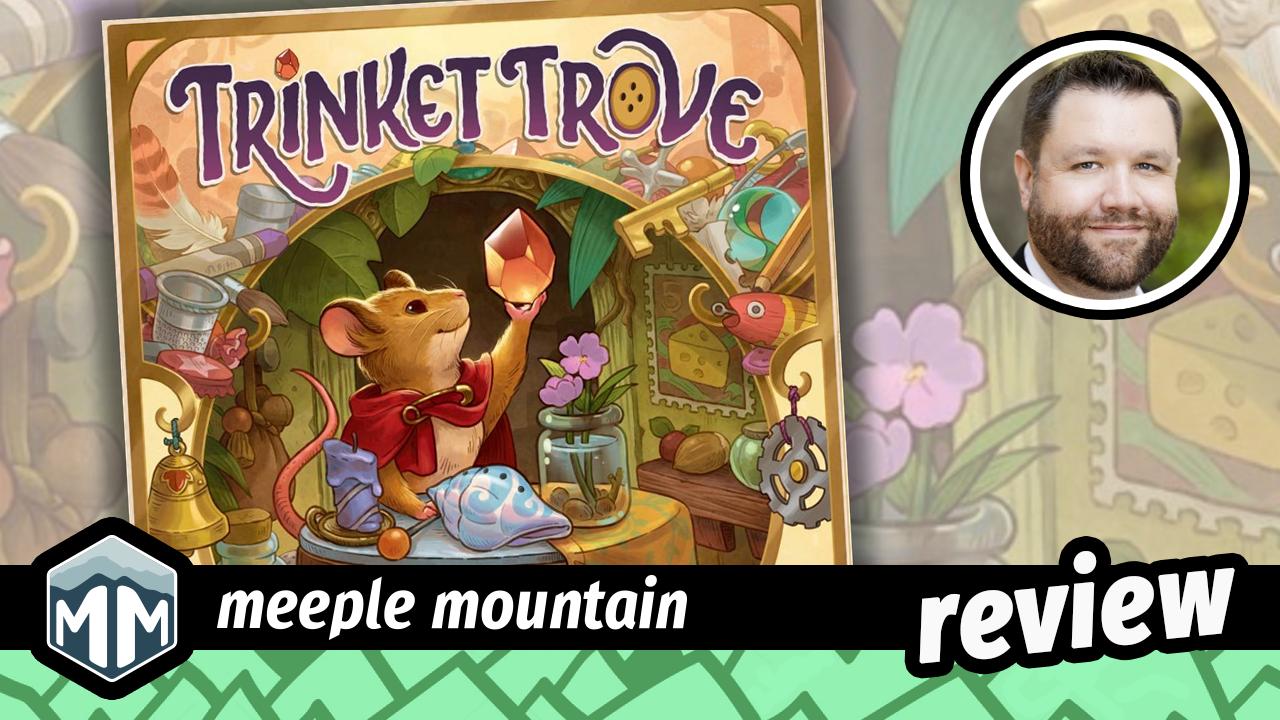
Trinket Trove, a ‘thinky’ bidding, set collection, and drafting game for 2-6 players from Rocco Privatera, Paul Solomon, and publisher Gamehead, makes a strong argument for the ‘small box, big game’ crowd.

Bidding For Your Burrow

In Trinket Trove, players collect various trinkets across 13 types, attempting to collect sets of different types to add to their character’s ‘burrow’ and earn points before the end of the game. Trinkets are collected and sets are built through the bidding and drafting process that makes up the core loop of the game.

Each round, players bid on available lots (groups of one or more trinkets), following the bidding order of the previous round (in the first round of the game, it’s randomized) to determine…

The post Trinket Trove Game Review appeared first on Meeple Mountain.
Tundra Game Review

I picked up a review copy of the medium-weight, engine-building title Tundra, designed by Luc Rémond and David Simiand. Rémond is best known for one of the most popular two-player-only designs of the last 10 years, Sky Team. That, alone, made Tundra an instant “yes” when I had the chance to grab a copy during my visit with the Hobby World team at SPIEL Essen last year.

Tundra gives it to you straight. Over the course of four rounds, players take on the roles of estate managers in the fantasy world of Tundra, using workers and towers to gather resources to score the most points. Tundra, the game, begins every round with each player using the same set of die results across four dice—rolled by that round’s first player—before players use one die per turn to activate a space on one of their four action boards, known as “Order” boards.

These Order boards are not unique across the player pool, so each board does the same thing for each individual player…at least, when play begins. The tasks are very vanilla—gather one or more of the game’s three resources (firewood, peat, and rock), build towers and workers, move around a grid-based map of tiles that offer more chances for more resource gathering, or upgrade the Order boards to…

The post Tundra Game Review appeared first on Meeple Mountain.

Circadia Game Review

Hisashi Hayashi is the designer of a quick new card game called Circadia. I was initially interested because Hayashi has done some great work for the Bell household, namely in the form of Yokohama and Railway Boom, the latter of which was on my list of the top 10 games of 2025.

As you may know, lots of publishers are pushing out new card games, for the reasons one might expect: this is a much cheaper way to get a game to market, and it could satisfy the needs of many types of players in an environment where players are apparently spending less on their games.

Enter Circadia. There’s a theme loosely tied to Dreaming Paths, Spirit Creatures, and becoming the “Keeper of the Eternal Cycle” for the person lucky enough to win the game.

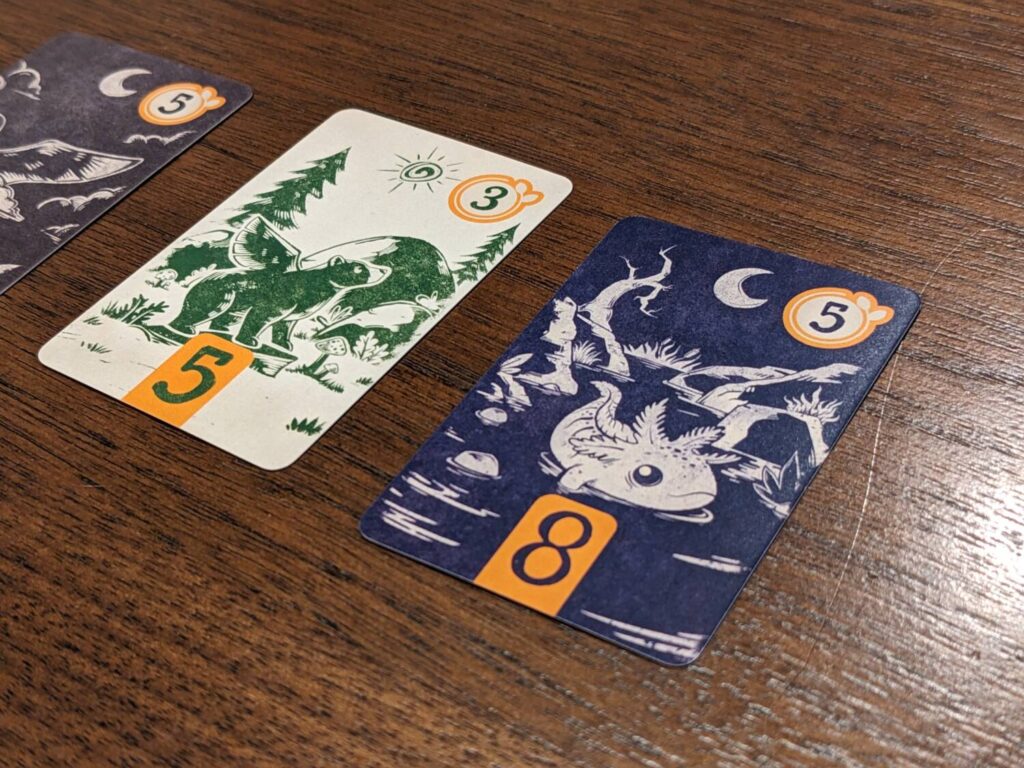
The reality is that Circadia is much, much simpler than even the loose framework. Setup only takes three steps. Players manage a hand of cards (never more than eight), trying to build up sets of cards across three types of Spirit Creatures: bear, axolotl, and goose.

Sets are played from hand based on the value of the cards, so a player who wants to play twos can play any card with…

The post Circadia Game Review appeared first on Meeple Mountain.

Fruit Island Game Review

The land of Fruit Island, as the name implies, is ripe with delicious fruit: bananas, pomegranates, and mangoes. On this island lives a tribe of monkeys. Over the years, they have built a thriving fruit industry, gathering fruit from the surrounding jungle and delivering it to the trading post for maximum profit. However, all is not well. Living on the island as well is a giant gorilla and, wouldn’t you know it, he also has a penchant for fruit. But, this gorilla prefers to let others do the hard work, using his size to bully, and steal from, the hard-working monkeys.

In Fruit Island, the players take on the role of the monkeys, working to gather fruit and deliver it to the trading post before they’re caught out by the gorilla and have their fruit stolen from them. Fruit Island is a press-your-luck, mess-with-your-opponents game. Equal parts prayer and risk assessment, it’ll have you asking yourself just how long you think you can hold out before making a beeline for safety.

Which monkey will be the most successful? Only time will tell.

How It’s Played

At the start of a game of Fruit Island, each player chooses a monkey and places it onto the trading post in the middle of the game board. The gorilla is placed on the…

The post Fruit Island Game Review appeared first on Meeple Mountain.

Tulikko Game Review

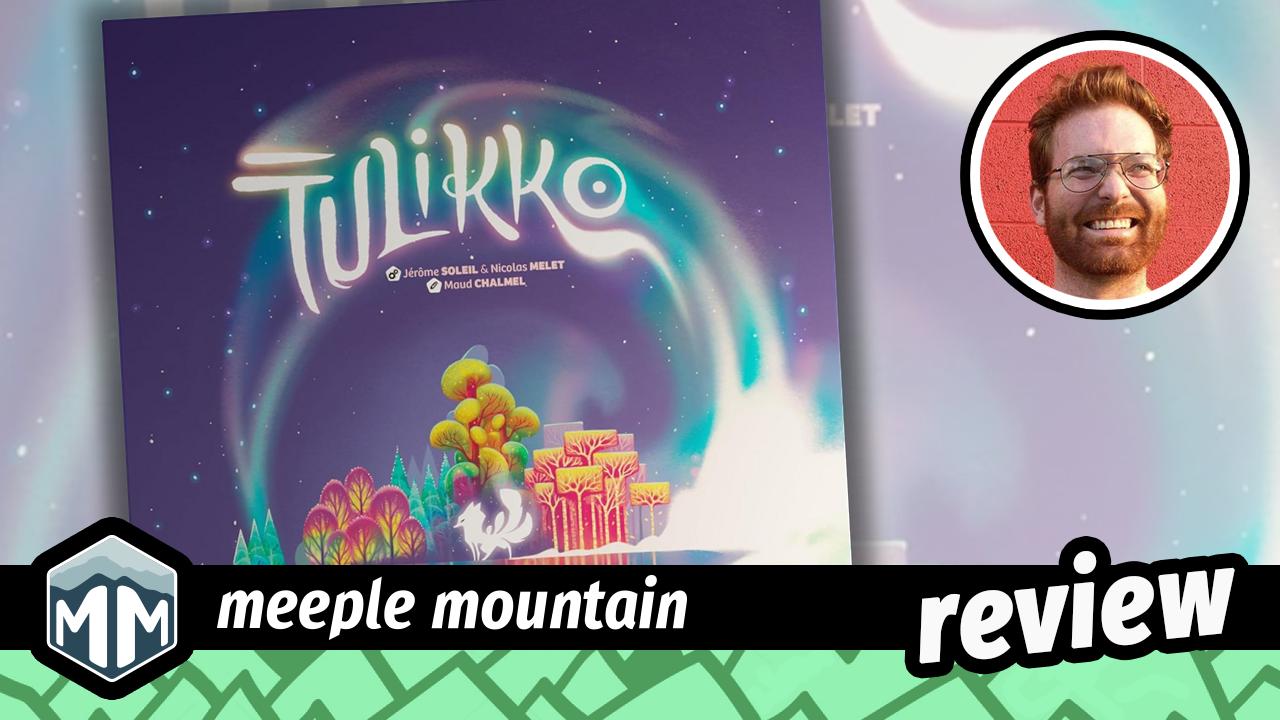
Games like Tulikko are challenging to review because they are generic. Games like this embody much of what a particular genre of game attempts to do; and it’s very similar to a lot of other games of that genre. It’s another personal board tile placement puzzle. I don’t know if that’s bad or good anymore.

Tiles, but make them slide

Tulikko is a game of acquiring tiles and placing them on a grid on your player board. The tiles come in four colors, and you’re trying to place them on your player grid in specific configurations that are governed by the randomly determined objectives for each game. There are three cards that change each game. One type has you trying to make specific patterns of colors on your board, another has you making specific shapes, and a third has you making patterns using special wooden river pieces—I’ll cover those in a moment. The other scoring options are part of each game and reward you for covering one of four symbol types on your player board and/or placing enough tiles (3, 4 if you’re slow) of one of the four colors.

How do you get the tiles? Well, you put a tile that you draw from your personal pile of…

The post Tulikko Game Review appeared first on Meeple Mountain.

Counterpoint Game Review

I have never before given much thought to the ways in which music composition and game design are similar. Like all creative arts, both share the goal of trying to communicate and share an experience with their audience. As disciplines, music has notes and rhythms while game design has rules and mechanisms, but both are about taking those disparate ingredients and making them cohere into something whole, something that vibrates with inevitability.

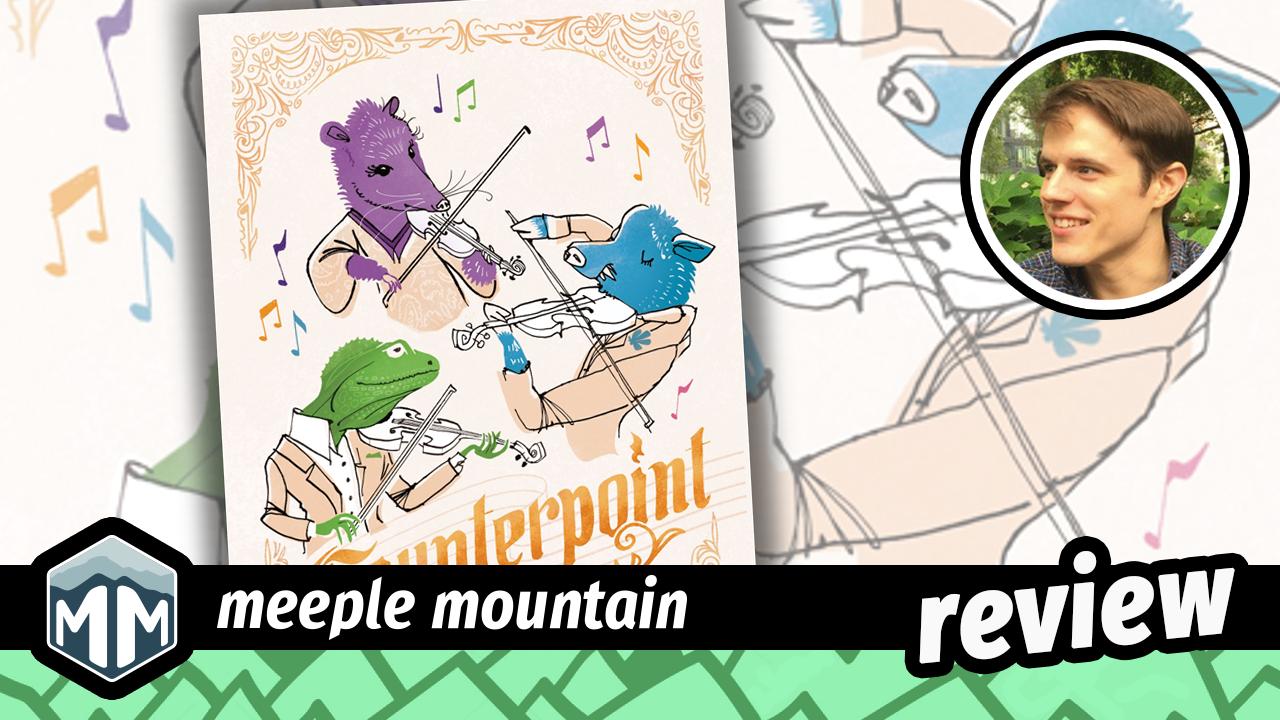
Ted Mann Schaller’s Counterpoint is a must-follow cooperative trick-taker with bidding and a trump-suit. A blessing, to live to see such times as those in which I can write that sentence and assume much of the audience will understand. Each player is a member of an animal chamber trio–to-quintet, be they an iguana violinist or an armadillo pianist. Such is the quality of Brandon Campbell's illustration work here that fights will break out over who gets to be what. The cooperative nature of the game follows the template laid out by blockbuster predecessors The Crew and The Lord of the Rings: The Fellowship of the Ring - Trick-Taking Game: over a series of performances, scenarios named after pieces in the chamber music canon, players attempt to complete certain challenges while also ensuring that everyone makes or exceeds their bid.

There are a few twists on the formula,…

The post Counterpoint Game Review appeared first on Meeple Mountain.

❌