❌

Normale Ansicht

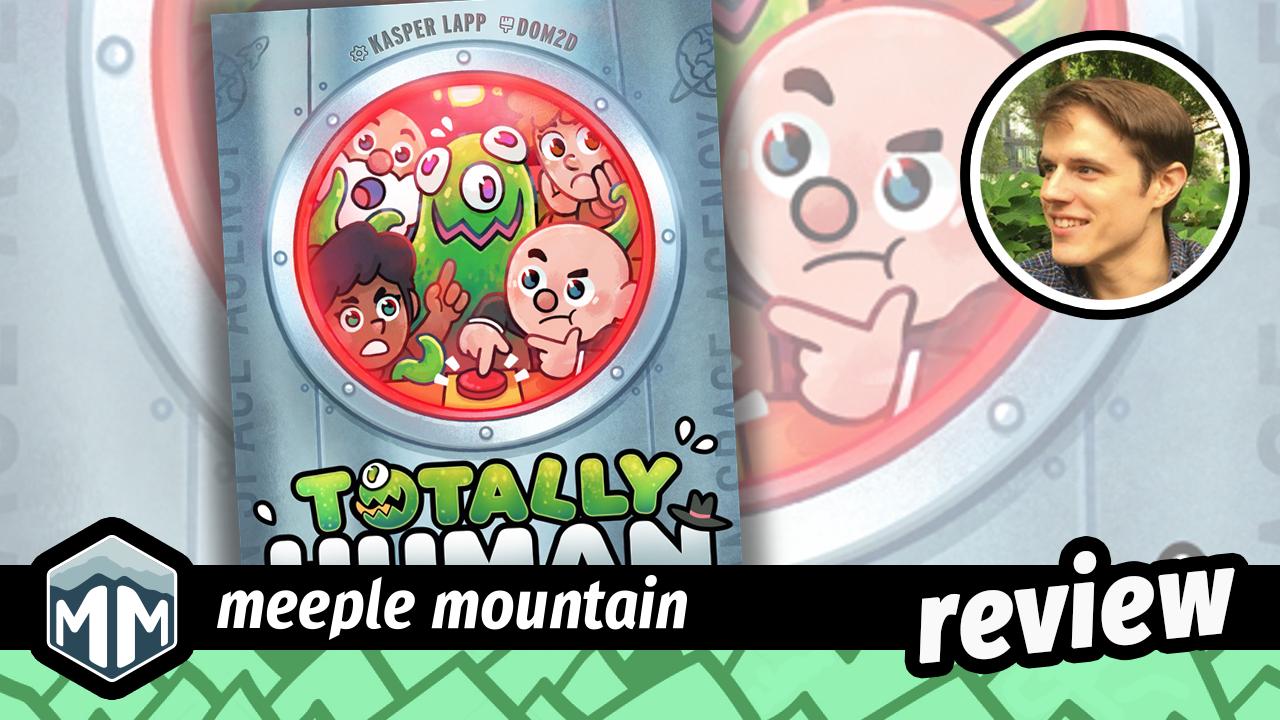
Totally Human Game Review

Totally Human, from designer Kasper Lapp and publisher Bitewing Games, is a bit of an odd one. The idea draws from the same well as A Fake Artist Goes to New York and The Chameleon, social deduction games that use a secondary activity to make people try to blend in or suss one another out. A Fake Artist has everyone add one line to a shared drawing, but the faker doesn’t know what the drawing is. The Chameleon uses a word game to similar effect. The first smart choice for both was the decision to center their games around activities that are already fun on their own. People love collaborative drawings and word association. For its central activity, Totally Human employs everyone’s favorite style of exam, the multiple choice question.

At the beginning of the game, which lasts a breezy 10-20 minutes at most, everyone is dealt three cards. For most players, these cards will be irrelevant. They only matter to you if you receive one or more of the cards that designate you as an alien. Once everyone has had a moment to look at their cards, the first of three multiple choice questions is revealed to the table. The questions themselves are benign, broad, uninteresting in the way that these sorts of games’s questions often are: “What…

The post Totally Human Game Review appeared first on Meeple Mountain.
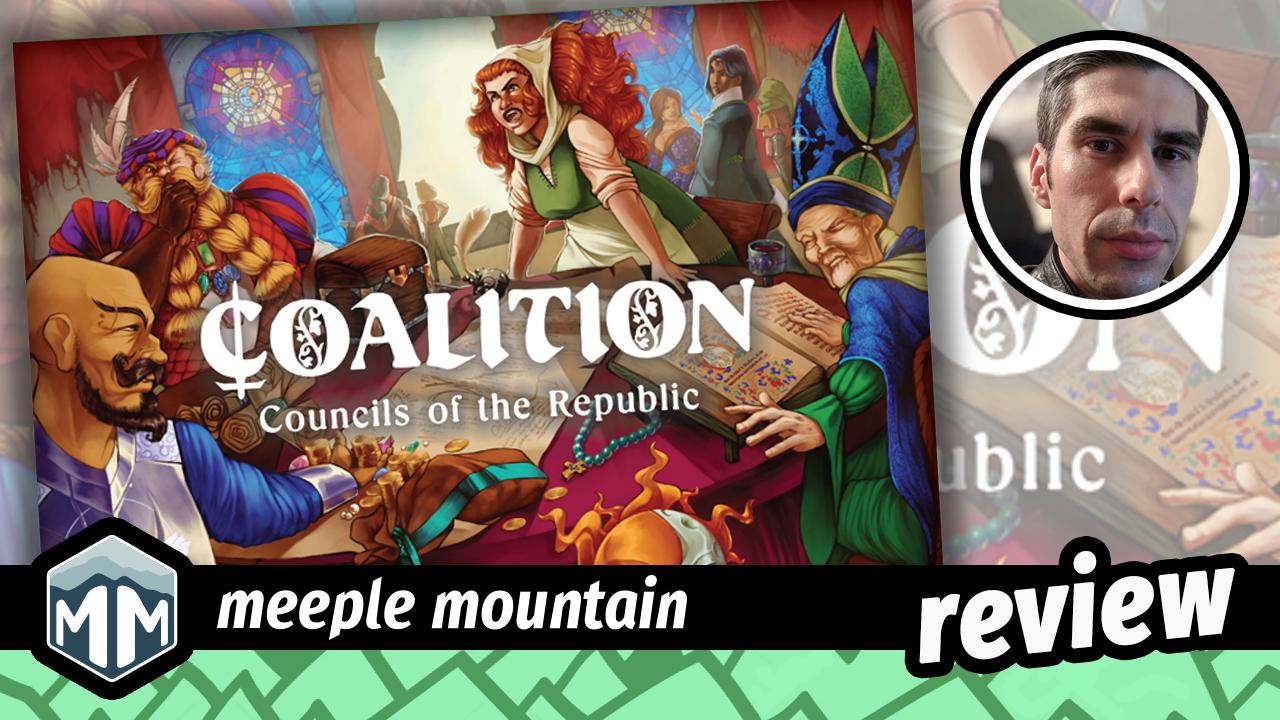
Coalition: Councils of the Republic Game Review

Whenever a game has a double-digit player count, there’s a 99.97% chance it involves social deduction. Now, I love social deduction games. They give you an excuse to break the social contract and lie to your friends and family, all in the name of fun. They’re also one of the few genres that let you discover just how good the people around you are at scheming and lying. Eventually, you start wondering if their name is even real. That said, I’m also kind of sick of every single large group game being dropped in the social deduction box.

Coalition: Council of the Republic sings a different tune here, focusing on negotiation rather than inevitable betrayal. Better yet, it’s team-based, with four teams competing for influence and potentially a few independents thrown in to make things even messier. Instead of simply figuring out who’s lying, you have to convince people to work with you, negotiate deals, cross your fingers while making promises, and figure out how long those lofty alliances will actually last. All of this in one hour.

Draft Laws, Not Friends

The story behind this is a little more complex than most. The country is suffering through political turmoil and demanding reform, so four teams are tasked with drafting new laws. Naturally, each team wants to push laws…

The post Coalition: Councils of the Republic Game Review appeared first on Meeple Mountain.

Gods’ Will Game Review

Gods' Will showed up in my social media feed, comparing itself to Resistance: Avalon like a new kid on the first day of school telling everyone he used to be popular somewhere else. I have heard this pitch. I have reviewed this pitch twice, from Witch Hunt and Human Punishment, two games that made the same promises and delivered the same disappointing results. So when Gods' Will came knocking with the same marketing aura, I had to open the door with at least one eyebrow raised. Maybe I’m just addicted to disappointment, who knows.

After half a dozen plays, I can say with a bit of confidence that Gods' Will is doing more right than wrong here. More importantly, it earns it by fixing the real problems with its predecessors rather than just the ones that look good in a Kickstarter pitch.

A Skeptic Walks Into a Kickstarter

Like 90% of social deduction games that have ever existed, there are two teams: Light and Dark. There is also a loner faction, a third party whose goals shift depending on player count and whose presence ensures that the ride from start to finish won’t ever be a smooth one. Every player is a God with a public special ability…

The post Gods’ Will Game Review appeared first on Meeple Mountain.
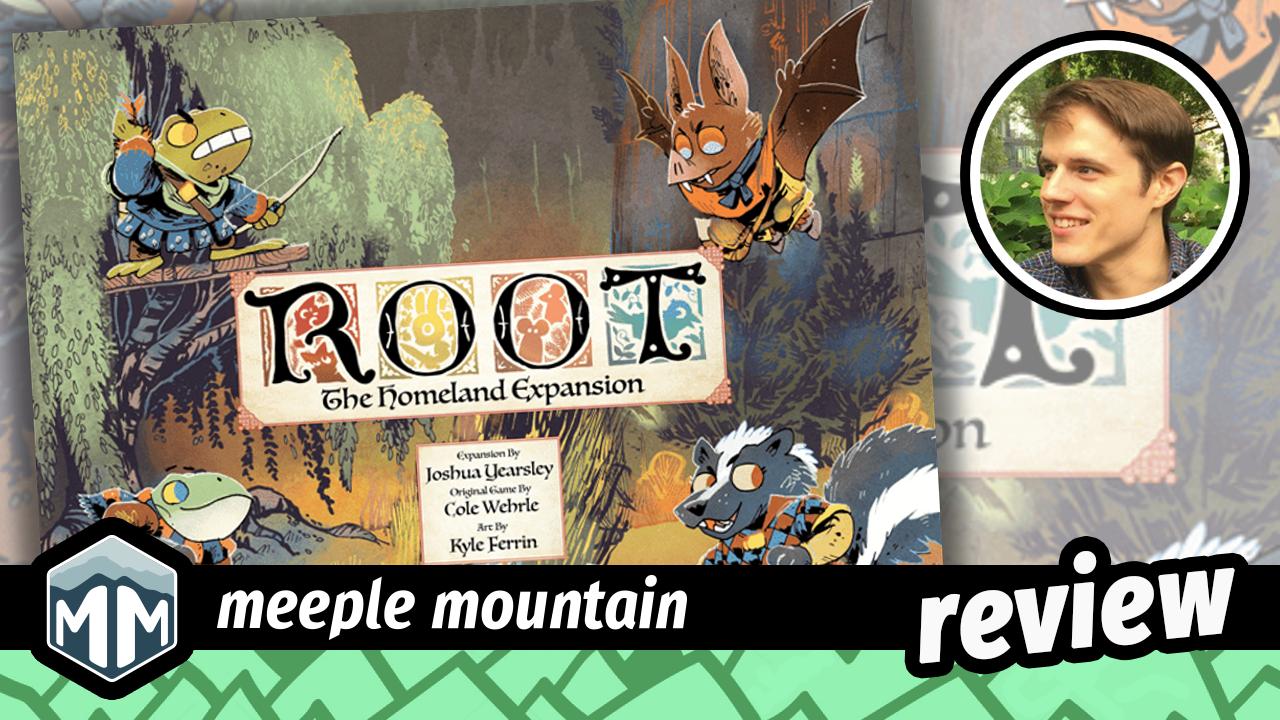
Root: The Homeland Expansion Game Review

I have played my fair share of Root games, lord knows. I have no official play count. I respect the impulse of those who track their plays, but board games are one area of my life where I don’t do that sort of thing. Some back-of-the-envelope math tells me I have played well over 50 games of Cole Wehrle’s juggernaut since I first bought a copy back in the summer COVID lull of 2020. It quickly became, and has remained, one of my favorite board games.

Root’s status as a personal all-timer has never been threatened, but I have found myself moving away from it over the last few years. Since the release of The Marauders Expansion in 2022—an expansion of which I am very fond—I’ve found myself less and less interested in playing. This has nothing to do with the quality of the game. It hasn’t worn on me, nor has it grown tired. If anything, the fact that I haven’t played Root as much as I used to is Root’s fault; it offered early instruction in the idea of board games as strange and ungainly, and I’ve spent the last few years eager to explore new designs, new spaces, and tracking down new experiences. Root became the kind of game I would happily play if suggested,…

The post Root: The Homeland Expansion Game Review appeared first on Meeple Mountain.

❌