
Normale Ansicht

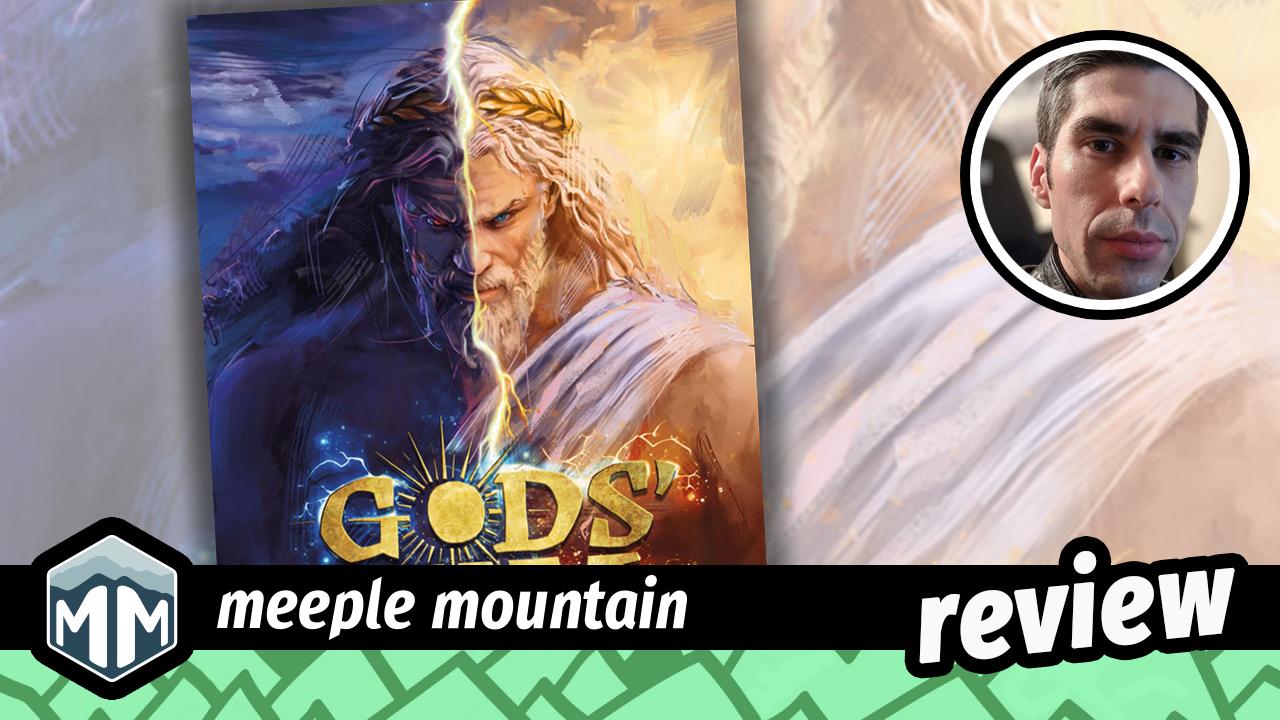
Gods’ Will Game Review

Gods' Will showed up in my social media feed, comparing itself to Resistance: Avalon like a new kid on the first day of school telling everyone he used to be popular somewhere else. I have heard this pitch. I have reviewed this pitch twice, from Witch Hunt and Human Punishment, two games that made the same promises and delivered the same disappointing results. So when Gods' Will came knocking with the same marketing aura, I had to open the door with at least one eyebrow raised. Maybe I’m just addicted to disappointment, who knows.

After half a dozen plays, I can say with a bit of confidence that Gods' Will is doing more right than wrong here. More importantly, it earns it by fixing the real problems with its predecessors rather than just the ones that look good in a Kickstarter pitch.

A Skeptic Walks Into a Kickstarter

Like 90% of social deduction games that have ever existed, there are two teams: Light and Dark. There is also a loner faction, a third party whose goals shift depending on player count and whose presence ensures that the ride from start to finish won’t ever be a smooth one. Every player is a God with a public special ability…

The post Gods’ Will Game Review appeared first on Meeple Mountain.
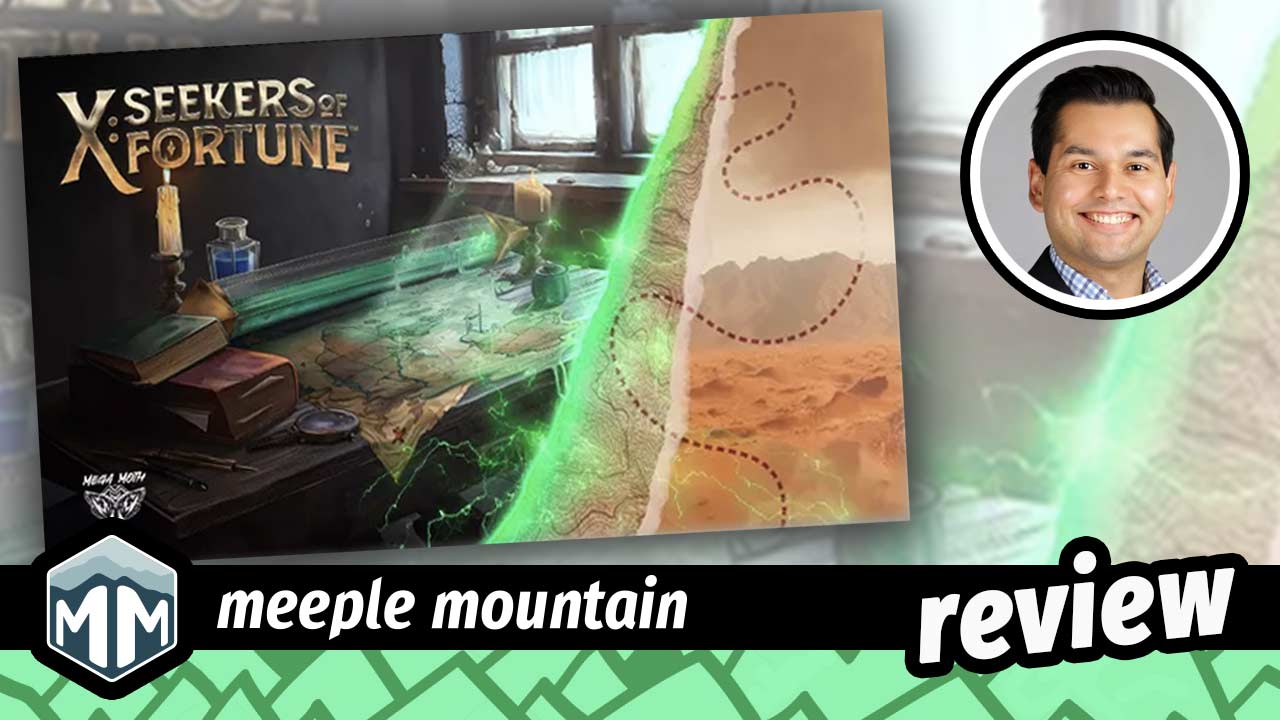
X: Seekers of Fortune Game Review

Seek No Further

Trading card games are one of the anchor pillars of the tabletop hobby. Whether it’s something mainstream like Magic: The Gathering, Lorcana, or Flesh and Blood, something a little more niche like One Piece Card Game or Final Fantasy Trading Card Game, or the crazy phenomenon that is still Pokémon, TCGs will always run parallel to board gaming.

The downside is that TCGs can require a heavy financial investment, and there’s always a risk surrounding the game’s longevity. Unlike staples like Magic and Pokémon, many TCGs fizzle out soon after release, becoming another name on the tombstone. Is anyone still playing Altered?

X: Seekers of Fortune is a card game that simulates the feeling of a TCG with no continued investment, no chase cards to pull, and no meta deck-building. That’s a huge draw for me since I love the playstyle of TCGs, but I’d rather have a self-contained experience like Compile  or Mindbug.

The folks at Mega Moth Studios were nice enough to send over the deluxe version of the game, which includes crisp playmats and even a first edition booster pack to mix into the base game. Hmm…do I smell a system being built here?

Fortune and Glory, Kid.…

The post X: Seekers of Fortune Game Review appeared first on Meeple Mountain.
Unmatched Adventures: Tales to Amaze Game Review

Unmatched is a modern classic. Unmatched, you might say, in the genre of miniature combat games. Accessible rules, punchy fights, card art that turns heads. It’s fun, especially for those of us who don’t generally enjoy player-versus-player miniature fighting games.

And then there’s Unmatched Adventures, a cooperative take on the system. The best of both worlds: all the fun of combat but working together to defeat a common enemy.

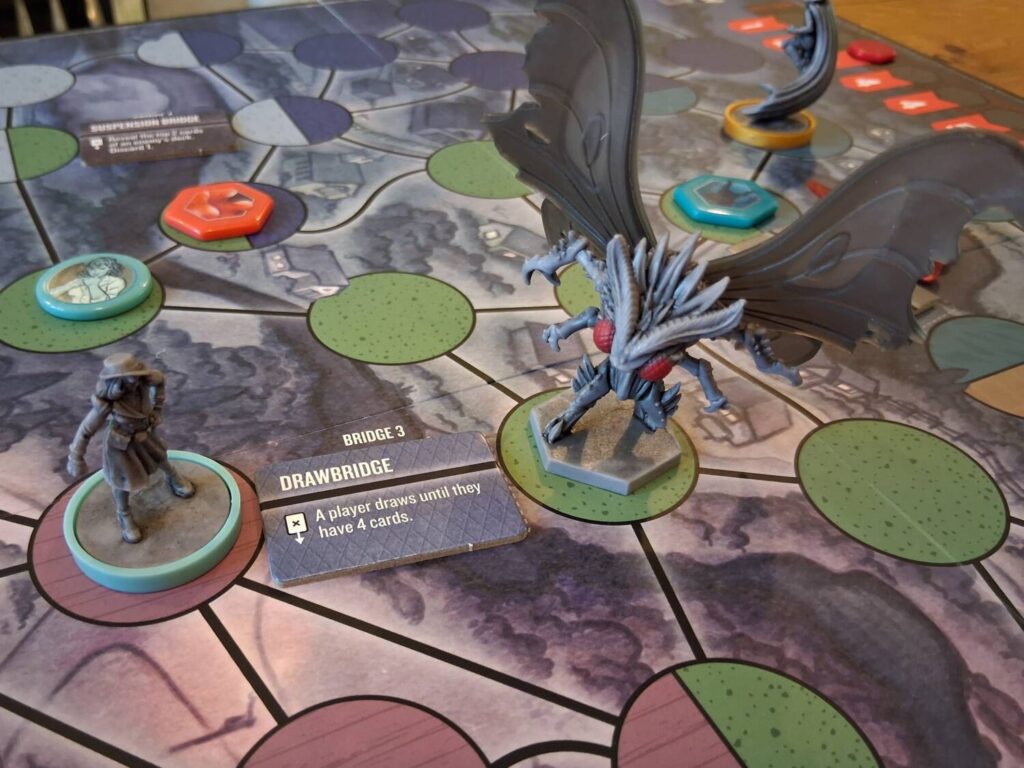
A lazy design studio might simply have created automated opponents and left it at that. Restoration Games is not a lazy design studio. Yes, the bulk of the game is indeed an automated boss and its minions fighting the players until one side is defeated. But the team pushed beyond that basic experience, adding little pressure points that influence how you approach defeating the big baddie.

A downside is that each villain is restricted to its own scenario, tied to a specific board and rules additions. You can’t mix-and-match villains in the same way as you can with the heroes. Mothman always tries to destroy the bridges of Point Pleasant, presumably to cause transportation chaos and highlight America’s overreliance on the automobile. Meanwhile, the Martian Invader is exclusively focussed on dropping aliens into the cornfields of McMinnville…

The post Unmatched Adventures: Tales to Amaze Game Review appeared first on Meeple Mountain.
Circadia Game Review

Hisashi Hayashi is the designer of a quick new card game called Circadia. I was initially interested because Hayashi has done some great work for the Bell household, namely in the form of Yokohama and Railway Boom, the latter of which was on my list of the top 10 games of 2025.

As you may know, lots of publishers are pushing out new card games, for the reasons one might expect: this is a much cheaper way to get a game to market, and it could satisfy the needs of many types of players in an environment where players are apparently spending less on their games.

Enter Circadia. There’s a theme loosely tied to Dreaming Paths, Spirit Creatures, and becoming the “Keeper of the Eternal Cycle” for the person lucky enough to win the game.

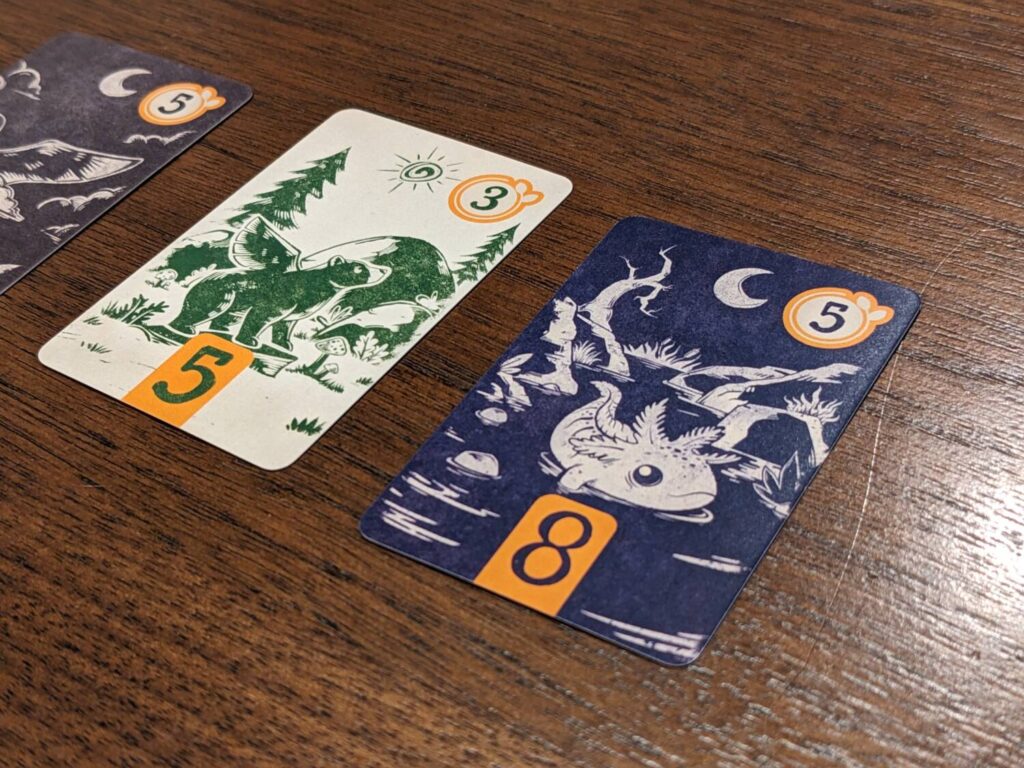
The reality is that Circadia is much, much simpler than even the loose framework. Setup only takes three steps. Players manage a hand of cards (never more than eight), trying to build up sets of cards across three types of Spirit Creatures: bear, axolotl, and goose.

Sets are played from hand based on the value of the cards, so a player who wants to play twos can play any card with…

The post Circadia Game Review appeared first on Meeple Mountain.
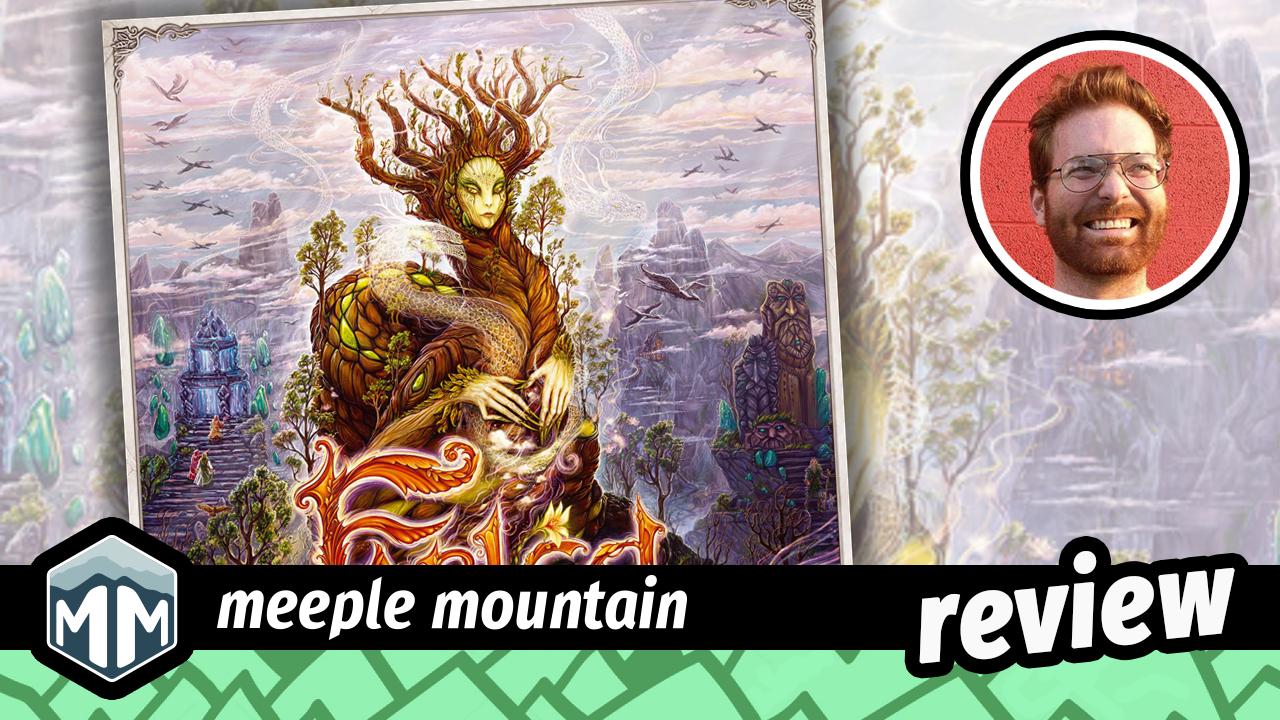
Fabled: The Spirit Lands Game Review

Rarely, I come across a game whose aesthetics overpower my critical sense. Fabled: The Spirit Lands is one of those games. It also makes moving up tracks not look and feel like moving up tracks, which is high praise from a curmudgeon like myself.

Bookington Bear

The object of Fabled: The Spirit Lands is to collect the most red books by the time the game ends. There are several scenarios that alter this formula, but ultimately, it’s a Knizian affair, where if there’s a tie for the red books, you go to the green books, then the blue books, and finally the crummy yellow books.

You can think of the books as cubes of four colors, and what you’re doing throughout most of the game is turning the books from one color to another color. It’s resource conversion at its most basic–two yellow books become a blue, two blues become a green, and two greens become a red.

The game operates with a simple formula, but it has some interesting quirks. Let’s talk tracks.

Take a hike

The game doesn’t call the map cards tracks, but tracks are what you have to work with as a player, so I’m going with it. At the beginning of the game, each…

The post Fabled: The Spirit Lands Game Review appeared first on Meeple Mountain.
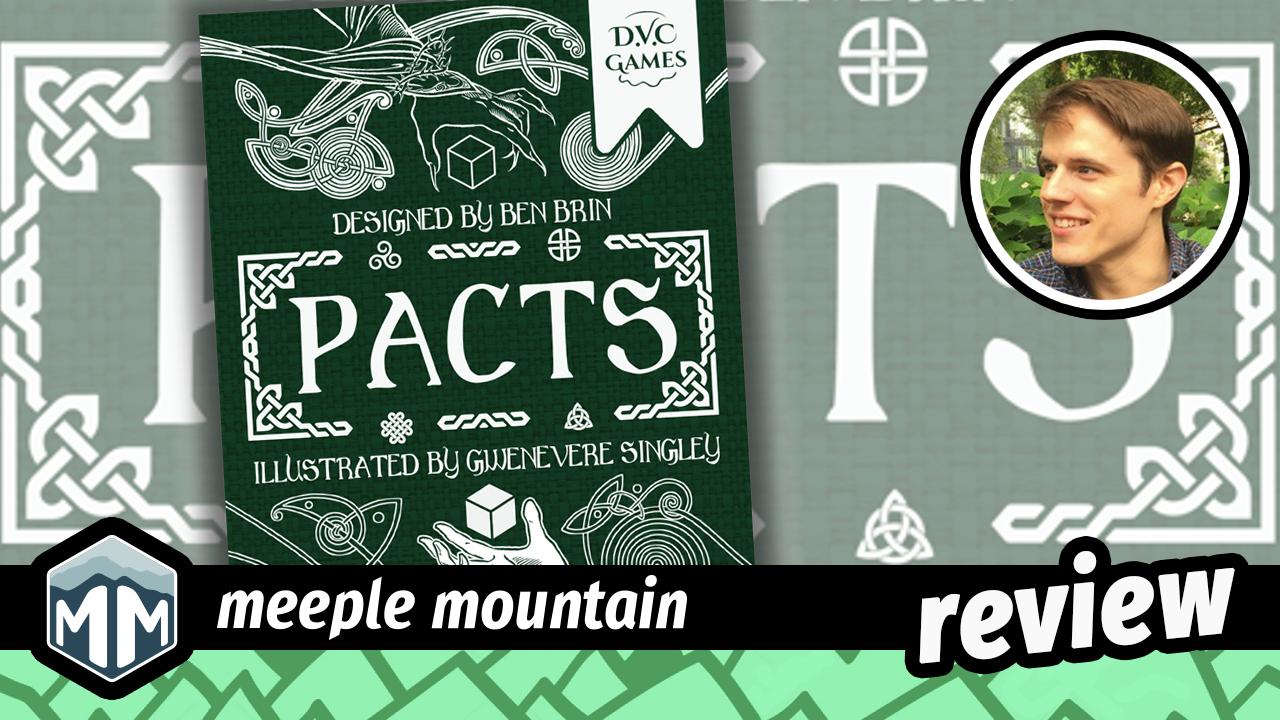
Pacts Game Review

D.V.C., as wonderful and consistent and quirky a publisher as you’ll find, largely does its own design work. With the exception of 2020’s Rosetta: The Forgotten Language, all of D.V.C.’s games up till now have been credited to house designer Jasper Beatrix. In a just world, Jasper would be unable to walk down the street without being mobbed by fans, but there are two barriers to that: we certainly don’t live in a just world, and Jasper Beatrix doesn’t exist.

Not corporeally, anyway. Good ol’ J.B. is a pseudonym for a loose collective, a merry anarchic band of creatives who work together to make these wonderful games. They’re so prolific, and release games of such high quality, that the announcement of Pacts and the realization that it was not designed by Jasper Beatrix, was quite the surprise. This area-control game for two is the work of Ben Brin, a single corporeal designer.

Well. I assume.

A square, green cloth board sits on a wooden table. The map, a rough outline of Ireland, is divided into six regions. Each contains a number of cubes and scoring tiles.

I Pick I Pick You Choose

Pacts is an exemplar of I Split, You Choose, a mechanism whose promise is often let down by…

The post Pacts Game Review appeared first on Meeple Mountain.

❌