The team at Board gave us the chance to cover their initial push late last year, and now that the platform is pushing out a new game every month, it’s been much easier to get my kids to join me at the table to check out the new wares. (If you’ve never heard of Board or need a quick overview of its features, check out our product review of the Board electronic device.)
Now that Board is fully up and running, new games are coming to market every month. We asked the Board team if we could continue covering new content, and they have been kind enough to oblige. Luckily, I have two children (ages 12 and 9) who loved the initial batch of games and are constantly looking for new ways to engage with the platform.
Once a quarter, I’ll offer thoughts on the newest batch of releases—both community-designed games as well as centralized releases from the Board development team, using a review style similar to our regular Quick Peaks coverage. Enjoy! (All images here were provided by the Board marketing team.)
The Heist
After spending almost two months playing Board regularly on our living room table over the previous holiday season, the lack of new…
I’m not that crazy about polyomino games, but Rebuilding Chicago is the kind of thing I like—razor sharp. I think that that sharpness decreases at lower player counts, but at four players, our game was over in 20 minutes with a point spread of 50. The schtick of this one is that you can either lay the polyominos in your little city board or activate an event that affects everyone. So, you’re constantly seeing how little you can do to edge out opponents, and they’re doing the same with you. Multiple times during our game, an event resolution would result in someone scoring 15-20 points, with someone else getting nothing. It’s got an enormous amount of variability, and for my money, I’d happily polyomino Chicago any time.
Ease of entry? ★★★★☆ - The odd bump or two Would I play it again? ★★★★☆ - Would like to play it again
If you asked me many moons ago whether the horror genre would be a good fit for a party game, my answer would have been a straight-up no. Sure, Murdery Mystery party games exist, but horror is on another level. Horror has a body count, and it ain’t no lead pipe in the library nonsense here. The corpses, more often than not, don't remain particularly intact.
Yet three years ago, I did take a look at the Scream board game by the now-defunct Funko Games. It was a surprisingly fun game that somehow made a real-time set-collecting card game with an app work. Not exactly the best game I'd ever played, but it was different, and more importantly, it was good enough to hit the table quite a few times at my local game meetups.
So when I heard about This Game is Killer (great name!), which could handle up to 10 players, lasted around 15 minutes, and used the Aliens franchise as its setting, curiosity got the better of me. And since I'm no cat, I wasn't too worried about where that curiosity might lead.
Wake From Cryosleep
The premise of the game is pretty simple: there is an alien on board causing problems, as aliens tend to do,…
There’s a lot of things I want to like about Haunted Lands. I like the premise, where you’re adventurers/exorcists trying to help your little city expand out into the countryside by sending ghosts to the great beyond. There’s some mechanical flourishes that are genuinely interesting. Unfortunately, the game itself does not really rise above a rote resource-collection exercise.
It’s important to gather wood when exorcising
Haunted Lands is an action point game, where instead of getting a pool of action points, you have discs that correspond to different actions that you use to do various things in a sequence of your choosing. For example, you move, then gather, then build a building, move again, and finally, help a ghost.
You’re doing all this because helping the ghosts (which requires the right number of action tokens depending on how far the game has advanced), harvesting, and building buildings all give you resources, which you use to build more buildings, or sell said resources to buy upgrades. Building buildings and paying for upgrades gets you points, and in the late stages of the game, helping ghosts gives you points too.
The game forms a fairly simplistic loop. You move, making sure…
There is a dangerous moment in every board gamer's life when a non-gaming friend says, “Sure, I'll try one.” Remain calm. Do not make any sudden movements. And, most importantly, do not immediately disappear into the basement and return carrying a box large enough to contain a microwave.
We have been waiting for this moment. That's the problem. When you love tabletop games, introducing someone to the hobby can feel like being handed five minutes to explain your favorite band, restaurant, television series, vacation destination, and minor religion simultaneously. You want them to understand why this thing matters. You want them to experience the clever mechanisms, impossible decisions, ridiculous betrayals, dramatic reversals, and that beautiful moment three hours into a game when everyone suddenly realizes Dave has been quietly collecting sheep for reasons nobody fully understands. So we get excited. And excitement makes us terrible ambassadors. Or, at least, obviously biased ambassadors to the point of destroying our credibility.
We start explaining. “This one's actually pretty simple.” This sentence is usually followed by eighteen minutes of rules. “You have workers, except they're technically druids, and you're placing them on action spaces to collect resources so you can fulfill contracts, although they're called prophecies, and the purple resource isn't actually a…
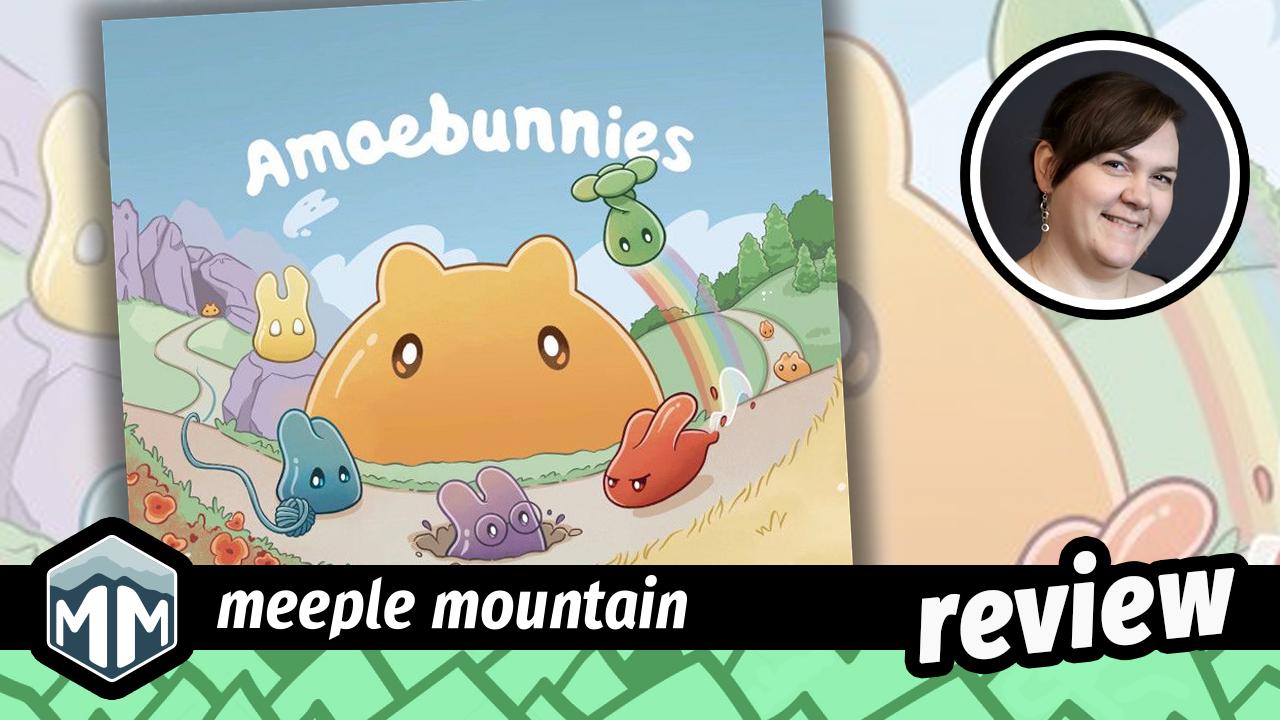
I don’t remember where I first heard about Amoebunnies, a self-published game from a designer who’s not made anything else, but I’m so glad I did. This game was attractive to me for a couple reasons: it was cute, and I needed more cute games to play with my bunny-loving seven-year-old daughter. But the thing that intrigued me most was seeing it described as “Root lite”. Was there really a game I could play with my kids that would introduce them to the world of asymmetric play that would also be fun for adults?
The story
The amoebunnies have fallen from the sky and are doing different tasks on the earth. Each player begins with the same resources, but the movement rules, special abilities, and winning conditions are different for each character. The characters also have different difficulty ratings, which means you can give the easier characters to newer or younger players, and the more experienced gamers can pick a more complex character. There are movement cards, which tell you where to place characters and other bits and bobs (depending on which characters are involved), and the coveted jellies, which are like a wild card but are rare and difficult to get. The game is a race to finish your special task.
Fuji Flush is a good time. It’s like super Uno that doesn’t fall into an infinite loop, especially at higher player counts. Basically, you play a card from your hand, and if the turn comes around to you again, and someone hasn’t “flushed” your card, you discard it. Get rid of your hand to win. Flushing is playing a higher card, but if someone plays the same card, your values are added together and you enter a sort of partnership where all same-card values are tougher to flush.
Mainly, it’s an excuse to say flush a lot, but it’s a hoot with a larger count, and is really easy to table and play at the end of a night.
Ease of entry? ★★★★★ - No sweat Would I play it again? ★★★★★ - Will definitely play it again
We at Meeple Mountain always enjoy the chance to cover self-published titles, as they often don’t get the opportunity to be showcased to a larger audience. Terra Eterna is one of those titles, a semi-cooperative RPG focused on exploration and character building.
Man, I just love a civilization game. For a power-tripping megalomaniac like myself, there’s just nothing better than taking the helm of a conglomerate of violent individuals and making bad decisions.
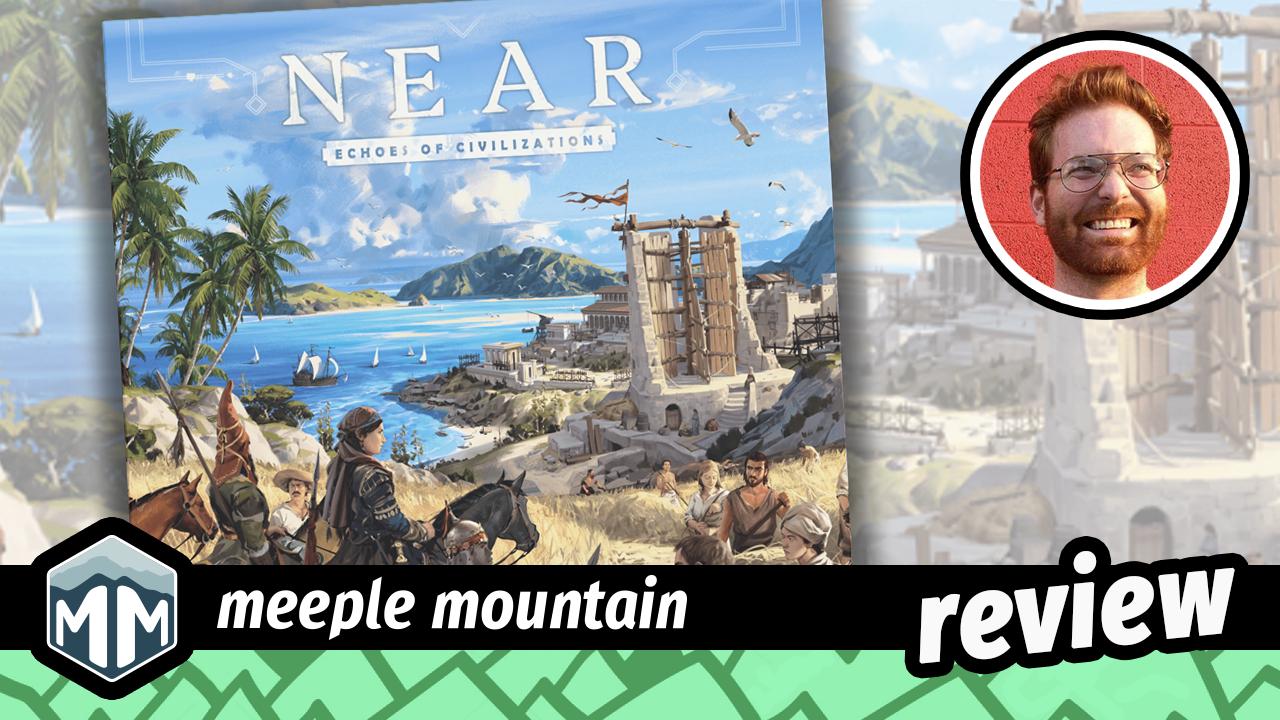
Near: Echoes of Civilizations has a goofy name—you really have to do some mental gymnastics for it to make sense at all. But, there’s some real fun to be had here. All the hits are here: Technology! Combat! Resource management! Points!
Actually, part of what makes Near interesting is its commitment to synthesizing the heads-down-euro-bean-counter that constitutes a lot of its bone structure with a traditional build-stuff-kill-guys game. Unlike other civ games (for example, Civilization: A New Dawn, Mosaic, or Gentes) that have tried to incorporate concepts from euro-style mechanism-fests into their design framework, Near takes a holistic approach that makes it feel complete and cohesive, rather than a cobbled together bricolage.
A novel new mechanism: “cards”
At the beginning of Near, you get dealt a starting culture card (a personal endgame scoring condition), a wonder card (an in-game scoring condition), four regular cards from one of five colors, and a starting action bonus. Your wonder gives you a starting building, and in a very Terra Mystica-style start, you place some buildings out on the board and it’s…
We’re in the middle of a war in our garden. It’s all based around the strawberries we have foolishly attempted to grow. Those strawberries are not making it into our bowls. Someone is getting to them first. We were almost convinced it was our regular visitor, Howard the Hedgehog. There isn’t much that Howard won’t scoff. Put a net over ‘em, you say? Yeah, we did that. Then, one super early morning (deeply unusual for me) I happened to squint out of the kitchen window, and what did I spy? Why, a particularly nimble squirrel, scoffing our strawberries. The little son of a nutcracker had torn and chewed a squirrel-sized hole in the netting, and was sharing his rewards with some happy starlings. I think I’ve had two of those strawberries. Two. Not exactly a festival. Not even enough for breakfast.
So let’s head to Nemi where we can enjoy a strawberry festival! (Scout’s honor, every word of that odd little tale is true.)
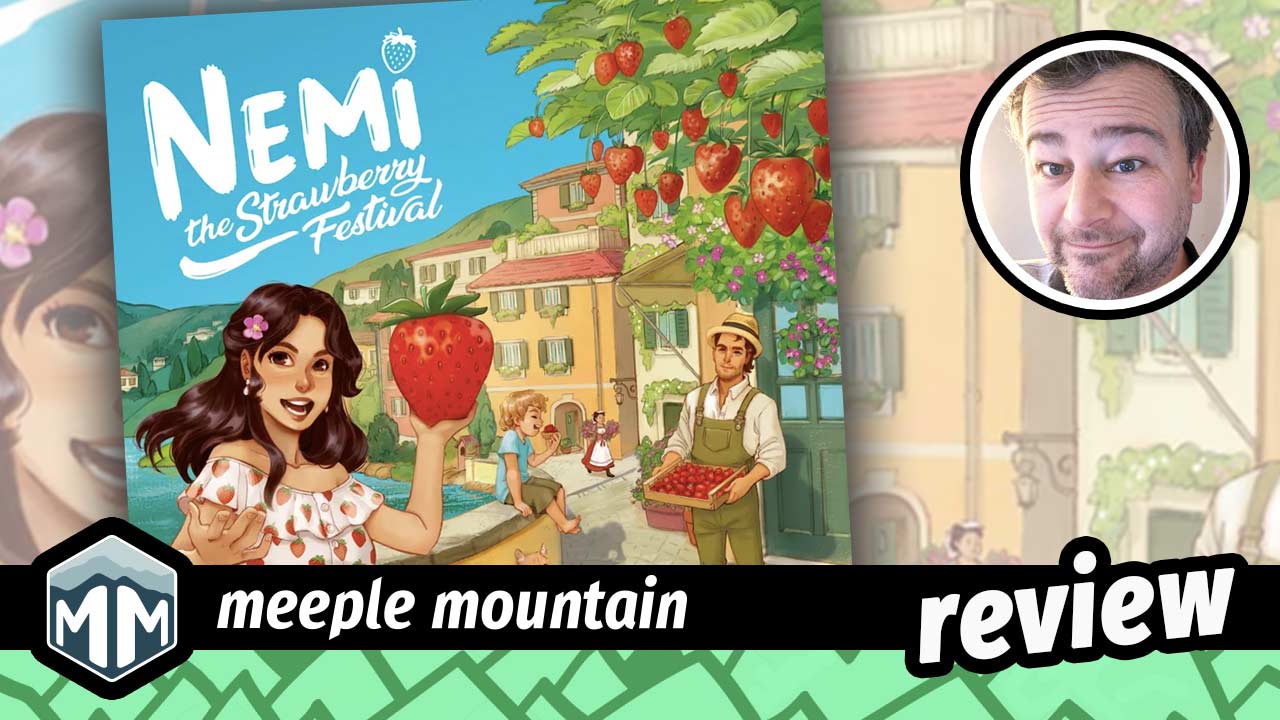
In Nemi: The Strawberry Festival, players immerse themselves in the charm of an Italian summer by drafting wild strawberries, baking mouthwatering desserts, and decorating the town with vibrant garlands. Designed by Valeria Cavasin and Edoardo Eibenstein, this 2–4 player game plays over 4 rounds, featuring…
I’m a big fan of euros with a little bit of investment/stock game flair. Revenant seemed like a slam dunk. A Battlestar Galactica-esque (TV show, not board game) flotilla of ships flying through space, trying to survive whilst arguing ideology? Boom! Shared board space that is growing and shrinking as you play? Awesome! Tons of interesting and oblique powers? Yeah!
Each subsequent play of Revenant got me less excited to try again. I was teaching the game each time, and while the core systems are well-designed, the sheer volume of iconography and rules grit that gets granularly layered over each game system results in a near-impenetrable miasma of choices. Just during setup you have to parse icons on 8 different cards and determine how they’ll interact with your choices. On top of this, as the game goes on, player engines become more and more elaborate, and even at 3 players, turns can really drag. I just got tired of pulling the thing out to teach it. My running theory of Mindclash Games’s output is that they take a simple concept and layer so much procedural busywork over top that it gives the impression of complexity, rather than actually requiring complex thinking. Most of the decisions in the game…
Mehr als 1.000 neue Brettspiele erscheinen jedes Jahr im Oktober zur SPIEL. Sie ist nicht nur die größte, sondern auch die wichtigste Messe für Gesellschaftsspiele weltweit. Wie bereitet man sich auf so ein Riesen-Event eigentlich vor?
Wo, bitte geht’s denn hier zur SPIEL?
Detaillierte Pläne schmieden oder alles auf sich zukommen lassen? Als wir vor einiger Zeit eine Umfrage dazu unter Bloggerinnen und Journalisten starteten, erhielten wir ein gemischtes Echo. Einige empfahlen, sich vor der Spielemesse gründlich online zu informieren und Insidertipps von erfahrenen Besuchern einzuholen, um nichts zu verpassen. Eine vorbereitete Liste von Spielen „sei absolut hilfreich, um gezielt die Neuheiten anzusteuern, die einen besonders interessieren.“ Andere rieten, sich lieber treiben zu lassen, um Überraschungen zu entdecken. Wichtig, da waren sich alle einig: bloß nicht stressen lassen, die Messe genießen und offen für neue Entdeckungen und Kontakte bleiben.
Wir von Brettspielelust gehören auf jeden Fall zum Team „Vorbereitung“ – und die geht meist in den Sommermonaten los. In Form eines Countdowns (die Zeitpunkte sind idealtypisch abgebildet) möchten wir euch in diesem Blogbeitrag von den positiven Strapazen einer Messe-Recherche berichten.
Und keine Frage: Diese Strapazen gehören zu den schönsten und motivierenden des Jahres. Viel Spaß beim Lesen!
Wenn ihr euch allein auf das Votum der Spiel-des-Jahres-Jury verlassen möchtet, erhaltet ihr rund um die Preisverleihung in Berlin nicht nur eine Watchlist mit drei prämierten und vielen nominierten und empfohlenen Brettspielen, die einen näheren Blick wert sind. Die Empfehlungslisten für das Spiel des Jahres, Kennerspiel des Jahres und Kinderspiel des Jahres bleiben, je nach euren Vorlieben und Spielegruppen, ein klassischer Ausgangspunkt für den Messebesuch in Essen. Nachteil an dieser bequemen Art der Recherche: Weil die Spiele viel mediale Aufmerksamkeit auf sich ziehen, werdet ihr auf der SPIEL nicht die einzigen sein, die in diesem Jahr Dito! oder Rebirth zocken wollen. Geduld und Glück sind gefragt, um einen freien Tisch zu ergattern.
18. Juli – die BGG Preview geht online
Auch nach dem Abgang von BGG-Legende W. Eric Martin stellt Board Game Geek in diesem Jahr eine Vorschau der SPIEL-Messeneuheiten ins Netz. Die Liste ist allerdings nun nicht mehr durch Eric gechekt und editiert, sondern wird durch Verlagseinträge automatisch generiert. Die Sie wächst im Laufe der kommenden Wochen kontinuierlich an und wird kurz vor Essen mehr als 1.000 Titel abbilden. Ihr könnt sie mit Filtern durchsuchen, Neuheiten von Autoren oder Lieblingsverlagen anzeigen, bestimmte Genres oder Mechaniken einblenden oder Spiele auf eurer persönlichen Wunschliste speichern. Inzwischen behaupten wir, dass diese Liste der zentrale Baustein unserer Messeplanung ist.
22. Juli – noch drei Monate bis zur SPIEL
„Wo sind eigentlich die letzten Hefte der Spielbox? Und hat jemand die neue Fairplay gesehen?“ Recherche in gedruckten Magazinen mag old school klingen, aber das Stöbern und Blättern in vergangenen Ausgaben hat etwas sehr Entspannendes – und tatsächlich fallen uns dabei Neuheiten des aktuellen Spielejahrgangs ins Auge, die wir weder rezensiert noch gespielt haben. Alle Titel, die interessant klingen, kommen auf unsere SPIEL-Longlist. Das Gleiche gilt für spannende Frühjahrsneuheiten, die bereits auf der Spielwarenmesse oder der „Spiel doch“ gezeigt wurden.
22. August – noch zwei Monate bis zur SPIEL
Die ersten offiziellen Infos aus dem veranstaltenden Merz Verlag sind raus, denn: Der Kartenvorverkauf zur SPIEL hat begonnen! Wer jetzt schnell zugreift, spart den einen oder anderen Euro beim Frühbucherrabatt. Da wir als berichtende Journalisten eine Presseakkreditierung erhalten, ist der Start des Ticketverkaufs eine willkommene Erinnerung, rechtzeitig mit dem netten Presseteam des Veranstalters in Kontakt zu treten.
30. August – zu viel Zeit auf Social Media
Als wir mit unserer Brettspiel-Berichterstattung vor einigen Jahren begannen, war das Angebot an Kanälen und Blogs überschaubar. Drei, vier YouTuber hatten wir abonniert, dazu eine Handvoll Blogs – und fühlten uns jederzeit gut informiert. In der Zwischenzeit tummeln sich Videoblogger neben Instagram-Influencerinnen, sprießen Podcasts im Wochenrhythmus aus dem Boden. Und selbst der gute alte Text-Blog erlebt die eine oder andere Neugründung. Wer sich einen Überblick zum Online-Angebot machen möchte, sollte unbedingt die Website Zuspieler.de besuchen. Das lobenswerte Projekt von Sebastian Wenzel verlinkt aktuelle redaktionelle Beiträge aus mehr als 200(!) Brettspielblogs, Spielemagazinen, Spielezeitschriften, Vlogs und Brettspielpodcasts. Wir schauen dort gerne rein oder scrollen durch unseren Instagram-Feed, um in den Wochen vor der SPIEL auf dem Laufenden zu bleiben. Doch es bleiben Schlaglichter, die wir hier und da wahrnehmen, weil das Angebot unsere Zeitressourcen bei weitem übersteigt.
22. September – noch einen Monat bis zur SPIEL
Zeit für eine Blogger-Empfehlung und einen Blick auf die Brettspielbox-Vorschau. Christoph Post stellt dort regelmäßig und akribisch Messeneuheiten vor, nach Verlagen sortiert. Eine tolle Übersicht – und in den Wochen vor der Messe lohnt sich der Abgleich mit unserer bisherigen Longlist: „Haben wir etwas vergessen?“ Allmählich wird klar, welche Verlage mit vielen bzw. viel versprechenden Titeln nach Essen kommen.
26. September – in vier Wochen alles wieder vorbei
Letzte Chance, noch den einen oder anderen Verlagstermin auf der SPIEL 2026 zu vereinbaren. Für berichterstattende Medien bieten viele Publisher spezielle Pressetermine an, um Interviews mit ihren Spieleautoren zu vermitteln oder das neue Verlagsprogramm kurz vorzustellen. Eine gute Gelegenheit für uns zum Netzwerken und die Zusammenarbeit mit Verlagen zu intensivieren. Aber: Die Erfahrung der vergangenen Jahre hat uns gezeigt, dass ein gesundes Mittelmaß aus Netzwerken und Selberspielen sinnvoll ist. Letzteres ist für uns das klare Highlight auf der Spielemesse, daher überlegen wie jedes Mal gut, wie wir unsere Zeitreserven aufteilen.
1. Oktober – Hilfe, die Longlist ist zu lang!
Unsere Longlist ist inzwischen fertig; ungläubig schauen wir darauf und sehen rund 40 bis 50 Titel. Wer soll die alle ausprobieren an vier Messetagen? Klappt natürlich nicht, daher steht nun das Redigieren, Klassifizieren und Streichen an. Ein paar Titel fallen raus, weil ein näherer Blick weniger Potenzial offenbart als zunächst angenommen. Und Mittelmaß haben wir inzwischen genug im Regal stehen! Weitere Titel stehen möglicherweise als Rezensionsexemplare in Aussicht, andere erscheinen wegen Produktions- oder Lieferproblemen erst nach der Messe.
9. Oktober – die SPIEL-App für den Messe-Überblick
Aus der Longlist wird eine Medium-Liste. 20 bis 30 Brettspiele stehen noch darauf – die heißen Kandidaten, die wir entweder auf der Messe oder in den Wochen danach auf jeden Fall anspielen möchten. Diese Titel tragen wir in die SPIEL App ein. Vorteile: Wir haben unterwegs alles im Blick, können auf ausgedruckte oder handgeschriebene Zettel verzichten und sehen, in welcher Halle oder nächster Umgebung welche spannenden Spiele auf uns warten. Die App ist richtig gut gemacht, schaut sie euch auf jeden Fall einmal an!
15. Oktober – wer liest denn noch Anleitungen? Wir!
In den vergangenen Tagen haben sich etliche Spieleanleitungen als PDF-Dateien auf dem Tablet angesammelt. Das klingt nerdig, aber das Vorabstudium von Regelheften hat einen entscheidenden Vorteil: Auf der Messe können wir in viele Spiele zügiger einsteigen. Außerdem wird bei manchen Spielen klar, dass sie viel Potenzial haben, aber die Spieldauer nicht zu unserem Messebesuch passt. Wer Kinder dabei hat, will den Zwei-Stunden-Kracher vielleicht nicht in Essen, wohl aber hinterher zu Hause zocken. Aus diesen Überlegungen und einer endgültigen Reduktion auf zehn bis zwölf Titeln geht es nun an die Tagesplanung. Mit welchem Spiel wollen wir morgens starten? Worauf haben die Kinder wohl am meisten Lust? An welchem Tag sind wir zu zweit unterwegs und spielen daher eher die entsprechenden Duell-Titel?
20. Oktober – auch an alle Erklärbären denken
Auch in diesem Jahr geht ein großes Dankeschön an die vielen fleißigen und geduldigen Spieler-Erklärer/innen und Demoteams, die uns den Start in jede Brettspielpartie auf der Messer erleichtert. Danke, ihr macht das super! Und natürlich gibt es von uns wie in jedem Jahr Schoki oder Süßes als kleine Anerkennung. Der Tag vor dem Start steht daher ganz im Zeichen von Tütchen packen und das eigene Proviant für die Messetage einkaufen. Nicht vergessen, die Füße nochmal entspannt hochzulegen – die nächsten Tage werden anstrengend…
8:00 Uhr, rein ins Auto, Abfahrt Richtung Essen. Gleich geht die Eröffnungs-Pressekonferenz los und der Sieger beim Deutschen Spiele Preis wird verkündet. Endlich ist es soweit! Die eigentliche Messe startet dann tags darauf am 22. Oktober um 10:00 Uhr.
Warten auf die SPIEL: Gleich startet die Pressekonferenz zur Eröffnung der Messe.
At some point I’ll have to review Inca Empire, as it’s a pretty neat take on a cube rail, shared incentive track-building game. Inca Empire: The Card Game, in the storied tradition of X: The Card Game, is less than a pale imitation of its predecessor. It’s a game with some novel mechanisms, but because of turn order problems and really uninteresting cardplay, because essentially Inca Empire: Munchkin Edition.
You have a hand of multiuse cards, which can be used for four things. You expand the shared card tableau, using cardboard chits to mark routes you claim. You’re limited by available chits, Hansa Teutonica style. You can play one-shot cards, you can add cards to an income tableau for yourself (called terraces) or you can play a trade agreement card between you and another player, which give you both a special rule and you an extra action at the end of the round. To win, you’re trying to plot down tons of chits and score the best 3 of 5 secret goal cards at end of game.
The rules for expanding the card tableau are pretty restrictive, and the goals arbitrarily reward players who’ve drawn ones that don’t interfere with…
As we put away The Old King’s Crown, there were two seemingly incongruent but true sentiments coming from my play group. The first is simply… that first play was a mess. Total mess. Constant takebacks and missed triggers, being blindsided by some shocking thing you didn’t know your opponents could do, or having your carefully planned turn totally upended by some bonkers, cartoonishly evil play made by another player. The second sentiment, however, was that we all wanted to play again immediately.
Almost everyone agreed that playing with the full four players really escalated the hijinx, so I’d be curious what a three player game would be like. The teach was shockingly smooth, though the real complexity and weight of this game lies in the overwhelming number of abilities and effects printed on the 50-something Kingdom cards, 20 special faction cards, and 16 tactics abilities. I am immediately smitten by this game and want to peel back the layers, while also fully aware that nobody’s first game of this is going to feel super great.
Ease of entry? ★★★☆☆ - There were a few questions Would I play it again? ★★★★★ - Will definitely play it again
Once again Gen Con did not disappoint in 2026, and Meeple Mountain scoured the halls in full force with a whopping six members of our team swooping down on Indianapolis for the convention. As always, attendance hit all-new highs in terms of con-goers and vendors as gamers from all over the world joined the festivities. With several new additions including a D&D Tower, drone show, and the ever-present construction downtown as the convention center expands to accommodate, there was plenty to be excited about.
Here are our thoughts on Gen Con 2026!
Crawl Con in Full Effect
With the recent crowdfunding efforts by Renegade Games for their new Dungeon Crawler Carl RPG and Dungeon Crawler Carl: Unstoppable it was already preordained that Gen Con would be beset upon by the full force of DCC fandom. Couple that with the appointment of author Matt Dinniman and voice of the series Jeff Hayes as Media Guests of Honor to the convention, and you have all the necessary ingredients for a DCC takeover.
Sure enough, heart-patterned boxers and tortoiseshell Persian cats were all over the place, especially when the cosplayers put on their Saturday best for the annual contest. Saturday also happened to be the day when 2,000 crawlers—as members of the DCC fandom are called—assembled for a photo at Victory Field. I've…
What is gaming without games? What is life without memories? In Gaming Memories Volume 03, our team shares happy, sorrowful, or deeply impactful memories of their lives, seen through the lens of tabletop gaming. Please join us for Gaming Memories, and if you have one you’d like to share, drop us a line.
Board Building - K. David Ladage
I was about five years old when I realized I had a thing for board games. I was about nine years old when I discovered role-playing games, and that took over much of my gaming energy. Once I was in the Navy many years later, Magic: the Gathering had taken over most of my board gaming time, and GURPS was the linchpin in my RPG space. Once I left the Navy, my circle of friends for playing anything dwindled.
My Navy buddy, Rich, returned to civilian life not long after I did and moved to Iowa. While he was working, looking to get back into school he opened his own game store. He would often come to my place to show us new games he was selling. We discovered a lot of games in those days, some of them quite eye-opening.
One of the first of those games to alter my view of what a board game could be…
Gods' Will showed up in my social media feed, comparing itself to Resistance: Avalon like a new kid on the first day of school telling everyone he used to be popular somewhere else. I have heard this pitch. I have reviewed this pitch twice, from Witch Hunt andHuman Punishment, two games that made the same promises and delivered the same disappointing results. So when Gods' Will came knocking with the same marketing aura, I had to open the door with at least one eyebrow raised. Maybe I’m just addicted to disappointment, who knows.
After half a dozen plays, I can say with a bit of confidence that Gods' Will is doing more right than wrong here. More importantly, it earns it by fixing the real problems with its predecessors rather than just the ones that look good in a Kickstarter pitch.
A Skeptic Walks Into a Kickstarter
Like 90% of social deduction games that have ever existed, there are two teams: Light and Dark. There is also a loner faction, a third party whose goals shift depending on player count and whose presence ensures that the ride from start to finish won’t ever be a smooth one. Every player is a God with a public special ability…
I picked up a copy of Art Society based on my friend and colleague Justin Bell’s excellent review of the game. After weeks of heavier games, I thought my gaming group would like something lighter.
Art Society is a shape-laying game where you’re trying to cover all the spaces on your board. Unlike many current games, the shapes here are simple rectangles, and your board is square, making for easier planning. Players take turns being the Auctioneer, meaning they pick the paintings up for bid that round. Highest bidder takes first choice, then the second, third, etc. Your new painting gets placed on your board, touching at least one side of another painting, then the next player sets up the next auction.
Justin discussed what makes Art Society such a good light game, but I want to tell you about the production of the game. The paintings themselves are alternative takes on famous images, and come with half-circles around the edges that show how many spaces on the board it will cover. The board has slight round bulge that matches those half-circles so the paintings stay in place better. The bidding indicators are paper auction bidding paddles. Perhaps best of all is the box insert.…
I've been playing board games since the 1970s, and playing what are considered hobby games since the 1980s. (Yes, I am that old.) I've also played many RPGs in that time, and even a few wargames. I've seen many changes over the years, especially regarding the treatment of women in the hobby. Thankfully, things have improved greatly for women in gaming since those long ago days.
It was once the case that a woman just had to accept sexist remarks, inappropriate jokes, and offensive artwork as part of the gaming experience. Even after demonstrating interest and ability, many women were dismissed or belittled. Now, attitudes in many spaces have changed, and it is easier to find groups and shops that not only welcome women but embrace the different perspectives we bring to the hobby.
But…
As the saying goes, "The more things change, the more they stay the same." Unfortunately, even in the year 2026 CE, I still encounter more than a few casual assumptions about women who play and buy board games.
I don't bring this up to bash anyone, or to throw an entire gender under the bus. As I said, things have improved greatly. Learning is happening, and positive change is all around. There are some…
Even in this age of elaborately produced games, The Game Makers from Bezier Games stands out from the crowd. A “game about making board games”, the team behind this title spent years working on the production, acquiring licenses, and working with Panda Manufacturing, to bring this to tables all over the world. Our man Kevin Brantley had the chance to talk with Bezier Games about this game at Origins 2025 and Gen Con 2025, and even got to sit in on a full play through last year.
The Game Makers features a nearly 12” square cube chock full of wooden components (3 different sizes of meeples, wooden trees), dice in three sizes, plastic buildings, double layer player boards, magnetic wheels, miniature forklifts, and SO MANY CARDS. And all of it is crammed into the box in a very well thought out series of stacked inserts.
How does it play? Quite well actually.
While there’s a lot going on, the main gameplay loop is not only fairly simple, but also simultaneous. Everything starts with the center rondel in which players send their forklifts out to collect resources. Every resource in the game can be used to either improve your personal factory, or to…
Let's get the obvious question out of the way: yes, it's a miniatures game, and yes, that phrase alone is enough to send some board gamers running for the hills. I get it. I was one of you. The idea of assembling tiny plastic limbs with tinier plastic glue, then learning a ruleset that looks like it was fully written for people who already know what a "beam attack" is, felt like I was trying to translate the Necronomicon or something.
Marvel: Crisis Protocol is Atomic Mass Games' skirmish game built around Marvel's absurdly deep bench of heroes and villains. "Skirmish" is doing real work in that sentence: you're not commanding armies or pushing platoons around a table. You're fielding a handful of named, iconic characters and throwing them at each other across a comic-book landscape. This means the game is about how Juggernaut specifically behaves in a fight as an unstoppable wrecking ball, not how many identical soldiers you can cram into a formation. If you've ever wanted Hulk to pick up a dumpster and throw it through a building, this is the game built for that exact impulse.
Here's the game, stripped all the way down. You build a roster of characters ahead of…

 Anmelden