❌

Normale Ansicht

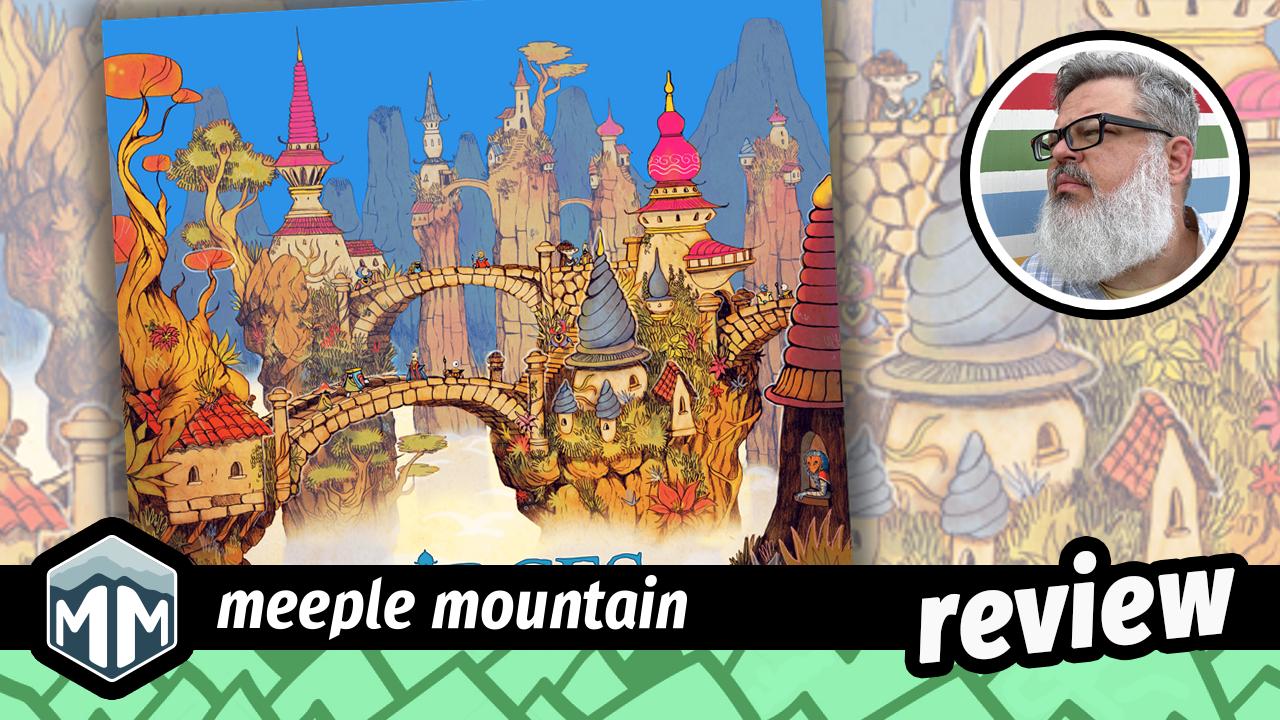
Bridges of Shangri-La Game Review

One of the great things about being part of a regular game group is being exposed to titles you might have never seen before—because your friends also love games, and no two gamers have quite the same combination of tastes. Variety is one of my defining characteristics when it comes to playing games: I’d much rather play 6 games once, than 1 game six times. So when my friend Chas said “we’re going to play Bridges of Shangri-La”, a game I’d never heard of, I enthusiastically agreed.

Bridges of Shangri-La is an area control game from 2003. Set in the forbidding Himalayas, the goal is to earn the most points by training up masters in 7 different disciplines, then have those masters send their students to neighboring villages to “spread enlightenment”. Of course this is a friendly way of saying you’re going to beat the pants off them…except in Nepalese.

Did I mention that Bridges of Shangri-La is a bit…cut-throat? But I’m getting ahead of myself.

How to play Bridges of Shangri-La

The Bridges of Shangri-La board features 13 villages in the peaks of Nepal, each connected to several other villages by tendril thin bridges. Each player begins the game with 7 tokens, in 7 different disciplines. The goal is…

The post Bridges of Shangri-La Game Review appeared first on Meeple Mountain.
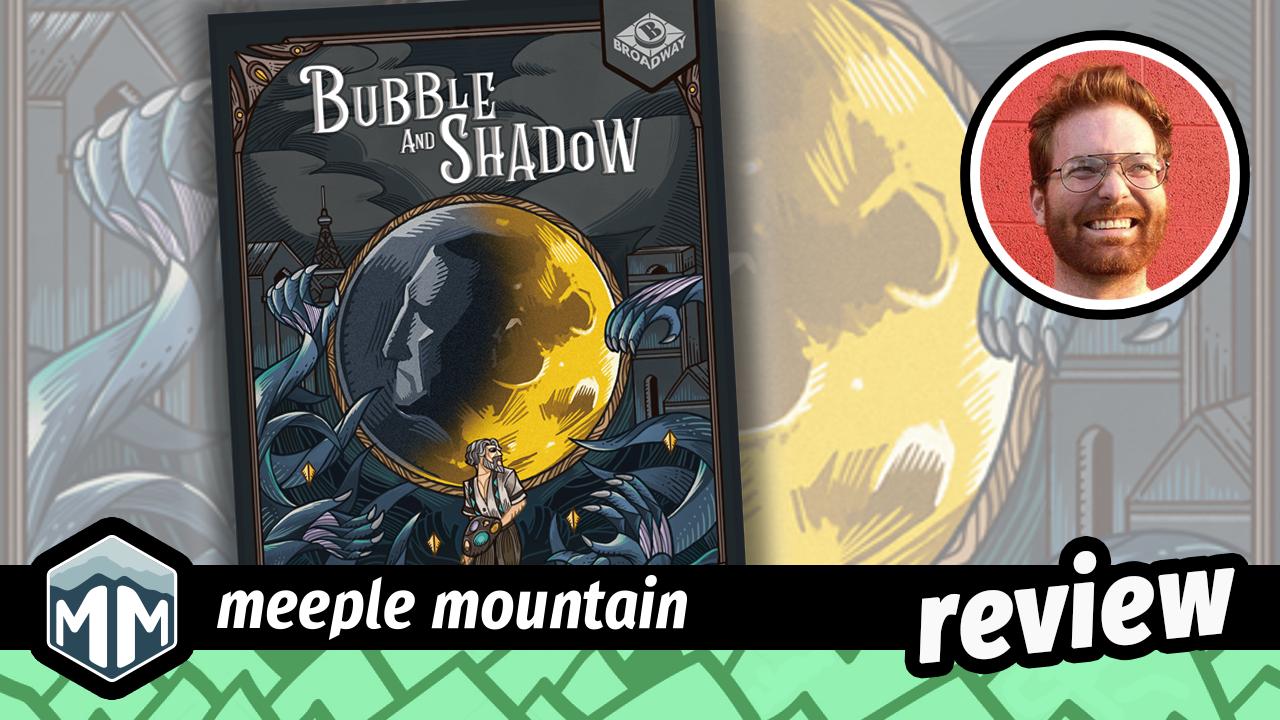
Bubble and Shadow Game Review

I reviewed Snake Charmers awhile ago, and I found that experience punchy and delightful. Now, I’m feasting my eyes on Bubble and Shadow, a game that is prettier, slightly more complicated, and ultimately, flatter.

The game has lofty ambition, noting as its inspiration W. Somerset Maugham’s The Moon and Sixpence, but I’m not sure if any of that translates. I’ve only read Of Human Bondage, and I ~think~ the aforementioned story is a fictionalized account of Paul Gauguin’s life or something, but I couldn’t for the life of me find how this game was related, other than it having really cool paintings on the cards.

Anyway, the objective of the game is to collect the right distribution of three types of wooden token: If you have the most purple tokens (bubbles), you’ll be eliminated from the scoring consideration at the end of the round. Then, if you have the fewest gray (coins) you score a point and are removed from the scoring. Finally, the player with the most yellow (moons) gets three points, and second most gets two points. You play three rounds, and if someone gets to five-plus points before that at the end of a round, the game ends and the player with the most points wins.

But how do you acquire these tokens?

At the…

The post Bubble and Shadow Game Review appeared first on Meeple Mountain.

❌