Normale Ansicht

CMON eyes crowdfunding return after annual losses spiral to almost $20m

31. März 2026 um 18:06

Financially-troubled board game publisher CMON says it plans to relaunch its halted crowdfunding operations later this year, after seeing its annual losses soar to almost $20m in 2025.

CMON pulled the plug on crowdfunding launches and new game development 12 months ago, citing the economic uncertainty created by US tariff hikes – which at the time had reached 145% for China, where the vast majority of hobby board games are manufactured.

But a month later it emerged that CMON’s financial problems had been growing long before the tariffs, with the company announcing it had slumped to a loss of more than $3m in 2024 due to falling sales for its crowdfunding campaigns.

That loss was almost double CMON’s total profits from the prior three years – but the figure is dwarfed by the $19.9m annual loss the company just announced in its 2025 financial results.

CMON’s $23m losses across 2024 and 2025 are now almost 5.5-times larger than its profits from the preceding nine years combined – and have led an independent auditor hired by the company to question whether it has the resources to stay in business for the foreseeable future.

An extract of a report from auditor Zhonghui Anda shared by CMON, which is set to appear in the company’s 2025 annual report next month, considered the publisher’s $19.9m annual loss, its net liabilities of more than $3.5m and contract liabilities of over $7.5m, saying, “These conditions indicate a material uncertainty which may cast significant doubt about the Group’s ability to continue as a going concern.”

CMON’s directors have a different view, however, saying in the 2025 financial report that the company “should be able to continue as a going concern” thanks to a trio of factors.

They include financial support from some of the directors “sufficient to finance CMON’s working capital requirements”, the roughly $2.4m proceeds from selling its Singapore office that it received in January, and the roughly $1.25m gross proceeds from a successful share sale last month.

CMON’s hefty liabilities are largely due to its eight undelivered crowdfunding campaigns, which are not recognised as revenue on the company’s books until they are fulfilled to backers.

They include DC Super Heroes United, which raised more than $4.4m, and DCeased, which brought in over $2.5m. Both campaigns were initially due to be delivered last year, but are now expected to be delivered in Q4 of 2026, according to CMON’s latest estimates.

CMON also has five undelivered pre-order campaigns on its books, including Dune Desert War and the Assassin’s Creed Role Playing Game.

The company said that delivering crowdfunding projects in 2024 contributed about $20m in revenue – a figure which had sunk to just $200,000 last year according to its latest financial report.

CMON said the 2025 losses were driven by a “significant decline in revenue”, which fell more than 73% to $9.9m last year, compared to the $37.3m total from 2024.

DCeased from CMON || Kickstarter image

It also cited impairment losses on property, plant and equipment, right of-use assets and intangible assets, and a loss it made disposing intellectual properties and related assets as part of its “strategic portfolio restructuring”.

Those IP sales included parting with its most famous and profitable title Zombicide – which has raised more than $40m on Kickstarter since its 2012 launch – to Asmodee, as well as Blood Rage, Rising Sun and Ankh to Tycoon Games.

It followed those by selling the IP for former Mythic Games titles Anastyr and Hel: The Last Saga to Don’t Panic Games in September, and parting with the lucrative Cthulhu: Death May Die IP to Asmodee a month later – the latter a series which has raised almost $10m from backers to date.

CMON said all those sales combined amounted to about $5.1m, but added that it actually made an overall $2.4m loss on disposal of intellectual properties and related assets across 2025.

It also made a $5.7m loss due to undertaking an impairment assessment on some of its property, plant and equipment, right-of-use assets and intangible assets “with finite useful lives”.

CMON said in the financial report, “These actions, while negatively impacting short-term results, were undertaken to strengthen the Group’s operational focus and reduce future cost burden.”

The company’s remaining significant IP includes the Massive Darkness series, with the most recent installment, Massive Darkness: Dungeons of Shadowreach, completing a $2.85m crowdfund on Gamefound early last year – a figure which rose to more than $3.7m including late pledges.

That campaign was CMON’s last before it scrapped its future crowdfunding plans two months later. The company has pivoted in the interim to releasing several small-box games direct to retail, including Collect!Peanuts Talent ShowFairy PerfumeRocket Punch and Yokai Carnival.

Collect! from CMON, designed by Jérémy Ducret and Johannes Goupy

Discussing its current strategy in the report, the company said, “In light of the continued uncertainty in the global market, particularly the instability arising from US import tariffs on certain products since the first half of 2025, the Group has taken decisive steps to restructure its operations and strengthen its financial position.

“Our current strategy is to:

  • 1) reduce exposure to large-scale crowd-funding launches in the near term, focusing on fulfilment of games already committed to backers, with plans to resume crowdfunding activities in the second half of 2026 with new titles from current game lines;
  • 2) grow distribution in Asia as a primary strategic market;
  • 3) maintain a streamlined operational structure with reduced headcount and a smaller office footprint in line with the Group’s current scale of operations; and
  • 4) maintain a debt-free position following the full repayment of bank borrowings, significantly reducing the Group’s financial liabilities and improving its financial resilience.

“We remain committed to becoming a quality developer and publisher of tabletop games and believe the strategic refocus toward Asia and selective game development will position the Group more sustainably for the future.”

CMON said it had reduced its revenue exposure to the US to about 21.4% of its total across 2025, compared to around 42% for the previous year, through what it described as a “deliberate strategic pivot toward Asia”.

The report showed CMON’s combined North and South America revenue fell more than 86% last year to about $2.1m, from around $15.7m in 2024.

European revenue also fell more than 81% year-on-year, from about $12.7m to around $2.4m. Asia revenue fell too, but much less sharply, down about 33% in 2025 from $8m to around $5.3m.

CMON said in the report, “Notwithstanding this reduced exposure, tariff-related uncertainties may continue to affect future export sales, revenue and gross margin performance in the US market.

“The Group intends to maintain its current reduced focus on the US market until the trade environment stabilises and market conditions improve.”

CMON also revealed the scale of its staffing cuts in the latest report, with headcount falling from 81 at the start of 2025 to just 41 at the beginning of this year.

The report said total staff costs had fallen in that time from about $4m to around $2.8m, including pay for its directors and their pension fund contributions, but it did not provide a breakdown of those numbers.

The post CMON eyes crowdfunding return after annual losses spiral to almost $20m first appeared on .

Hat-wearing animal game Petiquette wins latest Golden Box Awards, voted on by members of Japan’s board game industry

30. März 2026 um 17:07

Petiquette, Thomas Sellner’s card game of picking out patterns among hat-wearing animals, has been named game of the year at this year’s Golden Box Awards.

The Oink Games-published design fought off competition from 2025 winner Isao Mukai, who was nominated for Banana Governance – a card-based drafting and bidding game which sees players attempt to satisfy the needs of hungry monkeys better than their opponents.

A comment from the selection committee about Petiquette called the title “a brilliant and sharp work typical of Oink”.

Cards from Banana Governance, designed and published by Isao Mukai

It said, “I’ll never forget the shock I felt the first time I played it. The rules are simple: just give the answer that fits in the single ‘?’ on the cards laid out.

“But… the eyes of those who give the same answer feel friendly. The mouths of those who give a different answer seem to twist. The loneliness of desperately trying to explain when you’re the only one who gives a different answer.

“A mix of various emotions. The unique experience of this game really stands out.”

The annual Golden Box contest was launched four years ago, modelled on the American film industry’s Academy Awards. More than 40 industry professionals from within the Japanese board game sphere voted on this year’s award.

In addition to ‘Best Picture’ for the overall game of the year, the awards also celebrate the best in game design, art, graphic design, production and rulebook work through individual awards.

Cover art for Sweet Lands

Eve Inc-designed Nusutto Cat – also known as Meow Heist – triumphed in this year’s Game Design Award, while best art went to Totsuca Chuo’s Sweet Lands, which was illustrated by Tatsuki Asano and Broni120.

Moyuki Adisawa’s animal jet ski racing game Tornado Splash picked up the Graphic Design Award thanks to the work of iD Creative Co, while the Production Award went to National Economy and Toshinori Iwai.

The selection committee said of the Production Award win: “It’s great when a great game is revived. It’s even better when a great game is revived in the best possible form.

“This new edition not only makes the seemingly impossible revival of this masterpiece a reality, but also reinterprets it in a more refined way.

“The ‘box within a box’ structure, combining the three parts, is exciting even before you start playing, and the ‘household budget’ mechanism that characterizes this game is implemented clearly and beautifully as a ‘safe’.

“This masterpiece hasn’t lost its appeal even after ten years, and this new edition will be loved for even longer.”

The Rulebook Award, meanwhile, was bestowed upon ForGames-published Down Down Dungeon – a reimplementation of Reiner Knizia’s Cucina Curiosa/Mysterious Dungeons.

Yoshihiko Koriyama worked on the rulebook for that title, with proofreading from Shota Okano and DTP work from Makoto Takami. The selection committee said, “The fact that you can essentially understand the game rules by reading just one page is excellent.” 

Bomb Busters designer Hishashi Hayashi collecting his Spiel des Jahres award

A special award was also presented this year to Hisashi Hayashi, after his co-operative bomb disposal game Bomb Busters won last year’s Spiel des Jahres – beating the much-fancied push-your-luck card game Flip 7 to the high-profile award.

The win marked the first Spiel des Jahres triumph for an Asian designer in the prize’s 46-year history, and underscored the huge rise in tabletop designs making their way across from Asia to Europe and North America in the past decade.

Each winner will receive a golden board game box as a trophy.

Last year’s Golden Box Award game of the year prize was won by Isao Mukai and Napopora’s design Umataka, a worker placement game centred around hunter-gatherers making traditional pottery in ancient Japan.

The 2025 Golden Box Board Game Awards in full:

Best Picture

Winner: Petiquette, designed by Thomas Sellner (Published by Oink Games)
Banana Governance, Mukai (Mukai)
The Match Girl Millionaire (Hey!)

Outstanding Game Design

Winner: Nusutto Cat, Eve Inc (Ibuink)
Storm in a Teacup, Kyashi/Ikumo Tasaka (Gomi Kokusai/Waste International)
Switch To: mor! (Yontousei)

Art Award

Winner: Sweet Lands, Totsuca Chuo (Uchibacoya) – art by Tatsuki Asano and Broni120
A Boar, Crab, Dung Beatle, Takuya Iwamura (Kyuhachi Dog) – art by Takuya Iwamura
Ghost Lift, Onegear (Engames) – art by Sai Beppu

Graphic Design Award

Winner: Tornado Splash, Moyuki Adisawa (ArcLight Games) – graphic design by iD Creative
Vidro, Keita Kasagi (Bamboo Games) – graphic design by Kakuzato
Shady Lady, Kaya Miyano (Mob+) – graphic design by Sai Beppu

Best Production

Winner: National Economy, Hiroshi Nishimura (Korokorodou)
Down Down Dungeon, Reiner Knizia (ForGames)
Pose Mania!, Suitashi (Avignon Games)

Best Rulebook

Winner: Down Down Dungeon, Reiner Knizia (ForGames)
Electra Select (The Society for Appreciating Swaying Buds)
Snowp, Eisuke Fujinawa, Kazunori Hori (SzpiLAB)

The post Hat-wearing animal game Petiquette wins latest Golden Box Awards, voted on by members of Japan’s board game industry first appeared on .

French publisher Don’t Panic Games to bring more titles to North America, launches US office

30. März 2026 um 14:37

French board game publisher Don’t Panic Games has continued its expansion into the North American market, telling BoardGameWire the success of several recent titles had reinforced its confidence in the strategy.

The company has made a name for itself providing French localisations of games including Final Girl, Champions of Midgard and Fantasy Realms since it was co-founded by current director Cédric Littardi in 2013.

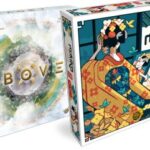
But Don’t Panic has also found success publishing its own titles such as Chess-like abstract game Above – and said the performance of that, and several other recent games, had persuaded it to bring more of its titles to North America.

Emma Recher, who will head up a three-person team at Don’t Panic’s new US office in California, told BoardGameWire, “Several recent titles have reinforced our confidence in expanding more directly into the US market.

“Games such as Don’t Wake Up Cthulhu!, Red Panda, Luminis, Maiko, and Above have been especially encouraging for us, and the early response to Spyworld has also been very promising.

“That is one of the reasons we are beginning this US expansion with titles such as Spyworld, Luminis, Above, and Maiko, which are also the titles highlighted in our North American launch announcement.

“We also have additional releases planned each quarter this year, including Don’t Drop the Soap! toward the end of the year.”

Above, designed by Yves Charamel-Lenain, from Don’t Panic Games

Recher also works with Japanime Games, which has distributed licensed Don’t Panic titles such as Attack on Titan: The Last Stand and Cowboy Bebop: Space Serenade into North America.

Don’t Panic said those licensed titles would continue to be distributed by Japanime, while the French company’s historical and war line, including Fighters of the Pacific and Fighters of Europe, will continue to be distributed by Ares Games in the US.

Recher said, “What the new US office changes is that Don’t Panic can now directly support additional English-language titles that were not previously represented in the market in the same way.

“For retailers, that means broader access to the catalog, closer communication, more direct follow-up, and stronger on-the-ground marketing support.”

Don’t Panic added that it would be supported in the US by Double Exposure, which will represent the company at both major and smaller conventions – adding that it had a “robust demo schedule” planned over the next few months.

When asked about Don’t Panic’s decision to expand further in the US despite ongoing uncertainty over the country’s tariffs policy – and its effect on board game publishers working in the country – Recher said, “Like many publishers in tabletop gaming, we are watching the tariff situation very carefully. It creates uncertainty across the supply chain, from manufacturing and freight planning to wholesale pricing and retailer margins.

“Our approach is to stay flexible: planning conservatively, reviewing sourcing and logistics options on an ongoing basis, and working closely with our partners to protect continuity of supply as much as possible.

“The current environment is challenging for everyone in the industry, but we believe the best response is to remain pragmatic, adaptable, and transparent with our partners.”

Last summer Don’t Panic bought the IP for Anastyr and Hel: The Last Saga from board game crowdfunding major CMON, which has been selling off its portfolio of games as part of a fightback against heavy losses.

That deal came just 18 months after CMON had itself acquired the pair of titles from financially-devastated board game crowdfunding specialist Mythic Games, which gave up on fulfilling the two Kickstarter campaigns worth a combined $3.2m.

Don’t Panic has offered backers of Mythic’s Anastyr crowdfund “preferential pricing” on pre-orders of its own version of the game, Anastyr Chronicles, and said in a comment shared on Mythic’s Hel: The Last Sage Kickstarter page that it would make a similar offer when it releases its version of that title.

The post French publisher Don’t Panic Games to bring more titles to North America, launches US office first appeared on .

Board Game Arena: Neue Spiele in KW 13 (24.–30. März 2026)

30. März 2026 um 14:31
Board Game Arena: Neue Spiele in KW 13 (24.–30. März 2026)

Board Game Arena hat in der vergangenen Woche zwei neue Titel in die digitale Bibliothek aufgenommen. Mit Tipperary und Postcards kommen ein Polyomino-Legespiel aus Irland und ein Familienspiel rund um eine Radtour durch Frankreich auf die Plattform.

Tipperary – Irland als Legepuzzle

Tipperary von Designer Günter Burkhardt versetzt 2 bis 5 Personen in die irische Grafschaft Tipperary. Dort legst du Polyomino-Plättchen in dein Tableau und versuchst, möglichst große zusammenhängende Gebiete aus Weiden, Burgen und Whiskey-Destillerien zu bilden.

Im Zentrum steht ein „magischer Steinkreis", eine Art Drehscheibe, die in jeder Runde bestimmt, welche Landschaftsplättchen zur Auswahl stehen. Der besondere Dreh: Alle spielen gleichzeitig. Nach zwölf Runden steht fest, wer die Grafschaft am besten genutzt hat.

Das Spiel erschien 2023 bei Lookout Games. Auf BoardGameGeek erreicht es eine Bewertung von 7,19 bei einer Komplexität von 1,89 (von 5). Eine Partie dauert rund 45 Minuten. Die Community empfiehlt Tipperary besonders zu zweit oder zu dritt, es funktioniert aber auch in größeren Runden gut. Das Spiel lässt sich auf Board Game Arena ohne Abo spielen.

Postcards – Per Rad durch Frankreich

Postcards von Eric Dubus und Simon Kayne schickt 1 bis 4 Personen auf eine Fahrradreise durch die 13 Regionen Frankreichs. Ziel ist es, möglichst viele ikonische Postkarten zu sammeln, mit Briefmarken zu versehen und nach Hause zu schicken.

Pro Zug spielst du Reisekarten, um eine von vier Aktionen auszuführen: neue Postkarten nehmen, ein Lager aufschlagen, Briefmarken kleben oder in eine andere Region ziehen. Postkarten mit höherem Punktwert erfordern mehr Briefmarken. Da jede Briefmarke gleichzeitig eine Reisekarte kostet, schränkt das Frankieren die übrigen Handlungsmöglichkeiten ein. In diesem Spannungsfeld zwischen Sammeln und Ressourcenmanagement liegt der taktische Reiz.

Das Spiel erschien 2025 bei Fenrir Games und Synapses Games, illustriert von Crocotame. Auf BoardGameGeek steht es bei einer Bewertung von 6,85 mit einer Komplexität von 1,79. Eine Partie dauert 30–45 Minuten und endet, sobald jemand die vierte Postkarte abgeschickt hat. Auch dieses Spiel ist auf Board Game Arena ohne Premium-Abo zugänglich.

BRETTSPIELBOX Brettspiel News 12/2026:

30. März 2026 um 09:20

In den BRETTSPIELBOX News 12/2026 findet ihr die folgenden Nachrichten: Hier sind die Brettspiel News. Guten Start in die Woche. Folgende Neuheiten sind auf dem Weg bzw. angekündigt: Segel wird als Leichtkraftspiel auf Deutsch erscheinen. Es ist ein kooperatives 2 Personen-Stichspiel. Gleich drei Neuheiten hat Frosted Games für den Herbst angekündigt: Prüfung des Waldes wird […]

Ostereier-Suche Woche 1 & Brettspiele gewinnen

Von: Peer
30. März 2026 um 07:05

Ostereier-Suche Woche 1 auf Abenteuer Brettspiele & Brettspiele gewinnenBald ist Ostern und deshalb lade ich euch heute zu einer Ostereiersuche hier auf meiner Website ein. Ich habe in meinem Oster-Gewinnspiel in der ersten von 2 Wochen insgesamt 6 Ostereier auf meiner Website versteckt und gebe dazu 6 Hinweise. Wer alle 6 Ostereier in dieser Woche findet, nimmt an der Verlosung von 3 aktuellen […]

Der Beitrag Ostereier-Suche Woche 1 & Brettspiele gewinnen erschien zuerst auf Abenteuer Brettspiele.

Brettspiel Crowdfunding News 13/26

Von: Nina
29. März 2026 um 21:00

Angekündigt: Neu: Updates: ANGEKÜNDIGT In der kommenden Woche Crowdfunding. Wenige Projekte sind angekündigt. Hier der Überblick über die kommende Woche: Dark Kingdoms Dark Kingdoms spielt im frühmittelalterlichen Britannien nach dem Rückzug der Römer, als keltische Briten und germanische Stämme um die Herrschaft über die Insel kämpfen. Die Spieler übernehmen jeweils eine Fraktion – Angelsachsen, Angeln, Juten […]

NEWS: Erste Starterbox für Trench Crusade angekündigt – Carcass Front erscheint im Juli

28. März 2026 um 13:30

Mit Carcass Front erhält Trench Crusade erstmals eine umfangreiche Starterbox, die sowohl Einsteiger*innen als auch Veteran*innen anspricht. Neben zwei vollständigen Warbands bringt das Set eine Kampagne, neues Hintergrundmaterial und Zubehör auf den Tisch und markiert gleichzeitig den Start einer größeren Veröffentlichungsstrategie.

Dieser Beitrag wurde von Geoffrey Förste geschrieben

Frosted Days 2026: Alle Neuheiten von Frosted Games im Überblick

27. März 2026 um 21:42
Frosted Days 2026: Alle Neuheiten von Frosted Games im Überblick

Frosted Games hat die Frosted Days 2026 gestartet. Vom 27. bis 29. März zeigt der Brettspielverlag im Rahmen seines jährlichen Online-Events auf YouTube alle geplanten Neuheiten für das laufende Jahr. Den Auftakt bildete am Freitagabend um 19 Uhr die große Neuheitenshow, in der neben bereits angekündigten Titeln auch bislang unbekannte Spiele enthüllt wurden. Begleitet wird das Event von Rabattaktionen im Webshop und versandkostenfreier Lieferung ab 80 Euro Bestellwert.

Das Programm des Wochenendes umfasst Let's-Play-Sessions, ein Quiz, Community-Talk im Chat und ein Solstis-Turnier auf Board Game Arena. Am Samstag und Sonntag folgen weitere Streams mit Einblicken in kommende Titel. Die Liste der vorgestellten Spiele ist umfangreich und reicht von kleinen Kartenspielen bis hin zu großen Erweiterungen.

Die Neuheiten im Detail

Frosted Days 2026: Alle Neuheiten von Frosted Games im Überblick

Endeavor: Die Tiefsee – Am Meeresgrund ist die erste Erweiterung zum für den Kennerspiel-des-Jahres-Preis nominierten Endeavor: Die Tiefsee von Burnt Island Games. Die Erweiterung bringt vier neue Szenarien, über 20 neue Meeresbretter und frische Spezialisten an Bord. Neue Phänomene wie tektonische Spalten oder Nebel auf der Oberfläche verändern das Spielerlebnis grundlegend. Die Veröffentlichung ist für das dritte Quartal 2026 passend zur SPIEL in Essen geplant. (BoardGameGeek)

Frosted Days 2026: Alle Neuheiten von Frosted Games im Überblick

Thunder Road: Vendetta – Willkommen in der WRACKedrale bringt das Arena-Chaos auf den Spieltisch. Im englischen Original als Carnival of Chaos erschienen, bietet die Erweiterung von Restoration Games einen völlig neuen Spielmodus. Statt eines Rennens mit Ziellinie kämpfen 2 bis 5 Spieler in einer kreisförmigen Arena um Schrott und Ruhm. Superwaffen, Party-Gefälligkeiten und tödliche Säulen sorgen für Abwechslung. (BoardGameGeek)

Frosted Days 2026: Alle Neuheiten von Frosted Games im Überblick

Wuselige Wiesen ist ein zugängliches Plättchenlegespiel für 2 bis 4 Personen ab 8 Jahren vom Erfolgs-Duo Brett J. Gilbert und Trevor Benjamin. Durch geschicktes Anlegen von Gartenfliesen entsteht eine kleine Welt unter Blättern, Pilzen und Pfützen. Ziel ist es, die richtigen Lebensräume zu schaffen, um möglichst viele Wiesenbewohner anzulocken. (BoardGameGeek)

Frosted Days 2026: Alle Neuheiten von Frosted Games im Überblick

Space Lab von Johannes Goupy und Corentin Lebrat (Studio H) ist ein kompaktes Tableau-Building-Spiel für 1 bis 4 Personen. In rund 20 Minuten rekrutieren die Spieler Mitglieder der vier größten Weltraumagenturen und platzieren Laborkarten rund um ihre Raumstationsmodule. Das Spiel ist bereits auf Board Game Arena verfügbar und soll im dritten Quartal zur SPIEL erscheinen. (BoardGameGeek)

Frosted Days 2026: Alle Neuheiten von Frosted Games im Überblick

Tír na nÓg entführt in die keltische Mythologie. In diesem Kartenspiel für 1 bis 5 Personen von Isaac Shalev und Jason Slingerland reisen die Spieler als Geschichtenerzähler in das Jenseits der irischen Sagenwelt und sammeln Geschichten für ihre Saga. Die Druckdaten wurden bereits abgegeben, das Spiel befindet sich in der Produktion. (BoardGameGeek)

Frosted Days 2026: Alle Neuheiten von Frosted Games im Überblick

Horologium: Die Orloj von Prag versetzt 1 bis 4 Spieler ins Prag des Jahres 1865. Als Baumeister arbeiten sie daran, den berühmten Kalender der astronomischen Uhr zu vollenden. Das Spiel von Abraham Sánchez Hermida und Paloma J. Pascual (Perro Loko Games) kombiniert Rondel- und Worker-Placement-Mechaniken auf einem opulenten Spielbrett. Zahnräder, Tierkreiszeichen und Apostelfiguren bilden den thematischen Rahmen für Partien von 60 bis 120 Minuten. (BoardGameGeek)

Frosted Days 2026: Alle Neuheiten von Frosted Games im Überblick

Andromeda's Edge: Genesis ist die zweite Erweiterung für das Weltraum-Strategiespiel Andromeda's Edge von Luke und Maximus Laurie. Sie bringt drei neue Fraktionen, zwei neue Gegner, neue Regionen und ein Exotech-Kartendeck ins Spiel. (BoardGameGeek)

Frosted Days 2026: Alle Neuheiten von Frosted Games im Überblick

Stibizt (im Original Pinched!) ist ein interaktives Bluff- und Set-Collection-Spiel von Jonathan Gilmour-Long und David Gordon für 2 bis 5 Personen. Die Spieler schlüpfen in die Rolle von Einbrechern und versuchen, den Reichen ihre Besitztümer abzuluchsen. Wer die Pläne der anderen am besten durchschaut, sammelt die wertvollste Beute. (BoardGameGeek)

Frosted Days 2026: Alle Neuheiten von Frosted Games im Überblick

Solstis: Leuchtkäfer ist eine Erweiterung zum Plättchenlegespiel Solstis von Bruno Cathala und Corentin Lebrat. Vier neue Geister und mysteriöse Leuchtkäfer kommen ins Spiel, die einen sofortigen Sieg ermöglichen können. (BoardGameGeek)

One-Hit Heroes Infinitum erweitert das kooperative Deckbuilding-Spiel One-Hit Heroes um einen mehrstufigen Bosskampf, der erst nach Abschluss aller drei Episoden freigeschaltet wird. Die Veröffentlichung ist für das dritte Quartal 2026 zur SPIEL in Essen angesetzt. (BoardGameGeek)

Frosted Days 2026: Alle Neuheiten von Frosted Games im Überblick

Galileo Galilei: Luna bringt den Mond als neues Beobachtungsobjekt in das Grundspiel von Tomáš Holek und Michal Peichl. Die Erweiterung enthält vier neue spielbare Charaktere mit einzigartigen Fähigkeiten und mächtige Inquisitoren. (BoardGameGeek)

Frosted Days 2026: Alle Neuheiten von Frosted Games im Überblick

Leviathan Wilds: Dunkelfels liefert neue Inhalte für das kooperative Kletterspiel Leviathan Wilds von Justin Kemppainen. Die Erweiterung bringt sieben neue Leviathane, einen neuen Kletterer und eine neue Klasse. Die Erweiterung erscheint im dritten Quartal 2026 zur SPIEL. (BoardGameGeek)

Frosted Days 2026: Alle Neuheiten von Frosted Games im Überblick

Groll – Schlacht um Tzorn (im Original Wroth) ist ein asymmetrisches Area-Control-Spiel von Manny Trembley, erschienen bei Chip Theory Games. 1 bis 4 Spieler wählen je eine Fraktion und kämpfen um die Vorherrschaft auf der Insel Tzorn. Der Würfel-Draft-Mechanismus bestimmt die verfügbaren Aktionen pro Runde. Trotz kompakter Regeln und einer Spielzeit von rund 60 Minuten bieten die asymmetrischen Fähigkeiten der Fraktionen strategische Tiefe. Die deutsche Lokalisierung von Frosted Games soll die Einstiegshürde gegenüber der englischen Version deutlich senken. (BoardGameGeek)

Frosted Days 2026: Alle Neuheiten von Frosted Games im Überblick

20 Strong Tanglewoods ist ein Solo-Würfelspiel aus dem 20-Strong-System von Chip Theory Games. In einer von Märchen inspirierten Welt navigieren Spieler durch einen sich ständig wandelnden Wald und stellen sich dem Großen Bösen Wolf. (BoardGameGeek)

Frosted Days 2026: Alle Neuheiten von Frosted Games im Überblick

Drachen von Runenstein (im Original Dragons of Etchinstone) ist ein Solo-Abenteuer-Kartenspiel von Joe Klipfel. Spieler schlüpfen in die Rolle eines Äther-Magiers und kämpfen sich durch vier Regionen, um die Drachen zu besiegen. Das Spiel befindet sich laut Frosted Games im Approval-Prozess beim Lizenzgeber. (BoardGameGeek)

Frosted Days 2026: Alle Neuheiten von Frosted Games im Überblick

Hoplomachus: Victorum kommt ebenfalls von Chip Theory Games. In diesem reinen Solo-Spiel im antiken Rom des Jahres 79 n. Chr. stellen sich Spieler als Gladiatoren einer Kampfkampagne mit tiefgreifenden strategischen Entscheidungen. Es nutzt das bewährte Hoplomachus-Kampfsystem mit Fokus auf Helden und Charakterentwicklung. (BoardGameGeek)

Frosted Days 2026: Alle Neuheiten von Frosted Games im Überblick

The Elder Scrolls: Betrayal of the Second Era ist ein großes kooperatives Abenteuerspiel für 1 bis 4 Spieler, das in der Welt von Tamriel angesiedelt ist. Jedes Abenteuer erstreckt sich über drei Spielsitzungen mit Erkundung, Charakterentwicklung und Dungeons. Das Spiel erreicht auf BGG eine beeindruckende Bewertung von 8,9 bei über 3.000 Stimmen. Ob der Titel tatsächlich noch 2026 erscheint, ist bislang nicht abschließend bestätigt. (BoardGameGeek)

Frosted Days 2026: Alle Neuheiten von Frosted Games im Überblick

Entropy von Simone Luciani, Tommaso Battista und Nestore Mangone (Board&Dice) ist ein Strategiespiel für 1 bis 4 Personen, in dem Spieler als Wissenschaftler Sonnensysteme erschaffen, Sterne zum Leben erwecken und Planeten mit Leben besiedeln. Rondel-Mechanik, Multi-Use-Karten und variable Spieler-Fähigkeiten versprechen Tiefgang in 90 bis 150 Minuten. (BoardGameGeek)

Frosted Days 2026: Alle Neuheiten von Frosted Games im Überblick

Das Voynich Mysterium (im Original The Voynich Puzzle) von Dani Garcia (Salt & Pepper Games) fordert 1 bis 4 Spieler heraus, das berühmte Voynich-Manuskript zu entschlüsseln. Über mehrere Runden nutzen die Spieler ihr Exemplar des Buches als Werkzeug, um Seiten zu dechiffrieren und Wissen über die fünf Hauptabschnitte des Manuskripts zu sammeln. (BoardGameGeek)

Frosted Days 2026: Alle Neuheiten von Frosted Games im Überblick

Paper Tales Ultimate erscheint als Big Box mit dem Grundspiel, der ersten Erweiterung und einer brandneuen Erweiterung. In diesem Aufbauspiel von Masato Uesugi draften Spieler Karten mit unterschiedlichen Fähigkeiten, errichten Gebäude und führen Kämpfe. Die Alterungsmechanik verleiht dem Spiel seinen besonderen Reiz. Die Auslieferung wird Ende März oder Anfang April erwartet. (BoardGameGeek)

Frosted Days 2026: Alle Neuheiten von Frosted Games im Überblick

Aquatica von Ivan Tuzovsky ist ein Engine-Building-Spiel für 1 bis 4 Meereskönige. In rund 60 Minuten erobern die Spieler Stätten, rekrutieren Meeresbewohner und schieben Karten stufenweise in ihrem dreilagigen Spielertableau nach oben, um stärkere Boni freizuschalten. Die deutsche Ausgabe von Frosted Games enthält vier exklusive Promokarten. (BoardGameGeek)

Frosted Days 2026: Alle Neuheiten von Frosted Games im Überblick

Star Trek: Captain's Chair von Nigel Buckle und Dávid Turczi (WizKids) lässt Spieler das Kommando über ein Raumschiff der Sternenflotte übernehmen. Laut dem Veröffentlichungskalender von Frosted Games könnte der Titel früher als geplant erscheinen. (BoardGameGeek) (BoardGameGeek)

Frosted Days 2026: Alle Neuheiten von Frosted Games im Überblick

Earthborne Rangers: Legacy of the Ancestors ist eine Kampagnen-Erweiterung für das kooperative Abenteuerspiel Earthborne Rangers von Earthborne Games. Mit über 250 neuen Karten und einem Kampagnenführer reisen Spieler über das Tal hinaus in neue Gebiete. (BoardGameGeek)

Ausblick

Frosted Games zeigt mit dem Programm der Frosted Days 2026 ein breites Spektrum. Von zugänglichen Familienspielen wie Wuselige Wiesen über kompakte Kartenspiele wie Space Lab bis hin zu großen Strategietiteln wie Horologium und Groll deckt der Verlag unterschiedliche Spielertypen ab. Mehrere Titel sind für das dritte Quartal zur SPIEL in Essen angekündigt, darunter Endeavor: Die Tiefsee – Am Meeresgrund, Space Lab, Leviathan Wilds: Dunkelfels und One-Hit Heroes Infinitum.

Das Streaming-Programm läuft noch bis Sonntag, den 29. März. Alle Informationen zum Programm, den Shopangeboten und den Vorbestellaktionen sind auf der Event-Seite von Frosted Games zusammengefasst.

More than half of board game designers in TTGDA survey have used generative AI in their work

27. März 2026 um 16:29

More than half of board game designers responding to a Tabletop Game Designers Association member survey say they have used generative AI for some elements of their work.

About a quarter of the 171 designers who answered the TTGDA survey said they had used a genAI platform to come up with game ideas or mechanisms – while more than half indicated they were ‘strongly opposed’ to using AI in that way.

TTGDA – a professional organisation launched in 2024 to advocate for tabletop game creators in North America – asked designers about seven use cases, comprising:

● Coming up with ideas for games or mechanisms
● Writing placeholder text
● Writing text for the final version of a published game
● Editing or proofreading text
● Making placeholder art
● Making art for the final version of a published game
● Creating marketing materials for a game

The organisation said that while 28% of respondents were ‘strongly opposed’ to all seven use cases, almost a fifth were not strongly opposed to any of them, with the remaining respondents offering a mix of use cases they consider either acceptable or not.

Image credit: The Tabletop Game Designers Association

TTGDA’s report of its findings stated, “In the free-response section of the survey, multiple designers said that the process of chatting with the AI particularly helped them better articulate their own goals or ideas for a game.

“One said, ‘It’s like asking another human who may not know much about games. They know enough to at least bounce a couple ideas, which ends up with me getting to where I want to go’.

“Several designers who had tried asking generative AI platforms to come up with its own ideas described the material they got from the AI with terms such as ‘derivative’ or ‘slop’.

“One designer said that when they tried to prompt an AI for ideas, the AI recommended inappropriate mechanisms from mass market games, like ‘lose a turn’.

“Some said that a fraction of the output from their prompts would contain nuggets of useful ideas or angles that were worth considering.”

The results for use of AI art in final products were much more clear cut, with roughly four out of five respondents ‘strongly opposed’, and only two respondents out of the 171 saying they either regularly or occasionally generate art with AI that they plan to keep in a final game.

Many more designers (30%) were accepting of using AI to generate placeholder art for their designs – but 39% of respondents were ‘strongly opposed’ to that use.

TTGDA’s report cited one respondent as saying, “Publishers want pretty prototypes and the AI art makes me better able to illustrate the narrative direction and make play less boring than it would be with black and white words or “close enough” illustrations. Some of the games I am working on have no illustrations in the real world that anyone has done and if I wanted those I would have to pay artists which I cannot afford to do.”

Image credit: The Tabletop Game Designers Association

But it added that other designers said AI assistants had failed to create usable placeholder art in response to their prompts, with several saying that after trying AI-generated placeholder art they had returned to clipart and other online searches.

TTGDA said that when asked how they feel about publishers using AI for placeholder art, 40% of respondents said they would be ok with it, but 29% would like to contractually prohibit it and another 31% said they ‘don’t like it, but wouldn’t really fight it’.

The report added, “Of all the AI uses that the survey asked about, editing and proofreading had the lowest
number of ‘strongly opposed’ responses, at 35% for personal use and 30% for publisher use.

“About a quarter of designers (28%) are using AI to edit things they’ve written at least occasionally.

“Some designers gave examples of AI not working well as an editor for their games, saying it ‘made the rulebook worse’, or ‘creates more problems than it solves’.

“The problems they described included hallucinations and inappropriate tone. Designers also raised concerns that publishers might use AI for proofreading without a final human check, leaving the game vulnerable to errors.”

TTGDA also noted that more than 80% of respondents did not want publishers to use AI to generate marketing materials for their games, with multiple designers commenting that they were turned off by the use of AI in content creation around games, and will not work with influencers who use genAI in their workflow.

The report noted that of issues raised by designers when asked about their concerns around AI, “the most commonly voiced concern was that current generative AI tools are based on plagiarism, because they were trained on art and written materials without the creators’ consent.”

It noted, “Many said things like, ‘All uses of stolen material are problematic’. Multiple designers also mentioned that they want contract language that will prohibit a publisher from allowing AIs to be further trained on their game materials.

“The next most common concern was AI’s high environmental cost. A ChatGPT request uses ten times more electricity than a typical Google search (2.0Wh vs 0.3Wh). Other impacts include the use of rare earth elements, mercury, and lead in data center equipment; and the use of large amounts of water for cooling.

“Some designers worry that AI could flood the market with bad games. One designer thought it would be easy for unethical publishers to quickly create ‘clones that are slightly different’ and crowd the games they are copying out of the market.

“Another designer worried that ‘AI is great at making things that look like games for crowd funding campaigns, but without actual rules that make sense’.

“The general sentiment from these and other designers was the worry that in a market where it is already difficult for a game to stand out, these practices will only make it harder.”

Recent Repercussions

TTGDA’s report comes just over a month after Ryan Dancey, a more than 30-year veteran of the tabletop gaming industry, lost his COO job at publisher Alderac Entertainment Group after saying AI could generate game ideas as good as his company’s titles Tiny Towns and Cubitos.

Dancey said Alderac CEO John Zinser told him it was time to “move on to new adventures” in the “aftermath” of his LinkedIn post discussing the use of AI in board game design, which quickly attracted a flurry of negative comments from tabletop designersAEG’s business partners and bodies such as the Tabletop Game Designers Association, as well as board gamers across social media.

Wingspan designer Elizabeth Hargrave, the co-founder of TTGDA, dismissed Dancey’s suggestion when speaking to BoardGameWire the day after his departure from AEG.

She said at the time, “I absolutely do not think AI could be prompted to come up with even the basic idea for those games, let alone a fully fleshed out ruleset for them. For fun, I’ve prompted several different options for ideas for Wingspan cards and not one of them has given me an actionable idea.

“I had a friend who ran a rulebook through AI for proofreading and it hallucinated that people needed to shout ‘bingo’. Apparently that’s AI’s conception of board games right now.”

She told BoardGameWire at the time that the TTGDA board had been discussing the use of AI in board game design, adding that it was “a conversation we need to have with our membership”.

Wingspan designer and TTGDA co-founder Elizabeth Hargrave

She said, “We’re working on a model contract to offer to our members right now, and that will offer a clause that designers can request that will require publishers not to use AI in their final product. A lot of contracts ask us to certify that a board game design is our own, and not plagiarized.

“It’s my opinion that using AI in a final product goes against that, because it’s using a machine that’s built entirely on plagiarism.”

Hargrave added last month, “I do see people using AI for things like generating a bunch of placeholder names in a prototype. They’re often clunky options but they do the job when you know everything will change 50 times before you’re done anyway. I’m not aware of anyone who has successfully actually gotten good, original ideas for mechanisms from AI.

“What I wish we were talking about is how AI could be built to help designers run models of their games repeatedly to catch weird edge cases or broken strategies. I wish someone would build that tool instead of the language models that just focus on advanced auto-complete.

“This would never replace actual playtesting with humans for psychology and actual fun, but it might save me some repetitions.”

The TTGDA survey noted that one of the most common additional uses mentioned was as a source for help with probability, mathematics, and thinking about balance.

It said, “In some cases, designers are having the AI write spreadsheet formulas that they then use to do calculations in the spreadsheet. In others, they are simply asking the AI to do calculations.

“However, nearly as many designers said they had quite poor results with asking LLMs to do math, reporting errors and hallucinations. For example, one designer who used ChatGPT to calculate detailed probabilities (e.g. how often a certain set of cards might appear in a starting hand) said when they checked the results, they were wrong ‘roughly 1/4th of the time’. Another called ChatGPT ‘surprisingly bad at maths’.”

Last week board game publisher Awaken Realms responded to a wave of anti-AI art review bombing for its upcoming crowdfund, Concordia: Special Edition, by saying no AI-generated imagery will be used in the finished game.

Awaken Realms is one of highest-profile tabletop publishers to confirm it uses AI image generators, with other notable adopters of the technology including Stronghold Games – which attracted significant ire for its use of AI art in its $2.2m More Terraforming Mars! crowdfunding campaign.

The technology has been widely criticised by artists angry that the models are built upon their work without licensing or recompense, in addition to outcry over its environmental costs and threats to jobs in the creative and other industries.


The post More than half of board game designers in TTGDA survey have used generative AI in their work first appeared on .

GAMA unveils board of directors election winners, current president and secretary re-elected to board

27. März 2026 um 15:18

Editor’s note: GAMA is one of the sponsors of the BoardGameWire newsletter

Hobby games trade organisation GAMA has revealed the winning candidates in its latest board of directors election, with the organisation’s current president and secretary both retaining their board seats.

President Nicole Brady, who runs review site SAHM Reviews, was re-elected to the board by GAMA’s media and events member group, while treasurer Tiffany Reid from Southern Hobby Distribution won re-election from the wholesale group.

Current GAMA secretary Jamie Mathy – who runs game store Red Racoon Games – was re-elected by the organisation’s ‘Team Retail’ group alongside Red Claw Gaming’s Lea-Anne Welter, while David Wheeler from Dragon’s Lair and Boyd Stephenson from Game Kastle were also voted in as retailer representatives.

One of those four will be selected by Team Retail to fill a retailer seat on the GAMA board of directors, with all successful board candidates working for a two-year term.

The other newly elected members of the GAMA board are Michael Maggiotto Jr, who was selected by GAMA’s production members, Heather O’Neill from 9th Level Games representing publishers, and LegalWATCH’s Eartha Johnson from the creator membership group.

The GAMA Board of Directors is comprised of twelve individuals elected to represent the six voting membership groups, with half of the cohort up for election each year.

That board in turn elects GAMA’s four officers – president, vice-president, treasurer and secretary – each year.

Current GAMA president Brady has been in her current officer role since May 2024, having previously been treasurer of the organisation from the end of 2022.

GAMA President Nicole Brady

Brady has been a key driver of GAMA’s current plan to become the “epicentre” of global tabletop gaming, underpinned by the organisation unveiling its first-ever 10-year plan last October.

The array of plans spread across the next decade include boosting its membership within both hobby games and the mass market, expanding itself into a global organisation, shifting its finances away from the current heavy reliance on the annual GAMA Expo and Origins shows, and leading the conversation on sustainability within the industry.

Advocacy and brand protection is also one of its near-term priorities – underscored by the organisation’s recent intensive lobbying and awareness efforts around the impact on the industry of US tariffs.

Those efforts included multiple trips to Washington DC to lobby politicians, conducting dozens of media interviews to highlight the devastating impact of tariffs on the hobby, and supporting two lawsuits disputing Trump’s power to set the tariffs without agreement from the US Congress.

Brady told BoardGameWire earlier last year that the move was an attempt to get the organisation away from “playing whack-a-mole” on important issues rather than managing them in a long-term strategy.

GAMA is currently working to secure a permanent replacement for its previous executive director John Stacy, who left the association last October just after the 10-year plan had been revealed.

Leadership consultant Zaria Davis was named as interim executive director last November.

Earlier this month GAMA’s board of directors apologised for some of its elected leaders being “rude and disrespectful” during a “heated” annual general meeting at the recent GAMA Expo trade show.

This year’s GAMA Expo sealed another record attendance, ahead of its planned move to Baltimore in 2027 to contend with rapidly growing demand.

More than 3,820 attendees showed up to this year’s event in Louisville, Kentucky, up almost 12% on last year’s previous record of 3,425 – which had already left the show pressed for space across the exhibition hall and its extensive programme of seminars.

The post GAMA unveils board of directors election winners, current president and secretary re-elected to board first appeared on .

Video – Brettspiel News vom 27. März 2026

27. März 2026 um 13:19

Hier sind die Brettspiel News. Ich habe ein paar Infos in den verschiedenen Clustern zusammengetragen.  Heute wieder einiges dabei für jeden.  VIDEO Inhalt ■ in eigener Sache■ News (Asmodee / ATM Gaming, Digital neu)■ Veranstaltungen (Frosted Days, Konstanz spielt, Ratingen Spieletage, Berlin Con)■ Crowdfunding (Brass Pittsburgh, Here to Slay Dungeons, Slay the Spire, Voidfall, Trash […]

asmodee: übernimmt ATM Gaming / acquires ATM Gaming

26.03.2026 - Der französische Brettspielkonzern asmodee übernimmt Ende April zum Kaufpreis von 180 Mio. € ATM Gaming, einen Pariser Verlag von Party-, Familien- und Kartenspielen wie Gravity, QuickStop - Das Buchstaben-Duell, Pili Pili oder Unverschämt. Nach eigener Auskunft entschied sich asmodee zum Kauf, weil ATM ein führender Anbieter im Bereich "Social Games", der am schnellsten wachsenden Kategorie im Brettspielmarkt, sei. Asmodee biete "die ideale Plattform, um das volle Potenzial von ATM Gaming zu entfalten", und will seinerseits von ATMs Portfolio und digital getriebenem Vermarktungswissen profitieren. Die beiden Firmen arbeiten schon einige Jahre lang u.a. in Spanien und Italien zusammen. Die Akquisition soll asmodees eigenes Partyspiele-Sortiment etwa mit Exploding Kittens oder Dobble stärken.

Asmodee to pay up to €250m to buy French party, social game publisher ATM Gaming

26. März 2026 um 11:19

Asmodee has sealed its second major acquisition in a week by agreeing to pay up to €250m for French social and party game publisher ATM Gaming.

The board game giant said buying ATM, the publisher of titles including Speed Bac/Quickstop, Mouton Mouton and Pili Pili, was predicated on social games being “the fastest growing category of the board games market”.

Asmodee expects a compound annual growth rate (CAGR) for social games of between 4% and 8% between 2025 and 2030, compared to about 4% for the wider board games market, citing mass market sales research for the US and ‘main European countries’ conducted by Arthur D Little.

ATM has scored rapid success since it was launched in 2018, with Asmodee saying the company has shown particular strength in building an “e-retailer distribution engine”, using advertising, advanced SEO and real-time analytics to help its titles rank highly in online stores such as Amazon.

The company’s standout title, Speed Bac from designer Rémy Wannerbroucq, has sold more than 3 million copies since it was launched in 2024, with about 2 million of those sales coming in 2025 alone.

ATM Gaming’s standout release Speed Bac, which has sold about three million copies since its 2024 debut

Speaking in a press conference about the acquisition, Asmodee CEO Thomas Koegler said the fast-paced word game, which has also been published as Slingz, “shows clear potential to become an evergreen”.

Asmodee said the game managed to hold the number one spot in Amazon’s Toys & Games category across four different European countries during both Christmas 2024 and 2025, while other ATM games have also managed to seal high rankings.

Pili Pili, which has sold more than 300,000 copies since its July 2025 launch, was ranked second behind Speed Bac in Amazon’s Toys & Games category in France last Christmas, while Mouton Mouton, which has sold 200,000 copies since being launched last September, was ranked third.

That success has seen ATM grow from four co-founders with backgrounds across companies such as Meta, Deloitte and Johnson & Johnson to a team of more than 40 people, with its net sales CAGR more than doubling between 2023 and 2025 to reach about €34m last year.

Asmodee said it expects ATM to contribute at least €50m in net sales over the 2026/27 financial year, boosted by its new owner’s geographic reach and “know-how in operational efficiency”.

The company has agreed to pay €180m for ATM Gaming on a cash-free and debt-free basis, with another €70m paid in newly-issued Asmodee shares contingent on ATM’s future performance.

ATM is already established across France, Germany, Italy and Spain, Asmodee said, with “emerging” sales in countries including the US and UK, as well as in wider Europe and Latin America.

Koegler said a “key differentiator” for ATM was the company’s strength in e-retail, which has been their primary sales channel over the last three years. He added, “Their expertise in digital marketing and social media will also strengthen our go-to-market capabilities.”

Asmodee CEO Thomas Koegler

Asmodee has distributed ATM titles since 2019, with about 10% of the company’s current sales made through the Asmodee network – mainly in Italy and Spain.

Koegler said, “Over time we expect to further integrate distribution within Asmodee. Geographically the combination is highly complementary.

“ATM Gaming is strong in Europe, while Exploding Kittens provides a strong foothold in the US. Together this creates a balanced platform with significant expansion potential across both regions, but also beyond.”

Exploding Kittens is among Asmodee’s current heavyweight hits in its party and social games portfolio, alongside other high-selling titles such as Dobble.

Koegler said in the company’s Q2 report last November that Asmodee had seen “good momentum” in its lower price-point products in the US mass market, singling out Exploding Kittens as a particularly strong performer in what he called a “challenging market”.

Expanding Horizons

A month earlier Asmodee continued its reignited expansion strategy by launching a new party games studio, Moodbox Games, as part of a push into the US mass market.

That strategy has seen Asmodee make five acquisitions in the past 12 months – including last week’s buyout of Japon Brand from CMON, anchoring the board game giant’s push into a “currently untapped market” for the company.

Its other recent acquisitions include picking up ZombicideCthulhu: Death May Die and Sheriff of Nottingham from CMON, which is attempting to recover from heavy losses over the past couple of years.

Sheriff of Nottingham

Asmodee announced in November 2024 that it was preparing to “reignite” its strategy of buying up smaller board game publishers and distributors, saying at the time that it had a pipeline of more than 20 acquisition opportunities.

The revived M&A process is yet to fully mirror Asmodee’s private equity-fuelled buying spree from the latter half of the 2010s, however, during which it acquired more than 40 companies and IPs.

That heavy expansion included the company adding more than 20 game studios, including Days of Wonder, Fantasy Flight Games, Lookout Games, Catan Studio and Z-Man Games.

Koegler was asked during the company’s quarterly results presentation last month whether the company was ready to make “more meaningful” acquisitions rather than small bolt-on deals.

He said in response, “Without being specific, the activity in the pipeline is in accordance with our plan. The smaller acquisitions are faster. IP acquisitions and asset deals are faster to execute. I’m satisfied.”

Speaking during the ATM acquisition press conference, he said, “Our M&A pipeline remains quite active. We are well positioned to continue executing on our strategy.”

Asmodee posted record sales of €524m during the last quarter of 2025 despite a slump in its US performance, with trading card game earnings in Europe acting as a driving force for the business.

The board game giant’s overall net sales jumped 22.2% across October to December 2025 compared to the same period a year earlier, with the performance of products it distributes for other companies surging more than 50%.

Net sales for games published by Asmodee itself fell almost 13% year-on-year in the quarter, however, weighed down by US net sales slumping 23% to €70.4m.

That drop saw the US fall behind both France and the UK in Q3 in terms of the company’s highest-performing countries for net sales, with France surging 47% year-on-year to over €111m, and the UK growing 41% to €82.7m.

The post Asmodee to pay up to €250m to buy French party, social game publisher ATM Gaming first appeared on .

Asmodee übernimmt ATM Gaming für 180 Millionen Euro

26. März 2026 um 08:26
Asmodee übernimmt ATM Gaming für 180 Millionen Euro

Der Brettspielkonzern Asmodee hat eine Vereinbarung zum Erwerb des französischen Verlags ATM Gaming getroffen. Der Kaufpreis liegt auf Cash-free- und Debt-free-Basis bei 180 Millionen Euro. Mit der Akquisition will Asmodee seine Position im Bereich Social Games ausbauen, der als am schnellsten wachsende Kategorie im Brettspielmarkt gilt.

Was hinter dem Deal steckt

ATM Gaming ist ein Pariser Verlag mit 46 Mitarbeitern, der sich auf Party- und Social Games spezialisiert hat. Zu den bekanntesten Titeln gehören Pili Pili und Quick Stop, die mehrere Branchenpreise gewonnen haben. Das Unternehmen setzt auf ein hybrides Distributionsmodell aus Direktvertrieb über E-Commerce und internationalen Vertriebspartnerschaften. Die Zusammenarbeit mit Asmodee besteht bereits seit 2019. Bislang vertreibt Asmodee rund zehn Prozent des ATM-Umsatzes, vorwiegend in Spanien und Italien.

Der Abschluss der Transaktion wird bis Ende April 2026 erwartet. Ab dem ersten Quartal des Geschäftsjahres 2026/27 soll ATM Gaming in die Konzernabschlüsse von Asmodee integriert werden.

Wachstum im Social-Games-Segment

Im Zeitraum Januar bis Dezember 2025 erzielte ATM Gaming einen Umsatz von rund 34 Millionen Euro bei einem EBITDA von 17 Millionen Euro. Für das Geschäftsjahr 2026/27 rechnet Asmodee mit mindestens 50 Millionen Euro Umsatz und 25 Millionen Euro EBITDA vor Synergien.

Asmodee-CEO Thomas Kœgler betont, dass ATM Gaming mit seinem digital getriebenen Go-to-Market-Ansatz und erfolgreichen Titeln das bestehende Portfolio ergänze. Auf Seiten von Asmodee zählen unter anderem Exploding Kittens und Dobble zu den globalen Hits im Social-Games-Bereich. Die Gründer von ATM Gaming sehen in der Übernahme die Chance, ihre Spiele über die globale Distributionsstruktur von Asmodee in mehr Haushalte weltweit zu bringen.

Langfristig soll die Akquisition zum organischen Wachstum von Asmodee beitragen und das mittelfristige Ziel einer bereinigten EBITDA-Marge von über 18 Prozent unterstützen.

Brettspiel News: Asmodee weitet die Spielwelt: Japon Brand, Nekuma und ATM Gaming

26. März 2026 um 08:12

Asmodee kauft Brettspielverlage – Jetzt wird’s konkreter Ende 2025 haben Brettspiel Fans immer wieder gehört: Asmodee will wachsen, investieren, sich strategisch positionieren.Bislang waren die meisten sichtbaren Schritte eher „kleinere Bausteine“ – etwa der Erwerb von IP‑Rechten an bekannten Titeln / Marken wie Zombicide oder The Sheriff of Nottingham von CMON.Diese Art von Kauf fällt für Spielerinnen und Spieler kaum ins Auge: […]

4 spannende Brettspiel-Neuheiten von HUCH! 2026

Von: Peer
26. März 2026 um 08:02

4 spannende Brettspiel-Neuheiten von HUCH! 2026Mit den Neuheiten von HUCH! in diesem Jahr kommen wieder viele zugängliche Familien- und Partyspiele, aber auch das eine oder andere etwas anspruchsvollere Brettspiel. Ich stelle heute 4 spannende Brettspiel-Neuheiten von HUCH! im Jahr 2026 vor und bin sehr auf eure Meinung gespannt. 4 spannende Brettspiel-Neuheiten von HUCH! 2026 HUCH! ist mittlerweile ein relativ großer […]

Der Beitrag 4 spannende Brettspiel-Neuheiten von HUCH! 2026 erschien zuerst auf Abenteuer Brettspiele.

Asmodee Osterevent in Essen: Das Spielemobil macht Station an der Marktkirche

25. März 2026 um 16:41
Asmodee Osterevent in Essen: Das Spielemobil macht Station an der Marktkirche

Am 28. März 2026 bringt Asmodee sein Spielemobil nach Essen. Der rote Retro-Bus parkt von 11:00 bis 17:00 Uhr vor der Marktkirche und lädt dazu ein, aktuelle Titel direkt vor Ort auszuprobieren. Das Event richtet sich an Familien, Freunde und alle, die Lust auf einen unkomplizierten Einstieg in neue Spiele haben.

Games2Go: Kompakte Spiele zum Mitnehmen und Verschenken

Im Mittelpunkt des Asmodee Osterevents stehen die Games2Go, eine Reihe kompakter Spiele, die sich als Mitbringsel oder Geschenk fürs Osternest eignen. Zum Ausprobieren stehen unter anderem das Kartenspiel dnup, das gewohnte Spielprinzipien auf den Kopf stellt, sowie das Partyspiel Lückenfüller bereit. Für jüngere Mitspieler ab 4 Jahren ist Hopp, hopp Hühnerhintern dabei.

Alle Titel können direkt an Demotischen gespielt werden. Spiele-Erklärer vor Ort übernehmen die Regelerklärung, sodass du ohne langes Regellesen sofort losspielen kannst.

Gewinnspiele, Aktionen und Rabatte

Neben den Demotischen bietet das Event Gewinnspiele und Mitmachaktionen für die ganze Familie. In Kooperation mit dem Essener Spieleladen White Rabbit gibt es außerdem einen 10%-Gutschein auf alle vor Ort gezeigten Spiele.

Das Asmodee Osterevent findet am 28. März 2026 von 11:00 bis 17:00 Uhr an der Essener Marktkirche, Markt 2, 45127 Essen statt. Der Eintritt und das Ausprobieren der Spiele sind kostenfrei. [INFO FEHLT: Bestätigung, ob der Eintritt tatsächlich kostenlos ist]

Awaken Realms vows “no AI art” for Concordia: Special Edition after BGG review bombing

25. März 2026 um 16:10

Board game publisher Awaken Realms has responded to a wave of anti-AI art review bombing for its upcoming crowdfund, Concordia: Special Edition, by saying no AI-generated imagery will be used in the finished game.

The title is the latest seminal eurogame to be re-released in a spruced-up, premium edition by Awaken Realms – and also the latest to see the publisher come under fire for embracing generative AI software such as Midjourney in developing some of its games.

Awaken Realms is one of highest-profile tabletop publishers to confirm it uses AI image generators, with other notable adopters of the technology including Stronghold Games – which attracted significant ire for its use of AI art in its $2.2m More Terraforming Mars! crowdfunding campaign.

The technology has been widely criticised by artists angry that the models are built upon their work without licensing or recompense, in addition to outcry over its environmental costs and threats to jobs in the creative and other industries.

Almost all of the first few dozen ratings for Concordia: Special Edition posted by BoardGameGeek users gave the title ‘1’ – the lowest possible score – following its unveiling at the end of February, with the vast majority of those citing AI art as their rationale.

That was followed by a spate of users scoring the game the maximum ’10’ in an attempt to counteract the low scores – but the ongoing tussle has left it with an average of just 4.7, the lowest current rating of any Awaken Realms full game, and well below the 8-plus ratings enjoyed by many of the publisher’s prior releases.

BoardGameGeek’s suggested ratings guidelines say a ‘1’ review “Defies description of a game. You won’t catch me dead playing this. Clearly broken.”, while a ’10’ is suggested as “Outstanding. Always want to play and expect this will never change”.

BGG’s current policy is that “users are allowed to rate games however they wish, as long as each person only rates a given game once.”

The original edition of Concordia, released by German publisher PD-Verlag in 2013, has a BGG rating of 8.1 from more than 45,000 users, and is ranked 29th out of the tens of thousands of titles listed on the site’s database.

Awaken Realms is yet to unveil many details about the upcoming special edition, with the Gamefound preview page currently only showing a box cover – which it has since described as a work in progress – and examples of two plastic miniatures set to be included in the game.

The company dedicated most of its first update on the Gamefound page to discussing its use of AI generated imagery, saying that it did not address the situation sooner because “we find this whole conversation extremely draining”.

Box cover design for Concordia: Special Edition, which Awaken Realms says is a “work in progress”

It said, “We feel that the current situation is really not respectful toward our artists, who are really working hard on each project, and Concordia will be no different. They will be doing their best to pay tribute to this classic and elevate it to new heights.

“So, first things first – in this project, in the final game, there will be no AI art. Human artists will be involved in everything. This has also been clearly stated from the beginning in our contract with PD-Verlag.

“However, we do use some AI tools during prototyping, mock-ups, and various initial phases of concept work (and honestly, it is really hard not to, as eg, Photoshop alone, which is our artists’ main tool, has already tons of built-in AI features).

“This makes it easier to test the game visually, iterate, find the best solutions and compositions, and, from there, start working on the final assets.

“In different projects, we might have different rules and approaches. For example, you can see our other project – Grimcoven. There, we also had an update on the topic, as well as a chance to see the final result of how the game looks as it is produced and delivered to backers ;).”

Update March 27, 2026: Jan Philip Sommerlade, an editor at Concordia publisher and licensor PD-Verlag, wrote on BoardGameGeek: “In the games published by PD-Verlag, neither the graphics nor the text were created using artificial intelligence. We consider this to be problematic from a copyright perspective, at least when the AI models are based on artwork created by artists.

“It was therefore very important to us that artificial intelligence will not be used in the Concordia Special Edition either. In December, we paid Awaken Realms an extensive visit and discussed the details of the Special Edition at length. Awaken Realms has a large team dedicated to developing content, graphics, and illustrations, and we are confident that this collaboration will result in a very high-quality product. We have stipulated in our contract that the final product will not be created using artificial intelligence in any form.

“However, this does not apply to the use of AI for brainstorming and concept development, nor to the internal use of AI for creating prototypes. In the course of ongoing discussions, we have realized that this distinction may not be as clear-cut as we initially thought. Nevertheless, the fact remains: All graphics and text in the final product are created by real people.”

Other Campaigns

Grimcoven raised more than $5.1m across its 2024 Gamefound campaign and late pledges, and has so far avoided the heavy review bombing that has taken place for Concordia SE. Awaken Realms put out a similar pre-campaign update about its AI use for that title, calling it at the time “a ‘hot topic’ generating a lot of emotions”.

The publisher had come under fire online earlier that year for using AI in creating promotional images for its Puerto Rico 1897: Special Edition crowdfunding campaign – images it subsequently pulled from the crowdfunding page after being contacted by the game’s licensor, Ravensburger.

Despite online pushback against Awaken Realms for its decision to embrace AI generated imagery, its use of the technology has had little apparent negative impact on the success of its crowdfunding campaigns to date.

The publisher’s six most recent campaigns which it says made use of AI image making tools have raised almost €39m between them across their crowdfunds and late pledges, with Lands of Evershade the standout at more than $12.5m.

Awaken Realms Board GameTotal raised across crowdfunding, late pledges
Dragon Eclipse: The Grand Quest€3,321,287
BELOW: The Asylum€4,038,955
Agricola: Special Edition€7,326,500
This War of Mine Second Edition€3,730,079
Lands of Evershade$12,576,991
Grimcoven$5,136,331
Grand total~€38,900,000

But some of those have also begun to feel the impact of anti-AI sentiment on their BGG ratings. Agricola: Special Edition is currently rated at 6.2, with more than a third of its 309 ratings scored as ‘1’, while the yet-to-launch Agricola: Dead Harvest campaign is rated 5.9, with almost 90% of its 104 ratings so far either ‘1’s or ’10’s.

The six most recent campaigns using AI imagery – which also include BELOW: The Asylum, This War of Mine: Second Edition and Grimcoven – all included a statement acknowledging that usage in the FAQ section of their respective Gamefound campaigns.

The stipulation to transparently disclose the use of AI in Gamefound campaigns was implemented by the crowdfunding site in March last year, and codified in an update to its terms of service at the end of last month.

Awaken Realms’ AI art statement in its Agricola: Special Edition campaign FAQ states, “We are using different technologies, including AI tools, to various degrees – from built-in Photoshop capabilities (intelligent brushes, advanced texturing, and some AI tools), Internal Stable Diffusion models, MJ[Midjourney] models, pixel correction, scaling solutions and so on. Everything we use is screened and accepted by our legal team as fully legal to use.

“Those are different tools that we use NOT to decrease cost and DEFINITELY NOT to replace artists but to bring better quality to our customers and enhance creativity by allowing faster prototyping and iteration.

Pre-campaign card art for Agricola: Special Edition, which Awaken Realms described as “Work in Progress”

“We are constantly growing our art team (in the last 12 months, we have hired six new artists), as well as yearly increasing wages and sharing profits by yearly bonuses. We really care about our team and are extremely proud of their work.

“We deeply believe that in any creative endeavor, human involvement is absolutely essential, and instead of just ‘talking the talk’, we have actually walked the walk and increased our artist count and wages every year.

“This is our statement on the topic and we are fully dedicated to supporting and growing our art team, as well as bringing the best quality to our backers. We believe that this approach is better than making big PR statements and then firing people with a week’s notice, as, unfortunately, can be observed all around the industry.”

It is not immediately clear which board game publishers Awaken Realms is referring to with the final part of that statement.

The Agricola Special Edition statement is very different to the AI art section of the FAQ for Awaken Realms’ most recent crowdfund, Labyrinth Chronicles – which, like Puerto Rico Special Edition, is published by Gamefound investor Ravensburger.

That statement said, “We also noticed a few questions regarding the creative process behind Labyrinth Chronicles and whether any AI-generated artwork was used in the game.

“We would like to clearly state that no AI-generated art was used in the final product. Every illustration, graphic element, and 3D model was created by our talented team of artists who worked on this project.”

That statement then goes on to list 24 artists, graphic designers, illustrators and 3d modellers who it said worked on the title.

Awaken Realms has taken great pains recently to highlight the extent of its art and design team – which it said in the Concordia: Special Edition Gamefound update now comprises 32 people across art, 2D layout, 3D sculpture and desktop publishing, out of a board games division of more than 100 people.

Gamefound was launched in 2015 as a Kickstarter pledge manager by Awaken Realms co-founder Marcin Świerkot, who is CEO of both businesses. The company transitioned into a full crowdfunding site in 2022, with Świerkot setting his sights on beating Kickstarter at its own game in the tabletop sector.

Awaken Realms, meanwhile, began life as a miniature painting studio in 2014, before expanding into board game publishing a couple of years later.

The company garnered early success with a Kickstarter for This War of Mine: The Board Game in 2016, before the £3m Nemesis Kickstarter campaign in 2018 formed a springboard for the company to begin creating ever more intricate and expansive miniatures-focused tabletop projects.

Awaken Realms raised more than $12.1m for its Nemesis Retaliation Gamefound campaign at the end of 2024, making it one of the biggest board game crowdfunding campaign of all time alongside Frosthaven ($12.9m) and Kingdom Death Monster 1.5 ($12.39m).

The post Awaken Realms vows “no AI art” for Concordia: Special Edition after BGG review bombing first appeared on .

❌