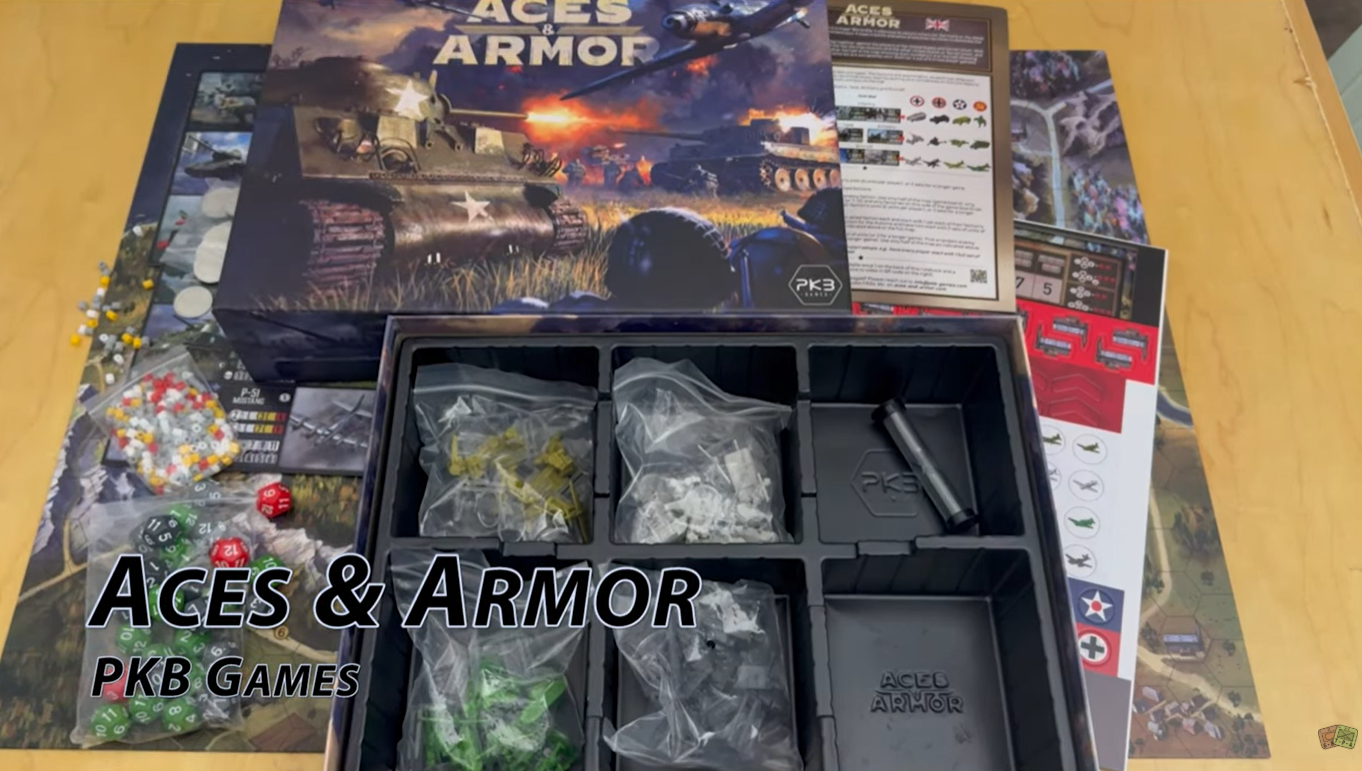
Take the role of a general (United States, Russia or Germany) in Aces & Armor, which is a complex (but easy to learn) strategy game. In addition to attack strength and armor of your troops, their tactical setup, combat experience, damage and terrain have a decisive influence on the outcome of the battle. Since each unit brings its own strengths, you must cleverly assemble your army to win the victory over your opponents.
Cooperative or competitive
Solo mode
Detailed miniatures with many different unit types
High re-playability due to the variable start setup
Complex combat system that depends on type of unit, combat damage, experience, strategic formation, terrain and armor (known from highly rated game Trench Club)
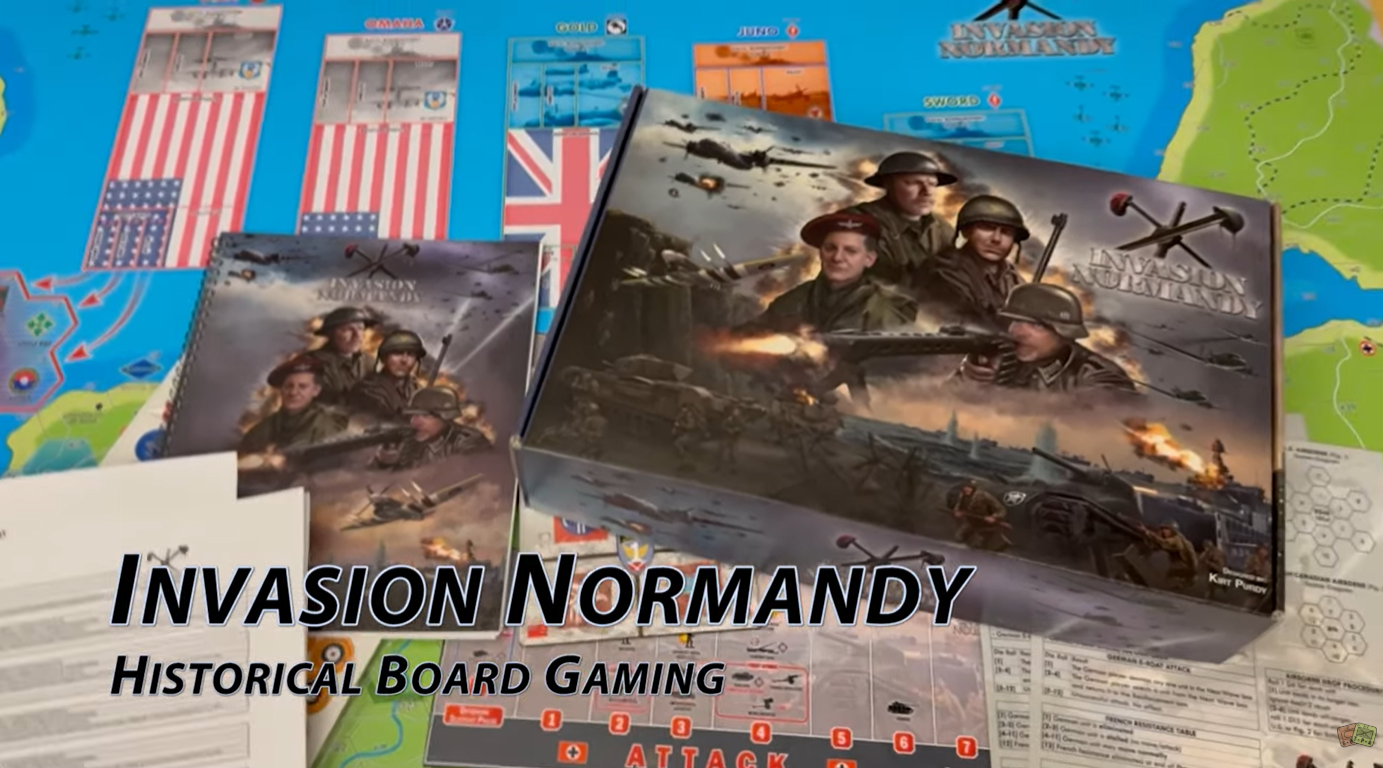
Invasion Normandy by Historical Board Gaming, designed by Kirt Purdy, is a historically accurate D-Day board game developed over three years of design and playtesting. This WWII strategy game immerses players in the Allied invasion of Normandy, featuring a detailed map in three sizes, battleboards for combat resolution, wire-bound rulebooks, reference sheets, and cardstock roundels and markers for strategic gameplay. Plastic pieces are not included, allowing players to use their own game components.
Experience the challenge of commanding forces during one of the most pivotal battles of World War II!
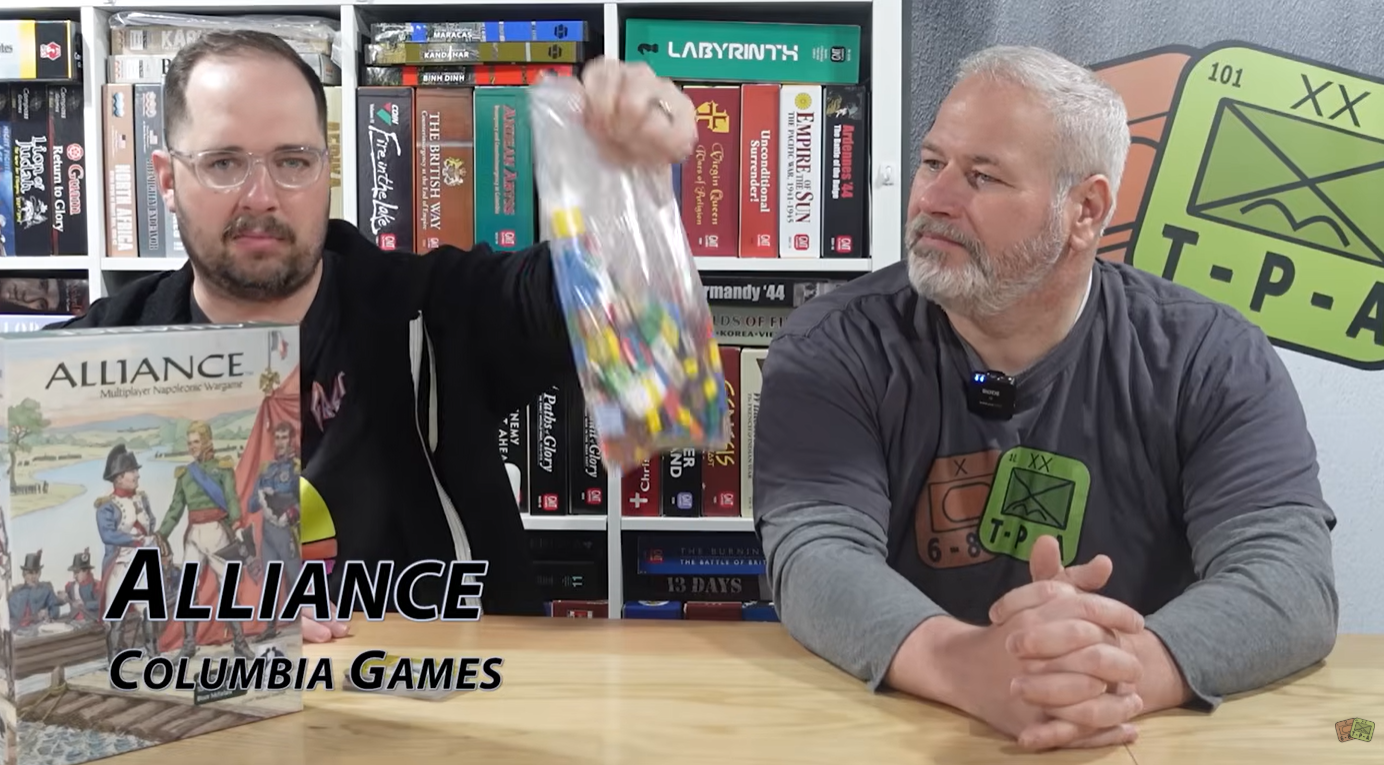
As you know, we very much enjoy multi-player wargames and anytime there is a new multi-player game coming out we very much sit up and take notice. In early 2024, Columbia Games launched a Kickstarter for a game on the Napoleonic Wars called Alliance: Multiplayer Napoleonic Wargame. Alliance is billed as a 1-7 player strategic level game of diplomacy and warfare in the Napoleonic Era with a Columbia Block System twist. The game is huge and plays best with more players. The players take on the roles of different nations during the time and you can play as Austria, England, France, Prussia, Russia, Spain, or the Ottomans. We recently played a full 7-player game and had a grand old time. While the game is not perfect, and there are some quirks that you must get past, the game is really pretty fun and interesting and could be one of those main staples at gaming conventions where you need a lot of players.
With this My Favorite Wargame Cards Series, I hope to take a look at a specific card from the various wargames that I have played and share how it is used in the game. I am not a strategist and frankly I am not that good at games but I do understand how things should work and be used in games. With that being said, here is the next entry in this series.
#63: Militia from Stilicho: Last of the Romans from Hollandspiele
Stilicho: Last of the Romans is a very well designed and interesting solo experience that plays in 60-90 minutes. But, due to the unforgiving nature of the random card draws and its reliance on dice luck, that admittedly can be mitigated through cagey card play and proper decisions, the game can be over very quickly. In fact, my very first play a few years ago lasted only 2 rounds and was over in about 15 minutes. Remember that the historical Stilicho only made it to Round 3! The cards are at the heart of the game here and make it a very tense and decision filled experience. Having to analyze each card, measuring its utility against the board state and what pressing matters the player must address while also fretting over having to discard a good Event Card that just isn’t useful at this point in time to take an action can be really agonizing. I think that this design works even better than its predecessor Wars of Marcus Aurelius.
The cards are a form of multi-use cards, as most Card Driven Games are, as they can either be used for the printed events on the cards or simply to be discarded to take one of a number of actions available to the player. It is important to read every aspect of the card thoroughly as some cards have multiple effects, differing effects depending on what the state of the game is or whether one Barbarian has surrendered or may have several prerequisites to that card being allowed to be played.
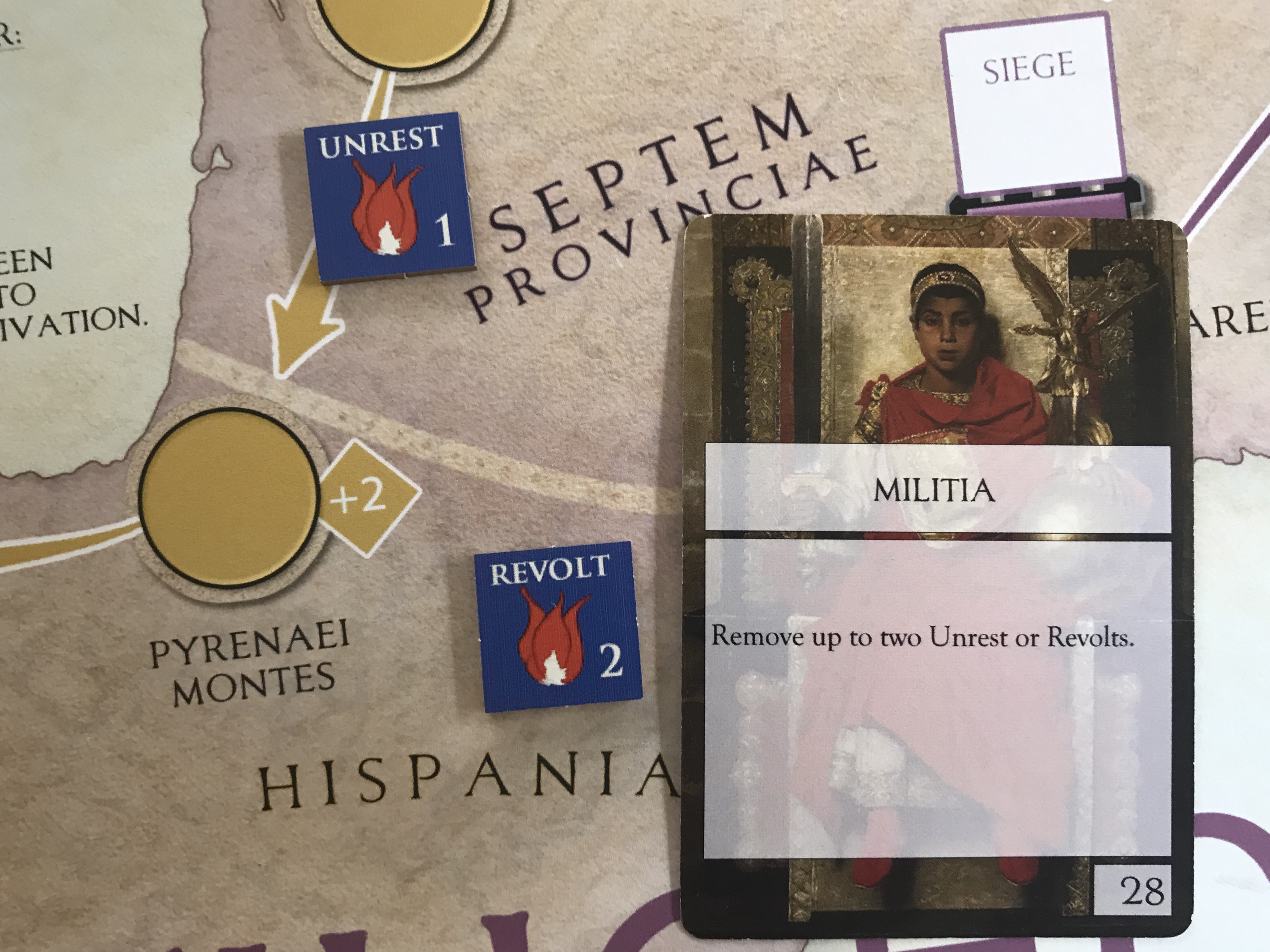
There are some events that are too important to your efforts to ever discard to take an action as they provide you with such great benefit and are more efficient than taking individual actions. Don’t get me wrong though the playability of a card is always dependent on when in the course of the game the card is drawn. An example of what I am talking about is the Militia Roman Card.
During the game, some cards will cause Unrest Markers to be placed on the various tracks that wind their way through the provinces. These Unrest Markers represent the erosion and weakening of Roman control, the spread of fear throughout the populace due to the threat of usurpers and ultimate civil war as well as the logistical difficulties of defending against barbarian incursions. They act as a critical, accumulating threat that, if left unchecked, can lead to widespread revolts, which are one of the primary ways a player loses the game. Unrest Markers are placed in Dioceses when specific enemy cards (particularly the Vandals) are activated or reach the end of their movement tracks. If a Diocese already contains an Unrest Marker when a new one is triggered, it indicates increasing instability, requiring the player to flip an existing, lower-level Unrest Marker to its “Revolt” side. Unrest/Revolt Markers increase the difficulty of battles in that province. When attacking or defending in a affected Diocese, the marker adds to the enemy’s strength. Also, a major loss condition in the game is having too many Revolt Markers on the board simultaneously. Managing and removing these markers is essential for survival. Unrest Markers are placed in a specific order across the board—starting from Hispania and moving through Gallia to Italia—which dictates the geographic spread of the crisis. Players must spend valuable actions (usually by discarding cards) or use specific Event Cards such as the Militia card to remove these counters from the board.
Before the late 2nd century BC, Rome used a citizen militia or levy of property-owning men aged 16–46, serving unpaid during summer campaigns. Organized by wealth, they formed three lines—hastati, principes, triarii—and provided their own equipment. They were crucial for seasonal defense and expansion, as well as for patrolling and safeguarding supply lines, trade routes and newly conquered territories, ultimately transitioning to a professional army after 107 BC. The citizen troops were grouped into maniples based on age and wealth, with the poorest acting as light-armed skirmishers (velites). Service was typically restricted to the annual campaign season, often ending with the Festival of the October Horse on 19 October. The militia employed a three-line, checkerboard formation to allow for tactical flexibility. Due to many reasons, the militia system was phased out after 107 BC in favor of a full-time, professional army, although conscription remained as a, mostly unpopular, option for raising forces.
I wrote a series of Action Points on the various aspects of the game and you can read those at the following links:
Action Point 1 – the Mapsheet focusing on the three Fronts down which your enemies advance, but also covering the different spaces and boxes that effect play such as the Olympius Track, Game Turn Track, Army Box, Leader Box and Recovery Box
Action Point 2 – look at the cards that drive the game and examine the makeup of both the Enemy Deck and the Roman Deck.
Action Point 3 – look into the Roman Phase and examine how cards are discarded to take one of nine different actions.
Action Point 4 – look at a few examples of Battles and how they are resolved.
Action Point 5 – look at a few points of strategy that will help you do better in the game.
I shot a playthrough video for the game and you can watch that at the following link:
I also followed that up with a full video review sharing my thoughts:
Wharf Rat Games is a new publisher recently started by the dynamic duo of Ryan Heilman and Wes Crawford. I have interviewed both of these guys a few times for their own designed games and also hung out with them quite a bit at conventions including Buckeye Game Fest in April 2024 and the World Boardgaming Championships in August 2024. I am really happy for them that they have taken this plunge and created their own publishing company. I know they know games. Have been in the industry for a while now and also have great connections with many designers and would be designers and I am sure that they will bring many quality offerings to our tables over the next decade plus.
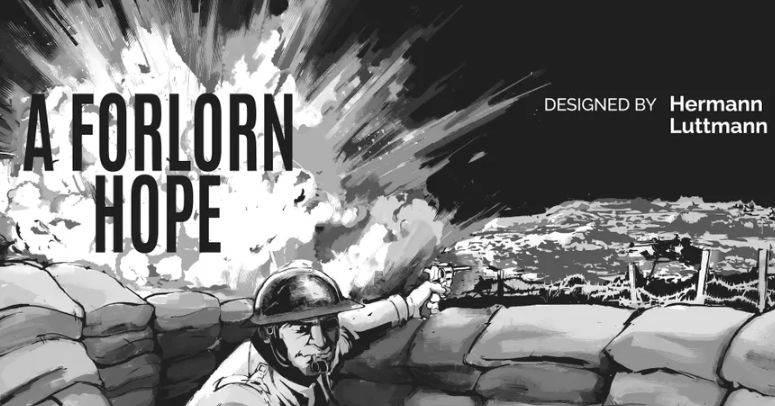
Wharf Rat Games is a Baltimore-based board game publishing company whose mission is to produce high-quality, light-to-medium-weight board games with engaging themes in historical, science fiction, and fantasy genres. With gameplay designed to last under 90 minutes, their games aim to captivate both casual and experienced players. But there is more than just their introduction here as they have signed their first game and it is from a designer we all know and love – Hermann Luttmann. A Forlorn Hope places solo players or up to three cooperative players in command of a battalion charging across No Man’s Land to capture enemy trenches during World War I. Success requires careful balancing of bold advances and timely retreats to avoid casualties, maintain cohesion, and keep troops from becoming pinned under relentless enemy fire. Over a decade ago, Hermann pitched a groundbreaking design to Alan Emrich at Victory Point Games—a push-your-luck mechanic within a wargame framework, originally set in the WWI trenches. While the concept was well-received, Alan suggested a Civil War theme instead, leading to the creation of In Magnificent Style, based on Pickett’s Charge at Gettysburg. This game went on to be published by Victory Point Games and later by Worthington Publishing.
They are now gearing up to launch this interesting game on Backerkit and I reached out to Hermann to get some more information and understanding of the game.
Grant: What is your upcoming game A Forlorn Hope about?
Hermann: A Forlorn Hope is an abstract simulation of six different World War I trench warfare battlefields, using a push-your-luck system that allows the player to experience the tension, frustration, and futility of these trench assaults across No Man’s Land. Players will try to push their battalions to victory in six different scenarios – Neuve Chapelle, 1st & 2nd Ypres, Verdun, The Somme, Passchendaele, and the Meuse-Argonne (The Lost Battalion). Each scenario is quite different, with unique elements, mechanics, terrain features, events, and victory conditions.
Grant: What is the meaning of the title? What did you hope to convey about the game to the players?
Hermann: The dictionary definition of forlorn hope is “A persistent or desperate hope that is unlikely to be fulfilled”. There is hardly a better way to describe the madness of the four years of trench warfare during the First World War. Interestingly, a “Forlorn Hope” is also a military term for a group of soldiers who are assigned the riskiest (and potentially most suicidal) mission, often involving infiltration, ambushes, or scouting missions. For the players, we felt the title was perfectly descriptive of what to expect in the game play. These are tough, grueling scenarios that will require the player to grind out their assaults to their best ability. And yes, the friction of war in this game is a cruel, un-welcomed participant.
Grant: Who is this new publisher and how did you come to do their first game?
Hermann: The publisher is a brand new company called Wharf Rat Games. It was founded by Ryan Heilman and Wes Crawford, both fellow game designers who also became good friends of mine as we worked on other projects together and just hung out at conventions. That I was honored with the opportunity to design their first published game and it was honestly totally by accident! They were interviewing me for their Rat Chat video series and somehow my In Magnificent Style design came up in conversation. I happened to mention that the original idea for the unique push-your-luck mechanism I came up with for that game was actually a World War I trench warfare game. Victory Point Games, who published the original IMS, thought that subject matter was not an easily marketed subject for a wargame, so we changed it to Pickett’s Charge. Well Ryan and Wes asked me if I would like to fulfill my original dream for the mechanism because they really liked the idea of covering trench battles. And here you have it!
Grant: Why was this a subject that drew your interest?
Hermann: I’ve always found a particular interest in World War I, maybe because it was a subject about which I knew few details, but every time I explored it deeper, it became more fascinating. There are just so many interesting aspects to the various nations involved in the conflict and the widespread fronts where such vicious fighting occurred. It just captivated me and then even more so when I discovered there were relatively few wargames covering the war, at least in the early days of wargaming. When I got into actually designing wargames, I wanted to challenge myself to do unusual games and when looking for relatively under-gamed and obscure topics, trench warfare loomed large. So, I set out to figure a way to make trench warfare entertaining for a game player. A tough task, to be sure, but I stumbled upon the idea of doing it as a solo design with an “against the wind” type of push-your-luck approach.
Grant: What is your design goal with the game?
Hermann: Well, as with any of my game designs, my #1 goal is to make an entertaining game experience that players will want to come back to constantly. I want players primarily to have fun, but also to have some challenging decision-making to ponder, topped off with some genuine surprises. In this game design, I want players to explore the various types of historical trench assault situations, which can be quite varied. Each scenario is unique and highlights a different aspect of attacking across No Man’s Land. At the same time, I hope players learn a little something about each of these battles and then perhaps will be interested enough to want to explore a bit deeper into these fascinating engagements.
Grant: What from trench warfare during WWI was important to model?
Hermann: Actually, the near helplessness of your troops crossing No Man’s Land and the fact that you are left to fate! You can direct your men to a certain degree…pointing them in the right direction and gauging when they should “hunker down” and take shelter…but otherwise it’s “dancing through raindrops”. What I did with this design is that you do have control of the order in which you move your units and how far (unless the enemy interferes with your plans, of course). I also added the “Wave” mechanic where you want your men to remain in as long a connected line across the battlefield as possible. Not only is this realistic, but a successful wave will earn you additional Tactics Chits, which will increase your units’ abilities and help mitigate against bad luck. So, you as the player are trying to advance against the enemy’s “wall of fire” as quickly as you can, but also trying to maintain order- two opposite forces pulling you apart, and something that a commander on the Western Front had to deal with. Yes, that can be frustrating but it’s also quite fun. You cannot know or control where the enemy artillery will fall – and that’s about as realistic as you can get. You pray and hope and push…and that’s the WWI tension I want to model.
Grant: What sources did you consult about the details of the history? What one must read source would you recommend?
Hermann: Oh, boy – honestly, there is no one book I used as these scenarios cover multiple battles. I researched each battle from the various books I own, on the internet, and I watched one or more documentaries on You Tube for each of the battles. My main source to get a framework for most of the early- to mid-war battles was The Western Front 1914-1916 by Michael Neiberg. Otherwise, there are numerous books covering each of the Western Front trench battles in greater detail.
Grant: What other games did you draw inspiration from?
Hermann: None actually…other than my own. This game is closely related to In Magnificent Style, Crowbar! The Rangers at Point du Hoc, and the upcoming Kill All Fermitians! (formerly Volters Lead the Way! and is being re-published by Flying Pig Games). Some of the games that I did play in the past, and which gave me hope that I could make a decently entertaining trench game, were Landships (Clash of Arms) and Trenchfoot (GDW).
Grant: How does the game use press your luck?
Hermann: Essentially there are two aspects to the push-your-luck mechanic in this game. One is that you want to get your units to voluntarily Hunker Down before the last Cohesion Cube is lost – this is called a Catastrophic Cohesion Loss. Units that are not Hunkered Down when this happens will be made Pinned, and that makes it harder for them to activate in the next turn (as they start that turn as Shaken units). Hunkering Down in time means the unit has huddled, taken cover, and is regrouping safely. It will begin the next turn without penalty. So, the player pushes their luck by gauging how far to move a unit before Hunkering Down and ending its current turn but thereby being in good shape to start the next turn. The other aspect is that the player will be compelled to keep units in a Wave – a chain of adjacency to each other – to gain the greatest number of new Tactics Chits. Therefore, the player needs to determine how long to keep units active in order to maneuver them into a Wave, but then risking being caught in the open and thereby Pinned when cohesion is lost.
Grant: What type of experience does this create? What are the toughest decisions forced on the players?
Hermann: Well hopefully, as with all my push-your-luck game designs, a sense of constant tension and discomfort! Because of the nature of the Activation and Event Cards, you never know when things will get really rough, really fast. Artillery barrages can land directly on your units – or just miss them. These can cause units to be forced to become Pinned, ending their turn immediately and making it tough to get them going next turn. Therefore, with each decision by the player whether to push another turn or not, there is never a comfort zone where you think “all is well”. The game system will keep you on your toes and always second guessing yourself – and that’s the experience I want to see players having as they attempt to navigate No Man’s Land in WWI.
Grant: What different player counts does the game handle?
Hermann: I suspect most players will be interested in this as a solitaire game, but in fact it does accommodate two or three players as well. In these counts, players will each control one Battalion and work cooperatively with the other player(s). In the case of the 2-player game, players will alternate control of the second (middle) Battalion. Scoring remains the same, with players sharing in the victory or defeat.
Grant: How does the solitaire game function? How does the AI prioritize its decisions?
Hermann: The player draws a hand of Activation Cards each step. Every card has a theme…either Suppressed, Slog, Advance, or Rush…and a set of matching results for cohesion loss, movement, and casualties inflicted on the unit. The player assigns each card to a unit and that unit must then abide by the directions and effects on that card. Usually, the player has some agency in how that assignment can occur. But if one or more “Draw Event Card” cards is drawn, the player must immediately draw an Event Card and apply its effects before continuing on with the activation. This also has the reciprocal detrimental effect of reducing the player’s hand size for this step’s assignment. If you have fewer cards than units, then you must draw the top Activation Card and blindly assign it a unit. There are a number of ways to help mitigate bad draws and results…the player has Tactics Chits to apply if needed and Officer Cards that can be used for certain special abilities. The AI is the deck of Activation and Event Cards, and the player needs to become familiar with what the Activation deck has to offer to make better calculated decisions. In the case of the Event deck, it is mostly random effects (such as for artillery bombardments and machinegun fire) but does prioritize counterattacks and other events against the most advanced player units. There are also Scenario Event Cards in most scenarios that create events specifically tailored to the battle you are currently simulating.
Grant: What has been your most challenging design obstacle to overcome with the game? How did you solve the problem?
Hermann: Honestly, the hardest thing we struggled with was not mechanical or procedural or thematical…it was making sure that the game was balanced for the player. In other words, that the player in every scenario was sufficiently challenged with a competitive, but not impossible, game. That means gauging how severe the Event and Activation Cards are, how many Tactics Chits to allow, how many Officer cards to be made available and how strong their powers are, and how variable and deadly the combat system is. Oh yeah – and how many Victory Points to award and penalize for each victory condition. And after you’ve taken your best starting estimate of where and how these factors should fall, the only way of getting them right is through trial and error, and tons of testing and demoing. And there’s really no magic formula to solving that issue, other than to hammer through the game and constantly bend, spindle, tweak, fudge, and edit.
Grant: What is the layout of the game board?
Hermann: Gamers familiar with In Magnificent Style and Crowbar will recognize the game board immediately. On the player side is the first row, representing the home trench. Then there are a series of nine more rows extending to the far side of the map, ending in a final row representing the enemy trench. There are also nine columns, each of which is occupied by one of the nine player units. In addition, the board is segmented into three No Man’s Land Zones of rows…green (the closest to the player), blue (in the middle), and red (closest to the enemy side of the board). These zones have a number of important effects on game play. Finally, there are three Battalion Zones of columns – 1st Battalion (left side), 2nd Battalion (middle), and 3rd Battalion (right side)…into which is deployed the three units of each of the three Battalions.
Grant: What is the anatomy of the counters?
Hermann: Well, there are no unit counters used in this game! Each of the player’s nine units is represented by a unique wooden piece, showing hand-drawn artwork highlighting the typical soldiers deployed by each nation in the game (there are four armies included – German, British, American, and French). There is no other information on the standees as it is not required for gameplay. There are other numerous cardboard markers used to track information or to be used by the player to perform certain game functions.
Grant: What different type of units are available?
Hermann: There is only one type of unit, technically speaking. The unit pieces represent the generic units fielded by the army you are controlling. Some scenarios will designate if the units represent a unique type of unit. If so, the scenario instructions tell you what your units can do differently during this scenario than the typical unit.
Grant: How does combat work in the design?
Hermann: Combat is pretty straightforward and fun, using custom combat dice. There are two types of combat…Event Combat (generated by an Event Card) and Assault Combat (generated when you move a unit into the same space with an Enemy Unit or vice versa). The dice handle both types of combat resolution. Each face of the die has a letter code that is utilized when resolving Event Combat. This letter tells the player if any Hits are scored on the affected Battalion, if the unit must retreat, and if it must Hunker Down. In the case of Assault Combat, each face of the die has a number value. Both sides in an Assault Combat will roll a number of dice, depending on the value of the enemy unit (shown on its counter) or, for the player’s unit, the use of Tactics Chits, Officer abilities, and the presence of supporting friendly units. All dice are rolled at once and the number values for each side added together into an Assault Combat total. This will yield a victory for either side or a stalemate result.
Grant: How does the game use cards? Can you share a few examples of cards and explain their use?
Hermann: Activation Cards are used to move and fight with your units while Event Cards are random events that will affect your units in various ways (or not, if you get lucky). Each step, you draw a number of Activation Cards equal to the number of available activated units, plus one.
For example, you draw three cards when you have two eligible units to activate (there are only two available units in this example because the third unit is finished for the phase, due to it being Hunkered Down or Pinned). You look at the three cards and if one or more is a “Draw Event Card” card, you draw an Event Card immediately and resolve it.
If it’s the Event Card shown above, the enemy machineguns are issuing sweeping fire across your advancing forces. You check areas “A” and “B” to see which of your units are located in those areas (there could be up to six units in both areas!). You then roll one die against each such eligible unit and apply the letter result rolled on that unit.
Then you discard the “Draw Event Card” Activation Card and you now only have two Activation Cards to choose from. One card is assigned to each of the two units you have left to activate, and its instructions are applied to each unit.
For example, the above “Advance” Activation Card is read from top to bottom as follows:
The top (yellow) entry is the possible loss of cohesion. Because there is a “1” shown in the icon, this means that one Cohesion Cube (the scenario will tell you how many you start with) is discarded. If this is the last cube in your supply, there is an immediate Catastrophic Cohesion Loss and any of your units that are not Hunkered Down or already Pinned are made Pinned. This ends the turn – you count victory points earned, reset all the markers and Officer Cards, and begin a new turn, but starting with a fewer number of cohesion cubes to use.
The middle (red) entry is the number of Hits this unit’s Battalion takes. Hits are recorded by Battalion, not by unit, using a Battalion Hit Infliction Track. In this case, because there is a “2” in this icon, there are 2 Hits inflicted on the Battalion and this is immediately recorded by the player.
The bottom entry is the Movement allowance for the unit. The color of this icon and the graphic of the soldier’s posture indicate the maximum number of spaces the unit can move forward (towards the enemy only) and the manner of the move (Normal, Cautious, or Crawl). Normal is a standard move forward with no impediments; Cautious is a Normal move but only if the unit is not moving from one Zone to another (like from the Blue zone to the Red zone); Crawl is used to move a unit that is Shaken (removing the Shaken marker) and/or moving from a Shellhole. On the example card, there is a “3” in the Movement Allowance icon so the unit move up to 3 spaces using Normal movement procedures.
Grant: How is victory achieved?
Hermann: The player scores, and loses, Victory Points (VP) throughout gameplay, and at the conclusion of the scenario. Each scenario lays out exactly what conditions are needed for the player to score, and lose, VP. This is normally a combination of how much progress each of your units makes toward the enemy trenches, capturing enemy trench spaces, and the occurrence of Catastrophic Casualties (that’s when a Battalion accumulates more than 10 Hits). Each scenario may also have entirely unique ways to gain and lose VP, depending on the historical battle situation being depicted. The player totals their VP and compares that total to the narrative table that provides the level of victory or defeat and what would have happened in the battle at your level of achievement.
Grant: What type of experience does the game create for the players?
Hermann: Well, this kind of design attempts to give the players an appreciation for the frustration, sacrifice, and difficulty of conducting trench assaults during the First World War. Obviously, I can’t honestly replicate the true horror of these events, but I think playing through a tough game like this at least gives a glimpse into the absolutely brutal experience these men faced on the trench lines. Rather than focus on that death and destruction, the game abstractly attempts to give the player the feeling of commanding these troops and leading them on an almost insurmountable mission, under dire circumstances, and against nearly impossible odds. The scenarios included in this game were chosen for the drama, strategy, and historical significance offered by the battles they represent. And by boiling all these factors down to a simple push-your-luck mechanic, with the requisite amount of thematic bells-and-whistles to create the narrative, I think players will at least be challenged, intrigued, and curious about not only exploring all the scenarios and situations, but perhaps even researching the actual details of the horrific experiences of these soldiers. To that end, we’ve also included on every Activation Card an actual quote from a soldier, officer, or author who lived through these battles and hopefully conveys the horrors of trench warfare.
Grant: What are you most pleased about with the design?
Hermann: One thing I’m very pleased with is the amount of narrative detail and variety we managed to get into this design. There are six scenarios contained in this first effort, but two of the scenarios actually contain multiple games to be played, kind of mini-campaigns. And each scenario feels so different than the others. Secondly, I am so pleased by the development and production support from Wharf Rat Games … specifically, Ryan and Wes. They are not only terrific designers and developers in their own right, but they’re beginning a company here that cares about providing high-grade production quality and customer service. This entire game package will be an attractive, well-produced, comprehensive, accessible, and highly replayable product and I am very appreciative and proud of that.
Go sign up for the game’s prelaunch at Backerkit and check out the art, news, and upcoming interviews at https://www.backerkit.com/call_to_action/12a5e9bc-4ce6-4667-8f62-b2df3ccbf9fd/landing and get a free downloadable print-and-play game called A Summer in Sarajevo designed by Ryan Heilman. Can you save Franz Ferdinand from his assassins?
Grant: What other situations could this system be used in?
Hermann: This style of game play is designed for any era…even fictional ones…where one side is primarily static, on defense, and tough. The basic idea is that the player is pushing their luck against a tough defending opponent and their “wall of fire”. However, that defensive enemy is still capable of launching localized attacks of their own, so that even though a static line is being faced, the enemy can still jump out and sting the player. Any situation that fits that set of criteria can work in this system. I have ideas for more World War I battles that will fit in this series, but we’ll first see how well it is received. But I am open to suggestions as to how to convert this framework to almost any other historical era or fictional setting that will work.
Grant: What other designs are you currently working on?
Hermann: Oh boy…every time you ask me this, the list gets longer! OK…here’s what’s cooking:
GMT Games – A Hell So Terrible: Verdun 1916 (on the GMT P500 right now). Also, the More of a Bad Thing expansion for The Plum Island Horror is now out and available. I will also be working on a post-apocalyptic design called Heavy Metal Thunder that is sort of an “express” version of the Plum Island Horror engine. It is designed to give players the same kind of narrative and cooperative experience as Plum Island Horror, but in about half the time and even more accessible as far as rules weight.
Blue Panther – Dawn of the Zeds: Designer Edition. Yes – a brand new edition of the Zeds franchise with some new and better mechanics. Also, I need to work on the next Tattered Flags game (Antietam’s Cornfield) and the next Napoleonic solo game (probably on Borodino).
Revolution Games – They March Against Us: Leipzig 1813 (the first of the Bonaparte’s Swords Series…which will be Napoleonic Blind Swords).
Flying Pig Games – Kill All Fermitians! (formerly Volters Lead the Way!, a science fiction push-your-luck game). And we are beginning work on A Wild Primitive Madness, the next Black Swan Series game covering The Battle of Antietam.
Jackl Games – More Brains! (a zombie push-your-luck game).
Unknown Publisher – White Mud (a tactical wargame on the Battle of Tuyuti, fought during the War of the Triple Alliance and bloodiest battle ever fought in South America. This was called the “Waterloo of South America” and is such an interesting engagement).
Unknown Publisher – Miracle Along the Marne (a Black Swan style of wargame covering the Battle of the Marne in 1914).
You asked!
Thanks again for letting me do this! I really appreciate your support and kindness.
As always it was a pleasure speaking with you Hermann. I am very excited about this one as it sounds very interesting and is also a unique gaming subject. I have played your Press Your Luck designs (In Magnificent Style and Crowbar!) and loved them both. Great games with very tough decisions.
With this My Favorite Wargame Cards Series, I hope to take a look at a specific card from the various wargames that I have played and share how it is used in the game. I am not a strategist and frankly I am not that good at games but I do understand how things should work and be used in games. With that being said, here is the next entry in this series.
#62: Romanian Autonomy from Twilight Struggle: Red Sea – Conflict in the Horn of Africa from GMT Games from GMT Games
We all love Twilight Struggle….and if you say you don’t, you really do but just want to be different or are a contrarian! The game is phenomenal and has done very well for GMT Games with 8 Printings as well as the Turn Zero Expansion and now a series of smaller geographically focused spin off games starting with Twilight Struggle: Red Sea – Conflict in the Horn of Africa. Twilight Struggle: Red Sea deals with just two regions located in the Horn of Africa including Africa and the Middle East. The game uses the familiar Twilight Struggle formula of Cards with both Events and Operations Points that can be used by players to perform Coups, do Realignment Rolls or place Influence in an effort to gain control of the most Countries in the Regions to score Victory Points and win the game. The game is fast, furious and only lasts 2 hands of cards (unless you choose to play the special 3 Turn variant) so there isn’t a lot of time to mess around and players must be focused on what they are trying to accomplish. The best thing about the game is that it plays in 45 minutes as compared to 3-4 hours for Twilight Struggle.
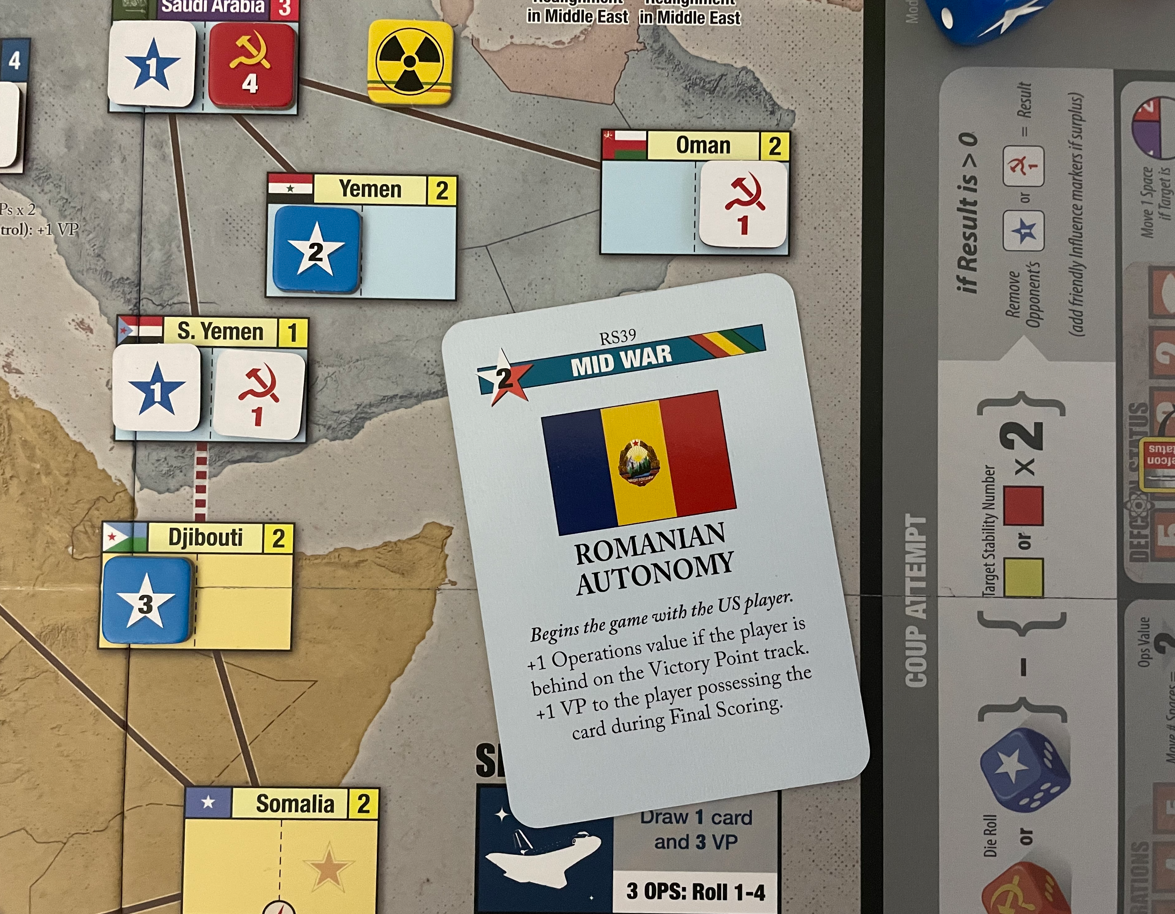
The next card we will take a look at in this series is the special Romanian Autonomy, which is a unique card that doesn’t play from the deck but starts with the US player and resembles one of the classic cards from the original Twilight Struggle called The China Card. And if you have played Twilight Struggle, you know about the China Card. The China Card is a 4 Ops Value Card that can be held by the player in addition to their hand limit thereby giving them an extra card to use. But the card also has a special ability where if the player uses the card for 4 Ops to place Influence only in Asia, it will grant the player +1 Ops Value to use in placing one additional Influence. The China Card also grant’s the player who holds the card at the end of Turn 10 a +1 VP bonus.
In Twilight Struggle: Red Sea, the China Card has been replaced by the Romanian Autonomy Card. This card is not as powerful as the China Card but definitely creates some new opportunities and challenges for the player playing the card. The Romanian Autonomy Card can effect their Ops Value from cards by +1 during the Turn that they play it if they are behind on the Victory Point Track and also grants +1 VP to the player holding the card during Final Scoring. I think this is a really interesting concept and I think was included as a sort of catchup mechanic due to the short nature of the game. I look forward through more plays to seeing how its addition changes things and whether it is overpowered or just right. Once again, a small and subtle change to the game to create a new and interesting experience for the avid fan of Twilight Struggle or players who are new to the system.
Nicolae Ceaușescu visiting Africa during the Cold War.
During the Cold War, particularly under Nicolae Ceaușescu (1965–1989), Romania maintained a distinct, active presence in Africa, including the Horn of Africa, as part of a strategy to distance itself from Soviet influence, gain international prestige, and foster economic exchanges. While major powers like the Soviet Union and Cuba directly intervened in regional conflicts (such as the Ogaden War), Romania focused on building “fraternal” socialist relations through diplomatic, economic, and technical assistance, often operating with a degree of autonomy from the Warsaw Pact. Romania’s actual African strategy in the Horn of Africa, outlined in its 2023 Africa Strategy, emphasizes partnership, peace, development, education, and security cooperation, not territorial autonomy. Romania aimed to be a bridge between Europe and Africa, strengthening ties through cultural exchange, economic projects, and increased diplomatic presence in strategic capitals like Addis Ababa and Nairobi. Under its former communist regime, Socialist Republic Romania pursued economic independence and influenced African nations, but this was distinct from seeking autonomy within Africa. The phrase “Romanian autonomy in the Horn of Africa” is a game term with strategic implications within the game, while Romania’s real-world engagement with Africa is about broader diplomatic and economic partnerships
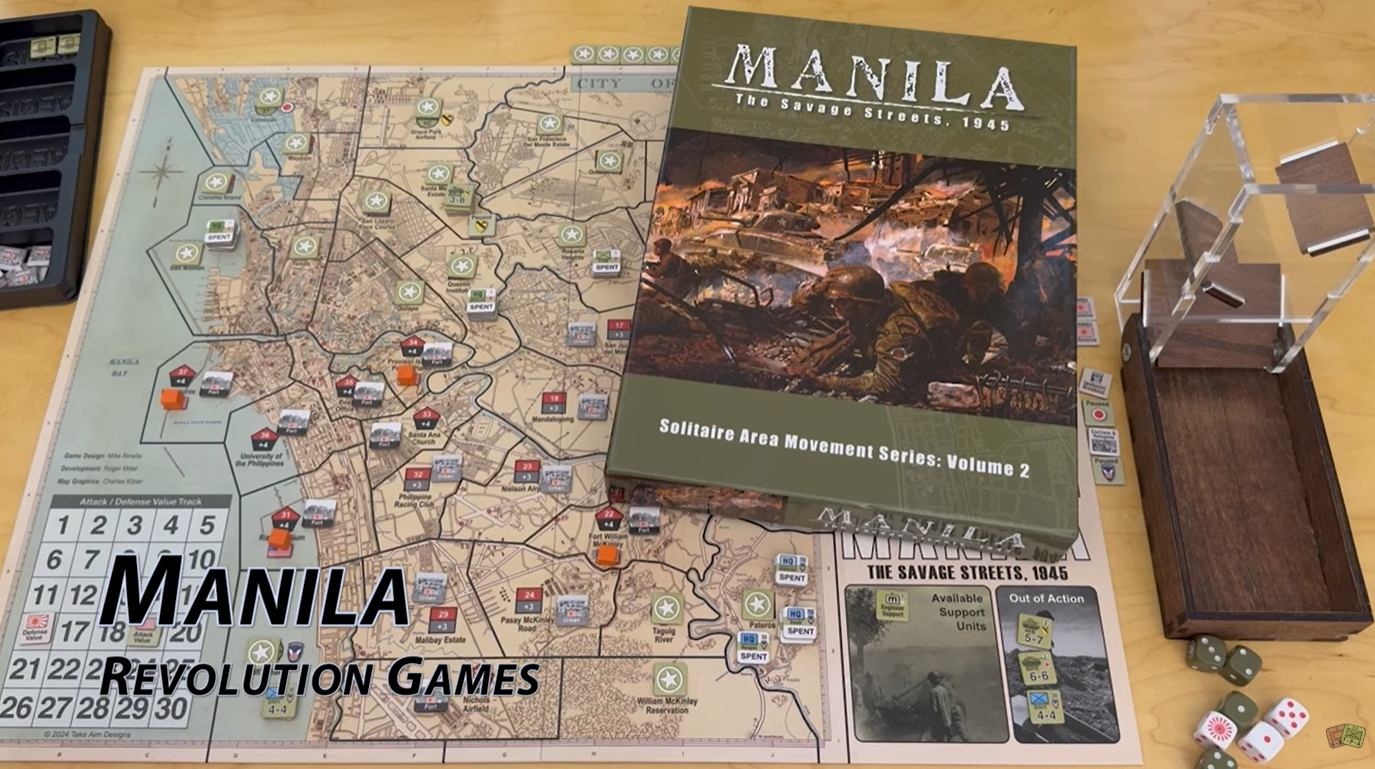
Manila: The Savage Streets, 1945 puts the player in charge of the attacking and far more mobile American side while the game system handles the defending and largely static Japanese side. No two games will ever be the same. Each turn presents new and unique challenges for the player in the form of random events, uncertain supply deliveries, and unknown Japanese area strengths and defensive strategies.
The primary game is a nine-turn campaign covering the American assault on the city during February and March 1945. The deeper American forces advance, from the city’s less developed periphery to its urban business district and fortress-like government buildings, the greater Japanese resistance becomes. The number of American units fought to exhaustion, effectively out of action, mounts. American determination to secure a rapid victory for Supreme Allied Commander General Douglas MacArthur, represented as “morale” in the game, gradually decreases. The player wins by equaling or exceeding historical American gains and loses if they fail to do so, or if morale falls too low.
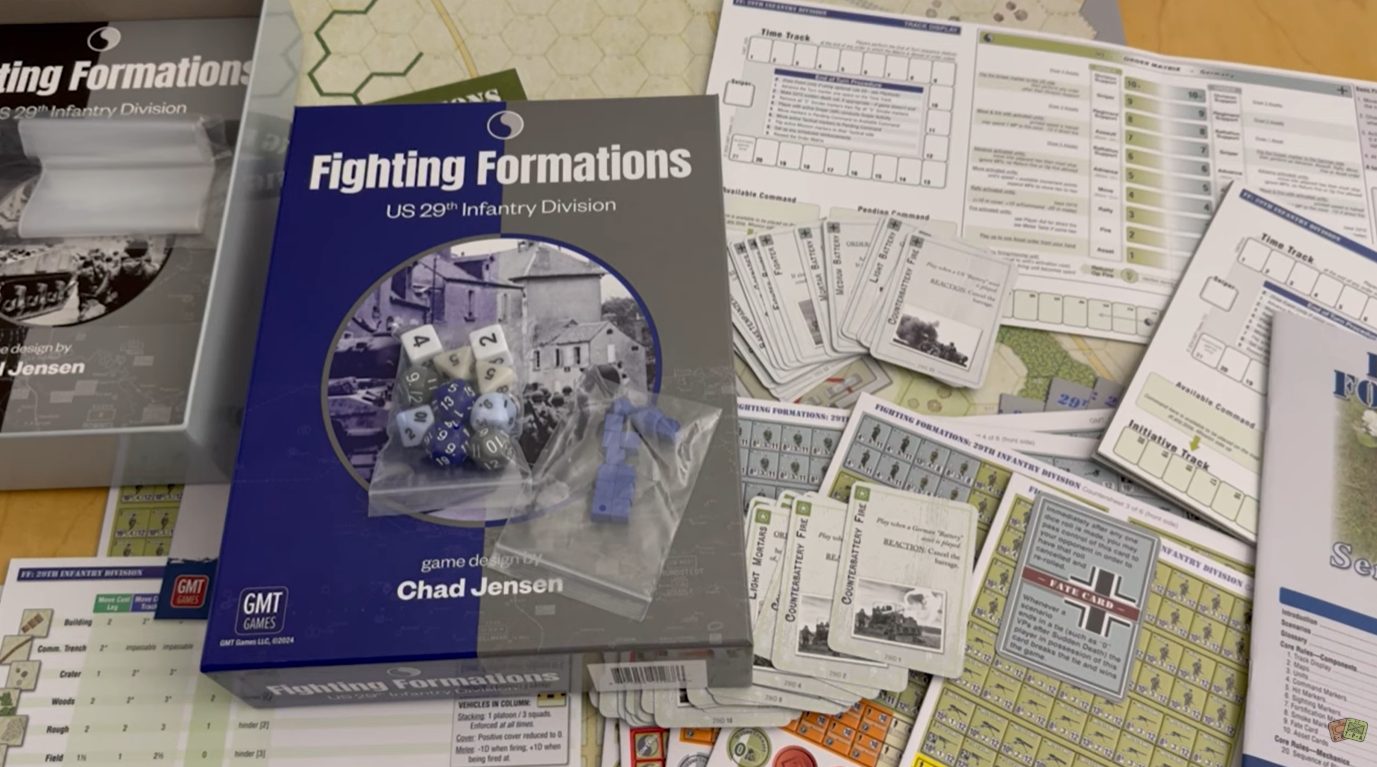
Fighting Formations is intended to be an ongoing series of wargames covering WWII tactical combined-arms combat at the platoon and squad levels. Each game in the series will feature a distinct combat unit, highlighting battles in which that unit participated as well as its particular order of battle and fighting characteristics. In this second volume of Fighting Formations, GMT features the US 29th Infantry Division—“Blue and Gray”—as it fought from just after D-Day in June of 1944 to the end of the year.
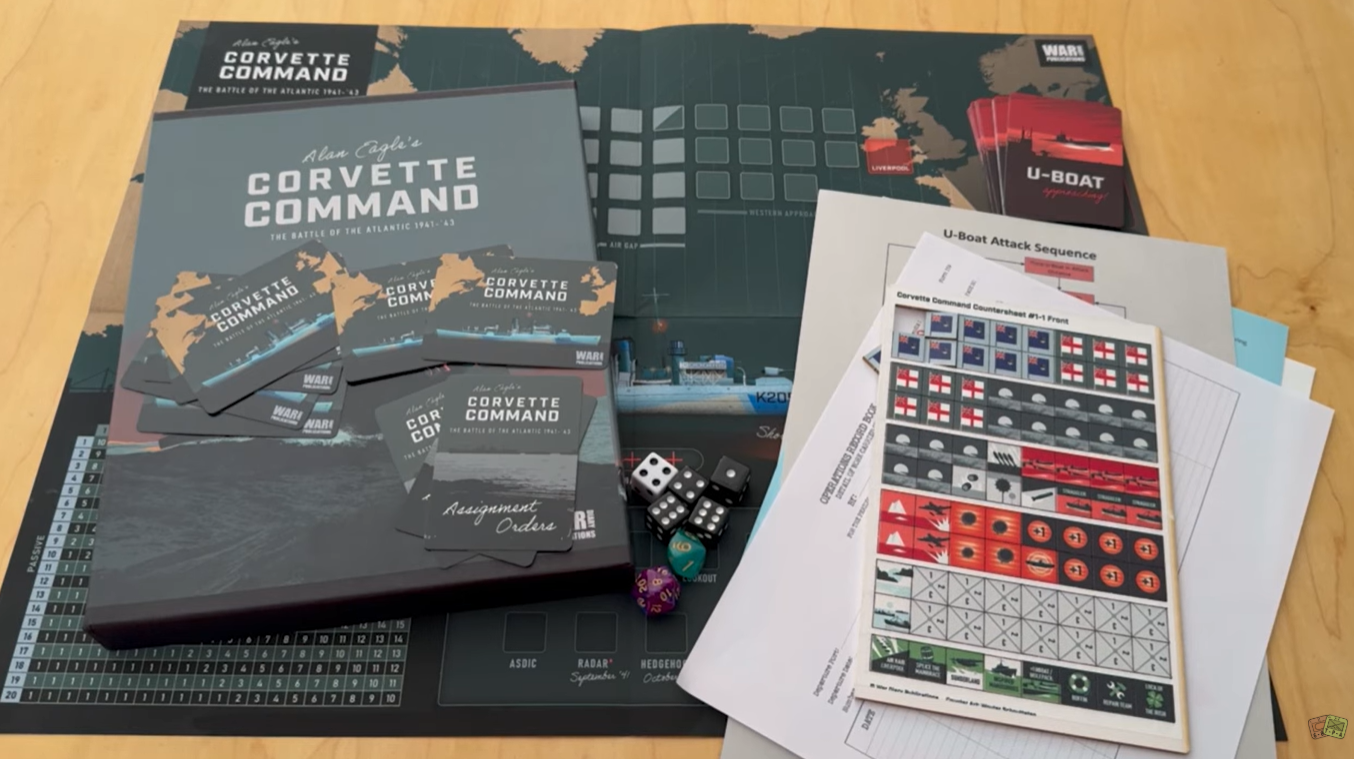
Corvette Command is a dedicated solitaire wargame that places the player in command of a Flower class corvette, guarding desperately needed supplies being transported across the North Atlantic during the early years of the Second World War. Fighting both the harsh weather and the continual threat of German U-boat attack, mission success – and perhaps even the eventual outcome of the war – hinges on the successful passage of the transports.
This one surprised me a bit! Initially, I really had just a tad bit of interest and when I got a copy and started to play, it felt a lot like a chart flipper that can be repetitive. But, as I kept at it the game opened up and I really started to love the mechanics, the dice and how they are used, the crew development over time and then I just fell in love playing it.
I have really enjoyed my plays of several games designed by R. Ben Madison. He has a knack for including elements of the history into the gameplay while placing the historical events into the framework of his chosen system, which is usually the States of Siege Series…but not always. He has designed 24 games to date, with most of those being solitaire games, dealing with all types of history including the American Revolutionary War, World War I, World War II, the American Civil War, Ancient Egypt, the pre-Columbian Indian “mound builder” cultures that dominated eastern North America, the Falklands, Napoleonic Wars and many, many more and I frankly have never played one of his that I didn’t like.
A few years ago, I did a video showcasing many of Ben’s games on our YouTube Channel and you can check that out at the following link:
In this entry in the Best 3 Games with…Series, we will take a look at some of favorites games by Ben.
3. Jeff Davis: The Confederacy at War from White Dog Games
I love a really hard and involved solitaire wargame and I found a really good one in Jeff Davis: The Confederacy at War. The player takes on the role of President of the Confederacy Jefferson Davis, and you have to manage the Confederate government and the Southern war effort during the American Civil War. The choices help determine the fate of armies and the struggle between Robert E. Lee and Ulysses S. Grant. The game uses the States of Siege Series model with a central point being defended from advancing forces on 5 different tracks.
One of the more interesting design choices in this one was the inclusion of slaves held by the South. Their focus in the game is as a resource to advance and assist the war effort through their labor. These human resources are used to take extra actions for the Confederate States of America, as the noose of the Union closes around them, they will be starved for Action Points as their factories and railroads are taken over by the advancing Federal Troops. I truly appreciate this focus in the game to give a glimpse into the political and social issues that contributed to the start of the American Civil War. I think that all too often our wargames sanitize and whitewash history of all of the darker and less desirable aspects but I think that including this element into the game was a wise choice by the designer.
The game also uses a very interesting method of determining your per turn funds as you have to run blockades against the Union to get funds to supply armies, move your troops and invest in actions to build defenses. You can also use the Slave tokens as a sort of currency to take actions but then those tokens are used up and cannot be reused. I have really enjoyed this one although it is a full 3 hour game as you have to get through 40+ chits to survive to the end. Lots of tough choices, lots of interesting side issues, such as dealing with slaves in the southern economy and keeping politicians happy. This is a great solo game!
You can check out our unboxing video to get a good look at the components:
2. Mound Builders from Victory Point Games
Mound Builders from Victory Point Games is a solitaire States of Siege game that to me has a very intriguing theme that hasn’t been gamed very often and really caught my eye. In Mound Builders, you represent the two largest pre-Columbian Indian “mound builder” cultures that dominated eastern North America from before the time of Christ until the coming of the European colonists in the 17th century. Your empire represents the earlier Hopewell culture and the later Mississippian culture that derived from it.
The game plays in two distinct sections or modules. The first module deals with the Hopewell culture, which is the earlier of the two cultures in the game. During this phase of the game, your goal is to simply expand the influence of your empire across the land, trading with various chiefdoms and trying to incorporate their dominions into your own in order to increase your economic power through the accumulation of various types of resources. As time passes, your empire will grow and regress due to various factors including warfare, disease and drought, but more often than not, the real threat to your culture is simply that of the existence of other ways of life and beliefs that will ultimately mix with your own culture.
During the second phase of the game, you will be beset on all sides by competing tribes as well as the nasty Spaniards and will watch as the empire that you worked so hard to build during the Hopewell Era simply disappears from history. Each turn, a card will be drawn that tells you which of the 5 opposing cultures will move into your lands along a siege track. Sometimes only 1 will move but up to 3 can all move at once, and some can be moved more than once each turn. If you do not attack those cultures when they occupy one of your chiefdoms by the end of your turn and chase them off, your resource will be taken from you and you will no longer be able to produce or trade for that type of good, thereby weakening your economy. This States of Siege system is so very cool and has been replicated in may other additions to the series (such as Ottoman Sunset, Dawn of the Zeds and Hapsburg Eclipse but also has spawned, or at least inspired several other designers to create equally cool and interesting simulations (Pavlov’s House and Castle Itter). I have definitely reaped the benefits of this States of Siege Series and love me a good solo game with this cool mechanic.
This is a link to a video unboxing of the game showing off the great components but unfortunately we have never done any other videos on this game:
1. Kaiserkrieg! The Great War 1914-1918 from White Dog Games
Kaiserkrieg! is simply fantastic! A solitaire treatment of The Great War using the States of Siege Series model but with a change to a horizontal rather than vertical layout of spaces where enemy forces can build up and perform an “Over the Top” move if you don’t destroy their troops before then. The player takes the side of the Central Powers and must deal with events that replicate the history of the period and the tumult of various revolutions, threats and opportunities. Well done game by Ben Madison that uses chit pull to activate the enemies and cause events. Lots of chaos. Lots of tough choices. Lots of history. And it always seems to come down to the very end. The only draw back to the game though is that it is long, taking 2-3 hours to play through an entire game. Each chit drawn has lots of information and there are always lots of things to do each turn with your very limited actions.
One of my favorite parts is the use of Blockade Runners to gain your funds for the turn. During the Naval/Air Warfare Phase, the player will place out their available Blockade Runners on various seas zones numbered 1a, 1b, 2a, 2b, 2c, 3 and 4 in order to attempt to break Allied blockades and deliver goods and funds to Germany to fuel the war effort. Each of these numbered sea zones will provide a haul of Reichsmarks based on the number of the sea zone if they are able to evade the British Cruisers. This is determined by rolling 2d6 and consulting the British Cruisers Table to find out in what sea zones the available British Cruisers will be placed. If there is a Blockade Runner in the determined sea zone, it will be destroyed and placed in the Neutral Ports box where it will wait to be built later at a cost of 2 RM. If the rolled sea zone contains a Blockade Runner and the High Seas Fleet marker, the British Cruiser will be unable to destroy the Blockade Runner and a naval combat will ensue.
In the above picture, the Central Powers defeat the British Cruiser with the High Seas Fleet and the 3 Blockade Runners placed in seas zones 2b, 3 and 4 bring home a cash haul of 9 Reichsmarks that will be used to take actions and push back the amassing Entente forces in the various staging areas to avoid an Over the Top chit from being placed and prevent the built up forces there attacking into Germany. This process of gaining income is very interesting and unique and it really feels correct as you are trying to do your best to avoid and destroy the British Cruisers so that you have your choice of the best producing sea zones without the fear of Entente intervention.
You can check out our unboxing video to get a good look at the components:
Here is a link to my video review:
Well there you have my 3 favorite games from R. Ben Madison. There are so many good titles to choose from making this exercise very difficult but the 3 that I chose were very enjoyable to play. What are your favorite Ben Madison designs?
With this My Favorite Wargame Cards Series, I hope to take a look at a specific card from the various wargames that I have played and share how it is used in the game. I am not a strategist and frankly I am not that good at games but I do understand how things should work and be used in games. With that being said, here is the next entry in this series.
#61: Mobile Vulgus from Time of Crisis: The Age of Iron and Rust Expansion from GMT Games
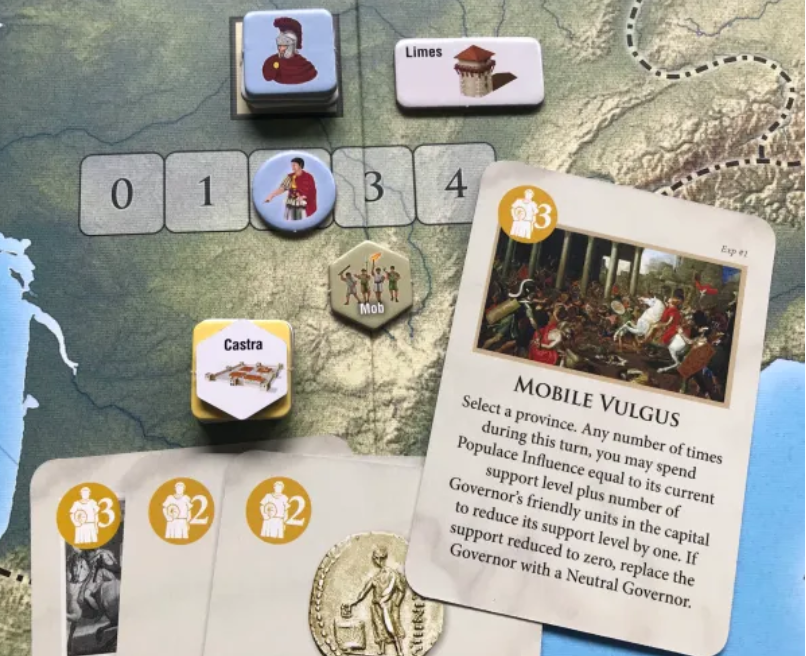
I really love Time of Crisis from GMT Games. This is a very light, introductory wargame that is just plain fun to play. I have been playing it a ton on the Rally the Troops! online platform and really enjoy it no matter what the outcome of those games are. One card that I enjoy using is called Mobile Vulgus, which is a 3 value Populace Card that really can be a devious way to usurp your enemies. This card was added to the game in The Age of Iron and Rust Expansion and is one of those cards that is very situational but very good.
As you know, Time of Crisis is a back and forth game that sees players pitted against each other for the control of provinces and ultimately a change in the player who wears the purple robes of Emperor and sits on the throne in Italia. This process is carried out as players play Populace cards to garner Influence points that are then used to Replace a sitting Governor. The problem with the process is the dice. Now, I know what you are saying. Typically, as long as you roll a 2+ on a d6 it is considered a success and garners you a vote but my luck dictates that I will roll multiple 1’s on a roll where you are looking for a number higher than 1. So, if you can somehow get the dice out of the equation, you are better off. Along comes the fantastically powerful card Mobile Vulgus.
Why exactly do I consider this card so good? Well, you don’t have to rely on rolling dice to get what you want…simple as that. The power is maybe not as efficient as I would like it to be, as you will have to take a Replace Governor Action later to seat your Governor, but it is guaranteed. First off, the card allows you to target a province in which you wish to Replace the current sitting Governor. You normally would play Populace cards to create a number of Influence Points that you would then use to roll 1d6 per point. With Mobile Vulgus you simply play a certain amount of Populace cards to create a total amount of Influence that allows you to overcome their current support level. In the picture above, you can see that the current support level for the Blue Governor in Gallia is at 2. You will also notice though that the Blue General is located in the Provincial Capital with a sizeable army. This army will add to the number of Influence points you will have to spend to reduce that support.
As we examine the Blue General’s stack of forces, we see that he has 3 units under his control, 2 full strength Legions (XIV Gemina and X Gemina) as well as a lone Militia. These 3 units will add to the amount of Populace Influence points that must be spent to effect the support level of the province. Because there are 3 units, we will add those 3 units to the current support level of 2 to bring our target to reduce to 5. In simpler terms 2 for the current support level + 3 for the units in the provincial capital. This then successfully reduces the support level to 1. Remember, that if using a normal Replace Governor action, you would have been rolling 5 dice (1d6 per Populace Influence point spent) and would have needed to roll 2+ and garner 7 votes (calculated by doubling the current support level and then adding in +1 vote needed for each unit in the capital). You couldn’t have possibly done that using only the two cards shown and would have had to play at least one more Populace card with at least 2 Influence points to get to roll 7 dice!
Mobile Vulgus is a Latin phrase that means “the fickle crowd”, referring to the changing nature, opinions and reactions of the general public or an audience, which is a derivation of the English word “mob”. It literally denotes a movable public, or the unstable crowd and recognizes the inconstancy of popular taste and the ease with which clever politicians can influence the great mass of voters. In game terms, the support of the people can sometimes falter as easily as it can be encouraged.
Several years ago, we posted an interview with Matt White, who is a very talented graphic artist and budding game designer, that focused on his artistic talents and love of tanks. He has since designed several very interesting small scale wargames, with his most recent series being a World War II tactical wargame series for 1-2 players pitting the British Airborne versus the German Wehrmacht called Until the Bitter End. He then designed the next entry in that series called Until the Bitter End – US Airborne followed by Until the Bitter End – Tanks. He has also done a few others including Would Be Aces,Operation Biting and Today Another Battle that have done very well. Recently, a new game appeared on Kickstarter from Matt called Saving Angels WWII Solitaire Wargame Print and Play, which is a wargame based on the American and guerrilla raid of the Japanese held Los Baños prison camp in World War II. We reached out to Matt and he was more than willing to share on the project.
Matt: My new Solitaire game is called Saving Angels and it covers the bold US Airborne and allies, raid of the Japanese held Los Baños prison camp during WWII.
Grant: What was your inspiration for the name? What do you want it to convey about the design?
Matt: I came across the history of this subject, whilst researching the Operation Biting game (which is also an Airborne raid, only British) and the name refers to the US 11th Airborne Division, as they were described by the prisoners, who they rescued.
The main element of the design is that you command the paratroopers and guerrillas on this daring rescue mission. With most wargames, the mission is often defeat the enemy or hold a point, etc., but with this design the rescuing of the prisoners is your objective.
Grant: What about this historical event made you want to create this game?
Matt: The main inspiration really was the story, but from the prisoners point of view. They had been treated terribly, for the most part, from their captors. The prisoners were from all walks of life, civilians rather than soldiers who had been captured. I felt it was important to cover this story from WWII, which has not really been covered before.
Grant: What research did you do on the subject?
Matt: I read a lot of history subject books so naturally I read as much as I could on the subject. There are also a few really good videos on YouTube that are also well worth watching.
Grant: Is this the start of a new series of games?
Matt: This is my third game in my Raid Series – the other games covering the British paratroopers, with this one being the first game in that series featuring US forces and where the main objective is the rescue.
Grant: What games have inspired your design?
Matt: To be honest, the biggest inspiration really is the history side rather than other wargames. I think also the first two games in the series was a natural source.
Grant: I know the design is a Print and Play offering. Why do you feel this model is best suited for your designs?
Matt: I like making print and play games as it forces you, as the designer, to make every component count and making the most of the physical space on a sheet of paper. I find that challenge one of the most interesting parts of the creative process.
Grant: I know you are not only the designer but you do the art as well. Please show us a few examples of your great art.
Matt: Here are several different pieces from the game.
Grant: How do you create your art? What is the process and what graphics tools do you use?
Matt: I use a variety of tools such as Sketchbook and Photoshop. I pretty much draw in a traditional method, just using a Wacom pen and laptop.
Grant: What difficult decisions do players have to make in the game?
Matt: The player must try and maximize their units to the best of the counter’s abilities. Each unit will have strengths and weaknesses so coordinating your units is crucial for success.
Grant: What dangers and threats meet the players with their airborne and amphibious landings?
Matt: As the player pushes towards the prison they may encounter Japanese enemy threat but also the risks associated with such landings.
Grant: What objectives does the player have to accomplish?
Matt: The player’s goal is to get to the camp, free the prisoners and then escort them back to the pick-up zone to make good their escape. This was a daring mission as the Japanese defended the area and the player will have to fend off Japanese reinforcements as the player makes good on their escape.
Grant: What is the purpose of the 2 different maps?
Matt: The game comes complete with 2 maps. The first map is for the approach to the Prison Camp and features both Airborne and amphibious landings. The second map is the Prison Camp itself where the player must locate and rescue the prisoners before escaping back across the first map.
Approach map.
Prison camp map.
Grant: How do players control these units and give commands?
Matt: During the game’s turn the player controls movement of their Units whilst the game’s AI will control the enemy Japanese.
Grant: What is the goal of the game? How is victory obtained?
Matt: Get to the camp, rescue the prisoners and escape, whilst fending off the Japanese enemy. It will take co-ordination of the player’s units, using them to the best of their abilities and a bit of luck!
Grant: What are you most pleased about with the design?
Matt: I really wanted to create the strong narrative experience, that’s quite tense, of having multiple objectives (with rescuing all the prisoners) whilst dealing with an unrelenting enemy.
Grant: What kind of an experience does the game create?
Matt: For me, the game creates the idea that sometimes you have to be bold, push your luck and try and achieve success by utilizing the resources you have to the best of their abilities.
Grant: What other designs are you currently working on?
Matt: I have a plate of other games I am working on, mostly WWII! I’d like to cover more of these historical daring raids whether they are land, sea or air.
Thanks to Matt for his time in answering our questions and for his great little print and play games. I love it when one of these new games is brought to light as I get to oodle over the art and see what new things he has created!
The opening sequence of Martin Scorsese’s Taxi Driver depicts a New York with enough grit that you can feel it on your teeth. It’s a feral hour of the night. DeNiro’s sedan is cruising down a street awash in the radiant soul of the city. There’s a shot of the vehicle’s quarter panel. Beads of…
Lese Zeit: 6MinutenMinis Malen zur Entspannung Wie schon im August habe ich mir auch in diesem Monat wieder die Miniatur des Monats geholt, um sie für den Malwettbewerb beim Warhammer Shop am Wiener Westbahnhof für den monatlichen Malwettbewerb einzureichen. Mein Ziel: Gewinnen […]

 Anmelden