Micro Art Studio aus Polen wird nicht müde und liefert in seiner für das Spiel Bolt Action lizensierten Reihe vorbedruckte Gebäude aus MDF für einen weiteren Schauplatz des Zweiten Weltkrieges. Nach der frostigen Ostfront geht es dieses Mal in sonnigere Gefilde. Das Thema ist Italien.
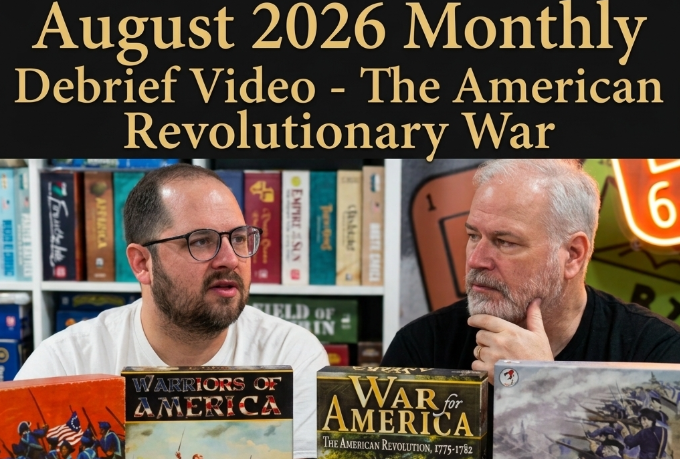
The August 2026 Monthly Debrief Video, which is the 8th episode in Season 6 of this series, saw us discussing American Revolution Wargames. As you may know, I really enjoy the history of the American Revolutionary War. I have read dozens of histories on the subject, with my favorite being Robert Leckie’s George Washington’s War: The Saga of the American Revolution, and it never ceases to amaze me how a group of ragtag rebels were able to best an entire global Empire in open rebellion. The reason for that was the patriots resolve and their ability to run away when outmatched to fight another day when they had a better advantage and not necessarily because they were better armed, or drilled or disciplined. I think that their desire to truly be free was the main difference but that is up for speculation. I love the games on this subject and have played nearly 20 and I was surprised at the number when we had this discussion.
Also, as usual, we covered the games we played in August as well as the games we plan to play in September and had a short discussion of our plans to attend the Gaming the American Revolution Camden 250 Event in Camden, South Carolina sponsored by GMT Games.
We will remind you here that we are fortunate to be continuing our relationship with Noble Knight Games as the sponsor for our Monthly Debrief Video series. In case you don’t know, Noble Knight Games specializes in hard to find games but also carry all the new releases. But what makes them truly unique is that you can find some of the rarest games, long out of print games, hand made games, imported games from overseas, etc. Thanks to them for their sponsorship and we hope that you will consider them first when looking for the games we cover.
Luxembourg’s hospitality industry has named trick-taker Pili Pili as its board game of the year, continuing an eight-year initiative aimed at getting modern hobby games onto the tables of cafés, bars and restaurants.
Rather than solely recognising the best game of the year, the Bistrospill award is designed to encourage hospitality businesses to offer games for their customers to play, with the aim of reviving a tradition of cafés and bistros as spaces “buzzing with social life, where bonds were forged over a game of cards or dice”.
Bistrospill been run since 2018 by Horesca, Luxembourg’s association of hotels, restaurants and cafés, alongside the country’s biggest board game club Spillfabrik.
Horesca, which represents about 2,900 businesses, said it wants to re-establish tabletop gaming as a “vibrant part” of Luxembourg’s hospitality culture, harking back to the popularity of trick-taking games such as Whist and Belote in the 19th and early 20th century.
The organisation has persuaded cafés and bars to hold gaming afternoons and evenings, while participating businesses have been offered kits including posters, simplified rules, printed beer mats and suggestions for activities.
Its latest material also encourages hospitality businesses to keep a small selection of games available to customers, arguing that venues do not need to become dedicated board game cafés, and that a small shelf or clearly identified box of carefully chosen titles can be enough.
Spillfabrik is responsible for preselecting games suited to the bistro environment as part of the initiative, focusing on titles which are easy to explain, compact enough for café tables, playable by several people and sufficiently interactive to work in a social setting.
Publishers submitted 76 games for this year’s Bistrospill, with Spillfabrik whittling those down to five finalists – Udo Peise’s design Auf die Eier, Kei Kajino’s dnup, Antoine Bauza and Théo Rivière’s design Oh My Socks! and Sneaky, by Jannik Walter, as well as eventual winner Pili Pili.
Players predict how many tricks they will take each round, receiving penalties if they miss their target, while mission cards alter the rules as the game progresses.
The game’s roughly 20-minute playtime, compact card-based format and simple rules were among the elements highlighted by Bistrospill organisers as making Pili Pili particularly suited to cafés and bars.
Continuing along in this series devoted to the best looking boards found in the wargaming world where I will highlight the art and layout of a different board in a wargame that we have played to show you the various talents of the artists and graphic designers involved. In my humble opinion, a well designed and attractive board can make all the difference in the world to me enjoying a wargame. Don’t get me wrong, the game has to be good, but if it’s also good looking it always is a better experience. A board can draw me in. Can make me feel that I’m there. Can set the stage for the thematic immersion that we all crave. And I have found many of these type of boards and I want to make sure that I share them with you.
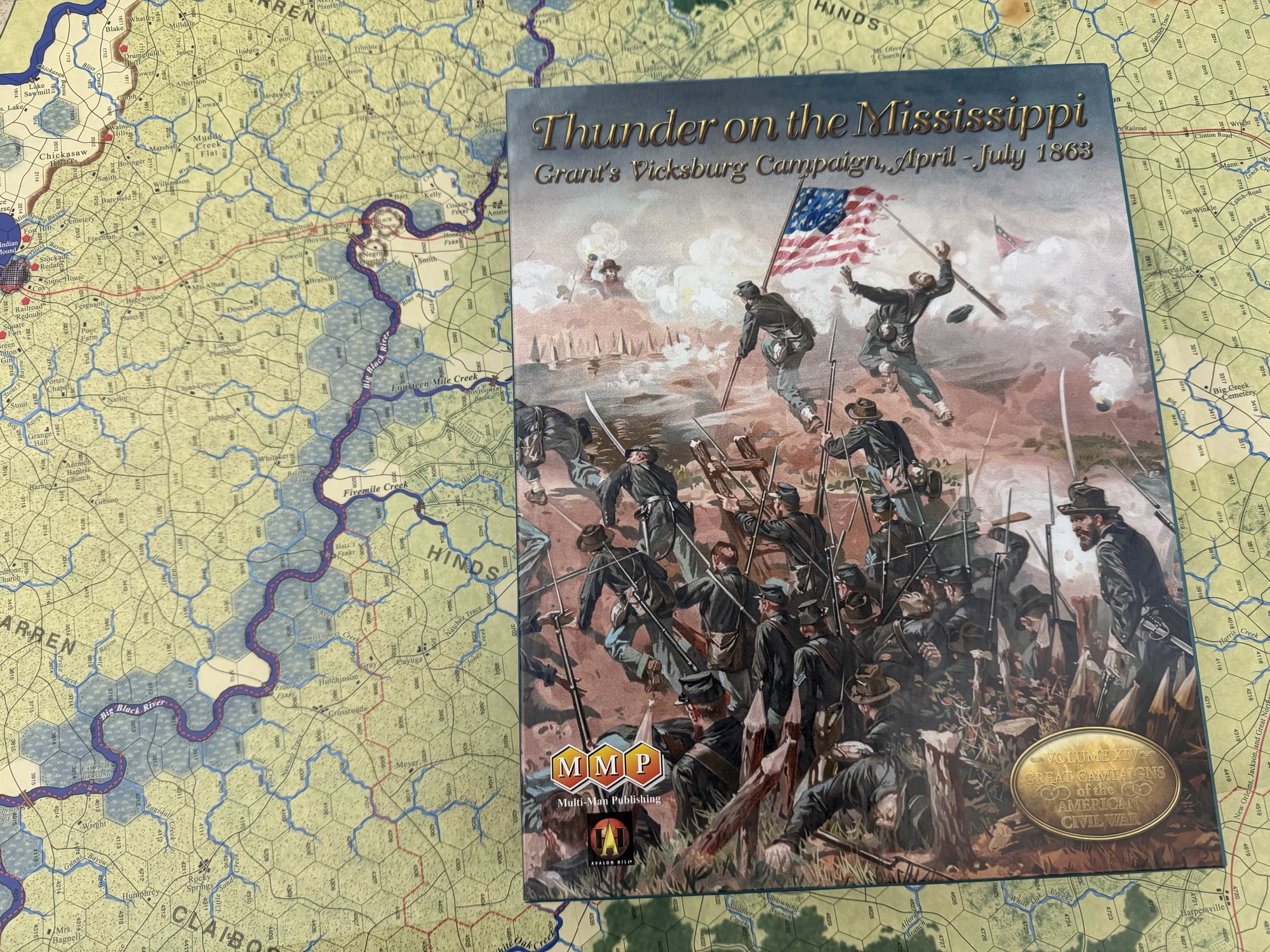
In this entry in the series, we will be taking a look at the fantastic looking board for Great Campaigns of the American Civil War: Thunder On the Mississippi: Grant’s Vicksburg Campaign, April-July, 1863 from Multi-Man Publishing. The board is illustrated by the very talented Charlie Kibler whose work on the Great Campaigns of the American Civil War Series dates back to its creation in 1992. He has done a ton of great looking boards including The Battle for Normandy (2009) from GMT Games, The Day Was Ours: First Bull Run (2021) from Revolution Games, Border Reivers (2023) from GMT Games recently as well as a slew of Advanced Squad Leader boards stretching back through the years and a lot of series games for GMT Games such as Great Battles of the American Civil War and Great Battles of the American Revolution. We have already highlighted a few of his boards in the past like Storm Over Jerusalem from MMP and Battles of the American Revolution Volume II: Brandywine from GMT Games. He is very effective at creating great looking terrain and weaving in very nice details to highlight the main functions of the board and I very much like the simplicity and accurateness of his boards.
The board consists of 2 separate 22″x 32″ full-color map sheets that when combined create a large playing surface. The borders of the board include off-board information that is related to the geography and locations in and around Vicksburg. When I first saw this, I wasn’t really quite sure how to take it but after playing and also thinking about this decision, I really like how it was used to frame up or provide a significant visual contrast to the main game board. The brown coloring really contrasts well with the colorful terrain features and create a clear distinction for the players. I initially thought this was a poor decision and felt that it was a missed opportunity but it works really well.
Here is a closeup of this part of the board so you can get a good feel for what I am talking about.
I always like to look at the game title box/area of the board and find these to be really great insights into the mindset and approach of the artist. On the board for Thunder on the Mississippi, we see Charlie used a washed out period look map for the background of this area. The really interesting part is how it transitions from the non-colored portion of the board title box to the game board itself. There is no connection between the 2 and the elements found on the board are not carried over or connected to the period map. I would maybe have liked to see there be a connection for an immersive approach but I understand that this was not the purpose of the use of the period map.
In Thunder on the Mississippi, there are 2 new terrain features unique to the Vicksburg region introduced including loess hills and coastal bluffs. Loess has not been featured before in GCACW Series games. Each loess hex is depicted with many small tan dots superimposed on an olive base color. This stippling gives it a sandy feel and I think really works well as loess is a fine-grained, powdery soil, a wide belt of which runs on the east side of the Mississippi on a southwest – northeast axis. Because loess is highly susceptible to erosion, it is marked by sharp, irregular ravines, many of which were so overgrown with vegetation as to be nearly impassable to military units.
In the game, loess hexes are identical to woods hexes in terms of Movement Point costs and MP penalties to enter a friendly-occupied hex. Also, loess hexsides untraversed by roads or railroads exert a restricted ZOC the same as woods hexsides similarly untraversed. I think that the type of terrain, and what it does to the units that enter, really mimics the soft soil type as it is always hard to run in sand. I very much like the color used as well and it serves to set this specific terrain type apart from the rest of the board. Here is a look at the western portion of the West Map that is up against the Mississippi River.
The other new terrain feature is that of coastal bluffs, which has also not been featured before in the series. Each coastal bluff hexside has a downhill side in which the light brown bluff line-pattern is uneven and an uphill side in which the bluff line-pattern is smooth. I know that it might be a bit hard to see in the below picture but the downhill side is found on the left side while the uphill side is on the right. Think of it this way…the uphill is simply a straight line border while the downhill side reflects the ravines from erosion and is made up of multi-length lines pointing out. I very much like this new terrain and also think that Charlie did a great job with the distinction even though it is a bit hard to distinguish from afar.
And that brings me to the portion of the board that I think is my favorite. Not because it is some revolutionary technique but because of the power and permanence that is offers the board, acting as an anchor and a framing of the action to be played out on it, and that is the Mississippi River itself. There is no real use of stylized marks or special features shown on the board but it is just a thick and dark blue line that meanders through the countryside. But the dark blue really gives a sense of size and scope and I very much feel that it is important to the board and what is to transpire on it.
I also very much like how Charlie decided to keep in the exact layout of the river and shows its many twists and turns and oxbows that are found along its length.
The board for Thunder on the Mississippi is really a visual masterpiece. It provides great transition from terrain type to terrain type, frames up the board itself very well and uses very smart and poignant color choices, including the loess terrain color and the dark blue of the Old Man, all to create a fantastic canvas upon which to play out this titanic struggle and key turning point of the American Civil War.
If you are interested, here is a link to our video review:
The next board that we will take a look at in the series is The Marianas Campaign: Volume One: Saipan – The Bloody Rock from Compass Games.
Here are links to the previous entries in the series:
Ein Ende kann auch ein Neuanfang sein. Nach dem Abwurf einer Atombombe auf Dresden im Jahr 1944 nehmen die Ereignisse bei Konflikt 47 einen anderen Verlauf für die Achsenmächte. Ein Geheimbund erhebt sich aus dem Hintergrund und die Nazis sind Geschichte. Es beginnt die Zeit des Grünen Gewölbes.
Es begann mit einer kleinen Gruppe, die ein schnelles und unkompliziertes Regelsystem schaffen wollte. Inzwischen ist OnePageRules mit acht Systemen und einer großen Auswahl an 3D-Modellen ein fester Bestandteil der Tabletop-Community. Mit Broken Truth wagt der bislang vor allem digital aufgestellte Hersteller den Schritt in die lokalen Hobbyläden.
The new era of well-designed automata and solo modes for multiplayer games, coupled with excellent new solo game designs, is actually quite heartening to someone (me!) who finds something very satisfying about physically playing a game: shuffling cards, moving pieces, … Continue reading →
Die zähen und brutalen Orks sammeln sich in riesigen Kriegsscharen und bekämpfen alles, was ihren Weg kreuzt. Diese Horden werden durch die Macht des Waaagh vereint. Mit dem neuen Codex können die Orks direkt in die 11. Edition von Warhammer 40.000 losziehen, um den*die nächstbeste*n Feind*in zu verklopp´n.
Der Begriff Deathmatch beschreibt im Videospielbereich Modi, in denen es vornehmlich um das Ausschalten möglichst vieler Gegenspielenden geht. Allein oder im Team wird gegeneinander angetreten und wird man selbst erwischt, ist es vorbei. Zumindest bis zum Respawn. NeverRealm Industry haben nun das finale Regelwerk ihres Skirmishers mit diesem Thema veröffentlicht.
Asmodee übernimmt die komplette Welcome-To-Reihe, Marke und geistiges Eigentum, vom französischen Verlag Blue Cocker. Der Konzern setzt damit seine im November 2024 angekündigte Übernahmestrategie fort, für die er nach eigenen Angaben eine Pipeline von mehr als 20 möglichen Zielen aufgebaut hat. Finanzielle Details zur Transaktion nannten beide Seiten nicht. Das berichtet das Fachportal BoardGameWire.
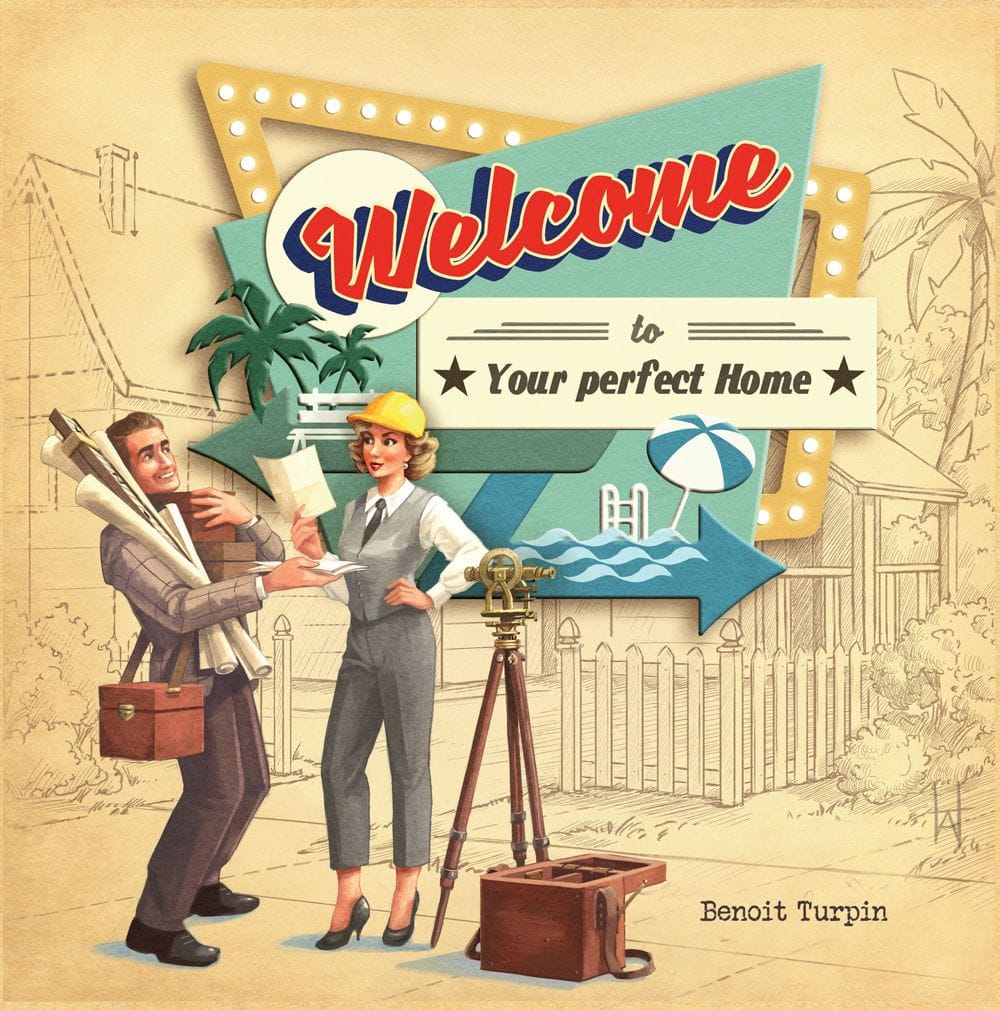
Welcome To... geht auf Benoit Turpins Durchbruchsspiel „Welcome to Your Perfect Home“ von 2018 zurück und gilt als Wegbereiter des Flip-and-Write-Genres: Statt eines Würfelwurfs teilen sich alle Mitspielenden dieselben aufgedeckten Karten und tragen ihre Wahl gleichzeitig ein. Die Reihe wuchs seither um die eigenständigen Fortsetzungen „Welcome to the Moon“ und „Welcome to New Las Vegas“ und verkaufte sich nach Angaben von BoardGameWire mehrere hunderttausend Mal. Allein auf der Plattform Board Game Arena kommt die Serie auf mehr als 3 Millionen gespielte Partien und im Schnitt über 3.000 individuelle Spielende pro Tag. Auf Deutsch erscheint die Reihe bei Pegasus Spiele.
Teil einer größeren Einkaufstour
Welcome To... reiht sich in eine Serie von Zukäufen ein, mit denen Asmodee seine 2024 angekündigte Rückkehr zur aktiven Übernahmepolitik untermauert. 2025 sicherte sich der Konzern bereits Zombicide und Cthulhu: Death May Die vom finanziell angeschlagenen Verlag CMON. In diesem Jahr kamen die bis zu 250 Millionen Euro schwere Übernahme von ATM Gaming, der Kauf von Sheriff of Nottingham und des Verlags Japon Brand von CMON, der Erwerb von Time’s Up! vom Verlag R&R Games sowie die restlichen 45 Prozent an Exploding Kittens hinzu, über dessen bisherige Chefin Carly McGinnis Würfelreich zuletzt berichtete. Konzernchef Thomas Kœgler hatte bei der Ankündigung der Strategie gesagt, man kenne viele der Übernahmeziele durch bestehende Geschäftsbeziehungen bereits „in- und auswendig“ (übersetztes Zitat, Auszug).
Finanziell hat Asmodee für weitere Zukäufe Spielraum: Der Umsatz stieg im Geschäftsjahr bis Ende März um 23 Prozent auf 1,68 Milliarden Euro, das bereinigte EBITDA legte um rund 25 Prozent auf 285,4 Millionen Euro zu. Die Nettoverschuldung lag zum Ende Juni beim 1,6-Fachen des bereinigten EBITDA, unter Einbeziehung laufender Übernahmeverpflichtungen beim 1,7-Fachen, deutlich unter der selbst gesteckten Grenze vom 2,5-Fachen und niedriger als ein Jahr zuvor.
Von der Garage zum Fünf-Personen-Verlag
Blue Cocker wurde 2013 vom ehemaligen Luftfahrtingenieur Alain Balay gegründet. Der Erfolg von Welcome To... erlaubte es dem zunächst als Ein-Personen-Betrieb geführten Verlag, bis 2019 auf fünf Beschäftigte zu wachsen, wie Balay der französischen Zeitung La Gazette du Midi sagte. Sein Exportanteil sei damals auf 60 Prozent des Umsatzes gestiegen, angesichts globaler wirtschaftlicher und politischer Unsicherheiten aber inzwischen auf rund 10 Prozent gefallen. Neben der Welcome-To-Reihe verlegt Blue Cocker unter anderem Medieval Academy (2014), Meeple War (2016), The Last Droids (2025) und das Wirtschafts-Deckbuilding-Spiel SAN als Haupttitel des laufenden Jahres.
Asmodees Bereichsleiter Mathieu Aubert sieht in der Übernahme mehr als nur eine starke Marke fürs eigene Portfolio: „Wir sehen großes Potenzial, das Welcome-To-Universum zu erweitern, und das Team hat bereits viele Ideen, um das umzusetzen. Ich freue mich darauf, im kommenden Monat mehr über unsere Projekte zu berichten“ (übersetztes Zitat). Asmodees SVP Tabletop Games, Benoit Clerc, würdigte die Reihe als „Meilenstein des modernen Brettspiels, der elegantes Spieldesign mit außergewöhnlicher Zugänglichkeit verbindet“ (übersetztes Zitat).
Balay selbst zeigte sich zuversichtlich: „Wir sind unglaublich stolz auf alles, was Welcome To... in den vergangenen Jahren erreicht hat, und sind zuversichtlich, dass Asmodee die Marke nun weiterträgt und noch mehr Menschen weltweit damit erreicht“ (übersetztes Zitat). Wie genau sich die Reihe unter dem neuen Dach weiterentwickelt, will Asmodee nach eigenen Angaben in den kommenden Wochen genauer vorstellen.
Es ist schon einige Zeit her, seit Games Workshop uns mit einer Battlehost-Box beglückt hat. Nun erhält Rohan endlich eine Aktualisierung, und als Überraschung legen die Entwickler gleich zwei weitere Battlehosts nach: Elben aus dem Düsterwald und die berüchtigten Jägerorks um Bolg.
Nach der Gen Con ist es rund um Kickstarter, Gamefound und Spieleschmiede spürbar ruhiger geworden. In den vergangenen sieben Tagen (24. bis 31. August 2026) erreichen nur zwei neue Kampagnen die Auswahlkriterien dieser Redaktion, die deutsche Spieleschmiede liefert in diesem Zeitraum keinen neuen Brettspiel-Kandidaten. Dafür kehrt bei Gamefound ein kooperatives Tower-Defense-Spiel mit Reprint und zwei Erweiterungen zurück, während ein Kickstarter-Projekt auf einen fremden Planeten führt.
Aberration: Oblivion's Embrace
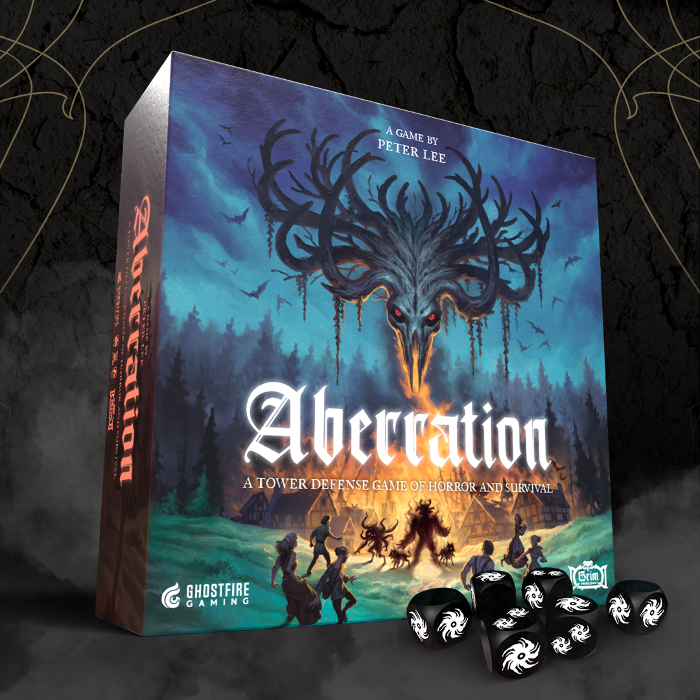
Der australische Verlag Ghostfire Gaming hat die Kampagne zu Aberration: Oblivion's Embrace Expansion & Reprint am 26. August 2026 auf Gamefound gestartet, Stand 31. August 2026 bei rund 794 Prozent des Ziels von 20.000 US-Dollar (158.823 US-Dollar). Design stammt von Andy Collins und Peter Lee, Letzterer bekannt für Lords of Waterdeep, Tyrants of the Underdark und Horrified.
Ein bis vier Spielende verteidigen kooperativ das Dorf Bürach gegen eine wachsende Bedrohung aus Monstern und Verderbnis im Grim-Hollow-Setting des Verlags. Mechanisch verbindet das Tower-Defense-Spiel Worker Placement, Bag Building und asymmetrische Heldenfähigkeiten mit einem Fog-of-War-System, das Teile der Gefahr zunächst verdeckt hält. Die Kampagne bringt neben einem Reprint des Grundspiels zwei neue Erweiterungen: Oblivion's Embrace mit zwei wiederholt spielbaren Roguelike-Kampagnen und Arcanists & Abominations mit vier neuen Zauberklassen. Eine Partie dauert laut Kampagnenseite rund 90 Minuten, ausgelegt für ein bis vier Spielende ab 14 Jahren.
Ein Solo-Modus ist enthalten, die Kampagne läuft noch bis zum 17. September 2026. Ghostfire Gaming hat mit dem gleichnamigen Grundspiel Aberration bereits eine erste, eigene Kampagne durchlaufen, die laut Gamefound bereits vollständig produziert und ausgeliefert wurde. Eine deutsche Lokalisierung nennt die Kampagnenseite bislang nicht.
Orbitstar: Expedition to Darwin IV
Das neuseeländische Studio Arkus Games hat Orbitstar: Expedition to Darwin IV am 25. August 2026 auf Kickstarter gestartet, Stand 31. August 2026 bei rund 216 Prozent des Ziels von 30.000 Neuseeland-Dollar (64.712 Neuseeland-Dollar). Design stammt von Bobby Hill, Welt und Artwork gestaltete Illustrator Wayne Barlowe nach seinem eigenen Buch „Expedition“. Arkus Games hat seit der Studiogründung 2020 bereits mehrere Kickstarter-Kampagnen realisiert, darunter Shelfie Stacker, Storm Raiders und Dreadful Meadows.
Ein bis vier Spielende schlüpfen im Jahr 2358 in die Rolle von Forschenden, die den fremden Planeten Darwin IV erkunden und laut Verlag insgesamt 49 außerirdische Spezies dokumentieren. Dabei kommen Bag Building, Bewegung über verschiedene Biome und der Ausbau der eigenen Hovercone-Fahrzeuge zum Einsatz, während Wetter und Raubtiere die Expedition erschweren. Eine Partie ist laut BGG für ein bis vier Spielende ab 14 Jahren ausgelegt und dauert rund 90 Minuten.
Ein Solo-Modus ist vorhanden, Details zum genauen Ablauf nennt die Kampagnenseite nicht. Die Kampagne läuft noch bis zum 16. September 2026, der Versand ist laut Kickstarter weltweit vorgesehen, die Auslieferung für September 2027 geplant. Eine deutsche Lokalisierung ist bislang nicht angekündigt.
Beide Kampagnen sind reine Nischenprodukte für den deutschen Markt: englischsprachig, ohne angekündigte Lokalisierung, mit den üblichen Kickstarter- und Gamefound-typischen Zusatzkosten für Versand und Einfuhr nach Deutschland. Wer auf deutschsprachige Neuheiten wartet, muss sich diese Woche gedulden. Die Spieleschmiede blieb in den vergangenen sieben Tagen ohne neuen Brettspiel-Kandidaten.
Asmodee macht Carly McGinnis, bisherige Chefin von Exploding Kittens, zur neuen Chief Product Officer und EVP Publishing des Konzerns. Sie übernimmt damit ein Markenportfolio, zu dem Catan, Ticket to Ride, 7 Wonders und Dobble/Spot It gehören, und tritt die Nachfolge von Jean-Sébastien de Barros an, der das Unternehmen nach fast einem Jahrzehnt verlässt. Das berichtet das Fachportal BoardGameWire.
McGinnis berichtet künftig direkt an Asmodee-Chef Thomas Kœgler und rückt ins Executive Management Team auf. Als Chief Product Officer verantwortet sie laut der vor dem Börsengang veröffentlichten Organisationsstruktur die Studios des Konzerns, Franchise-Entwicklung, Lizenzen und Studio-Marketing.
Vom Kickstarter-Erfolg zur Konzernspitze
McGinnis kam 2015 zu Exploding Kittens, im selben Jahr, in dem das gleichnamige Kartenspiel knapp 8,8 Millionen Dollar auf Kickstarter einsammelte. 2019 wurde sie Chief Operating Officer, 2022 Präsidentin, vor einem Jahr schließlich CEO. Unter ihrer Beteiligung wuchs die Marke nach eigenen Angaben auf mehr als 60 Millionen verkaufte Spiele und expandierte über eine Kooperation mit Netflix in mobile Spiele und eine Animationsserie, bei der McGinnis als Co-Executive-Producerin mitwirkte.
„Ich habe das vergangene Jahrzehnt damit verbracht, Exploding Kittens von einem einzelnen Spiel zu einem globalen Unternehmen aufzubauen, und ich freue mich, das Gelernte in das breitere Asmodee-Portfolio einzubringen“, wird McGinnis zu ihrer neuen Rolle zitiert (übersetztes Zitat). Sie sehe eine große Chance, auf den bestehenden Stärken aufzubauen, neue Spiele zu entwickeln und zugleich in Marken zu investieren, die über Jahrzehnte wachsen könnten.
Eigenes Verlagsgeschäft hinkt der Distribution hinterher
Der Wechsel fällt in eine Phase, in der Asmodees eigenes Verlagsgeschäft hinter der Distribution zurückbleibt. Im Geschäftsjahr bis Ende März stieg der Konzernumsatz um 23 Prozent auf 1,68 Milliarden Euro, mehr als 72 Prozent davon aus der Distribution fremder Spiele. Die Umsätze der eigenen Spiele sanken im selben Zeitraum um 5,8 Prozent. Im ersten Quartal des laufenden Geschäftsjahres, April bis Juni, drehte die Kurve leicht ins Plus: Die eigenen Spiele wuchsen um 1,8 Prozent, während der Brettspielmarkt insgesamt um 16 Prozent zulegte.
Kœgler würdigte in einer Mitteilung auch de Barros, der 2017 zu Asmodee kam und den Posten der Chief Product Officer 2024 übernahm. Er habe mit einem „strategischen und strukturierten Ansatz“ starke funktionsübergreifende Teams aufgebaut und unter anderem den Start des bislang größten Sammelkartenspiels von Asmodee, Star Wars: Unlimited, verantwortet (übersetztes Zitat).
Weitere Personalwechsel bei Asmodee in diesem Jahr
McGinnis' Berufung reiht sich in eine Serie von Führungswechseln bei Asmodee in diesem Jahr ein. Im April zog sich Mitgründer Philippe Mouret aus seiner Führungsrolle zurück, Julia Marcelin übernahm die Verantwortung für fünf Studios, während Catan-Studio-Chef Pete Fenlon die Leitung an den früheren Spin-Master-Manager Mike Bisogno abgab. Bereits im November 2025 übergab COO Steve Buckmaster nach fast 24 Jahren das globale Distributionsgeschäft an seine Stellvertreterin Marjolein Lubberman, im vergangenen Jahr kam mit David Preti ein früherer CMON-COO für den Aufbau der Crowdfunding- und Miniaturen-Sparte hinzu.
Wer künftig Exploding Kittens als CEO leiten wird, hat Asmodee noch nicht bekanntgegeben. Der Zeitpunkt der Berufung dürfte kein Zufall sein: Der Konzern treibt mit der bis zu 250 Millionen Euro schweren Übernahme des französischen Partyspiel-Verlags ATM Gaming und dem neuen Partyspiel-Studio Moodbox Games gerade den Ausbau seines Social-Games-Geschäfts voran, einer Kategorie, in der Exploding Kittens bislang zu den stärksten Marken im Konzern zählte. Asmodee rechnet in diesem Segment mit einem jährlichen Wachstum von 4 bis 8 Prozent zwischen 2025 und 2030, verglichen mit rund 4 Prozent für den Brettspielmarkt insgesamt.
About a month ago, I started a new feature on the blog called Discussion Thread where I pose a question or a situation and seek your input and comments on the issue to gain greater understanding and to encourage thoughtful feedback. The response to the first post about In-Game Retribution was positive and there were a lot comments and opinions shared. I now wanted to do another post in the series but focus on the subject of Zones of Control and their importance in wargames.
A Zone of Control, typically referred to as ZOC, is the area immediately surrounding a military unit that exerts tactical influence over adjacent spaces, which in turn restricts enemy movement, closes up gaps in a line preventing enemy units from moving through, forces combat or triggers some sort of reactive action such as opportunity fire or engagement without the passive player needing to occupy those hexes or take any actions. They are designed to create some sort of resistance to enemy units as they approach. Mimicking real world combat and adding in this concept of awareness of enemy movement.
I think that everyone has an opinion on the subject of ZOC’s and these opinions are mixed regarding complexity, the type, being rigid or sticky, and their in-game effects, but there is a consensus that they simulate well the concept of military friction and holding frontline positions. Let’s take a quick look at the different types of ZOC’s and I will share my thoughts on each.
First up, is the rigid/locking ZOC where units must halt their movement the moment they enter a space where an enemy unit is exerting a Zone of Control. The ZOC in this case forces the moving unit to terminate its movement for that turn. I very much prefer these type of ZOC’s as I think that they really simulate the concept of prepared and even sometimes dug-in troops have the advantage and can force advancing units to stop trough interlocking fields of fire or heavy gun projection on the area such as off-board artillery.
Next, we have the soft ZOC where advancing enemy units can move through enemy ZOC influenced spaces, but suffer some sort of movement point penalties, attrition, or extra costs. I also really like this concept as it typically functions similarly to more rigid ZOC’s by costing a +2 or +3 movement cost which typically ends a units movement but not always. I have seen moving units have to take a step loss to take an extra move or more simply extra movement costs such as the placing of a disrupted marker or the like. This type really focuses on the pressures and cost of moving into and through these Zones of Control but are simpler than the more rigid variety.
Finally, I have seen more fluid ZOC’s such as when units can pass adjacent to enemies, but doing so might trigger attacks of opportunity or reactive fire at a disadvantage such as providing the units projecting the ZOC a positive DRM in their attacks or attacking with a column shift on the Combat Results Table. This concept is that moving or advancing units have less cover, less caution and open themselves up to attack more so than those that are forced to stop.
I think that all 3 of these types have their merits and downsides but their use typically depends on the situation represented in the design, the mindset or experience of the designer and the varying historical troop quality and fire power of the units. A line of tanks dug in is much more fearsome and demands a different level of respect in their ZOC projection than say a small arms squad of soldiers who do not have heavy weapons such as LMG’s. And I think that all are viable in design.
Then there is the lack of Zones of Control. I am not a fan of this concept at all but have found that it is typically used in more introductory wargames that are less complex and focuses on being less of a simulation than a traditional hex and counter affair. Many years ago, and at a time when we were still early in our wargame learning journey, I played a game called Paul Koenig’s Market-Garden: Arnhem Bridge from Victory Point Games. I think that I was attracted to it because of the subject of Market-Garden and the inclusion of Allied airborne units. In looking at the game, the main focus and goal is to move toward the bridge and capture it. The path to move to the bridge is through fairly dense urban hexes with a road leading right to the on-ramps.
Strategically, a German commander would have lined the streets with their best units to prevent the enemy from simply riding right down the middle of the street to the bridge. This commander would have given orders to fire on anything approaching and would have had reserve units located in the buildings to the left and right of the streets to prevent small unit interdiction through the back alleys. These units would have taken up positions to bring heavy fire upon any approach hex and this is typically simulated in other games through the use of a Zone of Control. This ZOC would typically cause advancing units to stop while taking fire from an adjacent unit but in this design, the units just kind of ride on by, waving to the nasty MG-42 nests on the 2nd floor of the buildings and blowing kisses to the Panzers hidden in or behind the piles of rubble!
In reviewing the history of the campaign, one of the major problems the British had in advancing on the bridge was that relatively small German forces had taken up positions in the woods and on the outskirts of the city and effectively pinned down most of the advance of British forces toward Arnhem. This, in my opinion, is a major design flaw and should be house-ruled or cause a redesign of an otherwise fun and good playing game. I have illustrated this point with the pictures below where the British 4-6 Infantry unit simply moves right down the street between 4 better groups of units (an 8-9 Tank, three 6-8 Mobile Infantry and a crack 6-6 SS unit) without taking fire or being stopped! Seems silly doesn’t it?!?
I really tend to prefer the sticky/rigid/locking Zones of Control that seem to be found in most of the hex and counter wargames we play. I am more ok with the less restrictive soft or fluid ZOC’s in a tactical wargame where I can hold actions to then inflict opportunity fire on advancing units. But, as I said before, once you introduce the big guns in the form or tanks or heavy artillery, I really like the sticky/rigid/locking Zones of Control. Is this a taste thing or am I in the minority?
So what are your thoughts on the importance of Zones of Control? Can you enjoy and play a game that doesn’t have them? What is your preference in their stickiness/level of exerted influence in a game? What games do them best? Thanks for reading and for sharing your thoughts. I will come up with a few more of these posts over the next few months to share and I hope to see lots of comments and reaction.
Orks sind gewalttätige, grünhäutige Xenos, die Stärke, Lärm und Geschwindigkeit lieben. Im Warhammer 40.000-Universum sind sie eine der ältesten und beliebtesten Fraktionen. Das liegt zum einen an ihrem ikonischen Erscheinungsbild, zum anderen an ihrem satirischen, anarchistischen Hintergrund. Mit Beginn der 11. Edition bekommen diesmal zuerst die Orks das neue Dakkazeug.
Im Infinity-Universum herrschen keine offenen Kriege. Es geht um verdeckte Operationen und lokale Schlagabtausche. In der zivilen Welt nehmen die Dinge also ihren gewohnten Lauf und es bleibt Zeit für Zerstreuung, wie zum Beispiel den blutigen Sport Aristeia. Mit Infinity Hexadome Legends erscheint nun eine überarbeitete Fassung der Brettspiel-Auskopplung.
Nachhaltigkeit im Tabletop beginnt bei Material, Produktion und Transport, endet aber längst nicht am Maltisch. Seit 2021 verkleinern Verlage ihre Verpackungen, Hersteller sammeln Gussrahmen und veröffentlichen erste Klimadaten. Wie belastbar sind diese Fortschritte, und wo wird das Problem bislang lediglich neu verpackt?
Die Chaosbarbaren haben bereits letztes Jahr die alte Welt ein wenig erschüttert. Jetzt wird nachgelegt mit den Kriegern des Chaos. Eine weitere Welle von Neuerscheinungen steht an. Wir haben uns angeschaut, was Games Workshop angekündigt hat. Sind die Krieger des Chaos weiterhin eine ernstzunehmende Bedrohung auf dem Schlachtfeld?
In dieser Woche (KW 33) haben Gamefound und die Spieleschmiede keine frische Brettspiel-Kampagne mit echtem Neuigkeitswert nachgelegt. Auf Kickstarter dagegen laufen gleich drei Projekte aus derselben Startwelle vom 14. Juli auf ihr Ende am 13. August zu. Alle drei sind finanziert und decken ein leichtes bis mittleres Gewicht ab, vom Jahrmarkt-Spiel bis zum Spieleabend-Paket. Ein Hinweis vorab: Es handelt sich um US-Kampagnen in US-Dollar, für die aus dem DACH-Raum Versandkosten und Einfuhrabgaben anfallen.
En-Nichi: Japanese Summer Festival
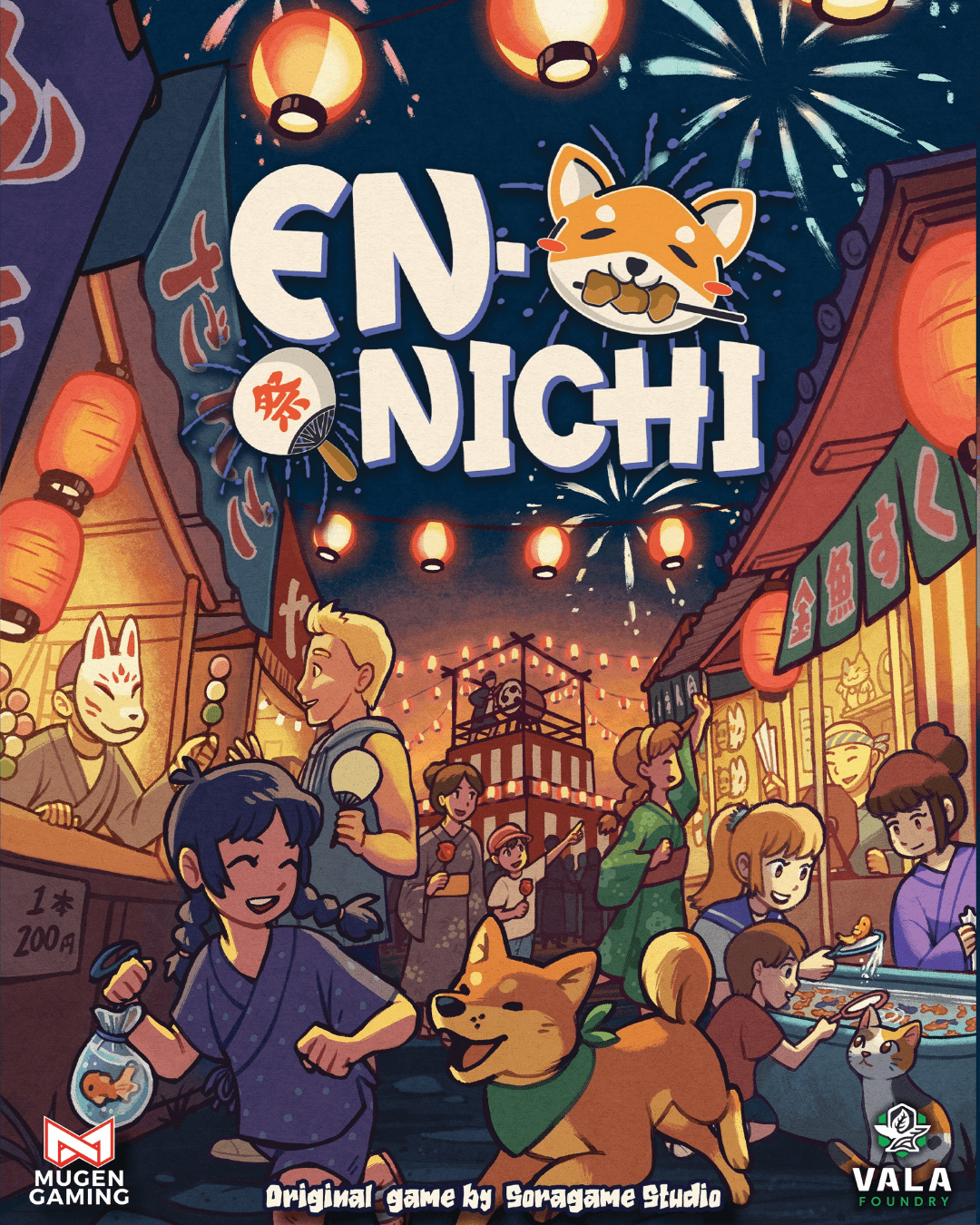
En-Nichi: Japanese Summer Festival. Bild: Mugen Gaming (via BoardGameGeek).
En-Nichi läuft noch bis zum 13. August auf Kickstarter und hat sein Ziel von 7.878 US-Dollar mit aktuell rund 112.831 US-Dollar auf etwa 1.432 Prozent gebracht, getragen von rund 1.035 Unterstützenden. Damit ist es der klare Volumen-Spitzenreiter dieser Ausgabe und erfüllt gleich zwei Aufnahmekriterien: kurz vor Ende und außergewöhnlich hohe Finanzierungsquote.
Thematisch wanderst du über ein japanisches Sommerfest von Stand zu Stand und spielst kleine Jahrmarkt-Minispiele wie Schießbude, Goldfisch-Fangen, Wasserballon-Angeln und Maskenstand. Mechanisch mischt das Spiel Würfeln, Push-your-Luck, ein Gedächtnis-Element und Set Collection: Du sammelst bunte Preise, um die Gunst der Dorfbewohner zu gewinnen. Wer genug Zuneigung sammelt, nimmt die Figuren mit ins große Finale.
Es spielen 2 bis 6 Personen ab 8 Jahren, eine Partie dauert 45 bis 60 Minuten. Verlag ist Mugen Gaming aus Kansas City. Einen Designer nennt weder die Kampagne noch der BoardGameGeek-Eintrag, hier bleibt die Urheberschaft offen.
Aufnahmekriterium: Kurz vor Ende (finanziert) und besonders interessant (Finanzierungsquote deutlich über 300 Prozent, Volumen über 100.000 US-Dollar).
How to Raise Your Kaiju
How to Raise Your Kaiju. Bild: Rose Gauntlet Entertainment (via BoardGameGeek).
How to Raise Your Kaiju läuft noch bis zum 13. August auf Kickstarter und steht mit rund 35.731 US-Dollar bei etwa 357 Prozent des Ziels von 10.000 US-Dollar, gestützt von rund 431 Unterstützenden. Hinter dem Projekt steht Rose Gauntlet Entertainment, das Design stammt von Isaac Vega, die Illustrationen von Alyssa Menold.
Du schlüpfst in die Rolle eines Kaiju-Elternteils und ziehst kleine Monster groß. In deinem Zug setzt du ein Baby-Kaiju auf eine Stadt und nimmst dir eine Fähigkeitenkarte. Anschließend kannst du Stadtzonen erobern, indem du Fähigkeitenkarten passend zu den Verteidigungs-Tokens abwirfst, was Erfahrungspunkte und Ressourcen einbringt. Sammelst du genug Erfahrung, verdient dein Kaiju einen Goldstern.
Alternativ schickst du dein Monster auf den Open-World-Pfad, wo weitere Strecke größere Belohnungen bringt. Eltern-Karten geben jeder Spielerin und jedem Spieler eigene Sonderfähigkeiten, sodass sich die Partien unterscheiden. Nach vier Runden gewinnt, wer die meisten Goldsterne gesammelt hat. Mechanisch verbindet das Spiel Worker Placement, Handmanagement und Set Collection für 1 bis 4 Personen ab 10 Jahren, bei 30 bis 60 Minuten Spielzeit.
Aufnahmekriterium: Kurz vor Ende (finanziert) und besonders interessant (Finanzierungsquote über 300 Prozent, etablierter Designer).
MILLRAT Pack!
MILLRAT Pack! Bild: MILLRAT Studio (via Kickstarter).
Das MILLRAT Pack läuft noch bis zum 13. August auf Kickstarter und hat mit rund 11.326 US-Dollar etwa 188 Prozent des Ziels von 6.030 US-Dollar erreicht, getragen von rund 191 Unterstützenden. Das Projekt bündelt vier eigenständige Spiele in einer Schachtel, gedacht für den Spieleabend, entwickelt von MILLRAT Studio (Nick und Adam) mit Artwork von Abby Ouellette.
Die Kampagne beschreibt das Paket als „etwas für jeden am Tisch", schlüsselt die vier Titel in den abrufbaren Kampagnendaten aber nicht einzeln nach Mechanik oder Spielerzahl auf. Was die Spiele konkret tun, bleibt damit auf Basis der reinen Eckdaten offen. Für den DACH-Raum ist außerdem wichtig: Der physische Versand ist auf die USA beschränkt, sinnvoll bestellbar ist von hier aus vor allem die Print-and-Play-Variante ab 8 US-Dollar.
Aufnahmekriterium: Kurz vor Ende (finanziert). Der Titel steht hier ausdrücklich mit dem Vorbehalt eingeschränkter DACH-Verfügbarkeit.
Kein frischer Start auf Gamefound und Spieleschmiede
Auf Gamefound sind die Kampagnen des Summer Feast von Ende Juli inzwischen überwiegend beendet, ein frisch gestartetes oder kurz vor Ende stehendes Brettspiel mit klarer DACH-Relevanz war in dieser Woche nicht darunter. In der Spieleschmiede läuft weiterhin das Zeitreise-Kennerspiel Restart von Giant Roc, das wir bereits in KW 31 und KW 32 vorgestellt haben und das daher hier keinen neuen Aufhänger bietet. Sobald auf diesen beiden Plattformen wieder etwas Neues mit Substanz startet, greifen wir es in der nächsten Ausgabe auf.
Egal in welchem Universum, die Zwerge sind bekannt für ihr handwerkliches Geschick, egal ob Techniker, Steinmetze oder Schmiede. Auch bei Warcrow ist die Nation von Mounthaven keine Ausnahme. Micro Art Studio bieten in ihrer Pre-Painted-Reihe nun passendes Gelände aus MDF an, das eines Zwergenbaumeisters würdig ist.

 Anmelden


 Micro Art Studio aus Polen wird nicht müde und liefert in seiner für das Spiel Bolt Action lizensierten Reihe vorbedruckte Gebäude aus MDF für einen weiteren Schauplatz des Zweiten Weltkrieges. Nach der frostigen Ostfront geht es dieses Mal in sonnigere Gefilde. Das Thema ist Italien.