Welcome to this week’s batch of crowdfunding campaigns. We have a variety of offerings here, so we hope you will find something that catches your eye. Also, if you want to chat with the BGQ team, join our Discord Server where we talk about games, movies, sports, and other fun stuff. Or, if Facebook is […]
OffDutyNinja, the tabletop marketing specialist which has worked on $25m of crowdfunding campaigns since its 2018 launch, has been acquired by industry peer Game Brands.
The combined company will operate under the OffDutyNinja name, with Game Brands adding its web design, search engine and answer engine optimisation, and blog content creation offerings to ODN’s marketing and crowdfunding services.
ODN’s work over the years has included crowdfunding and marketing support for companies such as Roxley Games, Indie Boards & Cards and Stronghold Games, Devir North America and Allplay, while the more than 100 campaigns it has worked with include the $2.2m More Terraforming Mars! Kickstarter and Marvel Dice Throne X-Men, which raised over $4.2m.
The acquisition follows a period of ODN quietly closing down its operations, Game Brands founder Ryan Eichenwald told BoardGameWire, with company founder Kira Peavley having shifted to a full-time director of operations role at Brass: Birmingham publisher Roxley Games over the past couple of years.
Eichenwald becomes CEO of Off Duty Ninja, with former CEO Peavley staying on in an advisory capacity for the next year to help ease the transition.
Peavley told BoardGameWire, “It came down to timing, and the timing was right. I had reached a point where I was ready for my next chapter, and when the opportunity with Ryan and Game Brands came together, it just made sense.
OffDutyNinja founder Kira Peavley || Photo Credit: OffDutyNinja
“The clients, the team, the work they have all built deserve to keep going and growing, and this deal makes that possible. It felt like the right ending to my chapter and the right beginning for theirs. It has been quite emotional but also quite positive.”
Speaking of ODN’s growth and the changes in board game crowdfunding and marketing over the years, Peavley said, “OffDutyNinja launched October 31, 2018, originally as a media management consultancy. That lasted about five minutes, honestly, because clients needed more and I was able to offer it.
“Very quickly it evolved into a full digital marketing agency for tabletop games, helping publishers with their everyday marketing needs as well as crowdfunding. The scope grew, and then ebbed, and then grew again.
“Covid hit hard and when publishers/creators are having to make difficult decisions about whether they can afford to keep their doors open and keep making games, marketing support understandably moves down the priority list.
“Tariffs have brought that same energy back in a different way. Through all of it we just tried to stay flexible and meet clients where they were.
“The other challenge has been the shift in how Kickstarter works. Ten years ago you could launch with no budget and no existing audience and still find success because the platform itself was driving discovery.
“That window has been closing for tabletop for a while now, and it has fundamentally changed what creators need to consider before launching a crowdfunding project.”
She continued, “That discovery shift really gets to the heart of the biggest challenge we see now. The audience has to exist before you launch. Full stop.
“The campaigns that succeed are the ones where the publisher has spent months, sometimes a full year, building a community that is genuinely excited to back on day one. The first 24 to 48 hours drive the algorithm, and the algorithm doesn’t care about your campaign if you don’t come in with momentum already built.
“The biggest obstacle to that? Time. Creators sometimes wait way too long to get started. We’d sometimes hear from people who reached out only a month or two before their planned launch date, or in some cases after they had already gone live.
“At that point every job gets harder: the audience building is rushed, the creative is rushed, and the campaign pays for it. The earlier you start, the better every single piece of it gets.
“The other big thing is expectation calibration. There are a lot of headline funding numbers out there from mega-campaigns that skew what success looks like.
“For most publishers, especially indie and first-time creators, a realistic and fully funded campaign that delivers well is worth so much more than swinging for a number you can’t hit.”
When asked about her take on ODN’s biggest successes in the crowdfunding space, Peavley said, “Honestly, it’s hard to point to a single success.
“People probably want to hear about the big IP projects, and those are genuinely exciting. Getting to work on something like Power Rangers: Heroes of the Grid across multiple campaigns, or Marvel Dice Throne, or Lord of the Rings, or Terraforming Mars is a thrill for obvious reasons.
Marvel Dice Throne: X-Men || Kickstarter image
“But the truth is every project we worked on was a big success to us, from a first-time creator finding their footing to a major publisher launching their next big title. The scale is completely different but the care that goes into it is exactly the same.
“And that’s really the point. A tremendous amount of love, heart, and work goes into every campaign, and that’s not just from our side. It’s from the client, the designers, the artists, the playtesters, the partners, the backers, the community.
“Tabletop is a real group effort, and when all of those pieces come together the way they’re supposed to, that’s the success. Every single time. That never got old.”
Crowdfunding Future
Game Brands launched three years ago as Board Burst, before renaming itself to Digital Wizard. That company consisted of Game Brands, which focused on digital marketing and web support for the board, tabletop, and video game industries, and Opmasis, which provided the same services for realtors, personal injury lawyers and contractors.
Eichenwald told BoardGameWire that Opmasis would be closing its doors following the ODN acquisition. He said the new company would also cease reaching out to potential video game clients “for at least the time being” – although added that it would still accept video game clients if they request its services.
Game Brands’ previous experience in the tabletop industry includes working with Steve Jackson Games “to help them wrangle their website”, backend work for Restoration Games which Eichenwald said doubled the company’s website traffic, and providing website design assistance for Gamelyn Games prior to its acquisition by Tabletop Tycoon (now Tycoon Games).
Eichenwald said, “ODN’s number of clients is currently at 11, including the combined client bases of both companies. ODN has started moving in a very crowdfunding-heavy direction over the last few months, and I’m very excited to continue that work.
New OffDutyNinja CEO Ryan Eichenwald
“ODN’s crowdfunding team is second-to-none, and I’m looking forward to being able to help new games reach audiences in much more concrete, measurable ways than ever before.
“ODN has also had a very board and card game-focused history, but the addition of the Game Brands team – and Brad Bound especially – gives us deep roots in the TTRPG space as well that we’re eager to bring to ODN’s experienced team.”
The ODN team will also include CFO Chris Ortega and backer experience manager Carissa Yaffe, in addition to lead graphic designer Kevin Haemmerle. Editorial manager Anais Torres was already in the process of leaving ODN prior to the sale, but is currently helping with the company’s transition, Peavley added.
Asked to give her predictions for how tabletop crowdfunding might change over the next year or so, Peavley said, “I think we’re going to continue seeing Gamefound grow, and I’m genuinely hopeful that the increased competition will push Kickstarter to make some positive changes. A little pressure never hurts.
“I personally love what the BackerKit crowdfunding platform is doing and I hope to see it pick up more momentum in our space. The platform landscape is more interesting right now than it’s been in a long time, which is good for creators and backers both.”
Eichenwald, who attended the GAMA Expo trade show as part of ODN at the end of last month, said, “One of the big things that came up was just how many people were looking for crowdfunding support, especially after the economic shocks from last year.
“A lot of the newer games seemed to be small-box or app-enabled, and I got a sense of excitement this year that hadn’t been there the year previous – which makes sense, given that GAMA 2025 was overshadowed by the first round of tariffs.”
Elf Creek Games has begun fulfilling a wave of overdue crowdfunding campaigns after returning to profitability under the leadership of Genius Games founder John Coveyou.
The publisher said it has broken a three-year run of losses since bringing in Coveyou to restructure the company last July, with the profits allowing it to get Santa’s Workshop into the hands of backers, as well as starting to pay some of the backlog of royalties it owes designers.
Elf Creek raised $1.6m through eight Kickstarter campaigns following its launch in 2017, scoring significant successes for games including Merchants of the Dark Road and Honey Buzz.
But the publisher entered years of turmoil after being hit with a $226,000 freight bill for shipping Merchants of the Dark Road in 2022 – more than four-times its initial $50,000 estimate – when global freight costs soared in the wake of the Covid-19 pandemic.
Rather than hold back fulfillment until prices fell, Elf Creek ploughed on in delivering the game at the vastly inflated cost, relying on the entirety of the game’s profits, credit, and forecasts for future sales – a decision from which company founder Brent Dickman admitted in 2024 the business had “never fully recovered”.
The announcement of Coveyou’s appointment last summer ended almost a year of silence from Elf Creek about the status of its undelivered crowdfunding projects – although company founder Brent Dickman confirmed to BoardGameWire in December 2024 that he was “actively looking for a home and way forward for all of our games, including our unpublished Kickstarter projects, and will make official statements when I am able”.
Genius Games founder and Elf Creek Games executive director John Coveyou
Coveyou founded Genius Games in 2013 following a career as an engineer, a science and chemistry teacher and a spell in the US Army. That company specialises in science-themed games with an educational bent, with its best known releases including 2019’s Ecosystem and 2021 release Genotype: A Mendelian Genetics Game (2021)
He is also the founder and director of accounting and tax firm Simple Financials, which Elf Creek said last year specialises in “helping small businesses recover from crises like ours”.
Elf Creek revealed at the end of February this year that it posted a 12.3% profit as a percentage of gross revenue in 2025, following losses of 8.8% in 2024, 33.25% in 2023 and 11.6% in 2022.
The detailed announcement from Coveyou and Dickman expounded on the extensive financial and operational changes the company had undertaken since the Genuis Games founder’s arrival.
It said, “Turning a business around isn’t about discovering a new or a secret playbook. It’s about returning to the fundamentals that every healthy business runs on. These are the things that, somewhere along the way, were deprioritized, deferred, or lost amid growth and day-to-day stressors.
“Most business crises are not sudden events; they are the outcome of the slow accumulation of small decisions that move a business away from the basics.
“None of this changes the impact on backers and partners who have been waiting, or the seriousness of outstanding obligations. The goal has been to restore operational stability so commitments can be met consistently and transparently.”
Those measures were listed by the company as:
Stop all non-essential spending immediately. Every expense was reviewed and non-essential spending was cut. Software subscriptions, agencies, marketing, new projects—anything that wasn’t directly tied to generating income or keeping the business operating was put on hold.
Gain visibility and control over cash flow and operations. A weekly cash and operations dashboard and tracking system was built so the team could see cash and inventory coming in, cash and inventory going out, and exactly where the business stood, in order to make proactive decisions instead of reactive ones.
Get to accurate financials. If the books are wrong, the decisions are wrong. The bookkeeping and accounting were caught up, reorganized for better insights, and reconciled back to the bank statements. Every decision going forward was then based on reality and insights instead of assumptions.
Prioritize and accelerate cash inflows. Core revenue channels were identified and reinforced, keeping the right inventory in stock, continuing to reconnect with key customers, and making sure the parts of the business generating cash had what they needed to keep doing so.
Generate cash from what’s already there. We made a focused effort to collect on outstanding invoices, liquidate dead or excess inventory, and find new ways to monetize existing IP or underutilized resources – with ongoing work still in progress.
Gain additional runway by renegotiating obligations. Many companies struggle under the weight of debt and accumulated obligations. The weight of this can be debilitating, and resolving it is often one of the most difficult steps. Keeping a company running is essential, because a shutdown stops repayment and harms all parties. We restructured debt, worked out new payment plans with vendors, and negotiated revised terms to ensure the company stayed viable and can continue paying back everything owed.
Focus on a few key priorities. Identify a few major “game changers” that will have the greatest impact, then stay focused while avoiding distractions. With the business more stable, we concentrated available time and energy on three key priorities: fulfillment of Santa’s Workshop, getting base games back in stock, and rebuilding critical sales channels to keep revenue flowing and support ongoing obligations.
The company added that it had also paid all outstanding 2025 designer royalties across the Elf Creek Games product line, and was making “steady payments” toward remaining balances from 2024 and earlier.
It said, “Our business exists because of the games we publish. And those games exist because of the designers who create them. Without great products, we simply don’t have a company.”
BoardGameWire reported last December that Paul Salomon, the designer of Elf Creek’s Honey Buzz and Stonemaier Games title Stamp Swap, had left the publisher in September 2024 while owed “an enormous and life changing amount of money”.
Speaking in the wake of Elf Creek’s new announcement, he told BoardGameWire, “I finally received a statement of all of the royalties that I am owed, which hadn’t happened in several years.
“Looking at it now, ‘life-changing’ may have been a bit hyperbolic, but it is definitely making a big difference in the financial reality for my family. I have in fact been paid all of my 2025 royalties! Amazing.
“And in fact, I have been receiving steady and substantial payments on back royalties. Again fantastic.
“Finally, I renegotiated my contract so that Elf Creek can continue to print and sell Honey Buzz products. I am really happy with how that worked out and there’s no question that John Coveyou has done an amazing job as executive director.”
Honey Buzz: Deluxe Edition
Elf Creek said that now fulfillment of Santa’s Workshop is complete in the US, and expected to be delivered worldwide in April, it would be prioritising small-batch fulfillment of Atlantis Rising Monstrosities, production of The Paradox Initiative, finalization and production of Secret Villages, and reprints of base games for Honey Buzz, Atlantis Rising, Merchants of the Dark Road, and Santa’s Workshop.
The company announcement said, “The hardest parts are mostly behind us, but there is still a long road ahead. We are hopeful that the future holds more opportunity than heartache.
“Our focus now is on executing the next phase responsibly and bringing the right people around the table to support long-term stability and reliable fulfillment.
“We’re looking to build a board of advisors, including those who have been in the trenches and understand what it takes to run and grow a business, as well as individuals who can contribute expertise, resources, or connections. If you have experience, resources, or a network that could help, we’d welcome a conversation.
“We’re open to exploring strategic partnerships, outside investment, or proposals that support operational stability and our next phase of growth. If there’s a business, brand, or operator out there who sees the value in what Elf Creek can become, the door is open.”
Welcome to this week’s batch of crowdfunding campaigns. We have a variety of offerings here, so we hope you will find something that catches your eye. Also, if you want to chat with the BGQ team, join our Discord Server where we talk about games, movies, sports, and other fun stuff. Or, if Facebook is […]
Welcome to this week’s batch of crowdfunding campaigns. We have a variety of offerings here, so we hope you will find something that catches your eye. Also, if you want to chat with the BGQ team, join our Discord Server where we talk about games, movies, sports, and other fun stuff. Or, if Facebook is […]
Board game, TCG and comics distribution major Universal Distribution has agreed an exclusive deal with Dice Throne to become the sole distributor of the company’s products in the US and Canada.
Dice Throne games and add-on packs have previously been distributed by companies including Universal and ACD Distribution, as well as Alliance Game Distributors, which Universal acquired in May last year.
The dice and card-focused combat game has become a crowdfunding heavyweight following its original $180,000 Kickstarter project from Mind Bottling Games in 2018, going on to raise almost $13m across a string of subsequent campaigns.
Universal said the exclusive distribution deal “marks a significant step in supporting Dice Throne’s expanding presence in retail stores, especially as the brand continues to grow its Organized Play program and introduce new product formats designed to increase accessibility and drive community engagement”.
Dice Throne’s Organized Play program is designed to help stores build consistent communities and host recurring events, with kits on offer including promo items, prize support and products needed to run casual or competitive play.
The publisher has also recently introduced a new single hero pack format, with the aim of offering a lower entry point for new players and flexibility for collectors and Organized Play participants.
Dice Throne CEO Casey Sershon, who took on the top role at the company at the start of last year, said, “We are excited to partner with Universal Distribution as our exclusive distributor in the US and Canada.
“Their expertise and strong retail network will help bring Dice Throne to even more players across North America.”
Cardboard Alchemy has taken the next step in its rapid expansion by shifting to distribute its own games into retail, powered by the evergreen success of its dragon-themed design Flamecraft.
More than 400,000 copies of the worker placement game have now been sold, company co-founder Peter Vaughan told BoardGameWire, creating an early smash hit which has underpinned Cardboard Alchemy’s growth since the game’s $2m Kickstarter campaign five years ago.
Vaughan said Flamecraft “and the fans that love it” had been a “game changer” for the company, allowing it to quickly expand from its original two-person team of Vaughan and fellow co-founder Brad Brooks, and paving the way for subsequent successful releases such as Andromeda’s Edge and Critter Kitchen.
He said, “We knew soon after the first crowdfunding campaign that this game would be an evergreen game in our line. At that point, we committed to making more promos, an expansion, merchandise that our fans wanted, and have started work on a standalone sequel game, FlameBound.”
The publisher has decided to make the two-player travel-friendly title its first to be self-released and distributed into retail, ending a five-year partnership with Lucky Duck Games and its worldwide localization and licensing division GPN.
Flamecraft Duals || Kickstarter image
The new system sees it enter a partner programme with publisher Allplay, in which Cardboard Alchemy will handle and manage its own retail sales, distribution, conventions and localization, with the latter providing global warehouses, pledge management and e-commerce services.
Vaughan said, “We are excited that retailers can get access to our games and other publishers’ games in one hub, for optimum savings”, adding: “The biggest challenges so far are the ramp up of logistics, operations and sales responsibilities.
“This can be a tough task for a mostly creative team, but we have the players in place and have taken our time to implement this stage.
“We know there will be many things to learn along the way for our small company, but we feel our great games will continue to thrive in retail environments.”
Part of Cardboard Alchemy’s expansion to direct retail has included the recent hire of Patrick Fitzgibbon as hobby retail manager, following seven years of sales at companies including Genius Games, Elf Creek Games, Greater than Games and, most recently, Quartermaster Logistics.
The team also includes Nicole Cutler, who joined the business as director of operations at the end of 2024 after several years working on production and logistics at Arcane Wonders and Pandasaurus Games.
Cutler said that demand for Flamecraft Duals had “far exceeded even our expectations” ahead of its official January 28 release date, with the company moving forward with a third print run of the game before it was even available in wider retail.
That confidence was partly inspired by Cardboard Alchemy’s picking up a big early win in the mass market, with the company agreeing a deal with retail giant Barnes & Noble to get the game on its shelves from early last month.
Vaughan told BoardGameWire, “It is a thrill to see our third title in Barnes & Noble. There has been such a growing diversity of games carried by this strong player in the mass market space.
“Flamecraft and Critter Kitchen are on the shelves at B&N and it seemed a natural fit to add Flamecraft Duals to the party.
“We are honored that Barnes & Noble would commit so early to Flamecraft Duals, and place it prominently in their stores to start the year.”
For global distribution, Vaughan said, “Cardboard Alchemy localized our games previously via the Global Publishing Network, a part of Lucky Duck Games.
“We are thankful for that network, as it has placed Flamecraft in 25-plus languages, Critter Kitchen in a ‘baker’s dozen’ of regions and Andromeda’s Edge in 11 languages so far.
“We now look to work with these publishers directly and invite more partnerships worldwide to distribute our titles.”
Those partners will include existing Cardboard Alchemy collaborator CrowD Games, which previously localised Flamecraft into Russian via GPN, and will now do so for Andromeda’s Edge, Critter Kitchen and Flamecraft Duals.
Manny Vega design Flamecraft, published by Cardboard Alchemy
Like many overnight successes, Cardboard Alchemy’s was actually multiple years in the making. The company was launched by Vaughan and Brooks in 2020 after years of collaboration between the pair across Vaughan’s indie design and development studio Squirmy Beast and Dwellings of Eldervale publisher Breaking Games.
Squirmy Beast partnered with Breaking Games to publish Letter Tycoon in 2015 – with Vaughan providing some of the artwork – and a year later Vaughan joined Breaking as director of development, overseeing games including Brooks’ Rise of Tribes.
Cardboard Alchemy’s first Kickstarter, for Mission Catastrophe in 2020, raised just over $100,000, before the success of the Flamecraft campaign a year later catapulted the company into ongoing success.
The publisher’s next planned Kickstarter will see it crank up the complexity compared to its Flamecraft titles, with the launch of a campaign for Brooks’ co-design Whisperwood, a bag-building heavy strategy game, later this spring.
That game has been co-designed by Asking for Trobils designers Erin McDonald and Cardboard Alchemy developer Christian Strain, the latter of whom also co-designed the solo mode for Critter Kitchen.
Vaughan said, “We’ll be planning over-the-top production (as usual), bringing everything we know about game production to date to the forefront of crowdfunding.”
Welcome to this week’s batch of crowdfunding campaigns. We have a variety of offerings here, so we hope you will find something that catches your eye. Also, if you want to chat with the BGQ team, join our Discord Server where we talk about games, movies, sports, and other fun stuff. Or, if Facebook is […]
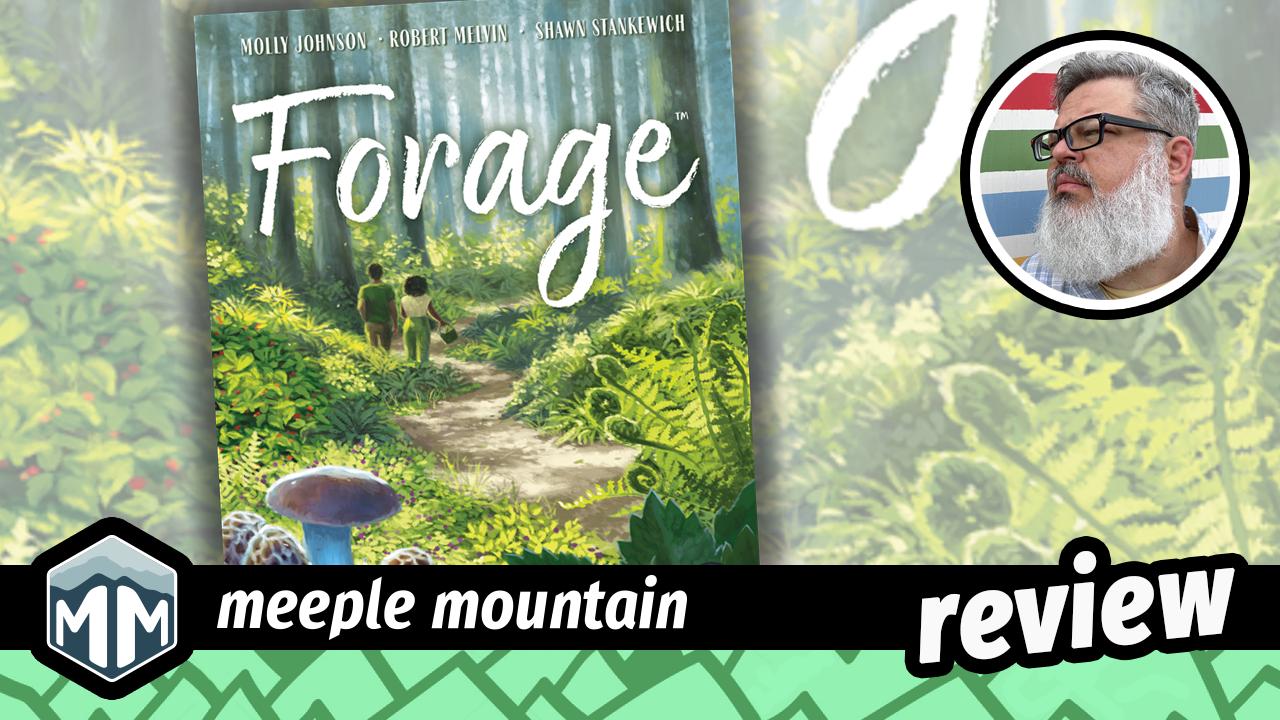
Take a walk with me through the woods as we play Forage.
The Bounty of Nature
Many years ago I read a book by famed author Barbara Kingsolver called Animal, Vegetable, Miracle: A Year of Food Life, a memoir about how she and her family relocated to Virginia and committed to living off only what they could grow, forage, or trade for in the local community. It was fascinating because it introduced me to so many plants that I’d never heard of before. Fiddlehead ferns…you could eat them? Morel mushrooms that some people call “miracles” because it’s a miracle if you find them?
While I never did anything with that knowledge, it really captivated me, and led me to even more books on the same topic like The Mushroom Hunters: On the Trail of an Underground America, about people who can make tens of thousands of dollars taking a single trip into Canada to forage for mushrooms.
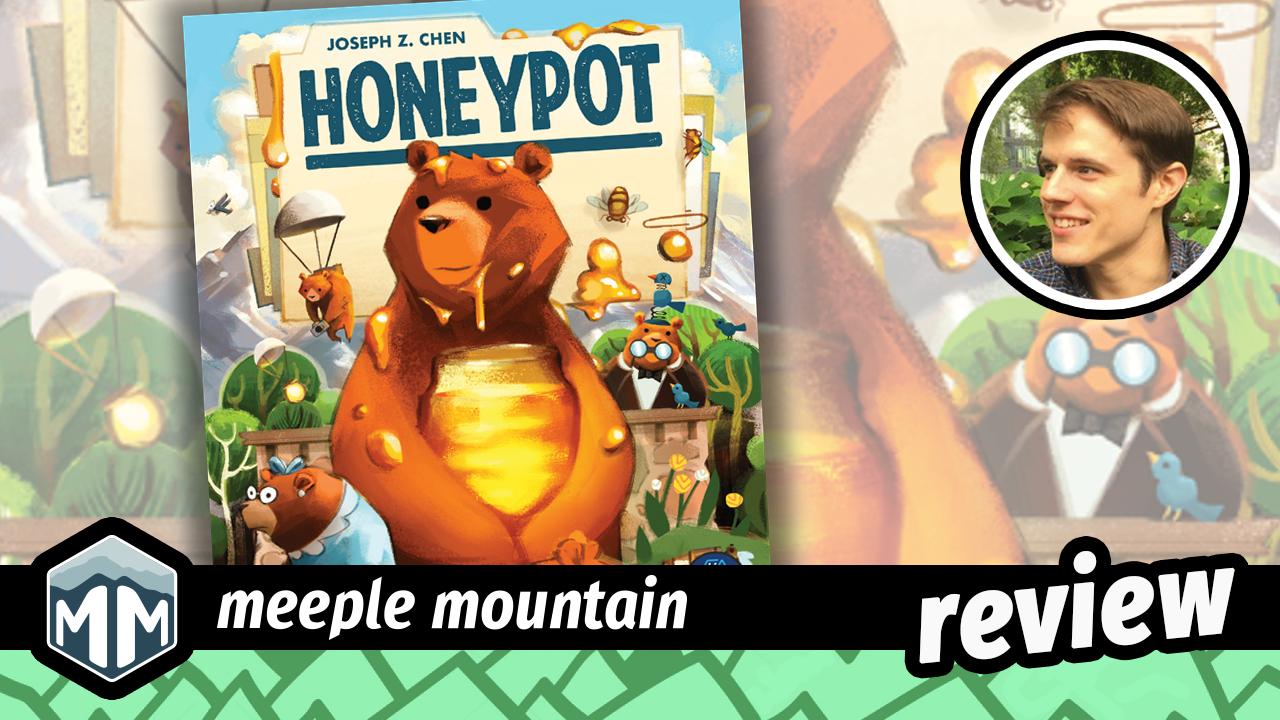
What a charmer, this Honeypot. It has a great hook. It’s hard to have a bad time when you’re tucking cards into tiny manila folders. Also, there are bear costumes. But I’m getting ahead of myself.
Honeypot isn’t quite I Split, You Choose, but it’s close. I Arrange, You Decide, maybe. I Slice, You Bite? I’ll work on it. As secret agent bears across five brisk ursine rounds, players draw six cards from the massive deck, arrange them however they see fit, place them in the aforementioned manila folders, and hand said folders to the next player in the direction of play. On your turn, you open your little gift and look at the first two cards. Now you have to make decisions.
[caption id="attachment_328210" align="alignnone" width="1024"] Photo by Ilya Ushakov[/caption]
If you want the two cards you revealed, great. You keep them and that’s your turn. But what are the odds your opponent, this rival secret agent bear with a grin on their face, would put the best cards at the top? The honey only gets sweeter the further down you go, right? If you think there’s something better deeper in the dossier,…
Welcome to this week’s batch of crowdfunding campaigns. We have a variety of offerings here, so we hope you will find something that catches your eye. Also, if you want to chat with the BGQ team, join our Discord Server where we talk about games, movies, sports, and other fun stuff. Or, if Facebook is […]
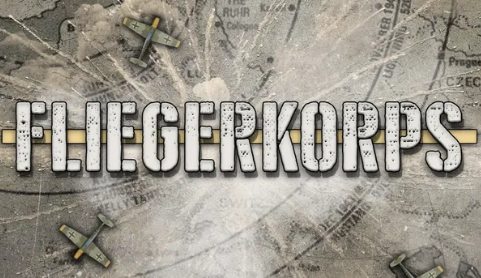
Martin Melbardis began his design career with Campaign: Fall Blau from Catastrophe Games. This was a very interesting little dice chucking solitaire game on Operation Barbarossa during WWII. Since that time, he has started his own independent wargame company called Solo Wargame and has designed 13 different and very interesting roll and write wargames on a plethora of subjects including World War I (Trench Tactics), World War II (Operation Barbarossa, Lone Wolf: U-Boat Command and War in the Pacific), Napoleonic Wars (Siege Works), the Crusades (Crusade: Road to Jerusalem) and Ancient Rome (Rome Must Fall). His newest game called Fliegerkorps is focused on the airwar during WWII and looks really interesting and I reached out to Martin to get a bit more information about the game.
Grant: Welcome back to the blog. What is your new game Fliegerkorps about?
Martin: Hello everyone, great to be back! Fliegerkorps, my newest game, is a solo operational air war game where you command a German Fliegerkorps (air corps) across one of three historical campaigns, The Battle of Britain, Barbarossa, or the Mediterranean. At the very beginning of the game you build your Fliegerkorps by choosing a commander to lead them and choose four aircraft cards to make up your air corps. During each of the fixed 12-turn campaigns, you manage your aircraft, fuel, and squadrons under mounting enemy pressure from air, land, and sea. You must complete enough missions to rack up Victory Points (VP) to influence the campaign before attrition grinds you down.
Grant: Why was this a subject that drew your interest?
Martin: I’ve always been in love with military aircraft for as long as I can remember, but honestly, it started with late-night YouTube rabbit holes on the Battle of Britain with those grainy clips of Spitfires vs. 109’s which got me hooked on the subject recently. After a few days, I came to the realization that I’ve never seen a wargame about managing an entire air corps. I’ve seen plenty of games about dogfighting or perhaps controlling a squadron of aircraft…but never at the corps level where you must deal with logistics, maintenance and planning sorties. I soon came to the realization that I wanted to design something that felt like you were commanding from a smoky ops room in 1940, watching your force slowly bleed out through attrition and sorties while high command demands more. One night I sketched a rough game design document on the idea and couldn’t sleep until I had the basics down.
Grant: What is your design goal with the game?
Martin: My goal was to create a light-to-medium operational solitaire air game that feels tense but stays streamlined and abstracted. I wanted players rolling dice, making meaningful decisions, and constantly weighing risk versus sustainability. Most importantly, I wanted to capture that operational rhythm of launching, suffering losses, refitting, and launching again.
Grant: What sources did you consult to get the historical details correct?
Martin: Core was the Rand McNally encyclopedia of World War II for consulting on general WWII aircraft histories, campaign overviews of the Battle of Britain, Barbarossa, and the Mediterranean Theater, as well as aircraft production and deployment timelines.
I’ll admit that I’m a total visual guy, and that shapes everything I design. YouTube documentary dives into Battle of Britain dogfights, early air war chaos, and Luftwaffe ops kept me fired up, motivated and increasingly informed on the subject throughout the entire Fliegerkorps development.
Grant: What battles are included in the game?
Martin: Battles in Fliegerkorps are more or less abstracted into missions rather than recreated tactically. For example, something like the potential invasion of Malta is represented through a Campaign Mission rather than a detailed operational scenario.
The game includes three campaigns: the Battle of Britain (1940), which focuses on an air supremacy grind, Barbarossa (1941), which blends air and land operations on the Eastern Front and the Mediterranean (1942), centered around convoy strikes, the siege of Malta and desert support. Each campaign has its own mission structure and pressure profile, so while the core system remains the same, the overall challenges change depending on the theater.
Grant: What elements from the early air battles of WWII did you need to model in the design?
Martin; I wanted this game to lean heavily into the simulation aspects of controlling an air corps in WWII and leave out much of the unit tactics involved in battles. Several key elements needed to be represented in the design were aircraft rotation between the Operational and Refit rows, logistical limitations, and escalating enemy pressure tracked through the Air, Land, and Sea Campaign Dice. I also wanted the game to reflect the reality that these campaigns were multi-domain efforts. Air operations rarely existed in isolation, they influenced and were influenced by events on land and at sea. It was important for me that the player could meaningfully affect the larger campaign across all three theaters: Air, Land, and Sea.
Grant: How does the player have to balance their missions, fuel, aircraft losses and worsening strategic conditions?
Martin: In the Mission Phase, all existing mission timers are reduced by one (if they reach zero, you fail the mission) and so missions can’t be ignored for long. If you allow timers to expire, penalties escalate with VP losses, Campaign Dice increases, or additional enemy cubes entering play. If you choose to engage those missions, it will cost fuel and you risk aircraft losses. Launching aircraft costs fuel and after attacking, you move the squadrons to the Refit Row on the aircraft card for maintenance. Larger aircraft like bombers take longer to recover than lighter fighters. So every turn becomes a balancing act. The tension builds steadily over the 12 turns, and that operational pressure is really what the game is about.
Meanwhile, Campaign Dice track strategic pressure in the Air, Land, and Sea sections. As missions and events accumulate, those values can possibly creep up. If a Campaign Die ever reaches 5+, Saturation penalties will apply and certain section-specific restrictions will come into play. This will reduce your options and make future attacks on that section even tougher.
Grant: How does campaign pressure from air, land and sea campaigns affect the player?
Martin: All Campaigns have on their gamesheet containing three Campaign Sections…Air (red for enemy fighters), Land (green for ground forces, AA, and infrastructure), and Sea (blue for convoys, naval logistics, and supply lines). Each one has its own Campaign Die that tracks how bad things are getting in that section. The higher the number, the worse conditions are getting for the Germans. Things such as more enemy pressure, tougher challenges, and nastier effects kick in. If a section becomes Saturated, it seriously lowers your effectiveness when dealing with that Campaign section. In addition, that sections’ specific penalty applies (like in the Battle of Britain, where the Land die at 5+ blocks any chance of rerolls.) Ignore any section too long, and the pressure snowballs across turns.
There is also the chance of a Campaign Collapse which happens if any two of those dice ever hit 6 at the same time (Air + Land, Sea + Air, whatever), the whole campaign falls apart and you lose immediately. No VP tally…it’s game over. It’s a tipping point where one front collapses and drags everything down with it.
Grant: What is the dynamic mission system? How does it work?
Martin: Missions are the central heartbeat of Fliegerkorps, popping up fresh each turn right in the Mission Phase. Each Mission has a die as a timer that you tick down by -1 each turn and meaning no mission lasts forever, and can expire if not completed in time. This does really well to reflect history by adding a sense of urgency to each mission.
Usually Missions are generated by rolling a 1D6 on the Standard Mission table for routine ops like fighter sweeps or convoy strikes and deploy enemy cubes in the section. However, if you land on a green spot on the Timeline? You Skip the roll and generate a Campaign Mission with bigger risks, but juicier rewards. Campaign Missions are unique, historical operations like the London Blitz or the Encirclement of Kiev.
Grant: What choices does the player have for building their Fliegerkorps?
Martin: I absolutaly wanted to include some sort of customization or army building mechanic in the game to allow players to build their own Fliegerkorps using a tight 25 Victory Point (VP) budget.
Before each game you start by choosing a Commander card and pay its VP cost. Commanders simply provide a single, but powerful, special ability. An aggressive option like Richthofen boosts offensive output, while others may reward efficiency or control. Always choose one that matches your style.
Next, choose exactly four Aircraft cards, keeping in mind theater and year restrictions. A mix of fighters, bombers and some Recon aircraft is usually best.
If you have unspent VP, you can always buy extra black Fuel cubes or white Iron Cross cubes (for clutch rerolls.) In Campaign-mode, after each Campaign, you get a chance to further upgrade your Fliegerkorps by buying upgrade cards, or exchanging aircraft cards as new aircraft become available in later campaigns.
Grant: What does an aircraft card look like?
Martin: Aircraft cards are the real stars of Fliegerkorps, they include fighter, dive-bomber, recon, bomber, or even heavy fighter wings, with 2-4 grey cubes each to track the strength of the squadrons that make them up. I honestly think one of my best design decisions for the game was to have an airfield diaroma on the top half of each of the aircraft cards which is further divided into the Operational Row for launch-ready aircraft cubes and the Refit Row, just below, for beat-up aircraft nursing wounds, maintenance and parts.
Each card also has attack ratings vs. Air, Land, or Sea, plus a special ability that will help you during the Campaign. In addition, each card also lists if it’s a Large or Small aircraft type (which affects some actions, the reasoning behind this is that bombers are much more “hangar queens” than small fighters.) Finally, all cards have a VP cost to buy them in your 25 VP build, a year availability and sometimes icons for Recon.
Grant: What is the ultimate player goal for the game?
Martin: The goal is all about how well you balanced your aircraft sorties to complete as many important missions as possible before time runs out. At the end of an intense 12-turn campaign it really boils down to pushing aggressive launches and attack tempo, against refit, recovery and the logistical limitations of WWII Germany. At the end of the game, you tally up those hard-earned VP’s from mission completions and lowering Campaign dice enough and check them against the Victory threshold table on your game sheet.
Grant: What is the layout of the Game Sheet?
Martin: The Game Sheet in Fliegerkorps is laid out so everything’s visible at a glance. I always try to make it as easy as possible for solo play without over-complicated charts or even flipping pages. The top left has the Timeline with 12 slots or turns. Green spots on the Timeline for triggering those rare high-stakes Campaign Missions and with the VP thresholds just above the Timeline.
The center is dominated by the three Campaign Sections (Air: red fighters, Land: green AA/ground, Sea: blue convoys and naval forces) while the top right lays out the Standard Mission and the Campaign mission tables. Finally, the Bottom right has the all-important Action Boxes.
Grant: How are Action Cubes used by the player?
Martin: In the Luftwaffe Phase each turn, you grab four Action Cubes (think of them as your command orders), and allocate them one by one into any empty slot inside any of the Action Boxes at the bottom-right of the game sheet. Slots are limited on certain actions and some slots cost more Fuel or gives less options than others. For example, the Logistic action allows you to pick three options such as recover a loss aircraft or gain fuel. However, using the same action a second time limits you to picking only two options. I felt that adding diminishing returns for repeated use of the same action would help prevent players from spamming certain actions.
Grant: How is the number of Action Cubes available determined each round?
Martin: Action Cubes are fixed at four Action Cubes every Luftwaffe Phase. Campaign effects, Commander abilities or upgrade cards can sometimes alter the available actions in a turn, but for the most part you will always be given four Action Cubes per turn.
Grant: What different orders does the player have access to? How do they affect the game?
Martin: Orders, or Actions, are where the player get’s a chance to react to the evolving Campaign. Some actions require Fuel and each action resolves immediately once placed. The available actions are:
Launch/Attack: Launch aircraft from the Operational Row of one Aircraft card to target a Campaign Section. Successful rolls remove enemy cubes, which may be placed on Mission objectives if possible. After resolving the attack, those squadrons move to the Refit Row.
Recon: Use Recon-capable aircraft to gain Recon points, which can be spent to re-roll dice, ignore Saturation, gain an extra action, or adjust missions and events.
Refit: Moves squadrons from the Refit Row back to Operational status. Larger aircraft recover more slowly than smaller fighters.
Martin: At the end of the 12-turn campaign in Fliegerkorps, you simply total your VPs from completed Missions and any Campaign Die bonuses earned for keeping pressure under control. You then compare that total to the Victory threshold. Each campaign has its own required totals. The difference between Victory and Brilliant Victory is simply a matter of having a few extra VP’s to upgrade your Fliegerkorps at the end of the campaign (not to mention bragging rights)
In Campaign Mode (or Linked-Campaigns), any VP earned carries forward and can be spent on upgrades for your Fliegerkorps, such as additional Fuel or Iron crosses as starting resources, upgrade cards or exchanging aircraft cards .
Grant: What are the loss conditions?
Martin: You lose in one of two ways…First, if at the end of the 12-turn campaign your total VPs fall below the required threshold of Victory listed on the Game Sheet. For example, in the Battle of Britain you need at least 11 VP to achieve Victory. Anything below that is a loss.
Second, you lose immediately if a Campaign Collapse occurs. This happens if any two Campaign Dice reach 6 at the same time. For example, the Air and Land Campaign sections both maxing out. When that tipping point is reached, the campaign ends instantly. This reflects the idea that sustained pressure across multiple fronts can overwhelm theoverall campaign of yourFliegerkorps. Ignore one theater too long, and the consequences will cascade quickly.
Grant: What type of experience does the game create for the player?
Martin: I’ve always enjoyed fast-playing management-style games where you’re juggling resources and trying to prevent systems from spiraling out of control. That feeling was something I really wanted to reflect with Fliegerkorps. At its core, the game is a compact operational simulation themed around running a WWII Luftwaffe air corps. Each playthrough runs about 30 to 40 minutes. I also added options for different force builds and campaign theaters to try and create strong replay value.
Grant: What other topics are you planning to create games for in the future?
Martin: Firstly, some big news… Catastrophe Games will soon be launching a boxed edition of my game, Campaign: Bagration on Kickstarter. It’s the direct sequel to Campaign: Fall Blau, but this time you’re on the Soviet side in 1944.
I’ve also begun designing a new game called Shock & Awe, centered on the 1991 Coalition air campaign against Iraq’s integrated air defense network. I’ve also been exploring something completely different, a fast, arcade-style air combat experience centered on piloting a single Cold War-era fighter such as an F-15, MiG-29, or F-16. It’s still in the conceptual stage but the idea will evolve.
Beyond that…my solo print-and-play pipeline always remains active where I’m planning to continue my epic WWII Roll & Write series, focusing next on a North African campaign or possibly D-Day. Smaller games like this allow me to finish them relatively quickly while keeping the designs accessible and portable. I may also put out a voting poll to backers soon to help shape ideas for a future project. There are simply so many wars and time periods still worth exploring, and to me, community input is always valuable. As you can probably tell, I have far more game ideas than time to fully develop them all!
British board game publisher Alley Cat Games has triumphed in this year’s Diamant d’Or – a prize focused on championing heavier eurogames – after pivoting its strategy several years ago to experiment with crowdfunding more complex designs.
The Toni López-designed dice manipulation game fought off big name titles including Galactic Cruise and Luthier to win the 2026 Diamant d’Or, which was created more than a decade ago to celebrate complex euros the organisers felt were being overlooked by more mainstream board game awards.
Richard Breese’s latest design in his Key series, Keyside, took second place in this year award, while Ants, an ant colony expansion title from frequent Diamant d’Or finalist Cranio Creations, came third.
Speaking to BoardGameWire, Alley Cat Games director Caezar Al-Jassar said the team was “ecstatic” with the win, adding, “we have worked hard for three years to bring Ada’s Dream to gamers and have been blown away by the positive response from our backers and supporters”.
He said, “Ada’s Dream is the most complex game we’ve ever produced. A few years ago we noticed that the trend for Kickstarter games was leaning to heavier and more complex games than we were producing, and so we pivoted to explore creating more games like this.
“This meant a lot of extra work to produce the final game and we are incredibly pleased to see that work has paid off, and that Ada is being celebrated by the Diamant d’Or committee.”
The Diamant d’Or win comes just under a year after Alley Cat announced during its Kickstarter campaign for Baghdad that it would cease producing retail editions of its crowdfunded titles “for the foreseeable future”, amid rising competition on shop shelves and uncertainty around US tariffs.
A statement from the company at the time said,” It is getting harder for Kickstarter games to succeed, both on Kickstarter and in particular at retail stores after the campaign.
“This, coupled with rising costs and the uncertainty surrounding US tariffs, has led us to look at ways of streamlining the business to ensure that we don’t have so much money tied up in stock. We’d much rather invest this money in making more great games!”
Al-Jassar told BoardGameWire, “Considering that these titles are more expensive to produce, ship, and store than smaller more retail friendly games, we kept the decision to move away from retail distribution of our Kickstarter games.”
A small number of copies of Ada’s Dream were briefly available through the Alley Cat website from February 5, but those available to US and European customers have already sold out.
Al-Jassar said, “The initial webstore sales were some stock not needed for fulfilment. However, as there are still backers that did not complete their Pledge Managers, we will be keeping a supply in storage until a set number of months after the end of fulfilment to ensure all backers have the opportunity to receive their copy.
“Regarding future plans for Ada’s Dream, we won’t be producing a print run for retail distribution but may have some more copies available once enough time has passed after fulfilment, and are exploring a future Kickstarter campaign with an expansion and reprint that we hope to launch in early 2027.”
The 2026 Diamant d’Or
WINNER: Ada’s Dream, designed by Toni López (Published by Alley Cat Games)
Second place:Keyside, by Richard Breese and David Turczi (HUCH!, R&D Games)
Third place:Ants, by Renato Ciervo and Andrea Robbiani (Cranio Creations)
Other finalists:
Galactic Cruise, by TK King, Dennis Northcott and Koltin Thompson (Kinson Key Games)
Luthier, by Dave Beck and Abe Burson (Paverson Games)
Philarmonix, by Faris Suhaimi (Archona Games)
Recall, by Helge Meissner, Kristian Amundsen Østby, Kjetil Svendsen and Anna Wermlund (Alion – by Dr Ø)
Welcome to this week’s batch of crowdfunding campaigns. We have a variety of offerings here, so we hope you will find something that catches your eye. Also, if you want to chat with the BGQ team, join our Discord Server where we talk about games, movies, sports, and other fun stuff. Or, if Facebook is […]
Dice Throne Digital bekommt einen konkreten Starttermin: Am 14. April 2026 soll die Kickstarter-Kampagne live gehen. Ziel ist eine digitale Umsetzung, die das bekannte Duellgefühl auf moderne Plattformen bringt. Wer Dice Throne bisher nur am Tisch gespielt hat, bekommt damit eine neue Möglichkeit, die Helden auch unterwegs oder online gegeneinander antreten zu lassen.
Zum Release soll Dice Throne Digital auf Apple, Android, Steam und Meta verfügbar sein. Dazu ist Full Crossplay angekündigt. Du kannst also gegen Freunde spielen, auch wenn ihr auf unterschiedlichen Plattformen unterwegs seid.
Wenn du es früh vormerken willst, gibt es bereits Wunschlisten-Seiten:
Dice Throne ist als Brett- und Würfelspiel ein schnelles Kampfspiel für 2–6 Personen. Möglich sind klassische 1-gegen-1-Duelle, Team-Varianten und freie Runden mit mehreren Parteien. Du wählst einen Helden, würfelst mit dessen fünf eigenen Würfeln und aktivierst damit Angriffe und Fähigkeiten. Dazu kommen Karten, die du über Combat Points bezahlst und die Effekte wie Upgrades, Statuszustände oder direkte Würfelmanipulation ermöglichen.
Ein wichtiger Punkt für Sammler und Vielspieler: Jede Person braucht einen eigenen Helden, und die Helden sind untereinander kompatibel. Über verschiedene Boxen und Sets ist daraus eine Reihe geworden, die sich gut erweitern lässt und in vielen Gruppen dauerhaft auf den Tisch kommt.
Mit Dice Throne Digital soll dieses Grundgefühl auf mehrere Plattformen übertragen werden. Wer das Projekt unterstützen oder einfach im Blick behalten will, findet alle relevanten Einstiegsseiten schon jetzt über Kickstarter sowie die Wunschlisten bei Steam und Meta.
Welcome to this week’s batch of crowdfunding campaigns. We have a variety of offerings here, so we hope you will find something that catches your eye. Also, if you want to chat with the BGQ team, join our Discord Server where we talk about games, movies, sports, and other fun stuff. Or, if Facebook is […]

 Anmelden


 Welcome to this week’s batch of crowdfunding campaigns. We have a variety of offerings here, so we hope you will find something that catches your eye. Also, if you want to chat with the BGQ team, join our Discord Server where we talk about games, movies, sports, and other fun stuff. Or, if Facebook is […]