
Normale Ansicht

Grant’s Top 10 Solitaire Wargames of 2025!

Von: Grant
16. April 2026 um 14:00

As I have done with my Top 10 Wargames of each year list I am going to do the same with the Top 10 Solitaire Wargames/Games that I played that were published in 2025. I played a total of 17 new published solo games in 2025 so take this list with a grain of salt as I didn’t play all the titles released in 2025 nor even all of the games that I purchased this past year. The games that I played include the following:

  • Okinawa: The Last Battle of WWII from Solo Game of the Month
  • Iwo Jima 1945 from Worthington Publishing
  • The Pursuit of John Wilkes Booth from Blue Panther
  • Operation Dragoon Travel Game from Worthington Publishing
  • Crusaders: The Siege of Acre 1291 from Art of Wargames and Blue Panther
  • SPQR: The Battle of Alesia 52 BC from Art of Wargames and Blue Panther
  • Siege Works: A Napoleonic Siege Roll & Write from Solo Wargame
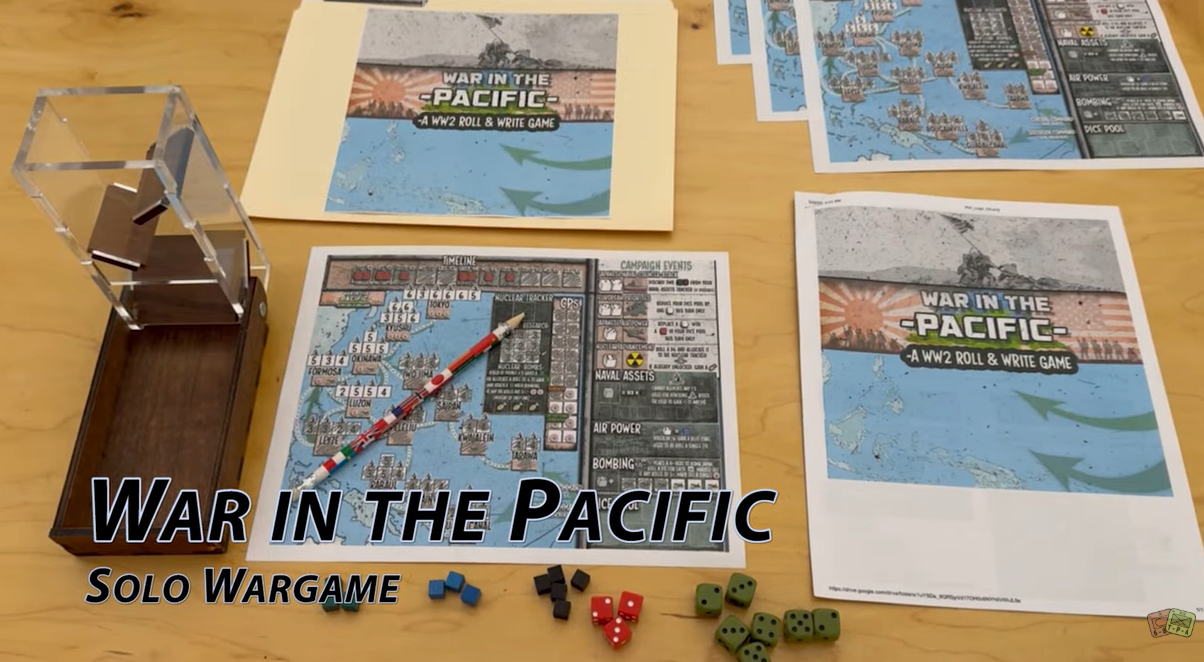
  • War In The Pacific: A WW2 Roll & Write from Solo Wargame
  • Fields of Fire Deluxe 2nd Edition from GMT Games
  • Europe at War 1940 Solitaire from Worthington Publishing
  • Shogun Solitaire from Worthington Publishing
  • Black Skin Black Shirt: Ethiopia vs Fascist Italy 1935-1937 from White Dog Games
  • Empire of Grass from White Dog Games
  • Onoda from Salt & Pepper Games
  • Iwo Jima: Hell on Earth from Neva Game Press
  • La Der de Ders – The War to End War from Hexasim
  • Thermopylae: Last Stand from Solo Wargame

I have really grown to love my solo wargaming and it is partly because there are plenty of well designed and engaging games out there that continue to feed my curiosity and hunger for a tough challenge. Here I present to you my list of the Top 10 Solitaire Wargames of 2025!

10. Crusaders: The Siege of Acre 1291 from Art of Wargames and Blue Panther

A new solitaire game is always welcome on my table…and if that game is about the Crusades, even better! Earlier this year, Blue Panther released a new game designed by Joe Fernandez called Crusaders: The Siege of Acre 1291. The game is what I would call a lite dice-chucker with some very interesting aspects of a siege baked into the game. There are tracks on the board that track the condition of the outer wall, inner wall and accursed tower and the Crusader Knights, including Templars, Hospitallers and Teutonic Knights, inside the city of Acre have to defend against the Mamluk siege for 13 turns.

The game has a random event that kicks off each turn that will do damage to the city walls, kill knights and advance the Mamluk miners who are attempting to tunnel under the walls. There is just one event that if rolled can do a loss to the attackers but this occurs only on a roll of 3 on a 10-sided die.

The rules are very simple clocking in at 5 pages and are easy to understand and once read the game can be played only from the excellent player aid. I very much enjoyed the Deus Vult actions that are special actions that can be used to do things like repair a wall, reverse a Mamluk mining action or sally out of the city to offensively attack the besieging units. But, these actions can be nullified if certain conditions occur so you should use them while you have them and not wait too long or they might disappear.

I feel like this game really scratches that quick playing, easy to get into but intense and difficult game itch. The Crusaders have an uphill battle for sure as they really don’t have as many options or choices as I would like to see but what is there makes sense, is full of historical flavor and plays well. I have not been that successful with the game, meaning that I haven’t won very often, but despite that I still want to come back play after play and that should tell you something about the game and what it is. If your dice luck is really bad, this one can snowball quickly ending in a catastrophic defeat. I think that the other real attractive part of the game is that it is quick to set up, has good rules and plays quickly. This one will not blow your socks off but it is good for what it is and it comes in a small box that is very portable. In fact, I played it first while attending a work conference.

Here is a link to my playthrough video:

Here also is a link to my video review:

If you are interested in Crusaders: The Siege of Acre 1291, you can order a copy for $35.00 from the Blue Panther website at the following link: https://www.bluepantherllc.com/products/crusaders-the-siege-of-acre-1291

9. Shogun Solitaire from Worthington Publishing

Staying in the small, travel sized wargame department is Shogun Solitaire from Worthington Publishing. I say wargame, but it is probably more of a strategy card game with a war theme being set in the period of the Sengoku Jidai. Shogun Solitaire is a card based dedicated solitaire game where the player is leading a coalition of four clans to unite feudal Japan. These clans are one of 4 different colors in the game including green (Hōjō), purple (Takeda), red (Katō) and blue (Amago). Each of the clans must secure 3 objectives within their territory to achieve unification under a single Shogun including the port, village and castle of that region. To accomplish this, you’ll need to deploy armies in the form of cards in strategic combinations to gain control of those objectives. These cards are built up in the players tableau and you must get a run of 3 same colored cards (not the same type of soldiers although you cannot play 2 of the same soldiers consecutively) played in order to win the next objective. But, there are Enemy cards colored black or gray that represent assassins, Ronin and raids. There are also neutral Envoy cards that are bronze colored that act as dead space in your tableau and represent the court responsibilities and diplomacy of the Shogun with allied clans and if you ever build up too many of them in the area you will have to take a breath and wipe the slate clean by sending them home.

The really great part of this game is that each of the different types of cards have different special abilities and you must deploy them properly in order to gain the greatest advantage before the 102 card deck runs out. There are six types of Shogun cards that represent the available forces that can be deployed to seize objectives. Samurai can protect and will cancel enemy cards before they can do damage. The Ninjas allow the player to search the top 4 cards of the deck and then reorder them in order to finish a run of the same color cards before bad things can happen. And one of the most important cards is that of the Leaders which act as a wild card that can be played like any Shogun card of its color. I found that trying to utilize these cards to their highest effect was very fun and tense and I found myself really trying to utilize each ability at the right time.

This game is fast playing, playing in 20-30 minutes, and is very fun. But it can be very luck dependent as when you draw bad cards a few hands in a row, there is not much that you can do and the game begins to pound you down and it can come to an end very quickly. But, this game is very good and well designed for what it is; a lite, card based, quick playing travel sized game that is also very beautifully produced with gorgeous period art, thick cards and a fantastic board that flips over to show a

A look at a very lucky win! Notice the back of the board turned over the reveal the beautiful art!

Here is a link to my playthrough video:

Here also is a link to my video review:

If you are interested in Shogun Solitaire, you can order a copy for $35.00 from the Worthington Publishing website at the following link: https://www.worthingtonpublishing.com/collection/shogun-solitaire

8. Iwo Jima 1945 from Worthington Publishing

A few years ago, Worthington Publishing published their first game in the Island Fight Series called Tarawa 1943. That game was awesome and was truly difficult to win, as it should be. Now, they have published the 2nd volume in the series called Iwo Jima 1945 that covers the only island assault during the Pacific war that the attacking US forces would suffer worse casualties than the Japanese defenders. On February 19, 1945 the USMC would land 30,000 marines on the island against a Japanese defensive force that numbered roughly 21,000 Japanese soldiers. Facing a Japanese commander who had learned valuable lessons from the losses on other Japanese islands, the USMC would eventually land over 70,000 marines and suffer over 25,000 casualties during the 36 day campaign.

In this solitaire game, the player takes on the role of the USMC commander leading the invasion of Iwo Jima. The game system, driven by cards, will simulate the strategies of the Japanese defenders, often referred to as the Japanese AI, adding a layer of historical authenticity to your gaming experience. If you have played Tarawa 1943, you will be familiar with the system.

Iwo Jima’s play deck is larger than that of Tarawa’s, which provides a bit of breathing room in the game but doesn’t necessarily change the difficulty appreciably. There are also added mountain positions on the island where the attacking USMC will roll 1 less attack dice making it very challenging to overtake several of the key positions and that will need the player to use special cards to assist. The USMC player is allowed to play any number of the cards from their hand during their turn as opposed to just 3 from the previous entry in the series. The other rules are almost all the same, and you can begin playing with just a brief read of them.

I have played this one about 10 times and have not even come close to winning. It is tough and the way the dice system for combat works it is truly difficult for the Marines to score hits quickly enough to make significant progress, which is how it should be. But, the game is fun, tactically challenging as you have to manage your Cohesion as well as decide when to deploy and replace front line troops with fresh troops and plays pretty quickly. I have never had a bad play of this system and very much look forward to other entries in the series.

Here is a link to my playthrough video:

Here also is a link to my video review:

If you are interested in Iwo Jima 1945, you can order a copy for $75.00 from the Worthington Publishing website at the following link: https://www.worthingtonpublishing.com/collection/iwo-jima-1945

7. Onoda from Salt & Pepper Games

I am always on the lookout for an interesting and different type of historical game. And when that game is solitaire and allows the player to experience and gain insight into the life of a tragic figure then I am very interested. A few years ago, I came across this very interesting looking solitaire game designed by Francisco Gradaille called Onoda from Salt & Pepper Games. Onoda follows the tragic life of Hiroo Onoda who was a Japanese soldier who wouldn’t believe that Japan had lost World War II and stayed at his post on the island of Lubang in the Philippines from 1945-1974 when he finally surrendered after a visit from his commanding officer. I have played this one several times and can say the game is very interesting, educational and also gives the player an opportunity to learn and gain insight into the life of this person who is remembered as an insane criminal and a story of tragedy.

During 6 rounds of variable duration, the player has to obtain a number of resources represented by rice that will
allow them to finish the round without suffering penalties, such as reduced health and morale. In each round, the player will have to undertake a series of missions, earning honor points for accomplishing them. During the game, the player will get to experience some of the events that the real-life Onoda had during his stay in Lubang as well as some of the tragedies. The missions includes things like sabotaging key infrastructure, gathering equipment and other useful items all the while trying to evade detection and capture. But the game goes deeper than that as the crux of the game is the management of morale and the level of insanity in the mind of the soldier due to paranoia, death of comrades or illness.

During these missions, the player will have to draw tokens from a draw bag that represent the level of alarm that is present on the island due to his shenanigans. Each time that a player has to perform a check to accomplish a mission or to avoid danger from the random events, the player must take a Resource/Resolution token from the bag and check its number side against the relevant level of alarm or paranoia in the are where the operation is being undertaken. These Checks are successfully passed when the token’s number is higher than the Alarm or Paranoia level so keeping these low and also moving around the island stealthily will spread out the alarm level and keep Onoda safer and more able to accomplish these missions. Failure will lead to negative effects and lost opportunities as the game has only 6 turns.

I very much enjoyed this game and also loved it because it made me think about this tragic “hero” and his motivations and life those 30 years on the island. What commitment he must have had as well as derangement and you have to respect that or at least give it some thought. Just a great little narrative generator with some very gamey mechanics that create an interesting experience.

Here is a link to my playthrough video:

Here also is a link to my video review:

Also, in case you missed it, we published an interview with the designer Francisco Gradaille on the blog and you can read that at the following link: https://theplayersaid.com/2024/11/06/interview-with-francisco-gradaille-designer-of-onoda-from-salt-pepper-games-coming-to-gamefound-november-7th/

If you are interested in Onoda, you can order a copy for $39.00 from the All Play website at the following link: https://www.allplay.com/board-games/onoda

6. Black Skin Black Shirt: Ethiopia vs Fascist Italy 1935-1937 from White Dog Games

I have really enjoyed my plays of several games designed by R. Ben Madison. He has a knack for including elements of the history into the gameplay while placing the events into the framework of his chosen system, which is usually the States of Siege Series…but not always. His newest offering called Black Skin Black Shirt: Ethiopia vs. Fascist Italy 1935-1937 from White Dog Games uses the States of Siege Series System and delves into pre-WWII conflict in Africa.

First off, this game is very challenging, as is to be expected as the Ethiopians are desperately outmanned and outgunned by the Fascists as they invaded to take over the oil rich area for their own purposes and I have not done well at it at all in my few plays. I normally would have played it a few more times before adding to the list but I just had such a good experience with it and the history that I felt that I needed to add it to the list. It uses the States of Siege Series but in a bit of a different layout as there are not tracks per se but there are paths that lead through various regions of the country of Ethiopia as they converge on the capital of Addis Ababa.

The game is chit pull and the chits that are pulled give instructions about the actions of the AI Italians as they move on each path. The player will also gain a number of action points that can be used to take actions such as attacking to drive back the invaders. I very much like the concept of support of the Fascist invasion as they have the ability to place their support focused bases on the map as they advance and this leads to the player no longer being able to drive them back to beyond that point so the pressure really ratchets up as the game goes along.

As is the case generally with these games, Black Skin Black Shirt is an easy-to-play, straightforward solitaire game that creates a very interesting historical narrative about how the conflict plays out. There are really lots of tough choices and the game is about the management of your resources and assets, such as your Ras warlords who can go out and make devastating ambush attacks but can also be killed in action and removed from the game, The game forces the player to take charge of the defenses, by calling up troops and marshalling resources as well as attempting to call on the League of Nations for aid and support.

Here is a link to my unboxing video:

If you are interested in Black Skin Black Shirt: Ethiopia vs Fascist Italy 1935-1937, you can order a copy for $56.00 from the White Dog Games website at the following link: https://www.whitedoggames.com/ethiopia

5. The Pursuit of John Wilkes Booth from Blue Panther

A few years ago, while attending the WBC, I had the chance to meet Wes Crawford who was demoing his upcoming game Engine Thieves. He was a very nice guy and his game was pretty interesting as well. Since that time, he has another game that has been released designed in partnership with Ryan Heilman in The Pursuit of John Wilkes Booth published by Blue Panther. I had a chance to play the game solitaire (with Wes overseeing the game and giving me guidance and pointers) at WBC in 2024 and have since played the game on my own several times and had a really great time with it. Great little solo game with several other modes where the player uses resources like police and detectives to search for clues in the hunt for Lincoln’s assassin after the events at Ford’s Theater on the evening of April 14, 1865. Definitely not a subject that has been gamed before and it is really refreshing to be able to experience this history in an interesting and engaging game. There really is a lot to like with the way that clues are found and chits are blindly drawn to verify clues from a bag. There is also a great little movement mechanic with police and detectives to try to acquire more clues.

I know that this is not a traditional wargame but the topic is just so very interesting and the variety of modes you can play in is also very cool. I think that this one is a game that will stay in my collection for years to come and I think that you will enjoy the chit pull, use of your special Stanton Cards that give special events or actions and the way that the movement, searching and raiding works when you find Booth.

We were able to post an interview with Wes Crawford on the blog and you can read that at the following link: https://theplayersaid.com/2024/12/03/interview-with-wes-crawford-designer-of-the-pursuit-of-john-wilkes-booth-from-blue-panther/

Here also is a link to our video interview after playing the game with Wes at WBC:

Here is a link to my playthrough video:

Here also is a link to my video review:

If you are interested in The Pursuit of John Wilkes Booth, you can order a copy for $70.00 from the Blue Panther website at the following link: https://www.bluepantherllc.com/products/pursuitofjwb

4. Siege Works: A Napoleonic Siege Roll & Write from Solo Wargame

Until a year or so ago, I had literally never heard of the concept of a Roll & Write game. But, I started seeing these things pop up on Kickstarter from a new company called Solo Wargame and I was immediately intrigued as the topics for the games were so interesting and varied that I thought that there just might be something worth looking into. Since that time, I have played 2 of these Roll & Write games from Solo Wargame and really found that Siege Works: A Napoleonic Siege Roll & Write was my favorite. I say my favorite because who doesn’t like a siege game and a game set during the Napoleonic Wars is always fun! 

Roll & Write Games are typically small and portable games, some are even Print ‘n Play games like Siege Works, that involve the player rolling dice and then marking the results on sheets of paper or sometimes erasable boards. These markings can mean several different things including goals being met, pre-requisites being completed or enemies defeated. The genesis or archetype for these Roll & Write Games is Yahtzee, where players roll a handful of dice looking for various combinations of results to mark off on their sheet that then score points in the end. But recently that game genre has started to include a bit more player agency and choice about how they go about reaching goals including dice selection from those that are rolled, choosing results that are needed at the time but may be less than optimal in the long run and in completing certain goals that will open the door for additional future beneficial options for the player. Don’t get me wrong. A Roll & Write Game is very simple and is not a traditional style of wargame with hexes, counters and Combat Results Tables. But the game tells a story of a siege and how it works. So I was initially skeptical about this form of game and just had to give it a try to see what it was about. I have actually played 2 of them and found them to be lite, fun and interesting. And Siege Works is a solitaire Roll & Write Game so I have played it by myself on my gaming table and had a good time with them.

The biggest plus to the game is the simple rules, easy setup and fast onboarding with learning and being able to get the game played. You can play this easily with a simple read of the rules and a bit of review of the Game Sheet before playing. The sequence of play is very good and easy to follow as well and I found that the game is pretty intuitive. My only issue with the rules was that I found that they sometimes needed just a few more words or an additional sentence for clarity. But this is combated somewhat by the fact that the rules contain a lot of good play examples for the different actions in the game.

Here is a link to my First Impressions post that appeared on the blog and you can read that at the following link: https://theplayersaid.com/2025/09/16/first-impressions-siege-works-a-napoleonic-siege-roll-write-from-solo-wargame/

Here is a link to my playthrough video:

Here also is a link to my video review:

If you are interested in Siege Works: A Napoleonic Siege Roll & Write, you can order a print and play copy for $8.00 from the Wargame Vault website at the following link: https://www.wargamevault.com/en/product/530416/siege-works-a-napoleonic-siege-roll-write

3. La Der de Ders – The War to End War from Hexasim

La Der des Ders – The War to End War from Hexasim is a 1-2 player slightly abstracted strategic level look at World War I. The game allows the players to relive the First World War at a strategic level, with each player controlling one of the 2 sides either the Entente, consisting of France, England, Russia, Serbia and other minor nations or the Central Powers including Germany, Austria-Hungary, the Ottoman Empire and a few minors. La Der des Ders can also be played solo, with a dedicated solitaire bot called “Athena” who utilizes special Cornflower Cards to make decisions about what technologies to invest in, where to undertake offensives and how to utilize limited resources and reinforcements. Each turn, players gain an amount of Resource Points dependent on what nations are in the war, which they can allocate to different areas to guide their overall strategy. Victory is achieved by launching offensives that drain the morale of enemy nations, forcing them out of the conflict through collapse.

One of the best parts of La Der de Ders, and typically the best part of any strategic level wargame, is the Technology Phase and the player’s ability to spend their limited resources on various types of technologies to improve their performance on the battlefield and in the economic war. But, keep in mind that there is a risk here as resources are limited and you have to pay to develop these technologies and there is no guarantee of success as it is up to a dice roll, albeit a modified one at that. Each of the players has their own Technology Tree board that is used to track their technological progress over the course of the game. There are a total of 6 different Technologies that can be researched including Attack, Defence, Artillery, Aviation, Naval, and Air Raid.

The process of taking Offensives is really pretty simple as players take turns to activate one of their sectors that has not yet been activated this turn. The sector chosen will then be activated and must launch an Offensive against an adjacent enemy sector. There is a cost to the launching of Offensives though as the player will have to pay the appropriate cost by first choosing the size of their Offensive, which in game turns means the number of dice they will pay to roll in the Offensive. The size of the Offensive must be at least 1 and can be up to the current Operational Value of the attacking sector. The player launching the offensive then spends as many Resource Points as the size of the Offensive. Dice rolling is fun and the real key here is how to plan for an prioritize your chosen Offensives as you cannot just do one each turn or you will risk collapse and will be unable to do other things such as invest in technology development.

Victory in the game is well done and I very much like the concept of only calculating the value for those countries who have not Collapsed and who are still in the war when the end game is triggered. We all know that it is easier to negotiate a peace that is favorable to your side when you are still a threat and if too many nations of either side have collapsed then their Prestige Points will reflect this as those countries won’t contribute to the final value. And I also like the simplicity of the scoring system. If certain key countries like France and Germany surrender, then that equates to a victory for the side causing the surrender and if the game continues to grind on through the final turn, then there is this calculation that is really pretty simple and gives importance to each goal with a different value that can be earned. Just a solid method for determining victory that makes sense and fits with the historical aspect of the outcome of the Great War.

The Athena bot is the solitaire mode of the game and it is not just tacked on but is very well done and creates an interesting and challenging game. It is a really well designed system that removes most of the work by the player when playing solitaire. There will be times when you have to make a decision, such as the priority of how Offensives occur from the non-player side, but these decisions are easy and the hard work is done by the simple flipping of a card. I do want to point out one final thing. The sequence of play differs slightly from the 2-player game as it rearranges when the Athena bot does a few of the steps during the Spend Resource Points Phase as shown below. The human player will start by doing their Reinforcements first followed by their Technology investment. Athena will then go and do their Technology investment first followed by Reinforcements. Both players will then move into the Offensive Phase and the player with initiative as shown on the turn track will take the first Offensive of the turn.

I wrote a series of Action Point posts on the game and you can read those at the following links:

Action Point 1 – Game Board

Action Point 2 – Technology Phase and Technology Tree

Action Point 3 – Event Cards

Action Point 4 – Example of an Offensive

Action Point 5 – Victory Conditions

Action Point 6 – Overview of the “Athena” Solitaire Bot

Here is a link to my playthrough video:

Here also is a link to my video review:

If you are interested in La Der de Ders – The War to End War, you can order a copy for $50.00 from the GMT Games website (they have a contract with Hexasim to sell their games in the United States) at the following link: https://www.gmtgames.com/p-1222-la-der-des-ders-the-war-to-end-war-english-version.aspx

2. Iwo Jima: Hell on Earth from Neva Game Press

Neva Game Press (formerly Neva Wargames) is a new publisher who appeared on the scene 2 years ago. When I started seeing their posts on Twitter and Facebook, I was immediately impressed with their interesting topic choices for their upcoming games as well as the fact that they are trying to make small footprint wargames that pack a punch. And the art is also very appealing and brings an aesthetically pleasing and attractive look to their games! Recently, they released their first game called Iwo Jima: Hell on Earth which is a solitaire look at the amphibious invasion of the island of Iwo Jima in 1945 during the end of WWII.

Iwo Jima: Hell on Earth is the first game in their Neva Skirmish Line and it is a hex and counter wargame with some interesting mechanics for combat and a combination of secondary mechanics to keep the game fresh and replayable. This solitaire game lets you play as the U.S. Marines during Operation Detachment. It offers a challenge for both intermediate and experienced wargamers and is really very, very good. I have only played the game 1 time all the way through but as the year is getting away from me already I had to finish up and decided that this was a very good experience deserving of the position on this list. I hope to play again very soon and put together some video content to share more about the game.

One of the things that I really liked was the focus on the hidden Japanese units that play a significant role in the game. Collecting intelligence for the U.S. as they move up the beaches and onto the mainland ensures more strategic planning and greater success of attacks. Additionally, hidden units, combined with a randomized initial Japanese unit setup, enhance the game’s fog of war and replayability. No play will be the same and I think that is a good way to design a solitaire game. U.S. intelligence has some information about potential Japanese defenses, but it is important to verify on the map that there are actual units at those locations. Additionally, more information about those units should be gathered by revealing them to see their actual composition and plan a better attack. Units can be revealed through successful bombardment, combat or reconnaissance. Making a better attack means that the player has access to different type of weapons and attacking a tank unit with a heavy weapon will give modifiers that will not be gained if the asset is not present.

If you attack a hidden unit or if a hidden unit is supporting the attacked Japanese unit, you will draw Intelligence Chits that provide information about the unit and their combat support value. While attacking hidden units can be risky in certain situations, it is essential to continue advancing to achieve timely victory. Understanding when to attack hidden units or gather intelligence through reconnaissance actions is crucial for success and one of the better parts of the game.

Combat is varied and there is a lot of choice about how to go about attacking the defenders. A unit can engage in combat through Direct Attack, Indirect Attack, or a combination of both. In a Direct Attack (with a maximum of 2 U.S. units adjacent to the target), the combat factor value of these units is utilized. For an Indirect Attack (with a maximum of 3 U.S. units if conditions are met), the units’ combat support type and value are used to participate in the combat. Units involved in a Direct Attack may also be used for Indirect Attacks as needed. The next step of combat involves comparing the combat ratio to determine the appropriate table column for checking the die result. Die Roll Modifiers must then be determined, based on factors such as the type of Japanese defense units, which could include Trenches, Pillboxes, or Caves, the comparison between the combat support from the U.S. player and the Japanese side, and terrain effects. The combat is very crunchy and fairly involved and I will definitely classify this one as a good hex and counter wargame experience.

I need to get this one back to the table soon but this is a keeper and I cannot wait to play again.

If you are interested in Iwo Jima: Hell on Earth, you can order a copy for $53.00 from the Neva Game Press website at the following link: https://nevagamepress.com/product/iwo-jima-hell-on-earth/

1. Okinawa: The Last Battle of WWII from Best with 1

I love a new and interesting way to tell the story of a key battle and I found a very interesting one called Okinawa: The Last Battle of WWII from Best with 1 earlier this year. This is a solitaire only game and for each game the player will draw four objectives from a possible 12 that you must survive and capture before time runs out. On your turn, the player will roll special dice and then spend those to take actions such as movement, attack and take special actions from different unit action cards that will be set up in a square from from 1 to 10. The numbers coincide with the dice of the attacking Japanese and as the player moves through the rondel they will be able to activate and use their different soldiers to attack the Japanese defenders or use their special abilities to gain tokens that can be used for rerolls or healing of wounds

I think that the best part of the game is the concept of resource management as you have to use the dice appropriately to move and fight and also to manage your troops as you can upgrade certain cards as you pass the midway point of the round as well as when special actions are granted via the special resource chits. Upgrading units is very important as this will unlock things like heavy weapons in the form of bazookas, a Sherman tank and planes to be able to take out the Japanese armor units defending the island. The game is about efficiency of movement and doing the most with what you have. The dice determine what you can and can’t do and movement is optional as you don’t have to move unless you feel it is advantageous. But remember, that you have to defeat the defenders and the various objectives to be able to advance to your final objective and sitting in one space too long is not advisable.

The different units have various functions including attack, such as the Rifleman, Machine Gun Team and Sniper but also have secondary functions to remove the fog of war, heal your damaged units or gain additional resources. The Japanese defenders are well hidden and also have various defenses such as pill boxes and caves that will require the player to defeat these before moving to attack the units located inside.

In the end the game is about defeating the Japanese defenders while doing so in a set amount of revolutions around the rondel setup. This can be as few as 2 times around or as many as 4 and knowing when to use your resources to reroll your dice, as you either didn’t get the run of consecutive numbers you were looking for or just need a specific number, you will run out of resources quickly and you must plan them out as best you can to win the game. This one is really fun and I have played it about a dozen times winning about 70% of the time. The game plays in about an hour and the action is fast and furious and you are immediately beset by the staunch Japanese defenders and must act quickly.

Here is a link to our unboxing video:

Here is a link to my playthrough video:

Here also is a link to my video review:

If you are interested in Okinawa: The Last Battle of WWII, you can order a Print and Play copy from the Best with 1 website at the following link: https://bestwith1.com/product/okinawa-pnp/

There you have it. My list of the best solitaire wargames/games that I played in 2025! What a year. There were just so many great games but unfortunately only so much time. There were other games that I was unable to get played that I had acquired and I regret not getting to but there is only so much time.

What were your favorite solitaire wargames from 2025?

-Grant

Interview with Martin Melbardis Designer of Campaign: Operation Bagration from Catastrophe Games Currently on Kickstarter

Von: Grant
13. April 2026 um 14:00

A few years ago, I played and very much enjoyed a cool little solitaire WWII card-driven game called Campaign: Fall Blau from Catastrophe Games and designer Martin Melbardis where the player attempted to breach the Soviet defenses on the East Front in the pivotal German summer campaign of 1942. The game system is very playable and simple, but has some strategic depth to it as the player has to make a lot of choices about what to go after, how to manage their scarce resources (fuel) and what generals to use to take advantage of their special abilities to amass enough VP to claim victory over the Soviet Union. They now have the counter punch of that game in a new entry in the series called Campaign: Operation Bagration and it is currently being offered on Kickstarter.

If you are interested in Campaign: Operation Bagration, you can back the project on the Kickstarter page at the following link: https://www.kickstarter.com/projects/campaign-fall-blau/campaign-bagration

Grant: Welcome back to the blog Martin. What is your current game Campaign: Operation Bagration?

    Martin: Thanks for having me back! Campaign: Operation Bagration is the long-awaited successor to my very first published game, Campaign: Fall Blau and tells the story of the Soviet offensive in 1944 to take back the occupied center of Russia gained by the Germans during Operation Barbarossa and is based on the successful Campaign: Fall Blau game system.

    Grant: What was your design goal with the game?

      Martin: My design goal for Campaign: Operation Bagration was to switch perspectives to the Soviet side using my tried-and-tested Campaign Game System. I wanted players to take command of the Soviets during one of the most devastating offensives of the war….Operation Bagration, which tore through German Army Group Center in 1944. From a design standpoint, I found it very rewarding to adapt new game mechanics and ideas to fit this pivotal WWII Campaign on the Eastern Front, while keeping the core of the system intact.

      Grant: What are the hallmarks of this solitaire Campaign Series?

        Martin: I’d say a minimalist approach to wargaming. Very streamlined, using only cards, dice, and cubes, with a 6–7 page rulebook. These are light solitaire wargames designed to be fast and furious with no extra fat or bloat, especially when compared to more traditional hex-and-counter wargames that can take hours to play.

        Grant: As a follow up to Campaign: Fall Blau, what do you believe you have improved in the gaming experience?

          Martin: While the system as a whole is more or less exactly the same as Fall Blau, I injected some new ideas into the experience to better reflect the historical realities of this campaign. The core game, such as defeating Campaign Cards, the Order system and how Generals work, will remain familiar to players of Fall Blau, but the feel is distinctly different. 

          Grant: What elements from Operation Bagration did you need to model in the design?

            Martin: Operation Bagration was a completely different beast to tackle than Fall Blau. In addition to taking control of the Soviet army this time around, the mountainous regions of the Caucasus region have been replaced with the swamps of Belorussia and Poland. You’re also facing a much weaker and mostly static German Army Group Center, desperately trying to rebuild a frontline and stop the Soviet advance from swarming into their rear echelons. This is represented by the new “Rebuild Frontlines” rule, which replaces the old “Local Counter-Attacks” rule from Fall Blau. In Bagration, counter-attacks are now only triggered by Event Cards representing Panzer Divisions trying to blunt the Soviet offensive. In fact, the entire Event Deck has been changed to reflect the research I did on Operation Bagration with all sorts of cool ideas popping up on how to reflect the history, units and tactics of this Campaign.

            Grant: As a solitaire game, what type of experience does the game create? 

              Martin: The game system prides itself on being fast, easy to learn but hard to master. It creates a very similar experience to Fall Blau such as tough decisions weighing the player down each turn on how to best use your limited Orders and finding the right balance between Attacking, Advancing, or stopping for Logistics to catch up. 

              Grant: What is the goal of the player?  

                Martin: The goal is to capture enough Campaign Cards before the game ends and earn enough Victory Points from those Campaign Cards to reach the victory or even the Brilliant Victory threshold.

                Grant: How does the player go about choosing and managing their Generals? 

                  Martin: Each game starts with the player choosing three Soviet Generals. All of these generals are historically accurate, with options such as Bagramyan, Konev, Rokossovsky, and a few others. Each General has the generic “Hero of the Soviet Union” special ability plus one unique ability. Additionally, each General leads a certain type of army: either a Tank army or a regular Infantry army. Tank armies have fewer manpower cubes but benefit from added mobility, which helps them bring more Campaign Cards to the frontline when using the Advance Order. Infantry armies, on the other hand, have more “meat” and thus more manpower cubes to absorb losses. Each General also has a set number of cubes representing their starting strength in manpower and available forces. Managing your Generals comes down to picking a balanced mixture and using each general’s individual strengths (number of cubes and abilities) to maximum effect.

                  Grant: What unique abilities do the different Generals possess? 

                    Martin: As mentioned, each General has the “Hero of the Soviet Union” special ability, which allows you to discard a red cube to re-roll a single die. This represents the Soviet ability to historically take massive casualties and still push on. On top of that, each General also has a unique ability reflecting their historical traits. For example, General Bagramyan is an offensive-minded General, while Rokossovsky was known to always plan two steps ahead and this is represented by his ability to draw extra cards from the Event Deck.

                    Grant: What type of events does the Event Deck contain? 

                      Martin: In addition to the Campaign Cards, the Event Deck is really where the historical aspects of the Bagration Campaign really come to life. I made sure to only include Soviet and German units and tactics that were instrumental to the Bagration campaign. The Event Deck contains mostly cards that help you during the game, such as attached Soviet units like the 3rd Guards Cavalry Corps, which can help you exploit the flanks of the German frontline by removing adjacent defenses, or the 4th Tank Army, which grants extra attack dice when attacking a Campaign Card. These cards not only add flavor to the game but also a strong sense of historical flavor.

                      Grant: What are the different type of German effects included in the Event Deck? 

                        Martin: The Event Deck also contains cards that hurt the player, such as German Panzer divisions that trigger a counter-attack when drawn, or German reinforcement cards that add additional German cubes to active Campaign Cards on the frontlines. In addition, things like German bombers or bad weather can and will slow your progress.

                        Grant: What Actions/Orders are available to the player?  

                          Martin: There are three available Orders each turn, and you may perform one per General. The Advance Order (costs 1 supply) brings unlocked Campaign Cards to the frontline. Once a card is on the frontline, an Attack Order (also costs supplies) can be used to attack and remove any cubes (representing German formations or defenses) on that card in order to capture it and gain the VP listed on the card. Finally, the Logistics Order adds supplies and reinforces a General with a cube to replace losses.

                          Grant: How do they manage their Supplies? How can they obtain additional fuel? 

                            Martin: As mentioned, each Advance and Attack Order costs supplies, and the Logistics Order replenishes supplies as well as lost manpower cubes from attacking. Finding the right balance and knowing when to rest using a Logistics Order instead of Attacking or Advancing is very important. However, resting too long will slow your progress, as the clock is always counting down. A General who uses the Logistics Order adds two supplies to your shared supply pool and adds a single manpower cube to their card.

                            Grant: How do they manage to defeat the various Campaign Cards? 

                              Martin: After using the Advance Order to bring an unlocked Campaign Card to the frontline in front of a General’s Card, that Campaign Card then immediately deploys a number of grey cubes (listed on the card) onto itself. The card is now available to be attacked using the Attack Order. When you attack, you pay supplies then calculate the number of cubes on the attacking General’s Card and roll that many dice. You need rolls of 4+ to remove a single white (defense) or grey (German units) cube from the Campaign Card. Some Campaign Cards such as fortress cities (Festerplatz) or swamps reduce the attack dice by -1. Rolls of 1–2 result in your General losing a manpower cube (red cube). Once all German cubes are removed from the Campaign Card, it is considered captured and removed from the frontline, and you gain the Victory Points listed on the card. Capturing Campaign Cards also unlocks additional Campaign Cards.

                              Grant: How do the German forces fight back? 

                                Martin: This time around, the Germans are much more static than in Fall Blau, which better reflects the historical situation in 1944. While you may still lose manpower cubes through bad rolls on Attack Orders, counter-attacks are now only triggered through Event Cards. A Panzer Division drawn as an event will immediately counter-attack by deploying to the frontline and attacking the General directly in front of it. There’s also the Operation Doppelkopf Event Card, which is placed near the end of the Event Deck during setup and represents a large German offensive action late in Operation Bagration, designed to blunt Soviet momentum.

                                Grant: What strategy should the player use to do well? 

                                  Martin: Pick a good, balanced mixture of Generals and learn when to attack versus when to build up supplies and manpower through the Logistics Order. Using Generals with Tank Army abilities to bring multiple Campaign Cards to the frontlines helps a lot but too many Tank Generals will lower your overall manpower total. Also, optimize your use of Event Cards to either prioritize Attacks or to regain manpower cubes. Overall, calculated risk management is the single most important factor in the game.

                                  Grant: What different options are built in to make the game more of a challenge?  

                                    Martin: The game is already pretty challenging, but we are also currently planning on developing a Hard-Mode for the Kickstarter that adds 4–5 additional very difficult Event Cards to the deck for those players who love challenges or are even simply masochists.

                                    Grant: What are you most pleased about with the design? 

                                      Martin: I’m pleased with the way I’ve adapted the old Fall Blau Game System to incorporate new game mechanics and Events to reflect the different historical aspects of Bagrations’ unique Campaign. Such things such as the German’s use of blocking detachments to try to stop the Soviet steamroller with whatever they could (represented by the rebuilding the frontline mechanic), and the use of Festerplatze or Fortress cities in Belorussia to hold at all cost. Added to this is the liberal use of Soviet tactics such as mine sweeping tanks, the massive God of War bombardment to signal the start of Bagration, Maskirovka deception techniques and American lend-lease trucks to help the Offensive are all well-represented in the game through the Event Deck.

                                      Grant: What has been the response of playtesters? 

                                        Martin: Early on, I got some great and positive responses from playtesters when I initially designed the game. Later, I handed off playtesting and development to Catastrophe Games, who further developed the game and ran additional playtests. I’ve heard good things from them as well.

                                        Grant: What other historical campaigns might the series delve into?

                                          Martin: Next up, I am planning to adapt the series to either the North African or the Pacific Theaters in WWII. I also strangely find that representing the Japanese early-war successes against the Allies in the Philippines, Hong Kong, Indonesia and Singapore a very interesting twist and is a subject rarely touched upon in wargaming. This could also be a good option in the future but who really knows where my creativity can take me? 

                                          Grant: What other designs are you currently working on? 

                                            Martin: As always, I am continuing to design lighter Print & Play wargames with my own independent company, Solo Wargame. I usually release a new wargame every two months or so on Kickstarter and want to continue that trend with a WWII wargame about commanding a Soviet battalion during the Battle of Stalingrad in 1942. I also plan to release a new version of my continuing series on WW2 Roll & Write games, this time focusing on the Torch landings in North Africa in 1942–43 with new ideas about convoy interdiction, diplomacy with the Vichy government and eventually pushing the Germans all the way to Tunisia. Like most other creatives, I honestly have way too many ideas and too little time!

                                            Thanks so much once again for having me on! 

                                            If you are interested in learning more about the Campaign Series and how it works, you can watch my preview video for the Campaign: Fall Blau Kickstarter from 2022 at the following link:

                                            If you are interested in Campaign: Operation Bagration, you can back the project on the Kickstarter page at the following link: https://www.kickstarter.com/projects/campaign-fall-blau/campaign-bagration

                                            -Grant

                                            Wargame Watch – What’s New & Upcoming – April 2026

                                            Von: Grant
                                            01. April 2026 um 14:00

                                            April is one of my favorite months due to Easter and the warming of the weather. And this month we got a good amount of newly baked wargames, still warm some of them because they are so new, for you to choose from. This month for the Wargame Watch I was able to find 28 games (including the 7 games from our sponsor VUCA Simulations). Interestingly though this was a cooler month for crowdfunding as I only found 4 different campaigns, which did contain a total of 6 games as one was a triple feature, featured on Kickstarter or Gamefound.

                                            If you missed the March Wargame Watch, you can read that here at the following link: https://theplayersaid.com/2026/03/02/wargame-watch-whats-new-upcoming-march-2026/

                                            This month again we have a sponsor for the Wargame Watch in VUCA Simulations. VUCA Simulations is a newer German publisher that is really crushing it with their graphics and production. Their games are also very good and we have really enjoyed several of their titles including Donnerschlag: Escape from StalingradTraces of War and most recently New Cold War.

                                            But I also want to point your attention to their In Development Section of their website to show you all of the great projects that they are currently working on. Here there are 7 different games listed with pictures of the beautiful covers and a description of the game itself. These titles include Thirty Years of Misery designed by Brian Asklev, Pacific Fleet designed Hiroyuki Inose, The Far Seas designed by Martin Anderson, In Fours to Heaven designed by Grzegorz Kuryłowicz, Gateway to Falaise designed by Andrew Glenn, 1916 – Prelude to Blitzkrieg designed by Paul Hederer and Saint-Lô – The Capital of Ruins designed by Clemm.

                                            VUCA is really doing a great job with their games and we recently played one of their newest games in Imperial Elegy: The Road to the Great War 1850-1920 and it was a sublime experience. We only played 1 full hand with a full table of 6 players, but very much enjoyed what it was that we were trying to do and the production is just fantastic. Can’t wait to get this one back to the table soon!

                                            But now onto the games for April!

                                            Pre-Order

                                            1. Company of Heroes – Desert Warfare Expansion + Reprint from Bad Crow Games Currently on Gamefound

                                            Glitz. Bits. Content. Miniatures. If these things appeal to you and you like a tactical wargame experience then this is your chance. The well regarded Company of Heroes System has a Gamefound campaign for a new expansion called Company of Heroes – Desert Warfare Expansion and they are also offering the base game 2nd Edition as an add-on as you need it to play.

                                            From the game page, we read the following:

                                            The Company of Heroes – Desert Warfare Expansion + Reprint on Gamefound brings the Deutsches Afrika Corps (DAK) to the 2nd Edition board game, featuring high-mobility, mechanized, and elite units. This expansion enhances solo/co-op play with improved AI, offering a fast-paced, tactical tabletop experience with armored, hit-and-run tactics. The Deutsches Africa Corps adds specialized, agile desert combat forces with a focus on armored vehicles, Italian alliance units, and fast, bold maneuvers. The expansion includes a sophisticated AI for solo or cooperative play, featuring an AI commander, HQ board, action deck, and target selection priority cards. The AI is described as aggressive, frequently seizing objectives. The expansion includes new maps, units, and components to expand the core game experience. The campaign also offers a reprint of the 2nd Edition core box, required to play, featuring streamlined rules and high-quality components.

                                            I am going to be honest here. I played the 2nd Edition. We enjoyed it but it wasn’t necessarily as amazing as I thought it would be. I mean the systems are interesting but it feels more Euro game like than wargame like and it is also extremely expensive. Now it is gorgeous and the miniatures, terrain and maps are very well done but I am not sure that this game lives up to the hype. Just my humble opinion.

                                            If you are interested in Company of Heroes – Desert Warfare Expansion + Reprint, you can back the project on the Gamefound page at the following link: https://gamefound.com/en/projects/companyofheroes/dak

                                            As of April 1st, the Gamefound campaign has funded and raised $948,465 toward its $100,000 funding goal with 1,928 backers. The campaign will conclude on Thursday, April 16, 2026 at 12:00am EST.

                                            2. T-34 Leader: The World War II Ground Combat Solitaire Strategy Board Game from Dan Verssen Games Currently on Kickstarter

                                            A good solitaire game is always very much welcome on my table. I usually start these entries about solitaire gaming by saying I am not a solitaire gamer. Well, after playing the Leader Series from DVG for the first time about 8 years ago, that statement no longer applies. I used to really only play solitaire games when I had no other choice or available opponents. But, when I put these games on the table, my whole opinion has changed. The Leader Series is a solitaire gaming system that recreates modern combat, including ground combat, air warfare and even submarine warfare and sees the player creating, managing and outfitting a group of soldiers/boats/planes over the course of a variable length campaign. Some of the games offer individual combat systems that are included in the overall game and each handles their theater with specific rules and equipment used historically. Originally, all of the games were designed by Dan Verssen but more recently other designers have been taking up the reigns of the series. Such is the case with their newest offering in the series T-34 Leader designed by Vincent Cooper.

                                            From the game page, we read the following:

                                            You are the commander of a Soviet army combat group in World War II. You will take command in the hardest fought campaigns from Operation Barbarossa (1941) to the Battle of Berlin (1945).

                                            Each of your Campaigns involve both operational and tactical decisions. At the start of a Campaign, you select the Units and Commanders to make up your force. During each Week of the Campaign, you decide which Enemy Battalions to attack, which of your forces to allocate, and then resolve each Battle using the Tactical Battlefield. Your Commanders gain Experience with every Battle, but they also suffer Stress. Each Week you must decide how hard to push your men to achieve Victory. T-34 Leader is a great game for both experienced strategy gamers, as well as new players. Each Campaign takes around 30 minutes to set-up, and each Battle can be resolved in 15 to 30 minutes.

                                            T-34 Leader has been designed from the ground up as a Solitaire wargame. It is not an adaptation of a 2-player wargame and the rules have been specifically designed for the solo player. As a Solitaire wargame, you can play whenever you have time, at your own pace. T-34 Leader is the latest Tank Leader game from DVG, following Tiger Leader and Sherman Leader.

                                            With that look, I will let you know that I very much love Sherman Leader and the ground combat for me is where it is at and I would think that T-34 Leader will be more of the same but on the East Front. I have played Sherman Leader the most in the series, using both short and long campaigns, and really enjoy its systems, the structure of the AI and the management of your units and Commanders. Really engaging and enjoyable experience of ground combat in World War II.

                                            Here is a link to my video review for Sherman Leader that you can view at the following link:

                                            If you are interested in T-34 Leader: The World War II Ground Combat Solitaire Strategy Board Game, you can back the project on the Kickstarter page at the following link: https://www.kickstarter.com/projects/danverssengames/dvg-t-34-leader

                                            As of April 1st, the Kickstarter campaign has funded and raised $38,484 toward its $30,000 funding goal with 148 backers. The campaign will conclude on Tuesday, April 7, 2026 at 3:02pm EDT.

                                            3. Chalice of Poison: The Iran-Iraq War, 1980-1988 from GMT Games

                                            We met Akar Bharadvaj while attending SDHistCon in 2023 and played his award winning design Tyranny of Blood: India’s Caste System Under British Colonialism, 1750-1947 and very much enjoyed the experience and talking with him about game design. Since that time, he has been working on another designer called Chalice of Poison: The Iran-Iraq War, 1980-1988 from GMT Games, which was recently announced on their P500. Chalice of Poison is the first volume in a new series that models complex conflicts not only as clashes between adversaries in the air, land, and sea, but also as political struggles within the regimes and military forces fighting it.

                                            From the game page, we read the following:

                                            In 1980, Saddam Hussein’s Iraq invaded Iran, hubristically expecting to achieve a quick victory in a few weeks. Instead, the war became a brutal slog that lasted eight years. During the war, both countries had to choose between political and military objectives, balancing between the power of their military forces and the stability of their regimes. In Chalice of Poison you will play as the heads of two very different authoritarian regimes that have structured their militaries to be excellent at forestalling internal threats…but less effective at fighting foreign adversaries. Can you reform your military so that it’s effective enough to win the war, without accidentally creating a force that threatens your power?

                                            A unique game on the Iran-Iraq War, the longest conventional war of the 20th century, and a historically important conflict underexplored in tabletop gaming.

                                            Designed by Zenobia Award-winning designer Akar Bharadvaj, and inspired by Dr. Caitlin Talmadge’s academic research on the fundamental weakness of so-called “strong-man” authoritarian regimes.

                                            Simple mechanics create a tense, dynamic, and meaningful decision space with an exciting narrative, capturing the dilemmas faced by regimes faced with both internal and external threats.

                                            A two-player game that also plays well with four players on competing teams.

                                            Includes two solitaire modes: A simple-to-operate “Al-Jazari” bot that offers a challenging non-player opponent. A more complex “Kissinger mode”—inspired by Mark Herman’s Peloponnesian War—in which the solitaire player represents both sides in the conflict. This mode abstractly models the international community, which cynically supported both sides in the conflict, ensuring a lengthy war in which neither country could win a decisive victory.

                                            “At its most interesting, Chalice of Poison simulates warfare as a social battle as much as one involving tanks and bullets…This might sound complicated, but Bharadvaj presents these fluctuating power levels with refreshing clarity…Even at this early stage it’s an impressive and ambitious plaything. And its critique is unexpectedly timely, highlighting how strongman governments weaken their nations in the name of strengthening their regimes.” ~ Dan “Space-Biff” Thurot

                                            If you are interested in Chalice of Poison: The Iran-Iraq War, 1980-1988, you can pre-order a copy for $69.00 from the GMT Games website at the following link: https://www.gmtgames.com/p-1225-chalice-of-poison-the-iran-iraq-war-1980-1988.aspx

                                            4. Pericles: The Peloponnesian Wars 460-400 BC 2nd Printing from GMT Games

                                            We are admitted Mark Herman fanboys! I am not ashamed of that statement as he is a very good designer and such an interesting person. He has designed a series of games called The Great Statesman Series and there are such fantastic mechanics at play that create a very interesting non-traditional wargame feeling such as Churchill. The 2nd game in the series is called Pericles, unlike Churchill, pits 2 sides, the Athenians and the Spartans against one another. The real game-changer is that each side is made up of two factions. As such it plays best with 4 players, each working to not only have their side win, but to have their faction within that side end with the most honor, and thus be victorious overall. The good news for most of us, is that there’s bots for solitaire, or 3 player games and there’s a fascinating 2 player variant, where each player plays a faction on each side. GMT just put a 2nd Printing up on their P500 and I am so very glad that this game will get some more attention as it is a really great game.

                                            From the game page, we read the following:

                                            Pericles is a ‘sandbox’ (unscripted) wargame that covers the ENTIRE period of conflict described in Thucydides classic history on the Peloponnesian wars. Pericles is a 4-player game, where two teams of Athenian and Spartan factions fight for Hegemony in 5th Century Greece. Each team of two represents a faction vying for control of their City States, strategy, and honor. Athens sees the Aristocrats debate issues with their opposing Demagogues, while in Sparta House Agiad and House Eurypontid contend for royal dominance.

                                            Pericles uses elements from the Golden Geek best Wargame of 2015, Churchill, to simulate war as the extension of politics by other means. In the War portion of the game, it is US versus THEM (Athens versus Sparta), where each team implements their collective strategy to dominate Theaters of War, build economic strength, and fight battles to win Honor. In the respective Political assemblies, it is ME versus YOU (faction versus faction), where the battle for government control has to be balanced by your common interests in a series of wars that must be won, or all is lost.

                                            Pericles uses an Issue Queue preplanning mechanic that the play testers have described as ‘insanely fun’. After your Political assembly has debated and won issues, these issues (military, league, diplomatic, oracle) are secretly placed on the military map in one of the twenty Theaters of war. If you or your opponents place a second issue into a Theater, it creates a queue of issues. Once all issues are placed, they are revealed and resolved one at a time. The order of issues in the queues and the order in which they are resolved across all Theaters tells YOUR story of the Peloponnesian wars.

                                            Strategy in Pericles unfolds in how you create combinations of issues to achieve the historical narrative. Do you want to conduct a Periclean raiding strategy? Then you would play two military issues into a Theater to first move forces into position, then raid. Do you want to build a base in the enemy homeland (historically Pylos or Decelea)? Then you would conduct a military expedition, followed by a league issue. Do you want to raise an opponent’s ally in rebellion? Then you would deploy a diplomatic mission, and sow treachery for immediate or future advantage. It is in the placement, order, and resolution of the issues that the game allows you to explore and experience the broad range of historical situations without a script. 

                                            What would a game of Hoplites and Triremes be without a battle mechanic? Battle in Pericles is based on armies and fleets being led by the classic generals of yore, represented as Strategos tokens. During the Political assembly, each faction uses historical personalities to acquire Strategos tokens. Use the Spartan general Brasidas and gain four Strategos tokens, while Epitadas only generates one. Strategos tokens can be thought of as military capital that is spent in the war to lead and move forces. If you send forces to a Theater with enemy forces, a land or naval battle will occur. All players then secretly commit Strategos to the battle. Then, the commanding general of the military expedition and their teammate reveal their Strategos commitment and move wooden land and naval units to the battle. Now the defensive commitment of Strategos is revealed, each side then reveals a random battle card value, and the winner is decided. The winner of the battle now has the option to fight a subsequent naval or land battle. The outcome of these tactical decisions determines if any fortified bases are destroyed by assault or siege. Then the next issue is resolved. Winning battles awards and reduces honor.

                                            Here is a link to our video review that was created when we were younger, had more hair and were not very polished in any part of what we were doing:

                                            If you are interested in Pericles: The Peloponnesian Wars 460-400 BC 2nd Printing, you can pre-order a copy for $71.00 from the GMT Games website at the following link: https://www.gmtgames.com/p-1223-pericles-the-peloponnesian-wars-460-400-bc-2nd-printing.aspx

                                            5. Silver Bayonet: The First Team in Vietnam, 1965 – 25th Anniversary Edition 2nd Printing from GMT Games

                                            We have had a great experience playing Silver Bayonet a few times over the years and I am glad that it is now getting a 2nd Printing of the 25th Anniversary Edition. Silver Bayonet: The First Team in Vietnam, 1965 – 25th Anniversary Edition is a revamping of their first ever game released all the way back in 1990.

                                            From the game page, we read the following:

                                            Silver Bayonet recreates the pivotal November 1965 battle between a full North Vietnamese Army Division and the US 1st Air Cavalry Division in the Ia Drang Valley. NVA expertise in lure and ambush tactics resulted in significant US casualties. US mobility and the ability to bring massive amounts of firepower to bear quickly virtually destroyed the attacking NVA division and forced a change in NVA tactics.

                                            This re-issue of GMT Games’ 1990 CSR Award winning title that started it all keeps the original operational system, but streamlines to it to include innovative combat resolution integrating maneuver combat, close assault, artillery bombardment, and support from gunships and air sorties. 

                                            Increased accessibility to primary and secondary source material has made it possible to make changes to more accurately represent both sides’ unique capabilities without significantly altering or breaking the base game system. The major changes involve patrols, ambushes, landing zones, and the 1st Cav Brigade HQ, while minor changes tweak movement, combat, and coordination game mechanics to showcase radically different strengths and weaknesses the FWA and NVA force brought to the battles in the Ia Drang Valley.

                                            If you are interested in Silver Bayonet: The First Team in Vietnam, 1965 – 25th Anniversary Edition 2nd Printing, you can pre-order a copy for $48.00 from the GMT Games website at the following link: https://www.gmtgames.com/p-1224-silver-bayonet-25th-anniversary-edition-2nd-printing.aspx

                                            6. I, Napoleon 2nd Edition Update Kit from GMT Games

                                            As you probably know, normally Ted Raicer designs hard core hex and counter wargames such as The Dark Valley: East Front Campaign, 1941-45The Dark Sands: War in North Africa, 1940-42 and The Dark Summer: Normandy, 1944. These games are fantastic experiences that are true wargames. But, he also has an eclectic side to him and has designed one of the classic card driven games on the subject of World War I in Paths of Glory. So when I heard that he had designed an interesting looking card based historical role-playing game the first thought that came to my mind was “How is he going to accomplish this feat?” Last year, I played I, Napoleon and did enjoy what it was doing even though it felt like it fell a bit short of its ultimate claim. But there is more of the game now and they are doing this Update Kit in case those who want to the updated cards don’t wish to order the Limits of Glory Expansion.

                                            From the game page, we read the following:

                                            For our customers who own the 1st Printing of I, Napoleon and want to upgrade to the 2nd Printing without purchasing the Limits of Glory Expansion, we’re providing an Update Kit.

                                            This Kit includes:

                                            • 60 Updated Cards
                                            • 2 Divider Cards (1 New, 1 Adjusted)
                                            • Rulebook
                                            • Playbook
                                            • 8.5″x11″ Player Aid
                                            • Sticker Sheet (4 stickers to update the Game Board)

                                            NOTE: The Limits of Glory Expansion includes the updated Cards, Divider Cards and Sticker Sheet, as well as a Rulebook, Playbook and Player Aid that can be used with both the expansion and base game.

                                            I wrote a fairly in-depth First Impression style post on the game and you can read that at the following link: https://theplayersaid.com/2024/10/16/first-impressions-i-napoleon-from-gmt-games/

                                            I also did a review video and you can watch that at the following link:

                                            If you are interested in I, Napoleon 2nd Edition Update Kit, you can pre-order a copy for $21.00 from the GMT Games website at the following link: https://www.gmtgames.com/p-1226-i-napoleon-2nd-edition-update-kit.aspx

                                            7. Paper Wars Magazine Issue #116: Roma Invicta: The Roman Republic 400-50BC from Compass Games

                                            Wargame magazines can be a bit hit and miss with their games. But, Paper Wars seems to really pick some great topics and systems to highlight in their pack-in games and this month there is a new pre-order for a game called Roma Invicta: The Roman Republic, 400-50 BC designed by Paul Kallia who did Roma Victrix: Campaigns of the Roman World from Compass Games.

                                            From the game page, we read the following:

                                            Roma Invicta: The Roman Republic & the Western Mediterranean by Paul Kallio is a 2-player, scenario-based design depicting several historic conflicts that occurred in and around the Roman Republic between 400 and 50 BC. This is a systemic brother design to Paul Kallio’s Roma Victrix boxed game. Each game turn represents one year. Infantry unit types include legions, heavy infantry, auxiliaries, and barbarians, and represent about 5,000 men each.

                                            BONUS GAME MATERIAL:  This issue will include two new scenarios for play with WWII Campaigns: 1940, 1941, and 1942. For 1941, we have Festung Stalingrad. It covers the German counteroffensive to try to save the Sixth Army trapped in Stalingrad in December 1942. For 1940, we have the Operation Matador variant scenario by David Meyler.

                                            Article highlights include previews of Rise to Glory and Iberian Tide, a work-in-progress report on Island Infernos, a Bitter Woods AAR, an alternate start scenario for Desert Tide, and a new optional fuel dump rule for The Last Gamble.

                                            If you are interested in Paper Wars Magazine Issue #116: Roma Invicta, you can pre-order a copy for $41.95 from the Compass Games website at the following link: https://www.compassgames.com/product/issue-116-magazine-game-roma-invicta/

                                            8. Limits of Glory: Campaigns VI & VII – Jersey New Jersey and A Strong War: The Conflict for North America 1755-60 from Form Square Games Coming to Gamefound April 7th

                                            A few years ago, we became acquainted with Andrew Rourke through his Coalitions design from PHALANX that went on to a successful crowdfunding campaign and has recently been delivered. He has since been a busy guy with starting his own publishing company called Form Square Games and also publishing the first 5 designs in a new series called Limits of Glory that will take a look at the campaigns of Napoleon and other contemporary conflicts. In Campaign I, which is called Bonaparte’s Eastern Empire, the game is focused on the campaign of the French in Egypt between 1798 and 1801. Campaigns II, III and IV was Maida 1806 and Santa Maura & Capri. Campaign V was Donning the Sacred Heart which covers the Vendee Civil War and just recently fulfilled as I have my copy sitting on my gaming table awaiting and unboxing video.

                                            And now, recently, he has announced came out about the next entry in the series which is a two-fer with Campaigns VI and VII called Jersey New Jersey and is set during the American Revolutionary War but also a 2nd game called A Strong War set during the French & Indian War. I think that these games are well timed with this year being the 250th Anniversary of the signing of the Declaration of Independence and I look forward to playing and exploring both of these games. I have also reached out to Andrew to see about him as well as the design duo of Mark Kwasny and John Kwasny for A Strong War doing another interview to give us a look inside the design and get more information for you to digest before the campaign kicks off on April 7th. But at this point the games look great and I love the art and the covers are very eye catching for sure!

                                            From the game page, we read the following:

                                            For the 2 games in the Limits of Glory Series:

                                            Two exciting games in one box, Jersey covers the little known 1781 invasion by the French of the Island of Jersey as part of the American Revolutionary War. The game examines the impact of luck on events and challenges the skill of players to use their commanders to influence these events.

                                            New Jersey covers the famous crossing of the Delaware and the battles of Trenton and Princeton using the same Limits of Glory System to test players ability to mitigate what luck throws at them by the skillful use of commanders and troop positioning.

                                            Limits of Glory represents military campaigns at the highest command level, players take the role of theater commander and must manage their resources of men, material and skill to emerge victorious.

                                            And for the other game in the offering called A Strong War: The Conflict for North America 1755-60:

                                            The title, A Strong War, refers to the type of war the Abenaki Nation threatened to unleash on the land-grabbing British in 1753. The sparks of war, ignited in 1754 near Fort Duquesne by an obscure colonel of Virginia militia, George Washington, spread quickly; soon, flames engulfed the entire globe as England and France vied for control of empire. Over the next 5 years, Regular regiments from the French and British armies, American and French-Canadian provincial units, and Native warriors all fought in a chaotic and violent series of campaigns and frontier raids that culminated in the British conquest of French Canada and the defeat of the Native Nations (most of which had sided with the French).

                                            A Strong War brings this war to life in a simple, fast-playing game. The map (covering the region stretching from Louisbourg to Alexandria, and from New York to Lake Erie) uses point-to-point connections to highlight the key locations that were targeted during the war. Using wooden cubes to represent the different types of forces used (French and British Regulars, British Colonials, French-Canadian Marines, French Bush Rangers, and Native American warriors), each player has only a few pieces (maximum 13 for the British and 10 for the French) to use each turn (one turn = one year, so there are 6 turns/years total).

                                            The heart of the game is the unique combat system where players can deploy forces to a chosen battle and then commit them one by one; or they can call off the battle if it goes badly and save some of those forces for use later in the year. The types of forces committed also play a critical role in combat – the British want to mass their Regulars but the French want to bring in a mixed force to take advantage of the different skill sets each provides. Thus, tension is created in trying to decide if/when (or where) it is best to commit one’s forces: do you avoid combat completely; do you call off a combat that is going badly; or, do you go all in and commit your entire force? But if you lose a battle, initiative then swings to your opponent who may then launch an offensive.
                                            Each player has several paths to victory, leading to a “different” game each time, and forcing players to choose between different strategies each turn. Finally, it is a quick game, taking just a couple of minutes to set up, and usually taking less than an hour to play to completion. The game also plays well solitaire, though there is no dedicated solitaire system.

                                            If you are interested in Jersey New Jersey and A Strong War, you can learn more about the project on the Gamefound preview page at the following link: https://gamefound.com/en/projects/form-square-games/jersey-new-jersey–a-strong-war

                                            9. Campaign: Operation Bagration from Catastrophe Games Currently on Kickstarter

                                            A few years ago, I played and very much enjoyed a cool little solitaire WWII card-driven game called Campaign: Fall Blau from Catastrophe Games and designer Martin Melbardis where the player attempted to breach the Soviet defenses on the East Front in the pivotal German summer campaign of 1942. The game system is very playable and simple, but has some strategic depth to it as the player has to make a lot of choices about what to go after, how to manage their scarce resources (fuel) and what generals to use to take advantage of their special abilities to amass enough VP to claim victory over the Soviet Union. They now have the counter punch of that game in a new entry in the series called Campaign: Operation Bagration and it is currently being offered on Kickstarter.

                                            From the game page, we read the following:

                                            Campaign: Operation Bagration is the follow-up to Campaign: Fall Blau, the acclaimed solo experience of trying to seize Stalingrad and the prized oil fields beyond. In this game the shoe is on the other foot, as you will be pushing the Red Army to retake the center of the occupied Soviet Union, setting up the capture of Berlin. Stalin is expecting fast results though, so once again you will be racing against the clock trying to achieve enough objectives before your supplies (and Stalin’s patience) runs out.

                                            Campaign: Operation Bagration is a solitaire wargame that takes place during WWII and puts the player in charge of the Soviet summer offensive of 1944 against Army Group Center, code named operation Bagration. Pick your three generals and use your resources wisely in order to obtain your campaign’s objectives.

                                            One month turns. Decide which card (objective) to go after, each with a unique set of Soviet defenses. Manage supplies required for each offensive, or choose to take an operational pause. Receive random event cards that are mostly beneficial but a few are Soviet counterattacks that can throw a serious monkey-wrench into your plans. Play continues until fall begins, and you must report to Stalin with your success or failure.

                                            In order to meet Stalin’s expectations you need to be relentless, while carefully marshalling your troops and material. Drive too hard, and the Germans will crush one of your wings, and your push will stall out. But if you move too slow you know you will be summoned to a special meeting with Stalin, and that is a grim fate.

                                            If you would like to learn more about how the game plays you can read through the rules document found on Board Game Geek at the following link: https://boardgamegeek.com/filepage/317786/draft-rules-as-of-feb-26

                                            Also, by way of comparison, you can check out our preview video for the first game in the series called Campaign: Fall Blau:

                                            We also published an interview with the designer Martin Melbardis and you can read that at the following link: https://theplayersaid.com/2022/10/24/interview-with-martin-melbardis-designer-of-campaign-fall-blau-from-catastrophe-games-on-kickstarter-october-25th/

                                            If you are interested in Campaign: Operation Bagration, you can back the project on the Kickstarter page at the following link: https://www.kickstarter.com/projects/campaign-fall-blau/campaign-bagration

                                            As of April 1st, the Kickstarter campaign has funded and raised $1,138 toward its $500 funding goal with 14 backers. The campaign will conclude on Monday, April 20, 2026 at 8:51pm EDT.

                                            New Release

                                            1. VaeVictis Magazine Issue #185 Game Edition: Storm on the Ménez Hom 1944 from VaeVictis

                                            VaeVictis is a very fine wargame magazine and they always have very interesting looking pack-in games on various subjects. This month, they have featured a scenario involving the 1944 attack on the Ménez-Hom peak on the Crozon peninsula in a game called Storm on the Ménez Hom 1944. But there is more as the magazine features articles on various wargames including Hubris from GMT Games, La Der des Ders from Hexasim, Thunder on the Mississippi from Multi-Man Publishing, Italia 1917-1918 from Nuts! Publishing, New Cold War from VUCA Simulations, Werwolf from Legion Wargames and many more.

                                            From the game page, we read the following:

                                            During the siege of Brest, the coastal batteries on the Crozon peninsula, on the southern shore of the harbor, were hindering the advance of the US Army. It was therefore crucial to silence them. To achieve this, the barrier closing off the peninsula had to be breached: the Ménez-Hom peak, rising to 330 meters. This mission was entrusted to the FFI-FTP battalions of central Finistère. It took three weeks, from August 12th to September 1st, 1944, and the reinforcement of a US cavalry brigade to finally defeat the German, Russian, and Caucasian defenders.

                                            If you are interested in VaeVictis Magazine Issue #185 Game Edition: Storm on the Ménez Hom 1944, you can order a copy for €16.50 ($19.12 in US Dollars) from the VaeVictic website at the following link: https://www.vaevictismag.fr/en/special-game-issue/287-vaevictis-185-game-issue.html

                                            2. The Coming Storm II: Quadrigames of the Fourth Coalition: October 1806-June 1807 from Operational Studies Group

                                            Large Napoleonic wargames are always interesting. Operational Studies Group does some big games on the subject and their newest offering is called The Coming Storm II: Quadrigames of the Fourth Coalition: October 1806-June 1807 and deals with four different battles including Jena-Auerstadt, Pultusk/Golymin, Eylau and Friedland.

                                            From the game page, we read the following:

                                            These four games explore the major battles of 1806–07, where the French Army encountered two different opponents with different capabilities, from the leadership-challenged Prussians in Saxony to the chaotic battle conditions in winter against the Russians. Based on OSG’s Special Studies, which provide a turn-by-turn narrative of the four battles. Each game shows the approach to the battlefield on the day before battle. The Jena-Auerstadt game has both battlefields on one map and allows both sides to redeploy before battle.

                                            We are offering a new edition, with new maps—not too much different in detail—but rendered in Charles Kibler’s naturalistic style. TCS2 will be updated to use the Universal Deck and latest series rules (deck not included). With few exceptions, the counters will be identical to the first edition.

                                            This is a very popular series of games amongst Grognards and I have heard many people recommend these titles to both of us. We have yet to take the plunge and get one but one day we will…one day!

                                            If you are interested in The Coming Storm II: Quadrigames of the Fourth Coalition: October 1806-June 1807, you can order a copy for $140.00 from the Operational Studies Group website at the following link: https://napoleongames.com/products/the-coming-storm-ii

                                            3. The Maid Ascendant: The Siege of Orleans, October 1428-May 1429 from High Flying Dice Games

                                            Paul Rohrbaugh and his company High Flying Dice Games is a designer I love to follow. He is always doing games on smaller or lesser known conflicts and I just find his work to be superb and really draws me in. Recently I saw where he was releasing a game on the Siege of Orleans and I do like siege games! The game is called The Maid Ascendant and really looks pretty interesting and is definitely a unique subject for a game.

                                            From the game page, we read the following:

                                            The Maid Ascendant is an introductory level wargame on the siege of Orleans. The siege marked the debut of Joan of Arc as a military commander, and a campaign that would see the English eventually evicted from France and the end of the Hundred Years War.

                                            “Begone, or I will make you go!” – Jeanne d’Arc’s command to English and Burgundian troops besieging Orleans.

                                            If you are interested in The Maid Ascendant: The Siege of Orleans, October 1428-May 1429, you can order a copy for $16.95 from the High Flying Dice Games website at the following link: https://www.hfdgames.com/maid.html

                                            4. Mr. Lincoln’s War from Compass Games

                                            You can’t have enough good American Civil War games and Compass Games has been working to bring out a new edition of a classic called Mr. Lincoln’s War designed by Mark McLaughlin.

                                            From the game page, we read the following:

                                            Mr. Lincoln’s War is a historical game which captures the epic struggle of the American Civil War. From their first major battle at Bull Run in 1861, through the campaigns of Vicksburg, Gettysburg and Atlanta and until the final days at Appomattox in 1865, the armies of the Union and the Confederacy raged across America wreaking havoc and bloodshed on a scale never before or since witnessed in the New World.

                                            This box set is organized into two sub-games, “Army of the Tennessee,” which deals with the war in the western theater, and “Army of the Potomac,” which deals with the war in Virginia. Each has four short scenarios that recreate the maneuvers and battles of Shiloh, Gettysburg, Atlanta, and other monumental Civil War contests. Campaign games enabling the players to fight the war in the West or East are provided with each sub-game. They may be combined to play the Mr. Lincoln’s War grand campaign that simulates the entire Civil War, on both fronts.

                                            If you are interested in Mr. Lincoln’s War, you can order a copy for $99.00 from the Compass Games website at the following link: https://www.compassgames.com/product/mr-lincolns-war/

                                            5. Volume II Civil War Heritage Series Army of the PotomacCampaigns of 1862 and 1864 from GMT Games

                                            Several years ago, Mark Herman designed a very unique and simple American Civil War game called Gettysburg that appeared in C3i Magazine #32. That game became the basis for his Civil War Heritage Series with the first volume being Rebel Fury that focused on five battles from the Chancellorsville and Chickamauga Campaigns. He has long mentioned working on the follow-up to that game and we finally are getting it with Army of the Potomac.

                                            From the game page, we read the following:

                                            Army of the Potomac: Campaigns of 1862 and 1864 is the second volume in the Civil War Heritage Series and the follow-up game to the innovative and acclaimed Rebel FuryArmy of the Potomac uses the same core rules as Rebel Fury, so players familiar with Rebel Fury will be able to jump right into the action. Each battle in Army of the Potomac is quick-set-up, quick-playing, and deeply interactive. The density of counters in each scenario is low, allowing you to see and experience the big picture of the battle.

                                            Army of the Potomac covers the battles of Spotsylvania II, North Anna River, Cold Harbor, and the entire Seven Days battle (McClellan vs. Lee), including the prelude Seven Pines (McClellan vs. Johnson) when Johnson’s wounding brought Lee into the command of the Army of Northern Virginia. Each battle places you, the player, in the role of the Army Commander (Grant, McClellan, Lee, Johnson). You maneuver your army to find the enemy’s flanks, concentrate your forces for an attack, and determine where to commit your artillery assets.

                                            I think that one of the most interesting parts is that this new game can be played with Rebel Fury as also included are two bonus scenarios to allow owners of Rebel Fury to fight Spotsylvania II and begin the Campaign scenario from Wilderness to Cold Harbor using their original Rebel Fury map.

                                            Last summer, while attending WBC in late July, we sat down with Mark Herman and did an interview/overview of Army of the Potomac and you can watch that video at the following link:

                                            If you are interested in Volume II Civil War Heritage Series Army of the Potomac: Campaigns of 1862 and 1864, you an order a copy for $77.00 from the following link: https://www.gmtgames.com/p-1108-army-of-the-potomac.aspx

                                            6. Baltic Empires: The Northern Wars of 1558-1721 from GMT Games

                                            This one is very much anticipated by me and I feel like I have been waiting in it forever since its announcement in 2022. Baltic Empires is a grand looking game that focuses on the conflicts between the states of the Baltic region during the early modern era. The wait is now over as they game is set to ship on April 17th.

                                            From the game page, we read the following:

                                            Baltic Empires is an approachable 2-5 player strategy game about conflicts between the states of the Baltic region during the early modern era, a transformative period of religious conflict, large scale warfare, and constant struggles for power. Players will have to develop their economy, strengthen their administration, secure trade hubs, and finally build armies to become the dominant power of the Baltics. Denmark-Norway, Sweden, Russia, Poland-Lithuania, and Prussia will fight for hegemony, using variable victory conditions that reflect their respective historical objectives.

                                            During the 16th & 17th centuries, religious conflicts between Protestants and Catholics swept Europe, vast colonies were established by the maritime powers, and a series of wars were fought against Louis XIV’s Kingdom of France to maintain the balance of power, eventually culminating in the War of Spanish Succession. While this history might be familiar to many, the related conflicts around the Baltic Sea that took place during these centuries are less well-known.

                                            Where did the French, English, and Dutch acquire the materials they needed to build and maintain their vast navies that won them their colonial empires? Where did they acquire the food they needed to feed their sailors and growing populations? Where did the Swedish juggernaut that suddenly emerged and changed the course of the Thirty Years War come from, and why didn’t its great power status last? How did the Russian and Prussian Empires that became so powerful in later periods first emerge on the European stage? The Baltic region was crucial to the history of Europe, and the conflict for influence over the Baltic Sea was closely intertwined with the balance of power in Western Europe. The outcome of the wars and societal transformation in the Baltic region, from the collapse of the Teutonic Order in Livonia in 1558 to the end of the Great Northern War in 1721, shaped European and world history up until the present day.

                                            Baltic Empires presents these less well-known conflicts in a fun and accessible format, while also doing justice to the fascinating history of the Baltic Sea region during this period. The game features 5 asymmetric factions with different strengths, forces, and historical objectives, along with the capacity to develop their states by investing in economic infrastructure and recruiting key historical characters that offer unique game effects. The game also includes several scenarios for variable player counts and durations, offering additional flexibility and replayability.

                                            We published an interview on the blog with the designer Brian Asklev and you can read that at the following link: https://theplayersaid.com/2022/03/28/interview-with-brian-asklev-designer-of-baltic-empires-the-northern-wars-of-1558-1721-from-gmt-games/

                                            We also did a series of History Behind the Cards with Brian and you can read those posts at the following links:

                                            #41 Tsar Boris Godunov and #33 Corfitz Ulfeldt

                                            #29 Joachim Frederik Blumenthal and #6 Bohdan Khmelnytsky

                                            #27 King Sigismund III Vasa and #9 Maurice of Nassau

                                            #28 Thomas Roe and #37 Markus Fugger

                                            #10 Janusz & Boguslav Radziwill and #12 Louis de Geer

                                            #17 Georg von Derfflinger and #8 The False Dmitrys

                                            #2 Tsar Peter the Great and #48 Tycho Brahe

                                            If you are interested in Baltic Empires: The Northern Wars of 1558-1721, you can order a copy for $104.00 from the GMT Games website at the following link: https://www.gmtgames.com/p-954-baltic-empires-the-northern-wars-of-1558-1721.aspx

                                            7. Three Days of Gettysburg Deluxe Edition from GMT Games

                                            A very popular series featuring one of the most gamed battles of the American Civil War! Quite the combination. And to add to that, a Deluxe Edition treatment with new counters, some new rules, new and updated maps and lots of scenarios. This is a great value for any gamer who wants to game one of the most iconic battles of the American Civil War.

                                            From the game page, we read the following:

                                            GMT Games and the GBACW design team are proud to announce Three Days of Gettysburg Deluxe Edition, the ultimate edition of the definitive game on the Battle of Gettysburg. First published in 1995, 3DoG has stood the test of time as one of the most popular games of the Great Battles of the American Civil War Series.

                                            This series is one of the hobby’s longest-lived design concepts, springing from the legendary regimental level Gettysburg game—Terrible Swift Sword (SPI)—designed by Richard Berg in 1976. Under GMT, the rules system has remained stable but has shown remarkable flexibility to allow each game to smoothly incorporate additional rules to reflect the historical battles. The series relies on interactive chit-pull mechanics to simulate the often-chaotic nature of the 19th Century battlefield at the regimental level.

                                            Three Days of Gettysburg Deluxe Edition will include ten plus scenarios. They range from small Skirmisher contests on half sized maps to the ultimate Gettysburg experience on four full full-sized maps depicting the entire battle, including the East Cavalry Battlefield! Other scenarios will depict both the first and second day of the struggle. Experienced players will be able to play many of the scenarios in one sitting. The 3DoG Deluxe Edition will include many exclusive rules to represent the special situations at Gettysburg, including new Skirmisher rules. However, many of the rules are optional, allowing players to decide for themselves what level of complexity they want.

                                            New components and exclusive rules include new cavalry counters, CSA dismounted cavalry counters, corrected artillery types, two types of skirmisher units, artillery sections for some scenarios (Calef’s battery on the first day!), and artillery overshoot. The new maps continue to use Mark Simonitch’s beautiful artwork but include stonewalls, the Devil’s Den, and sloping hexes to better represent the unique terrain at Gettysburg. The large rock formations are represented differently from earlier editions, and artillery will find moving up the slopes of Little Round Top as difficult in the game as it was in the battle.

                                            And just take a look at this big beautiful map of the game….by the talented Mark Simonitch!

                                            If you are interested in Three Days of Gettysburg Deluxe Edition, you an order a copy for $108.00 from the following link: https://www.gmtgames.com/p-1057-three-days-of-gettysburg-deluxe-edition.aspx

                                            8. Dreams of Empire Expansion Kit – Seeds of Empire: The Wars of South & Central India, 1730’s-1750’s from Red Sash Games

                                            Red Sash Games have a reputation for very large, very long playing games that are focused on interesting historical events. This month, they announced their newest offering with their printing partner Blue Panther and it is an expansion to their Seeds of Empire game focused on the wars in South & Central India during the 1730’s through the 1750’s. The game is called Dreams of Empire Expansion Kit – Seeds of Empire: The Wars of South & Central India, 1730’s-1750’s and really looks to be pretty interesting.

                                            From the game page, we read the following:

                                            Seeds of Empire is the second in a series of operational war games covering conflict in India during the 18th Century, using Red Sash Games’ LaceWars™ rules. SOE extends the environment of Dreams of Empire to include the whole of Central India (the Deccan) and extends the timeline into the 1750s to cover the Second Carnatic War.

                                            The expansion includes several new Powers, divides the Marathas into Clans, and adds Factions for the two — not one, but two — major succession crises simultaneously taking place in the Deccan and Carnatic. This is the period when John Company, the British East India Company, finally got involved in the geopolitics of the Subcontinent. It was the highwater mark of the French presence, and a watershed for the Maratha Confederacy, while for the Mughal Empire it was a period of steep decline.

                                            Seeds of Empire offers eight unique scenarios:

                                            1. The Second Carnatic War: this scenario uses only the original map set (most of the action took place in a very confined area). Featuring the return of Chanda Sahib and Governor Dupleix, with Bussy-Castelneau, Clive of India, Stringer Lawrence (Father of the Indian Army), and above all, Mohammad Ali Khan.
                                            2. “Early Start”: An ‘early start’ variant of the same scenario in which Chanda Sahib has the opportunity to slay Anwar ud-Din (or vice versa). Historically the death of Anwar kicked off the Second Carnatic War.
                                            3. “Capture of Devikotta”: An even earlier start that allows the players to simulate the EIC‘s capture of Devikotta from Tanjore under the guise of restoring the Raja.
                                            4. “French in the Deccan”: A ‘French in the Deccan’ scenario using only the new maps, focusing on the war for control of the Viceroyalty of the Deccan and the activities of the various Maratha clans.
                                            5. “Deccan + Dreams of Empire”: A 1740s Deccan sandbox scenario matching the timeline of the original DOE Campaign Game, showing what the Marathas were getting up to.
                                            6. “Full Territory”: A Campaign Game for the Second Carnatic War that combines the maps.
                                            7. “Both Carnatic Wars”: A Campaign Game for the 1740s combining the original DOE Campaign with the 1740s Deccan scenario. This scenario can be extended to create a Grand Campaign covering the period of both Carnatic Wars.
                                            8. “Malabar War”: A small scenario set in Malabar, showcasing the continued expansion of Travancore against Cochin and its allies.

                                            Like Dreams of EmpireSeeds of Empire assigns the various Powers to the players as and when they Activate. However, the Second Carnatic War also creates semi- permanent Alliances, with the French on one side and the British on the other, though only acting as ‘auxiliaries’ to the great Indian lords.

                                            To help the players cope with the material, the original rules, scenarios, charts, and (some) displays have been duplicated, with the new material from Seeds of Empire inserted into the relevant places. The expansion also includes errata and small fixes to the game system.

                                            This is not a complete game and will requires ownership of Dreams of Empire to play.

                                            If you are interested in Dreams of Empire Expansion Kit – Seeds of Empire: The Wars of South & Central India, 1730’s-1750’s, you can order a copy for $240.00 from the Blue Panther website at the following link: https://www.bluepantherllc.com/products/seeds-of-empire

                                            9. Ace of Aces: Powerhouse Series Deluxe Edition from Mr. B Games

                                            A classic reborn is how I would classify the next offering on this list. With very unique mechanics trying to provide the experience of dueling it out with an enemy biplane over the fields of World War I, Ace of Aces is now making a comeback with the Powerhouse Series rebirth all the way from 1981.

                                            From the game page, we read the following:

                                            Ace of Aces: Powerhouse is an exciting game of World War 1 aerial dogfighting. Each player is the pilot of a fighter plane in the skies over France trying to shoot down their opponent. The players each have a book that shows the position of their opponent, and what maneuvers they can perform to line up their machine guns on their target. Through an innovative matrix system, the players can fly through the sky and attempt to drive away their enemy. Each game takes 15-20 minutes to complete!

                                            The mechanic used in this series is a very cool little flip book called a Dogfighting Book that has various pictures representing the maneuvers of your plan and the enemies. These flip books are nicely crafted and there is one for both the German Fokker DVII and the British SPAD XIII.

                                            If you are interested in Ace of Aces: Powerhouse Series Deluxe Edition, you can order (but it does still say pre-order) a copy for $99.99 from the Mr. B Games website at the following link: https://www.mrbgames.com/products/pre-order-ace-of-aces-powerhouse-series

                                            10. Commander: Romans v Dacians – A Solitaire Wargame from Mike Lambo

                                            Over the past several years, print and play solitaire wargames have gained a lot of traction in our hobby. A solitaire wargame that is very affordable at $10-$15 and can be purchased and downloaded online. What is not to like? And the name of Mike Lambo has been tied to a lot these games as he has designed 20+ of these titles and has built quite the rabid and loyal fanbase. His newest game is called Commander: Romans v Dacians – A Solitaire Wargame and can be downloaded from Wargame Vault.

                                            From the game page, we read the following:

                                            In the rugged hills and forests of ancient Dacia (today located in the European country of Romania) Rome fights a war unlike any it has faced before. The legions advance into a land of ridges, valleys and fierce tribal resistance, where every skirmish can turn the tide of battle. You command a small Roman force consisting of legionaries, praetorian guard, cavalry, archers, and spearmen, tasked with holding the line, breaking the enemy, or seizing vital ground before the Dacian horde overwhelms you. Opposing you are the warriors of King Decebalus – swift, unpredictable, ferocious and deadly. Cavalry smash into formations with startling power, warriors surge forward in wild charges, swordsmen hold the line with grim resolve, and archers and falxmen harass and surprise from the rear. Each battle unfolds differently as both armies are drawn at random, events disrupt your plans, and reinforcements arrive to mix things up.

                                            This is a tense solo wargame of tactical decision making and battlefield chaos. Every turn demands adaptation and every clash counts. No two battles will ever play the same, and victory is never guaranteed until it is achieved.

                                            In the game, the Player will be commanding the units of the Roman Empire as they battle a seemingly endless stream of fierce Dacian fighters.

                                            This game is a solitaire wargame. You play the game, and the enemy is controlled by the game (or ‘AI’). You will need three standard six-sided dice to play. It is recommended that the counters provided on the final page of the game are used to play this game (especially for the units). Simply stick them to card and cut them out. A video demonstrating how generally to do this can be found on the Mike Lambo Games YouTube channel.

                                            If you are interested in Commander: Romans v Dacians – A Solitaire Wargame, you can order a print and play copy for $11.99 from Wargame Vault at the following link: https://www.wargamevault.com/en/product/562242/commander-romans-v-dacians-a-solitaire-wargame

                                            As usual, thanks so much for reading along and sticking with me this month as I navigated through the many websites and game pages looking for new and interesting games to share.

                                            Finally, thanks once again to this month’s sponsor VUCA Simulations!

                                            -Grant

                                            Interview with Martin Melbardis Designer of Fliegerkorps Print and Play from Solo Wargame Currently on Kickstarter

                                            Von: Grant
                                            16. Februar 2026 um 14:00

                                            Martin Melbardis began his design career with Campaign: Fall Blau from Catastrophe Games. This was a very interesting little dice chucking solitaire game on Operation Barbarossa during WWII. Since that time, he has started his own independent wargame company called Solo Wargame and has designed 13 different and very interesting roll and write wargames on a plethora of subjects including World War I (Trench Tactics), World War II (Operation BarbarossaLone Wolf: U-Boat Command and War in the Pacific), Napoleonic Wars (Siege Works), the Crusades (Crusade: Road to Jerusalem) and Ancient Rome (Rome Must Fall). His newest game called Fliegerkorps is focused on the airwar during WWII and looks really interesting and I reached out to Martin to get a bit more information about the game.

                                            At the time of the posting of this interview, the campaign for the Kickstarter is active but time is running out and you can back the project at the following link: https://www.kickstarter.com/projects/105281170/fliegerkorps

                                            Grant: Welcome back to the blog. What is your new game Fliegerkorps about?

                                            Martin: Hello everyone, great to be back! Fliegerkorps, my newest game, is a solo operational air war game where you command a German Fliegerkorps (air corps) across one of three historical campaigns, The Battle of Britain, Barbarossa, or the Mediterranean. At the very beginning of the game you build your Fliegerkorps by choosing a commander to lead them and choose four aircraft cards to make up your air corps. During each of the fixed 12-turn campaigns, you manage your aircraft, fuel, and squadrons under mounting enemy pressure from air, land, and sea. You must complete enough missions to rack up Victory Points (VP) to influence the campaign before attrition grinds you down.

                                            Grant: Why was this a subject that drew your interest?

                                            Martin: I’ve always been in love with military aircraft for as long as I can remember, but honestly, it started with late-night YouTube rabbit holes on the Battle of Britain with those grainy clips of Spitfires vs. 109’s which got me hooked on the subject recently. After a few days, I came to the realization that I’ve never seen a wargame about managing an entire air corps. I’ve seen plenty of games about dogfighting or perhaps controlling a squadron of aircraft…but never at the corps level where you must deal with logistics, maintenance and planning sorties. I soon came to the realization that I wanted to design something that felt like you were commanding from a smoky ops room in 1940, watching your force slowly bleed out through attrition and sorties while high command demands more. One night I sketched a rough game design document on the idea and couldn’t sleep until I had the basics down.

                                            Grant: What is your design goal with the game?

                                            Martin: My goal was to create a light-to-medium operational solitaire air game that feels tense but stays streamlined and abstracted. I wanted players rolling dice, making meaningful decisions, and constantly weighing risk versus sustainability. Most importantly, I wanted to capture that operational rhythm of launching, suffering losses, refitting, and launching again.

                                            Grant: What sources did you consult to get the historical details correct?

                                            Martin: Core was the Rand McNally encyclopedia of World War II for consulting on general WWII aircraft histories, campaign overviews of the Battle of Britain, Barbarossa, and the Mediterranean Theater, as well as aircraft production and deployment timelines. 

                                            I’ll admit that I’m a total visual guy, and that shapes everything I design. YouTube documentary dives into Battle of Britain dogfights, early air war chaos, and Luftwaffe ops kept me fired up, motivated and increasingly informed on the subject throughout the entire Fliegerkorps development. 

                                            Grant: What battles are included in the game?

                                            Martin: Battles in Fliegerkorps are more or less abstracted into missions rather than recreated tactically. For example, something like the potential invasion of Malta is represented through a Campaign Mission rather than a detailed operational scenario.

                                            The game includes three campaigns: the Battle of Britain (1940), which focuses on an air supremacy grind, Barbarossa (1941), which blends air and land operations on the Eastern Front and the Mediterranean (1942), centered around convoy strikes, the siege of Malta and desert support. Each campaign has its own mission structure and pressure profile, so while the core system remains the same, the overall challenges change depending on the theater.

                                            Grant: What elements from the early air battles of WWII did you need to model in the design?

                                            Martin; I wanted this game to lean heavily into the simulation aspects of controlling an air corps in WWII and leave out much of the unit tactics involved in battles. Several key elements needed to be represented in the design were aircraft rotation between the Operational and Refit rows, logistical limitations, and escalating enemy pressure tracked through the Air, Land, and Sea Campaign Dice. I also wanted the game to reflect the reality that these campaigns were multi-domain efforts. Air operations rarely existed in isolation, they influenced and were influenced by events on land and at sea. It was important for me that the player could meaningfully affect the larger campaign across all three theaters: Air, Land, and Sea.

                                            Grant: How does the player have to balance their missions, fuel, aircraft losses and worsening strategic conditions?

                                            Martin: In the Mission Phase, all existing mission timers are reduced by one (if they reach zero, you fail the mission) and so missions can’t be ignored for long. If you allow timers to expire, penalties escalate with VP losses, Campaign Dice increases, or additional enemy cubes entering play. If you choose to engage those missions, it will cost fuel and you risk aircraft losses. Launching aircraft costs fuel and after attacking, you move the squadrons to the Refit Row on the aircraft card for maintenance. Larger aircraft like bombers take longer to recover than lighter fighters. So every turn becomes a balancing act. The tension builds steadily over the 12 turns, and that operational pressure is really what the game is about.

                                            Meanwhile, Campaign Dice track strategic pressure in the Air, Land, and Sea sections. As missions and events accumulate, those values can possibly creep up. If a Campaign Die ever reaches 5+, Saturation penalties will apply and certain section-specific restrictions will come into play. This will reduce your options and make future attacks on that section even tougher.

                                            Grant: How does campaign pressure from air, land and sea campaigns affect the player?

                                            Martin: All Campaigns have on their gamesheet containing three Campaign Sections…Air (red for enemy fighters), Land (green for ground forces, AA, and infrastructure), and Sea (blue for convoys, naval logistics, and supply lines). Each one has its own Campaign Die that tracks how bad things are getting in that section. The higher the number, the worse conditions are getting for the Germans. Things such as more enemy pressure, tougher challenges, and nastier effects kick in. If a section becomes Saturated, it seriously lowers your effectiveness when dealing with that Campaign section. In addition, that sections’ specific penalty applies (like in the Battle of Britain, where the Land die at 5+ blocks any chance of rerolls.) Ignore any section too long, and the pressure snowballs across turns.

                                            There is also the chance of a Campaign Collapse which happens if any two of those dice ever hit 6 at the same time (Air + Land, Sea + Air, whatever), the whole campaign falls apart and you lose immediately. No VP tally…it’s game over. It’s a tipping point where one front collapses and drags everything down with it.

                                            Grant: What is the dynamic mission system? How does it work?

                                            Martin: Missions are the central heartbeat of Fliegerkorps, popping up fresh each turn right in the Mission Phase. Each Mission has a die as a timer that you tick down by -1 each turn and meaning no mission lasts forever, and can expire if not completed in time. This does really well to reflect history by adding a sense of urgency to each mission.  

                                            Usually Missions are generated by rolling a 1D6 on the Standard Mission table for routine ops like fighter sweeps or convoy strikes and deploy enemy cubes in the section. However, if you land on a green spot on the Timeline? You Skip the roll and generate a Campaign Mission with bigger risks, but juicier rewards. Campaign Missions are unique, historical operations like the London Blitz or the Encirclement of Kiev.

                                            Grant: What choices does the player have for building their Fliegerkorps?

                                            Martin: I absolutaly wanted to include some sort of customization or army building mechanic in the game to allow players to build their own Fliegerkorps using a tight 25 Victory Point (VP) budget.

                                            Before each game you start by choosing a Commander card and pay its VP cost. Commanders simply provide a single, but powerful, special ability.  An aggressive option like Richthofen boosts offensive output, while others may reward efficiency or control. Always choose one that matches your style.

                                            Next, choose exactly four Aircraft cards, keeping in mind theater and year restrictions. A mix of fighters, bombers and some Recon aircraft is usually best.

                                            If you have unspent VP, you can always buy extra black Fuel cubes or white Iron Cross cubes (for clutch rerolls.) In Campaign-mode, after each Campaign, you get a chance to further upgrade your Fliegerkorps by buying upgrade cards, or exchanging aircraft cards as new aircraft become available in later campaigns.

                                            Grant: What does an aircraft card look like?

                                            Martin: Aircraft cards are the real stars of Fliegerkorps, they include fighter, dive-bomber, recon, bomber, or even heavy fighter wings, with 2-4 grey cubes each to track the strength of the squadrons that make them up. I honestly think one of my best design decisions for the game was to have an airfield diaroma on the top half of each of the aircraft cards which is further divided into the Operational Row for launch-ready aircraft cubes and the Refit Row, just below, for beat-up aircraft nursing wounds, maintenance and parts.

                                            Each card also has attack ratings vs. Air, Land, or Sea, plus a special ability that will help you during the Campaign. In addition, each card also lists if it’s a Large or Small aircraft type (which affects some actions, the reasoning behind this is that bombers are much more “hangar queens” than small fighters.) Finally, all cards have a VP cost to buy them in your 25 VP build, a year availability and sometimes icons for Recon. 

                                            Grant: What is the ultimate player goal for the game?

                                            Martin: The goal is all about how well you balanced your aircraft sorties to complete as many important missions as possible before time runs out. At the end of an intense 12-turn campaign it really boils down to pushing aggressive launches and attack tempo, against refit, recovery and the logistical limitations of WWII Germany. At the end of the game, you tally up those hard-earned VP’s from mission completions and lowering Campaign dice enough and check them against the Victory threshold table on your game sheet. 

                                            Grant: What is the layout of the Game Sheet?

                                            Martin: The Game Sheet in Fliegerkorps is laid out so everything’s visible at a glance. I always try to make it as easy as possible for solo play without over-complicated charts or even flipping pages. The top left has the Timeline with 12 slots or turns. Green spots on the Timeline for triggering those rare high-stakes Campaign Missions and with the VP thresholds just above the Timeline.

                                            The center is dominated by the three Campaign Sections (Air: red fighters, Land: green AA/ground, Sea: blue convoys and naval forces) while the top right lays out the Standard Mission and the Campaign mission tables. Finally, the Bottom right has the all-important Action Boxes.

                                            Grant: How are Action Cubes used by the player?

                                            Martin: In the Luftwaffe Phase each turn, you grab four Action Cubes (think of  them as your command orders), and allocate them one by one into any empty slot inside any of the Action Boxes at the bottom-right of the game sheet. Slots are limited on certain actions and some slots cost more Fuel or gives less options than others.  For example, the Logistic action allows you to pick three options such as recover a loss aircraft or gain fuel. However, using the same action a second time limits you to picking only two options. I felt that adding diminishing returns for repeated use of the same action would help prevent players from spamming certain actions.

                                            Grant: How is the number of Action Cubes available determined each round?

                                            Martin: Action Cubes are fixed at four Action Cubes every Luftwaffe Phase. Campaign effects, Commander abilities or upgrade cards can sometimes alter the available actions in a turn, but for the most part you will always be given four Action Cubes per turn. 

                                            Grant: What different orders does the player have access to? How do they affect the game?

                                            Martin: Orders, or Actions, are where the player get’s a chance to react to the evolving Campaign.  Some actions require Fuel and each action resolves immediately once placed. The available actions are:

                                            Launch/Attack: Launch aircraft from the Operational Row of one Aircraft card to target a Campaign Section. Successful rolls remove enemy cubes, which may be placed on Mission objectives if possible. After resolving the attack, those squadrons move to the Refit Row.

                                            Recon: Use Recon-capable aircraft to gain Recon points, which can be spent to re-roll dice, ignore Saturation, gain an extra action, or adjust missions and events.

                                            Refit: Moves squadrons from the Refit Row back to Operational status. Larger aircraft recover more slowly than smaller fighters.

                                            Logistics: helps manage fuel and/or aircraft losses.

                                            Grant: How is “victory” achieved?

                                            Martin: At the end of the 12-turn campaign in Fliegerkorps, you simply total your VPs from completed Missions and any Campaign Die bonuses earned for keeping pressure under control. You then compare that total to the Victory threshold. Each campaign has its own required totals. The difference between Victory and Brilliant Victory is simply a matter of having a few extra VP’s to upgrade your Fliegerkorps at the end of the campaign (not to mention bragging rights) 

                                            In Campaign Mode (or Linked-Campaigns), any VP earned carries forward and can be spent on upgrades for your Fliegerkorps, such as additional Fuel or Iron crosses as starting resources, upgrade cards or exchanging aircraft cards .

                                            Grant: What are the loss conditions?

                                            Martin: You lose in one of two ways…First, if at the end of the 12-turn campaign your total VPs fall below the required threshold of Victory listed on the Game Sheet. For example, in the Battle of Britain you need at least 11 VP to achieve Victory. Anything below that is a loss.

                                            Second, you lose immediately if a Campaign Collapse occurs. This happens if any two Campaign Dice reach 6 at the same time. For example, the Air and Land Campaign sections both maxing out. When that tipping point is reached, the campaign ends instantly. This reflects the idea that sustained pressure across multiple fronts can overwhelm theoverall campaign of your Fliegerkorps. Ignore one theater too long, and the consequences will cascade quickly. 

                                            Grant: What type of experience does the game create for the player?

                                            Martin: I’ve always enjoyed fast-playing management-style games where you’re juggling resources and trying to prevent systems from spiraling out of control. That feeling was something I really wanted to reflect with Fliegerkorps. At its core, the game is a compact operational simulation themed around running a WWII Luftwaffe air corps. Each playthrough runs about 30 to 40 minutes. I also added options for different force builds and campaign theaters to try and create strong replay value. 

                                            Grant: What other topics are you planning to create games for in the future?

                                            Martin: Firstly, some big news… Catastrophe Games will soon be launching a boxed edition of my game, Campaign: Bagration on Kickstarter. It’s the direct sequel to Campaign: Fall Blau, but this time you’re on the Soviet side in 1944. 

                                            I’ve also begun designing a new game called Shock & Awe, centered on the 1991 Coalition air campaign against Iraq’s integrated air defense network. I’ve also been exploring something completely different, a fast, arcade-style air combat experience centered on piloting a single Cold War-era fighter such as an F-15, MiG-29, or F-16. It’s still in the conceptual stage but the idea will evolve.

                                            Beyond that…my solo print-and-play pipeline always remains active where I’m planning to continue my epic WWII Roll & Write series, focusing next on a North African campaign or possibly D-Day. Smaller games like this allow me to finish them relatively quickly while keeping the designs accessible and portable. I may also put out a voting poll to backers soon to help shape ideas for a future project. There are simply so many wars and time periods still worth exploring, and to me, community input is always valuable. As you can probably tell, I have far more game ideas than time to fully develop them all!

                                            As mentioned above, the Kickstarter campaign has just a few days remaining so if you act quickly you can still back the project at the following link: https://www.kickstarter.com/projects/105281170/fliegerkorps

                                            -Grant

                                            ❌