Normale Ansicht

Making Games Shine on BoardGameArena (BGA)

by Jeff Grisenthwaite

I’ve been playing games on BGA since 2014, but it wasn’t until this past year that I made the leap to developing games on BGA.

My goal is to start a discussion about what I’ve learned about making gameplay feel just right within the unique environment of BGA, using examples from a couple of my games, Soothsayers and Positano.

Simulating that Board Game Feeling

BGA is weird.

It’s a huge collection of online games that bear little resemblance to the experience of console, PC, or mobile games. Instead, BGA strives to replicate the feeling of playing board games together in real life for all those times when we can’t actually be gaming together.

And they connect players with the whole world. One of the tenets of BGA development is to stick to pretty basic, vanilla code, in order to make the games widely accessible, regardless of players’ hardware or browsers.
For Positano, the big challenge was to capture the 3D look and feel that people love about the game but to do so in the 2D non-dynamic world of BGA.

Side-by-side images of Positano in real life and Positano on BGA

The solution was to simulate the 3D hillside and buildings simply by layering images at a fixed angle. It retains the beauty of the physical game, while keeping the technical approach as basic and widely accessible as possible.

Teach Through Play

I don’t know about you, but I try to use BGA as a shortcut to avoid reading rulebooks. The tutorials are great (shoutout to Nekonyancer!), but what can be even better is when the BGA adaptation teaches players as they play.

Here are a few techniques that help to teach the game to new players:

Tooltips: When players hover over a card or other component, showing a zoomed-in display of that component, along with explanatory text, helps players to access additional information when needed.

In Soothsayers, players can hover over any card to view detailed information about it.

Title Bar Text & Buttons: BGA’s standard convention is to present the choices available to a player on a given turn as buttons in the title bar. To help players learn the game, dynamically update the text in the title bar and the text and icons on the buttons to best inform players of their options.

In Soothsayers, buttons explain the costs and effects of each action.

Player Panels: Summarizing key information within player panels, particularly scoring, reinforces for players the important metrics to pay attention to.

In Positano, the player panels help players to understand how each building they construct affects not just their overall scores, but provides detailed scoring for sea views, gelato, and three different public goals.

Animation: Using animation in key places can help players understand the effects of their actions and notice changes in the game state. For example, in Soothsayers, when you use the Judgement tarot to steal a Fate token, the Fate token flies from the rival’s card to yours.

How To Play Rules: Because BGA automates the setup and administrative steps between turns and enforces the rules during play, the text of the How to Play tab below the game can likely be 90% shorter than the full rulebook.

Undo

Before I started development, I asked game communities within Discord and on Bluesky what are their biggest points of frustration with games on BGA. The most common complaint was when games don’t provide the ability to undo your last action or reset your turn.

There are two main reasons for providing the ability to undo at key points:

1. New players are learning the game. After seeing the consequences of their actions, they may need to retry a few turns.

2. Errant clicks. BGA is trying to simulate the tabletop game feeling with as high of fidelity as possible, which is why it feels so bad to have your turn ruined by accidentally clicking or tapping on something and having no recourse.

Not every single action needs an undo, though. Providing too many can slow down games, and players should never be able to undo an action after hidden information is revealed.

In Soothsayers, after completing your turn, a Confirm button displays with a 5 second countdown before it auto-confirms. If you’re not satisfied with your turn, you can choose to reset.


Layout Considerations

The second biggest player complaint is when BGA games require too much vertical scrolling to understand the game state, so here are a few techniques to reduce the need to scroll:

Robust Player Panels: By displaying all the key information within player panels, players often can bypass needing to view opponents’ tableaus or auxiliary boards.

In Soothsayers, the player panels display the levels of all 8 cards in each player’s tableau, who holds the Fate tokens, coins, and the number of cards in each player’s hand.

Floating Hands: Many games demand that you play a card or tile from a hand to a tableau or place on the board. By anchoring the hands to the bottom of the screen and allowing them to float over everything else, players can always view the cards in hand when making the decision for where to play them.

Responsive Design: To accommodate players on tiny mobile screens, on ultra-wide monitors, and everywhere in between, responsive design techniques should be employed to make the best use of every screen size.

In Positano, the goal cards are displayed below the beach board on mobile, but when on a larger monitor, they're displayed to the left of the hillside.

Player Preferences: We’re all different people. BGA games should reflect that by providing ample player preferences to tailor the game experience to your needs.

Soothsayers player preferences include options to change the card size, remove pulsing animations, and more.

Turn-Based Play

Some games work really well in BGA’s turn-based (asynchronous) play mode. These tend to be games with chunky turns, in which you’re making big moves each turn, as opposed to micro-decisions interrupted by other players. Turn-based play on BGA lets you luxuriate in over-analyzing your strategy without worrying about holding up the game.

A few techniques for making turn-based play go a bit smoother include:

Automate Non-Choices: By identifying the spots in the game in which players don’t have an actual choice to make, you can save everyone a lot of time by automating those decisions.

Provide a Robust Log: Sometimes days pass between turns, and other times players are playing multiple turn-based instances of the same game at once, so it’s important to provide a detailed, easy-to-scan log that players can use to catch up on the most recent turns.

In Soothsayers, the log provides small renditions of the cards drafted or played to make it easier to scan.

Simultaneous Decisions: BGA offers a mode in which players can all take their turns at the same time, which can massively reduce the amount of time it takes to complete a turn-based game.

Developing on BGA

Programming games on BGA is not easy. It takes a long time, and the documentation could be more robust. The upside is that BGA connects your game with a global audience who can compete at the highest levels.

My hope with this article is to share what I’ve learned as I strive to provide an ideal BGA experience for my own games.

I’m also hoping to start a conversation! What else can developers do to provide better BGA experiences?

Jeff Grisenthwaite is the designer of Positano and Soothsayers, both available in stores and on BoardGameArena.

My Shelfie Game Review

Buy My Shelfie from Amazon.com

While I consider myself an avid board gamer, I also feel like that label is a bit of a conundrum. I prefer medium-weight (based on BoardGameGeek’s complexity rating scale) games, but my collection primarily consists of light to medium light-weight games. Many of those in my collection fall into the party category with simple player actions, and minimal scoring complexity.

This odd contrast between preference and reality stems from the groups that I typically game with, as they prefer lighter experiences. Unintentionally, this has led me to being somewhat of a gateway game connoisseur.

My Shelfie checks a few important boxes for what makes a great gateway game: connection to a well-known classic game, easy-to-understand mechanics, and a relatively short playtime. The big question is, does the rest of the game hold up, or does it teeter off the shelf and fall apart?

A Classic Connection

In My Shelfie, players compete to earn the most points by filling their ‘bookshelf’ with ‘items’. Each player's bookshelf is a vertically displayed grid that holds up to 30 items. After seeing the bookshelf setup, some players will already see the connection to the well-known classic game Connect Four. While the bookshelf holds square items instead of…

The post My Shelfie Game Review appeared first on Meeple Mountain.

My Favorite Wargame Cards – A Look at Individual Cards from My Favorite Games – Card #82: Good Omens from The Wars of Marcus Aurelius: Rome 170-180CE from Hollandspiele

Von: Grant
16. Juni 2026 um 14:00

With this My Favorite Wargame Cards Series, I hope to take a look at a specific card from the various wargames that I have played and share how it is used in the game. I am not a strategist and frankly I am not that good at games but I do understand how things should work and be used in games. With that being said, here is the next entry in this series.

#82: Good Omens from The Wars of Marcus Aurelius: Rome 170-180CE from Hollandspiele

The Wars of Marcus Aurelius: Rome 170-180CE is a solitaire only game that uses cards similarly to a CDG to simulate the strategic level struggle of the Romans led by Marcus Aurelius to stave off the invasions of Germanic tribes and Sarmatian raiders as they encroach on Roman territory across the Danube River. That’s the history. And it is really well integrated. The game play is very fun, strategic, with lots of decision points about what to do and what cards to use, and it is really challenging.

In the game, the Roman player has a deck of Roman Cards that can be used for the printed events for various effects or that can be discarded to take any number of actions such as attack a Barbarian army or Off-Map Conflict enemy, advance the marker on the Imperium Track, add two Level 1 Forts to any eligible map spaces, flip one Level 1 Fort to a Level 2 Fort among several other actions. Sometimes the printed events in the game are just more powerful than discarding a card for just 1 action so you have to pay attention to this economy and make sure you get the most out of your cards. Now, keep in mind, sometimes discarding a good card whose ability is not right for the current situation you find yourself in is part of the game but you have to use these cards wisely to do well in the game.

The game uses two separate decks of cards including the Barbarian Deck (Green) and The Roman Deck (Red). Both of the decks are made up of 50 cards each but each have very different purposes. The Barbarian Deck is used to determine the actions of the invading Germanic tribes as well as events that effect the war effort including mutinies, plague and the will of the people. While the Roman Deck provides the resources and events that are used by the Roman player to mount a defense against the invasions and to fight back each of the different barbarian tribes. There are unique cards called Late War Cards in the deck that will be held out until the start of the 175CE turn at which time they will be mixed in with the cards to form a new Late War Deck. There are also special cards that are marked with an asterisk that if played for the event will be discarded from the game to form what is called a History Pile.

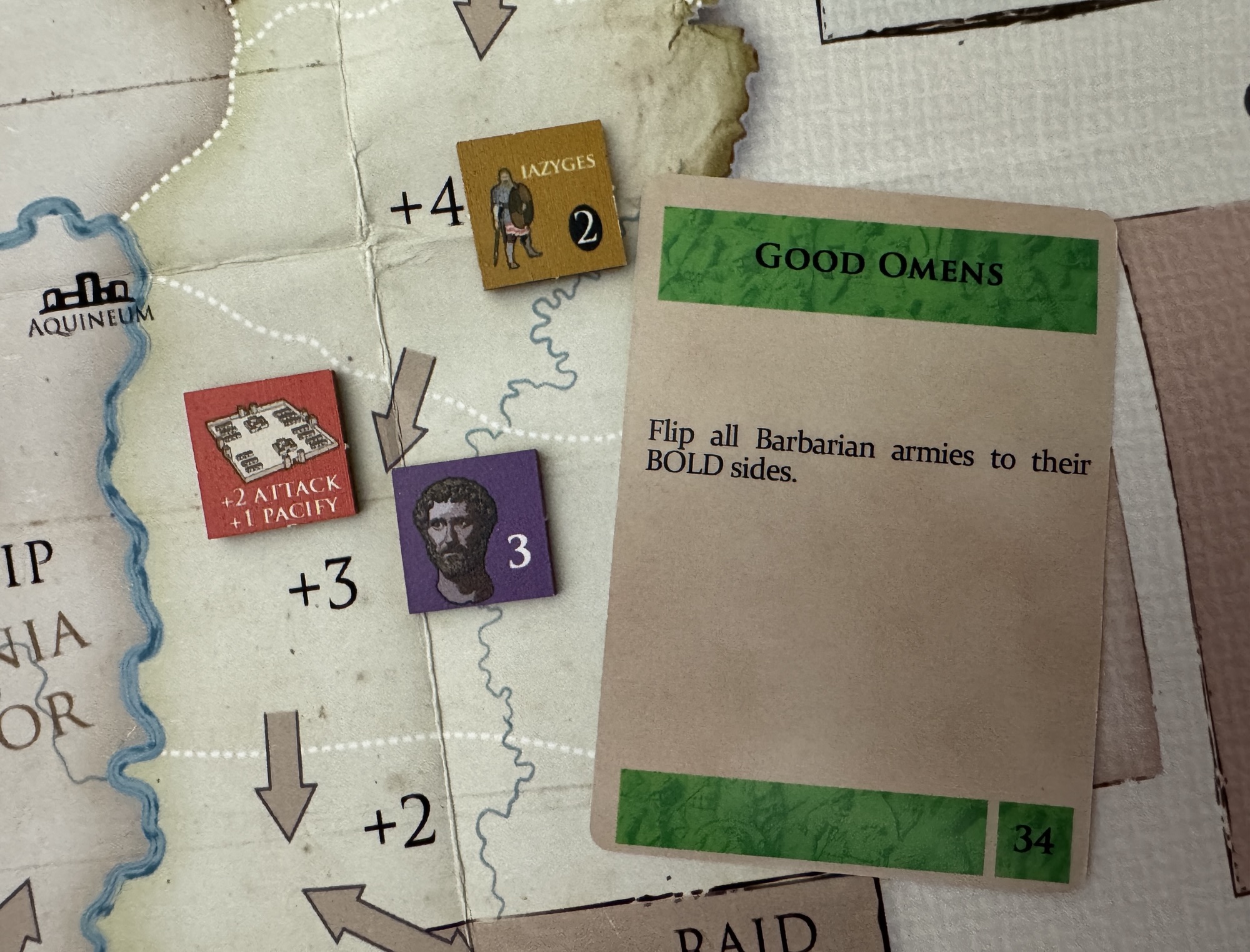
In this entry, we will focus on our first Barbarian Card from the game, as almost all of these cards are really bad for the player, called Good Omens. The “Good” portion of the card’s name doesn’t refer to the Romans but is a benefit for the Barbarians. This card can undo the hard fought victories of Marcus Aurelius and his commanders as its effect is immediate and cannot be cancelled like a Barbarian Surge effect can be by discarding a card. The Good Omens Barbarian Card will immediately cause the player to flip all of the Barbarian armies to their Bold side. Well that doesn’t sound so bad you say? Well, remember that each of the Barbarian army counters is double sided with one side being their Bold side and the other their Demoralized side. On their Bold side, the army is at its strongest with its Combat Value being higher than on the Demoralized side. In our pictures, you can see that the Iazyges army counter has a 4 Combat Value on its Bold side while the Combat Value on the Demoralized side is 2 less at just 2 Combat Value. During combat, or even due to some of the events on the Roman Cards, if a Roman army defeats a Barbarian army, their counter will be flipped from their Bold side to their Demoralized side and they will also have to retreat backward 1 space. I know that the difference here is only 2 but that is in essence gaining a +2 to the Barbarians Combat Value and in a game where the differences between the 2 armies can be just 1 or 2 or even no difference at all, this makes a huge difference and can sometimes feel like you are having to climb a mountain to overcome these Barbarian foes.

Ancient peoples believed deeply in their gods and traditions and would watch for signs in the heavens or from other sources when making key decisions about many things including military campaigns. Good omens would be seen positively as they believed that their decision was favored by the gods and that they would have a good outcome. The Romans believed these things as well but unlike the highly structured Romans, who read omens by sacrificing animals or watching birds fly, barbarian armies like the Germans and Celts relied on signs from nature or even from dreams. These signs when seen would boost morale and gave tribes the psychological edge they needed to fight the powerful armies of the Romans. Germanic tribes believed sacred groves and rivers were portals to their gods and if they were fighting near these places they would take greater strength. Weather was also seen as a major sign and roaring winds, dark storms or rivers that suddenly flooded were viewed as the gods fighting on their side.

The most famous “omen” came from the Battle of the Teutoburg Forest in 9 AD, which occurred over 100 years before the events of the game. A fierce storm, combined with the clever planning of the Germanic leader Arminius, allowed Germanic tribes to completely trap and wipe out 3 Roman legions. The Romans viewed the loss of their legionary eagles and this devastating defeat as a terrible omen for their empire’s future.

Hermann (Arminius) at the Battle of the Teutoburg Forest in 9 AD by Peter Janssen.

I shot a playthrough video for the game and you can watch that at the following link:

I also followed that up with a full video review sharing my thoughts:

In the next entry in this series, we will take a look at British Leader Wellington from Congress of Vienna from GMT Games.

-Grant

INX Incountry Review

16. Juni 2026 um 13:31
IncountryEvery year, I make a trip up to Milwaukee for Adepticon. It’s a game convention focused on war games and miniatures. My main goal in going, other than taking some painting classes, is to wander the dealer hall and look for new games to try out. Last year, I stumbled across Hametsu and absolutely loved […]

Source

Spiel des Jahres – how the jury chooses games (Topic Discussion)

16. Juni 2026 um 12:43

Every year, the announcement of the Spiel des Jahres nominations leads to a lot of discussion across our hobby. Some people agree with the choices, others question why certain games were not included, and many try to predict the eventual winners. What most people don't realise when they discuss the nominations is that the jury does not gather for a single weekend to decide the best game of the year. No, jurors spend many months playing hundreds of new releases several times with different groups of people. It is a lot of work that often goes unnoticed, but that explains why the award continues to carry such influence nearly fifty years after it began. In the second article of the series, I look at this in more detail.

The post Spiel des Jahres – how the jury chooses games (Topic Discussion) appeared first on Tabletop Games Blog.

boardgaming in photos: playtesting

Choon Ean and I were at Kinokuniya bookstore (Pavilion Damansara Heights) demoing our games over the weekend of 30-31 May 2026. This time our tables were occupied more, compared to two weeks earlier when I was there by myself. There were people who stayed to play for quite long. It feels great to see people enjoy my games and want to play again and again. That weekend I think I sold out all

Naming Podcast/Video Episodes so People Actually Listen/Watch

15. Juni 2026 um 15:55

Every day I’m faced with a few 10-second choices: What podcast episode will I listen to while I exercise, and which YouTube videos will I watch when I need a break? I’ve found that the name of the episode is often the deciding factor, and some titles are more effective than others.

Today I’m going to highlight some podcast episode names (screenshots from Overcast on my phone) that help me make this 10-second decision and others that could use some work. These are all podcasts that I subscribe to, so any constructive criticism comes from place of love: I want them to have the best chance of drawing people into every episode.

The One-Stop Co-op Shop and The Meeple Dungeon both start their episode names with an episode number. While this isn’t helpful to the listener in the moment, maybe it’s useful if someone goes back into all archived episodes. It also shows a podcast’s longevity. Still, unless there’s an organizational reason (sorting by number), I think the number is the least important part of these names and could instead follow “Card Crafting” or “Hummingbirds & If Then”, both of which are very clear as to what the episode is about.

Garrett’s Games & Geekiness lists the podcast name in the episode name, which is redundant. Just “Summer Vacation Games” by itself would work fine; even better, “Top 10 Summer Vacation Games” or “[insert any specific game] & Other Summer Vacation Games”.

As for the Tabletop Bellhop (“Getting Carded”), I don’t think the episode name is enough to grab and inform a potential listener. All I know from it is that it’s probably about cards (a huge category for tabletop games) and maybe it’s about more mature games (“getting carded”). I think it would much better meet the 10-second test (which is generous–it’s often more like 3 seconds) if it were, “Federation, Thunder Road Vendetta, & 3 Card Games”. This removes the mystery and makes it instantly clear what the episode covers.

Dice Camera got a little too clever by combining two related topics into the title, and as a result the name went a little long. This podcast is a discussion about a game and a movie, so just call it that: “Thunder Road: Vendetta & Mad Max”.

Last, the book podcast–Poured Over (“Walter Mosley on Ghalen”)–is a tricky one. If I’ve heard of the author or the book, it’s great. But for those who haven’t, they need something else to draw them in. Perhaps “Walter Mosley on Ghalen: Love in Los Angeles” (based on the description of the episode).

Shut Up & Sit Down’s cheeky title (#297 – Fomorian Fisheries) is certainly on brand, but it tells me next to nothing about what I will find in the episode. When I’m scrolling through Overcast, the episode names need to instantly explain the main topic of the episode–they can’t require me to decipher a clever alliteration. As noted above, they are also using precious space for an episode number that doesn’t help the listener. The games actually covered in this episode are Moytura, Azure, Conservas, and Daydream–that’s the title right there.

I don’t have any notes about the Covenant Cast (“Tabletop Isn’t Digital”). It tells me the topic of conversation, plain and simple. Similar feelings about the Game Developer Podcast, though it runs a little long (space could be saved by removing the episode number at the beginning).

Gaming in the Wild mostly does the right thing by listing the primary games he’s discussing (“290: Black Jacket, Moonsigil Atlas, Summer Game Fest”), but I probably would have cut “Summer Game Fest” due to the risk of the name getting cut off due to character limits.

Last is the Cautionary Tales podcast (“The Dunning Canoe-ger Effect”). I don’t know what this means. In contrast, the short description of this episode is really intriguing–I wish they had pulled more from that instead for the title.

This last batch mostly works well, with 3 podcasts simply listing the guest’s name or the name of the game they’re discussing: Board Game Hot Takes (“Emberleaf”), Lens and Veil (“EP #37: Eternal Decks”, though the “EP #37” is extraneous as discussed above), and Smartless (“Jon Bernthal”).

A Bit of Optimism’s episode name runs a little long (“How to Stop Letting Your Own Thoughts Make You…”), but that won’t be the case on all podcast apps, and there’s enough here for me to make a quick decision. Interestingly, this is actually a conversation between the host (Simon Sinek) and a guest (Dr. Ellen Langer), but the guest’s name doesn’t appear until the very end of the title, resulting in it being cut off. However, that might be okay for more niche guests.

As for A Double Double ‘N Dice, “Back to it” does not help a potential listener. The description also doesn’t list any specific games, but I would have included one or two of them in the title instead of the vague “Back to it”.

I’ll end on a high note: I actually think that the Family Trips episode name is one of the best ways of highlighting a guest: “BROOKS WHEELAN Went to Noah’s Arc in the Wisc…”. Yes, it runs long, but that’s almost the point: It’s leading you into a story that will be told in the episode. That extra bit of context is helpful, especially when the same celebrity is doing a media circuit.


I’m the host of 2 podcasts (Stonemaier Games and Positively Board Gaming) and our YouTube channel, and one simple thing I’ve found is simply to subscribe to my own content. That way I can see how it appears on my feed along with everything else and if the title format (or thumbnail) needs improvement.

How do you feel about episode titles? Are episode numbers useful to you? I’d love to hear about your process of deciding which episodes to listen or watch (podcasts or videos).


If you gain value from the 100 articles Jamey publishes on this blog each year, please consider championing this content! You can also listen to posts like this in the audio version of the blog.

Circadia Game Review

Hisashi Hayashi is the designer of a quick new card game called Circadia. I was initially interested because Hayashi has done some great work for the Bell household, namely in the form of Yokohama and Railway Boom, the latter of which was on my list of the top 10 games of 2025.

As you may know, lots of publishers are pushing out new card games, for the reasons one might expect: this is a much cheaper way to get a game to market, and it could satisfy the needs of many types of players in an environment where players are apparently spending less on their games.

Enter Circadia. There’s a theme loosely tied to Dreaming Paths, Spirit Creatures, and becoming the “Keeper of the Eternal Cycle” for the person lucky enough to win the game.

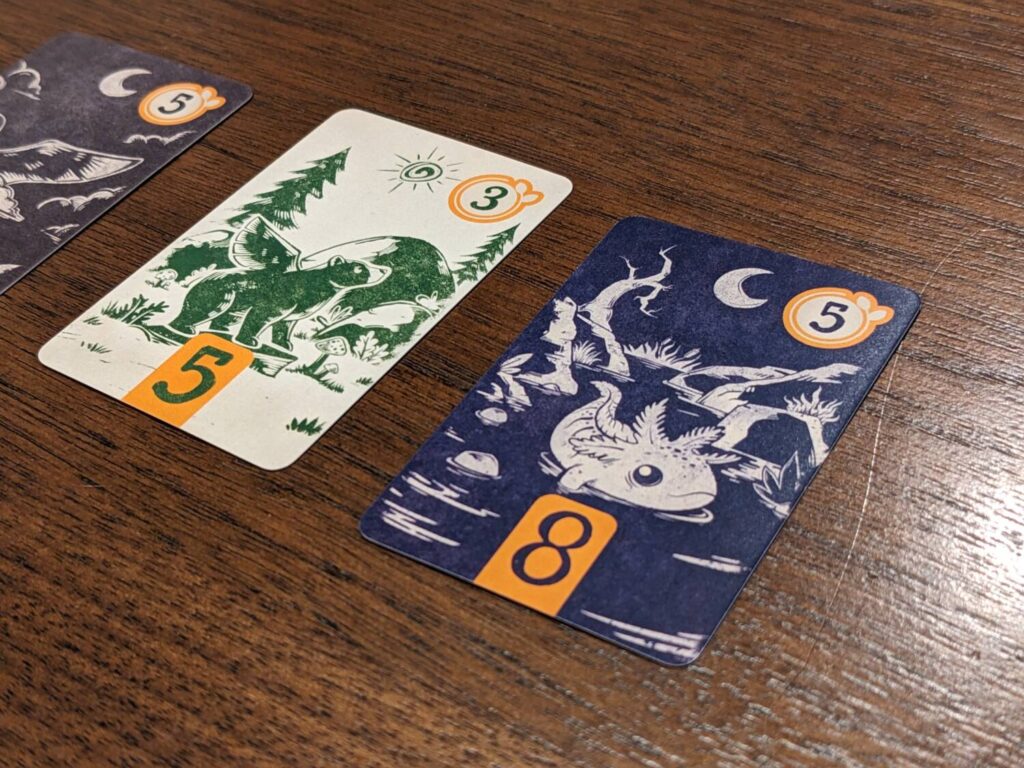
The reality is that Circadia is much, much simpler than even the loose framework. Setup only takes three steps. Players manage a hand of cards (never more than eight), trying to build up sets of cards across three types of Spirit Creatures: bear, axolotl, and goose.

Sets are played from hand based on the value of the cards, so a player who wants to play twos can play any card with…

The post Circadia Game Review appeared first on Meeple Mountain.

Crowdfunding Campaigns of the Week – 6/15/26

15. Juni 2026 um 14:52
Crowdfunding Campaigns of the WeekWelcome to this week’s batch of crowdfunding campaigns. We have a variety of offerings here, so we hope you will find something that catches your eye. Also, if you want to chat with the BGQ team, join our Discord Server where we talk about games, movies, sports, and other fun stuff. Check it out and […]

Source

Interview with Volko Ruhnke Designer of 1943: Race to Rabaul from PHALANX

Von: Grant
15. Juni 2026 um 14:00

PHALANX does some really great games and they have 2 new games that have recently been placed on pre-order in a 2-pack called Pacific War Games (you can order them separately). This package includes 1943: Race to Rabaul designed by Volko Ruhnke and Tora Tora Tora! designed by Wataru Horiba. I have reached out to Volko Ruhnke to discuss his 1943: Race to Rabaul, which is part of the Keep ‘Em Rolling Series of logistics focused wargames that includes titles such as 1944: Race to the Rhine and 1941: Race to Moscow, and he was more than willing to share.

If you are interested in 1943: Race to Rabaul, or its sister game in the Pacific Wargames package called Tora Tora Tora!, you can pre-order copies on the Gamefound pre-order page at the following link: https://gamefound.com/en/projects/phalanx/pacificwar-games

Grant: Volko welcome back to the blog. What is your new upcoming game 1943: Race to Rabaul?

Volko: 1943: Race to Rabaul will be the next volume in Phalanx Games’ “Keep ‘Em Rolling” Series, following up on 1944: Race to the Rhine and 1941: Race to Moscow. Also set in World War II, this time you are supplying forces moving and fighting across the South Pacific–with the twists that players are fighting each other and have to manage sea, air, and land operations.

Grant: You have designed logistics focused games in the past such as the Levy & Campaign Series. How has that experience lead you to the Keep ‘EM Rolling Series?

Volko: I’ve always enjoyed wargames that include placing, moving, consuming, destroying actual supply bits on the map–going back at least to The Gamers’ Standard Combat Series AFRIKA. In Levy & Campaign, I wanted to show that for medieval campaigns, in a simple enough way to be fun rather than tedious. When I later played 1944: Race to the Rhine, I saw that that design accomplished that very well indeed, even made it the focus of play. So I was hooked.

Grant: How did this opportunity come to you?

Volko: Two Septembers ago, I was in Prague for Czech Con hosted by Levy & Campaign Žižka designer Petr Mojžíš, where I got to meet Phalanx co-owner Jaro Andruszkiewicz. He invited me to do a design with his company. I at once knew that it had to be something in their “Race” series. Via my research for Coast Watchers from GMT Games, I already had become fascinated by Japanese logistical challenges and Allied counter-logistics strategy in the South Pacific. So the fit seemed a natural.

Grant: What sources did you consult to get the historical details correct? What one must-read source would you recommend?

Volko: I had already done a lot of reading for Coast Watchers. The source that really laid out the Japanese perspective on their difficulties in reinforcing the front line was Kengoro Tanaka’s Operations of the Imperial Japanese Armed Forces in the Papua New Guinea Theater. I also picked up Breaking the Bismarcks Barrier, an official US Navy history of the campaign. My favorite general Pacific War history source is Ronald Spector’s Eagle Against the Sun (as I briefly had the opportunity to study history under Professor Spector at George Washington University.)

Grant: What is your overall design goal and thesis for Race to Rabaul?

Volko: In the South Pacific of 1943, the Allies were far more savvy than just piling their firepower and men directly against the well-fortified Japanese positions. Instead, they wore them down with air strikes over time, while blockading them by air and sea. The key challenge to the Japanese defense was the inability to get enough supplies and men through the growing Allied air and then sea superiority to reinforce–and even just feed the Japanese forces holding the line. In1943: Race to Rabaul, you manage that logistical and counter-logistical struggle on each side.

Grant: How tough was working within the constraints of an existing system?

Volko: I find it easier overall to start with an existing system that I know works and build from there (as I did with classic-CDG Wilderness War and the scenarios and C3i Magazine campaign that I’ve done within Combat Commander). The key challenges for me in bringing the Phalanx “Race” system to the South Pacific were expanding it to opposed play necessary to capture the critical counter-logistical aspect – and to a maritime environment – sea, air, amphibious and land warfare – all with the eye to adding just a dose of added complexity.

Grant: How does the vastness and remoteness of the pacific affect logistics? How did you model this?

Volko: The environmental problem that the Japanese faced and the Allies exploited in the South Pacific was that nearly all logistics came by sea, so air interdiction ruled. There were land campaigns in New Guinea’s interior. But the jungle and ridge terrain there required air lift or coastal transport to build up. And by 1943, the Allies increasingly dominated the air war. Race to Rabaul requires you to move your troops, ammunition, and food across sea–you can’t just march your corps forward. For the more constrained Japanese, that means launching Convoys that the Allies might detect and strike.

Grant: What was most important to model in the game? What about inter-service rivalry?

Volko: That Japanese challenge moving anything and the Allied effort to stop it is most characteristic of the design. But perhaps its most impactful addition to the “Race” system is opposed combat. Rabaul taps the same principle of counting supply bits to determine combat outcomes. But with 2 opposed players, playing cards to hope to out wit each other, as well as land and amphibious attacks, the combat subsystem in this volume is necessarily more involved. For non-wargamers, that is probably a hindrance. But for wargamers, it may make Rabaul even more up their alley than the earlier games. Inter-service rivalry comes to the fore in Rabaul when you have 3 or 4 players. Each side has two Commander roles, “racing” along either the east or west half of the map. Each represents the Japanese or Allied army or naval dominance of the New Guinea and Solomons campaigns, respectively. Whichever player (not side) reaches its goal first wins the game–so you can choose to cooperate with the other Commander on your side or not!

Grant: How does the logistics support differ between the Allies and the Japanese?

Volko: I’ve mentioned the Japanese use of Convoys and Allied Convoy Strikes above. The Allies have that easier–their abundance of transports is assumed wherever they have Air Cover. The problem is that they must take ground and build Air Bases to extend that Air Cover and Convoy Strike range forward. The Allies also get more abundant Men &Material–generally more bits per action at their Supply Bases than the Japanese get at theirs. But, as in the earlier “Race” games, here the Allies must work their Logistics Level up to add to that capacity. The Japanese also have an advantage stalwart austerity in feeding their troops: the Japanese, unlike the Allies, never lose their last Troops piece in a space due to lack of Food, they garden!

Grant: What was the process of taking a series designed for land based campaigns into one involving amphibious supply and operations?

Volko: I had to add some complication to show the maritime environment. Instead of one type of connection between spaces, Race to Rabaul has Land, Sea, and Straight. Instead of just Trucks (and in Moscow Trains), Rabaul has Japanese Freighters, Destroyers and Barges and Allied Landing Craft. Because you have to transport soldiers not just supplies across water, Rabaul has Troops bits instead of Fuel, and Troops become key to feeding requirements, building Air Bases, fortifying, and, naturally, combat. Allied amphibious landings can be disastrous if defeated with the sea at their backs. And air power looms far larger int he naval environment, with Commanders controlling up to 6 Air tokens instead of Rhine’s 1 each.

Grant: What other challenges does each side face in obtaining their goal?

Volko: The Japanese defenders are essentially playing for time, as each Logistics step that the Allies need to trigger will award Japanese medals for holding the Bismarcks Barrier. But just those Japanese medals probably won’t be enough: the Japanese Commanders need to find openings to strike and cause Allied Troop losses as well. That takes timing and will cost Japanese Men & Material or Air tokens–possibly accelerating the Allied drive that will break the Bismarcks Barrier and stop those medal awards for good. The Allied attackers need to manage the troops, supplies, and cards to take Japanese positions efficiently to reduce the number of enemy medals for those Logistics steps. But rushing too much will result in risky attacks–even a potentially disastrous failed invasion–not to mention exposure to Japanese Banzai counterattacks. Pushing Allied Men & Material forward needs to occur even while the Allies keep up the pressure on Japanese convoys and bomb Japanese positions to counter their defensive buildup and digging in.

Grant: What is the layout of the game board and the purpose of the different boxes?

Volko: The board shows 2 tracks, in effect: MacArthur (green player) is racing up the New Guinea coast on the west half, while Halsey (blue) is racing up the Solomon Island chain on the east. These work like the colored areas in the earlier “Race” games, except that each track has a human opponent trying to stop you: Imamura (gold) against MacArthur, and Kusaka (white) against Halsey. The various boxes serve as pools for each side’s Men & Materiel bits and Fleets of Convoys or Landing Craft. Boxes also track what is just temporarily removed or spent rather than out of play (off the board). An Allied Logistics track works very much like those in the earlier games, showing how much each Allied Commander has developed the logistical infrastructure, affecting how many M&M they get per action, how many Air tokens they have, and how many cards they hold.

1943: Race to Rabaul game board art by Donal Hegarty.

Grant: What is the general Sequence of Play?

Volko: The Sequence of Play is quite basic–first the Japanese take actions, then the Allies do. As in the other games, Commanders each get 2 core actions from a menu, plus Bonus actions from cards, in this case at most 1 of the latter.

But before each Japanese turn, there is a free Delivery step in which Convoys drop off cargo. That wrinkle in the sequence means that (mostly) there will be an Allied turn in between Japanese Convoy Launch (an action) and Delivery, so a chance for the Allied players to strike the Japanese ships. The exception is certain Japanese Bonus action cards representing particularly successful “Tokyo Express” runs and the like. Logistics steps, when (mostly) the Allies trigger them, always occur after Allied actions. There are a couple Japanese cards that can force a Logistics step, representing intervention by Japanese fleet commander Yamamoto. Victory is instantaneous, whenever any Commander takes their 12th medal or–far less likely–a Japanese Supply Base such as Rabaul falls.

Grant: How many players is the game designed for?

Volko: The game handles 2, 3, or 4 players. We always have Japanese and Allied players opposing each other, as both logistics and counter-logistics feature. With 4 players, each takes a Commander: the 2 Commanders on a side can help each other with longer-range strikes and intelligence, or they can withhold help or even sabotage each other if their ally is pulling ahead and getting too close to winning. With3 players, one takes both Commanders on a side and must win with both, facing 2 players each as a single Commander. The single player can be either on the Japanese or Allied side, either works. With 2 players, you can either each command a side–the 2 Japanese Commanders versus the 2 Allied–or you can pick either half of the map–New Guinea alone or the Solomons–and play a shorter game with just 1 Commander each side.

Grant: What different commanders do players have a choice to play as? How do they differ?

Volko: The paired Commanders personify not only the conditions in New Guinea and the Solomons, respectively, but also the bureaucratic friction between Army and Navy on each side.

-MacArthur in New Guinea is also the theater commander so gets say in any internal Allied dispute such as order of actions. As an Army General, he has more land assets such as Artillery cards and a related Special Ability to redraw them, more suitable anyway to the New Guinea “track” that involves some interior fighting. Also, MacArthur alone can use Airdrops to seize jungle airstrips.

-Halsey in the Solomons has more Naval Shelling, Cruisers against Japanese Convoys–also his Special Ability–plus Guerrillas but correspondingly less Artillery and attack Divisions. Halsey late in the campaign needs to be the most careful not to get the last of his Divisions beaten up and withdrawn.

-Facing MacArthur, General Imamura represents the overall Japanese Army’s focus on New Guinea and the overall Japanese priority on that axis over the Solomons chain–so that player is the senior partner on the Japanese side. Imamura has more Troop and Ammo unit cards at his disposal and a Special Ability that can redraw them. He has his own Bonus action cards like Supply Road and Barge Assault.

-Admiral Kusaka facing Halsey has an edge in Carrier Pilots–his Special Ability–naval advantages like Long Lance torpedoes, but also the defensively crafty Army General Sasaki, who held up the Allies bloodily on New Georgia.

Grant: How is victory achieved?

Volko: As in the other “Race” games, capture of a Supply Base–here an Allied Commander advancing to either Rabaul, Madang in New Guinea, or Kavieng in the islands–ends the game immediately in an Allied Commander win. But, as in those games, that rarely will occur: the main way to win is to be the first of the 4 Commanders to gather 12 medals along the way.

Grant: What different scenarios are included?

Volko: The game includes 4 scenarios, each of different length. They all end with capture of a Japanese Supply Base or with a 12th medal. They run different play lengths by starting at later and later points in the South Pacific campaign:

-TheFull Campaignbegins with the Japanese still to make their final push on the Kokoda track and Guadalcanal in late 1942. The Allies must battle their way to Buna in Papau before heading up the New Guinea coast, while throwing the Japanese off Guadalcanal before driving up the Solomons chain.

-CARTWHEEL begins with the Allies preparing their historical 1943 drive to conquer or encircle Rabaul. Buna and Guadalcanal are cleared and serving as Allied bases, but the great Allied offensive has not yet launched.

-POSTERN begins with MacArthur primed for the historical September invasion to capture the Japanese New Guinea base of Lae and Halsey’s forces having just fought across New Georgia in the central Solomons.

-Finally, CHERRY BLOSSOM is a small learning scenario for just 2 players on the Solomons half of the board, representing the moment that Halsey is about to invade the Japanese bastion island of Bougainville.

Grant: What do you feel the game models well?

Volko: Phalanx’s “Race” system does so well highlighting the need to gather and push supplies forward in a mobile mechanized campaign–especially one in which the defender is largely on the run. Race to Rabaul I hope similarly succeeds in showing that the overwhelming Allied logistical edge over the Japanese in the South Pacific by 1943 was alone not enough against tenacious, dug-in defenders. The Allies succeeded as they did by smartly targeting Japanese logistics first, and only then throwing ground forces at the enemy bastions. To me, this design makes that counter-logistics approach vivid. I hope players will agree!

Grant: What are you most pleased about with the design?

Volko: I’m pleased with how the one-sided “Race” concept ported here to a full wargame, force on force, and that some added map features, pieces types, and combat rules brought the Phalanx system to “tri-phibious” warfare. The game is more complicated than either 1944: Race to the Rhine or 1941: Race to Moscow, to be sure, but remains more accessible than my usual design space such as Levy & Campaign or Recon Series. (I think so, anyway.)

Grant: What other designs are you contemplating or already working on?

Volko: Jaro of Phalanx, who commissioned this design from me, and I have chatted back and forth about a wide range of settings for a possible next “Race” volume from me. I have a good idea what that would be, if players end up digging Rabaul. But it would be premature to raise particular expectations as yet.

Thank you for the intriguing questions!

If you are interested in 1943: Race to Rabaul, or its sister game in the Pacific Wargames package called Tora Tora Tora!, you can pre-order copies on the Gamefound pre-order page at the following link: https://gamefound.com/en/projects/phalanx/pacificwar-games

-Grant

Read the Player Aid!

by Justin Bell


One morning this past February, I was standing on a scale in my bathroom, doing my normal routine of knocking out the weigh-in before getting the kids ready for school. The number that came back wasn’t to my liking, the third or fourth or tenth week in a row where it was not to my liking. After I helped get the kids on their way, I dropped about $100 on a 12-month subscription to the Weight Watchers app to start tracking my meals and committed to a goal of losing at least 20, and ideally 30, pounds by the end of the summer.

As of this posting, I’ve lost 25 pounds, and assuming I stay on track with continuing to build better eating habits, I should cross the weight-loss finish line soon. But I think a lot about that day in February; I just hit a breaking point, and I got so angry when I saw the scale that fateful morning that it pushed for immediate action.

A similar thing happened this week, across three consecutive nights of gaming where players sent me to the breaking point. This article is both a love letter to some of the recent changes I’ve observed from publishers, and some interesting opportunities for players.


Last Monday, my review crew and I had the chance to play our first game of Entropy, the new Board&Dice release designed by Tommaso Battista, Simone Luciani, and Nestore Mangone. The game doesn’t have much video content on the interwebs yet, so I taught the game live to a group for this four-player game.

Teaching a game on site and in person to any group of players is typically a minefield, a minefield that gets progressively more dangerous as a game’s complexity rises.

I’m still scarred by the experience I had watching a person try to teach me Feudum almost six years ago. I see in my Logged Play notes that the teach took 80 minutes, for a game that ultimately took only a little longer than that to actually play. When you see a game’s Complexity Rating land in the 4.5-and-above range, it usually means you are in for quite a sit as you try to learn a game.

Entropy is certainly not that—I think the game’s complexity rating here on BGG will land in the 3.5-ish range once you, the people, begin to share your thoughts in volume—and it took only about 25 minutes to explain the game’s core concepts, main actions, and end-game scoring conditions.

But one thing was key during my Entropy teach, a hallmark of how far we have come as a community: I taught the entire game from the included player aid cards, and asked players to follow along from the aid, in part because everyone had their own. (My only gripe with publishers for this article: please, please, please include one player aid for each player! Competitive gamers don’t have a “share” gene! This is why they like competitive games! One player aid per box is not going to cut it, people!!)

With our teach complete and our snack bowls filled—it was a Kit Kat “Bunnies” night, alongside zero-calorie sodas, a selection of bottom-shelf bourbons, and the Kirkland Signature Kettle Brand Krinkle Cut “Pink Salt” potato chip night, because Costco recently decided that the words “Himalayan Salt” were simply too difficult for a standard American consumer to comprehend—we got to work playing the game. But something interesting happened as we began play:

Everything I had just taught, from the basic movement of a player’s worker pawn, to how actions worked, to scoring conditions, to limitations of components that can be placed on a player’s planets, quietly left the brains of these usually reliable players, almost as if I had taught the game in Dutch, but everyone at the table pretended they spoke fluent Dutch as they nodded along during the teach.

“Hey, sorry about this, but before I move…I know you said that I can move up to three spaces, but in which direction?”

“If you look at the ‘On Your Turn’ portion of the player aid,” I began, “that’s where it shows the rules for movement.” (There are also chevrons on the board that point in a clockwise direction near each space, and we will come back to this.) The text on the player aid: “Movement: move 1-3 spaces clockwise. Finish on either outer or inner space.”

“When I take the Create Life action, I see the icon that means I have to drop the matching action marker there to take the action, so I’m good there. But how many cards can I discard to take the place of icons I am missing from my planet-star combo to play a card?”

“If you look at the ‘Actions’ area of the player aid, on the side that has the major actions—yep, that side—you’ll see that you can discard one other card with one of the four icons you are missing to play the card you want. And don’t forget about the part you see in that same section of the aid: each planet can only accommodate three life cards.”

Although my basement gaming lair is pretty chilly during the summer when the air conditioning kicks in, I could feel my temperature rising a beat. Oh, another question:

“I’m trying to understand the icons for my Focus cards.” (In Entropy, each player gets their own asymmetric, lettered set (A, B, C, or D) of bonuses, which power each of the game’s three major actions. Think of this like the Experiment boards in Nucleum, where players can upgrade some of the standard actions they take to earn additional bonuses.) “What does this first symbol mean?”

“I don’t know, but I also can’t see your Focus cards from where I’m sitting,” I commented. “What does your player aid say for the set of Focus cards you have?”

“Oh, right, thanks, I forgot that was on the back of the ‘On Your Turn’ player aid card. Looks like I get…”

This continued for the majority of our experience, although like all games, the rules began to settle in for everyone—myself included—by the end of our first game. And, I can’t fault human nature: it’s simply easier to ask the rules guru at the table a thousand questions, since they know the game better than everyone else does. You’ve done it, I’ve done it, we’ve all done it…although, I take listening to a teach very seriously, because I teach so often myself.

The problem with this is the play experience for the rules explainer. I have been a vocal supporter of not only thanking your tabletop teacher for spending the time to both learn a game and be willing to teach it thoroughly to new players, but also acknowledging that it is so difficult to both teach a game and enjoy playing that same game.

That’s not because the game is new to the teacher, assuming this is their first time playing it. That’s because the learners at the table don’t take the time to consider all the tools available to them while playing, and being able to answer 75-100% of the questions that can be answered. That starts with the player aid.

Some of you know that I write an article each year on Meeple Mountain summarizing not only the best and worst games I played in a year, but also summarizes my thoughts on the stuff we really care about: the best rules for deciding a first player, the best individual components, the best dice. One of the categories is best player aid, and I love how far player aids have come over the last 3-4 years as highly complex games get summarized on a sheet or double-sided cards.

Recent titles such as SETI: Search for Extraterrestrial Intelligence, Galactic Cruise, Covenant, Arcs, Salton Sea, the Perseverance games, and La Pâtisserie Rococo provide excellent player aids, sometimes with little cues such as specific rulebook page numbers where a player can get more info even when the aid isn’t enough. (The aid for SETI is the gold standard in this category.)

Some of my favorite games of the last few years didn’t have a player aid, such as Clinic: Deluxe Edition and Railway Boom, but I can get over that if there are strong visual cues and a sort of board-based player aid on the main play area. Clinic has one of the best in the business, and Railway Boom does a great job with the information loaded into the auction area on the bottom third of the board. Sometimes, even a game’s player boards have enough turn action and clean-up/maintenance information to get by.

All of this provided information is great…but only if players bother to read the aid or look for other visual cues around the play area.

I’m certainly biased because I teach a lot of games, and I know how hard it can be for a person to spend a lot of time on the front end to get to know the game well enough to be comfortable teaching that game to others. It’s a lot! But players need to own their share of the investment. I’ve just spent 10, 30, 80 minutes teaching you the game…could you do me a favor, and simply listen??? Could you first look at the player aid before asking me another question, a question that may have just been answered because another player asked the exact same question two turns ago???


Over the next two days, I did another play of Nippon: Zaibatsu (with the upcoming Genro expansion) and a second multiplayer game of Entropy with two new players at a game night with a strategy gaming group in downtown Chicago. Many of the same things popped up, with questions about some of the game basics that could have been answered by the player aid, had a player acknowledged its existence first. (Kudos, as well, to the makers of the excellent “Player Handbook” included in Nippon: Zaibatsu, another game that can be taught from the player aid.)

By the end of that third straight day of beginning multiple responses with the prompt “if you look at the player aid...”, I snapped. (OK, you’re right: “snapped” for me is pretty light in the scheme of things. I happily went about my evening and watched the wild ending of the fourth game of the NBA Finals later that night…then immediately began to write this column.)

I’ve been thinking about ways to solve my own problems. Do I need to be more forceful with players as they consider their questions? Like my buddy John, should I start mining the Files area on BGG for every game in my collection that doesn’t have a player aid, so that I can start printing my own? (Thanks, BGG community; some of you have made great aids from scratch, particularly for older titles.) Where possible, should I send out PDFs of the player aid files in advance, so that players can have those handy on their phones while they study up on a new game?

Publishers have begun to do their part. And the drum I beat is not just tied to these medium or heavy-weight strategy games…because I say it every week: every single game needs a player aid. UNO needs a player aid just like SETI does. That’s because new players forget rules all the time. Heck, I forget a rule or two all the time with games I’ve been playing for years. Now that most games have player aids, we as a gaming community need to level up…and review those player aids when we have questions about a rule.

That’s the least we can do, right?

Flamecraft Dragons and Dragons

14. Juni 2026 um 23:27

Flamecraft Dragons and Dragons

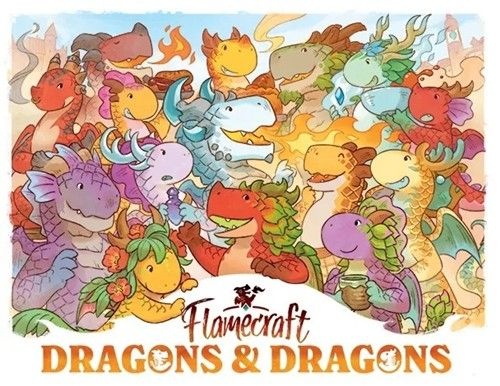
Flamecraft is one of the surprise games over the last few years and now there is an amazing new expansion out for it. This adds five new modules that can be added to your game, although I recommend only adding one or two to begin with, as it starts getting very complex otherwise.

First up is the Hydragons module which introduces 15 “dual” Hydragons, each with a completely unique “fire up” ability.  To play, you simply shuffle a team of 6 of these directly into your artisan dragon deck.  Next up is the Dragons starter shop which is a new courtyard starter shop where your dragons are “dual-ing”.  This gives you something different to your standard starting setup.

There’s the Upscale Cards Module featuring 18 cards that offer a brand-new way to enchant.  The central Elder statue gets “glittered” with these Upscales, thus allowing you to gift goods and coins during an Enchant action to claim extra magical rewards. Then the new companion dragons, these 6 wander into town looking for a buddy, allowing you to expand your pool of specialized rule-bending assistants.

Finally there are Adventurer Dragons, these 7 new artisan dragons are added to the deck (6 of these are classic adventure-themed artisans and 1 who is too fancy for standard work.)  As well as these 5 modules there is the “Parks and Crafts” mat which is a new neoprene park mat that introduces a rule modification letting dragons “fire up” once per turn while hanging out in the park.

As you can add these modules in any combination this gives you a lot more options when playing the game (31 by my calculations provided you are brave enough to play with 3, 4 or even all 5 modules!)

Flamecraft: Dragons of the Past Expansion

Released at the same time was an extra Promo pack called Dragons of the Past, this adds a load of promos that have been released over the last few years in various forms.  You can order both of these at: https://www.bgextras.co.uk/other-games/flamecraft 

The post Flamecraft Dragons and Dragons first appeared on Board Game Extras.

New York in History and Board Games, #2

14. Juni 2026 um 18:00

Back to the history and board games of New York City! Last time, we’ve looked at the city’s humble beginnings all the way to the destruction wrought on the city by the Revolutionary War. Today, we’ll cover the first century of New York City as a city in the United States – how it established its primacy in the country, how it was at the same time very attractive and a horrible place to live in, and how it took shape as a modern metropolis. As always, board games will guide us.

American Capital

When Britain had recognized American independence in 1783, the young country gave itself a constitution – the Articles of Confederation. The United States were organized on strictly confederative principles. New York City became the capital. The advocates of broad independence for the states and minimal federal government, however, lost ground over the next few years as the United States struggled to deal with the post-war challenges, chiefly the states’ tremendous debt. Thus, over ferocious public debate, a new constitution was adopted in 1787, and according to it, a strong chief magistrate elected – George Washington, the first president, who was inaugurated in 1789 at City Hall, New York.

One of the fiercest proponents of a strong federal government was New Yorker Alexander Hamilton who became the nation’s first secretary of the treasury. In this role, Hamilton advocated for further government centralization, especially in regards to financial and economic affairs, based on his experience in the commercial hub New York. Hamilton succeeded in having the federal government take over the remaining states’ debts, but his opponents – chiefly rural southerners – demanded a price: The federal capital would move away from New York. Philadelphia would fill the role temporarily, before a new capital to be constructed in a southern swamp would be ready – the future Washington, D.C.

Even though New York City ceased to be America’s capital, it was still the prime center of American capital. In 1792, the New York Stock Exchange was founded. Its location – Wall Street – is synonymous with finance until today. The city’s booming harbor also attracted more and more commerce. By 1804, New York City had overtaken Philadelphia as the largest city in the United States at around 70,000 inhabitants. As growth did not slow down, the city’s leadership embarked on a scheme which must have seemed megalomaniac at the time: In 1811, they adopted a development plan which laid a regular grid of avenues and perpendicular streets over Manhattan Island, encompassing areas large enough to house a million people at the contemporary population density. That was the blueprint for modern New York City.

New York’s growth, however, was not pre-ordained. It relied chiefly on the city’s status the nation’s premier port. Yet as the United States grew westward, New York lay farther and farther away from many of the new towns and states. Goods could only flow to or from the Great Lakes or the Great Plains by arduous land journeys – or down the Mississippi. New Orleans, located at the mouth of the great stream, seemed poised to take over New York’s role as America’s port. That’s when the governor of New York state, DeWitt Clinton, proposed an ambitious engineering scheme: Nature might not have connected New York City with the great inland waterways of America. But men could. The 350-mile Erie Canal, completed in 1825, connected the Hudson River with Lake Erie and thus allowed uninterrupted ship transport from New York all the way to the western frontier states.

1842 – a good year to do business in New York. Cover of Packet Row, ©White Goblin Games.

Packet Row (Åse Berg/Henrik Berg, White Goblin Games) is set in the bustling port of New York in the 1840s. Players need to find the right combination of trade goods (so, supply), contracts (demand), and ships to grow rich as merchants. Money alone will not be enough for victory: The game embodies the ethos of the magnates of the 19th century, which held that wealth came with responsibility for the community. Thus, the money earned in Packet Row needs to be spent on projects which benefit the city (say, the university) for victory points.

When the Erie Canal was completed in 1825, 89% of New Yorkers had been born in the United States. By 1860 that number had fallen to less than half. Let’s take a look at this great social and political transformation.

Immigration, Death, and Politics

New York’s status as America’s port made it incredibly attractive for immigrants: Its booming trade hungered for willing workers, and even if immigrants had different dreams – say, farming on the wide prairie – they would probably arrive by ship in New York. In the mid-19th century, an astounding 70% of all European immigrants to the United States entered the country through New York. The absolute numbers are even more breath-taking: In the decade after the Great Famine, a million Irish alone arrived in New York, along with German, English, and Scottish immigrants.

Despite this massive population influx, New York City had only around 800,000 inhabitants by 1860. That was partly because many immigrants moved on further inland, but also because of the astonishing mortality: For example, during the year 1856, 4% of all adults and 20% of all children in New York City died. The cramped living quarters in which most immigrants found themselves and the inadequate medical infrastructure made New York a fertile breeding ground for all kinds of epidemics, while the high cost of living forced the immigrants into long working hours at often dangerous jobs.

Under these circumstances, it is no surprise that the immigrants turned to anyone who promised them a helping a hand. And as they were so many (and usually gained citizenship after two years of residence), courting them became a viable electoral strategy. Fernando Wood became the first New York mayor whose election had been largely achieved by his success with Irish-American and German-American voters. His recipe for success – mobilizing various immigrant communities – would be copied for decades by his successors in Tammany Hall, the local Democratic Party’s political machine which traded patronage for votes.

The mapboard of Tammany Hall breathes the spirit of 19th and 20th century maps and public education campaigns. ©Pandasaurus.

Tammany Hall (Doug Eckhart, Pandasaurus) is centered on this political strategy: The basic move which players take is to select one immigrant token (Irish, German, English, or – inspired by the later 19th century – Italian) and place it in one of the wards of New York. That gives the player both some influence with the respective immigrant community and some potential strength on the ground in that ward, come the next election. Whichever player wins most wards in an election round becomes mayor of New York and thus gets to dole out City Hall jobs to their allies.

Tammany’s success in the 1850s was based on organizing various disparate communities. The Civil War brought ruptures to this alliance: Mayor Wood called for New York City to secede from the Union and become a “free city” in order to maintain trade relations with the treasonous southern states. The majority of Tammany Democrats, however, were staunchly in favor of the Union, but less enthusiastic about the cause of abolitionism. Thus, many of the German immigrants (often veterans of the 1848/49 revolution) abandoned the party in favor of the Republicans, and the German-Irish voting bloc split (although it would remain firmly united in its opposition to the temperance movement).

The split caused a Republican-led fusion ticket to win the mayoral election of 1862. It would be a short break from Tammany rule, as the new mayor faced growing racial tensions: On July 13 1863, protests against the continued draft erupted in violence. For the next three days, a mob (mostly consisting of Irish-Americans from the Lower Manhattan slums) rampaged through the city, targeting Black neighborhoods. The Draft Riots would only be put down once regiments returning from Gettysburg reached the city. Many Black New Yorkers left the city afterward, so that they amounted to barely over one percent of New York City’s population in 1865.

Event card “Draft Riots in New York” from For the People (Mark Herman, GMT Games): Even though For the People is a political game at heart, the effect is strictly military here (the Union player removes some strength points (units), presumably to deal with the riots in NYC) – speaking to the unlikeliness of the riots effecting some kind of political sea change in New York (let alone the Union). Image ©GMT Games.

Tammany rule was restored in the 1864 mayoral election… not that it mattered much who exactly the mayor was, as long as he was a loyal follower of the Tammany machine. The unbridled access to power allowed the Tammany leader William “Boss” Tweed to become one of the richest men in New York – and public money also lined the pockets of many public servants and private contractors (especially in the construction business). The most outrageous example of this corruption was the construction of the County Courthouse. Tweed himself bought a quarry to supply the marble for the project at egregious prices, and the subcontractors had a field day, too, billing amounts like $360,000 for one carpenter’s month of labor or $7,500 per individual thermometer. The Courthouse’s final cost ran up to $13 million – almost twice the price of the contemporary Alaska Purchase!

Tweed, however had cranked the levers one too many times. Even New York Democrats (at least those set aside by him) distanced themselves from him. A court found Tweed guilty of embezzlement and sentenced him to a year in prison. He escaped and made his way to Spain, but was discovered and extradited to the United States, where he would die in prison. Tammany would rule New York politics for almost another century due to the machine’s continued ability to organize new immigrants (Italians and Eastern European Jews in the late 19th and early 20th centuries), but the worst excesses of its corruption ended with Boss Tweed. Indeed, for a 20th century New Yorker, it would be almost impossible to imagine how political office could be mostly sought to enrich a few powerful individuals and their willing helpers.

The Dawn of the Modern Age

New York City in the mid-19th century was squalor and corruption, but it was also the place where the innovations of the modern metropolis first took shape. The explosive population growth and the crowded living conditions were countered with a massive park development – Central Park, until today New York’s finest place to breathe fresh air and surround yourself with the peace of grass and trees. Construction lasted from 1857 to 1876.

Tesla vs. Edison: War of Currents (Dirk Knemeyer, Artana) is not only about engineering projects, but also about stock market investments… a very New York-coded game! Image ©Artana.

New technology also sprung from New York – literally and figuratively. When Thomas Edison looked for the first city in which to broadly distribute electricity, New York was the obvious choice. And the transformational impact of the railroad on America would not have been possible without the finance hub New York raising and directing the capital for the investments. So, all of you 18XX gamers, you can thank New York!

Mapboard of 1846: The Race for the Midwest (Tom Lehmann, GMT Games): On the left part, you see a box called “Stock Market”. It might as well be called New York.

Finally, in 1886, New York City received its most iconic landmark: The people of France gifted the United States a large statue, symbolizing liberty, the chief value of the American Revolution. Once the Americans had succeeded at funding the pedestal for the statue – encouraged by campaigns of the New York newspapers – the Statue of Liberty was proudly displayed in New York harbor, welcoming newcomers and promising them a free life. In the words of Emma Lazarus, whose poem adorns the a plaque inside the pedestal of the statue:

Not like the brazen giant of Greek fame,

With conquering limbs astride from land to land;

Here at our sea-washed, sunset gates shall stand

A mighty woman with a torch, whose flame

Is the imprisoned lightning, and her name

Mother of Exiles. From her beacon-hand

Glows world-wide welcome; her mild eyes command

The air-bridged harbor that twin cities frame.

“Keep, ancient lands, your storied pomp!” cries she

With silent lips. “Give me your tired, your poor,

Your huddled masses yearning to breathe free,

The wretched refuse of your teeming shore.

Send these, the homeless, tempest-tost to me,

I lift my lamp beside the golden door!

The Statue of Liberty is such an icon that it got its own promo card in 7 Wonders: Duel (Antoine Bauza/Bruno Cathala, Repos Production) – even though your definition of antiquity must be very wide to include the Statue of Liberty. But nothing is impossible in board games!

Great statues of the ancient world: Zeus, Colossus, Liberty. Image ©Repos Production.

In the years after the Statue of Liberty was erected, New York shape-shifted… upwards. The age of the skyscraper began, and nowhere more so than in Manhattan. But that’s a story for next time!

Games Referenced

Packet Row (Åse Berg/Henrik Berg, White Goblin Games)

Tammany Hall (Doug Eckhart, Pandasaurus)

For the People (Mark Herman, GMT Games)

Tesla vs. Edison: War of Currents (Dirk Knemeyer, Artana)

1846: The Race for the Midwest (Thomas Lehmann, GMT Games)

7 Wonders Duel: Statue of Liberty Promo Card (Antoine Bauza/Bruno Cathala, Repos Production)

7 Wonders: Duel (Antoine Bauza/Bruno Cathala, Repos Production)

Further Reading

For a concise introduction, especially focused on local politics, see Lankevich, George J.: New York City. A Short History, New York University Press, New York City, NY/London 1998.

If you want a treatment which is both more in-depth and more journalistic (and lavishly illustrated) and don’t mind its history practically ending around 1970, see the book version of the 17-hour PBS documentary from 1999: Burns, Ric/Sanders, James/Ades, Lisa: New York. An Illustrated History, Knopf, New York City, NY 2001.

❌