Normale Ansicht

Interview with Javier Romero Designer of Partizan! The War in Yugoslavia, 1941-1944 (Walter’s War) from Kilovolt Studio

Von: Grant
04. Mai 2026 um 14:00

We became familiar with the work of Javier Romero when we played his game Lion of Judah: The War for Ethiopia, 1935-1941 from Compass Games in 2017. Since that time, we have done 6 designer interviews with him for World War Africa: The Congo 1998-2001 in Modern War No. 52 from Strategy & Tactics PressSoviet Fallout: The Nagorno-Karabakh War: 1992-1994 in Modern War No. 54 from Strategy & Tactics PressSantander ’37 from SNAFU DesignThe Chaco War, 1932-1935 in World at War #86 from Decision Games, Caporetto: The Italian Front 1917–18 in Strategy & Tactics Magazine #337 from Decision Games and most recently Bosnian War 1992-1995 in Strategy & Tactics Magazine #351 from Decision Games. A few months ago, I saw where Javier was redesigning a formerly published game of his from World at War Magazine called Partizan! The War in Yugoslavia, 1941-1944 from a Chinese wargame publisher called Kilovolt Studio. I immediately reached out to him and he was more than willing to talk with us.

Grant: Javier welcome back to the blog. What historical period does your new game Partizan! cover?
What did you want the title to imply to the players?

Javier: Many thanks. Glad to be back.

Well, I wouldn’t call it a “new” design. A first version of Partizan! was published in World at War Magazine back in 2011. Partizan! is a simulation of the Guerrilla warfare in World War II, from the Axis invasion in the spring of 1941 to late 1944, when the Soviet forces entered the region and the guerrilla struggle ended in the south and east of the country, even though the war iWan Yugoslavia would go on until May 1945.

The title, of course, evokes the epic of the Partisan struggle, the foundational myth of the Communist Yugoslav regime of Josip Broz Tito, “Tito” is a prime example of “Sic Transit Glory Mundi” if there is one. Upon his death, in May 1980, Tito went from being idolized at home and hailed abroad as one of the most outstanding leaders of the 20th century, to being reviled in his own country and all but forgotten abroad.

Grant: Who is publishing this new edition of the game?

Javier: Chinese editor Kilovolt Studio did this new edition.

Grant: How has the game changed from its original publication in 2011 in World at War Magazine?

Javier: It is a boxed version complete with upgraded graphics, a sturdier map and pre-rounded counters. The editor added errata, rules and counters that were left behind from the original version and later published as add-ons online and in later issues of World at War Magazine. Apart from that, the game is basically the same.

Grant: What was your inspiration for this game? Why did you feel drawn to the subject?

Javier: Well, that region of the world (let’s call it Southeastern Europe – “Balkans” can be found offensive by the locals for a number of reasons) is one of my pet subjects, so to speak. So far I have designed several games on WWII in Yugoslavia (Partizan!, Balkans ’44) as well as on the Yugoslav Wars of Independence in the 1990s, including War Returns to Europe: Yugoslavia 1991 and Bosnian War for Strategy & Tactics. As mentioned in earlier interviews, I have travelled extensively across former Yugoslavia and the neighboring countries and always had a great time there.

Grant: What was your design goal with the new edition?

Javier: The game mechanics basically remain the same, although the editor added an important element that was left out from the first edition, namely the Chetniks or Yugoslav royalists that played a key role in the war.

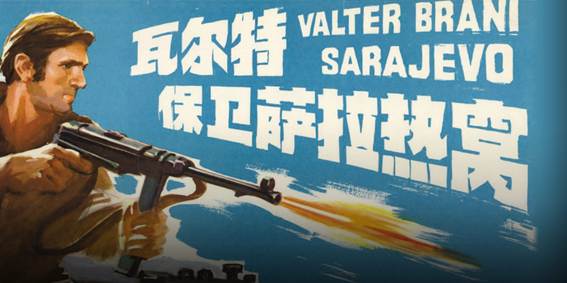
For the Chinese wargaming public, this subject has a particular interest as well because in the People’s Republic of China the Partisan epic (one of the ideological/propaganda foundations of Socialist Yugoslavia) was, and is, wildly popular so much so that the Chinese edition is called Walter’s War. “Walter’s War” refers to the 1972 Yugoslav film Walter Defends Sarajevo (Serb Croatian: Valter brani Sarajevo) based loosely on the military feats of Vladimir Peric, aka “Valter”, who defended Sarajevo during the German retreat from the southern Balkans in late 1944.

Walter’s War is one of the most famous examples of the “Partisan movies” subgenre, a series of films on the Partisan epic made in Yugoslavia between the 1960’s and the 1980’s. It was particularly popular in the Eastern bloc countries-on the year of its release, it was viewed by some 300 million people in the People’s Republic of China alone. Fifty years later, it is still something of a cult movie in China and other countries.

Chinese poster of Walter’s War.

Grant: What type of research did you do to get the details correct? What one must read source would you recommend?

Javier: Thankfully, over the last 20 years quite a few books have been written on the Yugoslav War. This interest in guerrilla warfare was partly due to the use of historical models to understand modern insurgencies such as Iraq in the GWOT years.

Another historical player that began to receive long overdue attention were the Yugoslav Royalists, or Chetniks, that until the early 21st century were almost forgotten or considered a footnote when compared with the Partisan epic of Tito and his guerrilla army. The military museum in Belgrade, Serbia reflects this perfectly. The first time I visited the military museum there were two floors, one dedicated to praise the feats of Tito and his partisan army, the other covering the rest, from Medieval times to the 1999 War against NATO. The second time I visited the museum, in the early years of the 21st century, I found out that the “Partisan” area was closed for reforms, and all Communist era exhibitions were being replaced with exhibitions dedicated to Col. Draza Mihailovic and his Chetniks.

Grant: What from World War II in Yugoslavia was most important to model?

Javier: Simulating what was de facto a three player game (Partisans, Chetniks, Axis and local Allies).

The third player – the Chetnik – presents a major problem. Basically, they didn’t fight the Axis- their policy was to wait for the Western Allies to arrive while preparing for the final showdown against the Communists. On the other hand, while the Partisans had a central command, the Chetniks were a loose coalition of local leaders that followed orders when it suit them to do so, and often reached temporary agreements with the occupying forces to fight the Communist Partisans. Tito had mobile troops which could operate everywhere and hit the enemy targets without concern about the inevitable and brutal enemy reprisals. In fact, the reprisals ended up being a source of recruits for his Partisan army. Mihailovic’s units, however, were strictly territorial, and he could not control them. Most of them (especially the Chetnik units in Bosnia) recognized him only as an honorary leader, but only followed their orders when, and if they matched with their own priorities. So, in practice, the Chetniks are not a “player” in the game, but they can be mobilized by the two players (Axis and Partisans) depending on a number of circumstances.

Grant: What is the scale of the game?

Javier: Turns are quarterly (three months per turn, covering from mid 1941 to late 1944). So to speak, each turn condenses several major operations and smaller actions.

Grant: What different unit types does each side have access to?

Javier: Being a guerrilla war in the Balkans, the standard unit is leg infantry, of course. There are a handful of motorized/armored and cavalry units, but almost all units are infantry. There are air support markers and a Special Forces unit or two.

Grant: What is the anatomy of the counters?

Javier: Units have two basic factors: conventional and guerrilla combat. Guerillas, of course, are better at guerrilla combat, regular units are better at conventional Combat. There are two Combat Tables, guerrilla and conventional-which that is used depends on leadership, initiative and terrain. A guerrilla force fighting in forest or mountain hexes for example has a better chance of using the Guerrilla Table. A conventional unit fighting in a railroad or clear hex has better chance of using the conventional table.

Grant: What is the general Sequence of Play? What type of experience did you want the Sequence of Play to invoke?

Javier: In general, the Guerrilla player has the initiative, while the Axis player has to react. The turn begins with the guerrilla phase were the Partisan player determines resources receives and recruits/upgrades units. This is followed by the objective placement phase, where players deploy a number of targets on map representing intelligence on possible targets provided by their network of spies and other intel sources. Then the Guerilla player moves and attacks targets, and/or enemy units. After that the Axis action phase begins. Upon receiving reinforcements, the Axis player may attack guerilla units. However, catching guerrillas can be difficult-they can easily avoid being forced to fight in particular in forest areas.

The Axis player begins the game with large forces (Germans, Croatians, Italians, Hungarians, Bulgarians) while the Partisan begins with a handful of odreds (detachments). However, as the play goes on, the Italians surrender and the Axis player is increasingly stretched thin. Besides, Bulgarians and Hungarians cannot move from their respective regions. The German and Croatian policies in Yugoslavia all but ensured that the population would join the Partisans.

Grant: What is the layout and area of Yugoslavia covered by the game map?

Javier: The map covers all of Yugoslavia and neighboring areas, from Slovenia to Macedonia and parts of Hungary, Albania and Bulgaria. The map contains all charts and tables needed to play.

Grant: What strategic pinch points does the terrain create?

Javier: Terrain is important, like in the systemic cousin Red Partisans (published by Paper Wars in 2025). Forest, mountains and swamps are the Partisan’s friend. Avoid flat terrain, and particularly railway hexes, that can be reinforced quickly. However, railroads are a major objective of the Partisans, so the Partisan player must strike a balance here.

Grant: What is your focus on Zones of Control in the game?

Javier: In general there are no Zones of Control. Zones of Control are exerted depending on the unit and terrain type. Regular units, for instance, do not exert ZOC on mountain or forest hexes for Partisan units.

Grant: What is the Guerrilla Political Phase? What does this represent from the history?

Javier: Basically, it represents the prestige of the Partisans among the local populace and abroad. If the guerilla player attacks at least one ground attack against an Axis ground unit, they roll for Tito’s Prestige. The higher the prestige, the more resources he can receive from the Western Allies. Tito’s prestige begins at box 1. When it reaches box 6, the Partisans can receive extra resources and the support of the Balkan Air Force (Allied bombers). When it reaches level 7, the Partisans can deploy and use a British Special Force unit, the 2nd SAS.

This simulates the increasing prestige of the Partisan guerrillas among the Western Allies, who initially opted to provide support to the Monarchist forces of Col. Mihailovic. After the reports by the Deakin mission came from Yugoslavia in 1943, and thanks also to ULTRA intercepts, Tito began to be regarded as the only effective guerrilla movement fighting the Germans, while Mihailovic did nothing, or, even worse, reached agreements with the enemy occupiers to fight the partisans.

Grant: What is the Allied Landing Scare roll? What does this represent?

Javier: Several of the major Axis anti-partisan drives in Yugoslavia (Operations Schwarz, Weiss…) were launched with the objective of clearing the coastal areas from hostile guerrillas and prepare the defense of the Balkans against an expected Allied landing. Beginning with 1943, there were several “landing scares” that had all sides (Partisans, Chetniks, Axis) scrambling to occupy the best coastal positions before the arrival of the Western Allies.

For instance, in January 1943, fearing Allied landings in the Balkans, the Axis launched Operation Weiss (White), the largest anti-partisan drive to date, involving 90,000 troops, aimed at destroying Tito’s stronghold at Bihac. Tito planned to move back to Serbia and Eastern Bosnia to destroy the Chetnik forces there before they could join forces with the Western Allies.

Grant: What is the purpose of the Weapons Cache markers? How are they concealed in combat?
How does combat work?

Javier: Weapon Cache markers represent weapons sent by the Western Allies along with arms captured to the enemy, used to improve Partisan detachments into Partisan brigades and divisions.

Grant: What is the makeup of the Combat Results Table? What unique odds are represented and why?

Javier: There are two Combat Tables, guerrilla and conventional-which one is used depends on leadership, initiative and terrain. A guerrilla force fighting in forest or mountain hexes for example has better chances of using the Guerrilla Table. A conventional unit fighting in a railroad or clear hex has better chances of using the conventional table.

Grant: How do Replacements and Withdrawals work?

Javier: The Guerilla player collects replacements-the more territories they control, the more replacements received. Control of towns greatly increases recruitment, but guerrilla units are much more vulnerable in urban terrain. Axis reprisals increased the number of recruits. They also receive “weapons caches” that can be used during the game. They represent clandestine weapon factories, and, as the game goes on and Tito gains popularity among the Western Allies, they represent weapons shipments from the West. Certain game results yield weapons caches as well. These can be used to upgrade partisan units into Brigades and Divisions.

The Axis reinforcements and replacements work differently-They receive a fixed number of replacements per turn, with the exception of “Allied landing scare” turns, when they received extra replacement with which to launch anti partisan drives and clear the coastal areas of Partisans.

Grant: How are Artillery, Air and Naval Support handled?

Javier: There are no artillery units in the game. It is modeled into the regular brigades and divisions. There are only two air support markers that add or decrease odds shifts in attack or defense.

The Partisan army, of course, had no air support units, although they can receive the support of the Allied “Balkan Air Force”. The Axis has only one marker -Yugoslavia was very low on the priority list of the Luftwaffe. Naval Support is handled by the “Partisan navy” counter that provides an odd shift in attack or defense in combats in coastal hexes. The Partisan navy counter enters play after the Italian surrender.

Grant: How do players win the game?

Javier: The Partisan player can add Victory Points by blocking railway lines from resource centers (there are five on map) to Germany. This represents the disruption of resource exploitation in the Balkans. Another way to score Victory Points is to destroy objectives such as fuel depots, train stations or bridges, or rescue downed Allied pilots, determined prior to the turn by the objective table. During the Victory check phase of each turn, the Partisan player rolls 1D6 for each objective marker under their control and adds the corresponding modifier for that objective. Destroying a Dam, for instance, adds +3 to the die roll. The final result is the number of VP’s scored for that objective. Control of towns and cities at the end of a turn gives extra VP’s to the Partisan player. (Control of towns and cities, even temporary, allow Partisans to recruit extra manpower and liquidate collaborationists).

Finally, “Landing scare” turns allows the Partisan player to earn VP’s for controlling port towns and cities, from Bar in Montenegro to Zara/Zadar in Croatia. This simulates the chaotic fight that followed the Italian armistice of September 1943. The Italians controlled large parts of former Yugoslavia, and their surrender ignited a race to arrive first to the huge caches of arms and supplies in the Italian zone, in a free for all between Partisans, Germans and Chetniks. Tito was furious at the Allies for not warning him of the upcoming Italian surrender. Some of the Italian forces joined the Partisans against their former Croat-German allies. This is included in the game as well.

The Axis player must try to deny VP’s to the Partisan player, and make him pay dearly for every VP gained: each guerrilla ground unit eliminated deducts 10 VP. The Axis can also kill Tito. If Tito is eliminated, the Partisan player loses 2 VP’s at the start of each subsequent turn, and their prestige is reduced to 1, so they receive no more extra resources from the Western Allies. The Axis player can try an assassination attempt with the 500 SS Parachute Battalion that historically tried to kill or capture Tito in May 1944, in operation “Knight’s Move”.  

Grant: What type of an experience does the game create?

Javier: The game creates a cat-and-mouse experience, quite similar to the history, where the Axis launched constant anti-partisan drives but Tito and his Partisan army always escaped to fight another day, despite of suffering huge casualties. By the mid to late game, after the Italian surrender, the Partisans are too powerful and the Axis player lacks enough resources to launch mass offensives, thus remaining mostly on the defensive. It is now time for the Partisans to gain as much terrain as possible before the arrival of the Soviet forces in the Fall of 1944.

Grant: What are you most pleased about with the design?

Javier: I think that the game gives a fair idea of what happened in Yugoslavia in 1941-44. It was an extremely complex situation, with many different national and political loyalties at play. The Axis conduct of the Balkan counterinsurgency was a case study of how not to wage a guerrilla war. Their policies, and in particular that of the Croat state, created the perfect conditions for the Communist movement to thrive and take over: they destroyed the existing authority, set the different nationalities against each other, but lacked sufficient strength and brute force to impose a different system. The final result was anarchy and an ideal situation for the triumph of a revolutionary war, which Tito exploited to the fullest.

Grant: What has been the response of playtesters?

Javier: As far as I know, many players really enjoy the Partisan hidden movement rules in Partizan! and found the cat-and-mouse game play quite engaging. They appreciate the combination of simple rules, short playtime, and asymmetrical game play, with a full game often completed in just one day. The scoring mechanism, which rewards destroying objectives, forces Partisan players to carefully consider their strategy—whether to focus on scoring points or increasing their forces. Axis players get a true feeling of frustration of counterinsurgency operations.

Facing an Axis player with a good memory can sometimes be challenging for the Partisan side. Partisans can counter this by swapping the positions of units within the same hex. Overall, the game offers a simple yet enjoyable take on Partisan warfare. Although some players find it a bit troublesome to place markers every turn, the Chinese edition includes tables and numbered markers to help the setup. Most players find the experience enjoyable.

Grant: What other designs are you working on?

Burmese tribal irregulars in Burma ’45 (World at War #109)
“Black Brigades”. Fascist counterguerrilla forces in Forgotten Front: Italy 1944-45 (S&T 359)

Javier: Strategy & Tactics just published Pensacola 1779-82, and soon will be publishing Forgotten Front: Italy 1944-45. Curiously enough, in these games are featured both irregular and conventional forces. In Forgotten Front, for instance, guerrilla and counter guerilla operations play a key role as the ORBAT includes not only regular Axis and Allied divisions and brigades, but also Italian partisans and Fascist Italian counter guerrilla forces, such as the infamous Black Brigades. Pensacola 1779-82 includes irregulars, militias and Indian levies that are highly useful for recon, foraging and to harass enemy regular forces.

World at War will publish my design on the 1945 Burma campaign, where (again) guerrillas played a decisive but little known role.

I am currently working on a number of designs for Decision Games, Paper Wars and Banzai Magazine. I am currently working on the playtest and development of Aragón ’38 for SNAFU Design and Battle for the Mediterranean for VUCA. You can see here some spectacular previews of Battle for the Mediterranean by Pablo Bazerque here.

A look at the board for the upcoming Battle for the Mediterranean from VUCA Simulations.

As always, thanks for your time Javier in answering our questions as I know you are a busy man and always have lots of interesting gaming subjects on your design table.

-Grant

Abenteuer von OSR bis Cyberpunk – Interview zum Rollenspiel-Blog Kritischer Fehlschlag

30. April 2026 um 09:00

KF - BannerGemeinsam schreiben macht Spaß: Auf dem kollaborativen Rollenspiel-Blog Kritischer Fehlschlag geben Spielleitungen seit 2024 Einblicke ins Schreiben von Abenteuern. Wir haben mit Sebastian Hahn, Gründer des Projekts, über die Entstehung des Blogs, die Rückmeldungen der Community und aktuell erschienene Abenteuer gesprochen.

Dieser Beitrag wurde von Andreas Schellenberg geschrieben

CfM040 Limitierte Brücken

Von: Tobias
29. April 2026 um 06:43
CfM040-Limitierte_Brücken

CfM040-Limitierte_BrückenFolge 40 regt hoffentlich ein wenig zum Nachdenken an. Zumindest uns hat das Interview mit Cosima Werner ebenso die Antennen hochfahren lassen wie die Beschäftigung mit dem Spiel LIMIT von Alexandre Poyé (erschienen bei Ludonaute bzw. bei Spielworxx). Zusätzlich sprechen wir noch intensiver über SKYBRIDGE von Michael Rieneck und Franz Vohwinkel (erschienen bei Deep Print […]

Der Beitrag CfM040 Limitierte Brücken erschien zuerst auf fjelfras.de.

Interview with Mark and John Kwasny Designers of A Strong War: The Conflict for North America 1755-60 from Form Square Games Currently on Gamefound

Von: Grant
27. April 2026 um 14:00

Form Square Games has recently offered their next several games on Gamefound, one in their Limits of Glory Series called Jersey New Jersey and the 2nd game a stand-alone non-series game covering the French & Indian War called A Strong War. I think that these games are well timed with this year being the 250th Anniversary of the signing of the Declaration of Independence and I look forward to playing and exploring all of these games. I reached out to the designers of A Strong War named Mark and John Kwasny about an interview to give us a look inside the design and get more information and they were interested in answering our questions. One point about the game before we get into the interview, the title, A Strong War, refers to the type of war the Abenaki Nation threatened to unleash on the land-grabbing British in 1753. The sparks of war, ignited in 1754 near Fort Duquesne by an obscure colonel of Virginia militia, George Washington, spread quickly; soon, flames engulfed the entire globe as England and France vied for control of empire. Over the next 5 years, Regular regiments from the French and British armies, American and French-Canadian provincial units, and Native warriors all fought in a chaotic and violent series of campaigns and frontier raids that culminated in the British conquest of French Canada and the defeat of the Native Nations, most of which had sided with the French.

If you are interested in A Strong War: The Conflict for North America 1755-60, you can back the project on the Gamefound page at the following link: https://gamefound.com/en/projects/form-square-games/jersey-new-jersey–a-strong-war

Grant: Mark & John welcome to our blog. First off please tell us a little about yourselves. What are your hobbies? What’s your day job? 

Mark and John: First of all, thanks for inviting us to do this interview. We appreciate the interest in us and our game! I have watched many of your videos and learned a lot about different games that I have purchased or have considered buying.

We are both retired. John taught Middle School and High School history for 36 years and I taught American and Military history at the college level for 33 years. One hobby we share is playing wargames purely for fun! We have been wargaming since we first made our own game (60 odd years ago) out of a dozen decks of cards. John is an avid fisherman as well, we both read a lot, especially history, my wife and I do a lot of babysitting with our little grandchildren, and we share the unending quest for the perfect chocolate donut (we live 100’s of miles apart and whenever we can get together, we consume a generous amount of such donuts, trying different ones!).

Grant: What is your relationship to each other? How has this aided you in your design endeavor? 

Mark and John: We are brothers and share similar historical interests in military history (he has an MA in Military History, and I have a PhD in Military History). But when it comes to wargames, we have vastly different views on what we like and what works for us in a game. That helped us try to incorporate different styles of play into the design. And John’s pro-French leanings and my pro-British sentiments helped us with the pursuit of play balance!

Grant: What motivated you to break into game design? What have you enjoyed most about the experience thus far? 

Mark and John: About 15 years ago a person contacted us about making a game for a new game company he wanted to form. We chose the French and Indian War as the subject. Ultimately that fell through, but by then we had a game we really liked but it is a long game and thus was difficult to play a lot. We were both still working full time and had very limited gaming time. So we decided to boil it down to its essence – we wanted to make a game that gave the same feel for that war but was playable in a short time so we could actually play and complete it! (I don’t know about others, but the percentage of games I have played that I actually finished is not very high!) The key, we decided, was less resources and thus more tension for each decision. Our goal was simply to make a game we loved and could play together or with our other gaming friends. We already had all the research for the French and Indian War, so we took that earlier game and stripped it to its bones. We put ten years into this process of stripping it down: fewer rules, less units, to create more difficult decisions to use what little you have. The current version is the result of that decade of work.

Grant: What is your upcoming game A Strong War about? 

Mark and John: As mentioned, it covers the French and Indian War, focusing on the fighting in North America between 1755 and 1760. The game takes a grand strategic approach with the players directing the entire war effort of the two sides through those six years.  

Grant: What should the title convey about the French & Indian War? 

Mark and John: Between the title, and the quote it comes from, it indicated a war to the end between British expansion, Native American defense of their lands, and French efforts to maintain control of French Canada. Either the French and their allied Native warriors would stop British expansion or they would lose everything. And therefore it was a strong war, no holds barred!

Grant: Why was this a subject that drew your interest? 

Mark and John: Braddock’s Defeat has always been a subject of fascination for both of us. Childhood visits to Fort Michilimackinac, Old Fort Erie, Fort George, Presqu’ile, and other places around the eastern Great Lakes (we grew up in Cleveland and we traveled around the area back in the 1960’s), these sparked our imagination early on. The characters involved deepened this interest: Washington, Braddock, Pontiac, William Johnson, Montcalm, Langlade, St. Luc de la Corne, Robert Rogers. We have both read numerous books over the decades on the war and these people, and I studied it while in graduate school for my focus on 18th Century and American warfare.

The Wounding of General Braddock by Robert Griffing.

Grant: What is your design goal with the game? 

Mark and John: History is important to us, even in a small quick game such as this one. We wanted a good feel for the war and the overall situation, and we wanted a game that sets up quickly, plays quickly, with rules that we believe can be learned relatively easily without lots of charts and details. Also important to us are the types of decisions a player makes. We want those decisions to feel reasonably plausible for that war. Too many games play like WWII no matter their actual subject. We also wanted to be true to the geography of that area of North America – deep, unending forests, rivers and lakes, paths through the woods, limited avenues of approach to the other side, the feel of the constraints imposed by the geography had to be present. And finally, we wanted to create a game that we enjoyed playing over and over and over!

Grant: What elements do you feel are most important to model in a game set in the French & Indian War? 

Mark and John: We considered the key to the war were the limited movement opportunities and the limited resources available to both sides. We also wanted to show the contrast between the formal military campaigns of the regular armies, and the frontier style of raids and destruction by the partisan forces. The need to balance these two very different types of warfare and differing types of forces was key in our opinion.

Grant: What sources did you consult fur the historical details? What one must-read source would you recommend?

Mark and John: We would suggest two. First, we recommend Francis Parkman’s Montcalm and Wolfe, published in 1884. It has a wealth of information, including the use of sources no longer available. One has to be ready for the 19th century prose, of course, which can help give a true feel for how people saw each other back then but can be difficult to read here in the 21st century. The other book is Fred Anderson’s Crucible of War: The Seven Years’ War and the Fate of Empire in British North America, 1754-1766, published in 2001. It is a comprehensive study of the war.

[Editor’s Note: I own and have read Montcalm and Wolfe and very much enjoyed the overall vantage point it gave of the war and its inner workings. I also very much enjoyed the ending of the book, including a very dramatic and detailed depiction of the Battle of the Plains of Abraham and the fall of Quebec in 1759.]

Grant: What is the scale of the game? Force structure of units? 

Mark and John: The game is deliberately very abstract but the forces available are modeled on the relative strengths of each side. There are yearly turns with multiple activations during each turn/year. It is a game about the Grand Strategy of the war. The focus is on the overall command of the entire theater and the allocation of your limited resources to achieve one of several possible goals. Thus, the force structure is based mostly on what we defined as five different types of combat forces available to the two sides.

Grant: What different units are available to each side? What special capabilities does each type bring to the battlefield? 

Mark and John: The French player has French regular units, Canadian militia and Marine forces (referred to as Marines in the game), and frontier partisans representing Native warriors and the French Bush Rangers such as Charles Langlade. The British player has Colonial units and British regular units. Individually, each cube is equal to another cube, but the key is combining the proper types of units to maximize the bonuses in combat. For example, if a French Marine cube attacks a British Colonial cube, both sides roll a 4-sided die and high roll wins.  But if the French player has a Partisan cube with the Marine, he gets a +2 bonus to his roll. Meanwhile, the British player gets similar bonuses for massing his regulars in combat. Regulars do not fight as well on the frontier, making the French Marines and Partisans even more effective out there. The most numerous forces are the British Colonial units who offer no bonuses but are present in many of the battles. Colonial units can also be used to recruit extra regular units.

Grant: What is used to represent the soldiers in the game? Why was this your preferred medium? 

Mark and John: We use small wooden cubes. We like the feel and look of wooden cubes and the material feels appropriate for 18th Century warfare. Since there are so few units, wooden cubes seemed the most aesthetically pleasing and easiest way to handle the game’s needs.

Grant: How many soldier pieces does each side have? Why so few? 

Mark and John: The French get three regular cubes, four Partisan cubes, and three Marine cubes, thus ten total. The British have nine Colonial cubes and four regular cubes, thus thirteen total. However, Colonial cubes can be converted into regular cubes at the risk of running out of Colonial cubes. We made it with as few units as possible so each decision on how to use each individual cube becomes critical and difficult. Overall, it gives the right feel of British army numerical superiority, the reliance of the French on their Canadian and partisan forces, and the important role of the British Colonials. Each cube is not meant to represent any specific number or specific units. It tries to represent the overall resources available to the commanders of each side.

Grant: What area of North America does the board cover? 

Mark and John: The board covers from Alexandria in Virginia to Québec and the St. Lawrence River valley in Canada, and from Louisbourg and the east coast to Fort Duquesne (Pittsburgh) in the west. Thus, it covers the northeast corner of North America.

Grant: Why did you feel that point to point movement was the best choice for the design? What advantages does this give the game? 

Mark and John: More and more, we like the simpler feel of point-to-point movement. We have played many hex games but as we get older and less able to manipulate stacks of units in small hexes, we find point-to-point movement physically easier to play. It was also easier to represent the difficult terrain between the two sides, and the very limited avenues available to get at each other. In effect, there are three main land routes (through Duquesne, through Oswego, and along Lake Champlain) as well as the naval option for the British. Using hexes or even areas for so few actual paths between the two sides would have created a lot of dead space. This approach fit with our goal of limited resources, limited avenues of attack, and thus tougher decisions.

Grant: What is unique about the combat system? 

Mark and John: Players have very few units and thus have to use each one carefully. There are no real charts needed and though there is some luck, the players can mitigate it to a degree. This is perhaps one of the keys. You commit cubes one at a time in a battle and can call off an attack to save the remaining cubes for use later if the initial rounds of combat go badly. Perhaps the real unique aspect for us is the need to create combinations between which cubes you commit to a battle. And there are only so many combinations possible in a yearly turn, so you have to judge when to use the bigger combinations and when to cut and run. For example, the biggest combination for the French is a combined force of regulars, Marines, and Partisans. But in the first year, the French player has only one regular, so he can only use this super combo (as we always call it!) once in that year. Where does he want to commit this strong force? Does he prefer to defend a critical fort, or to raid the frontier to eliminate Colonial units, or to attack to secure control of a border location? These are the kinds of decisions we enjoy most in our combat system.

Grant: What type of strategy is needed with this focus? 

Mark and John: A very careful use of the very limited resources. All games have that to an extent, but with so few units, players have to hoard their units and use them sparingly. You have to look at the whole year (one turn). You can only use each cube once a year. Committing your best forces early might gain an initial advantage but could then leave you with nothing to defend or attack with later in the year. Each battle, each combat round, and each activation has to be weighed carefully with what needs you might have against an unexpected disaster or opportunity later in the year. 

Grant: How does the actual combat play out?

Mark and John: Perhaps an example is the best way to give a feel for combat. The British player declares an attack on a French fort at Oswego. He then commits three of his cubes (the maximum you can ever commit to one combat) to make the attack (two British regulars and one Colonial cube). Now the French player has to decide whether he wants to use precious resources to defend Oswego. It is not a home location, but it is next to two vital home locations, Fort Niagara and Fort Frontenac. He decides to defend with the maximum of three cubes as well (one regular, one Marine, and one Partisan). Round 1, the British player has to decide which cube to commit to the battle. He chooses one of his regulars. He could lead with the Colonial and save his regulars in case it goes badly early but leads with his power! The French player then decides which of his cubes to commit first and he starts with his Marines. Now both players roll the 4-sided die and the number rolled is the Strength gained from that cube for this combat. So if both players rolled a 3, then it is 3 to 3 after the first round. That is a tie and therefore if the combat is ended there, the defender wins ties. Instead, the British player commits his second regular and the French player decides to commit his Partisan. Both players again roll a die to determine what Strength they get for these newly committed cubes. In addition, the British player gets a +2 bonus to this roll because he has committed a second British regular. The French player gets +2 to his roll because he has two different types of cubes in this combat. The British player rolls 2 and adds his bonus to get a total of 4 Strength for this second committed cube. The French player rolls a 4 and adds his bonus to get a total of 6 Strength for this second committed cube. After two rounds, the British player has a total Strength of 7 and the French player has a total Strength of 9. If the combat ends now, the French player has a greater total Strength and would thus win. Still, the British player might at this point choose to call off the attack because he will not get any bonus for his remaining Colonial cube whereas the French player will get another bonus when he adds the regulars to the fight. The British player accepts defeat, saves the Colonial cube for use later in the year, the French player saves his regular cube, and the combat is ended.

Grant: Why did you choose to use a 4-sided die for combat? 

Mark and John: We wanted to have some randomness in combat so that it was not just a math game. But we wanted to avoid wild swings of results between high and low rolls. We experimented with 6-sided dice, 4-sided dice, 3-sided dice, and 2-sided dice. Ultimately after hundreds (literally) of games, we determined for us the 2- and 3-sided dice did not offer enough randomness and combat was almost reduced to mathematics. The 6-sided dice provided too wide a variance of results. A difference between a roll of six and a roll of one overshadowed any strategy or skill in using the combinations and bonuses. Thus, we settled on a die that I personally hate, the 4-sided die (the triangular shape is hard to pick up!), because it gave us the best feel for some randomness but still allowed players’ skill and strategy to have a large impact on the results as well. Form Square Games has brilliantly come up with a way to generate a result of 1 to 4 using an 8-sided die, and that resolves my hatred of our chosen dice!

Grant: I see that each player has several paths to victory. What does this look like?

Mark and John: The multiple paths to victory offer the players strategic choices during the game and between different games. But these paths are not always compatible with each other, and thus players have to choose which to pursue and if/when perhaps to switch to another approach. The British player has two main options, either go for points gained by capturing enough French home forts to win without having to conquer all of Canada, or if his losses on the frontier become too heavy or the French gain too many points in the border locations, he has the option to switch to an all-or-nothing conquest of Canada and ignore points. The French player can also win on points early on by attacking border locations, but he can instead choose to focus more on frontier raiding to eliminate Colonials and win through the destruction of the Colonial military. It is difficult, however, for the French player to do both. Thus, the competing needs of the different paths to victory create tension for each player when determining his strategy year by year and over the course of the entire war.

Grant: What type of an experience does the game create?

Mark and John: We wanted an experience that becomes so nerve-wracking that you might just forget to drink your newly opened beer. John did this in one of our test games and it became our litmus test for how good the game was or was not. He opened a beer, we sat down to play, it was one of the better nail-biting contests, and when it was over, he declared he needed another beer. He picked up the open bottle and it was still full! He had become so immersed in the game that he had completely forgotten about his beer. That is the kind of experience we hope people get by being drawn into the excitement of a tense, quick playing game of nerves.

Grant: What are you most pleased about with the design?

Mark and John: First, we set out to create a game we enjoyed playing. Once we had done that, our next goal was for somebody else to play it and enjoy it. When Form Square Games expressed interest and said they had had others play it and respond favorably, we were ecstatic. Having them publish our game is the ultimate goal we had pursued for years. For the game itself, as mentioned above, we wanted a game that is quick to setup and play (a typical game lasts an hour or so and can be set up for a rematch in a couple minutes), and that creates tension and tough but meaningful decisions. We have played this game to completion more than any other game we have played, and still look forward to playing it again!

Grant: What other designs are you working on? 

Mark and John: We have tinkered with the idea of using this system to create a game covering the American Revolutionary War.  We think it would work pretty well but we have not gone very far with that.  We have also designed and played a game on the Battle of Ligny in 1815, which we enjoy but it is not fully finished or tested either.  We want to represent aspects of tactical combat that we have not seen in other games and have had some good results.  But ultimately, these two were designed again for our own enjoyment and we have not put in the serious work yet required to transform them into publishable games.

If you are interested in A Strong War: The Conflict for North America 1755-60, you can back the project on the Gamefound page at the following link: https://gamefound.com/en/projects/form-square-games/jersey-new-jersey–a-strong-war

-Grant

Interview with Peregrine Nicholls Designer of Limits of Glory Campaign VI: Jersey from Form Square Games Currently on Gamefound

Von: Grant
20. April 2026 um 14:00

A few years ago, we became acquainted with Andrew Rourke through his Coalitions design from PHALANX that went on to a successful crowdfunding campaign and has recently been delivered. He has since been a busy guy with starting his own publishing company called Form Square Games and also publishing the first 5 designs in a new series called Limits of Glory that will take a look at the campaigns of Napoleon and other contemporary conflicts. In Campaign I, which is called Bonaparte’s Eastern Empire, the game is focused on the campaign of the French in Egypt between 1798 and 1801. Campaigns II, III and IV was Maida 1806 and Santa Maura & Capri. Campaign V was Donning the Sacred Heart, which covers the Vendee Civil War, and just recently fulfilled as I have my copy sitting on my gaming table awaiting an unboxing video.

And now, recently, Form Square Games has announced the next entry in the series which is a two-fer with Campaigns VI and VII called Jersey New Jersey and is set during the American Revolutionary War but also including a 2nd game called A Strong War set during the French & Indian War. I think that these games are well timed with this year being the 250th Anniversary of the signing of the Declaration of Independence and I look forward to playing and exploring both of these games. I reached out to the designer of Jersey who is Peregrine Nicholls about an interview to give us a look inside the design and get more information and he was interested in answering our questions.

If you are interested in Jersey, you can back the project on the Gamefound page at the following link: https://gamefound.com/en/projects/form-square-games/jersey-new-jersey–a-strong-war

Grant: Peregrine welcome to our blog. First off please tell us a little about yourself. What are your hobbies? What’s your day job?

Peregrine: I have been a wargamer ever since my Dad came home with a 1912 1st edition of Little Wars by H G Wells, when I was 8. I have very fond memories of us playing toy soldiers on the floor using these rules and firing matchsticks at each other’s troops from toy artillery pieces. I still have the book and even recently bought a Britains 25pdr gun on eBay to add to my display shelf! Wargaming ballooned from there and today 50 years later I have almost 25,000 miniatures and over 400 board games! 

Apart from reading (mainly history books or historically based novels), my main other hobby is following my beloved Leeds United, an English football team, whom I always watch on TV and also manage to get to 4-5 homes fixtures per year – a 500 mile round trip from where I live now in south west England.

My day job is working in the family property business, where with my wife & son we buy, sell, manage and develop property. 

Grant: What motivated you to break into game design? What have you enjoyed most about the experience thus far?

Peregrine: Andy, that is Andy Rourke of Form Square Games. I was being shown one of his games at a convention and after he had soundly beaten me, we had a beer and I told him about a game idea that had been sitting in my filing cabinet for almost 40 years! After boring him to death for 20 minutes, he said “I’ll publish that!” – at which point I was speechless! But two years later now here we are, at the Gamefound funding stage!

The most enjoyable part of the process has been rediscovering the history. A lot of reading was needed and now having the internet as a tool, (when previous work on the topic was pre-word processing software!), was a massive advantage and led me down countless rabbit holes of historical threads and narratives.

Grant: What is your upcoming game Limits of Glory Campaign VI: Jersey about?

Peregrine: I am responsible for the Jersey game, not the New Jersey game, which is Andy’s baby. 

The Isle of Jersey is the biggest of a small group of islands just off the coast of France in the English Channel.  When William the Conqueror (as Duke of Normandy, of which Jersey was a part) invaded England in 1066 the Channel Island become part of the English crown. When Bad King John (he of Robin Hood fame) lost Normandy to the French in the early 1200’s, the Channel Islands decided to remain English and they have been ever since – they are now self-governing British Crown Dependencies.

The French did try to capture them during medieval times, but it was half-hearted as the islands really had no particular value at that time. This changed when England and France became constant enemies in the early 1700’s as by then Jersey had quite a merchant fleet (because of its trade with its colony New Jersey) and like all merchantmen when war came, privateering beckoned. 

Jersey then became a real thorn in the French side, massively disrupting French coastal trade; after the first year of the American War of Independence the Jersey fleet had captured and brought back to the island over 200 “prizes”. This is what led the French to the two invasion attempts; the 1779 aborted landing and the 1781 successful landing. 

The game covers both these actions, with the 1779 scenario allowing a campaign to develop as if the French had actually landed and the 1781 scenario allowing the player to recreate the actual very brief campaign to see if they get the same or a different outcome.

Grant: Why was this a subject that drew your interest?

Peregrine: That’s easy – I grew up in Jersey! The Battle of Jersey was something we learned about, although since I left the island in the early 1980’s its anniversary has been elevated locally to include uniformed re-enactors in the town square and all the trimmings!

Grant: What is your design goal with the game?

Peregrine: To give the player an enjoyable game on a topic about which 99.9% of them will know nothing! That is one of the things I love about our hobby, discovering history, stories, narratives and personalities from military history about which one would have been ignorant, without our hobby.

Grant: How have you modified the Limits of Glory System to fit the American Revolutionary War?

Peregrine: I have not really had to change anything about the series. Andy and I have added lots of small flavor elements, but fundamentally the game will be very familiar to anyone who has played other games in the system.

Grant: How has designing a game in a tested and established system been? How constrained did you feel?

Peregrine: A little, but not hugely, as Limits of Glory is after all a very clever and innovative system, particularly the Event Clock and the Glory concept – so there was lots to work with.

Grant: What elements do you feel is most important to model in a game set in the American Revolutionary War?

Peregrine: The Jersey game really doesn’t have the feel of the AWI, in the sense that it is set in Europe, without all the quirks (terrain, native Americans, divided loyalties, etc.), that the fighting in America involves. It was coincidental really that the French decided to attack Jersey during the AWI, it could have easily been in a period during say the War of the Austrian Succession or the Seven Years War – or in the French Revolutionary & Napoleonic Wars that followed.

We have included John Paul Jones though – so there is an American link!

Grant: What sources did you consult for the historical details? What one must-read source would you recommend?

Peregrine: Lots of sources. The Societe Jersiaise was most helpful with access to the online resources, some of the contemporary documents were brilliant. 

For example, we found a set of standing orders (in Jersey French – a local Normandy dialect) issued by the Colonel of a Jersey Militia regiment, specifying what his men were to bring to the muster point (the parish church) at that time when invasion alert was sounded. Once I had found a connection in Jersey, through an old school friend, who could translate it for us, (although there were a few words in the old copperplate hand writing that alluded us), we had a real flavor for the situation and it even led us to introduce a special rule into the game for 1779 – “harrows” – but you’ll have to buy the game to find out what they are and how they can be used by a player to frustrate his opponent!

One “must read” source? The Battle of Jersey by Richard Mayne, Phillimore Press 1981. There are still second-hand copies floating around on the web bookstores.

Grant: What was it about the French invasion of the Island of Jersey that made you believe the Limits of Glory System would work well modelling the campaign?

Peregrine: The Limits of Glory System is a very open one in campaign terms so fitting Jersey into its strategic mechanics was actually very easy.

Grant: What different units are represented in the game and what advantages do they bring to the battlefield?

Peregrine: In Jersey there are only four types – British Regulars, Jersey Militia, French Nassau Legion infantry and French Royal Regular infantry. There is also some light artillery floating about as well.

The troops were all of a similar standard, although the Legion was an inferior unit, represented by their stats on the Combat table.

We did of course incorporate contemporary doctrine, so you will find that a Jersey Militia officer cannot issue command to British Regular forces – “After all Sir, the cheek of the fellow!”.

Grant: What challenges does this campaign bring to the system? How did you address them?

Peregrine: Great question.  There were several:

Tides – how were we to represent that Jersey has one of the most difficult tidal systems in the world (it’s tide range is in the top 5 on the planet), and it frustrated the 1779 attempt to invade and had an affect in 1781 also.

Alarm – in 1781, the island was asleep when the French landed, so we had to bring in rules for how the alarm would be sounded, spread, and how local troops would muster, etc.

Hopefully players will feel we have successfully dealt with these issues, with some simple and innovative mechanics.

Grant: What area does the map cover? Who is the artist and how does their style assist in creating theme and immersion?

Peregrine: It covers the whole island. Jersey is not a big place, approximately 45 square miles, so this was not difficult. We also have a separate “break-out” map showing key locations in the capital, St Helier, which will be the focus of the fighting in 1781.

The artist is from 1795! We were lucky that a contemporary map – The Richmond Map – has been digitized by the Societe Jeriaise and is available through their web portal, so were able to use that. Andy worked his usual graphic magic to clean up the color and tones and we are really pleased with the result. Little details like the fact that we have put the parish crest by the church for each of the 12 Jersey parishes (very important in the cultural & contemporary heritage of the island), is very pleasing and really adds to the period feel.

Also, the picture on the box cover and superimposed behind the map & the player aids is contemporary too – being the painting The Death of Major Pierson by John Singleton Copley which was created in 1782-3 and now hangs in the Tate Britain gallery in London.

The Death of Major Pierson by John Singleton Copley which was created in 1782-3 and now hangs in the Tate Britain gallery in London

Grant: What purpose do the various numbers appearing in each space on the board serve?

Peregrine: These are “difficulty” ratings – the lower the number the more difficult it is going to be to move your forces out of an area. You will notice that the Jersey map has some land and sea spaces that are rated “0” – we built some special rules in for those!

Grant: For those that are not familiar, what is a Glory Rating? What role does it play in the game?

Peregrine: It is a major part of all the Limits of Glory Series games – every Leader has a glory rating. It represents the ability, resources, luck and circumstance of each Leader and is used by them to mitigate failures or to turn success into better success. It becomes intuitive to use after a few game turns.

Grant: What was the process like assigning these ratings to the commanders on both sides?

Peregrine: Fun and difficult! Glory must be set to be playable as well as accurate, so we tinkered and play tested until it felt right.

Grant: What Commanders are included for each side? Are there any real interesting personas here?

Peregrine: Lots – I’m not quite sure where to start, so I’ll give you a few from 1781.

Major Pierson – the British hero, who has a St, Helier street and a pub named after him. At 24, he was young for a Major and because the two Colonels on the island were in England on Christmas leave when the French landed (12th night, 6 January, 1781), he found himself the most senior British officer on the island. He defied a written instruction to surrender his troops from the Governor of the Island (who had been captured by the French), mustered his men and some militia, assaulted St Helier, won, and was killed at the climatic moment of the final assault! Hollywood where are you!

Baron de Rullecourt – the French commander in 1781, who had been the 2IC for the 1779 expedition also. Not a Baron at all, but rather a clever charleton & adventurer who had ingratiated himself in the right circles and persuaded these people to let him command the invasion and had secured a promise he would become the new Governor on the island if successful. A good planner, he pulled off the daring night landing and marched to the capital without detection, capturing the governor in his nightgown! At this point though success went to his head and he assumed all the Jersey & British forces would just surrender as ordered – they didn’t! He was also killed in the climatic battle, at about the same instant as Major Pierson. Some very interesting artifacts were found in his travelling trunk after the battle – I’ll leave the reader hanging here!

Emir Said – a mysterious Indian Muslim “prince”. He accompanied De Rullecourt, dressed in full flowing Arab style dress, turban, the “works”, including a nasty looking large scimitar on his belt. He stood behind De Rullecourt making unintelligent but threatening noises during the surrender negotiations. We have brought him into the game as an NPC – he is fun and unpredictable!

John Paul Jones – a single source identifies the AWI hero as the commander of the naval flotilla for 1781, (following his success at the Battle of Flamborough Head), so of course we had to include the “Father of the American Navy” in the game!

Grant: What is the makeup of the Combat Table?

Peregrine: It is pretty standard for the Limits of Glory System with different troop types (British Regulars, Jersey Militia, Nassau Legion & French Regulars) being given different abilities and success ratings.

Grant: How does combat work in the design?

Peregrine: Again, pretty standard for the Limits of Glory System – although that said there may be some slight changes to reflect the continual nature of the running fights, in what is a truly small campaign in terms of time span.

The big change for Jersey is that there are no sieges. The time span of the campaign is tiny where compared to other games in the system. The actual 1781 campaign lasted less than 1 day; and had 1779 resulted in a landing, 1-2 days would have brought the campaign to a conclusion. That doesn’t mean there are not castles & forts in the game however – we just have a different way of them possibly being captured!

Grant: What is the general Sequence of Play?

Peregrine: If the player has played any Limits of Glory Series game they will be right at home. 

Each turn starts with an event, followed by momentum rolls, followed by alternate turns for the players to move or initiate combat, until both players run out of momentum.

Grant: What multiple strategic decisions are presented to the player every turn in this campaign?

Peregrine: Like all Limits of Glory Series games the player must focus in on the objective and get cracking with their plan or they will run out of time. 

Who do I move? Where do I move them to? Can I risk it? Have I got the Glory to mitigate a failure? Where do I muster forces? Do I go and attack the French now, or do I wait until I can rouse more militia out of their beds?

Decisions, decisions, decisions!

Grant: How is victory achieved?

Peregrine: In 1781 the key to the whole game is Royal Square in the center of St Helier (this is where the real climatic battle took place) and whoever holds this location when the time clock runs out, wins. 

In 1779 taking overall control of the island is the objective for the French and denying this to them is the Jersey players goal.

Grant: What are some basic strategies for the French and the British players?

Peregrine: That is probably too detailed to go into here, but Andy has promised that I can have multiple pages in the rulebook to walk players thorough some basic ideas for strategies for both games.

In essence though the French must successfully negotiate the tides & coastline to get their force ashore in a concentrated way and then either push for St Helier with the Governor & Royal Square as their prizes in 1781; or spread across the island capturing & holding militia mustering points & forts, whilst also beating the resident troops in battle in 1779.

For the Jersey player it is all about getting your troops mustered and then into strong enough groups to deny the French their objectives – in the words of Wellington, “give them a damned good thrashing!”

Both sides have equal chances of winning the game and with the fluid nature of the Limits of Glory System, replayability is high.

Grant: What type of an experience does the game create?

Peregrine: Tense, with an increase in this tension as the game proceeds – and hopefully fun! This has certainly been the experience of the scores of play testers we have played it with.

Grant: What are you most pleased about with the design?

Peregrine: All of it! The idea to bring a game about my childhood home to market has sat in my filing cabinet for almost 40 years, so brushing the dust off and making it a reality has been a dream come true for me. To think that the history of this obscure, globally unimportant, battle will be available to a wider audience is fabulous, as it has a fascinating and vibrant narrative with great characters and heroes that deserves to be better known.

I particularly love the map and the use of the John Copley painting in the game also, as a copy of this painting has hung in my home for as long as I can remember.

Grant: What other designs are you working on?

Peregrine: Wow, give me a chance! Just working on this one has been a major task! Let the dust settle on Jersey New Jersey and I’ll cogitate from there!

If you are interested in Jersey, you can back the project on the Gamefound page at the following link: https://gamefound.com/en/projects/form-square-games/jersey-new-jersey–a-strong-war

-Grant

Interview with Martin Melbardis Designer of Campaign: Operation Bagration from Catastrophe Games Currently on Kickstarter

Von: Grant
13. April 2026 um 14:00

A few years ago, I played and very much enjoyed a cool little solitaire WWII card-driven game called Campaign: Fall Blau from Catastrophe Games and designer Martin Melbardis where the player attempted to breach the Soviet defenses on the East Front in the pivotal German summer campaign of 1942. The game system is very playable and simple, but has some strategic depth to it as the player has to make a lot of choices about what to go after, how to manage their scarce resources (fuel) and what generals to use to take advantage of their special abilities to amass enough VP to claim victory over the Soviet Union. They now have the counter punch of that game in a new entry in the series called Campaign: Operation Bagration and it is currently being offered on Kickstarter.

If you are interested in Campaign: Operation Bagration, you can back the project on the Kickstarter page at the following link: https://www.kickstarter.com/projects/campaign-fall-blau/campaign-bagration

Grant: Welcome back to the blog Martin. What is your current game Campaign: Operation Bagration?

    Martin: Thanks for having me back! Campaign: Operation Bagration is the long-awaited successor to my very first published game, Campaign: Fall Blau and tells the story of the Soviet offensive in 1944 to take back the occupied center of Russia gained by the Germans during Operation Barbarossa and is based on the successful Campaign: Fall Blau game system.

    Grant: What was your design goal with the game?

      Martin: My design goal for Campaign: Operation Bagration was to switch perspectives to the Soviet side using my tried-and-tested Campaign Game System. I wanted players to take command of the Soviets during one of the most devastating offensives of the war….Operation Bagration, which tore through German Army Group Center in 1944. From a design standpoint, I found it very rewarding to adapt new game mechanics and ideas to fit this pivotal WWII Campaign on the Eastern Front, while keeping the core of the system intact.

      Grant: What are the hallmarks of this solitaire Campaign Series?

        Martin: I’d say a minimalist approach to wargaming. Very streamlined, using only cards, dice, and cubes, with a 6–7 page rulebook. These are light solitaire wargames designed to be fast and furious with no extra fat or bloat, especially when compared to more traditional hex-and-counter wargames that can take hours to play.

        Grant: As a follow up to Campaign: Fall Blau, what do you believe you have improved in the gaming experience?

          Martin: While the system as a whole is more or less exactly the same as Fall Blau, I injected some new ideas into the experience to better reflect the historical realities of this campaign. The core game, such as defeating Campaign Cards, the Order system and how Generals work, will remain familiar to players of Fall Blau, but the feel is distinctly different. 

          Grant: What elements from Operation Bagration did you need to model in the design?

            Martin: Operation Bagration was a completely different beast to tackle than Fall Blau. In addition to taking control of the Soviet army this time around, the mountainous regions of the Caucasus region have been replaced with the swamps of Belorussia and Poland. You’re also facing a much weaker and mostly static German Army Group Center, desperately trying to rebuild a frontline and stop the Soviet advance from swarming into their rear echelons. This is represented by the new “Rebuild Frontlines” rule, which replaces the old “Local Counter-Attacks” rule from Fall Blau. In Bagration, counter-attacks are now only triggered by Event Cards representing Panzer Divisions trying to blunt the Soviet offensive. In fact, the entire Event Deck has been changed to reflect the research I did on Operation Bagration with all sorts of cool ideas popping up on how to reflect the history, units and tactics of this Campaign.

            Grant: As a solitaire game, what type of experience does the game create? 

              Martin: The game system prides itself on being fast, easy to learn but hard to master. It creates a very similar experience to Fall Blau such as tough decisions weighing the player down each turn on how to best use your limited Orders and finding the right balance between Attacking, Advancing, or stopping for Logistics to catch up. 

              Grant: What is the goal of the player?  

                Martin: The goal is to capture enough Campaign Cards before the game ends and earn enough Victory Points from those Campaign Cards to reach the victory or even the Brilliant Victory threshold.

                Grant: How does the player go about choosing and managing their Generals? 

                  Martin: Each game starts with the player choosing three Soviet Generals. All of these generals are historically accurate, with options such as Bagramyan, Konev, Rokossovsky, and a few others. Each General has the generic “Hero of the Soviet Union” special ability plus one unique ability. Additionally, each General leads a certain type of army: either a Tank army or a regular Infantry army. Tank armies have fewer manpower cubes but benefit from added mobility, which helps them bring more Campaign Cards to the frontline when using the Advance Order. Infantry armies, on the other hand, have more “meat” and thus more manpower cubes to absorb losses. Each General also has a set number of cubes representing their starting strength in manpower and available forces. Managing your Generals comes down to picking a balanced mixture and using each general’s individual strengths (number of cubes and abilities) to maximum effect.

                  Grant: What unique abilities do the different Generals possess? 

                    Martin: As mentioned, each General has the “Hero of the Soviet Union” special ability, which allows you to discard a red cube to re-roll a single die. This represents the Soviet ability to historically take massive casualties and still push on. On top of that, each General also has a unique ability reflecting their historical traits. For example, General Bagramyan is an offensive-minded General, while Rokossovsky was known to always plan two steps ahead and this is represented by his ability to draw extra cards from the Event Deck.

                    Grant: What type of events does the Event Deck contain? 

                      Martin: In addition to the Campaign Cards, the Event Deck is really where the historical aspects of the Bagration Campaign really come to life. I made sure to only include Soviet and German units and tactics that were instrumental to the Bagration campaign. The Event Deck contains mostly cards that help you during the game, such as attached Soviet units like the 3rd Guards Cavalry Corps, which can help you exploit the flanks of the German frontline by removing adjacent defenses, or the 4th Tank Army, which grants extra attack dice when attacking a Campaign Card. These cards not only add flavor to the game but also a strong sense of historical flavor.

                      Grant: What are the different type of German effects included in the Event Deck? 

                        Martin: The Event Deck also contains cards that hurt the player, such as German Panzer divisions that trigger a counter-attack when drawn, or German reinforcement cards that add additional German cubes to active Campaign Cards on the frontlines. In addition, things like German bombers or bad weather can and will slow your progress.

                        Grant: What Actions/Orders are available to the player?  

                          Martin: There are three available Orders each turn, and you may perform one per General. The Advance Order (costs 1 supply) brings unlocked Campaign Cards to the frontline. Once a card is on the frontline, an Attack Order (also costs supplies) can be used to attack and remove any cubes (representing German formations or defenses) on that card in order to capture it and gain the VP listed on the card. Finally, the Logistics Order adds supplies and reinforces a General with a cube to replace losses.

                          Grant: How do they manage their Supplies? How can they obtain additional fuel? 

                            Martin: As mentioned, each Advance and Attack Order costs supplies, and the Logistics Order replenishes supplies as well as lost manpower cubes from attacking. Finding the right balance and knowing when to rest using a Logistics Order instead of Attacking or Advancing is very important. However, resting too long will slow your progress, as the clock is always counting down. A General who uses the Logistics Order adds two supplies to your shared supply pool and adds a single manpower cube to their card.

                            Grant: How do they manage to defeat the various Campaign Cards? 

                              Martin: After using the Advance Order to bring an unlocked Campaign Card to the frontline in front of a General’s Card, that Campaign Card then immediately deploys a number of grey cubes (listed on the card) onto itself. The card is now available to be attacked using the Attack Order. When you attack, you pay supplies then calculate the number of cubes on the attacking General’s Card and roll that many dice. You need rolls of 4+ to remove a single white (defense) or grey (German units) cube from the Campaign Card. Some Campaign Cards such as fortress cities (Festerplatz) or swamps reduce the attack dice by -1. Rolls of 1–2 result in your General losing a manpower cube (red cube). Once all German cubes are removed from the Campaign Card, it is considered captured and removed from the frontline, and you gain the Victory Points listed on the card. Capturing Campaign Cards also unlocks additional Campaign Cards.

                              Grant: How do the German forces fight back? 

                                Martin: This time around, the Germans are much more static than in Fall Blau, which better reflects the historical situation in 1944. While you may still lose manpower cubes through bad rolls on Attack Orders, counter-attacks are now only triggered through Event Cards. A Panzer Division drawn as an event will immediately counter-attack by deploying to the frontline and attacking the General directly in front of it. There’s also the Operation Doppelkopf Event Card, which is placed near the end of the Event Deck during setup and represents a large German offensive action late in Operation Bagration, designed to blunt Soviet momentum.

                                Grant: What strategy should the player use to do well? 

                                  Martin: Pick a good, balanced mixture of Generals and learn when to attack versus when to build up supplies and manpower through the Logistics Order. Using Generals with Tank Army abilities to bring multiple Campaign Cards to the frontlines helps a lot but too many Tank Generals will lower your overall manpower total. Also, optimize your use of Event Cards to either prioritize Attacks or to regain manpower cubes. Overall, calculated risk management is the single most important factor in the game.

                                  Grant: What different options are built in to make the game more of a challenge?  

                                    Martin: The game is already pretty challenging, but we are also currently planning on developing a Hard-Mode for the Kickstarter that adds 4–5 additional very difficult Event Cards to the deck for those players who love challenges or are even simply masochists.

                                    Grant: What are you most pleased about with the design? 

                                      Martin: I’m pleased with the way I’ve adapted the old Fall Blau Game System to incorporate new game mechanics and Events to reflect the different historical aspects of Bagrations’ unique Campaign. Such things such as the German’s use of blocking detachments to try to stop the Soviet steamroller with whatever they could (represented by the rebuilding the frontline mechanic), and the use of Festerplatze or Fortress cities in Belorussia to hold at all cost. Added to this is the liberal use of Soviet tactics such as mine sweeping tanks, the massive God of War bombardment to signal the start of Bagration, Maskirovka deception techniques and American lend-lease trucks to help the Offensive are all well-represented in the game through the Event Deck.

                                      Grant: What has been the response of playtesters? 

                                        Martin: Early on, I got some great and positive responses from playtesters when I initially designed the game. Later, I handed off playtesting and development to Catastrophe Games, who further developed the game and ran additional playtests. I’ve heard good things from them as well.

                                        Grant: What other historical campaigns might the series delve into?

                                          Martin: Next up, I am planning to adapt the series to either the North African or the Pacific Theaters in WWII. I also strangely find that representing the Japanese early-war successes against the Allies in the Philippines, Hong Kong, Indonesia and Singapore a very interesting twist and is a subject rarely touched upon in wargaming. This could also be a good option in the future but who really knows where my creativity can take me? 

                                          Grant: What other designs are you currently working on? 

                                            Martin: As always, I am continuing to design lighter Print & Play wargames with my own independent company, Solo Wargame. I usually release a new wargame every two months or so on Kickstarter and want to continue that trend with a WWII wargame about commanding a Soviet battalion during the Battle of Stalingrad in 1942. I also plan to release a new version of my continuing series on WW2 Roll & Write games, this time focusing on the Torch landings in North Africa in 1942–43 with new ideas about convoy interdiction, diplomacy with the Vichy government and eventually pushing the Germans all the way to Tunisia. Like most other creatives, I honestly have way too many ideas and too little time!

                                            Thanks so much once again for having me on! 

                                            If you are interested in learning more about the Campaign Series and how it works, you can watch my preview video for the Campaign: Fall Blau Kickstarter from 2022 at the following link:

                                            If you are interested in Campaign: Operation Bagration, you can back the project on the Kickstarter page at the following link: https://www.kickstarter.com/projects/campaign-fall-blau/campaign-bagration

                                            -Grant

                                            Im Interview – Nico Finkernagel blickt auf sein erstes Jahr als CTO

                                            07. April 2026 um 16:22

                                            Seit 1. April 2025 ist Nico Finkernagel Chief Technology Officer (CTO) bei Pegasus Spiele. Teil der IT-Abteilung ist er aber bereits seit 2018. Als Software Engineer war er seither an der Realisierung zahlreicher Projekte beteiligt. Er setzte seine Fähigkeiten und Kenntnisse in den Bereichen Datenanalysen und Prozessoptimierungen ein, zum Beispiel bei der Einführung eines neuen Shopsystems und dem Aufbau der IT-Infrastruktur für das Pegasus Spiele Tochterunternehmen Pegasus Spiele North America.

                                            Als CTO hat er nicht nur die Leitung des IT-Teams inne, sondern kümmert sich als Teil des Managements unter anderem auch um den Ausbau der IT-Sicherheitsstrategien, die Einführung neuer Technologien und den Aufbau strategischer Partnerschaften im Bereich IT.

                                            Nach seinem ersten Jahr als CTO blickt er auf die ersten Erfolge und zukünftige Projekte:

                                            Auf welchen Themen liegt dein Hauptaugenmerk seit Beginn deiner Tätigkeit als CTO?

                                            „Seit ich CTO bin, bewegt sich mein Alltag im Grunde zwischen zwei Welten: Zum einen leite ich ein für unsere Unternehmensgröße ziemlich großes IT-Team von fünf Personen. Das heißt ganz konkret: Projekte priorisieren, Strukturen weiterentwickeln, aber vor allem dafür sorgen, dass das Team gut arbeiten kann.
                                            Zum anderen ist ein großer Teil meiner Arbeit strategisch geprägt. Ich beschäftige mich viel mit der Frage, welche Technologien für uns wirklich relevant sind und welche eben nicht. Es geht darum, sinnvolle Schwerpunkte zu setzen und die IT so auszurichten, dass sie das Unternehmen langfristig unterstützt. Das betrifft Logistik- und Handelsprozesse, IT-Infrastrukturen, aber auch generelle Tools, die beeinflussen, wie wir im gesamten Pegasus Spiele Team zusammenarbeiten.“

                                            Mit Blick auf über 30 Jahre Firmengeschichte ist ein Jahr als CTO natürlich noch keine lange Zeit, aber gibt es schon Erfolge, auf die du zurückblicken kannst?

                                            „Ein großer Schritt war für mich, dass wir uns als IT-Team neu aufgestellt haben. Zwar arbeiten wir nach wie vor eng zusammen, besprechen uns regelmäßig und sind als Team die Anlaufstelle für alle technischen Probleme, aber wir haben nun auch alle unsere Schwerpunkte: Entweder im Bereich Administration & Tooling mit Fokus auf Identity Management sowie IT- & Netzwerk-Sicherheit oder im Bereich E-Commerce mit besonderem Blick auf SAP als unser Warenwirtschaftssystem, aber auch unser Shopsystem Shopware. Diese Splittung schafft Klarheit bei den Zuständigkeiten, lässt uns aber auch produktiver arbeiten als früher.

                                            Ein weiterer wichtiger Fokus lag im letzten Jahr auf dem Thema IT-Sicherheit. Wir haben begonnen, unsere Architektur stärker in Richtung eines Zero-Trust-Ansatzes weiterzuentwickeln, also weg von klassischen, klar abgegrenzten Netzwerken hin zu einer Umgebung, in der jeder Zugriff grundsätzlich verifiziert wird. Das betrifft unter anderem Identitäten, Geräte und Zugriffsrechte und schafft eine deutlich robustere Grundlage für unsere Systeme.

                                            Darüber hinaus gab es viele kleinere Projekte und Verbesserungen im Alltag, zum Beispiel die flächendeckende Einbindung der SSO-Authentifizierung oder ein vereinfachtes Zeiterfassungsmanagement, die sich jedoch in Summe deutlich bemerkbar machen und unsere Arbeitsweise kontinuierlich voranbringen. Einige dieser Projekte sind in der IT inzwischen State of the Art, für andere mussten wir eigene Soft- bzw. Hardware entwickeln. Ein größeres Projekt im letzten Jahr war außerdem der Relaunch von pegasus.de Mitte 2025, den wir als Teil eines interdisziplinären Website Teams begleitet haben. Insgesamt ging es in meinem ersten Jahr als CTO aber insbesondere darum, Grundlagen zu schaffen, auf denen wir künftig aufbauen können.“

                                            Verrätst du uns, wie dein Arbeitsalltag aussieht?

                                            „Sehr unterschiedlich und ehrlich gesagt mag ich genau das daran. Es gibt Tage, an denen ich gefühlt von Termin zu Termin gehe und viel im Austausch bin: mit meinem Team, mit anderen Abteilungen oder mit externen Partner*innen. An anderen Tagen habe ich mehr Raum für konzeptionelle Arbeit oder tiefere technische Themen.

                                            Was allerdings tatsächlich zu kurz kommt, ist das Programmieren selbst. Das bedaure ich manchmal, weil mir genau dieser Teil nach wie vor großen Spaß macht. Deshalb versuche ich, mir so oft wie möglich kleine Zeitfenster freizuschaufeln, auch wenn das dann nicht selten in einer ‚Nachtschicht‘ endet. Es ist für mich wichtig, den Bezug zum operativen Geschäft nicht zu verlieren und Dinge auch selbst auszuprobieren.
                                            Außerdem achte ich darauf, auch mal einen Schritt zurückzutreten und mich zu fragen: Sind wir noch auf dem richtigen Weg? Was müssen wir anpassen? Wo wollen wir eigentlich hin? Den Überblick über das große Ganze zu behalten ist ein wichtiger Faktor meiner Position.“

                                            Woher kommt deine Faszination für IT und Technologie?

                                            „So genau kann ich das gar nicht auf einen bestimmten Moment zurückführen. Ich glaube, mich hat schon früh gereizt, zu verstehen, wie Dinge funktionieren und wie man sie verbessern kann. IT bietet da unglaublich viele Möglichkeiten.“

                                            Brettspiele sind als analoges Medium nicht gerade, woran man bei technologischer Innovation denkt. Wieso reizt dich gerade diese Herausforderung?

                                            „Der Gedanke ist absolut nachvollziehbar. In unserem Fall geht es weniger darum, das Produkt selbst zu digitalisieren, sondern vielmehr um alles, was drumherum passiert: Entwicklung, Planung, Produktion, Logistik oder Datenmanagement. Wenn man an diesen Stellen die richtigen Hebel ansetzt, kann man enorm viel bewegen. Und genau das finde ich spannend, in einem Umfeld zu arbeiten, das nicht per se als ‚tech driven‘ gilt und trotzdem enormes Potenzial bietet.

                                            Gleichzeitig hat uns das Internet sehr deutlich gezeigt, was Digitalisierung leisten kann: Sie ist ein Werkzeug, um viele Menschen zu erreichen und miteinander zu verbinden. Für uns bedeutet das, unsere Vision weiterzutragen, möglichst vielen Menschen den Zugang zu Brettspielen zu ermöglichen und neue Verbindungen zu schaffen. Technologie ist dabei kein Selbstzweck, sondern ein Mittel, um genau das zu unterstützen.“

                                            Welche Ziele hast du dir für die nächsten sechs Monate und welche für die nächsten sechs Jahre gesteckt?

                                            „Kurzfristig möchte ich vor allem weiter an klaren Strukturen arbeiten: Transparenz schaffen, Prozesse sauber aufsetzen und Prioritäten klar definieren. Mir ist wichtig, dass die IT nicht nur als Dienstleister wahrgenommen wird, sondern als aktiver Teil des Unternehmens.

                                            Langfristig denke ich weniger in einzelnen Projekten, sondern in Fähigkeiten. Ich wünsche mir, dass wir eine IT-Organisation aufbauen, die stabil läuft, aber gleichzeitig flexibel genug ist, um schnell und unkompliziert auf Veränderungen reagieren zu können. Denn insbesondere der digitale Sektor ist extrem schnelllebig und eine Innovation jagt die nächste. Dazu kommen rechtliche Vorgaben, aber auch sich ständig wandelnde logistische sowie bürokratische Herausforderungen. Meine Hoffnung ist es, dass ich als CTO bzw. wir als IT-Team dazu beitragen, dass Pegasus Spiele technologisch stets gut gerüstet ist und ein Arbeitsumfeld bietet, in dem Technologie zu Kreativität, Wachstum und nachhaltigem Erfolg beiträgt.“

                                            Vielen Dank für deine Antworten!

                                            Der Beitrag Im Interview – Nico Finkernagel blickt auf sein erstes Jahr als CTO erschien zuerst auf Blog und News.

                                            Interview with Wolfgang Klein Designer of Assault – Red Horizon ’41: Revised Edition from Assault Games and Sound of Drums

                                            Von: Grant
                                            06. April 2026 um 14:00

                                            A few years ago, I came across a new designer named Wolfgang Klein (no relation to Alexander Klein) and his new company Assault Games. They create fantastic tactical level wargames and we have played several fo them and also got a chance to meet both Wolfgang and his friend and partner Erich Rankl. They are currently working on a new edition of their first game called Assault – Red Horizon ’41: Revised Edition and they readying it for a Gamefound campaign yet this spring. I reached out to Wolfgang to get some information about the revisions and changes to the game and he was more than willing to provide a lot of great information.

                                            Grant: Wolfgang welcome back to the blog. It is good to have you on again and I wanted to thank you and Erich for playing Primosole Bridge with us last fall at SPIEL Essen. How has Assault – Red Horizon ’41 evolved over the past few years since its original release in 2021?

                                            Wolfgang: Over the past 5 years, Red Horizon ’41 has evolved significantly through continuous development, community feedback, and extensive gameplay experience. What began with Rulebook 1.0 has gradually been refined into a much more mature and developed system. The new revised edition incorporates years of player feedback, integrates content from various expansions, and improves clarity, balance, and presentation across the entire game.

                                            Over the past 5 years, RH41 has developed considerably, both in terms of the Assault System rules and its graphical presentation. In particular, with Sicily ’43 – Gela Beachhead (Rulebook version 2.0) and its expansion Primosole Bridge, we feel that we gained valuable experience that directly influenced the design of this revised edition and that will assist us in future volumes as well to improve the player experience and simulation value of the game.

                                            Most of all, however, we are grateful for the intensive exchange we have had with our Assault fans over many years. We have remained very active in our forums on BoardGameGeek, and it is there that we have gathered, discussed, and evaluated a huge amount of positive and constructive feedback. With all the great ideas and contributions from our players, we have continued refining the rules step by step.

                                            As far as version 2.5 is concerned, the door for feedback will remain open until the end of the upcoming Gamefound campaign.

                                            In concrete terms, rules have been refined, adjusted, expanded, or removed. All texts have been revised to make them easier and more efficient to read. We have also made a clear step forward in wording and terminology. However, we have not changed the core gameplay mechanics. So players familiar with version 1.0 should still find it easy to get back into the system.

                                            A detailed overview of the changes made to the system can be found on our website at the following link:
                                            https://assault-games.com/assault-living-rules/

                                            Grant: What is the upcoming new edition of the game? How has it changed?

                                            Wolfgang: The upcoming version is referred to as a Revised Edition of Assault: Red Horizon ’41. It is not simply a reprint, but a comprehensive refinement of the system.

                                            Major changes to the game and the Assault System include the following:

                                            • Updated rules from Rulebook 1.0 to Rulebook 2.5
                                            • Integration of rules and content from the TA / OAS (Tactical Air / Off-Board Artillery Support) Expansion
                                            • Revised scenarios and a reworked campaign
                                            • New terrain types
                                            • Updated graphic design and artwork
                                            • Improved components and markers
                                            • New fortifications and obstacle elements
                                            • A box inlay designed for the safe storage of all game components

                                            Overall, the revised edition reflects everything we have learned about the system from our players and through continual play on our end since the original release. I do believe that the system will continue to evolve as other rule clarifications or needed changes come to light.

                                            Grant: How did this opportunity for a new edition arise?

                                            Wolfgang: After the original edition sold out, interest in the game continued to grow. At the same time, years of development, playtesting, and community feedback had accumulated.

                                            In addition, RH41 is something like the core game for the Eastern Front within the Assault System. Our plan is to design an entire series of modules focused on the Eastern Front, and Red Horizon ’41 is the natural foundation for that planned series.

                                            This created the perfect opportunity to bring the game back in a fully refined and improved edition rather than simply reprinting the original version.

                                            Grant: How has the process of working with Sound of Drums been?

                                            Wolfgang: I would describe it as a very special journey. We have now been working in cooperation with Sound of Drums for 3 years.

                                            What makes this collaboration different from the traditional designer–publisher model is that we at Assault Games work with Sound of Drums on equal footing while maintaining our own independence.

                                            The goal of this cooperation was to free ourselves from the typical publishing tasks such as production, logistics, and distribution, so that we could focus more fully on developing the Assault System and expanding into future opportunites. In many respects, this has worked very well. In other areas, there are still things that can be improved.

                                            Sound of Drums, and Uwe Walentin in particular, has worked very hard to keep our backs free for designing by carrying the responsibility for taking care of the worldwide distribution network, logistics, and shipping. From my point of view, that works very well. Uwe is also a highly knowledgeable and perceptive figure when it comes to wargame design, and he has become an important advisor for us. His experience in the games industry helps us do things the right way — and focus on the right things.

                                            One area of the cooperation where we have made major progress is in the structuring and preparation of our print files. I would especially like to thank Marc von Martial (Art Director at Sound of Drums) on this point. Thanks to his templates, we are now able to turn our designs into print-ready files in a much shorter time. That has been a tremendous help for Sicily 43, Primosole Bridge, and now also RH41 Revised Edition.

                                            In the end, I would say that our journey is not over yet. Sound of Drums, like us, is still a young company, so there are new challenges every day. But as the saying goes: “Everything will be fine at the end of the road. If it is not fine yet, then the road is not over.”

                                            Grant: Why have you wanted to amend or revise these various items in the game?

                                            Wolfgang: We started the Assault System a long time ago as a new tactical game system, and from the very beginning it was clear that both the rules and the content would continue to evolve over time. Other systems refer to their rulebooks as “Living Rules,” and that is very much how we see the Assault System rules and the game as a whole.

                                            At the same time, it is important to us that we do not do this alone. We want to actively involve our player base in the further development of the system so that it can become the best game system possible. Standing still is simply not an option for us.

                                            Many of the changes were driven by years of gameplay feedback from the community and by our own experience with the system. Over time, we identified:

                                            • areas where rules could be streamlined
                                            • components that could be improved or added
                                            • visual elements that could be made clearer

                                            The goal was always to improve clarity, usability, and gameplay flow without changing the core identity of the system.

                                            Grant: How has the graphic design specifically evolved? Who is the artist?

                                            Wolfgang: The most visible aspect of the game’s development is undoubtedly the graphical redesign and the addition of new visual features. Michael Grillenberger, supported by Marc from Martial, once again did outstanding work, just as they did on Sicily ’43 and Primosole Bridge. I would like to thank them both once again for that work.

                                            The map artwork in particular will immediately catch the eye. We have raised it to the same high standard seen in Sicily ’43 and Primosole Bridge, which creates an even greater sense of immersion.

                                            Overall, the graphic design has been significantly refined compared to the first edition. Maps, symbols, counters, and other visual elements have been redesigned to improve readability and consistency. Vehicle artwork has also been updated, and the game’s entire visual language has been unified to create a stronger overall identity.

                                            Grant: How does the artist’s style fit with your vision for the system?

                                            Wolfgang: The visual style supports the core philosophy of the system: clarity, immersion, and functionality.

                                            The artwork strikes a balance between historical authenticity and tabletop readability, which is essential in a tactical wargame where players need to process information quickly. In that sense, the artwork helps reduce the players’ workload so they can focus fully on the game and on the tactical situation on the battlefield.

                                            Grant: How have the visual presentation for various things such as elevation levels and terrain changed in this new edition?

                                            Wolfgang: One major improvement is the integration of visual symbols directly onto the maps. Last year, we conducted a survey among our players because it was important for us to understand what they thought about the idea of including symbols on the map boards. The result was extremely close.

                                            Many players were concerned that such symbols might reduce immersion. Because we take those concerns seriously, we decided on a more subtle compromise. Elevation levels and some terrain rules are now represented with discreet graphical indicators, allowing players to understand the battlefield layout more quickly without constantly consulting the rulebook.

                                            That, in turn, makes things much easier for the players.

                                            Grant: How have those changes made the game even better?

                                            Wolfgang: Quite simply, these changes make the Assault System much more accessible and easier to play. The need to search for information is reduced, and the overall handling of the game becomes smoother.

                                            In particular, readability, gameplay flow, and ease of learning have all improved. Players can now interpret terrain and elevation at a glance, which speeds up play and reduces rule lookups.

                                            Grant: How have the graphics for the vehicles changed?

                                            Wolfgang: The vehicle illustrations have been updated and refined, providing clearer identification and a more consistent visual style across all units. I think Michael also worked on them simply because he really enjoyed doing so.

                                            These changes enhance both the historical feel and the table presence of the game.

                                            Grant: Can you show us some examples of the new graphics as compared with the old?

                                            Wolfgang: Certainly — here are a few examples:

                                            • Updated vehicle illustrations
                                            • Revised terrain
                                            • Redesigned damage and smoke markers
                                            • Improved map graphics

                                            These updates create a much more cohesive and modern visual presentation compared with the first edition.

                                            Grant: What new terrain features have you included in the system? Why were these important to include?

                                            Wolfgang: The revised edition introduces several new terrain types:

                                            • Wheat and crop fields
                                            • Steep slopes
                                            • Covered trails

                                            These elements are closely tied to the historical landscape of the Eastern Front, particularly the region around Białystok in the summer of 1941. Large expanses of wheat and crop fields dominated the countryside and often influenced visibility and movement for advancing troops. During the opening phase of Operation Barbarossa, German and Soviet forces frequently fought across agricultural land where tall grain could provide concealment but also limit observation.

                                            Steep slopes and covered trails reflect the natural terrain features of the area, which included rolling ground, wooded ridges, and narrow rural tracks. Such features often shaped the movement of infantry and vehicles, creating opportunities for ambushes or concealed manoeuvres.

                                            Including these terrain types allows the game to better represent the tactical realities soldiers faced during the early battles around Białystok, while also expanding the range of strategic options available to players.

                                            Grant: What are the new Fortifications & obstacle elements? Can you share examples of these counters?

                                            Wolfgang: The system now includes additional fortifications and obstacle elements, allowing players to represent defensive battlefield preparations more realistically. These counters reflect the kinds of improvised and field-built defenses commonly used by Soviet forces in the border regions during the first days of Operation Barbarossa.

                                            In June 1941, Soviet units attempted to delay the rapid German advance by establishing temporary defensive lines, often using field entrenchments, tank barricades, and hastily constructed obstacles. Barricaded roads and reinforced firing positions were typical features in defensive positions around key crossroads and villages. Although many of these defences were incomplete because of the speed of the German attack, they nevertheless influenced the course of local engagements.

                                            By incorporating such fortifications and obstacles, the game is able to reflect the defensive measures historically present on the battlefield. These new counters expand the tactical possibilities in scenarios and campaigns, while also helping to recreate the atmosphere of the chaotic and desperate fighting that characterised the opening days of the campaign around Białystok.

                                            Grant: How will the box be changed for this revised edition?

                                            Wolfgang: The revised edition features an improved box design, including:

                                            • A box inlay designed for sleeved cards
                                            • A transparent lid for better organisation and visibility of components

                                            These changes were made to improve both storage and usability for players. Many players prefer to sleeve their cards to protect them during repeated play, particularly in games with frequent handling such as card-driven tactical systems. The redesigned inlay ensures that sleeved cards fit comfortably inside the box without bending or compressing them, allowing players to keep their components protected while still maintaining a compact storage solution.

                                            The transparent lid also helps players organise and identify the different components more easily. Counters, cards, and markers can be seen at a glance, which speeds up setup and makes it easier to keep the game organised during play. For a system that may include multiple scenarios and campaign elements, quick access to components is especially useful.

                                            Overall, the improved box design reflects feedback from players of the original edition. By making the storage solution more practical and user-friendly, the new edition aims to make preparation, transport, and long-term storage of the game more convenient.

                                            Grant: I know that you have covered this concept but I would like a bit more detail? Specifically, how have the overall rules for the game changed?

                                            Wolfgang: The rules have evolved from Rulebook 1.0 to version 2.5, and possibly eventually to 3.0.

                                            Key changes include:

                                            • Integrated expansion content
                                            • Clarified rules
                                            • Streamlined mechanics
                                            • Improved structure and organisation

                                            Since the release of the original rulebook, the system has gradually developed through playtesting, player feedback, and the addition of expansion material. Earlier supplements introduced new mechanics and scenario elements that are now fully integrated into the core rules, allowing players to access the complete system without needing to consult multiple documents.

                                            Another important goal of the revision was to clarify rules that had previously caused questions during play. Certain mechanics have been rewritten with clearer wording and additional examples, making it easier for players to understand how the system works in practice. This also reduces ambiguity during gameplay and allows players to focus more on tactical decision-making rather than rule interpretation.

                                            The revised rulebook also streamlines several mechanics. While the core gameplay remains unchanged, some procedures have been simplified to maintain the fast-paced flow of the system. The intention was not to make the game less detailed, but rather to ensure that its mechanics remain intuitive and efficient during play.

                                            Finally, the overall structure of the rulebook has been improved. Sections are now organized more logically, making it easier to locate specific rules during a game. Together, these changes reflect the natural evolution of the system and aim to provide both new and experienced players with a clearer and more accessible ruleset.

                                            Grant: How have these changes improved the gameplay?

                                            Wolfgang: The revised rules make the game:

                                            • Easier to learn
                                            • Smoother to play
                                            • More balanced

                                            Over the years, extensive playtesting and feedback from players helped identify areas where the original rules could be improved. Ambiguities in certain mechanics were clarified, and procedures that occasionally slowed down gameplay were simplified. As a result, the revised rulebook presents the system in a more accessible and consistent way, allowing new players to learn the game more quickly while still preserving the depth that experienced players expect.

                                            The streamlined mechanics also improve the overall flow of play. Turns progress more smoothly, and players can focus more on tactical decisions rather than consulting the rulebook. This is particularly important in a fast-moving tactical system set during the opening stages of Operation Barbarossa, where battlefield situations changed rapidly and decisions had to be made under pressure.

                                            In addition, the revisions helped refine the balance of the system. Through years of scenario testing and community feedback, certain interactions between units, terrain, and combat mechanics were adjusted to ensure that engagements feel both challenging and historically plausible. Together, these improvements create a more polished and engaging gameplay experience while remaining faithful to the original design of the system.

                                            Grant: What is the timeline on the release of this new revised edition?

                                            Wolfgang: The revised edition is currently in active preparation, and our immediate next step is the upcoming Gamefound campaign which is planned to start in May 2026. The campaign preview page is up and you can see that at the following link: https://gamefound.com/en/projects/sound-of-drums-gmbh/assault-red-horizon-41-rev-edition

                                             As mentioned before, feedback on Rulebook version 2.5 will remain open until the end of that campaign.

                                            Our goal is to use this period to gather final community input, complete the last refinements, and move the project into production in the best possible shape. A more precise release timeline will be shared as soon as the campaign and production planning are finalised.

                                            Grant: Last but not least, what is currently in the design kitchen for Assault Games?

                                            Wolfgang: Well, I think Assault Games might become a never-ending story. We will keep working on it as long as we continue to enjoy it—and that could still take a very long time.

                                            Joking aside, we are very active when it comes to new ideas. I actually talked about some of this in our most recent SITREP (a bit of self-promotion here):

                                            We have started publishing a development roadmap so that everyone can see what we are currently working on and what might be coming in the future. Of course, the roadmap only shows the official topics we want to share publicly—and yes, there are also a few unofficial ideas we are exploring behind the scenes.

                                            To give you a small glimpse of what might be ahead, you can already see a draft cover for our upcoming Normandy journey. And that’s not all—there are several other things in development.

                                            Thank you so much for your time in answering our questions Wolfgang and I look forward to future games from Assault Games and Sound of Drums.

                                            If you are interested in learning more about Assault – Red Horizon ’41 Revised Edition, you can visit the Gamefound previews page at the following link: https://gamefound.com/en/projects/sound-of-drums-gmbh/assault-red-horizon-41-rev-edition

                                            -Grant

                                            Interview: Gründer Michael Weber über 25 Jahre Reich der Spiele

                                            Von: Riemi
                                            01. April 2026 um 00:00

                                            Riemi und Dr. G. Ame wollen es wissen: Was bedeutet dieses Jubiläum? Vor 25 Jahren steckte das Internet noch in den Kinderschuhen. Im Jahr 2000 nutzen das WWW erst rund…

                                            The post Interview: Gründer Michael Weber über 25 Jahre Reich der Spiele appeared first on Reich der Spiele.

                                            Interview with Allyn Vannoy Designer of Battle of the Bismarck Sea from War Diary Publications

                                            Von: Grant
                                            30. März 2026 um 14:00

                                            Last month, as I was trolling the internet, I came across a new solitaire game from the guys over at War Diary Publications called Battle of the Bismarck Sea designed by Allyn Vannoy. Battle of the Bismarck Sea is a solitaire wargame that uses individual ships and flights/squadrons of aircraft. The Player assumes the role of General George Kenney, Commander of the 5th U.S. Army Air Force, with the mission of intercepting the Japanese effort to reinforce its ground forces on the island of New Guinea. I am always into a good Pacific Theater of Operations game and I reached out to Allyn to get some inside information about the design.

                                            Grant: Allyn welcome to our blog. First off please tell us a little about yourself. What are your hobbies? What’s your day job?

                                            Allyn: I’m retired, having worked 18 years for Intel as a program manager. Presently, I work for a minor league baseball team in the summer, an affiliate of the Arizona Diamond Backs, and volunteer two days a week at the Evergreen Aviation and Space Museum in McMinnville, Oregon, both in the Archives and giving tours of Howard Hughes’ Spruce Goose; I also write (freelance) for a number of military history and gaming magazines.

                                            Grant: What motivated you to break into game design? What have you enjoyed most about the experience thus far?

                                            Allyn: During Covid, I started getting back into gaming, having become interested in Avalon Hill games in the 60’s and as an early subscriber to S&T Magazine. I enjoy the challenge of trying to turn history into a game—a teaching tool—in the process I learn more and hopefully, understand more.

                                            Grant: What is your new game Battle of the Bismarck Sea about?

                                            Allyn: The Battle of the Bismarck Sea, 1943, was the 5th Air Force’s attempt to interrupt the Japanese effort to reinforce its ground forces on the island of New Guinea. The Player must utilize the limited resources available and determine their application over the 10-week period that operations are conducted. The results of these efforts will be borne out in the effectiveness of air operations.

                                            Grant: What games gave you used for inspiration for your design?

                                            Allyn: I hadn’t seen anything like this design; I wanted to make something new and hopefully unique.

                                            Grant: What is important to model or include in a game about the Air Naval combat in the Pacific during WWII?

                                            Allyn: The most important thing to understand is how to organize and implement an air strike force to accomplish the mission given.

                                            Grant: What type of research did you do to get the historical details correct? What one must read source would you recommend?

                                            Allyn: I tried to locate good and detailed sources:

                                            Arbon, J. and Christensen, Chris. The Bismarck Sea Ran Red; Walsworth Press, Marceline, MO, 1979.

                                            Birdsall, Steve. Flying Buccaneers: The Illustrated Story of Kenney’s Fifth Air Force; Doubleday, NY, 1977.

                                            Henebry, John P. The Grim Reapers at Work in the Pacific Theater: The Third Attack Group of the U.S. Fifth Air Force; Pictorial Histories Publishing Company, Missoula, MT, 2002.

                                            Jablonski, Edward. Outraged Skies; Doubleday and Co., Inc., Garden City, NY. 1971.

                                            McAulay, Lex. Battle of the Bismarck Sea; St. Martin’s Press, NY, 1991.

                                            Recommendation: McAulay’s book, Battle of the Bismarck Sea.

                                            Grant: What challenges did the subject cause for the design? How have you overcome them?

                                            Allyn: The design initially focused just on the single action that occurred on March 2-4, 1943, but there was a larger struggle that began in January 1943—that Allied commanders realized they needed to adapt and change their forces and tactics if they were to meet the challenge they faced. Once the design was expanded to a 10-week time frame it became more complex, but also more interesting. This also required more research into the changes that took place within the 5th Air Force.

                                            Grant: What is the scale of the game?

                                            Allyn: Unit scale: single ships and flights (3-10 planes) of aircraft.

                                            Time scale: 10 Command/Support turns, each of one week; 13 Operational turns, over a two day period.

                                            Ground units represent 200-300 personnel.

                                            Grant: What are the different units that the player has control over?

                                            Allyn: The Japanese units include transport ships, destroyers, ground units (presenting the troops and equipment carried on the transports), and fighter aircraft. These are controlled by the Bot. The player controls the Allied units: a mix of aircraft—reconnaissance, heavy bombers, medium bombers, and fighters, and also PT boats.

                                            Grant: What does the concept of Endurance mean for the player? What does this model from the 1943 campaign?

                                            Allyn: Endurance is the amount of time that aircraft can remain airborne. This models the range of aircraft from their bases to the target area. In the initial design, a series of range arcs were used for the individual aircraft types. It was quickly realized this would make for a very complex game. To address playability, aircraft range was changed to consolidate to a single arc (a line on the map) for medium bombers and P-38 fighters, and set Operational turns to 3-hour periods.

                                            Grant: What decisions do they have to make about their assets use and management over the campaign?

                                            Allyn: The game is conducted in two parts: a Command/Support Sequence and an Operational Turn Sequence.

                                            The Command/Support Sequence is a one week period that allows the Allies to receive resource points and reinforcements, then decide how to apply the resource points—rebuilding units, modifying tactics, and determining how to find a convoy at sea.

                                            The Operational Turn Sequence is a two day period where the convoy is moving along convoy routes as the Allies attempt to identify it and then determine the organization of strike forces in an effort to sink it and prevent Japanese forces from reaching Lae, New Guinea.

                                            Grant: As a solitaire wargame how does the Bot behave? What are its priorities and decision points?

                                            Allyn: The Convoy, when dispatched from Rabaul, advances towards its destination (Lae), with random events impacting its progress. The rules introduce the Fog of War that the player must overcome in order to first find the Convoy and then disrupt and attempt to destroy it.

                                            As for decision points, there are several. How are resource points to be spent? When and how to go after a convoy? What assets to use in a given sortie?

                                            Grant: What type of an experience does the Bot create? 

                                            Allyn: Designing a solitaire versus a 2-player game presents a whole different set of challenges. Can you design a Bot that will maintain the player’s interest and also challenge them? It should create variety; i.e., when and where will a convoy attempt to make a run; as well as a certain level of anxiety as certain elements are unknown until they can be revealed.

                                            Grant: What are Resource Points and what do they represent?

                                            Allyn: Resource points are the player’s currency and represent personnel, equipment (aircraft), and training.

                                            Grant: What are Resource Points used for?

                                            Allyn: The Resource Points are used by the player to improve tactics, provide replacements for losses, strengthen forces with personnel and equipment, and to launch air attacks. They are the real currency of the game and the player has to use them wisely to do well.

                                            Grant: What is the layout of the board?

                                            Allyn: The board includes the map (the area between New Britain and New Guinea); the turns tracks (for both Command/Support and Operational Turns); the Convoy Display (for air-sea combat); displays for the ships (transports and destroyers) and for tracking victory points and resource points. 

                                            Grant: How does combat work?

                                            Allyn: Combat is based on the attack strength of the units for air combat, air-to-surface, and surface combat. The result of a die roll is compared to a unit’s combat strength, and if it’s equal to less than that number (combat strength), a hit is made on the opposing force.

                                            Grant: How are bombers and fighters used in combat?

                                            Allyn: Bombers are used to try and sink the ships of the Convoy. Heavy bombers operate separately from medium bombers, as they drop their bomb loads from altitude, with limited chance of success, while medium bombers engage Japanese ships at low altitude (mast-high approach). Fighters are used to engage the Combat Air Patrol aircraft that the Japanese dispatched to provide air cover for the Convoy.

                                            Grant: How is victory obtained in the game?

                                            Allyn: Victory is based on the number of Japanese troops that fail to reach Lae—by sinking the ships and their cargo of personnel and equipment, they are removed from participation in combat operations on New Guinea.

                                            Grant: What do you feel the game models well?

                                            Allyn: The fog of war; the challenge to figure out how to build and prepare the needed forces, and then how to employ them to accomplish the mission (sink the enemy shipping).

                                            Grant: What has been the experience of your playtesters?

                                            Allyn: Comments led to a major change in design—moving from a single mission to a 10-week campaign and all the elements associated with that larger picture/time frame.

                                            Grant: What are you most pleased about with the design?

                                            Allyn: That it offers two layers to the player experience – organizing and building forces, then utilizing them to execute missions.

                                            Grant: What other designs are you contemplating or already working on?

                                            Allyn: Operation Tidal Wave, the USAAF Ninth Air Force strike on Ploesti, Romania, August 1, 1943.

                                            If you are interested in Battle of the Bismarck Sea, you can order a copy for $30.00 from the War Diary Publications website at the following link: https://wardiarymagazine.com/products/battle-of-the-bismarck-sea

                                            -Grant

                                            Interview with José Manuel Neva Designer of Peking: 55 Days of Fury from Neva Game Press

                                            Von: Grant
                                            23. März 2026 um 13:00

                                            Neva Game Press (originally called Neva Wargames) is a new publisher who appeared on the scene in the past few years. When I started seeing their posts on Twitter and Facebook, I was immediately impressed with their interesting topic choices for their upcoming games as well as the fact that they are trying to make small footprint wargames that pack a punch. And the art is also very appealing and brings an aesthetically pleasing and attractive look to their games! Recently, they placed their next few games up for pre-order through their Incoming! Pre-Order System including Peking: 55 Days of Fury and I reached out to the owner of the company and design José to see if he could share some information about the design.

                                            If you are interested in Peking: 55 Days of Fury, you can pre-order through the Incoming! Pre-Order System on the Neva Game Press website at the following link: https://nevagamepress.com/product/peking-55-days-of-fury/

                                            Grant: José welcome back to our blog. What is your new upcoming game Peking: 55 Days of Fury about?

                                            José: Thanks, Grant, it’s a pleasure to be here! I’d like to start by mentioning that we’ve recently rebranded from Neva Wargames to Neva Game Press. This change reflects our evolving catalog, as we’re excited to include more thematic games moving forward.

                                            Today, I’m presenting one of my latest designs: Peking: 55 Days of Fury. It’s a 1-2 player game where one side commands the Chinese forces and the other leads the International Legations (an alliance of 8 nations). The game spans 6 turns—representing roughly 9 days each—where players fight to secure the most victory points by the end of the siege.

                                            A full game typically lasts between 2 and 2 1/2 hours, making it perfect for a single session. Please keep in mind that we are still finalizing the artwork and graphic design, so the images shown here are not final.
                                            Also, our second pre-order campaign, featuring both Reformation: Fire and Faith and Peking: 55 Days of Fury launched on March 15th. Don’t miss out on the Early Bird discount!

                                            Grant: What does the subtitle “55 Days of Fury” mean and reference?

                                            José: I imagine many of you have seen the classic film 55 Days at Peking—if not, I highly recommend it! It’s a fantastic movie and a core inspiration for this project. With the subtitle “55 Days of Fury”, I wanted to pay tribute to the original title while carving out its own identity. It reflects the sheer intensity of those 55 days of siege, and I wanted the name to capture that raw energy.

                                            Grant: Why was this a subject you wanted to focus on?

                                            José: I’ve always been fascinated by sieges throughout history, from ancient times to the modern era. Because of this, it’s very likely you’ll see more siege-themed titles from me in the future. I already have several compelling projects in mind, such as the 1453 Siege of Constantinople or the Siege of the Alcázar during the Spanish Civil War. There is so much tactical and human drama in a siege that I’m eager to explore the subject and see how to model the differences in each of the sieges and eras represented.

                                            Grant: What are the unique features with the system used for the game?

                                            José: Sieges are often associated with static gameplay—that’s just the nature of the conflict. However, I wanted to design a system that keeps the action fluid and engaging. To achieve this, the entire besieged area is streamlined into four main zones, allowing for a more dynamic experience.

                                            Each side faces unique strategies and challenges, and that asymmetric touch gives the game immense replayability. At its heart, the cards are the engine of the game. It’s important to note how much depth they offer; your success depends entirely on how you plan and optimize your strategy based on card management.
                                            I’ve also implemented a unique twist on Fog of War. Instead of these being ‘dead’ or useless cards, you’ll have to make tough tactical decisions about how to use the Fog of War cards you draw at the end of each turn. They could be a resource, not a penalty.

                                            Grant: What must you model regarding the history in the design?

                                            José: There is a wealth of historical detail in this design. From the unit stats to the card events and specialized mechanics, my goal was to represent the siege as authentically as possible without sacrificing a manageable playtime.

                                            For example, the Boxer units have much lower Firepower than other factions, but they boast the highest Manpower values. This reflects their limited weaponry while highlighting their superior numbers—they have the strength to build and repair barricades quickly. In contrast, the Imperial Chinese Army units have better Firepower but generally lower Manpower.

                                            On the other side, the International units are better armed but severely outnumbered. To represent this attrition, when a Chinese unit is defeated, it returns to the unit pool to potentially reappear later. However, injured International units are sent to the Infirmary instead.

                                            The Infirmary is a critical mechanic; it honors the men and women who worked tirelessly to save lives during the siege. The International player must manage this correctly, or risk losing their limited forces for good.
                                            Finally, I’ve included Diplomatic Relationships. Based on historical accounts, the International player will face diplomatic tensions between the allied nations. These tensions carry various penalties, forcing the player to balance military action with the need to restore diplomatic stability to avoid major setbacks.

                                            Grant: What is your design goal with the game?

                                            José: My main objective with this design was to prove that sieges don’t have to be limited to solitaire play. I wanted to turn them into a compelling, dynamic head-to-head experience where two players can truly feel the historical pressure and the weight of their consequences.

                                            I want players to experience the unique hardships each side faced during the siege while navigating a system full of fresh ideas and meaningful choices. By providing so many strategic layers and branching paths, I’ve ensured that the game offers deep replayability every time it hits the table.

                                            Grant: What other games did you use as inspiration?

                                            José: While there are other games on the Boxer Rebellion, Peking: 55 Days of Fury offers a completely different perspective. I’ve taken a fresh approach to this fascinating siege, focusing on dynamics and mechanics that haven’t been explored this way before. That’s exactly what makes it so attractive—it fills a gap in the market by providing a unique experience that feels unlike anything else currently available on the subject.

                                            Grant: What sources did you consult about the history?

                                            José: In terms of research, my design was primarily informed by three key works:

                                            The Boxer Rebellion by Diana Preston: This was my main reference—an incredibly comprehensive account full of the historical nuances that allowed me to build the game’s framework.
                                            Peking 1900: The Boxer Rebellion by Peter Harrington (Osprey Publishing).
                                            The Boxer Rebellion by Lynn E. Bodin.

                                            While Preston’s book provided the narrative and thematic depth, the works by Harrington and Bodin were essential for the technical details. They helped me accurately determine the troop sizes for each nation and provided the visual references needed to correctly represent the uniforms and equipment of every soldier type.

                                            Grant: What is the scale of the game? Force structure of units?

                                            José: I’d classify this as a tactical-scale game. Each International military unit represents approximately 8 to 10 soldiers, highlighting the small, elite nature of the legation guards. In contrast, the Chinese units represent much larger groups of combatants. This difference in scale on the board really emphasizes the ‘few against many’ tension that defined the historical siege.

                                            Grant: What are the differences between the playable factions of the Eight Nation Alliance and the Qing army and Boxers?

                                            José: The asymmetry between both sides is woven into every aspect of the game. As a general overview, while the International forces possess superior weaponry, they are heavily outnumbered by the Chinese. Their logistics also differ significantly: the International player must struggle to manage dwindling supplies within the besieged legations, whereas the Chinese side operates under a completely different set of pressures. Key thematic elements like Diplomacy, the construction of Siege lines, repairing Barricades, the looming arrival of the Relief Column, and the management of the Infirmary all work together to ensure that playing each side requires a totally different mindset and strategy.

                                            Grant: How did you differentiate them in their mechanics?

                                            José: To give you a better idea of how this asymmetry translates to the table, here are some key differences in how each side operates:

                                            • Unit Quality vs. Quantity: While International units are superior in combat, the Chinese player must compensate for this by effectively using artillery pieces, surveillance markers, and sheer numbers.
                                            • The Detachment Display: The International player can have a larger detachment of up to 6 units ready for combat, whereas the Chinese side is limited to a smaller detachment of 3, requiring more frequent rotations or reinforcements.
                                            • The Infirmary & Attrition: When International units are injured, they are moved to the Infirmary. If it becomes overcrowded, units will die, awarding Victory Points (VP’s) to the Chinese. Managing this by “installing beds” and healing soldiers is a vital survival sub-game.
                                            • The Relief Column Mini-Map: The Chinese player manages a specific mini-map tracking the progress of the two Relief Columns marching toward Peking. Their goal is to stall this advance; the further they keep the rescuers at bay, the more VP’s they secure.
                                            • Supply Lines: Logistics are a constant struggle for the besieged International side, whereas the Chinese side enjoys much more reliable access to supplies.
                                            • Diplomacy & Defenses: The International player starts with fully built defenses but must navigate precarious diplomatic tensions. Conversely, the Chinese side must actively build and maintain their own barricades throughout the game to score VP’s.
                                            • Unique Action Phases: Both sides have access to a distinct set of special actions and historical Fog of War cards, ensuring that no two turns feel the same.

                                            Grant: How does the game use cards?

                                            José: Cards are the primary engine of the game, and I designed them to be highly versatile. You don’t just ‘play’ a card; you have to decide how to use it across different phases:

                                            • Initiative & Events: Cards can be used during the Initiative phase or played for their Main Event.
                                            • Boosting Mechanics: You can even activate Secondary Events by ‘boosting’ a card with another from your hand, creating powerful combinations.
                                            • Action Points: During the Action phase, cards can be spent for Action Points (AP) to perform essential maneuvers.
                                            • Deck-Building Elements: As the game progresses, you can incorporate common cards into your hand to improve your deck—often depending on how you manage your Fog of War cards.

                                            I deliberately split the card-driven mechanics into two distinct phases. I wanted to ensure that even if you draw a ‘difficult’ hand, you still have the Action Point phase to fall back on. This gives you the flexibility to spend those cards as AP, ensuring you always have agency over the situation. It’s all about hand optimization and adapting your strategy to the shifting tides of the siege.

                                            Grant: Can you show us a few examples of these different type of cards?

                                            José: In the cards you will find Faction cards, Common cards and Fog of War cards:

                                            Faction Cards
                                            Each side has nine Faction cards.

                                              1) Descriptive image of the event.
                                              2) AP value.
                                              3) Support icon – used to execute a Secondary Event during the Event Phase. A card can have a maximum of two different Support icons. Icons can be of the Lion, Heron, or Dragon type.).
                                              4) Initiative value.
                                              5) Event title. The color of the title indicates which side the card belongs to (blue = International, red = Chinese).
                                              6) Description of the Primary Event.
                                              7) Secondary Event Support icon requirement.
                                              8) Description of the Secondary Event.
                                              9) Card number (for identification purposes only; has no effect on the game).

                                              After a Faction Card is played, it is placed in the playing side’s discard pile. The discard pile is reshuffled to form a new draw deck if the existing deck is exhausted when drawing a new hand at the end of the Turn.

                                              Common Cards

                                              1. Side colors: red and blue. 2. Reminder to remove the card when its events are used.

                                              Fog of War Cards

                                              1. Fog of War Icon.
                                              2. Side color (red or blue).
                                              3. Reminder to remove the card when its events are used.

                                              Grant: What is the layout of the Board? Who is the artist?

                                              José: The central part of the board is where the heart of the action takes place. It features a detailed map of the International Legations and their surroundings, strategically divided into four key sectors. Surrounding this central battlefield, you’ll find various common and individual tracks, along with dedicated display areas for each player to manage their resources and units.

                                              As for the visuals, we are currently in the middle of the creative process. I’m thrilled to be working with a very talented team: David Prieto is handling the Graphic Design, while Germán Pasti and Moreno Paissan are the illustrators bringing the 1900s to life. Although the artwork is still a work-in-progress, we are striving for an immersive and historically evocative look.

                                              Grant: What is the purpose of the various Outer Zones?

                                              José: The board is designed for maximum clarity, with dedicated zones for each player. On the International side, the player manages their Morale and Supply tracks, along with the Detachment, Diplomacy, and Infirmary displays.

                                              The Chinese side also tracks their Morale and Supplies, but their side of the board features the unique Relief Expedition mini-map. This is where the tension builds as the International forces attempt to advance from Taku to Peking, and the Chinese player must do everything in their power to stall them.

                                              Grant: How is diplomacy and diplomatic relations used in the game? What benefits and detriments does it bring?

                                              José: After the Supply check, the International side performs a Diplomatic Status check. The International side rolls one die for each Diplomacy marker (in the Diplomacy area of the International section) on its Parchment side. On a roll of 1, the marker is flipped to its Tension side to indicate tensions between nations.

                                              When Tension occurs, the International side must apply the revealed effect in any Zone where MU of the nation(s) who’s flag is shown are present. If the first Diplomacy box is affected (with flags of Britain and Russia), only Map Zones with both British and Russian MU present are affected.

                                              Tension effects can be cumulative if multiple effects apply to the same Zone. There are several types of effects such as: Tactical dispute (reduces combat strength), Communication Breakdown (it is not possible to use modifiers), Conflicting Priorities (reduces manpower), Water hoarding (it makes it more difficult to extinguish a fire).

                                              Grant: What is the anatomy of the counters?

                                              José: Here is a look at a few of the counters.


                                              Military Units (MU)
                                              Each MU marker represents a group of soldiers.

                                                1) Illustration of the nation’s soldier.
                                                2) Flag of the nation.
                                                3) Combat Strength – Ranging from 1 to 3. During combat, the Combat Strength of all MU on each side are added together.
                                                4) Manpower Factor – Ranging from 0 to 3. Used by the International side to Repair Barricades, and by the Chinese side to Lay or Repair Siege Lines.

                                                Grant: How are units activated and chosen?

                                                José: Units are activated through specific actions, and I’ve designed a system that balances tactical planning with the Fog of War. While units are often drawn randomly from a bag, both sides have a dedicated Detachment Area. This acts as a pool of visible, ‘ready-to-deploy’ units that you can plan around. This means you have the flexibility to deploy known forces from your detachment in addition to the tension of drawing new reinforcements directly from the pool.

                                                Grant: What is the general Sequence of Play?

                                                José: The sequence of play is the following:

                                                Initiative
                                                • Both sides reveal one card from their hand, simultaneously.
                                                • Tie – the player who had the Initiative in the previous turn wins.
                                                • Tie on Turn 1 – the Chinese side wins.
                                                • The Initiative cannot be given away.
                                                • If Fog of War cards were played, execute the Events (Initiative side first).
                                                • Played cards are discarded (or removed if a Fog of War Card of the playing side).

                                                Initial Engagement
                                                • The Initiative side places their Engagement marker in any Zone. The non-Initiative side then does the same in another Zone.
                                                • The Initiative side resolves the Engagement in their chosen Zone, acting as the attacker.
                                                • The non-Initiative side then resolves the Engagement in their chosen Zone, acting as the attacker.
                                                • Note: If there are no MU present in the Zone, or only MU from one side, the Engagement does not occur.

                                                Events
                                                • The Initiative side plays two cards from their hand for their Events. They may play a third Support card to execute Secondary Events.
                                                • The non-Initiative side repeats the process.

                                                Maintenance
                                                • Both sides, starting with the Initiative side, perform two types of Maintenance checks.
                                                • International:
                                                 Supply Status check (1 die).
                                                 Roll of 1 to 4 – Lose two Supply levels.
                                                 Roll of 5 to 6 – Lose one Supply level.
                                                 Update the Supply Track.
                                                 Any Supply Track effects are applied: MU are moved to the Infirmary.
                                                 Diplomacy Status check (1 die per Diplomacy marker on its Parchment side).
                                                 A result of 1 flips the Diplomacy marker to its Tension side.
                                                 The revealed effect applies unless the marker is flipped back to its Parchment side via a Diplomacy Special

                                                Action.
                                                • Chinese:
                                                • Supply Status check (1 die).
                                                 Roll of 1 to 2 – Lose two Supply levels.
                                                 Roll of 3 to 4 – Lose one Supply level.
                                                 Roll of 5 to 6 – No Supply loss.
                                                 Update the Supply Track.
                                                 Any Supply Track effects are applied: Morale level reduction.
                                                 Relief Expedition roll: 1 die:
                                                 Number of spaces Relief Expedition marker advances on the Relief Map: (1) = 1, (2-4) = 2, (5-6) = 3.

                                                Action
                                                • The Initiative side performs Actions with the APs on the remaining card in their hand.
                                                • The non-Initiative side repeats the process.
                                                • Two types of Actions:
                                                 Basic: Common to both sides. Cost 1 AP. Can be repeated once per side per Turn.
                                                 Special: Different for each side. Cost 2 action points. Cannot be repeated.

                                                Command
                                                • 6.1. Scoring & Victory Check:
                                                 (Turns 3 & 6 only): Chinese side gains or loses VPs based on the position of the Relief Expedition marker on the Relief Map.
                                                 (Turn 6 only): Both sides gain VPs based on their Intact Barricades (International) and Intact Siege Lines (Chinese).
                                                o Check for Automatic Victory (one side has 15+ VP advantage). If Turn 6, determine the winner of the game.

                                                Grant: What actions are available to players?

                                                José: Both players have access to a core set of Basic Actions to manage the conflict:

                                                • Combat: Including Engagements, Raids, and Artillery Fire.
                                                • Maneuver: Movement and Surveillance to gain the upper hand.
                                                • Logistics: Supplying forces and Repairing vital defenses.

                                                However, the true flavor of the game comes from the Specific Special Actions available to each side, reflecting their unique historical roles:

                                                • The International Player focuses on survival and rescue: Expanding the Infirmary, healing wounded units, advancing the Relief Expedition, managing Diplomacy, and increasing political Commitment or Morale.
                                                • The Chinese Player focuses on pressure and persistence: Laying Siege Lines, coordinating Artillery Support, increasing Commitment, and rallying their forces to Raise Morale.

                                                This structure ensures that while the basic rules are easy to learn, the strategy for each side is completely distinct.

                                                Grant: How is supply used in the game?

                                                José: Supply management is a cornerstone of the experience, especially for the International side. During the Maintenance Phase, both players must check their supply status. The consequences of failing to maintain logistics are severe and thematic:

                                                • The International Side: For the besieged, a lack of resources is devastating. Failing to meet supply requirements can force healthy units directly into the Infirmary due to exhaustion or starvation.
                                                • The Chinese Side: For the attackers, supply issues represent a loss of momentum and logistical strain, resulting in a direct hit to their Morale.

                                                This ensures that players cannot just focus on combat; they must spend precious actions and cards on the Supply action to keep their war machine running.

                                                Grant: How is victory achieved?

                                                  José: To win a game of Peking: 55 Days of Fury you must get more victory points (VP’s) than your opponent. Each side has different ways of doing this:

                                                  International Side

                                                  • For each Chinese MU KIA +1 VP.
                                                  • For each Chinese Artillery Unit Sabotaged: +1 VP.
                                                  • For each Intact Barricade at the end of the game: +1 VP.

                                                  Chinese Side

                                                  • For each International MU KIA +1 VP.
                                                  • For each Destroyed Barricade: +1 VP.
                                                  • For every two (rounded down) Intact Siege Lines at the end of the game: +1 VP.

                                                  If the Relief Expedition marker is held in a +1/+2 VP space on the Relief Map at the end of Turn 3, and again at the end of Turn 6 (it can be scored twice). If the marker is on a –1/-2 VP space, the Chinese sides lose that many VP’s at the end of Turn 3 and Turn 6.

                                                  There is a case when the game can end automatically in the following cases:

                                                  • If any side scores 30 VP’s, they are immediately declared the winner.
                                                  • If at the end of any Turn a side has a 15 VP advantage or more over their opponent, they are declared the winner.

                                                  Grant: What type of experience does the game create for players?

                                                  José: The experience is defined by a shifting sense of pressure that is unique to each side. Since it is an asymmetrical game, the tension evolves differently for each player as the siege progresses. In the first half of the game, the International player often feels they have the situation under control, but as the turns pass, the weight of the siege begins to take its toll, and maintaining their position becomes increasingly desperate. Conversely, the Chinese player starts by testing the defenses, and their momentum builds as they tighten the noose around the legations.

                                                  This ‘cross-fade’ of emotions—from early confidence to late-game survival for one, and from persistence to a final push for the other—ensures that the tension remains high from the very first turn until the final victory point is counted.

                                                  Grant: What are you most pleased about with the design?

                                                  José: I am truly proud of the system I’ve built for this game. My goal was to prove that a siege doesn’t have to feel static or repetitive, and I believe we’ve achieved a dynamic flow that will surprise players.

                                                    If the community enjoys this system (Siege & Storm Series)—which I’m confident they will—I would love to adapt and implement it for other historical sieges in the future. I am always open to feedback and suggestions! Which historic siege would you like to see next? Let me know in the comments.

                                                    Grant: What other games are you working on?

                                                    José: Beyond Peking, I have several other exciting projects in the pipeline. I am currently putting the finishing touches on Spartacus: Rome Under Threat, a 1-2 player game focusing on the Third Servile War. I am also mid-way through the development of Cid Campeador: Warlord, a 1-4 player game. It spans the dramatic 15-year period from 1085 to 1099—a time defined by El Cid’s exile, the expansion of the Christian kingdoms, and the rising shadow of the Almoravids.

                                                    Looking further ahead, I have plenty of ideas in the works, including a new thematic game centered on the Roman Empire and Volume II of our Blind Valor Series, which will utilize the system from Iwo Jima: Hell on Earth. There’s much more to come from Neva Game Press!

                                                      José, thank you so much for your time and effort in responding to our request for this interview and for the great detail that you have given us about this game. I am very much interested in Peking: 55 Days of Fury and cannot wait for it to be available to play!

                                                      If you are interested in Peking: 55 Days of Fury, you can pre-order through the Incoming! Pre-Order System on the Neva Game Press website at the following link: https://nevagamepress.com/product/peking-55-days-of-fury/

                                                      -Grant

                                                      Interview with Clint Warren-Davey Designer of Reformation: Fire and Faith from Neva Game Press

                                                      Von: Grant
                                                      16. März 2026 um 13:00

                                                      Neva Game Press is really exploring the space of wargame publishing and have games that are being worked on spanning all of history including modern and ancient. They also are looking at non-traditional topics to cover such as the Reformation. Their newest pre-order offering is called Reformation: Fire and Faith and is designed by Clint Warren-Davey. I am keenly interested in this one and have been working with Clint on this interview and maybe a series of other articles on strategies.

                                                      Grant: Welcome back to the blog Clint. With 4 published games to your credit what lessons have you learned about the design process and been able to put into practice?

                                                      Clint: Thanks for having me back guys! Yes I have learned a lot. Mainly, my iterative loop has become faster. I use mainly digital prototypes on PowerPoint and can get a prototype up and running pretty fast. This means I don’t need to print components and then reprint when things change. I also have a larger “toolbox” of ideas to draw from as I’ve played a wider variety of games. I still have a core design philosophy though – I want games that give players lots of meaningful decisions and a minimum of busywork, plus I generally prefer a high level of player interaction and interdependence.

                                                      Grant: How do you pitch games to publishers? What is your approach?

                                                      Clint: First I make sure the game is ready. I play-test the game myself a minimum of 20 times. Then I give it to external play-testers (basically my followers on Twitter/X). I keep refining it and make sure all the rules are nailed down. Once I have a fully functional and viable digital prototype, I send an email to a lot of different publishers to see who wants the game. So far, I’ve usually found at least one publisher who will accept each game. 

                                                      Grant: What is your new game upcoming game Reformation: Fire and Faith about?

                                                      Clint: It’s about the wars and religious struggles that tore Europe apart during the Reformation, from 1517 (Martin Luther nailing the 95 Theses to the door of Wittenberg cathedral) to 1555 (the Peace of Augsburg). This is during the “pike and shot” era, which I love. It also includes a lot of political, religious and military conflict that is fascinating on multiple levels. It’s the perfect setting for an asymmetric wargame.

                                                      Grant: What image and feeling did you want to convey to players with the subtitle “Fire and Faith”?

                                                      Clint: Well this subtitle was decided by my publisher, Jose Neva of Neva Game Press. He wanted to convey both religious and military struggle in the title of the game, hence fire and faith. Before that the game title was undecided – it was either going to be just “Reformation” or “One Hour Reformation”  – though upon further development it was clear this game doesn’t really fit with my other “One Hour” games.

                                                      Grant: Why was this a game you were inspired to design?

                                                      Clint: I am fascinated by the Reformation – both from a religious and a historical perspective. When I converted to Christianity about 10 years ago I had to choose which church to join, which forced me to read more on this time period, and read the arguments put forward by Protestant and Catholic apologists, then and now. I should state here that although I decided upon Catholicism, I hold no ill-feeling towards Protestantism and I understand the impetus behind it.

                                                      I was also drawn in by the fascinating geopolitics and tactical level military transformations of the time. The struggles between the French, Habsburgs, English, Ottomans, Venice, Scotland, Hungary, the Papacy and many other much smaller states were kaleidoscopic in their complexity but endlessly entertaining. To take one example of the political maneuvering of the time – the French lost the battle of Pavia to the Habsburgs, partially because 5,000 of their Swiss mercenaries just left and went home to defend their own cantons from rampaging German Landsknechts. Losing Pavia meant that King Francis I was captured. This in turn meant the English sensed weakness and struck in north-eastern France.

                                                      Seeking allies against this double threat, the French turned to the one great power that might help them – the Islamic Ottoman Empire! This outraged the Habsburg Emperor Charles V, who had his hands full containing the spread of Protestantism in Germany. The Saxons, Hessians and Brandenburgers following Luther’s lead would be much better used to help defend Vienna from the Turks, but instead both the Pope and the Emperor found themselves facing a full-scale religious revolt at the same time as renewed Ottoman offensives in the Balkans and the Mediterranean. This was all taking place against the backdrop of a military revolution in which pike and shot, and artillery, were replacing feudal levies of armoured knights.

                                                      Grant: What other Reformation games did you study for inspiration?

                                                      Clint: The complexity of this time period, and the sensitivity of religion as a topic, has meant that few game designers have been willing to tackle it. The exception is Here I Stand, the classic 6-player card-driven game by Ed Beach. This game is a well-renowned and even genre-defining title that managed to cram tons of inter-faction dynamics and historical chrome into the CDG system invented by Mark Herman (who made the first such CDG – We the People). It is absolutely brilliant in so many ways. Baroque, intricate, full of theme. It is almost like a historical equivalent of Twilight Imperium – one of my other favorite games.

                                                      The problem? It takes way too long to play for most gamers. Ever since playing Here I Stand many years ago, I had kept the idea of a simplified version at the back of my mind. Then, when I started teaching religious history at a Catholic school, I found myself teaching the Reformation. A classroom game on the topic would sure come in handy. So, in 2024 I made one. The images below give an idea of this, including my very basic graphics made in PowerPoint and Word. In 2025, I revisited the idea and thought it might be worth making into a serious game, still using the basic concepts and inter-faction dynamics borrowed from Here I Stand.

                                                      Early prototype version of the board.

                                                      Grant: What is your design goal with the game?

                                                      Clint: To make a game with 6 asymmetric factions that shows the inter-factional dynamics and key decisions of the period, all with mechanics that are simple enough to be used in a high school classroom AND simple enough for non-wargamers to pick up. Also, a game that players of Here I Stand would enjoy – especially when they are pressed for time. I believe I have succeeded in this goal but time will tell.

                                                      Grant: What main mechanics are used in the design?

                                                      Clint: The core gameplay loop is very simple. Each faction has a list of actions to choose from. Each turn, each faction will choose two actions. That’s it. But these vary greatly. They include everything from exploring the New World to translating the Bible to raising armies to piracy and everything in between.

                                                      All the factions have some actions in common – like Recruit (placing military units) and Campaign (moving and fighting). The two religious factions – the Protestants and the Papacy – are set apart from the others by having most of their actions focus on non-military functions.

                                                      Early prototype version of the Papacy Player Board.

                                                      The Protestants are trying to convert people to their new faith (or rather, in their terms, restore an older and more purified form of the Christian religion). As such, their overriding focus is placing Followers on the map. As a rough approximation, each Follower piece represents 5-10% of the population converting to Protestantism. What the Protestant faction is aiming for is gaining a majority, or a near-majority, in the countries of Europe. So, their main way of earning Victory Points is by having 5 or more Followers in as many spaces as possible. Now, the Reformation did not initially take hold everywhere. Geographically it was concentrated in Germany above all, then England, then in scattered pockets throughout France. In the game this is basically where the Protestants will be focusing all of their efforts. They start with only 1 Follower on the map in Germany – this represents Martin Luther and the nascent reform movement that started to gather around him in 1517. From this humble beginning, I wanted the Protestants to build up and expand, sometimes rapidly, across the map.  

                                                      To speed up their placement of Followers, the Protestants can translate the Bible into local languages – German, English and French. This is an idea I took directly from Here I Stand and of course from the actual history of the Reformation. Having the Bible in the vernacular language, and spread by the printing press, was key to the spread of Luther’s ideas. Bible translation is a simple, two-step process in the game. First you need to accumulate “Knowledge” through the Study action and then use the Translate action to place Knowledge markers on the three Bible language spots on the Protestant faction sheet. Initially, this was the only purpose of Knowledge. But then I expanded it to other uses – especially the Debate action, which is a competitive bid against the Papacy that can score a valuable “Issue” token worth a precious VP. These Issue tokens represent the points of dispute in the Reformation, like the role of Scripture, Tradition and authority of the Magisterium. I liked the idea of carefully studying to build up knowledge in preparation for a debate – it’s a case of the game language matching the theme.  

                                                      Near final look at the board and player boards.

                                                      The Papacy works in a similar way to the Protestants – but in reverse. The Pope is trying to remove Protestant Followers, through Preach and Debate actions. Every 3 Protestant Followers is minus 1 Victory Point for the Papacy, so they are incentivized to contain the spread of the Reformation. The Papacy also has ways of building up their own points, through Churches. This general term refers to all the infrastructure of the Catholic religion – not just beautiful cathedrals (like St. Peter’s, which was being built during the Reformation) but also schools, Jesuit universities, seminaries, monasteries, trained clergymen and church councils. I was originally going to have a track or chart on the Papacy faction sheet to measure this but later decided to have it as pieces on the map – the Churches you see in the game.

                                                      This was because I wanted the Papacy to have some of physical presence on the map like the other factions. This was loosely inspired by the building tokens in games like Root or the resources placed on the map in Scythe. It has the advantage of opening up the Papacy’s primary victory metric to attacks from the other factions. Just like Protestant Follower pieces, papal Church pieces can be attacked and removed. This represents iconoclasm and persecution of Catholic clergy, as well as periodic waves of destruction like the Sack of Rome in 1527. Unlike Protestant Followers, I had the Papacy’s Churches cost Wealth. This Wealth is gained entirely through the Tithe action – which takes money from any nations that are still Catholic. Early in the game this includes three out of the six factions: Habsburgs, England and France. But England and France might convert to Protestantism, and a greedy Pope constantly demanding their money might hasten this on! 

                                                      Grant: What are the playable factions? How did you differentiate them?

                                                      Clint: There are 6 factions in the game: Protestants, Papacy, Habsburgs, England, France and Ottoman Empire. Each one has a faction sheet, like the one below, which summarizes their victory conditions and available actions.

                                                      The Protestants and Papacy are religious-focused factions. They do have military forces, but they are relatively few in number and are not the main priority. The Protestants are trying to build up their knowledge of the Bible and translate it into vernacular languages, preach to the masses and debate the Catholics to spread their ideas. Their main goal is getting their Followers on the map. The Papacy is trying to contain the spread of Protestant Followers and remove them from the map as much as possible, plus place their own Churches. Both Churches and Followers are immobile and do not count as military units. But they can be attacked and persecuted off the map.

                                                      The other factions – the Habsburgs, England, France and the Ottomans – function more like the nations in a wargame. Amassing armies and fleets, fighting battles, aiming for control of spaces on the map. There are plenty of differences though. The English, French and Habsburgs have the option of Explore action – sending their Atlantic Fleets to explore the New World, gaining varying amounts of Wealth or a valuable New World colony (at the risk of losing the Fleet). This provides a great way for factions to gamble early on in the game in a high-stakes race for colonies. Two tweaks were made to the Explore action during the design process. First, my co-designer Ed Farren suggested that New World colonies should provide extra income during the Trade action if the owner has a Fleet in the Atlantic.

                                                      I loved this idea and implemented it immediately. I later thought that the Habsburgs should have a distinct advantage in exploring the New World, what with Hernan Cortez and Francisco Pizarro active during this time. I gave the Habsburgs a way to boost their Explore action with “Conquistadors” – effectively tripling their chance of finding a colony at the cost of an additional action. This means the Habsburgs will be raking in more money. But there are a lot of ways for the other factions to steal it! The English, French and Ottomans can all use the Piracy action to get that Spanish silver, and the Ottomans can also Raid on land if their Armies make it through to Austria.   

                                                      The relationship between the military/political factions and the religious factions is also fascinating. I kept the Habsburgs as a staunchly Catholic faction – they can’t change their allegiance and will act as the strong right arm of the Holy See throughout the game. But England and France are a different story. England needed a historically-rooted incentive to convert to Protestantism, and this was solved in two ways. First, if England officially converts, they will earn 1 VP if England itself contains at least 5 Protestant Followers. This also gives 1 VP to the Protestant player, so there would be strong reasons for both players to work together in the conversion for England. I also wanted some of the high drama of Henry VIII and his wives without an entire sub-system and chart like Here I Stand. This became the “Dynasty” action – a simple die roll to gain a VP by producing a viable heir to the throne.

                                                      If England is Catholic, they need a 6 for this. But converting to Protestantism offers success on a 5 or a 6, as Henry can start divorcing his infertile wives. England can therefore grab 2 VP quite easily by ushering in the Anglican faith, which is handy because their opportunities for expansion on the continent are quite limited. France can also earn VP by converting to Protestantism and having at least 5 Protestant Followers in France. For both England and France, converting to the new faith costs an action – which Ed quite appropriately labelled “Reform”. This could be a wasted action if Protestantism doesn’t end up spreading in that nation or if the Dynasty action still fails. But it’s a live issue. Among experienced players, I expect that the Papacy player and the Protestant player will spend a lot of their table talk trying to convince England and France to side with them in religious terms.  

                                                      Grant: What is the layout of the board?

                                                      Clint: I made the map as simple as possible. There are 7 land spaces: Spain, France, Germany, England, Austria, Italy and the Ottoman Empire. There are 2 sea spaces: the Atlantic and the Mediterranean. And that’s it! But you will find that this still provides plenty of interesting strategic choices, as there are 6 factions crammed into these 9 spaces. So, like the proverbial “knife fight in a telephone booth,” players are stuck in fierce competition from the very beginning. For example, the Papacy, France and Habsburgs all have some presence in Italy in the game’s set up. Plus, there are pieces from neutral nations there – like Venice and Florence. So inevitably there be some conflict there!

                                                      Grant: Why did you feel area movement was the best approach? What strategic decisions are forced upon the players by the layout?

                                                      Clint: Honestly, I didn’t want this to be game about operational level maneuver, more about strategic level decisions and inter-faction dynamics. The map is very heavily abstracted. But you can see it this way. Every faction has a “homeland” space. The Habsburgs, being the hegemon of Europe, have two (Spain and Austria). Each faction will usually be aiming to keep its homeland secure while pushing into 1 or 2 other spaces. Taking control of a space is a big deal and will involve good timing, negotiation and applying just enough force. Some spaces – like Germany and Italy – will usually become battleground spaces with multiple factions vying for control.

                                                      Grant: What is the counter anatomy? What different units are included?

                                                      Clint: Like the map, the counter anatomy is as simple as possible. There is really no information on the counters other than their type. There are Armies and Fleets – which are the only military units in the game. There are also two religious “units” – Churches for the Papacy and Followers for the Protestants. These don’t fight and can’t move, but they are essential for the two religious factions to build up their influence and victory points. There are also counters for many other things – New World Territories, the Royal Heir for England, the Issues that can be won in a Debate, Knowledge, Wealth and a few other things.

                                                      Grant: What is the scale of the game?

                                                      Clint: There’s no specific ground or time scale as many things have been heavily abstracted. But very roughly you could say that each turn represents about 2-3 years and each army piece represents 5,000-10,000 men.

                                                      Grant: What actions do players have each turn? 

                                                      Clint: Players can choose two actions per turn. As explained above, they are different for each faction. But there are some similarities. I will give a list of the actions for each faction.

                                                      Protestants: Recruit, Campaign, Diplomacy, Preach, Study, Translate, Debate.

                                                      Papacy: Recruit, Campaign, Diplomacy, Preach, Study, Debate, Tithe, Build.

                                                      Habsburgs: Recruit, Campaign, Diplomacy, Conquistadors, Explore, Trade, Persecute.

                                                      England: Recruit, Campaign, Diplomacy, Explore, Trade, Dynasty, Reform, Persecute, Piracy.

                                                      France: Recruit, Campaign, Diplomacy, Explore, Trade, Reform, Persecute, Piracy.

                                                      Ottomans: Recruit, Campaign, Diplomacy, Janissaries, Piracy, Trade.

                                                      Many of these are self-explanatory but I will explain some of my favourite ones. Diplomacy means getting a Minor Nation on your side, or pulling one away from an enemy. These Minor Nations include Venice, Florence, Genoa, Hungary and Scotland and they have their own Armies or Fleets or both.

                                                      Piracy means using your Fleets to steal money from the enemy. Explore means trying to find a valuable New World Territory – worth VP and more income during Trade actions if you have a Fleet in the Atlantic.

                                                      The Persecute action means placing or removing Protestant Followers. The Reform action – available only to England and France – means officially converting your nation to Protestantism.

                                                      Dynasty is unique to England and represents Henry VIII trying to get an Heir (worth a VP). It’s a dice roll, but it’s easier when you’re Protestant to represent Henry being able to divorce and try with a different woman.

                                                      Janissaries is unique to the Ottomans and gives them a valuable +2 bonus in battle that turn. Conquistadors is unique to the Habsburgs and gives them a bonus on their Explore rolls – making it more likely that they will grab a New World Territory.

                                                      Grant: How does combat work in the design?

                                                      Clint: Very simple – add up your Armies/Fleets, add a D3 roll, the highest score wins. If there were a total of 7 or more units in the battle, the winner suffers 1 loss and the loser suffers 2 losses. Otherwise, the loser suffers 1 loss.

                                                      Clint: How do players obtain victory?

                                                      Clint: Every faction can score Victory Points (VP) in multiple ways. The margins here are very tight – typically the winning faction will score 5 or 6 VP while second and third place will have 4-5. So, a single point really matters. Every faction can score VP for control of spaces – this is hard to pull off as you need more Armies or Fleets in the space than all other factions combined. So, you might retain control of your own homeland, but taking control of another space is hard. Aside from control, each faction has other ways of getting VP:

                                                      The Protestants earn 1 VP for translating the Bible into all 3 languages (French, English and German), 1 VP for each space on the map with 5 or more Followers, 1 VP for each Issue you win in a Debate and 1 VP for having more Knowledge than the Papacy. So the Protestants need to focus on their religious actions – studying, translating and preaching.

                                                      The Papacy earns 1 VP for each Church they have on the map MINUS 1 for every 3 Protestant Followers on the map. They also earn 1 VP for having more Knowledge than the Protestants, 1 VP for each Issue they win in a Debate and 1 VP for having more Wealth than any other faction. So, the Pope also needs to focus more on his religious goals – but can also use the Tithe action to build up Wealth (for building Churches) and maybe get a point for rolling in cash.

                                                      The Habsburgs earn VP for each New World Territory they discover – and they are better at it than other factions because of their Conquistadors. They also earn VP for having 2 or more Churches in their homelands (Spain and Austria) and can earn VP for having the most Wealth.

                                                      The English earn VP for New World Territories and for having the most Wealth. They can also earn 1 VP for producing an Heir with their Dynasty action. The Dynasty action represents Henry VIII’s efforts to produce a legitimate male heir for his throne, and is easier if England becomes Protestant. England earns 1 VP if it converts to Protestantism and has 5 or more Protestant Followers in England. If it stays Catholic, it earns 1 VP for having 2 Churches in England.

                                                      France is basically like England but doesn’t have the Dynasty action. They will focus on military action, exploration and building up Wealth. If they stay Catholic they will want the Pope to build up Churches in France, if they go Protestant they earn VP for having 5+ Protestant Followers in France.

                                                      The Ottomans are the most straightforward – they can earn 1 VP for having the most Wealth but mostly they just get VP for control of spaces – they earn 2 per space instead of 1. They are an expansionist juggernaut and don’t care about the religious squabbles in Europe.

                                                      Grant: What type of an experience does the game create?

                                                      Clint: I think it gives you an understanding of the key inter-factional dynamics of the Reformation era using mechanics that are simple to understand and easy to enact.

                                                      Grant: What are you most pleased about with the design?

                                                      Clint: The asymmetry, the simplicity and the interaction between the players. I’m also really happy with the “bot” rules which allow you to play at anything from 1 to 6 players, with non-player-controlled factions run by a simple dice-based action sheet.

                                                      Grant: What has been the response of playtesters?

                                                      Clint: Very positive. Every play-tester has said the game is really fun and easy to learn, their only suggestions have been refinements to improve the balance between the 6 factions. For example, one play-tester noticed that the Debate action was under-powered and that the Protestants and Papacy were scoring fewer VP than the other factions on average. Changing the Debate action to winning “Issue” markers (worth 1 VP each) solved both problems. This is why play-testers are so valuable!

                                                      Grant: What other designs are you working on?

                                                      Clint: A lot! I will share a few of them with you.

                                                      First, there is One Hour Napoleon and One Hour WW1, sequels to my game One Hour WW2. Napoleon should be out this year, WW1 next year.

                                                      Then there is Messiah – my “Jesus COIN game” which is set in 1st century Roman-occupied Israel and lets you play as the Christians, Zealots, Pharisees or Romans. Similarly, there is “Testament” – my card drafting game on the entire Old Testament, inspired by 7 Wonders. These are still in development but they have a publisher and will certainly be made.

                                                      Anyone interested in my designs should follow me on X at @Clint_Davey1 to keep up to date with all the new releases. Thanks for having me on again!

                                                      If you have followed us for a while now, you know how we feel about Here I Stand: Wars of the Reformation from GMT Games. And, you know that we enjoy multi-player wargames. So, this one really seems to b simple and take in the concepts of negotiation and the asymmetry of each of the factions. I think that this game will be a good quick playing substitute for the longer and more involved Here I Stand experience. I cannot wait to get this one hopefully this year.

                                                      If you are interested in Reformation: Fire and Faith, you can pre-order a copy for $49.00 from the Neva Game Press website at the following link: https://nevagamepress.com/product/reformation-fire-and-faith/

                                                      -Grant

                                                      Interview with Carlos Oliveras Designer of Punicus: The Second Punic War from GMT Games

                                                      Von: Grant
                                                      09. März 2026 um 13:00

                                                      While I have not played a bunch of games focused on the Punic War, the few that I have played are very good and I am always interested in a good Ancients combat game. Last fall, GMT Games announced a new 2nd Punic War game called Punicus: The Second Punic War designed by a newcomer in Carlos Oliveras. I have been very eager to learn more about this game and reached out to Carlos recently for an interview and he graciously accepted.

                                                      *Keep in mind that the design is still undergoing playtesting and development and that any details or component pictures shared in this interview may change prior to final publication as they enter the art department.

                                                      Grant: Carlos welcome to our blog. First off please tell us a little about yourself. What are your hobbies? What’s your day job?

                                                      Carlos: Thank you for supporting the hobby in these times. As for me, I’m a guy—well, more like a man with presbyopia now—who’s starting to struggle to read the counters without glasses. I’m into the same things most people of my generation grew up with: films, books, and music, plus a hobby that wasn’t nearly as widespread in Spain in the ’80s and ’90s: games—Eurogames, role-playing, video games, and above all, wargames. And to pay for all that, I work as a naval architect.

                                                      Grant: What has motivated you to break into game design? What have you enjoyed most about the experience thus far?

                                                      Carlos: I’ve been involved in wargames for quite a while. For instance, I was the rules editor for Mark Simonitch’s Stalingrad ’42, I put together the player aids for Craig Besinque’s Conquest & Consequence, and I translated Successors into Spanish—so I suppose the next natural step was this: designing my own game.

                                                      There are a lot of fun parts to creating a game, but there’s one aspect that may not be strictly “design” and yet is genuinely enriching: working with so many people from so many different places. You realize that despite differences in countries, cultures, and ways of being, people—if they want to—can understand each other, and we’re not as different as we sometimes think. If there were more wargames, there’d be less war. Coming away with that conviction leaves you with something genuinely positive.

                                                      Grant: What is your upcoming game Punicus about?

                                                      Carlos: I haven’t exactly found some untouched topic that no one has ever made a wargame about — honestly, I wasn’t that original. It’s another Second Punic War game: Hannibal, Scipio, and the whole cast. It’s a block wargame with cards of medium complexity, designed to be playable in an afternoon.

                                                      Grant: What games gave you used in inspiration for your design? Why?

                                                      Carlos: Punicus is built on Craig Besinque’s Hellenes System, one of my all-time favorite games—one of Craig’s real gems. I’ve played it so much that I always wanted to see it applied to other settings: the Second Punic War, the Gallic Wars…I kept hoping Craig would eventually design something along those lines. In the end, I got over my hesitation and decided to do it myself.

                                                      Grant: What is the scale of the game? Force structure of units?

                                                        Carlos: Because this war is so long, if I want the game to be playable in an afternoon it has to take a very strategic, high-level view. Each turn represents one year. As for the units, given how diverse (and sometimes contradictory) the sources are, I’ve adapted the order of battle to what produced the best balance during playtesting. For example, even though it seems Hannibal began the war with more elephants than his brother, in the game they both start with the same number of elephants.

                                                        Grant: How are the units represented? What is the layout of the blocks?

                                                          Carlos: The units are essentially wooden blocks with stickers. In short, the sticker shows the unit type (infantry, auxilia, cavalry, etc.); its Combat Value (the number of dice it rolls in combat); its Combat Rating, which determines when it attacks (in alphabetical order) and what it hits on or uses to cause routs; its Movement Rating; and, very importantly, its Home Box, which tells you where that unit can be recruited.

                                                          Grant: What advantage do blocks offer the design?

                                                            Carlos: Basically, it’s the fog of war. And not just because you don’t know what unit is in a given block—you also don’t know its exact strength state, since a single block can have up to four step levels. On top of that, there’s the physical feel of handling something solid like wood, which—without taking anything away from cardboard counters—is simply satisfying. I know that’s not strictly a design point, but it matters. If I have the choice, I’ll always prefer playing Punicus on the table rather than on Vassal.

                                                            Grant: Why was this a subject you wanted to create a game on?

                                                              Carlos: I love history, and I have to admit that when I was a kid, Hannibal’s campaign really blew my mind—elephants, crossing the Alps…to me it was like a movie, with the extra thrill that it had actually happened. Years later I was lucky enough to play Mark Simonitch’s Hannibal, and it made me feel like a kid again. So when I found myself with the chance to create a Second Punic War game using the Hellenes engine, I didn’t hesitate. And yes—designing it has been just as fun as discovering who the Carthaginians were back then, and as fun as playing Hannibal years later.

                                                              Grant: What are the unique features with the system used for the game?

                                                                Carlos: If we compare it to Hellenes, what sets Punicus apart is basically three things. First, the addition of non-combat units such as Generals and Catapults. Generals, for example, improve the units they are stacked with, and if that general also happens to be an active leader for their side, they can apply their special ability. For instance, Marcellus’s special ability improves the assault capabilities of the units with him. Second, new actions like production, piracy, and diplomacy—yes, you can take cities by sending ambassadors and persuading their citizens they’ll be better off with you. And third, the addition of a personal player board where each side can invest Supplies into researching projects, letting you shape your long-term strategy.

                                                                Grant: What unique elements of the Punic Wars did you want highlight in the game?

                                                                  Carlos: I’d like the game to capture two things. First, the asymmetry between the sides. Carthage starts with tremendous striking power, but its enemy is far away. Rome is a sleeping giant: it loses battles, but it keeps standing—unyielding, impossible to discourage. You know it will wake up; how long it takes, and what form that awakening takes, will shape the rest of the war. Second, I wanted to reflect how the war evolves. Early on, players have fewer options, but as the campaign advances new possibilities open up to explore—investing in projects, diplomacy, piracy, and so on. The idea is that turns shouldn’t feel repetitive as the game goes on.

                                                                  Grant: What various unit types are included in the game? What is unique about these units?

                                                                    Carlos: There are three classes of units: Civians, Barbarians, and non-combat units. Civians represent the era’s city-based forces: Infantry, Auxilia, Cavalry, Elephants, and Fleets. Each unit type has something that makes it distinct. For example, Cavalry can perform a special attack called Harrying. Elephants are a powerful arm, but with the drawback that they can panic your own troops. Barbarians are slow but hard-hitting units, with the key trait that they dissolve in Winter—unless they are with Hannibal. Finally, there are the non-combat units: Generals and Catapults. They cannot operate on their own, but they can significantly influence battles.

                                                                    Grant: How are cards used in the design? What are Action Points?

                                                                      Carlos: The game is played in Years. At the start of each Year, each player is dealt six cards. In each of the seasons that make up the Year, players choose one of their cards face down and reveal them simultaneously. The card’s orientation determines whether the player will resolve its event or use its Action Points—one or the other. Each Action Point allows you to take one action, chosen from: Movement Actions (from standard Maneuvers to Piracy actions), Building Actions (recruiting and reinforcing), Production and Diplomacy.

                                                                      Grant: Can you share a few examples of the cards?

                                                                        Carlos: Yes, of course. Here is the “Hannibal Leads Carthage” Card and its key features. This card starts on the Carthaginian player board. It is a Leader card: while it remains on the player board, it grants its player its Leader Value (additional Action Points) and also gives Hannibal’s block a Virtus, or special ability—in this case, it means that any Barbarians with him do not dissolve in Winter. You can also see a value labeled Damage. When a unit crosses a mountain border, or a Fleet runs into a storm, you draw a card to see whether it takes damage.

                                                                        Grant: How are cards used for research?

                                                                          Carlos: At the start of the Year, players still play their cards either as events or for Action Points, but in this segment those Action Points are not used to take actions. Instead, they are used either to make an offering to a god (which will allow future appeals to that god to do things like reroll dice) or to invest Supplies in projects. This is the only time projects can be researched. That means that if, in the previous Year, a player didn’t produce Supplies—or spent them on maintaining troops during Winter—they may have no opportunity to research at all.

                                                                          Grant: What different research options are available and what are their benefits?

                                                                            Carlos: There are basically three branches: one that boosts production, one that increases naval power, and one that benefits land forces. It’s also worth noting that the projects for each side are not 100% symmetrical, which further differentiates how Rome and Carthage play.

                                                                            Grant: How does activation work?

                                                                              Carlos: Units don’t activate on their own; players have to spend their cards’ Action Points to move them. In other words, if a player plays a card as an Event, they won’t be able to move their units that season—the only combat they might still carry out is siege attrition from sieges established in earlier turns. Likewise, if a player plays a card for Action Points but it only provides 1 AP and they spend it on something other than movement—for example, using that AP to produce—then their troops won’t move that season. So each turn you have to think carefully about what you do, because your Action Points are limited: if you do one thing, you can’t do another. It’s that Twilight Struggle feeling of always being short on points—more or less.

                                                                              Grant: What is the layout of the player boards?

                                                                                Carlos: The player boards are dual-layer boards, so units and Supply cubes can sit neatly recessed in place. Each player board has a Praetorium, an area that holds units the player cannot recruit at the start of the game; these units will enter play later through Diplomacy Actions or Events. There is also the Proiecta section, where players invest and accumulate Supply cubes while researching projects. At the top, there are slots to hold groups of blocks in case the stack becomes too large to keep on the main map. At the bottom of the player board are the Rostra, where each side places the cards of its active leaders.

                                                                                Grant: What key choices are forced upon the players?

                                                                                  Carlos: Each season, the player has to ask themselves which card to use and how to use it: for Action Points or for the Event. On top of that, the decision must factor in that the number of Action Points has a direct impact on initiative—who will act first that season. In principle, you don’t know in advance whether you will go before your opponent or not, so even what you intended to do with your Action Points when you committed the card may have to change, because your opponent has altered the board situation. That card-use choice is a recurring one every turn, but there are more decisions. For example, when you are besieging a city and the battle phase arrives, you have to decide what to do: attrition or assault. And for the defending side, when you are assaulted you have the option to capitulate—you lose the city, but in a less dishonorable way than if you were to lose the assault. Also, in battles a side can always choose to withdraw at the start of its round to execute an ordered retreat and limit losses.

                                                                                  Grant: How does combat work?

                                                                                    Carlos: It’s fairly straightforward. In a battle, blocks are revealed and sorted alphabetically by their Combat Rating. Blocks attack in letter order (A/B/C/D…), with defenders acting before attackers when the letter is the same. A block attacks with a number of dice equal to its printed Combat Value, and it scores hits and routs according to its Combat Rating. For example, an A2 block would attack first because it’s an “A” unit, scoring hits on 1–2 and causing routs on 5–6. Each hit reduces the strongest opposing block, and each rout forces the weakest opposing block to leave the battle. When all blocks in the combat have attacked, the Combat Round ends. Combat Rounds repeat until one side is eliminated or retreats. Combat also changes depending on the battle type. For example, in an Assault, the forces inside the city are treated as A2 blocks and they also receive a defensive bonus.

                                                                                    Grant: How is victory achieved?

                                                                                      Carlos: There are different types of victory. A Decisive Victory requires reaching 15 points and controlling an enemy Core City. A Negotiated Victory can be achieved with only 12 points. If neither of those victory conditions is met and the game reaches the end of its campaign years (which, in principle, players also won’t know in advance), a final comparison determines who wins—or whether the game ends in a draw.

                                                                                      Grant: What do you feel the game models well?

                                                                                        Carlos: What I think the game models well is the overall course of the war. It’s not that it perfectly models individual battles or grand strategic movements, because the game is somewhat sandbox in that respect. It’s more about the feeling that, with the sides being so different, both players are under constant pressure to perform at their best—because one mistake can swing the whole game. It feels like a war, not just a series of skirmishes. For example, Carthage starts with an impressive striking force, but its native recruitment base is far away and the war is long, so there’s constant pressure: victory can’t rely on a single great general forever. Rome, on the other hand, knows its potential is enormous, but it has to survive long enough to actually bring that potential online before its opponent brings it down.

                                                                                        I have come to Italy not to make war on the Italians, but to aid the Italians against Rome. – Hannibal Barca

                                                                                        Grant: What has been the experience of your playtesters?

                                                                                          Carlos: I think they’re having a good time. The fact that they want to play it again means the game has them hooked. And beyond that, their help has been invaluable—adding rules that turned out to be fundamental, or even almost creating cards like Mutiny. We’ll most likely put out a call for a new round of playtesters in an upcoming GMT newsletter, so if anyone’s interested, keep an eye out.

                                                                                          Grant: What are you most pleased about with the design?

                                                                                            Carlos: What I’m enjoying most is that the playtesters (including the developer, Joe Dewhurst) have had very few questions about the rulebook wording. It also helps that I started from a very polished manual like Hellenes.

                                                                                            Grant: What other designs are you contemplating or already working on?

                                                                                              Carlos: Right now, almost all my time goes into Punicus, but I have rough outlines for a block game about the Spanish Civil War (something like Spain Front, maybe) and a solo game about a certain Julius Caesar.

                                                                                              I love a good block wargame! And, in my opinion, this game looks extremely interesting and I am very much excited to learn more about it. I also very much like the idea of investing in technology and projects. Just such as neat addition to any wargame as you have to balance investing in replacements for your lost troops or new abilities and strength.

                                                                                              If you are interested in Punicus: The Second Punic War, you can pre-order a copy for $69.00 from the GMT Games website at the following link: https://www.gmtgames.com/p-1196-punicus-the-second-punic-war.aspx

                                                                                              -Grant

                                                                                              Interview: Uland Grawe von The CrunchFluff – Fanzines sind Liebesbriefe

                                                                                              09. März 2026 um 09:00

                                                                                              Uland Grawe hat aus Neugier und Erinnerung ein Community-Projekt geschaffen, das zwar kein klassisches Fanzine, aber ein Werk voller Leidenschaft ist. Das Ergebnis ist bunt und wild, eine Art Schatzsuche der Szene. Oder, wie Daniel Neugebauer von System Matters in seinem Beitrag so wunderschön schreibt: „Fanzines sind Liebesbriefe“. Ein Interview.

                                                                                              Dieser Beitrag wurde von Norbert Schlüter geschrieben

                                                                                              5 Questions About the “Almighty” Kickstarter Project

                                                                                              12. Februar 2026 um 15:25

                                                                                              My journey to becoming a backer of the “Almighty” Kickstarter campaign began with an intriguing Space-Biff review, followed by a note to myself to write about the thematically whimsical-yet-informative project page, and finally a surprise message from creator Malachi Ray Rempen. I had a few questions for Mal that he graciously answered for today’s post.

                                                                                              1. I really like that the first image on the project page leads with the words, “Why we made Almighty” (with the reason focused on potential players: That they would “make a great god” and if they like a short list including ancient mythology, emergent narratives, and asymmetric area control). Can you talk a little about the decision to “lead with why” as the first image on the page?

                                                                                              It probably won’t surprise you to learn that this comes directly from Simon Sinek’s “Start with why” TED talk from back in the day. On my very first Kickstarter, Itchy Feet, I decided to take his advice literally; rather than start the campaign with the product or even the theme, the very valuable real estate at the top of the page is taken up almost entirely with a statement to answer “why” and a bit of art.

                                                                                              That campaign did WAY better than I ever dreamed, so in a way the why statement has become a good luck charm for me, and now I always do it. I can’t be sure that starting with why is what led to that campaign’s success, but I’m not about to test that by breaking with tradition now!

                                                                                              It is also a great way for me to focus the marketing message. If I can answer “why” in a single, bold, appealing statement, it’s like the center of gravity around which the rest of my messaging can turn. Without it, the marketing risks just becoming another flavor of “buy this thing now.”

                                                                                              [JAMEY] I really like the idea of starting with why in the messaging–it’s something I need to remember more often.

                                                                                              2. The game looks like Root and Oath had a baby…and you got a quote from the designer of those games, Cole Wehrle! How did you pull that off?

                                                                                              I credit Root with making it possible for serious strategy games to present as fun and cartoony, and for that I owe it a huge debt. With the exception of Itchy Feet, all my games are mechanically more serious than they first look, and thanks to Root nobody thinks twice about that. I took a lot of inspiration from Oath, both visually and mechanically, as it’s a highly strategic game that also revolves tightly around a shared central tableau.

                                                                                              Almighty is lighter than either of those games, but I do consider myself something of a student of Cole’s art direction and what you might call his sense of unified aesthetic, or how every single aspect of a board game contributes to its experience…even the parts that only exist in your mind!

                                                                                              As for the quote, that’s from a Bluesky post that he put up totally unprompted by me, it was a complete surprise! He’s the best though, he’s a model exception to the rule that you should never meet your heroes.

                                                                                              [JAMEY] I’ll add that I think it’s incredible that you are a designer, developer, publisher, and artist!

                                                                                              3. I must admit that when a game highlights that it can be played both competitively and cooperatively, it makes me wonder which is the “correct” or “best” way to play. In other words, to me it’s more of a marketing detriment than an asset. Of course, that’s a highly subjective take. Was Almighty designed from the beginning as either a competitive or cooperative game? What’s your instinct when you (as someone who plays games) sees a game advertised with multiple modes of play?

                                                                                              Almighty was built initially as a competitive game. There is certainly wisdom in the idea that a game should only present its best foot forward and not dabble in different modes of play, for the sake of clarity and elegance, and I am sympathetic to that view.

                                                                                              But for me personally, as a publisher of a kind of games that you are unlikely to find elsewhere, it’s a question of accessibility. I know there are people who prefer or only play solo or cooperatively, and if there is a chance that I can offer those people a way to play with the worlds, stories, art, components and puzzles in my games, then I want to try to do that for them. I also enjoy the design challenge, and looking at the amazing work by solo designers like Ricky Royal it’s getting harder and harder these days to argue that it’s not possible.

                                                                                              As for my own personal instinct, I don’t mind if a game has multiple modes of play, as long as they preserve what makes that game unique and interesting.

                                                                                              [JAMEY] I love the focus on accessibility, though I can see it working the other way too–if a game isn’t super clear about its intentions (should I play this competitively or cooperatively), that can impede accessibility. I’ve also seen rulebooks where the competitive and cooperative rules intermingle in a way that can be confusing. That said, I view solo play as a necessity; even though it’s technically a different mode, you’re still experiencing the core gameplay.

                                                                                              4. You have a really unique and fun take on stretch goals in the “God of Upgrades”. It’s much less rigid and far more thematic than most stretch goal systems I’ve seen, and I like the inclusion of “Backers that show kindness and support for one another” on the like list and both “Speaking to the creators of this game as though THEY were deities (we are but humble mortal vessels)” and “Backers that are rude and/or combative with each other” on the dislike list. How has the response been to this approach so far?

                                                                                              The result of this pretty last-minute idea is that I now have the funniest and most delightful comments section of any Kickstarter campaign I’ve ever seen. It’s full of jokes, board game themed psalms, comical appeals for forgiveness, and one person even posted a photo on BGG of their cats having “built a temple” to this “god of board game upgrades” that I created for the campaign.

                                                                                              It’s also practical, as it lets me gauge what backers actually want upgraded or added, which is a big downside to a traditional stretch goal system. It’s interactive, it’s thematic, it’s fun, it promotes good vibes, and maybe most importantly of all, it’s optional! So everyone who has been taking part has been making it that much more fun for everyone else. I’m delighted by the response so far.

                                                                                              [JAMEY] I hadn’t thought of the flexibility this method gives you to serve backers base on what they really want. You’ve basically provided the perfect method for them to express their highest hopes for the game, and you accomplish this by setting a fun (not demanding) tone for the backers.

                                                                                              5. Is there anything else you want to highlight in regards to the fun vibe exuded by the project page?

                                                                                              I’m glad you think there are fun vibes, that’s certainly the goal! It’s my belief that crowdfunding campaigns have a magic circle, too, not unlike the one we’re familiar with around the tabletop; for a limited window of time, you and other like-minded people gather together and participate in the creation of something that did not exist before and cannot exist without you. That is a wonderful, rare thing in this day and age, and worth protecting. I am a little saddened when I see campaigns that are not much more than a dolled up preorder system. To me it’s more like I’m lighting a bonfire, inviting you to join, and after our festivities you’ll get to take a burning log back home with you to light your own hearth. I dunno, maybe that’s a totally overwrought metaphor, but it’s how I feel!

                                                                                              [JAMEY] Thank you so much, Mal, and I’m excited to play Almighty around this time next year. If you (dear reader) have any thoughts on this conversation, feel free to share in the comments!

                                                                                              ***

                                                                                              If you gain value from the 100 articles Jamey publishes on this blog each year, please consider championing this content! You can also listen to posts like this in the audio version of the blog.

                                                                                              30 Jahre Catan: „Wir warten auf den richtigen Moment“

                                                                                              06. Mai 2025 um 22:05
                                                                                              Seit dreißig Jahren begeistert Catan Menschen auf der ganzen Welt. Zum Jubiläum haben wir Benjamin Teuber dreißig Fragen gestellt – über Raubkopien, den Film zum Spiel und seinen Vater, den Erfinder von Catan. Catan erschien 1995. Klaus Teuber entwickelte es in seiner Freizeit, hauptberuflich arbeitete er damals als Zahntechniker. Sein Sohn Benjamin stieg 2010 ins Familienunternehmen ein. Er leitet seit dem Tod von Klaus Teuber die Catan GmbH mit seinem Bruder Guido. 1. Welche Frage zu Catan kannst Du nicht mehr hören?Warum der Wechsel von Holz auf Kunststoff? Ursprünglich wurde das Spiel mit Holzfiguren ausgeliefert. Ab 2003 erfolgte die Umstellung

                                                                                              Quelle

                                                                                              Let’s build a medieval Abbey – Interview with Randy Rathert about the Boardgame The King’s Abbey

                                                                                              25. Mai 2024 um 09:55
                                                                                              Im Zuge der Arbeit am Sammelband "Von bierbrauenden Mönchen und kriegerischen Nonnen - Klöster und Klerus in analogen und digitalen Spielen" enstand ein Interview zwischen Lukas Boch und Randy Rathert, dem Autor von The King`s Abbey. Im Mittelpunkt stand die Frage nach der Entwicklung und Umsetzung des Themas Kloster im Brettspiel.

                                                                                              Why You Should Back: Death By Coconuts

                                                                                              27. Mai 2022 um 18:02

                                                                                              The latest entry in our interview series Why You Should Back: Death By Coconuts on Kickstarter. We spoke with the creator to get information about their latest launch. They look to be bringing something very interesting to market that walks the fine line between humorous and morbid. The Kickstarter launch date is May 31, 2022. Check out the link below to go directly to Death By Coconuts Kickstarter page or continue on to read the interview with the creator.

                                                                                              Death By Coconuts on Kickstarter


                                                                                              1. How would you describe your product in a few sentences?

                                                                                              Death By Coconuts is best described as a race-to-the-finish board game where you move by betting on death statistics. 

                                                                                              First, you draw three causes of death, which can be anything from sharks to falling vending machines and projectile Champagne corks. There are additional time periods and geographical parameters to help you work out the answer. Then, when you’ve made your mind up, you bet up to three chips on which of the three you think is most deadly. 

                                                                                              If you’re right, you move forward the same number of spaces as chips you bet with. If you’re wrong, the same applies – only you move backward instead! So you can see, it’s a game of risk and reward were betting big or small dictates how quickly you move across the board. 

                                                                                              You’ve got to navigate shortcuts and trapdoors, and the treasure chest cards will more often than not expedite your arrival at the finish line. But sometimes they’ll throw a curveball at you. Only the first to the finish wins, unless there’s a tie. In which case we’ve got a pretty dramatic best-of-three tiebreaker to decide the winner. This is our very first attempt at a board game. We’ve created a simpler mechanic than our first Kickstarter game, Plant-Based Riot, but it still delivers bucket loads of quick-fire fun.

                                                                                              Death By Coconuts Game Overview

                                                                                              2. Introduce the team bringing this to market? What is your background that brought you to launching this?

                                                                                              The team is largely the same as the one that brought you Plant-Based Riot via Kickstarter last year. This time, though, we’ve added another designer to the mix… 

                                                                                              Marty Pardoe worked behind the scenes of Plant-Based Riot but is at the core of this team. She’s a hugely gifted designer that’s been involved from the early stages when the game went by the rather sinister name of “May Cause Cancer” (a story for another time…). Marty was named as a rising star in Mojo Nation’s 100 Influential Figures list in 2021 for her work on our game Girl Power. It was Marty’s idea to make Death By Coconuts a race-to-the-finish board game and we’ve run with that ever since. 

                                                                                              Roberto Rotaru is our artist, graphic designer, motion graphic designer, video editor. He continues to add strings to his bow since our campaign last year. Originally from Romania, he’s the biggest gamer of the bunch – our go-to guy when it comes to making key decisions on mechanics. All the motion graphics and videos you see in relation to this project are down to his artistry.

                                                                                              I’m the content writer for Death By Coconuts. It was my job to trawl the deepest depths of the internet to put together 250 death statistics. It was definitely no day at a tropical beach, I can tell you. You know what they say, though… It’s a tough job, but someone’s gotta do it. 

                                                                                              Courtney is the guy that oversees everything. It’s his job to stitch all the individual components together. He started Bubblegum Stuff in Hong Kong back in 2013, so there’s traces of his blood, sweat and tears in this and every other product the company has put out over the years. 

                                                                                              We’ve turned to Kickstarter again because we loved the experience last time out. It brought us closer to our community in more ways than one. Like us, the people that backed Plant-Based Riot believe in the power of collaboration. And because they have tons of experience backing games on the platform, they are an invaluable source of insight and opinion. We’re sure many of those guys will play active roles in making key design and gameplay decisions with Death By Coconuts, too. 

                                                                                              Death By Coconuts Creators Kickstarter

                                                                                              3. What existing games would you compare your game to?

                                                                                              Death By Coconuts is similar to a few games – and in various ways. It’s got elements of Snakes & Ladders, which we all remember as one of the first games we ever played. The shortcut across the lake and the lava flow trapdoor are essentially a ladder and a snake respectively. 

                                                                                              The treasure chest cards also give the sense you’re being given a ladder or a snake, depending on what you’re lucky or unlucky enough to pick up. Saying that, though, they could be likened to the chance or action cards that are fairly ubiquitous in many board games. 

                                                                                              There are also similarities with a game from London-based games producer Big Potato. Their game What Came First? uses the same betting mechanic as the method for moving around the board. The difference being in What Came First? you’re betting on what happened first out of two events in history that are paired together on the same card. In Death By Coconuts you’re betting on three separately drawn death stats. 

                                                                                              That small difference adds endless amounts of replayability to the game. It means there are over 2.5 million possible combinations of death cards! Each round will feel like a fresh challenge regardless of how many times you’ve played the game. That’s amplified even more when you consider the additional caveats like time period and location. 

                                                                                              4. What sets your game apart?

                                                                                              What sets Death By Coconuts apart is the delivery. We’ve produced a game that features 250 causes of death without it feeling overtly morbid. And that was always the mission. It must be said, we’re not making light of death or any of the events featured on the cards in the game. But it is as much a part of life as birth. And we knew if we handled it correctly, it wouldn’t cause offense. Much in the same way that Halloween or the Mayan festival Day of the Dead doesn’t. 

                                                                                              Some of the content comes across lighthearted, such as the deaths by falling coconuts, which causes on average 150 deaths a year! (Incidentally, that’s more than sharks – and it’s that fact that was the inspiration behind the game.) However, most of the leavening is being done by the 1950s Americana/tropicana/tiki-style design, artwork and overall theme. The board depicts our little skeleton character getting into all kinds of comedic scrapes with cannibals, krakens, snakes and more. Many of which are causes of death featured in the game. In addition to those Easter eggs, there are 150 coconuts on the board in reference to the stat that started it all. We’ll be impressed if anyone finds them all. You might even notice the spaces stretching from Coconut Beach to Eternal Paradise look familiar…

                                                                                              5. How can everyone be assured that they are going to get quality components and you are going to deliver on all the promises you are making?

                                                                                              As previously mentioned, we’re a slightly expanded team to the one that delivered Plant-Based Riot through Kickstarter last year. And this slightly expanded team is working within Bubblegum Stuff, which is a small gift and game company based in London. We’ve been plying our trade for nearly 10 years. So getting things designed, made and delivered is our bread and butter. 

                                                                                              Furthermore, we delivered Plant-Based Riot – our first Kickstarter – through all the turmoil and disruption caused by Covid and one of the worst shipping crises in history. We’re really proud to have delivered the game to our backers, as promised, by Christmas. This meant changing from sea freight to air freight right at the eleventh hour. Seriously… the stock was on a ship in port and we took it off and got it onto a flight! 

                                                                                              Not that we wouldn’t go above and beyond for our customers anyway. But the loyalty, support and patience showed to us by our backers last year really moved us. And that’s still ringing in our ears going into this next campaign. We’re committed to delivering on our promises and building on our incredible community through Kickstarter.

                                                                                              Death By Coconuts Gameplay Board

                                                                                              6. Why should someone back your project?

                                                                                              Death By Coconuts combines diabolically gruesome subject matter with super funky artwork, near-addictive fun and endless replayability. 

                                                                                              It feels incredibly unique but still familiar enough that it’s accessible for pretty much everyone. And the learning to fun time ratio is stacked heavily in favor of fun. That makes it a perfect game to pick up and play, whether you’re looking for a casual game for two or something to sustain a great big games night. 

                                                                                              So what are you waiting for? Back our project, grab a few fellow shipwrecked shipmates and get going on the race to Eternal Paradise. Where your knowledge of death might just save your life!


                                                                                              Well we are satisfied!

                                                                                              Great insight and enthusiasm from a passionate and experienced designer. This game has some wonderful funky art and is sure to please a very specific type of gamer. If you are looking for an interesting quick-fire game, give this one a shot. Take a look at their Kickstarter for more info!

                                                                                              Death By Coconuts on Kickstarter


                                                                                              Have you received enough info on why you should back Death By Coconuts on Kickstarter? Are you backing? Let us know in the comments below or on our BGH Facebook page.

                                                                                              ❌