Asmodee has revealed the first slate of partner companies it has picked to make Lord of the Rings-themed board games and accessories, six months after becoming the steward of the hugely lucrative Middle-earth licence for the tabletop.
They are joined by dice and tabletop accessories maker Sirius Dice, and Game Toppers, which announced separately that it will be creating Lord of the Rings-themed gaming tables, mats and other accessories.
Individual projects from most of those publishers are still under wraps, although last month Stone Blade announced it would be bringing a Lord of the Rings-themed version of its Ascension deckbuilding game to Gamefound.
When Asmodee was given power over the tabletop licence by Middle-earth Enterprises last October, the initial reaction from some publishers was that they would struggle to get a look in, with Asmodee likely to reserve the best opportunities for Lord of the Rings releases for itself.
Luke Peterschmidt, head of active category management at Asmodee
He said at the time, “Our job is to make the right number of Middle-earth games at the right pace, so that every game has space to breathe, and there is a Middle-earth game or gaming accessory for every type of game.
“That’s the mission, and no part of that mission says, ‘and Asmodee makes all the games’.”
He added, “It is absolutely fair to have that thought in your head, and it’s our job to prove that thought wrong. And, I mean, literally nothing I say, I think, could convince anybody other than action. So yeah, it’s got to be the action, we’ve got to follow it up.”
In a statement announcing the first slate of partner companies, Peterschmidt said, “There may be The One Ring to rule them all, but it takes many publishers to satisfy the gaming needs of The Lord of the Rings fans and I’m sure each of our partners are going to do their part in that quest.”
Asmodee’s own Lord of the Rings-themed releases this year are currently set to include The Lord of the Rings: The King’s Gambit, which its studio Space Cowboys is developing in partnership with Restoration Games.
That title is a reimagining of turn-of-the-millennium Avalon Hill release Star Wars: The Queen’s Gambit, which is based around four battles that take place during the events of Star Wars film The Phantom Menace.
Publishers interested in pitching a Middle-earth game to Asmodee can do so by emailing METTGlicensing@asmodee.com.
Alliance Open House, the tabletop publisher and retailer networking event launched more than 25 years ago by Alliance Game Distributors, has rebranded to Universal Summit US in the wake of Alliance’s takeover by Canada’s Universal Distribution.
Universal said it is waiving all registration fees to celebrate the inaugural US Universal Summit, which will continue its predecessor’s slate of game demos, panels and workshops, vendor exhibit hall and networking opportunities.
This year’s event will be held at the Grand Wayne Convention Center in Fort Wayne, Indiana between August 27 and 29, with registration required by May 15.
Universal Distribution CEO Angelo Exarhakos told ICv2 last July that the company intended to invest “a fair bit” in expanding the event and “making it more welcoming to both retailers, and especially the vendors”.
He added, “We generally, at the Universal level, don’t charge vendors to attend these shows. We think this is a very good marketing expense for us and a good investment, to be able to bring our vendors close to our retail partners, so you’re going to see us invest and expand that show.”
Alliance Game Distributors was a perennial heavyweight of US board game distribution since it was created through the merger of Chessex and The Armory in 1998, with both companies already major players in the sector before the deal was signed.
The company had maintained its strong position since being bought by Diamond in 2000, despite the woes of its parent business in recent years.
Universal will also be holding its regular Canadian summit on September 13 and 14 this year, at the Sheraton Laval in Montreal, Quebec. Registration for that event is also due by May 15.
Grant: Javier welcome back to the blog. What historical period does your new game Partizan! cover? What did you want the title to imply to the players?
Javier: Many thanks. Glad to be back.
Well, I wouldn’t call it a “new” design. A first version of Partizan! was published in World at War Magazine back in 2011. Partizan! is a simulation of the Guerrilla warfare in World War II, from the Axis invasion in the spring of 1941 to late 1944, when the Soviet forces entered the region and the guerrilla struggle ended in the south and east of the country, even though the war iWan Yugoslavia would go on until May 1945.
The title, of course, evokes the epic of the Partisan struggle, the foundational myth of the Communist Yugoslav regime of Josip Broz Tito, “Tito” is a prime example of “Sic Transit Glory Mundi” if there is one. Upon his death, in May 1980, Tito went from being idolized at home and hailed abroad as one of the most outstanding leaders of the 20th century, to being reviled in his own country and all but forgotten abroad.
Grant: Who is publishing this new edition of the game?
Javier: Chinese editor Kilovolt Studio did this new edition.
Grant: How has the game changed from its original publication in 2011 in World at War Magazine?
Javier: It is a boxed version complete with upgraded graphics, a sturdier map and pre-rounded counters. The editor added errata, rules and counters that were left behind from the original version and later published as add-ons online and in later issues of World at War Magazine. Apart from that, the game is basically the same.
Grant: What was your inspiration for this game? Why did you feel drawn to the subject?
Javier: Well, that region of the world (let’s call it Southeastern Europe – “Balkans” can be found offensive by the locals for a number of reasons) is one of my pet subjects, so to speak. So far I have designed several games on WWII in Yugoslavia (Partizan!, Balkans ’44) as well as on the Yugoslav Wars of Independence in the 1990s, including War Returns to Europe: Yugoslavia 1991 and Bosnian War for Strategy & Tactics. As mentioned in earlier interviews, I have travelled extensively across former Yugoslavia and the neighboring countries and always had a great time there.
Grant: What was your design goal with the new edition?
Javier: The game mechanics basically remain the same, although the editor added an important element that was left out from the first edition, namely the Chetniks or Yugoslav royalists that played a key role in the war.
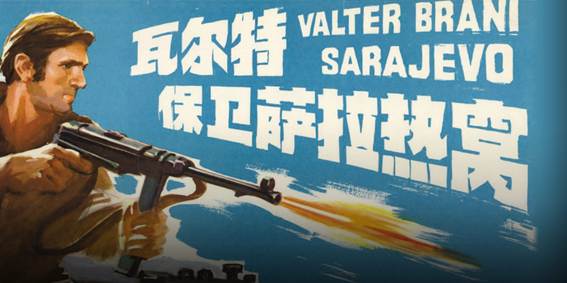
For the Chinese wargaming public, this subject has a particular interest as well because in the People’s Republic of China the Partisan epic (one of the ideological/propaganda foundations of Socialist Yugoslavia) was, and is, wildly popular so much so that the Chinese edition is called Walter’s War. “Walter’s War” refers to the 1972 Yugoslav film Walter Defends Sarajevo (Serb Croatian: Valter brani Sarajevo) based loosely on the military feats of Vladimir Peric, aka “Valter”, who defended Sarajevo during the German retreat from the southern Balkans in late 1944.
Walter’s War is one of the most famous examples of the “Partisan movies” subgenre, a series of films on the Partisan epic made in Yugoslavia between the 1960’s and the 1980’s. It was particularly popular in the Eastern bloc countries-on the year of its release, it was viewed by some 300 million people in the People’s Republic of China alone. Fifty years later, it is still something of a cult movie in China and other countries.
Chinese poster of Walter’s War.
Grant: What type of research did you do to get the details correct? What one must read source would you recommend?
Javier: Thankfully, over the last 20 years quite a few books have been written on the Yugoslav War. This interest in guerrilla warfare was partly due to the use of historical models to understand modern insurgencies such as Iraq in the GWOT years.
Another historical player that began to receive long overdue attention were the Yugoslav Royalists, or Chetniks, that until the early 21st century were almost forgotten or considered a footnote when compared with the Partisan epic of Tito and his guerrilla army. The military museum in Belgrade, Serbia reflects this perfectly. The first time I visited the military museum there were two floors, one dedicated to praise the feats of Tito and his partisan army, the other covering the rest, from Medieval times to the 1999 War against NATO. The second time I visited the museum, in the early years of the 21st century, I found out that the “Partisan” area was closed for reforms, and all Communist era exhibitions were being replaced with exhibitions dedicated to Col. Draza Mihailovic and his Chetniks.
Grant: What from World War II in Yugoslavia was most important to model?
Javier: Simulating what was de facto a three player game (Partisans, Chetniks, Axis and local Allies).
The third player – the Chetnik – presents a major problem. Basically, they didn’t fight the Axis- their policy was to wait for the Western Allies to arrive while preparing for the final showdown against the Communists. On the other hand, while the Partisans had a central command, the Chetniks were a loose coalition of local leaders that followed orders when it suit them to do so, and often reached temporary agreements with the occupying forces to fight the Communist Partisans. Tito had mobile troops which could operate everywhere and hit the enemy targets without concern about the inevitable and brutal enemy reprisals. In fact, the reprisals ended up being a source of recruits for his Partisan army. Mihailovic’s units, however, were strictly territorial, and he could not control them. Most of them (especially the Chetnik units in Bosnia) recognized him only as an honorary leader, but only followed their orders when, and if they matched with their own priorities. So, in practice, the Chetniks are not a “player” in the game, but they can be mobilized by the two players (Axis and Partisans) depending on a number of circumstances.
Grant: What is the scale of the game?
Javier: Turns are quarterly (three months per turn, covering from mid 1941 to late 1944). So to speak, each turn condenses several major operations and smaller actions.
Grant: What different unit types does each side have access to?
Javier: Being a guerrilla war in the Balkans, the standard unit is leg infantry, of course. There are a handful of motorized/armored and cavalry units, but almost all units are infantry. There are air support markers and a Special Forces unit or two.
Grant: What is the anatomy of the counters?
Javier: Units have two basic factors: conventional and guerrilla combat. Guerillas, of course, are better at guerrilla combat, regular units are better at conventional Combat. There are two Combat Tables, guerrilla and conventional-which that is used depends on leadership, initiative and terrain. A guerrilla force fighting in forest or mountain hexes for example has a better chance of using the Guerrilla Table. A conventional unit fighting in a railroad or clear hex has better chance of using the conventional table.
Grant: What is the general Sequence of Play? What type of experience did you want the Sequence of Play to invoke?
Javier: In general, the Guerrilla player has the initiative, while the Axis player has to react. The turn begins with the guerrilla phase were the Partisan player determines resources receives and recruits/upgrades units. This is followed by the objective placement phase, where players deploy a number of targets on map representing intelligence on possible targets provided by their network of spies and other intel sources. Then the Guerilla player moves and attacks targets, and/or enemy units. After that the Axis action phase begins. Upon receiving reinforcements, the Axis player may attack guerilla units. However, catching guerrillas can be difficult-they can easily avoid being forced to fight in particular in forest areas.
The Axis player begins the game with large forces (Germans, Croatians, Italians, Hungarians, Bulgarians) while the Partisan begins with a handful of odreds (detachments). However, as the play goes on, the Italians surrender and the Axis player is increasingly stretched thin. Besides, Bulgarians and Hungarians cannot move from their respective regions. The German and Croatian policies in Yugoslavia all but ensured that the population would join the Partisans.
Grant: What is the layout and area of Yugoslavia covered by the game map?
Javier: The map covers all of Yugoslavia and neighboring areas, from Slovenia to Macedonia and parts of Hungary, Albania and Bulgaria. The map contains all charts and tables needed to play.
Grant: What strategic pinch points does the terrain create?
Javier: Terrain is important, like in the systemic cousin Red Partisans (published by Paper Wars in 2025). Forest, mountains and swamps are the Partisan’s friend. Avoid flat terrain, and particularly railway hexes, that can be reinforced quickly. However, railroads are a major objective of the Partisans, so the Partisan player must strike a balance here.
Grant: What is your focus on Zones of Control in the game?
Javier: In general there are no Zones of Control. Zones of Control are exerted depending on the unit and terrain type. Regular units, for instance, do not exert ZOC on mountain or forest hexes for Partisan units.
Grant: What is the Guerrilla Political Phase? What does this represent from the history?
Javier: Basically, it represents the prestige of the Partisans among the local populace and abroad. If the guerilla player attacks at least one ground attack against an Axis ground unit, they roll for Tito’s Prestige. The higher the prestige, the more resources he can receive from the Western Allies. Tito’s prestige begins at box 1. When it reaches box 6, the Partisans can receive extra resources and the support of the Balkan Air Force (Allied bombers). When it reaches level 7, the Partisans can deploy and use a British Special Force unit, the 2nd SAS.
This simulates the increasing prestige of the Partisan guerrillas among the Western Allies, who initially opted to provide support to the Monarchist forces of Col. Mihailovic. After the reports by the Deakin mission came from Yugoslavia in 1943, and thanks also to ULTRA intercepts, Tito began to be regarded as the only effective guerrilla movement fighting the Germans, while Mihailovic did nothing, or, even worse, reached agreements with the enemy occupiers to fight the partisans.
Grant: What is the Allied Landing Scare roll? What does this represent?
Javier: Several of the major Axis anti-partisan drives in Yugoslavia (Operations Schwarz, Weiss…) were launched with the objective of clearing the coastal areas from hostile guerrillas and prepare the defense of the Balkans against an expected Allied landing. Beginning with 1943, there were several “landing scares” that had all sides (Partisans, Chetniks, Axis) scrambling to occupy the best coastal positions before the arrival of the Western Allies.
For instance, in January 1943, fearing Allied landings in the Balkans, the Axis launched Operation Weiss (White), the largest anti-partisan drive to date, involving 90,000 troops, aimed at destroying Tito’s stronghold at Bihac. Tito planned to move back to Serbia and Eastern Bosnia to destroy the Chetnik forces there before they could join forces with the Western Allies.
Grant: What is the purpose of the Weapons Cache markers? How are they concealed in combat? How does combat work?
Javier: Weapon Cache markers represent weapons sent by the Western Allies along with arms captured to the enemy, used to improve Partisan detachments into Partisan brigades and divisions.
Grant: What is the makeup of the Combat Results Table? What unique odds are represented and why?
Javier: There are two Combat Tables, guerrilla and conventional-which one is used depends on leadership, initiative and terrain. A guerrilla force fighting in forest or mountain hexes for example has better chances of using the Guerrilla Table. A conventional unit fighting in a railroad or clear hex has better chances of using the conventional table.
Grant: How do Replacements and Withdrawals work?
Javier: The Guerilla player collects replacements-the more territories they control, the more replacements received. Control of towns greatly increases recruitment, but guerrilla units are much more vulnerable in urban terrain. Axis reprisals increased the number of recruits. They also receive “weapons caches” that can be used during the game. They represent clandestine weapon factories, and, as the game goes on and Tito gains popularity among the Western Allies, they represent weapons shipments from the West. Certain game results yield weapons caches as well. These can be used to upgrade partisan units into Brigades and Divisions.
The Axis reinforcements and replacements work differently-They receive a fixed number of replacements per turn, with the exception of “Allied landing scare” turns, when they received extra replacement with which to launch anti partisan drives and clear the coastal areas of Partisans.
Grant: How are Artillery, Air and Naval Support handled?
Javier: There are no artillery units in the game. It is modeled into the regular brigades and divisions. There are only two air support markers that add or decrease odds shifts in attack or defense.
The Partisan army, of course, had no air support units, although they can receive the support of the Allied “Balkan Air Force”. The Axis has only one marker -Yugoslavia was very low on the priority list of the Luftwaffe. Naval Support is handled by the “Partisan navy” counter that provides an odd shift in attack or defense in combats in coastal hexes. The Partisan navy counter enters play after the Italian surrender.
Grant: How do players win the game?
Javier: The Partisan player can add Victory Points by blocking railway lines from resource centers (there are five on map) to Germany. This represents the disruption of resource exploitation in the Balkans. Another way to score Victory Points is to destroy objectives such as fuel depots, train stations or bridges, or rescue downed Allied pilots, determined prior to the turn by the objective table. During the Victory check phase of each turn, the Partisan player rolls 1D6 for each objective marker under their control and adds the corresponding modifier for that objective. Destroying a Dam, for instance, adds +3 to the die roll. The final result is the number of VP’s scored for that objective. Control of towns and cities at the end of a turn gives extra VP’s to the Partisan player. (Control of towns and cities, even temporary, allow Partisans to recruit extra manpower and liquidate collaborationists).
Finally, “Landing scare” turns allows the Partisan player to earn VP’s for controlling port towns and cities, from Bar in Montenegro to Zara/Zadar in Croatia. This simulates the chaotic fight that followed the Italian armistice of September 1943. The Italians controlled large parts of former Yugoslavia, and their surrender ignited a race to arrive first to the huge caches of arms and supplies in the Italian zone, in a free for all between Partisans, Germans and Chetniks. Tito was furious at the Allies for not warning him of the upcoming Italian surrender. Some of the Italian forces joined the Partisans against their former Croat-German allies. This is included in the game as well.
The Axis player must try to deny VP’s to the Partisan player, and make him pay dearly for every VP gained: each guerrilla ground unit eliminated deducts 10 VP. The Axis can also kill Tito. If Tito is eliminated, the Partisan player loses 2 VP’s at the start of each subsequent turn, and their prestige is reduced to 1, so they receive no more extra resources from the Western Allies. The Axis player can try an assassination attempt with the 500 SS Parachute Battalion that historically tried to kill or capture Tito in May 1944, in operation “Knight’s Move”.
Grant: What type of an experience does the game create?
Javier: The game creates a cat-and-mouse experience, quite similar to the history, where the Axis launched constant anti-partisan drives but Tito and his Partisan army always escaped to fight another day, despite of suffering huge casualties. By the mid to late game, after the Italian surrender, the Partisans are too powerful and the Axis player lacks enough resources to launch mass offensives, thus remaining mostly on the defensive. It is now time for the Partisans to gain as much terrain as possible before the arrival of the Soviet forces in the Fall of 1944.
Grant: What are you most pleased about with the design?
Javier: I think that the game gives a fair idea of what happened in Yugoslavia in 1941-44. It was an extremely complex situation, with many different national and political loyalties at play. The Axis conduct of the Balkan counterinsurgency was a case study of how not to wage a guerrilla war. Their policies, and in particular that of the Croat state, created the perfect conditions for the Communist movement to thrive and take over: they destroyed the existing authority, set the different nationalities against each other, but lacked sufficient strength and brute force to impose a different system. The final result was anarchy and an ideal situation for the triumph of a revolutionary war, which Tito exploited to the fullest.
Grant: What has been the response of playtesters?
Javier: As far as I know, many players really enjoy the Partisan hidden movement rules in Partizan! and found the cat-and-mouse game play quite engaging. They appreciate the combination of simple rules, short playtime, and asymmetrical game play, with a full game often completed in just one day. The scoring mechanism, which rewards destroying objectives, forces Partisan players to carefully consider their strategy—whether to focus on scoring points or increasing their forces. Axis players get a true feeling of frustration of counterinsurgency operations.
Facing an Axis player with a good memory can sometimes be challenging for the Partisan side. Partisans can counter this by swapping the positions of units within the same hex. Overall, the game offers a simple yet enjoyable take on Partisan warfare. Although some players find it a bit troublesome to place markers every turn, the Chinese edition includes tables and numbered markers to help the setup. Most players find the experience enjoyable.
Grant: What other designs are you working on?
Burmese tribal irregulars in Burma ’45 (World at War #109)
Javier: Strategy & Tacticsjust published Pensacola 1779-82, and soon will be publishing Forgotten Front: Italy 1944-45. Curiously enough, in these games are featured both irregular and conventional forces. In Forgotten Front, for instance, guerrilla and counter guerilla operations play a key role as the ORBAT includes not only regular Axis and Allied divisions and brigades, but also Italian partisans and Fascist Italian counter guerrilla forces, such as the infamous Black Brigades. Pensacola 1779-82 includes irregulars, militias and Indian levies that are highly useful for recon, foraging and to harass enemy regular forces.
World at War will publish my design on the 1945 Burma campaign, where (again) guerrillas played a decisive but little known role.
I am currently working on a number of designs for Decision Games, Paper Wars and Banzai Magazine. I am currently working on the playtest and development of Aragón ’38 for SNAFU Design and Battle for the Mediterranean for VUCA. You can see here some spectacular previews of Battle for the Mediterranean by Pablo Bazerque here.
A look at the board for the upcoming Battle for the Mediterranean from VUCA Simulations.
As always, thanks for your time Javier in answering our questions as I know you are a busy man and always have lots of interesting gaming subjects on your design table.
Reinhold Wittig ist tot. Er starb am 11. April 2026 in Göttingen. Mit ihm verliert die Spieleszene einen ihrer kreativsten Köpfe. Ein Nachruf auf einen Künstler, Verleger, Autoren und auf sein Perlhuhn. Weder ein Nilpferd in der Achterbahn, noch Schlangen auf Leitern können es mit dem Perlhuhn aufnehmen. Das Tier hat die deutsche Spiellandschaft wie kein anderes geprägt, dank Reinhold Wittig. Wie ein Perlhuhn pickte Wittig alles auf, was ihm begegnete. Bierdeckel inspirierten ihn ebenso wie Würfel. Schrott wurde zu Kunst, Ideen zu Veranstaltungen. Er erfand Hunderte Spiele. 1976 gründete er den Verlag Edition Perlhuhn, 1983 das Spieleautoren-Treffen in Göttingen,
Petiquette, Thomas Sellner’s card game of picking out patterns among hat-wearing animals, has been named game of the year at this year’s Golden Box Awards.
The Oink Games-published design fought off competition from 2025 winner Isao Mukai, who was nominated for Banana Governance – a card-based drafting and bidding game which sees players attempt to satisfy the needs of hungry monkeys better than their opponents.
A comment from the selection committee about Petiquette called the title “a brilliant and sharp work typical of Oink”.
Cards from Banana Governance, designed and published by Isao Mukai
It said, “I’ll never forget the shock I felt the first time I played it. The rules are simple: just give the answer that fits in the single ‘?’ on the cards laid out.
“But… the eyes of those who give the same answer feel friendly. The mouths of those who give a different answer seem to twist. The loneliness of desperately trying to explain when you’re the only one who gives a different answer.
“A mix of various emotions. The unique experience of this game really stands out.”
The annual Golden Box contest was launched four years ago, modelled on the American film industry’s Academy Awards. More than 40 industry professionals from within the Japanese board game sphere voted on this year’s award.
In addition to ‘Best Picture’ for the overall game of the year, the awards also celebrate the best in game design, art, graphic design, production and rulebook work through individual awards.
Cover art for Sweet Lands
Eve Inc-designed Nusutto Cat – also known as Meow Heist – triumphed in this year’s Game Design Award, while best art went to Totsuca Chuo’s Sweet Lands, which was illustrated by Tatsuki Asano and Broni120.
Moyuki Adisawa’s animal jet ski racing game Tornado Splash picked up the Graphic Design Award thanks to the work of iD Creative Co, while the Production Award went to National Economy and Toshinori Iwai.
The selection committee said of the Production Award win: “It’s great when a great game is revived. It’s even better when a great game is revived in the best possible form.
“This new edition not only makes the seemingly impossible revival of this masterpiece a reality, but also reinterprets it in a more refined way.
“The ‘box within a box’ structure, combining the three parts, is exciting even before you start playing, and the ‘household budget’ mechanism that characterizes this game is implemented clearly and beautifully as a ‘safe’.
“This masterpiece hasn’t lost its appeal even after ten years, and this new edition will be loved for even longer.”
Yoshihiko Koriyama worked on the rulebook for that title, with proofreading from Shota Okano and DTP work from Makoto Takami. The selection committee said, “The fact that you can essentially understand the game rules by reading just one page is excellent.”
Bomb Busters designer Hishashi Hayashi collecting his Spiel des Jahres award
The win marked the first Spiel des Jahres triumph for an Asian designer in the prize’s 46-year history, and underscored the huge rise in tabletop designs making their way across from Asia to Europe and North America in the past decade.
Each winner will receive a golden board game box as a trophy.
Winner: Sweet Lands, Totsuca Chuo (Uchibacoya) – art by Tatsuki Asano and Broni120 A Boar, Crab, Dung Beatle, Takuya Iwamura (Kyuhachi Dog) – art by Takuya Iwamura Ghost Lift, Onegear (Engames) – art by Sai Beppu
Graphic Design Award
Winner: Tornado Splash, Moyuki Adisawa (ArcLight Games) – graphic design by iD Creative Vidro, Keita Kasagi (Bamboo Games) – graphic design by Kakuzato Shady Lady, Kaya Miyano (Mob+) – graphic design by Sai Beppu
Winner: Down Down Dungeon, Reiner Knizia (ForGames) Electra Select (The Society for Appreciating Swaying Buds) Snowp, Eisuke Fujinawa, Kazunori Hori (SzpiLAB)
US-based tabletop game and card manufacturer AdMagic is shuttering its popular Print and Play arm, with company founder and CEO Shari Spiro telling BoardGameWire the operation had been a “financial burden” to the rest of the business for several years.
Spiro told BoardGameWire it had been a “difficult and sad decision” to close the company, which had provided prototypes, promos and components for a string of big-selling titles, as well as fast turnaround print and play services for budding developers and designers.
Print and Play, which was bought by AdMagic in 2015, will close its doors on March 27, with any existing orders “received, printed and put into our standard turnaround production queue”, according to its website.
Spiro would not say whether any Print and Play employees would be kept on in other areas of the business after next week’s closure. The division had 12 employees on March 6, according to the team page on its website at the time.
Spiro told BoardGameWire, “My team invested a lot to keep Print and Play open as long as we could, but unfortunately, the amount of hand work and the time it takes to do the high quality of work done through a small company like Print and Play, costs more than we could actually sell the jobs for.
“In addition our endeavor to cover employees 100% with full health insurance, a 401(k), a robust paid personal time off program, a move to a state of the art brand new facility a few years ago to get the team out of an office building (which was inappropriate for that type of work), two new laser [printers] in the past two years and the associated lease payments for all of the above, in addition to the rising costs of materials all added up.
“Additionally we are not owned by private equity so we don’t have the kind of big money other companies have supporting us. Keeping Print and Play open was putting the rest of our team at risk.
“The financial strain to Ad Magic became overwhelming and so this is why we reached this difficult and sad decision. Moving forward this will help Ad Magic and Breaking Games as it will remove the financial burden which has been borne by the rest of the team for several years now.
“Although our model for prototype services will shift, we will still be able to accommodate our clients through our Ad Magic/Breaking Games divisions.”
Games in which Print and Play has had a hand in producing prototype materials for over the years || Photo Credit: Print & Play
The company’s services were also well used by designers looking to put together early versions of games to pitch to publishers, as well as for creating review and demo copies for companies to send out to content creators and other partners.
Gil Hova, the designer of games including Wordsy and The Networks: PrimeTime, posted to BlueSky yesterday, “Found out during Unpub that Print & Play, one of the best board game POD companies out there, is closing their doors in a couple of weeks.
“I used them extensively in my Formal Ferret days to make prototypes. Their turnaround time was unrivaled. Sad to see them go.”
AdMagic, which Spiro founded in 1998, has grown to become one of the largest independent tabletop printing companies in the US.
The company scored big successes in the early 2010s thanks to the rising wave of Kickstarter projects, working on huge-selling titles such as Cards Against Humanity and Exploding Kittens.
AdMagic launched its own board game publishing arm, Breaking Games, in 2015 on the back of that success, and has gone on to publish titles including Dwellings of Eldervale, Rise of Tribes and Letter Tycoon.
GameHead, which rebranded from GamerMats two years ago as part of a push into board game publishing, has expanded its team with a pair of senior hires.
Ryan Schoon, a veteran presenter at the Man vs Meeple YouTube channel, joins Gamehead as marketing manager, while former Ludo Fact USA account executive Mark Burke comes on board as operations manager.
GameHead said Schoon would help expand GameHead’s presence within the tabletop gaming community using his experience in communications, content creation, brand management, and community and sales growth.
Schoon has spent almost a decade producing reviews and previews as part of Man vs Meeple, which has about 77,000 subscribers. He was also formerly a key account manager at tabletop crowdfunding specialist Gamefound from 2020 to 2022, and later spent almost two years as marketing manager with Japanime Games.
Burke joins Gamehead from the US arm of European board game manufacturing major Ludo Fact, where he worked for two years as an account executive.
He previously spent two years as a wholesale account executive at Unstable Games/TeeTurtle, was store manager at Indiana-based retailer Moonshot Games, and also worked for almost a year managing social media for Western Legends publisher Kolossal Games.
GameHead said Burke will be responsible for the day-to-day operations of the company while directing the sales team.
The company expanded into board game publishing in 2024 after more than a decade specialising in tabletop game mats and accessories, and rebranded from GamerMats to GameHead as part of that process.
GameHead’s publishing arm is led by creative director Paul Salomon, the designer of Elf Creek Games-published Honey Buzz and Stonemaier Games title Stamp Swap.
The publishing arm was launched to focus on party games for six or more people, casual games suitable for players of all ages, and ‘thinky games’ with strategic elements and replayable decision making.
GameHead’s releases to date include Rocco Privetera’s animal-themed set collection title Trinket Trove and Taiki Shinzawa’s bank heist-themed trick taker No Loose Ends.
MingYang Lu’s puzzle fighter-style board game Re;MATCH has had a storming start to its Kickstarter campaign, picking up almost $250,000 from over 1,250 backers with half of the month-long crowdfund still to go. In this sponsored interview, Lu talks about why his design looks to derive fun from game mastery rather than discovery, the importance of conventions for small publishers, and why AI art “cheapens creativity”.
Hi Ming!A big part of your design philosophy for Re;MATCH is centred around the difference between ‘mastery’ and ‘discovery’. Can you give an overview of what you mean by those terms?
Yeah! So I’ve developed this personal philosophy about the different types of fun designers can incorporate into hobby board games, and I currently feel there are two main types.
First is Discovery, which is the fun you get from being presented with new information to respond to. This could mean seeing new cards revealed in a shop for an engine or deck builder game, or encountering a new enemy or event card in a miniatures game.
Second is Mastery, which is instead the fun derived from realizing new combos or optimizations with the options you already have. This could involve learning the optimal strategies in a roll-and-write game, or realizing the political intricacies between the factions in Root.
I don’t think these two types of fun are mutually exclusive. In video games, particularly single player ones, both are almost mandatory for a great experience.
Can you give us an overview of Re;MATCH, its design and mechanisms, and how that sets it towards either mastery or discovery?
Happily! Re;MATCH a 1 vs 1 competitive fighting game inspired by Puzzle Fighting games. Players take turns pulling connected and matching marbles from a tray of marbles, and the color and number of marbles you pull will resolve a corresponding attack on your character’s move list.
In the same vein as my first game, Re;ACT, it is a skill expression game that focuses primarily on mastery type fun. All of your abilities are shown upfront, and you must figure out how to use these options to win. There are no event decks to shake things up mid game, and no new options to consider as you play. The fun in Re;MATCH is more about seeing the floor of possibilities open up as you start to understand the system and the characters.
This is pretty standard for fighting video games though. In those games, after selecting your character, you can immediately pause to see the massive list of your abilities and combos, and it’s up to you to learn how to use them to win.
Re;MATCH being demonstrated at PAX Unplugged in December 2025
How do you think mastery relates to complexity? And what are the design challenges for a game like Re;MATCH, in terms of getting that balance right?
Mastery and complexity are not directly related in my mind. Most abstract games provide fun exclusively through mastery. From Chess to Hive, the complexity might be low, but the potential for skill expression is high, leading to repeated plays being the source of joy in the game.
How do you see mastery vs discovery-style titles doing in the current board game hobby landscape, especially when it comes to crowdfunding campaigns and online marketing?
I’ve noticed that in recent years, hobby game releases – games that aren’t party games and generally cost $30 or more – tend to focus on discovery rather than mastery. With so many games being sold on vibes and people posting their opinions or reviews after just a few or even only one playthrough, it’s more important than ever to make sure that first game experience is as smooth and perfect as possible.
Games that front load too much information typically don’t have a smooth first game experience, so you want to slowly drip out the options a player can take. Giving a player a deck of cards with a ton of variety and telling them not to worry about what’s inside that deck upfront is a great way to do this, as you’ll discover new and cool options every single time you draw a different card. However, such randomness can make one group’s first game wildly different from another’s. So this wide variety of cards that feel different actually needs to produce very consistently similar outputs, ensuring that most first games deliver as optimal of an experience as possible.
I think this meta has produced a lot of games that feel incredibly satisfying on your first playthrough, constantly offering new options to explore or challenges to overcome, but don’t really hold that spark after repeated playthroughs.
Of course there are games that successfully offer lots of both types of fun, and I think those are the games that we remember. All of the most replayable deck building games are great examples of games that offer both!
I’ve already seen this game shared on social media, especially from people spotting it at Pax Unplugged last year – and I think part of that is its use of bright colours, those attention-grabbing marbles and that it generally doesn’t look like most of the other board games out there. Was that an intentional decision, in terms of potential marketing, or is this just how you wanted the game to be?
The artstyle was certainly intentional. The hardest part of selling games, or anything really, is getting people to even notice it in the first place. For Re;ACT, featuring very large acrylic standees with bases that can hold tokens was driven by what would make people stop and look when passing by the game at a convention.
Re;MATCH, however, is a really old design. When I first came up with the very first iteration of Re;MATCH, I was inspired by my favorite game at the time, Battlecon, with its very asymmetric characters and fully open information, brain-burning game play, and the idea of using marbles as a component due to the popularity of Potion Explosion and Gizmos at the time.
But after learning many lessons with Re;ACT, I realized that Re;MATCH needed a much more colorful and eye catching art style to match the energy of the marble tower.
The game board for Re;MATCH character The DJ
How did you find artists PsyOptima and machimile, and what was your process in terms of getting to the final artwork? Did you have strong ideas early on, and how much were you guided by those artists / were they guided by you as the process progressed?
Both of them were actually artists on my previous fan projects! Just between Anna’s Roundtable, Genshin Tarot, and Star Rail Tarot, I’ve commissioned over 400 artists. My vision for Re;MATCH was a much bolder and funkier aesthetic compared to Re;ACT, and both of these artists were perfect for that.
Having worked with so many artists over the years, I’ve also grown pretty comfortable acting as an art director for my teams. I’m certainly no drawer, but I’ve learned how to communicate effectively to guide my team towards my visions.
You’ve been very frank online in your opinions about AI generated imagery being used within the board game industry. Why do you think some publishers are leaning into it, despite the well-publicised concerns around copyright, ethics and the environmental impact?
I’ve become increasingly frustrated about the use of genAI to replace or supplement artists in games. To me, the issue is very existential. I am not surprised that already massively successful publishers are leaning into using AI art. There have always been companies trying to squeeze profit out of any artistic medium, from movies to books and beyond. But AI slop feels different from just disingenuous cash grabs. Environmental impacts and stolen work is one part of it, but the idea of letting AI produce the art we consume really cheapens creativity as a whole.
The joy of creativity is so fundamental to life, and the spark of inspiration passed from one person to the next is so vital for human progress. If people continue to consume these things, be it AI art in games, AI written screenplays, or AI generated music, I fear that the very light of human existence will dim.
What would you say to smaller publishers and solo operators who believe they can only bring their projects to completion by leaning on AI generators?
I can see the argument from new designers who want to make games but feel like AI is the most effective way to make their games ready for sale, either because they can’t find a publisher or they can’t afford to pay for art. To these people I would ask: Why do you want to make games? Why do you play games yourself?
I think games can be art, just like novels, music, and movies can be art. The reason I enjoy any of these things is intrinsically tied to the shared human experience I feel when consuming them. A board game’s only component other than rules are its visuals, so I believe the human intentionality behind how the game looks is just as important as how it plays. The artists who want to paint are just as passionate as the designers who want to make good games, so don’t cut them out of the process! There are tons of affordable artists on VGen, and you can always just pick up a pen and make simple drawings yourself! “The enemy of art is the absence of limitations,” so let the limitations of your budget or your art skills be part of your creative process. Just look at how Stardew Valley or Undertale were made!
In aiming for the mastery experience, does that mean you’re not too concerned about expanding this game? Because it looks to me to be ripe for expansions, especially in terms of new fighter characters. How does that fit into your mastery and discoverability theory?
I definitely want to keep adding more characters to both Re;ACT and Re;MATCH! In fact, receiving new characters and discovering their interactions with existing ones is the main source of discovery type fun in these games. This is similar to TCGs, where every new set front loads you with a ton of new options to tinker with.
But the cost of a new character for these games is much higher than just adding more variance to a deck of cards or more enemies in a miniatures game. Not only does each character require a ton of assets, but every new character is exponentially more difficult to balance and integrate successfully into the game. This is why I’ve made additional characters our primary stretch goal targets back during Re;ACT and now Re;MATCH!
Re;MATCH designer MingYang Lu
Can you give us a little background about your time in the board game industry – where did you start out, and how did you get to here?
Sure! I guess I first started experimenting with making card games like many other kids: my friend (Eric Zeringue, who still helps me with game design today) and I designed our very own very bad TCG. In college, I took things a bit more seriously by designing my own pretty bad deck builder based on isekai anime, and then I designed a not so bad fan game based on the indie video game Crawl (one of my favorite indie games of all time).
I then just kept making fan games, and eventually, I made one for Fire Emblem and posted it on Reddit. This one kind of blew up, and Kotaku even wrote an article covering it. I then just kept making print and play fan games and posting them online. I did one for Code Geass, Darling in the FranXX, and Persona 5, among several others that never saw the light of day.
Right around the time I designed the Darling in the FranXX game, I also designed the very first version of Re;MATCH. I brought it to a prototyping convention, posted it to YouTube, entered it into a design competition, and eventually signed it to the publisher Penguin and Panda, who renamed it Sento. After that, I met Chris Lin, who had his very own design for TCG that I enjoyed the core of. While Sento progressed with Penguin and Panda, I started working with Chris to completely redesign his TCG into a board game instead of a TCG, which eventually became Re;ACT.
After Covid hit, it became clear that Penguin and Panda wouldn’t be able to publish Sento, so I focused entirely on Re;ACT, brought it to several conventions, obtained my US citizenship, funded it on Kickstarter, and then quit my job to pursue board games full time.
You’ve run several Kickstarter campaigns before, for Re;ACT – The Arts of War in 2024 as well as several for dice and standee collections and other accessories. What were your big lessons learned through those campaigns, and how are they applicable to running the campaign for Re;MATCH?
Honestly, I’m still figuring things out myself [laughs]. But I will say that the most important thing for me is to always be authentic and only make things I would want to buy myself. Doing something purely to make money is a slippery slope, and I constantly remind myself that if I wanted to just make money, I would’ve stayed at my comfortable 9 to 5 desk job.
But if someone asked me for some more practical advice, specific to running a board game Kickstarter, I would say to just get your game in front of as many eyes as possible beforehand. Bring it to conventions, post playthroughs, and do whatever you can to make it eye-catching. Obviously the game needs to be good for people to stick around, but no one will know if it’s a good game if they don’t sit down to try it first! For Re;ACT, I brought it to Pax Unplugged, Gen Con, and ProtoATL two years in a row before we launched. Re;MATCH moved a bit faster, with me taking it to Pax East, Origins, Gen Con, and Pax Unplugged all in the same year.
An early version of Re;MATCH being demonstrated at the ProtoATL convention in 2018
That’s a lot of conventions! I think there’s a feeling among smaller publishers that it’s a big financial hit to attend multiple cons a year, and it can be hard to stand out against the competition on show floors. What advice would you give for attending conventions as a small publisher yourself?
Definitely agreed that cons are expensive, and I started small as well! In 2023, I attended Gen Con by myself and just offered ticketed event demos. Two of the people who played my games loved them so much that they ended up helping me teach demos at Gen Con in 2024 and 2025! Hosting events at Gen Con is free (outside the cost of travel), and in 2023 I stayed together with over 20 other indie designers and publishers in a big Airbnb to save on cost.
Another cheap option is prototyping and protospiel conventions. I attend ProtoATL nearly every single year, and its by far one of my favorite weekends every year. Many of the early prototype photos of Re;MATCH come from ProtoATL! The badges are very cheap, and you get your prototype ripped apart and rebuilt so many times that you make more progress in three days than you would have in three months. You also make so many meaningful connections with other designers and publishers, who are often avid supporters of games themselves!
I recommend exhibiting at a consumer convention only after gaining experience pitching games to strangers. Prototyping cons and hosting events lets you practice with a captive audience, but working at the booths of established publishers is a great way to practice pitching to passing customers. (I’m always hiring as well!) Another great opportunity is the Indie Games Night Market, which New Mill Industries has hosted at Pax Unplugged for the last two years. This event gives indie designers a single table to sell a small print run (think five to 50 copies) of their game, often with homemade elements.
Once you are ready, Pax Unplugged is by far the best choice as an indie publisher to exhibit at. Unlike Gen Con, Pax really cares about indies (see Indie Games Night Market), has a strong culture of inclusivity, and doesn’t allow AI grifters into their show! Standing out at a convention is definitely very hard though, and I’m still figuring that step out for myself. My booths are pretty basic looking still, but working with really great artists has worked out very well for me, so I’d recommend that as well!
I saw that you’re providing access to the full game on Tabletop Simulator for free. How important do you think that will be for discoverability, and how do you think that balances against the chance some people will just use the digital version and not back the physical campaign?
Super important. Personally speaking for board game Kickstarters, if I don’t see a playable demo, I am very unlikely to pledge. Even if I don’t have the time to personally try it, not allowing backers to try the game before they buy signals to me that the publisher lacks confidence in the game. A good game should make players want to buy it after playing it, end of story.
Not to mention the benefit of getting so many more eyes on your game to tell you what is bad about your game before you hit the irreversible button to start printing! For me, there are absolutely no downsides to having the game fully playable for free digitally during a Kickstarter, and I try really hard to ensure it’s available long before that as well.
What are your ideal goals for this campaign – what does a success look like for you, and how do you ideally see the rest of the year panning out?
For me, I’d like to surpass the number of backers I had on Re;ACT and POND as a minimum. Re;ACT had 1,730 backers, and POND had 1,900 backers. If Re;MATCH hits at least 2,200 backers, that will indicate a consistent growth trajectory for me as a publisher, so that is my real goal.
After Re;MATCH, I’ll be working on Season 2 of Re;ACT, along with several unannounced secret projects I’ve been working on for quite some time now, so please look forward to them!
Editor’s note: GAMA is one of the sponsors of the BoardGameWire newsletter
North America’s biggest board games industry trade show, GAMA Expo, has sealed another record attendance as it prepares a move to Baltimore to contend with rapidly growing demand.
More than 3,820 attendees showed up to this year’s event in Louisville, Kentucky, up almost 12% on last year’s previous record of 3,425 – which had already left the show pressed for space across the exhibition hall and its extensive programme of seminars.
The shift to Baltimore next year will be GAMA Expo’s second new home since 2023, when it was relocated from Reno, Nevada after the growing attendance numbers eclipsed their pre-pandemic highs.
GAMA Expo’s attendance this year is more than double its pre-pandemic record of 1,800 set in 2019, and up more than 87.5% compared to the event’s final Reno show in 2023.
A presentation at this year’s GAMA Expo
GAMA initially signed a three-year contract in Louisville for 2024 to 2026, but agreed to extend that for a year after the KICC helped GAMA shift the dates of last year’s Expo, when the trade organisation realised it had outgrown the footprint available across its original dates.
The organisation later decided to bring its move to Baltimore forward to 2027 as demand continued to grow, paying a fee to break the KICC contract a year early.
GAMA told BoardGameWire last year it had earmarked 300,000 sq ft of exhibit space for year one in Baltimore – almost double the roughly 176,500 sq ft of this year’s vendor hall, and with room to grow to 500,000 sq ft by year three or four at the new site.
Chicago and Minneapolis were also in the mix as potential destinations, with Baltimore being praised by GAMA’s site selection committee for its selection of hotel options, reasonable convention centre rate and incentives to bring the show there.
Several publishers BoardGameWire contacted after this year’s GAMA Expo were all positive about how busy it had been, with two first-time exhibitors both particularly excited about how the event had gone for their companies.
BoardGameWire asked GAMA on March 9 for a breakdown of this year’s attendance for its respective member groups, which it provided last year to show the growth of individual areas, but is yet to receive those figures.
One complaint which has been emerging post-Expo revolves around GAMA’s plan to get rid of ‘priority points’, which have rewarded repeat exhibitors with the ability to exert more power over where their booths are positioned within the vendor hall.
That system has been scrapped for both next year’s Expo and this year’s Origins trade fair, GAMA’s long-running tabletop gaming convention set to take place in Columbus, Ohio in June.
Some frequent exhibitors have expressed dismay at the decision, which came to light as a bullet point in the renewal documents for next year’s event rather than being highlighted for discussion with members ahead of GAMA implementing the policy.
The vendor hall at GAMA Expo in Louisville
GAMA president Nicole Brady said of this year’s GAMA Expo, “Every year, GAMA staff and volunteers strive to make GAMA Expo better than the year before. That was evident this year in various areas such as the extensive educational programming, overflowing interest at networking events and engagement during game nights. Beginning with registration on the first day to exhibit hall tear down on the last, GAMA Expo 2026 was top notch.
“This would not have been possible without the tireless efforts of the staff, the community members who brought their passion to the event and, of course, the sponsors that supported the various events and initiatives.
“Throughout the week and beyond, I’ve heard or read on social media countless people praising the event. Many comments about the ability to conduct business with others in the industry. This annual event is the place to be and people are already making plans for next year in Baltimore!”
Zaria Davis, GAMA’s interim executive director, added, “As a first timer at GAMA Expo and someone still very new to this industry, I was blown away by the experience. I loved getting to meet members face to face, ask questions, and better understand how the business side of tabletop games really works.
“Having the chance to share my own insights in sessions made me feel welcomed and valued, and I’m leaving excited, inspired, and eager to come back.”
Elf Creek Games has begun fulfilling a wave of overdue crowdfunding campaigns after returning to profitability under the leadership of Genius Games founder John Coveyou.
The publisher said it has broken a three-year run of losses since bringing in Coveyou to restructure the company last July, with the profits allowing it to get Santa’s Workshop into the hands of backers, as well as starting to pay some of the backlog of royalties it owes designers.
Elf Creek raised $1.6m through eight Kickstarter campaigns following its launch in 2017, scoring significant successes for games including Merchants of the Dark Road and Honey Buzz.
But the publisher entered years of turmoil after being hit with a $226,000 freight bill for shipping Merchants of the Dark Road in 2022 – more than four-times its initial $50,000 estimate – when global freight costs soared in the wake of the Covid-19 pandemic.
Rather than hold back fulfillment until prices fell, Elf Creek ploughed on in delivering the game at the vastly inflated cost, relying on the entirety of the game’s profits, credit, and forecasts for future sales – a decision from which company founder Brent Dickman admitted in 2024 the business had “never fully recovered”.
The announcement of Coveyou’s appointment last summer ended almost a year of silence from Elf Creek about the status of its undelivered crowdfunding projects – although company founder Brent Dickman confirmed to BoardGameWire in December 2024 that he was “actively looking for a home and way forward for all of our games, including our unpublished Kickstarter projects, and will make official statements when I am able”.
Genius Games founder and Elf Creek Games executive director John Coveyou
Coveyou founded Genius Games in 2013 following a career as an engineer, a science and chemistry teacher and a spell in the US Army. That company specialises in science-themed games with an educational bent, with its best known releases including 2019’s Ecosystem and 2021 release Genotype: A Mendelian Genetics Game (2021)
He is also the founder and director of accounting and tax firm Simple Financials, which Elf Creek said last year specialises in “helping small businesses recover from crises like ours”.
Elf Creek revealed at the end of February this year that it posted a 12.3% profit as a percentage of gross revenue in 2025, following losses of 8.8% in 2024, 33.25% in 2023 and 11.6% in 2022.
The detailed announcement from Coveyou and Dickman expounded on the extensive financial and operational changes the company had undertaken since the Genuis Games founder’s arrival.
It said, “Turning a business around isn’t about discovering a new or a secret playbook. It’s about returning to the fundamentals that every healthy business runs on. These are the things that, somewhere along the way, were deprioritized, deferred, or lost amid growth and day-to-day stressors.
“Most business crises are not sudden events; they are the outcome of the slow accumulation of small decisions that move a business away from the basics.
“None of this changes the impact on backers and partners who have been waiting, or the seriousness of outstanding obligations. The goal has been to restore operational stability so commitments can be met consistently and transparently.”
Those measures were listed by the company as:
Stop all non-essential spending immediately. Every expense was reviewed and non-essential spending was cut. Software subscriptions, agencies, marketing, new projects—anything that wasn’t directly tied to generating income or keeping the business operating was put on hold.
Gain visibility and control over cash flow and operations. A weekly cash and operations dashboard and tracking system was built so the team could see cash and inventory coming in, cash and inventory going out, and exactly where the business stood, in order to make proactive decisions instead of reactive ones.
Get to accurate financials. If the books are wrong, the decisions are wrong. The bookkeeping and accounting were caught up, reorganized for better insights, and reconciled back to the bank statements. Every decision going forward was then based on reality and insights instead of assumptions.
Prioritize and accelerate cash inflows. Core revenue channels were identified and reinforced, keeping the right inventory in stock, continuing to reconnect with key customers, and making sure the parts of the business generating cash had what they needed to keep doing so.
Generate cash from what’s already there. We made a focused effort to collect on outstanding invoices, liquidate dead or excess inventory, and find new ways to monetize existing IP or underutilized resources – with ongoing work still in progress.
Gain additional runway by renegotiating obligations. Many companies struggle under the weight of debt and accumulated obligations. The weight of this can be debilitating, and resolving it is often one of the most difficult steps. Keeping a company running is essential, because a shutdown stops repayment and harms all parties. We restructured debt, worked out new payment plans with vendors, and negotiated revised terms to ensure the company stayed viable and can continue paying back everything owed.
Focus on a few key priorities. Identify a few major “game changers” that will have the greatest impact, then stay focused while avoiding distractions. With the business more stable, we concentrated available time and energy on three key priorities: fulfillment of Santa’s Workshop, getting base games back in stock, and rebuilding critical sales channels to keep revenue flowing and support ongoing obligations.
The company added that it had also paid all outstanding 2025 designer royalties across the Elf Creek Games product line, and was making “steady payments” toward remaining balances from 2024 and earlier.
It said, “Our business exists because of the games we publish. And those games exist because of the designers who create them. Without great products, we simply don’t have a company.”
BoardGameWire reported last December that Paul Salomon, the designer of Elf Creek’s Honey Buzz and Stonemaier Games title Stamp Swap, had left the publisher in September 2024 while owed “an enormous and life changing amount of money”.
Speaking in the wake of Elf Creek’s new announcement, he told BoardGameWire, “I finally received a statement of all of the royalties that I am owed, which hadn’t happened in several years.
“Looking at it now, ‘life-changing’ may have been a bit hyperbolic, but it is definitely making a big difference in the financial reality for my family. I have in fact been paid all of my 2025 royalties! Amazing.
“And in fact, I have been receiving steady and substantial payments on back royalties. Again fantastic.
“Finally, I renegotiated my contract so that Elf Creek can continue to print and sell Honey Buzz products. I am really happy with how that worked out and there’s no question that John Coveyou has done an amazing job as executive director.”
Honey Buzz: Deluxe Edition
Elf Creek said that now fulfillment of Santa’s Workshop is complete in the US, and expected to be delivered worldwide in April, it would be prioritising small-batch fulfillment of Atlantis Rising Monstrosities, production of The Paradox Initiative, finalization and production of Secret Villages, and reprints of base games for Honey Buzz, Atlantis Rising, Merchants of the Dark Road, and Santa’s Workshop.
The company announcement said, “The hardest parts are mostly behind us, but there is still a long road ahead. We are hopeful that the future holds more opportunity than heartache.
“Our focus now is on executing the next phase responsibly and bringing the right people around the table to support long-term stability and reliable fulfillment.
“We’re looking to build a board of advisors, including those who have been in the trenches and understand what it takes to run and grow a business, as well as individuals who can contribute expertise, resources, or connections. If you have experience, resources, or a network that could help, we’d welcome a conversation.
“We’re open to exploring strategic partnerships, outside investment, or proposals that support operational stability and our next phase of growth. If there’s a business, brand, or operator out there who sees the value in what Elf Creek can become, the door is open.”
Two more significant hires in the board game industry across the marketing side of the hobby. If you have news of a new role, hire or job change within the hobby that you’d like mentioned on BoardGameWire, please send an email with the details to the editor, Mike Didymus-True, on:
Petrone brings several years of board game industry experience to the business, having previously worked across social media management, marketing and comms across roles at Incredible Dream, Calliope Games and GTS Distribution.
She spent just over a year at Lucky Duck after joining in the summer of 2024, with notable successes listed on her LinkedIn page including contributing to a 65% gross sales increase at Gen Con – where she was responsible for redesigning the company’s booth layout and driving new marketing ideas.
Petrone was also responsible for Lucky Duck’s striking exhibitor booth at GAMA Expo last year, which was fashioned in the style of a kitchen to show off Cardboard Alchemy’s release Critter Kitchen.
Risa Petrone and Cardboard Alchemy co-founder Peter Vaughan at the Critter Kitchen booth at GAMA Expo 2025 || Photo Credit: Lucky Duck Games
Prior to entering the board game industry in 2019, the former teacher also previously worked at the New York Renaissance Faire as a performer, director and choreographer.
Experienced board game industry graphic designer David Bock has left Red Raven Games after almost five years to become marketing director at Nature publisher NorthStar Games.
NorthStar said Bock will lead brand strategy, product launches, convention presence, and community engagement as Northstar looks to expand its hobby gaming catalogue.
Bock joined Sleeping Gods publisher Red Raven as a social media manager and web developer in 2021, before taking on a graphic designer role at the business two years later.
During that time he also took on graphic design contract work at Gloomhaven publisher Cephalofair Games and at PickPocket Games, where he worked on the company’s debut release Thief’s Market, according to his LinkedIn page.
Bock also worked as a marketing manager and consultant for TTRPG-focused Son of Oak Game Studio from June 2025, to guide the retail launch of Legend in the Mist and its marketing and comms rollout.
Cover image for the Legend in the Mist RPG from Son of Oak Game Studio
He began working in the tabletop industry in 2019 as marketing and comms manager at Japanime Games, and also undertook contract social media manager work at Arcane Wonders and graphic designer and art direction at Grandpa Beck’s Games.
Bock also founded his own publishing business Binxadinx Games in 2022, and raised just over $25,000 for its sole Kickstarter campaign for his design, Rocket Ranchers: Herding Cats in Space!, two years ago. He sold the intellectual property of Binxadinx to PickPocket Games earlier this year.
Speaking about his new role at NorthStar, Bock said, “NorthStar already makes games people connect with. I want to make sure future releases line up clearly with players’ expectations.
“My first major initiative is growing the Nature community by launching an annual, community-designed Nature mini-module contest. This will give players a real voice in shaping the future of the Nature game ecosystem.”
NorthStar CEO Dominic Crapuchettes added, “David knows this space because he’s been a part of it for years. He understands both the creative side and the player side, and that perspective helps ensure we’re speaking as members of the community, not just to it.”
Universal Distribution has agreed exclusive rights to distribute Stonemaier Games titles into US hobby retail, which amounts to about $1.5m of business each year.
Universal has become an authorised US hobby distributor for Stonemaier’s games, which include the massive-selling Wingspan series and other popular titles such as Scythe, and will take on sole distribution rights in August of this year.
The deal comes four years after Stonemaier picked GTS as its sole US hobby retailer distributor, in addition to retailers being able to buy directly from the publisher itself – something Stonemaier COO Alex Schmidt told BoardGameWire about half of its US hobby retailers choose to do.
He added that the $1.5m figure depended on the year and the company’s releases, saying that Stonemaier’s US business was “quite a bit larger than that” when also including the publisher’s website, selling direct to retailers, selling through Fulfillment By Amazon and the publisher’s US mass market distribution.
Universal, a long-time major player in Canadian board game, TCG and comics distribution, made a push south of the border last May through a takeover of US peer Alliance Game Distributors, following a tumultuous bankruptcy auction of the latter’s former owner Diamond Comics.
That acquisition has been followed by a recent flurry of exclusive US distribution deals from Universal, including tie-ups with Dice Throne and Isle of Cats publisher City of Games.
Wingspan || Photo Credit: Stonemaier Games
Schmidt told BoardGameWire, “There are certainly some synergies to be had with Universal. They’d already been our sole hobby distributor in Canada and have done a great job of that which made it an obvious choice to use them in the US as well. Them being one company across both countries allows programs to be implemented once in both regions.
“Universal is also supporting a lot of product lines from other companies that retailers want in their stores. While it’s not directly about our products, we want our distributor in a region to be a premier board game distributor who is filling the needs of our retailers across the board.
“One distributor won’t ever have everything, but Universal is doing a great job of being as much of a one-stop-shop for our retailers as they can be.”
Stonemaier CEO Jamey Stegmaier told BoardGameWire the company spent the first few years working with Aldo Ghiozzi as its distribution broker, before switching to Greater Than Games for a similar role – both of which sold to a variety of distributors.
He said Schmidt became the company’s distribution broker when he joined the company from Greater than Games in 2020, with Stonemaier signing up with GTS in the US and Universal in Canada “soon afterwards”.
That total eclipsed the company’s previous annual high from the post-Covid board game boom in 2021, and follows the publisher adding Connie Vogelmann’s Wyrmspan in 2024 and the David Gordon and Michael O’Connell design Finspan last year – creating a hefty boost for its overall sales.
Das Sammelkartenspiel Disney Lorcana ist nicht mehr so beliebt. Das hat Auswirkungen auf den Umsatz von Ravensburger. Er ist 2025 gesunken. Der Umsatz von Ravensburger ist 2025 laut Unternehmen um 5,9 Prozent auf 744 Millionen Euro gesunken. Während das Kerngeschäft mit Spielen, Puzzles und Büchern um drei Prozent zulegen habe, sei der Umsatz mit Sammelkarten nach der starken Startphase von Disney Lorcana gesunken. Pixar-Charaktere in Lorcana Der anfängliche Hype um Disney Lorcana habe sich auf einem hohen Niveau normalisiert. Konsumenten, die vor allem aus Investitionsinteresse eingestiegen waren, hätten sich vom Markt zurückgezogen. In seiner Kernzielgruppe der Spieler und Sammler erfreue
Mensch ärgere Dich nicht, Bibi Blocksberg und Puzzles aus Graspappe haben Schmidt Spiele ein erfolgreiches Jahr beschert. Das Unternehmen steigerte seinen Umsatz 2025 um acht Prozent. Schmidt Spiele hat das Geschäftsjahr 2025 mit einem Umsatzplus abgeschlossen. Der Gesamtumsatz wuchs laut Unternehmensangaben um rund acht Prozent auf 61,5 Millionen Euro. Wie in der Branche üblich, erzielt Schmidt den Großteil des Umsatzes im letzten Quartal. „Fast 60 Prozent unseres Jahresumsatzes entfallen auf die letzten drei Monate“, sagte Geschäftsführer Axel Kaldenhoven dem Tagesspiegel. Gefragte Kinder- und Familienspiele Schmidt ist wie Ravensburger oder Kosmos mehr als ein reiner Brettspielverlag. Zum Sortiment gehören neben Puzzles
Asmodee übernimmt den Vertrieb ausgewählter Titel von Ulisses Spiele und der Ulisses-Marke Ottavio. Ulisses Spiele zählt zu den führenden deutschen Verlagen in den Bereichen Rollenspiel, Fantasy und Science Fiction. Zu den bekanntesten Reihen des Unternehmens gehören Das Schwarze Auge und Pathfinder. Ziel der Zusammenarbeit sei es, diese Titel über das Vertriebsnetz von Asmodee stärker im Fachhandel zu positionieren und ihre Sichtbarkeit langfristig zu erhöhen. „Wichtiger Schritt für mehr Aufmerksamkeit“ „Mit Asmodee gewinnen wir einen Vertriebspartner, der den Handel sehr gut kennt und unsere Programme strukturiert und verlässlich in den Markt bringen kann. Für uns ist das ein wichtiger Schritt, um
Die niederbayerische Timetex Hermedia Verlag GmbH hat den Spieleverlag HCM Kinzel übernommen. Die Marke HCM Kinzel soll unter dem Dach von Timetex weitergeführt werden. Timetex hat seinen Sitz in Riedenburg und zählt eigenen Angaben zufolge zu den führenden Anbietern für Lehrer- und Schulbedarf. Das familiengeführte Unternehmen möchte das Wissen und den Kundenstamm von HCM Kinzel nutzen, um sein internationale B2B-Geschäft weiter auszubauen. HCM Kinzel hatte im Mai 2025 Insolvenz angemeldet und den operativen Geschäftsbetrieb eingestellt. Timetex übernimmt nun Lagerbestände, Kundendaten, Produkte, Marken sowie Domains. Der bisherige Unternehmenssitz im schwäbischen Zaberfeld wird geschlossen. Die bisherigen HCM-Kinzel-Inhaber Markus und Christian Kinzel bleiben
Der Nürnberger-Spielkarten-Verlag (NSV) präsentiert sich seit Januar 2026 mit einem neuen Logo und eine überarbeitete Sortimentsstruktur. Der Verlag will damit seine Markenidentität schärfen und sich klarer als Anbieter moderner Karten- und Würfelspiele positionieren, auch international. Das Motto „Connect. Challenge. Enjoy! “ soll den globalen Fokus unterstreichen. Das neue Logo bleibt den traditionellen NSV-Farben Rot und Weiß treu, verzichtet jedoch auf klassische Kartensymbole. Stattdessen setzt es auf einen verspielten Schriftzug. Künftig gliedert sich das Sortiment in drei Größen und Kategorien: NSV Travel, NSV Signature und NSV Extra. Travel ersetzt die bisherige Minis-Reihe und umfasst kompakte Reisespiele. Signature steht für Schachtelgröße von
Der Umsatz mit Spielen und Puzzles ist in Deutschland von Januar bis Mitte September 2025 um 18 Prozent gestiegen. Der gesamte Spielwarenmarkt wuchs um vier Prozent. Das teilten der Deutsche Verband der Spielwarenindustrie (DVSI) und der Verein Spieleverlage mit. Spiele und Puzzles seien damit inzwischen die umsatzstärkste Warengruppe im deutschen Spielwarenmarkt. Besonders stark hätten sich klassische Spiele entwickelt: „Sie legten im Vergleich zum Vorjahr um über 22 Prozent zu. Ein wesentlicher Wachstumstreiber bleibt der anhaltende Hype um Sammelkarten“, schreibt der DVSI. Ravensburger meldete Anfang des Jahres über eine Milliarde verkaufte Lorcana-Karten, auch Magic - The Gathering und Pokémon erwirtschaften weiter hohe Umsätze. Umsatzwachstum
Seit dreißig Jahren begeistert Catan Menschen auf der ganzen Welt. Zum Jubiläum haben wir Benjamin Teuber dreißig Fragen gestellt – über Raubkopien, den Film zum Spiel und seinen Vater, den Erfinder von Catan. Catan erschien 1995. Klaus Teuber entwickelte es in seiner Freizeit, hauptberuflich arbeitete er damals als Zahntechniker. Sein Sohn Benjamin stieg 2010 ins Familienunternehmen ein. Er leitet seit dem Tod von Klaus Teuber die Catan GmbH mit seinem Bruder Guido. 1. Welche Frage zu Catan kannst Du nicht mehr hören?Warum der Wechsel von Holz auf Kunststoff? Ursprünglich wurde das Spiel mit Holzfiguren ausgeliefert. Ab 2003 erfolgte die Umstellung
US-Zölle treffen nicht nur amerikanische Spieleverlage. Auch deutsche Unternehmen müssen umdenken. Selbst wer nicht in die USA exportiert, spürt die Folgen. Wir beantworten die wichtigsten Fragen dazu. Internationale PerspektiveIm Fokus des Artikels stehen die Auswirkungen der US-Zölle auf deutsche Verlage. Wenn Du Dich für eine internationale Perspektive interessiert, findest Du weiterführende Informationen in den Artikeln Board game industry reels as Trump tariffs threaten job losses, company extinctions auf Boardgamewire sowie Tariff Talk from Publishers on Costs, Sales, Conventions, Projections, and More und Tariff Talk from Stonemaier, Cephalofair, Game Trayz Lab, and Steve Jackson Games auf Boardgamegeek. Die Zölle der US-Regierung

 Anmelden