So, each day, I go to work and then fill up the holes in my schedule with little daily puzzles – things like Wordle, Catalogues, Connections, etc. Each of these games is a two to three minute brain teaser – … Continue reading →
This expansion is a great addition to the Game. This expansion adds so much to the play including a campaign mode, mission cards, reinforcements as well as adding new base cards to expand your gaming experience even more.
First up is the new mission system. Unlike with the original game where there was a shared Galaxy Row, now there missions to complete that allow you to claim the relevant reinfroceent card and add it directly to the top of your deck. This means you can plan around unlocking units rather than hoping for a lucky galaxy row flip.
The new Campaign Mode means that rather than just playing one game you play five games back to back to work out the winner. Each of the 5 parts repesent a major phase of the galactic conflict. You complete missions in each game. Then between games you can use points from the previous mission to buy as many of the new starter cards as you can afford to replace the old ones with so that you always have 10 starter cards in play.
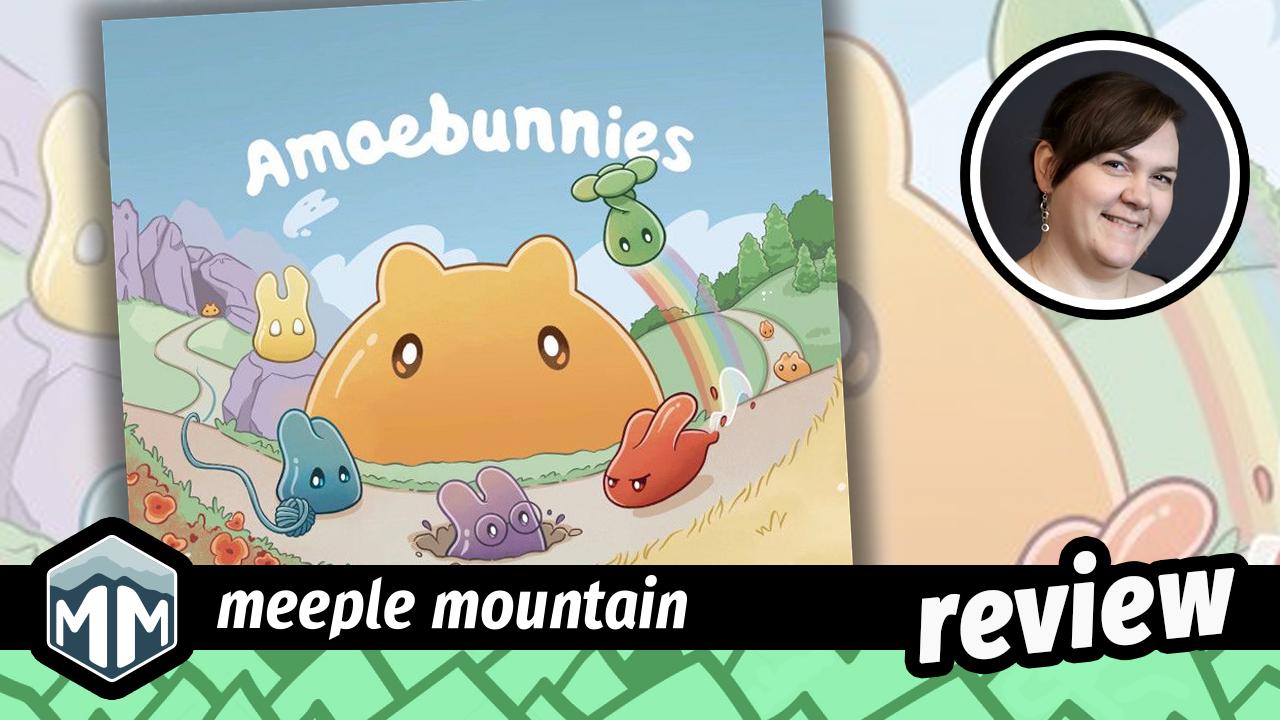
I don’t remember where I first heard about Amoebunnies, a self-published game from a designer who’s not made anything else, but I’m so glad I did. This game was attractive to me for a couple reasons: it was cute, and I needed more cute games to play with my bunny-loving seven-year-old daughter. But the thing that intrigued me most was seeing it described as “Root lite”. Was there really a game I could play with my kids that would introduce them to the world of asymmetric play that would also be fun for adults?
The story
The amoebunnies have fallen from the sky and are doing different tasks on the earth. Each player begins with the same resources, but the movement rules, special abilities, and winning conditions are different for each character. The characters also have different difficulty ratings, which means you can give the easier characters to newer or younger players, and the more experienced gamers can pick a more complex character. There are movement cards, which tell you where to place characters and other bits and bobs (depending on which characters are involved), and the coveted jellies, which are like a wild card but are rare and difficult to get. The game is a race to finish your special task.
Fuji Flush is a good time. It’s like super Uno that doesn’t fall into an infinite loop, especially at higher player counts. Basically, you play a card from your hand, and if the turn comes around to you again, and someone hasn’t “flushed” your card, you discard it. Get rid of your hand to win. Flushing is playing a higher card, but if someone plays the same card, your values are added together and you enter a sort of partnership where all same-card values are tougher to flush.
Mainly, it’s an excuse to say flush a lot, but it’s a hoot with a larger count, and is really easy to table and play at the end of a night.
Ease of entry? ★★★★★ - No sweat Would I play it again? ★★★★★ - Will definitely play it again
We at Meeple Mountain always enjoy the chance to cover self-published titles, as they often don’t get the opportunity to be showcased to a larger audience. Terra Eterna is one of those titles, a semi-cooperative RPG focused on exploration and character building.
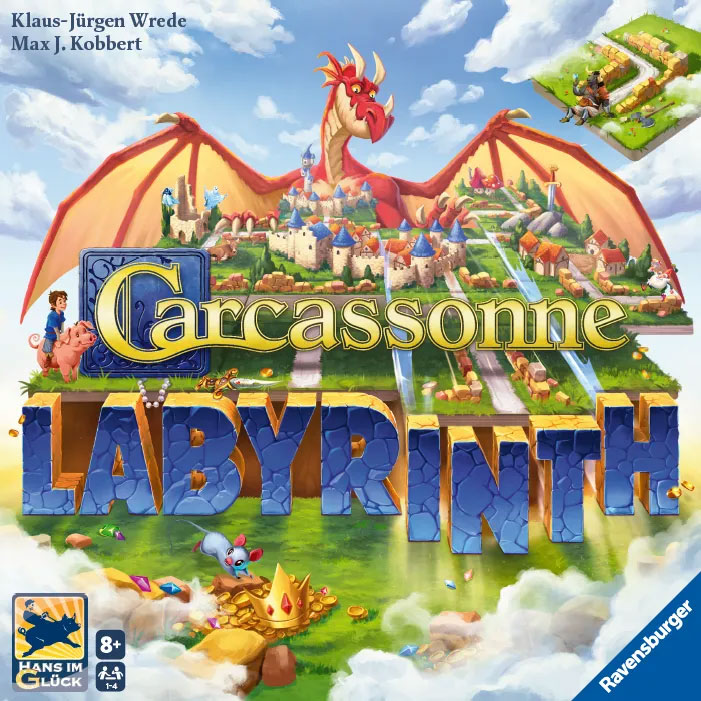
I enjoy mashups in music, pop culture, and games, so I was very excited to hear about a game that has 30 expansions (small and large), which is almost enough to make CMON say “whoa, calm down,” crossing over with one of my favorite ’80s movies: Labyrinth. I can’t wait to see how Jennifer Connelly […]
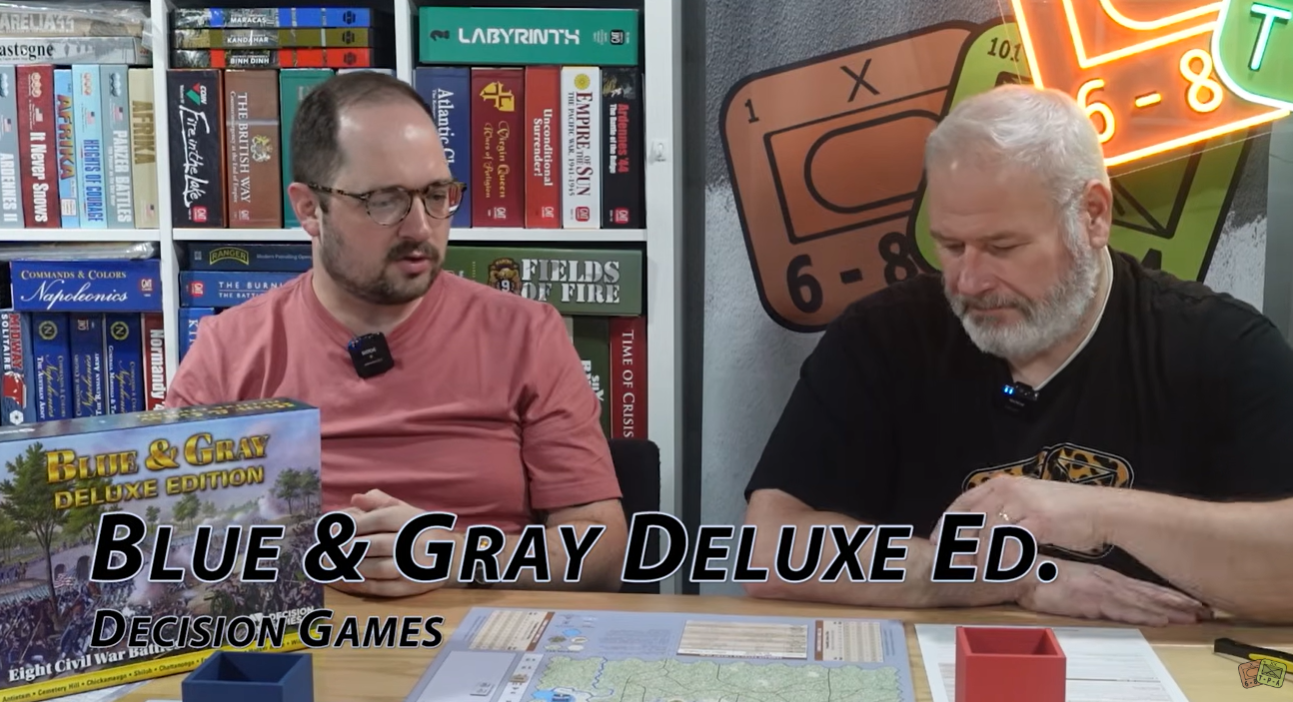
The American Civil War was the bloodiest conflict and a defining event in the history of the United States. The tragedy of the conflict was amplified by the fact the battles were brutally fought with Napoleonic tactics while using new and more lethal weaponry. As a result, over the course of nearly four full years of war, roughly 700,000 Americans were wounded or killed in battle along with another 400,000 soldiers dying from disease.
Blue & Gray Deluxe Edition consists of the original eight games from the SPI Blue & Gray I & II Quadrigames. The battles depicted are among the most important of the American Civil War: Shiloh, Antietam, Fredericksburg, Chancellorsville (Hooker & Lee), Gettysburg (Cemetery Hill), Chickamauga, Chattanooga, and The Battle of the Wilderness.
The game mechanics used in this series are based on the well-received Borodino/Napoleon at Waterloo system. Terrain is a significant factor, with everything from rolling farmland to untracked wilderness represented. Battles will often see a back-and-forth struggle for control of critical terrain. Rules for night turns are also provided. A standard set of rules are used, common to all eight games, while each game also has its own set of exclusive rules, historical set-ups, and player and design notes—all from the original SPI games.
Blue & Gray Deluxe Edition features new artwork, double-sided mounted game boards, enlarged counters, player aid cards, numerous optional rules gleaned from other game editions, and new variant counters and markers for use with several variants from Moves and Strategy & Tactics magazines. Reintroduce yourself to these classic games from SPI’s golden era and refight some of the best-known battles of the American Civil War which decided the fate of a nation at war with itself.
Misfit Heroes Designer: Phil Walker-Harding Publisher: AEG Players: 2-4 Age: 10+ Time: 30-45 minutes Amazon affiliate link: https://amzn.to/4xvABBQ Played with review copy provided by publisher After a bizarre interdimensional event of massive proportions, Earth as we know it … Continue reading →
Zombicide has been around for quite some time. I have never been a
zombie fan, so I never got around to trying it until recently, when I played
the second edition of the game. This is a cooperative game. Every player
controls two characters. You try to survive in a zombie apocalypse. The game
is scenario based, and every scenario has a different set of winning
conditions.
Board games aren’t always very good at themes. Actual themes, as in underlying messages, not “themes,” the settings that appear in a game’s artwork. One of the hobby’s essential exceptions was Sol: Last Days of a Star. Set in some distant future, players were asked to harvest their dying star’s last embers to propel an ark into the great beyond, only to realize that their efforts were hastening the same solar death they were striving to outrun. Part climate change parable, part meditation on thermodynamics, Sol was not only playable, it was a genuine effort at using gameplay to tell a worthwhile story.
Now Ryan Spangler, one of Sol’s three creators, is back with Organism. Where Sol propelled itself outward, Organism utilizes the smallest possible lens to zoom all the way down. In a way, its diminutive subject matter is even more meaningful than Sol’s space opera. I’m speaking, of course, about the building blocks of life.
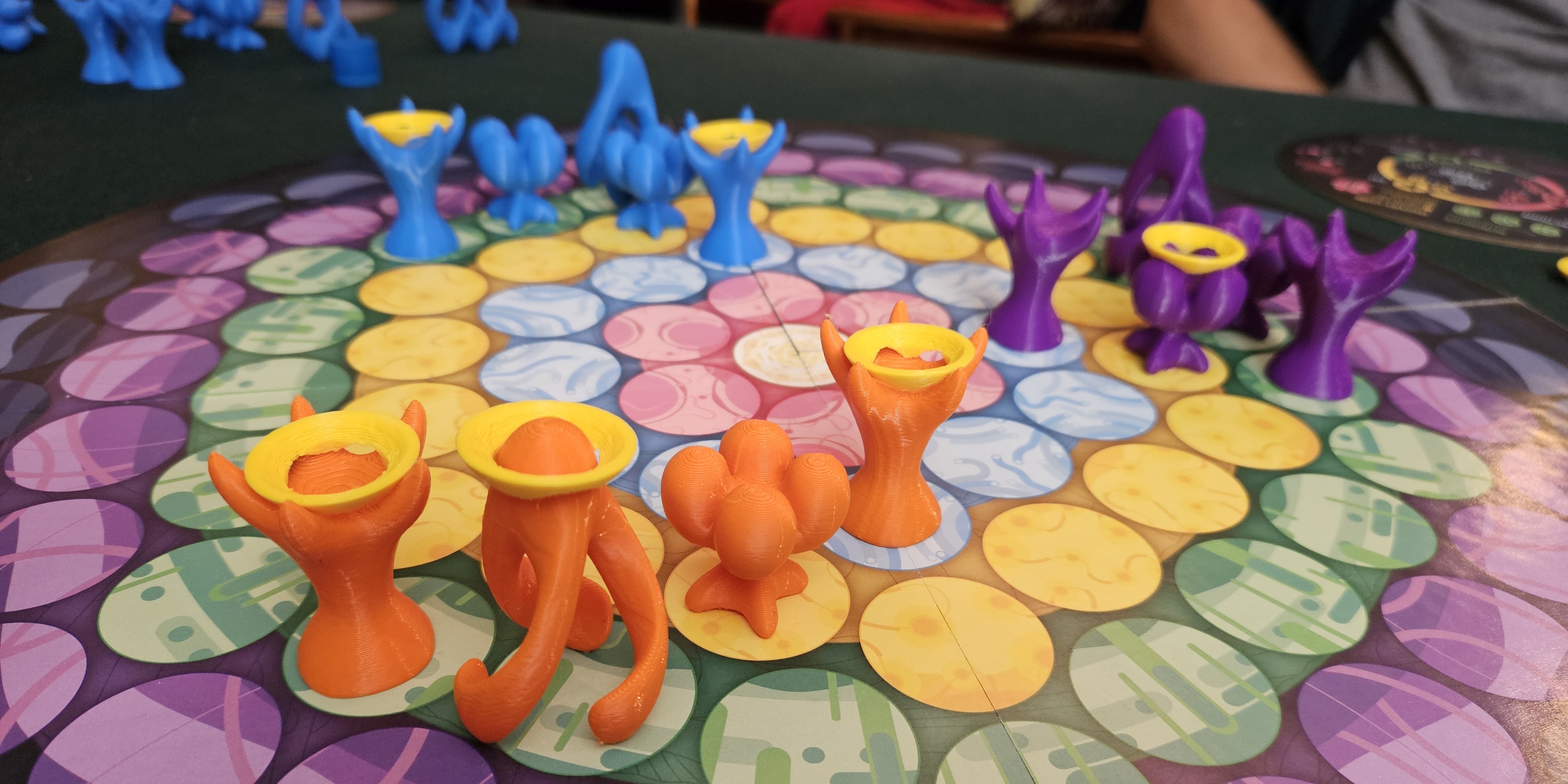
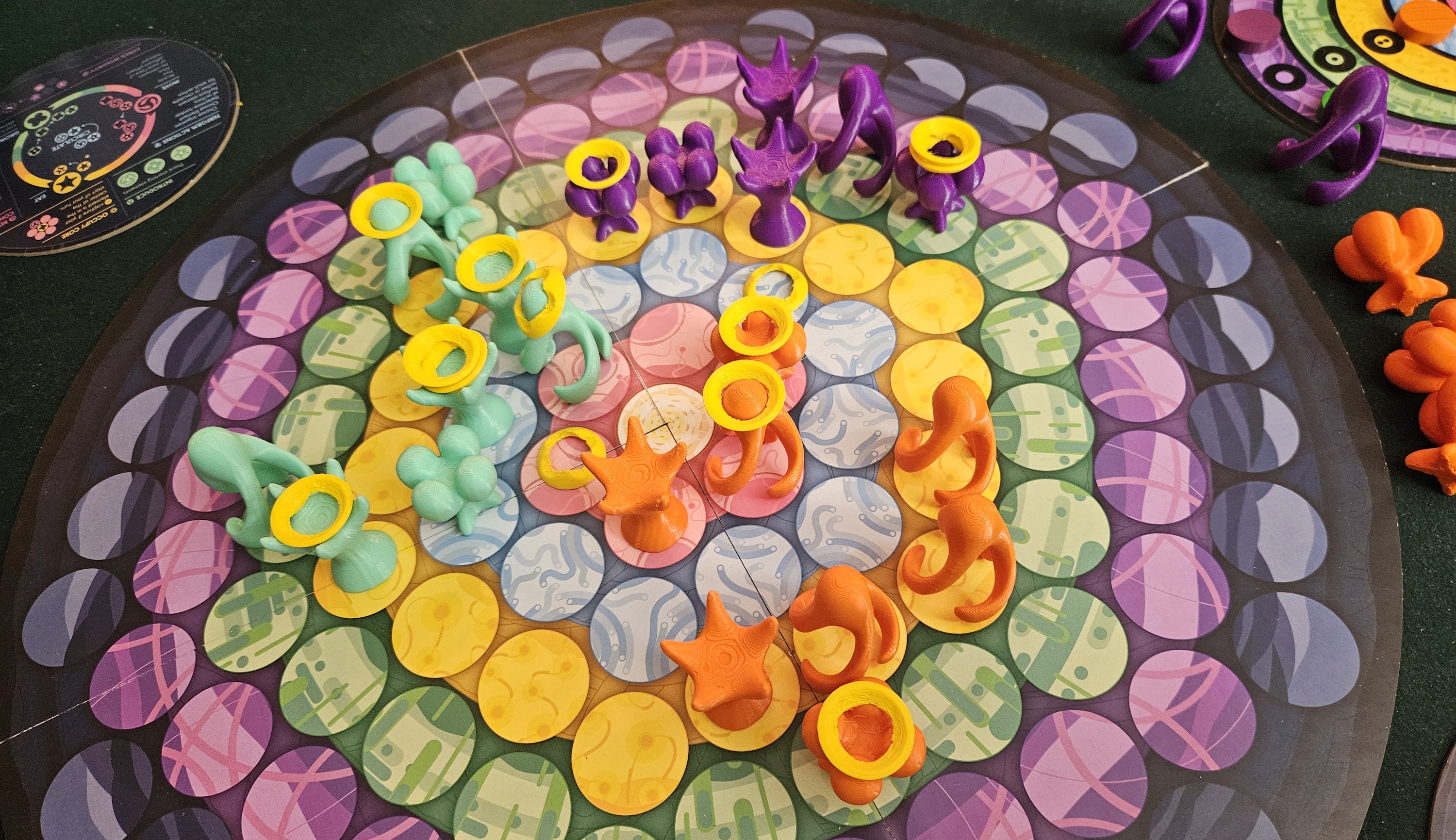
My goopy guys versus your goopy gals.
What are the smallest components that are necessary for something to constitute “life”? When I interviewed Spangler for Senet Magazine, that’s the question that led to Organism. Here players become… not even cells, really. Cells and their constituent components. Organelles. Nuclei and ribosomes and flagella. Grasping, uh, mouth-parts. Can you tell I was never very good at biology?
Fortunately, Organism drills down onto some simple terminology. To constitute an organism, there are three parts. These are your cellular building blocks. Without any one of them, the organism will die. With many of them, it becomes a lurching thing capable of doing more work. Maybe more importantly, it might split into two separate bodies altogether.
Those three building blocks are as follows. There’s the Eater, which is how your organism takes in nutrients; the Grower, which allows your organism to sprout new components; and the Mover, which allows it to shuffle around the petri dish or hydrothermal vent that is the game’s playground. At the game’s beginning, everybody begins with one of each. That’s your organism: Eater, Grower, Mover.
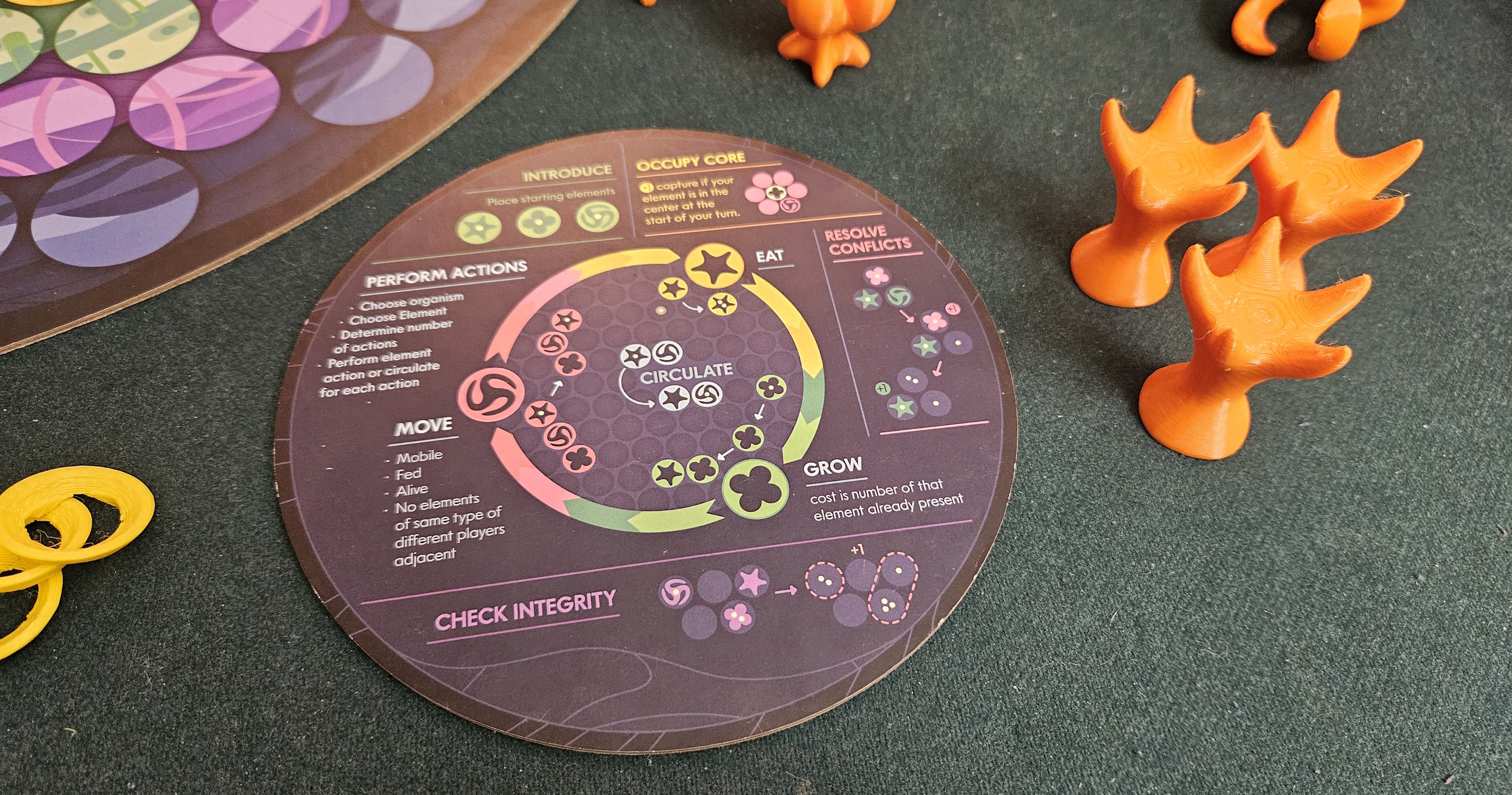
The life cycle of life.
Turns consist of selecting a single action for your organism. (Actually, you could select a different action for each organism, but now I’m putting the flagellum before the pili.) Those actions correspond with your organelles, with the crucial detail that you get to take as many actions as you have cellular bits. Want to absorb food? Choose Eat. Now every Eater in your organism gets to chow down on ambient soup, pulling food discs into your body. Want to expand your cell? Growers spend food to add new structures in adjacent spaces. Move? Look, you know what Move does.
Except you probably don’t! Organism, it turns out, is about grappling with your own lumbering body as much as it is about the smallest possible components of life. It isn’t all elegance and skater-like gliding down there. Sometimes your body is a malformed, asymmetrical blob, only capable of pushing around its parts on one side, or maybe wedged into a corner because your limbs are tucked against the edge of the board rather than putting their best foot forward. As someone who recently had both legs fall dead asleep because I was sitting too hard on my bum — normal sitting posture, just sorta wedged into a cushion — I’m in this picture and I don’t like it.
What I’m trying to say is that turns are two things at once. There’s raw potential here. Provided you have a solid handful of Movers in your body, you can rearrange yourself quite quickly, scooting your little organs all over the place. But when those Movers are in the wrong spot or few in number, movement becomes a chore. The same goes for Eating and Growing. With enough mouths and, ahem, reproducing bits, your organism gains the advantage of scale. Without them, you might soon find yourself dead in the water.
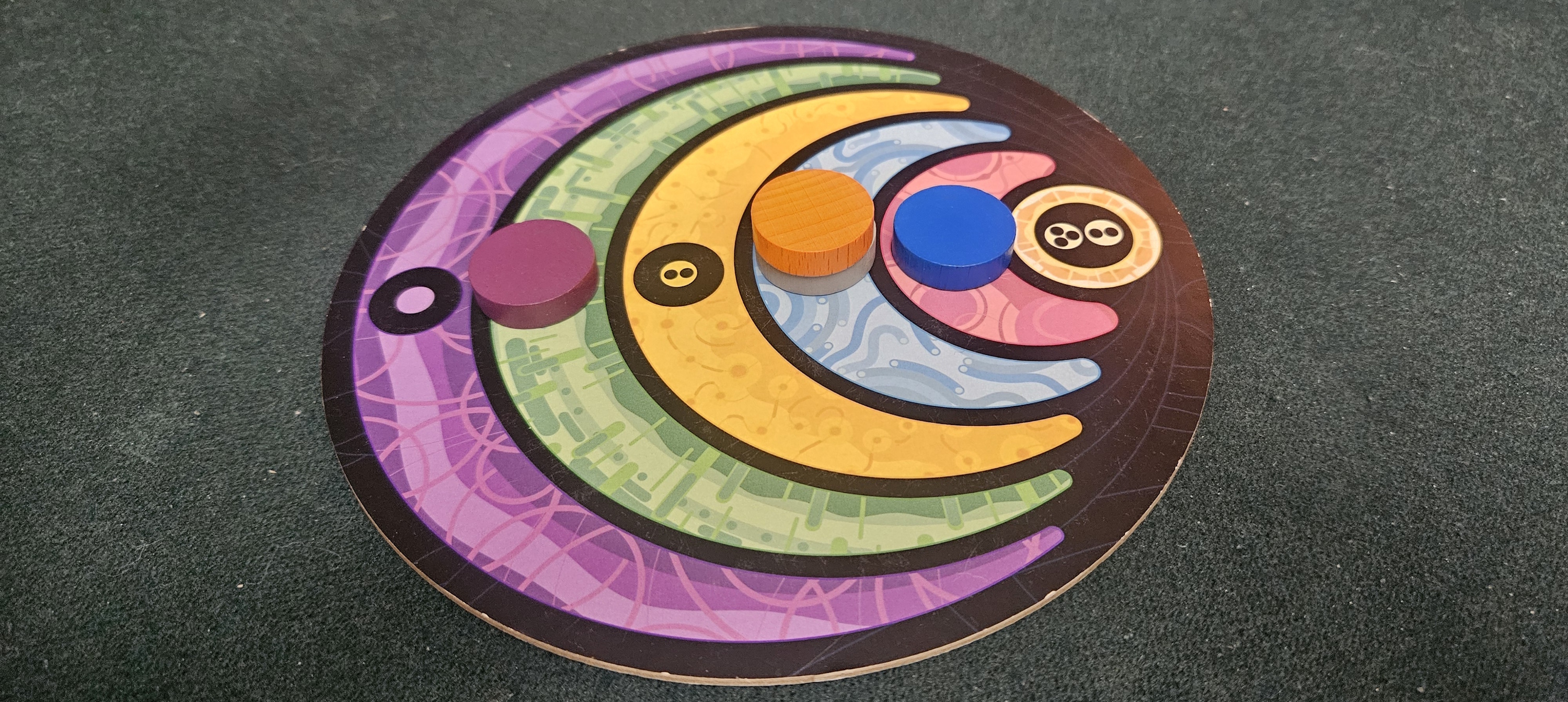
Even the scoring track is cool.
Literally dead, in fact. Organism is cutthroat. When two rival organisms move into contact with another, there’s a quick-and-dirty rock-paper-scissors check where Eaters destroy Growers, Growers smoosh Movers, and Movers circle around to strangle Eaters. This destroys the organelle on the receiving end of the circle of life and deposits an extra morsel of food in its wake. What’s more, if the recipient of this microscopic violence no longer has all the necessary components to sustain life, the whole thing is reduced to a pile of mushy calories.
And this is tied directly to how victory functions. There are two ways to win. Either you rack up five points by occupying the nutrient-dense space at the center of the board and destroying body parts — which can be done surprisingly swiftly if a surgical strike eliminates an entire hostile organism — or you outrun your rivals by dividing into three separate bodies.
These are roughly analogous to aggressive versus turtle playstyles, although the game’s open-ended nature means it’s an imperfect comparison. More often, Organism allows both approaches simultaneously. Having two bodies is better than one in terms of diversification, since now you can take two separate actions per turn. But mitosis is not a decision to undertake lightly, leaving your newly separated organisms open to attack and liable to grouse at each other for lack of sleep. [Note: Insert parenting joke.]
What this really does for Organism is make every decision matter, both in the micro sense and the larger conflict. It isn’t uncommon to look at your bloated cell and realize you optimized it poorly a half-dozen turns ago and the bill is only coming due now that you can’t figure out how to move it into battle with a rival organism without sacrificing two appendages.
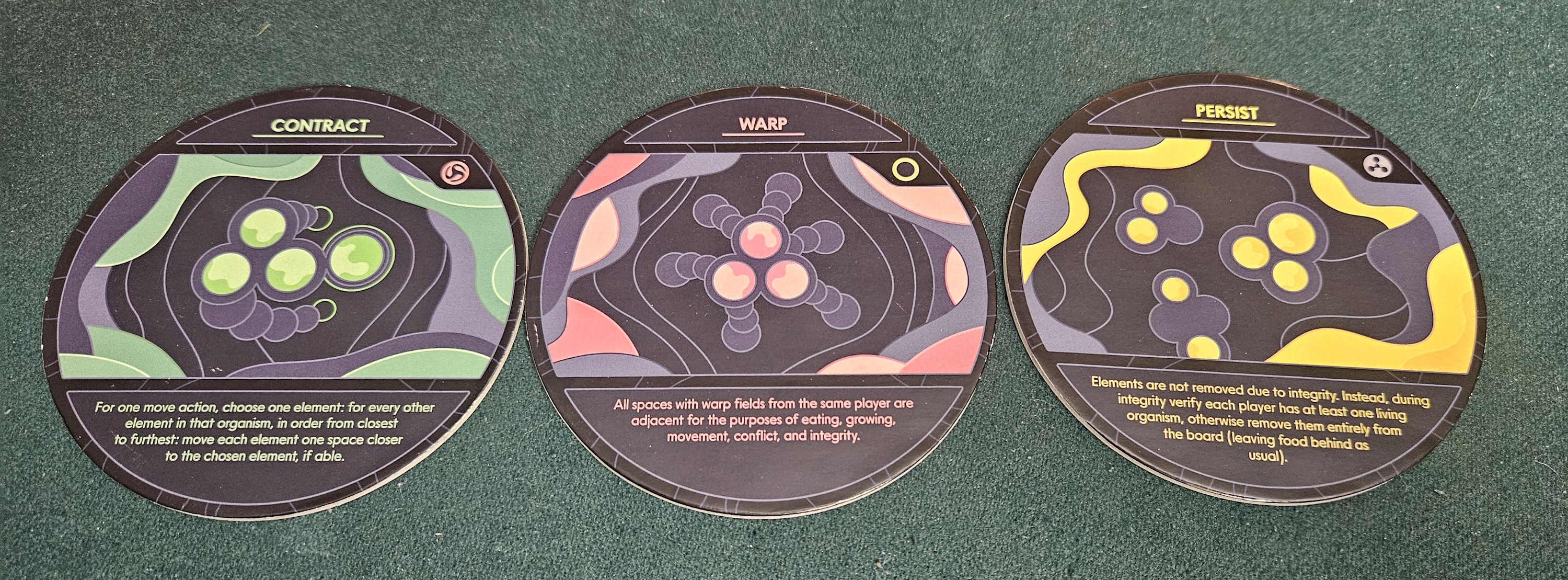
Mutations introduce all sorts of complications.
Speaking purely mechanically, Organism is an abstract game — obviously — but one with its own internal coherence. After that awkward learning phase, which has as much to do with the game’s novelty as anything else, one can look at the board and read the slow-motion topography of its microcosmic battleground, like skilled eyes reading tectonic plates or a football match.
And as an abstract game, it’s entirely distinct from anything else out there. Like Chess, it’s sometimes elegant and sometimes ungainly; like Go, it’s possible to read the state many turns into the future only to find oneself blindsided by a clever turn. But it’s also wholly unlike either of those benchmarks.
One of its biggest departures is that it’s also only a starting point. I’ve been exploring a handful of the game’s mutations, discs that introduce special rules. It’s a similar approach to what Spangler did with Sol, letting these little powers alter the progression of the game without undermining the rules wholesale. Except, well, sometimes the rules do get undermined wholesale. Such as when a mutation introduces “fields,” little discs that function as sub-systems within a cell. Some foster aggression, others lean into the optimization puzzle, and still more transform the game into something else entirely.
Under a microscope.
No matter how it transforms, though, Organism remains truly exciting. There have been some excellent games about evolution over the years, in particular the North Star titles Evolution, Oceans, and Nature. Organism takes an entirely different tack from those games’ recombinant traits. In a sense, it recalls those games but with only three cards and a whole lot of careful positioning. But there’s a certain thematic overlap, an arms race that never lets up. That it works not only with two players, but as many as six, is nothing short of astonishing. I’ve played with four, and while the session took longer than lower counts, it was a wonderful experience, full of little feints and flankings.
Anyway. That’s Organism. As a parable, its ambitions are narrower than Sol, but also given the focus of an electron microscope. I can’t wait to push around its tendrils, mouth-parts, and weird jiggling udders for years to come. It’s on Kickstarter right now.
A prototype of Organism was provided by the publisher.
(If what I’m doing at Space-Biff! is valuable to you in some way, please consider dropping by my Patreon campaign or Ko-fi. Right now, supporters can read the next installment in my series Talking About Games, this time tackling the topic of what makes a good list! Naturally, the piece includes a list.)
Tales of Myth & Legend Designers: Michael Guigliano, Keith Ward, Bobby West Publisher: Van Ryder Games Players: 1-4 Age: 14+ Time: 60-150 mins Amazon affiliate link: Played with review copy provided by publisher Tales of Myth & Legend … Continue reading →
In regards to several recent crowdfunded games that either relaunched after an initial cancellation or are struggling to move far past their funding goal, I’ve heard some concerns about trust from potential backers.
For example, if a project has a $10,000 funding goal but after the first few days they only have a few hundred backers and $13,000 in funding, is it a mark of dishonesty if they cancel the project, reconfigure, and relaunch?
Personally, I do not begrudge anyone from learning from a mistake, oversight, or shortcoming and trying to do better. Nor do I consider it dishonest to showcase a marketable funding goal…as long as the creator is transparent about their aspirational goal.
If you want to make a hypothetical game with a landed cost of $20 (manufacturing plus freight shipping) with a trusted long-time producer like Panda, you’ll have a minimum order quantity of 1,500 units (or 2,000 if plastics are involved). Ideally you’ll make more, but that’s the bare minimum you need to cover that MOQ. So that’s $30,000.
Of course, you’ll need to pay artists, graphic designers, playtesters, and proofreaders–those costs can vary greatly based on the complexity of the game and the quantity of the art. At Stonemaier Games, I would say that those costs add up to around $75,000 on average. Added to the landed costs for the 1,500-unit MOQ, that’s $105,000.
I might list the funding goal at $30,000, but somewhere else on the project page I might discuss that I’ve already invested $75,000 in the game and that the funding goal is based on the MOQ of 1,500. So there I might note that we’ll make the game if we reach the funding goal, but my hope is to eclipse $105,000, perhaps marked by a stretch goal.
A creator could also just outright say, “We chose $10,000 as a marketable funding goal, but our aspirational goal is to make at least $50,000. Reaching that aspirational goal will help us cover our sunk costs and will enable us to pay for the first printing without dipping into our savings. If the project has not reached $30,000 a few days after launch, this is a strong indicator the game and/or the campaign are missing something important, and we may consider relaunching to best serve the audience for this game.”
This is essentially what Siclen Studio announced on a recent video about their current Kickstarter, though they took it a step further: They said that as long as they stay above their $10,000 funding goal (as of this writing, the project is at $13,535), they will make the game even though they had much higher hopes for it. I admire that, though I also worry that backer accusations of dishonesty backed Siclen into this corner instead of offering them the grace to relaunch.
I understand that this is a contentious subject, and I also understand that a creator risks losing backer trust if they relaunch. However, we are talking about crowdfunding here: Nothing is etched in stone. Crowdfunding gives creators the opportunity to learn from the crowd while the product and the project are still pliable.
Also, is it not an inherently human trait to set a lower goal with the hopes of surpassing it? I can certainly relate to that.
What are your constructive thoughts about marketable vs aspirational funding goals?
After 20 years growing the UK Games Expo into one of the largest tabletop gaming conventions in the world, founders Richard Denning and Tony Hyams are preparing for their eventual exit by bringing in AireCon co-founder Mark Cooke as operations director.
Cooke joins following another record year for UKGE, which has seen its annual unique attendance surge almost 65% since 2023 to reach more than 51,000.
The show has already well surpassed Gen Con in terms of trade hall size, with the British event now spanning about 44,000 sq m – about 40% larger than Gen Con’s trade hall area – and hosting around 900 exhibitors in 2026.
That soaring growth has put increasing pressure on the small organising team at UKGE, with Denning telling BoardGameWire last year that the show had strained a full-time workforce which stood at just six people – although UKGE also relies on more than 200 volunteers, GMs, umpires and other helpers to deliver the convention each year.
Cooke is no stranger to growing a UK board game convention, having co-founded and built AireCon with Ben Clarkson from a 28-person gaming weekend in his flat a decade ago into England’s second-largest board game con, with about 5,000 attendees this year.
More than 5,500 people are expected at the final AireCon – which has been nicknamed Airemageddon – with Cooke set to continue working on that final show before moving to UKGE full time.
A statement from UKGE emphasised the hire was part of a phased transition for UKGE’s organisers, and was “not a sudden change of leadership or direction”.
UK Games Expo 2026
It said Cooke would work alongside Denning and Hyams “over the next few UK Games Expo events”, ensuring that knowledge, experience and responsibilities the pair have built up over the last 20 years are handed over “gradually and thoughtfully”.
Denning said, “As UKGE has expanded to now one of the world’s largest shows we have gradually grown our team, adding event managers, administrators and logistics support.
“Bringing in Mark as operations director is the next logical step as we put in place plans to ensure UKGE can run far into the future.
UK Games Expo co-founder and director Richard Denning
“We have known Mark through AireCon and other industry roles for many years now and he is an ideal choice bringing both event management experience, energy and fresh ideas to the team as well as a safe pair of hands as and when Tony and I eventually step away from the show we have built together with others.”
Cooke added, “I’m incredibly excited to be joining the UK Games Expo team and to have the opportunity to play a part in the next chapter of such an important event for the tabletop gaming community.
“I have huge respect for what Richard and Tony have built over the years, and I’m looking forward to working alongside them over the coming events.
“This will be a gradual transition, giving us plenty of time to share knowledge, ideas and experience. My aim is to build on the fantastic foundations already in place while helping UKGE continue to grow and thrive for many years to come.”
Denning and Hyams launched UK Games Expo at Birmingham’s Clarendon Suites in 2007, when the convention attracted about 1,000 visitors.
It moved to Birmingham’s National Exhibition Centre in 2013, and had grown to more than 25,000 unique attendees by 2019 before the Covid-19 pandemic interrupted its run of physical events.
UK Games Expo attendance figures since launch. Note: no physical show took place in 2020 due to the Covid-19 pandemic
Denning told BoardGameWire last year that building a world-class trade hall in the UK had been a personal ambition stretching back almost two decades, adding at the time that UKGE was “now fully on the world stage of ‘mega-cons'”.
Despite this year’s record attendance, Denning told BoardGameWire after the show that there was still room for further expansion, particularly around the roughly 500 events taking place during the convention.
The next UK Games Expo is scheduled to take place at Birmingham NEC from June 4 to June 6, 2027.
Let’s give credit where credit is due. If you are going to release a game in the late summer of 2026 and want to ride a wave of free marketing, you can do a LOT worse than theming your new game around anything tied to The Odyssey, Homer, The Iliad, and all things Odysseus.
So, while it is possible that Gigamic’s new, light strategy title Odysseus was always intended to be a game about the lead character from the recent Christopher Nolan / Matt Damon blockbuster film The Odyssey, let’s just agree to give everyone involved in this game’s design a round of applause for timing the release and the theme to the Universal film’s massive global box office!
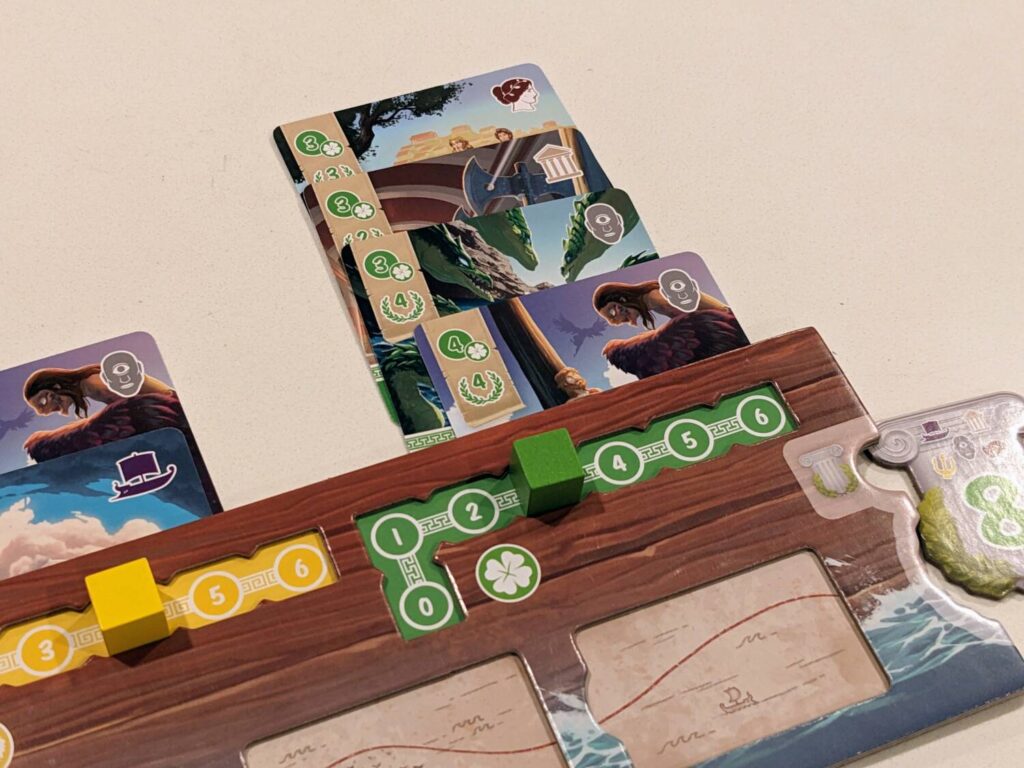
Odysseus, the game, is a very quick romp through the 15 trials Odysseus (the character, also known as Ulysses, depending on your preference between the Greek and the Latin version) survived on his quest to return to Ithaca. In fact, the game is so quick that we only get 11 turns to whisk through the entire affair, and turns are so fast you might break through a game of Odysseus in 15-20 minutes!
Turns are simple. The board is a replica of Ulysses’ vessel, with spaces for 12 cards. On…
The first electronic-enabled games I played in my youth were from the 1980s: Dungeons & Dragons Computer Labyrinth Game and Dark Tower. It’s hard to believe it now, but those games were unique and probably cutting-edge for their time. Fast forward to today, and now app-driven games are much more common, and the technology around […]
I love a different style and focus of wargame. A game that takes a look at an important but somewhat obscure or rarely addressed historical topic, such as espionage or intelligence, and creates a gaming experience tailored around the events to highlight and evoke the difficulties and tension that would have been present. In January 2026, GMT Games announced such a game in Checkpoint Charlie, which is a solo or cooperative game focused on SIS espionage missions in Berlin in the 1960’s designed by Russell Brown. We have posted an interview with Russel and it was very well received and he has now agreed to create a series of History Behind the Cards to highlight the events of the 1960’s Cold War struggle in West Germany but also to share aspects about the game play and how it models the history.
*Note: The cards highlighted in this series and their event text, as well as any pictures used showing any of the various components, are still in the design and development process and as such event effects and text might still change prior to final development and publication.Also the art and layout of the cards are only for playtest purposes at this point and the game will enter the art department as it nears publication.
History Behind the Cards – Checkpoint Charlie from GMT Games – Card #7: Ich Bin Ein Berliner
In the summer of 1963, the Berlin Wall had been in place for almost two years, the reality of a city split between east and west, between Soviet and Western influence, was impossible to deny. Politicians, military leaders, and the people living day-to-day in Berlin continued to argue about the lack of forceful response from the west, particularly the Americans, when the wall went up. Other than a modest buildup of US forces within and around the city, there had been precious little action to re-assure the people of Berlin that the west hadn’t abandoned them.
In June of that year, President Kennedy hoped to change that perception by personally visiting this western city in the center of Soviet-controlled East Germany. He received the reception and the reaction he was hoping for, driving through the city to crowds of cheering West Berliners, and giving his famous speech on the steps of the Rathhaus Shöneberg to a gathered crowd of over one hundred thousand. In a calculated risk, he referred to the city as West Berlin, officially acknowledging the split created by the wall. He introduced his “Fellow Americans” and at the mention of General Clay (Card #6), the crowd interrupted the speech for some heartfelt cheering for the man that saved their city during the Berlin Airlift. Kennedy’s famous line of solidarity, “Ich bin ein Berliner,” — I am a Berliner — came at the end of the speech and may have been a bit off-script.
So how would Kennedy’s speech affect a mission in Checkpoint Charlie? I’m going to answer that with a story.
I spend a lot of time at a wonderful coffee shop near my home, so much time that my iPhone has labeled the location as my “work.” The baristas there know me, and one day one of them asked me what I was working on. “Right now,” I said, I’m working on a board game about spies in Berlin in the 60’s.”
He laughed. “Have you met John?” He pointed to an older customer at one of the tables. “He was a spy in Berlin in the 60’s.” It was true.
Since then, I’ve had many conversations with John about his time in Berlin. He was Army Intelligence, keeping track of what was going on in the city. He was there when the wall went up. He interviewed the refugees that, for a time, still managed to find a way into West Berlin. And he was there during Kennedy’s speech.
I asked him about the speech and said that in the game it resulted in crowds (a Demonstrations marker) near Tempelhof. He shook his head. “Everywhere. Crowds everywhere. All over the city.”
I’m sorry to report that I’ve restrained the effects of this card and the speech for gameplay reasons, but I haven’t ignored John in every case. The Daily Military Train event (Card #9) exists solely because of his stories, and after removing the Refugees event (Card #13) from the game because I assumed the flow of refugees disappeared after the wall went up, I put it back in because John assured me that they were still coming – he had met and interviewed hundreds of them.
In the next article in this series, we will take a look at the ongoing propaganda efforts from both sides of the Berlin Wall with Loudspeaker Wars.
In my opinion, this game looks extremely interesting and I am very much excited to learn more about it. I am appreciative to Russell and his efforts to bring us these cards and to write these entries to share with our readers. I am also very glad that this topic is being covered in a game and look forward to playing this one day soon.
Exploding Kittens has named chief commercial officer Joeri Hoste as its new head of studio, with the long-time game industry exec eyeing further expansion of the company’s namesake hit into a “long-lasting evergreen brand” beyond its big-selling card game.
Hoste joined Exploding Kittens to lead its international business in 2020, following multi-year stints at companies including Hong Kong based board game publisher and manufacturer Ooba Games, toy company BOTI and trading card and collectibles specialist Upper Deck.
Hoste said in a LinkedIn post that the past six years at Exploding Kittens had been the most rewarding of his career, adding that he was “ecstatic and humbled” to take responsibility for leading the company into the next stage of its development.
He said, “We’ll continue our mission of making great games and creating experiences that bring people together. Exploding Kittens is the game that built its namesake company, and our next challenge will be to develop the IP into a long-lasting evergreen brand that outgrows its original format.
“Exploding Kittens is unique within Asmodee as we combine deep commercial mass market expertise with publishing quirky and irreverent games that disrupt the games category.
“We did not get here by blending in. We succeed because of the talented team that’s willing to be different.”
Last year Exploding Kittens revealed it had sold more than 60 million games as it marked a decade in business – with the company’s growth having already extended well beyond the tabletop.
That has included a partnership with Netflix which expanded the property into mobile gaming and an animated series.
Asmodee bought a 55% majority stake in Exploding Kittens at the end of 2021, and exercised its option to purchase the remaining 45% minority stake last year.
Exploding Kittens has continued to stand out within Asmodee’s portfolio during a difficult period for parts of the US board game market.
The promotion comes as Asmodee is making a wider push into social and party games – a category where Exploding Kittens has been one of its strongest brands.
In March the company agreed to pay up to €250m for French social and party game publisher ATM Gaming, with Koegler saying the acquisition would combine ATM’s strength in Europe with Exploding Kittens’ strong position in the US. Asmodee has said it expects the social games category to grow at between 4% and 8% annually between 2025 and 2030, compared with about 4% for the broader board games market.
It also launched US party game studio Moodbox Games last year, a move de Barros described at the time as strengthening Asmodee’s presence in a category where Exploding Kittens and Zygomatic were already seeing strong success.
Neon Reign is a simple game I have played several times, and still
don't understand. This is a 2-player card game about those 1v1 fighting arcade
games. There are several characters you can play, and every character has
their own deck of cards. To win, you need to reduce the opponent's life points
to zero.
You have a hand of seven. Your cards are mostly button
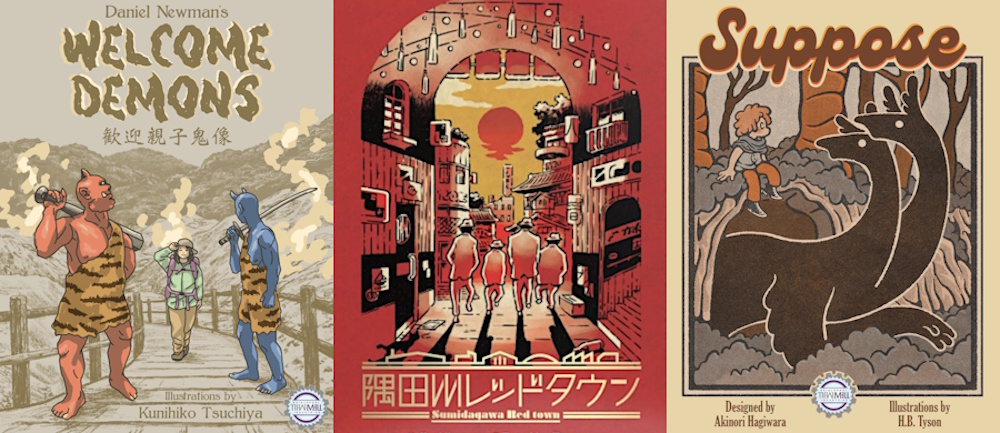
All I play anymore is trick-takers. And climber/shedders. Are those the same thing? Some say so. Others disagree. I don’t take a strong stance on it. Which is why I’m lumping these three titles together. For this quarter’s roundup, we’ve got friendly oni, unfriendly gangsters, and some super cute monsters that might be friendly or unfriendly depending on whether you correctly guess their identity.
Boo! We’re here to help!
Welcome Demons
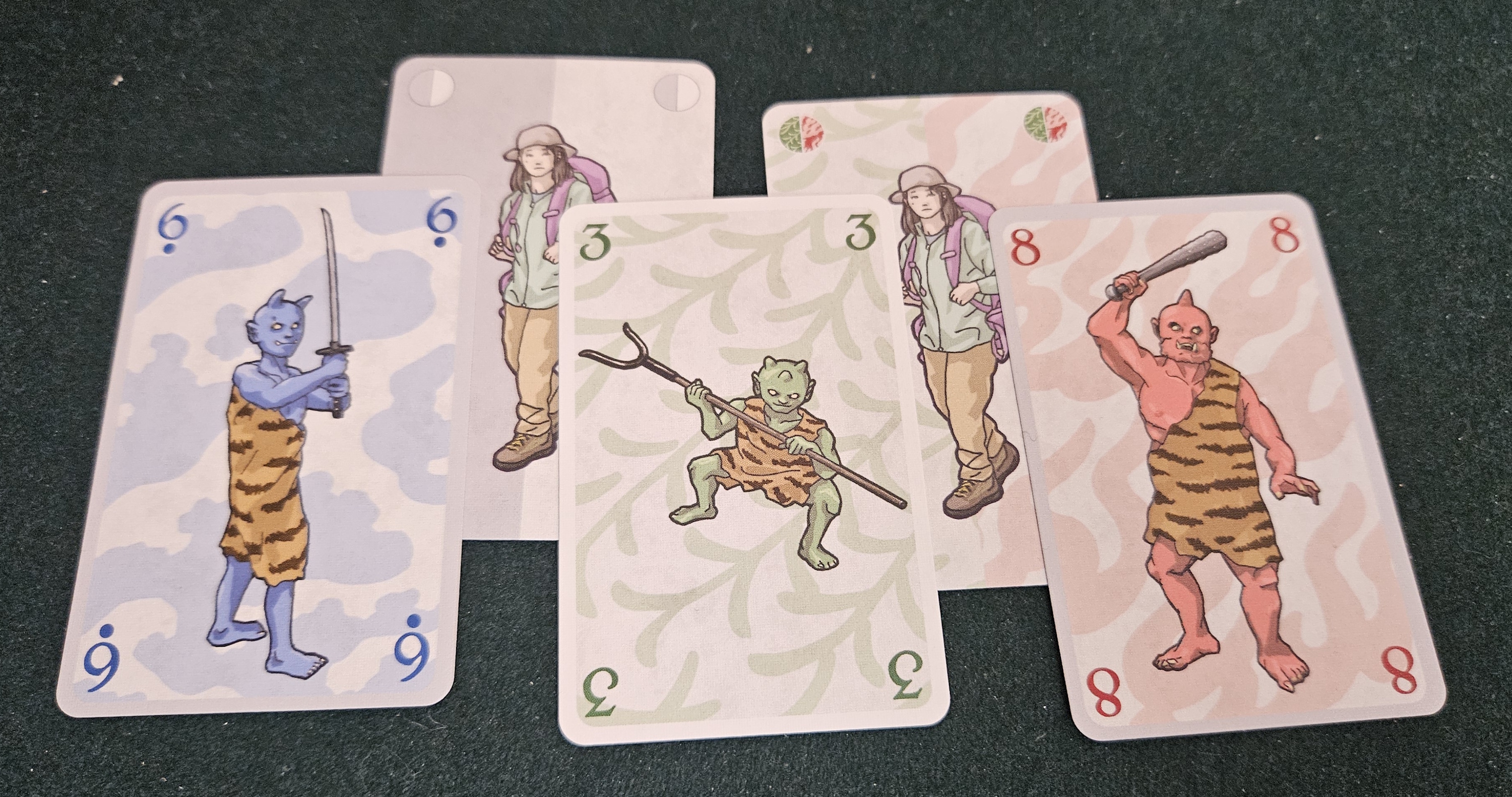
If I were a Japanese demon, I’d be like the oni from Welcome Demons — a menacing li’l guy with a sword, but really just here to make sure you get home safe. Designed by Daniel Newman, this is a shedder about using the cards from your hand to guide lost hikers out of the mountains.
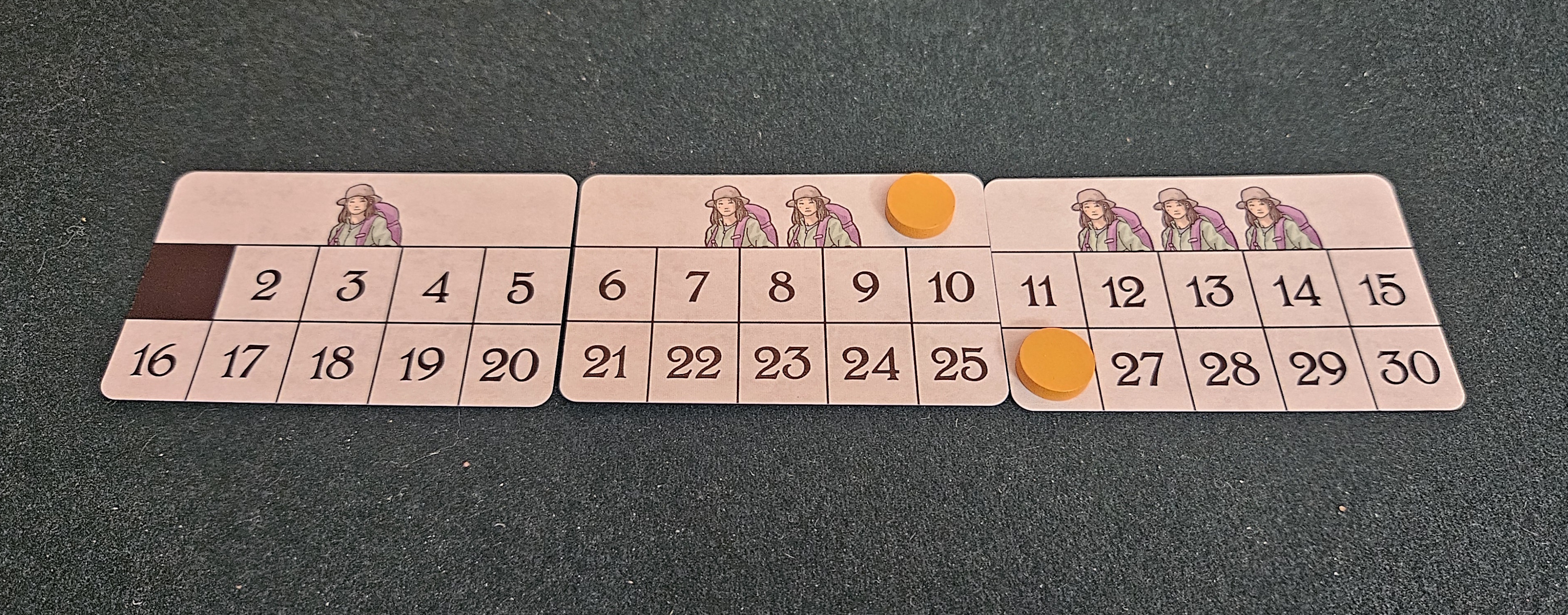
It’s also as atypical as it gets, seating exactly three players and, rather than building melds in the usual fashion, having you match your cards to your hikers. Each hiker has their own needs, whether odd/even ranks or various suits of oni. What’s more, players are required to format these melds using at least one card from the previous player’s set. This forces everyone to pay some attention to what their rivals are putting on the table. More than some attention, really. Because your meld must contain the same number of hikers (one, two, or three) but a higher sum of ranks, or more hikers but a lower overall rank. Which makes things tricky indeed, especially if you’re holding a bunch of mid-rank cards.
And then, if it becomes impossible to follow, everyone passes and the last demon to shepherd their lost hikers begins the process all over again with one lonely hiker. This continues until somebody most definitely can’t save any more hikers, at which point they lose and the other two players are crowned… I don’t know, the most helpful oni of the month.
How many hikers can you aid?
It’s a clever little thing, emphasis on both “clever” and “little.” Newman pulls a trick we’ve seen before, where you aren’t playing to win so much as playing to avoid losing. Oni are spiteful that way. Especially near the end of the hand — and the hand is the game, this isn’t some multi-round affair — it isn’t uncommon for players to struggle to build the right melds, sometimes resulting in an early quit for the session. Like many shedders, this makes the game’s back half less interesting than its opening salvo.
Fortunately for Welcome Demons, its approach to meld-building is novel enough that it’s worth witnessing, even if only as a filler. I would put this one in the midnight nugget box: a tasty snack with a crunchy exterior, but not the most filling meal out there.
Take ’em out back and gun ’em down.
Sumidagawa Red Town
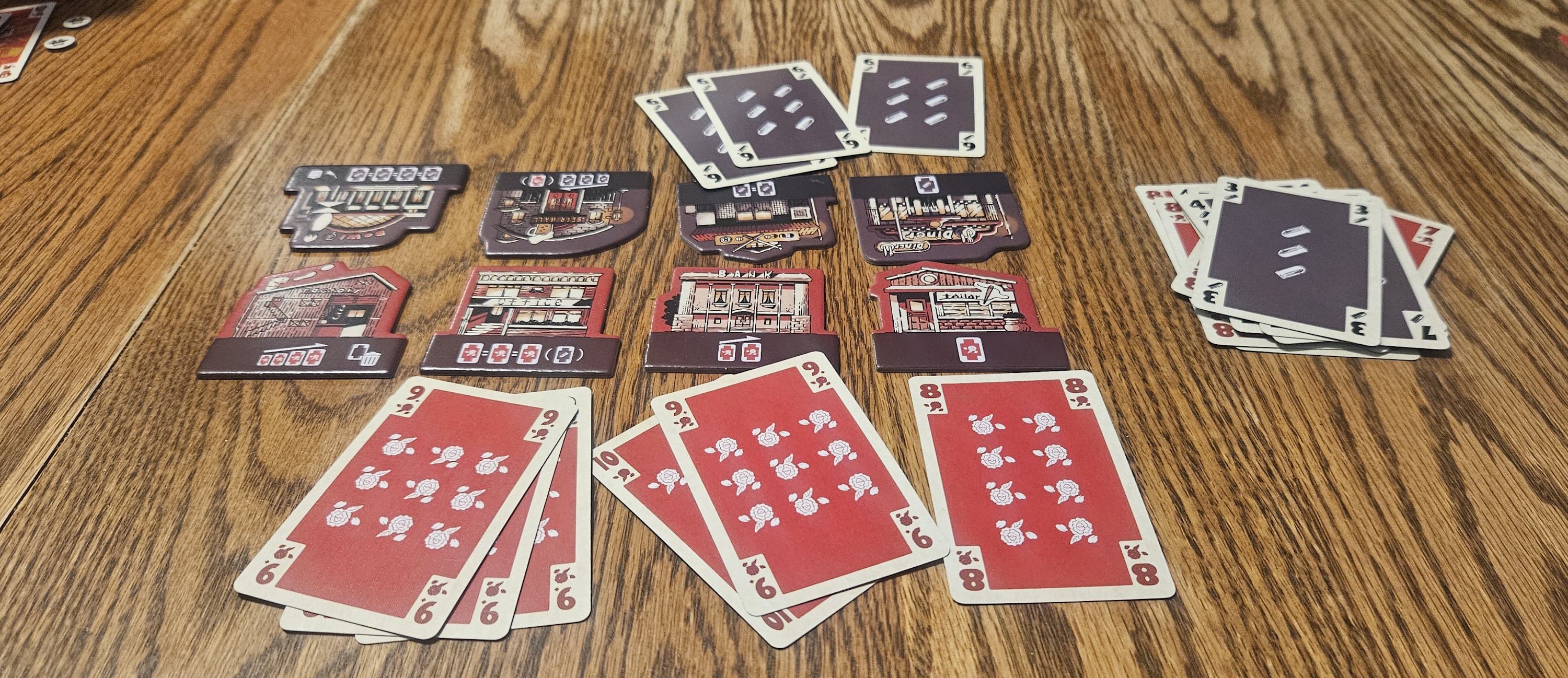
Like our previous entry, Sumidagawa Red Town is a shedding game about sinking slowest. Players, of which there are between two and five, step into the rain-slicked trenchcoats of small-town gangsters who need to subtract a column from the organization’s payroll. By which I mean they need to murder one of their companions. With the oni doing emergency response, it raises the question of who the real monsters are. Sobering, etc.
The main twist is that players aren’t one-upping each other’s melds, at least not in the traditional sense. Instead, the titular red town is presented as eight sections, each of which holds its own unique meld. There’s a space for a sequence of three brown cards, another for a triplet of red cards, two for singles of either suit, and so forth. Into these spaces you play a meld. This must start at a higher rank than whatever the previous player deployed, but otherwise you’re free to choose whether to play one card or four.
Assuming the proper space remains open, that is. And that’s the rub. After even one round, it becomes very tricky indeed to find a good fit. This marks Sumidagawa Red Town as one of those titles absolutely riddled with tactical passes. While dropping four cards on the town’s biggest space is certainly a power move, it might be better to pass and let the town clear out for the next round. Especially if you’re likely to go second.
First to lose. Might as well get some help.
It’s thrilling to follow a four-card bomb with a single, and for that reason alone Sumidagawa Red Town establishes itself as one of my favorite shedders.
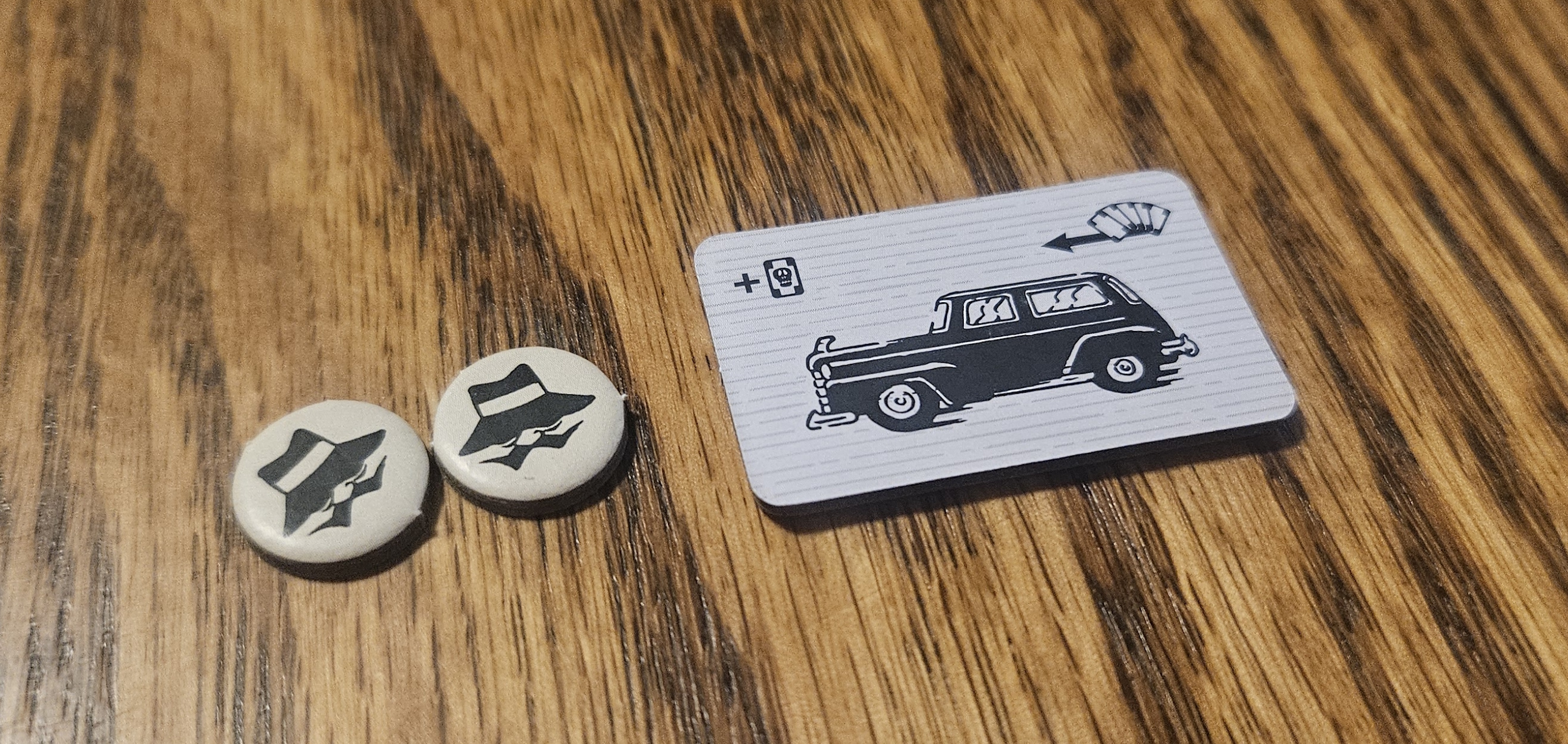
But Mashikamaru doesn’t stop there. In between rounds, players get to decide if they want to summon hitmen — in game terms, suit-coded wild cards — to beef up their hand. If only one player elects to do so, they receive broad latitude to add as many hitmen from their private pool as they like. But if multiple players choose this option, they only add one hitman, then swap hands with everyone else who made the same decision. It’s a brilliant piece of brinkmanship, potentially making or breaking your entire hand, plus offering the chance to drop a real stinker of a hand onto somebody else.
And really, that’s what this one is all about. Choosing your battles, knowing when to go all-in, and then slipping your rival a mickey rather than facing them directly. The main downside is that it’s hard to find outside of Japan and requires a translated rules sheet. Personally, I’ve found it well worth the effort. Forget it, Jake. It’s Sumidagawa Red Town.
Check out that handsome devil.
Suppose
On the more traditional end of things — although only marginally — is another New Mill import in the form of Hagizou’s Suppose. This is a trick-taker, and for once there’s an actual winner, but the game’s may-follow nature marks it as rather distinct from most of its peers.
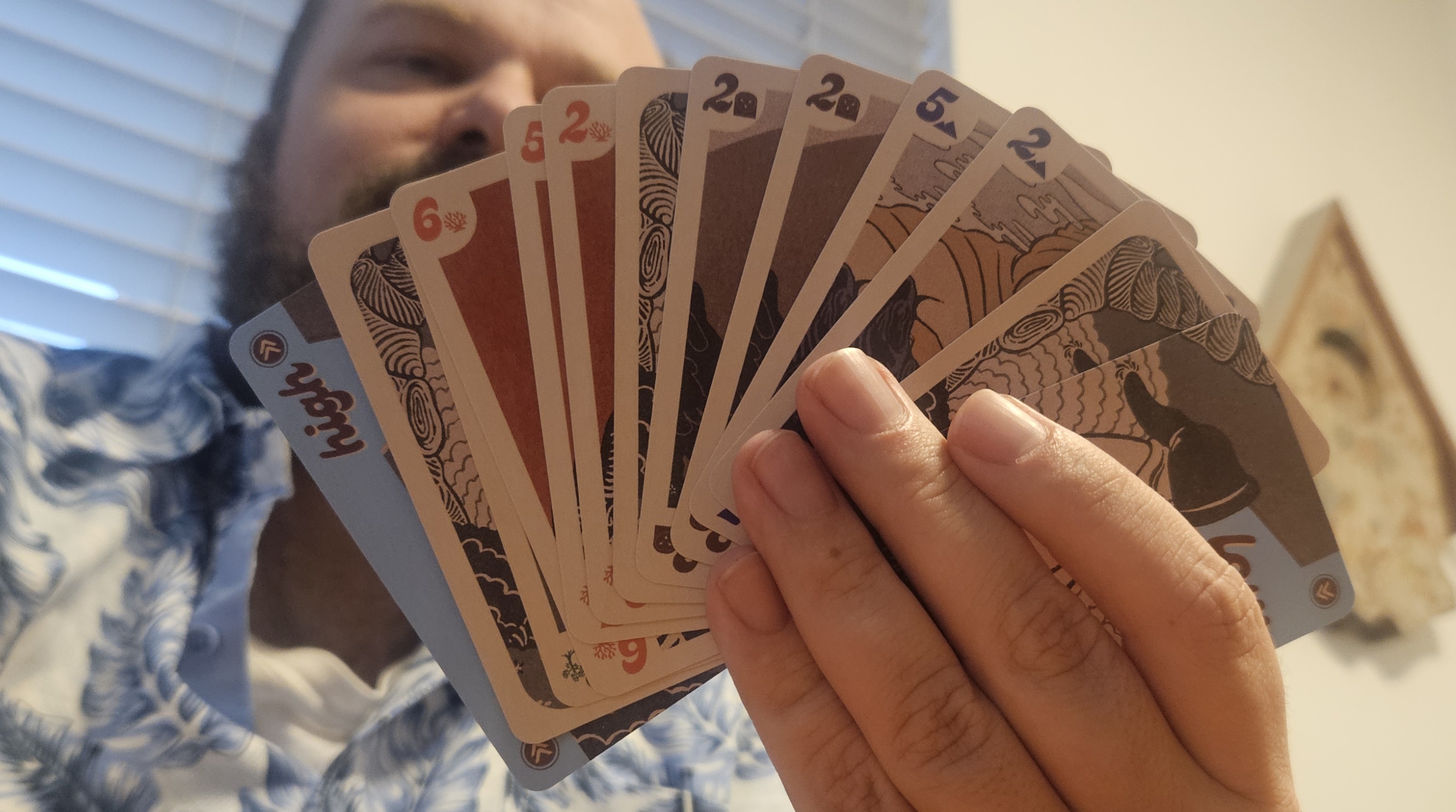
Scratch that, everything is distinct. There’s the way your hand is arranged: sorted by your neighbor and splayed so that ranks increase within suits, but with only a few cards facing you while the others peek outward to show everyone else at the table what you’re holding. In fact, much of the game revolves around your hand’s concealment. Whenever you play a card you can’t see, you’re permitted to guess its identity. There’s no penalty for guessing wrong, while a correct guess awards a “suppose” token. These translate into points at the end of the hand. Which is a good thing, given the relative scarcity of points elsewhere.
How, then, does one score? Tricks, first of all, although at one point per, these aren’t much to write home about. Your larger tally comes from another guess. When the round begins and you sort your neighbor’s hand, you wager how many tricks you think they’ll take. Contract bids are always testy, but here they’re especially tough. Since you’re never forced to follow suit, sabotaging a neighbor’s bid is especially easy. It’s possible to split your bid for fewer points, but, well, that only makes it marginally easier to hypothesize what your opponent is going to do during the round.
Making good guesses, I guess.
The outcome, then, is an extended guessing game, but one that strikes out along multiple avenues of conjecture. What you’re holding, what everybody else is holding, how your target neighbor is faring, whether this is a good time to nab another trick or yield it to someone else… it’s a lot to take in.
That said, Suppose is something special. It might even be my favorite New Mill release all year. The deck is tight enough that correct guesses are possible, but the inclusion of two copies of each card makes card-counting, while not impossible, at least not such an advantage that it changes the nature of the game entirely. The result is a game that’s as much about sabotage and the careful sniping of unexpected tricks as it is about reading everyone’s hand. Truly, this one is a gem.
You know. I suppose.
A complimentary of Suppose and Welcome Demons was provided by the publisher.
(If what I’m doing at Space-Biff! is valuable to you in some way, please consider dropping by my Patreon campaign or Ko-fi. Right now, supporters can read the next installment in my series Talking About Games, this time tackling the topic of what makes a good list! Naturally, the piece includes a list.)

 Anmelden