Cosmic Crowns Designer: Alessio Convito, Michael Hale Publisher: Sumain Games Players: 2-5 Age: 10+ Time: 30 minutes Amazon affiliate link: Played with review copy provided by publisher Play an easy-to-learn cosmic card battle. Command a mix of four … Continue reading →
Welcome to the RISK G.I. JOE: Special Missions design diary! I am Marcus E. Burchers, and I was the developer on Special Missions. Most of the design work was done by Dan Blanchett. When we set out to make a G.I. JOE-themed RISK, we wanted it to be more than just another version of RISK. We wanted it to be something special that introduced something new, while also being uniquely G.I. JOE. Starting with that theme element, it was important to look at the aspects of the IP and make sure they were core to the game. While, yes, COBRA's goal of world domination fits nicely into the mold of a RISK game, the heroic G.I. JOE side required a bit more nuance.
The important areas of the IP to cover were:
1) The heroes. The villains. The big personalities. Roadblock, Scarlett, Zartan, Destro. G.I. JOE and COBRA both have a gallery of recognizable characters at the fore of the battle. Including them in some way was going to be a core mechanic. 2) Vehicles. G.I. JOE was a toy line in the 80s built around the unique (and often ridiculous – see: Pogo Ballistic Battle Ball) vehicles. Any game that did not include them in some way wouldn't be representing the franchise properly. 3) The two factions working against each other over the course of various missions/episodes.
These pieces of the IP gave some good building blocks to differentiate the game from standard RISK. Looking at point two first, early on we knew the minis would be vehicles, and we wanted them to be more than just force multipliers. In the earliest versions of the game this broke down into four types of units on both sides: Infantry, “vehicles,” aircraft, and tanks. For G.I. JOE, this meant the VAMP Mark II, Skystriker, and Wolverine; while for COBRA, we went with the Stinger, Rattler, and H.I.S.S. Tank. Each category of vehicle was unique (though the sides were equal – Rattlers and Skystrikers were the same, for example), with different move and/or abilities in battle, while the overall concept of battles was similar to traditional RISK.
Through the course of testing, having three separate phases of battle and unique combat abilities of each type ended up being complicated and a little hard to remember. For example, the tanks always rolled three dice, even if there was only a single tank present, while aircraft rolled two, also regardless of number. We attempted to slim it down by making the VAMP and Stinger just a bonus to the Infantry, but found that still wasn't sufficient. They got changed to being simple force multipliers (1 VAMP or Stinger was 5 JOE Infantry or COBRA Trooper), before eventually being cut due to the armies on the board rarely requiring force multipliers. This allowed the overall battle structure to be simplified into just Air and Ground attacks, with rolls of 1-3 dice based on your present units, a bit closer to traditional RISK, but retaining bonuses for the aircraft and tanks to keep them feeling special. The tank's special ability to deal additional hits was the last thing to get dialed in.
Equally important to the vehicles was the “why” of this conflict, or rather the win conditions. As I mentioned, a goal of world domination was all well and good for COBRA, but it didn't make sense for G.I. JOE. The earliest concepts introduced objective points as the solution to this problem. This ended up taking the form of Missions (JOE) and Plots (COBRA). These could be many different things from winning battles, to controlling certain territories. Originally, there was the thought it could be a race to a certain number of objective points, but we quickly decided on just “get the most” by the end of the game (which let us set a number of rounds to limit the game length from dragging). More than just running missions or plotting against one another, G.I. JOE has big, grandiose storylines. In addition to small objectives, the Master Plot/Scenario was something we added that can contribute a lot of objective points to your score. It also gave a story-driven reason for the globe-spanning nature of the game. Originally, we started out with Spread of Terror, and added more throughout testing. Each one added during testing created unique experiences and decisions, building in a degree of replayability.
The vehicles and missions (in particular the Master Scenarios) made the game feel very much like G.I. JOE, but I felt that the most important element would be the first: the characters. One bit of feedback I'd heard after working on Battle for the Arctic Circle was, while it was nice that the leaders were present, fans would have liked to see them on the field of battle. I knew that's something I wanted to make sure we did here with RISK, and Dan was on the same page. As much as the original toy line was about the vehicles, the characters were just as important, leading their troops from the frontline against (or for) COBRA. Since we were using tokens instead of minis, we were able to include a wide assortment of them. Most of the heavy hitters: Duke, Scarlett, Cobra Commander, Destro, Cover Girl, etc.
Though abilities did change, for the most part, the format of the leaders stayed the same from start-to-finish. They had a static or triggered ability that you could just use whenever applicable, a bonus to a certain type of unit in battle, and an activated ability using the resource we called Command Tokens. Those first two (the static/triggered ability and the battle bonus) were going to be used the most so they needed to sell the theme of the characters. For example, Destro as a weapons profiteer lets you build and deploy your aircraft and tanks faster. Cobra Commander can retreat outside the normal timing and throw some of his units under the bus in his place. Snake Eyes improves the JOE's Recon action, and so on. The Command Token actions are more impactful (often involving a Sneak Attack) because the Command Tokens were designed as a limited resource. If you're using them on a leader's ability, you aren't using them on something else. They were also tied to each characters' theme, such as Cover Girl allowing you to bring out or move around additional Wolverines.
When the game ended up going to Kickstarter, I had the opportunity to go back and add some additional leaders that we had not originally included in the game, since we were adding a promo pack (Jinx, Shipwreck, Crimson Twins, and Zarana). This ended up bringing the total count of leaders to 16, plus Serpentor (who is only used in two of the Master Scenarios). I'm pretty happy with how they all came out, both in their gameplay and thematically as the characters they represent.
All of these aspects helped sell it as a G.I. JOE game, but we also wanted to bring something unique to RISK. The primary innovation in that regard was called the Redeployment Track (renamed during testing to the Faction Track). Instead of units being defeated and needing to be repurchased, a period of repairing and refueling felt more thematic to G.I. JOE. It also opened up action possibilities, allowing you to devote precious actions (or Command Tokens) on your turn to get things out more quickly. Some details of the Faction Track did change from the earliest versions, such as which spaces units started on, but the original version largely remained intact in the finished product. It is an integral part of the gameplay that needs to be managed, and so far as we were aware was a brand new concept for a RISK game.
Those precious actions were the crux of the gameplay, and while they weren't brand new for RISK (some variants have used action cards before), they felt like a good way to differentiate it from most entries in the series. The need to plan out your turns in advance by placing the cards allows for a bit of strategic planning (or plotting!) that felt very appropriate to the franchise. Having two options and a potential bonus action still left enough flexibility for pivoting when the unexpected happened. The biggest change overall to the action cards in the course of testing was their interaction with Command Tokens. Giving Command Tokens plenty of desirable uses was important. They were used on the action cards' bonus actions more frequently in early iterations before important bonus actions like Recon became free. To give them additional utility (particularly once there were more free bonus actions), we added the ability to spend a Command Token to perform both of your primary actions on the chosen card. This was a popular change in testing as it opened up a lot of potential big plays. Recruiting new units and immediately advancing them (which, if you recruited a new Leader, sets them up to Deploy) was a popular one, but other choices like Maneuver+Reinforce can't be understated either.
The last major unique gameplay feature I'd like to highlight was another one of the early concepts that remained largely intact throughout testing: hidden units. COBRA isn't always open and brazen with its schemes. It is often hiding in the shadows and pulling the strings (as depicted in the Infiltrate World Governments Master plot!). To represent this, COBRA can put some of their units secretly into their territories, hiding them behind their screen. This took a lot of tweaking to get right, but the result led to a distinct difference between the factions, beyond just the verbiage (plots vs. missions). Playing as COBRA feels quite different from playing as G.I. JOE. We had to make a number of different changes to the concept. The biggest one was originally, all of COBRA's units could be hidden. As you can imagine, this became frustrating to play against as G.I. JOE, and was changed to something close to the current set-up where only a certain number of territories can start hidden.
There were also a number of rule issues that had to be ironed out. Hidden units and visible units in the same territory? No. Visible units passing through a hidden territory? Turned out the easiest answer here was it was ok, if they aren't stopping. The one that's stuck with me though was that COBRA's base had to be deployed secretly. This created a lot of rules questions, till we decided that bases couldn't be deployed secretly. Ultimately, this also led to COBRA getting COBRA Island as a territory they could place for their base at the start of the game as a counterpart to the U.S.S. Flagg (which had been around since the earliest iterations of the game).
I think this all adds up to a unique RISK game, but one that is also distinctly G.I. JOE. I hope you enjoy it as much as we enjoyed making it. It is a game that plays well no matter how many friends you have, as we designed it to work with 2-, 3-, or 4-players. Fittingly for the G.I. JOE vs. COBRA theme of the IP, unlike many RISK versions, the 2-player game is where it really shines. Happy gaming!
One of my favorite things about reviewing games is finding titles where I begin to form opinions, only to pivot as I do additional plays of the same game.
That’s especially true when I hate a game after the first play.
All Aboard! (2025, Devir) is one such title. It’s a family-weight card game that accommodates 2-5 players. The rulebook is a bit too long, which I initially thought would be trouble for a game aimed at an eight-year-old and their family. I got a little worried when I got to the back of the rulebook, and found such a wide variety of card powers incorporated into the game. I knew, immediately, that the game needed but was missing one thing: a player aid. (Remember: EVERY GAME NEEDS A PLAYER AID.)
All Aboard! has many elements of a programming game. Using a hand of cards, players must place one of their animal cards onto a boat in the middle of the table. Each boat (one per player is laid out on the table) can hold three cards, with a weight limit that will be checked later. On the player’s first and third turn each round, they must play a card face-up to a boat if there is space. On their second turn, they play one of their cards…
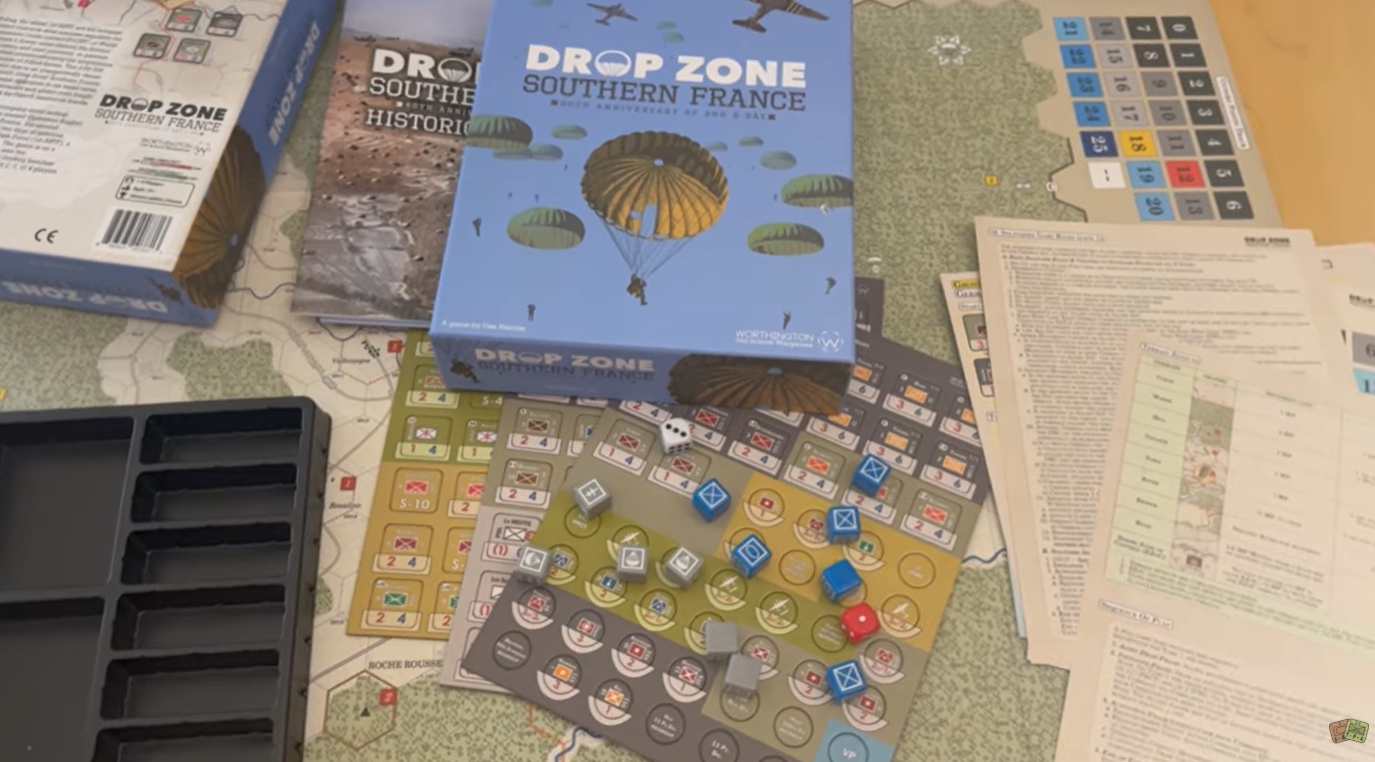
Drop Zone: Southern France is a company-level wargame covering the Allied airborne assault that spearheaded Operation Dragoon, which was the invasion of Southern France or the Second D-Day on August 15, 1944. The history behind this operation is really very interesting as early on the morning of D-Day, the allied First Airborne Task Force (1st ABTF) parachuted a dozen miles behind the Riviera landing beaches to seize key towns and road junctions, to prevent the German occupation forces from counter-attacking the amphibious landing, and to facilitate the advance of Allied forces. The 4:00 AM parachute drop was badly scattered due to an unexpected dense fog bank that blanketed the battlefield. Drop Zone: Southern France covers the first two days of this airborne operation in six game turns, when the American and British paratroopers and glider-men fought surrounded and alone, supported only by French resistance bands. This game is very good and is just a solid wargame.
Toy Battle is a two player abstract game. My first impression is
this is a game when you play with not only those tiny green toy soldiers but
also with unicorns, dinosaurs and robots, and you make proper rules for a
battle game in your living room, which you can imagine to be any world - space
station, beach front or graveyard. The game comes with many different boards,
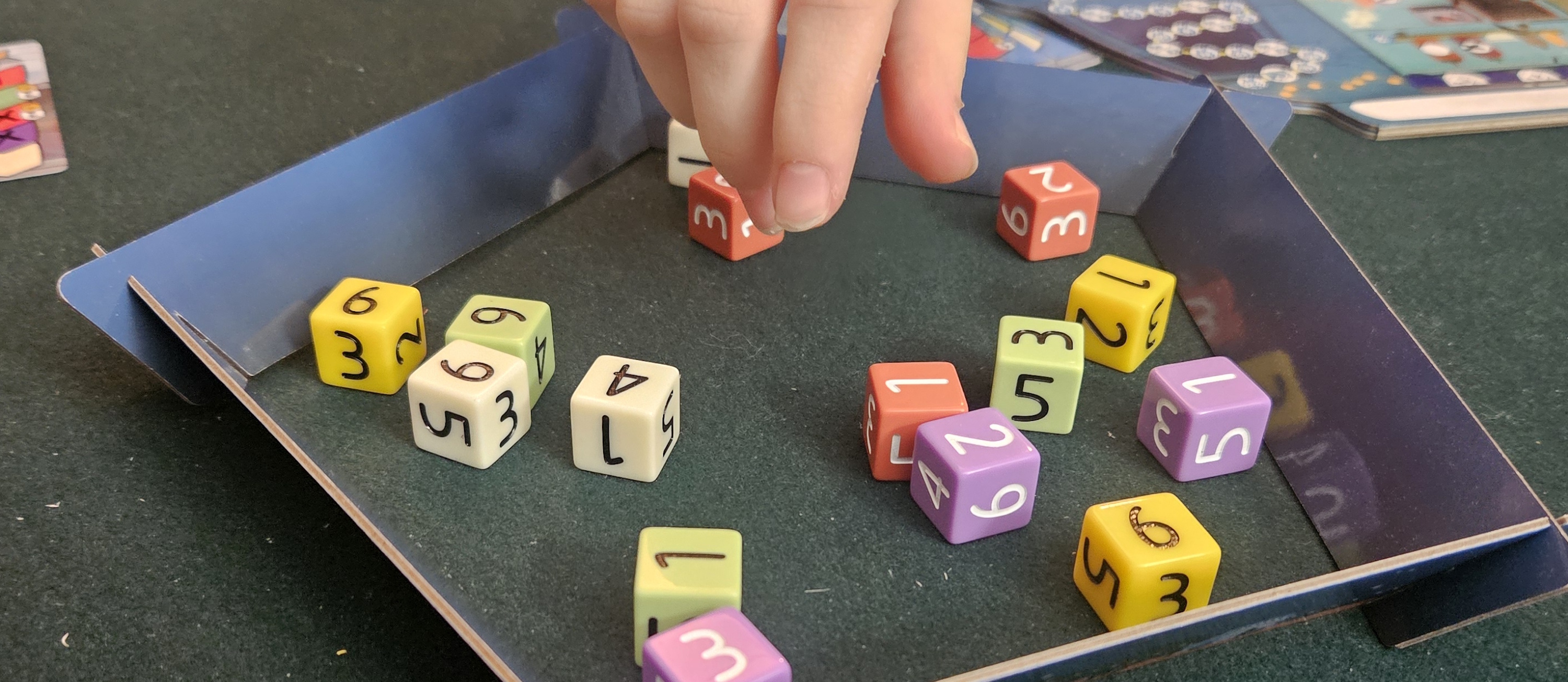
Food trucks, like roll-and-write games, went from unknowns circa 2013 to oversaturated by 2021 to fresh all over again in this the year 2026. At least that’s the hope behind Chicken Fried Dice, a chuck-and-scrawler and food truck simulator from Ashwin Kamath and Rob Newton.
How does it perform? We’ll wait in line together.
Ah, my dream job. (This is a lie.)
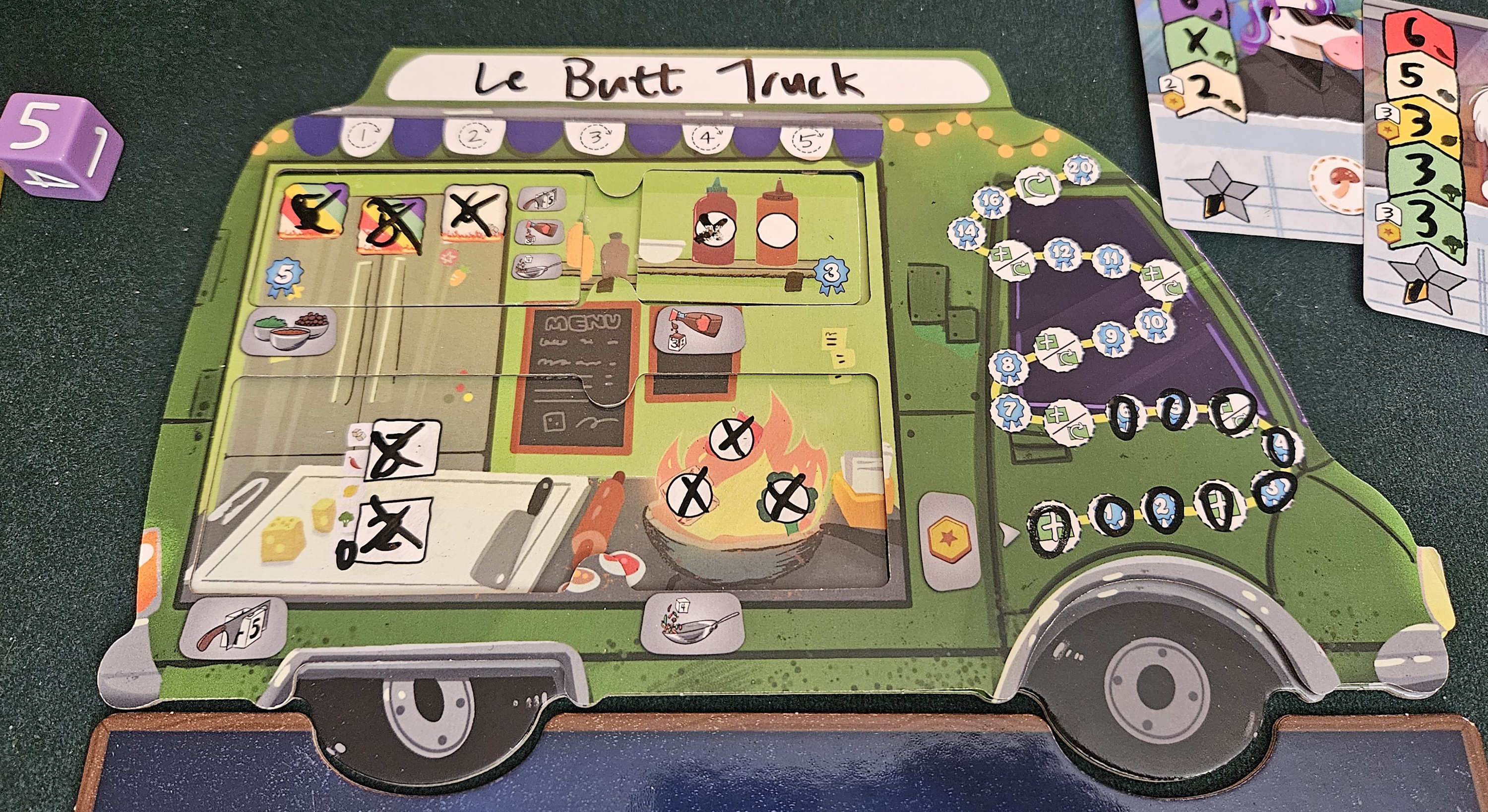
When Chicken Fried Dice opens, you have a food truck not unlike the rolling disaster from Jon Favreau’s Chef. In the language of dice, that means your options are limited, confined to a few rerolls, the ability to “chop” a die to divide a large number into two smaller numbers, and dousing an ingredient in sauce to make it seem like something else entirely. Ah, the secrets of the trade. I always suspected that if I slathered a bread crust in non-gluten barbecue sauce, I could legally label it GF.
Those tools are essential. On the surface, Chicken Fried Dice is another roll-and-write. You roll some dice, you write down their digits.
But what sets it apart from the competition is how thoroughly you can knead those rolls. For one thing, this is a simultaneous game. Everybody begins by chucking a handful of dice into a shared pot, then fishing them out one at a time. It’s possible to work fast to secure the best ingredients for yourself, but this is rarely easy. See, for instance, the aforementioned methods for altering your rolls. Getting what you want is often possible, but may require some trimming and/or a dash of luck.
I have never resented an anthropomorphic animal more.
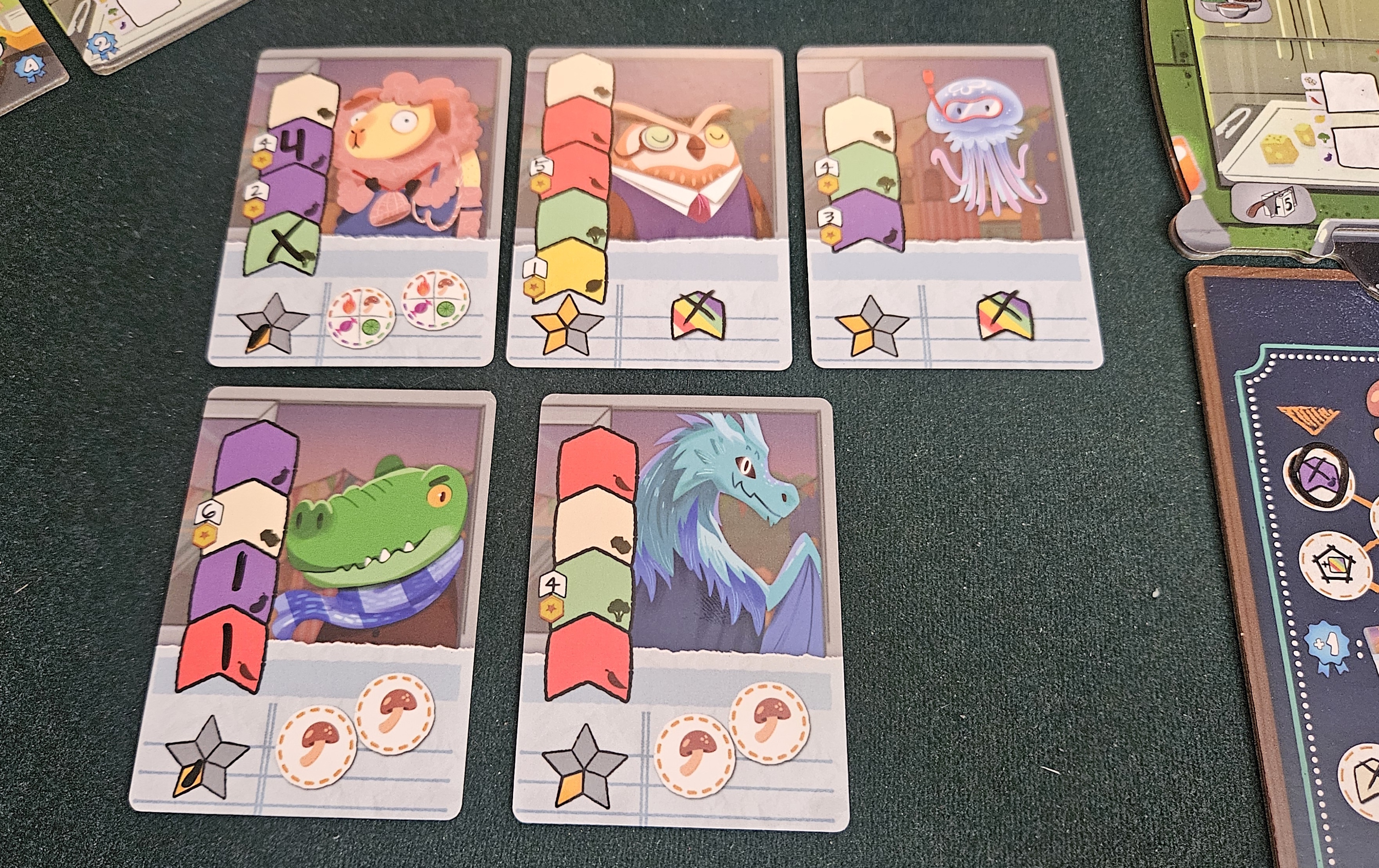
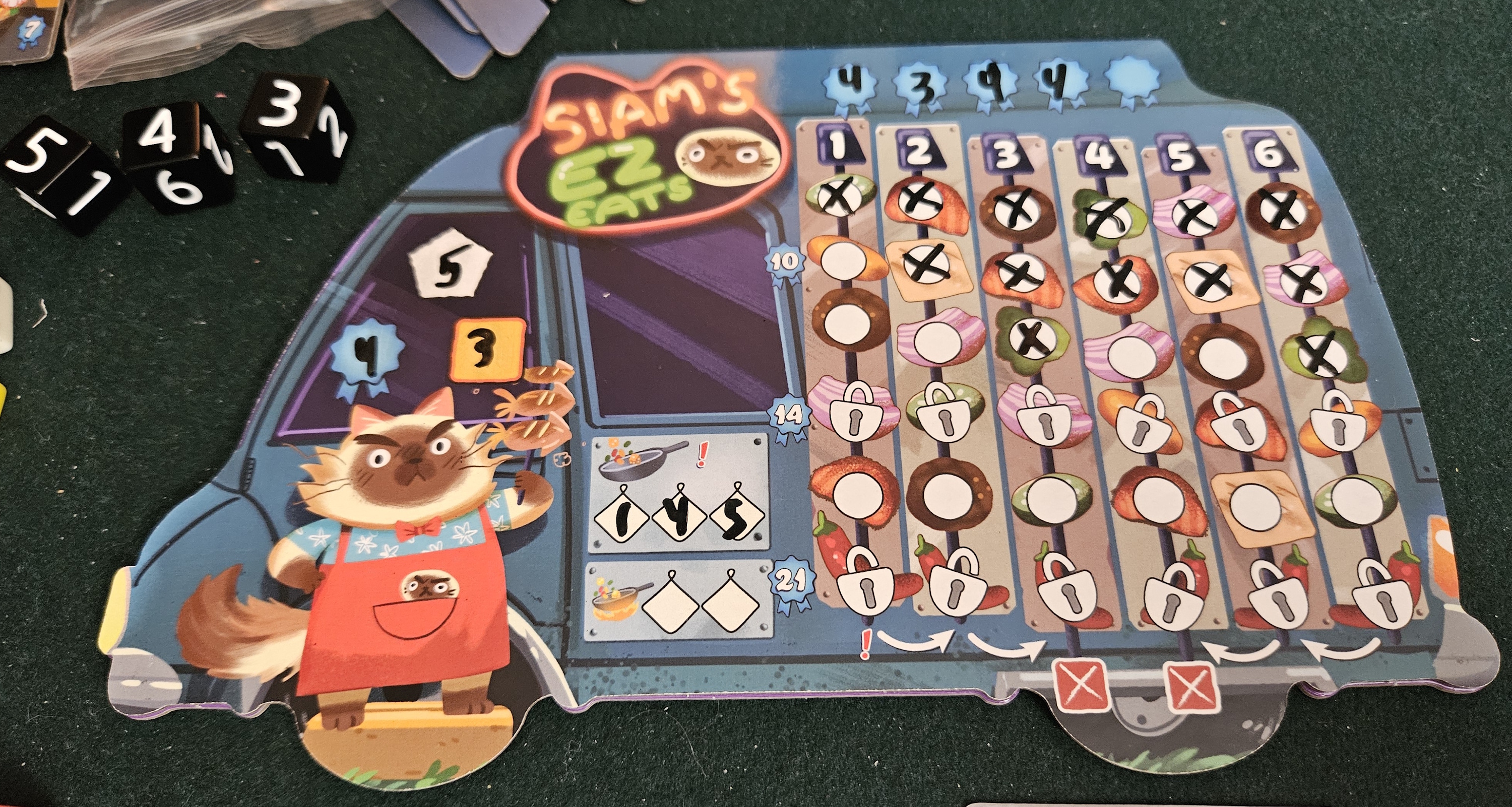
Even more persnickety, though, are the customers lined up outside your truck. I hate them. Everybody hates them. At their most basic, each customer has a list of ingredients they want in their meal. Say, peppers, broccoli, tofu, and more peppers. The first problem is that these represent portions. Each color has to match, of course — bring on the sauce — but each successive digit must also increase, or at the very least match what came before. This turns every order into its own ramen bowl of competing portions, ingredients, and custom instructions.
Naturally, providing customers with their desired meal is how you score points, but there’s so much more to it than that. Customers are willing to stick around between rounds, but the point-earning stars they’ll award your truck diminish over time. Worse, the picky jerks may leave a tip, but only if certain spaces meet their approval. Sometimes this isn’t such a bad thing, like when a number near the bottom requires a low digit. But what about when the bottom-most space demands a 4? And the order is five stonking ingredients long? And the customer doesn’t intend to stick around for more than a few minutes?
As with the best roll-and-writes, Chicken Fried Dice very quickly becomes a game about identifying and enacting one’s priorities. Not every customer will get served, so choosing the best clientele is a must. Those meager tips likely won’t let you improve every station of your food truck, so it becomes necessary to shore up your weak points. Depending on who you feed, little bonuses become available. Free ingredients, various flavors… I’m not sure what’s happening here, because it seems a lot like we’re carving haunches out of satisfied customers to feed the next group, but it does make for some nice combo-building. As your food truck transforms into the renovated sandwich wagon from the latter half of Jon Favreau’s Chef, it becomes possible to serve more and better meals.
Chuck and pluck!
The whole thing is a delight. The race to nab dice works in part because it’s harried but not overly punitive. Barring the occasional bonus, players are only allowed to grab four dice, so it’s rare to find yourself under too much pressure. Upgrading your work stations offers tangible improvements, and we have yet to play without someone showing off the name they invented for their truck. The complexity level can be adjusted, with two modes for using the bonus “flavors” provided by customers, whether a simple cluster of four tracks or a more open-ended picnic minigame. The dice-chopping has even provided a nice way to get my twelve-year-old to think about algebra beyond the confines of her math class.
Oh, and the solo mode is nice. Every truck has a reverse side that shows a different puzzle boss to beat, sort of like the uppity food critic from Jon Favreau’s Chef. I haven’t seen them all yet, in part because the prototype wasn’t content-complete, but the ones I’ve tackled have struck a nice balance between putting up a challenge and affording the player a measure of control over the rival trucker’s moves.
Is it a perfect game? Oh, I dunno. It’s a little airier than I prefer, a little more limited, especially when it comes to things like the upgrades. More often than not, it’s possible to upgrade the entire truck in those five rounds, making the game feel more boxed-in than some of my favorite exemplars of the genre. Chicken Fried Dice is a light game, but not so light that there isn’t some crunch mixed into its rice bowl.
There are five solitaire bots. Or there will be. The prototype only had a few of them.
The short version is that Chicken Fried Dice is something I would play with my sister’s family. They play plenty of games, but require a curated middle ground, neither too light nor as brain-burny as The Anarchy or Fliptown. This is that sort of game: silly but not off-putting, cutely thematic, mathy but not frustratingly so, breezy without zoning me out. To sum it up with a quote by John Leguizamo from Jon Favreau’s Chef: “I’m putting a little corn starch on my huevos, man.”
A prototype copy of Chicken Fried Dice was temporarily provided by the publisher.
(If what I’m doing at Space-Biff! is valuable to you in some way, please consider dropping by my Patreon campaign or Ko-fi. Right now, supporters can read about which films I watched in 2025, including some brief thoughts on each. That’s 44 movies! That’s a lot, unless you see, like, 45 or more movies in a year!)
More than half of board game designers responding to a Tabletop Game Designers Association member survey say they have used generative AI for some elements of their work.
About a quarter of the 171 designers who answered the TTGDA survey said they had used a genAI platform to come up with game ideas or mechanisms – while more than half indicated they were ‘strongly opposed’ to using AI in that way.
TTGDA – a professional organisation launched in 2024 to advocate for tabletop game creators in North America – asked designers about seven use cases, comprising:
● Coming up with ideas for games or mechanisms ● Writing placeholder text ● Writing text for the final version of a published game ● Editing or proofreading text ● Making placeholder art ● Making art for the final version of a published game ● Creating marketing materials for a game
The organisation said that while 28% of respondents were ‘strongly opposed’ to all seven use cases, almost a fifth were not strongly opposed to any of them, with the remaining respondents offering a mix of use cases they consider either acceptable or not.
Image credit: The Tabletop Game Designers Association
TTGDA’s report of its findings stated, “In the free-response section of the survey, multiple designers said that the process of chatting with the AI particularly helped them better articulate their own goals or ideas for a game.
“One said, ‘It’s like asking another human who may not know much about games. They know enough to at least bounce a couple ideas, which ends up with me getting to where I want to go’.
“Several designers who had tried asking generative AI platforms to come up with its own ideas described the material they got from the AI with terms such as ‘derivative’ or ‘slop’.
“One designer said that when they tried to prompt an AI for ideas, the AI recommended inappropriate mechanisms from mass market games, like ‘lose a turn’.
“Some said that a fraction of the output from their prompts would contain nuggets of useful ideas or angles that were worth considering.”
The results for use of AI art in final products were much more clear cut, with roughly four out of five respondents ‘strongly opposed’, and only two respondents out of the 171 saying they either regularly or occasionally generate art with AI that they plan to keep in a final game.
Many more designers (30%) were accepting of using AI to generate placeholder art for their designs – but 39% of respondents were ‘strongly opposed’ to that use.
TTGDA’s report cited one respondent as saying, “Publishers want pretty prototypes and the AI art makes me better able to illustrate the narrative direction and make play less boring than it would be with black and white words or “close enough” illustrations. Some of the games I am working on have no illustrations in the real world that anyone has done and if I wanted those I would have to pay artists which I cannot afford to do.”
Image credit: The Tabletop Game Designers Association
But it added that other designers said AI assistants had failed to create usable placeholder art in response to their prompts, with several saying that after trying AI-generated placeholder art they had returned to clipart and other online searches.
TTGDA said that when asked how they feel about publishers using AI for placeholder art, 40% of respondents said they would be ok with it, but 29% would like to contractually prohibit it and another 31% said they ‘don’t like it, but wouldn’t really fight it’.
The report added, “Of all the AI uses that the survey asked about, editing and proofreading had the lowest number of ‘strongly opposed’ responses, at 35% for personal use and 30% for publisher use.
“About a quarter of designers (28%) are using AI to edit things they’ve written at least occasionally.
“Some designers gave examples of AI not working well as an editor for their games, saying it ‘made the rulebook worse’, or ‘creates more problems than it solves’.
“The problems they described included hallucinations and inappropriate tone. Designers also raised concerns that publishers might use AI for proofreading without a final human check, leaving the game vulnerable to errors.”
TTGDA also noted that more than 80% of respondents did not want publishers to use AI to generate marketing materials for their games, with multiple designers commenting that they were turned off by the use of AI in content creation around games, and will not work with influencers who use genAI in their workflow.
The report noted that of issues raised by designers when asked about their concerns around AI, “the most commonly voiced concern was that current generative AI tools are based on plagiarism, because they were trained on art and written materials without the creators’ consent.”
It noted, “Many said things like, ‘All uses of stolen material are problematic’. Multiple designers also mentioned that they want contract language that will prohibit a publisher from allowing AIs to be further trained on their game materials.
“The next most common concern was AI’s high environmental cost. A ChatGPT request uses ten times more electricity than a typical Google search (2.0Wh vs 0.3Wh). Other impacts include the use of rare earth elements, mercury, and lead in data center equipment; and the use of large amounts of water for cooling.
“Some designers worry that AI could flood the market with bad games. One designer thought it would be easy for unethical publishers to quickly create ‘clones that are slightly different’ and crowd the games they are copying out of the market.
“Another designer worried that ‘AI is great at making things that look like games for crowd funding campaigns, but without actual rules that make sense’.
“The general sentiment from these and other designers was the worry that in a market where it is already difficult for a game to stand out, these practices will only make it harder.”
Recent Repercussions
TTGDA’s report comes just over a month after Ryan Dancey, a more than 30-year veteran of the tabletop gaming industry, lost his COO job at publisher Alderac Entertainment Group after saying AI could generate game ideas as good as his company’s titles Tiny Towns and Cubitos.
Wingspan designer Elizabeth Hargrave, the co-founder of TTGDA, dismissed Dancey’s suggestion when speaking to BoardGameWire the day after his departure from AEG.
She said at the time, “I absolutely do not think AI could be prompted to come up with even the basic idea for those games, let alone a fully fleshed out ruleset for them. For fun, I’ve prompted several different options for ideas for Wingspan cards and not one of them has given me an actionable idea.
“I had a friend who ran a rulebook through AI for proofreading and it hallucinated that people needed to shout ‘bingo’. Apparently that’s AI’s conception of board games right now.”
She told BoardGameWire at the time that the TTGDA board had been discussing the use of AI in board game design, adding that it was “a conversation we need to have with our membership”.
Wingspan designer and TTGDA co-founder Elizabeth Hargrave
She said, “We’re working on a model contract to offer to our members right now, and that will offer a clause that designers can request that will require publishers not to use AI in their final product. A lot of contracts ask us to certify that a board game design is our own, and not plagiarized.
“It’s my opinion that using AI in a final product goes against that, because it’s using a machine that’s built entirely on plagiarism.”
Hargrave added last month, “I do see people using AI for things like generating a bunch of placeholder names in a prototype. They’re often clunky options but they do the job when you know everything will change 50 times before you’re done anyway. I’m not aware of anyone who has successfully actually gotten good, original ideas for mechanisms from AI.
“What I wish we were talking about is how AI could be built to help designers run models of their games repeatedly to catch weird edge cases or broken strategies. I wish someone would build that tool instead of the language models that just focus on advanced auto-complete.
“This would never replace actual playtesting with humans for psychology and actual fun, but it might save me some repetitions.”
The TTGDA survey noted that one of the most common additional uses mentioned was as a source for help with probability, mathematics, and thinking about balance.
It said, “In some cases, designers are having the AI write spreadsheet formulas that they then use to do calculations in the spreadsheet. In others, they are simply asking the AI to do calculations.
“However, nearly as many designers said they had quite poor results with asking LLMs to do math, reporting errors and hallucinations. For example, one designer who used ChatGPT to calculate detailed probabilities (e.g. how often a certain set of cards might appear in a starting hand) said when they checked the results, they were wrong ‘roughly 1/4th of the time’. Another called ChatGPT ‘surprisingly bad at maths’.”
Editor’s note: GAMA is one of the sponsors of the BoardGameWire newsletter
Hobby games trade organisation GAMA has revealed the winning candidates in its latest board of directors election, with the organisation’s current president and secretary both retaining their board seats.
President Nicole Brady, who runs review site SAHM Reviews, was re-elected to the board by GAMA’s media and events member group, while treasurer Tiffany Reid from Southern Hobby Distribution won re-election from the wholesale group.
Current GAMA secretary Jamie Mathy – who runs game store Red Racoon Games – was re-elected by the organisation’s ‘Team Retail’ group alongside Red Claw Gaming’s Lea-Anne Welter, while David Wheeler from Dragon’s Lair and Boyd Stephenson from Game Kastle were also voted in as retailer representatives.
One of those four will be selected by Team Retail to fill a retailer seat on the GAMA board of directors, with all successful board candidates working for a two-year term.
The other newly elected members of the GAMA board are Michael Maggiotto Jr, who was selected by GAMA’s production members, Heather O’Neill from 9th Level Games representing publishers, and LegalWATCH’s Eartha Johnson from the creator membership group.
The GAMA Board of Directors is comprised of twelve individuals elected to represent the six voting membership groups, with half of the cohort up for election each year.
That board in turn elects GAMA’s four officers – president, vice-president, treasurer and secretary – each year.
Current GAMA president Brady has been in her current officer role since May 2024, having previously been treasurer of the organisation from the end of 2022.
The array of plans spread across the next decade include boosting its membership within both hobby games and the mass market, expanding itself into a global organisation, shifting its finances away from the current heavy reliance on the annual GAMA Expo and Origins shows, and leading the conversation on sustainability within the industry.
Advocacy and brand protection is also one of its near-term priorities – underscored by the organisation’s recent intensive lobbying and awareness efforts around the impact on the industry of US tariffs.
Those efforts included multiple trips to Washington DC to lobby politicians, conducting dozens of media interviews to highlight the devastating impact of tariffs on the hobby, and supporting two lawsuits disputing Trump’s power to set the tariffs without agreement from the US Congress.
Brady told BoardGameWire earlier last year that the move was an attempt to get the organisation away from “playing whack-a-mole” on important issues rather than managing them in a long-term strategy.
GAMA is currently working to secure a permanent replacement for its previous executive director John Stacy, who left the association last October just after the 10-year plan had been revealed.
More than 3,820 attendees showed up to this year’s event in Louisville, Kentucky, up almost 12% on last year’s previous record of 3,425 – which had already left the show pressed for space across the exhibition hall and its extensive programme of seminars.
Neuroshima Hex has known three previous editions, each ultimately widening the pool of available factions and improving on what was already a very good design. Now, on the occasion of its 20th anniversary, publisher Portal Games has rebooted the line again. Blessed are we who live to see such times. Finally, you can own a base set of Neuroshima Hex with a box that doesn’t look like absolute butt. Aesthetics was never the point of all this, but goodness.
Inside that box, you’ll find four factions’ worth of tiles with which to play this marvelous game. Do the tiles look better? Listen, there are limits to what you can manage when designing a game that has to convey a large amount of information in a small amount of space. Do the tiles look good? No. Do they look bad? No! They’re a miracle of legibility. Don’t worry about it.
The basic idea is pretty straightforward: on your turn, you draw up to three tiles, discard one, and then play, discard, or save the others. Your tiles are a mix of Troops that attack and hinder your opponent, Modules that provide buffs and debuffs to the pieces on the board, and Actions, which can do all variety of things depending on the faction. As the game progresses, the board gets…
So who is Paul? No, I’m not referring to Paul Dennen (Dune Imperium/Uprising), Paul Salomon (Honey Buzz), or Paul Peterson (Smash Up), though I’m sure I could find gaming disagreements with each of these fine designers. Rather, I am referring to my wonderful husband Paul, the man who introduced me to the strategy board gaming […]
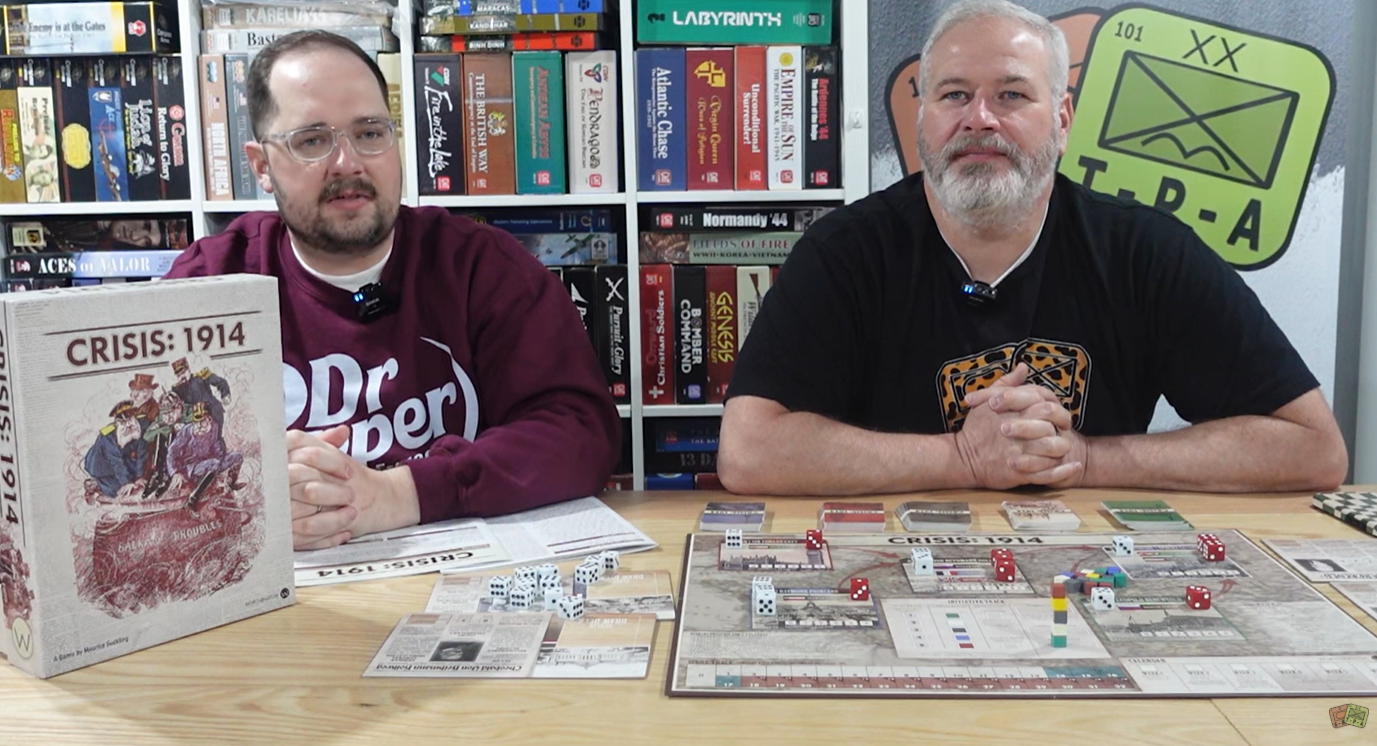
Crisis: 1914 is a game of international brinkmanship – if you back down too soon, you lose. If you back down too late you lose. But you have hawks and doves in your cabinet and in your government, and out of these conflicting views you must somehow formulate a coherent response to the crisis to win the day and prevent war.
There are 3 interrelated concepts at the heart of Crisis: 1914: Prestige, Tension, and Diplomatic Pressure (DP). Diplomatic Pressure (DP) is how you score Prestige. Tension is how you lose. Every card has a DP value. You apply DP by playing cards. The player with the most Diplomatic Pressure at the end of a turn earns Prestige points. There are other ways of scoring Prestige points too, but this is the most important one. Prestige is how you win. The player with the most Prestige at the end of the game is the winner.
While this game is not necessarily a wargame, but more of a war themed Euro game with a bit of negotiation and tension as you build your tableau of cards, we had a great time with it and really feel that the game is a bit under the radar of folks and should be one of those games that is played at conventions as it seats up to 5 players and is really quite good.
Deckers Designer: Richard Wilkins Publisher: Deep Print / Pegasus Players: 1-4 Age: 12+ Time: 60-90 mins Played with review copy provided by publisher In Deckers, you will hack into a network of five servers, either solo or co-operatively … Continue reading →
Fearless Designer: Friedemann Friese Publisher: 2F Players: 3-5 Age: 10+ Time: 30 minutes Played with review copy provided by publisher In Fearless, you walk through a gloomy forest and try to stay on the safe path. If you … Continue reading →
“The largest U.S. carriers seek to capture corporate travelers and affluent leisure passengers who are willing to pay more for comfort. Increasingly, airlines are betting on selling fewer seats at higher yields rather than packing planes more densely with standard economy passengers.” —NTD
Here’s how one might rewrite this quote if it were about tabletop crowdfunding:
“Tabletop publishers seek to capture affluent gamers and those who want to focus on fewer, deluxified games. Increasingly, publishers are betting on selling expensive games (lower total quantities) at higher yields rather than lower-priced games (higher total quantities) at lower margins.”
Two recent examples are Brass Pittsburgh and Slay the Spire: Downfall. Both campaigns are impeccably crafted and highly successful: Even just a few days in, they’ve raised close to $7 million combined.
If I wanted to pledge to the highest core levels for both campaigns ($425 for the game and expansion for Slay the Spire and $350 for all three Brass games), I would spend close to $800. Out of around 31,000 backers between the two campaigns, close to 3,000 people have already backed at those levels (around 10%). These top pledges have raised around $1 million out of the combined $7 million total (around 14%).
Clearly there is an audience for these top-tier reward levels, particularly for highly acclaimed games that have earned their value (Brass Birmingham is ranked #1 on BoardGameGeek; Slay the Spire is #18). Perhaps at least part of this stems from hobby gamers with bursting collections who want to focus on fewer, fancier games.
Unlike airlines, however, there isn’t limited space on a crowdfunding campaign–these publishers have found a way to serve more budget-conscious backers too. Roxley included a $79 reward for Brass Pittsburgh (821 backers) and Contention Games included an $84 reward (2325 backers) for the Downfall expansion.
Another example is Garden Club, which has a $39 level and a $69 level on Kickstarter now. Chris Couch Games can serve both budget-conscious backers who just want the game and wealthier backers who want everything.
Here’s my hope: Selling some premium, high-margin products can help publishers maintain lower prices for the masses.
What do you think? How do you feel as a consumer right now, and what would you like publishers to learn from these campaigns? Is there such thing as an economy that serves all types of people?
I recently had the chance to pull in a review copy of the Stonemaier title Origin Story, a game I first learned about during SPIEL Essen 2025. As a bonus, Stonemaier threw in a free copy of a small card game called Smitten 2, based on the game Smitten, a title I was not aware of. When Smitten 2 arrived, I broke it out and did a couple solo plays.
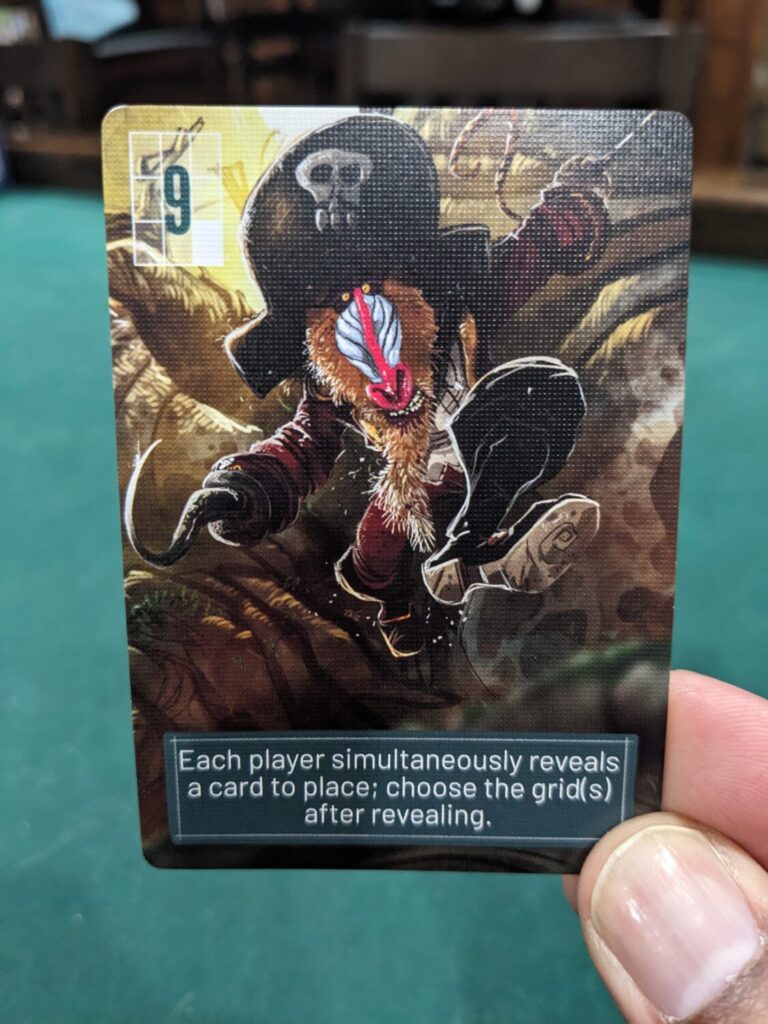
The setup is quick, and the goal is simple: using a small hand of cards, players must build two matching 3x3 grids of cards, with the win condition tied to placing 17 of the 18 cards in the deck. During setup, all cards are shuffled with one being left out, unseen…in solo, the player manipulates two hands and has to play each tableau off each other, using the card powers aligned with each card and its specific playable position in the grid. (The 5 card can only be played in the middle of each tableau, while the 1 card can only be played in the upper left corner, for example.)
Across those first two plays, I didn’t win, but some interesting choices were on offer. Each card’s placement rules make for a fun puzzle, and I came close…
One thing a board game will never formally have, is an overture. The three hour and 47-minute epic Lawrence of Arabia begins with a four-minute piece that encompasses a medley of themes pertaining to the film’s atmosphere, setting, and characters. It sets the stage for the powerful cinema you are about to experience. The closest…
Wood is a common resource input in board games, whether it’s for building fences, buildings, or any of a number of wooden trinkets. There are even some games with wood-centric theming, like Woodcraft and Lignum, which delve into some detail about processing and manipulating wood to attain final products. These games typically treat wood as […]
La Der des Ders – The War to End War from Hexasim is a 1-2 player slightly abstracted strategic level look at World War I. The game allows the players to relive the First World War at a strategic level, with each player controlling one of the 2 sides either the Entente, consisting of France, England, Russia, Serbia and other minor nations or the Central Powers including Germany, Austria-Hungary, the Ottoman Empire and a few minors. La Der des Ders can also be played solo, with a dedicated solitaire bot called “Athena” who utilizes special Cornflower Cards to make decisions about what technologies to invest in, where to undertake offensives and how to utilize limited resources and reinforcements. Each turn, players gain an amount of Resource Points dependent on what nations are in the war, which they can allocate to different areas to guide their overall strategy. Victory is achieved by launching offensives that drain the morale of enemy nations, forcing them out of the conflict through collapse.
In Action Point 1, we looked at the Game Board, discussing the Collapse Tracks, Trade Tracks, Russian Revolution Track and Naval Control Table and other various on-board tables and offensive spaces. In Action Point 2, we covered the Technology Phase and the Technology Tree and Technological Improvement Boards. In Action Point 3, we examined the Event Cards and how they inject the historical narrative into the gameplay and also alter the conditions of the game. In this Action Point, we will walk through an example of an Offensive and take a look at the combat procedure.
Offensives
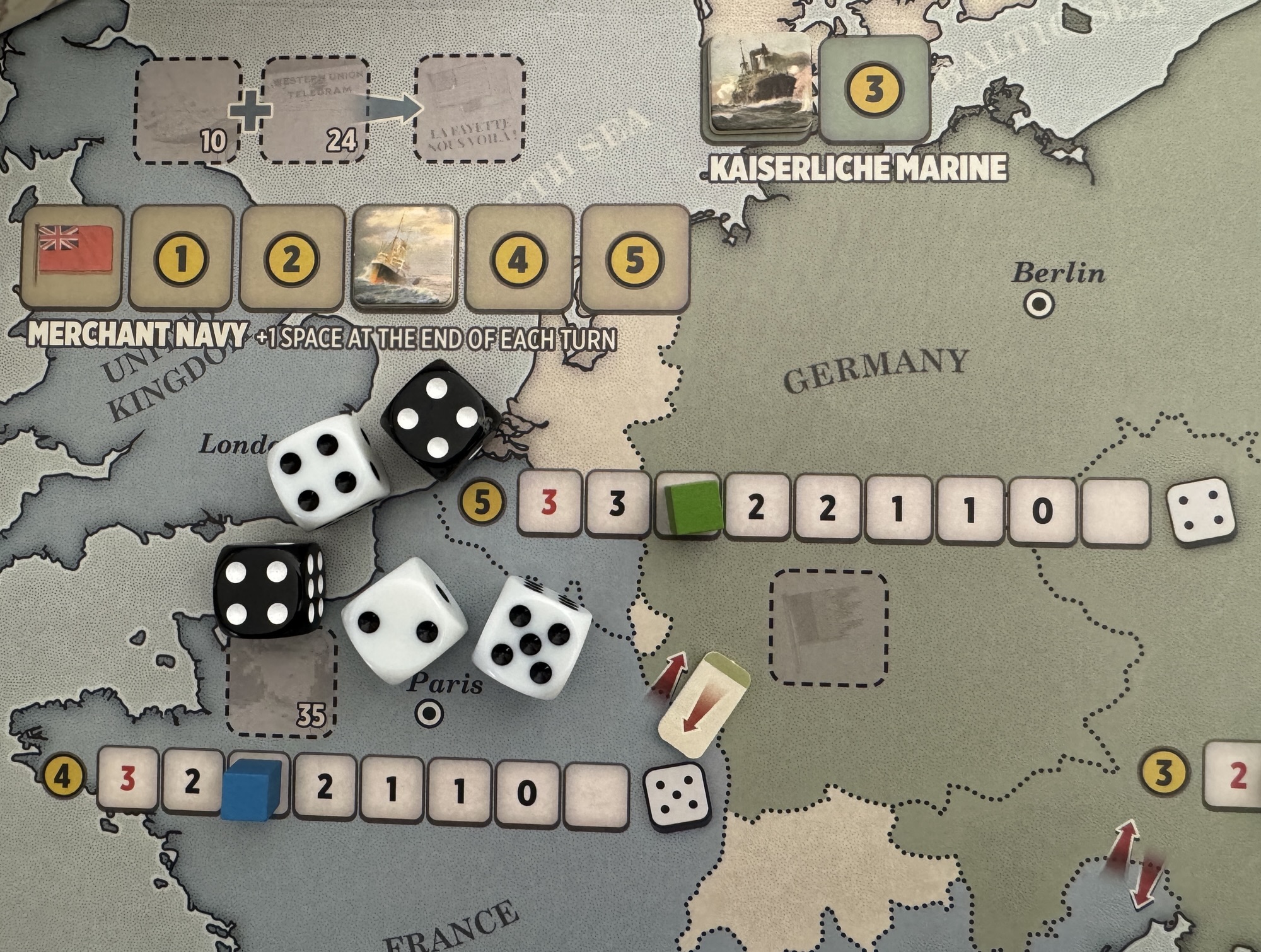
As we discussed in Action Point 1, shown on the board are the Offensive Arrows that will remind the players about what Offensives they can undertake, meaning what Sectors may be attacked, and what Sectors have already taken their one Offensive against that adjacent Sector per turn. These are identified by red arrows connecting adjacent Sectors and will be covered up by the appropriate Offensive Marker when undertaken. In the below picture, we will take a look at Serbia as an example. You can see that Serbia is surrounded by Central Power countries including Austria-Hungary and Bulgaria (Neutral at the start of the war). They also have a few of their Allied nations adjacent including Romania (Neutral at the start of the war) and Greece (Neutral at the start of the war). From each of the adjacent Sectors there are 2 Offensive Arrows represented meaning that this Sector can both be attacked and can attack the adjacent Sector.
The process of taking Offensives is really pretty simple as players take turns to activate one of their sectors that has not yet been activated this turn. The sector chosen will then be activated and must launch an Offensive against an adjacent enemy sector. There is a cost to the launching of Offensives though as the player will have to pay the appropriate cost by first choosing the size of their Offensive, which in game turns means the number of dice they will pay to roll in the Offensive. The size of the Offensive must be at least 1 and can be up to the current Operational Value of the attacking sector. The player launching the offensive then spends as many Resource Points as the size of the Offensive.
For example, The Entente player decides to attack Austria-Hungary from Russia. If Russia’s Operational Value is currently 2, the size of the Offensive must be between 1 and 2. If the Entente player chooses a size 2 Offensive they will have to spend 2 Resource Points. This would allow Russia to roll 2D6 along with any black dice for their Artillery Technology.
Once both of the players have activated a sector, each player may then continue with Offensives by choosing to activate a new sector until no new sectors can be activated. Each of the sectors can make but a single Offensive per turn. I really like this restriction as it reflects the logistical and material difficulties in planning, funding and executing these large Offensives. A player may always decide to pass rather than activate a sector but once you do pass the Resource Spending phase ends for them. The other player can continue to activate the sectors they want and are able to until they decide to pass on their turn or are no longer able to activate a sector.
Now let’s cover the mechanics of how the Offensive resolves with dice. The player will roll as many white dice as the size of the Offensive they funded. These dice are called Attack Dice and it is important to remember that some technologies allow modifiers to be added to Attack Dice or will grant additional dice to be rolled, usually in the form of Artillery Dice. Each level of Attack Technology implemented in the attacking sector grants a DRM (Die Roll Modifier) of +1 to each Attack Die roll. Each level of Defense Technology implemented in the targeted sector inflicts a Die Roll Modifier of -1 to each Attack Die roll. Each level of Artillery Technology implemented in the attacking sector allows the Attacker to roll 1 black Artillery Die. These dice are not subject to the bonuses/penalties conferred by either Attack or Defense Technologies. Also, keep in mind that the number of Artillery dice cannot exceed the size of the Offensive. This is a mistake that I have made many times in my plays of the game and wish there was a better way to remember this. In the case of Artillery Dice, if the player has developed the Aviation Technology, the attacker may re-roll as many Artillery Dice that failed to inflict a loss as the difference between their Aviation Level and the defender’s Aviation Level.
Each result greater than or equal to the attacking player’s Attack Value inflicts one loss on the defender. The Attack Value of a sector is represented by the die depicted at the end of the Collapse Track. Germany has the best value at a 4 while all other countries, with the exception of Greece who is a 6, have a 5. For each loss suffered in an Offensive, the defender moves the cube on the attacked sector’s Collapse Track by one space to the right. If a cube needs to be moved forward on the Collapse Track, but is already on the right-most space and can’t be moved forward, that country immediately surrenders. The Offensives process is really very simple, and it just fits with the chosen format and scale of the game. Nice and easy but fun with lots of dice rolling.
Counter Attacks
One more thing that I need to share about these Offensives is the concept of a Counter Attack. If at least one of the Attack Dice rolled comes up a natural 1, the attacker will suffer one loss and the cube in their own sector is moved forward one space on the Collapse Track. This is not one loss per 1 result but only 1 such loss with an Offensive. With my luck, I could lose my whole army and have to surrender! Also, remember that Artillery Dice are not affected by the Counter Attack rule.
The process of Offensives in La Der des Ders is very simple and straightforward but works very well in the framework of the game to create many tough choices about how to spend your limited Resource Points and who to attack and from where. As the Central Powers, attacking with Germany each turn makes the most sense as they have the best odds of scoring hits and causing losses to France and Russia but they will have to gauge where they stand and who else might be closer to Collapse and surrender. As the Entente, France and Russia should put a heavy focus on Germany and Austria-Hungary and force the Central Powers player to have to replace losses rather than spending on Technology upgrades and replacements. Continually attacking them will lead to results over the course of the game.
In Action Point 5, we will simply review the Victory Conditions.

 Anmelden

/pic8967258.jpg)