I love a different style and focus of wargame. A game that takes a look at an important but somewhat obscure or rarely addressed historical topic, such as espionage or intelligence, and creates a gaming experience tailored around the events to highlight and evoke the difficulties and tension that would have been present. In January 2026, GMT Games announced such a game in Checkpoint Charlie, which is a solo or cooperative game focused on SIS espionage missions in Berlin in the 1960’s designed by Russell Brown. We have posted an interview with Russel and it was very well received and he has now agreed to create a series of History Behind the Cards to highlight the events of the 1960’s Cold War struggle in West Germany but also to share aspects about the game play and how it models the history.
*Note: The cards highlighted in this series and their event text, as well as any pictures used showing any of the various components, are still in the design and development process and as such event effects and text might still change prior to final development and publication.Also the art and layout of the cards are only for playtest purposes at this point and the game will enter the art department as it nears publication.
History Behind the Cards – Checkpoint Charlie from GMT Games – Card #7: Ich Bin Ein Berliner
In the summer of 1963, the Berlin Wall had been in place for almost two years, the reality of a city split between east and west, between Soviet and Western influence, was impossible to deny. Politicians, military leaders, and the people living day-to-day in Berlin continued to argue about the lack of forceful response from the west, particularly the Americans, when the wall went up. Other than a modest buildup of US forces within and around the city, there had been precious little action to re-assure the people of Berlin that the west hadn’t abandoned them.
In June of that year, President Kennedy hoped to change that perception by personally visiting this western city in the center of Soviet-controlled East Germany. He received the reception and the reaction he was hoping for, driving through the city to crowds of cheering West Berliners, and giving his famous speech on the steps of the Rathhaus Shöneberg to a gathered crowd of over one hundred thousand. In a calculated risk, he referred to the city as West Berlin, officially acknowledging the split created by the wall. He introduced his “Fellow Americans” and at the mention of General Clay (Card #6), the crowd interrupted the speech for some heartfelt cheering for the man that saved their city during the Berlin Airlift. Kennedy’s famous line of solidarity, “Ich bin ein Berliner,” — I am a Berliner — came at the end of the speech and may have been a bit off-script.
So how would Kennedy’s speech affect a mission in Checkpoint Charlie? I’m going to answer that with a story.
I spend a lot of time at a wonderful coffee shop near my home, so much time that my iPhone has labeled the location as my “work.” The baristas there know me, and one day one of them asked me what I was working on. “Right now,” I said, I’m working on a board game about spies in Berlin in the 60’s.”
He laughed. “Have you met John?” He pointed to an older customer at one of the tables. “He was a spy in Berlin in the 60’s.” It was true.
Since then, I’ve had many conversations with John about his time in Berlin. He was Army Intelligence, keeping track of what was going on in the city. He was there when the wall went up. He interviewed the refugees that, for a time, still managed to find a way into West Berlin. And he was there during Kennedy’s speech.
I asked him about the speech and said that in the game it resulted in crowds (a Demonstrations marker) near Tempelhof. He shook his head. “Everywhere. Crowds everywhere. All over the city.”
I’m sorry to report that I’ve restrained the effects of this card and the speech for gameplay reasons, but I haven’t ignored John in every case. The Daily Military Train event (Card #9) exists solely because of his stories, and after removing the Refugees event (Card #13) from the game because I assumed the flow of refugees disappeared after the wall went up, I put it back in because John assured me that they were still coming – he had met and interviewed hundreds of them.
In the next article in this series, we will take a look at the ongoing propaganda efforts from both sides of the Berlin Wall with Loudspeaker Wars.
In my opinion, this game looks extremely interesting and I am very much excited to learn more about it. I am appreciative to Russell and his efforts to bring us these cards and to write these entries to share with our readers. I am also very glad that this topic is being covered in a game and look forward to playing this one day soon.
HISPANIA from Draco Ideas is a slick little small box game with a big punch that sees the player controlling the Roman Empire and attempting to subjugate and put down resistance in the provinces of Hispania from 198 to 18BC. The game is extremely flexible and may be played cooperatively by 2-3 players, competitively with 4 players or as a solo game. The game is somewhat of a resource management game as the players must use their limited funds in the form of Denarii wisely to attack and put down revolts springing up around the country as local armies rally support for the resistance to Roman rule.
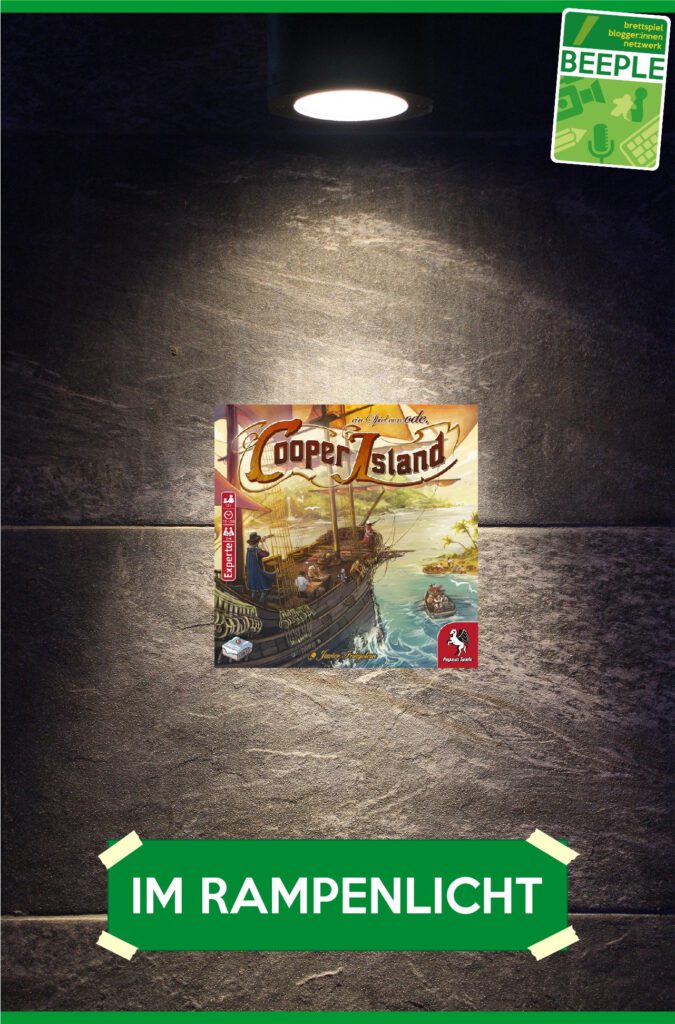
Cooper Island | Andreas Odendahl (Ode)| 60 – 120 Minuten | 2 – 4 Personen |Frosted Games/Pegasus Spiele
In Cooper Island versuchen die Spielenden eine Insel fernab ihrer alten Heimat zu kolonisieren und nehmen sich dabei jeweils einen Teil vor und erkunden diesen. Ausgelegte Landschaftsplättchen bieten dabei Ressourcen, die wiederum zur Ernährung der Arbeiter*innen, dem Handel oder dem Errichten von Gebäuden genutzt werden. Auf den Inseln müssen noch Barrieren entfernt, Statuen errichtet und Schiffe beliefert werden. Mit zwei Schiffen, die jeweils in entgegengesetzte Richtungen fahren, werden die Punkte markiert. Werden dabei kleinere Inseln überschritten, gibt es weitere Vorteile. Nach fünf Runden endet das Spiel und wer mit seinen Schiffen am weitesten fortgeschritten ist, gewinnt das Spiel. Soviel zur Setting und einigen Mechaniken, doch kann Cooper Island aus dem Jahr 2019 immer noch Spielende an den Tisch locken? Diese Frage beantworten einige Mitglieder des Beeple Netzwerk für sich im aktuellen Rampenlicht.
Fabian (Bretter Late Than Never) Cooper, der Hund des Kapitäns, entdeckt nach langen Wochen auf See als erster wieder Land: eine unerforschte Insel, die umgehend nach ihrem Entdecker zu „Cooper Island“ benannt wird. Leider lässt die aktuelle Mission keine ausführliche Erkundung zu und man muss unverrichteter Dinge weitersegeln. Doch einige Jahre später sind wir inklusive Cooper zurück und das Abenteuer beginnt. Von diesem schönen Fluff-Text, der von Spielererfinder Odes realem und kürzlich leider verstorbenen tierischen Freund Cooper inspiriert wurde (der es übrigens auch auf eine Promo-Karte in Underwater Cities geschafft hat), bleibt in diesem knallharten, eigentlich ziemlich abstrakten Euro-Game am Ende nicht viel übrig. Trotzdem startet bei mir jede Partie mit dem Vorlesen dieser Einleitung, weil sie mir so gut gefällt. A propos lesen: Die Spielanleitung ist mit Abstand die beste, die ich bisher gelesen habe. Das Spiel selbst lässt dann Euro-Gamer-Herzen höher schlagen: Doppelhex-Teilchen in die Breite und (!) in die Höhe puzzeln, Ressourcen managen, Aufträge erfüllen, Fähigkeiten freischalten und ein paar der hart zu erarbeitenden Punkte verdienen, um zu gewinnen – ganz wunderbar. Ich freue mich schon auf meinen nächsten Trip auf die Insel. Bis dahin: Gute Reise, Cooper!
Mathias (Cliquenabend) Ich weiß noch, dass ich meine erste Partie von Cooper Island auf meinem ersten Beeple Wochenende gespielt und das Spiel von Matthias Nagy erklärt bekommen habe (übrigens ein hervorragender Erklärer). Irgendwann – so nach etwa der Hälfte des Spiels – habe ich ihn gefragt, was denn ein gutes Ergebnis für die Erstpartie wäre. Ich meine mich zu erinnern, dass er „so um die 15 Punkte“ gesagt hat – ich hatte zu diesem Zeitpunkt eher so um die fünf und am Ende auch die genannte Punktzahl nicht erreicht. Dennoch hat es mich nicht davon abgehalten weitere Partien zu spielen und es wird endlich mal wieder Zeit Cooper Island auf den Tisch zu bringen.
Sebastian (Solo Manolo) Ich kenne kein anderes Euro-Spiel, bei dem man ähnlich hart dafür arbeiten muss, ähnliche wenige Siegpunkte zu erreichen. Und ich meine das als Kompliment. Darüber hinaus ist der Solomodus (vor allem für die „damalige“ Zeit) sehr innovativ und gut durchdacht. Ich hatte das Spiel zwar schon länger nicht mehr auf dem Tisch, aber es wird trotzdem permanenter Teil meiner Sammlung bleiben und ich freue mich, bald mal wieder gegen den Solo-Bot Cooper zu verlieren.
Dirk (Würfelmagier) So wenig Sieg Punkte für so viel Arbeit. So lässt sich vielleicht das Spielgefühl von Cooper Island zusammenfassen. Selten habe ich so lange für so wenige Punkte gespielt und trotzdem das Gefühl gehabt, so viel zu gestalten. Das Spiel kommt mit relativ eingängigem Regelwerk daher, gerade zu viert ist aber wirklich viel los und einiges zu bedenken. Für mich eines der Euro Spiele, das mich sehr positiv überrascht hat. Schon länger nicht mehr gespielt. Wird mal wieder Zeit. Außerdem gab es einen coolen Solomechanismus.
Wenn Ihr Euch nun etwas intensiver mit Cooper Island befassen wollt, dann schaut Euch doch mal die folgenden verlinkten Artikel an:
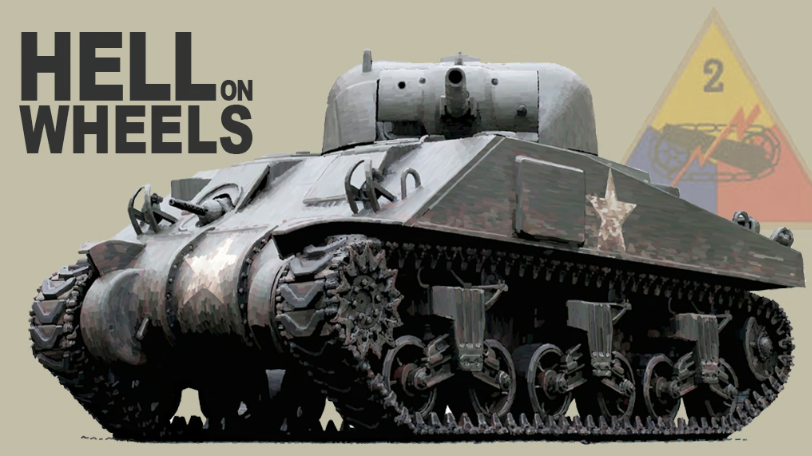
Over the past several years, we have done interviews with Matt White, publicized his games and played a few of them as well and he always has something cooking. Recently, I came across his newest offering on Kickstarter called Spearhead: Hell on Wheels – Tank Battles in Normandy. This game is a solitaire or 2-player print and play tactical game that allows players to take command of US tanks in German occupied France. I reached out to Matt and as always he was more than willing to share on the design.
Grant: What is your new project on Kickstarter called Spearhead: Hell on Wheels?
Matt: This is a brand new solitaire and co-op World War II print and play tactical wargame. In this game you are in command of a group of 3 US tanks in brutal and intense tank combat in enemy-occupied territory.
The players must lead their tanks, through unforgiving terrain, finding and then engaging the enemy in fierce fire fights. They must defeat any encountered enemy tanks and forces, whilst meeting the objectives as they move across the map.
Grant: What was your inspiration for the name? What do you want it to convey about the design?
Matt: My biggest inspiration was reading accounts from various US armored units. Keeping your tank crews alive and positioning your tanks whilst dealing with unexpected enemy positions is key to survival and success and truly seemed to be “Hell on Wheels”.
Grant: What about the battles during Normandy inspired you to make this game?
Matt: Basically I wanted to focus on and show the difficulties with the survivability of the armored crews and their vehicles during the D-Day invasion and the days after as the Allies broke out into France. That was the biggest point I wanted to make.
An American M10 Tank Destroyer.
Grant: What research did you do on the subject?
Matt: As with all my games, in trying to get the historical aspects correct both in the mechanics of the game as well as the look and feel of the art, I basically try to do lots and lots of reading! I read as much as I can on the subject, from various authors and viewpoints, and when I am not spending time playing games or making them, I basically read! This knowledge is part of the inspiration for my games as I draw upon things that I have rad and then translate them to the page.
Grant: As a tactical level wargame, what are the most important areas of focus for the design?
Matt: The positioning of your tanks in relation to where the enemy could be, and not only the tank hull but also the turret. Keeping your tank crews alive and positioning your tanks whilst dealing with unexpected enemy positions is key to survival and success. This game is point-to-point based where you must place your tank orientation and can aim the turret separately. Being able to keep the front of the hull forward towards the enemy tanks whilst hopefully being able to fire on their flank is critical.
Grant: How does the game differ in its 2 modes including solitaire and cooperative?
Matt: In the game you are in command of a number of US tanks – these can be split between players if you wish. Its quite unlike a number of solitaire WW2 tank games where you are in command of one tank. In this game you have a number which makes it really suitable for co-op play.
Grant: I know the design is a Print and Play offering. Why do you feel this model is best suited for your designs?
Matt: I like making print and play games as it forces you, as the designer, to make every component count and making the most of the physical space on a sheet of paper. I find that challenge one of the most interesting parts of the creative process. I also like the print and play model because it is very affordable for all parties, both me and the players, and allows the game to be available to anyone at anytime and on their terms.
Grant: I see that the board has a point-to-point movement layout. Why was this your chosen method of conveying information about the battlefield?
Matt: As much as I love traditional hex based games (and continue to play a lot of them), I also like point-to-point too. I like the way you can combine not only line of sight but also information about the environment in the game.
Grant: What is the meaning of the different symbols that appear on the board?
Matt: Movement is from point-to-point and where you move from a Position Point (the rectangle points) to an Observation Point (the circle points) where you will test for observation and perform the majority of combat. If combat is successful then you will be able to move to the next position point.
As you can see from the map there are multiple paths from Position Points to Observation Points and then onto other Position Points. Plus there are a variety of pros and cons to various paths to allow for a variety of terrain types and observation challenges. These paths are illustrated on the map in the shape of lines which are known as Movement & Observation Lines.
For each Movement & Observation Line there is a symbol at one end. The most common symbol is a black arrow, which denotes normal terrain and normal observation. There are other symbols which mean more difficult terrain or harder observation. These are:
Black Arrow – Normal Movement – Normal Observation
White Arrow – Normal Movement – Hard Observation
White Square – No Movement – Normal Observation
Black Circle – Difficult Movement – Normal Observation
White Circle – Difficult Movement – Hard Observation
Grant: What difficult decisions do players have to make in the game?
Matt: You will have to deal with enemies and you discover them but you don’t know where they are and so you must make some decisions based on information you do and don’t have. The player will also have several simultaneous objectives that must be obtained and will have to contend with both the German forces defending them that you know about and those that you do not.
“Lady luck” plays a part, as with any military operation, but your decisions and tactics are crucial, especially in how you position your tanks on the map when facing enemies as you cautiously roll through the environment.
A German Panther.
Grant: What dangers and threats meet the players on the battlefield?
Matt: There are a variety of dangers but not only the enemy forces as tank obstacles and mines can be a serious threat, combined with the environment itself.
Grant: What objectives does the player have to accomplish?
Matt: For each game session the objectives are randomly generated with Objective markers provided. All you have to do is safely get your tanks to those Objective markers, all the whilst dealing with the enemy!
Grant: How are hidden German units handled?
Matt: Every time you move your tanks you will need to check what they can observe and into which other points then can see. At this time you will roll on a couple of charts to see if you can see enemy units. However, just because you can’t see any doesn’t mean that they are not there.
Grant: What is the makeup of the Tank Cards? What information do they contain?
Matt: Using the Tank Cards you record the status of the major components of your tank such as the engine and tracks plus any gun jams. You also record the status of the various tank crew, all of which can have an impact in the game. Counters are provided to record all the status of both the tank and the crew.
Grant: What different types of tanks are included on both sides?
Matt: There are variety of tanks in the game with each tank having its own unique gameplay – for example the M10 tank destroyer has no hull machine gun (but does have a better anti-tank weapon). There are also Stuart M5A1 Tanks, StuG’s, Panzer IV’s, and many more.
Grant: How does combat work?
Matt: In the combat phase, you determine the order in which both your tanks and the enemy tanks fire. This is crucial to how the combat plays out as in real life WW2 tank combat, the results will favor the tank crew who can fire first on their target.
You will roll a few dice, depending on your tank positioning and other factors, and retain the highest number. You can increase your number of rolled dice by certain criteria – the more dice you roll the better! For example, if your tank turret is facing the enemy, the terrain type, the health of both the tank and the crew and if the enemy have been observed all are major factors. The enemy tanks will be doing the same, so factors such as successful enemy observation in the previous phase are crucial!
Grant: What is the goal of the game? How is victory obtained?
Matt: Your goal is to reach your various objectives on the map, whilst trying to keep your tanks and crew alive.
For each game session the objectives are randomly generated with Objective markers provided. All you have to do is safely get your tanks to those Objective markers, all whilst dealing with the enemy!
Grant: What are you most pleased about with the design?
Matt: I am most pleased to be coming to the end of the design and getting it ready for people to play! Finishing or coming close to it, is the hardest part of the development. In terms of the actual game, I really enjoy being able to get a game that has depth and is engaging that can be printed on just a few sheets of paper.
Grant: What kind of an experience does the game create?
Matt: I hope that the game creates a thoughtful representation of actual tank combat and how decisive it can be!
But that is not all. The game is modular and has several options included. As well as the map shown above, the game will also come complete with another map, additional counters and a rulebook which allows for you to create your own unique scenarios.
This map has the same points but where you will roll on tables to determine the various Movement & Observation Lines from each Position Point and Observation Point. There will be counters that you can place between the Position and Observation Points as an aid. You will be using various charts and tables to procedurally generate your map as you play, determining those gameplay elements as you progress. This type of game session will present you with a new challenge as you really have to deal with more unknown elements as you progress your tanks across the map.
Grant: What other designs are you currently working on?
Matt: I have a few games I am working on – currently working on something involving WW2 Mosquito aircraft!
For a YouTube video overview of the game, please check out Matt’s overview video here:
Thanks to Matt for his time in answering our questions and for his great little print and play games. I love it when one of these new games is brought to light as I get to oodle over the art and see what new things he has created!
Aufnahme: 09.02.2026 Sendedatum: 15.03.2026 Themen 00:00:00 Intro & Begrüßung 00:00:57 Zur Person 00:01:46 Was sind Wargames? 00:07:56 Jans Weg ins Wargaming 00:13:40 Vorteile von Spielen gegenüber anderen Medien 00:24:43 Selbstständigkeit […]
Von Klassiker bis Kracher – eure Zeitreise durch Metal & Hardrock: 110 Songs aus 60 Jahren Metal-Geschichte findet ihr in dem Spiel.
Die Anleitung und alle Spielmaterialien könnt ihr hier runterladen, ausdrucken und dann sind sie schnell ausgeschnitten und zusammengeklebt.
Wer Spiele wie Anno Domini oder Hitster kennt, wird die grundlegenden Spielideen wiedererkennen, die abgewandelt und weiterentwickelt wurde:
Es gibt vier Spielvarianten, die zunehmend herausfordernd sind: Level 1 ist für Einsteiger mit einem sehr glückslastigen Spiel. Level 4 ist für echte Metalheads und setzt voraus, dass ihr euch an ein paar Band-, Song- und Albennamen erinnert
Riffstar ist ein Prototyp – alles noch beta, also nicht perfekt. Falls ihr Fehler findet oder irgendwas nicht gut funktioniert, bin ich euch dankbar für eine Rückmeldung – und gerne auch, wenn ihr es richtig gut findet
Hinweis: Die Songkarten und Jokerkarten müssen ausgeschnitten und dann Vorderseite (QR-Code bzw. Joker) und Rückseite (Songtitelinfos bzw. Jahrzehnt) zusammengeklebt werden.

 Anmelden