Lese-Ansicht

My Favorite Wargame Cards – A Look at Individual Cards from My Favorite Games – Card #66: Harwood’s Intuition from The Hunt from Salt & Pepper Games

With this My Favorite Wargame Cards Series, I hope to take a look at a specific card from the various wargames that I have played and share how it is used in the game. I am not a strategist and frankly I am not that good at games but I do understand how things should work and be used in games. With that being said, here is the next entry in this series.

Card #66: Harwood’s Intuition from The Hunt from Salt & Pepper Games

I have played several hidden movement games over the years and enjoyed them all. Some of these titles have included wargames such as They Come Unseen from Osprey GamesSniper Elite: The Board Game from Rebellion Unplugged and Bomber Command from GMT Games as well as a few board games including Hunt for the Ring from Ares Games. The concept of moving cautiously, attempting to evade pursuers, all while trying to locate and acquire or destroy objectives makes for a very interesting gaming experience. These situations can make for some really tense games that cause your head to ache and your wits to be tested. But they rely on some bluffing as well. Trying to force your opponent to anticipate where they think you should be and then trying not to be there. A really great mechanic in board games but not always easy to pull off and make for a very playable and interesting game. In 2022, we played a new design from Matthias Cramer and Engin Kunter that took this hidden movement concept and put it into a historically based game about the struggle over control of the South Atlantic between the British Royal Navy and the German Kriegsmarine during the early years of World War II called The Hunt from Salt & Pepper Games.

The Hunt is a Card Driven Game where the German player has to attempt to stay hidden while trying to sink merchant shipping as the Royal Navy hunts for them throughout the South Atlantic. The players each have asymmetric actions to use to accomplish their missions and each has a tough time doing what they have to do. But, if they manage their cards wisely, using them as effectively as possible, they can successfully either evade their pursuer or catch their prey.

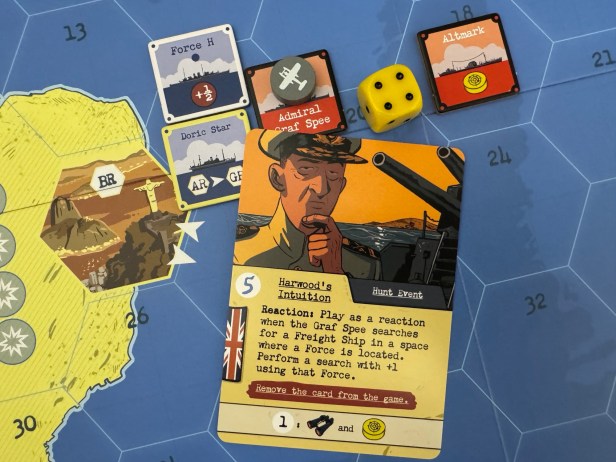
In today’s post, we will take a look at the very useful British card Harwood’s Intuition. Harwood’s Intuition is a 5 Ops card, which makes it a very important card in the British deck as it allows for the taking of 2-3 actions in a single turn, but for which there is an even more important use as an ambush by playing it as a Reaction to a German action. If the German player ever searches for a Freight Ship in a space where there is a British Task Force, and Harwood’s Intuition is played as a reaction, the British will get a free Search action with a +1 DRM to the roll. Normally, a Search requires a 5+ on a d6 to be successful, but with this bonus +1 that will mean success on a 4+ which is a 50/50 proposition. And remember, the point of the game for the British is to find and sink the Graf Spee at the Battle of the River Plate. Such as tasty surprise card for the British! I know that when I play as the Germans, I have to always keep in the back of my mind that this card exists and that if there is a Force present, I have a risk of being ambushed. This is one of the elements that makes this game so good.
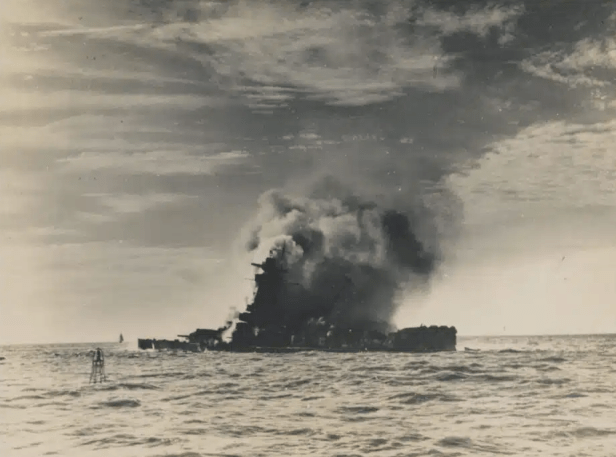
The Battle of the River Plate was fought in the South Atlantic on December 13, 1939 and was officially the first British naval battle of World War II. In the months leading up to this infamous date, due to several successful sinkings of merchant shipping by the Graf Spee, the Royal Navy was ordered by Admiral Sir Henry Harwood Harwood to keep observation between Medanos and Cape San Antonio located off the coast of Argentina south of the River Plate estuary. In the lead up to the climactic final battle, following various raider-warning radio messages from the merchantman Doric Star, which was sunk by Admiral Graf Spee off South Africa, Harwood suspected that the raider would try to strike next at the merchant shipping off the River Plate estuary between Uruguay and Argentina. He ordered his squadron to steam toward the position 32° south, 47° west. Harwood chose that position, according to his dispatch, because it was the most congested part of the shipping routes in the South Atlantic and therefore the point at which a raider could do the most damage to enemy shipping. A Norwegian freighter saw Admiral Graf Spee practicing the use of her searchlights and radioed that her course was toward South America; the three available cruisers of Force G rendezvoused off the estuary on December 12th and conducted maneuvers.

Though generally considered a river, the River Plate has been considered by some geographers as a large bay or a marginal sea of the South Atlantic. Principally this is due to the River Plates enormous width, if we are considering it a river the widest in the world, with a maximum width of about 140 miles. Acting as the marine border between Argentina and Uruguay, the River Plate was a main artery of maritime trade and a gateway into the interior of the South American continent.

It was here that Harwood predicted the German raider would strike and his assumption made sense. The River Plate’s Estuary acted as a natural bottleneck for ships with perilous tides and sandbanks additionally hampering any ability for a British Merchant vessel to escape the guns of a German raider. So it was near the Estuary of the River Plate that Harwood’s H.M.S Exeter, Ajax and Achilles would make their stand. With their force concentrated here, on December 12th preparations were made and tactics drawn up in anticipation for an arriving adversary and to spring the trap and catch the elusive Admiral Graf Spee off-guard and send her to the bottom.
Here also is a link to our full video review of the game:

We also published an interview on the blog with the designers Matthias Cramer and Engin Kunter and you can read that at the following link: https://theplayersaid.com/2023/03/13/interview-with-matthias-cramer-and-engin-kunter-designers-of-the-hunt-from-salt-pepper-games-coming-to-gamefound-march-15th/

In the next entry in this series, we will take a look at Frederick Douglas from Votes for Women from Fort Circle Games.

-Grant

  •  

My Favorite Wargame Cards – A Look at Individual Cards from My Favorite Games – Card #65: Georgi Zhukov from Churchill: Big 3 Struggle for Peace from GMT Games

With this My Favorite Wargame Cards Series, I hope to take a look at a specific card from the various wargames that I have played and share how it is used in the game. I am not a strategist and frankly I am not that good at games but I do understand how things should work and be used in games. With that being said, here is the next entry in this series.

#65: Georgi Zhukov from Churchill: Big 3 Struggle for Peace from GMT Games

The players in Churchill: Big Three Struggle for Peace take on the roles of Churchill, Roosevelt, or Stalin during World War II as they maneuver against each other over the course of 10 Conferences that determine who will lead the Allied forces, where those military forces will be deployed, and how the Axis will be defeated. The player whose forces collectively have greater control over the surrendered Axis powers will win the peace and the game.

Churchill is not necessarily a wargame, but more of a political conflict of cooperation and competition. Over the course of the 10 historical conferences from 1943 till the end of the war this mechanic and much of the design should not be taken literally. Before and after each conference small groups of advisors and senior officials moved between the Allied capitals making the deals that drove the post war peace. These advisors and senior officials are represented by cards with an assigned numeric value that represents an amount of influence. Each conference sees one of a group of issues nominated for inclusion in the conference for debating and discussion. The issues categories include: Theater leadership changes, directed offensives, production priorities, clandestine operations, political activity, and strategic warfare (A-bomb). Each of the historical conference cards independently puts some number of issues, such as directed offensives or production priorities, metaphorically on the table, while the players nominate an additional 7 issues. The best part of the design is the conference table and stress and tension that comes from fighting over each and every issue. No one issue is a game breaker and no one issue will outright win the peace for you. But, each issue is key to the game as they unfold and change the landscape across which you are battling. Not landscape of terrain and defenses, but pit falls, traps and dead ends.

As I have mentioned, the Staff Cards are the engine for the game and the players must utilize their asymmetric abilities to the best of their ability in order to come out on top of the heap at the end of the game. These Staff Cards represent real period personalities of advisors, political officers and generals, who had the ear of the leaders and could go about working behind the scenes to move an issue into the limelight. Each player will utilize these cards to win those issues and each card provides either a bonus for a specific attribute or, in rare occasions, a negative modifier.

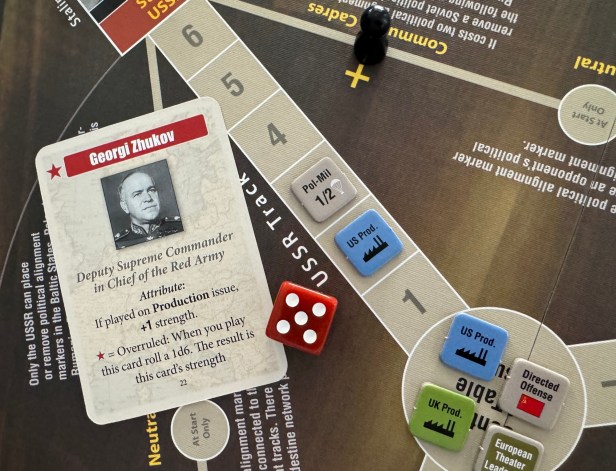
Today, we will take a look at one of my favorite type of cards from the game in the Chief of Staff Cards and specifically look at the Soviet Chief of Staff Georgi Zhukov who was the Deputy Supreme Commander in Chief of the Red Army. Each of the Chief of Staff Cards have a random numeric value in addition to a bonus for a certain attribute. The random numeric value is determined from rolling a 6 sided die and then using that number as the card’s base value. In Zhukov’s case, he is good with Production Issues and will grant a +1 strength toward moving these issues on the conference table. I like to think that this random determination of the Chief of Staff Card’s strength represents the internal power struggle with each of the nations leaders and those closest to them. In the case of Soviet Premier Stalin and his relationship with Zhukov they maintained a tense, professional, and ultimately strained relationship defined by mutual need during World War II, followed by postwar jealousy and suspicion. While Stalin relied on Zhukov as his top military commander to secure victory on the battlefield, he grew paranoid of the Marshal’s immense popularity and influence, leading to his ultimate demotion. And this random nature of the card’s strength reflects this well as sometimes they would agree and they could make great progress while other times they did not and there was tension and difficulty in their cooperation.

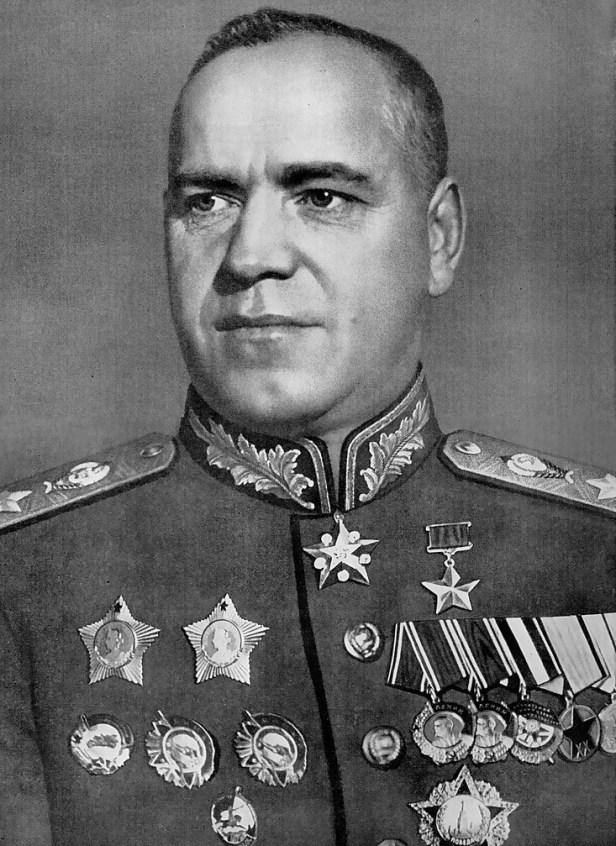
Georgy Konstantinovich Zhukov was born on December 1, 1896 and was a Soviet military leader who served as a top commander during World War II and achieved the rank of Marshal of the Soviet Union. During World War II, Zhukov served as deputy commander-in-chief of the armed forces under leader Joseph Stalin, and oversaw some of the Red Army’s most decisive victories. He also served at various points as Chief of the General Staff, Minister of Defence and a member of the Presidium of the Communist Party (Politburo).

Born to a poor peasant family near Moscow, Zhukov was conscripted into the Imperial Russian Army and fought in World War I. He served in the Red Army during the Russian Civil War, after which he quickly rose through the ranks. In summer 1939, Zhukov commanded a Soviet army group to a decisive victory over Japanese forces at the Battles of Khalkhin Gol, for which he won the first of his four Hero of the Soviet Union awards, and in 1940 he commanded the Soviet invasion of Bessarabia and Northern Bukovina in Romania. In February 1941, Stalin appointed Zhukov as chief of the General Staff of the Red Army.

Following the German invasion of the Soviet Union in June 1941, Zhukov lost his post as chief of staff after disagreeing with Stalin over the defense of Kiev. Zhukov, often in collaboration with Aleksandr Vasilevsky, was subsequently involved in the Soviet actions at Leningrad, Moscow, Stalingrad, and Kursk. He held the title of deputy commander-in-chief of the armed forces from August 1942, and was promoted to Marshal of the Soviet Union in January 1943. He participated in the planning of Operation Bagration in 1944, and in 1945 commanded the 1st Belorussian Front as it led the Vistula–Oder Offensive into Germany, where he oversaw the Soviet victory at the Battle of Berlin. In recognition of Zhukov’s key role in the war, he was chosen to accept the German Instrument of Surrender and to inspect the 1945 Moscow Victory Parade. He also served as the first military governor of the Soviet occupation zone in Germany from 1945 to 1946.

After the war, Zhukov’s popularity caused Stalin to see him as a potential threat. Stalin stripped him of his positions and relegated him to military commands of little strategic significance. After Stalin’s death in 1953, Zhukov supported Nikita Khrushchev’s bid for leadership, and in 1955, he was appointed Defense Minister and made a member of the Presidium. In 1957, Zhukov lost favor again and was forced to retire. He never returned to a top post, and died in 1974. Zhukov is remembered as one of the greatest Russian and Soviet military leaders of all time.

In the next entry in this series, we will take a look at Harwood’s Intuition from The Hunt from Salt & Pepper Games.

-Grant

  •  

My Favorite Wargame Cards – A Look at Individual Cards from My Favorite Games – Card #64: Guns of August from Paths of Glory: The First World War, 1914-1918 from GMT Games

With this My Favorite Wargame Cards Series, I hope to take a look at a specific card from the various wargames that I have played and share how it is used in the game. I am not a strategist and frankly I am not that good at games but I do understand how things should work and be used in games. With that being said, here is the next entry in this series.

#64: Guns of August from Paths of Glory: The First World War, 1914-1918 from GMT Games

Paths of Glory is widely thought to be a masterpiece on WWI and after just a few plays of the game, both in person and online on the fabulous Rally the Troops!, I can definitely see why people feel that way. Even though we are novices, the game is just that good and really tells the story of the fruitless efforts of both the Entente and Central Powers as they bashed their heads against each other over control of Europe. The game is long and you generally are going to have to play this one over a long weekend to get it all in and enjoy it properly but it is just such as great tool to understand the complexities of the struggles of trench warfare, supply and the balance of attacking versus taking a breath and regrouping. I really enjoyed the mix of historical events and the choices that I had to wage the war in a way that I felt was appropriate. But, my message to everyone who plays this game is beware of supply. Even in our few plays, supply has been an issue and we have had to make sure we didn’t make a few fatal mistakes that would get us in trouble. I want it to be clear here. I am not good at this game…at all and the nuances of supply and how to play have just eluded me as I continue to make the same errors game after game. But it is really good and I look forward to each new play with enthusiasm and am excited about the chance to get to learn more about this fascinating war that was so very fruitless.

I am going to use snips of the board from Rally the Troops! in this post so it might look a bit different from my normal posts.

With that being said, generally in every single game the Central Powers will start out by playing their Guns of August card. Guns of August is a crucial, high-stakes opening event for the Central Powers on Turn 1, enabling an immediate, powerful, and historical offensive against France and Belgium.

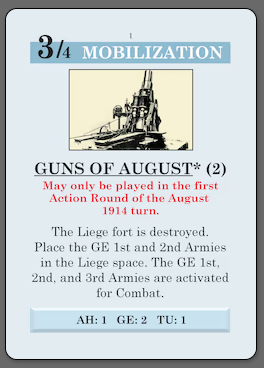
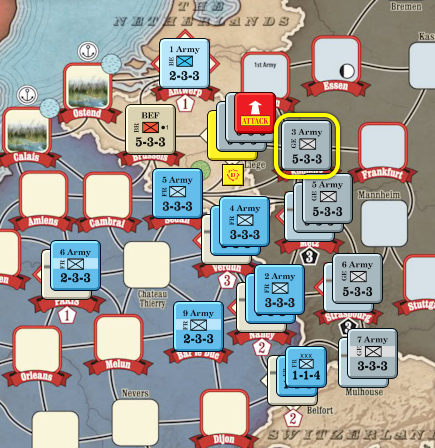
The Guns of August is a 3/4 OPs card that is placed into the CP player’s hand at the outset and gives them the initiative immediately. First off, the card destroys the fortress at Liège and then gives a massive mobilization effort booster by moving 2 German Army counters from their starting spaces including the German 1st and 2nd Armies and then activating them both to attack along with the German 3rd Army who is located at the start of the game setup in Koblenz.

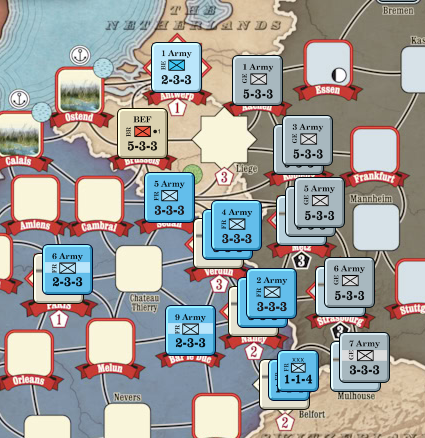
This gives the CP player 2 choices about how to start the war with this attack. They can focus on the British Expeditionary Force located in Brussels or the French 5th Army located in Sedan. The allows the CP to destroy the Liège fortress, advance armies, and immediately attack or pressure the British Expeditionary Force (BEF) and French forces. In my humble opinion, the BEF is the real target here as this unit cannot be replaced or rebuilt and its removal opens up the path for the Germans to take on the fortress at Antwerp.

While the Guns of August card play is an aggressive move, it does somewhat ensure Austria-Hungary can survive potential Russian pressure as the Allied player will have to quickly use their precious resources to fill the gaps created by this opening attack rather than using them to bolster the Russians in the east or to build up the Serbians a bit in the south to prolong the fall of Belgrade. Paths of Glory is a large part about resource management and the constant pressure to continue offensive momentum and rebuild troops through the use of Replacement Points and events to bring on additional troops is a major problem for both sides. You can only attack for so long before you will burn yourself out and will have to spend time to recover and get ready for the next turn’s offensives. Using the Guns of August cards efficiency will free up resources to use elsewhere.

There are alternative openings with the card that can be considered. If not using Guns of August for the event, the CP player can use 1 OP to destroy the Liège fort, allowing them to conserve the card for later or pivot to a more defensive strategy, such as defending the Rhine.

In the end, I would recommend the hammer approach versus any other use of the card as it will really put the pressure squarely on the Allies to do something about what you have just accomplished. In the picture to the right is the normal outcome of these attacks as you can see the BEF is reduced and the French 5th Army has broken and is now replaced by a smaller Corps counter that cannot really do anything offensively and is just there to protect the back side of the Maginot Line from being caught out of supply.

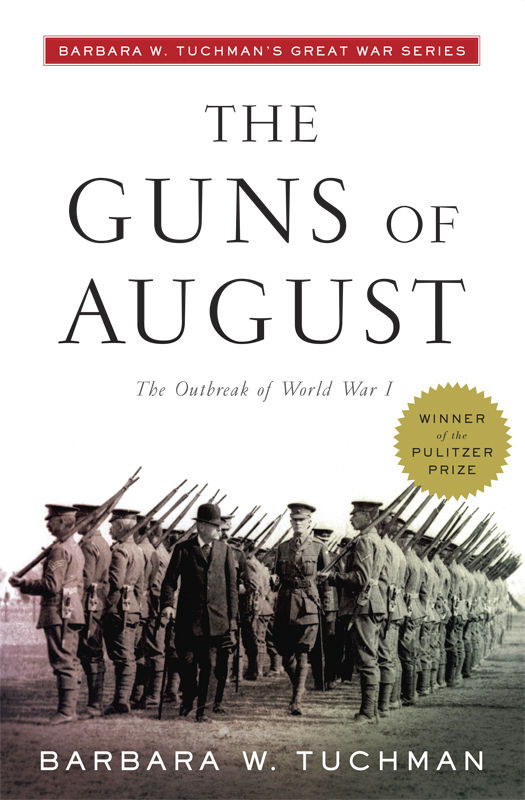
The Guns of August (published in the UK as August 1914) is a 1962 book centered on the first month of World War I written by Barbara W. Tuchman. After introductory chapters, Tuchman describes in great detail the opening events of the conflict. The book’s focus then becomes a military history of the contestants, chiefly the great powers.

The Guns of August provides a narrative of the earliest stages of World War I, from the decisions to go to war up until the start of the Franco-British offensive that stopped the German advance into France. This led to four years of trench warfare. The book discusses military plans, strategies, world events, and international sentiments before and during the war.

The book was awarded the Pulitzer Prize for General Nonfiction for publication year 1963, and proved very popular. Tuchman later returned to the subject of the social attitudes and issues that existed before World War I in a collection of eight essays published in 1966 as The Proud Tower: A Portrait of the World Before the War, 1890–1914.

In the next entry in this series, we will take a look at Georgi Zhukov from Churchill: Big 3 Struggle for Peace from GMT Games.

-Grant

  •  

My Favorite Wargame Cards – A Look at Individual Cards from My Favorite Games – Card #63: Militia from Stilicho: Last of the Romans from Hollandspiele

With this My Favorite Wargame Cards Series, I hope to take a look at a specific card from the various wargames that I have played and share how it is used in the game. I am not a strategist and frankly I am not that good at games but I do understand how things should work and be used in games. With that being said, here is the next entry in this series.

#63: Militia from Stilicho: Last of the Romans from Hollandspiele

Stilicho: Last of the Romans is a very well designed and interesting solo experience that plays in 60-90 minutes. But, due to the unforgiving nature of the random card draws and its reliance on dice luck, that admittedly can be mitigated through cagey card play and proper decisions, the game can be over very quickly. In fact, my very first play a few years ago lasted only 2 rounds and was over in about 15 minutes. Remember that the historical Stilicho only made it to Round 3! The cards are at the heart of the game here and make it a very tense and decision filled experience. Having to analyze each card, measuring its utility against the board state and what pressing matters the player must address while also fretting over having to discard a good Event Card that just isn’t useful at this point in time to take an action can be really agonizing. I think that this design works even better than its predecessor Wars of Marcus Aurelius.

The cards are a form of multi-use cards, as most Card Driven Games are, as they can either be used for the printed events on the cards or simply to be discarded to take one of a number of actions available to the player. It is important to read every aspect of the card thoroughly as some cards have multiple effects, differing effects depending on what the state of the game is or whether one Barbarian has surrendered or may have several prerequisites to that card being allowed to be played.

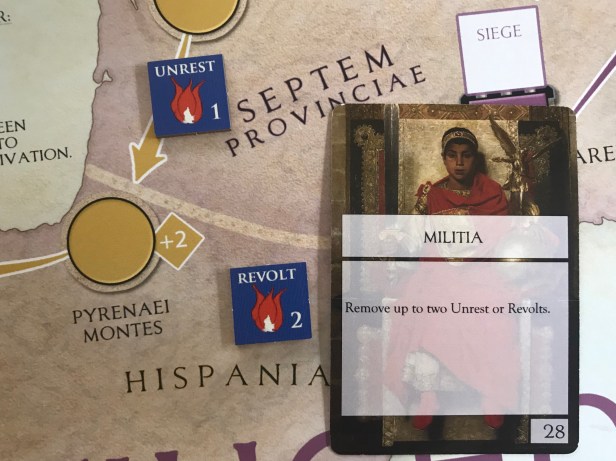
There are some events that are too important to your efforts to ever discard to take an action as they provide you with such great benefit and are more efficient than taking individual actions. Don’t get me wrong though the playability of a card is always dependent on when in the course of the game the card is drawn. An example of what I am talking about is the Militia Roman Card.

During the game, some cards will cause Unrest Markers to be placed on the various tracks that wind their way through the provinces. These Unrest Markers represent the erosion and weakening of Roman control, the spread of fear throughout the populace due to the threat of usurpers and ultimate civil war as well as the logistical difficulties of defending against barbarian incursions. They act as a critical, accumulating threat that, if left unchecked, can lead to widespread revolts, which are one of the primary ways a player loses the game. Unrest Markers are placed in Dioceses when specific enemy cards (particularly the Vandals) are activated or reach the end of their movement tracks. If a Diocese already contains an Unrest Marker when a new one is triggered, it indicates increasing instability, requiring the player to flip an existing, lower-level Unrest Marker to its “Revolt” side. Unrest/Revolt Markers increase the difficulty of battles in that province. When attacking or defending in a affected Diocese, the marker adds to the enemy’s strength. Also, a major loss condition in the game is having too many Revolt Markers on the board simultaneously. Managing and removing these markers is essential for survival. Unrest Markers are placed in a specific order across the board—starting from Hispania and moving through Gallia to Italia—which dictates the geographic spread of the crisis. Players must spend valuable actions (usually by discarding cards) or use specific Event Cards such as the Militia card to remove these counters from the board. 

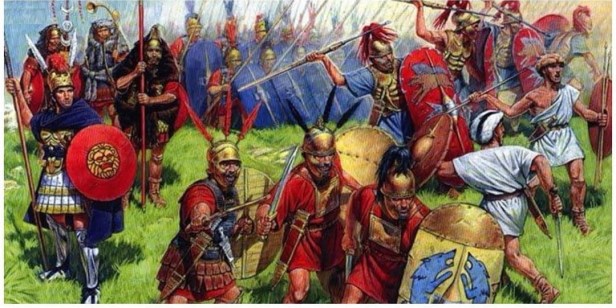
Before the late 2nd century BC, Rome used a citizen militia or levy of property-owning men aged 16–46, serving unpaid during summer campaigns. Organized by wealth, they formed three lines—hastatiprincipestriarii—and provided their own equipment. They were crucial for seasonal defense and expansion, as well as for patrolling and safeguarding supply lines, trade routes and newly conquered territories, ultimately transitioning to a professional army after 107 BC. The citizen troops were grouped into maniples based on age and wealth, with the poorest acting as light-armed skirmishers (velites). Service was typically restricted to the annual campaign season, often ending with the Festival of the October Horse on 19 October. The militia employed a three-line, checkerboard formation to allow for tactical flexibility. Due to many reasons, the militia system was phased out after 107 BC in favor of a full-time, professional army, although conscription remained as a, mostly unpopular, option for raising forces.

I wrote a series of Action Points on the various aspects of the game and you can read those at the following links:

Action Point 1 – the Mapsheet focusing on the three Fronts down which your enemies advance, but also covering the different spaces and boxes that effect play such as the Olympius Track, Game Turn Track, Army Box, Leader Box and Recovery Box

Action Point 2 – look at the cards that drive the game and examine the makeup of both the Enemy Deck and the Roman Deck.

Action Point 3 – look into the Roman Phase and examine how cards are discarded to take one of nine different actions.

Action Point 4 – look at a few examples of Battles and how they are resolved.

Action Point 5 – look at a few points of strategy that will help you do better in the game.

I shot a playthrough video for the game and you can watch that at the following link:

I also followed that up with a full video review sharing my thoughts:

In the next entry in this series, we will take a look at Guns of August from Paths of Glory: The First World War, 1914-1918 from GMT Games.

-Grant

  •  

My Favorite Wargame Cards – A Look at Individual Cards from My Favorite Games – Card #62: Romanian Autonomy from Twilight Struggle: Red Sea – Conflict in the Horn of Africa from GMT Games

With this My Favorite Wargame Cards Series, I hope to take a look at a specific card from the various wargames that I have played and share how it is used in the game. I am not a strategist and frankly I am not that good at games but I do understand how things should work and be used in games. With that being said, here is the next entry in this series.

#62: Romanian Autonomy from Twilight Struggle: Red Sea – Conflict in the Horn of Africa from GMT Games from GMT Games

We all love Twilight Struggle….and if you say you don’t, you really do but just want to be different or are a contrarian! The game is phenomenal and has done very well for GMT Games with 8 Printings as well as the Turn Zero Expansion and now a series of smaller geographically focused spin off games starting with Twilight Struggle: Red Sea – Conflict in the Horn of AfricaTwilight Struggle: Red Sea deals with just two regions located in the Horn of Africa including Africa and the Middle East. The game uses the familiar Twilight Struggle formula of Cards with both Events and Operations Points that can be used by players to perform Coups, do Realignment Rolls or place Influence in an effort to gain control of the most Countries in the Regions to score Victory Points and win the game. The game is fast, furious and only lasts 2 hands of cards (unless you choose to play the special 3 Turn variant) so there isn’t a lot of time to mess around and players must be focused on what they are trying to accomplish. The best thing about the game is that it plays in 45 minutes as compared to 3-4 hours for Twilight Struggle.

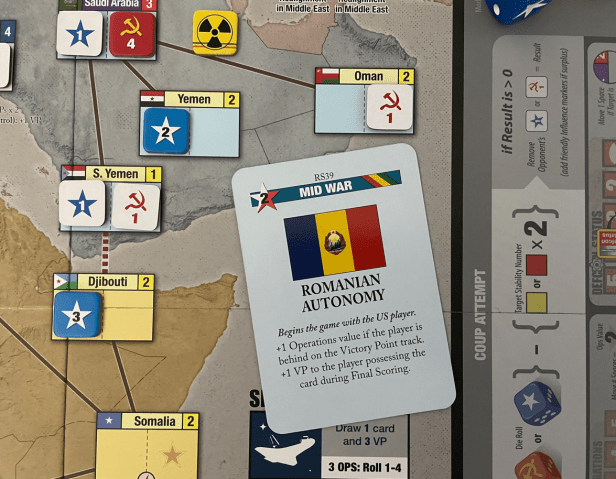
The next card we will take a look at in this series is the special Romanian Autonomy, which is a unique card that doesn’t play from the deck but starts with the US player and resembles one of the classic cards from the original Twilight Struggle called The China Card. And if you have played Twilight Struggle, you know about the China Card. The China Card is a 4 Ops Value Card that can be held by the player in addition to their hand limit thereby giving them an extra card to use. But the card also has a special ability where if the player uses the card for 4 Ops to place Influence only in Asia, it will grant the player +1 Ops Value to use in placing one additional Influence. The China Card also grant’s the player who holds the card at the end of Turn 10 a +1 VP bonus.

In Twilight Struggle: Red Sea, the China Card has been replaced by the Romanian Autonomy Card. This card is not as powerful as the China Card but definitely creates some new opportunities and challenges for the player playing the card. The Romanian Autonomy Card can effect their Ops Value from cards by +1 during the Turn that they play it if they are behind on the Victory Point Track and also grants +1 VP to the player holding the card during Final Scoring. I think this is a really interesting concept and I think was included as a sort of catchup mechanic due to the short nature of the game. I look forward through more plays to seeing how its addition changes things and whether it is overpowered or just right. Once again, a small and subtle change to the game to create a new and interesting experience for the avid fan of Twilight Struggle or players who are new to the system.

Nicolae Ceaușescu visiting Africa during the Cold War.

During the Cold War, particularly under Nicolae Ceaușescu (1965–1989), Romania maintained a distinct, active presence in Africa, including the Horn of Africa, as part of a strategy to distance itself from Soviet influence, gain international prestige, and foster economic exchanges. While major powers like the Soviet Union and Cuba directly intervened in regional conflicts (such as the Ogaden War), Romania focused on building “fraternal” socialist relations through diplomatic, economic, and technical assistance, often operating with a degree of autonomy from the Warsaw Pact. Romania’s actual African strategy in the Horn of Africa, outlined in its 2023 Africa Strategy, emphasizes partnership, peace, development, education, and security cooperation, not territorial autonomy. Romania aimed to be a bridge between Europe and Africa, strengthening ties through cultural exchange, economic projects, and increased diplomatic presence in strategic capitals like Addis Ababa and Nairobi. Under its former communist regime, Socialist Republic Romania pursued economic independence and influenced African nations, but this was distinct from seeking autonomy within Africa. The phrase “Romanian autonomy in the Horn of Africa” is a game term with strategic implications within the game, while Romania’s real-world engagement with Africa is about broader diplomatic and economic partnerships

In the next entry in this series, we will take a look at Militia fromStilicho: Last of the Romans from Hollandspiele.

-Grant

  •  

My Favorite Wargame Cards – A Look at Individual Cards from My Favorite Games – Card #61: Mobile Vulgus Time of Crisis: The Age of Iron and Rust Expansion from GMT Games

With this My Favorite Wargame Cards Series, I hope to take a look at a specific card from the various wargames that I have played and share how it is used in the game. I am not a strategist and frankly I am not that good at games but I do understand how things should work and be used in games. With that being said, here is the next entry in this series.

#61: Mobile Vulgus from Time of Crisis: The Age of Iron and Rust Expansion from GMT Games

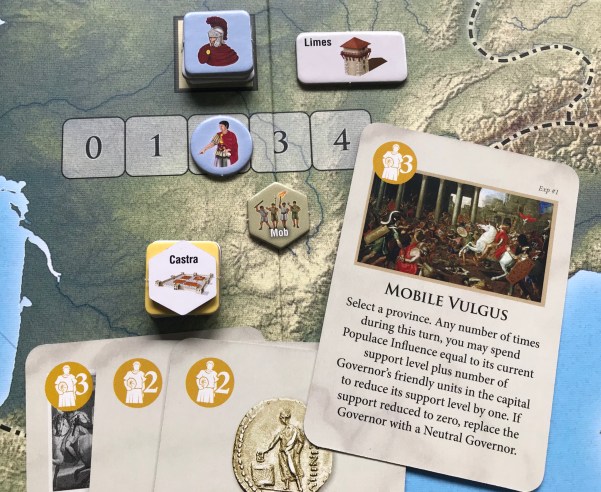
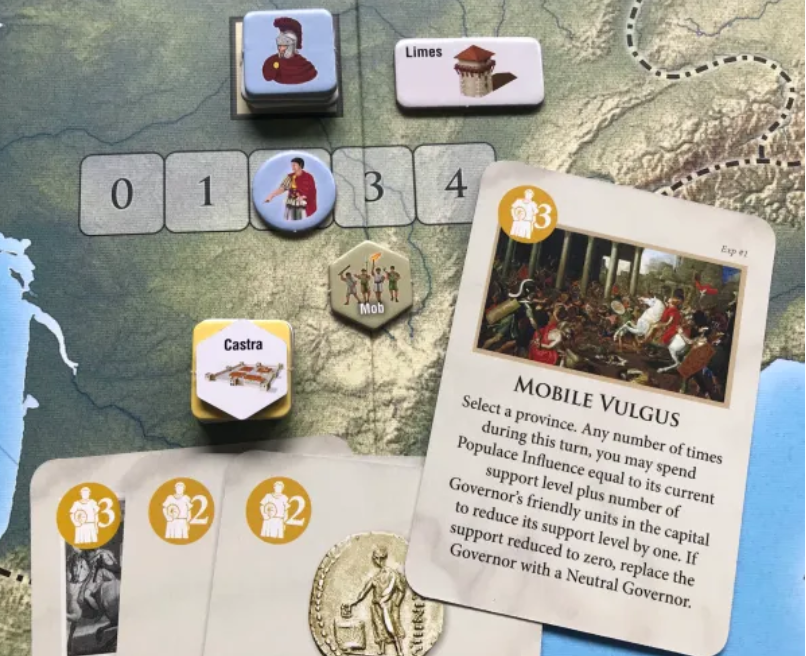
I really love Time of Crisis from GMT Games. This is a very light, introductory wargame that is just plain fun to play. I have been playing it a ton on the Rally the Troops! online platform and really enjoy it no matter what the outcome of those games are. One card that I enjoy using is called Mobile Vulgus, which is a 3 value Populace Card that really can be a devious way to usurp your enemies. This card was added to the game in The Age of Iron and Rust Expansion and is one of those cards that is very situational but very good.

As you know, Time of Crisis is a back and forth game that sees players pitted against each other for the control of provinces and ultimately a change in the player who wears the purple robes of Emperor and sits on the throne in Italia. This process is carried out as players play Populace cards to garner Influence points that are then used to Replace a sitting Governor. The problem with the process is the dice. Now, I know what you are saying. Typically, as long as you roll a 2+ on a d6 it is considered a success and garners you a vote but my luck dictates that I will roll multiple 1’s on a roll where you are looking for a number higher than 1. So, if you can somehow get the dice out of the equation, you are better off. Along comes the fantastically powerful card Mobile Vulgus.

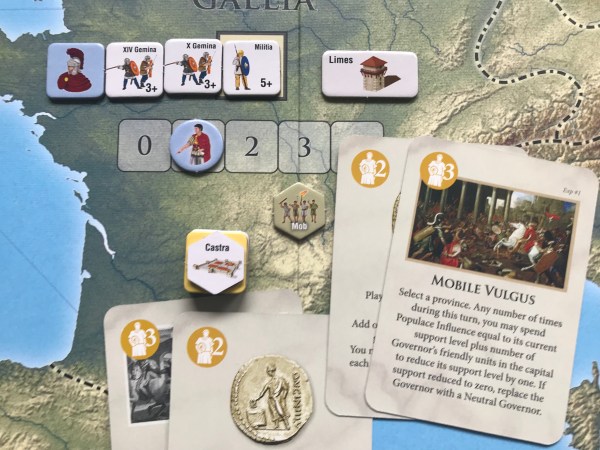
Why exactly do I consider this card so good? Well, you don’t have to rely on rolling dice to get what you want…simple as that. The power is maybe not as efficient as I would like it to be, as you will have to take a Replace Governor Action later to seat your Governor, but it is guaranteed. First off, the card allows you to target a province in which you wish to Replace the current sitting Governor. You normally would play Populace cards to create a number of Influence Points that you would then use to roll 1d6 per point. With Mobile Vulgus you simply play a certain amount of Populace cards to create a total amount of Influence that allows you to overcome their current support level. In the picture above, you can see that the current support level for the Blue Governor in Gallia is at 2. You will also notice though that the Blue General is located in the Provincial Capital with a sizeable army. This army will add to the number of Influence points you will have to spend to reduce that support.

As we examine the Blue General’s stack of forces, we see that he has 3 units under his control, 2 full strength Legions (XIV Gemina and X Gemina) as well as a lone Militia. These 3 units will add to the amount of Populace Influence points that must be spent to effect the support level of the province. Because there are 3 units, we will add those 3 units to the current support level of 2 to bring our target to reduce to 5. In simpler terms 2 for the current support level + 3 for the units in the provincial capital. This then successfully reduces the support level to 1. Remember, that if using a normal Replace Governor action, you would have been rolling 5 dice (1d6 per Populace Influence point spent) and would have needed to roll 2+ and garner 7 votes (calculated by doubling the current support level and then adding in +1 vote needed for each unit in the capital). You couldn’t have possibly done that using only the two cards shown and would have had to play at least one more Populace card with at least 2 Influence points to get to roll 7 dice!

Mobile Vulgus is a Latin phrase that means “the fickle crowd”, referring to the changing nature, opinions and reactions of the general public or an audience, which is a derivation of the English word “mob”.  It literally denotes a movable public, or the unstable crowd and recognizes the inconstancy of popular taste and the ease with which clever politicians can influence the great mass of voters. In game terms, the support of the people can sometimes falter as easily as it can be encouraged.

If you are interested, I wrote a full review for Time of Crisis and you can read that at the following link: https://theplayersaid.com/2017/09/04/the-most-recent-fruits-of-wargame-hybridization-a-review-of-time-of-crisis-the-roman-empire-in-turmoil-235-284-ad-from-gmt-games/

We also posted a full review video and you can watch that at the following link:

In the next entry in this series, we will take a look at Romanian Autonomy from Twilight Struggle: Red Sea – Conflict in the Horn of Africa from GMT Games from GMT Games.

-Grant

  •  

My Favorite Wargame Cards – A Look at Individual Cards from My Favorite Games – Card #60: French Leader Napoleon from Congress of Vienna from GMT Games

With this My Favorite Wargame Cards Series, I hope to take a look at a specific card from the various wargames that I have played and share how it is used in the game. I am not a strategist and frankly I am not that good at games but I do understand how things should work and be used in games. With that being said, here is the next entry in this series.

Card #60: French Leader Napoleon from Congress of Vienna from GMT Games

Congress of Vienna from GMT Games is a diplomatic card driven wargame based on Churchill and is the 4th game in the Great Statesmen Series. The game is set during the years of 1813-1814 and sees players take on the role of the main characters of the struggle between the Napoleonic Empire and the coalition of Russia, Austria, and Great Britain with their Prussian, Spanish, Portuguese, and Swedish allies. Congress of Vienna has two different but related phases including the conference table where players first debate over the control of issues germane to the factions and the period of the war and second these issues are then used on the battlefield to recruit units, attack and take overall command of battles. The players will be playing cards from their hands to “debate” over the various issues that were placed on the table, which include all types of things such as Military Operations, Recruitment, who will lead the combined Coalition forces (Generalissimo), Future of French Government, British Financial Aid, Liberalism vs. Absolutism, Austrian Neutrality and several other issues, and then later the players will use their accumulated Resources gained from the issues to enact action on the Military Map and do things like mobilize troops, place Military Support Markers and the ultimately to conduct warfare.

The game relies on cards and cards can be used to negotiate, i.e. move an issue to your National Track. Cards can provide a particular issue with positive and negative DRM’s depending on which nation plays them and can also be traded with another player during the Diplomacy Phase. Certain cards are better than others for debating an issue moved by another player; and finally, if they are saved for the War Phase, staff cards can be used to modify dice rolling in battles. These are very versatile cards and the players will have to learn them and their benefits in order to be effective at the game.

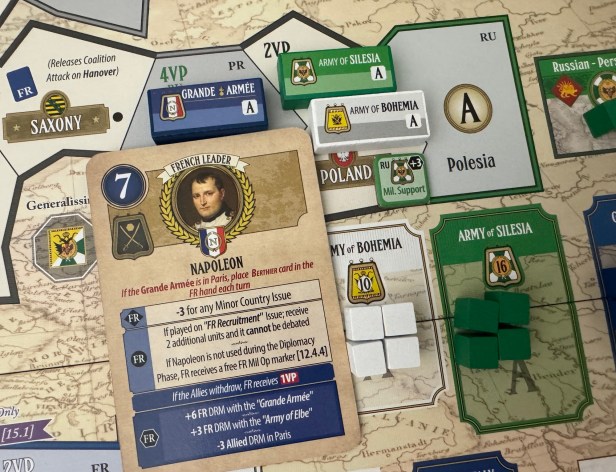
In this entry, we are going to take a look at the French Leader Napoleon card, which is one of the more powerful cards in the game. There is actually quite a bit of information found on the card but it all has a purpose and clearly explains when it provides bonuses when used on the various issues such as Minor Country Issues, French Recruitment as well as its various Dice Roll Modifiers during combat. This card is very powerful and must be used at the appropriate times for what the player is trying to do. Early in the game, the card can be used for its French Recruitment ability to gain new troops, the French will then gain 2 additional Units to use. When used during the Diplomacy Phase to effect the location of issues at the conference table, if used to move any issue it will provide a free French Military Operations Marker to be used on the battlefield to cause units to attack. The uses of Napoleon are many and players will need time to best understand when and where to use his abilities. But, his most impactful use is on the battlefield where he will grant various DRM’s depending on what French army he is commanding. If used with the Grande Armée, he will grant a massive +6 DRM while when being used for the Army of the Elbe he will only grant a +3 DRM. As the games wears on, and the Allies are at the gates of Paris, if used in defense he will grant a -3 DRM to the Allies attacking. These choices are very important and the correct choices will need to be made at the right time to be successful.

After playing now a few times, I am here to say that Congress of Vienna is probably my favorite game in the Great Statesmen Series. I believe that this game has matured the system and made it something that is more than where it started. Congress of Vienna is very much more like a true wargame and was extremely interesting. We are still learning and need to keep playing this one but I did enjoy what it was that we were doing.

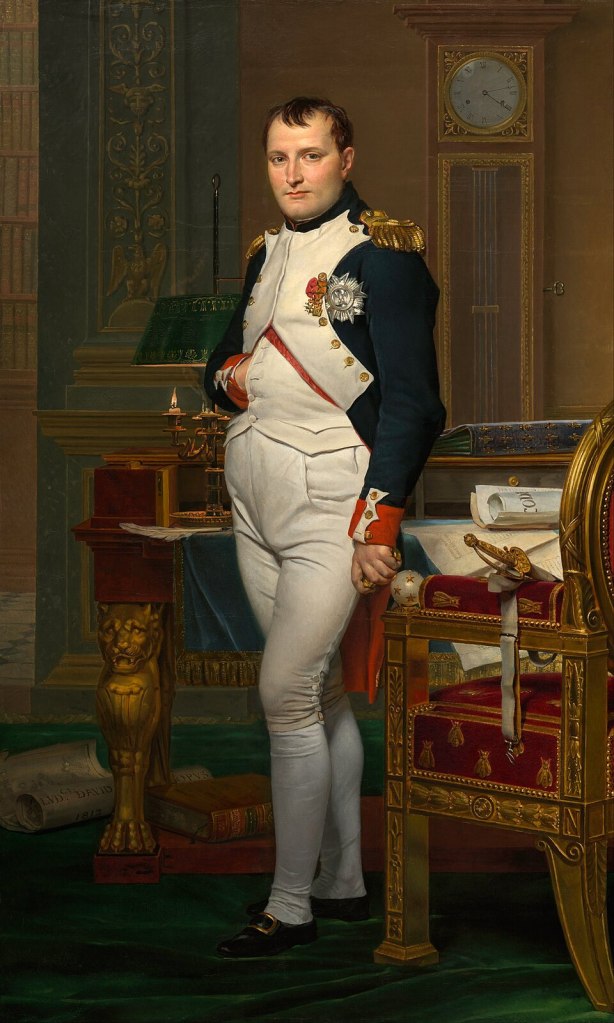
Jacques-Louis David – The Emperor Napoleon in His Study at the Tuileries

Napoleon Bonaparte (1769-1821) was a French military and political leader who rose to power during the French Revolution (1789-1799), became Emperor of the French (1804-1814/1815), and conquered much of Europe through brilliant, though costly, military campaigns, leaving a lasting legacy as one of history’s most famous and controversial figures, known for his strategic genius and ambition. He implemented significant legal reforms like the Napoleonic Code but ultimately faced defeat and exile, cementing his image as a complex figure of power and downfall. 

Born on the island of Corsica to a family of Italian origin, Napoleon moved to mainland France in 1779 and was commissioned as an officer in the French Royal Army in 1785. He supported the French Revolution in 1789 and promoted its cause in Corsica. He rose rapidly through the ranks after winning the siege of Toulon in 1793 and defeating royalist insurgents in Paris on 13 Vendémiaire in 1795. In 1796, he commanded a military campaign against the Austrians and their Italian allies in the War of the First Coalition, scoring decisive victories and becoming a national hero. He led an invasion of Egypt and Syria in 1798, which served as a springboard to political power. In November 1799, Napoleon engineered the Coup of 18 Brumaire against the French Directory and became First Consul of the Republic. He won the Battle of Marengo in 1800, which secured France’s victory in the War of the Second Coalition, and in 1803, he sold the territory of Louisiana to the United States. In December 1804, Napoleon crowned himself Emperor of the French, further expanding his power.

We have done 2 videos on this game including the following RAW Video after out 1st play at Buckeye Game Fest in May 2025:

We then did the following full Review Video after our 2nd play at WBC last July:

In the next entry in this series, we will take a look at Mobile Vulgus from Time of Crisis: The Age of Iron and Rust Expansion from GMT Games.

-Grant

  •  
❌