California tabletop publisher and game development studio Solis Game Studio is expanding its reach into US hobby retail through a new distribution deal with Southern Hobby, following several years of building its own catalogue through crowdfunding and direct sales.
The Massive-Verse Fighting Card Game, designed by Brian McKay, from Solis Game Studio
Its contracting work has included projects such as the Cyberpunk TCG, with Solis having led game design and development of a prototype that secured licensing for a new game.
Solis also did development work on Emerson Matsuuchi-designed Metal Gear Solid: The Board Game, and last month announced it would be the developer for the official card game of battle royale video game PUBG.
The company said Southern Hobby will distribute new Solis release Six-Sided Seas, as well as Treat, Please! and The Massive-Verse Fighting Card Game, describing the deal as a “major step forward” for the business.
The publisher has previously used crowdfunding to bring several of its games to market, with its biggest success to date 2024’s licensed Massive-Verse Fighting Card Game, designed by Brian McKay, which raised just over $50,000 from about 800 backers.
Solis has also already been selling directly to retailers through its own wholesale programme.
The publisher’s newest release, push-your-luck worker placement game Six-Sided Seas, will enter US distribution on October 2 with a $24.95 MSRP.
The two-player pirate game, designed by Kroze Kresky, is built around an unusual component format, consisting of 32 dice and a 14in by 24in edge-stitched playmat which is rolled inside the game’s box – allowing the title to be presented vertically, horizontally, or with a collapsible hangtab in retail.
Solis has previously said the idea grew from a visit to game stores in Thailand, where Chris Solis saw a store employee laminating a game board to protect it and began considering whether the board itself could instead be made from playmat material.
He said in the blog post, “When I returned home I issued an internal design challenge to my community. What does a game that is a playmat and single component look like?
“We explored a ton of really interesting designs and even did a limited release for one of them but none captured me like Six-Sided Seas by Kroze.”
Solis launched the game at Gen Con earlier this month, and said it sold all the copies it brought to the convention. Several of its scheduled learn-to-play sessions at Gen Con also sold out, according to the convention’s event listings.
In addition to founder and owner Chris Solis, the studio’s team includes developer Bryan McKay, business operations specialist John Brieger, graphic designer Katherine Boils, marketing manager Courtney Shernan, convention manager Sara Jordan and community manager Antonio Gil.
Welcome to this week’s batch of crowdfunding campaigns. We have a variety of offerings here, so we hope you will find something that catches your eye. Also, if you want to chat with the BGQ team, join our Discord Server where we talk about games, movies, sports, and other fun stuff. Check it out and […]
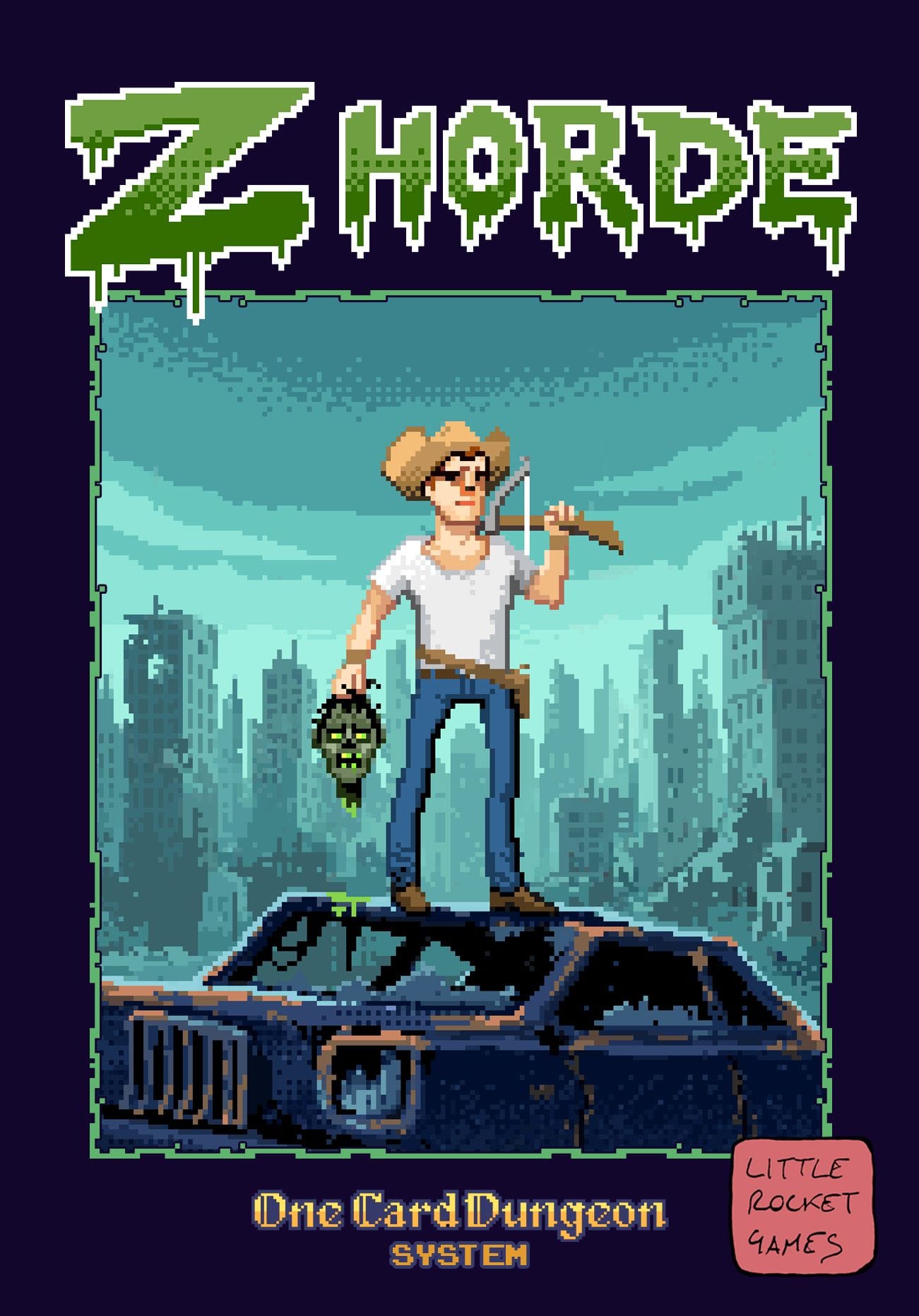
Little Rocket Games, der Verlag hinter dem Solo-Kartenspiel One Card Dungeon, kündigt auf Kickstarter mit „Z Horde“ einen eigenständigen Dungeoncrawler im Zombie-Setting an. Das Spiel nutzt das One-Card-Dungeon-System als Basis, kommt aber mit eigenem Setting, eigenen Mechaniken und einer 12-stufigen Kampagne.
In der Solo-Partie weisen Spielende laut Verlagsbeschreibung auf BGG in jeder Runde Energiewürfel den Bereichen Bewegung, Angriff und Verteidigung zu und müssen dabei taktische Kompromisse eingehen. Fünf spielbare Überlebende, ein Marktsystem zwischen den Levels, wiederverwendbare Waffen und verbrauchbare Gegenstände sollen für Abwechslung über die gesamte Kampagne sorgen. Design stammt von Giampaolo Razzino, der zuvor bereits an der Erweiterung One Card Dungeon: M'Guf-yn Returns mitgearbeitet hat, Illustrationen kommen erneut von Marco Salogni. Z Horde ist für 1 Spielenden ausgelegt, dauert 30 bis 60 Minuten und ist ab 14 Jahren freigegeben.
Die Kickstarter-Seite zu Z Horde ist aktuell eine reine Ankündigungsseite, in den Titel-Metadaten steht „Coming soon: Z Horde“. Weder Kampagnenstart noch Enddatum, Finanzierungsziel oder Pledge-Stufen sind bislang hinterlegt, auch ein Beschreibungstext fehlt noch. Wer sich für den Titel interessiert, kann sich derzeit nur benachrichtigen lassen, eine laufende Kampagne mit Preisen oder Stretch-Goals gibt es noch nicht.
Der BGG-Eintrag listet Z Horde bislang nur unter den kommenden Neuheiten, ohne Bewertungen oder weitere Community-Daten. Würfelreich verfolgt die Ankündigung und meldet sich, sobald Kickstarter konkrete Zahlen zu Laufzeit und Zielsumme veröffentlicht.
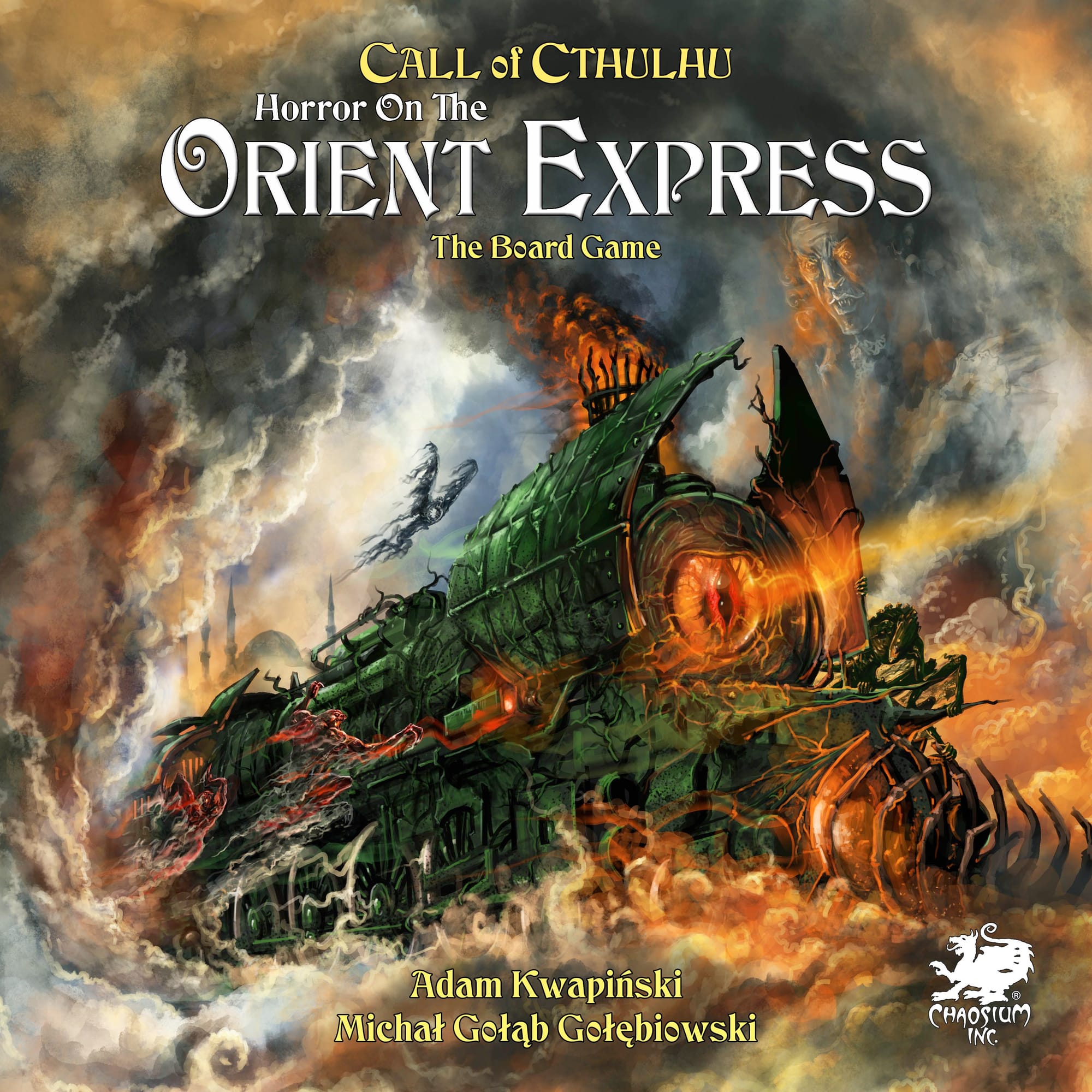
Chaosiums kooperatives Cthulhu-Brettspiel „Horror on the Orient Express: The Board Game“ führt aktuell die BGG-Hotness-Liste an. Für die Kickstarter-Unterstützenden bleibt trotzdem eine andere Frage wichtiger: wann die deutsche Ausgabe tatsächlich ankommt.
Das Spiel überträgt die gleichnamige Call-of-Cthulhu-Kampagne aus dem Rollenspiel in ein kooperatives Brettspiel für 1 bis 4 Spielende, ausgelegt auf 90 bis 120 Minuten und ab 14 Jahren. Auf BGG liegt die Komplexität bei 3,59 von 5, ein Wert für erfahrene Gruppen. Ob sich die Spielzeit auf ein einzelnes Kapitel oder die gesamte Kampagne bezieht, benennen die Quellen nicht. Die Ermittelnden reisen in den 1920er-Jahren mit dem Orient-Express durch die Traumlande, müssen Kultisten aufspüren, bevor diese ein Ritual vollenden, und dabei Monster abwehren, die den Zug angreifen.
Mechanisch setzt das Spiel auf Action Retrieval, Deck-, Beutel- und Pool-Aufbau, ein modulares Spielbrett und asymmetrische Charakterfähigkeiten, dazu einen Modus mit eigenem Solo-Spiel. Das unterscheidet den Titel spürbar von Fantasy Flights älteren Cthulhu-Kooperationsspielen wie Arkham Horror, die auf Würfelwürfe, Ereigniskarten und Feldbewegung über den Stadtplan setzen. Design stammt von Michał Gołąb Gołębiowski und Adam Kwapiński, laut Kampagnenbeschreibung Autoren von Nemesis, Frostpunk und Destinies.
Was die Kickstarter-Kampagne zeigt
Die Kickstarter-Kampagne endete am 19. April 2024 mit 13.201 Unterstützenden und 1.654.362 US-Dollar bei einem Ziel von 50.000 US-Dollar, das entspricht 3.308,72 Prozent Finanzierung. Kickstarter selbst führte das Projekt als Staff Pick. Als Liefertermine nennt die Kampagnenseite nur noch vergangene Daten, den 1. Mai 2024 für den Zugang zum Pledge-Manager und den 1. August 2025 für die eigentlichen Spielpakete. Ein aktuelles, noch ausstehendes Lieferdatum weist Kickstarter für das Projekt derzeit nicht aus.
Was zur deutschen Ausgabe bekannt ist
Verlag der deutschen Edition ist laut BGG-Versionsdatenbank Schwerkraft-Verlag gemeinsam mit Chaosium, nicht Pegasus. Eine eigene Produktseite zum Titel lässt sich auf der Schwerkraft-Verlag-Website derzeit nicht finden, ein sprachspezifischer Liefertermin für die deutsche Fassung ist damit ebenfalls nicht belegt. Ob die deutsche Auslieferung an die bereits verstrichenen internationalen Termine anschließt oder eigenständig läuft, bleibt offen.
Wer die deutsche Ausgabe verfolgt, sollte sich in den kommenden Wochen auf ein Update von Schwerkraft-Verlag einstellen. Der erste Platz in der BGG-Hotness zeigt vor allem, dass die internationale Auslieferung gerade viele frühere Unterstützende erreicht, über den Stand der deutschen Fassung sagt das für sich genommen nichts.
Nach der Gen Con ist auf den drei großen Plattformen wenig los: Die Spieleschmiede hat in den vergangenen sieben Tagen kein neues Brettspiel gestartet, und die einzige neue Gamefound-Kampagne der Woche, eine Sonderedition von Mykerinos, erreicht keine der Auswahlschwellen dieser Ausgabe. Diese Wochenschau konzentriert sich daher auf vier Kickstarter-Kampagnen: zwei frisch gestartete Titel und zwei Klassiker-Neuauflagen, die in den kommenden Tagen enden. Alle Zahlen sind Momentaufnahmen vom 24. August 2026.
Spirit Train: ein Geisterzug für die letzte Reise
Spirit Train: The Final Journey von SweaterBear Games ist seit dem 18. August auf Kickstarter live und läuft noch bis zum 15. September. Am 24. August 2026 stehen 262.726 US-Dollar zu Buche, bei einem Ziel von 10.000 US-Dollar sind das 2.627 Prozent, getragen von 1.733 Unterstützenden. Die drei Pledge-Stufen werben mit 30, 20 und 32 Prozent Rabatt gegenüber dem späteren Ladenpreis. Versand, Steuern und Zoll rechnet die Kampagne nach eigenen Angaben separat nach Kampagnenende ab.
Designt haben das Spiel Casey Mattes und Zoey Mattes. Als Fährleute zwischen den Welten bauen 2 bis 4 Spielende in 60 bis 90 Minuten ihren Zug aus wechselnden Waggons, sammeln Geister ein und begleiten sie in ihr Jenseits. Mechanisch mischt Spirit Train Worker Placement mit einer Aktionsreihenfolge, die von der Stimmung der Geister abhängt. Einen Solo- und Koop-Modus bietet erst die oberste Pledge-Stufe mit der Zusatzkampagne „The Lost Soul“, laut Kampagnenbeschreibung acht Kapitel im Solo- oder Koop-Modus.
The Monolith: blutiges Opfer für einen außerirdischen Fels
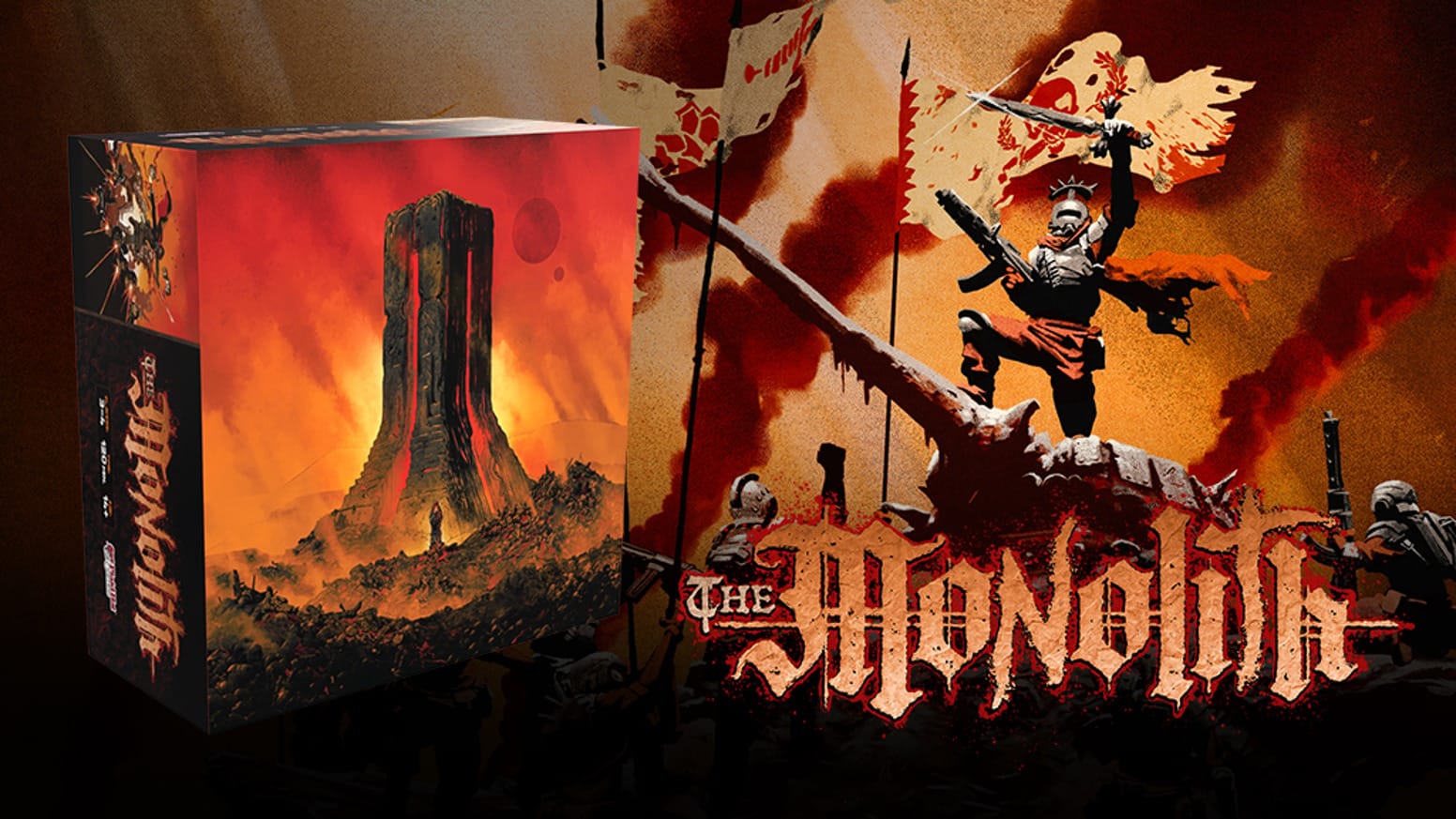
Auch The Monolith von Plaid Hat Games ist seit dem 18. August live, mit Laufzeit bis zum 17. September. Am 24. August 2026 sind 110.998 US-Dollar zusammengekommen, bei einem Ziel von 50.000 US-Dollar sind das 222 Prozent und 1.221 Unterstützende. Plaid Hat Games hatte eine erste Kampagne zum Spiel bereits im Juni gestartet und sie trotz erfolgreicher Finanzierung nach drei Tagen abgebrochen. Firmenchef Colby Dauch nannte im August gegenüber der Fachpresse den Grund: Die Zusagen seien bereits am zweiten Kampagnentag vollständig zum Stillstand gekommen, weshalb Plaid Hat Games den Neustart erst nach eingehender Analyse der Fehler plante.
Design stammt von Phil Gross. 3 bis 4 Spielende führen als Schamanen Krieger gegen rivalisierende Kulte, sammeln Herzen und opfern sie am Ende jeder Runde dem titelgebenden Monolithen, der daraufhin die Kampfaktionen der Partie bestimmt. Eine Partie dauert laut Verlag rund 120 Minuten. Das Grundspiel hat keinen Solo-Modus, gegen Aufpreis bringt ein Bot-Pack-Zukauf Unterstützung für 1 bis 2 Spielende.
Zu Versandkosten und Einfuhrabgaben für Unterstützende außerhalb der USA macht die Kampagne, anders als Spirit Train, keine Angabe. Die Reward-Texte nennen für alle Stufen nur einen weltweiten Versand ohne weitere Details.
Twilight City und Kalmár: Queen Games holt zwei Pierrot-Spiele zurück
Nur noch bis zum 27. August läuft die Kickstarter-Kampagne von Queen Games zu Twilight City und Kalmár: Merchants in Buda, zwei Spielen des ungarischen Designers Pierrot (Tamás Z. Marosi). Am 24. August 2026 stehen 9.026 Euro bei einem Ziel von 2.000 Euro, das sind 451 Prozent bei 59 Unterstützenden. Die Deluxe-Stufen nennen Ladenpreise von 79,99 Euro für Kalmár und 89,99 Euro für Twilight City, das Bundle beider Spiele kostet gegenüber einem Richtpreis von rund 180 Euro je nach Stufe 15 oder 25 Prozent weniger. Alle Deluxe-Stufen schließen laut Kampagne die deutsche und die EU-Mehrwertsteuer ein, die Bundle-Stufen liefern zusätzlich versandkostenfrei nach Deutschland und in die EU.
Twilight City schickt 1 bis 4 Spielende als Partisanen gegen ein diktatorisches Gouverneursregime in einer smoggeschwängerten Stadt, mit Tableau-Aufbau und rund 120 Minuten Spielzeit, und bringt einen eigenen Solo-Modus mit. Kalmár versetzt 2 bis 4 Spielende für 90 bis 150 Minuten als konkurrierende Kaufmannssöhne ins Buda des 15. Jahrhunderts, mit Warenhandel, Investitionen und einem eigenen Modus für zwei Personen, aber ohne klassischen Solo-Modus. Beide Spiele erschienen ursprünglich bei Private Moon Studios. Queen Games mit Sitz in Troisdorf bringt jetzt Deluxe-Neuauflagen beider Titel heraus.
Mexica, Bridges of Shangri-La, Gheos und Reel Rivals: vier Klassiker in letzter Minute
Der britische Verlag Play For Keeps beendet seine Sammelkampagne zu vier Euro-Klassikern bereits am 26. August. Am 24. August 2026 stehen 56.824 britische Pfund bei einem Ziel von 12.250 Pfund, das sind 464 Prozent, unterstützt von 814 Personen. Die Mexica-Stufe wirbt mit rund 7 Pfund Ersparnis gegenüber dem Ladenpreis, das Bundle aller vier Spiele mit rund 46 Pfund. Zu Mehrwertsteuer oder Zoll für Unterstützende in der EU äußert sich die Kampagne, anders als Queen Games bei Twilight City und Kalmár, nicht.
Das Zugpferd der Kampagne ist Mexica von Michael Kiesling und Wolfgang Kramer, der dritte Teil ihrer Masken-Trilogie aus dem Jahr 2002. 2 bis 4 Spielende ziehen in rund 90 Minuten Kanäle und Brücken durch Tenochtitlan und gründen Bezirke für Mehrheitspunkte, ein Solo-Modus fehlt. Dazu kommen die Neuauflagen von Bridges of Shangri-La, Gheos und Reel Rivals als weitere Titel im selben Bundle.
Diese Ausgabe teilt sich in der Mitte: Spirit Train und The Monolith sind komplett neue Spiele, Twilight City/Kalmár und das Mexica-Bundle bringen dagegen Bestehendes in neuer Auflage zurück. Wer an Twilight City, Kalmár oder den vier Play-For-Keeps-Titeln interessiert ist, hat nur noch wenige Tage Zeit. Die kommende Woche dürfte nach der Sommerpause wieder mehr Neustarts bringen.
Plaid Hat Games launched its Kickstarter for The Monolith in June with a trio of successful crowdfunding campaigns under its belt – only to pull the project three days after launch when pledges unexpectedly ground to a halt, despitequickly beating its $20,000 goal.Less than two months later the revamped campaign is back, and has already pulled in almost four-times the amount the cancelled campaign managed in the same amount of time.In this first-person piece for BoardGameWire, Plaid Hat founder and CEO Colby Dauch explains why The Monolith exposed flaws the publisher’s previous campaigns had masked, what he believes it got wrong, and why the changes made for the relaunch appear to be working.
Plaid Hat Games is relatively new to crowdfunding and we’ve experience our first major setback in that arena. We launched our fourth ever crowdfunding campaign back in June, this time for a new game called The Monolith.
By the second day of the campaign the pledges had fully stalled out. It was self-evident that we had made mistakes, so we pulled the campaign with the intention to relaunch it after analyzing what had gone wrong, and doing what we could to address it.
As I write this article, I don’t know if our hunches will turn out to be correct. This article is scheduled to be posted as we relaunch the campaign, so I suppose we are all going to find out together! I’m more than a little nervous. Allow me to provide some background essential in understanding how we’ve come to make the choices we’ve made.
Plaid Hat founder and CEO Colby Dauch
We’ve been around since 2009 and watched from the sidelines as crowdfunding took hold and grew into a large part of the board game industry.
For many years we swore off crowdfunding. Internally we were critical of it for a number of reasons. My biggest reservation was that it felt dishonest to me that an established company would tell its customers “we need your help to make this product”, when they had already proven previously that they were capable of putting together the funding necessary to launch a new product onto the market, without requiring the customer to buy said product a year or more in advance of its release.
However, things have changed over the years in more ways than one and honestly, it has been a bad business decision to hold out on the crowdfunding model for as long as I have.
When we did finally enter the crowdfunding space a couple of years ago I told myself, and others, that there was clearly no longer an expectation that the companies going to crowdfunding needed to be there. I believed it to be understood that it was more akin to a pre-order system and that the consumer knows that. I even said as much in the article I was interviewed for on this very site, posted on June 30th, about us pulling the Monolith from Kickstarter. It’s not true. I had only convinced myself that it was.
I’m in the midst of reflecting on every decision I’ve made that led to a failed campaign, and what that failure means for my company, the people I employ and my family, if I’m not able to correct course. The reality is that we moved to crowdfunding because the things that made us successful in the past aren’t working anymore and we were growing desperate for a solution.
Getting attention on a board game release announcement isn’t free anymore. It’s not news. At best it’s a bullet point on a long list of new release announcements for the week. The traditional method we’ve long employed of selling to distributors who sell to retailers who sell to players, sadly seems to be falling apart for us, and I suspect for most publishers.
So we found ourselves trying to incorporate crowdfunding into our business model while simultaneously telling ourselves we could do it different – better. Our approach:
We will severely limit the use of exclusives. We don’t want people feeling like they HAVE to buy the product now or they will be missing out.
We aren’t seeking to punish the people who have long supported their local board game shop by purchasing our products through them.
Most of all we don’t want to manipulate our customers by preying on their fear of missing out.
We will reduce the long wait between the time you back a game and the time you get that game by being fully ready to go to production at the time of the Kickstarter.
There were flaws in this approach. Flaws that I believe were masked in our first three campaigns because they all had something else big going for them.
Wandering Galaxy was the latest installment in a series of games we had released that had gotten a lot of attention for their amazing storytelling and voice acting (in a companion app).
Ashes Ascendency was a reinvigoration for a game that has ten years worth of glowing reviews to put in front of people and a dedicated fanbase.
Super Auto Pets Card Battle was based on an amazing and charming digital game, and we were able to rely on the attention of fans from that.
The Monolith had no predecessor.
The Monolith || Kickstarter image
This is why I believe our attempts to do things ‘different from the others’ has come back to bite us:
We wanted to limit FOMO.
A crowdfunding campaign must be compelling beyond the presentation of the game itself. You are asking the customer to pay for a game long before they can expect to have it in their hands. We need to give them a compelling reason to do that.
In the Super Auto Pets Card Battle campaign, the most popular pledge was by far the ALL-IN pledge, because it was the most compelling. You got all of the sets, all of the add-ons and in a storage box that would organize it all and only be available during the campaign.
I took away the wrong lesson. What I decided was that what those results were telling me was just that people want all the stuff, so with The Monolith let’s just make the core product all of the stuff.
We wanted to reduce the wait time on the game.
This is the one where I really messed up with The Monolith. As I established, the reality is that we needed to make changes to how we were doing things and I allowed myself to miss out on a key advantage to crowdfunding: measuring demand.
In an effort to shorten the window on how quickly we could deliver on a campaign, and further spurred on by a yearning to have a line at our booth for a new game release at GenCon or Essen (that feeling is the highest of highs), I started having plastic molds for the game well before the campaign so that they wouldn’t delay production – and remember this game was going to have all the upgrades packed in, so it was a lot of plastics and a lot of mold costs.
Further compounding the issue was that the mold costs were so high, to get the cost per unit down, I felt like I needed to be prepared to produce 10,000 copies. And like the molds, I got that production started before the campaign even started.
It was the exact kind of risk we had always needed to take when producing a game, but crowdfunding should have given me a chance to mitigate that risk, and in doing so really been a fulfillment of the core concept of crowdfunding to begin with: Asking the player to help be a part of bringing the game to the market.
So here is what we are doing differently with the relaunch of The Monolith campaign to try to address what went wrong with the initial campaign:
Creating a 1-2 player mini-expansion.
Lowering the retail price of the game and offering a larger discount on that already lower price for backers.
Creating a 6th shaman character add-on.
Creating glass blood tokens add-on.
Creating a metal first player and surge tokens add-on.
Creating an All-In tier with all of the add-ons included at a lower price than purchasing them separately.
Different marketing partner and strategy.
Finally, here are my take aways for how we will do campaigns differently in the future:
When possible, create a version of the game that focuses on lower price and a version that focuses on maximum bling.
Be more willing to compete with the price point that we and everyone else knows online retailers are going to put on our games.
Give the campaign a chance to communicate what the demand is. We will still be production ready, but I won’t be putting the cart directly in front of the horse again.
Better leverage the community-based systems that already exist to support crowdfunding.
Follow Up
As I write THIS bit, the campaign has relaunched about 24 hours ago and is doing much better this time! By a large margin, backers are opting for the pledge level that includes all the add-ons. So I believe this supports the theory that the add-ons were essential for a successful campaign.
It is hard to quantify exactly how much each of our changes contributed to the better result, but overall, the adjustments seem to be working. I’m so grateful to everyone who has backed.
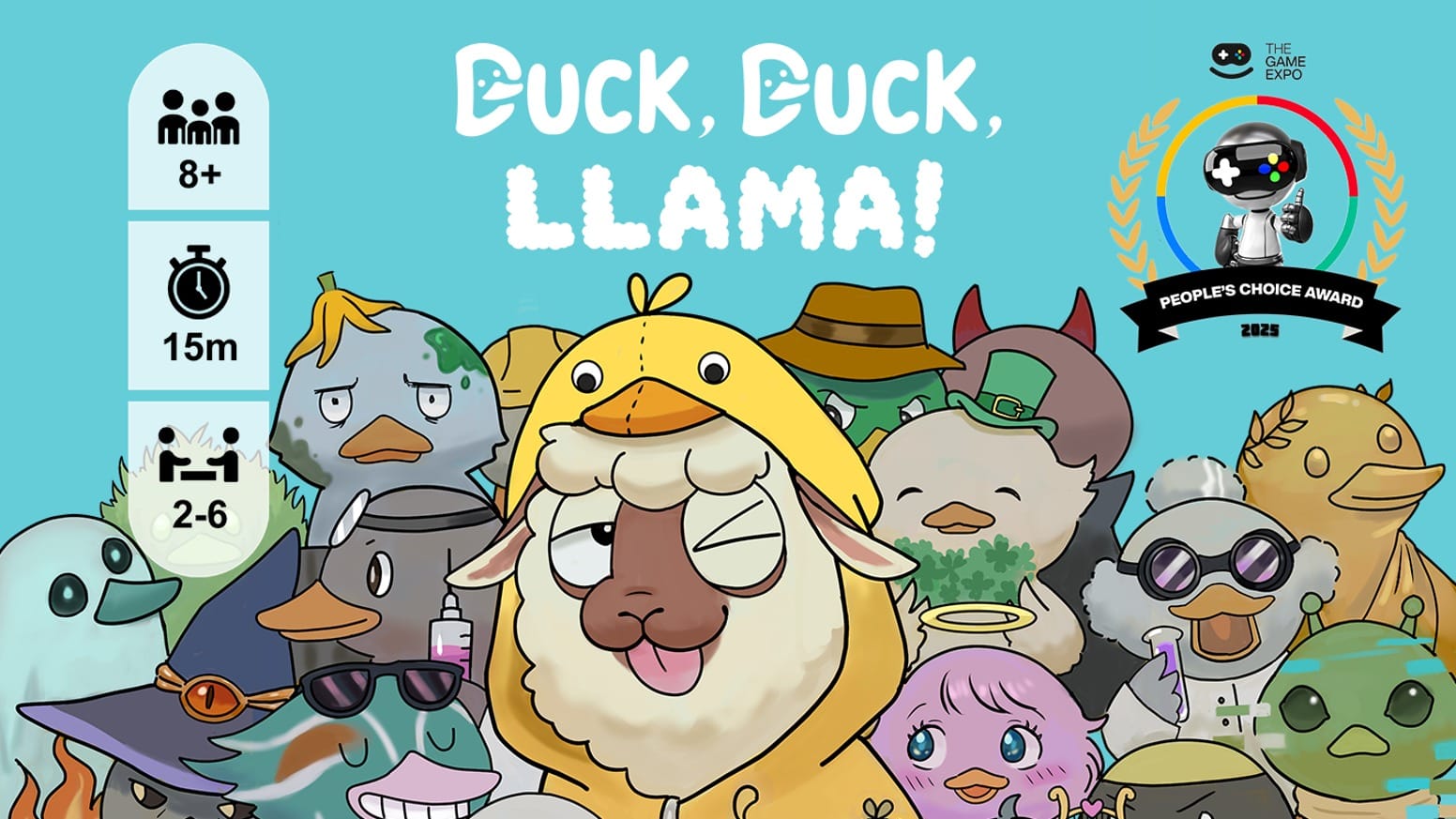
Die Kickstarter-Kampagne zu „Duck, Duck, Llama!“ endet heute, am 20. August 2026 um 17:01 Uhr MESZ (15:01 Uhr UTC). Das australische Studio Bizarre Studios aus Melbourne hat mit dem Party-Kartenspiel sein Finanzierungsziel von 10.000 AUD deutlich übertroffen: Stand jetzt stehen 19.639 AUD zusammen, das sind 196 Prozent des Ziels, getragen von 272 Unterstützenden.
Hot Potato mit Ablenkungsmanöver
Gespielt wird nach einem Hot-Potato-Prinzip mit mathematischem Dreh. Karten erhöhen oder senken „The Count“, die Anzahl der Enten im Spiel. Wer seinen Zug bei einem Count von 10 oder mehr beginnt, wird „angeklagt“ und muss sich mit einer passenden Karte freispielen oder eine Ablenkung auslösen, sonst fliegt die Person als Llama aus der laufenden Runde. Den Zusatz „The Party Game with No Eliminations“ trägt das Spiel nicht ohne Grund: Wer als Llama enttarnt wird, kann sich in einer der folgenden Runden zurückspielen, indem er selbst jemanden erfolgreich anklagt. Nach drei Runden gewinnen die verbliebenen „Ducktectives“.
Duck, Duck, Llama! ist ein Kartenspiel für 2 bis 6 Personen, dauert 10 bis 20 Minuten und ist ab 8 Jahren freigegeben, Familientauglichkeit ist erklärtes Ziel. Ein einzelner Lead Designer wird in der Kampagne nicht namentlich genannt, als Urheber tritt durchgehend das Studio Bizarre Studios auf. Wer nach einem weiteren chaotischen Kartenspiel für den Spieleabend sucht: Joking Hazard 2 lief erst kürzlich auf der Spieleschmiede.
Pledge-Stufen und Lieferung
Die Kampagne bietet vier Pledge-Stufen. „The Duck“ (27 AUD) bringt das Basisspiel mit 10 Prozent Rabatt plus digitalem Making-of-Booklet. „The Quacken“ (42 AUD) legt eine Anstecknadel und eine Folienkarte drauf. „The Llama“ (150 AUD) fügt weitere Folienkarten, eine limitierte Sammelkarte (1 von 110) und einen handschriftlichen Dankesbrief der Designer hinzu. Die Förderer-Stufe „The Chaz“ (2.500 AUD) richtet sich an Sammler und künftige Unterstützer weiterer Bizarre-Studios-Projekte. Der Versand geht weltweit, Kickstarter weist ausdrücklich darauf hin, dass Versandkosten, Steuern und Zoll erst nach Kampagnenende berechnet werden, das gilt auch für Backer in Deutschland. Die Auslieferung ist für Oktober 2026 angepeilt.
Auf BoardGameGeek (ID 462638) liegen bislang nur zwei Bewertungen vor, für eine Einschätzung der Spielqualität ist das zu dünn, ein Ranking gibt es entsprechend nicht. Eine deutschsprachige Ausgabe ist derzeit nicht bekannt. Als Kickstarter Staff Pick ist die Kampagne nicht ausgezeichnet.
Wer ein kurzes, chaotisches Partyspiel ohne Ausscheiden sucht und noch mitziehen will: Die Kampagne schließt heute, am 20. August 2026 um 17:01 Uhr MESZ. Danach ist nur noch der reguläre Handel eine Option, ein Termin dafür ist bislang nicht bekannt. Wer laufende Kampagnen im Blick behalten will, findet mehr davon in unserer Crowdfunding-Wochenschau.
Welcome to this week’s batch of crowdfunding campaigns. We have a variety of offerings here, so we hope you will find something that catches your eye. Also, if you want to chat with the BGQ team, join our Discord Server where we talk about games, movies, sports, and other fun stuff. Check it out and […]
Die Kalenderwoche 34 fällt mitten in die Sommerpause, und das merkt man dem Crowdfunding-Kalender an. Zwischen Gen Con und Messevorbereitung haben Gamefound und die Spieleschmiede in den vergangenen sieben Tagen keine frische Brettspiel-Kampagne mit echtem Neuigkeitswert nachgelegt. Auf Kickstarter dagegen sind zwei sehr unterschiedliche Titel neu an den Start gegangen: ein akten-getriebenes Horror-Ermittlungsspiel und ein Beutelbau-Strategiespiel um einen verwunschenen Wald. Wir sortieren, was sich lohnt, und benennen, wo diese Woche schlicht nichts Neues zu holen ist.
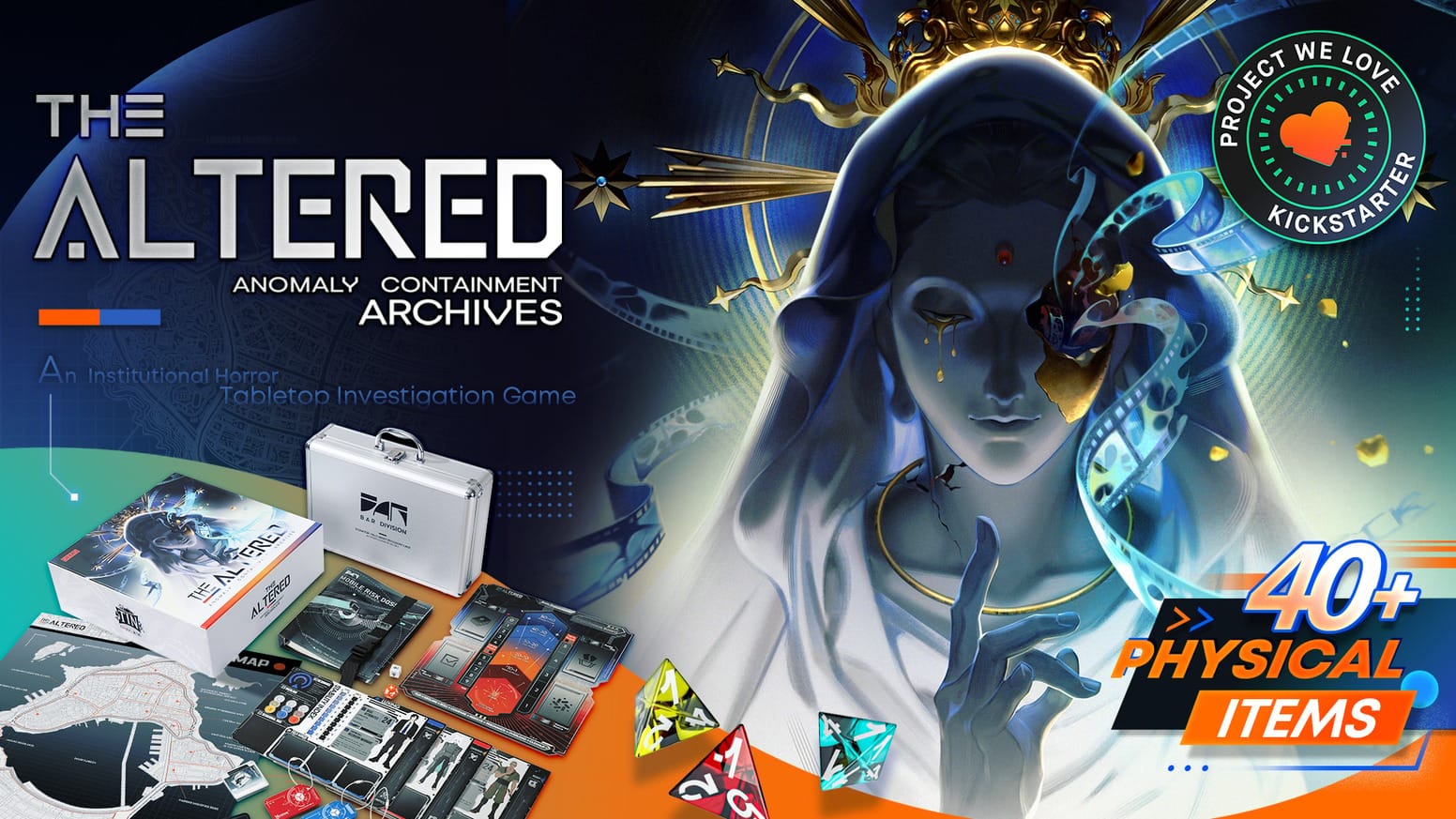
The Altered: Anomaly Containment Archives
The Altered: Anomaly Containment Archives ist seit dem 11. August live und hat sein Ziel um mehr als das 25-Fache übertroffen: rund 2 Millionen Hongkong-Dollar (umgerechnet etwa 230.000 Euro) von knapp 900 Unterstützern. Die Kampagne läuft noch bis zum 10. Oktober.
Im Kern ist The Altered ein kooperatives Dossier-Spiel für einen bis vier Spieler. Ihr schlüpft in die Rolle von Prüfkommissaren einer Behörde und öffnet nacheinander sieben verschlossene Fallakten. Ihr untersucht physische Beweisstücke, gleicht widersprüchliche Aussagen ab, entschlüsselt versteckte Informationen und rekonstruiert das Leben von Personen, die mit einem unerklärlichen Vorfall verbunden sind.
Am Ende jedes Falls fällt ihr ein bindendes Urteil: Wer ist noch Mensch, wer gilt als „verändert" und was muss weggesperrt werden. Diese Entscheidungen sind keine Sackgassen. Über verzweigte Wege und eine Beutelverwaltung mit verdeckten Marken tragen sich die Folgen eurer Urteile in spätere Fälle. Kommt es zu einem Ausbruch, wird er über taktisches Kartenspiel aufgelöst, einen Spielleiter braucht es nicht.
Für den deutschen Markt gibt es bislang keine Angabe zu einer Lokalisierung. Das Spiel setzt stark auf Texte und Ephemera, eine deutsche Ausgabe wäre also Voraussetzung für einen Sprachwechsel. Die Kampagne schweigt dazu, wir tragen das nach, sobald es Neues gibt.
Eckdaten:
Verlag: Tin Universe
Autor: Theo Z. Zhao
Spieleranzahl: 1 bis 4
Spielzeit: 45 bis 60 Minuten
Alter: ab 14 Jahren
Genre: kooperatives Ermittlungs- und Horror-Spiel mit Kampagne
Finanzierung: rund 2 Mio. HKD, etwa 2.547 Prozent des Ziels (Stand 17. August)
Aufnahmekriterium: neu gestartet in den letzten sieben Tagen und mit über 2.500 Prozent des Ziels deutlich überfinanziert.
Whisperwood
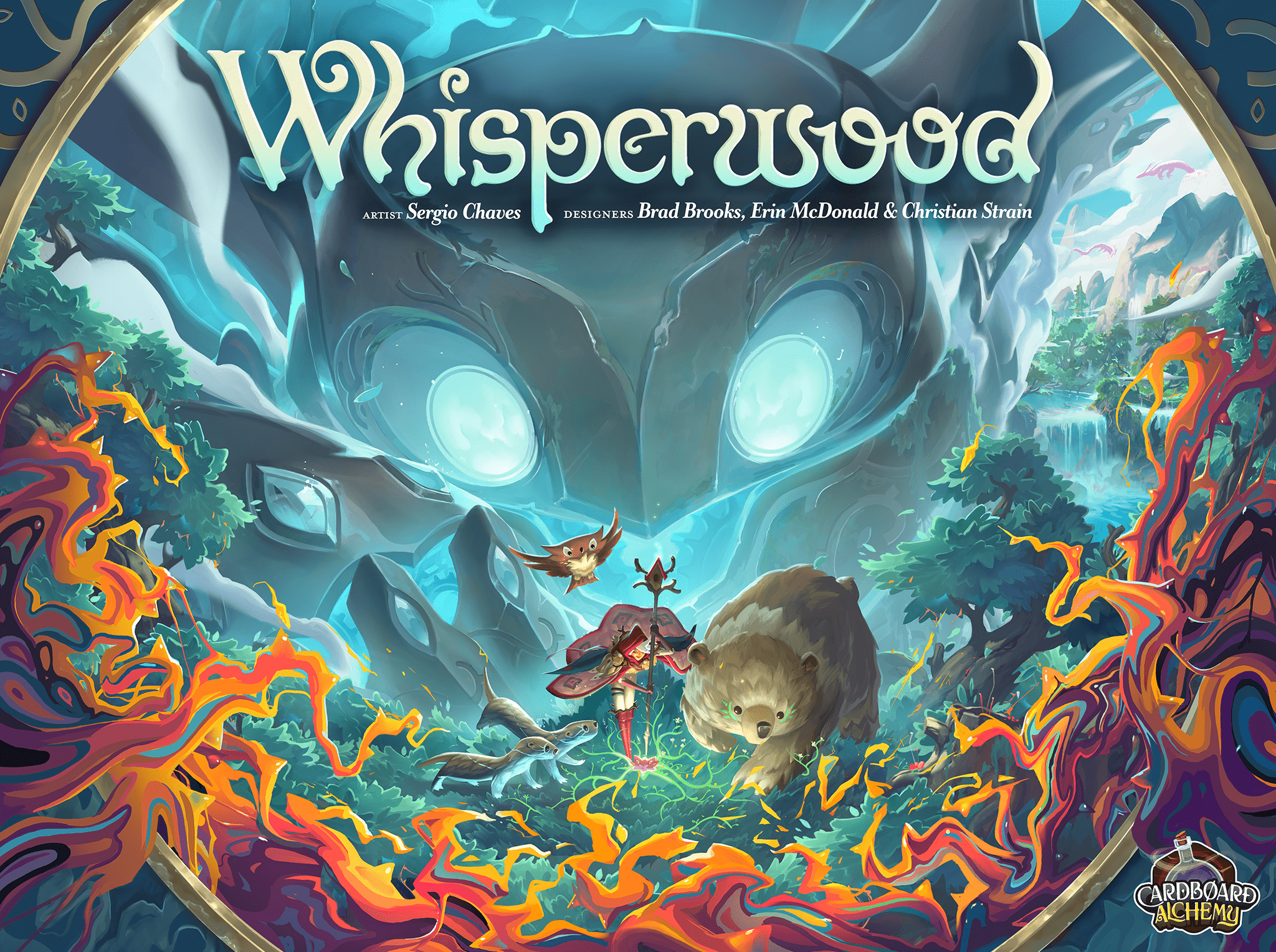
Whisperwood von Cardboard Alchemy ist der zweite Neustart der Woche, ebenfalls seit dem 11. August live und aktuell bei rund 405 Prozent (etwa 405.000 US-Dollar, über 2.000 Unterstützer). Die Kampagne läuft noch bis zum 2. September.
In Whisperwood zieht ein Rat von Druiden in einen Wald, den ein dunkler Zauberer verdorben hat, und reinigt ihn Stück für Stück. Spielerisch ist das ein Beutelbau für einen bis vier Spieler: Ihr zieht Marken aus eurem Beutel, baut ihn planvoll aus und müsst zugleich mit einer störenden Verderbnis im Beutel umgehen.
Wir haben Whisperwood diese Woche bereits ausführlich vorgestellt. Mechanik, Eckdaten und eine Einordnung findest du in unserem eigenen Artikel zur Kampagne.
Aufnahmekriterium: neu gestartet in den letzten sieben Tagen, über 400 Prozent finanziert und mit mehr als 100.000 US-Dollar Volumen relevant.
Was auf Gamefound und der Spieleschmiede fehlt
Zur Einordnung gehört auch, was nicht läuft. Auf Gamefound sind die Sommer-Kampagnen inzwischen überwiegend abgeschlossen, und ein frisch gestartetes Brettspiel mit klarer Relevanz für deutsche Spieler war in dieser Woche nicht darunter. Die Spieleschmiede hat in den vergangenen sieben Tagen keine neue Kampagne nachgelegt, die zuletzt dort geförderten Titel sind bereits beendet. Beides ist saisonüblich: Zwischen Gen Con und der Vorbereitung auf die Herbstmesse halten sich viele Verlage mit Starts zurück.
Ausblick auf die kommende Woche
Ganz ruhig bleibt es nicht. Garphill Games kündigt für den 18. August eine gemeinsame Kickstarter-Kampagne für zwei Erweiterungen an: Omens und Headlands zu „Raiders of Scythia" und „Skara Brae". Beide Grundspiele gibt es auf Deutsch, entsprechend dürften die Erweiterungen auch hierzulande ein Thema werden. Wir schauen sie uns in der nächsten Ausgabe an.
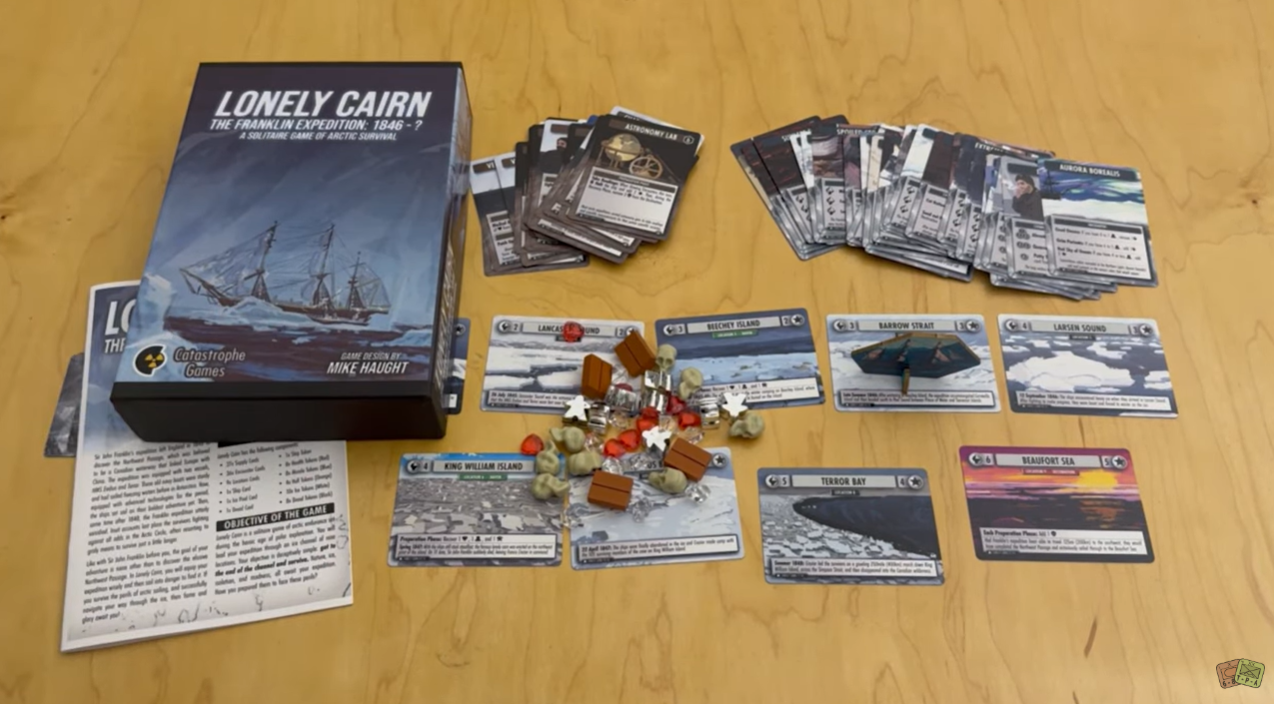
There are a million ways to die in the Arctic, so carefully choose your supplies and read the ice well, and you just might secure the coveted prize of discovering the fabled Northwest Passage.
Lonely Cairn is a solitaire game about finding the Northwest Passage in the mid 1800’s. Modelled and based upon the ill-fated Franklin Expedition, players will need to equip their expedition and carefully chose what to take with them into the arctic. They will then sail though a channel of icy locations, facing deadly encounters along the way. They must reach the exit by the end of 8 turns, or face being locked in the ice forever.
Ein Rat von Druiden zieht in einen Wald, den ein dunkler Zauberer verdorben hat, und soll ihn Stück für Stück reinigen. Whisperwood von Cardboard Alchemy setzt diese Geschichte als Beutelbau-Spiel um, das aktuell auf Kickstarter läuft, und richtet sich an Kennerspieler und Vielspieler, die ihren Beutel planvoll aufbauen und zugleich mit einer störenden Verderbnis umgehen wollen.
Was man in Whisperwood tut
Im Kern ist Whisperwood ein Beutelbau-Spiel (im Original Bag-Builder). Wie beim verwandten Deckbau ziehen Sie nicht Karten aus einem Stapel, sondern Chips aus einem Beutel, verbessern diesen Vorrat über die Partie und versuchen, ihn Runde für Runde schlagkräftiger zu machen. Die zentrale Spannung sitzt dabei im Thema: Der Wald ist von Verderbnis (im Original corruption) durchsetzt, und diese Verderbnis müssen Sie aufnehmen und reinigen. Wer zu viel davon mit sich herumträgt, schwächt die eigenen Fähigkeiten. Der Beutel ist also kein reines Aufwerten, sondern eine laufende Abwägung, wie viel Belastung man sich zumutet, um den Wald voranzubringen.
Rund um den Beutel legt Cardboard Alchemy weitere Systeme. Laut der Mechanik-Auflistung auf BGG kombiniert Whisperwood geschlossenes Drafting (Closed Drafting), simultane Aktionswahl, Tech-Trees beziehungsweise Fortschrittsleisten, einen variablen Aufbau und Boni in der Endwertung. Thematisch erwecken die Druiden Wächter-Golems und stellen Flora und Fauna wieder her; wer im Rat am meisten leistet, wird am Ende zum Primus gekürt. Die simultane Aktionswahl deutet darauf hin, dass alle Mitspielenden zugleich planen, was die Wartezeiten zwischen den Zügen kurz halten dürfte.
Verlag und Designer hinter Whisperwood
Verantwortlich ist der US-Verlag Cardboard Alchemy aus Burbank, Kalifornien. Als Designer nennt die Kampagne Brad Brooks, Erin McDonald und Christian Strain. Die Illustration stammt von Sergio Chaves und Sandara Tang.
Eckdaten zu Whisperwood
Punkt
Angabe
Spielerzahl
1 bis 4 (laut Kampagne inklusive Solo-Modus)
Spielzeit
rund 50 bis 200 Minuten
Alter
ab 14 Jahren
Genre
Beutelbau-Strategiespiel
Verlag
Cardboard Alchemy (USA)
Zwei Punkte gehören offen benannt. Erstens die Spielerzahl: Die laufende Kampagne bewirbt 1 bis 4 Spielende samt Solo-Modus, ein älterer Beschreibungstext auf BGG spricht dagegen von 2 bis 4. Wir richten uns nach der aktuellen Kampagnen-Angabe. Konkrete Details, wie der Solo-Modus funktioniert, nennt die uns vorliegende Quellenlage allerdings nicht; wer allein spielen möchte, findet dazu bislang keine belastbare Beschreibung. Zweitens die Spielzeit: Die Spanne von 50 bis 200 Minuten ist sehr weit und dürfte stark von der Spielerzahl abhängen, eine genauere Staffelung liegt uns nicht vor.
Die Kickstarter-Kampagne: Stand und Pledge-Stufen
Zum Snapshot am 14. August 2026 hat Whisperwood sein Finanzierungsziel klar übertroffen: Bei einem Ziel von 100.000 US-Dollar standen rund 351.000 US-Dollar zu Buche, das sind etwa 351 Prozent, getragen von 1.761 Unterstützenden. Kickstarter führt das Projekt als Staff-Pick. Die Kampagne läuft nach Angaben der Seite bis zum 2. September 2026, die geplante Auslieferung nennt der Verlag für April 2028. Solche Crowdfunding-Zahlen sind ein Signal für Aufmerksamkeit, aber kein Gütesiegel für die spätere Spielqualität; ausgeliefert wird erst in gut anderthalb Jahren.
Bei den Pledge-Stufen trennt Cardboard Alchemy klar zwischen Umfang und Ausstattung. Die Standardversion OWL beginnt bei 99 US-Dollar und liefert das Grundspiel. OTTER ab 149 US-Dollar ist die Deluxe-Variante mit hochwertigerer Ausstattung. BEAR ab 299 US-Dollar bündelt die Deluxe-Version mit Add-ons und Golem-Miniaturen und zielt damit auf Sammler. Wer zunächst nur reservieren möchte, kann über ein Retail-Deposit von 50 US-Dollar einsteigen. Der spielerische Kern ist in allen Stufen derselbe; oberhalb von OWL zahlen Sie vor allem für Material und Extras, nicht für zusätzliche Regeln.
Was für deutsche Leser offen bleibt
Für deutsche Spielerinnen und Spieler bleiben zwei Fragen ungeklärt. Ob es eine deutschsprachige Ausgabe oder Lokalisierung gibt, geht aus den vorliegenden Quellen nicht hervor. Und der Versand ist laut Kampagne auf bestimmte Länder beschränkt, ohne dass die uns vorliegenden Daten belegen, ob Deutschland dazugehört. Wer mitfinanzieren will, sollte vor dem Pledge die Versand- und Sprachangaben direkt auf der Kampagnenseite prüfen. Auch bei den Stretch Goals gilt Zurückhaltung: Die Kampagne unterscheidet zwar zwischen Gameplay-Stretch-Goals, die die Mechanik erweitern, und Deluxe-Stretch-Goals, die Komponenten aufwerten. Welche einzelnen Ziele bereits freigeschaltet sind, geht aus den uns vorliegenden Daten jedoch nicht hervor.
Unser Ersteindruck
Whisperwood verbindet einen vertrauten Motor, den Beutelbau, mit einer thematisch verankerten Bremse, der Verderbnis, und genau in dieser Abwägung liegt der Reiz. Ob das System auf Dauer trägt und wie fordernd der Solo-Modus ausfällt, lässt sich vor dem Erscheinen nicht beurteilen. Für deutsche Interessenten ist der wichtigste offene Punkt schlicht, ob Spiel und Versand hierzulande überhaupt ankommen. Ein Blick auf die Kampagnenseite vor dem Pledge lohnt sich in jedem Fall.
Africa’s longest-running board game convention is hoping to use its tenth anniversary to put more direct support behind the continent’s emerging designers, with plans for a new grant programme if its latest crowdfunding campaign reaches $20,000.
The November 27 and 28 event in Abuja will include prototype playtesting, workshops, industry discussions, networking and a marketplace alongside its consumer-facing game demonstrations and tournaments, according to organiser NIBCARD Games.
But potentially more significant for Africa’s developing board game industry are the additions AB Con hopes to unlock if the campaign moves beyond its base target.
Reaching $20,000 would launch an AB Con Designers Grant, providing financial support and mentorship to African tabletop designers to develop prototypes, improve their games and showcase them at future editions of the convention.
A $22,000 stretch goal would introduce an Impact Award recognising people and organisations helping develop the continent’s tabletop ecosystem, while $30,000 would extend this year’s convention from two days to three.
The campaign describes the designer grant as an attempt to create “more opportunities for African games to reach local and international audiences”.
That represents another step in a decade-long attempt by AB Con and organiser NIBCARD to build infrastructure around what was an extremely small modern tabletop design community when the convention began.
AB Con says there were fewer than 10 known indigenous tabletop games and only three published game designers in Nigeria before it launched in 2016, with few places available for people to regularly play modern board games.
BoardGameWire reported last year that the number of known modern games from Nigerian designers had since passed 100, while the number of designers had grown to 25.
AB Con has provided a crucial meeting point and catalyst during that expansion, bringing together designers and publishers alongside manufacturers, retailers, educators and players.
Gamers, publishers, designers and organisers at AB Con 2025 || Photo Credit: AB Con
Nigerian board game company NIBCARD’s role in developing that ecosystem was recognised with the Diana Jones Award for Excellence in Gaming in 2021.
The award committee described the company as being “the multi-faceted company at the heart of the nascent Nigerian games industry”, highlighting its work publishing games, manufacturing for other companies, mentoring designers, running a game café and organising AB Con.
NIBCARD itself says it has now designed more than 70 tabletop games since being founded in 2013, while its activities have expanded across publishing, manufacturing, education and digital games.
While those efforts have proved a pillar of the region’s hobby gaming growth, NIBCARD and AB Con founder Kenechukwu ‘KC’ Ogbuagu told BoardGameWire there were still large challenges around getting Nigerian and African designers and games to break into North American and European markets.
He said, “It’s a combination of several factors, but I would highlight visibility, access, finance, and market access.
“There is a significant lack of visibility for African games and designers. Publishers often don’t get to see the games being created here, while designers have very limited opportunities to meet and build relationships with publishers.
NIBCARD and AB Con founder Kenechukwu ‘KC’ Ogbuagu
“I have experienced this personally. I once received fully funded support to attend Spiel Essen, but was denied a visa. Last year, I was invited to GothCon on a fully funded trip, but I couldn’t even secure an interview date for my visa application.
“Finance is another major barrier. Even when a game is ready, designers need money to market it, work with content creators and reviewers, attend international conventions, and run crowdfunding campaigns such as Kickstarter or Gamefound.
“And for those who choose to self-publish, international shipping can make African games extremely expensive and difficult to compete with in global markets.”
He added, “One of our mission is to see African designers creating games that are enjoyed globally and, ultimately, seeing African-designed games recognised among the best games in the world.
“We have already started working towards this. Last year, with support from the Spiel Foundation, we showcased games from three African designers at SPIEL Essen 2025. We also started a game studio as a way to bring African games to light.
“But even as we build, from over 10 years of experience doing this, a lot of the impact are limited due to lack of funding.
“We are intentionally building AB Con to become a platform where African designers, games, publishers, distributors, and international industry professionals can connect.
“We want publishers from North America and Europe to see AB Con as a place to discover new designers and games from Africa, explore licensing and publishing partnerships, and build long-term relationships with the African tabletop industry.
“This is one reason we are committed to maintaining a two-day convention going forward, with the goal of eventually growing it into a four-day event. We want to create enough time and space for meaningful meetings, playtesting, networking, showcases, and publisher scouting.”
The growing scope of AB Con has repeatedly run up against the economics of staging the convention, however.
Its new $14,000 base target represents another substantial increase. Organisers said the higher figure reflects both inflation and the cost of restoring AB Con’s two-day format, and will be used for venue and production costs, volunteer support, logistics, marketing, accessibility and expanded programming.
Nigeria continues to experience significant price increases, despite inflation having eased substantially from the levels that prompted AB Con’s return to crowdfunding.
The country’s National Bureau of Statistics currently reports annual consumer price inflation of 15.9% – down markedly from an almost 30-year high of 34% when AB Con launched its 2024 campaign.
Last year’s AB Con campaign was initially intended to support ambitions for as many as 3,000 attendees, compared with roughly 1,300 at the 2024 event and about 1,000 in 2023. The 2025 convention ultimately took place as a one-day event on November 29.
At least seven Nigerian designers showcased projects at the 2025 convention, according to Nigeria’s Independent newspaper, while participating publishers included Althra Games, ICE Game and Jesus Native Games.
AB Con founder and lead convener Kenechukwu ‘KC’ Ogbuagu said, “When we hosted the first AB Con in 2016, our dream was bigger than organizing an event – we wanted to help build an industry.
“Ten years later, we’ve seen designers launch original games, communities grow across Africa, and more people recognize games as powerful tools for learning, culture, business, and connection.
“This anniversary is not only a celebration of how far we’ve come but an invitation for the world to help shape what comes next.”
The AB Con Kickstarter is live now, with the convention scheduled to take place in Abuja, Nigeria on November 27 and 28.
Welcome to this week’s batch of crowdfunding campaigns. We have a variety of offerings here, so we hope you will find something that catches your eye. Also, if you want to chat with the BGQ team, join our Discord Server where we talk about games, movies, sports, and other fun stuff. Check it out and […]
Crowdfunded eurogames from smaller board game publishers had a banner year at the latest Dice Tower Awards, accounting for half of the wins at the high-profile prize ceremony.
The biggest success of the night was Kinson Key Games’ Galactic Cruise, which was crowned game of the year in addition to picking up gongs for best strategy game and best game from a new designer.
Galactic Cruise, designed by TK King, Dennis Northcott and Koltin Thompson
Fellow indie publisher Paverson Games was also a standout winner in this year’s Dice Tower Awards, with its classical music-inspired title Luthier picking up awards for best theme, best production and best game from a small publisher.
Other crowdfunded titles honoured by the awards were mid-weight euro Critter Kitchen for best artwork thanks to the work of Sandara Tang, and 20 Strong: Tanglewoods Red for best solo game – the latter the only one which raised money through Gamefound rather than Kickstarter.
The string of crowdfunded successes is significant given the notable shifts which have taken place on Kickstarter and Gamefound in recent years, with a rise in larger publishers using the sites, and more campaigns focused around big-budget releases, miniatures heavy projects, deluxified components and major licensed IP.
CMYK scored a second success in this year’s awards with Hot Streak, which won best party game, while Stonemaier Games took the most innovative game prize with Vantage and Tag Team won best 2-player game.
Presented annually during Gen Con, the Dice Tower Awards are among the board game hobby’s highest-profile jury-voted honours, given the winning titles gain exposure with the veteran reviews giant’s more than 360,000 YouTube subscribers.
Winners are selected from the previous year’s games by a panel of more than 60 Dice Tower contributors, reviewers and content creators. The awards celebrates its 20th anniversary next year.
In dieser Woche (KW 33) haben Gamefound und die Spieleschmiede keine frische Brettspiel-Kampagne mit echtem Neuigkeitswert nachgelegt. Auf Kickstarter dagegen laufen gleich drei Projekte aus derselben Startwelle vom 14. Juli auf ihr Ende am 13. August zu. Alle drei sind finanziert und decken ein leichtes bis mittleres Gewicht ab, vom Jahrmarkt-Spiel bis zum Spieleabend-Paket. Ein Hinweis vorab: Es handelt sich um US-Kampagnen in US-Dollar, für die aus dem DACH-Raum Versandkosten und Einfuhrabgaben anfallen.
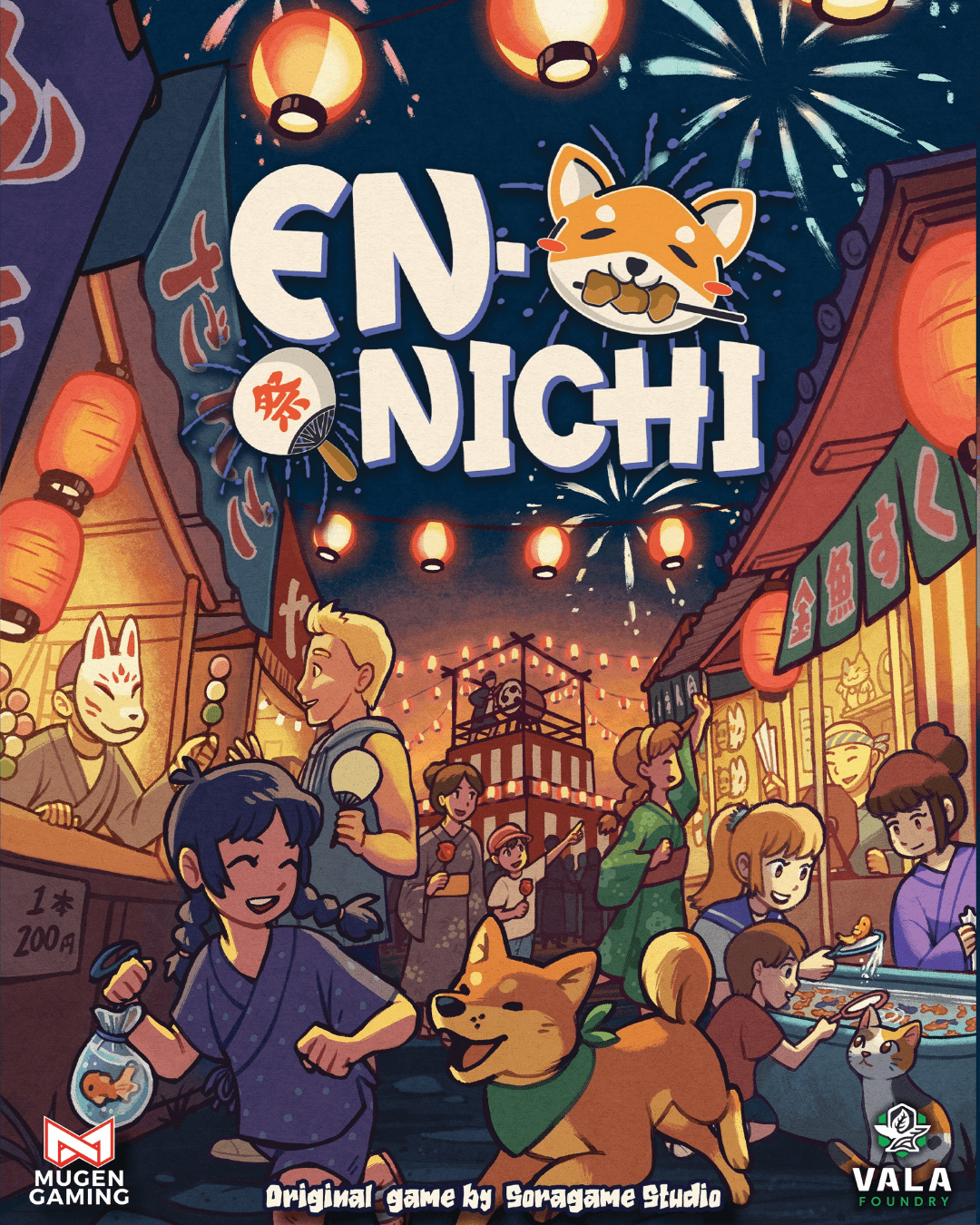
En-Nichi: Japanese Summer Festival
En-Nichi: Japanese Summer Festival. Bild: Mugen Gaming (via BoardGameGeek).
En-Nichi läuft noch bis zum 13. August auf Kickstarter und hat sein Ziel von 7.878 US-Dollar mit aktuell rund 112.831 US-Dollar auf etwa 1.432 Prozent gebracht, getragen von rund 1.035 Unterstützenden. Damit ist es der klare Volumen-Spitzenreiter dieser Ausgabe und erfüllt gleich zwei Aufnahmekriterien: kurz vor Ende und außergewöhnlich hohe Finanzierungsquote.
Thematisch wanderst du über ein japanisches Sommerfest von Stand zu Stand und spielst kleine Jahrmarkt-Minispiele wie Schießbude, Goldfisch-Fangen, Wasserballon-Angeln und Maskenstand. Mechanisch mischt das Spiel Würfeln, Push-your-Luck, ein Gedächtnis-Element und Set Collection: Du sammelst bunte Preise, um die Gunst der Dorfbewohner zu gewinnen. Wer genug Zuneigung sammelt, nimmt die Figuren mit ins große Finale.
Es spielen 2 bis 6 Personen ab 8 Jahren, eine Partie dauert 45 bis 60 Minuten. Verlag ist Mugen Gaming aus Kansas City. Einen Designer nennt weder die Kampagne noch der BoardGameGeek-Eintrag, hier bleibt die Urheberschaft offen.
Aufnahmekriterium: Kurz vor Ende (finanziert) und besonders interessant (Finanzierungsquote deutlich über 300 Prozent, Volumen über 100.000 US-Dollar).
How to Raise Your Kaiju
How to Raise Your Kaiju. Bild: Rose Gauntlet Entertainment (via BoardGameGeek).
How to Raise Your Kaiju läuft noch bis zum 13. August auf Kickstarter und steht mit rund 35.731 US-Dollar bei etwa 357 Prozent des Ziels von 10.000 US-Dollar, gestützt von rund 431 Unterstützenden. Hinter dem Projekt steht Rose Gauntlet Entertainment, das Design stammt von Isaac Vega, die Illustrationen von Alyssa Menold.
Du schlüpfst in die Rolle eines Kaiju-Elternteils und ziehst kleine Monster groß. In deinem Zug setzt du ein Baby-Kaiju auf eine Stadt und nimmst dir eine Fähigkeitenkarte. Anschließend kannst du Stadtzonen erobern, indem du Fähigkeitenkarten passend zu den Verteidigungs-Tokens abwirfst, was Erfahrungspunkte und Ressourcen einbringt. Sammelst du genug Erfahrung, verdient dein Kaiju einen Goldstern.
Alternativ schickst du dein Monster auf den Open-World-Pfad, wo weitere Strecke größere Belohnungen bringt. Eltern-Karten geben jeder Spielerin und jedem Spieler eigene Sonderfähigkeiten, sodass sich die Partien unterscheiden. Nach vier Runden gewinnt, wer die meisten Goldsterne gesammelt hat. Mechanisch verbindet das Spiel Worker Placement, Handmanagement und Set Collection für 1 bis 4 Personen ab 10 Jahren, bei 30 bis 60 Minuten Spielzeit.
Aufnahmekriterium: Kurz vor Ende (finanziert) und besonders interessant (Finanzierungsquote über 300 Prozent, etablierter Designer).
MILLRAT Pack!
MILLRAT Pack! Bild: MILLRAT Studio (via Kickstarter).
Das MILLRAT Pack läuft noch bis zum 13. August auf Kickstarter und hat mit rund 11.326 US-Dollar etwa 188 Prozent des Ziels von 6.030 US-Dollar erreicht, getragen von rund 191 Unterstützenden. Das Projekt bündelt vier eigenständige Spiele in einer Schachtel, gedacht für den Spieleabend, entwickelt von MILLRAT Studio (Nick und Adam) mit Artwork von Abby Ouellette.
Die Kampagne beschreibt das Paket als „etwas für jeden am Tisch", schlüsselt die vier Titel in den abrufbaren Kampagnendaten aber nicht einzeln nach Mechanik oder Spielerzahl auf. Was die Spiele konkret tun, bleibt damit auf Basis der reinen Eckdaten offen. Für den DACH-Raum ist außerdem wichtig: Der physische Versand ist auf die USA beschränkt, sinnvoll bestellbar ist von hier aus vor allem die Print-and-Play-Variante ab 8 US-Dollar.
Aufnahmekriterium: Kurz vor Ende (finanziert). Der Titel steht hier ausdrücklich mit dem Vorbehalt eingeschränkter DACH-Verfügbarkeit.
Kein frischer Start auf Gamefound und Spieleschmiede
Auf Gamefound sind die Kampagnen des Summer Feast von Ende Juli inzwischen überwiegend beendet, ein frisch gestartetes oder kurz vor Ende stehendes Brettspiel mit klarer DACH-Relevanz war in dieser Woche nicht darunter. In der Spieleschmiede läuft weiterhin das Zeitreise-Kennerspiel Restart von Giant Roc, das wir bereits in KW 31 und KW 32 vorgestellt haben und das daher hier keinen neuen Aufhänger bietet. Sobald auf diesen beiden Plattformen wieder etwas Neues mit Substanz startet, greifen wir es in der nächsten Ausgabe auf.
A trio of veteran board game industry professionals have launched a new tabletop gaming agency, with the aim of helping businesses within the hobby get their games developed and into the market.
Hues and Cues designer Scott Brady, Sagrada co-creator Daryl Andrews and Friendly Skeleton CEO Jacob Way said Best in Play will offer everything from interim executive leadership and designer representation to publisher submission management and crowdfunding strategy.
Brady said, “Best in Play was created to bring together people and opportunities that should already be working with one another.
“Great intellectual properties need the right designers and publishing partners, designers need better access to decision-makers, and companies sometimes need experienced leadership without the time or resources required to build an entire department.”
Best in Play says its five core service areas comprise IP matchmaking, crowdfunding consultation, interim replacement of key personnel, publisher-inventor relations and identifying publishers and licensing opportunities for individual games, multiple projects or designer catalogues.
The company announced at launch that it has already been hired as a consultant for an unspecified US-based “creator-brand merchandising and e-commerce company”, providing senior-level leadership and games-industry expertise while the client continues its search for a permanent head of games.
Best in Play said that project will run the gamut of product development, licensing, publishing, production, crowdfunding and portfolio strategy.
Andrews said of the assignment, “An important initiative should not lose six months of momentum because a key role is temporarily vacant.
“Our model gives clients access to an experienced team that can step in quickly, evaluate the situation and keep products, partnerships and internal teams moving forward.”
The company is also working on a tabletop project based on an unnamed “major video game intellectual property”, with a crowdfunding launch planned for early 2027.
Way said, “A recognizable property may attract attention, but a successful crowdfunding campaign still needs the right product, positioning, audience strategy and operational plan.
“Our goal is to build campaigns that respect the fans, communicate value clearly and create a foundation for success beyond the initial launch.”
As well as the founding trio of managing directors, the Best in Play team also includes strategic contributors David Gordon, the co-creator of Finspan, Eastar Game Manufacturing founder and CEO David Du, Legend of the Five Rings: The Card Game co-designer Erik Dahlman and Daniel Pesante.
Brady previously launched his development studio A Game Studio at the start of 2024, following the 2020 release of the big-selling Hues and Cues and the success of his cat-themed abstract strategy Boop in 2022.
He previously spent two years as head of talent acquisition at Maestro Media, following several months working in investor relations, before leaving the company in early 2025.
Jacob Way, meanwhile, began his board game career as COO and co-founder of Deep Water Games, which for several years operated as a subsidiary of Ox Eye Media.
Deep Water, which is best known for sketching game MonsDRAWsity, spun out from Ox Eye as an independent business in 2022 under Way before rebranding as Friendly Skeleton.
About 18 months ago, while attending Buckeye Game Fest in Columbus, Ohio, we met up with David Thompson to get a quick look at a few of his newest upcoming games at the time including Line of Fire: Burnt Moon from Osprey Games and the very interesting American Civil War game with a twist called Rebels Against Rebellion from Flying Pig Games. I got to play Rebels Against Rebellion and very much enjoyed the game and what it was trying to convey about the lack of support for the secession of Tennessee from the Union as most of the residents of Scott County voted against breaking away during the American Civil War. The game pits the local groups against each other as the Free and Independent State of Scott fights against the local secessionist residents as violent confrontations between Loyalist and secessionist-aligned partisans and outlaws engaged in raids on farms, stealing livestock, and destroying property. Since that time, the game has progressed and has launched on Kickstarter. I reached out to one of the game’s designer David Thompson to see if he would be willing to share about the design and as always he was more than happy to oblige us.
Grant: David, welcome back to our blog. What is your new upcoming game Rebels Against Rebellion about?
Davind: Thanks for having me back! Rebels Against Rebellion is a card-driven war game for one or two players, set in Scott County, Tennessee, during the American Civil War. Tennessee’s own path to secession was messy. The state voted against a secession convention in February 1861, then reversed course and voted to join the Confederacy in June, following Fort Sumter. But East Tennessee never went along with it. And of all the counties in East Tennessee, none rejected secession more decisively than Scott County: 521 to 19. Later that year, the county court went so far as to pass a resolution declaring Scott County’s own independence from the state of Tennessee, calling itself the “Free and Independent State of Scott.” That’s the story we’re telling: Southern Loyalists trying to hold their ground against the Confederate army and their allied secessionist guerrillas, for the whole length of the war.
Grant: What should the title convey to the players?
David: I wanted the title to carry that irony right up front. Rebels Against Rebellion. The people of Scott County were, technically, rebelling against a rebellion by resisting the Confederacy in order to maintain their ties with the Union. History likes to flatten “Rebel” down to one side of the Civil War, but in Scott County that word cuts the other way too. I liked that the title does some of the historical educating on its own, before a player has even opened the box.
Grant: Why was this a subject you wanted to focus on?
David: It’s a story that doesn’t get told nearly enough. We hear a lot about the big battles and the big generals, but the internal fractures within the South (communities that stayed loyal to the Union under occupation, that organized home guards, that got raided by their own state’s army) that’s a different and much more personal kind of Civil War story. I’ve made a habit of chasing these under-told corners of history rather than the well-trodden ones, and Scott County is about as under-told as it gets. Once you learn about Julia Marcum defending her father’s house with an axe, or the Home Guard’s oath at the Huntsville courthouse, it’s hard not to want to build a game around it.
Grant: What are the unique features with the system used for the game?
David: The core of it is a deck that represents both your units and your locations. Playing a card from your hand isn’t just “move a piece,” it’s your people and your settlements acting together. Every location you control is physically a card sitting in your deck, hand, or discard pile, so controlling territory and building your deck are the same action. You don’t have a separate “buy phase” and “map phase.” When you improve control of a location or bolster in a new unit, you’re deck-building in exactly the same motion as you’re expanding on the board. I think that tight coupling between deckbuilding and area control is the thing that sets Rebels Against Rebellion apart.
Grant: What did you need to model regarding the American Civil War and the situation in Scott County, Tennessee?
David: Quite a lot, honestly. We needed the asymmetry between the two sides to feel true to what actually happened. The Loyalists start the game already holding six locations and 11 points, reflecting how entrenched they already were in the county by the time real fighting started, while the Confederates start with nothing on the board and have to earn their presence. We needed the food economy to reflect how much this was a war of resources and raiding: burned farms, stolen livestock, the constant question of how you feed yourself when supply lines are contested. We needed supply lines themselves to matter for Confederate regulars in a way they didn’t for local guerrillas, since regular units like the 43rd Alabama or Morgan’s Raiders came in from outside the county and depended on a route back to it, while home-grown units like the Home Guard didn’t need that at all. And we needed the map’s road, water, and path connections to reflect the real terrain. Scott County’s isolation and rugged geography is a huge part of why guerrilla warfare took hold there in the first place.
Grant: What is your design goal with the game?
David: We wanted a game that plays cleanly as a tight, two-player card-driven war game, and we wanted a player who knows absolutely nothing about Scott County going in to come away from a session with real curiosity about what actually happened there. Every named card, every location, every unit in the game is drawn from the historical record. If the mechanics are doing their job, “Capt. William Robbins” isn’t just a card with shield and gun icons on it. It’s a doorway into a real person’s story.
Grant: What other games did you use as inspiration?
David: The DNA is definitely there from our work on Undaunted, that idea of your deck representing your force on the board rather than being an abstract resource. But Rebels Against Rebellion pushes further into area control than Undaunted ever did, so we were also looking hard at how area-control and card-driven wargames handle territory scarcity and endgame tension. The most obvious influence comes from Martin Wallace’s A Few Acres of Snow, which serves as a the origin for the core concept of playing a location card as the source of movement. A lot of our actual influences, though, came out of the playtesting process itself.
Grant: What sources did you consult about the history?
David: We leaned heavily on the Scott County Historical Society throughout, especially David Jeffers, Alan Keeton, and James Cecil, who were enormously generous with their research and their archives. On the written side, Paul Roy’s Scott County in the Civil War was probably our single most important source. His overview chapter and his 148-page account of individual Scott County soldiers did a lot of heavy lifting for us. We also relied on Esther Sharp Sanderson’s County Scott and Its Mountain Folk and Scott County Gem of the Cumberlands, H. Clay Smith’s Dusty Bits of the Forgotten Past, Noel C. Fisher’s War at Every Door for the statistical picture of East Tennessee loyalism, Ben Garrett’s Enclave, decades of back issues of the Scott County Chronicle and the First National Bank Chronicle, and the Official Records of the Union and Confederate Armies for the military correspondence. Dr. Stuart Ellis-Gorman did our proofing and copyediting to help make sure we got the details right.
Grant: What did you learn from your trip to this area as part of your research?
David: Back in the fall of 2025 I went to Scott County to meet with folks from the Historical Society and access primary sources that were otherwise unavailable. This trip was absolutely critical to the design process. The men I met at the Historical Society had deep knowledge on the subject, so I conducted interviews with them. They also provided me some of the primary sources I had read about, but could not access without their help (mostly in the form of photocopied versions of printed documents from local authors). My trip to Scott County also gave me the opportunity to visit the area and experience the topography for myself.
Grant: What are the differences between the playable factions of the Confederates and the rebels?
David: Thematically, the Loyalists are defenders who start the game already dug in. They begin with six locations and a head start on the scoreboard, and their whole arc is about holding what’s theirs and expanding cautiously outward. The Confederates start with nothing on the board and have to fight for every location, but they’ve got the raw power to do it: bigger regular units, the ability to bring in outside firepower, provided they can maintain a supply line back to where those units are actually based.
Grant: How did you differentiate them in their mechanics?
David: A few ways. The Loyalists have much more extensive access to the Improve Control action, which allows them to place a second control marker into a location for an additional victory point and card benefit, while a couple of key Loyalist locations, Brimstone and Trammell’s, double as both a location and a unit card depending how you want to play them that turn. The Confederates, on the other hand, get access to harder-hitting regular army units, but those units can carry a supply line requirement, so playing them isn’t as simple as just having them in hand. You need an unbroken road connection back to their origin. It creates a real asymmetry: the Loyalists play a tighter, more efficient game, while the Confederates have more raw strength but have to work to unlock it.
Grant: How does the game use cards?
David: Cards do double duty as your units and your locations, and every card you play resolves a specific action before it goes to your discard pile. Food is the one shared resource, but everything else, from combat strength to your area-control footprint, lives directly on the cards moving through your deck.
Grant: Can you show us a few examples and explain their use?
David: Sure, take the Home Guard. It’s a Loyalist unit card linked to Huntsville, and if you upgrade it, you get an improved version with better combat value. Or take Chitwood’s, a basic location card: play it for its Take Food action to add to your supply, or play it to Move into an adjacent location, which is how you expand your territory or launch an attack. And then there’s Brimstone, which starts as a plain location card but can be improved into Capt. William Robbins. At that point it’s simultaneously the location and a combat unit, with its own attack value and shield icons, giving you flexibility about how you use it depending on what your turn needs.
Grant: How do the cards upgrade or power up?
David: There are two upgrade paths. Improve Control takes a basic location card, has you pay food, and swaps it for its improved version, which usually comes with better attributes and, for a couple of key locations, unlocks a linked unit. Improve Unit works the same way for unit cards directly. You pay the listed food cost, and the improved version replaces the original in your discard pile while the old card goes out of the game for good. Either way, you’re not adding new cards on top of old ones. You’re replacing weaker cards with stronger ones, so your deck gets more powerful without getting bigger and bloated.
Grant: How important is this to the design?
David: It’s central. Deck quality, not just deck size, is what wins you the game, and the choice of when to spend food on upgrading versus expanding onto the board versus bolstering in new units is the core tension every turn.
Grant: What is the layout of the board?
David: The board depicts Scott County and its surrounding area, with locations connected by roads, water, and paths. Each connection type governs how many cards you can commit to an attack moving along it, from one card on a path up to three on a road. Locations within Scott County proper are marked in brown; locations outside the county, like Somerset, Jacksborough or Jamestown, are marked in grey and generally serve as Confederate staging points and supply origins. Each location shows its star value, which doubles as its point value and its food cost to take control, along with any food production and, for locations that can be improved, their upgraded attributes.
Grant: What is the anatomy of the counters?
David: We use control markers rather than traditional counters. One per location per player, showing who currently holds it, with some locations (mostly limited to the Loyalists) able to carry a second marker once improved. The real “unit anatomy” lives on the cards themselves: name, faction affiliation, attack and defense attributes, a linked location, an improvement cost, and icons indicating whether the unit returns to its supply or is removed from the game entirely after a successful attack.
Grant: How are units activated?
David: You activate units by playing their card from your hand as part of a Move action or in response to an attack. There’s no separate “activation phase.” A unit card played in combat commits its attack or defense value to that fight; the same card, played on its own, might instead trigger a Bolster or Improve Unit action. Context and the icon panel on the card tell you what’s legal in the moment.
Grant: What is the general Sequence of Play?
David: Turns alternate, Confederates first. On your turn you play cards from your hand one at a time to take actions, resolving each fully, including paying food and playing any additional required cards, before moving to the next, and you can stop whenever you like. Once you’re done taking actions, you discard down as much as you want from what’s left in hand, then draw back up to a five-card hand, reshuffling your discard pile into a new deck if you run out.
Grant: What actions are available to players?
David: Take Food, Improve Control, Bolster, Improve Unit, and Move, which is also the action that triggers combat if you’re moving into a location your opponent controls.
Grant: How does combat work?
David: Once you move into a contested location, the attacker plays one required combat-eligible card face down, and the defender either matches with a card of their own (up to a maximum of two, since they can also commit the target location’s own card) or passes. This goes back and forth, both sides adding cards until they hit their limits or choose to stop, with the attacker’s ceiling set by the connection type they’re attacking along. Everyone reveals at once: the attacker totals their attack icons, the defender totals their defense (and any dual-purpose attack icons used defensively), and the defender wins all ties. Win as the attacker, and you strip your opponent’s control marker, shift points in your favor, and get the option to immediately take control as a follow-up action.
Grant: How is victory achieved?
David: You’re racing toward one of a few thresholds: reach 20 points while your opponent sits at 10 or fewer, or simply hold more points than your opponent once the game’s light-colored food tokens run dry and it tips into sudden death. The Confederates have a separate, blunter win condition too: if the Loyalists ever lose every control marker on the board, the Confederates win outright. And if the very last food token, one of the ten darker ones, gets taken, the game ends in a draw, so there’s a real, ticking clock underneath everything you do.
Grant: Who is the artist and how does their style assists in thematic immersion?
David: Kwanchai Moriya handled illustration and Jina Rueter handled graphic design, and I couldn’t be happier with how it came together. Kwanchai has this warm, painterly quality that makes Scott County’s mountains and creeks feel lived-in rather than just decorative. It goes a long way toward making cards like Capt. William Robbins or Julia Marcum feel like real people from a real place rather than generic Civil War stand-ins. Jina’s layout work keeps the cards (action icons, attributes, linked locations, improvement costs) legible at a glance, which matters enormously in a system where you’re constantly reading your hand.
Grant: What type of experience does the game create?
David: Tense and personal. Because the map is so tightly connected, and because food is always ticking down toward sudden death, every attack matters and every food token spent is a decision you feel. It plays fast for a war game, but it doesn’t feel light. The historical grounding and the asymmetry between a scrappy, entrenched Loyalist defense and a Confederate side that has to earn its foothold give it real dramatic shape.
Grant; What are you most pleased about with the design?
David: I’m just happy that we had such an amazing team come together to work on this game. Trevor and me from a design perspective, Kwanchai and Jina bringing the game together through their illustration and graphic design, with Denver at Flying Pig Games leading the way. It was a dream team for this project that I am so passionate about. Of all the games I’ve worked on recently, this is the game closest to my heart. I just want to spread the word about these amazing people who fought for what they believed in.
Grant: What other games are you currently working on?
David: It’s a busy stretch. Alongside Rebels Against Rebellion, I’ve got Night Witches coming, co-designed with Liz Davidson (Fort Circle Games); two expansions for Sniper Elite with Roger Tankersley (Rebellion Unplugged); Flintlock!, a Seven Years’ War and French & Indian War game built on Paolo Mori’s Blitzkrieg! System, also with Roger (Floodgate Games); For the Gods!, co-designed with Trevor and Brett J. Gilbert (Mighty Boards); Zheng He, co-designed with Geoff Engelstein (GMT); and Undaunted 2200: Revolution, co-designed with Trevor (Osprey Games). There are some others on the way, but those are further off…
Thanks as always for having me!
As always, thank you so much David for your time in answering our questions and for showing me the game about a year and a half ago. I very much look forward to playing the final product and wish you well with the Kickstarter campaign.
If you are interested, we did an interview video with David while attending Buckeye Game Fest in the spring of 2025 and you can watch that at the following link for more information on the game:
Welcome to this week’s batch of crowdfunding campaigns. We have a variety of offerings here, so we hope you will find something that catches your eye. Also, if you want to chat with the BGQ team, join our Discord Server where we talk about games, movies, sports, and other fun stuff. Check it out and […]
As this month’s Wargame Watch posts on the blog, I will have just come back from attending the World Boardgaming Championships in Seven Springs, Pennsylvania where I was able to spend 5 1/2 days of fabulous gaming. I bring that up because this month I just didn’t have the time to do the deep dive that I normally do and only was able to find 27 games (including a new game from our sponsor Nuts! Publishing). I was also able to find 3 games to share being offered on Crowdfunding through Gamefound and Kickstarter.
This month we have a sponsor for the Wargame Watch feature in Nuts! Publishing. Founded in 2011, Nuts! Publishing is a French tabletop and board game publisher established by four wargaming and history enthusiasts. While initially famous strictly for historical and tactical wargames, the company has expanded its catalog to include cooperative, sci-fi, and family-friendly board games, while maintaining a strict selection process for those games they do publish. They are well known for developing popular original titles like Mini Rogue, Diluvium, and 300: Earth & Water, which is a part of their unique small format wargame series called Combat Rations that recently released the 3rd volume in the series called Guerre Eclair. The “Combat Ration” Series is a line of highly accessible, compact wargames designed to be played in about an hour including the 2 previous titles of 300: Earth & Water that delves into the Persian invasion of Greece in 492BC, and Port Arthur that retells the story of the 1905 Russo-Japanese War.
But, they also have a full line of more beefy traditional wargames including such titles as Urban Operations, Saigon 75, Stalingrad Roads, This War Without an Enemy, We Are Coming, Nineveh and Phantom Fury.
In addition to their own unique games, they also hold licenses to translate and distribute highly acclaimed international games for the French market, such as One Deck Dungeon, War of the Ring and the UndauntedSeries.
Their newest wargame release is called Guerre Eclair designed by Yasushi Nakaguro and is a part of the Combat Rations Series. Guerre Eclair is a remake of the 2019 game called The Rise of Blitzkrieg from Bonsai Games and is a card-driven game for 2 players lasting around 45 minutes. The setting is World War II in 1940 as the Germans unleashed their new Blitzkrieg tactic to invade France. The attacking Germans hide their intentions by choosing a conquest goal of either taking the Maginot Line, conquering Paris or controlling the ports at Dunkirk. Dice are rolled for combat and the highest 2 dice totals determine the outcome and if doubles are rolled losses to units will be inflicted. The French and British really cannot afford to lose many units as they don’t have a lot but neither can the Germans. The game is simple but fairly meaty with lots of decision points and we had a great time with it, as we have had with the other games appearing in the series.
Here is what Florent had to share on their upcoming slate of games:
In May, we released Guerre Eclair the third game in the CombatRations series and work on the next titles in the line is well underway (specifically Norway 40, followed by Bulge 20 – Yes, by Joe Miranda previously published by Victory Point Games). Urban Operations 2nd Edition is now available in stores worldwide. Please note that an upgrade kit is available on our website for owners of the 1st Edition.
Upcoming releases in early 2027 include The Coldest Winter, a card-driven game about the 1939–40 war between Finland and the Soviet Union (designed by Timo Pohja; art by Nils Johanssen), followed by Supremacy 2050, in which the world’s four major powers clash between 2020 and 2050 (designed by Pierre Razoux; art by Domhnall Hegarty).
Finally, we will launch two crowdfunding campaigns in 2027. The first will be for the second edition of Sword of Rome, covering the rise of Roman power in the 3rd and 4th centuries BC (designed by Wray Ferrell; art by Nicolas Roblin and Gabriel Pardon). The second will feature Nemto a cooperative sci-fi wargame (designed by Hermann Luttman; art by Nicolas Roblin and Christian Benavides).
Quite a variety of eras and gameplay styles!
Here is a link to an interview we did with one of the owners, designer and main bottle washer Florent Coupeau while attending Essen Spiel 2025:
Here also is an older video we did with Florent while attending SDHistCon 2024 where we discussed the excellent Combat Rations Series and Guerre Eclair (recently released) and the upcoming Norway 40:
1. Pacific Fleet: Rise & Fall of the Japanese Empire from VUCA Simulations
VUCA Simulations is a newer company on the scene the last several years (really since 2021) and they are coming out with some really great looking games. We have played several of their games and always have a great time with them. One of their newest pre-order offerings is called Pacific Fleet: Rise & Fall of the Japanese Empire designed by Hiroyuki Inose. I love a good Pacific Theater WWII game and this one looks pretty great.
From the game page, we read the following:
The Pacific War was unlike any other conflict of the Second World War. Vast oceans, isolated island chains, carrier task forces, long-range bombers, amphibious invasions, and industrial warfare all combined into one of history’s most complex military campaigns.
Pacific Fleet: Rise & Fall of the Japanese Empire places you in command of this global struggle. Lead the Imperial Japanese forces in their quest to establish dominance across Asia and the Pacific, or direct the Allied war effort as overwhelming industrial power gradually turns the tide. Every carrier strike, convoy, amphibious landing, and production decision shapes the course of the war.
This is not merely a naval game—it is a complete grand-strategic simulation where sea, air, and land warfare are seamlessly integrated into one operational system.
Fight from the opening attacks of December 1941 through the climactic campaigns that determined the fate of the Japanese Empire. Unlike many Pacific games that focus on individual battles, Pacific Fleet presents the entire theatre as one interconnected campaign where logistics, production, intelligence, and operational planning are equally important.
2. Modern Tactics: Afghanistan – British Forces Expansion from VUCA Simulations
We have played a lot of Old School Tactical from Flying Pig Games, which is designed by Shayne Logan. Shayne now has a design with VUCA Simulations that deals with modern warfare in Afghanistan called Modern Tactics: Afghanistan. That was announced on pre-order a while ago and has since been delivered but there is now an expansion of sorts to the game called Modern Tactics: Afghanistan – British Forces Expansion but it is being designed by another designer named Kenneth Tee of People Power from GMT Games fame.
From the game page, we read the following:
The war in Afghanistan was fought village by village, compound by compound, and patrol by patrol. Every operation demanded careful planning, disciplined infantry, close cooperation with allied forces, and constant vigilance against an elusive insurgency.
Modern Tactics: Afghanistan – British Forces Expansion places you in command of the British Army, Royal Marines, Special Air Service, and supporting Afghan forces during Operation Herrick. Experience thirteen new scenarios inspired by real operations fought throughout Helmand Province between 2001 and 2012, introducing new units, mechanics, and tactical challenges to the Modern Tactics system.
Whether conducting a night raid with the SAS, leading Gurkhas into hostile villages, defending isolated platoon houses, or escorting Afghan National Army units through dangerous territory, every mission presents unique tactical and operational decisions.
3. Thirty Years of Misery: The Thirty Years War 1618-1648 from VUCA Simulations
A couple of years ago, I came across a new designer named Brian Asklev and have done interviews with him covering Baltic Empires from GMT Games and 1812 – Napoleon’s Fateful March from VUCA Simulations. Brian is a pretty sharp designer and I very much like his approach to design as well as the choices in designs that he is doing. His new game is called Thirty Years of Misery: The Thirty Years War 1618-1648. The cover art is amazing, the topic looks great and the approach that he is taking seems to be very novel.
From the game page, we read the following:
Between 1618 and 1648, Europe was consumed by one of the longest and most destructive conflicts in its history. What began as a rebellion in Bohemia soon engulfed the Holy Roman Empire and drew nearly every major European power into a struggle over religion, dynastic ambition, and political supremacy. Millions perished as armies marched across Central Europe, cities were besieged, alliances shifted, and entire regions were devastated.
Thirty Years of Misery places you in command of the major powers that shaped this conflict. Lead the Imperial Habsburgs, the Catholic League, Sweden, or France as you fight to reshape Germany through military campaigns, religious influence, political maneuvering, and strategic diplomacy.
Victory requires more than battlefield success. You must secure electorates, protect your heartlands, influence the religious landscape of the Empire, and achieve your faction’s unique historical ambitions before peace is finally negotiated at Westphalia. Rather than recreating individual battles, Thirty Years of Misery captures the entire strategic conflict across three decades of war.
Every campaign combines:
Military operations
Religious conflict
Political objectives
Coalition warfare
Historical events
Dynamic diplomacy
Each round features a randomized turn order, ensuring that no two campaigns unfold the same way. Players must continually adapt to changing circumstances, unexpected interventions, and opportunities created by both allies and enemies.
4. Iwo Jima: Hell on Earth Revised Edition from Neva Game Press
Neva Game Press (formerly Neva Wargames) is a new publisher who appeared on the scene 2+ years ago. When I started seeing their posts on Twitter and Facebook, I was immediately impressed with their interesting topic choices for their upcoming games as well as the fact that they are trying to make small footprint wargames that pack a punch. And the art is also very appealing and brings an aesthetically pleasing and attractive look to their games! Their first release called Iwo Jima: Hell on Earth, which is a solitaire look at the amphibious invasion of the island of Iwo Jima in 1945 at the end of WWII, was both commercially and critically successful and has sold out and now they are bringing back a revised edition for pre-order.
From the game page, we read the following:
Iwo Jima: Hell on Earth is a hex & counter wargame based on this iconic battle. This challenging solitaire wargame puts you in command of US Marine Regiments as they battle entrenched Japanese Battalions during the iconic 36-day Operation Detachment. Each game turn represents approximately four days, condensing the intense conflict into nine turns of strategic decision-making.
In Iwo Jima: Hell on Earth, your mission as the commander of US forces is to conquer the island of Iwo Jima to secure its three airfields and the iconic Mount Suribachi. The game simulates the 36-day battle in nine turns, with each turn representing approximately four days.
Victory is determined at the end of Turn 9 by calculating your Victory Points. You earn VP’s by: Eliminating Japanese units, Capturing key objectives on time and Japanese surrender. You can lose VP’s if: You play too many Special Orders and/or you suffer too many US casualties. Your final VP score will give you an assessment of your performance, ranging from a “pen-pushing job” (1 or less to 5 VP) to an “incredible victory” (19-20 VP).
I think that a new company selling out their first release is probably pretty rare in our hobby but Neva did it and it is partly because a good solitaire game is always in demand and their focus on quality, in both game play and components, speaks to wargamers and word will spread fast once it is out. So what is different in this new Revised Edition?
Because we are heading back to the printers, we saw the perfect opportunity to integrate our community feedback directly into the game. The Revised Edition will feature:
Upgraded Map: A minor visual tweak where hill hex frames are slightly thicker, making them much easier to identify during intense gameplay.
Box Art Variant: A fresh, slight variation of the original box art (while keeping the classic spirit of the original design).
Fully Integrated Updates: All components from our Update Kit (detailed below) will come standard inside the box!
5. Rebels Against Rebellion from Flying Pig Games Currently on Kickstarter
About 18 months ago, while attending Buckeye Game Fest in Columbus, Ohio, we met up with David Thompson to get a quick look at a few of his newest upcoming games at the time including Line of Fire: Burnt Moon from Osprey Games and the very interesting American Civil War game with a twist called Rebels Against Rebellion from Flying Pig Games. I got to play Rebels Against Rebellion and very much enjoyed the game and what it was trying to convey about the lack of support for the secession of Tennessee from the Union as most of the residents of Scott County voted against breaking away during the American Civil War. The game pits the local groups against each other as the Free and Independent State of Scott fights against the local secessionist residents as violent confrontations between Loyalist and secessionist-aligned partisans and outlaws engaged in raids on farms, stealing livestock, and destroying property. Since that time, the game has progressed and has already launched on Kickstarter.
From the game page, we read the following:
Rebels Against Rebellion is a card-driven war game designed by award-winning designers, David Thompson and Trevor Benjamin. The cards in your deck represent the units and locations under your control. Each turn you will play cards to perform actions on the board and to add, remove, and improve the cards in your deck. The player who most successfully spreads their control across Scott County is the winner.
Tennessee’s role in the American Civil War and the Secession Crisis was marked by significant internal divisions between its eastern, middle, and western regions. In early 1861, when South Carolina became the first state to secede from the Union, Tennessee’s legislature resisted the idea. However, following the attack on Fort Sumter in April 1861, Tennessee was forced to readdress its position. On June 8, 1861, a state referendum resulted in a decisive vote to secede.
Despite this formal decision, Tennessee remained divided. In the eastern part of the state, loyalist sentiment was strong. East Tennessee had overwhelmingly voted against secession in the 1861 referendum, while West and Middle Tennessee overwhelmingly supported secession.
As tensions escalated, residents of East Tennessee found themselves forced to take sides, often leading to violent confrontations. Loyalist- and secessionist-aligned partisans and outlaws engaged in raids on farms, stealing livestock, and destroying property. The establishment of local militia groups known as the home guard sought to defend loyalists. These small militias acted in secret, launching surprise attacks on Confederate soldiers and secessionist raiders, but they also faced constant threats from the Confederate army and local secessionist groups.
Of the thirty-one counties in East Tennessee, none voted against succession by a higher margin than Scott County. With a vote of 521 to 19 in favor of rejecting secession, the county’s stance was clear. Local residents so opposed the Confederacy that later in 1861, the county court approved a protest resolution declaring the county’s secession from the State of Tennessee and the creation of a “Free and Independent State of Scott.”
This is the story of the Free and Independent State of Scott during the Civil War.
If you are interested, we did an interview video with David while attending Buckeye Game Fest in the spring of 2025 and you can watch that at the following link for more information on the game:
Because I know that many of you will be paying this one solitaire, Denver did an overview video of the solitaire mode and you can watch that at the following link:
As of August 1st, the Kickstarter campaign has funded and raised $24,531 toward $10,000 funding goal with 450 backers. The campaign will conclude on Tuesday, August 18th at 12:00pm EDT.
6. Lee’s War: The War in Virginia 1861-65 from Worthington Publishing Currently on Kickstarter
One of the subjects that Worthington Publishing does really well is the American Civil War. They have their Civil War Brigade Battle Series that we have enjoyed and they really have a way of making these ACW games playable yet integrating some of the most important historical aspects to keep them grounded in history. Their newest series is focused on the Strategic Level and is supposed to be a 3 volume series. The first entry in the series is called Lee’s War: The War in Virginia 1861-65 and is currently on Kickstarter.
From the game page, we read the following:
Lee’s War is Volume I in what I hope to be a 3 Volume set on the American Civil War. It is meant to show the difficulties each side faced during the war. There is no plan currently for a full war campaign scenario. Players are given scenarios based on the campaigns and complete years of the war. I hope you enjoy playing the short crisp 2 – 3-hour scenarios giving an intense game experience as well as a study in Civil War command.
If this game is successful then Volume II, tentatively titled Grant’s War will be the Western Theater along the Mississippi from 1861 to 1864. Volume III, titled Sherman’s War, will be the Western Theater and the battle for Eastern Tennessee and Georgia from 1861 to 1865.
The game is for 2 or more players but is highly solitaire friendly (one player playing both sides) due to the random nature of certain rules such as Dice Differential and combat die rolls.
Lee’s War is a strategic level hex and counter war game for 2 or more players of the entire American Civil War in Virginia from 1862 – 1865. Leadership is highlighted using counters representing the combat leaders of the war. The destruction of the opposing players forces are the main objectives of the game, followed by the occupation of key cities or rail lines. The political aspects of the war are not reflected in the game per say, however they are reflected in the Victory Conditions. The longer the south drug out the war, and the more Union casualties inflicted, the better the chance that Lincoln would lose the 1864 election, and a peace Candidate (probably McClellan) would end the war with southern independence.
Here is the current 14 scenario list:
First Manassas / Historic 4 turns or optional long game 8 turns (July 1 – August 31, 1861)
The Peninsula Campaign / 10 turns (April 1 – June 15, 1862)
The Peninsula Campaign Plus Seven Days 16 turns (April 1 – July 31, 1862)
Second Manassas / 7 turns (July 14 – August 31, 1862)
As of August 1st, the Kickstarter campaign has funded and raised $27,212 toward its $1,861 funding goal with 304 backers. The campaign will conclude on Saturday, August 15th at 4:00pm EDT.
7. Warfighter: The WWII Eastern FrontSpecial Forces Card Game from Dan Verssen Games Currently on Kickstarter
The Warfighter system from Dan Verssen Games is a card based game designed for 1 to 6 players. You can play solo or cooperatively against the AI to complete World War II squad-level combat missions. One of my favorite parts of the game is at the start of each mission, you will select one or more Player Soldiers, equip them with skills, weapons, and combat gear within the mission’s Resource limit. You then fight your way through hostile territory and engage enemy soldiers, as you attempt to reach and complete your mission objective. Every mission is a stand-alone game. You build your Soldiers, select your Gear, and then run your mission. Within 30 to 60 minutes you will have succeeded or failed. We simply love the system and prefer the WWII focused modules (we really hated Fantasy!) and are very excited to see that they are doing this WWII Eastern Front offering as I think that it will offer a new and interesting view of the history.
From the game page, we read the following:
Warfighter WWII Eastern Front recreates the brutal skirmishes fought across the vast Soviet battlefields of World War II, where Soviet Red Army and German forces clashed for shattered cities, strategic strongholds, and hard-won ground in some of the harshest climactic conditions of the war. You will face fierce resistance from enemy troops, but the battlefield itself, from deep snow and choking mud to bitter cold and broken terrain, can prove equally deadly.
Do you have what it takes to defend the Rodina and drive the invader from our soil?
Warfighter WWII Eastern Front is the latest title in the Warfighter WWII Series, which includes other core sets for the Europe, Pacific, Mediterranean and North Africa Theatres of Operation. The Eastern Front has been an area of interest which we have been discussing for a time, and we began research and design work in January 2025. Now, the game design is complete, and we are ready to present it for crowdfunding support.
A key part of the game is squad building and mission planning. You decide which soldiers go on the mission, and which skills, weapons and gear to equip them with, best suited for the objective you are attacking. You control their actions and resolve all combat against hostiles and events encountered, but do not take too long, as the timer is counting down!
As a solitaire wargame, the game’s hostile response system handles all the enemy decisions and actions which will oppose your squad and thwart your mission plans. You will have to respond to the unexpected events and hostile attacks, as well as challenging weather and terrain, to make it to the objective and complete the victory conditions. Glory for the Motherland! Slava Rodina!
Along with the Eastern Front Core Box, there are seven Expansions which will allow you to extend your gameplay to include more armed forces and battles. The expansions offered with the Eastern Front core box feature Penal Battalions, Airborne, Partisans, as well as the Soviet Winter, Soviet Winter Vehicles and the Raid on Peenemünde.
We have also created the Critical Hit Deck pack, a new type of expansion which introduces critical hits to Soldiers and Hostiles alike, to add some cinematic flair and drama to your stories. All expansions are designed to be playable with the core set, and they add new Soldiers, Missions and Objectives, Gear, Skills, Locations, Hostiles and Events to your gameplay.
As of August 1st, the Kickstarter campaign has raised $24,469 toward its $20,000 funding goal with 151 backers. The campaign will conclude on Monday, August 3rd at 3:00pm EDT.
8. Lee Moves North: Campaigns of Antietam and Gettysburg from GMT Games
Several years ago, Mark Herman designed a unique and simple American Civil War game called Gettysburg that appeared in C3i Magazine #32. That game became the basis for his new Civil War Heritage Series with the first volume being Rebel Fury that focused on five battles from the Chancellorsville and Chickamauga Campaigns and Volume II being Army of the Potomac. Mark has now advanced the series with the upcoming Volume III called Lee Moves North: Campaigns of Antietam and Gettysburg that was announced this past month by GMT Games.
From the game page, we read the following:
Lee Moves North is a standalone game that covers the Confederate invasions that led to the battles of Antietam and Gettysburg. Lee Moves North is the third volume in Mark Herman’s Civil War Heritage Series that began with the Charles S. Roberts Award winning Rebel Fury (Best American Civil Wargame of 2024).
Lee Moves North is a low-complexity, grand tactical simulation that won the James F. Dunnigan Award for Playability and Design. Its unique combat system generates a detailed narrative that perhaps for the first time allows you to fully experience the risk calculus of a Civil War Army General.
If you know how to play Rebel Fury or Army of the Potomac, you can play the one map battles of Antietam and Gettysburg right out of the box. The game comes with 13 scenarios, 7 of which are played on one map to include 4 DOG (the four days of Gettysburg) with the remainder using all or some number of its EIGHT grand tactical maps, plus a standalone Theater scenario. The thirteenth bonus scenario covers Jubal Early’s 1864 invasion that led to the battle of the Monocacy River.
Through Lee Moves North you will experience these famous battles in a way that you have not seen them before. The grand tactical level is about maneuver combinations prior to and during a battle but make no mistake you will also see the brutal nature of Civil War combat. As the general leading an army, you will have player agency over when, where, and how often to attack using the unique Rebel Fury combat system. Following the combat narratives that are in every book that you have ever read on the Civil War you will experience the frustration of seeing your assaults fail more often than they succeed yet the better general is the one whose plans turn this historical reality into victory.
While we have not yet played Army of the Potomac, we have very much enjoyed the system and its first volume Rebel Fury. Here is a look at our video review for Rebel Fury:
If you are interested in Lee Moves North: Campaigns of Antietam and Gettysburg, you can pre-order a copy for $82.00 from the GMT Games website at the following link: https://www.gmtgames.com/p-1253-lee-moves-north.aspx
9. Rowing to Hades: Fast Playing Naval Battles of the Ancient World from GMT Games
Ancients games are always a good time and if that game has naval units, including triremes, Greek fire ships and the like sign me up. This past month, GMT announced this new game from designer Jason Walonoski called Rowing to Hades:Fast Playing Naval Battles of the Ancient World. Jason is a newer designer with his first game called Epipolae: The Athenian Expedition in Sicily, 415-413 BCE, which is a part of the Levy & Campaign Ancients Series. I share that because he knows something about Ancients and I also think that he is a good designer with a good approach.
From the game page, we read the following:
Rowing to Hades is a squadron-level naval wargame set in the ancient era. The era of oars, not sails. Rams, not broadsides.
Inspired by classics such as War Galley (GMT), Trireme (Avalon Hill) and the Commands & Colors system, it will appeal to gamers who want to enjoy quick naval battles at a different scale and complexity level.
A single battle can be completed in 30-60 minutes. There are scenarios for the Greco-Persian and the Peloponnesian Wars as well as a campaign system to link multiple battles together in an afternoon.
A key design goal was to create a fun quick-playing game, not a simulation. Many details are abstracted, while maintaining historical flavor.
Combat is simple and quickly resolved. After all units have moved, they may Ram. If units have not moved, they may conduct Melee.
Attackers roll a base number of dice determined by the unit type (different types of units roll different numbers of dice for ramming and melee), with the number of dice increasing or decreasing for factors like attacking from the rear, using a special maneuver card, or the enemy formation (for example, line abreast, line ahead, or kyklos).
I am very much interested in this one. Tactical level naval combat is something that is very appealing and this one looks to be on the lighter side of the spectrum but offers enough depth that it should be a very interesting experience.
If you are interested in Rowing to Hades: Fast Playing Naval Battles of the Ancient World, you can pre-order a copy for $55.00 from the GMT Games website at the following link: https://www.gmtgames.com/p-1252-rowing-to-hades.aspx
10. Commands & Colors: Ancients 8th Printing from GMT Games
Commands & Colors: Ancients depicts warfare from approximately 3,000 BC to the opening of the Middle Ages in 400 AD, which is quite a spread across time encompassing different strategies, tactics and even technology. CC: Ancients uses the standard card activation system which identifies a number of units that can take actions in one of three areas on the board, including the Left, Center and Right. This card system is standard to the series and really keeps the game light and fun as you sometimes simply cannot control take the actions you need to in order to win the game.
One of the reasons that I like Ancients and how it implements the system is that the scale changes during each of the battles represented. This means that some of the scenarios will have an Infantry unit representing an entire legion of fighters, while in other scenarios a unit may just represent a few warriors. This flexibility makes the game really interesting and you have to learn how best to use each of your units in each of the settings. This really adds to the replayability factor as well because you are learning from each scenario.
The unit variety in this one is interesting as compared to other games in the series such as Battle Cry and Memoir ’44 as each of those volumes had just three types of different units. In Ancients though there are multiple different types or classes of Infantry. Units are rated according to their makeup and in some ways their tactics and are placed in three neat and tidy categories including Light, Medium and Heavy. In the ranks of the Light Infantry, there are the standard Light Infantry, Auxilia, Light Bow and Light Sling for example. In looking at the other types of units there are Cavalry, Chariots, War Machines, Leaders, and the best part Elephants. The game comes with very clear and well done player aids that outline the different abilities of each type of unit and help you with an understanding of their movement, combat dice and any special abilities.
The final best thing about the game is the number of different engagements portrayed and how each of them uses different units and will require you to think on your toes about how best to utilize your assets. The battles covered include Akragas, Crimissos River, Ticinus River, Lake Trasimenus, Cannae, Dertosa, Castulo, Baecula, Ilipa, and Zama. All in all, I find Ancients to be a simple yet fulfilling gateway to the series and would recommend it heartily to anyone interested in getting on board.
From the game page, we read the following:
Commands & Colors: Ancients allows you to re-fight epic battles of the ancient world. Here the focus is on the two rivals for power in the Western Mediterranean – Carthage and Rome. Will you, as Hannibal, triumph over larger Roman armies; or as Scipio Africanus, will you beat Hannibal with newer tactics of your own?
Units in both armies can only move and fight when ordered. The command playing cards supply those orders, providing an element of luck that creates a fog of war and presents players with both challenges and opportunities. You must maximize your opportunities by playing your command cards judiciously. How well you handle the diverse units, their weapons, and the terrain, will determine victory.
Commands & Colors: Ancients contains the battles of Akragas, Crimissos River, Ticinus River, Lake Trasimenus, Cannae, Dertosa, Castulo, Baecula, Ilipa, and Zama.
11. Commands & Colors: Napoleonics 6th Printing from GMT Games
I will be honest with you, when we first played Commands and Colors, I was really leaning toward Ancients as my favorite one. But that all changed once we got the grand daddy of them all on the table in Napoleonics. To me, I really enjoy the added layers of depth to this one. It has six expansions for a reason as they have tried to capture the intricacies of each nation and their unique abilities and fighting styles to make for very highly stylized game.
Of all the C&C games this one is on the richer end of the scale, especially as you add in the expansions. The little bits of chrome make the combats more tactical. You can put your infantry into square formation to counter cavalry charges, but that comes with it’s own sub set of limitations. Each nation has their own special ability, and then each of their units have their own characteristics. An example of which are the Spaniards’ Infantry being straight up not as good as others. They roll dice equal to their number of blocks -1 for example. Each faction has strengths and weaknesses which gives you a little more to think about. Again, nothing overwhelming, and nothing you can’t handle but Napoleonics just has that extra richness and detail that brings the game to life and makes each play feel different from the last.
There are a few new differences in this one. Leaders play a very important role on the battlefield. They don’t add to attack but keep units in formation and from breaking. You must try to keep the Leaders away from the front line because they can become casualties but you need them to keep order on the battlefield as they will allow units to ignore some symbols.
Another major difference is in how units do when they are reduced. In all previous versions of the C&C system, the number of remaining blocks in a unit was not factored into the strength of that unit’s attack. If they had three units left, they would still roll their maximum 2 dice. But now that has changed and I really like this one. The basic attack strength of a unit is equal to the number of its blocks.
The color and the pageantry of a Napoleonics battle is hard to ignore and this one has a lot of substance to the game that the other volumes don’t approach. I will play Napoleonics at any time and relish the chance to learn new strategies and try out new tactics with the multitude of different units found in each expansion.
In the end, Commands and Colors is a fantastic system that has a little bit of everything that will appeal to any wargamer’s taste. I recently played Tricorne and man was that a fascinating experience. We also played the new one from GMT from 2019 Medieval and enjoyed it, and actually really liked some of the new additions, but just were let down by the theme. If you haven’t tried C&C yet, what are you waiting for? Pick a historical period you like and give it a try. You won’t be disappointed!
From the game page, we read the following:
The Napoleonic historical period has always been one of our favorites and was actually the second historical game that we developed using the Commands & Colors system. The Wars of Napoleon rules at first glance may seem more complex than other Commands & Colors games, but if you are familiar with the game system, you are only a few short steps away from taking Command. Even if you have never played before, learning the fundamentals of the game system is straightforward and will be an enjoyable endeavor.
For the game group in Orlando, Wars of Napoleon is one of our favorites. There is a wealth of subtle and bold features that set it apart from other historical periods and it truly embraces the tactical doctrines of France and the various nations that fought against Napoleon.
The Napoleonic period showcases a unique balance between the roles of Infantry, Cavalry and Artillery on the battlefield.
In combat, a unit’s battle strength is directly tied to the number of blocks present in the unit. Therefore, as a unit suffers block loses its combat effectiveness is reduced.
An Infantry unit, by forming square, can reduce the effectiveness of the most gallant Cavalry charge.
Artillery in combined arms combat along with an Infantry or Cavalry melee attack can produce the most devastating results.
As with other Commands & Colors games, the battle dice resolve combat quickly and the Command cards provide a fog of war and will present players with new challenges and opportunities for victory.
When in Command, the battlefield tactics you will need to execute conform remarkably well to the historical advantages and limitations inherent to each Napoleonic Army. For example, as the French Commander you will want to maneuver your infantry units into a position to take advantage of their melee attack dice bonus. While a British Commander will want his line infantry to take up a defensive position and stand and volley fire with a dice bonus. The other major powers also have similar seemingly simple advantages that can impact a battle and will influence your Command style for that army.
The core Wars of Napoleon game will feature French, British and Portuguese troops, while the expansions will showcase one Coalition army that opposed Napoleon.
12. Pacific War: The Struggle Against Japan, 1941-1945 Deluxe Edition 2nd Printing from GMT Games
Both Alexander and I love Empire of the Sun and really enjoy Mark Herman designs. Now I know that Pacific War is not EotS but it definitely was a precursor and led to its design and development. Unfortunately, I did not play the original Pacific War as I was 12 years old and focused on other things (baseball, football) and other games (mainly Dungeons & Dragons and other role playing in my teens). So, this one interests me because it will be a new experience for me.
From the game page we read the following:
Pacific War is a Strategic wargame that takes you from the attack on Pearl Harbor to the climatic summer of 1945… from Australia to China… from Burma to Hawaii… from the defense of Wake Island through the invasion of Guadalcanal culminating in the desperate battles to defend the Japanese Home Islands.
Strategic wargame that covers the entirety of the Pacific Theater of World War II…pretty big game, both in scale and distance. For a game to cover the entire theater, it has to be deep and have various systems to cover all of the different types of actions. Here is an answer on this aspect frog the game page:
For the first time in a Pacific Theater game, size, subtlety, and ease of play has come together in a game of sharp action and historical accuracy. Players can become familiar with the layered Pacific War systems in the solitaire Engagement scenarios, then fight their way through increasingly panoramic Battle, Campaign, and Strategic two player and multi-player Scenarios. As they learn the game’s basic maneuver and combat systems, they will then layer on more advanced systems for Strategic bombing, submarine attacks on merchant shipping, search and detection, amphibious assaults, and extensive Operations driven by their command decisions.
As this game is a reprint and updating of a classic, the first thing I thought about was what has changed in the design? Mark answered this question very well in the game write up on the game page:
So, what will change in the new version? The structure and feel of the design will be unchanged, so if you played it in your youth, you already know how to play. That said, a devoted number of players have been playing this game for 35 years and I have incorporated the best of their feedback into this new and final edition for this title. I am going over each scenario and updating them with information that I did not have available back in 1985. For example, I now have several Japanese translations of their official records that were only published in the last few years. Toward this end, I am adding at least six new campaign and strategic scenarios, so you can experience the entire panorama of the war in a long afternoon .
The key question that I consider when buying a new game is will it hit the table? The owners and reviewers who created the game’s reputation were excited that Pacific War had a layered set of scenarios that incorporated fifteen-minute solitaire learning engagements, two hour battles (such as Coral Sea and Santa Cruz that were used in a decade of tournaments), two to eight hour Campaigns (such as Malaya, Guadalcanal and Breaking the Bismarck barrier), and of course the Strategic scenarios that cover the entire war from a single year to the entire war. Will you ever play the entire war? It’s unlikely (to date I have only done it three times). However, Pacific Waris an operational level game and the Campaign scenarios are the heart and soul of this game system. Most play in an afternoon to completion. So, will it hit the table? Only you can answer that question, but from a time and learning perspective this game will support any time commitment you wish to make, to include the 100+ hour Strategic Scenario.
No cards, as this one is not a Card Driven Game, and lots of counters with 9 counter sheets listed. This is going to be blast and I hope that we get around to playing this game so that I can get a view of the original work from one of my favorite designers.
1. Bohemian Rhapsody – Battles of Wimpen: May 6, 1622 and Hochst: June 20, 1622 from High Flying Dice Games
Paul Rohrbaugh and his company High Flying Dice Games is a designer I love to follow. He is always doing games on smaller or lesser known conflicts and I just find his work to be superb and really draws me in. Recently I saw where he was releasing a new series of games covering the Thirty Years War called Bohemian Rhapsody – Battles of Wimpen: May 6, 1622 and Hochst: June 20, 1622.
From the game page, we read the following:
Bohemian Rhapsody – Battles of Wimpen: May 6, 1622 and Hochst: June 20th, 1622 is a game with 2 battles and both battles were part of the so called “Bohemian Phase” of the Thirty Years War and were one the result of the other. The first took place when the Catholic forces of Tilly and Cordoba surprised the smaller force of George Fredrick of Baden who was trying to cross the river Neckar near Wimpfen. Even if the Protestant forces made their best in the battle, thanks to a favorable uphill position, theywere defeated.
A month and an half later, another part of the Protestant troops moving around the Rhineland, the part commanded by Christian of Brunswick, was stopped by the same catholic army under Tilly and Cordoba near Hochst, while trying to cross the river Main. The ensuing battle was a sort of a draw, as at least a part of the catholic army was able to join the other catholic force under Mansfeld, but at so high a cost in losses, that the Palatinate theatre of the war was de facto closed.
If you are interested in Bohemian Rhapsody – Battles of Wimpen: May 6, 1622 and Hochst: June 20, 1622, you can order a copy for $20.95 from the High Flying Dice Games website at the following link: https://www.hfdgames.com/bohemia.html
2. La Conqueste: The French and Indian War 1754-1763 from White Dog Games
I have really enjoyed my plays of several games designed by R. Ben Madison. He has a knack for including elements of the history into the gameplay while placing the events into the framework of his chosen system, which is usually the States of Siege Series…but not always. His newest offering called La Conqueste: The French and Indian War 1754-1763 from White Dog Games uses the States of Siege Series System and dives into the French & Indian War.
From the game page, we read the following:
Over 270 years ago, France controlled most of North America east of the Mississippi River. The British had colonized only along the Atlantic Coast and wanted to expand further west. Conflict between these two great powers in the New World was inevitable. The immediate issue in the new World was whether the upper Ohio River valley was to be a part of the British Empire, and therefore open for trade and settlement by English colonists, or part of New France. When, in 1754, war broke out between France and England in Europe, it quickly spread to the New World, where it was called the French and Indian War, and where two of the most famous generals in history fought one another: Wolfe and Montcalm.
In this exciting game of that titanic struggle in America designed by R. Ben Madison, you control the forces of New France against England and the British colonies as the epic nine-year long French and Indian War breaks out.
If you are interested in La Conqueste: The French and Indian War 1754-1763, you can order a copy for $60.00 from the White Dog Games website at the following link: https://www.whitedoggames.com/french-and-indian-war
3. Fortress of Oblivion: Iran in the Sasanian Era 224-651 AD from White Dog Games
Another new solitaire States of Siege Series offering this month from White Dog Games takes us to ancient Persia and Iran in the Sasanian Era covering the years of 224-651 AD. This one is also designed by R. Ben Madison and looks to be very interesting.
From the game page, we read the following:
Fortress of Oblivion is an exciting solitaire game by designer Ben Madison that puts the player in the role of the ancient Shahs of Iran during the Sasanian Era, 224-651 AD – or even later, if you survive! You will use the economic, military, and social resources of the Iranian Empire, called “Persia” in the west, to defend your realm against invading foreign armies from the west (Armenians and Romans, later called Byzantines), the east (China, Central Asian nomads, and the mighty empires and petty states of India), and marauding Himyarites and Ethiopians from the south, soon to be routed by your greatest foe: the giant Arab Caliphate!
If you are interested in Fortress of Oblivion: Iran in the Sasanian Era 224-651 AD, you can order a copy for $60.00 from the White Dog Games website at the following link: https://www.whitedoggames.com/fortressofoblivion
4. Santa Cruz 1797 Reprint from Bellica 3rd Generation
One well recieved wargame from 2017 was called Santa Cruz 1797 from Bellica 3rd Generation which was designed by Iván Cáceres. The game covers the British amphibious assault on the fortress at Santa Cruz de Tenerife in Spain and is a card driven siege game. Bellica 3rd Generation is now reprinting this game which has been out of stock pretty much everywhere with a new edition.
From the game page, we read the following:
Early morning on July 25, 1797…A squadron of His Britannic Majesty under the command of Lord Admiral Horatio Nelson set out to assault the fortifications of Santa Cruz de Tenerife. The fight would be desperate and the first light of day would find the
On this occasion, in addition, Nelson lost his right arm due to an impact from a cannon (“El Tigre”) that is still preserved in the Museum of the Castle of San Cristobal, in Tenerife.
Santa Cruz 1797 is a game for two players in which each player has a well-defined role: the British must storm the city and occupy its key points while defeating the Spanish military forces, the Spanish must wait to see where his opponent lands and then launch into a tenacious and aggressive defense to defeat him.
The game is a block wargame and works with a card engine that allows players to act on the opponent’s turn and creates a situation of unparalleled tension and uncertainty until the end of the game.
If you are interested in Santa Cruz 1797Reprint, you can purchase a copy for 50,00 € ($57.00 in US Dollars) from the Bellica 3rd Generation website at the following link: https://bellica3g.com/en/product/santa-cruz-1797/
5. Lone Panther from Mike Lambo
Over the past several years, print and play solitaire wargames have gained a lot of traction in our hobby. A solitaire wargame that is very affordable at $10-$15 and can be purchased and downloaded online. What is not to like? And the name of Mike Lambo has been tied to a lot these games as he has designed 20+ of these titles and has built quite the rabid and loyal fanbase. His newest game is called Lone Panther and can be downloaded from Wargame Vault. I do know that typically these games are sold on Amazon but I have not seen this offering make it there as of yet.
From the game page, we read the following:
The German front in the Italian Po Valley is collapsing. Months of retreat, shattered divisions, and dwindling fuel have left the once‑proud Panzerwaffe reduced to scattered pockets of armour fighting desperately to hold back the Allied advance. In this flat, misty landscape of farms and villages, marshland, narrow roads and orchards, tanks are no longer committed in massed formations. Instead, single vehicles are thrown forward to plug gaps, delay Allied spearheads, or hold a vital crossroads.
You command one such machine, a Panther Ausf. G, operating alone, cut off from its parent battalion and reliant on its crew. Allied forces push north with growing momentum. British armour probes ahead, infantry screens advance through the fields, and fighter‑bombers circle overhead searching for targets of opportunity.
In this final phase of the Italian campaign, a Lone Panther can still shape the battlefield – if its Commander keeps his nerve.
Whilst this game is not a ‘narrative driven’ game as such, with a little imagination it will provide memorable stories. Some events are randomly generated, but the Player always has at least some degree of control over the level of risk they wish to take and how vulnerable they leave their Tank to these Events.
This game is designed to be easy to learn and good fun to play.
This is a solitaire wargame. You play the game, and the enemy is controlled by the game (or the Artificial Intelligence or ‘AI’). You will need at least 7, but preferably 9, standard six-sided dice (not included). There are 10 very replayable missions included with full colour maps and clear instructions.
It is highly recommended that the counters provided on the final page of the game are used to play this game. Simply stick them to card and cut them out. A video demonstrating how generally to do this can be found on the Mike Lambo Games YouTube channel. The easiest way to make these counters is to print or copy them onto an A4 printer label, leave the ink to dry completely, then peel the back and stick to 1-2mm card. Alternatively, any standard paper glue will do such as PVA. You can also find ‘Instructional Playthrough’ videos on the Mike Lambo Games YouTube Channel to see how the game plays.
6. Great War Battles Volume 2: Tankschlacht: Cambrai, 1917 from Revolution Games
World War I is always an interesting war to game. We have played our fair share of WWI games and pretty much enjoyed them all. The Great War Battles Series from Revolution Games is a wargame system designed by Kerry Anderson that simulates World War I engagements at the brigade and regimental level and the newest offering in the series is called Tankschlacht: Cambrai 1917, which is now available for purchase.
The Battle of Cambrai was a massive British offensive on the Western Front in France during World War I and was fought between November 20 and December 7, 1917. The battle is legendary for marking the first large-scale, effective use of massed tanks in warfare.
From the game page, we read the following:
Tankschlacht is the second game in the Great War Battles Series; the first being Death of an Army: Ypres, 1914. Tankschlacht is a brigade/regimental simulation of the Battle of Cambrai, November 20 – December 3, 1917. A two player game where players assume the role of the German and Allied troops as they desperately fight for the valuable position in the line.
7. Blind Swords Series Volume 13Early Threatens Washington: The Battle of Monacacy Junction, July 9, 1864 from Revolution Games
Blind Swords is a series that most all wargamers have heard of and played at least a few games that use the system. We have played several of these games including Shiloh: The First Day and Gettysburg: The First Day in the series from Revolution Games. Recently, they announced a new title in the series called Early Threatens Washington: The Battle of Monacacy Junction, July 9, 1864 designed by Mike Wimple.
From the game page, we read the following:
The Confederate’s 1864 Maryland Campaign, led by Lieutenant General Jubal Early, was designed to draw Union forces away from the siege of Petersburg, Virginia and pose a possible threat to Washington. On the morning of July 9, 1864 Early was in Frederick Maryland, ready to cross the Monocacy River and drive toward a lightly defended Washington. Opposing him was Union General Lew Wallace. Wallace put together a hurried defense using any available troops who delayed the Confederate offensive towards Washington long enough that battle hardened forces from Grant’s Army were able to reach the city and bolster its defenses. These additional forces proved sufficient to repel the threat to the city. Thus, the ensuing Battle of Monocacy Junction has been referred to by many historians as “The battle that saved Washington”.
Early Threatens Washington includes one introductory and two full battle scenarios. The all-day full battle scenario allows players to try various strategies for clearing the Georgetown Pike. Do you try Early’s plan of forcing his way across the Wooden and Railroad bridges while feigning interest in the other crossings or some other, more clever method? The half-day full battle scenario allows players to play out Early’s plan as it actually unfolded, ignoring the morning actions, and focusing on the afternoon climax of the battle. Even though the Union is outnumbered by the Confederates, the situation is balanced and offers tough choices for both players. The thirteenth game in Revolution Games’ popular Blind Swords system, Early Threatens Washington provides an immersive experience of tactical American Civil War combat without a heavy rules load. The game can be enjoyed solitaire, two-player or multi-player.
If you are interested in Blind Swords Series Volume 13Early Threatens Washington: The Battle of Monacacy Junction, July 9, 1864, you can order a copy for $70.00 ($55.00 for a Ziploc edition) from the Revolution Games website at the following link: https://stores.revolutiongames.us/early-threatens-washington-boxed-edition/
8. Stalingrad: Advance to the Volga, 1942 from Revolution Games
I love a good solitaire wargame. And if that game covers the famous Battle of Stalingrad mores the better! A few years ago, they released the first volume in a new Solitaire Area Movement Series called Stalingrad: Advance to the Volga, 1942 designed by Mike Rinella. Mike has done a slew of area movements games, such as Patton’s Vanguard and Last Battle, Ie Shima, and his designs are always interesting and playable.
I have played this one quite a few times, and have also played the follow up version called Manila: The Savage Streets, and the AI and the overall design itself really worked well to create a very interesting and challenging game. In fact, after 4 or 5 plays, I have yet to taste victory. I really have enjoyed my experience with Stalingrad: Advance to the Volga, 1942 as the game is well put together, well thought out and frankly just works. They now have reprinted the game and you can get a copy now after the game was out of print for a year or so.
From the game page, we read the following:
There can be little question Stalingrad was one of the bloodiest and most decisive battles of the entire Second World War. The campaign by the German 6th Army to crush the Soviet 62nd Army and capture the city has been the subject of numerous two-player designs. It is a situation known to most gamers but is presented here in a new and exciting SOLITAIRE format, the first in a series of single-player area movement games by publisher Take Aim Designs. Stalingrad: Advance to the Volga, 1942 puts the player in charge of the attacking and far more mobile German side while the game system handles the defending and largely static Soviet side. No two games will ever be the same. Each turn presents new and unique challenges for the player in the form of random events, uncertain supply deliveries, and unknown Soviet area strengths and defensive strategies.
The primary game is a nine-turn campaign covering the first great German assault on the city during September 1942. The deeper German forces advance, from the city’s less developed periphery to its urban and industrial core, the greater Soviet resistance becomes. The number of German units bled white, effectively out of action, mounts. German determination to secure a rapid victory, represented as “morale” in the game, gradually decreases. The player wins by equaling or exceeding historical German gains and loses if they fail to do so, or if morale falls too low.
Also included is a five-turn “Factory District Scenario” representing the second great German effort in October 1942. The challenge is now even greater: the player must capture all of Stalingrad in order to release divisions in time to cover the German flanks outside the city against the coming Soviet winter offense, which was not far off. With a setup time of less than 15 minutes, low counter density, endless variability, and quick playing time, Stalingrad: Advance to the Volga, 1942 will appeal to every level of player, from the novice to the grognard.
9. Drive on Voronezh, June 28-July 27, 1942 from Legion Wargames
I love Legion Wargames. They are just a solid publisher and Randy Lein is such a great guy. Recently, they started shipping a new game designed by John Theissen called Drive on Voronezh, June 28-July 27, 1942 that deals with combat on the East Front of World War II.
From the game page, we read the following:
The Battle of Voronezh was fought on the Eastern Front of World War II, in and around the strategically important city of Voronezh on the Don river, 450 km (280 mi) south of Moscow, from 28 June-27 July 1942, as the opening move of the German summer offensive that year. The German attack in this sector bit into parts of the Soviet Briansk and Southwestern Fronts with German panzer corps leading the drive.The German assault was conducted by the element of the 4th Panzer Army′s forces of Army Group South under commanded by General Hermann Hoth, who was under strict instructions not to get bogged down in street-to-street fighting.
The armored units of the 4th Panzer Army partly captured Voronezh on 6 July by occupying the western river-bank suburbs, however German troops were subjected to a Red Army counter-attack. The 4th Panzer Army was to be followed by the Sixth Army, and when Voronezh was occupied the former was to wheel south-eastward and move down the right bank of the Don towards Stalingrad as part of Operation Blau. It took two days for infantry divisions from the Army Group South to reach Voronezh to hold the line and free the Panzer troops; Adolf Hitler later came to believe that these two days, when combined with other avoidable delays on the drive south, allowed Marshal Semyon Timoshenko to reinforce the forces in Stalingrad before the 4th Panzer Army could arrive to allow taking of Stalingrad.
Drive on Voronezh covers this opening move in the Fall Blau offensive. The scale of the game is nine miles per hex and two days per turn. The basic units in the game are divisions with special brigades for the Germans and brigades/corps for the Russians. The game uses a basic I Go – You Go system but also includes special event chits that allow players to augment certain combat and movement situations.
If you are interested in Drive on Voronezh, June 28-July 27, 1942, you can order a copy for $46.00 from the Legion Wargames website at the following link: https://www.legionwargames.com/legion_DOV.html
10. Bear Trap: The Soviet-Afghan War, 1979-1989 from GMT Games
A few years ago, GMT announced a very cool looking game designed by Paul Daniels covering the Soviet-Afghan War from 1979-1989 called Bear Trap. The game was described as a block wargame that used a similar system to what was used in the design for Sekigahara: The Unification of Japan.
From the game page, we read the following:
Bear Trap is a quick-playing, low-complexity 2-player block wargame covering the Soviet-Afghan War (1979-1989).
In the Soviet–Afghan war, Insurgent groups—including the mujahideen—fought a guerrilla war against the Soviet 40th Army and the Democratic Republic of Afghanistan (DRA) government. The game begins shortly after “Operation Storm-333” was executed at the end of 1979—in this coup, Hafizullah Amin (General Secretary of the People’s Democratic Party of Afghanistan) was killed, and Babrak Karmal, a Soviet loyalist, replaced him. By putting the Brezhnev Doctrine into practice, the Soviets sought to prop up the sympathetic local government and “solve the Russian Ice-lock Problem” while the Insurgents sought to expel the secularist government and foreign invaders.
Although the two sides in this conflict were fundamentally different in a variety of ways, they also faced some parallel challenges. For instance, they struggled to maintain loyalty. For the Soviets and the DRA, the DRA armed forces merely offered an opportunity for a paycheck, and there were cases where conscripts in the Soviet Army defected to the Mujahideen (e.g. Kazbek Hudalov). For the Insurgents, propaganda, threats, and promises to family drew would-be combatants away, as did injuries suffered from landmines and attacks on villages. Both sides also struggled to puncture the fog of war, not being able to secure reliable intel about force deployment and strength. And both faced various challenges around supply, communication, and coordination. Both sides needed to react to shifting strategies and developments over this decade long Cold War proxy war, where the landscape upon which it was fought presented many unique challenges.
Bear Trap is a spiritual successor to Sekigahara—building on the same core system. In both games, each player has their own deck of cards; players spend cards from their hand to activate areas or in combat to commit units to battle. This means fans of Sekigahara will find learning Bear Trap easy, but the feel and experience of the games are highly divergent. In addition to the difference in topics covered, other differences include:
In Bear Trap, forces are represented by blocks, stickered side hidden from the opponent, and the orientation of a block determines its disposition (i.e. the orientation of a block dictates whether it’s mobilized, fortified, disordered, poised to offer fire support to a battle initiated by friendly units, or ready to ambush enemy units). The orientation of a block also determines which battles it can join, whether card play is required to commit it to battle, and whether it can be moved or activated.
Bear Trap features an area-based map, rather than the point-to-point style found in Sekigahara.
The sequential combat system popularized in Sekigahara is utilized in Bear Trap, adapted to suit the setting. This includes the use of ‘loyalty challenges,’ making Bear Trap simulate the proneness of (for instance) Afghan forces to defect.
Bear Trap is, like Sekigahara, first and foremost a 2-player game—but Bear Trap includes a unique solo mode, built around a card assisted flowchart bot.
Bear Trap has fewer blocks than Sekigahara, and each player has fewer card types (‘suits’) in their decks.
Bear Trapintroduces ‘strategy’ cards—powerful event cards. Although it would be misleading to label Bear Trap a deck-building game, players will add 2 cards from a pool specific to their side each time they reshuffle their deck.
Bear Trap is not a “clone” of Sekigahara—they are very different games with differences in topic, feel, and mechanism, despite having an underlying shared game system. Bear Trap is also a more asymmetric game than Sekigahara. AlthoughBear Trap is a slight step up in complexity (relative to Sekigahara), the mechanics remain simple, and Bear Trap can be completed in 2-3 hours.
11. Fields of Despair: France 1914-1918 2nd Printing from GMT Games
Fields of Despair: France 1914-1918 is a medium weight 2 player hex-based strategic level block war game set on the Western Front of World War I. Players take control of either the Allies, including France, England, Belgium, the United States and an abstracted Russia or the mighty Central Powers fighting the war not only on land, but also at sea, and most importantly and probably one of the better and more interesting parts of the game, in the air all while having to focus on and make tough decisions about your economic and technological progression.
Fields of Despair uses a very unique and revolutionary block system designed to maintain the confusion and uncertainty of the Fog of War throughout the entire game. The reason that I consider this system revolutionary is that in most block games, the combat values of individual blocks usually range from one to four, so as you scan the battlefield and after a quick calculation in your head you can come up with a pretty good guesstimate of what force power is arrayed against you, while in FoD the combat value of blocks ranges from zero (dummy blocks) all the way to a maximum of twenty. This difference in value ranges alone has completely changed the block wargame and has created a very strategic game that can be quite deceptive and difficult to play well. The reason for this deception is that you can build up one block in a hex to 20 when in other block games this would require 4 or 5 blocks that have tipped your hand and help your opponent to gauge your strategy and react more effectively to counter that. But, this deception does have its limits as air reconnaissance, one of the best parts of the design, allows players to scout out the strength of units and remove that deception. But, you cannot simply scout with no opposition as your opponent can place their air units in that hex you are scouting to initiate aerial dogfights that will ruin your recon attempt.
Movement in the game is also very straightforward and simple and can be used as a deceptive tool as well in addition to the use of dummy blocks. Players are allowed to “make change” during the movement phase, which means a larger block can be broken apart into 2 separate blocks or can even be done in reverse by consolidating a few smaller blocks into a larger force. So after the movement phase, you will not be 100% confident in your enemy’s strength and will have to sometimes just throw your hesitancy out the window and attack. The Fog of War also isn’t lost after first contact with the enemy. Blocks remain hidden even when enemies occupy the same hex and stay hidden until one player decides to allocate an air squadron for reconnaissance or sends his men across no man’s land to attack.
I love that this game is so unique with the Strategic Reorganization element as well as the continuous battle for reconnaissance with the airplanes. I have played several block wargames and the way this is handled is very revolutionary and I am sure will be replicated in future block wargame designs. I also am very impressed with the tightness of the rules and how easy they were to understand and apply. For an ambitious wargame covering the entirety of the Western Front of World War I, a 24 page rule book was a shocker. But it is done very well and has very few rules problems.
If you are interested in Fields of Despair: France 1914-1918 2nd Printing, you can order a copy for $108.00 ($69.00 if you hurry and place your order before they ship in mid-August) from the GMT Games website at the following link: https://www.gmtgames.com/p-686-fields-of-despair-2nd-printing.aspx
12. Small Battles of the American Revolution Volume I: The Battle of Cowpens from GMT Games
While attending the World Boardgaming Championships 2 years ago, I was able to meet up with Dave Stiffler (acting as Developer on the project) and Bruno Sinigaglio who is the designer to get an early look at the upcoming debut release in the Small BoAR Series called The Battle of Cowpens.
I didn’t get any pictures because they didn’t have the components along to show but learned a lot about the design and how it changes the Battles of the American Revolution Series from GMT Games. First off, the scale is the major difference as it is 1/8th of the scale used in the normal series. This means 25 yard hexes and 2-3 men per counter. They also have included both rifle fire and musket fire which is a change as musket fire is simply an abstracted part of the close combat mechanic in BoAR. They also have added some new mechanics to account better for things like morale and being shaken or even shattered.
I have known about this game for a few months, actually nearly a year or so, but am very excited to see this one added to the P500 and hope that the reception is great and that the game does well because I would like to see more small battles covered in future volumes.
From the game page, we read the following:
Two critical battles were considered turning points in the American Revolutionary War: the Battle of Saratoga in New York and the Battle of Cowpens in South Carolina. The Battle of Cowpens was a catalyst to a series of events that led eventually to the surrender of the British at Yorktown. Small BoAR Volume I, The Battle of Cowpens, puts players directly into the milieu of this decisive contest.
The goal of the Small BoAR design concept is to include small yet critical battles that otherwise do not fit the scale of the historically simulating and highly successful Battles of the American Revolution (BoAR) system designed by Mark Miklos. This new system, aptly termed Small Battles of the American Revolution (Small BoAR), was designed by Bruno Sinigaglio working closely with Mark Miklos to preserve the continuity and popularity of the original Battles of the American Revolution game system.
Although extremely important to the history of the Revolutionary War, the Battle of Cowpens involved slightly over 1000 participants per side. In the Battles of the American Revolution system, which represents 100 men per strength point, this would equate to only ten or so combat factors per side. The scale for the battle of Cowpens, on the other hand, is 12 men per strength point, or one-eighth that of the BoAR system. The map scale is also correspondingly reduced to 25 yards per hex from the BoAR scale of 200 yards per hex. The time scale is approximately four minutes per turn as compared with one hour per turn in BoAR.
I think that one of the best parts of this new series, aside from the size and scope of the battles covered being smaller, is that they have not just rested on their laurels and reproduced the BoAR System but have added new mechanics and elements to better deal with these battles and to model the smaller scale battles.
Although Army Morale, the game-within-the-game in BoAR, is faithfully preserved in Small BoAR, and the Small BoAR sequence of play resembles that of BoAR and will look familiar to anyone who has played games in the original series, certain novel elements appropriate to the new scaling have been added. These include:
The ability to designate cavalry units in reserve
Artillery Fire conducted both offensively and defensively
Simultaneous ranged musket Fire as a complement to ranged rifle fire
A Cavalry Reserve Phase where units designated in Reserve may charge after the normal Close Combat Phase
And Opportunity Card Management
As mentioned earlier, I had the honor of sitting down with Bruno Sinigaglio and Dave Stiffler to discuss this new series and The Battle of Cowpens. Here is a link to that video interview:
If you are interested in Small Battles of the American Revolution Volume I: The Battle of Cowpens, you can order a copy for $75.00 ($48.00 if you hurry and place your order before they ship in mid-August) from the GMT Games website at the following link: https://www.gmtgames.com/p-1140-the-battle-of-cowpens.aspx
13. Twilight Struggle 20th Anniversary Hall of Fame Edition from GMT Games
As if you don’t know but Twilight Struggle is a 2-player game simulating the forty-five year ideological struggle known as the Cold War between the Soviet Union and the United States which can be played in 2-3 hours. The entire world is the stage on which these two countries “fight” to make the world safe for their own ideologies and way of life. The game starts right after the end of World War II in the midst of the ruins of Europe as the two new “superpowers” of the world squabble over what is left and ends in 1989, when only the United States remained standing.
I remember my first impressions of Twilight Struggle was that it needed some graphic design improvements and the game just didn’t grab me visually but that was all erased the first time we played as the topic and the mechanics just really spoke to me. This game was our gateway to the CDG mechanic and I still have a real soft spot in my heart for it. Well, this month I got my wish and this new edition of TS with upgraded art is now on the P500.
From the game page, we read the following comments and a bit about the history of Twilight Struggle on the new offering:
“Twilight Struggle is my all-time favorite game. It is a brilliant first design by the team of Jason Matthews and Ananda Gupta. It takes the card-driven genre of games like We The People, Hannibal: Rome vs. Carthage, and Wilderness War to its highest peak. Every game is different and the game gets better and better as you become more familiar with the individual cards. You are surprised as hidden combos are revealed game after game. Every turn is filled with tension as you try to figure out the best way to play the hand of cards you’ve been dealt. Gaming simply doesn’t get any better than this”. – Alan R. Moon
That quote from legendary designer Alan Moon, spoken not long after Twilight Struggle was released in 2005, helped sell out the game’s first print run and introduced thousands of gamers to Twilight Struggle. Fortunately, they mostly shared Alan’s opinion of the game and they told their friends. Soon, a groundswell of play and support for the game ran rampant across the gaming community as tens of thousands of players immersed themselves in the tense competition and compelling storytelling of Twilight Struggle. As a result, Twilight Struggle was the #1 ranked game on BGG for over five years, something no other game has achieved.
Soon there was a digital version of the game for Steam and tablets, introducing hundreds of thousands of additional gamers to GMT’s most commercially and critically successful all-time game and supporting a total of twelve sold-out versions of the boardgame. And over those years, the awards rolled in, reflecting the joy and challenge that Twilight Struggle brought to so many gamers: BGG Golden Geek Game of the Year, IGA Game of the Year, Charles Roberts Awards, and more.
Then, in the summer of 2024 at its Origins convention, GAMA (Game Manufacturers of America) bestowed on Twilight Struggle its most prestigious award, inducting Twilight Struggle into the GAMA Hall of Fame. Designers Ananda Gupta and Jason Matthews attended the awards ceremony and jointly accepted the honor on their behalf and for all of the Twilight Struggle team at GMT.
As we now approach the 20th anniversary of the game’s release, and in light of the recent Hall of Fame honor, we are thrilled to announce a new edition of our most successful game. We invite you to check out Twilight Struggle 20th Anniversary Hall of Fame Edition.
So what exactly is new and different about this edition:
Twilight Struggle 20th Anniversary Hall of Fame Edition adds even more beauty and play options to the original game. Here are some of the additions you’ll see in this new Edition:
A brand new game box by the incomparable Terry Leeds
A double sided map with a new Terry Leeds map on the front and the familiar Deluxe Edition Mark Simonitch map on the back
The Turn Zero and Alternative Space Race variants included.
A new alt-history scenario, “Red Sun Rising” with new cards.
A collection of promotional cards including the Kickstarter Promo Packs #1 and #2 and a selection of promo cards from foreign editions of Twilight Struggle
A background booklet including retrospective essays from the designers
We cannot think of a better way to commemorate the Cold War, this vital piece of world history, than with our freshest and richest version of Twilight Struggle to date.
Here is a comment from Gene Billingsley about this game offering:
We’re really proud of Jason and Ananda and what they and their brilliant game have meant to GMT over these past 20 years—and for all of the TS team that helped to make their design vision a reality. And we’re so honored and really happy that Twilight Struggle was inducted into the GAMA Hall of Fame at Origins this past summer. That is a rare honor. So, to celebrate both the 20th Anniversary of Twilight Struggle and it’s HoF induction, we are adding a new Twilight Struggle 20th Anniversary Hall of Fame Edition to our P500 list this month. As you can see from the artwork, this is a beautiful new edition, featuring a new box and mounted map from Terry Leeds (with the Mark Simonitch map on the back side) as well as all new card fronts (we’re keeping the backs standard so there’s no problem mixing in cards from other versions). It’s also chock-full of a lot of new or hard-to-find play value, with a new scenario and a variety of cards and other game add-ons all in one new package.
With the recent advances in art and production, I have often longed for GMT to retouch some of their best games and give them the art and components that they deserve. It looks like this might be the first step in that direction and I would argue there are other great games that deserve a similar treatment including Here I Stand, Labyrinth, Wilderness War and others.
14. Falling Crescent: The British Offensive: September-October 1918 from Compass Games
More WWI is never a bad thing. Particularly when that game focuses on a front that doesn’t get a lot of love in the wargaming world. But Falling Crescent is such a game that focuses on the British offensive against the Turks in Palestine in the fall of 2018.
From the game page, we read the following:
Falling Crescent is an operational-level game of the British offensive of September-October 1918 against the Turks in Palestine. One player controls the Turkish, German, and Bedouin forces, and the other, British, French, and Arab guerilla forces. A three-player version, commanding the Arabs separately is also included.
After lasting for centuries, the Ottoman Turks’ hold on Palestine is at risk. British forces and Arabs in revolt threaten to bring down the Ottomans and their Crescent flag. The game is one of skill, in which it is entirely possible to change the course of history. This game proves to be an interesting challenge as modifications to the design, such as strategic and operational cards, bring a new feel to the classic model also built-in!
In designing Falling Crescent, designer Roger Nord brought out the flavor of encirclement and surrender, of charging cavalry and elusive Arab guerillas. The Palestine campaign is one of history’s last great cavalry actions. In this fluid scene, local plans can often go astray unforeseen developments may hinder or even alter command plans. The players’ cards, new to this edition, add their part to the fortunes of war with reactive tactics and shifting events.
The game’s pace is swift, and we believe players will enjoy it as a World War I game devoid of attrition and stalemate. Especially in the use of cavalry and air, they will see a hint of things to come in 1939-1940, when a later war will no longer be fought with horses and canvas biplanes, but with treaded armor and screaming dive bombers.
I am very much looking forward to this one. Games on this subject and with this scale are pretty rare and the comment in the description about “one of history’s last great cavalry actions” definitely has my attention!
As usual, thanks so much for reading along and sticking with me this month as I navigated through the many websites and game pages looking for new and interesting games to share.
Finally, thanks once again to this month’s sponsor Nuts! Publishing!

 Anmelden