At this point, it doesn’t seem far-fetched to crown Josh Wood the king of tableau-builders. Yes, yes, like a trampler of horse glue I’m invoking Santa Monica yet again, but the more relevant touchstone today is Let’s Go! To Japan, a lovely, if flawed, game about planning a vacation to Tokyo and Kyoto.
Let’s Go! To France is Wood’s follow-up to that latter title. It tackles every single one of my reservations with that game, and then goes on to produce one of the most delightful, evocative, and grounded tableau-builders I’ve ever played. Maybe it helps that I’ve actually been to France. More likely, it’s that Wood knows precisely what he’s doing with every mechanism, component, and locale.
I can even pronounce some of these words.
It’s going to be hard to not turn this into a comparative review with Let’s Go! To Japan, so let’s open with the basics. Let’s Go! To France is a game about planning and executing a trip. Not just any trip. A two-week trip to Paris and some portion of wider France, undertaken day by day and hour by hour.
For all that, there’s an elegance to the whole thing. Turns are presented as simple drafts. You receive some cards. One or two of them will get scheduled into your itinerary. The rest are passed around the table. The cards each present a different activity in Paris: visiting a museum, snacking on delicacies, touring a park, shopping at an open-air market, finding an overlooked nook that you’ll boast about to friends for years to come.
Each card has four main components. Victory points — self-explanatory — some icons that increase the appeal of your trip on a numbered track, the amount of time required to fully visit that card, and lastly a scoring opportunity that will only trigger if this is the final event scheduled on any given day. Your objective is largely about optimizing scoring. To offer but one example, visiting the National Archives earns three points for every history icon you placed on that day. That’s a tremendous opportunity if you’ve arranged a day full of tours, but is easily dismissed if you’re planning on shopping or eating instead.
Those other considerations are no slouches, either. It’s possible to absolutely cram a day with activities, but your energy level will suffer, possibly resulting in subtracted points. There are also ideal conditions for each day, earning little bonuses for visiting the park when it’s clear outside or stuffing yourself with pastries on what I imagine is your cheat day. And if nothing appeals, Wood returns with a trick he deployed to great effect previously, letting any card flip to its reverse side to become a generic “Explore the City” activity.
Spending a week in the country before heading to Paris.
If you’ve played Let’s Go! To Japan, this likely sounds familiar. Indeed, nearly everything here resembles Wood’s previous title, but has become the beneficiary of little tweaks that mark this as the far superior outing.
For instance, there’s the way those Explore the City activities are handled. Previously, exploring Tokyo or Kyoto resulted in your tableau receiving a random card during scoring. This could make or break your day, interjecting some randomness into what was otherwise a carefully structured experience. Here, exploring the city is its own pleasure; one doesn’t need to stumble upon a museum or garden to justify their time spent in Paris. This keeps your tableau in check and feels more appreciative of what makes such a trip worthwhile. Just being here is enough.
Similarly, the ideal conditions for each day are now portrayed as guidelines rather than dictates. It’s worth assigning activities to the corresponding days, but this is only mildly beneficial, and only the first two times you do it. Beyond that, you’re free to schedule your days as you see fit, without worrying that you’re missing out on another drizzle of points. It’s a small thing — basically, you’re earning a benefit just a little earlier than in the previous game — but it goes a long way toward letting you shape your own trip rather than ensuring there’s a history day, a food day, an architecture day, and so forth.
The tableaux here are much more flexible than those in Let’s Go! To Japan.
The larger change is more structural. Where the previous game saw your vacationer shifting between Tokyo and Kyoto, a system that demanded its own train-hopping minigame, Let’s Go! To France instead divides its trip into two portions. Your main tableau actually represents the second week of your vacation, resolved during scoring. As you place cards into your tableau, however, you might trigger tickets that move a pawn across the countryside. Depending on your destinations — and which region you’ve chosen for the group to explore — it’s possible to begin your week in Paris having already seen some sights, earned some tokens, or maybe even secured a special scoring condition or two.
At times, there’s a sense of vague translocation. You are, in effect, planning Schrödinger’s Vacation, the cards signifying events in both past and future. But it’s a mild discombobulation at worst, one that lasts maybe five minutes before everything snaps into place. The overall process is much smoother than the previous game’s swapping between cities, and provides ancillary benefits to the game’s usual procession of daily scores.
You might, for example, begin your week in Paris already tuckered out from your time in the Loire Valley, prompting you to take it easy for a couple of days or chow down on some crepes for a sugar rush. Or perhaps you’ll arrive already enculturated by old architecture, letting you take advantage of a daily highlight that requires a certain number of icons before awarding big points. Where previously these objectives would only pay out in the later portion of your trip, it’s now possible to assemble a more robust tableau, one that feels rewarding from start to finish.
I appreciate a bonus.
As before, scoring is an active portion of the game, an event in and of itself where players walk through their trip one day at a time, tallying points and keeping track of their relative energy levels. This helps to digest the game’s point-salad fiber, but it plays an even more important role in contextualizing Paris as a geographic space with its own character and identity.
I’ve often praised Santa Monica as an ideal tableau-builder for the way it asks players to not only create a space, but also to inhabit it, to move around in it, to poke around its nooks and crannies. With Let’s Go! To France, Wood replicates the trick, albeit via an entirely distinct set of mechanisms and representations. This is Paris as a location out of time, the city that is at once a tourist trap and timeless. Around every corner there’s something new to see, some fragment of history that has been improbably preserved across the ages.
And that sense is communicated above the table as well. As one friend put it, you could take the deck to Paris as a reminder sheet of everything there is to see and experience. Playing this game, we found ourselves discussing the spots we’d seen and those we hope to see some day yet to come. The overlooked garden with the hidden entrance, where one friend drank wine and conversed with a farmer. The museum that sparked my imagination more than any other I’d ever walked. The sheer looming size of something. The joy of ducking into a random cafe and having one of the finest meals of your life.
I’d do that.
The effect is magical. In a sense, Wood has created a transposition of his own, a game at once past and future, both reminiscence and future itinerary.
He’s also crafted a game that’s nearly without parallel. That its best comparisons are Wood’s own past creations is a testament to his skill with this particular medium, but also to the city he’s chosen for us to experience all over again. In improving on its predecessor in nearly every way, Let’s Go! To France deserves its peculiar punctuation. Let’s go, indeed.
A prototype copy of Let’s Go! To France was temporarily provided by the publisher.
(If what I’m doing at Space-Biff! is valuable to you in some way, please consider dropping by my Patreon campaign or Ko-fi. Right now, supporters can read my first-quarter update of 2026: the best board games, movies, books, and more!)
After playing 18CZ (again!), I was trying to pin down why I thought it was “OK” and not “Great.” Why does 1822 PNW make me want to get it back to the table, while CZ is merely a “Yeah, sure.” (I mean it’s still a positive feeling, but more “indifferent plus” than “suggest” or “enthusiastic“) and I think this comes down to one thing that I have touched upon a few times over the years, but bears repeating.
Entanglement — The (Not So) Secret Sauce
By their nature 18xx games are more entangled than most business games. In typical games, each player controls their own (single) corporation. What is good for the company is good for the player, and vice versa. In 18xx, a player can juggle multiple (competing) interests; it can be great to trash a company under your control (shifting its assets to a ‘better’ company).
This brings up the Principal-Agent Problem , but also Implicit Collusion because there might be other shareholders and they will want to know if the company is going to pay out or with-hold, and if it will be headed for a glorious future or Chapter 11.
It can be impossible to state the “right” play is for a company merely by looking at the board. You need to understand the stock split dynamics. Does the president own 60% (and 40% is in the IPO/Bank). Or is it a 40%/30%/30% (in a three player game). Treating those situations identically is a recipe for disaster.
So — The board position is entangled with the players’ stakes. That’s the “hook” of 18xx.
(Acquire also does this, and is rightly acknowledged as one of the greatest games of last century1. Its board play is much simpler, the stock entanglement does the heavy lifting. In Chicago Express the entire game play revolves around implicit collusion — getting the incentives right so that others make plays to your benefit)
Of course there are levels of entanglement, and ripples to the chaos.
How many companies (and which ones) will open?
If the same companies open in the same order every game, the game will likely start to feel the same (although various splits of minors still have interest)2. Varying how many companies (and which) provides variety because the “train rush” is triggered by that one additional company operating. In many games, there might be “semi-permanent” trains. If X companies open, they last. The X+1st company opens and they rust.
Some games (like the ’22 family) randomize the order that some companies show up in, this forces each play into a new line but also means that the number of viable companies might change, which has implications on the train rush.
More subtlety, 1846 achieves the same effect by having some dubious companies that frankly aren’t great. Is it worthwhile to open a second company? Uh, sometimes. For a long time the fact’ that the game’46 had mediocre companies puzzled me, but borderline companies are a ticking time bomb. If the incentives are right, someone will open them just to watch the world burn trains rust. The fact that their ROI isn’t great is borderline.
Thinking about this with 18CZ; I suspect that it does do better at this that I thought … but three players is not its sweet spot3. The train limit is a bit too generous at that count (at least in our meta). Again compare this against ’46, where the number of companies (and trains) varies based on player count to keep things tight.
How entangled is the board?
The game board should be small enough so that each company’s track plays have ripple effects.
The game that best exemplifies this is, naturally, Go. There are “joseki” — opening lines that theoritically should provide roughly equal chances for either side … in that particular corner. Professional players spend an inordinate amount of time on the first 20-30 moves (out of 150-250 ish) because the corners influence each other and the josekis will combine. Joseki A (in the NW corner) may be great if Joseki B is in the NE corner, but terrible if Joseki C is in the NE corner.
So you want to leave things in flux and arrange joseki(s) that work together in your favor.4
In our last few games of CZ, Eastern Side of the Board never impacted the Western Side … everyone met up at Prague, which held enough token slots that most companies could get through, and the ones that didn’t at the end had their runs on the appropriate side. Sure, there was jockeying between companies on each side, but the corners never impacted each other. (Again, might be a problem that is solved at more players).
Which is not to demand that “every company cares about every other company,” but there should be some tension and chokepoints; companies fighting to place track or station tiles. For example, ’46 has Chicago (and Toledo, and Indianapolis). PNW has Seattle and Portland literally fighting over growth.
CZ (at least with three) felt like it had walled off suburbs. My branch in the SE eventually merged with the NW companies (and the Northerner), but it was a minor event. Like finding a run worth an extra few dollars in share. A rounding error, not a bomb.
(1862 almost achieves “every company really cares about every other company”; because of merger opportunities but also because the board is so tight and different company charters will have very different track preferences).
And even companies far apart and destined to ne’er meet; they might compete over tiles. Every 18xx player knows the sinking feeling when you discover a needed tile is missing.56
What doesn’t interest me
Hunting out the extra dollar and operations minutiae all the time. (Hunting out extra money in the opening is the entire point of compound interest). Yes, sometimes that extra dollar really matters. A few bucks might make the difference between buying another certificate. In that case, the extra few dollars is a “bomb7” (a big deal).
Token wars, snatching up the right train, ownership battles, dumping companies … those are always bombs. If the few extra dollars is a bomb only 1% of the time, it can be simplified away. But I’ve learned that in order to entangle the board (and stock) you have to have the possibility of not entangling it. Sometimes even great games can have a relatively dull run.
There are other things that don’t interest me. (I’m no longer fond of the ’30 family’s script of “first company low, second company saves first.” Nothing wrong with that play … but I’ve seen it enough). But in general I’m looking for a reason to play an 18xx title and most of them give me plenty.
I owned 1835 back in …. ’92 or ’93, but never got to try it. I know it has its defenders and variants…. ︎
After writing this, I went and checked BGG and 4p is listed as best with 3p and 6p having the lowest recommended numbers. ︎
I don’t play Go well enough to know how to do this; but I played enough to know this is true. See the proverb “Memorizing Joseki loses two stones.” ︎
Yes, its a horribly gamey thing …. why should the fact that some company hundreds of miles away built a branch mean you can’t? Well, just imagine that they got a compliant politician to hose you. ︎
Also, I swear that 1846 is influenced by Coriolis rotation of the earth, because tiles that are mirror images with 4 each will have one set empty and the other set untouched. ︎
Well, the 2026 game awards season has finally begun. The American Tabletop Awards have been around since 2019 and they feature an interesting division of games into four categories. The winner in the Complex category is Molly House, designed by … Continue reading →
Finspan: Sharks & Reefs adds to the variety of the core game with a focus on sharks and fish that live among coral reefs. This expansion introduces new coral reef habitats to your ocean mat and more incredible sharks—with fearsome new abilities!
Players can now nurture colorful coral reefs in each of their ocean’s three dive sites. Healthy reefs enable you to play powerful reef fish, unlock fish abilities, and score bonuses at the end of the game. Meanwhile, sharks scatter schools of young (to form even more schools elsewhere) and leave behind food scraps that any fish in your ocean can consume.
Sharks & Reefs is designed by Michael O’Connell, illustrated by Ana María Martínez, Catalina Martínez, & Mesa Schumacher, developed by David Gordon and Elizabeth Hargrave, and features an Automa solo mode by David Studley. The Finspan core game is required to play the Sharks & Reefs expansion, and the full rulebook is available now.
You can see larger versions of these slides onInstagram.
Over the next few days we will share stories about the creation of Finspan: Sharks & Reefs in the design diary series on our website, in the Finspan Facebook group, and on BoardGameGeek. Here is today’s post:
April 16: The Inception of Finspan: Sharks & Reefs and Product Design
Here’s designer Michael O’Connell with some Finspan backstory and an introduction to this expansion:
When David Gordon and I designed Finspan, we weren’t sure how it would be received. How would the world react to a third -span title, especially one released just one year after Wyrmspan? We had known for years that we wanted to do a game like this. There is even a topic on the Stonemaier Games Discord server that’s still called “aquatic Wingspan,” where folks within the company post regularly about the game. But would the public embrace it? Did fish hold the same fascination for people as birds and dragons?
Of course, Finspan has done everything we hoped it would. As with the other -span titles, it has helped bring new players into the hobby. Many content creators have tried to articulate why all three games deserve a place on your shelf. Each has its own identity. Finspan is the friendly one. Open hands, so everyone at the table knows what you’re working with. Abilities that help other players as well as yourself. Fascinating fish facts on the cards that make you want to read them aloud. Components that are colorful and a tactile delight—especially if you pick up the “squishy eggs” upgrade pack. The goal has always been that Finspan be genuinely inviting. A game where players can help each other, where the rules are intuitive, and where you aren’t asked to make a lot of small decisions.
We never wanted players to feel stuck or confused about how to get the resources they need. Need new fish? Dive here. Need eggs? Dive here. Need young or a school? Dive here. It’s always clear how to progress. The only thing you need to worry about is how to optimize that progression. That’s where the game’s depth lives. (Pun intended.) Finspan’s intricacies reveal themselves as you play, rather than hitting you all at once. And the game is forgiving. Don’t like your engine? Consume that fish that gives you nothing but points with a larger one that has an IF ACTIVATED ability. There is always a way forward.
Once you know how to play the game, my hope is that you never need to return to the rulebook. The player aids, the achievement board, the ocean mat—those should be enough. I don’t know if that’s possible to achieve with every group of players, but it’s what I strive for, and it shapes every decision I make about what goes into an expansion.
So. Sharks & Reefs.
When Jamey and I began talking about designing the Finspansions, we had the typical discussions around what players might want to see, what things might be improved about the game, and what things might be accentuated. However, in the case of Finspan, there was an additional consideration: Many, perhaps even most Finspan players are not typically the people who buy expansions. I’m guessing a lot of them don’t even know that expansions to board games are a thing. Players who buy expansions often want more to think about. But, with Finspan, we’ve tried to limit “more for the sake of more.”
And so, Sharks & Reefs is not just a “more cards” expansion. It adds a dimension to the game without the burden of exponential complexity. The coral overlay and tokens and new reef fish enhance the tactical and strategic choices available to you on nearly every turn. The sharks feel splashy and reward a well-timed turn, but they don’t require you to set your brain on fire to play them effectively. I’ve taught the game to brand new players with Sharks & Reefs included from the start, and it wasn’t dramatically more difficult than teaching the base game alone, which is exactly what I intended.
We designed Finspan (the core game) at the same time that Connie Vogelmann was designing Wyrmspan. Connie finished first, and so Wyrmspan was released first. (Yeah, she was faster than David Gordon and I combined.) But that gave us a year-long window to think ahead—to design the mats and the base game rules with future expansions already in mind while still giving our 100% focus on making the base game a complete package.
I started work on the first two expansions while Wyrmspan was still being released and while the base game of Finspan was still in development (though we waited a few months after Finspan was released before finalizing the first expansion so we could learn from public feedback). This let me make choices that allow future content to slot in organically. The deepwater row in the base game is a good example of this. It started as an expansion idea, but playtesters loved those nightmare-fuel abyssal fish, and so we pulled the deepwater row into the base game to make room for more of them. That’s why there are three more slots for cards than in the other -span titles.
We couldn’t anticipate exactly how popular Finspan would be, but we knew we’d want to create multiple expansions for it. So, I thought carefully from the start about how they would work together. I want each expansion to be easy to learn on its own, and I want them to integrate cleanly with each other without overwhelming the players.
***
Michael has some fun stories in the next few days that delve into the gameplay of Sharks & Reefs, and I wanted to briefly mention a product design element: In the expansion we included a large card tray designed to fit in the Finspan box next to the original tray. The new tray includes 4 slots for stacks of cards and a central area to hold tokens. Our hope in supplying this tray in the first expansion is that it will hold all components for the core game, this expansion, and any future expansions.
You can follow along and get a launch notification on May 13 by clicking here.
My wife Melodi’s favorite games blend a mix of looking just a little bit ahead, plus a compelling theme. They tend to be medium-weight. She has had serious game crushes on Isle of Skye (BGG weight = 2.25), Kingdom Builder (2.07), and Wingspan (2.48). Games that drift towards the 3.5 or higher tend to get […]
SHASN: AZADI is a box full of gimmicks. Those gimmicks are equal parts corny and high-minded, clever and ham-fisted. The area majority mechanism that is used to tally points is, frankly, pedestrian and simplistic. But, in spite of it all, the game is ambitious, and I admire games that are high-minded, even when that highmindedness has flaws.
Hegemony this ain’t
And that’s a good thing. AZADI is trying for something explicitly political—it is about the construction of political blocs more than it is about forcing players to accept the roles and bounds of its simulation. From where I sit, Hegemony: Lead Your Class to Victory’s conception of political economy and class is at best misguided and ignorant. AZADI doesn’t presume to gamify and fragment class struggle, casting players as some fake-o thinktank concept of the “middle class” and the “state.” Instead, players are a political ideologue constructing their own ideology out of what will best get them into the big chair. More on this in a moment.
The way you win AZADI is by forming majorities. In the version that I’m reviewing, you have a modular dual-layered map with holes in it for player pieces. Each map tile has a crosshair hole (volatile area) and a number reading something like 11/21. Players get points for having majorities, which…
As I have done with my Top 10 Wargames of each year list I am going to do the same with the Top 10 Solitaire Wargames/Games that I played that were published in 2025. I played a total of 17 new published solo games in 2025 so take this list with a grain of salt as I didn’t play all the titles released in 2025 nor even all of the games that I purchased this past year. The games that I played include the following:
Okinawa: The Last Battle of WWII from Solo Game of the Month
Iwo Jima 1945 from Worthington Publishing
The Pursuit of John Wilkes Booth from Blue Panther
Operation Dragoon Travel Game from Worthington Publishing
Crusaders: The Siege of Acre 1291 from Art of Wargames and Blue Panther
SPQR: The Battle of Alesia 52 BC from Art of Wargames and Blue Panther
Siege Works: A Napoleonic Siege Roll & Write from Solo Wargame
War In The Pacific: A WW2 Roll & Write from Solo Wargame
Fields of Fire Deluxe 2nd Edition from GMT Games
Europe at War 1940 Solitaire from Worthington Publishing
Shogun Solitaire from Worthington Publishing
Black Skin Black Shirt: Ethiopia vs Fascist Italy 1935-1937 from White Dog Games
Empire of Grass from White Dog Games
Onoda from Salt & Pepper Games
Iwo Jima: Hell on Earth from Neva Game Press
La Der de Ders – The War to End War from Hexasim
Thermopylae: Last Stand from Solo Wargame
I have really grown to love my solo wargaming and it is partly because there are plenty of well designed and engaging games out there that continue to feed my curiosity and hunger for a tough challenge. Here I present to you my list of the Top 10 Solitaire Wargames of 2025!
10. Crusaders: The Siege of Acre 1291 from Art of Wargames and Blue Panther
A new solitaire game is always welcome on my table…and if that game is about the Crusades, even better! Earlier this year, Blue Panther released a new game designed by Joe Fernandez called Crusaders: The Siege of Acre 1291. The game is what I would call a lite dice-chucker with some very interesting aspects of a siege baked into the game. There are tracks on the board that track the condition of the outer wall, inner wall and accursed tower and the Crusader Knights, including Templars, Hospitallers and Teutonic Knights, inside the city of Acre have to defend against the Mamluk siege for 13 turns.
The game has a random event that kicks off each turn that will do damage to the city walls, kill knights and advance the Mamluk miners who are attempting to tunnel under the walls. There is just one event that if rolled can do a loss to the attackers but this occurs only on a roll of 3 on a 10-sided die.
The rules are very simple clocking in at 5 pages and are easy to understand and once read the game can be played only from the excellent player aid. I very much enjoyed the Deus Vult actions that are special actions that can be used to do things like repair a wall, reverse a Mamluk mining action or sally out of the city to offensively attack the besieging units. But, these actions can be nullified if certain conditions occur so you should use them while you have them and not wait too long or they might disappear.
I feel like this game really scratches that quick playing, easy to get into but intense and difficult game itch. The Crusaders have an uphill battle for sure as they really don’t have as many options or choices as I would like to see but what is there makes sense, is full of historical flavor and plays well. I have not been that successful with the game, meaning that I haven’t won very often, but despite that I still want to come back play after play and that should tell you something about the game and what it is. If your dice luck is really bad, this one can snowball quickly ending in a catastrophic defeat. I think that the other real attractive part of the game is that it is quick to set up, has good rules and plays quickly. This one will not blow your socks off but it is good for what it is and it comes in a small box that is very portable. In fact, I played it first while attending a work conference.
Staying in the small, travel sized wargame department is Shogun Solitaire from Worthington Publishing. I say wargame, but it is probably more of a strategy card game with a war theme being set in the period of the Sengoku Jidai. Shogun Solitaire is a card based dedicated solitaire game where the player is leading a coalition of four clans to unite feudal Japan. These clans are one of 4 different colors in the game including green (Hōjō), purple (Takeda), red (Katō) and blue (Amago). Each of the clans must secure 3 objectives within their territory to achieve unification under a single Shogun including the port, village and castle of that region. To accomplish this, you’ll need to deploy armies in the form of cards in strategic combinations to gain control of those objectives. These cards are built up in the players tableau and you must get a run of 3 same colored cards (not the same type of soldiers although you cannot play 2 of the same soldiers consecutively) played in order to win the next objective. But, there are Enemy cards colored black or gray that represent assassins, Ronin and raids. There are also neutral Envoy cards that are bronze colored that act as dead space in your tableau and represent the court responsibilities and diplomacy of the Shogun with allied clans and if you ever build up too many of them in the area you will have to take a breath and wipe the slate clean by sending them home.
The really great part of this game is that each of the different types of cards have different special abilities and you must deploy them properly in order to gain the greatest advantage before the 102 card deck runs out. There are six types of Shogun cards that represent the available forces that can be deployed to seize objectives. Samurai can protect and will cancel enemy cards before they can do damage. The Ninjas allow the player to search the top 4 cards of the deck and then reorder them in order to finish a run of the same color cards before bad things can happen. And one of the most important cards is that of the Leaders which act as a wild card that can be played like any Shogun card of its color. I found that trying to utilize these cards to their highest effect was very fun and tense and I found myself really trying to utilize each ability at the right time.
This game is fast playing, playing in 20-30 minutes, and is very fun. But it can be very luck dependent as when you draw bad cards a few hands in a row, there is not much that you can do and the game begins to pound you down and it can come to an end very quickly. But, this game is very good and well designed for what it is; a lite, card based, quick playing travel sized game that is also very beautifully produced with gorgeous period art, thick cards and a fantastic board that flips over to show a
A look at a very lucky win! Notice the back of the board turned over the reveal the beautiful art!
A few years ago, Worthington Publishing published their first game in the Island Fight Series called Tarawa 1943. That game was awesome and was truly difficult to win, as it should be. Now, they have published the 2nd volume in the series called Iwo Jima 1945 that covers the only island assault during the Pacific war that the attacking US forces would suffer worse casualties than the Japanese defenders. On February 19, 1945 the USMC would land 30,000 marines on the island against a Japanese defensive force that numbered roughly 21,000 Japanese soldiers. Facing a Japanese commander who had learned valuable lessons from the losses on other Japanese islands, the USMC would eventually land over 70,000 marines and suffer over 25,000 casualties during the 36 day campaign.
In this solitaire game, the player takes on the role of the USMC commander leading the invasion of Iwo Jima. The game system, driven by cards, will simulate the strategies of the Japanese defenders, often referred to as the Japanese AI, adding a layer of historical authenticity to your gaming experience. If you have played Tarawa 1943, you will be familiar with the system.
Iwo Jima’s play deck is larger than that of Tarawa’s, which provides a bit of breathing room in the game but doesn’t necessarily change the difficulty appreciably. There are also added mountain positions on the island where the attacking USMC will roll 1 less attack dice making it very challenging to overtake several of the key positions and that will need the player to use special cards to assist. The USMC player is allowed to play any number of the cards from their hand during their turn as opposed to just 3 from the previous entry in the series. The other rules are almost all the same, and you can begin playing with just a brief read of them.
I have played this one about 10 times and have not even come close to winning. It is tough and the way the dice system for combat works it is truly difficult for the Marines to score hits quickly enough to make significant progress, which is how it should be. But, the game is fun, tactically challenging as you have to manage your Cohesion as well as decide when to deploy and replace front line troops with fresh troops and plays pretty quickly. I have never had a bad play of this system and very much look forward to other entries in the series.
I am always on the lookout for an interesting and different type of historical game. And when that game is solitaire and allows the player to experience and gain insight into the life of a tragic figure then I am very interested. A few years ago, I came across this very interesting looking solitaire game designed by Francisco Gradaille called Onoda from Salt & Pepper Games. Onoda follows the tragic life of Hiroo Onoda who was a Japanese soldier who wouldn’t believe that Japan had lost World War II and stayed at his post on the island of Lubang in the Philippines from 1945-1974 when he finally surrendered after a visit from his commanding officer. I have played this one several times and can say the game is very interesting, educational and also gives the player an opportunity to learn and gain insight into the life of this person who is remembered as an insane criminal and a story of tragedy.
During 6 rounds of variable duration, the player has to obtain a number of resources represented by rice that will allow them to finish the round without suffering penalties, such as reduced health and morale. In each round, the player will have to undertake a series of missions, earning honor points for accomplishing them. During the game, the player will get to experience some of the events that the real-life Onoda had during his stay in Lubang as well as some of the tragedies. The missions includes things like sabotaging key infrastructure, gathering equipment and other useful items all the while trying to evade detection and capture. But the game goes deeper than that as the crux of the game is the management of morale and the level of insanity in the mind of the soldier due to paranoia, death of comrades or illness.
During these missions, the player will have to draw tokens from a draw bag that represent the level of alarm that is present on the island due to his shenanigans. Each time that a player has to perform a check to accomplish a mission or to avoid danger from the random events, the player must take a Resource/Resolution token from the bag and check its number side against the relevant level of alarm or paranoia in the are where the operation is being undertaken. These Checks are successfully passed when the token’s number is higher than the Alarm or Paranoia level so keeping these low and also moving around the island stealthily will spread out the alarm level and keep Onoda safer and more able to accomplish these missions. Failure will lead to negative effects and lost opportunities as the game has only 6 turns.
I very much enjoyed this game and also loved it because it made me think about this tragic “hero” and his motivations and life those 30 years on the island. What commitment he must have had as well as derangement and you have to respect that or at least give it some thought. Just a great little narrative generator with some very gamey mechanics that create an interesting experience.
6. Black Skin Black Shirt: Ethiopia vs Fascist Italy 1935-1937 from White Dog Games
I have really enjoyed my plays of several games designed by R. Ben Madison. He has a knack for including elements of the history into the gameplay while placing the events into the framework of his chosen system, which is usually the States of Siege Series…but not always. His newest offering called Black Skin Black Shirt: Ethiopia vs. Fascist Italy 1935-1937 from White Dog Games uses the States of Siege Series System and delves into pre-WWII conflict in Africa.
First off, this game is very challenging, as is to be expected as the Ethiopians are desperately outmanned and outgunned by the Fascists as they invaded to take over the oil rich area for their own purposes and I have not done well at it at all in my few plays. I normally would have played it a few more times before adding to the list but I just had such a good experience with it and the history that I felt that I needed to add it to the list. It uses the States of Siege Series but in a bit of a different layout as there are not tracks per se but there are paths that lead through various regions of the country of Ethiopia as they converge on the capital of Addis Ababa.
The game is chit pull and the chits that are pulled give instructions about the actions of the AI Italians as they move on each path. The player will also gain a number of action points that can be used to take actions such as attacking to drive back the invaders. I very much like the concept of support of the Fascist invasion as they have the ability to place their support focused bases on the map as they advance and this leads to the player no longer being able to drive them back to beyond that point so the pressure really ratchets up as the game goes along.
As is the case generally with these games, Black Skin Black Shirt is an easy-to-play, straightforward solitaire game that creates a very interesting historical narrative about how the conflict plays out. There are really lots of tough choices and the game is about the management of your resources and assets, such as your Ras warlords who can go out and make devastating ambush attacks but can also be killed in action and removed from the game, The game forces the player to take charge of the defenses, by calling up troops and marshalling resources as well as attempting to call on the League of Nations for aid and support.
Here is a link to my unboxing video:
If you are interested in Black Skin Black Shirt: Ethiopia vs Fascist Italy 1935-1937, you can order a copy for $56.00 from the White Dog Games website at the following link: https://www.whitedoggames.com/ethiopia
5. The Pursuit of John Wilkes Booth from Blue Panther
A few years ago, while attending the WBC, I had the chance to meet Wes Crawford who was demoing his upcoming game Engine Thieves. He was a very nice guy and his game was pretty interesting as well. Since that time, he has another game that has been released designed in partnership with Ryan Heilman in The Pursuit of John Wilkes Booth published by Blue Panther. I had a chance to play the game solitaire (with Wes overseeing the game and giving me guidance and pointers) at WBC in 2024 and have since played the game on my own several times and had a really great time with it. Great little solo game with several other modes where the player uses resources like police and detectives to search for clues in the hunt for Lincoln’s assassin after the events at Ford’s Theater on the evening of April 14, 1865. Definitely not a subject that has been gamed before and it is really refreshing to be able to experience this history in an interesting and engaging game. There really is a lot to like with the way that clues are found and chits are blindly drawn to verify clues from a bag. There is also a great little movement mechanic with police and detectives to try to acquire more clues.
I know that this is not a traditional wargame but the topic is just so very interesting and the variety of modes you can play in is also very cool. I think that this one is a game that will stay in my collection for years to come and I think that you will enjoy the chit pull, use of your special Stanton Cards that give special events or actions and the way that the movement, searching and raiding works when you find Booth.
4. Siege Works: A Napoleonic Siege Roll & Write from Solo Wargame
Until a year or so ago, I had literally never heard of the concept of a Roll & Write game. But, I started seeing these things pop up on Kickstarter from a new company called Solo Wargame and I was immediately intrigued as the topics for the games were so interesting and varied that I thought that there just might be something worth looking into. Since that time, I have played 2 of these Roll & Write games from Solo Wargame and really found that Siege Works: A Napoleonic Siege Roll & Write was my favorite. I say my favorite because who doesn’t like a siege game and a game set during the Napoleonic Wars is always fun!
Roll & Write Games are typically small and portable games, some are even Print ‘n Play games like Siege Works, that involve the player rolling dice and then marking the results on sheets of paper or sometimes erasable boards. These markings can mean several different things including goals being met, pre-requisites being completed or enemies defeated. The genesis or archetype for these Roll & Write Games is Yahtzee, where players roll a handful of dice looking for various combinations of results to mark off on their sheet that then score points in the end. But recently that game genre has started to include a bit more player agency and choice about how they go about reaching goals including dice selection from those that are rolled, choosing results that are needed at the time but may be less than optimal in the long run and in completing certain goals that will open the door for additional future beneficial options for the player. Don’t get me wrong. A Roll & Write Game is very simple and is not a traditional style of wargame with hexes, counters and Combat Results Tables. But the game tells a story of a siege and how it works. So I was initially skeptical about this form of game and just had to give it a try to see what it was about. I have actually played 2 of them and found them to be lite, fun and interesting. And Siege Works is a solitaire Roll & Write Game so I have played it by myself on my gaming table and had a good time with them.
The biggest plus to the game is the simple rules, easy setup and fast onboarding with learning and being able to get the game played. You can play this easily with a simple read of the rules and a bit of review of the Game Sheet before playing. The sequence of play is very good and easy to follow as well and I found that the game is pretty intuitive. My only issue with the rules was that I found that they sometimes needed just a few more words or an additional sentence for clarity. But this is combated somewhat by the fact that the rules contain a lot of good play examples for the different actions in the game.
3. La Der de Ders – The War to End War from Hexasim
La Der des Ders – The War to End War from Hexasim is a 1-2 player slightly abstracted strategic level look at World War I. The game allows the players to relive the First World War at a strategic level, with each player controlling one of the 2 sides either the Entente, consisting of France, England, Russia, Serbia and other minor nations or the Central Powers including Germany, Austria-Hungary, the Ottoman Empire and a few minors. La Der des Ders can also be played solo, with a dedicated solitaire bot called “Athena” who utilizes special Cornflower Cards to make decisions about what technologies to invest in, where to undertake offensives and how to utilize limited resources and reinforcements. Each turn, players gain an amount of Resource Points dependent on what nations are in the war, which they can allocate to different areas to guide their overall strategy. Victory is achieved by launching offensives that drain the morale of enemy nations, forcing them out of the conflict through collapse.
One of the best parts of La Der de Ders, and typically the best part of any strategic level wargame, is the Technology Phase and the player’s ability to spend their limited resources on various types of technologies to improve their performance on the battlefield and in the economic war. But, keep in mind that there is a risk here as resources are limited and you have to pay to develop these technologies and there is no guarantee of success as it is up to a dice roll, albeit a modified one at that. Each of the players has their own Technology Tree board that is used to track their technological progress over the course of the game. There are a total of 6 different Technologies that can be researched including Attack, Defence, Artillery, Aviation, Naval, and Air Raid.
The process of taking Offensives is really pretty simple as players take turns to activate one of their sectors that has not yet been activated this turn. The sector chosen will then be activated and must launch an Offensive against an adjacent enemy sector. There is a cost to the launching of Offensives though as the player will have to pay the appropriate cost by first choosing the size of their Offensive, which in game turns means the number of dice they will pay to roll in the Offensive. The size of the Offensive must be at least 1 and can be up to the current Operational Value of the attacking sector. The player launching the offensive then spends as many Resource Points as the size of the Offensive. Dice rolling is fun and the real key here is how to plan for an prioritize your chosen Offensives as you cannot just do one each turn or you will risk collapse and will be unable to do other things such as invest in technology development.
Victory in the game is well done and I very much like the concept of only calculating the value for those countries who have not Collapsed and who are still in the war when the end game is triggered. We all know that it is easier to negotiate a peace that is favorable to your side when you are still a threat and if too many nations of either side have collapsed then their Prestige Points will reflect this as those countries won’t contribute to the final value. And I also like the simplicity of the scoring system. If certain key countries like France and Germany surrender, then that equates to a victory for the side causing the surrender and if the game continues to grind on through the final turn, then there is this calculation that is really pretty simple and gives importance to each goal with a different value that can be earned. Just a solid method for determining victory that makes sense and fits with the historical aspect of the outcome of the Great War.
The Athena bot is the solitaire mode of the game and it is not just tacked on but is very well done and creates an interesting and challenging game. It is a really well designed system that removes most of the work by the player when playing solitaire. There will be times when you have to make a decision, such as the priority of how Offensives occur from the non-player side, but these decisions are easy and the hard work is done by the simple flipping of a card. I do want to point out one final thing. The sequence of play differs slightly from the 2-player game as it rearranges when the Athena bot does a few of the steps during the Spend Resource Points Phase as shown below. The human player will start by doing their Reinforcements first followed by their Technology investment. Athena will then go and do their Technology investment first followed by Reinforcements. Both players will then move into the Offensive Phase and the player with initiative as shown on the turn track will take the first Offensive of the turn.
I wrote a series of Action Point posts on the game and you can read those at the following links:
Neva Game Press (formerly Neva Wargames) is a new publisher who appeared on the scene 2 years ago. When I started seeing their posts on Twitter and Facebook, I was immediately impressed with their interesting topic choices for their upcoming games as well as the fact that they are trying to make small footprint wargames that pack a punch. And the art is also very appealing and brings an aesthetically pleasing and attractive look to their games! Recently, they released their first game called Iwo Jima: Hell on Earth which is a solitaire look at the amphibious invasion of the island of Iwo Jima in 1945 during the end of WWII.
Iwo Jima: Hell on Earth is the first game in their Neva Skirmish Line and it is a hex and counter wargame with some interesting mechanics for combat and a combination of secondary mechanics to keep the game fresh and replayable. This solitaire game lets you play as the U.S. Marines during Operation Detachment. It offers a challenge for both intermediate and experienced wargamers and is really very, very good. I have only played the game 1 time all the way through but as the year is getting away from me already I had to finish up and decided that this was a very good experience deserving of the position on this list. I hope to play again very soon and put together some video content to share more about the game.
One of the things that I really liked was the focus on the hidden Japanese units that play a significant role in the game. Collecting intelligence for the U.S. as they move up the beaches and onto the mainland ensures more strategic planning and greater success of attacks. Additionally, hidden units, combined with a randomized initial Japanese unit setup, enhance the game’s fog of war and replayability. No play will be the same and I think that is a good way to design a solitaire game. U.S. intelligence has some information about potential Japanese defenses, but it is important to verify on the map that there are actual units at those locations. Additionally, more information about those units should be gathered by revealing them to see their actual composition and plan a better attack. Units can be revealed through successful bombardment, combat or reconnaissance. Making a better attack means that the player has access to different type of weapons and attacking a tank unit with a heavy weapon will give modifiers that will not be gained if the asset is not present.
If you attack a hidden unit or if a hidden unit is supporting the attacked Japanese unit, you will draw Intelligence Chits that provide information about the unit and their combat support value. While attacking hidden units can be risky in certain situations, it is essential to continue advancing to achieve timely victory. Understanding when to attack hidden units or gather intelligence through reconnaissance actions is crucial for success and one of the better parts of the game.
Combat is varied and there is a lot of choice about how to go about attacking the defenders. A unit can engage in combat through Direct Attack, Indirect Attack, or a combination of both. In a Direct Attack (with a maximum of 2 U.S. units adjacent to the target), the combat factor value of these units is utilized. For an Indirect Attack (with a maximum of 3 U.S. units if conditions are met), the units’ combat support type and value are used to participate in the combat. Units involved in a Direct Attack may also be used for Indirect Attacks as needed. The next step of combat involves comparing the combat ratio to determine the appropriate table column for checking the die result. Die Roll Modifiers must then be determined, based on factors such as the type of Japanese defense units, which could include Trenches, Pillboxes, or Caves, the comparison between the combat support from the U.S. player and the Japanese side, and terrain effects. The combat is very crunchy and fairly involved and I will definitely classify this one as a good hex and counter wargame experience.
I need to get this one back to the table soon but this is a keeper and I cannot wait to play again.
1. Okinawa: The Last Battle of WWII from Best with 1
I love a new and interesting way to tell the story of a key battle and I found a very interesting one called Okinawa: The Last Battle of WWII from Best with 1 earlier this year. This is a solitaire only game and for each game the player will draw four objectives from a possible 12 that you must survive and capture before time runs out. On your turn, the player will roll special dice and then spend those to take actions such as movement, attack and take special actions from different unit action cards that will be set up in a square from from 1 to 10. The numbers coincide with the dice of the attacking Japanese and as the player moves through the rondel they will be able to activate and use their different soldiers to attack the Japanese defenders or use their special abilities to gain tokens that can be used for rerolls or healing of wounds
I think that the best part of the game is the concept of resource management as you have to use the dice appropriately to move and fight and also to manage your troops as you can upgrade certain cards as you pass the midway point of the round as well as when special actions are granted via the special resource chits. Upgrading units is very important as this will unlock things like heavy weapons in the form of bazookas, a Sherman tank and planes to be able to take out the Japanese armor units defending the island. The game is about efficiency of movement and doing the most with what you have. The dice determine what you can and can’t do and movement is optional as you don’t have to move unless you feel it is advantageous. But remember, that you have to defeat the defenders and the various objectives to be able to advance to your final objective and sitting in one space too long is not advisable.
The different units have various functions including attack, such as the Rifleman, Machine Gun Team and Sniper but also have secondary functions to remove the fog of war, heal your damaged units or gain additional resources. The Japanese defenders are well hidden and also have various defenses such as pill boxes and caves that will require the player to defeat these before moving to attack the units located inside.
In the end the game is about defeating the Japanese defenders while doing so in a set amount of revolutions around the rondel setup. This can be as few as 2 times around or as many as 4 and knowing when to use your resources to reroll your dice, as you either didn’t get the run of consecutive numbers you were looking for or just need a specific number, you will run out of resources quickly and you must plan them out as best you can to win the game. This one is really fun and I have played it about a dozen times winning about 70% of the time. The game plays in about an hour and the action is fast and furious and you are immediately beset by the staunch Japanese defenders and must act quickly.
Here is a link to our unboxing video:
Here is a link to my playthrough video:
Here also is a link to my video review:
If you are interested in Okinawa: The Last Battle of WWII, you can order a Print and Play copy from the Best with 1 website at the following link: https://bestwith1.com/product/okinawa-pnp/
There you have it. My list of the best solitaire wargames/games that I played in 2025! What a year. There were just so many great games but unfortunately only so much time. There were other games that I was unable to get played that I had acquired and I regret not getting to but there is only so much time.
What were your favorite solitaire wargames from 2025?
The once popular theme of Indiana Jones-like archaeologists plundering the world for ‘treasure’ certainly hasn’t aged well, and you can count me as one of the people who believes that in almost all cases, countries are entitled to display items belonging to their own history and heritage rather than have them stolen by colonialist powers and never returned. But I’ll get off my little soapbox now and say that Archaeology: The New Expedition, despite the slightly long-in-the-tooth theme, is a great little set-collection push-your-luck game that I’ve enjoyed as a light diversion for many years now (the original Archaeology: The Card Game from 2007, that is) and it’s great it got a revamp.
The latest version introduces a little bit more variety to the gameplay, with various monument sites you can set up that shake up the actual plundering part of the thematic framework, represented on small, solid tiles. The artwork is vastly improved and in fact the game is better all round, so it’s a no-brainer if you want a fun little card game to take with you on your travels. Most recently my partner and I played a lot of it on a trip to India, though I was frustrated by the fact she constantly seemed to win, despite the fact it’s a very luck-driven game!
By the way, because this is a very small sheet designed to fit in the box, I’ve put the Setup instructions on the flip side, in order to keep most of the game play information on the front. If you’re wondering …
Poop! Spies! What do they have in common? Both are featured in board games designed by Jon Teixeira Moffat, naturally. On today’s Space-Cast!, we’re joined by Jon to discuss the long development of both Night Soil and Burned, the hidden cost of labor, and cinematic hidden movement games.
Listen here or download here. Timestamps can be found after the jump.
TIMESTAMPS
00:36 — introducing Jon Teixeira Moffat
4:06 — Stone Circle Games
7:00 — Night Soil
21:08 — portraying labor
33:15 — Burned
(If what I’m doing at Space-Biff! is valuable to you in some way, please consider dropping by my Patreon campaign or Ko-fi. Right now, supporters can read my first-quarter update of 2026: the best board games, movies, books, and more!)
This is the time for 2-player games! I have noticed a bunch of 2-player games hitting the scene in the past several years. I know I play a lot of 2-player games and am always on the lookout. Here are just a few more of those releases coming soon.
▪️ Bitewing Games (Zoo Vadis, Cascadero) has three new titles coming out that are for 2-players, which are part of their Mythos series! Bitewing Games has produced a ton of recent games from deisnger Reiner Knizia (Ra, The Quest for El Dorado... the list goes on forever), so I will start with the sharing about the new Collector's Edition of Ichor. [imageid=8195971 medium rep] If you aren't familiar with the game, you are either choosing to battle as the Greek Gods or as the Greek Monsters. All of the figures have unique abilities, and you are trying to get all of your tokens onto the board before the other player.
About the new collector's edition:
Ichor Collector's Edition is a newly released version of Ichor and features 3 key changes from the standard edition:
▪️ It includes a standard folding board instead of a cloth board. ▪️ The characters are flat-laying tiles instead of standees. Flip a character tile face down to show on the board that its ability has been used. ▪️ The Reinforcements & Gates Expansion is included in the box!
▪️ Azure caught my eye because it has the wonderful artwork by Kwanchai Moriya (Food Chain Magnate, Under Falling Skies). Azure is an area control game where you want to advance on your track and reach the end before the other player. It will take about 20 minutes to play and has double-sided boards to keep the variety for replayability. More on Azure:
n Azure, players position their stones to gather qi (cards) and wisdom (points) from the realm. They also compete to bring the Auspicious Beasts to their aid. The first player to reach the end of the path of wisdom wins.
Players take turns placing a stone, gathering boons from the space they cover, and gaining the favor of Auspicious Beasts. In order to place a stone in a space, the player must be able to pay the qi cost. The color of the domain (board) tells you the color of qi needed, and the number of boon symbols in the space tells you the amount of qi needed. Through careful management of the qi cards in your hand, you'll be able to grow in power.
▪️ The third game I wanted to share is Moytura. This game can be played either competitively or cooperatively, which is interesting. I always love the option for cooperative mode. Moytura, is a battle for control of ancient Ireland over two eras. The game will be 45 minutes.
From the BGG game page:
Each round, the two players and the enemy faction each take a turn. On their turn, a player selects a deity tile (possibly spending worship tokens to reach it), then performs that deity's actions. When used, a deity tile resets to the most expensive position in the track. Deity tiles let players expand their influence and battle enemies according to the deity's unique abilities. On the enemy faction's turn, an activation card is revealed from the deck that expands one of the three clans. Some activation cards are stronger than others, and players must carefully track which clans are most likely to attack and where. Only the player who cleverly outmaneuvers their opponent while carefully keeping the enemy faction in check will be able to secure the victory.
▪️ You can also check out Iliad from the same 2-player series and designed by Reiner Knizia. This is also restocked with the other titles on the list. This was the first game of the 2-player Mythos series.
In Iliad, you will either be Hector of the Trojans or Achilles of the Greeks and strive to win the favor of the Gods by placing tiles and taking control of the grid.
More from the BGG page:
On your turn, select one of two tiles from your hand and place it onto the board adjacent to an opponent's tile. Both players have symmetrical pools of tiles, with their strength ranging from 1-5, along with the Dolos tile that mimics your opponent's adjacent tiles. The key to victory lies behind the relentless tension of where and when to commit your tiles. When placing a tile, you may also activate the tile's ability, which can serve to turn the tide of war.
When a row or column is filled, the player with the highest total strength in that line earns the right to select one of the two success tokens at the ends of that row or column; the other token goes to their opponent. Success tokens can earn you the favor of the Gods, and they can earn (or cost you) points. At the end of the game, the winner is the player who has earned the favor of all five Gods.
Almost a year of uncertainty over the future of board game publisher Greater than Games has been partially resolved, with Flat River Group selling the brand name, and the rights for the Sentinels of the Multiverse titles, to Handelabra Games.
Video game developer Handelabra has a long history with the comics-themed cooperative card game, having spent more than a decade creating digital versions of the title and its expansions – as well as for Greater than Games’ best known release, Spirit Island.
Spirit Island is not part of Handelabra’s deal, however, which the company said only covers the Sentinels of the Multiverse games, the Sentinel Tactics range, the Sentinel Comics RPG, Sentinels miniatures and the cooperative deck-builder Galactic Strike Force.
The distribution and e-commerce specialist was bought six years ago by private equity investor Guardian Capital Partners, which provided capital for a string of tabletop industry acquisitions.
They included an expansion into board game publishing in 2021 with the buyout of Greater than Games, which it followed a year later with deals for Canadian publisher Synapses Games and hobby game distributor Luma Imports.
A statement from Handelabra president and CEO Jaye Handel said the company had made the GtG and Sentinels deal to protect its ability to make digital games in that IP, adding that it was “not interested in becoming a tabletop publisher”.
But the statement added, “But lucky for us, we know a lot of good people who are good at exactly that type of business…”
That is believed to refer to Greater than Games trio Christopher Badell, Paul Bender and Adam Rebottaro, who founded the company in 2011 and were the last remaining employees following Flat River’s downsizing of GtG last year.
Handelabra CEO Handel told BoardGameWire he was unable to share further details, but said that his company was “very excited about the future of Sentinel Comics on digital and analog tabletops and beyond”.
He added, “Handelabra Games’ and Flat River Group’s relationship with regards to Spirit Island has not changed.”
The company’s recent statement from Handel indicated it would be able to provide more information about Greater than Games’ future by April 28, which is National Super Hero Day in the US.
It said, “For your ongoing support and excitement, we remain eternally grateful. We just ask for a little more patience over the coming weeks as we have lots to share, and we can’t wait to embark on the next phase of this journey with you!”
Flat River did not respond to BoardGameWire’s request for comment on the future of Spirit Island or other former Greater than Games-published titles.
I played a lot of games in 2023. The best of those games, by a sizable margin, was Hegemony: Lead Your Class to Victory, designed by Vangelis Bagiartakis and Varnavas Timotheou and released by the two men under the Hegemonic Project Games banner. A bold effort in almost every way, Hegemony did an excellent job of simulating a real-world environment and mixing that with a number of different gaming systems. The end result now resides on BoardGameGeek’s top 50 all-time games and has hit my table for nearly a dozen plays; as an event game, it’s tough to beat.
Those accolades put a big target on the back of Hegemonic Project Games’ second design, World Order. Varnavas and Vangelis were kind enough to send a review copy in advance of the game’s full release, and it was pretty easy to get the members of my review crew to line up for plays.
I tempered expectations a bit here. I thought Hegemony was a classic example of “lightning in a bottle”, an asymmetric negotiation game that really did play differently from faction to faction, which landed in a January dead zone after working through a big pile of games from the year before. Could Hegemonic Project Games do it again with World Order? My main hope was that…
With this My Favorite Wargame Cards Series, I hope to take a look at a specific card from the various wargames that I have played and share how it is used in the game. I am not a strategist and frankly I am not that good at games but I do understand how things should work and be used in games. With that being said, here is the next entry in this series.
#73: Russian Leader Tsar Alexander I from Congress of Vienna from GMT Games
Congress of Vienna from GMT Games is a diplomatic card driven wargame based on Churchill and is the 4th game in the Great Statesmen Series. The game is set during the years of 1813-1814 and sees players take on the role of the main characters of the struggle between the Napoleonic Empire and the coalition of Russia, Austria, and Great Britain with their Prussian, Spanish, Portuguese, and Swedish allies. Congress of Vienna has two different but related phases including the conference table where players first debate over the control of issues germane to the factions and the period of the war and second these issues are then used on the battlefield to recruit units, attack and take overall command of battles. The players will be playing cards from their hands to “debate” over the various issues that were placed on the table, which include all types of things such as Military Operations, Recruitment, who will lead the combined Coalition forces (Generalissimo), Future of French Government, British Financial Aid, Liberalism vs. Absolutism, Austrian Neutrality and several other issues, and then later the players will use their accumulated Resources gained from the issues to enact action on the Military Map and do things like mobilize troops, place Military Support Markers and the ultimately to conduct warfare.
The game relies on cards and cards can be used to negotiate, i.e. move an issue to your National Track. Cards can provide a particular issue with positive and negative DRM’s depending on which nation plays them and can also be traded with another player during the Diplomacy Phase. Certain cards are better than others for debating an issue moved by another player; and finally, if they are saved for the War Phase, staff cards can be used to modify dice rolling in battles. These are very versatile cards and the players will have to learn them and their benefits in order to be effective at the game.
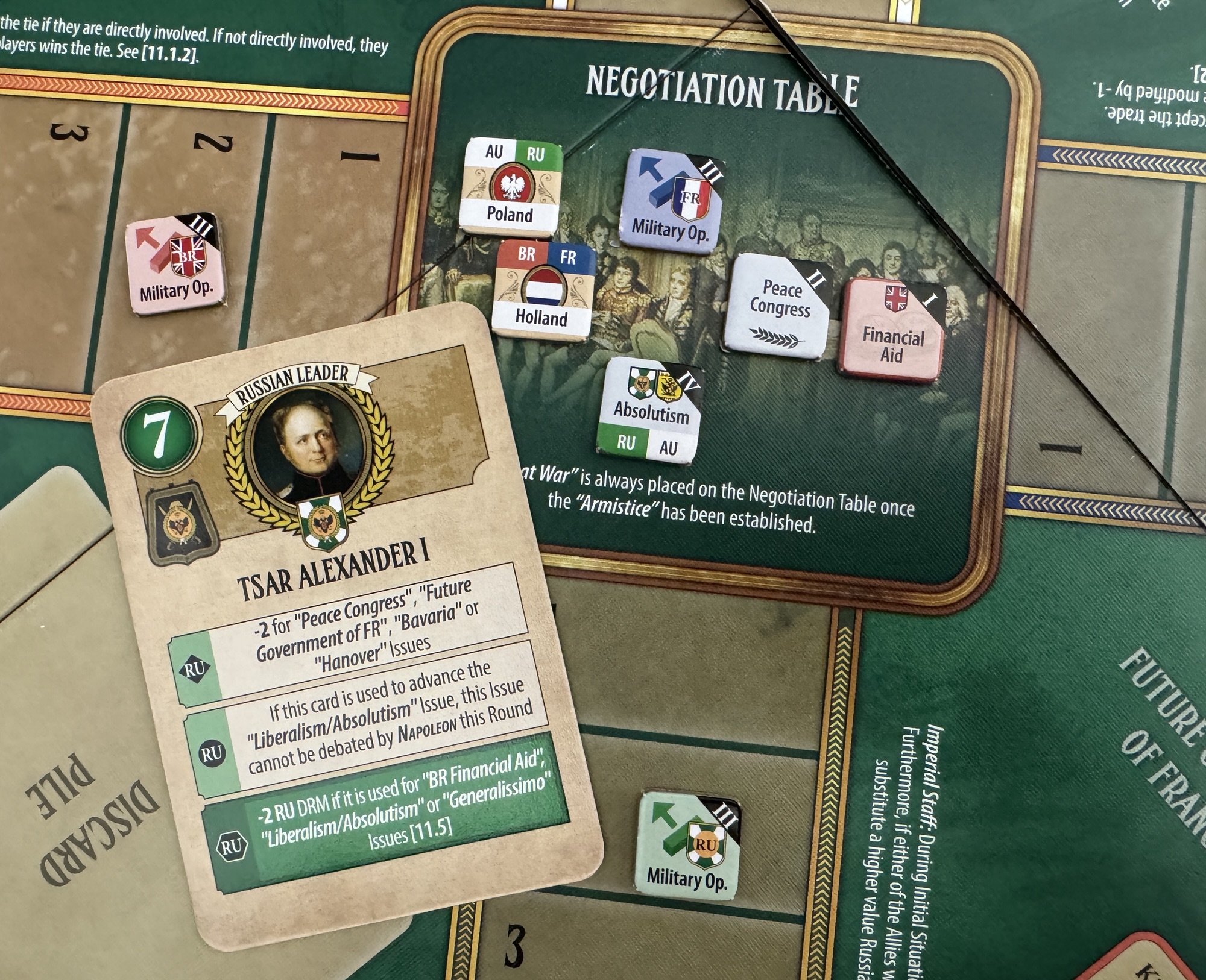
In this entry, we are going to take a look at the Russian Leader Tsar Alexander I card. The fist thing that you may notice about this Leader Card is that is that it has no benefit for military operations, meaning that Tsar Alexander is watching the war from the sidelines and not directly involved like Napoleon, but does have a potential negative effect if used on certain Issues. But his power lies in the ability to utilize his 7 value to influence issues significantly on the Negotiating table. Particularly, Tsar Alexander I is an ardent believer in the philosophy of Absolutism and wants to retain his crown as the leader of Russia. This concept is played out in the game between the great powers of the time, including Russia and Austria for Absolutism, and the more democratic players including Britain and France for Liberalism. On the board appears this Liberalism/Absolutism Track, which provides the players an opportunity to debate over the Liberalism/Absolutism Issue and gain various advantages and Victory Points from the track. On this Liberalism/Absolutism Track, Europe’s post-war governing philosophy is fought over. This is a double track in green and red with a common At Start area for the use of 2 pawns. Tracks for Liberalism (red: Britain/France) and Absolutism (green: Russia/Austria) each have four boxes and an assigned total Victory Point amount. In order to score the VP from this track though, the player scoring must have their philosophical leaning portion of the track occupying a space at least 1 box ahead of their opponent. Also, if they want to score the maximum Victory Points listed at the top, they have to occupy the top box and their opponent cannot occupy theirs. For the Russia player, this should be a huge part of their strategy as 5VP is nothing to sneeze at in this game. But, in order to do that they will most likely have to try to go first and use Tsar Alexander and his 7 value to try and move that Issue up the track to end under their control. If an Issue every reaches a Track’s Seat, meaning the 7th space, or more after any declared debate is calculated in, then that Issue is considered to be secured and can no longer be moved through negotiation during future rounds. This reminds me a bit of the way that I always plan to use Joseph Stalin in Churchill, to go first and then bring the hammer down on the A-Bomb Research Issue. Getting control of this Absolutism/Liberalism Issue at least 4 times is very important for the Russian player and they will need to utilize this ability as much as possible. But remember that there is a penalty called the “Meddling Tsar” Rule where if Tsar Alexander is used for the negotiation of the British Financial Aid, Liberalism/Absolutism or the Generalissimo Issues, it will inflict a -2 DRM on all battles involving 1 or more Russian units during the upcoming War Phase. This is quite a cost and the player should carefully consider if and when they use the ability throughout the game. If the turn is expected to contain little to no combat for Russian units, then it is safe to use but if France is being aggressive and pushing on Poland and Prussia you might want to consider not going after the Liberalism/Absolutism Issue this turn and instead focus on Recruitment and Military Operation Issues.
The other part of this ability is that if Tsar Alexander I is used to move the Liberalism/Absolutism Issue then Napoleon cannot be used to Debate that movement. I would say that this is not an issue though as typically the France player will be using Napoleon on the battlefield for his DRM abilities.
I also like the historical and personality connection between this card and the game. At the top of the card you will notice that if you use Tsar Alexander I to negotiate the Peace Congress, Future Government of France, Bavaria or Poland Issues, that you will gain a -2 on his value bringing it from a 7 down to a 5. I think that this ability really highlights the philosophy and view of the Tsar regarding the time. He doesn’t believe that France should get to continue to exist as a main player in the power structure of the time and definitely doesn’t want to see France become more democratic. But, he also has a feeling that Bavaria and Poland are Russian vassals and should not be allowed to be turned to any other side’s allegiance. If he has to be used in this manner to defend or negotiate these issues I feel like the -2 Value penalty really shows that leaning in his thinking and probably causes him to be more brunt and less diplomatic thereby losing some of his influence in the court of opinion. Ultimately, Tsar Alexander I thought that monarchy is a noble and viable alternative to the crude and materialistic mob mentality of republicanism and the abilities of his Leader Card definitely cement that view.
After playing now a few times, I am here to say that Congress of Vienna is probably my favorite game in the Great Statesmen Series. I believe that this game has matured the system and made it something that is more than where it started. Congress of Vienna is very much more like a true wargame and was extremely interesting. We are still learning and need to keep playing this one but I did enjoy what it was that we were doing.
Alexander I, nicknamed “the Blessed”, was Emperor of Russia from 1801, the first King of Congress Poland from 1815, and the Grand Duke of Finland from 1809 to his death in 1825. He ruled Russia during the chaotic period of the Napoleonic Wars.
The eldest son of Emperor Paul I and Sophie Dorothea of Württemberg, Alexander succeeded to the throne after his father was murdered. As prince and during the early years of his reign, he often used liberal rhetoric but continued Russia’s absolutist policies in practice. In the first years of his reign, he initiated some minor social reforms and in 1803–04 major liberal educational reforms, such as building more universities. Alexander appointed Mikhail Speransky, the son of a village priest, as one of his closest advisors. The over-centralized Collegium ministries were abolished and replaced by the Committee of Ministers, State Council, and Supreme Court to improve the legal system. Plans were made, but never consummated, to set up a parliament and sign a constitution. In contrast to his westernizing predecessors such as Peter the Great, Alexander was a Russian nationalist and Slavophile who wanted Russia to develop on the basis of Russian rather than European culture.
In foreign policy, he changed Russia’s position towards France four times between 1804 and 1812, shifting among neutrality, opposition, and alliance. In 1805 he joined Britain in the War of the Third Coalition against Napoleon, but after suffering massive defeats at the battles of Austerlitz and Friedland, he switched sides and formed an alliance with Napoleon in the Treaty of Tilsit and joined Napoleon’s Continental System. He fought a small-scale naval war against Britain between 1807 and 1812 and took Finland from Sweden in 1809 after Sweden’s refusal to join the Continental System. Alexander and Napoleon hardly agreed, especially regarding Poland, and the alliance collapsed by 1810. Alexander’s greatest triumph came in 1812 when Napoleon’s invasion of Russia descended into a catastrophe for the French. As part of the winning coalition against Napoleon, he gained territory in Poland. He formed the Holy Alliance to suppress the revolutionary movements in Europe, which he saw as immoral threats to legitimate Christian monarchs.
During the second half of his reign, Alexander became increasingly arbitrary, reactionary, and fearful of plots against him; as a result, he ended many of the reforms he had made earlier on in his reign. He purged schools of foreign teachers, as education became more religiously driven as well as politically conservative. Speransky was replaced as advisor with the strict artillery inspector Aleksey Arakcheyev, who oversaw the creation of military settlements. Alexander died of typhus in December 1825 while on a trip to southern Russia. He left no legitimate children, as his two daughters died in childhood. Neither of his brothers wanted to become emperor. After a period of great confusion (that presaged the failed Decembrist revolt of liberal army officers in the weeks after his death), he was succeeded by his younger brother, Nicholas I.
We have done 2 videos on this game including the following RAW Video after out 1st play at Buckeye Game Fest in May 2025:
We then did the following full Review Video after our 2nd play at WBC last July:
In the next entry in this series, we will take a look at Open Borders from 2024: An American Insurgency from Compass Games.
The year is 2044, and the city of San Lazaro has become the epicenter of the world for cybernetic enhancements. In 2050, a mysterious techno-virus has ravaged most of San Lazaro’s population, and a majority have turned into murderous CyMS (Cyber-Memetic Sociopaths) who attack those not yet infected. The uninfected are trapped in this lawless […]
All In: Predictions Designer: Phil Walker-Harding Publisher: Next Move Players: 2-5 Age: 10+ Time: 30 minutes Amazon affiliate link: https://amzn.to/4t6Vu3R Played with review copy provided by publisher In All In: Predictions, players become gifted foretellers vying to shape … Continue reading →
Peter and Will are back with their most famous style of battle report – a War of the Ring one! Beer, laughs and banter ensue.
One day, when the Esoteric Order of Gamers finally comes to its natural end and all about it and concerning it is forgotten, one thing may be remembered – the battle report videos documenting games of War of the Ring between myself and my old gaming buddy, Will. It‘s been quite a while since I’ve had the opportunity to film one, but the day has finally arrived! So grab yourself your beverage of choice, get comfortable someplace where you won’t be interrupted by any non-gamer who just might not understand, relax, and enjoy this hugely fun new session of my favourite board game, War of the Ring!
Making high quality tabletop gaming content at the EOG takes time and money. Please consider becoming a Patreon supporter or making a donation so I can continue this work! Thankyou!
FlipToons was designed by Renato Simões and Jordy Adan, the latter of whom gave us Stonespine Architects and Cartographers, but the real star of the show is Diego Sá, whose animated characters make me want to rate the game significantly higher than I would otherwise. Just look at those little dudes! The camel is two seconds away from winding up a punch. The rabbit wouldn’t feel out of place leaning in for a kiss, only to be rebuffed when the ostrich hides her head in the sand. The sheep is just is out there boppin’ to her tunes.
As a game? Oh, it’s pretty good. Clever at points, nice to play, the usual. My larger reservation is the way it makes me feel during and after a play.
Six cards. In theory.
FlipToons is a game of two halves. Two halves which, when hinged like an aquatic bivalve, form into a united whole that conceals an unexpectedly tasty muscle within. Okay, so I skipped breakfast. Point is, FlipToons is hard to discuss holistically without first establishing how its components function apart from one another.
The first part is the deck. When the game begins, you have six cards in total. Two caterpillars, each worth bupkis, but easily dismissed. One skunk, a utility card for winnowing your deck. One bee, worth a single pip of purchasing power. One snail, worth double the bee’s value, making it the single most precious card in your starting lineup. And one dragonfly. Ah, the dragonfly. This guy gives you one point for every unique adjacent card.
What this means requires some explanation. Every round opens with you shuffling your deck and then dealing cards onto the table in front of you to create a three-by-two grid. If you have extra cards, too bad, they remain in your hand. If you have too few cards… well, don’t do that.
Some cards may stack. Rabbits, ostriches, turkeys, these are your chance to get more than six cards into your grid at a time. Others, like sheep or monkeys, trigger benefits if they occupy a particular row or column. Some cards flip, others compare values against other players or the market, and a few, like the pig, are traps that can be gifted to rivals to subtract from their tally.
That tally, then, is taken to the market to shape your deck. Since you’ll only use six-ish cards at a time, keeping your cast trim is a good idea. Fortunately, unlike most deck-builders, the ability to dismiss toons is inbuilt in FlipToons, always available for the low cost of five points.
The toons on display, meanwhile, adjust in cost according to their relative ranking. This ensures that something is always available, and if you’re lucky it’s possible for something unusually precious to slip down in cost. Of course, the opposite often also proves true, with low-value cruft sometimes overwhelming the market.
Regardless, you take your purchases and/or dismissals, shuffle your grid back into your hand, and begin all over again. Bit by bit, your cast improves. That measly starting five to six points becomes twelve, then sixteen, then you break twenty and flip your little tally card to its opposite side. The goal is to score thirty.
Costs are adjusted dynamically, which can result in little surprises.
Okay, not quite. Your actual goal is to score the most on the final round. Hitting a tally of thirty is how you trigger the endgame, and there’s a small plus-three advantage if you’re the one to bring it about, but that’s no guarantee luck will be on your side for the last flip. So, then: hit thirty to lock the game into one final pull of the lever, then hit the jackpot.
The slot-machine analogy is apt here. FlipToons is to deck-building what Balatro was to poker. The titular flip of FlipToons is devoid of decision points. You turn cards in order, left to right and top to bottom, until you’ve produced that three-by-two grid.
There’s more going on in the market portion, but these are minor choices rather than a vast menu. There are five cards available at any given moment, and even when you’re flush with cash in the late-game, you’re limited to two purchases. (And dismissing a card from your deck qualifies, so no double-dipping.) This keeps everyone at the table more or less bungee-corded at the hip, which is probably the right decision for such a light game, but also prevents the table from launching the exponential bottle rockets that were Balatro’s core pleasure.
But about those pleasures…
I have my reservations about these sorts of games. The art and market purchases, while pleasant, aren’t far removed from the lights, illusory choices, and “theming” of a slot machine. I remember as a kid on a trip to Vegas, walking past a slot machine that leaped out of the crowd. I think it was based on Aliens, with those sleek oily monsters I had yet to witness on the screen for myself, but which my friends with the cool parents, the ones who let their kids watch R-rated movies in elementary school, spoke of as the scariest things they’d ever seen. My Dad traced the object of my interest and leaned down to whisper, “That’s how they get you.” It was like somebody had roused me from hypnosis. In that moment, my Dad — who suddenly struck me as cooler than those other dads, or at least cannier — had broken through the social programming of that cigarette-reeking hellhole.
And, look, I don’t think FlipToons is some sort of evil artifact. It isn’t the equivalent of a casino, with its fine-tuned odds to ensure the house always wins and your kid’s college fund becomes another rounding error in a billionaire’s high score. But it produces a similar daze, all submersion and dulled perception. It’s a far cry, too, from some of the sharper auto-battler board games, titles like Tag Team, with its emphasis on attention and preemption, or One-Hit Heroes, which requires constant input from its players. Here, the gameplay comes pre-loaded. All you have to do is pull the lever.
It doesn’t always take much effort to reach those 30 points.
I mean, there’s more to it than that. Just not by as much as I would prefer. Certainly not by enough to make me want to play it more.
Because in the end, FlipToons is a pleasant enough diversion. It’s well-crafted, pretty to look at, and feels good to play. When it hits the table, the fugue it offers is dreamy and warm. But when it’s done, I feel like I binged on steakhouse butter in place of an actual filet. It lacks what brought me to the table in the first place. It doesn’t spark my imagination or help me appreciate my friends. It doesn’t teach me anything. It barely even makes a win feel different from a loss. Most of the time, I hardly remember how I spent the past twenty minutes.
But yeah, the art is lovely. Those lovable goofballs. Those scamps. That’s how they get you.
A complimentary copy of FlipToons was provided by the publisher.
(If what I’m doing at Space-Biff! is valuable to you in some way, please consider dropping by my Patreon campaign or Ko-fi. Right now, supporters can read my first-quarter update of 2026: the best board games, movies, books, and more!)

 Anmelden



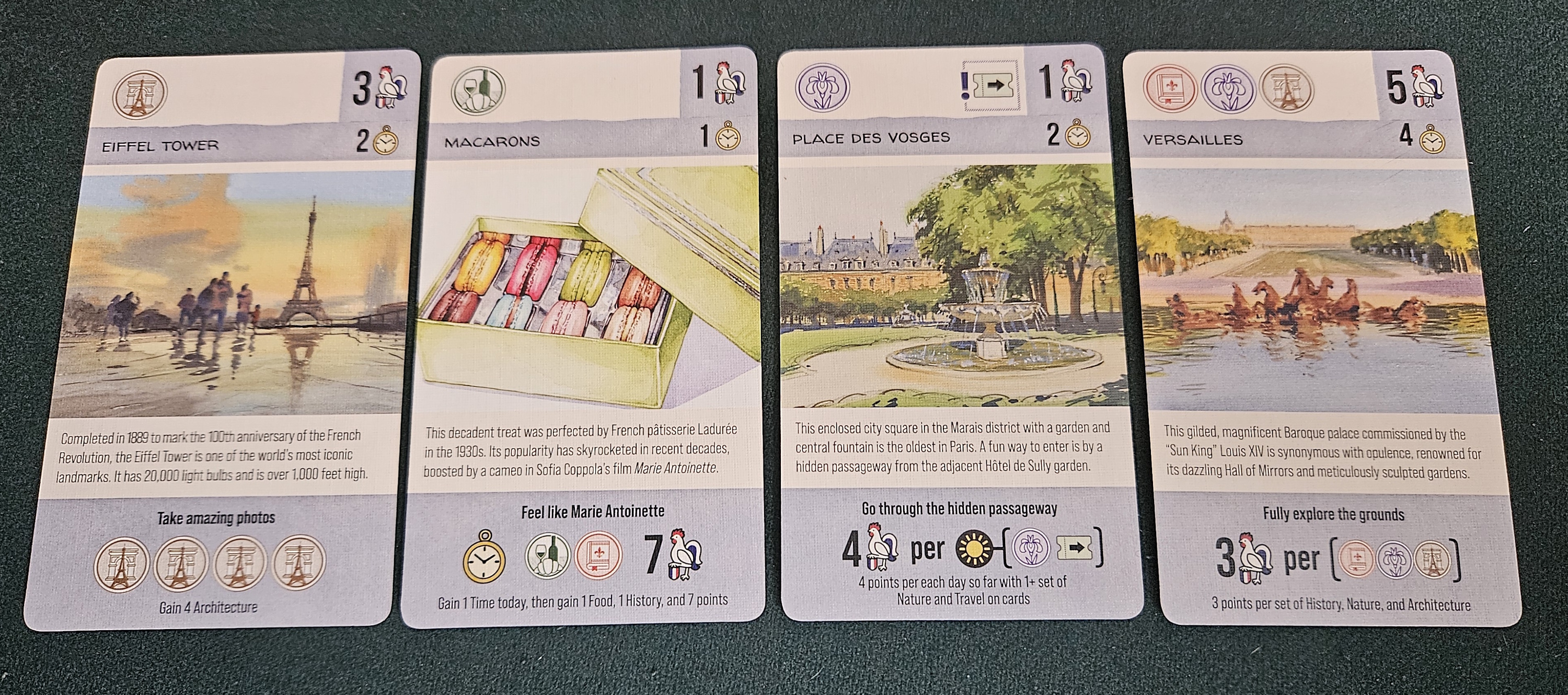
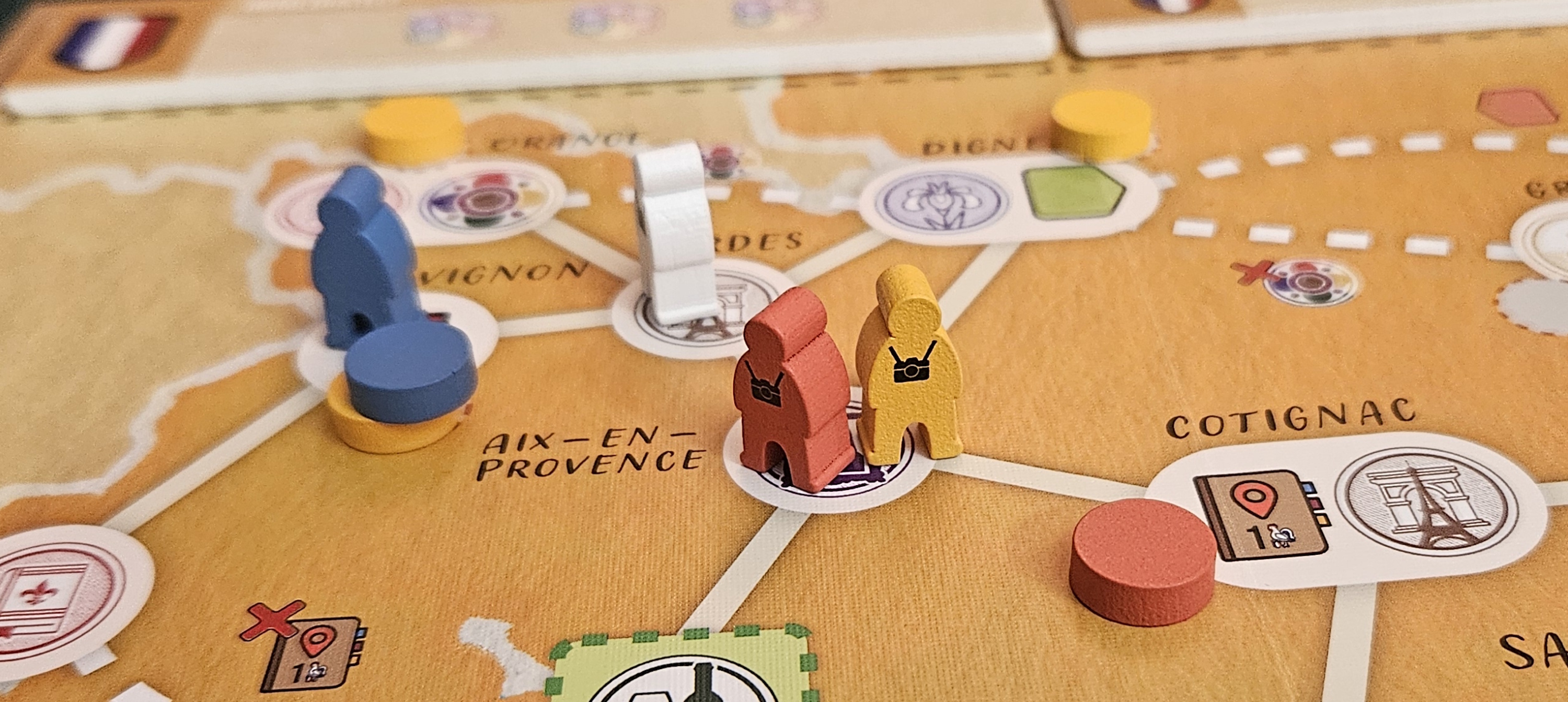
![Wait a minute, how dare you name a place Les Invalides? That should be reserved for hospitals and... [touches earpiece] it's a what? Ahem. Never mind.](https://spacebiff.com/wp-content/uploads/2026/04/4.-flex.jpg "Wait a minute, how dare you name a place Les Invalides? That should be reserved for hospitals and... [touches earpiece] it's a what? Ahem. Never mind.")
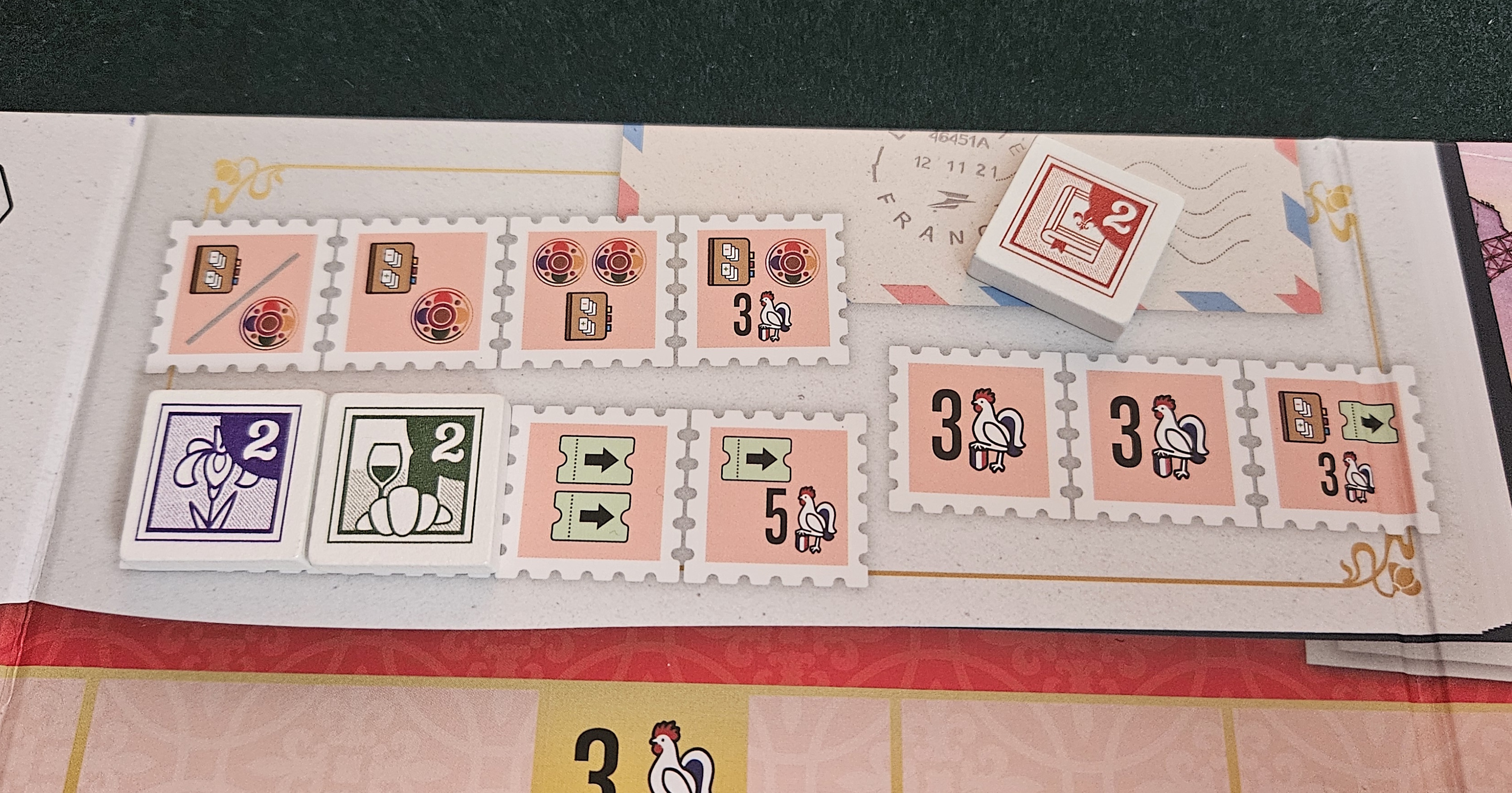
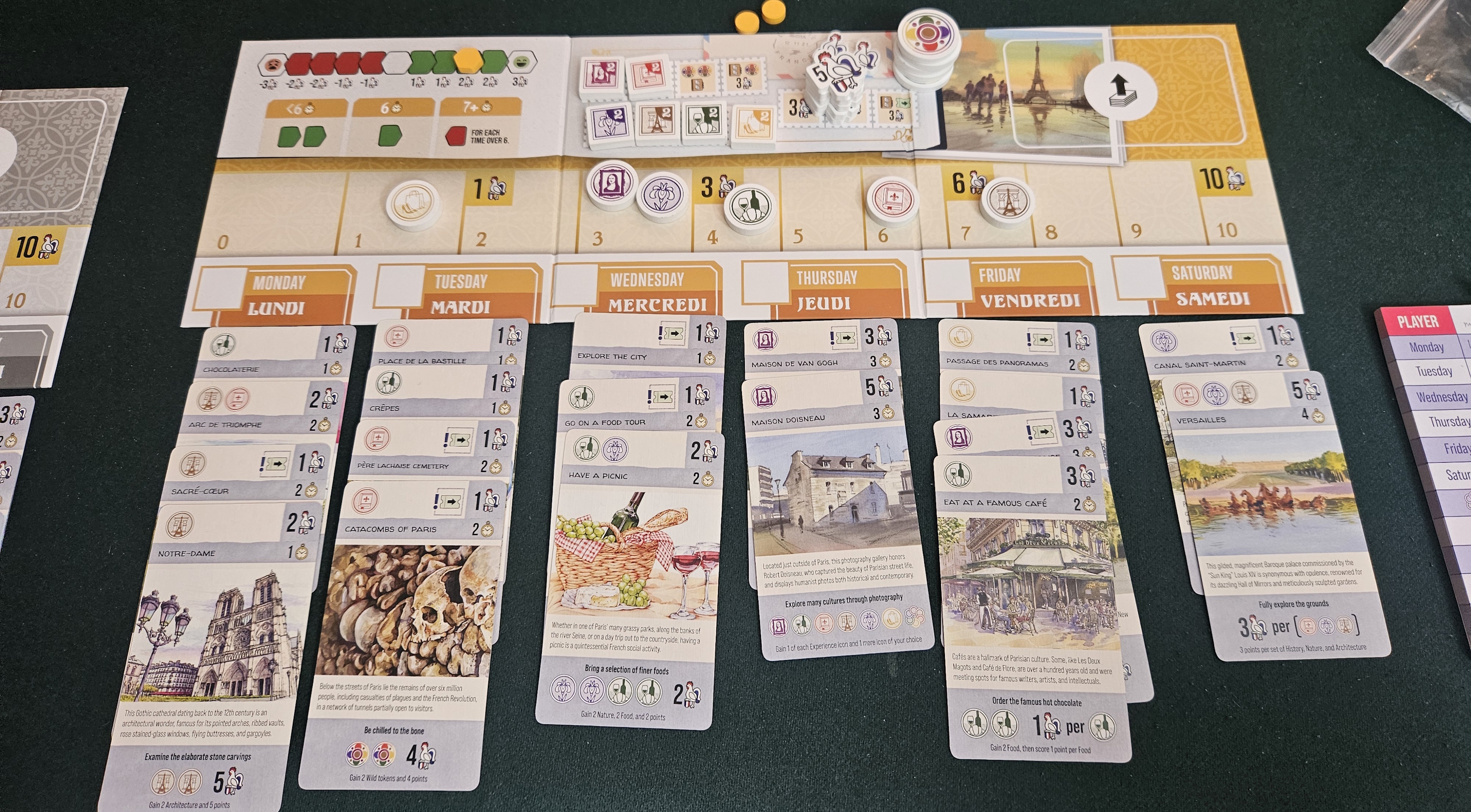


/pic6102428.png)