After playing 18CZ (again!), I was trying to pin down why I thought it was “OK” and not “Great.” Why does 1822 PNW make me want to get it back to the table, while CZ is merely a “Yeah, sure.” (I mean it’s still a positive feeling, but more “indifferent plus” than “suggest” or “enthusiastic“) and I think this comes down to one thing that I have touched upon a few times over the years, but bears repeating.
Entanglement — The (Not So) Secret Sauce
By their nature 18xx games are more entangled than most business games. In typical games, each player controls their own (single) corporation. What is good for the company is good for the player, and vice versa. In 18xx, a player can juggle multiple (competing) interests; it can be great to trash a company under your control (shifting its assets to a ‘better’ company).
This brings up the Principal-Agent Problem , but also Implicit Collusion because there might be other shareholders and they will want to know if the company is going to pay out or with-hold, and if it will be headed for a glorious future or Chapter 11.
It can be impossible to state the “right” play is for a company merely by looking at the board. You need to understand the stock split dynamics. Does the president own 60% (and 40% is in the IPO/Bank). Or is it a 40%/30%/30% (in a three player game). Treating those situations identically is a recipe for disaster.
So — The board position is entangled with the players’ stakes. That’s the “hook” of 18xx.
(Acquire also does this, and is rightly acknowledged as one of the greatest games of last century1. Its board play is much simpler, the stock entanglement does the heavy lifting. In Chicago Express the entire game play revolves around implicit collusion — getting the incentives right so that others make plays to your benefit)
Of course there are levels of entanglement, and ripples to the chaos.
How many companies (and which ones) will open?
If the same companies open in the same order every game, the game will likely start to feel the same (although various splits of minors still have interest)2. Varying how many companies (and which) provides variety because the “train rush” is triggered by that one additional company operating. In many games, there might be “semi-permanent” trains. If X companies open, they last. The X+1st company opens and they rust.
Some games (like the ’22 family) randomize the order that some companies show up in, this forces each play into a new line but also means that the number of viable companies might change, which has implications on the train rush.
More subtlety, 1846 achieves the same effect by having some dubious companies that frankly aren’t great. Is it worthwhile to open a second company? Uh, sometimes. For a long time the fact’ that the game’46 had mediocre companies puzzled me, but borderline companies are a ticking time bomb. If the incentives are right, someone will open them just to watch the world burn trains rust. The fact that their ROI isn’t great is borderline.
Thinking about this with 18CZ; I suspect that it does do better at this that I thought … but three players is not its sweet spot3. The train limit is a bit too generous at that count (at least in our meta). Again compare this against ’46, where the number of companies (and trains) varies based on player count to keep things tight.
How entangled is the board?
The game board should be small enough so that each company’s track plays have ripple effects.
The game that best exemplifies this is, naturally, Go. There are “joseki” — opening lines that theoritically should provide roughly equal chances for either side … in that particular corner. Professional players spend an inordinate amount of time on the first 20-30 moves (out of 150-250 ish) because the corners influence each other and the josekis will combine. Joseki A (in the NW corner) may be great if Joseki B is in the NE corner, but terrible if Joseki C is in the NE corner.
So you want to leave things in flux and arrange joseki(s) that work together in your favor.4
In our last few games of CZ, Eastern Side of the Board never impacted the Western Side … everyone met up at Prague, which held enough token slots that most companies could get through, and the ones that didn’t at the end had their runs on the appropriate side. Sure, there was jockeying between companies on each side, but the corners never impacted each other. (Again, might be a problem that is solved at more players).
Which is not to demand that “every company cares about every other company,” but there should be some tension and chokepoints; companies fighting to place track or station tiles. For example, ’46 has Chicago (and Toledo, and Indianapolis). PNW has Seattle and Portland literally fighting over growth.
CZ (at least with three) felt like it had walled off suburbs. My branch in the SE eventually merged with the NW companies (and the Northerner), but it was a minor event. Like finding a run worth an extra few dollars in share. A rounding error, not a bomb.
(1862 almost achieves “every company really cares about every other company”; because of merger opportunities but also because the board is so tight and different company charters will have very different track preferences).
And even companies far apart and destined to ne’er meet; they might compete over tiles. Every 18xx player knows the sinking feeling when you discover a needed tile is missing.56
What doesn’t interest me
Hunting out the extra dollar and operations minutiae all the time. (Hunting out extra money in the opening is the entire point of compound interest). Yes, sometimes that extra dollar really matters. A few bucks might make the difference between buying another certificate. In that case, the extra few dollars is a “bomb7” (a big deal).
Token wars, snatching up the right train, ownership battles, dumping companies … those are always bombs. If the few extra dollars is a bomb only 1% of the time, it can be simplified away. But I’ve learned that in order to entangle the board (and stock) you have to have the possibility of not entangling it. Sometimes even great games can have a relatively dull run.
There are other things that don’t interest me. (I’m no longer fond of the ’30 family’s script of “first company low, second company saves first.” Nothing wrong with that play … but I’ve seen it enough). But in general I’m looking for a reason to play an 18xx title and most of them give me plenty.
I owned 1835 back in …. ’92 or ’93, but never got to try it. I know it has its defenders and variants…. ︎
After writing this, I went and checked BGG and 4p is listed as best with 3p and 6p having the lowest recommended numbers. ︎
I don’t play Go well enough to know how to do this; but I played enough to know this is true. See the proverb “Memorizing Joseki loses two stones.” ︎
Yes, its a horribly gamey thing …. why should the fact that some company hundreds of miles away built a branch mean you can’t? Well, just imagine that they got a compliant politician to hose you. ︎
Also, I swear that 1846 is influenced by Coriolis rotation of the earth, because tiles that are mirror images with 4 each will have one set empty and the other set untouched. ︎
Finspan: Sharks & Reefs adds to the variety of the core game with a focus on sharks and fish that live among coral reefs. This expansion introduces new coral reef habitats to your ocean mat and more incredible sharks—with fearsome new abilities!
Players can now nurture colorful coral reefs in each of their ocean’s three dive sites. Healthy reefs enable you to play powerful reef fish, unlock fish abilities, and score bonuses at the end of the game. Meanwhile, sharks scatter schools of young (to form even more schools elsewhere) and leave behind food scraps that any fish in your ocean can consume.
Sharks & Reefs is designed by Michael O’Connell, illustrated by Ana María Martínez, Catalina Martínez, & Mesa Schumacher, developed by David Gordon and Elizabeth Hargrave, and features an Automa solo mode by David Studley. The Finspan core game is required to play the Sharks & Reefs expansion, and the full rulebook is available now.
You can see larger versions of these slides onInstagram.
Over the next few days we will share stories about the creation of Finspan: Sharks & Reefs in the design diary series on our website, in the Finspan Facebook group, and on BoardGameGeek. Here is today’s post:
April 16: The Inception of Finspan: Sharks & Reefs and Product Design
Here’s designer Michael O’Connell with some Finspan backstory and an introduction to this expansion:
When David Gordon and I designed Finspan, we weren’t sure how it would be received. How would the world react to a third -span title, especially one released just one year after Wyrmspan? We had known for years that we wanted to do a game like this. There is even a topic on the Stonemaier Games Discord server that’s still called “aquatic Wingspan,” where folks within the company post regularly about the game. But would the public embrace it? Did fish hold the same fascination for people as birds and dragons?
Of course, Finspan has done everything we hoped it would. As with the other -span titles, it has helped bring new players into the hobby. Many content creators have tried to articulate why all three games deserve a place on your shelf. Each has its own identity. Finspan is the friendly one. Open hands, so everyone at the table knows what you’re working with. Abilities that help other players as well as yourself. Fascinating fish facts on the cards that make you want to read them aloud. Components that are colorful and a tactile delight—especially if you pick up the “squishy eggs” upgrade pack. The goal has always been that Finspan be genuinely inviting. A game where players can help each other, where the rules are intuitive, and where you aren’t asked to make a lot of small decisions.
We never wanted players to feel stuck or confused about how to get the resources they need. Need new fish? Dive here. Need eggs? Dive here. Need young or a school? Dive here. It’s always clear how to progress. The only thing you need to worry about is how to optimize that progression. That’s where the game’s depth lives. (Pun intended.) Finspan’s intricacies reveal themselves as you play, rather than hitting you all at once. And the game is forgiving. Don’t like your engine? Consume that fish that gives you nothing but points with a larger one that has an IF ACTIVATED ability. There is always a way forward.
Once you know how to play the game, my hope is that you never need to return to the rulebook. The player aids, the achievement board, the ocean mat—those should be enough. I don’t know if that’s possible to achieve with every group of players, but it’s what I strive for, and it shapes every decision I make about what goes into an expansion.
So. Sharks & Reefs.
When Jamey and I began talking about designing the Finspansions, we had the typical discussions around what players might want to see, what things might be improved about the game, and what things might be accentuated. However, in the case of Finspan, there was an additional consideration: Many, perhaps even most Finspan players are not typically the people who buy expansions. I’m guessing a lot of them don’t even know that expansions to board games are a thing. Players who buy expansions often want more to think about. But, with Finspan, we’ve tried to limit “more for the sake of more.”
And so, Sharks & Reefs is not just a “more cards” expansion. It adds a dimension to the game without the burden of exponential complexity. The coral overlay and tokens and new reef fish enhance the tactical and strategic choices available to you on nearly every turn. The sharks feel splashy and reward a well-timed turn, but they don’t require you to set your brain on fire to play them effectively. I’ve taught the game to brand new players with Sharks & Reefs included from the start, and it wasn’t dramatically more difficult than teaching the base game alone, which is exactly what I intended.
We designed Finspan (the core game) at the same time that Connie Vogelmann was designing Wyrmspan. Connie finished first, and so Wyrmspan was released first. (Yeah, she was faster than David Gordon and I combined.) But that gave us a year-long window to think ahead—to design the mats and the base game rules with future expansions already in mind while still giving our 100% focus on making the base game a complete package.
I started work on the first two expansions while Wyrmspan was still being released and while the base game of Finspan was still in development (though we waited a few months after Finspan was released before finalizing the first expansion so we could learn from public feedback). This let me make choices that allow future content to slot in organically. The deepwater row in the base game is a good example of this. It started as an expansion idea, but playtesters loved those nightmare-fuel abyssal fish, and so we pulled the deepwater row into the base game to make room for more of them. That’s why there are three more slots for cards than in the other -span titles.
We couldn’t anticipate exactly how popular Finspan would be, but we knew we’d want to create multiple expansions for it. So, I thought carefully from the start about how they would work together. I want each expansion to be easy to learn on its own, and I want them to integrate cleanly with each other without overwhelming the players.
***
Michael has some fun stories in the next few days that delve into the gameplay of Sharks & Reefs, and I wanted to briefly mention a product design element: In the expansion we included a large card tray designed to fit in the Finspan box next to the original tray. The new tray includes 4 slots for stacks of cards and a central area to hold tokens. Our hope in supplying this tray in the first expansion is that it will hold all components for the core game, this expansion, and any future expansions.
You can follow along and get a launch notification on May 13 by clicking here.
My wife Melodi’s favorite games blend a mix of looking just a little bit ahead, plus a compelling theme. They tend to be medium-weight. She has had serious game crushes on Isle of Skye (BGG weight = 2.25), Kingdom Builder (2.07), and Wingspan (2.48). Games that drift towards the 3.5 or higher tend to get […]
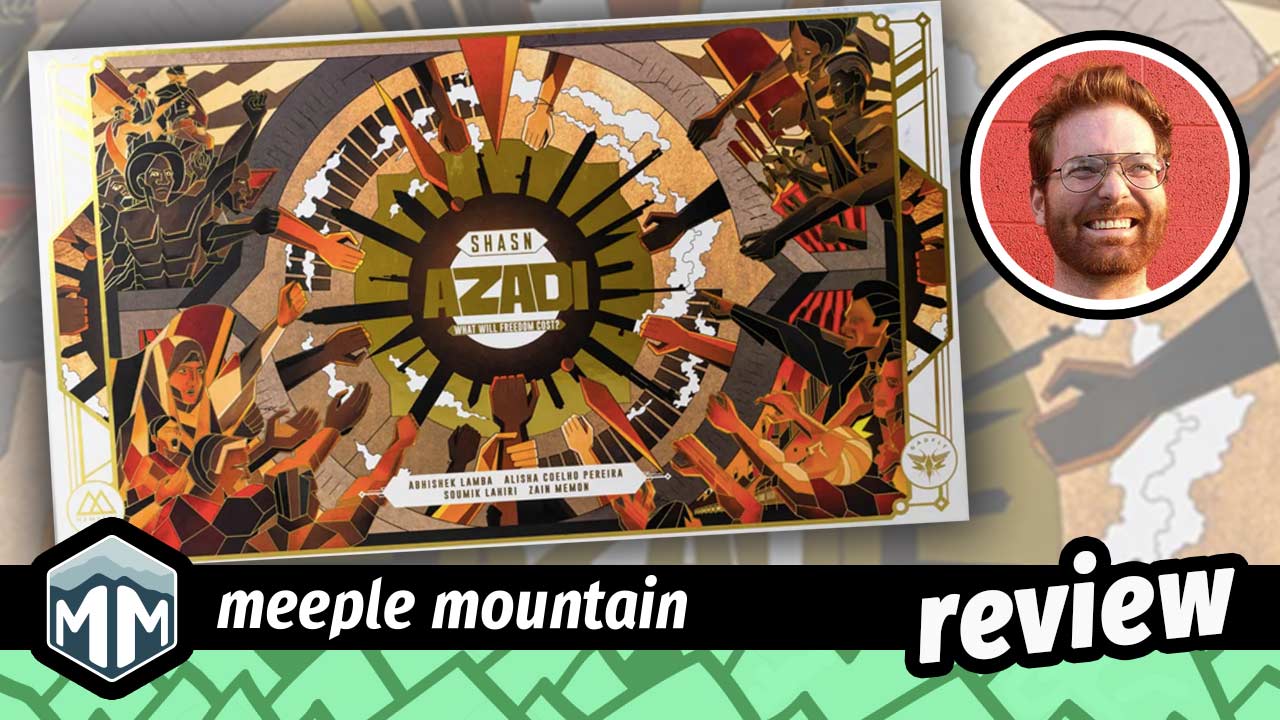
SHASN: AZADI is a box full of gimmicks. Those gimmicks are equal parts corny and high-minded, clever and ham-fisted. The area majority mechanism that is used to tally points is, frankly, pedestrian and simplistic. But, in spite of it all, the game is ambitious, and I admire games that are high-minded, even when that highmindedness has flaws.
Hegemony this ain’t
And that’s a good thing. AZADI is trying for something explicitly political—it is about the construction of political blocs more than it is about forcing players to accept the roles and bounds of its simulation. From where I sit, Hegemony: Lead Your Class to Victory’s conception of political economy and class is at best misguided and ignorant. AZADI doesn’t presume to gamify and fragment class struggle, casting players as some fake-o thinktank concept of the “middle class” and the “state.” Instead, players are a political ideologue constructing their own ideology out of what will best get them into the big chair. More on this in a moment.
The way you win AZADI is by forming majorities. In the version that I’m reviewing, you have a modular dual-layered map with holes in it for player pieces. Each map tile has a crosshair hole (volatile area) and a number reading something like 11/21. Players get points for having majorities, which…
#DFDM Frage des Monats - Spiel des Jahres 2026 Nominierungen + Kennerspiel des Jahres 2026 Nominierungen Community Format #8 ein Spiel von ein Video von Robert aus dem #BrettspielZimmer - Guru erklärt mit der Brettspielrunde beim Brettspielabend #Guruerklärt
DFDM #FragedesMonats
#Community
#communityevent
Ganz einfach: Jeden Monat stelle ich eine spezifische Frage rund um unser Lieblingshobby die Brettspiele. Und genau hier kommt ihr ins Spiel! Egal, ob ihr #Blogger, #YouTuber, #Instagramer, usw. seid oder einfach nur engagierte #Zuschauer
– Jeder kann seinen Beitrag zu dieser Frage einsenden und Teil des Formats werden!
Damit es für alle spannend und abwechslungsreich bleibt, könnt ihr eure Antworten in verschiedenen Formaten einreichen:
-Video-Format (30-60 Sekunden): Sendet mir ein kurzes Video mit eurer Antwort. Bitte blendet euer Logo oben links im Video ein.
-Audio-Format (30-60 Sekunden): Sprecht eure Antwort als Audio-Datei ein. Während der Wiedergabe eurer Audionachricht werde ich ein passendes Standbild oder euer Profilbild einblenden, wie Ihr wollt.
-Textform: Schreibt eure Antwort als Text. Ich lese sie dann im Video vor und zeige dazu ein passendes Bild oder euren Namen an, wie Ihr wollt.
*Es handelt sich hier um Reflinks, wenn ihr darauf klickt und was kaufen solltet, bekomme ich ein paar Cent ab. Für euch findet allerdings KEINE Preiserhöhung statt!
#Regeln
Bald bei @frostedgames erhältlich. Für 1-4 Spieler:innen in ca. 25 Minuten. Im Original von @studiohgames5436
#familienspiel #scifi #space #spacelab #sologame
As I have done with my Top 10 Wargames of each year list I am going to do the same with the Top 10 Solitaire Wargames/Games that I played that were published in 2025. I played a total of 17 new published solo games in 2025 so take this list with a grain of salt as I didn’t play all the titles released in 2025 nor even all of the games that I purchased this past year. The games that I played include the following:
Okinawa: The Last Battle of WWII from Solo Game of the Month
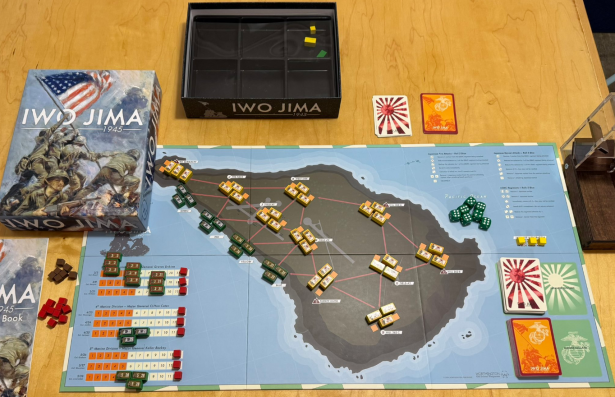
Iwo Jima 1945 from Worthington Publishing
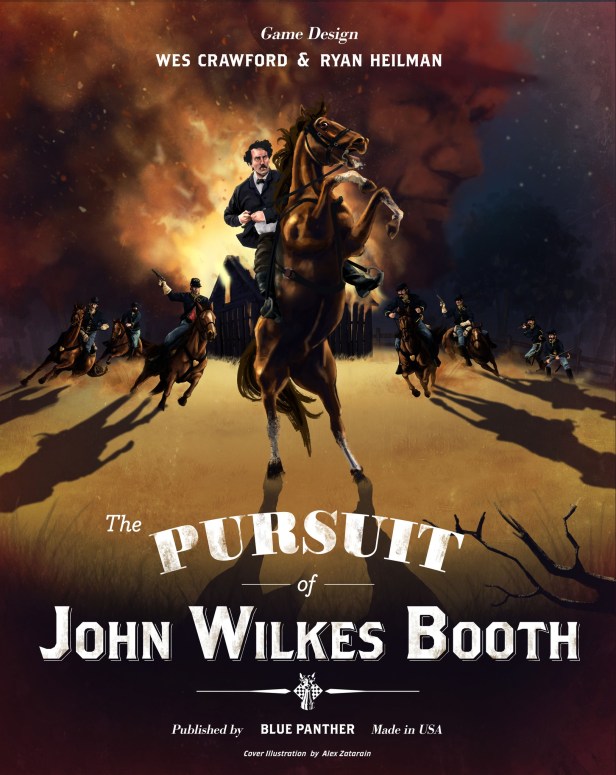
The Pursuit of John Wilkes Booth from Blue Panther
Operation Dragoon Travel Game from Worthington Publishing
Crusaders: The Siege of Acre 1291 from Art of Wargames and Blue Panther
SPQR: The Battle of Alesia 52 BC from Art of Wargames and Blue Panther
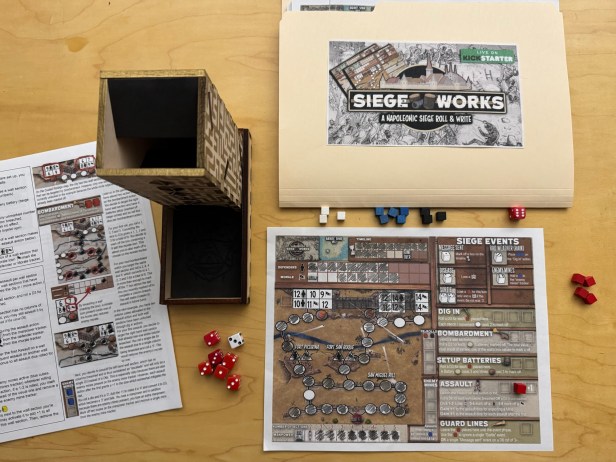
Siege Works: A Napoleonic Siege Roll & Write from Solo Wargame
War In The Pacific: A WW2 Roll & Write from Solo Wargame
Fields of Fire Deluxe 2nd Edition from GMT Games
Europe at War 1940 Solitaire from Worthington Publishing
Shogun Solitaire from Worthington Publishing
Black Skin Black Shirt: Ethiopia vs Fascist Italy 1935-1937 from White Dog Games
Empire of Grass from White Dog Games
Onoda from Salt & Pepper Games
Iwo Jima: Hell on Earth from Neva Game Press
La Der de Ders – The War to End War from Hexasim
Thermopylae: Last Stand from Solo Wargame
I have really grown to love my solo wargaming and it is partly because there are plenty of well designed and engaging games out there that continue to feed my curiosity and hunger for a tough challenge. Here I present to you my list of the Top 10 Solitaire Wargames of 2025!
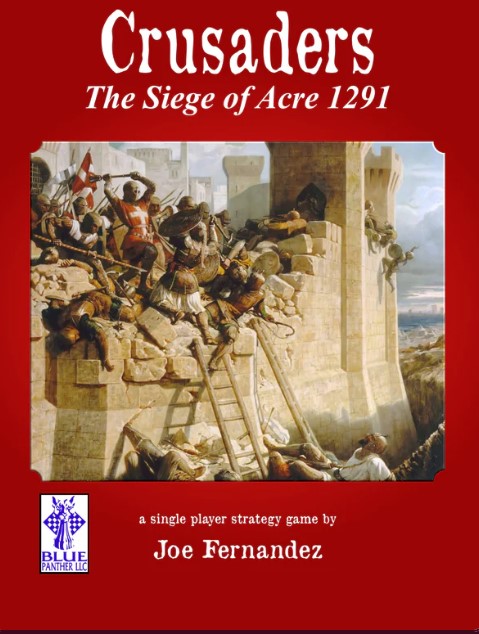
10. Crusaders: The Siege of Acre 1291 from Art of Wargames and Blue Panther
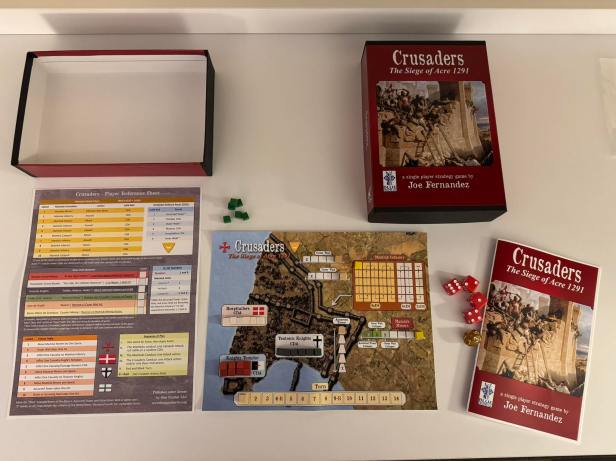
A new solitaire game is always welcome on my table…and if that game is about the Crusades, even better! Earlier this year, Blue Panther released a new game designed by Joe Fernandez called Crusaders: The Siege of Acre 1291. The game is what I would call a lite dice-chucker with some very interesting aspects of a siege baked into the game. There are tracks on the board that track the condition of the outer wall, inner wall and accursed tower and the Crusader Knights, including Templars, Hospitallers and Teutonic Knights, inside the city of Acre have to defend against the Mamluk siege for 13 turns.
The game has a random event that kicks off each turn that will do damage to the city walls, kill knights and advance the Mamluk miners who are attempting to tunnel under the walls. There is just one event that if rolled can do a loss to the attackers but this occurs only on a roll of 3 on a 10-sided die.
The rules are very simple clocking in at 5 pages and are easy to understand and once read the game can be played only from the excellent player aid. I very much enjoyed the Deus Vult actions that are special actions that can be used to do things like repair a wall, reverse a Mamluk mining action or sally out of the city to offensively attack the besieging units. But, these actions can be nullified if certain conditions occur so you should use them while you have them and not wait too long or they might disappear.
I feel like this game really scratches that quick playing, easy to get into but intense and difficult game itch. The Crusaders have an uphill battle for sure as they really don’t have as many options or choices as I would like to see but what is there makes sense, is full of historical flavor and plays well. I have not been that successful with the game, meaning that I haven’t won very often, but despite that I still want to come back play after play and that should tell you something about the game and what it is. If your dice luck is really bad, this one can snowball quickly ending in a catastrophic defeat. I think that the other real attractive part of the game is that it is quick to set up, has good rules and plays quickly. This one will not blow your socks off but it is good for what it is and it comes in a small box that is very portable. In fact, I played it first while attending a work conference.
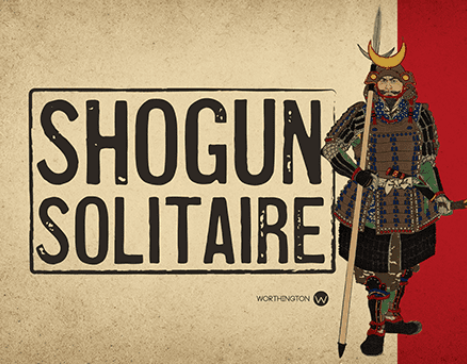
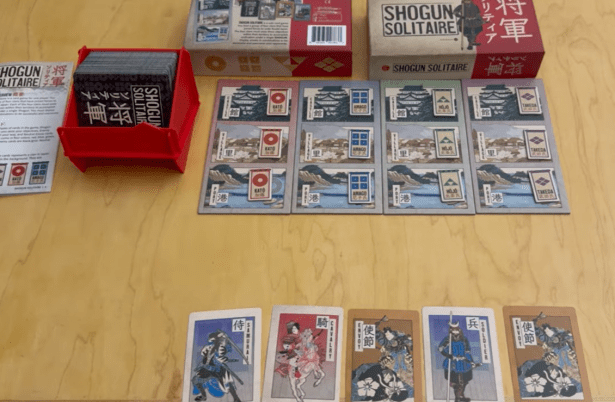
Staying in the small, travel sized wargame department is Shogun Solitaire from Worthington Publishing. I say wargame, but it is probably more of a strategy card game with a war theme being set in the period of the Sengoku Jidai. Shogun Solitaire is a card based dedicated solitaire game where the player is leading a coalition of four clans to unite feudal Japan. These clans are one of 4 different colors in the game including green (Hōjō), purple (Takeda), red (Katō) and blue (Amago). Each of the clans must secure 3 objectives within their territory to achieve unification under a single Shogun including the port, village and castle of that region. To accomplish this, you’ll need to deploy armies in the form of cards in strategic combinations to gain control of those objectives. These cards are built up in the players tableau and you must get a run of 3 same colored cards (not the same type of soldiers although you cannot play 2 of the same soldiers consecutively) played in order to win the next objective. But, there are Enemy cards colored black or gray that represent assassins, Ronin and raids. There are also neutral Envoy cards that are bronze colored that act as dead space in your tableau and represent the court responsibilities and diplomacy of the Shogun with allied clans and if you ever build up too many of them in the area you will have to take a breath and wipe the slate clean by sending them home.
The really great part of this game is that each of the different types of cards have different special abilities and you must deploy them properly in order to gain the greatest advantage before the 102 card deck runs out. There are six types of Shogun cards that represent the available forces that can be deployed to seize objectives. Samurai can protect and will cancel enemy cards before they can do damage. The Ninjas allow the player to search the top 4 cards of the deck and then reorder them in order to finish a run of the same color cards before bad things can happen. And one of the most important cards is that of the Leaders which act as a wild card that can be played like any Shogun card of its color. I found that trying to utilize these cards to their highest effect was very fun and tense and I found myself really trying to utilize each ability at the right time.
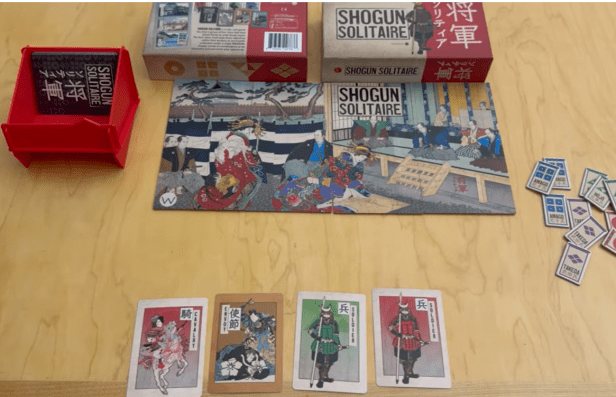
This game is fast playing, playing in 20-30 minutes, and is very fun. But it can be very luck dependent as when you draw bad cards a few hands in a row, there is not much that you can do and the game begins to pound you down and it can come to an end very quickly. But, this game is very good and well designed for what it is; a lite, card based, quick playing travel sized game that is also very beautifully produced with gorgeous period art, thick cards and a fantastic board that flips over to show a
A look at a very lucky win! Notice the back of the board turned over the reveal the beautiful art!
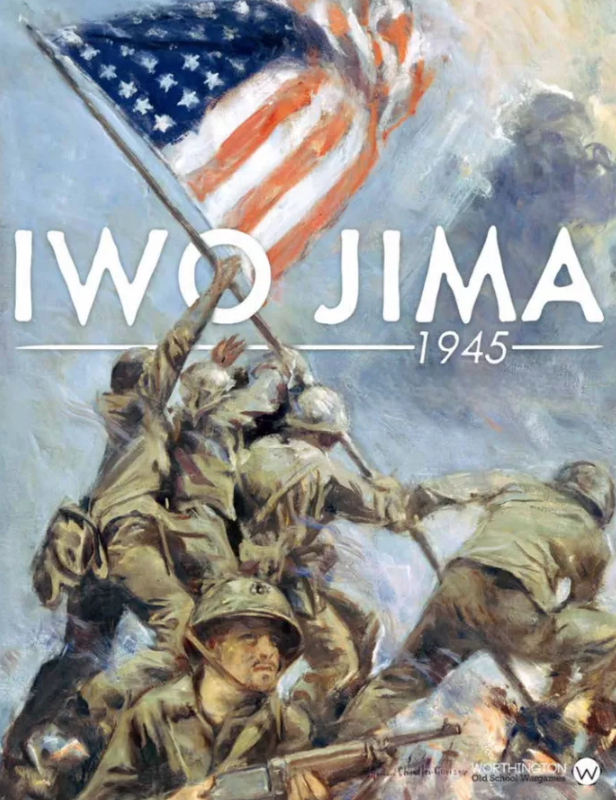
A few years ago, Worthington Publishing published their first game in the Island Fight Series called Tarawa 1943. That game was awesome and was truly difficult to win, as it should be. Now, they have published the 2nd volume in the series called Iwo Jima 1945 that covers the only island assault during the Pacific war that the attacking US forces would suffer worse casualties than the Japanese defenders. On February 19, 1945 the USMC would land 30,000 marines on the island against a Japanese defensive force that numbered roughly 21,000 Japanese soldiers. Facing a Japanese commander who had learned valuable lessons from the losses on other Japanese islands, the USMC would eventually land over 70,000 marines and suffer over 25,000 casualties during the 36 day campaign.
In this solitaire game, the player takes on the role of the USMC commander leading the invasion of Iwo Jima. The game system, driven by cards, will simulate the strategies of the Japanese defenders, often referred to as the Japanese AI, adding a layer of historical authenticity to your gaming experience. If you have played Tarawa 1943, you will be familiar with the system.
Iwo Jima’s play deck is larger than that of Tarawa’s, which provides a bit of breathing room in the game but doesn’t necessarily change the difficulty appreciably. There are also added mountain positions on the island where the attacking USMC will roll 1 less attack dice making it very challenging to overtake several of the key positions and that will need the player to use special cards to assist. The USMC player is allowed to play any number of the cards from their hand during their turn as opposed to just 3 from the previous entry in the series. The other rules are almost all the same, and you can begin playing with just a brief read of them.
I have played this one about 10 times and have not even come close to winning. It is tough and the way the dice system for combat works it is truly difficult for the Marines to score hits quickly enough to make significant progress, which is how it should be. But, the game is fun, tactically challenging as you have to manage your Cohesion as well as decide when to deploy and replace front line troops with fresh troops and plays pretty quickly. I have never had a bad play of this system and very much look forward to other entries in the series.
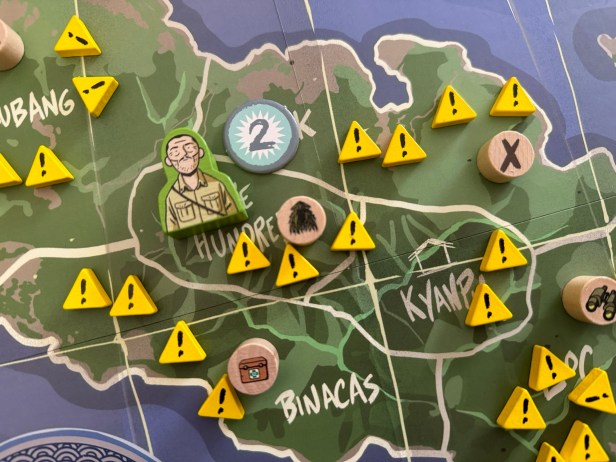
I am always on the lookout for an interesting and different type of historical game. And when that game is solitaire and allows the player to experience and gain insight into the life of a tragic figure then I am very interested. A few years ago, I came across this very interesting looking solitaire game designed by Francisco Gradaille called Onoda from Salt & Pepper Games. Onoda follows the tragic life of Hiroo Onoda who was a Japanese soldier who wouldn’t believe that Japan had lost World War II and stayed at his post on the island of Lubang in the Philippines from 1945-1974 when he finally surrendered after a visit from his commanding officer. I have played this one several times and can say the game is very interesting, educational and also gives the player an opportunity to learn and gain insight into the life of this person who is remembered as an insane criminal and a story of tragedy.
During 6 rounds of variable duration, the player has to obtain a number of resources represented by rice that will allow them to finish the round without suffering penalties, such as reduced health and morale. In each round, the player will have to undertake a series of missions, earning honor points for accomplishing them. During the game, the player will get to experience some of the events that the real-life Onoda had during his stay in Lubang as well as some of the tragedies. The missions includes things like sabotaging key infrastructure, gathering equipment and other useful items all the while trying to evade detection and capture. But the game goes deeper than that as the crux of the game is the management of morale and the level of insanity in the mind of the soldier due to paranoia, death of comrades or illness.
During these missions, the player will have to draw tokens from a draw bag that represent the level of alarm that is present on the island due to his shenanigans. Each time that a player has to perform a check to accomplish a mission or to avoid danger from the random events, the player must take a Resource/Resolution token from the bag and check its number side against the relevant level of alarm or paranoia in the are where the operation is being undertaken. These Checks are successfully passed when the token’s number is higher than the Alarm or Paranoia level so keeping these low and also moving around the island stealthily will spread out the alarm level and keep Onoda safer and more able to accomplish these missions. Failure will lead to negative effects and lost opportunities as the game has only 6 turns.
I very much enjoyed this game and also loved it because it made me think about this tragic “hero” and his motivations and life those 30 years on the island. What commitment he must have had as well as derangement and you have to respect that or at least give it some thought. Just a great little narrative generator with some very gamey mechanics that create an interesting experience.
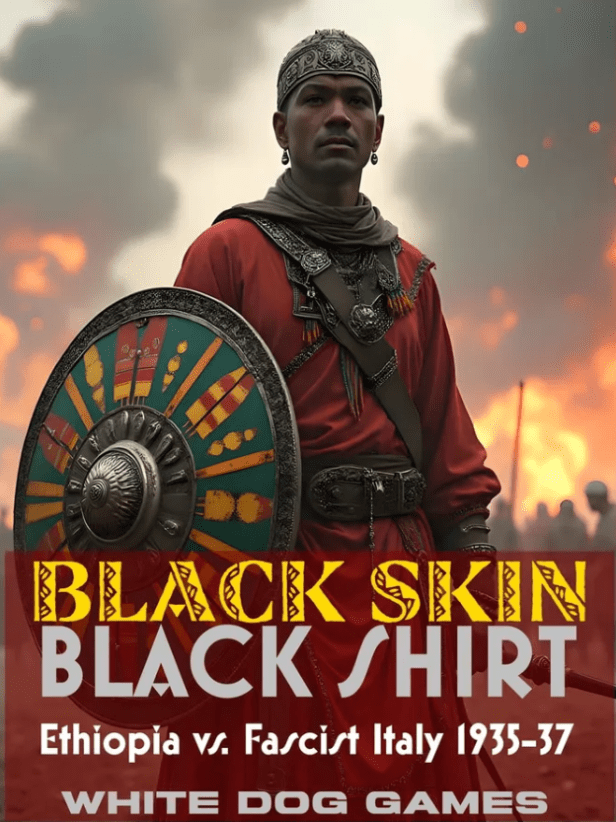
6. Black Skin Black Shirt: Ethiopia vs Fascist Italy 1935-1937 from White Dog Games
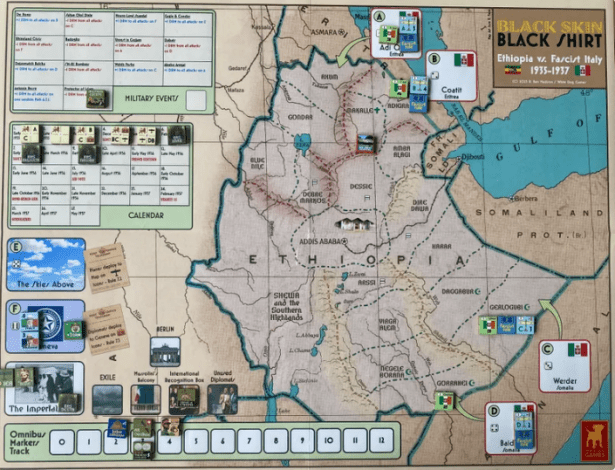
I have really enjoyed my plays of several games designed by R. Ben Madison. He has a knack for including elements of the history into the gameplay while placing the events into the framework of his chosen system, which is usually the States of Siege Series…but not always. His newest offering called Black Skin Black Shirt: Ethiopia vs. Fascist Italy 1935-1937 from White Dog Games uses the States of Siege Series System and delves into pre-WWII conflict in Africa.
First off, this game is very challenging, as is to be expected as the Ethiopians are desperately outmanned and outgunned by the Fascists as they invaded to take over the oil rich area for their own purposes and I have not done well at it at all in my few plays. I normally would have played it a few more times before adding to the list but I just had such a good experience with it and the history that I felt that I needed to add it to the list. It uses the States of Siege Series but in a bit of a different layout as there are not tracks per se but there are paths that lead through various regions of the country of Ethiopia as they converge on the capital of Addis Ababa.
The game is chit pull and the chits that are pulled give instructions about the actions of the AI Italians as they move on each path. The player will also gain a number of action points that can be used to take actions such as attacking to drive back the invaders. I very much like the concept of support of the Fascist invasion as they have the ability to place their support focused bases on the map as they advance and this leads to the player no longer being able to drive them back to beyond that point so the pressure really ratchets up as the game goes along.
As is the case generally with these games, Black Skin Black Shirt is an easy-to-play, straightforward solitaire game that creates a very interesting historical narrative about how the conflict plays out. There are really lots of tough choices and the game is about the management of your resources and assets, such as your Ras warlords who can go out and make devastating ambush attacks but can also be killed in action and removed from the game, The game forces the player to take charge of the defenses, by calling up troops and marshalling resources as well as attempting to call on the League of Nations for aid and support.
Here is a link to my unboxing video:
If you are interested in Black Skin Black Shirt: Ethiopia vs Fascist Italy 1935-1937, you can order a copy for $56.00 from the White Dog Games website at the following link: https://www.whitedoggames.com/ethiopia
5. The Pursuit of John Wilkes Booth from Blue Panther
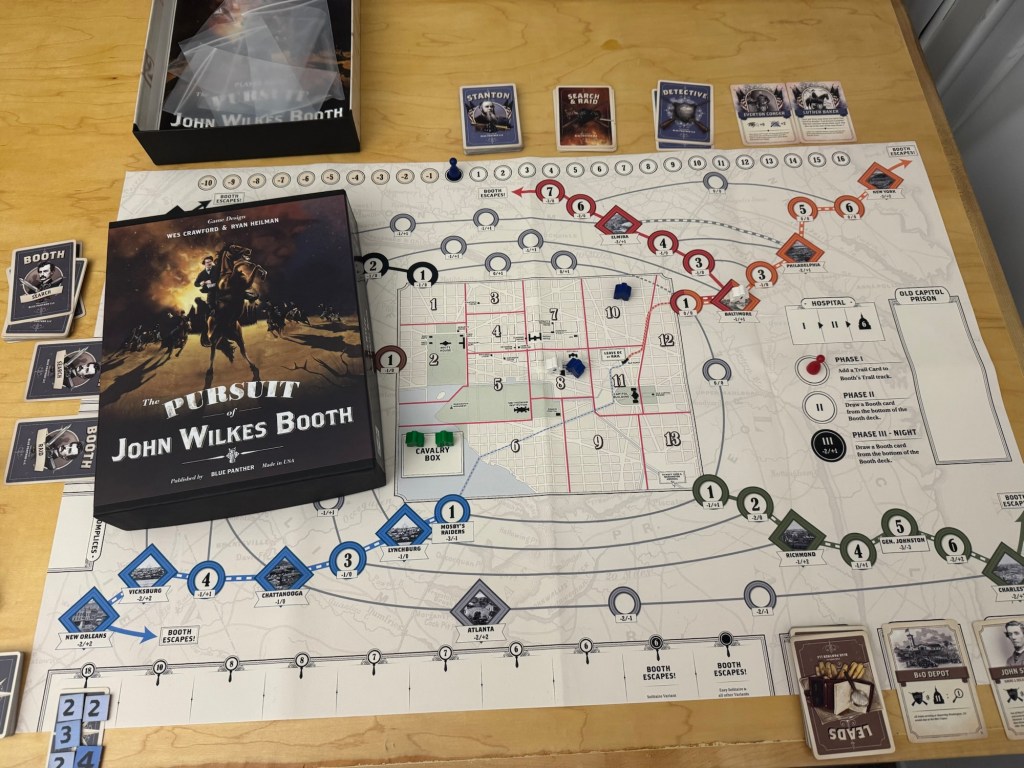
A few years ago, while attending the WBC, I had the chance to meet Wes Crawford who was demoing his upcoming game Engine Thieves. He was a very nice guy and his game was pretty interesting as well. Since that time, he has another game that has been released designed in partnership with Ryan Heilman in The Pursuit of John Wilkes Booth published by Blue Panther. I had a chance to play the game solitaire (with Wes overseeing the game and giving me guidance and pointers) at WBC in 2024 and have since played the game on my own several times and had a really great time with it. Great little solo game with several other modes where the player uses resources like police and detectives to search for clues in the hunt for Lincoln’s assassin after the events at Ford’s Theater on the evening of April 14, 1865. Definitely not a subject that has been gamed before and it is really refreshing to be able to experience this history in an interesting and engaging game. There really is a lot to like with the way that clues are found and chits are blindly drawn to verify clues from a bag. There is also a great little movement mechanic with police and detectives to try to acquire more clues.
I know that this is not a traditional wargame but the topic is just so very interesting and the variety of modes you can play in is also very cool. I think that this one is a game that will stay in my collection for years to come and I think that you will enjoy the chit pull, use of your special Stanton Cards that give special events or actions and the way that the movement, searching and raiding works when you find Booth.
4. Siege Works: A Napoleonic Siege Roll & Write from Solo Wargame
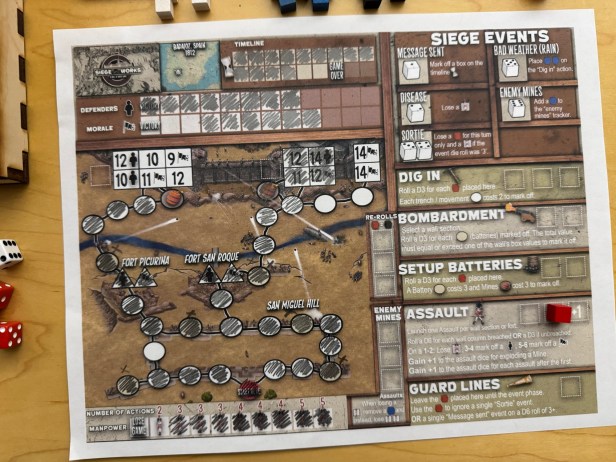
Until a year or so ago, I had literally never heard of the concept of a Roll & Write game. But, I started seeing these things pop up on Kickstarter from a new company called Solo Wargame and I was immediately intrigued as the topics for the games were so interesting and varied that I thought that there just might be something worth looking into. Since that time, I have played 2 of these Roll & Write games from Solo Wargame and really found that Siege Works: A Napoleonic Siege Roll & Write was my favorite. I say my favorite because who doesn’t like a siege game and a game set during the Napoleonic Wars is always fun!
Roll & Write Games are typically small and portable games, some are even Print ‘n Play games like Siege Works, that involve the player rolling dice and then marking the results on sheets of paper or sometimes erasable boards. These markings can mean several different things including goals being met, pre-requisites being completed or enemies defeated. The genesis or archetype for these Roll & Write Games is Yahtzee, where players roll a handful of dice looking for various combinations of results to mark off on their sheet that then score points in the end. But recently that game genre has started to include a bit more player agency and choice about how they go about reaching goals including dice selection from those that are rolled, choosing results that are needed at the time but may be less than optimal in the long run and in completing certain goals that will open the door for additional future beneficial options for the player. Don’t get me wrong. A Roll & Write Game is very simple and is not a traditional style of wargame with hexes, counters and Combat Results Tables. But the game tells a story of a siege and how it works. So I was initially skeptical about this form of game and just had to give it a try to see what it was about. I have actually played 2 of them and found them to be lite, fun and interesting. And Siege Works is a solitaire Roll & Write Game so I have played it by myself on my gaming table and had a good time with them.
The biggest plus to the game is the simple rules, easy setup and fast onboarding with learning and being able to get the game played. You can play this easily with a simple read of the rules and a bit of review of the Game Sheet before playing. The sequence of play is very good and easy to follow as well and I found that the game is pretty intuitive. My only issue with the rules was that I found that they sometimes needed just a few more words or an additional sentence for clarity. But this is combated somewhat by the fact that the rules contain a lot of good play examples for the different actions in the game.
3. La Der de Ders – The War to End War from Hexasim
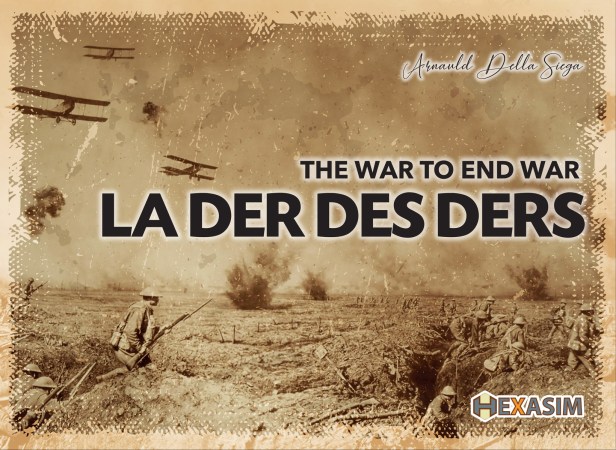
La Der des Ders – The War to End War from Hexasim is a 1-2 player slightly abstracted strategic level look at World War I. The game allows the players to relive the First World War at a strategic level, with each player controlling one of the 2 sides either the Entente, consisting of France, England, Russia, Serbia and other minor nations or the Central Powers including Germany, Austria-Hungary, the Ottoman Empire and a few minors. La Der des Ders can also be played solo, with a dedicated solitaire bot called “Athena” who utilizes special Cornflower Cards to make decisions about what technologies to invest in, where to undertake offensives and how to utilize limited resources and reinforcements. Each turn, players gain an amount of Resource Points dependent on what nations are in the war, which they can allocate to different areas to guide their overall strategy. Victory is achieved by launching offensives that drain the morale of enemy nations, forcing them out of the conflict through collapse.
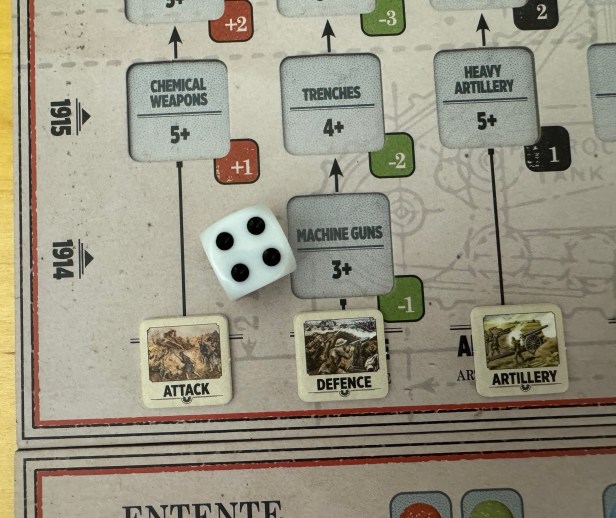
One of the best parts of La Der de Ders, and typically the best part of any strategic level wargame, is the Technology Phase and the player’s ability to spend their limited resources on various types of technologies to improve their performance on the battlefield and in the economic war. But, keep in mind that there is a risk here as resources are limited and you have to pay to develop these technologies and there is no guarantee of success as it is up to a dice roll, albeit a modified one at that. Each of the players has their own Technology Tree board that is used to track their technological progress over the course of the game. There are a total of 6 different Technologies that can be researched including Attack, Defence, Artillery, Aviation, Naval, and Air Raid.
The process of taking Offensives is really pretty simple as players take turns to activate one of their sectors that has not yet been activated this turn. The sector chosen will then be activated and must launch an Offensive against an adjacent enemy sector. There is a cost to the launching of Offensives though as the player will have to pay the appropriate cost by first choosing the size of their Offensive, which in game turns means the number of dice they will pay to roll in the Offensive. The size of the Offensive must be at least 1 and can be up to the current Operational Value of the attacking sector. The player launching the offensive then spends as many Resource Points as the size of the Offensive. Dice rolling is fun and the real key here is how to plan for an prioritize your chosen Offensives as you cannot just do one each turn or you will risk collapse and will be unable to do other things such as invest in technology development.
Victory in the game is well done and I very much like the concept of only calculating the value for those countries who have not Collapsed and who are still in the war when the end game is triggered. We all know that it is easier to negotiate a peace that is favorable to your side when you are still a threat and if too many nations of either side have collapsed then their Prestige Points will reflect this as those countries won’t contribute to the final value. And I also like the simplicity of the scoring system. If certain key countries like France and Germany surrender, then that equates to a victory for the side causing the surrender and if the game continues to grind on through the final turn, then there is this calculation that is really pretty simple and gives importance to each goal with a different value that can be earned. Just a solid method for determining victory that makes sense and fits with the historical aspect of the outcome of the Great War.
The Athena bot is the solitaire mode of the game and it is not just tacked on but is very well done and creates an interesting and challenging game. It is a really well designed system that removes most of the work by the player when playing solitaire. There will be times when you have to make a decision, such as the priority of how Offensives occur from the non-player side, but these decisions are easy and the hard work is done by the simple flipping of a card. I do want to point out one final thing. The sequence of play differs slightly from the 2-player game as it rearranges when the Athena bot does a few of the steps during the Spend Resource Points Phase as shown below. The human player will start by doing their Reinforcements first followed by their Technology investment. Athena will then go and do their Technology investment first followed by Reinforcements. Both players will then move into the Offensive Phase and the player with initiative as shown on the turn track will take the first Offensive of the turn.
I wrote a series of Action Point posts on the game and you can read those at the following links:
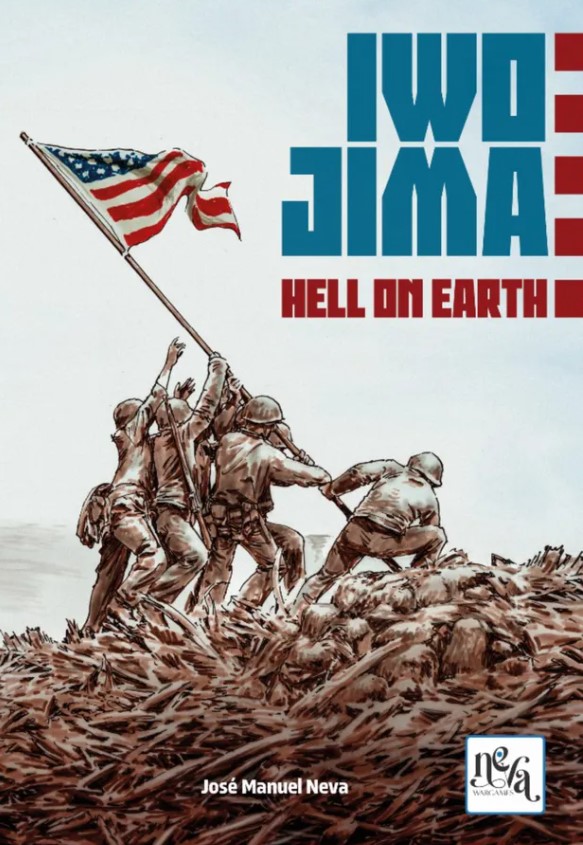
Neva Game Press (formerly Neva Wargames) is a new publisher who appeared on the scene 2 years ago. When I started seeing their posts on Twitter and Facebook, I was immediately impressed with their interesting topic choices for their upcoming games as well as the fact that they are trying to make small footprint wargames that pack a punch. And the art is also very appealing and brings an aesthetically pleasing and attractive look to their games! Recently, they released their first game called Iwo Jima: Hell on Earth which is a solitaire look at the amphibious invasion of the island of Iwo Jima in 1945 during the end of WWII.
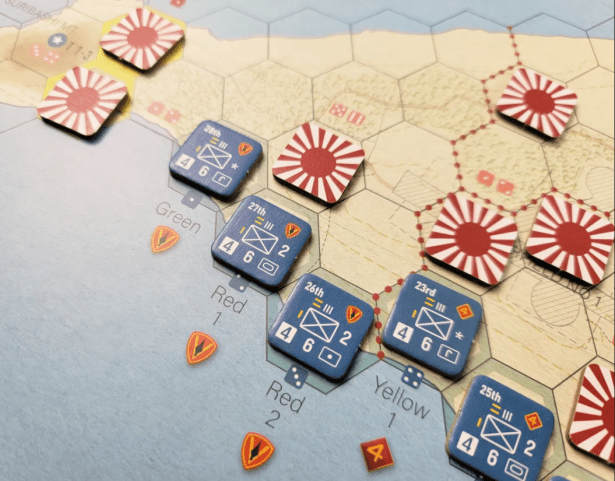
Iwo Jima: Hell on Earth is the first game in their Neva Skirmish Line and it is a hex and counter wargame with some interesting mechanics for combat and a combination of secondary mechanics to keep the game fresh and replayable. This solitaire game lets you play as the U.S. Marines during Operation Detachment. It offers a challenge for both intermediate and experienced wargamers and is really very, very good. I have only played the game 1 time all the way through but as the year is getting away from me already I had to finish up and decided that this was a very good experience deserving of the position on this list. I hope to play again very soon and put together some video content to share more about the game.
One of the things that I really liked was the focus on the hidden Japanese units that play a significant role in the game. Collecting intelligence for the U.S. as they move up the beaches and onto the mainland ensures more strategic planning and greater success of attacks. Additionally, hidden units, combined with a randomized initial Japanese unit setup, enhance the game’s fog of war and replayability. No play will be the same and I think that is a good way to design a solitaire game. U.S. intelligence has some information about potential Japanese defenses, but it is important to verify on the map that there are actual units at those locations. Additionally, more information about those units should be gathered by revealing them to see their actual composition and plan a better attack. Units can be revealed through successful bombardment, combat or reconnaissance. Making a better attack means that the player has access to different type of weapons and attacking a tank unit with a heavy weapon will give modifiers that will not be gained if the asset is not present.
If you attack a hidden unit or if a hidden unit is supporting the attacked Japanese unit, you will draw Intelligence Chits that provide information about the unit and their combat support value. While attacking hidden units can be risky in certain situations, it is essential to continue advancing to achieve timely victory. Understanding when to attack hidden units or gather intelligence through reconnaissance actions is crucial for success and one of the better parts of the game.
Combat is varied and there is a lot of choice about how to go about attacking the defenders. A unit can engage in combat through Direct Attack, Indirect Attack, or a combination of both. In a Direct Attack (with a maximum of 2 U.S. units adjacent to the target), the combat factor value of these units is utilized. For an Indirect Attack (with a maximum of 3 U.S. units if conditions are met), the units’ combat support type and value are used to participate in the combat. Units involved in a Direct Attack may also be used for Indirect Attacks as needed. The next step of combat involves comparing the combat ratio to determine the appropriate table column for checking the die result. Die Roll Modifiers must then be determined, based on factors such as the type of Japanese defense units, which could include Trenches, Pillboxes, or Caves, the comparison between the combat support from the U.S. player and the Japanese side, and terrain effects. The combat is very crunchy and fairly involved and I will definitely classify this one as a good hex and counter wargame experience.
I need to get this one back to the table soon but this is a keeper and I cannot wait to play again.
1. Okinawa: The Last Battle of WWII from Best with 1
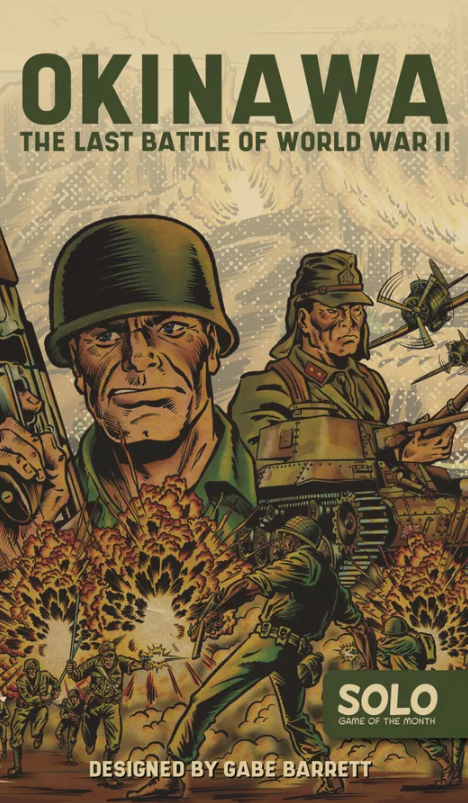
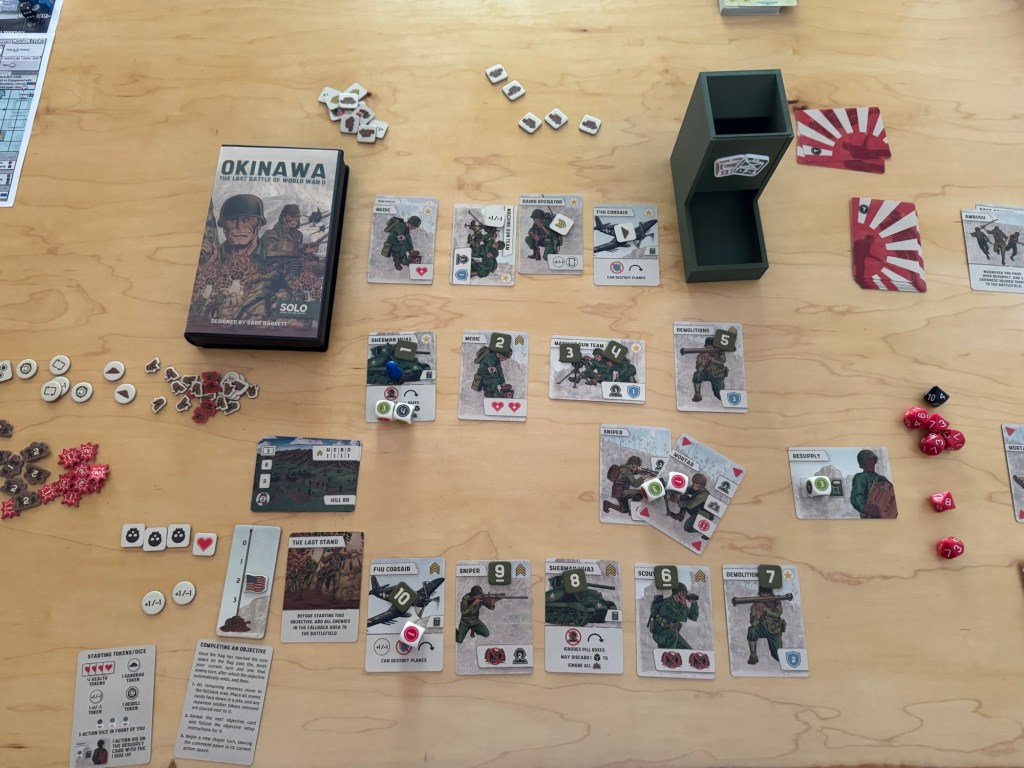
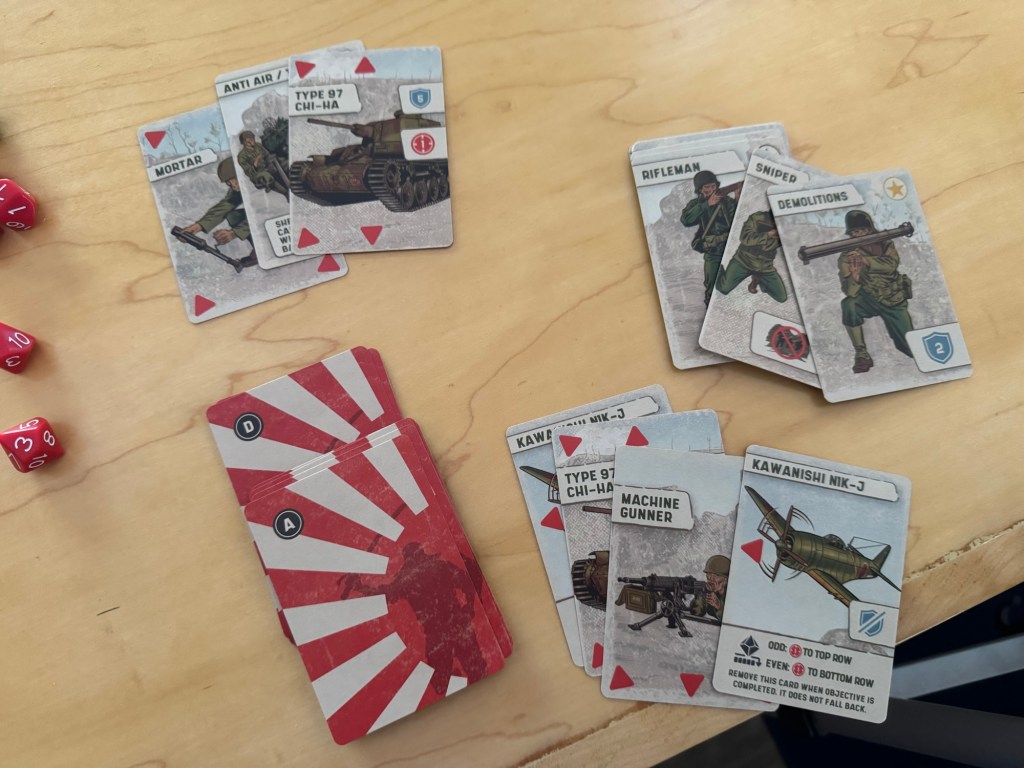
I love a new and interesting way to tell the story of a key battle and I found a very interesting one called Okinawa: The Last Battle of WWII from Best with 1 earlier this year. This is a solitaire only game and for each game the player will draw four objectives from a possible 12 that you must survive and capture before time runs out. On your turn, the player will roll special dice and then spend those to take actions such as movement, attack and take special actions from different unit action cards that will be set up in a square from from 1 to 10. The numbers coincide with the dice of the attacking Japanese and as the player moves through the rondel they will be able to activate and use their different soldiers to attack the Japanese defenders or use their special abilities to gain tokens that can be used for rerolls or healing of wounds
I think that the best part of the game is the concept of resource management as you have to use the dice appropriately to move and fight and also to manage your troops as you can upgrade certain cards as you pass the midway point of the round as well as when special actions are granted via the special resource chits. Upgrading units is very important as this will unlock things like heavy weapons in the form of bazookas, a Sherman tank and planes to be able to take out the Japanese armor units defending the island. The game is about efficiency of movement and doing the most with what you have. The dice determine what you can and can’t do and movement is optional as you don’t have to move unless you feel it is advantageous. But remember, that you have to defeat the defenders and the various objectives to be able to advance to your final objective and sitting in one space too long is not advisable.
The different units have various functions including attack, such as the Rifleman, Machine Gun Team and Sniper but also have secondary functions to remove the fog of war, heal your damaged units or gain additional resources. The Japanese defenders are well hidden and also have various defenses such as pill boxes and caves that will require the player to defeat these before moving to attack the units located inside.
In the end the game is about defeating the Japanese defenders while doing so in a set amount of revolutions around the rondel setup. This can be as few as 2 times around or as many as 4 and knowing when to use your resources to reroll your dice, as you either didn’t get the run of consecutive numbers you were looking for or just need a specific number, you will run out of resources quickly and you must plan them out as best you can to win the game. This one is really fun and I have played it about a dozen times winning about 70% of the time. The game plays in about an hour and the action is fast and furious and you are immediately beset by the staunch Japanese defenders and must act quickly.
Here is a link to our unboxing video:
Here is a link to my playthrough video:
Here also is a link to my video review:
If you are interested in Okinawa: The Last Battle of WWII, you can order a Print and Play copy from the Best with 1 website at the following link: https://bestwith1.com/product/okinawa-pnp/
There you have it. My list of the best solitaire wargames/games that I played in 2025! What a year. There were just so many great games but unfortunately only so much time. There were other games that I was unable to get played that I had acquired and I regret not getting to but there is only so much time.
What were your favorite solitaire wargames from 2025?
"Bloodwork is a dark fantasy co-op board game for 1–4 players, set in a world shattered by the death of its Goddess and the cosmic corruption unleashed in her wake. Lead a party of Guild Mercenaries through a branching dual‑faction campaign, choosing to side with the Xalgaran Knights or the Orcish Tribes as your decisions reshape the missions ahead. Survive perilous travel filled with ambushes, relics, hazards, and fleeting opportunities. Face tense grid‑based battles where positioning, asymmetric abilities, and risk‑reward choices define every fight."
In diesem spontanen vertikalen Livestream nehmen wir euch mit und werfen gemeinsam einen Blick in eine unserer vielen Spiele-Kisten aus dem Kallax-Regal. Wir entdecken Schätze, die viel zu lange nicht auf dem Tisch lagen, und quatschen über die Zukunft des Kanals!
Außerdem gibt es ein ganz frisches Live-Unboxing: Wir haben ein tolles Supporterpaket von Abacusspiele für unser anstehendes Brettspielwochenende in Essen bekommen! Seht selbst, welche Highlights wir dort verlosen dürfen. 🎁
Themen im Video:
Zukunftspläne: Playthroughs & Let's Plays – Wollt ihr sie lieber live mit Interaktion oder als hochwertig geschnittene Aufzeichnung sehen? Schreibt es in die Kommentare! ✍️
Kallax-Check: Was verbirgt sich in den Boxen? (u.a. Ancient Knowledge, Intarsia, Terra Pyramides)
Abacusspiele Unboxing: Tolle Verlosungsexemplare wie Mutabo, Deckscape und St. Patrick.
Vielen Dank fürs Zuschauen und für euer Feedback zu den zukünftigen Formaten!
Gezeigte Spiele:
Duck and Cover (Asmodee)
Ancient Knowledge (Iello)
Umbrella (HUCH!)
Intarsia (Deep Print Games / Pegasus Spiele)
Terra Pyramides (HUCH!)
Zeitstempel:
00:00 – Begrüßung und Einleitung zum spontanen vertikalen Livestream.
01:31 – Infos zu zukünftigen Projekten: Playthroughs (Live vs. Aufzeichnung).
02:53 – Interaktion mit dem Chat.
04:05 – Blick in die Spiele-Kiste:
05:03 – Duck and Cover
06:05 – Ancient Knowledge
07:11 – Umbrella
07:51 – Intarsia (Material-Check)
09:41 – Terra Pyramides
11:13 – Live-Unboxing: Supporterpaket von Abacusspiele für das Brettspielwochenende (u.a. Mutabo, Deckscape, St. Patrick, What's Next).
14:21 – Fazit zum Teststream und Verabschiedung.
📢 Teile dieses Video mit Deinen Freunden in sozialen Netzwerken. ABONNIERE unseren Kanal und klicken auf die Glocke! Um kein weiteres Video zu verpassen! Bewerte und Kommentiert das Video! 👍 - für uns ist es wichtig für die Entwicklung des Kanals! DANKE!
Kanal jetzt kostenlos abonnieren: https://www.youtube.com/channel/UCkxkUtefalsM6ngDcuCzSGQ?sub_confirmation=1
💡Ihr könnt natürlich das VIDEO IN EURE SPRACHE ÜBERSETZEN 👉 dazu auf das Untertitel Symbol unter dem Video in der Leiste klicken und dann das Zahnrad rechts daneben anklicken, um die Untertitel in eure Sprache zu übersetzen
_______________________________________________
Wir sind DieHausis - Tanja und Thorsten und auf unsere Youtubekanäle sprechen wir über unsere liebsten Hobbies, wie tolle Brettspiele die wir lieben, Mittelaltermärkten welche wir besuchen und Musik die wir hören. Begleitet werden wir meist von unseren Maskottchen Familie Ritter Enterrich.
* Diese Videobeschreibung enthält Affiliate Links welche u.a. mit dem Partnerprogramm von Amazon & CJ Affiliate & forheads-network zusammenhängen. Mit einem Kauf über diese Links kannst Du unseren Kanal unterstützen.
// Dieses Video beinhaltet KEINE bezahlte Produktplatzierung. //
Music released under Creative Commons License 3.0. by http://audionautix.com
und Youtube Audio-Bibliothek
Für dieses Video stand uns das Rezensionsexemplar bedingungslos zur Verfügung. Vielen Dank dafür.
🔥 Storing board games shouldn’t be frustrating. It should be fun!
In this video, we take a look at a better way to store your board games — a system that helps with organization, setup, and actually getting games to the table faster, kind of. From awkward boxes and wasted space to messy setups shelf storage plays a bigger role than you think. And on top of that, why not make it all look amazing? Want to see how we achieved all of that? Watch the video!
In this video:
0:00 Intro
0:39 Crafting
17:51 Big reveal
Board Game Hangover is your go-to channel for everything board games! From the best board game reviews, playthroughs, and top 10 lists to board game upgrades, house rules, and gameplay tips — we help you discover the best board games, improve your board gaming experience, and have a good laugh along the way. Whether you're into strategy board games, party games, solo board gaming, or family board games, you're in the right place.
Artengarten ist eine vereinfachte Variante von Arche Nova, bei der die Spieler nun in einem Legespiel mit Hilve von Aktionskärtchen Hexplättchen (Tiere, Gebäude und Projekte) auf ihren eigenen Zooplan platzieren, um durch die Plättchen selbst, aber auch durch das Erfüllen von Artenschutzzielen Siegpunkte erzielen.
Der Nachfolger vom beliebten kleinen kooperativen Kartenspiel!
Die Grundidee bleibt gleich - es gilt Aufträge zu erfüllen, in dem alle die Auslage verändern. Jetzt geht es nur in die Höhe, da dicke Pappplättchen gestapelt werden.
Nacheinander legen die Mitspielenden ein Plättchen von der Hand in die Auslage. Dadurch können unterschiedlich hohe Stapel entstehen, da ein Plättchen nicht vollständig auf ein anderes gelegt werden darf. Das birgt die neue Herausforderung! Dafür gibt es kleine Nuller Plättchen, um Lücken "auszugleichen". Wenn allerdings viele Nuller Plättchen genutzt werden, kommen dadurch weitere Aufträge hinzu, die erledigt werden müssen, um das Spiel zu gewinnen.
Tippi Toppi: Hoch Hinaus! von Schmidt Spiele (2026)
Autor: Lars Ehresmann
Illustration: keine Information
1-4 Spielende ab 8 Jahren
30 Minuten Spieldauer
ACHTUNG: da wir in diesem Video die ganze Zeit über Spiele reden, könnte das den Eindruck erwecken eine Dauerwerbesendung zu sein ;)
Wir bekommen kein Geld für das Nennen der Spiele. Wir erwähnen in unseren Videos Spiele, egal auf welchem Wege sie es zu uns geschafft haben!
Lumina Spell ist ein Spiel in dem sich alles um Magie dreht. In diesem Fall Lichtmagie. Das Königreich des Lichts ist schon lange untergegangen und die Lichtmagie verloren. Aber eine Expedition hat eine alte Kathedrale gefunden die Hoffnung gibt. Im Spiel schieben wir Buntglassteine aus den Fenstern heraus um damit Steinkombinationen zu Sammeln die uns danach diese Sammlung gegen Karten einzutauschen die uns Punkte geben. Mir hat das Spiel gut gefallen auch wenn mich ein paar Kleinigkeiten nicht Perfekt waren. Das Spiel ist was für Puzzler und Leute die gerne die richtigen Kombinationen finden.
Die Wizard 30-Jahre-Edition ist derzeit sehr gefragt. Wir würden euch allen gern sofort ein Exemplar anbieten, müssen aufgrund der hohen Nachfrage jedoch einige Maßnahmen ergreifen, damit möglichst viele von euch die Chance auf ein Spiel erhalten:
Im Webshop kann derzeit nur ein Exemplar pro Haushalt bestellt werden. Mehrfachbestellungen müssen wir leider stornieren.
Das täglich verfügbare Kontingent im Webshop ist begrenzt. Sobald der Vorrat für einen Tag ausgeschöpft ist, sind keine weiteren Bestellungen möglich. Bitte schaut in diesem Fall an einem anderen Tag erneut vorbei.
Alternativ empfehlen wir, auch beim Spielefachhändler eures Vertrauens nachzufragen. Wir bemühen uns, den Handel über das gesamte Jubiläumsjahr hinweg regelmäßig mit neuen Exemplaren zu versorgen.
CMON hat für das Geschäftsjahr 2025 einen Verlust von 19,9 Millionen US-Dollar gemeldet, mehr als das Sechsfache des Vorjahres. Zusammen mit dem Defizit aus 2024 summieren sich die kumulierten Verluste auf rund 23 Millionen Dollar – das 5,5-fache dessen, was der einstige Crowdfunding-Pionier in den neun Jahren davor insgesamt erwirtschaftet hatte. Der Jahresbericht skizziert zugleich die Strategie für 2026: Auslieferung offener Kampagnen, Fokus auf Asien und ein vorsichtiges Crowdfunding-Comeback in der zweiten Jahreshälfte.
Jahresbericht 2025: Umsatz bricht um 73 Prozent ein
Der Konzernumsatz fiel 2025 um 73 Prozent auf 9,9 Millionen US-Dollar, gegenüber 37,3 Millionen im Vorjahr. Besonders drastisch ist der Einbruch in den westlichen Märkten. In Nord- und Südamerika sank der Umsatz um 86 Prozent auf 2,1 Millionen Dollar, in Europa um 81 Prozent auf 2,4 Millionen. Asien verzeichnete mit einem Minus von 33 Prozent auf 5,3 Millionen Dollar einen vergleichsweise moderaten Rückgang.
CMON begründet die Verschiebung mit einer bewussten strategischen Neuausrichtung auf Asien und der anhaltenden Unsicherheit durch US-Importzölle, die 2025 zeitweise bis zu 145 Prozent auf Waren aus China erreichten. Der US-Anteil am Gesamtumsatz halbierte sich dadurch auf 21,4 Prozent, nachdem er 2024 noch bei 42 Prozent gelegen hatte.
Parallel trennte sich der Verlag von mehreren zentralen Marken, um Liquidität zu generieren. Zombicide, das seit dem Kickstarter-Start 2012 über 40 Millionen Dollar eingespielt hatte, wurde an Asmodee verkauft. Blood Rage, Rising Sun und Ankh gingen an Tycoon Games, im Oktober 2025 folgte Cthulhu: Death May Die ebenfalls an Asmodee. Die Verkäufe summierten sich auf rund 5,1 Millionen Dollar, brachten unterm Strich jedoch einen Veräußerungsverlust von 2,4 Millionen.
Auch personell wurde tief eingeschnitten: Die Belegschaft schrumpfte von 81 Mitarbeitenden zu Jahresbeginn 2025 auf 41 zum Start von 2026. Der unabhängige Wirtschaftsprüfer Zhonghui Anda hält im Jahresbericht eine „wesentliche Unsicherheit" fest, die erhebliche Zweifel an der Fortführungsfähigkeit von CMON wecken könnte. Die Geschäftsführung hält dagegen und verweist auf Zusagen einzelner Direktoren, 2,4 Millionen Dollar aus dem Verkauf des Singapur-Büros im Januar 2026 sowie rund 1,25 Millionen Bruttoerlöse aus einer Aktienplatzierung im Februar 2026. Die Bankschulden wurden vollständig zurückgeführt, zum Jahresende 2025 lagen die Barreserven bei etwa 400.000 US-Dollar.
Ausblick 2026: Asien-Fokus und geplantes Crowdfunding-Comeback
Für 2026 steht bei CMON die Auslieferung bereits zugesagter Kampagnen im Zentrum. Acht Crowdfunding-Projekte und fünf Vorbestell-Aktionen sind laut Verlag noch offen. Dazu zählen DC Super Heroes United mit über 4,4 Millionen Dollar Finanzierungsvolumen, DCeased mit mehr als 2,5 Millionen sowie Dune Desert War und das Assassin's Creed Role Playing Game. Die aktuellen Schätzungen sehen die Auslieferung der beiden DC-Titel für das vierte Quartal 2026 vor, offene Verbindlichkeiten aus finanzierten, aber nicht ausgelieferten Projekten summieren sich auf rund 3,2 Millionen Dollar.
Frühestens im zweiten Halbjahr 2026 will CMON ins Crowdfunding zurückkehren, zunächst mit neuen Titeln aus etablierten Spielreihen. Als verbleibendes Zugpferd gilt die Massive-Darkness-Reihe, deren jüngster Teil Massive Darkness: Dungeons of Shadowreach Anfang 2025 auf Gamefound 2,85 Millionen Dollar einspielte und mit Late Pledges auf über 3,7 Millionen anwuchs. In der Zwischenzeit setzt der Verlag auf kleinere Retail-Titel wie Collect!, Peanuts Talent Show, Fairy Perfume, Rocket Punch und Yokai Carnival. Der asiatische Markt soll als primärer strategischer Schwerpunkt ausgebaut werden, der US-Fokus bleibt bis zur Stabilisierung der Handelsbedingungen reduziert.
2026 wird damit zum Prüfstein für einen der Mitbegründer des modernen Brettspiel-Crowdfundings. Gelingt die Auslieferung der offenen Kampagnen nicht termingerecht, dürfte eine neue erfolgreiche Finanzierungsrunde kaum realistisch sein. Mit Barreserven von rund 400.000 Dollar bleibt kaum Spielraum für weitere Rückschläge.
Mistborn: Das Deckbauspiel - Tanja von @DieHausis packt ein Brettspiel mit Dir aus :-)
Mistborn: Das Deckbauspiel 📦 Spiel Unboxing – Was steckt drin?
Bei Amazon * (Affilate-Link):
Mistborn: Das Deckbauspiel (Verlagstext)
Das Kennerspiel Mistborn: Das Deckbauspiel™ spielt in der dystopischen Welt Scadrial, in der Nebelgeborene mit ihren besonderen Kräften in Luthadel im Kampf gegeneinander antreten. In dieser Stadt aus Asche und Nebel hat der geheimnisvolle Oberste Herrscher mit seinen furchteinflößenden Stahlinquisitoren das Sagen.
Ihr schlüpft in die Rolle eines Nebelgeborenen und schluckt und verbrennt Metalle, um tödliche Kräfte zu entfesseln. In Mistborn: Das Deckbauspiel™ könnt ihr in jeder Partie eine andere Strategie verfolgen. Konzentriert ihr euch auf Stahl und Eisen, um möglichst viel direkten Schaden zu bewirken? Oder spezialisiert ihr euch auf Bronze und Kupfer, um euch vor Gegnern zu verstecken und auf dem Kartenmarkt nach neuen Kräften Ausschau zu halten? Welche Strategie ihr auch verfolgt, es gibt mehrere Wege zum Sieg. Ihr könnt gewinnen, indem ihr eine Reihe einzigartiger Missionen abschließt oder einfach direkt alle Gegner ausschaltet.
Und sobald ihr eure Kräfte in den Kämpfen verfeinert habt, solltet ihr euch zusammentun und kooperativ gegen den Obersten Herrscher und seine Handlanger vorgehen …
Verlag: Brotherwise Games
Vertrieb: Asmodee
Genre: Strategiespiel
Kategorie: Kennerspiele
Mechanismus: Deck Building
Für 1-4 Personen ab 13 Jahren
Spieldauer: 30 Minuten
* Diese Videobeschreibung enthält Affiliate Links welche u.a. mit dem Partnerprogramm von Amazon & CJ Affiliate & forheads-network zusammenhängen. Mit einem Kauf über diese Links kannst Du unseren Kanal unterstützen.
Music released under Creative Commons License 3.0. by http://audionautix.com
und Youtube Audio-Bibliothek
Es ist ja so. Unser Hobby ist ein wunderschönes. Womöglich sogar das Beste auf der Welt. Aber jemand muss nun einmal diese Spiele auch lernen und den anderen erklären. Manche machen das sehr gerne und idealerweise noch sehr gut. Andere finden darin keinen Spaß, oder trauen sich das gar nicht zu.
Heute besprechen wir die Tücken und Vorteile eines Erklärers und eines Zuhörers.
Wie ist das bei euch? Erklärt Ihr lieber die Spiele, oder seit ihr froh, wenn jemand anderer sich die Mühe macht?
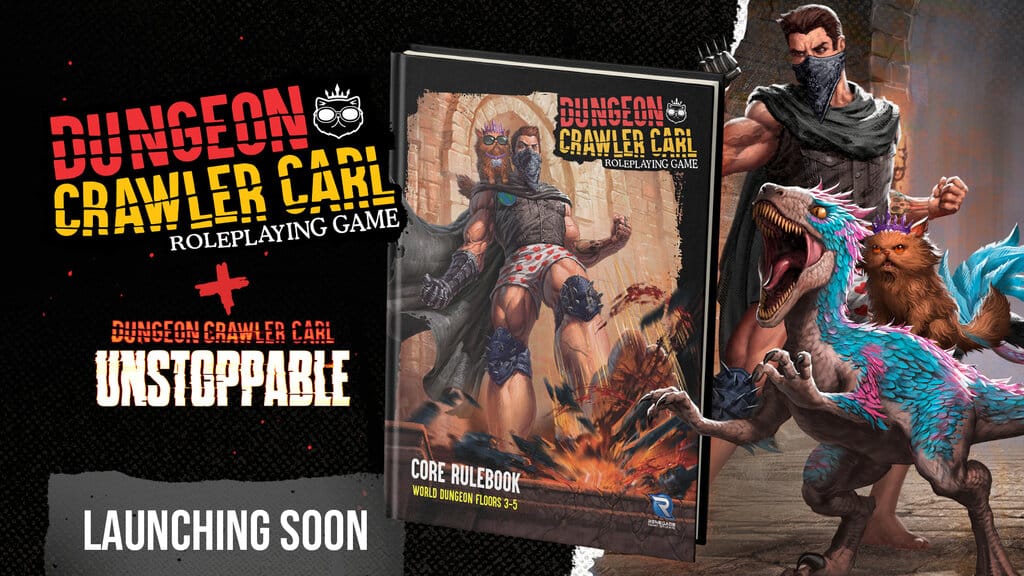
Renegade Game Studios hat die Backerkit-Kampagne für Dungeon Crawler Carl: Unstoppable gestartet. Der solo- und koop-taugliche Card-Crafting-Deckbuilder von Designer John D. Clair basiert auf der Bestseller-Buchreihe von Matt Dinniman und läuft parallel zum ebenfalls finanzierten Dungeon Crawler Carl Rollenspiel. Schon am ersten Tag übertraf die Crowdfunding-Kampagne ihr Finanzierungsziel von 250.000 US-Dollar um rund das Zwanzigfache.
Zwei Spiele, eine Backerkit-Kampagne
Renegade bündelt gleich zwei Tabletop-Titel in einem Projekt. Neben Unstoppable entsteht das skillbasierte Dungeon Crawler Carl Rollenspiel (kurz: CarlRPG), ausgelegt für eine Spielleitung plus mindestens einen Crawler. Das TTRPG bietet über 30 spielbare Völker, eine breite Klassenliste, ein Starter Set, ein über 300 Seiten starkes Core Book für die Etagen drei bis fünf, Miniaturen, Würfelsets, einen GM-Screen und einen Season Pass mit sechs digitalen Content Drops. Beide Spiele lassen sich einzeln oder gemeinsam unterstützen.
Gestartet ist die Finanzierung am 14. April 2026, das Ende ist auf den 15. Mai 2026 angesetzt. Rund einen Tag nach dem Start stehen knapp 4,94 Millionen US-Dollar und rund 20.000 Unterstützer auf der Projektseite – die Kampagne ist damit zu über 2.000 Prozent finanziert. Renegade bietet über Backerkit zusätzlich eine „Pay Over Time"-Option an, mit der sich Pledges ab 150 US-Dollar auf vier monatliche Raten verteilen lassen.
Stretch Goals schalten fortlaufend zusätzliche Inhalte frei, die bei physischen Pledges automatisch beiliegen. Die Illustrationen für beide Spiele stammen erneut von Luciano Fleitas, der bereits die Cover der Romanreihe verantwortet hat. Damit zieht sich eine durchgehende Bildsprache von den Büchern bis zur Tabletop-Umsetzung.
Pledge-Stufen im Überblick
Die Kampagne bündelt Einstiegs-, Unstoppable-, Rollenspiel-, Kombi- und Händlertiers auf einer gemeinsamen Auswahlseite. Alle Preise verstehen sich in US-Dollar, Versandkosten kommen nach Kampagnenende über den Pledge Manager hinzu.
Für den Einstieg ohne physische Ware gibt es zwei Tiers:
À La Carl ($1): Reiner Zugang zum Pledge Manager.
Tunnel Tuner ($40): Digitale Versionen von Core Book und Starter Set.
Wer ausschließlich den Deckbuilder möchte, wählt einen der beiden Unstoppable-Tiers:
Unstoppable – „You Will Not Break Me" ($60): Grundspiel und die kostenlose Crawler-Chaos-Erweiterung.
Unstoppable – All In! ($130): Grundspiel, Crawler-Chaos- und Iron-Tangle-Erweiterung, dazu zwei Standard-Playmats und ein Koop-Playmat.
Für das Rollenspiel reichen die Optionen vom günstigen Regelwerk-Bundle bis zum kompletten Miniaturen-Paket:
Bronze ($55): Starter Set (physisch und digital) samt Sticker und Art Prints.
Silver ($60): Core Book (physisch und digital) samt Sticker und Art Prints.
Gold ($150): Starter Set und Core Book (physisch plus digital), GM-Screen, Season Pass sowie die Würfelsets „Carl's Big Boi Boxers" und „Princess Donut's Crown of the Sepsis Whore".
Platinum ($269): Gold-Inhalte plus ein zusätzliches Smush-Würfelset, drei Würfelbeutel und ein Dice Tray.
Legendary ($399): Platinum-Inhalte plus alle drei Miniaturen-Boxen (Royal Court, Allies and Enemies, Mobs of Mordecai).
Beide Spiele gemeinsam bieten zwei Kombi-Tiers:
Gold Plus+ ($210): Alle Gold-Inhalte plus Unstoppable-Grundspiel und Crawler-Chaos-Erweiterung.
Celestial ($490): Legendary-Inhalte plus Unstoppable-Grundspiel, Crawler-Chaos- und Iron-Tangle-Erweiterung sowie zwei Standard-Playmats und ein Koop-Playmat.
Für stationäre Fachhändler steht zudem das Retailer Pledge ($100) als Anzahlung zur Verfügung. Darüber hinaus gab es mehrere Gen-Con-bezogene Spezial-Tiers zwischen $640 und $900, darunter „Jeff Hays Celestial", „Designer For A Day" sowie drei Crawler-Con-Varianten für Donnerstag bis Samstag. Diese exklusiven Stufen sind bereits ausverkauft.
Unstoppable im World Dungeon: Mechanik und Modi
Unstoppable setzt auf das gleichnamige System von John D. Clair, hier angepasst an die Welt von Carl und Prinzessin Donut. Das Kartenspiel ist für eine oder zwei Personen ausgelegt: Solo übernehmen Spieler die Rolle von Carl, im Koop-Modus schlüpft der zweite Platz in die Rolle von Prinzessin Donut. Gegnerisch treten Nachbarschafts-, Bezirks- und Stadt-Bosse an, die mit jeder Etage des 18-stöckigen World Dungeon härter werden.
Die Eckdaten im Kurzformat:
Spielerzahl: 1–2 Personen
Modi: Solo und Koop, jeweils als Arcade- oder Kampagnen-Partie
Kern der Mechanik ist das Card Crafting. Fähigkeiten und Ausrüstung werden im Verlauf einer Partie Stück für Stück aufgewertet. Jede Verbesserung stärkt allerdings zugleich den aktiven Boss, sodass das Risikomanagement fester Bestandteil jedes Zugs ist. Laut Verlag entsteht daraus ein momentum-basiertes Gameplay, in dem sich Konfrontationen mit jedem Einsatz zuspitzen.
Zwei Spielmodi stehen zur Auswahl. Der Arcade-Modus konzentriert sich auf eine einzelne Etage und liefert kürzere Partien, während der Kampagnen-Modus die Fortschritte über mehrere Etagen hinweg verknüpft. BoardGameGeek listet den Titel derzeit mit einer Komplexität von 2,00 auf der fünfstufigen Skala. Die Durchschnittsbewertung liegt bei 9,33, basiert bislang aber auf lediglich drei Stimmen und ist damit noch wenig belastbar.
Für Fans der Buchreihe bietet Unstoppable einen solo- und koop-tauglichen Einstieg in den World Dungeon, ohne eine komplette Rollenspielgruppe zu erfordern. Versandkosten werden erst nach Kampagnenende über den Pledge Manager abgerechnet. Konkrete Auslieferungstermine nennt Renegade auf der Projektseite bislang nicht. Alle Details zur Finanzierung und den einzelnen Tiers finden sich auf der Projektseite auf Backerkit.
Am 2. Mai 2026 feiert Spiele-Offensive.de den 24. Geburtstag. Passend zum Jubiläum läuft ein Countdown mit 24 Tagen und 24 Angeboten – an jedem Tag wird ein neuer Titel reduziert. Den Auftakt macht heute die Terrakotta-Armee von GiantRoc.
24 Tage, 24 Angebote
Seit 2002 gehört Spiele-Offensive.de zu den festen Adressen im deutschsprachigen Brettspielhandel. Zum Jubiläum spannt der Shop einen Bogen über fast einen Monat: Ab heute wird täglich ein neues Angebot freigeschaltet, bis am 2. Mai der eigentliche Geburtstag erreicht ist.
An der Aktion beteiligen sich unter anderem Frosted Games, Asmodee, Pegasus und Ravensburger. Damit sind sowohl Expertentitel als auch familientaugliche Spiele vertreten. Welche Titel an welchen Tagen reduziert werden, bleibt bis zur jeweiligen Freischaltung offen – ein täglicher Blick in den Shop ist dementsprechend Teil des Konzepts.
Den Anfang macht die Terrakotta-Armee
Als erstes Angebot senkt Spiele-Offensive.de den Preis für die Terrakotta-Armee von GiantRoc auf 14,99 Euro. Regulär kostet der Titel 60 Euro, die Reduzierung gilt solange der Vorrat reicht.
Das Expertenspiel von Przemysław Fornal und Adam Kwapiński ist 2022 erschienen. Für eine bis vier Personen dauert eine Partie zwischen 90 und 120 Minuten, das Mindestalter liegt bei 14 Jahren. Auf BoardGameGeek erreicht es einen Schnitt von 7,39 Punkten bei einer Komplexität von 3,4 von 5. Thematisch arbeiten die Spielenden als Handwerkerinnen und Handwerker an der berühmten Tonarmee des Kaisers Qin Shi Huang, mechanisch tragen Worker Placement und Gebietsmehrheiten das Spiel.
Den direkten Zugriff auf das Angebot gibt es unter spiele-offensive.de. Die folgenden 23 Angebote werden an den jeweiligen Tagen bis zum 2. Mai freigeschaltet.

 Anmelden
 ︎
︎


 My wife Melodi’s favorite games blend a mix of looking just a little bit ahead, plus a compelling theme. They tend to be medium-weight. She has had serious game crushes on Isle of Skye (BGG weight = 2.25), Kingdom Builder (2.07), and Wingspan (2.48). Games that drift towards the 3.5 or higher tend to get […]