Normale Ansicht

Chip Theory hires Keymaster veteran to grow lighter game imprint Neon Knight, as it learns to build beyond its existing audience

21. September 2026 um 16:37

Chip Theory Games has hired eight-year Keymaster Games veteran Jennifer Graham-Macht to lead its lighter-games imprint Neon Knight, after discovering that building the business means developing a new audience – as well as rethinking some of the approaches behind its prior success.

The Too Many Bones publisher told BoardGameWire it is very happy with Neon Knight’s progress since it began building the studio two years ago, but has acknowledged being “maybe naive” about how many of its existing fans would follow it into lighter games.

Chip Theory chief marketing officer Josh Wielgus said, “We had hoped there would be a very high percentage of ‘omni-gamers’ in the Chip Theory audience who would gladly come along for the Neon Knight ride. That hasn’t been as true as we had initially hoped for, and thus we’re learning that we really need to put the effort into building that audience and brand.

“That has meant on the Chip Theory side investing more resources into the building of Neon Knight than we first anticipated. Obviously the biggest move we’ve made to that end is bringing in an experienced pro’s pro like Jen.”

Chip Theory Games’ hugely successful title Too Many Bones, designed by company co-founders Josh and Adam Carlson

Chip Theory has spent more than a decade building a hugely successful business around expensive, lavishly produced games aimed at a devoted audience of heavier and solo-focused hobby gamers – with standout hits including Too Many Bones, Cloudspire and The Elder Scrolls: Betrayal of the Second Era.

But the publisher looked to expand the breadth of its offering in April 2024 by bringing in Dice Throne co-creator Manny Trembley’s recently-launched studio Good Knight Games, which it rebranded to Neon Knight.

That move was designed to give Chip Theory a dedicated route to more retail friendly and affordable lines of games, while drawing on its longstanding operations, customer support, fulfillment and marketing experience.

Wielgus told BoardGameWire, “We’re very happy with the direction things are going, even if thus far there hasn’t been a ‘megahit’ to speak of.

“We’re really proud of the titles that have been released thus far and are learning a ton about a market – the light/medium/mass market side of board games – that we have historically been absent from on the Chip Theory side.

“We fully understand that this basically needs to be treated as building a new business. Chip Theory proper didn’t really find its footing until after Too Many Bones released, which was almost five years into the company’s existence.”

But he said one assumption the company had got wrong with Neon Knight was expecting the tastes of Chip Theory’s staff – who enjoy games across a range of weights and genres – to be mirrored across its customer base.

“I think we were maybe naive about the number of traditional Chip Theory fans who would be excited about this direction,” he said.

“Chip Theory caters primarily to a heavy and solo-forward audience, but all of us here in the building love most types/genres/weights of games. We presumed that much of our audience was likely the same.

“That hasn’t turned out to be as true as we maybe hoped, and so it didn’t take long to realize we needed someone who didn’t have their mind in Chip Theory world at all to help us really reach what has turned out to be a very new audience.”

Theory Into Practice

New Neon Knight lead and managing director Jennifer Graham-Macht previously spent about eight years at Parks publisher Keymaster Games, initially as community manager before taking on roles in production, project management and ultimately being named Games Director.

She has also recently returned to board game retail as co-owner of New Jersey-based retailer The Player Agency, having previously run Satellite Comics and Games in the mid-2010s.

Graham-Macht told BoardGameWire that moving into full studio leadership felt like a natural next step after a long spell at Keymaster, and described Neon Knight as having “equal parts amazing pedigree and plenty of room to keep improving”.

Her new role sees her responsible for the “health and growth” of the studio as well as leading its operations, with Trembley remaining creative director with responsibility for game design and art direction.

She said, “I’ve spent the first couple of months getting clear with Manny what the vision is for the imprint. We first want to make that clear internally and then use it to start shaping how we grow our catalog and talk to our audience.

“In every aspect of studio work, I’m focused on making sure we are walking well before we run. That includes how we say yes to projects, how we work with external partners, developing a sustainable omni-channel strategy, and much more.”

Part of Graham-Macht’s role will be helping determine which lessons from Chip Theory’s existing business are useful for Neon Knight – and which do not fit a company targeting a different market.

Wielgus told BoardGameWire, “The lesson we’re learning is that not every lesson we’ve learned with Chip Theory is applicable on the Neon Knight side of the business.

“Jen’s here to really help us gauge what bits of our experience are helpful and what bits of our experience are perhaps holding us back from doing mass market well.

“Our penchant for ‘overproduction’, a laser focus on making games solo-friendly, and a crowdfunding-first mindset don’t necessarily benefit us here.

“Jen has been helping us shed those tendencies where we need to and really think about Neon Knight stuff as its own distinct creature with very distinctly different needs.”

He cited Fight 5, Neon Knight’s reimagining of classic card game War, as a prime example, saying, “We were very proud of our box for Fight 5. It’s sleek and sexy and we kind of modeled it after the Compile box (which is also sleek and sexy).

Fight 5, designed by Aaron Hein and Manny Trembley, published by Neon Knight

“Post-release, we learned that for the type of game Fight 5 is, we did a horrible job of making it a retail-friendly box. It doesn’t tell you what the game is at all and is far too abstract to sell itself.

“We’re also learning that the direct to consumer marketing we rely on so heavily for our big Chip Theory stuff isn’t a silver bullet for retail/distribution/mass market audience acquisition.

“While the games and the mechanics can be great (and we believe they are), you need to stop and consider a whole lot more things when you don’t have the luxury of literally speaking to your audience directly the way we can on our big Chip Theory crowdfunding campaigns.”

Future Plans

Graham-Macht said her experience at Keymaster had taught her about connecting with customers through different sales channels, adding that it was “exciting to apply that knowledge to a different vision”.

She added, “I think the biggest challenge for any new brand right now is discoverability. There is a lot of competition for how a person chooses to spend a weeknight hour with friends, family, a spouse.

“Most customers won’t know that Neon Knight is an imprint of another brand let alone what that brand stands for. The products themselves need to shine.

“And that being said, a premium experience can look and feel like a lot of things. More than component materials, I think thoughtful product design and attention in all the right places goes a long way to building customer trust and loyalty. That’s the mark we’re striving for.”

She added, “Any amount of that community engagement we can foster at Neon Knight will be a big win for the studio.”

Crowdfunding is another area where Chip Theory is reconsidering whether its established approach is the right one for Neon Knight.

Wielgus said its debut Neon Knight title, Neon Reign, had launched with almost no pre-marketing, as the agreement to bring the studio into Chip Theory was signed just two days before its campaign.

Neon Reign, designed by Aaron Hein and Manny Trembley, published by Neon Knight

He said, “That one I would chalk up as simply an experiment. Jump Masters I think we hoped would do a bit better than it did, but again so much of that I think is that we were relying on CTG’s existing Gamefound audience to show up for a lighter game that has no solo mode.

“As we look at the possibility of future campaigns, we’re having a lot of conversations about how to go about generating a unique audience and brand for Neon Knight, as well as things like moving Neon Knight campaigns back over to Kickstarter which seems to be a better fit for more accessible fare. “

Crowdfunding will not necessarily be the default route for future Neon Knight releases either, with Wielgus saying the company expects to use it occasionally, but will assess each game individually to decide whether a campaign is necessary or beneficial.

Graham-Macht added that while for now Neon Knight would rely on internally-developed designs, putting out games from other creators was “something we see in our future”.

“We’ve honed in that our games are inspired by/re-imagined modern classics, and that’s where we’re excited to explore”, she said. “Manny has a lot of ideas in this vein, but as we continue to grow and get our sea legs, there will be room for other designers’ work as well.”

Chip Theory is also hoping to staff up Neon Knight further following Graham-Macht’s hire, with the company gearing up to make two more hires that will split their time between the two arms of the business.

Wielgus told BoardGameWire he hopes the business will expand “in a huge way” across its release slate, staff numbers and amount of investment, but added that time – and sales – would tell if the business is able to achieve that.

He said, “I may be crazy, and I know a lot of folks consider Chip Theory one of the most successful board game companies of the last decade (I don’t have a way to measure that really, maybe they’re right. We certainly feel like we’ve been very successful!) – but I think Neon Knight can absolutely grow to match Chip Theory’s success.

“That can look a lot of different ways financially (sales quantity vs actual profits is always a bit of a moving target), but ultimately we’re excited enough about this brand that we really want to give it the full send.

“If Covid and tariffs have taught us anything, it’s that having a lot of irons in the fire and a strong diversification of our portfolio is the best way to shield ourselves from catastrophe.”

The post Chip Theory hires Keymaster veteran to grow lighter game imprint Neon Knight, as it learns to build beyond its existing audience first appeared on .

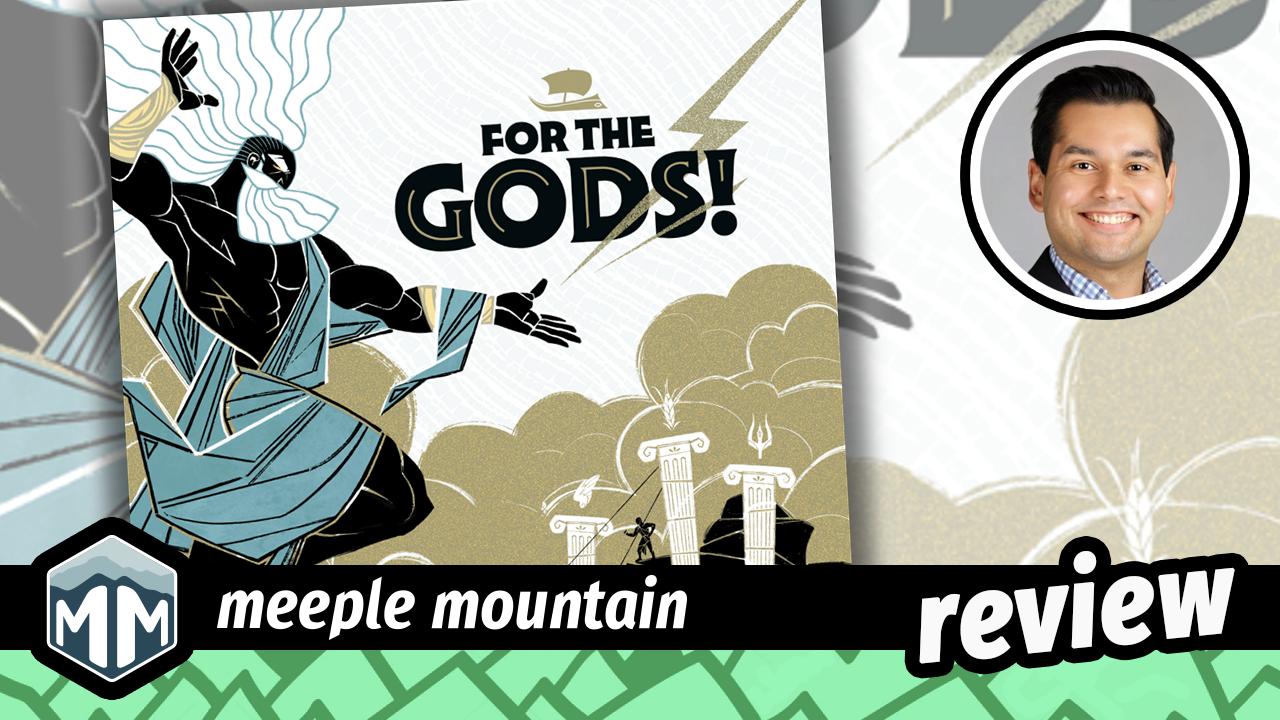
For The Gods! Game Review

They talk about iconic dynamic duos: Batman and Robin, peanut butter and jelly, Mary-Kate and Ashley Olsen, and now Trevor Benjamin and David Thompson. But hold the phone! They’re back with a third, Brett J. Gilbert, evolving their design-duo superpowers into a full-fledged trio.

Many will recognize Benjamin and Thompson from modern classics such as the Undaunted series, War Chest, and Resist!. Factor in the euro-y talents of Gilbert, whose credits include Mandala and The Guild of Merchant Explorers, and For the Gods! couldn’t hit the table fast enough.

I’ll admit, as much as I love the idea of wargames and “dudes on a map,” I’m often quite bad at them and, as a result, tend to admire them from afar.

For the Gods! is a dudes-on-a-map game, yes, but scratch beneath the surface and there’s a clever bag-building and hand-management game driving the entire experience.

After Mighty Boards blew past its crowdfunding goal by more than tenfold, I was curious to see whether all those ingredients would come together into something worthy of Olympus.

Zeus himself would approve.

For the Gods! is an area-majority game where players sail around ancient Greece, building towering temples dedicated to the gods. Each player begins with the…

The post For The Gods! Game Review appeared first on Meeple Mountain.

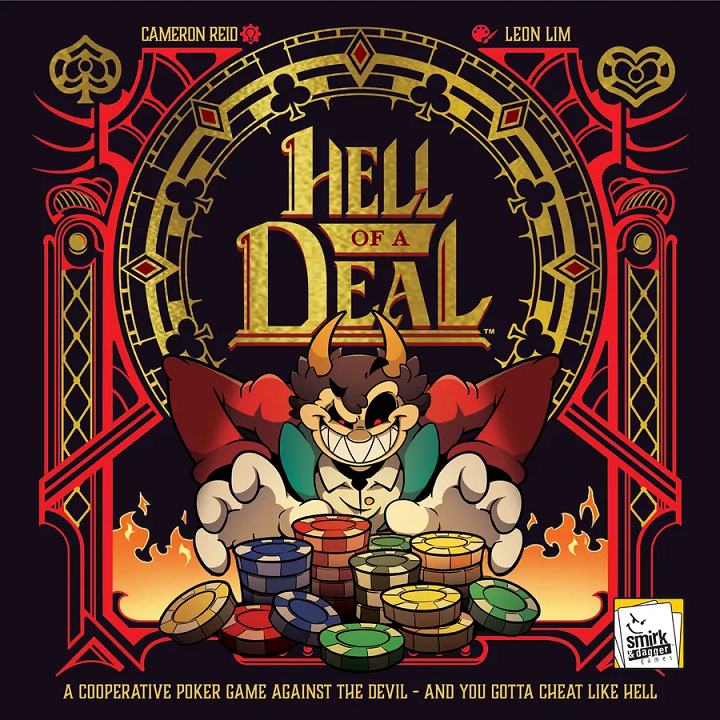
I Met Death Today – A Hell of a Deal Review

21. September 2026 um 15:00
You can pinpoint moments where things change, where ripples meet ripples and creativity shifts. Dominion concocted deckbuilding. Love Letter gave the microgame sex appeal. The Crew pulled trick-takers from the ground like a necromancer. Now, Balatro is whispering in the minds of designers, calling forth Ace of Spades, Rolling Deep, and the subject of this…

Read more →

Marvel Crisis Protocol – Onslaught’s Grip Tightens!

Excelsior, heroes, and welcome to a Meeple Mountain article for Marvel: Crisis Protocol! Today, we’re here to talk about the newest supervillain to join the roster: Onslaught! This big boy boasts his own personal affiliation where anyone you bring is automatically affiliated with him and uses his leadership. The model is cool, but how does it all pan out?

I want to give a quick shoutout to one of my local players, Isaiah Cooper, who excitedly agreed to paint this Onslaught for me when he arrived. I would rather put impressive painting on display for y’all than my mediocre attempts at whipping something up.

Two Minds, One Grudge

Onslaught is a character lifted straight from the comics (and for my money, likely to feature heavily in season 3 of X-Men ‘97.) He’s a fusion of Professor X and Magneto’s consciousnesses after the two of them used their powers on each other. Here in MCP, he’s the first character to carry two alter-ego tags, serving as both Charles Xavier and Max Eisenhardt. This means you can’t run either character with him, but since Onslaught has the “peerless” tag, it means you can’t run him with any other peerless characters anyway, which Magneto has.

The box is just one simple model, but don’t let that fool you. This is one of the…

The post Marvel Crisis Protocol – Onslaught’s Grip Tightens! appeared first on Meeple Mountain.

Crowdfunding Campaigns of the Week – 9/21/26

21. September 2026 um 14:57
Crowd Funding Campaigns of the WeekWelcome to this week’s batch of crowdfunding campaigns. We have a variety of offerings here, so we hope you will find something that catches your eye. Also, if you want to chat with the BGQ team, join our Discord Server where we talk about games, movies, sports, and other fun stuff. Check it out and […]
Source

Interview with Yoni Goldstein Designer of The Nights of King Ludd: The Luddite War on Industry, 1811-? from The Dietz Foundation Currently on Kickstarter – Part II

Von: Grant
21. September 2026 um 14:00

The Dietz Foundation has a new game from Yoni Goldstein on Kickstarter called The Nights of King Ludd: The Luddite War on Industry, 1811-? (the game has already funded). The Nights of King Ludd is a 2-4 player game that deals with direct oath-sworn secret societies of English Luddites at the dawn of the Industrial Revolution in the English Midlands. Working together, players will build a secret network of saboteurs, ferry provisions and weapons on the black market, assemble raiding parties, and if all goes as planned, smash those “dark satanic mills” to cinders. Here is Part II of our interview with Yoni.

If you are interested in The Nights of King Ludd, you can back the project on the Kickstarter page at the following link: https://www.kickstarter.com/projects/dietzfoundation/the-nights-of-king-ludd

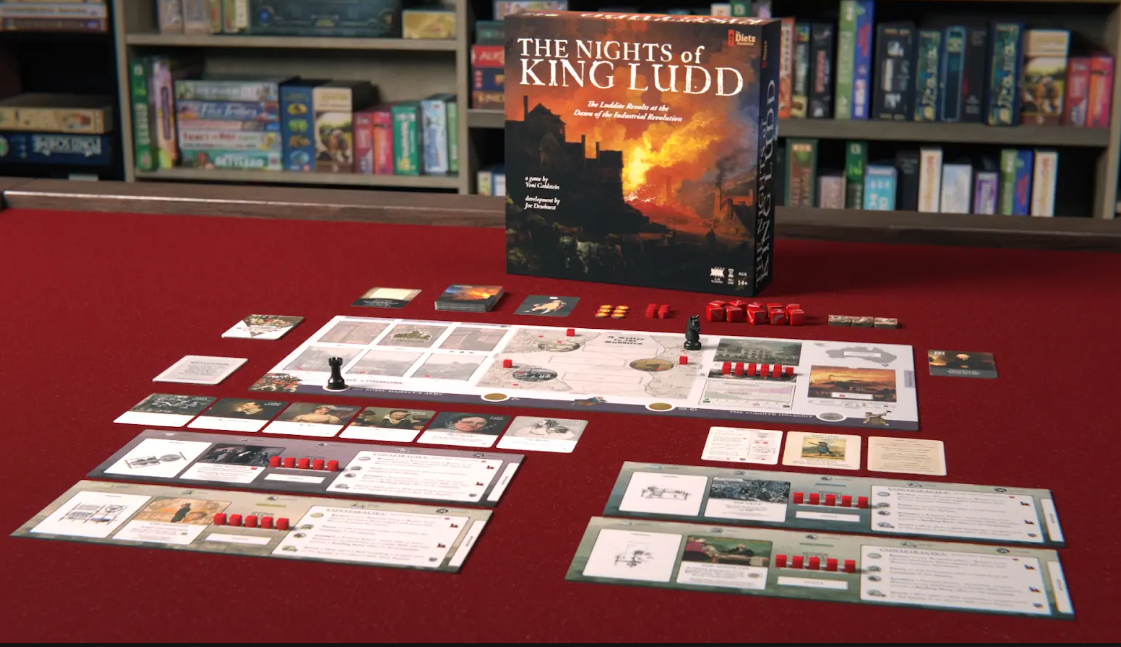
Grant: What is the layout of the board and the different locations?

Yoni: The board is divided into three panels. On the left, you will see the two card pools. The top row is where you place the “Regency” Cards, reactionary forces from London sent to quash the Luddite revolts. Below London are three cards representing the “Commons,” a shifting market of dual-use cards helpful to the players.

The central panel features the mills and enclosures. This is where players place their pieces (Weavers sympathizing with the Luddite cause), and the local Militia (the knight piece). The map depicts the “Luddite Triangle:” the West Riding of Yorkshire, Nottinghamshire, and Lancashire. 

The right panel holds the Manufacturer’s House (and the current Manufacturer), the pool of Employed Weavers, and the Stocking Market to track wages and productivity in the mills. On the far right panel, is the Australia space for weavers punished by transportation, and the “Saboteur Dice Pool.”

A ribbon at the bottom of the board displays His Royal Majesty’s Army progress toward the Luddite Holdout. This is effectively the round track, if the Luddites are unable to sabotage the three mills by the end of the third round, the game ends in collective defeat.

Grant: How does the game use cards? What different type of cards are included?

Yoni: In The Nights of King Ludd players build a collective card engine by acquiring dual use cards from the “Commons” to upgrade their actions (aka “Conspiracies” – more on those below). The main pool of cards is called “The Commons” which, as the name suggests, represents a mutual aid network of provisions, tactics, and personalities that the Luddites may draw from in the course of their clandestine operations.

“Commons” cards are dual use and drawn from the Draw Deck. They are beneficial in two ways: the top of the card displays a persistent upgrade to any Conspiracy action and is locked into the player board to form a tableau. The bottom of the card displays a “Raiding Party” effect, a one time effect that can be triggered when a Raiding Party is formed and dispatched to a local mill.

The antithesis of the Commons is the “Regency,” a deck of cards reflecting the alignment of the aristocracy in London with an ascendent industrial class against the Luddite cause. They are drawn whenever the Luddites make themselves known in public: fomenting a mob, carrying out an assassination, or setting a factory on fire. When drawn, they set the machines of industry into motion; driving up productivity, plummeting wages, and calling the local constabulary to police the countryside. 

Once more than three cards are in the “London” track above the Commons, a nasty event is resolved. These effects will intensify the game’s challenges. Sympathetic weavers will be exiled to Australia, the militia will sweep into the local mill to root out hidden raiders, and  the Commons will be parceled off and sold to the highest bidder.

Grant: What is the role of the Persona Cards? Who are these figures?

Yoni: As mentioned in Part I of this interview, each player represents a secret society of Luddites organized around a particular “persona.” These personae introduce a special ability, as well as their their own victory condition, aka a “Motivation”, and a unique “Woe” – a card shuffled into the Draw Deck at setup that will, inevitably, undermine their efforts. There are six persona to choose from.

In clockwise order, they are:

  • Mary Molyneux, 19, and Lydia Molyneux, 15, were two sisters who, in 1812, stormed a steam-driven cotton mill outside Bolton shouting, “Now Lads!” – encouraging the mob to set the building afire (and they steadfastly did so).
  • Lady Ludd: “The “Lady Ludd Riots” took place in 1812 when a group of women and young lads – “distressed” by the precipitous rise in corn prices – marched through Leeds, assaulting merchants and “beating up for a mob.” They were led by a disguised person “who was dignified by the title of LADY LUDD.”
  • George Gordon Byron, 6th Baron Byron, “a young poet with the chiselled good looks, the oddly deformed club foot, and an obscure and very prestigious peerage,” was an eloquent Romantic dandy who rose to defend the Luddites before the House of Lords in 1812. Byron sympathized with the weavers near his home north of Nottingham; “the real cause of their misery [was] the destructive warfare of the last eighteen years, which has destroyed their comfort, your comfort, all men’s comfort.”
  • Elizabeth Studham was one of seven women tried for arson during the Swing Riots of 1829-30, an echo of the Luddite rebellion. At the age of 19 she set fire to an East Kent workhouse, demanding a wage increase for farmers threatened by threshing machines. Studham was deported and served 14 years and two months in Van Diemen’s Land (Tasmania) during which time she gave birth to two children of whom records are sparse. She would later be sentenced for 10 offences, primarily for bad language.
  • Lt. George Mellor was a Cropper and Yorkshire Luddite known to the movement as General Ludd’s Right-Hand Man. A strong willed and roguish machine-wrecker, he eventually faced a hanging sentence for the murder of a wealthy mill owner whom he shot in the groin. Eventually, Mellor was arrested in October of 1812. It is said he raised his hands in shackles and shouted “Three cheers for General Ludd!” 
  • John Baines the elder was an “intelligent Hatter” and president of the local Republican Club of St. Crispin. Baines dreamt that Luddism would one day blossom into a democratic revolution;  “Let the people now rise and rid themselves of this vile brood who flung upon them the sole taxation of the country and reduced them to the condition of galley slaves!” He was found guilty at the York Special Commission of administering illegal oaths and died on board a prison hulk in a Portsmouth harbour, on December 21st, 1814. 

Grant: What is the purpose of the Manufacturer Card?

Yoni: At the beginning of each game, one of the three Manufacturer Cards is selected at random and placed face up in the “Manufacturer’s House” space on the board. The initial effect (tuck 6 cards from the draw deck beneath the manufacturer) represents the nascent industrial class’ emphasis on extracting from the commons, resolving at the start of each round. In practical terms, this prunes away the players’ available card pool over the course of play as well as ambiguates the composition of the draw deck. When a manufacturer is assassinated, all the cards tucked beneath are discarded (and will shuffle back into the Draw Deck) and the Manufacturer Card is flipped to reveal a more reactionary and dangerous side.

Grant: What are Conspiracy Actions?

Yoni: At the beginning of the game, each player has five conspirators (four for Lord Byron) at their command. Spending a conspirator allows the player to activate one of the four following Conspiracy actions (per turn):

Rally Local Weavers: either place a weaver from the supply pool at your presence pawn, or move your pawn and any weavers to another enclosure on the map.

Trade in the Commons: pick up a card from the Commons and tuck into one of the columns on your player board. That card allows for secondary actions whenever that matching Conspiracy is activated.

Assemble a Raiding Party: a two step action, move one or more weavers from an Enclosure (spaces on the map adjacent to Mills) into a Mill. This sets up a future sabotage action. Then, activate one of the Raiding Party effects in the Commons. This is the primary means of building your Saboteur Dice Pool. The more raiders you have at the Mill, the more dice you are permitted to roll during a Sabotage operation.

Lastly, you may Incite a Mob, placing a Mob Tile next to an adjacent Mill. For a sabotage roll to be successful, the die rolls must match an icon depicted on the Mob tile – hammer, gun, or torch.

Grant: What type of secondary effects come from cards tucked into the Column on Player Boards?

Yoni: Once you use a Trade conspiracy to move a card from the Commons to your tableau (your “Secret Society”), you can activate it, along with any other card in that same column on your player board, every time you resolve that conspiracy action. This allows for chaining and sequencing a series of effects that may have significant impact on your objective to destroy the mills.

Grant: Can you show us a few examples and explain their use?

Yoni: For example, let’s say you are George Mellor and you are seeking to assassinate the manufacturer. You resolve the Trade conspiracy to take “Dispatch Delegates to Neighbouring Counties” and place it in your Trade column, meaning it will be available to you immediately after this primary action. In previous turns you’ve already acquired an ongoing ability, “Mellor Takes a Shot at Mr. Horsfall!”, giving you an extra die for Assassination roles (helpful, since these operations are so risky!). You activate “Dispatch Delegates…” to activate a Raiding Party effect (the bottom of the card) in the Commons, which happens to be your partner in crime, “Martha Mellor Defends the Accused.” She allows you to roll for Assassination, but will be removed from play once that effect is resolved.

Grant: How does Sabotage and Assassinations work in the game?

Yoni: At various points in the game, players may elect to roll for Sabotage or Assassination. Of course, certain maneuvers must take place for these brazen attacks to succeed. Sabotages are larger scale events and are aimed at the Mills. You must have assembled a raiding party at the Mill and incited a Mob to spurn them on. As mentioned above, you roll one die per weaver cube at the Mill and attempt results matching the icons on the Mobs you’ve placed. The dice are D6s with the following faces: 3 blanks (a miss), 1 Torch, 1 Gun, and 1 Hammer. So with one Mob tile matching one of those icons, each die you roll has a 1 in 6 chance of hitting. If all three Mobs are in place, the odds climb to 1 in 2 per die. 

An assassination is a similar roll, but only one die may be cast and hits are only the gun or hammer. Beware, the Regency will respond with a draw from its deck for both sabotage and assassination rolls!

Grant: What are you most pleased about with the design?

Yoni: As Dan Thurot noted, “The Nights of King Ludd points toward a more experimental direction than Chicago ‘68 and I feel it reflects a degree of growth and maturation as a designer. It’s a game that seeks to capture both the panoramic view of a people’s struggle as well as sketching out the personal incentives that motivate individual participation in (and sometimes sacrifice for) a collective cause”. 

Grant: What other games are you currently working on?

Yoni: I am currently working on a commission for an international art exhibition on “sociopolitical freefall.” This will be a smaller box game and will also be developed by Joe Dewhurst. I’m also co-designing a project about Mai ‘68 with Fred Serval. This game is about the French experience of student and labor riots in 1968. While it shares the themes of Chicago ‘68 it’s driven by a completely new system.

If you are interested in The Nights of King Ludd, you can back the project on the Kickstarter page at the following link: https://www.kickstarter.com/projects/dietzfoundation/the-nights-of-king-ludd

-Grant

Oh, What's Inside?

21. September 2026 um 08:00

by Justin Bell


I spent most of the last few years turning down opportunities to review legacy and campaign games. However, I turned that idea on its head at this year’s edition of Gen Con by picking up not one, not two, but SEVEN games that fit the description of a sizable tabletop investment.

So, I added the following games to the “bag of hauling” in Indy: Regicide Legacy from the team at Badgers from Mars, Mountain Goats: Legacy and Enchanted Ivy (both from Allplay), Forbidden Legacy (Gamewright), Encyclopedia of Monsters (Scorpion Masqué), Codenames: Critical Roll Adventures (CGE), and Mini Rogue: The Council (a roguelike from Nuts! Publishing that features a campaign).

Part of why I jumped back into these types of games is that magical moment when you first open the box. Is there anything better than that first moment, when you start a new campaign game, and you are greeted by the large red “STOP!” sign warning you to not open the presents inside too early?

“Oh, man, that’s heavy,” someone said when they picked up the box for Regicide: Legacy. “What’s inside that thing?”

Campaign games offer such a thrill of discovery. Even I had to admit that opening the Regicide Legacy box was quite a surprise; for the uninitiated, the base game of Regicide is a simple deck of cards. Yes, the deck is a very cool, well-illustrated set of cards…still, it’s a deck of cards, in both simplicity and weight. (The simplicity melts away when you lose for the 20th time in a row.)

Picking up the Regicide Legacy box—just lifting it up!—got my mind rolling on what sorts of secrets were inside. The box cover features characters in silhouette; are there minis in there? Poker chips? 12 separate decks of cards for the 12 “challenging missions” described in the BGG listing?

Over the course of the next few weeks, I’m excited to see what treasures are inside. Additional games that have campaign and legacy elements have arrived after Gen Con, such as Buried Memories, which features one-off plays augmented by unlockables hidden in sealed envelopes.

Hmm…am I suddenly back into campaign games?


I like the idea of campaign/legacy games quite a bit. In fact, during COVID, I spent a lot of time seeking out campaign experiences while I was locked down and looking for something to build on during quieter gaming times at home.

But even before COVID, the only consistent struggle I have faced during my 40+ year tabletop career appears when I try to line up a new campaign. That’s because of the people.

Locking in a group to play the exact same game a few times can be a disaster. Playing the same game 10-12 times? From a logistics perspective, this is a nightmare. Aligning the stars using a Doodle poll to confirm availability? Frightening.

But when I have been able to marry the bodies to a consistent schedule, some of these play experiences have been incredible.

My plays of Pandemic: Legacy Season 1 became my definitive campaign experience. The highs, the lows, the thrills of discovering something new in the next chapter of that game became requirement viewing. For years, we had one of the character cards on our refrigerator, a reminder of memories past. Clank! Legacy: Acquisitions Incorporated came very close to taking the top of the mountain for me, and somehow we had a group of four players who completed the entire game across just a few gaming sessions. The surprises were great, but the extension of the core game across a funny story became a model I consistently sought out.

Charterstone also fit the bill, as a game that lived on my kitchen table for a few nights while we worked through all the fun unlocks that box provided. Freelancers: A Crossroads Game was so funny my kids quoted some of the app’s dialogue from time to time. More recently, we did the first five chapters of Little Alchemists, and I was thrilled to find the kids so engaged across the total experience. Even though we didn’t see everything in the box, seeing the majority was still a nice surprise.

Like many others, I did a three-game arc of…Arcs: The Blighted Reach, another exceptional campaign experience that took note of how hard it is to get people to play the same game a bunch of times. So, the design of that campaign includes just three sessions, so across two game nights I joined two members of my review crew to take it down. Like those other successful campaign experiences, The Blighted Reach created real memories at the table, things that I still laugh about today.

Beyond these seminal moments, the last few years of playing campaign games have often ended badly. In fact, I find nothing less satisfying than getting a commitment from a group, then learning the (initial) rules for the game and setting up the scheduling for the next few weeks of a new campaign game.

You get the first play session in, maybe a second…then, “it” happens.

“Justin, listen…I just got staffed on a new project in Tuscaloosa,” they’ll say, with texts peppered with sad face emoji. (I’m not an emoji guy.) “Go ahead and swap me out for ____: Legacy, cause I don’t wanna hold you guys back.”

A second of your four-person group suddenly gets flaky, less reliable than she’s always been. “My friend Sally’s in town this Tuesday; I can’t make it for ____: Legacy this week. But I know the game is a ‘swap in, swap out’ situation, so you guys will be fine without me. I’ll be back next week, promise!” One week turns into four, and you now remember that Sally’s the one who bails on you for other activities all the time, making you quietly question Sally’s place in your life.

Earlier this year, the team at Horrible Guild offered me a review copy of The Queen’s Dilemma, a campaign game I badly wanted to try. But I knew it would be a challenge to get a group together in Chicago around the time that I wanted to table it: late spring even, right around the time that gamers start ghosting me for more pleasurable activities, like…summer, nice weather, beach vacations, and the annual summer gaming snooze before things pick back up after Gen Con.

There weren’t tears in my eyes, but I knew it was the right move to pass the offer to another reviewer. “I’m sure someone else has a group,” I said, and I’m still interested in seeing the game for myself. But that takes a lot of planning, and human beings are tricky.


Here’s why I love campaign and legacy games again now: I have at least one standing group in place. That group is my family.

At Gen Con, I picked up those games above with abandon. “Are you sure you’ve got a group for this?” the publishers would say.

“Yep,” I said. “My son will play anything, and now all these games fit for him and the other folks at home. I’m good.”

We did nine of the 15 chapters of Encyclopedia of Monsters in about a week. Mountain Goats: Legacy was originally a three-chapter plan…the day before this article was posted, we finished the sixth of ten chapters. Regicide Legacy is kicking up plays this week. Enchanted Ivy hit the table as soon as I got back from Gen Con; a solo-only campaign is an easy win for me, and I did the first three plays in about 80 minutes. Forbidden Legacy’s first play was completed the day before this article went up. Mini Rogue’s campaign attempt already took place. Codenames: Critical Role Adventures will hit the table in October, along with Buried Memories.

Even though it is not technically a campaign game, I’ve already gotten a handshake agreement with a partner for this fall’s plays of Kingdom Come: Deliverance. (I’m even brushing up on the video game to get ready.) I’m told Cozy Stickerville is something I would enjoy. I’ll try to convince the publishers of Stonesaga that I’m the right man for the job.

I’m aggressively hunting campaign and legacy games that will fit both at home and with hobbyists in my play groups. At home, we are always looking for ways to keep kids off of tablets. If a game is both fun AND gives us a chance to keep them coming back to a good story, we are in. My wife picked up a copy of Mindware’s Ziggurat last year, and across a six-chapter campaign, we dove headfirst into another adventure.

Experiences like this are why I love coming back to this game format again and again. Publishers: keep ‘em coming!

Bloody Breakers

Bloody Breakers is a 2-player microgame from Japan, designed by Ryusei Nakata. It is a game with just 16 cards. This seems to be a common format in Japan.  Box back You have four types of cards in the game. There are four copies of each card type. Each card has a scoring criteria on the left and also an ability at the top right.  During the game both players will

Pluto (Julius Caesar God Cards Ranked, #7)

20. September 2026 um 17:56

We’ve discussed general strategy tips for Julius Caesar (Grant Dalgliesh/Justin Thompson, Columbia Games). One area that deserves closer scrutiny are the God cards. They are enticing, but best used in moderation. Which begs the question: Which of them are almost must-use cards and which the more disappointing of the divine bunch? Thus, I’ll rank them in ascending order, laying out how to use the card best and why I rank it how I rank it. Today, we begin at the seventh and lowest rung of the ladder… quite fittingly, that’s Pluto.

If you want to read more posts like this strategy post – for example, the next six posts on God cards in Julius Caesar – I strongly recommend you subscribe to the blog: All new posts in your inbox right when they go live!

What does the card do?

Pluto allows you to exceed the usual movement limits per road (only if you attack): You can move six blocks on a major road (instead of the usual four), three on a minor road (instead of two) and two across a strait (instead of one).

©Columbia Games.

What would be the best uses?

This card can be useful for a bigger attack than planned – either to bring overwhelming force against a tough enemy stronghold or to force lightly defended straits.

Why is it bad?

In itself, the Pluto card is nothing but a 1 Move/0 Levy card which lets you go first. And the big attacks it promises are mostly a mirage:

Gathering six blocks in Narbo? Might just play the next card openly already. If Caesar’s concentration of forces happened before Pompey got to execute his card, Pompey can still fortify Tarraco with all or most of the blocks from Carthago Nova and new recruits, which means Caesar will get his big battle, but on unfortunate terms, as defenders fire first. Even if Caesar was sneaky and concentrated his forces when he went second, Pompey will be able to reinforce the battle with the Carthago Nova blocks (which will come into play in the second round of battle).

Whenever you gather six blocks for a huge Pluto attack on the next card, you might as well tell your opponent with a megaphone that you hold the card. So, they can either prepare for the attack (usually by recruiting more defenders or moving reinforcements to the threatened area), or cancel it altogether by playing a God card of their own. In any case, you should probably not play Pluto as the last card of a year, because if you win the battle, you are likely to be left with too many blocks for the stacking limit.

Finally, attacking the Hellespont with two blocks against one! …just that Pompey can reinforce his lone block with the adjacent forces.

Forcing a strait with two instead of one blocks runs into the problem that your opponent will likely have more forces nearby: If they defend the Hellespont/Bosphorus they can just reinforce the attacked space with whichever defender they had in the other space. If they defend the Straits of Messina, they can usually pull troops from Syracuse or Neapolis.

Is there a silver lining?

Yes – you can use Pluto when you suspect your opponent will play a God card themselves to cancel that card (as with all God cards). And you can use it if you desperately need to go first on a given turn for one move (for example, to run away with a damaged leader block).

Pompey has taken heavy hits in the previous battle and is now down to one step, vulnerable to either a Vulcan eruption or an attack on Carthago Nova. Pluto blocks the former and allows Pompey to run away from the latter to fight another day.

How do you feel about Pluto? Similarly unenthused as I – or are you a plutophile, a plutomaniac, a plutocrat? What are your best tricks to use the card? Let me know in the comments!
Designer Diary: Rival Seas

20. September 2026 um 16:00

by David Ausloos

The First Spark (No Meeples Were Harmed)

When I started developing Rival Seas, I revived a peculiar little ritual from the making of Dreamscape, one that had somehow become part superstition, part creative compass, and, if I’m honest, part excuse to avoid getting down to "serious" work. One that has helped me kickstart every project since. It's a simple but effective method: build a rough improvised cardboard playground. A small imaginary arena to put pieces on, move them around, and discover what the game wants to become. I've found that this kind of tinkering sparks ideas far more naturally than staring at a notebook. It's a bit like a child playing with toys on the kitchen floor. It creates an intuitive thinking space where mechanics emerge through play rather than analysis. And so, on a bright summer morning I found myself sitting at the table with a board-shape that would later prove to be spectacularly wrong. One thing however was clear from the very beginning: this had to be a maritime game. I've always loved bustling coastal towns, little rural harbors, and the romantic notion of setting sail toward the unknown. Apparently, I also love cutting cardboard at a kitchen table and pretending these unevenly cut pieces represent a functioning economy. That first prototype was rough. So rough it probably needed its own sea-based rescue operation. But somehow it already contained the core DNA of what would later become Rival Seas.


Twinstar Valley, my SPIEL Essen release of the previous year, revealed something I wanted to explore further with Rival Seas. What fascinated me most about Twinstar Valley were its opening turns. You begin with very limited capital, and every coin matters as you struggle to get your company off the ground. Eventually, though, the economy opens up and money starts flowing much more freely. With Rival Seas, I wanted to preserve that specific tension of those early turns until the very end. I wanted every investment to matter, every opportunity to come with a trade-off, and every decision to carry just enough sting to make players hesitate...but never enough to make the game intimidating. By this point, one thing was becoming increasingly clear: Rival Seas was shaping up to be an expert-level game.

The Fine Art of Knowing What You're Building

To keep the economy of the game tight, I wanted players to invest in order to grow, ensuring the cash flow of the player to be challenging to manage. That idea found its way into the design very early through a stockholding system. Buying shares in a container company means committing to it for several turns. You wanted that company to thrive, but just as interestingly, you sometimes wanted it to struggle once your rivals started investing in it as well. Especially when they manage to become CEO of the given company. In many games I've played, stockholding is a source of powerful emotions: the fear of losing control of a company you helped build, or alternatively the fear that other players won't use the company enough to make your investment worthwhile. The stockholding system itself was surprisingly streamlined from the start. Balancing it, however, was another story. In early prototypes, buying shares was too profitable. It created joy-filled moments, ruthless power plays, and enough drama to keep therapists fully booked, but it also overshadowed the game's other pillar: earning money by shipping containers across the sea. The solution turned out to be remarkably simple: reduce the opportunities to buy shares. Suddenly, every share purchase became a weighty commitment rather than an obvious move. The stock market remained exciting, but no longer dominated the game. It transformed into a constant source of tension that lived alongside, rather than above, the shipping economy.


The biggest design challenge, however, was finding a unique action-selection system that felt so organic that players barely noticed how much machinery was ticking beneath the surface. In the end, it took three complete redesigns before it became what I had envisioned. The first version used a rondel. Players moved their markers around it to produce containers and carefully timed their actions, trying to be in the right place when the next opportunity presented itself. It worked but it felt a little scripted. The second iteration replaced the rondel with an action-slot system. Players selected actions from different slots, with less powerful actions offering small bonuses and better intitiative to act, compensating for their lower impact. It was a more flexible design and created interesting trade-offs. But once again, I felt something was missing. I wanted players to have genuine freedom: an open playground where they could adapt, improvise, and outsmart opponents. A place where the game doesn't hand you a script, but throws you into a constantly shifting situation and asks: "So... what are you going to do now?" For that to be possible, the system needed a more organic core. A system not unlike that first cardboad playground I build in the early stages of development to play around with.


The Prototype Finally Stopped Fighting Back

The breakthrough came during a playtest at a local game club, with two critical testers sitting across the table from me, sharpening their feedback like they got paid per emotional scar. We call them "Bruno" and "Jean-Pierre" out of self-preservation. They're the kind of playtesters who will sigh dramatically halfway through a session, get up in dead silence, walk into the crowded hallway, and explain their existential crisis with your game to complete strangers. If your prototype survives them, it can probably survive publication. Your ego, on the other hand, may require a few more playtests. After yet another revised version, Bruno finally uttered the words a designer wants to hear: "It plays well." A brief unsettling silence followed. "...but..." There are few words in game design more terrifying than a compliment followed by "but you could also make it..." Fortunately, I'd had one of those rare flashes of foresight and started recording the conversation that followed on my iPhone. Two hours later, I had a complete philosophical dissection of Rival Seas safely stored in a single massive audio recording. Looking back, it was the most valuable two-hour therapy session I never knew I needed.

Night after night, before going to bed, I replayed Bruno and Jean-Pierre's conversation, hoping my subconscious would do some heavy lifting while I slept. Apparently, my brain was happy to take over the design work, as long as I stopped bothering it during office hours. One morning at the breakfast table, it finally delivered: I noted down a timetrack system that would change Rival Seas forever. The old system worked, but it felt procedural, like the game was quietly filling in paperwork. The timetrack opened up everything. Turns suddenly flowed naturally, downtime nearly vanished, and players finally had the freedom to perform well-timed actions as a reaction to others. Because every action now came with a specific cost. Moving further on the track might offer you the perfect opportunity to act, but it also means handing the initiative to your rivals for the next operations in the shared playfield. Buying another share might be tempting, but if it pushes you too far ahead, your opponents might get several actions before you can react. The timetrack became the backbone of Rival Seas: a living puzzle where every action reshapes the next.


Another key mechanic that slowly revealed its true purpose during development was the Demand system, a deceptively simple idea that would become one of Rival Seas’ defining features. I wanted the market to feel alive: a constantly shifting network of needs driven by what coastal towns actually received. Once a demanded good was delivered, that town's demand should change. This evolved into a rotating queue system of demand markers. After a delivery, the matching demand marker is removed from the town and placed at the back of a queue of demand markers, while the entire line shifts forward. The first marker in the queue then replaces the old demand at the coastal town. The result is a dynamic system that keeps these coastal towns in constant motion. It also adds another layer of importance to initiative on the time track. Getting to act first can mean placing a valuable demand in exactly the right location...turning a small timing advantage into a major opportunity. Sometimes, in Rival Seas, the difference between a good move and a great move comes down to reading the currents of the market. Positioning yourself for future demand is not about luck...it is about making the right decisions before the opportunity even exists.
Shares and dares...

Also crucial in the gameplay is the connection between shares and route building. Once you own shares in a container company, you can use an action to place "Navigation Points" on sea spaces, creating shipping routes for vessels to travel between harbors. When points connect two harbors, ships can sail the route. But, naturally, there is a catch. Every time you use a Navigation Point, you pay a credit from your personal capital directly into the treasury of the company that owns that point. And here comes the delicious twist: for every share you own in that company, you can use one of its Navigation Points for free. This creates a tricky balancing act. Investing in companies gives you access to valuable infrastructure, but using your rivals' networks too often is basically handing them money and politely asking them to become richer. Meanwhile, using routes owned by companies you invested in makes those companies more profitable, allowing you to reclaim part of that wealth through dividends payed out to you at the end of each round. In other words: sometimes you're building your own shipping empire. Sometimes you're accidentally funding your opponent's yacht collection. Finding that perfect balance between cooperation, exploitation, and "wait... why am I making my rival richer?" became one of the core tensions of Rival Seas. Holding the majority of shares in a company makes you the CEO, giving you a small but powerful amount of control. Most importantly, during the payout phase: you decide how many dividends are paid to shareholders from the treasury. But be careful...if the treasury can't cover at least 1 credit per share, the company's stock value drops. And trust me, these treasuries are often painfully tight. Keeping your investments healthy requires careful planning, perfect timing, and constantly watching what your opponents are trying to pull off. Because nothing hurts quite like seeing your carefully nurtured company run out of money thanks to someone else's "perfectly reasonable" decision.

This layered approach to money management is, for me, what makes Rival Seas such a challenging economic system. Every dollar has a purpose, but knowing where to put it, and when, is where the real game begins. You are not just trying to keep your own shipping company afloat by delivering containers that are currently in demand, chasing the highest values on the ever-changing market, and planning profitable routes. You also need the container companies you've invested in to succeed, because their treasuries are what fuel your dividend income. And your rivals know this. They will happily disrupt your plans by timing their actions perfectly, making that crucial delivery just before you are ready to cash in. Since everything in the game is open information, you can't rely on surprises...You have to plan ahead, read your opponents, and leave a little room for someone else’s carefully planned sabotage. It would be rude to assume they haven’t planned anything. In Rival Seas, your biggest threat might not be a collapsing market. It might be that innocent looking player sitting across the table, smiling politely while silently dismantling parts of your unprepared business plan.


Writing this, I realise I have only scratched the surface of what Rival Seas has to offer. It is a game that creates new dramatic situations with every play, because a single decision made by a player changes the landscape for everyone else. I have played it more than 100 times across all its mutations, and even now I still discover new approaches to play. But more than anything, Rival Seas feels alive. It is not just a collection of gears clicking together. Those systems are there, of course, but they exist to amplify the choices players make. Every playthrough spins a new story, complete with different challenges, different opportunities, and at least one decision you'll defend long after it has obviously ruined everything.


The Gentle Art of Calling It Done
Looking back, the journey of Rival Seas stands out as one of the most formative chapters of my humble life as a game designer. And, judging by the number of times I rebuilt the game, possibly one of the most expensive forms of therapy too. I learned the importance of stubornly returning to a core idea again and again, even when that means tearing everything down and starting over from scratch. A game is not finished simply because it works well. That is only the beginning. For a game to truly blossom, it needs to feel alive. I discovered how much I value player interaction, and how it keeps a game from devolving into an exercise in mathematical optimalization. The systems you create are only the stage. It is the players, and the way they interact within that shared space, that create the tension, emotions and unexpected moments, that shape a session.

And now, the final stretch towards SPIEL Essen has begun...that wonderfully chaotic beast where more than 1,700 new games fight for attention, shelf space, and the last remaining scraps of human concentration. Among all that marketing noise, Rival Seas will have to find its place. The words "battle" and "uphill" immediately come to mind, not necessarily in that order. Still, despite our modest booth, one thought keeps me calm: Rival Seas is the game I wanted to make: a compact playing time, a short ruleset, yet filled with difficult choices and intense interaction. So, if you’re at SPIEL Essen this year, come and say hi at Booth 2D130. I’d love to see you, show you Rival Seas, and perhaps convince you that container shipping is far more exciting than it has any right to be. If you take the time to sit down at the gaming table, you will discover an intense experience packed into a surprisingly compact box. A box that looks completely innocent...until two hours later careful planning has turned into cold panic, small-time endaveours have developed into grand shipping empires, and someone realizes the absurdly daring move they laughed at earlier was apparently genius. And honestly? That thought makes me disproportionately happy.

Inside The Cozy Bundle – Fiammingo Games, Strawberries, Forests, and Happiness

Fresh, juicy strawberries. Busy nature-loving cottage-witches. Ginger cats on rustic roofs. If any or all of these things (they could be a few of your favourite things) made you go 'ooo', then this September you're in luck, my friend. Fiammingo Games, a small Italian publisher, has taken note of the burgeoning market in cozy games and is heading to Kickstarter with something they're calling The Cozy Bundle. It's not one game, but three, launched together under a single banner. That's a whole lot o' cozy. It is, in fact, a "plump cushions and knitted throw and pet on your lap and steaming cup of tea" amount of cozy.

It's also a bold move. Most publishers save their big swings for one campaign at a time. What we have here is not a trio of vaguely-linked mini-games, but three fully developed board games with a shared aura. You’d expect them to be separate releases. Fiammingo is betting that they can convince you otherwise: that a witch's forest, a strawberry festival, and a cottage full of good intentions are stronger as a trio than as three separate entities. I sat down with the designers and artists behind all three to find out why, and to ask what "cozy gaming" actually means…

The post Inside The Cozy Bundle – Fiammingo Games, Strawberries, Forests, and Happiness appeared first on Meeple Mountain.

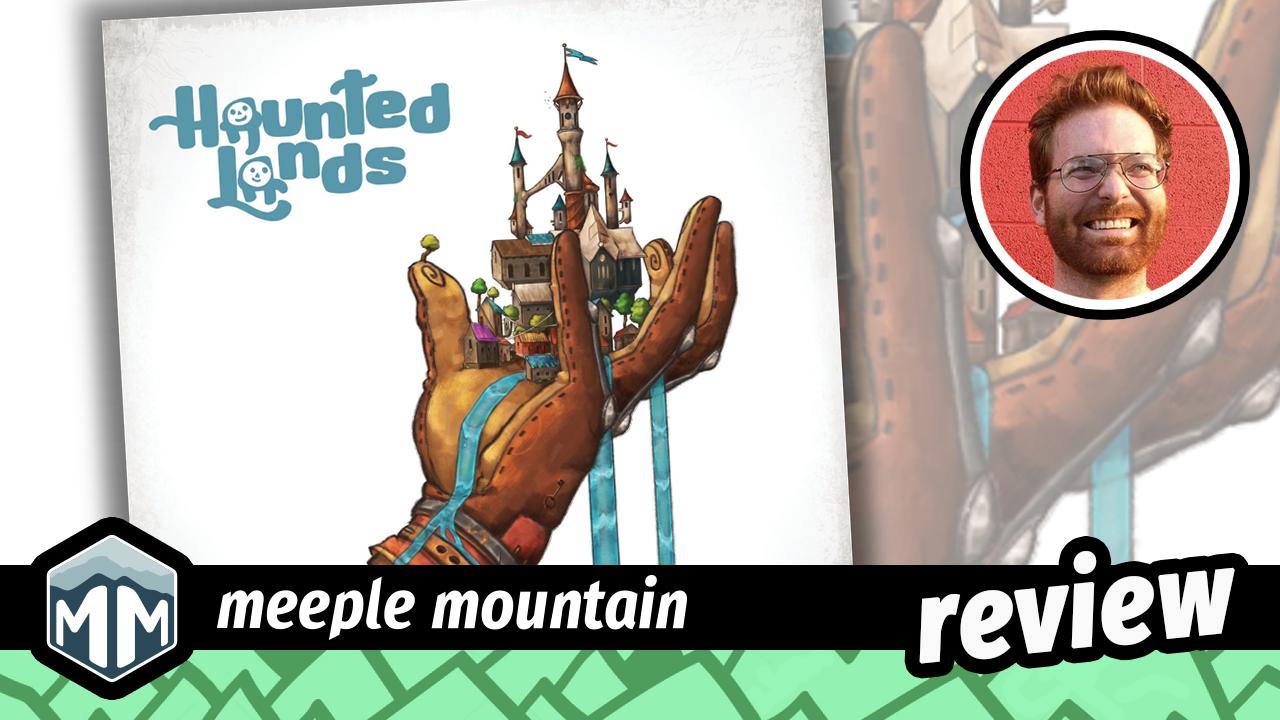
Haunted Lands Game Review

There’s a lot of things I want to like about Haunted Lands. I like the premise, where you’re adventurers/exorcists trying to help your little city expand out into the countryside by sending ghosts to the great beyond. There’s some mechanical flourishes that are genuinely interesting. Unfortunately, the game itself does not really rise above a rote resource-collection exercise.

It’s important to gather wood when exorcising

Haunted Lands is an action point game, where instead of getting a pool of action points, you have discs that correspond to different actions that you use to do various things in a sequence of your choosing. For example, you move, then gather, then build a building, move again, and finally, help a ghost.

You’re doing all this because helping the ghosts (which requires the right number of action tokens depending on how far the game has advanced), harvesting, and building buildings all give you resources, which you use to build more buildings, or sell said resources to buy upgrades. Building buildings and paying for upgrades gets you points, and in the late stages of the game, helping ghosts gives you points too.

The game forms a fairly simplistic loop. You move, making sure…

The post Haunted Lands Game Review appeared first on Meeple Mountain.
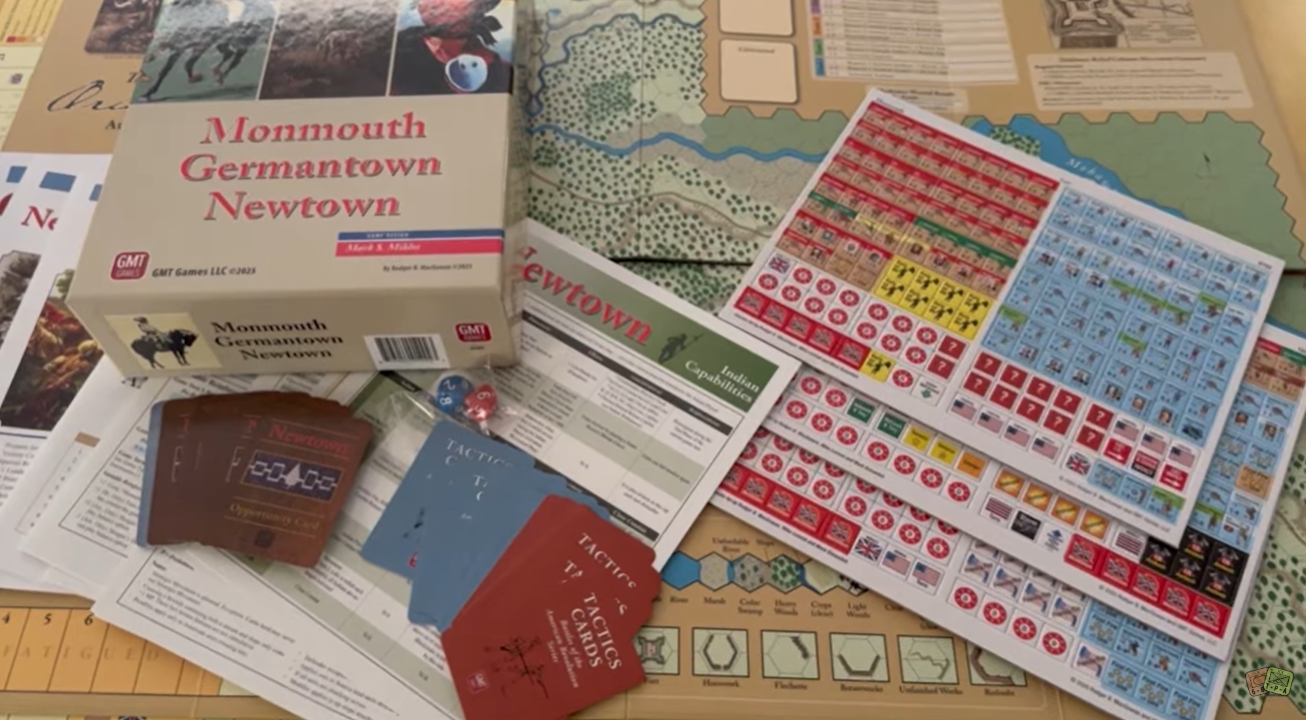
Unboxing Video: Battles of the American Revolution Tri-Pack II: Monmouth, Germantown and Newtown from GMT Games

Von: Grant
20. September 2026 um 14:00

Battles of the American Revolution Tri-Pack II: Monmouth, Germantown and Newtown is the second compilation of earlier releases from GMT Games’ Battles of the American Revolution Series. These are tactical level battles at the regimental level with a map scale of approximately 200 yd/hex.

Additions to the original releases include:

  • maps are hard-mounted
  • packaged in a GMT “deep box”, which is a 3″ box
  • rules and player aids printed in color
  • all replacement counters that have been issued since the games’ original releases
  • a new one page matrix-style play aid to assist the First Nations player in Newtown
  • Joel Toppen’s Solitaire Tactics Card play aid
  • a significantly upgraded Germantown rulebook addressing errata and ambiguities

-Grant

Mark Jackson – Thunder Road: Ignition Review

20. September 2026 um 13:00
Cue the game description, thanks to the Restoration Games website: “Like its bigger sibling, Thunder Road: Vendetta – in Thunder Road: Ignition your crew is racing through the wastelands – get your cars across the finish line first to win. … Continue reading

Malaysia Design & Play Game Design Competition 2026 Results

The results of the Design & Play Game Design Competition 2026 have been announced on Malaysia Day, 16 Sep 2026. Congratulations to Muhammad Aiman Haqiemi Mohd Shaipul (Jalan Jem), Anas Maghfur (Unlawful) and Andrew Tan Kui An (Malaysia's Last Tigers). I am one of the six judges for the competition. We had our judging day on 12 Sep 2026 at Lalaport. It was one full

Designer's Diary: Wireless

19. September 2026 um 16:00

by Marco Canetta

A long time ago in a galaxy on a beach far, far away....

Actually, the beach was in Tuscany, not that far from our home, at least. It was 2010 - long enough ago that many details have faded from memory.

Stefania(Niccolini) and I had recently published African Park; we were working on The Doge Ship and Rhein River Trade; and, above all, we were brimming with enthusiasm, which had spread to the whole family. It all started when our son, during that year’s summer vacation, said to me, “Papino (more or less “Daddy” in English), why don’t you make a game about your job?”

At the time, I was working as a consultant for major mobile phone operators: base radio stations, antennas transmission patterns and gains, dBi and dBd, and electromagnetic fields were my daily bread. The idea of creating a network, with constraints on power, antenna orientation, and interference with other networks, was quite appealing. That day, instead of building sandcastles, Stefania, our son, and I started drawing hexagons on the beach (hexagons were used at that time for representing mobile phone network over maps – perfectly fitting also for a game).

It didn't take long to come up with some initial drafts: a map on which to create the network and various radiation patterns. The patterns consisted of 1, 2, or 3 cubes placed on hexagons, representing the signal intensity, which, when moving away from the antenna, naturally decreased.

The first draft was purely economic: I spend money to build the network, and I earn money based on the locations reached by my signal. An interesting optimization, but not an easy one.

Between 2010 and 2012, while we were completing our other ongoing projects, we continued to develop these ideas. To create a variety of strategies, cards like these have been introduced.

And the map looked like this.

Some “workers” were moving around on the map, identifying the locations (i.e., the hexagons) where the base radio station would be installed and from which it would then spread the signal.

It's Not Time To Make a Change…

Putting aside a prototype for a while might help you see it in a new light and spot its flaws and its potential areas for improvement. The long break due to the development of ZhanGuo allowed us to return to the game later with fresh ideas.

To offer more variety, the map became modular, with modules like this one.

(Personal note: the modularity is always great. However, cutting hexagons is somehow annoying).

In addition to the cards, which still were driving the actions in the game, patents had also been introduced, providing permanent improvements to actions.


In short, all the elements were in place, but another long break was looming on the horizon…

Video Railroad Killed the Radio Star (?)

Working on Railroad Revolution - a game that had something to do with building a network - brought the project to a halt once again. The subsequent expansion of Railroad Revolution, Railroad Evolution and other projects that had taken shape in the meantime left the Wireless prototype gathering dust on a shelf.

There was a bit of a scare with the release of Smartphone Inc., a great game that - fortunately - had a different game flow and, in some ways, a different theme. All in all, that game was not “interfering” with our project. The real interfering factor was the time. We were aware that the rapid evolution of the board gaming world would render the prototype outdated and that, if ever revived after years, the project would require complete rework.

A New Hope

Winter 2023. A quiet period. COVID has been left behind, the development of Zhanguo: The First Empire was at the end, the prototype of Kingdom Crossing was already satisfying: a good time for new ideas. Personally, I’ve always been fascinated by the colorful cards of Ticket to Ride, and I was wondering what a game might be like that used colorful cards for more complex actions (sorry, we often tend toward complexity…).

Ok, but what should I do in this game? Certainly not a railroad network, I thought.

Why not revisit some concepts from Wireless, in a totally new form and with a totally new gameplay? And in a short time, here come some dual-purpose cards…


...and a fairly detailed playerboard with a summary of the available actions.


The basic idea was: if I play several cards, I have access to stronger actions.

(Fun fact: The playerboard in the example belongs to the yellow player and features an image of Nikola Tesla. By pure coincidence, since this version of the game never left our house, the final version designed by Harald Lieske also features the same combination Tesla + yellow).

The “network” would be created by placing tokens on a modular map like this one. The number on the hexagon represented the difficulties in installing a base station there.


Rather than introducing different types of resources (both abstract and concrete, such as knowledge and experience, physicals antennas, supports and infrastructures for antennas, electrical and electronic equipment, energy, technicians, and collaborators…), we decided to condense everything into simple cards, which could eventually be combined with money.

As far as I recall, we played only a very few turns of that prototype. The generic map wasn’t helpful (too generic) and didn’t provide any direction.
We soon put together a map focused primarily on the locations (i.e. Europe and U.S.) where Marconi, Tesla, and other scientists began their research and experiments.


(I admit, we created the map by borrowing map fragments from a game I like a lot).


And the cards evolved accordingly…


I Still Haven’t Found What I’m Looking For

However, there was something about the card mechanics that didn’t quite convince us. Or, at the very least, that didn’t quite satisfy us.

The idea came to us while playing around with some $ tiles from Railroad Revolution.


What would happen if the coloured cards became simple coloured tiles, maybe in the same size of the banknote above, and if having more or fewer of them affected the cost of the action? And what if I compensated for the missing tiles with $? And, to prevent the game engine from “exploding,” how would it feel if every action taken weakened the next one? And finally, what would the game be like if I could use money as a wild card or as a filler to make up for any shortcomings?

The answers ended up on an oversized game board like this one.


Finally, the game was heading in the direction we wanted. In short, in addition to the action tiles (which temporarily had flags on the back)…


… other tiles were added that simply “filled” the spaces - the Tycoons.


The development of the playerboard and the map was quite complex and went through numerous versions, released between 2023 and 2024, again with (albeit useful) breaks related to the completion of Kingdom Crossing.

The signal tokens had also found their place and their role on the playerboard.


Finally, the Personal targets had arrived as well - especially useful in the early games (when in doubt, I’ll just grab the flags…).


All the pieces were now in place…

SPIEL Essen 2024

A game with this complexity and these dimensions certainly isn’t right for every publisher. And time at the trade show is limited. So, we had to choose our meetings carefully. By chance, Bier Pioniere caught our attention and therefore we wrote to Spielefaible. We had a cordial meeting, during which we found many points on which we were in complete agreement. And a few months later, our journey together began.

And with Spielefaible came the final major revolution: turning hexagons into rectangles meant redesigning almost the entire game. Transmission patterns, patents, objectives… A lot of game parts were affected by this change. But this change was a bold finishing touch.
We went from this:


… to this:


SPIEL Essen 2026

SPIEL Essen 2026 will be the final destination of this long journey I tried to resume here. And, even if I often used the term “I” throughout this diary, this has been a journey we took together, not only with Stefania, but also with our daughter and our son, who are not only our main playtesters but also precious help. For example, in contrast with our prototypes, rather essential, we had a nice cover image made by our daughter.


Now, all we have to do is wait a little longer to finally see the game on a (XL) table. Our son and our daughter, who are grown up now, will obviously be in Essen too.

“Papino, why don't you make a game about your job?”
Done!

Your Friend Doesn’t Need to Become a Gamer Tonight

There is a dangerous moment in every board gamer's life when a non-gaming friend says, “Sure, I'll try one.” Remain calm. Do not make any sudden movements. And, most importantly, do not immediately disappear into the basement and return carrying a box large enough to contain a microwave.

We have been waiting for this moment. That's the problem. When you love tabletop games, introducing someone to the hobby can feel like being handed five minutes to explain your favorite band, restaurant, television series, vacation destination, and minor religion simultaneously. You want them to understand why this thing matters. You want them to experience the clever mechanisms, impossible decisions, ridiculous betrayals, dramatic reversals, and that beautiful moment three hours into a game when everyone suddenly realizes Dave has been quietly collecting sheep for reasons nobody fully understands. So we get excited. And excitement makes us terrible ambassadors. Or, at least, obviously biased ambassadors to the point of destroying our credibility.

We start explaining. “This one's actually pretty simple.” This sentence is usually followed by eighteen minutes of rules. “You have workers, except they're technically druids, and you're placing them on action spaces to collect resources so you can fulfill contracts, although they're called prophecies, and the purple resource isn't actually a…

The post Your Friend Doesn’t Need to Become a Gamer Tonight appeared first on Meeple Mountain.

Unboxing Video: Europe at War 1940 Solitaire from Worthington Publishing

Von: Grant
19. September 2026 um 14:00

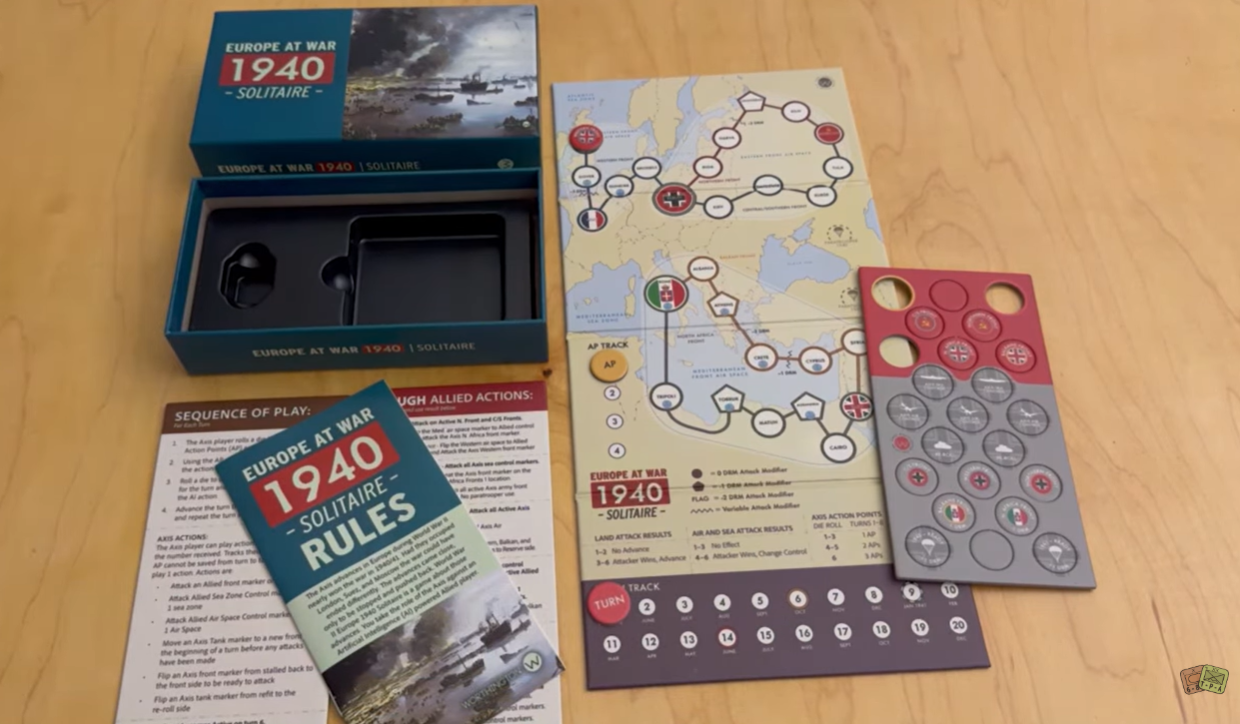
Europe at War 1940: Solitaire, the sister wargame to Pacific War 1942, places the player in the role of the Axis high command during the first 18 months of World War II and focuses on the European Theater of World War II.

The game introduces some new concepts important to the war in Europe. Each side has a limited number of tank units to add strength to some front armies. The axis has a paratrooper unit that can help with hazardous operations. Choosing when and where to place them can be a major decision. Also control of air spaces on fronts becomes an important factor. And, ports on sea zones are affected by sea zone control. Crossing bodies of waters on a front is a major effort.

As the axis do you try to take London before turning east against the Russians? Should you help out the Italians in the Balkans? Or do you turn your tanks loose in the deserts of North Africa?

-Grant

❌