Normale Ansicht

S’pose

16. September 2026 um 22:03

behold — arts

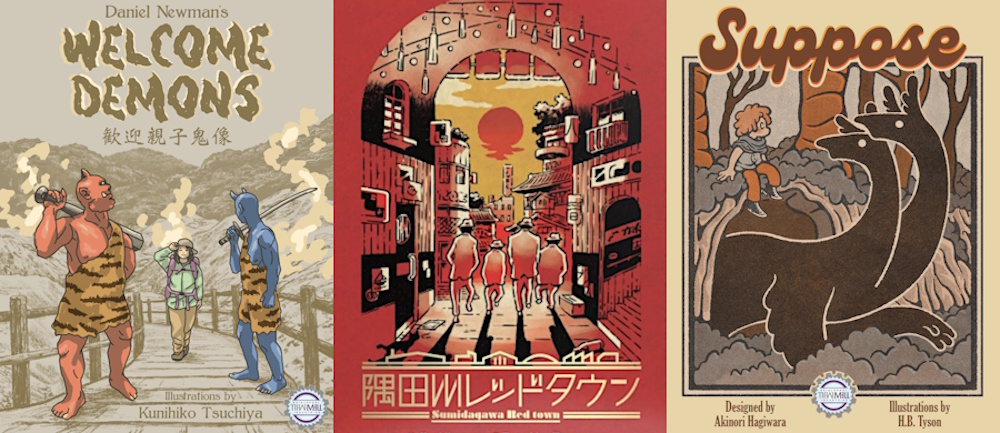
All I play anymore is trick-takers. And climber/shedders. Are those the same thing? Some say so. Others disagree. I don’t take a strong stance on it. Which is why I’m lumping these three titles together. For this quarter’s roundup, we’ve got friendly oni, unfriendly gangsters, and some super cute monsters that might be friendly or unfriendly depending on whether you correctly guess their identity.
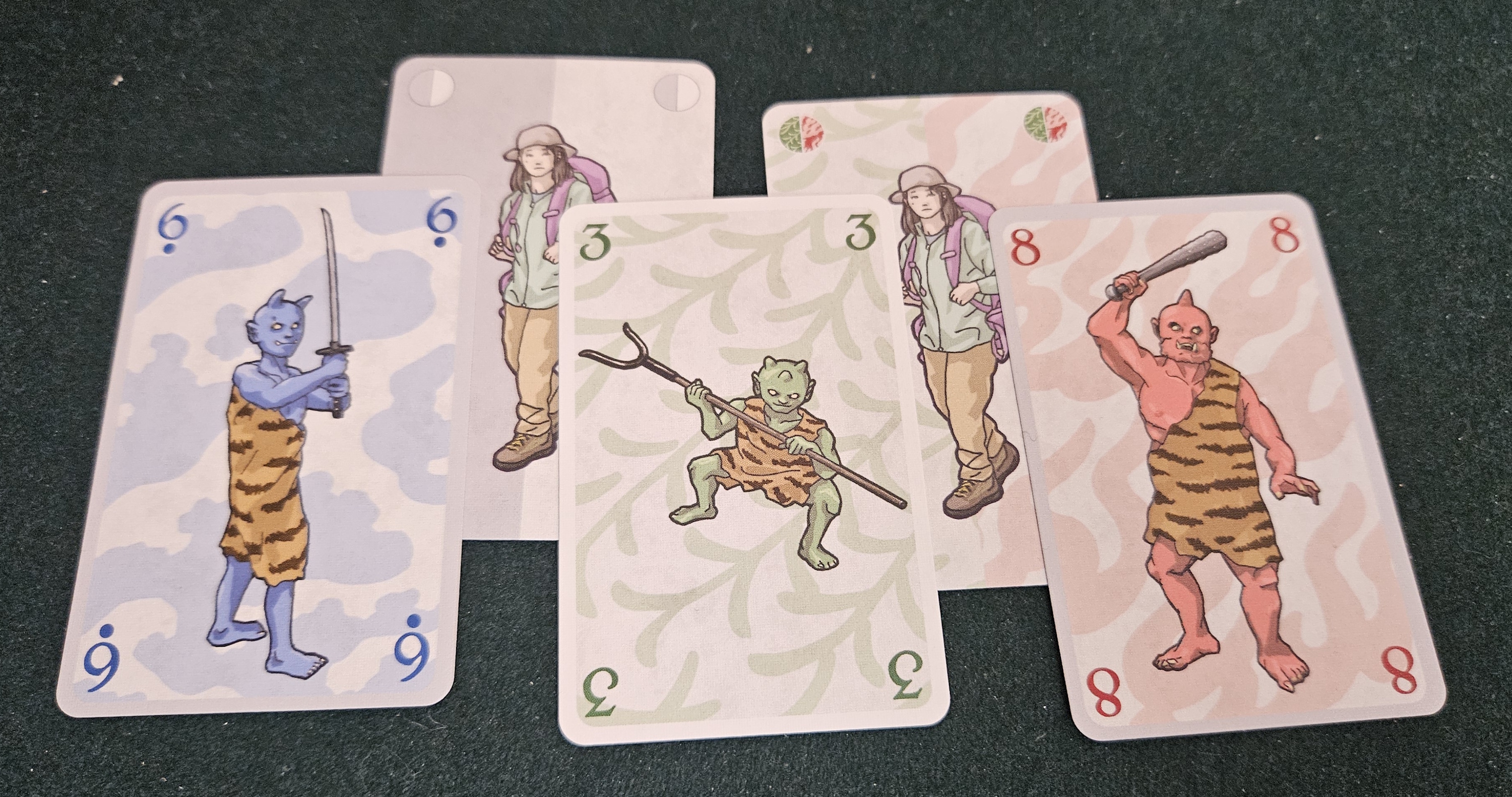
I want to be that little goblin freak in the middle. Just running around with his staff thing, scaring hikers and then saving them. Stealing dumplings all day. Living his best life.

Boo! We’re here to help!

Welcome Demons

If I were a Japanese demon, I’d be like the oni from Welcome Demons — a menacing li’l guy with a sword, but really just here to make sure you get home safe. Designed by Daniel Newman, this is a shedder about using the cards from your hand to guide lost hikers out of the mountains.

It’s also as atypical as it gets, seating exactly three players and, rather than building melds in the usual fashion, having you match your cards to your hikers. Each hiker has their own needs, whether odd/even ranks or various suits of oni. What’s more, players are required to format these melds using at least one card from the previous player’s set. This forces everyone to pay some attention to what their rivals are putting on the table. More than some attention, really. Because your meld must contain the same number of hikers (one, two, or three) but a higher sum of ranks, or more hikers but a lower overall rank. Which makes things tricky indeed, especially if you’re holding a bunch of mid-rank cards.

And then, if it becomes impossible to follow, everyone passes and the last demon to shepherd their lost hikers begins the process all over again with one lonely hiker. This continues until somebody most definitely can’t save any more hikers, at which point they lose and the other two players are crowned… I don’t know, the most helpful oni of the month.
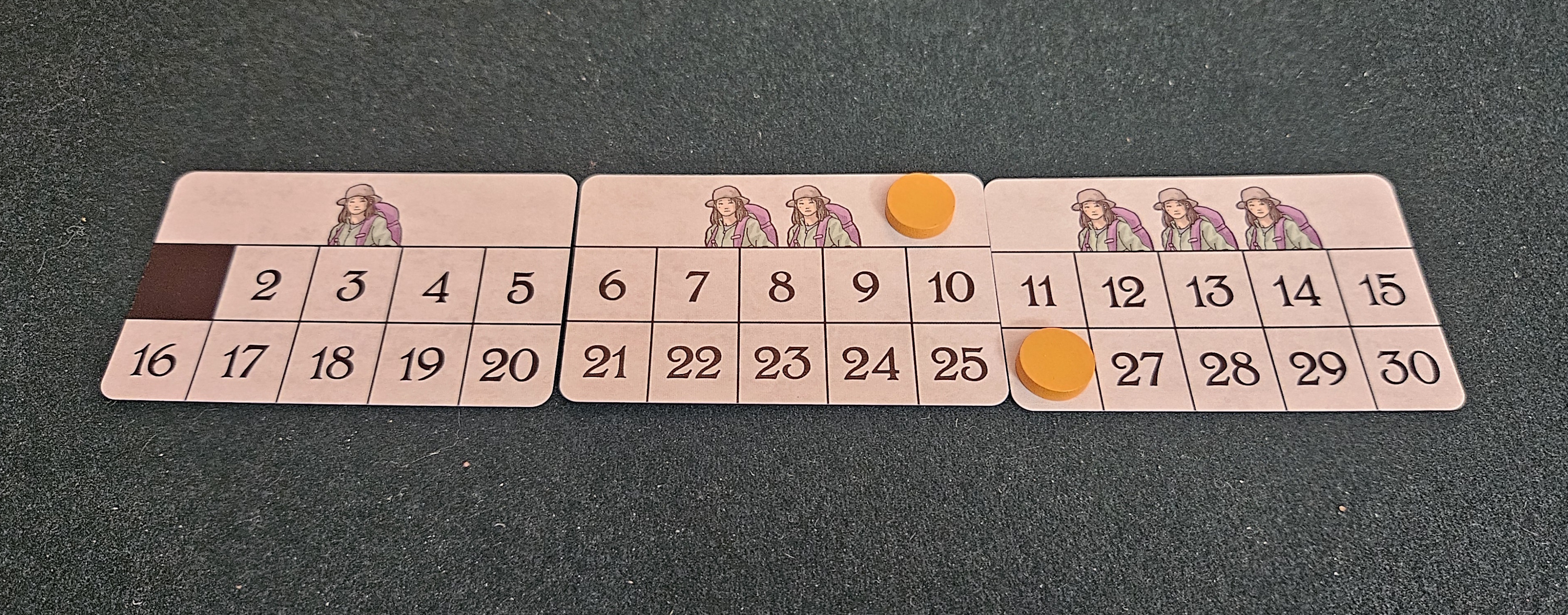
I once saved a hiker. As in, I once half-carried a friend down a mountain because they were whining about a blister. It was the size of a dime. Afterward, I had one the size of a tangerine. I was just throwing them away. Some people just want to watch the world... wait, what was I talking about?

How many hikers can you aid?

It’s a clever little thing, emphasis on both “clever” and “little.” Newman pulls a trick we’ve seen before, where you aren’t playing to win so much as playing to avoid losing. Oni are spiteful that way. Especially near the end of the hand — and the hand is the game, this isn’t some multi-round affair — it isn’t uncommon for players to struggle to build the right melds, sometimes resulting in an early quit for the session. Like many shedders, this makes the game’s back half less interesting than its opening salvo.

Fortunately for Welcome Demons, its approach to meld-building is novel enough that it’s worth witnessing, even if only as a filler. I would put this one in the midnight nugget box: a tasty snack with a crunchy exterior, but not the most filling meal out there.
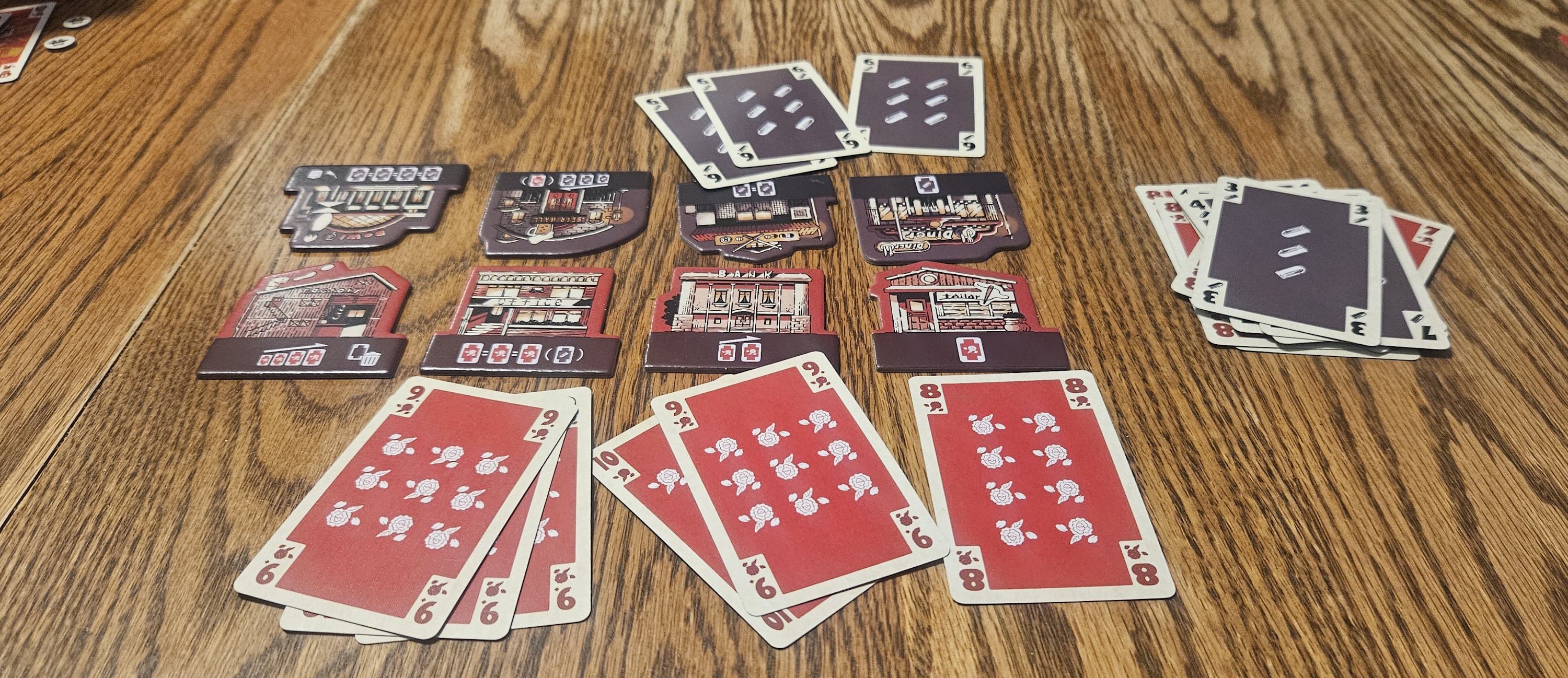
aw look at those little buildings

Take ’em out back and gun ’em down.

Sumidagawa Red Town

Like our previous entry, Sumidagawa Red Town is a shedding game about sinking slowest. Players, of which there are between two and five, step into the rain-slicked trenchcoats of small-town gangsters who need to subtract a column from the organization’s payroll. By which I mean they need to murder one of their companions. With the oni doing emergency response, it raises the question of who the real monsters are. Sobering, etc.

The main twist is that players aren’t one-upping each other’s melds, at least not in the traditional sense. Instead, the titular red town is presented as eight sections, each of which holds its own unique meld. There’s a space for a sequence of three brown cards, another for a triplet of red cards, two for singles of either suit, and so forth. Into these spaces you play a meld. This must start at a higher rank than whatever the previous player deployed, but otherwise you’re free to choose whether to play one card or four.

Assuming the proper space remains open, that is. And that’s the rub. After even one round, it becomes very tricky indeed to find a good fit. This marks Sumidagawa Red Town as one of those titles absolutely riddled with tactical passes. While dropping four cards on the town’s biggest space is certainly a power move, it might be better to pass and let the town clear out for the next round. Especially if you’re likely to go second.
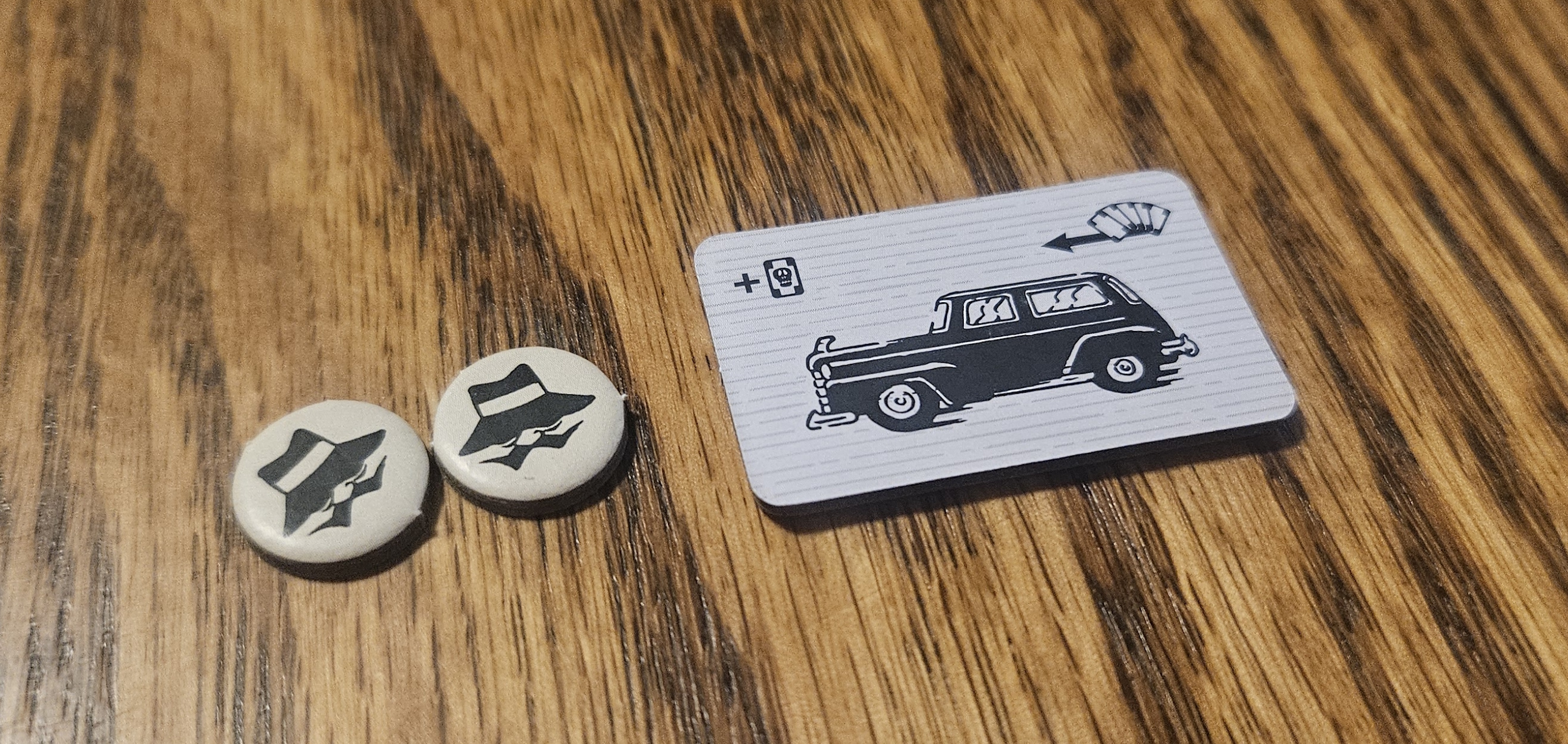
ratatatatat

First to lose. Might as well get some help.

It’s thrilling to follow a four-card bomb with a single, and for that reason alone Sumidagawa Red Town establishes itself as one of my favorite shedders.

But Mashikamaru doesn’t stop there. In between rounds, players get to decide if they want to summon hitmen — in game terms, suit-coded wild cards — to beef up their hand. If only one player elects to do so, they receive broad latitude to add as many hitmen from their private pool as they like. But if multiple players choose this option, they only add one hitman, then swap hands with everyone else who made the same decision. It’s a brilliant piece of brinkmanship, potentially making or breaking your entire hand, plus offering the chance to drop a real stinker of a hand onto somebody else.

And really, that’s what this one is all about. Choosing your battles, knowing when to go all-in, and then slipping your rival a mickey rather than facing them directly. The main downside is that it’s hard to find outside of Japan and requires a translated rules sheet. Personally, I’ve found it well worth the effort. Forget it, Jake. It’s Sumidagawa Red Town.
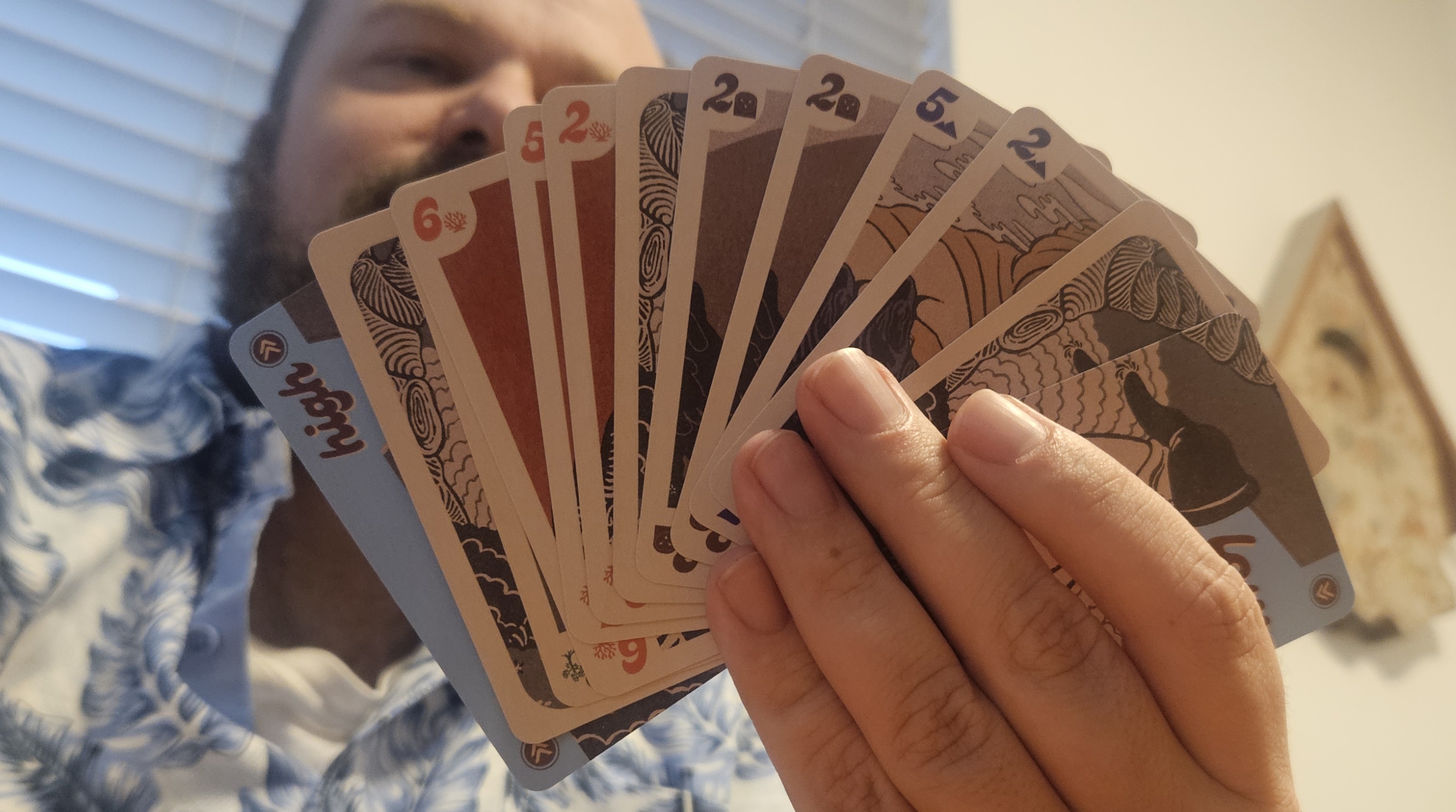
like a '70s coke dealer from Miami. my vibe.

Check out that handsome devil.

Suppose

On the more traditional end of things — although only marginally — is another New Mill import in the form of Hagizou’s Suppose. This is a trick-taker, and for once there’s an actual winner, but the game’s may-follow nature marks it as rather distinct from most of its peers.

Scratch that, everything is distinct. There’s the way your hand is arranged: sorted by your neighbor and splayed so that ranks increase within suits, but with only a few cards facing you while the others peek outward to show everyone else at the table what you’re holding. In fact, much of the game revolves around your hand’s concealment. Whenever you play a card you can’t see, you’re permitted to guess its identity. There’s no penalty for guessing wrong, while a correct guess awards a “suppose” token. These translate into points at the end of the hand. Which is a good thing, given the relative scarcity of points elsewhere.

How, then, does one score? Tricks, first of all, although at one point per, these aren’t much to write home about. Your larger tally comes from another guess. When the round begins and you sort your neighbor’s hand, you wager how many tricks you think they’ll take. Contract bids are always testy, but here they’re especially tough. Since you’re never forced to follow suit, sabotaging a neighbor’s bid is especially easy. It’s possible to split your bid for fewer points, but, well, that only makes it marginally easier to hypothesize what your opponent is going to do during the round.
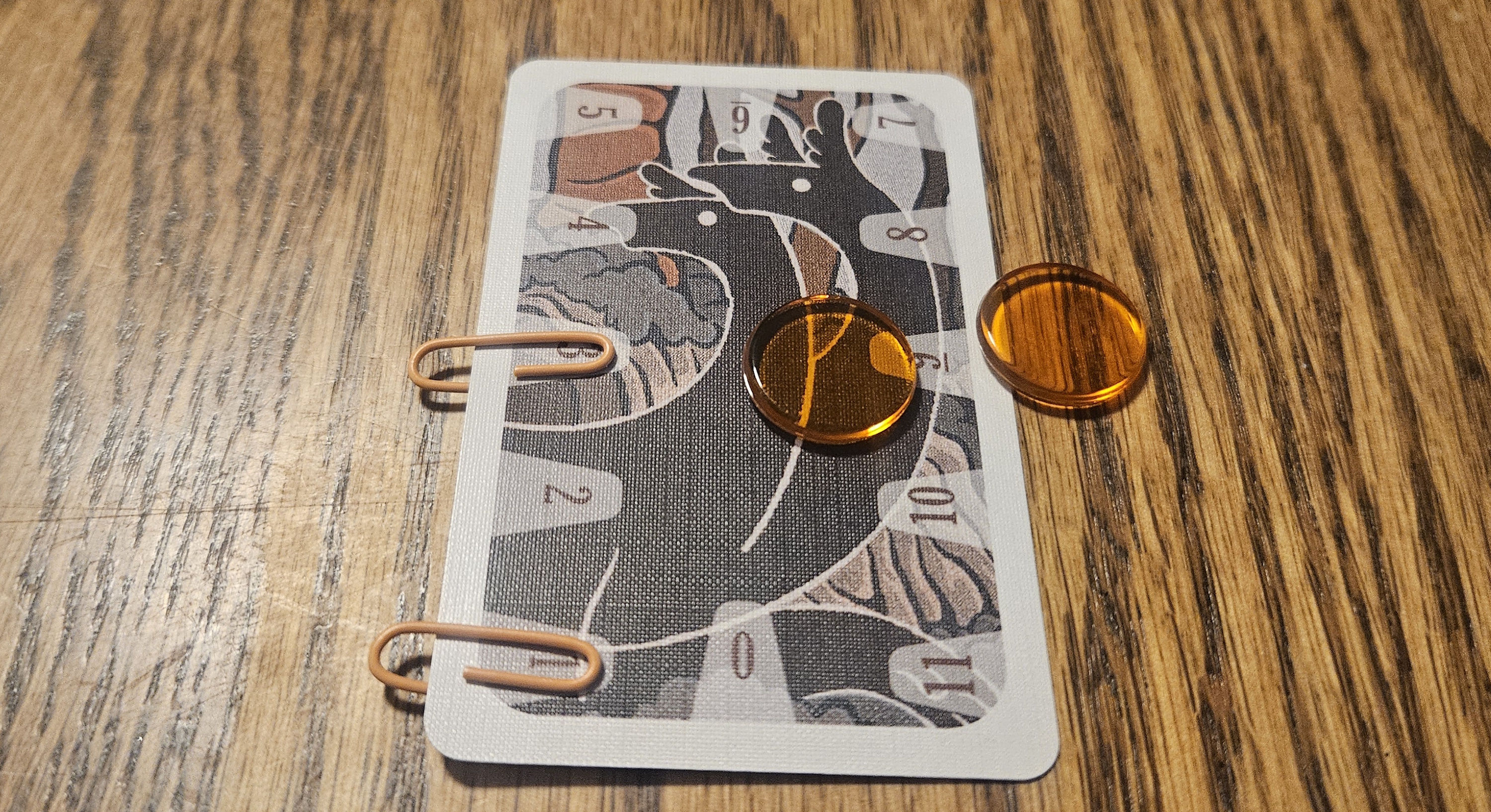
I'm not sure what the illustrations are for, but I sure like them.

Making good guesses, I guess.

The outcome, then, is an extended guessing game, but one that strikes out along multiple avenues of conjecture. What you’re holding, what everybody else is holding, how your target neighbor is faring, whether this is a good time to nab another trick or yield it to someone else… it’s a lot to take in.

That said, Suppose is something special. It might even be my favorite New Mill release all year. The deck is tight enough that correct guesses are possible, but the inclusion of two copies of each card makes card-counting, while not impossible, at least not such an advantage that it changes the nature of the game entirely. The result is a game that’s as much about sabotage and the careful sniping of unexpected tricks as it is about reading everyone’s hand. Truly, this one is a gem.

You know. I suppose.


A complimentary of Suppose and Welcome Demons was provided by the publisher.

(If what I’m doing at Space-Biff! is valuable to you in some way, please consider dropping by my Patreon campaign or Ko-fi. Right now, supporters can read the next installment in my series Talking About Games, this time tackling the topic of what makes a good list! Naturally, the piece includes a list.)

Flip the Styx to the Cosmos and Grab a Cocktail

16. September 2026 um 18:00

by Steph Hodge


[imageid=9277257 medium rep]▪️ WizKids (I) announced the release of Marvel: Remix the Cosmos. From designer Bruce Glassco (Betrayal at House on the Hill). If you love Fantasy Realms you have to check out Marvel: Remix and now the Cosmos Standalone expansion. This perfect filler plays in 20 minutes for 2-6 players.

From the newsletter:
Expand your Marvel Remix experience with new teams, new combinations, and new strategies. Players recruit heroes, allies, and locations from across the Marvel Universe, including The Fantastic Four, Guardians of the Galaxy, Captain Marvel, Silver Surfer, Doctor Strange, Ms. Marvel, She-Hulk, and more! Equip characters with iconic gear and face off against infamous villains like Venom and Doctor Doom. Marvel: Remix the Cosmos is available now!


▪️ Paverson Games announced the release of the new expansion Distilled: Cocktails to arrive this September. From designers Dave Beck and Richard Woods, this is a new big-box expansion for the hit Distilled. This game is for 1-5 players and plays in 45-150 minutes. If you are like me, you are ready to roll the dice!

From the newsletter:
Distilled: Cocktails will soon be available in retail stores, building on the base game with new ways to play and score. The expansion introduces Double Washbacks, Collectors, a World Renown Map, and, of course, Cocktails! These additions increase the variability between games and give players even more ways to develop their strategy and score points.


▪️ STYX from Don't Panic Games and by designer Pierre Lahmi. A gorgeous new auction game for 2-6 players that plays in 45 minutes.

From BGG:
In STYX, two Emissaries arrive before the council each round. Secretly decide their fate: Tithe them for wealth, Muster them into your army, or Eliminate them to harvest their Soul while denying them to your rivals. Then reveal everyone's choices at once. What seemed like a simple decision erupts into bidding wars—fought with gold to recruit followers and with military Strength to decide who survives.

Every Emissary offers different rewards: Influence, income, Elements, Souls, or powerful abilities. Building the strongest army isn't always enough; knowing when to sacrifice a valuable card—or prevent an opponent from claiming it—can be even more important.

Multiple paths lead to victory, but time is never on your side. Every Emissary left behind fuels Chaos, bringing the game closer to a final confrontation where the strongest surviving army may seize the Throne instead.

Featuring simultaneous hidden decisions, tense bidding, engine building, and constant player interaction, STYX is a game of calculated betrayal where every choice strengthens you... or weakens everyone else.


▪️ Flip 7: Liquid Death from The Op Games is out now. From designer [person=Eric Olsen]Eric Olsen[/person], this is a new edition of the very popular Flip 7. It is The Op, so we get to have all of these amazing IP editions of small card games like this. Choose your favorite flavor and enjoy, or if you are like me, collect the series as they might all just be a little different! Liquid Death has some deadly twists!

From BGG:
Quench your thirst for an addictive new party game with Flip 7: Liquid Death. With two new actions - Kill a Card and Murder the Modifiers, game night is turning grim in the best way possible.

In this press your luck game, be the first player to score 200 points to win. You score points based on the total number value of the cards in front of you. The more valuable a card is, the more copies of that card there are in the deck. However, if you ever draw a second card with the same number as one already in your line, you bust and are out of the round, scoring nothing. You can command death if you can successfully Flip 7 different number cards into your line, automatically ending the round for everyone and scoring 15 bonus points..


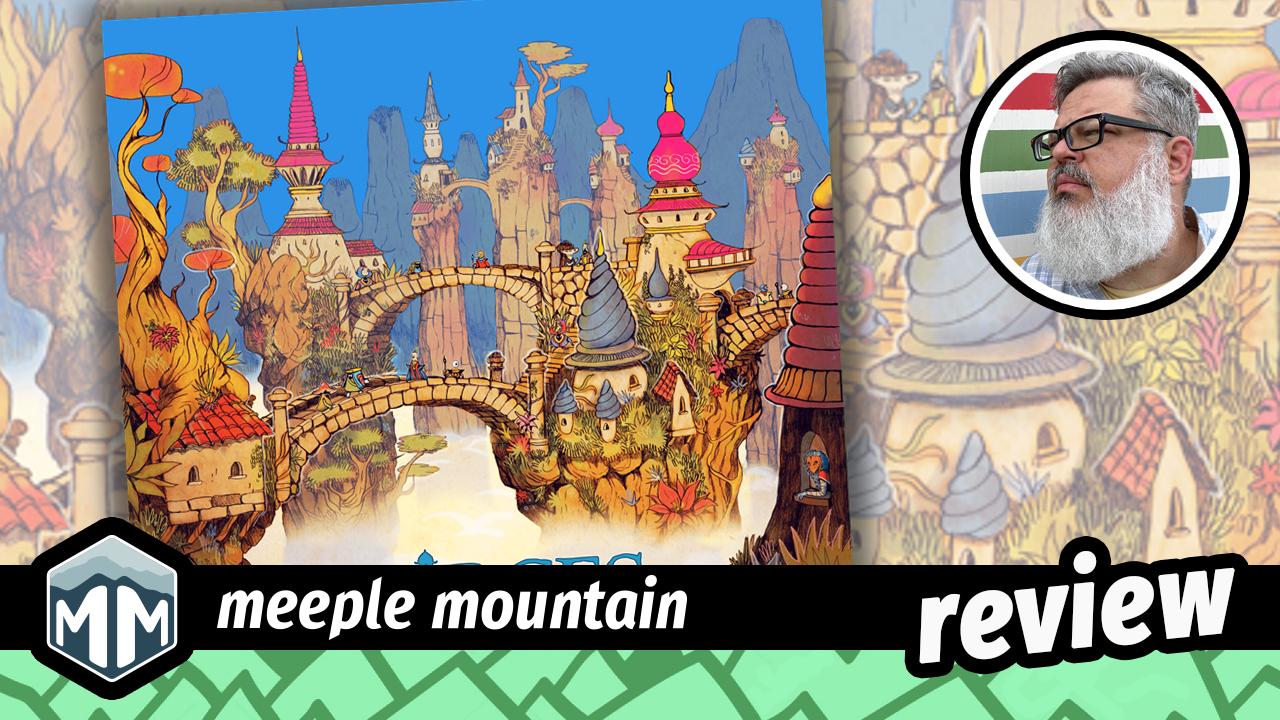
Bridges of Shangri-La Game Review

One of the great things about being part of a regular game group is being exposed to titles you might have never seen before—because your friends also love games, and no two gamers have quite the same combination of tastes. Variety is one of my defining characteristics when it comes to playing games: I’d much rather play 6 games once, than 1 game six times. So when my friend Chas said “we’re going to play Bridges of Shangri-La”, a game I’d never heard of, I enthusiastically agreed.

Bridges of Shangri-La is an area control game from 2003. Set in the forbidding Himalayas, the goal is to earn the most points by training up masters in 7 different disciplines, then have those masters send their students to neighboring villages to “spread enlightenment”. Of course this is a friendly way of saying you’re going to beat the pants off them…except in Nepalese.

Did I mention that Bridges of Shangri-La is a bit…cut-throat? But I’m getting ahead of myself.

How to play Bridges of Shangri-La

The Bridges of Shangri-La board features 13 villages in the peaks of Nepal, each connected to several other villages by tendril thin bridges. Each player begins the game with 7 tokens, in 7 different disciplines. The goal is…

The post Bridges of Shangri-La Game Review appeared first on Meeple Mountain.

Treat Please! Review

16. September 2026 um 14:44
Treat Please!Is there anything better than having a dog? No. Unless my family is reading this, in which case my wedding day and the birth of our kid definitely top that. Having a dog is very much like having a kid, except they listen occasionally and are often easier to train. But they’re both messy and […]

Source

Best 3 Games with…Sieges!

Von: Grant
16. September 2026 um 14:00

One of the more interesting topics to play a wargame on is that of a sustained siege. I am not talking about a game that has a siege mechanic that is used over the course of the game but a game that is based wholly around a specific historical siege. A siege requires a lot of different takes to be included in a wargame to make it work including things such as supplies, manpower, defenses such as walls, trenches and other fortifications, siege engines, morale and the ability and will to continue the fight. I really have very much enjoyed the siege based wargames that I have played over the years and I wanted to share 3 of my favorites in this post. So, without further adieu, here are my Best 3 Games with…Sieges!

I want to make one thing clear. I love the States of Siege Series of games and have played dozens of them. But I don’t consider those games in the same vein as these siege focused games that I am sharing.

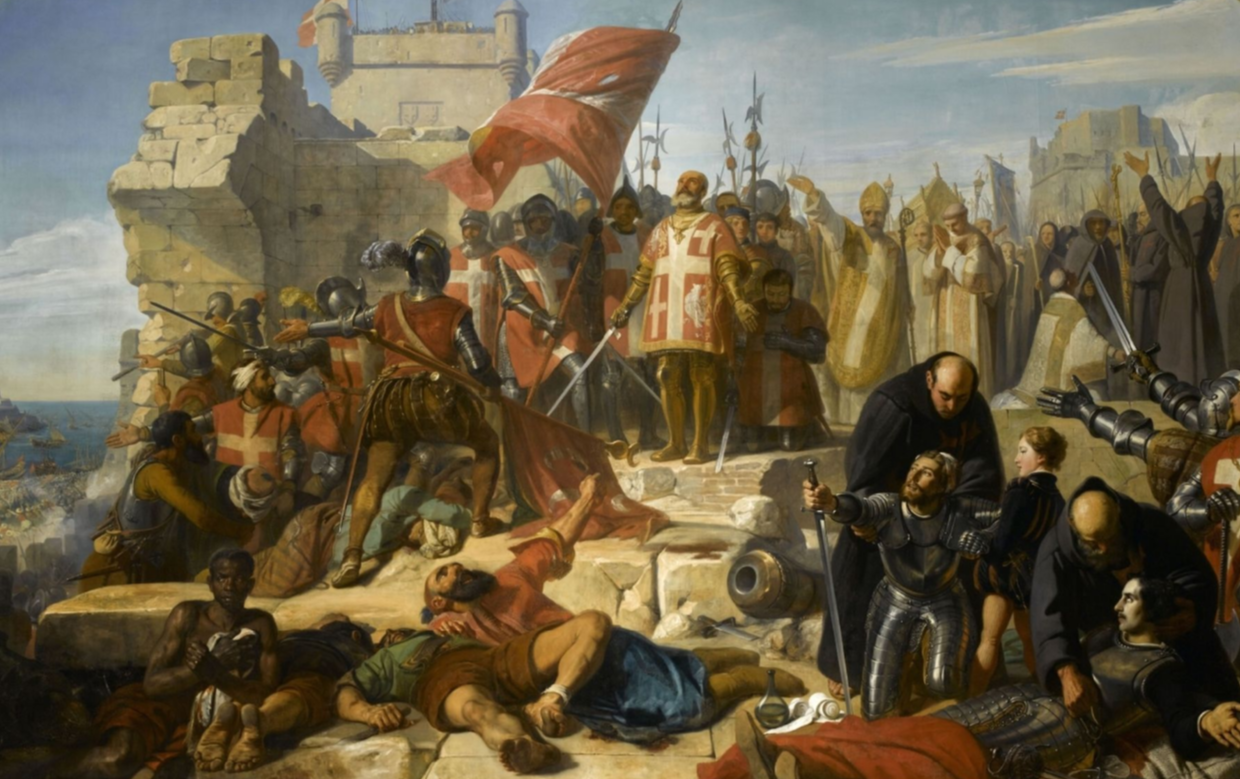
*The image used as the featured image for this post is called Lifting of the Siege of Malta painted by Charles-Philippe Lariviere.

3. Freedom! from PHALANX

Freedom! is a card driven siege game that pits the Greek freedom fighters and the besieging imperial forces of the Ottomans against each other. The siege is of the Greek Holy City of Messolonghi during the Greek War of Independence in 1825-1826. Freedom! features asymmetrical play with the goal of the invading forces being to manage to get inside the city before the end of the game or to force the citizens to abandon the cause by dropping their morale to zero while the defenders, on the other hand, try to withstand the siege and protect the city long enough for the invaders to abandon their attempt either by deciding to leave on their own or by having their morale dropped to zero. The actions of the players are driven by the cards in their hands, which highlight actual events and personalities of that time, while the combat is dice-driven to allow for quick and exciting game-play.

The rebel player is largely focused on grinding out a victory by surviving over the course of 6 rounds and are simply trying to hang on, unless of course they can somehow reduce the morale of the besieging units enough to where they give up and go home. However, nothing about this is a grind for the defending player and that is a problem that can be endemic with siege games. You as the defender, are as much a part of the action and must try to follow your own plan whenever possible to get a win. In other asymmetric siege games, the defender is often just reacting to the aggressor’s moves. As the insurgents, it never feels like you are simply reactionary and just along for the ride.

The really interesting thing about this one is that that there are actually two maps that are used to play the game. One of the maps shows the actual city and the forces involved in the siege while the other shows the surrounding areas, highlighting the support that each of them provides to both players. The art is gorgeous and this one is a game that we had a really good experience with. There also is a solitaire module that you have to buy separately but it works very well and provides an opportunity to play this game when you can’t find an opponent.

Players will find that they are competing for a number of nearby Greek regions on the board and there will be a tug-of-war played out by using various support actions that are focused on cutting off your opponent’s supplies. This is what I liked most about Freedom! It’s not just a continual back and forth trying to knock out your enemy’s units but there are multiple paths to victory, and all of them seem to be viable. By lowering your opponent’s morale and cutting them off from the supplies they need, you completely change their plans. Of course, there is nothing to stop you from pushing aggressively against the enemy’s walls.

Each side of the conflict really gives a different feel to the game and creates a new experience once you switch sides. As the Ottomans, you are generally going to undertake aggressive maneuver and attacks in an attempt to push forward and put pressure on the defenders and their walls of security. But when you play the Greeks there is a real feeling unpleasant feeling of desperation, which only gets worse with the arrival of Turkish reinforcements.

Here is a look at our unboxing video so you can get a good look at the components: 

Here is our video review used for the Kickstarter campaign so you can understand our thoughts on the game:

If you are interested in Freedom!, you can purchase a copy for €69,00 ($80.00 in US Dollars) from the PHALANX website at the following link: https://phalanx.co.uk/games/freedom-board-game/

2. Storm Over Jerusalem: The Roman Siege from Multi-Man Publishing

The Storm Over Area Impulse Series has been around for a while and includes games such as Storm Over Arnhem (1981) from The Avalon Hill Game Company, Storm Over Stalingrad (2006) from Multi-Man Publishing and Storm Over Dien Bien Phu (2014) from Multi-Man Publishing amongst several others. The hallmark of the series is relatively low complexity for a wargame and a very simple combat system that calculates total attack versus total defense and adds a roll of 2d6. The losses from combat can be absorbed by either retreating from the attacked areas or destroying units. The game system has mostly been used to model more modern wars including the Franco-Prussian War, World War II and the French conflict at Dien Bien Phu in Vietnam.

Storm Over Jerusalem: The Roman Siege is a 2-player wargame that simulates the Roman siege of Jerusalem during 70 AD. One player controls the mighty Roman forces, who are truly master of siege warfare with their siege towers, ballista, battering rams and onagers, and the other player controls the Judean forces, which are divided into 2 separate factions with different leaders. The game is 8 turns long, but can be shortened by the play of a few event cards, at the end of which time the winner is determined by calculating victory points that come from overall losses, holding of certain VP areas and keeping the Romans out of the city.

We were very impressed by the game and its overall clarity of rules, quality components and interesting tactical choices and really had a good time learning and playing it. The Judeans are obviously outclassed by the powerful and skilled Roman Legions but they have several of their own tricks to use to hold out long enough to win the day. There is a lot to like here and I am really glad that we decided to give the system a try. There were some changes specially made to introduce the style of Ancient sieges to the Storm Over Series and this is where the game really shines. The Siege Towers were an evolution of the trenches found in Storm Over Dien Bien Phu game and are very important to the Roman efforts. The walls historically were such a physical presence in the city, and were a major impediment to the Roman efforts, that they had to come up with rules to cover them. The walls provide a defensive modifier against Roman Attacks and Assaults. This Defense Value starts at +4 and can be reduced over time by successful Roman Assaults. Since Judean units have a defense of 7 or 8 the bonus provided by the walls of +4 really helps hold onto areas. Once a wall is damaged from a successful attack though, the defensive modifier can be rebuilt by the Judean player but can never be increased to its full value of +4.

The Roman player also has specific cards (Catapult, Onager, and Battering Rams) that can be used to damage or breach the walls. Once breached, the walls don’t provide any defensive bonus and allow Roman troops to flood into the city. We found that the Romans tried to focus on a specific area of the walls and made their attacks there first in order to bring the maximum attacks possible each round to force the Judean player to have to spend their time and actions on fixing the walls and bringing up reinforcement to replace those lost in retreats. To repair a wall section, the Judean player can discard a card and use the Repair Value of that card to repair walls in an area. This action though requires a fresh unit in that area to be flipped to spent to complete the repair. Walls can only be repaired back up to +3, not the original +4. You can’t rebuild them completely.

I really enjoyed our play of Storm Over Jerusalem. The game was beautifully put together, with fantastic components, but also had some really amazing details and depth to the gameplay. This one is a winner and really has me interested in the other games in the series. I know that this game had a siege focus, which is not necessarily in each of the other games, but I really liked the simple combat system, great card play and very interesting tactical choices that were there for players to have to make.

Here is a link to our full unboxing showing off the beautiful components:

Here also is a link to our full video review:

If you are interested in Storm Over Jerusalem: The Roman Siege, you can order a copy for $86.00 from the Multi-Man Publishing website at the following link: https://mmpgamers.com/index.php?main_page=product_info&products_id=355

1. Dien Bien Phu: The Final Gamble from Legion Wargames

Dien Bien Phu: The Final Gamble from Legion Wargames is a 2-player wargame about the decisive battle of Dien Bien Phu in 1954 that not only ended the French Indochina War but also had political repercussions far outside the region itself. One player represents France and her colonial troops. The other player represents the armed force of Viet Minh, the communist/nationalist independence movement of Vietnam. This game is not a traditional wargame and has different victory conditions than normal and also some unique and interesting supply rules. The Viet Minh win by forcing the French troops to surrender and France wins by not surrendering.

The board covers the former village of Dien Bien Phu and surrounding areas. There is a small submap of the French strongpoint Isabelle further south in the valley. There are several groups of French strongpoints scattered around the map, each one with a female name, which are all named after the commander de Castries’ mistresses, according to lore. The map is divided into three divisional sectors. Each sector has several zones that represent Viet Minh trenches winding from the map edge towards the center of the map. Each hex represents 150 meters and each game turn covers three days. There are 21 turns in the game, but historically, it ended after 19 game turns with a Viet Minh victory. The scale allows stacking of three French units in a hex, but there are no stacking limits for Viet Minh battalions, which creates a chess like feel.

French supply is a bit of a mini-game within the game. As this battle took place far out in the wilderness of Vietnam and both sides had to adjust to the limited flow of supplies that could be brought forward, through the air to the French, and through vast forests to the Viet Minh. Supplies tend to be a lot less than wished for. There are several supply tracks on the map showing how much ammo, food & bullets, fuel & spares, medicine as well as the amount of truck transport available for the French. The process for doing this supply phase is really pretty interesting and fun. Each game turn air transports will bring in a mix of supplies together with replacements and reinforcements. This is done on a chart with a grid where a mix of supply markers are placed together with eventual reinforcements and replacements. Weather will then decide what will arrive and what will abort back to Hanoi. The French player will never know for sure what type of supplies and how much will arrive and has to take that into account as they plan out their turns. And this is one of the best parts of the game and kept me thinking about the struggle with keeping my efforts going with the French. This one is not an easy game for either side and I think that it keeps the game very balanced and interesting to play.

Here is a link to our full video review:

If you are interested in Dien Bien Phu: The Final Gamble, you can order a copy for $54.00 from the Legion Wargames website at the following link: https://www.legionwargames.com/legion_DBP.html

A few other games that I have played on the subject of sieges, and that I very much liked, were games such as Halls of Hegra from Tompet Games, 1565 Siege of Malta from Worthington Publishing, 414 BC Siege of Syracuse from Worthington Publishing, Keep Up the Fire! Deluxe Edition from Worthington Publishing, Castle Itter: The Strangest Battle of WWII from Dan Verssen Games, Siege Works: A Napoleonic Siege Roll & Write from Solo Wargame, Crusaders: The Siege of Acre 1291 from Blue Panther/Art of Wargames, Castelnuovo 1539 from Draco Ideas and The Alamo Remembered from Victory Point Games.

What are your favorite siege based wargames?

-Grant

BGI 436 The one with Essen coming

Von: admin
16. September 2026 um 08:58

BGI 436 The one with Essen coming

Board Games InsiderJoin our Guild on Board Game Geek Guild | Like us on FB

Social media:

Ignacy Trzewiczek / Portal Games: website | FB | Twitter | Youtube

Corey Thompson / Above Board TV:  website | Youtube

Stephen Buonocore / “The Podfather Of Gaming”: website | FB | Twitter | Youtube

Intro Music: Happy Rock – Bensound.com

💾

Party Up, Party Down

16. September 2026 um 05:52

felt! very nice.

UFO 50 was one of the coolest gaming artifacts of the past few years, a collection of fifty unique video games by Derek Yu, Jon Perry, and a handful of other developers that pitched itself as a digital excavation of a long-lost 8-bit console. The collection was special for many reasons, but my favorite trick was the way its creators employed modern design principles that contrasted the system’s hardware and input limitations.

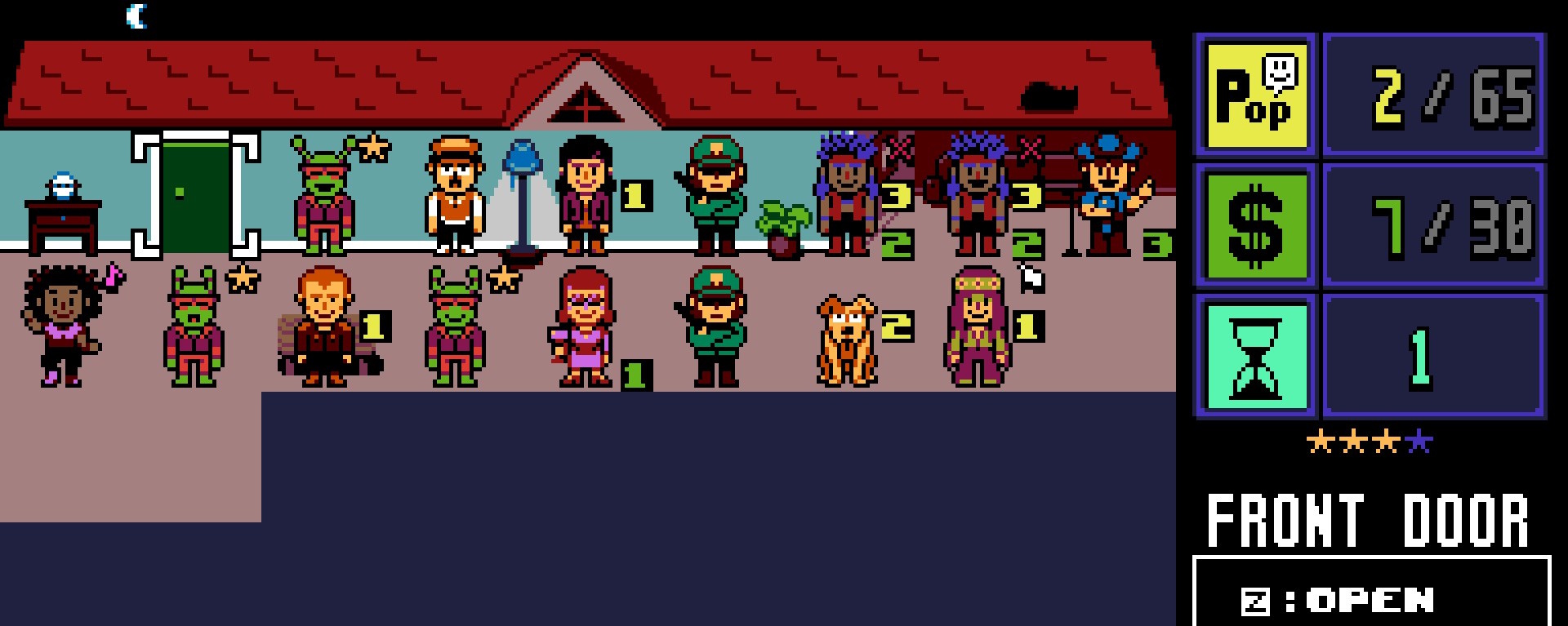
For example, Party House. Designed by Jon Perry, this was a full-fledged solitaire deck-building game that fictively predated Dominion by over two decades. Now, in a design ouroboros, Perry is shifting Party House to tabletop.

I hang with aliens.

Check out my sick group of friends. (UFO 50 version)

If nothing else, Party House is more relatable than most gamified topics. You want to throw a party. A big party. But you also don’t want the cops and/or the fire marshal to bust up the festivities. In the UFO 50 original, that meant building out your Rolodex, expanding your apartment to accommodate more bodies, and then randomly drawing guests until you decided you’d had enough. Or until the door got kicked in.

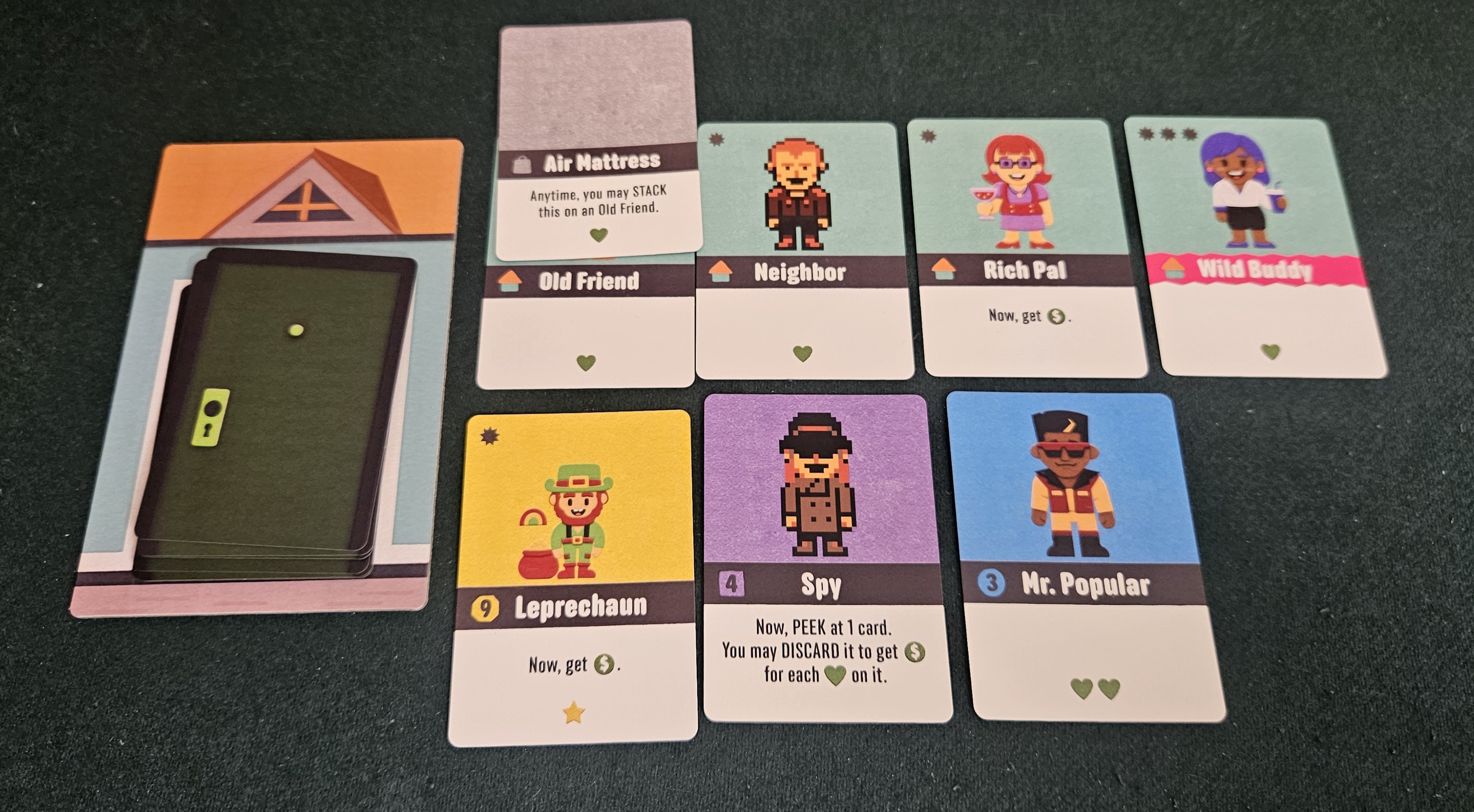
Basically, the whole thing was a merger of Dominion-style deck-building and press-your-luck gameplay. Good guests awarded popularity and cash, while rowdy guests egged your neighbors into taking matters into their own hands. Others served as utilities: bouncers for tossing out troublemakers, private investigators who could drag the right people to the party, college mascots for nostalgic gatherings of old friends. Special guests like aliens and mermaids, meanwhile, served as objectives, awarding the stars that proved you had mastered a particular set.

That’s the gist of the physical version as well, although Perry has made a number of changes, some delicate and others structural.

The biggest alteration is Party House’s format. Because the UFO 50 version was a solitaire game, it presented a series of challenges, each offering a pre-built selection of guests and objectives. Tackling these levels required some luck, but the game’s core concern was more with finding the right build order for your Rolodex than responding to dynamic problems. The result wasn’t quite a puzzle with a set solution, but it was closer to that side of things than one might expect.

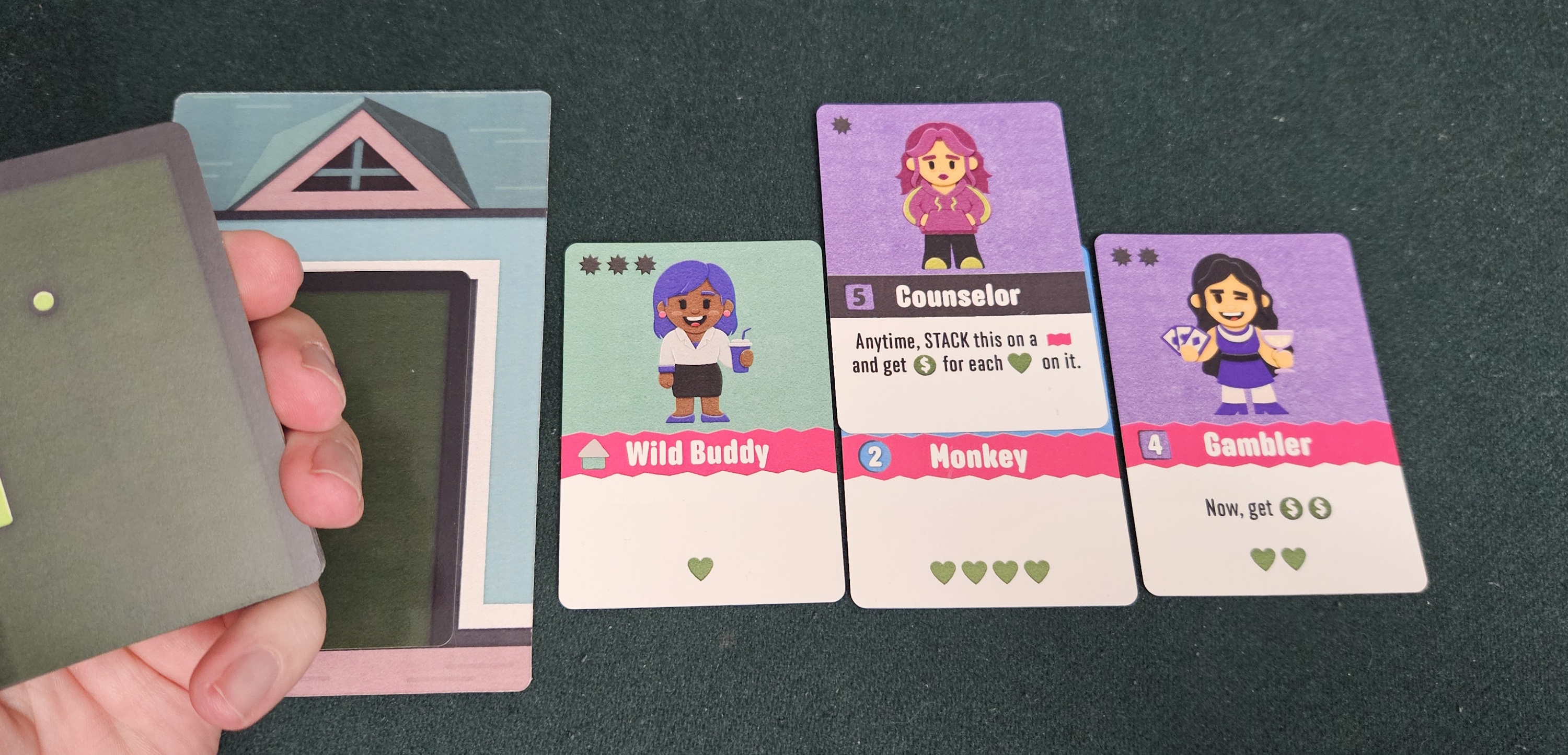
For the physical edition, Perry has tossed all the digital game’s goodies into a single box. Gone is the set marketplace. Instead, players are presented with three rows of guests that are constantly refreshing as they’re befriended with popularity and cash. Gone are the puzzle-style levels. In their stead is a race to earn a certain number of stars before anybody else at the table. Gone is the apartment limit. Now your place can hold as many guests as possible. Provided the party doesn’t end prematurely, that is.

They're also better when you're made out of felt. Like my evening pants.

Parties are better in person.

On the topic of premature ejection, troublemakers have received a significant facelift. Previously, the police would crash the party as soon as three troublemakers were clomping around the living room. Now every guest — or nearly all of them — produces some amount of noise. As soon as you hit eight points of ruckus, the party’s over. Worse, you skip the Rolodex phase entirely. And unlike in the original game, popularity fades each round. Only money can be hoarded. Fortunately, these twin currencies are interchangeable. What one lacks in charisma they can make up for with Benjamins.

As a side note, there’s a nice balancing mechanism where a crashed party puts an accessory card in your deck. Accessories are always positive, just not as positive as a good guest. Still, a charcuterie board or karaoke machine is handy in a pinch. It’s a nice concession for the occasional stroke of rotten luck. Failing players stay in the game, but with less control over how they assemble their guest list.

Perhaps most importantly, the whole thing is fast. You hold your deck in your hand the entire round. A turn takes maybe twenty seconds at most. And cards flip at a rate comparable to the typewriter clatter of FlipToons, but with the occasional mid-turn decision to prevent it from feeling quite so rote. Actually, the comparisons don’t end there. Party House feels like FlipToons with considerably more direct control. Whether it’s the ability to peek at cards mid-party via spies and superheroes, cover your loudest offenders with cute dogs and counselors, or deploy occasional cards that directly confront your opponents, your Rolodex is a bespoke assemblage that can be bent to your will.

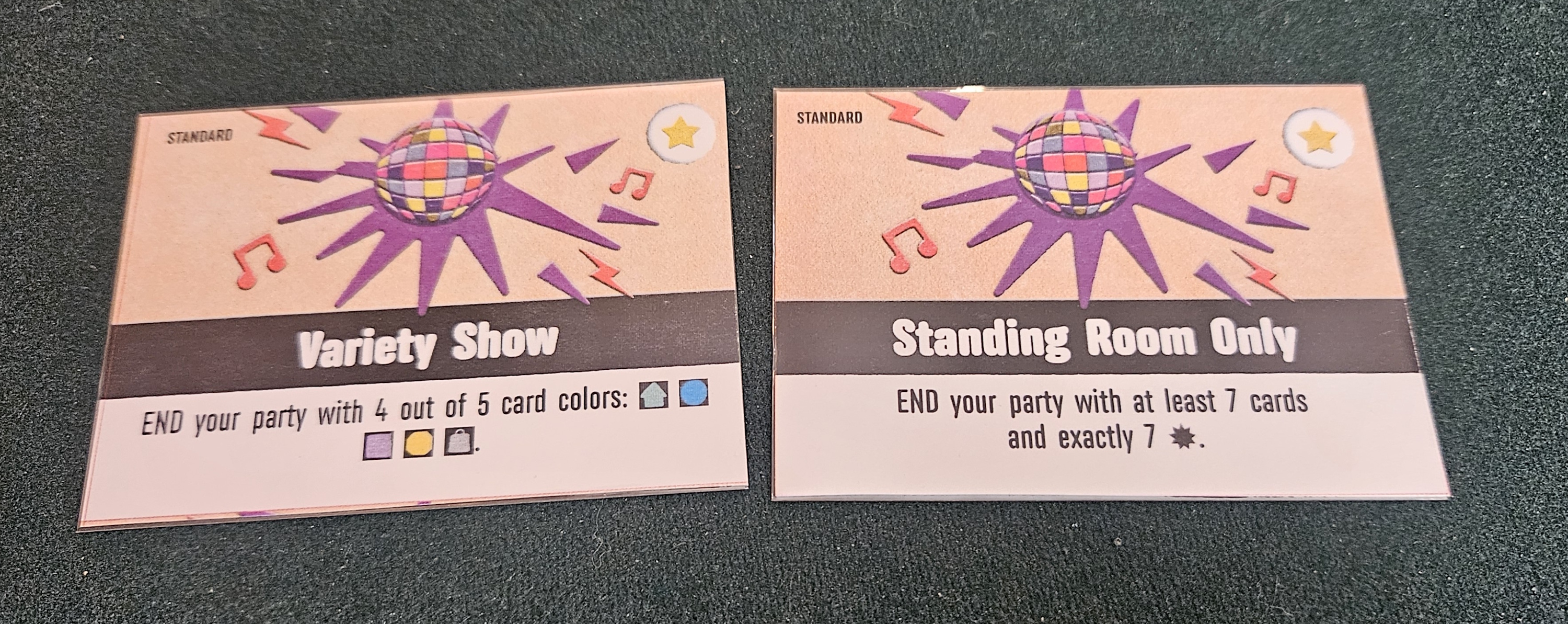
The other big point of inter-player friction arrives in the form of party cards. Each game puts two of these on display, then asks players to jostle for control by fulfilling their stated objectives. This allows for some distinction between sessions. Hosting a Class Reunion feels different from a Legendary Rager, with the former favoring gatherings of old friends while the latter requires you to ride the line with plenty of troublemakers. Importantly, these cards can be stolen, encouraging players to one-up each other over the course of the game.

HIT HIT HIT

Different party types can also award stars.

On the whole, Party House does an admirable job of translating the version that existed in UFO 50. It captures the spirit of the original, incorporates more players, and expands the decision space, while also keeping the play punchy and pacey. There are even little touches that speak to Perry’s deep mastery of how a hand of cards can and should be handled, such as the single guest that must be peeled from your deck to become the “door” (read: discard pile) of your apartment, a trick he pulled in Hot Streak to prevent players from developing too robust of a predictive mental model of their deck.

I’d also be remiss to forget Daniel Profiri’s illustrations, which resemble felt board cutouts and are a perfect way to depict the guests’ retro appearance without defaulting to pixels.

At the same time — and keeping in mind that I’ve only played the prototype — Party House comes across as a minor title in Perry’s ludography. It isn’t as subversive as some of his other hits, lacking the emotional range of Scape Goat, the genre-redefining nature of Air, Land, & Sea, or the family breadth of Spots. To be sure, this isn’t to say that Party House has to be revolutionary, and there’s a tyranny to expectations that can prevent us from appreciating what’s right in front of us. But by and large, my experience with Party House has been a gentle one, a pleasurable process of revealing and shifting cards that still feels largely automatic. Where the version found in UFO 50 fit that collection’s 8-bit limitations, here it lands somewhat more thinly.

Then again, there’s a lot to be said for pleasurable physical processes, and that’s where Party House succeeds best. With the right group, it’s the sort of game that gets people chanting “Hit, hit, hit!” And the game upsets genre formulas in subtler ways. For instance, this is one of the few deck-builders to shrug off the absolutism of the five-card hand. Here a party might consist of three guests or ten, all depending on chance and how well you’ve assembled your Rolodex. It’s a smart little thing. Just be aware that it’s littler than you might expect.

Here's another downside: the game can end very suddenly thanks to a lucky draw. It's always abrupt.

The bigger the party, the more likely the cop roll-by.

Where does that leave Party House? On the threshold, I suppose. Playing prototypes is always a risk. Sometimes you get Baba Is You, which feels poised to become an instant cult classic. Other times you get a game that’s still finding its identity. That’s where I would put Party House. Class Reunion or Legendary Rager — we’ll see next year which party this shindig shapes up to be.


A prototype copy of Party House was temporarily provided by the publisher.

(If what I’m doing at Space-Biff! is valuable to you in some way, please consider dropping by my Patreon campaign or Ko-fi. Right now, supporters can read the next installment in my series Talking About Games, this time tackling the topic of what makes a good list! Naturally, the piece includes a list.)

Tabletop pioneer Steve Jackson returns focus to game design as Sabrina Gonzalez takes over as Steve Jackson Games CEO

16. September 2026 um 00:48

Tabletop game design pioneer Steve Jackson has ended a 17-month return running his namesake games company, with new CEO Sabrina Gonzalez taking charge of a business with years of falling revenue as well as a run of promising crowdfunding successes.

Jackson will remain president of the company he founded in 1980, but will refocus his attention on game design and development, with managing editor Allison Page promoted to COO.

He had previously stepped back from the day-to-day running of Steve Jackson Games in 2014, when long-time COO Phil Reed became CEO, allowing Jackson to devote more of his attention to game development.

Reed was succeeded by TurboDork CEO and current GAMA president Meredith Placko in 2023, but Jackson returned to direct control of the business in April last year following her unexpected resignation.

Jackson’s return as CEO in 2024 was not presented as a permanent appointment, with him saying in the wake of her departure that her direct reports would report to him while he “figured out a plan”.

Gonzalez has been with SJ Games since 2013 as a production artist and production manager, apart from a brief period away from the company working for toy and game manufacturer Grand Prix International – and has been a member of the board of directors since 2021.

She said of her vision for the business, “As a general goal, I’d like us to continue to grow. We weathered the pandemic and pivoted project plans to address continually changing tariffs.

“The goal is always to make great games that people love. I want to continue developing new titles for future generations of gamers and also support (and sometimes update) the classics that our fans continue to request.”

New Steve Jackson Games COO Allison Page

New COO Page joined SJ Games as managing editor in 2023, having previously worked as executive artistic director of San Francisco comedy organisation Killing My Lobster. She also spent a year working as a narrative designer in the video game industry.

Page said, “I’m most excited to support Sabrina in her new role as CEO! We’ve always worked really well together and want the same things for SJ Games.

“I’m a problem solver, and I’m passionate about setting clear expectations. I’m excited to untangle whatever comes my way and ensure the team knows how to move forward and has what they need.”

The leadership change comes after what Jackson described in May as an “unusual and very awful” 2025 for the business, which has caused an ongoing delay in the company’s annual stakeholder report that Jackson has publicly posted since 2003.

He said on the company’s blog in May, “We made it through! But it’s not a story that fits well into the standard Stakeholder format. It took me a while to get up the nerve to start, and it has taken me longer to get it right. But I shall.”

SJ Games posted seven years of rising annual revenues from the mid-2000s to reach a record $8.8m in 2013, a year boosted by heavy demand for its Munchkin line of games – which accounted for more than 75% of its sales – and almost $1m from the Ogre Designer’s Edition Kickstarter.

Revenues have decline substantially since, however, falling about 2.5x from that peak to settle at around $3.5m across both 2023 and 2024 – the last years for which Steve Jackson has published the total – and bringing the annual total down to levels last seen back in 2010.

Annual revenue at Steve Jackson Games between 2003 and 2024. The asterisk(*) at 2022 indicates that the company overstated its revenue at $4.7m that year “due to confusion about BackerKit proceeds”, but it has not publicly provided an updated figure.

Jackson said in the executive summary in the 2023 report, “Cash flow was acceptable. It was not a profitable year, though. We have identified and dealt with some of the money-losing issues; others will be harder. We are working on it. (No fear; we have plenty of runway left. I just hate to use it.)”

He continued in the 2024 overview, “Cash flow was acceptable, but I don’t feel ‘prosperous’. This is not just us; individual game sales, industry-wide, were down at both the distribution and retail end, largely due to the glut of titles.”

Jackson added that year, “We are still working the problem, but we have less runway than we did last year! Cause for optimism: it was a rebuilding year and not expected to be good for cash, but thanks to your support for Munchkin Big Box it was better than we anticipated.”

Those challenges were exacerbated in 2025 by the impact of volatile US tariff policy, which included an unexpected “high five-figure” bill on its Munchkin Big Box after new tariffs were levied while the already-produced game was at sea.

The company subsequently raised some of its prices in response to tariffs, while uncertainty over overseas manufacturing led it to scrap the box and dice for RPG collection Dahlia’s Diversions for Peculiar Parties in favour of a rigid envelope, and shifting printing to the US before fully assembling the games on Jackson’s dining room table.

Jackson said in July that the company had received a partial rebate on its Munchkin Big Box tariff payment earlier this year, which it passed on to customers through a temporary discount on its web store Warehouse 23.

The Munchkin Big Box || Photo Credit: Steve Jackson Games

The BackerKit campaign for the Munchkin Big Box had been one of the company’s bright spots over the past couple of years, bringing in more than $1.3m from over 9,000 backers – a situation Jackson credited with making 2024 financially better than expected.

SJ Games followed that with a $370,000 BackerKit campaign for Munchkin Second Edition this year to coincide with the game’s 25th anniversary, and in recent years has extended out the game with Munchkin Shadowrun, Munchkin Vox Machina and multiple Warhammer-based releases, as well as several other expansions.

The company made a notable expansion itself in February last year, when it brought acclaimed indie RPG publisher Possum Creek Games into the business as an imprint.

It said at the time that the deal would allow Possum Creek, the publisher of Wanderhome and Yazeba’s Bed & Breakfast, to retain full creative and editorial control over its titles, while “lending their talents to the SJ Games design and visual branding”.

Possum Creek editorial director Jay Dragon joined the SJ Games board of directors as part of the tie-up, and became its lead game designer, while Ruby Lavin became the company’s art director.

Seven-Part Pact, designed by Jay Dragon

Since then Dragon’s TTRPG design Seven-Part Pact has raised more than $1m through a Kickstarter campaign, while SJ Games has also raised almost $600,000 across a pair of Kickstarters for the venerable Fighting Fantasy line of adventure gamebooks, having agreed a deal in 2024 to bring the UK-created titles back to the US for the first time in more than two decades.

Steve Jackson’s game design career dates back to the late 1970s, with his 1977 debut Ogre helping popularise the emerging microgame format of small, inexpensive wargames.

Within five years he had designed Car Wars and Illuminati, founded his own games company and been inducted into the Academy of Adventure Gaming Arts & Design Hall of Fame in 1982 – all while still in his 20s.

He followed that with the Generic Universal RolePlaying System (GURPS) in 1986, which was his attempt to create a single roleplaying system capable of working across different settings and genres.

While not the first RPG to experiment with universal rules, GURPS helped popularise the concept and grew into a huge publishing line for Steve Jackson Games. By 2004 the company had released about 200 GURPS titles, with more than one million copies in print in English alone.

Jackson’s most visible modern design is Munchkin, which became the company’s biggest commercial success following its release in 2001. The game was inducted into the Academy of Adventure Gaming Arts & Design Hall of Fame in 2013.

The post Tabletop pioneer Steve Jackson returns focus to game design as Sabrina Gonzalez takes over as Steve Jackson Games CEO first appeared on .

The Ghost Game I’ve Been Dying For? | THE PRESENCE Review

16. September 2026 um 00:08

Sometimes the world of the living gets mixed up with the world of the dead.

Peter reviews The Presence, a ghostly game from Purple Lantern Games.

Ghosts! I love ghost stories. But for some reason the world of boardgaming continues to churn out ‘spooky’ ghost games for children, ignoring the rich history of ghost stories. Until now! The Presence is an atmospheric game of apparitions and haunting from Swedish publisher Purple Lantern Games. Let me tell you all about it – and also answer the question, do I believe in ghosts?

Don’t forget to download my rules & reference for the game. It’s also available on my app, Tabletop Codex.

Making high quality tabletop gaming content at the EOG takes time and money. Please consider becoming a Patreon supporter or making a donation so I can continue this work! Thankyou!

Designer Diary: President Maker

Von: deuxbh
15. September 2026 um 16:00

by Bonghwan Ju


A Presidential Election... in South Korea??

President Maker is an election game in which you become a candidate for president of South Korea and compete to win the office.
If you live in a country where democracy actually works, you've probably taken part — as a voter — in that peculiar ritual we call an election.
(Don't worry. I'm not here to start a political argument.)

My point is simply this: elections — and politics in general — sit very close to our everyday lives, which makes them wonderful material for a game that people can connect with and get absorbed in.

The heart of an election is the same everywhere, after all.
Get as many votes as you possibly can from the voters.

And the lineup of political forces that fills out an election isn't so different from country to country either.
Conservatives and progressives face off, some players hold the middle ground, and a few strike out on their own, independent of everyone else.
For that reason, I believed this game could resonate with board gamers well beyond its Korean setting — anywhere democracy is genuinely at work.

Where the Idea Started: A Bag-Building Voting System

South Korea's presidential election is beautifully simple.
Any adult may vote, the votes are tallied nationwide as one big sum, and whoever finishes with even a single vote more becomes president.
That means campaigning in a region where you're politically at a disadvantage is never a completely pointless exercise.
Squeezing out one more vote — anywhere, by any means — can decide the whole race.

When election season comes around, Korean politicians visit traditional markets and eat cheap street food, almost as if they'd all agreed on it beforehand.
Presumably to project an image of being a man or woman of the people.


One day, watching exactly that scene on TV, a question popped into my head:

"How many more votes did they ACTUALLY gain by eating street food at that market?"

Nobody could guarantee that a single visit to a market translates into extra votes.
But for a politician who needs to make themselves known, it's surely better than doing nothing at all.

And that's when I decided I wanted to take the subtle, undeniable gap between "eating street food at the market" and "doing nothing" — and turn it into a game mechanism.


I came to define that gap like this: even if no single move converts directly into votes, repeatedly showing yourself to voters gradually raises the probability that someone out there might cast a vote for you.

Let's dissect how an election works, mathematically.
In the end, it's an equation produced by just two variables: approval rating and turnout.

In a region where my approval rating is high, the higher the turnout, the more votes I'm likely to collect.
By the same logic, in a region where my opponent's rating is high, the lower the turnout, the better for me.

That felt like an excellent starting point. And turning it into a game mechanism wasn't so difficult. Put tokens into a cloth bag equal to each candidate's approval rating, then draw tokens equal to the turnout — that alone looked like a convincing election game.


I set that as the core mechanism and began designing, layering the many other elements of an election on top of it.

Winning the Hearts of Five Regions

President Maker features five regions, including Seoul (the capital area).
They're based on South Korea's real geographic and administrative divisions, the do(도) — provinces.


Map of South Korean administrative divisions


Political leanings in Korea often differ sharply along these provincial lines.
So depending on a candidate's Political Orientation, some regions are a home turf while others are hostile ground where you'll receive no welcome at all.

In this game, each of the five regions takes one Political Orientation — Progressive, Center-Progressive, Conservative, Center-Conservative, or Neutral (the capital area) — while the four candidates players can choose from are Progressive, Conservative, Centrist, and Independent.


Political Orientation has a big effect on the game's initial setup.
    
- A Progressive candidate, for instance, starts at rock bottom in a Conservative region — and vice versa.
    
- The Centrist candidate leads nowhere, but begins with a middling Support level everywhere.
    
- The Independent candidate has the lowest name recognition in every region (much as in the real world).
But — unlike in the real world — they carry the underdog's power to flip the whole board.


Deciding which Political Orientation went to which region took a fair bit of thought. Political sensitivity in Korea has been climbing for years now, and it's no longer something you can treat lightly. Declaring outright that this region is progressive and that one conservative carried real risk, even when it happened to be true. Such a setup could poke at regional resentments, or lead players who'd gotten a little too invested in the game to genuinely offend one another. So I chose to randomize each region's Political Orientation instead — accompanied by the slightly absurd premise of "South Korea in a parallel world."

The result was that a region known in reality as staunchly conservative might come up as progressive, producing situations you can simply laugh off together.

Who Actually Shows Up to Vote?

The other thing I wrestled with while setting up the five regions was population — that is, the number of voters. As I mentioned, this is an election where a single extra vote wins, so naturally the more populous a region is, the more it matters. Seoul, the capital, was set as the most populous region, just as it is in reality. It therefore becomes, quite naturally, the key battleground where every candidate fights over support.


The other four regions hold equal status as provinces, but when I looked up the real numbers, their populations turned out to differ quite a bit. Reflecting that faithfully, though, would have assigned each region a fixed absolute value based on population — and that didn't look desirable from a balance standpoint. So every region outside Seoul was given an identical population.

Someone might think:
"All four regions with the same population? Won't the game feel flat?"

That's half right and half wrong. The population here represents the maximum possible number of voters in a region. And just like in the real world, not everyone in a region actually turns out to vote. Some regions are keenly interested in politics, others much less so. That ratio of actual voters to potential voters is what we call turnout — the Engagement Level in this game.

At the start of the game, every region sits at the lowest point of its Engagement Level. As play unfolds, various interactions raise interest in the election in some regions while leaving others relatively cold. In other words, turnout starts to diverge from region to region.


Each region's importance as a source of votes therefore emerges organically during play. A region whose Engagement has climbed sky-high becomes a genuine battleground. (So sometimes a region climbs higher in Engagement than Seoul itself!)

The Dilemma Between Popularity and Attention

Think about what politicians do when election season arrives. I've already mentioned the traditional market visits, but fundamentally, the thing they care about most is making themselves known to people. One of this game's core actions is the Campaign Rally — putting your face in front of voters.
During the Campaign Rally, each candidate may visit only two of the five regions. (You have one body, and time is finite.)


Every candidate picks their two regions and reveals them simultaneously. Then, some regions may overlap with other candidates' choices, while others may be visited by one candidate alone. And here an interesting dilemma appears.

In a region you visit alone, your Support level rises by 2. You had all the attention to yourself.

In a region several candidates visit together, attention is split. Each of you gains only 1 Support level. But a region that politicians swarm to is also, by definition, a politically important region. Voters there feel "our region matters," and more of them turn out to vote. That region's Engagement level ALSO rises by 1.

However high your Support climbs, if people don't make it to the ballot box, it never converts into votes. Conversely, even in a high-Engagement region, votes are hardly guaranteed when you're locked in a fierce fight with the other candidates. For these reasons, each of the game's three Campaign Rallies produces a genuinely interesting decision.

Be Bad — But Only Just Enough

We don't have to think badly of politicians.
But when building a game on a political theme, scheming, slander, and dirty tricks were the first things that came to mind, and there was no helping it.

So yes: the action you'll take most often in this game is running political risk to smear and tear down your opponents. Actions are performed mainly through Political Cards, and they fall roughly into "fairly decent," "bad," and "very bad."

A "fairly decent" action means cooperating across the aisle, or honestly appealing to your supporters for their votes. No danger — and negligible effect.

"Bad" actions offer far more powerful, far more tempting effects. Spread a rumor to slash a rival's Support level, or push a region's Engagement up and down to suit your needs. But every time you take one of those powerful actions, you receive a Risk Card — the embodiment of political risk. The back of a Risk Card shows a risk value between 1 and 3, but players can't check it.


And here I introduced another enjoyable dilemma: something close to a game of chicken.

At the end of a round, all players reveal every Risk Card they've collected and total their risk values. The candidate with the highest total is branded a corrupt politician and watches their core supporters walk away. The candidates with the second- and third-highest totals suffer nothing at all — because the press only ever chases the biggest story.

So throughout the game you're constantly monitoring how many Risk Cards everyone else is taking. All so you can commit your "bad" actions in just the right amount. You only need to avoid being the worst person in the room.

"Watching" Election Night

The highlight of this game is the Vote Count. Every single thing a player does is ultimately in service of squeezing out one more vote right here.

What's unusual is that although the Vote Count is the phase that decides the whole game, players have no way whatsoever to influence the outcome during it.
All you can do is watch the count unfold. Exactly as if you were watching election night coverage on TV. (But of course, the Vote Count is nothing but the result of everything you've already done.)

The Vote Count proceeds one region at a time, through all five in order. In each region, Vote Tokens equal to each candidate's Support level go into the cloth bag, and tokens equal to that region's Engagement level are drawn out. The tokens in the bag are the voters; the tokens drawn are the supporters who actually showed up and cast a ballot. With every token drawn, the candidates' markers advance along the Vote Count Track in real time. When the final region finishes counting, whoever leads the track is elected president.


The Vote Count always produces cheers and groans at the same time.

"My Support is that high and this is all I get? Where did my supporters go instead of voting?"
"Thank God — both of my two supporters turned out!"


A drama unfolds, just like watching the real broadcast. Designing the Vote Count as a spectator experience was both the most daring choice and my personal favorite as a designer. Technically speaking, it is an ordinary scoring phase stretched out horizontally into a long sequence. All the potential points a candidate has accumulated by working the 5 regions meet the probabilistic factor of Engagement and are converted into actual points, one at a time. I couldn't imagine a better way to express the moment an election is decided. And it really did work!


One Last Thing

There's plenty more I agonized over in capturing the many faces of an election, but this diary is running long, so I'll stop here. I hope you'll experience the finer details for yourself at the table.

A couple of tips for enjoying the game more: try substituting Korea's five regions with regions from your own country. The immersion goes much deeper. Also, when you play a Political Card, say its title out loud. Rather than "I'll move Region A's Engagement track back by 1," it's far more entertaining to declare: "I Expose Corruption in Region A — and so Engagement there drops!"

Elections are undeniably fun material for a board game. Someday I'd love the chance to design a game around a different electoral system.

Thank you for reading all the way to the end!

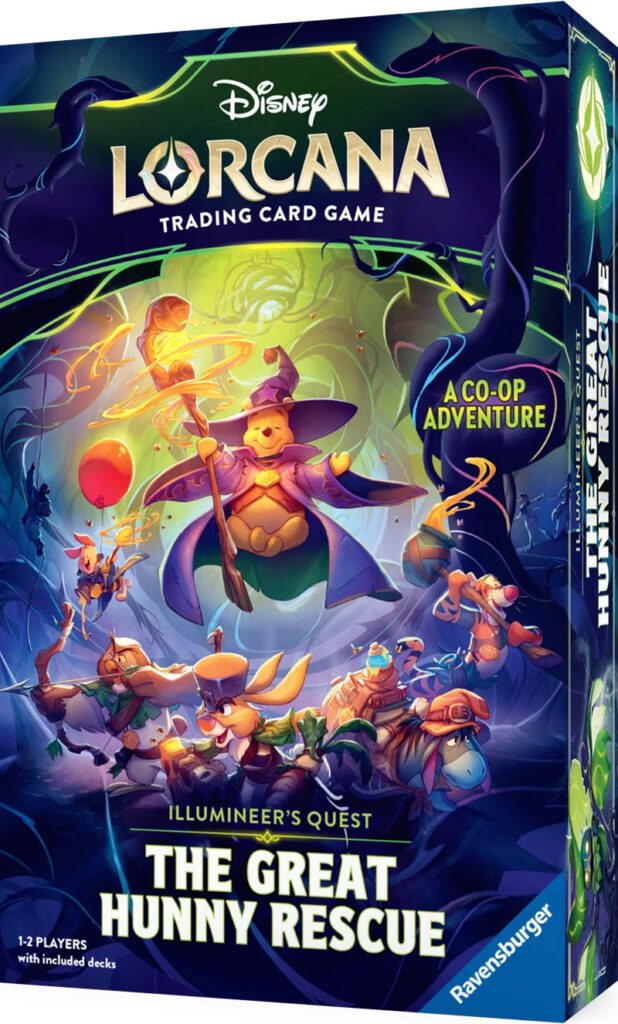
Disney Lorcana: Illumineer’s Quest – The Great Hunny Escape Review

15. September 2026 um 15:13
Lorcana The Great Hunny EscapeIt’s hard to believe that it’s only been 3 years since Disney Lorcana was released. I still remember the chaos this new TCG caused at Gen Con 2023. Lines were massive, people lined up for hours ahead of time, and some people were even trampled. Needless to say, it was a hugely anticipated release. Since […]

Source

Jibber Jabble Game Review

I picked up a review copy of the new word game Jibber Jabble during my visit to Gen Con 2026. After meeting the game’s designer, Carrie Sykes, at a pre-con media event organized by the publisher, I had the chance to demo the game later that weekend before getting Jibber Jabble in front of both my review crew, a group of six at a family beach vacation a couple days later, then a group of eight during one of my weekly gaming group nights.

Here’s the synopsis: it’s hard to beat the value proposition of a collaborative word association game that plays fast for an MSRP of $9. It doesn’t land on my personal Mount Everest of word games, but everyone who played it wanted their own copy.

We Need Some Clue Words for “Statue”

Jibber Jabble is a word association game that plays in about 20 minutes, maybe a bit more with more players. Across six turns, players provide clues for a word or term, helping the active player by giving them clues for the word they cannot see (yes, this is the format for games like Just One).

So, the active player flips a card towards everyone else, then the team picks a number, from…

The post Jibber Jabble Game Review appeared first on Meeple Mountain.

Trails & Tails Game Review

At the end of the day, my review criteria is really simple: is the game fun or not?

Trails & Tails is a new self-published title. (BGG does not list a designer, artist, or publishing company…only “self-published.”) It admits its hook right up front: Trails & Tails is going for a Snakes & Ladders-style gaming experience (or, if you’re a gringo like me, Chutes & Ladders), where players move their playing piece up a board all the way to the top…hopefully taking short cuts along the way to reach the top faster.

The downside of Snakes & Ladders comes when snakes appear in the space where you end your movement…because if that’s what happens, you fall backwards and/or downwards until you reach a much less desirable space lower on the board. So, keep moving forward and things will generally work out.

Trails & Tails adds spice by giving each player two starting dice, differing by player; one player gets a D4 and a D20, while another might have a D6 and a D8. In each round, players roll these dice, then get to use 1-2 dice per turn to their liking. You can add the results of two dice, move forward a number of spaces on one die, or even subtract a larger die value from a smaller one…

The post Trails & Tails Game Review appeared first on Meeple Mountain.

My Favorite Wargame Cards – A Look at Individual Cards from My Favorite Games – Card #94: Hamet’s Army Created from The Shores of Tripoli from Fort Circle Games

Von: Grant
15. September 2026 um 14:00

With this My Favorite Wargame Cards Series, I hope to take a look at a specific card from the various wargames that I have played and share how it is used in the game. I am not a strategist and frankly I am not that good at games but I do understand how things should work and be used in games. With that being said, here is the next entry in this series.

#94: Hamet’s Army Created from The Shores of Tripoli from Fort Circle Games

I have never played a historical wargame on the First Barbary War, which if you didn’t know was one of the first major wars the young United States of America participated in that was situated far outside their sphere of influence in North and South America. Shortly after the end of the American Revolutionary War, commercial vessels of the United States were being attacked and raided by the pirates of the Barbary coast in the Mediterranean Sea. In 1801, newly inaugurated President Thomas Jefferson was eager to put an end to this threat and sent a “squadron of observation” to the Mediterranean to deal with the threat. The Shores of Tripoli covers this conflict and does so using a card driven game mechanic that works really well in this instance. The game is a little deceiving, as at first it appears to be pretty introductory with simple rules and mechanics, but the depth for the game lies in the strategy for each side and the fact that their victory conditions are asymmetric.

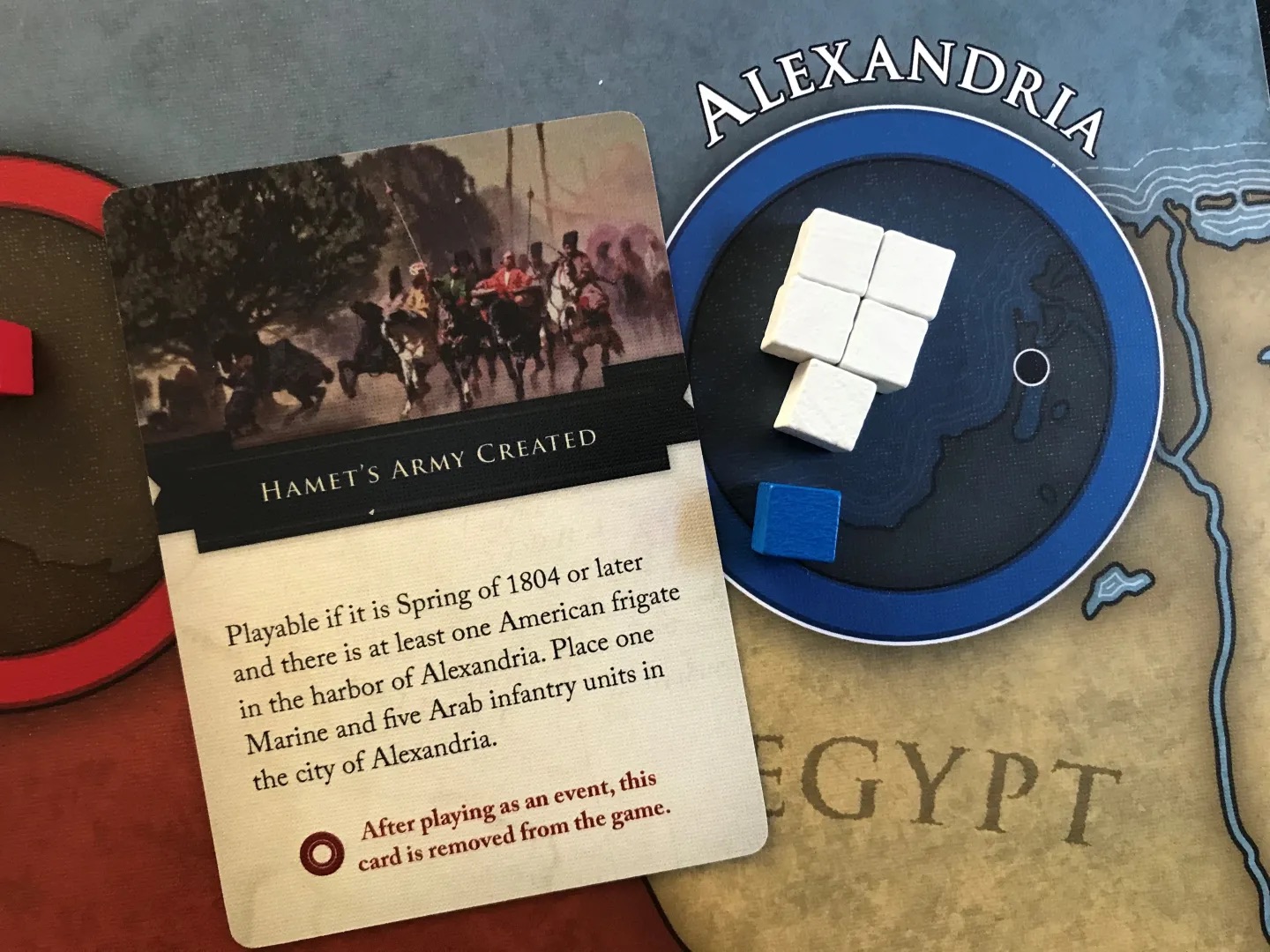
While the main combatants in the game are naval units, there are ground units as well that must be used to try and take Tripoli to win the game. The American ground units consist of Hamet’s Army, which is a combined force of Arab and American infantry units that are dedicated to the mission of installing the pro-American Hamet Qaramanli on the Tripolitan throne. These ground units consist of white cubes that represent the Arab Infantry and blue cubes that represent American Marines. In Ground Combat, each Infantry unit rolls one die and it takes one hit for them to be eliminated.

Hamet’s Army will be created if the United States player plays the card Hamet’s Army Created for the Event. There are several conditions to the card being played though as it must be the Spring of 1804 or later and there has to be at least one American Frigate located in the Alexandria harbor. Once played to bring on Hamet’s Army the card is removed from the game and placed in the box. The newly created army will have to fight their way through 2 locations, Derna and Benghazi, for a final confrontation at Tripoli. I think that I very much enjoy this card because it is a necessary step in the game that the player has to plan for and be prepared to play when it does reveal itself. The player must be ready by using a portion of their limited actions to move at least 1 American Frigate to the harbor of Alexandria and then play this card for the printed event. Keep in mind that this is just the start though as there is a long way to go from here and many more things that must be completed to setup the final showdown.

Hamet Qaramanli’s army was a mixed mercenary force of several hundred Arab and Berber fighters, European cannoneers, and Greek infantry led by U.S. Army Captain William Eaton and U.S. Marine Lieutenant Presley O’Bannon during the First Barbary War. The goal of the expedition was to successfully march across the North African desert, capture the city of Derna, and depose the ruling Pasha of Tripoli, Yusuf Qaramanli in favor of his exiled older brother Hamet Qaramanli. In early 1805, the force marched roughly 500 to 600 miles across the Libyan Desert from Egypt to the Tripolitan border. The force consisted of 8 U.S. Marines, a small group of U.S. sailors, 26 Greek volunteers, a company of cannoneers and roughly 1,000 Arab and Berber mercenaries loyal or allied to Hamet. On April 27, 1805, aided by U.S. Navy warship bombardments, the force successfully stormed and captured the strategic port city of Derna in the Battle of Derna. But before Hamet’s army could advance further toward Tripoli, the United States signed a peace treaty with Yusuf Qaramanli, abandoning Hamet’s claim to the throne in exchange for freed American prisoners and an end to tributes.

Lieutenant O’Bannon and Marines advancing toward Tripoli. (Image from Merrill L. Bartlett and Jack Sweetman, The U.S. Marine Corps: An Illustrated History, (Naval Institute Press, Annapolis, MD: 2001), 30–31.)

In the next entry in this series, we will take a look at Flying Ace from The Republic’s Struggle: Battle for the Republic, Spain 1931-1939 from NAC Wargames.

-Grant

Solo Gaming 2026: The First Eight Months

15. September 2026 um 13:00
The new era of well-designed automata and solo modes for multiplayer games, coupled with excellent new solo game designs, is actually quite heartening to someone (me!) who finds something very satisfying about physically playing a game: shuffling cards, moving pieces, … Continue reading

Downtime Chat – allowing for social interaction in board games (Topic Discussion)

15. September 2026 um 12:43

Waiting for your turn is very common in board games. One person has all the fun while everyone else just watches. Too much waiting is often described as a flaw in game design, particularly when players have nothing useful to do and gradually lose interest in what's happening. Modern board games tend to avoid downtime, yet waiting isn't necessarily wasted time. Sometimes it gives us something to think about, sometimes it leaves us with nothing to do, and sometimes it gives us something that a game cannot provide on its own: a chance to talk.

The post Downtime Chat – allowing for social interaction in board games (Topic Discussion) appeared first on Tabletop Games Blog.

Dale Yu: Review of Cascadia Alpine Lakes

Von: Dale Yu
15. September 2026 um 11:33
    Cascadia Alpine Lakes Designer: Randy Flynn  Publisher: AEG / Flatout Games Players: 1-4 Age: 10+ Time: 30-45 mins Amazon affiliate link: https://amzn.to/4yjWdkB Played with review copy provided by publisher Cascadia: Alpine Lakes is a standalone follow-up to the … Continue reading

Website Update 15.09.26

15. September 2026 um 10:00

As you will have noticed, the color scheme of Schmeeples has recently changed. This is to increase the readability of the site for visitors who have activated a Force Dark Mode feature in their browser. The previous color scheme was somewhat difficult to read under such circumstances. This new color scheme should provide good readability regardless of browser settings and we think it looks great.

The post Website Update 15.09.26 appeared first on Schmeeples.

❌