It wouldn’t be an exaggeration to call Steven Aramini one of our hobby’s finest designers of small-format board games. Whether we’re talking about microgames like Sprawlopolis and Ancient Realm, or Fliptown, still perhaps the finest flip-and-write game ever designed, Aramini has a keen talent for compressing big ideas into small packages.
Flip Voyage, then, is his followup to Fliptown by way of Nemo’s War — although in a rare Aramini miss, this one surfaced too quickly and contracted the bends.
We all live on an ordinary blue submarine.
If you’ve played Fliptown, the basic conceit behind Flip Voyage will be familiar, if perhaps also baffling in its pared-down nature. Like that game, Flip Voyage is a combo-heavy flip-and-write that sees everybody at the table — whether one player or fifty, with the box providing enough dry-erase boards for four — turning three cards at a time from an ordinary deck of playing cards. Everyone uses that trio according to their own individual goals and position, and then, after awkwardly signaling to one another that they’re done, moves onto the next set. For our signal, my group has taken to sticking up a thumb. That or asking Geoff whether he’s wrapped up his turn, because eighty percent of the time he’s the last one anyway.
In Fliptown, the template was straightforward enough, while still offering a range of options. You would choose one card for its suit, to indicate which of four activities your cowboy would undertake that turn. Another card offered up its rank, setting the strength and/or destination for that activity. The final card became part of a poker hand, an ongoing bid to earn extra points and cash at the conclusion of five flips. Since everybody knows poker hands, from movies if not from personal experience, the relative value of each splay was given an intuitive value.
Three cards are revealed at a time. How will you use them?
This time around, the value of any given card is more wishy-washy.
For one thing, there are no poker hands. That’s fine. Fliptown was a cowboy game. Per contractual obligation, every cowboy game must feature poker. Flip Voyage, though, is about journeying under the sea in a submarine based on Captain Nemo’s / Jules Verne’s Nautilus, undertaking such anti-colonial activities as sinking imperial vessels and liberating captives from slaver camps.
As such, while two of each round’s three cards are spent undertaking those activities, that final card is instead used to travel across a simple grid map. These journeys are both critical, setting the tone for each trio of cards, and somewhat disappointing in their straightforwardness. Certain spaces award stars — points, basically, here called “notoriety” — while others incur damage to your vessel. Various lines can be crossed to earn resources, and there are ports where weighing anchor earns you a free action in one of the game’s four suits.
The gist is that you take your chosen card’s rank and travel that many spaces, generally steering across stars, avoiding damage, and ensuring you halt in a spot that will permit one of those free actions. Meanwhile, criss-crossing the map is a surefire way to earn extra resources, but you’re also lightly incentivized to keep your journey pacey thanks to a “most efficient” award doled out at the end of the session. Coal is expensive, I suppose.
Charting your course.
Perhaps I would have felt more kindly toward Flip Voyage’s voyaging had I not recently played threedifferenttitles that handled navigation so much more cleverly, but the map is never as interesting as it could have been. Damage is easily avoided, while the ease of pulling U-turns and adjusting your current range with a spent resource both serve to eliminate any hard decisions. For the most part, the toughest part of navigation is remembering to tally how far you moved on the score track.
The activities, meanwhile, are considerably easier than those found in Fliptown. There’s a tonal quality to the distinction. In Aramini’s former game, each activity was pitched as a wager, requiring players to decide how far they wanted to press themselves in an attempt to secure greater rewards. By contrast, the activities in Flip Voyage are considerably blander.
As before, there are four, each corresponding to the deck’s French suits. Using a heart takes you to the science lab, where you must fill beakers in rank order. Next door is the warfare track, where spending cards will punch holes in imperial warships, either earning salvage or damage. Diamonds are for adventure on the ocean floor to retrieve treasure or damage. And clubs are for raiding slaver camps, liberating new crewmates or, again, taking damage.
Sink to the bottom… without me.
If you couldn’t tell, there’s a lot of taking damage in Flip Voyage. Three of four activities will ding your Nautilus Jr. in some way or another, and there’s no skipping a turn to loot graves like in Fliptown. This has a flattening effect on the game. There are fewer peaks and troughs than before. Instead, you’re usually guaranteed some upside to go with your downside, or vice versa. A resource here, a scratch there, bit by bit, until the game concludes and everyone tallies their score.
There are upgrades to consider, little perks that adjust your activities. Some are formidable, like the serrated rakers that encourage you to steer into damaging spaces on the map or the super propeller and ramming prow that earn extra resources from their related activities. But a number of upgrades are surprisingly dull. Oh, the dredge lets me turn crew into salvage? The library turns salvage into research? Sorry, I nodded off. I hate to keep resorting to contrast, but these are a far cry from the shops and hotels of Fliptown’s tumbleweed town.
It’s possible to consider these alterations in a generous light. Fliptown had moments of profound chance, especially when two players attempted to, say, rob a stagecoach on the same turn, an endeavor that required both highwaymen to draw their own card to determine their success. Flip Voyage is less beholden to Lady Luck. Apart from the trio that opens the turn, there are no flipped cards here. I’m sure there are those who prefer their flip-and-writes to limit their luck to inputs rather than outputs, to borrow Geoff Engelstein’s delineation between flavors of chance.
I’m not one of those people. The beauty of Fliptown was its willingness to allow both modes. You could push your cash into the center of the table by sticking up trains, speculating on land, and chasing bounties. Or you could keep to safer trails by mining gold, riding duster, or robbing corpses. Even without the inclusion of random outcomes, there was so much to do that every session felt like a fresh adventure. After about one and a half plays, Flip Voyage has shown all it has to offer.
Ahh, a marked-up board.
Still, the process of filling in the board is enjoyable enough. That’s some faint praise, I know, but it would be a lie to say that this game is devoid of its pleasures. Figuring out how to put those cards to use is still a strong core for such a game.
But twenty thousand leagues is a great distance to cover under such pressure, and this hull has sprung more than a few leaks. There are plenty of better options, including many designed by Aramini. To quote Captain Nemo, “Oh Almighty God! Enough! Enough!”
A complimentary copy of Flip Voyage was provided by the publisher/designer.
(If what I’m doing at Space-Biff! is valuable to you in some way, please consider dropping by my Patreon campaign or Ko-fi. Right now, supporters can read my first-quarter update of 2026: the best board games, movies, books, and more!)
If you have a missing or damaged component inside your English-language Stonemaier Games product–no matter where or when you bought it or how long you’ve been playing it–you can fill out this form and we’ll send you what you need.* We use software called Jira to manage this process, as we have 7 replacement parts helpers in 5 different regions around the world.
Serving our customers this way is incredibly important to us, but we can serve them even better if replacement parts (and replacement parts requests) aren’t needed in the first place. Recently I talked to a few people connected to this process at Stonemaier Games, and we compiled a list of product design mistakes that resulted in quite a few replacement parts.
We learned these lessons the hard way, so I’m hoping this will help you avoid these mistakes from the start. Some of these are as simple as packing components in a way that makes them easy for the customer to identify.
Meeples and Minis with Protrusions: Some of our most common requests are for broken meeples or mechs where we got a little too detailed, and those little details snapped off in transit or gameplay. Whenever I get sample meeples or mechs, I try to snap off any protrusion–if I can, I either remove it from the design or bulk up its connection point.
Missing Tokens and Clasps: It is common when we’re including either a lot of the same type of token–50 glass beads or clasps for dials–that 1 is missing in production or 1 goes missing later. So we often include an extra token, but we list the lower quantity: We make 51 tokens but say that there are 50. So even if 1 is missing, you still have the “correct” amount (though, honestly, for these types of tokens, it’s incredibly rare in gameplay that the full quantity is needed).
Matching the Insert: In Libertalia–a 6-player game where each player has their own deck of cards–the cards are packed in 5 card bricks. When opening a new game, you see 5 bricks of cards in 5 of 6 slots in the insert, and 5 of the 6 player colors happen to be visible in each brick. This leads to assumptions that the entire green deck is missing before opening the cards. Something similar happens in Scythe, a game that can only ever feature combat between 2 players, so we only included 2 combat dials–players assume the other 3 are missing (partially because the 2 included dials have specific faction colors).
Matching the Trays: The first few printings of Wingspan included 4 clamshell trays (2 for an assortment of eggs and 2 for an assortment of food). There’s no need for each type of food token to be kept in a separate compartment, but we soon learned that many people assumed that the trays were only for food and that a tray was missing (there are 5 types of food in the core game and only 4 trays).
Packing Choices: We hear from customers that they think they’re missing the action cubes in Wingspan Asia, as those cubes are packed in the same bags as larger tokens of the same color. Similarly, some customers struggle to find the gray temporary worker in Viticulture, as it’s packed in the same bag as some of the player tokens (it previously came in a separate bag with the first player token).
“Missing” Cards: In the solo mode for Libertalia and Scythe: The Wind Gambit, there are “missing” cards that aren’t actually missing. For example, there is no Automa card 37 in Libertalia for design reasons. This is explained in the rules, but when looking through the cards, it’s a common mistake for people to see cards 36 and 38 and assume they’re missing card 37.
“Missing” Components: In Scythe: The Rise of Fenris, there’s a big warning label when you open the box that tells people not to look inside the spoiler tuckboxes. However, it happens all the time! One of the tuckboxes has a “missing” component that’s actually in one of the other tuckboxes–oddly, people seem to open that tuckbox but not the others; if they did, they would find that “missing” component.
Dents in Boards and Mats: I learned early on with Viticulture that if sharper components (like meeples) are packed next to a board or mat, they might press into the cardboard over time, leaving lots of little dings and dents. Instead, we now pack them elsewhere in the box or we fold the mats inward, with the gameplay elements on the inside. However, this also leads to the occasional confusion from customers who don’t know the mats are folded–they see the faux leather illustration on the outside of a Wingspan or Wyrmspan mat and think they received a misprint.
Card Sorting: It’s inevitable that customers will lose or damage cards over time if they play a game frequently, and we’re here to help. With Wingspan, we originally didn’t have any type of card sorting system, so if a customer requested a Peregrine Falcon, our replacement parts helpers had to look through every card to find it. In reprints we alphabetized the cards, which significantly sped up this process. In games where cards don’t have a name, we number the cards and sort them as such.
Publisher Assumption: When we were working on the Pie in the Sky expansion for My Little Scythe, I didn’t go through the component list with the right mindset, and it resulted in me never asking our manufacturer to include faction-specific tokens for the 2 new factions (everything else was there, including the minis). This was before we sent pre-production copies first to the designer and to my coworker, so no one caught the mistake until everything was printed and shipped. We tried to fix it after the fact by making a pack of the missing tokens for our webstore, retailers, and distributors, but we still hear from customers all the time who buy the expansion from a retailer and don’t get the tokens. It was an important wake-up call for me to never assume anything and to add as many checks-and-balances as possible during the pre-production process.
Hopefully this list will help you avoid the same mistakes; there are even some we still need to address better at Stonemaier Games. If you have any insights about replacement part requests, please let me know in the comments!
*Box Dings and Dents: If you ordered a game from Stonemaier Games and the box arrived with dings and dents, we’re truly sorry. You paid for a mint-condition product, and we didn’t deliver. That’s on us. For some people, a dented corner won’t impact the fun they have playing the game. For others, it will. A replacement box for a dented corner is actually a replacement for the entire game, a process that involves having you send your game to a reviewer of our choice–we provide the label–and we send you another copy of the game. If you would like to go through that process for a game ordered from our webstore, please email your order number to contact@stonemaier.com. Photos of the packaging and damage help us share feedback with our fulfillment centers.
The UK Games Expo has continued its meteoric growth into one of the world’s largest tabletop gaming conventions, after more than 51,000 people descended on Birmingham’s NEC for the show’s 20th anniversary.
That turnout is more than double UKGE‘s pre-pandemic record for unique visitors, and saw overall footfall reach almost 88,000 across the three-day show, which ended yesterday.
The surging visitor numbers – up 64% in just three years – mean UKGE is now pushing steadily towards the 70,000-plus visitors recorded by giant US tabletop convention Gen Con each year since 2023, and is more than two and a half times larger than last year’s Origins Game Fair.
Almost every exhibitor BoardGameWire spoke with at this year’s event reported sales activity ranging from “very good” to “record-breaking”, while one mid-size publisher added that they were delighted at how smooth the organisation was, compared to logistical and set-up issues they had previously experienced at shows including Origins and Spiel Essen.
Tycoon Games CEO Dan Yarrington
Dan Yarrington, the CEO of Everdell publisher Tycoon Games, had a small presence at the show for the first time this year as part of a shared booth, following a fact-finding trip to the event in 2025 – and told BoardGameWire his company would probably return with its own stand in 2027.
He said, “At this level, at 40,000 plus people, and with the buying that we see… my impressions of the show were that, ‘Hey, this is actually a good show’. People are buying stuff, and it’s a different market. This is especially important in the global climate that we’re in, where people are less likely to travel to various other places.”
Yarrington added that in addition to selling its existing titles, UKGE would likely act as a preview show for the publisher, with new releases more likely to appear at Gen Con and Spiel Essen to feed into the company’s fourth quarter.
He said, “At this [UKGE] we had the Everdell Journeys preview copy – it’s not even on Kickstarter yet, so we can be like, ‘hey, come play it, and then tell us what you think’, we can adjust things, and then ‘hey, sign up for the Kickstarter’ – but Journeys won’t release till Gen Con [in 2027], so I think that’s what it’d be, a good process for us.”
Other exhibitors planning to expand their UKGE presence next year after a successful show included small-scale UK publisher Minerva Tabletop Games, which teamed up with three other members of the Playtest UK design group this year to run a combined booth.
Minerva founder Scott Lowe-James told BoardGameWire, “I don’t want to say this is definitely happening, but this was a test, and I think we could easily do like four or five times bigger than this”, citing Allplay‘s large demo area and single shop front as a potential model to replicate.
He added, “We’re all here already, and we’ve all got our own stands, but with that comes volunteers, accommodation costs, logistics. Whereas [by collaborating] we’re able to keep costs down, which is really important for one person, two person teams in being able to support each other where we need. And also we get greater exposure, so the rising tide lifts all boats.”
Scott Lowe-James, centre, with other members of Playtest UK at their UK Games Expo booth
In terms of advising other smaller publishers thinking of attending future UKGEs, Lowe-James said, “I think if you can work with someone, then then do it.
“[UKGE] has the great incentive of the starter stand, so you get a discounted rate, and that is good. But the leap up [from there] is quite a big one, especially if you are a first-time publisher, because not only does the rate increase, but the minimum size increases – and with that comes you need to find people to volunteer, and so other costs increase as well.
“So if you’re able to, find people either with similar games or people that you know. The fact that we’ve been able to support each other, cover each other’s games, I think you also get that tighter bond.”
He added, “Next year we could have, like, 15 different games across different themes and different ways to appeal to people. And I think it’s definitely the way forward.”
James Naylor, the CEO of UK publisher Naylor Games [a BoardGameWire sponsor], said that in addition to a good year for sales, it was notable that more families and attendees relatively new to the board games hobby were filling out the show floor each year.
He told BoardGameWire, “I’m really glad to see that, actually, because there was a little bit of time a couple of years ago where it felt like – maybe it’s just my perception – that perhaps the whole show was becoming more of a kind of ‘turbo nerd’ RPG show.
“…maybe that’s just because that was a peak of RPG popularity or something, and I’m glad to see instead it’s reaching out to a wider audience.
“I want to see board games become more universal as a thing that people use to play face to face, away from screens. So, the more I see that wider audience, rather than just a very narrow hardcore, that’s better from my perspective.”
That rise in awareness of UK Games Expo, and board games in general, has been noticeable too in the run-up to the event, with coverage by national broadcaster the BBC both prior to and during the show this year.
The open gaming and tournaments hall at the 2026 UK Games Expo
Rob Trounce, trade marketing manager at UK board game retailer and distributor Zatu, said a highlight of the show had been BBC Radio showcasing co-op dexterity game Yubibo during its coverage.
He said, “It was kind of a shock to us, and I think it shows UK Games Expo going more mainstream as well.
“If it’s got the BBC and its radio channels talking about it, it shows that this isn’t just a space which is for us dyed-in-the-wool gamers anymore. It is for everyone, it is a mainstream thing.”
UKGE director Richard Denning, who co-founded the show in 2007, joked on social media ahead of this year’s show that the event had grown into something that had “frankly got a bit out of hand”.
UK Games Expo co-founder Richard Denning
The event has ballooned in size since the event first opening its doors in a Birmingham conference centre in 2007, attracting 900 excited gamers – a far cry from the 27,000 who attended Gen Con’s 40th anniversary show later that year.
Denning previously told BoardGameWire that even at that embryonic stage, he hoped the show could go some way to recreating the atmosphere of big name events such as Gen Con and Essen Spiel, albeit in a much-reduced form.
Speaking of plans for future shows, Denning told BoardGameWire there was still room for expansion in its current footprint, but added that the show may change things around next year in order to provide more space for events.
He said, “It is expanding, and we are tight on event space – hence the possible need for more. We have about 500 events. I am amazed how many events US cons get. I think we still want to see that grow.”
Addressing the show’s rapid growth, despite economic turbulence such as Covid-19, the impact of global conflicts and US tariff policy, Denning added, “It’s certainly been a roller-coaster. Even earlier there was the credit crunch of 2008, of course.
“I think whilst visitors may have smaller wallets at present they still want to attend events like UKGE. Folk will save for the weekend and set that a side as a treat to look forward to, I think.”
The Stormlamp Rituals is billed as an "Illustrated Puzzle Narrative." At this point, you might be asking, "So what does that mean?" It's a hardcover book containing eighteen chapters, and each chapter consists of a series of clues to follow and puzzles you must solve in order to complete the main character’s adventure by the end of the book.
This isn't an easy thing to review because many things that I could tell you would spoil the puzzles and story for you. So let me just say that, generally, this is a story about a girl named Anna. She is a young witch trying to "uncover the dark secrets of her lineage." (That's a quote from the back cover of the book.) To complete her journey, she must solve puzzles and overcome obstacles in order to navigate a magical world called Twicelore. Her goal (well, your goal, really) is to complete the Incantation of Protection. When complete, the Incantation provides Anna with immense power.
The Incantation is built from Anna’s experiences in Twicelore. Each chapter contains puzzles that, completed successfully, yield a word or phrase for you to write on the Incantation page. Each step/puzzle within each chapter must be completed in order, as each gives you…
Welcome to this week’s batch of crowdfunding campaigns. We have a variety of offerings here, so we hope you will find something that catches your eye. Also, if you want to chat with the BGQ team, join our Discord Server where we talk about games, movies, sports, and other fun stuff. Check it out and […]
So many games, but so little time! That is the way that I feel each and every month when I get to putting this Wargame Watch feature together. I am just always salivating at the possibilities and know that I can only play a few games out of the many that are offered. But, which ones are best? Well, that is not for me to decide for you. I just connect you with the information and you get to choose. This month for the Wargame Watch, I was able to find 28 games (including the 2 games from our sponsor Draco Ideas). I was also able to find 4 games being offered on Crowdfunding through Gamefound and Kickstarter.
They make really good quality and very playable games and really have a lot to offer to wargamers.
They also this month have a new Gamefound campaign kicking off that is sure to be a main stay on my table particularly at conventions where I need a few friends to play large multi-player games. This campaign is actually a 2 for 1 as its headliner game is called Dark Kingdoms but it also offers another game in the same series in a 2nd Edition called Reconquista. You can read more information in the Pre-Order section below.
1. Dark Kingdoms / Reconquista 2nd Edition from Draco Ideas Coming to Gamefound June 2nd
I love Ameritrash games, which includes lots of area control/area influence/dudes on a map style games and some of the classic wargames that we grew up on in the Gamemaster Series such as Axis & Allies. I just love the easy flow of these games and also love the direct player interaction with attacks, negotiation, alliances and some backstabbing as well. Plus these games typically have lots of shiny bits, great looking custom dice and are always well produced so I feel as if I have got value for my dollar. Recently, I heard about a new game coming from Draco Ideas called Dark Kingdoms, which takes a look at the chaos following the Roman withdrawal from Britannia in the early 5th century and the power vacuum being filled by various tribes. And it looks really good!
From the game page, we read the following:
After the Roman withdrawal in the early 5th century, Britannia was plunged into chaos. Saxons, Angles, Jutes, and Britons fought over land, resources, and glory. In this relentless struggle, only one people would emerge victorious and raise their banner over the island.
Dark Kingdoms is a strategy and conquest game for 2 to 4 players, set in 5th-century Britannia, at the height of the clash between the Celtic peoples and the Germanic invasions.
Each player leads a faction with its own king or leader:
The Saxons of Cerdic, in the south.
The Angles of Eomer, in the east.
Hengist’s Jutes in the north.
Vortigern’s Britons, the legitimate rulers in decline.
Build settlements, fortifications, and fleets, recruit troops, and expand your domain. Manage your resources wisely (wood, iron, stone, wheat, and gold) and face your rivals in battles, raids, and sieges.
In Dark Kingdoms, it’s not enough to resist: you must prove your power by accumulating Victory Points through conquest, fame, and construction.
But the campaign also features a new edition of another classic Ameritrash style wargame called Reconquista 2nd Edition from the same designer Marco Antonio del Campo. This game is equally as beautiful as Dark Kingdoms but covers the wars between Muslims and Christians in 11th-century Spain where each player assumes the role of one of the four kingdoms in competition to control the Iberian Peninsula: Castilla y León, Aragón, Sevilla or Zaragoza.
I am reaching out to the designer to get an interview going for the blog and hope to have that up in the next few weeks. These 2 games just look great and are sure to fill that lower complexity, dudes on a map style 90-120 minute gaming experience. I am going to back both of these games and look forward to carrying them to conventions to get them played.
The Gamefound campaign is set to launch on Tuesday, June 2nd.
2. Crown & Courage from Tompet Games Coming to Kickstarter June 2nd
We have played 2 of Tompet Games previously released games with the only one we haven’t playing being their first games called Kill the King from 2016. First was Donning the Purple, which is an asymmetrical king of the hill game with a bit of worker placement that deals with the players managing the glory of wealthy and powerful Roman families, and their second game called Halls of Hegra, which is a solitaire-only wargame in the same vein as Euro-based games such as Robinson Crusoe, This War of Mine and Dead of Winter. The mechanics include worker placement, bag building, and area control/tower defense and the goal of the game is to survive wave after wave of German troops as they assault the secluded mountain fortress at Hegra.
Both of these games are excellent and they are now embarking on their fourth game called Crown & Courage that tells the story of the German invasion of Norway in 1940 and the royal family’s defiance and ultimate escape from the country to avoid capture and funding of the German war machine.
From the game page, we read the following:
The Germans have invaded Norway. The royal family must escape across the rugged countryside, evading capture at every turn. Will the king defy German demands for surrender, or will he find a way to escape, inspiring hope for Norway’s freedom?
Crown & Courage is a solitaire-only game, bringing clever, low-randomness Eurogame-inspired mechanisms together with a fresh, new perspective provided by the best wargamer traditions of illustrating history’s unique challenges through evocative gameplay.
Step into a desperate race against time as Norway collapses under the pressure of the German invasion. Your goal is simple but brutal: guide the King to safety while evacuating as much of the nation’s gold as possible.
Balance bold actions like evacuation, sabotage, and mobilization against the relentless advance of German forces. But every decision comes at a cost: stress rises, morale falters, and the enemy grows stronger. The game constantly forces you into difficult trade offs where survival often means accepting the lesser of two disasters.
German counterattacks and demands push you closer to collapse. Resources and manpower are scarce. Every turn feels like a narrow escape, and only through clever planning, sacrifice, and a bit of courage can you carve a path to freedom.
The game engine is an Order Grid which is a 3 square by 3 square box where the player will choose and place orders that come up randomly to take actions to defend against the invading German troops, move the king away from the advancing Germans, improve their orders by upgrading them and also ambushing the invaders. Such as clever and amazing way to deal with the way the player plays the game. The experience is a very tough one with lots of odds stacked against the player but their is hope as good planning, proper placement of orders on the grid and manipulation of the outcome with sabotage of German infrastructure and forces can allow the king to slip away and stay one step ahead of his pursuers.
We played a prototype copy of the game cooperatively, even though it is designed as a solitaire wargame, and were very impressed with the maturation of the game mechanics and flow of the game. Here is a link to our preview video from that experience:
The Kickstarter campaign is set to launch on Tuesday, June 2nd.
3. Advanced Company Scale System Game One:Anzio: A Lost Opportunity from Bring It On Games
We have played several games designed by Adam Starkweather in his Company Scale System (CSS). These games are really good solid chit draw systems that really puts some unknown in what groups of units can activate and even when they will activate. There are also events and if the chit cup runs dry before all of the units can activate due to the end round chit then you are just sore out of luck. You have to prepare for this inevitability and I love the concept of prioritizing your activations and making sure you activate what you absolutely have to before doing those units that would be beneficial to activate. Now Adam has created his own publishing company called Bring It On Games and they have announced their first pre-order game in a new system called Advanced Company Scale System Game One:Anzio: A Lost Opportunity. This is a huge wargame and includes 10 large maps, 20 counter sheets and tons and tons of charts, tables and player aids. This is a MONSTER wargame…no doubt about it but it looks really good.
From the game page, we read the following:
The Battle of Anzio, commencing in January 1944, was akin to forcefully opening a doorway onto Italy’s western coast. Operation Shingle, as it was designated, sought to outflank the German Gustav Line and swiftly dismantle Axis defenses. The Allies landed on seemingly tranquil beaches, almost eerily unopposed, as if the land itself was holding its breath. Despite this opportunity for a bold thrust inland, the Allies succumbed to caution, forfeiting the chance to capitalize on the situation. The beachhead, broad and flat, became both a refuge and a trap. Open fields offered no shelter from the impending storm unleashed by the Germans.
Welcome to ACSS: Anzio. A Lost Opportunity, the inaugural game in the Advanced Company Scale System (or ACSS)
The game has a ton of content and also has a ton of different scenarios including the following:
Scenarios included with the final project: Introductory Scenarios (all played on one 8 1/2” by 11” map): Operation Mr. Black Operation Mr. Green The Rock The Battle for the Factory
Beginner Scenarios (all played on one 17” by 22” map): Could, Woulda, Shoulda The British are Coming, the British are Coming The US Calvary has Arrived
Intermediate Scenarios (all played on one 22” by 34” map) Keep Moving! Gotta Get Through Faster! Here They Come! Darby’s Gamble
Advanced Scenarios (all played on one 22” by 34” map) The Battle for the Thumb The Ace of Spades Take Campoleone!
Expert Scenarios (all played on two 22” by 34” maps) They are Everywhere! Operation Fischfang Operation Seitensprung Kesselring’s Final Roll of the Dice A Killer Whale
Campaign Games (played on all the maps) Operation Buffalo Operation Shingle The Campaign for Anzio
I did notice that you can download the rules and the scenario booklet from an online OneDrive and you can also get a Vassal mod to try the game out. Here is the link to the OneDrive: OneDrive Link to Rules and Scenario Booklet
If you are interested in Advanced Company Scale System Game One:Anzio: A Lost Opportunity, you can pre-order a copy for $300.00 from the Bring It On Games website at the following link: https://bringitongames.com/shop/p/anzio-a-lost-opportunity
4. Solo Command: Market Garden from Multi-Man Publishing
Ooooh! A solitaire Operation Market Garden game….yes please…and twice on Sundays! This month, Multi-Man Publishing has several new offerings up on pre-order but none as interesting to me as Solo Command: Market Garden designed by Tetsuya Nakamura. This one originally appeared on the Japanese wargame magazine called Game Journal Magazine as Monty’s Melancholy. There is not a lot of information on the game page but more is coming and I am going to attempt to work with the designer on an interview.
From the game page, we read the following:
A new solitaire game covering OPERATION MARKET GARDEN!
Solo Command: Market Garden allows you to take command of XXX Corps and the Allied paratroopers as you try to drive your armor over the bridges and into Arnhem. Will you get there in time, or will the German reinforcements overwhelm the airborne units in the ever increasingly desperate situation?
An innovate card mechanism, which uses the decision column of the previously played card, determines which units can activate with each play of the cards, and controls the actions of the German units as they move relentlessly to try and close down the highway and prevent XXX Corps from reaching its goal.
Originally published in Japan in Game Journal Magazine as Monty’s Melancholy this solitaire game gives you the opportunity to try and capture Arnhem and control all the bridges, in a quick playing game with low complexity rules.
Aside from the box back, they did have this picture of the board on the website as well as some of the counters (not shown).
5. Advanced Squad Leader (ASL) Action Pack #22: A World At War from Multi-Man Publishing
For those of you out there that are hopelessly addicted to Advanced Squad Leader and building your ever growing collections for one of the most highly thought of tactical WWII combat systems out there, here is a new module or Action Pack that offers a ton of newly designed scenarios by Jim “The Bishop Sez” Bishop and Gary “Fort” Fortenberry for release at a tournament. These scenarios appears to be varied and cover many different theaters of World War II to offer players new and interesting experiences within the established system. The Action Pack also comes with 3 new geomorphic and back compatible maps along with 12 totally new scenarios. I also thought it was interesting that they stated that this product was “designed for the [ASL] aficionado” so if you are one you will probably know exactly what this product is.
From the game page, we read the following:
A World at War, the 22nd Action Pack for Advanced Squad Leader, contains an eclectic mix of small unit actions from 1941 to 1945, ranging across many different theaters of World War II. Scenarios span the globe from the forested highlands of Ethiopia to the jungles of Papua, New Guinea, from the steppes of the Soviet Union to the snowy forests of the Ardennes. These 12 scenarios were designed by Jim “The Bishop Sez” Bishop and Gary “Fort” Fortenberry for release at a tournament and are intended to offer movement options and tough choices for both sides. Play times are designed for a typical tournament round, with the largest best used for the last round of the day. Three double-sided 11″ × 16″ maps, each designed by Fort and painted by Charlie Kibler, round out the package. These boards are completely geomorphic and fully compatible with previous ASL mapboards, allowing new and unique terrain configurations.
• AP237 Andiamo – 6½ turns, 4 March 1941, Chakara River, near Dembecha, Ethiopia (Ethiopian vs Italian)
• AP238 Italian Crescendo – 6 turns, 28 September 1941, Petrykivka, Ukraine (Russian vs Italian)
• AP239 Buna Mission – 6½ turns, 31 December 1942, Buna Mission, Papua New Guinea (Allies vs Japanese)
• AP240 The Army It Had – 6½ turns, 1 March 1943, Sevsk, Russia (Russian vs Hungarian/RONA)
• AP241 Moreh Melee – 6½ turns, 22 March 1944, Moreh, India (Commonwealth vs Japanese)
• AP242 Seton Block – 5½ turns, 2 June 1944, Kamaing, Mogaung Valley, Burma (Chinese vs Japanese)
• AP243 Hell’s Comin’ – 6½ turns, 10 July 1944, Hauts-Vents (American vs German)
• AP244 Heavy Metal Noise – 5½ turns, 13 August 1944, Oględów, Poland (Russian vs German)
• AP245 Villains at Ville-sur-Illon – 6½ turns, 13 September 1944, Ville-sur-Illon, France (Free French vs German)
• AP246 Stumbling In Place – 6½ turns, 19 November 1944, Apweiler, Germany (American vs German)
• AP247 General’s Orders – 5½ turns, 22 December 1944, Stoumont, Belgium (American vs German)
• AP248 Black Devils of Bure – 5½ turns, 6 January 1945, Bure, Belgium (Canadian vs German)
Designed for the aficionado, Action Pack #22: A World at War is not a complete product and assumes the buyer owns the core Advanced Squad Leader game system.
If you are interested in Advanced Squad Leader (ASL) Action Pack #22: A World At War, you can pre-order a copy for $36.75 from the Multi-Man Publishing website at the following link: https://mmpgamers.com/asl-action-pack-22-a-world-at-war-p-460
As you know, the Bible of ASL has had several overhauls over the years including small changes, errata fixes and better organization and they even put the voluminous rules into a binder to make for their carrying around easier (although this 2nd Edition offering doesn’t contain the binder, charts nor the handy dividers). They are now getting a 2nd Edition of these rules with the announcement of the Advanced Squad Leader (ASL) Rulebook 2nd Edition that was put up on pre-order in early May.
From the game page, we read the following:
Back in print, now also including Chapters F, G, and W, with all rules updated through January 2026.
410 hole-punched, 8.5” x 11” pages, intended to be supplemented with additional and replacement pages as future changes may require.
Chapter Dividers with charts and a three-ring binder are both available separately or in a combined package with the rules.
World War II Tactical Level Combat ASL. The premier game system of tactical-level World War II combat uniquely combines soundness of design with attention to detail and ease of play. Built on the popular Squad Leader system, ASL has long been the ultimate in tactical wargaming. Now, ASL has just gotten better with the introduction of the ASL RULES 2nd Edition. Not only are the Rules back in full color, but the 2nd Edition also benefits from all the fine-tuning accumulated over the past 15 years. The 2nd Edition also contains material not previously included in the basic Rules, such as: more examples of play throughout, the advanced rules of Chapter E (night, weather, boats, planes, skis, convoys, etc.), the beginner’s Training Manual in Chapter K, an expanded Index, and widely-acclaimed playing aids such as the Offboard Artillery Player’s Aid and the Overrun Flowchart.
Each chapter is in a larger font for ease of reading. And all without changing how this great game is played. The fruits of 15 years of “playtesting” can be seen here in the ASL RULES 2nd Edition which incorporates all previous errata and questions & answers. Great care has been taken to clear up ambiguities in the rules while keeping the game the same.
Although the ASL RULES 2nd Edition is not a complete game by itself, when combined with its add-on modules it allows the armchair warrior to simulate practically any small-unit action from 1935-1945, opening the gateway to hundreds of unique battles spanning the globe. Combined with the Beyond Valor game module, for instance, the Rules allow you to simulate battles between Finns, Germans, Russians, and partisans from 1939 to the capture of Berlin. Furthermore, ASL’s “Design Your Own” system helps you create “what-if” battles with forces and terrain of your own choosing. The Chapter H notes on vehicles and ordnance (German and Russian notes are included) are one of the best single sources of information on the armor, vehicles, and guns actually used in battle in World War II. Other game modules separately available bring you the complete orders of battle for U.S. Army and Marines, British, Italian, Japanese, Chinese, and French forces, as well as the Minor nations that fought with the Allies or the Axis. Hand-painted mounted geomorphic mapboards are available, providing innumerable terrain configurations. Historical modules use the Rules to simulate battles and special Campaign Games on map sheets depicting the actual terrain fought over.
If you are interested in the Advanced Squad Leader (ASL) Rulebook 2nd Edition, you can pre-order a copy $38.00 from the Multi-Man Publishing website at the following link: https://mmpgamers.com/asl-rules-2nd-edition-2026-p-462
7. Advanced Squad Leader (ASL) Chapter Dividers from Multi-Man Publishing
For those who are interested in the whole enchilada with their rulebook, this is how you can add to or even complete it with the purchase of the ASL Chapter Dividers. Remember, if you are purchasing the new Advanced Squad Leader (ASL) Rulebook 2nd Edition you will need to also purchase these Chapter Dividers as they will not be included with that product but are a separate purchase. As I looked at this offering, I would think that you would really want these nicer, thick printed accessories to help organize your ruleset and to aid in game play with the included charts.
From the game page, we read the following:
ASL Chapter Dividers 2026 includes all the chapter dividers and charts for the ASL Rules (updated with all the latest changes through January 2026 and including Chapter W) in an 8.5” x 11” spiral bound booklet.
Along with the ASL rules themselves, these charts are required to play ASL and are available separately or in a combined (discounted) bundle with the 8.5”x11” hole-punched rules and a three-ring binder.
Dividers & charts are included for Chapters A, B, C, D, E, F, G, H (German/Russian), & W (Korea), plus a Quick Reference Data Chart (QRDC), OBA Player Aid, and Overrun Flowchart, as well as the counter examples from the inside of the three-ring binder.
Printed on quality cardstock and carefully spiral bound, the ASL Chapter Dividers 2026 booklet is a comprehensive and handy table-side supplement to the core rules that no devoted ASL player should be without.
If you are interested in the Advanced Squad Leader (ASL) Chapter Dividers, you can pre-order a copy $15.00 from the Multi-Man Publishing website at the following link: https://mmpgamers.com/asl-chapter-dividers-2026-p-464
8. Advanced Squad Leader (ASL) Binder from Multi-Man Publishing
And for the true completionist out there you can also get the Advanced Squad Leader (ASL) Binder on this pre-order.
From the game page, we read the following:
Back in print to accompany the updated, hole-punched, 8.5” x 11” ASL Rules 2026, this rugged three-ring binder includes counter examples on its inside covers.
Available separately or in combination with the Rules and Chapter Dividers.
Need someplace to store all of Chapter H? The rules chapters for Historical modules? Just want a spare? The ASL Rules Binder is for you.
If you are interested in the Advanced Squad Leader (ASL) Binder, you can pre-order a copy $15.00 from the Multi-Man Publishing website at the following link: https://mmpgamers.com/asl-rulebook-binder-2026-p-463
9. Vae Victis Magazine – Last Glories 1813 (Dernières Gloires) from Cérigo Editions
One of the better wargame magazines out there is Vae Victis Magazine from French publisher Cérigo Editions. This month, there are offering a new magazine that includes a game called Last Glories 1813 (Dernières Gloires) designed by Frédéric Bey. I have perused the site and it looks really great! There is an English rules edition so make sure that you choose this option or you may have to learn French quickly to play once you get your copy.
From the game page, we read the following:
Last Glories brings together three battles from the 1813 German campaign, the 48th, 49th, and 50th in the Days of Glory Series. In terms of card size and number of counters, it is the largest volume in the entire series. Note: this game is a special edition and is not included in the subscription packages.
As you know, I am quite fond of Combat Commander. I have played all of the base games including Combat Commander: Europe, Combat Commander: Pacific and Combat Commander: Mediterranean as well as scenarios from several of the Battle Packs and absolutely love the narrative that the game creates. I love the cards and how they are used for combat, there are no dice in CC, activations and events. The system is just full of chaos and fun. But, I have often wanted to play the game alone with a fully dedicated solitaire system and now I am going to get that opportunity as GMT Games has announced their Solitaire System for the game called Combat Commander: Adversary. The solitaire system is designed by Francis K. Lalumière and I cannot wait to get this one to the table in the future.
From the game page, we read the following:
Combat Commander: Adversary is a solo system that allows a human player to fight their way through any of the 24 scenarios provided with the 20th Anniversary Edition of Combat Commander against a completely automated opponent – the adversary. (The adversary works just as well with all previous editions of Combat Commander: Europe and Combat Commander: Mediterranean.)
Through a combination of control logic and guided randomness, the adversary sets up its own forces (on any map you throw at it), activates units, determines targets, advances into melees, rushes towards objectives, and certainly won’t hesitate to interrupt your turn with opportunity fire or the play of an inconvenient wire.
The system was designed with a care towards maintaining the ebb and flow – the feel – of a typical CC engagement: simple action resolutions and quick turnarounds, with surprises galore. The adversary acts logically, implementing tactics that produce results without turning into a predictable automaton. Underestimate that guy at your own peril.
The beating heart of Combat Commander has always been the Fate Deck, and this addition to the game proves no different. The adversary sits at the table (on the table, if we’re getting technical) with one of six nation-specific Fate Decks of 72 tarot-sized cards, making it possible for you to face not only an American or British adversary, but also a French adversaire, a German Widersacher, a Russian противник, or an Italian avversario.
Not only does the adversary adopt a different play style according to its nationality and the Fate Deck on which it runs, it also prioritizes different battlefield elements depending on its posture and the game state. So while you can expect the adversary to display a penchant for forming fire groups while on the attack (and, conversely, prefer to fire individual units in the role of the defender), you can’t take anything for granted.
Flip the top card of the adversary deck: If the Order is applicable – according to a specific set of conditions – place it in the green row of the adversary playmat and resolve that Order (see below). If, on the other hand, the Order is not applicable, then place it in the red row of the playmat and do nothing. Keep revealing cards and resolving Orders until a) the green row holds a number of cards equal to the adversary’s Order limit, or b) you’ve placed on both rows of the playmat a total number of cards equal to the adversary’s hand size – at which point the adversary’s turn is over. Wipe the playmat clean of any cards and other military detritus, and let the human player take a shot. (I mean, you could conceivably watch two adversaries go at each other for a while, but product enjoyment is not currently being tested within those parameters.)
The adversary will never discard per se, but it sometimes spends an entire turn unable to play any Order, hence doing nothing – which, for all intents and purposes, achieves the same effect. And yes, that’s when you whip out a Hidden Unit or Demolitions, and catch the adversary with its mechanical pants down.
Once an Order is in play, unit activation (if required, of course) always follows the same path: Reveal an additional adversary card and look at the stack of gray boxes under the ‘Ordered Unit(s)’ header. The criteria found in the box that corresponds to the Order under consideration (Advance, Fire or Move) are then fed into a simple flowchart that sets one or more units in action, often forming groups under a Leader’s command.
Now take a look at the colored box matching the adversary’s posture – red for Attack, yellow for Recon, blue for Defend – on the played Order card: those criteria are in turn fed into their own flowchart in order to yield a destination or a target. As with most solo systems, flowcharts quickly become second nature over repeated plays and familiarity with the game itself.
Other Orders are handled in a similar manner, with the simpler ones, such as Recover and Rout, requiring no more than an ordered sequence of resolution.
When it comes to Actions, the system affords the adversary several ‘reaction windows.’ Those are specific moments (including when a player unit is moving…) at which the fighting is paused and the top adversary card revealed. If the Action listed on that card applies to the situation, it is implemented and the next adversary card is revealed, and so on, until an Action is revealed that is not applicable – at which time the reaction window closes and regular play resumes.
Itching for more? The adversary system dovetails into the Combat Commander random scenario generator without a snag, promising endless action against a tireless opponent.
I am very keenly interested in this offering and am going to do some more research and plan to reach out to the system designer Francis K. Lalumière to do one of our interviews to share.
The ’40X Series is not a formal series or category of games from GMT Games. However, typically the term is used to refer to a collection of games sharing certain key characteristics such as operational level WWII campaigns that have key concepts and mechanics such as the Zone of Control Bond or ZOC Bond, Desperate Defense and a few other aspects. Typically, these are designed by Mark Simonitch and some of the games included in this category are France ’40, Holland ’44, Ardennes ’44, Normandy ’44, Salerno ’43 and North Africa ’41 to name just a few. The system is really solid and are highly playable hex and counter wargames. We have played most of them, with the few holdouts being France ’40 and Ukraine ’43 as well as theas of yet unreleased titles including North Africa ’40. This past month, GMT announced the newest entry in the series called Dinant ’40, which is designed by Michael Gustavsson (designer of FAB: Golan ’73) and tells the story of the 1940 German invasion of France during WWII.
From the game page, we read the following:
On May 12th, two days after the start of Fall Gelb (Case Yellow), Guderian’s, Reinhardt’s, and Hoth’s Panzer Corps reach the Meuse River. The most northern of the Panzer Corps (Hoth’s) is composed of the 5th Panzer Division and Rommel’s 7th Panzer Divisions. They have reached the Meuse River near the town of Dinant. The French are caught by surprise by the rapid advance of the German Army through the Ardennes and the river is lightly defended.
The situation is set. Can you as the German player cross the Meuse and start the race across France? Or as the Allied player stop the enemy juggernaut?
Dinant ’40 is a simulation game covering the first 4 days of this critical battle. Rommel’s crossing at Houx and his subsequent dash across France was immensely helpful to Guderian’s breakthrough at Sedan further south and the breaking of the French army
Dinant ’40 uses the same game system as Mark Simonitch’s Ardennes ’44 including the use of Traffic markers and DCB’s for terrain effects. Most units are battalions with a sprinkling of regiments and companies. Each turn represents approximately 6 hours with 4 turns per day (Dawn, AM, PM, and Night). Special rules include: Night Turns, Rommel, Bridging Units, Hilltops, and Tank Ratings.
I am very much looking forward to a new entry to the series and am glad to see other designers carrying the torch of these classic systems like the ‘40X Series. I will be reaching out to Michal Gustavsson for an interview after having interviewed him in 2017 for his Fast Action Battle Series #4: Crusader North Africa 1941.
12. Great Battles of History Volume VII: War Galley Deluxe Edition from GMT Games
The Great Battles of HistorySeries is a very playable (especially if you use the Simple GBoH Rules) Ancients series designed by one of the best duos in the business in the late Richard Berg and Mark Herman and I am glad to see one of these classic entries into the series getting a Deluxe Edition. This past month, GMT announced that War Galley would be getting a new Deluxe Edition and it has already made the cut with over 500 P500 orders to date.
From the game page, we read the following:
We are proud to bring War Galley back into print in a new and expanded deluxe edition featuring 37 scenarios covering the entire Trireme era. This Deluxe Edition will include the scenarios from the Salamis module and the War Galley scenarios originally published in C3I magazine with new versions for some. As a bonus, the deluxe version will also include a new thematic module featuring all the major naval battles from the Peloponnesian War!
The War Galley 3rd edition rules have been enhanced with additional examples and an Extended Example of Play and brought to the new standards in the recent Great Battles of History reprints. We plan on two scenario books: one with the original, War Galley, Salamis, and C3I scenarios and one dedicated to the new Peloponnesian War scenarios with new historical commentary.
The original War Galley maps will be reprinted with updated art with the original Salamis map separated into two half-sized maps for ease of play. The new Peloponnesian War module will add three full size back printed maps featuring Syracuse’s Great Harbor, Pylos Harbor, and other key battle locations.
War Galley Deluxe will have 10 counter sheets with roughly 8 sheets of 1” galley counters and 2 sheets of ½” counters for Squadron Commanders and information markers. The generic Red/Green background colors will be replaced with eight different background colors to simplify setup and enhance visual appeal. The galley counters will be redesigned with new art to improve readability and utility.
Rounding out the package are two 11” x 17” Player Aid Cards (one for each player), one Victory Point/Game Turn Track Display, two six-sided dice and one ten-sided dice
The expanded War Galley Deluxe scenario book includes following 23 Ancient Naval battles:
Alalia, 535 BCE (New) – new version of the C3I scenario of the same name
Lade, 494 BCE (WG)
Artemisium, 480 BCE (Salamis)
Salamis, 480 BCE (Salamis)
Cumae, 474 BCE (New) – new version of the C3I scenario of the same name
Catana, 397 BCE (WG)
Cyprian Salamis (Cyprus), 306 BCE (WG)
Mylae, 260 BCE (C3I #11)
Cyprian Salamis (Cyprus), 306 BCE (WG)
Tyndaris, 257 BCE (C3I #11)
Ecnomus, 256 BCE (WG)
Drepanum, 249 BCE (WG)
Aegates Islands, 242 BCE (WG)
Ebro, 217 BCE (C3I #12)
Cape Pachynus, 212 BCE (C3I #17)
Sapriportis, 210 BCE (C3I #13)
Clupea, 208 BCE (C3I #12)
Chios, 201 BCE (WG)
Side, 190 BCE (WG)
Myonessus, 190 BCE (WG)
Tauris, 47 BCE (WG)
Naulochus, 36 BCE (WG)
Actium, 31 BCE (WG)
Ben Hur, circa 30 CE (C3I #11)
The new Peloponnesian War module booklet includes the following 14 battles:
Sybota Island, 433 BCE
Patras, 429 BCE
Naupactus, 429 BCE
Sybota Island (Corcyra), 428 BCE
Pylos, 426 BCE
Syracuse I, 413 BCE
Syracuse Great Harbor (4 battles), 413 BCE
Cynossema, 411 BCE
Abydos, 411 BCE
Cyzicus, 410 BCE
Lesbos, 409 BCE
Notium, 407 BCE
Arginusae, 406 BCE
Aegospotami, 405 BCE
That is a great deal of remastered content, in addition to some new content and the inclusion of other source content such as the scenarios from C3i Magazine, to keep any Ancients fan busy for a while.
Ok. We didn’t have a great experience with MBT when we played it several years ago. But, since that time, I think that we have increased our wargaming knowledge and experience from 100’s of games and also matured in our understanding and familiarity with key concepts. So, I am willing to give this system another look and go in the future. But, in the meantime, they have announced a new Tri-Pack for the series including the 3 released and out of print expansions MBT: BAoR, MBT: FRG and MBT: 4CMBG. This Tri-Pack does not include the base MBT game though so you either have to own it or find a copy on the open market.
From the game page, we read the following:
Because all three of the MBT expansions are sold out and have been for some time, we are offering this Tri-Pack which includes all of the maps, counters, player aids, and rules for the three expansions. It’s everything you need, given that you own the base MBT game, to enjoy LOTS more MBT content.
Details on the three expansions included in this Tri-Pack are below:
Expansion 1: The British Army of the Rhine. The British Army of the Rhine (BAOR) was formed at the conclusion of World War II from various units of the British 21st Army Group. Positioned on the North German Plain, it is the command element of NATO’s Northern Army Group (NORTHAG). BAOR has command authority over the British 1st Corps, as well as the West German 1st Corps, US III Corps, and the French, Belgium and Dutch contingents to NATO.
This MBT expansion focuses on BAOR’s armored and mechanized forces. Battle it out in 10 new scenarios. Combine the 4 new double-sided geomorphic maps with the MBT base game maps and even the MBT FRG Expansion for more exciting battles.
Includes detailed TO&Es for the British Forces.
Expansion 2: FRG. Poised in defense of the Fatherland from the looming Soviet invasion, the West German Army’s panzer and panzergrenadier divisions are not just ghosts of their World War II namesakes. This time it is Leopard tanks, Marder infantry fighting vehicles and Jaguar tank destroyers filling out their ranks. Its 1st Corps makes up part of NATO’s Northern Army Group (NORTHAG) along with BAOR while its 2nd and 3rd Corps stands alongside the US 7th Army in NATO’s Central Army Group (CENTAG).
This MBT expansion focuses on FRG’s armored and mechanized forces. Battle it out in 10 new scenarios. Combine the 4 new double-sided geomorphic maps with the MBT base game maps and even the MBT BAOR Expansion for more exciting battles.
Includes detailed TO&Es for the West German Forces.
Expansion 3: 4CMBG. The 4th Canadian Mechanized Brigade Group (4CMBG) is the forward element of Canadian Forces Europe. Positioned at Lahr in Southern West Germany, the brigade is poised to support VII (US) Corps and II (FRG) Corps against incursions from Soviet GSFG or CGF forces.
This MBT expansion focuses on Canada’s armored and mechanized forces. Battle it out in new scenarios and combine the 2 new double-sided geomorphic maps with the MBT base game maps and the BAOR and FRG Expansions for exciting battles.
Includes detailed TO&E for the Canadian Brigade.
IMPORTANT NOTE: In order to play this expansion, the MBT basic game is required.
14. Ukraine ’43 3rd Edition Mounted Map from GMT Games
One of my complaints about wargames is that sometimes once you put your counters into a nice tray after punching and clipping them, you can never fit the whole thing back in the box. This is especially true when those games come in just a 2″ box and also have thick mounted map boards. One of the offerings this month from GMT Games may not solve this problem for one of the ’40X Series games but a mice sturdy beautiful mounted mapboard is never a bad thing and there is now an option for one for Ukraine ’43 3rd Edition.
From the game page, we read the following:
Based on player requests, we are offering mounted maps for Mark Simonitch’s Ukraine ’43, 3rd Edition. Enjoy!
This ziplock package will include two 18.25 x 34 mounted maps.
15. Napoleon’s Defiance: The Final Campaigns 1814 from Europa Simulazioni
Big Napoleonic Era wargames are always a bit of fun. They have it all, and we get to ride and march along in the footsteps of one of the greatest battlefield generals in history Napoleon Bonaparte. There is a series of games called Napoleon’s Defiance that is published by Europa Simulazioni and they have announced the final entry to the series called Napoleon’s Defiance: The Final Campaigns 1814 and frankly it looks good but also is a bit surprising how cheap it is.
From the game page, we read the following:
It is the Winter of 1813. Defeated at Leipzig in October, the “Corsican Ogre” is on the run. The war is not yet over, however. Only by bearding the Ogre in his lair, the sacred soil of France, can the Allies achieve final victory. This will not be easy. Even though the Allies have overwhelming numerical superiority, they are a Coalition plagued by political machinations and mistrust. Facing them, a reinvigorated Napoleon is still the most brilliant commander of the age and, although a shadow of its former self, La Grande Armée is unwaveringly courageous and loyal.
The Final Campaigns 1814 allows players to explore one of the most fascinating campaigns in History. Like their historical counterparts, the Allied player must hold the Coalition together and maneuver its huge armies to crush the over-stretched French forces; while the French player must make the best use of meagre resources by defending strategic locations and launching stinging counter-attacks to shake the Coalition whenever the opportunity presents itself. This is a game to be studied as well as played.
The Final Campaigns 1814 is the third volume of a projected series of games at the same scale, covering all the major campaign of the Napoleonic Wars at a strategic level.
This installment benefits from all the feedback received during the years by gamers worldwide. Basic rules can retrofit previous games. Furthermore you can link it with the previous games for an exceptional longest campaigns.
If you are interested in Napoleon’s Defiance: The Final Campaigns 1814, you can pre-order a copy for 35 Euros ($41.94 in US Dollars) from the Europa Simulazioni website at the following link: https://italianwars.net/NewSite/1814_napoleons_defiance.html
16. The Great War Volume IV: Monte Grappa 1917, The Sacred Mountain from Europa Simulazioni
One more great looking pre-order game from Europa Simulazioni this month was The Great War Volume IV: Monte Grappa 1917 – The Sacred Mountain, which covers the retreat of the Italian Fourth Army after the fight at Caporetto.
From the game page, we read the following:
November 1917, three weeks have passed since the German and Austrian breakthrough at Caporetto. The Italian Fourth Army was to the left of the Italian front and had to fight its way back to avoid being cut off by the Austro-German troops advancing on its right. Now, the Italian forces still able to fight are forming a line of resistance on the Piave River. It is just the Fourth Army that must connect the Piave line with the Asiago Plateau, and it must do so on the Monte Grappa massif. Behind it lies the Veneto plain, giving in would lead to catastrophe. After two weeks of fierce fighting in the mountains surrounding Monte Grappa, amidst fog and the first snowfalls, the Italians held firm. The best German and Austrian troops failed to prevail. As the German General von Dellmensingen acknowledged at the end of his report, the Italians can rightfully declare Monte Grappa a sacred mountain to the homeland.
Driven by player feedback, this evolving game system focuses on the dynamic interplay of action and reaction between opposing brigades and regiments. It’s a deep, interactive experience that rewards strategic planning; though it may seem daunting at first glance, the depth is well worth the effort. Mastery of artillery and a keen eye on troop morale—which wavers under the strain of battle and exhaustion—are the keys to victory.
Monte Grappa 1917, The Sacred Mountain has three scenarios:
The first scenario is the battle of November 1917. The initial situation has only Italian units on the map, scattered but able to build a defense in depth in the mountains. Austro-German forces enter from the northern edge of the map and must pursue the Italians, preventing them from organizing. It is a battle of movement, in which both sides must ration and make the best use of their scarce resources.
The second scenario concerns the battle that, from December 11th to 18th, saw the Germans and Austrians in a final attempt to break through after advancing and positioning their artillery. But ammunition was still low, the Italians had significantly strengthened their forces, and winter had already arrived with its heavy snowfalls at high altitude.
The third scenario, an introductory one-turn scenario, depicts the reconquest of Mount Tomba by the French Alpine Hunters, during their active participation in the battle of Mount Grappa.
If you are interested in The Great War Volume IV: Monte Grappa 1917 – The Sacred Mountain, you can pre-order a copy for 55 Euros ($64.09 in US Dollars) from the Europa Simulazioni website at the following link: https://italianwars.net/NewSite/1814_napoleons_defiance.html
17. Imjin War: The Japanese Invasion of Korea 1592-1593 from Serious Historical Games Coming to Kickstarter June 6th
In 2022, I became aware of a new French publisher called Serious Historical Games and one of the games in particular caught my eye in Nagashino 1575 & Shizugatake 1583: Battles of the Sengoku Jidai. We purchased a copy and played it and really enjoyed the system, including the combat, the gorgeous cover and the fantastic counter graphics. That same publisher has published a few other games such as Lace Wars Series: Volume I The Wars of the Sun King 1648-1713 and now has a new game called Imjin War: The Japanese Invasion of Korea that is going to Kickstarter soon.
From the game page, we read the following:
Imjin War relates the story of one of the toughest conflicts in the end of the 16th century, depicting the invasion of the Joseon Kingdom of Korea by the Japanese. The Japanese must capture possibly the whole of the peninsula from their Busan foothold in the South. The Korean player must repel the invasion with the help of China…
The Japanese have very numerous land forces at the start of the game, but their navy, although numerous, is weak and poorly led and their goal is to conquer all of Korea in order to reach – and conquer – China. The Korean player must first hold desperately against the initial invasion and superior enemy troops, waiting for Chinese reinforcements, counting on local rebellion, and most of all his powerful navy to alter the course of events.
Seizing the main areas, winning land and naval battles, gaining allies will prove the decisive factor in winning this war.
The game events and tactical chits allow full replay ability thanks to the numerous various situations that their create on the diplomatic, military.
Scale: One combat unit counter represents 500 (samurais) to 2,000 men (soldiers and civilian servants) or cavalry on its front (full side) and half that on its back (reduced side).
One artillery/fire wagon/siege weapon counter represents about ten guns/rocket launcher/towers and half that on its back.
One naval unit counter represents 10 light ships, 5 medium ships or one heavy or super-heavy ship and half that or reduced on its back.
Turn length: One month in fair weather (March–October); two months in inclement periods (November–February).
There isn’t a lot of additional information out there right now, nor have I found a Kickstarter preview page to point you toward, but I will update this entry once I find that.
The Kickstarter campaign is supposed to start on Saturday, June 6th.
New Release
1. Midway Solitaire from Worthington Publishing
Over the past few years, Worthington Publishing has come out with these very cool, compact and interesting solitaire travel wargames. I have played several of them and very much love their strategic depth, interesting choice laden but random and dice relying games. One that just was published and began shipping was Midway Solitaire that covers the American carrier task forces in June 1942 in the lead up to the climactic Battle of Midway.
From the game page, we read the following:
Relive the pivotal carrier battle that turned the tide of the Pacific War. Command fleets, manage aircraft strikes, and anticipate the enemy’s next move. Every die roll could change history. Midway Solitaire places you in command of the American carrier task forces in June 1942. You’ll face an automated Japanese BOT representing the Imperial Navy. Your objective is to achieve your mission goals before Japanese invasion convoys reach their destinations — Midway, the Aleutian Islands, or Hawaii — and establish forward bases threatening the American homeland.
Your decisions—and your risks—determine whether Midway becomes a historic victory…or a disastrous defeat. This is a compact, fast-playing solo wargame designed for meaningful strategic play in just 15 to 30 minutes.
2. Pacific War 1942 Solitaire 2nd Edition from Worthington Publishing
I have very much enjoyed my plays of Pacific War 1942 Solitaire and War of 1812 Solitaire and truly love these games for what they are. Easy to setup, portable, fast playing and difficult to win solitaire games. And I encourage you to get a copy before they sell out…again. The new 2nd Edition has some minor changes including the addition of order cards for the Japanese rather than the chart and seems to be greatly improved from that points.
From the game page, we read the following:
Pacific War 1942 places you in command of the Allied naval and land forces in the Pacific during World War II. The Japanese AI tries to expand its empire early in the game and overwhelm the Allies. As the Allied player you must hold and then push the Japanese back to Japan. Both sides command armies and navies throughout the entire war in the Pacific. Further, control of the sea areas greatly influences land battles and progress in the Pacific.
The first edition of this great game sold out quickly. This is the second edition. It replaces the Japanese Action Chart with Japanese Action Cards and the rules sheet with a rules booklet. The second edition box is slightly different and the game board uses an Australian flag in Australia.
3. Tarawa 1943 Solitaire from Worthington Publishing
The final game that I am highlighting this month from Worthington Publishing is Tarawa 1943 Solitaire. This game is a travel sized version of the original CDG Tarawa 1943 and I very much love that game. This game though is a bit simpler and quicker to play but still retains the same difficult choices and tough Japanese bot.
From the game page, we read the following:
Tarawa 1943 Solitaire is a travel size version of the board game classic Tarawa 1943. Tarawa 1943 Solitaire will come with counters instead of the wooden blocks and a revised map. The game still comes with the same challenging game play and full size cards!
Tarawa 1943 Solitaire is a card driven game on the invasion of Japanese controlled Tarawa by the 2nd Marine Division. Join the 2nd Marine Division as you storm the beaches of Tarawa. Japanese commander Shibazaki and his men have had a year to prepare for this moment in time.
4. Operation Goodtime, The Battle for the Treasury Islands: October-November, 1943 from High Flying Dice Games
Paul Rohrbaugh and his company High Flying Dice Games is a designer I love to follow. He is always doing games on smaller or lesser known conflicts and I just find his work to be superb and really draws me in. Recently I saw where he was releasing a game on the battles for the Treasury Islands during World War II called Operation Goodtime, The Battle for the Treasury Islands: October-November, 1943. This one really looks pretty interesting and is definitely a unique subject for a game.
From the game page, we read the following:
Operation Goodtime is a moderate complexity level solitaire play game on the battle for the Treasury Islands. The player takes on the role of the commander of the New Zealand forces seeking to wrest control of key points of Mono and Stirling Islands. These islands were key to the Allied offensive in the Solomon Islands and isolating the Japanese fortress of Rabaul. Tasked with securing these islands was the 8th New Zealand Infantry Brigade. Their amphibious assault in late October 1943 was the first conducted by that nation’s military since the 1915 Gallipoli landings in WWI. The rules govern the actions and counterattacks taken by the Japanese defenders. As the New Zealand commander, you will be challenged in taking the islands as the Japanese forces fight in terrain well suited for the defense, and as possible reinforcements gather. Can you do as well or better?
If you are interested in Operation Goodtime, The Battle for the Treasury Islands: October-November, 1943, you can order a copy for $18.95 from the High Flying Dice Games website at the following link: https://www.hfdgames.com/good.html
5. YAAH! Magazine Issue #16(including ’83 Urgent Fury – A Squad Battles Starter Kit Game) from Flying Pig Games
YAAH! Magazine (I still have no idea how to say it) is back with a new issue with #16 that is full of great articles, various scenarios for published games as well as an original game called ’83 Urgent Fury – A Squad Battles Starter Kit Game. If you don’t know, the Squad Battles Series includes great games like ’65: Squad Level Combat in the Jungles of Vietnam and ’85: Graveyard of Empires.
From the game page, we read the following:
We’re back baby! Yaah! is back by popular demand and ready to dazzle your senses with some classic topics; wargaming, board games, and of course an included game with purchase, and some new topics never before broached; history, states of the industry, and multi-generational learning. Fear not dear readers, you will not be disappointed by the changes.
The featured piece for this issue is “Pass It On” by the always wonderful Clay Meyer. How do we get kids to look up from their phones for a little bit and maybe play a game or two with folks from different generations? Can history be cool? We’ve always wondered. Find out with Clay in this unique piece from your friends at Flying Pig Games.
Speaking of history; we’ve got that this go-around too! Providing some context for FIVE, count ‘em, FIVE bonus scenarios for everyone’s favorite Gettysburg wargame, A Most Fearful Sacrifice, certified civil war geek, Nick Musgrave has a beautiful piece on the 1st Minnesota. Hopefully these guys packed some hotdish because that’s quite a haul from the Land of 10,000 Lakes to Pennsylvania. Somehow we’ve got callouts to professional wrestling in this one as well, God bless the USA.
Our final cover article is from long-time contributor Norm Lunde. Littoral Commander: The Baltic gets an in-depth review from Mr. Lunde. Historic battles need to be balanced out by futuristic battles, right? Diving into the Baltic, you get a look at the specific Red Dawn scenario where Russia invades Estonia…again.
Other futuristic articles and scenarios include Greg Porter’s review of Rising Dragon, what if China actually invaded Taiwan? Read Greg’s review and just imagine what you would do with this board in front of yourself. You too can play through an almost certain precedent for World War III! Rising Dragon’s forebear, Armageddon War gets a new scenario from Mr. Porter as well.
The featured game for this edition of Yaah! is Urgent Fury: A Squad Battles Starter Kit
Ever wanted to take a Caribbean vacation? Take in the colonial architecture, enjoy the beach, lose yourself in the leisure of island time. Unfortunately, Urgent Fury does not let you do any of that. But, you do get to engage Cuban militants in some pretty sick combat during the height of the Cold War. Brought to you from the minds of Mark H. Walker and Dr. Arrigo Velicogna PhD.
Whew! That’s a lot right? Well guess what, THERE’S MORE.
In addition to the cover items for this issue, Nick O’Neil takes us to the tumultuous first four decades of the twentieth century with Hapsburg Eclipse and V Sabotage. Interestingly enough, neither of these games are your typical wargame. V Sabotage has the player attempting to sneak around and only engage enemies when totally necessary. Think Inglorious Basterds with fewer f-bombs. A few decades earlier, Hapsburg Eclipse puts you in the driver’s seat of the Austro-Hungarian Empire during its last few years of existence. The Hapsburg Dynasty ruled in Europe for almost nine centuries. With a general consensus that the house was established in 1020 CE, its dissolution in 1918 CE might even make you root for the Central Powers! Wouldn’t 900 years have been neat?
During the same decades we have another great review from Roger Leroux. Bell of Treason is a unique game focused on diplomacy, politics, and screaming nationalists. With no focus on direct tactics instead the player must wade into the world of public opinion, international cooperation (or lack there-of), and gasp the media. After a few playthroughs, who knows, maybe you’ll think blowing things up is more effective public policy. Wrapping up our traditional reviews we have Dr. Velicogna and Mr. Lunde reviewing Die Festung Hamburg and Spruance Leader respectively. Lob shots from different sides of the iron curtain on land or at sea.
With her debut piece “Failing Forward,” Flying Pig Games’ own Denver Walker discusses the frustrations and excitement of launching Relic Wars in 2025. We’re trying again in 2026, keep your browsers open and hearts attuned folks. Reflecting on the state of the industry, those familiar will have a ball reading this perspective.
Dear readers, would you believe there is still more? Papa Yaah is coming to town, because THERE IS!
In addition to Armageddon War and A Most Fearful Sacrifice we have three additional scenarios from the Walker Clan. ‘65 Squad Battles, ‘85 Graveyard, and The Long Road all get tasteful reimaginings in Yaah! 16.
A new contributor and standing in for Peter Perla’s constant column, Brant Guillory of Armchair Dragoon’s fame will be releasing his first column under the new Yaah! banner (shoutout to Aaron Wood for this reimagining).
Y’all are in for a treat. Thanks for the continued support. Hitting the shelves in November 2025 and your hearts forever. We are so back, folks.
Also included in the magazine is ’83 Urgent Fury a Squad Battles Starter Kit game that includes:
1 x 17×22′ MOUNTED Game Board Who does mounted game boards in their magazine games? We do!
1 x sheet of thick, 1″ square die-cut counters
1 x Deck of 54 cards to drive the game
1 x Rules and Player Aid in the magazine
Also this issue includes featured scenarios for the following games:
A Most Fearful Sacrifice
Armageddon War
The Long Road
’85 Afghanistan: Graveyard of Empires
’65: Squad Level Combat in the Jungles of Vietnam….and more!
6. Old School Tactical V5: Battle for France 1940 from Flying Pig Games
Old School Tactical from Flying Pig Games is a tactical combat system that focuses on World War II to date. The game focuses on the simulation of small unit combined arms engagements where historical units, weapons, armor and vehicles will duke it out on a beautifully crafted board full of hexes. During a turn, players will go back and forth using an Impulse Point System to activate units to either Move, Assault Move or Fire. The players will play through a predetermined amount of rounds and at the end, victory points and casualty points will determine which side is the victor.
The first volume in the series was Old School Tactical Volume 1 Eastern Front 1941/1942 and focused on battles between the Russians and Germans. Old School Tactical Volume 2 West Front 1944/1945 was a follow-up effort and focused on the titanic struggle in Europe following the D-Day landings in 1944 with battles between the Americans and Germans. Then came Old School Tactical Volume 3 Pacific 1942/1945 which includes battles between the Japanese and their Special Naval Landing Force and the American Marine Corps as well as Volume 4: The Italian Theater and now Volume 5 will cover the German invasion of France during 1940.
From the game page, we read the following:
OST V5 drops you into the early days of World War II when the German blitzkrieg shattered the illusions of the Allied armies.
It isn’t about the sweeping historical maneuvers, it’s about the granular, boots-on-the-ground chaos of small unit combat. Every hex is a decision, and every decision can mean life or death your troops.
The French side commands Regular army as well as Colonial troops. Also some of the best early war tanks, such as the Char B1bis and Somua S35, are under their control.
The German opposition fields highly mobile Motorcycle troops and armored cars, as well as an allotment of early panzers
This is war the ‘Old School’ way – fast turns, tight maps and brutal outcomes.
Each box includes:
3 sheets of unit, weapon, vehicle, and condition counters including Panzer II, II, IVC, French Char B1 bis, Hotchkiss H39, infantry, colonial troops, and much more.
A large (We are talking larger than the local diner’s tables) 30″ x 41″ mounted game map, hexes are 1″ 27 luck cards, such as One More Time, Duck, and Vive la France
36 unit data cards
Full-color Playbook with 14 scenarios, including Bonne Chance – retreating French skirmish with German armor from the 2nd Panzer, Unstoppable – Char B1 bis tanks battle a variety of German panzers, and A Question of Honor – German motorcycle troops versus a shaken French ambush force.
2 x player aid cards
Color rule book
Dice
Massive box drops you into the early days of World War II when the German blitzkrieg shattered the illusions of the Allied armies.
7. Old School Tactical V5: First to Fight Poland 1939Expansion from Flying Pig Games
And if you just want more to play with there is an expansion for the base OST Volume 5 game called First to Fight Poland 1939Expansion. This does look really great though and adds some very interesting looking units and challenges for players.
From the game page, we read the following:
This is an expansion, you must own Old School Tactical V5 to play First to Fight!
First to Fight – Battle for Poland 1939
In September 1939, the uneasy peace in Europe was shattered when Nazi Germany crossed the border into Poland.
First to Fight thrusts OST players into the early days of World War II, where disciplined Wehrmacht units face off against the valiant Polish army. This game captures the struggle for survival in the fields, forests and destroyed towns as the two militaries clash in a baptism of mechanized warfare.
Poland counters the fast, mechanized forces of the Germans with their own light armour as well as their mobile horse cavalry and even armoured trains.
Whether you’re leading the Wehrmacht’s rapid advance or orchestrating Poland’s fierce resistance, every turn in First to Fight captures the urgency and tension on World War II’s first battleground.
Includes:
Full Color Scenario Book(14 Scenarios)
2 sheets for a total 204 Counters(Including the RKM wz28 Light Machine Gun, the Bofors wz37 Troop Transport, the 75mm M1897 Gun, and more!)
8. Volume II Civil War Heritage Series Army of the Potomac: Campaigns of 1862 and 1864 from GMT Games
Several years ago, Mark Herman designed a very unique and simple American Civil War game called Gettysburg that appeared in C3i Magazine #32. That game became the basis for his new Civil War Heritage Series with the first volume being Rebel Fury that focused on five battles from the Chancellorsville and Chickamauga Campaigns. He has mentioned working on a follow-up to that game for years and a few years ago we finally got it with Army of the Potomac.
From the game page, we read the following:
Army of the Potomac: Campaigns of 1862 and 1864 is the second volume in the Civil War HeritageSeries and the follow-up game to the innovative and acclaimed Rebel Fury. Army of the Potomac uses the same core rules as Rebel Fury, so players familiar with Rebel Fury will be able to jump right into the action. Each battle in Army of the Potomac is quick-set-up, quick-playing, and deeply interactive. The density of counters in each scenario is low, allowing you to see and experience the big picture of the battle.
Army of the Potomac covers the battles of Spotsylvania II, North Anna River, Cold Harbor, and the entire Seven Days battle (McClellan vs. Lee), including the prelude Seven Pines (McClellan vs. Johnson) when Johnson’s wounding brought Lee into the command of the Army of Northern Virginia. Each battle places you, the player, in the role of the Army Commander (Grant, McClellan, Lee, Johnson). You maneuver your army to find the enemy’s flanks, concentrate your forces for an attack, and determine where to commit your artillery assets.
I think that one of the most interesting parts is that this new game can be played with Rebel Fury as also included are two bonus scenarios to allow owners of Rebel Fury to fight Spotsylvania II and begin the Campaign scenario from Wilderness to Cold Harbor using their original Rebel Fury map.
9. Baltic Empires: The Northern Wars of 1558-1721 from GMT Games
This one is very much anticipated by me and I feel like I have been waiting in it forever since its announcement in 2022. Baltic Empires is a grand looking game that focuses on the conflicts between the states of the Baltic region during the early modern era. The wait is now over as the game is shipping.
From the game page, we read the following:
Baltic Empires is an approachable 2-5 player strategy game about conflicts between the states of the Baltic region during the early modern era, a transformative period of religious conflict, large scale warfare, and constant struggles for power. Players will have to develop their economy, strengthen their administration, secure trade hubs, and finally build armies to become the dominant power of the Baltics. Denmark-Norway, Sweden, Russia, Poland-Lithuania, and Prussia will fight for hegemony, using variable victory conditions that reflect their respective historical objectives.
During the 16th & 17th centuries, religious conflicts between Protestants and Catholics swept Europe, vast colonies were established by the maritime powers, and a series of wars were fought against Louis XIV’s Kingdom of France to maintain the balance of power, eventually culminating in the War of Spanish Succession. While this history might be familiar to many, the related conflicts around the Baltic Sea that took place during these centuries are less well-known.
Where did the French, English, and Dutch acquire the materials they needed to build and maintain their vast navies that won them their colonial empires? Where did they acquire the food they needed to feed their sailors and growing populations? Where did the Swedish juggernaut that suddenly emerged and changed the course of the Thirty Years War come from, and why didn’t its great power status last? How did the Russian and Prussian Empires that became so powerful in later periods first emerge on the European stage? The Baltic region was crucial to the history of Europe, and the conflict for influence over the Baltic Sea was closely intertwined with the balance of power in Western Europe. The outcome of the wars and societal transformation in the Baltic region, from the collapse of the Teutonic Order in Livonia in 1558 to the end of the Great Northern War in 1721, shaped European and world history up until the present day.
Baltic Empires presents these less well-known conflicts in a fun and accessible format, while also doing justice to the fascinating history of the Baltic Sea region during this period. The game features 5 asymmetric factions with different strengths, forces, and historical objectives, along with the capacity to develop their states by investing in economic infrastructure and recruiting key historical characters that offer unique game effects. The game also includes several scenarios for variable player counts and durations, offering additional flexibility and replayability.
10. Three Days of Gettysburg Deluxe Edition from GMT Games
A very popular series featuring one of the most gamed battles of the American Civil War! Quite the combination. And to add to that, a Deluxe Edition treatment with new counters, some new rules, new and updated maps and lots of scenarios. This is a great value for any gamer who wants to game one of the most iconic battles of the American Civil War.
From the game page, we read the following:
GMT Games and the GBACW design team are proud to announce Three Days of Gettysburg Deluxe Edition, the ultimate edition of the definitive game on the Battle of Gettysburg. First published in 1995, 3DoG has stood the test of time as one of the most popular games of the Great Battles of the American Civil WarSeries.
This series is one of the hobby’s longest-lived design concepts, springing from the legendary regimental level Gettysburg game—Terrible Swift Sword (SPI)—designed by Richard Berg in 1976. Under GMT, the rules system has remained stable but has shown remarkable flexibility to allow each game to smoothly incorporate additional rules to reflect the historical battles. The series relies on interactive chit-pull mechanics to simulate the often-chaotic nature of the 19th Century battlefield at the regimental level.
Three Days of Gettysburg Deluxe Edition will include ten plus scenarios. They range from small Skirmisher contests on half sized maps to the ultimate Gettysburg experience on four full full-sized maps depicting the entire battle, including the East Cavalry Battlefield! Other scenarios will depict both the first and second day of the struggle. Experienced players will be able to play many of the scenarios in one sitting. The 3DoG Deluxe Edition will include many exclusive rules to represent the special situations at Gettysburg, including new Skirmisher rules. However, many of the rules are optional, allowing players to decide for themselves what level of complexity they want.
New components and exclusive rules include new cavalry counters, CSA dismounted cavalry counters, corrected artillery types, two types of skirmisher units, artillery sections for some scenarios (Calef’s battery on the first day!), and artillery overshoot. The new maps continue to use Mark Simonitch’s beautiful artwork but include stonewalls, the Devil’s Den, and sloping hexes to better represent the unique terrain at Gettysburg. The large rock formations are represented differently from earlier editions, and artillery will find moving up the slopes of Little Round Top as difficult in the game as it was in the battle.
And just take a look at this big beautiful map of the game….by the talented Mark Simonitch!
As usual, thanks so much for reading along and sticking with me this month as I navigated through the many websites and game pages looking for new and interesting games to share.
Finally, thanks once again to this month’s sponsor Draco Ideas!
Hummingbirds Designer: Jason Tremblay Publisher: the op Players: 2-4 Age: 8+ Time: 15 minutes Amazon affiliate link: https://amzn.to/43bESwB Played with review copy provided by publisher In Hummingbirds, you’ll guide your birds to claim flowers that hide sand timers, … Continue reading →
I’m a father in a one-car family in Chicago—we don’t drive quite enough to need a second car, and with bikes and a Vespa-style scooter (and a bus line, multiple subway lines, and my own two feet) lying around, it just never made sense to pony up the cash for another vehicle.
Maybe once a month, I try to play board games during the daytime on a Saturday or Sunday. Everyone I know who has kids accepts that weekends are chock-full of kid activities that make it pretty hard—”impossible” might be a better term, based on the season—to break away and sell a partner on the idea that chucking dice is way more important than back-to-back soccer games, music practice, and shuttling children to the local trampoline park for yet another birthday party with 22 other cake-loving rugrats.
Friends were hosting a game day over Memorial Day weekend, so I carved out the negotiations at home to do games for a few hours that Saturday.
“All good,” said the wife. “But I’ll need the car to get the kids around. Can you take the scooter?”
No sweat. That meant I was limited to backpack-friendly games. When you are a trick-taking fanatic, a backpack might be too much space…and when I was hitting game nights at a bar near the Logan Square subway stop in Chicago years ago, I wielded a Quiver card-carrying case. The Quiver was perfect because I brought a few favorites every week that served as fillers between the chunkier titles brought by others. The standing list at the time: San Juan, Race for the Galaxy, UNO, Honshū, and a standard, 52-card deck just in case Spades, Hearts or Gin needed to hit the table.
But I was prepping for a heavier Saturday game day with serious players, and since we had the day, everyone was tasked with bringing one game so that we could hit a lot of different titles. As I mentioned a few weeks ago, I was starting a series of review plays of Nippon: Zaibatsu, so I broke out my go-to board game backpack and tried to put Nippon: Zaibatsu into the bag.
Uhh…nope!
I had a moment of panic. To arrive on time by making the 45-minute drive to my friend’s house, I needed to act quickly. Do we have any bigger backpacks in the house? No, although I’ve got a bunch of larger duffle bags or a big board game caddy, but I hate wearing that caddy when I’m on the bike. Does my wife really need the car? Yes, because she is toting two kids to different parts of the suburbs in the afternoon and Uber isn’t gonna fit.
I stared at the Nippon: Zaibatsu box. While the box is fancy, it’s a little too wide with its insert…normally, a non-issue, but for backpack travel, a no-fly zone. So I got to work.
All four trays of individual player components came out, along with the four player boards and the two containers with general resources like crates, iron, and cardboard money chits. Rulebook and player aids? Clearly a requirement—this was a first play for everyone—but I was worried that all that jostling from the plastic trays might scratch the finish on the cover pages. (This is mission critical...I’m a nerd and I have to treat my toys like royalty!)
The worker meeples had their own dedicated cloth bag from the game box, so I threw that in. Then, I grabbed my handy BGG microfiber drawstring bags (the ones with the circular bottom, obviously) for the other bits: factory tiles, upgraded department tokens, expert worker tokens, round markers, local market demand tiles, starting tokens. The solo bits and the expansion extras were left behind—I never include mini expansions on my first play—and that left me with a very reasonable set of items in the backpack.
The best part about Nippon: Zaibatsu’s footprint might be its strangely normal-sized board. As a man expecting a double-sided, tri-fold board with a decent amount of heft, I was shocked (in a good way) to find that this game’s main board is the same size and weight as the board for your thousand-year-old copy of Monopoly or Clue.
All of this made throwing the game into the bag easier. I zipped up the bag and made it to game day a few minutes late. No one cared that I had thrown all the game’s components, piecemeal, into the bag, and the initial concerns of scratches on the player aids and game manual were as silly as they sounded when I made the argument above.
The world carried on, as one would expect. But now that I’ve gone through it—how have I not faced this issue before? Shouldn’t I just look at all my games and pick the one that can be dumped, in full, into my backpack for travel? I already toss a lot of the packaging extras when I consolidate SPIEL Essen pickups and try to jam 40 “large square” (12”x12”x3”) titles into two checked bags, so this shouldn’t be such a stretch.
The truth of it is that I love arriving at game night with the original packaging. I love posting up at a friend’s house or a game cafe with the game box at one end, with the box’s bottom half tucked behind, then into, the top half cover so that everyone can see the title of the game. There’s something satisfying for me when I wrap up a game and put everything back in its proper place with some help from a friend or two.
For now, I’m a little more comfortable pivoting when needed. And I’m lucky to say that I can usually avoid any issues on this front most weeks…because I’m usually the one hosting game night.
Back to our board game assisted biography of Fabius Cunctator! In the first part, we’ve seen where Fabius came from, how his career was already illustrious before Hannibal’s invasion, and how he was then called to Rome’s highest emergency office – the dictatorship. Today, we’re covering the turning point of the war against Hannibal, Fabius’s later campaigns, and his final years – as always, with board games.
If you want to read more posts of this kind, I strongly recommend you subscribe to the blog – all new posts in your inbox right when they go live!
“The Man, Who by His Delaying Restored the State to Us”
After Fabius had laid down the dictatorship, the consuls returned to the traditional method of Roman warfare: Lucius Aemilius Paullus and Gaius Terentius Varro were ready to offer battle to Hannibal once more. Hannibal’s third major battle in Italy ended for the Romans even worse than the clashes at the Trebia and Lake Trasimene: At Cannae, the Roman center advanced, their wings gave way, and the entire army was caught in the double envelopment. Rome lost 50,000 soldiers in a single day, including consul Paullus.
The catastrophe at Cannae made Fabius the obvious choice to lead Rome. While he did not take any formal office immediately, his authority, encouragement, and – once more – attention to religious rites calmed the Romans and rekindled their belief in victory.
Fabius was now at the height of his political, military, and religious authority – and he used them. The Romans elected Marcus Claudius Marcellus and Lucius Postumius Albinus as consuls for 215. When the latter was killed in action before he could assume the office, the college of augurs (of which Fabius was a member) vetoed the by-election of Tiberius Sempronius Gracchus, citing religious reasons against having two plebeians as consuls. Instead, the patrician Fabius was chosen to be consul alongside Marcellus. Fabius would be co-opted into the second important priesthood, the college of pontifices, expanding his religious authority even further.
The two consuls of 215 were both seasoned commanders – just what Rome needed in such dire times. At least Fabius would have thought so. When the elections for the consuls of the year 214 were almost completed, Fabius as the presiding magistrate annulled the elections, claiming that the chosen candidates were no match for Hannibal. The elections were held again, and this time, Fabius and Marcellus were returned for another year (contrary to the Roman prohibition of consecutive terms in office).
In any case, Fabius and Marcellus worked well together. They contained Hannibal in 215 in southern Italy, allowing him no more successes in peeling off Roman allies. In 214, Marcellus went on the offensive in Sicily, while Fabius continued to shadow Hannibal’s army and punish Rome’s unfaithful allies. Their division of labor had them soon known as “the sword [Marcellus] and shield [Fabius] of Rome”. When their terms ended in 213, both of them were confirmed as pro-consular commanders.
As Hannibal’s forces dwindled away, his attempt to destroy the Roman alliance system was failing. Even those cities which had joined him were slowly retaken by the Romans. Marcellus conquered Syracuse, the biggest city on Sicily, in 212. Fabius went for a prize of similar importance, besieging Capua, the biggest Italian city after Rome. Hannibal knew he could not defeat Fabius with his shrunken army. Instead, he tried to save his last major ally by marching on Rome, hoping to lure Fabius away from Capua.
Fabius, however, was as phlegmatic as ever and called Hannibal’s bluff by continuing to siege Capua. Rome held, Capua fell. Hannibal’s war was all but lost. The edge of the Carthaginian invasion had been blunted by Fabius’s patience and tenacity, until Rome’s almost-inexhaustible supplies of soldiers allowed it to take the initiative. Fabius’s contemporary, the poet Ennius described him as the “man, who by his delaying restored the state to us”.
The Last Campaigns
Hannibal had lost, but Rome had not yet won. The cities who had broken faith with Rome in Italy had to be re-taken. Rome still had need of Fabius. He was elected consul once more for 209, and also named princeps senatus (“first of the Senate”), an honorary title which by tradition would have been bestowed on the most senior senator who had served as censor.
Bedecked with these honors, Fabius set out against Tarentum, the last major city in Italy which still supported Hannibal, while other Roman generals kept Hannibal busy. Fabius secretly negotiated with the leaders of the city. They broke with Hannibal and opened the city gates to the Roman army – but Fabius had them slaughtered to veil that he had gained the city by treason.
Not a good time to be Tarentine. From Hannibal & Hamilcar.
Tarentum was plundered. Fabius had a colossal statue of Hercules brought to Rome and placed it next to a statue of himself on the capitol, emphasizing his connection to the divine ancestor which he claimed.
Eclipsed
Hannibal was still in Italy, but Rome was firmly on the offensive. The young Publius Cornelius Scipio invaded Spain and expelled the Carthaginians and proposed to invade the Carthaginians’ African seat of power. While Fabius still argued for a defensive strategy which would contain Hannibal, his word did not count for as much as it used to: He may have been the nominally most influential senator, but his strategy had outlived itself. It had been necessary lest Rome suffer defeat, but it could not deliver the ultimate victory.
Scipio found support in the senate and sailed to Africa. Hannibal was promptly recalled by the Carthaginians and made his way back to Africa as well. Scipio met Hannibal at Zama and defeated him in a bloody battle of attrition. Carthage sued for peace soon after. Fabius did not live to see it. He had died a few weeks before the battle of Zama.
Plutarch’s biography of Fabius (which prizes unity of character over historical accuracy) can be found in an English translation here.
Polybius’s Histories which deal with the rise of Rome in the Mediterranean including the Second Punic War are online in an English translation here.
Fabius has found remarkably little attention by modern biographers. If you read German, I recommend this short, but insightful piece on him: Beck, Hans: Quintus Fabius Maximus. Musterkarriere ohne Zögern [Quintus Fabius Maximus. Model Career without Delaying], in: Hölkeskamp, Karl-Joachim/Stein-Hölkeskamp, Elke: Von Romulus zu Augustus. Große Gestalten der römischen Republik [From Romulus to Augustus. Great Characters of the Roman Republic], Beck, Munich 2000.
This is the third (and final) part of my series on how to get back into board gaming after a long hiatus. In Part One I looked at how to rebuild your gaming skill set. In Part Two, I discussed how to rebuild your gaming tribe if you find yourself alone. Now, I want to offer you my personal top six games that helped me accomplish those two goals.
Your top six (or ten, or fifty), should you ever need to think about such a list, will likely be different from mine. But hopefully seeing why I chose these six will help you if the day ever comes when you've been away from games for a while and need an easy way back in.
1. Dragon Castle
There have been times when I've wondered if I have too many games. I've purged a few over the years, and Dragon Castle was once on that list. I kept it, though, and good thing I did because Dragon Castle proved to me that there's nothing wrong with having a game available for every possible niche and contingency. I was able to offer this game to a group of mahjong players who ended up liking it. No, it's not "real" mahjong, but the similarity was enough to get them to…
In my work as a leadership trainer, I regularly collaborate with others in the industry - fellow trainers, coaches and training providers. Being in a business community called BNI, I regularly meet fellow members of the community and we help one another in our businesses. One of my friends Captain Fuaad has developed a training game based on Risk, and he asked several of us to help him
Lunar Skyline Designer: Charlie McCarron Publisher: Dead Alive Games Players: 2-6 Age: 10+ Time: 15-30 minutes Amazon affiliate link: https://amzn.to/48ZTHWC Played with review copy provided by publisher Get ready to blast off into the future with Lunar Skyline—the electrifying trick-taking … Continue reading →
That's a word with power. The art of diplomacy has shaped the course of human history more than any army ever could. Wars have been avoided and empires preserved or dismantled entirely through the right conversation at the right moment. It is the oldest game humanity has ever played, so it makes sense that someone turned it into a board game.
Turning back to 1959, a certain Allan Calhamer designed Diplomacy. A game that spotlights the messy, treacherous, and deeply human act of negotiation. Dice were not welcome here. Players wrote down their orders in secret after tense talks with their opponents, and the table rarely survived intact. It resonated with many people, including John F. Kennedy, which tells you everything you need to know about what kind of game this is.
Despite its importance, Diplomacy was never destined to be a household name. People are aware of it the way they are aware of chess, with a vague sense that it is serious and probably not for them. It sits in a niche within an already niche industry, respected by the people who know it and largely ignored by everyone else.
JFK Would Need to Relearn This One
Then Renegade Game Studios announced a card game spinoff.…
Snow drifted from the pine branches as the last chairlift carried us slowly, but steadily, towards the summit. As we looked back, the mountain below was being draped in silver moonlight and covered in fresh powder snow. We couldn't see it, but we knew that, back in the village, steam curled from bowls of ramen waiting for our return. Yet, nobody was ready to leave the silence of the peaks just yet. We all wanted to hit the slopes one more time before calling it a night. At the same time, we already knew what we would do tomorrow. Tomorrow, we would return to the peak and lay the First Tracks by Blake Erickson and Megan Ryan from Sayonara Ski Co.

 Anmelden


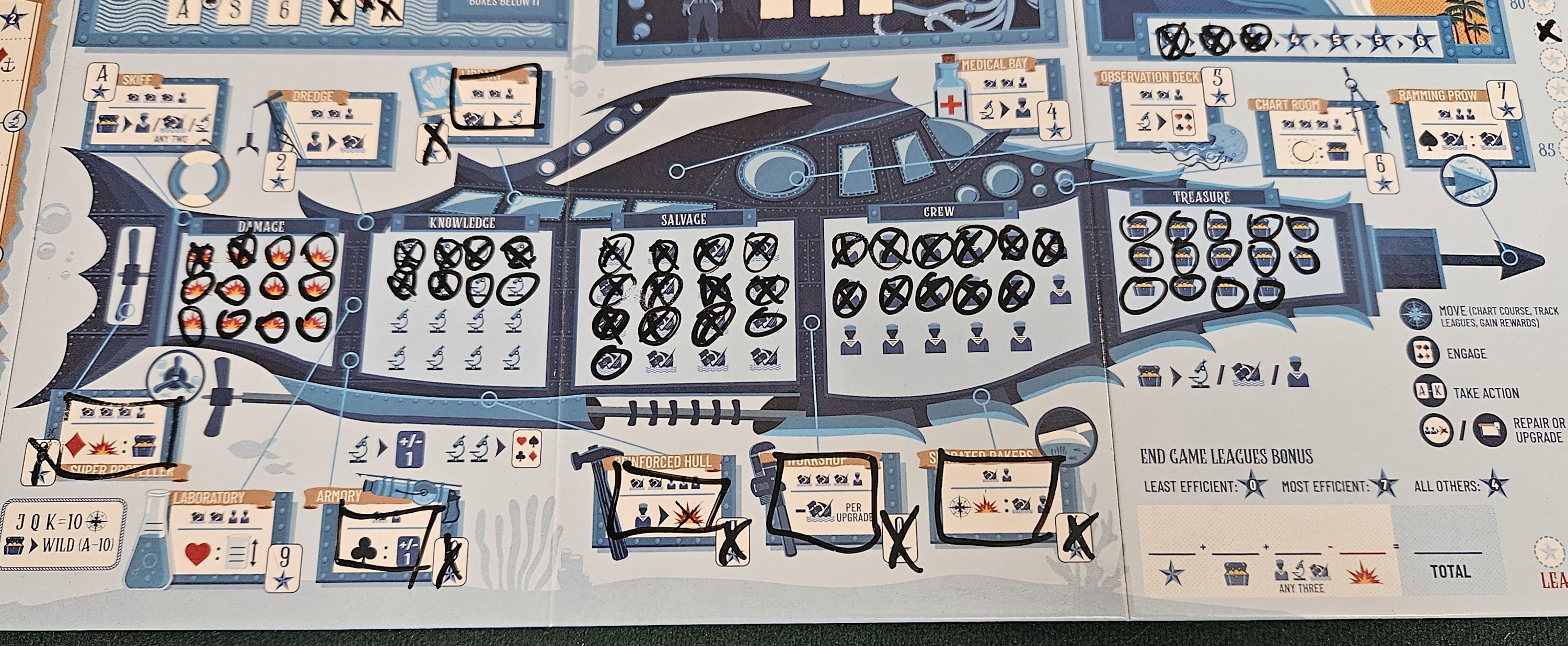
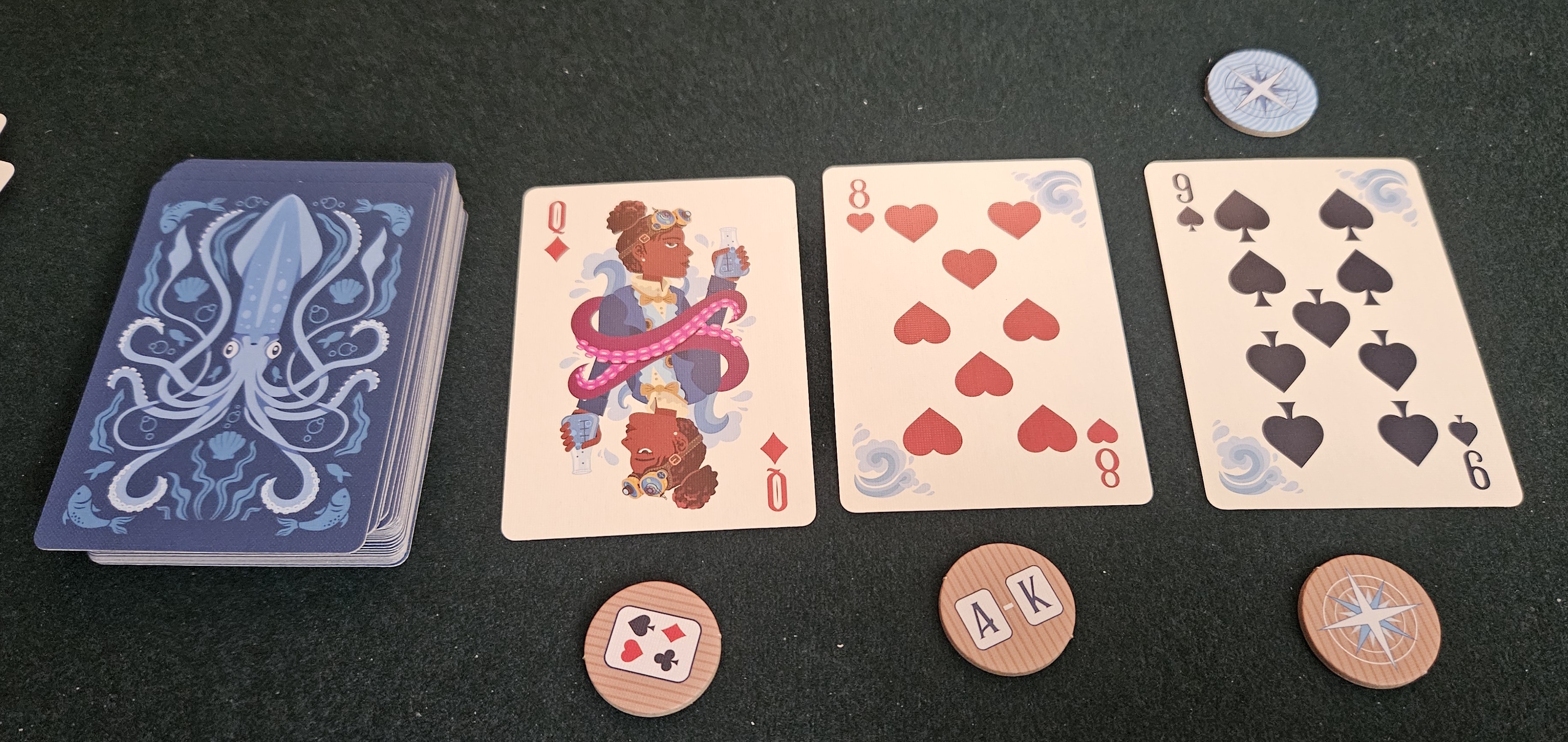
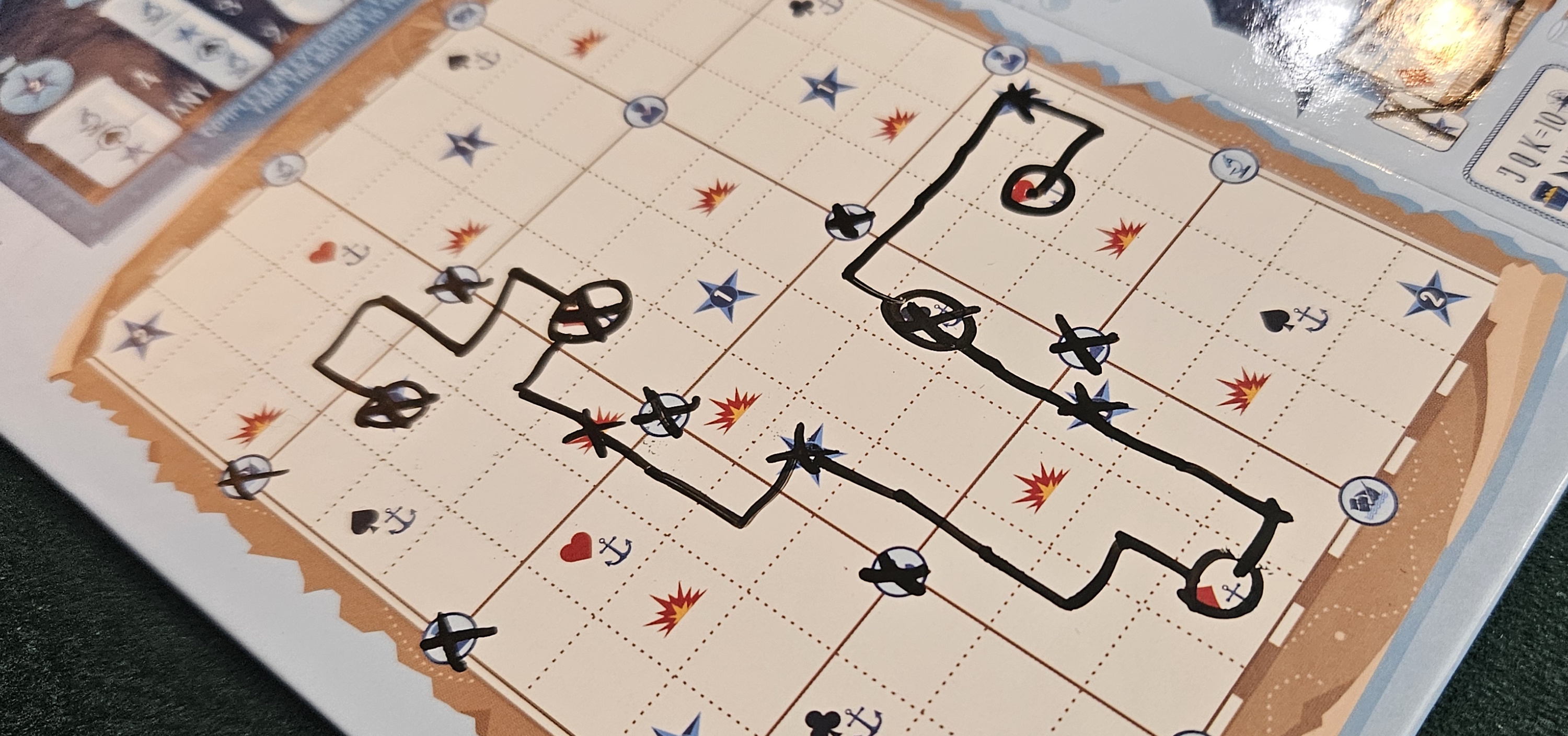
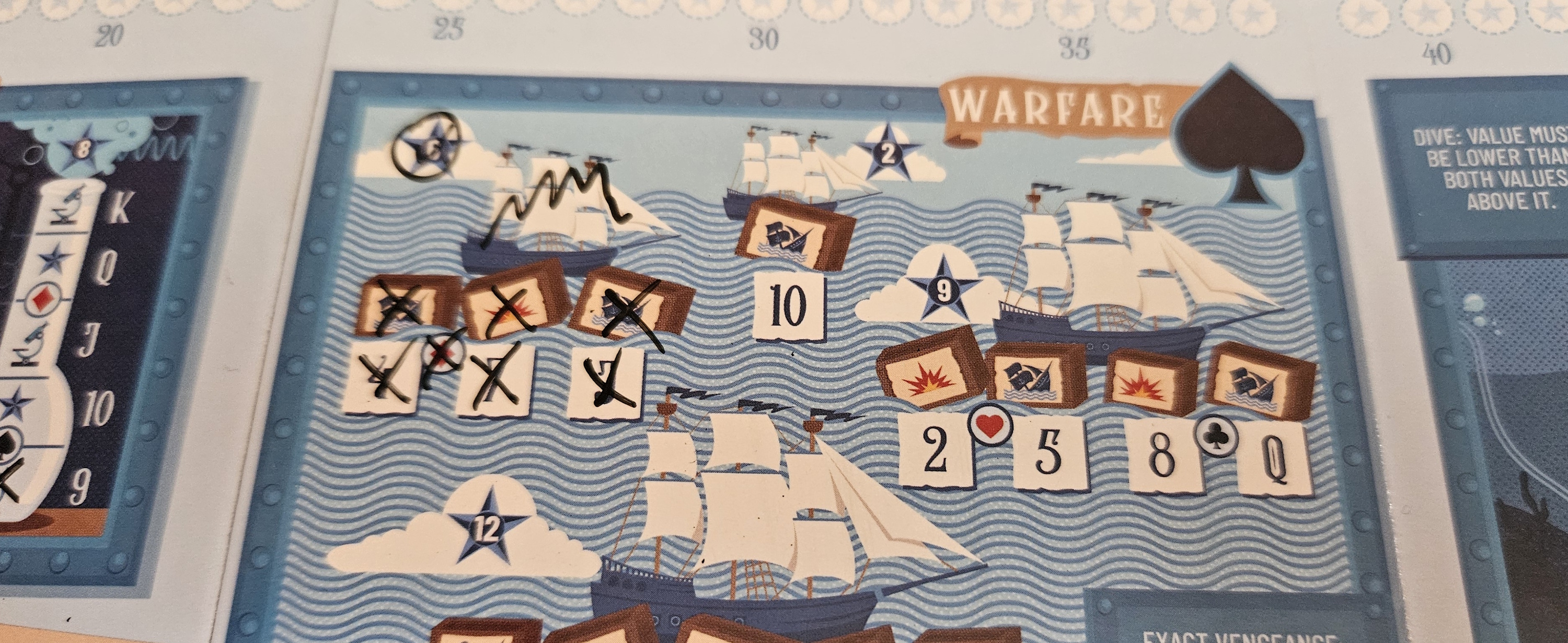
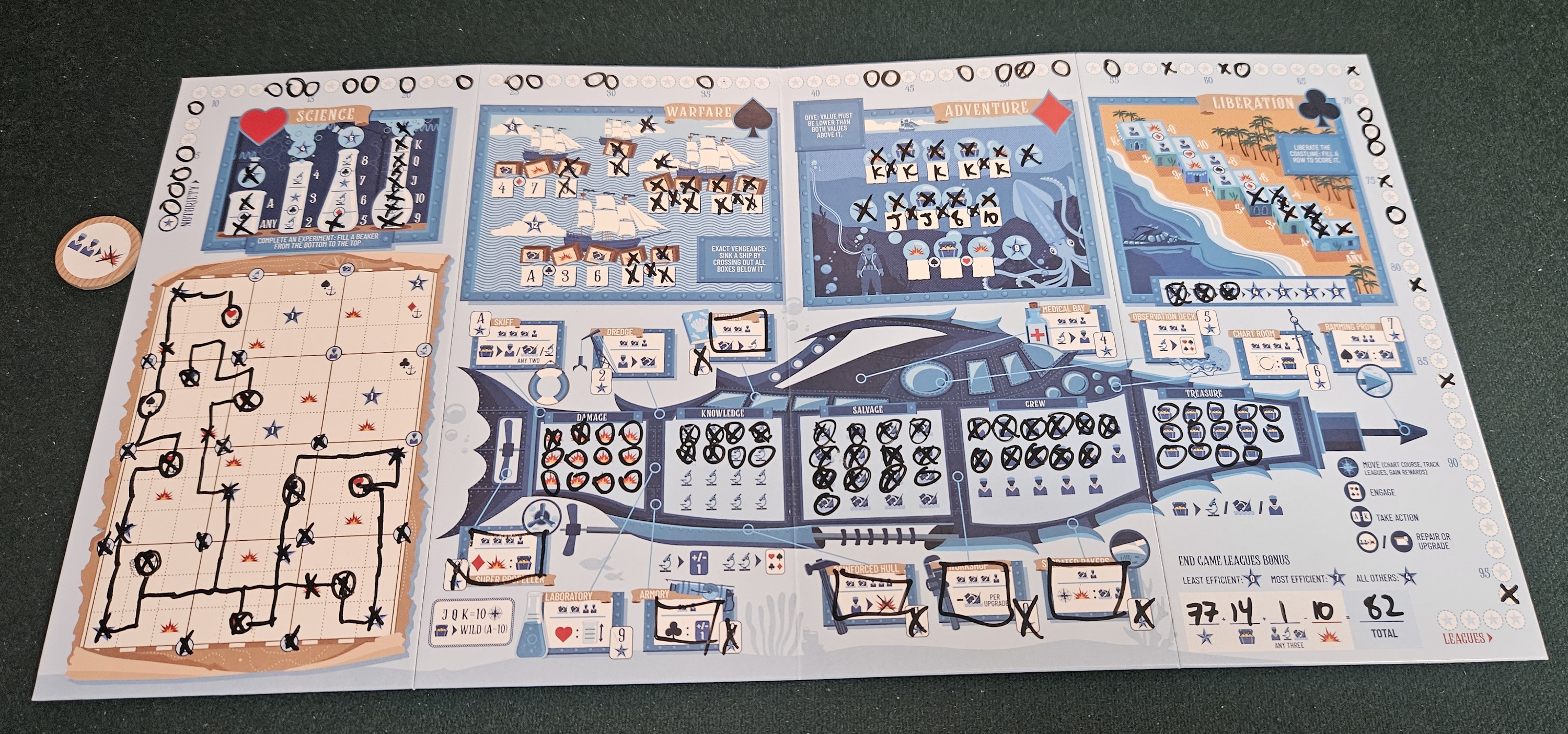


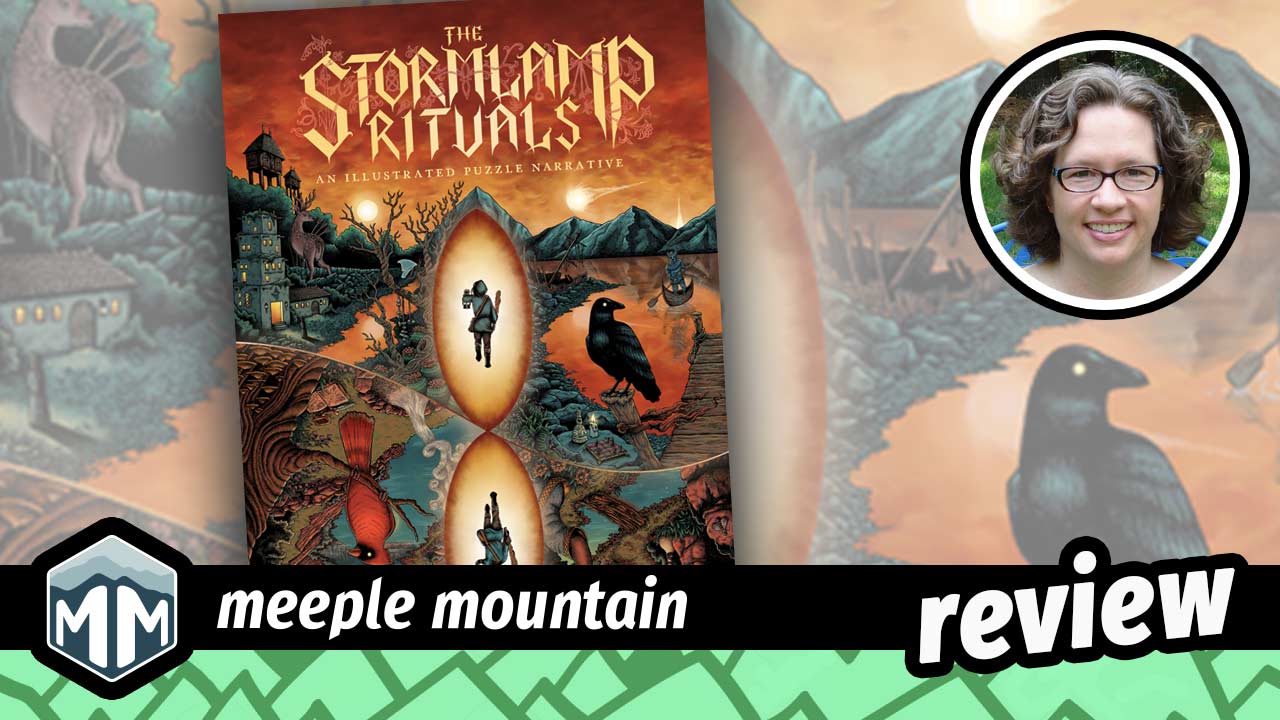

/pic9611313.jpg)