❌

Lese-Ansicht

My Favorite Wargame Cards – A Look at Individual Cards from My Favorite Games – Card #98: The Balkan Wars from Imperial Elegy: The Road to the Great War 1850-1920 from VUCA Simulations

With this My Favorite Wargame Cards Series, I hope to take a look at a specific card from the various wargames that I have played and share how it is used in the game. I am not a strategist and frankly I am not that good at games but I do understand how things should work and be used in games. With that being said, here is the next entry in this series.

#98: The Balkan Wars from Imperial Elegy: The Road to the Great War 1850-1920 from VUCA Simulations

Imperial Elegy: The Road to the Great War 1850-1920 is a massive card driven game that blends diplomacy, warfare, and statecraft and feels a bit akin to games like Here I Stand and Virgin Queen from GMT Games, which are both grand scale sweeping epics that play multiplayers and take a day to play. Players play as 1 of 6 major powers in the game including Germany/Prussia, the United Kingdom, France, Austria-Hungary, Russia and the Ottoman Empire. The game is quite grand and ambitious as it covers 70 years near the end of the Victorian Era and the Progressive Ear and sees quite a lot of global change and competition between the great powers of the time. The game is a Card Driven Game and uses Action Cards as a type of currency to spend for their Command Points or the printed event to take actions such as recruiting armies and navies, industrialize, moving fleets and armies around the globe, influencing minor powers and establish colonies in Africa, India and the Pacific Ocean. The cards are all tied to the history of the period but the game can be played very much as a sandbox allowing players to explore strategies by trailblazing new horizons or following history.
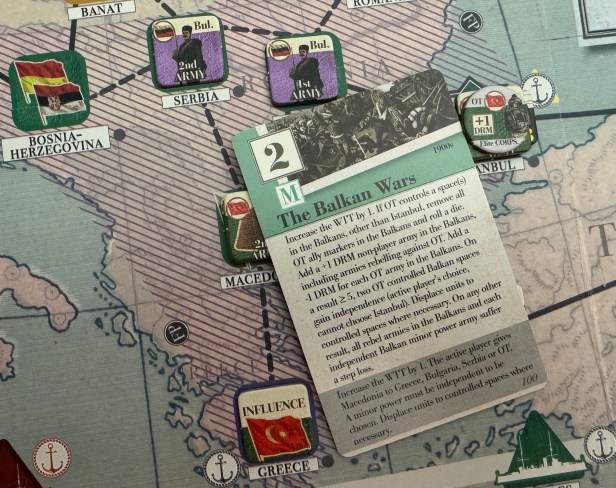
Before we dive into today’s chosen card The Balkan Wars, I want to first make sure you know about Mandatory Event Cards in the game and how they work as they work slightly differently from normal Action Cards. Mandatory Event Cards are all lime green colored and bear a large block “M” just under the CP Value listed in the upper left hand corner. Mandatory Events, as the name suggests, must be played for their events. However, when playing a Mandatory Event Card, players trigger the event and also receive the CP to spend on various actions. The events on Mandatory Event Cards are always resolved first before the CP are utilized. If a Mandatory Event Card is discarded, the event will immediately trigger. There is no way around these cards and they are included in the game to drive the action historically and interject the various special circumstances that drove the rise and decline of these Victorian Age empires. The player that discarded the card resolves the event as if they were the active player. If two such Mandatory Event Cards are discarded in the same impulse the events are resolved in turn order.

Some of the events that occurred historically prior to 1914 were ultimately precursors to The Great War in many ways. The Balkan Wars were two conflicts fought in 1912 and 1913 that stripped the Ottoman Empire of almost all its remaining European territory and directly set the stage for World War I. The Balkan Wars saw similar levels of carnage as machine guns and artillery equipped with hydraulic recoil mechanisms were used in large numbers. Politically, they highlight the volatile nature of international politics in the Balkan Peninsula and are included as a Mandatory Event to ultimately drive up the World Tension Track on a path toward the outbreak of World War I. When played, the World Tension Track will increase by +1 and if the Ottoman player controls any territory in the Balkans other than Istanbul, or has Diplomatic Influence with countries, they will have a chance to lose their control there as a result of the chaos of the First and Second Balkan Wars. If these checks fail, and they will incur a -1 DRM for each Ottoman Army that is located anywhere in the Balkans, non-player armies will be placed in those locations and will increase the difficulty for the Ottomans to gain a foothold in this area. According to the designer Michael Lorino, mechanically this event causes all kinds of trouble in the Balkans, as intended. Similar to the Mandatory Event Card Empire of the Sun, the original event was a bit more involved and had players fight an actual war. In an effort to keep the game in the playable zone, he decided to abstract these wars through a die roll.

I very much enjoy the concept of a Mandatory Event, although they are never convenient for someone at the table as they typically have negative effects for at least 1 faction. But I very much like the approach taken here with The Balkan Wars with the -1 DRM for control of a territory and its thematic connection with the Ottoman Empire’s presence in the region generating tension and setting off these Balkan Wars.
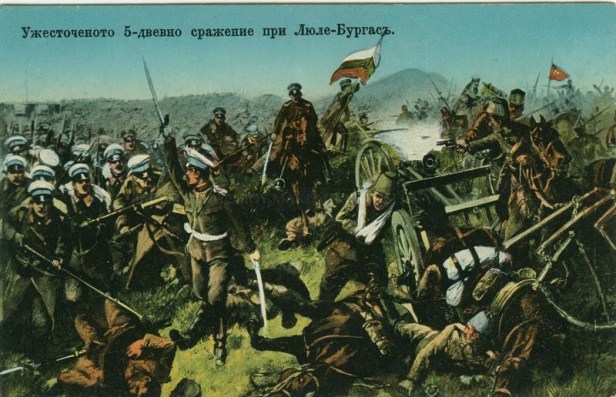
A Bulgarian postcard depicting the Battle of Lule Burgas.

The Balkan Wars were two conflicts that took place in the Balkan states in 1912 and 1913. In the First Balkan War, the four Balkan states of Greece, Serbia, Montenegro and Bulgaria declared war upon the Ottoman Empire and defeated it, in the process stripping the Ottomans of their European provinces, leaving only Eastern Thrace under Ottoman control. In the Second Balkan War, Bulgaria fought against the other four combatants of the first war. It also faced an attack from Romania from the north. As a result of these wars, the Ottoman Empire lost the bulk of its territory in Europe. Although not involved as a combatant, Austria-Hungary became relatively weaker as a much enlarged Serbia pushed for union of the South Slavic peoples. The Balkan Wars set the stage for the July Crisis of 1914 and was a prelude to the First World War.

We have put out several pieces of content covering Imperial Elegy and find it to be a fantastic game. These include written posts and videos. You can visit those by following the links below:

Unboxing Video:

Video Review:

Summary of Solitaire Bots presented by our friend James:

Written First Impressions Post on the blog: https://theplayersaid.com/2026/05/06/first-impressions-imperial-elegy-the-road-to-the-great-war-1850-1920-from-vuca-simulations/

In the next entry in this series, we will take a look at Truman Doctrine from Twilight Struggle: The Cold War, 1945-1989 from GMT Games.

-Grant

  •  

Discussion Thread: The All Too Common Misunderstanding or Misinterpretation of the Word “Wargame”

A few months ago, I started a new feature on the blog called Discussion Thread where I plan to pose a question or a share a situation and seek your input and comments on the issue to gain greater understanding and to encourage thoughtful feedback. The response to the first post about In-Game Retribution was positive and there were a lot comments and opinions shared followed by a not so successful post on Zones of Control. I now wanted to do another post in the series and focus on the all too common problem that non-wargamers have with the word Wargame and misinterpreting or misunderstanding what it actually is.

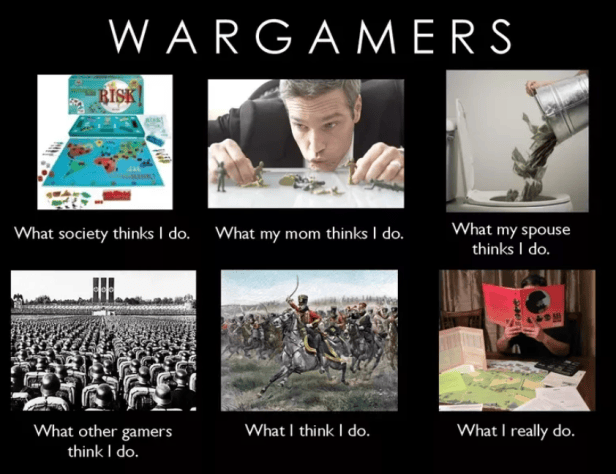
The most common misconception about a board wargame is that it is simply a casual, luck-based mainstream game such as the likes of Risk or Monopoly, that cheapens or treats lightly the historical period covered and those who participated in the event and who fought and gave their lives. Conversely, some people hold that wargames are an inaccessible, dry academic simulation meant only for hardcore military personnel or history professors. Many non-wargamers assume that “wargame” simply means moving plastic armies around a world map and rolling dice to conquer territories. But in reality, traditional board wargames, such as hex and counter games, prioritize historical operational mechanics, logistics, supply lines and terrain modeling over casual social dice-rolling. They also do a credible job at attempting to recreate the outcomes of these battles by ensuring that various elements are accurate including terrain features, weather, commanders and the make-up and skill of troops involved. Finally wargames are a serious matter. No one who plays them takes them lightly nor do they not consider the history covered.

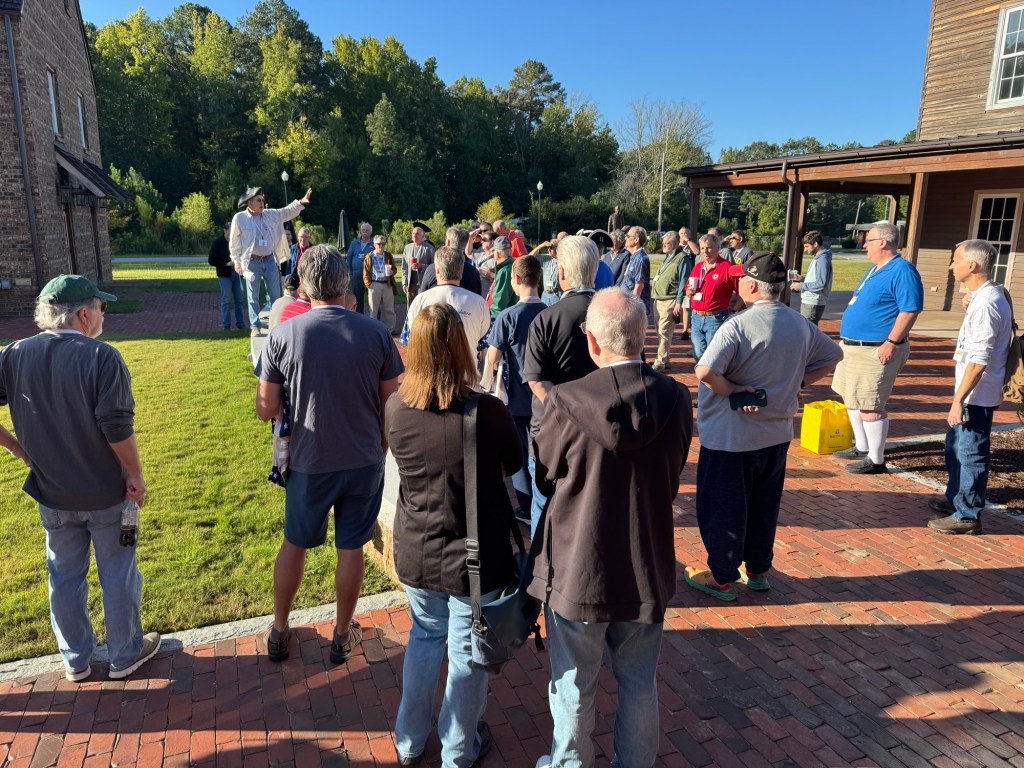
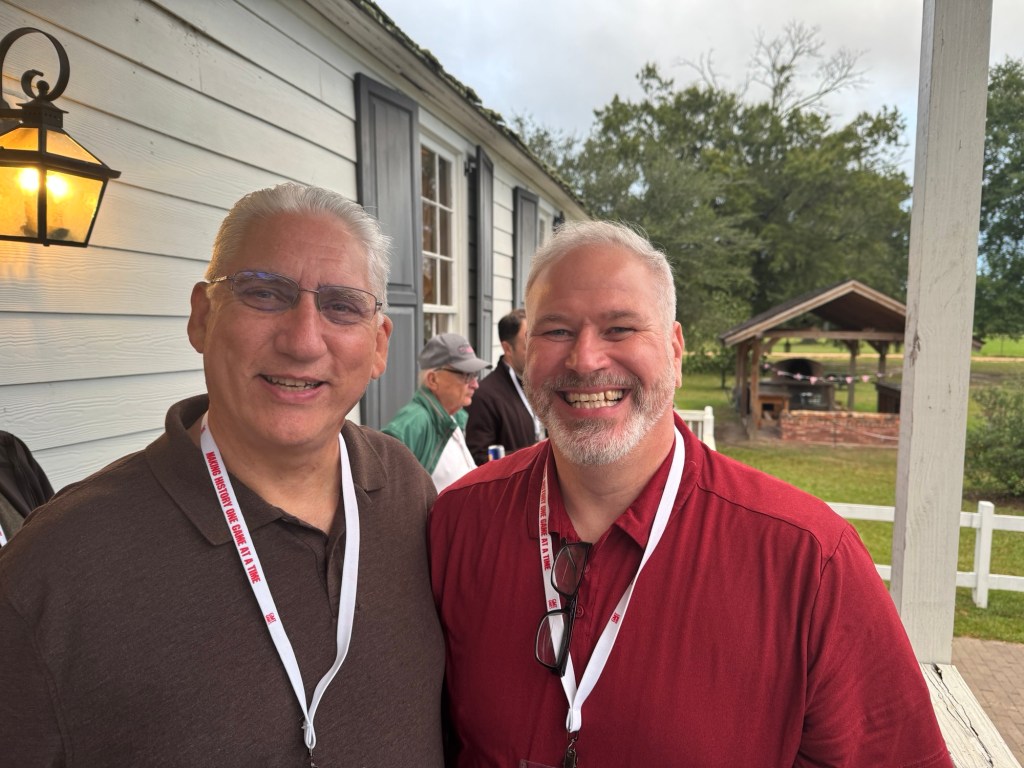
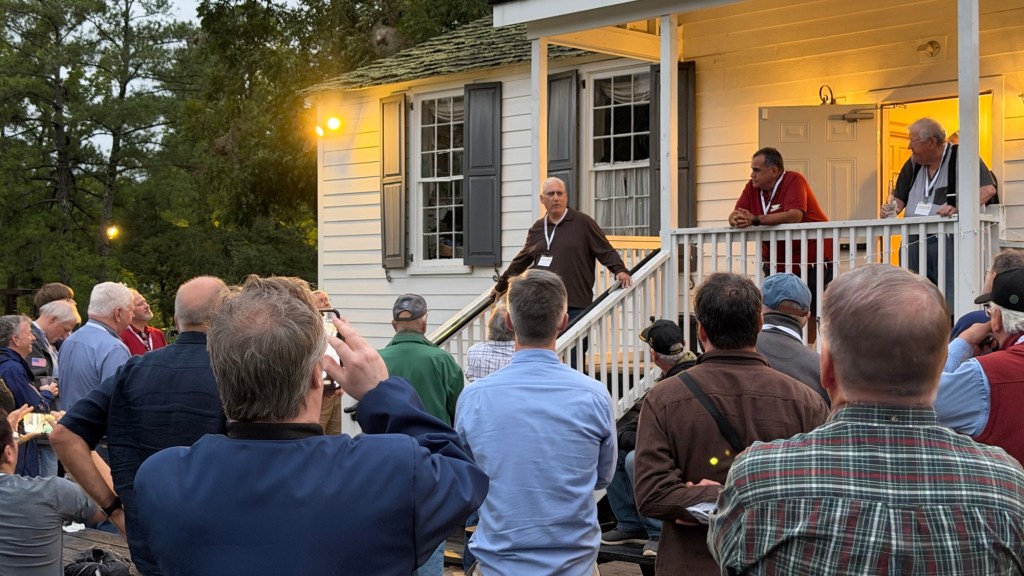
So the reason for me writing this post came from something that I experienced last weekend while attending the Gaming the American Revolution Camden 250 Event in Camden, South Carolina. At this event, which was sponsored by GMT Games, about 100 gamers showed up to play games on the American Revolutionary War from GMT Games including titles such as Washington’s War, Liberty or Death, the upcoming announced Common Sense and the various games from the Battles of the American Revolution Series. As a part of the convention, which was held at the Revolutionary War Visitor Center at Camden, there was a 4-hour tour set up that took participants to see the Camden battlefield, located about 8 miles out of the city limits, and the Hobkirk’s Hill battlefield located in Camden. This tour was expertly lead by the South Carolina Battlefield Preservation Trust Executive Director Rick Wise who was very knowledgeable and entertaining to listen to. You could really feel his passion for the American Revolution as well as the role that these battles in South Carolina and the Southern Theater held in the wider war and the eventual surrender of Lord Charles Cornwallis and his army at Yorktown, Virginia.

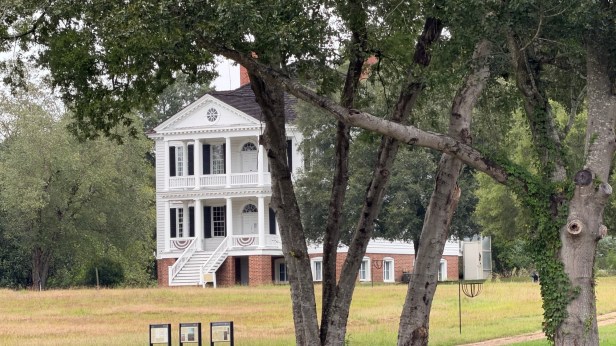
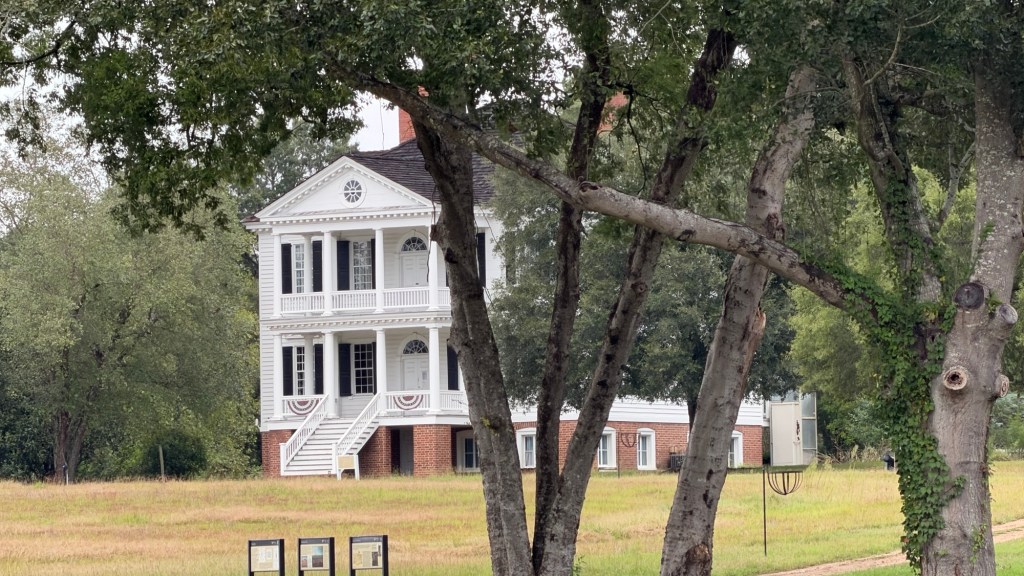
The Kershaw-Cornwallis House at Camden, South Carolina.

But, when he spoke on a few different occasions he brought up the fact that we were wargamers and that we were gathered to “play” games. This statement is not incorrect as we are all wargamers and were there to play games together. He also said that we needed to understand and keep in mind that there were soldiers who fought, bled and died to win independence and establish the great American nation. I felt like he was really preaching to the choir here with this group as everyone was there for the gaming and the recognition of the history tied to that gaming. Also many attendees were former military and had also served. Finally, I think almost every one in attendance participated not only in his 4-hour guided tour, but also walked the grounds of the Camden Visitors Center to take a look at the redoubt there as well as the Kershaw-Cornwallis House that was used by Lord Charles Cornwallis and Lord Francis Rawdon as an active HQ during the occupation of Camden from 1780-1781. In addition, many attendees came to South Carolina early to visit other battlefields in the area such as Cowpens, King’s Mountain, Waxhaws and Eutaw Springs. I bring this up because of Rick’s tone, and I am not sure that it was valid or necessary in speaking to this crowd, was assuming that as wargamers we were trivializing or taking lightly the gravity of the history involved in the games we were playing. I know that he was not trying to offend or belittle us and our focus but simply wanted to drive home his point of the sacrifices that were made and that we were playing out in a game with dice.

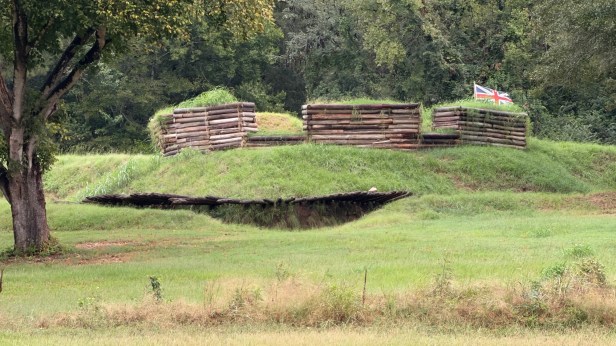
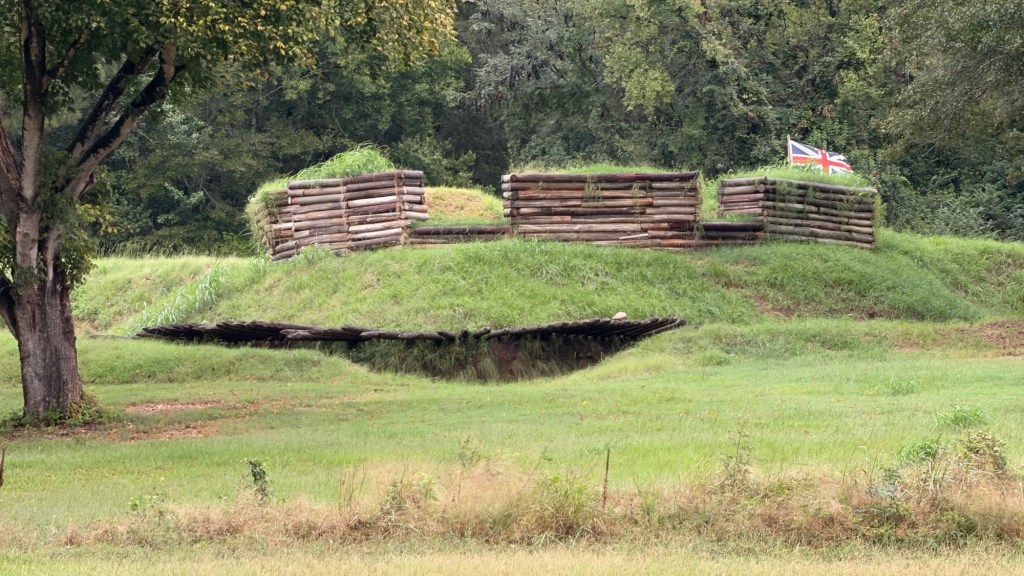
A recreation of a British redoubt found on the Revolutionary War Visitor Center at Camden grounds.

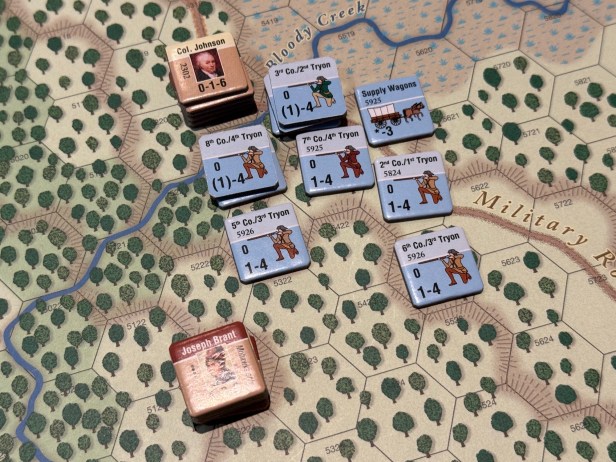
Well, I want to point out a few things about these wargames. They are not trivial but are focused on the actual historical details of the period and the battles involved. Wargames are built upon a few stalwart truths…the people who participated and the terrain upon which they fought and died. These are both hallmarks of every single wargame that I have ever played. The designers take these battles seriously and do hours upon hours of research and investigation to make sure that they have the details correct. For example, with the Orders of Battle or OOB’s, they find the names of each formation, typically named after their commanding officer, and in smaller scale games the names of actual soldiers who were there. These details are listed on the counters and have an impact in the game play itself. But, sometimes the names don’t have an impact and are just added to bring the battle to the view of the players and to hammer home the human element. The designers want players to understand who was involved, how they fit into the larger battle, who their leaders were and even adding in small historical details to make the game grounded in the history. The Battles of the American Revolution Series does this exceptionally well.

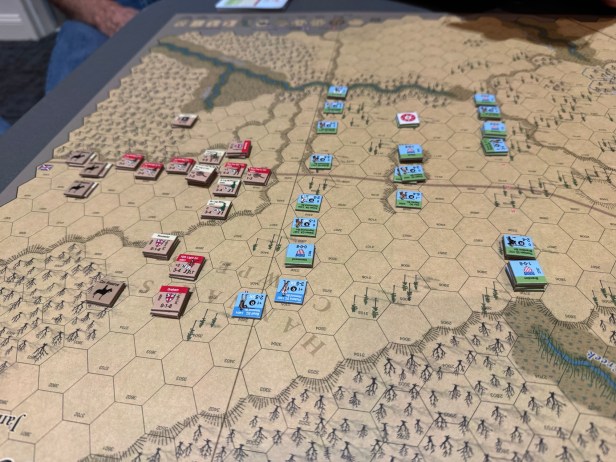
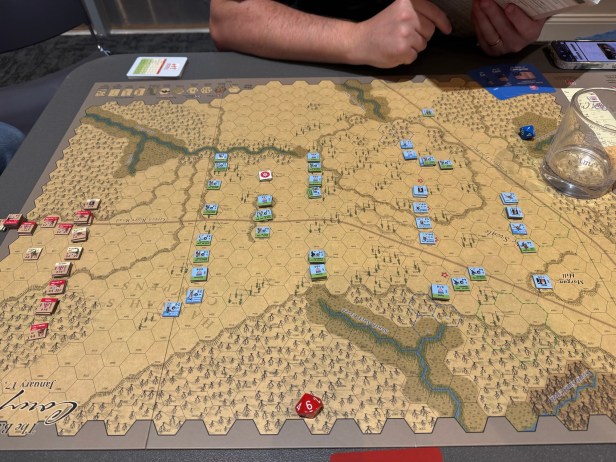
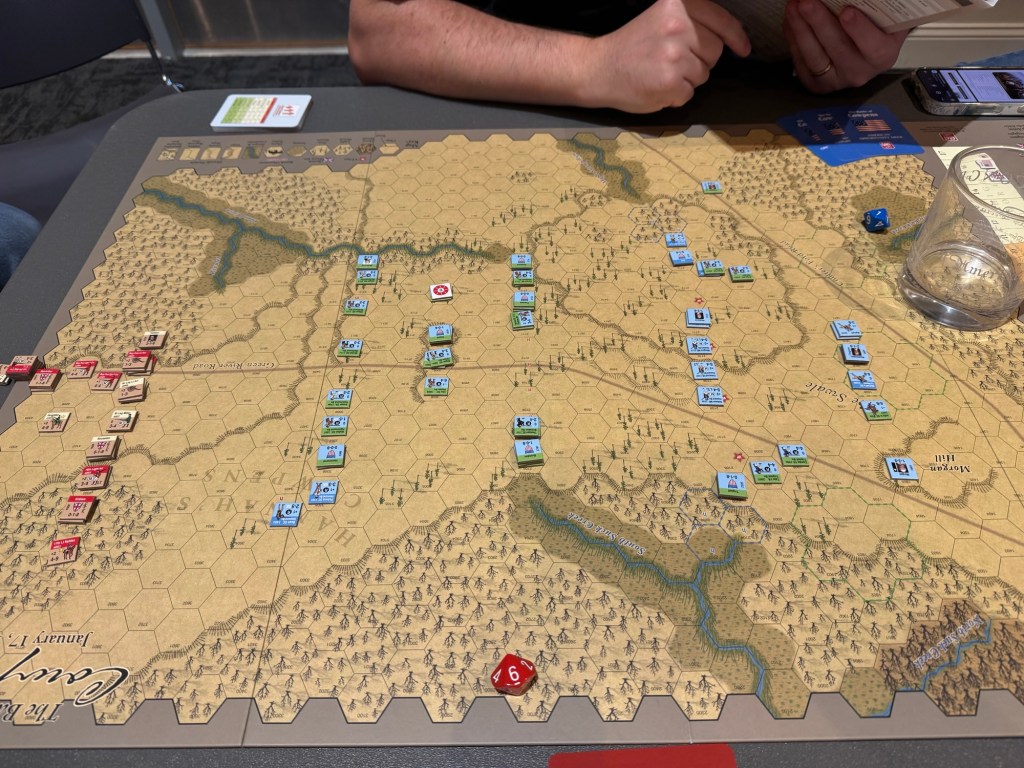
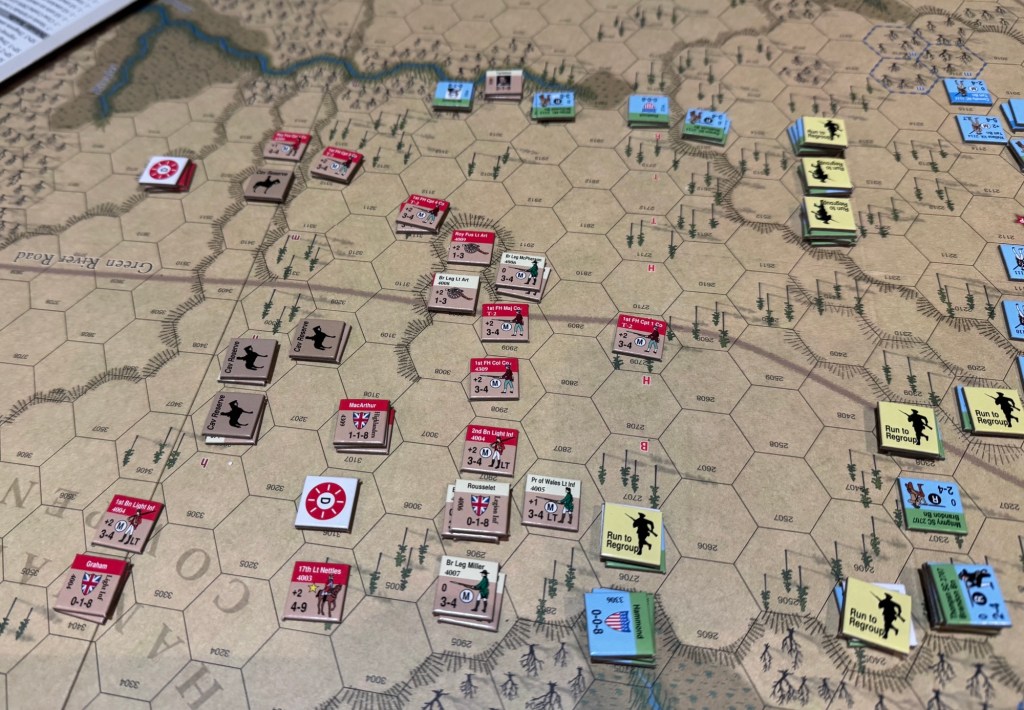
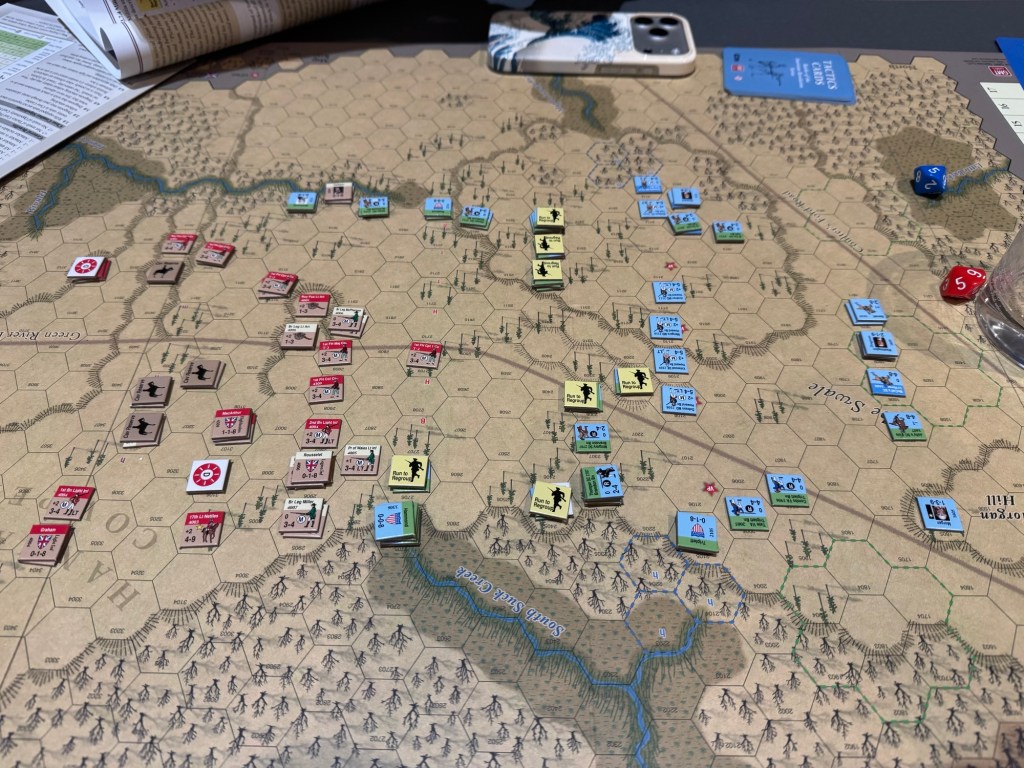
A picture of the setup for the Battle of Cowpens from GMT Games, which is the first entry in the Small Battles of the American Revolution Series.

The detail about the makeup of the soldiers involved, as well as their relative strengths and weaknesses, are on full display and are central to us as wargamers gaining insight into the conditions under which they fought, the issues that they would have experienced and the challenges that their commanders would have dealt with in directing their efforts. I like that one of the more interesting parts that is included in this makeup typically is a unit’s morale or their willingness to continue fighting in the face of mounting casualties and fatigue. Numbers are typically assigned for things like morale by designers after reading the histories and taking into account the performance and standing of these troops. More veteran troops typically have higher morale than green or relatively less experienced troops. These factors and attributes are all based on the history and are typically designed as a simulation of the event, or at least as the most realistic and plausible recreation of the event that can be made. And that is the appeal. Understanding the situation from the participants point of view and seeing how it turned out and why. I have played dozens upon dozens of wargames and have always thought about the soldiers and their sacrifice. How did they do what was done? Where did their bravery come from in the face of overwhelming odds? How could they have possibly held up to the better trained and better equipped professional armies of the British? For me, the soldiers are the reason that I play these games. And I assume the same for many of you.

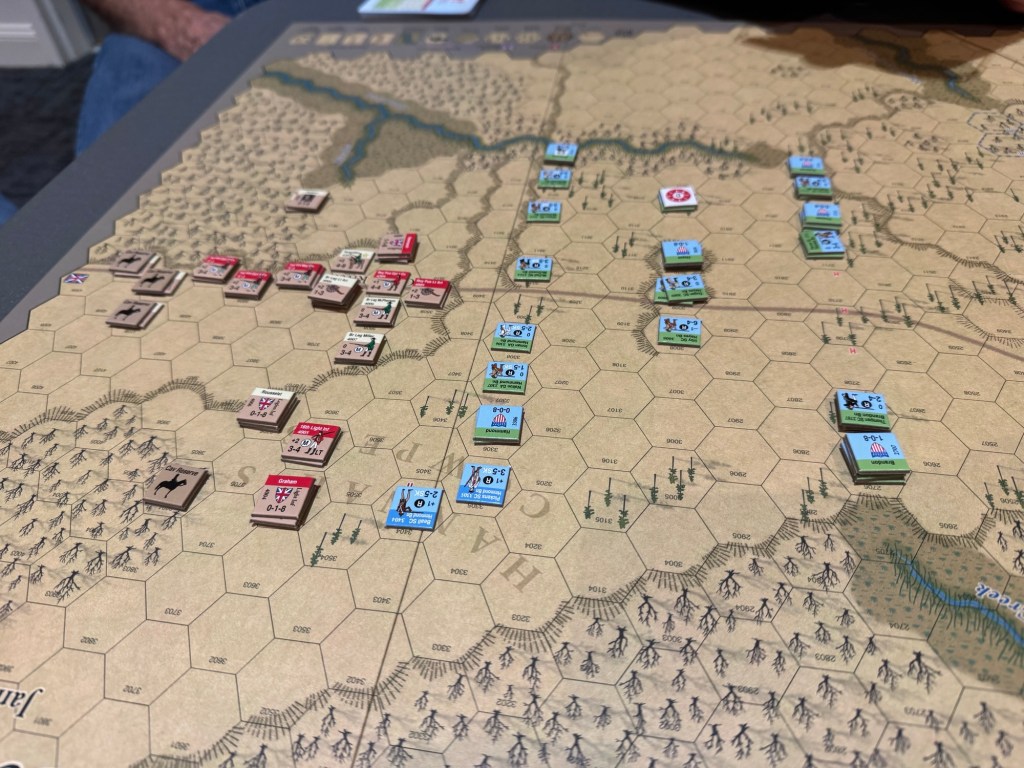
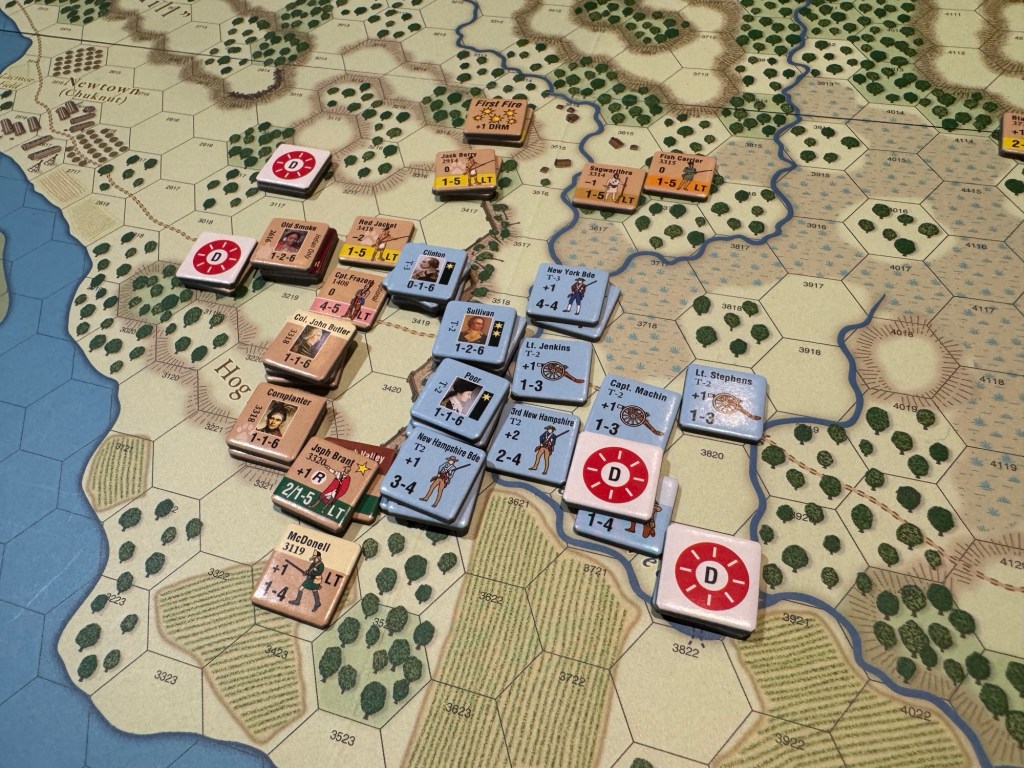
An example of the named counters, based on historical formations, found in the Battles of the American Revolution Series.

I understand why the average person doesn’t understand wargaming and I get that the word “game” is found in what we do. To the average person, the word game is associated with lighter fare such as Risk, Trouble or Sorry, which are games where you can laugh and joke about things and focus on having a good time and experience with your family and friends. But wargames are more than that…they are a look into the past. A look that includes the gory details, the challenges and the difficulties….and they are made as an homage to the past. Just as books are written to commemorate and outline the details of these battles, wargames are made to serve a similar purpose. To teach, to instruct, to challenge and to test the meddle of players to see if they can meet or exceed historical outcomes or even flip the script and turn history upside down with a totally different outcome. And they are made to be enjoyable but in a different way to the games I mentioned earlier. I love playing games with friends, being with them for hours upon hours, getting to know them, better understanding them and better understanding the history. I would deign to say that I even enjoy playing wargames and do have a good time with them. But I always do keep in mind the history and the soldiers and their sacrifice.

What are your thoughts on this topic? Did I miss the mark in my response? Am I being too sensitive? Thanks for reading and for sharing your thoughts. I will come up with a few more of these posts to share and I hope to see lots of comments and reaction.

-Grant

  •  

Gaming the American Revolution – Camden 250 Event Daily Debrief Series – Day 4

Day 4 was our site visiting day and we planned out an all day trip that would take us to 4 different American Revolution battlefield sites including Waxhaws (Buford’s Massacre), King’s Mountain, Cowpens and Musgrove Mill.

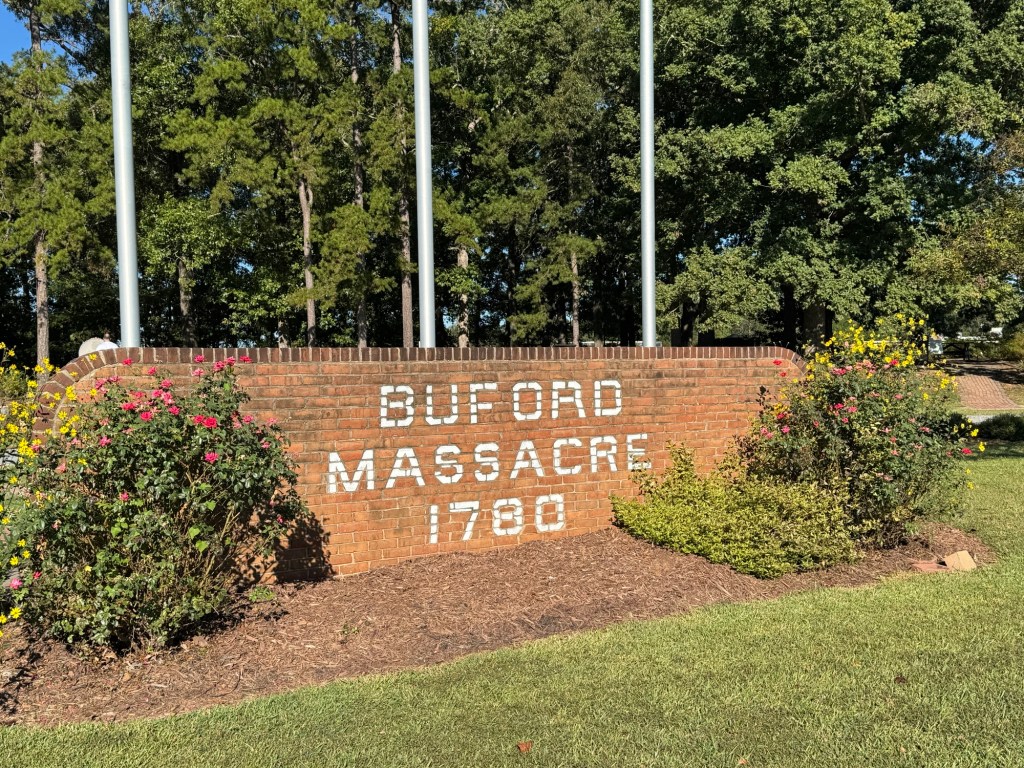
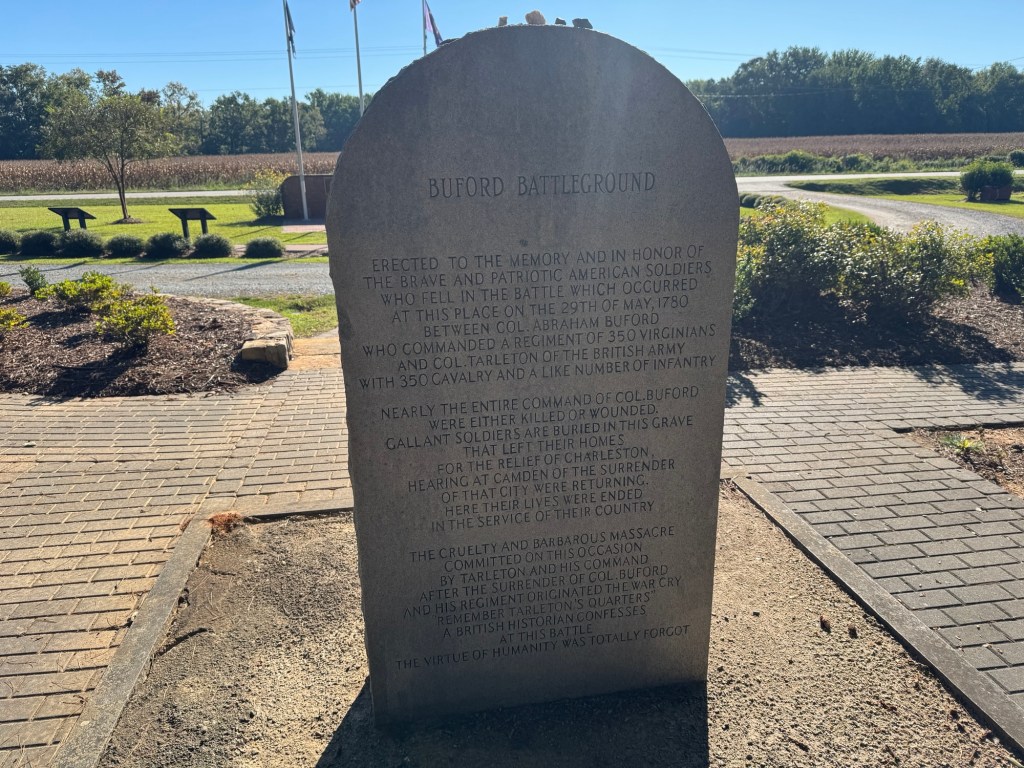
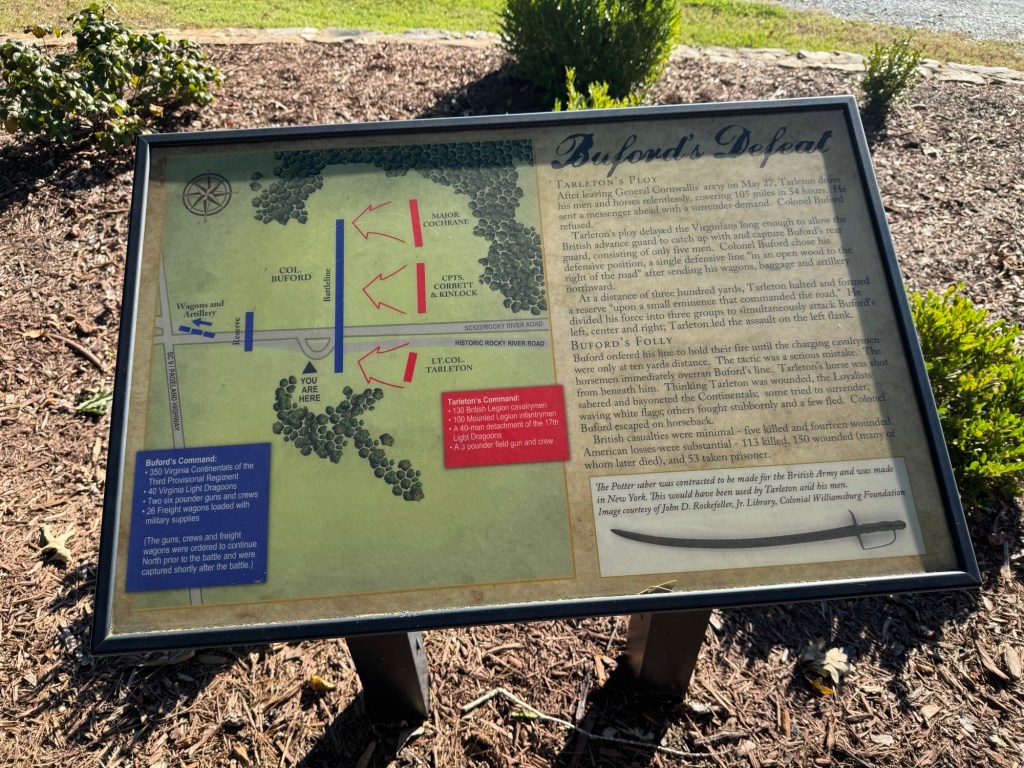
But first we visited the Battle of Waxhaws also known as Buford’s Massacre in Lancaster, South Carolina. The Battle of Waxhaws took place on May 29, 1780. British Lieutenant Colonel Banastre Tarleton overtook Colonel Abraham Buford’s regiment of 350 Virginian Continental troops as they were attempting to relieve Charleston. The battle was short lived and saw over 113 Patriot soldiers killed in a brief but brutal engagement after a breakdown in surrender communications as the Patriot soldiers were attempting to give up under a white flag and the British bayoneted and sabred many of them earning Tarleton the infamous nickname “Bloody Ban”.

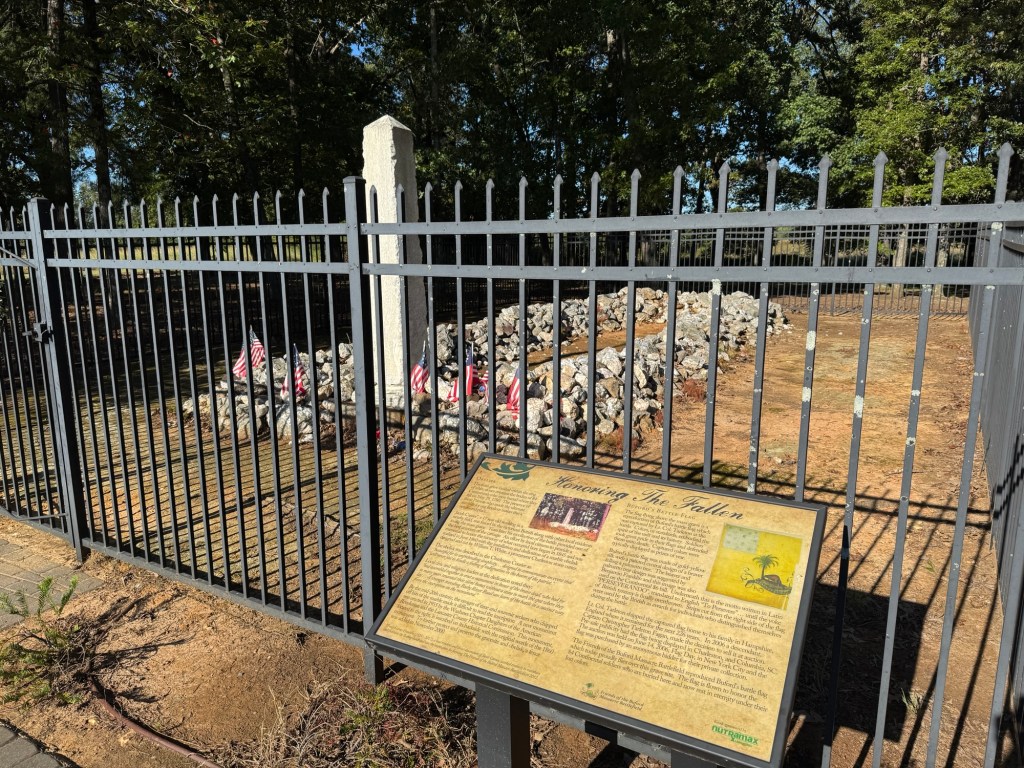
The site was very clean and well done with lots of landscaping and hardscape features and they had a sign board showing the timeline of improvements over time. The central ficus is the mass grave of the men who were killed there.

I very much enjoyed the various interpretive signage and especially those showing the battle lines and disposition of troops as it helps me to place the event on the site and better understand how it unfolded.

The mass grave memorial was very well done and has been improved over the years to its present day condition. The mass grave is marked by a large 10-foot tall white marble obelisk marker originally erected in 1860 and later replaced in 1955.

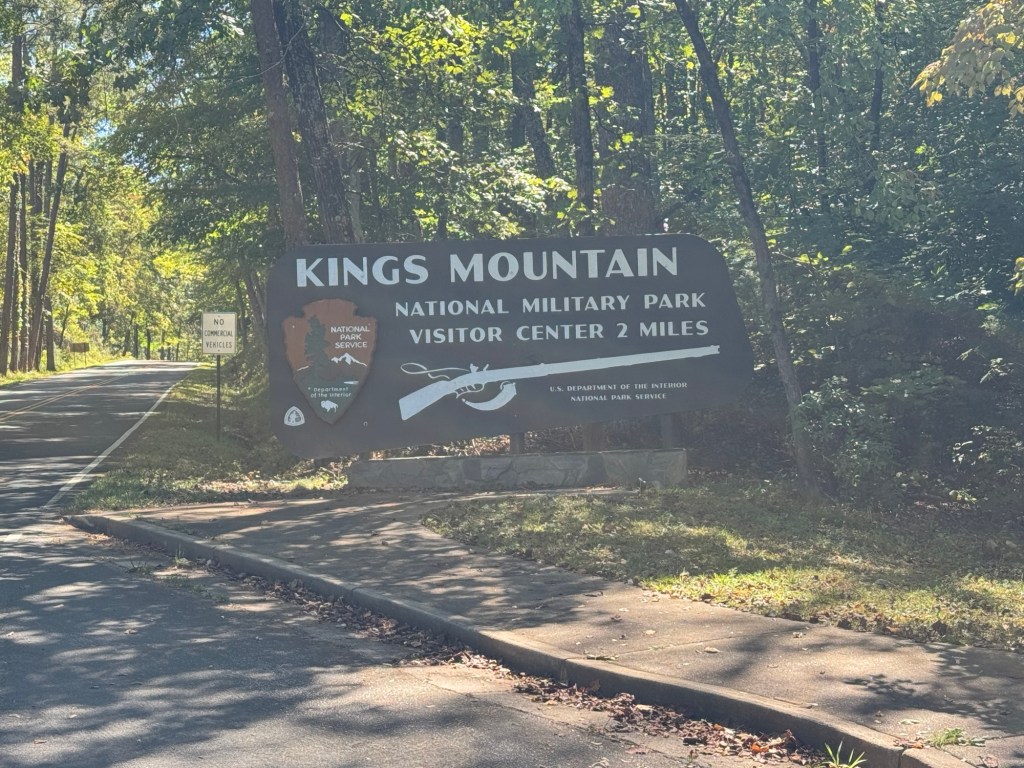
We then made our way to King’s Mountain and very much enjoyed this site which commemorates a Patriot victory over the British on October 7, 1780. The battle was fought on a very rocky ridge in western South Carolina, near the North Carolina border. Around 900 Patriot frontier militiamen known as the “Overmountain Men” were against an equivalent force of Loyalist militia led by British Major Patrick Ferguson. The battle lasted only 65 minutes.

The Patriot forces consisted of frontier militia from the Carolinas, Virginia and Georgia who had tracked Ferguson’s Loyalist force to their camp on the protected high ground. The Patriots used their hunting skills and knowledge of the terrain to surround the hill and while moving up the rocky slope, Patriot riflemen picked off the exposed Loyalists.

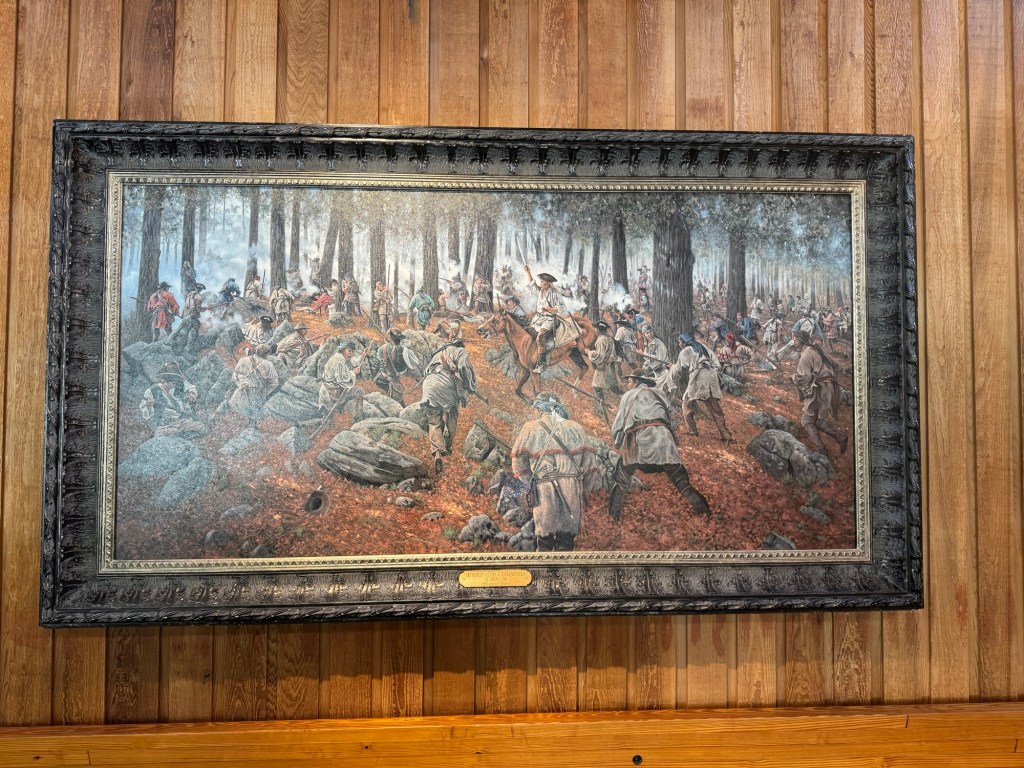
A painting hanging in the visitor center of the battle.

The Patriots had fewer than 100 casualties (around 28 milled and 90 wounded) while the Loyalists incurred over 1,000 total casualties, including roughly 240 killed or wounded and more than 600 captured.

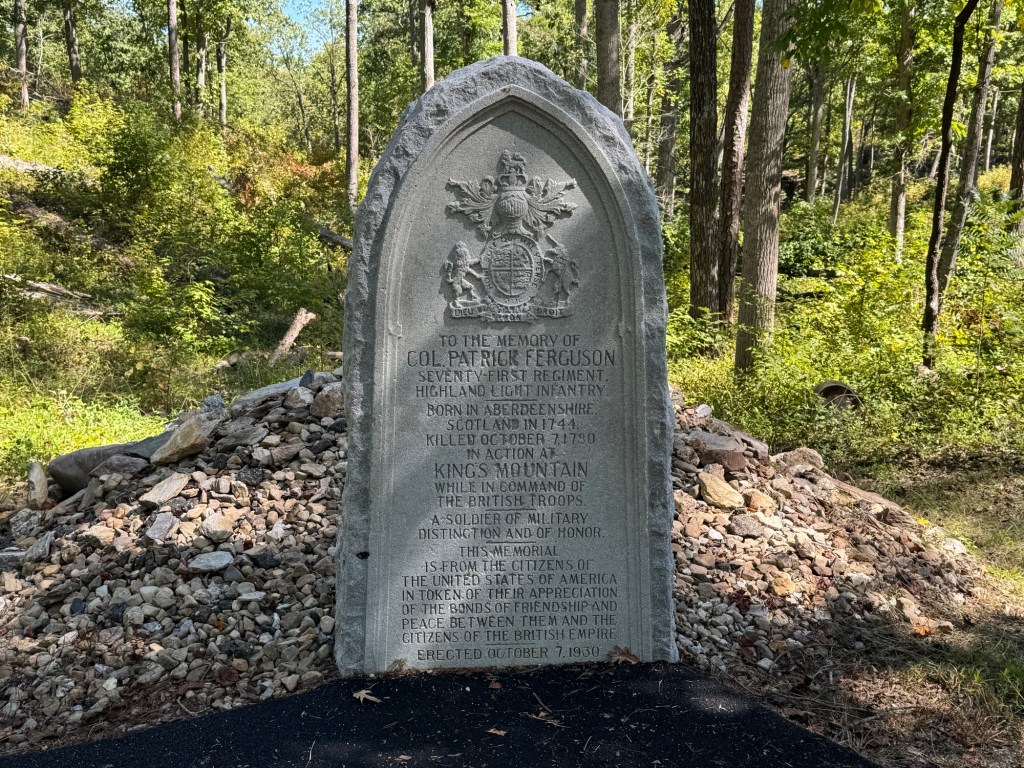
The Loyalist leader Major Ferguson was shot and killed after trying to lead a desperate charge and the remaining Loyalist forces quickly surrendered.

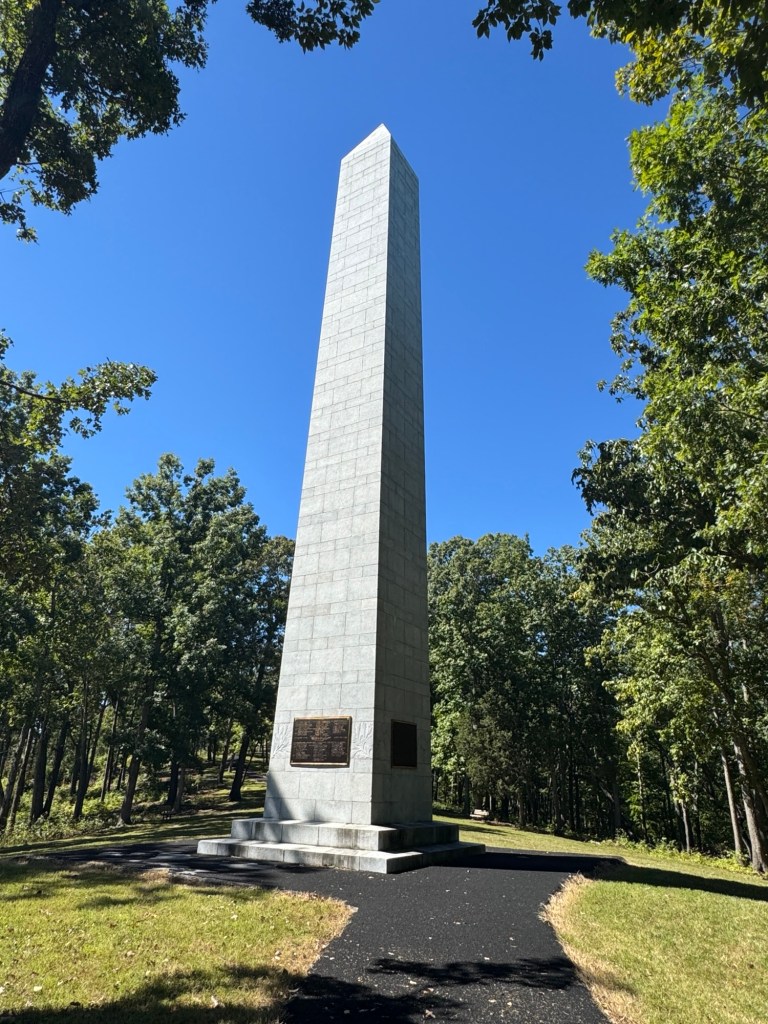
A monument to Major Ferguson.

This one took me by surprise as the Loyalists had the high ground and superior positioning but were unable to overcome the Patriots. Just very interesting! The defeat halted the British invasion of North Carolina and forced General Charles Cornwallis to retreat from his forward positions.

Looking down from the ridge you can see the brutally steep and difficult terrain the Patriots maneuvered across.

We then made it over to Cowpens which was the battlefield that I was most interested in seeing especially since we just had played the game and were somewhat familiar with the situation.

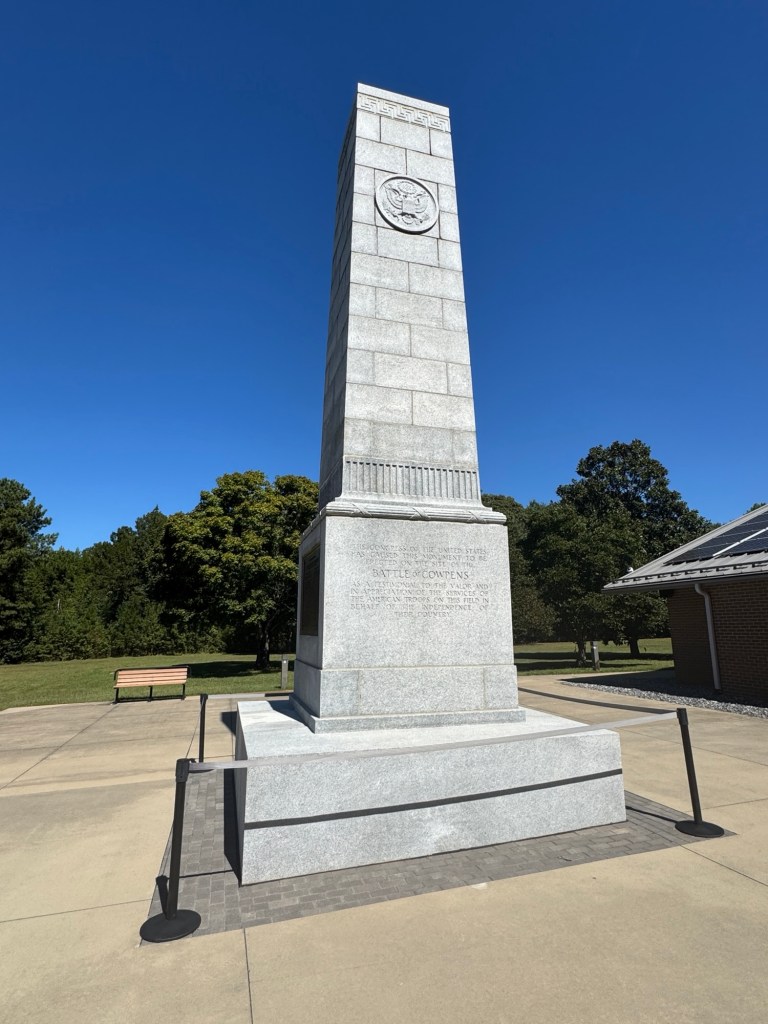
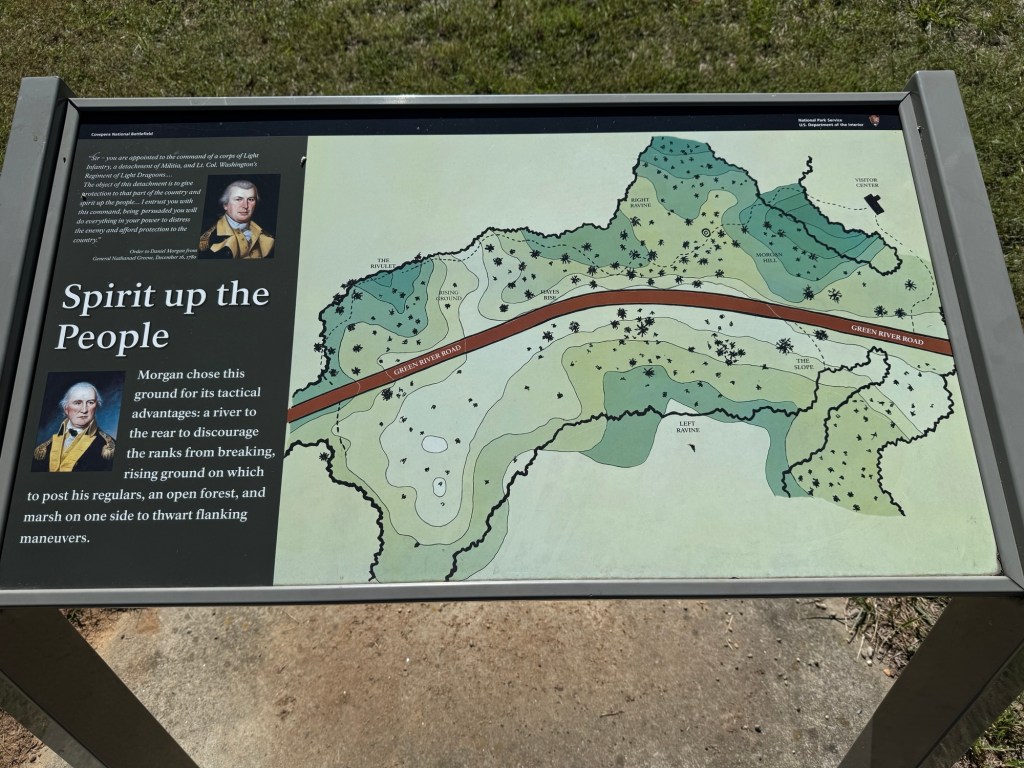
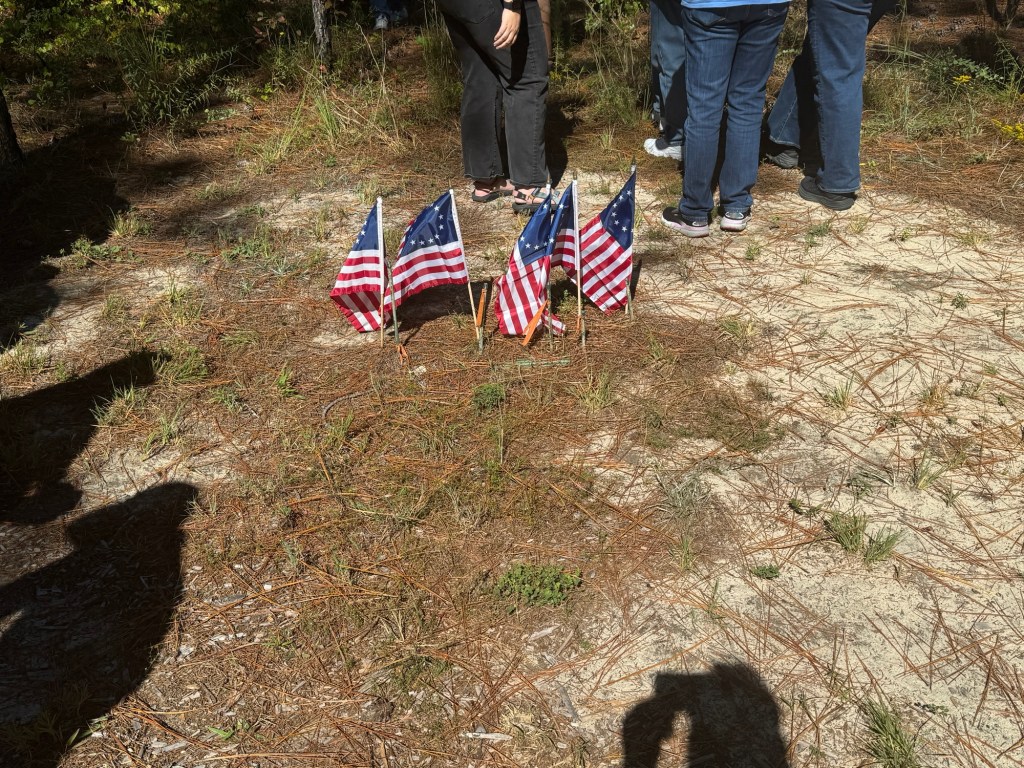
The Battle of Cowpens occurred on January 17, 1781 near the town of Cowpens, South Carolina. A Patriot army of nearly 2,000 regulars and militia under Brigadier General Daniel Morgan defeated a force of about 1,000 British and Loyalist troops commanded by Lieutenant-Colonel Banastre Tarleton and was the worst defeat suffered by the British in North America during the conflict following the 1777 Saratoga campaign.

After playing Small BoAR Cowpens, I was anxious to see the battlefield and the terrain to see how it compared. The setup of the units was spot on to what was shown at the site and I was guard to see that.

There were 3 lines of Patriot forces including skirmishes at the front, maim Continentals in the center and reserve cavalry in the back.

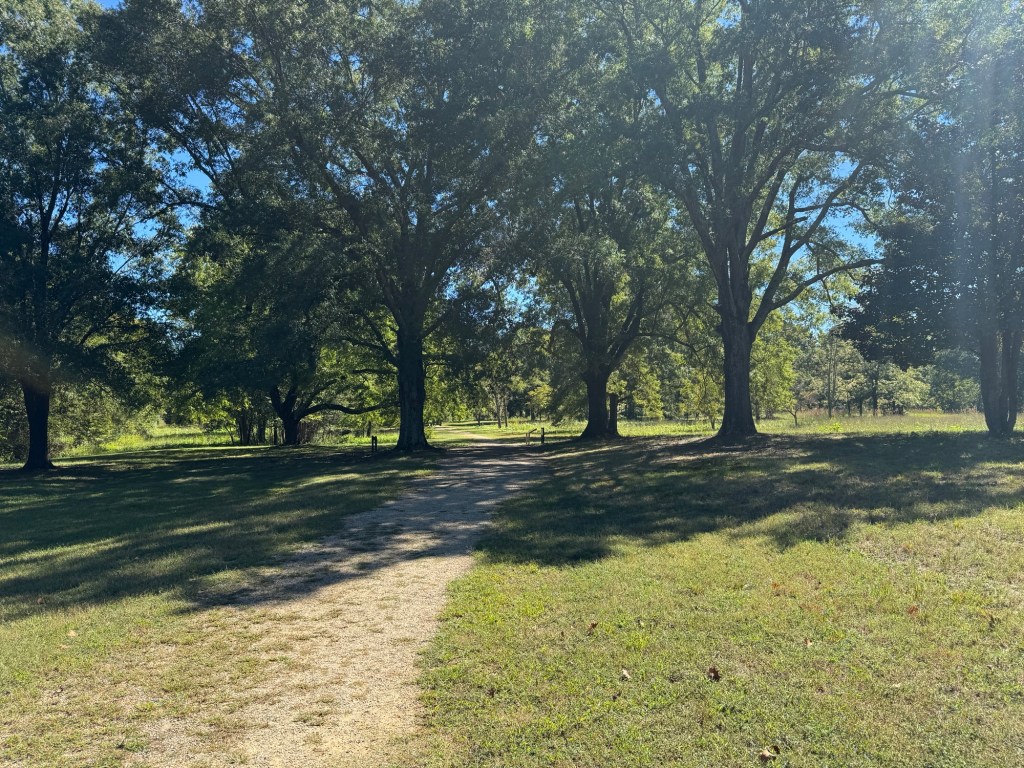
Then there was the actual terrain with the barren pines being somewhat present but most importantly the elevation change that would have obscured the Patriot trap.

There also was the cane break terrain that was found at the edges of the battlefield and that was pretty cool to see as it is very thick and darned near impassable.

Cane break at the edges of the battlefield.

A very enjoyable experience and we were able to walk the entire site in about an hour.

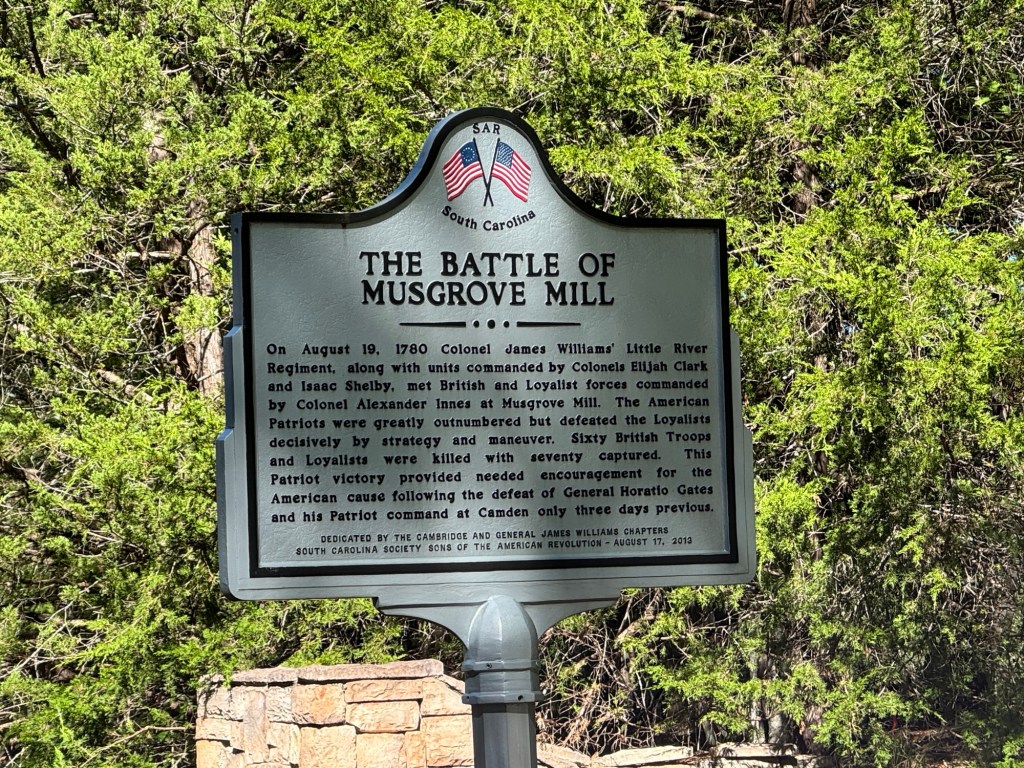
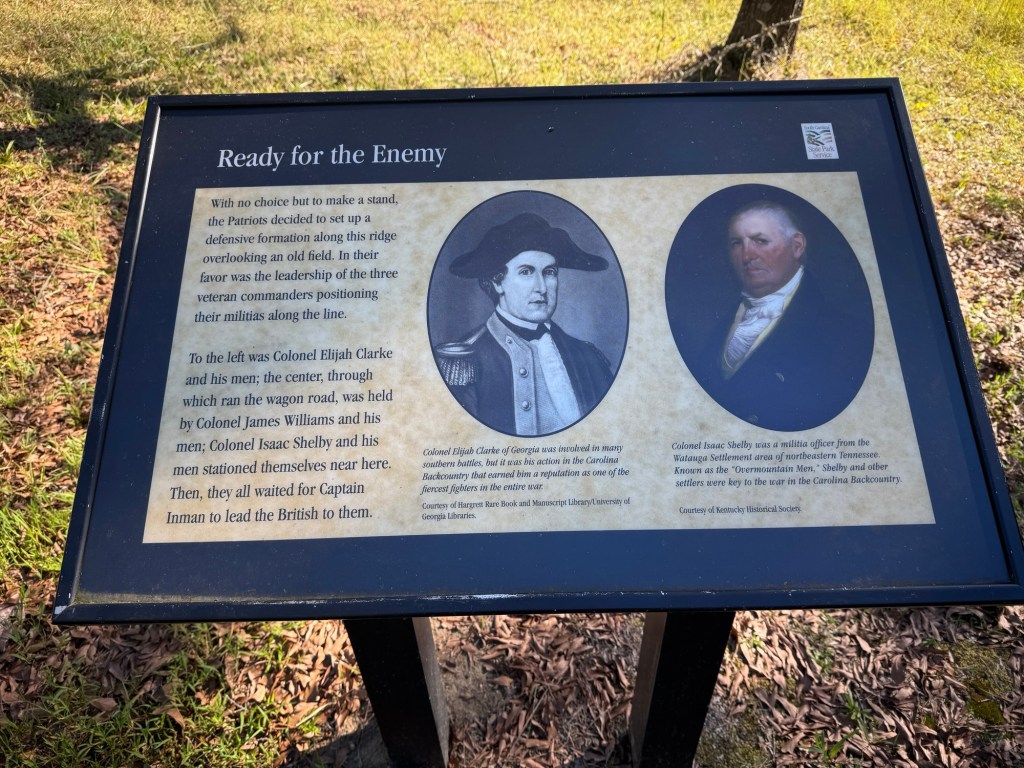
The final site we visited was the small battle at Musgrove Mill. Here Patriot forces outmaneuvered a larger Loyalist force and setup an ambush to even the odds. On the morning of August 19, 1780 mounted Patriots arrived near Musgrove Mill, the key to the local grain supply and the site of a Tory outpost. The Patriot force consisted of Georgians under Colonel Elijah Clarke, South Carolinians under Colonel James Williams and a group of “Over Mountain Men” from present-day Tennessee commanded by Colonel Isaac Shelby.

The Patriots revealed their presence when several of their scouts clashed with a Loyalist patrol. Two Rebels were wounded in the brief clash. Falling back, the Patriots encountered a friendly farmer who informed them that, contrary to their initial intelligence, the Tory garrison had been reinforced and now consisted of 500 men.

Outnumbered, and having lost the element of surprise, the Patriots formed up on a ridge top overlooking the road to Musgrove Mill and threw up a make-shift breastwork. A small detachment under the command of Captain Shadrach Inman was dispatched to lure the enemy into an ambush.

We walked the trail that followed the action ending in what was called an Indian hill where the Patriots drew in the Loyalists and waited to fire until they were within 30 yards to devastating effect. They could wait because of the elevation of the hill and the thick trees they were hiding behind.

Although the battle only lasted for an hour, the Loyalists suffered heavy casualties while the Patriots’ losses were fairly light. Before they could follow up on their success, however, the Patriot commanders learned of Horatio Gates’s defeat at Camden and decided to disperse their forces. The Battle of Musgrove Mill signaled that resistance to British rule had not been snuffed out.

That was it. We did a ton of stuff in just 4 days including playing 4 games, visiting a total of 6 battlefields, shooting 4 videos and enjoying our time with other wargamers. It was a great convention and my thanks go out to all those that made this possible including Mark Miklos, Gene Billingsley and GMT Games as well as the good folks of the Camden Visitor Center and the South Carolina Battlefield Preservation Trust.

-Grant

  •  

Gaming the American Revolution – Camden 250 Event Daily Debrief Series – Day 3

What a great time we have had at this convention! 2 fulls day of gaming in a fantastic historical setting here in Camden, South Carolina. But it hasn’t just been gaming though. Today started with a 3+ hour tour of the Camden battlefield and a demonstration at the Battle of Hobkirk’s Hill as well.

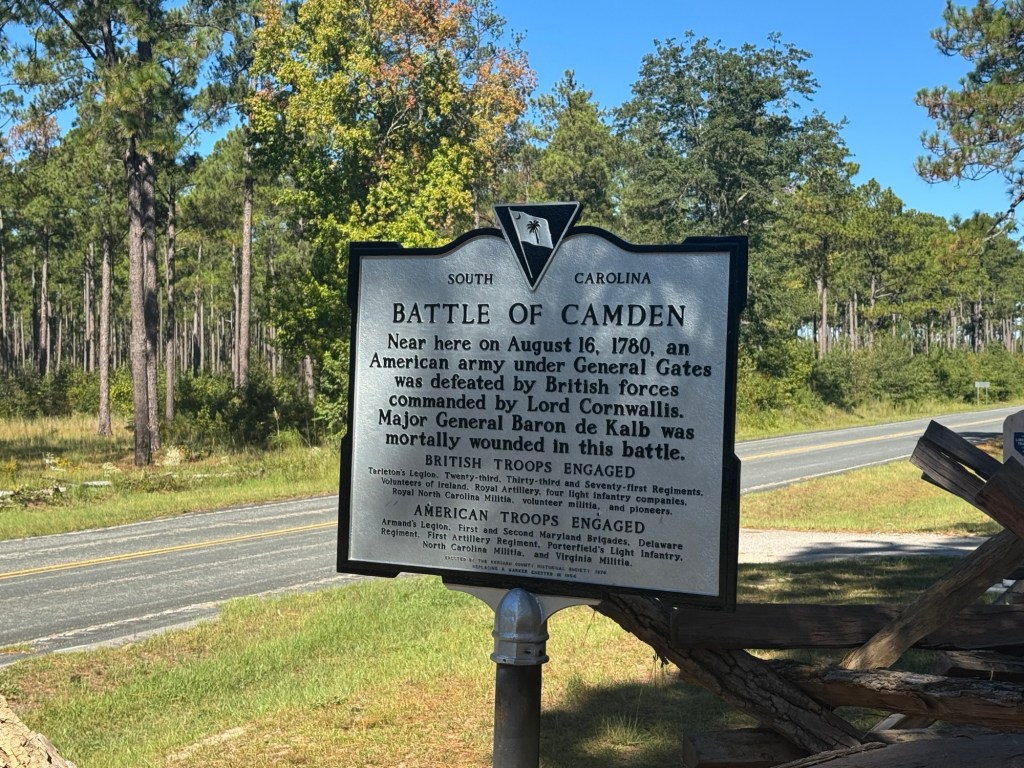
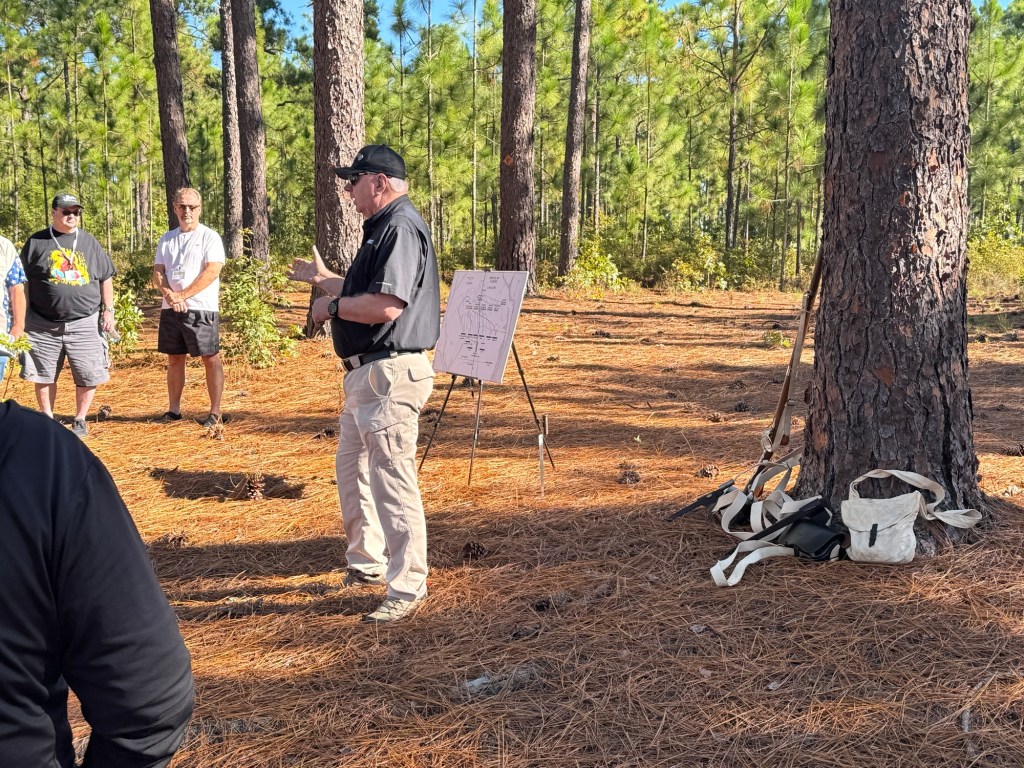
Rick Wise who is the Executive Director of the South Carolina Battlefield Preservation Trust gave us a 90 minute tour and discussion on the battle fought at Camden on August 16, 1780. The Patriots led by Horatio Gates and Baron DeKalb fielded about 4,000 muskets versus around 2,200 British soldiers led by Lord Charles Cornwallis and Lord Rowdon. The battle resulted in a major British victory with Cornwallis’ force suffering just over 300 casualties while Gates’ suffered almost 2,000.

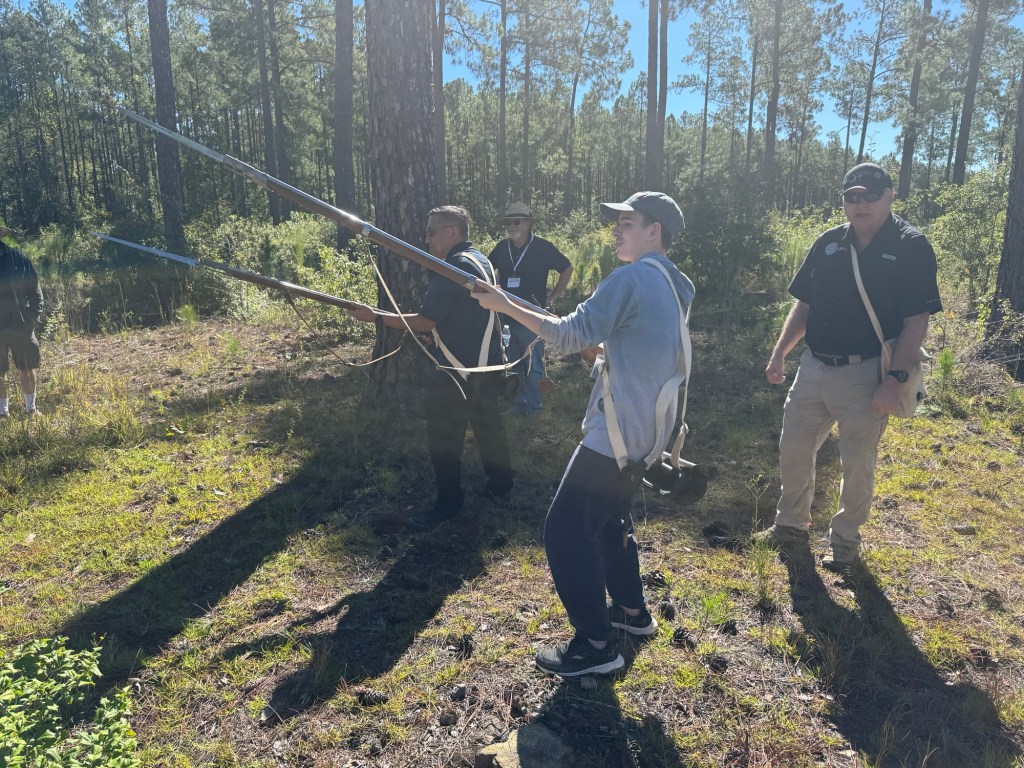
Rick had a British Brown Bess musket and a French Charleville musket used by the Patriots that we were able to see fitted with bayonets and wielded by 2 lucky volunteers. These would have been truly terrifying to stand against and when wielded by trained soldiers were deadly weapons.

He also shared with us that archaeologists discovered the skeletal remains of 14 soldiers at the battlefield alongside period artifacts like musket balls and buttons.

Forensic and artifact analysis identified 12 Continental soldiers from Maryland and Delaware, one North Carolina Loyalist militia member (who was also Native American), and one British soldier from the 71st Regiment of Foot (Fraser’s Highlanders). They also were able to reveal that some of the Continental soldiers were teenagers, including two young men aged 16 to 19. It was truly sobering to see their unmarked grave and to find out that several were so young. Honor and bravery as well as the desire for freedom knows no age and these soldiers truly gave their lives for a cause they believed in.

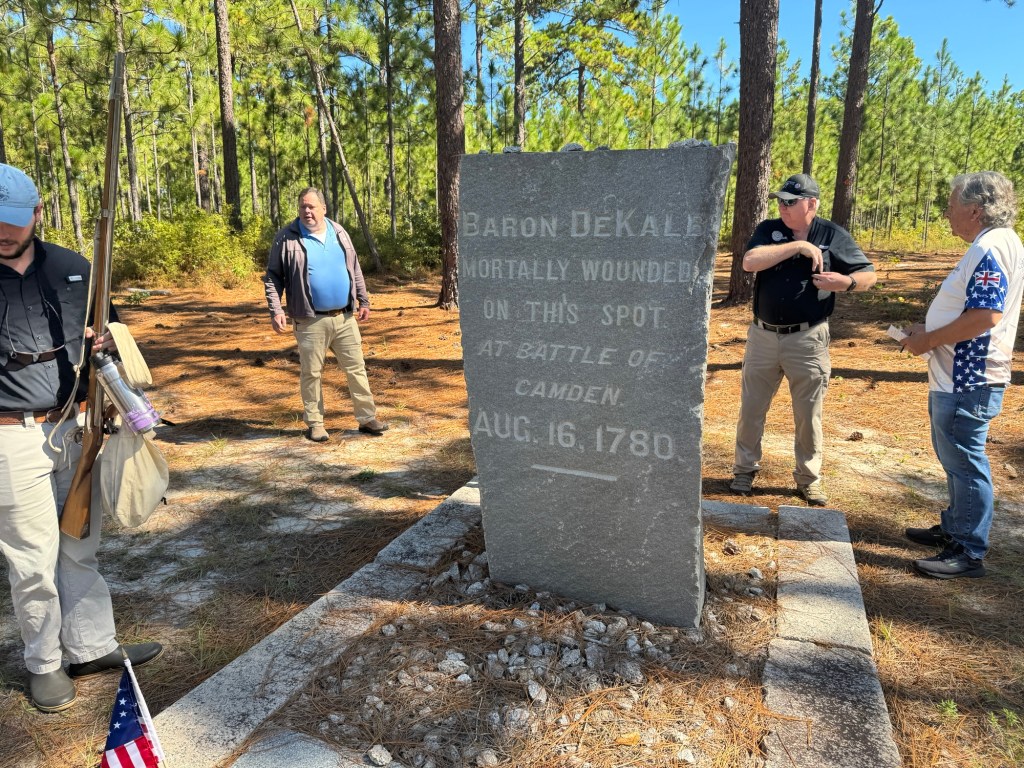
There also was a nice monument to the sacrifice of de Kalb who commanded the American right wing during the engagement leading the premier units of the Delawareans and Marylanders. When the left and center of the American line disintegrated, de Kalb’s force had to beat a retreat before becoming completely surrounded. During this juncture of the fighting, the Baron’s horse was shot out from under him and he was thrown to the ground. Before he could gain his feet, he was hit with three musket balls and bayoneted multiple times by approaching British soldiers. The wounds would prove to be mortal.

Captured shortly thereafter by the British, the wounded general was picked up by General Lord Charles Cornwallis on his way to the rear. The British general, upon seeing de Kalb said the following: “I am sorry, sir, to see you, not sorry that you are vanquished, but sorry to see you so badly wounded.” Showing respect to the Baron though, Cornwallis reportedly, oversaw the dressing of the German’s wounds by his own surgeons. de Kalb would die 3 days later of his wounds.

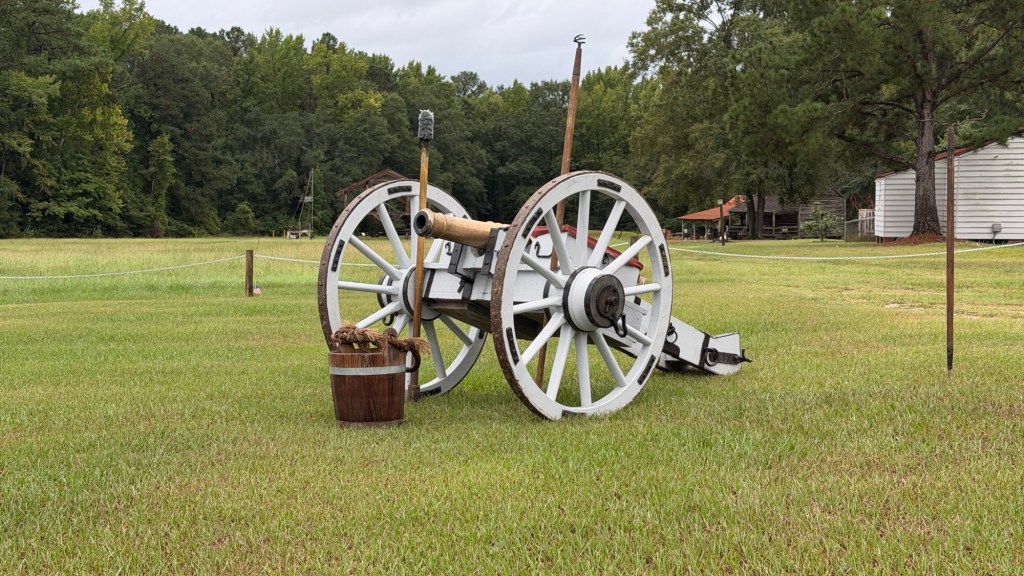
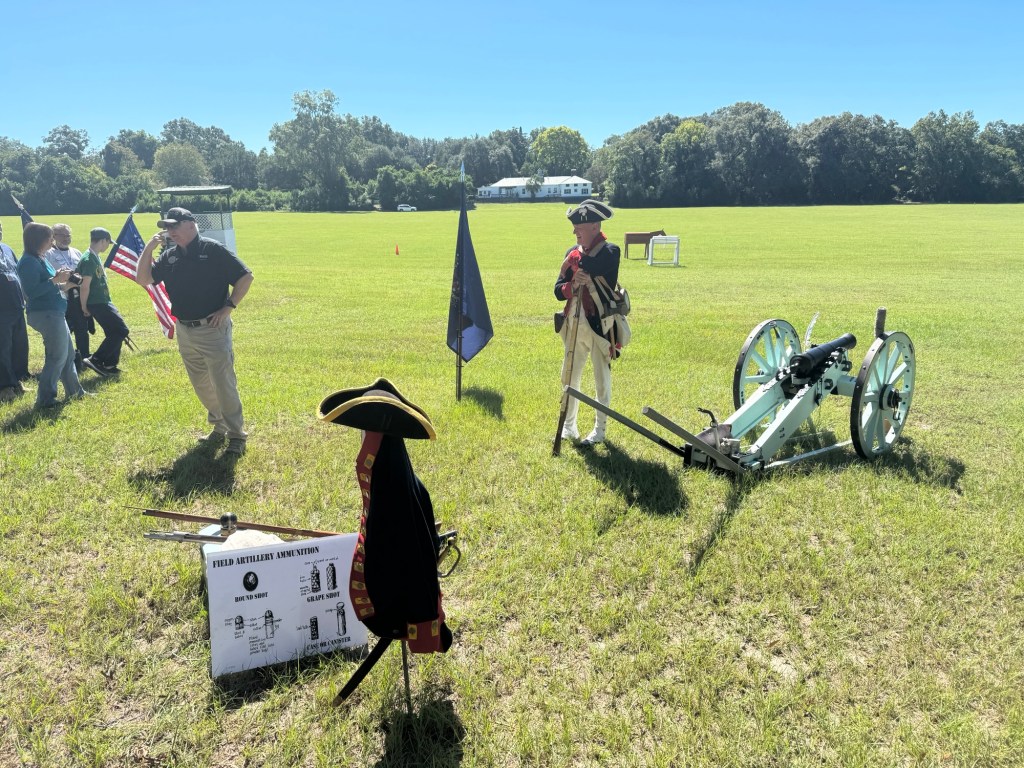
We then made our way to the site of the Battle of Hobkirk’s Hill and were instructed by a US Army artillery officer on the use of Continental cannon. I was lucky to be chosen to act as the rammer or spongeman and very much enjoyed the activity where we trained to load and fire the cannon in under 15 seconds.

Here is a video of the firing of a musket but you will have to wait for the cannon video to come out on the YouTube Channel.

Such a great experience and I was very glad we took the time to participate in the tour. We then returned to the gaming area and setup BoAR Newtown from GMT Games.

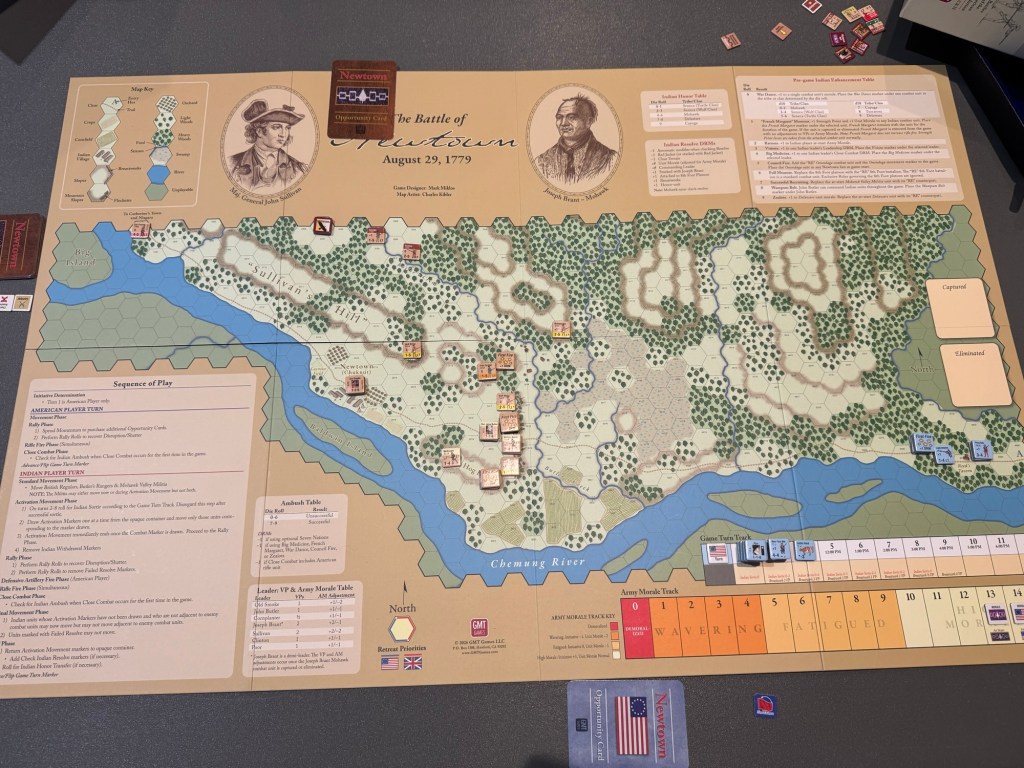
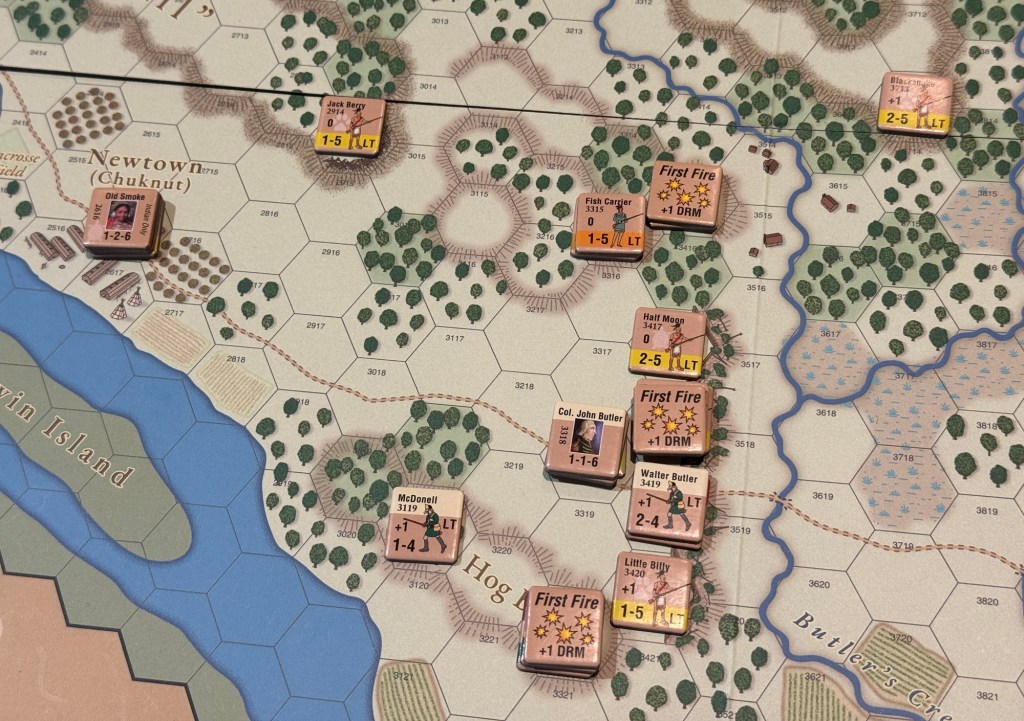
I have wanted to play this for a while now as it is a unique and specialized entry to the BoAR Series. Newtown feels quite different from standard BoAR titles mainly because it replaces traditional line-infantry tactics with combat rules for the Indians that are very different.

The Movement and Activation System simulates the decentralized, individual nature of Indian warfare, where small war parties act on their own initiative rather than rigid command structures which is represented with a chit pull mechanic. In the chit pull cup are each of the Indian formations along with a single combat chit. When formations are pulled they can move and if the combat chit is pulled only those formations that have already moved and are adjacent to Patriot units may then attack. Formations pulled after this bit can move but cannot fight. This was very chaotic and created some task challenges for Alexander.

The Indians are lined up behind fortifications at the start of the game and will await the approaching Patriot troops from the protection of these improvements.

The game also includes Opportunity cards that adds a layer of hand management and tactical unpredictability as the cards act as one-off events or provide bonuses. The game also includes custom rules for Indian honor, ferocity, evasion and their specific resolve when facing artillery fire and have a chance to break. Just a very interesting game and I am glad that we played it.

To end the evening we got the chance to sit down with designer Bruno Sinigaglio and play his new game called Small BoAR The Battle of Cowpens.

The aim of the Small BoAR design concept is to include small and critical battles that otherwise do not fit the scale of the Battles of the American Revolution (BoAR) system designed by Mark Miklos. This new system was designed by Bruno Sinigaglio working closely with Mark Miklos to preserve the continuity and popularity of the original system. It feels very familiar to the original but takes the scale in a new direction. From 25 yard hexes vs 200 yards in BoAR, the scale change gives players the chance to try new tactics with rifle and musket fire as these are now up to 8 hexes range for rifles and 3 hexes for muskets while artillery is now up to 24 hexes.

The game also highlights the importance of cavalry and their tactics as their proper use on the battlefield can lead to devastating results.

We had a great time with this one and while we only played 5 full turns there is more to explore and we can’t wait to get our hands on a copy. We have been told it should be releasing in mid to late October.

That was it for today and we are now finished with the gaming portion of the trip. Tomorrow we are going to leave early and travel to 3 battlefields in the area on our way to Columbia and the airport in Buford’s Massacre in the Waxhaws, King’s Mountain and Cowpens.

-Grant
  •  

Gaming the American Revolution – Camden 250 Event Daily Debrief Series – Day 2

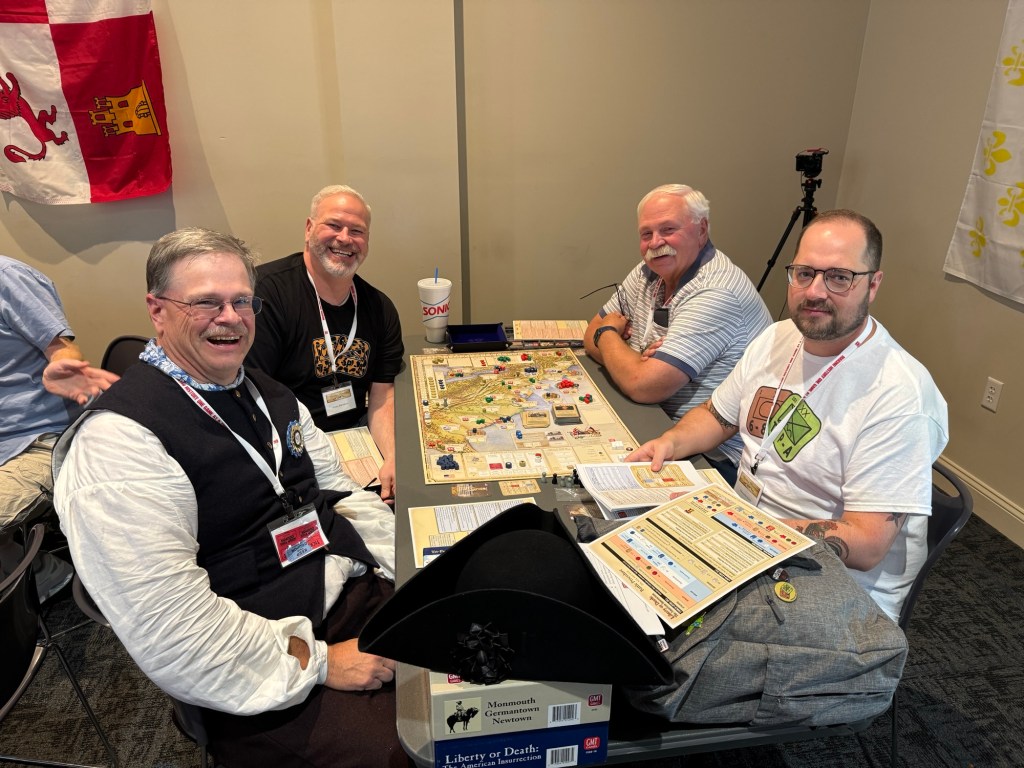
Day 2 dawned early with a morning gathering at the Camden Revolutionary War Visitor Center to receive instruction on the days events and schedule. As you can see in the picture below, there were about 50 gamers who showed up early to get a good start on the gaming.

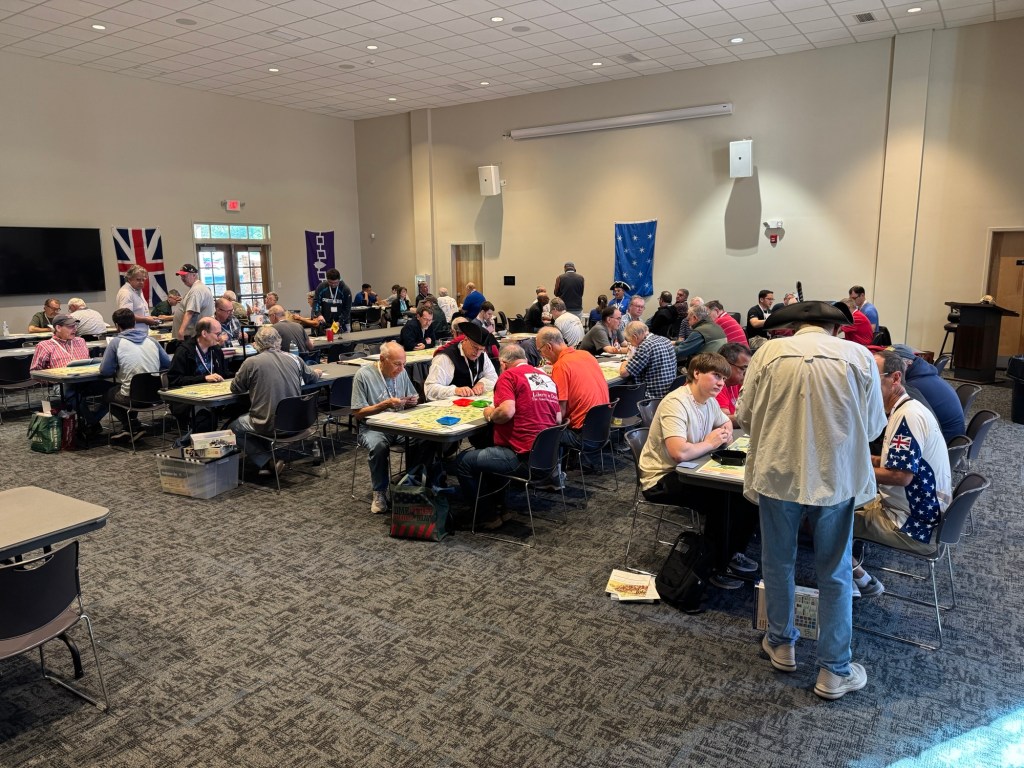
We entered the gaming hall and I was very surprised as it was very nice and cozy and felt roomy with lots of tables setup to choose from. We chose a corner in the back and began setting up to play Battles of the American Revolution Oriskany from the American Revolution Tri-Pack #2 from GMT Games.

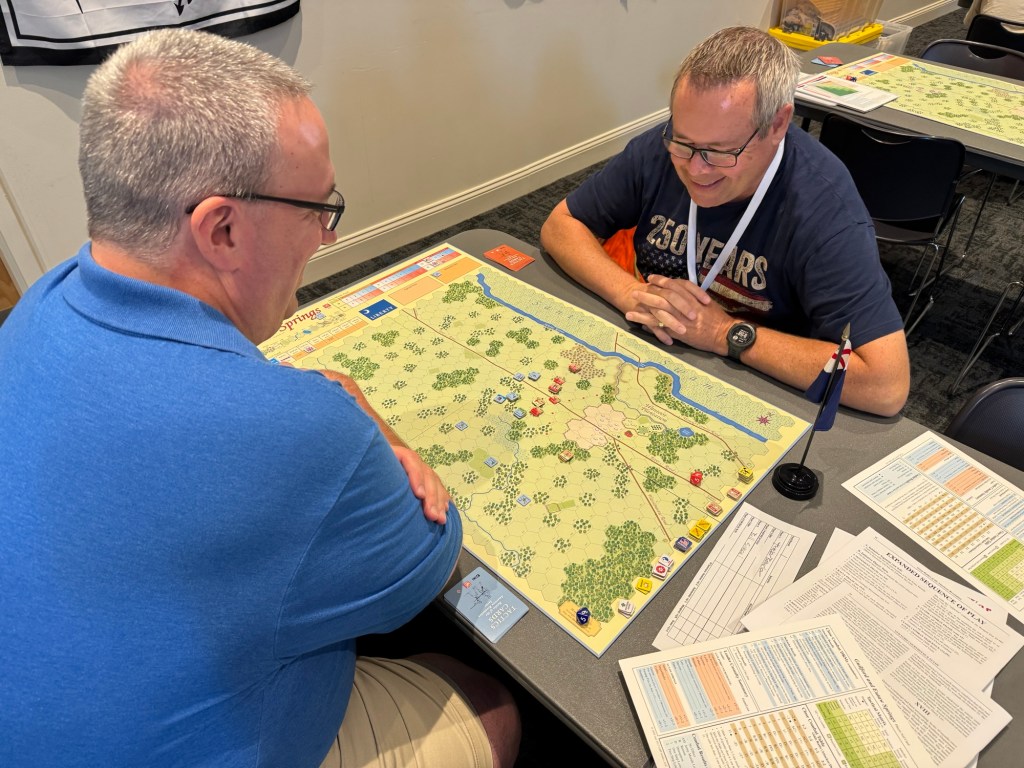
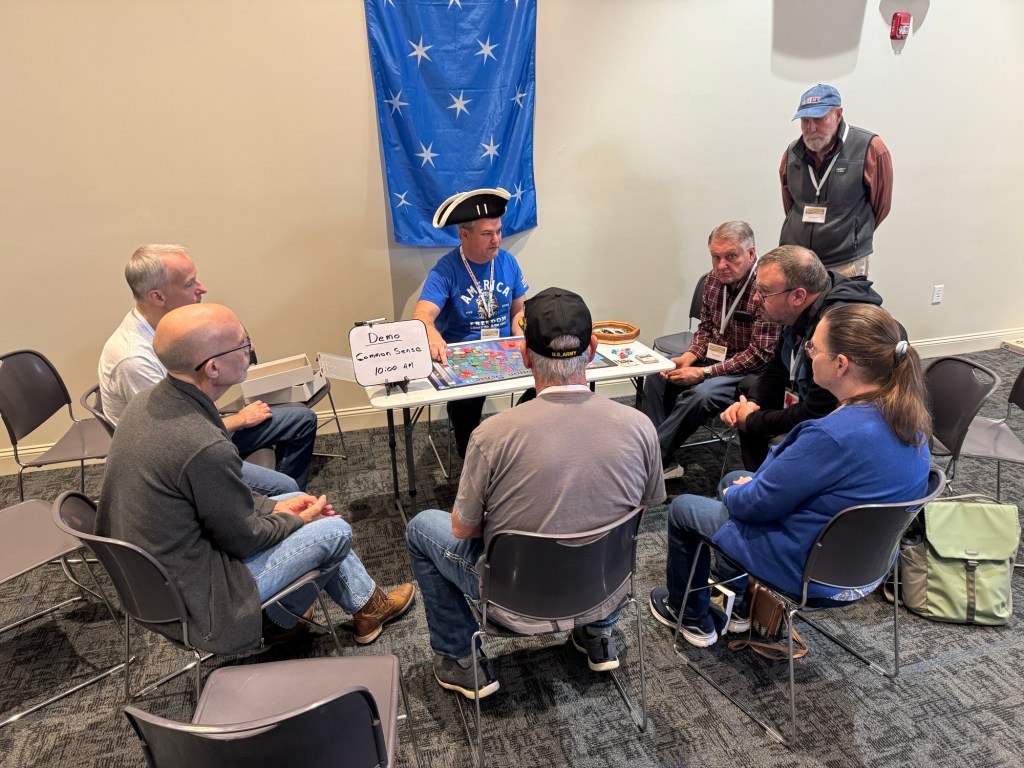
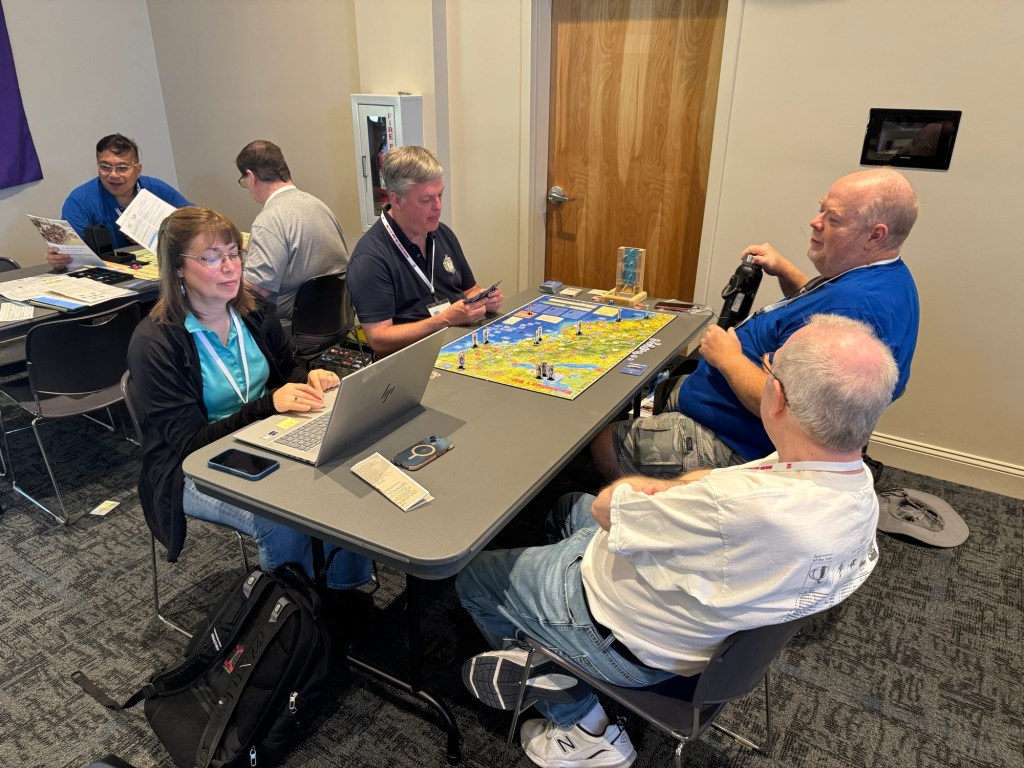
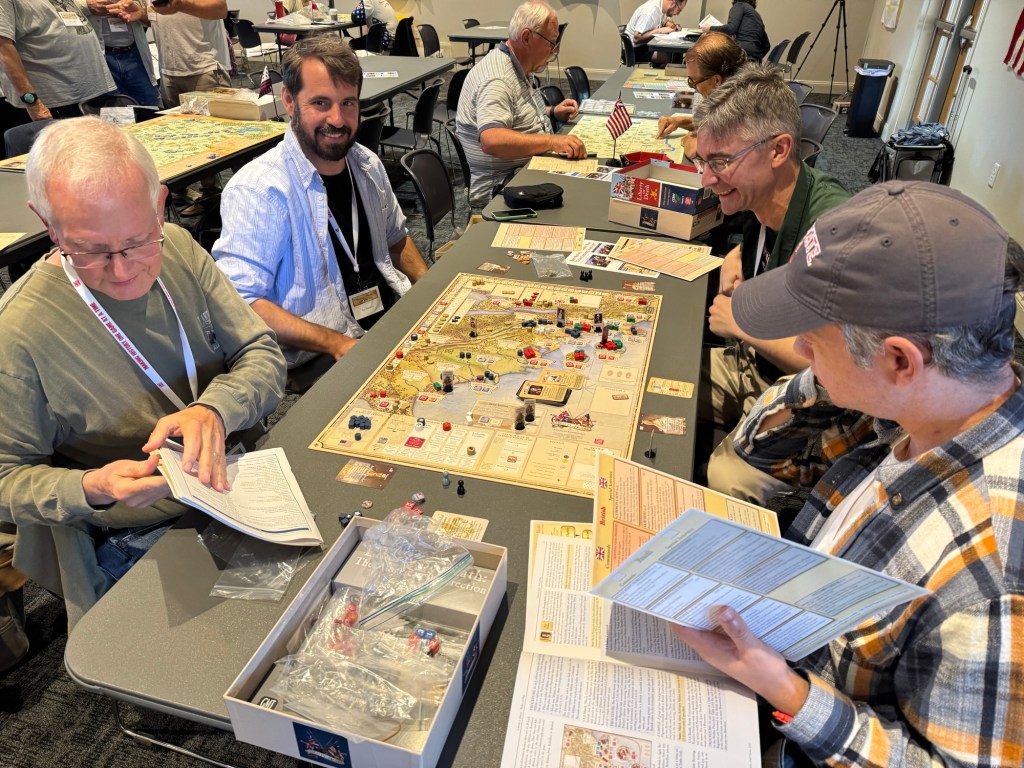
There were a lot of different games being played including BoAR, Washington’s War, Liberty or Death and Common Sense as well as a BoAR Eutaw Springs tournament going on.

Bill Simoni and designer Trevor Bender playing in the Eutaw Springs tournament.
A demo of the upcoming Common Sense by designer Sam London.
Washington’s War.
Liberty or Death.

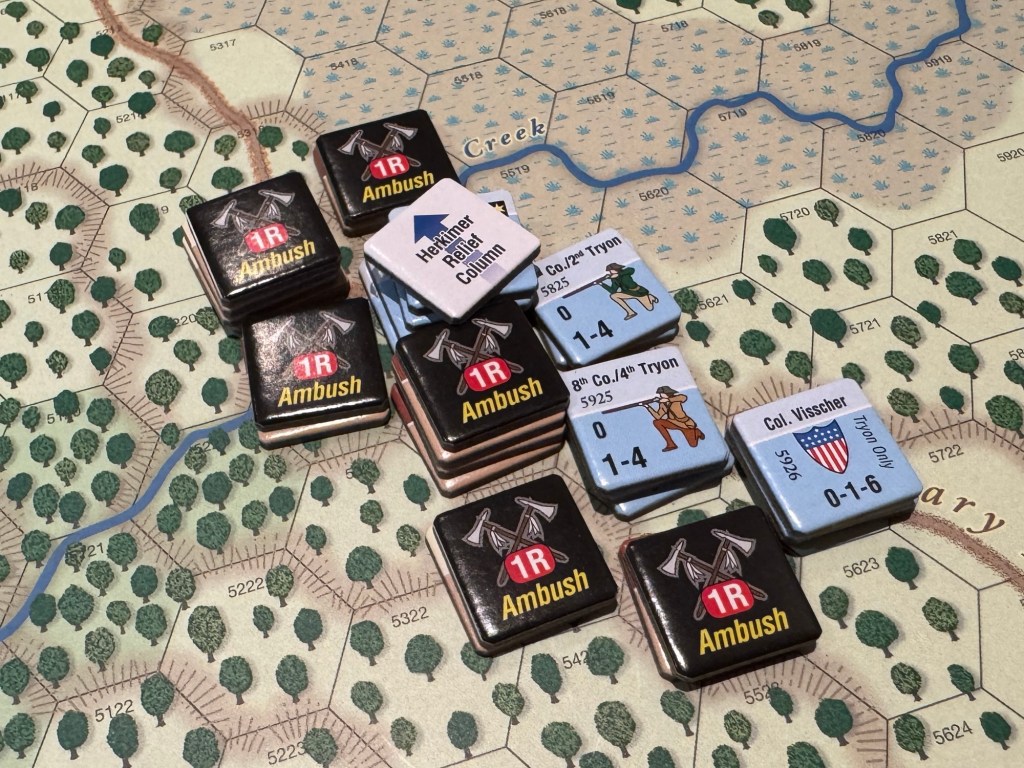
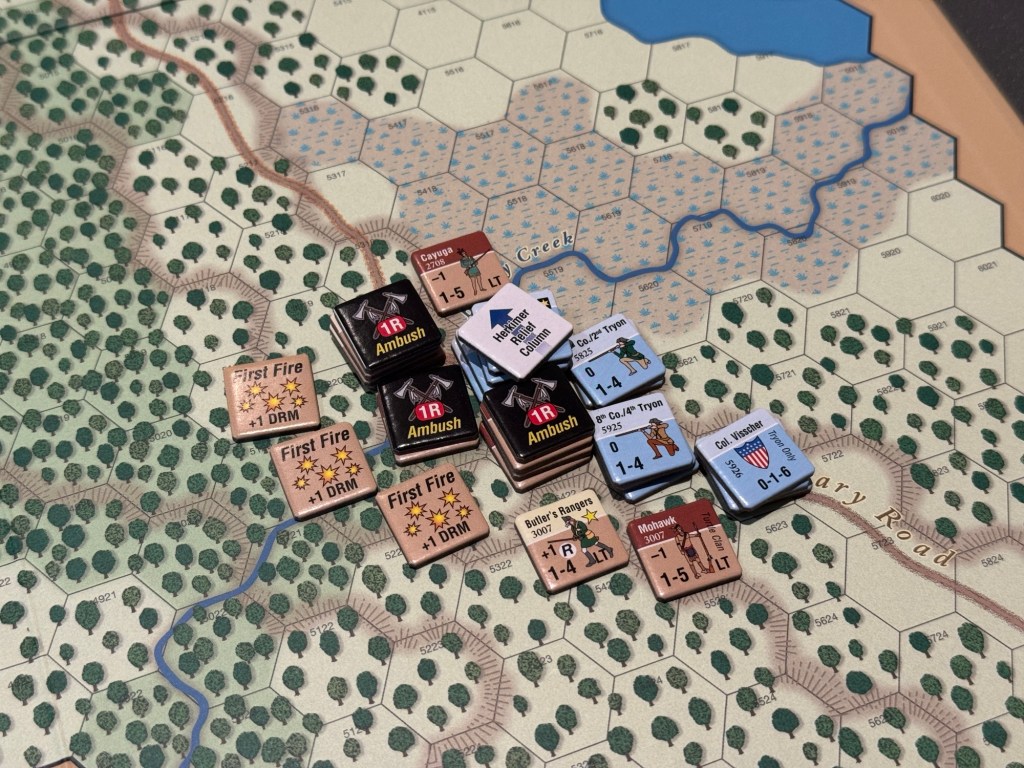
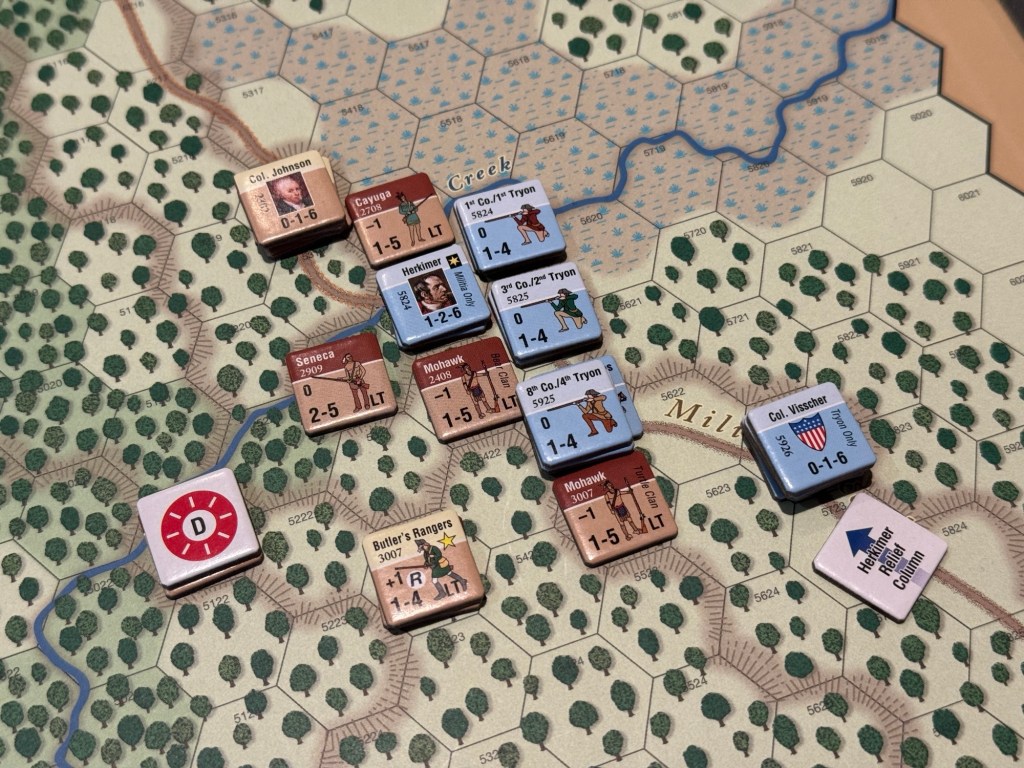
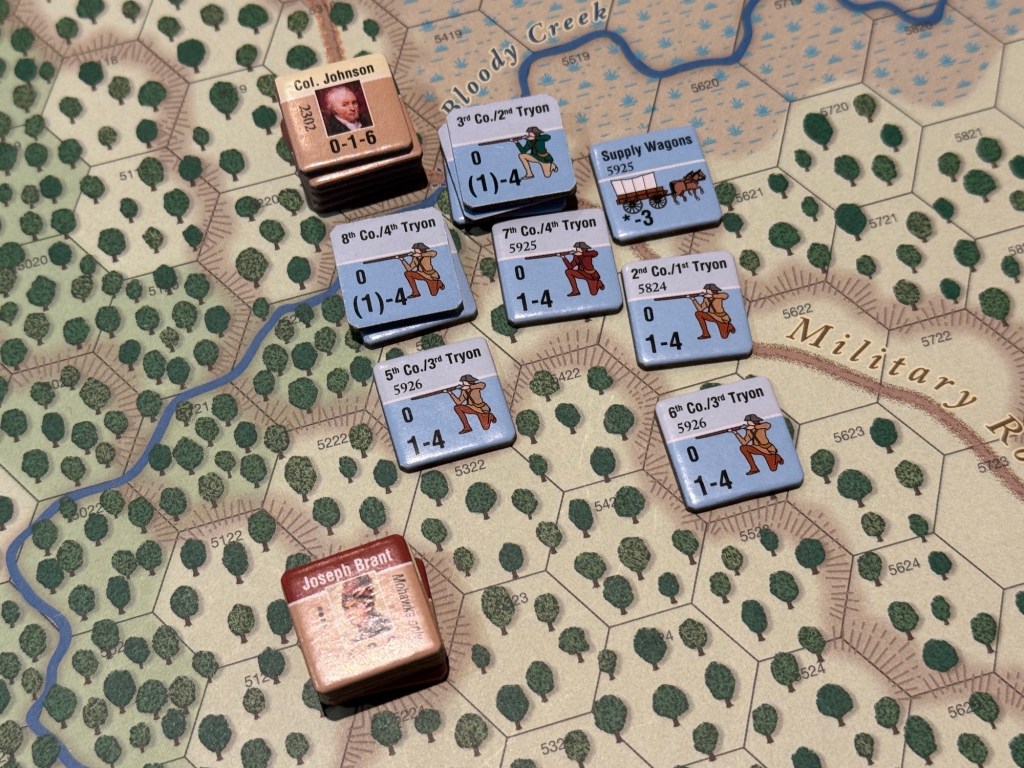
We decided to play the historical scenario for Oriskany which is a 6-turn game focusing on the August 6, 1777 ambush as General Nicholas Herkimer’s relief column is trying to make their way up the Military Road to Fort Stanwix.

The game starts with the British player having to set up their units in an ambush that has to be connecting contiguous units adjacent to the Patriots and they get an Ambush marker placed on them which will grant a 1 column shift to their attack if they can successfully make the ambush roll.

Alexander didn’t roll well so several of his units were detected and lost their element of surprise. You can see that 3 of his units lost their Ambush markers and this would prove to be a boon to the Patriots.

We spent the next 3-4 turns beating ourselves as our planned attacks were not working well and we basically rolled poorly and did damage to ourselves. Very odd but it was fun. But the best part of the system is the Tactics cards that create a bluff type of mind game.

The Tactics cards options are split into tiers with the 4 basic tactics always eligible to be chosen whereas advanced maneuvers require a commanding leader present and sometimes specific adjacent vacant hexes to execute. Common tactical choices include attacking in echelon, turning flanks, frontal assaults or attempting to withdraw. I very much enjoy this aspect because it adds a psychological tension that castes players to anticipate and bluff. Just a really neat addition to the game.

In the end, Alexander’s British and Indian allies ended up killing 2 of my leaders and also reduced 3 of my units and I was unable to advance the relief column to the point needed. He won the scenario with 4 VP to my zero. We had fun and I am glad we had a chance to play this one.

A leaderless rabble was defeated.

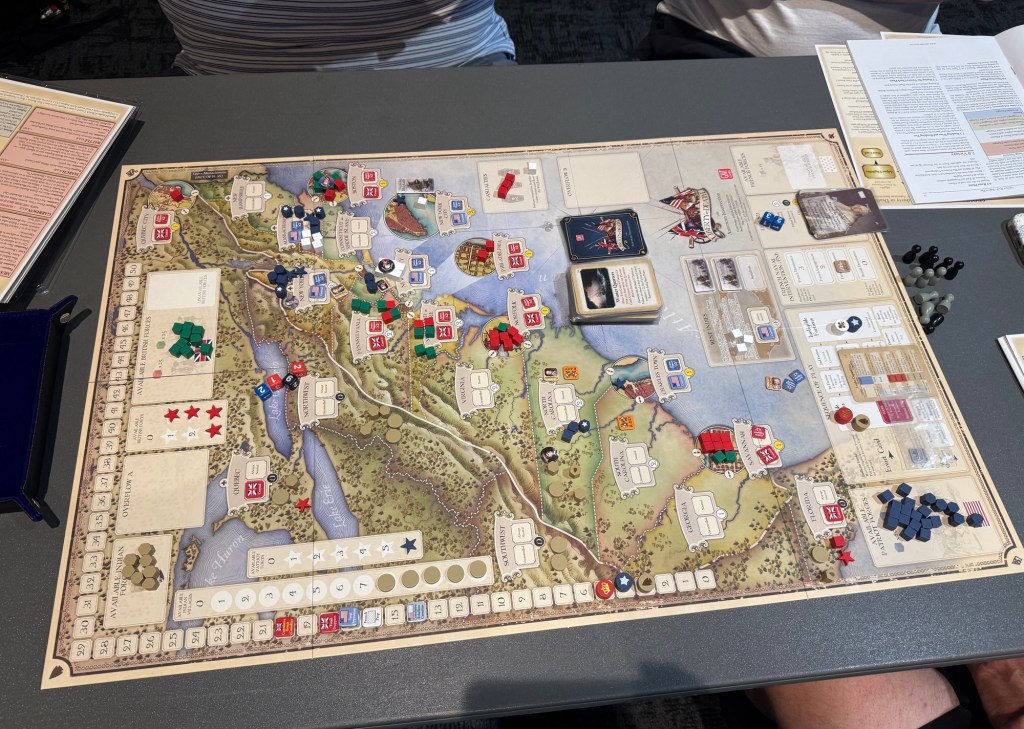
We then got in a game of Liberty or Death which is my 2nd favorite volume in the COIN Series.

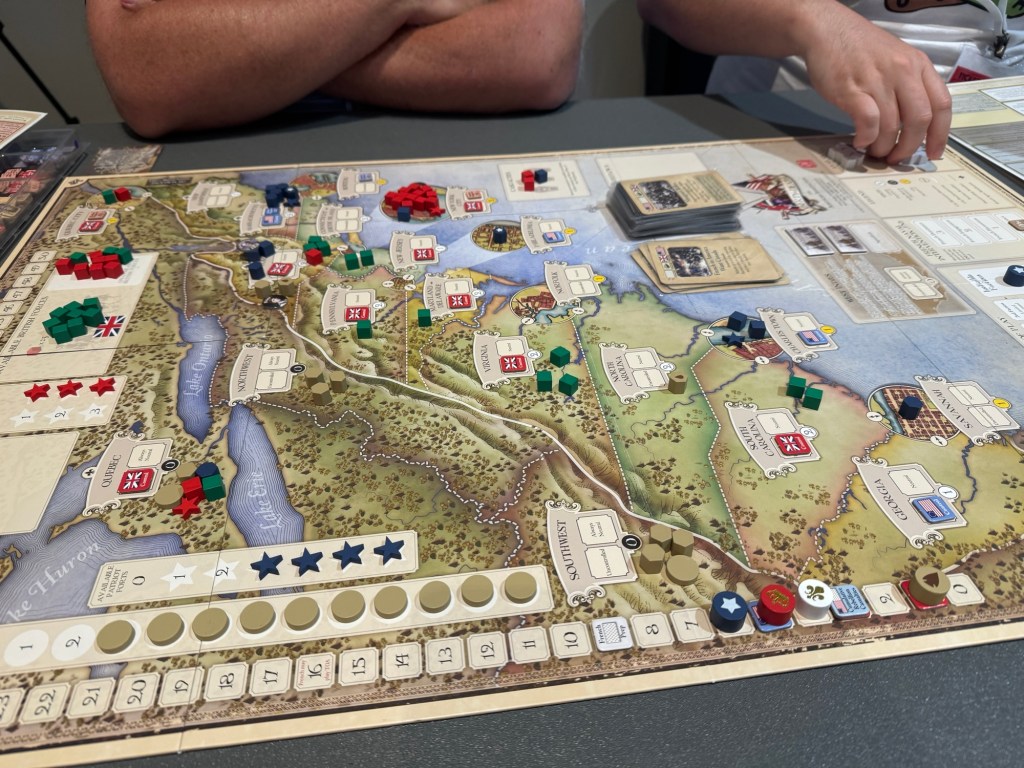
I played as the Indians and Alexander took the French. I worked on building Villages and then started Plundering the Patriots of their resources. Meanwhile the French did a great job of getting into the war early by the end of 1777 and then worked well with the Patriots to attack the British in New York and New York City driving them out of both. This put a great deal of pressure on the Indians as I had to continually Raid into these areas trying to keep their level of Opposition low.

In the end, Alexander’s French earned victory at the end of 1779 (5th deck) with the finals scores being French -5, Indians (Grant) -10, Patriots (Shane) -10 and British (Mark) -15.

I saw something I have not seen before as my Indians got skipped multiple times on my turns due to Brilliant Stroke cards, Winter Quarters and some inopportune passing. Just weird that I lost 3-4 turns and also got into a cycle of only getting Limited Commands due to the eligibility on cards.

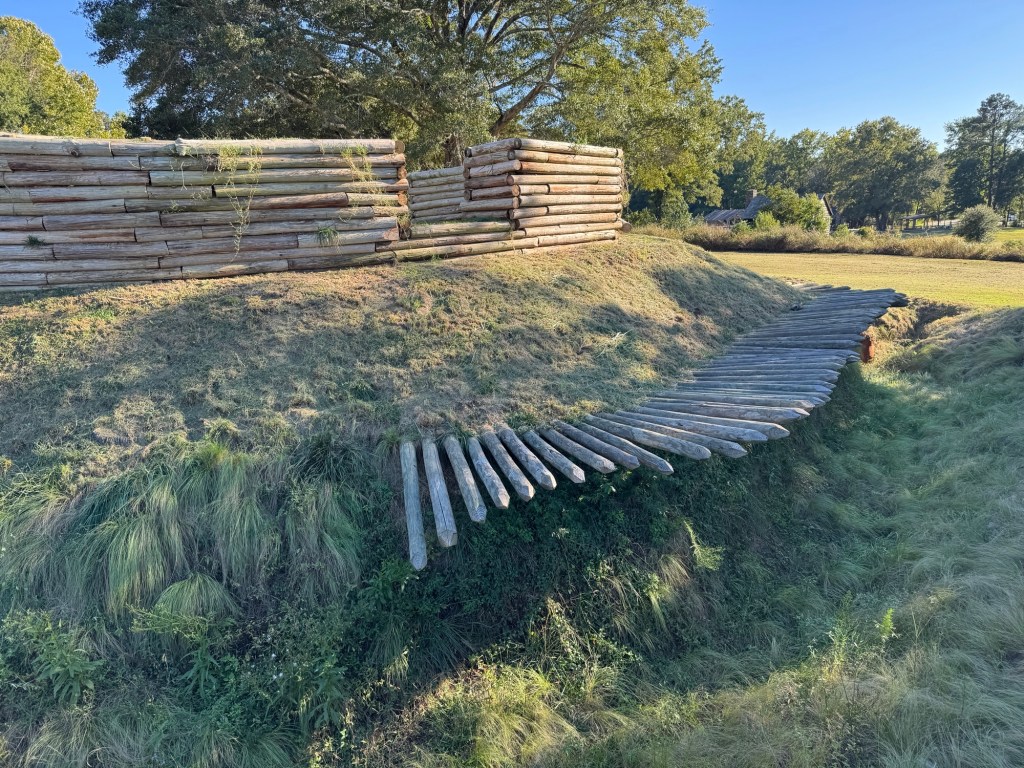
We next took a few minutes to walk around the grounds at the Camden site. My favorite part was the redoubt.

The British redoubt.

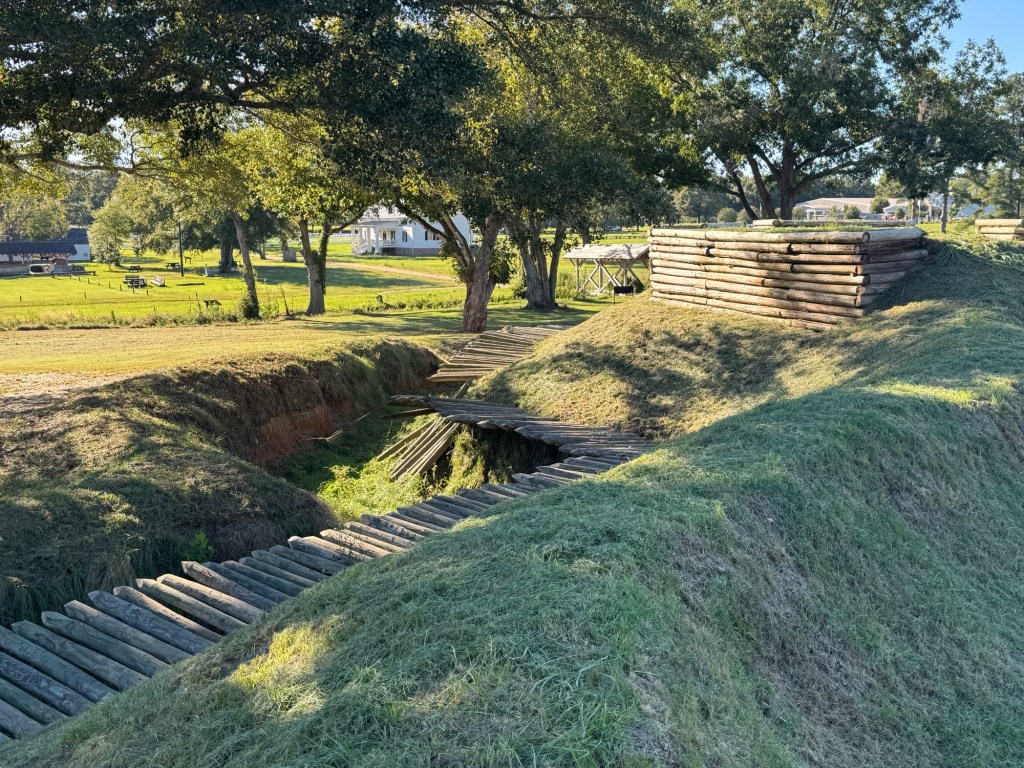
I was very interested in the ditch in front of the redoubt wall and its formidable defense as sharpened wooden stakes called fraises are placed horizontally projecting straight out from the earthen parapet. Their primary purpose was to prevent attacking infantry from climbing up the exterior wall.

We had a long discussion about how effective these would have been as infantry would have to run this gauntlet to get at the defenders all the while taking rifle fire and cannon fire. Just diabolical really.

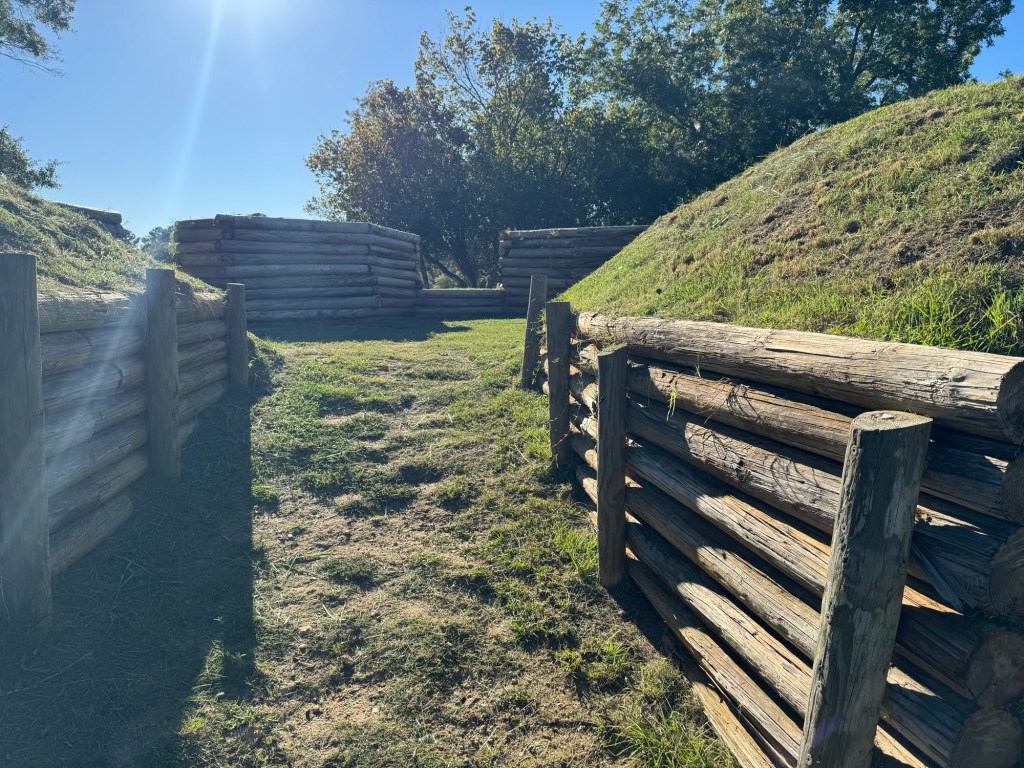
Once inside there are several protected covered areas for storage of arms and supplies as well as to offer some additional protection to defenders.

Just a really cool experience being able to get inside this fortification and experience the history.

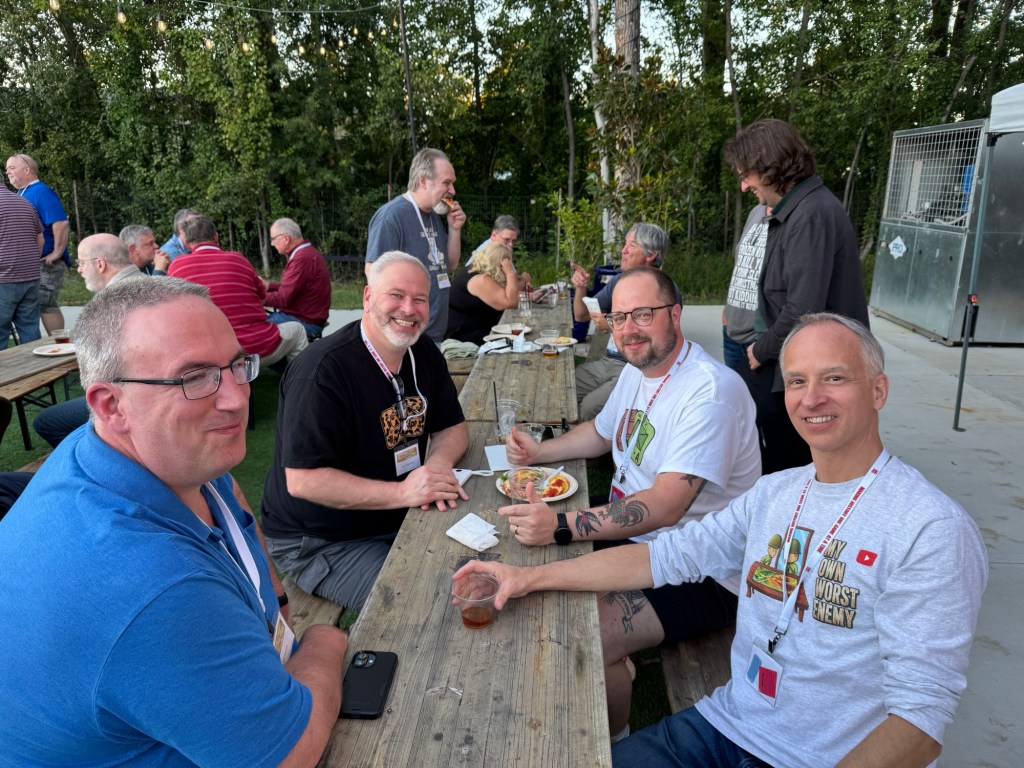
We ended the night with a group dinner at a local brewery. We sat with our friend Bill Simoni and Mike from My Own Worst Enemy.

Tomorrow we are taking part in a 3+ hour guided tour of the Camden battlefield as well as nearby Hobkirk’s Hill. We are then going to play a few games including BoAR Newtown and possibly the new Small BoAR Cowpens.

-Grant
  •  

Gaming the American Revolution – Camden 250 Event Daily Debrief Series – Day 1

What a long day! Made up mostly of travel but I’m exhausted. We left my house this morning at 8:30am via an Uber to the airport where we made it through security and to our gate for a 10:15am flight from Indianapolis to Chicago where we transferred over with a 2-hour layover to a 1:30pm flight to Columbia, South Carolina.

We landed in Columbia at 4:30pm, grabbed our luggage and picked up our rental car to make the 35 minute drive to Camden, South Carolina on I-20.

We checked into the hotel and made our way over to the Camden Revolutionary War Visitor Center for the opening social event where we gathered with about 60 fellow wargamers who have all made the effort to travel here to play games over their weekend and also to tour the historic sites in and around Camden. If you didn’t know, Camden was pivotal to the story of the Southern Campaign during the American Revolutionary War with two battles fought within 6 miles of each other, bracketing the British occupation of the town. The Battle of Camden in 1780 was a decisive British victory that crushed the American Southern Army and brought disgrace to American General Horatio Gates. The Battle of Hobkirk’s Hill in 1781 was a British tactical victory that proved to be a strategic defeat.

Lord Charles Cornwallis’ Headquarters in Camden during the British occupation.
The British redoubt at Camden that has been restored.

We were able to catch up with lots of viewers of our videos and friends we have known for a long time as well as several designers, including Sam London and Justin Fassino. I also got a chance to chat with Gene Billingsley from GMT Games for about 30 minutes on a number of topics including gaming, publishing games, life and the event. I want to say that I took this opportunity to beg Gene to see about making a Deluxe Edition of Here I Stand as they have done with other games such as Combat Commander and For the People with new updated art, components and boards. He was not spilling any beans on the subject and wouldn’t give me an indication if it was either in the works or planned fur the future. Bummer but I made my pitch.

We then had a fantastic introduction on the event and the commemoration of America’s 250th Anniversary from Battles of the American Revolution Series designer Mark Miklos and Gene Billingsley. There were a lot of very touching and patriotic words spoken by these 2 and I truly felt great pride in our nation and the experiment that created it and has kept us strong these past 250 years.

We then were treated to a live artillery firing by local volunteers of a period 1-pounder and it was quite impressive. When it was fired, it was past sunset and quite dark and the explosion was quite impressive and very loud.

Here are 2 videos we took of the firing with one being in real speed and the other in slow motion.

That was our evening and I’m very excited for tomorrow as there is an opening ceremony at 8:30am followed by open gaming. Alexander and I will be playing Oriskany, which is a bonus game included in Newtown from the American Revolution Tri-Pack #2, followed by a 4-player game of Liberty or Death. The evening will conclude with a group dinner.

-Grant
  •  

Gaming the American Revolution – Camden 250 Event Daily Debrief Series

If you have been following our blog for a while now, you know of my affinity for the history of the American Revolutionary War. I am a proud American, believe deeply in the principles of our land and the Constitution that governs it and am grateful to God every single day that our country was successful in our fight for its freedom in order to create a better society and to assist all peoples with protecting their “unalienable rights” endowed by a Creator, which include “Life, Liberty and the pursuit of Happiness”. I enjoy playing wargames on the American Revolutionary War and very much enjoy learning about the history and its key battles. There are many out there that feel the same as I do and they have designed lots of these type of games and with 2026 being our 250th Anniversary of the Declaration of Independence, there are events that are planned to celebrate it.

One of which is an event put on by GMT Games and Mark Miklos called Gaming the American Revolution – Camden 250 being held in Camden, South Carolina September 24-27th. The event includes 3 days of gaming centered on American Revolutionary Wargames produced and published by GMT Games but also includes several events, gatherings and historic tours of the Camden Battlefield.

We are attending and at the time of the posting of this are already on a flight on our way to Columbia, South Carolina via a short stop in Chicago, Illinois. We are very much looking forward to the event and have plans to play at least 2 games from the Battles of the American Revolution Tri-Pack II including Newtown and Oriskany, as well as any other opportunity that presents itself. We also are going to participate in the various tours of the Camden Revolutionary War Visitor Center and nearby battlefield and also plan to drive to a few others sites on our way home to the airport namely Waxhaws and Cowpens.

At the end of each day, I will be putting together a short summary of what we did that day at the convention. I would like to keep this to just a few paragraphs with several pictures to give you an idea of the games we played that day, people we talked with and other activities we participated in. We will still work on doing multiple videos as well that will be released on the YouTube Channel over the next few months but this written coverage will supplement the videos. This summary will most likely not be posted until near midnight EST each night so you might be checking it out the next morning which is fine.

Finally, if you are at the event please feel free to find us and say hello. I believe that we are very friendly and accessible and love to make connections with our fans and followers. In fact, we have TPA buttons and stickers to give away so just ask. We also would like to take a picture with you so we can document it in our writings.

Please check back each day for a summary of the days exploits. Thanks for following along.

Because this is a wargaming blog, I am going to share below some of our content we have made regarding AmRev War games for your review:

Gaming the American Revolution – Ranking the Games We Have Played – 2025 Edition

Interview with Mark Miklos Designer of Battles of the American Revolution Volume XI: The Battle of Green Spring: Prelude to Yorktown, July 6, 1781 from GMT Games

Interview with Mark Miklos Designer of Battles of the American Revolution Vol. 10 Battle of White Plains from GMT Games

The Beautiful Boards of Wargaming! – Battles of the American Revolution Volume II: Brandywine from GMT Games

The Beautiful Boards of Wargaming! – Liberty or Death: The American Insurrection from GMT Games

My Favorite Wargame Cards – A Look at Individual Cards from My Favorite Games – Card #59: Sullivan Expedition vs. Iroquois and Tories from Liberty or Death: The American Insurrection from GMT Games

My Favorite Wargame Cards – A Look at Individual Cards from My Favorite Games – Card #53: The World Turned Upside Down from Liberty or Death: The American Insurrection from GMT Games

My Favorite Wargame Cards – A Look at Individual Cards from My Favorite Games – Card #48: George Rogers Clark Leads a Western Offensive from Washington’s War from GMT Games

My Favorite Wargame Cards – A Look at Individual Cards from My Favorite Games – Card #33: Benedict Arnold from Liberty or Death: The American Insurrection from GMT Games

My Favorite Wargame Cards – A Look at Individual Cards from My Favorite Games – Card #22: The Gamecock Thomas Sumter from Liberty or Death: The American Insurrection from GMT Games

My Favorite Wargame Cards – A Look at Individual Cards from My Favorite Games – Card #13: Common Sense from Liberty or Death: The American Insurrection from GMT Games

COIN Workshop: Liberty or Death: The American Insurrection from GMT Games – Indian Faction

Turning the [Wargaming] World Upside Down – A Review of Liberty or Death: The American Insurrection by GMT Games

Best 3 Games with…The American Revolution!

“The Revolution was effected before the War commenced. The Revolution was in the minds and hearts of the people…” – A Review of Washington’s War from GMT Games

Guest Blog: The Battles of the American Revolution (BoAR) Tournament at the 2026 World Boardgaming Championships – After Action Report by Mark Miklos

Interview with Sam London Designer of Common Sense: An American Revolution, 1775-1783 from GMT Games

Interview with Javier Romero Designer of Battle of Pensacola 1781 in Strategy & Tactics Magazine #358 from Decision Games

My Favorite Wargame Cards – A Look at Individual Cards from My Favorite Games – Card #81: Baron von Steuben Trains the Continental Army from Washington’s War from GMT Games

Video Review for Battles of the American Revolution Tri-Pack II: Germantown:

Video Review for Battles of the American Revolution: Savannah with Mark Miklos:

Video Interview with Sam London Designer of Common Sense (as of yet unreleased):

Video Interview with Bruno Sinigaglio and Dave Stiffler Designers of Small BoaR Series: Battle of Cowpens:

-Grant
  •  

UK Games Expo creators prep for giant show’s future without them by bringing in AireCon co-founder Mark Cooke

After 20 years growing the UK Games Expo into one of the largest tabletop gaming conventions in the world, founders Richard Denning and Tony Hyams are preparing for their eventual exit by bringing in AireCon co-founder Mark Cooke as operations director.

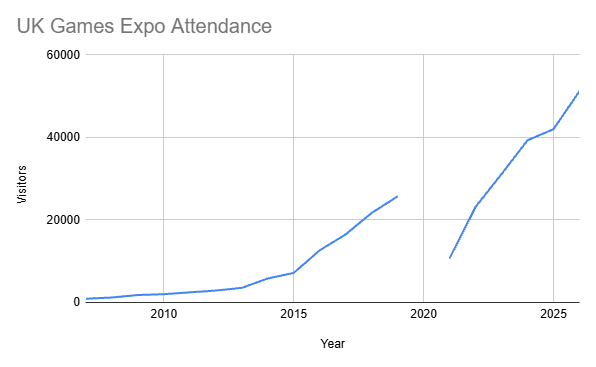
Cooke joins following another record year for UKGE, which has seen its annual unique attendance surge almost 65% since 2023 to reach more than 51,000.

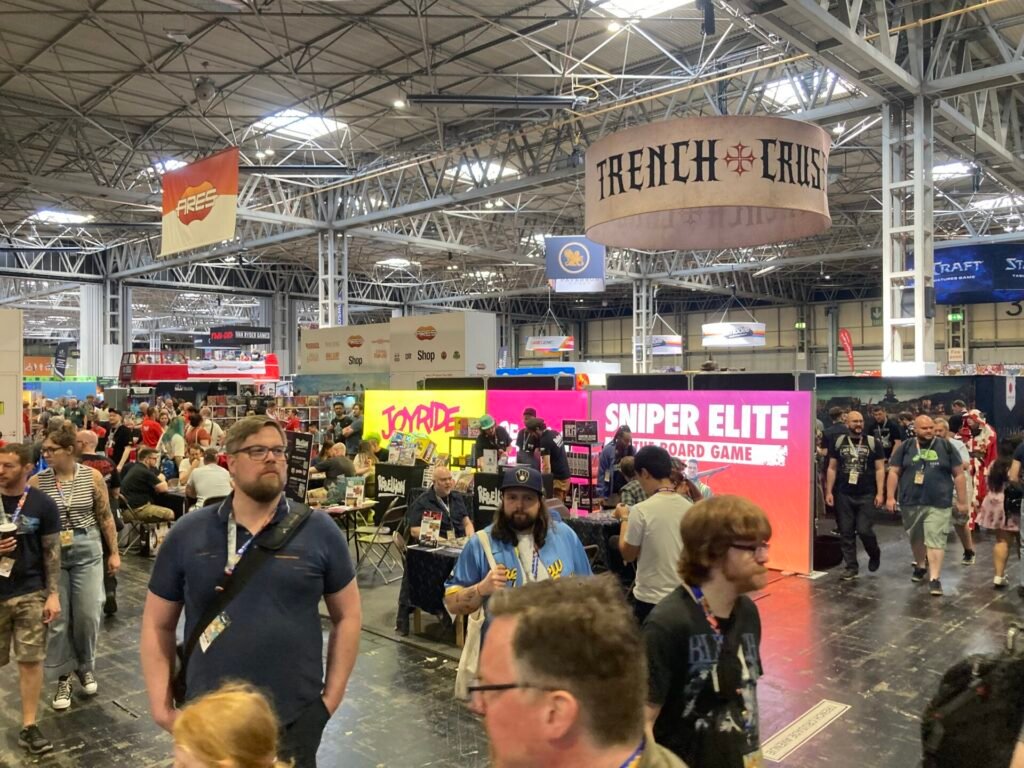
The show has already well surpassed Gen Con in terms of trade hall size, with the British event now spanning about 44,000 sq m – about 40% larger than Gen Con’s trade hall area – and hosting around 900 exhibitors in 2026.

That soaring growth has put increasing pressure on the small organising team at UKGE, with Denning telling BoardGameWire last year that the show had strained a full-time workforce which stood at just six people – although UKGE also relies on more than 200 volunteers, GMs, umpires and other helpers to deliver the convention each year.

Cooke is no stranger to growing a UK board game convention, having co-founded and built AireCon with Ben Clarkson from a 28-person gaming weekend in his flat a decade ago into England’s second-largest board game con, with about 5,000 attendees this year.

His hire by UKGE comes just three weeks after AireCon revealed that despite its own soaring growth, its 2027 show in Harrogate would be its last – saying a combination of factors had “made it increasingly challenging to run AireCon in a way that preserves the character and spirit that made it so special in the first place”.

More than 5,500 people are expected at the final AireCon – which has been nicknamed Airemageddon – with Cooke set to continue working on that final show before moving to UKGE full time.

A statement from UKGE emphasised the hire was part of a phased transition for UKGE’s organisers, and was “not a sudden change of leadership or direction”.

UK Games Expo 2026

It said Cooke would work alongside Denning and Hyams “over the next few UK Games Expo events”, ensuring that knowledge, experience and responsibilities the pair have built up over the last 20 years are handed over “gradually and thoughtfully”.

Denning said, “As UKGE has expanded to now one of the world’s largest shows we have gradually grown our team, adding event managers, administrators and logistics support.

“Bringing in Mark as operations director is the next logical step as we put in place plans to ensure UKGE can run far into the future.

UK Games Expo co-founder and director Richard Denning

“We have known Mark through AireCon and other industry roles for many years now and he is an ideal choice bringing both event management experience, energy and fresh ideas to the team as well as a safe pair of hands as and when Tony and I eventually step away from the show we have built together with others.”

Cooke added, “I’m incredibly excited to be joining the UK Games Expo team and to have the opportunity to play a part in the next chapter of such an important event for the tabletop gaming community.

“I have huge respect for what Richard and Tony have built over the years, and I’m looking forward to working alongside them over the coming events.

“This will be a gradual transition, giving us plenty of time to share knowledge, ideas and experience. My aim is to build on the fantastic foundations already in place while helping UKGE continue to grow and thrive for many years to come.”

Denning and Hyams launched UK Games Expo at Birmingham’s Clarendon Suites in 2007, when the convention attracted about 1,000 visitors.

It moved to Birmingham’s National Exhibition Centre in 2013, and had grown to more than 25,000 unique attendees by 2019 before the Covid-19 pandemic interrupted its run of physical events.

Its growth has accelerated since returning, with unique attendance passing 31,000 in 2023, 39,000 in 2024 and 42,000 last year, before jumping beyond 51,000 at its 20th anniversary event this summer.

UK Games Expo attendance figures since launch. Note: no physical show took place in 2020 due to the Covid-19 pandemic

Denning told BoardGameWire last year that building a world-class trade hall in the UK had been a personal ambition stretching back almost two decades, adding at the time that UKGE was “now fully on the world stage of ‘mega-cons'”.

Despite this year’s record attendance, Denning told BoardGameWire after the show that there was still room for further expansion, particularly around the roughly 500 events taking place during the convention.

The next UK Games Expo is scheduled to take place at Birmingham NEC from June 4 to June 6, 2027.

The post UK Games Expo creators prep for giant show’s future without them by bringing in AireCon co-founder Mark Cooke first appeared on .

  •  

My Favorite Wargame Cards – A Look at Individual Cards from My Favorite Games – Card #92: Castelnau and Voie Sacrée from Verdun 1916: Steel Inferno from Fellowship of Simulations

With this My Favorite Wargame Cards Series, I hope to take a look at a specific card from the various wargames that I have played and share how it is used in the game. I am not a strategist and frankly I am not that good at games but I do understand how things should work and be used in games. With that being said, here is the next entry in this series.

#92: Castelnau and Voie Sacrée from Verdun 1916: Steel Inferno from Fellowship of Simulations

Over the past several years, we have played quite a few World War I games with our focus on the Guns of August events every summer. We have really played some fantastic games including some of the true classics on the genre such as Paths of Glory from GMT Games and The Lamps are Going Out from Compass Games but also some real hidden gems like At All Costs from Hollandspiele, Devil Dogs from Worthington Publishing and Decisive Victory 1918: Soissons from Legion Wargames. A game that we very much liked was Verdun 1916: Steel Inferno from Fellowship of Simulations. The game is a Card Driven Game that uses cards with events and operation points to tell the grim story of the year long fighting around the French city of Verdun. The game uses a bucket of dice approach to the initial bombardments in a battle and then players choose whether to follow that with an infantry assault that doesn’t use any dice to determine hits. The game is very much a wargame but I think the cover highlights a key fact about the game by calling it a “Strategy Game” namely that it is a game as there are wildly powerful events based in history, with lots of dependence on dice not just for bombardments but also for playing certain offensives Event Cards where Victory Points are earned based on the higher numbers rolled. The game is very well done, is truly interesting and surprisingly deep with its tactical choices and decisions. 

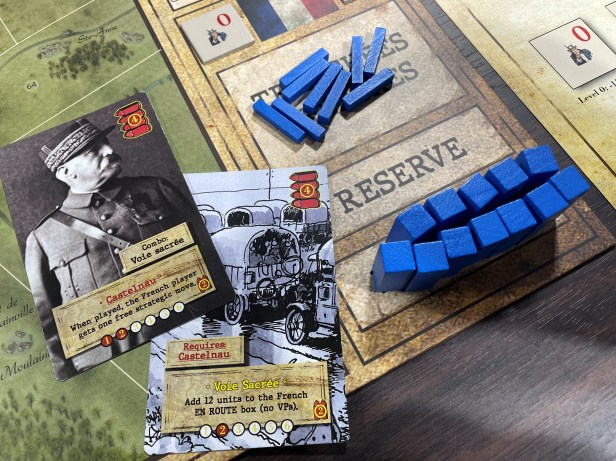
Some cards cannot be played as an Event until a specific named card has been played by the player. This is indicated on the card with a small “requires” box above the title of the card which shows the card that must already be in play as a Permanent Event to allow the new event to be triggered. Also, these Required Cards also have a small “combo” box above the title of the card to remind players which card they will allow to be played as a Permanent Event. Sometimes this concept of Combos must be planned for and may take a few rounds to get lined up to be able to play.

A perfect example of this is the Castelnau/Voie Sacrée Combo. Castelnau is an Event Card that must be played down on the table as a Permanent Event and is available during Turns 1 and 2. Once it is played, then that unlocks the play of Voie Sacrée and allows a very powerful Combo to go into effect by allowing the French player to place 12 units into the En Route Box on the board meaning they will be available for placement during the next Turn. This is so very powerful as in order to get that many units to use, the French player has to sacrifice a total of 12 VP (1 VP per unit added as Reinforcements). With this Combo, you sacrifice no VP’s and get 12 units to place on the board to plug the inevitable holes that will be created by the powerful German Barrages and assaults. There are other Combos as well including several specified Offensives (Russian Offensives and the Somme Offensive) that take several Turns to accomplish with multiple cards to get an opportunity to roll dice to gain VP’s. This was a very novel idea for the CDG mechanic and really worked well to create some portion of the game that required planning and an investment.

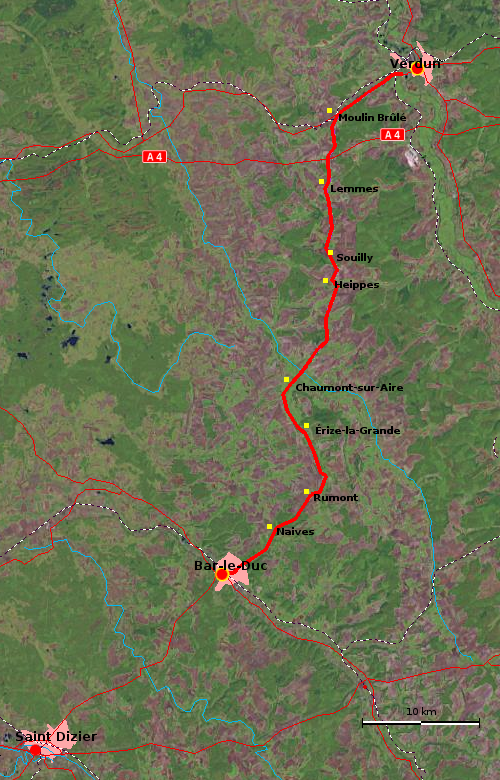
The Voie Sacrée, which is French for Sacred Way or Sacred Road, is a road that connects Bar-le-Duc to Verdun, France. It was given its name because of the vital role it played during the Battle of Verdun in World War I. After March 1916, along the 45 miles of the Voie Sacrée, transport vehicles were on the move day and night, ferrying troops, armaments, and supplies to the Verdun battlefield. During the initial crisis of February 21st through March 22nd, 600 trucks per day had already delivered 48,000 tons of ammunition, 6,400 tons of other materiel and 263,000 men to the battlefield. Beginning on February 21st, all horse-drawn traffic and troop movements on foot had been ordered off the road, leaving it open for truck and motorcar traffic only. After March 1916, one truck passed every 14 seconds, submitting the road to considerable wear and tear. Quarries had to be opened nearby to supply the road with crushed stone. Over the course of ten months, 16 labour battalions worked to keep the road in good shape and order. The road had been recognised since 1915 as the only reliable vehicular road that remained in existence to supply Verdun safely. All the standard-gauge railway lines that could reach Verdun had already been interrupted by German forces in late 1914. To compensate for this precarious situation, the road had been widened to 23 ft during 1915, so it could accommodate the continuous up and down flow of two lines of truck traffic. This preemptive roadway improvement in 1915, plus success in organizing the transport system on the road (a mission supervised by Colonel Maurice de Barescut, the Chief of Staff of the French Second Army), is what ultimately saved Verdun in 1916.

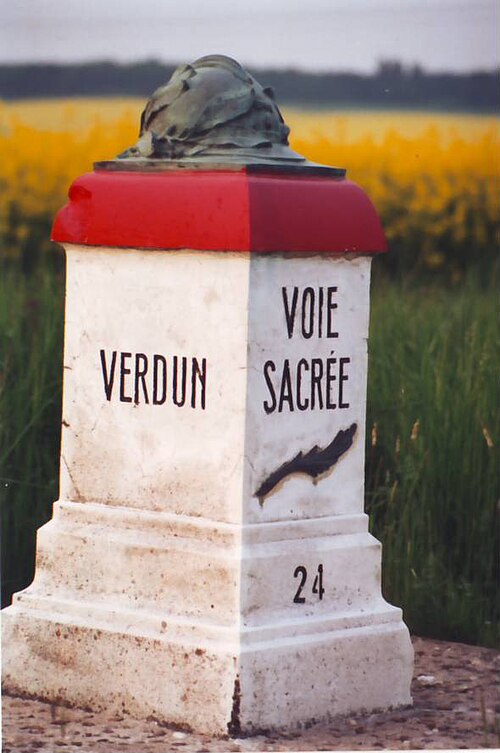
The Voie Sacrée still exists, but it has been paved over and is now an active secondary road. In 2006, the route was renumbered RD1916, a reference to the road’s most critical year. From 1923, the Voie Sacrée was marked by a borne every kilometer along the route. Each borne is topped with a sculpture of an Adrian helmet, the helmet worn by French soldiers during the Battle of Verdun.

The town hall in the village of Souilly, on the Voie Sacrée, served as headquarters to Generals Philippe Pétain and Robert Nivelle during the Battle of Verdun. A large, well-preserved, two-story stone building fronting on the Voie Sacrée, the Souilly town hall is still in official use today. Several plaques on its facade remind the visitor of the historic role it played in 1916 during the Battle of Verdun and, later in 1918, during the Meuse–Argonne offensive.

In the next entry in this series, we will take a look at the German Home Card Otto von Bismarck from Imperial Elegy: The Road to the Great War 1850-1920 from VUCA Simulations.

-Grant
  •  
❌