Normale Ansicht

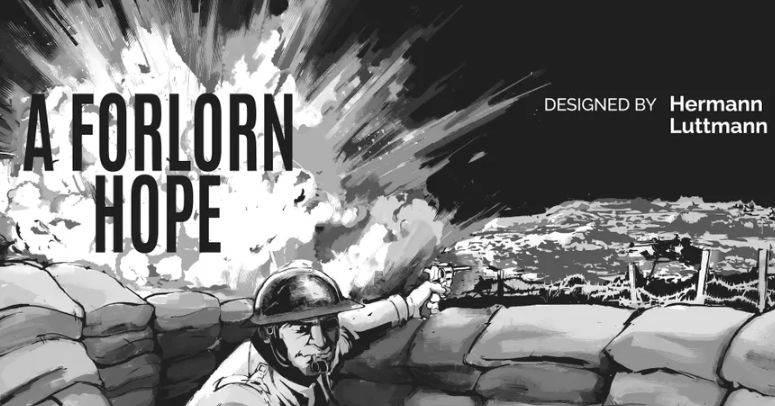
Interview with Hermann Luttmann Designer of A Forlorn Hope from Wharf Rat Games Coming to Backerkit February 10th

Von: Grant
28. Januar 2026 um 16:32

Wharf Rat Games is a new publisher recently started by the dynamic duo of Ryan Heilman and Wes Crawford. I have interviewed both of these guys a few times for their own designed games and also hung out with them quite a bit at conventions including Buckeye Game Fest in April 2024 and the World Boardgaming Championships in August 2024. I am really happy for them that they have taken this plunge and created their own publishing company. I know they know games. Have been in the industry for a while now and also have great connections with many designers and would be designers and I am sure that they will bring many quality offerings to our tables over the next decade plus.

Wharf Rat Games is a Baltimore-based board game publishing company whose mission is to produce high-quality, light-to-medium-weight board games with engaging themes in historical, science fiction, and fantasy genres. With gameplay designed to last under 90 minutes, their games aim to captivate both casual and experienced players. But there is more than just their introduction here as they have signed their first game and it is from a designer we all know and love – Hermann Luttmann. A Forlorn Hope places solo players or up to three cooperative players in command of a battalion charging across No Man’s Land to capture enemy trenches during World War I. Success requires careful balancing of bold advances and timely retreats to avoid casualties, maintain cohesion, and keep troops from becoming pinned under relentless enemy fire. Over a decade ago, Hermann pitched a groundbreaking design to Alan Emrich at Victory Point Games—a push-your-luck mechanic within a wargame framework, originally set in the WWI trenches. While the concept was well-received, Alan suggested a Civil War theme instead, leading to the creation of In Magnificent Style, based on Pickett’s Charge at Gettysburg. This game went on to be published by Victory Point Games and later by Worthington Publishing.

They are now gearing up to launch this interesting game on Backerkit and I reached out to Hermann to get some more information and understanding of the game.

Here is a link to the preview page for the campaign: https://www.backerkit.com/c/projects/wharf-rat-games/a-forlorn-hope-can-you-make-it-across-no-man-s-land/launch_party

Grant: What is your upcoming game A Forlorn Hope about?

Hermann: A Forlorn Hope is an abstract simulation of six different World War I trench warfare battlefields, using a push-your-luck system that allows the player to experience the tension, frustration, and futility of these trench assaults across No Man’s Land. Players will try to push their battalions to victory in six different scenarios – Neuve Chapelle, 1st & 2nd Ypres, Verdun, The Somme, Passchendaele, and the Meuse-Argonne (The Lost Battalion). Each scenario is quite different, with unique elements, mechanics, terrain features, events, and victory conditions.    

Grant: What is the meaning of the title? What did you hope to convey about the game to the players?

Hermann: The dictionary definition of forlorn hope is “A persistent or desperate hope that is unlikely to be fulfilled”. There is hardly a better way to describe the madness of the four years of trench warfare during the First World War. Interestingly, a “Forlorn Hope” is also a military term for a group of soldiers who are assigned the riskiest (and potentially most suicidal) mission, often involving infiltration, ambushes, or scouting missions. For the players, we felt the title was perfectly descriptive of what to expect in the game play. These are tough, grueling scenarios that will require the player to grind out their assaults to their best ability. And yes, the friction of war in this game is a cruel, un-welcomed participant.   

Grant: Who is this new publisher and how did you come to do their first game?

Hermann: The publisher is a brand new company called Wharf Rat Games. It was founded by Ryan Heilman and Wes Crawford, both fellow game designers who also became good friends of mine as we worked on other projects together and just hung out at conventions. That I was honored with the opportunity to design their first published game and it was honestly totally by accident! They were interviewing me for their Rat Chat video series and somehow my In Magnificent Style design came up in conversation. I happened to mention that the original idea for the unique push-your-luck mechanism I came up with for that game was actually a World War I trench warfare game. Victory Point Games, who published the original IMS, thought that subject matter was not an easily marketed subject for a wargame, so we changed it to Pickett’s Charge. Well Ryan and Wes asked me if I would like to fulfill my original dream for the mechanism because they really liked the idea of covering trench battles. And here you have it! 

Grant: Why was this a subject that drew your interest?

Hermann: I’ve always found a particular interest in World War I, maybe because it was a subject about which I knew few details, but every time I explored it deeper, it became more fascinating. There are just so many interesting aspects to the various nations involved in the conflict and the widespread fronts where such vicious fighting occurred. It just captivated me and then even more so when I discovered there were relatively few wargames covering the war, at least in the early days of wargaming. When I got into actually designing wargames, I wanted to challenge myself to do unusual games and when looking for relatively under-gamed and obscure topics, trench warfare loomed large. So, I set out to figure a way to make trench warfare entertaining for a game player. A tough task, to be sure, but I stumbled upon the idea of doing it as a solo design with an “against the wind” type of push-your-luck approach.

Grant: What is your design goal with the game?

Hermann: Well, as with any of my game designs, my #1 goal is to make an entertaining game experience that players will want to come back to constantly. I want players primarily to have fun, but also to have some challenging decision-making to ponder, topped off with some genuine surprises. In this game design, I want players to explore the various types of historical trench assault situations, which can be quite varied. Each scenario is unique and highlights a different aspect of attacking across No Man’s Land. At the same time, I hope players learn a little something about each of these battles and then perhaps will be interested enough to want to explore a bit deeper into these fascinating engagements.   

Grant: What from trench warfare during WWI was important to model?

Hermann: Actually, the near helplessness of your troops crossing No Man’s Land and the fact that you are left to fate! You can direct your men to a certain degree…pointing them in the right direction and gauging when they should “hunker down” and take shelter…but otherwise it’s “dancing through raindrops”. What I did with this design is that you do have control of the order in which you move your units and how far (unless the enemy interferes with your plans, of course). I also added the “Wave” mechanic where you want your men to remain in as long a connected line across the battlefield as possible. Not only is this realistic, but a successful wave will earn you additional Tactics Chits, which will increase your units’ abilities and help mitigate against bad luck. So, you as the player are trying to advance against the enemy’s “wall of fire” as quickly as you can, but also trying to maintain order- two opposite forces pulling you apart, and something that a commander on the Western Front had to deal with. Yes, that can be frustrating but it’s also quite fun. You cannot know or control where the enemy artillery will fall – and that’s about as realistic as you can get. You pray and hope and push…and that’s the WWI tension I want to model.

Grant: What sources did you consult about the details of the history? What one must read source would you recommend?

Hermann: Oh, boy – honestly, there is no one book I used as these scenarios cover multiple battles. I researched each battle from the various books I own, on the internet, and I watched one or more documentaries on You Tube for each of the battles. My main source to get a framework for most of the early- to mid-war battles was The Western Front 1914-1916 by Michael Neiberg. Otherwise, there are numerous books covering each of the Western Front trench battles in greater detail.

Grant: What other games did you draw inspiration from?

Hermann: None actually…other than my own. 😊 This game is closely related to In Magnificent Style, Crowbar! The Rangers at Point du Hoc, and the upcoming Kill All Fermitians! (formerly Volters Lead the Way! and is being re-published by Flying Pig Games). Some of the games that I did play in the past, and which gave me hope that I could make a decently entertaining trench game, were Landships (Clash of Arms) and Trenchfoot (GDW).

Grant: How does the game use press your luck?

Hermann: Essentially there are two aspects to the push-your-luck mechanic in this game. One is that you want to get your units to voluntarily Hunker Down before the last Cohesion Cube is lost – this is called a Catastrophic Cohesion Loss. Units that are not Hunkered Down when this happens will be made Pinned, and that makes it harder for them to activate in the next turn (as they start that turn as Shaken units). Hunkering Down in time means the unit has huddled, taken cover, and is regrouping safely. It will begin the next turn without penalty. So, the player pushes their luck by gauging how far to move a unit before Hunkering Down and ending its current turn but thereby being in good shape to start the next turn. The other aspect is that the player will be compelled to keep units in a Wave – a chain of adjacency to each other – to gain the greatest number of new Tactics Chits. Therefore, the player needs to determine how long to keep units active in order to maneuver them into a Wave, but then risking being caught in the open and thereby Pinned when cohesion is lost.

Grant: What type of experience does this create? What are the toughest decisions forced on the players?

Hermann: Well hopefully, as with all my push-your-luck game designs, a sense of constant tension and discomfort! 😊 Because of the nature of the Activation and Event Cards, you never know when things will get really rough, really fast. Artillery barrages can land directly on your units – or just miss them. These can cause units to be forced to become Pinned, ending their turn immediately and making it tough to get them going next turn. Therefore, with each decision by the player whether to push another turn or not, there is never a comfort zone where you think “all is well”. The game system will keep you on your toes and always second guessing yourself – and that’s the experience I want to see players having as they attempt to navigate No Man’s Land in WWI.

Grant: What different player counts does the game handle?

Hermann: I suspect most players will be interested in this as a solitaire game, but in fact it does accommodate two or three players as well. In these counts, players will each control one Battalion and work cooperatively with the other player(s). In the case of the 2-player game, players will alternate control of the second (middle) Battalion. Scoring remains the same, with players sharing in the victory or defeat.

Grant: How does the solitaire game function? How does the AI prioritize its decisions?

Hermann: The player draws a hand of Activation Cards each step. Every card has a theme…either Suppressed, Slog, Advance, or Rush…and a set of matching results for cohesion loss, movement, and casualties inflicted on the unit. The player assigns each card to a unit and that unit must then abide by the directions and effects on that card. Usually, the player has some agency in how that assignment can occur. But if one or more “Draw Event Card” cards is drawn, the player must immediately draw an Event Card and apply its effects before continuing on with the activation. This also has the reciprocal detrimental effect of reducing the player’s hand size for this step’s assignment. If you have fewer cards than units, then you must draw the top Activation Card and blindly assign it a unit. There are a number of ways to help mitigate bad draws and results…the player has Tactics Chits to apply if needed and Officer Cards that can be used for certain special abilities. The AI is the deck of Activation and Event Cards, and the player needs to become familiar with what the Activation deck has to offer to make better calculated decisions. In the case of the Event deck, it is mostly random effects (such as for artillery bombardments and machinegun fire) but does prioritize counterattacks and other events against the most advanced player units. There are also Scenario Event Cards in most scenarios that create events specifically tailored to the battle you are currently simulating.

Grant: What has been your most challenging design obstacle to overcome with the game? How did you solve the problem?

Hermann: Honestly, the hardest thing we struggled with was not mechanical or procedural or thematical…it was making sure that the game was balanced for the player. In other words, that the player in every scenario was sufficiently challenged with a competitive, but not impossible, game. That means gauging how severe the Event and Activation Cards are, how many Tactics Chits to allow, how many Officer cards to be made available and how strong their powers are, and how variable and deadly the combat system is. Oh yeah – and how many Victory Points to award and penalize for each victory condition. And after you’ve taken your best starting estimate of where and how these factors should fall, the only way of getting them right is through trial and error, and tons of testing and demoing. And there’s really no magic formula to solving that issue, other than to hammer through the game and constantly bend, spindle, tweak, fudge, and edit.

Grant: What is the layout of the game board?

Hermann: Gamers familiar with In Magnificent Style and Crowbar will recognize the game board immediately. On the player side is the first row, representing the home trench. Then there are a series of nine more rows extending to the far side of the map, ending in a final row representing the enemy trench. There are also nine columns, each of which is occupied by one of the nine player units. In addition, the board is segmented into three No Man’s Land Zones of rows…green (the closest to the player), blue (in the middle), and red (closest to the enemy side of the board). These zones have a number of important effects on game play. Finally, there are three Battalion Zones of columns – 1st Battalion (left side), 2nd Battalion (middle), and 3rd Battalion (right side)…into which is deployed the three units of each of the three Battalions. 

Grant: What is the anatomy of the counters?

Hermann: Well, there are no unit counters used in this game! Each of the player’s nine units is represented by a unique wooden piece, showing hand-drawn artwork highlighting the typical soldiers deployed by each nation in the game (there are four armies included – German, British, American, and French). There is no other information on the standees as it is not required for gameplay. There are other numerous cardboard markers used to track information or to be used by the player to perform certain game functions.

Grant: What different type of units are available?

Hermann: There is only one type of unit, technically speaking. The unit pieces represent the generic units fielded by the army you are controlling. Some scenarios will designate if the units represent a unique type of unit. If so, the scenario instructions tell you what your units can do differently during this scenario than the typical unit.

Grant: How does combat work in the design?

Hermann: Combat is pretty straightforward and fun, using custom combat dice. There are two types of combat…Event Combat (generated by an Event Card) and Assault Combat (generated when you move a unit into the same space with an Enemy Unit or vice versa). The dice handle both types of combat resolution. Each face of the die has a letter code that is utilized when resolving Event Combat. This letter tells the player if any Hits are scored on the affected Battalion, if the unit must retreat, and if it must Hunker Down. In the case of Assault Combat, each face of the die has a number value. Both sides in an Assault Combat will roll a number of dice, depending on the value of the enemy unit (shown on its counter) or, for the player’s unit, the use of Tactics Chits, Officer abilities, and the presence of supporting friendly units. All dice are rolled at once and the number values for each side added together into an Assault Combat total. This will yield a victory for either side or a stalemate result.

Grant: How does the game use cards? Can you share a few examples of cards and explain their use?

Hermann: Activation Cards are used to move and fight with your units while Event Cards are random events that will affect your units in various ways (or not, if you get lucky). Each step, you draw a number of Activation Cards equal to the number of available activated units, plus one.

For example, you draw three cards when you have two eligible units to activate (there are only two available units in this example because the third unit is finished for the phase, due to it being Hunkered Down or Pinned). You look at the three cards and if one or more is a “Draw Event Card” card, you draw an Event Card immediately and resolve it.

If it’s the Event Card shown above, the enemy machineguns are issuing sweeping fire across your advancing forces. You check areas “A” and “B” to see which of your units are located in those areas (there could be up to six units in both areas!). You then roll one die against each such eligible unit and apply the letter result rolled on that unit.

Then you discard the “Draw Event Card” Activation Card and you now only have two Activation Cards to choose from. One card is assigned to each of the two units you have left to activate, and its instructions are applied to each unit.

For example, the above “Advance” Activation Card is read from top to bottom as follows:

  • The top (yellow) entry is the possible loss of cohesion. Because there is a “1” shown in the icon, this means that one Cohesion Cube (the scenario will tell you how many you start with) is discarded. If this is the last cube in your supply, there is an immediate Catastrophic Cohesion Loss and any of your units that are not Hunkered Down or already Pinned are made Pinned. This ends the turn – you count victory points earned, reset all the markers and Officer Cards, and begin a new turn, but starting with a fewer number of cohesion cubes to use. 
  • The middle (red) entry is the number of Hits this unit’s Battalion takes. Hits are recorded by Battalion, not by unit, using a Battalion Hit Infliction Track. In this case, because there is a “2” in this icon, there are 2 Hits inflicted on the Battalion and this is immediately recorded by the player.
  • The bottom entry is the Movement allowance for the unit. The color of this icon and the graphic of the soldier’s posture indicate the maximum number of spaces the unit can move forward (towards the enemy only) and the manner of the move (Normal, Cautious, or Crawl). Normal is a standard move forward with no impediments; Cautious is a Normal move but only if the unit is not moving from one Zone to another (like from the Blue zone to the Red zone); Crawl is used to move a unit that is Shaken (removing the Shaken marker) and/or moving from a Shellhole. On the example card, there is a “3” in the Movement Allowance icon so the unit move up to 3 spaces using Normal movement procedures.  

Grant: How is victory achieved?

Hermann: The player scores, and loses, Victory Points (VP) throughout gameplay, and at the conclusion of the scenario. Each scenario lays out exactly what conditions are needed for the player to score, and lose, VP. This is normally a combination of how much progress each of your units makes toward the enemy trenches, capturing enemy trench spaces, and the occurrence of Catastrophic Casualties (that’s when a Battalion accumulates more than 10 Hits). Each scenario may also have entirely unique ways to gain and lose VP, depending on the historical battle situation being depicted. The player totals their VP and compares that total to the narrative table that provides the level of victory or defeat and what would have happened in the battle at your level of achievement.  

Grant: What type of experience does the game create for the players?

Hermann: Well, this kind of design attempts to give the players an appreciation for the frustration, sacrifice, and difficulty of conducting trench assaults during the First World War. Obviously, I can’t honestly replicate the true horror of these events, but I think playing through a tough game like this at least gives a glimpse into the absolutely brutal experience these men faced on the trench lines. Rather than focus on that death and destruction, the game abstractly attempts to give the player the feeling of commanding these troops and leading them on an almost insurmountable mission, under dire circumstances, and against nearly impossible odds. The scenarios included in this game were chosen for the drama, strategy, and historical significance offered by the battles they represent. And by boiling all these factors down to a simple push-your-luck mechanic, with the requisite amount of thematic bells-and-whistles to create the narrative, I think players will at least be challenged, intrigued, and curious about not only exploring all the scenarios and situations, but perhaps even researching the actual details of the horrific experiences of these soldiers. To that end, we’ve also included on every Activation Card an actual quote from a soldier, officer, or author who lived through these battles and hopefully conveys the horrors of trench warfare.

Grant: What are you most pleased about with the design?

Hermann: One thing I’m very pleased with is the amount of narrative detail and variety we managed to get into this design. There are six scenarios contained in this first effort, but two of the scenarios actually contain multiple games to be played, kind of mini-campaigns. And each scenario feels so different than the others. Secondly, I am so pleased by the development and production support from Wharf Rat Games … specifically, Ryan and Wes. They are not only terrific designers and developers in their own right, but they’re beginning a company here that cares about providing high-grade production quality and customer service. This entire game package will be an attractive, well-produced, comprehensive, accessible, and highly replayable product and I am very appreciative and proud of that.

Go sign up for the game’s prelaunch at Backerkit and check out the art, news, and upcoming interviews at  https://www.backerkit.com/call_to_action/12a5e9bc-4ce6-4667-8f62-b2df3ccbf9fd/landing and get a free downloadable print-and-play game called A Summer in Sarajevo designed by Ryan Heilman. Can you save Franz Ferdinand from his assassins?

Grant: What other situations could this system be used in?

Hermann: This style of game play is designed for any era…even fictional ones…where one side is primarily static, on defense, and tough. The basic idea is that the player is pushing their luck against a tough defending opponent and their “wall of fire”. However, that defensive enemy is still capable of launching localized attacks of their own, so that even though a static line is being faced, the enemy can still jump out and sting the player. Any situation that fits that set of criteria can work in this system. I have ideas for more World War I battles that will fit in this series, but we’ll first see how well it is received. But I am open to suggestions as to how to convert this framework to almost any other historical era or fictional setting that will work.

Grant: What other designs are you currently working on?

Hermann: Oh boy…every time you ask me this, the list gets longer! 😊 OK…here’s what’s cooking:

  • GMT Games – A Hell So Terrible: Verdun 1916 (on the GMT P500 right now). Also, the More of a Bad Thing expansion for The Plum Island Horror is now out and available. I will also be working on a post-apocalyptic design called Heavy Metal Thunder that is sort of an “express” version of the Plum Island Horror engine. It is designed to give players the same kind of narrative and cooperative experience as Plum Island Horror, but in about half the time and even more accessible as far as rules weight.
  • Blue Panther – Dawn of the Zeds: Designer Edition. Yes – a brand new edition of the Zeds franchise with some new and better mechanics. Also, I need to work on the next Tattered Flags game (Antietam’s Cornfield) and the next Napoleonic solo game (probably on Borodino).
  • Revolution Games – They March Against Us: Leipzig 1813 (the first of the Bonaparte’s Swords Series…which will be Napoleonic Blind Swords).
  • Flying Pig Games – Kill All Fermitians! (formerly Volters Lead the Way!, a science fiction push-your-luck game). And we are beginning work on A Wild Primitive Madness, the next Black Swan Series game covering The Battle of Antietam.
  • Jackl Games – More Brains! (a zombie push-your-luck game).
  • Nuts Publishing – Nemto (an epic, multi-player, cooperative, science fiction campaign wargame).
  • Unknown Publisher – White Mud (a tactical wargame on the Battle of Tuyuti, fought during the War of the Triple Alliance and bloodiest battle ever fought in South America. This was called the “Waterloo of South America” and is such an interesting engagement).
  • Unknown Publisher – Miracle Along the Marne (a Black Swan style of wargame covering the Battle of the Marne in 1914).

You asked! 😊

Thanks again for letting me do this! I really appreciate your support and kindness.

As always it was a pleasure speaking with you Hermann. I am very excited about this one as it sounds very interesting and is also a unique gaming subject. I have played your Press Your Luck designs (In Magnificent Style and Crowbar!) and loved them both. Great games with very tough decisions.

-Grant

CMON exploring more IP sales after heavy losses, as it pushes to get $14m of undelivered crowdfunding campaigns to backers

26. Januar 2026 um 12:49

Board game crowdfunding major CMON says it is exploring further IP sales and licensing opportunities in its ongoing push to fulfil over $14m of undelivered campaigns, as it continues its attempt to recover from massive losses racked up over the past two years.

The publisher – one of the most successful board game crowdfunders of all time with over $110m raised – posted losses of nearly $7m for the first half of last year and another $3m across 2024, figures which dwarf the overall $4.2m profit it had managed to make over the previous nine years combined.

The company has been scrambling to stem the losses since the start of last year, laying off staff and halting new game development and campaign launches in March, and selling off a string of its IPs -including Blood Rage, Rising Sun and its most famous and profitable title, Zombicide – in the summer.

It followed that by selling the IP for former Mythic Games titles Anastyr and Hel: The Last Saga to Don’t Panic Games in September, and parting with the lucrative Cthulhu: Death May Die IP to Asmodee a month later – the latter a series which has raised almost $10m from backers to date.

CMON has now announced more IP sales could be on the way alongside making an apology for the delays to its outstanding crowdfunds – some of which are now running almost two years beyond initial delivery estimates.

The company’s remaining significant IP includes the Massive Darkness series, with the most recent instalment, Massive Darkness: Dungeons of Shadowreach, completing a $2.85m crowdfund on Gamefound early last year – a figure which rose to more than $3.7m including late pledges.

That was CMON’s final crowdfunding campaign before it put all future game development and crowdfunding plans on hold a month later, citing the rising unpredictability of the US tariffs situation.

CMON’s new announcement said its priority remains to deliver all of its unfulfilled crowdfunding campaigns, saying that it is also undertaking ‘batch delivery’ of games to allow retail sales to help fund the manufacturing of remaining products in the line.

The eight undelivered campaigns include DC Super Heroes United, which raised more than $4.4m, and DCeased, which brought in over $2.5m. Both campaigns were initially due to be delivered last year.

GameAmount raised
Number of backers
Fundraise completedInitial delivery estimateLatest delivery estimate (as of January 21, 2026)
Mordred$669,9765,687July 2023August 2024Q2 2026
Masters of the Universe: The Board Game – Clash for Eternia$719,6644,182January 2024November 2024Q3 2026
DCeased$2,564,78912,787December 2023April 2025Q4 2026
DC Super Heroes United$4,478,98914,040August 2024August 2025Q4 2026
God of War$832,9454,388May 2024June 2025Q4 2026
Massive Darkness: Dungeons of Shadowreach$2,854,5539,842February 2025March 2026Q2 2027
A Song of Ice & Fire: Tactics$1,886,5096,406February 2024February 2025Q3 2027
Degenesis: Clan Wars$339,7421,232June 2024July 2025n/a
Total Dollars$14,347,167

CMON said, “We want to be absolutely clear: we are not asking backers for additional money for manufacturing. The responsibility to fulfill these campaigns rests entirely with us.”

The status of one outstanding crowdfunding campaign – Degenesis: Clan Wars – remains in limbo after CMON cancelled the project last July, claiming German design studio SixMoreVodka had terminated its contract with the publisher.

SMV founder Marko Djurdjevic told BoardGameWire at the time that his company disagreed with CMON’s account “in the strongest possible terms”, adding that it was not informed about the publisher’s announcement in advance and “certainly did not expect this attempt to shift the blame for the project’s failure onto our plate”.

The latest CMON announcement does not mention whether the publisher will ask any of its campaign backers for extra contributions to cover shipping costs or further volatility in US tariffs.

Last October the publisher added extra charges for backers of its Marvel United: Witching Hour and Cthulhu: Dark Providence pre-orders, asking them to pay an extra $0.69 and $2.30 respectively to cover tariff costs it said it “cannot absorb given our current financial position”.

CMON also has five undelivered pre-order campaigns on its books, including Dune Desert War and the Assassin’s Creed Role Playing Game.

Communication Frustration

The company’s new announcement its first significant update for its campaign backers since the start of October last year, and only its third since summer 2025 – a situation which has drawn ire from many backers frustrated with what they see as poor communication from the publisher.

CMON acknowledged in its October 2025 update that “rumors and panic” had been spreading given its lack of communication to crowdfunding backers, which it said had “resulted in us experiencing the highest number of refund requests in CMON’s history”.

It said, “This has created a vicious cycle: The slower fulfillment is, the more refund requests we receive. The more refunds we process, the fewer resources we have to accelerate fulfillment.

“With more resources funnelled into refunds over fulfillment, fulfillment slows down even further. This cycle has snowballed and grown into one of the toughest challenges we have ever faced.”

CMON added last October that the staffing cuts it made earlier in the year had pushed its remaining team “to its limits”.

It said, “With a fraction of employees remaining, every day has been a balancing act between managing production, logistics, customer service, and financial obligations. We have been overwhelmed by the sheer volume of day-to-day tasks.”

CMON’s other attempts to bolster its bottom line over the past year have included selling off the global headquarters it bought in Singapore in 2017 to claw back about $2.4m – although that total is still a drop in the ocean for a business which saw its revenue slump by more than $12m in the first half of this year.

The company has also suffered two failed attempts to bring in new shareholders to provide much-needed working capital.

It began 2025 with two new shareholders due to invest about $1.39m into the business by picking up a combined 16.66% stake in the company – but those shareholders ultimately failed to hand over the money for their stakes, and the arrangement was scrapped.

Two months ago a push to bring in at least six new shareholders also fell through, with CMON only saying that the conditions for the share sale had “not been fully satisfied”.

The Hong Kong-listed company had hoped to sell more than 360 million newly-created shares in a process which would have valued the company at just over $5m, with the money raised going towards developing new games, marketing and events, and general working capital.

CMON said at the time that it believed the lapsed agreement would have “no material adverse impact on the business” and added that it would continue to seek fundraising opportunities, although it did not provide specific details.

More details about CMON’s current financial situation are set to be unveiled by the end of March, with the publisher required by Hong Kong stock exchange rules to submit its annual results by that date.

Last year CMON missed the stock exchange deadline for publishing its financial results, blaming an understaffed finance department – a situation which saw its shares suspended from trading for several weeks.

The company announced last July that rather than focusing on large scale, miniatures heavy crowdfunding campaigns, it had pivoted to releasing several small-box games direct to retail, which it showed off at the Spiel Essen game fair last October.

Those titles include Collect!Peanuts Talent ShowFairy PerfumeRocket Punch and Yokai Carnival.

The post CMON exploring more IP sales after heavy losses, as it pushes to get $14m of undelivered crowdfunding campaigns to backers first appeared on .

People moves: Ross Thompson leaves Asmodee’s Atomic Mass Games; Druid City Games brings in ex-Incredible Dream marketing director Ilya Ushakov; Ross Connell joins Mantic from North Star Games

20. Januar 2026 um 14:28

A trio of comings and goings from the board game industry for the year so far – if you have news of a new role, hire or job change within the industry that you’d like mentioned on BoardGameWire, please send an email with the details to the editor, Mike Didymus-True, on:

mike@boardgamewire.com


Ross Thompson, Director of Marketing, Atomic Mass Games (Asmodee)

Ross Thompson, the director of marketing for Asmodee miniatures games studio Atomic Mass Games, has announced he is leaving the company after more than two years in the role.

Photo Credit: Ross Thompson

Thompson joined Atomic Mass as senior marketing manager in November 2023, following almost a year as crowdfunding and marketing manager at Gloomhaven publisher Cephalofair Games. He was promoted to director of marketing in March 2024.

The move comes three months after Thompson won a special election to be named a media and events director on the board of directors at tabletop gaming trade organisation GAMA.

Thompson has also spent the past nine years running the Tabletop Game Jobs Facebook group he launched alongside Jessica Fisher, which has grown in that time to almost 26,000 members.

Writing on BlueSky about his decision to move on from Atomic Mass, Thompson said, “With a new year, comes new changes. I’ve enjoyed my time with Atomic Mass Games over the past two years, but I’ve made the decision to start on the next chapter.

“We have accomplished so much, with the relaunch of Star Wars: Legion and all the releases for Marvel: Crisis Protocol and Star Wars: Shatterpoint. The team here at Atomic Mass Games is filled with incredibly passionate people working to bring the power of play & hobby to tabletop miniatures wargaming.

“Getting to work with all of our partners across the Asmodee space, from group, distribution and studio has been an incredible experience. I am very thankful to have been able to work with so many fantastic people around the world and grateful for those relationships.

“Looking forward to seeing where this takes me. Thank you to everyone at Atomic Mass Games and Asmodee and Ill see you around!”

Thompson kicked off his career in the tabletop industry 17 years ago as the founder and organiser of San Diego-based gaming convention Kingdom Con, which operated for a decade before its last event in 2019.

He began working in retail support and development at Privateer Press in 2010, before becoming a marketing manager at CMON in 2011 and switching to a community manager role at Soda Pop Miniatures in 2012.

Thomson’s other previous jobs in the industry have included head of trade marketing at UK-based Steamforged Games and marketing manager at The Op.


Ilya Ushakov, Director Of Marketing, Druid City Games

Former Incredible Dream marketing director Ilya Ushakov has been named director of marketing at Wonderland’s War publisher Druid City Games.

Photo Credit: Ilya Ushakov

The hire comes five months after Ushakov left Kinfire Chronicles publisher Incredible Dream amid heavy downsizing at the venture capital-backed studio due to volatile US tariff changes.

Ushakov also runs the board games-focused Kovray YouTube channel, Instagram account and Twitter feed with partner Tylor Murray.

A statement from Druid City confirming Ushakov’s hire said, “We’re incredibly excited to welcome Ilya Ushakov as our new director of marketing.

“From the moment we started talking, it was clear that Ilya brings not only a strong strategic vision, but also a genuine enthusiasm for board gaming and connecting with people in meaningful ways.

“We’re already grateful for his insight, energy, and collaborative spirit!”

Ushakov joined Incredible Dream in 2023 as social media and community manager, before being promoted to marketing manager in early 2024 and marketing director in the summer of that year.

The role was his first in the tabletop gaming industry, following a career which included project management at the Canadian Mental Health Association and project and co-ordination work at the Edmonton Chamber of Voluntary Organizations.

Druid City’s 2026 releases are set to include Wonderland’s War Duel, roll-and-write inspired Wonderland’s War-adjacent title Off With Their Heads! and Wonderland’s War expansion Caterpillar & White Queen.


Ross Connell, Head of Crowdfunding at Mantic Games

Board game marketing and communications specialist Ross Connell has left North Star Games after almost five years to become head of crowdfunding at UK fantasy and sci-fi board game and miniatures maker Mantic Games.

Photo Credit: Ross Thompson

Connell joined North Star as marketing manager in 2021, and worked on projects including Nature, the redesign of the publisher’s 2014 hit Evolution, which raised about $850,000 through a Kickstarter campaign in late 2024.

He previously spent almost two years as communications manager at Dice Hospital and Tinderblox publisher Alley Cat Games, and also works as a freelance photographer within the board game industry.

Connell has also spent almost a decade interviewing dozens of board game artists about their work on his blog More Games Please.

Writing on BlueSky about his time at North Star, Connell said, “Looking back, what I want to shout most is how many AMAZING humans I’ve met.

“Creative, funny, intelligent, and kind humans. People make games. Thanks to those who make this a space worth being in.”

Recent Kickstarter campaigns from Mantic include Assassin’s Creed Animus, Worms: The Board Game and mass-battle sci-fi wargame Epic Warpath.

The post People moves: Ross Thompson leaves Asmodee’s Atomic Mass Games; Druid City Games brings in ex-Incredible Dream marketing director Ilya Ushakov; Ross Connell joins Mantic from North Star Games first appeared on .

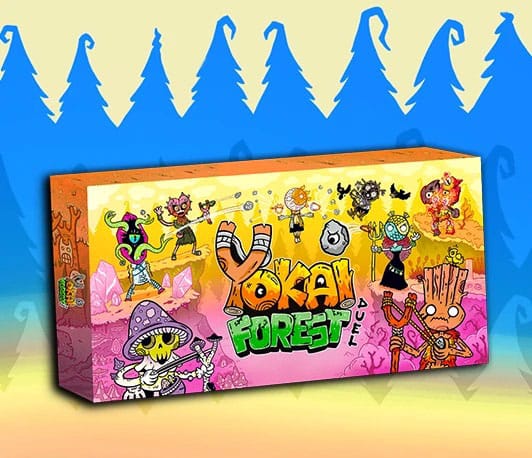
YOKAI FOREST DUEL: Das schnelle Turnier-Duell ist auf Gamefound gestartet

19. Januar 2026 um 16:15
YOKAI FOREST DUEL: Das schnelle Turnier-Duell ist auf Gamefound gestartet

YOKAI FOREST DUEL ist ein kleines Turnier-Duellspiel von GodotGames, das in sehr kurzer Zeit erklärt ist und trotzdem auf Entscheidungen setzt. Die Crowdfunding-Kampagne läuft auf Gamefound: https://gamefound.com/en/projects/godotgames/yokaiforest/. Das Finanzierungsziel wurde dabei sehr schnell erreicht, und die Kampagne ist sichtbar auf kurze, direkte Partien ausgelegt.

YOKAI FOREST DUEL: So wird gespielt

Im Kern ist es ein Kopf-an-Kopf-Duell. Du spielst Karten aus deiner Hand, die für Angriff, Munition, Verteidigung oder dauerhafte Verbesserungen stehen. Wichtig ist, dass du selbst auswählst, was du spielst. Dadurch geht es weniger um „was kommt als Nächstes im Deck“, sondern um Timing, Einschätzen und kleine Mindgames.

Die Duelle sind als Turnier gedacht. Bei mehr als zwei Personen laufen mehrere Duelle parallel. Eine Box ist für 2–8 Personen ausgelegt. Mit zwei Boxen kann man laut Kampagne Turniere bis 16 Personen spielen. Ein Match läuft im Best-of-3-Format, und zwischen den Duellen entwickelst du dich über Upgrades weiter. Genau dieser Teil macht den Reiz aus, weil du nicht nur den aktuellen Schlagabtausch gewinnst, sondern dich auch für spätere Runden richtig aufstellen willst.

Pledges, Add-ons, Versand und Auslieferung

Die Kampagne bietet drei zentrale Pledges:

  • CURSED Pledge (2–8 Personen): Core Game, 20 € (statt 25 €)
  • CURSED DELUXE Pledge (2–8 Personen): Core Game + Metallmünzen + Custom Sleeves, 35 € (statt 44 €)
  • MULTIPLAYER MAYHEM DELUXE (2–16 Personen): „2x everything“, also zwei Spiele plus Deluxe-Inhalte, 55 € (statt 88 €)

Dazu kommen optionale Add-ons, darunter Premium-Sleeves, Metallmünzen, ein Foil-Upgrade für die Upgrade-Karten sowie zusätzliche Core Games. Wer vor Kampagnenstart als Follower dabei war, bekommt die Foil-Upgrade-Karten laut Kampagne als kostenloses Geschenk dazu.

Für die Zahlung gibt es die übliche Gamefound-Logik: Während der Kampagne lässt sich der Pledge noch anpassen oder auch stornieren. Abgerechnet wird am Ende, wenn die Kampagne erfolgreich finanziert ist. Zusätzlich wird eine Ratenzahlung über StretchPay angeboten, die direkt beim Pledge als Monatsrate angezeigt wird.

Auslieferung: Als geplante Auslieferung wird September 2026 genannt. Wie bei Crowdfunding üblich kann es bei Produktion und Logistik zu Verschiebungen kommen.

Wer schnelle Duelle mag, in kurzer Zeit ein Turnier aufziehen will und auf direkte Entscheidungen statt langen Aufbau setzt, bekommt hier ein sehr fokussiertes Paket. Besonders stark ist der Ansatz, dass Upgrades zwischen den Duellen bleiben und sich die Partie dadurch wie ein echtes kleines Turnier anfühlt.

Beyond the Table – wenn Brettspiele mal kurz vom Tisch verschwinden

Von: Dirk
21. Dezember 2025 um 09:31
Lesezeit: < 1 Minute

Es gibt Podcasts über Brettspiele. Es gibt Podcasts mit Brettspielen. Und dann gibt es jetzt Beyond the Table – das neue Format im Würfelmagier Brettspiel Podcast, in dem Spiele zwar der Ausgangspunkt sind, aber ganz bewusst nicht der Mittelpunkt. Gemeinsam mit Uli Blennemann (Spielworxx, alter Hase mit Betonung auf Erfahrung) wage ich mich in einen monatlichen Dialog, der genau dort anfängt, wo Regelhefte, Top-10-Listen und Kickstarter-Previews aufhören.

Die Idee ist simpel – und genau deshalb spannend: Wir sprechen nicht über das Spiel auf dem Tisch, sondern über das, was drumherum passiert. Über Entwicklungen in der Szene, über Hintergründe, Brüche, Trends und Fragen, die man sich als Spieler, Beobachter oder Macher irgendwann stellt. Crowdfunding als System im Wandel, Logistik zwischen Fernost und Spieleladen, Ethik, Historie, Meilensteine der Branche – kurz: über all das, wofür in klassischen Formaten oft keine Zeit bleibt. Kein Marketingkanal, keine Werbeschleife, kein „Unsere Top 5 der Woche“, sondern ein ehrlicher Dialog zwischen Konsumentenblick und Produzentenerfahrung.

Beyond the Table lebt dabei ganz bewusst vom Austausch: zwei Perspektiven, unterschiedliche Biografien, viel Erfahrung – und hoffentlich kluge Gedanken mit einem Augenzwinkern. Die erste reguläre Folge startet direkt mit einem Thema, das uns beide schon lange umtreibt: Crowdfunding – von der idealistischen Mikro-Community zur galaktischen Maschinerie. Und ja, das ist nur der Anfang. Themen werden uns so schnell nicht ausgehen – Vorschläge aus der Community sind ausdrücklich erwünscht.

👉 Die erste Folge von Beyond the Table ist ab sofort überall verfügbar, wo es Podcasts gibt – natürlich im Würfelmagier Brettspiel Podcast. Reinhören, mitdenken, widersprechen ausdrücklich erlaubt.

Kurz gesagt:
👉 Einmal im Monat
👉 Zwei Stimmen
👉 Viele Gedanken
👉 Wenig Buzzwords (Content Creator ist trotzdem ein schlimmes Wort)

Willkommen Beyond the Table. Wir freuen uns drauf – und ihr hoffentlich auch. 🎲✨

Movers & Shakers – Wir transportieren Güter in Bengalen

Von: natokh
05. November 2025 um 13:09
Spielecover

Gestern (04.11.2025) ist auf Gamefound die Kampagne zum Spiel Movers & Shakers von Paulo Soledad und Nuno Bizarro Sentieiro gestartet. Die beiden haben uns schon so fantastische Euros wie Nippon (2015), Panamax (2014), Madeira (2013) oder zuletzt Asian Tigers (2024) beschert.

Und die gehören allesamt zu meinen liebsten Euro Spielen. Und auch Movers & Shakers hat das Potential dazu in diese Gruppe vorzustoßen. Ich konnte es mittlerweile schon 1-mal auf der Boardgamearena spielen, wo es derzeit noch im Alpha-Status (Nur für Alpha-Tester zugängig) spielen konnte. Aber ich denke, dass es sehr bald in den Beta-Status wechselt, da es sich dort schon vollkommen problemlos spielen läßt.

Aber was machen wir nun in Movers & Shakers? Wir sind mächtigen Eisenbahnmagnate in Bengalen, im Nordosten von Indien, im späten 19. Jahrhundert und konkurrieren um die Erfüllung von Verträgen zum Transport von Gütern zwischen Benares und der Hafenstadt Kalkutta. Dabei müssen wir den Transport der Güter so effizient wie möglich organisieren und können dabei nicht nur unsere eigenen Züge sondern auch die der Mitspielenden nutzen.

Das Spiel verläuft über 2 Runden in der wie jeweils 6 Aktionskarten auf unsere Unternehmenstableau spielen und damit Aktionen wie das Beladen und Bewegen von Güterzügen, das Beeinflussen der Märkte in Benares und Kalkutta, das Aufwerten unserer Anlagemarker, das Einrichten von Agenturen oder das Verschiffen von Handelsgütern ausführen.

Siegpunkte erhalten wir hierbei durch das Erfüllen von Verträgen, den Wert unserer gesammelten Anlagen (Anleihen, Wertgegenstände, Ressourcen und Infrastruktur), Geschäfte mit regionalen Agenturen, Investitionen und unsere Gesamtleistung (Anzahl transportierter Handelsgüter).

Bildquelle: BGG (Copyright by Quined Games)

Spannend an dem Spiel finde ich zum einen die Aktionsauswahl mit den Karten. Jeder erhält zu Spielbeginn 4 Lade- und 4 Bewegungs-Aktions-Karten. Im Spielverlauf können wir hier weitere Karten dazu bekommen. Von diesen 8 Karten können wir jede Runde 6 ausspielen. Dabei müssen wir uns immer entscheiden ob wir zusätzlich zu der/den Aktion/en der Karte noch eine Entwicklungs- oder eine Logistikaktion als Unternehmensaktion wählen, je nachdem ob wir die Karte in der oberen oder unteren Hälfte des Slots auf unserem Tableau platzieren.

Quelle: BGA (Copyright by Quined Games)

Beim Laden der Güter können wir diese auch auf die Züge der Mitspielenden laden und beim Bewegen der Züger können wir auch deren Züge bewegen. Hier hat es Ähnlichkeiten zu Panamax. Beim Bewegen von Zügen kommt es auch immer wieder vor, dass wir Züge, die sich bereits auf der Streck befinden, vor uns herschieben. Hier sind also jede Menge strategische Entscheidungen zu treffen.

Quelle: BGA (Copyright by Quined Games)

Was ich auch spannend finde ist das Geldmanagement in dem Spiel. Man kann nämlich maximal 9 Rupien besitzen. Kommt man auf 10 Rupien werden diese sofort in 1 Investmentmarker umgewandelt. Diese braucht man am Rundenende, um zu investieren. Auf diesem Weg erhält man am Ende schon einen sehr großen Teil seiner Siegpunkte. Allerdings kann man Investmentmarker nicht mehr zurück in Rupien tauschen. Man muss sich also genau überlegen was man im Rundenverlauf noch an Bargeld benötigt.

Investmenttafel
Quelle: BGA (Copyright by Quined Games)

Geld verdient man in erster Linie damit, dass man Handelsgüter an den Märkten von Benares und Kalkutta abliefert. Der Wert jedes Gutes wird über die Position der jeweiligen Marker auf der Markttafel bestimmt. Diese kann man auch über Aktionen nach oben bewegen und erhält dafür auch noch Boni, wenn man die 2., 4., 6. und 8. Zeile erreicht. Jeder hat hier 3 Marker: einen für Benares, einen für Kalkutta und den Finanzberater. Dieser gibt vor, auf welche Zeile die anderen beiden Marker nach Rundenende „zurückgesetzt“ werden. Man sollte somit den Finanzberater nicht außer acht lassen.

Markttafel – Quelle: BGA (Copyright by Quined Games)
Markt-Marker – Quelle Spielanleitung (Copyright by Quined Games)

Vom Komplexitätsgrad würde ich Movers & Shakers auf jeden Fall unter Nippon & Co. einordnen, also im Bereich Kennerspiele. Für mich ist das Spiel auf jeden Fall ein must have und ich freue mich schon sehr auf weitere Partien. Auf BGA und, wenn Quined seinen Zeitplan einhalten kann, in 1 Jahr mit der physischen Version.

Es soll auch in den regulären Handel kommen. Dann aber mit weniger hochwertigem Material. Einen entsprechenden Vergleich findet man unter „Comparative Chart“ auf der Gamefound-Seite.

Es gibt übrigens ein sehr gutes Video von Gaming Rules, indem die Regeln erklärt werden und im Anschluß eine komplette Partie Movers & Shakers zu dritt gespielt wird: Movers & Shakers – Tutorial & Playthrough
Wem das Video zu lang ist, der kann sich das Video von Jonathan von Getting Games anschauen: Movers & Shakers – Quick Play

Hier geht es zur Gamefound-Kampagne (bis 22.11.25): Movers & Shakers – Quined Games

Spielplan (Quelle: Gamefound Projektseite, Copyright by Quined Games)

Movers & Shakers – Wir transportieren Güter in Bengalen

Von: natokh
05. November 2025 um 13:09
Spielecover

Gestern (04.11.2025) ist auf Gamefound die Kampagne zum Spiel Movers & Shakers von Paulo Soledad und Nuno Bizarro Sentieiro gestartet. Die beiden haben uns schon so fantastische Euros wie Nippon (2015), Panamax (2014), Madeira (2013) oder zuletzt Asian Tigers (2024) beschert.

Und die gehören allesamt zu meinen liebsten Euro Spielen. Und auch Movers & Shakers hat das Potential dazu in diese Gruppe vorzustoßen. Ich konnte es mittlerweile schon 1-mal auf der Boardgamearena spielen, wo es derzeit noch im Alpha-Status (Nur für Alpha-Tester zugängig) spielen konnte. Aber ich denke, dass es sehr bald in den Beta-Status wechselt, da es sich dort schon vollkommen problemlos spielen läßt.

Aber was machen wir nun in Movers & Shakers? Wir sind mächtigen Eisenbahnmagnate in Bengalen, im Nordosten von Indien, im späten 19. Jahrhundert und konkurrieren um die Erfüllung von Verträgen zum Transport von Gütern zwischen Benares und der Hafenstadt Kalkutta. Dabei müssen wir den Transport der Güter so effizient wie möglich organisieren und können dabei nicht nur unsere eigenen Züge sondern auch die der Mitspielenden nutzen.

Das Spiel verläuft über 2 Runden in der wie jeweils 6 Aktionskarten auf unsere Unternehmenstableau spielen und damit Aktionen wie das Beladen und Bewegen von Güterzügen, das Beeinflussen der Märkte in Benares und Kalkutta, das Aufwerten unserer Anlagemarker, das Einrichten von Agenturen oder das Verschiffen von Handelsgütern ausführen.

Siegpunkte erhalten wir hierbei durch das Erfüllen von Verträgen, den Wert unserer gesammelten Anlagen (Anleihen, Wertgegenstände, Ressourcen und Infrastruktur), Geschäfte mit regionalen Agenturen, Investitionen und unsere Gesamtleistung (Anzahl transportierter Handelsgüter).

Bildquelle: BGG (Copyright by Quined Games)

Spannend an dem Spiel finde ich zum einen die Aktionsauswahl mit den Karten. Jeder erhält zu Spielbeginn 4 Lade- und 4 Bewegungs-Aktions-Karten. Im Spielverlauf können wir hier weitere Karten dazu bekommen. Von diesen 8 Karten können wir jede Runde 6 ausspielen. Dabei müssen wir uns immer entscheiden ob wir zusätzlich zu der/den Aktion/en der Karte noch eine Entwicklungs- oder eine Logistikaktion als Unternehmensaktion wählen, je nachdem ob wir die Karte in der oberen oder unteren Hälfte des Slots auf unserem Tableau platzieren.

Quelle: BGA (Copyright by Quined Games)

Beim Laden der Güter können wir diese auch auf die Züge der Mitspielenden laden und beim Bewegen der Züger können wir auch deren Züge bewegen. Hier hat es Ähnlichkeiten zu Panamax. Beim Bewegen von Zügen kommt es auch immer wieder vor, dass wir Züge, die sich bereits auf der Streck befinden, vor uns herschieben. Hier sind also jede Menge strategische Entscheidungen zu treffen.

Quelle: BGA (Copyright by Quined Games)

Was ich auch spannend finde ist das Geldmanagement in dem Spiel. Man kann nämlich maximal 9 Rupien besitzen. Kommt man auf 10 Rupien werden diese sofort in 1 Investmentmarker umgewandelt. Diese braucht man am Rundenende, um zu investieren. Auf diesem Weg erhält man am Ende schon einen sehr großen Teil seiner Siegpunkte. Allerdings kann man Investmentmarker nicht mehr zurück in Rupien tauschen. Man muss sich also genau überlegen was man im Rundenverlauf noch an Bargeld benötigt.

Investmenttafel
Quelle: BGA (Copyright by Quined Games)

Geld verdient man in erster Linie damit, dass man Handelsgüter an den Märkten von Benares und Kalkutta abliefert. Der Wert jedes Gutes wird über die Position der jeweiligen Marker auf der Markttafel bestimmt. Diese kann man auch über Aktionen nach oben bewegen und erhält dafür auch noch Boni, wenn man die 2., 4., 6. und 8. Zeile erreicht. Jeder hat hier 3 Marker: einen für Benares, einen für Kalkutta und den Finanzberater. Dieser gibt vor, auf welche Zeile die anderen beiden Marker nach Rundenende „zurückgesetzt“ werden. Man sollte somit den Finanzberater nicht außer acht lassen.

Markttafel – Quelle: BGA (Copyright by Quined Games)
Markt-Marker – Quelle Spielanleitung (Copyright by Quined Games)

Vom Komplexitätsgrad würde ich Movers & Shakers auf jeden Fall unter Nippon & Co. einordnen, also im Bereich Kennerspiele. Für mich ist das Spiel auf jeden Fall ein must have und ich freue mich schon sehr auf weitere Partien. Auf BGA und, wenn Quined seinen Zeitplan einhalten kann, in 1 Jahr mit der physischen Version.

Es soll auch in den regulären Handel kommen. Dann aber mit weniger hochwertigem Material. Einen entsprechenden Vergleich findet man unter „Comparative Chart“ auf der Gamefound-Seite.

Es gibt übrigens ein sehr gutes Video von Gaming Rules, indem die Regeln erklärt werden und im Anschluß eine komplette Partie Movers & Shakers zu dritt gespielt wird: Movers & Shakers – Tutorial & Playthrough
Wem das Video zu lang ist, der kann sich das Video von Jonathan von Getting Games anschauen: Movers & Shakers – Quick Play

Hier geht es zur Gamefound-Kampagne (bis 22.11.25): Movers & Shakers – Quined Games

Spielplan (Quelle: Gamefound Projektseite, Copyright by Quined Games)

❌