My favorite way to market our products is to facilitate and encourage them to get to the table more often. Your table, my table, the tables of reviewers, ambassadors, etc–any table will do. The more our products get to the table, the more they’re exposed to people, and hopefully the more fun people can have with them.
One of my favorite ways to accomplish this goal is through play-and-win donations for game conventions and 100+ person gaming events.
Play-and-win is a convention concept where people can check out a game, play it, and then enter their name in a lottery to win that specific game at the end of the convention. If I donate a play-and-win game to a convention, it can be experienced by dozens and dozens of people in a short amount of time. Only one of those people will win it, so if other people liked the game, they’re now informed in their decision to purchase it later.
The play-and-win room at the recent Geekway to the West convention was a bustle of activity right until the end of the convention. Geekway solicited and invested in over 140 different play-and-win titles, each with multiple copies. In total, these games had nearly 15,000 reported plays over the course of 4 days.
Geekway does play-and-win exceptionally well, but they aren’t alone. There are over 250 conventions listed on the 2026 tab of the play-and-win Google Sheet I maintain, so publishers have lots of options when choosing events to target. But which games should you send to these conventions?
Geekway play-and-win coordinator Jeff Hiatt was very kind to send me the data from the Geekway 2026 play-and-win, and he gave me permission to share and analyze it. The sheet is here. I’ll focus on the first four columns, but you’re welcome to contribute your thoughts to any data in the comments.
I’ve highlighted the most-played games in blue (1-30), the highest “desire to win ratio” in yellow, and the crossovers in green.
Number of Plays
The top 5 games that were played the most were Hot Streak, Magical Athlete, Bomb Busters, Moon Colony Bloodbath, and Hummingbirds. All of the games in the top 10 were released in the last year.
For this and the other categories I’ll discuss, I’m hesitant to draw blanket conclusions or stretch to find commonalities among the top 5. For example, there are 2 racing games here, but not every racing game will garner 250+ plays at a convention.
Average Player Count
Around half of the games with the highest average player count are among those that reported high numbers of plays: Hot Streak, Magical Athlete, French Toast, Bomb Busters, Trinket Trove, and Spooktacular.
However, sorting the data this way doesn’t seem to indicate that higher player counts equate to more convention plays. I think player count flexibility is more indicative of a game’s popularity at an event like Geekway–if you grab a game off the shelf, it’s nice if you can just play it with one other person or if you can invite a few others to join too.
Desire to Win
I calculated this by dividing the number of player who wanted to win a game by the total number of plays, indicating that people had a great time with the game. The top 5 were Hot Streak, Magical Athlete, Pinched, 12 Rivers, and Spooktacular. Some games with fewer plays but a high level of desirability were Sprocketforge, Mission: Red Planet, Rebirth, and Pergola.
The main pattern I see here is great table presence, whether it’s component hooks like in 12 Rivers or Sprocketforge or eye-catching art.
Rating Delta
This is perhaps my favorite data point. Which games rate significantly higher at a convention than their BoardGameGeek rating suggests? I think this is so important to pay attention to, as the top-rated games BGG would lead us to believe that people value heavy, complex, long games over everything else. But a vast variety of games bring joy to tabletops, including lighter games.
The top 5 rating delta games were French Toast, Purrramid, Tembo, Australis, and Catan.
Granted, the boisterous environment of a convention is atypical for gaming. Some games shine at events and may not have the same luster when it’s just you and a few friends at home. Also, you might take a look at the games that actually left a worse impression at Geekway than their BGG rating would indicate. Those are the types of games a publisher might avoid contributing to play-and-win (I mostly see longer, heavier games here).
Anecdotal Analysis and Conclusions
Here I’ll look at the games with the both the most plays AND the highest desire to win ratio:
Hot Streak
Magical Athlete
Bomb Busters
Moon Colony Bloodbath
Trinket Trove
Formaggio
Fate of the Fellowship
12 Rivers
Spooktacular
French Toast
Sanctuary
ease of learning: Most of these games skew towards easy to learn and teach.
game length: Most of these games are played in under an hour.
game weight: Most of these games are on the lighter side.
price: Most of these games are less than $50.
Overall, the types of games I see exceling in play-and-win are those released in the last year, have player count flexibility, feature great table presence, and are on the lighter side.
Despite those patterns, I still think it’s completely fine to send a variety of games to play-and-win conventions. Take a look at the Google Sheet and you’ll see games of all shapes, sizes, weights, prices, player counts, etc. I think this speaks to the diversity of gamers at events like Geekway.
What did you learn from this data? Are there certain types of games you seek out at conventions?
I spent the last 4 days at Geekway to the West, an absolutely incredible game convention in St. Louis. Today I’ll share some of my highlights and observations through three lenses: Jamey as a publisher, designer, and gamer.
Publisher Jamey
Stonemaier Games participates in a few ways at Geekway: We donate a lot of games to their play-and-win section, which has proven year after year to be a great way to share our games with people who haven’t tried them.
We also have a booth in their vendor hall (Geekway primarily focuses on casual gaming, but they do have vendor space too) run by my coworker Dave and staffed by an amazingly generous demo team. Our main intent at the booth is simply for people to have fun and learn about our games, and it’s a nice bonus if we sell some games too (this year it looks like our booth revenue was around $16k, and people could also place orders on our webstore and pick up their order at Geekway since our warehouse is located in St. Louis).
I like that Geekway provides publishers a lot of different options. You can have a booth if you want, but you could also have a demo table through Double Exposure, you could just put games in play-and-win, or you can just wander around and connect with people (or scout games to potentially publish).
I’ll also add that having several years of t-shirt and hoodie sales provides a really nice way for me to look around any room at Geekway and identify people who know Stonemaier Games. The warm hoodies were particularly helpful, as the main hall at Geekway was quite cold this year.
Dark Heists
Designer Jamey
There are two sides to Designer Jamey at conventions: past and future. For games I’ve already designed, it’s immensely gratifying to see people playing them. I don’t think I’m alone, as I saw other designers checking in on people playing their games (this happened to me while playing the card game Oopsy Poopsy). I taught and played Euphoria Essential and Origin Story, and I had a great time learning the game Dark Heists from the designer, Moe Poplar.
Then there are the games I have yet to to design. I love playing a variety of published games at Geekway to learn from them. This year I played 14 new-to-me games and 6 games I already knew (it’s nice to revisit games to look at them from a fresh perspective).
Geekway provides several opportunities for designers to get feedback about unpublished games, including the clever Playtest to Win area.
Last, I’m so grateful for everyone who either played a game with me or just came up to me to say hi. Those moments and that time means the world to me. As someone who has social anxiety about approaching people, seeing others do it to me gives me the courage to do the same for others. Thank you for the inspiration!
Empires of the Void
Gamer Jamey
While Geekway is part work for me, it’s also part play. I love playing games with delightful people, and Geekway is full of them. In total I played 20 different games at Geekway (plus a round of disc golf) with around 60 people. I spent most of my time in a smaller ballroom in the first floor of the connected hotel–it was a much quieter in there (and warmer) than the main convention hall. Thanks to everyone who took the time to play with me!
I appreciate play-and-win as a gamer too, as it helps me narrow down which games to play out of so many options (though I did also check out both Blood Rage and The King Is Dead from the main library to revisit them). Without play-and-win, I wouldn’t have discovered the delightful game 3 Chapters, experienced the whimsy of the cat game Oopsy Poopsy, or delved into the strategic cleverness of Galileo Galilei.
While Geekway does have a few events people can sign up for, the vast majority of the convention is casual gaming. This, I’ve found, is my preferred structure for a convention, as I like the fluid nature of going from game to game at my own pace, remaining flexible as to what I play and how long I play. I’m grateful to Geekway for embracing this format, and I’m always open to suggestions for other similar conventions!
***
If you were at Geekway to the West this weekend (or you’ve attended a gaming event in 2026), I’d love to hear a few of your highlights!
MingYang Lu’s puzzle fighter-style board game Re;MATCH has had a storming start to its Kickstarter campaign, picking up almost $250,000 from over 1,250 backers with half of the month-long crowdfund still to go. In this sponsored interview, Lu talks about why his design looks to derive fun from game mastery rather than discovery, the importance of conventions for small publishers, and why AI art “cheapens creativity”.
Hi Ming!A big part of your design philosophy for Re;MATCH is centred around the difference between ‘mastery’ and ‘discovery’. Can you give an overview of what you mean by those terms?
Yeah! So I’ve developed this personal philosophy about the different types of fun designers can incorporate into hobby board games, and I currently feel there are two main types.
First is Discovery, which is the fun you get from being presented with new information to respond to. This could mean seeing new cards revealed in a shop for an engine or deck builder game, or encountering a new enemy or event card in a miniatures game.
Second is Mastery, which is instead the fun derived from realizing new combos or optimizations with the options you already have. This could involve learning the optimal strategies in a roll-and-write game, or realizing the political intricacies between the factions in Root.
I don’t think these two types of fun are mutually exclusive. In video games, particularly single player ones, both are almost mandatory for a great experience.
Can you give us an overview of Re;MATCH, its design and mechanisms, and how that sets it towards either mastery or discovery?
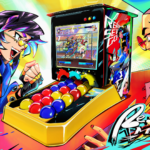
Happily! Re;MATCH a 1 vs 1 competitive fighting game inspired by Puzzle Fighting games. Players take turns pulling connected and matching marbles from a tray of marbles, and the color and number of marbles you pull will resolve a corresponding attack on your character’s move list.
In the same vein as my first game, Re;ACT, it is a skill expression game that focuses primarily on mastery type fun. All of your abilities are shown upfront, and you must figure out how to use these options to win. There are no event decks to shake things up mid game, and no new options to consider as you play. The fun in Re;MATCH is more about seeing the floor of possibilities open up as you start to understand the system and the characters.
This is pretty standard for fighting video games though. In those games, after selecting your character, you can immediately pause to see the massive list of your abilities and combos, and it’s up to you to learn how to use them to win.
Re;MATCH being demonstrated at PAX Unplugged in December 2025
How do you think mastery relates to complexity? And what are the design challenges for a game like Re;MATCH, in terms of getting that balance right?
Mastery and complexity are not directly related in my mind. Most abstract games provide fun exclusively through mastery. From Chess to Hive, the complexity might be low, but the potential for skill expression is high, leading to repeated plays being the source of joy in the game.
How do you see mastery vs discovery-style titles doing in the current board game hobby landscape, especially when it comes to crowdfunding campaigns and online marketing?
I’ve noticed that in recent years, hobby game releases – games that aren’t party games and generally cost $30 or more – tend to focus on discovery rather than mastery. With so many games being sold on vibes and people posting their opinions or reviews after just a few or even only one playthrough, it’s more important than ever to make sure that first game experience is as smooth and perfect as possible.
Games that front load too much information typically don’t have a smooth first game experience, so you want to slowly drip out the options a player can take. Giving a player a deck of cards with a ton of variety and telling them not to worry about what’s inside that deck upfront is a great way to do this, as you’ll discover new and cool options every single time you draw a different card. However, such randomness can make one group’s first game wildly different from another’s. So this wide variety of cards that feel different actually needs to produce very consistently similar outputs, ensuring that most first games deliver as optimal of an experience as possible.
I think this meta has produced a lot of games that feel incredibly satisfying on your first playthrough, constantly offering new options to explore or challenges to overcome, but don’t really hold that spark after repeated playthroughs.
Of course there are games that successfully offer lots of both types of fun, and I think those are the games that we remember. All of the most replayable deck building games are great examples of games that offer both!
I’ve already seen this game shared on social media, especially from people spotting it at Pax Unplugged last year – and I think part of that is its use of bright colours, those attention-grabbing marbles and that it generally doesn’t look like most of the other board games out there. Was that an intentional decision, in terms of potential marketing, or is this just how you wanted the game to be?
The artstyle was certainly intentional. The hardest part of selling games, or anything really, is getting people to even notice it in the first place. For Re;ACT, featuring very large acrylic standees with bases that can hold tokens was driven by what would make people stop and look when passing by the game at a convention.
Re;MATCH, however, is a really old design. When I first came up with the very first iteration of Re;MATCH, I was inspired by my favorite game at the time, Battlecon, with its very asymmetric characters and fully open information, brain-burning game play, and the idea of using marbles as a component due to the popularity of Potion Explosion and Gizmos at the time.
But after learning many lessons with Re;ACT, I realized that Re;MATCH needed a much more colorful and eye catching art style to match the energy of the marble tower.
The game board for Re;MATCH character The DJ
How did you find artists PsyOptima and machimile, and what was your process in terms of getting to the final artwork? Did you have strong ideas early on, and how much were you guided by those artists / were they guided by you as the process progressed?
Both of them were actually artists on my previous fan projects! Just between Anna’s Roundtable, Genshin Tarot, and Star Rail Tarot, I’ve commissioned over 400 artists. My vision for Re;MATCH was a much bolder and funkier aesthetic compared to Re;ACT, and both of these artists were perfect for that.
Having worked with so many artists over the years, I’ve also grown pretty comfortable acting as an art director for my teams. I’m certainly no drawer, but I’ve learned how to communicate effectively to guide my team towards my visions.
You’ve been very frank online in your opinions about AI generated imagery being used within the board game industry. Why do you think some publishers are leaning into it, despite the well-publicised concerns around copyright, ethics and the environmental impact?
I’ve become increasingly frustrated about the use of genAI to replace or supplement artists in games. To me, the issue is very existential. I am not surprised that already massively successful publishers are leaning into using AI art. There have always been companies trying to squeeze profit out of any artistic medium, from movies to books and beyond. But AI slop feels different from just disingenuous cash grabs. Environmental impacts and stolen work is one part of it, but the idea of letting AI produce the art we consume really cheapens creativity as a whole.
The joy of creativity is so fundamental to life, and the spark of inspiration passed from one person to the next is so vital for human progress. If people continue to consume these things, be it AI art in games, AI written screenplays, or AI generated music, I fear that the very light of human existence will dim.
What would you say to smaller publishers and solo operators who believe they can only bring their projects to completion by leaning on AI generators?
I can see the argument from new designers who want to make games but feel like AI is the most effective way to make their games ready for sale, either because they can’t find a publisher or they can’t afford to pay for art. To these people I would ask: Why do you want to make games? Why do you play games yourself?
I think games can be art, just like novels, music, and movies can be art. The reason I enjoy any of these things is intrinsically tied to the shared human experience I feel when consuming them. A board game’s only component other than rules are its visuals, so I believe the human intentionality behind how the game looks is just as important as how it plays. The artists who want to paint are just as passionate as the designers who want to make good games, so don’t cut them out of the process! There are tons of affordable artists on VGen, and you can always just pick up a pen and make simple drawings yourself! “The enemy of art is the absence of limitations,” so let the limitations of your budget or your art skills be part of your creative process. Just look at how Stardew Valley or Undertale were made!
In aiming for the mastery experience, does that mean you’re not too concerned about expanding this game? Because it looks to me to be ripe for expansions, especially in terms of new fighter characters. How does that fit into your mastery and discoverability theory?
I definitely want to keep adding more characters to both Re;ACT and Re;MATCH! In fact, receiving new characters and discovering their interactions with existing ones is the main source of discovery type fun in these games. This is similar to TCGs, where every new set front loads you with a ton of new options to tinker with.
But the cost of a new character for these games is much higher than just adding more variance to a deck of cards or more enemies in a miniatures game. Not only does each character require a ton of assets, but every new character is exponentially more difficult to balance and integrate successfully into the game. This is why I’ve made additional characters our primary stretch goal targets back during Re;ACT and now Re;MATCH!
Re;MATCH designer MingYang Lu
Can you give us a little background about your time in the board game industry – where did you start out, and how did you get to here?
Sure! I guess I first started experimenting with making card games like many other kids: my friend (Eric Zeringue, who still helps me with game design today) and I designed our very own very bad TCG. In college, I took things a bit more seriously by designing my own pretty bad deck builder based on isekai anime, and then I designed a not so bad fan game based on the indie video game Crawl (one of my favorite indie games of all time).
I then just kept making fan games, and eventually, I made one for Fire Emblem and posted it on Reddit. This one kind of blew up, and Kotaku even wrote an article covering it. I then just kept making print and play fan games and posting them online. I did one for Code Geass, Darling in the FranXX, and Persona 5, among several others that never saw the light of day.
Right around the time I designed the Darling in the FranXX game, I also designed the very first version of Re;MATCH. I brought it to a prototyping convention, posted it to YouTube, entered it into a design competition, and eventually signed it to the publisher Penguin and Panda, who renamed it Sento. After that, I met Chris Lin, who had his very own design for TCG that I enjoyed the core of. While Sento progressed with Penguin and Panda, I started working with Chris to completely redesign his TCG into a board game instead of a TCG, which eventually became Re;ACT.
After Covid hit, it became clear that Penguin and Panda wouldn’t be able to publish Sento, so I focused entirely on Re;ACT, brought it to several conventions, obtained my US citizenship, funded it on Kickstarter, and then quit my job to pursue board games full time.
You’ve run several Kickstarter campaigns before, for Re;ACT – The Arts of War in 2024 as well as several for dice and standee collections and other accessories. What were your big lessons learned through those campaigns, and how are they applicable to running the campaign for Re;MATCH?
Honestly, I’m still figuring things out myself [laughs]. But I will say that the most important thing for me is to always be authentic and only make things I would want to buy myself. Doing something purely to make money is a slippery slope, and I constantly remind myself that if I wanted to just make money, I would’ve stayed at my comfortable 9 to 5 desk job.
But if someone asked me for some more practical advice, specific to running a board game Kickstarter, I would say to just get your game in front of as many eyes as possible beforehand. Bring it to conventions, post playthroughs, and do whatever you can to make it eye-catching. Obviously the game needs to be good for people to stick around, but no one will know if it’s a good game if they don’t sit down to try it first! For Re;ACT, I brought it to Pax Unplugged, Gen Con, and ProtoATL two years in a row before we launched. Re;MATCH moved a bit faster, with me taking it to Pax East, Origins, Gen Con, and Pax Unplugged all in the same year.
An early version of Re;MATCH being demonstrated at the ProtoATL convention in 2018
That’s a lot of conventions! I think there’s a feeling among smaller publishers that it’s a big financial hit to attend multiple cons a year, and it can be hard to stand out against the competition on show floors. What advice would you give for attending conventions as a small publisher yourself?
Definitely agreed that cons are expensive, and I started small as well! In 2023, I attended Gen Con by myself and just offered ticketed event demos. Two of the people who played my games loved them so much that they ended up helping me teach demos at Gen Con in 2024 and 2025! Hosting events at Gen Con is free (outside the cost of travel), and in 2023 I stayed together with over 20 other indie designers and publishers in a big Airbnb to save on cost.
Another cheap option is prototyping and protospiel conventions. I attend ProtoATL nearly every single year, and its by far one of my favorite weekends every year. Many of the early prototype photos of Re;MATCH come from ProtoATL! The badges are very cheap, and you get your prototype ripped apart and rebuilt so many times that you make more progress in three days than you would have in three months. You also make so many meaningful connections with other designers and publishers, who are often avid supporters of games themselves!
I recommend exhibiting at a consumer convention only after gaining experience pitching games to strangers. Prototyping cons and hosting events lets you practice with a captive audience, but working at the booths of established publishers is a great way to practice pitching to passing customers. (I’m always hiring as well!) Another great opportunity is the Indie Games Night Market, which New Mill Industries has hosted at Pax Unplugged for the last two years. This event gives indie designers a single table to sell a small print run (think five to 50 copies) of their game, often with homemade elements.
Once you are ready, Pax Unplugged is by far the best choice as an indie publisher to exhibit at. Unlike Gen Con, Pax really cares about indies (see Indie Games Night Market), has a strong culture of inclusivity, and doesn’t allow AI grifters into their show! Standing out at a convention is definitely very hard though, and I’m still figuring that step out for myself. My booths are pretty basic looking still, but working with really great artists has worked out very well for me, so I’d recommend that as well!
I saw that you’re providing access to the full game on Tabletop Simulator for free. How important do you think that will be for discoverability, and how do you think that balances against the chance some people will just use the digital version and not back the physical campaign?
Super important. Personally speaking for board game Kickstarters, if I don’t see a playable demo, I am very unlikely to pledge. Even if I don’t have the time to personally try it, not allowing backers to try the game before they buy signals to me that the publisher lacks confidence in the game. A good game should make players want to buy it after playing it, end of story.
Not to mention the benefit of getting so many more eyes on your game to tell you what is bad about your game before you hit the irreversible button to start printing! For me, there are absolutely no downsides to having the game fully playable for free digitally during a Kickstarter, and I try really hard to ensure it’s available long before that as well.
What are your ideal goals for this campaign – what does a success look like for you, and how do you ideally see the rest of the year panning out?
For me, I’d like to surpass the number of backers I had on Re;ACT and POND as a minimum. Re;ACT had 1,730 backers, and POND had 1,900 backers. If Re;MATCH hits at least 2,200 backers, that will indicate a consistent growth trajectory for me as a publisher, so that is my real goal.
After Re;MATCH, I’ll be working on Season 2 of Re;ACT, along with several unannounced secret projects I’ve been working on for quite some time now, so please look forward to them!
I spent the last weekend hosting friends at the Gamers Ranch, a gaming-focused vacation property in the middle of Missouri. I had an amazing time, and I loved seeing the power of the tabletop community in action, especially in seeing different gaming friends intermingle.
As I reflected on the weekend, I realized that among the dozens of games played, there were 5 games that hit the table more than any others. I thought I’d briefly look at each of those games to see what made them work particularly well for events and conventions, which can sometimes be the difference for a game to break out.
Moon Colony Bloodbath: I taught and played this 6 times over the weekend, and nearly everyone played again later. Even though it’s heavier than the other games on this list, the single deck of cards (flip a card and everyone does what it says) helps a teacher to guide everyone through the first few turns. It’s also entirely simultaneous, so there’s no downtime. There’s also the dark humor of the theme and the bold name, which seemed to attract curiosity from those who hadn’t played.
Lord of the Rings Trick-Taking: The cooperative nature of this game creates a sense of camaraderie; camaraderie is often a primary motivator for someone to attend a gaming event. Also, the short playing time and the variety of each chapter–all based on a simple core system–created a “just one more game” mentality.
Bomb Busters: I’ll continue what I said above about the Lord of the Rings trick-taking game, as this applies to both: I’ve noticed at gaming events that many people are hesitant to commit to a 3-hour game, yet they’ll end up playing short, escalating, cooperative games like Bomb Busters for hours. I love the idea of breaking a longer game into bite-size pieces.
Magical Athlete: Everything about the product design of this whimsical racing game lends itself to events. While it asks players to make a key decision before the game starts (which characters you select in the draft), the rules are so bare-bones that this isn’t a problem. I noticed that people seemed to gravitate towards this game after playing a heavier game, as it’s a great brain break.
Mindbug: This snappy two-player dueling game has a unique hook that seemed to intrigue people (twice per game when your opponent plays a card, you can claim it as your own instead). An accessible, quick 2-player game is really nice for an event when a few people are waiting for longer, larger-group games to finish.
Also note that all of these games are super fast to set up.
One other commonality between these games is that they all had someone championing them. This can make a huge difference at an event or convention: If there’s someone visibly excited to play a game they already know, people will gravitate towards that game.
Have you noticed a game spreading like wildfire at events or conventions? What is it about that game or the situation that resulted in the game returning to the table over and over?
I just spent a delightful weekend at Geekway Mini here in St. Louis playing tabletop games–including several play-and-win games–with a variety of wonderful people. Among some new-to-me favorites, I also taught and played Origin Story, Viticulture with the new expansion board (subscribe here for more info), and an epic 7-player game of Scythe on a friend’s stunning custom board.
With many game conventions big and small happening around the world in 2026, I thought this might be a good opportunity to shine the spotlight on the amazing play-and-win system that originated with Geekway many years ago. Also, tickets for the bigger version of Geekway will be available starting this Friday–I’d love to play a game there with you in May if you decide to attend!
***
My favorite way to market our products is to facilitate and encourage them to get to the table more often. Your table, my table, the tables of reviewers, ambassadors, etc–any table will do. The more our products get to the table, the more they’re exposed to people, and hopefully the more fun people can have with them.
This is a big part of the reason why we support our products with reprints, expansions, and ongoing reviews, as well as focusing on accessibility (Watch It Played videos, ability to teach to new players on the fly instead of frontloading rules, etc). Our goal is to bring joy to tabletops worldwide, but a key element is that our games must actually get to the table.
One of my favorite ways to accomplish this goal is through play-and-win donations for game conventions and 100+ person events.
Play-and-win is a convention concept where people can check out a game, play it, and then enter their name in a lottery to win that specific game at the end of the convention. If I donate a play-and-win game to a convention, it can be experienced by dozens and dozens of people in a short amount of time. Only one of those people will win it, so if other people liked the game, they’re now informed in their decision to purchase it later.
I’ve been talking about play-and-win on this blog for a while after discovering it at St. Louis’ own Geekway to the West (which I’m attending again this year–I highly recommend it), and I’ll post those links at the bottom of this entry. Stonemaier Games sends dozens of games each month to support conventions around the world.
Today I’m going to focus on the play-and-win Google Doc that I created and maintain, as well as my current approaches to maximizing the potential of play-and-win for publishers, conventions, and gamers.
Publishers
If you’re a publisher who likes the play-and-win system, but you don’t like getting solicitations from hundreds of conventions, the Google Doc is for you. You can simply enter your information on this tab, which communicates to the participating conventions that you’re in the know and don’t need to be contacted individually.
As a publisher myself, my process for sending out play-and-win games is that I have a calendar alert late each month to remind me to check the Google Doc for conventions happening 2-3 months in the future. For example, today (mid-January) I’m looking at conventions happening in March and April. Conventions have told me that this advance notice is really helpful, particularly so the coordinators can tell vendors which games are coming in time for them to stock up via distributors.
The number of games I send to a convention depends on the size of the event. Sometimes the play-and-win coordinators enter their information on the Google Doc and forget about it, so I help to remind them of what the package is by including the words “play-and-win” as part of the address label.
I try to keep our ambassadors informed about the various conventions that feature our play-and-win games. If any of them attend those conventions, they can make sure to drop by from time to time to see if players have questions. Otherwise, you don’t need to be worried about having teachers present–people who use play-and-win are usually comfortable to learn the game from the rulebook, and random fans of the game often stop by to help out.
Last, while we donate our games to play-and-win sections for free, it’s perfectly reasonable for you to offer a convention a discount instead of a free game. This can actually be helpful to the convention, as it lets them buy exactly what they think will be the most exciting for their attendees (instead of letting you choose).
Conventions
If you’re completely new to play-and-win, read this blog entry about the core details (or these instructions on the Geekway website). Then take note of the following:
Please enter your convention on the Google Doc (use open rows at the bottom of each month or insert a new row). In doing so, you’re committing to use any contributed games for play-and-win, and you’re committing to actually having a play-and-win section with at least a dozen total games (even if it means allocating part of your convention budget towards buying games specifically for this purpose). You can now indicate if you prefer different games or multiple copies of the same game.
In filling out the Google Doc, there’s no need to contact publishers–particularly publishers on this tab–to solicit donations. You will either receive games 30-45 days before your event…or you won’t, in which case you have plenty of time to purchase games to fill your play-and-win section.
At least several weeks before the convention, tell vendors which games were donated for play-and-win so they can stock those games at the event. The play-and-win section should close (and winners announced) before the vendors close their booths.
When you receive the games, prepare them to be played (i.e., punch the punchboards, open shrinkwrapped decks of cards, sort tokens, etc). This serves the attendees hoping to show up and start playing.
It never hurts to follow up with a publisher after a convention to let them know how their games did in the play-and-win section (number of plays and ratings from participants). I understand that this is extra work, and I won’t ever hold it against a convention for not doing so, but it’s really nice when conventions do this.
I recommend only letting each person win at most 1 game for the entire event–that way you spread out the prizes among the most people. Also, instead of interrupting the event to announce the winners, simply post them at a few key places around the convention hall or on an online forum designated for attendees to check.
If you like the idea of play-and-win, feel free to check out the conventions listed on the Google Doc. You might discover a nearby game convention that you haven’t heard of.
If you’re new to game conventions, you might be pleasantly surprised by them–especially the type of convention where you just play lots of games for a few days. I’m an introvert who does not get excited about big events, but my experience at Geekway is consistently amazing. I really appreciate people who have invited me to join their game or when someone teaches a new-to-me game, and I’ve tried to be just as welcoming to others. If you attend Geekway in May and you see me, please say hi–I’d love to play a game with you!
Bōken Games has revealed Song of the Wildkin, an upcoming co-op dungeon-crawling adventure board game set in a rich fantasy world of anthropomorphic animals and nature-based channeling
Dynamite Entertainment has been publishing Army of Darkness comic books for two decades, feeding hungry fans with further tales featuring Ash Williams and the entire extended mythos.

 Anmelden


 Publisher Jamey