The winner of the 2026 Jogo do Ano award was recently announced. It’s Ants, designed by Renato Ciervo and Andrea Robbiani and published by Cranio Creations. It beat out the other nominated games (Ada’s Dream, Galactic Cruise, Luthier, and Speakeasy) … Continue reading →
There’s undoubted utility to a bag of holding, but I always imagine everything jumbling together like loose chicken parts. Magical tomes next to tavern dinners next to razor implements, sloshing around to produce a pulpy slurry.
Designed by Molly Johnson, Robert Melvin, and Shawn Stankewich — best known for Point Salad and Verdant, although my course of choice would be the excellent TEN — Satchel Quest might be the first game to really understand the problem. This is a bag-builder only slightly in the vein of The Quacks of Quedlinburg, featuring hints of that title’s press-your-luck gameplay, but really emphasizing the disorderly nature of a magical burlap sack where one’s potatoes are stored beside mana crystals and radioactive artifacts. For example, you’ve decided to hold not only an entire arsenal in your satchel, but also a whole bunch of monsters.
If that sounds like a bad packing decision — and I’m saying this as someone who grew up schlepping a half-dozen hardbacks on any given weekend trip — then rest assured there’s a reason for all those odds and ends.
Exploring a dungeon, one chip at a time.
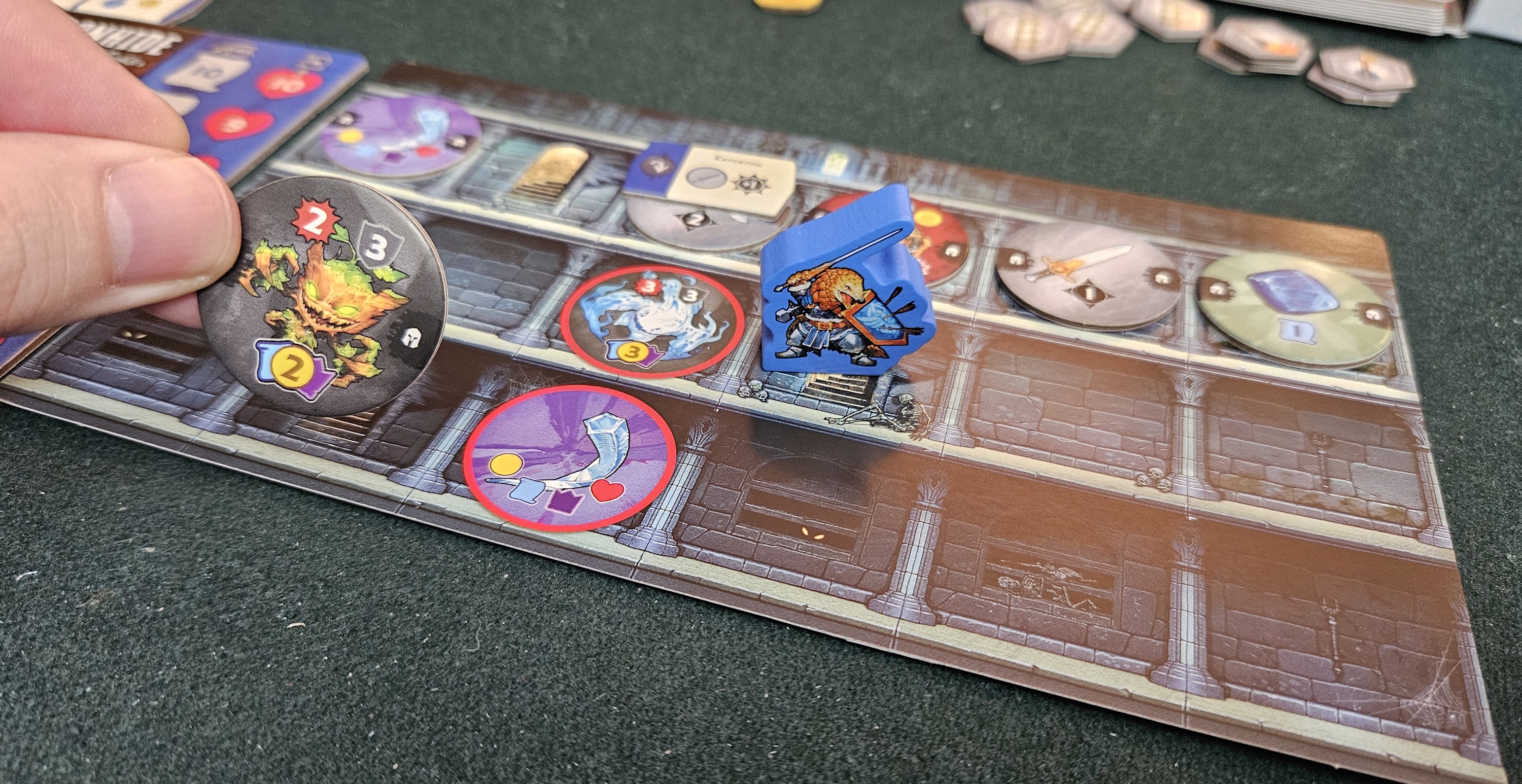
The centerpiece of Satchel Quest is an extended puzzle. Provided a dungeon mat, complete with a few enforced spaces like stairwells and maybe a monster or artifact, you draw chips from a bag and place them somewhere on your current floor. Often, these chips give you opportunities. Gold! Gems! Artifacts! Weapons! Whole suits of armor!
However, chips often present dangers as well. Or, if we’re in a sunny mood, opportunities. Chests double as traps, while monsters whittle away as much of your health as possible. It behooves any adventurer to tread carefully. While death doesn’t end the game outright, the penalties for bottoming out your health track are severe. This is excellent design, by the way. While there’s some rubber-banding in Satchel Quest to prevent errant players from falling too far behind, it’s hard to recover from a botched dungeon.
What soon becomes apparent is that Satchel Quest is as much about placement and foresight as stretching your luck to its absolute limit. Every type of chip presents its own conundrum. Gems only unlock their potential when placed next to as much gold as possible. Artifacts like to be clumped together for maximum returns. Chests are a whole mini-puzzle. When bordered by exactly the right chips, you crack them open without harm. Too few and you take damage; too many and you break them open through sheer brute force… but still take injuries from their protective trap.
Of course, the most impactful type of chip is the monster. You can dull their attacks by positioning shields and armor nearby, while slaying them requires careful arrangement of your own swords, bows, and staves. This isn’t as easy as it sounds. Swords only hit adjacent monsters. Bows and staves smack entire lanes, but only along diagonal or orthogonal lines respectively. In general, this requires you to produce little defensive clusters around shields, while weapons produce fields of damage.
Hopefully this one won’t go extinct.
But this is where your satchel comes into play. Only rarely will things go according to plan. It isn’t uncommon to place a shield exactly where it needs to go, ready to block damage from three monsters at once, alongside an empowered staff for blasting the beasties. Only then you’ll draw a bunch of gold tokens, a sword that isn’t needed at the moment, and a gem that would pair nicely with the gold, if only that’s what you were trying to do right now.
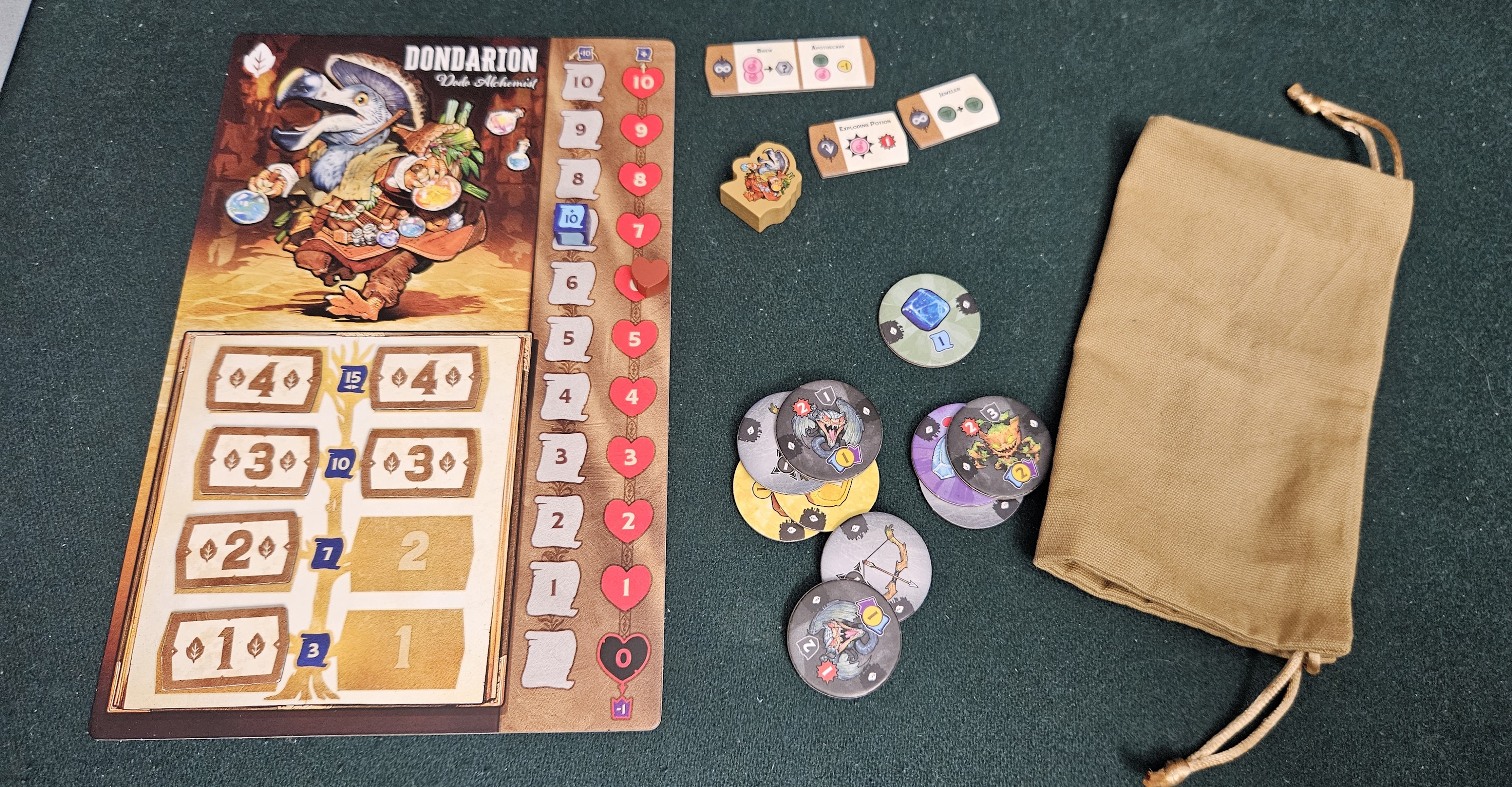
It pays to pivot. It also pays to learn the tools of your trade. There are items, tools like keys for breaking past a sticky chest or torches that serve as extra draws from your satchel. Each hero also gets their own set of abilities, like the Dodo Alchemist’s taste for potions or the Pangolin Fighter’s layers of armor. It helps, too, that chips are double-sided. If you can’t possibly tackle that monster right now, there’s usually something helpful, or at least benign, on its reverse face.
This puzzle phase is Satchel Quest at its best and brightest. Everybody plays simultaneously, a barbed blessing if one player happens to be slower than everyone else, but considerably pacier than taking turns. And while most players will usually use every last chip in each dungeon, somewhat undercutting the game’s press-your-luck ethos, this puzzle is always engrossing. That goes double when things are going wrong. Johnson and company have done a solid job of ensuring that their game is at its most interesting when nothing is quite going your way, forcing you to use every tool at your disposal to come out of the dungeon alive.
Shopping for new chips.
If you detect a Ginormous But lurking around the corner, you’re only half-right. For the most part, the remainder of Satchel Quest is similarly polished.
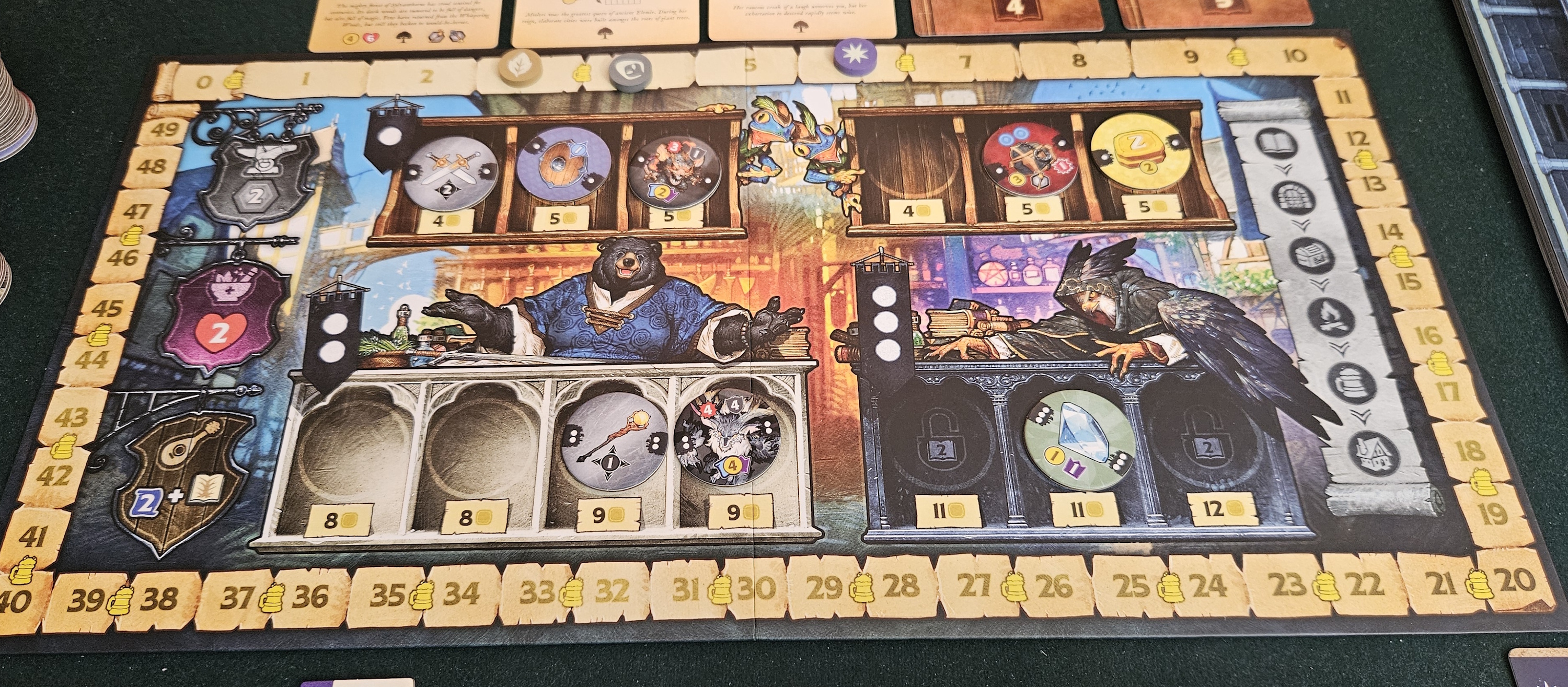
Consider the shopping phase, which uses the game’s double-sided chips to its advantage. Letting everybody check the reverse face of each chip would have been a horrible time-sink. Instead, everybody is allowed to “browse” one chip per turn, peeking at its reverse side before buying something — and that purchase might be a different chip entirely. This ensures there’s still an element of surprise, but also lets players wield some control over their destiny. No endless token-checking required.
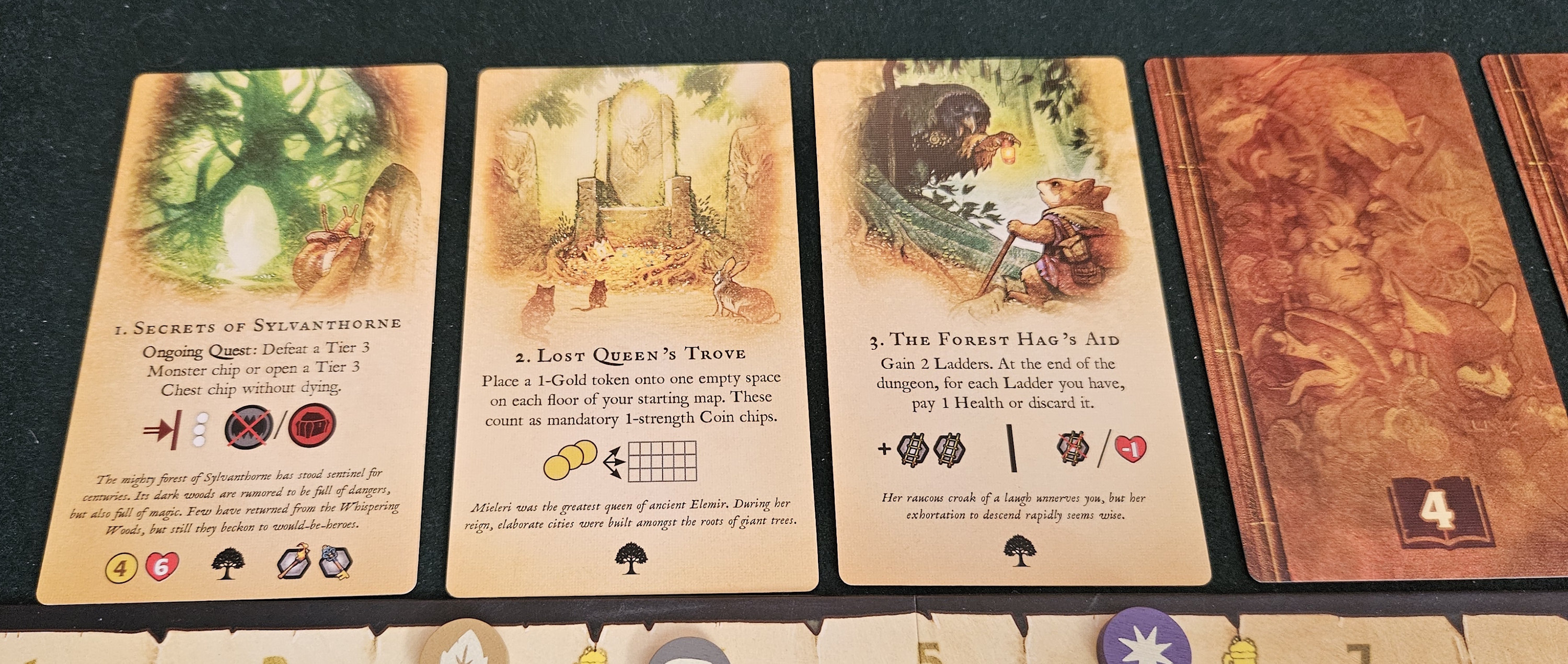
Or there’s the way new adventure cards vary the puzzle from round to round. One dungeon might be rotated ninety degrees, requiring you to venture down a shaft with little room to maneuver, while the next is filled with placeholder gold that makes gems more valuable but combat unusually claustrophobic.
If anything, the Lesser But is that Satchel Quest overstays its welcome. Five dungeons is a lot to tackle, especially when you’re only adding one to three chips per round. This isn’t enough to mix up your bag’s composition, at least not quickly. While your bag will hold a different mishmash of weapons and monsters between the first and fifth dungeon, its changes are incremental, and therefore the puzzle feels samey from one delve to the next. This gives the game a fatiguing sensation, especially with additional players necessitating pauses while adventuring or shopping. Unsurprisingly, the solitaire mode sees the problem evaporating.
Every round has its own wrinkles.
On the whole, then, Satchel Quest is an admirable effort. It isn’t as varied or as punchy as it could have been, but its central puzzle is well crafted, with plenty of smart touches that ensure every draw presents its own attack of anxiety. I would file this under the “play a few times and pass it along” category — much like this bag of holding. Curse my stars for thinking I could store my good adventuring boots next to these vials of beholder pollen.
A complimentary copy of Satchel Quest was provided by the publisher.
(If what I’m doing at Space-Biff! is valuable to you in some way, please consider dropping by my Patreon campaign or Ko-fi. Right now, supporters can read the next installment in my series Talking About Games, this time tackling the topic of what makes a good list! Naturally, the piece includes a list.)
The August 2026 Monthly Debrief Video, which is the 8th episode in Season 6 of this series, saw us discussing American Revolution Wargames. As you may know, I really enjoy the history of the American Revolutionary War. I have read dozens of histories on the subject, with my favorite being Robert Leckie’s George Washington’s War: The Saga of the American Revolution, and it never ceases to amaze me how a group of ragtag rebels were able to best an entire global Empire in open rebellion. The reason for that was the patriots resolve and their ability to run away when outmatched to fight another day when they had a better advantage and not necessarily because they were better armed, or drilled or disciplined. I think that their desire to truly be free was the main difference but that is up for speculation. I love the games on this subject and have played nearly 20 and I was surprised at the number when we had this discussion.
Also, as usual, we covered the games we played in August as well as the games we plan to play in September and had a short discussion of our plans to attend the Gaming the American Revolution Camden 250 Event in Camden, South Carolina sponsored by GMT Games.
We will remind you here that we are fortunate to be continuing our relationship with Noble Knight Games as the sponsor for our Monthly Debrief Video series. In case you don’t know, Noble Knight Games specializes in hard to find games but also carry all the new releases. But what makes them truly unique is that you can find some of the rarest games, long out of print games, hand made games, imported games from overseas, etc. Thanks to them for their sponsorship and we hope that you will consider them first when looking for the games we cover.
Deep in the tropical jungle to the west of the Everdell Valley lies the country of Emerland, a vibrant land known for its artistic and musical culture, and for its abundance of natural resources, including valuable gems mined from its many underground caverns. Tiny critters found here — mostly insects — are fastidious and clever Helpers, often assisting the larger critters in their work and in optimizing or bringing beauty to their cities and homes.
The jungles are vast and dense, and expeditions into the further realms of the land are undertaken often. There was once a mysterious civilization that dwelt here, long lost to history, but archaeological discoveries are beginning to shed a light on the ancients.
In Emerland, you send critter Workers to various locations on the board to gather resources. You use these resources to play cards face-up in front of you, forming your jungle city and helping you to score points. Each turn, you take one of 6 possible actions: Place a Worker (with or without Helpers), Place a Helper, Play a Card, Use an Artisan Card, Excavate with your Archaeologist or Prepare for Season.
▪️ Stonemaier Games announced the release of their big Euro game Braided Skies to be available this November, from designer Dan Germain (Grand Central Skyport). This game plays 1-5 players and has a box playtime of 60-90 minutes. Sounds like we will expect to see more in this Smoking Bones universe!
From the newsletter:
In Braided Skies, you take on the role of an airship captain in the Shallows, seeking to build the greatest magical travel company in the Northlands. Your mission involves exploring land and sky for new wonders, upgrading your travel company operations, and picking up tourists—all while maintaining a steady supply of tapstones, the magical gems that fuel the Northlands. Accumulate fame to become the Commodore of the Clouds!
This is the first in a series of games set in the Smoking Bones universe created and illustrated by Andrew Bosley (Everdell, Tapestry, etc). Braided Skies is designed by Dan Germain.
▪️ Forest Shuffle: Smoky Mountains from Lookout Games is coming out this October! From designer Kosch (Forest Shuffle). This is a new stand-alone game that uses most of the same mechanics you find in the other Forest Shuffle games, with an added river mechanic. If you thought the other Forest Shuffle games were gorgeous, you will not be disappointed with the Smoky Mountains foliage and wonderful art by Toni Llobet & Judit Piella. This game is played by 2-5 players in 60 minutes.
From BGG:
A new continent awaits in the Forest Shuffle universe: After exploring Central Europe in Forest Shuffle and the wilds of southern England in Forest Shuffle – Dartmoor, this new standalone game invites players on a journey to North America.
As the third standalone game in the Forest Shuffle series, Forest Shuffle - Smoky Mountains takes us to this popular North American National Park. Building on the familiar gameplay of the series, it introduces new species and clever twists in mechanics. This keeps the experience as fresh as the bubbling waters on the new terrain cards! Here’s what Forest Shuffle – Smoky Mountains is all about:
New terrain types centered around water, playable on their own or tucked as universal waters under trees. New synergies between flora and fauna, all revolving around the element of water In addition to a variety of species around the water, the game is also home to various large animals, such as black bears or bobcats.
▪️ Fugu debuts at Spiel from Helvetiq. From father and son designers Flavio Foches and Riccardo Foches, this is a small box card game for 1-4 players and plays in 25 minutes.
From BGG:
Bannerfish love sticking closely to their buddies. Pufferfish prefer their space. Keep bannerfish together and pufferfish apart! Octopus and coral also play an important role in your biome, so place them wisely to score more points. Score by building the best hand. But here’s the twist: everyone starts with face-down cards and must slot new cards into their hand in ascending order, revealing their strategy one card at a time.
1. Start with your cards face-down. Draw a card from the center. 2. Place it face-up in ascending order. Then reveal the adjacent card. 3. Keep your sea dwellers happy to win, but avoid penalties.
Who will dive the smartest and reel in the most points?
I’ve mentioned my companion, The Imp of the Perverse from time to time. The Imp sometimes cajoles me, trying to replace good judgement with what he considers “fun.” Often the Imp is quiet; but when we’re playing Bridge he is quite chatty. Luckily, my particular Imp listens to Reason. He won’t consider an obviously bad decision fun. But if it isn’t obvious … or he can come up with a plausible argument …
Sometimes it is tough to distinguish The Imp’s blandishments from stylistic differences. For example, should you make a takeout double with a two card minor (assuming you have 4 cards in each major, enough points, etc)? A national champion told me “You need to pass those hands,” but I believe that East Coast (Washington) Style is more case-by-case.
At least, that’s what the Imp said.
One of my regular partners (who, like most people, cannot see the Imp or hear his soothing words) summed it up as “You think too much” and just advised me to bid the hands straight down the middle and let our natural advantages win us our fair share of games. The Imp scoffed.
In The Imp’s defense …. He is definitely not right all the time, but reasonably often and — right or wrong — his advice leads to spectacular stories. He makes me a sometimes difficult partner, but that means he makes me a difficult opponent.
At a two session special club game (Their “Fifth Tuesday of the Month” game), the Imp keeps motioning towards the “breakfast” spread. Homemade cinnamon buns (cooked with bourbon), a birthday cake, donuts, a crumble cake, ginger snaps, a banana pudding. A full table. In our younger days the Imp would gorge himself and talk up each morsel until I succumbed.
Nowadays he’s also carrying some extra weight, so his heart isn’t really in it. I have a few pieces of pineapple and strawberries.
Early on the Imp doesn’t even have whisper much. We start against the director (the strongest player at the club who is not in my three-way-partnership1), who is my RHO. Over her 1 Heart bid I something like
S: AQxx H:xx D: KJ C: Axxxx. The Imp doesn’t need to prompt me at matchpoints. We’ve had this discussion for years. Yes, a double could work out badly. But partner will prioritize spades and if we end up in diamonds the opponents will strive to compete (each assuming we have a real fit). Yes, I would prefer to bid Raptor, but this partner doesn’t play it. So I double, RHO raises to 2 Hearts and it goes all pass. During the player, declarer carefully watches my discards, assuming I started 4=2=3=4 and misses an overtrick. When she comments “I never thought you’d double with that hand,” the Imp pokes me to make sure I noticed the comment.
We move away from the breakfast spread, so now the game has the Imp’s undivided attention.
I pick up S:AQxxx H:QTxx D:8x C:xx and partner opens 1 Diamond. I have an easy 1 Spade bid. Partner rebids 2 Diamonds and the Imp clears his throat. This is another argument we’ve had so often I can hear his words. If he spoke up, he knows it would annoy me. A simple “ahem” is enough. But (for your sake)
Imp — Bid 2 Hearts. It shows 5 spades, 4 hearts. Perfect description. There’s a shot you can get to 2 Spades or 2NT and this is matchpoints. Either contract would outscore two diamonds.
Me (before I was corrupted) — 2 hearts is forcing. I admit it would be perfect if it wasn’t. And while 2 Spades will probably outscore 2 Diamonds (if partner has three), 2NT only outscores if it makes. They’ll know to lead a club its probably devastating. We probably have an 8 card fit in diamonds. Also, What if partner bids 3 Hearts? (If she has 4 hearts but not enough points to reverse) or worse, has three good hearts. Then we’ll be too high. And if partner has good clubs and 14, then she might bid 3 NT.
Me — And 3 Diamonds is strictly worse than 2 Diamonds. All downside, no upside.
Imp — It’s matchpoints, the size of the disasters don’t matter as much as frequency. In any case, fine, pass. Be the dummy. See if I care.
I bid 2 Hearts. Partner considers this only briefly before bidding 4 Hearts. Even the Imp looks surprised, but we’re both eagerly awaiting dummy. RHO leads the ominous diamond six.
It’s not the dummy we expect (6 diamonds, 4 hearts, ~14-15 points), but it might be the dummy we deserve.
Dummy S:x H:Axxxx D:KJT932 C:x
My Hand S:AQxxx H:Qxxx D:84 C:xx
The Imp nods approvingly. Partner might not have an Imp of her own, but at least she recognizes the amazing potential playing strength of her hand. (Not her fault if I don’t have my bid). Some would pass that hand instead of opening! Meanwhile I’ve got problems. I’m off two aces, at least a trump trick, and probably two diamond tricks and a diamond ruff to boot.
Another thing about the Imp — he picks his spots. He’s much louder when the opponents are weak. “Maybe it’s wrong, but they’re weak and two wrongs make it right!” is his mantra. Now he just has his shorthand of “Punish the weak!” as a closing argument. That might have been on my mind when I bid 2 Hearts. Now it’s time to deliver.
I’ve taken my time at trick one (The Imp is quiet … if too many of his bids result in disaster, I’ll stop listening …. for a while). I do an asset survey of spot cards. I have a number of options, and I should probably fly with the king, but there’s just a chance that LHO has lead from Q87 of diamonds. It would be a terrible lead, but I’ve played against this pair before. There’s a reason the Imp’s leering nods in their direction work.
I play the Jack and when RHO produces the queen I follow with the 4. RHO leads a club through. LHO wins the jack and tries to cash a high club. I ruff and cash the heart ace. RHO drops the king. Nice, but JT is still around, and a trick. But at least they won’t be on lead before the crucial point.
“Small diamond”
RHO now grimaces and thinks while the Imp shivers expectantly. When she plays the seven he lets out an ungracious whoop! as my 8 wins and now the hand is under control. Queen of Hearts. Ace of spaces, ruff a spade, ruffing finesse against the diamond ace to set up diamonds. LHO can ruff in whenever, but the diamonds are set up and dummy still has a trump entry to get to the rest of the diamonds.
The Imp pulls out a cigarette and smokes it, languidly, and I admit it. That was good. Perhaps I should have flow the king of diamonds on trick one to really sell the fact that I had a singleton, but a) that inference would probably be lost on RHO and b) I’d feel terrible if it really was a lead from Qxx.
Later on I overbid and we get to 5 diamonds. After cashing two tricks the opponents never even try to cash their two spades, instead giving me an obvious ruff and sluff to let me make. Even the Imp’s eyes grow wide, and he stays silent. That wasn’t even a swindle, just legitimate terrible play.
During Lunch the breakfast tray beckons, but the Imp seems satisfied that I have a bit more carbs from the lunch table than I should.
After lunch I pick up S:QT8xxxx H:QJxx D:– C:Ax and it goes pass-pass to me. We are vulnerable.
This is a hard hand. There’s an argument for any of spades (1-4). But — perhaps shaken by the number of close calls I’ve had so far — I decide to open 2 Spades and the Imp merely shrugs. Anything could be right. I might miss a game (but partner is a passed hand). Hearts might be a better place to play, but Hank’s Rule (“7-4 hands are one suited”) applies. I have a seventh spade (normally a no-no for a weak two bid), but they aren’t great. Being vulnerable I’m more worried about -200.
LHO bids 3 diamonds (unsurprising) and partner bids 3 Spades. RHO thinks for a second and bids 3 No Trump.
Four eyes (mine and the Imp’s) narrow in thought. With a fit, our hand can be evaluated as a 5 loser hand with Losing Trick Count (Really 5.5 as I count Qxx as 2.5 losers, but with a 9 or 10 card, 5). RHO undoubtedly has the Ace of King of spades, but also probably a fitting diamond card to bid 3NT as a passed hand. Partner has no Imp whispering in her ear, so call it 7+ points.
(Hank’s Imp scares even my companion, so I couldn’t assume that if he were across the table from me).
And if none of them are in diamonds ….
I bid 4 Spades. It such an obvious two-way shot. I’ve got good odds of making, and if not maybe 3NT makes (via one spade, six diamonds and AK of hearts or something similar). “You don’t pre-empt and bid again,” is the rule. But the Imp has Zia on his side. And its not like I was bidding 2 Spades as a pre-empt. It was more a tactical decision. And now I have a lot of information.
It goes pass-pass and RHO doubles. LHO leads a top diamond and dummy hits with
Dummy S:Axx H:KTx D:xxxxx C:xx
With my queen of spades behind the KJx, there is nothing to the play. I lose a club, a heart and a spade. +790.
From “Matchpoints” — When presented with the choice between an underbid and an overbid, make the bid that is more likely to get you to the correct trump suit. ︎
Luxembourg’s hospitality industry has named trick-taker Pili Pili as its board game of the year, continuing an eight-year initiative aimed at getting modern hobby games onto the tables of cafés, bars and restaurants.
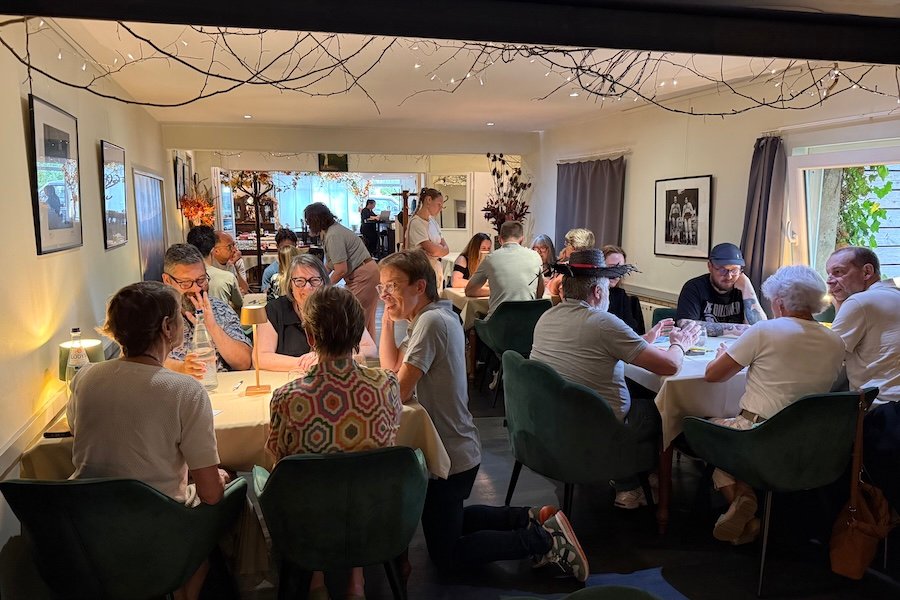
Rather than solely recognising the best game of the year, the Bistrospill award is designed to encourage hospitality businesses to offer games for their customers to play, with the aim of reviving a tradition of cafés and bistros as spaces “buzzing with social life, where bonds were forged over a game of cards or dice”.
Bistrospill been run since 2018 by Horesca, Luxembourg’s association of hotels, restaurants and cafés, alongside the country’s biggest board game club Spillfabrik.
Horesca, which represents about 2,900 businesses, said it wants to re-establish tabletop gaming as a “vibrant part” of Luxembourg’s hospitality culture, harking back to the popularity of trick-taking games such as Whist and Belote in the 19th and early 20th century.
The organisation has persuaded cafés and bars to hold gaming afternoons and evenings, while participating businesses have been offered kits including posters, simplified rules, printed beer mats and suggestions for activities.
Its latest material also encourages hospitality businesses to keep a small selection of games available to customers, arguing that venues do not need to become dedicated board game cafés, and that a small shelf or clearly identified box of carefully chosen titles can be enough.
Spillfabrik is responsible for preselecting games suited to the bistro environment as part of the initiative, focusing on titles which are easy to explain, compact enough for café tables, playable by several people and sufficiently interactive to work in a social setting.
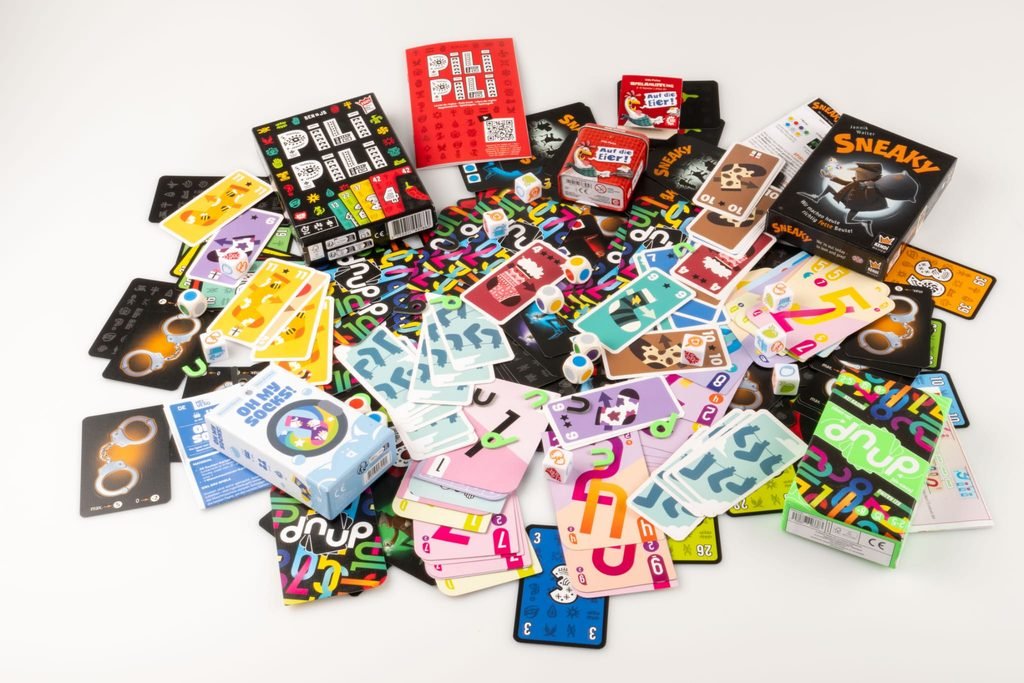
Publishers submitted 76 games for this year’s Bistrospill, with Spillfabrik whittling those down to five finalists – Udo Peise’s design Auf die Eier, Kei Kajino’s dnup, Antoine Bauza and Théo Rivière’s design Oh My Socks! and Sneaky, by Jannik Walter, as well as eventual winner Pili Pili.
Players predict how many tricks they will take each round, receiving penalties if they miss their target, while mission cards alter the rules as the game progresses.
The game’s roughly 20-minute playtime, compact card-based format and simple rules were among the elements highlighted by Bistrospill organisers as making Pili Pili particularly suited to cafés and bars.
Bake or Break started in a somewhat unusual place for a board game...behind the counter of my cafe in Osaka, Japan. I run a picture book cafe called Cafe Storybook, where people come not only for the picture-book-themed food and drinks, but also to read books and spend time together. The cafe looks peaceful and relaxed from the outside. But in the kitchen, it is a completely different story.
Inside Cafe Storybook
[heading]From Playing Games to Making One[/heading] Outside of running the cafe, I like playing board games with my friends and going to board game events. After I opened the cafe, I started hosting board game events there as well. I wanted to create a place where people could meet, play together, and share that happy time around a table. I have always been drawn to cooperative games such as The Mind or The Crew. I like the feeling of having a shared mission, discussing what to do, and working things out together as a team.
But I also noticed that there weren't many cooperative games that captured the kind of chaotic teamwork I experienced in the cafe. That made me think 'What if I could turn that experience into a cooperative board game?'
Hot Cakes made in Cafe Storybook
Have you ever played games like Overcooked? During the busy hours in that cafe, there never seems to be enough time for everyone to keep up with their own responsibilities. One person is preparing a drink. Someone else is making a cake. Suddenly, two people need the same ingredient. Someone forgets an order. And before you know it, everyone is moving in the same direction.
That feeling of “We are all trying to help, so why is everything becoming more chaotic?” became the starting point for Bake or Break. I wanted to make something inspired by that feeling, but not simply recreate it as a board game. I love the way those games turn simple kitchen tasks into complete chaos. But I didn't want to make a game about running a perfect cafe, I wanted to make a game about trying to run one together just like in my cafe.
[heading]Designing the Game[/heading] At the start of the process I knew I wanted three things :
● First, it had to be cooperative.
● Second, it had to be easy enough for families and casual players to understand.
● And finally, it had to create the kind of funny chaos that happens when several people are trying to work together at the same time.
I wanted the chaos to come from communication and prediction instead. So I choose Simultaneous Action Selection which is simple and has an element of surprise. You can't see what the other players are choosing. You have to read the table, and sometimes you have to take a risk. That made the game much easier to play around a table while still creating the same feeling of a kitchen getting out of control.
Early Sample Token
Everyone chooses an action secretly, and everyone reveals it at the same time. Just like in a cafe when preparing an order. Someone thinks I'm going to help the other person by preparing the ingredients in the last order. Another player thinks 'Someone probably needs to prepare ingredients, so I'll do it too.' And a third player has exactly the same thought.
Everyone reveals their cards. The three players end up choosing the same action. No one completed the order. “Wait, I thought you were doing it!” Suddenly everyone is laughing, and the kitchen is falling apart.
Event Cards of Bake or Break
I also wanted the game to be accessible to children, but I didn't want adults to feel like they were playing a children's game. The solution was to make the rules easy but the decisions meaningful.
A child can understand 'I need to make a cake.' Experienced players can think 'If I choose this action, the other players might choose it too, so maybe I should do something else.' The same rule creates different levels of thinking depending on the player. It became a game that could be enjoyed by the whole family. Which was exactly what I wanted.
[heading]Making It Feel Like a Picture Book[/heading] There was another part of the project that was very important to me. Since Cafe Storybook is an actual picture-book cafe, when I started thinking about the visual identity of Bake or Break, I wanted to bring the feeling of picture books into the game.
COPECO's Book Display in Cafe Storybook
That's when I thought of COPECO. COPECO is a Japanese picturebook artist and illustrator who focuses on animals and food. She sometimes combines the two in playful and unexpected ways. Her art has a strong sense of childhood, with cute animal expressions and illustrations that seem to have their own little stories.
But there was also a more personal reason why I wanted to work with her. When I first started my Cafe, I launched a crowdfunding campaign to help open my cafe. COPECO supported that campaign, and we later organized a collaboration event together.
From the very beginning, one of the things I wanted to do with the cafe was to introduce Japanese creators and their work to people from around the world. So when I started imagining what Bake or Break could look like, COPECO's art was actually the first image that came to my mind. Her illustrations bring warmth and cuteness to the cafe, while the game mechanics create a little bit of chaos underneath that funny, cozy world.
I designed this game to look like a picture book
There is also a little story behind where the game might go next. COPECO loves Chinese food, which gave me an idea for a possible future expansion. Maybe one day, the kitchen won't just be making cakes. Maybe we'll be cooking something completely different. I already have some ideas brewing in my mind.
[heading]From a Cafe Experiment to a Real Game[/heading] Bake or Break is my first original board game, and the process has been very different from simply designing something on paper. I started testing ideas with my family and friends, until the ideas matured. I made prototypes and played and tested them with customers, staff, designers, and other players who all became part of the development process.
Bake or Break first design on paper
Every playtest taught me something, from beginners to experienced gamers. At first the rules made it really hard to complete even one order. Now, the final game is much simpler than my earliest prototypes. But I also think it is much closer to the original idea. Sometimes a rule looked incompleted, and sometimes removing a rule made the game much better.
Playtesting the game with staff in Cafe Storybook
The title also came from the idea that the team can make or break everything. When everyone works together, the kitchen runs smoothly. When things go wrong, everything can quickly fall apart.
Can you communicate well enough to keep the cafe running? Can you predict what your teammates are going to do? Can you resist doing the same thing as everyone else?
But maybe none of that is really important. What matters is having fun with your team, laughing when everything goes wrong, and enjoying the chaos together. That is Bake or Break. A small cooperative game about cakes, teamwork, and the beautiful chaos that happens when everyone is trying to help.
I hope you'll enjoy stepping behind the counter of Cafe Storybook.
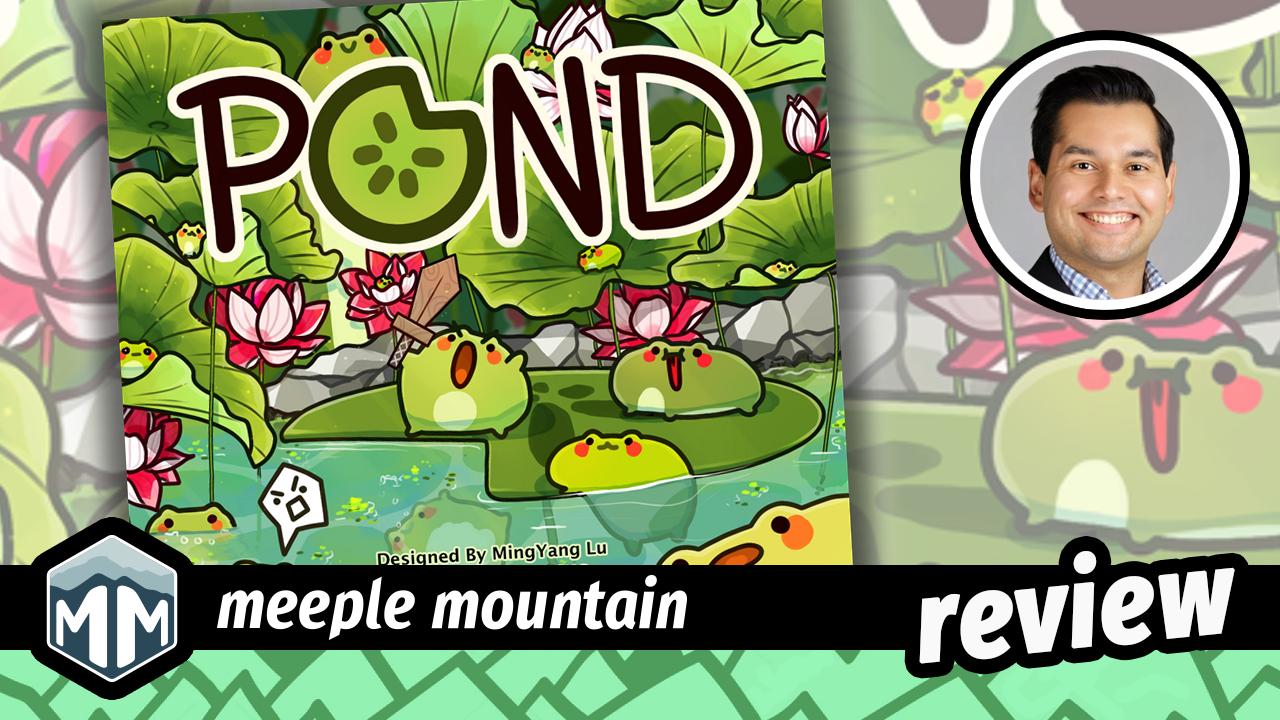
This adorable frog game caught my eye at Gen Con this year as I walked by Brother Ming Games who, despite not having a traditional booth, had a powerful presence thanks to their games and infectious enthusiasm in the gaming hall.
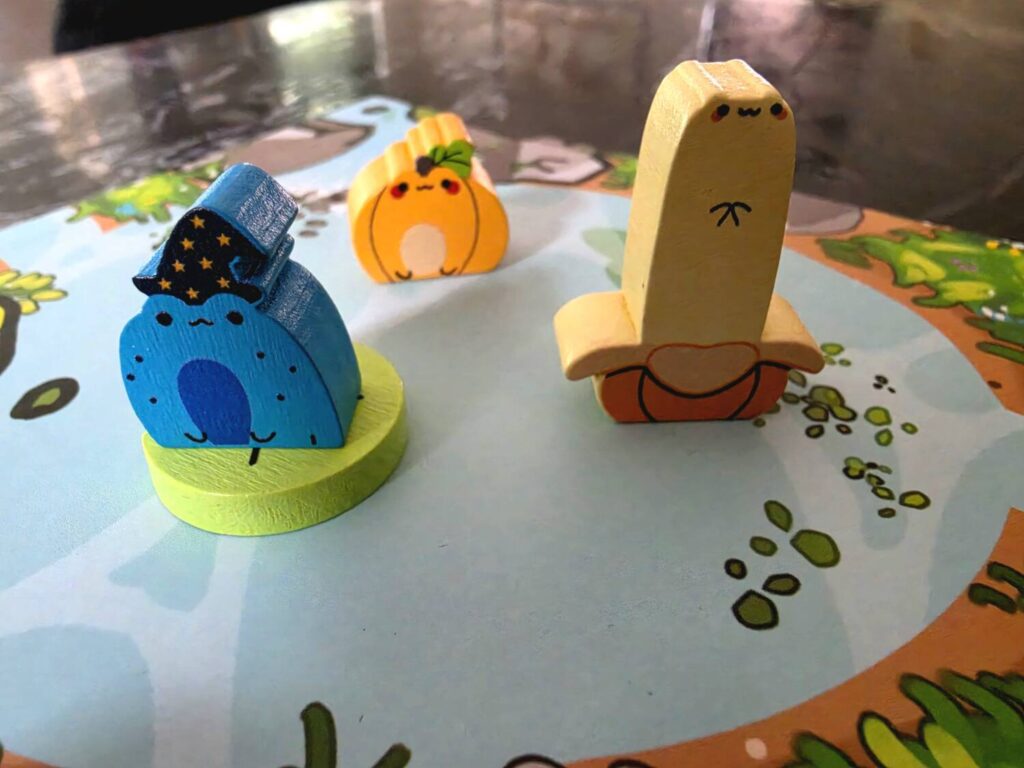
As I get more entrenched in my game writing, I find myself looking for titles I can convince my wife to play with me. She’s a hard sell on theme over mechanics, and the bright cover art with smiling frogs, adorable wooden frog meeples (frogples?), and all-around cuteness seemed like a winner.
But upon further inspection, it’s an area control game? Conflict games are tough to table.
But wait, it’s also a deck-builder and not necessarily a “battle” game?
Tell me more, Mr. Frog!
Pond began life on BackerKit and completely smashed its funding goal, raising more than six times its $20,000 target from nearly 2,000 backers.
Pond Party
Pond is an asymmetric (optionally so) area control game where players lead different frog factions vying for control of the meadow. Each player starts with a slightly different deck, which serves as the main vessel for carrying out actions throughout the game.
Players begin by deploying a frog meeple anywhere they have a fwog (yes,…
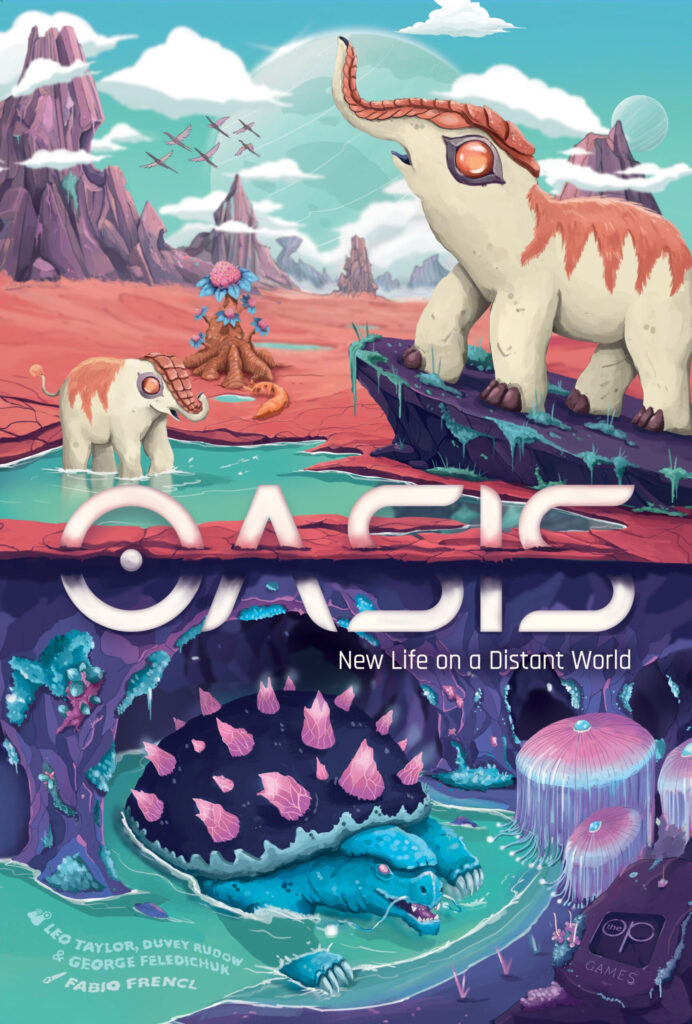
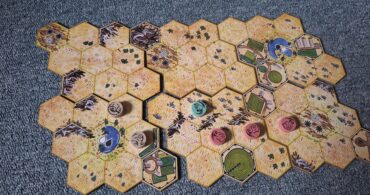
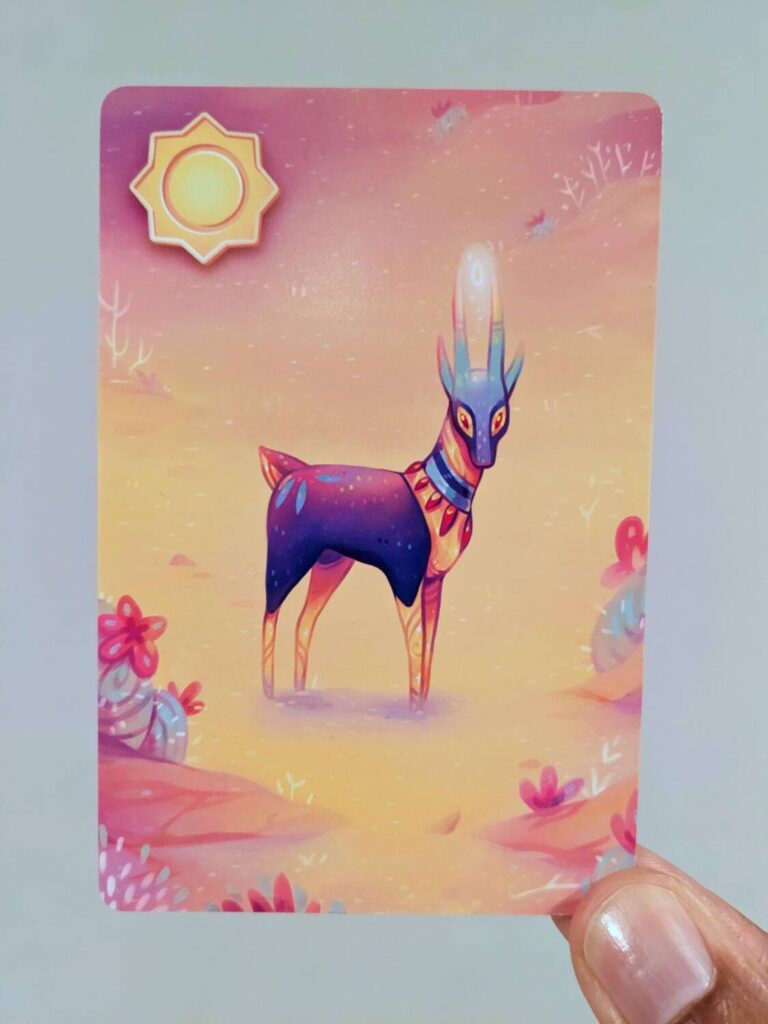
“In Oasis: New Life on a Distant World, you embody the forces of nature on this primal planet, shaping the planet’s biodiversity by guiding the life cycles of its many bizarre species. Your goal is to cultivate a balanced, vibrant biome where the circle of life fuels the ecosystem’s survival.” -publisher When I first read […]
Jibber Jabble Designer: Cassie Sikes Publisher: Allplay Players: 3-10 Age: 8+ Time: 15 minutes Played with review copy provided by publisher Your goal each round is to convey a secret word to the round’s guesser. You and your … Continue reading →
CMYK is on a hot streak. Get it? Hot streak? Fine, I’ll just tell you about this other board game. Grabble is a remake of Naoki Fukuda’s Nuts a GoGo!, which probably doesn’t tell you much. Imagine a bunch of people scrambling around a box for mismatched components. Shortly thereafter, they wage a sudden-death competition with their foraged traffic cones, dice, and metal pigs. In and out, five minutes.
That’s Grabble. It’s fast, it’s silly, and then it’s over. Unless you play more than once, which is more or less mandatory. Unlike a few other recent CMYK releases, I suspect this one will prove too trifling for some. I think I’ve played it something like forty times in the past month alone.
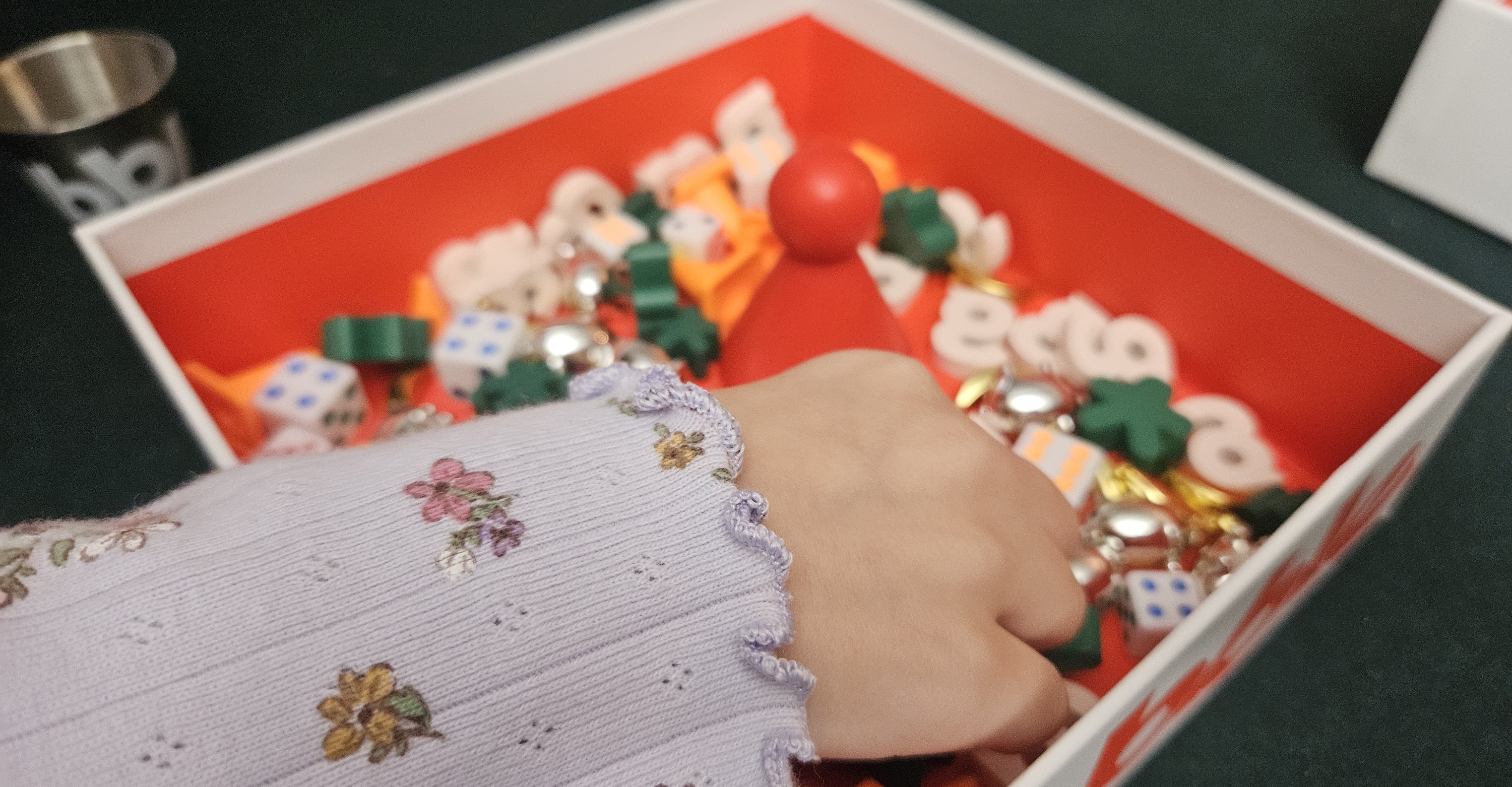
The grabbing portion of Grabble.
As noted, the rules for Grabble are compact. So compact that they fit inside the box lid. How’s that for a throwback? It’s the sort of game that can be taught inside of thirty seconds. Which isn’t to say there aren’t… not subtleties, exactly. Not even nuances. But there’s more than one might expect to Grabble.
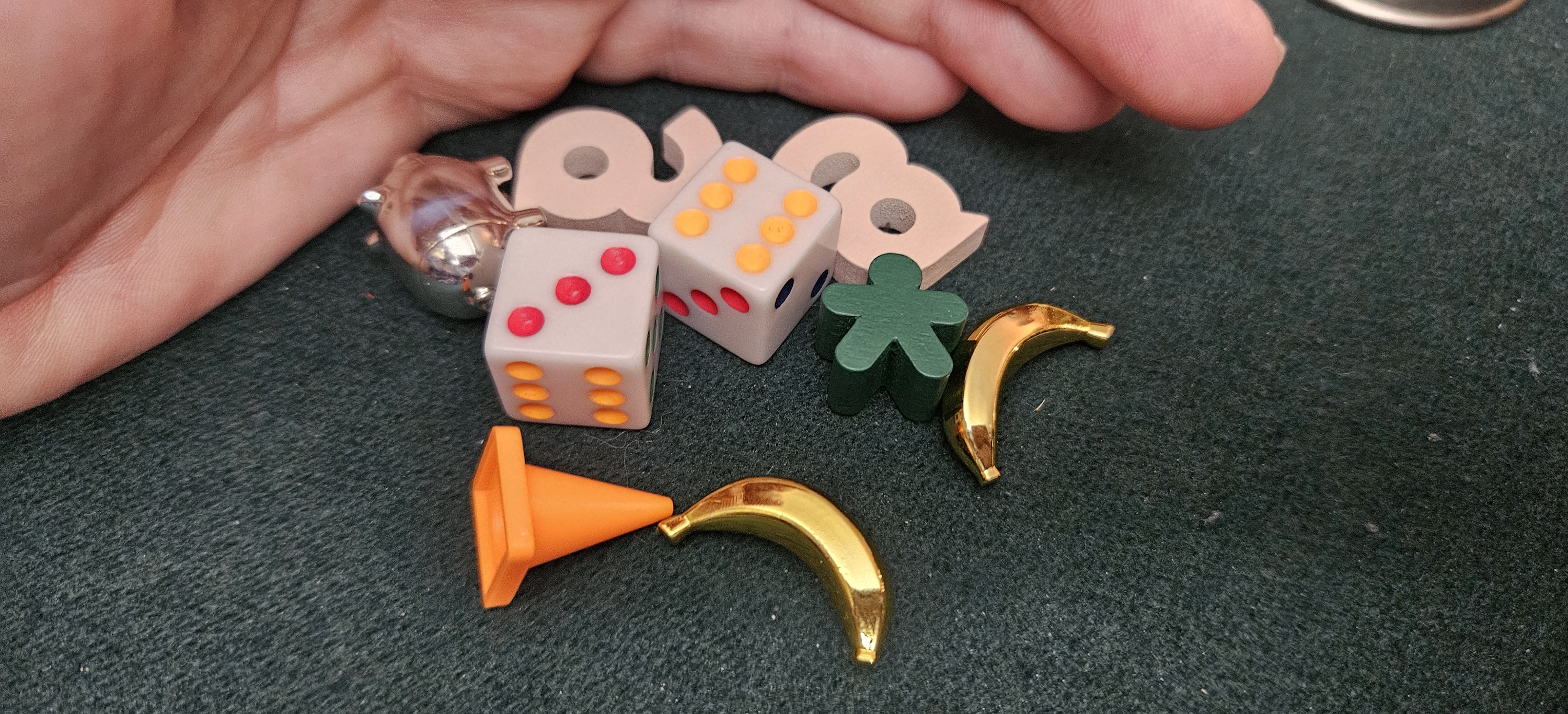
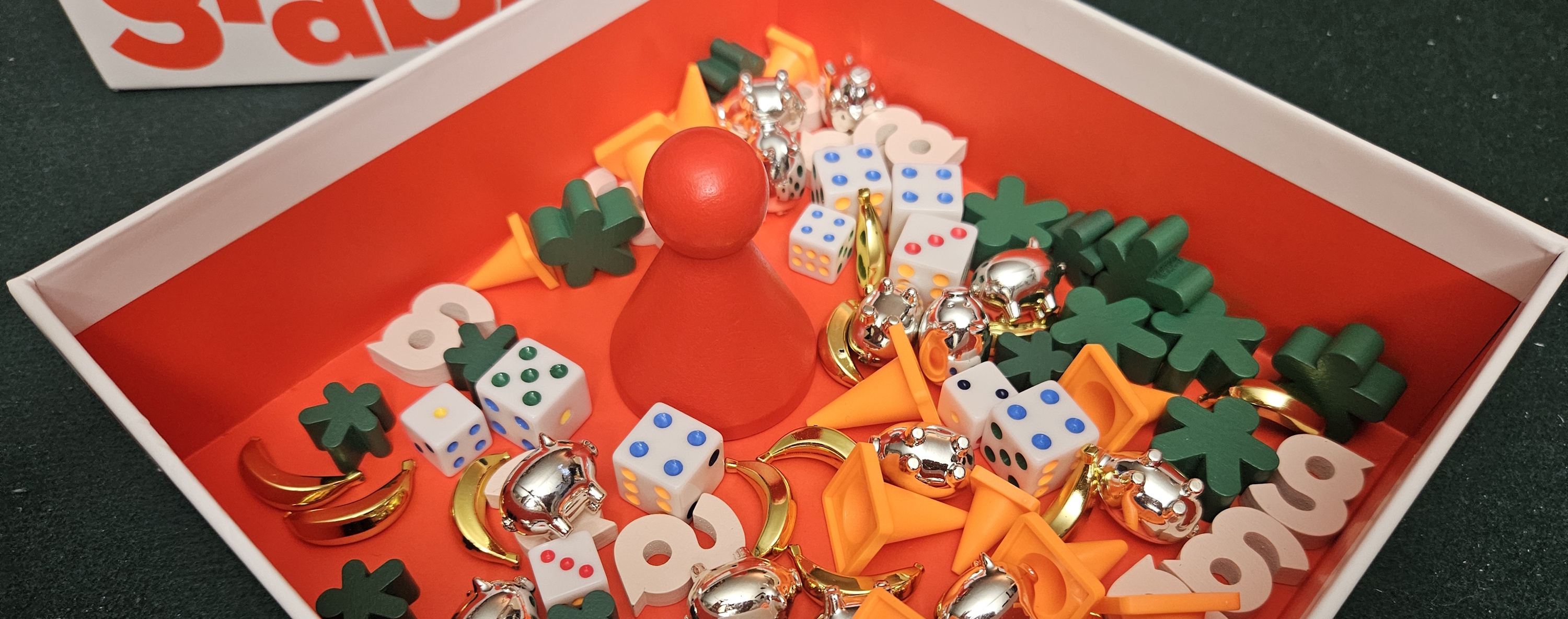
Take, for example, the pieces. In the original Nuts a GoGo!, the pieces were all wood. They had different shapes: pegs, rings, pyramids, cubes. But they all had that lacquered brown shade, which made them hard to select in a lineup, let alone when five hands were groping around in the box. Here, the shapes are more distinct. Dice, both large and small. Traffic cones, also in two sizes. Wooden meeples, colored green so my seven-year-old calls them leprechauns. Metal pigs and bananas. A lower-case g. Not for Grabble, actually. For gumption.
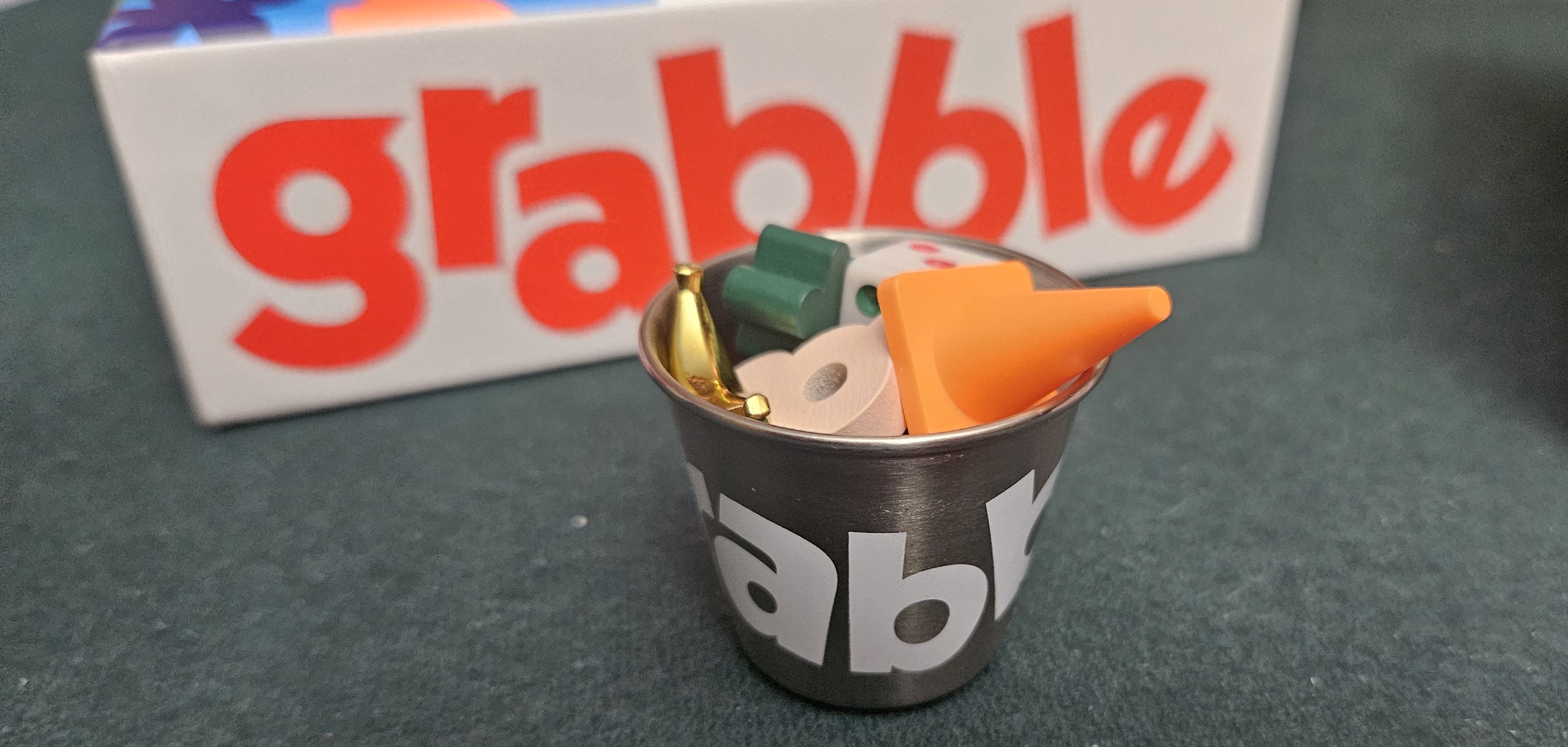
The distinctiveness of these pieces is part of the game. When Grabble starts, everybody reaches into the box and starts grabbing stuff. The usual restrictions apply: one piece at a time, only one hand. Everybody deposits these pieces into their very own metal cup. If they fall out, they must be replaced before you can continue grubbing around in the box.
Cup o’ grabbins.
Already, there’s something here. Strategy. Tactics. Maybe not. But dexterity, at least. You’re targeting specific pieces. Don’t have a traffic cone? You’d better find one. Somebody seems to be moving too quickly? Shove your fingers under theirs, play a little defense. Thinking too hard? Don’t do that.
As soon as your cup overfloweth, you’re allowed to halt the festivities. You grab the big pawn — it’s huge, you can’t miss it — and shout stop. Everybody slaps the table. The last person to slap owes you a present from their cup.
This is where Grabble switches gears. Everybody pours out their cup, making sure to keep everything hidden. Then, starting with whomever ended the grabbling phase, you go around the table. On your turn, you declare a piece to throw back into the box. Pig! Everybody complies. Then the next person throws something back. Leprechaun! Then the next. Letter!
Here’s the rub. When somebody can’t throw something back, they’re out. It doesn’t matter how much they’re holding. The goal, naturally, is to be the last person standing. So you play… again, not quite strategically. But there is some sense in which you’re making informed decisions. The colorful and shapely nature of the components matters. Because, yeah, you noticed when such-and-such seemed to keep grabbing endless orange cones, or that somebody was taking pieces too quickly and maybe overlooked the tiny bananas that accrue beneath everything else.
And now the ble portion of Grabble.
The funny thing about Grabble is that it doesn’t need these words. I’ve spent double or triple the wordcount describing Grabble than Grabble spends on itself. Any subtleties arise organically during play. All at once, it’s a dexterity game and a guessing game and a deduction game. It’s a player elimination game, too. But it doesn’t need descriptors. It’s Grabble. It’s itself.
It’s so wholly itself that it resembles some ideal form given shape and volume. When a half-dozen players are glazed over from some overwrought nu-euro, Grabble is there to shake off the mental cobwebs. When my seven-year-old wants to play something before school but she’s taken too long picking out an outfit, we can get in a session of Grabble, no problem. When my twelve-year-old wants to host a game night for her friends but isn’t confident she can teach something complicated, Grabble breaks the ice.
Even compared to some of CMYK’s recent catalog, it’s short, giddy, and not especially long on player agency. Then again, there’s a thinkpiece about what “player agency” actually means in there. Everything passes at lightning speed in Grabble. But it never really feels like it’s out of control. Only that its control is always at risk of slipping away, a finger’s length from being firmly grasped.
Grabbed.
Or maybe control doesn’t matter. Not always. Not all the time. Maybe player agency is overrated, at least in some cases. I worry that some people will think themselves too mature to appreciate what it gets right.
But I hope not. Maybe with titles like Magical Athlete and Hot Streak and Dino Racer in favor again, people will see Grabble for what it is: the purest, most perfect way to laugh for five minutes while out-slapping, out-grabbing, and out-guessing one’s family members.
A complimentary copy of Grabble was provided by the publisher.
(If what I’m doing at Space-Biff! is valuable to you in some way, please consider dropping by my Patreon campaign or Ko-fi. Right now, supporters can read the next installment in my series Talking About Games, this time tackling the topic of what makes a good list! Naturally, the piece includes a list.)
Loups-Garous attracted more than two million viewers for its launch in 2024 – the best ever launch for a new Canal+ creation at the time – with the Zygomatic-published social deduction game turned into a life-sized competition in which contestants take on the roles of villagers and werewolves.
Season one went on to draw a total of 15 million views according to the game’s publisher Asmodee – and that interest also translated to the physical game, with sales during the show’s launch week 150% higher than the same period a year earlier.
That success has led to international expansion for the show, with TV giant Banijay striking a multi-territory deal last year while describing Loups-Garous as “one of the hottest formats on the market”, and saying the agreement marked “a major coup for us at Banijay Entertainment”.
The deal allows Banijay to develop local versions across its operations spanning the US, UK, Australia and New Zealand, Spain, Portugal, Italy, the Nordics, Netherlands, Israel, Mexico, Brazil and India.
A German edition was also launched prior to that deal, with its first season passing five million streams. The show returned for its second season in Germany earlier this month.
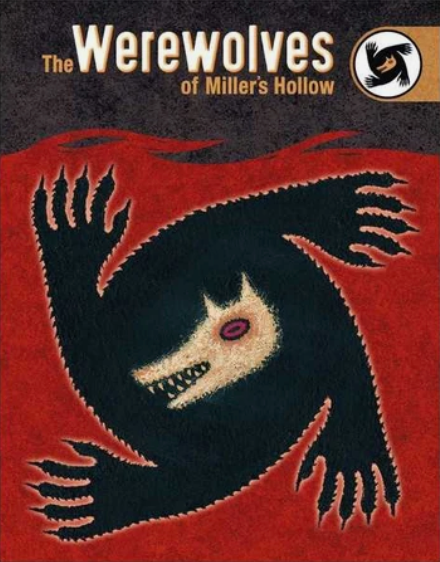
The Werewolves of Miller’s Hollow is far from the only tabletop title looking to make the jump to the screen, with publishing and distribution giant Asmodee particularly active in a push to expand its biggest properties beyond the hobby games market.
Netflix struck a deal last year to develop the first screen adaptations of Catan across scripted and unscripted television, film and animation, and followed that in February this year by picking up the exclusive global rights to Ticket to Ride covering film, TV and other formats. A Ticket to Ride feature film is the first project being developed under that agreement.
Fellow Asmodee title Exploding Kittens has already made the transition to the screen, with Netflix launching an adult animated series based on the hit card game in 2024.
The streaming giant also brought its own adaptation of Werewolves of Miller’s Hollow to the screen in 2024 with the French film Family Pack – which was released just 12 days after the first episode of Loups-Garous.
Other publishers exploring adaptations based on their games include CMYK, which launched US television game show The Perfect Line last year, inspired by Wolfgang Warsch’s Illusion. That show proved successful enough to return for a second season earlier this month.
CMYK CEO Alex Hague previously told BoardGameWire that the company had received dozens of approaches each year about developing a TV version of its million-selling party game Wavelength.
Italian board game creator Paolo Mori has picked up his second designer of the year prize in the space of five months thanks to Lucca Comics & Games – one of Europe’s biggest comics and tabletop gaming festivals.
The win comes just a few months after Mori was named game designer of the year in Italy’s ioGioco Awards, in which Toy Battle also took the prize for best two-player game.
Mori has been a published game designer for 20 years, with his highest-profile creations including Ethnos, Libertalia and Pandemic spin-off Fall of Rome.
A statement from Lucca’s judges – which this year included Spiel des Jahres president Harald Schrapers – said, “The two-year period from 2024 to 2026 saw Mori move with rare ease between diverse genres, from historical wargaming, approached in both accessible and more traditional, simulation-based formats, to international family games, and even a foray into narrative puzzles that took his style into entirely new territory.
“In every case, the author has maintained his signature style of essential rules, rich decisions, and a mechanical balance that never fails. Equally significant is the fidelity with which Mori treats his historical and cultural sources, be they meticulously reconstructed wartime events or literary materials transposed into a gaming environment with respect and precision, a trait that makes the setting an integral part of the gaming experience, never merely a framework.
“This variety of registers is accompanied by a remarkable ability to appeal to diverse audiences, from the most demanding historical simulation enthusiasts to the casual gamer. This approach has made its games effective tools for spreading gaming culture, broadening the target audience for modern board games.
“The jury recognizes Paolo Mori as an author who exemplifies the maturity achieved by Italian game design on the international scene.
“The continuity of his output, the versatility demonstrated throughout his career, and the ability to innovate without losing expressive coherence constitute a significant contribution to the evolution of contemporary gaming language.”
The prize was launched by Lucca Comics & Games and board game designer association SAZ Italia in 2024, with Barrage, Tiletum and Nucleum co-designer Simone Luciani taking the inaugural prize.
Rather than rewarding a single game, the international award considers designers’ bodies of work over its reference period, with judging criteria including originality and innovation, sensitivity to current player and market trends, prolificacy and the ability to work successfully across different styles.
This year’s jury also included Fabio Cambiaghi, former Gioco dell’Anno president Paolo Cupola, SAZ Italia representative and game designer Stefania Niccolini and last year’s winner Grard.
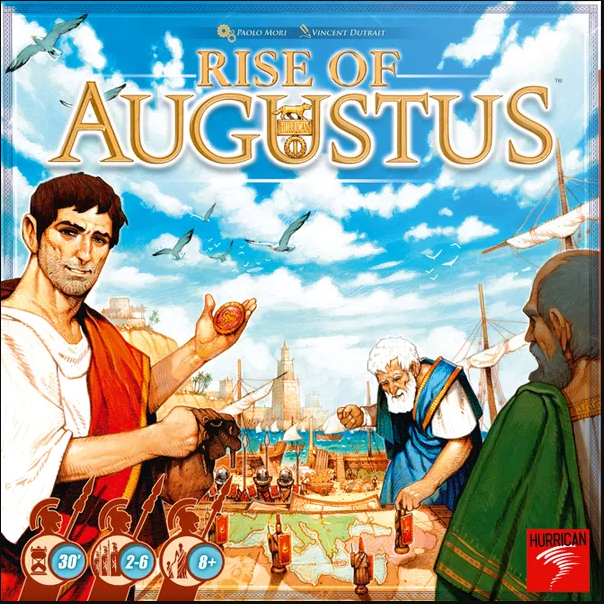
Mori also has history with Lucca’s separate Gioco dell’Anno prize, having won the inaugural edition of the award in its current form in 2013 with Rise of Augustus.
This year’s five finalists for that prize have also now been revealed, with Spiel des Jahres winner Bomb Busters, designed by Hisashi Hayashi, up against Mitch Wallace’s Art Society, Simone Luciani and Roberto Pellei’s Echoes of Time, Reiner Knizia’s Rebirth and Brett Myers and Dave Chalker’s Thunder Road: Vendetta.
The shortlist was whittled down from 50 eligible games, with the winner due to be announced on stage during the Lucca Comics & Games festival, which runs from October 28 to November 1.
The current Gioco dell-Anno award succeeded Lucca Games’ long-running Best of Show award, whose history stretches back to 1993.
Recent Gioco dell’Anno winners include Botanicus in 2025, Planet Unknown in 2024 and Challengers in 2023.
Game design is a mix of experimentation and inspiration. If you condensed a description of Upland & Prairie down to a single sentence, you’d be excused for thinking I’ve simply remade The King is Dead: ‘Place one of three colours of marker on a board, then take one for yourself, and whoever has the most markers of the type that wins on the board, wins the game. Oh, and with four players it’s a partnership game’. Okay, so that was two sentences, but my point stands.
In reality, these parallels are misleading, though not completely coincidental: In 2007, I designed King of Siam, which was later republished by Osprey as The King is Dead. Playing that game seemingly got Cole Wehrle thinking about designing his own games, the first of which to publish was Pax Pamir (2015). When Matilda Simonsson played Pax Pamir’s second edition (2019) she was inspired to create and publish Turncoats(2021). In turn I played Turncoats in 2022, and it inspired me to create ‘Debatable Lands’ (which has since become Upland & Prairie). So, in some sense Upland & Prairie is inspired by a string of games that trace all the way back to King of Siam!
One thing I particularly liked in Turncoats was its way of handling randomness, specifically the drawing of a marker from a bag. I took inspiration from that, but put a spin on it where you draw two markers and place one on the map as well as keeping a marker. The marker you keep is secret and that establishes the important bluffing element — you don’t know what the others are collecting or how many they have. This uncertainty is essential to the design.
The board took quite a few iterations, mainly because this style of game shouldn’t last too long, but it also needs the time to feel like you have developed the game state together. The objective is to link certain spots on the board with a chain of markers of the same colour. In a version where those spots are too far away, it becomes frustrating as players may keep on blocking. If they are too close, there is not much of a game. Building tension is important for the arc of the game and it should be possible to control the timing of the endgame a bit. So, the layout was important. However, the breakthrough idea was to add 3a marker to the bag that, when drawn, raises the capacity of all spaces. This creates structure and enables blocking early on, both of which build player commitments, but then the improving capacity of spaces unlocks the end game and a tense finish. For Osprey it was this improving capacity and absence of direct conflict that drew them towards the rewilding theme of Upland & Prairie.
The game also had some significant advantages over my other prototypes: It was really easy to make changes (because the components were basically just a few hexes with symbols and a bag of cubes) and it was quick to play. I was able to play a lot with my daughters (great for two and three-player tests) to get the exact cube count and distances of the board perfectly right. But the game was not yet quite where I wanted it — the randomness was stronger than the bluffing. The fix? Draw three markers from the bag instead of two: one for the board, one for the personal supply, and one back to the bag. This changed the dynamics of the probabilities once again, but it struck the right balance between tactical approaches and the whims of uncertainty.
With the two and three-player game working well, it was time to think about four. I love partnership games, so it’s no surprise that for the four-player game I once again tried a partnerships mechanic! I just love the way you need to communicate with your partner through play. During the first four-player test game, my friend, Georgios Panagiotidis, mentioned that he had trouble getting information from his partner who kept most of their markers. We agreed that it would be against the spirit if teams just had a shared supply - and it would just play too much like two two-player games - so we came up with the rule: every time the improvement marker was drawn, you would simultaneously (and silently) exchange a marker with your partner. That can of course cause funny moments (especially when you exchange identical markers), but that’s a plus in my book.
I have to admit that I played this a lot before showing it to Osprey, perhaps the most I’ve ever played an unpublished design of mine. It helps that it’s so quick and easy to play, and whilst the description may sound The King is Dead-ish, it doesn’t play anything like it. The King is Dead is cerebral, whereas as in Upland & Prairie I’ve even managed to win by targeting one colour but not placing a single one of that colour on the board (and, because I let the others think I was backing a different colour, they did all the work for me)!
The team at Osprey must have thought something similar, since they were quick to take it and made a very pretty game out of my very abstract prototype.. Big shoutout to Hannah Cohen, who made it all look playful and gorgeous. I really enjoyed getting art updates on this one (and they include more player screens than strictly necessary, so Hannah can showcase her art). The only thing I kind of regret is that I couldn’t keep the original title, which was Debatable Lands. I understand it has a very specific meaning in the UK, so I understand the decision. Still, I like the tone of it and maybe I’ll make another game with that title someday…
Grabble Designer: Naoki Fukuda Publisher: CMYK Players: 2-6 Age: 6+ Time: 5 minutes Played with review copy provided by publisher Here’s how it works: you have a box of gloriously mismatched pieces from games that never existed—hogs, bananas, … Continue reading →
One of my big things as a reviewer is actually not tied to total play count, although I try to get three, maybe four plays in with a game before I pass judgment on a game’s quality.
The thing I prioritize more than anything else: getting as many plays in with the same game at different player counts. If a game says that it accommodates 2-4 players, I try my best to play at two, three, and four players. (If a game says it plays 1-4 players, I try my best to get in plays at all four counts, but a game typically plays almost the same way at one player as it does with two, since the solo usually mimics a two-player experience.)
Encyclopedia of Monsters is a new family memory game for 2-4 players. Designed by a pool of the same people who designed my game of the year pick for 2024—Dead Cells: The Rogue-Lite Board Game—I had Encyclopedia of Monsters on my radar as soon as the team at publisher Scorpion Masqué showed me a mockup at SPIEL Essen last fall.
Encyclopedia of Monsters is a fully resettable campaign memory game, spread across five volumes (here known as continents) and three chapters (countries) per volume. That means you have 15 short games included in…
After doing two plays of the 2025 family-weight card title Mooki Island (one play with my 12-year-old, then a play with my 9-year-old), I’m very sure of one thing: the artwork is the main reason for checking out the title.
That’s because the game itself is barely a game at all. The box hints at this as well, given that it believes it is “perfect for ages 4-10”; now that I’ve done plays, I absolutely recommend Mooki Island for a four- or five-year old child to play with an adult.
Here’s the entire game: a deck of 36 double-sided tarot cards is shuffled and split in half, creating two draw piles. There are five suits of Mookies (Sun, Moon, Fossil, Leaf, and Seashell), and there are also seven spiders in the deck. There are also five “legendary” mookies in the deck, one per suit, for the 72 total options spread across the deck.
On a turn, a player takes one of the two face-up cards, looks at both sides, then decides how to place it into their single personal scoring pile. If a spider is drawn and played, it must be played on an…
I looked down at the sign that hung from my neck. “Playing the Luna Expansion.” What a dumb reason for being incarcerated. But at least I was not alone. My cellmates had similar signs around their necks. “Likes Straight Cornered Cards.” “Played While Eating Doritos.” “Invented the Music Stretch Goal.” At least it was quiet […]

 Anmelden




/pic9824355.jpg)
/pic9810899.jpg)
/pic9690032.jpg)
 ︎
︎

/pic9671458.png)
/pic9792651.jpg)
/pic9792652.png)

/pic9704383.jpg)
/pic9704379.jpg)
/pic9792660.jpg)

/pic9792673.jpg)
/pic9792675.png)
/pic9792646.png)

 “In Oasis: New Life on a Distant World, you embody the forces of nature on this primal planet, shaping the planet’s biodiversity by guiding the life cycles of its many bizarre species. Your goal is to cultivate a balanced, vibrant biome where the circle of life fuels the ecosystem’s survival.” -publisher When I first read […]

/pic9713659.jpg)
/pic5680120.jpg)
/pic9761575.jpg)
/pic9713800.jpg)
 I looked down at the sign that hung from my neck. “Playing the Luna Expansion.” What a dumb reason for being incarcerated. But at least I was not alone. My cellmates had similar signs around their necks. “Likes Straight Cornered Cards.” “Played While Eating Doritos.” “Invented the Music Stretch Goal.” At least it was quiet […]
