[imageid=6268503 medium rep]▪️ Coming this May we can expect to see The Queen's Dilemma released by Horrible Guild. Many of you have played or heard of The King's Dilemma, which was the first legacy game set in the Kingdom of Ankist. The Queen's Dilemma is a follow-up sequel set hundreds of years later. It will use an improved card system and tell a whole new story through a legacy campaign.
From the newsletter:
If you played The King’s Dilemma, you already know the tension of debating, negotiating, and voting on critical issues that define the future of the kingdom. This sequel builds on that foundation with: ▪️ a deeper ideology system, with opposing principles that constantly pull the kingdom in different directions ▪️ memorable council members with their own backgrounds, public alignments, and secret agendas that shape debates and long-term goals ▪️ an expanded economy and territory management system, where regions can rise in influence or fall into unrest, directly impacting negotiations and map development ▪️ a refined Dilemma Card System that unlocks envelopes and Mystery bags, introducing new events, rules, and components as your campaign evolves ▪️ new narrative layers built for a multi-session arc (up to 17 sessions, over 30 hours of gameplay), where every vote leaves lasting consequences and story threads carry forward
Each session runs around 90 minutes, and every vote leaves a permanent mark on the campaign: alliances will form, promises will break, and the kingdom will change according to your decisions.
▪️The Last Spell: The Board Game is a new release based on the Ishtar Games' video game published in English by Ares Games. This game was successfully funded back in 2023 on Kickstarter from Tabula Games and has been fulfilled to backers and is now available for sale.
This is a cooperative tower defense campaign game, but you can play one-off missions as well.
From BGG:
The game is set in a dark fantasy, post-apocalyptic world in which you have to carefully manage the scarce resources at your disposal to survive long enough. Gameplay revolves around three cycles of day and night in which players use daylight hours to bolster the game economy, fortify defenses against nocturnal invaders, and upgrade their heroes' equipment to unlock more power.
▪️ Mayfair Games joined forces with Alion – by Dr Ø to exlusively release Recall in the United States. Today is the scheduled retail release date, so you should be able to acquire it! This was a very popular title at BGG.CON Fall 2025 after its Spiel release.
Recall is brought to you by the designers of Revive (Helge Meissner, Kristian Amundsen Østby, Kjetil Svendsen, Anna Wermlund). The games have similar mechanics in a few ways, but the overall gameplay and feeling is completely different. For those who love crunchy Euros, you are in luck for this US release.
From BGG:
Recall is a deep strategy game from the designers of Revive that focuses on engine building and exploration. Each player begins the game with one of fourteen unique tribes and one of eighteen unique gadgets, both of which will heavily influence your strategy and opportunities. Throughout the game, you will lead your tribe, explore the lands, and discover traces of ancient civilizations to learn from them. On your turn, you either: • Use a keycard to activate an action box, or • Recall to produce resources and regain your keycards.
When you use a keycard, you activate the abilities of the keycard itself and the effects of the chosen action box. The chosen combination of keycard and action box will therefore determine what you get to do on your turn: populate the lands, move your followers, explore new regions, and build workshops, vaults, or monuments. During the game, you will improve your tribe by acquiring new keycards, upgrading your action boxes, or collecting ability stones and relics.
There was a moment late in my first game of the medium-weight strategy game Orloj: The Prague Astronomical Clock where I pretty much landed on my final thoughts about the game.
I had just taken a turn that felt pretty dope. That turn began when I took the Construction action, and spent four resources to construct the second-to-last piece of the month dial on the big clock at the center of the board. That netted me eight points, for the gold, two wood, and paint I had spent to build it. Then I placed one of my workers on the clock, and thanks to adjacency rules, scored four more points. Then I got a bonus based on the position of that completed space on an outer wheel that surrounds the clock, a track that lists bonuses on what is known as the Painter track.
That bonus gave me a free apostle. These apostle tiles are earned and placed in one of two storage slots on each player’s personal board. As a free action, I took that new apostle and placed it in a column on my personal, 12-space apostle board. It was the third apostle in one of the columns, which earned me another bonus: an Assistant tile, which went into the newly vacated storage space where that apostle…
I love it when game designers give us a unique take on mechanics that have been around for a long time. Fight 5 gave us a new spin on the card game war, Samurai Spirit channeled its inner blackjack, and quite a few games have pulled from the ancient game Mancala, notably Five Tribes. Today, […]
The American arm of high IQ society Mensa has unveiled the latest crop of board games winning its Mensa Select seal, which are voted on by hundreds of organisation members during an annual four-day gaming marathon.
Alex Cutler and Peter C Hayward both saw two of their creations win the seal this year, including their co-design Critter Kitchen, Hayward’s Things in Rings and Cutler’s A Place for All My Books – which he co-created with Michael Mihealsick.
Things in Rings publisher Allplay also saw its title Twinkle Twinkle, designed by Ammon Anderson, pick up a Select seal, while other winners this year included Matthew O’Malley and Ben Rosset’s Fromage, Yoann Levet’s Got Five and Tomáš Holek design Galileo Galilei.
Entries to the annual Mensa Mind Games are judged on aesthetics, instructions, originality, play appeal and play value, Mensa says, with the award aiming to highlight games that are original in concept, challenging and well-designed.
Not all games released during the past year are eligible for the award, however – entries carry a fee of several hundred dollars each, and games up for consideration need to have an average play time of 90 minutes or less.
Barnes & Noble and other major retailers have previously given special consideration to games bearing the Mensa Select seal, while winning games are also featured by American Mensa’s official online retailers and on its website.
Fromage is the most decorated of this year’s seal winners, having previously won the Origins Award for best light strategy game, as well as picking up nominations for medium game of the year, most innovative game and best artwork in the 2024 Golden Geek Awards.
Fromage, designed by Matthew O’Malley and Ben Rosset
Things in Rings was previously nominated in both the Golden Geeks and Origins Awards in the best party game category.
With this My Favorite Wargame Cards Series, I hope to take a look at a specific card from the various wargames that I have played and share how it is used in the game. I am not a strategist and frankly I am not that good at games but I do understand how things should work and be used in games. With that being said, here is the next entry in this series.
#74: Open Borders from 2040: An American Insurgency from Compass Games
2040: An American Insurgency is a card driven game that attempts to simulate a near future US civil war in the 21st century. In this 2-player game that plays in less than 3 hours, the blue team is the Federals representing agents of the government in Washington. The red team are the Rebels including militia groups trying to seize control of states, highways, and cities. The conflict spreads across the entire continental US, from Miami to Seattle and from Los Angeles to New York.
This game is not perfect and it has some issues and the graphics are not that great frankly. As I played the game, I actually felt like it was a pretty decent game, with some very interesting mechanics covering an interesting topic. I know it isn’t perfect and in some ways the designer was so careful not to offend anyone in the game that he really didn’t get to say anything about the situation and its causes, and the game somewhat suffers from that. But it was interesting and I believe that we are about the only ones who played the game.
In this post, I will be taking a look at a Neutral Card called Open Borders. Remember, that each event is either friendly, enemy, or neutral. Friendly events help you; enemy events help your enemy while Neutral events can help either player. Gray cards such as Open Borders have no identifying side’s markings in the bottom right corner and when you play a Neutral Card, you may choose to do the Ops or the Event. Open Borders is a very good Neutral Card because it is a 3 Ops card and can be used to take various standard operations, such as raising troops, fundraising and attacking. The card also is identified as a Momentum Card, which means that if played as the event, the effect will persist until a time specified in the text of the Event or, if none, until the end of the game. With Open Borders, the spaces of Mexico and Canada become playable areas on the board. These areas typically become a way for the Rebels to build and develop bases from which they recruit fresh insurgent units and then cross over the Open Borders to attack those States that border these areas eroding their Order and creating chaos and Revolt. The Open Borders Card allows this but also allows the Federal player to respond by crossing over the border and attempting to squash these recruiting centers.
The other effects of the Event provides both sides with a bonus when they take certain actions such as Tax for the Federals and Recruit for the Rebels. When the card has been played and is in effect, the Federal Tax Action will provide an additional $4 worth of income from the action. This is an effect of open borders and the unrestricted use of free trade and cross border commerce creating new jobs, providing additional sources of income and employing workers who ultimately pay income taxes on those improved wages. The Rebel Recruit Action will gain an additional Militia unit per space where taken. This reflects the stoking of anger at home as illegals and other bad actors are able to pour across the borders unfettered. I very much like this card for its game effect but also for the questions and concerns that it raises in this debate. Such an interesting economic spin on this issue through the game and I think is a very well done part of the design.
The concept of open borders highlights a fundamental tension between national security, economic openness, and civil liberties. Post-9/11, critics argue that porous or “open” borders allow terrorists to exploit security gaps, while proponents of open borders emphasize that excessive restrictions hurt economic freedom and that security should be managed through intelligence rather than isolation. The biggest concern regarding open borders is that unvetted, irregular migration through porous borders can be exploited by extremists to enter countries and perform acts of terrorism, sedition or general mayhem. To manage the tension between security and economic openness, many nations have turned to the concept of biometric borders. This involves using risk profiling and digital identity such as fingerprints and facial recognition to separate “civilized” business travelers from “illegitimate” and bad actors. This use of these high tech instruments in surveillance, data tracking and technology to distinguish between legitimate travel and potential threats has raised more concerns with civil liberty and privacy. This debate often pits “secure borders” against “open doors,” with officials grappling with protecting citizens without sacrificing the democratic principles of open societies. In one of the most famous quotes from history about privacy, Benjamin Franklin stated “Those who would give up essential liberty, to purchase a little temporary safety, deserve neither liberty nor safety“. Where do you land on this issue of Open Borders?
Here is a link to our unboxing video showing the components:
Co-op fantasy adventuring game Arydia: The Paths We Dare Tread has scored six nominations in the 20th annual Golden Geek Awards, which are selected and voted on by BoardGameGeek users.
Cody Miller’s “green legacy” design, which can be fully reset after each dozens-of-hours-long campaign, is up for heavy game of the year, most innovative game and best thematic game, as well as for the best artwork, solo game and co-op game categories.
Fellow open-world exploration game Vantage, designed by Scythe and Viticulture creator Jamey Stegmaier, is challenging across five categories this year, as is Pandemic creator Matt Leacock’s spin-off design The Lord of the Rings: Fate of the Fellowship.
Both those titles will battle it out for the Medium Game of the Year prize, which is also being contested by popular releases including Galactic Cruise, Eternal Decks and fellow Stonemaier Games title Finspan.
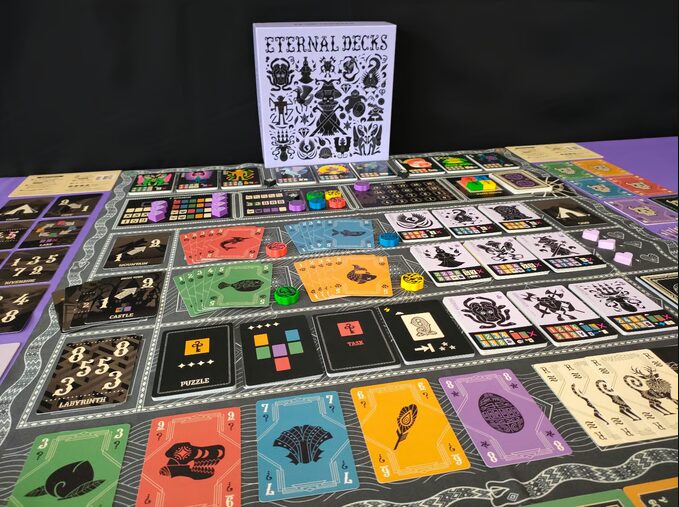
Eternal Decks, a limited communication co-op game designed by Hiroken, has picked up four nominations
The Golden Geeks is one of board gaming’s highest profile awards, as well as being among the earliest of the major competitions to unveil its winners each year – with the Dice Tower Awards falling in May, the Spiel des Jahres in July and Deutscher Spiel Priese in October.
Notable awards which have already named their winners this year include France’s highest-profile board game prize, the As d’Or, which picked Paolo Mori and Alessandro Zucchini’s Toy Battle in its main prize for 2026.
Toy Battle is nominated in two categories in the Golden Geeks: best two-player game and best wargame. The latter category will see the title go up against a huge variety of different designs, including Memoir ’44-inspired Star Wars: Battle of Hoth, whist-themed English civil war strategy title A Very Civil Whist, and heavyweight GMT Games releases such as Congress of Vienna and Seljuk: Byzantium Besieged, 1068-1071.
As well as published board games, the Golden Geeks also features categories for best print and play design, best board game app and best podcast.
Voting will be undertaken by BoardGameGeek users who have paid an annual support fee in any year, who pay a one-time 20 GeekGold fee, or who have purchased an avatar on the site. They will rank nominees in individual categories, with voting set to end on April 30.
Last year’s Golden Geeks saw Arcs, the hybrid trick-taking wargame from Root and Oath designer Cole Wehrle, win a trio of awards, while fellow space-themed game SETI notched up a pair of wins.
This year’s Golden Geek Awards nominations in full:
18-19 Apr 2026 was the Malaysia Boardgame Show. It was held at Jaya One shopping mall in PJ. In the past few years there has been several different boardgame-specific events in Malaysia, like Asian Board Game Festival (in Penang), Boxcon, All Aboard, Dice & Dine, Anigames. Not all are recurring. MBS is organised by Jon, who is currently the most active game designer in Malaysia. He has
Yesterday we looked at Pillars of Fate, a kinda-sorta remake of extended family reunion simulator Veiled Fate, and found it wanting for much the same reason as the original. The gods are capricious, everybody knows that, but their fickleness doesn’t exactly make them the most appealing playmates.
But here’s the thing. At the same time Austin Harrison, Max Anderson, and Zac Dixon were designing Pillars of Fate, another remake was, um, remade. On a superficial level, this one, Scales of Fate, resembles its namesakes. As in those other titles, dueling gods intend to deduce the identity of their rival’s offspring, minimize their impact on the world, and elevate their own bastards over everybody else. Basically, it’s a race to promote your nepo babies over everybody else’s at the family tire shop. And that tire shop happens to be the eternal mountain at the root of the world.
And it’s excellent. Scales of Fate just might be one of the tightest, nastiest deduction games out there. That it was built for two players only makes it the more impressive.
But these are the ones standing on pillars…
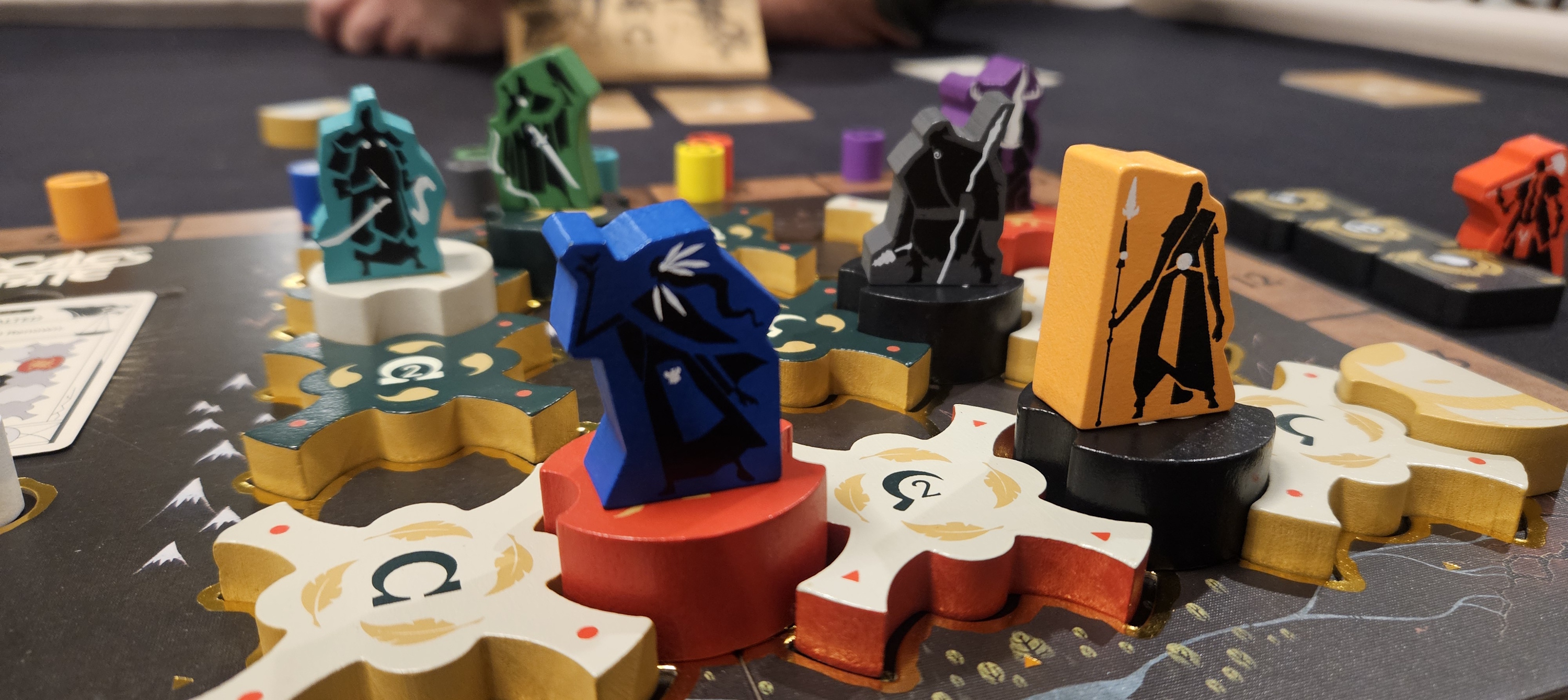
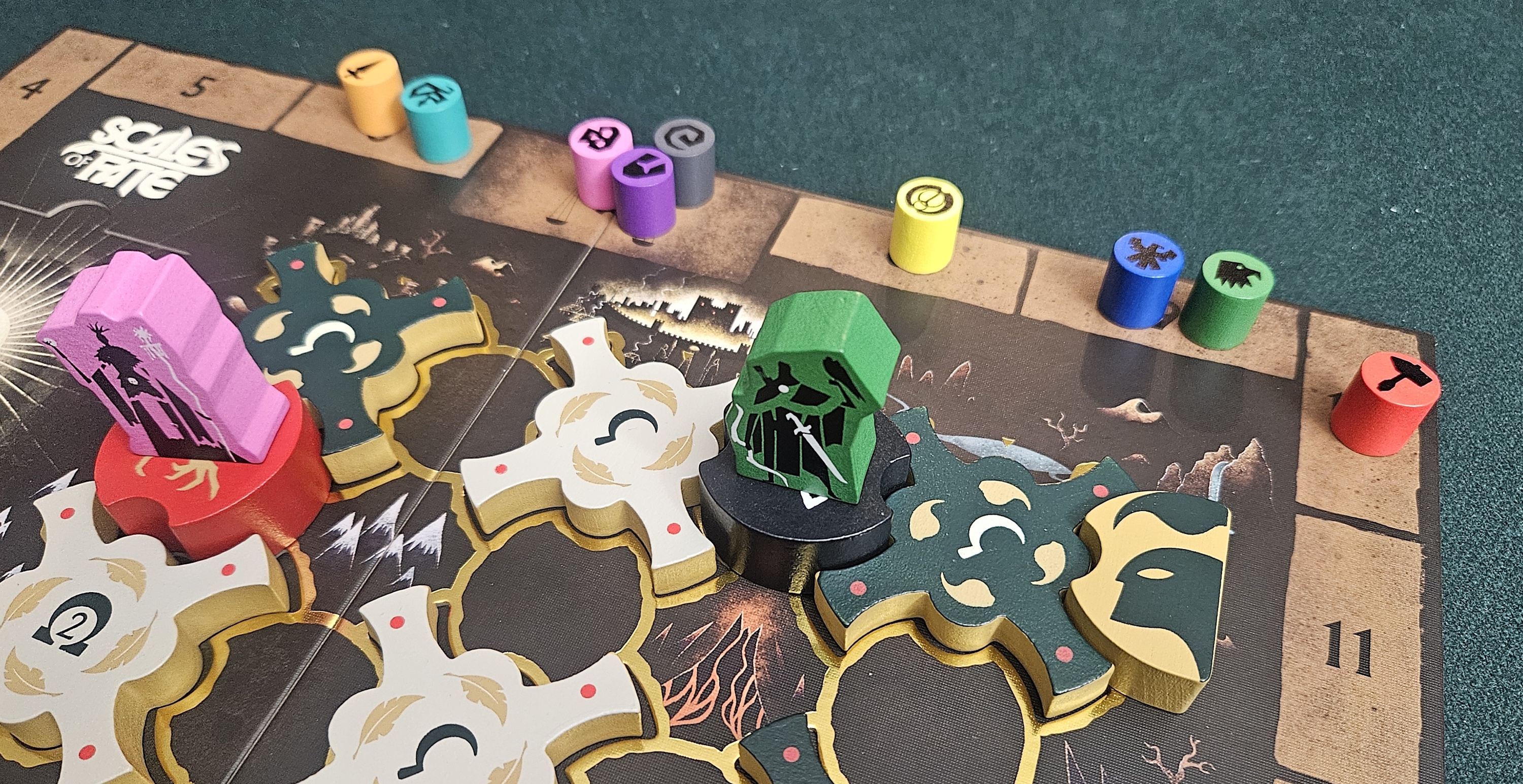
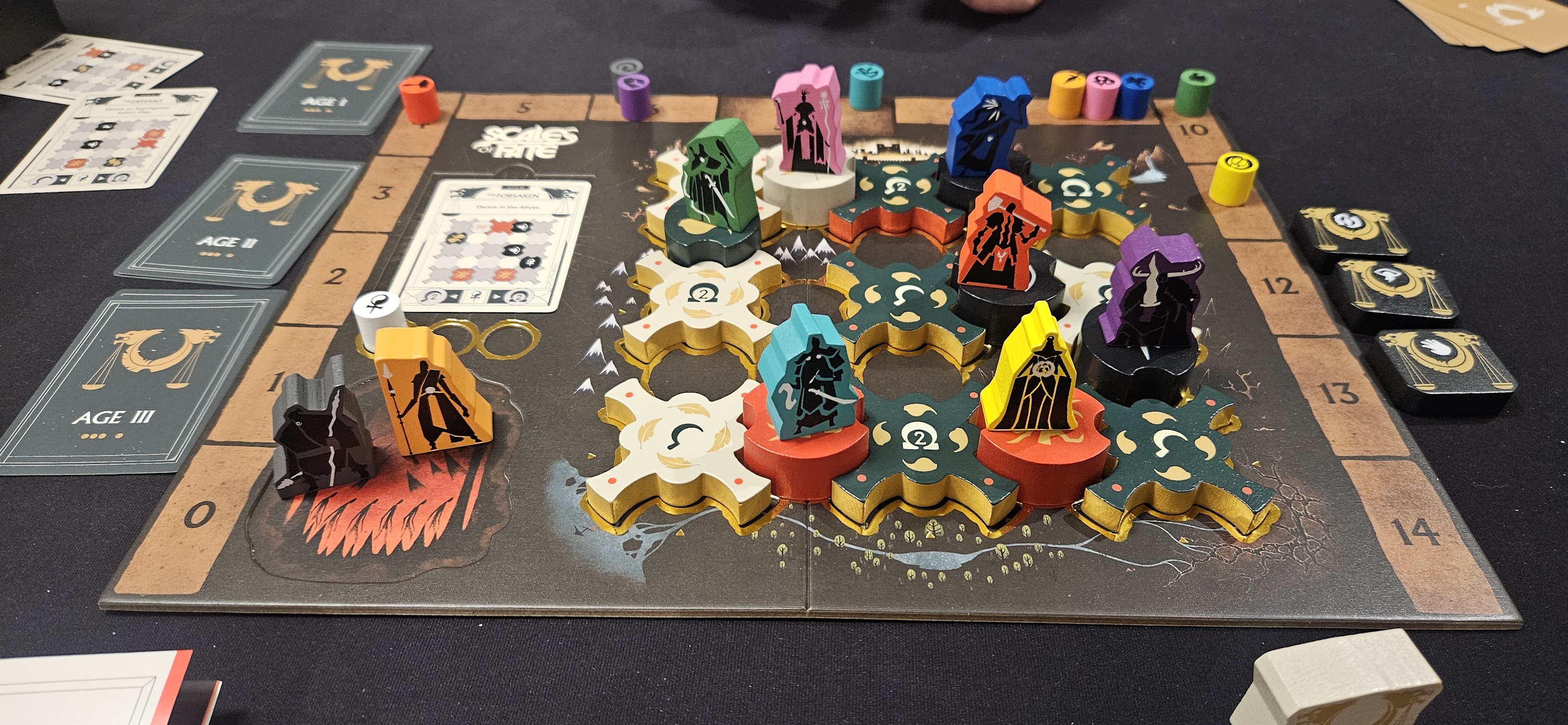
For first-timers, the board presented by Scales of Fate is wonderfully labyrinthine. I say “wonderfully” because just look at it. It’s colorful. The pieces slot together like joined fingers. There’s a topography to the whole thing. You can tell the elevated pieces will be more important than the pieces seated a few millimeters below them. Even when I had no idea what any of these components portended, I wanted to know. Needed to know. Were they gears? Would my demigods traverse them? Veiled Fate presented its map as a wheel. Pillars of Fate offered three lanes. Both are fine. Good, even. But I’ve seen wheels and lanes before. A series of interlocked cogs and risers is something new. That’s a metaphorical depiction of a landscape if ever there was one.
In practice, Scales of Fate is surprisingly easy to get a handle on. Turns consist of three possible actions. One of those, while important, functions more as an exception, an occasional bolt of lightning, than as business as usual.
The main two actions, meanwhile, immediately explain the function of those wonderful cogs and pillars. First, a demigod can be placed atop a pillar to trigger its ability. Whether it’s to smite another demigod down to the underworld to cool their heels, obtain the loyalty of a servant, or… well, that’s it. Rather than offering a wide menu of abilities, there are really only two to keep in mind. Sure, there’s some variety within those categories, but they fall into camps rather than cluttering the decision-space with branching paths.
The second action has to do with those servants. Placed along the edge of the board’s cogs, they trigger the quests that will increase or decrease each demigod’s renown. But to understand what that means, we need to back up a bit.
A servant sends two demigods on important quests.
Okay, so you’ve fathered/mothered/sea-foamed two half-divine offspring. Their identities are determined in secret at the beginning of the game. Put a pin in that. We’ll come back to it.
You want to elevate your children. Doing so openly is a surefire way to attract the wrath of your co-pantheonists. So you work in secret. The problem is that every demigod’s current standing is shown on the renown track, visible to both players. When the game begins, all nine demigods share the middle space. That’s seven renown. Even before they’ve done anything interesting, your offspring are worth something by means of their divine parentage.
What will they accomplish? Rather than doing the obvious thing — say, by asking you to push them up the renown track — Scales of Fate makes a tantalizing offer. Your children score points in one of two ways. If they occupy the same renown space when the game ends, they score its value. If both are seated on their starting space, having neither moved up nor down, that means they’ll be worth seven points. That’s respectable. Polite. Not a bad score. But if they move to different spaces on the track, now they score equal to the distance between them. Ticking one child up a single space means their combined value is one point. On the other hand, if your children should do the twin thing by embracing entirely opposite ends of the spectrum, they’ll be worth a whole lot more.
This introduces a wonderful sense of risk and reward to Scales of Fate, not to mention fixes my hangups with Veiled Fate. In that game, players earned points for ensuring their holy bastard earned the most renown. But that made their identity almost trivial. Once any one demigod got too hot for their britches, everyone would work together to take them down a peg. It was simple. Too simple.
Here, their relative standing makes the family tree more tangled. With nine demigods in the world, they’ll be all over the renown track. But what does that mean? Are those clusters on the track actually siblings working in tandem? Are those gods at the farthest edges secretly growing into a hero-villain rivalry that will shake the foundations of the earth?
Each age provides new clues on your rival’s childrens’ identities.
Of course, this is a deduction game, which means there are tools for producing those deductions. Some of these tools are subtle. With experience, I’ve made a habit of watching my opponent like a hawk and marking whenever they idly touch a piece or linger too long over a move. More often than not, some correlation can be drawn over time, hinting at favoritism or resolute neglect. (Similarly, I’ve developed the habit of studiously avoiding my own offspring. This, I’m sure, is a tell in its own right. If I reach out to tentatively brush the pink demigod, Isabel, before pulling back like my fingers were singed by her presence, you can reliably infer that I have nothing to do with her.)
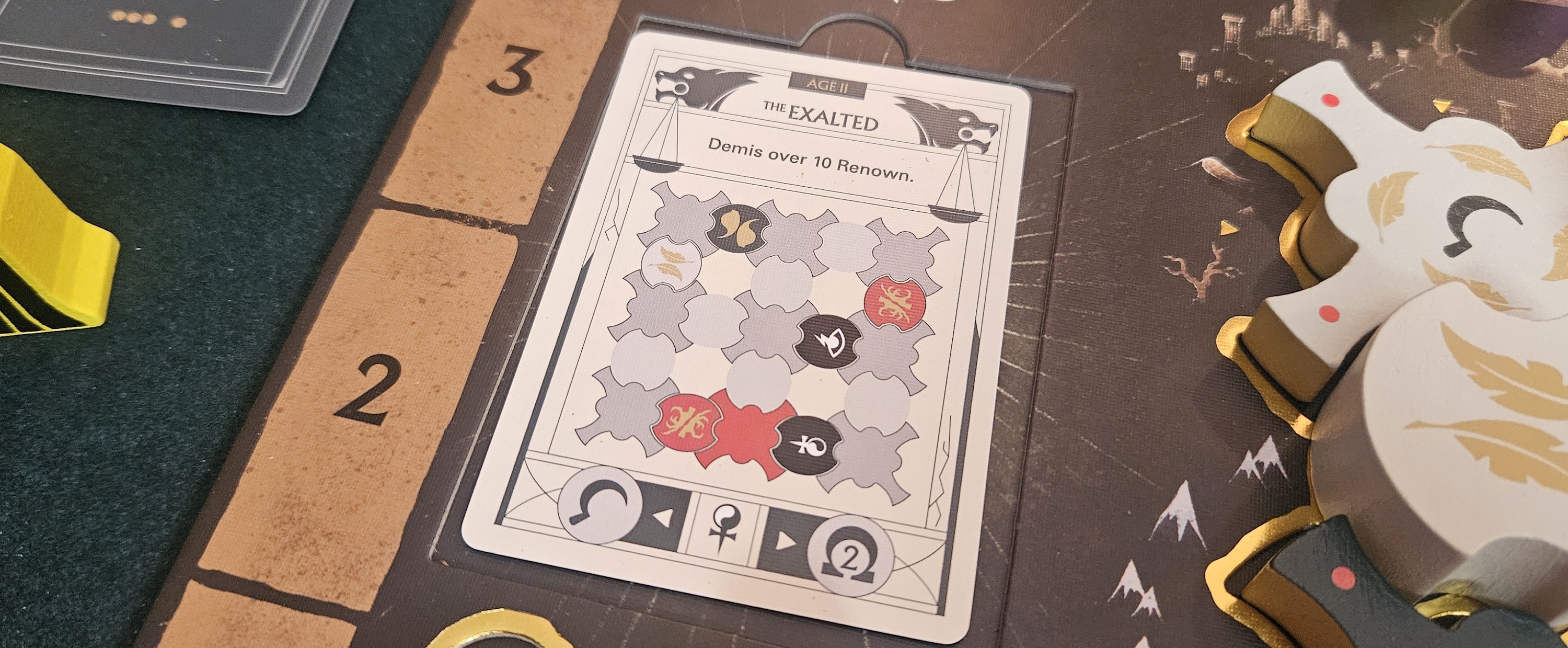
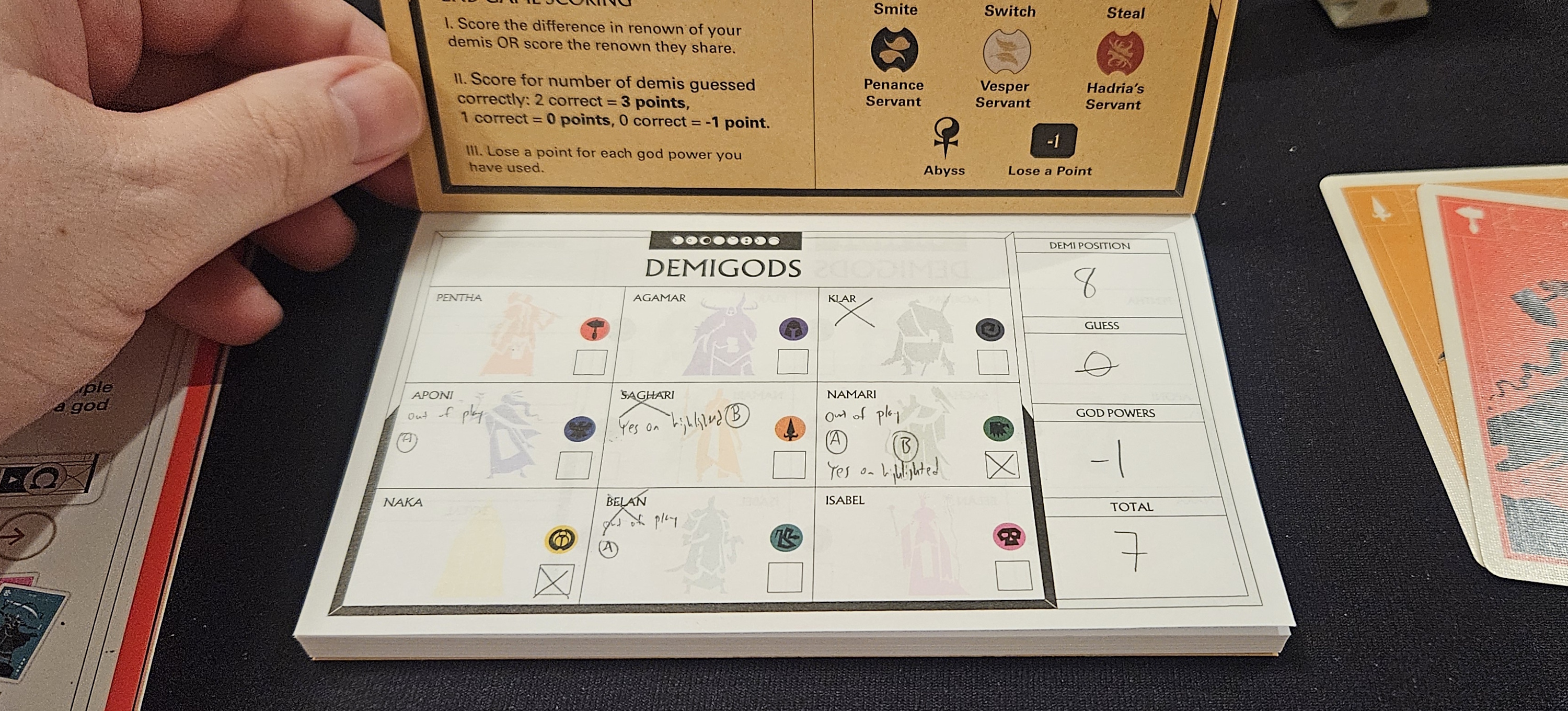
But the game’s more explicit tool is provided each age. Scales of Fate takes place over three rounds, each of which provides a different criterion that will be checked at the round’s end. Early on, for example, you might be required to inform your opponent whether you have any demigods out of play. That means they weren’t sent to the board, whether to trigger actions or because someone blasted them down to the underworld. Later, your suspicions might be confirmed by evidence of divine parentage for any demigod placed on a highlighted action pillar.
Crucially, these cards ask yes/no questions rather than demanding specifics. If you’re clever enough to ensure that only one of your two children meets the current age’s criterion, you can simply say “yes” to their presence without giving too much away. For example, one first-age card asks whether one of your children is still seated at four to six renown on the track. Saying yes is almost worse than saying no, especially if nearly all of the demigods have yet to make a name for themselves.
In the meantime, nearly everything adjusts their standing on the renown track. When servants trigger quests — the cogs that surround the action pillars — the surrounding demigods shift up or down. When sent to the underworld, another action will determine the place’s magma forecast, thus providing feats or humiliations that also adjust their standing. Every little detail matters.
Now that’s nice.
And we still haven’t talked about the game’s cleverest touch. Remember when I mentioned we would return to the question of your children’s parentage? Turns out this pantheon is rocking one big orgy, with all the problems it poses for any paternity/maternity/sea-foam tests.
In most deduction games, including the basic rules for Veiled Fate, holding a card means nobody else is holding it. In Scales of Fate, both sides have their own duplicate deck. Just because your children are Agamar and Saghari doesn’t mean your rival won’t have some personal interest in one of them as well. Maybe even both of them, although that’s unlikely. This adds no small amount of static to the ongoing deductions. When one of your demigods gets bumped off their current space, is that because your rival has figured out that they’re your kid and is trying to mess with you, or are they chasing an ambition of their own? Some of my favorite matches have featured duplicate offspring, and while this calls into question what’s so demi- about these so-called demigods, it’s a brilliant addition to a shared-control deduction game.
That goes for the entire package. To some degree, I wish I could play a version of this game that featured more than two players. The idea behind Veiled Fate was always one that appealed to me, and while it finds its best expression here, there’s a slightness to Scales of Fate that I wish would be transposed into a more robust framework. Of course, it’s entirely possible that this game only functions because its manipulations are so laser-focused. It’s generally possible to figure out your rival’s progeny. At least one of them. I’m not sure that would be the case if we had to keep an eye on three other players rather than staring down only one person.
Along the way, there are other little touches that elevate the experience. Like the game-breaking powers that let you smite anyone or swap two demigods, but subtract points from your final tally. Or the way the end-game deduction rewards a correct genealogical discovery but only penalizes you for not uncovering at least one of your rival’s kids. Like the board’s cogs and pillars, everything locks together into one elegant whole, resulting in a crystallized experience where nothing is out of place.
Chillin’ with the cousins.
Honestly, it’s such a breath of fresh air. Not only that Scales of Fate is this good, but that it takes such a novel approach to almost every corner of its design. From the non-literal map to the way it uses relative proportions to signify importance, both on the board and between renown trackers. From the clever approach to shared control to the way players might find themselves accidentally co-parenting a demigod. It’s achingly smart.
More than smart, it feels great to handle, to push around, to study a rival and mark down a clue. When I first saw Scales of Fate, I knew I had to figure out how those pieces fit together. The beautiful thing is, their inner workings proved even better than they seemed from afar.
A complimentary copy of Scales of Fate was provided by the publisher.
(If what I’m doing at Space-Biff! is valuable to you in some way, please consider dropping by my Patreon campaign or Ko-fi. Right now, supporters can read my first-quarter update of 2026: the best board games, movies, books, and more!)
Lucky Duck Games, the board game publisher behind European localisations of major hits such as Dune Imperium and Cascadia, is scaling back that side of its operations to prioritise development of its own designs.
Scott Morris, the company’s global brand director, told BoardGameWire that while localisation had been an important part of the business over the years it was “resource intensive” and dependent on external factors – adding that developing in-house titles provided “more opportunity for long-term value”.
Lucky Duck has become a varied operator in the modern hobby games industry since it was founded in 2016, growing from a small design studio running Kickstarter campaigns into a global publisher, localiser and distributor with offices across Poland, the US, France, Italy and the UK.
That localisation activity has been centred most heavily around Lucky Duck’s home of Poland and early expansion country France, with the company becoming known for local language version of strategy titles and big-selling games such as Too Many Bones, Flamecraft and The Isle of Cats.
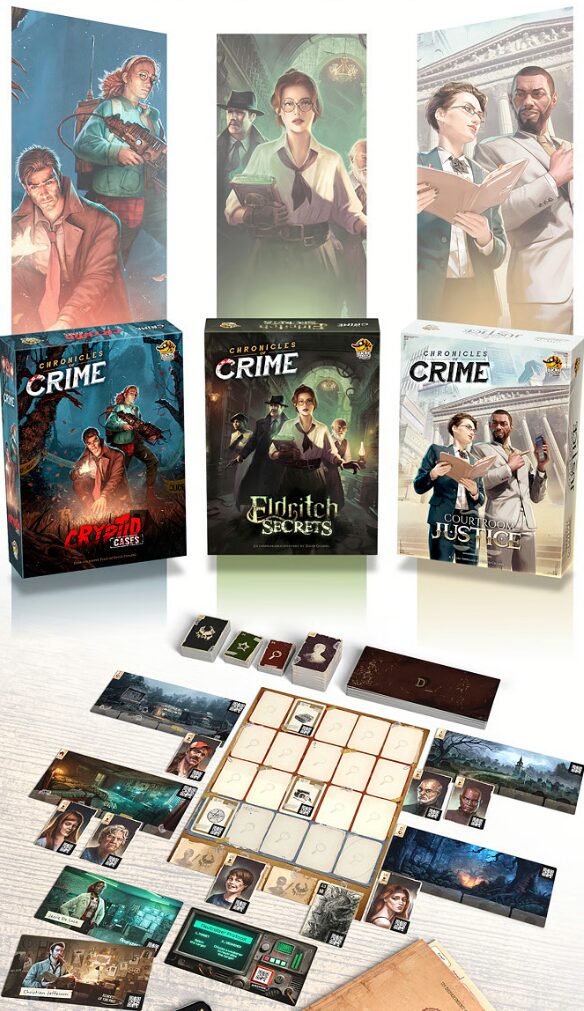
But Lucky Duck has a big hitter of its own in the Chronicles of Crime series of games, which have sold more than one million copies worldwide, and Morris told BoardGameWire the company was also “very confident” in its other recent releases Borealis: Arctic Expeditions, Purrramid and Oakspire.
He said, “We also have several games in development we have not announced yet, but we are very excited about. The team knows how to make fun and engaging games, which, at the end of the day, focus on our goal: bringing smiles to gamers everywhere.”
The French edition of Too Many Bones from Chip Theory Games, localised by Lucky Duck Games
Lucky Duck was bought by Rummikub manufacturer Goliath two years ago – and Morris said the global distribution opportunity offered by such a high-profile mass market player was part of the reason behind the strategy shift.
He said, “Since the acquisition, there has been a focus on leveraging Goliath’s global distribution network and operational scale. This includes expanding access to new retail channels and improving production and logistics capabilities.
“These changes are ongoing, but they are already opening new opportunities for our titles to reach wider audiences. We have seen significant growth in these new channels and are excited to continue to introduce our games to new retailers and customers.”
He said, “I can understand how the announcement was received that way and we will work to make our announcements clearer in the future.
“We have decided to not localize some items we originally planned to, and we’re working with those partners to find the best solutions for everyone, in those situations. The decision is part of a broader strategic evolution, rather, and is not a France-specific decision.
“We are refining how we approach the different markets, with a greater emphasis on publishing and developing our own titles globally, while continuing to work with partners where the right opportunities exist.”
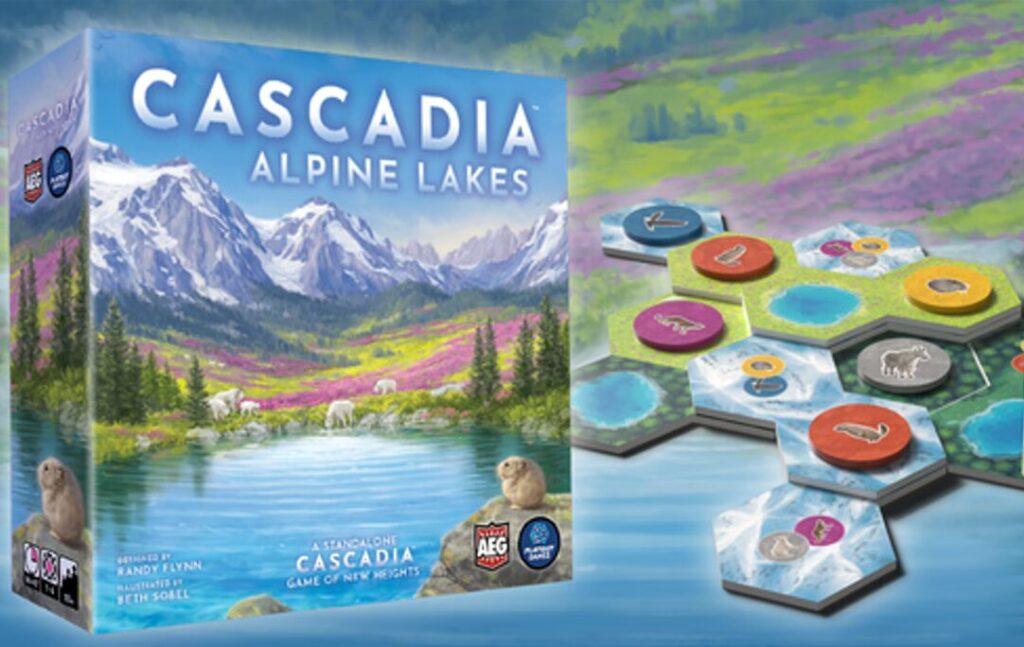
Some of those planned localisations which will now not go ahead include the French localisation of Cascadia Alpine Lakes, published by Flatout Games, which was only announced by Lucky Duck a few weeks ago.
Cascadia: Alpine lakes || Kickstarter image
Morris said the strategic shift did not affect the company’s Global Publishing Network operation, which is a separate business unit that acts as a localisation agency, connecting publishers and distribution buyers who localize in their regions.
It might appear that developing and publishing home-grown designs is a much riskier proposition than localising already popular titles which gamers are keen to get hold of in their language – but Morris said both approaches carry different types of risk.
He told BoardGameWire, “With the support of Goliath’s global infrastructure, we are in a stronger position to manage risks effectively. While localization benefits from existing demand, original publishing allows us to build long-term value, strengthen our own brand identity, and deeper our engagement with the players.
“We have a very talented design and development team in Poland, led by Michal Szewczyk, that has produced award winning games.
He added, “By prioritizing internally developed titles, we have greater control over product development, timelines, and long-term brand building.”
Goliath CEO Jochanan Golad said at the time of the Lucky Duck takeover that it saw two major growth areas in games: adult party games and strategy games – but some publishers have begun to move away from larger box, complex titles and towards lighter, smaller games recently amid the fallout from last year’s US tariffs chaos.
Morris confirmed to BoardGameWire that strategy games “remain a key area of growth”, saying, “Our strategy reflects confidence in that segment, alongside opportunities in other categories.
“The Lucky Duck brand is focused primarily on strategy games… we’re both very happy with our recent releases, the reception they have seen, and our upcoming titles to announce soon!”
He added, “Tariffs have added significant pressure across the entire industry, affecting production costs and pricing strategies. It has been extremely hard to see our industry hit so negatively, and see so many people’s livelihoods, and in some cases, life’s work, stretched to, and beyond their breaking points.
“Like many publishers, we’ve had to adapt by optimizing supply chains and planning more carefully around manufacturing and distribution decisions.
“I strongly believe that our acquisition by Goliath could not have been timed better with regards to the tariff situation. Their global supply chain and logistics management helped us navigate the waters better than we could have prior to the acquisition.”
Chronicles of Crime: Beyond Doubt || Kickstarter image
Lucky Duck continues to run Kickstarter campaigns for its own designs – most recently with Oakspire, which has raised just over €133,000 with about seven days of the campaign left to run, and Chronicles of Crime: Beyond Doubt, which pulled in about €373,500 last November.
The company has hit choppy water with some of its unfulfilled Kickstarter campaigns, however, with heavy delays for €1m-raising The Dark Quarter – which was initially expected to deliver to backers in October 2023 – and Into the Godsgrave, which was slated for fulfillment in December 2024.
Morris said of Into The Godsgrave, “As with many large-scale projects, with unique designs, timelines can shift due to the complexity of production, logistics, and ensuring the final product meets expectations.
“The team has prioritized quality and delivery experience, which has contributed to the revised timeline. Our team, specifically Ben Poole our community manager, has worked hard to keep everyone updated through our project updates as to the status and milestones.
“We’re excited to get that game into players hands and on their tables. It’s a very fun and unique experience that I believe will impress.”
Regarding The Dark Quarter, he added, “Similar factors applied here, particularly around production and app development, plus global logistics challenges. Goliath’s strengths here will help us mitigate those risks in the future.
“We’ve worked hard to ensure the final product met the standard expected by backers, even if that required additional time and we have seen many positive responses as fulfillment progressed.
“I’m paraphrasing a famous quote, but as a wise man once said, a delayed game can be eventually good but a rushed game can be forever bad.”
The Theme My granny made a medallion patter green and pink bargello cushion in the 1980s. She had it in her granny flat, where I often escaped to during my childhood. A few years ago, I realised I was spending too much time on my computer. Double-screening in the evenings. Working too much. So, I decided to take myself in hand and find a hobby that would pull me away from the screen. I came across a bargello-style craft kit to make a cushion, and the moment I saw it, I felt immediately drawn. It was like my granny guiding me towards it.
What started as one cushion has become something of an obsession. It was only a matter of time before this world crept into my game design.
Me, with a bargello cushion I made...
Mechanical Inspiration But Threadeddidn’t start to take shape until I came across one particular component. I played Shogun and fell completely in love with the cube tower. It's a remarkable piece of kit - tactile, unpredictable, genuinely exciting - and yet it feels like a component that doesn't appear in nearly enough games. I knew I wanted to scratch that itch. The question was: what would the cube tower be doing?
The answer came quite naturally once I had the theme in mind. The tower would be a thread factory. Whatever comes out of the tower on any given turn represents the over-production - the threads that spill off the factory floor and become available. You can't predict exactly what you'll get. You just load it up and see what emerges.
The second idea arrived alongside it: an ordered worker placement system. Each worker carries a number, and those numbers change from round to round. When a location is resolved, the worker with the lowest number goes first. The interesting tension comes from decision-making at placement. You might choose to assign a higher number to the Workshop, if you're willing to gamble on going later in order to take a tapestry card further down the display row. High risk, potentially high reward.
The workers, who’s numbered days were numbered.
When Good Ideas Don't Survive In honesty, the original version of the ordered worker placement system was a bit of a mess.
The drafting process had three nested rules about which numbers you were allowed to take and in what order. It was involved, fiddly, and crucially it didn't generate enough interesting decisions to justify all that overhead. The system as a whole was too clunky for the weight of game I was making and for the experience I was trying to craft. Playtesters were confused and simultaneously overwhelmed and underwhelmed. Overwhelmed by the amount of business and rules related to the numbered workers and underwhelmed by the decision space it afforded.
So, I cut it. In its place came a much simpler worker placement system: you queue at each location, and earlier arrivals have the benefit when the location resolves. The interesting decisions about timing are still there, just hopefully presented without the administrative burden.
Can you spot what made it and what didn’t?
I'll confess there's a version of that numbered system rattling around in my head where the timing of when your worker activates is the central puzzle. It just wasn't right for this game.
As many designers often find – a core part of the original design for a game often doesn't survive the development process. The cube tower made it. The ordered workers mechanism didn't. It’s sometimes hard to abandon core ideas from the original design, but I’m constantly reminded that it’s important to do so.
The Puzzle What has never changed, from the very first prototype to the published version, is the core puzzle. It has two interlocking layers. The first is the needle puzzle. How do I arrange the threads on my needle so the right colours become available at exactly the right moment? You add threads only to the ends of your needle. You can only remove from the ends. Everything in the middle is locked in by what's around it. Getting your threads into the wrong order is punishing, and planning ahead is deeply satisfying when it comes off.
The needle (grey foam object, with cubes), tested here in two-part form!
In the early versions, there was no basket, which give players additional storage and some flexibility to manage threads in the final version. Instead, your needle might hold twenty threads at once, and having one thread in the wrong position could be genuinely crippling. Some playtesters had a pretty bad experience of the game because they couldn’t manage the necessary advance planning with the timing of taking perfect tapestry cards. I experimented with various ways to ease the problem: allowing free discards so you could jettison a rogue thread from the middle of a promising sequence; shortening and splitting the needle into two parts that you could build on either side of; and a personal scraps pile that you could store things in, but that other players could raid. Eventually the needle shrunk and the personal basket found its shape.
A purse is a sort of like a small personal basket? Though this is more helpful for shops than thread.
The second layer is the scoring puzzle. Commission cards reward you for completing tapestries that meet their criteria. You can approach this either way: find commissions that complement each other and then hunt for tapestries to satisfy them, or take tapestry cards that appeal and work backwards to find commissions that reward your collection. Or of course, you can do a bit of both. The tapestry cards and commission cards themselves haven't changed since the first prototype.
Tapestry and commission cards, in prototype and final form.
Shops and Destinations The ordering of the shops (destinations for workers) shifted several times during development.
In earlier versions, the Bargain Box appeared before the Thread Shop. The logic was transparent: everything left in the thread shop at the end of a round would be added to the cube tower, so players knew exactly what they'd be competing over. It felt fair. But it removed the mystery, and with it, some of the tension and excitement. Now the Bargain Box comes after, you don't quite know what the tower will produce, and that uncertainty makes every trip to it feel like an event.
One destination was added relatively late in development: a space that lets players pay to jump the queue at any of the other shops. It arrived because playtesting revealed that players sometimes felt their final workers had no good home. Once that space existed, that feeling disappeared. A small addition, but it made the whole system breathe better.
Working with Osprey I pitched Threaded to Osprey three times. They passed twice.
Both times, they passed with real generosity - clear, specific feedback about what wasn't working, and an open door to resubmit if I could address it. Some of the mechanical changes in the game exist because of those conversations. It's normal to feel the sting of a rejection, but if a publisher has taken the time to play your game and tell you precisely what's not landing, the only sensible response is to take that seriously and ask if they'd be willing to look again.
The third time, they signed the game. And since signing, they've been wonderful to work with. The development and production process has felt collaborative and considered. They've helped my original design to shine through rather than reshape it into something else.
Full Circle My latest Bargello project was footstool I made for my mum - a thatched design that echoes the colours of her William Morris curtains. It takes patience and planning and you have to think about what goes where before you commit the needle.
That's Threaded, really. The threads on your needle, the tapestries on the table, the commissions in your hand - all of it asking you to think three moves ahead, to hold your plan loosely enough to adapt, and to feel the particular satisfaction of a sequence coming together just as you intended.
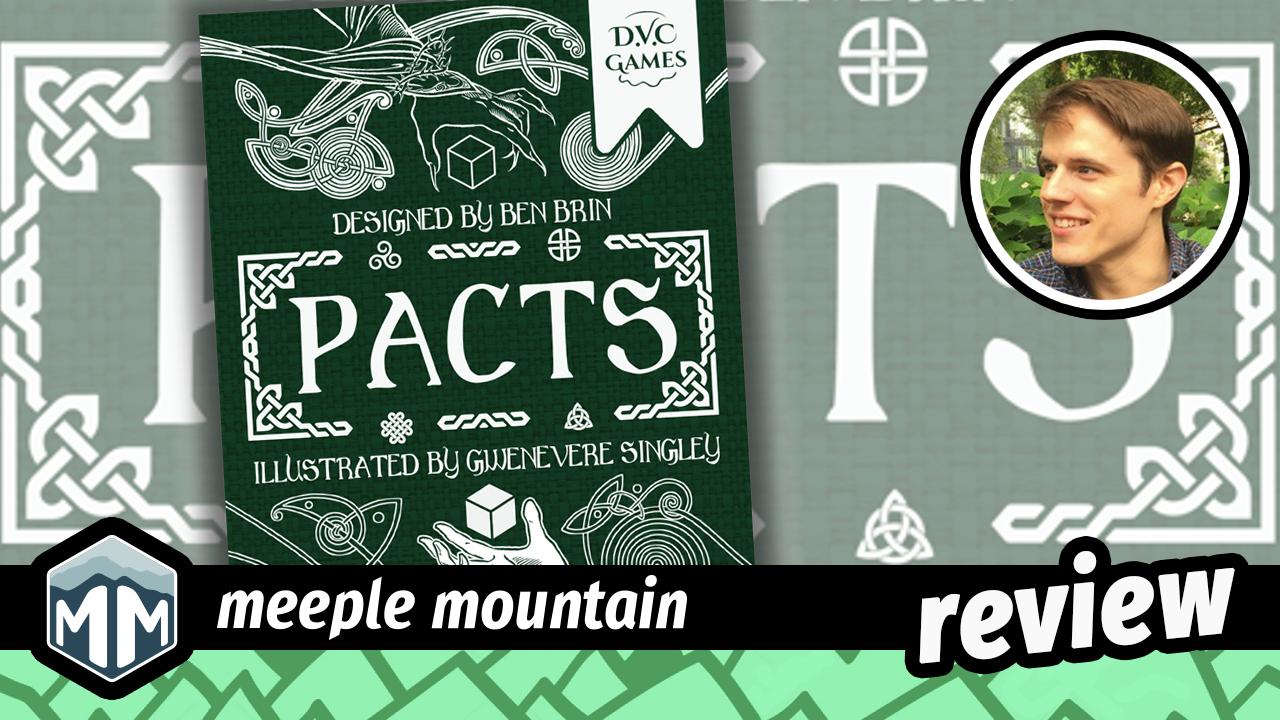
D.V.C., as wonderful and consistent and quirky a publisher as you’ll find, largely does its own design work. With the exception of 2020’s Rosetta: The Forgotten Language, all of D.V.C.’s games up till now have been credited to house designer Jasper Beatrix. In a just world, Jasper would be unable to walk down the street without being mobbed by fans, but there are two barriers to that: we certainly don’t live in a just world, and Jasper Beatrix doesn’t exist.
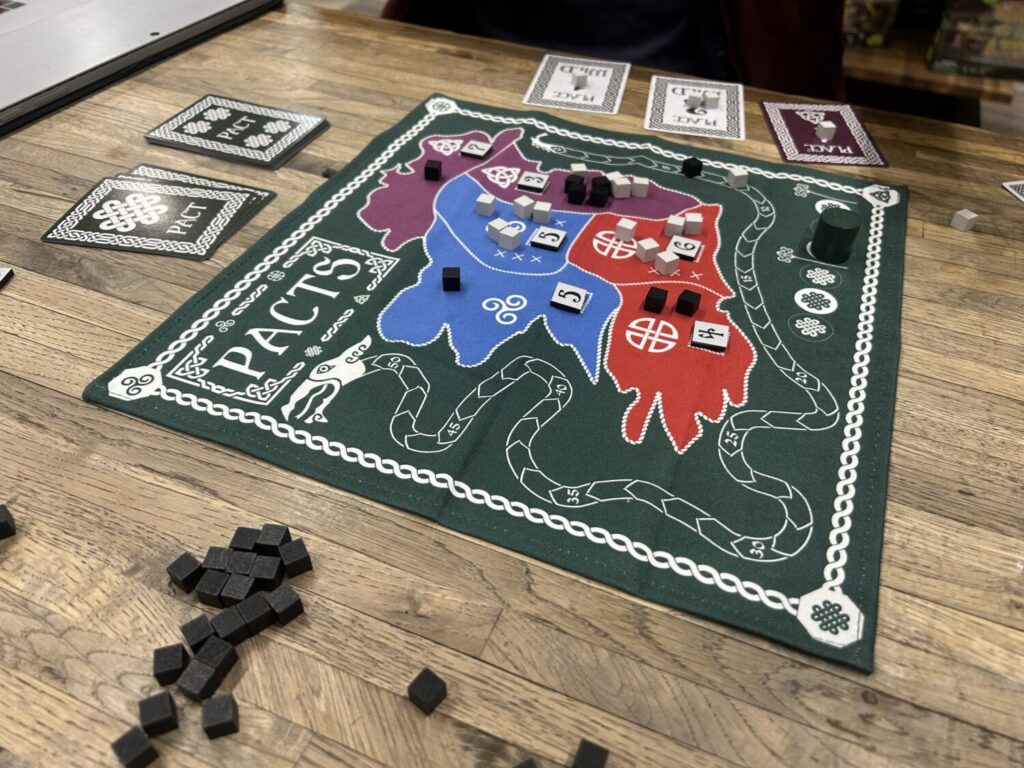
Not corporeally, anyway. Good ol’ J.B. is a pseudonym for a loose collective, a merry anarchic band of creatives who work together to make these wonderful games. They’re so prolific, and release games of such high quality, that the announcement of Pacts and the realization that it was not designed by Jasper Beatrix, was quite the surprise. This area-control game for two is the work of Ben Brin, a single corporeal designer.
Well. I assume.
I Pick I Pick You Choose
Pacts is an exemplar of I Split, You Choose, a mechanism whose promise is often let down by…
Flip 7 with a Vengeance Designers: Eric Olsen and Alyssa Swatek Publisher: The Op Players: 3+ Age: 8+ Time: 20 minutes Amazon affiliate link: https://amzn.to/4vaZLFd Played with review copy provided by publisher Flip 7 is back – With … Continue reading →
I’ve exceeded my word count, so no witty intros today for Stonesaga, which is an expansive game that plays one to four players over 60 – 120 minutes per session, according to the box. Published by Open Owl Studios, Stonesaga is a cooperative survival crafting board game set in a unique and persistent world. Gameplay […]
A DECADE…a DECADE of content…a DECADE of wargaming…unreal! Time just flies by anymore and I am blown away to think that The Players’ Aid has existed for a FULL DAMN DECADE! That is literally 1/5th of my life! Just unbelievable but we are here and there is no going back or undoing the damage we have done over those 10 years. But we have reached our 10th Anniversary and if you told me 10 years ago that we would be around in 2026 I would have laughed at you. I thought that this was simply another experiment or hobby and that one day in a few years we would come to our senses and move on. But, that didn’t happen and frankly it was because of the fantastic support of the hobby, the strong “family” that we have built and the relationships that have been formed that has kept us fueled and going. Make no mistake, this landmark was reached by ALL of us in the hobby and we thank you all so much for the fantastic experience that we have had along with you.
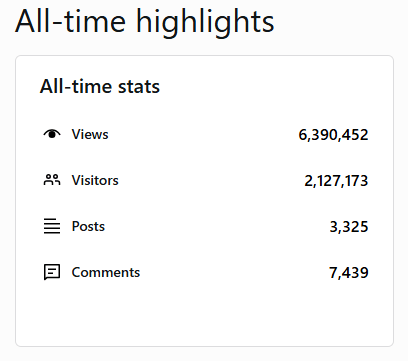
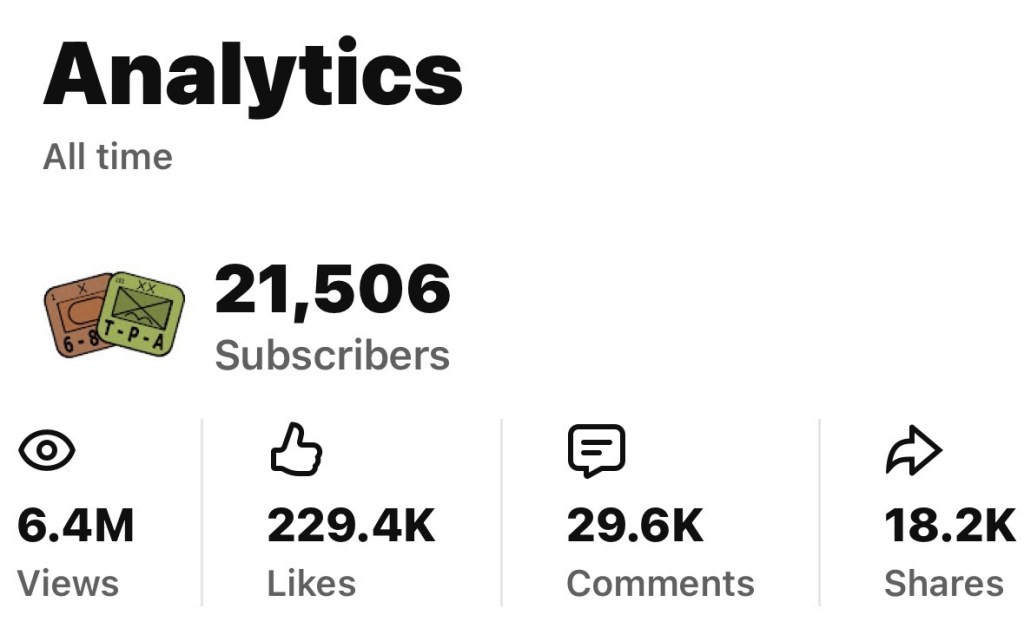
2025 was another fantastic year for The Players’ Aid and we have continued playing and reviewing wargames and have hit several large milestones over the past 12 months including 3,300+ posts on the blog, nearly 6.4 million lifetime views on the blog and recently we surpassed the 21,500 YouTube subscribers threshold. It is cliche to say but what we do doesn’t feel like work, or a commitment or a chore, and we really enjoy what we do! And to have done this for 10 years is mind blowing. We are continually reenergized by our followers and your comments on our content and want to thank you all for that! I am not a person that needs praise and encouragement often, but when it comes organically it really feels good and pumps me up! Overall, the last year was a HUGE success for us as we have once again experienced good and steady growth in our written blog as well as in our YouTube Channel views. Even after all of this time doing what we do, we still have a desire to meet weekly and play new wargames to share with you. It has truly become our passion and we couldn’t envision a future without this.
Happy Birthday To Us!
We started the blog in 2016 with our first post being on April 17, 2016 which was a very short AAR on our first attempt at playing Empire of the Sun from GMT Games (I look at the pictures we used in that AAR and notice that the counters were not clipped! Barbarians!). We still laugh to this day about the fact that this was one of our first games that we tried to cover. I guess we both like diving into the deep end of the pool! From those meager beginnings, we have posted consistently and I think have improved the quality of our content since that first try. Your readership and viewing has helped keep us inspired and motivated to put out consistent content. Its been a lot of work, and does take up quite a bit of our free time, but we do enjoy it and have no plans to slow the train down. We also have been very lucky in the support that we have received from various publishers, websites and designers as they have worked to keep us going as well. From sharing our posts on Twitter and other social media sites, to posting our videos and reviews on the game pages on their websites, a good portion of our views come from these sources and we truly appreciate that. We know that we cannot possibly reach all of the wargamers out there by ourselves and need the community to help in spreading our words.
We also want to thank the host of game designers who have taken time out of their busy schedules to answer our long and sometimes deep questions about their designs in our written interviews. I know that when I reach out initially they are always gung-ho about answering the questions but then they get my email with 20+ questions and all of a sudden I am sure it feels like homework! Our Designer Interviews Series has been a huge success and is a big part of our weekly posts generally starting each week off with a new post on Mondays. II work hard to try and stay up on the newest games and give our readers an inside look at the mechanics, design process and game play on these in-design games. I have very rarely been told no by someone when I contact them on email to discuss their game and have been able to build quite a number of what I would call friendships with several of these designers. I will not name specific individuals, as I don’t want to inadvertently leave someone out, but thanks to you all! You are simply the best!
We have continued with our monthly Wargame Watch Series, Action Points, First Impressions posts and the occasional Best 3 Games with… Series and The Love/Hate Relationship Series. My newest series on the blog is the My Favorite Wargame Cards Series and we are now up to a total of 73 of these posts since May 2024. I really like revisiting some of these Card Driven Games that we have played in the past and finding those cards that are unique, interesting and that incorporate some of the historical flavor into the game through the cards. On our YouTube Channel, the Monthly Debrief Series is alive and well, although we have had a tougher time over the past 6+ months of getting them done on time mainly due to new job responsibilities and tough schedules, our Car Videos continue to do well and Alexander has continued his very interesting From Cover to Cover Series where he reads a historical book and shares his thoughts on it and pairs it with an overview of a few games on the subject. I have continued to work hard on my solo gaming and was able to fully play 17 new solitaire games in 2025 along with shooting playthrough and review videos. We appreciate all of your response to these continuing series and hope to be able to continue them but also create some fresh and new ideas in the future.
The Blog By the Numbers
With the introduction to the post and pleasantries out of the way, onto a look at the blog statistics, which is always my favorite part of writing this post! Statistics are a good indicator of how we are doing and I personally pay a lot of attention to our daily, weekly and monthly numbers. Actually, I might say that I am addicted to looking at them and check several times per day. I am a results driven person after all and have to win at everything!
Since the blog started in April 2016, we have been viewed nearly 6.4 million times (as compared to 5.4 million this time last year). These views have come from an astounding 2,127,173 visitors (as compared to 1,810,122 visitors as of April 2025). This means that each visitor that comes onto the blog averages 3.0 views. This number is down slightly form last year’s 3.04 views per visitor but is still very comparable. In fact, I have noticed that this views per visitor number has slightly gone down 6 out of the last 7 years. I am not sure I know why that is but it is a thing and it is good that when people do find us and come onto the blog they seem to spend some time viewing our current content and sometimes even dive back through our older stuff. That is one thing that I like about how our platform WordPress runs, as they will link comparable articles and posts below the new post so that when the reader is finished they can simply click a link there to take them to another similar article. This type of thing drives the number of views up and I am glad that it has this feature.
We have really been blown away by the response that we have seen in our blog over the past 10 years. While Alexander no longer writes on the blog, I have really enjoyed continuing to cover games in the written format as I know that there are people out there who prefer it to videos and our statistics prove that point. I know that I prefer written blogs over videos when consuming gaming content but everyone is different! I still marvel that we actually started this little venture but more importantly that we are still going 10 years later.
My mind is very analytical and I really like to think about and consider strategies and probabilities of outcomes during game plays. Don’t get me wrong, I am not a card counter or anything like that but I do like to consider the odds of success before taking certain actions. And I like to put those thoughts down on paper (digitally) here on the blog to share my insights with you. One of my most favorite series to write are Action Points. They give me the opportunity to sometimes create tables and graphs to look at the numbers inside of games as I analyze a game and its mechanics. These posts are not always the highest view garnering posts we do but I am not going to give up doing them as they are really for me and my enjoyment. If others read them and gain something from them, then that is great!
I also really do enjoy the process and activity of writing. It is soothing and takes my mind off of life for a while and really speaks to the creative side of my brain. I also love to consider how to introduce a subject to the reader, how to incorporate my brain’s hard drive full of nostalgia and movies into the narrative I am trying to spin. Sometimes I am more successful with this effort than others but I do enjoy doing that. I have no plans to stop writing but do have a bit of an obsession with it and spend a lot of time (really too much time) on the blog. Last year, I had quite the streak going with posting something on the blog every day for nearly 2 full years! That streak came to an end on January 2, 2026 when I didn’t post for 3 full days. The holidays were fun and I was spending lots of time with my family rather than with writing. I have tried to again get back to consistency this year and have done pretty well by posting at least 4-5 times per week and currently have a modest 35 day streak as of the posting of this entry.
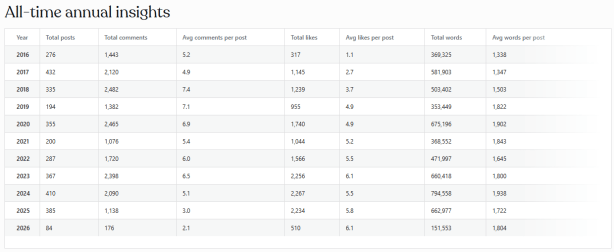
You will also notice that we have done 3,325 posts over the 10-year period that our blog has existed. Remember though that 2016 only included 9 months of content while 2026 only takes into account the first three and a half months of the year, which accounts for the lower numbers for those shown years. If you look at the individual years’ numbers though you will see that we posted a lot in 2017 (432), 2018 (335), 2020 (355), 2023 (267), 2024 (410) and 2025 (385) while 2019 (194) and 2021 (200) were both a bit of a slow year as I had started a new job and was very busy with some travel and out of town work that kept me from my regular routine of writing. 2022 picked back up though and I made a concerted effort to get back to regular content. Also, early on, remember that there were three of us writing for the blog (remember Tim?) and over the past few years it has just been Alexander and I, although at this point as mentioned earlier I do 99.9% of the posts on the blog. Our posting consistency has kept our blog fresh in our readers minds and on their timelines. Over the past few years, the number of posts has begun to increase again but has slowed down a bit in 2025 and now in 2026. But never fear, posts will be regular. I promise!
Another interesting statistical compilation that is provided by our WordPress software is a look at not only the number of posts but also the total number of comments, total post likes, total words written as well as some averages across those numbers. Interaction on posts has been much improved over the past few years as compared to previous years with more comments and more likes saw a big drop in comments. I do love to hear your thoughts on my posts and about the games or subjects being covered so please say something if you would like. I consider myself to be pretty wordy in my posts and that is being proven with total word counts in 385 posts in 2025 of 662,977 and average words per post of 1,722, which are a bit lower than in 2024. It appears that through the first 3 1/2 months in 2026 I have become a bit wordier but I know that I have done more lists and have started some more in-depth looks at games.
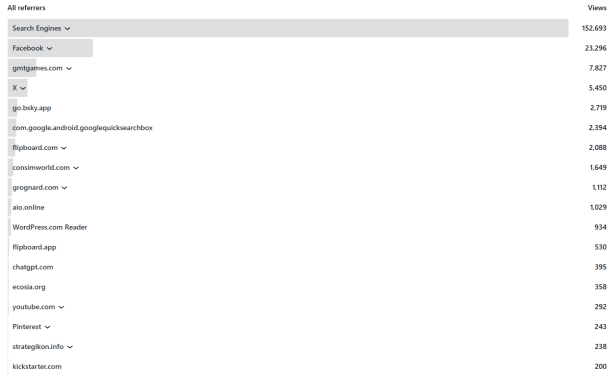
Over the past 10 years, we have built quite a library of content and we still come up often in internet searches which brings a lot of visitors to our site. In fact, here is a look at some interesting data from the blog where you can see our top Referrers from 2025. These are sites that send visitors to our site as they have hosted or linked to our articles, videos or other content and people find us this way. Notice though that Search Engines sent 152,693 views our way, which is about 17.1% of our total views (Total Views for 2025 were 897,777). Social Media is also a good source for views as Facebook brought in 23,296 views and Twitter 5,450 (down quite a lot over 2024 from 15,401 views). Consimworld, which referred just 1,649 (down a bit 2023 from 7,287 views) used to be a much larger part of our referrers but has dipped and you will notice that GMT Games is not on the Top 10 list as it appears nothing has come from them. Not shown in the graphic are the myriad of smaller referrers that send views our way. That list is really very long and I couldn’t post the whole graphic but there are about another 130+ referrers ranging from 250 views referred all the way down to just a handful of referrals. We appreciate all the views though and will never not be grateful for any help that we can get.
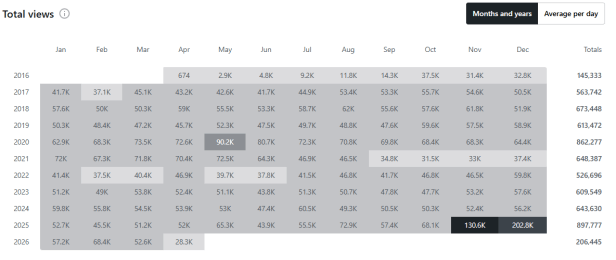
The following graphic shows our Monthly Views since 2016 and tells a really interesting story. As you can see, our monthly views had been steadily increasing over the years, growing from a Monthly Average Views of just 16,153 in 2016 to over 71,856 in 2021. This slowed down quite a bit though in 2022 with a Monthly Average Views number of just 43,891. We refer to this as the “Dark Times”. As you can see, as I started posting on the blog less starting in July 2021, our monthly views dropped off to the lowest point since 2016. But in 2025 we had a banner year with a whopping 897,777 views, which was our largest annual view ever on the blog. Why was this the case? I am not sure but we did see China pop up as a country where views were coming from and that had never really been the case before so maybe the Party was monitoring my posts as a possible secret code to American operations across the globe. Thus far in 2026, we are doing solidly and have actually outpaced the views for the first 3 months of 2026 as compared to the same months in 2025; January with 57,200 views (52,700 in January 2025), February with 68,400 views (45,500 in February 2025) and March with 52,600 views (51,200 in March 2025). This is a good trend for the blog and I am happy to see it. We may not break the record for highest views this year but we are on pace for another very solid 600,000+ view year.
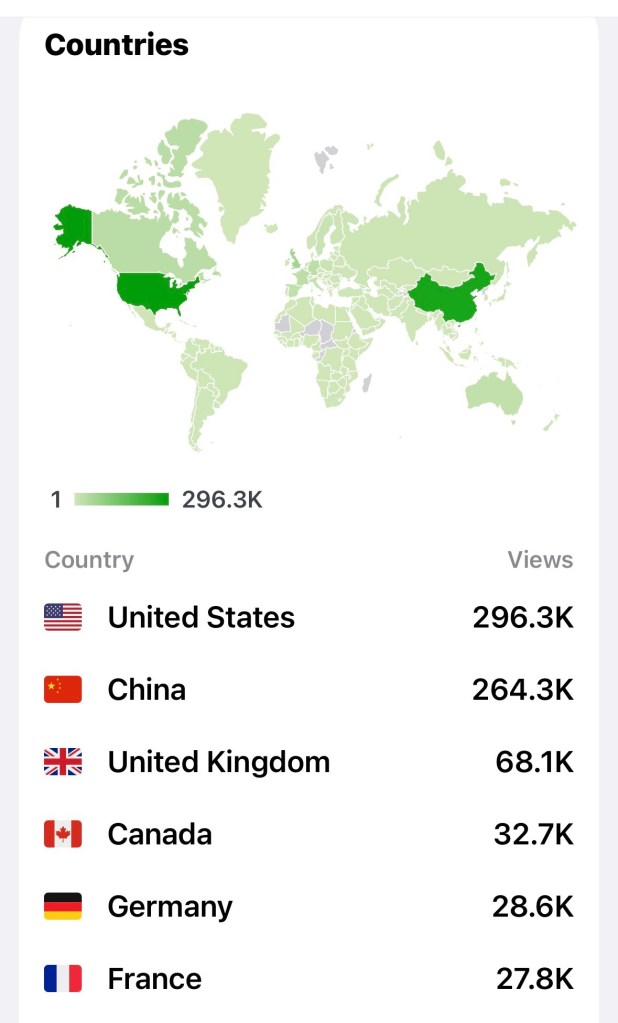
A few years ago when we posted these stats there was a request for a map of viewers and viewership based on location. The WordPress (powered by JetPack) statistics are pretty good so here’s a look at the top country views for 2025. Obviously the US (296,300 or 33%) is where the majority of views come from with the UK (68,100 or 7.5%), Canada (32,700 or 3.6%), Germany (28,600 or 3.2%) and France (27,800 or 3.1% ) bringing up the 3rd-6th spots respectively. But, this year we had a new entry in the views from Countries arena in China with 264,300 views or 29.4%. I am shocked. I do know that I saw where a couple of warganing focus sites had shared some posts that they translated into Chinese (without my permission I might add) but the added views has been nice. I am very pleased to see our growth in the non-English speaking (I realize some are bilingual and do speak English but not as their primary language) views from these great European nations and even from China. I am always surprised when we get a comment or interaction with fans from other countries and when I look at this graphic I realize that we are a global blog with lots of fans in lots of countries and that makes me very happy.
Top Performing Blog Posts for 2025
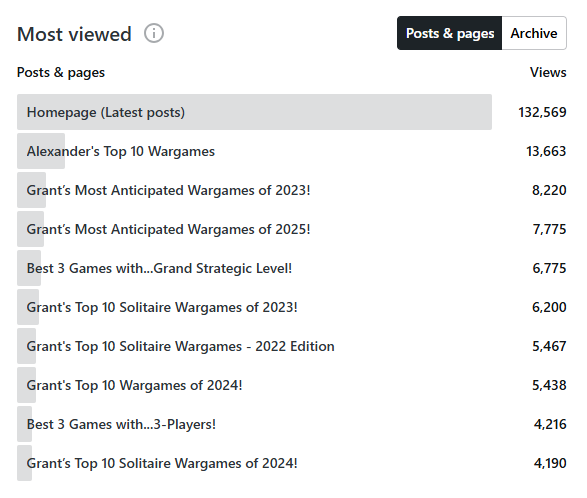
In the anniversary post last year, I showed you a list of our best performing posts on the blog. So I will continue that trend this year by showing our best performing posts for 2025. The same as last year, it seems that lists of games do the best, such as Alexander’s Top 10 Wargames, Grant’s Most Anticipated Wargames of 2023!, Grant’s Most Anticipated Wargames of 2025! and so on. People really like lists as they are a quick source of lots of good games that people can investigate, purchase and play. Most of our blog posts get 200-700 views in the first week they are on the blog and then over the next month will get an additional 200-400 views, sometimes more depending on the topic and how often I share them on social media. We are not a high view blog, partly because we are a wargaming blog really with only ever a smattering of coverage for traditional board games, but also because we don’t pay to promote our posts on social media nor do I spend a glut of time posting our stuff on other forums. I could do that and we would get more response but I just don’t have that kind of time.
Designer Interviews
In 2025, the blog hosted 51 interviews with designers (down 19 interviews as compared to 2024 with 70 hosted). That means that we posted almost every week (usually on Monday of each week) of that year. Thus far in 2026, we have posted 14 such interviews and seem to have no problem finding interested designers who want to share their games. I regularly scour various sources for news and anytime I find information about an upcoming game I add it to my list and try to reach out to at least 3-4 designers each month. The goal here is to have a continual pipeline of these designer interviews in the works, either having sent questions out to the designers or working to format and schedule interviews I have received back on the blog, I am always a few weeks ahead in order to make sure I have a continual flow of posts. Since our inception in April 2016, we have posted a whopping 587 designer interviews and I am very proud of that accomplishment. I was once told by Ty Bomba that our blog is an indispensable resource for designers and developers to read to understand how other designers have used interesting and new mechanics and overcome design issues and challenges. I like that and it makes me smile to think about the past 10 years of these weekly interviews and that someone has read them and learned something.
Currently, we have interviews already scheduled to post on the blog through May 4th and I have at least 8 others that I need to review, edit, format and then load onto the blog. Here is a look at some of our better performing designer interview posts from 2025:
These were simply a few of our best performing designer interviews on the blog throughout the year. To access our backlog of these interviews, just go to our blog and check out the Categories section located on the right side of the screen and enter Designer Interviews.
Social Media/Other Platforms
One of our most important marketing efforts is our focus on various Social Media platforms with the most used platform being Twitter or “X “as it is now called (although it is becoming a black hole and both interactions and views from are down) followed by Facebook. We share our posts from the blog on Twitter (@playersaidblog), Facebook (@theplayersaid), Mastadon, although this platform just hasn’t taken off yet and I am afraid is already dying (@theplayersaidgrant@wargamers.social) and Blue Sky (@playersaidblog.bsky.social) daily and have expanded into sharing in around 7 Facebook groups including Wargamers, Solitaire Wargames, Official GMT Games Group (when our posts focus on one of GMT’s games), GMT Games Fans, The Solo Board Wargamer, The Board Wargamer, THE BOARDGAME GROUP and finally our own page The Players’ Aid. I always worry about our frequency of posts and upsetting the groups but I do spend time trying to respond to comments and questions on our posts, share my gaming pictures there and read others posts and comment on them as well.
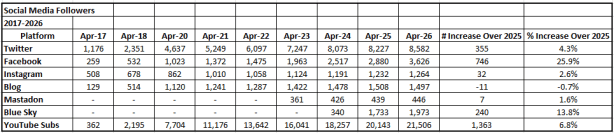
As you can see from the table above, I missed noting our stats for these Social Media platforms in 2019 but we have had a lot of growth in our Social Media reach in 2025 with a 4.3% increase in Twitter followers, 25.9% increase in our Facebook follows and 2.6% increase in Instagram followers (which is a platform that we really have ignored over the past couple of years). Our Blog Follows have dropped and I am not sure why. You can follow the blog one of two ways, either with your own WordPress site or through email. In just over 9 1/2 years, as we didn’t use social media much the first year, we have built a network of followers on these platforms that really helps us to engage and have discussions on various topics. In 2024, we added Blue Sky to our social media repertoire and have built a good little community there with a large number of increased subs of +240 and hope to continue good growth there so we can chat and connect with you.
Now we come to the YouTube Channel. And normally, I get to say that we had a banner year and added lots of subscribers, etc. But, in 2025, we just didn’t have a very good growth year on the channel. We added 1,363 subscribers, which is a good healthy growth number at +6.8%, but is not as good as we had seen over the past 4 or 5 years with double digit growth percentage and well over 2,000 to 3,000 new subscribers every year. I am a worrier by nature and Alexander doesn’t share my concern with the Channel but I look at others and their growth and we are no longer the largest pure wargaming channel out there. That position is now held by ZillaBlitz, and congratulations to Mike, as he has 28,400+ subscribers. I just take pause to ask myself what has changed? Have we somehow turned people off? I know that we are a bit all over the place and unorganized in our thoughts and videos with rambling discussions and over excited takes on games, which are all genuine for us and nothing is faked or staged. But what has happened? I would also say that over the past few months our views have dropped off by about 20% or so. I think that normally within a day or 2 of posting most of our videos, we would see well over 1,000 views but now we are seeing only 600-800. I just don’t know the answer and I wanted to make that statement here so you can help me to figure it out.
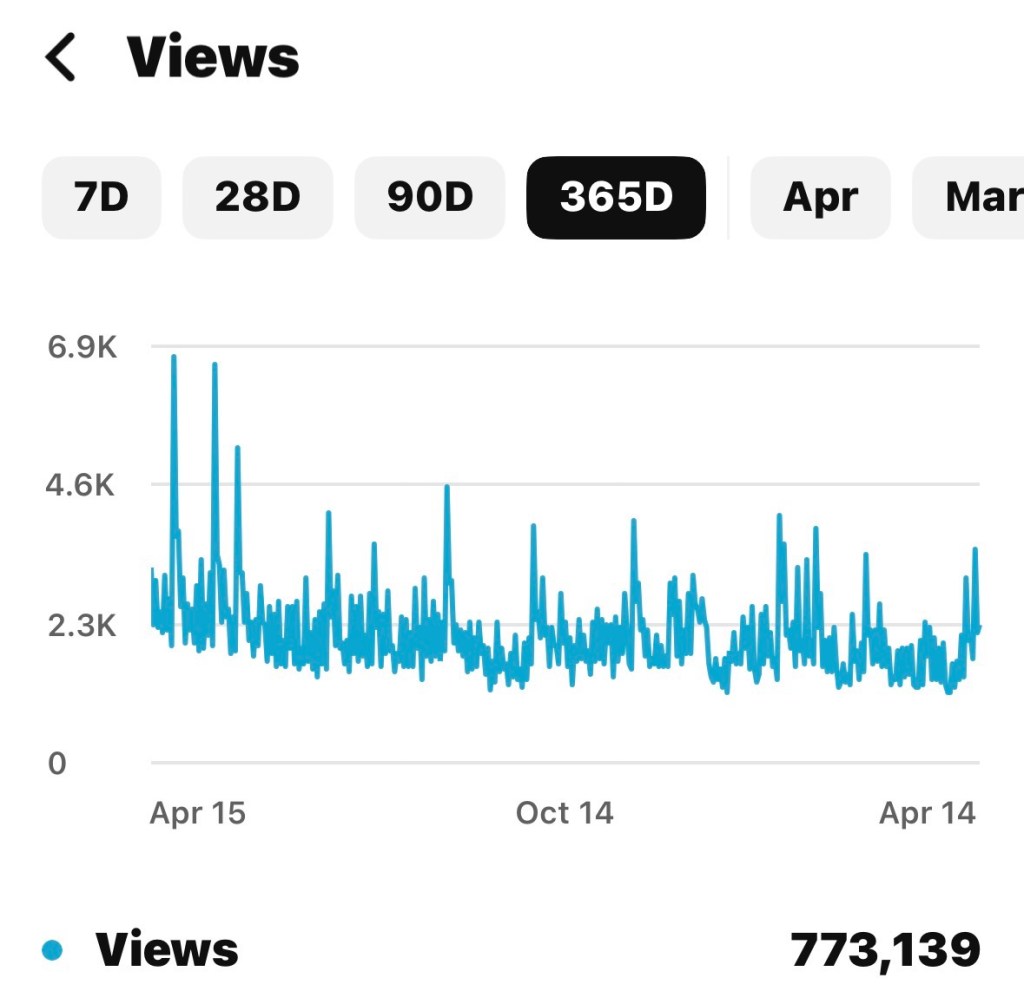
As you can see in the graphic below, we had 773,139 total views of our videos on YouTube over the past year (April 2025 through April 2026). That is about 100,000 less views than in 2024-2025. I am a bit disappointed in this number but feel that we are still really strong in our analytics. Sometimes people get disenfranchised with things and stop having interest. Plus there are even more content creators out there now than before and some of them are doing really well (I am looking at ZillaBlitz). If I were guessing, and based on our slower growth over the past year, I would say we will reach 22,500 subscribers in late 2026 so please subscribe to our channel if you haven’t already.
Overall, since starting the channel in 2017, we have had 6.4 million views, 229,400 Likes, 29,600 Comments and 18,200 Shares. That is very pleasing to see and we are so glad that our videos are being consumed and hopefully making a difference in the wargaming community. One other thing, it is interesting to see what videos are getting the most views and as expected these are our lists or our Monthly Debriefs, such as the Top 10 Wargames, Convention Debriefs and my Top 10 Solitaire Games of 2024 video.
Monthly Debrief Videos
In 2021, we started the Monthly Debrief Series of videos where we talk about what games we played the previous month and what we plan to play in the coming month as well as what games are on Kickstarter and a protracted discussion on a chosen monthly topic. These videos have been very well received. We have done one of these videos each month since their inception in January 2021 and to date are in Season 6 Episode 2 and these videos have garnered over 450,00 views. We tend to ramble on in these videos and they are over an hour each with some approaching 2 hours so thank you for watching and sticking with us as we go on and on! This year we have started Season 6 of these videos and I am really amazed that they still garner views and engagement. They are admittedly long, and I always find them fairly boring, but people tend to view them for sure. We still have lots of great topics that we can discuss and always seem to come up with something new to share.
To wrap this up, we just want to express our humble gratitude and say thank you for all of the support that you give us and for your interest in our content. Ultimately blogs and YouTube Channels only really continue with consistent posts if there is a response. The work involved, while it is a hobby and something that we do for the love of the games, does take us away from some of our other responsibilities at least partially and it is good to see that our content is having an impact on someone. We have made a lot of good friends through this little content creation experiment of ours and we look forward to seeing many of you this summer at great conventions like the World Boardgaming Championships (WBC) (July 25th-August 2nd), Gaming the American Revolution – Camden 250 (September 24-27th) and possibly at least one more, if I can spare the time in the fall, SDHistCon (November 6-9th) in San Diego, California. Please come out and say hi and maybe we can play a game together!
Please let us know what you would like to see from our blog and YouTube Channel in the future and also tell us what you enjoy about our content. Thanks and here is to another successful year in 2026!
Playing Bottle Imp with Alex and Ivan at ZUS Coffee. They were both highly intrigued and took learning the strategy seriously. This is a game with much depth. There are serious skills involved. This is an unusual and clever trick-taking game. I showed Pinocchio to Yip, Captain Fuaad and Kelvin. Right from the start Captain teased Yip that he was going to get four donkeys (and lose

 Anmelden
/pic7458460.png)
/pic8886325.png)
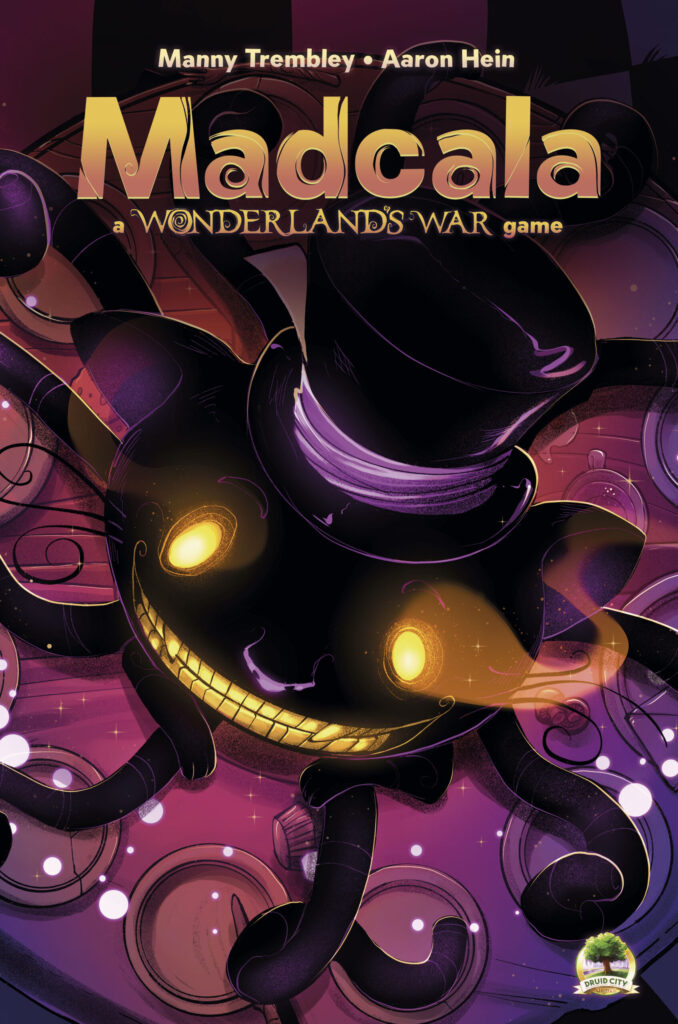 I love it when game designers give us a unique take on mechanics that have been around for a long time. Fight 5 gave us a new spin on the card game war, Samurai Spirit channeled its inner blackjack, and quite a few games have pulled from the ancient game Mancala, notably Five Tribes. Today, […]










/pic9499385.jpg)
/pic9499361.jpg)
/pic9499368.jpg)
/pic9499376.png)
/pic9499377.jpg)
/pic9499378.png)
/pic9499380.png)
/pic9499382.jpg)
/pic9499383.jpg)
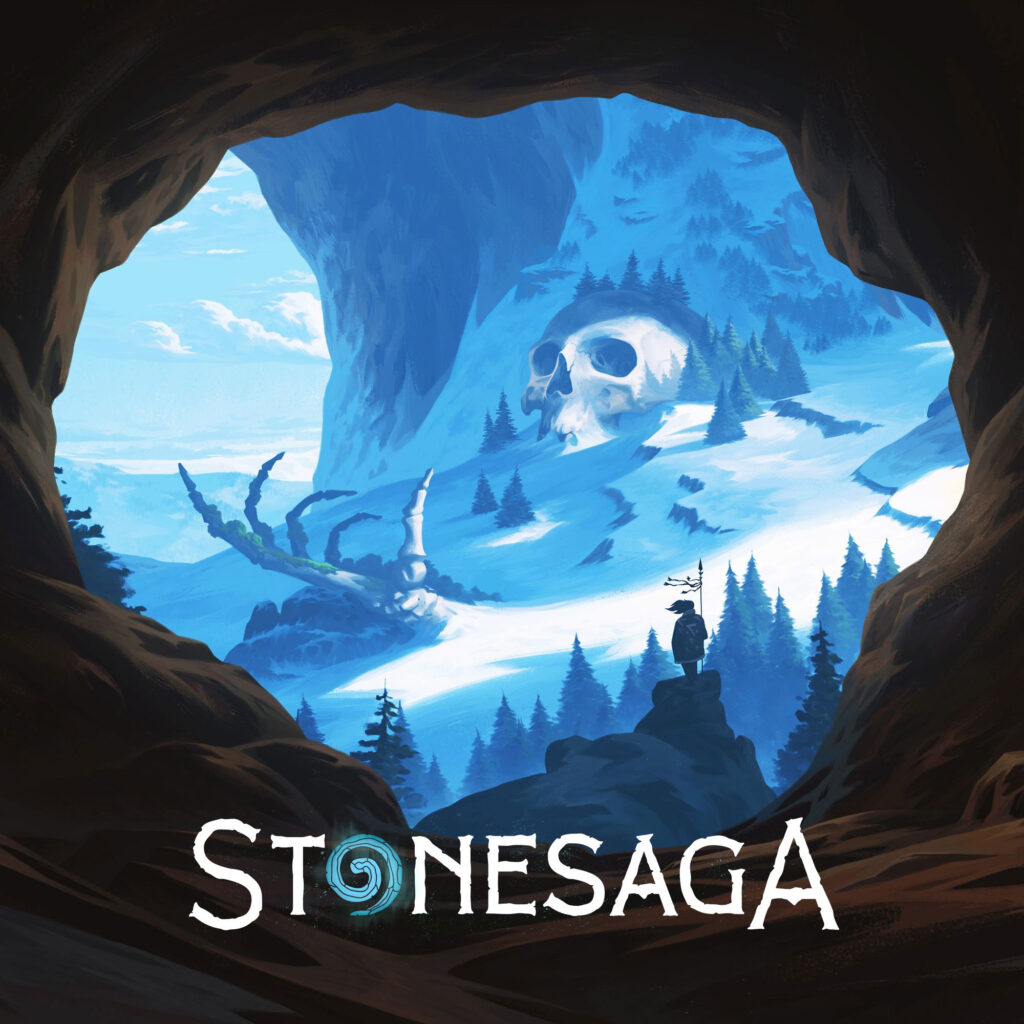 I’ve exceeded my word count, so no witty intros today for Stonesaga, which is an expansive game that plays one to four players over 60 – 120 minutes per session, according to the box. Published by Open Owl Studios, Stonesaga is a cooperative survival crafting board game set in a unique and persistent world. Gameplay […]